Buscar:a c reed

Celestial Echo is here with one of the all time holy grail soul double siders. When we tell you a record will never leave your bag after buying it, this is exactly the record it applies to.
Originally released in 1970 and written, produced and arranged by the great Van McCoy, Washington D.C.’s Bobby Reed stepped up and delivered “The Time Is Right For Love” an incredible loved up stepper, and then “If I Don’t Love You”, a perfect compliment, another… loved up stepper.
This one isn’t a fresh find, or a new discovery - Just an essential, officially licensed reissue of an incredible slice of soul.


- 1: Impostor Syndrome
- 2: Revolutions
- 3: Trouble In Store
- 4: The Empire's Eye
- 5: Crossing The Line
- 6: Night Blues
- 7: Distance
- 8: Brief Encounter
- 9: Midnight Moment
- 10: Floating Downstream
- 11: Mutineers
- 12: The Next Step
What if fate had followed a different path? Alex Marker and Ben Reed were childhood friends who made music together before pursuing different careers, with Ben becoming a professional musician while Alex followed a career in stage design.
Originally a drummer, Alex set himself a challenge of writing a song for his wife for their wedding day. One song led to another and collaborating for the first time since they were very young Alex and Ben soon found they had a whole album's worth. Influenced by Alex's career in drama each track on Impostor Syndrome aims to tell a tale or paint a portrait encapsulating a moment of change or release. Ben brings a wider palette of musical styles and arrangements to augment a series of songs which draw from a wide range of musical influences including: singer/ songwriter, British prog, folk and rock. Ben Reed is a multi instrumentalist whose playing credits include bass duties on Frank Ocean's albums Endless and Blond as well as work with David Byrne, Sampha, Mustafa, Frank Dukes, Nilufer Yanya, Hayden Thorpe, FKA Twigs and many others.
He has previously released four full length albums of his own; Tall Story, Who Dreams of Hyssop, Station Masters, Loft, Bandaged and most recently You Do You. Alex Marker is a critically acclaimed theatre set and costume designer who has designed over 150 productions for a wide variety of venues including The West End, tours, regional theatres and the fringe. Further back he used to play drums in pit bands for productions and has occasionally been seen on stage too. The album features guests including: organist Ross Stanley (Steve Howe Trio), flautist R achel Hayter ( Alvorada ), bassoonist Philip Dale ( Orchestra of the Age of Enlightenment) and Matt Weeks who plays brass alongside mixing duties.

- A1: Jimmy Reed Highway Feat Lou Ann Barton
- A2: Baby What You Want Me To Do
- A3: Bright Lights Big City Feat Kim Wilson
- A4: Big Boss Man Feat Kim Wilson
- A5: Good Lover Feat Lou Ann Barton
- A6: Caress Me Baby Feat Lou Ann Barton & James Cotton
- B1: Aw Shucks, Hush Your Mouth
- B2: You Upset My Mind Feat Lou Ann Barton & Kim Wilson
- B3: I'll Change My Style
- B4: Bad Boy
- B5: Baby, What's Wrong Feat Gary Clark Jr
- B6: Hush Hush Feat Delbert Mcclinton
- B7: You Made Me Laugh
It runs through the minds of men and women of a certain age, complexion, and place who grew up during the era of segregation and who defied their parents, the law, and all genteel propriety and custom by answering one bluesman's invitation to cross the color line and join him getting lowdown and dirty as he serenaded a generation from the bandstand, on jukeboxes, and through the radio.
To them, the slurred guttural sound of a wise man singing "Hush, Hush," putting down the "Big Boss Man" or advising the listener to "Take Out Some Insurance" before they behold the "Bright Lights, Big City" was a siren's call they had no choice but to answer. Even if they tried, they couldn't resist the steady, dirty rhythm punctuated by the twanging sting of an electric guitar note and the sweet wail of a harmonica. And when they leaned in close, they could even hear the barely perceptible sound of a woman's voice whispering forgotten lyrics into an ear.
Ain't nobody can do Jimmy Reed like Jimmy Reed could. But this drive down Jimmy Reed Highway with fellow Mississippian Kent "Omar" Dykes at the wheel with Jimmie Vaughan (older brother of the legendary Stevie Ray Vaughan) riding shotgun and folks like, Kim Wilson, Miss Lou Ann Barton, James Cotton, Delbert McClinton, and Gary Clark, Jr., joining the duo, comes mighty close. As Omar guns the engine and peels rubber on the two- lane blacktop lined with no- good women, empty whiskey bottles, too many cigarette butts and bad intentions, he leaves John Law trailing behind eating his dust. Hop in for a ride and turn up the volume. The electric bluesman who shaped the minds and moves of a musical generation is alive and well. (by Joe Nick Patoski)

- A1: Just Got To Know
- A2: Walkin' And Talkin' (For My Baby)
- A3: The Tips Of My Fingers
- A4: Woman, Woman Blues
- A5: Something You Got
- A6: The Poor Side Of Town
- A7: I'm Tired Of Wandering
- A8: Fat Mama Rumble
- B1: You're Gonna Make Me Cry
- B2: Cool Drink Of Water Blues
- B3: Don't Let Me Down
- B4: A Dying Veterans Plea 2:16
- B5: Lone Town Blues
- B6: A Woman, A Lover, A Friend
- B7: Roamin' And Ramblin' Blues
- B8: Right Around The Corner
- C1: She May Be Yours
- C2: Brought Life Back To The Dead
- C3: West Helena Blues
- C4: Thirty Two Twenty Blues
- C5: I'm Leaving You
- C6: Big Fat Mama Blues
- D1: I'm A King Bee
- D2: Rollin' And Tumblin
- D3: Stop Talking In Your Sleep
- D4: I Can't Quit You Baby
- D5: The Last Mile Of The Way


- 1: Jimmy Reed Highway
- 2: Baby What You Want Me To Do
- 3: Bright Lights Big City
- 4: Big Boss Man
- 5: Good Lover
- 6: Caress Me Baby
- 7: A W Shucks, Hush Your Mouth
- 8: You Up S Et My Mind
- 9: I'll Change My Style
- 10: Bad Boy
- 11: Baby, What's Wrong
- 12: Hush Hush
- 13: You Made Me Laugh
180g schwarzes Vinyl
Das 2007er Album der beiden Gitarristen und Sänger erscheint hiermit erstmalig auf Vinyl
Mit Gary Clark Jr, James Cotton, Delbert McClinton, Kim Wilson und Lou Ann Barton
12 Tracks von Jimmy Reed, oder von ihm inspiriert
Jimmie Vaughan ist der ältere Bruder von Stevie Ray Vaughan


I’m Jimmy Reed, eine Zusammenstellung von Singles aus den Jahren 1953 und 1958, ist Jimmy Reeds
erste LP in voller Länge. Ursprünglich 1958 auf Vee-Jay Records veröffentlicht, enthält dieses Album „Ain’t
That Lovin’ You Baby“, das Platz 8 der Billboard R&B-Charts erreichte. Diese Wiederveröffentlichung ist
auf 180-Gramm-Vinyl gepresst und in einer Replik mit Tip-On-Hülle untergebracht. Das Record Collector
Magazine lobt das Album als „wohl das erste große Blues-Album“ und als „Zeugnis des aufregenden Talents
der einflussreichsten Persönlichkeiten dieser Musikrichtung“


- The Ostrich
- Cycle Annie
- I'm Gonna Fight
- Soul City
- Oh No Don't Do It
- Love Can Make You Cry
- Teardrop In The Sand
- You're Driving Me Insane
- Sneaky Pete
- Wild One
- Really - Really - Really - Really - Really - Really Love
- Soul City
- Ya Running But I'll Getcha
- We Got Trouble
- Why Don't You Smile
- Johnny Won't Surf No More
- Tell Mamma Not To Cry
- Maybe Tomorrow
- Flowers For The Lady
- This Rose
- Surfin
- Little Deuce Coupe
- Sad Lonely Orphan Boy
- I've Got A Tiger In My Tank
- What About Me
25
También disponible
Black Vinyl[50,38 €]
Oxblood & Gold Vinyl. Light In The Attic präsentiert in Zusammenarbeit mit Laurie Anderson und dem Lou Reed Archive die erste offizielle Anthologie von Lou Reeds Arbeiten für Pickwick Records 1964-1965. "Why Don't You Smile Now: Lou Reed At Pickwick Records 1964-65"enthält Raritäten, Kultklassiker (The Primitives' "The Ostrich") und bisher unveröffentlichtes Material (The Beachnuts' "Sad, Lonely Orphan Boy") und ist eine Zusammenstellung von Popsongs aus Reeds Feder, die er Mitte der 60er Jahre als angestellter Songwriter für das längst untergegangene Label Pickwick Records schrieb. Die Zusammenstellung ist der neueste Teil der Lou Reed Archive Serie und folgt auf Lou Reeds "Words & Music, May 1965" (2022) und die Wiederveröffentlichung von "Hudson River Wind Meditations" (2023). Als eine der originellsten und innovativsten Persönlichkeiten der Musikgeschichte erlangte Reed (1942-2013) zunächst als Mitbegründer und Frontmann der einflussreichen Band Velvet Underground Anerkennung. Im Laufe seiner fünf Jahrzehnte währenden Karriere brachte der zweifache Rock & Roll Hall of Famer seine einzigartige Vision in eine eklektische Bandbreite musikalischer Unternehmungen ein, darunter epochale Alben wie "Transformer" (1972) und wild experimentelle Werke wie der avantgardistische Noise-Klassiker "Metal Machine Music" (1975). Doch bevor er sich als Sänger, Songschreiber, Musiker und Dichter etablierte, begann Reed als interner Songschreiber (und gelegentlicher Session-Gitarrist/Sänger) bei Pickwick Records, einem Label, das sich auf Sound-ähnliche Aufnahmen spezialisierte, die die großen Pop-Hits der damaligen Zeit nachahmten. Von Garage-Rock und Girl-Group-Pop bis hin zu Blue-Eyed-Soul und Teenie-Idol-Balladen bietet Reeds Schaffen für Pickwick einen faszinierenden frühen Einblick in sein sich ständig weiterentwickelndes und wahrhaft grenzenloses künstlerisches Schaffen, das vom GRAMMYr-nominierten Mastering-Ingenieur John Baldwin restauriert und remastered wurde. Sowohl die 2xLP- als auch die CD-Editionen enthalten ausführliche Booklets mit ungesehenen Fotos, Linernotes von Richie Unterberger (renommierter Musikjournalist und Autor von "White Light/White Heat: The Velvet Underground day-by-day") und ein Essay von Lenny Kaye (dem legendären Gitarristen, Mitbegründer der Patti Smith Group, Autor, Produzent und Kurator der bahnbrechenden Garage-Rock-Anthologie "Nuggets"). Die Doppel-LP-Verpackung wurde von dem mehrfach mit dem GRAMMYr ausgezeichneten Künstler Masaki Koike gestaltet. Eine spezielle farbige Vinyl-Edition wird auf "Oxblood"-Wachs (A/B-Seite) und "Gold"-Wachs (C/D-Seite) gepresst.

- The Ostrich
- Cycle Annie
- I'm Gonna Fight
- Soul City
- Oh No Don't Do It
- Love Can Make You Cry
- Teardrop In The Sand
- You're Driving Me Insane
- Sneaky Pete
- Wild One
- Really - Really - Really - Really - Really - Really Love
- Soul City
- Ya Running But I'll Getcha
- We Got Trouble
- Why Don't You Smile
- Johnny Won't Surf No More
- Tell Mamma Not To Cry
- Maybe Tomorrow
- Flowers For The Lady
- This Rose
- Surfin
- Little Deuce Coupe
- Sad Lonely Orphan Boy
- I've Got A Tiger In My Tank
- What About Me
25
También disponible
Oxblood & Gold Vinyl[54,58 €]
Light In The Attic präsentiert in Zusammenarbeit mit Laurie Anderson und dem Lou Reed Archive die erste offizielle Anthologie von Lou Reeds Arbeiten für Pickwick Records 1964-1965. "Why Don't You Smile Now: Lou Reed At Pickwick Records 1964-65"enthält Raritäten, Kultklassiker (The Primitives' "The Ostrich") und bisher unveröffentlichtes Material (The Beachnuts' "Sad, Lonely Orphan Boy") und ist eine Zusammenstellung von Popsongs aus Reeds Feder, die er Mitte der 60er Jahre als angestellter Songwriter für das längst untergegangene Label Pickwick Records schrieb. Die Zusammenstellung ist der neueste Teil der Lou Reed Archive Serie und folgt auf Lou Reeds "Words & Music, May 1965" (2022) und die Wiederveröffentlichung von "Hudson River Wind Meditations" (2023). Als eine der originellsten und innovativsten Persönlichkeiten der Musikgeschichte erlangte Reed (1942-2013) zunächst als Mitbegründer und Frontmann der einflussreichen Band Velvet Underground Anerkennung. Im Laufe seiner fünf Jahrzehnte währenden Karriere brachte der zweifache Rock & Roll Hall of Famer seine einzigartige Vision in eine eklektische Bandbreite musikalischer Unternehmungen ein, darunter epochale Alben wie "Transformer" (1972) und wild experimentelle Werke wie der avantgardistische Noise-Klassiker "Metal Machine Music" (1975). Doch bevor er sich als Sänger, Songschreiber, Musiker und Dichter etablierte, begann Reed als interner Songschreiber (und gelegentlicher Session-Gitarrist/Sänger) bei Pickwick Records, einem Label, das sich auf Sound-ähnliche Aufnahmen spezialisierte, die die großen Pop-Hits der damaligen Zeit nachahmten. Von Garage-Rock und Girl-Group-Pop bis hin zu Blue-Eyed-Soul und Teenie-Idol-Balladen bietet Reeds Schaffen für Pickwick einen faszinierenden frühen Einblick in sein sich ständig weiterentwickelndes und wahrhaft grenzenloses künstlerisches Schaffen, das vom GRAMMYr-nominierten Mastering-Ingenieur John Baldwin restauriert und remastered wurde. Sowohl die 2xLP- als auch die CD-Editionen enthalten ausführliche Booklets mit ungesehenen Fotos, Linernotes von Richie Unterberger (renommierter Musikjournalist und Autor von "White Light/White Heat: The Velvet Underground day-by-day") und ein Essay von Lenny Kaye (dem legendären Gitarristen, Mitbegründer der Patti Smith Group, Autor, Produzent und Kurator der bahnbrechenden Garage-Rock-Anthologie "Nuggets"). Die Doppel-LP-Verpackung wurde von dem mehrfach mit dem GRAMMYr ausgezeichneten Künstler Masaki Koike gestaltet.

10
Ben Reed has worked with Frank Ocean, David Byrne, Sampha and many others, but his own music is unpredictable, passionate and tinged with melancholy and has drawn comparisons to the so-called Canterbury sound of Progressive rock.
‘Bandaged’ is much more in the singer/songwriter vein than Ben's previous releases, albeit tinged with an undeniable British proggy-ness. The richness of melody and harmonic vocabulary remains, and the influence of jazz is still detectable, this time via more concise song forms.
Past review comparisons to the Canterbury sound aren't too far wide of the mark here, especially as Jimmy Hastings (Caravan, Hatfield & the North) is present on two of the songs.
Throughout the album there is a detectable combination of sentimentality and melancholy combined with playfulness and a dark sense of humour making ‘Bandaged’ one of the most interesting and innovative new albums of its genre in 2023.




11
A tribute to one of the greatest songwriters & artists of our time! Features newly recorded covers from Keith Richards, Joan Jett and the Blackhearts, Rufus Wainwright, Lucinda Williams, Maxim Ludwig & Angel Olsen, Rickie Lee Jones, Mary Gauthier, Bobby Rush, Automatic, The Afghan Whigs, and Rosanne Cash. Special Record Store Day Edition pressed on Silver Nugget vinyl and housed in a silver laminated jacket Booklet features liner notes by compilation producer & former Lou Reed publicist Bill Bentley, featuring photos by Mick Rock and Timothy Greenfield-Sanders. "To me, Lou stood out. The real deal! Something important to American music and to ALL MUSIC! I miss him and his dog." - Keith Richards "Lou seemed fearless to me, like he'd rather die than be a people-pleaser. I took inspiration from that." - Rosanne Cash "Lou Reed is my earliest influence, my introduction to punk rock, and the soundtrack to the beginning of my romance with Maxim." - Angel Olsen "Lou Reed has been gone now for many years. He's one of the few people whom I miss as much now as when he left. There are so many instances where I wonder what he would say or what he would think. His general aura would always lend something really unique to the room. Thank God he left his great music and recordings. His personality is sorely missed. Love you, Lou." - Rufus Wainwright // It goes without saying that the legendary Lou Reed was a true rock 'n' roll pioneer. From The Velvet Underground's debut in 1967 all the way through the end of his days, Reed sang truth from his heart. He lived life to the limit-and then some. The Power of the Heart is a tribute to Reed's freedom of expression with covers spanning his ground-breaking years with the Velvets into his majestic solo career. Each track is a glorious extension of the Rock 'n' Roll Animal's soul, ever adventurous and avant-garde. The Power of the Heart: A Tribute to Lou Reed kicks off with a legend in his own right, Keith Richards, reimagining the Velvets' classic, "I'm Waiting for the Man." Richards' rendition instantly invites you on board this unforgettable ride. In stark contrast, "Perfect Day" is somehow even more melancholy than the original given the Rufus Wainwright treatment, featuring sparse fingerpicking and gentle harmonies. Joan Jett and the Blackhearts deliver a version of "I'm So Free" that would have even Lou rockin' in his grave. It's thrilling to hear these songs reinterpreted and sung by such heavyweights; you can even hear as Lucinda Williams channels the spirit of Lou with her take on "Legendary Hearts." Other notable tracks include a punk-drunk, loved-up duet by real-life lovers Angel Olsen & Maxim Ludwig with "I Can't Stand It," and Rickie Lee Jones' reimagining of "Walk on the Wild Side," both whimsical and enticing with her whispery vocals, stripped-down percussion, and a piano fit for a late-night lounge. This tribute album truly defies genre, but its throughline, in the end, is its heart: a deeply thoughtful collection of songs that shaped a generation, each paying homage to a man whose body of work still sings.

Next on deck, straight from Producer Dan Ubick’s Lions Den Studio, comes two more re-imagined soul classics from Los Angeles’ own Night Owls. First up, we have soul phenom Eli “Paperboy” Reed taking on Ray Charles’ classic “You Don’t Know Me” and Rocksteady champions Jr. Thomas & The Volcanos, laying their beautiful soul harmonies to Eddie Kendricks’ timeless “If You Let Me.”
For Side A’s “You Don’t Know Me,” Ubick had a tough assignment - find someone who could bring his own innate soulfulness to a song sung by “The Genius” in his prime. The answer came from Massachusetts-bred Eli “Paperboy” Reed, who moved to Clarksdale, Mississippi at 18 to cut his teeth singing in juke joints all over the Delta. Then, moving on to spend a year as minister of music at Chicago’s Southside church of Soul legend Mitty Collier (Chess Records) and relocating back to the East Coast to record for Capitol Records, Warner Brothers, Colemine Records, and now Yep Roc, Dan had found his man. On “You Don’t Know Me,” Reed’s voice ranges from belted lows to soulful highs that perfectly sets the stage for this more upbeat and Roots Reggae-infused rendition. With a tip of the hat to Jamaican legend and producer Bunny “Striker” Lee, Night Owls take Charles’ classic soul and R&B standard to new territory. But that’s not all; Ubick also brought in Staten Island’s crown jewel, Eamon Doyle, who meticulously laid in all the vocal harmonies, faithful to Ray’s original. On Side B is Eddie Kendricks’ “If You Let Me” feat. Jr Thomas & The Volcanos (Colemine Records), re-done here with a nod to another legendary Jamaican singer, songwriter, and music producer, The Techniques’ own Winston Riley (Johnny Osbourne, Dave & Ansel Collins, Hortense Ellis, etc.). Originally debuted on Eddie Kendricks’ post-Temptations 1972 masterpiece People…Hold On (Tamla/Motown), Night Owls create a decidedly more moody and dubbed-out tone here, laying into a bass-heavy one-drop feel that perfectly sets the stage for Jr Thomas’ soulful lead and Volcanos members Alex Desért (Hepcat, The Lions) & John Butcher’s (The Expanders) spot on backing harmonies. While keeping much of the original harmonic language, Night Owls bring this much-loved classic to new heights, primed for the dance floor. It’s hard not to sway your hip and groove to this one!

* Lou Reed's final solo album finally available again * First time on vinyl * Produced in partnership with Laurie Anderson and the Lou Reed Archive * Booklet features unseen photography by Lou, Q&A with Laurie Anderson & Jonathan Cott, essay by Eddie Stern, and archival interviews with Lou and Hal Willner * Remastered by GRAMMYr-nominated engineer John Baldwin * Package designed by multi-GRAMMYr-winning artist Masaki Koike // "I first composed this music for myself as an adjunct to meditation, Tai Chi, and bodywork, and as music to play in the background of life, to replace the everyday cacophony with new and ordered sounds of an unpredictable nature. New sounds freed from preconception. ...over time, friends who heard the music asked if I could make them copies. I then wrote two more pieces with the same intent: to relax the body, mind, and spirit and facilitate meditation." - Lou Reed Light in the Attic Records in cooperation with Laurie Anderson and the Lou Reed Archive, proudly announces a definitive re-release of Hudson River Wind Meditations, the pioneering artist's final solo album. Originally released in 2007, the deeply personal project combines Reed's love of creating drone music with his passion for Tai Chi, yoga and meditation. The album's ambient soundscapes have been described as a counterpoint to his intense Metal Machine Music album-but they are similar outliers in Reed's 40+ year exploration of drone music and feedback harmonics. The album has been remastered by the GRAMMYr-nominated engineer John Baldwin with vinyl pressed at Record Technology Inc. (RTI). The Double LP set is presented in a gatefold jacket designed by GRAMMYr-winning artist, Masaki Koike and features new liner notes by renowned Yoga instructor and author, Eddie Stern, who guided Reed's practice for years. Also included in the physical editions is a fascinating conversation conducted earlier this year between author/journalist Jonathan Cott (Rolling Stone, The New Yorker) and Reed's wife, artist Laurie Anderson, who discusses the album, as well as her husband's devotion to Tai Chi - one of the album's primary inspirations. Hudson River Wind Meditations marks the latest release in LITA's Lou Reed Archival Series. Launched in 2022 in tandem with the late artist's 80th birthday, the ongoing series has celebrated one of America's most influential songwriters through such acclaimed collections as Words & Music, May 1965 featuring many of Reed's earliest (and previously-unreleased) recordings, including the earliest-known versions of "I'm Waiting for the Man" and "Pale Blue Eyes."

* Lou Reed's final solo album finally available again * First time on vinyl * Produced in partnership with Laurie Anderson and the Lou Reed Archive * Booklet features unseen photography by Lou, Q&A with Laurie Anderson & Jonathan Cott, essay by Eddie Stern, and archival interviews with Lou and Hal Willner * Remastered by GRAMMYr-nominated engineer John Baldwin * Package designed by multi-GRAMMYr-winning artist Masaki Koike // "I first composed this music for myself as an adjunct to meditation, Tai Chi, and bodywork, and as music to play in the background of life, to replace the everyday cacophony with new and ordered sounds of an unpredictable nature. New sounds freed from preconception. ...over time, friends who heard the music asked if I could make them copies. I then wrote two more pieces with the same intent: to relax the body, mind, and spirit and facilitate meditation." - Lou Reed Light in the Attic Records in cooperation with Laurie Anderson and the Lou Reed Archive, proudly announces a definitive re-release of Hudson River Wind Meditations, the pioneering artist's final solo album. Originally released in 2007, the deeply personal project combines Reed's love of creating drone music with his passion for Tai Chi, yoga and meditation. The album's ambient soundscapes have been described as a counterpoint to his intense Metal Machine Music album-but they are similar outliers in Reed's 40+ year exploration of drone music and feedback harmonics. The album has been remastered by the GRAMMYr-nominated engineer John Baldwin with vinyl pressed at Record Technology Inc. (RTI). The Double LP set is presented in a gatefold jacket designed by GRAMMYr-winning artist, Masaki Koike and features new liner notes by renowned Yoga instructor and author, Eddie Stern, who guided Reed's practice for years. Also included in the physical editions is a fascinating conversation conducted earlier this year between author/journalist Jonathan Cott (Rolling Stone, The New Yorker) and Reed's wife, artist Laurie Anderson, who discusses the album, as well as her husband's devotion to Tai Chi - one of the album's primary inspirations. Hudson River Wind Meditations marks the latest release in LITA's Lou Reed Archival Series. Launched in 2022 in tandem with the late artist's 80th birthday, the ongoing series has celebrated one of America's most influential songwriters through such acclaimed collections as Words & Music, May 1965 featuring many of Reed's earliest (and previously-unreleased) recordings, including the earliest-known versions of "I'm Waiting for the Man" and "Pale Blue Eyes."

- A1: Pretty Karma
- A2: The Ghost Inside
- A3: Starlight
- A4: Supernova
- A5: Let's Hear It For The King
- B1: I See Angels
- B2: Homegrown
- B3: Stumble
- B4: Just Might Get It
- C1: Where's The Revolution
- C2: Are You Ready
- C3: Unfuck My World
- C4: Last Day On Saturn
- D1: Starlight (Acoustic)
- D2: Let's Hear It For The King (Acoustic)
- D3: Last Day On Saturn (Acoustic)
16
Nachdem Dan Reed Network mit ihrem letzten Studioalbum "Let's Hear It For The King" Werk aus berauschendem Rock, Funk und Soul präsentieren konnten, kommt nun die auf 500 Stk. limitierte Deluxe Reissue auf Vinyl. Mit ihrem sechsten Studioalbum inkl. 3 Akustik Bonustracks, schließt sich der Kreis zum ursprünglichen Leitbild der Band - Überzeugungen in Frage zu stellen, bestehende Protokolle zu zerschlagen und aus den Trümmern etwas Neues zu schaffen. Dieses Album ist für Visionäre, die Teil und Zeuge des nächsten Schritts in der künstlerischen Entwicklung des Dan Reed Network sein wollen.


Eli Paperboy Reed's Hits And Misses ist eine remasterte Sammlung von Raritäten, Originalen und Coverversionen, darunter Eli's Interpretation von Motörhead's "The Ace of Spades". Eli verwandelt den Hard-Rock-Klassiker von Motörhead in eine Soul-Revival-Version mit Hammond-Orgel, Blechbläsern, E-Gitarre, Eli's charakteristischem Gesang und einem Backbeat, der dem Song einen neuen Touch
verleiht, der nicht weniger kraftvoll ist als das Original. Hits And Misses enthält auch Eli's noirartige R&B-Version von Steely Dan's Hit von 1972, "Do It Again", die das Original 30 Jahre zurückversetzt, sowie eine Coverversion von Latimore's Hit von 1974, "Let's
Straighten It Out", die eine vokale Intensität zeigt, die im fast gesprochenen Original nicht so präsent ist. Neben den overversionen enthält das Album auch Eli Paperboy Reed's eigenes "IDKWYCTD (I Came to Play)", ein hymnenhafter Party-Starter. Dieser ergiegeladene Track ist in der Disney-Marvel-Comicserie "Moon Girl and Devil
Dinosaur" zu hören. Das Album enthält außerdem Coverversionen von Bob Dylan's "To Be Alone With You", Merle Haggard's "I'm Gonna Break Every Heart I Can" und mehr.
Coney Island Baby is a 1976 solo studio album by Lou Reed, released in January by RCA Records. The album has been described as perhaps the most romantic album of Reed's career .' Many of the album's songs were inspired by and dedicated to Reed's girlfriend and muse at the time, a trans woman named Rachel. Pressed on standard black vinyl.

A1/I'm Waiting ForThe Man 2/Berlin 3/The Black Angel's Death Song B 1/Wild Child 2/Heroin 3/Ghost Story4/The Biggest, Loudest, Hairiest Group Of All C 1/Empty Bottles 2/Femme Fatale 3/No One Is There 4/Frozen Warnings D 1/Janitor Of Lunacy 2/I'll Be Your Mirror 3/All Tomorrow's Parties 4/Pale Blues Eyes (Rehearsal) - Bonus track 5/Candy Says (Rehearsal) - Bonus track.
• Complete iconic concert of the former Velvet Underground members
• Fully remastered and speed corrected
• Extra tracks
• Gatefold sleeve
• Full colour printed inner bags with photos from the concert.

- 1: I'm Waiting For The Man - May 965 Demo
- 2: Men Of Good Fortune - May 1965 Demo
- 3: Heroin - May 1965 Demo
- 4: Too Late - May 1965 Demo
- 5: Buttercup Song - May 196 Demo
- 6: Walk Alone - May 195 Demo
- 7: Buzz Buzz Buzz - May 1965 Demo
- 8: Pale Blue Eyes - May 1965 Demo
- 9: S Tockpile - May 165 Demo
- 10: Wrap Your Troubles In Dreams - May 1965 Demo
- 11: I'm Waiting For The Man - May 1965 Alternate Version
- 12: Gee Whiz - 1958 Rehearsal
- 13: Baby, Let Me Follow You Down - 1963/64 Home Recording
- 14: Michael, Row The Boat Ashore - 1963/64 Home Recording
- 15: Don't Think Twice, It's All Right (Partial) - 1963/64 Home Recording
- 16: W & X, Y, Z Blues - 1963/64 Home Recording
- 17: Lou's 12-Bar Instrumental - 1963/64 Home Recording
17
DELUXE EDITION
Das Herzstück der ersten Lou Reed Archive Series Veröffentlichung von Light In The Attic ist die Deluxe 45-RPM Doppel-LP Edition von "Words & Music, May 1965". Diese auf 7.500 Exemplare weltweit limitierte Sammlung wurde von dem mehrfach mit dem GRAMMY ausgezeichneten Künstler Masaki Koike entworfen und verfügt über einen stilisierten, gestanzten Klappumschlag, der von Stoughton Printing Co. hergestellt wurde, mit fortlaufender Foliennummerierung. Darin enthalten sind zwei 45-RPM 12"-LPs, gepresst auf 180-Gramm-Vinyl in HQ-Audiophil-Qualität bei Record Technology Inc. (RTI), mit der einzigen Vinyl-Veröffentlichung von "I'm Waiting for the Man - May 1965 Alternate Version". Eine Bonus 7" Single, die in einer eigenen, gestanzten Bilderhülle untergebracht ist und bei Third Man Record Pressing hergestellt wurde, enthält die einzige Vinyl-Veröffentlichung von sechs bisher unveröffentlichten Bonustracks, die einen nie zuvor gesehenen Einblick in Reeds prägende Jahre bieten, darunter frühe Demos, eine Coverversion von Bob Dylans "Don't Think Twice, It's All Right" und ein Doo-Wop-Ständchen, das 1958 aufgenommen wurde, als der legendäre Singer-Songwriter gerade 16 Jahre alt war. Ein begleitendes, gestanztes, 28-seitiges Buch mit Texten, Archivfotos und Linernotes enthält eine Archivreproduktion eines selten Briefes, den Reed um 1964 an seinen College-Professor und Dichter Delmore Schwartz schrieb. Das Set enthält eine CD mit dem kompletten Audiomaterial des Pakets in einer gestanzten Hülle. "Ein Tonband mit ihren frühesten Demos, aufgenommen am 11. Mai 1965 und bis heute unter Verschluss gehalten, zeigt Spuren von Dingen, die selten mit The Velvet Underground in Verbindung gebracht werden: Blues und Folk, erdig und traditionell, unsicher und zögerlich - und doch von diesem rostigen, ätzenden Lou Reed-Geist durchdrungen. Es ist eine Offenbarung." - Will Hodgkinson, MOJO. Light in the Attic Records ist stolz darauf, in Zusammenarbeit mit Laurie Anderson den ersten Titel ihrer fortlaufenden Lou Reed Archive Series vorzustellen: "Words & Music, Mai 1965". Das Album, das anlässlich des 80. Geburtstages des verstorbenen Künstlers erscheint, bietet einen außergewöhnlichen, ungeschminkten und ergreifenden Einblick in einen der wahrlich größten amerikanischen Poeten und Songwriter. Diese bisher unveröffentlichte Sammlung von Songs, die der junge Lou Reed mit Hilfe seines späteren Bandkollegen John Cale aufnahm und sich selbst als "Urheberrecht des armen Mannes" mit der Post zuschickte, wurde fast 50 Jahre lang ungeöffnet in einem Originalumschlag aufbewahrt. Der Inhalt verkörpert einige der wichtigsten und bahnbrechendsten Beiträge zur amerikanischen Popmusik im 20. Jahrhundert. Die fest in der Folk-Tradition verwurzelten Songs belegen Lous nachhaltigen Einfluss auf die Entwicklung der modernen amerikanischen Musik deutlich - vom Punk bis zum Art-Rock und allem, was dazwischen liegt. Diese Aufnahmen sind eine wahre Zeitkapsel und halten nicht nur die ersten Funken dessen fest, was die Keimzelle der unglaublich einflussreichen Velvet Underground werden sollte; sie machen Reed auch zu einem echten Beobachter mit einem angeborenen Talent, die Welt um ihn herum zu synthetisieren und in reine Klangpoesie zu verwandeln. Mit Beiträgen von Reeds zukünftigem Bandkollegen John Cale präsentiert "Words & Music, May 1965" die frühesten bekannten Aufnahmen so historischer Songs wie "Heroin", "I'm Waiting for the Man" und "Pale Blue Eyes", die Reed später mit Velvet Underground aufnehmen und unauslöschlich prägen sollte, in ihrer Gesamtheit. Außerdem sind mehrere bisher unveröffentlichte Kompositionen enthalten, die zusätzliche Einblicke in Reeds kreativen Prozess und seine frühen Einflüsse geben. Das Album wurde von Laurie Anderson, Don Fleming, Jason Stern, Hal Willner und Matt Sullivan produziert und enthält neu gemasterte Tonaufnahmen vom Originalband durch den GRAMMY-nominierten Toningenieur John Baldwin. Abgerundet wird das Paket durch neue Linernotes des renommierten Journalisten und Autors Greil Marcus sowie ausführliche Archivnotizen von Don Fleming und Jason Stern, die das Lou Reed Archiv betreuen, während die Veröffentlichung von dem mehrfach GRAMMY-prämierten Künstler Masaki Koike gestaltet wurde.

- 1: I'm Waiting For The Man - May 965 Demo
- 2: Men Of Good Fortune - May 1965 Demo
- 3: Heroin - May 1965 Demo
- 4: Too Late - May 1965 Demo
- 5: Buttercup Song - May 196 Demo
- 6: Walk Alone - May 195 Demo
- 7: Buzz Buzz Buzz - May 1965 Demo
- 8: Pale Blue Eyes - May 1965 Demo
- 9: Stockpile - May 165 Demo
- 10: Wrap Your Troubles In Dreams - May 1965 Demo
10
"Ein Tonband mit ihren frühesten Demos, aufgenommen am 11. Mai 1965 und bis heute unter Verschluss gehalten, zeigt Spuren von Dingen, die selten mit The Velvet Underground in Verbindung gebracht werden: Blues und Folk, erdig und traditionell, unsicher und zögerlich - und doch von diesem rostigen, ätzenden Lou Reed-Geist durchdrungen. Es ist eine Offenbarung." - Will Hodgkinson, MOJO. Light in the Attic Records ist stolz darauf, in Zusammenarbeit mit Laurie Anderson den ersten Titel ihrer fortlaufenden Lou Reed Archive Series vorzustellen: "Words & Music, Mai 1965". Das Album, das anlässlich des 80. Geburtstages des verstorbenen Künstlers erscheint, bietet einen außergewöhnlichen, ungeschminkten und ergreifenden Einblick in einen der wahrlich größten amerikanischen Poeten und Songwriter. Diese bisher unveröffentlichte Sammlung von Songs, die der junge Lou Reed mit Hilfe seines späteren Bandkollegen John Cale aufnahm und sich selbst als "Urheberrecht des armen Mannes" mit der Post zuschickte, wurde fast 50 Jahre lang ungeöffnet in einem Originalumschlag aufbewahrt. Der Inhalt verkörpert einige der wichtigsten und bahnbrechendsten Beiträge zur amerikanischen Popmusik im 20. Jahrhundert. Die fest in der Folk-Tradition verwurzelten Songs belegen Lous nachhaltigen Einfluss auf die Entwicklung der modernen amerikanischen Musik deutlich - vom Punk bis zum Art-Rock und allem, was dazwischen liegt. Diese Aufnahmen sind eine wahre Zeitkapsel und halten nicht nur die ersten Funken dessen fest, was die Keimzelle der unglaublich einflussreichen Velvet Underground werden sollte; sie machen Reed auch zu einem echten Beobachter mit einem angeborenen Talent, die Welt um ihn herum zu synthetisieren und in reine Klangpoesie zu verwandeln. Mit Beiträgen von Reeds zukünftigem Bandkollegen John Cale präsentiert "Words & Music, May 1965" die frühesten bekannten Aufnahmen so historischer Songs wie "Heroin", "I'm Waiting for the Man" und "Pale Blue Eyes", die Reed später mit Velvet Underground aufnehmen und unauslöschlich prägen sollte, in ihrer Gesamtheit. Außerdem sind mehrere bisher unveröffentlichte Kompositionen enthalten, die zusätzliche Einblicke in Reeds kreativen Prozess und seine frühen Einflüsse geben. Das Album wurde von Laurie Anderson, Don Fleming, Jason Stern, Hal Willner und Matt Sullivan produziert und enthält neu gemasterte Tonaufnahmen vom Originalband durch den GRAMMY-nominierten Toningenieur John Baldwin. Abgerundet wird das Paket durch neue Linernotes des renommierten Journalisten und Autors Greil Marcus sowie ausführliche Archivnotizen von Don Fleming und Jason Stern, die das Lou Reed Archiv betreuen, während die Veröffentlichung von dem mehrfach GRAMMY-prämierten Künstler Masaki Koike gestaltet wurde.

- 1: I'm Waiting For The Man - May 965 Demo
- 2: Men Of Good Fortune - May 1965 Demo
- 3: Heroin - May 1965 Demo
- 4: Too Late - May 1965 Demo
- 5: Buttercup Song - May 196 Demo
- 6: Walk Alone - May 195 Demo
- 7: Buzz Buzz Buzz - May 1965 Demo
- 8: Pale Blue Eyes - May 1965 Demo
- 9: Stockpile - May 165 Demo
- 10: Wrap Your Troubles In Dreams - May 1965 Demo
10
"Ein Tonband mit ihren frühesten Demos, aufgenommen am 11. Mai 1965 und bis heute unter Verschluss gehalten, zeigt Spuren von Dingen, die selten mit The Velvet Underground in Verbindung gebracht werden: Blues und Folk, erdig und traditionell, unsicher und zögerlich - und doch von diesem rostigen, ätzenden Lou Reed-Geist durchdrungen. Es ist eine Offenbarung." - Will Hodgkinson, MOJO. Light in the Attic Records ist stolz darauf, in Zusammenarbeit mit Laurie Anderson den ersten Titel ihrer fortlaufenden Lou Reed Archive Series vorzustellen: "Words & Music, Mai 1965". Das Album, das anlässlich des 80. Geburtstages des verstorbenen Künstlers erscheint, bietet einen außergewöhnlichen, ungeschminkten und ergreifenden Einblick in einen der wahrlich größten amerikanischen Poeten und Songwriter. Diese bisher unveröffentlichte Sammlung von Songs, die der junge Lou Reed mit Hilfe seines späteren Bandkollegen John Cale aufnahm und sich selbst als "Urheberrecht des armen Mannes" mit der Post zuschickte, wurde fast 50 Jahre lang ungeöffnet in einem Originalumschlag aufbewahrt. Der Inhalt verkörpert einige der wichtigsten und bahnbrechendsten Beiträge zur amerikanischen Popmusik im 20. Jahrhundert. Die fest in der Folk-Tradition verwurzelten Songs belegen Lous nachhaltigen Einfluss auf die Entwicklung der modernen amerikanischen Musik deutlich - vom Punk bis zum Art-Rock und allem, was dazwischen liegt. Diese Aufnahmen sind eine wahre Zeitkapsel und halten nicht nur die ersten Funken dessen fest, was die Keimzelle der unglaublich einflussreichen Velvet Underground werden sollte; sie machen Reed auch zu einem echten Beobachter mit einem angeborenen Talent, die Welt um ihn herum zu synthetisieren und in reine Klangpoesie zu verwandeln. Mit Beiträgen von Reeds zukünftigem Bandkollegen John Cale präsentiert "Words & Music, May 1965" die frühesten bekannten Aufnahmen so historischer Songs wie "Heroin", "I'm Waiting for the Man" und "Pale Blue Eyes", die Reed später mit Velvet Underground aufnehmen und unauslöschlich prägen sollte, in ihrer Gesamtheit. Außerdem sind mehrere bisher unveröffentlichte Kompositionen enthalten, die zusätzliche Einblicke in Reeds kreativen Prozess und seine frühen Einflüsse geben. Das Album wurde von Laurie Anderson, Don Fleming, Jason Stern, Hal Willner und Matt Sullivan produziert und enthält neu gemasterte Tonaufnahmen vom Originalband durch den GRAMMY-nominierten Toningenieur John Baldwin. Abgerundet wird das Paket durch neue Linernotes des renommierten Journalisten und Autors Greil Marcus sowie ausführliche Archivnotizen von Don Fleming und Jason Stern, die das Lou Reed Archiv betreuen, während die Veröffentlichung von dem mehrfach GRAMMY-prämierten Künstler Masaki Koike gestaltet wurde.

- 1: I'm Waiting For The Man - May 965 Demo
- 2: Men Of Good Fortune - May 1965 Demo
- 3: Heroin - May 1965 Demo
- 4: Too Late - May 1965 Demo
- 5: Buttercup Song - May 196 Demo
- 6: Walk Alone - May 195 Demo
- 7: Buzz Buzz Buzz - May 1965 Demo
- 8: Pale Blue Eyes - May 1965 Demo
- 9: Stockpile - May 165 Demo
- 10: Wrap Your Troubles In Dreams - May 1965 Demo
- 11: I'm Waiting For The Man - May 1965 Alternate Version
- 12: Gee Whiz - 1958 Rehearsal
- 13: Baby, Let Me Follow You Down - 1963/64 Home Recording
- 14: Michael, Row The Boat Ashore - 1963/64 Home Recording
- 15: Don't Think Twice, It's All Right (Partial) - 1963/64 Home Recording
- 16: W & X, Y, Z Blues - 1963/64 Home Recording
- 17: Lou's 12-Bar Instrumental - 1963/64 Home Recording
17
"Ein Tonband mit ihren frühesten Demos, aufgenommen am 11. Mai 1965 und bis heute unter Verschluss gehalten, zeigt Spuren von Dingen, die selten mit The Velvet Underground in Verbindung gebracht werden: Blues und Folk, erdig und traditionell, unsicher und zögerlich - und doch von diesem rostigen, ätzenden Lou Reed-Geist durchdrungen. Es ist eine Offenbarung." - Will Hodgkinson, MOJO. Light in the Attic Records ist stolz darauf, in Zusammenarbeit mit Laurie Anderson den ersten Titel ihrer fortlaufenden Lou Reed Archive Series vorzustellen: "Words & Music, Mai 1965". Das Album, das anlässlich des 80. Geburtstages des verstorbenen Künstlers erscheint, bietet einen außergewöhnlichen, ungeschminkten und ergreifenden Einblick in einen der wahrlich größten amerikanischen Poeten und Songwriter. Diese bisher unveröffentlichte Sammlung von Songs, die der junge Lou Reed mit Hilfe seines späteren Bandkollegen John Cale aufnahm und sich selbst als "Urheberrecht des armen Mannes" mit der Post zuschickte, wurde fast 50 Jahre lang ungeöffnet in einem Originalumschlag aufbewahrt. Der Inhalt verkörpert einige der wichtigsten und bahnbrechendsten Beiträge zur amerikanischen Popmusik im 20. Jahrhundert. Die fest in der Folk-Tradition verwurzelten Songs belegen Lous nachhaltigen Einfluss auf die Entwicklung der modernen amerikanischen Musik deutlich - vom Punk bis zum Art-Rock und allem, was dazwischen liegt. Diese Aufnahmen sind eine wahre Zeitkapsel und halten nicht nur die ersten Funken dessen fest, was die Keimzelle der unglaublich einflussreichen Velvet Underground werden sollte; sie machen Reed auch zu einem echten Beobachter mit einem angeborenen Talent, die Welt um ihn herum zu synthetisieren und in reine Klangpoesie zu verwandeln. Mit Beiträgen von Reeds zukünftigem Bandkollegen John Cale präsentiert "Words & Music, May 1965" die frühesten bekannten Aufnahmen so historischer Songs wie "Heroin", "I'm Waiting for the Man" und "Pale Blue Eyes", die Reed später mit Velvet Underground aufnehmen und unauslöschlich prägen sollte, in ihrer Gesamtheit. Außerdem sind mehrere bisher unveröffentlichte Kompositionen enthalten, die zusätzliche Einblicke in Reeds kreativen Prozess und seine frühen Einflüsse geben. Das Album wurde von Laurie Anderson, Don Fleming, Jason Stern, Hal Willner und Matt Sullivan produziert und enthält neu gemasterte Tonaufnahmen vom Originalband durch den GRAMMY-nominierten Toningenieur John Baldwin. Abgerundet wird das Paket durch neue Linernotes des renommierten Journalisten und Autors Greil Marcus sowie ausführliche Archivnotizen von Don Fleming und Jason Stern, die das Lou Reed Archiv betreuen, während die Veröffentlichung von dem mehrfach GRAMMY-prämierten Künstler Masaki Koike gestaltet wurde.

12
I’m Jimmy Reed underlined the very raw nature of the recordings, yet it immediately showed
why his music was embraced so much by others as the songs offered more melody and variety
than other Blues players. Ain't That Lovin' You Baby has fine melodic hooks that could easily
be transcribed into rocking versions, while Boogie In The Dark set the template for so many
groups in the sixties. The slower tracks like You Got Me Crying and Little Rain provided useful
contrasts, while Honest I Do gives added meaning to the phrase 'stripped down'. Jimmy Reed
was easily the most commercially successful Bluesman in America during the 1950s, and as
such his material was readily available to be plundered by artists wanting to enrich their live
repertoire. This reached its height during the UK Beat boom when virtually every working group
included his songs in their sets. The Rolling Stones, The Yardbirds, Them and The Animals all
covered his songs liberally during the first half of the sixties. In his homeland, The Grateful
Dead, The Steve Miller Band, Johnny Winter, Wishbone Ash and, bizarrely, even Bill Cosby
followed suit!

11
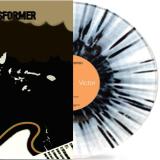
Transformer is the second solo studio album by American recording artist Lou Reed. The album is considered an influential landmark of the glam rock genre, anchored by Reed's most successful single, "Walk on the Wild Side", which touched on then-controversial topics of sexual orientation, gender identity, prostitution, and drug use. Produced by David Bowie and Mick Ronson, the album was released in November 1972 by RCA Records. Though Reed's self-titled debut solo album had been unsuccessful, Bowie had been an early fan of Reed's former band The Velvet Underground, and used his own fame to promote Reed, who had not yet achieved mainstream success.

- A1: Perfect Day (Demo - Takes 1 & 2)
- A2: I'm So Free (Demo)
- A3: Wild Child (Demo)
- A4: I'm Sticking With You (Demo - Take 2)
- A5: Lisa Says (Demo)
- A6: Going Down (Demo - Take 2)
- A7: I Love You (Demo)
- B1: New York Telephone Conversation
- B2: She's My Best Friend
- B3: Kill Your Sons
- B4: Berlin
- B5: Ocean (Takes 1 & 2)
- B6: Ride Into The Sun (Take 2)
13

- 1: Mama Tried
- 2: I’m Bringing Home Good News
- 3: Somewhere Between
- 4: Teach Me To Forget
- 5: It’s Not Love, But It’s Not Bad
- 6: If We Make It Through December
- 7: Silver Wings
- 8: I’m Gonna Break Every Heart I Can
- 9: I’m A Lonesome Fugitive
- 10: One Sweet Hello
- 11: Workin’ Man Blues
- 12: Today I Started Loving You Again (Feat. Sabine Mccalla)
12
Eli 'Paperboy' Reed pays homage to country legend Merle Haggard by
putting a soulful spin on some classic tunes
Recorded in Brooklyn with longtime collaborator Vince Chiarito (Black Pumas, Charles Bradley), Reed taps into all the heartache of Haggard's iconic catalog and channels it into explosive, high-octane performances that blur the lines of genre, geography, and race to reveal the common, distinctly American threads tying hem all together.

- A1: Romeo Had Juliette (2020 Remaster)
- A2: Halloween Parade (2020 Remaster)
- A3: Dirty Blvd. (2020 Remaster)
- A4: Endless Cycle (2020 Remaster)
- B1: There Is No Time (2020 Remaster)
- B2: Last Great American Whale (2020 Remaster)
- B3: Beginning Of A Great Adventure (2020 Remaster)
- C1: Busload Of Faith (2020 Remaster)
- C2: Sick Of You (2020 Remaster)
- C3: Hold On (2020 Remaster)
- C4: Good Evening Mr. Waldeheim (2020 Remaster)
- D1: Xmas In February (2020 Remaster)
- D2: Strawman (2020 Remaster)
- D3: Dime Store Mystery (2020 Remaster)
14
Lou Reed’s fiftieth solo album features many of his biggest hits - "Dirty Blvd" which went #1 on the Billboard Modern Rock Tracks upon release in 1989. It features Reed musing on everything from AIDS, urban blight, racism, AIDS, child abuse, Jesse Jackson, Donald Trump, the environment and other societal ills, delivered with humour and empathy.

11
The Room will be Ricky Reed’s first artist album since becoming a house-hold-name producer, and launching his own label with Nice Life Recording Company. The project features Leon Bridges, Jim James of My Morning Jacket, Dirty Projectors, Terrace Martin, Duendita, Ayoni, Lido Pimienta, St. Panther & John-Robert and more. The Room is a title that came to him in the wake of the death of George Floyd and the galvanizing of the Black Lives Matter movement across America and the world. He wanted to create a communal place where it’s as necessary to cry as it is to rejuvenate; where it’s as vital to be angry as it is to find joy. The music is an invitation to share experiences, commiserate, rejuvenate, and offer hope. It is upbeat in places, meditative always, and has real soul to it. Ultimately, Reed feels fundamentally changed by quarantine, particularly with his process of creating. All the songs were written via text and voice memos. The Room feels like an offering to the world at a time when Reed was back in the process again. Back at a new start. “When this comes out, whether it is well or not, the only thing that matters is that I made it.”

13
The Nest is a 2020 thriller film written, directed, and produced by Sean Durkin. It tells the story of a family plunged into uncertainty upon relocation from America to England, as the tense isolation of their new home affects them differently. Its soundtrack was arranged by Richard Reed Parry, a Canadian multi-instrumentalist, composer, producer, best known as a core member of the Grammy Award-winning indie rock band Arcade Fire, where he plays a wide variety of instruments. The Nest is available as a limited edition of
500 individually numbered copies on crystal clear vinyl. The package includes an insert with pictures from the movie.

We are proud to present the first release of Believe! International Records – the re-issue of Kirk Reed "California", "Shawn Lee Mix".
American songwriter and artist Kirk Reed first published the west coast gem "California" in 1979. It was the b-side of the Meca Records 7" release "Lazy Mind". The song is a folky groover that pays tribute to The Golden State through its imagery of sunshine and wide open roads. The original record is in high demand among collectors.
The flip side features an exclusive mix of the track by Shawn Lee (Shawn Lee's Ping Pong Orchestra/Young Gun Silver Fox).
Shawn has performed a full studio re-work of "California" with added instrumentation, vocals and production. The result is a luscious adaptation of the original song that truly captures its casual west coast vibe. creditKirk Reed: California.
Written by Kirk Reed. Producer: Carl Edmondson.
Originally released on Meca Records 1979. Shawn Lee Mix: Mix & additional production by Shawn Lee. Shawn Lee: background vocals, guitar solo, Jen SX1000 synth, Crumar MultiMan-S, bass drum, toms, congas, wood blocks, shaker, tambourine. Recorded by Pierre Duplan.
Mixed by: Pierre Duplan & Shawn Lee at The Shop London.

Reed Records presents the fifth single from Mohawkestra ‘Mo Heavy’ b/w ‘Buffalo Bill’ available on 7” vinyl
Mo Heavy is the first Mohawkestra single to feature one of their original compositions as the A Side and it’s a belter! Replete with the signature Mohawkestra heavy organ working alongside driving guitar chops and the percussion gets plenty of time to shine.
As the a-side is a Mohawkestra original on this one the B-Side is ‘Buffalo Bill’ which is a rather unique funk fuelled take of ‘The Continuing Story of Bungalow Bill’ from The Beatles’ White Album. The hint of the title and the melody are the only similarities though as Mohawkestra take the groove far out into the Funk spectrum and stripped back to raw elements.
Available on 7” vinyl
The fifth and final Mohawkestra 45 in this series for Reed, and for this final donut they have gone into the realms of soundtracks vibes, a lost 70s cop show theme immediately comes to mind. This is a wide open joint, a spaced-out arrangement with super tough drums n' bongo breaks that keeps building into a killer jerkin' funk burner, just needs a cop car's siren wailing at the end! Special mention to Joe Wilkins for the raw as **** guitar riffs, heavy stuff. All in all a wicked and furious 45 for B-Boys & B-Girls.

First Word kicks off 2018 with the welcome return of Quiet Dawn, and a new EP, 'Human Being: The Short Story of The Reed'. A suitably ice-thawing six-track opus to compliment the change of seasons, dedicated to the winter blooming plant's desire to be human.
Parisian Will Galland first appeared on the label in late 2014, releasing his debut album 'The First Day' the following year. Collaborations on that album and subsequent mixes since have included offerings from Oddisee, Miles Bonny, Eric Lau, Bastien Keb, Sauce81 (Eglo), Mayaka McCraven and Sarah Williams White.
Evolving his music from a palette accumulated over the years of Hip Hop, Broken Beat and House, he has expanded his talents for arranging and composing, and now drafted in a wealth of musicians for this sublime new EP, his most ambitious yet. Strings glide effervescently atop of Quiet Dawn's assorted analogue synths, and an array of percussive organics combine to build the tale of The Reed. In-places, the set transcends into the kind of grooves that saunter somewhere between the land of Bonobo and Quantic, and the cinematic library record craft of Alan Hawkshaw et al. Deep, organic and epic.
"The reed from the earth and waters,
Human by the flesh and bones,
Bring by the love and others,
Now, you're not alone."
Each track of the EP tells a different chapter of the story. In the words of Quiet Dawn, "This record is about human behaviour, relationships, happiness, sadness, peace, anger, sex, love, birth, death... But as viewed by The Reed. The Reed is a plant that wants to be human, after observing them all around her. Over the course of the record, The Reed evolves and desires to feel feelings, gradually learning that becoming human is not so simple... ."
Also with artwork by Sophie Bass and Grégoire Marty, this glorious six-track vinyl and digital EP is released February 2018 on First Word Records.

10
Third solo studio album by American musician Lou Reed, released in July 1973 by RCA Records. The album is a tragic rock opera about a doomed couple, Jim and Caroline, the concept was created when producer Bob Ezrin mentioned to Lou Reed that although the stories told by Reed's songs had great beginnings - they never really had an ending. Specifically, Ezrin wanted
to know what happened to the couple from Berlin - a song from Reed's first solo album. Pressed on standard black vinyl.

Coney Island Baby is a 1976 solo studio album by Lou Reed, released in January by RCA Records. The album has been described as perhaps the most romantic album of Reed's career .' Many of the album's songs were inspired by and dedicated to Reed's girlfriend and muse at the time, a trans woman named Rachel. Pressed on standard black vinyl.

Following the 2 previous sell out singles on Reed Records Mohawkestra return with a third salvo of the British Invasion flavour Funk! 'Heart Full of Soul b/w West Coast Boogaloo' available on 7' vinyl and download.
Heart Full of Soul was originally recorded by legendary British group The Yardbirds at a point when Jeff Beck joined and introduced Fuzz peddles and Guitar effects to their recordings. Mohawkestra's arrangement is an instrumental burst of heavy Organ and Guitar driven Funk that we've come to expect for their version and again they don't disappoint!
The flip side is a Mohawkestra original titled West Coast Boogaloo which would be right at home in a Jazzy lounge in California in the 60's, perfectly capturing the West Coast Jazz sound filtered through musicians playing in a British basement studio with a 50 year delay.

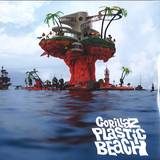
- A1: Orchestral Intro (Feat. Sinfonia Viva)
- A2: Welcome To The World Of The Plastic Beach (Feat. Snoop Dogg And Hypnotic Brass Ensemble)
- A3: White Flag (Feat. Bashy, Kano And The National Orchestra For Arabic Music)
- A4: Rhinestone Eyes
- B1: Stylo (Album Version) (Feat. Mos Def And Bobby Womack)
- B2: Superfast Jellyfish (Feat. De La Soul And Gruff Rhys)
- B3: Empire Ants (Feat. Little Dragon)
- B4: Glitter Freeze (Feat. Mark E Smith)
- C1: Some Kind Of Nature (Feat. Lou Reed)
- C2: On Melancholy Hill
- C3: Broken
- C4: Sweepstakes (Feat. Mos Def And Hypnotic Brass Ensemble)
- D1: Plastic Beach (Feat. Mick Jones And Paul Simonon)
- D2: To Binge (Feat. Little Dragon)
- D3: Cloud Of Unknowing (Feat. Bobby Womack And Sinfonia Viva)
- D4: Pirate Jet
16

- A1: Iggy Pop - Lust For Life
- A2: Brian Eno - Deep Blue Day
- A3: Primal Scream - Trainspotting
- B1: Sleeper - Atomic
- B2: New Order - Temptation
- B3: Iggy Pop - Nightclubbing
- C1: Blur - Sing
- C2: Lou Reed - Perfect Day
- C3: Pulp - Mile End
- C4: Bedrock - For What You Dream Of (Feat. Kyo) (Full On Renaissance Mix)
- D1: Elastica - 2:1
- D2: Leftfield - A Final Hit
- D3: Underworld - Born Slippy (Nuxx)
- D4: Damon Albarn - Closet Romantic
14
Based on the Irvine Welsh novel of the same name, the film version of 'Trainspotting' directed by Danny Boyle became a cult sensation. Focused on the heroin subculture of Edinburgh in the 1980s, the film is occupied with surrealism, black comedy and features a great soundtrack. This album includes tracks from Iggy Pop, New Order, Blur, Underworld and many more.
To celebrate the 20th anniversary of the iconic drama, the original soundtrack is being reissued on CD and vinyl. Having been out of print for a long time, the 180g vinyl features replica original artwork that includes special silver spot finishes throughout - front, back, booklet and picture labels, as well as bright pantones. There will be a limited run on orange vinyl before moving to black once sold out.
- A1: Howlin Wolf - Back Door Man
- A2: Slim Harpo - I'm A King Bee
- A3: Muddy Waters - Mannish Boy
- A4: Bo Diddley - Who Do You Love
- A5: Muddy Waters - Don't Go No Farther
- A6: Jimmy Reed - Going To New York
- A7: Muddy Waters - Close To You
- B1: John Lee Hooker - Crawling King Snake
- B2: Muddy Waters - Rock Me
- B3: Barrett Strong - Money (That's What I Want)
- B4: Richard Berry - Louie, Louie
- B5: Muddy Waters - Baby, Please Don't Go
- B6: Howlin Wolf - Little Red Rooster
- B7: Lotte Lenya - Alabama Song
14
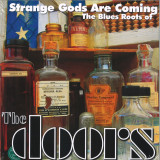
The Doors Californian kings of psychedelic-blues rock not only stood heads and shoulders above the peace and love hippy explosion of the sixties, but they were also proud to wear their influences on their sleeves by forwarding to the future by reconstructing the past.
The early live shows of the band performed in 1967 at the likes of the legendary Matrix Club in San Francisco would feature the group playing two sets, both featuring a mix of band originals and Blues covers done The Doors way.
Material such as 'I'm a King Bee' by Slim Harpo,'Who do you Love' by Bo Diddley,'Money (Thats what I want)' by Barrett Strong (a song that would stay in the live set for the duration of the bands life) and at The Winterland Ballroom over the Christmas festivites'Mannish Boy' by Muddy Waters were rolled out to an adoring local fanbase.
The classic 'Backdoor Man' by Howlin Wolf would also find a place on the group's debut album.
With all of the members of The Doors being long time blues fans more material was being worked up during rehearsals and added to the live shows along with new songs from The Doors forthcoming albums.
The Doors walked it like they talked it and sadly we will never see the likes of them again...a wonderful mixture of Blues and Psychedelic rock,they proved that in order to meet the future you must never forget the past..NO LIMITS,NO LAWS.................

Considered by many to be one of the best live albums of all time, this classic album by The Allman Brothers Band, recorded at the pinnacle of their success, was a huge hit for the band. In 1971 The Allman Brothers Band was already one of the most popular groups in America, but by the time this album hit the streets their brand of Southern rock had become a national obsession. One of Rolling Stone's "500 Greatest Albums Of All Time," it was the band's last with guitar hero Duane Allman, who was killed in a motorcycle accident later that year. Two 180-gram LPs with two bonus tracks.

- A1: Chuck "Big Guitar" Ernest - "Blue Oasis" (With The Satellite Band)
- A3: The Wailers - "Driftwood
- A4: Lenny & The Thundertones - "The Moon Of Manakoora
- A5: Biscaynes - "Midnight In Montevideo" (With Co-Encidentals)
- A6: Red Harrison & His Zodiacs - "Chant Of The Jungle
- A7: The Palatons - "Jungle Guitar
- A8: Chayns - "Live With The Moon
- C1: Bailey's Nervous Kats - "Cobra" (Feat James Mills)
- C2: The Blazers - "Sound Of Mecca
- C3: The Gems - "Slave Girl
- C4: Jerry & The Catalinas - "The Arabian Knight
- C5: The Jaguars - "Night Walker
- C6: The Shelltones - "Blue Castaway
- C7: The Blue Bells - "Atlantis
- C8: Bill & Jean Bradway - "Paradise Isle
- D1: The Melody Mates - "Enchantment
- D2: Don Reed - "Nature Boy" (Feat The Voice Of Love)
- D3: The Baton Of Andre Brummer - "Tumba
- D4: Darla Hood - "Silent Island
- D5: Martha Raye - "Lotus Land" (With Phil Moore Orchestra)
- D6: Baha'i Victory Chorus - "Nightingale Of Paradise
- D7: Carmen - "Isle Of Love
- D8: The Monzas - "Forever Walks A Drifter
- E1: Akim - "Voodoo Drums
- E2: Don Sargent & His Buddies - "Voodoo Kiss
- E3: Joan Joyce Trio - "Captured
- E4: Pony Sherrell - "Tobago
- E5: Jerry Warren & The Valids - "Enchantress
- E6: The Centuries - "Polynesian Paradise
- E7: The Potted Palm - "My House Of Grass
- E8: The Castiles - "Enchantment
- F1: Five Glow Tones - "Quiet Village
- F2: Modesto Duran & Orchestra - "Silent Island
- F3: Ross Anderson Chorus & Orchestra - "Tam-Bu Theme
- F4: Bobby Christian - "Caravan
- F5: Bruce Norman Quintet - "Arabian Rhythm
- F6: The Slaves - "Hari's Harem
- F7: Arnie Derksen & Chise - "Similou
- F8: The Three Bars - "Caribbean Cruise" (Feat Nicky Roberts)
- G1: Robert Drasnin - "Chant Of The Moon
- G2: The Blue Jeans - "Moon Mist
- G3: Artie Barsamian - "The Enchanting Melody
- G4: Eddie Kochak & Hakki Obidia - "Jazz In Port Said
- G5: Gene Sikora & The Irrationals - "Tanganyika
- G6: Bobby Paris - "Dark Continent
- G7: Chico Jose - "Locura (Madness)
- G8: Clyde Derby - "Lost Island
47
It Was A Musical Cocktail Born In A Marketing Meeting: Two Parts Easy Listening, One Part Jazz, A Healthy Dollop Of Conga Drums, A Sprinkling Of Bird Calls, And A Pinch Of Textless Choir. Serve Garnished With An Alluring Female On The Album Jacket For Best Results. Exotica! The Soundtrack For A Mythical Air Conditioned Eden, Packaged For Mid-century, Tiki Torch-wielding Armchair Safariers. Be It Mosquito-bitten Torch Singers, Landlocked Surf Quartets, Fad-chasing Jazz Combos, Mad Genius Band Leaders, D-list Actors, Or A Middle Aged Loner Programming Bird Calls Into A Hammond, Exotica Was Always More Concerned With What Geography Might Sound Like Over Who Was Conducting. Captured Across Three Albums Are 48 (54 On The Cd) Curious Examples Of The Short-lived Genre's Reach, Each Summoning Their Own Sonic Visions Of Shangri La, Bringing Their Versions Of The Pacific, Africa, And The Orient To The Hinterlands Of America. Technicolor Paradise Is Where One Makes It, After All.
Various Artists - Technicolour Paradise: Rhum Rhapsodies & Others Exotic Delights

- A1: Princess Of Dawn
- A2: Winter Sun
- A3: Triad
- A4: Tom Bombadills Dance
- A5: Pearls
- A6: Arabia
- A7: Cray-Fish
- A8: Deep Sea
- A9: Starlight
- B1: Phoenix
- B2: Hoodle-Doodle
- B3: Gotic Velvet
- B4: Green Cherub
- B5: Desert-Rock
- B6: Synthi-Effect
- B7: Flea-Dance
- B8: Flea-Dance Ii
- B9: Laser
- B10: Up And Down
- B11: Desert-Rock Ii
- B12: Kolibri
- B13: Elefantentempel
- B14: Reed
- B15: Singing Bell
- B16: Evening
- B17: Together
New Lp-edition of a private press library recordings of the early '70s.
Together with Florian Fricke and Peter Michael Hamel, Deuter is certainly the main responsible of a fruitful encounter between European sensibility and Eastern aesthetics in the German music of the 1970s. Soundtrack was originally produced by Kuckuck in 1973 not for an official and public release, but as a library' to be used for films, TV and radio. As a library it respects the canonical and typological structure of the genre with 26 short sonic fragments, sequences imagined and conceived like fulminating illuminations. There's still a solid electronic vocation that, however, has put aside the most disruptive effluvia of D (1971) of pure kraut' ancestry. In fact, the album is more like an ideal passing bridge between some ritual instances of the previous Aum (1972) and the following successful phase of Deuter during the period when he stays in the Bhagwan Shree Rajneesh's ashram in Poona realizing, in parallel to a renewed inner life, masterpieces like Celebration, Haleakala, Ecstasy and Silence is the Answer. Musically speaking, Soundtrack presents itself as a heterogeneous work with nocturnal, cinematic, galactic and atmospheric-environmental implications. Electronics remains the predominant factor but can vary from mantra drones of more ceremonial and meditative space-relax' tones of some tracks (Triad, Deep Sea, Gothic Velvet or Evening) to the most amused formulations of pulsating analog synths that in the hands of Deuter become toy-equipement' to modulate and explore (Desert Rock, Synth Effect, Flea Dance or Laser). There is no lack of acoustic moments more ethnically inspired with Arabian and Indian (Reed, Arabia) or devotionally solar themes (Tom Bombaddils Dance), so evoking an air of diffuse peace then completely conquered in the beloved India.

19
Jam Money is the shared musical vision of Kevin Cormack and Mathew Fowler. Mathew (Bons) and Kevin (Half Cousin, Harry Deerness) first began collaborating as part of the Blank Tape Spillage Fete, an ongoing collective project of art and music which focuses on the creation and perpetuation of small DIY exhibitions, related events and limited releases that celebrates the hobbyist nature of home recording.
Jam Money revolves around a passion for the simple and sometimes restrictive nature of four-track cassette recording. Using old half-broken guitars, clarinets, charity shop keyboards, toys, family heirlooms, zithers, home-made percussion, and household objects a shared dialogue appears, involving both mark making and musical mishaps, allowing the makers to be carried along as the music finds its own way.
Genre definitions melt away in Jam Money's music as ambient dissolves into lo-fi rock, noise into fragile naive classroom melodies. Creativity beyond easy categorisation.The first recordings titled 'Blowing Stones' were self-released in 2014. The cover and insert artwork for this record featured abstract paintings by the artist Aimée Henderson whose work and process is a great influence on their music. Having played gigs alongside kindred spirits National Bedtime and Plinth, the tail end of 2015 saw the the band travel to Germany to play with the Notwist and Le Millipede for a series of 'Alien Disko' nights organised by Alien Transistor, a label with a shared kinship of both the weird and wonderful.
'A Gathering Kind' is the second album by Jam Money: a journey of sound and colour, subliminal images and narrative. The roots of this collection found Fowler and Cormack using an earthier, more instinctive language, making it a rougher-edged sibling to their other recordings, with parallels to the home-spun worlds of Flaming Tunes, Pumice, Maher Shalal Hash Baz and World Standard. Aimée's artwork features again, both paintings and music forming a collective language of dream-like adventure.
"Poignant and exploratory. Melting together acoustic and electronic elements, the narrative throughout is one of a ghostly world heading for winter. A firm fan favourite Stephen Pastel (The Pastels & Monorail Music) on Blowing Stones.
"Created in question and answer form, their songs exist like little sculptures - wayward and peaceful, sometimes whirring into automatic life under the pair's combined attention."
Ron Basejam is, of course, a project from Crazy P co-founder James Baron where he focuses on deep and heavy house. He lands on Leeds label 20/20 Vision here with 'Maynard', which is a trudging rhythm brought to life with bluesy vocals and big horns. 'Bighorn' then works the filters to cook up an emotionally charged and loopy sound and 'Is It Daylight?' cuts more loose with a soulful, dusty sound that Moodymann would love. Last but not least is the cosmically charged 'The 8 Bit Slowdown' with its jazzy reed work and raw, broken, driving beats. A smart and varied four tracker from a real G.
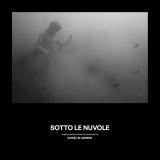
- 1: Nuvole I
- 2: Nuvole Ii
- 3: Nuvole Iii
- 4: Nuvole Iv
- 5: Nuvole Ix
- 6: Nuvole V
- 7: Nuvole Vi
- 8: Nuvole Vii
- 9: Nuvole Viii
- 10: Nuvole X
In Gianfranco Rosi’s portrait of Naples, Sotto le Nuvole, the ground shakes periodically. Between Mount Vesuvius and the Tyrrhenian Sea, the fumaroles of the Phlegraean Fields hiss volcanic gas and steam. Below the sleeping volcano, modern day Naples emerges in black and white and fills with voices, with lives. From the traces of history and the concerns of the present, Rosi documents a city immersed in its continuous past, with Daniel Blumberg’s minimal soundscape hovering in a sonic space between liquid and air.
Tasked with creating a soundscape that would suspend space within Rosi’s film, Blumberg called upon the extended technique of saxophonists Seymour Wright and John Butcher to create a gossamer fabric of traces and sounds abstracted from their instruments. Having transitioned from theoretical physics to the saxophone, John Butcher has always deeply considered space in the context of his playing. His concerns are with flow, density and how the saxophone is situated in the living world. Zeroing in on the core sonic properties of the mechanical and acoustic components of the saxophone, Seymour Wright has integrated its every breath, reed vibration, keypad clatter and hissed microtone of his alto into his own, unique improvisational language. In his work with these two seminal players, Blumberg makes his most concentrated soundtrack to date - reinforcing the film's sense of overlapping time and space, and pushing at the limits of experimentation.
Initially recorded in Daniel’s flat in London, Butcher and Wright centre themselves around long, consistent tones, so soft that it seems breath is being gently pulled from the saxophone's bell by an invisible hand. Blumberg himself adds haunting bass harmonica, and recordings of Wright’s launeddas - a traditional and ancient triple pipe polyphonic reed instrument from Sardinia, Italy. Blumberg then travelled to the volcanic region of Baia, next to Pompeii. Once a flourishing classical Roman city loved by Nero, Baia slowly sank under hydrothermal pressure, leaving the city in a kind of geological purgatory. Using specialised geophones and hydrophones, Blumberg took those initial recordings and amplified them underwater, sending them calling out across the ruins of Baia’s mosaics, Nymphaeum statues and villas.
“It was important to me that the music was whispered in the same landscape that Gianfranco has worked for the past three years, so that you can hear the volcanic air gulping, the lapping of the waves, the steam and bubbles popping against John and Seymour’s saxophone breaths – an echo from a suspended time.”
What emerges is deeply melancholic, tender, subtle and right at the edges of audio technology. Submerged in an aquarian mausoleum, the mysterious vibrations of the saxophone and its bell become an echo of an echo, wading from the future into the past. ‘Sotto le Nuvole’ is less a soundtrack than a process of aeration - a sonic puncture in the material of the film which allows its central message to breathe, and a remarkable experiment at the limits of the saxophone’s possibility.

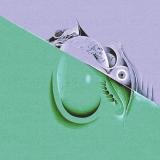
After their recent LP Mirages (Kraak Records, 2025) with French turntablist Guilhem’All, the group continues to explore collaborations with artists and instruments from diverse musical traditions. Building on decades of uncompromising acoustic exploration, Razen delves deeper into their practice with five improvisational pieces that unfold slowly in time and space. The duo’s radical core - Brecht Ameel and Kim Delcour - finds in Van der Harst a longtime kindred spirit, united by the impact of sound, intonation, and the sheer joy of playing.
To be released on April 24 via VIERNULVIER Records, the artwork for Stained Glass Starling was created by American visual artist Robert Beatty (Oneohtrix Point Never, Christina Vantzou, The Weeknd, Tame Impala). The physical release comes with a 16-page booklet including artwork and an interview.
A long-standing artistic kinship lies at the heart of this project, with first encounters dating back to the early 2000s in Belgian musical improv theatre. Van der Harst’s lifelong experience in improvised music and music theatre, spanning back to the 1980s, combined with a vast arsenal of rare and historical instruments, opens new tonal territories within the Razen universe.
These explorations are not incidental: his family roots in the former Dutch East Indies — through his great-grandfather — provide a quiet backdrop to his enduring affinity for Asian musical traditions. Instruments such as erhu, Javanese kacapi, and others introduce timbres
that bring the music its most pronounced Asian inflections to date.
Yet despite this shift in colour, the underlying ethos remains unmistakably Razen. Working from sound rather than form, the ensemble approaches music as painters approach a canvas: adding layers, contrasts and shades with care. There is no soloist’s ego here; all voices are equal, echoing principles found in gamelan traditions.
Over the decades, Razen and Dick Van der Harst have crossed paths repeatedly, notably through cult theatre productions by Belgian theatre maker Eric De Volder, including Zwarte vogels in de bomen (2002) and Huis der Verborgen Muziekjes I–II (2000–2006). Recording an albumtogether had long been a shared aspiration — a wish that crystallised after a 2024 concert at Concertzaal Miry in Ghent, part of the Ruiskamer series by VIERNULVIER Art Centre.

6
‘Their ability to harmonize together is stunning, their reedy voices coming together and pulling apart amid delicate fingerstyle guitar and concertina deployed in just intonation, which imparts a deeply resonant, almost glowing harmonic presence. It’s all quite subtle, and if you only listen to the way the voices of Cater and Rasten blend you might even miss it—but the full sonic spectrum is what distinguishes and, in certain ways, connects it to traditional practice… Although the album is pure balladry, unfolding with exquisite patience, each song contains nifty little flourishes or instrumental elements that set them apart, such as the slide guitar and wheezy bass harmonica on For the Ear That is No More, or the slow peal of trumpet on Death and the Lady, courtesy of Rasten’s partner in Pip and Oker, Torstein Lavik Larsen. (Peter Margasak, Nowhere Street).
‘All done with such grace and elegance, without a note wasted or any required. Wonderful… faultless and deeply considered’ (Glenn Kimpton, KLOF).
Three high English and Scottish ballads, and three original settings of European folk tales.
Matt gatefold cover; gloss spot varnish.
Check it out!
- 1: Amidst Things Uncontrolled (2026 Remaster) 05:00
- 2: Pigeon Hurt (06 Remaster) 03:3
- 3: Roots Growing (2026 Remaster) 04:42
- 4: From Verse To Verse (2026 Remaster) 03:9
- 5: Refrain From (2026 Remaster) 01:13
- 6: Tentative Growth (202 Remaster) 04:28
- 7: Across From Golden (Remix) (2026 Remaster) 05:08
- 8: Standing On A Hummingbird (2026 Remaster) 04:54
- 9: Pattern For A Pillow (2026 Remaster) 07:14
- 10: Difficult To Light (2026 Remaster) 05:00
10
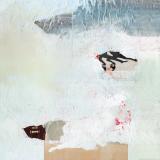
Originally released on Ezekiel Honig's Anticipate label in 2007, Standing on a Hummingbird is the debut album by Canadian sound artist Mark Templeton, now appearing for the first time on vinyl, newly remastered by Giuseppe Ielasi and cut by LUPO. Working at the intersection of post-glitch, electroacoustic ambient, and textural minimalism, Templeton composes through restraint and erosion, building patient and richly tactile pieces primarily from acoustic sources - fingerpicked guitar, plaintive banjo, muted accordion tones - subjected to careful processes of granulation, filtering, and environmental masking. These gestures never overwhelm the source material; instead, they wonderfully destabilize it. Melodies appear briefly, only to dissolve into dense atmospheres of field recordings: distant streets, birds, water, air. Sounds hover, vibrate, and vanish, much like the wing beating latent in the album’s title.
Tracks such as “Pattern For a Pillow” and “Amidst Things Uncontrolled” articulate this approach with particular clarity, setting languid acoustic figures against churning granular backdrops that feel at once sheltering and unstable. Elsewhere, moments of fragile clarity - fluttering guitar lines, reedy accordion tones - briefly break the surface before being absorbed back into the field.
Heard today, the record offers a clarion, almost spartan strain of textural ambient music: intricate yet unforced, shaped by human touch rather than automated excess. Its refusal of spectacle feels especially vital in a landscape saturated with maximalist digitalia - a reminder that electronic music’s most enduring gestures often occur where sound is allowed to tremble and hold itself just long enough to be felt before disappearing once again. (Alex Cobb, 2026)

- 1: From The Air
- 2: Good Evening
- 3: Cloud
- 4: Let X=X
- 5: It Tango
- 6: Drum Solo
- 7: Teachers
- 8: Story To No One
- 9: Gravity’s Angel
- 10: Ramon
- 11: New Angels
- 12: Walk The Dog
- 13: Looking At The Moon
- 14: Church Of Panic
- 15: Dog Show
- 16: Junior Dad
- 17: O Superman
- 18: The Lake
- 19: Swimming
- 20: It’s Not The Bullet That Kills You
- 21: Only An Expert
- 22: What Are Days For?
- 23: How To Feel Sad Without Being Sad
Nonesuch Records releases Let X=X, by Laurie Anderson with Sexmob. This triple-LP/double-CD set was recorded live during a 2023 tour by Anderson and the jazz band Sexmob – Steven Bernstein and Briggan Krauss on brass, Kenny Wollesen on percussion, Douglas Wieselman on winds and guitar, and Tony Scherr on bass. Its cover and interior packaging feature paintings by Anderson. The album features 23 songs, including many favourites from throughout Anderson’s career, performed in new arrangements – plus one by Lou Reed and Metallica, ‘Junior Dad’. Anderson and Sexmob play more US and international dates this spring and summer (details below).
The New York Times said Anderson and Sexmob’s concert at the Brooklyn Academy of Music (BAM) ‘wasn’t a historical recreation of past recordings; Sexmob’s sound is a beefier one than on Anderson’s albums. With musicians who can double on electric guitar and bass clarinet, its members offered a rich range of textural variation throughout the evening.’
Laurie Anderson is one of America’s most renowned – and daring – creative pioneers. Her work, which encompasses music, visual art, poetry, film, and photography, has challenged and delighted audiences around the world for more than 40 years. In a recent 60 Minutes profile, Anderson Cooper said she ‘is a pioneer of the avant-garde, but... that doesn’t begin to describe what she creates... It’s experienced by audiences who come to see her perform: singing, telling stories, and playing strange violins of her own invention... she blends the beautiful and the bizarre, challenging audiences with homilies and humor. She blurs boundaries across music, theater, dance, and film.’ The Washington Post has said she ‘doesn’t just tell stories; she draws out every word with a kind of physical pleasure, tasting its flavor as she probes the everyday mysteries of life.’
Anderson released her first album with Nonesuch Records, the critically lauded Life on a String, in 2001. Her subsequent releases on the label include Live in New York (2002); Homeland (2010); the soundtrack to her acclaimed film Heart of a Dog (2015); and her Grammy-winning collaboration with Kronos Quartet, Landfall (2018). Nonesuch released a re-mastered edition of Big Science in 2007 for its 25th anniversary, followed by a vinyl LP re-issue in 2021; the album includes Anderson’s beloved, surprise hit, song, ‘O Superman’, which also is featured on Let X=X. Her recent Nonesuch release was 2024’s Amelia, about renowned female aviator Amelia Earhart’s tragic last flight.
Anderson’s virtual-reality film La Camera Insabbiata, with Hsin-Chien Huang, won the 2017 Venice Film Festival Award for Best VR Experience, and, in 2018, Skira Rizzoli published her book All the Things I Lost in the Flood: Essays on Pictures, Language and Code, the most comprehensive collection of her artwork to date. Recent exhibitions and installations of Anderson’s work include Habeas Corpus at New York’s Park Avenue Armory; her largest exhibition to date, The Weather, at Washington, DC’s Smithsonian’s Hirshhorn Museum of Modern Art; and Looking into a Mirror Sideways at Stockholm’s Moderna Museet, which was her largest European exhibition to date.
Laurie Anderson was awarded the 2024 Stephen Hawking Medal for Science Communication, along with Christopher Nolan and David Attenborough, and the International Astronomical Union named a minor planet in her honour: Asteroid 270588, Laurieanderson. That same year, she was awarded a Grammy Lifetime Achievement Award.
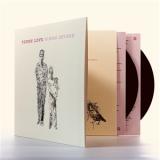
- 1: Annelie
- 2: Wild Palms
- 3: Drowning Man
- 4: Two Black Irises
- 5: Vagabond
- 6: Isn't This How The Story Always Begins?
- 7: Winter Says
- 8: Last Call For Karaoke
- 1: In A Room Like This
- 2: How To Talk To Your Man
- 3: Allegiances
- 4: Anniversary Song
- 5: Tough Love
Seit über 30 Jahren ist Simon Joyner eine Ausnahmeerscheinung - ein vollkommen unabhängiger Künstler, der sich ganz auf sein Handwerk konzentriert. Der in Omaha lebende Singer-Songwriter veröffentlichte Anfang der 90er Jahre erstmals Musik und ist seitdem seinem Weg treu geblieben. Joyners Songs voller stiller Freude und Herzschmerz haben verschiedene Generationen von Künstlerkollegen geprägt und zeigen sich als offensichtlicher Einfluss bei Acts wie Bright Eyes oder Kevin Morby sowie als Anklänge gemeinsamer Perspektiven bei den nachfolgenden Lenkers, Oldhams und Molinas. "Tough Love", Joyners 19. Studioalbum, setzt diesen Aufwärtstrend fort. Obwohl es untrennbar mit der persönlichen Trauer von "Coyote Butterfly" aus dem Jahr 2024 verbunden ist - dem autobiografischen Album, das Joyner nach dem Tod seines Sohnes aufgenommen hat - erforscht dieses neue Album das Konzept der ,tough love" als Dichotomie, die auf verschiedene fiktive Beziehungen angewendet wird, darunter romantische, familiäre und politische. Dieser Balanceakt zeigt sich in lebhaften Schilderungen alltäglicher Herzensschmerzen und in der Auseinandersetzung mit politischer Wut und dem Verrat am amerikanischen Traum. Eines der Wunder von Joyners Werk ist, dass sich seine Muster nicht wiederholen, sondern wandeln. Anspielungen auf Cohen, Dylan und die Velvets sind seit den frühen Lo-Fi-Tagen Teil seines Songwritings, doch die Art und Weise, wie diese Vorbilder einfließen, verändert sich ständig. Während Joyners raue Akustiksongs im Rampenlicht stehen, werden sie von E-Gitarren angestachelt und sind von experimentellen Tendenzen durchdrungen. Die Rocksongs bilden einen Mittelweg zwischen minimalistischen Grooves, die von Velvet Underground der Loaded-Ära übernommen wurden, und der ekstatischen rhythmischen Verrücktheit von Can. Wenn wir beim vorletzten Track, ,Anniversary Song", angelangt sind, haben die geisterhaften Vocals und die Scratches des mikrotonalen Synthesizers die Grenzen zwischen Joyners Folk-Sänger-Herz und seinem Avantgarde-Geist verwischt. All das mündet in den 20-minütigen Titeltrack, der "Tough Love" abschließt - ein erschütternder Sturz in einen scheinbar bodenlosen Abgrund aus Reue, Überlebensschuld und unverblümter Trauer. Er leiht sich eine repetitive Struktur aus Lou Reeds erzählter Suite ,Street Hassle" und kombiniert sie mit dem seitenfüllenden Zeugnis von Dylans ,Sad-eyed Lady of the Lowlands", Joyner erzählt dazu aus der Perspektive seines verstorbenen Sohnes, der zu seinem Vater spricht, all seine Fehler darlegt und schonungslos hervorhebt, dass nichts davon rückgängig gemacht werden kann. Bald jedoch öffnet sich diese Qual zu etwas Transzendentem, sowohl in ihrer eleganten Bildsprache als auch in ihrer ätherischen Atmosphäre. Die letzten Momente des Albums gewähren die Erlaubnis zur Selbstvergebung und hoffentlich eines Tages auch zum Verständnis. Dieses kathartische Ende bringt all die verworrenen Gefühle, die sich durch "Tough Love" ziehen, auf den Punkt. So wie Joyner das Songwriting aus ungewöhnlichen Blickwinkeln angegangen ist, die sich jedes Mal ändern, wenn er zur Gitarre greift, um ein neues Album aufzunehmen, so verändert sich auch auf "Tough Love" seine Beziehung zu Trauer, den alltäglichen Kämpfen und dem ewigen Streben nach etwas Besserem.
- A1: Monsters
- A2: Alien Point Of View
- A3: Cardinal Newman
- A4: Fat Cow
- A5: Nothing To Hide
- A6: People Like You
- A7: Regress For You
- A8: Christian Lovers
- A9: Exorcism
- B1: Bathroom Sluts
- B2: Pie On A Ledge
- B3: Push, Push, Push
- B4: Alice's Song
- B5: Praise The Lord
- B6: My Mommy's Chest
- B7: Slave
- B8: Poets (Early Version)
- B9: Pretty Vacant
- C1: Miscarriage
- C2: Scandinavian Dilemma
- C3: Poets
- C4: Confession
- C5: She Works For Safeway
- C6: Bible Stories
- D2: Green Tile Floor
- D3: Bathroom Sluts (Demo)
- D4: Waterpiss
- D5: Baby Face
- D6: Berlin Red Head
- C7: Dyptheria
- D1: Castration
30
Nervous Gender’s legendary synthpunk LP Music From Hell burbles up from infernal depths to resurface on Dark Entries. Confrontational, unhinged, and unabashedly queer, Music from Hell is an unholy grail for fans of the strangest underbellies of post-punk, minimal synth, and early industrial music, and is presented here newly remastered and on expanded double LP.
Nervous Gender (de)formed in LA in 1978 at the hands of Phranc, Gerardo Velaquez, Edward Stapleton, and Michael Ochoa. Phranc, the androgynous embodiment of the band’s name, left in 1980. Following her departure, a wide cast of LA freaks would find themselves drawn into the band’s orbit, including Alice Bag of the Bags, Paul Roessler of the Screamers, the Germs’ Don Bolles, and an 8-year old drummer named Sven Pfeiffer. In 1980, Nervous Gender appeared on the seminal Live at Target compilation alongside Factrix, uns, and Flipper. With the band’s notoriety cemented, Music from Hell followed in 1981 on Subterranean Records (as no LA label would touch this material).
Side A, dubbed “Martyr Complex”, presents a more punk-forward sound with live drum salvos and slabs of aggressive synth. These twitchy, unsettling shockers ooze with the kind of snotty misanthropy that will endear them to fans of the Screamers or Crass.
Side B, known as “Beelzebub Youth”, is a live performance the band labeled "an electronic bruto-canto dissertation on the banality of spiritual transcendence." Mutant melodies cede way to synthesized clangs, whirs, bleeps, manipulated tapes, and howls of despair.
In addition to all the material from the original LP, we’re treated to a full disc of the band’s demos, the material from the Live at Target compilation, and early live recordings. Included are unrecognizable covers of Carly Simon and Lou Reed, and the Sex Pistols that are so despairingly skewed they fall into the void. This reissue of Music From Hell includes a 36 page lyric booklet, foldout poster, and gatefold sleeve with photos, flyers, and news-clippings designed by Eloise Leigh. Tackling taboo issues like sexual kinks, mental illness, drug use, and childhood molestation, Music From Hell is still surprising – even shocking - over 40 years after the album’s release. Nervous Gender stand as one of the most genuinely anti-establishment outfits in underground music, a colossal fuck you to social norms from religious strictures to gender essentialism.
Group Rhoda returns to Dark Entries with Phase 5, a new LP of synthesizer-driven art-pop. An integral member of the West Coast electronic music scene, Mara Barenbaum has been writing, performing, and plunging into oneiric depths as Group Rhoda since 2009. Barenbaum’s songcraft is at once stylistically diffuse and laser-focused, a synesthetic approach that allows her to effortlessly glide between genres and soundworlds while centering her singular poetics. On Phase 5, her fifth LP as Group Rhoda, we find Barenbaum waxing nondualistic. Lines between fairytale and fact, between nature and art, between subject and object all dissolve under contemplation.
The songs on Phase 5 are perpetually in-between states, deftly shifting form at the blink of an eye. With sleight of hand, “Field Tone” transmutes from brooding John Carpenter-esque electro into vocoder-driven space disco. “Dragon Pine” darts from cosmic dub to cybernetic dancehall and back again. The uptempo darkwave-leaning number “Aeolian Crossing” dissolves into the void, like sand falling through one’s fingers, like a retreating wave. The cover artwork for Phase 5 is by Shawn Reed, and features purple lilies and light refracted through water. All songs on this album were mastered by Ruud Lekx. The digital version of Phase 5 will be released via Katabatik, a label and sound system that Barenbaum has had close ties to for the past decade.
- A1: Design - Premonition
- A2: Vision - Lucifer’s Friend
- A3: Richard Bone - Alien Girl
- A4: John Howard - I Tune Into You
- A5: Ian North - We’re Not Lonely
- A6: Selwin Image - The Unknown
- B1: Harry Kakoulli - I’m On A Rocket
- B2: Rich Wilde - The Lady Wants To Be Alone
- B3: Billy London - Woman
- B4: Alan Burnham - Science Fiction
- B5: The Microbes - Computer
- B6: The Goo-Q - I’m A Computer
- C1: Gerry & The Holograms - Gerry & The Holograms
- C2: The Warlord - The Ultimate Warlord
- C3: Die Marinas - Fred From Jupiter
- C4: Dee Jay Bert & Eagle - I Am Your Master
- C5: Peta Lily & Michael Process - I Am A Time Bomb
- C6: Sole Sister - It’s Not What You Are But How
- D1: Alasdair Riddell - Do You Read Me?
- D2: Karel Fialka - Armband (The Mystery Song)
- D3: John Springate - My Life
- D4: Idncandescent Luminaire - Famous Names
- D5: Disco Volante - No Motion
- D6: Dream Unit - A Drop In The Ocean
24
2025 REPRESS ON TRANSPARENT GREEN VINYL
Compiled by Philip King “And then came the rise of synth pop : blokes with dodgy haircuts hunched over keyboard-operated machines stuffed with wires and do-it-yourself tone oscillators making sounds like a brood of geese passing gas in a wind tunnel. Whoopee! This is the way the ‘70s ended : not with a blood-curdling bang bang but with a cheap, synthesized, emasculating whimper.” NICK KENT, NME. All The Young Droids: Junkshop Synth Pop 1978-1985 is a new compilation that charts the underbelly of the epoch-defining sound of the synthesiser in 80s popular music. Compiled by Philip King (previously seen compiling All The Young Droogs, Glitterbest and Boobs - The Junkshop Glam Discotheque), the music here connects the dots between DIY synth enthusiasts grappling with new, cheap synthesisers at the tail-end of punk and wannabe, jobbing songwriters enthral to the new music pioneered by Gary Numan, Depeche Mode and Daniel Miller’s Mute Records. Featuring rare tracks of auto-didactic progressive pop music, proto-techno punk, shoot-for-the-stars-land-in-the-gutter chart flops and heralded, underground synth classics, School Daze paints a picture of beautiful failure. Complete with extensive sleeve notes written by King and never before seen imagery, all 24 tracks were remastered by RPM in-house engineer Simon Murphy, many from vinyl copies due to lost master tapes. The story told on All The Young Droids is one of the dawning opportunity presented by both the emergence to the market of cheaper analog synthesisers and the distribution networks plus indie labels that exploded with the advent of punk music in 1976. While the music that sprouted out all over the globe in the wake of these factors was decried as fake, plastic, a refutation of punk’s guitar-led revolution, it’s telling that much of the music on All The Young Droids.. was created in bedrooms, ramshackle studios and home-made set ups with often borrowed equipment. In the era of record labels jumping to capitalise on the success of The Sex Pistols, The Clash (both on major labels, of course) these artists struggled to stand out from a new gold-rush with next to no budget or PR team. With radio and labels desperate for the new Yazoo, what resulted was a testament to necessity being the mother of invention. At the time, the synthesiser was the music of the future, a shiny new machine that could paint like an orchestra with a single finger and a 4-track. In the hands of Manchester avant-pranksters Gerry & The Holograms it’s a pulsing, sardonic weapon.. the only instrument on the Messthetics classic lampooning of New Wave fashion. In Hamburg, a 16 year old Andreas Dorau used it to write and record (with his female classmates on vocals) a global smash in Fred Vom Jupiter (later licensed to Mute Records). The hard-to-find English version (Fred From Jupiter, natch) is included here. Many artists with alreadystoried careers caught the bug and recorded synthesiser-fuelled peons to space, computers, the future and, of course, love-interests. Harry Kakoulli, late of Squeeze, recorded a solo album in 1979 that included the incredible power-synth-pop smash-that-never-smashed I’m On A Rocket. Similarly, Ian North of Neo and American Power Pop stalwarts Milk ’n’ Cookies bought a Korg MS20 and used a tape machine to record We’re Not Lonely, an absolute lost-classic of minimal synth pop. We’re Not Lonely also features on the Junkshop Synth Pop sampler 7” twinned with John Howard unreleased track You Will See, released April 12th 2025. There are plenty of compilation debuts in evidence. Sole Sister were a mysterious trio who were featured on the Scaling Triangles compilation of female-fronted, queer-adjacent post-punk / underground music that also featured The Petticoats. Selwin Image were from San Francisco and featured members of the recently defunct power pop/punk group The Pushups. Their stupidly catchy The Unknown fizzes with New Wave energy - think XTC to Sparks but remains unreleased until now. Dream Unit’s A Drop In The Ocean is an early synth wave cut, positively teaming with Joy Division instrumentation, previously only released on a long-forgotten and super rare, self-released EP. Incandescent Luminaire’s Famous Names belies an archetypal struggle of a small-town trying to make it in a cruel industry but is a thrilling New Romantic-Synth Wave cross over with a OMD gloominess that’s a joy to hear. Feminist Minimal Wave track I Am A Time Bomb by performance artist Peta Lilly and Michael Chance is a revelation destined for new found cult status. It was released on 7” and lost until now. The flipside to the subterranean, never-made-it synth pop mentioned above are the ambitious, even fruity attempts at success that have a perennial elegance to their confidence. New Jersey-ite Billy London (real name Ed Barth) tried to cash in on the synth boom with Woman, released by a major label, a lurching new wave track built on the Louie Louie rhythm and a wonderfully camp Lou Reedstyle sleazy vocal before exploding in the synthesised chorus. The song bombed but with a chorus like this, you have to wonder why? Ex-Glitter Band member John Springate’s My Life is truly epic, with doomed chord progressions and massive sounding drums turning into at least 3 different songs in the course of the track. Before you wonder what’s going on the song resolves with a glorious return to the main refrain. The dry-ice-dressed dance floor is well catered for too. Design’s Premonition and Vision’s Lucifer’s Friend are stone-cold minimal synth bangers, well loved but given a new lease of life here. The Warlord’s The Ultimate Warlord was released in 1978, a homespun proto Hi NRG banger that was later re-recorded by The Immortals in Canada who had a club hit with it. One-man- band Disco Volante’s No Motion was re-issued by Synth wave label Medical in 2012 but makes its first vinyl compilation appearance here. Close your eyes and you can imagine what Lawrence of Felt would have sounded like with some cheap Korgs a little earlier in his career. Gibraltar-based trio The Microbes imagined a computer programming people to dance - how prescient - and ended up with a propulsive, robo-funk track with splendid rubbery bass playing over a tectonic drum machine. Previously picked up by Belgian label Stroom TV, Dee Jay Bert & Eagle’s heavily Euro-accented I Am Your Master demands the listener to “come to paradise!” In a frankly terrifying manner. All The Young Droids is the first compilation to peel away from the narrative that dour, Minimal Synth and Cold Wave were the only musical children of the first rush of synth pop. Philip King and School Daze Records describe a much more complicated world: along with the austere, Brutalist children of Daniel Miller (who produced Alan Burnham’s Bowie-Low-influenced Science Fiction here) was a plethora of desperate cash-ins, accidental mainstream hits, ambitious pop dramas and major label punts that went nowhere. Crucially, the compilation blurs the line between junk and treasure. What if the two things are interchangeable. What if it’s all science fiction?

Drummer-composer Tom Skinner announces Kaleidoscopic Visions, his second solo album, out 26th September 2025 via Brownswood Recordings and International Anthem
Kaleidoscopic Visions unfolds across two distinct sonic landscapes. Side A presents entirely instrumental compositions performed by Skinner's live Bishara band—bassist Tom Herbert, cellist Kareem Dayes, and Robert Stillman and Chelsea Carmichael on various woodwinds and reeds—with electric guitar on two tracks courtesy of Portishead's Adrian Utley. A drummer-composer bringing his wealth of experience to bear on the role of bandleader, Skinner composed primarily on guitar, embracing the freedom that came with writing on his secondary instrument.
These compositions include "Auster," dedicated to late novelist Paul Auster, and "Margaret Anne," which honours Skinner's mother Anne Shasby, a former classical concert pianist prodigy who abandoned her own promising career in the face of systemic misogyny, only to impart on her son what Skinner calls "the gift of music."
Skinner’s musical world opens further on Side B, where a collection of poised vocal collaborations stretch out from jazz and improvisation towards a more dream-like, soulful sound. The centerpiece is "The Maxim," a ten-minute collaboration with Grammy Award-winning Meshell Ndegeocello, a dubby, spacious meditation on life and death, delivered with a free-spirited grace. For Skinner, working with Ndegeocello—whom he first saw at Glastonbury as a teenager in 1994—represents a full-circle moment, indicative of the indirect paths and inspirational detours that have shaped his life.
The album goes on to feature South Carolina-based singer Contour (Khari Lucas) who appears on the low-lit soul ballad ‘Logue’, and closes with ‘See How They Run’, featuring London keyboardist-vocalist Yaffra (Jonathan Geyevu). It is the album’s most overtly lyrical track, an articulate exposition of jazz-inflected spoken word that speaks not only to the genre-fluid nature of the music but the breadth of Skinner’s palette.
This should come as no surprise. On Kaleidoscopic Visions, one of London’s most vital musical figures gives us a sparkling glimpse of the multi-coloured lens through which his unique sound is now refracting.

10
Warsaw 480km ist das Debütalbum des irisch/portugiesischen Quintetts pôt-pot, das die treibenden Grooves des Krautrock mit einer phosphoreszierenden Psych-Rock-Ausstrahlung verbindet, unterstrichen von Harmonium-Drones, hypnotischen männlich-weiblichen Gesangsharmonien und tiefen Schichten rauer Texturen. Das Album entstand in erster Linie aus Demos des Multiinstrumentalisten und Leadsängers Mark Waldron-Hyden während einer Zeit der Trauer und des persönlichen Umbruchs und wurde durch eine Reihe von Live-Studio-Sessions in voller Besetzung zum Leben erweckt, die ein außergewöhnliches Spektrum an Talenten dokumentieren, die sich in einer Umarmung der rohen Katharsis mit einer süßlich düsteren Kante vereinen. Ein entscheidendes Element von Warsaw 480km ist die beeindruckende Bandbreite an Einflüssen und atmosphärischen Landschaften. Waldron-Hyden beschreibt: ,Ich habe die ersten Songs geschrieben, als ich noch nicht wirklich an einem Ort lebte, daher denke ich, dass sie sich irgendwie vergänglich anfühlen - sie mit der Band zu entwickeln half mir, eine Zeit zu verarbeiten, in der ich emotional frei war, daher erinnern sie mich gleichermaßen an die schönen Erfahrungen, die wir als kreative Einheit teilten, und an die schwierigen Zeiten, die sie inspirierten." Die Leadsingle ,WRSW" ist ein Beispiel für diese Komplexität, denn ihr robustes rhythmisches Rückgrat trägt Tremolo-Gitarren, ein wummerndes Harmonium und eine halb gesprochene, an Lou Reed erinnernde Gesangslinie, in der Strophe und Refrain wunderbar miteinander verschmelzen. Vor allem ist Warsaw 480km ein Album, das seinen Reichtum und seine Aura durch bewusste Sparsamkeit erreicht, wie Waldron-Hyden erklärt: "Ollie Oliver Smith und Sara Sara Leslie sind Experten darin, das Beste aus einem Pedal, einem beschissenen Verstärker und einer geliehenen Gitarre herauszuholen, ein Ergebnis von angeborenem Talent und jahrelanger Erfahrung; sie verwenden einige Modulationen für dröhnende Passagen, aber es sind ihre Spielstile und ihr Verständnis für ,den Vibe`, die die geheimen Zutaten sind." Diese Art von intuitiver Verbindung und Zusammenarbeit ist unglaublich selten, und mit diesen zehn Stücken vollbringen pôt-pot etwas wahrhaft Entrücktes, indem sie tiefen Schmerz in eine leuchtende Träumerei alchemisieren. Für Fans von Lewsberg, Spacemen 3, Spiritualized, Brian Jonestown Massacre, Velvet Underground, The Oh Sees, Ty Segall, Uranium Club, Night Beats, Goat, Black Lips.

- A1: To The Wilder
- A2: Any Love Of Any Kind Feat Bryce Dessner
- A3: Black Drift
- A4: Story Of Rainy
- B1: Are You There
- B2: Asphalt Maelstrom
- B3: Fragile Things
- B4: Quiet Strike
- C1: Amekara Nijie
- C2: Tmrrw
- C3: Minus Sixty One
- D1: And Now The Bonus Tracks Feat Hideo Kojima
- D2: To The Wilder Feat Elle Fanning
- D3: Any Love Of Any Kind (Choir Version)
- D4: To The Wilder (Piano Version)
- D5: To The Wilder (Instrumental)
16
WOODKID komponiert die Musik zum heiß erwarteten PlayStation-Spiel "Death Stranding 2: On The Beach". Mit seinem neuen Album "WOODKID FOR DEATH STRANDING 2: ON THE BEACH" zum sehnlichst erwarteten Spiel von Hideo Kojima hebt WOODKID die Idee von Game-Musik auf ein neues Level. Die Songs sind inspiriert von Kojimas Erzählkunst, seinen Figuren und der Welt von Death Stranding - und entfalten sich als eigenständiges Werk voller Tiefe, Kontraste und Atmosphäre.WOODKID, bürgerlich Yoann Lemoine, ist ein französischer Sänger und Komponist. Mit seiner stilsicheren Kombination aus orchestraler Dramatik, elektronischer Präzision und emotionalem Tiefgang hat er sich international einen Namen in der Musik- und Filmwelt gemacht - sowohl als Musiker als auch als Videoproduzent für Künstler:innen wie Rihanna, Lana Del Rey, Pharrell Williams oder Harry Styles. Seine Musik wurde für zahlreiche Film-, Serien- und Videospielproduktionen eingesetzt (Arcane, Assassin's Creed, The Umbrella Academy). Für seine Arbeiten wurde er mehrfach für Grammy- und MTV-Awards nominiert, seine Single "Run Boy Run" wurde weit über fünfhundert Millionen Mal gestreamt. Auch in der Modewelt ist WOODKID präsent - etwa mit Musik für die Shows von Louis Vuitton oder Dior.Über drei Jahre hinweg arbeitete WOODKID eng mit Kojima und dem Team von Kojima Productions zusammen, um Musik zu erschaffen, die weit über klassische Soundtracks hinausgeht. "Jeder Song, jedes Thema wurde in zahllosen Varianten und Schichten komponiert", erklärt WOODKID. Das Ergebnis ist ein Album, das cineastische Orchesterarrangements mit elektronischen Klanglandschaften und eindringlichen Gesangslinien verbindet."Death Stranding 2: On The Beach" ist das neue Werk von Hideo Kojima, einem der visionärsten Köpfe der Gaming-Welt. Als Fortsetzung des vielfach ausgezeichneten ersten Teils, der über 20 Millionen Spieler:innen weltweit erreichte, führt das Spiel die Themen Verbindung, Isolation und Verantwortung in eine neue erzählerische Dimension. Das Spiel besticht zudem durch einen hochkarätigen Cast - darunter Norman Reedus, Léa Seydoux, Troy Baker, Elle Fanning und Shioli Kutsuna - und eine Geschichte, die von den globalen Erfahrungen der letzten Jahre inspiriert ist.Von zarten Melodien bis zu eruptiven Breakcore-Momenten - jeder Track erzählt eine Geschichte. Für die Aufnahmen reiste WOODKID zwischen Paris, Los Angeles und Tokio, um die kreative Vision Kojimas einzufangen. "Es ist manchmal schwer, Hideos Vision ganz zu verstehen, weil sie sich ständig verändert. Man muss dem Prozess vertrauen - und das Ergebnis ist immer überwältigend", sagt er. Was dabei entstand, ist mehr als ein Soundtrack: Es ist ein Manifest künstlerischer Freiheit, ein musikalischer Gegenentwurf zu Konventionen - und eine Hommage an das Anderssein.Die erste Single "To The Wilder" erschien im März 2025 und verzeichnet bereits über 3,7 Millionen Streams weltweit. Das Album erscheint digital, sowie als Vinyl- und CD-Edition - beide mit dem großartigen Artwork des Spiels und als liebevoll gestaltete Sammlerstücke für die internationale Fancommunity.Neben WOODKIDs Album erscheinen zwei weitere Veröffentlichungen zum Spiel: ein Score-Album sowie ein weiteres Song-Album mit noch nicht angekündigten Künstler:innen. Beide erscheinen digital, ebenfalls bei Milan Records.Das Spiel "Death Stranding 2: On The Beach" erscheint am 26. Juni 2025 exklusiv für PlayStation®5.
10
Operating on the fringes of pure improv, organised chaos, minimal composition, lo-fi electronics and Italian spaghetti westerns, wide-eyed and with a healthy dose of DIY aesthetics lies the world of Jaan. It’s a poetic & cosmic universe, exploring “discreet music” whilst wandering on the edges of the Cat People soundtrack & Brian Eno’s more experimental output, in which you might yourself find floating, wandering or in the middle of a market place.
Jaan is a collective of one, a deliberately anonymous activistic unit with strong ties to the international art scene. Purposefully bypassing the know-it-all of the the internet & embracing the bygone mystery of dusty old archives and deep-dive searching, remarkably little is known about this project. Jaan is lead by veteran experimental sonic alchemist Jaan; they operate between Greenland, the Middle East and Europe, with frequent associates Lisqa, Mashid & Schneorr N. acting as local hubs for collaboration and exploration.
The purpose of this wilful obscurity: full focus on the actual music, whether live events or on recordings. Which brings us to Baghali, their first for World of Echo. It’s a deeply personal album, much like slowly browsing old family albums filled with vaguely remembered tales, some still very much present, some faded, leaving but a ghost-like reflection of what once was. Baghali was compiled over the course of a year on the road, trapped in snow storms, waiting for cancelled flights and stuck rides. It’s made up of snippets of diary, quick recordings on road sides, abandoned buildings, garden ruins, vast desert and focussed studio sessions, following a collage-like aesthetic and steeped in an exploration of non-lineair storytelling. There’s broken memories, a sense of displacement and an occasional yearning for what can’t be again, clouded in fever and unrest, but there is also hope, wonderment and bright colours seeping through the cracks in the wall. Jaan weaves home-made instruments, old tape loops, broken synths, beat-up reeds, dusty beat boxes and the occasional doom guitar squall into a tapestry of fractured sound, with tracks following their own inherent logic rather than following formats. Sounds crash in and out, field recordings placing the listener firmly in an environment then throwing several perspectives at once onto them, with individual elements - a wandering clarinet, a lone mandoline, a beat out of place yet perfectly in place - slowly walking in and out & doing their thing.
The whole album is alive, breathes, takes a wrong turn, gets lost, somehow finds its way again - effortless and with a unique sense of space and flow.
Baghali is released digitally and on vinyl in an edition of 300 on 3rd October 2025.

- A1: Laraaji
- A2: Peshawar
- A3: Calypso Gene (Feat Silka & Cleo Reed)
- A4: Glue Traps (Feat Quelle Chris)
- A5: Scandinavia
- A6: Nil By Mouth
- A7: Dogeared (Feat Kapwani)
- B1: Crisis Phone (Feat Pink Siifu)
- B2: Moonbow
- B3: No Grabba
- B4: U Know My Body
- B5: Longjohns (Feat Quelle Chris & Cleo Reed)
- B6: California Games (Feat Earl Sweatshirt)
- B7: Super Nintendo
14
Armand Hammer und The Alchemist erschaffen Welten. Ihre erste war Haram, die nach wie vor in ihrer Umlaufbahn gefangen ist, gleichermaßen üppig wie bedrohlich. Ihre neue Welt heißt Mercy und besteht aus Blut und Imperium, Kinderlachen, unbezahlten Strafzetteln und Dingen, die noch nicht geschehen sind. Die Rapper ELUCID und billy woods werden am Mikrofon von Earl Sweatshirt, Quelle Chris, Cleo Reed, Pink Siifu, Kapwani und Silka begleitet. The Alchemist hat alles andere übernommen.

Great Vacation! are just that: a momentary escape from a crazy world. Sunshine permeates every note, with good times abound when the band throws down. Both “Yellow Gold Diamond Fire” and “You Make It Look Easy” were recorded old school style with the whole band live in the studio to capture that special magic.
Artist Bio:
Great Vacation! was formed by Riley Geare in 2023. The lineup has rotated a bit but always includes Riley and guitarist Topher Mohr. Currently the group includes drummer Sheldon Reed (who appears on Yellow Gold Diamond Fire). Dedicated to an old school aesthetic, the band performs together live in the studio and has only ever done 2 takes of a song. Every track is recorded to tape for maximum stank. We thrive in the Southern California climate- lots of sunshine, classic cars, palm trees and love vibrations pervade the vibe.

Island5 is Islandman’s most focused and detailed exploration of Anatolian psychedelia to date. They re-imagine the deep-rooted sounds of Anatolia through a modern lens. To them, this music isn’t frozen in time — it’s alive, shifting, and always becoming. Tradition, in their hands, isn’t something to preserve in glass, but something to carry, stretch, and let grow.
Each track offers a different angle into this reimagined sound. Analog synths mimic reed instruments, fuzzed guitars evoke forgotten tales, and percussion carries both the pulse of the city and the stillness of rural ground. There are meditative passages that invite silence (Slwly), and sunlit grooves that move the body before the mind (Adada, Rüzgar). Everything flows as if improvised—but nothing feels accidental.

- A1: When I Sing, I Slip Into The Microphone. Into That Void, I Bring Comrade "Prayers", Then, Turning To Face The Outside, Together We Explode. Part I
- B1: When I Sing, I Slip Into The Microphone. Into That Void, I Bring Comrade "Prayers", Then, Turning To Face The Outside, Together We Explode. Part Ii
- C1: When I Sing, I Slip Into The Microphone. Into That Void, I Bring Comrade "Prayers", Then, Turning To Face The Outside, Together We Explode. Part Ii (Continued)
- D1: When I Sing, I Slip Into The Microphone. Into That Void, I Bring Comrade "Prayers", Then, Turning To Face The Outside, Together We Explode. Part Ii (Conclusion)
- D2: When I Sing, I Slip Into The Microphone. Into That Void, I Bring Comrade "Prayers", Then, Turning To Face The Outside, Together We Explode. Part Iii
5
Among the true Keiji Haino devotees, Nijiumu’s Era of Sad Wings (released on P.S.F. in 1993) has always held a special place in the pantheon. Operating for only a few years in the early 90s and apparently only performing a handful of shows, Nijiumu operated at the opposite end of the dynamic spectrum to Haino’s famed power trio Fushitsusha, dwelling in a hushed, meditative realm of mysterious droning sonorities and free-floating melodies that occasionally erupts into violence. Black Truffle is pleased to announce a new double-LP edition of a lesser-known 1994 Nijiumu recording, When I sing, I slip into the microphone. Into that void, I bring comrade “prayers”, then, turning to face the outside, together we explode. Here, Nijiumu is the trio of Haino, Tetuzi Akiyama and the obscure Takashi Matsuoka, the three performing on a wide variety of string, wind and percussion instruments, as well as electric guitar and bass, and Haino’s unmistakeable voice.
Like on the early solo Haino album that shares the group’s name (released on P.S.F. in 1993), the instrumentation swims in reverb (the use of which Akiyama recalls as ‘a kind of point of the band’), often obscuring the instrumental sources. On the short opening piece, a distant reed instrument arcs long buzzing melodies over a bed of cymbals and gongs, like a psychedelic take on Tibetan music. The epic second part, occupying almost 50 minutes, begins as a splayed, near-formless cloud of electric guitar and bass, shadowed by bowed and plucked strings, the three elements working through twisting atonal shapes. At various points in the recording, we hear what seems to be the sounds of musicians moving between instruments, their shuffling and bumps fitting seamlessly into this radically open music. Eventually, what sounds like electric guitar moves closer to the foreground, fixing on a repeated melodic cell around which hover mysterious clouds of long tones and a sporadic shaker. At the half-hour mark, the music begins to build to a violently emotive climax, Haino’s impassioned vocal cries punctuating a lumbering, bass-heavy murk, contrasted at points by what sounds like a tin whistle. Suddenly, the volume drops to a near-whisper, opening the way for the stunning final moments, which touch on the slow-motion balladry of Haino’s classic Affection, here given an eccentric twist by an occasional woodblock hit. The third piece opens with a hazy trio of rumbling bass, bowed strings and abstracted slide guitar, the latter calling to mind some of Akiyama’s later solo work. Eventually joined by Haino’s voice, its fragile, haunted tone might remind the listener of the man in black’s documented love of the madrigals of the murderous Count Gesualdo, before the recording abruptly breaks off mid-note. In this new edition, the Nijiumu trio recording is supplemented by a piece recorded solo by Haino in 1973, a bracing electronic blowout stretching almost half an hour. Using a homemade electronics setup to unleash a barrage of crunching distortion and shuddering harmonic fuzz, it takes its place in the canon of extreme live electronics next to Robert Ashley’s Wolfman and Walter Marchetti’s Osmanthus fragrans, looking forward to extreme noise years before Merzbow. Taken as a whole, these four sides of music are a stunning document of some of the lesser-known waystations of Haino’s singular creative path.
10
Call Sender is the collaborative brainchild that unites the talents of Paul Elliott, a versatile multi-instrumentalist, composer, producer, and recording engineer from Suffolk/UK and Michael Reed, a multi-talented instrumentalist, recording engineer, and drummer residing in the Bay Area/USA. Despite working together for the past four years, the pair are yet to meet in person!
After connecting on social media over their love of drum breaks and vintage reverbs Elliott and Reed fostered their creative partnership by bouncing recordings back and forth via email and this virtual collaboration resulted in their first album, the jazz-funk inspired “Lost To The Storm” (Tru Thoughts, 2023). With four singles from the album gaining radio play and becoming a favourite for tastemakers and DJs, the pair began work on the follow up “Golden Langur”. With this new record, the aim was to retain their signature Call Sender sound, a heady mix of B-movie soundtracks, classic library music and psychedelic funk and soul, but also introduce elements of lo-fi soul as well as collaborating with some of their talented friends as featured artists.
These features include fantastic instrumental contributions from the incomparable funkmaster Shawn Lee (Ping Pong Orchestra/Young Gun Silver Fox) on “Brainforests” and the legendary JJ Whitefield (Poets Of Rhythm/Whitefield Brothers) who kicks ass in two tempos on “Two Tails”. Not to mention the silky-smooth vocals from the Bay Area’s Andre Cruz, vocal duet from Lucid Paradise that is reminiscent of Gil Scott Heron and Paul Elliott’s seven year old son Buddy drops a vocal on the future B-boy classic “Rainbow”. Together Call Sender has an old-school vintage foundation with a modern perspective. Influenced by iconic acts such as Klaus Weiss, Miles Davis and Nino Nardini and with a hip and funky sonic aesthetic, Call Sender’s music is nostalgic without being pastiche, has a sense of travelling at its core, having been recorded in different parts of the globe, while never hesitating on the direction of the music.
Drummer-composer Tom Skinner announces Kaleidoscopic Visions, his second solo album, out 26th September 2025 via Brownswood Recordings and International Anthem
Kaleidoscopic Visions unfolds across two distinct sonic landscapes. Side A presents entirely instrumental compositions performed by Skinner's live Bishara band—bassist Tom Herbert, cellist Kareem Dayes, and Robert Stillman and Chelsea Carmichael on various woodwinds and reeds—with electric guitar on two tracks courtesy of Portishead's Adrian Utley. A drummer-composer bringing his wealth of experience to bear on the role of bandleader, Skinner composed primarily on guitar, embracing the freedom that came with writing on his secondary instrument.
These compositions include "Auster," dedicated to late novelist Paul Auster, and "Margaret Anne," which honours Skinner's mother Anne Shasby, a former classical concert pianist prodigy who abandoned her own promising career in the face of systemic misogyny, only to impart on her son what Skinner calls "the gift of music."
Skinner’s musical world opens further on Side B, where a collection of poised vocal collaborations stretch out from jazz and improvisation towards a more dream-like, soulful sound. The centerpiece is "The Maxim," a ten-minute collaboration with Grammy Award-winning Meshell Ndegeocello, a dubby, spacious meditation on life and death, delivered with a free-spirited grace. For Skinner, working with Ndegeocello—whom he first saw at Glastonbury as a teenager in 1994—represents a full-circle moment, indicative of the indirect paths and inspirational detours that have shaped his life.
The album goes on to feature South Carolina-based singer Contour (Khari Lucas) who appears on the low-lit soul ballad ‘Logue’, and closes with ‘See How They Run’, featuring London keyboardist-vocalist Yaffra (Jonathan Geyevu). It is the album’s most overtly lyrical track, an articulate exposition of jazz-inflected spoken word that speaks not only to the genre-fluid nature of the music but the breadth of Skinner’s palette.
This should come as no surprise. On Kaleidoscopic Visions, one of London’s most vital musical figures gives us a sparkling glimpse of the multi-coloured lens through which his unique sound is now refracting.
R.J.F. (ROSS J. FARRAR)
CLEANING OUT THE EMPTY ADMINISTRATION BUILDING
Cleaning Out The Empty Administration Building ist Ross Farrars neuestes Werk aus rohem, gesprochenem Wort und experimentellem Sounddesign, hier präsentiert unter dem Namen R.J.F.. Der Frontmann der amerikanischen Bands Ceremony und SPICE begann dieses Soloprojekt zunächst als persönliche Herausforderung: Songs von Grund auf selbst zu schreiben, sich mit Instrumenten vertraut zu machen und dabei zugleich sein Unterbewusstsein freizulegen. Dabei ging es weniger um musikalische Virtuosität als um Verletzlichkeit - darum, etwas Ehrliches aus einem ungeschützten, unbearbeiteten, unpolierten Moment zu ziehen, kompromisslos amateurhaft und rein.Diese Sammlung zeigt Farrar im offenen, poetischen Dialog: mit Drumloops und gefundenen Klängen, durchbrochen von Gitarren, Bass und Tasteninstrumenten. Nach über zwanzig Jahren in der vertrauten wie chaotischen Welt von Band-Kollaborationen, legt Farrar all das ab - als Experiment. Das Ergebnis ist unverwechselbar und bewegend.Farrars Punk-Pathos ist in Spuren vorhanden, doch seine deutlichsten Einflüsse stammen von repetitiven Musikformen: Drone, No-Wave, Avant-Jazz und darüber hinaus. Seine nüchternen Texte erinnern an Lou Reed, Rowland S. Howard und andere große Exzentriker. Farrars Texte kreisen um Liebe, Sucht, Vaterschaft und das Leben in der heutigen Welt. ,Ich wollte Bilder schaffen, die die Menschen klar vor sich sehen können", sagt er. Farrar unterrichtete früher Schreiben und Literatur - und wendet hier ein einfaches Prinzip an, das er auch seinen Schülern mitgab: Nicht zu viel nachdenken. ,Ich habe mir einfach gesagt: Diese Songs sollen Spaß machen. Sie sollen nicht stressig sein. Zwei, drei Takes aufnehmen und dann gut ist. Nicht über jedes Geräusch den Kopf zerbrechen. Mach einfach das, was natürlich aus dir herauskommt - und wenn es sich gut anfühlt, dann nimm es."Aus hunderten freier Songs, die Farrar in den letzten Jahren mit geliehenem Equipment aufgenommen hat, kristallisierte sich dieses Album langsam heraus. ,Es kam einfach immer wieder."Der Ton von Cleaning scheint die Zeit zu verbiegen, versetzt die Hörer in eine Art Gang voller Songs, bei denen jede Tür in einen neuen Raum führt - Räume, die oft auf unheimliche Weise vertraut wirken. Der gurgelnde Bass des Openers ,Advance" taucht auch in anderen Stücken wieder auf, etwa im gespenstischen ,Ovidian", benannt nach Ovids Metamorphosen, in dem Farrar über das Wunder der Veränderung sinniert - begleitet von fernen Glockenklängen. Instrumentalstücke wie ,Gravity Hill" - ein Flattern aus Synth-Brummen und statischem Rauschen - oder ,Frogs", mit Saiteninstrumenten und perkussivem Topfschlagen, wirken wie tranceartige Zwischenspiele und verstärken die Wirkung der Texte drumherum.,Exile" blickt zurück auf Verluste, die sich nicht mehr reparieren lassen: ,So much of your heart caught in my exile", singt Farrar mit sanfter Resignation - über einer einsamen Klaviermelodie und schlingernden Gitarrenakkorden. Es ist das strukturierteste Stück der Sammlung und erinnert daran, dass Farrar ein Gespür für melodische Linien besitzt.Das Album endet mit ,Traveling Light From Afar", deutlich schneller als alle vorherigen Songs. Hier, über einem stoischen Motorik-Beat, spricht Farrar das zentrale Thema des Projekts direkt an:,I've been so young in my old age / Selfish & self-pitying / But that's just narcissism - man."Genau dieser Balanceakt - zwischen schonungsloser Selbstbefragung und der Klarheit, die mit dem Älterwerden kommt - schafft Raum für Entwicklung. Farrar leert das Gebäude - Zeile für Zeile.

12
Since 2019, Amsterdam-based curator Pieter Jansen has used his yeyeh label as a vehicle for carefully considered (and sometimes unlikely) ‘first time’ collaborations between different experimental and avant-garde artists including Eversines, Carolina Eyck, Greetje Bijma and Oceanic. After pairing saxophonist/composer/producer Jerzy Maczyński with fellow Polish experimentalist Waclaw Zimpel on 2021 collaborative release Sariani (which was credited to Jerry&ThePelicanSystem in a nod to the former’s earlier album for Warner Music’s Polish Free Jazz series), yeyeh founder Pieter Jansen had an idea. That simple idea – getting Maczyński in the studio with Chicagoan DJ/producer Hieroglyphic Being – was the genesis of this record, the debut album by Universal Harmonies & Frequencies. In June 2022, Hieroglyphic Being flew to Amsterdam to spend five days improvising with Maczyński in a rented studio beneath Volkshotel, under the watchful eye of recording and mix engineer Rein De Sauvage Nolting, better known in electronic music circles for his work as RDS. During those sessions, 26 long, improvised compositions were recorded, with Maczyński contributing saxophones and electronic tools, and Hieroglyphic Being laying down synthesizer parts and vocals. These sessions were captured on film by VLF (Katarzyna Debska), who later created the artwork and visual language for this record release. Some days after the recording sessions, Sauvage Nolting – who had delivered artistic input during the improvisations – sat down with Jansen to select 13 pieces to put forward for the album and a loose conceptual framework. It was then that the hard work began. While a decision was taken to present some improvisations in full, most of what you will hear on Tune IN, as the album is titled, is based on fragments of improvisation. The resultant pieces were reconfigured, re-worked and re-produced by Maczyński and Sauvage Nolting over many months, and in discussion with Hieroglyphic Being. Maczyński added more layers of instrumentation, creating a “whole digital band of reed instruments” – a method he previously utilized on Sariani. What you hear when you play the record defies categorization. It is rooted in a specific moment in time and the spontaneity of musical improvisation – both Maczyński and Hieroglyphic Being are experienced improvisers, albeit with different musical instruments and tools – but also the product of extensive post-production and reflective re-shaping. It is not free-jazz, ambient, electronica, rhythmic cubism (as Hieroglyphic Being’s distinctive sound has previously been called), or avant-garde experimentalism, but something that combines all these musical approaches and more, with a sprinkling of far-sighted futurism mixed in. It is a magical and mystical meeting of musical minds that will pass the test of time in decades to come.
- A1: Design - Premonition
- A2: Vision - Lucifer’s Friend
- A3: Richard Bone - Alien Girl
- A4: John Howard - I Tune Into You
- A5: Ian North - We’re Not Lonely
- A6: Selwin Image - The Unknown
- B1: Harry Kakoulli - I’m On A Rocket
- B2: Rich Wilde - The Lady Wants To Be Alone
- B3: Billy London - Woman
- B4: Alan Burnham - Science Fiction
- B5: The Microbes - Computer
- B6: The Goo-Q - I’m A Computer
- C1: Gerry & The Holograms - Gerry & The Holograms
- C2: The Warlord - The Ultimate Warlord
- C3: Die Marinas - Fred From Jupiter
- C4: Dee Jay Bert & Eagle - I Am Your Master
- C5: Peta Lily & Michael Process - I Am A Time Bomb
- C6: Sole Sister - It’s Not What You Are But How
- D1: Alasdair Riddell - Do You Read Me?
- D2: Karel Fialka - Armband (The Mystery Song)
- D3: John Springate - My Life
- D4: Incandescent Luminaire - Famous Names
- D5: Disco Volante - No Motion
- D6: Dream Unit - A Drop In The Ocean
24
También disponible
MB Crystal Vinyl[32,73 €]
LTD Trans Pink Vinyl[32,82 €]
LTD Trans Pink Vinyl[27,69 €]
Compiled by Philip King
“And then came the rise of synth pop : blokes with dodgy haircuts hunched over keyboard-operated
machines stuffed with wires and do-it-yourself tone oscillators making sounds like a brood of geese
passing gas in a wind tunnel. Whoopee! This is the way the ‘70s ended : not with a blood-curdling bang
bang but with a cheap, synthesized, emasculating whimper.”
NICK KENT, NME.
All The Young Droids: Junkshop Synth Pop 1978-1985 is a new compilation that charts the
underbelly of the epoch-defining sound of the synthesiser in 80s popular music. Compiled by Philip
King (previously seen compiling All The Young Droogs, Glitterbest and Boobs - The Junkshop
Glam Discotheque), the music here connects the dots between DIY synth enthusiasts grappling with
new, cheap synthesisers at the tail-end of punk and wannabe, jobbing songwriters enthral to the new
music pioneered by Gary Numan, Depeche Mode and Daniel Miller’s Mute Records. Featuring rare
tracks of auto-didactic progressive pop music, proto-techno punk, shoot-for-the-stars-land-in-the-gutter
chart flops and heralded, underground synth classics, School Daze paints a picture of beautiful failure.
Complete with extensive sleeve notes written by King and never before seen imagery, all 24 tracks
were remastered by RPM in-house engineer Simon Murphy, many from vinyl copies due to lost master
tapes. The story told on All The Young Droids is one of the dawning opportunity presented by both the
emergence to the market of cheaper analog synthesisers and the distribution networks plus indie labels
that exploded with the advent of punk music in 1976. While the music that sprouted out all over the
globe in the wake of these factors was decried as fake, plastic, a refutation of punk’s guitar-led
revolution, it’s telling that much of the music on All The Young Droids.. was created in bedrooms,
ramshackle studios and home-made set ups with often borrowed equipment. In the era of record labels
jumping to capitalise on the success of The Sex Pistols, The Clash (both on major labels, of course)
these artists struggled to stand out from a new gold-rush with next to no budget or PR team. With radio
and labels desperate for the new Yazoo, what resulted was a testament to necessity being the mother
of invention.
At the time, the synthesiser was the music of the future, a shiny new machine that could paint like an
orchestra with a single finger and a 4-track. In the hands of Manchester avant-pranksters Gerry & The
Holograms it’s a pulsing, sardonic weapon.. the only instrument on the Messthetics classic lampooning
of New Wave fashion. In Hamburg, a 16 year old Andreas Dorau used it to write and record (with his
female classmates on vocals) a global smash in Fred Vom Jupiter (later licensed to Mute Records).
The hard-to-find English version (Fred From Jupiter, natch) is included here. Many artists with alreadystoried careers caught the bug and recorded synthesiser-fuelled peons to space, computers, the future
and, of course, love-interests. Harry Kakoulli, late of Squeeze, recorded a solo album in 1979 that
included the incredible power-synth-pop smash-that-never-smashed I’m On A Rocket. Similarly, Ian
North of Neo and American Power Pop stalwarts Milk ’n’ Cookies bought a Korg MS20 and used a
tape machine to record We’re Not Lonely, an absolute lost-classic of minimal synth pop. We’re Not
Lonely also features on the Junkshop Synth Pop sampler 7” twinned with John Howard unreleased
track You Will See, released April 12th 2025.
There are plenty of compilation debuts in evidence. Sole Sister were a mysterious trio who were
featured on the Scaling Triangles compilation of female-fronted, queer-adjacent post-punk /
underground music that also featured The Petticoats. Selwin Image were from San Francisco and
featured members of the recently defunct power pop/punk group The Pushups. Their stupidly catchy
The Unknown fizzes with New Wave energy - think XTC to Sparks but remains unreleased until now.
Dream Unit’s A Drop In The Ocean is an early synth wave cut, positively teaming with Joy Division
instrumentation, previously only released on a long-forgotten and super rare, self-released EP.
Incandescent Luminaire’s Famous Names belies an archetypal struggle of a small-town trying to
make it in a cruel industry but is a thrilling New Romantic-Synth Wave cross over with a OMD
gloominess that’s a joy to hear. Feminist Minimal Wave track I Am A Time Bomb by performance artist
Peta Lilly and Michael Chance is a revelation destined for new found cult status. It was released on 7”
and lost until now.
The flipside to the subterranean, never-made-it synth pop mentioned above are the ambitious, even
fruity attempts at success that have a perennial elegance to their confidence. New Jersey-ite Billy
London (real name Ed Barth) tried to cash in on the synth boom with Woman, released by a major
label, a lurching new wave track built on the Louie Louie rhythm and a wonderfully camp Lou Reedstyle sleazy vocal before exploding in the synthesised chorus. The song bombed but with a chorus like
this, you have to wonder why? Ex-Glitter Band member John Springate’s My Life is truly epic, with
doomed chord progressions and massive sounding drums turning into at least 3 different songs in the
course of the track. Before you wonder what’s going on the song resolves with a glorious return to the
main refrain.
The dry-ice-dressed dance floor is well catered for too. Design’s Premonition and Vision’s Lucifer’s
Friend are stone-cold minimal synth bangers, well loved but given a new lease of life here. The
Warlord’s The Ultimate Warlord was released in 1978, a homespun proto Hi NRG banger that was
later re-recorded by The Immortals in Canada who had a club hit with it. One-man- band Disco
Volante’s No Motion was re-issued by Synth wave label Medical in 2012 but makes its first vinyl
compilation appearance here. Close your eyes and you can imagine what Lawrence of Felt would have
sounded like with some cheap Korgs a little earlier in his career. Gibraltar-based trio The Microbes
imagined a computer programming people to dance - how prescient - and ended up with a propulsive,
robo-funk track with splendid rubbery bass playing over a tectonic drum machine. Previously picked up
by Belgian label Stroom TV, Dee Jay Bert & Eagle’s heavily Euro-accented I Am Your Master
demands the listener to “come to paradise!” In a frankly terrifying manner.
All The Young Droids is the first compilation to peel away from the narrative that dour, Minimal Synth
and Cold Wave were the only musical children of the first rush of synth pop. Philip King and School
Daze Records describe a much more complicated world: along with the austere, Brutalist children of
Daniel Miller (who produced Alan Burnham’s Bowie-Low-influenced Science Fiction here) was a
plethora of desperate cash-ins, accidental mainstream hits, ambitious pop dramas and major label
punts that went nowhere. Crucially, the compilation blurs the line between junk and treasure. What if the
two things are interchangeable. What if it’s all science fiction?
- A1: Coaster - Simon Park
- A2: Rippling Reeds - Wozo
- A3: Leaving - Sam Spence
- A4: Northern Lights 1 - John Cameron
- A5: Spaghetti Junction - Peter Reno
- A6: Space Walk - Rubba
- A7: Prospect - Paul Hart
- B1: Tomorrow's Fashions - Geoff Bastow
- B2: Blue Movies - Brian Wade
- B3: Videodisc - Trevor Bastow
- B4: Interface - Astral Sounds
- B5: Starways - Brian Chatton
- B6: Optics - Unit 9
- B7: Atomic Station - Wozo
- C1: Future Prospect - Adrian Baker
- C2: Planned Production - Warren Bennett
- C3: Future Perspectives - Anthony Hobson Aka Tektron
- C4: Waterfall - Chameleon
- C5: Telecom - James Asher
- C6: Eagle - Simon Park Aka Soul City Orchestra
- C7: Astral Plain - Alan Hawkshaw
- D1: Drifting In Time - Paul Williams
- D2: Earth Born - Brian Bennett
- D3: Soft Waves - Harry Forbes
- D6: Infinity - John Cameron
- D7: Morning Dew - Andy Grossart & Paul Williams
- D4: Topaz - Astral Sounds
- D5: Eternity - Alan Hawkshaw
28
Nothing said new or modern or futuristic quite like a synthesiser in the 70s and 80s. If you were shooting an advert and you wanted your product or your company to appear forward-thinking and ahead of the game, then you would want something electronic, something out of the ordinary. When TV producers and advertising directors started searching for music that sounded like “Tubular Bells” – and then Tomita, and later Jean Michel Jarre – music libraries such De Wolfe, Bruton, Parry and Chappell had to have the tracks readily available.
Compiled by Bob Stanley, “Tomorrow’s Fashions” varies from advertising jingles and TV themes to space exploration and gorgeous, beatless ambience. Though it’s 40-to-50 years old there’s a real freshness to this music. Older jazz players Brian Bennett, John Cameron, Alan Hawkshaw and others seized the chance to operate a synth; younger pups including John Saunders and Monica Beale were simply intrigued by the new technology being wheeled into the studios. There’s a tangible sense of adventure.
“Tomorrow’s Fashions’” brand of electronica anticipated new age and ambient music. It also had both a direct and indirect influence on pop – the early Human League and the future sounds of Warp Records are all over this collection. Electronic library tracks have been sampled by everyone from MF Doom to Kendrick Lamar.
One person’s primitive and experimental is another person’s space-age lullaby. This was music made in the shadows – in Soho’s secretive music library studios – that has now become desirable and influential. The chances are chunks of it will be sampled and used on hit records that have yet to be written. If the musicians’ aim was to soundtrack tomorrow’s fashions, they couldn’t have got it more right.


A timeless classic reborn on Perimeter Records!
Perimeter Records proudly presents the return of "Another World", the legendary trance anthem by Cyborg, originally composed in 1993 by Bruno Quartier. Known for his iconic work as part of BBE ("Seven Days & One Week") and At The Villa People ("Open Your Eyes"), Quartier’s influence on the trance scene is undeniable.
This special release features two essential versions:
• Michael Forzza’s remix, which reimagines the original through his unique rhythmic energy, adding a fresh dynamic while preserving its deep emotional intensity.
• The fully remastered 1993 original, restoring the power and hypnotic essence of this trance masterpiece.
Michael Forzza, the mastermind behind the underground hit "Kahana" in collaboration with Dimitri Andreas, first released on Ghoststyle in 2005 and recently reissued on Systematic (Marc Romboy’s label), delivers a vision that bridges past and future.
With this release, Perimeter Records revives a classic, ensuring its legacy continues on dancefloors worldwide. A must-have for techno and trance lovers!
Français
Un classique intemporel renaît sur Perimeter Records!
Perimeter Records est fier de présenter le grand retour de "Another World", l’hymne trance légendaire de Cyborg, composé en 1993 par Bruno Quartier. Figure incontournable de la scène électronique, il est notamment connu pour son travail au sein de BBE ("Seven Days & One Week") et At The Villa People ("Open Your Eyes"), des morceaux qui ont marqué l’histoire de la trance.
Cette réédition propose deux versions essentielles:
• Le remix de Michael Forzza, qui insuffle une nouvelle dynamique au morceau en lui apportant une rythmique puissante et une tension subtile, tout en conservant son intensité émotionnelle unique.
• L’original de 1993, entièrement remasterisé, offrant une redécouverte captivante de ce chef-d’œuvre hypnotique.
Michael Forzza, connu pour son hit underground "Kahana", sorti sur Ghoststyle en 2005 et récemment réédité sur Systematic (le label de Marc Romboy), propose ici une relecture qui lie passé et futur.
Avec cette sortie, Perimeter Records fait revivre un classique et perpétue son héritage sur les dancefloors du monde entier. Un indispensable pour les passionnés de techno et de trance!

A timeless classic reborn on Perimeter Records!
Perimeter Records proudly presents the return of "Another World", the legendary trance anthem by Cyborg, originally composed in 1993 by Bruno Quartier. Known for his iconic work as part of BBE ("Seven Days & One Week") and At The Villa People ("Open Your Eyes"), Quartier’s influence on the trance scene is undeniable.
This special release features two essential versions:
• Michael Forzza’s remix, which reimagines the original through his unique rhythmic energy, adding a fresh dynamic while preserving its deep emotional intensity.
• The fully remastered 1993 original, restoring the power and hypnotic essence of this trance masterpiece.
Michael Forzza, the mastermind behind the underground hit "Kahana" in collaboration with Dimitri Andreas, first released on Ghoststyle in 2005 and recently reissued on Systematic (Marc Romboy’s label), delivers a vision that bridges past and future.
With this release, Perimeter Records revives a classic, ensuring its legacy continues on dancefloors worldwide. A must-have for techno and trance lovers!
Français
Un classique intemporel renaît sur Perimeter Records!
Perimeter Records est fier de présenter le grand retour de "Another World", l’hymne trance légendaire de Cyborg, composé en 1993 par Bruno Quartier. Figure incontournable de la scène électronique, il est notamment connu pour son travail au sein de BBE ("Seven Days & One Week") et At The Villa People ("Open Your Eyes"), des morceaux qui ont marqué l’histoire de la trance.
Cette réédition propose deux versions essentielles:
• Le remix de Michael Forzza, qui insuffle une nouvelle dynamique au morceau en lui apportant une rythmique puissante et une tension subtile, tout en conservant son intensité émotionnelle unique.
• L’original de 1993, entièrement remasterisé, offrant une redécouverte captivante de ce chef-d’œuvre hypnotique.
Michael Forzza, connu pour son hit underground "Kahana", sorti sur Ghoststyle en 2005 et récemment réédité sur Systematic (le label de Marc Romboy), propose ici une relecture qui lie passé et futur.
Avec cette sortie, Perimeter Records fait revivre un classique et perpétue son héritage sur les dancefloors du monde entier. Un indispensable pour les passionnés de techno et de trance!

4
As the tenth candle flickers atop the torta alla panna, Archeo Recordings play the Uno reverse card, breaking with tradition to give us a gift in celebration of its birthday: the first in a series of exquisite EPs on which the label's favourite contemporaries pay homage to past masters. Each re-polished gem is plucked either directly from the beatific back catalogue of the fine Florentine label or is at least Archeo-adjacent, perhaps a sign of future wonders to come. Like a musical version of Janus, who can be found at the heart of Bertoldo di Giovanni's frieze in the Medici villa, Archeo Recordings will continue to look forwards and backwards to provide sublime sounds for us all.
Pepe Maina officially joined the Archeo family in 2019 with the much-needed reissue of his 1979 masterpiece Scerizza (AR015), but his astounding music has been a constant companion to label head Manu for much longer. An inter-dimensional, multi-instrumental maverick, Maina weaves the frayed edges of prog rock, new age, organic jazz and global minimalism into a shimmering tapestry all of his own. The results are spread across fifty years and almost as many albums, largely self-released and always absolutely untarnished by commercial concerns.
Based in a small village in the hills of Brianza, just north of Milan, Maina translates the beauty of his surroundings into transformative tone poems, and the folkloric fusion of "The Infinite", originally released on his 2014 CD Tales From The Hill, is the perfect example of his practice. It opens with a recitation of Giacomo Leopardi's 1825s poem "L'Infinito" by famed Italian actor Vittorio Gassman. A leading figure in the romantic movement, Leopardi explores the idea of time and space within the natural world, and the peace that comes with an appreciation of the immensity of eternity. Manu, longtime digger and now a burgeoning producer, expands upon the original with tribal percussion, chirping electronics and a spheric bassline, folding Maina's elegant strings and gossamer pads into a new arrangement suited for a slow dance under the stars.
Unless you had a well-trained ear tuned to Italy's avant-jazz scene, chances are your first encounter with innovative flautist Roberto Aglieri came via the 2017 Archeo reissue of hisalmost untraceable LP Ragapadani (AR011). It's a true testament to Manu's digging credentials that he snatched this masterpiece out of the esoteric atmosphere and brought it attention it so richly deserved. A delicate union of digital synthesis and versatile flute - be it soft and silvery or
brilliant and clear - the 1987 album was a shapeshifting masterpiece, replaying scenes from Virgil, Verdi, Visconti and Pasolini with a neon glow. Quintessentially Italian, but uncanny and previously unimagined - Penthouse and Portico perhaps. Powered by a percolating prototechno sequence, cascading keys, hallucinogenic vocal snippets and a variety of tonal timbres from Roberto's reed, "Danza N. 1" long deserved the praise reserved for Jean-Luc Ponty's pinnacle, so many thanks to Manu for our collective introduction. The tall task of reinterpreting this particular paragon falls to Perugian polymath Daniele Tomassini AKA Feel Fly, whose peerless skills as both producer and musician have delighted DJs and dancers alike. Hot on the heels of his diverse and definitive remixes of Tony Esposito for AR027, Daniele delivers a radical rework of "Danza N. 1" perfect for both day rave sunshine and full moon party alike. Enhanced by snapping breaks and a rattling kick, the bassline gurgle emerges as a progressive powerhouse, laying the foundation for the trilling flute and circular keys to cast a psychedelic spell. As the slow-Goa revival picks up pace, this one is way ahead of the pack.
Archeo take us all the way back to the start of its story here - well almost. Though it bore the stamp AR001 (2015), this Radio Band reissue actually hit shelves months after Tony Esposito's "Je-Na' / Pagaia"; a false start perhaps but a true classic all the same. Radio Band were a group of DJs from Florence who all sailed the airways of Radio Fantasy in 1984 and whose one and only release was this super groovy slice of Italo-boogie. Following the example of Milanese DJs Band of Jocks but far surpassing their formulaic funk fizzle, Radio Band employed an intergalactic bassline, cosmic keys and that undeniably Italian style of rapping to deliver a sophisticated party-starter which even found its way to disco deity Ron Hardy. Back to the here and now, and if you've found yourself pumping an ecstatic fist to a supercharged Italian epic of late, chances are its from the mind of the mysterious Radiomarc. Operating on the ascendent Popcorn Groove imprint, this shadowy figure steers his country's lost classics into peaktime territories, finding a sweet spot between late Italo-disco, early Italo-house and contemporary cool. Pushing the tempo with a club-ready 4/4, setting the sequencer to stun and supplementing the original melodies with a series of synth riffs, the mystery producer send this one into orbit. Radio Band - Radio Rap - Radiomarc, the circle is complete.
Few have done more to develop cross-cultural musical exchange than Futuro Antico. A collaborative venture from musician, archeologist and ethnomusicologist Walter Maioli, keyboardist and tonal theoretician Riccardo Sinigaglia and multi-disciplinary artist and composer Gabin Dabiré, Futuro Antico formed in Milan in 1979, combining ancient international folkloric traditions with otherworldly electronics. The result is an arresting melange of Mediterranean, African and Asian instrumentation, mimicked by esoteric synth tones and hypnotic minimalism, which the group perfected on their acclaimed 1990 LP Dai Primitivi All'Elettronica. The meditative and transportive "Pan Tuning" belongs to their largely overlooked 2005 CD only release Intonazioni Archetipe, and has been amongst Manu's most loved tracks from the first moment he heard it. Who else is better placed to reshape this evocative opus into an immersive, transcendental dance floor journey than label favourites Mushrooms Project? The duo sows the original elements into a sprawling fifteen minute fusion of séance and science, at times propulsive with a ritualist rhythm of tuned percussion and crunching drum machine at others drifting off into ethereal ambience. Mushrooms Project continue to push the boundaries of the Afro-cosmic style, and this remix marks a new zenith.

4
WOLF Music welcome Toronto Hustle & Sean Roman to the label with their The Symington Avenue EP for the 77th release on the label. Having previously released of Freerange, the Canadians don’t disappoint with two killer original tracks.
Certified legend, Kai Alce steps up to remix Not Now, Not Ever and it’s just as good as you’d imagine it to be!
Abacus a regular on both Prescription and Guidance Recordings labels in the mid-90’s adds his midas touch to Could This Be, with a tasteful edit to round off the EP.
Real House fans rejoice!


'The John Carter and Bobby Bradford Quartet/Quintet were critical to the progressive jazz movement around Los Angeles in the late 60s alongside the likes of Horace Tapscott. Both hailed from the Watts area and trumpeter, Bradford played with a woodshedding Ornette Coleman for two years in the early 60s when the legendary free movement leader decided not to record for a while but wanted to hone his trademark sound on the saxophone. Multi-reed player, Carter also worked with Coleman who brought them together to lead their own band.
Their first outing on Flying Dutchman was “Flight For Four” as the Carter Bradford Quartet that was released in 1969. This is the second album they recorded where Carter and Bradford were supported by Tom Williamson (bass), Buzz Freeman (drums) and another uncredited bass player on four extended improvisations – ‘The Sunday Afternoon Jazz Blues Society’, ‘The Eye Of The Storm’, ‘Loneliness’ and ‘Encounter’.'

6
More than a decade after the release of ´Land Lines', the mythical Humboldt County, California based duo of Brian Pyle and Merrick McKinlay reappears seemingly out of nowhere with 'Atheistsaregods'. With past releases on such cult-like labels as Root Strata, Weird Forest, Blackest Rainbow or Digitalis, Starving Weirdos were an indelible part of a sprawling and loose network of artists in Northern America whose DIY work ethic and extreme activity revolved around shoestring-budget constant touring, numerous limited editions on CDR, tape and vinyl and a relentless drive to push the boundaries of genre.
Out of that cauldron, Starving Weirdos stood out as one of the most persistent and visionary acts, developing a mind altering body of work that went from warm soundscapes through droney digressions, freeform improvisation and raucous noise summoned from a myriad of instrumentation and low budget processing - vocals, keyboards, violin, flute, percussion and an assortment of less identifiable sound sources. 10 years on their legacy remains a timeless and wildly under-appreciated one, but hopefully this new album will shine a light on their idiosyncratic approach. As time itself was never a constraint. This is music suspended outside of it.
Right from the start with the echoing percussion, dissonant keys and processed vocals of 'Haiku Nagasaki', 'Atheistsaregods' draws a continuous flux of psychedelic elevation that goes from the gloomy electronic motifs not unlike the early Cluster vibes of 'Invocation' into the dank percussive maze of the appropriately titled 'Barulho do Samba'. The self titled track induces a sense of post-apocalyptic vertigo via hallucinatory scraps of voice, suspended synth tones and reverberating field recordings, connecting into the droney mystics of 'Dudukahar (Reed Prayer)'. Coming full circle, 'For Vinny' brings back the echoing percussion amidst hypnotic cello lines until it drifts off into the unknown. With the same palpable sense of urgency, Starving Weirdos feel as vital as ever. And even if we didn't realize it we were in need of them. Welcome back.


4
Winston Reedy is a renowned Jamaican reggae singer, known for his numerous number one hits as a solo artist and lead singer for top reggae band The Cimarons. Backed with tracks from Barry Issacs - a Jamaican-born, London-based artist, songwriter and producer - and Juliaiasiah - originally from Jamaican but who is now based in Germany.

Since Interstellar Space, John Coltrane's posthumously released duo album with Rashied Ali, the combination of sax and drums has received an aura of sublime spiritual ambition. It is where tireless truth seekers come together to aim for something transcendental. Something too big for words. Of course, a lot has happened in the meantime.
The available options - philosophically, stylistically, temperamentally - are endless. Musicians are aware of those historical turning points, yet they also try to add their own twists and interpretations. Some of them succeed. One of reed player Mattias De Craene's many projects - MDC III - is a project involving drums and saxophone. A striking difference: De Craene invited two drummers (Simon Segers, Lennert Jacobs), that have been active in the worlds of jazz, pop, free improvisation and experimental music. They are the ideal foil for De Craene's vision, which seems to exclude no opposites. While the use of a recorder, electronics and percussion steers the music beyond the classic acoustic limitations, the result becomes strikingly rich with contrasts. What is abstract and introspective the first moment can switch - gradually or abruptly - to moments of fierce ecstasy the next.
The music feels free (free from limitations, free to choose its own logic), but also invites. Shifting moods and textures are combined with intricate rhythmical patterns, as the drummers lock together in dense, complex and/or ritualistic grooves. A minimal pulse, accompanied by murmuring hisses of brushes and a serenading sax is contrasted with moments of exuberance. The result is many things at once, but despite these wildly varying colors, sounds, textures, rhythms and moods, they are all linked, part of a generous, iridescent whole.
The trance-inducing trio MDCIII is back. And that equals yet another delicious load of modular drums, wildly processed saxophone sounds, improvisation & pulsating grooves.
After their first EP, MDCIII ft. Sylvie Kreusch, and their subsequent first (internationally) acclaimed album 'Dreamhatcher', the 'double drums' saxophone trio with Mattias De Craene, Simon Segers & Lennert Jacobs is all set to show what angle rock 'n roll can really come from. On their new album 'Drawn In Dusk' (release: end of September via W.E.R.F records) the trio delivers a whole new palette of sounds that are just as mystical, energetic and wild as 'Dreamhatcher'.

- A1: Om Mani Padme Hum
- A2: Bohemia After Dark
- A3: Companionship
- A4: Stoned Ghosts
- A5: Jay-Jay
- B1: Dijar
- B2: Con Alma
- B3: Ct & Cb
- B4: The Turk's Bolero
- B5: Talk Some Yak-Ee-Dak
- C1: Calypso Blues
- C2: Balafon
- C5: I'm A Fool To Want You
- C4: Insensatez
- C5: Invitation
- D1: Yah-Yah Blues
- D2: Serenata
- D3: Just Give Me Time
- D4: Birn To Be Blue
- D5: Sconsolato
20
Jazz music has more than its fair share of overshadowed figures that whilst contributing much to the music have little presence in its collective conscious. One such musician is the talented multi-reedist, Sahib Shihab. Born Edmond Gregory, as he was known before he adopted the Muslim faith in 1946, Sahib Shihab's music background shows a deep and significant evolution, influenced by Thelonious Monk, Dizzie Gillespie (his experience in Dizzie's band marked Sahib's switch to Baritone, the instrument he became most readily associated with), and above all by Charlie Parker's Bop. Had it not been for the post-war migration of many top American jazz musicians to Europe, it is quite likely that the legendary Clarke-Boland Big Band might never come into existence. Sahib, one of this musicians disillusioned with the politics and racism of the United States, accepted to join the band of Quincy Jones for an European tour in 1959. When the tour ended, Shihab he remained in Europe where he joined, in 1961, the Clarke-Boland Big Band. The collection 'Companionship', whose line up consists of seven elements which derives from this original band, spotlights the consummate musicianship and individuality of Sahib Shihab and is testimony to his special musical gifts - not only as a top-rank flautist and baritone saxophone but also as a composer. Furthermore, it provides a welcome reminder of the high quality of the Clarke-Boland Big Band's rhythm section, the lively style of vibraphonist Fats Sadi and the power and personality of two of the C-BBB's horn-playing stalwarts, Benny Bailey and Ake Persson. Here's a real rarity, surely a desert island disc. This double album has it all from frantic banging percussive workouts to modal numbers to beautiful ballads. It's a staggeringly good piece of music and worth every penny of the price tag it commands. Let's have a look to the most significant pieces. Francy Boland's "Om Mani Padme Hum", taken from a Tibetan prayer, shows Shihab in exuberant mood, playing against a vigorous percussion background and making dramatic use of his special technique of combining voice and flute. Boland contributes an incisive, effervescent solo. "Bohemia After Dark", a classic original by bassist Oscar Pettiford which he first recorded back in August 1955, finds Shihab in exultant form on baritone. "Companionship" has a Bossa Nova beat and features Bailey on flugelhorn and Shihab on flute, playing with a limpid, floating sound. Bailey's minor-key original, "Stoned Ghosts" was, he says, inspired by listening to some music written by Bela Bartok before he emigrated to the United States. The piece has an infectious back-beat pulse and showcases the superb walking technique of Jimmy Woode. In "Con Alma" Shihab's mellow flute set against a churning 12/8 beat in this stylish Boland arrangement. Woode's performance of the superb Mei Torme ballad, "Born To Be Blue", reveals his great affection for the song. "lt is the perfect combination," he says, "a beautiful melody married to a great lyric. I really love that tune." It is a song of rueful resignation, putting a brave face on the blues. "Balafon" is an up-tempo Francy Boland original written for the French mime artist, Marcel Marceau. The rhythm section really cooks on this track with Kenny Clarke's cymbal work outstanding. Boland's solo here is notable for its neat, left hand punctuations. "Calypso Blues" has been written by Nat King Cole and Don George. lt tells the wry and wistful tale of a Trinidadian in New York desperately homesick for the land where everything 5 so much cheaper (in New York "a dollar buy, a cup of coffee and a ham on rye") and the girls more natural than the artificial, painted beauties of New York. Woode's composition, "Sconsolato" is a haunting theme in A minor and it brings to a close a truly fascinating album. This is dynamic music played with vigour, verve and vitality - and it is an enormous pleasure to rediscover it. A shadowy fugitive from his home in the land of jazz, Sahib Shihab remains a true unsung figure, worthy of more attention. With his equally expert technique on Baritone, Flute, Alto and Soprano saxophones and his capacity to adapt easily to a variety of musical settings. His warm, individual, singsong sound in improvisation and his unusual and interesting compositions mark him out as a hidden treasure in the dusty corners of jazz archive.

Obscure and Rare album of Spacey Fusion grooves, played by a group that includes Robert Rockwell on reeds, plus Bobby Lyle on piano and electric piano. Lyle's presence gives the album a nice groove.
Bob Rockwell, born in Miami, Oklahoma, is an American jazz saxophonist who emigrated to Denmark in 1983 and has lived ever since.

4
Comet presents the first release from its new Disco Highlife series, featuring remastered originals by Ghanaian legends Ebo Taylor & Pat Thomas and disco reedits by LeonxLeon and Leo Nanjo.
Founder of Comet Records, Eric Trosset, started working with those great heroes of West African music, back in 2010. Taking on the role of manager/publisher, Comet teamed up with Strut Records
and musician/producer Ben Abarbanel Wolff to revive Ebo Taylor‘s international career with a string of album releases: Love & Death, Appia Kwa Bridge and Life Stories. In 2014, he collaborated with
Pat Thomas & The Kwashibu Area Band on a new album, gathering together the old ‘pals’ (Ebo Taylor, Pat Thomas, Tony Allen) in producer Kwame Yeboah’s studio in Accra.
It is with great pleasure that Comet launches this new series. Let's make this beautiful and timeless music the soundtrack to an unforgettable summer!
On side A, comes “Enye Woa” by Pat Thomas, originally released in 1988 on Nakase Records and taken from the album Me Do Wiase. It’s killer disco cut, and as innovative a piece of highlife as it
was 30 years ago. Paris-based producer LeonxLeon has been cooking up songs in his Parisian home-studio since 2013. He did a remarkable remix of Cerrone's "Funk Makossa" and more recently released his new Rokanbo EP on Cracki Records. His remix of “Enye Woa” is a classy modern disco cut with funky bass and spacey synths.
On side B is “Atwer Abroba” by Ebo Taylor, a stand out up-tempo track from the album Twer Nyame, originally released in 1978 on Philips West African Records. Tokyo-based multi
instrumentalist/producer/arranger Leo Nanjo formed the first Japanese afrobeat group, Kingdom
Afrorocks. Since the band broke up in 2014, Leo has been producing and arranging music with various collaborations, such as DJ Muro, Pushim and Misia. This is a trippy afro-futurist, broken
beat reedit with highlife grooves flying to deep space

15
With Dispersion, Loom & Thread return to the volatile architecture of the expanded piano trio - and quietly fracture it from within.
Daniel Klein (drums), Tobias Fröhlich (double bass) and Tom Schneider (keys, sampler) remain the sole agents on stage and in the final recording. The triangle holds. And yet, the field has expanded. For their second studio album, the trio fed their improvisations with the timbral signatures of guest saxophone and vibraphone players - not just as additional voices to be featured, but also as material to be absorbed, atomized and redistributed. The result is not augmentation but thorough refraction.
Where the debut album explored the recursive labyrinth of Schneider's live sampling of his own piano, Dispersion introduces an external grain into the feedback system. Breath and metal. Reed turbulence and struck resonance. The trio sampled extended improvisations by saxophone and vibes players: Victor Fox, Asger Nissen, Volker Heuken, and L&T's own Daniel Klein; dissected their attacks, overtones and decay curves, and integrated these fragments into the trio's internal circuitry. What emerges is a play of presences without bodies - instrumental ghosts circulating through the dense weave of rhythm and keys.
At first, one might hear the familiar relational tension: Klein's polyrhythmic elasticity interlocking with Fröhlich's tensile double bass figurations, Schneider poised at the hinge between tonal field and percussive impulse. But soon, the surface splinters - again. A vibraphone shimmer appears, yet no mallets are visible. A reed multiphonic surges through the texture, bending space between bass and drums. These events are neither quotations nor overlays; they are redistributed energies, dispersed across the trio's grammar. A digital multidimensional interplay ensues.
If the first album unfolded as a two-tiered game - live phrase and sampled reflection - Dispersion adds a further axis. The sampled materials from other improvisers are stripped of their erstwhile two-way interaction and reconstituted as malleable particles. Signifier detached from origin, resonance detached from gesture. The trio navigates a constantly shifting topology in which acoustic memory and electronic manipulation are indistinguishable.
Crucially, the album never abandons the physical urgency of three musicians reacting in real time. The additional timbral layers do not thicken the texture into opacity; rather, they introduce stark points and arrows of diffraction. Density opens into prismatic clarity. Lines splinter and regroup. What seems like a quartet or quintet collapses back into three bodies negotiating an expanded field.
Dispersion is not about addition but about distribution - of agency, of timbre, of temporal perspective. It is an album in which the trio setting becomes a site of multiplicity without surrendering its immediacy. A dissolution not only of the divide between present experience and memory, but between inside and outside, self and other.
Three musicians. Countless vectors. A music that fractures in order to cohere.
CREDITS:
Tom Schneider: piano & sampler
Tobi Fröhlich: double bass
Daniel Klein: drums & percussion
sample sources:
Victor Fox: tenor saxophone
Asger Nissen: alto saxophone
Volker Heuken: vibes
Daniel Klein: vibes
Recorded by Martin Dressler at Bauer Studios, Ludwigsburg.
Mixed & mastered by Martin Ruch.
Artwork by Viet Hoa Le.

7
A few words for the album
Moment’s Aeternity:
a 12/8 composition celebrating the raw power of the “moment”, marked by whirling improvised moments between drums, bass clarinet and Harris P’s Armenian duduk.
Pajko, fire in the forest on the mountain:
in Sokratis own words: “I have a really vivid memory as a child. I was staring at the Djena mountain from my window in Archangellos which sits on the Pajko mountain. A little beam of light shone far in the horizon; it was a fire that in my little eyes looked as if the giants of Almopia were trying to communicate with each other using phryktoria (a way of contacting through fire in Ancient Greece).”
Footprints of some Giant Steps:
While the classic compositions of two true Jazz Giants- Wayne Shorter and John Coltrane- are certainly different, they do both connect in a mystical way. Rearranged in 5/8 combining half of each melody and half of each one’s chord progression, keeping the form of the piece for improvisation, still in 5.
Oson Zeis Fainou (Seikilo’s Epitaph):
found in a tomb stone in the Northeast of Greece, this is the only melody saved from the ancient times. It is accompanied by lyrics contemplating the meaning of life:
Ὅσον ζῇς φαίνου
μηδὲν ὅλως σὺ λυποῦ πρὸς ὀλίγον ἐστὶ τὸ ζῆν τὸ τέλος ὁ xρόνος ἀπαιτεῖ.
‘’While you live, shine
don’t feel blue for anything because our life is short and time demands an end.’’
Here is to Oghene K:
’’Hey man, where is the groove?’’, he would say, just to trigger another wave of inspiration for Sokratis. Oghene was a true force of nature, a well of kindness, a masterful artist that left this world too early. This one is for him.
Balkan Riff (for Milcho Leviev):
Milcho Leviev (1936-2019), was a long-time friend and collaborator and a true inspiration for expression, creativity and colorfulness. Expressing the deep sentiments evoked by the Balkan sound and history, this is a sorrowful dialogue between bass clarinet and contrabass.
Spirits of Djena:
one of the most esoteric and personal moments of the album. Composed and recorded during the challenging times of the COVID-era, you can hear the baritone and tenor saxophone firmly grounded on a crispy, hypnotizing contrabass groove.
Sokratis Votskos Quartet
Kostas Anastasiadis / Giorgos Klountzos - Chrysidis: Drums
Leandros Pasias: Piano
Vaggelis Vrachnos: Contrabass
Sokratis Votskos: Soprano Saxophone, Bass Clarinet and Compositions
Sokratis Votskos is a jazz saxophonist, clarinetist, composer, educator, and bandleader from Greece. Deeply invested in unearthing the folk sounds and heritage music of Greece and Eastern Europe, he weaves these into modern jazz compositions though the use of melodies, polyrhythms, and his reedy, timeless tone. He leads the Sokratis Votskos Quartet, he is one half of Kolida Babo and member of the Reggetiko Project. A highly regarded sideman and ensemble player, he has worked extensively with renowned jazz musicians with several highly acclaimed releases (MiC, Jazzman, Walt Disney and now Fair Weather Friends Records).
He has performed his music in numerous venues and festivals worldwide from Vinterjazz in Copenhagen, to the EFG London Jazz Festival where he performed at the legendary Ronnie Scott’s alongside Greg Foat.
He is also an archaeoacoustics researcher and enthusiast, having completed his Master studies on the field of ancient ritualistic caves of Greece research.
Leandros Pasias was born in Thessaloniki, Greece. At age 10 was introduced to piano, continuing his studies at the Modern Conservatory of Thessaloniki and later at the Conservatorium van Amsterdam in the department of jazz piano.Ηe holds a classical harmony diploma and a BA at the Department of Music Studies at the Aristotle University of Thessaloniki. In 2020 he received jazz improvisation lessons from Aaron Parks.
With a series of appearances in multiple international jazz festivals, Leandros has collaborated with a wide range of musicians from Nicolas Masson and James Wylie to Marina Osk, Ivo Papasov and Haris Lambrakis, among others.
A member of the Yako Trio, he released “OdesSea” on Fair Weather Friends Records (2021).
Vangelis Vrachnos was born in Thessaloniki, Greece, in 1989. While he started playing the bass at the age of 12, alongside his brother, his studies would commence a few years later. Introduced to double bass at the age of 23, he undertook jazz double bass studies at the Codarts Αcademy of Rotterdam. He has participated in several festivals such as the Technopolis and Odessa international jazz festivals. Since returning to his hometown, in 2015, he has been a founding member of Mordana and Yako Trio and has collaborated with a series of musicians like James Wyllie, Sokrates Votskos and Dimitis Agelakis, among others.
Kostas Anastasiadis is a tireless researcher, that has been diligently studying Tradition and its evolution, creating a fresh amalgam of sound moods. His mature improvisational virtuosity highlights a uniquely individual artistic expression and was recognized with the ̈Unique Individual Stylist" award by the PIT (Percussion Institute of Technology) in Los Angeles, California. He has been associated with various ensembles that have garnered significant interest in the global music scene. As an educator, he is the founder of "The Harmony of Rhythm" musical method, which aims to explore and establish the elements that constitute the concept of rhythm.
Giorgos Klountzos-Chrysidis was born in Thessaloniki in 1991. Following studies at the Modern Conservatory of Thessaloniki, he moved to France and the Conservatoire de Nice. With performances at well-known festivals like Nice Jazz Festival, Nuits du Sud and Jazz à Vienne, he had the opportunity to meet the American drummer Leon Parker, who encouraged him to move to Paris, where he spent the next two years under his tutoring and guidance.
In 2016, came a defining moment in his career as he traveled to New York for the first time. He participated in the quartet of saxophonist Diego Rivera for a series of performances and attended lessons by Rodney Whitaker and Randy "Uncle G" Gelispie at Michigan's State University.
Collaborations include Xavier Davis, Ricky Ford, Nicolas Masson, Diego Rivera, Craig Bailey, Baptiste Herbin, Marc Abrams, Pantelis Stoikos, Antonis Anissegos, David Lynch, Ziad Rajab and Ivo Papasov, among others.
“Duran Duran” aka “The Wedding Album” released in 1993 was a return to form for the band, charting in the top10 on both the UK and US album charts and spawning the world-wide hit’s ‘Ordinary World’ and ‘Come Undone’
Following in 1995, “Thank You” was an album of covers featuring songs written by Led Zeppelin, Bob Dylan, The Doors, Lou Reed and Elvis Costello. The album charted in the top20 of both UK and US charts.
Originally squeezed onto 1LP, both albums are highly sought after as neither have been re-pressed on vinyl since their original release. They are now spread across 140g 2LPs for the best sound. CDs will now be in paper sleeves as opposed to jewel cases.
“The Wedding Album” has a newly embossed sleeve and includes a 12” art card, and “Thank You” features a gatefold sleeve with a fold out poster replicating the original release.

- 1: Exactly What Nobody Wanted
- 2: Except For The Fact That It Isn't
- 3: My Girlfriend Doesn't Worry
- 4: Depression! Despair!
- 5: Till Question Marks Are Told
- 6: Lps
- 7: Knucklehead/Happy Rain
- 8: Take It For Granted
- 9: In Certain Orders
- 10: Where Is The Machine
- 11: Dogs Of My Neighborhood
- 12: Not Supposed To Be Wise
‘Bad Wiring’ by Jeffrey Lewis & The Voltage, originally released in 2019 and long ago sold out, is re-released in UK/Europe on Blang Records. Recorded in Nashville by Roger Moutenot (Lou Reed, Yo La Tengo, Sleater-Kinny) the album blends raw lo-fi garage-punk with acoustic interludes. His trademark literate lyrics, moving between the poignant and the hilarious, shift from personal anxieties to existential dread (often in the same song eg, ‘My Girlfriend Doesn't Worry'), record stores ('LPs') and under-appreciated artists ('Exactly What Nobody Wanted'). The album was greeted with widespread acclaim in 2019 with many reviewers declaring it his best yet. Jeffrey Lewis & The Voltage play End Of The Road in September with a UK/Europe tour planned to follow.
Press For Bad Wiring In 2019:
" The “and about our relationship” refrain of ‘My Girlfriend Doesn’t Worry’ will have you replaying the album instantly." grade A- Robert Christgau, Consumer Guide (top albums of the year 2019).
" terrific wordplay." ******* Rob Hughes, Uncut
"Thick with the evergreen anti-folkie's charm." **** Mojo
"Electrifying, again." **** Q Magazine.
"one of the most consistently enjoyable records Lewis has made in his 18-year career." ********- HotPress
"possibly his best studio album yet." **** The Skinny.
"Jeff Lewis sits comfortably with Lou Reed and Leonard Cohen as an exemplary songwriter. Reed always strived for street cool and Cohen’s words were imbued with mysticism and his love of women. Lewis has the courage to open up his heart and lay out all the horrible neurosis, paranoia, and despair that we all fall prey to. Reed the cool, Cohen the mystic and Lewis the honest. A better triumvirate you couldn’t hope for.” Louder Than War.
"There’s a strong suggestion that this is the best album his written to date and after listening to just a handful of songs you’d be hard-pushed to disagree – you’ll also be left wondering why in the hell Lewis is not better known than he is, this album is filled with unforgettable songs that set his songwriting apart from anything else you’re likely to hear today." Folk Radio UK.
“Duran Duran” aka “The Wedding Album” released in 1993 was a return to form for the band, charting in the top10 on both the UK and US album charts and spawning the world-wide hit’s ‘Ordinary World’ and ‘Come Undone’
Following in 1995, “Thank You” was an album of covers featuring songs written by Led Zeppelin, Bob Dylan, The Doors, Lou Reed and Elvis Costello. The album charted in the top20 of both UK and US charts.
Originally squeezed onto 1LP, both albums are highly sought after as neither have been re-pressed on vinyl since their original release. They are now spread across 140g 2LPs for the best sound. CDs will now be in paper sleeves as opposed to jewel cases.
“The Wedding Album” has a newly embossed sleeve and includes a 12” art card, and “Thank You” features a gatefold sleeve with a fold out poster replicating the original release.

12
UILTY RAZORS, BONA FIDE PUNKS.
Writings on the topic that go off in all directions, mind-numbing lectures given by academics, and testimonies, most of them heavily doctored, from those who “lived through that era”: so many people today fantasize about the early days of punk in our country… This blessed moment when no one had yet thought of flaunting a ridiculous green mohawk, taking Sid Vicious as a hero, or – even worse – making the so-called alternative scene both festive and boorish. There was no such thing in 1976 or 1977, when it wasn’t easy to get hold of the first 45s by the Pistols or the Clash. Few people were aware of what was happening on the fringes of the fringes at the time. Malcolm McLaren was virtually unknown, and having short hair made you seem strange. Who knew then that rock music, which had taken a very bad turn since the early 1970s, would once again become an essential element of liberation? That, thanks to short and fast songs, it would once again rediscover that primitive, social side that was so hated by older generations? Who knew that, besides a few loners who read the music press (it was even better if they read it in English) and frequented the right record stores? Many of these formed bands, because it was impossible to do otherwise. We quickly went from listening to the Velvet Underground to trying to play the Stooges’ intros. It’s a somewhat collective story, even though there weren’t many people to start it.
The Guilty Razors were among those who took part in this initial upheaval in Paris. They were far from being the worst. They had something special and even released a single that was well above the national average. They also had enough songs to fill an album, the one you’re holding. In everyone’s opinion, they were definitely not among the punk impostors that followed in their wake. They were, at least, genuine and credible.
Guilty Razors, Parisian punk band (1975-1978). To understand something about their somewhat linear but very energetic sound, we might need to talk about the context in which it was born and, more broadly, recall the boredom (a theme that would become capital in punk songs) coupled with the desire to blow everything off, which were the basis for the formation of bands playing a rejuvenated rock music ; about the passion for a few records by the Kinks or the early Who, by the Stooges, by the Velvet mostly, which set you apart from the crowd.
And of course, we should remember this new wave, which was promoted by a few articles in the specialized press and some cutting-edge record stores, coming from New York or London, whose small but powerful influence could be felt in Paris and in a handful of isolated places in the provinces, lulled to sleep by so many appalling things, from Tangerine Dream to President Giscard d’Estaing...
In 1975-76, French music was, as almost always, in a sorry state ; it was still dominated by Johnny Hallyday and Sylvie Vartan. Local rock music was also rather bleak, apart from Bijou and Little Bob who tried to revive this small scene with poorly sound-engineered gigs played to almost no one.
In the working class suburbs at the time, it was mainly hard rock music played to 11 that helped people forget about their gruelling shifts at the factory. Here and there, on the outskirts of major cities, you still could find a few rockers with sideburns wearing black armbands since the death of Gene Vincent, but it wasn’t a proper mass movement, just a source of real danger to anyone they came across who wasn't like them. In August 1976, a festival unlike any other took place in Mont-de-Marsan – the First European Punk Festival as the poster said – with almost as many people on stage as in the audience. Yet, on that day, a quasi historical event happened, when, under the blazing afternoon sun, a band of unknowns called The Damned made an unprecedented noise in the arena, reminiscent of the chaotic Stooges in their early adolescence. They were the first genuine punk band to perform in our country: from then on, anything was possible, almost anything seemed permissible.
It makes sense that the four+1 members of Guilty Razors, who initially amplified acoustic guitars with crappy tape recorder microphones, would adopt punk music (pronounced paink in French) naturally and instinctively, since it combines liberating noise with speed of execution and – crucially – a very healthy sense of rebellion (the protesters of May 1968 proclaimed, and it was even a slogan, that they weren’t against old people, but against what had made them grow old. In the mid-1970s, it seemed normal and obvious that old people should now ALSO be targeted!!!).
At the time, the desire to fight back, and break down authority and apathy, was either red or black, often taking the form of leafleting, tumultuous general assemblies in the schoolyard, and massive or shabby demonstrations, most of the time overflowing with an exciting vitality that sometimes turned into fights with the riot police. Indeed, soon after the end of the Vietnam War and following Pinochet’s coup in Chile, all over France, Trotskyist and anarcho-libertarian fervour was firmly entrenched among parts of the educated youth population, who were equally rebellious and troublemakers whenever they had the chance. It should also be noted that when the single "Anarchy in the UK" was first heard, even though not many of us had access to it, both the title and its explosive sound immediately resonated with some of those troublemakers crying out for ANARCHY!!! Meanwhile, the left-wing majority still equated punks with reckless young neo-Nazis. Of course, the widely circulated photos in the mainstream press of Siouxsie Sioux with her swastikas didn’t necessarily help to win over the theorists of the Great Revolution. It took Joe Strummer to introduce The Clash as an anti-racist, anti-fascist and anti-ignorance band for the rejection of old-school revolutionaries to fade a little.
The Lycée Jean-Baptiste Say at Porte d’Auteuil, despite being located in the very posh and very exclusive 16th arrondissement of Paris, didn’t escape these "committed" upheavals, which doubled as the perfect outlet for the less timid members of this generation.
“Back then, politics were fun,” says Tristam Nada, who studied there and went on to become Guilty Razors’ frontman. “Jean-Baptiste was the leftist high-school in the neighbourhood. When the far right guys from the GUD came down there, the Communist League guys from elsewhere helped us fight them off.”
Anything that could challenge authority was fair game and of course, strikes for just about any reason would lead to increasingly frequent truancy (with a definitive farewell to education that would soon follow). Tristam Nada spent his 10th and 11th unfinished grades with José Perez, who had come from Spain, where his father, a janitor, had been sentenced to death by Franco. “José steered my tastes towards solid acts such as The Who. Like most teenagers, I had previously absorbed just about everything that came my way, from Yes to Led Zeppelin to Genesis. I was exploring… And then one day, he told me that he and his brother Carlos wanted to start a rock band.” The Perez brothers already played guitar. “Of course, they were Spanish!”, jokes their singer. “Then, somewhat reluctantly, José took up the bass and we were soon joined by Jano – who called himself Jano Homicid – who took up the rhythm guitar.” Several drummers would later join this core of not easily intimidated young guys who didn’t let adversity get the better of them.
The first rehearsals of the newly named Guilty Razors took place in the bedroom of a Perez aunt. There, the three rookies tried to cover a few standards, songs that often were an integral part of their lives. During a first, short gig, in front of a bewildered audience of tough old-school rockers, they launched into a clunky version of the Velvet Underground's “Heroin”. Challenge or recklessness? A bit of both, probably… And then, step by step, their limited repertoire expanded as they decided to write their own songs, sung in a not always very accurate or academic English, but who cared about proper grammar or the right vocabulary, since what truly mattered was to make the words sound as good as possible while playing very, very fast music? And spitting out those words in a language that left no doubt as to what it conveyed mattered as well.
Trying their hand a the kind of rock music disliked by most of the neighbourhood, making noise, being fiercely provocative: they still belonged to a tiny clique who, at this very moment, had chosen to impose this difference. And there were very few places in France or elsewhere, where one could witness the first stirrings of something that wasn’t a trend yet, let alone a movement.
In the provinces, in late 1976 or early 1977, there couldn’t be more than thirty record stores that were a bit more discerning than average, where you could hear this new kind of short-haired rock music called “punk”. The old clientele, who previously had no problem coming in to buy the latest McCartney or Aerosmith LP, now felt a little less comfortable there…
In Paris, these enlightened places were quite rare and often located nex to what would become the Forum des Halles, a big shopping mall. Between three aging sex workers, a couple of second-hand clothes shops, sellers of hippie paraphernalia and small fashion designers, the good word was loudly spread in two pioneering places – propagators of what was still only a new underground movement. Historically, the first one was the Open Market, a kind of poorly, but tastefully stocked cave. Speakers blasted out the sound of sixties garage bands from the Nuggets compilation (a crucial reference for José Perez) or the badly dressed English kids of Eddie and the Hot Rods. This black-painted den was opened a few years earlier by Marc Zermati, a character who wasn’t always in a sunny disposition, but always quite radical in his (good) choices and his opinions. He founded the independent label Skydog and was one of the promoters of the Mont-de-Marsan punk festivals. Not far from there was Harry Cover, another store more in tune with the new New York scene, which was amply covered in the house fanzine, Rock News (even though it was in it that the photos of the Sex Pistols were first published in France).
It was a favorite hang-out of the Perez brothers and Tristam Nada, as the latter explained. “It’s at Harry Cover’s that we first heard the Pistols and Clash’s 45s, and after that, we decided to start writing our first songs. If they could do it, so could we!”
The sonic shocks that were “Anarchy in the UK”, “White Riot” or the Buzzcocks’s EP, “Spiral Scratch” – which Guilty Razors' sound is reminiscent of – were soon to be amplified by an unparalleled visual shock. In April 1977, right after the release of their first LP, The Clash performed at the Palais des Glaces in Paris, during a punk night organised by Marc Zermati. For many who were there, it was the gig of a lifetime…
Of course, Guilty Razors and Tristam were in the audience: “That concert was fabulous… We Parisian punks were almost all dressed in black and white, with white shirts, skinny leather ties, bikers jackets or light jackets, etc. The Clash, on the other hand, wore colourful clothes. Well, the next day, at the Gibus, you’d spot everyone who had been at this concert, but they weren’t wearing anything black, they were all wearing colours.”
It makes sense to mention the Gibus club, as Guilty Razors often played there (sometimes in front of a hostile audience). It was also the only place in Paris that regularly scheduled new Parisian or Anglo-Saxon acts, such as Generation X, Siouxsie and the Banshees, the Slits, and Johnny Thunders who would become a kind of messed-up mascot for the venue. A little later, in 1978, the Rose Bonbon – formerly the Nashville – also attracted nightly owls in search of electric thrills… In 1977, the iconic but not necessarily excellent Asphalt Jungle often played at the Gibus, sometimes sharing the bill with Metal Urbain, the only band whose aura would later transcend the French borders (“I saw them as the French Sex Pistols,” said Geoff Travis, head of their British label Rough Trade). Already established in this small scene, Metal Urbain helped the young and restless Guilty Razors who had just arrived. Guitarist for Metal Urbain Hermann Schwartz remembers it: “They were younger than us, we were a bit like their mentors even if it’s too strong a word… At least they were credible. We thought they were good, and they had good songs which reminded of the Buzzcocks that I liked a lot. But at some point, they started hanging out with the Hells Angels. That’s when we stopped following them.”
The break-up was mutual, since, Guilty Razors, for their part, were shocked when they saw a fringe element of the audience at Metal Urbain concerts who repeatedly shouted “Sieg Heil” and gave Nazi salutes. These provocations, even still minor (the bulk of the skinhead crowd would later make their presence felt during concerts), weren’t really to the liking of the Perez brothers, whose anti-fascist convictions were firmly rooted. Some things are non-negotiable.
A few months earlier (in July 1978), Guilty Razors had nevertheless opened very successfully for Metal Urbain at the Bus Palladium, a more traditonally old-school rock night-club. But, as was sometimes the case back then, the night turned into a mass brawl when suburban rockers came to “beat up punks”.
Back then, Parisian nights weren’t always sweet and serene.
So, after opening as best as they could for The Jam (their sound having been ruined by the PA system), our local heroes were – once again – met outside by a horde of greasers out to get them. “Thankfully,” says Tristam, “we were with our roadies, motorless bikers who acted as a protective barrier. We were chased in the neighbouring streets and the whole thing ended in front of a bar, with the owner coming out with a rifle…”
Although Tristam and the Perez brothers narrowly escaped various, potentially bloody, incidents, they weren’t completely innocent of wrongdoing either. They still find amusing their mugging of two strangers in the street for example (“We were broke and we simply wanted to buy tickets for the Heartbreakers concert that night,” says Tristam). It so happened that their victims were two key figures in the rock business at the time: radio presenter Alain Manneval and music publisher Philippe Constantin. They filed a complaint and sought monetary compensation, but somehow the band’s manager, the skilful but very controversial Alexis, managed to get the complaint withdrawn and Guilty Razors ended up signing with Constantin with a substantial advance.
They also signed with Polydor and the label released in 1978 their only three-track 45, featuring “I Don't Wanna be A Rich”, “Hurts and Noises” and “Provocate” (songs that exuded perpetual rebellion and an unquenchable desire for “class” confrontation). It was a very good record, but due to a lack of promotion (radio stations didn’t play French artists singing in English), it didn’t sell very well. Only 800 copies were allegedly sold and the rest of the stock was pulped… Initially, the three tracks were to be included on a LP that never came to be, since they were dropped by Polydor (“Let’s say we sometimes caused a ruckus in their offices!” laughs Tristam.) In order to perfect the long-awaited LP, the band recorded demos of other tracks. There was a cover of Pink Floyd's “Lucifer Sam” from the Syd Barrett era – proof of an enduring love for the sixties’ greats –, “Wake Up” a hangover tale and “Bad Heart” about the Baader-Meinhof gang, whose actions had a profound impact on the era and on a generation seeking extreme dissent... On the album you’re now discovering, you can also hear five previously unreleased tracks recorded a bit later during an extended and freezing stay in Madrid, in a makeshift studio with the invaluable help of a drummer also acting as sound engineer. He was both an enthusiastic old hippie and a proper whizz at sound engineering. Here too, certain influences from the fifties and sixties (Link Wray, the Troggs) are more than obvious in the band’s music.
Shortly after a final stormy and rather barbaric (on the audience’s side) “Punk night” at the Olympia in June 1978, Tristam left the band ; his bandmates continued without him for a short while.
But like most pioneering punk bands of the era, Guilty Razors eventually split up for good after three years (besides once in Spain, they’d only played in Paris). The reason for ceasing business activities were more or less the same for everyone: there were no venues outside one’s small circuit to play this kind of rock music, which was still frightening, unknown, or of little interest to most people. The chances of recording an LP were virtually null, since major labels were only signing unoriginal but reassuring sub-Téléphone clones, and the smaller ones were only interested in progressive rock or French chanson for youth clubs. And what about self-production? No one in our small safety-pinned world had thought about it yet. There wasn’t enough money to embark on that sort of venture anyway.
So yes, the early days of punk in France were truly No Future!

7
2025 Reissue.
Münchenbuchsee, a suburb of Bern, Switzerland. Stephan Eicher is the youngest of three children. His father, a radio and TV repairman, is also a jazz violinist and a sound tinkerer in his spare time. In the family home's converted fallout shelter turned studio, Mr. Eicher experiments with homemade sequencers, tortures handcrafted drum machines, and abuses reel-to-reel tape recorders—all under the fascinated gaze of young Stephan.
The boy quickly develops a musical curiosity, exploring sound through various experiments and wanderings. Alongside his younger brother Martin, Stephan crafts audio plays on a homemade multi-track recorder (essentially several cassette decks hooked together!), which they write, record, add sound effects to, and perform for family and friends. Just a couple of nice kids, really...
Then comes 1972, and Lou Reed's Transformer album changes everything for the Eicher kids. For 13-year-old Stephan, it's a revelation—especially "Vicious", the opening track, which he plays on repeat for months. He convinces his father to buy him an electric guitar. Not stopping there, his father also builds him a tube amp using an old radio.
Then comes adolescence. A rough one. Stephan leaves home at 16 and moves to Zurich. With obvious artistic talent, he persuades his art teacher to help him get into F+F, a radical, alternative art school—despite his young age. Accepted, he starts learning video techniques, determined to become a filmmaker.
At F+F, Stephan organizes Dada-style happenings and concerts with a group of friends known as the Noise Boys. Among them: one of his teachers on bass, Veit Stauffer on drums (who would later found ReR/Recommended Records), his girlfriend Sacha on vocals, and Stephan on guitar. In one of their early performances, they release a remote-controlled mouse covered in dull razor blades into the audience to create panic and chaos. Keeping with this aggressive, confrontational spirit, they once played a concert while wearing headphones blasting Tristan and Isolde, trying to perform their own songs simultaneously—to maximize the cacophony. The goal was always the same: clear the room.
Their “songs,” if you can call them that, followed suit. Take "Hungeriges Afrika", for instance—performed entirely with power drills and some drum feedback.
To make ends meet, Stephan returns to Bern on weekends to work as a waiter at the Spex Club, the city’s main punk venue. On September 16, 1980, during a show by proto-electro group Starter, the police raid the club and arrest everyone. Stephan, who manages to avoid arrest, seizes the opportunity to “borrow” Starter’s gear left behind. He suddenly finds himself in possession of a Roland Promars synth, a Korg MS20, and a gorgeous CR78 drum machine, which he runs through a Big Muff distortion pedal to get that perfect gritty sound.
He then sets out to reinterpret some Noise Boys tracks, reworking them during impromptu sessions recorded on a dictaphone (yes, a dictaphone—now the lo-fi sound makes more sense, doesn’t it?). He ironically titles the resulting cassette "Stephan Eicher spielt Noise Boys" ("Stephan Eicher plays Noise Boys"). This gem features seven tracks, which are the ones reissued here.
Back in Zurich, he visits his friends Andrew Moore and Robert Vogel, who have a DIY cassette duplication setup. They make 25 copies of Stephan Eicher spielt Noise Boys for Stephan and his friends. Robert encourages him to visit Urs Steiger of Off Course Records and play him the tape.
Without much hope, Stephan shows up at Urs’s office. But Urs is instantly hooked and suggests releasing a 7” single. Due to space constraints, they reluctantly drop two of the seven tracks ("Hungeriges Afrika" and "One Second"). As for the musical score featured on the cover—it was randomly chosen and remains a mystery to this day. Calling all music theory nerds!
The 7-inch is pressed in 750 copies and released in the first week of December 1980—a date Stephan remembers well, as it’s the same week John Lennon was killed. Smartly, Urs sends a promo copy to François Murner, Switzerland’s answer to John Peel, who hosts a show on alternative station Sounds. Murner falls in love with the record and starts giving it airtime. To Stephan’s surprise, sales follow—and people actually seem interested in his music.
Even this modest underground success scares Stephan a bit. He stops making music for a year and moves to Bologna, where he works as a programmer at Radio Città, a feminist radio station.
Meanwhile, Stephan’s younger brother Martin, who’s also involved in the punk scene, joins the band Glueams as a singer and guitarist. Glueams, named after the fanzine run by two of its members (drummer Marco Repetto and bassist GT), eventually rebrands as Grauzone. Stephan is invited to their shows to project hacked Super 8 visuals live on stage.
Urs Steiger, now working on a compilation titled Swiss Wave – The Album, asks Grauzone to contribute alongside bands like Liliput, Jack and the Rippers, The Sick, and Ladyshave (Fall 1980).
For the album, Martin tasks Stephan with producing their recording sessions. Under Stephan's artistic direction, two tracks emerge: "Raum" and "Eisbär". During "Eisbär", Martin plays a minimalist bass line borrowed from post-punk band The Feelies (just an open string). Drummer Marco Repetto struggles to keep time. Later that evening, unhappy with the takes, Stephan builds a four-bar drum loop from a ¼-inch tape and uses it instead of the flawed original. He then adds bleepy synths and wind sounds to complete the track’s icy vibe before handing it over to Urs.
The Swiss Wave – The Album compilation is released quietly at first, but things snowball thanks to "Eisbär", which eventually becomes a smash hit—selling over 600,000 singles.
Meanwhile, Stephan plays in a rockabilly band called SMUV (named after Switzerland’s social security agency) and begins producing artists, including the debut album of Starter (1981), which includes a more pop-oriented version of "Minijupe".
By early 1982, Stephan starts spending time with the post-punk girl band Liliput (formerly Kleenex). They’re older than him, and he happily drives them around in his Renault Major, acting as their roadie.
By 1983, Grauzone—signed to the major label EMI, which turned out to be a misstep—is falling apart. Stephan begins to pivot toward a more mainstream pop sound with his debut solo album Les Chansons Bleues.
But that... is already another story.

3
Salix is a bold new departure for modular synthesist Loula Yorke, seen here using an antique reed organ to explore the ancient roots of willow trees in magic, myth and medicine, as well as inviting another musician into her recording studio for the first time, clarinettist Charlotte Jolly.
The EP forms a sonic archive of a singular instrument: an antique free reed organ left behind by a previous encumbent of Asylum Studios, (the artists' co-operative in Suffolk where Yorke's Truxalis labelmate and life collaborator, Seiche, has a studio space). The organ is in poor condition and fascinatingly, painfully detuned. Yorke's recordings bring out its host of unusual quirks exacerbated by age and neglect: the powerful rhythmic creaking of the wooden treadles; the bone-shaking resonance emanating from its body at specific pitches; unexpected exclamations of harmonic collision from within the carcass redolent of a human voice; the piercing, shrieking whistles of broken reeds, and the powerful timbres unlocked via Yorke's experiments with various combinations of stops.
The three tracks that form Salix are inspired by a local weeping willow tree, a constant companion photographed over the course of a year. Boughs caught in a gyre. A maiden in mourning. Branches that gesture in the wrong direction. A tree turned upside down. A hand-woven willow basket, an old technology to gather and store. The journey of a lovelorn bard through the underworld, a bundle of willow under one arm for protection.
For the opening track, The Carrier Bag Theory of Fiction, Yorke recorded herself playing a simple unaccompanied improvisation on the organ, the only ornamentation being the processed sounds of the keys being struck and returning to their positions.
For Bundle of Styx, a spell of protection is cast and then broken. Yorke invited virtuoso clarinettist Charlotte Jolly into the studio to test combining the breathy textures of both brass and natural reeds, the instruments uniting and obsuring each other in turn during this one-take improvisation. The organ's unpredictable sharpened tunings take centre stage here, with Jolly using them as a point of departure to conjure a set of peerless harmonic improvisations live in the moment. Throughout the improvisation, Yorke, a self-taught musician, unpracticed on the organ, supports and challenges, freely admitting that she's not always sure what effect her decisions to move up and down the keyboard or pull out certain stops will have. Jolly's genius lies in her ability to meet and build on every uncertain pitch thrown her way, saying of the experience, "I love that Loula isn't classically trained, I can't predict at all what she's about to do."
For the final track, With the Red Dawn, Yorke has come up with another unique combination of textures, this time bringing her own specialism in modular synthesis to the fore. A ten-minute reed organ drone characterised with ever-shifting bass swells and overtones is layered with tuned sines, often shudderingly wave-folded, that ebb and flow both in intensity and harmonic colour according to the duty cycles of eight interrelated LFOs. These recordings are collaged with Yorke's singing voice and a langorous, ascending sequence across two octaves on Jolly's clarinet, all arranged to form a cohesive whole far greater than the sum of its parts. Smatterings of untuned percussion and a fragment of a conversation between the duo left in the final mix cements Yorke's unprecious DIY aesthetic into the release.
At its heart, Salix is like watching the wind in the willows; hundreds of thousands of identical tiny leaves moving in confluence on its branches; at once one thing and many things; moment-to-moment our perception makes out different individuals parts within this expanse of texture, before sinking back into the whole.
- A1: From A Drop, A Flame
- A2: Korunim
- A3: One Drop Remained
- A4: The Veiled Sea
- A5: Unpredictable And Joyous
- B1: Swimming In The Sky
- B2: The Lost Grotto
- B3: Ghost Warriors
- C1: Shadow Tundra
- C2: Dreaming Of Vengeance
- C3: A City Where None Live
- D1: Sacred River
- D2: The Perfect Wave
- D3: Sword Of The Sea
Austin Wintory's third collaboration with Giant Squid and creative director Matt Nava, Sword of the Sea, sees it's soundtrack surfing onto vinyl.
The music has been specially mastered for vinyl and is pressed to heavyweight discs, all housed in a deluxe gatefold sleeve. Illustrator Elaine Lee has created original artwork that flows from the front cover to the back.
Nominated for Best Score Soundtrack for Video Games and Other Interactive Media at the 68th GRAMMY Awards, Sword of the Sea is an aesthetic successor to thatgamecompany's Journey and Giant Squid's ABZÛ and The Pathless. The album is a mellifluous musical adventure, resonating immaculately with the game's sense of flow and beauty. Piano, synthesisers, strings, wind, and choral elements collaborate with, and cascade over one another, always with a purposeful momentum. Harmonically, pieces carry the listener along a gently undulating path, punctuated by unexpected chord changes - jagged little musical surprises that hint at the game's deeper mysteries.
Soloists Kristin 'Field of Reeds' Naigus, Tina Guo, Malukah, Paul Cartwright and Tom Strahle elevate the score with soaring performances, while ensembles including London Voices and the Phoenix Boys Choir enrich the texture of the enveloping compositions.

This double LP of instrumental Hindustani, Carnatic and folk 78rpm shellac records from India comes with a full color 12-page insert of gramophone record ephemera, shops, labels, manufacturing details and graphics. The LPs feature over 25 artists recorded between 1904 and 1959 playing a panoply of instruments: jalatarang, dilruba, sarod, clarionet, pakhawaj, violin, been, kazoo, shehnai, tabla, sarangi, sitar, vina and more.
Artists include Imdad Khan (the first sitarist ever recorded), Ahmedjan Thirkhawa, Bundu Khan, Amir Hussain, Allauddin Khan (who taught Ravi Shankar), and others both forgotten and revered.
The Indian classical instrumental tradition is one of incredible proficiency and expressiveness using instruments and techniques created over generations that seem to perfectly and uniquely compliment Indian culture, landscape and tradition. Sympathetic strings resonate inside sitars and sarangis to manifest shimmering reverberant spiritual spaces; horns, reeds and flutes extend the range, volume and melodic inventiveness of the voice; a mind-boggling array of elaborately turned percussion instruments allow for rhythms as complex or as simple as the flowing Ganges river. Classical music in India was perhaps at its height during the 78rpm period as the Raj era was ending and the world was globalizing.
2-LP gatefold with 12 page full-color booklet insert - features never reissued recordings and is the long-anticipated follow up to the Indian Talking Machine book/CD (Sublime Frequencies 099), which was also produced by Robert Millis from his collection of 78rpm records and ephemera.

8
A house is something that is so deeply temporary, yet it can hold so much energy. How do we carry or leave behind those energies while transitioning into new spaces? How does each space we occupy for some time shape us and how do we tear ourselves away from it and its influence once it’s time to go? These are some of the core questions behind CC Sorensen’s new album for mappa, ‘Phantom Rooms’ – it’s a record about movement, change, transformation, family, juxtapositions… but most of all, home.
CC Sorensen was reflecting a lot on their childhood home in rural Kansas, USA while working on this music. The album could be characterised by a familial, chamber feel and both of CC Sorensen’s brothers, Ryan and Nyal Ruehlen, make an appearance on ‘Phantom Rooms’, among other instrumentalists. Using a wide palette of sounds – CC Sorensen alone in charge of keyboards, software instruments, voice, electronics, percussion, trumpet, guitar and field recordings, in addition to guests on pedal steel, voice, chimes, saxophone and drumset – the American musician crafts music as mysterious as it is inviting. The idea behind it would be almost surrealist – ghostly rooms in houses where we live – if we all didn’t know exactly what CC Sorensen means. Home isn’t something concrete, but it’s also not just an abstract concept. It’s a space beyond space; home in itself is a phantom room we enter. And what enables us to enter is the object of exploration here.
CC Sorensen’s approach is playful – tracks like “Beat Bot” and “Plastic Portals” are almost fun – but also contemplative. They make thoughtful, meandering chamber music intertwined with field recordings and electronics. Reeds, strings and percussion often set the atmosphere – sometimes airy, gentle, at other points more insistent – as the music grapples with departure, instability, deep reflection and imagined future spaces. Especially in the closing “Bexar” there’s a tangible yearning for a stable home, a longing to rekindle and keep ablaze this beautiful familial connection to a physical place. It’s both music that invites to reflect and music that in itself reflects; desires, hopes and dreams.


- Mighty Idy #1
- Bad Attitude
- Baby Boom
- Out Of Our Tree
- From Home
- Shirt Loop (Not Recorded For Sire Lp)
- Boy From Nowhere (Not Recorded For Sire Lp)
- When I Get Off (Not Recorded For Sire Lp)/Destroyer
- He's Waitin' (Not Recorded For Sire Lp)
- Do Not Enter
- I Don't Know When To Stop (Not Recorded For Sire Lp)
- Mighty Idy #2
*13 ripping songs totalling 33 minutes from the original 20-song 65 minute master reel tapes, recorded in early February 1978 for producers Flo & Eddie, the night before DMZ (the raw-assed pre-Lyres outfit that never made it!) spent 3 days trapped by a blizzard recording their Sire album. **4 page insert with info, pics and Rick Coraccio's ultra-detailed journal on how it all went down! ***LP includes DOWNLOAD CODE Kapital Ink zine: "In the annals of R&R history, as far as local American rock'n'roll scenes go, Boston is hardly ever looked upon in the same shining light as, say, NY, Detroit, San Francisco or even Austin or Seattle. Unlike those other towns, there's never even been a definitive book about the scene. Maybe it's because Boston is a perennial hard-luck place (just witness the Red Sox) with a serious New York inferiority complex hanging over its head. Boston is ignored by the industry at large, despite the fact that the city has spawned countless heavyweights in both a commercial (Aerosmith, Boston, the Cars) and aesthetic (Modern Lovers, Real Kids, Mission Of Burma) (Crypt editor note: and DMZ!! and LYRES!!) sense. Boston was the first US city to directly reflect the influence of the Velvet Underground, as epitomized by the Modern Lovers, who've proven to be almost as influential in their own right. Fast forward to the days of hardcore, and Boston was one of the pre-eminent strongholds of shave-head mania, shoring up its rep as an angry, intolerant New England outpost. Naturally the town has produced more than its share of local legends: Willie Alexander (who actually was in the Velvet Underground, albeit when the band was on its Lou Reed-less last legs); Jonathan Richman (geekus supremus no small thing considering the subsequent indie hordes, to whom he's a savior); and most of all, the great Real Kids, (Crypt editor note: and DMZ!! and LYRES!!) who could've been the equivalent of the MC5, Stooges or Flamin' Groovies in the annals of American rock if it hadn't been for a series of bad breaks but let's not get into that because it'll only reinforce Boston's eternal self-pitying plight. The fact is, the scene in Boston was more or less built by a string of bands who are so organically-interconnected that it seems like an act of God."


4
Shadows Lifted from Invisible Hands is an autobiographical record, comprised of four songs that Hoff refers to as ambient media. Each track is composed from sources drawn from his own involuntary aural landscape, specifically musical earworms and tinnitus frequencies.
Neither sound nor a daydream, the earworm (or stuck song) emblematizes music as a commercial form—immediate, ubiquitous, and persistent. Likewise, tinnitus is inaudible and unscrupulous, manifesting across a spectrum of frequencies at will. The cognitive swirling of these phenomena provides an ambivalent, internal soundtrack that scores a person’s movement through the world.
Those suffering from tinnitus or those who have grown accustomed to the “Tinnitus Effect” in movies will likely recognize the buzzing pitches on the record, but will likely not recognize the songs. Distorted and distilled, Shadows Lifted from Invisible Hands features altered versions of four commercial pop songs: Blondie’s “Heart of Glass,” David Bowie’s “Space Oddity,” Madonna’s “Into the Groove,” and Lou Reed’s “Perfect Day.”
Having been haunted by these songs on and off for years, Hoff tweaks the tracks, transposing and recomposing them for orchestral instrumentation. Speaking back to these involuntary echoes, these tracks go to great lengths to obfuscate their sources; to be sure not to simply re-introduce each earworm, as though they were samples. Otherwise, what’s the point? No one needs another stream.
Besides, earworms are not music, although we perceive them as such. They are non-cochlear and exist as an affective force that is neither subjective nor objective, which is to say they are an invasive—and alien—phenomenon. Like tinnitus, they are aggravated by economic, social, and environmental forces as well as emotional states, mental health, and aging. Hoff doesn’t underplay his own struggles with mental health in discussing the record—noting a long history of depression and its acuteness over the last few years, which serve as the backdrop to the composition of this record.
Scratch any pop song hard enough and you’ll find sadness underneath it. Subdermal, the songs on this record evoke a type of ephemeral weariness and despair. By recasting the original songs through their shadowy doubles, Hoff provides a window into the dark core of pop music. At the center of which lies capitalism’s desperate attempt to replicate itself through a cheap high built on echoing refrains. Just below the surface the listener finds a hangover of shadows dancing through the mind.

- A1: Ain't That Loving You (Feat. Chris Murray)
- A2: I Only Have Eyes For You (Feat. Chris Dowd & Tippa Lee)
- A3: Your Old Stand By (Feat. Trish Toledo)
- A4: Are You Lonely For Me, Baby (Feat. Malik Moore)
- A5: Hercules (Feat. Alex Désert & The Lions)
- A6: You Don't Know Me (Feat. Eli "Paperboy" Reed)
- B1: After Laughter (Feat. Destani Wolf)
- B2: Cramp Your Style (Feat. N'dea Davenport)
- B3: Got That Will (Feat. Gina Murrell & Ranking Joe)
- B4: Live & Let Live (Feat. Miles Tackett)
- B5: Tell It Like It Is (Feat. Asdru Sierra)
- B6: Didn't I (Feat. Hollie Cook)
- B7: If You Let Me (Feat. Jr Thomas & The Volcanos)
13

- 1: Bettina
- 2: Looky Looky (Ft. Winston Reedy)
- 3: N’téro (Ft. Modou Touré)
- 4: Interstellar
- 5: Here On Earth
- 6: Act Like You Know (Ft. Andy Platts)
- 7: Theme For Horus
- 8: Stormy Night
- 9: The River Effra
- 10: God Of The Sun
Will Dorey (aka Skinshape) and Ben Bell founded Horus Records in 2013, driven by a shared passion for vintage Jamaican music. Originally launched as a reissue label focusing on rare and hard-to-find reggae gems, Horus has since evolved into a space for original studio productions rooted in the rich traditions of 60s and 70s Jamaican reggae and dub.
Lifelong collaborators and friends, Will and Ben have been making music together for over two decades. Their deep connection to the genre has led to long-standing relationships with many of reggae’s most respected musicians, several of whom contribute to their latest studio album. This new release is a fully analogue reggae/dub studio album, showcasing the duo’s production craft and featuring guest vocalists Andy Platts, Modou Touré, and Winston Reedy. Blending classic influences with fresh interpretations, the album includes original compositions alongside inspired covers, such as a distinctive reggae reworking of the Interstellar theme tune.
Outside of the studio, Ben Bell is co-owner of Lion Vibes Record Shop, one of London's leading reggae specialists, while Skinshape continues to push sonic boundaries from the same studio, known for his unique cross-genre productions spanning funk, psych, soul, and more.

- A1: Thurston Moore - Drone Cognizance
- B1: Aaron Dilloway - Psychic Motor Disorder
- B2: Pharmakon - Blunt Instruments
- C1: Drew Mcdowall - Feedback
- C2: Mark Solotroff - Terminal '25
- D1: The Rita - 109 190
Inspired by Lou Reed’s groundbreaking 1975 noise opus Metal Machine Music, this collection assembles a formidable lineup of sonic provocateurs—Aaron Dilloway, Drew McDowall, Thurston Moore, Pharmakon, The Rita, and Mark Solotroff—to explore the outer edges of distortion, feedback, and raw electronic texture. Each artist channels the spirit of Reed’s original manifesto of anti-music, pushing their own boundaries through modular synthesis, tape manipulation, harsh noise, and industrial decay. The result is a visceral, immersive experience that celebrates chaos, confronts structure, and redefines what music can be.

- 1: Awakening
- 2: Under The Wire
- 3: Contact
- 4: Tug
- 5: Profess
- 6: Altar Of The
- 7: Ancestors
- 8: Quixotica
- 9: Postscript
He cast off his old skin, fundamentally altering his studies, homeland, and life, thereby charting a new future. Recorded at Sound on Sound Studios in Montclair, New Jersey, in January, 2024, 'Ancestral' was influenced, in part, by O'Gallagher's PhD studies into the music of John Coltrane, and reunites the versatile reeds player with guitarist Ben Monder while, notably, features the first-ever recorded collaboration between master drummers Andrew Cyrille and Billy Hart. "Basically, my PhD (available on O'Gallagher's website) is an analysis where I transcribed all of Trane's solos, spelling out what he does on his late recordings 'Interstellar Space' and 'Stellar Regions'. And it shows that free music is not free, not the way people think it is.
Trane was definitely thinking about organization in those records. This research definitely gave me ideas about how to be freer within the systems that I had developed, and how to perceive them in a more organic way." O'Gallagher's latest recording marks a significant artistic evolution, following a period of considerable personal change. After leaving Brooklyn, New York, he and his wife relocated to the UK before ultimately settling in Lisbon, Portugal. This journey, coupled with dedicated study, profoundly shaped his new music. O'Gallagher, Monder, Cyrille, Hart, and Coltrane: a potent brew. In an album consisting largely of first takes, O'Gallagher's compositions vary from through- composed pieces to skeletal charts to full- blown group compositions/ improvisations.

When the ghost in the machine meets the breath in the reed, expect sparks. Electronic sound artist Robin Rimbaud – Scanner joins forces with acclaimed British bass clarinetist Gareth Davis to create an album where circuitry hums, wood vibrates, and the air between notes crackles with possibility.
This is no polite meeting of minds — it’s an elegant collision. Scanner’s intricate electronic textures weave around Davis’s deep, resonant tones, blurring the boundary between acoustic breath and digital pulse. The result is a sound world that’s at once intimate and expansive, familiar yet thrillingly unpredictable.
Think late-night conversations in abandoned buildings. Think fog rolling over neon. Think sound that slips through your fingers even as it takes hold of you.
The songlines in question , memories and distorted images of travels across various continents, form an imagined biography of places that might or might not have been but somehow seem to exist . Landscapes of blurred statements , lost words and echoes of meandering structures.
"If Miles Davis had been raised on shortwave radio static and midnight phone calls, it might have sounded like this."

- Candy Sagt (Vogerlmischung) - Candy Says
- Kerstin Sagt - Caroline Says
- Lisa Sagt - Lisa Says
- Stefanie Sagt - Stephanie Says
12" splattered Vinyl EP incl. Beiblatt, Bierdeckel und DLC Im Jahr 2015 lieferte die Rockgruppe Die Buben im Pelz einen gewagten musikalischen Stunt ab: die Übertragung des hünenhaften rockgeschichtlichen Referenzalbums The Velvet Underground & Nico ins Wienerische Idiom. Ein mutiger Versuch, der mit einem heftigen Bauchklatscher und darauffolgender, noch schmerzhafterer Schadenfreude des Publikums hätte enden können. Aber nein, die Buben haben ihre Sache wirklich sehr, sehr gut gemacht und ihrerseits ein Referenzalbum der lokalen Wiener Rockmusik vorgelegt. So groß war die Freude über die gelungene Immigration von Lou Reeds New York ins heutige Wien, so anhaltend die Begeisterung für das Oeuvre des amerikanischen Meisters, dass 2023 auch dessen Album Transformer dem Regelbuch für große Coverbands entsprechend für das einheimische Publikum verwandelt wurde. Nun folgt mit dieser köstlich verpackten EP ein finaler Nachschlag, eine Erweiterung zum dreigängigen Menü sozusagen. Und ein mehr als gelungener Abschluss einer nahezu epischen Hommage an eine der wichtigsten Bands und einen der größten Songwriter der Rockgeschichte. Nun befinden wir uns in der letzten Runde: noch einmal VU/Reed, diesmal in Form einer Vinyl-EP. Vier Songs von Frauen, deren Leben irgendwann ins Nicht-ganz-so-Gute abgebogen ist. Vier menschliche Tragödien, zeitlos, poetisch, fundamental traurig mit einem kleinen Funken Hoffnung. Noch einmal Warhol, denn: was sollte man denn einem thematisch so stringenten Tonträger sonst für ein Cover schenken? Noch einmal Kulinarisches: die Campbells-Suppendose natürlich, neben der Banane ein weiteres weltberühmtes Tribut Warhols an das kulinarische Alltagsleben. Aber: wie übertragen wir das ins Wienerische? Eigentlich ganz einfach: indem wir uns aus dem Sortiment des Lokalmatadors, also der Firma Inzersdorfer, versorgen. Die Inzersdorfer-Konservendose, diese Ikone der österreichischen Konsumkultur und Lebensmittelindustriegeschichte ist ein mehr als geeigneter Ersatz für die amerikanische Tomatensuppe. Genauer gesagt: passt. Wie die Faust aufs Strizziauge. Köstlich! Der Grafikdesigner Peter Hirth hat zwei historische Inzersdorfer-Dosen zu einem wunderbar geschmacksintensiven Coversujet verarbeitet. In der Kunstdruckinstitution Quint Screen Print in 1230 Wien wurden daraus im händischen Siebdruck eine farbenprächtige Hommage an die seriellen Arbeiten Warhols aus den 1960er und -70er Jahren gefertigt. Farblich perfekt abgestimmt wurde dazu das Vinyl, klarerweise ebenfalls aus heimischer Produktion. Da haben die Fachleute bei in 8350 Fehring wieder einmal ganze Arbeit geleistet. Und der geschätzte Musikerkollege Austrofred wiederum hat zwischen zwei Festivalaufritten Zeit gefunden, über einem schönen Teller Gulaschsuppe meditierend einen Begleittext zu verfassen, der keine kulturhistorischen Fragen offen lässt. Weder in musikalischer noch in kulinarischer Hinsicht. Mahlzeit!

„Happy Christmas… Again!“ – die erweiterte ReEdition
++ Aufgenommen mit dem Royal Philharmonic Orchestra & dem City of Prague Philharmonic Orchestra
++
++ Mit fünf zusätzlichen Weihnachtstiteln & vier persönlichen Audiomessages von Howard ++
Erweitert um neue Musik – und persönliche Botschaften zum Jahresausklang: Die kommende ReEdition „Happy Christmas… Again!“ von Howard Carpendale sorgt pünktlich zum ersten Adventswochenende
für besinnliche Momente und wunderschön orchestriertes Weihnachtsfeeling. Unter anderem auch als karriereübergreifende Deluxe-Edition (inkl. dem ersten Weihnachtsalbum von 2001!) erhältlich, erscheint die
ReEdition in etlichen Konfigurationen und Bundles.

- Sooner Or Later
- Pillars
- Look Ahead
- Simulacrum
- The Bell On The Hillside
- Summit
- Hope
- Branches
- Namesake
- June
Following his award-nominated and critically acclaimed 2023 album Until Then, Danish guitarist and composer Rasmus Oppenhagen Krogh now presents his fourth album as a bandleader. "The title refers to the pillars that life and existence rest on," Krogh explains. "The moments, feelings, and meetings that form us as human beings, and that follow us the rest of the way. Snapshots that become defining for how our life develops." Musically, Pillars balances clear song structures with rich, intricate harmonic foundations. Krogh draws on influences from jazz, indie, rock, film scores, electronic music, and pop, creating a genre-fluid universe in which the ensemble"s improvisational voices shape each piece. Krogh"s guitar takes the lead, acting as a melodic guide, while the production - crafted alongside longtime collaborator Rasmus Juncker (Yör, Anna Roemer, Little North) - adds depth and texture, highlighting the album"s bold and multi-faceted sonic identity. As on previous releases, Krogh is surrounded by some of Denmark"s finest musicians, all longtime collaborators whose personal voices and improvisational approach have deeply influenced his musical development. The ensemble includes Anders Christensen on electric bass (Paul Motian, Jakob Bro, The Raveonettes), Jakob Hoyer on drums (The Raveonettes, Jakob Bro, Nikolaj Norlund), Lars Greve on reeds and effects (Resonerede Rum, Girls in Airports, Peter Sommer), Simon Toldam on piano and synths (Simon Toldam Trio, Han Bennink Trio, Efterklang), and Victor Dybbroe on percussion (Girls in Airports, Teitur, Blomsten). Their interplay and openness create a living, evolving sound world, with Krogh"s guitar at its emotional center. Beyond his own projects, Krogh is a sought-after guitarist, working with artists ranging from Guldimund to Takykardia and Emil de Waal. Pillars underscores his identity as a deeply personal and forward-looking voice in contemporary instrumental music.

Eisenmund, the debut by Berlin-based Schimmel über Berlin is a thing of pounding, brittle beauty that seeks to continue on from where angst-ridden, early-eighties Berlin left off. Angular, monophonic synths, guitars that slice through with wiry yet melodic urgency, basslines that pulse with a taut, driven precision and drums that meld everything together. Liv Billerbeck’s vocals come from the middle distance, drifting between detached and desperate, as if transmitted through a wintery cityscape.
Title track Eisenmund jangles with reedy synths floating over a carpet of bass and mournful vocals dripping with a sense of loss. This mood spills over into the other tracks, like post-punk jewel Schreck with its iridescently lovely guitars.
Eisenmund is sharp, atmospheric, and quietly thrilling - proof that the shadows of the eighties can still dance under today's flickering lights. The album, immaculately produced by T-Rex, captures that classic post-punk mood of urban decay, late-night introspection and stubborn sense of motion, which for someone like me, who was there back in the day, seems utterly familiar without ever sinking into mere nostalgia.
Fiona Sangster (Xmal Deutschland)
Die Band Schimmel über Berlin ist eines der vielen Klanggesichter der Liv Billerbeck, ein Gesicht, das man niemals sieht, das im Verborgenen sich umblickt und agiert und das trotzdem aber in einer seltenen Klarheit erscheint. Man sieht es beim Hören, schemenhaft. Ihr Schaffen ist befallen vom West-Berlin der 1980er Jahre (Xmal Deutschland, Malaria etc.).
Eine Rolle, gerade in der musikalischen Brillanz und Produktionsraffinesse, spielt britischer Post-Punk, der sich sehr klar auch im treibenden Spiel von T-Rex (Bass + Produktion), Việt Phương Vũ (Gitarre) und Christian Ramisch (Schlagzeug – mit Phương übrigens bei der ebenfalls sehr guten Band NOJ) zeigt: The Sound, Killing Joke et. al.!
Es handelt sich bei dieser Musik um einen Sound mit retroesquem Anstrich, der spürbar eine vergangene Luft atmet, einer Nostalgie an eine ferne Zeit anheimfällt, die das Quartett ob ihres Alters nicht erlebt haben kann, und die vielmehr eine Sehnsucht bedeutet, in der Unerfüllbarkeit eine Melancholie mitbringt, eine Art treibende Traurigkeit spürbar macht. Das allein ist groß! Was weitergehend daran aber so interessant, besonders und wahnsinnig schön ist: Das klingt in Billerbecks Schaffen – und insbesondere hier, beim Schimmel über Berlin – nicht wie eine Kopie, ein Abklatsch, eine Reminiszenz oder das, was in der so called NNDW bald flächendeckend geschieht: das Anzapfen einer überholten Coolness. Denn etwas ist ganz gegenwärtig daran, in der Eigenständigkeit, macht einem eindringlich das Hier und Jetzt spürbar, auf unterschiedlichen Ebenen: Traurigkeit, ja, aber auch Bock, bis in die Morgenstunden auszugehen, schnellen Schrittes über rutschiges Kopfsteinpflaster zu traben. Musik dann wieder zum Verkrümeln in zugigen Altbauten, von Schreien über einen nebelbedeckten See im Umland Berlins.
Und eben kein Eskapismus, auch wenn die Musik zur Flucht taugte. Merkwürdig ist, dass in dieser Retroschleife dann etwas Märchenhaftes mitschwingt. Vielleicht liegt es auch in der authentischen 1980er-Jahre Produktion, in der immer wieder so ein Klimpern, ein Schellen durchkommt. Es mag aber auch an den Texten liegen, die etwas von Minnesang haben und in ihrer Klarheit, die aus der Kühle und den Kargheiten (der Vergangenheit, der Gegenwart, der Zukunft) entsteht, doch Wärme transportieren.
Wir hören darin heute, trotz all dem Bewusstsein für die Vergangenheit, den Sound einer seltenen Dichterin der Gegenwart. Das ist von einer Intensität, die einen bald absorbiert. Eisenmund etwa, das Titelstück, ist so ein Song, bei dem man sich hinsetzen oder gleich hinlegen muss. Da sind Dinge, die man nicht ändern kann. Wie geht das? Also: nach vorne, heftig, und dann aber so weich und traurig. Hätten Schimmel über Berlin die 1980er-Jahre dieser Stadt beschallt, sie wären hiermit, das mögen sie selbst vielleicht gar nicht hören, die Helden dieser Zeit gewesen. Eisenmund ist das tollste Album, das mir seit Jahren begegnet ist – und die bisherige Klimax dessen, was aus der Allee der Kosmonauten hervorgeht.
Und wenn man das alles so hört, aufmerksam hört, wird einem, obwohl das alles so ein einziger, riesiger Hit ist, völlig klar: Hier geht es nicht darum, irgendwo damit zu landen, irgendwo mitzumischen, erfolgreich zu sein oder in aller Munde. Hier geht es darum, einfach nur genau das zu machen, was es ist! Alles andere ist egal.
Der Klagegesang wird mich immer umwehen.
– Hendrik Otremba

His fourth album, City Music works as a counterpart to Morby’s acclaimed 2016 release Singing Saw, an autobiographical set that reflected the solitude and landscape in which it was recorded. Saw was imagined as “an old bookshelf with a young Bob and Joni staring back at me, blank and timeless. They live here, in this left side of my brain, smoking cigarettes and playing acoustic guitars while lying on an unmade bed.” And now follows City Music, the yang to its yin, the heads to its tails. It is a collection crafted using the other side of its creator’s brain, the jumping off point perhaps best once again encapsulated by an image. “Here, Lou Reed and Patti Smith stare out at the listener,” explains Morby. “Stretched out on a living room floor they are somewhere in mid-70s Manhattan, also smoking cigarettes.” It finds Morby exploring similar themes of solitude, but this time framed by a window of an uptown apartment that looks down upon an international urban landscape “exposed like a giant bleeding wound.”

For his last solo record ‘Through a Room’, Bill Nace shifted his usual saturated guitar sound and added tapes, hurdy gurdy, doughnut pipe, bird calls and the mysterious Japanese taishōgoto. Setting up for the final night of his three day residency at OTO with only the taishōgoto soundchecked, Nace hoped that Parker would arrive with his small soprano as its opposite. “I’ve been interested in state change, you know, playing until there’s a shift in time.” Known for his development of multiphonics to produce a constantly shifting pattern, Evan Parker has evolved an instantly recognizable sound - his work the soprano most distinct. Happily, it was the soprano Evan brought with him and as soon as the two start to play they entwine - taking off in a double helix of keys and reed primed for endless reconfiguration. Space warps under the velocity of playing, the pitch rising unrelentingly. It felt like unending lift off in the room, sheer energy until the last note makes remember your feet have been on the floor the whole time. Total time bending shredding.
–
"They had never played together before. They had never even met each other before this springtime 2024 concert at London’s Café Oto.
Evan Parker, circular breathing maestro of the saxophone, a legend in the universe that is Free Improvisation since the late 1960s and Bill Nace, one of the most intriguing experimental “noise” guitarists of the 1990s/2000s underground scene.
For those of us who have been enamored by the live and documented work of both these gents, this Café Oto duo was a must-hear event. It could have gone anywhere musically and that would have been totally fine. Particularly with Evan having a history of being thrown into a variety of challenging collaborations throughout his career, employing the learned elegance of trust in his own sensitivity to listening, responding, leading, following, sparring, intertwining, dialoguing, creating in the instant and, essentially, dignifying the non-hierarchical grace of chance.
The aesthetics of socialist consideration in Evan Parker’s playing, in his community of expanded and personal technique, for a younger player such as Bill Nace, strikes an exemplary model. This notion of respect would be entirely the reason Nace, when offered a residency at the most critical “new music” room in England, would request to play in duo with Parker.
Bill Nace came to prominence mostly during the apex of experimental music activity in and around Western Massachusetts in the early days of the aughts, with a focus on visual art and free improvisation guitar action. He could be found in the daytime hours, his head hanging down over a notepad, penning fine-tuned illustrations and abstract line drawings, while in the evenings he’d be attending any number of basement noise gigs, many of which he’d be participating in. His guitar style came across as being informed as much as by the physicality of his writing utensils in friction to the page as it was to his hearing and redefining of radical recordings ranging anywhere from the Black Unity Group to Black Flag.
Utilizing various metal files and other small cylindrical objects Bill would allow his guitar and amplifier to be in tandem with the improvisatory movements of his body as the instrument balanced, intentionally and, at times, precariously, upon his lap. The performances came across thrilling and daring and they would be mostly in the context of venues nothing more than a low-ceilinged damp and dank New England basement, a clutch of people hanging onto rusty pipes or sitting up on dilapidated washer/dryer machines, the shards of Bill’s “file guitar” sounds ringing out like the most alive music on Earth.
By the time Bill reached Café Oto in early 2024 he had relocated to Philadelphia all the while releasing a succession of collaborative LPs on his Open Mouth label to present his developing progression of solo and collaborative work. He also would find himself considerably engaged with playing the electric taishōgoto, a keyboard-activated string instrument from Japan which can exist as a one, two, four, five, or six string oblong sound object. Bill’s approach to the taishōgoto would not be too unlike his approach to the traditional electric guitar, though no outboard implements such as files, sticks, and rocks are utilized. The similarity would lie wholly with Bill’s full immersion of high velocity action-playing where, with the taishōgoto, an electric drone beauty occurs. The flurry of sonics and resultant harmonics emanating from the amplifier (which Bill opts to dial into with borderline loud-as fuck volume settings) furthers the meta-mantra properties of the instrument in an astounding display of drone dynamism.
This sound world of Bill’s two-stringed taishōgoto on this Café Oto night worked beautifully with Evan Parker’s improvisatory saxophone conceptions. The duology achieved instant lift off at ground zero only to find it’s eventual finale as if it were organically ordained. Time seemingly morphed from its ancient human construct of control, rendered inconsequential to the torrential transcendence of the room wildly activated by the magic resonance of the multi-directional pan-spatial sonance of the music as if it were some beatific blessing. It was one of those nights where art as a liberating force of spirit gifted the listeners with an offering of exaltation and joy. It was entirely mystical and mind blowing. A night of Total Music."
Thurston Moore, London, 2025


Leviathan Whispers is an album of longings, laments, deliriums and drones, savage and sublime. Within are breaths, hums and bone songs for shadows and fl ames to dance to. Tim Hill is an inspirational fi gure within the UK arts, jazz, noise and improv world. A shapeshifting maverick exploring Britain's diverse musical traditions, from rough music to industrial folk, free jazz to dub, post-punk to avant-rock, incorporating ambient electronics, hymns and noise. Having worked with pioneering arts company Welfare State International, Tim’s performed inside Stonehenge, on the back of trucks at Notting Hill Carnival, leading giants through the streets of London, Dublin and Galway, at Olympic Torch events, celebratory feasts and leading humanist funerals. Tim is also festival director for The Sound of the Streets, a charity promoting outdoor music and musical director of the Wye Valley River Festival where he helps street bands across the country including The Big Noise in Taunton and Horns of Plenty in Oxford.
Leviathan Whispers is a spectral, contemplative selection of Tim's recorded work, including material created for art installations, outdoor projects, solo performances and personal meditations. Inspired by landscape and the eternal pull of Blake's Albion, baritone, alto and soprano saxophones are mixed with tape loops, old synths, recycled live recordings, woodwinds and reeds. Other sounds are processed by Colin Potter (Nurse With Wound) and drone artist Jonathan Coleclough. The album artwork and accompanying videos feature sound sculptures by Michael Fairfax (Royal Society of Sculptors) alongside unsettling visuals by fi lm-maker and junk-alchemist David Young. "an amazing player - there's a weight to his music with a wonderfully dark edge" Corey Mwamba / BBC Radio 3 Fans of Colin Stetson, John Surman, Anna Von Hausswolff , William Basinski and La Monte Young will fi nd much to savour on this new 12" LP. LAUNCH PARTY: we're holding a special launch event with a live performance and talk by Tim Hill on Saturday, 15th November inside a beautiful Victorian chapel beneath Royal Berks Hospital, Reading.
"The complete Helluva Boss: Season 1 (Original Soundtrack) from hit animated series Helluva Boss created by Vivienne “VivziePop” Medrano. Includes a brand new original song “BUZZZN,” full version of “My World Is Burning Down Around Me”, “Rock Version” of “I.M.P Jingle,” and a Garry Blipp cover of “Oh Millie.”
Featuring original music by Sam Haft and vocals from cast members including Brandon Rogers (Blitzo), Bryce Pinkham (Stolas), Richard Horvitz (Moxxie), Vivian Nixon Williams (Millie), Erica Lindbeck (Loona), Norman Reedus (Striker), Cristina Vee (Verosika Mayday), Mara Wilson (Mrs. Mayberry), Barrett Wilbert Weed (Octavia), Alex Brightman (Fizzarolli), James Monroe Iglehart (Asmodeus), Rochelle Diamante (Beelzebub), and more!"

- A1: Part 1
- B1: Part 2
Free Jazz: A Collective Improvisation is a studio album by American jazz saxophonist Ornette Coleman, released in September 1961.
The album features what Coleman called a "double quartet," i.e., two self-contained jazz quartets: each with a reed instrument, trumpet, bass, and drums.
The two quartets are heard in separate channels, with Coleman's working quartet at the time in the left channel, and the second quartet, including
the former Coleman rhythm section of Charlie Haden and Ed Blackwell, on the right.
The two quartets play simultaneously. Free Jazz was the first album-length improvisation at thirty-seven minutes, unheard of at the time.
The original LP package incorporated Jackson Pollock's 1954 painting The White Light. The cover is a gatefold with a cutout window in the lower right corner allowing a glimpse of the painting;
opening the cover revealed the full artwork, along with liner notes by critic Martin Williams.
Free Jazz served as the blueprint for later large-ensemble free jazz recordings such as Ascension by John Coltrane and Machine Gun by Peter Brötzmann.
Free Jazz is available as a limited edition of 1000 individually numbered copies on white vinyl.

- Gato Negro
- Shake It Off
- Hey Ya!
- Teenage Shutdown
- Doublewide (Country)
- Team Man
- Can Pipe
- Rubber Biscuit
- Born With A Tail (Country)
- Devil's Food
- Sail On
- Kid's Got It Comin
- Eastbound & Down
- Then I'm Gone
- Flyin' Into The Mid-Day Sun
- End Of An Era
Neuauflage zum Jubiläum, welches vor 20 Jahren ! Eine Sammlung seltener Köstlichkeiten und böser Leckereien aus den Anfängen der Supersuckers bis zum Jahr 2005! Devil's Food ist eine Sammlung schwer zu findender, vergriffener Singles und bisher unveröffentlichter Titel der Supersuckers, die nun in einem praktischen und attraktiven Paket kompiliert sind, sodass man nicht Millionen von Bitcoins bei irgendwelchen Sammler-Nerds im Internet ausgeben muss, um an diese Schätze zu kommen. Insgesamt 16 Songs, darunter Coverversionen von "Hey Ya" von OutKast, "Teenage Shutdown" von Electric Frankenstein, "Rubber Biscuit" von The Chips, "Sail On" von The Commodores und "Eastbound & Down" von Jerry Reed. Außerdem gibt es Country-Versionen von Songs, die ursprünglich auf dem 1995 erschienenen Supersuckers-Album "The Sacrilicious Sounds of the Supersuckers" zu finden waren (das derzeit ebenfalls von Sub Pop zum 30-jährigen Jubiläum neu aufgelegt wurde). 2025 gibt es das Album auf klassischem schwarzem Vinyl!

- 1: A Moment Of Truth (Feat. James Labrie)
- 2: Out Of The Dark (Feat. Harry Hess)
- 3: City Of Lights (Feat. Steve Walsh/Jerome Mazza)
- 4: The Voice Inside (Feat. Steve Overland/Kee Marcello)
- 5: In The Shadows Of The Night (Feat. Dan Reed)
- 6: Bag Of Your Bones (Feat. Dino Jelusick/Jimmy Westurland/Ivan Keller)
- 7: Chasing The Dream (Feat. Robin Mcauley/Howard Leese)
- 8: History (Feat. Jerome Mazza/Mick Box)
- 9: I Am The Night (Feat. Andrew Freeman/Doug Aldrich)
- 10: Rose In Hell (Feat. Glenn Hughes/Mike Slamer)
- 11: Closer To Heaven (Feat. Kent Hilli)
- 12: The Nero Decree (Feat. Marty Friedman/Ralf Sheepers)
- 13: Turn Your Head Around (Feat. Mick Devine)
- 14: Wreckage (Feat. Craig Brooks/Doug Aldrich)
- A1: Brother Bill (The Last Clean Shirt) (3.17)
- A2: It’s All Over Now Baby Blue (4.40)
- A3: Fire On The Sun (2.23)
- A4: As The Crow Flies (3.37)
- A5: Please Send Me Someone To Love (4.42)
- B1: Many Rivers To Cross (4.09)
- B2: Just Want A Little Bit (2.05)
- B3: Riverside Country (3.45)
- B4: Lonely Avenue (5.20)
- B5: The Fool (3.23)
The Original Lineup Reunited
For the first time since their iconic run in the early 1960s, all five founding members—Eric Burdon, Alan Price, Hilton Valentine, Chas Chandler, and John Steel—came together for a raw, soulful reunion. This is the Animals with the benefit of age, experience, and no pressure to chase hits—just great playing.
A Gritty, Understated Gem
Recorded with minimal fanfare in 1977, Before We Were So Rudely Interrupted is a return to the blues and R&B roots that shaped the band's early success. It's stripped-down, honest, and deeply musical—a perfect record for fans of The Rolling Stones, Van Morrison, or Bob Dylan.
Dylan, Jimmy Reed, and the Blues Canon
The album features a standout cover of Bob Dylan's "It's All Over Now, Baby Blue", along with classics from Jimmy Reed, Joe Tex, and Gospel/Blues deep cuts, reinterpreted with grit and grace.
Cult Classic with Lasting Legacy

8
Charmaine Lee ist eine in New York lebende Sängerin, Komponistin und Elektronik-Künstlerin, die für ihre furchtlosen Erkundungen von Stimme, Geräuschen und Improvisation bekannt ist. Zu ihren Kollaborationen zählen Ikue Mori, Conrad Tao, JACK Quartet, Spektral Quartet und Wet Ink Ensemble, mit Auftritten im Lincoln Center, MoMA und Storm King Art Center. Nach ihrem von der Kritik gefeierten Debüt KNVF (Erratum Musical , 2021) kehrt Charmaine Lee mit Tulpaa zurück, einem kühnen neuen Statement, das das Ausdruckspotenzial der menschlichen Stimme und der Elektronik bis an die Grenzen treibt. Während ihre früheren Arbeiten ruhige Texturen und gestische Nuancen erforschten, ist Tulpa viszeral und unmittelbar und verbindet rohe Stimmkraft mit dichten Schichten analoger und digitaler Bearbeitung. Inspiriert von der Körperlichkeit des Rock der 70er Jahre und den esoterischen Eigenschaften von Hochspannungs-Röhrengeräten, schafft Lee eine Klangwelt, die sowohl wild als auch futuristisch ist. Tulpa pulsiert mit gesättigten Obertönen, mikroskopischen Details und dynamischen Verschiebungen in der Skala, die zwischen Intimität und Unermesslichkeit hin- und herpendeln. Produziert und aufgenommen von Randall Dunn (SUNNO))), Kali Malone, Anna von Hausswolff), wurde Tulpa mit einer einzigartigen räumlichen Technik erstellt: Lees Stimme wurde in ein direktes Signal und mehrere Vintage-Röhrenverstärker aufgeteilt, die als Lautsprecher dienten, wodurch eine feedbackreiche, dimensionale Umgebung entstand. Das Ergebnis ist eine Aufnahme, die sich taktil und immersiv anfühlt - gleichzeitig geerdet und spektral. ,Ich war fasziniert von diesem Sound der 70er Jahre - wie lebendig und unvorhersehbar er sich anfühlte und doch so tief verkörpert war", sagt Lee. ,In Tulpa geht es darum, Grenzen aufzulösen: zwischen Körper und Maschine, Raum und Wahrnehmung, Klang und Illusion." Der Titel bezieht sich auf ein Konzept aus der tibetischen Mystik: Ein Tulpa ist ein Wesen, das durch konzentriertes Denken heraufbeschworen wird. Lee verwendet diese Idee als Metapher für ihre Praxis, in der Klang zu einem materiellen Akt der Vorstellungskraft wird, der zwischen Präsenz und Erscheinung wechselt. Das Album endet mit einem meditativen Duett mit dem weltberühmten Reed-Spieler Ned Rothenberg an der Bassklarinette , einem spärlichen und weitläufigen Track, der vom Noh-Theater inspiriert ist. Es bietet einen Moment der Stille, der noch lange nach dem Ende des Albums nachhallt.

10
Mister Water Wet returns to Soda Gong with "Things Gone and Things Here Still," an album that radically expands the project’s purview while preserving the homespun warmth and oblique tactility that have long defined Iggy Romeu’s work. Where earlier records tilted toward the dusty swing of sample-based beatcraft or spectral minimalist jazz, here Romeu opens the frame to a more ensemble-minded approach, inviting a stellar cast of supporting musicians, including SG alumni Memotone and K. Freund, into the fold.
The result is an album that feels both broader and more intimate, with live instrumentation such as piano, strings, and reeds woven into MWW’s signature lattice of hand percussion, production sleights, and slippery time signatures. Acoustic and electronic textures bend toward each other like plants angling for the same light: bowed strings blur into vaporous pads, brushed drums scatter under riffing guitars, a horn phrase lingers in the same space as a cracked cassette loop.
A tension between decay and presence - the “things gone” and the “things here still” - runs throughout the record. At times, the music evokes a chamber session refracted through waterlogged tape; at others, it recalls the afterimage of a hip-hop instrumental slowed into an oneiric haze. In the world of MWW, memory functions less as nostalgia and more as a living fabric - mutable and resonant. "Things Gone and Things Here Still" finds Iggy Romeu at his most expansive, offering up a generous record of open spaces and porous boundaries.
- A1: From Darkness 01 18
- A2: Disappearance 04 34
- A3: Past Into Presence 02 32
- A4: Search Party 02 58
- A5: Forest Manipulations 03 22
- A6: Miscarriage 01 17
- A7: Who’s There? 00 59
- A8: The Pond 02 02
- A9: Mindfuck 01 20
- A10: I'll Take Noah 00 55
- A11: Wall Paintings 02 45
- B1: Death And Confusion 04 23
- B2: Visions 01 20
- B3: The House 03 55
- B4: What Have You Become? 01 41
- B5: Alone In The Dark 01 50
- B6: Ritual 02 07
- B7: Theo 02 29
- B8: Reunification 03 58
- B9: Open Eyes 02 25
- B10: Past Darkness 04 11
21
Erik K Skodvin summons his alter ego Svarte Greiner for a dive into the dark, wintery Swedish forest with the score to the psychological thriller/horror film “From Darkness” (orig: Ur Mörkret).
The film is director Philip W. Da Silva's debut and is set largely at night, deep in a Swedish nature reserve where mining used to take place. Loss, mental health and Nordic mythology come together in a story that revolves around the search for a missing woman. The score follows an eclectic and atmospherical path throughout the narrative with an uneasy underlaying vibe; although one with occasional points of refuge in the otherwise vast darkness. There is a gloomy, barely tangible sound of Nordic folk tradition buried in the music, even if it comes across in a different, more abstract way, where the various instruments are often used more as sound sources that are improvised (and abused) into becoming their own element. Skodvin performed and recorded the majority himself. In addition, he commissioned free improviser Axel Dörner to participate with his unique, custom-built electro-acoustic interface, which, along with Claudio Puntin's processed reeds and additional electronics, has been built into the elaborate backdrops to create an entire world that balances on the border between the approachable and the elusive - not unlike the journey of the protagonists. Skodvin's partner in Deaf Center, Otto A Totland, appears on piano in the stand out piece “What have you become?”.
The result is a harrowing yet deeply melancholic journey through the human psyche. One that echoes through the dark forests, cabins and lost mines of the desolate Swedish woodlands.
“It is presumed that as humans mined ore in the 1800s, they had many mishaps and dug too deep, leading them to assume they had unleashed some evil spirit that was guarding the ore. She was referred to as "Cave Wraith". It was said that she employed darkness to lure miners to their deaths. They prohibited villagers from visiting during the darkest months of the year. Some used sacrifices to subdue the evil entity.”
The vinyl is released in an edition of 150 numbered copies, with screenprinted artwork on black cardboard inside a screenprinted PVC sleeve, incl. Riso-printed insert with liner notes by Mike Lazarev, 180g vinyl.

- Combination #1 ( • | 6 | 4 | 3 | 2 | 6 )
- Combination #2 ( 4 | 2 | 1 | 4 | • | 1 )
- Combination #3 ( 7 | 7 | 2 | 1 | 6 | 1 )
- Combination #4 ( 7 & 3 | 3 | 7 | 6 & 2 | 1 | 2 & 6 )
- Combination #5 ( • | 6 | 6 | 3 | 4 | 7 )
- Combination #6 ( 5 | 3 & 7 | • | 5 | 3 | 3 )
- Combination #7 ( • | 6 | • | 2 | 4 | 5 )
- Combination #8 ( 1 | 5 | 3 | • | 7 | • )
- Combination #9 ( 6 | 7 & 4 | 6 | 2 | 5 | 4 & 7 )
- Combination #10 ( 2 | 1 & 3 | 4 & 5 | 7 | 4 | 4 )
10
frozen reeds presents Mark Fell’s ‘Psychic Resynthesis’, an instrumental work performed by Explore Ensemble. This double LP is the label’s 8th release, arriving 13 years after its foundation.
Fell is a multidisciplinary artist, composer, and theorist based in Rotherham, UK. Renowned for his rigorous and conceptual approach to electronic music and sound art, his work explores the limits of structure, rhythm, and perception through a blend of computational systems, philosophical inquiry, and cultural critique.
Over the last decade, Fell’s practice has visibly shifted from a world of technical intricacy and myopic microdetail to one of collaboration and community. He has purposefully sought out diverse musical partners from a wide variety of traditions and disciplines and found equally diverse ways to work and create together – not to integrate their playing into a musical fusion, but rather to discover how such combinations of approaches and experience can stimulate unique and heretofore unheard results.
The music here emerges from a commission for contemporary chamber group Explore Ensemble, situating Fell’s work in a new context entirely. Having been a notable critic of classical music’s slavish adherence to traditional musical notation, “the score”, and its associated issues of control and hierarchy, one might expect a provocative or abrasive approach. Instead, a work of deep, tonal introspection unfolds - an elegant structure navigating the artist’s antipathy for linear or timeline-based musical approaches.
In Fell’s selection of timbres and events, the dynamic of composer and performer is interrupted by his twin adoption of system and flexibility. Mathematical determination and sonic fixation vie for dominance. The conflict governing combinations. Upsetting preconceived strategies.
Published in an edition of 777 double LPs, with included digital download, the result, ‘Psychic Resynthesis’, represents both a prismatic object for repeated examination and an abstruse table of musical correspondences.

7
The Keith Tippett Group's Dedicated to You, But You Weren't Listening is a landmark in cutting edge fusion/avant-jazz. A vital and profoundly adventurous Jazz-Rock record that still swings very hard, it was first released on Vertigo in 1971.
Original copies are now very tricky to score and, as most of you really should know, it’s aged ridiculously well.
A legendary work, this Be With re-issue has been newly remastered from the original Vertigo master tapes, demonstrating just why this deserves to be back in press. The stunning gatefold jacket fully restores Roger and Martyn Dean's original, arresting album artwork to complete this must-have reissue.
Alive and bursting with a joyful energy that has to be heard to be believed, Dedicated to You, But You Weren't Listening flirts with perfection. It's truly magical and forever essential.
A brilliant jazz pianist, composer, arranger and bandleader "who could make the outlands of modern music feel like the most hospitable of places" (The Guardian), Keith Tippett's second album is oft-regarded as his Canterbury album.
Indeed, not only does he draw heavily on Soft Machine members past, present and future but the album title itself archly references a Soft Machine composition. Ray Babbington handles bass alongside Neville Whitehead and the drums are shared between Brian Spring (Nucleus), Robert Wyatt(!) and Phil Howard (who would go on to replace Wyatt in Soft Machine). Gary Boyle (Isotope) is on guitar whilst the great percussionist Tony Uter is enlisted for his conga and cow bell expertise. Elton Dean on Alto Saxello, cornetist Marc Charig and Nick Evans on trombone round out this quite stunning ensemble.
Dedicated to You, But You Weren't Listening presents a collective of superhuman musicians really, *really* enjoying themselves in the studio. The sheer exuberance of the performance is totally infectious. It's wild, energetic, atmospheric and, bluntly, bordering on chaotic at points. In a word, it's beautiful.
Robert Wyatt's drumming opens the record with a bang on the majestic Be With favourite "This Is What Happens". Some have described his work here as "easily the most inspired of his career on record." It's an ultra-funky conga-driven groove that truly sparks via the duelling interplay between the three horn players. In the background, Keith's insistent piano, in conversation with those unignorable drums, is the anchor that keeps this piece rollicking away. Breathtaking.
The epic, energetic "Thoughts to Geoff" is a 10-minute jammer that tends towards the dissonant and improvisational but becomes more fluid, laconic and melodic as it unravels. The interplay between soloists and ensembles is particularly dazzling here - blazing solos by Evans, Charig and Tippett himself in a flourish of angular arpeggios interspersed with chordal elocution. Phew.
Up next, the no less-urgent Mingus-referencing "Green and Orange Night Park" is a soaring example of ambitious jazz mixed with rock aggression, with Dean strutting his stuff by launching into a scorching solo. An absolutely jaw-dropping piece. Arguably the highlight of this album of huge highlights!
Though much of the album tends to fall on the raucous side ("Gridal Suite" approaches free-jazz at its most chaotic and, dare we say it, "difficult"), there are a few more sedate, at times spacey numbers, such as the deeply impressionistic "Five After Dawn". The rhythmically complex "Black Horse" is the most accessible track here, a sort of swinging Big Band number with tight grooves, soaring horn & reed melodies, a sizzling Boyle guitar solo and tasty electric piano riffs from Tippett. An hypnotic climax to a staggering record.
This Be With edition of Dedicated to You, But You Weren't Listening has been re-mastered from the original Vertigo master tapes, Simon Francis’ mastering working together with Cicely Balston's cut at Abbey Road Studios to weave their usual magic with these wonderful recordings. The stunning gatefold sleeve has been restored in all its brainchild glory so you know you're dealing with the definitive reissue, here. Now, are you listening?

12

8
Essential Liverpool psychedelic folk collective mapping their territory with a record rooted in place and memory.
For fans of: CSNY, Tim Buckley, Talk Talk, The Byrds, Sufjan Stevens and Love.
Like Tame Impala doing Nick Drake covers.
Professor Yaffle have created their most focused and expansive work yet. Following acclaimed previous releases, ‘Everyone Wants to Dream’ finds the band at their creative peak.
The album turns on Everton Brow - an unremarkable Liverpool hill offering the city's finest view. Rogers returns to this vantage point throughout eight tracks, using it as both setting and metaphor for looking back on life without nostalgia. From here, you can see the Mersey stretch toward Snowdonia, the city spread below like a living map.
'Lost in a Dream (On Everton Brow)' weaves Lee Roger’s lyrics as an eighteen-year-old lyrics with newly composed music. 'Everyone Wants to Dream' confronts the disorientation when your children grow and your role shifts. 'On Top of the World' becomes what Rogers calls 'a stoned love letter to Liverpool'.
This is Professor Yaffle's first release with Violette Records, marking the beginning of a partnership between two Liverpool entities who've circled each other for years before finding their moment.
Featuring a 1979 Karl Hughes photograph of a policeman surveying Liverpool from Everton Brow, capturing something essential about the record: that those who maintain order might dream the biggest dreams of all.
"Songs that speak clearly about things that are difficult to articulate - the changing nature of purpose, the ways we dream our fears away, the view from unremarkable hills."
Because sometimes you need to be above it all to see what's been right in front of you.
Sababa 5 returns with another essential 45 for Batov Records" Middle Eastern Groove series. This time, they team up with two very different artists on two distinct tracks built from the same hypnotic groove: soulful Turkish alt-pop sensation Canay Dogan and reed flute specialist Itzhak Ventura.

- Heaven
- Something Strange
- Jolene
- Freud Estate
- Tv Dreaming
- The Ocean
- Sunshine2
- Beetlejuice
- Morning After
- Apocalypse Rock
- We'll See
- Rosy
- Lately
Whitney K returns with 'Bubble', his first album for Fire Records and follow-up to 2022's acclaimed 'Hard To Be A God'. Whitney K continue his migrant mind games, summoning up a series of intriguing characters, littered with everyday foibles and fantasies. Along the way, he pens a journal of possibilities as he travels further into transient America, touching on everything from bar room chatter, rumour and distortion to misinformation, daydreams, misunderstanding and self-realisation; with anecdotes lifted from the paperback in his back pocket and his half-forgotten past. 'Bubble' is a 13-part cerebral mystery that unravels on songs that bring to mind the gruff sentimentality of the late Kris Kristoferson, Lennon's 'Jealous Guy', Eels at their most troubled and the American Gothic sketches of David Ackles; the perfect soundtrack for a Raymond Carver book club. Recorded in Montreal, it's self-produced by band members Josh Boguski and Michael Halls at their home studio. This stripped back release is Whitney K's most raw yet refined work to date-an honest, sonically paradoxical collection that finds fresh possibilities in the familiar shapes of rock, pop, and folk with the same unfiltered energy and poetic gravity we have come to expect from this modern-day troubadour whose descriptive storytelling is filled with sketchy characters and rudimentary comment. RIYL Bill Callahan, Silver Jews, Leonard Cohen, Lou Reed, Cate LeBon, Kurt Vile, Wilco, MJ Lenderman, Waxahatchee, Cass McCombs, Giant Sand...

8
In the smoggy orange light of a new millennium, the young Deb Demure would take the bus, once a week, from his home in crumbling Hollywood to his grandmother's apartment, nestled in the pastel pristineness of Beverly Hills. During these visits, Deb couldn't help but notice the disconnect between the glow of his grandmother's temple, and the downtrodden, alienated figures that populated the seats of the mass transit that took him there. Week after week, he would observe these characters: fading B-movie starlets, leisure-suited alcoholics and forgotten civil servants. But one fateful commute home, as the twilight waned to the purple Los Angeles night, he realized these figures were not as lost as they appeared - there was a nobility in their failure, reflective of the dignity of the city's vanishing golden era. They were survivors, in need of a voice: a spokesperson for every color of hope and hopelessness, transcendent of gender and time; Drab Majesty became Deb's musical podium for this undertaking. Raised in a music-centric household, Deb would find the time to teach himself to play his father's right-handed guitar upside down and left-handed; an unorthodox fashion from where his earliest understanding of chords and harmony were conceived. Exploring the bins of discarded vinyl in his neighborhood thrift stores, his toolkit expanded with the subterranean sonic gems of the recent past. Influences range from the virtuosic arpeggiated guitar work of Felt's Maurice Deebank and the grittier pop progressions of Red Lorry Yellow Lorry's Chris Reed as well as Steve Severin from Siouxsie and The Banshees. He also studied the harmonic oscillations and utilization of the occult power of vibratory frequency present in New Age sounds of Greek artist, IASOS. In terms of orchestration, he consciously culls from the seaside maximalism of Martin Dupont and mechanized grooves of early Depeche Mode. Like a dualistic pendulum, his vocals swing from a preistly baritone to a choir boy's falsetto reflecting the sepulchral ambiance of church visits with his grandmother. Currently the drummer for Los Angeles lo-fi rock ensemble Marriages and having honed an unorthodox home recording style, Deb sources his sounds from a repository of "mid-fi" synthesizers and other lesser-quality instruments. Following the release of his debut cassette EP, "Unarian Dances", he also shared a split 12" with synth pop forefathers, Eleven Pond. During the Spring of 2015, Drab Majesty signed with Dais Records and released his first single, Unknown to the I, as a introduction for his first initial foray into the album format, romantically titled Careless. Written over the course of 2 years, "Careless" is a compendium of songs that have outlasted a malicious burglary of his studio, his struggles with substance addiction, and most recently, the death of his beloved grandmother.

8
In the smoggy orange light of a new millennium, the young Deb Demure would take the bus, once a week, from his home in crumbling Hollywood to his grandmother's apartment, nestled in the pastel pristineness of Beverly Hills. During these visits, Deb couldn't help but notice the disconnect between the glow of his grandmother's temple, and the downtrodden, alienated figures that populated the seats of the mass transit that took him there. Week after week, he would observe these characters: fading B-movie starlets, leisure-suited alcoholics and forgotten civil servants. But one fateful commute home, as the twilight waned to the purple Los Angeles night, he realized these figures were not as lost as they appeared - there was a nobility in their failure, reflective of the dignity of the city's vanishing golden era. They were survivors, in need of a voice: a spokesperson for every color of hope and hopelessness, transcendent of gender and time; Drab Majesty became Deb's musical podium for this undertaking. Raised in a music-centric household, Deb would find the time to teach himself to play his father's right-handed guitar upside down and left-handed; an unorthodox fashion from where his earliest understanding of chords and harmony were conceived. Exploring the bins of discarded vinyl in his neighborhood thrift stores, his toolkit expanded with the subterranean sonic gems of the recent past. Influences range from the virtuosic arpeggiated guitar work of Felt's Maurice Deebank and the grittier pop progressions of Red Lorry Yellow Lorry's Chris Reed as well as Steve Severin from Siouxsie and The Banshees. He also studied the harmonic oscillations and utilization of the occult power of vibratory frequency present in New Age sounds of Greek artist, IASOS. In terms of orchestration, he consciously culls from the seaside maximalism of Martin Dupont and mechanized grooves of early Depeche Mode. Like a dualistic pendulum, his vocals swing from a preistly baritone to a choir boy's falsetto reflecting the sepulchral ambiance of church visits with his grandmother. Currently the drummer for Los Angeles lo-fi rock ensemble Marriages and having honed an unorthodox home recording style, Deb sources his sounds from a repository of "mid-fi" synthesizers and other lesser-quality instruments. Following the release of his debut cassette EP, "Unarian Dances", he also shared a split 12" with synth pop forefathers, Eleven Pond. During the Spring of 2015, Drab Majesty signed with Dais Records and released his first single, Unknown to the I, as a introduction for his first initial foray into the album format, romantically titled Careless. Written over the course of 2 years, "Careless" is a compendium of songs that have outlasted a malicious burglary of his studio, his struggles with substance addiction, and most recently, the death of his beloved grandmother.

8
"Back in print with a brand new 2024 cut by Carl Saff at Saff Mastering, pressed on striking Transparent GOLD colored vinyl and topped off with a collectible “Footlong” OBI. NPR calls “Angherr Shisspa” a “vital reissue of a punk-prog opus”.
Japan's Koenjihyakkei blend progressive rock, jazz fusion, symphonic rock and neoclassicism with the energy of hardcore punk, the volume of metal and the attitude of rock in opposition.
Tatsuya Yoshida’s (of the renowned bass and drum duo RUINS), progressive rock powerhouse is Area and ELP at their most excessive; Deus Ex Machina with tempo changes multiplied by 100; and Magma at their orff-ian choral, fusion jazz, overcharged gospel peak.
“Angherr Shisspa”, the band’s landmark fourth album explodes with glittery keyboard lines, speedy bass/drum workouts, emotive reed respites, and operatic female vocals that take the listener from sheer exuberance to absolute apocalypse... all performed with superhuman technique in confoundingly catchy, complex arrangements.
“...towers over most modern progressive rock because of an attention to detail and an almost overwhelming force of conviction. No irony here: this rocks with the teeth and heart to cut through scenes and the ""overground"" like a knife."" - PITCHFORK"

8
In the smoggy orange light of a new millennium, the young Deb Demure would take the bus, once a week, from his home in crumbling Hollywood to his grandmother's apartment, nestled in the pastel pristineness of Beverly Hills. During these visits, Deb couldn't help but notice the disconnect between the glow of his grandmother's temple, and the downtrodden, alienated figures that populated the seats of the mass transit that took him there. Week after week, he would observe these characters: fading B-movie starlets, leisure-suited alcoholics and forgotten civil servants. But one fateful commute home, as the twilight waned to the purple Los Angeles night, he realized these figures were not as lost as they appeared - there was a nobility in their failure, reflective of the dignity of the city's vanishing golden era. They were survivors, in need of a voice: a spokesperson for every color of hope and hopelessness, transcendent of gender and time; Drab Majesty became Deb's musical podium for this undertaking. Raised in a music-centric household, Deb would find the time to teach himself to play his father's right-handed guitar upside down and left-handed; an unorthodox fashion from where his earliest understanding of chords and harmony were conceived. Exploring the bins of discarded vinyl in his neighborhood thrift stores, his toolkit expanded with the subterranean sonic gems of the recent past. Influences range from the virtuosic arpeggiated guitar work of Felt's Maurice Deebank and the grittier pop progressions of Red Lorry Yellow Lorry's Chris Reed as well as Steve Severin from Siouxsie and The Banshees. He also studied the harmonic oscillations and utilization of the occult power of vibratory frequency present in New Age sounds of Greek artist, IASOS. In terms of orchestration, he consciously culls from the seaside maximalism of Martin Dupont and mechanized grooves of early Depeche Mode. Like a dualistic pendulum, his vocals swing from a preistly baritone to a choir boy's falsetto reflecting the sepulchral ambiance of church visits with his grandmother. Currently the drummer for Los Angeles lo-fi rock ensemble Marriages and having honed an unorthodox home recording style, Deb sources his sounds from a repository of "mid-fi" synthesizers and other lesser-quality instruments. Following the release of his debut cassette EP, "Unarian Dances", he also shared a split 12" with synth pop forefathers, Eleven Pond. During the Spring of 2015, Drab Majesty signed with Dais Records and released his first single, Unknown to the I, as a introduction for his first initial foray into the album format, romantically titled Careless. Written over the course of 2 years, "Careless" is a compendium of songs that have outlasted a malicious burglary of his studio, his struggles with substance addiction, and most recently, the death of his beloved grandmother.

8
Indonesian duo Kuntari make music that's so distinctive, they had to devise their own genre: primal-core. On Mutu Beton, multiinstrumentalist Tesla Manaf and percussionist Rio Abror dialog with both history and their tropical surroundings in Bandung, West Java's mountainous capital. Using the cornet and hulusi, a free reed instrument made from a bottle gourd and bamboo pipes, Manaf echoes the bellows of local elephants, orangutans and rhinos, grazing Abror's ancestral Indonesian rhythms with potent overdriven riffs and evocative microtonal chimes.
It's music that's profoundly atmospheric and simultaneously raw, recorded live to fully encapsulate the dynamic and deeply human interaction between the two seasoned players. There are elements of sludge metal, noise and post-hardcore, references to traditional folk music and jazz, and gestures towards sound art, 20th century minimalism and dark ambient, but what Kuntari do is completely idiosyncratic -- it's hardly surprising it needed a similarly unique categorization.
Manaf started Kuntari as a solo project, debuting in 2020 with Black Shirt Attracts More Feather and animating his nimble instrumental improvisations with bold electronic processes and booming synthetic drums. And by the time he recorded 2022's acclaimed Last Boy Picked, his approach had evolved significantly; prioritizing organic sounds, he played prepared cornet and piano, bringing in additional percussionists to help devise a ritualistic rhythm section. Abror was one of those performers, and ended up sticking around, playing on 2023's furious LARYNX/STRIDULA, the stylistic precursor for Mutu Beton. At this stage, the duo have racked up a litany of accolades and collaborated with a spectrum of like-minded artists, from noise deity Keiji Haino to fellow Indonesian free-thinker Rully Shabara, who's best known for his work with Senyawa and avant-garde supergroup Osmium. Mutu Beton plays like a lap of honor, showcasing their most kinetic and most feral recordings to date. Kuntari surpass their own high standards, folding history and geography in on itself and suggesting a trailblazing Indonesian cultural movement that's not restricted by highbrow Western conventions. It's not just automation and technology that drives progression, it's interaction and observation. And there's nothing more primal, or revolutionary, than that.

- Advance
- The Solitude Of Victory
- Ovidian
- Gravity Hill
- In Your City
- Exile
- Here Again W/ Birdy
- Frogs
- Strawberry
- Traveling Light From Afar
También disponible
Color Vinyl[23,95 €]
Cleaning Out The Empty Administration Building ist Ross Farrars neuestes Werk aus rohem, gesprochenem Wort und experimentellem Sounddesign, hier präsentiert unter dem Namen R.J.F.. Der Frontmann der amerikanischen Bands Ceremony und SPICE begann dieses Soloprojekt zunächst als persönliche Herausforderung: Songs von Grund auf selbst zu schreiben, sich mit Instrumenten vertraut zu machen und dabei zugleich sein Unterbewusstsein freizulegen. Dabei ging es weniger um musikalische Virtuosität als um Verletzlichkeit - darum, etwas Ehrliches aus einem ungeschützten, unbearbeiteten, unpolierten Moment zu ziehen, kompromisslos amateurhaft und rein.Diese Sammlung zeigt Farrar im offenen, poetischen Dialog: mit Drumloops und gefundenen Klängen, durchbrochen von Gitarren, Bass und Tasteninstrumenten. Nach über zwanzig Jahren in der vertrauten wie chaotischen Welt von Band-Kollaborationen, legt Farrar all das ab - als Experiment. Das Ergebnis ist unverwechselbar und bewegend.Farrars Punk-Pathos ist in Spuren vorhanden, doch seine deutlichsten Einflüsse stammen von repetitiven Musikformen: Drone, No-Wave, Avant-Jazz und darüber hinaus. Seine nüchternen Texte erinnern an Lou Reed, Rowland S. Howard und andere große Exzentriker. Farrars Texte kreisen um Liebe, Sucht, Vaterschaft und das Leben in der heutigen Welt. ,Ich wollte Bilder schaffen, die die Menschen klar vor sich sehen können", sagt er. Farrar unterrichtete früher Schreiben und Literatur - und wendet hier ein einfaches Prinzip an, das er auch seinen Schülern mitgab: Nicht zu viel nachdenken. ,Ich habe mir einfach gesagt: Diese Songs sollen Spaß machen. Sie sollen nicht stressig sein. Zwei, drei Takes aufnehmen und dann gut ist. Nicht über jedes Geräusch den Kopf zerbrechen. Mach einfach das, was natürlich aus dir herauskommt - und wenn es sich gut anfühlt, dann nimm es."Aus hunderten freier Songs, die Farrar in den letzten Jahren mit geliehenem Equipment aufgenommen hat, kristallisierte sich dieses Album langsam heraus. ,Es kam einfach immer wieder."Der Ton von Cleaning scheint die Zeit zu verbiegen, versetzt die Hörer in eine Art Gang voller Songs, bei denen jede Tür in einen neuen Raum führt - Räume, die oft auf unheimliche Weise vertraut wirken. Der gurgelnde Bass des Openers ,Advance" taucht auch in anderen Stücken wieder auf, etwa im gespenstischen ,Ovidian", benannt nach Ovids Metamorphosen, in dem Farrar über das Wunder der Veränderung sinniert - begleitet von fernen Glockenklängen. Instrumentalstücke wie ,Gravity Hill" - ein Flattern aus Synth-Brummen und statischem Rauschen - oder ,Frogs", mit Saiteninstrumenten und perkussivem Topfschlagen, wirken wie tranceartige Zwischenspiele und verstärken die Wirkung der Texte drumherum.,Exile" blickt zurück auf Verluste, die sich nicht mehr reparieren lassen: ,So much of your heart caught in my exile", singt Farrar mit sanfter Resignation - über einer einsamen Klaviermelodie und schlingernden Gitarrenakkorden. Es ist das strukturierteste Stück der Sammlung und erinnert daran, dass Farrar ein Gespür für melodische Linien besitzt.Das Album endet mit ,Traveling Light From Afar", deutlich schneller als alle vorherigen Songs. Hier, über einem stoischen Motorik-Beat, spricht Farrar das zentrale Thema des Projekts direkt an:,I've been so young in my old age / Selfish & self-pitying / But that's just narcissism - man."Genau dieser Balanceakt - zwischen schonungsloser Selbstbefragung und der Klarheit, die mit dem Älterwerden kommt - schafft Raum für Entwicklung. Farrar leert das Gebäude - Zeile für Zeile.

- A1: Danger By Klaus Back + Tini Beier
- A2: Electrolysis By Eric Stone
- A3: Endurance Test By David Beast
- A4: Industrial Espionage By Peter Hunt
- A5: Interferences By Klaus Back + Tini Beier
- A6: Koan By Louis Reede
- B1: Middle Ages By Peter Janda + Fritz Koberl
- B2: Powers Of Darkness By David Beast
- B3: Racial Riots By David Beast
- B4: Resonances By Louis Reede
- B5: Submerged Cultures By Klaus Back + Tini Beier
- B6: Tinguely By Silvia Sommer
Featuring waves of neon synths, pristine machine funk, scorched ambient drones, gnarled bass lines, playful radiophonics & industrial percussion, this thrilling selection of obscure 1980's electronica is compiled by Zyklus (Alan Gubby / Revbjelde) and presented on 10" white vinyl. "On a teaching placement during the pandemic, I found a dusty cupboard above our college theatre holding 200+ library music CDs. Most of the discs were from the Arcadia Cosmos library, a prolific production house active during the late 1980s and early 1990s. I spent the next few weeks working through the discs and found several interesting electronic pieces although, pseudonym or not, I didn't recognise any of the composers involved. Further research kept leading to dead ends with Arcadia's owners having long vacated their last known address and web links either broken or abandoned. So more questions than answers remain about the library's provenance. For instance, who was / is the brilliantly named David Beast? Did Kraftwerk engage trans-european lawyers after hearing Endurance Test? Was Sylvia Sommer deliberately channelling vintage 1960's radiophonics by John Baker? What studio gear was used to create the distinctive Arcadia sound? And, for what appears to have been a UK-based company, why are so many of the album titles, tracks and composer names distinctly Germanic? If anyone has the answers please get in touch." Zyklus / Winter 2024
The discovery of Doris Dennison's score represents a genuine musicological breakthrough—what once would have been "a tree falling in the woods" thirty years ago now holds the potential to render "a thunderous clap in our minds." While researching Anna Halprin's lesser-known collaborators, scholar Tom Welsh uncovered the archives of AA Leath, one of Halprin's principal dancers. Buried within these materials was Dennison's handwritten score for Earth Interval, dated May 1956. Born in Saskatchewan, Canada, in 1908, and raised near Seattle, Dennison (1908-2009) encountered John Cage while teaching Dalcroze eurythmics at the Cornish College of the Arts. She joined Cage's earliest percussion quartet—alongside Margaret Jansen, the composer and his wife Xenia—in the group widely regarded as having performed the first complete concert of percussion music in the United States. This historic December 1938 concert was followed by tours and the landmark May 1941 performance at the California Club, comprising Cage and Lou Harrison's Double Music, the premiere of Cage's Third Construction, and Harrison's 13th Simfony.
As Bradford Bailey observes in his extensive liner notes, Earth Interval demonstrates "an extraordinary balance of elements that imbues the piece with a sense of clarity, directness, and constraint that is both distinct and ahead of its time." The work's most remarkable innovation lies in its approach to extended techniques, particularly Dennison's notation for the central movement: "In 2nd movement, 1st player lowers + raises a gong into a tub of water while beating." This technique, absorbed from Cage's experimental vocabulary, generates what Bailey describes as "fields of acoustic abstraction that bend and warp time through sustained resonances, beat, and space." The temporal sophistication of these manipulations anticipated Karlheinz Stockhausen's Mikrophonie I (1964) and Annea Lockwood's water-based sound investigations by over a decade. After joining Mills College as dance accompanist, Dennison maintained crucial connections to the Bay Area's experimental scene, collaborating with figures like Merce Cunningham and programming Cage's music throughout the 1950s.
Comprising three movements—Land Form, Air Tide, and Earth Play—Earth Interval is scored for recorder, drums, gongs, maracas, muted gongs, and bowl gongs. In total, the piece is just under eight minutes: "a fleeting glimmer of moment in time, a life spent at the cutting edge, and a singular creative vision that packs a powerful punch." When viewed in historical context, placed in contrast to roughly contemporaneous avant-garde percussion works by Cage, Harrison, Louis Thomas Hardin (Moondog), and Harry Partch, or important precursors like Edgard Varèse's Ionisation (1931) and Henry Cowell's Ostinato Pianissimo (1934), it's clear that Dennison was following her own path. Earth Interval is not derivative. It is a precursor to what was yet to come, alluding to developments of avant-garde and experimental music that wouldn't begin to appear on the cultural landscape until the 1970s and '80s, with the emergence of Post-Minimalism and more idiosyncratic artists and ensembles like Midori Takada, Ros Bandt, Peter Giger, Frank Perry, Christopher Tree, Michael Ranta, Gamelan Son of Lion, and Niagara.
This recording by Chicago's Third Coast Percussion, captured in March 2022, represents the first complete documentation of this pioneering work. The ensemble's interpretation reveals the piece's remarkable contemporaneity while maintaining its historical specificity. Where Cage, Harrison, and Partch employed "self-consciously off-kilter polyrhythms," Dennison's rhythmic sensibility anticipates minimalist developments by nearly a decade, yet integrates "forceful rests, as well as sharp shifts in sonic character, tempo, and meter, that break the momentum and breathe a sense of life into the piece's structure." This positions her work closer to Post-Minimalism decades before its emergence. The architectural approach demonstrates Dennison's understanding that "the composer almost entirely disappears" in favor of phenomenological listening experience, creating what might be called an egoless music that places its realities and meaning entirely in the ear of the beholder. The present recording, realized by Chicago's distinguished Third Coast Percussion ensemble, represents a significant achievement in experimental music scholarship and performance practice. As specialists in the Cage tradition and contemporary percussion repertoire, Third Coast Percussion approached Earth Interval with the historical sensitivity and technical precision required to illuminate Dennison's subtle compositional innovations. The March 2022 recording sessions, engineered by Colin Campbell, capture both the work's intimate chamber music qualities and its bold exploration of extended techniques. The ensemble's interpretation reveals the piece's remarkable contemporaneity—its ability to speak directly to current musical concerns while maintaining its historical specificity.
This recording serves multiple scholarly functions: it provides the first complete documentation of Dennison's compositional voice, offers insight into the broader network of experimental music practitioners surrounding Cage and Harrison, and demonstrates the sophisticated level of compositional thinking that was occurring within the Bay Area's dance-music collaborations of the 1950s. The work's emphasis on phenomenological listening—what might be called an "egoless" approach to musical experience—places it within a lineage of American experimental music that prioritizes perceptual process over compositional personality. The work's original obscurity—limited to AA Leath's performances at venues like the 1957 Pacific Coast Arts Festival at Reed College—paradoxically allowed it to remain "entirely on its own terms," free from the constraints of historical categorization. Drawing on Jacques Derrida's Archive Fever, the argument emerges that "the archive can acknowledge, celebrate, and resurrect" overlooked voices, transforming our understanding of experimental music history. The present Blume edition, featuring Third Coast Percussion's authoritative interpretation, includes a lavishly illustrated 16-page booklet designed by Bruno Stucchi / dinamomilano, containing complete scholarly apparatus, historical photographs, and detailed production notes. This recording enables "cross-temporal intersectionality," allowing Dennison to "belong to a newly formed and more dynamic understanding of the present and past," demonstrating how forgotten voices can reshape entire historical narratives when given proper scholarly attention and performance advocacy.

- A1: Design - Premonition
- A2: Vision - Lucifer’s Friend
- A3: Richard Bone - Alien Girl
- A4: John Howard - I Tune Into You
- A5: Ian North - We’re Not Lonely
- A6: Selwin Image - The Unknown
- B1: Harry Kakoulli - I’m On A Rocket
- B2: Rich Wilde - The Lady Wants To Be Alone
- B3: Billy London - Woman
- B4: Alan Burnham - Science Fiction
- B5: The Microbes - Computer
- B6: The Goo-Q - I’m A Computer
- C1: Gerry & The Holograms - Gerry & The Holograms
- C2: The Warlord - The Ultimate Warlord
- C3: Die Marinas - Fred From Jupiter
- C4: Dee Jay Bert & Eagle - I Am Your Master
- C5: Peta Lily & Michael Process - I Am A Time Bomb
- C6: Sole Sister - It’s Not What You Are But How
- D1: Alasdair Riddell - Do You Read Me?
- D2: Karel Fialka - Armband (The Mystery Song)
- D3: John Springate - My Life
- D4: Idncandescent Luminaire - Famous Names
- D5: Disco Volante - No Motion
- D6: Dream Unit - A Drop In The Ocean
24
Compiled by Philip King
“And then came the rise of synth pop : blokes with dodgy haircuts hunched over keyboard-operated
machines stuffed with wires and do-it-yourself tone oscillators making sounds like a brood of geese
passing gas in a wind tunnel. Whoopee! This is the way the ‘70s ended : not with a blood-curdling bang
bang but with a cheap, synthesized, emasculating whimper.”
NICK KENT, NME.
All The Young Droids: Junkshop Synth Pop 1978-1985 is a new compilation that charts the
underbelly of the epoch-defining sound of the synthesiser in 80s popular music. Compiled by Philip
King (previously seen compiling All The Young Droogs, Glitterbest and Boobs - The Junkshop
Glam Discotheque), the music here connects the dots between DIY synth enthusiasts grappling with
new, cheap synthesisers at the tail-end of punk and wannabe, jobbing songwriters enthral to the new
music pioneered by Gary Numan, Depeche Mode and Daniel Miller’s Mute Records. Featuring rare
tracks of auto-didactic progressive pop music, proto-techno punk, shoot-for-the-stars-land-in-the-gutter
chart flops and heralded, underground synth classics, School Daze paints a picture of beautiful failure.
Complete with extensive sleeve notes written by King and never before seen imagery, all 24 tracks
were remastered by RPM in-house engineer Simon Murphy, many from vinyl copies due to lost master
tapes. The story told on All The Young Droids is one of the dawning opportunity presented by both the
emergence to the market of cheaper analog synthesisers and the distribution networks plus indie labels
that exploded with the advent of punk music in 1976. While the music that sprouted out all over the
globe in the wake of these factors was decried as fake, plastic, a refutation of punk’s guitar-led
revolution, it’s telling that much of the music on All The Young Droids.. was created in bedrooms,
ramshackle studios and home-made set ups with often borrowed equipment. In the era of record labels
jumping to capitalise on the success of The Sex Pistols, The Clash (both on major labels, of course)
these artists struggled to stand out from a new gold-rush with next to no budget or PR team. With radio
and labels desperate for the new Yazoo, what resulted was a testament to necessity being the mother
of invention.
At the time, the synthesiser was the music of the future, a shiny new machine that could paint like an
orchestra with a single finger and a 4-track. In the hands of Manchester avant-pranksters Gerry & The
Holograms it’s a pulsing, sardonic weapon.. the only instrument on the Messthetics classic lampooning
of New Wave fashion. In Hamburg, a 16 year old Andreas Dorau used it to write and record (with his
female classmates on vocals) a global smash in Fred Vom Jupiter (later licensed to Mute Records).
The hard-to-find English version (Fred From Jupiter, natch) is included here. Many artists with alreadystoried careers caught the bug and recorded synthesiser-fuelled peons to space, computers, the future
and, of course, love-interests. Harry Kakoulli, late of Squeeze, recorded a solo album in 1979 that
included the incredible power-synth-pop smash-that-never-smashed I’m On A Rocket. Similarly, Ian
North of Neo and American Power Pop stalwarts Milk ’n’ Cookies bought a Korg MS20 and used a
tape machine to record We’re Not Lonely, an absolute lost-classic of minimal synth pop. We’re Not
Lonely also features on the Junkshop Synth Pop sampler 7” twinned with John Howard unreleased
track You Will See, released April 12th 2025.
There are plenty of compilation debuts in evidence. Sole Sister were a mysterious trio who were
featured on the Scaling Triangles compilation of female-fronted, queer-adjacent post-punk /
underground music that also featured The Petticoats. Selwin Image were from San Francisco and
featured members of the recently defunct power pop/punk group The Pushups. Their stupidly catchy
The Unknown fizzes with New Wave energy - think XTC to Sparks but remains unreleased until now.
Dream Unit’s A Drop In The Ocean is an early synth wave cut, positively teaming with Joy Division
instrumentation, previously only released on a long-forgotten and super rare, self-released EP.
Incandescent Luminaire’s Famous Names belies an archetypal struggle of a small-town trying to
make it in a cruel industry but is a thrilling New Romantic-Synth Wave cross over with a OMD
gloominess that’s a joy to hear. Feminist Minimal Wave track I Am A Time Bomb by performance artist
Peta Lilly and Michael Chance is a revelation destined for new found cult status. It was released on 7”
and lost until now.
The flipside to the subterranean, never-made-it synth pop mentioned above are the ambitious, even
fruity attempts at success that have a perennial elegance to their confidence. New Jersey-ite Billy
London (real name Ed Barth) tried to cash in on the synth boom with Woman, released by a major
label, a lurching new wave track built on the Louie Louie rhythm and a wonderfully camp Lou Reedstyle sleazy vocal before exploding in the synthesised chorus. The song bombed but with a chorus like
this, you have to wonder why? Ex-Glitter Band member John Springate’s My Life is truly epic, with
doomed chord progressions and massive sounding drums turning into at least 3 different songs in the
course of the track. Before you wonder what’s going on the song resolves with a glorious return to the
main refrain.
The dry-ice-dressed dance floor is well catered for too. Design’s Premonition and Vision’s Lucifer’s
Friend are stone-cold minimal synth bangers, well loved but given a new lease of life here. The
Warlord’s The Ultimate Warlord was released in 1978, a homespun proto Hi NRG banger that was
later re-recorded by The Immortals in Canada who had a club hit with it. One-man- band Disco
Volante’s No Motion was re-issued by Synth wave label Medical in 2012 but makes its first vinyl
compilation appearance here. Close your eyes and you can imagine what Lawrence of Felt would have
sounded like with some cheap Korgs a little earlier in his career. Gibraltar-based trio The Microbes
imagined a computer programming people to dance - how prescient - and ended up with a propulsive,
robo-funk track with splendid rubbery bass playing over a tectonic drum machine. Previously picked up
by Belgian label Stroom TV, Dee Jay Bert & Eagle’s heavily Euro-accented I Am Your Master
demands the listener to “come to paradise!” In a frankly terrifying manner.
All The Young Droids is the first compilation to peel away from the narrative that dour, Minimal Synth
and Cold Wave were the only musical children of the first rush of synth pop. Philip King and School
Daze Records describe a much more complicated world: along with the austere, Brutalist children of
Daniel Miller (who produced Alan Burnham’s Bowie-Low-influenced Science Fiction here) was a
plethora of desperate cash-ins, accidental mainstream hits, ambitious pop dramas and major label
punts that went nowhere. Crucially, the compilation blurs the line between junk and treasure. What if the
two things are interchangeable. What if it’s all science fiction?

- A1: Design - Premonition
- A2: Vision - Lucifer’s Friend
- A3: Richard Bone - Alien Girl
- A4: John Howard - I Tune Into You
- A5: Ian North - We’re Not Lonely
- A6: Selwin | Image - The Unknown
- B1: Harry Kakoulli - I’m On A Rocket
- B2: Rich Wilde - The Lady Wants To Be Alone
- B3: Billy London - Woman
- B4: Alan Burnham - Science Fiction
- B5: The Microbes - Computer
- B6: The Goo-Q - I’m A Computer
- C1: Gerry & The Holograms - Gerry & The Holograms
- C2: The Warlord - The Ultimate Warlord
- C3: Die Marinas - Fred From Jupiter
- C4: Dee Jay Bert & Eagle - I Am Your Master
- C5: Peta Lily & Michael Process - I Am A Time Bomb
- C6: Sole Sister - It’s Not What You Are But How
- D1: Alasdair Riddell - Do You Read Me?
- D2: Karel Fialka - Armband (The Mystery Song)
- D3: John Springate - My Life
- D4: Incandescent Luminaire - Famous Names
- D5: Disco Volante - No Motion
- D6: Dream Unit - A Drop In The Ocean
24
Compiled by Philip King
“And then came the rise of synth pop : blokes with dodgy haircuts hunched over keyboard-operated
machines stuffed with wires and do-it-yourself tone oscillators making sounds like a brood of geese
passing gas in a wind tunnel. Whoopee! This is the way the ‘70s ended : not with a blood-curdling bang
bang but with a cheap, synthesized, emasculating whimper.”
NICK KENT, NME.
All The Young Droids: Junkshop Synth Pop 1978-1985 is a new compilation that charts the
underbelly of the epoch-defining sound of the synthesiser in 80s popular music. Compiled by Philip
King (previously seen compiling All The Young Droogs, Glitterbest and Boobs - The Junkshop
Glam Discotheque), the music here connects the dots between DIY synth enthusiasts grappling with
new, cheap synthesisers at the tail-end of punk and wannabe, jobbing songwriters enthral to the new
music pioneered by Gary Numan, Depeche Mode and Daniel Miller’s Mute Records. Featuring rare
tracks of auto-didactic progressive pop music, proto-techno punk, shoot-for-the-stars-land-in-the-gutter
chart flops and heralded, underground synth classics, School Daze paints a picture of beautiful failure.
Complete with extensive sleeve notes written by King and never before seen imagery, all 24 tracks
were remastered by RPM in-house engineer Simon Murphy, many from vinyl copies due to lost master
tapes. The story told on All The Young Droids is one of the dawning opportunity presented by both the
emergence to the market of cheaper analog synthesisers and the distribution networks plus indie labels
that exploded with the advent of punk music in 1976. While the music that sprouted out all over the
globe in the wake of these factors was decried as fake, plastic, a refutation of punk’s guitar-led
revolution, it’s telling that much of the music on All The Young Droids.. was created in bedrooms,
ramshackle studios and home-made set ups with often borrowed equipment. In the era of record labels
jumping to capitalise on the success of The Sex Pistols, The Clash (both on major labels, of course)
these artists struggled to stand out from a new gold-rush with next to no budget or PR team. With radio
and labels desperate for the new Yazoo, what resulted was a testament to necessity being the mother
of invention.
At the time, the synthesiser was the music of the future, a shiny new machine that could paint like an
orchestra with a single finger and a 4-track. In the hands of Manchester avant-pranksters Gerry & The
Holograms it’s a pulsing, sardonic weapon.. the only instrument on the Messthetics classic lampooning
of New Wave fashion. In Hamburg, a 16 year old Andreas Dorau used it to write and record (with his
female classmates on vocals) a global smash in Fred Vom Jupiter (later licensed to Mute Records).
The hard-to-find English version (Fred From Jupiter, natch) is included here. Many artists with alreadystoried careers caught the bug and recorded synthesiser-fuelled peons to space, computers, the future
and, of course, love-interests. Harry Kakoulli, late of Squeeze, recorded a solo album in 1979 that
included the incredible power-synth-pop smash-that-never-smashed I’m On A Rocket. Similarly, Ian
North of Neo and American Power Pop stalwarts Milk ’n’ Cookies bought a Korg MS20 and used a
tape machine to record We’re Not Lonely, an absolute lost-classic of minimal synth pop. We’re Not
Lonely also features on the Junkshop Synth Pop sampler 7” twinned with John Howard unreleased
track You Will See, released April 12th 2025.
There are plenty of compilation debuts in evidence. Sole Sister were a mysterious trio who were
featured on the Scaling Triangles compilation of female-fronted, queer-adjacent post-punk /
underground music that also featured The Petticoats. Selwin Image were from San Francisco and
featured members of the recently defunct power pop/punk group The Pushups. Their stupidly catchy
The Unknown fizzes with New Wave energy - think XTC to Sparks but remains unreleased until now.
Dream Unit’s A Drop In The Ocean is an early synth wave cut, positively teaming with Joy Division
instrumentation, previously only released on a long-forgotten and super rare, self-released EP.
Incandescent Luminaire’s Famous Names belies an archetypal struggle of a small-town trying to
make it in a cruel industry but is a thrilling New Romantic-Synth Wave cross over with a OMD
gloominess that’s a joy to hear. Feminist Minimal Wave track I Am A Time Bomb by performance artist
Peta Lilly and Michael Chance is a revelation destined for new found cult status. It was released on 7”
and lost until now.
The flipside to the subterranean, never-made-it synth pop mentioned above are the ambitious, even
fruity attempts at success that have a perennial elegance to their confidence. New Jersey-ite Billy
London (real name Ed Barth) tried to cash in on the synth boom with Woman, released by a major
label, a lurching new wave track built on the Louie Louie rhythm and a wonderfully camp Lou Reedstyle sleazy vocal before exploding in the synthesised chorus. The song bombed but with a chorus like
this, you have to wonder why? Ex-Glitter Band member John Springate’s My Life is truly epic, with
doomed chord progressions and massive sounding drums turning into at least 3 different songs in the
course of the track. Before you wonder what’s going on the song resolves with a glorious return to the
main refrain.
The dry-ice-dressed dance floor is well catered for too. Design’s Premonition and Vision’s Lucifer’s
Friend are stone-cold minimal synth bangers, well loved but given a new lease of life here. The
Warlord’s The Ultimate Warlord was released in 1978, a homespun proto Hi NRG banger that was
later re-recorded by The Immortals in Canada who had a club hit with it. One-man- band Disco
Volante’s No Motion was re-issued by Synth wave label Medical in 2012 but makes its first vinyl
compilation appearance here. Close your eyes and you can imagine what Lawrence of Felt would have
sounded like with some cheap Korgs a little earlier in his career. Gibraltar-based trio The Microbes
imagined a computer programming people to dance - how prescient - and ended up with a propulsive,
robo-funk track with splendid rubbery bass playing over a tectonic drum machine. Previously picked up
by Belgian label Stroom TV, Dee Jay Bert & Eagle’s heavily Euro-accented I Am Your Master
demands the listener to “come to paradise!” In a frankly terrifying manner.
All The Young Droids is the first compilation to peel away from the narrative that dour, Minimal Synth
and Cold Wave were the only musical children of the first rush of synth pop. Philip King and School
Daze Records describe a much more complicated world: along with the austere, Brutalist children of
Daniel Miller (who produced Alan Burnham’s Bowie-Low-influenced Science Fiction here) was a
plethora of desperate cash-ins, accidental mainstream hits, ambitious pop dramas and major label
punts that went nowhere. Crucially, the compilation blurs the line between junk and treasure. What if the
two things are interchangeable. What if it’s all science fiction?

- Bird On A Swing
- Joker
- I Love People
- I Don't Believe You
- Santa Claus Is Coming Back To Town
- Lou Reed
- Final Frontier
- Texas Weather
- Bad Miracles
- Old Policeman
- On The Rocks
También disponible
Cassette[14,71 €]
With a room fulla fine pickers and a set of Hollywood orchestral cues to kill for, Cory Hanson proclaims I Love People! His 4th solo album drills down (baby) on a dryly parallax worldview, with songs about all those people he loves and all the crazy things they get up to. As ringmaster for a circus show of classic folk and rock tropes, Cory tugs at our heartstrings with expert misdirection, embracing tradition by throwing it out, into the wind.

With a room fulla fine pickers and a set of Hollywood orchestral cues to kill for, Cory Hanson proclaims I Love People! His 4th solo album drills down (baby) on a dryly parallax worldview, with songs about all those people he loves and all the crazy things they get up to. As ringmaster for a circus show of classic folk and rock tropes, Cory tugs at our heartstrings with expert misdirection, embracing tradition by throwing it out, into the wind.

- People
- The Firm
- Hellhounds
- Point Blank
- Bad Times
- Sometimes
- Summer Is Coming
- Takin' A Ride
- The Luscious Ones
- G. Masina
Explosiv, emotional, kompromisslos und zu laut. In einer Rocklandschaft, die zunehmend zwischen Retro-Glanz und digitalem Kalkül pendelt, übernehmen THE EXTRAS eine Rolle, die längst verwaist scheint: Die einer Band, die Emotionalität nicht mit Pathos verwechselt, die Punk-Wurzeln mit Songwriting-Können paart - und die Haltung hat, ohne Parolen zu schreien. Gegründet 2023 in Köln, aber mit internationaler DNA, zwei der vier Mitglieder stammen aus den USA, verbindet sie den rohen Geist des amerikanischen Undergrounds mit europäischer Gegenwartskultur. Die Gründer Elmar Freels (Köln) und Jon Manierre (New York) werden komplettiert durch Transgitarristin Killer Krissy, Drummer extraordinaire Leroy Kaldenbach und Bassist Pat Bewick. Mit ihrem eigenständigen Breitwandsound, ausgefeilten Lyrics und Rollkragenpullovern nach Lou-Reed-Vorbild (nur in weiß) sind THE EXTRAS eine stilvolle Ausnahmeerscheinung. Sie vereinen rohe Energie mit Zugänglichkeit, Melancholie mit Wut, Punk mit Pop - und zeigen, dass Empowerment auch laut, chaotisch und kollektiv sein kann.

- A1: Bored Animal
- A2: Marc-Andre Léclerc
- A3: Old Romantic
- A4: Johnny Got No Beef
- A5: Derek E. Fudge
- A6: Downertown
- B1: 12-12-21
- B2: Weirdo In The Park
- B3: The Sadness Of King Kong
- B4: I Fly Planes Into Hurricanes
- B5: Gin And Fog
Nach dem explosiven, schnörkellosen, selbstbetitelten Debütalbum aus dem letzten Jahr meldet sich das potente Duo mit ihrem zweiten Album 'Bored Animal' zurück.
Es wurde in weniger als zwei Wochen im Studio von Edwyn Collins in den schottischen Highlands konzipiert und aufgenommen, zusammen mit dem Tontechniker Sean Reed. Abgemischt wurde es von David Wrench (Manic Street Preachers, Let's Eat Grandma, Blur, Baxter Dury). His Lordship entschieden sich, ihren Sound zu straffen: Sie verzichteten auf Harmonien, Rockabilly-Einflüsse und Songs mit einer Länge von mehr als vier Minuten und kümmerten sich nicht darum, die Musik perfekt zu machen.
Das Ergebnis ist ein Album, das eine Vielzahl von Ideen in seine elf prägnanten Songs packt. Und obwohl die Songs von 'Bored Animal' Anleihen beim alten Rock ’n‘ Roll nehmen, ist das Album keineswegs ein Retro-Aufguss oder eine Hommage an die Vergangenheit.
- Sol Solet
- Es Fa Llarg Es Fa Llarg Esperar
- Cuatre Barres Blanc I Negre
- Brian A Clown
- Lluna Robada
- Maria
- Occident (Recepte De Cuina)
- Lluna Estimada
- Estrella De La Fortuna
Once again, Riba left everyone bewildered with a work that, on its own, gave early substance to what would eventually be known as roc català, of which Riba may well have been its most authentic representative. The album was recorded in the winter of 1975 with the help of the same group of musicians who had accompanied him a few months earlier at a concert at Zeleste to debut new songs: a mix of Valencian musicians from bands like Paranoia Dea and guitarist Eduardo Bort's group. "Electròccid àccid alquimístic xoc" marks a shift in Pau Riba's sound-now electrified and fully embracing rock with nods to Lou Reed, Ray Davies, and Kevin Ayers, but the core of "Electròccid_" is defined by Riba's own authorship. With lyrics that veer from poetic to absurdly ironic, Riba explores themes like the moon, the stars, death, love, women, the devil, and the bourgeoisie-fueling the originality that made him such a unique artist. It's striking how naturally and effortlessly Riba incorporated the Catalan language into the rock idiom-and vice versa. First vinyl reissue in over four decades!

Reedale Rise has already made his mark with releases on Frustrated Funk and Delsin, but this latest release shows there's a whole new side to his sound. If you think you know him, think again. He's come through with three tracks of pure futuristic depth, all infused with Detroit influence. Envision Blade Runner-inspired machinery, deep house grooves and endless soul--this EP is a must for any true enthusiast. Detroit's Big Strick lays down his iconic tough-soul-house swing on the remix, completing a record that channels the lost history of underwater alien civilisations.
- A1: No G D.m
- A2: Exhibitionism
- A3: Be A Boy
- A4: Tropical Comic Strip
- B1: Nice Mover
- B2: Cologne Intime
- B3: Opposite Numbers
- B4: Vendor's Box
- C1: Strip Tease
- C2: I C. Code
- C3: Kaddish
- C4: Hypnosis_Hypnose
- D1: Babylon Generation
- D2: Die Kunst Des Liebens (The Art Of Loving)
- D3: Kanal Banal
- D4: French Lift
- D5: Waiting
17
Gina X makes her way to Dark Entries for Greatest Fits, a compilation of gems and jams from the eccentric New Wave icon. Gina X Performance was formed in Cologne in 1978 when art history student and chanteuse Gina Kikoine teamed up with synth wizard Zeus B. Held. Inspired by Patti Smith and Lou Reed, Kikoine aimed to create "the absolute union of music, poetry and travesty," a lofty goal that she most certainly would achieve. 1979 saw the release of the classic first LP, Nice Mover, which put Held’s lush electronic production in dialogue with Gina X’s deadpan delivery. Songs explore androgyny, decadence, and avant-garde art in a fashion that is stylish, sexy, and more than a touch transgressive. Nice Mover quickly became a cult favorite thanks to tracks like the euphoric “Nice Mover” and the dancefloor bomb “No G.D.M.”, dedicated to queer icon Quentin Crisp. Three more LPs followed in the coming years: X-Traordinaire in 1980; Voyeur in 1981; and Yinglish in 1984. The duo continued their genre deviance throughout, exploring uptempo space disco on “Strip Tease,” punk-laced New Wave on “Babylon Generation,” and icy electro-pop on “French Lift.” Greatest Fits is the first-ever double LP compilation of Gina X material.
The 17 tracks on Greatest Fits were selected by Kikoine and Held, reflecting the duo’s most cherished moments from their wide-ranging catalog. The record comes housed in a gatefold sleeve designed by Eloise Shir-Juen Leigh featuring press clippings and photographs, and includes an insert with lyrics and memories about each song from Kikoine and Held.

- A1: J’accuse Ted Hughes
- B1: Agnes B Musique
At ATP, the band previewed instrumental and early versions of songs from the then soon-to-be recorded NYC Ghosts & Flowers album, and this exclusive performance was the premiere of “J’Accuse Ted Hughes.” The B-side is a soundtrack-style piece recorded at the band’s Murray Street Studio in 2003 for a never-realized collaboration with French clothing designer Agnes B. The 18-minute-long song was recorded by a five-piece version of the band—the four members of Sonic Youth plus Jim O’Rourke, who also mixed “Agnes B Musique.” This LP will be soon followed by a CD-only release of the band’s Another Side of Sonic Youth Roskilde Festival performance, where the five-piece Sonic Youth line-up was joined by saxophonist/reed player Mats Gustaffson and electronic noise legend Merzbow for an hour of improvised music.
