This 4th chapter of the Dubatriation Dubplate Style series presents Philosofy, an epic melodica instrumental crafted by Italian producer Crazy Hertz in a combination with his mentors and UK dub legends Alpha & Omega. While most of the lead instruments have been played by A&O, bass, drums and soundscapes have been provided by Crazy Hertz who also showed his terrific mixing skills on both sides, delivering an immersive dub on the flip.
Поиск:a produce
Все
Mad Rey is a Paris-based producer and DJ whose universe moves freely between warm house, raw electronic textures, and influences drawn from the international club scene. First emerging through the D.Ko Records collective and label—one of the key forces behind the French house revival of the 2010s—he quickly developed a sensitive and organic signature, blending analog groove, evocative melodies, and a deep dancefloor energy. His notable releases on D.Ko, followed by projects with labels such as Red Lebanese and Ed Banger Records, reflect a singular trajectory at the crossroads of France’s most influential underground and electronic scenes.
Constantly evolving, Mad Rey is now opening a new chapter in his journey. An upcoming EP on Yoyaku affirms a more club-focused and percussive direction, while new productions leaning toward tech house outline a sharper sound designed for powerful systems and late-night dancefloors. This evolution comes with a clear ambition: to carry his music beyond French borders and expand his presence on the international stage.
Balancing production precision, DJ instinct, and an ongoing search for renewal, Mad Rey continues to shape a distinctive artistic world—rooted in the present yet firmly oriented toward the future of the dancefloor.
- 1: Haven
- 2: Mr Fear
- 3: Bitchcraft
- 4: Too Worn To Tell
- 5: Quiet Flowers
- 6: A Million Years
- 7: Worhtless Men
- 8: Arcadic Freeway
- 9: Red Road
Purple Skies is an underground rock band from Bergen, Norway, formed in 2017. With roots in the heavy rock of the late '60s and '70s and a dark veil of doom, Purple Skies delivers drenched, fuzz driven rock that moves seamlessly between crushing riffs and classic melodies. Their music draws inspiration from stoner rock, proto-doom, and vintage heavy rock. During the recording of A Million Years, the band set out to create a sound that feels timeless yet relevant to today's rock scene. The album was recorded at Polyfon Studio in Bergen with producer Leif Herland, and the process has been both uncompromising and inspiring. Not only did he shape the overall sound, but he also guided the band to deliver their very best performances. The album draws clear inspiration from Swedish Witchcraft and their ability to bridge the gap between retro and modern expression, with roots reaching all the way back to Black Sabbath's Vol. 4. A Million Years is an album that nods to the past while pointing toward the future, capturing the essence of heavy, melodic, and honest rock with both power and precision.
- 1: Roam The Room
- 2: Figure You Out
- 3: The Summer
- 4: Sleep
- 5: The Night I Drove Alone
- 6: How Does It Feel?
- 7: Speaking With A Ghost
- 8: Your Head Got Misplaced
- 9: Sick And Impatient
- 10: Drawn Out
Since first meeting as midwestern high-schoolers in 2009, Citizen have emerged as one of the most promising young bands in the alternative underground today. The band signed to Run For Cover Records in early 2012, releasing their EP Young States that year as well as a split with labelmates Turnover. In February of 2013, Citizen entered Studio 4 with producer Will Yip (Title Fight, Circa Survive, Daylight) to record Youth, their debut full-length. From the first note of album opener "Roam The Room", the fuzzy, guitar-driven rock songs bleed emotion straight through to closer "Drawn Out". Citizen have called on the ghosts of Brand New and early Nirvana, creating a sound that is familiar but immediately all its own.
- 1: Remenanuèch
- 2: Fòrabanda
- 3: Adissiatz Palhassonaira
- 4: Clam
- 5: La Majorana
- 6: Au Nòst' Casalòt
- 7: Diuré Tremblar
- 8: Diuré Samsir
- 9: A L'amistat
- 10: Flame Folclòre
- 11: Lo Mes De Mai
- 12: Jana D'aimé
With Flame Folclòre, Cocanha continues reclaiming Occitan folklore as a living, political and embodied space. For Lila Fraysse and Caroline Dufau, folklore is neither decoration nor nostalgia. It is a site of struggle, where narratives, identities and imaginaries are constantly renegotiated. Drawing from fragments of traditional Occitan music, the duo composes, reshapes and rewrites. Ancient melodies intertwine with original texts in a contemporary language that echoes both subversive Occitan memories and present-day struggles. The voice becomes a chronicle of now, a way of inhabiting the present. Driven by hypnotic polyphony and the deep pulse of stringed tambourines, the album embraces a minimal, physical and grounded aesthetic. Repetition acts as propulsion, dance as function. Cocanha"s practice is collective by nature: to gather, to move, to fuel a joyful struggle around reclaiming the commons. Produced by Raül Refree, Flame Folclòre intensifies the dialogue between memory and transformation. Voices strike, revolve and respond, opening a circular space where folklore is no longer frozen but alive and burning in the present.
- A1: Boundaries
- A2: Cyber Dreams (Patrice Scott Remix)
- A3: Nasty (Feat. Marquinn Mason)
- B1: Cyber Dreams (Feat. Domenica Fossati)
- B2: Foster Child
Water Sign is the debut EP from producer and instrumentalist John Silas: a five-track suite that moves fluidly between peak-time dance and inward reflection. Deeply aligned with the open-eared ethos of NYC’s Love Injection Records, the release channels house and jazz into an emotive personal chronicle shaped by movement, memory, and community.
At its thematic center is “Boundaries,” a dynamically arranged dance-floor meditation that begins with piano, 4/4 kick and restless hi-hats before blooming into radiant synth work reminiscent of classic disco auteur Patrick Adams. Midway, the track shifts—electric piano, whistles and percussion reframing the groove into what Silas calls “hues of vulnerability.” The result mirrors the arc of love, release and renewal.“Cyber Dreams” leans into lush escapism, buoyed by surging keys and impassioned flute from Domenica Fossati, while a remix from Detroit mainstay Patrice Scott (Sistrum Records) adds unmistakable Motor City weight. “Foster Child” nods to Silas’ hero, the late Paul Johnson with exuberant Chicago spirit, and “Nasty” delivers a concise workout featuring Marquinn Mason’s robust saxophone.
Water Sign reflects Silas’s trajectory—from a childhood steeped in Soul Train, coming of age with hip hop, to MPC craftsmanship, his Detroit musical family and present-day Brooklyn—into a deeply personal record equally suited to discerning DJs and deep listeners.
Mean Field Mutation is a thermodynamic phenomenon occurring just below the vaporization point of voracious growth. It relies on the debris of false and almost forgotten narratives. Astral residue of consumer angst, echoes of obsolete newspeak and oscillations of promotional imbecilities collide with free floating particles hovering under the radar of the megamachine. In steady intervals, this results in a meltdown producing random waves of reconfigurations driven by cryptic but sanguine naivety.
Released on Lustpoderosa, Mean Field Mutation is the first musical output by Des Coda. Written and produced by Piero Scherer during the pandemic winter of 2021 in his bedroom studio in Zurich. Moving between playful
serenity and feral distortion, it was produced by layering sounds from field recordings, radio and TV clips, as wellas sequences from drum machines and analogue synthesizers. Taking a stance against commercial copyright, all stems of this production are available for download free of charge and ready to be reappropriated.
Des Coda is an open field for collaborative, cultural experiments beyond the conventional understanding of authorship and representation. It engages with an artistic position that defines the creative process as an interplay between context and concept. The resulting work is not a rigid product of authoritarian ingenuity, but a sensitive, living organism guided by the tensions between society and individual. Des Coda is the zestful curiosity rummaging through the rubble of the present in search of future aesthetics.
- A1: Here I Am Baby (Come And Take Me)
- A2: Everything I Own
- A3: Green Grasshopper
- A4: Play Me
- A5: Children At Play
- B1: Sweet Bitter Love
- B2: Gypsy Man
- B3: There’s No Me Without You
- B4: The First Time Ever I Saw Your Face
- B5: I Just Don’t Want To Be Lonely
- C1: Mark My Word
- C2: The First Cut Is The Deepest
- C3: Melody Life
- C4: Work And Slave
- C5: Working To The Top (My Ambition) (Part 1)
- C6: Don’t Let Me Down
- C7: Band Of Gold
- D1: Put A Little Love In Your Heart
- D2: I See You, My Love
- D3: It’s Too Late
- D4: Baby If You Don’t Love Me
- D5: Love Walked In
- D6: When Will I See You Again
- D7: Play Me (Part 2)
2025 Repress
140g vinyl, remastered, double LP with the original LP along with a second record of 14 rare tracks
Sweet And Nice is the vital debut album from Jamaica’s undisputed first lady of song Marica Griffiths. It’s reggae at its most soulful. Slinking through a tight ten tracks of R&B and pop-sourced material, it became an instant best seller. 45 years after its initial release the LP is available again on vinyl, now as a double LP, with an extra record collecting 14 rare tracks.
Sweet And Nice has appeared over the years with a revised running order and under different titles. But the original’s opening sequence of loping soul is legendary, even beyond reggae circles. These songs are now returned to how they were presented on that first Jamaican release, and under their intended album title. Be With doesn’t mess with magic.
Marcia’s version of “Here I Am (Come and Take Me)” has long been lusted after, played by genre-hopping selectors to snapping necks for decades now. It’s followed by the sophisticated, rollicking wah-wah funk of “Everything I Own” and the slice of smooth lovers soul par excellence that is “Green Grasshopper” and her ace, lilting Neil Diamond cover “Play Me”.
The thundering, humid funk of “Children At Play” “sounds uncannily like a precursor of Massive Attack”, as FACT Mag astutely noted when they put Sweet And Nice at number 16 in their list of the 100 best albums of the 1970s. Otherworldly, moody and essential.
Side two keeps the fire burning. “Sweet, Bitter Love” should leave you swooning, and is also one of the album’s alternate titles. Curtis Mayfield’s already-eternal “Gypsy Man” is up next, recast as proto-lovers rock.
“There’s No Me Without You” is elevated to canonical status by the majestic, forlorn horns of the Federal Soul Givers and Marcia’s heartbreaking delivery. And if this doesn’t get you then surely the next track will: arguably the definitive version of Ewan MacColl’s “The First Time Ever I Saw Your Face”. Yes, seriously.
“I Just Don’t Want To Be Lonely” re-takes its rightful place at the end of the LP’s second side… but we couldn’t leave it at that. So we added an entire second record of rare material recorded around the same time as Sweet And Nice, much of it unavailable since it was originally released. Some of these songs have only ever been found on now unattainable 7" singles and no, rarity doesn’t always correspond with quality, but in this case we’re talking about some seriously jaw-dropping music.
Amongst 14 extra tracks you’ll find the exquisite late-60s singles “Melody Life” and “Mark My Word” which, along with the sumptuous reading of “Band Of Gold”, are now £100 records, if you can find them! Just sayin’. There‘s also a fantastic version of “The First Cut Is the Deepest” and an alternate take of “Play Me” with producer Lloyd Charmers adding his own vocals.
Everything’s been remastered of course, including the original LP, so Sweet And Nice now sounds even sweeter, and even nicer.
2026 Repress
Georgian powerhouse Yanamaste drops long-anticipated new EP on Mutual Rytm.
In-demand DJ/producer Yanamaste is a resident at Georgia's renowned Khidi Club and a key part of Amsterdam's Vault Sessions crew. His unique sound and fresh creative approach result in raw and visceral techno, reflecting his passion for pushing boundaries and showcased perfectly via his 'Dance' EP on Vault last year. Now, he returns with an EP born out of the creative process behind his live set with a debut appearance on SHDW's Mutual Rytm, 'Evil' - a collection of heavily-requested tracks that have already made an impact after featuring in his Boiler Room and Stone Techno Festival livestream.
'Evil' kicks things off with perfectly rubbery, funky drum patterns and an urgent sense of movement that sweeps you off your feet. 'Lahante' is more percussive, with busy snares riding the rolling, forceful drums and stark synths arresting your attention. 'Dragonfly' is perfectly reduced via minimal drums intertwined with thunderous effects and ghoulish energy, while 'Modulation Detected' has a more cosmic feel as it journeys into the future with whispered spoken words and synths searching across the face of the groove. Last but not least is the irresistible broken beat goodness of 'Walking On Mars', with its swinging kicks and vast bassline spraying about the mix beneath hypnotic melodic patterns.
Two superb bonus cuts, 'Ohohoi' and 'Pwiu', are also provided for digital buyers, bringing further gems loaded with moody depths and compelling rhythms.
The new label opens its first chapter with a collaboration between Elisa Batti (label founder) and Isabel Soto, two artists who have been working together for some time. Their debut release balances precision, atmosphere, and texture, bridging club-ready energy with immersive listening experiences.
Founded in March 2026 in Amsterdam, the label reflects Elisa's musical vision, moving from deep, driving techno to experimental and ambient territories. Each release is carefully curated, emphasizing coherence, attention to detail, and long-term artistic impact.
This first record sets the tone for the label's direction, intentional, focused, and defined by a strong musical identity. It's both a statement and a starting point, marking the beginning of a journey that will explore bold sonic landscapes while maintaining clarity and depth.
Release date: March 20, 2026
Written & produced by: Elisa Batti & Isabel Soto
Mastering by:Conor Dalton at GLowcast Mastering
In a sharp-angled, fiercely inventive reflection on the nature of club culture and digital fatigue, Simo Cell and Abdullah Miniawy reunite to deliver their new album, Dying is the internet, to Dekmantel's UFO series.
French producer Simo Cell has blazed a singular path from his dubstep-influenced origins to become a leading light in contemporary leftfield club music, twisting up adventurous rhythms and flamboyant production in pursuit of a perpetual freshness for the floor. Egyptian singer, poet, producer and composer Abdullah Miniawy has become equally omnipresent in the past 10 years, straddling the arts world and leading with his piercing Arabic lyricism while maintaining an eternally curious spirit that leads into open-ended, experimental music from the abstract to the propulsive.
Following up on their 2020 EP for BFDM, Kill Me Or Negotiate, Miniawy describes their sharply focused new album as "a playful prophecy about the triggers of a new global revolution." Cell considers the title, Dying is the internet, to be a mantra about "how the internet lost its soul," becoming "less about sharing ideas and more about surviving in a digital business ecosystem." Deliberately at odds with the reel-ready two-minute attention span of the average social media surfer (i.e. everyone), the pair set out to make an album that takes its time to reveal nuanced ideas and expressions. Rather than one-note despair for the modern malaise, Cell and Miniawy offer a philosophical reminder that this present moment in the human experience is a temporary phase, no matter how overwhelming it feels.
Dying is the internet finds Miniawy experimenting with auto-tune across the record, while Cell has developed his voice design chops and compositional instincts, moving closer to fully realised song structures without losing the fundamental 'clubbiness' of each track. The result is a cohesive, wildly original kind of heavyweight dance music that slings out hooks left right and centre, from Miniawy's laconic trumpet looming through low-slung 'Reels in 360' and 'Travelling In BCC' to the persistent handclaps that bring 'Living Emojis' to life. Miniawy's poetry explores the power of insistent, repeated phrases in a break from his more typically structured form.
Kenyan powerhouse Lord Spikeheart adds extra snarl to stripped-back, slow-burn opener 'I See The Stadium', but otherwise Dying is the internet is purely the work of Miniawy and Cell casting their considerable chops out into unexplored territory. The results are electric, bound together by a consistent economy of sound that burrows into a shroud of bass-heavy minimalism barely masking Cell's incredibly detailed studio flex. Even the beatless flourish of the Miniawy-produced 'Tear Chime' comes loaded with physicality — a sensory rush at the mid-section of the album bookended by some of the most idiosyncratic club music in recent memory.
Both Simo Cell and Abdullah Miniawy have already proved themselves as fearless innovators across different fields. The strength of their partnership lies in their ability to make space for each other while letting their distinctive sonic identities ring loud and true. Dying is the internet has immediacy and physicality to translate over a soundsystem, but its intricacies are purpose-built for repeat visits and contemplation, unveiling hidden dimensions the deeper you dive into it.
Gatefold Sleeve
M’Bamina – African Roll (1975)
The story of an album born between Africa, Italy, and the nightclub culture of the 1970s
In the heart of 1970s Italy — a country undergoing profound social change and a music scene just beginning to open itself to distant sounds and cultures — an extraordinary, almost improbable story took shape. It is the story of a group of young African musicians who found their way to Europe, of a Turin nightclub that became a crossroads for communities and experimenters, and of an album which, released in small numbers and largely unnoticed at the time, is now considered a rare jewel of Afro-fusion.
The band called themselves M’Bamina — an ensemble of musicians from Congo, Cameroon, and Benin, who arrived in Italy in the early Seventies. Settling between northern Italy and the Pavia area, they began performing in small clubs and community events, bringing with them a vibrant rhythmic heritage: African polyrhythms, call-and-response vocals, funk-infused bass lines, and Caribbean or Afro-Latin colours absorbed along their musical journeys. Their raw, contagious energy on stage quickly drew attention.
Meanwhile, in Turin, another story was unfolding. There was a venue becoming almost legendary: Voom Voom, one of the city’s liveliest nightclubs, run by Ivo Lunardi. The club attracted an eclectic crowd — students, artists, foreigners, night owls — and Lunardi quickly understood that the dancefloor wasn’t just a place for music, but a melting pot for a new kind of cultural energy. Out of this vibrant atmosphere came his idea: to turn the club’s name into a small independent record label, Voom Voom Music, capable of capturing the spirit of those years and giving voice to unconventional projects.
When Lunardi heard M’Bamina, he immediately sensed that this was the sound he had been searching for: fresh, different from anything circulating in Italy at the time, and capable of blending African tradition with funk and European sensibility. He brought them into the studio.
Production was handled by Lunardi along with Christian Carbaza Michel, while the engineering was entrusted to Danilo Pennone, a young sound technician with a sharp, intuitive ear.
The recording sessions — held in Turin in 1975 — produced a remarkably warm and direct sound. The music feels almost live: grooves rooted in African tradition, but open to funk-rock structures and modern arrangements. It is a natural fusion, never forced. Tracks move between tribal rhythms, funk basslines, light electric guitars, congas and Afro-Latin percussion, with call-and-response vocals and melodies that echo both Congolese tradition and the lineage of Latin jazz. Not by chance, one of the album’s most striking tracks, Watchiwara, reinterprets a Latin standard through M’Bamina’s own rhythmic language.
The album was titled African Roll — a name that was already a statement of intention. It is African music that “rolls,” that moves, adapts, transforms within a new geographic and cultural setting. It is not strictly Afrobeat, nor Congolese rumba, nor Western funk: it is a spontaneous, hybrid blend, shaped more by lived experience than by any calculated aesthetic program.
When African Roll was released, the world around it barely noticed. Distribution was limited, and 1970s Italy had yet to develop a cultural framework for receiving such music. The national music press rarely paid attention to African or “world” productions. The album slipped into silence — though the band’s own story did not.
M’Bamina continued performing across Europe and Africa, even sharing a stage in Cameroon with none other than Manu Dibango. By the late Seventies, they moved to Paris, signed with Fiesta/Decca, and recorded a second LP, Experimental (1978). Meanwhile, the peculiar record they had made in Turin began to resurface quietly among vinyl collectors, Afro-funk enthusiasts, and DJs hunting for forgotten grooves.
That is when the album’s fate began to shift.
Over the decades, African Roll emerged as an almost unique document: a snapshot of an intercultural Italy before the word “intercultural” even existed, a fragment of migrant history, a spontaneous experiment in musical fusion born far from major industry circuits but rich in authenticity. Original copies began commanding high prices on the collector’s market, and the album became recognized as one of the hidden classics of European Afro-fusion from the 1970s.
Today, more than fifty years later, this reissue finally restores visibility and dignity to a project that deserves to be heard, studied, and celebrated. It is not simply an album: it is the testimony of a rare cultural encounter, born in an Italy unaware of how fertile such exchanges would one day become.
It is the story of a visionary producer, an extraordinary band, and a fleeting moment in which music, migration, and nightlife came together to create something genuinely new.
African Roll is — now more than ever — the sound of a bridge: between continents, between eras, between cultures. A record that, after rolling far and wide, has finally come home.
Renowned party DJ, producer and collector The Gaff deals in all sorts of global grooves and here links up with Caleb Hart, who was born in Tobago and is now based on the west coast of Canada. They collide their vast inspirations into a global bass banger inspired by years of crate digging. 'Let's Build' is a big sound with big drums, dark synth grooves and hooky future soul as well as a sleazy vocal. Calypso, bass house and a dark piano all collide in HD colour. The instrumental is no slouch either, and both of these are sure to bring the heat this winter and beyond.
2026 Repress
French DJ and producer Hemka makes a striking solo debut on Mutual Rytm with 'Introspection'.
Born in Marseille and based in Paris, Hemka has been shaping her take on techno for over a decade, steadily growing her international presence with music on respected imprints such as Token. Her music fuses the raw energy of 90s techno with modern textures and is fast-paced, groovy and laced with subtle psychedelia. By weaving in her own vocals, Hemka adds a deeply personal and authentic layer that resonates with both the body and mind. Following the strong reception of her track 'Fragrance' on the 'Federation Of Rytm III' compilation, this potent new EP is a powerful reflection of her bold, emotional and forward-thinking artistic voice and the start of an exciting new chapter with SHDW's Mutual Rytm.
'Abyss' kicks off with tightly coiled, heavy-hitting drum funk and eerie synths that never let up while ghoulish vocals layer in extra darkness and anxiety. 'Time' is another sleek, stripped-back but banging wedge of linear techno excellence and 'I Can't Shine' layers up paranoid vocals with high-speed glitches and rubbery drums to ensure maximum impact in the club. The excellence continues with 'The Bad Place' with booming drums and moody synth atmospheres, getting you up on your toes and keeping you there. Last, 'Unchanged' fizzes with static electricity as wordless vocals refract around the mix next to wispy synths and icy hi-hats. Digital bonus cuts 'Voice In My Head' and 'Eternity' round things out with more heady and intense techno for driving deep into the night.
Detroit mixmaster Omar S serves new techno from out of leftfield with 'I Like You', a fresh 12" from the self-professed "best dance music producer and track mixer using faders (not a mouse)" in the city. Omar's all-analogue focus shines through here, professing his amourance for the listener in a short three-track spate. The mix job varies from crunchy to subdued to dynamic; 'I Like You' is the freakiest and roughest, a proper nerve shredder with fizzling hi-hats, 'Sad Techno' falls in the latter camp, sounding less melancholic than alien, a central acid burble glugging away against skeletal kicks. The closing track, meanwhile, 'Before Romance' bumps along with a funk feel that's so low slung it's on the verge of lewdness. Needless to say, we like it a lot.
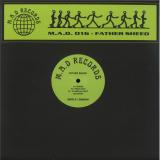
Father Sheed steps up to deliver a saucy meze for M.A.D Records sixteenth outing, following the groove-laden "Pancumbia" for A MAD 5 Years compilation!! The Austin, Texas based producer brings 5-tracks to ignite the discotheque with quirky sampling, punchy drum grooves and immaculate synth-scapes!
Early Dj plays from Louie Vega, Dj Sneak & Carl Cox!
Brand new vinyl-exclusive music for 2026 from 4 legends of electronic music.
Teachers is a new series from Only Cuts showing love and respect to the architects of our sound.
5th release from the Only Cuts label run by Sydney maestros, Mo’funk & Encee
All new music from these Teachers, Dj Sneak returns with one of his best works in a long time with ‘Hear The Music’ Todd Terry appears under his ‘House of Gypsies’ alias with a horn driven percussive groover. Junior Sanchez with a brilliantly produced Wham flip & The Stanton Warriors come at it with an anthem used in their live sets, appearing for the 1st time on vinyl!
An inspired link up between UK and continental producers - yeah, in your face, Brexiteers - as Brit talent and Crayon boss Mark Ambrose joins forces with Spanish duo Serious Cut aka Raul Zapata and Ivan Martinez, across four irresistible cuts. 'Remedy' nods its head subtly to the Diana Ross (and then Associates) classic 'Love Hangover' while enchanted, spacious and spacey grooves do their thing, while the cherry on top of 'Deep Track' proves to be some neat sci-fi spoken word, not to mention the kind of soft, jazzy chords that Global Communication's house productions used to revel in. Flip it over for the more electroid 'Talk Box' and the unashamedly Windy City-referencing 'Auto Level. Four sides of a classic sound, three great producers, two sides of top vinyl and one must buy bit of vinyl.
uper Deception dives into the uncanny beauty within the everyday, drawing inspiration from M.C. Escher’s idea of “super deception”: the art of creating the impossible without illusion. Nelson of the East translates that concept into sound: deep, tactile basslines and intricate percussion twist familiar rhythms into hypnotic new forms. Textures and samples are lifted from their origins and reimagined, creating tracks that feel both ancient and futuristic, physical and dreamlike. The result is an electronic landscape where sound folds in on itself: a timeless, shape-shifting exploration of rhythm, resonance and perception.
Nelson of the East is a Berlin-based sound artist, producer and educator. He operates at the intersection of experimental composition and club culture, shaping his craft both as a music teacher and behind the scenes as an experienced ghost producer.
Artwork & Layout by Alicia Carrera
A decade into life, Secret Society marks this notable milestone year with a release that stays true to its ethos of depth and groove. Ewan Jansen started producing in the early 90s in Perth, often with the same hardware he used in his live shows. He's back on the label with two driving cuts built squarely for the dancefloor: 'Hydroid' is bright mid-tempo techno with pixelated synth charm, and 'Bodywash' is a deeper, more syrupy sound for late-night cruising. Alongside them sits a more introspective collaboration with Italian producer Luca that trades peak-time punch for texture and restraint. On remix duties, John Dimas adds his trademark crisp momentum and understated flair, a fitting choice given his long-standing connection to the camp.