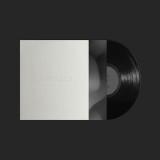
“Released on Joe Boyd’s Hannibal label here was a band rooted in Thompson/Swarbrick Fairport but also a snatch of the Velvet Underground and a sprig of The Byrds. The Eighteenth Day Of May evoked a legendary era, and now they are a justifiably legendary band too.” – KLOF Mag
Beginning life as a trio in London, 2003, the original line-up consisted of Allison Brice (vocals, flute), Richard Olson (acoustic guitar) and Ben Phillipson (guitar, mandolin) before expanding the following year to include the rhythm section of Mark Nicholas (bass) and Karl Sabino (drums, autoharp) and finally Alison Cotton (viola).
This being the mid zeros, the independent music scene in the UK was reluctant to embrace a sun-dazed folk band but this, their sole album, has gradually feathered a bed of affection amongst international folk fans. Twenty years on, the album is now rightfully seen as a trailblazer for the myriad alternative/psych folk bands that emerged in its wake.
Andy Childs who signed the band originally takes up the story. “I first heard their music on a cover mounted CD with the much missed Comes With A Smile magazine and as far as I could tell no-one was making music like this anymore, certainly not with such panache and confidence. To my jaded ears it all sounded so uninhibited - old weird folk songs, Americana, original psych-folk, minimalist drones. Great melodies and all six of them could sing! A joyous, unfettered sound that could in one moment conjure up flashes of The Byrds and then effortlessly the spirit of Velvet Underground would drift through. They even covered a Spacemen 3 song. I loved the fact that they had the aplomb to tackle traditional folk songs like Lady Margaret and Flowers In The Forest and not be afraid to stamp their own identity on them.
Signing them to the Hannibal label was straightforward. If anything the album somehow sounds fresh and undated, even better than it did in the day when perhaps eclecticism was out of synch with the times; its subtleties have become more apparent.”
“Their rendition of Lady Margaret builds to a headswirling crescendo that challenges anyone who claims Shirley Collins, Buffy Sainte-Marie or Trees have recorded the definitive version and the hallucinatory The Waterman’s Song To His Daughter raises an already brilliant album to an unholy level” - IT’S PSYCHEDELIC, BABY Magazine
The music of La lucha es un poema colectivo was conceived and composed during a long artistic residency at IRCAM in Paris in November 2023 and will be released by Superpang. ‘In November 2023, we were in residence in Paris when we found ourselves in the midst of protests and strikes by workers at the Centre Georges Pompidou. They were demanding the respect of their rights. Entering that place as outsiders, making art while hundreds of people outside risked losing their jobs, was disorienting.
This is the starting point for the title of this album, evocative yet at the same time tangible. A phrase, as often happens, borrowed from those who had, in turn, borrowed it before us, words that are not and
cannot be only ours. Words too heavy to be slaves to context or syntax, yet words that resonate within us, move us, and open rifts in our history as a group. A strange plunge, strange despite the fact that the premises were clear from the start, with well-defined lines of a unified design. And if we ask ourselves, looking around, not so much what but rather with whom we would like to share it, we imagine the music of this album within that groove, in that intangible bond that unites a collective of people who, upon reading this sentence written on a wall, in a street, pause for a moment, slow down, rest their gaze, and know they are still alive.”
Charting the history of punk and DIY scenes from the 1970s to the present day.
Combines the life of a musician and a music journalist who tapped into the cutting edge of alternative music.
Packed with stories of well-known figures from the rock music scene.
Robb's is a life of facing down outsider struggles, overcoming career disappointments
and the DIY spirit that carried him through.
REVIEWS
'A searcher and a true believer in the magic and power of music.' - Noel Gallagher, musician.
'John Robb writes about music and culture with the insight of someone who loves it from the outside and lives it from the inside.' - Johnny Marr, musician.
'A treasure trove of bands found and lost, wracked geniuses, greasy gigs, rumbles and fumbles and moments of bliss.' - Ian Rankin, novelist.
'John Robb. OG.' -Mary Anne Hobbs, DJ and journalist.
‘Clever, witty, eloquent and so weird – he's like the brother I never had.’ Chris Packham, broadcaster.
The irresistible story of a one-man cultural phenomenon. Minister for the Counterculture, Mancunian mainstay and alternative national treasure John Robb has lived a life in music. In this book he charts his adventures on the cultural frontline, chronicling the making of a DIY icon.
Robb’s quest began in his hometown of Blackpool – where punk was a battle against the odds – and went international when he toured the world with his band. The first person to interview Nirvana, he also discovered The Stone Roses for weekly newspaper Sounds and did early interviews with The Jesus and Mary Chain and The Manics, before moving on to legends such as Mark E. Smith, Nick Cave and Patti Smith.
Along the way, he became an on-screen commentator and author of bestselling books. Robb’s memoir tells of deep friendships with figures from Poly Styrene to Chris Packham.
Packed with riotous stories, it provides an alternative account of British musical and cultural history and a triumphant blueprint for a punk rock life.
John Hassall (The Libertines) & The April Rainers release their long overdue second, self- titled album. It's is the followup to 2017's Wheels to Idyll, which picked up critical applause on its release. The new album was largely recorded at John's home studio in Aarhus, Denmark where he has been living since 2009. And was produced by the band, with string player Clementine Brown having a big influence on the sound. John Hassall "These 10 songs are the ones that survived, grew and took on a life of their own. There's no way of telling if a song will make it until the end. That Pale Lantern in my opinion, started off as a rank outsider and then turned into one of the strongest songs on the album. Lessons were learnt from Wheels to Idyll and a new musical development runs through it. Whereas the last album was recorded pretty much live. The new album maintains similar classic songwriting and pop sensibilities, though with more complex arrangements and production." Most of the songs were cowritten by John and longtime poet collaborator Steev Burgess exploring memories of school days, journeys and adventures, fading dreams, ancient empires and even somebody's trinket collection. Burgess who has known Hassall for many years, wrote the lyrics to lead single Miracles, a sort of Ballad of John and Line. Libertines band mate Peter Doherty is also involved with a co-writing credit on Doing Time. John Hassall and The April Rainers will be announcing UK shows shortly, in the meantime John will be appearing with his other band The Libertines at summer festivals across Europe and the UK.
There’s a new sound shaking up the Upper East Side — and it’s not related to Serena this time.
It’s ‘gg’, the new track from Lolina.
We've all heard the rumors of L performing this one around the globe for months, & some of the lucky ones got the chance to catch it live... but now the wait appears to be over for the general public. There are officially plans to release the studio version of ‘gg’, and it's safe to say the track is scandalous. Meeting same time, same place to get to the bottom of it all. Confusion lingers, yet everything stays comfortably in strife. It all keeps moving.
Who is the city even for now? What’s our own involvement in the distress? That’s one secret I’ll never tell!
Why is it that L must use song to persist in this city that never sleeps? Have fables fallen so out of fashion that princesses have to do everything themselves now?
Well... according to some tips we received this doesn't seem to be the case. L has enlisted help from some very exciting sonic connoisseurs, resulting in remixes stronger than a knight in shining armor could ever provide.
So let's check out this track list, shall we?
A-Side
gg (Extended Version)
gg (NEW YORK Remix)
B-Side
gg (Arca Remix)
Sounds like the perfect soundtrack for eating a yogurt cup on the steps of the MET to me.
We seriously doubt you'll be able to ignore this release.
Run the credits, roll the dice.
xo xo
GOSSIP GIRL
Press release by Kaitlin Simotics
Mastering and additional mixing by Amir Shoat
Artwork by Lolina
Vinyl design by Termite Lounge
out of Stock
Last delivered 20 days ago available to reorder, subject to availability
In spring 2025, Abul Mogard and Rafael Anton Irisarri created the source material for their second album, Where Light Pauses in the Silence of the Sun, during a three-day residency at Morphine Raum in Berlin. Functioning as both recording studio and performance venue, the space has no stage, with the audience gathered around the performers. Working within an open framework, the duo reshaped the music each evening while recording the performances live to multitrack. Rotary speakers, modular synthesizers and bowed guitar formed the core of their sonic language, captured through a 1970s mixing console and microphones placed around the room.
Back in Mogard’s studio in Rome, the material was further crafted as motifs were stretched, fragments isolated, and tempos dissolved. Irisarri recorded additional guitar textures and treatments in New York, while passages recorded by Martina Bertoni and Andrea Burelli in Berlin reinforced the harmonic centres and brought breath, refinement and a new sensibility to their compositions. The process continued as Mogard’s layering and subtraction reassembled everyone’s parts into the final arrangement.
The album opens with “In the Eastern Wild,” building from a sparse outline into a monumental formation of low-frequency weight, its internal motion shaped by the rotating Leslie speaker. “Over the Domes” widens into a broader acoustic field, where sustained modular tones meet waves of softly plucked guitar. The music then turns inward with “A Blue Descent,” centred on Bertoni’s cello, whose growling timbre introduces a melancholic depth.
At the album’s centre, “In a Quiet Radiance” unfolds around a slow guitar ostinato, its luminous stillness opening into a more expansive and reflective state. Across its ten-minute span, Burelli’s violin lines and Bertoni’s lower cello phrases gradually surface, weaving through the harmonic field. Mogard brings Burelli’s processed voice to the fore, its emotive, operatic presence becoming one of the record’s pivotal moments. “Of Blessed Ages” suspends the sonic flow, shifting between parallel major and minor chords as lingering, slowly decaying melodies shape the music’s internal drift. The closing “Among Shadows” settles into a darker resonance as layered textures recede.
Mogard and Irisarri’s shared language balances restraint and maximalism. UK magazine Crack describes the music as “a tidal wave held in suspension,” while Dutch newspaper de Volkskrant writes, “What a colossal sound, and how this music strikes at the emotions.” Reflecting on the residency sessions, Irisarri recalls: “At moments I genuinely couldn’t tell if a sound was coming from me or from Abul. It stopped feeling like two people making decisions and began to feel like we were inside a system moving on its own."
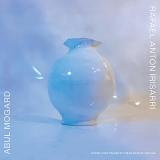
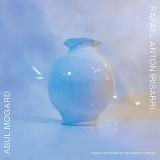
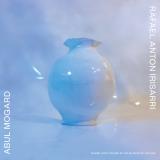
Marja de Sanctis’ cover artwork revisits the vessel sculpture from the duo’s first album, Impossibly Distant, Impossibly Close. There it appeared as raw, unfired clay. Here it has been fired in the kiln and finished with a glaze. Light gathers on its polished surface and spills into the surrounding space. As she explains, “I wanted to convey the idea of continuity within the duo, and the vessel became a kind of container for that idea. However, their music felt different this time, and with the collaboration of Martina and Andrea, I felt it should have a sleeker, softer, more glamorous look, very distant from the first raw appearance.” The transformation of the vessel from raw clay to fired form suggests a passage from immediacy toward permanence, mirroring the music’s gradual expansion.
out of Stock
Last delivered 3 months ago available to reorder, subject to availability
Tywi steps forward on People & Places with Suspended Memories. Pulling together years of studio exploration, the four-track EP offers the most complete reflection of the Welsh producer’s sound to date.
Drawing on dub soundscapes and a spectrum of progressive influences, each track tells a different story. The title track, Suspended Memories, brings together murky atmospherics and an infectious bassline, drawing the listener deeper with an understated sense of tension. Off Axis leans into a more driving energy, offsetting the EP’s introspective core, while Night Seeker settles into a subtler groove, capturing those early dancefloor moments as tension begins to build. Closing track Onko adds weight and resolution, its name nodding to the Japanese concept of learning from the past – an idea that runs through the release as a whole.
out of Stock
Last delivered 52 days ago available to reorder, subject to availability
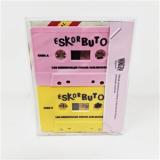
First time double-cassette reissue of 1987's double LP opera rock by Spain's legendary punk band Eskorbuto. "Los demenciales chicos acelerados" is a political satirical work against any kind of dictatorial regime. "Los demenciales chicos acelerados" is Eskorbuto's fourth studio album, originally released by Discos Suicidas in 1987. It was their most ambitious project, a double LP rock opera in the vein of "Quadrophenia" by their beloved The Who. It tells the story of an unscrupulous young man who wishes to achieve power at all costs, stepping over everyone and everything in order to do whatever he wants politically. In the end, he falls due to his ego and is betrayed by those around him. Hence lines such as "crowds are a nuisance", "I'll come unscathed out of the attacks planned by my image consultant" or "shouting in front of the scum". In 1988 band members Iosu and Juanma narrated the album's concept and story on a Radio Euskadi show, the Basque Country's public broadcaster. This satirical political plot also explains the controversial sleeve art, Eskorbuto were equalling the unprincipled politician of their rock opera with the Nazis and Franco's dictatorship. It's a conceptual record that attacks any kind of dictatorial political regime. The original sleeve caused some trouble, to say the least, with its combination of Nazi photos and the Spanish flag on the back accompanied by the words "Of national interest". lthough "Los demenciales..." came out on Discos Suicidas, in typical Eskorbuto fashion the band stole a copy of the master and sold it to the Twins label, which also released it a few months later with new cover art.The album contains new versions of a few previous tracks such as 'Ratas rabiosas' and 'Enterrado vivo' plus the studio version of 'Más allá del cementerio'. For the recording the band enrolled keyboardist Aitor Amezaga, who would also collaborate on their next album.
Ever since the late 1950s bossa-nova revolution, Brazil’s influence on French music has been undeniable. Pierre Barouh, Georges Moustaki and a vast array of lesser known artists, all made the Musica Popular Brasileira (MPB) an axis of promotion at the service of a cool and metaphysical, modern and mixed Brazilian lifestyle. Some were seduced by the poetic languors of the bossa, some were looking for fun, and others just loved the American hybridization of jazz-bossa, jazz-samba.
What is bossa nova? One of its creators, Joao Gilberto said: "Its style, cadence, everything is samba. At the very start, we didn't call it bossa nova, we sang a little samba made up of a single note - Samba de uma nota so .... The discussion around the origins of bossa nova is therefore useless”. It is nevertheless useful to remember that these magnificent Brazilian songs, which the guitarist describes as samba, were shifted and balanced around improbable chords. "I like things that lean, the in-betweens that limp with grace," said Pierre Barrouh, quoting Jean Cocteau.
With emotion, arrangements for violin and supple guitar licks, bossa nova rapidly changed. A transformation that can be heard in the Tchic, tchic, French Bossa Nova 1963-1974 compilation, the result of a cultural reappropriation, which traveled through the United States and supplemented itself in France.
A musical revolution that has remained significant, bossa nova was born in Rio. From 1956 to 1961, Brazil lived through its golden years. In five years, the country had invented its modernist style. Elected president in 1956, Juscelino Kubitschek de Oliveira, an elegant man with a broad forehead, brandished a promising slogan: "Fifty years of progress in five years". He quickly got to work. Not worried about increasing debt, he launched the project for a new federal capital, Brasilia, designed by the communist architect Oscar Niemeyer. Volkswagen opened state-of-the-art factories and created the “fusquinha”, the Beetle. In Rio, the Vespa made its first appearance. The Arpoador Surf Club crew run into the “girl” from Ipanema, Helô Pinheiro - the tanned garota ("chick"), between a flower and mermaid, who at 17 walked by the Veloso bar, where the fiery author and composer, Tom Jobim and Vinicius de Moraes, were getting drunk on whiskey. From then on, bossa symbolized cool.
In 1958, Joao Gilberto recorded Chega de Saudade, which the directors of Philips denied, calling it "music for fagots". The marketing director, who believed in it, secretly pressed 3000 78-inch vinyls and distributed them at schools around Rio, creating a tidal wave.
American jazzmen then took over. In particular, trumpeter Dizzy Gillespie and guitarist Charlie Byrd. In November 1962, the Brazilian Ministry of Foreign Affairs funded a "Bossa-Nova" concert at Carnegie Hall in New York, inviting the genre’s pioneers. Unprepared, the show soon turned to disaster. But the troupe was invited to the White House by Jackie Kennedy. The first lady loved "the new beat" and in particular Maria Ninguem, a song by Carlos Lyra, later covered by Brigitte Bardot.
In Brazil, the 1964 military coup quickly ended this euphoria. The destructive atmosphere that ensued pushed many Brazilian musicians to leave, if not to exile. Thus, Tom Jobim, Sergio Mendes and Joao Gilberto arrived to the United States. In New York, Joao Gilberto met saxophonist Stan Getz. At the time, he was married to the Bahianese Astrud Weinert Gilberto, who had a German father. She had never sung before, but she knew how to speak English. Getz therefore asked her to replace her husband on The Girl From Ipanema. The Getz/Gilberto record with Tom Jobim on piano, was released in March 1964. Phil Ramone, the "pope of pop" was in charge of sound.
Bossa nova arrived in Paris through the classic “guitar-voice” channel (Pierre Barouh, Baden Powell, Moustaki…) But France loved jazz and Paris had already welcomed its American contributors. All these good people were to pass through Saint-Germain-des-Prés. The cabaret l'Escale became the Mecca of Latin American sound where one could find Pierre Barrouh and his friends, such as the Camara Trio, samba-jazz aces, whose only record was published by the Saravah label. With a band strangely called Les Masques (a band that included Nicole Croisille and Pierre Vassiliu, among others), the Camara Trio recorded an interesting Brazilian Sound, including the track Il faut tenir which is present on this tasty compilation of rarities.
Other enlightened musicians can also be found on the compilation, such as Jean-Pierre Sabar (songwriter for Hardy, Auffray, Leforestier ...) and the French pop rock organist Balthazar. In 1975, Sabar recorded Aurinkoinen Musiikkimatka on a Finnish label, which featured the crazy Vai, Vai, included on this record. We are now following the footsteps of Brazilian electronic musicians such as Sergio Mendes, Eumir Deodato or Marcos Valle who created funk and disco sounds on their keyboards and synthesizers. A style that influenced Véronique Sanson when she wrote Jusqu’à la Tombée de la nuit in 1969 for Isabelle de Funès, the niece of Louis and a great friend of Michel Berger - Sanson did end up singing this track on her 1992 Sans Regret record.
The pinnacle of exoticism and travel, Sylvia Fels’ Corto Maltese includes bongos, sea mist and ocean sounds. The title was taken from Jacky Chalard’s concept album written in 1974, Je suis vivant, mais j’ai peur (I am alive, but I am scared), based on Gilbert Deflez’s science fiction novel.
However, bossa nova extended the scope of popularity. "In the 1970s, I was a fan of Sergio Mendes, Getz / Gilberto. I fell in love with this music that I knew because I had been an orchestral singer, " explained Isabelle Aubret, who in 1971 delivered a composite record of covers by the very funky Jorge Ben, Orfeu Negro, Tom Jobim, Vinicius de Morais and Jean Ferrat. "I recorded this album for Meys Records in Paris, far from Brazil, with wonderful musicians, François Raubert, Roland Vincent, Alain Goraguer...". The latter wrote the arrangements for Casa Forte, a very percussive title borrowed from Edu Lobo, one of the initiators of the bossa who spent time in California. "Jazz and bossa came together and produced very rhythmic music. I love singing, it allows me to dream, to have fun, to feel a high on stage, and these songs brought me joy, made me swing, my singing felt like a dance.”
The world tours of French singers and their desire for the tropics, often brought them to Rio with its hills, forests, caipirinhas and tanned bodies. There are surprises though, like this Iemenja (Iemenja is the goddess of the sea in the Afro-Brazilian candomblé religion). Not unlike the composer and musician Jean-Pierre Lang, based in Sao Paulo, Claire Chevalier taught Brazil to Brazil. In 1970, the singer and painter published a 45-inch vinyl, Mon mari et mes amants (My husband and my lovers), under the improbable pseudonym of Clarinha (little Claire). She was then living in Rio, with her husband, Joël Leibovitz, who founded a band called Azimuth, and who owned a record label specialized in "sambas enredos" songs for samba school parades.
For its B side, she asked Pierre Perret to come up with lyrics for a song composed by Carlos Imperial: "Oh goddess of the sea, o goddess Iemenja, I bring a white rose to adorn your long hair ..." . "Perret came to see us, and we had fun, remembers Joël Leibovitz. We wrote Lemenja for fun, we recorded it at the Havaí studio, behind the Central do Brasil the central station. Erlon Chaves, the arranger who worked with Elis Regina, joined us" adding his share of Afro-Brazilian percussions and funky brass to the mix.
There is a common misunderstanding in Franco-Brazilian history: that bossa, admittedly hedonistic, is perceived as funny, even though the poets who wrote the texts are often philosophizing on the human condition. Its French interpreters pull it towards a carnival inspired universe, far removed from its fundamental essence. Thus, Jean Constantin covered the famous Samba da minha terra, an ode to the art of samba written by the classic Bahian composer Dorival Caymmi, renaming it with the enticing title of Pas tant de tchi tchi pompon: "On your pier there is no tchi tchi / when you arch your back, you know everything is alright ”(lyrics by Gérard Calvi). This expedited bossa aims for the absurd, but retains a certain elegance.
Indeed, Jean Constantin was not an idiot, the rather large man had a huge mustache and liked fantasy, (Les pantoufles à papa, Le pacha, inspired by cha-cha-cha-cha, salsa and jazz) but he was also the lyricist of Mon manège à moi interpreted by Edith Piaf, the composer of Mon Truc en plume by Zizi Jeanmaire and the soundtrack of François Truffaut’s 400 Blows. Le Poulpe, published in 1970, from which this bossa is extract, was arranged by Jean-Claude Vannier, an accomplice of Serge Gainsbourg’s Melody Nelson. In short: "There is enough of samba / By looking at the parasol / Because my poor cabeza / Is going to die in the sun".
Even the American actress Marpessa Down, who was at the heart of the bossa nova revolution with her role as Euridyce in Marcel Camus’ film Orfeu Negro, winner of the 1959 Cannes Palme d'or, fed the clichée with Je voudrais parler au petit cuica - "Tell me how you manage to always make people want to dance / It's true, I must admit that I cannot resist your magic" - in consequence, once can hear the cuica, a little drum inherited from the Bantu.
But bossa nova had many angles. Societal, of course, pushing actresses who were symbols of women's liberation like Brigitte Bardot, Jeanne Moreau, or Sophia Loren to engage in the exercise of accelerated bossa. In February of 1963, Sophia Loren made a record in French in Rome, Je ne t'aime plus, featuring the song De jour en jour, a bossa written by two Italians, Armando Trovajoli and Tino Fornai, which was released a little later by Barclay. Bossa accompanied the 1960s, a decade of moral liberation. Ann Sorel, who interpreted La Poupée des favellas, caused a sensation with L’amour à plusieurs, a provocative song written by Frédéric Bottom and Jean-Claude Vannier. As for the actress Andrea Parisy, she displayed her bourgeois cheekiness in Marcel Carné's Les Tricheurs before interpreting Les mains qui font du bien. And Magalie Noël, the friend of Boris Vian, who sung Johnny fais-moi mal, was hired to sing Une énorme Samba, composed by Alain Goraguer (arranger to Gainsbourg, Bobby Lapointe and Jean Ferrat) with lyrics by Frédéric Botton.
But in the end, of what wood is bossa nova made of? The answer is given by Christianne Legrand, daughter of Raymond the conductor, and sister to Michel the composer: "With me, with jà" - jà means "immediately" in Portuguese. In 1972, the singer, an expert in vocal jazz and a member of the Double Six, published Le Brésil de Christianne Legrand. Two songs included on the Tchic Tchic compilation that demonstrate how bossa, jazz, funk, rock, etc. work like a swiss army knife: the music is used to denounce broken systems, or miracles, HLM et ciné roman, Cent mille poissons dans ton filet, two songs from the O Cafona soundtrack, a successful telenovela broadcast, at the time in black and white, on TV Globo. The first was adapted in French by the fighter and friend of the Legrand tribe, Agnès Varda. The second is content with a play on words, jostling them into a summer fun.
Véronique Mortaigne
out of Stock
Last delivered 3 months ago available to reorder, subject to availability
As long as she can remember, Jane Remover has practiced her own autonomy as much as possible. The nineteen year old songwriter is an omnivorous listener that produces everything herself. She has been lauded by fans and writers alike, for accidentally creating entire genres in the wake of her prolific two-year run.
Her debut album Frailty was written amidst the purgatorial summer after a high school graduation, en route to turning eighteen that September. The lyrics are a wayward coming-of-age diary of an LGBT+ teenager, stuck in the suburbs of a confusing, socio-politically turbulent America.
Janeʼs words sting, but are shrouded in meticulous production; a sui generis vein of DIY rock. Simultaneously, itʼs steeped in the lo-bit, nostalgic synths that soundtrack a final glimpse of younger memories.
The LP was warmly received: Album of the Year List placements from Pitchfork and The Needle Drop, glowing reception from Paste, Insider and FADER, and a widespread resonance from a young audience who consider the album cathartic and relatable.
The 18th Parallel strikes hard once again with its new riddim series called ‘BONANZA CHARGE’. Carefully produced in its Geneva studio, the collective of musicians presents two vocal cuts and one horns instrumental released as three 7” singles with dubs mixed by Roberto Sánchez. This is heavyweight roots reggae tailor-made for the heaviest sound systems!
First song recorded on the riddim, ‘Don’t Tell Me To Smile’ is NIGHTSHADE’s debut single on Fruits Records and it really is music with a powerful message. Turning an everyday frustration into a universal cry, Nightshade sings out loud what she always wanted to answer to the countless strangers who told her – like so many other women – to smile… because “a woman who smiles looks so much prettier”.
She says: “If it’s really such an innocent thing to say as some claim, why do men never say it to other men? Why do some feel entitled to tell complete (women) strangers how they should look, feel or behave? These so-called ‘small comments’, repeated over and over, are just one piece of the constant scrutiny and everyday violence many women face – and we can’t take no more of it.”
Carried by three united voices, ‘Don’t Tell Me To Smile’ reminds us that a woman is not a decorative object meant to please the male gaze. It’s a call to see through the trap: under the guise of compliments, what is at work is control over women’s bodies and minds. A smile should come from the heart, never from an obligation.
out of Stock
Last delivered 3 months ago available to reorder, subject to availability
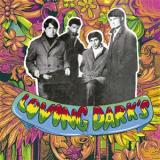
Los Amantes Oscuros" brings together for the first time on vinyl the recordings made between 1968 and 1969 by pioneers of Bolivian garage rock, Loving Darks, originally released on their three EPs. A selection packed with proto-punk covers of hits by the Stones, Cream, Tony Hatch, and more-often surpassing the originals in attitude and power. Their original records are highly sought after and are virtually impossible to find in any condition_ If we had to choose the Latin American country where the rawest and wildest garage and beat records of the '60s were recorded, Bolivia would be one of the clearest contenders. For some strange reason-surely related to the country's extreme conditions, its high altitude, and the influence of huayno-Bolivian recordings are truly unique and fascinating. A multitude of bands sprang up under the influence of groups-mainly British-that dominated the international charts. From the ashes of two of Bolivia's most important seminal bands, Los Black Byrds and The Turtles, two new groups fundamental to the history of Bolivian rock would be born: the mythical Climax and the legendary Loving Darks. "Los Amantes Oscuros" brings together for the first time on vinyl the recordings this band made between 1968 and 1969, originally released across three EPs on the local Lyra label. Their repertoire is packed with covers such as 'El Adivino,' a sped-up reinterpretation of 'Fortune Teller,' or even 'Algo de títere,' a reworking of 'Jumpin' Jack Flash.' They also adapt the classic 'Call Me' by Tony Hatch and 'Toad' by Cream, from whom they borrow the cover of one of their most iconic albums for the artwork of their EP "Complicado." In fact, 'Complicado'-a proto-punk version of the Rolling Stones' 'Complicated' and their signature track-is a perfect example of how a Bolivian band could outdo the British giants in attitude and power. Their importance lies in having paved the way for new sounds, styles, and aesthetics within a still-emerging scene. This compilation is a joint release with the Peruvian label Rey Record and includes an insert with notes on the band's history. First time vinyl reissue.
out of Stock
Last delivered 3 months ago available to reorder, subject to availability
Unit Nine is a The Hague-based musical collective weaving together soulful melancholy, minimalist composition and soft grooves. Their debut album, Disaster Jester, will be released digitally and on 12?? vinyl on The Hague imprint PIP Records on November 14th, 2025, celebrated with a release show at Paard, Den Haag. The album was recorded under guidance of renowned producer Tijmen van Wageningen, at The Womb Studio. Disaster Jester revolves around the archetype of the jester, the trickster who embodies both chaos and wisdom, humour and tragedy. Across the album, music video and cover artwork, he appears as a clown in a shadowy crime narrative and as a weary detective who eventually dons the fool?s hat himself. The image becomes a mirror for the artist: observing, stumbling, laughing & fooling. The track ?Afgesproken Plek? features rap artists KC and MC Lost, who provided an imaginary crime skit playing on the detective persona central in the story telling of the album. While their universal and timeless sound could travel anywhere, there?s something distinctly The Hague about Unit Nine; a mix of irony, unpolished charm, and understated design sensibility. Their city?s blend of rough edges and refined aesthetics runs through their work and places the debut album within a historical tapestry of not-so-mainstream culture and art that the sea town is known to embody.
Siren Selector launches its mixtape series with a companion release to Remy Solar’s - ‘Heavy Terrain’ cassette.
“Jamaican music grows in rings like an old tree. From a core of early riddims, the genius of Studio One, versions of original basslines and melodies evolve over time New releases of the same tune follow each other through the 70s, 80s, 90s, into this millennium. Generations of the same family. And then there’s the unreleased versions, the frontier dubs built strictly for sound systems, held close by those who got them and only gradually circulated into the wider audience of selectors and collectors. These are the ones where the bass is heavier, the echoes more mind- bending, the effects wilder and the drums harder. Older sound followers tell stories of how these dubs defined dances, flattened opponents in clashes, inspired a dozen rewinds. Younger followers remember these tales and pass them down. These dubs are folklore.
Who knows how many such versions there are in the vast worldwide archives of Jamaican music? Not me. But as a little taster of a lifetime’s musical journey you can open your ears right now to a few moments: Lacksley’s Castell’s “Unkind”, transported from the sprightly riddim which underpinned it on his Princess Lady album and reengineered into a thunderous version of Ras Michael’s None A Jah Jah Children; “Deceivers” by the Heptones, stripped back into something simultaneously ethereal and bathyspheric; Keith Hudson’s “I’m No Fool” emerging from a pressure cooker of bass and drum; Jah Lloyd’s “Black Moses”, busting down walls with its epic echo and siren opening.
I started collecting these dubs in the late 90s. We were going to Shaka at the Rocket, Aba Shanti in the Arches, then Imperial Gardens. Entebbe somewhere off Mare Street. Iration Steppas in Kingsland Road, Jah Tubby’s in the Rec. We were doing our own parties at the time in east London, Bohemia Place, then Trenz, Dungeons, the old social services office by London Fields. Building up a sound, taking it on the road, crew sitting on the speaker boxes in the back of a Mercedes 508. Under the stars or in warehouses with sweat dripping from the ceiling, lugging crates and amps across fields or up flights of stairs, stringing up boxes under bridges, in car parks or on roundabouts. Waiting for the moment to drop the dubs.
This tape is dedicated to my crew and all the music providers and anyone who also knew or wants to know these moments.“
They offer a path towards hippiesque stage shows, classic E-organ hues, excess and Sixties rock flair - played by young faces. Their genre is psychedelic rock - but do not miss out on the subtle Blues and Folk traces hidden in there! Established in 2022, the band is already awaiting the release of their second studio album called "Dawns on Mental Highways" in June and making their way onto the various stages of their home region - the Nuremberg Metropolitan area, Southern Germany. The Citadel - Vintage mixed with contemporary vibes, freshly served psychedelic lifestyle! Album description: Here is the second studio album by the German Psychedelic Rock Band The Citadel.
It is a curious mixture of musical styles reminiscent of the time around 1967, when bands experimented in the studio and paved new paths. So maybe, the album title "Dawns on Mental Highways" reflects the stance towards their music. Or maybe it hints at something different. Who can tell? All you need to do is listen, and there is a lot to hear: The singer seems to have a fragile voice, yet shouts her Dylanesque lyrics angrily from time to time. The organ player soaks half of the songs with a classic acid sound. The guitar player acts a folky one, throwing in acoustic tunes and flute, before bashing into heavy electric riffs. The bass player is unusually jumpy on his Tropicana-fused lines while the drummer dances and stomps easily as needed.
Ocean Cage is a live recording of Tianzhuo Chen nd Siko Setyanto’s performance Moyang & Seaman – a forking stage work that evolved from the immersive theatre performance project Ocean Cage, sharing the same title.
Directed by Tianzhuo Chen, aka Asiandopeboys, the immersive performance Ocean Cage merges scenography, installation, choreography, and live music into a unified whole. Inspired by the complex whaling traditions in Lamalera, an Indonesian village that preservers ritualised whaling practices and ancestral beliefs, the work unfolds through interconnected trinities – Moyang (ancestor), Lera Wulan (god), and Seaman – all incarnated by Siko Setyanto. It tells a porous story of unlocking the cage of the ocean: receiving ancestral blessing while becoming entangled with misjudgement, misunderstanding, ecological grief, and temporal displacement, until the sacrifice and life cycles move toward equilibrium.
The recordings were made in a single day in New York City with a team of extraordinary musicians. He'd already established a firm creative partnership with bass legend Cameron Brown and award-winning pianist Russ Lossing over the past year during their time as recording artists in NYC, and he renewed his fruitful association with outstanding drummer Billy Mintz (Lee Konitz, Charles Lloyd, Alan Broadbent) to complete the quartet. These three have been vital to Kazuki's compositions that tell the story of his enforced absence from the scene during the pandemic and how he sought to centre himself in the midst of the disruption through contemplation and the development of an inward strength. Each track complements the next, alternately celebrating the deep jazz tradition and pushing hard at its boundaries, allowing each member of the quartet to display their extraordinary musicianship while creating a harmonious whole.
Mesdames et Messieurs! FLEUR is back for one last time with a new release An EP with 4 sparkling popsongs written by the- king- of- garage- pop Mark ten Hoor (THE KRYNG) who also wrote her last album "Fille Sauvage" (2024). Title track "Jour D'ete" is an uptempo breezy pop-gem about summer and being young and in love. "Je Ne Veux Pas De Toi" romps and stomps with FLEUR telling her admirer how things stand in the bongo driven chorus. "Le Temps Nous Le Dira" could have easily been the title track. A super catchy melancholy song with driving 12-string guitar. The delicate, moody and dreamlike "Qu'est-ce Que Je Fais de Mal" is a perfect closer.
For nearly four decades, since its founding during the mid 1980s, the Belgian imprint, Sub Rosa, has continuously plumbed the depths of numerous, radical creative histories, assembling a catalog of releases that has almost no equivalent, while remaining nearly impossible to nail down. That said, for most of its run, Sub Rosa has been primarily recognized for its rigorous explorations of the lesser explored shadows of experimental sound practice (sound-art, sound-poetry, early electronic and electroacoustic music, free-improvisation, etc.), delivering a remarkable body of artifacts that have collectively helped to rewrite history in their wake. While it's always been impossible to anticipate where the label might take us next, threading their catalog are plenty of releases that throw further wrenches in the cogs, expanding our understanding of what they pursue, as in the case of a handful of titles, appearing as early as the 1980s, dedicated to ethnographic field-recordings from various parts of the world. Among the most striking and celebrated of these was 2017's Ethiopian Urban And Tribal Music: Mindanoo Mistiru / Gold From Wax, comprising an astounding body of recordings made by Ragnar Johnson and Ralph Harrisson in Ethiopia during 1971, reissuing material originally released by Lyrichord the following year. Now, Sub Rosa returns to the incredible work embarked upon by the pair and captured on that same trip with Ethiopian Musics 1971, comprising the recordings originally released by Ocora shortly after their completion, expanded in this edition to include an entire disc of never before released music. Widely regarded as some of the most important field-recordings ever made of indigenous Ethiopian folk music (as captivating and intoxicating as they are revelatory: providing insights into the roots of the country's singular traditions of popular music and jazz that have come to be celebrated the world over), this incredible collection is issued by Sub Rosa in a beautifully produced 2LP edition, complemented by a four page insert providing detailed descriptions of each song, as well as notes by the ethnomusicologists and recordists, as well as a 2CD edition, with a twelve page booklet. Insanely good and absolutely essential for any fan of field-recording, ethnomusicology, the music of Ethiopia, or the label's mission at large. Once again, Sub Rosa has defied our expectations and delivered a remarkably important intervention in the history of recorded sound.
Located in the Horn of Africa region of East Africa, few cultures are distinctly singular, while being so diverse (containing 80 distinct ethnic groups who speak 70 languages and 200 dialects) as that of Ethiopia. The home to some of the oldest surviving sects of Judaism, Christianity, and Islam (each contributing important aspects of its collective cultural body), particularly the country's culinary and musical traditions have become celebrated the world over, and (generally speaking) feel entirely independent of those of its neighbors. Given this, it's unsurprising that, during the summer of 1971, the young ethnographer, Ragnar Johnson, accompanied by Ralph Harrisson, traveled to Ethiopia to begin his brief career as a field recording ethnomusicologist, capturing material on reels of magnetic tape that would be subsequently released across three LPs for Lyrichord and Ocora, respectively, coming to form a cornerstone of documentation and study of the country's many indigenous musical traditions, as well as providing wide, global access to them for the first time. While Johnson's recording career was relatively brief, ending toward the end of the decade when he began to focus more on teaching in UK universities, with a focus on the anthropology of art and social anthropology, his impact on the field was lasting. Between 1971 and 1979, in addition to those he made in Ethiopia, he made hugely significant recordings in Yemen (also issued by Lyrichord before being reissued by Sub Rosa) and Papua New Guinea, which were originally released by David Toop's Quartz Publications to wide celebration, before being revisited by Ideologic Organ in 2023.
While it's worth noting that commercial releases of ethnomusicological recordings by labels like Folkways, Lyrichord, and Ocora were still in their relatively early days when he entered the field, Johnson's recordings quickly stood apart for their vivid qualities and clarity of space, allowing them to stand the test of time. As he later stated: "I used a Uher Report L stereo tape recorder, BASF quarter inch tapes at a recording speed of seven and a half inches per second with two directional microphones mounted to record an isosceles triangle of stereo sound," he reveals. "The location of the microphones and musicians was critical. The musicians were fully informed of all aspects of the recording process."
Johnson's recordings are extremely vivid, there is a clear sense of space and the cries of the flutes exist across the entire stereo field. It's a reflection of Johnson's skill as a field recordist that his recordings continue to be reissued over forty years later. "I used a Uher Report L stereo tape recorder, BASF quarter inch tapes at a recording speed of seven and a half inches per second with two directional microphones mounted to record an isosceles triangle of stereo sound," he reveals. "The location of the microphones and musicians was critical. The musicians were fully informed of all aspects of the recording process… I used to enjoy being in the moment and hearing something wonderful despite the stress of the vigilance required to ensure that the recordings were accomplished according to plan. The responsibility is to record and document the music as effectively as possible so that it has been preserved for posterity. It is better to actually record music than to sit in a seminar room debating the ethics of recording music." It is this very ethos and sense of clarity that can be encountered across the length of Ethiopian Musics 1971.
For the sake of clarity, the two LPs of material that comprise Ethiopian Musics 1971 should be regarded as a single body of recordings alongside those made in Ethiopia by Ragnar Johnson and Ralph Harrisson during the summer of 1971 (previously issued by Lyrichord and reissued by Sub Rosa), and as two that have, until now, remained historically distinct. The first LP gathers that material released by Ocora during the early 1970s on Musiques Ethiopiennes, while the second comprises (as far as we can tell) twelve never before issued recordings, expanding the journey and making this the definitive edition of the release with its incredible total of 23 recordings of songs, allowing it ever greater scope to achieve the recordists' modus operandi of capturing the broadest and most diverse cross section of Ethiopia's many musical cultures, ranging from different forms of urban music captured in Addis Ababa, documenting largely orally transmitted idioms within which lyrical content is given greater emphasis than the instrumental components (played on masenko fiddles, craar and bagana lyres, washint flutes and kabaro drums), to folk idioms hailing from the Danakil desert and the border regions with Sudan and Kenya. There are songs sung and played in bars, divination chants, laments, dances, Christian songs, and Amharic sung poetry, to only begin to scratch the surface.
Ethiopian Musics 1971 is one of those rare albums where each musical moment is pure, intoxicating gold, while also being greater through the sum of its parts. There are the many songs, forming a rich tapestry of remarkable range across the respective two LPs/CDs (moments that wondrously flirt with sonic abstraction; hypnotic rhythms; pulsing chant; melodies that, in structural arrangement and tonal combination, help us reframe how such a thing might be understood, and a great deal more), each imbued with a remarkable directness and emotive sensibility, and there is the stunning quality of these recordings themselves, transporting each sound to our ears as though we intimately share its creator's space, while being imbued with the pure heart and remarkable spirit with which they were made. As we said before, it's little wonder, once heard, why these recordings and this music feels as fresh and relevant (enduring more than 50 years) today as when they were made. Once again, Sub Rosa has raised the bar with this essential addition to the incredible work that Ragnar Johnson and Ralph Harrisson did back in Ethiopia during 1971, radically expanding our access to the sounds that they captured with these stunning, beautifully produced 2LP and 2CD editions. Absolutely engrossing from the first sounding to the last, this one can't be missed.
Blue Hour is the most recent release from Friday Night Plans, recently signed by Modern Obscure Music. The project marks FNP's shift from their 'pop' roots towards a more experimental and ambient sound. Friday Night Plans is pioneered by singer/songwriter Masumi who has collaborated on this project with acclaimed Japanese producer Ena. Together, they have created a collection of songs that represents the quiet introspection and emotions of the AM hours, using improvisation during the production process to create a cyclical record that is described as 'dreamlike'. Masumi attributes the project to a journey consisting of fragments of memory through each song; a reflection of how nostalgia and recollection connects us to emotions.
out of Stock
Last delivered 4 months ago available to reorder, subject to availability
"Imagine a classic singer/songwriter record loaded with the intimacy and grit reminiscent of Alex Chilton or Nikki Sudden." Shindig
Los Angeles singer-songwriter Tracy Bryant returns with his new album The Well, which is his first release since 2019’s critically acclaimed Hush. His fourth solo album, The Well marks a striking new chapter, trading his signature guitar-driven sound for piano-led songwriting that took root during the pandemic. The album was born out of one of the most turbulent periods of his life, written in the wake of his father’s sudden passing and birth of his first child. It was produced by longtime friend and compatriot Joo-Joo Ashworth at Studio 22 in Cypress Park, CA, and mastered by Dave Cooley at Elysian Masters. The nine songs are filled with raw emotion and driving motorik rhythm, telling tales of loss and love, relationships beginning and ending.
When the pandemic upended Bryant’s promotion for Hush and brought his 2019 European tour to a halt, he found himself at home rediscovering his musical roots at the piano, listening to Vince Guaraldi and Arthur Russell to take inspiration for the song structures. Without a band around, Bryant used the instrument to create both rhythm and melody, which resulted in a repetitive and precise backbeat, which was elevated when he began working with drummer Carmeron Gartung to rehearse the new songs. This different approach would define the style of The Well, creating an amalgamation of sounds with classic songwriting structures blended with post-punk, 90s indie, krautrock and psychedelia.
To produce the record, Bryant turned to Joo-Joo Ashworth, who share a friendship stretching back to 2011 (when Joo Joo was only 18) when both of their bands, Corners and Froth, were at the forefront of the bourgeoning Los Angeles/Echo Park music scene of the time and embarked on their first national tours together. Ashworth, who has since become one of underground music’s most respected producers, recorded the album throughout 2024/2025 on half inch tape at Studio 22 in Cypress Park, California, giving The Well a warm, considered sound that matches the weight of its subject matter.
The album’s emotional core was forged by two significant life events arriving in close succession. In January 2022, Bryant’s father passed away unexpectedly at the age of 67. Just three months later, Tracy and his wife welcomed their first child. The Well is a direct result of those experiences, a songwriter processing grief and joy, endings and beginnings in real time.
The nine songs take the listener on a meticulously crafted journey through the nooks and crannies of Bryant’s mind. Spanning 37 minutes, the album is an exploration of classic songwriting elements moving fluidly between driving beat punk, like “Weight” and “Widow”, and more melancholic tracks like “Halfway” and “Danny”. Album opener “Cold Floor” sets the tone immediately, Bryant’s lyrics confronting the day of his father’s death with unflinching directness – the breezy California piano sound is in direct contrast to the heavy theme. The Bowie-esque title track is perhaps the album’s most expansive moment – a fully realised epic composed with a dynamic flare.
The Well feels like an arrival. Dramatic and expansive, it is a true, visceral reflection of the life changing events that altered the course of Bryant’s life. Fans will be surprised by the heavy focus on piano but they will welcome the change as a bold turning point for an artist who has lived long enough to know exactly what he wants to say.
Some previous press:
"feels like a slice of California, down to its ringing post-surf guitars and bright melodies, but cross-cut with a folk sensibility more aligned to the work of Elliot Smith or, on occasions, Conor Oberst." Uncut - lead album review
"…sees the Los Angeles rocker confront both the finer and uglier aspects of love and life, combining classic rock with psychedelic tinges and catchy melodies." Evening Standard 4*s
New from Ulla’s 28912 label comes a gorgeous bouquet of lowercase wonders from Justin Cantrell aka J and the Woolen Stars, part of Picnic, and the brains behind the excellent Daisart and se Dessaisir Publishing labels.
»Puff« is a glistening pool of lush refractions and music-box lullabies, featuring an array of acoustic instruments and fragile foley sounds that are gently peeled away until all we’re left with are the faded outlines of half-remembered songs.
A sound that roots itself in the prophetic machinations of artists like Fennesz and the languid Japanese minimalism of Fourcolour or Moskitoo, »Puff« strikes a delicate balance, sounding as bewitchingly informal as a Tenniscoats set, but also consistently muddling the perception of high and low-brow sound. Cantrell’s skill lies in a sort of sonic conjuration, bamboozling the brains of those of us who grew up listening to stepped-on audio via ramshackle RealMedia streams by alchemising the content, turning found sound into gold. Just tell us you don’t get chills from hearing the bitrate-impaired acoustic guitar on »Dirty like an angel«, set against a backdrop of windy, harmonic detritus. It’s both meticulously contrived and gloriously off-the-cuff, like one of Vincent Gallo’s classic »When«-era demos reduced down to 96kbps.
Similarly, »She knows just what to say« provokes faint memories of folk music, with impromptu fiddle parts gently steamrolled to create a sound that’s nothing short of exquisite, like pressed flowers rediscovered in an old, discarded book. Even the more palpably electronic elements are hand sculpted in a way that belies the era we’re living in - it’s music for a digital age that sounds oddly unplugged, flawed and human. An unmistakably lovely antidote to the opiating nostalgia of our time.
‘Richness of tone; precision of articulation; ingenuity of timbre that, when Akinmusire pursues microtonal avenues, creates the sense that particular sounds are almost hermetically sealed before being slowly squeezed and pinched into the air. In other words there is a high degree of technical mastery, but, tellingly, it underpins a profound and often engrossing sense of narrative.’ - Jazzwise
‘Halvorson has formulated a guitar style with few precedents. One inspiration might be the painter George Seurat, whose Impressionist paintings of a hundred isolated dots cohere into a picture if one steps back from the canvas. Halvorson’s pointillist approach to the guitar works much the same way.’ - JazzTimes
Slo-Mo Neon Luminate Hoverings, the new album by trumpeter/composer Ambrose Akinmusire and guitarist/composer Mary Halvorson, features four new compositions by each musician as well as one collaboration. The duo, long admirers of each other’s musicianship, met at Halvorson’s Brooklyn apartment and began playing together periodically, going back as far as 2009. They rehearsed the music on Slo-Mo Neon Luminate Hoverings in January 2025, just before performing it at the New York City club The Stone; they recorded this album the next day at Sear Sound.
Akinmusire and Halvorson made two previous attempts at recording an album but felt that they got it right with this third session. Halvorson says of their rapport, which developed over those years of friendship and collaboration, “I think it’s partly a shared aesthetic and an ease of communication. I feel comfortable to try whatever.” Akinmusire concurs, “I think it’s rare to find an improviser that all goes and nothing has to go at all. It’s rare to feel like you don’t have to do anything and you can do anything. And that’s what I love about playing with Mary.”
Though Halvorson regularly uses effects pedals on her guitar, Akinmusire’s use of one on Slo-Mo Neon Luminate Hoverings is new. Having recently gotten an updated model of the Line 6, Halvorson was passing her old ones along to friends. “Ambrose was interested in trying a Line Six. I gave him one five minutes before the rehearsal and was amazed how quickly he was able to do incredible shit on it ... in literally five minutes,” she says.
“But I’ve been watching you, I’ve been watching Bill Frisell and other people use it for a long time,” Akinmusire says. “I approached it as if it were its own musician. I played and it would process the sound and then I would choose to react to that or not. The people like Mary that I love to listen to who use delay, I like being able to hear the process of the texture that’s being built. With some people, when they use it, you don’t really hear it. But with Mary, she’ll play a line and then she’ll react to that line and then react to that,” he continues. “It’s really cool to hear how something is being built. So I kind of stole that.”
Halvorson says, “I’ve never seen someone pick up a pedal and then immediately do something with it that felt like, ‘Oh, this is a sound,’ as opposed to just tinkering, you know? It felt like he was making music on it right away, and then also doing things that surprised me, like the vocalizing really surprised me. I wasn’t expecting that, and it was awesome.”
On her new album, Neon Summer Skin, Bedouine, the project of Azniv Korkejian, explores this feeling of safety long before one can fully understand the concept. Written with vivid, honest and intimate imagery after visiting her family in Saudi Arabia, it tells the story of family and upbringing, and mourns the end of her childhood. There is a singular resonance and newfound heft in this music previously unheard in Bedouine’s discography. Bedouine is known for making gentle, lilting folk songs that build fingerpicked guitar melodies into tsunamis of emotion. Her masterful songwriting and timeless melodies have earned her praise from publications like Pitchfork, who said her music “boasts a surreal calm and lived in glow,” and Rolling Stone, who lauded her “humble folk-pop brilliance,” plus an NPR Tiny Desk Concert, and tours with the likes of Fleet Foxes and Father John Misty. While working on the record, Bedouine realized the pain of displacement, of searching for home, has been a throughline in her family history. Other relatives have also experienced this sense of loss as they’ve migrated between Armenia, Syria, and Saudi Arabia. “I felt so frustrated about the places that I'm from becoming war torn or difficult to return to,” she says. “My family has been split apart time and time again.” This realization prompted her to document and honor her parents’ lives and stories. On a family trip to Houston, Bedouine recorded a conversation with her mother and sampled the introduction to “Canopies.” The song tells the story of her mother’s time in an orphanage. She was put there by her own mother as a way of escaping her abusive father. Nearby, her mother would sing about feeling her daughter’s essence in the air: "The waves of Beirut's beaches flutter, and how sweetly they blow my darling's air." It’s a story of profound yearning told with the quiet profundity of a flower blossoming.
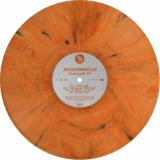
Nightcode EP finds UK deep-house craftsman Jacksonville in full control, lacing warm chords, swinging drums and basslines built for red-lit basements. Across “Nightcode”, “Ecstasy in Starlight”, “Octobers in Love” and “Blind Spot”, he fuses classic Detroit/UK house textures with his own emotional, story-telling touch—timeless deep house for DJs who play past sunrise.
Feedbacks:
Laurent Garnier : Octobers in Love <3 <3 <3
Nick Holder : dope
Gina Breeze (Classic / Get Up / Homoelectric) : Feeling the deepness! Look forward to playing.
Nightmares On Wax (Warp Records) : Ecstasy in starl;ight and Blind spot are my jams !
Josh Wink (Ovum) : Deep, old old school flavored with new school production.
Alexkid (Rawax / FUSE / NG Trax) : Lovely
Lauren Lo Sung (LOLiFE records, e1even records) : Octobers in love is nice!
Dj Hutch (Ambers / Rinse FM) : grooves
Louise Chen (NTS) : This is so so sooo good! Can't wait to play on the radio!
Rob Pearson (Evasive Records / Sine 102.6fm) : Nightcode is the standout for me, will play tonight on Evasive
Eviltron / Paul Donton (Bombis / Triangle) : Blind Spot and Ecstasy in Starlight are the ones on the
D'Julz (Bass Culture) : feeling night code and blind spot . merci!
Junior Sanchez (Strictly Rhythm / Cube Recordings) : Really Cool EP!
DJ Three : this is all very high quality house that feels very much a
nd_baumecker (Ostgut Ton) : Nightcode and Octobers In Love for me. Quality as usual.
Sasha (Last Night On Earth) : Downloading for Sasha
William Kiss (Rekids) : very nice!
Monty Luke (Rekids / Black Catalogue) : thx for this...
Mystic Bill (Classic / Trax / Relief) : Will try some of these out, thanks!
Carista : beautiful
Crackazat (Freerange / Local Talk) : Sick sick sick
Jhobei (Bizarre Trax / FUSE / Felon 5) : Nice smooth deep
Khadija (Rek'd / Rafiki Collective) : Danke
Ben Sims : Now downloading - will check asap!
DJ Bone (FURTHER) : Very nice tunes here, thanks
Bake (All Caps/Rinse FM) : thank you!
Dj Deep (Deeply Rooted) : very nice tracks!
Oliver $ (Classic Music Company / Play It Down) : nice one!
Tripmastaz (Plant 74) : Nightcode is tight
Harvey Sutherland (MCDE / PPU / Voltaire Records) : couple of nice tunes here!
Anthony Collins (Frank & Tony / Scissor & Thread) : super nice deep tunes
Marcel Dettmann : thx
Voigtmann (Subsequent) : Ecstacy in Starlight is the one!
Gerd (4Lux / Clone) : dope house trax from the phonogramme crew once again!
Groove Armada : Great EP - Love Nightcode, Ocotber is love so good too±
Harri (Sub Club) : nice, will play and support
Jorkes (Freeride Millenium) : ecstasy in starlight..yes yes yes yes
DJ Minx (Women On Wax Recordings) : Every one of these...top tier! I'm on 'em!
DJ Rocca (Nang Records, Mantra Vibes) : Great EP. Nightcode is great, super bassline indeed
Jacques Renault : Ectasy In Starlight for me here!
Geir Aspenes (G-Ha (Sunkissed)) : Thank u
Mark Farina : dig it
Âme (Innervisions) : thanks
Djebali ( ( djebali ) / INFUSE / Freak n Chic) : Love it ! thanks for sharing. Blind Spot is my fav
Jaye Ward (Dalston Super Store / Netil Radio) : wicked release!! night code is a belter!!! thx
Iron Curtis (Mule Musiq, Morris Audio) : thank you!
out of Stock
Last delivered 14 days ago available to reorder, subject to availability
Pianist and bandleader Linus Rebmann, together with Gabriel Widmaier on double bass and Johnny Walker on drums, shapes a transparent and powerful sound characterized by great joy in playing and a palpable sense of familiarity. The album's ten original compositions tell of observations, inner movements, and moments whose depth is better expressed through music than words. The three young musicians met in the Baden- Wurttemberg Landesjugendjazzorchester, and after winning the "Jugend jazzt south- west" competition in 2024, the trio was awarded the prestigious Deutschlandfunk Studiopreis at the national meeting. This made it possible to produce the album in the legendary Kammermusiksaal of Deutschlandfunk in Cologne - a space that has been among the country's finest recording venues for decades. The band members deliberately chose an intimate setting for the recordings. Everything was played through a single main microphone, without subsequent corrections to individual instruments. A working method that demands absolute presence and mutual trust. It is precisely this immediacy that shapes the sound of "Listen To The River": the album is transparent, organic, flowing, almost breathing.
The wonderfully unrelenting Instinct label from Burnski welcomes Gabriel Munoz for a brilliant five-tracker. Munoz is an 18-year-old from the Netherlands who is fast turning heads with his well-informed and fresh style and the garage prodigy opens up here with 'Arisen', a fast-paced and silky deep garage house cruiser with starry-eyed synth work. 'Pulse Sector' is another deft cut with neat 90s stabs buried deep in dusty drum rotations and balmy pads. There is more sleaze to 'Tell Me Something', 'Ghost' is all about the throbbing bassline and 'Movement' brings some more playful early UKG motifs and fat drums and bass. Fresh tackle from a fresh talent.
out of Stock
Last delivered 42 days ago available to reorder, subject to availability
Inner City Sound Archives returns with its second chapter — digging deeper into the forgotten vaults of New York’s underground disco culture.
This new volume brings to light another cache of mysterious acetate recordings: no titles, no credits, just cryptic handwriting, tape hiss, and the unmistakable pulse of a bygone era. Painstakingly transferred and fully remastered through analog processes, these raw and extended cuts preserve the full emotional weight of the original sessions — dusty, physical, and made to move bodies in the dark.
These are tracks that once passed hand-to-hand among a tight circle of selectors, whispered about and played just once or twice at legendary loft parties between 1978 and 1983. Then, silence. Until now. Once championed in the shadows by the likes of Larry Levan, Francis Grasso, Steve D’Acquisto, but also by more elusive selectors like Bobby Guttadaro, Michael Cappello, Roy Thode, and Mark Paul Simon — these grooves return to tell their story, the way they were meant to be heard. Each piece is a sonic time capsule — hypnotic, unpolished, and intimate. Pressed loud and with care, for those who still believe in the ritual of vinyl.
out of Stock
Last delivered 14 days ago available to reorder, subject to availability
Singer/Songwriter Joshua Ray Walker’s made a name for himself with poignant, human portraits of flawed, fascinating characters. Now, on his latest album, Ain’t Dead Yet, Walker’s telling a more personal story – his own. “Human beings are super multi-faceted, and part of the reason I wrote about characters in the first place was because I could explore things about myself that I didn't feel comfortable exploring if I were to admit that it was really about me,” Walker says. “All my songs are about parts of me, I just didn't try to stick them on another fictional character this time.” Beneath the album’s flippant title resides some of Walker’s heaviest storytelling yet. Three years ago, when he started writing Ain’t Dead Yet (his sixth studio album, to be released May 29 via Thirty Tigers/East Dallas Records), Walker hadn’t yet received the cancer diagnosis that rearranged and threatened his life (he currently has a clean bill of health). But that year was still uncommonly fraught with mental, physical, and career stresses. Pulling the songs out of the can to finalize them for the album – including re-writing and re-working almost all the songs – Walker, who was then undergoing and recovering from cancer treatment, was surprised by their prescience.
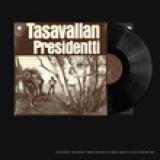
TASAVALLAN PRESIDENTTI’s legendary sophomore album reissued on vinyl Tasavallan Presidentti are one of the most loved Finnish progressive rock bands of all time. Their second album II has become a very hard to find collector’s item, with Svart Records reissuing it officially on vinyl for the first time back in 2014, in close co-operation with the band members. The reissues sold out fast and it’s about time to bring back this timeless classic on vinyl, for the ages. Tasavallan Presidentti was established in 1969 by guitarist Jukka Tolonen and drummer Vesa Aaltonen. Joined by the English-born singer Frank Robson, bassist Måns Groundstroem, and saxophonist-flutist Juhani Aaltonen, who left the band after the release of the first album and was replaced by Eero Pöyry. Their sophomore album that resulted with this new lineup is highly praised for the band’s exceptional instrumental skills, and the album’s mix of harder, jazzier tracks with mellower, flute-infused pieces. II is now presented with new vinyl colours packed in a tip-on sleeve, with an insert featuring photos and interview with Aaltonen, Tolonen, and Robson.
TASAVALLAN PRESIDENTTI’s legendary sophomore album reissued on vinyl Tasavallan Presidentti are one of the most loved Finnish progressive rock bands of all time. Their second album II has become a very hard to find collector’s item, with Svart Records reissuing it officially on vinyl for the first time back in 2014, in close co-operation with the band members. The reissues sold out fast and it’s about time to bring back this timeless classic on vinyl, for the ages. Tasavallan Presidentti was established in 1969 by guitarist Jukka Tolonen and drummer Vesa Aaltonen. Joined by the English-born singer Frank Robson, bassist Måns Groundstroem, and saxophonist-flutist Juhani Aaltonen, who left the band after the release of the first album and was replaced by Eero Pöyry. Their sophomore album that resulted with this new lineup is highly praised for the band’s exceptional instrumental skills, and the album’s mix of harder, jazzier tracks with mellower, flute-infused pieces. II is now presented with new vinyl colours packed in a tip-on sleeve, with an insert featuring photos and interview with Aaltonen, Tolonen, and Robson.
In the culinary arts, it’s easy to overcomplicate the final product. Theme, presentation, texture…they’re important but should work to complement the raison d'etre of any food. At the end of cooking a dish, it should taste good and feed people. Some dishes, like barbeque or provoleta, resist the tendency towards hollow showmanship. One of their expressions can be more or less aesthetic, but the first purpose is to be simple and tasteful. Argentinian provoleta goes so far as to blur the line between ingredient and dish. It relies on the inherent flavor of provolone being heated at the right speed for the perfect amount of time. You can add garlic or chives or red pepper to the slice, but ultimately they serve to bring out an essence that’s already there.
Los Angeles’ Cousin Feo has developed his rapping acumen in the five years since releasing Provoleta, but returning to the project today shows that he always had the penmanship, grit and delivery that christens an emcee worthy of remembrance. Like the bubbles rising up in the appetizer that is the album’s namesake, Feo showed that true profundity is found in the simple gestures.
Since dropping the project in 2019, Cousin Feo has expanded his vision of a world where hip-hop and football, two proletarian art forms, mingle in creative and compelling ways. He has collaborated across multiple continents, chronicled football histories, aided in canonizing legends, kept the flames high in age-old rivalries and constantly forced his audience to search for the last time they heard bars this hard. In anyone else’s hands it would be too great a task.
The maturity he showed on Provoleta wasn’t nascent, it was an inherent quality forcing itself to the surface. The songs refract his experience as a working class Angeleno through the archetypes of Argentinian football legends. The kernel that unites the two worlds is hustle. When Feo was coming up, missteps had greater consequences than crashing out in the group stage and street deals had the weight of a Boca-River Plate match.
Each track uses slightly different ingredients to let Feo’s underlying talent shine. “Maradona” feels salvific, fitting for a football legend canonized from the Andes to the Alps and a Los Angeles rapper looking to inspire similar hope in the neighborhoods that raised him. On “Di Stefano” Feo massages the instrumental with the same composure of the late forward, until he pierces through the headphones like one of Di Stefano’s arrows. It’s also refreshing to hear a song celebrating Messi before his meme-ification, focusing on the universal truths contained in his footballing talent instead of using number 10 as a stand-in to make a point in a fruitless argument. And he still finds space to show deference to Batistuta, Kempes and other members of the Argentinian pantheon who’ve been erased from the popular imagination by the national team's contemporary success.
Real ones know that true players, true rappers, and true artists will always stand the attacks of time and consensus. In Provoleta’s first verse, Cousin Feo says he moves with the hand of God. Maybe one day he’ll tell the whole truth and let us know how he was able to wrestle the pen away too. Limited edition of 300 hand-numbered copies.
'Honesty Flowers' is the fourth studio album from Italian multi-instrumentalist Alessio Ferarri under the Upupayāma moniker. An epic double album set due for release May 29th 2026 on Fuzz Club, 'Honesty Flowers' finds Upupayāma's ever mind-blowing brew of organic psychedelic rock meets global grooves at its most percussive, lively and distorted. Equally hedonistic and heady, it courses through rhythmic funk grooves, doubled-down scorched fuzz riffing, winding motorik jams, tranquil drones and pastoral acid-folk across its seventy minute run time. A six-piece band live, where things take a more ever-evolving improvisation-based approach (see their recent 'Live At Fuzz Club Festival '25' LP), on the recordings Ferarri writes, plays and records everything himself – guitars, keys, flute, sitar, and an arsenal of percussion all feature. Never not working on new music, Ferarri started laying down these new tracks in his home barn studio in a small mountain village overlooking the city of Parma before its 2024 predecessor 'Mount Elephant' even hit the racks. The result was mixed by Chris Smith at Kluster Sounds (Kikagaku Moyo, Wax Machine) and mastered by Joseph Carra (King Gizzard, Babe Rainbow, ORB) On the new record, Ferarri says: "Honesty Flowers was born from listening to lots of funk music from all over the world, lots and lots of African music, and from listening to myself as I spent whole nights playing all kinds of percussion instruments. I would fall into a sort of trance and play the same rhythm for hours on congas or on a djembe. It's an album that was born above all from the beauty of being able to narrate the unknown and recognise yourself in it, which could translate into telling stories and bringing them to life.
On the new concept album Honest Work, ten songs tell stories from the adult lives of working people in the middle and lower classes. They work night shifts in hospitals, pump breast milk in storage rooms, wonder whether they should get a prescription for Ritalin, are summoned to the boss’s office for wearing the wrong clothes, or take a day off just to walk barefoot by a lake. Lyrically, Honest Work can best be described as “petty-bourgeois surrealism.” It’s an album about people trying – and often failing – to navigate systems that reduce them to anonymous data points, employees, and consumers. The album is full of desperate prayers: “Doctor, I think that I’ve got a disease” (Focus Disease), “Taking a day off… don’t even remember my own name” (Remind Me), “I serenade on company time” (Lean Dreams). In these lines, you can feel the dull ache of a generation whose emotional lives are filtered through corporate HR language and online shopping carts.
'The Endless Dance' is the first collaborative album from Northern Irish producer and composer Hannah Peel and Chinese percussionist Beibei Wang. The record is grounded in the strength of ancient concepts, but comes alive with the joy and freedom of play as together, Peel and Wang travel through the 24 solar terms of the Chinese calendar with a cornucopia of sound in tow – synths and prepared piano alongside traditional and unconventional percussion.
The album is collaged together from recordings made over five days at legendary rural studio Real World, a setting which aligned with the duo’s inspiration from the natural world creating a permanent record of their shared musical landscape, informed by the flora and fauna that emerge and retreat through the seasons.
Both genre-defying, storied artists in their own right, Peel and Wang met while working on Manchester Collective’s 2023 album NEON and 'The Endless Dance' certainly represents a step-change from the duo’s shared classical backgrounds – but their knowledge and training is also the foundation of its freewheeling audacity, giving them the confidence to trust their instincts.
The album is produced by Mike Lindsay LUMP, Tunng, Guy Garvey, Jon Hopkins who, with free rein, brings added energy and creativity to the album, whilst Peel & Wang are also joined by Hyelim Kim on Daegeum, a Korean flute with “colourful overtones on every note”.
Track to track, 'The Endless Dance' is unpredictable and unexpected, which is in part due to the genuine curiosity and outside perspectives that each player brought to the sessions. “I am so familiar with Chinese heritage, but I don't see how it can present in electronics, for instance,” says Wang. “Hannah comes in with that direction, to imagine what the sounds could be together.” The characterful richness of the album stems from the commonalities they found in the sessions. “We both come from cultures where story is really important,” explains Peel. “The attention to detail comes from telling a story, and one note can set that off in a different direction.”
'The Endless Dance' is a major work from two accomplished, singular artists - but it’s also the sound of mutual curiosity and shared fun, or as Wang puts it: “Two women talking in totally different language that had a wonderful chat.”
Tajemnica is a transgression—too gentle for dancing, too euphoric for standing still. Sparse, scarce, and subtle, the new album by Polish performance artist, musician, and poet Wojciech Kosma, aka spalarnia, eagerly explores modern dance genres, experimental production, and nostalgic electronics to surrender to what is truest—essential song forms, melodies, harmonic and rhythmic basics, the most resonant feelings.
Sung in spalarnia’s trademark soft, low, almost tactile voice, the eight hypnotic songs tell stories of closeness and love, and their favored companions—pain and heartbreak. In “Bliżej” he sings “I love not loving you / I want to be a part of you.” And in “Jedyna”—the album's single—he states: “You are the only one / there is no other me / only the one for whom you are the only one.”
Contrary to the meaning of its Polish title (Tajemnica translates to “secret”), the album that moves between ghostly ambient pop, languid R’n’B, and Eastern European folk doesn’t reveal anything outright—the music only points to where the secrets might lie. One can choose whether to hear them or not.
In a patchwork of IRL sound fragments, humming ambience and sub bass brushstrokes, Bobby Ingham debuts on Sneaker Social Club with a social-realist inversion of soundsystem music that relishes negative space while telling a street-level story.
Bobby Ingham is a 24-year-old multidisciplinary artist whose creative practice across film, music and sculpture was shaped by formative experiences in his native Leeds. Having started to experiment with spoken word, poetry and electronic sound production, he sharpened his focus after moving to London. Homesickness moved him to recreate the sensory impression of his hometown through sound, using snippets of his every day experience with his friends and family as well as archival recordings online related to Leeds. The particular lilt of regional dialect became central to the character of his work — a direct portal into a personal world that could only be rendered by someone who has lived it.
Ingham’s work chimes with that of SSC’s own Low End Activist. Where LEA has repeatedly taken us around the Oxford council estate he calls home, on Angel of the North Ingham lets us stay a while on the streets and in the houses that made him. It’s intimate from the very start — opening track ‘Lynne’ features Ingham’s own grandmother, while ‘I Feel So Good I Swear I Could Fly’ finds Ingham voicing his own poem as he retells personal experiences in a disarmingly mythological manner.
‘1st Memory Of Love For DRXSJKFL ft. Pretty V’ invites Wakefield, West Yorkshire-based artist Voldy Moyo to lay down a spoken word piece that evokes the dehumanising nature of military service and those left behind by it. Where there are no words, Ingham instead speaks with brittle machine rhythms and blocks of texture, swooning synthesised beauty and any emotional shade you care to mention in between. It’s a work that takes you right into the heart of the artist — someone committed to telling an honest story from a viewpoint that seldom gets a second thought.