Make The Ting is a project born out of my writing on creativity that lives online as post it style notes known as the ‘Yellow Squares’ found across Instagram and Twitter. The first square was posted on July 31st 2021, as covid-19 restrictions were lifting in the UK and I was thinking about what the music scenes and wider creative communities are after 18 months of lockdown. The idea’s developed into lectures presenting them in real life, but the platform felt right to explore my own creativity more broadly to challenge my own ideas in real time. My history as a DJ, Label Owner and Promoter in the Grime scene wasn’t at the forefront of these ideas, but I wanted to reconnect back to the ecosystem that inspired and gave me a creative career in the first place. Blay Vision’s ‘Cammy Riddim’ in the summer of 2022 inspired an idea to translate the ideas in the squares into song form. I approached Grime MC Jammz about the idea, and the first song ‘Yellow Square’ was done with the core principles that I had written about so far. 6 months passed, and while on a Muay Thai retreat in Thailand in February 2023 I thought about expanding the musical side of the Yellow Squares further. I text Jammz about turning this idea into an album, that we make as quickly as possible using my writing as a guide, and his voice and creativity to turn them into songs. We gave ourselves two weeks, set up a shared notes in iPhone did two zoom meetings, one phone call, exchanged messages on iMessage and he wrote 7 songs in a week, then recorded them all in one day at Ten 87 Studios in Tottenham, London. Jammz wrote all of the songs to one of his own beats, then we selected the final instrumentals we liked that we thought fit the ideas from both our camps the day before recording. The speed forced our hands creatively and it would have been a completely different project if we worked on it for months. Time is the creative director. Albums don’t have to be blockbuster projects with big budgets and huge campaigns behind them. Albums are just collections of ideas. Removing the pressure of trying to make a perfect one meant it got done and released with the least stress possible. Even the business of the album took 5 mins to handle. An equal revenue split on each song between me, Jammz, and the producer. Everyone gets paid quarterly into their own account automatically by our distributor. On announcement of the album in March 2023, we released the acapellas, for people to do their own versions, before most of the original songs had been heard by anyone. We encouraged people to Remix The Ting, and I did custom artwork for everyone that sent me a complete remix before the album came out on the 30th June 2023. The front covers are drawn individually by me. I wanted to make the record an extension of what I do with the yellow squares themselves and capture the energy of where my head is at in 2023. If it’s blank, it’s space for you to draw your own yellow square. Maybe what you think about the album, what it’s inspired for you, or just a snapshot of where your creative brain is at on the day you are picking up this record. This could be the first of many albums, this could be a one off. Nobody knows what is going to happen next. It all may make sense in the end – Elijah
Поиск:about songs
Все
After his highly publicized breakup with Taylor Swift at LA’s Viper Room ,Iain Howie returned to Vancouver.
Taylor released “Bad Blonde Boy”, a breakup song about Iain and Iain quickly rebutted with “ Patterns” about Taylor.
He began working on his solo album and got a remix of Patterns by his shady neighbour “Jay Tripwire”. Partly because of the fact Taylor could never stand Tripwire.
Over the course of a year Tripwire churned out 10 different remixes for an alternative vinyl only release. Jay would have his friend Anton play various remixes from his hot dog cart in Bucharest.
One early morning it caught the ear from Cally. Cally had only intended to buy a foot long Frankenfurter after Guesthouse, but he was so captivated, that he asked Anton for a cassette tape of the song. Most Romanian DJs often look to Anton’s hot dog cart to find obscure unreleased gems.
Cally began his closed door ritual of compiling songs for closing Sunwaves that year. When getting his tea leaves read, his spirit guide advised him on using “Patterns” as the closing song to the festival.
Whether it was the come down from drugs or low serotonin, SW attendees could be seen crying on the dance floor during the song.
The tears were then collected and drank by Raresh
When all you want to do is be the fire part of fire… say it to yourself and then say it again. Repeat it like a mantra. It’s what UTO did.
Anyone familiar with the UTO’s lauded 2022 debut Touch The Lock, which Pitchfork praised for its “prismatic synth pop”, will be aware of the variegated nature of what they do. This album is just as colourful, with Neysa’s vocalwork sparking similarities to Kim Gordon’s off-kilter vocals, which they both ceremoniously jets through a post-electronica blender mixing stylized indie sleaze productions with 90s breakbeats.
While they might appear as a singular entity to others, UTO wrote large sections of this album apart, converging by the fireside to discuss the day’s work before coming together to hone and finish the songs. 2023 was, by their own admission, a difficult year, and that’s reflected in the Dantean themes expressed in songs such as the lead single ‘Zombie’, which arrived at the end of November as a taster for the new record; the latter’s dark heart is belied by the skittering beats, glitchy electronics and pummeling sequencers that elevate it from the void.
From fire, early man’s discovery, to AI, humanity’s next great adventure - with all of the wonders and complexities of human relationships in between - When all you want to do is be the fire part of fire really is about life, the universe and everything. Just remember, be the flame, not the moth.
Multi-award-winning singer-songwriter and leading UK jazz vocalist Zara McFarlane releases Sweet Whispers – Celebrating Sarah Vaughan on 14th June. The album honours the jazz great who inspired her on her own artistic journey and whose centenary year is marked in 2024.
‘Sweet Whispers’ is more than a run-through of some of Vaughan’s most popular songs. It’s not hard to imagine the immense task in selecting those songs, after all, Vaughan’s recording career spanned 50 years notching up almost 60 albums (plus nearly 30 again in compilations and box sets). Through a thoughtfully chosen selection of songs, formed across months in collaboration with producer, and the album’s clarinettist and saxman, Giacomo Smith – Zara journeys through the musical life of Sarah Vaughan, from her first to last recording, bringing to life and breathing new life into some of her best and less familiar songs. But importantly, the songs that mean the most to Zara.
Zara McFarlane said “It was when I started to listen to Sarah Vaughan that I really began to appreciate jazz vocals. She had such control across her range and a vocal command that was cheeky, playful and fun yet sophisticated and articulate. I really wanted to pay homage to her as I feel she has been somewhat overlooked amongst the jazz singers. Although I do love Ella and Billie, it's all about Sarah for me.”
‘Sweet Whispers – Celebrating Sarah Vaughan’ was recorded analogue at Durham Studios, London. Giacomo assembled a stellar cast of musicians - Joe Webb on piano, Ferg Ireland on double bass, Jas Kayser on drums, Marlon Hibbert on Steel Pan and Gabriella Swallow on cello – to record 11 tracks live to tape; with minimal overdubs, the recording has retained a live, vintage feel. A celebration of Sarah Vaughan could be in no better hands than that of Zara McFarlane, who makes an inspired homage to the ‘Divine One’. Beautifully performed in Zara’s own inimitable style, with her own playful swoops and slides, she has added her own
touch to the music. With a silken voice and timbre that bring emotional depth, attitude and personality to this collection of SaraH Vaughan songs, this is a masterful celebration
Following his debut EP ‘En clair-obscur’ and a series of singles earlier this year cementing his place as a rising name in the world of cinematic soul & funk, Hamburg’s finest cinematic soul artist ‘The Offline’ announces his debut album 'La couleur de la mer'.
Reminiscent of film scores from the 60s and 70s, The Offline worked with co-producer Tim Liztenberger to channel the influence of film composers such as Francois de Roubaix and Brian Bennet, creating his own soundtrack on ‘La couleur de la mer’. Inducing images of manorial, fog-swept villas at the sea's edge, silhouetted sailing boats and cigar-chomping villains attempting to thwart the mission of an imaginary hero, the record is a masterfully composed sonic journey. Experimenting with themes and atypical song structures, the music moves from dramatic cues to fragile romanticism. It incorporates psychedelic spaciness, retro soul and hip-hop sensibilities informed by The Offline’s extensive record collection and crate-digger status.
“Ever since I was a child, I was fascinated by the soundtracks from the 60s and 70s, and I always wanted to make an album in the film score direction. I wrote about 30 demos, kicked half of it and stuck to the ones that felt right in the dramaturgical structure of the ‘movie'. Interestingly the main theme was set early on while writing the album, which made the writing process much easier.”
Aptly named, ‘Thème de la couleur de la mer’ opens proceedings, establishing the core motifs of the record. Haunting flutes and xylophones lead the way into Khruangbin-esque guitar lines, which sit against a hip-hop canvas that returns on boom-bap head boppers like ‘Quelque chose reste’. Retro soul revival takes precedence on deep cuts like ‘Un bout de chemin’, with wah-gated guitars interacting with emotive cello lines and symphonic string & horn sections.
The Offline came to life when composer and photographer Felix Müller travelled the Atlantic coastline in the south of France with his analogue camera, capturing beach life on film. After coming back to Hamburg, he started writing songs as the sonic counterpart to the analogue visuals. His Debut EP ‘En Clair-Obscur’ includes five tracks that capture the essence of his journey and the feeling of a cool summer soundtrack.
- A1: Saylo
- A2: Can't Take The Hood To Heaven
- A3: Attack Of The Dreadlocks (Feat Rae Khalil)
- A4: Lynn's Lullaby (Interlude)
- A5: Brownskin Cinnamon
- A6: Grey Seas (Feat Reaper Mook)
- A7: Cowboy Leather (Feat Pink Siifu)
- A8: Overseas Sam
- B1: Bullets From A Butterfly
- B2: Pearly Gates Playlist
- B3: Things Grandma Told Me
- B4: Bygones
- B5: Lagonda (Feat Goya Gumbani)
- B6: The Card Players (Feat Jayellz)
- B7: When I Met Rose
Cassette[10,88 €]
Forest Green Vinyl
Seafood Sam is a futuristic artifact. If that description might sound confusing at first, it matches the eclectic dualities found in true originals. With his effortless cool and timeless style, the North Long Beach native defies convention and exact comparison. He's a virtuosic rapper, a stop-you-in-your tracks singer, and a symphonic producer. Welcome to the lavish life of a laid-back transcontinental man of mystery, rolling in old school Cadillacs, eating caviar with a blade in his pocket, and making plays in vintage Pelle Pelle gear. A blaxploitation icon for the Instagram age, blessed with the bars of a `90s legend and 23rd century swagger. Seafood Sam is a true hero of modernity. On his full-length album debut for up-and-coming label drink sum wtr (Kari Faux, Deem Spencer, Aja Monet) debut, Standing on Giant Shoulders, Sam splits the difference between Snoop Dogg and D' Angelo, Curren$y and David Ruffin. The songs reveal a forward-thinking sensibility rooted in ancestral soul. He creates spiritual hymns for the streets that tap into universal ideals and irrepressible groove. In an era plagued by short-term thinking, his ambitions reveal a crate-digging depth of music history and a meticulous ear for detail. The giant shoulders in the album's title refer to James Brown, Bobby Brown, and Miles Davis - the holy trinity who inspired Sam's process. From the Godfather of Soul, Sam took a perfectionist's rigor and focus. The example of Bobby Brown lent an unshakeable confidence and self-belief. While the constant artistic left turns of the trumpeter that birthed Ccool offered an aspirational archetype. The story starts in the glory days of Long Beach hip-hop. As a young child, the G-Funk era soundtracked rides in Sam's father's car. Some of his earliest memories are trying to memorize Snoop's verse on "Nuthin' But a "G" Thang." Beyond gangsta rap, the LBC has historically doubled as a capital of lowrider soul and carwash oldies. At any intersection, you could hear Dogg Food or Brenton Wood, Warren G or Barbara Lynn. This too was absorbed via osmosis. It also just so happened that the art of performance was always in Sam's blood. So at family functions, he and his sister supplied entertainment by singing karaoke renditions of The Isley Brothers. While his Harlem Shake remains a thing of local lore. Long Beach is a culturally diverse mecca of skate parks and gang life, street fashion and tricky dance moves. This is the place that raised Sam on a diet of Wu-Tang and Nelly Furtado, Lil Bow Wow and Allen Iverson. He was the middle ground between his two older brothers: one who gangbanged, the other who graduated with a master's degree from UC-Santa Barbara. But it wasn't until the end of high school that Sam started to take rap seriously. Alongside long-time collaborators like Huey Briss and Reaper Mook, Sam's name began to make waves on the northside of the city, but he was partially distracted by a modeling career that paid the bills and took him all to way to walk in Paris' fashion week. The first turning point arrived with 2018's "Ramsey," a self-produced, slick-talk anthem with over 10,000,000 streams across all platforms. With each subsequent release, Sam showcased his peerless consistency, building buzz both online and in the city streets. Spin hailed his "smooth and unhurried cadences and understated lyricism_ that sounds like nothing else in Long Beach." Clash raved about Sam's "evolution as an artist, cruising through nostalgic production with slick, witty rhymes." The culmination arrives with Standing on Giant Shoulders. It's the evidence of a master, a young sensei in the model of Quincy Jones. All rhymes, singing, production, and arrangements were handled by Sam - with an assist from his close Long Beach kinsman Tom Kendall from the group Soular System. It's hard-edged and lyrical enough for disciples of Larry June and Roc Marciano, but orchestral and melodic enough for fans of Anderson .Paak and H.E.R.
"Deep Dancefloor Jams of African Disco, Funk, Boogie, Reggae & Proto Electro Music 1977-1986reggWhen a passionate DJ and crate digger intuitively selects music for a DJ compilation, without artistic compromise and without the burden of trends, AfroMagic vol.1 emerges from the depths of his soul. Herewith we present the new favorite phonomancer’s tool for all the DJs who experience the dance floor as a sanctuary and a source of freedom and love.
The most fundamental thing that defines African music is that it was created for dancing. In African dance, there is often no clear distinction between ritual celebration and social recreational entertainment – one can seemlessly merge with the other. Because dance and rhythm have more power than gesture and more richness than words, and because they express the deepest experiences of human beings, dance is in itself a complete and self-sufficient language. It is truly an expression of life with all of its emotions – joy, love, sadness and hope – without which there is no African music and dance. For the African people, dance and music are integral parts of the body and soul, thus depicting the expression of life, current emotional states, visions or dreams. Through hypnotic repetitive music and dance, people communicate with each other and with the souls of the dead, the animals, the plants, the stars, the Gods… They free the body and the spirit through ecstatic states, reaching a healing sense of freedom, happiness, and satisfaction.
Throughout history, this transcendental perception of rhythm and dance originating from Africa, influenced popular music worldwide, thus creating new living and breathing forms of musical genres – freeing them from their industrial mold. Funk, disco, soul, boogie, reggae, dancefloor jazz etc., developed in parallel all over the world. It is foolish to perpetually discuss where they originated from and who were the creators of all these fiery dance floor genres – being obvious that they directly or indirectly originate from the African continent and its people who were as well, over the centuries, influenced by disturbing socio-cultural factors of colonialism. However, no one can enslave the soul. The seeds of free and uninhibited dance and rhythm, true to their original form, initially first sprouted onto the USA’s fertile fields of clubbing and popular music while later evolving in other parts of the world.
The disco funk club culture manifested itself as a phenomenal explosion of artists and grooves in the second half of the 70s in the USA. Shortly it spread around the world continually reigning over charts in its various forms – to this day. Clubs emerged where the DJ is an almighty shaman and the dancers are a tribe united under one roof. This urban ritual had and still has a single goal: togetherness, freedom, and love. Clubs have evolved into temples where we free ourselves from the burden of a consumerist lifestyle and suppressed emotions – a place where we receive love and give love – to be who we really are.
Disco funk clubbing was such an influential global phenomenon that its influence can be observed in various other genres from the disco funk era i.e. progressive rock, which mutated by layering complex rock arrangements with a disco funk groove resulting in hybrids, highly sought by today’s diggers, producers and collectors. The profit-hungry music industry of the 80s very quickly commercialized the original disco funk sound by amputating of its original Afro groove to be able to easily ‘sell’ it globally. So, the original disco funk groove became underground again, and it has remained so until this day. Today, for a DJ to unearth that ravishing groove that will lead the dancers to the stars, he must dig passionately like a true musical archaeologist in search of that groove that picks you up after just a few initial beats. That groove which forces the atoms in your body to vibrate, that groove which unites the body and releases the burden.
The AfroMagic compilation series is created as a tool for real DJs who stick to the aesthetics and essence of clubbing.
This continuation of the Afromagic compilation by DJ Borovich was created in a private jam session which served as an escape route from intense and complex love problems.
Unconsciously driven by intuition and emotion and following a live mix tape framework where many tunes are arranged instantaneously, Borovich narrates his story with a strong rhythm that cuts loose even the most blocked off energy nodes and restores happiness to the spirit and the body.
The musical experience of the groove is completed by the lyrics of the songs, which symbolically give DJ Borovich universal answers to his questions arising from questioning the boundaries, nuances and other forms of love.
When considering that Borovich’s selection was created to facilitate an escape from the burdens of reality through rhythm and dance, we can be sure that Afromagic Vol. 2 will have a 100% uplifting, energized and spaced-out effect on the listeners.
The intro to A1, “Feeling Happy” by the Apostles, introduces us to an experienced and slow, cool and irregularly tight groove containing a confidently sung chorus that instantly gives a sense of freedom and hints at the remainder of Afromagic Vol. 2: “I’m gonna feel happy, ´cause I know I’m gonna be myself.” After the anthemic song mantra of the Apostles, Aigbe Lebarty uncompromisingly continues with a dirty disco rhythm. Acidified by accented synths that elevate it to shamanic levels and held together by a female tribal choir, we embark on an uncompromising ritual disco journey. Without a moment to take a breather the prog funk band Mighty Flames and their Road Man launch a highly vicious and raw, thick funk groove spiced with acid synths and dirty RnR breaks, raising the bar for the A side. Jimi Hendrix himself would surely praise it given the ultimate freedom and virtuosity in the solo sections. With the last tune on A side DJ Borovich decides to burn the floor with Geraldo Pino’s psychedelic, acid furious groove and lyrics which describe this HEAVY part of love problems: “The way she walk, the way she talk, the way she does a funky dances, she is really really heavy – that woman”.
While the A side represents a compact intoxicating afro groove machine that separates us from reality and lifts us up to the stars in over 23 minutes, the B side is a treasure trove of proto sub-genres gems. This selection represents the mission of the Afromagic: to find singular events in African recorded discography of popular music from the 70s and 80s that give evidence to the birth of new modern genres on the Dark Continent even before they emerged in the U.S.A. or Europe. The beginnings of electronic music influenced genres are represented back to back with 80s synth jazzy pop, all painted in African colours.
The B side opens big with Jake Sollo and a huge reggae blues number singing about the humiliation of a man – goosebumps guaranteed! “You think I’m nobody that’s why, you don’t know the way for me, I’m somebody I know, I found myself at last”. Adolf Ahanotu then enters the scene with a hard sliding tackle at B2 and an exotic rare disco funk dancefloor napalm. A ‘Sensation’ that would ignite even the coldest of introverts. While we approach the end of the compilation the narrative revolves again and takes a different turn. No less and no more than to the proto-electro that Baad John Cross serves us in “Give Me Some Lovin´”. The fat and repetitive broken electro synth groove, championing many early 90s electro tracks, is presented here without hesitation and with constant tension accompanied by a mantric chorus “Gimme some, gimme some, gimme some looooovin’, EVERBODY!!!”. Finally, we’re guided to the end of Afromagic Vol. 2 by Eji Oyevole’s 80s synth pop style presented in an authentic afro manner, giving us a glimpse at yet another released Afromagic edition, as well as giving an answer to DJ Borovich’s love problems. A smoothly broken electronic rhythm resembling electrified highlife sounds, carried on the wings of a virtuoso dreamy saxophone on top of which Eji presents the most intimate parts of himself. Finalizing the track with a symbolic chorus, on the surface referring to the dancefloor and simply having fun, but in actuality referring to the skill and happiness of living: “I´m a dancer, I can dance”. So, get up and dance among the stars with DJ Borovich and Afromagic.
When all you want to do is be the fire part of fire… say it to yourself and then say it again. Repeat it like a mantra. It’s what UTO did.
Anyone familiar with the UTO’s lauded 2022 debut Touch The Lock, which Pitchfork praised for its “prismatic synth pop”, will be aware of the variegated nature of what they do. This album is just as colourful, with Neysa’s vocalwork sparking similarities to Kim Gordon’s off-kilter vocals, which they both ceremoniously jets through a post-electronica blender mixing stylized indie sleaze productions with 90s breakbeats.
While they might appear as a singular entity to others, UTO wrote large sections of this album apart, converging by the fireside to discuss the day’s work before coming together to hone and finish the songs. 2023 was, by their own admission, a difficult year, and that’s reflected in the Dantean themes expressed in songs such as the lead single ‘Zombie’, which arrived at the end of November as a taster for the new record; the latter’s dark heart is belied by the skittering beats, glitchy electronics and pummeling sequencers that elevate it from the void.
From fire, early man’s discovery, to AI, humanity’s next great adventure - with all of the wonders and complexities of human relationships in between - When all you want to do is be the fire part of fire really is about life, the universe and everything. Just remember, be the flame, not the moth.
- A1: Just A Child Feat Chiara Castello
- A2: Assai Giassai
- A3: No Fun Feat Daniel Richards
- A4: On And On Feat Egeeno And Elea
- A5: Nun Tengo Chiù A Te Feat Maricaclemente
- A6: Melancolia
- A7: Fior Di Veleno Feat Egeeno
- B1: La Verità Feat Toco
- B2: Common Questions
- B3: Genova Nervi
- B4: Stone (My Heart) Feat Chiaracastello
- B5: Eclisse
- B6: A Song To Make Love To
“Songs to Make Love To” is the 10th studio album by The Dining Rooms (Stefano Ghittoni and Cesare Malfatti), extending the Milanese duo’s classic sound legacy among psychedelic folk, cinematic atmospheres and hip hop-inspired downtempo rhythms. As always divided into instrumental and vocal tracks, it is entirely played and produced by Stefano and Cesare and features guest appearances on vocals by Chiara Castello (I’m Not a Blonde), Egeeno (of the Roman collective Tropicantesimo) and labelmate Tomaz Di Cunto aka Toco. “Songs To Make Love To” talks about love and relationship dynamics in every aspect, but also explores anthropological and ethnomusicological themes by making use of field recordings. “Songs To Make Love To” talks about love and relationship dynamics in every aspect, but also explores anthropological and ethnomusicological themes by making use of field recordings. “Songs To Make Love To”, whose artwork was made with works by artist Tatjana Zonca, talks about love and the explicit act of loving each other, but also and especially about the construction of love, the dynamics of love relationships inside and outside the couple, free and liberated love, without constraints and outside the concept of possession. A further peculiarity that contributes to the uniqueness of “Songs To...” is the in-depth exploration of anthropological and ethnomusicological themes, particularly dear to Alan Lomax: the classic TDR sound therefore blends, especially in the instrumental tracks, with classic field recordings of sounds from the Genoese carruggi, the Milanese dockyard, the Spanish quarters of Naples and cities such as Istanbul and São Paulo.
This batch of releases is what Deeper Knowledge Records is really all about - showcasing and making available fantastic music that has been rarefied, but with no correlation to its quality. That is to say, music that we feel is every bit as great as well known, much-loved and canonized classics, but just never reached the ears of as many folks, only due to its unavailability. And the music made by the close-knit foursome of Trevor Byfield and Clive Matthews as artists, and Norman "Fox Fire" Vassell and the late Clinton "Percival" Williams as producers, is just that. Starting in the late '70s and into the early '80s, this foursome cut some of the best and heaviest roots reggae tunes of the era. We will be issuing eight great singles from these folks. Trevor Byfield's "Tell Me That You Love Me" is one of the most dread love songs that we've heard, and the flip is one of the most truly psychedelic, heavy and unique Tubby's dubs ever mixed. In fact, the crew liked this rhythm for this song so much that they cut three tunes on it!
Charlie Ingui a veteran blued eyed soul singer who formed the band The Soul Survivors In the 60's is back with a brand new single.
'Wake Up Old World' is a song about making the world a better place.
Charlie explains 'This has always been a theme in our songs inspired very much by our collaboration with Kenny Gamble and Leon Huff of Philadelphia International Records whose songs like "Love Train" and "Love Is The Message" had a positive and spiritually uplifting message.'
In 1967, Charlie Ingui formed the band The Soul Survivors. They scored a #2 record with Gamble and Huff' first major hit with the song "Express Way To Your Heart.' They were a bunch of hoods from The Lower East Side of New York.
They were part of the same scene in NY with The Rascals, Joey Dee and the Starlighters, The Soul Survivors, The Vanilla Fudge, and many other Blue Eyed Soul Bands that paved the way for folks like Hall and Oates.
Originally they were a trio and had a third singer, Kenny Jeramiah, who went on to have success in Atlantic City.
They went on to have several other great records. The first was in 1969 with Muscle Shoals producer. Rick Hall. The Swampers with Duane Allman played on that one. In 1974, Gamble and Huff got a custom CBS label – Philadelphia International Music and signed the Soul Survivors once again. They made a fantastic record with their amazing band, Charlie and Richie Ingui, John "Beedo"Dzubak The amazing Fred Beckmeier on bass. He was a major influence
Wake Up Old World is going to be the first side of a limited edition 7" vinyl to come on LRK Records.
Went straight in at num one in the UK soul breakers
Spun on all the indie soul stations like starpoint, solar etc
- A1: The Second Dreams (Theme From House On The Sand)
- A2: The Torture (Theme From Time Of Heroes)
- A3: Motorcycle (Theme From The Exile)
- A4: The Opening Night (Theme From Ljuba Par Lui Meme)
- A5: In The Beaubourg Gallery (Theme From Ljuba Par Lui Meme)
- A6: All And Nothing At All (Main Theme From All And Nothing At All)
- A7: All And Nothing At All (Unused Theme From All And Nothing At All)
- A8: Jere And Marija In The Room (Theme From Marjuca Or Death)
- A9: The Bitter Tears Of Petra Von Kant I (Theme From The Bitter Tears Of Petra Von Kant)
- A10: The Bitter Tears Of Petra Von Kant Ii (Theme From The Bitter Tears Of Petra Von Kant)
- B1: Cassandra (Theme From The Trojan War Will Not Take Place)
- B2: Peace (Theme From The Trojan War Will Not Take Place)
- B3: Fourth Choir - Sun Ray (Theme From Biedermann Und Die Brandstifter)
- B4: Second Choir - Marching Step (Theme From Biedermann Und Die Brandstifter)
- B5: The Beginning Before The Beginning (Theme From Fool For Love - Savage Love)
- B6: She Runs Away (Theme From Fool For Love - Savage Love)
- B7: Eddie Enters (Theme From Fool For Love - Savage Love)
- B8: A Jerk (Theme From Fear And Hope Of The German Federal Republic)
- B9: Song 3 (Theme From Fear And Hope Of The German Federal Republic)
- B10: Chernobyl (Theme From Fear And Hope Of The German Federal Republic
A collection of music for the various films and theatre plays by Mirko Krsticevic, Croatian and Yugoslavian composer and musician active since 1970s. All and Nothing at All (Film and Theatre Music 1978 - 1988) focuses on his work for the underground and avantgarde cinema from the era: directors Ivan Martinac, Svemir Pavic, Lordan Zafranovic, Aleksandar F. Stasenko and Vanca Kljakovic are all part of the Split Cinema Club association; their work explores art, death, sexuality and eroticism. Pavic's portrait of surrealist painter Ljuba Popovic, made in the same year as its counterpart by Walerian Borowczyk, features scenes form Beaubourg Gallery in Paris and Udo Kier as a guest. Side B of the record is all about theatre: plays by Sam Shepard, Rainer Werner Fassbinder and Jean Giraudoux were all produced in Sarajevo and Split in the 1980s, with the rare electronic takes by Mirko Krsticevic and his subtle minimalist soundings of the themes from the Cold War era. This unique and diverse compositions by founder of the rock band Metak and sound studio Tetrapak from Split, are document of the time that is, especially in the closing Chernobyl theme, relevant again. Composer, musician and musical arranger Mirko Krsticevic was born in 1948 in Sibenik. He graduated in music theory at the Pedagogical Academy in Split and then at the Music Academy in Sarajevo. He studied composition with Josip Magdic, Mladen Pozajic and Miroslav Spiler. He is the co-founder of the Tetrapak music studio in Split, where numerous performers and musicians have recorded (Animatori, D'Boys, Haustor, Oliver Mandic, Gibonni, Srdjan Marjanovic, Stil, Trotakt Projekt and others). The first group he founded was the rock group Che, which performed his own songs, in which he played bass guitar. It was founded in the summer of 1969. Together with Ranko Boban and Momcilo Popadic, he founded the Metak group in the spring of 1978 in Prigradica on Korcula. In the group, he is the author of songs and lyrics, and he also plays the bass guitar. "Da mi je biti morski pas" is the group's most successful single, which in 1980 became one of the most played songs on radio and television. Metak performed in Belgrade in front of 70,000 people, and the media declared them the best group along with Macedonian Leb i sol. In compositional work and arrangements for other pop and rock artists, Krsticevic had high commercial success with Tutti Frutti Balkan Band, Biljana Petrovic, Seid Memic Vajta, Pepel in kri, Osmi putnik, Oliver Dragojevic , Djordji Peruzovic, Henda and others. Parallel to his pop and rock career, Krsticevic composed stage and film music for 45 films, mostly collaborating with the circle of experimental and amateur directors of the Split Cinema Club (Kino klub Split) as well as the rest of the local underground scene. He is the author of stage music for 130 theatre plays, and also records his own compositions in the field of contemporary music. He wrote over 30 works for solo instruments, chamber and symphonic music. At the end of 2007, he founded the Split society for contemporary music and the contemporary music ensemble Splithesis. In 2015, he founded his own orchestra The Highway to Well Family, composed of fourteen musicians and three singers. In 2021, he founded Arthesis, an artistic organization for contemporary music and visual arts. He is the author of four operas: "Krvava svadba" (1997), "Halugica" (1999), "Atlantida - Legenda o Dan'zoru" (2018) i "Atlantida II - Lu'blis Kaoamos" (2020). He is the winner of numerous awards, lives and works in Split. Gatefold LP with extensive liner notes, Direct Metal Mastering (DMM) from original tapes, pressed at Record Industry. File under: Soundtrack, Stage, Electronica
Bright Magus is an instrumental quintet born under the influence of Miles Davis' metaphysical electric period, a visceral and magical passion always shared by Giovanni Calella and Leziero Rescigno. Davis' most eclectic and psychedelic period, that of recordings for Columbia from 1969 throughout the 70s. Albums like “In a Silent Way”, “Bitches Brew”, “A tribute to Jack Johnson”, “On The Corner”, “Big Fun” made them immerse themselves in one of the most fascinating experiments that Miles has generated in his long and prolific career. We are talking about music that is difficult to fit into one genre, in these masterpieces you can feel the contemporaneity of that historical period. Electric Jazz, Funk, Psychedelia, Rock, Afrobeat, Ambient, drag you into something absolutely new, mysterious and sometimes furious. Just a year ago Giovanni and Leziero took courage and started recruiting musicians who had to have the right attitude and knowledge. Guitarist Alberto Turra was the first to be interested in the project, then came Mauro Tre, pianist and keyboard player and Gianni Sansone on trumpet. All seduced by Miles and in love with that magical period.
Before making the first album "Jungle Corner", the band did some live shows to amalgamate all the ideas that came out during the improvs recorded by Tullio Treffiletti in the trumpeter's home studio (later baptized Selim Studio). At the Isola Studio in Manuel Agnelli's space and with the help of the very talented Guido Andreani, Bright Magus then recorded in three days live all the material which in the meantime had been enriched with more structured melodic themes and less casual drafts . Mauro's contribution was very important in this. The finalization of the album was then managed by them in the small "Diabolicus Studio" taking care of editing, post production and mixing.
Guest on the album in two songs, Enrico Gabrielle of Calibro 35 on flute and clarinet.
The cover design is a work by Barba Ughi alias BAX.
One-off electronic disco project of 1984 for the unmistakable sounds of the Yamaha DX7 - especially the notorious "tubular bells" during the verses - introduced at the end of '83, but which didn't catch on in Italo-Disco until the following year. "Dancing Dode" has the strangest spelling ever. Whoever created this truly amazing super theme barely knew English as the word "dode" does not exist in English. This explains why some Italo-Disco songs have obvious grammatical errors even on the original records. The artist or the authors thought that du:d would be written "dode" in English, but in reality it's "dude"... which means a meticulous and elegant man, potentially homosexual, in short a gay type, "King /Queen" of disco dancing like in that film with J.T.. The role of disco in the 80s was a ground for negotiating rights throughout history, so most people didn't care too much about choosing and hating someone's sexual orientation, but dancing, listening to music and this song with a beautiful melody is perhaps the rarest Italo-Disco song ever made.
RR7005 sees the Parisian raggamuffin deejay-cum-crooner Peter Youthman joins the Red Robin flock with a haunting ballad about love gone wrong and the loneliness that results.
With nods to classic, melancholic love songs of the 80s, Peter sings over a deep, dark Naram riddim that carries the DNA of lo-fi roots anthems from the likes of Wackies.
As you'd hope, there's there's accompanying stripped back version from Naram on the flip. Mixed to tape, and fine tuned by Downbeat Mastering, this is a unique piece of music that will please those with a love for the darker side of rub-a-dub.
Fresh from their celebrated UK tour, featuring a stand-out performance at London Jazz Festival, Ishmael Ensemble return with ‘Reasons’ the lead single from their forthcoming EP ‘New Era’, a collaborative project with lyricist and MC Rider Shafique.
Ishmael Ensemble’s Pete Cunningham says: “I first came across Rider Shafique about 6 years ago after I heard his piece “I-Dentity” via Bristol’s Young Echo collective & was immediately struck by his powerful way with words. A true master of his craft.This record was an opportunity to lean into the more bass-heavy side of my music taste. I’ve always been a massive fan of dub in all its forms & producers like King Tubby, Adrian Sherwood & Pinch have been a constant source of inspiration over the years. This sound palette coupled with a voice like Rider’s is something I’ve always wanted to make so I’m super happy with what we’ve produced here.
It's been 40 years since Michal Turtle released his seminal, ground-breaking album "Music From The Living Room" into the world and promptly disappeared back into the aether.
An extremely obscure cult classic known only to deep diggers and aficionados of the finest order, it wasn't until Music From Memory reissued some of the tracks from it via retrospective compilations of Turtle's unreleased music almost 30 years later that his name become more widely known and a new generation were able to discover the artist's unique and pioneering style of experimental electronic music production, the majority of it very much ahead of its time, and to this day, still timeless.
Invisible Inc contacted Turtle in the summer of 2023 about releasing something else by him and it was during this exchange of emails that ideas were expressed about releasing not simply a straightforward reissue of "Music From The Living Room" to mark its 40th anniversary (the album has never been reissued in full) but rather a re-imagined/re-constructed take on the album bringing contemporary techniques, styles and newly recorded vocal and instrument parts into the mix and breathing new life into these wonderful compositions.
Collaborators old and new were brought into the studio and the songs re-created from the ground up. Familiar songs like "Are You Psychic?" and "Village Voice" get overhauled and echo remnants of their original counterparts but simultaneously sound like completely new tracks. The always mesmerising "Phantoms of Dreamland" is represented through a live recording at Café Oto featuring original album vocalist Lucianne Lasalle and regular collaborator HOVE on electronics. The remaining tracks, however, will be completely new to the ears of most people, never having been reissued or heard in these new forms ever before.
Regardless, whether in some way familiar or not, these hypnotic and repetitive pieces of beautiful sound art, all very different in style from one another, have an entirely new identity that even diehard devotees of the originals will fall in love with.
“Holy shit. This record is amazing. 'Are You Psychic?' is really something” dj_2button Dummy Hand / Weirdos Inc.
“What a record!” Cosmo Vitelli I'm A Cliché
“Amazing release. Probably your best release yet! Does everything an amazing record should and more...” Alexis Le-Tan Oddity Radio / Full Circle / Offen Music
Debut album of heavy Colombian salsa by the obscure and short-lived El Clan Antillano. Founded in 1975 by singer Jacky Carazo and radio personality / composer Mike Char and backed by a studio orchestra comprised mostly of Fruko Y Sus Tesos band members. The record has been remastered from the original tapes, with an additional three bonus cuts taken from two rare 45 singles, including the sought after track ‘Alma’. First time reissue. 180g Vinyl.
El Clan Antillano was an obscure, short-lived salsa group started in 1975 by singer Jacky “El Caballo” Carazo, originally from Cartagena, and radio host / song composer Mike Char, from Barranquilla. The band was active only until 1977, with a mere two albums to its name. Carazo and Char, “los amigos costeños” (friends from the Caribbean coastal area) created El Clan Antillano as a fresh start after the previous group Carazo had been the lead singer for, El
Afrocombo, had become inactive.
Char primary passion was music, especially songwriting. One of his skills in this area was adapting foreign songs, often in a different language, rhythm, arrangement or genre, and refashioning the tune in an uptempo Caribbean dance mode as a salsa or cumbia. This formula, as well as his own original compositions, soon brought him success not only with costeño friends like Carazo and Vicentini, but also with Medellín’s Fruko, allowing him to make a name for himself with record labels in that city. It was at this juncture, in 1975, that El Clan Antillano was born. This is their first album and was recorded with local studio musicians. It’s been said that most on the first album were from Fruko Y Sus Tesos (the voice of Joe Arroyo can be heard on coro) as well as others involved with various groups like La Protesta (de Colombia) and Juan Piña’s La Revelación.
The album kicks off with ‘Donde ‘sta? Donde ‘sta?’, a medley of costeño lyrical phrases quoting various popular porros. Gradually changing the vibe, this is followed by Enrique Aguilar’s ‘El baile del
ratón’, a humorous cumbia that changes into a salsa halfway through. As if El Clan Antillano were not entirely confident about featuring purely salsa from the start, the same cumbia/salsa hybrid formula is used in the third piece, a faithfully rendered version of Eddie Palmieri’s ‘Mi cumbia’.
‘Estás equivocada’ rocks hard like the best Venezuelan salsa of the time. ‘Esta mañana’ is a cover version of an obscure bolero from Curaçao’s Erwin Castaneer with Super Combo Castaneer. ‘En la oscuridad’ is an interesting mashup of Puerto Rican bomba and New York style pachanga. ‘El despertar’ is a sunny sounding pop song reinvented as a Nelson y sus Estrellas style salsa/cumbia hybrid with a fantastic ‘montuno’ section.
Up next is a hard salsa jam in the ‘pregón’ (street vendor’s cry) genre, written by Fruko Y Sus Tesos percussionist Álvaro Velásquez (composer of ‘El preso’). The original album track list closes out with a fantastic rendition of Puerto Rican singer/composer Bobby Capó’s classic ‘El negro bembón’ that the world first leaned to love through Cortijo y Su Combo. Three bonus tracks have been added to the album as it was originally very short. Interestingly, there were four songs from two 45 singles cut by the band that were never included on either long play. While the ephemeral El Clan Antillano may not be as well known as the groups it’s related to, namely El Afrocombo and Fruko Y Sus Tesos, it certainly deserves credit as a worthy participant in the historical evolution of salsa colombiana.
On March 26, 2015, a surprising announcement sent shockwaves through the Belgian music scene. Noe?mie Wolfs declared her departure from Hooverphonic, the band she had fronted as the lead singer for over five years. She described it as the end of an incredible chapter in her life and expressed her desire to forge her own musical path, which she did by releasing her critically acclaimed debut album "Hunt You" a year later.
In February 2020, the long-anticipated second solo album by Noe?mie arrived, titled "Lonely Boy's Paradise," brimming with melancholic hues. Taking her time to craft and record this album, Noe?mie delivered a collection of songs that resonated even more deeply with her. At the production helm was Yello Staelens (also known as Yong Yello). With "Lonely Boy's Paradise," her confidence grew, allowing her to embrace risk and unconventional ideas. However, the international lockdown soon threw a spanner in the works, as the society shut down a day after her celebrated sold-out release show at the Ancienne Belgique. Rather than sit by, she therefore retreated to her home studio to work on new music.
Making music from the heart has always been in the DNA of Belgian singer Noémie Wolfs and yet this time it is a tad different as she's gearing up to release her third album, "Wild At Heart," in November. This time around, she joined forces again with her partner in crime, Simon Casier (of Balthazar and Zimmerman), to write and produce the album in their home studio. Despite being in the business for years, the upcoming project also immediately presented a challenge for her because this time she was involved both as a writer, but more importantly as a producer, giving the album an even more personal touch. Everything was done from an emotion or a vision, you notice and hear the love for enchanting arrangements immediately.
The ten tracks on "Wild At Heart" promise a distinct sound, enriched with meticulous attention to detail. The melodies are interwoven with dreamy, melancholic strings and an array of synths, revealing a new facet of Noémie's musical evolution. The new sound of Noémie evolved from a hip-hop-oriented use of samples on her second album "Lonely Boys Paradise" to a more electronic approach, where danceable beats with analog synths join forces with big orchestrated strings to capture the different facets of a love story.
"Strings are actually very hopeful or often form a warm blanket for many people, but can also be very frightening, oppressive, dark, and sad. It might even be my favourite instrument, which is why I definitely wanted to use them on this album. Sometimes you can even hear 42 violins at the same time, with which we wanted to capture the grandeur of Hollywood," she says about including strings.
The upcoming album is not a sonic continuation of her previous albums, but a deliberate exploration of what has always inspired her. "Wild At Heart" tells the story of two lovers who cannot live with each other, but also cannot live without each other. The dramaturgy of the album also reflects itself musically, which is immediately evident with the first single "Lonely Heart". In almost eight minutes, you feel the matchless passion in her music and her voice remains the narrative thread that makes you forget time and space around you for a moment. Noémie Wolfs' new music is therefore the perfect way to take a break from the daily grind and digs deep into all forms of romance.
"Wild At Heart" is Noémie Wolfs' reintroduction and her most personal project so far. For dreamers, lovers, and travelers.
I Talk To Water, the fifth album for Kompakt by Danish producer Kölsch, is the artist’s most personal statement yet. While all the trademarks that make his music so popular and powerful are still present – lush, melodic techno; swooping, trance-like figures; sensuous, shivery texturology – I Talk To Water is also a deep and intimate rapprochement with family and history, a beautiful, finely detailed document of loss and memory, and a tracing of the long, unbroken thread of grief that runs through our lives once we’ve lost those we loved.
The emotional core of I Talk To Water, then, is a cache of recordings by Kölsch’s father, Patrick Reilly, who passed away in 2003 from brain cancer. With time rendered elastic by the pandemic and its associated lockdowns, its sudden, alienating shifts in everyday living, Kölsch found himself reflecting on his father’s passing and ongoing spiritual presence, thinking about how best to memorialise such a significant figure in his own life. Those recordings opened a gateway, of sorts, for Kölsch to move through – a way to bring past and present together and entwine them in a sensitive, poetic manner.
Kölsch’s father was a musician – “touring in the sixties and seventies, in the Middle East especially, he was doing the whole hippy trail, playing guitar, and wrote some songs over the years,” he recalls. “But all in all, he decided to focus on family rather than pursue a musical career.” Reilly kept playing and writing music over the years, though Kölsch hadn’t listened to the material for some time: “I’d never had the guts to listen to it, because I just felt too fragile listening to his voice. It’s such a tough thing to go through.”
During the pandemic, though, Kölsch listened through the fragmented body of work that his father had produced over the years. “I decided I’m gonna finally release my dad’s music twenty years after his passing,” he reflects. “This whole album is about the process of loss, and for me it’s been one of my main driving forces in my musical life, the whole emotional aspect of whatever I’ve done has been based in that feeling that he’s not there anymore.”
Recordings of Reilly appear on three songs across I Talk To Water. His guitars drift pensively across “Grape”, offering a lush thread of melody that Kölsch wraps with clicking, driftwood rhythms and droning, melancholy bass. “Tell Me” is a lovely three-minute art song, a sadly beautiful reflection, minimally adorned with gentle keys and a muted pulse. And on the closing “It Ends Where It Began”, Kölsch lets his father’s acoustic guitar take centre stage for a lament that’s unexpectedly folksy, a guitar soli dream, which Reilly originally recorded in 1996. “He actually recorded it for my first album that never came out,” Kölsch reveals, “and I had it sitting around forever. That is purely him.”
These three imagined collaborations between father and son are poised and delicate. But their relationship also marks the gorgeous music Kölsch has made across the rest of I Talk To Water, from the itchy yet lush “Pet Sound” (titled in tribute to one of Reilly’s favourite albums), the flickering synths and yearning vocal samples that slide through “Khenpo”, the ecstatic shuddering that marks “Only Get Better”, or “Implant”’s slow-motion pans and subtle reveals.
There’s also the title song, where Kölsch is joined by guest Perry Farrell (Jane’s Addiction, Porno For Pyros), singing a mantra for internal reflection: “I talk to water / Searching for myself / Looking for answers / Oceans of you.” Farrell’s appearance brings another timbre, another spirit to the album, aligning neatly with his recent interest in electronic music. “He was completely taken by this idea of talking to water,” Kölsch says, thinking about the ways we collectively lean towards the natural world as a comfort and a listener, a guide through mourning, a way to map out the terrain of the heart. This mapping is something that Kölsch has proven remarkably adept at through the years; dance music for both body and mind, but also both for the here-and-now, and for the hereafter.
“I Talk To Water”, das fünfte Album des dänischen Produzenten Kölsch für Kompakt, ist zweifellos das persönlichste Statement des Künstlers bislang. Während alle Markenzeichen, die seine Musik so beliebt und kraftvoll machen, immer noch präsent sind – üppige, melodische Techno-Tracks; schwebende, tranceartige Elemente; sinnliche, fiebrige Texturen – ist “I Talk To Water” auch eine tiefe und intime Annäherung an Familie und Geschichte. Es ist ein wunderschönes, fein ausgearbeitetes Dokument des Verlusts und der Erinnerung, und es verfolgt den langen, ungebrochenen Faden der Trauer, der durch unser Leben läuft, sobald wir diejenigen verloren haben, die wir liebten.
Der emotionale Kern von “I Talk To Water” besteht aus Aufnahmen von Kölschs Vater, Patrick Reilly, der 2003 an Hirnkrebs verstarb. Durch die Pandemie und ihre damit verbundenen Lockdowns, die plötzlichen, entfremdenden Veränderungen im Alltag, fand Kölsch sich in Gedanken an den Tod seines Vaters und seine fortwährende spirituelle Präsenz wieder. Er überlegte, wie er eine so bedeutende Figur in seinem eigenen Leben am besten verewigen könnte. Diese Aufnahmen öffneten ihm sozusagen ein Portal, um Vergangenheit und Gegenwart miteinander zu verbinden und sie auf sensible und poetische Weise zu verweben.
Kölschs Vater war Musiker – “er tourte in den sechziger und siebziger Jahren, vor allem im Nahen Osten, auf dem Hippie Trail, spielte Gitarre und schrieb im Laufe der Jahre einige Songs”, erinnert sich Kölsch. “Aber alles in allem entschied er sich, sich auf die Familie zu konzentrieren, anstatt eine musikalische Karriere zu verfolgen.” Reilly spielte und schrieb jedoch im Laufe der Jahre weiterhin Musik, obwohl Kölsch das Material lange Zeit nicht angehört hatte: “Ich hatte nie den Mut, es anzuhören, weil ich mich einfach zu zerbrechlich fühlte, seine Stimme anzuhören. Es ist so schwer, das durchzustehen.”
Während der Pandemie hörte sich Kölsch jedoch durch das fragmentierte Werk, das sein Vater im Laufe der Jahre produziert hatte. “Ich beschloss, die Musik meines Vaters zwanzig Jahre nach seinem Tod endlich zu veröffentlichen”, reflektiert er. “Dieses ganze Album handelt von dem Verlustprozess, welcher für mich generell eine der Hauptantriebskräfte in meinem musikalischen Leben ist. Der ganze emotionale Aspekt von dem, was ich getan habe, basierte auf dem Gefühl, dass er nicht mehr da ist.”
Auf “I Talk To Water” sind Aufnahmen von Reilly in drei Songs zu hören. Seine Gitarren ziehen nachdenklich durch “Grape”, bieten einen üppigen Melodiefaden, den Kölsch mit klickenden, treibenden Rhythmen und dröhnendem, melancholischem Bass umwickelt. “Tell Me” ist ein schönes dreiminütiges Kunstlied, eine traurig-schöne Reflexion, minimal geschmückt mit sanften Tasten und einem gedämpften Puls. Und auf dem Abschlusstrack “It Ends Where It Began” lässt Kölsch die akustische Gitarre seines Vaters im Mittelpunkt stehen, ein überraschend folkiger Klagegesang, den Reilly ursprünglich 1996 aufgenommen hatte. “Er hat es tatsächlich für mein erstes Album aufgenommen, das nie veröffentlicht wurde”, enthüllt Kölsch, “und ich hatte es ewig liegen.”
Diese drei erdachten Kollaborationen zwischen Vater und Sohn sind ausgewogen und zart. Aber ihre Beziehung prägt auch die wunderschöne Musik, die Kölsch im Rest von “I Talk To Water” geschaffen hat, angefangen bei dem nervösen, aber üppigen “Pet Sound” (benannt als Hommage an eines von Reillys Lieblingsalben), den flimmernden Synthesizern und sehnsüchtigen Vocal-Samples in “Khenpo”, den ekstatischen Erschütterungen in “Only Get Better” oder den langsamen Schwenks und subtilen Enthüllungen in “Implant”.
Es gibt auch den Titelsong, in dem Kölsch von Gast Perry Farrell (Jane’s Addiction, Porno For Pyros) begleitet wird, der ein Mantra für die innere Reflexion singt: “I talk to water / Searching for myself / Looking for answers / Oceans of you.” Farrells Auftritt bringt eine weitere Klangfarbe, einen weiteren Geist in das Album, der gut zu seinem jüngsten Interesse an elektronischer Musik passt. “Er war völlig fasziniert von der Idee, mit Wasser zu sprechen”, sagt Kölsch und denkt darüber nach, wie wir kollektiv zur Natur als Trost, Zuhörer, Führer durch die Trauer neigen, um die Gelände des Herzens zu kartieren. Diese Kartierung ist etwas, in dem Kölsch im Laufe der Jahre erstaunlich geschickt war; Tanzmusik für Körper und Geist, sowohl für das Hier und Jetzt, als auch für das Leben danach.
"So A" - This song, written during the COVID-19 pandemic, carries a distinct Ghetto House atmosphere and reflects my dreams of freedom. It contains elements of utopia and was created in a dawless mode, like a timeless song. It's a solo creation.
"Jakivgusto" - Another solo song of mine, composed during the pandemic, also carries the spirit of the ghetto. This song reflects my contemplations about the moment and our inner strength during challenging times.
In collaboration with Yate, we crafted the songs "Black Camel" and "Sun Day." "Black Camel" is a musical journey that narrates a cosmic rally, bringing excitement and energy to the listener. "Sun Day" is a musical message about a bright future before the onset of wartime events, reminding us of peace and harmony.
South London Soul Band Trambeat, influenced by the floor shaking sound of 1960's Motor City. With brand new single, "Don't Hold Back"
Trambeat were formed in 2012 by guitarist Graham Potter and drummer Des" Jammy" James. Graham and Des had played together in several bands previously and already had a good musical understanding. Trambeat's manifesto; to write original songs influenced by a love of Northern Soul, Motown, Rocksteady and RnB. But also to look forward and include elements of more contemporary genres. Bass player Nipper Smith, Saxophonists Robin Ogleby and Nadia Barbosa, and organist Emer O'Hanlon were recruited to form the core band and Trambeat set about recording and gigging with various vocalists until, in 2016, Aimee Grinter became Trambeat's permanent lead singer.
Written by Graham Potter and Des James, "Don't Hold Back" is in some ways a comeback single for Trambeat. The pandemic years took their toll on many bands and Trambeat in particular, with the loss of founding member Robin Ogleby being a very hard blow. Following a tribute single in 2021 to raise money for Robin's charities, and a couple of festival gigs in the summer of 2022, theyndidn't have much appetite for writing new material, and were unsure whether to continue as a band without Robin. It was during a jam between Graham and Des in late 2022 that the bones of "Don't Hold Back" came together. The drums and rhythm guitar clicked into an infectious dance groove with echoes of vintage Motown. The band members came together in the studio with renewed enthusiasm and laid down the track in just a day. The band, who remained close,even during this hiatus, realised how great it was to be back in the studio together again. Graham's lyrics, as well as the euphoric feel of the track, reflected this new optimism within the band. "Don't Hold Back" is a celebration of life, of deep friendships and most of all, of love!
Plays on Gary Crowley's show on BBC London.
Regularly played by Button Down Radio, Heavy Soul (Cambridge), The Influential Factor show on Solid Front Radio (album of the week for TTN), Mod Radio UK (various shows), The Edward B'stard Radio Show, several stations in Germany and Edge Radio and couple of others in Australia
Long Beach legend Scotty Coats links the West Coast eclecticism of Stones Throw to the NYC cool of DFA and Rong to the Balearic gods of DJ Harvey et al. He personally introduced Be With to Ned Doheny 10 years ago and he was immortalised on Smith & Mudd's last LP. And he's the main man behind the mysteriously titled duo Todd Russell & The Dangerous Coats, alongside Erick "Todd" Coomes (Lettuce founder/bassist).
In very real danger of being lost forever, we unearthed two of their private recordings and present them as a double A-Side 12", adorned with S-T-U-N-N-I-N-G artwork, courtesy of Arizona artist Frank Gonzales.
"Playa Larga" is a melodic, mellow masterpiece and is quintessentially Balearic. It's stretched out, low slung, guitar-soaked drum-machine soul music. It's multi-layered and contains multitudes: it builds and builds and builds and mesmerises as it does so. On the flip, "1900 Ocean Avenue" is a super slo-mo, sunbaked drug-chug which is already blowing minds thanks to early leaks of this cosmic, psychedelic detonation.
On first listen back, Erick said to Scotty: “So wait, nothing really happens, I mean nothing bad happens but nothing really happens”. Apparently these tracks were a bit foreign for Erick, musically, because of the lack of structure in the songs.
One morning, years later, Erick called Scotty and excitedly declared: “dude, I get it now!”. He was listening to random music with a lady friend while watching the sunrise in his 1900 Ocean Ave apartment and "Playa Larga" came on randomly. He'd forgotten all about it and said he had to get up and see what song it was because "it was the perfect soundtrack for a psychedelic sunrise over the ocean."
And that's exactly how we came across it, circa 2018, randomly popping up on a playlist while we were busy doing other things. It stopped us in our tracks but, when trying to find any info on iTunes, we were out of luck. It was only years later that we worked out Scotty had sent it to us. Ever since, we've been working on getting this out to you all. It's finally time.
We've only 500 pressed for the world, with many of them spoken for by those lucky enough to be already ITK, so these are gonna fly: be warned!
Scotty is a world class raconteur so we'll hand over to him to explain how these songs came about and why they mean so much to him in the context of his wider raison d'être:
"These were made 13 years ago when I was a new dad and left my job at Ubiquity Records to provide security for my newborn son, Nolan Liam Chai Coats. I became miserable working a job outside of music for the first time in my life and I was laid off 4 months into it. I was left wondering how the fuck am I going to provide for my family?
I lived in Long Beach and Erick lived a few blocks away. I would walk to his house when Jen finally got Nolan to sleep so I could escape my panic, drink some beers (is it beerlearic?) and make some music. He lived overlooking the ocean with the Queen Mary on the horizon, so I guess mellow Long Beach nights unintentionally inspired the music. These songs were the first two songs we ever made and they embody the desperation and hope I really needed at that time. 12 years later, when Rob at Be With expressed an interest in releasing it, we had Erick's brother Tyler Tycoon Coomes play drums on it at Jazzcats Studio in LBC, with Jonny Bell.
Shortly after I was laid off, I discovered The Stepkids. I was blown away by "Shadows On Behalf" and sent it on to Gilles Peterson. He played it on Worldwide the next day. The Stepkids pulled me back into music and made me realize I wasn't prepared to do anything but be involved with music. After I heard their unreleased album, I knew there was something there so I sent it to my good friend Jamie Strong who was at Stones Throw at the time. Jamie passed it along to Peanut Butter Wolf and the band asked me to be their manager. I didn't think I was the right guy for the job but wanted to see them do well so I told them I would help shop their album. Jamie suggested I take his place at Stones Throw, just as he did when he left Ubiquity Records. I always joke that Jamie can call me Scotty Coat Tails because I had been riding his for years.
Wolf told him that "Scotty is a nice guy but has horrible taste in music", which was ironic because he was literally trying to sign the band that I brought him. The Stepkids signed with Stones Throw and found a real manager. 6 or so months later Jamie sent me a note saying "Stones Throw is hiring and you should apply lol". I told him I was going to send my resume and the subject of the email was to read I HAVE GREAT FUCKING TASTE IN MUSIC. I did just that and got a call the next day from their new GM asking me to come in for an interview. When I walked in I was in Wolf's office where I had been 6 months before, signing The Stepkids
deal. Wolf and Jason McGuire were asking me some questions and wanted to introduce me to Jeff Jank. Jank walked in and said "Isn't this the guy that Jamie wanted to bring on 6 months ago?" They confirmed and he threw his hands up and walked out saying "I've seen enough". I got the job. I worked there for 2 or 3 years until I left to join forces with Jamie Strong at his label and stayed there for almost 7 years."
Scotty wanted to use a painting by his good friend, Frank Gonzales, for the front cover image. Frank was incredibly generous in letting us use this one, and Scotty was completely honoured. We think you'll agree, it's pretty striking. Simon Francis carefully mastered the original audio for both tracks and Cicely Balston's precise cut for Alchemy at AIR Studios ensures this double A-side 12" sounds appropriately outstanding. The immaculate Record Industry pressing will ensure these previously unheard, recently discovered recordings finally get a chance to shine.
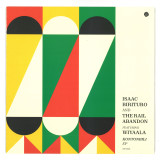
Following on from the successes of their first two LPs, "Kalba" and "Small Small", Isaac Birituro & The Rail Abandon return with the "Kontonbili EP". A collection of seven tracks that trace the traditional West African roots of their sound whilst adding their unique touch, largely courtesy of Isaac's xylophone, Sonny Johns' folky embellishments and the vocal prowess of powerful Ghanaian songstress Wiyaala.
The lead single "Hado Deeli" roughly translates to "My Rival" and is a vibrant discussion between two rivals, one of whom is always making a fuss about anything and everything, even when things are all good! "Gargar", with its collaboration of xylophone, whistles, Wiyaala's effervescent vocals and relentless groove represents, quite literally, the band's "joining together" for this EP. In contrast, "I Know" sees Sonny Johns takes over lead vocal duties to lament the breakdown of a relationship accompanied by muted horns and Wiyaala's soothing backing vocals. "Nimmbalia" continues in a mellow and reassuring tone before emerging as one of the most uplifting and simultaneously fierce cuts on the EP! The traditional version of "Bawa" - the original take of which can be found on last year's "Small Small" LP - strips things back a little, before culminating in a battle of xylophone, whistles and choir. "Yeri Villa" has a wonderfully laid back, sun drenched feel with some truly beautiful vocal refrains, and finally - only available on the digital version - comes the deeply percussive and trance inducing "Darpeny", rounding off a rather stunning EP from this cross continental outfit.
All tracks feature Ghanaian singer, song-writer, model and actor, Wiyaala. With a strong fanbase in Africa and beyond, "the lioness" made her mark on Wah Wah 45s and BBC 6 Music last year when she featured on the A-listed "Senye", described as "perfection" by Annie Mac and "pure joy!" by Tash LC.
e 05: Bawa (Traditional) feat. Wiyaala
Acclaimed Stirling-based group Constant Follower, led by Stephen McAll, and renowned folk guitarist Scott William Urquhart have today announced their forthcoming collaborative album, ‘Even Days Dissolve’, which will be released on 14 April 2023.
The album follows on from Constant Follower’s lauded debut long-player ‘Neither Is, Nor Ever Was’, which was released in 2021 and nominated for the 2022 Scottish Album of the Year (SAY) Award.
‘Even Days Dissolve’ is an enchanting, deeply absorbing, and meditative album, the product of a musical affinity between two thoughtful and uniquely talented Scottish songwriters and musicians.
The songs that make up ‘‘Even Days Dissolve’ were inspired by ‘the grand old man of Scottish poetry’, Norman MacCaig (1910-1996), whose work is characterised by its gentle humour, precise observation and love for the natural world, which forms another key theme for the album.
MacCaig’s poetry holds great significance to McAll, as it formed a major source of comfort and support to him during a long period of recovery following a violent and unprovoked attack that left him with catastrophic head injuries, partially paralysed and unable to write or play guitar.
‘Even Days Dissolve’ is McAll’s nod of respect to McCaig, and the great man’s unmistakable words and inimitable voice feature on two of the tracks - single ‘Wildlife Cameraman’, and ‘Comes A Silence (Basking Shark)’ – sensitively set over the backdrop of beautiful and exquisitely crafted songs.
Scott William Urquhart’s masterful acoustic guitar playing is a stunning centrepiece of the album, imbuing the songs with a moving sense of atmosphere, and sounding at once both elegant and robust. Urquhart’s unassuming yet compelling vocals also feature throughout ‘Even Days Dissolve’.
Speaking about ‘‘Even Days Dissolve’, Stephen McAll said: “The magic in music for me is all about collaboration. Finding people who inspire me to make better music, then working with them and creating something between us that’s better than what either of us could have made alone. It’s been an honour to work so closely with Scott William Urquhart on this album. He’s someone whom I’ve admired for some time - unquestionably up there with the best acoustic guitarists at the moment in Scotland, and such a beautiful writer of songs.
“Bringing two of these songs together with the voice of our beloved Norman MacCaig has been a real highlight of this project. His poetry was introduced to me by my high school teacher Mrs Tatarkowski, and it was the first prose I was able to read and understand when I was recovering from a traumatic head injury. So his work holds a deep space in my heart. I don’t think any poet or songwriter has matched his ability to capture the space and wonder of the natural beauty of Scotland.”
- A1: Roman Holiday
- A2: Come On A Cone
- A3: I Am Your Leader (Feat Cam'ron & Rick Ross)
- A4: Beez In The Trap (Feat 2 Chainz)
- A5: Hov Lane
- B1: Roman Reloaded (Feat Lil Wayne)
- B2: Champion (Feat Nas, Drake & Young Yeezy)
- B3: Right By My Side (Feat Chris Brown)
- B4: Sex In The Lounge (Feat Lil Wayne & Bobby V)
- B5: Starships
- C1: Pound The Alarm
- C2: Whip It
- C3: Automatic
- C4: Beautiful Sinner
- C5: Marilyn Monroe
- D1: Young Forever
- D2: Fire Burns
- D3: Gun Shot (Feat Beenie Man)
- D4: Stupid Hoe
Pink Friday: Roman Reloaded, also known as Roman Reloaded, is the second studio album by Nicki Minaj. Looking to transition from her debut studio album, Pink Friday (2010), Minaj wanted to make a follow-up record about “just having fun”. Stylistically, the album is divided by a first half of hip hop tracks and a second half of dance-pop songs.
Internationally, the album peaked at number one in Canada and the United Kingdom, and reached the top five in Australia, Ireland, and New Zealand.
The album was promoted with six singles. Its lead single “Starships” peaked at number five on the US Billboard Hot 100. Follow-up singles “Right by My Side” and “Beez in the Trap” experienced moderate success on the Hot R&B/Hip-Hop Songs component chart. “Pound the Alarm” and “Va Va Voom” peaked at numbers fifteen and twenty-two on the Billboard Hot 100, respectively. “Automatic” was released as single only in French. The album was additionally promoted through the Pink Friday Tour and the Pink Friday: Reloaded Tour, which visited North America, Asia, Europe, and Oceania throughout May and December 2012.
**Debut album from former 'Eighties Matchbox B Line Disaster' front man Guy McKnight's new band.** **ORANGE MARBLE COLOURED VINYL - VERY LIMITED!!** The DSM IV’s debut album, “NEW AGE PARANOIA,” is an impressive collection of stories, beats, guitars, and noise. The album seamlessly weaves together sobering but dream-filled songs that explore the ways in which our collective minds are influenced by mass media, entertainment industries, and social media. Formed by Guy McKnight of critically acclaimed and cult favourite The Eighties Matchbox B-Line Disaster. The DSM IV has a dark sound that blends noise-rock, synth-pop and industrial, that delivers a unique musical experience. Their music is cacophonous and epic, featuring rich textures and melodic hooks that keep listeners captivated. The band’s powerful soundscapes, combined with their thought-provoking lyrics, create a mesmerizing atmosphere that both entertains and encourages introspection. The album prompts important questions about our society, such as what’s driving the normalization of a narcissistic culture that prioritizes personal desires over altruism. It delves into the ways in which technology, social media, and mass media shape our collective psyche and affect our relationships with ourselves and each other. The DSM IV’s music offers a timely and compelling commentary on these issues. The DSM IV is a band that creates music with a powerful message that resonates with people who feel that a kinder world is possible. Their songs are both nasty and nice, reflective and entertaining. With “NEW AGE PARANOIA,” The DSM IV has crafted an album that will captivate and inspire listeners, while also prompting deeper reflection on our society’s values and priorities.
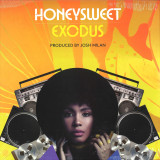
Josh Milan has been recording music professionally for over 30 years.He's played every role from artist to engineer in the studio.This project, Honeysweet, focuses on his production and musicianship.Utilizing only one musician on sax, Josh plays every instrument and sings every note on this project. His songs are packed with soulful dance floor grooves inspired by iconic, soulful groups like Brian Auger, Cymande, Pleasure, Africano, Santana and others.
"I wanted to do music that made me and my family feel good when I was growing up. It's the kind of music that families dance to at gatherings with a record player and no DJ”, says Josh. “Intros, Accents, Breakdowns, Bridges, and endings were all part of the music.” This music will transport Josh's audience to a place of musical freedom. This is music with, seemingly, no rules.
Josh Milan describes each track on the Honeysweet EP “Exodus” in his own words :
"Last Night Changed It All featuring Lawrence Clark on sax is the kind of groove that keeps its dance floor value while holding up the banner of true musicianship. This song was written after hearing a DJ set,where the DJ didn’t seem to be concern about staying within a musical box. He played all sorts of music in one set. I knew then that I’d branch out musically when recording.Rhodes, picked bass guitar, rhythm guitar and drum kit is all that's needed on this one.”
"Exodus the manipulation of major and minor chords in this groove make it complex and interesting. The listener is lead by the organ solo featured here. The song is a mental escape. A mental exodus complete with bongo section.”"Being Free is a message that captures the point of this entire project. Musical freedom and expression is where this project gets its
fuel. Horns, are included on this production. A true expression of soulful music. Being free should be all the time I'm your mind all the time.”
“Cranberries and Cream is my tribute to funk grooves as they were featured on records in 70’s. I’m a fan of that sound and I like to play by own funk grooves when I’m alone. This is one of the tracks on the ep I prefer to rock.”
“And So She Waits has eerie sounding pads in the background. They linger throughout the track. Popping in and out, as though they’re waiting for something. You will hear the change in mood once she is no longer waiting. The groove returns to it’s original state. Only she is no longer waiting, he is.”
“Crazy is me bringing the funk to dirty house music. Complete with house piano in the mix. The chords are unsettling. They are, in fact,Crazy. I though adding a horn arrangement to a house track like this would sound interesting and different.”Honeysweet “Exodus” out at all digital outlets and double pack vinyl set.
- A1: Permeate
- A2: Unity Gain
- A3: Eyes Shut Feat Faye Houston
- A4: What Is The State Of Our State (Part 1) Feat Repeat Beat Poet
- A5: Your Invasion Is A Lie Feat Idris Rahman
- B1: Unforgotten, Unforgiven
- B2: What Is The State Of Our State (Part 2) Feat Repeat Beat Poet
- B3: Flames Feat Faye Houston & Tamar Osborn
- B4: Refuge (Interlude)
- B5: Refuge
Albert’s Favourites label founder Scrimshire is set to release bold new album 'Paroxysm'. In the last few weeks of October 2022, Scrimshire wrote a new collection of songs with the descriptive working title "Scream". A direct response to the absurdity of the breakdown in the UK government, the horror of the treatment of refugees arriving on our shores and the callous disregard for the trauma being caused to low-income people or anyone considered "other". While self-preserving Conservative MPs fought for their jobs, record profits were announced by energy companies as they were gouging crippling amounts of money from people's pockets. The anger, sadness, mourning, and frustration he felt was poured into these recordings.
Originally named “Scream 8”, ‘Unity Gain’ was one of the early outpourings from those sessions. Piano and drums bubble up until it fully boils over with huge stabbing synthesiser and string sounds in an outburst of frenetic energy. "Division seems to characterise our daily experience”, says Scrimshire. “How does a society stop the callousness and corruption from seeping into its bones?".
Singer Faye Houston features on both ‘Eyes Shut’ as well as, alongside saxophonist, composer, and multi-wind instrumentalist Tamar Osborn, on ‘Flames’. About the latter Scrimshire explains, “One person can breathe fire into your life and the world, leaving an indelible mark. The album was influenced hugely by a friend we sadly have lost. I think of it like the heat you still feel after a fire has gone out”.
London-based poet and emcee The Repeat Beat Poet captures moments of time, thought, and feeling on ‘What Is The State Of Our State’, a furious yet succinct stream-of-consciousness diatribe in two parts. From afrobeat and reggae-influenced London band Soothsayers, clarinetist and saxophonist Idris Rahman features on ‘Your Invasion Is A Lie’, an ever-progressing, cosmic-jazz track.
The elegiac ‘Unforgotten, Unforgiven’ features saxophonist Nat Birchall, on which Scrimshire says "This is dedicated to the politicians who have forced refugees into life-threatening decisions. Pushing people into the hands of traffickers, into small boats and too many beneath the waves of our seas. Who force the lives of men, women, and children into more danger, in the hope of escaping war, poverty and persecution only to meet more cruelty and persecution. It won't be forgotten, and it won't be forgiven".
Scrimshire’s last album, 2021’s 'Nothing Feels Like Everything', received an Album of the Year nomination at the Gilles Peterson Worldwide Awards and last March he was named by the Guardian as one of three producers behind the new wave of UK soul, alongside Inflo (Michael Kiwanuka, Sault, Lil Simz) and Swindle (Joel Culpepper, Greentea Peng, Kojey Radical). Albert’s Favourites was formed by Adam, Dave Koor, and Jonny Drop, who designed the logo and artwork, and has released records by The Expansions, Hector Plimmer, Huw Marc Bennett, Pie Eye Collective, Qwalia, Ronin Arkestra.
Early support from Huey Morgan, Amazing Radio specialist playlist, Gideon Coe. Previous support from Gilles Peterson, Mary Anne Hobbs, Jamz Supernova
- A1: Report From The Frontlines
- A2: Ask Believe Feel Receive
- A3: Lost In Solitude
- A4: Art Is The Only Real Translation Of Living For Me
- B1: We Belong To Never
- B2: Pain
- B3: Superrare
- B4: We Want To Feel Love
- C1: Musik Ist Meine Sprache
- C2: Equalista
- C3: Mirrors
- C4: Skin
- D1: Free
- D2: Still Feat Pascal Schumacher
- D3: Afterhour
ENARCHY is the debut album by Leipzig-based producer and singer Maria die Ruhe. It is the result of a deep and thorough look the
artist took into both her own inner workings and the world around her. In 14 tracks, she explores different types of energy,
oscillating between head and heart. Final destination of this sometimes painful process of self- exploration is the embodiment of
her own power and creativity; the realization, that she manifests her role as catalyst, healer, and fighter for freedom and equality
by reporting on her experiences. These songs are about nothing less than that. And you can also dance to them.
In a musical sense, Maria surpasses herself compared to previous releases. She is bolder, more explorative and dissolves genre
boundaries. Acoustic instruments like the cello and the piano unite playfully with electronic beats. Her expressive voice speaks and
sings from the lowest lows to the loftiest heights. Her self-disclosing lyrics communicate the deepest messages of the soul. One can
tell right away: something is at stake here, this is about a real human living through something real, and now reporting from the
front lines of the human experience.
With lines like „Things are changing all the fucking time“ (ENARCHY) she posts a reminder for the current zeitgeist and the resulting
global uncertainty. „Some things need to be destroyed before they can heal“ is a demand for openness towards change, even if it is
challenging, requires energy, and leaves behind some scars.
In ART IS THE ONLY REAL TRANSLATION OF LIVING FOR ME, Maria uses sentences like „I’ve been trying to please you, I got headaches
and I still don’t fit“ to express her desperation with existing structures of injustice and the lack of livability of the artist lifestyle.
„Ah, you’re an artist - and what do you do professionally?“ Everyone loves music and art! When, o when, will the understanding
follow that there need to be people who make this art as a central part of their lives?
Frustration takes turns with hope and a growing acceptance of the self. In EQUALISTA, Maria discusses antiquated conditions like the
inequality between the sexes in a kind of manifesto, with a simple proposal for solution: „Let’s both be selfish and raise our
energies, to create a whole world with all the things we need.“
In WE BELONG TO NEVER, Maria sings about the everyday horror of toxic relationships. Lines like „Disengagement and rage, I’ve become such a slave.“ express the despair of the emptiness that results from a lack of affection. She also describes treacherous
narcissistic manipulation: „You cut me small just to feel tall.“
In SKIN, she confesses: „I’m not as enough as everyone else.“ and describes the long and painful way from rejecting her own body
to loving herself unconditionally. „I hate what I feel, while I pretend to be free“ means she doesn’t want to be reduced down to
her body, doesn’t want to be seen as an instagrammable, thoroughly designed product; she wants to be acknowledged as an
individual.
In LOST, she poses a question that many are currently forced to ask themselves: „What do we do with all this solitude?“ Maybe
making use of the reclusion by exploring the shadow self. „Can you cope with the truth?“
The conclusion: energy is being freed up through the means of self-experience and living through the personal darkness -
ENARCHY. The realization: every human being is self-determined and should simply do what they feel. It is everyone’s right to
choose their own life’s path. Here, intuition serves as a signpost. This is both feminine and strong.
ENARCHY celebrates an embodied anarchy by working through the personal shadow and the genuine, healthy integration of the
struggle survived - not as a destructive rebellion, but as a testament of shameless, joyful self-empowerment.
„In the end, I want to be alive, because in reality, I’m free.“
British musician, multi-instrumentalist, producer and DJ cktrl returns with the release of his new EP ‘Yield’. Born from a desire to change the narrative around contemporary Black British music, the boundary-pushing musician aims with this project to prioritise the art of bonafide musicianship. A stark departure from cktrl’s previous work, ‘Yield’ is a celestial and palpably more inward body of work that harkens back to the pre-electric age of modal jazz while simultaneously pulling in elements from the disciplines of classical and baroque music. Speaking on the project’s sonic identity, cktrl says: “I want to be able to show that you can make things from scratch again that have that feeling and beauty without having to sample an old record. Even though that’s an art-form within itself, I want to show raw orchestration and instrumentation can be the sole source” The origins of the title came from a period where cktrl was looking to find solace in himself after an introspective period of grief and heartbreak. As an intentionally instrumental project with minimal vocals, cktrl wants prospective listeners to see these new songs as guided meditations where they can wholly insert themselves in it. Eliciting and reaping whatever feelings come to the fore. Speaking on what ‘Yield’ means to him as a concept, cktrl explains: “Some people who I've asked to define the word ‘yield’ have looked at it from a harvest point of view, whereas others have seen it as something to submit to, to render, like you're giving up yourself. I see it as a barometer for how you feel - no matter if you're at your lowest or your highest vibration, you still need to show up for yourself. You still have to be present. It’s about getting the best from yourself no matter where you are in life” The new project is the follow up to last year’s ‘Zero’ which featured collaborations with esteemed contemporaries like the GRAMMY-nominated Mereba and anaiis. Upon the project’s release, it was met with a plethora of critical acclaim from highly regarded publications and platform such as British Vogue, Dazed, CRACK Magazine, Resident Advisor, NOTION, Harper's Bazaar and ES Magazine for its sprawling and experimental scope, spanning avant-garde jazz, classical music, alternative R&B and electronica. cktrl has a tune for every occasion: as content making beats by himself at home in Lewisham as he is amongst this generation’s fashion and cultural vanguards. Music has been a part of his life for as long as he can remember: from clarinet lessons throughout his school life to fond memories from his NTS days. Moulded by a unique blend of his West Indian heritage, years of classical training in both the clarinet and saxophone, cktrl strives to do what hasn’t been done before. His approach to creation is decidedly wide-ranging and broad. In fact, where sonic descriptions might fail to encompass the breadth of cktrl’s scope, three words surface when he unpacks his musical aims: freedom, range and feeling. Elsewhere, throughout his career, cktrl has been recognised and heralded by fashion and film VIPs as he firmly embeds himself within the black cultural renaissance emerging here in Britain. Acquiring a global network of creatives that include the late Virgil Abloh, Bianca Saunders, Tremaine Emory, Saul Nash, Maximilian Davis, Ahluwalia, Stephen Isaac Wilson, Sean Frank, Campbell Addy, Ib Kamara and Jenn Nkiru who secured him a cameo in Beyoncé’s ground-breaking film ‘Black Is King’.
Mal-One’s seventh single sets out to tell the listener in 3 minutes and 21 seconds, everything that it is not. But in doing so by default or design, becomes everything it says it is not!!!
So here it is for your listening pleasure. The non-Punk, Punk single. As Mal-One is asked at the end of the song what this song is all about…seems he runs out of time….
Hope you enjoy the illusion…..
Let me tell you what these songs all about…
This is not a song about Young Parisians
This is not a song about an Outside View
Ripping Her to Shreds, Hong Kong Garden
One Chord Wonders or a Freak Show
This is not a song about Complete Control
This is not a song about Less Than Zero
New Rose, Defiant Pose
Sex & Drugs & Rock & Roll
This is not a song about the Blitzkrieg Bop
This not a song about Top of the Pops
God Save the Queen, Something Better Change
I’ve Got a Right or Life’s A Gamble
This is not a song about London Girls
This not a song about Identity
An Alternative Ulster, Baby Does Good Sculptures
Or Everybody being Happy NowaDays
Hey Mal-One…..Yeah
So what’s this song about ?
Do you really want to know ?
Yeah well let me tell ya
'Intensely textured, interlocking guitar riffs weave together on New Bright Object, the debut album from Berlin and Edinburgh-based duo I’m Not You.
Working under the name I’m Not You, artist Alex Gibbs (bass & vocals) and sound designer Niall McCallum (guitar & drums) have honed a sound that draws in equal measure from jazz funk of Weather Report and the math rock of Don Caballero. Their debut album, New Bright Object is their most developed statement to date, an intricate, robust and unique collection of songs born from serpentine jam sessions in rural idylls.
The duo make no secret of their admiration for bands like Battles and Tortoise. They reference Jim O’Rourke’s lounge numbers and the droll lyricism of Modern Lovers’ Jonathan Richman. There’s a touch of Vini Reilly in their sparse and serpentine guitar lines. A hint perhaps of Mogwai. All these names place New Bright Object within a constellation of albums made with bigger budgets for wider audiences.
New Bright Object opens In a flash of light, comet-like, with the sound of ‘Mr. Wind- Up Bird’. The threads they weave are full with intent, as moments of density rise like hills from the track’s quieter valleys. It’s easy to imagine the pair looking out over the rolling fields of the garden studio in East Lothian where they recorded the album, as they assiduously try and draw their own landscapes in sound.
Similarly, there is a crispness to ‘A Certain Arrangement Of Atoms’ - every clipped hat, rim-shot snare and tightly wound tom a fine-tipped mark on the score. It is intricate and precise, a result perhaps of Niall’s attention to detail. Then there is the piano, Alex’s grandmother’s, slightly out of tune, which adds a few expressionist strokes to this pointillist composition. The piece loosens, until all we’re left with is the bass.
Although the album orbits around the pendulum sway of ‘The Older I Get’, it is ‘What Cats Think About’ that stands out most. That it does is by design – a nod to the Sun City Girls and albums that like to throw their listeners a curveball every now and then. Pleasantly ramshackle, confusingly domestic, agreeably strange.
All this speaks to the spirit of the album and the creative relationship between two best friends whose differences seem to have been the only things they could agree on.'
''Fact & Fiction" The second Tranquil Eyes album delivers poignant & exciting synthwave songs. Drenched in an eternal 80s feel, well crafted & complete.Tranquil Eyes is a Dutch minimal synth band formed in 1982. Lex Grauwen and Paul Oosterbaan had worked together for about 8 years before they formed the band. They decided to turn their back to stage performances and started experimenting with home-taping. Using an array of electronics, they recorded a great amount of songs and made a fine selection on Walks. Their first and only release. Today, after digging into the archives, a lot of restoring, recording & re-mastering, there�s Fact & Fiction. The album is an extension to the Walks album both in genre and in spirit. Comprising a selection of lost tracks, compilation only releases, unreleased songs and even two newly recorded songs, Fact & Fiction gives a great view on the bands musical abilities & influences over the years.
(Produced, Arranged and Conducted by Claus Ogerman)
Not long after the dawn of her career, as a teenager in Rio de Janeiro, Joyce was declared “one of the greatest singers” by Antonio Carlos Jobim. Yet despite reputable accolades and the fact that she has since recorded over thirty acclaimed albums, Joyce never quite achieved the international recognition of the likes of Jobim, João Gilberto and Sergio Mendes, all of whom became global stars after releasing with major labels in the US.
There was a moment when it seemed she might be on the cusp of an international breakthrough. While living in New York, Joyce was approached by the great German producer Claus Ogerman. Ogerman had already played a pivotal role in the development and popularisation of Brazilian music in the 1960s, recording with some of the all-time greats like Jobim and João Gilberto, as well as North American idols like Frank Sinatra, Billie Holiday and Bill Evans.
"I met him in New York City, in 1977”, recalls Joyce. “I was living and playing there, and João Palma, Brazilian drummer who used to play with Jobim, introduced me to Claus. We had an audition, he liked what we were doing and decided to produce an album with us.”
Featuring fellow Brazilian musicians Mauricio Maestro (who wrote/co-wrote four of the songs), Nana Vasconcelos and Tutty Moreno, and some of the most in-demand stateside players including Michael Brecker, Joe Farrell and Buster Williams, the recordings for Natureza took place at Columbia Studios and Ogerman produced the album, provided the arrangements and conducted the orchestra.
But mysteriously, Natureza was never released, and what should have been Joyce’s big moment never happened. As Joyce remembers, “I returned home, but Claus and I remained in contact, by letters and phone calls. He was very enthusiastic about the album and tried to hook me up with Michael Franks. He wanted me to go back to NYC in order to re-record the vocals in English with new lyrics, which I actually wasn’t too happy about. But then I got pregnant with my third child and could not leave Brazil. And little by little our contact became rare, until I lost track of him completely. And that was it. I never heard from him again."
While Claus was known to be something of an elusive character, the album’s disappearance might also have been a result of timing. The Brazilian craze was coming to an end, making way for disco and new wave at the end of the seventies, and Ogerman struggled to find a major label interested in a new Brazilian sensation. Additionally, as Joyce mentions, it wasn’t quite finished. Ogerman wanted to add finishing touches to the mix and to record alternative English lyrics for the US and international markets - a critical artistic difference between Joyce and Ogerman.
As the military dictatorship’s grip on Brazil began to subside in the 1980s, Joyce had a handful of hits in her home county, including a tribute to her daughters ‘Clareana’, and the iconic ‘Feminina’ - an intergenerational conversation between mother and daughter about what it means to be a woman. But already a feminist pioneer, these successes were hard fought. Joyce had caused controversy as a nineteen-year-old when she became the first in Brazil to sing from the first-person feminine perspective, and the institutional sexism she faced was worsened by the dictatorship who would often censor her music. Even once the Junta was out of the way, Joyce found herself up against the male-dominated major record companies in Brazil, who sought to dictate her career and sexualise her image, before dropping her for refusing to play along.
A few years after the success of her albums Feminina and Agua E Luz in Brazil, Joyce’s music began to find its way to the UK, Europe and Japan, and “Feminina” and “Aldeia de Ogum” became classics on the underground jazz-dance scenes of the mid to late-eighties and early-nineties.
The full-length version of “Feminina” from the Natureza sessions was first heard on a Brazilian Jazz compilation in 1999 and “Descompassadamente” was licensed for a CD compiling the work of Claus Ogerman in 2002. Following these, word began to get out about an unreleased Joyce album with Claus Ogerman and the legend of Natureza grew.
Forty-five years since it was recorded, Natureza finally sees the light of day, as Joyce intended: with her own Portuguese lyrics and vocals. Featuring the fabled 11-minute version of ‘Feminina’, as well as the never before heard ‘Coração Sonhador’ composed and performed by Mauricio Maestro, Natureza’s release is a landmark in Brazilian music history and represents a triumphant, if overdue victory for Joyce as an outspoken female artist who has consistently refused to bow to patriarchal pressure.
***Disclaimer! While “Feminina” and “Descompassadamente'' were mixed by legendary engineer Al Schmitt and mastered from the original master tapes, the remaining five tracks are unmixed. Due to significant deterioration of the master-tapes, the best audio source for these tracks was an unmixed tape copy Joyce had kept of the recordings. The best care has been taken in the restoration and mastering of this release, but the sound quality may differ from other releases on Far Out Recordings. We advise listening to sound clips before buying where possible.
Ever since he remixed Abimaro & The Free’s ‘Mark’ back in 2014, NuNorthern Soul boss Phil Cooper has kept in touch with Daniel Stenger, the producer and self-taught multi-instrumentalist behind the Flashbaxx project. Cooper was always convinced that Sanger would be capable of crafting a very special release for the label but was willing to give him time to come up with something special.
With Take Care My Friend, a mini-album inspired by the German producer’s deeply rooted love of jazz-funk, Stenger has repaid the faith shown in him. He’s deliv-ered a collection of quality cuts marked out by audible warmth, effortless musicality and memorable, sun-soaked songs.
As he makes clear in the liner notes included with the vinyl version of the mini album, the project began with the recording of luscious, Rhodes-laden opener ‘Al-right’. After staying up all night recording the track, Stenger not only decided to continue recording with the same relatively limited set of instruments (think bass and electric guitars, drums, piano, electric piano, organ, hand percussion and a handful of synthesizers), but also stick to a hybrid sound that added a subtle Lat-in shuffle to his Balearic-minded take on jazz, funk and soul fusion.
We’re biased of course, but there’s no denying that Stenger’s creative choices have resulted in a superb set of tracks. While the restricted kit list provided focus during the music-making process, there’s still plenty of musical variety across the six tracks that make up the set.
For proof, compare and contrast the jazzy, loose-limbed headiness of ‘It Just Happens’, where simmer-ing synth-strings, twinkling melodic motifs and glis-tening guitar licks rise above smooth jazz-funk bass and a gentle broken beat rhythm, and the slow-motion soul brilliance of ‘Strangers’, where Kathryn Kempf’s evocative and poignant lead vocals rise above a sump-tuous downtempo groove and heart-aching piano lines.
This subtly varied but musically coherent vibe contin-ues across the mini album. Stenger indulges in a bit of New York daydreaming on ‘Brooklyn Love Boat’, a wonderfully musically detailed chunk of 1970s style jazz-funk heat that offers knowing nods to Roy Ayers, Herbie Hancock and the jazz-fusion stylings of Azymuth, before opting for a deeper, slower and even more seductive sound on the Hammond-sporting bliss of ‘Take Care My Friend’.
Closing cut ‘City Lights’, a gorgeous, soft-focus affair smothered in echoing Rhodes riffs and immersive chords, has the feel of an underground classic in wait-ing: a stirring, string-drenched future sing-along whose emotion-packed lyrics are delivered brilliantly by Glasgow-born singer/songwriter Chris Pookah.
Despite the song’s subject matter – the painful final breakdown of a relationship – there’s something strangely uplifting about the combination of Pookah’s pitch-perfect vocal delivery and the absorbing warmth of Stenger’s comforting and sonically detailed music. It provides a fittingly impressive finish to a mightily immersive mini album.
A vibrant and powerful performer, Danny Toeman seamlessly blends the classic vibes of Funk and Soul's golden age with his own inimitable London edge that modernises his work, giving it a fresh 'neo-vintage' flavour.
His gravel tones combined with an altitude-defying falsetto set him apart, creating a sound oozing with character and emotion. With his backing band 'The Love Explosion', Danny Toeman stages an electrifying show filled to the brim with feel-good funky soul, designed to make everyone get on up! Born in London, Danny was well acquainted with the Soul, Funk, and Rhythm and Blues of artists such as James Brown, Aretha Franklin, and Ray Charles from an early age, before graduating onto the hard hitting Souther Soul of artists like Wilson Pickett and Bobby Womack, and the refined uptown Philly Soul of artists like the O'Jays and the Spinners. A guitarist since the age of seven, and a singer before that, he grabbed any opportunity to perform his songs on stage for an audience. Danny Toeman truly set out to on his musical career after graduating University (where he won the regions official Battle of the Bands contest). Soon after, he was in demand as a supporting act for a number of great Soul artists, including Charles Bradley of Daptone, Michael Kiwanuka, Queen of Rare Groove Betty Wright, and 4-time Grammy winner Robert Cray. Around the same time, Danny's music reached a worldwide audience when a song of his was discovered on Soundcloud by scouts, and placed on the in-store playlists of Abercrombie & Fitch. Since then, his music has appeared in film and television shows around the world, most notably Saturday Night Live (NBC). Danny continued to perform nonstop around the UK, occasionally travelling to continental Europe for appearances. From 2019-2021, he hosted and promoted a series of headline shows at the famous Pizza Express Jazz Club, which garnered sold out crowds every night. The pinnacle of the support slots came in 2019, when Danny was chosen as the primary support act for Kool and the Gang at their o2 Arena show in London, in front of 10,000 spectators.
In Mid-2020, as the world was shutting down, Danny was approached by LRK Records to release his track 'She's Got Something About Her' on vinyl.
Within 3 months of release, the disc completely sold out due to demand, taking the European Soul Scene by storm. It garnered multiple radio plays, including from BBC 6 Music's Craig Charles, and veteran BBC DJ Robert Elms pronounced it 'his new favourite song'.
In 2022, Danny received his first spin on BBC Radio 2 for the single, 'Shake the Blues Outta Your Shoes', and was chosen out of thousands of competitors by industry professionals to act as the opening act for the legendary Diana Ross at one of her rare UK performances!
As the world starts to open up, Danny looks forward to releasing more new music, and taking his show across Europe and around the World.
Limited edition 45. Only 300 copies pressed.
Originally Re Eff (pronounced Ri Èf) was a bunch of texts. One hundred and fifty pages that Julien Gasc wrote by trying his hand at the art of cut-up: a literary and political act of counter-fiction based on William Burroughs’s method. It was also Julien Gasc’s response to the isolation of 2020, while he was seeking refuge in the Southwest of France, with time as far as the eye could see, and a piano.
For a long while, it hadn’t been about songs, but about expressing the indescribable by cutting randomly from books and his own notes, attempting to fleetingly strike a balance, find a beauty, a happy accident. Incidentally, it was almost by accident, while recycling a piece that he’d composed for steel guitar pedal, that Julien Gasc sketched the first draft of “Ce soir les bouteilles dansent” (“Tonight the Bottles Are Dancing”). This was combined with a version of “Rosario Bléfari”, recorded on an inexpensive Casio synthesizer. These were Re Eff’s baby steps.
While everything was at a standstill, in stasis, Julien Gasc wanted to send a group message to some friends, to his family, a message from a confinee to those who weren’t answering, friend or foe, imaginary or otherwise. It was this collective recipient that he nicknamed Re Eff. The name comes from “re” (re-) and “effacer” (erase), words found during a cut-up and transformed into ri èf for added euphony, like a facetious grief (grievance, reproach in French) without the “g”.
Like its title, a kind of serious joke, the album is one long interplay between humour and gravitas, sense and nonsense, shadow and light, aiming to fully describe feelings in terms of their ambiguous and contradictory elements.
Through a return to regular piano practice, calm recovered at a holiday resort town, and literary experimentations, to which he added transcribed dreams, as in “La scie de la vision modern” (“The Saw of Modern Vision”), Julien Gasc composed ten demos on his computer. These demos were then rerecorded at Syd Kemp’s Haha Sound studio in London, in December 2021. The mix was completed there again, in February 2022, by Syd and Julian.
Play to play and write to write, those are the keywords of Re Eff, in which memories are freely combined (“À travers le regard de l’indienne” / “Through the Amazon’s Eyes”), the theme of enclosure and passion (“Amour velours” / “Velvet Love”), melodrama ("Délivrance"), and romantic novella (“Tout ne peut pas nécessairement donner quelque chose” / “Not Everything Leads to Something”). Music resolutely oriented towards the piano, towards bold and filmic harmonic movements that make a successful form of lyrical poetry possible. Because all in all, by singing about current events – his own and those of the world – in an elegiac tone, like bards, Julien Gasc was gradually transformed from pop singer into poet.
- A1: South Funk Blvd - Skying High (Getting Off On Your Lovin')
- A2: Ad Libs - Don't Need No Fortune Teller
- A3: Atlantis - Hung Up About You
- A4: Smoke Inc - Waitin' For Love
- B1: Mandisa - Summer Love
- B2: City Lites - Now You've Gone Away
- B3: Papaya - Favela
- C1: Alcione - Este Mundo Tem
- C2: Quintaessencia - Serrado
- C3: Superior Elevation - It Was September
- C4: Keith Chism & Light - My Life & Song
- D1: Belita Woods - Magic Corner
- D2: Spare Hare - Ain't No Doubt About It
- D3: Sammy Acuna - Never Found A Girl
- D4: Sweet Mixture - House Of Fun & Love
Yellow Vinyl[30,67 €]
Here we are at the dawn of a new compilation series and we’re kicking things off with an absolute gem that features a selection of hard-to-find records (some impossible to find) and some that have been hiding in plain sight all along. They all share common qualities, being that they are beautiful, soul quenched songs that sing of love, peace and unity.
‘With Love: Volume 1’ has been compiled by Miche and presents a curated selection of rare Brazilian, gospel, modern soul and jazz-fusion fire. We have Brazilian rarities by Alcione and Quientaessencia, UFO gospel by Keith Chism & Light, the jazz-funk/AOR sounds of City Lites taken from a Radio Station album, and the anthemic feel-good emotional soul of Belita Woods to name but a few.
Tracking down artists and musicians from the past is an art form. Like a seagull swooping for treats, sometimes the prizes are easily found, and at other times, it’s the result of very late nights trolling through Facebook profiles, message boards, hitting dead ends and following red herrings, and yet still the search goes on. This compilation is a true labour of love with all the artists tracked down and licensed by Miche. It has long been an ambition of the London based musical connoisseur to compile an album, and like anything that requires craft, care, and knowledge - it takes time. There are many twists and turns in the hunt for those records that make your jaw drop.
In 2018, when just 24, Miche became a music programmer for London’s illustrious Spiritland group of venues. From this musical sanctuary, he was able to listen, learn and meet some of the best selectors from around the world. It was a musical education, and he was particularly drawn to the deep sessions by DJs such as Mark Taylor, George Arthur, Kev Beadle, Patrick Forge, Dr. Bob Jones, and Colin Curtis to name a few. He also used this time to begin running his re-issue label Discs of Fun and Love with co-owner and friend Frederika.
Sometimes the cynical knock compilations, there is certain snobbery amongst some about the original pressing, but music shouldn't just be about lucky collectors giving over large sums of money to record dealers. It's also about a bridge to the past, a celebration of the legacy of somebody’s art, and a second chance for initially overlooked work to shine. As with all the best compilations, it has been compiled with love…
Like every record Superchunk has made over the last thirty-some years, Wild Loneliness is unskippably excellent and infectious. It’s a blend of stripped-down and lush, electric and acoustic, highs and lows, and I love it all. On Wild Loneliness I hear echoes of Come Pick Me Up, Here’s to Shutting Up, and Majesty Shredding. After the (ahem, completely justifiable) anger of What a Time to Be Alive, this new record is less about what we’ve lost in these harrowing times and more about what we have to be thankful for. (I know something about gratitude.
I’ve been a huge Superchunk fan since the 1990s, around the same time I first found my way to poetry, so the fact that I’m writing these words feels like a minor miracle.) On Wild Loneliness, it feels like the band is refocusing on possibility, and possibility is built into the songs themselves, in the sweet surprises tucked inside them. I say all the time that what makes a good poem the “secret ingredient” is surprise. Perhaps the same is
true of songs. Like when the sax comes in on the title track, played by Wye Oak’s Andy Stack, adding a completely new texture to the song. Or when Owen Pallett’s strings come in on “This Night.” But my favorite surprise on Wild Loneliness is when the harmonies of Norman Blake and Raymond McGinley of Teenage Fanclub kick in on “Endless Summer.”
It’s as perfect a pop song as you’ll ever hear sweet, bright, flat-out gorgeous and yet it grapples with the depressing reality of climate change: “Is this the year the leaves don’t lose their color / and hummingbirds, they don’t come back to hover / I don’t mean to be a giant bummer but / I’m not ready / for an endless summer, no / I’m not ready for an endless summer.” I love how the music acts as a kind of counterweight to the lyrics.
Because of COVID, Mac, Laura, Jim, and Jon each recorded separately, but a silver lining is that this method made other long-distance contributions possible, from R.E.M.’s Mike Mills, Sharon Van Etten, Franklin Bruno, and Tracyanne Campbell of Camera Obscura, among others. Some of the songs for the record were written before the pandemic hit, but others, like “Wild Loneliness,” were written from and about isolation.
I’ve been thinking of songs as memory machines. Every time we play a record, we remember when we heard it before, and where we were, and who we were. Music crystallizes memories so well: listening to “Detroit Has a Skyline,” suddenly I’m shout1singing along with it at a show in Detroit twenty years ago; listening to Overflows,” I’m transported back to whisper-singing a slowed-down version of it to my young son, that year it was his most-requested lullaby.
Wild Loneliness is becoming part of my life, part of my memories, too. And it will be part of yours. I can picture people in 20, 50, or 100 years listening to this record and marveling at what these artists created together beauty, possibility, surprise during this alarming (and alarmingly isolated) time. But why wait? Let’s marvel now. - Maggie Smith