Childhood Intelligence’s 18th release by ADSR aka. Todd Nickolas & Dominic Paterson from Toronto, Canada. The 2x12” album presents mostly tracks written and produced by Todd, with A1/D1 being in collaboration with Paterson. "Give a teenager in a rural Canadian setting an analog synthesizer, a drum machine and a four-track cassette recorder and feed him a steady diet of 80s EBM, Post-Punk, Synthpop, Electro, Dub, Acid, Hip Hop and House, and you’ll get the kind of genre melding electronic-based music that Todd Nickolas has been known for since his early days of writing and producing." The end result is a versatile one, with “Passive Articulation” presenting abstract Techno - House - Electro visions, and fusing all the elements of vintage Intelligent Dance Music that we cherish so much: warm basslines, beautiful chord progressions, diverse and surprising arrangements infused with haunting melodies, hypnotic cyber sounds, detached vocal cuts and dubbed percussion.…Overall fresh & timeless classiness for the present, past & future.
Recorded various locations New Hamburg, Kitchener-Waterloo, Ottawa, Toronto, San Francisco and Los Angeles. ADSR greatly thanks those who were there from the start, those who joined along the journey and those here now.
Cerca:abstract elements
An alto saxophone and acoustic piano engage in an intimate musical dialogue, reflecting on the current state of improvised music. Okuda and Dyberg’s album unites two artists at the peak of their musical collaboration, deconstructing jazz history into shimmering fragments, reassembling them in new forms that deliberately move away from traditional references. The music incorporates diverse influences—glimpses of classical composers like Webern and Prokofiev, abstract electronic elements reimagined acoustically, and a genuine spirit of exploration seeking a unique musical fusion.
Rooted in jazz, the Okuda / Dyberg Duo performs conceptual improvisations that include pulse, durations, interactions, natural/everyday life objects, soundalized: water dropping, light rain comes to a coffee-filter dripping, construction work or glass breaking sounds. Born in 2018. Glasscut is their third release – the first on vinyl – after Nigatsu 二月 (2019) and Naboer (2020).
What We Do When in Silence is the trio of Nicola Ratti, Alessandra Novaga and Enrico Malatesta.
Imagine a series of small movements in an empty space. Imagine their shadows on the floor, there’s a natural light sliding in from the 3 windows on your right side. There’s no silence here. There are people outside waiting for others, waiting for the people since what we do is not visible, since we do it when in silence and there is no silence here. Synthesizer, piano, whistling, electric guitar and percussions.
Nicola Ratti is a versatile musician and sound designer who has long been active across diverse experimental fields. His sound production creates systems shaped by repetition and expansion, with a particular focus on building environments that resonate with the spaces and architectures we inhabit, and on balancing the emotional and perceptual orientations to which we are accustomed.
Alessandra Novaga is a guitarist who has been exploring, for years, the possible territories her instrument can lead her to. She has crossed through the most classical worlds, reaching into intangible abstractions without setting boundaries between the two. Sound, meanings, encounters, and narratives are the elements that guide her path.
Enrico Malatesta is a percussionist and independent researcher working within experimental contexts that intersect music, performance, and territorial investigation. His practice explores the relationship between sound, space, and movement, and the vitality of materials, with a particular focus on surfaces, listening modes, and the articulation of multiple layers of information through an ecological and sustainable approach to percussion instruments.
Clear Vinyl. Luxurious jacket with embossed logo and details plus cut-out on the side. Explore an emotional sci-fi game with a unique blend of survival, adventure, and base-building elements. Help the sole survivor of an ill-fated space expedition create alternative versions of himself to escape a hostile planet and tackle personal turmoils with this unconventional crew. 11 bit studios, the creators of the award-winning games This War of Mine and Frostpunk, present The Alters, an ambitious sci-fi survival game with a unique twist. You play as Jan Dolski, the lone survivor of a crash-landed expedition on a hostile planet. To survive, you must form a new crew for your mobile base. Using a substance called Rapidium, you create alternative versions of Jan -The Alters- each one shaped by a different crucial decision from the protagonist's past. The one-of-a-kind soundtrack for The Alters was created by Piotr Musial best known for his compositions for games like The Witcher, Frostpunk and This War of Mine. For The Alters, Musial chose to stray from the obvious path when it comes to this genre of games and head for something more original: "While many sci-fi soundtracks these days favor the sound of analog synths, the idea behind the music of The Alters was a bit different. We wanted the music to feel more untraditional and mix digital, glitchy elements, unstable reverb with organic sounds, all of which together could support this unique story." With this approach, Musial dove deep into the world of The Alters to turn abstract ideas and atmospheres in very concrete music: "We aimed for the planet to feel overwhelmingly strange and hostile at first. The music starts as more abstract and based on dense atmospheric sound design. Our circular base, a place of safety and comfort inspired to create a theme that 'goes round' by a repeating leitfmotif. You will always feel at home there, unless there's something bad happening, and that's where the theme will get changed, broken." Musial further explains: "One of the key elements we get to discover in the game is the Rapidium crystal. A strange mineral, with yet unexplored properties. We felt like it could have its own theme too, and therefore, wherever you find it, it 'sings' to you with it's strange, bassy voice, supported by a trace of live recorded strings, that were digitally destroyed to create this translucent texture, that sound unlike the real thing. A glitch crystal, is what they call it after all. But the more we explore the planet, the more the story we uncover. We wanted the music to gradually gain momentum and show the leitfmotifs more often, guiding you through emotional moments, fun moments, tough ones, reaching a grand finale. I hope you'll enjoy this ride." Enjoy playing and listening to The Alters!
- A1: Hey Bony - Malingan
- A2: Soumaé - Konemafa
- A3: Oogo & Akselaksel - Le Délire Bass
- A4: Kaval - Wussup
- A5: Dogzout - Dança Do Sol
- B1: Oogo & Blanka - Phô Real
- B2: R1D1 - Marsupilami
- B3: Mira Ló - Don't Lie
- B4: Yambow - Tracksuit & Loafers
- B5: Laaanky - Bloom
For over 11 years, Nowadays Records has been shaping the French electronic music scene with boundless energy and total artistic freedom. Much more than a label, Nowadays is a big musical family where every release, meeting and event becomes a real celebration. With over a hundred albums and nearly a thousand titles to its credit, Nowadays Records embodies musical diversity across a variety of genres: abstract hip-hop, house, electronica and alternative pop.
It's in this festive spirit that the Club Nowadays project is born, a true embodiment of the collective's vision. Through its club compilations and evenings featuring label artists and outside guests.
Today, the label continues to chart its course with the release of Club Nowadays Vol. 6, a new opus in its series of compilations, which fully embodies its vision of club music. This sixth volume brings together emblematic figures of the label and emerging artists around the following dance tracks.
Don't Lie, the first single from the compilation, is a heartfelt track born of a broken heart, but turned towards the light. Mira Ló composed this track as an act of resilience, following a break-up in love. She transforms her pain into positive energy, hoping that everyone can recognize themselves in it and find a little sweetness to soothe their own grief.
R1D1 brings together his groovy house and garage influences to create the track Marsupilami around a hand-crafted synth, sharp drums and deep bass. Influenced by hip-hop beatmaking, he incorporates vocals from radio and interviews, transformed into rhythmic elements. The name, a nod to the famous character, comes naturally through the sampled “houba houba”. Between offbeat textures and assertive groove, the track embodies R1D1's singular, hybrid universe.
OOGO & Blanka, two pioneers of the label, offer us Phô Real, a hybrid track between soulful deep house and hip-hop groove, mixing organic and digital textures. A track to get the dancefloor moving, with a delicious nod to La Fine Équipe's culinary universe.
With Tracksuit & Loafers, Yambow creates a bridge between groovy French Touch elegance and the effervescent energy of UK house, in the tradition of producers like Salute and Oppidan. The track is conceived like an acid cocktail: funky, euphoric and dancefloor-friendly. The title is a nod to cultural contrasts - between English tracksuits and French loafers - which translate into a musical interplay between sophistication and fervor.
Finally, Laaanky, the Parisian producer, breaks codes and gives free rein to his passion for raw sound, efficiency and groove on the track Bloom. Between textured house, dub echoes and Afro-tinged post-dubstep rhythms, he explores a danceable, minimalist and percussive electronica. Less is more.
Returning with its final instalments, Die Schachtel's Decay Music series extends its explorations of inspired contemporary experimental efforts of the ambient, ethereal, and emotively abstract with Luigi Turra and Elio Martusciello’s “Liminale” and Sergio Armaroli and David Toop’s “And I Entered Into Sleep”, two astounding electroacoustic gestures of blurred space and time, plumbing complexity of meaning bound to sonority. Creatively groundbreaking and inspired, radically rethinking the terms of what ambient music can be perceived to be, they stand among the most striking efforts to appear within the series to date.
Reconfiguring the notion of bridge building on a multitude of terms, it feels fitting that the tenth and final installment of Die Schachtel’s Decay Music series, Sergio Armaroli and David Toop’s “And I Entered Into Sleep”, was co-created by an artist whose work featured in the first suite of LPs issued by Brian Eno’s Obscure Records in 1975, the groundwork toward which Decay Music’s own efforts nod. Since that auspicious debut, “New and Rediscovered Musical Instruments” — his split with Max Eastley — David Toop has been regarded as a pioneer in British experimental and improvised music: a sonic voyager who has continuously challenged the sources and materiality of sound through rigorously thoughtful performances, a vast catalog of recordings, and a steady flow of highly influential texts. Be it as a member of Alterations, his group breaking group with Peter Cusack, Terry Day, and Steve Beresford that ran between 1977 to 1986, or through is noteworthy work with artists like Rie Nakajima, Thurston Moore, Paul Burwell, Rhodri Davies, Lee Patterson, Ryuichi Sakamoto, Akio Suzuki, Elaine Mitchener, and numerous others, collaboration has always played a central role within Toop’s singular practice, but few can claim the sprawling sense of beauty and intimacy that’s achieved by “And I Entered Into Sleep”, his first recorded outing with Sergio Armaroli.
A composer, percussionist, vibraphonist, and multidisciplinary artist, Armaroli has been issuing radical and forward-thinking musical gestures for decades, working as one of Italy’s most noteworthy interpreters of composer’s like Giacinto Scelsi, John Cage, Franco Evangelisti, Giancarlo Schiaffini, and Walter Branchi, as both a solo performer and member of the highly regarded Rib Trio, as well as forging a singular practice as a composer, intertwining his efforts as a painter, concrete percussionist, fragmentary poet and sound artist, within a total art, rooted “within the language of jazz and improvisation” as an “extension of the concept of art”. Like Toop, Armaroli’s career has been populated by many collaborators, notably with Riccardo Sinigaglia, Alvin Curran, and Walter Prati, among others, setting the stage for a remarkable meeting between the pair.
Featuring Armaroli on vibraphone and prepared vibraphone and Toop on electronics, “And I Entered Into Sleep” is “a sonic journey, a Proustian suggestion à la Recherche, into the unconscious between electronic and acoustic sounds”. Using a bell that sounds at the beginning of Proust’s “À la Recherché du Temps Perdu”, which reappears more than 3,000 pages later — signaling a transition of phases, as well an auditory trigger of memory — as a departure point, as an association to the percussive vibraphone pulses that thread the album’s two sides, the pair weave a striking interior world of immersive psychological depth. Feeling almost subaquatic at times, like captured glimpses of rumbling, shadowy ecosystems lost within murky ambiences, before washing ashore in a series of pointillistic, highly detailed alien landscapes of the mind, each artist’s markedly different sound-sources, and treatment of the subsequent material elements, dance in abstract grace, incorporating subtle nods to minimalism, free jazz, and musique concrète within its seamless total form of sparse texture and tone.
Easily one of the most striking and memorable releases by either artist to appear in recent years, Sergio Armaroli and David Toop’s “And I Entered Into Sleep” traverses uncharted realms at the borders of literary reference, sound art, ambience and abstraction through delicately musical sounds, revealing new depths at every turn. Issued as the tenth and final album in Die Schachtel’s Decay Music series, highlighting inspired contemporary experimental efforts of the ambient, ethereal, and emotively abstract.
Furthering the passionate exploration of cinema that has guided her two previous LPs - 2017’s ‘Fassbinder Wunderkammer’ and 2020’s ‘I Should Have Been a Gardener’ - the Milanese guitarist/composer, Alessandra Novaga, returns to Die Schachtel with ‘The Artistic Image Is Always a Miracle’, two sides off shimmering, tense compositions – culminating as one of her most creatively ambitious and conceptually rich outings to date – freely inspired by the life and work of the Russian director Andrej Tarkovsky and the music of Johann Sebastian Bach.
Classically trained at the Musik Akademie in Basel, Switzerland, over the last decade Alessandra Novaga has emerged as one of the leading figures within northern Italy’s thriving new, experimental, and improvised music scene, rendering striking solo efforts, in addition to collaborations with Loren Connors, Stefano Pilia, Elliott Sharp, Nicola Ratti, Paula Matthusen, Sandro Mussida, Kid Millions, Travis Just, Francesco Gagliardi, and others. Remarkably ambitious and forward thinking, her approach to the guitar embarks upon a relentless deconstruction and rethinking of her instrument’s unique properties through distinct applications of structure, resonance, space, and tone, creating in a deeply personal and emotive music, seeking narrative and meaning within the abstractions of sound.
In 2017, with the LP, ‘Fassbinder Wunderkammer’, issued by Setola Di Maiale, Novaga embarked upon the exploration of her love of film. Having begun with Rainer Werner Fassbinder, this was followed in 2020 by Die Schachtel’s release of ‘I Should Have Been a Gardener’, a deeply intimate mediation on the life and work of Derek Jarman. Rather than focusing on a fixed point of inspiration or a single film to work from, these pieces achieve a form of abstract portraiture, distilling elements drawn from these filmmaker’s life and work into ambient networks of texture and tonality. ‘The Artistic Image Is Always a Miracle”’ freely inspired by the Russian director Andrej Tarkovsky and the music of Johann Sebastian Bach, finds Novaga radically expanding her sonic palette within this approach.
The seeds of ‘The Artistic Image Is Always a Miracle’ can be traced to a conversation that Novaga had with Alan Licht (contained in the highly regarded Common Tones: Selected interviews with artists and musicians 1995–2020, Blank Forms, 2021), relating to the connections between music and cinema, which led her to consider Andrej Tarkovsky’s use of Bach's music within a symbiotic framework: how the music illuminates the imagism of the films, and the film illuminates new dimensions of the music. Slowly developing over the subsequent years, the resulting album comprises six individual works, some of which draw directly upon pieces of Bach’s music that Tarkovsky used in his films – specifically 'Erbarme dich, Mein Gott', 'Das alte Jahr vergangen ist', and 'Ich ruf zu dir, Herr Jesu Christ' - while others draw upon the sensibilities and moods evoked in the imagination by the director’s films.
As a point of departure and illumination into the process and spirit that underscored the creation of the album, Novaga points toward a passage in Tarkovsky’s "Sculpting in Time”:
“Art is born and takes hold wherever there is a timeless and insatiable longing for the spiritual, for the ideal: that longing which draws people to art. Modern art has taken a wrong turn in abandoning the search for the meaning of existence in order to affirm the value of the individual for its own sake. What purports to be art begins to look like an eccentric occupation for suspect characters who maintain that any personalized action is of intrinsic value simply as a display of self-will. But in artistic creation the personality does not assert itself, it serves another, higher and communal idea.”
‘The Artistic Image Is Always a Miracle’ can be understood as a realisation of the collectivism of which Tarkovsky speaks, in the service of something far beyond the expression of self. Encountering Novaga moving into fairly uncharted waters, three of the album’s pieces incorporate the human voice we encounter the voices of others: that of the poet Arsenij Tarkovsky, the director’s father; a singer from Bach’s ‘Erbarme dich, Mein Gott’, capturing a broadcast in an underground parking lot, and Novaga’s own, rendering the melody from Bach’s “Ich ruf zu dir, Herr Jesu Christ”. Roughly alternating between solo excursions on guitar and bristling electroacoustic pieces, over the course of the album’s two sides Novaga weaves one of her most abstract and ambitious bodies of recordings to date, shifting between the complex tonal mediations generated by the six strings of her instrument, and phycological densities activated by the expanded pallet of sonority made possible by the tactics and approaches of musique concrète.
An immersive, deeply engaging meeting of beauty and melancholy within a labyrinth of voices and ideas, ‘The Artistic Image Is Always a Miracle’ transfigures the life and work of Andrej Tarkovski – one of the greatest auteurs in the history of cinema – into a singular, experimental statement of collective truth. Belonging to recent, ambitious stream of contemporary new music releases on Die Schachtel that’s already included Novaga’s ‘I Should Have Been a Gardener’, Stefano Pilia’s ‘Spiralis Aurea’, Jim O'Rourke & Giovanni Di Domenico’ ‘Immanent In Nervous Activity’, Claudio Rocchetti’s ‘Labirinto Verticale’, and Damāvand’s ‘As Long As You Come To My Garden’, among others, ‘The Artistic Image Is Always a Miracle’ is available on as a limited edition of 300 dark turquoise vinyl LPs released on June 21, 2024. The LP, designed by Bruno Stucchi / dinamomilano, comes with an 8-pages insert illuminated by Alessandra’s text as well as the lovely and intense photographs of Matilde Piazzi.
With this album, Heleen Van Haegenborgh returns to her roots as a pianist.
In recent years, she has primarily composed works on commission for a diverse range of ensembles, from recorders to foghorns.
On this solo album, her entire journey of musical encounters and compositions comes together subtly.
Van Haegenborgh doesn't think in terms of stories or boxes, but rather in colours, energy, and texture - without drifting into the abstract.
She remains true to her personal inside piano world, including the use of wires she has been experimenting with since 2008. These are given a place here as fully-fledged musical elements, communicating on different levels, in various contexts and forms.
The electronics sometimes become completely one with the piano, but often follow an entirely different path: at times calm, subtle and refined; at other times nervous and under the surface. Always within specific atmospheres and with precise timing.
Van Haegenborgh took charge of every detail from start to finish - electronics, composition, and performance.
On Biotope, Valentino Mora ventures even further from the dancefloor, delving into a rich, psychoacoustic realm shaped by modular and spectral synthesis. Built primarily around the Rossum Panharmonium, a module that analyzes and re-synthesizes audio into evolving harmonic clusters in real time, the album conjures an imagined ecosystem, where sound behaves with the logic and fluidity of organic life. Eschewing traditional field recordings, Mora instead sculpts textures and gestures that feel deeply natural yet are entirely synthetic. Inspired by elements such as soil composition, air, humidity, light, temperature, and the chemical properties of both land and aquatic environments and the living creatures that inhabit them, the soundscapes emerge as a kind of sonic biology. The result is a collection of slow-moving, tension-laden compositions that blur the boundaries between physical sensation and abstract design. Biotope unfolds like a closed ecosystem: modular synthesis treated as a breathing entity, shaped by resonance, friction, and organic motion. It embodies a kind of mystical biology, where textures mimic living forms, and frequencies pulse with intent. This is music to be felt as much as heard, Biotope invites you to listen with your skin, not just your ears.
Flags Are Walls is the latest release from an enigmatic electronic duo based in Barcelona. "Universal Comfort"
The album explores the boundaries of contemporary electronic music, blending synthetic and organic sounds, layering analogue and digital sources, where abstract and concrete elements shift in and out of focus.
Boundaries are not only physical-shaping how we experience time and space-but also emotional, framing the sense of place we attach to them. The tracks play with these flimsy, and uncertain intersections, exploring expression and perception through evolving, haunting and diffused sonic landscapes.
Rivet’s new album for Editions Mego is an uplifting and joyous affair coming in the wake of tragedy and disenchantment. It is yet another rebirth from an artist willing to take a step back and reprise the current situation he is in. Mika Hallbäck has a long credible history in the Swedish underground. First recognised for his industrial techno works under the Grovskopa moniker he worked privately on more experimental works that eventually came out as On Feather and Wire, an album released on Editions Mego in 2020. After much acclaim for this bold new direction that blended electronic abstraction, pop and industrial forms into a heavy synthetic trip two tragedies struck. One was the passing of label boss Peter Rehberg and then the passing of his dog Lilo, who was as close as a companion one could have. These events led to the release of the more unsettling follow up L+P-2 (Lilo and Pita minus two) on Midnight Shift Records in 2023. Peck Glamour sees Rivet return to the reawakened Editions Mego with an album of optimism inspired by reconciliation with loss and further explorations of new mental/sonic realms.
Hallbäck defines his approach as not being married to any particular machine, instrument, process or genre. However he holds a particular affinity to sampling, of which, he says, provides the dirt and grit amongst what would otherwise be pristine, generic machine music. The contemporary crate digging method of scouring obscure download music bogs for unique sounds was his preferred research practice.
Peck Glamour is an album full of tracks brimming with the excitement of exploration. It's the results of a mind informed by punk, industrial, techno, dancefloor, disappointment, trauma and rebirth. Here the synthetic and authentic is viewed simply as the same means of human rationale and expression.
The opening, ‘Catch Up to Light’, sets the scene with ecstatic and odd fluorescent vocals sliding amongst crystalline likembe whilst synths swirl amongst the external festivities. ‘Orbiting Empty Cocoon’ is somewhat a homage to the alien sound worlds of The Orb, one which takes the listener deeper into a mind melting array of teased potential as visual elements are executed in a mask of audio wizardry and euphoric staccato rhythms, the later being a nod to Singeli music. ‘Patitur Butcher’ is more dance frontal utilising the Ghatam drum and a YouTube rip of a Chinese language lesson. ‘Plastic Bag Putain’ was made during the beginning of Russia's invasion of Ukraine and should be clear of its intent. ‘All that Heaven Allows’ is a marimba cover of an imaginary Love Parade anthem. 'Kyrie Geire’ potentially briefly fills the void left by the demise of Coil. The entire trip of Peck Glamour is sewn up with ‘We left before we came’ whereby extraneous recordings of double bass player Gregory Vartian-Foss (tuning/strumming/moving the bass) are superimposed with local field recordings to create a gorgeous bed of sounds acting as an exciting exit music to this sharp collection of cinematic ear excursions.
Students of Decay presents The Dip, a new full-length recording by Berlin-based artist and composer Thomas Ankersmit, marking his debut with the label and sixth album to date. Comprised of two expansive, sidelong pieces composed entirely on the Serge Modular synthesizer, it signals a subtle yet significant shift in Ankersmit’s trajectory, imbuing the hyper-physical, psychoacoustic intensities of his live performances with introspective, atmospheric, and even melodic elements.
Primarily known for a site-responsive approach to sound, often realized in the moment of performance, Ankersmit’s turn toward the studio in the last few years has opened up a new dimension within his practice. It is in this quiet rupture that The Dip emerged, a study in internality and suspended states, rich with cinematic undercurrents and ghostly spatial suggestion. Here, electricity itself feels transfigured – becoming supple, even organic – within an environment shaped entirely by analog signals.
Over the past two decades, Ankersmit has established himself as one of the foremost practitioners of the Serge, the notoriously idiosyncratic and expressive instrument that has remained central to his work. On The Dip, he harnesses its potential not for brute force or disorientation, but for spaciousness, resonance, and lyrical abstraction. Without resorting to additional processing or effects, he draws out tones that feel simultaneously raw and refined, articulated and blurred – intricate structures that seem to breathe and evolve of their own volition.
The result is a kind of auditory hallucination, a “cinema for the ears,” wherein impressions, emotional arcs, and imagined topographies unfold. Each side of The Dip plays like a single gesture unfolding in time – a spatial narrative constructed through vibration, density, and the movement of air.
The Dip follows acclaimed works on PAN, Touch, and Shelter Press, and reaffirms Thomas Ankersmit’s position as one of the most focused and probing voices in contemporary experimental music. Quietly radical and meticulously constructed, it is less a departure than a deepening – a descent into a more private sonic world, where the boundaries between perception, memory, and pure signal dissolve.
- All Night
- Happiness All Around
- Violent Pictures
- The Future's Just More Of The Same
- Walking-Away World
- Still Clouds At Noon
- Everything You Ever Loved
- Walk Through Any Wall
- The House They Went Past
- Writing Songs
Recorded as part of the same daydreaming puzzle as Unwishing Well, Still Clouds at Noon brings out the slowcore/sadcore elements that drift through The Reds, Pinks & Purples' melancholy catalog. Donaldson names '90s hometown San Francisco acts such as American Music Club and the more obscure Timco as pivotal to his guitar playing and development as a songwriter, both of which shine bright here. The slower tempo ballads on Still Clouds_ often culminate in heavy fuzz drenched codas and showcase the more abstract poetic side of Donaldson's lyricism. There's an inherent pop-sensibility always at work though, with ear-worm melodies appearing over intoxicating circular riffs. Formerly a Bandcamp only digital release, this white vinyl version is remastered and adds two unreleased tracks, one featuring Mark Monnone from Australian pop-legends The Lucksmiths on bass. Strictly limited edition of 500 ww.
- 1: Lungs & Limbs
- 2: Whorl
- 3: Timeless Spirals Of The Motherfungus
- 4: Spoonbender
- 5: Mystery Energy
- 6: Score
- 7: Untethered (Ascend Now)
- 8: Interdimensional Hopscotch
- 9: Lossy
- 10: Hazy Dazy
Stephen James Buckley, aka Polypores, releases his brand new studio album on June 6th.‘Cosmically A Shambles’ sees a slight shift in direction from his signature sound, with stronger elements of rhythm and melody than his more abstract back catalogue though still remaining unmistakably Polypores. Highly textural, intricately woven modular synth tapestries, through to whirling psychedelic freak-outs with hypnotic polyrhythms and fuzzed-up drum machines.Still creating in the same method, using modular synths and ‘playing’, rather than the use of samples or studio or synthesiser pre sets, this album features more beats and textures, seeing a shift towards almost psyc or krautrock. Preceded by his first ever 7” lathe cut single ‘Whorl’, the album is released by Crackedankles Records from Stephen’s homewtown of Preston.
Salamanda is the collaborative alias of South Korean producer/DJ duo, and close friends, Uman Therma (Sala) and Yetsuby (Manda). Together they create avant-garde electronic music inspired by minimalist concepts, harmonious rhythms and the work of American composer Steve Reich.
Across the eight tracks of Sphere, their debut for Small Méasures, the pair conjure spherical worlds inspired by bubbles, refracting light and planet earth. Soundscapes laden with percussive elements ebb and flow as arpeggiated stanzas cede to misty synths and shimmering plates, conjuring images of solitary temples sat in vast open plateaus.
“For Sphere, we came up with an abstract concept and image to explore more diversity and encourage imagination. Each track is related to different kinds of sphere we found or imagined. From the big round planet embracing every creature to dancing little bubbles underwater, fragments of ideas floating around, exploding tomatoes, and movement of lights flashing and tickling the eyes…
Or the tracks can be about completely different types of spheres in other people's perspective. We hope Sphere can unleash the imagination and take you on a delightful journey of music.’’
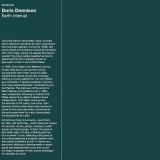
The discovery of Doris Dennison's score represents a genuine musicological breakthrough—what once would have been "a tree falling in the woods" thirty years ago now holds the potential to render "a thunderous clap in our minds." While researching Anna Halprin's lesser-known collaborators, scholar Tom Welsh uncovered the archives of AA Leath, one of Halprin's principal dancers. Buried within these materials was Dennison's handwritten score for Earth Interval, dated May 1956. Born in Saskatchewan, Canada, in 1908, and raised near Seattle, Dennison (1908-2009) encountered John Cage while teaching Dalcroze eurythmics at the Cornish College of the Arts. She joined Cage's earliest percussion quartet—alongside Margaret Jansen, the composer and his wife Xenia—in the group widely regarded as having performed the first complete concert of percussion music in the United States. This historic December 1938 concert was followed by tours and the landmark May 1941 performance at the California Club, comprising Cage and Lou Harrison's Double Music, the premiere of Cage's Third Construction, and Harrison's 13th Simfony.
As Bradford Bailey observes in his extensive liner notes, Earth Interval demonstrates "an extraordinary balance of elements that imbues the piece with a sense of clarity, directness, and constraint that is both distinct and ahead of its time." The work's most remarkable innovation lies in its approach to extended techniques, particularly Dennison's notation for the central movement: "In 2nd movement, 1st player lowers + raises a gong into a tub of water while beating." This technique, absorbed from Cage's experimental vocabulary, generates what Bailey describes as "fields of acoustic abstraction that bend and warp time through sustained resonances, beat, and space." The temporal sophistication of these manipulations anticipated Karlheinz Stockhausen's Mikrophonie I (1964) and Annea Lockwood's water-based sound investigations by over a decade. After joining Mills College as dance accompanist, Dennison maintained crucial connections to the Bay Area's experimental scene, collaborating with figures like Merce Cunningham and programming Cage's music throughout the 1950s.
Comprising three movements—Land Form, Air Tide, and Earth Play—Earth Interval is scored for recorder, drums, gongs, maracas, muted gongs, and bowl gongs. In total, the piece is just under eight minutes: "a fleeting glimmer of moment in time, a life spent at the cutting edge, and a singular creative vision that packs a powerful punch." When viewed in historical context, placed in contrast to roughly contemporaneous avant-garde percussion works by Cage, Harrison, Louis Thomas Hardin (Moondog), and Harry Partch, or important precursors like Edgard Varèse's Ionisation (1931) and Henry Cowell's Ostinato Pianissimo (1934), it's clear that Dennison was following her own path. Earth Interval is not derivative. It is a precursor to what was yet to come, alluding to developments of avant-garde and experimental music that wouldn't begin to appear on the cultural landscape until the 1970s and '80s, with the emergence of Post-Minimalism and more idiosyncratic artists and ensembles like Midori Takada, Ros Bandt, Peter Giger, Frank Perry, Christopher Tree, Michael Ranta, Gamelan Son of Lion, and Niagara.
This recording by Chicago's Third Coast Percussion, captured in March 2022, represents the first complete documentation of this pioneering work. The ensemble's interpretation reveals the piece's remarkable contemporaneity while maintaining its historical specificity. Where Cage, Harrison, and Partch employed "self-consciously off-kilter polyrhythms," Dennison's rhythmic sensibility anticipates minimalist developments by nearly a decade, yet integrates "forceful rests, as well as sharp shifts in sonic character, tempo, and meter, that break the momentum and breathe a sense of life into the piece's structure." This positions her work closer to Post-Minimalism decades before its emergence. The architectural approach demonstrates Dennison's understanding that "the composer almost entirely disappears" in favor of phenomenological listening experience, creating what might be called an egoless music that places its realities and meaning entirely in the ear of the beholder. The present recording, realized by Chicago's distinguished Third Coast Percussion ensemble, represents a significant achievement in experimental music scholarship and performance practice. As specialists in the Cage tradition and contemporary percussion repertoire, Third Coast Percussion approached Earth Interval with the historical sensitivity and technical precision required to illuminate Dennison's subtle compositional innovations. The March 2022 recording sessions, engineered by Colin Campbell, capture both the work's intimate chamber music qualities and its bold exploration of extended techniques. The ensemble's interpretation reveals the piece's remarkable contemporaneity—its ability to speak directly to current musical concerns while maintaining its historical specificity.
This recording serves multiple scholarly functions: it provides the first complete documentation of Dennison's compositional voice, offers insight into the broader network of experimental music practitioners surrounding Cage and Harrison, and demonstrates the sophisticated level of compositional thinking that was occurring within the Bay Area's dance-music collaborations of the 1950s. The work's emphasis on phenomenological listening—what might be called an "egoless" approach to musical experience—places it within a lineage of American experimental music that prioritizes perceptual process over compositional personality. The work's original obscurity—limited to AA Leath's performances at venues like the 1957 Pacific Coast Arts Festival at Reed College—paradoxically allowed it to remain "entirely on its own terms," free from the constraints of historical categorization. Drawing on Jacques Derrida's Archive Fever, the argument emerges that "the archive can acknowledge, celebrate, and resurrect" overlooked voices, transforming our understanding of experimental music history. The present Blume edition, featuring Third Coast Percussion's authoritative interpretation, includes a lavishly illustrated 16-page booklet designed by Bruno Stucchi / dinamomilano, containing complete scholarly apparatus, historical photographs, and detailed production notes. This recording enables "cross-temporal intersectionality," allowing Dennison to "belong to a newly formed and more dynamic understanding of the present and past," demonstrating how forgotten voices can reshape entire historical narratives when given proper scholarly attention and performance advocacy.
- 1: Coyote
- 2: Amelia
- 3: Furry Sings The Blues
- 4: A Strange Boy
- 5: Hejira
- 6: Song For Sharon
- 7: Black Crow
- 8: Blue Motel Room
- 9: Refuge Of The Roads
Mobile Fidelity's UltraDisc One-Step 180g 45RPM 2LP Set Plays with Authoritative Tonality, Airiness, and Clarity:
Pressed on MoFi SuperVinyl and Strictly Limited to
3,000 Numbered Copies
1/4” / 15 IPS Dolby A analogue master to DSD 256 to analogue console to lathe
Joni Mitchell is the only artist who could’ve made Hejira. The legendary singer-songwriter said as much when discussing the album decades after its release. Yet that fact seemed obvious from the moment the gold-certified effort streeted in fall 1976. An adventurous travelogue, probing narrative, and offbeat homage to freedom, Hejira remains an inimitable entry in the catalog of recorded music — a spare, gorgeous, meditative series of sonic vignettes comprised of floating harmonic pop, cool jazz, soft rock, and sensitive vocal elements that beckon feelings of motion, discovery, and self-examination.
Sourced from the original analog master tapes, pressed at Fidelity Record Pressing on MoFi SuperVinyl, and strictly limited to 3,000 numbered copies, Mobile Fidelity's UltraDisc One-Step 180g 45RPM 2LP set presents the record ranked the 133rd Greatest of All Time by Rolling Stone with definitive detail, richness, accuracy, and directness. Marking the first time the revered LP has received audiophile treatment, it's one of six iconic 1970s Mitchell records Mobile Fidelity is reissuing on vinyl and SACD.
Playing with a virtually nonexistent noise floor, dead-quiet surfaces, and superior groove definition, this collectible reissue reproduces in enveloping fashion the tones, textures, and craftsmanship that help Hejira function as the equivalent of a liberating trip down an open road with nothing but blue sky, natural landscape, and fresh air in the immediate vicinity. Passages bloom, carry, decay as they do amid an acoustically optimized environment. Soundstages extend far, wide, and deep, with black backgrounds and pinpoint images adding to the realism.
The reference-grade immediacy, airiness, and presence put in transparent perspective Mitchell’s dense strings of words, stream-of-conscious-like phrasing, and unhurried albeit forward momentum. Likewise, the instrumental contributions of her A-list support musicians — a cast that includes L.A. Express members John Guerin, Max Bennett and Tom Scott, plus Neil Young, Victor Feldman, and Abe Most — emerges with breathtaking clarity and dimensionality.
While Mitchell, whose intimate vocals and abstract guitar parts center everything, Mobile Fidelity's restoration of Hejira further reveals the visionary breadth of guitarist Larry Carlton and bassist Jaco Pastorius. Though heard on only four tracks, Pastorius' fretless bass epitomizes the fluid, subtle, flexible, roomy, and shape-shifting characteristics of songs that often appear to transpire out of nowhere akin to the formation of a puffy cumulus cloud overhead. In sync with Mitchell’s voice, Pastorius’ fusion hovers and floats, suspended in a fog you want to deeply inhale. The "grace notes" Mitchell desired on Hejira can now be heard in full. Ditto the luxurious tapestries of alinear lines, fills, and supplements unreeled on Carlton’s six-string.
Visually, the packaging of this UD1S set complements its identity as the copy to own. Housed in a deluxe slipcase, the LPs come in foil-stamped jackets with faithful-to-the-original graphics. This version is for listeners who desire to become immersed in everything about Hejira, including the unforgettable album cover — a pastiche of 14 different photos Mitchell used a Camera Lucida to assemble into one image that’s anchored by a portrait of her in a stoic pose — and the interior shots of Mitchell skating on a frozen Wisconsin lake wearing a pair of black skates, black shirt, and fur cape.
The notion of skating, feeling an awakening wind whipping against your face, and losing yourself to the surroundings are extremely apt for Hejira, which Mitchell wrote after a sequence of trips and relationships prompted her to reflect on the complicated conflicts between independence and marriage, success and satisfaction, duty and desire — and, more specifically, “the cost of being a woman.” The Canadian native delved into such themes before. But never as she does on Hejira, whose liberating, running-away aura doubles as another of Mitchell’s rejections of tradition as well as a suggestion of a better alternative.
At once observational and personal, expansive and insular, cheerful and poignant, Hejira spans a sea of human conditions, emotions, and circumstances. It addresses drifting, isolation, pleasure, place, time, and surroundings with strikingly poetic discourse matched with music that, save for the crooned ballad “Blue Motel Room,” forgoes conventional structures and choruses.
The jazz-based arrangements, marked by scaled-down percussion and all manner of bent, rounded, and unsettled notes, hint that Mitchell has no exact destination in mind. Excursions such as the moody “Furry Sings the Blues,” funky “Coyote” and edgy “Black Crow” throw open previously locked doors to possibility and journey. They signal it’s time for a welcome departure from norms and the past, one that leads to a heightened sense of clarity and perspective. Or, as Mitchell said upon choosing the album title, it’s time for “leaving the dream, no blame.”
Pioneering British electronic musician Mark Van Hoen is set to release his latest solo album, The Eternal Present, on 23 May 2025 via Dell'Orso, a remarkable collection of tracks spanning nearly three decades of recordings from 1998 to 2024.
The Eternal Present embodies its philosophical title, inspired by Joseph Campbell's concept that "Eternity isn't some later time... Eternity is that dimension of here and now that all thinking in temporal terms cuts off." The album explores music as the ultimate expression of existing in the present moment, transcending time and creating a sonic experience that is simultaneously "spectral, ghostly, melodic, harmonic, and decayed."
An influential contemporary of Aphex Twin, Autechre, LFO and Boards of Canada, Van Hoen is best known for his solo work as Locust in the mid-'90s, which helped push post-rave electronic music into newly challenging realms. His extensive discography spans releases on influential labels including R&S, Touch, and Editions Mego. Van Hoen has worked on numerous collaborations throughout his career, including with Nick Holton and Neil Halstead of Slowdive under the moniker Black Hearted Brother—their album Stars Are Our Home was released in 2013.
The Eternal Present continues the lineage of Van Hoen's most significant works, with artwork by Ian Anderson (Designers Republic) reflecting the album's "eternal present" concept with a mysterious visual approach, allowing listeners to form their own imaginary landscapes. The mastering by Stefan Betke (Pole) enhances this document of the evolution of the artist over the years as he continues to hone his signature sound. Using a host of instruments including analogue synthesisers and employing various recording approaches, Van Hoen's equipment changed dramatically over the years—from early DSP processing used on his first solo record on Apollo ‘Playing With Time’ to various synthesisers, modular systems, tape machines, and digital workstations—contributing to the album's rich sonic diversity.
Throughout The Eternal Present, ideas are woven together through spoken word quotations and abstract vocals featuring notable collaborations from Rachel Goswell on the Slowdive cover "Shine" (from 1998), Megan Mitchell (Cruel Diagonals) on "Somewhere", and session vocalists Clare Dove and Dorothy Takev on "No-One Leave" and "It's Not You (In A Way)" respectively. The use of cleverly assembled vocal samples from an "undisclosed but very famous female vocalist" on "Multiplex" (2016) and the indistinct vocalisations on the Cabaret Voltaire-influenced "Only Me" (2017), constantly challenges and disorientates the listener through fluctuating, ever-changing musical elements.
The album was recorded across multiple locations including Somerset, London, Los Angeles, and New York—even beginning compositions during flights and in airport lounges—reflecting Van Hoen's changing personal circumstances, environments, and situations throughout the years.
Of Indian-Jamaican descent, Van Hoen was born and raised in England, absorbing diverse musical influences from his neighbors—African-Jamaican on one side and Punjabi Indian on the other. "Each family played their own music frequently, and I absorbed it." His musical foundations include Brian Eno, Kraftwerk, OMD, Tangerine Dream, Japan, Cabaret Voltaire, and Cocteau Twins, later finding inspiration in My Bloody Valentine, LFO, and '90s producers Robert Leiner and CJ Bolland.
These eclectic influences are evident on The Eternal Present, which contains snapshots of different periods in his life, with changing circumstances across decades creating a variety of textures and sounds. As Mark explains: "It holds the same sonic signature as many of my solo releases and early Locust albums. It's a natural development that has taken place in the last few decades. It's even related to the earliest music I made as a teenager, although perhaps more sophisticated."
“What a remarkably affecting, majestically broad and captivating work it is..what strikes you most is the album’s myriad diversity. Outstanding” (Electronic Sound)
“Whether channelling mid- 70’s Eno, early Aphex Twin or Neu! his vivid sounds shimmer with emotional weight” (Mojo 4*)
"Musically, Van Hoen belongs to a distinguished family tree. Originally influenced by the likes of Brian Eno and Tangerine Dream, and later presaging both Autechre's glitch and Boards of Canada's pastoral IDM." (Pitchfork)
WOW. Daniel O'Sullivan's transcendent new album, Eros, is one of the greatest things we've ever heard. A simply stunning song cycle of hypnotic, experimental contemporary chamber music composed for a 14-piece ensemble. Combining minimalism, complex syncopation, detailed acoustic textures, weird intervals and samurai precision, this record will elegantly blow your mind. When Daniel first sent us this, he pitched it as “Liquid Swords meets Michael Nyman”. Trust us, he wasn't wrong. A "unique hybrid orchestral music", it presents a confluence of Daniel's longstanding fixations; indeed, there's elements of Nyman, Antonio Carlos Jobim, Magma, Aaron Copland and RZA. But this is wholly O'Sullivan's. Originally commissioned for the Sonoton Music Library in Munich, Eros now receives a deluxe vinyl release courtesy of Be With Records, bringing this meticulously crafted work to a wider audience. Limited to just 500 copies for the world, these are gonna fly.
An English composer and multi-instrumentalist, Daniel O'Sullivan’s career has been marked by versatility and innovation. In addition to his work with Sonoton, he has composed extensively for the legendary KPM music library, contributing to its storied legacy of production music. As a deep virtuoso and collaborator, O'Sullivan has also played in a number of influential projects, including Ulver, Sunn O))), This Is Not This Heat, Grumbling Fur and Miracle (with Steve Moore), leaving an indelible mark on the contemporary experimental music landscape.
O’Sullivan’s first foray into classically informed chamber music, Eros is a culmination of his long-standing fixations and expansive musical influences. The album features arrangements that are as detailed as they are emotionally resonant, showcasing his unparalleled ear for intervals and mastery of counterpoint. The music brims with complex rhythmic syncopation and a sensitivity to texture and space, resulting in a soundscape that is both intoxicating and dauntingly precise.
Recorded June 2023 and February 2024, in Brussels, London and Carmarthenshire, Wales, Eros features members of Echo Collective (Neil Leiter and Margaret Hermant), Thighpaulsandra (from seminal post-industrial band Coil), and jazz pioneer Oren Marshall. Daniel's sonic weapons of choice, in his own inimitable words, were "Big Bad Drum, Pee Anne Oh, Low End Brass, Willowy Winds & Samurai Strings." You get the picture. As a cyclical suite, this is a record that really needs to be heard in its entitreity, from start to finish, to truly appreciate the genius at work here.
A jaw-dropping statement of intent, the minimalist "Golden Verses" sets the tone with its complex cue which has your neck snapping right when it feels like it needs to. Listen and you'll understand. A syncopated tangle of sharp strings, crunchy bass, drums percussion and bright piano and mallets vie for position with French horn and woodwind melody in the most compelling and unexpected ways. Quite simply, it's one of the finest album openers I've ever heard. It's followed by the atmospheric rippling minimalism of "Lyre Lyre", a gorgeous gem with shimmering chimes, bright melody, human percussion and syncopated pizzicato strings. It kinda comes on like a less-abstract Boards Of Canada, bursting with typical wonderment. The piano and string-drenched "Dolorous Stroke" effortlessly builds its warm, pastoral orchestration with flowing piano arpeggio, steadfast drums, expressive string quartet, rich low brass, woodwind and lyrical flute. Just sublime.
The insistent frenetic propulsion of "Plain Paper" is utterly beguiling, featuring a determined string motif, urgent drums and percussion, driving low brass and breathless, energetic flute. The haunting, interweaving string arpeggios that propel "Grapes Draped" presents a claustrophobic minimalism for chaos and darkness, with growling low woodwind and brass, spiky harpsichord, skittering flutes and tight drums. Up next, "Xanix Annum" is a stately minimalist waltz with expressive lyrical string quartet and delicate woodwind, anchored by drums and percussion. "Painting Rose" is a bouncy stop-start track with angular syncopated strings and a piano pulse underneath bright harpsichord and flutes. "Rotunda Garden" presents ethereal textural minimalism for landscapes and reflection with flowing string arpeggios, warm, low woodwind drones, floating choir and cymbal swells. Closing out this extraordinary side of music, the glowing, flowing minimalism of "Flowry Orb" features urgent organ, piano and woodwind arpeggios, half-time drums with shimmering cymbals, a soaring, beautiful violin solo and hypnotic vocal chant.
Side 2 opens with "Theia Mania" a determinedly off-kilter, angular track featuring low wind, brass and drum stomp in dialogue with lively string trio, woodwind and solo horn. The light, airy minimalism of "Painting Percy" is built around an interplay of rhythmic motifs for piano, low brass, bassoon, fluttering flutes, urgent strings, drums and percussion whilst "For Archetypes" is a delicate, gently syncopated chamber cue for nostalgia, nature, reflection and moments of calm, with steady piano motif, intimate woodwind and French horn, and warm, graceful strings. The urgent Ars Memoriae is a propulsive march for progress, processes and industry, underpinned by driving tuba, with determined strings, resolute drums, and vivid, expressive flute, clarinet and French horn.
The syncopated energetic minimalism of "Mirrored Seven" presents layers of melodic and cyclical piano, drums, low brass, harp, flute and strings. "Pure Ornament" follows, a slowly evolving chamber cue with flowing clarinet, string and harp arpeggio, plodding tuba and percussion, fluttering flute and graceful, lyrical solos. Stunning! Up next, "Brave Boy" moves from its tender, warm, lullaby-like intro with lyrical flute, clarinet and strings before opening into a playful backend driven by a bouncy tuba riff and syncopated piano, woodwind, string trio, and drums and percussion. Rounding out this astonishing piece, "Waxen Waned" is a warm, pastoral chamber cue with light lyrical woodwind, tender French horn and subtly pulsing string trio.
The album's title is a reference to Plato’s conception of Eros, which is more than romantic or physical desire. It is a dynamic and creative force that drives individuals to seek perfection whether in art, relationships, philosophy or the pursuit of truth. Wholly appropriate, here, we think. When asked what his influences were in making this astounding record, he answered thusly: "Non-musical: Householding, Pythagoras, Goethe, Grail romances, Hermeticism, Doctrine of Signatures (Parcelsus, Bohme, Pliny), Eric Rohmer, John Stezaker, Yasujiro Ozu. Musical: Duke Ellington (late suites), Smile-era Brian, early RZA, Wagner (Parsifal Overture), Magma, Mancini, Axelrod, YMO, Hildegard, Nyman, Penguin Cafe Orchestra, Jobim (Stone Flower), Alessandro Alessandroni, Tavener, Moondog, Orthodox Music, Secular Music." That's some pretty deep shit. Makes you want to dive in, no?
Mastering for this vinyl edition was overseen by Be With regular Simon Francis, and it was cut by the esteemed Cicely Balston at Abbey Road Studios to be pressed in the Netherlands by Record Industry. Truly, Eros is a work of extraordinary depth and sophistication. It invites listeners to immerse themselves in its intricate layers, to lose themselves in its hypnotic rhythms, and to marvel at the precision of its execution. With this release, O’Sullivan reaffirms his position as one of the most inventive and uncompromising voices in contemporary music. Do. Not. Sleep.
- It's Luxury
- Instinct (Backtosense)
- Under Glass
- Memories Of Skin And Snow
- The Spirit Behind The Circus Dream
- The Ghost Never Smiles
- A Second Breath
- Everybody Is Christ
- Disintegrate
Cindytalk is the mercurial, expressionist outlet of Scottish artist Cinder, inspired by the crossroads of exploratory UK post-punk and early European industrial. Her work thrives on chance and transformation, collaging elements of noise, balladry, soundtrack, catharsis, and improvisation. "We were trying to find our own space," says Cinder of the formative period Camouflage Heart emerged from, amidst a move from Edinburgh to London and Cinder's evolving exploration of gender identity, well before culture at large was equipped to understand. With contemporary discourse we see that the project manifested her transgender ideas as visceral music. The guttural, feral sound marked a notably darker turn from The Freeze's sixyear run on the fringes of punk. Changing the project's name became vital, not just because they kept hearing the former was already taken, but the desire to embody the spiritual and sonic shift, "to uncover new pathways_to feminize it," she says. Cinder, with bandmates David Clancy and John Byrne, arrived at Cindytalk, a winking nod to Sindy, the British fashion doll rival to Barbie known then for its pull-string talking mechanism. "The goal was to have a more interesting narrative, more interesting dialogue. Music was ultimately my only way of talking to people. That was my conversation with the world, an abstracted conversation_an attempt to make some kind of tiny, tiny mark, if possible, you hope somebody will notice." Over the years, Cinder has heard from fans who did pick up on the signals and find refuge in Camouflage Heart. Camouflage Heart plays with tension and pace, from creeping to feverish to claustrophobic. The percussion moves between restless marches and barely-there pulses; for some parts, they scratched and hit a tin bath, among other objects. Guitar lines vibrate and stab as Cinder contorts her voice freely. She pulls poetry from a cerebral abyss, like "make the snake in your eye, pierce the camouflage heart" on the slow-droning centerpiece "The Spirit Behind the Circus Dream." In that register is raw power, both vulnerable and menacing, an ability to locate something deep and emotionally charged within. "I still remember that person who was way too intense for their own good," Cinder reflects. "I couldn't make a record like that now, certainly not vocally, while that anger hasn't dissipated; there's still a kind of warrior." For all the destruction and disintegration of Camouflage Heart, Cinder maintains the objective was never full-on fatalistic; these songs seek not to destroy but to poke and provoke, to transform and heal, to find cracks of light in a crumbling world. She points to the last lines of the opening track, "It's Luxury": "Don't look down," the lyric pines through static and rhythm. Cinder extrapolates, "I'm essentially saying, just keep fucking going. As time went on, for me, that falling became flying. Camouflage Heart is the beginning of believing in flight."
- The Tower
- Divine Appalling
- The Hound
- Blood On The Trail
- The Dead Won't Mind
- A Knife Between Us
- The Pulse Of Bliss
- Sleepwalkers
- Lost Among Liars
- Blood Don't Eliogabalus (Bonus Track)
The Tower is the third studio album by Norwegian hard rock band Vulture Industries. Originally released by Season of Mist on February 24, 2017, the vinyl edition has been sold out for years and sought after by many fans. Known for their mix of progressive metal, dark rock, and theatrical elements, the album continues the band's exploration of complex and atmospheric soundscapes. It combines intricate, sometimes dissonant riffs with elements of black metal, post-punk, and art rock, often switching between atmospheric, melodic sections and more aggressive, intense passages. Lyrically, the album delves into themes of personal conflict, societal decay, and existential despair. The title track, "The Tower," captures the essence of the album with its metaphorical exploration of isolation and oppression. The lyrics are abstract and poetic, inviting listeners to reflect on the human condition and the psychological weight of modern life. The album's concept is built around these dark, thought-provoking themes, creating an immersive experience. Critically, The Tower was praised for its ambitious and multi-faceted approach, with many highlighting its blend of progressive structures and emotional depth. It marked a progression for Vulture Industries in terms of musical maturity, as they refined their sound and further distanced themselves from traditional metal tropes. The album resonated with fans of avant-garde metal, drawing attention for its blend of challenging music and poetic, introspective lyricism.
Ben McElroy is a folk/experimental/ambient artist based in the UK. He has released prolific albums since his 2016 debut ‘Bird Stone’ for whitelabrecs. Notable releases since then include 2018s ‘The Word Cricket Made Her Happy’ for Eilean Rec and 2022s ‘How I Learnt to Disengage From The pack’ on The Slow Music Movement (which was folk album of the month in the Guardian).
«This album evolved from long improvisations on pump organ and cello. I really wanted to play the instruments as a form of therapeutic release, a kind of stimming, paying more attention to this than the Appollonian aspects of the music. So scrape and repetition… anger and using the bow/keys to really try to gnaw into deep, old brain feelings.
I often start things with improvisations, but then tidy, smooth things out… I wanted to keep that aspect to the minimum here.. there is some, but where possible I’ve kept the squeaks, the noises, the mistakes.
The project took on another dimension when I received some funding from PRS Foundation, allowing me to bring more artists (Debbie Armour on vocals, Elinor Rowlands on spoken word and Nick Jonah Davis on guitar). Where possibly, these collaborations were also improvised, in the moment and left a little raw.
The funding also allowed me to create an accompanying film ‘Widdershins & Deosil.’ Shot with filmmaker Benjamin Wigley on 16mm film in Derbyshire, it is an abstract story of magic and puppetry using elements of the album as soundtrack.» - Ben McElroy
- 1: From An Ocean, To A Lake
- 2: All They Want Is Violence
- 3: Reveille!
- 4: Blue Gatorade
- 5: Sårbare
- 6: Running Through The Tøyen Arboretum In The Spring
- 1: Misundelig
- 2: Closer – Demo
- 3: Solo Yo Y Tú
- 4: Lampi
- 5: スイセン
- 6: Oh, When I Was In Love With You
- 7: Cascades (葉月君へ)
- 8: Attar
Hailed by Pitchfork for his “ambient, intimate…songs that blossom gently with intricate musical details and enigmatic lyrics,” Conner Youngblood gained early acclaim with a series of self-released singles and EPs before breaking out internationally with his 2018 full-length debut, Cheyenne, which fused electronic and analog elements into a lush mix of bedroom pop and chamber folk. Youngblood toured the record heavily until 2020, when the pandemic forced him off the road and, hungry for fresh inspiration, he began enrolling in Russian, Danish, Spanish, and Japanese language lessons. He didn’t realize it at the time, but those classes weren’t just expanding his vocabulary, they were laying the groundwork for his most ambitious, experimental album yet: Cascades, Cascading, Cascadingly.
Written and recorded at home in Nashville, the collection is a dreamy series of meditations steeped in desire and yearning, loneliness and loss, exhilaration and escape. The lyrics blur the lines between fact and fiction, toying with magical realism and outright abstraction in various languages, and the arrangements are surreal and cinematic to match, hinting at everything from Cocteau Twins to Atoms For Peace. In addition to producing and engineering, Youngblood played every instrument on the album himself, and the result is a pure, unfiltered journey deep into the subconscious of a relentlessly curious artist, one with a boundless imagination and an insatiable appetite for sonic exploration.
- Web Of Unfolding Appearance
- Figure Of Reflected Light
- Trancher And The Inheritors
- True Dimension (From The Opaque-Spike)
Entering its 26th year of activity, the morphing, Los Angeles based experimental outfit, Sissy Spacek, joins Shelter Press with Entrance, among the project's most captivating outings to date. Encountering the duo of John Wiese and Charlie Mumma joined in various configurations by an incredible cast of collaborators - Tim Barnes, Marco Fusinato, Aaron Hemphill, Brad Laner, Katsura Mouri, Ralf Wehowsky, and C Spencer Yeh - collectively transformed into a series a deeply intimate and delicate gestures of musique concrète, Entrance radically repositions the possibilities presented by group improvisation outside of time and place. Founded at the end of the last millennium, the Los Angeles based project, Sissy Spacek, initially emerged from the knotted, fiery context 1990s American noise and grindcore, producing sheets of visceral sonority that quickly set the scene on its head. Going through numerous evolutions, before eventually settling as a duo of John Wiese and Charlie Mumma - joined by a rotating and often recurring cast collaborators - over the last 25 years the band has continuously entered states of evolution that have defied the expectations of its own context, seeding the sonic extremes noise with subtle and sophisticated approaches to free improvisation and musique concrète. Fiercely positioning its efforts within the outer reaches of contemporary experimental music, while resisting the constraints of a singular sound or proximity, Wiese regards Sissy Spacek as being primarily centred around the practice of musique concrète and the pursuit of extremes. From its earliest releases - collage treatments of material gathered from the band's full throttle practice sessions - the project's conceptual framework has continuously evolved within a deeply engaged process of experimentation, not only reworking tactical approaches, but also definitions and perception regarding the location and action of their work. In recent years, this has led to an increasingly varied and diverse output. Percolating within, is a thread marked by a striking sense of delicacy and intimacy, driving forward while doubling as an unexpected challenge, in real time, to perceptions connected to the band's past. Entrance is the most recent of these. Embarking upon the four compositions that comprise the finalized four sides of Entrance, Wiese and Mumma enlisted longstanding collaborators, Tim Barnes, Marco Fusinato, Aaron Hemphill, Brad Laner, Katsura Mouri, and C Spencer Yeh, as well as new initiate, Ralf Wehowsky (of the seminal German electronic noise collective P16.D4), requesting a contribution of sounds from each, determined by a general set guidelines that dictated certain qualities the given sonorities, while allowing for the expression of each player's distinct creative voice. The sets of resulting recordings were then chopped, harvested, manipulated, and reassembled as the four tape compositions that make up the album - Web Of Unfolding Appearance, Figure Of Reflected Light, Trancher And The Inheritors, True Dimension (From The Opaque - Spike) - each blurring the lines of authorship and clear creative proximity in remarkable ways. Where historical gestures of musique concrète tend to draw upon non-instrumental sound sources - regarding its sonorous material as raw elements, unburdened by inherent meaning or association, to be transformed and imbued with musicality - Sissy Spacek turns this position on its head. Entrance comprises works of musique concrète that not only draw upon instrumental sound sources, with all their possible meanings or associations, but also individual characters and personalities of their players, crediting each resulting piece to its respective configuration of contributors. As such, Entrance is an effort of sound collage defined by a rare sense of intimacy and humanity: four pieces that often take on the resemblance of group improvisation, but have, in fact, been assembled outside of time and place. Bent under the ever-present hand of Wiese's tape treatments and manipulation, each of the album's four compositions unfurl startling states of sonic abstraction and percolating texture, marked by a striking sense of hard-shifting structure, that culminate as tense, driven manifestations of ambient music: scrapes, squeals, rattles feedback, rolling drums, bouncing tones, whispers, bent electronics, electric artefacts, and seemingly everything else under the sun, configured into immersive, sublime mediations in sound from the most improbable events.
"Daft Punk brought me here, he brought me Daft Punk"
Just knowing that this slice of hyper-rare disco dynamite was crafted by Thomas Bangalter's dad should be enough for you to buy this on sight, if only to understand a little bit more about Thomas and Daft Punk's background. But this is so much more than a Daft Punk family curio.
Born Bangalter in 1947, Daniel Vangarde is a French songwriter and producer. In 1975, Vangarde founded his label, Zagora Records, who we have worked closely with on this lovingly curated reissue. For years, Vangarde wrote and produced songs that remained underground, under several pseudonyms and for various artists. Dubbed "the secret father of French disco" this here groove-fulled firecracker - using his Who’s Who moniker - is for disco-funk, library music and cosmic beat lovers.
The intense, evocative opener "Palace Palace" positively throbs with raw energy and sounds, honestly, like something off Daft Punk's Discovery. The title refers to the fashionable Parisian club Le Palace, essentially the Parisian Studio 54. "I’d been to a nightclub in New York, a big ring where people were roller skating with a whistle. The atmosphere was great. The music was all disco. I made this song when I came back. A vocoder transformed my voice. Back then, it wasn’t used much." The track rides a killer groove and is deceptively complex, with layers of fantastic percussion and ace synth work going on all over it. Listed to on repeat, it's brilliance is simply undeniable.
The louche, slo-mo heater "Hypno Dance" is, in Be With's opinion, *the* deadly dancefloor track. A svelte slice of ace space disco again geared towards the roller skating dance mania of the day. So deep, so disco, so instrumental. An unreal track and, as the title hints at, totally hypnotic. The side closes with the somewhat throwaway "Popeden" - it's a jaunty number that you're probably best skipping, in all honesty. Have we ever steered you wrong?
The B-Side opens with the frankly enormous "Roll Jacky Roll" is another thrilling, high class roller-rink jam with beautiful melodies that's adored the world over. The wonky, abstract "Ad Libitum 80" is a super dope, swirling, staccato electro-funk bounce which sounds light years ahead of its time. This might be the real lowkey sleeper gem on this record. CHECK! This remarkable LP rounds out with the huge "Dancin' Machine". It's got sleek drums that emit an absolutely ace swagger and elements of Italo synth funk feels. A relaxed, slow rhythm throughout ensures you can't help but get your funk on when this crashes soundsystems. We'll leave the final word on this to Daniel: "It amuses me to think that my son Thomas was influenced by "Dancin’ Machine" for "Around The World", he says. Both songs being based on an hypnotic repetitive refrain. Both songs being, of course, timeless pieces of Euro genius.
Who's Who really is a fantastic late-70s-early 80s roller disco-funk essential. The audio has been carefully remastered by Be With regular Simon Francis, ensuring it sounds better than ever. Cicely Balston's expert skills have made sure nothing is lost in the cut whilst the records have been pressed to the highest possible standard at Record Industry in Holland.
When it came to the sleeve for this we were presented with an unusual problem: we usually have to rely on an original sleeve as the starting point for the restoration, but instead we were able to scan the original 35mm transparency of the front cover photo. The problem is that with a modern scanner the results were far sharper than when they made the original sleeve. We’ve played around with the exposure and the colour grading but we’re sorry to say that our version of the front cover still ended up looking too good! Don’t hate us.
- Anonymous Iv
- Blest Age!
- Richmond Rd
- Courante
- Anonymous V
- Materiadiscipuli
- Novus Lumen
- Pentaarc
- Flit
- Arislei Bone
- Strewn
T. Gowdy returns with a major statement and luminous stylistic expansion on his third album for Constellation. Trill Scan is an exquisite suite of songs literally and figuratively about alchemy, where Gowdy melds his background in choral and medieval music with his trademark analogue electronics. Following the acclaimed Miracles (Bleep Album of the Week / Albums of the Year 2022), Gowdy's bar-raising new LP centers human voice for the first time. Choral set-pieces and solo lead vocals, along with his own lute playing, are novel elements in Gowdy's work, and draw on strains of Middle Ages polyphony and the Baroque "broken style" to further distinguish Trill Scan from anything in his discography to date. Gowdy sees "the modal language of medieval Europe as a less distant cousin to indigenous traditional music practice" compared to a Classical-colonial "patriarchal order of tonality that honours a system of domination." The 12th century Notre Dame School of choral music and 17th century style brisé each carry tonal materiality, heterodox technique, and cultural-historical symbolism central to Trill Scan's conceptual and compositional alchemy. Gowdy coheres these beautifully into his palette of serpentine slowburn electronics, a minimal analogue-driven techno shaped by aleatory strategies and tinged with post-punk grit. Gowdy's sound has been aptly described as "gently transportative, flickering like a busted halogen lamp" and his overriding pursuit of psychoacoustic immanence likened to "getting your brain massaged" and praised as "blissful work that bristles with effervescent energy, like brain waves coming in and out of focus." Trill Scan expands this sonic sensibility with more conspicuous harmonic complexity, stylistic variety, and humanistic narrative arc. Alternately sacramental and intimately personal vocals, sometimes wordless and sometimes lyrical, are worked into superlative instrumental tracks, yielding a warmly immersive concept album that's equally Gowdy's most musical. Gowdy sings explicitly of alchemy on the hypnotic album centerpiece "Novus Lumen" with lyrics that gesture at these medieval processes of material investigation. The tension between the scientific and esoteric is crucial; the separation and synthesis of physical substances in medieval alchemy maps onto his fixation with the interplay between the materiality of sound and psychoacoustics. Gowdy follows the Jungian interpretation of classic alchemical texts as an historical bridge to theories of the psyche, where consciousness itself is treated as materiality and similarly subjected to methodical analysis and experimentation, to deconstruction, dissolution, transformation, reintegration, metamorphosis. Song titles like "Arislei Bone" and "Materiadiscipuli" further reference these mythopoetic throughlines from medieval alchemy to modern psychology. Gowdy chooses disruptive forms from the history of Western music that symbolize and prefigure the modern psychological subject and its struggle for/against order, even as they also evoke liturgy and the Renaissance court. The sacramental adds a potent dimension to his pursuit of psychoacoustic activation, meditation, and transcendence, as choral passages intersperse with electronic drone and pointillism throughout the album. His gorgeous Fennesz-meets-lute rendition of the Baroque composition "Courante" by François Dufault offers idiomatic salon-secular counterpoint. Album closer "Strewn" is bookended by a final recurrence of choral invocation, with pulsing earworm motorik techno in between, over which Gowdy whisper-sings a dreamlike vision quest of mythic-alchemical imagery: "as I washed my eyes they turned to metal / and the memories melted to the metal / the metal of my heart." A mesmerizing final song that explicitly invokes Gowdy's search for materialized abstraction and substantive musical immanence wrought from his own psycho-therapeutic subjectivity, and encapsulates the album's turn towards more harmonic, historicized, and humanistic elements. Trill Scan commingles empyrean and earthly electronic songcraft to genuinely original and absorbing effect. Thanks for listening. RIYL: Coil, Nicolás Jaar, Alessandro Cortini, Pantha Du Prince, Fennesz, Visible Cloaks, Actress,
"Sirene" is the second album of the duo composed by Stefano Ghittoni (TheDining Rooms, Le Petit) and Bruno Dorella (Ovo, Ronin, Sigillum S), following their 2019 release "Estatico."This composition explores a captivating territory where the artists has been working for many years, combining experimental techniques with inviting elements from different genres of popular and underground music.
The album starts with ethereal and ambient electroacoustic sounds, gradually incorporating subtle rhythms, arpeggiations, and slightly broken beats. It creates a moody and introspective sonic landscape that maintains a sense of abstraction. This is enhanced by the textural complexity derived from various sources such as samples, tape manipulations, field recordings, and unconventional sounds woven together with traditional instruments.
The album encompasses a range of electronic practices, psychedelic minimalism, and dense ambience, with a touch of shoegaze, resulting in a truly beautiful experience.
Jacob Long’s fourth full-length for Kranky began as a notion to reimagine Earthen Sea as a “piano trio,” inspired by a year-long immersion in the ECM label catalog, but the compositions soon grew more complex.
Elements were chopped and resampled, then layered with bass, drums, percussion, and additional keys. The result is a fusion of live band acoustics and downtempo loops, sculpted into nine smoke-and-mirror dubs of fractured jazz, soft-focus noir, and trip-hop dust: Recollection.
Like the title implies, Long’s playing and production share a mood of pensive movement, shuffling and rippling like uncertain memories at strange hours.
From looming fog (“Present Day,” “Neon Ruins”) and shadowy breaks (“Another Space,” “Cloudy Vagueness”) to rosy glows (“Clear Photograph”) and smeared reverie (“White Sky”), Recollection deftly wields its palette of gradient color and subdued states of beauty.
His is a music of reduction and reflection, kinetic but oblique, attuned to the silhouettes of sound.
Les Disques Bongo Joe is reissuing Au Revoir, the debut album by Société Étrange, originally released in 2015 on the Lyon-based label S.K. Records, and now considered a cult classic. This Lyon trio, composed of Antoine Bellini (electronics), Romain Hervault (bass), and later joined by Jonathan Grandcollot (percussion), explores a minimalist instrumental soundscape, where repetition and tension play a central role.
Au Revoir was created with a raw and intuitive approach, mostly composed during the group’s earliest days. At the time, Antoine and Romain were working as a duo, experimenting with drum machines and electronic sounds inspired by the post-punk of the 80s, the robotic grooves of Neu! and Cluster, and the DIY spirit of early hip-hop. The result is a music that is both hypnotic and introspective, where the presence and absence of sonic elements balance with minimal precision. Between electronic layers and winding bass lines, the tracks move forward like on a foggy road, uncertain but captivating.
For this reissue, Société Étrange offers two new recordings. One of them is a revisited version of Voiturin à Phynance, renamed Voiturin à Fifinance for the occasion, with Jonathan Grandcollot now fully integrated into the group. His percussive style, both organic and melodic, has profoundly transformed the group’s sonic dynamics, adding richness and texture to this new version. The previously unreleased track Blanchard completes the edition, offering another facet of their universe, more spontaneous and free.
This reissue is more than just a re-release of an out-of-print album. It is a testament to the evolution of Société Étrange, a group that blurs genre boundaries, seamlessly blending post-punk, krautrock, dub, and electronic minimalism. With Au Revoir, the trio crafts a singular instrumental sound, where each note seems to carry a unique weight and intention, borrowing equally from abstraction and narrative.
- Chant
- Fiori Strappati
- Petto Rotto
- Benu
- Cielo Azul
- Nido
- Cielo Fermo
- Alba
- Luna D’autunno
- Come Fan Le Stelle
- Ali Di Cotone
- Ali Di Fuoco
- L’ultimo Giorno
- Sogno Diurno
- Ocre
Limited edition pressing - 50 copies come with one page insert. Download code included.
The album Sonic Mystics for Poems (of Life and Death of a Phoenix) by Andrea Burelli is a work that masterfully blends traditional musical languages with the formal and conceptual sensibilities of contemporary music. It offers a profound reflection on the life-death-life cycle, centered on poetic texts that oscillate between human-sensitive experience and the mythical journey of a phoenix, a metaphor of this circular and infinite reality.
The work, which includes a collaboration with musicians from the renowned Solistenensemble Kaleidoskop, stands out for its clear influence from classical Western music and modal traditions, as well as experimental electronics. Composed for voices, strings, synthesizers, and drum machines, this music features a minimalist tapestry of polyphonies, enhanced by sophisticated electronic elements and a diverse array of rhythmic articulations.
Field Notes describes Andrea Burelli as a versatile artist capable of embodying a multitude of roles, from poet to composer, musician, and singer, emphasizing how her work reflects this versatility by ¨combining elements of art song, contemporary music, pop, and electronic sounds.¨ According to Groove Magazine, this LP evokes neoclassical chamber music and an imagined Italian folklore, aligning with contemporary explorations of modern vocal abstractions, similar to the work of artists like Marina Herlop, stating that: “This is how the new and the good emerge.”
Furthermore, the music has received positive feedback from internationally acclaimed artists such as Rashad Becker, who, in addition to being the mastering engineer of the project, describes it as "pure and honest"; James Young of Darkstar calls it "bold and innovative"; while Eartheater (PAN), Rabih Beaini, and Gigi Masin have praised it as "beautiful."
It’s abundantly clear from the first bars of their 5th studio album Through Other Reflection, that this is, and could only ever be, The Soundcarriers. From the enchanting vocal duets of folk-bidden Chanteuses Leonore Wheatley and Dorian Conway; to the precise bass lines of Paul Isherwood and the limber, jazz-cool, Hal Blaine-esque drums of his his co-songwriter Adam Cann; from the fairy-like flutes, 60s-garage guitars and organ sounds pilfered from the archives of exotica - listening to the Soundcarriers resembles a rediscovery of all the most prized, esoteric corners of the 1960s, all bundled up, warped and refracted through the quartet’s astutely modern cultural lens. Channelling Tropicalia, Middle Eastern psychedelic Jazz/Funk, The French Library sounds of Nino Nardini, and a whole host of lavish obscurites beside, Through Other Reflection delivers another sonic adventure from one of the most unique and distinctive voices of British Psychedelia. After an 8 year wait for their album 4 - 2022’s Wilds - it thankfully didn’t take so long for the follow-up this time round. In many ways, this feels like a companion to Wilds; recording again at their Nottingham warehouse studio, Through Other Reflection retains that same organic glow, all the passions and imperfections of a tightly clipped unit jamming out these living, breathing pop-art nuggets as if straight onto the acetate.”We wanted to keep an air of spontaneity with this album and not get too bogged with the recording process”, explains Cann, “It was more a case of getting the songs as tightly written and arranged as possible first so we could get them down quickly in the studio. It always takes longer than you think” Less packed with strident pop hooks as its predecessor however, the music of Through… has been given extra licence to breathe, stretch out, and wander more uncharted terrains. While gleaming psych-pop of tracks like ‘The City Was’, or ‘Already Over’ confidently carry on from where they left off, from the album’s 2nd track ‘Always’, the trip becomes a little less predictable. Starting out as a smoky Procol Harum-meets-French-Psych organ ballad, the music drifts, as if of its own accord into an eerie, garage trance that lingers, cycles, and hypnotises, growing ever stranger, reaching ever-further away from its point of conception. And almost every track on Through Other Reflections holds that outer-body moment, where the band fix themselves on a limber, lysergic groove, lose all grip on time and reality, and melt themselves away into a liquid state of blind euphoria. There are sequences on this record that feel more like rituals than songs, built upon a single hypnotic rhythm which, like the centre of a vortex, pulling everything under its beatific command. Take the finale to ‘What We Found’ for instance, sounding like a ghostly march across the psychedelic moors, or ‘Feel The Way’, where a single athletic drum-loop rises and rises, growing ever more urgent and suspenseful underneath its frantic harpsichords and rasping flutes. Full of such rich stylisms as these, The Soundcarriers showcase themselves as abstract storytellers par excellence by virtue of their textures and arrangements alone. Resembling Romantic composer Maurice Ravel, but if he had just a four-piece rock band at his disposal, Through Other Reflects is rich with detail; there’s shakers, rattles, clarinets, booming drums; there’s synthesiser swarms, chiming xylophones, vintage organs and experimental Cluster & Eno-esque ambiences. Within all this nuance the music flows like some undisclosed narrative swathed in a magnetic secrecy. “It almost comes across like a story in some ways”, says Cann of the album, “the music is quite sectional with elements of exotica and cinematic type layers, it's a good balance of grooves, tunes and weirdness”. No more is this “epic cinematic feel” heard more proudly than on short instrumental ‘Sonya’s Lament” - its innate, hauntological atmospheres befitting a Peter Strickland soundtrack, or the classics of Lex Baxter, the so-called ‘Founder of Exotica’ himself. On the other hand, providing a greasier undercurrent to all these bucolic sounds is a leaning towards a more “direct” lyricism referencing more “external concerns. Laying down the first tracks for the album in the wintry gloom of pre-lockdown 2020, and drawing inspiration from time spent in Berlin, Through Other Reflections returns to some of the post-apocalyptic futurism explored in 2014’s Entropicalia - a loose concept album inspired by J.G Ballard’s The Drowned World. “The songs explore a disillusionment with the way things are going particularly after 40 years of neoliberalism”, says Cann, “They follow that folk-song tradition of wanting to escape to an imagined time, but here it’s more urban than pastoral. The first couple of ideas I came up with when doing some music in Berlin and had some time to wander aimlessly. And think the atmosphere seeped in, particularly on The City Was and Already Over. He continues, “One aspect of the title, ‘Through Other Reflections’ is about synthesis and layers of influence. How things can be filtered through other things and change the perspective. This is something you get in cities as well.” Though, as with everything The Soundcarriers make, “It can mean anything. It also just sounds kind of cool.”
This one is highly recommended for fans of Khruangbin, Lord Echo, Leon Bridges or Fat Freddy's Drop.
Open is the sixth studio album from acclaimed composer, producer, filmmaker and multi-instrumentalist, Kutiman. It is an addictive & irresistible twelve-track trip taking in elements of classic soul, Middle Eastern psychedelia, Afrobeat, Thai funk, jazz fusion, cosmic library soundscapes and more.
The uptempo “Vanishing Point” opens proceedings, recalling both Abstract Orchestra’s 2017 Dilla tribute and the lounge OST/library music flips of Tosca and DJ Vadim fame.
My Everything introduces prominent guest & frequent Kutiman collaborator, Dekel, whose soul-pop vocals coupled with jangly acoustic guitar riffs tip to contemporary indie artists such as Michael Kiwanuka and SAULT. “A Day Off passes through” Anatolian psych and Khruangbin-esque Thai funk whilst the afrobeat/jazz fusion “Confetti” pays tribute to Kutiman’s other namesake, Fela Kuti.
Dekel rejoins for the beatdown, lilting dub-soul “Believe In You” with hints of Lord Echo and the sun-inflected New Zealand dub-soul sound. The Tuareg-leaning guitar lines on “Canoe” travel across the Saharan desert easterly towards Sudan and Ethiopia by the end, whilst meditative and Coltrane-adjacent album closer “Ripples” provides a final moment of reflection from a truly global excursion of soundscapes.
Who is Isabelle Lewis, anyway?
What kind of music does she make? Is she an opera singer? Does she write pop songs? Does she compose ethereal ambient soundscapes? Does she play chamber music on the violin? Is she producing dark, electronic beats?
Well… yes. But Isabelle Lewis is not so much a person as a project. Isabelle’s debut album, Greetings, credits a trio of composer–performers at its heart: producer Valgeir Sigurðsson, vocalist Benjamin Abel Meirhaeghe, and violinist Elisabeth Klinck. The sound of the elusive Isabelle Lewis is heard most clearly in the push and pull between them, the three-way tension that gives the album its musical and emotional drive.
Each of the three brings more to the collaboration than those epithets might imply. Elisabeth’s solo performance practice incorporates composition, improvisation, live electronics, and a close command of bowing and fingering techniques that make her fiddle sing, whisper or whistle as required. Benjamin is a self-taught countertenor - keening, crooning, and swelling to a voluptuous sensuality—but also an interdisciplinary stage director and performer. Well known for his work as a producer and studio collaborator, and as a composer of scores for film and stage, Valgeir’s solo discography interweaves meticulously crafted electronics, drones, noise, and other digital elements with acoustic instruments and vocals recorded with naked, unflinching clarity.
But the extravagant theatricality Benjamin brings to the aptly titled “Drama”—also featuring a heroic violin solo from Elisabeth—grapples against the thudding bass of the implacable digital backdrop. On “Mother, Shelter Me” Valgeir’s austere and detailed production throws the hushed violin and vocals into stark relief. The result is an exquisitely uncanny juxtaposition of past and present, human and mechanical, like a Rococo treasure viewed under cold fluorescent lights, or an 18th-century automaton slowly opening its clockwork eyes.
Even the lyrics seem somehow out of time. On “O Solitude,” Benjamin goes so far as to quote an entire song by the first great English opera composer, Henry Purcell, verbatim. No stranger to Purcell’s music, which has made its way into Benjamin’s theatrical productions as well, here Isabelle Lewis removes Purcell’s melodies and harmonies and sets the text, Katherine Phillips’s 17th century translation of a poem by Antoine Girard de Saint-Amant, to new music whose heightened, archaic character nevertheless seems haunted by Baroque ghosts.
Throughout the album, the outsized emotions and timeless archetypes of Benjamin’s lyrics feel like relics from some half-forgotten past—from the neatly rhymed couplets of “Fisherman,” a seemingly straightforward (but still somewhat askew) character study, to the abstraction of “Moonshell,” whose words seem like the fragments of some ancient, lost lament. It is just another of many ways in which Isabelle Lewis carefully distorts the listener’s notions of time. On a more micro level, time can stop for a moment of weightless, drifting ambience, and then plunge forward as the cloud of harmonies suddenly lock into tempo with the drop of the bass or the change of a chord. Or else that weightless moment is allowed to be, as in the aptly named prologue and epilogue to these Greetings (“Voicemail”/“…and farewell”), or in the interstitial tracks that bind the album together, connecting its dramatic peaks with expanses of meditative stasis.
The album as a whole is elegantly shaped, swelling from an intimate, interpersonal statement into something deeper and more spacious. The first half of the album leans slightly towards self-contained pop songcraft and ticking beats, while side B jumps off from “O Solitude” into the almost symphonic grandeur of songs like “Moonshell” or the instrumental “Not the water, air, or the dirt.”
But as it progresses, the contrasts only grow more sublime: antique and postmodern, human and machinelike. The ominous weight of the droning sub-bass and trombone (guest player Helgi Hrafn Jónsson) only makes the interplay between vocals and violins (guest player Daniel Pioro joining Elisabeth) seem more delicate and vulnerable. The ethereal string tremolos of “Moonshell” seem to pull against the heavy, shuddering electronics and layers of crooning vocals.
And that, in short, is where you will find Isabelle Lewis. Like an ancient stone archway, or a delicate house of cards, the architecture of Greetings is held together by the tension between opposing forces. Not just in Elisabeth’s playing, Benjamin’s singing, or Valgeir’s arrangements and production but in the conflict and contrast that generates the synergy between them.
Oh—Isabelle says hi, by the way. She’s looking forward to meeting you.
- Stolen Moments
- Hoe Down
- Cascades
- Yearnin
- Butch And Butch
- Teenie's Blues
The Blues and the Abstract Truth is not just a landmark album in Oliver Nelson's career but in the history of jazz itself
The album features an incredible ensemble of top-tier jazz musicians, often referred to as a "supergroup": Oliver Nelson (alto saxophone, tenor saxophone), Freddie Hubbard (trumpet), Eric Dolphy (alto saxophone, flute), George Barrow (baritone saxophone), Bill Evans (piano), Paul Chambers (bass), Roy Haynes (drums). The early 1960s were marked by a shift from the hard bop of the 1950s to more experimental forms, including modal jazz, free jazz, and the incorporation of avant-garde elements. Musicians like John Coltrane, Ornette Coleman, and Charles Mingus were all pushing the boundaries of jazz, and Oliver Nelson's work fits within this broader movement: in this album there's a perfect combination of modern compositional techniques, virtuosic performances, and emotional depth make it an essential listening experience for any jazz fan. It captures the moment when jazz was evolving into new, exciting directions while staying connected to its roots in the blues. The Blues and the Abstract Truth is considered one of the essential albums in modern jazz where Oliver Nelson's compositional style blends hard bop, modal jazz, and blues influences with sophisticated harmonic structures and striking arrangements. The album is noted for ts rich orchestration despite having a relatively small ensemble with use of textures and colours, particularly in tracks like "Stolen Moments," created a new standard in azz arranging.
On alene et, Michaela Turcerová, a Copenhagen-based, Slovakia born musician, takes minutiae — the tiniest scrapes and breathiest hums — and distorts them into sprawling, collaged webs that barely resemble the instrument in its natural state. Each shard, when pieced together, makes a rhythmic, undulating sound born from the subtlest motions.
Alene et marks Turcerová’s debut as a soloist, putting a spotlight on the exploratory approach she has developed on her own and across a variety of collaborations. She has long studied the quiet excavation of her instrument, pulling it apart to find a new vocabulary. To develop this language, she unearths shards of sound from the instrument, muting it or bringing out its scratchiness and grittiness. Primarily working with open-ended scores and improvisation, she is inspired by various percussive music, looking to deep sonic awareness to guide her. As a soloist, her music harkens to the abstracted electronics present across the Editions Mego catalog or the distorted ruminations of Nyege Nyege tapes. And no matter where she goes, she is constantly in the pursuit of the unknown — the hidden elements of music that come to life through experimentation and listening.
With alene et, Turcerová presents her singular language on the saxophone to the fullest. To make this music, she placed many microphones close to her instrument, zeroing in to each sound and examining it from multiple different angles. She emphasizes the percussive possibilities of her instrument, puzzle-piecing each note into pulsating webs. Each track highlights a different side of the saxophone — the bristling distortion and amplification of a column of air as it blows through her saxophone’s body, the trickling tapping of the keys as she places her fingers onto them.
At its core, alene et presents Turcerová’s curiosity. The saxophone lives many different lives within her hands, shapeshifting through the uncovering of its possibilities. She shows us how the instrument is an ever-changing entity, a distorted and blown out drone with a thousand shards poking out from inside of it. But more than just a showcase of an individual instrument, alene et feels like a statement of the act of exploration. Turcerová is an excavator, always looking for new worlds hidden within her saxophone, and leaving room for more to come alive with each listen.
3 Years After His First Ep on the Label, Souffle Caramel Is Back on Aurore 404 With Club De Jazz 2. to Balance the Long Hiatus, Souffle Is Treating Us with a Full 11 Track Album Making the Project Our First Ever Lp. Once again, He Collaborates With Many Musician Friends (Piano, Saxophone, Flute, and Trumpet) to Create a True Jazz symphony.With Ample Time for Personal expression, This Record Is Rich With Lush, Smooth-Jazz Elements, Seamlessly woven With Deeper, More Contemplative Sounds, Making It a Perfect Blend Of artistry and Soul....
The sea has long been central to Japanese culture, symbolizing both sustenance and spiritual depth. Charles A.D.'s Deep Diver draws inspiration from this, channeling the ancient traditions of diving and fishing into his music. Historically, the sea has influenced everything from Shinto rituals to the livelihoods of coastal communities. In Deep Diver, this reverence flows through aquatic soundscapes, where rhythmic waves of 90s house and Detroit techno meet Japanese minimal production techniques, New Age and Pacific Jazz. Like the tides, the album ebbs and flows, creating a serene yet dynamic homage to the timeless connection between Japan and the sea.
The opening track 'Deep Diver' plunges into the depths, its abstract sound design capturing the sensation of deep-sea propulsion. Rhythmic bubbles pulse gently alongside slow-moving chords, creating an otherworldly atmosphere. The textures are lush yet restrained, setting a tranquil stage that pulls the listener into a submerged world. 'Underwater Ruins' builds on this aquatic theme, introducing rhythmic layers and bass-heavy notes reminiscent of mid-90s Japanese ambient techno. The smooth, melodic flow nods to pioneers like Mr.YT and Susumu Yokota, while subtly incorporating the Detroit techno influence through soulful, deep basslines.
The track feels like a fusion of ambient and techno, balancing serene tones with a rolling groove, emblematic of Japanese techno soul. As the album progresses into 'Bubble Ring', it becomes clear that Charles A.D. is a master of minimalism. The production is timeless, leaning
on analog techniques where echo-drenched chords and carefully layered soundscapes take on an addictive, hypnotic quality. The simplicity of the composition is deceptive, as each element carries weight, drawing the listener deeper into the rhythm and space between the notes.
'Merperson' is where organic rhythms truly come into play. Charles A.D. gently evolves the patterns, allowing each percussive hit to flow naturally into the next. Soothing melodies emerge from within the track’s structure, eventually reaching an emotional peak without ever feeling forced. The organic nature of the arrangement creates an effortless progression that feels deeply connected to the natural movement of water.Starting the second half with 'Deep Exploration', the theme of underwater excursions becomes even more pronounced. Light, steady drumming anchors the track, allowing the melodic layers
to develop gradually. It unfolds with a calm, measured pace, before ending softly, almost as if the sounds are drifting off into the oceanic depths. 'Diffuse Reflection' stands out as the most dub house-influenced on the album, with rolling rhythms and hypnotic elements reminiscent of Maurizio's deep, pulsing sound. Yet here, the production feels submerged, with aquatic effects swirling around the rhythmic core, blending dub house with a fluid, oceanic touch. 'Traitors' delves even deeper into dub-inspired territory. Deep, resonant bass hits combine with wooden drums, while static-like sounds evoke the image of a radio tuning through static to find clarity.
Chords shimmer briefly before fading back into the liquid depths, evoking the ebb and flow of the tide. The final track on Deep Diver 'Levitation', is a fitting conclusion, as the rhythms merge and overlap like waves gently lapping the shore. The minimalistic arrangement allows each element to blend effortlessly into the next, creating a sense of unity and closure. The sounds move with the gentle grace of water, ending the album in a way that feels both complete and
open-ended, like the infinite motion of the sea.
mindSET is the ninth album from enigmatic producer SW., directly following this summer’s excursion into his trademark techno, IDM and bleep soundscapes, on the myDEFINITIONS Vol II album. But with his mindSET album SW. takes a left turn, as pioneers often do, and we find ourselves on the lesser traveled side roads of electronic music history. Or in SW.’s own words: “the more abstract leftfield elements.”
It’s in these less-defined areas that SW. finds his sweet spot, building dancefloor soundtracks that defied definition. And with mindSET the sounds and the machines might have changed, the methodology remains the same.
“It draws from what was more generally seen in leftfield as a term for the slightly off-kilter house and broken beats that didn’t fit neatly into classic genres, whether that was Chicago house, French garage, drum and bass, or broken beat. It’s more about those in-between sounds that never really took off, only appearing briefly in the early to mid-90s and then quickly disappearing. There was a certain magic in that moment, which I wanted to capture. Also, the entire album was produced using classic analog equipment, with old machines that were used during that era. That’s the approach I’ve taken.”
The eight tracks on mindSET are shaped out of de-tuned techno pop synths and heavy, syncopated drums, grooving along chopped-up polymeters to create an eerie mood, as if orbiting an undiscovered planet for the first time. The harmonic movements are often bent out of shape, sometimes veering towards Gherkin Jerks or Cristian Vogel territory. But in the end, the sounds are less important than the atmosphere, and the tracks represent an attitude or an approach - to creating the music as well as experiencing it. mindSET is a nod to those dancers sharing an oddball moment, and for those of us on the same wavelength, it's a vibe we can all get inside.
Combining the signature soundscapes of Scorn with tartareous textures, the current album "The Only Place" reaches a psychedelic groove, based on what Harris calls "Pushing an original idea further" with his own shades of light and dark and celestial electricity of what SCORN is. These 10 tracks add elements unheard in Scorn since Evanescense and Gyral - ethereal ambiences and floating, near-melodic-but-not-quite moments, a signature of Harris' abilities to generate feelings in a lost world of his own creation. Mick Harris is one of the world's greatest compositional treasures. Starting his career as the energy dynamo behind the drum kit of the UK's Napalm Death, he made the term Blastbeat a household reference, wrote the band's music on his mother's one string guitar, and joined the Guinness Book of World Records for composing the world's shortest song. In the decades succeeding, he has re-inventedmusic several more times, from the wild abstract jazz of Painkiller with John Zorn and Bill Laswell, to the drowning ambience of his Lull project, all while continuing to build a world that he can truly call his own - the dark post-dub of SCORN. "Reaching 54 this year - this won't stop the challenge, driving me more so now than ever" - says Mick Harris, commenting on the recent phase in his creativity. The pandemic isolation and lockdown pushed the work of the maestro more than anything else could have. In 2021, his output is ever-increasing, releasing the newest collabs with Justin K. Broadrick and the single "Distortion", featuring one of the most outstanding voices of hip-hop - Kool Keith - his closest collaborator, Ohm Resistance founder - Submerged. Commenting on the release of "Distortion", Mick Harris said to mxdwn: "I enjoy collabs - they bring something different to the swim." Working on his own and collaborating with everyone from Sleaford Mods' James Williamson, on the previous SCORN release or with Kool Keith and Submerged on "Distortion", Mick Harris never had problems with putting energy into beats and sound landscapes, combining various surreal elements with three basic elements that always push Harris further, that are extremely crucial for both Mick Harris and SCORN as a project - frustration, anger and anxiety. 2024 vinyl version on orange coloured vinyl!
Coming out on September 6th on Sharptone Records, Sundiver is Boston Manor’s fifth album and one that represents a glimmering dawn for the Blackpool five-piece. Grown from a seedbed of optimism and sobriety, the LP celebrates new beginnings, second chances and rebirth. With two members recently stepping into fatherhood, hope is baked into every note. “Datura came out of these really dark few years over the hangover of the pandemic,” Henry reflects. “I'd been struggling a lot with drinking and not taking care of myself and bad mental health and stuff. We wanted Sundiver to be the next morning of the following day.” He explains that it feels good this time round to write through the lens of positivity. “The themes began to emerge, of rebirth, spring, dawn, sunshine and then other elements just started to fit into that.” It was during the making of Sundiver that Henry found out he was going to be a dad. This album is a significant one for the band. Originally coming out of the emo and pop punk scene, they’ve explored sonics and genres throughout their career, taken risks and achieved more than they could ever had dreamed of. They’ve grown up as Boston Manor – their lives and the world changing around them. They’re now taking stock, at a crossroads of the band they were and the band they could be.
While writing the album, they revisited the bands that shaped them in the late 90s and early 00s. “I was listening to the music I loved when I was a teenager and I just thought, why don't we make music like our favourite bands?”, guitarist Mike Cuniff remembers with a smile. “So we brought our interests to the table that way. Y2K kind of vibe. There are elements of Deftones, there are elements of Portishead in there, some Garbage, The Cardigans.” He laughs and adds NSYNC to the list of inspirations. From this cocktail of classics comes a dynamic and ambitious record, rich with depth, groove and more hooks than Peter Pan’s nightmares. Lyrics that foxtrot from parallel universes to personal growth, vivid dreamscapes to raw grief. Individually they’re single strokes full of meaning and magic. Together they’re a landscape.
Container (out Feb 15th) is the first single and it’s them at their best – impassioned and infectious. “This song is about the stagnancy of life creeping up on you & how that can bring about change.,” Henry explains, citing Ocean Song by US band Daughters as an inspiration.
The concept of the butterfly effect is present on Sundiver – how small actions can lead to big changes. This is no clearer than on their second single, Sliding Doors (out April 5th). It has the golden sound of late 90s Lollapalooza rock – think Smashing Pumpkins - rebooted with crisp 2024 production and a potent heaviness. In the lyrics Henry wonders, what if?, pondering on what could be. The idea that there are infinite versions of you whose lives splinter off in different directions at every decision you make. That there’s another you out there somewhere right now reading this sentence, and another me writing it. “So much is down to chance and circumstance,” Henry says. “You might catch that train and your life totally changes. Or you might miss it and things stay the way they are.”
Heat Me Up (out May 30th) is defiant and victorious, the audio equivalent of quitting your shit job and driving into the hot summer sun with a head full of dreams. “The lyrics are about love and gratitude,” Henry shares. “Another theme on the record is just appreciating what you have. It’s about not taking for granted the things that you've been afforded.”
There was some natural magic in the creation of Sundiver. They worked with their usual producer, Larry Hibbitt, and engineer, Alex O’Donovan, but instead of recording in London again they ended up in the green pastures of Welwyn Garden City. “Because Larry lives out in the countryside now, it was a way different environment and way different experience recording this time,” Mike remembers. “That contributed a lot to the brighter sound of the record.” The daily barbecues they had during their recording sessions imbued the process with harmony – five old friends spending quality time together and making quality music.
However, the album is by no means one-note. Birthing this new world they’ve created wasn’t without it’s pain, and that can be heard in the heavier moments on Sundiver. What Is Taken Will Never Be Lost is the most-stripped back on the album, a slow rock number seasoned with the downtempo Portishead influence. The heartfelt lyrics are Henry’s way of processing the loss of his grandfather, who died in a hospice last year(?). “It was just fucking horrible. It was always cold when I went there and they were always trying to get rid of me. The song title, What Was Taken Can Ever Be Lost, is the idea of his memory fading at the time because of dementia.” Henry goes onto explain that shoeboxes of photographs, diaries and a legacy is what he’s left behind. “He lived a really rich life and it has really impacted me and my father. His legacy is etched into the fabric of history in a very small way.” This song continues the connection between his grandfather and the band, as his painted face is emblazoned on the cover of the very first Boston Manor EP, Driftwood. As well as emotionally heavy themes, there’s heaviness in the music of Sundiver too. The closing song, Oil In My Blood, descends into an intense shoegaze outro with Debbie Gough from Heriot screaming hellfire. It’s in moments like this that the band show us aggression and fury can be as much a part of positive change as quiet introspection. The last lyrics of the song, “It resets and starts again,” leaves us in contemplation as the final chord rings out.
Touring the US, Europe and Japan over the years makes for an impressive CV, but if you know anything about Boston Manor you’ll know that they’re all about their hometown. Their choice to work with Blackpool-based photographer Nick Barkworth is testament to that. They’ve been working with him since the pandemic. “He captures Blackpool in a light that really reflects the weirdness and quirkiness of the town,” Henry says.” He's got a really good way of presenting that.” For the Sundiver cover, Nick photographed a 30ft tall abstract glass sculpture made by the local artist John Ditchfield. A striking and bewitching monolith that’s familiar to them but unusual to most people. “It has such kind of a gravity and power to it,” Henry describes the sculpture which stands in a field just outside of the seaside town. “It reminds me of either an explosion or a star or a supernova. To me it represents new life, power and radiance.” Boston Manor have got a knack for that - connecting the otherworldly and the everyday, the stars and the streets.
They’re a band known for using their music to make bigger statements about society. This time round they’re harnessing the uplifting power of music, and the communion it creates, as an antidote to the daily doom and isolation. “It seems like absolute chaos out there at the moment,” Henry says. “You’ve got Gaza and Israel, you've got Russia, you've got the fact that 40% of the world is going to have an election this year and increasingly most governments are leaning very far to the Right. The internet is dividing everybody, people are getting poorer and more desperate. It's really, really scary.” They considered trying to tackle the weight of it all in their music. “We could’ve written Welcome to the Neighbourhood on steroids, where it's just absolute darkness and misery”. He’s referring to their 2018 concept album that deals with class, inequality and the bleaker side of Blackpool. “But I think it's really important to write something that people can be immersed in and find some sort of solace in. Somewhere they can escape to from the modern day pressures and everything that’s going on. We’re all in this together.”