2011 kam das schwedische Hard Rock Quintett Bullet zu Nuklear Blast. 2012 dann mit "Full Pull" der ersehnte Nachfolger zum gefeierten "Highway Pirates" Album. "Full Pull" schickt uns mit Vollgas in die Hölle und macht seinem Namen alle Ehre. Bullet packen einfach noch mal mehr von allem in ihre Songs, und rüsten mit mehr Riffs, mehr Energie, mehr Diesel, mehr AC/DC, mehr Accept und mehr Heavy Metal auf.. Mit 'Midnight Oil', dem superlässigen Titel-Track, 'Running Away' inklusive sexy Handclaps, 'All Fired Up' aus der alten Young/Young-Schule, 'Freeriding' mit dem ultimativen Mitmach-Basslauf sowie dem finalen, cool auf der Judas Priest-Welle surfenden Riff von 'Warriors', macht das album einfach tierisch Spaß. Ein Fest für jeden Liebhaber des rauen AC/DC-meets-Accept-Stils der Schweden. ROAR veröffentlicht 2 super limitierte, auf 150 Stück weltweit,
Black & Gold Vinyl Versionen.
Lewis Taylor's legendary magnum opus: The Lost Album. "Now you're talking. That's my favourite LT album. Unlike all of the others, there isn't anything about it that embarrasses me." Straight from the genius's mouth. What can we say about this? Well, it's the most requested record ever at Be With Towers. The Lost Album was the intended follow-up to his first album but Island rejected it for fear of "confusing" the marketplace and its conception of Lewis as a soul artist. Their loss. It's a breezy sunset masterpiece.
The genesis of this incredible record needs unpicking a bit. Lewis stopped promoting the first album after a year and went home to record a completely different record that was the most un-R&B album you could probably ever hear: "I pushed in such an extreme direction the other way with what eventually became The Lost Album. It was a knee-jerk reaction to a perceived ‘trapped in R&B’ feeling I was going through at the time. Some people around me were in favour of it and others weren’t. In the end I think I lost confidence in it and did Lewis II instead." We did at least get Lewis II, which is a remarkable album, and he kept Island happy...for a bit. Not long after, Lewis was dropped. And what was to become The Lost Album could've been...er...lost. Forever.
Thankfully, however, Lewis and longtime partner Sabina Smyth revisited those scrapped demo tracks in 2003. They decided to re-arrange, re-record and then self-release them. So it was that the brand new version of The Lost Album finally dropped in late 2004. It's sheer perfection, and we don't say that lightly. The Lost Album was a fully 50/50 collaboration between Lewis and Smyth. As well as production, Sabina did a lot more writing on it, from the melody to "Listen Here" to the chord sequence for "Let's Hope Nobody Finds Us." Thankfully, Sabina is credited this time around.
No, it's not straight up "soul music" in the vein of his previous work. Yet, in its perfectly formed suite of one dozen songs, The Lost Album is dripping in soul. It's so warm, so effervescent and so alive with possibilities. It features deep, fresh imprints on well-loved, accessible sounds. It's a proper 70s style double album. Just one listen and the musical influences on The Lost Album are fairly self-explanatory, as Lewis recently told us, but it's always nice to hear that, in case we were in any doubt, he was definitely channeling Love, Yes, Brian Wilson, CSN, Laura Nyro and, of course, Todd Rundgren. The influences don't end there: "I’m particularly fond of my bass playing on that album, there’s a lot of Chris Squire going on which is cool."
Deep orchestral opener "Lost" is a sublime, harp-laced, string drenched gem, a cinematic, melancholic Axelrod-esque mini-epic that simply beguiles. Written by Smyth, it evokes Donny Hathaway's celestial "I Love The Lord, He Heard My Cry" from Extensions Of A Man. The only problem is the brief 90 seconds running time. It segues into the classic Brian Wilson-meets-power-pop-rock splendour of "Listen Here" which, with its outstanding extended harp-licked beatless intro, sounds like the younger cousin to Boston's "More Than A Feeling". We then drift into the ringing guitars of classic 70s rock anthem "Hide Your Heart Away". It's Lewis's personal favourite, "especially the multi-tracked guitar solo – I was listening to Boston at the time, which was fun." A-ha!
A new version of the heart-stopping, shoulda-been-a-massive-pop-hit "Send Me An Angel" opens Side B before the arrival of, in Lewis's completely correct words, "the clear standout, "Leader of the Band"; the perfect distillation of everything that album was trying to achieve." Soaring, piano-led Rundgren-esque power pop that makes the hairs on the back of your next stand on end. Truly, otherworldly. This is pure pop for now (and then) people. The simple jangly brilliance meets experimental prog-rock of "Yeah" sounds like simultaneously like prime CSNY and late 90s Radiohead (if they'd had a slightly more accessible bent and could write better tunes).
Oh, you wish The Beach Boys had continued writing amazing songs beyond Holland? Well, allow us to point you in the direction of the downlifting stunner "Please Help Me If You Can" and the warm textures and brilliant atmospherics of goosebump-inducer "Let’s Hope Nobody Finds Us". Words can't really describe the sheer beauty of these songs. So we'll stop trying. Just listen. Listen, listen, listen. Closing out this remarkable side of music, the accidentally Balearic "New Morning" should be blasting out at every sunrise set in Ibiza, this summer and forevermore.
The final side opens with the vaguely Beatlesey "Say I Love You". It's just classic, soaring pop-rock songwriting and should strictly be canonical. It's that good. The sassy, Stonesy swagger of "See My Way" injects enough rock'n'roll attitude to compensate for the rest of record's peace-loving, AOR sun-dappled vibe whilst album closer, "One More Mystery", emerging out of the rubble of the previous track, comes on initially like a Baroque-Pop George Harrison before piling crunching drums and screeching guitar solos atop the dreamy harmonies til close.
When asked what it means to have these records available on vinyl for the first time, Lewis is in no doubt: "It’s great and it’s really nice to be able to offer fans a different listening experience. There’s a whole other dimension with vinyl that taps into that whole nostalgia thing, well for me anyway. Something about the physical aspect of pulling it out of the sleeve and putting it on, it does tend to make you feel like you’re more engaged."
Lewis was adamant that he wanted all new artwork for The Lost Album vinyl sleeve and his brief was just the sort of classic tropical-beach-at-sunset you’d want to see on the front of a record that sounds like this. On the finished sleeve, the beach at sunset is just where we start out, before heading up through the painterly clouds and heading out into the stars. And yes, the lettering is a definite subtle nod to all those in-between-period Beach Boys bootlegs we all love. Simon Francis's sensitive mastering combines with Cicely Balston's precise cut for Alchemy at AIR Studios so the album sounds appropriately outstanding. The immaculate Record Industry double LP pressing will ensure this previously lost masterpiece stays forever found.
out of Stock
Last delivered 3 years ago available to reorder, subject to availability
Producer Endemic Emerald has provided top-notch beats for
many in the rap game over the years - notable names such as
various members of the Boot Camp & Wu Tang camps,
Tragedy Khadafi, Ill Bill, and Planet Asia. On ‘Renegade
Soul’ he digs deep into his sounds to bring us his 1st
instrumental album. The set features an array of soulful
soundscapes, accompanied by a gritty undertone. The album
moves through different moods, utilising a range of jazzy
pianos, intense strings, and heavy basslines. Accompanied by
soulful voices throughout a real edge is provided and makes
‘Renegade soul’ guaranteed head-nod material. The album
will be available on 12” Vinyl, Cassette & CD on June 30th.
Produced by Endemic Emerald who has
worked with members of Wu Tang, Boot Camp
Clik, Roc Marciano, Ill Bill, Planet Asia,
Skyzoo
100 Jahre Ligeti: Duo-Improvisationen inspiriert von György Ligetis Streichquartett Nr. 1 „Métamorphoses nocturnes“Am 28. Mai 2023 wäre der Komponist György Ligeti 100 Jahre alt geworden. Auch wenn ihn Filmregisseur Stanley Kubrick durch die Verwendung seiner Musik in dem Soundtrack für „2001: Odyssee im Weltraum“ bekannt gemacht hat, ist der Kosmopolit der Neuen Musik kein Publikumsfavorit geworden. Umso mehr Eindruck hat Ligeti bei den Musikern selbst hinterlassen. Mit seiner lebenslangen Suche nach neuen Wegen, von der Klangflächen-Musik über Mikropolyphonie bis zur Mikrotonalität hat er auch Jazzmusiker beeinflusst. Wenn sich ihm nun der herausragende französische Sopransaxofonist Emile Parisien und der Italiener Roberto Negro, den viele wegen seiner eigenen Projekte wie der Zusammenarbeit mit den Ceccaldi-Brüdern für einen der akt...
From Alehouse to Playhouse Bjarte Eike and his barnstorming Barokksolistene capture the vital spark of Restoration London’s entertainment scene with a captivating new recording for Rubicon Classics! The Playhouse Sessions will be released on 23 September 2022 to coincide with Barokksolistene’s concert double-bill at London’s Southbank Centre.
‘A smattering of Purcell, dances from Playford’s Dancing Master, shanties, reels and ballads succumb to a nine-piece ensemble drawing on Baroque, jazz and folk styles for a no holds barred hooley of riotous improvisatory give and take,’ (BBC Music Magazine review of The Alehouse Sessions, August 2019)
London’s musicians, pushed in the 1650s, to the margins of society by order of Oliver Cromwell, found room for new forms of entertainment in city-centre taverns and alehouses. They remained there long after the restoration of the monarchy, performing sets of dances, theatre songs and bawdy ballads to audiences glad to be free from Puritan constraints on pleasure.
Norwegian violinist Bjarte Eike and his Barokksolistene have restored the spirit and substance of those long-forgotten performances with their Alehouse Sessions, hailed by The Times as ‘irresistible’ and ‘fabulously unrestrained’ by The Guardian. Five years ago the Norwegian violinist and his band scored a best-selling album with The Alehouse Sessions on Rubicon Classics. They return to the label with another compelling collection of music and words of the kind on offer more than three centuries ago at Henry Purcell’s favourite Westminster watering holes. The Playhouse Sessions, set for release on Rubicon Classics on 23 September 2022, reflects the uplifting energy and engaging emotional contrasts of Barokksolistene’s Alehouse performances.
“The album contains a sort of inner narrative that runs through the recording,” says Bjarte Eike. “It has become like a play in its own right, with each track being a small tale within a larger story.” The recording’s tracklist includes Eike’s beguiling arrangements of music from Purcell’s semi-opera The Fairy Queen and his own original compositions on words from the play on which it is based, Shakespeare’s A Midsummer Night’s Dream; popular songs and ballads such as ‘The Irish Washerwoman’, ‘I often for my Jenny strove’ and ‘The Three Ravens’; tunes from Purcell’s welcome odes and stage shows, Come ye sons of art and Dido and Aeneas among them; the ‘Willow Song’ from Shakespeare’s Othello; Eike’s own voice in Puck’s monologue from Act 5 of A Midsummer Night’s Dream; and John Dowland’s sublime air ‘Can she excuse my wrongs’.
London’s theatres were closed at the start of the English Civil War in 1642 and remained shut until the Restoration. Alehouses offered redundant musicians, actors and dancers a place to scrape a precarious living and soon became their creative refuge. “Although a few surviving theatres reopened in 1660 with the return of Charles II, there was little money around to rebuild those that had been demolished,” observes Bjarte Eike. “And a generation of musicians had already found an audience in places like the Black Horse in Aldersgate Street. So popular were their alehouse sessions that Cromwell tried to abolish them! But they outlived him and became part of Restoration musical life.” The form of a Barokksolistene Alehouse, he adds, is like a creative room. “Within its framework I can frequently refurbish the show with new contents. The Playhouse project is likewise an extension of the ever-evolving Alehouse Sessions. Together they tell the story of music and theatre in London during Cromwell’s time and after the Restoration. Of course there’s an historical context to what we do. But there’s also the practical context – which is even more important to me – of connecting with a contemporary twenty-first century audience. An Alehouse / Playhouse performance is not something for the museum; it's about music made in the present moment, just as it was in the London alehouses of Purcell’s day -- with their playhouses annexed to the rear of the beer-drinking saloons. The encounter of musicians onstage and the audience in the hall is the real magic of it. We have to fuse the audience into the action of our performance!”
The Playhouse Sessions will be launched on Friday 23 September with a late-night concert at the Purcell Room and a post-concert Alehouse Session in the foyer of the Queen Elizabeth Hall. Soprano Mary Bevan is set to join Eike and his Alehouse Boys for the first half of their Southbank Centre double-bill, offering unique interpretations of songs from Purcell shows and other hits from the late seventeenth-century London stage. “The Southbank Centre is a direct descendant of concerts given in the 1650s in the alehouses of London,” notes Eike. “These alehouses after all staged some of the world’s first public concerts. Later, after the Restoration, it became common for promoters to advertise alehouse concerts in the press and offer subscription tickets. Purcell and his fellow musicians were thus just as at home performing there as they were in the chambers of the royal court or in London’s new theatres.”
Bjarte Eike launched his Alehouse Sessions in company with like-minded musicians 15 years ago. The ensemble comprises a core of regular performers, all of whom have committed to memory a huge setlist of up to four hours of music. Typically they meet a day or so before a concert tour to share a meal and make music together; then next day, re-grouping thirty minutes before the show, they discover Eike’s select-menu for the evening. “That ensures that every show is fresh,” he notes. “I make sure we never repeat the same programme twice. It’s therefore essential to work with people who share my outlook and dare to adventure. We’re into a high-risk sport, with lots of traps and places where the unexpected appears - for good or for ill. And so the audience knows we’re vulnerable. But our skill is seen in how we re-act on the hoof to the unpredictable. That’s authenticity and honesty - and above all it’s a performance that’s genuine.”
Armed with a classical training and a background in folk music and improvisation, Bjarte Eike was drawn naturally to Early Music in all its stylistic variety. “I never really felt at home with only one genre,” he recalls. “Early Music allowed me to study profound, complicated compositions, but performing it has also opened up the chance of rebellion and uproar! Early music offers wide, multi-faceted areas of musical exploration for me. You find, for instance, links to different types of music wherever you look in seventeenth-century English repertoire. And I am fascinated by all these connections. They offer a foundation for the Alehouse Sessions and for all Barokksolistene performance more generally. Every member of the group plays, sings, dances and improvises without limitation. We’re all interested in the many different fields of being a stage performer and pushing hard at the ‘normal’ boundaries of what it means to be a classical musician.”
„Blind Rage“ erinnert an die erste Blütezeit von Accept. Die Riffs und Refrains erinnern an legendären Titel wie „Restless and Wild“ und „Metal Heart“.
When Belgian Adolphe Sax invented the saxophone in the mid-19th century, he could not have imagined what he had set in motion with his invention. Neither in classical music nor in military music did his new woodwind instrument find much appreciation. It was only long after his death that it became the most important instrument in jazz music via swinging big bands. It would probably have amazed Mr. Sax if he had been able to witness a young trio from Germany playing loudly against climate change and the lack of political consequences with two noisy saxophones and a drum set on a stage in front of the Reichstag in Berlin in front of more than 50,000 people jumping up and down during the climate strike in September 2021: BRASS RIOT.
The trio around Constantin von Estorff (Sax), Simon Sasse (Drums) and Carl Weiß (Sax) have been a band since their school days in Lüneburg. What started there as street music became a permanent and sought-after formation through the proximity to political initiatives, above all the Fridays-For-Future movement, and appearances at countless demonstrations. The band's name is slightly misleading, as "brass" in music refers to brass instruments such as the trumpet or tuba, even though most brass bands always include a saxophone. Moreover, the word "brass" means something in the German language, which in turn fits perfectly with this young, energetic trio: Fury.
On the heels of their debut album "Matschsafari" (2018), their second studio album "The Never Acting Story" is now released on Fun In The Church. The album title, in critical allusion to the world-famous fantasy book by Michael Ende, sums up well what the music of BRASS RIOT is about at its core: the possibility to get a noisy outlet for all the fury about the failed politics of the last decades and the frustrations and fears that go with it, and to free oneself from it for a moment. That this path has produced the wildest live music on this crisis-ridden planet is an irony of history - and certainly not the first time it has happened. It's no different in the jazz of Charlie Parker than in the songs of Patti Smith, the raps of Little Simz or the Afro-beat of Fela Kuti.
Musically, BRASS RIOT move more in the area of the melodic ska-pop of Madness, the fake jazz of the Lounge Lizards and contemporary rave brass ensembles like MEUTE between house music and electro beats. The fact that they have managed to politicize their sound so strongly over the years, despite all the party that goes with it, and without any song lyrics at all, is truly phenomenal.
High Focus Records is proud to present 'Put That Soul On Me' a brand new 3 track offering from arguably one of the best voices to emerge from these shores in recent years : Rag N Bone Man.
Since having been introduced to the world via High Focus Records in early 2013, Rag N Bone Man's career has flourished in an incredible way and it has become a widely known fact that, as cliche as it may sound, he is the next big thing. From gathering attention from the likes of tastemakers Zane Lowe, Rob Da Bank, Mistajam & getting daytime radio play on BBC Radio 1 among others to working with Hip Hop legend DJ Premier and touring all over the country with chart toppers Bastille, it is a proven fact that Rag N Bone Man's voice has the power to touch the hearts of millions no matter what genre of music you are into. With such a universally recognised talent, its going to be hard for nay sayers to deny the infectious flute grooves of 'Put That Soul On Me' or the slow pounding bass of 'Across The Sky'.
Dirty Dike, normally known for his outlandish lyrics and larger than life provocative character takes the back seat on this release, allowing his signature crunchy production to do the talking. Dirty Dike's instrumentals provide the perfect back drop for the smooth rumblings of Rag N Bone Man, the pair complement each other perfectly as the beat and the voice are just as heavy as one another, both putting on a fantastic display of skill and raw talent which has been synonymous with all High Focus Releases.
The title track, 'Put That Soul On Me' is a catchy celebration song, a festive underground tune praising 'that neat sweet soul' whilst denigrating those 'wack ass drums and played out synths' over swirling flutes. Following the festivities we have 'Across The Sky', a bass heavy downtempo number which explores the side effects of different drugs, upon which our protagonist asks for a helping hand before the heart wrenching saxophone kicks in. High Focus Records fans will be pleased to see that the infamous Rag N Bone Man 'exclusive Bars' from the HFTV channel is finally seeing an official release. 'My Business', which set the internet on fire upon its release on the channel, getting retweeted by the likes of super producers DJ Premier and 9th Wonder, is the third track on this project and features a guest verse from Contact Play legend Ronnie Bosh. With these three unmissable tracks on one piece of wax, The 'Put That Soul On Me' 12'' is going to be the soundtrack to your summer.
Svitlana Nianio has been active in the Ukrainian and Polish underground music scenes since the early '90's both as a solo artist and a prominent member of the now disbanded avant-rock outfit Cukor Bila Smert (Sugar White Death). Her music draws on aspects of modern composition and traditional Slavic music, with songs and experiments from that early period culiminating in the 1999 album Kytytsi (Koka Records, Poland). Prior to that in 1995, Nianio recorded Lisova Kolekciya (Forest Collection) live in a simple home studio setting with Olexander Yurchenko and Konstantin Nazarenko.
Less indebted to folk tradition than Kytytsi, Lisova Kolekciya was performed using Casio keyboards, electronics, and voice, positioning itself more inline with Terry Riley's Shri Camel in its otherworldly reinterpretation of the ancient through modern means. Retaining aspects of traditionl music in its use of spare instrumentation and haunting vocal melodies, this largely unknown album pushes at the edges of what folk music might be, resulting in music previously described as being "deeply rooted in primeval myths, creating a world of magic realism, in which the temporal dimension and the other world constantly move and permeate."
Issued here officially for the first time after an extremely limited private cassette edition handed out to friends in 1996 - where the recording was twinned with the album Znayesh Yak Rozkazhi (Know How Tell Me) - Lisova Kolekciya comes packaged in a full colour offset printed sleeve featuring artwork by Svitlana Nianio and is limited to 300 copies. 100 copies are housed in a special edition sleeve handmade by Faraway Press and are only available to order direct from the label.
out of Stock
Last delivered 13 months ago available to reorder, subject to availability
A year on from 'Good Evening', the critically acclaimed collaborative album with Verb T & his
stellar contribution to Ocean Wisdom's UK TOP 40 'Wizville' album, producer Pitch 92 is
ready to show off his new works to the world, as he enters a new stage in his career and begins
to spread his wings as a solo artist. Known for his soulful sound, inspired by the likes of
Madlib, Pete Rock & J Dilla, Pitch 92 has carved out his own unique style and pulled out all the
stops for his debut release on High Focus Records.
Entitled 'Lost In Space', this new EP is a perfectly balanced mix of vocal and instrumental
tracks showcasing the raw talent of the Manchester based producer. Pitch 92 has assembled a
healthy roster of artists to work alongside, ranging from UK Hip Hop royalty to up & coming US
artists as well as accomplished musicians.
Spanning from UK Hip Hop favourites such as Jehst & Verb T, to new faces such as K S R ,
Sparkz and Doctor Outer as well as hooking up with Sony Music's Ashely Henry, one of the
UK's most accomplished jazz pianists as heard on 'One Handed' - Pitch 92, armed with his
trusty MPC, expertly provides the perfect backdrop to accommodate each of his guests, as well
as putting forward instrumentals that stand out as masterpieces in their own right, Pitch 92
applies finesse and the ability of a veteran producer, despite only being 26 years old - One
listen of lead single 'Lost In Space' featuring Jehst and Confucius MC is all you need to
confirm that we are indeed listening to a master at work.
In short, 'Lost In Space' is a production masterclass and serves as the perfect introduction to
the Pitch 92 sound, of which you will be hearing more and more, guaranteed.
2x February Griessmuhle closing party, it was a Monday during the day I had a hard weekend but I know the last party from Griessmuhle is still running (one day longer already) I ended up playing that night because Tham made the closing with the other synoid resident Acierate in B2B. We ended up doing an eternal afterparty at my place until Wednesday morning when he showed me this track and immediately closed it for KAOS.
Following this iconic moment in the history of contemporary Berlin club culture. Alexander Repro strikes the third tune on KAOS being the first one to made it to such a number. This techno-trance cinematic bomb will make the basements and warehouses shake whenever they let us rave in them. The Soundtrack for the post-corona movement that we all hope is about to come.
Stealing the show with his first appearance, you may have heard of him with his continuous prolific bomb outcome in Lobster Theremin, his classy Eurodance edits or his mighty U4E compilation. One of the most talented out there right now. And we will hear much more from him soon. Warm welcome to Julian Muller with a song dedicated to his mother Nancy. Keep the fire bro!
Closing the record, one of the classiest of its kind, Binary Digit post-melancholia around 150BPM acid that will make you feel as hopeful as happy and as sad. Feelings overload.
In pure Herrensauna fashion, wearing DIY decolored pants I type: "this is bleached punk" for disc-jockeys and collectors.
out of Stock
Last delivered 10 months ago available to reorder, subject to availability
Mit ihrem 2020 erschienenen Debütalbum hinterließ das aus Hull in Nordengland stammende Post-Shoegaze- und Dream-Pop-Quartett bdrmm deutliche Spuren und machte einen Aufschlag, von der jede junge Band nur träumen kann. So wurde Bedroom vom Clash-Magazin als “a heady, forward-thinking shoe gaze distillation” gefeiert, der Guardian rief einen Song der Band zu “one of the underground hits of lockdown” aus, während der NME dem Album fünf Sterne verlieh und es zu nicht weniger als “a modern day shoe gaze classic” erhob.
Jetzt bei Mogwai's Rock Action Records unter Vertrag, kehrt die Band mit 'I Don't Know' zurück, ihrem beeindruckenden zweiten Album, das mit den charakteristisch effektgeladenen Gitarren und Neu! Grooves aufwartet, für den Hörer aber auch einige Neuerungen bereithält wie den Einsatz von Piano, Streichern, Electronica, Sampling und dem gelegentlichen Dance-Beat. Bdrmm-Fans werden nicht enttäuscht sein und die Fans von Radiohead, Ride, Mogwai, The Cure, die bdrmm noch entdecken müssen, würden gut daran tun, das spätestens jetzt mit 'I Don't Know' nachzuholen.
Mit ihrem 2020 erschienenen Debütalbum hinterließ das aus Hull in Nordengland stammende Post-Shoegaze- und Dream-Pop-Quartett bdrmm deutliche Spuren und machte einen Aufschlag, von der jede junge Band nur träumen kann. So wurde Bedroom vom Clash-Magazin als “a heady, forward-thinking shoe gaze distillation” gefeiert, der Guardian rief einen Song der Band zu “one of the underground hits of lockdown” aus, während der NME dem Album fünf Sterne verlieh und es zu nicht weniger als “a modern day shoe gaze classic” erhob.
Jetzt bei Mogwai's Rock Action Records unter Vertrag, kehrt die Band mit 'I Don't Know' zurück, ihrem beeindruckenden zweiten Album, das mit den charakteristisch effektgeladenen Gitarren und Neu! Grooves aufwartet, für den Hörer aber auch einige Neuerungen bereithält wie den Einsatz von Piano, Streichern, Electronica, Sampling und dem gelegentlichen Dance-Beat. Bdrmm-Fans werden nicht enttäuscht sein und die Fans von Radiohead, Ride, Mogwai, The Cure, die bdrmm noch entdecken müssen, würden gut daran tun, das spätestens jetzt mit 'I Don't Know' nachzuholen.
Auf dem 19. Studioalbum von Marianne Faithfull, das von ihrem langjährigen Partner Hal Willner produziert wurde, greift die 60s Ikone und großartige Sängerin nach 'Easy Come Easy Go' aus dem Jahr 2009 auf ihrem zweiten Cover-Album in Folge acht klassische Songs auf. Zu den insgesamt 13 Titeln gehören Neubearbeitungen von 'Past, Present And Future' (Shangri-Las), 'Love Song' (Lesley Duncan), 'Goin' Back' (Dusty Springfield) sowie mehrere Neu-Kompositionen. Dazu Gastauftritte von Lou Reed, Dr. John und Wayne Kramer (ehemals MC5). Gatefold 180Gr. Doppel-LP (Yellow Vinyl)!
Lewis II was the follow up to Lewis Taylor's epochal, self-titled debut album. It was initially released in 2000 and this double LP release, its first ever vinyl edition, has been heavily anticipated for nearly a quarter of a century. It's often years before most listeners catch up with an album's breathtaking vision and devastating execution, and so it has proved with Lewis II; it stands up exceptionally well today.
After Island rejected Lewis Taylor's second release (later released as The Lost Album), he returned to the studio to record Lewis II. Less esoteric than Lewis Taylor, Lewis II is a more polished, sophisticated funk and mature uptempo soul than the dark psych-soul of his debut. The production, whilst slicker, is a bit tougher, with more crisp, R&B-flavoured grooves and head-nod beats and more bass pumping up his voice. The vocal intensity present on album number one doesn't abate. Indeed, as Lewis himself noted, "my voice is better on Lewis II and the vocals are high in the mix."
The moody funk of "Party" sounds like a mad blend of Riot-era Sly Stone and Brian Wilson. It rides a stuttering drum machine groove with acapella harmony vocals arriving halfway through to stay for the duration. "My Aching Heart", with its clean, slick, late 90s R&B drums, could surely have been a single. Perhaps Lewis's idiosyncratic melodies would've been too challenging for the charts. Lewis *had hoped* "You Make Me Wanna" would be a single but the dank, organ-drenched groove, coupled with the growling eroticism of Lewis's vocals would've, again, made this beyond the pale for most mainstream music fans. Somewhat incongruous acidic synths and bleeps give way to a laconic summertime groove on breezy highlight "The Way You Done Me", all funky acoustic guitars and stunning, good-time vocals. Sumptuous ballad "Satisfied", a real fan favourite, marries unusual instrumentation with classic soul-ballad structure and closes with a monster guitar solo which almost out-Princes Prince in its gritty melodicism, set against sweeping strings of real majesty. Prog-Funk-Rock!
The dubbed-out, spaced-out "Never Gonna Be My Woman" is the closest the album comes to classic D’Angeloesque neo-soul, with echoes of the esoteric funk featured across Maxwell's contemporaneous Embrya. But what follows is on some next level business. As Lewis's biggest fan, Geoffrey Scull, noted, "the "I'm On The Floor" / "Lewis II" / "Into You" song cycle stacks up against any other consecutive 15 minutes of recorded music, ever!" And who are we to argue with that? These could've been hits for Justin Timberlake during his fascinating Timbaland-collaborating days, such is the sonic and textural pop experimentation at play here. The extraordinary title track sounds like an outtake from Marvin Gaye’s Trouble Man and spends its last third as a searingly dark piano-led psychedelic-guitar-crunching soul instrumental. Just astounding. And then. AND THEN! The way it segues into, er, "Into You" is just straight up genius. Goosebumps galore on this one, no words can describe its celestial brilliance. Just kick back and be beguiled by the "Let me come on over again" refrain that ornately adorns its sensational coda. Phew.
The swoonsome, lovelorn ballad "Blue Eyes", apparently written in the spirit of Marvin’s "Vulnerable", is a lush, slow swinger with some gorgeous noir touches. To close, Lewis completely retools Jeff Buckley’s beloved, beautiful "Everybody Here Wants You" and, while talking some liberties, even manages to surpass the original. Yes, really! With soaring, fiery vocals set against icy piano and psychedelic guitars, Lewis recasts Buckley's effort as dramatic, ethereal soul.
When it came to translating the original CD booklet into a 12 inch LP sleeve, thanks to some suggestions from Cally Callomon (head of Island’s art department, who designed all the sleeves for Lewis’s two Island albums and their singles) and his trusting us with his “Lewis Taylor” folder full of various negatives, test prints and whatever else he was able to salvage from the old Island art department, we’ve gotten pretty close to what the original LP sleeve would’ve looked like if it existed. Simon Francis’s vinyl mastering, presents the eleven tracks over a double LP so, as ever, the record sounds outstandingly good. The records have been cut by Cicely Balston at Air Studios and pressed at Record Industry.
out of Stock
Last delivered 3 years ago available to reorder, subject to availability
Nothing compares to Lewis Taylor and nobody crafts a "B-Side" quite like him. Indeed, his long deleted B-Sides are the stuff of legend. So, gathered together for the first time on one slice of wax, we present The Damn Rest: an album's worth of B-Sides from the era of the 1996 Lewis Taylor ("Damn") album. More off-the-wall and abstract than the album proper, these rare, underheard tracks burst with Lewis's uncompromising genius. A lot more experimental, the music is still drop dead beautiful. The Damn Rest is the essential bridge between Lewis Taylor and Lewis II.
Lewis Taylor's self-titled masterpiece from 1996 was to be originally called Damn. You can see the word right there on the from cover. However, concerns over distribution in the US scuppered this desired title. When thinking about what to call this collection of essential B-Sides from the era of that first album, we thought The Damn Rest would be appropriate. But these tracks aren't simply throwaways or outtakes, as Lewis himself states: "each little group were recorded specifically for the release of each 'single'." These B-Sides were simply the next thing to happen after self-titled, and before Lewis II. In other words, you need this!
The collection opens with "Asleep When You Come", the A2 on the original "Lucky" 12". It's a slow-mo string-drenched soul offering, cast in cinematic soft-focus with a vocal performance from the heavens set against wonky, shuffling drums and delicate instrumental flourishes. Beautiful. Also from the "Lucky" single, "You Got Me Thinking" may actually be Lewis' funkiest moment and is definitely one of our favourites, a great, gently psychedelic funky club track, that's for sure. Next, the gorgeous, meandering "I Dream The Better Dream" is just sheer, metronomic bliss, with shades of Stevie Wonder. Just ask D’Angelo, who included the track on his Feverish Phantasmagoria show for Sonos. Not only a celebrity-fan-favourite, it's Lewis's, too: "My favourite has always been this track. In my fantasy it’s what early Soft Machine would’ve sounded like if Marvin Gaye was their lead singer."
As we move to the B-sides from the "Whoever" single, the first to feature is "Pie In The Electric Sky / If I Lay Down". It's a brilliantly sprawling classic. A head-nod funk workout in two parts; part psychedelic heavy soul jam, part breezy Marvin-esque near-instrumental of the deeply lush variety. It needs to be heard to be believed. Astonishing! Flip over for "Waves", a shimmering, dramatic, sweeping string-led fan favourite. The climax of the song is just too stunning for words. It's followed by the deep wyrd-soul of "Trip So Heavy" the final, dizzying track from the "Whoever" single and another celestial funk delight featuring strings, organ, twisted bass and heavy drums. From the "Bittersweet" 12", "A Little Bit Tasty" is a building, schizophrenic soul-jazz epic that starts out with Lewis performing a call and (distant) response with himself over a gentle mid-90s drum loop before snatches of heavy, crunching metal guitars blast apart the otherwise neat song structure. Ultimately, it's unarguable that The Damn Rest is worth it for the inclusion of the jaw-dropping "Lewis III" alone. A dazzlingly lush and stunningly sophisticated prog/soul hybrid that owes as much to "Pet Sounds" as "What's Going On" with arrangements that grow and unfold in layers. Just sparkling.
A compilation like this feels like one of those promo-only rarities they used to give out to a select few back in the good old days, so when it came to the artwork it only made sense to follow what Cally Callomon (head of Island’s art department) had done for the singles and promos back in the 90s. He even did us some fresh scribbles of “The Damn Rest” to match his handwriting that’s all over the first album and its singles. We hope you like it as much as the music contained within. Simon Francis’s vinyl mastering ensures these classic recordings sound as great as they deserve to. The record has been cut by Cicely Balston at Air Studios and pressed at Record Industry. We've lost Prince. We still have Lewis.
out of Stock
Last delivered 3 years ago available to reorder, subject to availability
Das Tingvall Trio feiert 2023 sein zwanzigjähriges Bandjubiläum. Besonders bemerkenswert ist, dass das Trio seit der Gründung bis zum vorliegenden neunten Album, BIRDS, immer in der gleichen Besetzung agiert. Neben dem Pianisten und Namensgeber Martin Tingvall am Piano sind dies Omar Rodriguez Calvo am Kontrabass und Jürgen Spiegel, der für Drums und Percussion verantwortlich zeichnet. Und die Drei in Hamburg ansässigen Musiker haben es geschafft, in diesen vielen Jahren eine Erfolgsgeschichte zu schreiben, die ihresgleichen sucht: mehrere ECHO JAZZ Preise als Ensemble und Live-Act des Jahres, insgesamt sechs JAZZ Awards in Gold, zwei Impala Awards für internationale Verkäufe, eine ganze Serie von No.1 Jazz Chart Alben und viermalige hohe Platzierungen in den Deutschen Top 100 Album Charts - im deutschen Jazz durchaus als herausragend zu bezeichnen. Mit BIRDS erreicht diese Entwicklung nun ihren vorläufigen Höhepunkt.
Wie immer ist Martin Tingvall für alle Kompositionen verantwortlich, die Stücke wurden aber vom Trio gemeinsam in Proben und Konzerten zur Aufnahmereife in Arrangement und Spiel erarbeitet. Und natürlich findet man auf dem Album wieder Titel mit Ohrwurmcharakter, wie etwa 'Woodpecker', 'Hummingbird' oder 'Air Guitar'. Wunderbare Balladen wie 'The Day After' mit einem gestrichenen Kontrabass von Omar Rodriguez Calvo, wechseln sich ab mit Stücken wie 'Africa', das sich in seiner Leichtigkeit sofort in die Gehörgänge schraubt. 'SOS', der Hilferuf, unserer Erde endlich eine Überlebensperspektive zu geben, bietet virtuosen Tingvall Trio Sound und eine berührende Komposition. Mit seinem Solo - Stück 'Call For Peace' steuert Martin Tingvall abschließend einen besonders introvertierten Moment bei.
"Guitar Gangster & Cadillac Blood" wurde erstmals 2008 von Mascot Records veröffentlicht und erreichte auf Anhieb Platz 1 der dänischen und finnischen Albumcharts. Seitdem wurde das Album viermal mit Platin in ihrem Heimatland und mit Gold in Deutschland, Finnland und Schweden ausgezeichnet. Das Album enthält den Hit "Still Counting", der bis heute der meistgestreamte Volbeat-Song ist. Volbeat gründeten sich 2001 in Kopenhagen. Seitdem haben sie sich mit endlosen Tourneen und einer Reihe von sieben beliebten Alben unermüdlich ihren Weg in die Spitzengruppe der Rockmusik gebahnt. Sie haben die rebellischen Geister von Metal, Rockabilly, Country & Western und Rock'n'Roll in einem benzinfressenden Sound vereint und werden von Musikfans in aller Welt gefeiert. Sie verkauften Millionen von Alben, erhielten zahlreiche Gold- und Platinauszeichnungen auf der ganzen Welt und erreichten acht erste Plätze in den US Mainstream Rock Airplay Charts, die meisten für eine europäische Band überhaupt.
Format: LP auf 180 Gr. Glow In The Dark Vinyl
out of Stock
Last delivered 3 years ago available to reorder, subject to availability
Rico Puestel (Cocoon / Break New Soil) presents an exclusive collection of long-lost Techno tracks from his 2002-2004 archives on blue double vinyl, accompanied by a dream painting Rico did in basic school as full colour artwork!
Seemingly and somehow being ahead of their time, these tracks never made it to an official release although Rico always desired their sheer existence and overall sound, standing out in many different ways...
A further exhibition on the run!
out of Stock
Last delivered 3 years ago available to reorder, subject to availability
Write a blurb about the new four-track EP by Ghost in the Machine. It is the ninth release on their label Genosha Basic.
The title of the EP is "Brown for Whatever".
The first track is called Just a Dream. Mention something about it being very dreamy and heavy.
The second track is called Somebody's Cream, which the artists must think is a very clever title.
The first track on the flip-side is called Uncut Scorpion. Say that it's a bit disappointing that it seems to have no relation to real scorpions and that given today's climate it should have been called Uncut Lobster.
The final track on the EP is called Liquid Surrender. Write something witty about it being a total acid face-melter. Say once again how amazing Ghost in the Machine is.
out of Stock
Last delivered 14 months ago available to reorder, subject to availability
Wild Creatures is a career retrospective album containing twenty-three of Neko Case’s most impactful tracks from her discography and will now be available on a double vinyl.
With a career spanning over twenty years, she has famously collaborated with The New Pornographers and Case/Lang/Veirs in addition to releasing many critically acclaimed solo albums, including ‘Fox Confessor Brings The Flood’, ‘Middle Cyclone’ and most recently 2018’s ‘Hell-On’.
The vinyl configuration is a 2LP on eco mix with printed innersleeves in a gatefold jacket.
Ghanas Linda Ayupuka spielt zeremonielle Fra Fra-Musik über schnelle Feuertempi und hypnotische Drumloops, die auf eine internationale Palette elektronischer Tanzstile verweisen, vom DJ-geführten Balani Show-Straßensound Malis über Electro-Acholi bis zu modernem Dancehall/R&B. Auf 'God Created Everything' fängt sie die Unmittelbarkeit früher Aufnahmen von Größen wie Oumou Sangaré und Rokia Traoré ein, um sich als neues westafrikanisches Gesangstalent zu präsentieren. Ihr Produzent Francis Ayamga (Top Link Studios), Live-Drummer von Ghanas King Ayisoba und Produzent der meisten Tracks auf dessen jüngstem Album für Glitterbeat, hebt Lindas Gesang mit seiner spielerischen Produktion von Laptop-DJ-Samples und abstürzenden Drum-Pads in den Himmel.
"(Linda) exists somewhere between the Malian singer Oumou Sangare´ and the lo-fi-to-the-future beats heard on the Nyege Nyege Tapes label." - NPR - All Songs Considered - Best Of 2022
"Combining traditional instrumentation and call-and-response vocals with sparkling synths, rapid-fire beats, and drum machine polyrhythms. Ayupuka achieves an electrifying syncretism on this album, giving Fra Fra gospel its rightful place on the global dance music stage." - BANDCAMP, Best Of 2022
"An uptempo blend of choral chants and sparkling, 80s electro synths." - THE GUARDIAN, Albums Of The Month
"Linda Ayupuka fait du gospel façon disco au Ghana et chante son amour de Dieu sur des synthés entêtants." - LE MONDE
"A mashup of gospel, disco and savannah sounds, produced with all the D.I.Y vim of Balani Show, Nyege Nyege Tapes and the Awesome Tapes roster." - PAN AFRICAN MUSIC - Best Of 2022
"Super interesting!" - GILLES PETERSON, BBC 6MUSIC
In einer Zeit, in der kulturelle Innovationen so stark wie nie zuvor in den Hintergrund gedrängt werden und viele außergewöhnliche Musikformen der Versuchung des kommerziell lukrativeren Mainstreams erliegen, sind Virgin Steele der hell scheinende Silberstreif am Himmel. Seit mehr als 40 Jahren hält Mastermind David DeFeis mit seinem exzellenten Songwriting und seiner charismatischen Stimme eine der ideenreichsten Bands des
Power Metal-Genres auf Kurs. Gleichzeitig hat DeFeis nie aufgehört, sich als Komponist, Musiker und Produzent weiterzuentwickeln und seinen symphonisch gefärbten Sound mit spannenden neuen Einflüssen zu aktualisieren. Dies ist ihm mit Klassikern wie ‚Invictus‘ (1998), ‚The House Of Atreus I & II‘ (1999/2000) oder ‚Visions Of Eden‘ (2006) bereits mehrfach gelungen. Auf dem aktuellen Album ‚The Passion Of Dionysus‘ setzt DeFeis seiner unbändigen Kreativität nun die Krone auf. Mit brillanter Handschrift manövriert er das Werk durch ein packendes Gleichnis über Kontrolle und Freiheit und sorgt acht Jahre nach dem umjubelten Studio-Opus ‚Nocturnes Of Hellfire & Damnation‘ (2015) für einen weiteren Höhepunkt der Virgin
Steele-Karriere. Veröffentlicht wird ‚The Passion Of Dionysus‘ am 30. Juni 2023 über Steamhammer/SPV als Digi-CD (inklusive Poster), als
Gatefold-Doppel-LP und in digitaler Form. Bereits vorab werden Virgin Steele drei Singles auskoppeln.
Batov Records “Middle Eastern Grooves’ 7” series have become staples in the sets of DJs looking to broaden their sets to incorporate psychedelic and Middle Eastern sounds alongside the familiar funk, jazz, and soul catalogue. In the process, the series has enjoyed support across BBC 6 Radio Music, from Gilles Peterson to Gideon Coe, and made waves around the world, from Radio Nova and FIP in France, across the Atlantic to KEXP and Music Is My Sanctuary,
and laid the seeds for debut albums from series staples, Sababa 5 and Şatellites.
The compilation opens with the desert funk sound of "Badawee" by the iconic producer and multi-instrumentalist, Kutiman, followed by the instrumental edit of "Ya Raiyat" by Tel Aviv digging pioneers Radio Trip. Other highlights include the deranged & spooky synths of “The Egyptian” by Baharat, a prime example of the label's core sound, the
psychedelic Middle Eastern groove bomb "Deli Deli" by Şatellites, and “Nasnusa”, Sababa 5’s acclaimed collaboration with Japanese vocalist Yurika Hanashima.
Batov Records is thrilled to announce the release of ‘Middle Eastern Grooves’, a double gatefold LP compilation of standout tracks from the label’s highly successful series of 7” singles released
under the same name, hand selected by label co-founder DJ Kobayashi. Spanning from 2015 to the present day, the compilation features a mix of classic favourites, new releases, and neverbefore-heard gems from some of the most talented emerging artists.
The compilation also includes some exclusive tracks, released here for the first time. Following their recent collaborative EP, Sababa 5 back the newly discovered vocalist Shiran Tzfira with a simple but
effective combo of synths and percussion on the haunting “Manginat Mahepeha”.
Şatellites band leader Itamar Kluger contributes “Saved From The Jazz” from his new psychedelic funk project Eje Eje - watch out for the drums on this!
And finally, underground belly dancing princess turned Mediterranean psych chanteuse, Cherry Bandora, contributes the hypnotic “Esý”.
This first volume of highlights from the Middle Eastern Grooves 7" series offers a comprehensive look at the evolution of the label's sound and its place in the wider musical context. From surf rock
to Mediterranean psych, this collection showcases the diverse and captivating sounds of the Middle East and its influence on modern music. The compilation will be available on double gatefold vinyl and for digital download and streaming from 19th May, 2023.
When he isn’t managing Batov Records, DJ Kobayashi can be found digging for grooves and melodies that stand out from the norm, and sharing them at the likes of Brilliant Corners, Spiritland, and his biweekly show on Soho Radio. His vast collection spans funk and beats from across the globe, and reflects, of course, a particular
predilection for Middle Eastern grooves. His refined tastes have created a great demand for his selections, leading to him playing alongside the likes of Islandman, Balkan Beat Box, The Apples, and Baba Zula.
'Dream From The Deep Well' is the new album from celebrated Irish singer songwriter Brigid Mae Power. Recognised as a purveyor of dreamier pop with folky leanings, this new album is a departure; a unique marriage of traditional stylings and very modern melodies; a breath-taking soundtrack which underpins her gorgeous vocal. Filled with personal tales of offspring and grandparents, the lovelorn and the lost, it's the essence of re-imagined folk music, from the traditional intro and outro that act as bookends. It's folk music, but not as we know it. In these ever-confusing and often annoying times, Brigid brings us modern folk for modern folk, with her evocative vocal, doubling back on itself with strings, steel guitar, horns and mellotron adding to its baroque loveliness. It's waving back at her rootsy past, daubing new colours on a much-loved canvas. 'Dream From The Deep Well' is a new visionary beginning from a gifted songwriter. Elsewhere, there's the lovelorn longing of her version of Tim Buckley's 'I Must Have Been Blind', alongside a moving tribute to the late Ashling Murphy, a 23-year-old Irish primary school teacher and traditional Irish musician who was attacked and killed while jogging along the Grand Canal just outside Tullamore, County Offaly. It's a harrowing story, delivered with overwhelming compassion. In the best tradition of old school folk music, it opens up a pressing issue to a wider audience. It's an album that's politically primed and socially aware; a broadside for us all, this is Brigid Mae Power's most complete album yet. "Her haunting voice, an instrument that raises the everyday to a near-mystical realm." The Guardian. "The Irish singer-songwriter flits between past and present; between traditional and modern forms; between the heaven in her voice and the earthbound epiphanies of her words." Pitchfork
The English is Federico Jusid's sweeping, nostalgic and raw score to Hugo Blick's six part contemporary Western. Giving a nod to 1950s western soundtracks, the score is enriched by Dvořák’s String Quartet No. 12. known as the "American", written during Dvořák’s stay in America, and only three years after the events of the series. Also featured on the album are the beautiful folk songs by The Wailin' Jennys, Melanie, Crooked Still, Ora Cogan and Tom McRae. The second track on the album, Tâtačiksta_ - I Cherish You, features a tender reading by Emily Blunt.
Jusid’s music structure is based on leitmotifs, very simple and symmetric, constantly varied and developed to mirror the protagonists’ journeys. Big orchestral sounds underpin epic and romantic themes. Sound design, processed percussion and ethnic instruments effortlessly blend in with the orchestral material. Federico describes his compositional process – “Unlike other projects, I started working with Hugo Blick, at a very early stage, some time before he even started shooting. Inspired by the scripts, his story board and chatting about the classics, I wrote different piano tunes and first mock-ups and sent them over to him… Often, I have received scenes cut to my own music and that made the process deeply organic and profound. The music became a core element of the structure of the show, instead of a later addition. In the end, Hugo and I worked for an entire year to develop this score”.
From Elvis in Memphis retains the distinction of being the most cohesive, passionate, mature, and emotionally invested record Elvis Presley ever made. Named one of the 500 Greatest Albums of All Time by Rolling Stone, the white-soul landmark features backing by "The "Memphis Boys" and teems with rhythm-heavy country, gospel, R&B, and blues. Lauded for its natural, open sonics, the 1969 set now comes across with remarkable clarity, presence, and warmth courtesy of a premium restoration befitting a king.
Mastered from the original master tapes, pressed on MoFi SuperVinyl at RTI, and strictly limited to 10,000 numbered copies, Mobile Fidelity's UltraDisc One-Step 180g 45RPM 2LP box set of From Elvis in Memphis unearths the ravishing inner detail, sticky rhythms, and brilliant arrangements of Chips Moman's inspired production. In short, this unparalleled reissue unlocks the spirit and gestalt of the recording and takes you inside American Sound Studio. It also brings you up close and personal with Presley's singing – widely considered by many to represent the finest of his career – located dead-centre amidst the instrumental hurricane. Equally impressive are the contributions of the aforementioned Boys, and how their Southern-brewed playing – a balance of leisure with swiftness, grandiosity with concision, freedom with control – dovetails with Presley's vernacular.
The lavish packaging and gorgeous presentation of the UD1S From Elvis in Memphis pressing befit its extremely select status. Housed in a deluxe box, it features special foil-stamped jackets and faithful-to-the-original graphics that illuminate the splendor of the recording. No expense has been spared. Aurally and visually, this UD1S reissue exists as a curatorial artifact meant to be preserved, pored over, touched, and examined. It is made for discerning listeners that prize sound quality and production, and who desire to fully immerse themselves in the art – and everything involved with the album, from the images to the finishes.
Sharing much in common with the full, rich, orchestrated Stax Records sound, From Elvis in Memphis oozes with choice nuances and distinctive flourishes that on this ultra-hi-fi edition not only arise with previously unheard transparency and sharpness, but complement and serve the whole. Take the specific tonalities and blending of violas, cellos, and horns that communicate mood and serve as counterpoints. Or lively performances of the backing quintet, and how the piano and Hammond organ trace the lines of the melodies and Presley's lead. Listen to the uplifting support provided by the cadre of backing vocalists (more than a dozen credited), unrivalled in Presley's canon and a precursor to the approach he'd soon adopt in Las Vegas.
Of course, From Elvis in Memphis precedes the icon's transition into his glitzy jumpsuit phase – and follows his merciful move away from the hoary soundtrack work that consumed nearly a decade of his creative life and prompted a rebirth that began in 1968. As the bridge between eras, the record seizes on Presley's rejuvenated attitude and commitment to quality, facets that drip from the fervency with which he delivers every word. For the same reasons, and for the fact it traces back to Presley's original roots and hip-shaking guise, the album further remains a cornerstone of American music history.
Writing about the work's 40th anniversary for Rolling Stone, James Hunter correctly observed: "From Elvis in Memphis represented the full-on immersion in the Memphis idea of Elvis Presley, the American singer second only to Frank Sinatra for the ability to conjure a particular sonic universe with his merest vocal utterance. And from the album's first song, in which a bluesy Elvis espies a woman 'Wearin' That Loved On Look,' to its last, in which a more straight-up-pop Elvis regrets the injustices of life 'In the Ghetto,' his fully engaged, newly energized voice finds its most logical album setting in years."
Incredibly, Presley and company completed more than two dozen cuts for From Elvis in Memphis. One, "Suspicious Minds," turned into the vocalist's final chart-topping single and lingers as one of his most beloved rock n' roll numbers. Even though it never formally appeared on the record, the non-album song is included here as a bonus track and attains newfound depth, energy, and swagger. Coupled with the other dozen tracks – including the sultry "Power of My Love," balladic take of Dallas Frazier's "True Love Travels on a Gravel Road," and driving cover of Hank Snow's I'm Moving On" – it makes for the finest Elvis listening experience available.
Santana's self-titled debut album announces the arrival of a new Guitar God. Made during the legendary bandleader's most fruitful and creative period, the classic 1969 set functions as an accessible entry point into the tangy worlds of Latin music by way of an intoxicating blend of Afro-Cuban percussion, jazzy tempos, exotic leads, bluesy riffs, and psychedelic accents.
Indeed, separation between Carlos Santana's fluid fills, spicy solos, and broiling grooves and pianist Gregg Rolie's soulful Hammond organ runs allows the music to come alive with a newfound freshness and radiance. Songs simmer, with each passage bursting forth with vibrant colour. Just like the equally essential follow-up Abraxas, Santana also lays claim to one of the biggest (and unfortunate) production gaffes in music history.
For nearly four decades, copies were produced with the left and right channels reversed, meaning that everything was placed in a backwards manner. This even extended to compilations on which individual songs from Santana were included. Rest assured that, in addition to boasting reference audiophile sonics, this 180g 45RPM 2LP set gets all the specifications exactly right. And with a record of this magnitude, you want everything to be perfect.
Bound by natural chemistry and earthy spirituality, the record's innovative synthesis of myriad styles goes beyond anything that came before – as well as nearly everything that's followed. Playing with the finest band that the iconic guitarist ever had, Santana doesn't water down any exotic roots or simply incorporate mainstream Western styles into a Latin framework. This is a true hybrid, responsible for opening up borders, transcending cultural divides, and, most importantly, exhilarating the senses.
Released just weeks after the band blew minds at Woodstock, the groundbreaking record stands alongside Miles Davis' Bitches Brew and Jeff Beck's Beck-Ola as a pillar of rock fusion. Featuring the Top Ten radio smash "Evil Ways" and jam favorite "Soul Sacrifice," it hasn't aged a day. Hear like never before why Rolling Stone says Santana is #149 on its list of the Greatest Albums of All Time.
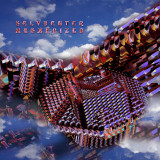
Going past musical genres and instead straight towards something more elemental - Selvhenter’s music creates a strikingly direct, physical experience of sound composed of polyrhythms, acoustic and electric melodies, heavy music and improvised beauty.
Since forming in Copenhagen in 2010, drummers Jaleh Negari and Anja Jacobsen, saxophonist Sonja LaBianca and trombonist Maria Bertel have forged a unique approach to making music that starts with their instrumental setup: two drummers that interlock as frequently as they go their own way, a trombone put through a bass amplifier loud enough to rattle your chest and a saxophone put through a range of effects so that it often sounds unrecognisable. Selvhenter work within their own idiom, drawing from the individual players’ personalities and interests to make a highly collective music, where all four musicians are absorbed into a total sound where an improvised free jazz approach collides with experimental electronic music and avant-garde noise/post-punk sonorities.
Their new LP Mesmerizer - which marks their first physical album release in nearly a decade and their debut on the French label Hands in the Dark - carries forward this process of exploration, deploying original and complex patterns of rhythm through various percussive instruments and finely textured horns and synths. The attention to sonic details is also almost pushed to an extreme on this new offering, making the open auditory adventure suggested by the title of the album all the more captivating. These creative developments have brilliantly kept Selvhenter’s music alive to new uncharted moods and possibilities, while at the same time strengthening their core elements: a propulsive, dense and often ecstatic music.
Marc Richter aka Black To Comm released his debut record 20 years ago. In 2023 he is still busy releasing music under various disguises and is currently signed to the Thrill Jockey label. To celebrate this anniversary his own Cellule 75 label is re-releasing some classic out-of-print vinyl albums that originally came out on the defunct Type and De Stijl labels. The LP will feature a full-colour printed inner sleeve exclusive to this edition.
In 2009 the Type Recordings label run by John Twells had just released seminal records by Grouper, Jóhann Jóhannsson and Yellow Swans when they signed Richter and put out his breakthrough Alphabet 1968 album. The LP sold out within two weeks, receiving a glowing full-page review in The Wire Magazine by the late Mark Fisher (later reprinted in his book Ghosts Of My Life), was selected for Boomkat's Top 10 releases of the year (alongside debut albums by Leyland Kirby, Demdike Stare and Oneohtrix Point Never) and was greeted with universal praise in the underground blog network as well as established magazines such as The New Yorker and Pitchfork.
The music itself played with the notion of nostalgia without being nostalgic itself. It's the sound of half-remembered dreams, a surreal distorted vision of the past, an aural polaroid of long forgotten musics, a ghostly voice from a non-existent era.
From the original Type one-sheet:
"The mission statement for Alphabet 1968 was to write an album of "songs" for want of a better word. Short tracks which represented genre points, the milestones which stuck in Richter's mind when he thought back to his favorite records. What we arrive at is a breathtaking 10-track album which, over the course of 45 minutes, explores world music, techno, noise, avant-garde, ambient music and even exotica. Each track is linked with a loose thread of radio static or environmental sound, dragging you through the album, as if tuning in to a stray broadcast or a particularly adventurous mix. Richter has pieced the album together from hours of recordings made at his studio with home made gamelan, small instruments and loops gathered from a collection of ancient vinyl and 78 records. The scope of the album is admirable, but ignoring this, it is simply a shockingly arresting collection of experimental oddities, with references ranging from Moondog to Basic Channel by way of Bernard Herrmann. It's not hard to fall in love with Alphabet 1968, far harder would be to place exactly where the record should fit into your collection."
Mark Fisher in The Wire:
"But what if we were to take Richter's provocation seriously - what would a song without a singer be like? What would it be like, that is to say, if objects themselves could sing? It’s a question that connects fairy tales with cybernetics, and listening to Alphabet 1968, I’m reminded of a filmic space in which magic and mechanism meet: JF Sebastian’s apartment in Blade Runner. The tracks on the LP are crafted with the same minute attention to detail that the genetic designer and toymaker brought to his miniature automata, with their bizarre mixture of the clockwork and the computerised, the antique and the ultramodern, the playful and the sinister. Richter’s musical pieces have been built from similarly heterogeneous materials - record crackle, shortwave radio, glockenspiels, all manner of samples, mostly of acoustic instruments. ….. JF Sebastian's apartment was itself an update of older spaces in which science and sorcery co-existed: the workshops of ETA Hoffmann's inventor-magicians, or of Pinocchio's creator, Geppetto. I think, too, of Auguste Villiers de l'Isle-Adam's astonishing 1886 tale The Future Eve in which Edison, using the expertise he has recently acquired from inventing the phonograph, sets himself the task of constructing an artificial woman. But if there are songs here, they are sung by the gramophone and other recording and playback machines. Richter so successfully effaces himself as author that it is as if he has snuck into a room and recorded the objects as they played (to) themselves. Rather than simply automating his music, as in the case of Pierre Bastien and his mechanical machines, Richter makes us feel that he has merely recorded the unlife of objects. ….. Indeed, the impression of things winding down is persistent on Alphabet 1968. Entropy has not been excluded from Richter's enchanted soundworld. It feels as if the magic is always about to wear off, that the enchanted objects will slip back into the inanimate again at any moment."
A kind of hush pervades throughout Standards Vol VI, the latest release by The National Jazz Trio of Scotland, the ironically named project helmed by Falkirk’s musical polymath, Bill Wells, that is neither a trio, nor a jazz band. If this collection of ten covers probably comes closest to the latter in its late night renditions of actual standards, the presence of long-term NJToS member and collaborator Aby Vulliamy as the record’s lone vocalist adds to its solitary air. This follows Standards Vol IV (2018), which featured fellow NJToS co-founder Kate Sugden as primary vocalist, while Gerard Black, a member of the group since 2016, took centre stage in similar fashion on Standards Vol V (2019). Wells has long been a fan of Vulliamy, both of her work as a viola player with numerous collaborators, and as a singer.
Vulliamy played viola on Everything’s Getting Older, Wells’ 2011 collaboration with Arab Strap vocalist Aidan Moffat. Wells went on to play melodica on Vulliamy’s solo record, Spin Cycle, released on Karaoke Kalk in 2018. With the intent of producing the saddest heartbreak record ever made, Wells sourced a back catalogue of miniature epics, reinterpreting each tale of everyday yearning to make a canon of melancholy loungecore designed for nights in alone, if not always lonely. Beyond the concept of isolation behind Standards Vol VI, practical concerns added to the affair, with Wells recording backing tracks at home in Glasgow, while Vulliamy added her voice from her home in Yorkshire. The result on Standards Vol VI is a thing of quiet beauty that sees Wells and Vulliamy reimagine a panoply of pop classics in their own aloof sounding image.
Shades of Margo Guryan and Claudine Longet abound in Vulliamy’s delivery over Wells’ woozy, low-slung guitar and piano, with samples culled from a session with Teenage Fanclub’s Norman Blake. Little electronic percussive clicks and hisses lend things an even more otherworldly air on a record bookended by opener, Donovan’s proto hippy classic, Catch the Wind, and Dixieland miniature, Careless Love. The eight points in between take in a first half led by The Beatles’ normally jaunty We Can Work it Out, flipping the loveable mop-tops’ perky optimism for something more soul searching. This is followed by I Wish You Love, Albert Beach’s English language version of French songwriter Charles Trenet’s evergreen, Que reste-t-il de nos amours. The Bee Gees lost classic, To Love Somebody, is up next, with more impossible to answer questions coming in Why Can’t I?
The latter is a Rodgers and Hart composition that first appeared in the duo’s 1930 Broadway musical, Spring is Here, in which the show’s two heroines commiserate each other over their shared loneliness. Wells stumbled on the song in a tatty Rodgers and Hart songbook, which, like its subjects, had been left on the shelf before he and Vulliamy brought it in from the cold. The second half of Standards Vol VI leads with Matchmaker, Matchmaker, Jerry Bock and Sheldon Harnick’s much covered evocation of a pre dating app era from their 1964 hit musical, Fiddler on the Roof. This is followed by Billy Rose and Dave Dreyer’s showbiz staple (with Al Jolson also taking a credit), Me and My Shadow. While made famous by showbiz double acts ranging from Frank and Sammy to Robbie and Jonathan, here it flies decidedly solo. Johnny Mercer and Hoagy Carmichael’s Skylark comes next, a song inspired by Mercer’s yearning for Judy Garland. We hear ya, bub. The most downbeat take on Bacharach and David’s The Look of Love you’re ever likely to hear comes next, ushering in the short farewell of Careless Love, before the lights are turned out forever. Yeah, well. Whatever gets you through the night…
Miles Davis is regarded to be one of the most influential and acclaimed figures in the history of jazz and 20th-century music. At the request of Columbia Records executive George Avakian, he formed his first regular quintet in 1955. After all members of the first quintet left Davis a few years later, he hired the core of the second quintet in 1963 and the final member in late 1964. The second quintet would record and play together until the end of the 60s.
Sorcerer is the third album by the Second Great Miles Davis Quintet. The quintet consisted of Miles Davis on trumpet, Wayne Shorter on tenor saxophone, Herbie Hancock on piano, Ron Carter on bass and Tony Williams on drums. It was recorded in May 1967 and contains a darker sound. The last song on the album, "Nothing Like You", features vocals by Bob Dorough.
Sorcerer is available as a limited edition of 2500 individually numbered copies on translucent green coloured vinyl.
We are ecstatic to announce that Sparkz’s debut High Focus EP ‘Overload’ is now available for pre-order!
As a long time player in the UK Scene with the likes of The Mouse Outfit, Voodoo Black, and LEVELZ - We’re sure that most of you will be familiar with Sparkz by now.
Coming in strong with his second single ‘Mean It’, Sparkz brings the heat with an unforgettable party banger that is guaranteed to liven up even the dreariest of functions. Fully self-produced, written, and recorded by the man himself, ‘Overload’ is a testament to the years in which Sparkz spent honing his multi-disciplinary skillset.
Due for release on the 24th March, ‘Overload’ will be landing just in time to welcome in the change of the seasons, because we can assure you that these tracks have already secured themselves a place on our summer playlists!
‘Overload’ is available to pre-order now on a limited run of 250 black vinyl, as well as available to purchase digitally from the HF shop, and across all digital platforms.
Amy Dabbs and Athlete Whippet deliver a perfectly crafted journey through house music with 'Into You' on Aus Music.
The duo's different yet wholly complementary musical backgrounds - Amy Dabbs bringing her extensive experience as a DJ & electronic music producer, and Athlete Whippet with his background as an instrumentalist & live band musician - have created a winning combination on Into You EP. The product of which is an intricately composed, highly musical suite of tracks produced to perfection for the dancefloor.
Having met for the first time at Cinthie's Elevate store in early 2021 for her DJ Kicks launch party, the compilation featuring one of Dabbs' earlier tracks, Amy Dabbs & Athlete Whippet stayed in touch, which culminated in the decision to start working together in the studio in their shared hometown of Berlin.
Amy Dabbs has released a string of lauded 12"s since her 2020 debut, including her latest highly acclaimed EP on Shall Not Fade, in addition to collaborating with Coco Bryce, launching her own imprint Dabbs Traxx last year, and featuring regularly on BBC Radio1 Dance.
Athlete Whippet, headed up by Robin Braum, have delivered a myriad of esteemed releases across Toy Tonics, Rhythm Section and Tartelet, which have earned heavy support from Pete Tong, Jamz Supernova and Tom Ravenscroft, to name a few.
Teaming up for the first time here, Amy Dabbs & Robin Braum deliver a fiery three-tracker for Will Saul's Aus Music, covering a variety of moods across the versatile EP. Kicking off the A-side is 'Deep In Your Love', with swirling pads and emotive strings tangling around a tear-jerking vocal refrain, which make for a highly moving opener. A2, 'Into You' continues the emotional journey with lively percussion, subby basslines, and sensuous vocal samples overlaid with luscious analogue chords played out on the Juno 106. On the flip, 'Milkshake' closes out proceedings with a glorious blend of anthemic hands-in-the-air piano riffs and deep acid grooves. This track is a surefire summer hit, set to ignite airwaves and the dancefloor in equal measure.
out of Stock
Last delivered 2 years ago available to reorder, subject to availability
Fresh off the critically acclaimed “Capichone EP” on Peach Discs, Nachtbraker takes us on a blazing journey! The tight drum patterns, vigorous and heartwarming pads, bolstered with his signature bass lines, will have you reminiscing on 90’s Dutch House Music.
In the driver’s seat, anthemic title track “Dondoni” gears up with a vivacious synth pad and galvanic bass line whilst, in the passenger seat, “Barkuchi Fus" goes full throttle on multi-layered melodies and pads. In the back seat we find the original mix of “Don’t Worry” with a cleverly alternating arrangement and intricate sound design.
Rounding out the package, you’ll find Treviso (IT) based Slow Life affiliate Paolo Mosca flips “Don’t Worry” into an epic feast of arpeggios and melodies on some nifty and steadfast drum
out of Stock
Last delivered 22 months ago available to reorder, subject to availability
A wild and funky collection of Afro grooves that was ahead of its time in 1977 and has become a collector’s item in recent years, especially due to the growing international interest in Colombian picó sound system culture. Fruko and his studio bands Wganda Kenya and Kammpala Grupo treat us to a diverse set of African and Caribbean styles, laced with crazy synths, psychedelic guitar and infectious pan-African polyrhythms. By the time Discos Fuentes released the album “Wganda Kenya Kammpala Grupo” in 1977, Wganda Kenya’s discography was expanding with many 45 singles and appearances in various artists collections. The group’s 1975 debut record “África 5.000” was a full length LP in the U.S. and a various artists compilation in Colombia, which was followed by the self-titled long player the following year. However, Kammpala Grupo, which shared the album’s title and was credited to three songs on the record, had never appeared before, yet was basically the same studio group as Wganda Kenya. Most likely the creation of this short-lived studio band was just a ploy by the label to make it seem like there were more groups playing the type of exotic afro tracks favored by the picotero DJs of Colombia’s Caribbean coast (especially in Barranquilla and Cartagena). 1974 Discos Fuentes’ management had sent musician, band leader and producer Julio Ernesto “Fruko” Estrada to the coast on an A&R mission to discover what people were dancing to in the verbenas (communal open air neighborhood parties) run by the owners of picó sound systems (decorated mobile DJ rigs). Always game for an adventure, Fruko was tasked with bringing some popular examples of these esoteric, hard-to-find African, French and Dutch Antillean records back to Medellín to serve as inspiration (or to outright copy) so that the label could enter into the growing regional market and spread its popularity to the interior of Colombia and other Latin American countries via its own studio creation, Wganda Kenya. Fuentes was always returning to exploit the rich African-rooted culture of the coast as it had with the cumbia and other regional genres before, so in a way it was not surprising that they were attuned to this particular niche phenomenon from a marginalized sector of the population. The most popular genres with the champeta dancers in the 70’s and 80’s were styles like Congolese rumba, highlife, afrobeat, juju, mbaqanga and soukous as well as the music of Haiti, Guadeloupe, Martinique, Curaçao and Dominica, all of which were fiercely guarded by the DJs who had managed to acquire them often through extreme means of travel, barter and intense digging. The record kicks off with the joyful ‘El Gallo Africano’ which features exquisite interplay between Sepúlveda’s highlife style guitar and an authentic-sounding African style saxophone, perhaps played by Carlos Piña. In reality it was ‘Go Call Police Chief’ by prolific Nigerian highlife guitarist Chief Oliver Sunday Akanite, aka Oliver De Coque. Next up is Kammpala Grupo’s ‘La Yuca Rayá’ (‘Grated Yuca’), written by Isaac Villanueva in a style he termed son haitiano which sounds much more like Zimbabwe Shona mbira music. Wganda Kenya’s ‘Caimito’ (star apple, a type of tropical fruit), on the other hand, is actually a cover of a relatively well-known Haitian merengue song. Kammpala Grupo then takes us from the French Antilles to the multi-cultural discotheques of Paris, where a cover version of Black Soul’s Afro-boogie anthem ‘Black Soul Music’ is retooled and renamed ‘King Kong’, perhaps in a nod to the 1976 remake of the monster flick of the same name. Side two introduces us to the infectious merengue rebita of Angola via ‘La riphyta’ with “Paparí”, aka Mariano Sepúlveda, doing the vocals and faithfully replicating the Angolan guitar style. ‘La Trompeta Loca’ (‘The Crazy Trumpet’), probably the nuttiest track on the album, is an ingenious cover of ‘Ye Gbawa Oo Baba (Tribute To Nigeria)’ by Joe Mensah of Ghana. As with all their covers of African tunes, this rendition tightens up the original with some pop sheen, more consistent drumming and higher production values, remaking it into a powerful slow-burning dance floor filler. This is followed by one of the most powerfully original songs to come out of the entire Wganda Kenya project, Mike Char’s reggae anthem ‘El Nativo’ with Joe Arroyo on vocals. The record ends on a more authentically Caribbean sounding note with the instrumental ‘El testamento’, a cheerful islands banger with bright brass, syncopated calypso beats and chunky cuatro guitar (or ukulele). The original was in the mento genre and titled ‘Sweet meat’, written and recorded by Jamaican trumpeter Bobby Ellis. First time reissue. 180g vinyl.
New studio album from Zion Train, featuring the world renowned Zion Train brass section, along with three passionate, politically aware songs from singer Cara Jane Murphy, and featuring Paolo Baldini playing guitar and bass on several tracks - alongside veteran musicians Trinny Fingers, Blacka Wilson, Dreada One and (from Crete) Professor Skank. For this album Zion Train return to their roots, with copious amounts of analogue Dub mixing performed by producer Neil Perch on his vintage TAC Scorpion desk. Artwork is by the acclaimed anarchist artist Marko Gin from Croatia.One of the most unique and enjoyable live dub acts on the planet, their use of dynamic onstage dub mixing whilst performing alongside acoustic instruments and exceptional vocalists, make Zion Train one of a kind.
Ned Milligan is a New York based elementary school teacher and occasional musician. He’s behind the great small-run label Florabelle since 2015. This is his sixth solo album.
"My work in the past five years has been grounded in recording and playing outdoors, trying to communicate the meaning of being in a particular location and finding meaning in interacting with whatever sounds or elements are equally present. I'm still excited by all of it! This sense of purpose continues with Considerable and the most I could wish for is that the specificity of what I am doing and where I'm doing it manages to evoke something in anyone listening--a connection to their own environments and spaces. None of these pieces is strictly documentary or one-take in approach or composition, but I hope that the combination of processed and "factual" sounds achieve integrity."
chimes, singing drum, autoharp, field recordings, processing: Ned Milligan
campfire recording in "Sky Smokes & Electronics": Jerome Klap
additional percussion in "Mosey With Me": Rory Milligan
singing: graciously and anonymously donated
recorded mostly outdoors, sometimes indoors in York, Maine.
Selected by Jim O’Rourke for his Tone Glow list of 25 albums that “never got their due”, Org was founded in the early 90’s by Espen Jensen and Kjetil D Brandsdal who would later go on to variously record as Elektrodiesel, Noxagt and Ultralyd in the swirl of the highly active Norwegian underground. “Org" was the only album the pair recorded as a duo, pressed in a meagre edition of just over 100 copies which disappeared almost as soon as they were made, lodged in the memory of the select few who have managed to hear it in the years since.
Made up of three long tracks, the near 20-minute ‘001’ opens the album with an extended organ zone-out matched with scraping factory machinery saturated into a dense cloud of harmonic fuzz. There's something transcendental about the sound that intersects with microtonal Alice Coltrane (particularly the unfairly maligned organ-only edition of "Turiya Sings"), as well as Pauline Oliveros and Ramleh. It’s music that pulls you in subconsciously; before you know it, you're fixating on the uncomfortable grind of metal on metal, buried mechanical rhythms and liturgical organ vamps that wind between industrial cacophony and sacred ritual music. For its last few seconds, we go into a full death metal tearout that fades out before it takes full flight, a glorious wtf.
‘002’ connects between minimalist drone styles and shoegaze, distorting fuzzed organ into pliable, dreamlike warbles that end up sounding like Kevin Shields' ‘Loveless’-era glides, or even Sunn O))) at their most devotional. Never losing the numbing overdriven mettle, its a piece that sounds spiritually entwined with Matthew Bower's Skullflower - a minimalist re-reading of high-contrast guitar music that takes all the psychoacoustic power and none of the annoying posturing.
For ‘003’, subaqueous organ is joined by synth and drum machine, sounding like the inspirational spark for Religious Knives' screwed 'n chopped cosmic psychedelia. The choice of sounds links it to Antena's foundational electro samba recordings too, but the overwhelming drone - a constant on all three compositions - connects the music to minimalist spirituals that have simmered beneath the DIY/avant garde for decades.
‘Org’ sits heavy on the nerves with overproof levels of mulched amp worship and ungodly, palms-down organ chords and wheezing, bezonked lines of melodic thought. 25 years out of sight and marinading in the archives, with the benefit of hindsight we can better understand the role these sounds played in the development of music in the contemporary sphere. It’s an important piece of the puzzle, one that makes valuable connections that, over time, have looked progressively more faint.
Images Of Goo is what Munich sound bricolageurs Leo Hopfinger aka LeRoy (head of Das Hobos, H, Spiritual Emojis and others) and Cico Beck aka Joasihno (active member of The Notwist, Aloa Input, Spirit Fest and others) call their first musical dialogue in album format.
It is equally a dialogue with the elements of their sonic repertoire of echo variations and sonic shadows from the percussive instrument box. In their sum, a Wunderkammer of a panaudic, which can be approached and departed in six tracks per side.
There we pass a fuzzy factory flow music of sound tiles and find ourselves in the next station in a game of pot banging and gong shower with firecrackers and other sound explosions. Tinpan tinkertoy and sparkler warehouse become an offbeat downbeat of sound loops, and already we imagine ourselves amid the hammering and pounding of a magic sound forge at the center of the earth, which may be the center of a distant galaxy.
On side two, we enter a dripstone cave boogaloo ("Let's start tripping") and it drips candle wax from a vocoder space-age melody, emoting and coagulating into a Morse-coding cumbia chant. Wax music this is - music that grows out of itself, even if by the means of tape and collage.
At the end there is a music snake, which, having become snake music itself, disappears in front of our ears with a swing. And maybe this is the beginning ...