Collecting orders for Repress
Clone Classic Cuts continues their re-issues series for one of the most influential techno acts ever... Drexciya. The second selection of tracks including favorites such as ''Bang-Bang'', ''Positron Island'', ''Anti Vapour Waves'' and ''Journey Home'' complimented some lesser or unknown tracks. Raw, uncompromising music made with soul and creativity always has been the trademark of Drexciya (and also from their original label Underground Resistance) and this album is another showcase of their talents.
Поиск:act one
Все
- A1: Lovetempo - Same Ole Love (365 Days A Year) (Extended Summer Breeze Mix)
- A2: Nicholas Cangiano - Falling Behind
- A3: Poolside - Ventura Highway Blues (Monsieur Van Pratt Dub)
- B1: Prep & Eddie Chacon - Call It (Turbotito Rem
- B2: Moi Je - Découvre
- B3: Turbotito - Time Starts Moving Slow
- C1: Young Gun Silver Fox - Curious
- C2: B U.m.p. - Give A Little Love A Lot
- C3: Woolfy Vs Projections - Seeds
- C4: 1-900 - Breakin' 84
- D1: Goodvibes Sound - Stay For One More Night (Matt Hughes Remix)
- D2: Moods & Nic Hanson - Music Never Looked So Good Good
- D3: Bowaswell - Over When The Night Is Gone
- D4: Joel Sarakula - Hands Of Love (Phil Martin Remix)
- D5: Kimchii - Do You Ever
lim. 2xLP colored yellow and oxblood vinyl with Poster, Sticker & Mp3 Download!
We are back with another chapter in our ongoing series of unearthing smooth vibes from all over the world, this time we go back to the FUTURE for you with: THE SUNSET MANIFESTO Volume 2. After a five year break mainly concentrating on the late 70s/early 80s Westcoast Soul/Yacht/AOR sound, we finally dive deep into the modern world of our beloved sister-label Too Slow To Disco NEO (for the third time after 2018s TSTD NEO - En France and 2020s The Sunset Manifesto excursions). But of course it wasn't a real 5 year break since the first Sunset Manifesto compilation, as in the meantime we also released a few digital TSTD Neo singles, and - more importantly - our "Too Slow To Disco NEO - FM" playlist on spotify (handcurated by Dj Supermarkt every week and now hosting more than 1500 tracks of mellow, modern sunshine vibes) was growing steadily and becoming a new, important fixpoint in the TSTD musical universe. TSTD NEO is the outlet Dj Supermarkt is using to unearth modern laidback, smooth, sunny slow disco vibes with a soulful Westcoast/Balearic touch. For him TSTD always has been about a laidback vibe/feeling, not a certain time period in musical history. And that sunny Westcoast vibe we dug out on those traditional TSTD compilations has become a huge influence to so many modern artists. So it makes sense that we present the cream of new slo/mo NuDisco/Sunset Disco/Daytime Disco acts in the TSTD format, a luxurious compilation, with artists from all across the globe: Not only from the two homelands of that modern slow disco sound, Los Angeles/California and France, but also from Beijing, Montreal, Mexico, London, New York, Stockholm, Rotterdam… the moon, you name it! This music is more a state of mind, a feeling, then a geographical thing. We are happy and really excited to annouce the following passengers are on board with exclusive tracks: Poolside, Woolfy, Prep & Eddie Chacon, Turbotito, Young Gun Silver Fox, Lovetempo, Kimchii, Goodvibes Sound a.m.m.
“Chacha” is the third album from one of the most groundbreaking European acts of the moment. Schulverweis, the collaboration between the prolific Levente Pavelka and the elektro enfant terrible Johannes Haas (aka L.F.T.), delivers an exceptional blend of eerie, lo-fi post-punk. This album breathes new life into an otherwise seemingly explored genre, making it an undeniable must-have for collectors drawn to the experimental edge of darkwave sounds. All tracks have been specially remastered for vinyl by Daniel Hallhuber at Young and Cold Studios (Germany).
On June 27, 2025, a long-dormant signal reactivates from Hamburg’s hidden places: Helena Hauff and F#X return as Black Sites with R4 on Tresor Records—their first full-length album and the first release under the moniker since 2014. Like a hieroglyphic recently discovered and translated, R4 feels more like a long-awaited resumption than a comeback.
Recorded to tape with minimal editing or post-production the record is a classic example of the symbiotic relationship that can come from the interaction of human and machine. This punk ethos isn’t invoked through distortion alone, but through method; in the album’s breaking from the received wisdom of hardness tethered to speed as most of the tougher pieces are lower BPM and vice versa (with one notable exception in the mind-melting stomp of BLOKK).
Across ten tracks, Black Sites traverse a landscape where genre dissolves into intention. It migrates through electro’s danceability, acid house’s corrosion, and into the liminal realm of machine funk—a genre coined by Andrew Weatherall, which sounds like the results of technology dreaming of soul where the emphasis is on live execution, on immediacy over perfection—a sound forged in the act of creating, not polishing.
In a 2013 interview, around the time of the first Black Sites EP, Hauff was quoted as saying that she wants “things to fit together properly, but on another level, I really want them to make sense together.” That principle animates R4: The album’s form reveals itself in time, with each movement echoing and amplifying the others to create a synergistic whole.
From the opening crawl of C4 (a name that like the music foreshadows the explosions to come) to the end-of-the-night bliss of MOTHERJAM via the intense peaks of BLOKK, 707, and classic acid track 3D it’s clear that R4 is a work made with serious intent; a refutation of a world where streaming has made the two-minute single the dominant musical form again. R4 demands immersion, not just attention. It is not a collection of tracks, but a singular, recursive experience: a mirror in which sound and listener repeatedly rediscover one another.
The UK's Robin Lee is one of the members of much-loved disco gang Faze Action but also he's behind Andromeda Orchestra who return here with an album that offers a cosmic fusion of jazz-funk and disco. It's been put together with Moogs, clarinets, Rhodes and rich analogue textures that make for a mix of nostalgia and sonic richness that sinks you in deep. Blending nostalgia with innovation, Lee creates deep, immersive soundscapes. There are widescreen odysseys like 'Mythical', loved-up bunkers such as 'Thinking About Your Love' and a rare Nick The Record remix of 'Get Up & Dance' that overflows with cosmic melodies and lush, life-affirming strings.
DJ Feedback
Tigerbalm (Razor n Tape):
"Loving the Nick The Record mix of Get Up Dance."
Willie Graff (Music for Dreams):
"An excellent collection of disco tunes! Will be playing for sure."
Jacques Renault (Lets Play House):
"Epic album as expected, tune after tune, will be playing these for sure. "
Ilya Santana (Astrolead Recordings):
"Andromeda is always a sure shot!"
Pete Herbet (Music For Swimming Pools):
"HUGE!! – Great album!"
Black Truffle is thrilled to announce Spilla, the second album from Nantes-based Ensemble Nist-Nah, 48 minutes of music for Gamelan, drum kits, wood and metal percussion instruments, and plucked strings that will surely count as one of the most electrifying records you hear this year. Founded by the Australian drummer/percussionist Will Guthrie in 2019, continuing the explorations begun in solo form on Nist-Nah (Black Truffle, 2020), the ensemble (eight or nine core members with occasional guests) has been consistently active in the half-decade since: composing, rehearsing, recording and touring Europe (with a mass of equipment in tow) to great acclaim. Spilla tracks the continuing evolution of the project since the recording of their first album, Elders (Black Truffle, 2022). The two sides of this record document two different iterations of the group, and the members' compositional input has increased: each side contains one piece by a member other than Guthrie. It has become clearer than ever that Ensemble Nist-Nah is not an attempt at a European Gamelan ensemble but rather a hybrid percussion ensemble that uses instruments from a Javanese Gamelan alongside other percussion to perform original music informed by a variety of South East Asian music but also by everything from free jazz to contemporary hip-hop: while Nist-Nah and Elders both featured traditional Javanese pieces, on Spilla the only tune not generated by a member of the group is by Guthrie’s long-time musical hero and occasional collaborator Roscoe Mitchell.
The two short pieces that open the record could almost be the two sides of a wild 7” selected to show off what the Ensemble can do. On opener ‘Gerak Maju’, intricately skittering open-snare patterns bounce over clanging metal, chiming bell-like tones and deep gong hits, adapting the rhythm-register connections heard in traditional Gamelan musics—where the lowest pitched sounds are heard least frequently—to a cut-up breakbeat straight off Feed Me Weird Things. ‘Strollabout’ then moves into an entirely different realm of meditative repeating patterns, performed entirely on Chinese, Javanese and Vietnamese gongs. The remaining seven pieces, ranging from three to twelve minutes, offer up a wealth of different percussive, compositional and arrangement possibilities. On ‘Ghostly Klang’, two drumkits mirror each other’s moves, bouncing hats and snares across the stereo field in a way that recalls On the Corner and the jittering hi hat patterns of trap, while slow moving melodies on the tuned instruments add a sense of majesty contrasted by scurrying details in resonant wood. The epic closing track presents a take on Roscoe Mitchell’s ‘Uncle’, performed by the Art Ensemble of Chicago on their classic Urban Bushmen live album. Where the Art Ensemble used Mitchell’s dirge-like melody as a jumping off point for virtuosic improvisational flights, Ensemble Nist-Nah rethink the piece as a near-static dialogue between the monumental, slow-moving sequence of unison tuned percussion notes and a textural cloud that grows in richness and intensity from whispering cymbal rolls into a mass of gong overtones and bowed metal.
Beautifully recorded and mixed, Spilla arrives in a sleeve decorated with core member Charles Dubois’ drawings of cymbals and gongs. Against the backdrop of a wider musical landscape dominated by over-produced electronic slop and bland harmonic wallpaper, Ensemble Nist-Nah stands out as a reminder, vital and unpretentious, of the joys and possibilities of human beings playing instruments together.
For many italo disco fans, Dyva is nothing short of a mythical name. A cult act surrounded by mystery, legend, and endless debates fueled by pure passion. And it all started with their iconic track “Oh Mama Tonight”, which, adding fuel to the fire, was released only as a promo single. That rare Boot Legs vinyl became the holy grail for collectors, a lifelong hunt for true italo enthusiasts.
After just three official releases (the last one in 1990), Dyva seemingly vanished from the face of the earth… Until the early 2000s, when Finnish italo aficionado Kimmo Salo tracked them down in Sestri Levante, Italy. That unexpected meeting sparked a brand-new chapter, both for Kimmo’s soon-to-be-born label Flashback Records and for Dyva’s founding members Roberto Calzolari & Massimo Traversoni. Encouraged by Kimmo, the duo returned to the studio to bring back to life not only their long-lost 80s demos but also fresh new material.
This album is a true time capsule, covering the period between 1986 and 2024, featuring never-before-released single versions, true gems. For any die-hard Dyva fan, this is nothing less than an essential addition to the collection.
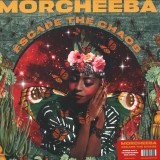
Trip-hop royalty Morcheeba make a blistering return with a stunning 11th studio album Escape The Chaos.
“This whole record is a process of trying to reconnect with what really matters. whether it’s what in your heart or with the world, putting your feet on grass and feeling the earth beneath you” says Ross Godfrey.
“For me, ‘We Live and Die’ is about my duration in the band and the music world and life in general,” Skye says of the lead single. “The lines become blurred after all this time. In a way, it’s a homage to the thirty years of being in Morcheeba which is 60% of my existence.”
Formed in London in 1995 the legendary band have extensively toured the globe, sold over 10 million albums worldwide and left their mark as one of the most influential acts of recent times. Releasing their acclaimed debut album Who Can You Trust? in 1996, the band have gone on to release a string of successful studio albums, including 1998’s platinum selling Big Calm, produced an album for Talking Heads’ David Byrne and produced soundtracks for Oscar-winning director Steven Soderbergh.
In their 30th year Morcheeba are as relevant as ever and are set to mark the celebration in style.
Tom Esselle, staple of the South London music scene, hits his stride on Rhythm Section release Revolutions and Evolutions. Building on the success of his previous releases (Lou’s Groove on Rhythm Section’s Shouts 2021 compilation, Praise Bes EP on Wolf Music in 2022), his latest EP further showcases the breadth of his sound. Drawing on influences from across the house music spectrum and honing skills developed in the studio with Chaos In The CBD, Revolutions & Evolutions delivers a sound that looks boldly to the future while remaining firmly grounded in the classics.
The A-side is primed for peak dance floor action: Baddies features a mid-2000s RnB vocal that did serious damage when Bradley Zero played it at Circoloco last summer, while Plaything, a big-room tech-house banger, echoes Moon Harbour's tougher catalogue, or a skunked-out Gavin Herlihy.
The B-side is a slice of sunshine with One Of These Days, an uplifting daytime house track featuring a deft keys solo from Dave Koor (Albert’s Favourites, The Expansions, Modified Man). Harmonise rounds off the EP: a smoky, dreamy groover to warm up the party or lock it in during the early hours.
Tom has been producing music since 2010, patiently refining his sound. His 2015 debut, the choppy drum workout Until She Spoke on Wholemeal Music, became a quiet underground success played by luminaries like Ruf Dug and Gilles Peterson, and remains a staple in many a record bag to this day. His productions have also found their way into the collections of DJs from Moxie to Mr Scruff and Osunlade to DJ Harvey
On June 6th, Death In Vegas return with new album ‘Death Mask’, where disintegration, overload and total sonic immersion tell a personal tale. With dirty circuitry and rough-hewn textures at the fore, this is gritty, unpolished techno; an audio outlier that’s full of personality, and a bold artistic statement. It’s closer in DNA to the grainy growl of sunn O))), or the searing intensity of Underground Resistance at their fiercest, and as far from generic influencer business as you could possibly get.
“I’ve been soaking in Ramleh’s ‘Hole In the Heart’, the machine funk of Terrence Dixon’s Population One, Jamal Moss’ psychedelic techno jams, the stunning minimalism of Mika Vanio’s Ø and Panasonic, the layered drones of LOOP, and drowning in the acid of TM 404”
Broader inspirations are weaved into the album’s fabric too; from his Thameside Metal Box studio and evocations of nautical ghosts, to lamentations for a broken world, to memories of a youthful Detroit pilgrimage, and the innocent fraternity of rave euphoria, there’s a lot going on, acting as a chronicle of moments, and locations.
Kerrie is back on James Ruskin's Blueprint for her third EP. The "Act Of Resistance" EP showcases Kerrie's refined approach to techno, blending moody industrial tones with dub overtones and intricate sound design. Kerrie's in-depth knowledge and unwavering dedication to music shines through her notable back catalogue and bolshy, unforgiving DJ and Live sets. Honing her craft for over a decade, Kerrie achieved a milestone at the start of 2024 when Tresor announced her as a resident DJ.
Irish-born, Manchester-based Kerrie is a multidisciplinary artist and DJ. Having garnered a rich musical education through working at and holding a DJ residency for one of the UK's most respected record shops, Eastern Bloc, Kerrie's in-depth knowledge and unwavering dedication to music shines through her notable back catalogue and bolshy, unforgiving DJ and Live sets. Honing her craft for over a decade, Kerrie achieved a milestone at the start of 2024 when Tresor announced her as a resident DJ.
Following well-received releases on labels such as Don't Be Afraid, Cultivated Electronics, I Love Acid and Symbolism, Kerrie launched her imprint Dark Machine Funk DMF in 2020, and also debuted on Blueprint Records with her "Raw Regimen" EP.Truly welcomed to the Blueprint family, Kerrie delivered her second EP "Transient Belief" in 2023 and joined the crew at label showcases around the globe.
Since 2023 she has been fully committed to the studio and accommodating her increasingly busy tour schedule, forging a long-lasting path fuelled by drive, passion, authenticity and a community-first way of thinking.
She's now back on James Ruskin's label for her third Blueprint outing. The "Act Of Resistance" EP showcases Kerrie's refined approach to techno, blending moody industrial tones with dub overtones and intricate sound design.
"Bassland Prophecy" was a collection of Southern California musicians, including Alex Xenophon (Deep Squared), Stuart Breidenstein (formerly of Skylab 2000), Alissa Kueker (vocals), and Maxx Vaxx (Euterpre, Butterfly Garden).
The act nourished and grew the emerging LA scene and was a renegade force in live electronic improvisation. Rather than composing full tracks, Breidenstein stated over email that they built musical "ingredients" on the fly, syncing DOS and hardware sequencers mid-performance. Their unpredictable sets, from illegal raves to makeshift desert parties, resulted in electrifying, unforgettable sonic trips.
Recalling 90s LA, Breidenstein said: “Before the internet, finding a rave was an adventure. You’d get a flyer with a phone number, call it the night of the event, then drive—sometimes 100 miles or more from a map point to the actual party. The scene was raw and underground, built by music obsessives hunting for the freshest sounds.”
Two standout tracks from 1996—“Nine / Deeper” and “Blue and Purple Starship of Trust”—perfectly represent their unique genre-bending concoctions. Against all odds, the recordings survived and have been given new life, remastered and reissued on Bristol-based *Sex Tapes From Mars*. To produce the wizardry, their setup included a Juno 106, Yamaha FB-01, a Roland S330 sampler, and a Sequential Circuits Pro-One mono synth with external MIDI, and some guitar effects pedals.
“Nine / Deeper,” born from one of their many spontaneous studio sessions, became eerily intertwined with recurring appearances of the number 9 and black cats. So much was the frequency of apophenia episodes that paranoia began to take over the artists. Recorded in a makeshift living room studio, the 14-minute excursion traverses genres and tempos, beginning quick and hypnotic, and climaxing chuggy and drenched in adlibbed acid lines, culminating in a surreal and legendary live performance in Hollywood. The piece captures the raw spontaneity of their sets, crafted with vintage gear, cassette tape recordings, and, as always, a DIY ethos. Breidenstein states, “While improvised sessions often failed, when it succeeded, it was definitely a kind of infectious magic the listener would recognize.”
“The Blue and Purple Starship of Trust” is a deeply personal piece, named after when Breidenstein saw a heavenly blue morning glory on a walk around his neighborhood, and emerged from heartbreak and the following deep depression entrenching his life at the time. Recorded in a single take onto cassette tape, blending piano, guitar, and heart-rending vocals into an emotional, dreamlike journey. The track starts with a lush, cascading synth sound, bolstered up by rolling, reverbing downtempo drums. Using Sequential Circuits Pro-One throughout, the rippling synths and off-key piano licks act like pipetted droplets of water, all elements bleeding into each other in some kind of hallucinogenic swelling, reflecting Breidenstein’s fading relationship. The guitar part is a nod to Bill Withers’ “Ain’t No Sunshine,” and Breidenstein recalls just “bawling as the guitar line was recorded.”
Created in a time of artistic struggle, living in an old school bus, surviving on instant noodles while hauling their gear from venue to venue, and scraping by on gig money, these recordings act as rare artifacts of a movement that thrived on passion and perseverance, standing as a poignant testament to resilience. Though they released a handful of tracks, ranging from deep house to ambient to techno, their true legacy lay in their high-energy, genre-blurring live shows, which are powerfully encapsulated within these recordings and leave a lasting impact on underground electronic music today.
After a couple of years of silence, the Colombian label Insurgentes, operated by DJ Lomalinda and Verraco, and responsible for putting several South American sound explorers on the map to the world in the past decade, is back for one last release, one last dignified death: la última vez.
And for this last installment, one last album. ‘Fiera’ is the name of the LP that Seph wrote and programmed during 2022 and 2023. For us, his greatest work so far: an energetic and impulsive journey, it's an active listening that never stops, you can never trust the loop. 8 tracks that do honour to the Insurgentes catalogue and consolidate the sound of the celebrated and respected Argentine artist who has been in force for more than two decades, crossing the territories of techno, 90s IDM, dub and ambient. Tags that are masterfully captured and collided in the grooves of these 300 vinyls.
Today is both a happy and a sad day. But the feeling of contradiction has always been the main alkaloid of our artistic work and the result of our search for identity. Without Insurgentes there would be no TraTraTrax. Without Insurgentes, no platform would have been created for many of the dreams that today are a fact and that even dictate our future. We would like to thank all those who have been linked anywhere along the way with our sonic fiction, with our desire to build bridges, with our thirst to connect ass and mind.
Que la tierra te sea leve, querido INS
Following the success of his ‘Love Dub So’ EP, Nick Barber’s Doof project returns to Mysticisms, delving back to his earliest recordings of his ground-breaking Trance project, presenting tracks from his previously cassette only release ‘The Love Mixes’.
A youth that had captured the psychedelia of Pink Floyd, Gong, Hawkwind and on to Psychic TV, as a self-taught guitarist, his first trip to India and Thailand in 1989 and witnessing the early electronic dance music at the Full Moon parties, had seemed rudimentary in nature compared to musicality of psychedelic rock.
Returning to England, the electronic / rock crossover of The Shamen’s ‘Progeny’ parties – featuring DJs like Paul Oakenfold and Mixmaster Morris with the live acts of Orbital and Ramjac Corporation – offered something new that turned his head, before finally finding his crew in the legendary squat / underground Pagan parties. There, residents Lol and Yaz first played the new electronic Trance sound, introducing Barber to the music of Eye-Q, Dance To Trance and the hugely influential Pete Namlook.
Recorded between 1990 – 1991, while living in Cambridge to study Philosophy, these are the first versions of tracks that formed the basis of his debut EP on Novamute, in 1993. Working with minimal equipment – an Akai sampler, Roland monosynth, Yamaha delay pedal, all sequenced on an Atari black and white PC and single MIDI output and then recorded straight to an 8-track Tascam cassette multitrack – the exuberance and rawness of the music are full of the excitement and naivety of youth.
Never intended for public release or initially even as a demo, Barber would play the music off the Tascam multitrack for friends at after parties. Dubbing a handful of cassettes himself and personally drawing the covers, around a dozen cassettes were handed out to mates. Eventually one copy found its way to Mute Records, who were looking to launch their dance offshoot, Novamute. Re-edited mixes of Gift Of The Gods and The Nagual appeared on his debut EP and history was made, before Doof went on to release for luminaries like TIP Records and Dragonfly and a career touring the globe was launched.
Remastered from the original tapes, this EP offers a snapshot of that time, the energy and joy of these early recordings is clear and overwhelming. Where Ambient, House and Techno met the birth of electronic Trance that truly stand up some 30 years later as originals then and now.
Trance The Mystery.
When you’re running a label, a demo occasionally comes across your desk that makes you reconsider everything you thought your label was all about. For Balmat, such was the case with this stunning album from Stephen Vitiello, Brendan Canty, and Hahn Rowe. It sounds like nothing we’ve released so far—and that very otherness opened up a whole new world of possibilities for us.
Fans of ambient, experimental electronic music, and sound art will be familiar with Vitiello, a New York native, long based in Virginia, who has collaborated with a cross-generational list of greats: Taylor Deupree, Steve Roden, Lawrence English, Tetsu Inoue, Nam June Paik, Ryuichi Sakamoto, Pauline Oliveros, and many more. On labels like 12k, Room40, and Sub Rosa, he has explored a wide range of minimalism, microsound, lowercase, ambient, improv, and other styles. But this album is something different. It may begin in ambient-adjacent territory, but it quickly veers off, and it just keeps zigzagging, taking on elements of krautrock, post-punk, dub, and the groove-heavy interplay of groups like Natural Information Society and 75 Dollar Bill.
This stylistic turn is thanks in large part to Vitiello’s choice of collaborators. “We’re coming from three different schools,” Vitiello says: “sound art, art rock, and punk rock.”
Active since the early 1980s, Rowe—a violinist, guitarist, and producer/engineer—has played with, or manned the boards for, a frankly jaw-dropping list of musicians: Herbie Hancock, Gil Scott-Heron, the Last Poets, Roy Ayers, John Zorn, Glenn Branca, Swans, Live Skull, Brian Eno, David Byrne, Anohni, R.E.M., Yoko Ono, and many more. But he might be most closely associated with Hugo Largo, a one-of-a-kind New York quartet—two basses, vocals, and Rowe’s violin—that in the late 1980s helped lay the groundwork for what would eventually become known as post-rock.
Canty, of course, is the legendary drummer of Fugazi, the visionary DC post-hardcore group, as well as Rites of Spring before them, and, currently, the Messthetics, a Dischord-signed instrumental trio with guitarist Anthony Pirog and Fugazi bassist Joe Lally.
Vitiello’s trio first collaborated on First, a 17-minute piece released on the Longform Editions label in 2023. Second picks up where the freeform drift of First left off, channeling the trio’s exploratory energies into more intentionally structured tracks and—in a real first for Balmat—some almost shockingly muscular grooves. “Sometimes my projects are more conceptually driven,” Vitiello says, “but I think this was more musically geared. I just wanted to open up the references and bring in an incredible drummer, bring in some melodies, and I’m sort of the center.” But his collaborators, he stresses, are “vastly creative in making anything I might suggest better.”
Like its predecessor, Second took shape in phases, shifting between improvisation and collage. Vitiello laid down the skeleton of the music at home, sketching out initial ideas on Rhodes keyboard and acoustic and electric guitar; he then fed the parts through samplers and his modular system, recording 10- or 20-minute jams. Once he had edited them into more structured forms, he hit the studio with Canty, who added not just drums but also bass and piano; finally, Vitiello took the results of those sessions to Rowe, who played violin, viola, electric bass, and 12-string acoustic and bowed electric guitar, and assisted in some of the final structuring and mixdown.
A few more surprises along the way: Reanimator’s Don Godwin, the studio engineer where Vitiello recorded with Canty, contributed what he calls “resonant dustpan”; and none other than Animal Collective’s Geologist, who just happened to be in the studio that day, sits in on hurdy gurdy on “Mrphgtrs1,” the album’s gorgeous, stunningly atmospheric drone closer. “I love these chance encounters,” Vitiello says. “Somebody I admire, a group I admire—that was an unexpected gift.”
An unexpected gift is a great way of describing Second as a whole: three veteran musicians venturing outside their usual zones and finding a new collaborative language together. The results can’t be neatly slotted into any given genre; they belong not to any given category, but to the spirit of conversation itself.
Bomj Diego had one simple dream – to spend a lazy summer weekend at his friend’s dacha, kicking back in a plastic lawn chair, sipping on Ovip Lokos, and letting the world spin as slowly as the rusty ceiling fan in the old guest house.
One Friday, he finally got his chance. He loaded up a plastic bag with a few cans of Ovip Lokos, an ancient Bluetooth speaker, and a single flip-flop (he’d lost the other one in a heated game of dominoes the week before). But as soon as he got off the train at the dacha station, Diego realized he had no idea where the actual dacha was. No address, no signal, just the distant sound of a chainsaw and the smell of freshly cut grass.
Undeterred, he followed the smoke of a barbecue like a hungry wolf. After an hour of wandering, he stumbled into a random backyard where a group of old timers were playing cards around a makeshift table. “Ah, Diego! You made it!” one of them shouted, raising a can of Ovip Lokos. Diego had no idea who the guy was, but he immediately sat down, cracked open his own can, and joined the game.
Hours later, as the sun dipped behind the trees and the mosquitoes started their evening shift, Diego realized – this wasn’t his friend’s dacha. In fact, it wasn’t even the right village. But the old men insisted he stay for shashlik, and as the Ovip Lokos flowed, Diego figured, “Eh, close enough.”
He never did make it to the right dacha, but sometimes, it’s the wrong turn that makes the best story.
Calibro 35 unleash a limited 7" feat Piero Umiliani's Italo-Cosmic-Disco classic 'Discomania' and Azymuth Brazilian-Disco stormer 'Jazz Carnival' on the B-side. Calibro 35 continue their journey into the world of cinematic jazz-disco-funk with the release of a new 7" featuring two afro-disco stormers. On the A side Calibro 35 deliver an heavily afro-funk infused version of Piero Umiliani's Italo-Cosmic-Disco classic 'Discomania' while on the flip side the Milanese band drop an equally explosive B-side with their own reinterpretation of Brazialian-Disco hit 'Jazz Carnival' by Azymuth. Both songs are taken from the highly anticipated new album 'Exploration' that drop June 06 worldwide via Record Kicks. The 7" is limited to 500 copies worldwide and is an instant's collector item. Described by Rolling Stone as "the most fascinating, retro-maniac and genuine thing that has happened to Italy in the past few years," Milan-based Calibro 35 enjoy a worldwide reputation as one of the coolest independent bands around. Active since 2007, during their long career, they 1 have been sampled by Dr. Dre on Compton ("One Shot One Kill" feat. Snoop Dogg), Jay-Z ("Picasso Baby"), The Child of Lov & Damon Albarn ("One Day"), and Demigodz ("The Summer Of Sam"). They 2 have played major venues and festivals all over Europe, and as unique musicians, they have collaborated with, among others, PJ Harvey, Mike Patton, John Parish, Stewart Copeland, and Rokia Traoré.
Limited 2025 Repress
Black Truffle is pleased to announce the release of Ichida, the first release from the duo of two important yet often underappreciated musicians, Eiko Ishibashi and Darin Gray. Ishibashi is a singer-songwriter, keyboardist, drummer, and multi-instrumentalist, known in Japan both for her own elaborately conceptual solo albums and for her frequent collaborations with figures such as Jim O'Rourke, Merzbow, and Phew. Darin Gray is a bassist and multi-instrumentalist known for a multitude of collaborations (with O'Rourke and Loren Connors, among many others), for On Fillmore, his cinematic post-exotica project with Glenn Kotche, and as one half of Chikamorachi with Chris Corsano, one of the finest free-jazz rhythm sections around. Presenting the entirely of a live set performed at Tokyo's Super Deluxe in March 2013, the set begins as a duet for Ishibashi's flute and Gray's upright bass. Calmly melodic yet harmonically inventive, with shades of 'spiritual jazz', the pair's acoustic ruminations are gradually joined by Ishibashi's lush electronics, which randomly flicker between chords in a manner recalling the classic work of David Behrman. As the electronics build into a gloomy fog of slowly cycling loops, Gray lays his bass aside and turns to making strangely mournful interjections on a mouthpiece. Eventually Ishibashi moves to the piano, enveloping the audience in rippling pools of sustained, octave-doubled melody, provided by Gray's bass with a fluid and dynamic foundation. For much of the second side, both Ishibashi and Gray turn to electronics, ultimately arriving in a bizarre space of melancholic arpeggios and random sputter and sizzle, oddly reminiscent of 70s outsider prog acts like Wapassou. An uneasy coda of rich piano chords ends the set. Captured in warm room ambience and beautifully mixed by Jim O'Rourke, Ichida is a rare combination of improvisational acumen and emotional directness, both adventurous and immediately accessible.
In 2020, when I had just started Future Retro London & was messaging producers I wanted to work with on tracks for the Meeting Of The Minds releases, I reached out to Worldwide Epidemic and we made "Losing Control" on Vol. 2 of Meeting Of The Minds, one of my favourites of the series.
I was quite keen on getting him back on the label at some point in the future & I can't remember exactly the chain of events that transpired during then and now (I'm sure I told him at some point to work on some music for me but I honestly can't remember how or when I did this, sorry Dan!) but around the start of 2023, he sent me Bells Of Arptazia & I knew it was perfect for the label.
Without a doubt, it's my favourite tune of his and to be honest, I'm actually a bit jealous of how lush and intricate that intro is and when I was in New Zealand on tour in March this year, he showed me the project file for it and the amount of detail that went into this tune, I'm really glad that he was willing to let me release this tune on Future Retro London.
To accompany his tune, there's remixes from Kloke, me & Dust-e-1, all taking the original into different directions to make for hopefully a well rounded release, representing a variety of styles & flavours.
Thanks to Liquid Silk for his fantastic track, to Kloke & Dust-e-1 for their remix work & to James Lacey (aka Pointless Illustrations) for the artwork.
The first release to document the solo cello work of musician and composer Lucy Railton, the 40-minute composition Blue Veil recorded at Église du Saint-Esprit in Paris invites listeners into the realm of precision-tuned states of resonance: states made manifest through Railton's careful traversal of her cello's most subtle acoustic characteristics as they harmonically interlock with mind's embodied modalities of attention and imagination. Blue Veil arises out of, is sustained in and finally dissolves back into Railton's momentary presence with her intimate connection to the cello, a way of hearing that allows for a deeper engagement with harmonic resonance, one that opens a space for immediate encounters of mind and sound. Railton's exploratory practice of harmonic perception emerges from a focus on the physical qualities of intervallic and chordal sounds, their textural qualities, degrees of friction, and inner pulsations. Composing in the moment guided by resonances within the cello's body, her own, and their shared vibrational space, Railton moves through Blue Veil by giving sounds what they ask for: sounds of pure texture manifesting as a move through temporal transparency, sounds of rough texture marking regions of dimensionally dense space. Railton's creative and highly refined use of just intonation harmony deforms sound's inner movements in ways that suggest a mode of listening that actively supplies imagery of sounds implied or completely absent rather than merely savouring those fully present. This active mode of "listening-with", playfully and semi-metaphorically referred to by Railton as "sing-along music", allows listening to reflexively participate in the music's movement as it gradually passes through richly saturated domains of harmonic imagination. And just as the precision-tuned tones of Blue Veil lose their individuality when fusing multifaceted uniformity, listening's structures of reference and recognition dissolve into nameless waves of intensity, continuously unfolding themselves upon and merging with the listener. Blue Veil is the result of a deep exploration of the inner worlds of tuning, an undertaking in turn informed by and emerging out of Railton's realisations of the music of Catherine Lamb and Ellen Arkbro, her collaborative work with Kali Malone and Stephen O'Malley as well as her interpretive practice in performing the work of Maryanne Amacher, Morton Feldman and others.