Following some ear-catching manoeuvres across releases like last year's self-released 'Only' and 'Lagata', which gained her early fans like Bjork and Dev Hynes (who she supported in the USA), 'Tommy' marks Klein's deepest plunge yet into the deep, dark ocean' of her musical imagination on her Hyperdub debut. On 'Tommy' her vocals play with Fifties-esque melodies before switching to familiar tones akin to Brandy and Rodney Jerkins, her live voice and live piano playing filtered through hyper-glitchy and looped production with a loose, internal logic, cutting from angular atonality to pockets of skewered harmony. 'Tommy' also steps things up in conceptual terms. Its eight tracks are broken down into acts that are rooted in themes of vulnerability, sisterhood and death, threading the chaotic sonics with modern operatic undertones and a Shakespearean sense of tragedy. There's a lot of bluster about originality in contemporary UK music and what rises from the noise here is a creative voice who, by her very nature, plays with the construct of what pop is. This is Klein's world ... it's on us to get with it.
quête:act one
Composed of rhyme-vets Pawz One and Evolve are Random Act Of Violence! The duo's self-titled release is chock-full of grimy bars over bangin' beats for the head-nodders.
Lead single "Sixteen Shots" is a boom-bap bar-brawl set to a crackin' instrumental (produced by EQ) with DJ Eyeball adds cuts to and featuring additional lyrical firepower from none other than Copywrite.
Another track from the project is "Vaultures". Speaking on that track Pawz revealed "the concept of that one was inspired by seeing a lot of these types in the game. The hook was inspired by Mobb Deep, these half-way-crooks bunched up to make each other feel tough and validate themselves."
Hailing from Los Angeles Pawz One has been repping the real and releasing music for the past decade. Most recently he teamed up with 90's West Coast vet Mykill Miers for the aptly named "Double Homicide" album and has also appeared on tracks with such notables as Ruste Juxx, Sadat X, Percee P, Shabaam Sahdeeq and DJ Rhettmatic.
Based out of Donna, Texas, Evolve has released over twenty albums through his Boom Bap Masterpiece Records label. He has collaborated on tracks with such notables as Chino XL, Fatlip (of the Pharcyde), Esoteric, Mickey Factz, Blueprint and many more. Touring the country over the past decade he has also shared stages with the likes of Raekwon, Murs, R.A. The Rugged Man, Masta Ace and Immortal Technique among others.
When LA label Acid Test decided to start the leftfield imprint, Avenue 66, they looked to New Jersey house mystic Joey Anderson for an opening salvo. He delivered the modern psych-dance masterpiece Above The Cherry Moon.' Now Anderson's back again with more of his beguiling dreamlogic. On If One Cares, They Act Different' Anderson works with a lead that could score an unsettling '80s horror flick, eventually introducing his signature quicksilver synths and abstract, jacking drum patterns. Peace There' starts with the square-wave basslines and raspy hats Taking us to a psychedelic far away place. On The Vase", Anderson reins things in, but even his bittersweet, relatively straight-head deep house tracks present an odd paradox. His music so alien and human all at once.
- A1: Les Masques - Il Faut Tenir (1969)
- A2: Isabelle Aubret - Casa Forte (1971)
- A3: Christianne Legrand - Hlm Et Ciné Roman (1972)
- A4: Jean Constantin - Pas Tant D'chichi Ponpon (1972)
- A5: Billy Nencioli & Baden Powell - Si Rien Ne Va (1969)
- B1-: Marpessa Dawn - Le Petit Cuica (1963)
- B2: Jean-Pierre Sabar - Vai Vai (1974)
- B3: Sophia Loren - De Jour En Jour (1963)
- B4: Isabelle - Jusqu’à La Tombée Du Jour (1969)
- B5: Sylvia Fels - Corto Maltesse (1974)
- C1: Frank Gérard - Comme Une Samba (1972)
- C2: Ann Sorel - La Poupée Des Favellas (1971)
- C3: Charles Level - Un Enfant Café Au Lait (1971)
- C4: Andrea Parisy - Les Mains Qui Font Du Bien (1970)
- C5: Audrey Arno - Quand Jean-Paul Rentrera (1969)
- C6: Aldo Frank - T’as Vu Ce Printemps (1970)
- D1: Christianne Legrand - Cent Mille Poissons Dans Ton Filet (1972)
- D2: Clarinha - Lemenja (1970)
- D3: Hit Parade Des Enfants - Aquarela (1976)
- D4: Jean-Pierre Lang - Tendresse (1965)
- D5: Magalie Noël - Une Énorme Samba (1970)
- D6: Françoise Legrand - La Lune
Ever since the late 1950s bossa-nova revolution, Brazil’s influence on French music has been undeniable. Pierre Barouh, Georges Moustaki and a vast array of lesser known artists, all made the Musica Popular Brasileira (MPB) an axis of promotion at the service of a cool and metaphysical, modern and mixed Brazilian lifestyle. Some were seduced by the poetic languors of the bossa, some were looking for fun, and others just loved the American hybridization of jazz-bossa, jazz-samba.
What is bossa nova? One of its creators, Joao Gilberto said: "Its style, cadence, everything is samba. At the very start, we didn't call it bossa nova, we sang a little samba made up of a single note - Samba de uma nota so .... The discussion around the origins of bossa nova is therefore useless”. It is nevertheless useful to remember that these magnificent Brazilian songs, which the guitarist describes as samba, were shifted and balanced around improbable chords. "I like things that lean, the in-betweens that limp with grace," said Pierre Barrouh, quoting Jean Cocteau.
With emotion, arrangements for violin and supple guitar licks, bossa nova rapidly changed. A transformation that can be heard in the Tchic, tchic, French Bossa Nova 1963-1974 compilation, the result of a cultural reappropriation, which traveled through the United States and supplemented itself in France.
A musical revolution that has remained significant, bossa nova was born in Rio. From 1956 to 1961, Brazil lived through its golden years. In five years, the country had invented its modernist style. Elected president in 1956, Juscelino Kubitschek de Oliveira, an elegant man with a broad forehead, brandished a promising slogan: "Fifty years of progress in five years". He quickly got to work. Not worried about increasing debt, he launched the project for a new federal capital, Brasilia, designed by the communist architect Oscar Niemeyer. Volkswagen opened state-of-the-art factories and created the “fusquinha”, the Beetle. In Rio, the Vespa made its first appearance. The Arpoador Surf Club crew run into the “girl” from Ipanema, Helô Pinheiro - the tanned garota ("chick"), between a flower and mermaid, who at 17 walked by the Veloso bar, where the fiery author and composer, Tom Jobim and Vinicius de Moraes, were getting drunk on whiskey. From then on, bossa symbolized cool.
In 1958, Joao Gilberto recorded Chega de Saudade, which the directors of Philips denied, calling it "music for fagots". The marketing director, who believed in it, secretly pressed 3000 78-inch vinyls and distributed them at schools around Rio, creating a tidal wave.
American jazzmen then took over. In particular, trumpeter Dizzy Gillespie and guitarist Charlie Byrd. In November 1962, the Brazilian Ministry of Foreign Affairs funded a "Bossa-Nova" concert at Carnegie Hall in New York, inviting the genre’s pioneers. Unprepared, the show soon turned to disaster. But the troupe was invited to the White House by Jackie Kennedy. The first lady loved "the new beat" and in particular Maria Ninguem, a song by Carlos Lyra, later covered by Brigitte Bardot.
In Brazil, the 1964 military coup quickly ended this euphoria. The destructive atmosphere that ensued pushed many Brazilian musicians to leave, if not to exile. Thus, Tom Jobim, Sergio Mendes and Joao Gilberto arrived to the United States. In New York, Joao Gilberto met saxophonist Stan Getz. At the time, he was married to the Bahianese Astrud Weinert Gilberto, who had a German father. She had never sung before, but she knew how to speak English. Getz therefore asked her to replace her husband on The Girl From Ipanema. The Getz/Gilberto record with Tom Jobim on piano, was released in March 1964. Phil Ramone, the "pope of pop" was in charge of sound.
Bossa nova arrived in Paris through the classic “guitar-voice” channel (Pierre Barouh, Baden Powell, Moustaki…) But France loved jazz and Paris had already welcomed its American contributors. All these good people were to pass through Saint-Germain-des-Prés. The cabaret l'Escale became the Mecca of Latin American sound where one could find Pierre Barrouh and his friends, such as the Camara Trio, samba-jazz aces, whose only record was published by the Saravah label. With a band strangely called Les Masques (a band that included Nicole Croisille and Pierre Vassiliu, among others), the Camara Trio recorded an interesting Brazilian Sound, including the track Il faut tenir which is present on this tasty compilation of rarities.
Other enlightened musicians can also be found on the compilation, such as Jean-Pierre Sabar (songwriter for Hardy, Auffray, Leforestier ...) and the French pop rock organist Balthazar. In 1975, Sabar recorded Aurinkoinen Musiikkimatka on a Finnish label, which featured the crazy Vai, Vai, included on this record. We are now following the footsteps of Brazilian electronic musicians such as Sergio Mendes, Eumir Deodato or Marcos Valle who created funk and disco sounds on their keyboards and synthesizers. A style that influenced Véronique Sanson when she wrote Jusqu’à la Tombée de la nuit in 1969 for Isabelle de Funès, the niece of Louis and a great friend of Michel Berger - Sanson did end up singing this track on her 1992 Sans Regret record.
The pinnacle of exoticism and travel, Sylvia Fels’ Corto Maltese includes bongos, sea mist and ocean sounds. The title was taken from Jacky Chalard’s concept album written in 1974, Je suis vivant, mais j’ai peur (I am alive, but I am scared), based on Gilbert Deflez’s science fiction novel.
However, bossa nova extended the scope of popularity. "In the 1970s, I was a fan of Sergio Mendes, Getz / Gilberto. I fell in love with this music that I knew because I had been an orchestral singer, " explained Isabelle Aubret, who in 1971 delivered a composite record of covers by the very funky Jorge Ben, Orfeu Negro, Tom Jobim, Vinicius de Morais and Jean Ferrat. "I recorded this album for Meys Records in Paris, far from Brazil, with wonderful musicians, François Raubert, Roland Vincent, Alain Goraguer...". The latter wrote the arrangements for Casa Forte, a very percussive title borrowed from Edu Lobo, one of the initiators of the bossa who spent time in California. "Jazz and bossa came together and produced very rhythmic music. I love singing, it allows me to dream, to have fun, to feel a high on stage, and these songs brought me joy, made me swing, my singing felt like a dance.”
The world tours of French singers and their desire for the tropics, often brought them to Rio with its hills, forests, caipirinhas and tanned bodies. There are surprises though, like this Iemenja (Iemenja is the goddess of the sea in the Afro-Brazilian candomblé religion). Not unlike the composer and musician Jean-Pierre Lang, based in Sao Paulo, Claire Chevalier taught Brazil to Brazil. In 1970, the singer and painter published a 45-inch vinyl, Mon mari et mes amants (My husband and my lovers), under the improbable pseudonym of Clarinha (little Claire). She was then living in Rio, with her husband, Joël Leibovitz, who founded a band called Azimuth, and who owned a record label specialized in "sambas enredos" songs for samba school parades.
For its B side, she asked Pierre Perret to come up with lyrics for a song composed by Carlos Imperial: "Oh goddess of the sea, o goddess Iemenja, I bring a white rose to adorn your long hair ..." . "Perret came to see us, and we had fun, remembers Joël Leibovitz. We wrote Lemenja for fun, we recorded it at the Havaí studio, behind the Central do Brasil the central station. Erlon Chaves, the arranger who worked with Elis Regina, joined us" adding his share of Afro-Brazilian percussions and funky brass to the mix.
There is a common misunderstanding in Franco-Brazilian history: that bossa, admittedly hedonistic, is perceived as funny, even though the poets who wrote the texts are often philosophizing on the human condition. Its French interpreters pull it towards a carnival inspired universe, far removed from its fundamental essence. Thus, Jean Constantin covered the famous Samba da minha terra, an ode to the art of samba written by the classic Bahian composer Dorival Caymmi, renaming it with the enticing title of Pas tant de tchi tchi pompon: "On your pier there is no tchi tchi / when you arch your back, you know everything is alright ”(lyrics by Gérard Calvi). This expedited bossa aims for the absurd, but retains a certain elegance.
Indeed, Jean Constantin was not an idiot, the rather large man had a huge mustache and liked fantasy, (Les pantoufles à papa, Le pacha, inspired by cha-cha-cha-cha, salsa and jazz) but he was also the lyricist of Mon manège à moi interpreted by Edith Piaf, the composer of Mon Truc en plume by Zizi Jeanmaire and the soundtrack of François Truffaut’s 400 Blows. Le Poulpe, published in 1970, from which this bossa is extract, was arranged by Jean-Claude Vannier, an accomplice of Serge Gainsbourg’s Melody Nelson. In short: "There is enough of samba / By looking at the parasol / Because my poor cabeza / Is going to die in the sun".
Even the American actress Marpessa Down, who was at the heart of the bossa nova revolution with her role as Euridyce in Marcel Camus’ film Orfeu Negro, winner of the 1959 Cannes Palme d'or, fed the clichée with Je voudrais parler au petit cuica - "Tell me how you manage to always make people want to dance / It's true, I must admit that I cannot resist your magic" - in consequence, once can hear the cuica, a little drum inherited from the Bantu.
But bossa nova had many angles. Societal, of course, pushing actresses who were symbols of women's liberation like Brigitte Bardot, Jeanne Moreau, or Sophia Loren to engage in the exercise of accelerated bossa. In February of 1963, Sophia Loren made a record in French in Rome, Je ne t'aime plus, featuring the song De jour en jour, a bossa written by two Italians, Armando Trovajoli and Tino Fornai, which was released a little later by Barclay. Bossa accompanied the 1960s, a decade of moral liberation. Ann Sorel, who interpreted La Poupée des favellas, caused a sensation with L’amour à plusieurs, a provocative song written by Frédéric Bottom and Jean-Claude Vannier. As for the actress Andrea Parisy, she displayed her bourgeois cheekiness in Marcel Carné's Les Tricheurs before interpreting Les mains qui font du bien. And Magalie Noël, the friend of Boris Vian, who sung Johnny fais-moi mal, was hired to sing Une énorme Samba, composed by Alain Goraguer (arranger to Gainsbourg, Bobby Lapointe and Jean Ferrat) with lyrics by Frédéric Botton.
But in the end, of what wood is bossa nova made of? The answer is given by Christianne Legrand, daughter of Raymond the conductor, and sister to Michel the composer: "With me, with jà" - jà means "immediately" in Portuguese. In 1972, the singer, an expert in vocal jazz and a member of the Double Six, published Le Brésil de Christianne Legrand. Two songs included on the Tchic Tchic compilation that demonstrate how bossa, jazz, funk, rock, etc. work like a swiss army knife: the music is used to denounce broken systems, or miracles, HLM et ciné roman, Cent mille poissons dans ton filet, two songs from the O Cafona soundtrack, a successful telenovela broadcast, at the time in black and white, on TV Globo. The first was adapted in French by the fighter and friend of the Legrand tribe, Agnès Varda. The second is content with a play on words, jostling them into a summer fun.
Véronique Mortaigne
Faitiche welcomes a new artist: Christina Kubisch belongs to the first generation of sound artists. Her practice ranges from performances, concerts, to works with video and visual art, but she is best known for her sound installations and electro-acoustic compositions.
TUNING brings together three pieces by Christina Kubisch from different periods of her oeuvre. What they have in common is the way they transform sound phenomena originally considered “non-music” into compositions.
Jan Jelinek: Gaming in Silence (2024) is the most recent work on this compilation. It’s a collage of electromagnetic waves, voice, and abstract sound textures. How did this combination come about?
Christina Kubisch: Gaming was commissioned as a fixed-media composition for the Sound Dome at ZKM Karlsruhe. Since Resonances: The Electromagnetic Bodies Project (2005), I’ve been making recordings in the old and new server rooms at the ZKM and in their permanent collection of historical computer games. Computer games like Asteroids (Atari, 1979) and Poly-Play (VEB Polytechnik, 1986) have specially generated analogue electromagnetic waves that interest me in particular on account of their density, rhythms and textures. I originally studied painting and to me the work of composition often feels like painting an abstract picture. I alter my source material as little as possible, layering and overlapping until a distinctive sound space emerges. In recent pieces, I sometimes combine magnetic waves with field recordings or live instruments. In Gaming it’s my recording of a Chinese song about silence.
JJ: Two persons walking through a street in Madrid (2004) is a recording from your Electrical Walks series. Here we should give a brief explanation of one of your best known works: participants in an Electrical Walk move through public spaces wearing prepared headphones that allow them to receive electromagnetic waves from their surroundings – for example from security gates, ATMs or neon signs. They discover a situation that normally is inaudible to the human ear and they can actively shape it by choreographing their movements. I really admire this piece, not least because there’s no clear dividing line between participants and artist. What exactly do we hear in Two persons walking through a street in Madrid (2004)?
CK: With this early work, I wanted to understand what is heard by people participating in an Electrical Walk in the same place but moving in different ways. The Spanish composer Miguel Alvarez-Fernàndez and I set off from opposite ends of a major shopping street in Madrid, met briefly in the middle, and then continued to the end. We both recorded our walks and I then layered them over one another. You might call it a work of electromagnetic conceptualism.
JJ: Diapason (2009 version) is an installation that plays a composition based on sounds from fifteen tuning forks. This setting is audible in the recording: there’s no dramatic arc, no beginning or end – instead, it recalls a piece of aleatoric music focussing on the decay phase. How did you come to make this work and could you tell us something about your compositional method?
CK: Diapason is part of a series of three pieces that deal with “non-instruments” or instruments that no longer exist: electrical mine bells used to send signals to the workers underground; a historical glass harmonica originally used for medicinal purposes; and tuning forks that were used by doctors to test people’s hearing. All of these methods are no longer in use. The sound of the tuning forks, audible only if held close to the ear, was recorded at the electronic studio at Berlin’s Technical University in such a way that even their decay remained audible. The frequencies range between 64 and 2048 Hertz and they can be adjusted at micro-intervals using small movable weights. The sequence and the duration of the pauses are dictated by chance and were not defined in advance. The 2009 version was created for an installation in the historic Holy Cross Church (Korskirken) in Bergen. Visitors could enter and leave the space at any time, deciding for themselves where and for how long they wished to listen to the sounds played back over an array of small loudspeakers placed on the floor of the apse.
Credits:
Gaming in Silence: commission of the ZKM/Hertzlab, Karlsruhe 2023
elektronic sound processing: Tom Thiel
sound engineering and mixing: Eckehard Güther
Diapason: produced at Elektronisches Studio of TU Berlin
rearrangement: Eckehard Güther
Christina Kubisch, published by Edition Christina Kubisch / Random Musick Publishing
image front: Transitionen 2021 by C. Kubisch, sonagrams of electronic waves (courtesy: Galerie Mazzoli Berlin)
image back: Diapason Tuning Fork, property of Folkmar Hein, Photo: Archiv Christina Kubisch
design by Tim Tetzner
mastered by Giuseppe Ielasi
Thanks to Miguel Álvarez-Fernández, Folkmar Hein, Dominik Kautz and Mario Mazzoli
In the Summer of 2023, Dans Dans were nearing the end of a two-and-a-half-year-long period of intense creativity, during which they had released two celebrated albums, Zink and 6, and had toured extensively in Belgium and abroad. Feeling it was time for a well-deserved break in activity, they decided to play three final, intimate concerts before going into hiding: two consecutive nights at Trix in Antwerp (hometown of drummer Steven Cassiers and guitarist Bert Dockx) and one at Botanique in Brussels (hometown of bassist Frederic Jacques). 'LIVE!', Dans Dans' first ever full length live record, features highlights from these memorable nights, offering excitingversions of several of the group's most beloved compositions from across their back catalogue. While the band is, at the time of writing, getting ready to start working on new material, these recordings from 2023 are a good reminder of the magic Dans Dans are able to conjur when they get together and play. Here is one of the most original instrumental trios of the last two decades in their natural habitat, on stage, performing for a live audience, speaking through their intensely personal music. Here is Dans Dans at full flight, effortlessly blending different musical genres and painting fascinating sonic landscapes full of energy, mystery and contrast.
“Música Para Caminar” is the new album by 80%Baul, and the record that confirms his definitive leap from revelation to legend. Following the critically acclaimed debut Ayer y Ahora, this release positions 80%Baul alongside the great names of Spanish post-punk, standing shoulder to shoulder with seminal acts such as Décima Víctima and Parálisis Permanente. Rooted in a dark, introspective sensibility, Música Para Caminar also connects seamlessly with the vitality of today’s Spanish underground, aligning with the current wave of forward-thinking artists, including labelmates like Yvgoslavia. But this album is not defined by sound alone. Once again, 80%Baul surprises with songs that function as poems—bleak, incisive reflections on a decaying, dystopian present. More than music, Música Para Caminar is a statement: music with intention, depth, and meaning—an artistic vision that transcends genre and cements 80%Baul as one of the essential voices of contemporary Spanish post-punk. Presented in ONE-OFF truly limited edition of 300 copies lacquered pressed on 180 gr. high quality solid BLACK vinyl tracks have been specially remastered and mastered for vinyl by Daniel Hallhuber at Young and Cold Studios (Germany).
- Non, Je Ne Regrette Rien
- La Foule
- L'accordeoniste
- La Goualante Du Pauvre Jean
- Les Trois Cloches
- Un Etranger
- Les Mots D'amour
- Sous Le Ciel De Paris
- Hymne A L'amour
- La Vie En Rose
- Milord
- Mon Dieu
- Bravo Pour Le Clown!
- C'est L'amour
- Cri Du Coeur
- Je Hais Les Dimanches
- Le Chevalier De Paris
- Padam, Padam
This 18- track selection spans Edith Piaf' s career from the years 1946 to 1961. It includes all of her big hits, such as 'La Vie en rose', 'Non, je ne regrette rien', 'Hymne a l'amour', 'Milord', 'La Foule', 'L'Accordeoniste', and 'Padam Padam', among many others. Regarded as France's national chanteuse, singer songwrite, and actress Edith Piaf (1915-1963), also became one of the country's greatest international stars. Her music was often autobiographical with her songs reflecting her own personal life. Piaf's specialties were the chanson and torch ballads, particularly those of love, loss, and sorrow.
[q] Le Chevalier De Paris [aka Les Pommiers Doux]
Several years after the release of ‘Metamorphosis’ (with Sid Hille), Multicast Dynamics (Samuel van Dijk) reemerges on Astral Industries with ‘Circles’ - an enchanting two-part work venturing into deep unconscious realms. Sonic landscapes unfold in a sequence of hidden spaces and intimate revelations, featuring detailed sound design and rich thematic content.
Circle One initiates the process, opening gently with glassy drones and the patter of distant voices. A faint light shimmers through swirling pools of liquid memories and melting forms. The atmosphere builds, and everything is engulfed in the act of transfiguration.
Passing through the threshold, Circle Two traverses further into cavernous territories. Boundless drifting soon becomes a gravitational pull toward something deeper. Submitted to the powerful undercurrent, incoming primordial pulsations signal a quest that reaches its fated culmination.
Perhaps the revelation of something long-lost, entering the Circle eludes to that which on the surface remains hidden, yet its rediscovery inevitable.
NOSUCHKEY makes a bold debut on the Art of Memory label with a deadly four track EP of masterfully reduced but stylish and evocative minimal techno. NOSUCHKEY is actually a side project from Nico Purman. He served up the first two releases on the label and this new alias is focused on straight forward techno. Over more than a decade Purman has established himself on Vakant, Crosstown Rebels and Curle, and now heads in an exciting new direction designed to make a huge impact on the floor. Opener 'Stages' is post minimal techno with a focus on mind melting melodic riffs that ripple over the rooted drums. It is sci-fi in style with a hint of Detroit greats like Jeff Mills and really takes you into the future. The excellent 'FMFMFM' is another fluid bit of deep techno that is wired up with languid synths constantly wrapping and warping round the drums. Keeping up the pressure is 'Lunch', with a stripped back but impactful techno style built on rubbery kicks and with modulated synth lines constantly shapeshifting throughout the mix. Direct but dynamic, it is excellently timeless techno that leads on to closer 'ACD RDFN'. There is urgency, paranoia and cyber tension in this one that really keeps you locked as it journeys deep into a blackened yet cinematic cosmic abyss. NOSUCHKEY is a false address, a lack of a word, a character or sign that makes a whole code unable to find its final path: The Specified Key does not exist.
Accomplished trumpeter, composer, bandleader and educator, Kamal Abdul-Alim has been actively involved in creative music for decades. He has toured Africa, Europe, the Caribbean and the United States. He has recorded with all kinds of bands, large and small, and performed in festivals all over the world. “He takes the postbop of the 50s and free-form jazz of the 60s and turns it into an even balance of fine textures. Alim, who is highly underrated, has one of the most beautiful tones and concepts of jazz. A master of improvisation, he knows the art of weaving different ideas, whether they stem from Manhattan’s lower East Side or Europe” (Hugh Wyatt, New York Daily News). “Dance” was recorded in 1983 but first released on vinyl in 1987. Rhythm section includes drummer Idris Muhammad. Original pressings are extremely rare and expensive. “Brotherhood” is a much sought after track on the jazz dance scene. There is a high demand for this title again on vinyl and pressings are limited to 1000 copies, all individually hand numbered.
Repress of the 10 year anniverssary vinyl reissue of “The Empyrean” By John Frusciante cut for the original analog tapes at Bernie Grundman’s mastering. includes hi res audio download card. THE EMPYREAN is the eighth solo album by JOHN FRUSCIANTE. It was originally released in January of 2009, reaching number 151 on the US Billboard 200, 105 on UK Albums Chart and number 7 on the Top Heatseekers. It contains contributions from RHCP bandmate FLEA and former guitarist of The Smiths Johnny Marr. John Frusciante is an American guitarist, singer, composer, and producer. He is best known as the guitarist of the rock band Red Hot Chili Peppers. He recorded five studio albums with them and was recently inducted into the ROCK & ROLL HALL OF FAME. Frusciante has an active solo career, having released twelve solo albums and five EPs; his recordings include elements ranging from experimental rock and ambient music to new wave and electronica. He has also recorded with numerous other artists, including the Mars Volta, for whom he was a studio guitarist (and occasional live performer) from 2002 until 2008; Josh Klinghoffer and Joe Lally, with whom he released two albums as Ataxia; and various collaborations with both Klinghoffer and Omar Rodríguez-López. He has also produced and/or recorded with Duran Duran, Wu-Tang Clan, Swahili Blonde, Black Knights, The Bicycle Thief, Glenn Hughes, Ziggy Marley, Johnny Cash, George Clinton, Johnny Marr, Dewa Budjana and others.
- Identified Patient – The Female Medical College Of Pennsylvania (Marcel Dettmann Pitched High Version)
- Tocotronic – Bis Uns Das Licht Vertreibt (Marcel Dettman Version 2 Remix)
- Cristian Vogel – Untitled (Marcel Dettmann Cut)
- John Bender – Victims Of Victimless Crimes (Marcel Dettmann Cut)
- Clark – Dirty Pixie (Marcel Dettmann Edit)
- Junior Boys – Work (Marcel Dettmann Remix)
- Mutant Beat Dance - The Human Factor Ft. Naughty Wood (Marcel Dettmann Edit)
- Experimental Products – Who Is Kip Jones (Marcel Dettmann Cut)
- Marcel Dettmann – Water Feat. Ryan Elliott (My Own Shadow Remix)
- Severed Heads – We Come To Bless The House (Marcel Dettmann Edit)
- Albert Kuningas - Astraaliprojektio (Marcel Dettmann Edit)
- K.alexi Shelby – Season Of The Real (Marcel Dettmann Edit)
- Ian North – Sex Lust You (Marcel Dettmann Edit)
- Ford Proco – Expansión Naranja (Feat. Coil) (Marcel Dettmann Edit)
- Nitzer Ebb – Shame (Marcel Dettmann Edit)
- Frank Duval – Ogon (Marcel Dettmann Edit)
- Yello – Limbo (Marcel Dettman Version 2 Remix)
- Conrad Schnitzler – Das Tier (Marcel Dettmann Edit)
LP 3x12"[28,99 €]
A DJ, producer and significant figure in contemporary electronic music, Marcel Dettmann steps forward to contribute to Running Back’s ongoing Mastermix series. Whereas previous editions of Mastermix have taken an ear to the sound of lapsed, legendary clubs such as Wild Pitch and Front, Dettmann’s curation deftly captures the man himself in ongoing perpetual motion, raiding the vault for his own precision-tooled edits, long-employed on dancefloors to devastating effect. Alongside a continuous mix, this release arrives as a 3LP gatefold, and as a limited edition cassette.
Closely associated with Berlin’s techno landscape, Dettmann was born and raised in the former GDR, then later immersed in the bleary-eyed counter cultural landscape of post-unification Berlin. Initially oriented by post-punk, industrial and new-wave music, Dettmann has been DJing since 1993, always expanding and perfecting his repertoire. He later began working behind the counter at the city’s tastemaking rave boutique Hard Wax, and a decade after he first dropped a needle, became (and remains) resident at notable local nightspot Berghain/Panorama Bar, where his instincts have helped sculpt the signature sound of both main dancefloors.
Of course, you’re probably not asking, “Who is Marcel Dettmann?” More importantly, you might want to know; just what treats has he gifted us here? The trip begins with a simple pitch-shift skywards, transforming Identified Patient’s creeping ‘The Female Medical College of Pennsylvania’ into a peak-time freakout, before an alternate take on Toctronic’s ‘Bis uns das Licht vertreibt’ emerges from the vaults for the first time. Dating from 1995, and one of Dettmann’s all-time favourites, Cristian Vogel’s ‘Untitled’ clambers back into the box with respectable cuts, while John Bender’s ‘Victims of A Victimless Crime’ kicks off the flip sporting a new arrangement, transporting us back to the foundations of a confident, stripped-back sound.
A few subtle edits to Clark’s perilously funky ‘Dirty Pixie’ takes us to Dettmann’s remix of Junior Boys. Produced in 2010, it transposes the Canadian duo’s sophisticated pop with our curator in his minimal prime, and has since become an irresistible prize for high-minded diggers. The same can be said for Experimental Products’ explosive proto-electro anthem ‘Who Is Kip Jones?’, empowered from pricey Discogs purgatory with just the slightest of tweaks. It’s deservedly sandwiched between the guiding influences of Chicago and Detroit in the form of Mutant Beat Dance’s raw ‘The Human Factor’ and a shimmering new version of previous solo production ‘Water’, featuring close friend and Ostgut Ton ally, Ryan Elliot.
The second half of the Mastermix seamlessly connects the mechanical past and digital present of EBM and industrial in the dance, with Dettmann’s instincts as a guiding hand. Severed Heads’ iconic ‘We Have Come To Bless This House’ emerges with mere nips and tucks, while Nitzer Ebb’s ‘Shame’ is significantly reimagined as a highwire act of rhythm and tension, setting up a sensual second take on a 2017 remix of ‘Limbo’ from Swiss synth heroes, Yello.
Core musical memories are shaken and stirred with a context-shifting take on Frank Duval’s emotional classic ‘Ogon’, while Ian North’s ‘Sex Lust You’ and Ford Proco’s notable Coil collaboration ‘Expansion Naranja’ effectively throb with only minor adjustments, respectfully imagined as “shadow versions”. Meanwhile, a simple breakbeat lifts Albert Kuningas’s ‘Astraalprojektio’ in the direction of wide-eyed dancefloors, while a fresh take on K-Alexi Shelby’s ‘Season of The Real’ inexplicably emerges somehow even funkier than before.
The conclusion of the compilation leads back to Das Tier from the prolific experimentalist Conrad Schnitzler, whose swirling synths and hypnotic vocals are duly tightened by Dettmann, but only as he puts it, “in conversation with the original.” Concluding three discs and thirty years of commitment to the dancefloor, this Mastermix not only offers us the opportunity to eavesdrop on this endless exchange, but to gain some sought-after material for our own record collections.
- 1: Dungeon Vision
- 2: Demon Cam
- 3: Flashlight
- 4: Body Of Water
- 5: Watchtower
- 6: Orbit Of A Witch
- 7: Symmetry Dripper
- 8: Curses
- 9: Silver Eye
- 10: Living Hell
- 11: Harvester
- 12: Ritual
Coloured Vinyl[28,53 €]
Ushering in a new era, Berlin based, New Zealand heavy psych duo Earth Tongue lower the castle gates on their third album Dungeon Vision, a trove of fuzz-drenched anthems produced by garage rock luminary Ty Segall in Los Angeles. Guitarist Gussie Larkin and drummer Ezra Simons spent the Berlin winter of 2025 refining the album’s twelve tracks in their self-described “windowless cave” rehearsal space, crafting a record that channels both isolation and the duo’s live intensity. With the songs finally taking shape and a studio deadline looming, they flew to Los Angeles to turn their hard-won ideas into the real thing. Once there, the band and Ty captured lightning in a bottle, recording and mixing Dungeon Vision in just ten days at Altamira Sound. Tracked live to tape, Dungeon Vision pulses with human energy, fuzz guitars, bone-battering drums, and hauntingly tuneful vocals. Ty Segall’s influence is all over the record with Ty choosing the best takes based on feel rather than technical perfection. The “king of fuzzy guitar tones” pushed the duo to find new sonic textures while championing their raw chemistry. “Ty’s been a big driving force,” says Ezra. “We supported him in New Zealand back in 2023, and he’s backed us ever since even bringing us on tour through Europe and the UK in 2024.” Since their emergence in 2016, Earth Tongue’s world-building, visuals, and relentless touring have earned them global attention and a cult-like following. Their 2024 album Great Haunting, also released on In The Red Records, received a Taite Music Prize nomination and saw them win Best Group at the 2025 Aotearoa Music Awards. They’ve toured extensively, sharing stages with the likes of Queens of the Stone Age, IDLES, Acid King, Brant Bjork and Kikagaku Moyo. With Dungeon Vision, Earth Tongue deliver their most immersive work yet, a richly human, fuzz-soaked journey that bottles the magic of their live show and cements their reputation as one of the most exciting psych rock acts on the planet.
Guests is the home recording project of Jessica Higgins and Matthew Walkerdine. Vaguely named as such to avoid any problems with the poster if they pull out of a gig (which has only happened once, about a year and half before any songs were actually written to be fair) but also to capture a sense of reverse hospitality. That is, arriving at your door with a bottle of good wine (can’t turn up empty handed) or a fist full of savoury or sweet snacks (time of day dependant); oversharing at the afters (and then passing out on your couch); reading to your toddler while you make their lunch or put everything back where it was meant to go (only to get torn apart again). So, something about what happens when private worlds meet each other, making or having been made a space for. But at times, it’s a different kind of intimacy, a temporal or material one, like the feeling of crisp fresh sheets, and abundant and soft, body-part appropriate towels in a hotel in a city you’ve been to before and love to go back to.
Their debut record, “I wish I was special”, was variously described as “a collage of concrète experiments and outerzone pop gestures, music that sounds as if it’s been written from the depths of a dream”; “music for people who love music but also hate it too”; “something like chasing ghosts or befriending a wild animal”; “pulling apart nervous sensations with haphazard ease and requisite humour”; and “a melody of refusal, of being all-in (…) finding the exact right WRONG sound to express the discontent”. Common Domestic Bird continues in this vein, layering synthesiser, keyboards and samples over rudimentary drum rhythms and field recordings, which are in turn sung or spoken with to create nine new songs.
Written and recorded between autumn 2024 and summer 2025 in Reading, Berkshire, the music has matured since its last outing, in a way, leaning less into collage and more toward structured composition and melodic depth, yet retains a healthy dose of indeterminacy and off-kilter rhythms for the forever-amateur. The songs on Common Domestic Bird hint at some “about”-ness through a series of discrete vignettes which sound a bit like architecture or end of year lists, gossip or over-thinking subjectivity, like disappearances and impressions, the support structure of the spine, letters and signs offs, things you could really do without and where they should go, hoping you’ll see something that isn’t there, pretences and performance. At times they feel kind of funny, others kind of sad or a bit angry and annoyed, a bit like you really.
From Wisdom Teeth’s recent compilation nagoyaka na kaze / 和やかな風 (quiet wind)—which cast a spotlight on the Japanese city of Nagoya—emerges “2++”, a new label launched by abentis, who curated the compilation alongside Facta and K-LONE as a central figure in the scene. Conceived as a series introducing facets of Nagoya’s underground electronic music to the world on vinyl, its inaugural release is abentis’ debut album, Dim Grow.
Across the album, intricately designed electronic mallet sounds—created using Ableton Live’s physical-modeling synthesizer—take center stage. Fresh and percussive like marimba or kalimba, yet simultaneously carrying an otherworldly, unreal quality, these tones form the core of the record’s sonic identity. In moments of near-silence, a crystalline resonance poised between glass and metal shimmers with subtle shifts in temperature, giving the album its distinctive texture.
While resonating with the sonic sensibilities of fellow Wisdom Teeth affiliates such as K-LONE, Tristan Arp, and Salamanda, abentis’ uniquely strange palette can be traced back to one of his strongest influences: Haruomi Hosono. In particular, Hosono’s mid-’70s tropical-infused solo albums — Tropical Dandy (1975), Bon Voyage Co. (1976), and Paraiso (1978) — serve as a key reference point. Symbolically reflected in Hosono’s marimba and vocal performance at a 1976 live show in Yokohama Chinatown, the marimba functioned as a central instrument for constructing imagined exotic landscapes inspired by Martin Denny and Hawaiian music.
For abentis—who worked at a local jazz bar before becoming active as a hip-hop beatmaker—the language of “tension chords,” a harmonic vocabulary rooted in jazz and R&B that hovers ambiguously between brightness and darkness, forms a consistent grammar throughout Dim Grow.
Behind the album’s core theme of “mallets + tension chords” lies a broad musical lineage: the harmonic sensibility of Claude Debussy, who anticipated the tensions of jazz; the proto-minimalist spirit of Erik Satie; the marimba-centered structures of Steve Reich; their continuation in Japan through Mkwaju Ensemble (with Midori Takada and production by Joe Hisaishi); and the subsequent branches into post-rock, electronica, and ambient music.
Growing up in Nagoya—an industrial city where creative independence is deeply valued—and being rooted in punk and hip-hop counterculture scenes naturally fostered abentis’ affinity with these predecessors. His practice between genres, combined with an encounter with the highly cross-pollinated musical perspective cultivated around Wisdom Teeth, provided the framework through which his own musical language crystallized. Dim Grow stands as the natural culmination of that journey.
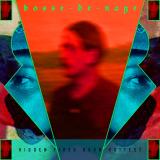
There's a tendency in metal to mistake aggression for honesty, volume for depth. To confuse the performance of darkness with its actual weight. Hidden Fires Burn Hottest, the new album from San Francisco-based post-black metal band Bosse-de-Nage, sidesteps this entirely. It’s the group’s most fully realized work yet, precisely because it refuses to be pinned down.
Bosse-de-Nage have been working with The Flenser for over fifteen years. They were one of the first bands the label ever partnered with and have the longest active relationship in the label's history. But unlike most bands who build momentum through constant touring and visibility, Bosse-de-Nage has largely existed apart from the music world's usual machinery. They've evolved on their own terms, in relative isolation, allowing the work to develop without outside pressure or influence. What began rooted in black metal anonymity has mutated into something that actively defies categorization. The aggression is still there, but it's no longer the point. Hidden Fires Burn Hottest finds the band treating emotions like physical objects, feelings with spatial properties. “No Such Place"" describes a space that can't exist but does anyway, somewhere between thought and location. ""Immortality Project"" examines infinite possibility not as promise but as problem, endless options collapsing under their own weight. These songs don't use metaphor to describe emotion. They make emotion into something you could theoretically touch.
Tracked by Jack Shirley (Deafheaven, Oathbreaker) at Atomic Garden East and mixed and mastered by Richard Chowenhill of Agriculture, Hidden Fires Burn Hottest was years in development, with some tracks beginning in 2018.
The long writing process offered time that most records don't get. Time to live with ideas, revise endlessly, to let structures settle. For the first time, lyricist Bryan Manning wrote everything in advance, creating a surplus to pull from rather than working under deadline pressure. The difference shows.
Coming off Further Still, an album built on constraint and economy, Bosse-de-Nage sought the opposite: sprawl, strangeness, fewer rules. Space for ideas to develop without rushing them. Dynamics that move through quiet as much as noise. Presence earned through atmosphere instead of volume. The record even includes ""Mementos,"" which might be considered the first love song the band has ever written.
Nothing here coheres into a theme. These are pieces pulled from low moments and private feelings made public through sound. The band has never been interested in positivity, in music that resolves cleanly or offers comfort. But bleakness doesn't mean humorlessness. There's something darkly funny running through much of it, even when it shouldn't be.
Hidden Fires Burn Hottest doesn't explain itself. It just insists: what you feel is as real as what you can see."
- 1: Gypsy Woman
- 2: Little Anna Mae
- 3: I Can't Be Satisfied
- 4: I Feel Like Going Home
- 5: Train Fare Home
- 6: Sittin' Here And Drinkin
- 7: You're Gonna Miss Me (When I'm Dead And Gone)
- 8: Mean Red Spider
- 9: Streamline Woman
- 10: Muddy Jumps One
- 11: Little Geneva
- 12: Canary Bird
- 13: Screamin' And Cryin
- 14: Where's My Woman Been
- 15: Rollin' And Tumblin' Part 1
- 16: Rollin' And Tumblin' Part 2
The Definitive Origins of the Chicago Electric Blues. Witness the birth of a legend. This essential collection captures Muddy Waters at the most pivotal moment of his career: the transition from a Mississippi Delta traveler to the "King of Chicago Blues." Muddy Waters was an ambitious young man who saw little future in Mississippi. In 1943, he headed for the bright lights, big city of Chicago, where he soon connected with blues giant Big Bill Broonzy, who began featuring Muddy as an opening act at his club dates. Within a year, Muddy had switched to electric guitar and formed his first blues combo, quickly becoming an established figure on Chicago's club scene. In 1947, Muddy came to the attention of the fledgling Aristocrat Records, just as Leonard Chess-then running a nightclub called the Macomba Lounge-invested in the company. Working frequently with pianist Sunnyland Slim, Muddy recorded a split session with him for Aristocrat in December 1947. This collection begins there: eight Aristocrat 78 rpm releases (sixteen sides), recorded between 1948 and 1950 and presented here in chronological order of release. Just three years later, Leonard and his brother Phil Chess would buy out Aristocrat's remaining partners and rename the label Chess Records-ushering in a new era of Chicago blues that would reverberate around the world. Includes extensive liner notes by Muddy Waters expert Fred Rothwell.
- Profondo Rosso
- Death Dies
- Roller
- Chi? - Parte Uno
- Chi? - Parte Due
- Suspiria
- Blind Concert
- Un Ragazzo D’argento
- Opera Magnifica
- Yell
- Amo Non Amo
- Funky Top
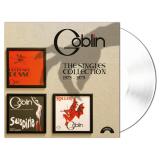
FOLLOWING THE SUCCESS OF “THE OTHER HELL”, GOBLIN ARE BACK FOR RECORD STORE DAY 2026 WITH AN EXCLUSIVE COMPILATION OF SINGLES RELEASED BETWEEN 1975 AND 1979!
For the very first time on vinyl, this compilation gathers together all the singles released by Goblin during their golden era between 1975 and 1979, a journey that begins with the explosive, legendary debut Profondo Rosso, a true chart phenomenon of its time, and reaches the rare Amo Non Amo, passing through unforgettable milestones of Italian film music and progressive rock.
The collection opens with Profondo Rosso and Death Dies, taken from the soundtrack of Dario Argento’s masterpiece that catapulted Goblin to fame, blending dark atmospheres, virtuosity, and a unique sense of cinematic tension. It continues with Roller and Snip Snap, drawn from the instrumental album Roller (1976), a record not tied to any film, yet considered a cult cornerstone of Italian progressive music for its intricate structures and expressive power.
Chi? and Chi? - Parte Seconda follow; two tracks originally composed as the theme for a 1976 RAI television show, which saw Goblin bring their unmistakable sound to a different medium, experimenting within a shorter, punchier format.
Next comes Suspiria with its haunting counterpart Blind Concert, from the soundtrack of Argento’s 1977 horror classic. This remains one of Goblin’s most iconic and unsettling works, where music becomes an active narrative force: hypnotic, percussive, and filled with eerie vocal layers that made it a cornerstone of horror soundtracks worldwide.
From Il Fantastico Viaggio del Bagarozzo Mark (1978) come Un Ragazzo d’Argento and Opera Magnifica, two tracks that highlight the band’s more conceptual and visionary side, a move away from cinema toward a self-contained narrative and progressive experimentation.
The single Yell stands as another late-decade gem. Originally composed as the opening theme for the RAI television series “Sette storie per non dormire” (1978), it captures Goblin’s ability to merge rock energy with electronic pulse, proving their versatility far beyond the horror realm.
The compilation closes with Amo Non Amo and Funky Top, taken from the soundtrack of the 1979 film Amo Non Amo, one of the group’s lesser-known but fascinating cinematic works.
Far more than a simple anthology, The Singles Collection 1975–1979 maps the evolution of Goblin’s sound, from the worldwide success of Profondo Rosso to their most mature and experimental phase. It finally restores to vinyl a body of work that had long been scattered across rare 45 rpm releases, offering fans and collectors a complete, vivid portrait of one of Italy’s most inventive and influential musical ensembles.
It’s True What They Say is the debut EP from Edinburgh-based, husband-and-wife duo Sarah/Shaun (pronounced simply Sarah Shaun), aka Sarah and Shaun McLachlan (pronounced “McLochlin”).
“Sarah and I both have a love for nostalgia,” explains Shaun. “We watched that amazing old 80’s Sci-Fi, (John) Carpenter movie, Starman, a few months back. Myself and my brother David used to watch it all the time. We must have been, roughly, 5-7 at the time. I remember loving the movie but the end, you know, with the beautiful, atmospheric, synth ending, I love that particular moment the most - best part of the movie, you know, when he goes home… It’s heartbreaking but stunning, all the same. It’s the music that moves you most… It did when I was 5 and it still does to this day. It must have had some form of a (much deeper) impact on me.”
The duo narrates stories across themes of love, hope, family, friends, dreams and sadness - the good that comes with the bad in everyday life, not just on a personal scale but within a community as well.
“Starbed is the first song I have ever written and just came out of the blue really, with Shaun playing a melody and me singing along,” says Sarah. “It’s simple and just about two people in love. Love songs are always the best songs, after all… Music has been a big part of my life from a young age. I was unwillingly dragged to piano and violin lessons, which I’m thankful for now! I’d say the first band I really became obsessed with growing up were the Beatles, and on the back of that a lot of 60s music and fashion. From then on, I had a love for music.”
“Shaun definitely opened my ears to a lot of sounds and got me thinking about soundtracks and all the noises that can be made,” she goes on. “We love just spending time experimenting in the house with instruments, pedals etc and Ali is a real magician to work with, too…”
The recordings took place over the summers of 2022 and 2023, with fellow Delta Mainline member Ali Chisholm (aka Jaguar Eyes) plus long-term friend and collaborator Gavin King. Further collaboration then came via the ‘net from the (international) likes of Chris Dixie Darley (Father John Misty), Darren Coghill (Neon Waltz) and Daniel Land (The Modern Painters), among others (see a full list of credits below).
Both Sarah and Shaun have a love for uber-soundtrack producers such as Hanz Zimmer, Max Richter, Cliff Martinez plus live acts such as Beach House, Spiritualized, M83, Suicide, Moby and OMD (to name a few). Shaun also credits the work of Kyle Dixon & Michael Stein (from Survive) on the Stranger Things score… “Even a moment in a movie, whether it be just 30 seconds during a particular scene, it grips you,” he says. But there’s something much deeper at play as well. “Music is a healer,” he goes on, “and I write from my own perspective but more so for others. Once I've done my bit, it doesn't belong to me any longer. It belongs to whoever wants it or needs it.”
The result is a cinematic, synth-wavey, dream poppy and downright beguilingly beautiful body of work. And they’re just getting started…
REVIEWS/RADIO/FEEDBACK:
“Starbed is folky, flavoured by pedal steel, cello, and brass. Dust Tears, in stark contrast, is a mini synth-pop rave epic. Part Bicep. Part Human League. Keep Your Eyes Closed summons a mood that’s romantic, but also dark and potentially doomed – like David Lynch’s Twin Peaks meets Cliff Martinez’s Drive score. My pick though is It’s True What They Say, whose interwoven jangle and picking recalls New Order’s more introspective moments (Love Vigilantes, Love Less… ). Drums crashing, cathartic. Guitar raising dramatic arcs. Its chorus a rush, like a reprise of Pains Of Being Pure Of Heart’s ‘Higher Than The Stars’.” BAN BAN TON TON
"Dust Tears sees them sharing vocal duties over a synth foundation reminiscent of Moby’s Go - Artist Of The Week” THE SCOTSMAN
"Woozy pop" NEMONE (Mary Anne Hobbs Morning Show, BBC 6Music)
"Nice one, very David Lynch meets Euro dream pop" YOUTH (Killing Joke, Paul McCartney, U2, The Orb, Spiritualized etc)
"Music sounds killer! Real emotion” DAVID HOLMES
"I’m enjoying it” TIM BRINKHURST aka LONDON (IKLAN, Young Fathers, Callum Easter)
“Oh, this is lovely!” SEAN JOHNSTON (A Love From Outer Space)
"It’s totally my cup of tea with milk and biscuit" BRENT RADEMAKER (Beachwood Sparks/GospelBeach)
"Beautiful, ecstatic electronica! Short and to the point" KEVIN BALES (Spiritualized, Julian Cope, Soulsavers, BE)
"Makes me wanna sit in the sun and sip an Arnold Palmer" CHRIS DIXIE DARLEY (Father John Misty)
“Really beautiful - Cocteau Twins / Spiritualized vibes but has its own thing going on, too - worth checking out!” JULIAN CORRIE (Franz Ferdinand, Miaoux Miaoux)
‘Sounded nice on a sunny day, makes me think of Twin Peaks, nice moods’ EAMON HAMILTON (Sea Power)
"Dealing in nostalgia, no bad thing at all, great to play that (Dust Tears) for you” RODDY HART (BBC Radio Scotland)
“I'll give the vocal tracks a spin before the release." VIC GALLOWAY (BBC Radio Scotland)
"Rather good!" IAIN ANDERSON (BBC Radio Scotland)
CREDITS:
Lyrics, Guitars, Keys, Synths, Drums, Drum Programming, Percussion, Mandolin, Glockenspiel: Shaun McLachlan
Lyrics, Vocals, Keys by Sarah McLachlan
Guitars, Synths, String Arrangements, Drum Programming, Engineering: Jaguar Eyes Percussion/Drums/Effects, Fire Extinguisher: Darren Coghill (Neon Waltz)
Guitars by Daniel Land
Slide Guitar by Chris Dixie Darley (Father John Misty)
Brass by Bruce Michie
Keys, pre-production & engineering on “It’s true what they say”: Gavin King
All produced by Jaguar Eyes and Shaun McLachlan and then mixed at Glasgow’s Chem19 Studios by David McCaulay (From Scotland With Love, Rick Redbeard, BBC TV’s Attenborough and The Mammoth Graveyard score).
Artwork: Jamie Walman (Fourteen Admirals)
MORE INFO:
Although Shaun released a pair of solo singles (When We Dance and Give Your Love To Me) during Lockdown, he will be better known to many via his work as the multi-instrumentalist in Edinburgh band Delta Mainline. With two albums released to date, Oh! Enlightened and Bel Avenir, both rapturously received by fans and critics alike, Delta Mainline have developed an international, cult following. Oh Enlightened (2013) achieved widespread critical acclaim on release, earning the band comparisons to Arcade Fire and Echo & The Bunnymen, while 2019’s Bel Avenir pulled in references to The Flaming Lips, Pink Floyd, David Bowie and krautrock. A third DM album is currently being mixed and due for release later this year…