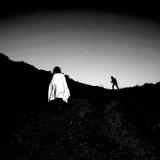
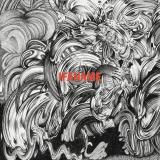
Seattle's own Manatee Commune (aka Grant Eadie) makes his long-awaited return to
Bastard Jazz with his fourth album, 'Simultaneity'. Lush and vibrant production is
familiar to his previous works, though Eadie has significantly matured in the activation of
space and character. A step away from standard songwriting, and a total disassociation
from lyrics at all, has made this record closer to the ambient genre than anything
Manatee Commune has released, all the while keeping one solid foot in the realm of
dance music.
'Simultaneity', as a whole, is an exploration of the collision between texture and time.
Captured recordings reminiscent of wind in wheatgrass, soft rain showers in the open
plains, and cascading beach sand wash over the mix, splashing into warm drones and
ascending melodies that cleanly syncopate against a steady rhythm. Though decidedly
electronic at times, a raw human element is ever-present in the form of a vocal motif:
just tiny moments of a loving voice lost in a sea of reverberation.
The album is a noticeably positive evolution from previous works. All nine tracks depict
a calmness and subtlety in musicianship, relying primarily on tenuous snippets of live
instrumentation and synthesis that hypnotically coil and coalesce with one another.
'Love Tone', the opening track, features Eadie's partner, a small voice memo clipped
and expanded into an ethereal vocal melody. A crisp felt piano delivers a complex
arpeggiation in 'Mosaic', a warm sonic bath scape reminiscent of Olafur Arnalds or
Kiasmos. Simple, undemanding bass lines drive tracks 'Path' and 'Faulted', though their
simplicity is contrasted with a variety of patterns that combine to create unique auditory
shapes, both building and landing in satisfying climactic movement. The album
culminates in the final track, 'Touch Theme', where a block of sound in the form of a
broad, open synthetic chord warms the ears, eventually twisting and shifting to rhythmic
chunks that shove against a familiar house rhythm.
Search:activa v a
– Meow, Doc! Are you serious?!
– Hopefully, now we'll be able to program the cognitive processes of different creatures.
– The intranasal mutagen?
– With consciousness, too!
Spacelunch devoted all of his spare time to developing the virus. Once in the body, its molecules activate: they replace the configuration of neurotransmitters and start evolving independently. A small dosage of vapours reactivates brain navigation, whereas readings are taken from a nano-oscilloscope and sent to a tablet for further analysis. Augmented reality has long gone beyond virtuality, ladies and gentlemen!
The simulation of the collective mind has undergone a series of public tests initiated by enthusiasts from the Venus Biomolecular Institute. After a data leak from the lab's journal, the dangerous technology could have fallen into the hands of Aerospace Corporation, but luckily was intercepted by the Meta-Warp operational unit. Putting the development on pause, they shut down access to any information about the project. It remained unexplored, but the Professor's inquisitive mind wanted to understand the discovery that could change the future.
Growing up in the 90s in rural upper Austria, Jakobin spent his time with skateboarding and listening to lots of hip hop before witnessing the halcyon days of the Vienna downbeat era and later being introduced to Austrias club culture. Pursuing his growing passion for collecting vinyl, he started spinning his first records in the region and later moved to the Austrian capitol.
There he quickly connected with likeminded people. Quickly getting immersed in the Viennese electronic music scene, he started producing and DJing with his longtime friend Domino under the moniker Jakobin & Domino and became founding members of Luv Shack Records in 2011. After a number of successful releases he started his solo career and began working on his live setup. His growing collection of analog gear helped shaping his productions. An overview of his current sound is expressed on his new record ‚Forever More‘. Heavily influenced on 90s UK house productions this 3-track EP will activate your senses and move your body with its groovy basslines and drums, creating an irresistible rhythm.
Mike Agent X Clark returns to Third Ear with four new tracks. His first release for the label in six years, after the River People Edits. The quality and variety which is typical of many Detroit releases is very evident here. Is it house? Is it techno? Is it disco? These genre-defining labels don't really come into the minds of many Detroit producers when making tracks, the music they create often seamlessly blends many genres. What is recognisably Detroit is the weight and the swing of these releases; they do not mess around, and Mike Clark is a master of this.
“This device isn’t a spaceship, it’s a time machine. It goes backwards, and forwards… it takes us to a place where we ache to go again. It’s not called the wheel, it’s called the carousel. It lets us travel the way a child travels - around and around, and back home again, to a place where we know we are loved.”
(Don Draper)
Call Back Carousel is an audio time-travelogue, a slideshow of the mind’s eye - projecting Kodachrome memories directly into the listener’s mind by means of sound alone. It is a way of travelling without ever having to leave the home. A vicarious vacation for the imagination. Pure audio escapism.
Each episode is based on a found tape of a pre-recorded slideshow commentary. Most of these tapes were made by amateur tape recording enthusiasts and hobbyist photographers of the 60s and 70s. Their recorded commentaries would at one time have been used in conjunction with a sequence of 35mm slides but only the taped voices now remain. The recordings themselves come from Vernon's own archive of found reel-to-reel tapes that he has collected over the past twenty years.
Using these found slideshow commentaries as a framework, a series of musical soundscapes have been created to bring the absent images to life, activating the listeners’ imagination in the classic tradition of ‘cinema for the ears’. It’s a little like looking through a family photo album where only the hand written captions and mounting corners remain; the photographs themselves have all been removed. The evocative rattle and clack of the projector shuffles through different slides as the fragile voices of our tour guides accompany us on a sonic journey that fractures time - and through the cracks, the past bleeds through into our present.
A selection of unheard tracks by argentine cult proto-industrial band Quum, recorded between the years 2012/2014. Xtraqt Vol. 1 is the second release of Tecnologías Elementales, a record label founded by Djs Diamin and F.A.N.G.O.
Formed in 1978, Quum is an argentine group (currently consisting of brothers and founders members Gustavo and Daniel Gatti) that offers hypnotic and rhythmical improvisations in the language of experimental electronics, with a great participation of randomness, risk and uncertainty. Their music is inspired by science fiction, Zen Buddhism, chaos theory, ecology, the UFO phenomenon and the wabi-sabi concept.
Quum subscribes to the driving attitude of the Madí Movement ("invent and create"), coinciding in a conceptual vector that unites their teachers Jorge L. Borges, Gyula Kosice and Xul Solar.
Quum is a quiché-maya word extracted from the Popol Vuh that means "the secret", "that which is hidden behind the apparent", or "the mystery". The symbol that identifies them is a replica of the huge spider drawn mysteriously on the Nazca-Peru plateau.
Quum is, in addition to music, a living gesture of alternatives to conventional paradigms and pre-established archetypal behaviors.
Some kind of dirty ambient, cybernetik trance and organic industrial music.
Contact our cult!
a A1 Traslación Activada Intro
The Chemical Brothers - one of the most successful bands in the history of electronic music - return with a new single.
‘No Reason’ has been played in their live shows and DJ sets for this past year to an immense crowd response.
It is the first new music from a forthcoming new album project in 2023, a year which also marks 30 years of The Chemical Brothers’ outstanding career.
To mark this anniversary, 2023 will see multiple activations including a brand new album, a book, a tour and lots more in planning and development. More info to be shared in due course.
MOOD CHILD is the new artistic platform of DJ/Producers, SIRUS HOOD & MANDA MOOR.
Evolving from a collective idea during our difficult pandemic period, MOOD CHILD is, at its centre, about community, collaboration, friends and family. Working together, feeding each others creativity and forging fresh and exciting new sounds and projects.
MOOD CHILD is an invitation to a journey that blends different feelings, emotions and desires. To activate your inner child. Reinvigorate the wild, primitive and unfiltered state of being and create an almost divine sense of unity. All through the power of music and art.
Their collective sensibility is nurtured upon the dancefloor and last summer they were blessed to have presented a first MOOD CHILD experience in collaboration with Hï and Café Mambo in Ibiza. The mood then took them to Bagatelle in Zürich and Lovefest in Serbia and they now prepare to launch their 2023 campaign alongside the elrow family for a sold out event in Andorra 1st of April.
However, what is a party without its soundtrack? Their first release, as its title suggests, brilliantly displays the labels primal perception… ‘Homo Sapiens’ is the mood child of Sirus Hood and Malikk. Four carnal creations, all guaranteed to ignite a rabid dancefloor response.
‘Booty Side’ uses its compass to expertly navigate its way through bubbling acid and rolling snares as we go in search of Jack, while the title track will have us going ape to its chest-beating bump and knuckle-dragging groove.
Silverback beats swing low on the flip too as ‘King MTF Kong’ bites hard with its heavy Chicago hustle and detuned synth, while the feral Juke-infused finale, ‘Gorilla Walk’, is a break-neck bass-driven and bruising encounter that is more Jersey club than Empire State building.
The ‘Home Sapiens’ EP is released on the 14th April and will be available on vinyl and digital formats, alongside a series of exclusive NFTs.
MOOD CHILD’s official online store will launch soon and feature not only the music and digital art projects, but also an official clothing brand, sample packs and exclusive content from their artists.
It’s time to connect with your MOOD CHILD.
Paul Hammock es el artista por todos conocido como Cignol, sin lugar a dudas uno de los genuinos revolucionarios dentro del sonido electro de la última década y media. Sus trabajos llevan surcando nuestros Technics desde 2008 a través de los sellos de vanguardia electrónica del nuevo milenio.
En su decimocuarta referencia en vinilo, el sello Valenciano HC Records, tras una imparable y ecléctica línea editorial, publica el nuevo trabajo del genio de Dublín titulado Binary Choices. Un maxi en el que nos domina un profundo sentimiento de melancolía cósmica a través de cuatro cortes que nos sumergen en una odisea espacial.
Adentrarse en cada corte del vinilo es como viajar hasta diferentes cuerpos celestes y dejarse sorprender por su atmósfera ensoñadora, y es que solo es necesario que transcurran 58 segundos de Binary Choices, primer corte de la cara A, para sentirnos arropados por un sentimiento de suma nostalgia, alegría y futurismo. Una inteligente combinación de pads, sintes y brillantes percusiones que nos adentran en un astro inexplorado repleto de extrañas vegetaciones, increíbles seres multicolores y horizontes infinitos que activan nuestra sinestesia.
Un emocionante, decidido y contundente ritmo 4x4 a baja velocidad nos traspasa el alma al surcar la superficie de Broken Circle. Un recuerdo olvidado en forma de aterciopelado sonido se crea frente a nuestros ojos en la consecución del compendio de melodías intimistas que componen sus 4:14 minutos, en los que encuentra sosiego nuestra mente y bálsamo nuestro alma.
La cara B del vinilo regresa al cristalino, eléctrico y veloz ritmo roto con Momentum Gateway, track en el que sus dominantes y ácidas cadenas de bajos se enrollan y juegan en sincronía perfecta con sus diferentes capas de teclados y su vibrante e iridiscente pad.
En el último planeta al que nos transporta Cignol, suena en cada uno de sus parajes Validity Movement, track con el que nos dejamos guiar por su grueso y áspero bajo principal, que contrasta con los delicados sintes y atmósferas que lo rodean. Una experiencia sónica tan delicada, íntima y eficiente que podría servir tanto como banda sonora en la creación de un nuevo universo como en la contemplación de su ocaso final.
Finalmente, por un lado, el trabajo de master del lanzamiento ha sido llevado a cabo por Steve Voidloss en Black Monolith Studios en Londres y, por otro, Dani Requeni completa esta obra con la dirección del arte gráfico de la misma.
Pocketmoth offers the second volume of its home-grown 'POCKET' v/a series, showcasing the diverse sounds of Brisbane/Meanjin. Featuring four-club ready numbers from a talented crop of local characters, the release explores slick future garage, hypnotic electro and stomping breakbeat.
POCKET 2: a mainstay in the record bag.
Part 2[14,08 €]
A rare treat for Drumcode faithful: A-Sides Vol.10 is set to drop in December, the second edition of the beloved series to come in 2020.
Fuelled by the extra time and space to be creative during lockdown, Drumcode’s collective of artists have stepped up. Across 17 contributions, the producers have gone deeper into their sonic repertoire, crafting powerful, yet reflective works that capture the range of the label’s sound.
Jay Lumen leads the way with a rousing riff-driven weapon, ‘Galactic Rainbow’, while Ramon Tapia brings us the muscular gem ‘Drum Control’, mixing up ruffneck techno with a barrage of synapse-tickling synths in the second half. Both rousing highlights of the compilation.
Victor Ruiz, Drumcode’s most prolific contributor in 2020, dishes up ‘Love Story’, led by a huge vocal lead. Zimmz also returns with ‘Tension’, which deftly combines deep squelchy grooves with a silky synth interlude. Thomas Hoffknecht follows up his debut on Vol.9 with ‘Escape’, keeping listeners on their toes with dynamic, choppy shifts throughout. Veerus joins with another stirring addition ‘I Know’, reinforcing why Beyer rates him so highly.
Elsewhere a string of debutants feature: buzzy newcomer Lilly Palmer gives us ‘Amnesie’, a brilliantly pummelling and eerie cut; Alex Lentini & Stomp Boxx serve up ‘Expanders’ mixing up drone effects, trippy vocals and an unsettling melody line; and Patrik Berg’s ‘Activated’ is full-bodied techno that drops down into funky rhythms.
Long-time DC family member Bart Skils brings his A-game with the thrilling no-nonsense ‘Solid State’ that hits like a steam train. Likewise, Alan Fitzpatrick who brings a momentous slab of techno energy with ‘Rochus’, while Thomas Schumacher, now feeling like a regular on the imprint, crafts another dark techno opus, this time in collaboration with CAITLIN.
There’s even a special appearance by the chief Adam Beyer, who makes a welcome return with the progressive-tinged ‘Changes’, driven by organic tones and spacey atmospherics. The track stands as his first original contribution to A-Sides since 2017.
A rare treat for Drumcode faithful: A-Sides Vol.10 is set to drop in December, the second edition of the beloved series to come in 2020.
Fuelled by the extra time and space to be creative during lockdown, Drumcode’s collective of artists have stepped up. Across 17 contributions, the producers have gone deeper into their sonic repertoire, crafting powerful, yet reflective works that capture the range of the label’s sound.
Jay Lumen leads the way with a rousing riff-driven weapon, ‘Galactic Rainbow’, while Ramon Tapia brings us the muscular gem ‘Drum Control’, mixing up ruffneck techno with a barrage of synapse-tickling synths in the second half. Both rousing highlights of the compilation.
Victor Ruiz, Drumcode’s most prolific contributor in 2020, dishes up ‘Love Story’, led by a huge vocal lead. Zimmz also returns with ‘Tension’, which deftly combines deep squelchy grooves with a silky synth interlude. Thomas Hoffknecht follows up his debut on Vol.9 with ‘Escape’, keeping listeners on their toes with dynamic, choppy shifts throughout. Veerus joins with another stirring addition ‘I Know’, reinforcing why Beyer rates him so highly.
Elsewhere a string of debutants feature: buzzy newcomer Lilly Palmer gives us ‘Amnesie’, a brilliantly pummelling and eerie cut; Alex Lentini & Stomp Boxx serve up ‘Expanders’ mixing up drone effects, trippy vocals and an unsettling melody line; and Patrik Berg’s ‘Activated’ is full-bodied techno that drops down into funky rhythms.
Long-time DC family member Bart Skils brings his A-game with the thrilling no-nonsense ‘Solid State’ that hits like a steam train. Likewise, Alan Fitzpatrick who brings a momentous slab of techno energy with ‘Rochus’, while Thomas Schumacher, now feeling like a regular on the imprint, crafts another dark techno opus, this time in collaboration with CAITLIN.
There’s even a special appearance by the chief Adam Beyer, who makes a welcome return with the progressive-tinged ‘Changes’, driven by organic tones and spacey atmospherics. The track stands as his first original contribution to A-Sides since 2017.
- A1: Hìeratico
- A2: Litho Non-Danse
- A3: Blue Hymne (Feat Limpe Fuchs)
- A4: Cuerda De Piedra
- A5: Aranha
- A6: Tombal (Feat Pierre Bastien, Massimo Silverio &Amp; Marco Baldini)
- B1: Boku Ga (Feat Adele Altro)
- B2: Meridiana (Feat Giuseppe Ielasi)
- B3: Lode (Feat Natalia Rogantini &Amp; Jonas Torstensen)
- B4: Sospire (Feat Roberto Musci)
- B5: Muracetra (Feat Vipera &Amp; Dròlo Ensemble)
- B6: Vessel (Digital Bonus Track)
Like its cover, Nicolas Remondino's Hìeratico plays in the rich shades of crepuscular spaces. A night-tuned, percussion led album where prepared drums are accompanied by flickers of spoken word, acoustic instruments and muted electronics,
The title translates to 'hieratic', for Remondino a "black and gold" term laden with dualities and complex connotations. A sense of teetering between sparkling light and richly coloured darkness imbues the music, the compositions simulating a sense of heightened acuity as they convey us through a spooky elemental soundworld. The opening title track begins with a metallic shimmer, a drum skin activated in a way that sounds like it's being smelted. A cushioned rhythm enters, a smothered timbre akin to hearing something lurking around the garden. On "litho non-danse", percussion cracks like branches and dried foliage under foot.
Remondino recorded initial outlines for the pieces at Giuseppe Ielasi's studio in Milan, before fleshing out these ideas with his own additional instrumentation and contributions from a globe-spanning network of collaborators. On "blue hymne", chiming percussion equal parts jubilant and sinister heralds spoken word from Limpe Fuchs. "Tombal" opens with Massimo Silverio whispering in the Carnic dialect, a minority language from the Carnic Alps. Around, Marco Baldini, Pierre Bastien and Remondino construct a somber soundscape that cranks and sighs in the crevices.
Hìeratico is an album of hybrids. Diverse voices, accents and dialects deliver its lyrics, the instrumentation underpinning it crosses idioms. The drumkit at its core is modified to amplify its resonant tones and harmonics. Inspired by natural substances and phenomena: stone, wood, wind, earth, metal, grass, rain, clouds and bark, Remondino explores how percussion could evoke their materiality, treating drums as lucid textural instruments as much as rhythmic timekeepers. It gives the album a finely shaded depth and clarity as it conjures the vibrancies that reside in darkened corners. Hìeratico dwells in a sensation that crosses borders, the speckles of light in the oblique night sky. Listening is an aural equivalent to stepping into a pitch black forest and waiting for your eyes to adjust, a lightless void turning into a spectacular tableau of shadows and glows. Daryl Worthington
Meticulously assembled from a good 15 years' worth of source material, Cong Burn boss John Howes' second Paperclip Minimiser transmission proliferates its predecessor's network of turn-of-the-millennium aesthetics and concepts, bringing us closer to the lost future promised by the mid-digital age. If the debut album rooted itself in 2006, using an era-specific rig to activate its vintage Winamp-ready sound, 'II' pushes the clock forward just a little, recycling an unreleased album that Howes engineered in various locations across the north of England, starting way back in 2011. Working quickly and methodically with his homebrewed "DIY DAW" system, Howes improvised live using the record's bank of sounds, transforming the skittering bio-electronic rhythms, bitcrushed modem whines and inclement Lancs soundscapes into a suite of sleek, bass heavy steppers.
Howes has refined his setup and process over the years to function as an antithesis of contemporary production logic, a system that he can use easily to retreat from the excessive layering, overdubbing and editing that plagues modern electronic music. With only limited separate channels in each track, 'II' sounds both archaic and strangely novel. Showing respect to the early days of techno, when stone-cold classics were jammed out live using just a drum machine, a sampler and a couple of synths, Howes simultaneously acknowledges the promise of the transition to a digital future, as nascent algorithmic technology began to rehydrate stale rhythmic and melodic patterns. Fabricating its wrinkled cyberpunk landscape from shovelware blips and whines, spacious environmental echoes and lustrous, plasticky FM hits, 'II' is dense but never congested. It's a reminder that bass music thrives when it's given the room it needs to breathe.
Mats Gustafsson met Jan St. Werner in Berlin when they both performed with Peter Brötzmann and a group of prolific improvisers. Mats and Jan share a passion for performing not just inside rooms but also with them, activating space and shaping sound via divertion. Mats introduces Johan Berthling who adds complex bass structures to the nervous jitter of Mats’ saxophone & pedals and Werner's digital machinery.
The trio instantly agrees on sound as a physical material which can bend and move anywhere within seconds. With this material they establish musical forms which they immediately dissect and reassemble again. It’s a nervous ride, a hyperactive conversation keen on detail and open to argument. Although IFANAME’s sound is instantly graspable it is also hard to pin down. Nothing seems stable yet it lasts, holds like some kind of catchy glue and disssapears as quickly as it came to life. IFANAME is question and concern. It is music as much as it is movement. It is attention, care, curiosity and disaster. Wherever IFANAME came from there is much more waiting ready to burst and reshape in front and inside of our ears.
- A1: Give It To Me Baby
- A2: Ghetto Life
- B1: Make Love To Me
- B2: Mr. Policeman
- C1: Super Freak
- C2: Fire And Desire
- D1: Call Me Up
- D2: Below The Funk (Pass The J)
Rick James Blends Brazen Attitude, Fearless Sexuality, and Shrewd Charisma on Street Songs:
Punk-Funk Album Aims for the Hips and Head, Includes the Timeless Hit “Super Freak”
Sourced from the Original Master Tapes and Strictly Limited to 4,000 Numbered Copies:
Mobile Fidelity’s 180g 45RPM 2LP Set Presents 1981 Smash in Audiophile Sound for the First Time
1/4” / 30 IPS analogue master to DSD 256 to analogue console to lathe
“Punk funk” was a relatively unknown concept before 1981. But once Street Songs took the charts by storm that year, the world soon knew about what became Rick James’ signature style. And how. True to its name, Street Songs blends outspoken sexuality, brazen attitude, and edgy commentary amid contagious R&B-fueled arrangements that simultaneously aim for the hips, head, and various nether regions. And it’s never sounded better.
Sourced from the original master tapes, strictly limited to 4,000 numbered copies, pressed at Fidelity Record Pressing, and housed in a Stoughton gatefold jacket, Mobile Fidelity’s 180g 45RPM 2LP set presents James’ platinum-certified effort in audiophile quality for the first time. Playing with crisp dynamics, lively textures, airy headroom, and revealing clarity, this collectible edition of the record that stayed at the No. 1 spot on the R&B Album Charts for 20 weeks invites you to get closer to music that beckons you to turn your space into a private dance floor.
Then again, you’ll likely be so taken by how the taut bass lines, snappy rhythms, and four-on-the-floor beats — all rendered in stunning detail and with full-bodied architecture — come across with such accuracy and presence, you might stay pinned to your seat. On this pressing, the soundstaging, imaging, and lit-fuse energy of Street Songs reach new heights. Everything from the rubbery feel of the guitar lines to the depth of James’ temperature-raising vocals to the scale of the horn charts emerges as if James and his ace session crew set up in your room.
The Buffalo native and his ensemble waste no time getting their message across. On the album-opening “Give It to Me Baby,” James and company lay down a mix of sleek funk and pulsing disco that practically activates the bright lights of a discotheque and stimulates the libido of anyone within earshot. Having reached No. 1 on the Billboard Hot Soul charts, the song is pure sex — and just one of the carnal delights on a record that embraces the subject as fearlessly as James does his identity.
Of course, the most famous of James’ erotic excursions — the timeless “Super Freak” — hit No. 1 on Hot Dance Club Play charts, No. 16 on the Hot 100, and, later, No. 153 on Rolling Stone’s list of the Top 500 Songs of All Time. Bolstered by a quavering keyboard theme and electro riffs, the much-sampled track worms itself inside your muscles with smile-inducing subject matter, gliding vocals, nimble movements, a hot tenor-saxophone solo, and backing vocals by the Temptations.
The iconic Motown group isn’t the only celebrated guest artist on the Grammy-nominated Street Songs. James’ then-labelmate, Stevie Wonder, lends harmonica to the frank sociopolitical narrative on “Mr. Policeman,” a protest tune that also manages to stroll ’n’ strut via simmering organ, staggering brass accents, and James’ gritty vocal performance. In addition to contributing backing vocals on several cuts, Teena Marie turns in one of the album’s signature moments on “Fire and Desire,” a romantic old-school duet with James that impresses with smoothness, sensitivity, and smokiness.
High-profile colleagues aside, James remains the undisputed star, a figure whose leather-and-latex attire, braided hair, and natural swagger made him misunderstood by some in the mainstream and embraced by everyone in the know as a true original. As a testament to his magnetism and skills, his charisma and rawness seemingly seep through every note, whether on the balladic sweep of the risqué “Make Love to Me” or strident, poke-and-prod persuasion of the moonwalking “Call Me Up.”
On the closing “Below the Funk (Pass the J),” an uptempo autobiographical tale that addresses the visionary musician’s second-favorite love, the singer acknowledges his upbringing and inseparable connection with his roots — an homage to where he began and a toast to where he’s gone.
Rick James, keepin’ it real on Street Songs, still as real as it gets.
*Cover Picture: Pauline Oliveros
Practitioner, educator, DJ, and researcher, Femke Dekker (also known as Loma Doom) has long been immersed in both sound and education. Across lecture halls, archives, festivals, art galleries, independent radio stations, and dance floors, she orbits a central question: What if listening itself were an artistic practice? What might unfold when listening becomes method, medium, and material?
Open Field Listening takes shape around these ideas. Presented as a collaboration between Page Not Found—an artist-run platform dedicated to publishing and experimental practices—and the record label Osàre! Editions, the text originates from Dekker’s graduation thesis for the Master Education in Arts at the Piet Zwart Institute, Rotterdam.
There, she honed her skills as a pedagogue, inviting students into improvisational jam sessions, radio-making, and exercises that activate new modes of attention and a heightened sense of sonic curiosity.
Drawing on the work of scholars and artists—most notably Pauline Oliveros—Dekker approaches listening as a call to action: a way of tuning into one’s surroundings, one’s body, and the urgencies that contour our political and social worlds. She emphasizes the radical potential of reorienting knowledge toward collective attunement: the we rather than the I (or the eye). Inspired by Oliveros’s concept of Deep Listening—a way of expanding awareness through focused, embodied perception—Dekker acknowledges the composer as a foundational feminist figure whose insights continue to reverberate through the classroom, the studio, and beyond.
~~~
Page Not Found kindly thanks Mondriaan Fonds and the Municipality of The Hague for their generous support. Page Not Found is a centre for artistic and independent publishing, approaching these practices as vital, collaborative forms of cultural exchange.
Osàre! Editions is a music label founded by Elena Colombi. With a passion for diverse and experimental sounds, Osàre! Editions showcases unique artists and performers from around the world.
An’archives presents 'sensitive', a new album, and the first solo vinyl release, by Japanese keyboardist and synth player, Mitsuhisa Sakaguchi. A deftly assembled suite of glistening electronic tonalities, 'sensitive' is the latest in a lengthy run of excellent, idiosyncratic albums by Sakaguchi. A low-key yet productive artist, Sakaguchi has released banks of solo titles via his own Bandcamp page, and is also an in-demand improvisor for electronics: see, for example, recent collaborations with Yoshiki Ichihara ('TO(R)RI INFRANTA', 'Ftarri', 2025), Tatsuhisa Yamamoto ('non equal mad', self-released, 2020), and the - trio with Yamamoto and Uchihashi Kazuhisa ('self-titled', Modern Obscure, 2023).
'sensitive' is a startling album for many reasons, not least its rich attention to detail. Sakaguchi’s ear is sensitized to the complexity of electronic sonority, something he’s developed through decades of performance and improvisation, though he’s not limited to that language. “I mainly use multiple synthesizers and process the sounds with effects,” he clarifies, detailing his approach to his music. “I also use a lot of acoustic sounds such as field recordings and percussion; sometimes I also use sounds such as prepared piano.”
Indeed, you can hear this see-sawing balance between the electronic and acoustic written across 'sensitive' – see the activated cymbals that twist and stutter through the first half of “metatoxic”, which are soon replaced by a similar stream of burbling synth-flow. The opening “sensitive rot” folds field recordings into Sakaguchi’s electronic kit to such a degree that the differing forms dissolve into each other; on “green shrine”, the field recordings are more present, yet still poetically framed, taken as they are “from the mountains of my hometown, Yawata City, Kyoto,” Sakaguchi explains.
The tender balance achieved by Sakaguchi as he moves between practices, tonalities and temporalities helps manifest the guiding conceptual force behind 'sensitive', where Sakaguchi explores a cleansing reverie. “What I wanted to portray with this album was to create an album of sounds that shattered and reassembled my current ‘sense’ and ‘toxins’,” he nods, “along with the ‘nature’ around me. Electronic sounds, our bodies, the environment around us, and nature all blend.”
From there, Sakaguchi attempts a transformation, or transmutation – an alchemical process of exchange. “I am attempting to explore whether it might be possible for the sounds to come closer to each other,” he concludes, “or perhaps even to interchange places.” On the five pieces that comprise 'sensitive', you can hear this fusing and exchange. Inhabiting similar spaces as the music of Nuno Canavarro, Asmus Tietchens, Omit, and other like-minded visionaries, 'sensitive' traverses curious, quixotic terrain between electronic composition, electro-acoustics, and improvisation.
R2 2-CHANNEL ROTARY DJ MIXER
Introducing the Headliner R2, a 2-channel rotary DJ mixer that
is perfect for DJ’s looking for precise control and a warm sound,
without breaking the bank. The R2 is packed with features, like an
analog filter and 3-band isolator EQs on each channel, and uses
only high-quality components, including genuine ALPS potentiometers.
Featuring two stereo channels with selectable Line and Phono
RCA inputs, each channel on the Headliner R2 comes equipped
with gain control with a peak LED, a 3-band isolator EQ, a headphone cue selector, a large channel volume control knob, and a
filter activation switch.
The Master channel boasts an analog filter, headphone monitoring,
and output control section. The analog filter features selectable
High Pass / Low Pass Filter modes with Frequency and Resonance
controls, giving you precise control over your sound. Independent
Master and Booth outputs with volume controls, both with balanced
XLR and unbalanced RCA connectors, give you the flexibility to
connect to any sound system.
The Headliner R2 features genuine ALPS potentiometers, and a
sturdy metal enclosure with stained wood side panels for a classic
look that will complement any DJ setup. The modular internal
construction, coupled with the external power supply connected
via locking Mini XLR ensure superior audio performance.
The Headliner R2 is a reliable, high-quality mixer that will give
your DJ performances that classic vibe. Whether you’re spinning
house, techno, or classic funk/soul/disco jams, this fun little mixer
is the perfect addition to your setup.
• Two stereo channels with selectable Line and Phono RCA inputs
• Each channel features Gain control with Peak LED, 3-Band Isolator EQ, Headphones Cue selector with LED, channel
volume control and filter activation switch with LED
• Master channel features analog filter, headphone monitoring and output control section
• Analog filter features selectable High Pass / Low Pass Filter modes with Frequency and Resonance controls
• Genuine ALPS potentiometers
• Headphone Cue control section features volume control, mix control (Cue/Master), and split monitor switch
• High current headphone amplifier with dual 1/4” and 1/8” jacks
• Independent Master and Booth outputs with volume controls, balanced XLR outputs and unbalanced RCA outputs
• Additional Record output with unbalanced RCA jacks
• Dual LED level meters for the Master output
• Microphone input with level control on front panel
• Sturdy metal enclosure with stained wood side panels
• Modular internal construction for superior audio performance
• External split rail power supply connected via locking Mini XLR connector and push-button power switch
• Measurements: 320 x 219 x 106 mm
• Weight: 2.8 kg
Microphone Input
Nominal Input Level: -50dBu
Frequency Response: 20Hz – 20kHz (+/- 0.1dB)
THD + N: 100dB
Crosstalk: 100dB
Übersprechen: < -65dB
THD + N: < 0,05%
Kopfhörerausgang
Maximaler Ausgangspegel: 70mA/Kanal in 150Ω
Minimale Lastimpedanz: 32 Ohm/Kanal
Stromversorgung
Typ: Extern mit verriegelbarem Mini-XLR-Stecker
Eingangsspannung: 100-240v ~ 50/60Hz
Ausgangsspannung: +/-15V; 500mA
Spannungsbereich: 32 Ohm/Kanal