
4
En stockPrêt à expédier
Prêt à expédier
7,14 €
Prêt à expédier

VUO14 delivers a journey through spacey deep techno moods, guided by Kirill Matveev. Side A features two tracks seamlessly blended into one continuous flow, inviting you to either focus on each part individually or let the narrative unfold as a whole.
On the flipside, Rasmus Hedlund takes the listener further into the night, raising the tension with a hypnotic dub excursion. Closing the record, Tm Shuffle reshapes the atmosphere into a bass-heavy, reverberated and house-tinged version - best experienced in front of a powerful sound system.
A versatile record for deep techno selectors and sonic explorers alike.
Article déjà en route vers nous

Dark Entries is Filling Your Silence with the help of J.D. Slater. Legendary actor, director, and composer J.D. Slater is sometimes known as “the Lou Reed of gay porn.” Slater cut his teeth in the New York punk scene, even opening for the Talking Heads and Blondie at CBGB with his project Frenzy. A true polymath of the erotic, he co-founded Raging Stallion Studios with Chris Ward in 1999, which has remained a prolific outlet in the world of gay pornography. Having spent years in front of and behind the camera, 1999’s Filling Your Silence was his debut as maestro. This album collects the soundtracks from the first two Raging Stallion films - Sexpack One and Sexpack Two - to bring us nine tracks of sleazy beats and trance-like moments of pure ecstasy. Album opener “Seduction” begins with the iconic synthetic pan flute, one of the defining sounds of the 1990s, before pulling us along with its wild grooves.
Halfway through its nine-and-a-half- minute course, it breaks down to bust out a jazzy electric piano vamp. “Running with Scissors” ups the tempo with some crunchy breakbeats to undergird its portamento-laced lead synth. Elsewhere, like on “Mercy” and “Mercy (2nd Movement),” we see Slater embracing a bleep-adjacent sound close to early Nightmares on Wax or 808 State. Filling Your Silence’s endless grooves pursue that oceanic feeling. This record comes with a one-sided insert that includes archival Raging Stallion press materials. In the words of the Bay Area Reporter, Filling Your Silence is “quite possibly the best music for sex ever written.” A bold claim, but we can’t help but agree.
Article déjà en route vers nous

Cassette[16,39 €]
On Chuck Strangers’ latest opus, Glory Of The King’s Hand, he raps, “I still rap from the perspective of my government name…” The stage name “Chuck Strangers” is, of course, an alias but it’s not necessarily an alter ego. For the man born Che Jessamy, his rap moniker isn’t some over-the-top rock star persona contrived for public consumption, it’s just a name. What you hear on his records is really who he is - a heavy-tongued griot from East Flatbush, Brooklyn with a gift for vivid stream-of-consciousness storytelling. His bars are imbued with the wisdom he’s gained in his lifetime - especially in the 14 years since he first made his debut with the Pro Era collective.
The elaborate title of his new album, Glory Of The King’s Hand, speaks to his gratitude for the hand that life’s dealt him, which is a pretty good one. At age 34, he does what he loves professionally and does it on his own terms. That’s something to be thankful for.
Glory Of The King’s Hand, not only represents Chuck’s matured attiGlory attitude but also his matured sound. Key to this refined approach was tude collaboration. Chuck is a proficient beatmaker in his own right as evidenced by his production for himself and artists like Joey Baevidenced Badass, and Boldy James. But this time around Chuck chose to be a dass, producer in the Quincy Jones sense of the word, bringing together vocalists, producers, and musicians instead of handling all of the beats and rhymes himself. d Up Reprise
The list of contributing producers is a who’s who of underground sound scientists including The Alchemist, Animoss, Theravada, Kensound Kenny Segal, Preservation, Child Actor, and Morriarchi.
Prêt à expédier

LP with insert
In the artist’s own words:
"Thank Goodness brings together an overdubbed ‘chamber band’ of bass guitar, viola, piano, harpsichord, voice and drums. Made on my own in London and Ireland between 2023-26 as a slow channelling inward of a lot of social energy.”
Seán Being is a committed figure at the sharp edges of Irish music, including being the key instigator of the band Princ€ss, touring bass player with Maria Somerville, and a long-time affiliate of Dublin label wherethetimegoes. Their various collaborations include contributions to live and recorded projects with the likes of Spellcaster, Nashpaints, Florian TM Zeizig, Jennifer Moore, Olan Monk, Dylan Kerr, Asa Nisi Masa, Life is Beautiful, Polido, Adriana João and Usof.
Not always in the business of ‘popular music’, Seán also has Gregorian Chant and car horn performances in their repertoire.
Aspects of all of this activity have made their way, directly or otherwise, into this first full-length album.
il devrait être publié sur 06 nov

The music on ‘Remanens’ is the result of a commission by Art Cinema OFF off and B.A.A.D.M to score the short silent film ‘Positano’ made by french actor and filmmaker Pierre Clémenti in 1969. The film itself is an ever-shifting series of glimpses, without much context, of a family vacation to the island Positano. The short cuts are similar to a dream or obscured, residual memories where chronology has fallen apart.
The score was reworked into album format on ‘Remanens’, the title being the Swedish word for remanence. The word has several meanings, most commonly residual magnetism left behind in a material. It is consequently used when referring to residue on magnetic tape, as well as data remanence, which is the residual digital data that remains even after attempts have been made to erase a hard drive. The music was reworked with remnant traces of memory in mind, of the film, but also of how glimpses of memories from another life, when the future was undecided, can make a person feel – and how it can unveil one’s own traces of what the future felt like.
Linus Hillborg (b. 1989) is a Swedish composer, musician and multidisciplinary artist based in Stockholm. His diverse creative practice spans experimental music across both electronic and acoustic realms, as well as compositions for film, theatre, and interactive installations. In 2021 he released his acclaimed solo-debut 'Magelungsverket' through Moloton, derived from the installation 'Orphan Works' which he built with an obsolete computer game engine. In 2023 he released 'Four Works' through Kali Malone and Maria W Horn’s label XKatedral, which featured a series of instrumental works by himself and Theodor Kentros.
il devrait être publié sur 06 nov

The 2018 album Igor Stravinsky’s The Soldier’s Tale is the adaptation by Roger Waters (co-founder of Pink Floyd) on the 1918 same-titled theatrical work. Waters recorded this version with members of the Bridgehampton Chamber Music Festival at Bridgehampton Presbyterian Church.
The original theatre work is one “to be read, played, and danced” by three actors (the soldier, the devil, and a narrator) and dancers, accompanied by a septet of instruments. The libretto relates the parable of a soldier who trades his fiddle to the devil in return for unlimited economic gain. The music is scored for a septet of violin, double bass, clarinet, bassoon, cornet or trumpet), trombone, and percussion. The libretto is adapted by Roger Waters from the translation by Michael Flanders and Kitty Black, based on the original text by Charles-Ferdinand Ramus.
The Soldier's Tale is available as a limited edition of 1000 individually numbered copies on green vinyl and comes in a gatefold sleeve with linen laminate finish. The vinyl package includes a 4-page booklet with lyrics and pictures.
il devrait être publié sur 06 nov

Grammy- and Academy Award-winning rapper and actor Common is widely regarded as one of the most influential Chicago rappers of all time. He is best known for his sophisticated lyrics and jazz-rap, which introduced the world to hip-hop classics such as "I Used to Love H.E.R.", "The Light" and "GO!".
He started his career with Can I Borrow a Dollar? This album immediately drew attention thanks to its top-notch production and clever, playful lyrics. Common worked with contemporary household producers like No I.D., The Twilite Tone and The Beatnuts to create this album, which put Chicago hip hop on the map.
Can I Borrow a Dollar? is available on black vinyl.
Prêt à expédier

A collection of hit songs released at the time of the TV anime "Dragon Ball", including rare insert songs, has been reissued on clear orange vinyl. This is a truly one-star ball (Yishinchu) disc!
A collection of hit songs that also includes the opening theme song "Makafushigi Adventure!" and ending theme song "Romantic Ageruyo" released in 1986. The "Son Goku Song" is sung by Masako Nozawa, the voice actor for Son Goku, the main character of Dragon Ball, and the "Wolf Hurricane" is sung by Toru Furuya, Yamcha's voice actor, Hyuma Hoshi from Star of the Giants, and Amuro Ray from Mobile Suit Gundam. Contains a total of 10 songs, including "Mutenroushi no Oshie" song by Kohei Miyauchi, the voice actor of Master Roshi! A must-have for Dragon Ball fans!
Prêt à expédier
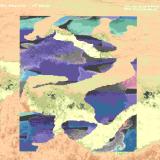
After the dissolution of his wave-making duo project Ameli Paul, Berlin based musician and producer Paul Valentin aims to venture down new roads and finds help from illustrious folks like Liv Lisa Fries, DJ Koze, Thomass Jackson and Philipp Fein along the way. Valentin’s debut EP on Feines Tier marks his first solo release in 10 years and is a colourful journey through sonic worlds and emotions in the continuous search for his own sound.
Opener ELVAU is a collaboration with actor Liv Lisa Fries built around their intimate voice recordings which are woven delicately into a dreamy web of shimmering synths atop pulsating break beats that would make Bicep proud. For his remix, His Kosiness, the Tripsitter Himself also known as DJ Koze follows the breakbeat path further down, gleefully taking all sorts of wonky and fun diversions on the way, which makes one hope that the ride never ends.
Follow-up tune MALFUNCTION is a more straightforward affair with its rolling synth arps and is - in Valentin’s own words - “about personal failure, dissolution, and the distortion of the self“. Equally dark under- and overtones are throwing shades over WHATTHE!, dealing with anger and transformations, resulting in a banger for the heavier moments on the dancefloor or the mind between your headphones. The EP closes on a more hopeful note with LISTEN, which stands for „everything that could be, if we listened to each other“. And it’s never a bad idea to listen to chirping 303 basslines, especially when paired with melancholic synth pads and weird vocal samples, as is the case here. The rework of Thomass Jackson and FT-head honcho Philipp Fein feels beautifully anachronistic with its reduced tempo and could have been something Andrew Weatherall would have played when he was still playing our earthly dancefloors.
Prêt à expédier

WRWTFWW Records is ecstatic to announce a limited edition vinyl release of the remarkable PONYBOI (Original Motion Picture Soundtrack) by Chilean-born composer, arranger, music producer, and multi-instrumentalist Cristobal "Cristo" Tapia de Veer (The White Lotus, Utopia, Smile, Black Mirror, and many more).
This collector's edition presents Tapia de Veer's complete original score for the critically acclaimed feature film PONYBOI - a bold, genre-defying neo-noir tale directed by Esteban Arango and and starring filmmaker, actor, screenwriter, model, and intersex rights activist River Gallo who also wrote the movie. The soundtrack arrives as a deluxe audiophile vinyl LP, housed in a luxurious 350gsm gold cardboard sleeve, cut with utmost precision by Sidney Claire Meyer at the legendary Emil Berliner Studios, home to Deutsche Grammophon's world-renowned legacy.
Vivid, seductive, gritty, dreamy, tender, and sometimes heart-pounding in its tension, the PONYBOI soundtrack is a sinuous creature of its own - an emotional, atmospheric, and deeply textural listening experience. Tapia de Veer fuses shimmering electronics with haunting melodies, raw rhythms, shadowy ambience, and surges of romantic intensity, perfectly embodying the film's world of danger, desire, identity, and survival on a single wild New Jersey night. It's daring, intimate, stylishly noir, and unmistakably Cristo: music that refuses boundaries and speaks directly to the pulse.
The LP showcases Cristobal Tapia de Veer's uncanny ability to blend experimental sound design with narrative emotion - a talent that has earned him global acclaim and numerous awards, including four Primetime Emmy Awards for The White Lotus.
This new WRWTFWW edition celebrates his artistry in its purest form: warm, rich, analog, and physically stunning. A must for soundtrack fanatics, ambient and experimental music lovers, and rare memorabilia collectors.
Prêt à expédier

Paradise Lost’s sixth studio album (1997), which charted well across Europe, marked something of a change of direction for the West Yorkshire group: a transition from gothic metal to a more electronic approach, epitomised by the lead single ‘Say Just Words’, which remains a fan favourite and one of their biggest streaming tracks. This re-tooled aesthetic proved slightly controversial at the time but by the time of its acclaimed 20th anniversary reissue (mirrored here), for which it was remastered by Jaime Gomez Arellano, the general consensus was that the riffs, lyrics, and compositions on One Second are all vintage Paradise Lost. As noted by Decibel magazine, “There is a natural flow on display throughout the 12 songs that is akin to watching a favourite actor take on a somewhat different role than he or she is known for— and killing the performance.”
Prêt à expédier

On September 26th, 2025, two decades and seven albums into his career, American musician, composer, and academic John Maus will release his most transcendent work yet: Later Than You Think. Arriving via his new label YOUNG, the album explores themes of grief, justice, rebirth, transformation, and spiritual warfare - coalescing into a work of confession and confrontation: an aural metaphysics where affect, intellect, and spirit converge in search of the beautiful, the truth and the real. Written, produced, and recorded in the Ozarks of Southwest Missouri, Later Than You Think spans 16 tracks and contains multitudes - the lush and the bare, the sacred and the profane, minimalist discipline and maximalist indulgence, counterpoint and simple pop harmony. At its core, the album reaffirms John Maus’ commitment to radical sincerity and emotional truth in an age of alienation. Powered by confrontation, faith and transformation - driven by the urgent belief that meaning still matters, and time is of the essence. Holding a degree in experimental music from CalArts and a PhD in political science from the University of Hawaii, Maus has been dubbed a “philosopher pop star” and “analog futurist” for the way he merges academic rigor with lo-fi synth-pop aesthetics. His influence spans genres and generations—from UK grime icon Skepta, who sampled his track “I’m Only Human,” and Gen-Z rapper nettspend, to filmmaker Josh Safdie, actor Natasha Lyonne, and photographer Wolfgang Tillmans. His track “Cop Killer” features in the 2025 film Friendship, underscoring his continued relevance across high and low culture. With five previous albums under his belt - Songs (2006), Love Is Real (2007), We Must Become The Pitiless Censors of Ourselves (2011), Screen Memories (2017) and Addendum (2018) - Maus has carved out a singular path where irony, grief, joy, and absurdity can coexist and gained a cult following along the way. On Late r Than You Think Maus doesn’t just return—he confronts, confesses, and transforms. The result is not only a career-defining work, but a rare artistic offering: one that dares to believe in meaning, beauty, and the possibility of transcendence
Prêt à expédier

As the tenth candle flickers atop the torta alla panna, Archeo Recordings play the Uno reverse card, breaking with tradition to give us a gift in celebration of its birthday: the first in a series of exquisite EPs on which the label's favourite contemporaries pay homage to past masters. Each re-polished gem is plucked either directly from the beatific back catalogue of the fine Florentine label or is at least Archeo-adjacent, perhaps a sign of future wonders to come. Like a musical version of Janus, who can be found at the heart of Bertoldo di Giovanni's frieze in the Medici villa, Archeo Recordings will continue to look forwards and backwards to provide sublime sounds for us all.
Pepe Maina officially joined the Archeo family in 2019 with the much-needed reissue of his 1979 masterpiece Scerizza (AR015), but his astounding music has been a constant companion to label head Manu for much longer. An inter-dimensional, multi-instrumental maverick, Maina weaves the frayed edges of prog rock, new age, organic jazz and global minimalism into a shimmering tapestry all of his own. The results are spread across fifty years and almost as many albums, largely self-released and always absolutely untarnished by commercial concerns.
Based in a small village in the hills of Brianza, just north of Milan, Maina translates the beauty of his surroundings into transformative tone poems, and the folkloric fusion of "The Infinite", originally released on his 2014 CD Tales From The Hill, is the perfect example of his practice. It opens with a recitation of Giacomo Leopardi's 1825s poem "L'Infinito" by famed Italian actor Vittorio Gassman. A leading figure in the romantic movement, Leopardi explores the idea of time and space within the natural world, and the peace that comes with an appreciation of the immensity of eternity. Manu, longtime digger and now a burgeoning producer, expands upon the original with tribal percussion, chirping electronics and a spheric bassline, folding Maina's elegant strings and gossamer pads into a new arrangement suited for a slow dance under the stars.
Unless you had a well-trained ear tuned to Italy's avant-jazz scene, chances are your first encounter with innovative flautist Roberto Aglieri came via the 2017 Archeo reissue of hisalmost untraceable LP Ragapadani (AR011). It's a true testament to Manu's digging credentials that he snatched this masterpiece out of the esoteric atmosphere and brought it attention it so richly deserved. A delicate union of digital synthesis and versatile flute - be it soft and silvery or
brilliant and clear - the 1987 album was a shapeshifting masterpiece, replaying scenes from Virgil, Verdi, Visconti and Pasolini with a neon glow. Quintessentially Italian, but uncanny and previously unimagined - Penthouse and Portico perhaps. Powered by a percolating prototechno sequence, cascading keys, hallucinogenic vocal snippets and a variety of tonal timbres from Roberto's reed, "Danza N. 1" long deserved the praise reserved for Jean-Luc Ponty's pinnacle, so many thanks to Manu for our collective introduction. The tall task of reinterpreting this particular paragon falls to Perugian polymath Daniele Tomassini AKA Feel Fly, whose peerless skills as both producer and musician have delighted DJs and dancers alike. Hot on the heels of his diverse and definitive remixes of Tony Esposito for AR027, Daniele delivers a radical rework of "Danza N. 1" perfect for both day rave sunshine and full moon party alike. Enhanced by snapping breaks and a rattling kick, the bassline gurgle emerges as a progressive powerhouse, laying the foundation for the trilling flute and circular keys to cast a psychedelic spell. As the slow-Goa revival picks up pace, this one is way ahead of the pack.
Archeo take us all the way back to the start of its story here - well almost. Though it bore the stamp AR001 (2015), this Radio Band reissue actually hit shelves months after Tony Esposito's "Je-Na' / Pagaia"; a false start perhaps but a true classic all the same. Radio Band were a group of DJs from Florence who all sailed the airways of Radio Fantasy in 1984 and whose one and only release was this super groovy slice of Italo-boogie. Following the example of Milanese DJs Band of Jocks but far surpassing their formulaic funk fizzle, Radio Band employed an intergalactic bassline, cosmic keys and that undeniably Italian style of rapping to deliver a sophisticated party-starter which even found its way to disco deity Ron Hardy. Back to the here and now, and if you've found yourself pumping an ecstatic fist to a supercharged Italian epic of late, chances are its from the mind of the mysterious Radiomarc. Operating on the ascendent Popcorn Groove imprint, this shadowy figure steers his country's lost classics into peaktime territories, finding a sweet spot between late Italo-disco, early Italo-house and contemporary cool. Pushing the tempo with a club-ready 4/4, setting the sequencer to stun and supplementing the original melodies with a series of synth riffs, the mystery producer send this one into orbit. Radio Band - Radio Rap - Radiomarc, the circle is complete.
Few have done more to develop cross-cultural musical exchange than Futuro Antico. A collaborative venture from musician, archeologist and ethnomusicologist Walter Maioli, keyboardist and tonal theoretician Riccardo Sinigaglia and multi-disciplinary artist and composer Gabin Dabiré, Futuro Antico formed in Milan in 1979, combining ancient international folkloric traditions with otherworldly electronics. The result is an arresting melange of Mediterranean, African and Asian instrumentation, mimicked by esoteric synth tones and hypnotic minimalism, which the group perfected on their acclaimed 1990 LP Dai Primitivi All'Elettronica. The meditative and transportive "Pan Tuning" belongs to their largely overlooked 2005 CD only release Intonazioni Archetipe, and has been amongst Manu's most loved tracks from the first moment he heard it. Who else is better placed to reshape this evocative opus into an immersive, transcendental dance floor journey than label favourites Mushrooms Project? The duo sows the original elements into a sprawling fifteen minute fusion of séance and science, at times propulsive with a ritualist rhythm of tuned percussion and crunching drum machine at others drifting off into ethereal ambience. Mushrooms Project continue to push the boundaries of the Afro-cosmic style, and this remix marks a new zenith.
Prêt à expédier

Calling all fans of cult soundtracks and genre-bending scores! Four Flies is thrilled to present a limited edition gatefold beauty containing the premiere vinyl release of the complete score to Matalo!, one of the most captivatingly unique Spaghetti soundtracks ever.
Matalo! is a 1970 'western crépusculaire' by Milanese director Cesare Canevari, known for his visually striking genre films, starring Swedish enfant terrible Lou Castel and Italian theatre actor Corrado Pani. Canevari adopts an experimental, atmospheric approach, relying heavily on out-of-focus effects and framing his shots unconventionally. This gives a dark and atmospheric turn to thewestern genre, with the typical dusty plains transformed into a windswept ghost town, while action sequences replace dialogues almost entirely, leaving actors with very little to say – and, therefore, putting the music center stage.
Composer Mario Migliardi – who was also a conductor, pianist, and Hammond organist – throws out the rulebook for Italian Westerns. Prepare for a wild ride of psych-rock textures, swirling electronic filters, haunting reverbs, and concrete sounds – a sonic tapestry that seamlessly blends influences ranging from Jimi Hendrix to Luciano Berio.
Migliardi masterfully combines traditional folk instruments like acoustic guitars and percussion withnon-canonical electronic processing, creating an electro-acoustic alchemy thatfeels both fresh and timeless today, probably way more than it did in the1970s. In particular, the Leslie filter, a hallmarkin the Hammond organs popular at the time, is applied to the entire soundtrack, resulting in a very distinctive and dynamic phaser effect.
The soundtrack's highlight is probably the rock song featuring vocals from Giano Ton, aka Giacomo Tosti, the only track to have found its way on vinyl prior to this LP (it wasthe B-side ofa forty-five released by RCA Italy at the time). Its 9-minute extended version, previously unavailable on vinyl, is a fantastichard-blues-rock jam à la Hendrix.
This limited-edition double vinyl LP comes in a stunning gatefold jacket with artwork by Eric Adrien Lee, who drew inspiration from the film's original posters and promo materials.
Definitely a must-have for collectors of unique soundtracks and adventurous music!
a Matalo! (Theme Song) feat. Giano Ton
h Matalo! (Theme Song) Instrumental
n Matalo! (Theme Song) [Single Version]
[s] Matalo! (Hey Gente) [feat. Corrado Pani]
[a] Matalo! (Theme Song) [feat. Giano Ton]
[h] Matalo! (Theme Song) [Instrumental]
[n] Matalo! (Theme Song) [Single Version]
[feat. Corrado Pani]
Prêt à expédier

HouseDubPopKrautrockBeatsExperimental
Upon examining the eventful life of Can bassist Holger Czukay,
one might conclude that this intrepid musician was a loner. His
turbulent career exuded an enduring eccentricity governed by a
boundless free spirit. Yet Czukay, who passed away
unexpectedly last year at the age of 79, constantly emphasized
that his creativity was always contingent upon a musical
partner, whether that was a skin-and-bones counterpart or an
anonymous manifestation that interacted with him through
radio waves or, as happened later, the internet. Nonetheless,
most of his partners were of flesh and blood.
His oeuvre, which is in itself cinematic in nature, boasts a cast
worthy of a Martin Scorsese film. Only the most interesting
character actors were cast: Brian Eno, Phew, Rolf Dammers,
David Sylvian, Annie Lennox, Jah Wobble, his Can bandmates...
the list could go on and on.
Many of these masterpieces are now out of print, so Groenland
Records, who already released the highly acclaimed
retrospective 'CINEMA' to mark the occasion of Holger's 80th
birthday at the beginning of the year, has taken it upon
themselves to release reissues of Holger's music in order to
make it accessible once again.
Prêt à expédier

Five trombonists and a three-member rhythm section: that sort of unique musical synergy is what Nabou Claerhout brings to life with her own Trombone Ensemble. For years, such a project had been one of the dream projects on her bucket list, and thanks to Antwerp based cultural actor Rataplan, she already saw the creation become a reality in spring 2022. In the summer of that year, the eight-piece ensemble opened both Gent Jazz and Jazz Middelheim.
In January 2023, Nabou was artist in residence at the Brussels Jazz Festival in Flagey, where she presented the Trombone Ensemble as one of three carte blanche projects. In a sold-out Studio 4, American trombone legend Robin Eubanks joined the line-up as a special guest, having previously also contributed during the studio recordings of the young collective during. The band's self-titled debut album will be released on November 3rd 2023 via W.E.R.F. Records.
Nabou composed the entire repertoire for this Ensemble herself, and did so with a fully open vision. While writing the music, she explored the trombone's wide possibilities: "The aim is to both indulge you with warm, soft, carrying parts and then afterwards discover the trombone's spicy and cordial character." That rhythmic playfulness, which we hear more often in Nabou's compositions with her acclaimed quartet N?BOU, also seeps subtly into this band's sound.
Despite the 'unusual' line-up of five diverse jazz trombonists, each with a different background, you still get to hear a very homogeneous sound, which is full of playfulness and small details. "I tried to make room and focus for each individual. And of course there is also a starring role for the rhythm section with guitar, double bass and drums."
When Nabou started looking for the dream fellow jazz musicians for this project, she ended up with artists from her own country, Belgium, but also from far beyond the country's borders: The Netherlands, the UK and Germany. "In selecting the trombonists, I looked for specific timbres, but also for personality. It is important that there is a good balance in playing together, but also that each musician is strong enough on his or her own for the solo parts."
Wanting to push boundaries in her approach to both compositions and the trombone as an instrument, the real crème de la crème of the newest generation proved indispensable. "I selected a handful of European trombonists with whom I may or may not have already played, but who, above all, inspire me very deeply. They are all young people who have a lot to offer and already have significant projects to their name in their own region or country."
Prêt à expédier

Earl Lindo production from 1984... TIP!
Teenage twins Ruffy & Tuffy deliver an apocalyptic slab of synth drenched Rub a Dub with what could be the first use of Vocoder in Reggae for 1982’s If The 3rd World War Is A Must. This release draws from both the original 12” and the master tapes combining the best vocal cut and dub versions.
Though not prolific musicians, many may recognize the twins sparring in matching red Pony track suits in Ted Bafaloukos’ iconic 1978 film Rockers. Ahead of its time in almost every way, the lyrics dealing with global war and the nefarious use of technology, sadly seem as relevant now as they did in 1982 though some of the actors may have changed. Surrounded by elite reggae musicians from childhood it was nothing unusual for the brothers to be in the presence of elders like Gregory Isaacs, Burning Spear, Augustus Pablo, Jacob Miller and especially Bob Marley at recording sessions and in daily life.
If The 3rd World War was their first venture into the studio as solo artists in 1982 first at Channel One and then Tuff Gong where Wailers alumni Earl Wire Lindo and Tyrone Downie (keys and Vocoder) laid down their space age additions to the track creating a genre bending Reggae /Electro/ Dub concoction that still sounds fresh 41 years later. Wire Lindo & the twins took the mastertapes to Texas based mechanical engineer and producer Stephen “Iya” James who ran Marcus Garvey Records and the label African Unity Productions in the unlikely Reggae hub of Austin Texas. The track was not released until two years later in 1984 as a 12” which had a run of only 500 copies and is no easy find these days.
Prêt à expédier
Hip-HopSoulAfrobeatPopWorld Music
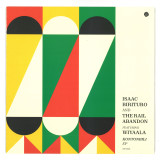
Following on from the successes of their first two LPs, "Kalba" and "Small Small", Isaac Birituro & The Rail Abandon return with the "Kontonbili EP". A collection of seven tracks that trace the traditional West African roots of their sound whilst adding their unique touch, largely courtesy of Isaac's xylophone, Sonny Johns' folky embellishments and the vocal prowess of powerful Ghanaian songstress Wiyaala.
The lead single "Hado Deeli" roughly translates to "My Rival" and is a vibrant discussion between two rivals, one of whom is always making a fuss about anything and everything, even when things are all good! "Gargar", with its collaboration of xylophone, whistles, Wiyaala's effervescent vocals and relentless groove represents, quite literally, the band's "joining together" for this EP. In contrast, "I Know" sees Sonny Johns takes over lead vocal duties to lament the breakdown of a relationship accompanied by muted horns and Wiyaala's soothing backing vocals. "Nimmbalia" continues in a mellow and reassuring tone before emerging as one of the most uplifting and simultaneously fierce cuts on the EP! The traditional version of "Bawa" - the original take of which can be found on last year's "Small Small" LP - strips things back a little, before culminating in a battle of xylophone, whistles and choir. "Yeri Villa" has a wonderfully laid back, sun drenched feel with some truly beautiful vocal refrains, and finally - only available on the digital version - comes the deeply percussive and trance inducing "Darpeny", rounding off a rather stunning EP from this cross continental outfit.
All tracks feature Ghanaian singer, song-writer, model and actor, Wiyaala. With a strong fanbase in Africa and beyond, "the lioness" made her mark on Wah Wah 45s and BBC 6 Music last year when she featured on the A-listed "Senye", described as "perfection" by Annie Mac and "pure joy!" by Tash LC.
e 05: Bawa (Traditional) feat. Wiyaala
Prêt à expédier

Smoke Coloured Vinyl[27,94 €]
On Chuck Strangers’ latest opus, Glory Of The King’s Hand, he raps, “I still rap from the perspective of my government name…” The stage name “Chuck Strangers” is, of course, an alias but it’s not necessarily an alter ego. For the man born Che Jessamy, his rap moniker isn’t some over-the-top rock star persona contrived for public consumption, it’s just a name. What you hear on his records is really who he is - a heavy-tongued griot from East Flatbush, Brooklyn with a gift for vivid stream-of-consciousness storytelling. His bars are imbued with the wisdom he’s gained in his lifetime - especially in the 14 years since he first made his debut with the Pro Era collective.
The elaborate title of his new album, Glory Of The King’s Hand, speaks to his gratitude for the hand that life’s dealt him, which is a pretty good one. At age 34, he does what he loves professionally and does it on his own terms. That’s something to be thankful for.
Glory Of The King’s Hand, not only represents Chuck’s matured attiGlory attitude but also his matured sound. Key to this refined approach was tude collaboration. Chuck is a proficient beatmaker in his own right as evidenced by his production for himself and artists like Joey Baevidenced Badass, and Boldy James. But this time around Chuck chose to be a dass, producer in the Quincy Jones sense of the word, bringing together vocalists, producers, and musicians instead of handling all of the beats and rhymes himself. d Up Reprise
The list of contributing producers is a who’s who of underground sound scientists including The Alchemist, Animoss, Theravada, Kensound Kenny Segal, Preservation, Child Actor, and Morriarchi.
il devrait être publié sur 02 oct

Bilal Hassani, aged 25, a singer-songwriter, actor and producer, shares his daily life with over 3 million loyal fans around the world. He is the symbol of a new generation and champions the values of tolerance, acceptance, self-love and respect for all. Bilal is ranked among the world's 20 most influential LGBTQ+ figures by Vanity Fair. Regarded as a pop icon by Les Inrockuptibles magazine, Bilal Hassani has three albums and one mixtape to his name. With *Bonsoir Paris*, Bilal Hassani has released a twelve-track album entirely dedicated to partying, nightlife and the freedom to be oneself. Produced by himself and Sutus, the record revives the unapologetic pop and French Touch of the likes of David Guetta, Bob Sinclar, Daft Punk and Martin Solveig - that 90s house music that shaped his childhood - which he blends with bolder electro sounds and even a touch of Romanian pop. The album is mainly mixed by Nathan Boddy, whose work features on tracks by New Jeans, Mura Masa, Oklou, Olivia Dean and Shygirl, guaranteeing a production that is both pop and resolutely contemporary. In 2019, after representing France at Eurovision with his song "ROI" - a powerful message of self-acceptance - he released his debut album, KINGDOM, and won the NRJ Music Award for "Francophone Breakthrough Artist of the Year". In 2022, his third album, *Théorème*, was released, produced by the king of French pop, GrandMarnier of the group Yelle. With an average tempo of 124 BPM, the new album is made for dancing, conceived as a breath of fresh air for himself and his audience.
il devrait être publié sur 25 sep

Remastered limited edition double vinyl with double-sided screenprinted poster-cover (sleeve folds out to be one huge poster). A real collectors item!
When Off Off came out around June 1984, one couldn’t speak of an independent music scene in Portugal. Warm Records’ vague existence didn’t have any impact and Dansa do Som’s inaugural release appeared only in December. 10 years after the revolution, after two IMF interventions, a lot of political instability (not to say turmoil, in the first couple of years) and the natural excesses of a sudden burst of freedom, the Portuguese consumer had more choices but a generally poor standard of living. There was no entrepreneurial culture and serious second thoughts about investing private money in risky ventures.
After many complaints about the whole music scene (institutions, critics and record label executives, popular and classical music alike), something that would continue well beyond the end of the decade, Telectu decided to finance, record, produce, release and sell an album with complete independence from outside structures. Their karmic reward was profit. According to Vítor Rua, Off Off was the only album fully payed by the duo and the only one that really payed off. Not an easy accomplishment for a double LP housed in a large (also double-sided) screenprint with complicated cuts and folds. The artwork was conceived by António Palolo, a friend and multidisciplinary artist. It was based on a collage of heavily saturated and xeroxed polaroids framed in shocking pink and green. Palolo was considered the third member of Telectu, regularly producing slides, video and other visual support for their shows. The inspiration for the type of cover came from GRM’s Gramme series.
Off Off is divided in four distinct sides, each one corresponding to a “theme” or “function” related to Telectu’s manifold artistic interests and interactions. The titles are also gateways to influences and a small portion of Portuguese cultural life:
- Side 1 / “Diagonale” is dedicated to Egídio Álvaro, art critic and gallery director (he opened Diagonale in Paris). Performance art was arguably his main artistic concern over the years, so the music on this side is suggested for use by one or more performers in live or playback situations. The three tracks segue into each other, linked by a synth arpeggio much in the same way as Telectu’s previous “Belzebu” álbum (1983);
- Side 2 / “Anarké” is dedicated to the composer Filipe Pires, one of Jorge Lima Barreto’s recurring invocations when asked about worthwhile contemporary music in Portugal. It is subtitled “concert music”, proposing «a new form of listening». Three tracks also, and these are separated by “clap interludes”, which basically consisted in the following: JLB and VR each had a pair of headphones on, and they clapped their hands according to the rhythm of the music each one was listening. Both musicians were interacting with a different Steve Reich piece: Vítor with “Music for Mallet Instruments”, Jorge with “Six Pianos”. The result is disjointed clapping, an awkwardly deliberate celebration of their own music. Telectu applauded themselves.
- Side 3 / “Cornucópia” is subtitled “music for theatre” and dedicated to Luís Miguel Cintra and Luís Lima Barreto (JLB’s brother), both connected to the Cornucópia theatre company. The side consists of several short pieces previously used as interludes in the Cornucópia staging of “Mariana Espera Casamento” (1983). Field recordings, mood pieces, ambience and a numeric poem (“Soneto Soma 14x”, by E.M. de Melo e Castro) read by João Perry, a quite well-known stage actor. His voice is treated with a flanger effect;
- Side 4 / “Palolo” is “video music”. It’s a one-take mix recorded from cassette sources (Telectu studio experiences) and done live while watching António Palolo’s Om film (1978) projected on the living room wall. It’s a deep, immersive, quasi-mystical 20-minute piece perfectly suiting the meditative, abstract, fluid images created by Palolo by mixing paint and water inside a bathtub. One imagines the Cosmos, hardly suspecting the technique. The film is 90 minutes long, so the music on the LP is of course edited.
The six titles on sides 1 and 2 evoke demons, all of them with conflicting symbolism, since it varies from culture to culture, religion to religion. No explanation is given and Vítor Rua has no idea where this imagery comes from. During virtually the whole stretch of the 1980s, Jorge was the one in charge of titles and concepts, and Vítor didn’t bother too much even reading the liner notes :) In any case, when you synchronize the listening experience with the imagery, a powerful impression emerges, a feeling of being in the presence of these entities while placing yourself inside the sonic narrative.
Off Off is undoubtedly a seminal album in the history of electronic music, as much Heldon as Fripp & Eno, jazz and American minimalism, cosmic out-thereness, mantric miniatures. Telectu at the height of their powers, still very early on, delivering an album-manifesto advocating intermedia art and the fierce independence of Portuguese musicians «from the scum of capitalist music industry monopolies. It’s a path to follow, albeit one that requires enduring hardships and retaliation from music industry gangsters.» Despite a few journalists deemed «capable of being free», the media are «enslaved by the dominant and fascist imbecility of the speculators of light music.» Off Off is addressed to those journalists «and to an audience angry at the cultural misery imposed upon us ..., certain that this music will open new horizons of musical pleasure in the conception of Portuguese avant-garde music, and in the open consciousness of us all. OFF OFF repeats Freedom.»
Those two words are a direct lift from Alberto Arbasino’s 1968 book Off Off, the basis of which is a critical analysis of Theodor Adorno’s and Dwight MacDonald’s ideas concerning the stratification of culture in different levels (high, mid and low) and the pervasiveness of mass culture in the form of a culture industry. In very simplistic terms, and that is precisely the point that inspired Jorge, Arbasino argued that it was possible and desirable to effect a revolution from below, cultivating alternative circuits completely cut-off from what he termed the in-in reality. Telectu’s record was a deliberate demonstration that it could be done, displaying Freedom in the face of all the gatekeepers and other human obstacles.
Précommander maintenant
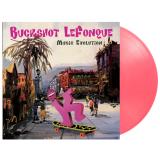
Music Evolution is the second and last album by the all-star jazz/hip-hop/R&B fusion project Buckshot LeFonque. Led by none other than jazz saxophonist Branford Marsalis and DJ Premier, the project was named after Buckshot La Funke, a one-time pseudonym used by alto sax legend Cannonball Adderley for contractual reasons.
The album features guest performances by rapper Guru, Matrix actor Laurence Fishburne, and the highly regarded session musician David Sanborn. While his brother Wynton holds conservative views regarding jazz, Branford is quite the opposite. On Music Evolution, he effortlessly embraces and fuses hip-hop, R&B, and rock into a sonic explosion infused with the joy of playing. The track "Another Day", featuring the soulful voice of Frank McComb, was especially popular in the Netherlands, reaching number 4 in the Dutch singles chart.
Music Evolution is available as a limited edition of 1000 copies on pink vinyl and includes an insert.
il devrait être publié sur 21 août

THE BRIDGE is Tobe Nwigwe in his purest creative form. Grammy nominated musician, director, actor, designer and visionary from Southwest Alief, Texas, Tobe was raised between two worlds, born in Houston and shaped in a Nigerian home. His power was never in choosing one side, but in bringing both together. THE BRIDGE is that union made whole: 12 songs where the pulse of H-Town and the roots of West Africa become one fully realized sound, connecting here and home.
il devrait être publié sur 21 août

There are enough fools and malignant actors trying to conquer the world right now as ever. Do we as humans always need to conquer, subjugate, destroy in a never
ending cycle? Kill animals, nature, each other? Or can we finally conquer our own limitations in perceiving our place on this planet?
Maybe we can borrow from an organism that is aspiring to be the true ruler of Gaia and who might just decide to take back it’s reign from us. Can we conquer ourselves and our limits with a wider vision, decompose the barriers, build rhizomes and enhance consciousness? Or will we be the conquered?
Another gem from the east after VC 029 and the track on MSTR 13. This one further explores a psytrancey current in Mental Tribe with a pumping bass and crystal clear, minimal sound design. Unashamed innocent melodies frolicking thru the forest, oblivious to the judgement of the elders. The uptempo pace between 165 and 170 beats makes for a smooth lift off.
Dernière livraison il y a 21 jours
réapprovisionnement sans garantie
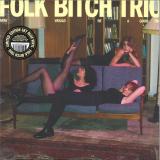
Folk-Musik hat die schlechte Angewohnheit, als eine todernste Angelegenheit dargestellt zu werden. Sie ist etwas, zu dem man weint, sie ist übermäßig heilig, sie ist feierlich von Kritikern und Historikern betrachtet. Aber das Folk Bitch Trio, die ehemaligen Highschool-Freundinnen Heide Peverelle ("they/them"), Jeanie Pilkington ("she/her") und Gracie Sinclair ("she/her"), haben einen gemeinsamen Sinn für Humor , der tief in ihre Musik eingebettet ist und sie zum Leuchten bringt, sicher vor den selbsternsten Fallen des Genres. "Now Would Be A Good Time", ihr Debütalbum, erzählt lebendige, viszerale Geschichten und ist witzig und dunkel-ironisch in der Art von Schriftstellerinnen wie Mary Gaitskill oder Otessa Moshfegh. Ihre Musik klingt vertraut, aber die Songs sind modern, jugendlich, singen akut durch dissoziative Tagträume und ärgerliche Trennungen, sexuelle Fantasien und Medienüberflutung, über all die belanglosen Ressentiments und kleinen Demütigungen, die man als Anfang Zwanzigjährige in den 2020er Jahren erlebt. "Cathode Ray" beginnt mit Vorsicht, seine ersten Harmonien kommen in großen, schleifenden Seufzern an. Es ist verletzlich, aber auch ein wenig bedrohlich, mit , einem weit offenen Refrain und einem geräumigen, luftigen Beat, der alles verankert. "Moth Song", ein Song über unerwiderte Liebe und ,von so durchgedreht zu sein, dass man sich wie im Wahn fühlt und verrückte Dinge halluziniert", bildet das sparsame Herzstück des Albums, wobei Anita Clarks wogende Geigenstimme wie in einem Traum in den Fokus hinein- und wieder herausdriftet. Andere Songs sind nicht so schräg, sondern schildern brutal vertraute Momente am Ende von Beziehungen: Der spannungsgeladene, emotional flüchtige Torch-Song "The Actor" handelt laut Peverelle davon, "zur One-Woman-Show deines Partners zu gehen und dann Schluss zu machen". In "Hotel TV", einer hypnotischen, nächtlichen Träumerei, geht es darum, ,einen Sextraum über zu haben, während man neben seinem Partner sitzt, und der Partner ist ein Lügner", erklärt Pilkington. Die stärkste Verbindung zwischen dem Trio, abgesehen von der Freundschaft, ist Musik. "Wir haben alle darüber gesprochen, dass wir Musik liebten, als wir aufwuchsen, und dass wir wussten, dass Musik ein großer Teil unseres Lebens sein sollte", sagt Pilkington. Dieses Gefühl, dass Musik eine angeborene Berufung ist, im Gegensatz zu Hobby oder Torheit, war berechtigt: Das Folk Bitch Trio tourte bereits durch Australien, Europa und die USA und unterstützte dabei so unterschiedliche Bands wie King Gizzard, Alex G und Julia Jacklin. Sie sind bei Jagjaguwar unter Vertrag, einer Heimat für einzigartige Ikonen und Ikonoklasten (Bon Iver, Angel Olsen, Sharon Van Etten, Unknown Mortal Orchestra und andere), und sie haben ihre ersten eingefleischten Fans mit schillernden Harmonien und bissiger Lyrik gefunden, die über Genreerwartungen und Publikumsgrenzen hinausgehen. Das sind die Herausforderungen: Es geht darum zu lernen, wie man ein Leben ohne Liebeskummer und Verlierer-Ex lebt, wann man im zeitgenössischen Nihilismus versinkt und wann man mit seinen Freunden lacht, und warum sich das Leben so flüchtig und unwirklich anfühlen kann. In diesem Sinne fühlt sich "Now Would Be A Good Time" wie ein Handbuch für das moderne Leben an: eine Botschaft dreier stolzer Folk Bitches, die gemeinsam Schönheit und Weisheit finden, wo sie können.
Dernière livraison il y a 3 mois
réapprovisionnement sans garantie

German-Turkish singer and composer Alev Lenz follows her self-released album 4 in a Cycle of Thirds (Jan 2026) with a complete, album length ambient rework by Simian Mobile Disco co-founder Jas Shaw. “The two records are very much intertwined," writes London-based German-Turkish singer and composer Alev Lenz. "I made 4 in a Cycle of Thirds with Jas in mind, inspired by a mix he created for my last album.” Lenz and Shaw have previously worked together on 2024 collaboration EP Bring Your Friends, as well as album mixes for Lenz' previous two solo records. Lenz' original album was created from a series of single-note drones, one for each note of the chromatic scale. "When I had this idea, I wanted Jas’ touch involved somehow. I asked him for drones on each note. He sent me 12 and I wrote most of the album listening to these drones. They eventually left the picture and were replaced by new drones I made, new sounds or vocals. But the memory of them lingers in the songs, like an imprint on the retina, an afterimage.
So naturally when the record was finished I sent the totality of it to Jas and said: here you go, make your versions!" 4 in a Cycle of Thirds in its original form touches on traditional folk musics, chamber music, contemporary composition, film score, and even interweaves subtle metal inflections, but now presented on double vinyl alongside Jas Shaw's versions as twin records, it has a newly foregrounded quietude, spectral and delicately nuanced. Through reduction, meticulous replacement, and sensitively applied edits, Shaw gently rebalances the light and shadow of the original pieces, coaxing new subtleties and harmonic resonance. "It occupies a space that is in-between the lines," describes Lenz. Shaw employs a "feedback system" he created for his piano, applied here to devastating effect. "Take the key bed off it and set up a resonators, mics and a mixer. Lots of gaffa tape, lots of precarious propping stuff open. You grub around on the floor and slowly the room fills with harmonics, it’s wonderful." And, on the relationship between the original record and these new versions, he explains "we could really let the songs drift into a different shape without worrying that we were missing elements that were great."
Alev Lenz is a singer, songwriter, composer, and producer born to a Turkish actor, activist, and artist mother and an Oscar-winning German engineer father. Alev’s creative foundation is as diverse as her musical output. Her solo discography includes three albums - Storytelling Piano Playing Fräulein (2009), Two-Headed Girl (2017), and 3 (2019). She has contributed vocals to scores by Oscar-winning composer Volker Bertelmann, including the US drama Conclave. She has collaborated with artists such as Anoushka Shankar, Jas Shaw (Simian Mobile Disco), Roomful of Teeth, and plenty more. Songwriter, composer, and producer Jas Shaw is best known for his work with Simian Mobile Disco, whom he co-founded in 2003. He mixed Alev Lenz' 2016 and 2019 albums Two-Headed Girl and 3, and also performs with Selling alongside Gold Panda, and Shaw & Grossfeldt with visual artist Bas Grossfeldt. Shaw and Lenz released the collaboration EP Bring Your Friends in 2024.
il devrait être publié sur 12 juin
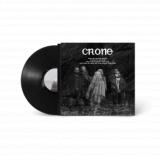
Irish drone-doom-folk act One Leg One Eye, the project of founding Lankum member Ian Lynch and veteran noise monger George Brennan, announce their new album, CRONE, out on 1 May on AD 93.
Today the group share the first track on the album, ‘Many are my Names Besides’, on which they are joined by the elemental force that is legendary actor, performer, writer and director Olwen Fouéré (Operating Theatre) contributing vocals.
Olwen Fouéré comments:
“When Ian and George first approached me to work with them, they were already creating the Crone album as a sonic invocation of the ‘sovereignty goddess’, who personifies the land and the legitimacy to rule it, in her darkest and most terrifying form. As we spoke, the triple goddess figure of the Morrigan entered my mind, reinforced by a marked presence of crows every time we met. The Morrigan is essentially a war goddess, frequently appearing as a crow in a battlefield, a death prophet, a guardian of sovereignty, and a very powerful figure in Irish Mythology.
So I invoked her energy as a starting point, using text extracts that Ian sent me from the Ulster Cycle and other sources. The voice recording was done in one day, improvising the source material while the already composed music occupied my psyche through headphones.
Listening back, at this time in our world, I can only wonder at how much blood and war the Crone/ Crow of sovereignty is preparing to unleash now. Watch out.”
CRONE is the second album from Lynch and Brennan, following on from 2022’s slowburn slab of ambient grit, …And Take The Black Worm With Me. Bewildering, psychedelic and ultimately transcendental, the four tracks of One Leg One Eye’s CRONE shapeshift and morph endlessly in a coarse miasma. Traditional song structures and vocal melody are eschewed, instead the trio directly channel energies from the rich seams of mythological significance submerged below the Irish psyche. The anger, rage and beauty of the sovereignty goddess burn a consistent and deliberate line through the album in the form of obscure incantations and dire pronouncements, the gnarled sinews that bind it all together.
Just as the subject matter of the tracks delve deeper into Irish myth and the remote past, the temporal reality of the album reaches back into the bands prehistory, with the majority of it the material being recorded by Lynch and Brennan in 2021 before One Leg One Eye was conceived of as an entity with Brennan working on the CRONE project while Lynch worked on …And Take The Black Worm With Me.
When they were there they saw a lone woman coming to the door of the Hostel, after sunset, and seeking to be let in. As long as a weaver’s beam was each of her two shins, and they were as dark as the back of a stag-beetle. A greyish, wooly mantle she wore. Her lower hair used to reach as far as her knee. Her lips were on one side of her head.
She came and put one of her shoulders against the door-post of the house, casting the evil eye on the king and the youths who surrounded him in the Hostel. He himself addressed her from within.
"Well, O woman," says Conaire, "if thou art a wizard, what seest thou for us?"
"Truly I see for thee," she answers, "that neither fell nor flesh of thine shall escape from the place into which thou hast come, save what birds will bear away in their claws."
"It was not an evil omen we foreboded, O woman," saith he: "it is not thou that always augurs for us. What is thy name, O woman?"
"Calib," she answers.
"That is not much of a name," says Conaire.
"Lo, many are my names besides."
"Which be they?" asks Conaire.
"Easy to say," quoth she. "Samon, Sinand, Seisclend, Sodb, Caill, Coll, Díchóem, Dichiúil, Díthím, Díchuimne, Dichruidne, Dairne, Dáríne, Déruaine, Egem, Agam, Ethamne, Gním, Cluiche, Cethardam, Níth, Némain, Nóennen, Badb, Blosc, Bloár, Huae, óe Aife la Sruth, Mache, Médé, Mod."
On one foot, and holding up one hand, and breathing one breath she sang all that to them from the door of the house.
Dernière livraison il y a 4 mois
réapprovisionnement sans garantie

Formed in Galway City, Ireland James McGregor (vocals/ guitar), Sean Connelly (guitar) and Damian Greaney (drums) went to school together there and met Tom Freeman (bass) on the music scene. Relocating to London in 2019, the quartet signed to Alan McGee's new record label 'Creation23' almost overnight. They have since impressed audiences across Europe with live performances at festivals including Rock Werchter, Eurosonic and Electric Picnic, performing to a huge crowd at Sefton Park in Liverpool in support of Kings of Leon, as well as a head- turning televised appearance on Sky 1's Soccer AM. Media have been quick to show their support too plus previous singles, taken from their 2023 debut "Exit Strategy" received praise on BBC Radio 1's Annie Mac on her "New Names" showcase, BBC 6 Music's Steve Lamacq on his 'Recommends' show, received day-time radio play on RTE 2FM, and impressed the legendary Rodney Bingenheimer on Sirius XM.
The four-piece are drawn together by not only a mutual appreciation of music past and present but also a love of films and books, notably the ones on the more 'noir' side of the spectrum. You could say Arctic Monkeys got them into a band, The Strokes showed them how tightly you could distil it and Radiohead showed them how wide you could take it. But these days there not afraid to also put Billie Eilish and Charlie XCX into that mixture and films from director Fellini to "Drive". What matters is that from starting out playing acoustic folk, that turned into 3 minute (post-)punkish songs, they now have expanded a lot from there, taking in all the experience they have now recording and touring. Pushing the emotion by being authentic and creating what you really want despite the noise and haste around you.
il devrait être publié sur 27 mars

The journey through French-speaking pop archives continues with this fifth volume, packed with fuzz, gimmicks, and dissent. Far from the charts, the selected tracks display a great creative freedom, often backed by corrosive humor. Welcome to the surprising, kaleidoscopic, and colorful world of the late sixties and early seventies, Wizzz!
Born in Montauban, Robert Pico stumbled into music by chance when he met René Vaneste, then artistic director at Pathé-Marconi. René brought him to Paris to record his first 45 RPM EP in 1964. A year later, Pierre Perret introduced him to Vogue, where he recorded his second album with Claude Nougaro’s orchestra. Sylvie Vartan then introduced him to RCA, where he recorded four singles, including the astonishing "Chien Fidèle," a track backed by a hair-rising fuzz guitar. Alongside his solo career, he also composed for other artists like Alain Delon (the song was recorded but remains unreleased), Magali Noël, Bourvil, and Georges Guétary. In the Paris of the sixties, he mingled with Mireille Darc, Elsa Martinelli, Marie Laforêt, France Gall, Françoise Hardy, Petula Clark, Régine, Dani, Serge Gainsbourg, Joe Dassin, Franck Fernandel, Charles Level, and Roland Vincent. Despite his efforts and winning a Grand Prix Sacem for his final record, Robert Pico didn’t achieve the expected success in show business and decided to leave Paris and return to the Southwest, where he devoted himself to writing. He is the author of 23 books (including Delon et Compagnie, Jean-Marc Savary Editions 2025, a memoir about his youth and his many encounters). Today, he is relieved to never have become a celebrity and devotes himself to his work with passion.
In 1969, the Franco-Italian movie Erotissimo was released, directed by Gérard Pirès (who later directed Taxi in 1998, written and produced by Luc Besson). This pop comedy features Annie Girardot, Jean Yanne, Francis Blanche, Serge Gainsbourg, Nicole Croisille, Jacques Martin, and Patrick Topaloff. The soundtrack was written by Michel Polnareff and William Sheller, with lyrics by Jean-Lou Dabadie. "La Femme Faux-cils," performed by Annie Girardot. It recounts the feelings of a rich CEO's wife who seeks to develop her sex appeal under the influence of advertisement and magazines. Groovy, sparkling and light, this track, with ITS lush arrangements humorously critiques consumer society and feminine beauty standards.
“Je suis l’Etat” (1967) is the flagship track of the first EP by singer-songwriter Spauv Georges, aka Georges Larriaga, better known as Jim Larriaga (1941-2022). Born into a family of bakers, the young man was initially planning to become a hairdresser when he discovered English-speaking music through Elvis Presley and the Beatles. After this revelation, he decided he would become a songwriter and gave himself five years to succeed. He recorded his first two EP’s independently for RCA under the pseudonym Spauv Georges; meaning “that poor George”, a nickname given to him by the mother of her friend Jean-Pierre Prévotat (future drummer of the Players, Triangle, or Johnny Hallyday). Portraying a depressed and eccentric young man, Spauv Georges created corrosive and amusing songs that didn’t reach a wide audience, despite a TV appearance with Jean-Christophe Averty.
Supported by his loyal friend and fellow songwriter Jean-Max Rivière, Georges Larriaga met the future singer Carlos in the early '70s, then Sylvie Vartan’s assistant. He wrote songs for Carlos, including the popular "La vie est belle," "Y’a des indiens partout," and "La cantine", which went onto become a huge hit in 1972. He also composed for Claude François (“Anne-Marie”, 1971), Charlotte Julian (“Fleur de province”, 1972), helped launch child singer Roméo (who sold 4 million records), and later wrote the hit "Pas besoin d’éducation sexuelle" (1975) for the young Julie Bataille. In 1971, Jim recorded an album for Disc'Az: “L’univers étrange et fou de Jim Larriaga”, which featured pop gems like “La maison de mon père”.
The story of the song "Zoé" began when Pierre Dorsay, artistic director at Vogue Records, asked Swiss singer and musician Pierre Alain to write a song for a new female singer. The inspiration came when he realized that Zoé (the artist's name) was also the name of France's first atomic battery, created in 1948, which consisted of uranium oxide immersed in heavy water! The lyrics reflect a bubbling energy that must be handled with caution, while the instrumentation echoes this atomic theme, notably with the use of a theremin.
Zoé’s career lasted only as long as a single 45 RPM, but it seems Christine Fontane was the vocalist behind this pseudonym, who is known for several EPs, a good "popcorn" album in 1964, and a handful of children’s singles in the '70s. Regardless, the photograph on the cover is of a different girl entirely.
Later, Pierre Alain continued his career, writing songs for himself, Marie Laforêt, Danièle Licari, Alice Dona, Arlette Zola (3rd place in Eurovision 1982), and achieving multiple gold and platinum records in Canada. Also an inventor with several patents, president of the Romande Academy, and head of the French Alliance in Geneva, he now composes atonal music, books, and poetry. Moreover, he is also the host of "Les Mardis de Pierre Alain" at "Le P'tit Music'Hohl" in Geneva.
Filled with oriental choruses and fuzz guitar, "Fou" is from Jacques Da Sylva's only EP released by Vogue in 1967. Despite the quality of this recording, all traces of this singer disappear after this first effort.
Valentin is a baroque pop singer born in Belgium. He is the songwriter and composer of most of the tracks on his three singles released in the late 60s in Canada. A legend says that he reincarnated himself as Jacky Valentin during the 1970s for a rock'n'roll revival career in Belgium, but his older brother sadly debunked this story. Valentin's first two singles were arranged by Claude Rogen, a Parisian session pianist who had come to Canada to promote the song “Mister A Gogo”, a cover of David Bowie’s “Laughing Gnome”, adapted by singer Delphine, his wife at the time. Far from his usual network, Claude Rogen arranged music for Polydor, including the arrangements for “Je suis un vagabond” in 1969, a jerk tune with string arrangements and a furious optimism.
Jacques Malia wrote, composed, and recorded his only 45 EP for Festival in 1966. “Histoire de gitan” is an incredible beat track with bohemian scat that tells the story of a gypsy musician who came to Paris to make it in the Music-Hall, to no avail. The hero of the song and its author probably shared a similar fate, as Jacques Malia faded into anonymity after this remarkable attempt.
Bernard Jamet recorded two EPs for Barclay in the late sixties and co-wrote several songs with Christine Pilzer, Pascal Danel, and prolific songwriters Michel Delancray and Mya Simile. The track “Raison Légale” (1968), his masterpiece, immerses the listener in a courtroom right when a murderer is being judged, with jerk rhythm and free arrangements. A unique, paranoid, judicial, and psychedelic oddity.
Jean-Pierre Lebrot-Millers started his career in show business in 1967 as a singer and songwriter for the Philips label. After three singles, he wrote several songs of a new kind with his friend Pierre Halioche, in the midst of the sexual liberation movement and the democratization of drugs. With provocative lyrics, “Les filles du hasard” and “Barbara au Chapeau Rose” were released on a Philips singles in 1968. The character of Barbara was inspired by a queen of Parisian nightlife during the psychedelic years: model Charlotte Martin, who dated Eric Clapton from 1965 to 1968, then Jimmy Page from 1970 to 1983. Jean-Claude Petit’s arrangements, with a table-filled intro, soul brass, and Hendrixian guitar, emphasize the flamboyance of a hedonistic and sexy character, whose dog is named Junkie because “Junkie est un nom exquis”! The track was recorded live in three takes with a full orchestra.
Upon its release, the record was censored by Europe 1 and RTL due to its references to drug use. Jean-Pierre Lebrot was then banned from the airwaves and later dismissed by his record label. He changed his artist name to Jean-Pierre Millers, while his companion Pierre Halioche became D. Dolby for a new dreamy composition, “Chilla”, which Jean-Pierre produced himself with arrangements by Jean Musy. Once again, the song was immediately censored everywhere. After this setback, he decided to stop singing and started taking on odd jobs to support his Swedish wife and their son until the day he met Jean-Pierre Martin, then production manager at Decca, who had worked with Manu Dibango. Martin offered Jean-Pierre Lebrot-Millers, then employed at Rank Xerox, the position of artistic director at Decca. He accepted and became, a year later, promotion director (radio, press, TV). He worked on Julio Iglesias’s first album for Decca, which became a massive hit and allowed him to meet Claude Carrère. The latter asked him to write new songs and find their performers, much like a “talent scout.” It’s through him that Jean-Pierre discovered Julie Pietri and Corinne Hermès. He composed “Ma Pompadour” for Ringo, Sheila’s husband, and took the microphone again for the syncope hit “Rendez-Vous” in 1982.
That same year, Jean-Pierre Lebrot-Millers tried to release a track for which he had heavily gone into debt: “Si la vie est un cadeau”. Having recorded it in London, he presented it to numerous professionals, all of whom refused to get involved. The same thing happened with Antenne 2 and the Sacem when he proposed the song as France’s entry for Eurovision. He then met Haïm Saban, who was producing cartoon soundtracks and had just launched the Goldorak theme song. Saban, having listened to the song, declared it had the potential to become a hit. He sent Jean-Pierre and Corinne Hermès to meet the CEO of the Luxembourg radio and television network. The latter received them, asked to hear a verse and chorus a cappella in his office, and immediately hired them to represent Luxembourg at Eurovision 1983. They reworked the arrangements and recorded a new version with Haïm Saban as co-producer. The song ended up winning Eurovision 1983, a great comeback for our hero. He continued producing and hung out with the band Nacash in Belgium when a couple came to introduce their daughter for an impromptu audition in a hotel room. The girl sang “Les démons de minuit” while dancing to a radio cassette. Impressed, he had her take singing lessons for a year and composed a song for her (for which he had the melody and title, but no lyrics). This required him to go on the hunt for a lyricist, who ended up being Guy Carlier. They recorded the song, which was initially a ballad, at Bernard Estardy’s CBE studio, and gave the singer a new name: Melody. They showed the song around their industry network without success. Later, Estardy called Jean-Pierre to suggest changing the rhythm and making it pop-rock. Orlando, Dalida’s brother, liked the result and decided to co-produce the track. “Y’a pas que les grands qui rêvent » became a classic hit. The song has since been covered by Juliette Armanet (as a ballad, like the original) and Valentina.
Born into an aristocratic Breton family, Hervé Mettais-Cartier worked as a DJ at Queen Kiss, a nightclub in Poitiers, where he formed the band Les Concentrés with Michel (an actor) and Christian (a radio technician). Together, they created a repertoire of whimsical songs (“Ma bique est morte”, “J’suis un salaud”, “Fils de dégénéré”...) that they performed on stage dressed in white (in homage to “concentrated milk”). They performed at Bliboquet and Olympia in 1968 for the 10th edition of the “Relais de la chanson Française” organized by L’Humanité-Dimanche and Nous les Garçons et les Filles, sponsored by Pepsi Cola. Winners in the author-composer category, alongside Danish singer Dorte, their visibility allowed them to record a 45, and appear on television in Jean-Christophe Averty’s show. The A-side of the disc features Bruno le ravageur, a casatchok dedicated to Bruno Caquatrix, the director of Olympia, nicknamed in the song “Coq Atroce” or “croque-actrices”. The B-side is dedicated to “Fils de dégénéré”, a quirky tribute to Hervé's aristocratic roots, mixing absurdity with sophisticated vocal harmonies.
After Les Concentrés, Hervé Mettais-Cartier formed the duo La Paire et sa Bêtise with his friend Olivier Robert. They performed in Parisian cabarets and toured with Pierre Vassiliu. In the late 1970s, Hervé began a solo career. He recorded two albums for the Motors label in 1978 and 1979, which did not achieve their anticipated success due to lack of promotion. In 1980, he met Bernadette, with whom he started a family and created a “Chansons à voir” (songs to see) show that he performed until his death at the end of 2024.
Publicité comes from the final EP by the Missiles (Ducretet Thomson, 1966), a disc that also includes “La (nouvelle) guerre de cent ans”, featured on Volume 4 of our Wizzz! series. Please refer to the booklet for the story of the band.
“He’s 1.82 meters tall, 28 years old, weighs 135 kg, is black and Belgian”: this is the description of singer Hegesippe on the back of his sole single (Decca, 1967). He appears on the album cover wearing a Greek toga, like a hippie gag – we are at the end of the year 1967. In “Le crédo d’Hegesippe”, this former bodyguard of Antoine and the Charlots plays the delightful card of the thick brute converted to Flower-Power and non-violence, with arrangements by Jean-Daniel Mercier, aka Paul Mille.
“Ethéro-disco” was released on a promotional record for clients of the Maréchal company (Liège, Belgium) for the New Year 1979. Over a funky rhythm, celebrity impersonations (Brigitte Bardot, Jacques Dutronc, Fernandel…) deliver an enigmatic text about pharmaceutical products like ether, bismuth, and aspartate. The track was composed by Dan Sarravah (responsible for Joanna's “Hold-up inusité” featured on Wizzz! Volume 3) and Tony Talado, who was also a singer (one 45 in 1967), songwriter (with over a dozen credits between 1964 and 1985 in various styles from surf music to disco), author (Devenez Végétarien, Dricot Editions, 1985), ad designer, and psychologist.
Décollez-les is on the A-side of Mamlouk's only single, a pseudonym for Marsel Hurten, who is known for his work on several EPs in the late sixties, as well as composing music for Hervé Vilard’s “Capri, c’est fini”, Claude Channes' “La Haine”, Annie Philippe’s “On m’a toujours dit”, and Nancy Holloway’s “Panne de Cœur”.
This strange song, with Afrobeat horns and absurd dialogues between a chef and his kitchen staff, is the result of a collaboration between Marsel Hurten and one of his neighbors, a photographer from Pavillon-sous-Bois (93), where the musician settled after returning from the Algerian War. A music video was shot to promote the record.
Marsel Hurten was born in Tourcoing (59) into a musical family. At a young age, he joined the brass band founded by his grandfather, playing the piston before studying trumpet at the conservatory, as well as teaching himself how to play the guitar. As an orchestra musician, he toured in France, Belgium, Germany, and England. He released a series of solo 45’s between 1965 and 1968 for the DMF and Az labels before stopping recording to focus on working for other artists (Gilles Olivier, Noëlle Cordier…).
“L’amour nu” (Vogue, 1971) is the work of the short-lived Belgian band Mozaïque. The track, written by singer Jacques Albin, closely resembles another of his compositions, “Carré Blanc”, which he recorded in 1969 for Disc’AZ.
Represented by the Lumi Son micro-label based in Marignane (Côte d'Azur), Jean-Marc Garrigues released two 45 RPMs in the late sixties, defending the French jerk sound. The song “Je dis Non” is a short, joyful ode to youth, pop music, and rebellion.
Songwriter and performer Jacques Penuel released three singles. The first one, “Astronef 328” (Fontana, 1969), features a dizzying series of chords punctuated by sound effects, a sci-fi story, and arrangements by Jean-Claude Vannier.
We would like to sincerely thank Pierre Alain, Moon Blaha, Marsel Hurten, Bastien Larriaga, Jean-Pierre Lebrot-Millers, Bernadette Mettais-Cartier, Robert Pico, Olivier Robert, Claude Rogen, Micky Segura.
Dernière livraison il y a 8 mois
réapprovisionnement sans garantie

Groggy, engrossing new work from Ulla under their newly minted U.e. tag, riffing to the sublime on a set of (mostly) acoustic reveries that tap into the kind of smokey vapours favoured by the likes of Vincent Gallo, Voice Actor, Jonnine.
A new year, label, album and handle for Ulla, a multifaceted artist who has draped our pages with wonder, under numerous aliases and collabs, for almost a decade. On ‘Hometown Girl’ they distill transience and flux into a quiet set of chamber works subtly resembling the room recorded nuance of their ‘Jazz Plates’ side with Perila - here taken a step further into more elusive, low-lit dimensions.
In a mode that’s wistful and melancholic, listening to the album’s dozen discrete pieces feels like leafing thru a journal of hand-written notes, reflecting on the feelings that come with separation from loved ones and displacement from familiarity. Ulla performed and recorded all of the instruments themselves, lending a tangible tactility to layered arrangements of woodwind, keys, strings, drums and voice, lightly speckled with electronics and perfused with open window field recordings.
They locate a crackling frisson of personality in the voice notes and day-dreaminess of their mottled inscapes, gauzily demarcating lines between past and present selves. In that aesthetic and approach we can also hear similarities to Jonnine’s blue-skied ‘Southside Girl’ or crys cole’s poetic sensuality, often leaning into the domestic surreal.
A frayed, opening salutation ‘Good Morning’ signals a delirious half hour in Ulla’s company, variously swaying to the downstroked jazz swing of a ‘Lavender (NF)’ spritzed with clarinet, whilst ‘Froggy Explorer’ stirs the air like Jan Jelinek on a barely-there tip. The Basinski-esque fritz of degraded loops really snags the imagination along with a twinkling nightlight ‘Ball’, as the album opens out into its most fully resolved songs with a closing couplet of disarming wonders ‘Drawing of Me’, and a blurry ‘Mute’ that feels like Ulla 〜almost〜 reveals too much before retreating back into the shadows.
il devrait être publié sur 23 jan

A Larum, the debut album by singer and actor Johnny Flynn, was recorded in Seattle and is one of those rare albums that immediately creates its own world - Originally released on Vertigo Records in May 2008, this re-issue faithfully replicates the original 2LP release's pop up gatefold sleeve and is pressed on 180g vinyl Backed by his band The Sussex Wit, the album's songs were likened to the work of Fairport Convention and Bert Jansch by Rolling Stone.
Flynn has been described as "a musical prodigy turned Shakespearean actor, with the soul of a poet," and his songs offer a sweet gentility in an increasingly loud time. Close mic'ed and intimate, Flynn cast his eye over romance, religion and celebrity. A Larum became something of a beacon for the burgeoning folk scene at the time, with fellow travellers such as Mumford & Sons, Laura Marling and Noah and the Whale. Since A Larum, Flynn has carved out a singular path as both a critically acclaimed musician and award- winning actor. He has released a string of celebrated albums including Been Listening, Country Mile, and Sillion, continually evolving his sound while maintaining his signature storytelling. As an actor, he's earned accolades for roles on stage and screen, notably portraying David Bowie in Stardust and starring in films like Emma (2020) and Netflix's The Dig. He also composed and performed the beloved theme song for the BAFTA-winning series Detectorists, where his evocative music became inseparable from the show's gentle, melancholic charm. ...
il devrait être publié sur 19 déc 2025

Transparent Purple vinyl. Sometime in 2005, a lone box of master tapes escaped an estate sale and made its way through a network of collectors, record dealers, and "junkers" into the hands of leading Ohio soul expert Dante Carfagna, who linked them to Columbus, Ohio's mysterious Prix label (See: Eccentric Soul: The Prix Label). A bit of research turned up Prix proprietor George Beter, who identified most of the unlabeled material. All it took was an endless series of phone calls and letters and two fields trips in Columbus. But one complete mystery wended its way onto our final Prix compilation. "You and Me," a simple but irrepressible demo credited only to Penny & the Quarters, was found tacked onto a mixed studio reel. Our survey of every willing lifer left on the Columbus soul scene, including retired DJs, producers, and important local artists, produced not so much as a glimmer of recognition at the name Penny & the Quarters. Though we loved the song from the first play, it may've ended up a bit buried on our original compilation, as #18 of 19 tracks.Four years later, Eccentric Soul: The Prix Label hadn't exactly become a huge seller, although listeners had repeatedly told us that the unfiltered studio demos that fill out the record's back half were true diamonds in the rough. But neither Penny nor her Quarters had appeared to claim credit for their efforts. Then, completely out of left field, we heard from respected screen actor and avowed Numero fan Ryan Gosling that Penny's piercing bit of stripped down doo-wop was being considered for inclusion in Derek Cianfrance's indie-weeper film Blue Valentine. What we didn't know was that "You and Me" had won a major role in what became an indie circuit hit, and that Penny & the Quarters would instantly assume the role of world's most famous unknown doo-wop group.Every week is a slow news week in Columbus, Ohio, and early January 2011 found the city recovering from the thrill of elevating Ted Williams_the formerly homeless guy with the awesome voice for radio_into a national news sensation. But both major daily newspapers in town, as well as the city's alternative weekly, also ran stories about how a lost and unknown Columbus soul group had become the musical centerpiece of a film already garnering Oscar buzz. That mainstream spotlight aimed at Blue Valentine and Penny & the Quarters did the trick: we finally made contact with the widow of Jay Robinson, lead Quarters' singer and songwriter. Robinson, it turned out, had also been the leader of Columbus doo-wop pioneers The Supremes (later known as "The Columbus Supremes," for reasons which should be obvious). Jay Robinson never did give up on the dream of writing a hit record; even so, the posthumous realization of his dream is cold comfort for his widow and daughter. With their blessings, we returned to those estate sale masters and pulled down another neglected track ("You Are Giving Me Some Other Love") from the still-unknown Penny and her now-partly-known Quarters. "You and Me" is a song that could not be suppressed: not when Prix failed to release it; not when Penny & the Quarters were forgotten; not when Numero stuck it at the bitter end of a much overlooked compilation. Its evolution from estate sale trash to silver-screen gold has finally returned it to big-hole 45, where it probably should have lived all along.
il devrait être publié sur 05 déc 2025

The Brokedowns are the coolest punk band in Chicagoland and they're back with 13 new songs of fury and satire. The quartet has steadily grown in popularity and so has their appetite for mockery. We asked them about the record, and they explained the first track is a musical tribute to QAnon moms taking over the school board. Quite the tone-setter. While not a concept album, there is a thematic protagonist: Alpha Dog Serum X. No, Serum X is not a panacea to a world gone mad, it's a fictional miracle drug endorsed by all the coolest billionaires and influencers. Safe to say, if dorks like Elon and Logan Paul heard this music, they would not get the joke. The Brokedowns fuse heavy rhythms with singalong melodies, and they use those tools like hammer and tongs to blast away at our societal ills. It may sound grim, but no one has more fun with our stupid culture than The Brokedowns, so you may as well get in on the roast.
il devrait être publié sur 05 déc 2025

Within the world of theatrical archives, there are the known, the unknown, the forgotten, and the lost. Demetrio Stratos' stage compositions for Teatro dell'Elfo's groundbreaking 1979 production Satyricon - directed by future Oscar winner Gabriele Salvatores - represents one such lost artifact now wondrously returned to life. This radical sonic work, integrating extended vocal techniques, Balinese instruments, and pioneering whale song recordings, stands as the final masterpiece of Italy's most visionary vocal experimenter, lost for over four decades until Die Schachtel's extraordinary recovery. As Stratos himself explained: "The musical operation performed on Satyricon is particular: the composer-musician here does not compose, but borrows ready-made music, vivisects it, melts it, intervenes and recomposes it on magnetic tape. The structure of the signifier, from a morphological point of view, presents itself as a conceptual collage." The music is obtained by utilizing compositions and musical elements from David Behrman, Joan La Barbara, Balinese Ketyak, Turkish Nay flute, Yugoslavian bagpipe, Pan flute, and whale song, with synthesizer interventions by Paolo Tofani. It began as part of something known - a wild, immersive theatrical event that inaugurated Teatro dell'Elfo's historic venue in 1979, was almost entirely forgotten, becoming lost and then unknown. The original production marked a radical departure for the company: no longer popular street theatre, but a dark, immersive, sophisticated spectacle that transformed their space into a rough wooden arena with a sand floor. Demetrio Stratos, working with Paolo Tofani (fellow Area member), created an entire sonic universe that subverted every conventional function of stage music. Their composition wasn't accompaniment, but autonomous sonic dramaturgy that integrated extended vocal techniques, archaic electronic elements, Nay flutes, Balinese instruments, and pioneering whale song recordings. The result was a three-dimensional soundscape that enveloped audiences, creating an otherworldly acoustic dimension. Stratos' score even intervened in the actors' vocal delivery, with the recordings capturing both the performance and his coaching sessions with the cast. The production featured young actors destined for fame - Elio De Capitani, Ferdinando Bruni, Cristina Crippa, Corinna Agustoni, Ida Marinelli - guided by Gabriele Salvatores in this adaptation of Petronius' ancient novel. Shortly after the Satyricon performances, Stratos was hospitalized for the condition that would lead to his death at just 33 years old. This work represents his final composition - a haunting farewell from one of Italy's most innovative sound artists. Die Schachtel presents this recovered work in collaboration with Teatro dell'Elfo, pulled from the original magnetic tape and carefully restored. Satyricon '79 is one of the great artifacts of 1970s Italian avant-garde - a wild, grinding sonic expose which sucks the ear into its depths, made in the spirit of collaboration and creative risk-taking. The edition includes critical apparatus with essays, testimonies from protagonists, and period photographic documentation, documenting an unrepeatable moment where theatre, vocal research and sonic experimentation converged. This release marks a poignant moment in experimental music history - Stratos' final work, now rescued from the archives and restored to its rightful place in the canon of Italian avant-garde masterpieces. A true wonder of towering historical importance. As essential as it gets for any fan of experimental music, or the history of the Italian avant-garde. Fully restored and newly mastered from the original analog tapes. Absolutely essential.
il devrait être publié sur 21 nov 2025

Rare is the soundtrack that as time passes overshadows the film of which it was a part, but that’s what has happened in the years since the 1992 release of The Last of the Mohicans. Not that the film is any slouch; Michael Mann’s epic retelling of James Fenimore Cooper’s frontier tale is a cable TV fixture and more evidence that Daniel Day-Lewis is one of the great actors of our time. But the film’s music has emerged as easily one of the most popular scores of ‘90s cinema, with the “Main Title” in particular having become a part of our popular culture the same way as, say, the signature themes from Titanic, Star Wars, and other blockbusters. What makes it even more extraordinary is that the movie’s score emerged from postproduction turmoil as the work of two different composers, Trevor Jones and Randy Edelman. Jones’ work is more of the traditional orchestral soundtrack ilk, Edelman’s has a more contemporary feel, but somehow it all fits, with the closing credit song “I Will Find You” by Clannad an added bonus. Long a bestselling soundtrack CD, we at Real Gone Music are releasing this revered soundtrack on double LP peach vinyl, inside a gatefold festooned with production stills. Guaranteed to get your blood stirring!
il devrait être publié sur 07 nov 2025

Los Angeles-based duo LUCKYANDLOVE are back with their third album, evoking a new sense of art school originality, following their critically acclaimed “Transitions” album. The duo defines 'Humaura' as the atmosphere that emanates from the feelings of the human spirit void of technological control.
Blending raw analog synth sounds with driving punctuated percussion and punchy analogue bass, LUCKYANDLOVE’s music is shaped by the embers of Siouxsie and The Banshees and Bauhaus, resonant spectres carry over from synth-laden galaxies, where the needle hits the vinyl groove and Doc Martens marched to basement dance floors.
LUCKYANDLOVE is the raw sonic experiment of Loren Luck and April Love, whose music transcends genres. Their live analogue synth beats, Moog instrumentation and beautiful, harmonic vocals trigger an immediate download of fuzzy sunset synthgaze, blue-black neon darkwave, and tigerprint electro punk.
“‘Humaura’ is an action-packed, cinematic, entertaining and soulful electro-dance record full of fresh air and wide-open roads where there is more freedom to party, to be in nature, and to be our wild selves,” says April Love.
Fusing together pulsating molten kicks, abrasive fuzz-laden analog synths and sensual vocals, the anti-tech angst anthem ‘I Am Human’ is a call to take back our lives, underlining the need to reconnect with being Human before it’s too late. ‘Lonely at Night’ is a "last call" bar track about the desperate, frantic desire for human connection, building from a haunting sense of isolation to a fast-paced, climactic reunion with a crush. Elsewhere, this album features enchanting lyrics rooted in emotions from melancholy and sorrowful glom to a state of blissful trance.
This album was recorded, mixed and mastered for digital release by Grammy award-winning engineer Be Hussey (Modern English, Twin Tribes, Boy Harsher) at Balboa Studio and Catwater for the digital music, and mastered for vinyl and lathe-cut by Grammy-nominated engineer Nicholas Townsend (Weezer, Grimes) at Townsend Mastering.
Their 'Lucky + Love' and 'Transitions' albums having earning them a global fan following, US and UK tours, multiple tracks featured in the indie hit film 'Tiger Within' (Ed Asner's final performance), and wide acclaim, noting their “soulful, synthesized sound" (LA Weekly), “spectral synths and dazed-dreamy feeling” (Big Takeover Magazine), not to mention their "uncompromising and inventive sonic experiment” (The Spill Magazine) and sound that “oscillates between the asphalt synth streets & interstellar outer realms” (Impose Magazine).
LUCKYANDLOVE’s visceral, dark electro-pop appeal continues to stretch through time and space. Praise for the album’s lead track ‘I am Human’ have poured in from over a dozen countries. ‘Humaura’ promises to cement the duo’s reputation as one of America’s most vivacious electronic / synthwave acts, positioning them firmly within the lineage of artists like Phantogram, Ladytron, The Soft Moon, Twin Tribes and ACTORS.
‘Humaura’ Press:
“...In contrast to its synth-laden darkwave and electropunk sound, the song presents lyrical themes of championing the human spirit and emotions over the technological void" ~ Regen Magazine
“Moog textures and distorted synth tones weaving together like electric currents. An industrial edge that carries a dreamy undercurrent, nodding to darkwave, punk rock and post-punk influences without sounding dated" ~ Myth of Rock
"Every second and note is a meld of lava-esque incitement and beguiling melodic fixation and a breath to unpredictability and stirring fuzz hued uniqueness… a thrilling encounter" ~ The Ringmaster Review
"Layers fall into place and give rise to soaring vocals. The beautiful timbre of her voice sits over the landscapes of sound and reveal poignant lines that hit home." ~ Sound Read Six
il devrait être publié sur 24 oct 2025

Fred Armisen, long known as one of the most curious actor/comedian/musician/ producer/ author/all-round good guys in the business, likes unusual ways of entertaining people. Like this one: 100 Sound Effects is an album that can be used as a library, an industrial tool for your own entertainment projects, or simply for brain-stimulating deep listening. From basic sounds to more abstract scenarios, 100 Sound Effects is an album like no other!
il devrait être publié sur 26 sep 2025

Universo Vives proudly presents the 30th Anniversary Special Edition of La Tierra del Olvido (1995), the groundbreaking album by global icon and multiple GRAMMYr winner Carlos Vives. This collector's edition is pressed on 180-gram translucent clear vinyl and available in limited quantities - a must have for fans and vinyl lovers alike. Carlos Vives, the legendary Colombian singer, producer, and actor, revolutionized the sound of Latin music by bringing vallenato to the world stage. With 2 GRAMMYr Awards, 18 Latin GRAMMYsr, and the title of Latin GRAMMY Person of the Year 2024, Vives is one of the most celebrated artists of our time. His legacy has also been recognized by Billboard, the Latin Songwriters Hall of Fame, and major institutions across Spain and Latin America. Celebrate the 30th anniversary of "La Tierra del Olvido" with this special remastered vinyl edition - a timeless tribute to the album that redefined Latin music on the global stage. Originally released in 1995, Carlos Vives created a new sound by reimagining Colombian vallenato with pop and rock influences, inventing a groundbreaking sound that reshaped Latin Music and inspired a new generation of artists worldwide. Now, beautifully remastered for vinyl, this collector's edition invites music lovers around the world to rediscover a landmark recording that brought the heart of Colombia to the ears of the world.
il devrait être publié sur 26 sep 2025

Limited Edition of 200 copies incl. Dolphins Remix (DALO, Benedikt Frey and Menqui).
Hot seducers. Two of them. On one 7inch. A/B Side business, hard to choose a fav, as both so fab. The A-Side is called "Happen". It comes from prolific Tokyo based DJ and producer Hoshina Anniversary. A simple drum machine groove, a manic melody, witching siren sounds, psychedelic voices, some soft chords, and soulful high-pitched singing, somewhere between Dam-Funk coolness and Ian Svenonius-The-Make-Up sixties pop longing. One for warm sexy nights under neon lights. Out there in psychic realms. The flip brings a Dolphins interpretation. Yes, that feverish trio behind R.i.O., consisting of Nadia D'Alò, Benedikt Frey and Menqui. Their freshly recorded version comes with haunting nonchalant singing, displaying the tunes core melody as a more prominent actor of the play. Michael-Mann-Pop-Nostalgia with a baroque touch, that waves dark-ish. Even some Jon Hassle feeling is in there. Hoshina Anniversary disclosed, that the original song is inspired by jazz musicians like Chet Baker, Miles Davis, Sonny Rollins, Chick Corea, Herbie Hancock, Jaco Pastorius and Keith Jarrett. None of them is directly stylistically audible. But their kind of blue is all over. On the A as well as on the B. Twice soul music for the free.
Dernière livraison il y a 5 mois
réapprovisionnement sans garantie