The global lockdown has seen a number of new hobbies and skills adopted. Yoga mats now decorate homes. Bread makers jockey for space in kitchens. Soiled paint brushes caked in acrylics lie abandoned. At Frigio Records HQ, confinement might have changed the rhythm but it hasn’t changed the aim; to find new and exciting music for 2020. The result? Frigio Allstars 3.
Daniel Holt returns for this new instalment in the Allstars series. Diving deep into the darkness, Holt resurfaces with the nine minute industrial throb of “Vaccuous Transient.” A stomping beat pierces sci-fi score synthlines in a track brimming with menace. Staying in the US, Grey people debuts on Frigio with the grime smeared jack of “Bruxism.” The flip is all first timers to the Madrid label with Scannoir offering “De Panaesher.” Sitting somewhere between synth lament and uplifting wave, this track is a true modern classic from a member of the GOTT camp. Madrid’s very own Negocius man follows with “101 Wars” a winding worming work of glazed electronics to kill any dance floor and the amazing finale, “The Smile Of The Body” coming care of Bari’s talent based in Berlin under the moniker of Sons Of Traders.
Frigio Allstars 3 comes from the murky underbelly of electronics, where the nights are long and the days are short. Ashen tones pricked with lighter shades, all smeared with attitude in this collection of underground tracks made for the underground.
out of Stock
Last delivered 23 months ago available to reorder, subject to availability
Fragile X is an exciting new collaboration between vocalist Inga Schunn and producer Dylan Chase.
The group began in 2019 when Schunn posted an iPhone voice recording on Facebook in which she sang an acapella in her native German. Her friend Chase, who was recording and releasing at that time as Caffeine Worldwide, heard the 30-second clip and immediately asked Schunn, at that time only an acquaintance, if she might like to record something. Neither of them realised at the time that the first sessions would lead to a debut 4-track EP that capably references as many styles as most full-length albums from established artists, while also setting a blueprint for a project that could go anywhere from here.
The opening track alone, 'Lifetime', opens with a woozy blend of UKG rhythms and Royksopp synths, before giving way to Schunn's sedate rendition of Daniel Johnston's 'Some Things Last A Long Time'...basically the years 1990-2002 distilled into 5 furious minutes of 5am energy.
Across the whole release, Chase's productions show the same cinematic flair that made his previous releases on French Press Lounge, Third Try and Human Concrete Block must-haves for your late-night record bag.
A2 'Prix' with the kind of R&S attitude that would make forebears like LFO or Lone proud, could be the soundtrack for an illegal outback rave or a sunset drive over a Big Sur overpass.
The album closer, 'Fragile X Theme,†sounds something like if late 90's Bjork was commissioned to soundtrack the movie Hackers with Akai samplers on loan from the Hartnoll brothers.
The whole release may be overshadowed by the B1, 'Karaoke Girl', a track Schunn and Chase wrote in Mexico City in 2019 after a rough night at a Zona Rosa karaoke bar.
Opening with dripping synths as soft and inviting as the last drink before sunrise, Schunn tells a story of a woman who overstays her invite at an intimate birthday party between friends, taking the mic from the birthday girl and singing "Seal, Rush and Kate Bush" with a "death grip on the mic."
It's a bizarre, vivid song for such new artists to have come up with, and the lyrics are underpinned by Chase's equally adventurous combination of Nordic disco elements with heavily treated bursts of Japanese koto.
The Lifetime EP's title is a reference to the laborious process that it took to make the record, with multiple recording sessions across two countries followed by endless edits and a Covid 19 related vinyl slowdown bringing its release to a crawl.
The record itself is a fast-paced, dopamine rush debut that we are proud to share with you as both the culmination of a long process, and the beginning of a strange new story.
out of Stock
Last delivered 5 years ago available to reorder, subject to availability
Jamaica Suk’s 17-track, quadruple-volume ‘Uncertain Landscapes’ series continues with its second part, bringing five tracks of uncompromising cutting-edge techno.
NovaMute artist Nicolas Bougaïeff kicks off with the rasping sounds of ‘Nocturne 1’, a tense juggernaut of a track. Sheet metal textures clash up against eerie FX the most throbbing of kick drums, with a twisted, distorted feel to the breakdown.
Keith Carnal’s ‘Infringement’ injects rhythmic bleep patterns into its chattering percussion, creating an almost dubby feel that’s contrasted with an urgent energy. Well-timed filtering adds to the tension.
The warped wiggle of Helrad’s ‘Groove Addicts’ comes next, with intense machine energy filtering up from the depths. A manic cacophony of detuned bleeping creates a heavy, relentless feel over the succinct beat.
Insolate’s ‘Sanchin’ rocks a pulsating bass chug that underpins washed-out textures and synth delays, with rasping metallic sounds washing over the track in the second half while the shuffling percussion keeps ticking away.
Manuel Di Martino channels some classic Detroit vibes in the chattering clap & snare patterns and rolling groove of ‘Runout’. Resonant tones blip, loop and pitch-shift in hip-shaking fashion to give the feel of a classic Jeff Mills set in action.
out of Stock
Last delivered 8 months ago available to reorder, subject to availability
The wide-spread admiration for Uijui’s production chops has been imminent for several years now, only stalled by the instant gratification of endless night outs, snooker and one or two shattered computer hard disks. He’s been crafting discreet and thoughtful, yet effective midnight sun house and heartfelt techno over the years concluding in a 3-track EP for Cold Blow.
out of Stock
Last delivered 6 years ago available to reorder, subject to availability
House and techno mainstay Loco Dice is stepping out with En Couleur, a brand new label reserved exclusively for his own music.
The first offering opens with 'Don't Run,' a twisted piece of afterparty techno. Weird fx and alien sound designs squirm in and out of a firmly rooted, rolling groove and pressurised hi hats add to the tension as the kicks grow ever more powerful. 'Nasty Train' explores high quality stripped back house grooves that ooze a certain sense of funk. The timeless hi hats are straight from Chicago while the crisp boom-bap drums, frazzled pads and muffled voices all add details that keep you locked until things grow more wild and unhinged at the mid point. Last of all, 'Ya Free Just Move' is a manic and pulsating acid workout that will leave the club in a frenzy.
out of Stock
Last delivered 5 years ago available to reorder, subject to availability
The Games new album - Born 2 Rap - gets a limited 3LP unoffical Record Store Day release!
• ***PLEASE NOTE THAT THIS IS A NON-DISCOUNTED TITLE***
• The Game, two-time GRAMMY® Award nominated multiplatinum Compton rapper, songwriter, producer,
actor, and entrepreneur. He locked down a place in the pantheon alongside greats of both coasts by a
combination of bar-for-bar bravado, provocative observation, hard-hitting hooks, and sharp introspection.
And now the prolific rapper returns with his 9th album fittingly titled, Born 2 Rap. Collaborated on the
album with artists such as Ed Sheeran, Miguel, Anderson .Paak, Nipsey Hussle, 21 Savage, Bryson Tiller,
Chris Brown, Trey Songz, and many more.
• The Game’s prior album 1992 debuted #1 on Billboard’s “Top Rap Albums Chart” and tied Drake for most
#1 album debuts since the chart began in 2004. Also, the album gave The Game his eighth #1 on
Billboard’s “Top R&B/Hip-Hop Albums Chart” tying him for third with 2Pac and Lil Wayne. He started this
impressive legacy with double platinum 2005 full-length debut, The Documentary. It not only bowed at #1
on the Billboard Top 200 and garnered GRAMMY® nods in the categories of “Best Rap Song” and “Best
Rap Performance By a Duo or Group,” but it also emerged as a classic avowed by Pitchfork among the
“Top 50 Albums of 2005”. The 2006 followup Doctor’s Advocate retained his spot at #1 on the Billboard
Top 200 and went platinum. Maintaining positions in the Top 10, he ignited a prolific string of blockbuster
releases—L.A.X. 2008, The R.E.D. Album 2011, Jesus Piece 2012, Blood Moon: Year of the Wolf
2014, The Documentary 2 2015, The Documentary 2.5. [2015], and 1992 [2016].
• “Born 2 Rap” has over 75 million streams worldwide and peaked at #2 on Billboard charts
out of Stock
Last delivered 5 years ago available to reorder, subject to availability
"Secretsundaze continue their quest to uncover amazing new music with the signing of exciting young Dominican artist Boundary. At just 19 years old Boundary aka Josue Suero makes music that is brimming full of ideas and influences that belie his young age. The 'Interlazados' EP is his debut release for a UK label.
Taking cues from his fascination with video game music, his first real gateway to electronic music, the four track EP showcases Boundary's melodic sensibilities and ear for a killer rhythm.ALead track 'Opticamente Avanzando' unwinds over 12 minutes of deep, mesmeric melodic, contemplative electronica with hints of 90's UK rave influences.ACheck the grins when the killer bassline drops half way through!A
The glossy melodies, jazzy motifs and hip-tugging bass of 'OP.AV' and the breakbeat house of 'Interlazados' channel more lo-fi, ambient house influences but all sent through that unique Boundary filter. Finally, the brain-warming, hypnagogic, tempo-changing rhythms of 'Planos de Ausencia Casualidad' could be the EP highlight and recalls the work of Lone and Actress.
You could listen to these tracks and be mistaken for thinking this is an artist who has maybe been lost in the throws of extended Villalobos DJ set or the deep pads of old Sun Electric records, but as an artist who is an outsider to the European dance scene, his inspiration comes from closer to home, as Boundary explains:
"For this EP I was interested to see if i could hit close to the feelings i have when I listen to certain video game music, how I could convey the amazing and deep storytelling in these songs. I really wanted them to feel like a ride/adventure. 'Opticamente Avanzando' ('Optically Advancing' in English) for me is like a venture into a machine that analyses a bunch of electronic music genres and it outputs as many different variations of these genres it can, each with their own little quirk/details, creating something unique in the process."
With previous releases on LA based label, Point Records, and Paris' Third Try label (Axel Boman, SFV Acid) Boundary's emergence represents a promising prospect for the electronic music world and 'Interlazados' another essential release on Secretsundaze."
out of Stock
Last delivered 2 years ago available to reorder, subject to availability
A vital voice in the modern discourse on depression, body positivity, and the LGBTQ community, her trailblazing influence has arguably never been more apparent and some of the key writers of the moment have teamed up to work with her. Alongside Rae Morris and Fryars, who co-penned the first single WHO I AM, co-writers include Jonny Lattimer (Ellie Goulding, James Bay, Rag ‘n’ Bone Man), Future Cut (Little Mix, Shakira, Lily Allen), Tom Neville (Dua Lipa, Kesha, Calvin Harris) and Shura. Among the tracks she releases here are the slinky, tropical-tinged Overload, a warning to a people getting on your nerves, and Escape, a broken beats-driven track about escaping everyday life. The summery Self Love owes a debt to Donna Summer, while Melanie’s love of Billie Eilish influenced the moody, intimate Nowhere to Run. Melanie and Billie’s admiration for one another was plain to see at this year’s BRIT Awards, where Melanie presented Billie with the Best International Female Solo Artist award after a long embrace. Who I Am and second single Blame It On Me have both set up the self-titled album and despite releasing during a global lockdown, she has performed to great acclaim on TV and online across the world on flagship shows such as The One Show in the UK, no less than 4 million plus German TV shows and James Corden’s Late Late show in the US where her performance is now the benchmark. With growing streaming support and A list radio support on both tracks in the UK, Australia, Latin America, SE Asia and Germany so far, it’s a global new chapter for Girl Power.
out of Stock
Last delivered 6 years ago available to reorder, subject to availability
First new album in five years from Kiwi musician and producer Andrew Spraggan, aka Sola Rosa, spanning the genres of soul, funk, R&B, nu-jazz, hip-hop, and electronic music. The album features a heavy hitting line-up of vocalists, including regular collaborator and Streets singer, Kevin Mark Trail, Basement Jaxx’ long term collaborator Sharlene Hector and genre-defying, rising UK reggae star Kiko Bun. Other collaborators include London singer/songwriter Josh Barry, London’s eclectic Neo-Soul singer Jerome Thomas, British reggae and dub MC vocalist Eva Lazarus, plus up and coming Australian vocalist Thandi Phoenix. Closer to home, ex-pat Kiwi vocalist Wallace and Aotearoa’s own musical maverick, Troy
Kingi add their talents to the mix. Two single national/specialist radio campaign pre release Full UK/EU print and online PR campaign for singles, DSP tracks, and album release Extensive online/social marketing and advertising campaign to accompany each release
Physical product will consist of digipack CD, gatefold double black LP and ltd edition double Post-coronavirus touring and international promo trips are planned for 2021
Black double vinyl in a gloss gatefold sleeve.
out of Stock
Last delivered 6 years ago available to reorder, subject to availability
Even if you don't know her name - you will know her voice. It's 'Melbourne's High Priestess Of Soul' Kylie Auldist's unmistakable vocals on the 2016 global dance hit 'This Girl' by Kungs vs Cookin' on 3 Burners - the track that not only topped almost every pop chart across the planet, featured in many TV shows, adverts and films and social media memes, and has achieved over 1 billion streams & climbing. But of course, that's far from the whole story. Kylie established her enviable reputation as the featured vocalist in the awesome Australian outfits The Bamboos, and Cookin' On 3 Burners, and her fantastically well received solo albums for Tru Thoughts; 'Just Say' (2008), 'Made of Stone' (2009) and 'Still Life' (2012) and 'Family Tree' Freestyle Records (2016). Kylie's brand new album - 'This Is What Happiness Looks Like', her first for Greg Boraman's brand new label Soul Bank Music, further develops the musical approach she began on it's predecessor 'Family Tree' - and is very firmly entrenched on an electro boogie tip, rooted deep in the New York club scene of the early 80's. The opening track 'Everythink' sets out that 1980's electro-boogie sound and then fuses it with the song writing of a classic Wham or Hall & Oates tune - it has an infectious, slinky Moog synth bass line that will lodge itself in people's minds. Kylie's simply stunning vocal performance on this breezy and summery tune will surely make it a future classic. Producers Warren Hunter and Lewis Moody skills in the studio have brought forth many musical highlights on this album, but special mention has to be made for Is It Fun? This is where a brilliant and incredibly infectious composition is further enhanced by some top notch instrumentalists, perfectly executed production, a simply beautiful vocal performance, and results in what should surely end up being an anthemic, brand new 'soul weekender' style classic. Soul boys & girls, funkateers and disco fans won't be able to stop themselves falling deeply for this new collection of tunes, because it's not only a highly original take on a classic sound, but it was conceived, performed and recorded with a genuine passion and love, as Kylie says "Some albums are written fast, some take a long time, some albums experience setbacks, become beset by creative blocks and personal issues, and can generally be a whole lot of hard work which makes you question why you even bothered to start it in the first place - this was not one of those albums - hence the title 'This Is What Happiness Looks Like'!
out of Stock
Last delivered 6 years ago available to reorder, subject to availability
A virtuoso pianist and composer of seminal works in early electronic and experimental classical music, Jocy de Oliveira’s musical output has had a great influence within Brazil and abroad. Her sole contribution to Brazilian popular music, her 1959-recorded album, ‘A Música Século XX de Jocy’ in many ways stands apart from the rest of her artistic oeuvre.
The original vinyl release marketed the record as adding to Brazil’s samba heritage with a ‘simple and original dialectic’, naming its style ‘vanguard samba’, which differs from both traditional samba and Bossa Nova, in its infancy at the time.
Listening to Jocy’s ‘20th century music’ in the context of the contemporaneous and vastly more influential Bossa Nova style is especially striking. Where Bossa Nova’s innovators incorporated influences from jazz and French piano music to a samba foundation, Jocy de Oliveira took a greater leap, wedding her century’s classical music to samba. Where Bossa Nova dawned a new epoch of poetic lyricism in Brazilian popular songs with great poets such as Vinicius de Moraes and themes of longing, love and nature, Jocy de Oliveira’s lyrics are concerned with scenes of urban tragedy and decay, presenting an alternative vision to Brazil’s stereotypical tropical paradise image almost 10 years before the emergence of the Tropicália movement.
The sounds and lyrics of Jocy’s landmark release still shock today. Put in the context of a conservative Brazil on the eve of Brasília’s inauguration, it is even more startling that this record ever got made. An unconventional mix of classical and popular musical influences combined with socially critical, ironic and at times journalistic lyrics make for a unique listening experience.
A unique representation of Brazilian popular music, Jocy de Oliveira’s masterpiece ‘A Música Século XX de Jocy’ is reissued for the first time. Meticulously remastered, the record is pressed on high-quality 45-RPM vinyl, with a modernised back cover and printed inner sleeve including previously unseen pictures taken for the record’s release in 1959.
out of Stock
Last delivered 5 years ago available to reorder, subject to availability
Rocksteady and Reggae have long been a part of the rare soul scene, since its inception in the early Sixties. It’s easy to hear the influence of early American R&B in the development of ‘Ska’ and as ‘Soul’ music took over as “the sound of young America”, in the mid-Sixties, it too tinged the sound of Jamaica. No more so than our dance floor anthem “I Feel So Bad” by the legendary JACKIE EDWARDS.
Edwards was born Wilfred Gerald Edwards in Jamaica in 1938 and by the age of 22 had already scored a No.1 record on the island. He’d had four chart-topping hits before signing to Chris Blackwell’s new ‘Island’ imprint in 1962. He became an integral part of Island Records, as a prolific artist, songwriter, producer and general helper. He wrote “Keep On Running” and “Somebody Help Me” for the British R&B band The Spencer Davis Group, both of which went to No.1 on the U.K. pop charts.
“I Feel So Bad” was released on the distinctive ‘red and white’ Island logo in 1967 and was adopted by the burgeoning U.K. underground soul scene, most notably at the Twisted Wheel club in Manchester. It has been played on the ever evolving Northern Soul scene ever since and, a half-century on, commands a price tag of £700+ for a mint original. Fortunately our devastingly good-looking “official” reissue can be bought for a more modest sum.
Jackie Edwards is also responsible for our flip-side “Baby Don’t Wake Me” which he wrote and produced for reggae singer DEL DAVIS at the turn of the Seventies. The combination of Jackie’s well-honed soul-induced musicianship and Davis’ gravelly soulful vocals create the perfect Northern/Crossover dancer.
Two fabulous reasons to make this one of the top reissue 45s of 2020!
out of Stock
Last delivered 6 years ago available to reorder, subject to availability
With this three-cut EP, Andy Vaz pays tribute to Choutsugai, a Deep House DJ-and-promoter crew who booked him for many years of Tokyo gigs. Inspired by the unit’s love for “No Fairytale Luv feat. Detroit’s Eva Soul on Vocals.” Vaz decided to put it out as red transparent vinyl for VAZ-UP-001The two originals Tracks were created at Deutztroit Studios in Cologne, with vocals by Detroit’s Eva Soul on all three and “No Fairytale Luv” receiving a charged remix treatment from fellow Detroiter Niko Marks. The EP’s sound is classic Vaz, his own productions especially. The original “No Fairytale Luv"struts mightily, its pumping groove bolting from the gate with an acidy bass pulse, congas, and sparkling synths. With Soul draping her, yes, soulful musings over the energized groove, the gurgling floor-filler indelibly brands itself as Vaz’s craftsmanship. “U Got It Unlocked” is less urgent by comparison, this one more focused on a relaxed, funk-inflected swing given a subtle Latin feel with the addition of percussive accents. Soul again muses dreamily, though this time in a production that’s as much electronic reverie as club track. Of the three cuts, the EP’s primary house banger is undoubtedly Marks’s “No Fairytale Luv” makeover, which stomps even more forcefully. This one is a floorfiller
out of Stock
Last delivered 5 years ago available to reorder, subject to availability
Following 2019’s release of Azymuth’s Demos (1973-75), two more home-recorded demo tracks by the Brazilian psychedelic jazz-funk masters have surfaced from a tape in drummer Ivan Conti’s private archive. These five-decade old recordings by the young band show the maturity, musicianship and distinctive style that saw Azymuth become one of the most important groups in Brazilian history.
Featuring an instrumental take on Roberto and Erasmo Carlos’ 1969 Jovem Guarda hit “As Curvas da Estrada de Santos”, and spacey psych-folk oddity “Zé e Paraná”, the new 7” release via Far Out Recordings shines yet more light on this critical period for Azymuth.
As is the case with many of Brazil’s pop icons, Roberto and Erasmo Carlos had been backed by Bertrami, Malheiros and Conti either on stage, in the studio, or with compositions (in Bertami’s case) since the late sixties. Conti notes that “As Curvas da Estrada de Santos” was a big hit in Brazil when it came out in ‘69 and had already been covered by Elis Regina a year later.
But where both Elis’ version and the original were grand pop-rock ballads, Azymuth’s take is a moody, melodic jazz excursion, featuring Bertami’s incredible Hammond organ, Fender Rhodes and grand piano juggling, Ivan Mamao Conti’s distinctively tough drums, and unusually, Alex Malheiros plays a double bass instead of an electric one.
As the title suggests, “Zé e Paraná” is guitarist João Américo (Paraná) playing alongside Bertami’s Rhodes comping, synth embellishments and dreamy wordless vocals. While credited as the composer and guitarist on “Linha do Horizonte” a track from Azymuth’s debut album which would become the theme tune for a famous novella, Paraná has to this day, remained relatively unknown.
Both tracks were recorded in Jose Roberto Bertrami’s house in Rio de Janiero at some point between 1973-75. These tracks were not recorded in a professional studio, meaning the sound quality differs from other Azymuth releases. At Far Out we take great pride and extreme care in ensuring our releases and reissues are produced to the best possible sound quality. In this case the original source material had not aged well and was considerably damaged. The sound has been restored to the best possible condition but there is still some noticeable tape hiss and slight distortion on ‘Zé e Paraná’. For this reason, we strongly advise listening to preview clips before buying this release.
Keyboards: José Roberto Bertrami
Guitar: João Américo ‘Paraná’
Produced by Azymuth and José Roberto Bertrami
Recorded at José Roberto Bertrami’s home studio in
Laranjeiras, Rio De Janeiro, Brazil 1973
Issue and project co-ordinator: Joe Davis
Additional tape restoration by Daniel Maunick at the Sugar Shack
Mastered by Frank at Carvery Cuts
out of Stock
Last delivered 5 years ago available to reorder, subject to availability
An exchange between several voices of African artists (the Congolese Flamme on guitar, the late Cameroonian Hilaire Penda on bass, the Beninese Angélique Kidjo on vocals, and the dj singer producer
from South Africa Mo Laudi on the mike) gathered for the dance and celebration of this World Heritage work. The most popular anthem of classical music revisited in Afro Pop mode for crowds around the world. About this project, the producer Philippe Cohen Solal (ex-Gotan Project) tells: « When Mo Laudi, a Paris-based South African DJ, joined me in the studio, he delivered a great rap full of positive energy and geopolitical rhymes, from Patrice Lumumba to Biko and from Congo to São Paolo. Then Queen Angelique Kidjo, like a divine diva, fervently sang her hymn "Lonlon" in the Mina language, where the Afro literally meets the Bolero. We will not forget the fine team that allowed me to concoct this sacred cocktail: Flamme Kapaya,
outstanding Congolese guitarist, the Parisian DJ-beatmaker Lazy Flow and the late Hilaire Penda, Cameroonian bass player who unfortunately left us since. Benin, South Africa, Congo and Cameroon meet in Paname, the capital of World Sound, but the musical adventure did not stop there. The remixes take us straight to London with Poté, to Berlin with Daniel Haaksman and to Johannesburg with the super-group Batuk formed by the godfather of the African electro Spoek Mathambo, the kwaito maestro Aero Manyelo and the Mozambican singer Manteiga. At a time when travel is prohibited or
not recommended, let us be glad that music does not need certificates or passports and knows no borders ».
out of Stock
Last delivered 5 years ago available to reorder, subject to availability
C6: The Pope’s Visit (Introduction By The Dean / A Word From The Sponsors / Tasty Wafer Time / Address By His Holiness / Papal Tee-Shirt Offer / Miracle)
C7: Laker
D1: Simon And Garfunkel
A25: Jackanory
D2: Awards
D3: S.A.S
D4: Interruptions (Insulting The Audience / Main Sketch)
“Not The Nine O'Clock News gave the world alternative comedy and made the media scene we have today.” – Mark Lewisohn, Radio Times Guide to TV Comedy Celebrating over 40 years since the ground-breaking comedy series arrived on BBC TV, Demon Records proudly presents The memory Kinda Lingers - lovingly mastered on 2 x 180g heavyweight Hedgehog Splatter vinyl.
Let the famous signature tune take you back to the heady days of 1979, when Labour gave way to the Conservatives, striking workers created the Winter of Discontent, and Not The Nine O’Clock News inherited the BBC2 time slot vacated by Fawlty Towers. It quickly became a trailblazing smash hit, running for four series and making stars of Rowan Atkinson, Mel Smith, Pamela Stephenson and Griff Rhys-Jones.
Among the many famous, and much-loved, sketches included on the LPs are David Bloody Attenborough (aka Gerald the Gorilla), Points of View, General Synod’s “Life of Python”, Constable Savage, University Challenge, Hi-Fi Shop, That’s Lies, Not The Parrot Sketch, Open Marriage, Question Time, Game For A Laugh, Two Ninnies, McEnroe’s Breakfast, What A Load of Willies, The Pope’s Visit, Simon and Garfunkel and – yes – The Return of Constable Savage.
Produced and devised by John Lloyd and Sean Hardie, Not The Nine O’Clock News won a Silver Rose at the Montreux Festival and a BAFTA for Best Light Entertainment Programme. Its large writing team included such future luminaries of TV comedy as Richard Curtis, David Renwick, Andrew Marshall, Guy Jenkin, Laurie Rowley, John Lloyd and Andy Hamilton. Presented as a faithfully reproduced facsimile gatefolds, and remastered from the original tapes
Gil Scott-Heron was one of the foremost singer-songwriters of his generation. A committed
civil rights activist that also wrote a couple of unusual novels exploring negative elements of
the black experience and the punitive societal attitude against black people in the United
States, Scott-Heron recorded an exceptional body of work during the 1970s and 80s, and
although longstanding issues with drug addiction resulted in repeated bouts of imprisonment
and an ultimately shortened lifespan, he continued to produce noteworthy material into the
new millennium. Anyone that had the pleasure of seeing Scott-Heron and His Amnesia
Express band during the mid-1980s is unlikely to forget it; percussionist Larry McDonald,
drummer Rodney Young, saxophonist Ron Holloway and backing vocalist/keyboardist Kim
Jordan provide a full yet uncluttered backdrop to the man and his piano, as evidenced by
these stunning excerpts from the summer 1986 tour, with “Winter In America,”
“Johannesburg,” “Blue Collar” and “Shut ‘Em Down” being among the standouts.
out of Stock
Last delivered 6 years ago available to reorder, subject to availability
West coast composer, artist, and producer Kaitlyn Aurelia Smith has chartered a pioneering career with multiple critically-acclaimed albums since 2015. Following the release of The Kid in 2017, Smith focused her energy in several directions. She founded Touchtheplants, a multidisciplinary creative environment for projects including the first volumes in her instrumental Electronic Series and pocket-sized poetry books on the practice of listening within. She's continued to explore the endless possibilities of electronic instruments as well as the shapes, movements, and expressions found in the physical body's relationship to sound and color. It is this life-guiding interest that forms the foundational frequencies of her most recent full-length, The Mosaic of Transformation, a bright, sensorial glide through unbound wave phenomena and the radiant power discovered within oneself. "I guess in one sentence, this album is my expression of love and appreciation for electricity," says Smith. While writing and recording, she embraced a daily practice of physical movement, passing electricity through her body and into motion, in ways reflecting her audio practice, which sends currents through modular synthesizers and into the air through speakers. Not a dancer by any traditional definition, she taught herself improvisatory movement realizing flexibility, strength, and unexpectedly, a "visual language" stemming from the human body and comprised of vibrational shapes. Understood as cymatics, as Smith says, "as a reference for how frequencies can be visualized," much like a mosaic. Smith describes her first encounters with this mosaic; "the inspiration came to me in a sudden bubble of joy. It was accompanied by a multitude of shapes that were moving seamlessly from one into the other...My movement practice has been a constant transformation piece by piece. I made this album in the same way. Every day I would transform what I did yesterday...into something else. This album has gone through about 12 different versions of itself." As it has arrived, in a completed state, The Mosaic of Transformation is a holistic manifestation of embodied motions. Smith's signature textural curiosity that fans have grown to adore pivots naturally into a proprioceptive study of melody and timbre. Airy organ and voice interweave with burbling Buchla-spawned harmonic bubbles. "The Steady Heart" quivers to life, peppering blasts of wooden organ between winding vocal affirmations. As with a body, moving one portion requires a balance and counterbalance; here, subtle tonal twitchy signals fire in conjunction with coiling arias to create a mesmeric core. When the beat arrives at the midway mark, a swooping and jittery waltz, a sense of stasis in motion, a flow state, is sonically achieved. As soon as it syncs, it disappears back into the swirling ebbs of electric force. Other tracks stray into more ruminative physical realms. "Carrying Gravity" is built around string-like pads that expand and contract like a solar plexus, becoming taught and then loose. If the record could be summarized in a single movement, it is the 10-minute closing suite, a rapturous collage called "Expanding Electricity." Symphonic phrases establish the piece before washes of glittering electric peals and synthesized vibraphone helix into focus. Soon, Smith's voice grounds it all with an intuitive vocal hook, harmonized and augmented by concentric spirals of harp-and-horn-like sounds. Smith's music doesn't capture a specific emotion as much as it captures the joys of possessing a body, and the ability to, with devotion and a steady open heart, maneuver that vessel in space by way of electricity to euphoric degrees.
out of Stock
Last delivered 6 years ago available to reorder, subject to availability
Overflowing with musical ideas and topical lyrics that sound just as relevant today as they did when they were initially released, Prince’s iconic double album Sign O’ The Times captured the artist in a period of complete reinvention. The final 16-track album included just some of the countless songs Prince recorded in the prolific period of 1985-1987, which saw the dissolution of his band The Revolution, the construction of his innovative recording complex, Paisley Park, and the creation (and ultimate abandonment) of the albums Dream Factory, Camille, and Crystal Ball.
This September 25, The Prince Estate, in partnership with Warner Records/Rhino UK, will reissue Sign O’ The Times. This 4LP Deluxe Edition will feature the classic album remastered for the very first time by Prince’s original mastering engineer Bernie Grundman, along with single mixes and edits released in the period the album was released.
out of Stock
Last delivered 6 years ago available to reorder, subject to availability
After spreading several music videos and EPs all year long, Jumo starts the decade with a first much anticipated album. More than a compilation of his past works, “Et le vent?” extends the artist’s experiments and add new colors to his palette.
Featuring Léonie Pernet, Pénélope Antena, Hyacinthe.
Staying on the line traced by the previous tracks, “Et le vent?” perpetuates Jumo’s taste for narration with all its forms.
Six years ago Clément Leveau gave birth to Jumo a musical avatar with whom he asserted a singular identity characterized by a sophisticated production of heady melodies and a cinematographic atmosphere allowing him to give free rein to his passion for the image. The release of the Radio Nova hit 'Aléa' marked the beginning of a fruitful collaboration with the Parisian label Nowadays Records (Fakear, La Fine Equipe, Clément Bazin, Leska). As a graphic designer Clément makes Jumo a true transdisciplinary project in which sound and video feed off each other, putting his collective Cela at the service of a dark and arty visual universe that perfectly matches the contours of his music.
After spreading several music videos and EPs all year long, Jumo starts the decade with a first much anticipated album. More than a compilation of his past works, “Et le vent?” extends the artist’s experiments and add new colors to his palette.
Staying on the line traced by the previous tracks, “Et le vent?” perpetuates Jumo’s taste for narration with all its forms. “L’exode”, first single of the album, is a perfect example. It gives the album’s tone and also dives us into Jumo’s powerful aesthetic thanks to the music video.
“Steve (Ft. Léonie Pernet), is a tribute to Steve Maia Caniçot, young man who dramatically died during a police charge on Nantes docks on June 21st, 2019. A track on which Jumo confronts with Léonie Pernet’s grunge intonations, an unexpected collaboration sounding like an evidence.
Another main track of the album is “Une Belle Personne (Ft. Oré)” where the producer’s synths converse with the French singer and offer us an original and efficient pop song.
The great Awir Leon, the French rapper Hyacinthe, Hier Soir (Jumo’s side project) and Penelope Antena complete the cast of an album that goes from the calm contemplation of the world to the underground clubs filled with energy.
out of Stock
Last delivered 6 years ago available to reorder, subject to availability
It's been three years since the last vinyl by Ntogn was unveiled and now we're glad to share with you the result of his venture through the recent winter.
'Smedjan' is inspired by the dwarven craftsmanship of Norse mythology. It is made completely with organic sounds gathered from, and recorded in, the forests of Bålsta which is rich with northern heritage. Everything you hear is either processed textures of birch wood blocks, layers of a custom made Ukrainian artisan mouth harp or the artist's own voice.
There is no synthesis in this record. The kick drums are made by hitting these pieces of wood against each other with contact microphones. Bass layers are extracted from bark scraping against bark. Hi hats are crafted by recorded fire of the same wood logs burning and ambiance is built from the forests where the trees grew and from the woodshed where the artist chopped the wood during winter to keep his cabin warm. The rhythms and sounds in this shed is what inspired the making of this record.
By shaping these sounds of wood and metal Ntogn strives to create a sonic experience that connects the listener to the old Norse stories of the dwarven craftsmanship of Svartalfheim. It is they who made the famous trinkets and weapons that empower the gods of Asgård through stories of trickery and despair which has later inspired tales and literature for over a thousand years.
The record has been distilled from material that was meant to become a two-hour live set specifically made for Mo:dem festival which was unfortunately cancelled due to the corona pandemic. It was also the foundation of the artist's thesis at the university of sound design where he made a study of the effects of organic sound on an electronic expression such as techno music.
It will be released digitally and as a 200 copy limited edition black vinyl adorned with an artwork drawn by the artist's partner Gabriella Holmström using the ashes of the same birch wood blocks that was used to make the sonic content.
The record has received early support from Francois X, Takaaki Itoh, Abstract Division, BLNDR and Rambadu to name a few.
*:・゚✧*:・゚✧
Ntogn en'togg-n is a conceptual electro-acoustic project developed by Hypnus Records' founder and sound design graduate Michel Iseneld (b. 1988, Sweden). It aims to breath life into a fascination for magic with the use of contemporary and classic sound design techniques. This has resulted in what Resident Advisor's William Lynch describes as 'fierce, artistic techno that sounds like little else out there' and a discography ranging from earth-shattering techno to dark, throbbing ambient excursions.
After spending nearly three years in isolation, deeply lost in literature on history, philosophy, occultism and epic fairy-tales; Michel developed an inner world which eventually found an outlet through the means of music in 2013. By the use of field recordings and various samplings of his voice and surroundings, something peculiar sprouted as his inner images started to manifest and mature into an organic sound inspired by the emerging hypnotic deep techno scene.
Today, all music is released on his own imprint Tome in order to preserve the projects' artistic freedom and originality. After two years of sound design studies at the university and a new-found passion for modular synthesis; there's plenty of music in store aimed to satiate the curious minds.
out of Stock
Last delivered 4 years ago available to reorder, subject to availability
"Lugar Alto's newest project is the idiosyncratic album MUMIA (portuguese for MUMMY). Never released before, it is a work that was originally recorded on cassette and combines elements of post-punk, industrial and ambient music.
Kodiak Bachine and Celso Alves formed the ephemeral and eponymous duo in 1988. The partnership resulted in a single recording derived from improvised sessions using minimal amounts of electronic equipment at Celso's country house, located in the interior of São Paulo.
Bachine was an important figure in the São Paulo underground. His most renowned project was the band Agentss from 1981, which also consisted of Miguel Barella, Eduardo Amarante, Elias Glik and Lyses Pupo (later replaced by Thomas Susemihl). In its brief duration, the band released only two seven inches that were considered seminal artifacts in the Brazilian post-punk scene: “Agentes / Angra” from 1982 and “Professor Digital / Cidade Industrial” from 1983. These two rare records are highly sought after by collectors and DJs from around the world for their inventiveness and originality.
Similar to Agentss, MUMIA brings with it extreme authenticity, managing to extrapolate the barriers of more traditional Brazilian music and interact with unorthodox elements. The lyrics are a mixture of Portuguese and English and it is still possible to identify picturesque fragments of Spanish, French and German. In addition, sonically, the record portrays aesthetics from the eighties and dialogues with themes relating to LSD. Another notable feature is the fixation on Egyptian post-mortem themes, providing a cinematic and lysergic experience of the desert landscapes from the African country.
It is a recording with comic passages which provokes an unpretentious reaction from the listener. However, it still has more ethereal and atmospheric moments, such as the opening song “Ave do Deserto”. In the final two tracks, it is possible to enjoy a darker MUMIA, which with “Massacre da Serra Elétrica I” and “Massacre da Serra Elétrica II”, provide a sound experience capable of accompanying intense scenes from the macabre productions by Tobe Hooper and George Romero.
The striking new artwork was created by the Sometimes Always studio, a partner of Lugar Alto and responsible for diverse graphic collaborations with artists, venues and parties in Brazil. The album, mastered by the prolific Arthur Joly, also has a booklet containing Kodiak’s texts in Portuguese and English, in addition to the lyrics, which serve as a logical exercise for further understanding of the album.
MUMIA was unearthed by the renowned Brazilian DJ Millos Kaiser, who in addition to kindly curating this album, put together the compilation “Onda de Amor: Synthesized Brazilian Hits That Never Were (1984-94)”, released by Soundway Records.
Now, after 32 years in its tomb, the MUMIA has risen and thanks to Lugar Alto it can finally be celebrated and appreciated."
out of Stock
Last delivered 5 years ago available to reorder, subject to availability
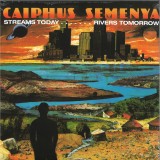
Caiphus Semenya, AKA Mr Letta Mbulu, is a South African legend and Streams Today… Rivers Tomorrow, his second solo LP, is perfect. A ten out-of ten album if ever we heard one. It’s also incredibly rare, especially in good condition, so Be With is delighted to present this reissue.
Now a revered composer, musician, and arranger, Caiphus left apartheid South Africa in the 60s for self-imposed exile in Southern California together with his wife, Letta Mbulu. Settling in Los Angeles he started working with the likes of Hugh Masekela and Miriam Makeba and other exiled and semi-exiled South african artists, as well as, of course, his wife Letta.
Caiphus also found himself working with and composing for a broad range of jazz and pop artists, including Lou Rawls, Nina Simone and Cannonball Adderley. His facility with both jazz and African forms served him well. His LA stay also the beginning of an ongoing collaboration with Quincy Jones, the fruits of which can be tasted in Caiphus’s African compositions for the scores to Roots and Spielberg’s adaptation of The Color Purple.
Originally released in 1984, Streams Today… Rivers Tomorrow is not just a musical masterpiece, it is also the soundtrack to the life of many South Africans - both then and now. Fusing the US-heavy sounds of boogie, disco and funk with Afrobeat and traditional African elements, it’s truly a spectacular listen. Jabu Nkosi handles keyboards on the album, with synths by Caiphus and Craig Harris. Sipho Gumede is on bass and Condry Ziqubu is on guitars.
The Afro-Cuban grooves of “Mamase” open the record. Continuing where Listen To The Wind left off, this is another horn-heavy call-and-response ode to a positive life. Life as an invitation to party, to take part, to “get involved”. But only if you’re willing to let in the transcendent power of music. “There’s gonna be a Mardi Gras, there’s gonna be a carnival; there’s gonna be a jamboree, there’s gonna be a bacchanal”. Who can resist that? Vibrations everywhere.
It’s followed by the joy of “Aida”. Gleeful, dayglow keys and synths *just* on the right side of mid-80s sleaze are accompanied by a killer bassline, slick, skipping drums and proud horns. Infectious funk.
The tempo is taken down a few notches for the powerful “Nomalanga” and the lamentations of a heartbroken man who must leave his wife Nomalanga and their children to join the fight against apartheid. It’s an emotional song, no question, but it doesn’t bring you down. The uplifting music and optimistic vocal delivery from Caiphus and his backing singers in the second half offer hope.
Breezy drums and contemplative keys act as a backdrop for the stunning backing vocal harmonies in the intro of “Moshanyana”. This gives way to stuttering beats, a bassline to die for and Caiphus giving it his all, over guitars, marimba and synth strings. Another slo-mo winner.
Side two opens with “Dial Your Number”, an uptempo English-language boogie-funk workout, complete with mid-song cutaway to a random telephone call. Whether or not this propels the song into “key track” status, we’ll let you decide.
What’s not up for debate is the brilliance of “Matswale”. This was a hit in South Africa in the mid-80s and you can still hear why. It might just be our favourite Caiphus hit. Wow. This is some damn fine breezy, beautiful, emotional pop. The restrained playing, the guitar licks and the gentle keys are out of this world. The beats? Thundering, direct and slick. The singing? It’ll give you goosebumps. As for the sentiment? This is Caiphus singing to his in-laws about their daughter’s adultery, begging them to intervene and help him save his marriage. Not your typical pop single story-telling!
The ferocious “Ndi-Kulindile” closes the set with a nod to the coming sound of the States. The hard-edged, electro-influenced drum patterns and bouncing, elastic bassline are something of a departure from the album’s predominant sound, yet one wonderful constant, Caiphus’s exceptional delivery and his sparring with his backing vocalists, is satisfyingly present and warmly deployed.
With Simon Francis handling the mastering of this Be With edition, you know it sounds as fantastic as ever. The stunning sleeve has been restored, with its painting of a dream-like cosmic vista, as a lone figure takes in a scene that’s part distant planet, part urban sprawl. One listen and you’ll be transported.
Caiphus Semenya, AKA Mr Letta Mbulu, is a South African legend and Streams Today… Rivers Tomorrow, his second solo LP, is perfect. A ten out-of ten album if ever we heard one. It’s also incredibly rare, especially in good condition, so Be With is delighted to present this reissue.
Originally released in 1984, Streams Today… Rivers Tomorrow is not just a musical masterpiece, it is also the soundtrack to the life of many South Africans - both then and now. Fusing the US-heavy sounds of boogie, disco and funk with Afrobeat and traditional African elements, it’s truly a spectacular listen. Jabu Nkosi handles keyboards on the album, with synths by Caiphus and Craig Harris. Sipho Gumede is on bass and Condry Ziqubu is on guitars.
One listen and you’ll be transported.
out of Stock
Last delivered 51 days ago available to reorder, subject to availability
The 80s owed everything to the punk revolution ... and betrayed it time and again.
ln 76-77, the incredible explosion of English-speaking bands focused the energies of a whole generation of Western youth - rebels ready to pick up a guitar and use it like a weapon. Yet more than punk music itself, it was the creative burst it triggered that radically shaped 80s pop and heralded an unending stream of inspired performers.
Although we often speak of the British and American golden age of post-punk from 78 to 84, with artists that included Talking Heads, Joy Division, PIL and Devo, France (together with Switzerland and Belgium) joined the movement too. Today, on a new album, the group Nouvelle Vague have paid tribute to this sumptuous "Frenchy" period clothed in the nihilism of punk, along with bitterness fuelled by the economic crisis and, paradoxically, the bewitching spirit of pop.
lts title, Couleurs sur Paris (Colours on Paris) is based on both a famous postcard collection and Oberkampf's 1981 punk anthem, and reflects the period, which oscillated between elation and despair. Written by artists sometimes known as "the modern young people" and including faux naïf electropop nursery rhymes by Elli & Jacno ("Anne cherchait l'amour", 1979), Lio ("Amoureux solitaires" , 1980)
and Etienne Daho ("Week-end à Rome", 1984), along with Lili Drop ("Sur ma mob", 1979) and Taxi Girl ("Je suis déjà parti", 1986), the songs clearly express the hopes and disappointments of the day.
The sense of melancholy suggested by the disenchanted lyrics of "Déréglée" - performed in 1977 by Marie-France, an icon of Paris nightlife - is even more noticeable on the 1981 hit by The Civils, who cynically sang, "Tonight, they're dying in Chad, but l'm buying my dream Walkman" before taking it to the chorus: "The economic crisis is fantastic, decadence is the right feel".
The punk shockwave con also be felt in the music of bands who radically shaped French culture and song. Like Rouen, with Les Dogs ("Sandy, Sandy", 1982), every provincial town and city in France began to produce bands at the end of the 70s and the start of the 80s. Wunderbach's 1983 punk pamphlet "Oublions l'Amérique" was a foretaste of what is now called alternative punk, a genre that won acclaim in 1988 with Mano Negra's "Mala Vida". Indochine, French pop legends for the last thirty years, also encouraged the trend in the summer of 1983 with "L'aventurier", after a first single brimming with the spirit of rebellion, "Dizzidence Politik".
Rita Mitsouko, the duo that emerged from the underground Parisian punk scene of the late 70s, rocketed to stardom in 1984 with "Marcia Baïla". Equally baroque, TC Matic - the first band fronted by Belgian singer Arno - released an ironic, political underground hit in 1983: "Putain, putain". Other artists fuelled a post-punk movement that explored the romanticism of machines and the darkness of new wave, including the cult, much-neglected duo from Nancy, Kas Product ("So Young but so Cold", 1982) and Switzerland's Stephan Eicher, whose "Two People ln A Room" (1985) followed on from "Eisbaer", a hit in a more underground style written with Grauzone in 1981. However, the genre's most influential practitioners were certainly Noir Désir. From their first single in 1987 ("Où veux-tu qu' je r'garde?"), they won mainstream success with their unique fusion of 80s gloom and power rock. Beyond from the meteoric success of Bordeaux's Gamine ("Voilà les anges", 1988) and the subversive spirit of Jad Wio ("Ophélie", 1989), French post-punk reached its climax with the success of Noir Désir, Rita Mitsouko, Stephan Eicher and Manu Chao, whose albums reigned supreme in the 90s French charts. From the underground scene to gold records: the eternal story of pop.
out of Stock
Last delivered 5 years ago available to reorder, subject to availability
Triangulating a slinky signal to a square mile off the Swan River, Glowing Pin bring us ‘Pentagon Palette’, a master blast of frequency adjusted house, swamp stomp and chakra charmers from Australian newcomer Jonus Eric.
Though opening brace ‘The Cult’ and ‘Collect’ made first contact back in 2014, a loose connection between Perth and Hamburg hindered progress before ‘Mirrors’, ‘Emulator’ and ‘Waterfall’ walked across the web in 2019 to round out a dope debut release from this house auteur. Specialising in mind altering sound design and melodic flair, Jonus generates a neon swamp on ‘The Cult’, serving up a psychoactive roller caked in radioactive fuzz and insectile fizz. Thick bass swells and circular marimba make for a hypnotic rhythm, while a shapeshifting vocal and moody keyboard riff drag us back towards terra firma. The paradisiac refrain of ‘Collect’ soon sounds out through the jungle with a euphoric haze,
its sub-tickling bass and acid gurgle riding hyperactive drum programming as the track warps in the humidity. Soaked in serotonin and brisk at 137 BPM, ‘Mirrors’ burns off the mist to offer an airy update on the French Touch template. Though frazzled circuitry and dislocated vox serve this one with a twist, the chiming pianos and bouncy beat are still best enjoyed in a Golf GTI in the summertime. Jonus reaches for the lasers via the restless rhythm and rave sirens of ‘Emulator’, a fresh take on the funky house of the late nineties updated with unexpected breaks, squealing feedback and treated vocals usually found on a Four Set banger.
Next it’s off to the chillout room for ‘Waterfalls’, a fourth-world tone poem describing crystal caves, undiscovered wildlife and a holographic waterfall. Ditching the doof, and letting those colours tesselate, Jonus offers a +2 bump to your mana, before the post punk bassline, growling EBM vocal and off key organs of ‘YR Mind’ combine for a confrontational bonus track, only available in digital format.
out of Stock
Last delivered 6 years ago available to reorder, subject to availability
Dukes of Chutney, the transcontinental trio of Dustin Lynn, John Paul Jones, and Petra, explore the different spaces and places, between nothingness and nature, that nurture inner and outer peace for their debut full-length Hazel. Cosmic yet intimate, long-gestating and free-flowing, diffuse and centered, Dukes turned toward their immediate sanctum, and a network of friends and colleagues, to realize the vision of Hazel. “Pretty much everything we do is without purpose,” the Dukes admit, in line with their pursuit of joy. But it’s not empty hedonism or passivity at play on Hazel, so much as an expression of freedom. “Why not?” was scribbled on the white frame of the Polaroid documenting their first appearance on Tim Sweeney’s Beats in Space many years ago, and it remains their motto, their mantra.
out of Stock
Last delivered 5 years ago available to reorder, subject to availability
The Sweethearts is a project by Tyler Thacker together with Sam Mehran (ex Test Icicles).
Songs were written on a tiny casio between Sam and Zak Mering. Tyler pretty much played all the instruments.
As Tyler explains:
This album was recorded a decade ago underneath a bunkbed in a crowded apartment we shared in Brooklyn. At the time, ‘The Sweethearts’ was just another anonymous moniker among many, intended as a pop-minded musical outlet between primary contributors myself, Zak Mering and Sam Mehran, featuring whatever friends happened to be passing though that day including but not limited to Morgan Whirledge, James Ferraro, Zak Davis, Aaron Frankle, Ian Drennan, Ariel Pink, Ryan Howe.
Like so many of the collaborations from those years, these songs and many more floated to the wayside as we each barreled through various other configurative projects, eventually retired to failing hard drives. But the specter of this specific catalogue always haunted me despite shifting primary focus to painting shortly thereafter. Two years ago in July, the world lost one of its most fearless creators, Sam Mehran , and I lost one of my best friends who oozed melody as effortless as breath.
These songs are letter bombs to adolescence in the information age: reterritorializing the tropes of heteronormative psycho-sexuality proliferated throughout western pop music on top of self-deprecation, heartbreak, disappointment, indulgence, and loss of innocence.
At one point, I caught myself singing harmony to Zak and Sam on a song called ‘Tonight’s the Night’ and it was in that meeting place between the metaphysical and the spirit world, that I finally got to say goodbye to Sam.
out of Stock
Last delivered 6 years ago available to reorder, subject to availability
Remastered reissue celebrating the 30-year anniversary of the seminal 1990 club hit ‘Where Love Lives’.
Regularly crowned as one of the greatest ever dance records, it holds a place in many a heart, resonating across generations. Back in 1996 Mixmag had it top of their 100 Greatest Dance Singles Of All Time, adding “There's a touch of sadness about it but it's incredibly uplifting, reaching a bittersweet joy that only the most spiritual of house achieves.”
This special RSD reissue includes a rare Frankie Knuckles and David Morales ‘Mo Knuckles’ remix bursting with underground flavour. 12" black vinyl.
out of Stock
Last delivered 3 days ago available to reorder, subject to availability
The Hammond organ was first manufactured in 1935. In 1954, the now famous Hammond B3 model was introduced with additional harmonic percussion feature. When the company went out of business in 1985, around two million of various models of the Hammond organ have been produced.
The Hammond B3 was originally marketed to churches as a lower-cost alternative to the wind-driven pipe organ. It quickly became popular with professional jazz musicians in organ trios. Jimmy Smith's use of the Hammond B3 inspired a generation of organ players, and its use became more widespread in the 1960s and 1970s in rhythm and blues, rock, reggae, and progressive rock.
This collection is centered on the exciting and dynamic sounds of the Hammond B3 organ!
out of Stock
Last delivered 6 years ago available to reorder, subject to availability
Hypnoskull is part of the global anti-music conspiracy networkTM (since 1992). Hypnoskull was created in 1992 as a solo project in order to experiment in the area of electronic noise combined with rhythmical structures. In the first years of its existence, Hypnoskull was releasing cassettes and tracks on international labels in the so-called cassette network, a widely spread network of independent and experimental musicians and artists who expressed themselves throughout limited tape releases often including artworks, ideas, texts. In 1998, hypnoskull signed to the German label ant-zen and up to today he is still releasing his albums on this highly influential record label. That is not a coincidence: ant-zen stands for ‘anti-zensur’ (anti-censorship), one of the main starting points of the provocative hypnoskull project. Patrick Stevens does not limit himself to just producing music as such, albums always include a severe message, a thought-provoking underlying concept text, questions. The main philosophy: ‘the dance floors, the clubs, the festivals,… are staged warzones with a different set of rules – a therapeutic zone where hidden anger and even aggression of both the artists as well as the spectators can be released in a proper, human way. Music as a means to open up the deepest anger inside human beings, letting it out in a way which is not harmful to others. A strange symbiosis between the two worlds Patrick Stevens is a part of: the techno and the industrial scene. Techno being a genre promoting a peaceful yet hedonistic way of life, industrial on the other hand being a highly nihilistic, philosophic but pitch black reflection on society. The mix of both musical as well as content wise elements of these genres result in what hypnoskull is all about. Added to this an explosive mixture of post-war and contemporary western subversive philosophy – in a rather impulsive manner – makes the project what it is today, after 30 years of existence.
out of Stock
Last delivered 4 years ago available to reorder, subject to availability
Faitiche presents a new album by Frank Bretschneider. abtasten_halten was made as part of the raster.labor installation first presented at CTM Festival in 2019. It is perhaps the most radical work in Bretschneider’s distinctive oeuvre: abtasten_halten is a self-generating composition for synthesizer modules whose sole sound source is the movement of two VU meter needles. The resulting percussive sounds coalesce into rhythmic combinations – all random, without repetition. The album resembles a meditation on infinite rhythmic variation. abtasten_halten is Frank Bretschneider’s first release on Faitiche.
One sound can give birth to thousands of tones through self-fertilization. Pierre Henry, 1982
Frank Bretschneider on abtasten_halten:
abtasten_halten (sample_hold) is a largely self-generating composition for a modular synthesizer system. Self-generating here means that as soon as a current flows, the various modules interact, but within limits set by the composer via the connections between the modules (patches): timing, tempo, timbres, dynamics. These conditions are kept variable to a certain extent or left to chance, so that the composition created is always similar but never the same. On the one hand, the use of random generators opens up possibilities that would not otherwise have been considered. On the other, it offers the fascination of the unfinished and the unique: totally unexpected musical events that you might hear only once.
abtasten_halten combines my preferences for percussive music in general and electronic music in particular. Largely avoiding repetitive structures, the piece is more like a free improvisation, quiet and diffuse, but also extremely dense, in ever-changing contrasts and transformations.
The tone generators are two modified VU meters whose needles, driven by trigger impulses, create a simple one-bar pattern by hitting against a metal spring that is connected to a piezo element (thanks to Gijs Gieskes / Gieskes.NL). The tempo is continuously varied over a period of about ten minutes by several mutually modulating LFOs, ranging from about 0.06 Hz up to the lower audio range of about 18Hz.
The percussive sounds thus obtained are then passed through low-pass filters with moderate resonance and random frequency modulation to additionally colour the sound. Further processing is then executed by an echo module whose tempo and repetitions are again determined by random parameters. Finally the audio signal is occasionally enriched with reverb to add more spaciousness to the sound.
The concept for the installation raster.labor was developed by Olaf Bender, Frank Bretschneider and David Letellier. Many thanks to raster - artistic platform.
On Frank Bretschneider:
Frank Bretschneider works as a musician, composer and video artist in Berlin, making mainly electronic work based on complex rhythmic structures and interlocking textures, whose many-layered sound is inspired by the experimental set-ups of modern physics, often supplemented by perfectly synchronized computer-generated visualizations. In 1986, he founded AG Geige, one of the most influential underground bands in East Germany. In 1996, he co-founded the label raster-noton and has since released many solo albums.
out of Stock
Last delivered 6 years ago available to reorder, subject to availability
Widely and rightly regarded as one of the best ever soul and funk bands, the now legendary Average White Band tore-up the rule book and conquered the US, UK & International charts with a series of soul and disco hits between 1974 and 1980.
AWB’s repertoire has been a source of inspiration and influence for many R&B acts and they are one of the most sampled bands in history, remaining relevant today, continuing to reach new generations of younger audiences.
Snoop Dogg, Fatboy Slim, Ice Cube, Puff Daddy, TLC, Rick Ross, will.i.am and Mark Ronson amongst countless others, have all borrowed sections of their grooves.
Following a seven-year break, Average White Band returned in 2003, with their most recently released wholestudio album, ‘Living In Colour’, which includes two soul classics in ‘I’m Gonna Make You Love Me’ and Major Harris’ ‘Love Won’t Let Me Wait’.
The full album line-up comprised Alan Gorrie, Onnie McIntyre, Klyde Jones, Fred Vigdor and Brian Dunne, along with additional musicians Eliot Lewis ,Cliff Lyons, John Fumasoli, Tony Kadleck, Bill Harris, Carlos Gomez, Joe Najmy and Rob Aries.
We welcome to the Moustache Records family the oldskool electro legend Martin Matiske with his Electronic disco-ish 12 inch EP release "Robotic Theatre" This is a future vision of a theatre run by robots and is the era in which machines entertain mankind. Operas are written and played in a mechanical way. The pieces of "Robotic Theatre" deal with different terms of stage work. Track A1 is called "Acting Faces" and Refers to the rehearsing of the role, as well as the interaction of the actors on stage. The well-being of the actor does not often match what is played. He has to play even If it's painful. B2 is the track called "Machinery" Human beings are machines that build machines today. The advantage is perfection and time saving. Robots as actors are reliable and precise. B1 listen to the name "Transistor Dances"its Like The Hungarian Dances by Johannes Brahms you just need a dance to express happiness and remind your culture. Dances bring people together. A robotic dance should not be missing in a play. The last track of the EP is the tune "Practise" a story about a robot the has to practise to achieve perfection and it is fun." Don'tplay this underwater order now gone is gone.
out of Stock
Last delivered 2 years ago available to reorder, subject to availability
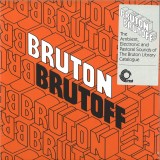
Rare musical magic from the Bruton library catalogue – ambient, spacey, pastoral and electronic. Music by John Cameron, Alan Hawkshaw, Fran-cis Monkman, Brian Bennett and more – all total masters of the scene. All very cool. All very now. All will sell very fast.
Over the last three decades Jonny Trunk has collected and written about library music. But he’s never had a great deal of luck with the Bruton catalogue. By this he means that he’s never stumbled across a massive stash, or lucked-out buying a huge run for practically nothing –that’s the kind of thing that used to happen in the 1990s and the early noughties if you were out there looking hard for library music. But he did manage to get about 25 in one hit about 20 years ago when the BBC shut down their “TV Training Department” near Lime Grove and also when a box of Brutons ended up being dumped at a hospital radio, and they didn’t want the records, so Jonny got a call.
There are lots of Bruton albums in existence – over 330 LPs in the vinyl catalogue, issued between 1978 and 1985. That’s a lot of music to wade through if you are looking for sublime modern day sounds. For many years now the “trophies” from the Bruton catalogue have been the beat or action driven LPs – the two Drama Montage albums (BRJ2 and BRJ8) have always been the big hitters, and others such as High Adventure (BRK2) too.
But Jonny has always found himself drawn to the lime green LPs, the pastoral, peaceful albums (The BRDs), which were full of the kind of gentle, lovely music that would turn up in Take Hart as Tony was paint-ing a woodpecker or a badger or an Autumn tree. The other Brutons he likes are the orange ones (The BRIs) simply because they are full of ex-perimental futuristic electronics and would remind him of 1980s ITV backgrounds. This LP series includes Brian Bennett’s cosmic classic Fantasia (BRI 10). Jonny has been knows to refer to this style of library music as “Krypton Factor library”, because it’s exactly what that strange but successful 1980s TV quiz show sounded like.
In recent years as interest in library music has expanded, we’ve watched
the price of a handful of Brutons really going through the roof - not the just the action and drama ones, but the more esoteric and experimental LPs too – like the BRDs and the BRIs. Jonny gets the vibe that people fi-nally want to hear this other more interesting and experimental side of the Bruton catalogue. So what better time than now to put together a compilation of such sublime period sounds.
Not only does this album bring together a set of fabulous cues that would cost the average man in the street a month’s wages (if the origi-nals were all wanted and if you could even track them all down), but it also chops out the need to listen to other tracks on library albums that are nowhere near as good.
The cues here all date from between 1978 and 1984. They come from the BRD, BRI, BRH, BRJ, BRM, BRR and BRs catalogues.
The composers are all legends within the genre, and here, were doing what great library composers do best – fulfilling a brief and utilising modern studio equipment to both commercial and beguiling effect.
out of Stock
Last delivered 5 years ago available to reorder, subject to availability
The MINDFULNESS HIPERNORMALISATION album itself marks a new turn in Eduardo's work, breaking away from any musical style or stereotype and always trying to seeking freedom of expression,marked also by a strong connotation of voluntary ostracism.A new stage in which Eduardo uses this double vinyl like a tool to mark a distance with the current international scene and also support the Adam Curtis theories shown on his acclamed documentary "The HiperNormalisation" 2016 . The album show influences that goes from romantic ambient melodies to the most complex and experimental electronica,also including easy listening techno where it is difficult to differentiate the line between techno and ambient.
Francois Kervorkian,DJ and official engineer of albums belonging to Depeche Mode or Kraftwerk, gives support to this great work of Eduardo which will remain in the near future and without any doubt as a cult album.
out of Stock
Last delivered 6 years ago available to reorder, subject to availability
‘Alterity’ is compilation of fifteen warped, experimental and deconstructed club music tracks featuring artists from almost every continent. It pieces together shared sounds that connect disparate scenes across the globe. The music is fuelled by a desire to dissolve borders and transcend perceived norms to promote the existence of alternate viewpoints, lifestyles and identities.
The listener travels to a parallel plane through amorphous techno wormholes, caverns of industrial beat science and colossal panoramas of glistening hyper-stylised trance. Each creation espouses local sounds and adapts global musical styles creating a singular, holistic map of modern dancefloors that champion diversity and inclusivity.
The cover art of a manipulated city shows an ordinary urban landscape remodelled as another world. It hints at an endless, borderless macrocosm concealed within.
The gatefold double LP is pressed on yellow vinyl and comes with a digital download code and printed inner sleeves.
out of Stock
Last delivered 6 years ago available to reorder, subject to availability
clocolan is Emlyn Ellis Addison, a South African artist now living in Providence, Rhode Island. Exploring themes of ontology and psychedelia, his is a music of imaginary futures—of neglected hinterlands and unconquered vastness lost in the background noise of human endeavor.
Addison’s 2017 album, Nothing Left To Abandon, examined the experience of memory while his new album, It’s Not Too Early For Each Other, examines a more pressing experience: the ecosystemic collapse. clocolan dotes once more on dusty melancholy and electronic psychedelia in his new album, pressing into darker territory and more visceral textures.
It’s Not Too Early For Each Other examines the looming inevitability of a future shaped by mankind's destruction of natural ecosystems—and its seeming inability to alter that course. This music is dedicated to the pariahs: the messengers who confront the murder of the ecosystem.
Emlyn was introduced to Colin Morrison at Castles in Space by Strictly Kev AKA DJ Food. It's proving to be an incredibly fruitful collaboration and a third clocolan long player is already delivered and undergoing mastering for future release on Castles in Space.
out of Stock
Last delivered 6 years ago available to reorder, subject to availability
Following the release of Milton Nascimento’s Maria Maria, Far Out Recordings proudly presents Nascimento’s 1980 follow up. With the success of Maria Maria in 1976 behind them, Nascimento reunited with his writing partner Fernando Brant in 1980 to produce another ballet, ‘Ultimo Trem (Last train)’. This time, they chose to tackle a more contemporarily relevant subject, the impact of the closure of a train line that connected certain towns and cities in the North East of Minas Gerais to the coast. “The military government shut down the route and the whole region began to fade away,” explains Milton. “I love train rides” adds the composer, “But today there are almost no trains to Brazil. So when I go to the US and Europe, any time I can, I go by train. The longer the journey the better.”
Featuring much of the same all-star line-up as Maria Maria – including legendary Brazilian musicians Naná Vasconcelos, João Donato, Paulinho Jobim and members of Som Imaginário, amongst many others, like Maria Maria, the album holds what Milton himself considers to be the definitive versions of some of his most beloved tracks, including 'Saídas E Bandeiras' and 'Ponte de Areia'.
The title track, ‘Ultimo Trem’ – performed exquisitely by Zezé Mota with a choir and piano – is a mournful lament about the human consequences of the axed line. The ballet brought great media attention to the campaign against closure. “Most of Fernando’s lyrics have some political tone,” says Milton, “This one helped the area a lot because the politicians grew concerned about the subjects.”
Fernando’s and Milton’s shared passion for the sounds, smells and memories of trains, inspired the soundtrack for the production which premièred in 1980. ‘A Viagem (The trip)’, launched with a train’s steam whistle, sees Milton’s guitar moving to a train’s rhythm. In contrast to the usual lyricism, ‘Bicho Homen (Beastly man)’ and ‘Decreto (Degree)’ are atypically upbeat and funky, their vocals a mesh of wordless male voices resembling the then fashionable Swingles Singers’ renderings of Bach. ‘E Daí? (And so what?)’, and ‘Olho d’Agua (Water’s Eye)’ were both drawn from ‘Clube Da Esquina’. ‘Olho d’Agua’ is mellow and delicate and Milton’s homage to the great voices of Brazil whilst ‘E Daí? (And so what?)’ is a stunning mosaic of voices. The unusual ‘O Velho (The Old Man)’ conjures up an image of an old shaman singing alone into the wind against the cries of nature. Perhaps the most affecting songs are Nascimento’s ‘Itamarandiba’ and ‘Oração (Prayer)’. The latter is a cry for a change in the situation whilst ‘Itamarandiba’ ends with an upbeat, whirling Hammond organ and guitar timepiece. The closing track ‘Ponta de Areia (Sand Edge)’, was based on one of Fernando’s newspaper stories and became one of Milton’s most famous pieces, covered by musicians across the planet, including Wayne Shorter and Earth, Wind and Fire. It reappeared as a ghostly 45-seconds memory on the ‘Milton e Gil’ album, his millennial collaboration with Gilberto Gil.
After 27 years of being locked inside contracts and record company legalities, these sublime songs were finally released in 2003 as a double CD package, along with Maria Maria. Set for its first ever vinyl release for this year’s Record Store Day, on limited edition red vinyl, Ultimo Trem sounds as fresh and relevant now as when Brazilian music was still a South American secret.
out of Stock
Last delivered 5 years ago available to reorder, subject to availability
On the 12th of April 1961, Yuri Gagarin was launched into orbit for the first and - so they tell us - the last time. Upon returning to Earth, Yuri became a global hero, travelling the world to tell of his adventure.
Secretly, he was plagued by strange hallucinations and a persistent glow around his vision; a cornucopia of colour in a constant corona. In 1964 - following a silent coup by Leonid Brezhnev - Yuri was banned from embarking on further manned missions into space. At first fearing madness, the cosmonaut came to see these apparitions as a signal, an invitation, a welcoming beacon from a distant lighthouse blinking across the cosmic void.
On the 27th of March 1968, aided by trusted friends within the space program, Yuri Gagarin swapped places with another cosmonaut on a secret test flight and was once more blasted into outer space. Knocked unconscious by the extreme velocity of his experimental craft, Yuri awoke a mere 15 minutes later in view not of the rapidly shrinking Earth, but an entirely alien vista; he was elsewhere...
About Tony Neptune
Tony Neptune is a multi-media persona created by the Leeds-based artist and producer Sam Jefferies who, inspired by the narrative and musical legacies of early Detroit techno culture, aims to tell a complete story for the senses through a combination of image, sound and text. Asa member of the DimensionsDJ Directory three years running, some know Jefferies for his notorious DJ sets—whether he’s playing new wave or booty bass; as Tony Neptune or Yuri; solo or alongside Mark ‘Turbo’ Turner in another peak time marathon b2b, it doesn’t take long for crowds to catch on to his deep knowledge of all things riddled with Hi-Tech Funk and Soul. But this isn’t the only storm he’s cooking up: in his visual work, Jefferies uses oil paint to unveil the surreal and celestial adventures of the original cosmonaut and space pioneer, Yuri Gagarin, capturing every aspect of their dream-like surroundings with an eye devoted to detail and depth. This painting lies at the heart of his debut EP, Reflections on a Daring
out of Stock
Last delivered 5 years ago available to reorder, subject to availability
HIGHLIGHTS First ever reissue of "Kabwlú", a very hard-to-find album released by Discos Fuentes in 1965. The mysterious Los Picapiedra (which translates as The Flintstones, inspired by the 1960s American cartoon show), was a short-lived studio group with one albumto their name, "Kabwlú", mixing 'folkloric' and 'modern' elements with calculated 'caveman' humor. It is very musically diverse; not only are there the requisite genres that could be found on similar Colombian teenage-oriented groups' records of the time, such as cumbia, gaita, rock, twist and pachanga, but there is also a smattering of surf, doo-wop, Latin jazz, guajira, ska, and calypso. But what makes the whole thing so special is the odd, off-kilter arrangements, spooky tunings, rudimentary clanging percussion, invented 'cave' language, prominent twanging electric guitar and many zany sound effects. Several of Los Picapiedra's songs became very popular in Colombia as well as Venezuela and especially in the 'rebajada' (slowed down) version as played by the 'sonidero' sound system DJs in Mexico, such as "La Hossa". Presented in its original artwork and pressed on 180g vinyl. Part of Vampisoul's reissue series of classic Fuentes LPs. DESCRIPTION While Discos Fuentes was known for recording all sorts of interesting sounds from traditional folkloric Colombian music to the latest popular international styles, every once and a while they would put out a "novelty" record, perhaps to exploit a passing fad, and at times the label would green-light something strange or even outlandish. Many of those left-field releases have their merits and have subsequently become collectors' items over the years. One such case is the mysterious Los Picapiedra (which translates as The Flintstones, no doubt inspired by the 1960s American sitcom cartoon show), a short-lived studio group with one album to their name, "Kabwlú" (an unpronounceable, invented "caveman" term that is also untranslatable, but seems to have been the 'traditional rhythm' of Los Picapiedra's 'homeland'). What is interesting about the record is that it is very musically diverse; not only are there the requisite genres that could be found on similar Colombian teenage-oriented groups' records of the time, such as cumbia, gaita, rock, twist and pachanga, but there is also a smattering of surf, doo-wop, Latin jazz, guajira, ska, and calypso. But what makes the whole thing so special is the odd, off-kilter arrangements, spooky tunings, rudimentary clanging percussion, invented 'cave' language, prominent twanging electric guitar and many zany sound effects. Much like its namesake American cartoon The Flintstones, "Kabwlú" trades in creative anachronism, mixing 'folkloric' and 'modern' elements with calculated 'caveman' humor that works on many different levels. For instance the title tune seems to have been inspired by the pachanga craze and recalls the vibe of Ray Barretto's massive 1962 hit, 'El Watusi', but it has a certain joyful simplicity and rock-solid underpinning that elevates it beyond mere novelty or exploitation - and argues for its timely reissue for today's audience. The band was a studio invention that had no major significance in Medellin's live music activity. However, several of Los Picapiedra's songs were very popular in Colombia as well as Venezuela and especially in the 'rebajada' (slowed down) version as played by the 'sonidero' sound system DJs in Mexico, such as "La Hossa". Pablo E Yglesias (aka DJ Bongohead, Peace & Rhythm) Additional research by Luis Daniel Vega
out of Stock
Last delivered 6 years ago available to reorder, subject to availability