Für viele Musiker ist der Schritt aus dem Kollektiv ein riskantes Manöver: Wie nämlich nehmen Band und Publikum die Entscheidung auf? Hendrik Otremba, Sänger der Gruppe Messer, stellt nun sein Soloalbum vor. Er hat es Riskantes Manöver genannt - aber nicht aus dem genannten Grund. Längst hat er sich als eigenständiger Künstler etabliert, hat als Maler, Autor und Performer stets auch zur Identität von Messer beigetragen, die gerade obendrein an einem neuen Album arbeiten - dieses Soloalbum kündet also nicht von Zwist. Wenn etwas verblüfft, dann vielleicht eher, dass Otremba nicht erneut in ein neues Medium aufbricht, sondern dorthin zurückgeht, wo alles anfing: zu den eigenen Songs, die bisher im Verborgenen lagen. Riskantes Manöver ist dabei kein Aufguss des Bekannten, aus Ennui oder Eitelkeit. Viel eher tritt der Songwriter Hendrik Otremba an die Öffentlichkeit, der sich parallel zu Messer entwickelt hat. In den vergangenen zwölf Jahren nimmt er Demos auf, experimentiert, geht intuitiv vor und findet zu einer eigenen Sprache, aus der er nun mit zwei engen Freunden ein Album ausgearbeitet hat: Multi-Instrumentalist Alan Kassab, ein Schulfreund Otrembas, und Kadavar-Schlagzeuger Christoph 'Tiger" Bartelt, schon Produzent des Messer-Debuts. Gemeinsam nähern sie sich den Demos wie einem Skript und schaffen so eine Art auditiven Autorenfilm. Im Zentrum steht eine kreative Vision, die von virtuosen Technikern und begnadeten Darstellern umgesetzt wird - neben der Kern-Crew gehören dazu Stella Sommer, Alex Zhang Hungtai (Ex-Dirty Beaches), der Otremba überhaupt erst dazu inspirierte, ein eigenes Album zu schreiben), Gregor Schwellenbach, Friedrich Paravicini, Dominik Otremba (aka Performance) - aber auch Tochter Hedi und mehr als ein Dutzend weitere Kreative zwischen Indie-Adel, Hochkultur-Bagage und Jugendfreunden. Doch nicht nur durch sein Casting-Gespür und weitere direktive Entscheidungen überzeugt Otremba, sondern vor allem mit Musik, die durch ihre Weite und einen eigensinnigen erzählerischen Ansatz gar filmisch wirkt: Als zarter Chansonier schleicht Otremba durch die Streicherschluchten von New York II, geifert als Apokalyptiker in Nektar Nektar vor Blastbeat und heulendem Saxofon, findet in der sinophilen Klavierballade Bargfeld aber auch zu Ruhe und Intimität. Brachialen Proto-Industrial und dröhnenden Goth meistert Otremba ebenso wie epischen Pop oder Großstadt-Country; hier öffnet ein Musik-Enthusiast sein vielseitiges Portfolio, in dem er als Sänger und Performer zugleich eine neue Bandbreite entwickelt. In sein Rollen-Inventar führt Otremba zudem die Figur "66 ein, ein "Zeuge des zivilisatorischen Niedergangs" und eine Art Erzählstimme, durch deren Perspektive wir auf das von Katastrophen und Verlassenheit geprägte Geschehen des Albums blicken. Otremba tritt als "66 maskiert auf, zu sehen etwa auf dem Cover der Riskantes Manöver Doppel-10-Inch. Was die Bandagen bedeuten, bleibt unklar - ein weiterer, rätselhafter Eintrag in Otrembas Privatmythologie, bestehend aus Namen, Zeichen, Bildern, die sich durch sein gesamtes Werk erstrecken. Riskantes Manöver öffnet darin nicht nur eine neue Facette, der Titel fasst zugleich das Ethos eines Arbeitens zusammen, "das nicht auf Relevanz oder Erfolg gepolt ist". Gerade, wenn dabei immer wieder Gegensätze vereint werden müssen, die an dem Menschen dahinter zerren: "Das riskante Manöver ist mit den Widersprüchen zu leben und sie im eigenen Schaffen stattfinden zu lassen. Lust und kreative Ambition als was Positives zu begreifen in einer Situation, wo das, was ich sehe, eigentlich für das Gegenteil spricht, abgründig, negativ, dämonisch ist." In diesem Sinne ist hier ein Monolith von einem Album geschaffen, der sich zugleich machtvoll und zart aufstemmt, wie es im Untertitel der Platte heißt: "gegen die Verachtung der Gegenwarth"! - Sebastian Berlich
Cerca:ad man
For over 30 years Richard Adams has been quietly documenting his own particular corner of the English countryside both with Hood, the post-rock band he formed with his brother in 1991, and since 2007 with The Declining Winter. Recorded over a five year period and inspired by rustic English alternatives such as Talk Talk and Robert Wyatt, The Declining Winter’s latest work ‘Really Early, Really Late’ is a collection of beautiful songs, immersed in a richer sonic spectrum incorporating strings, horns and lush electronic textures, alongside Adams’ own unique guitar tones and characteristic dubby bass. Though it retains the homespun scratchiness of previous The Declining Winter records, ‘Really Early, Really Late’ is also their most ornate. A remotely collaborative effort, the record is scattered with decorative embellishments from violinist Sarah Kemp (Brave Timbers), cellist Peter Hollo (Tangents), and guitarist Ben Holton (epic45), among many others. Adams’ distorted whisper of a voice has never been more exposed leading to a brutally emotive and intensely personal song-suite, both raw and beautiful in equal measure. The storybook curiosity of Mark Hollis’ work is a particular influence. Like Hollis, this music is imbued with magical realism: beholden to nature, it hints at the mysteries lurking in mundane local landscapes and the more remote Yorkshire moors and valleys. A record to hold close to your heart, ‘Really Early, Really Late’ sees Adams and his collaborators emerge from the shadows with their most complete work to date. Home Assembly are proud to present the album on lush crystal clear, double vinyl, bundled with a CD housed in an oversized vinyl-style sleeve.
All of us carry a piece of where we’re from with us, but these parcels of fallow land often in a uniquely mysterious way become the prey that nourishes our aspirations. Agnès Gayraud a refined thinker by day that transforms into la Féline at night left Tarbes many years ago in search of greener pastures. After making a name for herself with Adieu l’Enfance (2014), Triomphe (2017), and Vie Future (2019), the author and musician has evolved once again. Her latest release Tarbes reinvents the circle of life and challenges our preconceived notions. She welcomes us to her hometown with sweet and clear melodies over the backdrop of an electronic hum, reminiscent of Mark Twain classic Tom Sawyer. Tarbes is no more than a listen away. Physically prevented from returning to her hometown by the viral threat we all know all too well, Agnès found her way back with a small Electone home organ. The constraints of off-peak hours that called for some DIY savvy, slowly but surely, roused her spirit. With a drum machine, a bass and a guitar, she succeeded in making the young girl inside her smile again. With 13 songs and just as many adventures Tarbes is a concept album that tells the story of a young woman’s formative years, as spent in her hometown. The returning hymn doesn’t only imprint nostalgia, it paints the full emotional portrait of a town. Because for Agnès, Tarbes is not just her theater, but her whole world, showing how fiercely protective she is of her hometown in the song Solazur. Under a magnifying glass of emotion, and with the sentimental testimony that is La Panthère des Pyrénées, the artiste shows us the skeletons in our own closets. Tarbes, more than a brief stopover in a rail journey to the coast, broaches issues that touch on abandonment, desertification, aging and redevelopment that many French towns and cities face today. Alexandre Guirkinger’s photographs serve as album art that illustrates this strangely unique singularity. While fine-tuning this collection of stories, in an oh-so-intimate album where solitude rips away the mask of confidence, Agnès found solace in uniting with other spirits. For 3 songs Tarbes, Jeanne d’Albret and Fum, inspired by an Occitan poem of Louisa Paulin (1888-1944), she invited the young voices of Conservatoire Henri Duparc a building she knows intimately, despite never feeling allowed to enter as a child to breathe the energy of their adolescence into this record. She also collaborated with Lyon’s own François Virot to imbue his delicate rhythms into her work, as well as Belgian guitarist Mocke Depret. Lastly, La Féline entrusted the last production stages to her eternal partner in music, Xavier Thiry, with Stéphane “Alf” Briat on the mixing board. The final piece has a complex tranquility, surrounded by non-verbality, with Jeanne d’Albret, Louisa Paulin and the Pyrénées safeguarding Agnes’ secrets. With the calm reassurance of her metamorphoses, La Féline delivers a slice of silence to her town, serving as both her cradle and theater. Tarbes’ Théâtre des Nouveautés is where Agnès Gayraud, La Féline, has decided to present Tarbes to its residents on October 14, 2022. While “nouveautés” evokes newness, this theater is reminiscent of a future which is already outdated, where modernity is only vague and fictional, carrying reminders of French haute-kitsch accordionist Yvette Horner, whose parents were the caretakers of what was then called the Cani Eldorado a bastion of virtue through the 30s, with its lineup of Catholic films. However, by the 60s, it would have become a temple of pornographic cinema. Tarbes, “Les Nouveautés”, end card. In the mid 90s, then 16 years old, Agnès discovered the volatile dust and the ghosts of the past that were hidden in this apostate theater. This phantom bequeathed song the teenager with the gift of her undeniable talent at her first appearance on stage a high school performance of a guitar-laden ballad sung in Spanish, a language her Andalusian mother has infused her with. On October 14, 2022, Agnès returns to the stage, bass in hand and joined by François Virot (drums), Mocke Depret (guitar), Léa Moreau (keyboard) and the Conservatoire de Tarbes singers to perform the album in its entirety
- A1: Naomi Akimoto - Bewitched (Are You Leaving Soon) (Are You Leaving Soon)
- A2: Atsuko Nina - Tonkachi
- A3: Miho Fujiwara - Heartbeat
- A4: Miharu Koshi - Scandal Night
- B1: Chu Kosaka - Shirakechimauze
- B2: Teresa Noda - Tropical Love
- B3: Makoto Matsusa - Business Man (Part 1)
- B4: Susan - Ah! Soka
- C1: Yukako Hayase - Suiyoubi Madeni Shinitaino
- C2: Parachute - Kowloon Daily
- C3: Hiroyuki Namba - Tropical Exposition (Who Done It? Version)
- C4: Pizzicato Five - Boy Meets Girl
- D1: Mari Iijima - Love Sick
- D2: 1986 Omega Tribe - Cosmic Love
- D3: Osamu Shoji - Pub Casablanca
- D4: Chiemi Manabe - Untotooku
Light in the Attic’s Pacific Breeze series has supplied the world’s growing legions of Japanese music fans with an expertly curated selection of the most sought-after City Pop recordings—the mesmerizing and nebulous genre of Japanese bubble-era music of the ‘70s-’80s that encompasses AOR, R&B, jazz fusion, funk, boogie and disco. These familiar sounds are spun through the unique lens of optimistic, cosmopolitan fantasy colored by Japan’s affluence at the time. Much of the music has previously been nearly impossible to acquire outside of Japan and continues to captivate listeners with its unique blend of groove-laden escapism, even birthing wholly new genres such as Vaporwave.
Pacific Breeze 3: Japanese City Pop, AOR & Boogie 1975-1987 marks the latest chapter in the famed series and features holy grails plus under-the-radar rarities. The collection bursts at the seams to reveal some of the greatest Japanese tracks ever laid to tape, pushing towards the edge of City Pop to reveal glimmers of the next waves of styles to spring forth from the country’s creative minds. The appearance of Pizzicato Five hint at the emergence of Shibuya-kei while the influence of hip hop and electro as an emerging global trend are also evident here through the prevalence of heavier programmed drum beats on tracks such as “Heartbeat” by Miho Fujiwara.
This volume of Pacific Breeze, like its predecessors, is a female-forward offering with many tracks being voiced by women who would become household names in Japan as actresses and pop idols. Their songs here subvert the norm and brim with an innovative spirit that shatters gender roles in favor of sonic transcendence. Techno-pop classics from Susan, Miharu Koshi and Chiemi Manabe sit alongside sublime funk from Atsuko Nina and Naomi Akimoto while Teresa Noda slides into the mix with a sultry reggae jam. The genre span is stretched wider with hypnotic jazz fusion by Parachute and Hiroyuki Namba, a synthesizer fantasy from Osamu Shoji, and magnetic pop by Makoto Matsushita and Chu Kosaka.
Although not front and center, the visionary members of Yellow Magic Orchestra are still very present on Pacific Breeze 3, with Haruomi Hosono, Ryuichi Sakamoto, and Yukihiro Takahashi taking up producer and musician roles on many of these tracks. Pacific Breeze 3 serves up a captivating musical journey that adds an essential chapter to the iconic compilation series.
Tracklist:
Naomi Akimoto - Bewitched (Are You Leaving Soon), Atsuko Nina - Tonkachi, Miho Fujiwara - Heartbeat, Miharu Koshi - Scandal Night, Chu Kosaka - Shirakechimauze, Teresa Noda - Tropical Love, Makoto Matsushita - Business Man Pt. 1, Susan - Ah! Soka, Yukako Hayase - Suiyoubi Madeni Shinitaino, Parachute - Kowloon Daily, Hiroyuki Namba - Tropical Exposition (Who Done It? Version), Pizzicato Five - Boy Meets Girl, Mari Iijima - Love Sick, 1986 Omega Tribe - Cosmic Love, Osamu Shoji - Pub Casablanca, Chiemi Manabe - Untotooku
- A1: The Revolution Will Not Be Televised – Gil Scott-Heron
- A2: Just In Time To See The Sun - Leon Thomas
- A3: Head Start - Bob Thiele Emergency
- A4: See Saw Affair - Cesar
- A5: Peaceful Man - Esther Marrow
- B1: Expansions – Lonnie Liston Smith & The Cosmic Echoes
- B2: Bolivia - Gato Barbieri
- B3: Friends And Neighbors - Ornette Coleman
- C1: 125Th St & 7Th Ave - Oliver Nelson
- C2: Mama Soul - Harold Alexander
- C3: Heavy Soul Slinger - Pretty Purdie
- C4: Soulful Strut – Steve Allen
- D1: Whitey On The Moon - Gil Scott-Heron
- D2: Lament For John Coltrane (Take 1) – Bob Thiele Emergency
- D3: Peaceful Ones – Lonnie Liston Smith & The Cosmic Echoes
- D4: Echoes - Leon Thomas
• Bob Thiele is one of the great producers. For his work with John Coltrane alone, where he gave free reign to the saxophone great's wildest musical visions including “A Love Supreme”, ignoring the usual cost consciousness of a major label, he deserves to be lauded. In addition to this, his eight years at Impulse! saw him recording seminal works by scores of musicians including late-blooming masterpieces by Duke Ellington and Johnny Hodges, and a whole wave of 'new thing' jazzers such as Archie Shepp and Pharoah Sanders. He didn't stop there and when he launched his own label, Flying Dutchman in 1969, he continued to innovate and record music that reflected its times, but that also resonates down through the ages. It is to Flying Dutchman that we are paying tribute on this compilation.
• Gil Scott-Heron's recordings for the label ran to three records, which sold well but not spectacularly at the time. They have since taken on a resonance that makes the album "Pieces Of A Man" in particular one of the most important recordings of the last century, and its opening track 'The Revolution Will Not Be Televised' an anthem. Pianist Lonnie Liston Smith had been on Thiele's final important Impulse! Recording, Pharoah Sanders’ "Karma", and continued to appear on Flying Dutchman, first as a sideman and then as a leader. His 1975 album "Expansions" was the perfect encapsulation of his 'cosmic jazz' and the title track is a moment of near perfection which has become one of the foundation pieces of modern dance music.
• Flying Dutchman's other great discoveries are here. Vocalist Leon Thomas found a new route for jazz vocals in the early 70s, which made him a star and earned him a place in Santana. Gato Barbieri became one of the major saxophone stars of the era, after Thiele enabled him to meld his free jazz leanings to the rhythms of South America. The label also made important recordings with Tom Scott (featured on Thiele's own 'Head Start'), Ornette Coleman and Oliver Nelson, whilst interesting records appeared by Esther Marrow, Harold Alexander and many more.
• This is Flying Dutchman is a considered tribute to the label, and features in depth and fully illustrated sleeve notes. In the year when Bob Thiele's son is gearing up to release the first new music on the label since 1976, it is an apt and timely reminder of the power of the music.
The new album! One of reggae's emerging masters of Reggae / Dancehall & Dubwise production, Alborosie has honed his craft through the creaton of six studio albums (five for Greensleeves). Along the way, he has become the biggest selling European roots reggae artist. His latest album, "Freedom & Fyah" demonstrates his production skill and depth of feel with strong contemporary and authentic reggae jams. All tracks are produced by Alborosie, with most of the songs mixed by the high renown James "Bonzai" Caruso. Featured guests include Ky-Mani Marley on the ballad and first single/video "Life To Me" and Protoje, who have been just voted as best international artist by the Riddim magazine readers, on the track "Strolling" and reggae legends, the Roots Radics band with Flabba Holt on the track "Everything" feat. Pupa Avril. Stand out tracks include "Poser" (which has chalked up already over 1 million YouTube views) and "Rocky Road" which is up to 500K views. "Freedom & Fyah" is availlable as CD-digipak with additional 12-page booklet with printed lyrics and also as LP-vinyl edition.
- A1: India
- A2: Child Of Nature
- A3: Anna Was Mine (Demo Version)
- A4: Nature Boy (Mantovani Orchestra)
- A5: Land Of Love (Come My Love And Live With Me)
- A6: Hey Jacque (Hey Jacque)
- A7: Palm Springs (The Ray Anthony Orchestra)
- A8: Umgowah
- B1: Wild Boy ( With Mort Wise & The Wisemen And Rocky Holman)
- B2: Surfer John (Nature Boy & Friends)
- B3: Eden’s Island (Arthur Lyman)
- B4: Monterey (With John Harris And Paul Horn)
- B5: Overcomers Of The World (With John Harris)
- B6: The Clam Man
- B7: Nature Boy (The Talbot Brothers)
Colour Vinyl[31,89 €]
“Wild Boy …” is a reissue of the well-known 2016 release curated by Brian Chidester, renowned researcher and biographer of Eden Ahbez. Especially for this album, Brian wrote an interesting text about Abi’s life, which definitely became the decoration of the release.
With the new 2020 re-release, we went a little further and kept what is commonly referred to as studio cuts. It’s a few more minutes in the studio with ahbez himself, full of emotion and life. In addition, to the delight of fans, the edition includes an additional composition Nature Boy (Mantovani Orchestra).
Especially, it is worth noting the outstanding mastering prepared from practically decomposed tapes by the Grammy-nominated Jessica Thompson, which guarantees the deepest and warmth possible sound. Jessica a huge ahbez fan and we’re highly appreciated for what she has done to save his music for the future.
Eden Ahbez is definitely at the origin of psychedelic music and this release can be taken as further proof. Over the past twenty years, the iconic figure of the world’s first hippie Eden ahbez has become famous primarily for his 1948 song “Nature Boy”, praising universal love, and his amazingly solo album from the 1960s called “Eden’s Island” – one from the first concept albums in the history of music and probably the first psychedelic music album. “Wild Boy: The Lost Songs Of Eden Ahbez” deepens understanding of the origins of the psychedelic movement in the 1950s.
The disc contains a musical selection of works by Eden ahbez himself, written by him in the period after Nature Boy. The inclusion of songs such as “Palm Springs” – Ray Anthony Orchestra and “Hey Jacques” by Erta Kitt gives the listener the chance to discover for the first time the little-known recordings of world-famous artists composed by Eden ahbez. Through “Wild Boy” and “Surfer John” you can hear the author’s handling of absurd rock and exotic experimentation, as well as sweet psychedelic pop like Monterey (with Paul Horn on flute). Overall, Wild Boy: The Lost Songs Of Eden Ahbez offers an overview of the lost works of 1949-1971 with seven unpublished recordings and eight rare singles.
If in 2020 you are missing the hallucinogenic content in Eden Ahbez, it amazingly makes up for that deficiency with simple chords, expansive arrangements, and lyrics about travel, relaxation, free love, and spirituality. Thus creating the standard of psychedelic music. Eden Ahbez’s songs weren’t only fantasy and his personal philosophy was the real thing that he lived.
reviews:
“This carefully and extensively researched compilation culls covers by top notch mainstream artists juxtaposed with unreleased Eden recordings. What might sound like a mixed bag is actually more like a chronological, musical non-fiction novel about Eden Ahbez. While Eden was writing hundreds of songs and performing live and making recordings in various styles, his songs were also being picked up by popular artists like Nat King Cole and Eartha Kitt who recorded with a more polished mainstream style. There are also some early rock n roll style recordings here. Eden’s professionally recordings often end up as Novelty Pop records such as “Child of Nature” and “The Clam Man” but if you read between the lines and listen to the lyrics it is pretty eye-opening that he is singing about Eastern-religion-style and pre-hippie philosophies about being at one with the planet Earth.
All of this is explained in the lengthy liner notes inside the lp along with a few choice photos that establish Eden as a founding father of Southern California mystic/psychedelic music.” – Tiki_News
“Eden Ahbez’s life philosophy was summed up in the lyrics of his most famous song, “Nature Boy,” a 1948 hit for Nat King Cole: the song describes a “strange enchanted boy” who wanders the world in search of truth. “The greatest thing you’ll ever learn,” he concludes, “is to love and be loved in return.” Ahbez was a pre-cursor of California’s beatniks and hippies, and an exalted icon of ex-otica via his rare 1960 album Eden’s Island. Beyond “Nature Boy” and Eden’s Island, though, there were nu-merous lesser-known Ahbez record-ings. Ahbez biographer Brian Chidester has been doing an exemplary job of archiving and documenting that catalog of work. The Exotic World of Eden Ahbez (reviewed in UT#38) appeared a few years ago, gathering together 14 Ahbez-related rarities” – Ugly Things
Lyburnum Wits End Liberation Fly was the one and only full-length album by experimental post-punk innovators, Moss Icon . Recorded in 1988, Lyburnum would not be released until 1993 - several years after Moss Icon 's demise. Originally released on Vermiforn - the esoteric noise label founded by Sam McPheeters of Born Against - the vision that Moss Icon 's Tonie Joy had for Lyburnum failed to manifest in its finished product. Of the process of preparing Lyburnum for its eventual release, Joy recalls, "My creative mind was well into its next chapter, onto an apocalyptic order referring to Joy's post- Moss Icon band, Universal Order of Armageddon . Getting Lyburnum to look like what I envisioned in my mind became an uphill battle that involved misplaced photos, misunderstood instructions by the printer, increasing apathy, and lack of advanced printing knowledge (on my part), amongst many other technical and creative issues. With a deadline near it ended up being an it-is-what-it-is situation. Some corrections were attempted for the second pressing the following year, but a further lack of coordination between various parties saw it losing even more of the original vision." Despite these challenges and shortcomings, Lyburnum Wits End Liberation was instantly cherished as a feral masterpiece - a singular entity that would become a defining influence on post-hardcore and emo in the 1990s and beyond. Nothing before sounded like this, and nothing since has quite captured the same mysterious fury. Now, finally, Moss Icon 's seminal Lyburnum Wits End Liberation Fly LP will be released exactly as it was always intended to look, sound, and feel. The artwork has been fully restored, and includes previously unpublished photos that were inadvertently missing from the original release. Brilliantly remastered by Alan Douches at West West Side Music, the vinyl has been newly cut by Bob Weston at Chicago Mastering Service, and pressed onto audiophile-grade vinyl at Record Technology Inc.
CRYSTAL CLEAR VINYL
Lyburnum Wits End Liberation Fly was the one and only full-length album by experimental post-punk innovators, Moss Icon . Recorded in 1988, Lyburnum would not be released until 1993 - several years after Moss Icon 's demise. Originally released on Vermiforn - the esoteric noise label founded by Sam McPheeters of Born Against - the vision that Moss Icon 's Tonie Joy had for Lyburnum failed to manifest in its finished product. Of the process of preparing Lyburnum for its eventual release, Joy recalls, "My creative mind was well into its next chapter, onto an apocalyptic order referring to Joy's post- Moss Icon band, Universal Order of Armageddon . Getting Lyburnum to look like what I envisioned in my mind became an uphill battle that involved misplaced photos, misunderstood instructions by the printer, increasing apathy, and lack of advanced printing knowledge (on my part), amongst many other technical and creative issues. With a deadline near it ended up being an it-is-what-it-is situation. Some corrections were attempted for the second pressing the following year, but a further lack of coordination between various parties saw it losing even more of the original vision." Despite these challenges and shortcomings, Lyburnum Wits End Liberation was instantly cherished as a feral masterpiece - a singular entity that would become a defining influence on post-hardcore and emo in the 1990s and beyond. Nothing before sounded like this, and nothing since has quite captured the same mysterious fury. Now, finally, Moss Icon 's seminal Lyburnum Wits End Liberation Fly LP will be released exactly as it was always intended to look, sound, and feel. The artwork has been fully restored, and includes previously unpublished photos that were inadvertently missing from the original release. Brilliantly remastered by Alan Douches at West West Side Music, the vinyl has been newly cut by Bob Weston at Chicago Mastering Service, and pressed onto audiophile-grade vinyl at Record Technology Inc.
SP-1200 beats made using postal service. Fredfades and Sraw collaborate through post, exchanging dusty beats for an experimental Hip Hop record. The process of sending floppy discs back and forth, where each producer added element over element on their own SP-1200, has been on-going for almost 10 years, slowly building a collaborative body of work.
The result is Double Density, an LP that oozes with the character of that infamous instrument which laid much of the foundation for the earliest Hip Hop artists and still manages to evoke those raw and visceral sounds of that era. Reinforcing those sounds are the voices of Planet Asia, Pink Siifu and Blue November, who deliver lyrics from US coasts to Scandanavia’s fjords.
The duos collaborative effort swims in a sea of eclectic influences where Jazz, Soul and Hip-Hop thrive in the construct of this unique instrument. The drum machine pops, crackles and hisses on a bed of big bass lines through 12 tracks that go from short instrumentals to fully arranged songs.
Taking Hip-Hop back to its origins, everything is stripped bare to its essentials and for every vocal track, there’s its antithesis in the form of an instrumental break. It’s a record that plays with the archetypes of Hip Hop and Rap as something that we’ve lost over the years that begs for revocation. Double Density sounds exotic in the world of today’s gleaming beats.
AZMLP01COR[19,29 €]
Part 31[19,71 €]
Part 6[14,92 €]
Part 4[14,92 €]
Part 15[14,92 €]
Part 43[14,92 €]
Part 17[14,92 €]
Part 26[14,92 €]
Part 27[14,92 €]
Part 12[14,92 €]
Part 9[19,71 €]
Part 3[19,71 €]
Part 2[19,71 €]
Part 7[19,71 €]
Part 41[19,71 €]
Part 40[19,71 €]
Part 37[19,71 €]
Part 39[19,71 €]
Part 44[19,71 €]
Part 38[19,71 €]
Part 29[19,71 €]
Part 20[19,71 €]
Part 19[19,71 €]
Part 33[19,71 €]
Part 42[19,71 €]
Part 45[22,06 €]
Part 21 Standard[22,06 €]
Part 22[22,06 €]
Part 5[29,79 €]
Part 8[29,79 €]
Part 18[29,79 €]
Part 35[29,79 €]
Part 16[29,79 €]
White/Purple Vinyl[26,01 €]
Part 21 Edition Or[26,01 €]
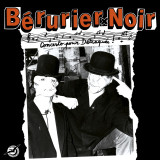
Concerto Pour Détraqués" was ranked 52nd best French rock album by Rolling Stones magazine in 2010.
Eleven tracks like so many vitriolic pictures of a sick society: rape, extreme right-wing, psychiatric confinement, security paranoia, alcoholism and all the other crap that the future seems to hold. Loran and François express more than ever their rage and their refusal of the adult world in a recital with three chords: more aggressive guitars, more incisive lyrics and voices while an armada of chorus members and a saxophone come to heckle or underline this darkness.
"Concerto Pour Détraqués" is the band's reference album, with a string of hymns to insubordination and freedom: Petit Agité, Vivre Libre ou Mourir, Les Rebelles, Porcherie, Hélène et le Sang...
The band's name alone evokes the epic of alternative rock: rebellious and committed.
Born by mistake on a February evening in 1983, Bérurier Noir soon found itself the driving force behind a vast "Youth Movement", determined to take control of its life in the face of a society that was ultra conservative at the time. Times have hardly changed.
From the first self-produced records distributed by hand to the creation of self-managed labels, from concerts in squats and wild appearances in demonstrations, on the street or in the metro to endless tours, from interviews given to fanzines and free radio stations to unclassifiable appearances in the mainstream media, Bérurier Noir has waged the most exciting war of independence in the history of French rock, with only a microphone, a guitar, a drum machine, a few red noses and patched-up theatre masks.
The last finger of honour of this turbulent and irrecoverable raia, François, Loran and their "Troupeau d'Rock" commit hara-kiri, at the peak of their glory, during three last concerts in the heart of Paris in November 1989.
Forty years after its birth, Bérurier Noir's work still resonates, whether in demonstrations or free parties, nourishing the hopes of those who wish to overthrow this world to build a truly libertarian, united and fraternal society.
The label Archives de la Zone Mondiale reminds those who missed this unprecedented adventure, 8 discographic parts of the group Bérurier Noir in the form of reissues on particularly original colour vinyls (crown finish), in a limited series and distributed throughout the year.
Born in Milan to a Cameroonese father and a Polish/Lithuanian mother, Nathan Dawidowicz moved at the age of 6 to Jerusalem. He was spending his childhood in a Jewish ultra-orthodox environment playing the piano and dreaming of being a Fashion designer and musician. After waking up from the reality he was raised in, he moved to Venice and started to explore the "outside world" of the mental barriers of religion. Music and fashion were his medicine, and he quickly became addicted to musical textures and vinyl. His love for music brought him quickly to Berlin, where he currently lives and loves.
Sanctuary Of Ideas is a very personal and optimistic journey by Nathan Dawidowicz. His first solo album is a spiritual path, as cosmic and adventurous as Nathan`s trajectory, with beautiful twists and psychedelic twirls into Dawidowicz personal rabbit hole. A record full of memories and positive affirmations, filled with Jazzy yet psychedelic Cosmic and Krautrock elements. A fusion of inspiration - and a perfect reflection of Dawidowicz heritage.
Idea`s Eve is a stargate to our ancestral power. The source of our inspiration is connected to our past - to the spirits of our ancient memories. Dawidowicz leaves a lot of space to breathe in this magical opener. Enchanting melodies and bubbling sounds surround the listener while his voice keeps repeating a mantra of an ancient love spell. A track where you feel your DNA spiraling up the ladder of evolution. Yet so natural and healing.
Full Moon Dance is the spiritual continuation of the first track. A swirl of magical melodies, yet jazzy but truly cosmic walking up the ladder to another dimension, where warm moon rays and fluffy clouds surround love. The synth lines represent the playful and smooth moon rays reflected on a rhythmical heart-beating ground where tears can be joyfully spent to honor the emotions we usually oppress.
To close the EP, Nathan Dawidowicz worked a half a year to finalize the last track in full detail. 23 Minutes and 18 Seconds long is the Capricorn Rising Over Jerusalemite Temple. This story is where the listener is brought to a higher level of consciousness. Against the rules of our consumerist world, Nathan Dawidowicz focuses on a dramaturgy full of patience for our own lifetime. Acidic lines come and go, powerful synth solos trigger unknown brain parts, and an epic melody accompanies the listener and lets dark emotions melt in a brass-filled part where a voice tells us that time is on our side. The song ends with an epic twist and promises a new start, where our most lovely memories stay in a vortex of light. Beam me up Nathan.
- 1: Intro (Ghetto Kumbé Remix)
- 2: Sola (Les Enfants Sauvages Remix)
- 3: Vamo A Dale Duro (Uproot Andy Remix)
- 4: Djabe (Monte Remix)
- 5: Pila Pila (Trooko Remix)
- 6: Cara A Cara (Dj Firmeza Remix
- 7: Tambo (Nickodemus Remix)
- 8: Esta' Pillao (Studio Bros Remix)
- 9: Pide Mas (Montoya Remix)
- 10: Lengua Ri Suto (Cero39 Remix
- 11: Bomba Feat. Walshy Fire (Sky Monroe Remix)
There's no denying the power of the drum. It's primal, it cuts across borders and most importantly, it makes you want to move. Ghetto Kumbé don't just understand that_they celebrate it, and it's why the tambor was at the heart of the Bogotá-based trio's 2020 self-titled debut album. Rooted in mysticism and the Afro-Caribbean rhythms they'd grown up with all their lives, the critically acclaimed LP thrillingly updated the traditional Latin template, folding in elements of modern hip-hop, house and bass music while also delivering a transportive Afro-futurist vision. On Clubbing Remixes, that vision has been further amplified, as Ghetto Kumbé_who were already one of Colombia's most prominent alternative acts_have now gone fully global; enlisting an all-star roster of artists from four different continents, they've put together a fresh version of their debut album that's been specifically geared to the world's diverse slate of dancefloors. As the title implies, the new LP is meant for the club, which is why Ghetto Kumbé have turned to Latin music heavyweights like Trooko_a multiple Grammy winner whose resume includes work with Lin-Manuel Miranda and Residente_and Monte (a.k.a. Bomba Estéreo founder Simón Mejía), along with top-shelf DJs like Nickodemus and Uproot Andy, two NYC artists who've spent decades championing Afro-Latin rhythms. True to the LP's global spirit, the record also includes reworks from batida maestro DJ Firmeza, fellow Afro-Portuguese outfit Studio Bros and Parisian house groovers Les Enfants Sauvages, plus genre-blurring remixes from sonically adventurous Colombians Montoya (himself another ZZK artist) and Cero39. Even the artwork on Clubbing Remixes is a remix, as Ghetto Kumbé have tapped Uganda's Denzel Muhumuza to transform the cover of their debut album into a new, explicitly Afro-futuristic illustration. Depicting a strong Black face and glowing neon fauna beneath a sparkling moonlit sky, the fantastical image speaks to both the ritual magic and Afro-indebted heritage of Ghetto Kumbé's music, and thanks to Clubbing Remixes, the group's passionate, drum-fueled sounds will soon be blasting out of sound systems around the globe.
Critically-acclaimed, criminally-overachieving Glasgow-based singer and guitarist Alasdair Roberts is known as a superlative original songwriter as well as an interpreter of traditional songs from Scotland and beyond. For the past twenty years, his recordings have alternated between these two complimentary poles, with "pop" records such as The Amber Gatherers and A Wonder Working Stone nestling in his expansive back catalogue alongside "folk" albums such as No Earthly Man and What News (with Amble Skuse and David McGuinness). Additionally, all of these records possess a further dimension, derived from their collation of songs together into one album-length statement. This is part of Alasdair"s great achievement in his career - for him, this thing of music and song hasn"t come the eons it"s travelled to simply entertain. These impulses fully present and well honed, Alasdair returns to his roots with Grief in the Kitchen and Mirth in the Hall, his fifth full-length collection of traditional song. Recorded live in the studio, it is an entirely solo collection of twelve traditional ballads and songs sparsely arranged for acoustic guitar, piano and voice. The majority of the songs originate in Alasdair"s homeland of Scotland, with a couple from Ireland and one from Prince Edward Island on Canada"s eastern seaboard too. The record takes its title from a line in the final verse of one of its songs, "The Baron o" Brackley" - a ballad of feuding clans and matrimonial betrayal from the north-east of Scotland. Grief in the Kitchen and Mirth in the Hall: it"s a title which goes some way towards encapsulating many of the record"s themes. Collectively the songs treat of various conflicts and tensions - those of gender; of class, status and position; and of geography and tribal belonging - and the roles and responsibilities expected at the various intersections of these constructs. That we should never forget! As with many of Alasdair"s recordings, Grief in the Kitchen and Mirth in the Hall contains ballads aplenty: tragic ("Bob Norris"), supernatural ("The Holland Handkerchief") and dramatic ("Eppie Morrie"). There are love songs ("The Lichtbob"s Lassie") and anti-love songs ("Kilbogie"). There are rare, seldom-heard pieces ("Young Airly") and much more well-known ones ("Mary Mild," a version of "The Queen"s Four Maries"). Woven through all of this - a thread of levity, perhaps - is a triptych of zoological allegories - a panegyric to a mystical steed ("The Wonderful Grey Horse"), a lament for a lost cow ("Drimindown") and a paean to a regal waterbird ("The Bonny Moorhen"), which serves to highlight the intersection of the mythic, the eternal and the mundane at which we all find ourselves in every day of our life on Earth. Grief In the Kitchen and Mirth in the Hall was masterfully recorded by Sam Smith at Green Door Studios, Glasgow over an economical two days, and mixed in one day. Its brevity on all levels is an aspect of its expression. Alasdair"s renowned acoustic fingerstyle guitar is understated yet questing, ever in service to the needs of the song, underpinning his soulful tenor voice. Three songs eschew his habitual acoustic guitar in favour of simple piano arrangements. The spare setting and Alasdair"s deeply committed performance gently reminds of the meanings and melodies of these old songs, chosen instinctively and with care, for all to hear and sing in 2023, and the world beyond that is ever coming.
Far Out Recordings proudly presents laid back Brazilian groove maestro Joao Donato’s synth-heavy collaboration with his son Donatinho. Sintetizamor sees the father-son duo jovially hurtle through space and time across ten tracks of sparkling pop, Brazilian boogie and club friendly disco-funk.
Joao Donato has been a hugely influential figure in the development of Brazilian music since the mid-1950’s. He’s played and recorded with virtually every one of his fellow Brazilian masters. Many of his own albums (of which he’s recorded over three-dozen) are regarded with such adulation that ‘cult-favourites’ doesn’t quite cut it.
Aged 82 at the time, Donato’s collaboration with his prodigious, synth obsessed son Donatinho - whose keyboard talents have been called on by the likes of the late Gal Costa, Djavan and Donatinho’s contemporaries such as Diogo Strausz - was originally released back in 2017, as a limited Brazil-only release.
For Record Store Day 2023, Sintetizamor will be available on vinyl (for the first time outside of Brazil) from participating stores.
40th Anniversary Edition - newly remastered from the master tapes, with an additional bonus LP of instrumentals and the previously unreleased "Narration Theme."
Daytime Viewing (1979-80) is an extended narrative song, based on a casual analysis of daytime television drama and the audience phenomena such programming addresses. The piece explores the use of fantasy as a survival mechanism against loneliness, illustrating the human compulsion to inflate the mundane to mythological proportions. A central female character weaves tales, using threads of personal experience and the idea of TV as friend, as mantra, and as transformational window between imagined spectacle and the pedestrian plane.
Originally released as a private cassette edition recorded, 1982; Chez Hum-Boom release, 1983 documenting the collaborative performance piece of the same name by Jacqueline Humbert g David Rosenboom. This heady, thoroughly enjoyable work was first made available on CD and LP in 2013 by Unseen Worlds. Jacqueline Humbert (aka J. Jasmine) is a songwriter of brains and wit on
par with Robert Ashley, with whom she's worked extensively. David Rosenboom's complex, harmonic electronic arrangements are accentuated brilliantly by percussion from William Winant. Daytime Viewing can happily be added.
Star Funeral is the full-band solo project of Nikki Es- posito. Stepping into the spot light from behind the bass in Secret Tapes, Esposito adds guitar and lead vocals to her list of duties while drums are handled by Ethan Kreidemaker. Sonically, Star Funeral walks a fine line between pleasant and somber tones- dreamy guitars splash through plodding bass and drums with Esposi- to’s vocals driving them forward through a flurry of aching longing and regret. This is indie rock at its finest and Star Funeral feel set to be a standard bearer for a long time. “In the Dark” came together in 2020 after urging from close friends and producer Billy Mannino (Bigger Better Sun, Oso Oso). Singer/multi-instrumentalist Nikki Es- posito built this solo project from the ground up, per- forming all instruments alongside Ethan Kreidemaker’s studio percussion. It’s a lightning bolt of intensity and harrowing growth set to honor and expand upon her primary influences, a flash of self-understanding while re-entering a lightless era. Star Funeral’s debut is a potent discovery of new ways to shoulder old wounds, such as the murmurs of body dysmorphia trailing be- hind double-jaw surgery (“Mouth Bleeder”), the lack of closure in lost friendships (“Outgrow”), and the anxiety of letting others in after these hurdles (“Breather”).
* "The Ape of Naples” is a deeply emotional and uniquely rewarding album. In its immediate accessibility it is somewhat reminiscent of their mid-1980s classic “Horse Rotorvator”
* The Infinite Fog version is the third Coil record receiving the fully remastered and enhanced 3LP/2CD treatment supervised by Danny Hyde.
* Includes 9 additional rare or unreleased tracks.
* All of the original material has again been carefully and sympathetically remastered by Grammy-nominated engineer Jessica Thompson who has been previously lauded for her splendid job on its sister release “The New Backwards”.
* The 3LP comes in heavy trifold cover, CDs in 6-sided Digpaks with booklet and posters.
"Hungarian guitarist Gabor Szabo (1936-82) issued only three live recordings during his lifetime. Significantly, the first of these, The Sorcerer (1967), remains the most popular album in the guitarist’s all-too abbreviated discography. But there were also More Sorcery (1968) and Gabor Szabo Live with Charles Lloyd (1974), offering Szabo totally in his element and at his bewitching best.
Several more of Szabo’s concert recordings have surfaced in the intervening years, including this one, superbly captured for radio broadcast live in 1976 at the 600-seat Agora Ballroom in Cleveland, Ohio. It is a revelation. There is a sense here that concert patrons may have been hearing an altogether different Gabor Szabo than record buyers.
For one thing, Szabo is heard fronting what is likely his own group, rather than an army of studio musicians. In 1976, Szabo was leading a tremendous quartet with George Cables (or Joanne Grauer) on piano, Tony Dumas on bass and Sherman Ferguson on drums. Szabo had not had a band with this much jazz clout since his famed quartet with Jimmy Stewart in 1967-68 – and it is a union worth savoring: Szabo’s records during this period were light, at best, on jazz.
It’s unclear if any of these musicians are on the Agora date, but as Dumas’s “It Happens” opens the program, it’s a good bet, at least, that the bassist is on board here. But as Szabo’s ’76 quartet is not known to have recorded a studio record, Live in Cleveland is the closest thing to what a mid-seventies Szabo jazz album would sound like.
Gone, are the strings, vocals and concessions to commercial consideration so prevalent on so many of Szabo’s studio records at the time. What is present, though, is fine craftsmanship, tremendous interplay, and the exciting improvisation that good jazz always yields.
This particular concert was part of Sansui’s “New World of Jazz,” a series of 13 hour-long jazz concerts recorded at Cleveland’s iconic Agora Ballroom and broadcast over 40 FM radio stations. The series was sponsored by Sansui Electronics, a Japanese manufacturer of audio and video equipment, which previously sponsored a similar series of rock concerts recorded at the Agora as well.
Sansui was promoting its matrix QS 4-channel sound system – offering, what was considered at the time, superior diagonal separation and stereo compatibility. The firm, partnering with Agora Ballroom and Agency Recording Studio owner Hank LoConti (1929-2014), was looking to take advantage of what they rightly felt was the then-current jazz renaissance.
Each show’s 16-track master tape was mixed through the Sansui QS 4-channel encoder,” according to an August 1976 Billboard article detailing the arrangement, “for distribution to the 40 FM stations throughout the United States that bought the series” – allowing for three commercial spots for local dealers to advertise."
The recording is available for the first time on CD and VINYL. Mastering by grammy-nominated Jessica Thompson.
The next album release on Goldie's fast-rising, boutique label Fallen Tree 1Hundred, The Day Out of Time by The Degrees is the Acid Jazz/Soul and Trip Hop long-player from drum and bass man of the moment Break, alsongside singer songwriter isha Campbell, heavily inspired by their home town of Bristol.
The album follows a year of lead-in singles nicely supported by Mary Anne Hobbs, Huey Morgan on BBC Radio 6Music, Mi-Soul, Solar and playlisted on the legendary Jazz FM.
Apparel Music Review:
Perhaps it's nostalgia for that wonderful time when making music was more challenging, at times laborious, and the more tiring was the process that led to the creation the more the final product acquired value, but this album brings you back to those times, without sounding outdated.
We know how much work goes into a record of this kind and, even if today's music world runs fast, presenting hundreds of thousands of releases a day, it is important to remember that records can still be timeless. Well, this is the first thing I thought while listening to this LP for the first time: it is timeless. It sounding ageless is perhaps ascribable to the fact that it recalls that famous sound coming from South-West England in the late 90s/early 00 but, having that musical wave had such an impact and therefore created a sonic standard, it can easily be revived and revisited in a current key without sounding obsolete. In addition, this album is full of different influences coming from R&B, Soul, Hip-Hop which, over the years, have grown and developed to become the daily bread of many listeners who have refined their taste with time, and can now perfectly incorporate the multiple sound stimuli coming from it, as 'The Day Out Of Time' satisfies every type of taste