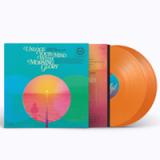
G.A.M.O. (Gods Against Man's Oppression) recounts events leading to Napoleon Da Legend transformation after being bestowed a metal helmet, which is a weapon against our modern dystopia. The album features a blend of soulful and dystopic grit featuring the likes of Vinnie Paz, Goretex, General Steele, Skyzoo, Passport Rav, Nejma Nefertiti, Innocent?, SKAM2?, Eloh Kush, CF, Dontique and more. It has production from Dub Sonata, Maitre D, Homage Beats, Passport Rav Proffeny and Napoleon Da Legend. The result is 23 tracks that blend retro-sci fi "Noir Wave" and modern Boom Bap. It features an exclusive 2 page comic illustrated by UK's Dan Lish. Limited to 300 copies only.
Rythm Of Paradise launches his brand new label “Ritmo Adriatico” with "Divina EP", a sonic manifesto of Italian house music. This four-track journey blends the power of main stages with the warm intimacy of clubs, always driven by a profoundly Mediterranean soul. A first release that doesn't just present a sound, but tells a story.
The EP opens with main track "Divina" , powerful and immediate groove built for the dance floor, wrapped in warm atmospheres and bright pads that create a sense of high energy, with emotional breaks that reminds French Kiss sound.
Followed by its remixed version of Divina by St. David where he reimagined and elevate the impact on main stages. The bass becomes more prominent, the groove expands, and the voice became more hypnotice, without ever falling into cliché.
B1. Italia Novanta is where, Ritmo Adriatico reveals its beating heart. "Italia novanta " is a respectful and modern tribute to the golden era of Italo House, diving into the Mediterranean soul of the 90s, reinterpreted with today's power.
Closing with B2. Te Quiero where takes the dreamy atmospheres and immerses them in a deep, meditative dub treatment of spacious bass lines and captivating Italo house piano licks.
Written and Produced by Michele Lamacchia.
Mixed & Mastered by St. David
"Music, like love, surprises you, makes your heart race, gives you new eyes with which to look at yourself in the mirror..." (Gigi Masin)
With an exclusive presentation by GIGI MASIN, UP TO 23 release their second album, now with an expanded three-member lineup following the permanent addition of ENRICO CONIGLIO over the founder members MARCO BUFFETTI and FRANCESCO FINCATO. The album draws inspiration from the 1980s, evoking atmospheres reminiscent of sci-fi soundtracks. Partly romantic, partly doom ambient, the work unfolds as a requiem for our planet. Liquid and enveloping atmospheres drift between melodic ambient territories — explored through processed guitars and synthesizers — and soberly electronic paths traveled to the rhythm of sequencer-driven patterns and programmed structures.
Dramatic and evocative moments emerge throughout this succession of varied yet perfectly integrated and fluid soundscapes, where sounds and progressions combine with ever-shifting solutions, following a descriptive thread that remains consistent as it continuously unravels through encompassing and emotionally engaging textures. AN APPLE A DAY YOU DIE ANYWAY is the perfect soundtrack to these dark times that UP TO 23 want to color in order to continue to hope, to live without having to survive.
"After being praised as one of the best releases of 2025 by multiple platforms, the highly praised debut album from Obeka lands on vinyl via YUKU.
The rhythmic dynamics and emotive attitudes of A World No More captures the density of soundsystem culture in Obeka's ancestral roots. YUKU presents the Bermudians debut album capturing a Neo-Colonial dystopia, protest and Afro-Futurism hyperextended through decaying sonic structures of a dark past and its grievances which very much exist today.
Growing into adulthood within the walls of British and European Colonial systems meant the disconnection and lostness in a new country hid me from the world at a young age. Unlike London's vast and culturally engaging migrant communities, the industrial milling town of Stockport introduced a coldness towards people from other countries I experienced in my first year after relocating from Bermuda. I couldn't understand why. Whether cold words thrown towards me or actions upon other people who look like me, it has shown to be a dooming societal virus with no cure. The most comfort was found through what was familiar - drums and rhythmic spirituality of my homeland. It was a safe-haven, a place to empty the anger and confusion. It's been 15 years since relocating and as my sound evolved, it seems classism, racism, oppression and civil control of ethnic peoples has become worse - even now more legalised and normalised. Ogun (a powerful Yoruba deity associated with anger, justice and war) acts as the opening sequence of the record and its symbolism. Using distorted bass frequencies and dissected Regga-Dub immersed in live-sampled ghostly voices of the lost ones. This sonic exercising is also applied in Drillaman - a stampede of industrial framework and metallic instruments wielded over moody Dancehall MC'ing, magnifying two parallel worlds in cocooned evolution. The resurrection of Transatlantic African cultures and identity have never been silenced, rather carried elsewhere through trade routes of enslavement, which was pivotal when composing and completing the album upon returning home to the Caribbean for the first time ever. After reconnecting with my heritage my blurred vision of what's wrong in the world became so clear. Guidance in empty plains seek truth throughout the pain - A statement of finding oneself expressed on the poetic closing track A World No More.
On Fawohodie (A West African Adinkra symbol that represents independence, freedom, and emancipation stamped on the album cover) the motive and atmosphere begins to change. Afro-Caribbean idealism which refers to the philosophical concept that emphasizes the interconnectedness of individuals and the importance of community, often contrasting with Western individualism, begins to take shape in a new universe. We can co-exist. The track framework uses machine-led software forming frequencies we have no control over, then manipulated through decomposing soundscapes, scattered hand-drums and human-made weapons of control - exposing the hidden disparity that's been carried over generations whilst balancing hopeful and musical foundations towards equality and peace. On Pressure and Kuduro! the writing direction attempts to wake people up. Not settling for a composed approach like in past projects, quite the opposite. A call for native sonic awareness, dismantled vocals of protests, eroded percussion using chains, gears and motorised harmonies sculpted in challenging abstract behaviors far outside my comfort zone. A direct abrasiveness and weight I want people to feel, whilst finding hope and solace through enchanting choirs and hypnotic basslines in complete synchrony.
"Purity in sound manifests when you least expect it. The smallest memory or feeling grows from a seed into a sonic language that you, and only you can interpret and release back into the world." "
How do losers dance? According to Helmut, almost weightlessly, with soft feet, warm gestures, sometimes alone, sometimes together. Content Creatures, Helmut's fourth album, evokes the pop archetype of the "beautiful loser", who had almost disappeared from view in so-called late capitalism. In a present in which even suffering is often similarly instrumentalised and tailored to clicks like a competitive sport, this album sets a counterpoint: those who listen to it suddenly want to be enchanting losers again, useless and joyfully messing up, losing something beloved, having their hearts broken, giving up a dream, sinking into beauty.
You don't sink alone. Comforting harmonies envelop you, the voices of friends appear, accompany you for a while and then disappear again. Warm grooves, floating synths and delicate guitar lines characterise an indie sound that remains open and breathes.
Self-produced for the first time in his home studio in Neukölln, 'Content Creatures' sounds thoughtful and light at the same time. The album will be released digitally and on vinyl on 10 April 2026 on Berlin-based label St.Vladimir. There are four songs on one side and four songs on the other. The cover is adorned with an exceptionally pretty guinea pig. Helmut shows the special in the seemingly ordinary: a child's pet, the most ordinary of all, is his cover star and headstrong protagonist.
Wie tanzen Verlierer? Wenn man nach Helmut geht, dann fast schwerelos, mit weichen Füßen, warmen Gesten, manchmal allein, manchmal gemeinsam. Content Creatures, Helmuts viertes Album, evoziert den Pop-Archetypus des "beautiful loser", der im sogenannten Spätkapitalismus fast aus dem Blick geraten war. In einer Gegenwart, in der sogar das Leid oft ähnlich durchinstrumentalisiert und auf Klicks getrimmt ist wie ein Leistungssport, setzt dieses Album einen Kontrapunkt: Wer es hört, möchte auf einmal gern wieder ein bezaubernder Verlierer sein, nutzlos und freudvoll abkacken, etwas Geliebtes verlieren, das Herz gebrochen bekommen, einen Traum aufgeben, in Schönheit versinken.
Man versinkt nicht allein. Tröstende Harmonien legen sich um einen, die Stimmen von Freundinnen tauchen auf, begleiten einen ein Stück weit und verschwinden wieder. Warme Grooves, schwebende Synths und feine Gitarrenlinien prägen einen Indie-Sound, der offen bleibt, atmet. Erstmals in seinem Neuköllner Homestudio selbst produziert, klingt "Content Creatures" bedacht und leicht zugleich.
Das Album erscheint digital und auf Vinyl am 10.04.2026 auf dem Berliner Label St.Vladimir. Es hat vier Songs auf der einen und vier Songs auf der anderen Seite. Das Cover ziert ein außergewöhnlich hübsches Meerschweinchen. Helmut zeigt das Besondere im scheinbar Gewöhnlichen: Ein Kinderhaustier, das normalste von allen, ist bei ihm Coverstar und eigensinnige Protagonistin.
Gap Mangione's monumentally influential Diana In The Autumn Wind. AKA BEWITH200LP. And, without question, Be With's White Whale.
They said it could never be done. And with good reason.
We've spent the past 12 years trying to license this legendary 1968 recording from Gap and, after much work, it's finally here. Remarkably, this is the first ever vinyl reissue of Gap Mangione's Diana In The Autumn Wind, produced with the full and extensive participation of Gap. An exceedingly rare album, it's been coveted by funk, soul, jazz and hip-hop sample fiends for decades.
It's unarguably *the* most sought after album for J Dilla / Madlib sample collectors. It has also been brilliantly sampled by A Tribe Called Quest, Large Professor, Ghostface Killah, Kendrick Lamar and Talib Kweli.
But this record is so much more than a sample-spotters curio. It's solid gold throughout. Bursting with killer funky-jazz grooves and tracks adorned with warm electric piano, the release is notable for featuring some extremely significant players at the very outset of their careers; Tony Levin, at 21, whose superb playing on both acoustic and electric bass was the harmonic mainstay of the trio and Steve Gadd, at 23, one of the greatest drummers of his generation.
With acceptable copies of this holy grail changing hands for $400, to call this reissue "much-needed" underplays just how vital it is. Gap's story is told in his words alongside rare photos across a sumptuously designed 2-page insert and, to augment this deluxe edition further, its all wrapped up in a beautiful, no-expense-spared luxury tip-on sleeve, as per the original hens-teeth release. And, while we're talking packaging, just take a look at that cover - a work of art in and of itself.
The tracks are short but complex, with that extraordinary rhythm section backing the beautiful piano, organ and electric piano work of Gap. It's like the best ever library funk breaks record you never heard - but all your favourite golden age rap producers were all over it, long ago. It's a stunning blend of the vibrant, driving music of the Gap Mangione Trio coupled with the sensitive composition and superb orchestration of Gap's legendary brother, Chuck Mangione, who helmed an amalgam of seemingly disparate elements – rock, big band jazz, solo improvisation and "classical" music - into a spectacularly cohesive whole that has aged wonderfully well. As Gap himself notes in the liners, "with this group I was able to explore and add new and exciting elements from rock, Brazilian and then-current pop music."
Opener "Boy With Toys" triumphantly swaggers out the gate, all big band horns, flutes and dextrous organ work. The synthesis of everything going on is nothing short of stunning. When one wise YouTube commentator called this tune "old school superhero music", Gap agreed. Rap luminaries did, too, amongst them Talib Kweli, who rapped over DJ Scratch's chopped up intro for "Shock Body" on his Quality album back in 2002.
You've barely recovered from that incredibly affecting opener when you get hit over the head with the exquisite title-track. And now you see how two of the greatest beats of all time emerged from one single track produced nearly 50 years earlier. Unforgettably utilised by Dilla for Slum Village's heartbreakingly good "Fall In Love" and then Madlib for his "Official" beat for Dilla to rap over, on the Jaylib record. Regardless of the records it went on to spawn, this is just a staggering tune in its own right. Be beguiled by the flutes and the flutter tonguing, the counter-melody from the trombones, the soprano sax solo. All of it. Simply beautiful.
The questing organ and horn workout "Long Hair Soulful" deserves a lot more attention, overshadowed somewhat by the opening two monsters but no less fantastic. It swings, it grooves and Gadd and Levin truly cook. Up next, Gap's wonderfully percussive, mellifluously piano-heavy cover of "Yesterday" by some fellas called The Beatles. It's a subtly arresting gem. "The XIth Commandment" is damn fine, with thick, gorgeous electric piano and snappy drum work underpinning chaotic soundtracky horns. To close out the side, "St. Thomas" showcases the "fourth" member of the Gap Mangione Trio, conga drummer Dhui Mandingo. Having performed with the Trio since 1965, Dhui‘s African-based and jazz-latin-influenced style amazed listeners and its way to hear why.
Opening the B-Side, standard "You're Nobody Till Somebody Loves You" breezes along in the late-night jazz club fashion before things get super deep with the outstanding and - up to now - un-sampled "Pond With Swans". It's simply heavenly, and how its moody, melancholic intro has yet to be pilfered is anybody's guess. It oscillates between gentle, sombre movements and bombastic grooves, equally hypnotic and joyous. The rendition of "You Are My Sunshine" is yet another showcase for Gap's virtuoso playing and Gadd's mastery of the pocket. Indeed Gadd's drumming on "Free Again" is nothing short of neck-SNAPPING! Ghostface took it for not one but two "Iron's Theme" tracks across his seminal Supreme Clientele. It's got that Galt MacDermot "Coffee Cold" feel. Suuuuuper cool. The frantic "Dream On Little Dreamer" hurtles along and must've surely had the whole room absolutely swinging from the chandeliers back in Rochester in the late 60s. The album closes with the magnificent Graduate Medley, featuring memorable renditions of "Scarborough Fair", "The Sounds of Silence" and "Mrs. Robinson". The warm electric piano lines of the former were sampled by The Ummah (Dilla again!) for Tribe's "Pad & Pen" from their reappraised final album, The Love Movement, as well as by Large Professor on his much-loved "The LP (For My People)".
Under the watchful eye - and extremely attentive ears - of Gap Mangione himself, the audio for Diana In The Autumn Wind has been carefully remastered by Be With regular Simon Francis, with a few much needed tweaks here and there, according to the artist's wishes. At the prestigious Abbey Road Studios, Cicely Balston's expert skills have made sure nothing is lost in the cut whilst the records have been pressed to the highest possible standard at the always stellar Record Industry in Holland. The artwork restoration has taken place here at Be With HQ and has that drop-dead gorgeous cover artwork popping like new. Buy on sight!
Our latest Holy Grail reissue is this private press spiritual jazz gem out of California from Rickey Kelly and his vibes & marimba. Features Diane Reeves (vocals) & Adele Sebastian (flute)!
Heavyweight 180g LP with tip-on sleeve, individually numbered 1-1000, card enclosed for liner notes & audio download
"Rickey, I know these are your friends, the guys you went to school with, but if you wanna record an album, you record with musicians who have been playing their whole life; whatever you write, they'll put their whole life into it. You play with your friends; they may not even play in tune."
These are the words of Slave guitarist Kevin Johnson, and they were to change the course of young Rickey Kelly's life.
It was 1978, and music student Kelly had approached Johnson with a tape of rough demos of some songs he'd written. A San Francisco native, Kelly had recently moved the short distance south to study music at LA City College in East Hollywood. He was a member of E.W. Wainwright Jr.'s African Roots of Jazz, and was spending up to 10 hours a day in practice on both vibes and marimba. He also played with Horace Tapscott, and had his own band made up of fellow students, but it was his ambition to make an album that led to the conversation with Johnson. It was a turning point in his education, and a decision was looming.
The next thing Johnson said was "You call the best jazz musicians. How'd you like to play with Billy Higgins?", a line that would seal it for anyone; for a youngster like Rickey just starting out in the business, you just don't turn down the opportunity to play with the likes of highly accomplished musicians, especially those of the calibre of legendary jazz drummer Billy Higgins.
Some calls were made and the date was set to record at Studio Masters on Beverly Blvd, a studio set up just a few years previous in 1973, owned and operated by Dot Records founder Randy Wood with his son John. Some of the other music professionals set to record with Kelley that day were flautist Adele Sebastian, bass player Tony Dumas, saxophonist Charles Owens and vocalist Diane Reeves, none of whom had previously played with Kelly before.
Kelly was impressed with the studio, with the gold records displayed on the walls and the famous musicians hanging out. 'It took a lot of humility for me to record with them, I mean I was nobody, nothing, and for not a lot of money either' remembers Rickey in a later interview with Calvin Lincoln, 'It taught me a lot, to practice hard, and study for the rest of your life, to give your all, and there's a lot of all to give'.
As the recording session took place, John Wood was listening in. He was impressed. Kelly didn't have the funds to manufacture and release the album himself, so Wood suggested it was pressed up on his in-house studio label, Los Angeles Phonograph Records, and thus the LP 'My Kind of Music' was released early in 1979. The album also saw a subsequent pressing soon afterwards on Dennis Sullivan's New Note label.
Kelly remains humble and proud of his debut album to this day. 'I was still a beginner' he says, 'These masters walked in, smiling, and gave me something worth gold'.
Manuel Darquart returns to WOLF with this season’s must-have EP, Dream House Factory Vol. 1. Following his sublime 2023 release, The Del Sol EP, and a standout appearance on Permanent Vacation Records, he once again delivers a collection rich in Italo house influences, all filtered through his unmistakable signature style.
Seamlessly blending house, Italo and acid flourishes, Manuel Darquart continues to showcase why he’s a master of that sun-soaked Balearic sound. There’s a strong sense of nostalgia throughout, yet it’s balanced with a sharp, contemporary edge.
Adding further weight to the package, Malik Kassim aka Retromigration steps up to deliver a killer, remix of Pammy’s Craft. Injecting the track with extra drive and peak-time energy, he transforms it into a dancefloor weapon while retaining the character and charm of the original.
Think Ibiza via Hackney, with a pit stop in Amsterdam for a late-night pick-me-up. Balearic to the core!
Limited Edition: Box with holographic hot foil logo print and five printed inner sleeves - No Repress
SHDW's label, Mutual Rytm hits a notable milestone at the start of 2024 as it turns two years old and hits its 20th release. To mark the occasion, the carefully curated compilation 'Federation Of Rytm III' arrives on February 2nd with a 30-track 5 x 12" boxset vinyl release and a further 6 digital bonus tracks.
Mutual Rytm is synonymous with serious, no-frills techno. It is a go-to for the world's most influential DJs and a home to some of the scene's most innovative producers. Over the last two years, it has explored several shades of sound, always with high-quality production and forward-thinking styles. A fine balance has always been struck between new and emerging talents and established names with plenty more to say, and that is the case on this collection which features the legendary likes of Blawan, Gary Beck, Colin Benders, The Advent and Dax J next to ANNE, Alarico, JakoJako, Chlar, LDS and many more.
Founder SHDW says, "I've poured my heart into curating a compilation of 36 tracks, a reflection of my deepest musical passions. The lineup is stacked with incredible artists, and it captures the label's essence - a fusion of artists spanning generations, united by a shared spirit and aesthetic, creating a seamless 'mutual rhythm'."
Although all 36 tracks stand alone as high-grade and club-ready dynamite, they also collectively form a versatile listening experience thanks to how they've been carefully assembled into a perfectly sequenced journey.
Each one dives into a different nuance within the world of techno and there is a range of moods from dark and driving to more energising and uplifting. The collection not only shows how far Mutual Rytm has come in a short space of time but also that it remains in a constant state of evolution and has a bright future ahead in 2024 and beyond.
SHDW's vision at Mutual Rytm was always to present a cohesive yet varied musical experience, and Federation Of Rytm III does exactly that.
VISOLUX is back and excited with a very special release.
This one was crafted in Lille by our homegrown artist and dear friend, Dyswalter, in the very garage where all the Kepler-129 adventures started, where generators and equipment were stored, after-parties went on and special music was made.
Dyswalter has been performing live with Kepler for years, bringing his special energy and obvious UK influence to the dancefloor. Finally printing his music feels as a most satisfying outcome for the label.
XKatedral Anthology Series II (An Anthology Of Slowly Evolving Timbral Music), featuring exclusive music from Kali Malone, Jessica Ekomane, Mats Erlandsson, Theodor Kentros, Wilma Hultén, and Maria W Horn.
"XKatedral Anthology II is the second instalment in a series of archival releases dedicated to presenting music by composers affiliated with XKatedral working within the realm of slowly evolving harmonic and timbral music. This double-vinyl set contains an array of pieces dating from 2018 - 2020. This collection of pieces focuses on the use of synthetic sound and algorithmic composition languages as tools for precise work within the realm of spectral exploration. In addition to this, the electronic instrumentation in many of the pieces is augmented by acoustic instruments.
The first piece on side A is Kali Malone’s Music for Low Quartet. This piece is an adaptation of the composition “Rose Wreath Crown” originally released on The Sacrificial Code in 2019. In this iteration, the music is scored for two double basses played by Vilhelm Bromander and Zach Rowden, and sine tone electronics performed by Malone herself. The recording of this piece was made at EMS in 2019.
Closing side A is Jessica Ekomane’s ‘First Light’. This computer music piece focuses exclusively on digital sound, layering razor sharp synthetic textures into an otherworldly dynamic weave. The music heard here is a reworked version of a piece originally commissioned by Semibreve in 2020.
Side B contains the work ‘Hands Melt In The Sun’ by Mats Erlandsson. This composition is built from electronically processed tuned zithers and synthetically generated tones arranged in a series of chordal inversions over a sustained fundamental tone. This music, written as a love-letter to the localized drone tradition of Stockholm in the years 2008-2012, was composed and recorded in seven days while in residence at Ställbergs Gruva in Bergslagen, in the summer of 2018.
Opening the second half of the collection is Rough Draft v.7 by Theodor Kentros. Kentros’ compositional practice usually combines acoustic and electronic source material and in this piece he molds the sound of the Buchla 200 and a collection of recorded wind instruments into a molten mass of sound. In its original form, this music was presented as a multichannel immersive work and even in the current stereo configuration it retains some of that enveloping sense of depth.
The second piece on side B, Inertia, is by Wilma Hultén, who makes her debut on record here. An exclusively synthetic piece, Inertia utilizes internal digital feedback in a sealed synthetic system to manifest a harmonic field that swells and abates throughout the length of the piece, interspersed by small gestural elements.
Closing Anthology II is Maria W Horn's work ‘Dies Irae’ for female vocal quartet, pitched glass and synthesis. ‘Dies Irae’ uses a modified form of traditional tonal harmonic language to invoke an uncanny and restless middle ground between the classical western polyphonic vocal tradition and contemporary electronic music. The version heard here is a live recording from Eric Ericssonhallen in Stockholm on May 30th 2020. Performing the piece here are the vocalists Katarina Henryson, Lisa Holmgren, Vilma Ogenblad and Paula Wegmann, as well as Maria herself on glass and electronics."
Gaudi’s Jazz Gone Dub is a masterclass in genre fusion, seamlessly blending the improvisational essence of jazz with the heavy atmospheric grooves of dub. Known for his eclectic approach to music production, Gaudi pushes the boundaries yet again, creating a sonic landscape that feels both nostalgic and refreshingly innovative.
Four years in the making, from the opening track it’s clear that Jazz Gone Dub is more than just a mashup of styles—it's a thoughtful exploration of the intersections between two rich musical traditions.
Gaudi’s multi-instrumental talents are on full display, and the presence of reggae royalty is palpable, courtesy of rootsy melodies from David Hinds (Steel Pulse), Jah Wobble’s iconic bass grooves, Ernest Ranglin’s intricate guitar lines and Sly & Robbie’s rhythmic genius. Add Sardinia’s Train to Roots band, Manu Chao collaborator Roy Paci, veteran guitarist Marcus Upbeat, Mr Woodnote and Tim Hutton’s brass work, Gavin Tate-Lovery’s sultry sax and flute, Horseman’s percussive flair plus Colin Edwin and Vlastur’s serious basslines, and the
result is a rhythmic foundation that’s both solid and fluid, allowing the jazz elements to float freely above the dub undercurrents.
Despite this star-studded line-up, Gaudi remains the glue that holds this gem together: his production is meticulous yet organic, allowing each track to breathe and evolve naturally. The use of space, delays and reverb—a hallmark of dub music—is expertly handled, giving the album a dreamy, immersive quality. Tracks like Susceptible and Alabaster Moon showcase Gaudi’s ability to create mood and atmosphere without sacrificing melodic and rhythmic complexity.
In Jazz Gone Dub Gaudi has crafted an album that feels both timeless and forward-thinking, a celebration of musical synergy where the free-spirit of jazz meets the deep resonance of dub. Whether you’re a fan of either genre or simply appreciate masterful musicianship and innovative production, this album is a must-listen.
DJ Support: Kerri Chandler, Folamour, Louie Vega, Jazzy Jeff, Dimitri From Paris, David Morales, Dave Lee, The Shapeshifters, Brian Tappert, Quentin Harris, Michael Gray, Terry Hunter, Hector Romero, Tedd Patterson, Dr. Packer, Marcel Vogel, Dj Pippi and many others
Groove Culture main men Micky More and Andy Tee are once again at the controls as the label presents its' Third collection of “Groove Is In The Heart”. As with the popular imprint's various EPs, the focus is on joining the dots between organic house, revivalist disco, uplifting dancefloor soul and colourful jazz-funk. There's much to admire from start to finish, a very strong bunch including MM & AT,Gianni Bini and Angela Johnson celebratory cover of EWF swirling disco-funk ‘In The Stone', a wonderfully rolling and funky-House joint titled ‘Let The Rhythm’ from Ralph Session & Djfudge, Memi P. And Gisele Jackson tasty Feel Good Classic-house Tune “Make It On My Own” and the soulful-house warmth of Audiowhores ‘Touch The Ground' Feat. Angela Johnson.
Ubisoft and Laced Records have forged a new trade alliance, expanding their economic tree to bring the lavish music of Anno 117: Pax Romana to glorious vinyl.
This vinyl set celebrates the ornate score for Ubisoft's richly detailed city builder, capturing the spirit and splendour of the Roman Empire at its peak. From the beautiful heartland of Latium to the mysterious Celtic wetlands of Albion (where no civilized Roman wants to be), every musical cue is steeped in world-building and crafted with remarkable care.
The outer sleeve features striking landscape art from the game, while the inner sleeves present detailed track lists framed with ornate motifs inspired by Roman architecture and pattern work. The result is a set that feels like a treasure from the imperial archives.
The soundtrack charts a journey across the empire, weaving together atmospheric strings, ancient-inspired instrumentation, and sweeping orchestral cues that capture both the serenity of prosperous provinces and the political tensions throughout. The music reflects every choice you, the governor, must make. Diplomacy or domination, tradition or transformation. An emotionally rich and immersive soundtrack worthy of Rome itself.
Between flesh and silicon. “Under My Skin” (2026) is the first album by IADI, released by Neo Life. A record like few
others, highly conceptual, cover art included. Its essence lies in the folds of the increasingly ambiguous relationship
between man and machine, where the former designs the latter and, perhaps without fully realizing it, is gradually
destined to adapt and be reprogrammed by it. Each track of “Under My Skin” is, in fact, a sort of interface, connector, or
any other imaginative point of contact between two creative phases, amid emotional impulses and binary calculations.
The sonic architecture oscillates between analog warmth and algorithmic coldness, constructing landscapes in which
pulsating synthesizers and mechanical rhythms seem to question each other. There's no linear narrative, but rather a
progressive immersion in a zone of near-friction, where the comfort of technology coexists with more than a faint
musical uneasiness, like a background noise that never ceases to remind you who's truly in charge. In “Under My Skin”,
the machine is neither an enemy nor a simple instrument: it's a real presence, intimate, even tactile, amplifying desires,
fears, and dreams of dawns beyond the digital realm. Intelligent dance music. Less noise, more sensations. Electronic,
but profoundly human.
The final result, then, is a music project that speaks to the present, yet sounds like an X-ray of the future, capturing that
fragile moment when humanity and technology stop observing each other from afar and begin to merge, track after
track. It's no coincidence that IADI's album opens with “Impulse”, an immediate expression of an electrical impulse, for
both humans and machines, which is also the language of the nervous system, as fast as it is vital—pure energy and
rhythm, a track as intense as it is irregular. And after this introduction, it's the turn of the equally erratic “Axon”, whose
title describes the neuron that transmits the signal over distance, telling the listener to sit back and relax for a new
journey through the notes toward the more melodic “Cortex”. The cerebral cortex, the ultimate seat of thought and
memory, becomes the source from which the musical flow of the first part of the work is drawn.
Then, suddenly, an automatic, or instinctive, response to the constant succession of impulses: “Reflex”, or zerotemperature techno, with a fragmented pace, featuring vocal samples, breaks, and restarts. In the producer's
imagination, the subsequent, and conversely placid, “Neuron” represents the emotional core of the second part of the
work, providing a kind of respite from the seething vibrations. While the neuron is the basic unit of the nervous system,
the synapse is the functional connection point between one neuron and another effector cell, essential for the
transmission of nerve impulses and communication in the nervous system, enabling functions such as learning and
movement. Likewise, a track like “Synapse” once again illuminates the path traced by IADI. The more experimental and
streamlined “Static” instead suggests true ordered chaos. “Dreamstate” is the conclusion suspended in the void, relating
to that dreamlike state between waking and sleeping, where consciousness fades toward infinity and visions begin. Pure
fading into the subconscious. Eternal return to where it all began. Dancing is a form of consciousness. Every beat is a
question. IADI, however, holds all the answers you need.
PAPER ROUTE iLLUMINATi is the compilation album from Paper Route EMPIRE, the label founded by late Memphis legend, Young Dolph, and home to the equally iconic Key Glock and an impressive roster of additional artists including Snupe Bandz & Big Moochie Grape. Including the hit songs, "Talking To My Scale," "I Do This," & "Mister Glock 2," as well as deep cuts like "Broccoli & Cheese," this album is a must have for Southern rap fans and encapsulates a time when PRE was at the height of their game, shortly before Young Dolph's untimely passing. 2xLP pressed on Red Snake Eyes Galaxy vinyl, and housed in a gatefold jacket. Long Live Young Dolph.
Rave-o-lution - Teknology EP (HDK-3)is a manifesto disguised in project.
Forged in the raw energy of the underground, Rave-o-lution - Teknology EP explores the connection between machine, movement and collective consciousness. This is not nostalgia, it’s forward motion. Teknology as a tool, rave as a language, evolution as a necessity.
Across four different versions, the same core signal mutates and adapts, shifting pressure, tempo and density while staying locked to its original frequency. Each version is built for a different moment on the floor, from deep hypnosis to pure mechanical drive.
Sometimes a pad emerges in the break, a moment of suspension where emotion cuts through the structure. A brief opening. A breath inside the system. Proof that even the hardest teknology carries feeling beneath the steel.
HDK-3 is made for soundsystems at full power, bodies in sync, and minds ready to disconnect from the surface and dive deeper.
No compromise.
No decoration.
Just rave — evolved.
7 Inch Orange Dinked Vinyl in Label Branded Sleeve
Originally issued on Paul Winley Records in 1973, “Smokin' Cheeba-Cheeba”—with Ann Winley on vocals—became a cornerstone of the 1980s UK Rare Groove scene, earning cult-classic status among collectors and DJs alike. On the flip, “Dance Girl”—also released under the Rimshots name—serves up one of the era’s most revered up-tempo breaks. Its unmistakable groove has been sampled by The Roots, Large Professor, and many others, cementing its place in hip-hop production history. The creative nucleus behind both The Mighty Tom Cats and The Rimshots would later evolve into the legendary Fatback Band, adding another layer of pedigree to this essential pairing. With original copies fetching high prices on Discogs, this special-edition Orange vinyl Dinked 7-inch, housed in a branded Paul Winley Records sleeve for Record Store Day, offers a rare chance to own two deep-cut funk/soul essentials on one collectible release.
DJ Support: Phil Mison (Cantoma/Ambala), Charlie Bones (Do!You!!!), Frank Booker, Trujillo, Alice Palace, CIAN, DJ Aficionado, No Plastic, Jad & The, Leon D, Moe, Sadeedo, Longboss (Strangelove), Tom Kutsche, Marian Tone, Andy Pye (Balearic Social), Soft Rocks, Wrekin Havoc, Alfresco Disco, Manuel Darquart, Tom Bolas, Danny Russell, Craig Christon (Passport to/Beyond Paradise)
Many Hands - Basement Versionz #2, continuing from #1 with further excursions into Basement Balearica. From Bunker to Beach: Wiggy Dread Italo, Rebel Disco Reggae, Thai Boogie Funk and freshly creased 80s Steppers to help clever selectors get out of, or into trouble.
It’s True What They Say is the debut EP from Edinburgh-based, husband-and-wife duo Sarah/Shaun (pronounced simply Sarah Shaun), aka Sarah and Shaun McLachlan (pronounced “McLochlin”).
“Sarah and I both have a love for nostalgia,” explains Shaun. “We watched that amazing old 80’s Sci-Fi, (John) Carpenter movie, Starman, a few months back. Myself and my brother David used to watch it all the time. We must have been, roughly, 5-7 at the time. I remember loving the movie but the end, you know, with the beautiful, atmospheric, synth ending, I love that particular moment the most - best part of the movie, you know, when he goes home… It’s heartbreaking but stunning, all the same. It’s the music that moves you most… It did when I was 5 and it still does to this day. It must have had some form of a (much deeper) impact on me.”
The duo narrates stories across themes of love, hope, family, friends, dreams and sadness - the good that comes with the bad in everyday life, not just on a personal scale but within a community as well.
“Starbed is the first song I have ever written and just came out of the blue really, with Shaun playing a melody and me singing along,” says Sarah. “It’s simple and just about two people in love. Love songs are always the best songs, after all… Music has been a big part of my life from a young age. I was unwillingly dragged to piano and violin lessons, which I’m thankful for now! I’d say the first band I really became obsessed with growing up were the Beatles, and on the back of that a lot of 60s music and fashion. From then on, I had a love for music.”
“Shaun definitely opened my ears to a lot of sounds and got me thinking about soundtracks and all the noises that can be made,” she goes on. “We love just spending time experimenting in the house with instruments, pedals etc and Ali is a real magician to work with, too…”
The recordings took place over the summers of 2022 and 2023, with fellow Delta Mainline member Ali Chisholm (aka Jaguar Eyes) plus long-term friend and collaborator Gavin King. Further collaboration then came via the ‘net from the (international) likes of Chris Dixie Darley (Father John Misty), Darren Coghill (Neon Waltz) and Daniel Land (The Modern Painters), among others (see a full list of credits below).
Both Sarah and Shaun have a love for uber-soundtrack producers such as Hanz Zimmer, Max Richter, Cliff Martinez plus live acts such as Beach House, Spiritualized, M83, Suicide, Moby and OMD (to name a few). Shaun also credits the work of Kyle Dixon & Michael Stein (from Survive) on the Stranger Things score… “Even a moment in a movie, whether it be just 30 seconds during a particular scene, it grips you,” he says. But there’s something much deeper at play as well. “Music is a healer,” he goes on, “and I write from my own perspective but more so for others. Once I've done my bit, it doesn't belong to me any longer. It belongs to whoever wants it or needs it.”
The result is a cinematic, synth-wavey, dream poppy and downright beguilingly beautiful body of work. And they’re just getting started…
REVIEWS/RADIO/FEEDBACK:
“Starbed is folky, flavoured by pedal steel, cello, and brass. Dust Tears, in stark contrast, is a mini synth-pop rave epic. Part Bicep. Part Human League. Keep Your Eyes Closed summons a mood that’s romantic, but also dark and potentially doomed – like David Lynch’s Twin Peaks meets Cliff Martinez’s Drive score. My pick though is It’s True What They Say, whose interwoven jangle and picking recalls New Order’s more introspective moments (Love Vigilantes, Love Less… ). Drums crashing, cathartic. Guitar raising dramatic arcs. Its chorus a rush, like a reprise of Pains Of Being Pure Of Heart’s ‘Higher Than The Stars’.” BAN BAN TON TON
"Dust Tears sees them sharing vocal duties over a synth foundation reminiscent of Moby’s Go - Artist Of The Week” THE SCOTSMAN
"Woozy pop" NEMONE (Mary Anne Hobbs Morning Show, BBC 6Music)
"Nice one, very David Lynch meets Euro dream pop" YOUTH (Killing Joke, Paul McCartney, U2, The Orb, Spiritualized etc)
"Music sounds killer! Real emotion” DAVID HOLMES
"I’m enjoying it” TIM BRINKHURST aka LONDON (IKLAN, Young Fathers, Callum Easter)
“Oh, this is lovely!” SEAN JOHNSTON (A Love From Outer Space)
"It’s totally my cup of tea with milk and biscuit" BRENT RADEMAKER (Beachwood Sparks/GospelBeach)
"Beautiful, ecstatic electronica! Short and to the point" KEVIN BALES (Spiritualized, Julian Cope, Soulsavers, BE)
"Makes me wanna sit in the sun and sip an Arnold Palmer" CHRIS DIXIE DARLEY (Father John Misty)
“Really beautiful - Cocteau Twins / Spiritualized vibes but has its own thing going on, too - worth checking out!” JULIAN CORRIE (Franz Ferdinand, Miaoux Miaoux)
‘Sounded nice on a sunny day, makes me think of Twin Peaks, nice moods’ EAMON HAMILTON (Sea Power)
"Dealing in nostalgia, no bad thing at all, great to play that (Dust Tears) for you” RODDY HART (BBC Radio Scotland)
“I'll give the vocal tracks a spin before the release." VIC GALLOWAY (BBC Radio Scotland)
"Rather good!" IAIN ANDERSON (BBC Radio Scotland)
CREDITS:
Lyrics, Guitars, Keys, Synths, Drums, Drum Programming, Percussion, Mandolin, Glockenspiel: Shaun McLachlan
Lyrics, Vocals, Keys by Sarah McLachlan
Guitars, Synths, String Arrangements, Drum Programming, Engineering: Jaguar Eyes Percussion/Drums/Effects, Fire Extinguisher: Darren Coghill (Neon Waltz)
Guitars by Daniel Land
Slide Guitar by Chris Dixie Darley (Father John Misty)
Brass by Bruce Michie
Keys, pre-production & engineering on “It’s true what they say”: Gavin King
All produced by Jaguar Eyes and Shaun McLachlan and then mixed at Glasgow’s Chem19 Studios by David McCaulay (From Scotland With Love, Rick Redbeard, BBC TV’s Attenborough and The Mammoth Graveyard score).
Artwork: Jamie Walman (Fourteen Admirals)
MORE INFO:
Although Shaun released a pair of solo singles (When We Dance and Give Your Love To Me) during Lockdown, he will be better known to many via his work as the multi-instrumentalist in Edinburgh band Delta Mainline. With two albums released to date, Oh! Enlightened and Bel Avenir, both rapturously received by fans and critics alike, Delta Mainline have developed an international, cult following. Oh Enlightened (2013) achieved widespread critical acclaim on release, earning the band comparisons to Arcade Fire and Echo & The Bunnymen, while 2019’s Bel Avenir pulled in references to The Flaming Lips, Pink Floyd, David Bowie and krautrock. A third DM album is currently being mixed and due for release later this year…
Xerrox Vol. 1 is the third studio album by German electronic artist Alva Noto. It was released in 2007 as part of the ongoing Xerrox pentalogy, based on the concept of digital replication of source material.
Using the process of copying as a basis, the Xerrox series deals with the manipulation of data through endless reproduction. Due to the inherent fallacy of making copies from other copies, everyday sounds become so altered that they are hardly associated with their source material. As a result, entirely new sounds are created: copies of originals become originals themselves.
Together with Christoph Brünggel, Nicolai designed a "sample transformer" that takes audio fragments and manipulates them beyond recognition. In this process of taking something familiar and defamiliarizing it, samples from obvious sources-advertising jingles, airport tones, telephone hold music, and film soundtracks-were used and altered, resulting in sounds totally unlike their original source. The result is a series of haunting, intricately realised pieces that recontextualise Nicolai's "glitches and bass" sound into extended, cinematic, organic, and almost orchestral works.
Xerrox Vol. 1 was followed by Xerrox Vol. 2 (2009), Xerrox Vol. 3 (2015), Xerrox Vol. 4 (2020), Xerrox Vol. 5 (2024). This remastered version will be reissued on NOTON in 2026
---------------------------------------------------------
Medium: 1 // Side: A // Track: 1
Artist: Alva Noto
Title: 10-22-38 Astoria
Playtime: 00:00:19
Explicit Lyrics: No
ISRC: DE1N62500001
(P):
---------------------------------------------------------
Medium: 1 // Side: A // Track: 2
Artist: Alva Noto
Title: Haloid Xerrox Copy 4
Playtime: 00:03:53
Explicit Lyrics: No
ISRC: DE1N62500002
(P):
---------------------------------------------------------
Medium: 1 // Side: A // Track: 3
Artist: Alva Noto
Title: 03-10-06 Astoria
Playtime: 00:00:38
Explicit Lyrics: No
ISRC: DE1N62500003
(P): 2007 2007
Country: Germany
Engaging artistically with the unique oeuvre of the Pet Shops Boys through the form of cover versions is both an appealing and risky endeavour. Hundreds of such adaptations already exist, and covering songs is a complex undertaking, one that Neil Tennant and Chris Lowe themselves have mastered to perfection.
Exciting cover versions involve a skillful game of allusions and references, quotations and are entangled with personal as well as borrowed memories. Cover versions are homage, appropriation and interpretation — in many ways like adding letters in a Scrabble game: a new word, a new meaning emerge. Or, in the best case, a new song.
With her first debut EP ’Heart’, due for release in April 2026, Cat Storm dives into this labyrinth. It includes beguiling and intimate versions of 'Heart', ‘The Way It Used To Be’, ‘A Man Could Get Arrested’ and ‘Home And Dry’. The artist behind Cat Storm is Carmen Strzelecki. Born in Lörrach, raised in Mannheim and relocating to Cologne in the 1990s, Carmen has become an integral part of the Cologne art and culture scene since founding her publishing house ‘StrzeleckiBooks’ in 2009.
She produced her EP herself in collaboration with some of the grand masters of the Rhineland indie and electro aristocracy. The remixes by Christian Skrzypek, oskø and Clima ensure that it is well-suited for clubs.
The AMTK+ series on Amotik's self-titled imprint gives room for friends and admired artists to present their futuristic take on techno. For the fifth edition, Italian producer D-Leria joins the team and presents two highly effective, booming techno trips. The first track, 'Filterbank' sets the tone with its punching kick-drums mangled in between buzzing bass lines. His second track, 'Let It Be' shows a rare side from D-Leria where he uses mesmerising vocal chops to create an immersive, driving techno tool. On the flip side, Argentinian artist Translate comes in with some excellent bleepy hypnotism on 'Notation', followed by the darker, pulsating 'Shifted Communication'.
Akusmi is the project moniker of French-born, London based composer, multi-instrumentalist and producer Pascal Bideau, who signs to the new Tonal Union imprint for the release of his album 'Fleeting Future.' With its hallucinatory, genre-defying blend of minimalism, cosmic jazz and Fourth World influences, and in its quest for optimism in the face of unknown and limitless possibility. 'Fleeting Future' stands apart as an inventive and inspirational debut.
The creation of the album's richly colourful and multi-layered sound world was originally inspired by Bideau's journey to Indonesia, where he immersed himself in traditional Gamelan and gong music. Many of the themes, motifs and melodies on 'Fleeting Future' seed from the 'Slendro' scale, one of the essential tuning systems used in Gamelan. However it is not musical scales, but scales as in the size or extent of things that most fascinates Bideau, specifically he explains; "the compelling way things dramatically change when you shift from any given scale to another."
The album connects directly to nature and the wider world in its evocation of perceptive shifts and transitions from microscopic to macro scale, as evidenced by the opening title track 'Fleeting Future', on which a simple dotted saxophone line morphs and billows into synths, brass and strings, indicating the musical voyage that lies ahead. Like the start of a journey or adventure it is full of anticipation, its arborescent growth conveying the optimism of the unknown and of limitless possibility. The album centrepiece 'Neo Tokyo' is a vibrating, ebullient mass of colliding elements which feels like zooming in to the electron level, as it teeters on the edge of chaos. The title is a reference to Katsuhiro Otomo's Akira, a dizzying work of art set in a sprawling futuristic metropolis.
'Yurikamome', meanwhile, is an imaginary soundtrack inspired by Bideau's yearning to visit Japan which he fuels by watching Youtube videos of drives and rides through Japanese landscapes and cities. "It's amazing" he adds, "that we have the ability to access almost anywhere in the world and see what it's like, that people document it and upload it. It's never going to be any replacement for the real thing, but with places that really touch you, it works." The track is named after a Japanese monorail train line which rides from Shinbashi to Toyosu, a last journey that feels like a new beginning.
'Fleeting Future' was composed and recorded by Bideau between 2017 and 2019 in his North London studio and features additional contributions recorded in Berlin by Florian Juncker (trombone), Ruth Velten (saxophone) and regular collaborator Daniel Brandt of Brandt Brauer Frick (drums / electronic percussion). Having been living through uncertain times, one thing that keeps spiralling into the unknown is the future, about which Bideau leaves us with a final thought:
"The future is fascinating: It is constantly readjusting to new events. I feel we left a linear approach to the future to enter an arborescent one where all the data and information we have about what could happen is exponentially ever-growing. Following a branch might allow you to glimpse into what it may become, but the evolution of the whole picture might very well render the prediction totally obsolete, and even meaningless. In that sense, there is not one future but innumerable ones all cancelling each other. That's what makes it fleeting."
Tom Jenkinson, alias Squarepusher, präsentiert Kammerkonzert – ein Feuerwerk aus messerscharfen, rasend schnellen Riffs, teuflischen Orchesterklängen und rasanten Wendungen, das Progressive, Ambient, elektronische und experimentelle Musik vereint.
Der einzigartige Hardcore-Rave-/IDM-Produzent, experimentelle Musiker und Schöpfer futuristischer Fusion-Formen blickt auf ein 30-jähriges Schaffen mit einer Vielzahl herausragender Alben zurück. Von dem furiosen Breakbeat-Acid und dem brachialen Live-Bass-Angriff auf "Feed Me Weird Things" (1996) über das selbsterklärende "Music For Robots" (2014) bis hin zum virtuosen Live-Showcase "Solo Electric Bass 1" (2009) und dem entrückten Concrète-Jazz von "Ultravisitor" (2004) – nur wenige zeitgenössische Musiker haben ein so breites Spektrum an Musik so souverän abgedeckt. Doch trotz dieser Bandbreite zeichnet sich sein 30-jähriges Schaffen vor allem durch zwei Dinge aus: Unberechenbarkeit und Regelbruch. Da sein neues Album "Kammerkonzert" auf Warp im Grunde ein Kammerkonzert ist, bei dem er alle Parts selbst spielt, kann man getrost sagen, dass er seit seinem kristallklaren Drum-&-Bass-Debüt für das Label im Jahr 1996, der EP "Port Rhombus", einen langen Weg zurückgelegt hat.
Mit "Kammerkonzert" beginnt für Squarepusher nach 21 Alben eine neue Ära als Komponist.
Münchenbuchsee, a suburb of Bern, Switzerland. Stephan Eicher is the youngest of three children. His father, a radio and TV repairman, is also a jazz violinist and a sound tinkerer in his spare time. In the family home's converted fallout shelter turned studio, Mr. Eicher experiments with homemade sequencers, tortures handcrafted drum machines, and abuses reel-to-reel tape recorders—all under the fascinated gaze of young Stephan.
The boy quickly develops a musical curiosity, exploring sound through various experiments and wanderings. Alongside his younger brother Martin, Stephan crafts audio plays on a homemade multi-track recorder (essentially several cassette decks hooked together!), which they write, record, add sound effects to, and perform for family and friends. Just a couple of nice kids, really...
Then comes 1972, and Lou Reed's Transformer album changes everything for the Eicher kids. For 13-year-old Stephan, it's a revelation—especially "Vicious", the opening track, which he plays on repeat for months. He convinces his father to buy him an electric guitar. Not stopping there, his father also builds him a tube amp using an old radio.
Then comes adolescence. A rough one. Stephan leaves home at 16 and moves to Zurich. With obvious artistic talent, he persuades his art teacher to help him get into F+F, a radical, alternative art school—despite his young age. Accepted, he starts learning video techniques, determined to become a filmmaker.
At F+F, Stephan organizes Dada-style happenings and concerts with a group of friends known as the Noise Boys. Among them: one of his teachers on bass, Veit Stauffer on drums (who would later found ReR/Recommended Records), his girlfriend Sacha on vocals, and Stephan on guitar. In one of their early performances, they release a remote-controlled mouse covered in dull razor blades into the audience to create panic and chaos. Keeping with this aggressive, confrontational spirit, they once played a concert while wearing headphones blasting Tristan and Isolde, trying to perform their own songs simultaneously—to maximize the cacophony. The goal was always the same: clear the room.
Their “songs,” if you can call them that, followed suit. Take "Hungeriges Afrika", for instance—performed entirely with power drills and some drum feedback.
To make ends meet, Stephan returns to Bern on weekends to work as a waiter at the Spex Club, the city’s main punk venue. On September 16, 1980, during a show by proto-electro group Starter, the police raid the club and arrest everyone. Stephan, who manages to avoid arrest, seizes the opportunity to “borrow” Starter’s gear left behind. He suddenly finds himself in possession of a Roland Promars synth, a Korg MS20, and a gorgeous CR78 drum machine, which he runs through a Big Muff distortion pedal to get that perfect gritty sound.
He then sets out to reinterpret some Noise Boys tracks, reworking them during impromptu sessions recorded on a dictaphone (yes, a dictaphone—now the lo-fi sound makes more sense, doesn’t it?). He ironically titles the resulting cassette "Stephan Eicher spielt Noise Boys" ("Stephan Eicher plays Noise Boys"). This gem features seven tracks, which are the ones reissued here.
Back in Zurich, he visits his friends Andrew Moore and Robert Vogel, who have a DIY cassette duplication setup. They make 25 copies of Stephan Eicher spielt Noise Boys for Stephan and his friends. Robert encourages him to visit Urs Steiger of Off Course Records and play him the tape.
Without much hope, Stephan shows up at Urs’s office. But Urs is instantly hooked and suggests releasing a 7” single. Due to space constraints, they reluctantly drop two of the seven tracks ("Hungeriges Afrika" and "One Second"). As for the musical score featured on the cover—it was randomly chosen and remains a mystery to this day. Calling all music theory nerds!
The 7-inch is pressed in 750 copies and released in the first week of December 1980—a date Stephan remembers well, as it’s the same week John Lennon was killed. Smartly, Urs sends a promo copy to François Murner, Switzerland’s answer to John Peel, who hosts a show on alternative station Sounds. Murner falls in love with the record and starts giving it airtime. To Stephan’s surprise, sales follow—and people actually seem interested in his music.
Even this modest underground success scares Stephan a bit. He stops making music for a year and moves to Bologna, where he works as a programmer at Radio Città, a feminist radio station.
Meanwhile, Stephan’s younger brother Martin, who’s also involved in the punk scene, joins the band Glueams as a singer and guitarist. Glueams, named after the fanzine run by two of its members (drummer Marco Repetto and bassist GT), eventually rebrands as Grauzone. Stephan is invited to their shows to project hacked Super 8 visuals live on stage.
Urs Steiger, now working on a compilation titled Swiss Wave – The Album, asks Grauzone to contribute alongside bands like Liliput, Jack and the Rippers, The Sick, and Ladyshave (Fall 1980).
For the album, Martin tasks Stephan with producing their recording sessions. Under Stephan's artistic direction, two tracks emerge: "Raum" and "Eisbär". During "Eisbär", Martin plays a minimalist bass line borrowed from post-punk band The Feelies (just an open string). Drummer Marco Repetto struggles to keep time. Later that evening, unhappy with the takes, Stephan builds a four-bar drum loop from a ¼-inch tape and uses it instead of the flawed original. He then adds bleepy synths and wind sounds to complete the track’s icy vibe before handing it over to Urs.
The Swiss Wave – The Album compilation is released quietly at first, but things snowball thanks to "Eisbär", which eventually becomes a smash hit—selling over 600,000 singles.
Meanwhile, Stephan plays in a rockabilly band called SMUV (named after Switzerland’s social security agency) and begins producing artists, including the debut album of Starter (1981), which includes a more pop-oriented version of "Minijupe".
By early 1982, Stephan starts spending time with the post-punk girl band Liliput (formerly Kleenex). They’re older than him, and he happily drives them around in his Renault Major, acting as their roadie.
By 1983, Grauzone—signed to the major label EMI, which turned out to be a misstep—is falling apart. Stephan begins to pivot toward a more mainstream pop sound with his debut solo album Les Chansons Bleues.
Silicon Scally and Fleck E.S.C. need no introduction at this stage. Both artists are veterans not just of Sheffield's Central Processing Unit label but of modern electro as a whole, with the pair having decades of skin in the game at this point. Their new release, a four-track EP entitledSlipwhere Silicon Scally handles the first half and Fleck E.S.C. the second, carries itself with the adventurous confidence of a record made by masters of their craft.
Slipopener 'Phased Array' is exactly the kind of top quality machine-funk tackle you'd expect from this meeting of minds. The beat programming is deliciously tactile from the off, hissing and clanking like machinery in an old Detroit factory. The feel of 'Phased Array' is altered, though, when the chords come in, a series of alternating floating sounds which give the track an altogether eerier feel. When all of this is coupled with the otherworldly synth blurts that periodically force their way to the front of the track, the overall effect is a piece of real depth assembled by an expert practitioner.
'Phased Array' is followed up by 'Stax', another brilliantly propulsive number. Here we find the drum beat - one which is a little reminiscent of that Kraftwerk tune about the numbers, no less - once more offset by some decidedly more shadowy synth work, all while arpeggiated keyboard licks work against an intricate web of basslines, chords and unidentifiable flying synth tones.
Fleck E.S.C. opens theSlipB-side with 'Good Ride', a number where the nudge-wink title is borne out by a track built around looped snippets of sighing vocals. That said, with a bassline that sounds like a blurting old landline telephone, a ghoulish synth lead and all manner of motion-sick breakdowns, the 'ride' in question could just as well be aWipeout-style whizz through hyperspace as anything more suggestive. 'Good Ride' also sets itself apart from the other joints here by showing off a swaying halftime breakdown.
'Intox Remedy',Slip's closer, wraps the EP in a manner which continues some of the trends of the record's earlier tracks - richly tuneful chords, precision-engineered broken beat drum programming and a wide palette of delightfully unusual synth tones are all present and correct. However, there is also something about the chords here which pares back the eeriness of previous joints for a bit more of a wide-eyed, stargazing feel, and as such 'Intox Remedy' sees the record out by placing the listener firmly back in the cosmos.
Tough enough for the dancefloor and intricate enough for home listening, theSlipEP is a fabulous collaboration from two of the most respected voices in the electro game.
AE Productions in association with Sure Shot Recordings and In Effect Recordings are pleased to announce a 10 Year Anniversary Edition of the critically acclaimed Phill Most Chill and Paul Nice album as the Fabreeze Brothers.
The hugely successful first edition which was pressed on colour vinyl and supplied in double fold out sleeve sold out in only 2 weeks from release date and then the 2nd pressing black vinyl edition sold out a little while later but has for years been out of print but is increasingly requested by shops, via email, social media, AE Productions website back in stock requests, etc…
As it has been 10 years since original release back in 2015 at the time of proceeding with manufacturing, it was the perfect opportunity to do a 3rd pressing to mark the anniversary but we had to pull out all the stops for a 3rd run of this incredible album and also make it subtly different again in packaging design from the 1st and 2nd pressings so that each has it’s own particular feel and quality.
With help from the original designer and all-round vinyl artwork supremo Mr Krum we have found some nice adjustments for the gatefold sleeve where the detail from the insert sheet found in the original issues is incorporated into the inside panels of the sleeve. We have also tweaked the hype sticker to mark the 10th Anniversary Edition and updated the vinyl labels so as to work better with the new Splatter vinyl which follows the original red and yellow vinyl but each splattered with the opposite colour.
For something a little extra we have compiled a Limited Expanded Edition Double Cassette Box Set that includes the original album and also a ‘Bonus Tape’ which features all of the remixes, alternate versions, Original Versions of album cuts and bonus tracks found on B-sides of the array of singles and we included for good measure 2 tracks that only appeared on the promotional only LP sampler that ended up being different on the final release. This is limited to cassette just for the non-vinyl heads as all of these tracks already appear on vinyl. The outer box is A5 card in black with gold foil Fabreeze Brothers logo and comes with discography booklet.
‘The Bonus Tape’ from the box set is also available as a standalone cassette release with alternate j-card art work so that it has it’s own flavour and so that anyone that purchased one of the original run of cassettes that sold out before we could even ship any copies, did not need to purchase the main album again unnecessarily and to make it noticeable from the Expanded Edition Box Set version.
This version also has an alternate shell design in keeping with the clear shell with dark liner that was commonplace back in the 90’s and the cassette geeks may note the red text on the spine as was also a common design back then – giving this a pseudonym of ‘the 90’s tape’ during the design process.
We couldn’t stop there so we also have an extremely low quantity Limited Edition Mini Disc version which is the main album plus 8 of the bonus tracks from The Bonus Tape – only missing the 2 least significant alternate versions but clocking in at just a few seconds under 80 minutes – the absolute maximum for the format! Mini Disc???!!! You’re probably asking – yes!
While looking into the cassette duplication options we realised that the duplicator also offers Mini Disc production so we thought that it may be worth doing a very small run just because not only are professionally manufactured Mini Disc’s rare in Hip Hop, they are rare within the entire music industry as they never really took off as a medium to purchase music but ended up as the choice for home recorded Walkman and car use. Indeed, AE boss Mr Fantastic still has his main machine, portable and old discs. Amazingly also, the sleeve artwork transferred brilliantly to the Mini Disc template. They are manufactured using high quality Sony discs using ATRAC 4.5 codec.
All releases are supplied with unique free download codes on cards that are included inside the packaging but also with the Expanded Edition cassette and Mini Disc having 2 cards – 1 for the main album and a 2nd card for ‘The Bonus Tape’. The free downloads are supplied direct from Phill Most Chill’s Bandcamp page keeping it independent.
We are excited to continue our work with Art P / Art Programming by finally offering the first full-length work from this Bremen-based electronic group. Originally released only on cassette in 1983, the self-titled album has now been fully restored and remastered, complete with bonus tracks and unreleased mixes unearthed from a rare demo.
The LP opens with "Wesen vom anderen Stern" ("Beings from Another Planet"), a downtempo, 808-driven electro synth wave track with German lyrics telling a story of aliens capturing earth, becoming the new "Herren" (lords), while humans are reduced to mere "objects." Art Programming founding member Jens-Markus Wegener notes that this track has always been a favorite during live performances, and it's easy to imagine how the futuristic sounds would have blown people away at the time.
Next is the electro/proto-techno title track "Art Programming," which we previously issued on a limited 12" in its full-length form. With its straightforward Roland 808 rhythms, catchy synth lines, and vocoder vocals, it's a classic example of German electro, and one of the earliest proto-techno tracks - long before Cybotron claimed the techno mantle. Its extensive break and electronic twist make it an early precursor to the genre. Wegener recalls that this track was created exclusively by him and Grotelüschen, with Grotelüschen contributing most of the melodic elements, while Wegener focused on drum machine programming and vocoder vocals.
On "That's Me," the album welcomes back singer Claudia Roebke. Although it's an electronic composition, Roebke adds a rock-infused, almost psychedelic vibe to the song. The lyrics, written by Wegener, depict a person obsessed with their appearance, using irony to critique societal beauty norms, questioning the obsession with perfection and attraction.
The album continues with a series of uptempo electro tracks: "Videoscreen," "La Gare," and "Genscher Pull 'N' Push." The first two feature slightly different mixes from an earlier demo that we personally prefered over the versions that were available on the final cassette release. "Videoscreen" expands on the theme of social isolation, with lyrics reflecting on a world obsessed with watching video all day - a topic that resonates strongly with today's culture of doom scrolling and social media addiction.
Next up, "Genscher Pull 'N' Push" is an incredible electro/wave/proto-techno track recorded in October 1982 with a political edge. Originally omitted from the album, it was only available on the demo cassette we mentioned earlier. The song takes aim at German politics, with lyrics that shout "bitte geh nach links / bitte geh nach rechts" ("please go to the left" and "please go to the right"), referencing the shifting political allegiances during the 1982 coalition change, when Genscher's party, the FDP, left the Helmut Schmidt cabinet to join the CDU/CSU opposition. The track was never released as the political topic had become outdated just a few months later.
The album closes with "Light and Fire," which originally served as the album's opening track. Its quirky, upbeat vibe now makes for a fitting outro.
The gear used on this album reads like a dream list for early 80s electronic music production: Roland Jupiter 4, TR 808, TB 303, System 100, SVC 350, Korg Mono/Poly, Moog Prodigy, FRICKE-Sequenzer, Roland CSQ-100 Sequenzer, Coron DS-8, MM 12/2, Sony TC 399, TEAC-244 Portastudio, Ibanez DM 1000, EH-Electric Mistress, EV-Micro. This unique lineup of equipment sets the album apart from NDW releases of the era, lending it a distinct sound with heavy proto-techno leanings and that straightforward electro vibe we all love.
The album is being released as a very limited edition of 300 copies on transparent red vinyl, complete with a full picture sleeve and lyrics inlay. This is yet another rediscovered and restored 80s gem on our label that you definitely don't want to miss!
This album brings together key tracks from Doug Carn recorded for Black Jazz Records in the 1970s.
Doug Carn is one of the most-important (and least-recognised) forces in the creation of the canon of 'deep and spiritual jazz music' - full of powerfully emotive intensity, consciously-uplifting lyricism and addictively beautiful melodies.
All of his LPs during this period have since achieved cult classic status including 'Infant Eyes', 'Adam's Apple', 'Spirit of the New Land' and 'Revelation'.
Aside from his songwriting and keyboard skills, many of the tracks here feature the stunning and powerful 5-octave range vocals of Jean Carn (later Carne), his wife at the time.
Musicians featured on this album include Alphonse Mouzon, Charles Tolliver, Henry Franklin, Michael Carvin, Walter Booker, Ronnie Laws and others. Aside from Carn’s compositions there are also striking interpretations of music by Lee Morgan, Miles Davis, John Coltrane, McCoy Tyner, Bobby Hutcherson and Wayne Shorter.
Black Jazz became one of the defining labels of independent and conscious jazz music in the 1970s alongside other important labels such as Strata-East and Tribe Records. As well as this Best of Doug Carn release, Soul Jazz Records are also releasing a Best of Black Jazz Records collection at the same time.
Karkossyn returns to the shadows with Undergrowth, a harrowing descent into the Bristolian void that pushes dark drum and bass into its most predatory forms. The EP opens with a cold, eerie prologue. A warning that constructs a menacing world before the listener is dragged into the sonic abyss.
Drawing from dnb, trip-hop, and jungle, the soundscapes are characterized by a visceral dread birthed from the dampest corners of the South West. These tracks are built on distorted bass, gritty drums, and raw percussion, layered with atmospheric drones that heighten the feeling of suspense throughout.
Adding to the murk, Bristol’s own Pessimist provides a remix that results in a skeletal, rhythmic haunting. It is a definitive statement of UK dread, solidifying Karkossyn’s place as an uncompromising architect of industrial-tinged carnage.
Marking a milestone for the imprint, this serves as Erosion’s first physical release.
London Based Deadbeat is a techno label founded in 2000 as an outlet for the more eclectic, risk taking and aggressive elements of the genre. Dedicated to unveiling forward thinking new talent, championing cult underground producers and celebrating established global acts the label has created a loyal fan base and now after more than two decades presents its first vinyl release, a massive six track EP that covers a lot of creative ground and features three artists well known for pushing boundaries while delivering face melting, dancefloor destroying beats.
Sane ( Don't Recordings / Fun In The Murky ) is a Uk based producer and techno DJ who has featured multiple times on the 'Best electronic music on bandcamp' pages. Described there by music journalist Joe Muggs as 'Filthy, dirty, vile and brilliant. His techno will tear the top off your head and make soup with the contents. It screeches, it blurts, it whistles, and it roars. Above all, it crashes and clangs like a dancing mech warrior, crushing all before it. What more do you need to know?'
TSR ( Analog Records / Hörspielmusik ) are a highly regarded creative force of Swedish musical mentalists, a crazed, technologically berserk band of electronic wizards who relentlessly conjure up the most brilliant, silliest, toughest, most dance bootable funky techno on this train of existence. Known for high-energy, raw, and sometimes humorous tracks they have released to high acclaim on many notable labels and played all over the world.
DJ Ze MigL ( Djax-Up-Beats / Minimalistix ) is first and foremost a DJ, but also a producer & a Dude! Creating crazy, funky and sometimes brutal techno mayhem. Residentially from Portugal, he’s been the one of most prolific Portuguese techno producer/ DJ during the last 25 years. Producing and Spinning his own special brand of honkin’ techno, not changing a single cowbell. Never too serious or dark, always with proper party ON!
The record additionally features full sleeve artwork by Ed Twist ( of the influential 'Ugly Funk' label ) and is pressed on yellow vinyl.
Fides Records continues its 10-year anniversary journey with X5. This instalment widens the emotional spectrum while staying locked to the club: dub-soaked pressure, sunrise euphoria, cinematic tension, and leftfield elegance: six tracks that underline the label’s taste for both functionality and narrative depth.
Side A opens with Jon Hester’s “Oblique”, a timeless cut where dubby undertones meet crisp percussion, crowned by a high-pitched saturated motif that results warm, powerful, and sharply functional. “Caballo Azul (Z.I.P.P.O Rework)” follows, reshaping Franzizca’s original through Z.I.P.P.O’s lens into a dub-infused, precise reinterpretation, layered with meticulous sound design and understated force. Closing the side, Pink Concrete’s “Now We Are” keeps the emotional momentum alive with euphoric tones and introspective energy that feel built for sunrise closings.
Flipping to Side B, Tal Fussman’s “Ghost” adds cinematic weight, driven by an organ-inspired chord progression and dynamic percussion showing his bold, colorful, and razor-precise creative process. Aasthma is the project of Swedish heavyweights Peder Mannerfelt and Pär Grindvik and land on FIDES with “The Love Bees”, a genre-defying anthem where disco and house flair shine through a peak-time techno skeleton. The record closes with Hiver’s “Restless”, an IDM-infused finale rich in harmonic complexity and breaky elegance, perfectly capturing the Milan-based duo’s distinctive, emotionally charged signature
WRWTFWW Records is extremely excited to announce Hot-N-Ready Remixes Delivered by Pizza Hotline In 20 Minutes or Less, the brand new remix album from Pizza Hotline, landing hot and fast on a limited edition Neon Arcade Arctic Pearl Colored Vinyl Double LP, cut at 45rpm and housed in a heavyweight sleeve with artwork by Equip Studio.
From the high-octane mind of PIZZA HOTLINE - the man behind cult classics that helped redefine liquid drum & bass through a Y2K, console-era lens - comes a full-throttle remix album that feels like a secret bonus disc unlocked after beating the game, a portal into a parallel universe of rave-powered nostalgia and pixel-perfect bliss. Warp-speed liquid DNB, atmospheric jungle, and dancefloor-crushing remixes of legendary tracks extracted from the greatest video games ever made collide in a sensory overload of pure arcade euphoria. Soaring pads, breakbeats that ricochet like laser fire, deep-space subs, and rhythms that feel like drifting through a cyber-city at 3AM with only a CRT glow to guide you.
The album plays like a late-night arcade run fueled by muscle memory and emotion: PlayStation futurism meets WipeEout velocities, Donkey Kong adventure grit, GoldenEye stealth tension, and Sega Saturn dream-logic. It's fast, melodic, immersive, and deeply cinematic - a love letter to video game soundtracks, club culture, and the spaces where the two collide.
This release marks the fifth Pizza Hotline collaboration with WRWTFWW, following the ultra-classic Level Select, its brilliant follow-up Polygon Island, the collaborative smash Anti Gravity Tournament with Mitch Murder, and the Low Poly Breaks cassette series.
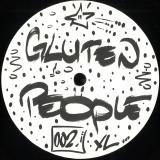
The mysterious Gluten People return to the fold, handing over their next vinyl-only transmission. For this second helping of "glutenous" dancefloor heat, the duo has paired up with Giacomo XL, following the massive demand for their debut EP.
Expect more of the same raw, rhythmic energy that made their first outing a must-have for heads and selectors alike. This is essential, no-nonsense club material built specifically for the wax-only connoisseur.
Early Support from: Archie Hamilton, Liquid Earth, Enzo Siragusa, Huxley, La Fleur, Sean Johnston, Make A Dance, Baby Rollen, Ysanne, Eliza Rose, Bartolomeo, Ryan Clover, AGELESS, Alec Falconer, Call Super, Bas Ibellini, ADMNTi, Gearmaster (fka Abdul Raeva), Timo Maas, Christopher Ledger, Moodymanc, Nathan Colinet, Gabski, Greogorio Soave, and many more.
The incomparable Hawksmoor return with their latest long player for Manchester's impeccable Before I Die.
Previous self-released outings and those splendid 7's for Soul Jazz have rightfully earned them a place in the lysergic musical canon.
This LP, like their other work, uses a central theme as a hub of influence, permeating the direction each composition takes.
On 'Am I Conscious Now ?' the band explore sonic realms influenced by their experiences with the powerful psychedelic 5-MeO-DMT.
Ego collapse and rebirth sonically reflected through this extraordinary record.
Its intensity is an instant hit and, once you are sucked into its orbit, it's routinely mesmerising and completely absorbing.
Complimenting his singular debut LP, 2025’s ‘Light Months Will Fly Over Us’, singer-songwriter and producer Addy Weitzman sees his thoughtful artrock and new wave aesthetic expanded by The Time & Space Machine for a limited three-track 12".
The long-running alias of British DJ, archivist and acid pioneer Richard Norris, this trio of remixes from The Time & Space Machine’s central processing unit finds Norris in a jubilant raving mode, his trademark psychedelia contributing to Slacker at its best and baggiest. The initial mix captures Weitzman’s songwriting in full, including his portentous vocal hook – “No man is a prophet in his own land” – a proverb first found in the gospels, blessed with the innovative Norris’s application of hypnotic groove, fat low-end and a ton of percussion.
The B-side sees Norris stripping things back in two directions: the Shango Dub draws focus on the higher vibrations found in the track’s beautifully intertwined percussive and synth elements, while the Riddim Mix reduces the frequencies further still, with a phased, slightly fried drum workout primed to spin heads as the night gets deeper and darker.
BBE Music announces the first repress of the classic Roy Ayers albums ‘Virgin Ubiquity’ 1 and 2 since 2006, on luxurious 180g vinyl with brand new sleeve notes written by Sean P. The music on 'Virgin Ubiquity' was selected and mixed down from previously unreleased multi-tracks recorded between 1976 & 1981, which Roy had in storage. It's all unmistakably Ayers, but is diverse and fresh enough to be more than a mere adjunct to one of his most productive and popular periods - testament to his and his musicians' creative abilities, as much of most revered Ayers output stems from this time. These discoveries take their place beside some illustrious company in a timeline bookended by 'Everybody Loves The Sunshine' and 'Africa, Center Of The World', several solo and Ubiquity albums, collaborations with Wayne Henderson & Fela Kuti, as well as guesting on LPs by Buster Williams and Herbie Mann. Out of print on vinyl and CD for over a decade now, BBE is delighted to re- present these groundbreaking Roy Ayers titles, neatly coinciding with the 45th anniversary of his classic album ‘Mystic Voyage’ and a UK tour to commemorate it during April 2020.
The rare and deeply funky LP "Yoga – Be An Enlightened Soul – Stay Young And Pure With Yoga"
by Osunfisan Brothers & Sisters is set to return to vinyl in an official reissue, marking the first
authorized repress of one of Nigeria’s most elusive spiritual records.
Originally released in limited circulation, Yoga occupies a unique place in many collectors grail list.
According to Mr Femi Osunfisan, the album was conceived by his senior brother and bandleader, "We
chose yoga to as a concept to channel our music, but it was not intended to practise yoga with the
music". Neither pop record nor conventional boogie LP, the album is highly sought-after for the amazing
production by the Sound master Odion Iruoje and for the heavy afro-disco workouts.
At a time when Nigerian music was dominated by Afrobeat, highlife, and disco, Osunfisan Brothers &
Sisters charted a more introspective path—using rhythm, voice, and repetition as tools for enlightenment
and personal grounding.
Curtea veche serii speciale’s 10th release comes from the man on fire , Ukrainian maestro Fedo! 4 minimal heaters for the dance floor ! Comes on a red slab of vinyl! Be quick with this . LTD press
2026 Repress
Ivy Lab return for 2015 with their most ambitious and most accomplished EP yet, spanning across the most pearlescent of D&B through to rough, rugged glitch and raw half time grooves. Adding extra freshness is man of the moment Sam Binga and Brighton based El Train, each bringing their own take on the Lab sound. A stunning collection of work presented on multiple formats including limited edition vinyl with hand-crafted packaging from the Ivy Lab boys themselves.
Reissue of a lost hit by the British composer Kevan Frost, now championed and given a brand-new Dub Mix by Mark Grusane. Up for pre-order now and due late-March on our RSS series!
Kevan Frost grew up in Jos, Nigeria where he became a self-taught musician and developed a deep understanding of rhythm and melody. In the 90's, Frost was a session musician for many studios in London, one of these was unable to pay him so they gave him a few free days in the studio and the result was "Give It Up" as he explains:
"I went in and recorded all the music in a day, and the vocals and mix on day two. This was the days of only having 24 tracks available on tape so I programmed the drums, bass and keyboard parts on C-Lab which was only available on the Atari computer and the samples I made on my Akai S-1000 sampler. Full of floppy disks I went in early on day one and printed all of this on tape. I then recorded the guitar parts. Day two was me layering the lead vocals and Backing vocal parts as quick as I could before starting to mix."
However, the track fell into obscurity with no major label backing or marketing budget. A friend of Mark Grusane’s came across it in Brooklyn at the African Record Centre and it eventually ended up in Mark's hands and from there he edited the original track to a more stripped-back dub mix and began playing it out to great effect on dancefloors.
After a bit of digging, we tracked down Kevan and a fully licensed reissue is due on Rush Hour in late March 2026, including a brand new ‘Dub Mix’ from Mark Grusane.
Our next 7” release welcomes young and talented key player Stefano Nardon from Vicenza, Italy.
The record features two jazz-infused broken beat compositions, performed and recorded live, capturing an intimate and organic session feel.
On the A side, “Mangrovia” unfolds as a warm, floating piece built around Fender Rhodes textures, subtle harmonies and a slow-burning groove. A deep and immersive cut, balancing between jazz lounge aesthetics and cinematic mood.
The B side, “Underwater”, was created in collaboration with drummer Stefano Cosi (Padova). His live drum contribution adds movement and depth, giving the track a more dynamic pulse while maintaining the introspective character of the release.
Justus Köhncke is a unique voice in the history of Kompakt – and far beyond. He has contributed so many unforgettable tracks to our catalogue that it was difficult for us to make a selection. His sound has often been copied, but remains incomparable. From his deep knowledge and understanding of the history of pop, schlager and disco, he distilled not only official club hits such as ‘2 After 909’ and “Timecode”, but also countless poetic gems. Both sides of Justus Köhncke’s work are united here on this record. Justus’ music knows no boundaries, only ‘weiche Zäune (soft fences)’.
Special attention should be paid to the included bonus 10‘. Here you will find two of his most enchanting, hard-to-find cover versions. His immortal version of Jürgen Paape’s evergreen ’So weit wie noch nie‘ and the monumental adaptation of Round One’s ’New Day”, originally released under the nom de guerre Kinky Justice.
Justus Köhncke ist eine einzigartige Stimme in der Geschichte von Kompakt – und weit darüber hinaus. Er hat so viele unvergessliche Tracks zu unserem Katalog beigesteuert, dass es uns schwerfiel, eine Auswahl zu treffen. Sein Sound wurde oft kopiert, ist aber nach wie vor unvergleichlich. Aus seinem tiefen Wissen über und Verständnis der Geschichte von Pop, Schlager und Disco destillierte er nicht nur amtliche Clubhits wie „2 After 909” oder „Timecode”, sondern auch unzählige poetische Kleinode . Beide Seiten von Justus Köhncke's Schaffen sind hier auf dieser Platte vereint. Justus’ Musik kennt keine Grenzen, nur „weiche Zäune”.
Ein besonderes Augenmerk sei auf die enthaltene Bonus-10” gerichtet. Hier finden sich zwei seiner bezauberndsten, schwer zu findenden Coverversionen. Seine unsterbliche Version von Jürgen Paape's Evergreen “So weit wie noch nie” und die monumentale Bearbeitung von Round One’s “New Day”, die ursprünglich unter dem nom de guerre Kinky Justice veröffentlicht wurde.
Weiss has made a bit of a welcomed habit in recent years of dropping a Sun-drenched bomb on Toolroom around this time of year and following on from 'You're Sunshine' last year, 'Feel My Needs' is his submission for 2018!
Recent Weiss highlights have included him playing the main stage at Dirtybird's own Campout festival, regular dates at the world-renowned Fabric as well as a US tour and an album in the making.
In true Weiss style, this record will have the hairs on the back of your neck standing to attention in a matter of seconds. Lush, old skool piano riffs and sublime vocal licks, all laid over the top of a crisp and infectious house backing.
This is a sure-fire future anthem with two killer remixes to add to the vinyl from Purple Disco Machine and Gorgon City, both of which have been premiered on the mighty Radio 1 Dance shows.
DJ Support:
Pete Tong, Annie Mac, Danny Howard, MistaJam, Huxley, Gorgon City, Claptone, S-Man, Dario D'Attis, Robosonic, Dosem, Tube & Berger, Steve Lawler, Groove Armada, Sonny Fodera, Man Without A Clue, The Magician, Eli Brown, TCTS, Martin Ikin, Mat.Joe, Richy Ahmed, Low Steppa, Kry Wolf, Kraak & Smaak, The Golden Boy
300 pages, 175 x 129mm paperback book w/ french flaps.
DINTE mint their short run book publishing imprint, The End books, with this vast collection of flyers for dances, clashes and blues parties from across the UK between the early 1970s and mid 1990s. Comes complete with intro by David Katz (People Funny Boy: The Genius of Lee 'Scratch' Perry, Solid Foundation: An Oral History of Reggae) and outro by Kevin Le Gendre (Don't Stop the Carnival: Black British Music, Children of the Ghetto: Black Music in Britain). Colour scans sit alongside scuzzy photocopies amassed over several years with the assistance of multiple archivists. The material presented in A Night to Remember is not just valuable musical history, but the story of a community and a culture that revolutionised sound culture in the UK.
"The flyers collected in A Night To Remember speak to the burgeoning sound system underground that flourished in Britain in the 1970s, 80s and early 90s. There are held events on hallowed ground as well as lesser-known sets. Flyers for house parties remind that shebeens remained an important feature of social life in black communities and the many sound clash and cup clash events emphasise the rivalry and camaraderie that has always been at the heart of the culture, as friends go head-to-head with their dub plates, vying for that definitive crown. Dances featuring guest appearances by name-brand artists such as Sugar Minott, Lone Ranger, Barrington Levy and Admiral Bailey, as well as sound systems such as Jack Ruby, King Jammies, Ray Symbolic, Arrows, Black Scorpio and Metro Media remind how closely the local sound systems remained to their Jamaican roots, even as sounds such as Saxon, Unity, Java and Diamonds carved out a distinctly British niche. All hail the enduring sound systems of Britain – long may they reign!" — David Katz
Whilst considering the “Hutson Sevens” series, there was a LeRoy Hutson record that stood out like a sore thumb for us when sifting through the amazing LeRoy Hutson portfolio to identify which pieces of music had not yet been made available on 7-inch vinyl. Many of you will know the story of LeRoy Hutson and Donny Hathaway being roommates at Howard University and together writing the legendary rare groove track "The Ghetto". In 1974, LeRoy Hutson used his artistic licence and adapted the track to feature on his album "The Man!" and subtly retitled the track "The Ghetto '74".
Home of The Good Groove Records are delighted to include this magnificent track on 7-inch vinyl for the very first me.
We are always trying our best to compliment each side of the 7-inch records we are releasing in the "Hutson Sevens" series. For the A-side on our third release we have chosen an outstanding track, which again is previously unreleased. Recorded at the Curtom studios in April 1977 "Thank You" is a fabulous “easy to the ear” piece of smooth soul music that has the classic Hutson groove. One for the soul music lovers, and a possible future sing along favourite to end a night of dancing.
“My auntie asked me what’s my path?” spits Lord Jah-Monte Ogbon on his de but from the celebrated Lex Records. The lyric relatably references the cross roads he’s at in his current life, especially as someone right on the cusp of rap stardom. “Recently I’ve been thinking more and more about what comes next in my life,” the artist reveals.
It’s fair to say Ogbon’s Lex LP features less of the sh*t-talking court jester of old. Instead, there’s more of an imperfect man re-examining past mistakes so he can avoid any future forks in the road. There’s a particular focus on over coming heartbreak, inspiring Ogbon to admit he’s haunted by an ex so badly he now needs to call up the Ghostbusters for assistance.
Since emerging in the late 2010s, Lord Jah-Monte Ogbon has consistently lit up America’s underground rap scene and this is thanks to a refreshingly honest writing style. Amid the exquisitely wavy strings of 2021’s The Missing Link / The Sneaky Link, for example, he rapped: “Everyone thinks they’re play er, until their bitch doesn’t come home.” Biting and snappy, the nasally vocals carry the playful verve of comedian Richard Pryor bravely excavating personal Demons to solicit giggles.
All this brash, wry Redman-inspired storytelling continues on the new pro ject. Its first single is titled I’m Signed to Lex, Now I’m Up – a name that mirrors what a big moment releasing a project on the label that once housed MF DOOM represents for Lord Jah-Monte Ogbon’s legacy. “I’m really driven by being able to level up and give my family more financial freedom,” he hopes.
And, if auntie asked what his path was right now, what exactly would the rap per say? Lord Jah-Monte Ogbon concludes: “Auntie: this rapping thing feels like it’s finally about to pay off!”
‘In Virus Times’ is an acoustic instrumental piece by Lee Ranaldo.
Composed during the pandemic, ‘In Virus Times’ is released as a onesided LP with an etching on Side B. The cover is a beautiful photo by
Lee’s friend, the great Brazilian photographer Anna Paula Bogaciovas.
Originally released as one track as part of a collaboration with Lucien
Jean for Le Presses du Reel, the music was featured on a mini CD that
accompanied a book that featured two short stories.
‘In Virus Times’, released by Mute, sees the track transformed into 4
pieces and is available on transparent turquoise vinyl with digital
download and an exclusive poster, designed, signed and individually
numbered by Lee Ranaldo. The poster design is based on an electron
microscope photo of the COVID-19 molecule.
Lee has written some of his own ‘loner notes’ for the release:
“This recording began on an evening in September 2020, stuck at home
in lower Manhattan during the dark days of the Covid-19 pandemic as
we came out of a deadly summer. A heightened sense of anxiety
stemming from the then-upcoming US Presidential elections as well as
the virus seemed to pervade all aspects of life, for myself and everyone I
knew. Its minimal quality reflects the sense of ‘motionless time’ that
many of us felt. I set up some microphones in our darkened living room
(studios being closed due to Covid restrictions), coaxing out one simple,
repetitive phrase, and then another, sounding them out into the air. The
casual home ambience - a siren or truck rumbling down the street out
the window; someone talking around the table in another part of the loft;
water running - intrudes at points. I worked to develop a few simple
thematic elements, but mostly I wanted to hear the notes and chords
ringing out, hanging in the air for a long time on that evening when the
world seemed close to stopped on its axis.
“I’d been listening closely to Morton Feldman’s catalog throughout the
pandemic. His sparse, long-duration music could often be heard playing
on repeat as we spent endless days locked inside. His willingness to do
very little, with very simple elements, and to such profound effect, has
been inspirational. I found the vast open spaces in his works thrilling,
miraculous, and comforting in those empty times. Additionally, the Drop
D guitar tuning used here has prompted my own variations on Bach’s
works for solo cello, open strings droning against melodic lines, so
simple and perfect…” - Lee Ranaldo, New York City, August 2021
140g vinyl, remastered, double LP with the original LP along with a second record of 14 rare tracks
Sweet And Nice is the vital debut album from Jamaica’s undisputed first lady of song Marica Griffiths. It’s reggae at its most soulful. Slinking through a tight ten tracks of R&B and pop-sourced material, it became an instant best seller. 45 years after its initial release the LP is available again on vinyl, now as a double LP, with an extra record collecting 14 rare tracks.
Sweet And Nice has appeared over the years with a revised running order and under different titles. But the original’s opening sequence of loping soul is legendary, even beyond reggae circles. These songs are now returned to how they were presented on that first Jamaican release, and under their intended album title. Be With doesn’t mess with magic.
Marcia’s version of “Here I Am (Come and Take Me)” has long been lusted after, played by genre-hopping selectors to snapping necks for decades now. It’s followed by the sophisticated, rollicking wah-wah funk of “Everything I Own” and the slice of smooth lovers soul par excellence that is “Green Grasshopper” and her ace, lilting Neil Diamond cover “Play Me”.
The thundering, humid funk of “Children At Play” “sounds uncannily like a precursor of Massive Attack”, as FACT Mag astutely noted when they put Sweet And Nice at number 16 in their list of the 100 best albums of the 1970s. Otherworldly, moody and essential.
Side two keeps the fire burning. “Sweet, Bitter Love” should leave you swooning, and is also one of the album’s alternate titles. Curtis Mayfield’s already-eternal “Gypsy Man” is up next, recast as proto-lovers rock.
“There’s No Me Without You” is elevated to canonical status by the majestic, forlorn horns of the Federal Soul Givers and Marcia’s heartbreaking delivery. And if this doesn’t get you then surely the next track will: arguably the definitive version of Ewan MacColl’s “The First Time Ever I Saw Your Face”. Yes, seriously.
“I Just Don’t Want To Be Lonely” re-takes its rightful place at the end of the LP’s second side… but we couldn’t leave it at that. So we added an entire second record of rare material recorded around the same time as Sweet And Nice, much of it unavailable since it was originally released. Some of these songs have only ever been found on now unattainable 7" singles and no, rarity doesn’t always correspond with quality, but in this case we’re talking about some seriously jaw-dropping music.
Amongst 14 extra tracks you’ll find the exquisite late-60s singles “Melody Life” and “Mark My Word” which, along with the sumptuous reading of “Band Of Gold”, are now £100 records, if you can find them! Just sayin’. There‘s also a fantastic version of “The First Cut Is the Deepest” and an alternate take of “Play Me” with producer Lloyd Charmers adding his own vocals.
Everything’s been remastered of course, including the original LP, so Sweet And Nice now sounds even sweeter, and even nicer.
Todh Teri returns with a brand new record, and this time the spotlight falls on Hari Heart. The Return of Hari Heart marks the eighth release on Masala Movement Records and launches a fresh vinyl-only series that brings the mythical characters of Deep In India back to life in a bold new form. Todh Teri further expands his conceptual universe by focusing on deeper sonics & music explorations. Hari Heart guides the release with a delicious blend of nostalgia, analog warmth and a club-ready intentions - built for curious DJs (and listeners alike).
On the A side you will find Smriti (Remembrance) - a reimagined classic flipped into a peak-time driver - disco spirit, acid bite, and pure dancefloor release. Limited, loud, and made to move bodies. On the flipside we have ??a (Debt) - a deep, dubby slow-burn built around an evergreen melody which grows patiently - finally rewarding you with a sweet earworm.
The final tune on the record is Prem (Love) - a reinterpretation of a ’70s indie rock n roll gem. Unmistakably retrospective (if you know your history). Play it a bit longer into the dead wax, and you will catch a hidden acid sequence locked groove.
Art by Soju Aduckathil with creative direction from Masala Movement’s Manoj Kurian. This is the label’s eighth release, a vinyl-only exclusive, with more coming in 2026.
In a sharp-angled, fiercely inventive reflection on the nature of club culture and digital fatigue, Simo Cell and Abdullah Miniawy reunite to deliver their new album, Dying is the internet, to Dekmantel's UFO series.
French producer Simo Cell has blazed a singular path from his dubstep-influenced origins to become a leading light in contemporary leftfield club music, twisting up adventurous rhythms and flamboyant production in pursuit of a perpetual freshness for the floor. Egyptian singer, poet, producer and composer Abdullah Miniawy has become equally omnipresent in the past 10 years, straddling the arts world and leading with his piercing Arabic lyricism while maintaining an eternally curious spirit that leads into open-ended, experimental music from the abstract to the propulsive.
Following up on their 2020 EP for BFDM, Kill Me Or Negotiate, Miniawy describes their sharply focused new album as "a playful prophecy about the triggers of a new global revolution." Cell considers the title, Dying is the internet, to be a mantra about "how the internet lost its soul," becoming "less about sharing ideas and more about surviving in a digital business ecosystem." Deliberately at odds with the reel-ready two-minute attention span of the average social media surfer (i.e. everyone), the pair set out to make an album that takes its time to reveal nuanced ideas and expressions. Rather than one-note despair for the modern malaise, Cell and Miniawy offer a philosophical reminder that this present moment in the human experience is a temporary phase, no matter how overwhelming it feels.
Dying is the internet finds Miniawy experimenting with auto-tune across the record, while Cell has developed his voice design chops and compositional instincts, moving closer to fully realised song structures without losing the fundamental 'clubbiness' of each track. The result is a cohesive, wildly original kind of heavyweight dance music that slings out hooks left right and centre, from Miniawy's laconic trumpet looming through low-slung 'Reels in 360' and 'Travelling In BCC' to the persistent handclaps that bring 'Living Emojis' to life. Miniawy's poetry explores the power of insistent, repeated phrases in a break from his more typically structured form.
Kenyan powerhouse Lord Spikeheart adds extra snarl to stripped-back, slow-burn opener 'I See The Stadium', but otherwise Dying is the internet is purely the work of Miniawy and Cell casting their considerable chops out into unexplored territory. The results are electric, bound together by a consistent economy of sound that burrows into a shroud of bass-heavy minimalism barely masking Cell's incredibly detailed studio flex. Even the beatless flourish of the Miniawy-produced 'Tear Chime' comes loaded with physicality — a sensory rush at the mid-section of the album bookended by some of the most idiosyncratic club music in recent memory.
Both Simo Cell and Abdullah Miniawy have already proved themselves as fearless innovators across different fields. The strength of their partnership lies in their ability to make space for each other while letting their distinctive sonic identities ring loud and true. Dying is the internet has immediacy and physicality to translate over a soundsystem, but its intricacies are purpose-built for repeat visits and contemplation, unveiling hidden dimensions the deeper you dive into it.
M’Bamina – African Roll (1975)
The story of an album born between Africa, Italy, and the nightclub culture of the 1970s
In the heart of 1970s Italy — a country undergoing profound social change and a music scene just beginning to open itself to distant sounds and cultures — an extraordinary, almost improbable story took shape. It is the story of a group of young African musicians who found their way to Europe, of a Turin nightclub that became a crossroads for communities and experimenters, and of an album which, released in small numbers and largely unnoticed at the time, is now considered a rare jewel of Afro-fusion.
The band called themselves M’Bamina — an ensemble of musicians from Congo, Cameroon, and Benin, who arrived in Italy in the early Seventies. Settling between northern Italy and the Pavia area, they began performing in small clubs and community events, bringing with them a vibrant rhythmic heritage: African polyrhythms, call-and-response vocals, funk-infused bass lines, and Caribbean or Afro-Latin colours absorbed along their musical journeys. Their raw, contagious energy on stage quickly drew attention.
Meanwhile, in Turin, another story was unfolding. There was a venue becoming almost legendary: Voom Voom, one of the city’s liveliest nightclubs, run by Ivo Lunardi. The club attracted an eclectic crowd — students, artists, foreigners, night owls — and Lunardi quickly understood that the dancefloor wasn’t just a place for music, but a melting pot for a new kind of cultural energy. Out of this vibrant atmosphere came his idea: to turn the club’s name into a small independent record label, Voom Voom Music, capable of capturing the spirit of those years and giving voice to unconventional projects.
When Lunardi heard M’Bamina, he immediately sensed that this was the sound he had been searching for: fresh, different from anything circulating in Italy at the time, and capable of blending African tradition with funk and European sensibility. He brought them into the studio.
Production was handled by Lunardi along with Christian Carbaza Michel, while the engineering was entrusted to Danilo Pennone, a young sound technician with a sharp, intuitive ear.
The recording sessions — held in Turin in 1975 — produced a remarkably warm and direct sound. The music feels almost live: grooves rooted in African tradition, but open to funk-rock structures and modern arrangements. It is a natural fusion, never forced. Tracks move between tribal rhythms, funk basslines, light electric guitars, congas and Afro-Latin percussion, with call-and-response vocals and melodies that echo both Congolese tradition and the lineage of Latin jazz. Not by chance, one of the album’s most striking tracks, Watchiwara, reinterprets a Latin standard through M’Bamina’s own rhythmic language.
The album was titled African Roll — a name that was already a statement of intention. It is African music that “rolls,” that moves, adapts, transforms within a new geographic and cultural setting. It is not strictly Afrobeat, nor Congolese rumba, nor Western funk: it is a spontaneous, hybrid blend, shaped more by lived experience than by any calculated aesthetic program.
When African Roll was released, the world around it barely noticed. Distribution was limited, and 1970s Italy had yet to develop a cultural framework for receiving such music. The national music press rarely paid attention to African or “world” productions. The album slipped into silence — though the band’s own story did not.
M’Bamina continued performing across Europe and Africa, even sharing a stage in Cameroon with none other than Manu Dibango. By the late Seventies, they moved to Paris, signed with Fiesta/Decca, and recorded a second LP, Experimental (1978). Meanwhile, the peculiar record they had made in Turin began to resurface quietly among vinyl collectors, Afro-funk enthusiasts, and DJs hunting for forgotten grooves.
That is when the album’s fate began to shift.
Over the decades, African Roll emerged as an almost unique document: a snapshot of an intercultural Italy before the word “intercultural” even existed, a fragment of migrant history, a spontaneous experiment in musical fusion born far from major industry circuits but rich in authenticity. Original copies began commanding high prices on the collector’s market, and the album became recognized as one of the hidden classics of European Afro-fusion from the 1970s.
Today, more than fifty years later, this reissue finally restores visibility and dignity to a project that deserves to be heard, studied, and celebrated. It is not simply an album: it is the testimony of a rare cultural encounter, born in an Italy unaware of how fertile such exchanges would one day become.
It is the story of a visionary producer, an extraordinary band, and a fleeting moment in which music, migration, and nightlife came together to create something genuinely new.
African Roll is — now more than ever — the sound of a bridge: between continents, between eras, between cultures. A record that, after rolling far and wide, has finally come home.
since his first ep tips' on luciano's label cadenza in 2007 producer and dj petre inspirescu emerged into one of the key figures of the romanian electronic music scene.
so far he released music on labels such as vinyl club, lick my deck or amphia. together with his buddies rhadoo and raresh he also launched in 2007 the label (a:rpia:r) - a platform where he, his two friends and many producers from romania and abroad released detailed grooving house and techno, that stands out with delicate structures and one-of-a-kind grooves.
both of his more dance floor oriented solo albums intr-o seara organica...' and gradina onirica for (a:rpia:r) are enlarged with melodies, sounds and harmonies that go beyond the usual characteristics of a dance album.
furthermore his love for classic musicians like mily alexejewitsch balakirev, alexander porfiryevich borodin or or nicolai andrejewitsch rimsky-korsakow can be felt in the album padurea de aur (opus 2 in re major) and two more eps that he released under the alias pensemble on the romanian label yojik concon in order to unite classical spheres with analogue electronic music production.
in february 2013 he also released his highly acclaimed fabric mix cd that only features dance floor leaning music produced by himself. with talking waters' he published in late 2014 his first 12inch on mule musiq that is now followed by the full-length album vin ploile' which he produced without the intention to entertain with easy to hook up rhythms, melodies and harmonies.
even tough he established himself as a internationally playing house dj that regularly performs at all major clubs, festivals and other party destinations around the globe: as a musician petre inspirescu always tries to enter new territories to explore with a heartfelt human touch the infinite space of sound.
for his latest album the man that originally comes from the eastern romanian town braila stepped away from his former experiments of melting classical spheres with electronic music. instead the 36-years old man from bucharest only used some piano, string and wind instrument elements and analogue electronics to arrange a gracefully deep ocean of sound.
all slow grooving tracks spread the atmosphere of live improvised sessions that are edited, tweaked and mixed to perfection. in-the-moment moods of strange and unusual analogue synth sounds groove in a fluid quality with subliminal bass shapes, latinate percussions, jazz rhythms and acoustic melodies.
together they create a gaseous kinetic atmosphere full of tangible rhythm patterns, delicate chords and ghostly modular synth pads - all mixed subtle to create space for the tones between the tones.
you can call it a hypnotic after hour album for after hours that are dedicated to a deep listening experience. you can tag his arrangements as brilliantly textured and musically super-charged ambient, which goes beyond the usual definition of the genre.
all nine suspenseful compositions seduce with a deep melodic sensibility, harmonic adventures and an overall rhythmic ambiance of freshness and laidback enthusiasm. together they represent a challenging auditory experience that will resonate in your mind long after the music has finished.
Zwei Plattenspieler und ein Mikrofon. In der Klarheit dieser einfachen Schlussformel liegt eine Wahrheit - eine Wahrheit, die zugleich erahnen lässt, wie groß die Möglichkeiten innerhalb dieser Grenzen sind. Manchmal muss man daran erinnert werden.I Guess U Had To Be There, das neue Album des New Yorker Rappers ELUCID und des erfahrenen Produzenten Sebb Bash, ist genau so ein Fall. So frisch, als wäre es morgen entstanden - und doch kann man darauf wetten, dass man es auch 1989 hätte auflegen können und sofort alle Köpfe mitgenickt hätten.Es gibt Momente in der Musik, in denen Meister ihres Fachs sich auf dem Höhepunkt ihrer jeweiligen Schaffenskraft begegnen - Alben wie Madvillainy, Liquid Swords, Dr. Octagonecologyst oder Hell Hath No Fury -, bei denen das Ergebnis mehr ist als die Summe seiner Teile. ELUCID und Sebb Bash bewegen sich auf I Guess U Had To Be There genau in dieser berauschenden, scheinbar mühelosen Sphäre.Alles wirkt zugleich vertraut und bahnbrechend. Die Beats verschieben und wenden sich unter ELUCIDs Füßen, doch er balanciert sie wie auf einem Drahtseil - seine Performance so beweglich wie die einer Bergziege, Produzent und Rapper in perfekter Synchronität. Einige leuchtende Stars haben unvergessliche Gastauftritte: billy woods, Breezly Brewin, Estee Nack und Shabaka Hutchings. Doch im Kern ist dies eine Zwei-Mann-Show, und das Duo hält den Fokus genau dort, wo er hingehört.I Guess U Had To Be There ist ein fesselndes, konventionssprengendes Hörerlebnis und ein neuer Höhepunkt im Schaffen zweier der besten Künstler dieses Genres.
Black Truffle is thrilled to announce Dalbergia Retusa, an extensive double LP selection of the solo guitar music of Hans Reichel, compiled by Oren Ambarchi. Last heard on Black Truffle as one quarter of the joyously anarchic Bergisch-Brandenburgisches Quartett, Hans Reichel (1949-2011) is one of the great figures of experimental guitar music. Though perhaps lesser known than peers like Derek Bailey, Fred Frith and Keith Rowe, Reichel’s rethinking of the instrument was in some ways the most radical of all. Early on, he dispensed with existing guitars to build a series of his own that explored the use of additional strings and fretboards, moveable pickups, extra bridges, special capos, and other innovations documented in the extensive booklet accompanying this release.
Reichel was a long-term resident of Wuppertal, the small Western Germany city that became an unlikely centre of European free jazz in the late 1960s, also home to Peter Brötzmann and Peter Kowald. His solo debut Wichlinghauser Blues was an early entry into the FMP discography and began a relationship with the label that stretched into the 1990s; all the solo performances heard here were first released on FMP. As Reichel says in the charming archival interview with Markus Müller included here, he was ‘always a cuckoo’s egg at FMP’, a label that began as an outlet for roaring European free jazz. What strikes the listener right from the opening selection on Dalbergia Retusa—‘Return of the Knödler show’, from 1987’s The Dawn of Dachsman—is the extraordinary beauty of Reichel’s music, at once alien in the shimmering sonorities and unconventional pitch relationships made possible by his invented instruments, and deeply lyrical, even romantic in its harmonic content. Growing up in West Germany in the 1960s, Reichel’s formative influences were mainly British and American rock bands, a background that shines through in many of the pieces included here: ‘An old friend passes by’ is haunted by the ghost of Hendrix’s rhythm guitar, and the wild closer ‘Heimkehr der Holzböcke’, taken from a rare 1975 7” and the only piece to use overdubbing, layers errant hammer-on and slide tones over a Canned Heat boogie chug.
Reichel was an important source for the development of Oren Ambarchi’s own extended approach to the electric guitar. Appropriately enough, his selection opens with the very first piece by Reichel he ever heard, on a flexidisc included with a 1989 issue of Guitar Player magazine. Though Reichel collaborated with others extensively in many settings and also performed on violin and his other major contribution to instrument invention, the daxophone, his music for solo guitar remains at the core of his oeuvre. Focusing exclusively on solo pieces recorded between 1973 and 1988, the 23 pieces on Dalbergia Retusa showcase the range and consistency of Reichel’s work, allowing the listener to see how his performances developed hand-in-hand with his instrumental inventions. On a piece from his very first LP, played on an 11-string instrument (partly strung with piano strings and using a schnapps glass a slide), we hear his intensive exploration of fret-hammering to create zither-like, chiming tone, which Reichel would hone further in later years with a double fretboard guitar specifically designed to be hammered rather than fretted and picked. On a piece from 1979’s Death of the Rare Bird Ymir, Reichel uses two steel-string acoustic guitars at once, with beautiful results: ‘some even say too beautiful’, he jokes in the interview included here. Many of the pieces from the 1980s make use of varieties of the ‘pick behind the bridge guitar’, instruments of uncanny harmonic richness primarily designed to be played on the ‘wrong’ side of the bridge. At times the unexpected behaviour of attacks, resonance, and decay can almost seem electronic, conjuring up the technology-assisted work of Henry Kaiser or even Fennesz, but realised solely through Reichel’s unorthodox techniques on his invented instruments. Extensively illustrated with photos and Reichel’s own plans and drawings of his instruments, Dalbergia Retusa is an essential introduction to the unique world of Hans Reichel. Rarely has music been at once so strange and so beautiful.
“ It’s like a more psychedelic , organic KLF Chill Out with deep roots and cosmic overtones“ Richard Norris
“ A beautiful trip “ Jem Finer
D.E.N 01 LAND - Composer Danny Hammond
Land is the first in a series of earth inspired sonic journeys , part sound meditation , part immersive psychedelic nature trip. Incorporating field recordings , shack instruments and spoken words from cosmic adventurers .
It originated as an installation at the 14 Hour Technicolor Drone event in Sept 2025 whereby all listeners fell into a deep nature/dream slumber.
For fans of Pauline Olivieros ,Brian Eno , Terry Riley , Don Cherry , Barbara Hepworth , Alice Coltrane , John Betjemin and all other ambient adventurers.
D.E.N
Deep Earth Network is a long term sound project exploring deep-listening , drone and sonic adventure , all inspired by the earth in all its manifestations , land , water , space , consciousness. Initiated by Danny Hammond , D.E.N will present different sonic projects and collaborations from vinyl / audio releases to sonic installations with the aid of The Deep Earth Soundsystem and the Sonic Heads ( S.H ) a collection of sculpted head audio transmitters.
It's been more than ten years since Rolando debuted with his sought after self-titled EP on 030303 and it is thrilling to see the producer - who has always managed to remain a sort of best kept secret, admired only by the heads - still surf those high waves of creativity. Lifephorce is bound to be an instant classic, leaving instant marks on the listener's soul with unsettling yet mesmerising chord changes, a heavy throbbing bassline and generally a deep, introspective outlook on the dancefloor. Sterilize the Club brings back memories of face masks (thank you Rolando), but soundwise this is face to the ground stomping braindance material. Just as driving but more melancholic are Dot Zoner and Exit Your Own Realm. Classic Rolando Simmons, this one. If you know you know...
A gift to the overthinkers and overworked. Those who are over-concerned and always preoccupied. This is an invitation to hang up the bootstraps, take a load off, and visit a place in the mind where the sun is shining, the breeze is soft and the waves lap softly at your feet. Vacation From My Mind is a sonic realignment of melancholic soul, breezy soft rock, & mellow jazz-funk.
This album is a thoughtfully curated collection of 12 rare and obscure tracks from 1973 to 1981. From Jeanette Baker’s hypnotic 70’s soul title track “Vacation From My Mind” to the Latin rhythms of David Buckland’s jazz-funk “Celia”, this compilation was lovingly crafted to ease the stresses and worries of modern life. The Care Package’s song “The Storm” is a larger-than-life production of dreamy harmonies not often found on privately released 45s. Utopia’s “Lejos De Mi” is a slow-burning slice of Bolivian psych that will have you searching for similar sounds. Whatever your preference, we hope that this album will give you a vacation from your mind.
The long-awaited sequel to Ophidian's cult classic Blackbox (2003) arrives: "Blackbox: Kasamaan" picks up where the original left off, and strays further into the darkness.
Expect Industrial Hardcore and Hard Techno with grinding, distorted kicks, warped percussion, detailed rhythms and intricate sound design, all while being cloaked in haunting, eerie atmospheres.
Limited run 10” vinyl, arrives in risograph printed cover, with additional insert.
Elijah Minnelli returns to Accidental Meetings, following stand out records for FatCat Records, ZamZam & his own BCC imprint, which have garnered support and AOTY charts from The Guardian, The Quietus and The Wire to mention a few.
Minnelli has a unique dub-wise take, fusing eastern & western folk influences with cumbia and earthy drones, cumulating in his own distinct sonic world and his ever evolving lore. Within Ball & Socket, Minnelli pushes his own vocals to the forefront for the first time, compared to the more accustomed background approach previously. The record also sees a collaboration with Osaka's Kiki Hitomi (Waqwaq Kingdom, ex King Midas Sound) on Unkind, the two intertwining throughout. Fans of the pairing will be happy when it gets a re-up halfway through on the Discomix.
Ball & Socket is a personal record on many a level for Minnelli, and the result ends up as one of his most beautiful body of works yet. It finds it's home on the Bristol imprint Accidental Meetings, four years after his first outing on the label.
Design by Oliver Kay, photography by Aleksandra Sandakow, printed & assembled by The Error Press.
With over 20 years of intense production work and prestigious collaborations, Irie Ites Records has established itself as one of the most respected reggae labels on the international scene. In 2025, the label continues it's strong momentum with a brand-new volume of it's flagship series: Cream of the Crop 2025. Following the success of the previous editions (2022, 2023, and 2024), which each reached several million streams and gained strong visibility in reggae media and playlists worldwide, this new release stands as a must-have for all roots & culture reggae lovers. True to it's reputation for excellence, Irie Ites Records has once again teamed up with some of the finest musicians and producers in reggae: Mafia & Fluxy, Bongo Herman, Earl "Chinna" Smith, Lone Ark, Naram, The Ligerians, King Jammy, Willy William, among others. All tracks were mixed at the Irie Ites Studio (France), ensuring a warm, powerful, and authentic sound. To conclude the album, four exclusive dub versions add the final touch to this outstanding compilation.
James Curd and Osunlade. After years of playing back to back DJ sets and collaborating in the studio, they decided it was time to create something that could represent both the music they make together and the shows they play. Their sound is a natural meeting point between deep house grooves and soulful roots, reflecting both artists’ histories and shared love fortimeless dance music.
The first single from Nomadic’s is “Better Man”. The track was originally signed to Defected Records,but after creative differences about how the release should be presented, the contract was voided. That decision gave James and Osunlade the chance to put the music out exactly as they envisioned, and the song now finds its proper home on Pronto Records. The package includes the original alongside a set of remixes from some of the most exciting names in underground house.
Dutch producer Frits Wentink delivers a remix in his unmistakable style – raw drum programming, warm analogue textures, and the kind of off kilter groove that has made him one of the most respected names in Europe’s house scene. Mr Ho, co-founder of the cult label Klasse Wrecks, adds his own twist with a version that nods to classic rave and electro energy, while keeping things firmly locked for the dancefloor. Finally, LA based duo Too Easy bring a mysterious touch, layering live instrumentation with electronic drive, showing why they’re quickly becoming ones to watch.
With its story of creative independence, heavyweight remixers, and the credibility of two deeplyrespected artists at the helm, “Better Man” is both a club record and a statement of intent for what Nomadic’s represents.
The music of Foreign Material carries an invisible veil: at first glance this is great, potent and highly functional contemporary Techno. But for those willing to see, behind the veil there's more than meets the eye. An old, wise Baba-DJ once claimed that we are merely "redefining the ancient tribal ritual for the 21st century". Titles like "Kantae Niskae" and "Drums Of Kaltjär" alludes to that specific, long forgotten past that we all still carry deep within. The blissful and etheric A-side, contrasted by the caveman mania of "Kaltjär", represent the dualistic nature of our scene, our sound and our aim as a label, and encapsulates everything we love with Foreign Material's unique approach to Dance Music.
On remix duty we have none other than Stockholm based "Deep" pioneer Evigt Mörker. Expertly withdrawn, edited and added, he's created a groovy, yet atmospheric, DJ-tool for the ages. Expect to notice it in a wide array of DJ-sets in the near future.
Idriss D returns to Memento Records with his brand new track "Oct. 13", kickstarting the label's 20th anniversary in 2026, a year that will see quite a few special events to celebrate this milestone.
True to his musical roots and upbringing, Idriss heads right into experimental territory here, merging different styles and vibes: echoes of the upbeat mid '00s Minimal Techno craze fuse masterfully with sci-fi sounds and robotic vocals, with glitchy percussions and an infectious funky bassline creating an irresistible groovy rhythm. It's a track that boldly encapsulates the history of the label, from its raw beginnings in Italy's underground clubs to the more sophisticated latest outputs, a nod to its past while looking at the future.
Mr. Marc Houle is onboard here on remix duties: the man responsible for tracks like Bay Of Figs and Techno Vocals graces the release with an outstanding production. Slightly speeding up the pace, Marc adds spacey acid synth melodies and frenetic vocal loops drenched in delay, making this even trippier and more energetic than the original.
Black and House Music fan Munir Nadir rounds off the EP with a personal rendition playing squelchy keyboard arpeggios and hard slapping synth stabs, bringing a musical live-session feel to his contribution.
For their 11th release, djfix makes his long-awaited return. A Soft Place to Land features six driving, techy tracks flexing his familiar djfix steeze with swung, slamming percussion, deep chattering low-end, and a psychedelic sheen.
Credits:
Written by Ethan Donovan in Bedstuy, Brooklyn
Mastered by Mike Grinser, Manmade Mastering
Additional Vocals: namastrange
“We know what jazz is when we hear standards or music that is close to the same source, to a recognized pattern. But what is jazz? Here, a starting point. "Blow" showcases an accumulated CITIZEN:KANE techno vocabulary but it quickly tones down the sensation by introducing frequent breaks in the rhythm, as in "Peiote". But even there we are able to "feel" techno by recalling Wolfgang Voigt's M:I:5 and its parallel yet contrasting rhythmic grids. Elsewhere, manifestations of opposite forces: the beat keeps a body firm on the floor, eminently physical but not commanding; and melodies, cosmic threads, suggest ascension as well as a drive towards the within, creating space for feelings and/or rationalization. "The Fence" or "Montreal" stand as good examples. One less evident aspect of beauty in this record is the apparent coldness of the music, almost rigid and devoid of passion, and thus we declare it more true. As the mind performs a synthesis of what was learned after a class, last track "Family" (expressively) gathers impressions of what went before, adding poetry to the moment. "Blow" may be a reference to the most familiar instruments used in jazz but it can also figuratively mean an explosion, an aesthetic liberation, even with (our) knowledge that for now, and theoretically, the artist chose to concentrate on this thing called jazz.”
Gloria Scott’s ‘What Am I Gonna Do’ is considered by many as one of the greatest soul records of all time. A masterpiece produced by Barry White, that oozes class, lush instrumentation and the remarkable vocal talent and emotive delivery of Ms Scott.
Selector Series are proud to present arguably the two best songs from the album, the Modern Soul scenes favourite, ‘(A Case Of) Too Much Love Makin’ backed here with the impeccable LP opener ‘What Am I Gonna Do’. Paired together officially for the first time on a 7” since it’s initial limited release in 1975.
Another essential addition to the ever-growing Selector Series discography! Don’t sleep.
Crate digger and music enthusiast James Endeacott compiles ‘Unlock Your Mind With Morning Glory’ for Two-Piers Records – A glorious heady mix of the weird and wonderful eclectic music from his radio show ‘Morning Glory’
“One weekday afternoon towards the end of 2017 I sat in The Lyric pub on Great Windmill Street, Soho with my dear friend Raf. I’d just finished another of my weekly Soho Radio shows and was starting to think about the next one. Raf had been on as a guest playing some of his favourite tunes of the day. We had a few drinks, told a few stories and started to plot and scheme. It was always a dream of mine to have a daily radio show. Radio had always informed and excited me from my early teens listening to John Peel under the blanket when I should’ve been either sleeping or revising right up to the present-day musical excursions of NTS, WFMU and numerous internet based stations.
We decided to speak to Adrian and Dan who ran Soho Radio to see if they’d be up for us doing a daily morning show. To our surprise they were into the idea and within 5 minutes Adrain came up with the name Morning Glory. We all liked it. We were all excited. It was all systems go. In December 2017 Raf and myself started a daily 2 hour show. We did the show together, got guests in and the musical policy was whatever we felt like that day. After several months Raf found the mornings too much. Off he went into the distance occasionally coming back with a smile, and a bag of new music. I carried on alone and then suddenly in March 2020 the world stopped, and we went into lockdown.
We set up in my house in Catford, Southeast London and carried on. The show became 3 hours a day and I started to invite friends, record labels, record shops, bands etc.. to supply me with hour long mixes that I played every day. The show took off during this time. My musical tastes expanded as I spent all day long searching for new sounds from around the globe. People started to send me more and more music. I became obsessed with the show. The audience started to take to social media and ask for certain tracks or artists to be played. I got listeners to make me mixes to play on the show and I did several phone interviews with musicians while playing some of their favourite tunes.
I was grateful that Soho Radio left me to my own devices. They never told me what to do or what to play – they trusted ma and I trusted my instincts.
The music on this compilation is not a ‘best of’ it’s just how I felt when I compiled it at the start of 2025. Apart from a couple of tracks they are all things I’ve come across since the show started in December 2017. If I did a list of tracks now I’m sure it would be completely different. Surely that’s the point. We never stick in one place. We are always moving and searching. Always trying to unlock our minds. Put it on. Take your time and let it take you somewhere” James Endeacott 2025
Francois Kevorkian is a name that should need no introduction. With over 40 years in the game FK has occupied numerous roles in his long and storied career - drummer, DJ, A&R man, remixer and producer - his skills know no boundaries. Having DJ-ed during the nascent days of club culture in NYC alongside Walter Gibbons, Larry Levan and more, Kevorkian has been there from day one. Years spent in the seminal clubs of the day sharpened his ears and his prowess behind the mixing desk saw him become the A&R man at the legendary Prelude records in the early 80's, this in turn led to him working with everyone from The Eurythmics, Depeche Mode, Erasure, D-Train, Yazoo, The Smiths, Kraftwerk and many many more. A true NYC original and legend, Kevorkian is still active today and the respect he commands amongst his peers has never waned, his adventurous extended DJ sets, seminal mixes and remixes and his open ears and open mind have ensured that he will go down in history as a musical pioneer.
Rewind to 1995. Kevorkian's 'Wave Music' imprint has come into existence with a handful of releases. No-one could imagine that his self-produced 'FK EP' - the next release on the label - would be a stone cold classic. Easily one of the most consistent, exciting and solid EP's to come out of NYC during this golden era of dance music. Across 4 tracks we are taken on a sound journey through a world that is undoubtedly informed by FK's time as an engineer, DJ and most importantly, a music lover.
EP opener 'Hypnodelic' brings us into this world, a deep, driving cut that fuses the dubbed out vocals of Freddie Turner against FK's keyboards and immaculate drum programming, oozing cosmic electronic soul, this track was destined to be a future classic. 'Mindspeak' also boasts some tough drums and with a respectful nod to Chicago is an incredibly mixed and arranged peak-time cut that will drive your dancefloor into deep space again and again. 'Edge Of Time' welcomes us to the flipside of the EP, wild Latin percussions, tablas and old school horn stabs drive this monstrous cut, not to mention cavernous dub FX and that huge bassline that just doesn't let up. Essential. 'Moov' rounds things out on a more subdued, stripped back vibe. Reversed percussions and spaced-out synth chords lace this beautifully understated and warm track, one that builds into a crescendo of melodies and hypnotic rhythms and the perfect way to close what has been a truly special musical journey.
This essential reissue of the 'FK EP' has been fully licensed, sanctioned and remastered in conjunction with FK from the original master sources by Optimum Mastering, Bristol UK, repressed onto high quality vinyl and packaged as the 1995 release was. A truly classic record indeed, available again for 2018. Welcome back Wave Music!
Melbourne / Naarm strongholdButter Sessionsclock 15 years in the game with a trilogy of 12"s, sustaining their uncompromising streak of peak-form electronics. The family-style V/A binds friends, collaborators, former studio neighbours and DJ booth allies, capturing a label that exists as community as much as catalogue.
Disc Three entrantRBIserves up a tweaked-out psy-not-psy cut with a built-in spin-back upending the room, beforeUnsolicited Joints- siblingsCousinandBen Fester- slide in with a deep dub techno shuffler. Tokyo mainstayHarukaseals the side withEventide, a serotonin-tipped house curveball made in collaboration with Rotterdam'sCharlton Bakeliet, one of the last internationals to grace the Mercat X booth.
The B-side blooms withOK EG's zoned, psychoactive techno, handing over toHybrid Manto diffuse the tension with their morphing dubwise excursion.Yuzo Iwatacontinues his uncategorisable strain, self-described as EPM (Electronic Psychedelic Music), marked by Japanese ingenuity and free of genre boundaries. Finally,Sleep Dround out the set with a rogue link-up withPosseshot, a raw and adrenalised raver laced with a vocal that snarls closer to The Prodigy than hip-hop.
Whether taken alone or folded into the three-disc triptych, each instalment stands as a bag-ready constant, charged with Butter Sessions' curatorial finesse.
Opening the release we have one of the most interesting, boundary-pushing artists - Bawrut, who twists Burning Up into outer space. Never one to shy away from a bit of high drama in his tracks, he squeezes every ounce of the original through his sonic mangle resulting in a bass bin wobbling slice of intergalactic house music which confidently stands out in the crowd. Next up, and in perfect contrast, we have UK producer Telfort flipping Becoming Cyclonic on its head. He has well and truly stamped his mark with a fresh sound which takes influence from golden era 90’s deep house but adds a solid, bass-heavy Detroit edge.
He delivers a moody, late-night excursion dripping with fat strings, crisp hats and chiming arps. Flipping over you have the master of deep, iconic and prolific UK producer Charles Webster, who pushes Burning Up to a new sonic level. A sublime rework which is unmistakably his sound, cerebral and dark yet also uplifting, warm and enveloping.
The new album by the collective that for
over 25 years has been among the most
representative names of the Italian dance
and electronic scene worldwide.
“BLOOOM”, this is the title of the new release,
will be available in all traditional stores and
on digital platforms starting January 16.
Set against the soundscapes that have become
the Planet Funk trademark, the lyrics by Dan
Black attempt to give voice to a fragile and
contradictory condition of our time: an
intensified sensitivity that, instead of
turning into openness and connection, often
becomes emotional overload. A generation
constantly overwhelmed by excessive stimuli,
relentless information, anxieties, and fears,
called upon to find its way in a world thaoffers neither pauses nor silence. In this paradox, sensitivity is no longer just a natural gift, but
a daily effort: staying open and receptive without being overwhelmed, trying to preserve a human and
vulnerable gaze in order, despite everything, to fully appreciate life and the present moment.
The single’s artwork—like that of the album—curated by Nationhood, visually conveys this tension: the
distant sirens of a city that amplifies feelings of disorientation and loneliness even when we are
surrounded by thousands of people.
“BLOOOM”, preceded by the single “FEEL EVERYTHING”, arrives at the end of an intense, creative year
full of music, which saw Alex Neri (DJ, keyboards, synthesizers), Marco Baroni (keyboards, piano,
programming), Dan Black (vocals and guitar), and Alex Uhlmann (vocals and guitar) engaged between
studio work, collaborations, and live performances in Italy and abroad. A journey that today
transforms into new energy, into an even more open vision oriented toward the future.
Exactly one year ago, PLANET FUNK released “Nights in White Satin”, a single that reached the top
positions of the radio charts and launched a season rich in concerts and DJ sets in Italy and around
the world. The subsequent “I Get a Rush”, the collaboration with Alfa and Manu Chao on the remix of
their hit “A me mi piace”, and the track “È Naturale” together with Francesca Michielin, confirmed
Planet Funk’s ability to renew themselves and engage with different musical worlds while always
remaining true to their own identity.
Throughout this journey, music has inevitably intertwined with life. The memory of Sergio Della Monica
and Domenico “Gigi” Canu, pillars and founding souls of the PLANET FUNK project, is a living part of
this new chapter. Their vision, creative spirit, and way of understanding music continue to be a
constant guide, a deep root from which new ideas and new directions can grow.
“BLOOOM” is also this: a personal and artistic blossoming that, starting from the legacy left by
Sergio and Gigi, transforms into a living process of growth, metamorphosis, and discovery. An album
that does not look back with nostalgia, but forward with awareness, momentum, and a desire for
renewal.
Founded in 1999, for over 25 years PLANET FUNK have represented one of the most important, solid, and
influential realities in the international electronic music scene. Born from the meeting of Souled
Out! (Domenico “GG” Canu and Sergio Della Monica) and Kamasutra (Marco Baroni and Alex Neri), and
following their debut with “Non Zero Sumness” in 2002 (a gold record and a turning point for the
band), PLANET FUNK have managed to reinvent themselves over time while maintaining a unique sonic
identity. This has led them to collaborate with internationally renowned artists, deliver iconic
performances around the world, create soundtracks and international advertising campaigns, and
continue to demonstrate constant creative vitality
As Poorly Knit completes it's first arc of the Sun, it's children become four, as a new mini LP is born.
Tending to his crop with dreams of rotation, Bruce sows and scythes four new grains in the porky mill. Of this strange fruit, that further explores his increasingly familiar, hyper-real and sonically surreal work within this current “movement,” he finds his foothold once more in a wild world intensity: fear and fury grappled in equal measure.
What's more, in celebration of the plentiful harvest thus far, (let alone in the interest of seed diversity), Bruce invites four fellow reapers to the farm, offering their recipe from the spoils of the label's yield:
Vancouver based Brit-abroad, dj_2button pulls apart 'The Hand,' with his 'Accidental Mood Mix,' to be reborn as an Odyssian 13 minute stomper: "a fight of emotions, of light and dark; in quiet protest to the incessant fear mongering that slowly numbs us on a global scale." Balearic shores can be seen glimmering in the distance, whilst you are dragged by part man part (very horny) bull into the depths of dancefloor madness.
re:ni proves she is the captain of her own ship as sweet SSRI numbness billows in the sheets and fraying, dubwise halyards tether and tear through her devilishly elegant 'sertraline queen mix'. polyrhythms plotted and percussion plundered; the vocal from 'Golden Water Queen' sounds oh so sweet in the claws of its new Regina.
Hotly titted deep house reviver, fka boursin empties clips with their bubblegum 'boomkat mix,' of 'The Price,' swivelling the original's brash and bawdy bonce, to face a 120 reality we all need to wake up and start sniffing. Sprinkled with trauma on an icing of a bassline more than a little rood, boursin is packing enough cake for the whole function to take home in (dreadful) goody bags (and even allowed compression in the mastering - mental).
Last and indubitably not least, from lying somewhat dormant in the depths of UK dance music legend, none other than flippin' Untold (!?) rises to seal the release with typically megalithic prowess. Proving he was just resting his eyes for a bit, his 'A1 Mirabelle Mix,' weaves and whips an otherworldly beauty, technically tantalising 'Dham's Jam' in adornments both sour and sweet. It's nothing short of a cloaks and daggers banger, primed for the darkest of dancefloor cosmic moments, and serving as a little less-than-warm-reminder that Untold’s presence in the world of dance music is crucial as ever.
Frankly, if you couldn't tell from all the verbose waffle, they have all absolutely smashed and finessed it: they were all approached after expressing a real resonance from the previous releases and it's such an honour to have them and their fantastic visions on the label.
Available digitally or on high quality cassette, the final chapter of the Poorly Knit's first act has been woven whimsically into the fraying folds.
a A1. It Ain’t Over Till… 04:37
b A2. Wesley’s Sniped All Our Bleeding’ K (Re-Vamped) 05:40
c A3. Rockfall 05:06
[d] A4. You Were Right [10:00
[e] B1. The Hand (dj_2button's accidental mood mix) [13:07]
[f] B2. Golden Water Queen (re:ni's sertraline queen mix) [05:36]
[g] B3. The Price (fka boursin's boomkat mix) [08:30]
[h] B4. Dham's Jam (Untold's A1 Mirabelle Mix) [09:42]
[a] A1. It Ain’t Over Till… [04:37]
[b] A2. Wesley’s Sniped All Our Bleeding’ K (Re-Vamped) [05:40]
[c] A3. Rockfall [05:06]
[d] A4. You Were Right [10:00
[e] B1. The Hand (dj_2button's accidental mood mix) [13:07]
[f] B2. Golden Water Queen (re:ni's sertraline queen mix) [05:36]
[g] B3. The Price (fka boursin's boomkat mix) [08:30]
[h] B4. Dham's Jam (Untold's A1 Mirabelle Mix) [09:42]
Echonomist drops debut Rekids EP with ‘My Religion’. He follows his recent remix for Frankey & Sandrino on the label with collaborations with OVEOUS and Ede.
Greece’s Echonomist, aka Petros Manganaris, returns to Rekids with the ‘My Religion’ EP, arriving 30th January 2026 and featuring collaborations with OVEOUS and Ede. It follows his 2025 remix for Frankey & Sandrino, which won plays from HAAi, John Digweed, Auntie Flo, and more, alongside recent music on labels like Habitat, Innervisions, and its sublabel, Exit Strategy.
Echonomist’s ‘My Religion’ EP opens with the title track, where he teams up with Hyper Soul founder OVEOUS for a loopy, hypnotic cut driven by an alarm-like sequence and tripped-out spoken word vocal. OVEOUS returns on ‘We Surrender’, adding psychedelic, warped phrases over deep bass and an infectious clap-led groove. On the fl ip, Echonomist joins fellow Innervisions artist Ede for ‘The Heat’, a heavy-hitting, party-starter packed with larger-than-life
sirens, big snare rolls, and funky sample work. Petros closes the EP solo with ‘Master Groove’, pairing the drums back while echoing spoken lines ride above an irresistible bassline, rounding off a versatile release built to land with adventurous listeners and on peak-time fl oors alike.
Greek DJ, producer, and live performer Petros Manganaris became Echonomist in 2008 and has since become known for his prolifi c output on labels Innervisions, Afterlife, Kompakt, TAU, and more, alongside collaborations with the likes of WhoMadeWho and numerous top-tier remix projects for Âme, Ry X, and Stephan Bodzin.
Adeen Records hits a quarter of a century of releases with two of Italy's finest talents reimagining Collecttivo Immaginario's jazz-tinged gem 'Aperture' through a club-centric lens. Label regular Nico Lahs transforms the original into a peak-time weapon layered with stacked drums and deep basslines while smartly preserving its soulful core. On the B-side, New Digital Fidelity delivers a groove-heavy interpretation that retains the jazz essence while adding a hypnotic rhythmic drive perfect for deeper sets. Both versions manage to remain sympathetic to the original while taking it into fresh new directions that bring a contemporary edge to the classic original.
Two Lisbon mainstays from contiguous generations join forces as Scam Dust for the new Paraiso record: Tiago, Lux Fragil resident, world-renowned DJ's DJ and all-round music whizz plus Shcuro, Paraiso's co-founder, scene documenter and impeccable selector & producer. Funnily enough they also live in contiguous beach towns in the outskirts of the capital, Parede and Carcavelos. That's where they zig-zagged amid home-studios and, four hands in various machines, concocted this refreshingly to-the-bone record. Like a non-local entanglement between Lisbon, Sheffield, The Hague and somewhere in the American Midwest, 'Gastric Pulse' EP opens with a saturated, modulated acid line over a tight, industrial-tinged techno beat, peppered with sonic dirt of the highest order. It sounds like music projects like Downwards and Mathematics would put out. 'Enzyme Breaks' follows suit with a comparably raw spirit, adding some mysterious atmospheric scintillation and drum variations. A certain recluse techno (is that a thing?) comes to mind (and heart), Unit Moebius style. Toms abound in 'Pepsin Drive' - always a promising sign in our book - and the playfulness continues in the cheeky bassline and the intricate clap work. Soulful stabs give the tune extra magic via the mantra-like structuring power of repetition. The final track in the record comes from Pacific North-West transplant Doc Sleep and her collaborator Elias FS step in for remix responsibilities and flip the B1 into a hypnotic, dubby - and yes, jazzy - piece complete with a dive into glitchy, sonic sculpture territories towards the end of the arrangement. Quite the brilliant take. Music still counts (and always will), after all is said and done - and nothing like two hard-working music-makers to remind us of that.
Tom Joyce’s sought after Sounds Benefit label marks their milestone tenth release with “7 Years Of Sounds Benefit”, a carefully curated selection of essential artists and rising talents presented as a double vinyl LP. The two slabs of wax manoeuvre between innovative electro and refined flavours of house and techno for trained ears.
First up is a reissue from S-Max, New Delhi Projects, previously released on Below back in ‘99. A chugging display of sounds that were way ahead of their time. After featuring on SND002, Ben Cohen makes his comeback on the label with Short Night, a breakbeat journey which boasts beautiful and emotive chord progressions. The B side features somewhat of a rarity as Etienne shares a track, Gateway Experience, futuristic energy from the accomplished producer, layered with subtle yet effective acid tones. Label head Tom Joyce delivers 7:15pm, a dreamy quest through melt in your mind synths and punchy electro drum patterns.
As we approach the second vinyl, we uncover further gems from the archive as Lowtec kindly shares his unreleased La Java 2014, which was created circa. 2000. Javier Carballo and Aniano have been making positive movements with their Hdz moniker in recent times, and Moog is another stamp of approval, a warm bass line converses with the crisp drums and spaced out elements. On the flip, Berlin based Englishman Rob Amboule turns out a killer elasticated groove which takes you for a late night shuffle in Scrap It. Huge fun for the hazy hours on the dance floor. Nuversion, formerly known as Juliano, showcases his debut track under this name with Crepuscule, addressing further pensive moods with his classy production. Ending the fantastic release in a meditative state of mind, cruising on sweet melodies.
The Roots of Chicha, compiled by Barbès Records, was originally released in 2007 and became the first recording to popularize psychedelic cumbia around the world.
From the late 60's through the 80's, Peruvians invented a new popular musical hybrid inspired by music from the Americas. In 1968, Enrique Delgado released his first record on Odeon with his new group, Los Destellos, single-handedly creating Peruvian cumbia. He codified the genre early on by using the electric guitar as the primary melodic instrument, and mixing cumbia rhythms with folkloric huaynos, criollo voicings, Cuban guarachas and guajiras, rock, boogaloo, surf, psychedelia, oriental music, classical music, and bits and pieces from Brazil, France, Chile... All Peruvian cumbia bands for the next thirty years would end up drawing from the exact same sources (Grupo Celeste, Los Mirlos, Juaneco Y Su Combo, Manzanita Y Su Conjunto...).
This new wave of Peruvian cumbia came to be known as chicha. Chicha is originally the name of an alcoholic drink, made of fermented maize, which the Incas were especially fond of. In the past thirty years, however, the word has taken on a pejorative connotation. Peruvian cumbia started being called chicha in the late 70s, around the same time that the music came to be viewed as the expression of the slums – the pueblos jovenes. Little by little, the word became an adjective, and people now talk of chicha culture, chicha press, chicha architecture, even of a chicha president, and none if it – you guessed right – is meant as a compliment. Chicha suggests corruption, shady deals, and cholos – a derogatory term for a person of Andean heritage that, of late, is being reclaimed and worn as a badge of honor by the very cholos it was supposed to demean in the first place.
Haino sings. Hasunuma plays. It’s a minimal framework, but what emerges is a boundary-blurring sonic exploration. Across the album, Haino’s voice threads through Hasunuma’s layered soundscapes built from analog synths, electric guitar, piano, field recordings, and more. Haino entered the studio with only lyrics in hand, improvising melodies in response to Hasunuma’s evolving arrangements. The result is a work of deep trust, intuition, and sonic tension.
Keiji Haino and Shuta Hasunuma’’s creative connection began in 2017 with an impromptu performance in Shibuya—Hasunuma on a Buchla modular synthesizer, Haino responding with the Japanese national anthem, “Kimigayo.” That moment sparked their unlikely collaboration.
In 2018 Haino appeared at the Hasunuma-organized event “MUSIC TODAY IN KYOTO” at Rohm Theater, alongside Nobukazu Takemura, Manami Kakudo, Elena Tutatchikova, Kukangendai among others. In September 2021 during the pandemic, the two performed "U TA" for the first time at in Shibuya. They began planning the album soon afterwards.
For the recording of U TA, Haino entered the studio with only the lyrics in hand, with no knowledge of what sounds Hasunuma would produce. Responding to Hasunuma’s music in real time, Haino composed the melodies and layered in his voice on the spot. With additional sessions at Hasunuma’s private studio and Haino’s preferred studio, the album was completed.
All melody and vocals by Keiji Haino
All instrument, written, played, arranged, mixed and produced by Shuta Hasunuma
Recorded by zak at st-robo studio, Shuta Hasunuma at Studio i.M.O and windandwindows
Mastered by Rashad Becker at clunk
Production Management: Eishin Yoshida, Kento Ono (windandwindows)
For Temporal Drift: Yosuke Kitazawa, Patrick McCarthy
Art Direction: Aiko Koike
Special Thanks to Toshihiko Kasai, Ryoichi Kiyomiya, zAk, Yumiko Ohno
license
‘Let’s take a trip’ – with major names on the psytrance scene Avalon and GMS releasing on KNTXT for the first time, combining forces for a full-on attack, 4-track EP ‘The Underground’, out December 11th. Their joint mission? ‘Combining two worlds where psytrance meets techno, a fusion which will take you on a mind-expanding journey! Welcome to The Underground…you have arrived!
London DJ/Producer Avalon was recently awarded the number 1 top-selling psytrance artist on Beatport with over 30+ psytrance chart #1s and 5 top-selling LPs to his name, and performs at the likes of Tomorrowland, Boom, EDC Las Vegas, Glastonbury, Exit, Burning Man, Ultra, ASOT, Ministry Of Sound,... GMS (Growling Mad Scientists) was founded by Dutch Ibiza-based DJ/Producer Riktam with the sadly late Bansi, to establish pioneering psytrance label Spun Records and to have director Tony Scott no less, using GMS tracks on three of his films. A prolific producer with over 300K album copies sold, GMS holds the most psytrance records released overall.
‘I'm beyond honoured to release this stunning four tracker from psytrance legends Avalon and GMS. With this release, friendships were formed and worlds truly started colliding. I have massive respect for both these artists and their long standing impact on electronic music. This release feels like a bridge between generations and genres. It carries an energy that deserves to be heard, experienced, and felt on dancefloors around the world.’ Charlotte de Witte
Title track ‘The Underground’: hyperspeed trance beats support a wild variety of acid-dripping pulsations, spacey arps, otherworldly swoops, mind-teasing stabs, it’s like a lightshow in sound. That transports its listeners into another dimension. On ‘Horizen’, psytrance thrives, while ethereal vocals call, with intricate sound design painting a mythical soundscape. On ‘Machines’, it’s driven by hypnotic acid lines, pulsating Kick & Bass with sprinkles of techno infused percussion! Its choral notes and alien-like spoken lyrics, both gripping and disorientating as builds & breaks come thick and fast. ‘Rave to the Grave’: constant pulsing high synth and vocals with twanging acid together with frantic percussion create a sustained, agonizing build, build, build – until ‘On the 7th day, the Lord said ‘Let the beat drop!’’ Phew!
‘We are very excited about our debut release on KNTXT ‘The Underground’ and can’t wait to share this 4 track EP with you all. We hope you enjoy it as much as we did creating it. This fusion of techno/psytrance is brought together by all of our mutual love for acid & driving hypnotic dance music! Enjoy… Play it loud! Welcome to The Underground… You have arrived!’- Avalon & GMS
A mind-bending EP, with racing beats that give the ‘trance’ in psytrance a huge adrenalin shot. This is high energy reaching new altitudes; hold on to your brain cells, they’re going for a ride!
Compiled by Philip King “And then came the rise of synth pop : blokes with dodgy haircuts hunched over keyboard-operated machines stuffed with wires and do-it-yourself tone oscillators making sounds like a brood of geese passing gas in a wind tunnel. Whoopee! This is the way the ‘70s ended : not with a blood-curdling bang bang but with a cheap, synthesized, emasculating whimper.” NICK KENT, NME. All The Young Droids: Junkshop Synth Pop 1978-1985 is a new compilation that charts the underbelly of the epoch-defining sound of the synthesiser in 80s popular music. Compiled by Philip King (previously seen compiling All The Young Droogs, Glitterbest and Boobs - The Junkshop Glam Discotheque), the music here connects the dots between DIY synth enthusiasts grappling with new, cheap synthesisers at the tail-end of punk and wannabe, jobbing songwriters enthral to the new music pioneered by Gary Numan, Depeche Mode and Daniel Miller’s Mute Records. Featuring rare tracks of auto-didactic progressive pop music, proto-techno punk, shoot-for-the-stars-land-in-the-gutter chart flops and heralded, underground synth classics, School Daze paints a picture of beautiful failure. Complete with extensive sleeve notes written by King and never before seen imagery, all 24 tracks were remastered by RPM in-house engineer Simon Murphy, many from vinyl copies due to lost master tapes. The story told on All The Young Droids is one of the dawning opportunity presented by both the emergence to the market of cheaper analog synthesisers and the distribution networks plus indie labels that exploded with the advent of punk music in 1976. While the music that sprouted out all over the globe in the wake of these factors was decried as fake, plastic, a refutation of punk’s guitar-led revolution, it’s telling that much of the music on All The Young Droids.. was created in bedrooms, ramshackle studios and home-made set ups with often borrowed equipment. In the era of record labels jumping to capitalise on the success of The Sex Pistols, The Clash (both on major labels, of course) these artists struggled to stand out from a new gold-rush with next to no budget or PR team. With radio and labels desperate for the new Yazoo, what resulted was a testament to necessity being the mother of invention. At the time, the synthesiser was the music of the future, a shiny new machine that could paint like an orchestra with a single finger and a 4-track. In the hands of Manchester avant-pranksters Gerry & The Holograms it’s a pulsing, sardonic weapon.. the only instrument on the Messthetics classic lampooning of New Wave fashion. In Hamburg, a 16 year old Andreas Dorau used it to write and record (with his female classmates on vocals) a global smash in Fred Vom Jupiter (later licensed to Mute Records). The hard-to-find English version (Fred From Jupiter, natch) is included here. Many artists with alreadystoried careers caught the bug and recorded synthesiser-fuelled peons to space, computers, the future and, of course, love-interests. Harry Kakoulli, late of Squeeze, recorded a solo album in 1979 that included the incredible power-synth-pop smash-that-never-smashed I’m On A Rocket. Similarly, Ian North of Neo and American Power Pop stalwarts Milk ’n’ Cookies bought a Korg MS20 and used a tape machine to record We’re Not Lonely, an absolute lost-classic of minimal synth pop. We’re Not Lonely also features on the Junkshop Synth Pop sampler 7” twinned with John Howard unreleased track You Will See, released April 12th 2025. There are plenty of compilation debuts in evidence. Sole Sister were a mysterious trio who were featured on the Scaling Triangles compilation of female-fronted, queer-adjacent post-punk / underground music that also featured The Petticoats. Selwin Image were from San Francisco and featured members of the recently defunct power pop/punk group The Pushups. Their stupidly catchy The Unknown fizzes with New Wave energy - think XTC to Sparks but remains unreleased until now. Dream Unit’s A Drop In The Ocean is an early synth wave cut, positively teaming with Joy Division instrumentation, previously only released on a long-forgotten and super rare, self-released EP. Incandescent Luminaire’s Famous Names belies an archetypal struggle of a small-town trying to make it in a cruel industry but is a thrilling New Romantic-Synth Wave cross over with a OMD gloominess that’s a joy to hear. Feminist Minimal Wave track I Am A Time Bomb by performance artist Peta Lilly and Michael Chance is a revelation destined for new found cult status. It was released on 7” and lost until now. The flipside to the subterranean, never-made-it synth pop mentioned above are the ambitious, even fruity attempts at success that have a perennial elegance to their confidence. New Jersey-ite Billy London (real name Ed Barth) tried to cash in on the synth boom with Woman, released by a major label, a lurching new wave track built on the Louie Louie rhythm and a wonderfully camp Lou Reedstyle sleazy vocal before exploding in the synthesised chorus. The song bombed but with a chorus like this, you have to wonder why? Ex-Glitter Band member John Springate’s My Life is truly epic, with doomed chord progressions and massive sounding drums turning into at least 3 different songs in the course of the track. Before you wonder what’s going on the song resolves with a glorious return to the main refrain. The dry-ice-dressed dance floor is well catered for too. Design’s Premonition and Vision’s Lucifer’s Friend are stone-cold minimal synth bangers, well loved but given a new lease of life here. The Warlord’s The Ultimate Warlord was released in 1978, a homespun proto Hi NRG banger that was later re-recorded by The Immortals in Canada who had a club hit with it. One-man- band Disco Volante’s No Motion was re-issued by Synth wave label Medical in 2012 but makes its first vinyl compilation appearance here. Close your eyes and you can imagine what Lawrence of Felt would have sounded like with some cheap Korgs a little earlier in his career. Gibraltar-based trio The Microbes imagined a computer programming people to dance - how prescient - and ended up with a propulsive, robo-funk track with splendid rubbery bass playing over a tectonic drum machine. Previously picked up by Belgian label Stroom TV, Dee Jay Bert & Eagle’s heavily Euro-accented I Am Your Master demands the listener to “come to paradise!” In a frankly terrifying manner. All The Young Droids is the first compilation to peel away from the narrative that dour, Minimal Synth and Cold Wave were the only musical children of the first rush of synth pop. Philip King and School Daze Records describe a much more complicated world: along with the austere, Brutalist children of Daniel Miller (who produced Alan Burnham’s Bowie-Low-influenced Science Fiction here) was a plethora of desperate cash-ins, accidental mainstream hits, ambitious pop dramas and major label punts that went nowhere. Crucially, the compilation blurs the line between junk and treasure. What if the two things are interchangeable. What if it’s all science fiction?
Via their studio in London, the Illusive Gluten People have crafted a timeless 4-track EP of precision minimal heat—chunky, rolling club grooves designed for the dancefloor.
Supported by:
Raresh | SB-Unit | Prosper | Joseph Capriati | Voigtman | Tai Lokun / Rinse FM | SUCHI / Rinse FM | Amaliah / Rinse FM | Archie Hamilton | Bartolomeo | Jimpster | Sean Sines | Hutch / Rinse FM | Hayley Zalassi | La Fleur | Subb-an | Timo Maas | Rupert Ellis / Circa Groove | Severino / Horse Meat Disco | Storm Mollison | ADMNTi | Ryan Clover / Homage NYC | Azo | Aletha / Rinse FM | Jad & The | Alec Falconer | Call Super | Rupert Ellis | KT | La Fleur | Raw Silk | Francesco Mami | Paperkraft | Miley Serious | Byron Yeates | Mr Redley | Michelle Manetti | Ysanne / Phonica | Scarlett O’Malle
DJ Support: Sasha, Marco Faraone, Robin M, Just Her, FKA Mash, Paul Van Dyk, Adriatique and CamelPhat
Bedouin joins forces with vocalist Marieme for their latest release ‘Reason’, available now on the duo’s Human By Default label. The track marks part of the imprint’s fifth anniversary celebrations.
‘Reason’ blends Bedouin’s hypnotic grooves and emotive melodies with Marieme’s soulful, evocative voice. Her lyrics explore themes of identity, freedom, and self-perception, resulting in a collaboration that balances movement with emotional depth.
Comprised of Tamer Malki and Rami Abousabe, Bedouin has spent over a decade developing a genre-blending sound rooted in their Middle Eastern heritage and Western upbringing. Their music has appeared on Crosstown Rebels, Big Beat, and more, while their Ibiza residency SAGA—now at Chinios Ibiza—has become a staple of the island since 2017. The duo has also performed at Coachella, Tomorrowland, Kappa Futur, Burning Man, Ushuaïa, and Hï Ibiza.
Marieme, born in Mauritania and raised between Senegal and the US, brings a distinctive storytelling approach through her recent singles ‘Harmony’, ‘Tell Me’, and ‘Havana Nights’. Her work promotes self-love and liberation, expressed with a powerful vocal presence.
A heavyweight library record delivered straight from the Gods; truly, we are all blessed: Dubmaster Dennis Bovell presents cLOUD mUsIc. A miraculous set of loose limbed, slinky funk-forward dub on the A-Side with totally blunted, spaced out trippiness on the grooving versions gracing the flipside.
A pioneer of dub and progenitor of lovers rock, genius producer-arranger Dennis 'Blackbeard' Bovell's prolific and eclectic career encompasses a huge range of music: from dub poetry to lovers rock, afro-beat to post-punk, disco to pop and beyond.
His production work encompasses such diverse figures as Ryuichi Sakamoto, The Slits, Fela Kuti, Linton Kwesi Johnson, The Pop Group, Janet Kay, Saada Bonaire, Orange Juice, Golden Teacher, I Roy, Maximum Joy, Steel Pulse and more.
cLOUD mUsIc features 8 new, deep, never-heard heaters, initially created for upstart UK library label FOLD. Dennis had written some music under the influence of Cloud-watching and presented it to FOLD with a view to them presenting it as Library Music to be utilised by anyone interested in having music for incidentals, films, TV and advertising etc.
cLOUD mUsIc represents Dennis expressing himself freely and inviting others to join and express themselves. As Dennis explains: "Library music is what makes the difference between creating for specific reasons and creating for your own individual enjoyment. cLOUD mUsIc was created whenever I felt the urge to create music that I wanted to, with no pressure. It was recorded at various times and in various studios around the world with various musicians’ assistance. Much sonic indulgence with many different recording devices."
Fantastisches Album mit 12 Liedern der Begena-Musiker Tafese Tesfaye, Admassu Fikre, Seyoum Mengistu und Alemu Aga. ""Die Begena ist eines jener seltenen Musikinstrumente, das seit über 5800 Jahren existiert. Faszinierend an ihr ist nicht nur ihr Alter, sondern auch die Tatsache, dass sich ihre Herstellung und ihr Verwendungszweck über all die Jahre hinweg nicht verändert haben. ... Während des Derg-Regimes, nach dem Sturz von Kaiser Haile Selassie, wurde sie nicht mehr als wichtig erachtet. ... Aber besonders in den letzten 15-16 Jahren hat es eine Renaissance erlebt. Es gibt viele, meist junge Begena-Spieler, von denen ich über 500 Schüler unterrichtet habe. Es gibt auch Begena-Bauer, die das Instrument für neue Schüler bauen. Das Interessante an diesem Instrument ist, dass die Musik, der Klang, der aus diesem Instrument kommt, die besondere Kraft hat, Menschen zur Konzentration, zur Ruhe und zum Nachdenken zu bewegen. Das ist eine besondere Qualität. Man muss kein Äthiopier sein, jeder kann es hören, es wird ihn automatisch zur Ruhe und Konzentration anregen."" – Alemu Aga (aus einem Interview mit Pit Budde für den WDR, Köln, 2008)
Belgian based Phara makes a huge debut on Soma with The Great Attractor EP. With his fast, raw and energetic sound, Phara's ascent has been quick off the mark and this latest release has the young producer stretch himself farther with cleverly produced and exciting tracks. UK Techno don, Setaoc Mass backs up this already masterful EP, lending his own prowess to the title track.
Great Attractor leans on 90s, spaced out techno vibes as fast paced 909s fire against the backdrop of rapid, modulating synths. Setaoc Mass' remix comes up next, offering a deeper more restrained affair. However, as usual, the adept nature of his productions deal out devastating effect. On the flip, Mission 3,2,1 delves into dubbed out synth work whilst retaining drive and groove. Further dub explorations are found on closing track The Andromeda Manoeuvre. Spacial synth work and atmospherics ebb and flow as Phara's hard hitting and relentless percussive work deals the final blow.
From the heart of Tamanrasset in South Algeria, Imarhan transcend Tuareg tradition, weaving hypnotic synths into desert blues. The result is a timeless work—deeply respectful of their roots, yet alive with a stirring sense of modernity.
ESSAM is the band’s fourth album, recorded with the same core lineup, but marks a significant shift in their sound and approach. Musically, it marks a departure from the rocky, bluesy, psychedelic Tuareg guitar-driven sound influenced by Tinariwen’s heritage — moving toward something more open, modern, and exploratory.
For the first time, their long-time sound engineer Maxime Kosinetz stepped in as producer. He travelled to Tamanrasset with Emile Papandreou (of the French duo UTO), a multi-instrumentalist who introduced electronic elements by sampling live instruments and reprocessing them in real time with a modular synthesizer — subtly reshaping the band's sonic identity.
The album was recorded mostly live, in one big room at Aboogi Studio — the band’s own rehearsal and recording space in Tamanrasset. The studio, a converted concert hall, has become a kind of cultural hub for the local youth. Friends dropped by during the sessions to contribute handclaps, vocals, and just be part of the energy. It’s a space where people gather, hang out, play dominoes, smoke chicha — a rare communal spot in a city that doesn’t offer many for young people, somewhat like a youth and community center.
This context — the creative shift, the live recording process, the atmosphere around Aboogi — might be interesting threads to explore in the conversation.
DJ Support: Ben UFO, Pearson Sound, Midland, Pariah, Or:la, Ciel, Florentino, HAAi, Tom VR, DJ JM, Peder Mannerfelt and Bradley Zero.
Ikke Sant’s debut release, Sub Cut, delivers three tracks of genre-blurring psychedelia and club pressure from label founder SUCHI. The title track unfolds a didgeridoo-driven strut with unconventional textures, Every Pan Has A Lid layers hypnotic grooves with processed vocals, and Propeller dives deep with celestial arpeggios over driving basslines. Music for adventurous dancefloors.
The third release on Midnight Fashion Chill gracefully continues the label’s elegant, soul-soothing direction, this time through the warm voice of Jaidene Veda. The original Across The World stands as a true gem: a silky, gently flowing composition where soft, understated drums and delicate piano lines create an intimate, contemplative atmosphere. The From P60 rework tightens things up a little, adding a touch more groove while preserving the track’s airiness and emotional subtlety.
The next on is Kai Alcé’s remix. The Atlanta based producer injects the track with his signature classic-house energy: deeper basslines, dancefloor-ready rhythms, and an overall sophistication that makes the remix both driving and refined. This is the version guaranteed to move the crowd — vibrant, stylish, and tailormade for late-night club moments. The three faces of Across The World show just how far a well-crafted vocal track can be stretched. Midnight Fashion Chill’s latest release manages to be both relaxing and dance-inducing — exactly the kind of balance that makes this series worth following.
The Éthiopiques series returns! Essential archive recordings from an extremely fruitful period in Ethiopian music.
Before “Swinging Addis” took over the world, there was Moussié Nerses Nalbandian — the Armenian-born composer who shaped modern Ethiopian music. Mentor, arranger, and pioneer, he laid the foundations of Ethio-jazz.
This Éthiopiques volume revives his forgotten legacy, recorded live by Either/ Orchestra First issue ever with new exclusive photos and in depth liner 8-page insert.
“Ethiopian jazzmen are the best musicians that we have seen so far in Africa.
They really are promising handlers of jazz instruments.”
Wilbur De Paris
(1959, after a concert in Addis Ababa)
አዲስ፡ዘመን። *Addis zèmèn* **A new era.**
The time is the mid-1950s and early 1960s, just before "Swinging Addis" bloomed – or rather boomed – onto the scene. Brass instruments are still dominant, but the advent of the electric guitar, and the very first electronic organs, are just around the corner. Rock’n'Roll, R’n’B, Soul and the Twist have not yet barged their way in. Addis Ababa is steeped in the big band atmosphere of the post-war era, with Glenn Miller's *In the* *Mood* as its world-wide theme song, neck and neck with the Latin craze that was in vogue at the same period. Life has become enjoyable once again, with the return of peace after the terrible Italian Fascist invasion of Ethiopia (1935-1941). The redeployment of modern music is part and parcel of the postwar reconstruction. *Addis zèmèn* – a new era – is the watchword of the postwar period, just as it was all across war-torn Europe.
The generation who were the young parents of baby boomers** were the first to enjoy this musical renaissance, before the baby boomers themselves took over and forever super-charged the soundtrack of the final days of imperial reign. Music is Ethiopia's most popular art form, and very often serves as the best barometer for the upsurge of energy that is critical for reconstruction. Whether it be jazz in Saint-Germain-des-Prés or the *zazous* who revolutionised both jazz and French *chanson* after the *Libération*, be it Madrid's post-Franco Movida, or Dada, the Surrealists and *les années folles* that followed World War I, the periods just after mourning and hardship always give rise to brighter and more tuneful tomorrows. Addis Ababa, as the country's capital, and the epicentre of change, was no exception to this vital rule.
**Two generations of Nalbandian musicians**
Nersès Nalbandian belonged to a family of Armenian exiles, who had moved to Ethiopia in the mid-1920s. The uncle Kevork arrived along with the fabled "*Arba Lidjotch*", the** "*40 Kids*", young Armenian orphans and musicians that the Ras Tafari had recruited when he visited Jerusalem in 1924, intending to turn their brass band into the official imperial band. If Kevork Nalbandian was the one who first opened the way of modernism, pushing innovation so far as to invent musical theatre, it was his nephew Nersès who would go on to become, from the 1940s and until his death in 1977, a pivotal figure of modern Ethiopian music and of the heights it. Going all the way back to the 1950s. Nothing less. And it is Nersès who is largely to thank for the brassy colours that so greatly contributed to the international renown of Ethiopian groove. While the younger generations today venture timidly into the genealogy of their country's modern music, often losing their way amidst a distinctly xenophobic historiographical complacency, many survivors of the imperial period are still around to bear witness and pay tribute to the essential role that "Moussié Nersès" played in the rise of Abyssinia's musical modernity.
Given the year of his birth (15 March 1915), no one knows for sure if Nersès Nalbandian was born in Aintab, today Gaziantep (Turkiye/former Ottoman Empire) or on the other side of the border in Alep, Syria... What is certain is that his family, like the entire Armenian community, was amongst the victims of the genocide perpetrated by the Turks. Alep, the place of safety – today in ruins.
Before Nersès then, there was uncle Kevork (1887-1963). For a quarter of a century, he was a whirlwind of activity in music teaching and theatrical innovation. *Guèbrè Mariam le Gondaré* (የጎንደሬ ገብረ ማርያም አጥቶ ማግኘት, 1926 EC=1934) is his most famous creation. This play included "ten Ethiopian songs" — a totally innovative approach. According to his autobiographical notes, preserved by the Nalbandian family, Kevork indicates that he composed some 50 such pieces over the course of his career. This shows just how much he understood, very early on, the critical importance of song as Ethiopia's crowning artistic form. Indeed, for Ethiopian listeners, the most important thing is the lyrics, with all their multifarious mischief, far more than a strong melody, sophisticated arrangements or even an exceptional voice. (This is also why Ethiopians by and large, and beginning with the artists and producers themselves, believed for a long time — and wrongly — that their music could not possibly be exported, and could never win over audiences abroad, who did not speak the country's languages).
Last but not least, one of Kevork's major contributions remains composing Ethiopia's first national anthem – with lyrics by Yoftahé Negussié.
Nersès Nalbandian moved to Ethiopia at the end of the 1930s, at the behest of his ground-breaking uncle. Proficient in many instruments (pretty much everything but the drums), conductor, choir director, composer, arranger, adapter, creator, piano tuner, purveyor of rented pianos,... he was above all an energetic and influential teacher. From 1946 onwards, thanks to Kevork's connexion, Nersès was appointed musical director of the Addis Ababa Municipality Band. In just a few years, Nersès transformed it into the first truly modern ensemble, thanks to the quality of his teaching, his choice of repertoire, and the sophistication of his arrangements. It was this group that would go on to become the orchestra of the Haile Selassie Theatre shortly after its inauguration in 1955, which was a major celebration of the Emperor's jubilee, marking the 25th anniversary of his on-again-off-again reign.
At some point or other in his long career, Nersès Nalbandian had a hand in the creation of just about every institutional band (Municipality Band, Police Orchestra, Imperial Bodyguard Band, Army Band, Yared Music School…), but it was with the Haile Selassie Theatre – today the National Theatre – that his abilities were most on display, up until his death in 1977. To this must be added the development of choral singing in Ethiopia, hitherto unknown, and a sort of secret garden dedicated to the memory of Armenian sacred music, and brought together in two thick, unpublished volumes. Shortly before his death (November 13, 1977), he was appointed to lead the impressive Ethiopian delegation at Festac in Lagos, Nigeria (January-February 1977).
His status as a stateless foreigner regularly excluded him from the most senior positions, in spite of the respect he commanded (and commands to this day) from the musicians of his era. Naturally gifted and largely self-taught, Nerses was tirelessly curious about new musical developments, drawing inspiration from the very first imported records, and especially from listening intensely to the musical programmes broadcast over short-wave radio – BBC *First*. A prolific composer and arranger, he was constantly mindful of formalising and integrating Ethiopian parameters (specific “musical modes”, pentatonic scale, and the dominance of ternary rhythms) into his “modernisation” of the musical culture, rather than trying to over-westernise it. It even seems very probable that *Moussié* Nerses made a decisive contribution to the development of tighter music-teaching methods, in order to revitalise musical education during this period of prodigious cultural ferment. Flying in the face of all the historiographical and musicological evidence, it is taken as sacrosanct dogma that the four musical modes or chords officially recognised today, the *qǝñǝt* or *qiñit* (ቅኝት), are every bit as millennial as Ethiopia itself. It would appear however that some streamlining of these chords actually took place in around 1960. It was only from this time onward that music teaching was structured around these four fundamental musical modes and chords: *Ambassel*, *Bati*, *Tezeta* and *Antchi Hoyé*. A historical and musical “details” that is, apparently, difficult to swallow, especially if that should honour a *foreigner*. Modern Ethiopian music has Nersès to thank for many of its standards and, to this day, it is not unusual for the National Radio to broadcast thunderous oldies that bear unmistakable traces of his outrageously groovy touch.
Seeking out the inspirational intersection between free improvisation, rave and ancient mysticism, Plants Heal deliver an album of kaleidoscopic, organic beatdowns to Quindi.
Plants Heal is a collaborative project between Dan Nicholls on synths, Dave De Rose on drums and Lou Zon (aka Louise Boer) on visuals. The roots of the project are entwined with Dan and Lou's London-based event Free Movements, which began in 2018 to explore how instrumental music could merge with live electronics and DJ sets. Dave and Dan found themselves playing together frequently at the event and as part of Dave's free improv project Agile Experiments, with their accomplished track records as multi-instrumentalists reaching across many layers of music culture. The particular synergy of their partnership taps into the subliminal, surreal and transcendental soundscapes, but they're reliably anchored by instinctive rhythms and driven by a natural flow-state.
From the tentative steps of their first collaborations, Dan and Dave coalesced Plants Heal as a more pronounced project with Lou's live visuals, culminating in a first self-released album in 2021 and since organically fed and watered through continued performances across adventurous festivals and intimate club spaces. Every incremental step along the path of the project yielded new surprises and the deepening sense of a unique, powerful energy. The trio opted to pour this energy into two days of studio sessions at Sonic Playground Studios in Athens, maintaining their unplanned approach and letting the music and visuals unfold in the moment. The end result is Forest Dwellers, a sincere document of truly free music that uses the rhythmic structure of dance and trance music as a springboard into heightened consciousness.
Throughout the album you can hear hints of the familiar - dub techno shimmers, trip hop boom-bap, kosmische momentum, snarling bass modulation, new age ambience and even the odd sizzle of disco. But none of these references are explicit, and they weave in and out of less placeable expressions deeply bedded into Dan and Dave's sonic practices. The end result is a swirling tapestry of unspooling groove, wide open and agile enough to shift gears mid-flow - just as comfortable letting the propulsion melt away as locking into a four-to-the-floor throwdown. From the slippery syncopation of 'Avena Moon' to the angular bait-and-switch of 'Alien Hardware', 'Yarrow's starry-eyed reverie and the rolling, warm-hearted funk of 'Space Ballad', the Plants Heal sound world is expansive and equally enthusiastic for immediate musical motifs as much as wild abstraction.
Lou's visual practice is an intrinsic part of the project. During performances she improvises with analogue footage from her library run through video mixers and synthesisers, focused on medicinal plants such as yarrow, hawthorn, nettle and thistle. All those plants feature in processed form on the cover of the record, which was designed in collaboration with Lou's brother Arthur Boer. Meanwhile, Lou recorded additional footage in Athens during the recording sessions to feed into the continued cycle of the project's live evolution.
Forest Dwellers' meaning honours this cycle and its reflection of the eternal undulations of the natural world. It's also a sincere tribute to the spiritual importance and radical potential of the dancefloor, drawn from the freedom taught by jazz and dedicated to reclaiming lost ideas about community, agency, bodies and the enduring allure of the unknown.
Manizeh Rimer, founder of London’s Love Supreme Projects, announces her debut album Mahku, releasing on vinyl and all digital platforms on December 5, 2025 via LEITER.
A bold contribution to contemporary spiritual jazz, the album was co-produced by LEITER labelmate ganavya – who recently released the celebrated Daughter of a Temple and Nilam. Recorded in early 2025 at LEITER’s Funkhaus Studio in Berlin, Mahku features eight chants, including a reimagined version of Fleetwood Mac’s Landslide, with ganavya appearing on three tracks.
The album brings together a stellar cast: Grammy-nominated Jai Uttal; bassists Ben Hazleton and Doug Weiss; harpist Miriam Adefris; pianist Jay Verma; and Manizeh‘s teenage daughter, Mahku Rimer, on vocals and guitar. Tracks range from a 3,000-year-old Zoroastrian prayer (‘Ashem Vohu’) to Sanskrit and Buddhist mantras (‘Asato Ma’, ‘Gate Gate Paragate’) to the devotional ‘Avan’s Sita Ram’, dedicated to Manizeh‘s late mother.
Mahku means “eclipse” and is also the name of Manizeh’s grandmother. Developed from her long-standing chanting practice and deep creative partnership with ganavya, the album opens and closes with three generations of women’s voices, exploring music as a timeless, intergenerational loop. Recorded in a space Manizeh describes as “suspending you in an infinite river of time,” Mahku is both personal ritual and universal offering, flowing through lineage, loss, and love.
The legacy of wipE′out′′ has transcended time and cemented itself as a true transgenerational phenomenon. Launched in 1995, it didn’t just revolutionise the gaming industry, it created a bridge between the gaming ecosystem and the raver community. Its futuristic aesthetics and forward-thinking sound left a mark not only on mainstream audiences but also on the most demanding corners of the underground.
Decades later, the game’s impact is still alive. The release in 2023 of The Zero Gravity Soundtrack on Lapsus Records proved once again that wipE′out′′’s accompanying audio will go down in history as much more than just an anti-gravity racing game soundtrack.
This is why we decided to go deeper into the slipstream and build the second volume you’re now holding in your hands. Drawn from the original archives of Tim Wright, aka CoLD SToRAGE, this new collection surfaces unreleased cuts, pieces that couldn’t fit on the first edition, and a suite of self-authored ambient reworks that translate pure velocity into wide-screen atmospherics engineered for the long straights, the drone of airbrakes, the blue hour between checkpoints. It also reconnects the circuit, gathering selections and variants tied to later chapters of the saga — wipE′out′′ HD and wipE′out′′ Pure — plus alternative mixes that, until now, only existed in the Sega Saturn dimension of the franchise.
Finally, the material takes a leap into the future in the hands of four remixers especially chosen for this release: Tim Reaper, SHERELLE, Mantra, and NikNak, who collectively forge links between CoLD SToRAGE’s pioneering musical vision, the sound world of the game, and the contemporary breakbeats and drum & bass vanguard.
Expect the DNA you remember — accelerated breaks, trance-vector synths, jungle influences, sub-bass rumbling neatly beneath the craft’s hull, and at times even echoes of classic hardstyle — now revealed with new angles and air. The previously unheard material carries the same aerodynamic design sense that made these tracks feel faster than the track map itself, while the ambient versions open the field of view with melodies hovering at the lip of overdrive. Without a doubt, here you’ll find a strong sense of nostalgia. But this isn’t just nostalgia; it’s also proof that this sound world continues to evolve when you ease off the throttle.
For the faithful — crate-digging ravers, speed-run obsessives, and design nerds — this is an essential expansion pack: compiling rarities, restoring context, and reframing the emotional core of wipE′out′′ for late nights and early mornings alike. Bridging memory and momentum, club and console, rush and afterglow. Strap in.
Detailed tracklist, with annotations by Tim Wright aka CoLD SToRAGE
· Scratch Pad 1: “This track was composed using incomplete tracks that were developed around the time of the first wipE′out′′. It’s so long because it was used for a marathon-length Psygnosis promotional video.”
· Messij Received: “Messij was a firm favourite with wipE′out′′ fans, so it made sense that there’d be more where that came from — this was one of those re-workings.”
· God’s Gift: “I was always very fond of Erasure’s track Love to Hate You with the canned crowd FX sounds. God’s Gift was a tongue-in-cheek reference to how some musicians think they are just that. This was way before I even played live as CoLD SToRAGE.”
· Tentative: “I wasn’t sure about introducing some wacky beats and distorted sounds into one of the tracks, because it was kinda heading away from the other tracks, hence Tentative — but it turned out OK.”
· Canada 2048: “When wipE′out′′ 2048 was launched I decided to re-make Canada as a kind of tribute, but in a slightly new-tech, laid-back way, using Propellerhead Reason and all software synths.”
· Wiped Out: “Based on a few riffs from a MIDI file unused at the time of the original wipE′out′′ game compositions, this featured on my debut album MELT.”
· Body in Motion (Body Plus Mix): “A more trippy interpretation of Body in Motion that featured on non PlayStation versions of the game e.g. Sega Saturn.”
· Onyx (“Dark Side of the Moon”): “Onyx was my sole contribution to wipE′out′′ Pure on the Sony PSP handheld gaming console. This version was something I developed in a darker style, that eventually erupts into a crescendo.”
· Messij Received (WSTWGBE Mix): “Like I say, Messij was a hit with most wipE′out′′ fans, so when I was asked to compose more music for non-PlayStation versions, I adapted this tune into a parallel-universe version for PC and Sega Saturn. By the way, WSTWGBE refers to Who Said This Was Going To Be Easy?”
· Canada (Drunken Ausländer Mix): “In early 2018 I released a fresh album called Ch'illout′′, a re-working of many of my wipE′out′′ tracks in an ambient, Sunday-morning vibe style — it was a few years’ work, here and there.”
· Tentative (Woffenfum Mix): “Another chilled re-working of one of my wipE′out′′ tracks, the mix named with a nod to a good friend of mine, Carl Woffenden — someone who I've worked with for many years in the games industry.”
· Messij (Bobbing Boat Mix): “A nice cheesy computer blip-blop start belies its deep and upbeat chilled-out melodic finale.”
· Body in Motion (Timeless Techno Mix): “Another classic track given the chilled-out vibe mix, as featured originally on my Ch'illout′′ album. This one’s a really trippy, deep-space take on the original.”
· DOH-T (AM / FM Mix): “The idea with this chilled-out mix was to imagine all the melodic parts of this varied track being broadcast on terrestrial radio, so each theme drifts in and out through the radio static.”
· ’95 Future Echoes: “Originally developed as a companion album for wipE′out′′ HD, this track actually has its roots in a tiny loop of a song that never progressed to anything special back in the mid-’90s when I was composing for the original game.”
· Turbine: “Also from my wipE′out′′ HD album, it leans heavily into the upbeat, uplifting tunes from the original game, but also steals a bit of vibe and energy from The Prodigy, with those distorted flute sounds.”
· Pencil Neck: “This excerpt from my wipE′out′′ HD album features lots of sounds centre-stage and forward from Propellerhead Reason’s Subtractor virtual synth. I learned to love this more than my JD-800!”
· Messij 2005 (New Science Mix): “Yet another take on the track that still raises a smile, this time through a mix of samples from the original and Propellerhead Reason — the ‘new science’ when compared to an Amiga 1200 running Bars and Pipes.”
The interstellar electronics are once more pushed to the fore on closer '80 Axes', where jaunty synth lines combine with soft bongo hits to create an instinctive rhythm, and intergalactic melodies sprint between the speakers. You can dance if you want to, but lying down is very much encouraged.
As part of the label's mission to champion Dutch talent, Voyage Direct has always promoted new, up and coming, and little-known producers. Boss Tom Trago's master plan includes building a family of artists, in part through helping unheralded local producers to fulfill their potential.
On the label's latest release, he continues that approach, serving up a debut 12' from a mysterious young producer known only as Darling. Those paying close attention to the wider Dutch house and techno scene may have spotted his recent rework of Awanto3's 'Star Butchers' on Dekmantel, in which the man or woman of mystery added some killer keys to the Amsterdam legend's woozy, deep house original.
While that rework was undoubtedly superb, Jacob's Lead offers a truer reflection of the shadowy producer's previously hidden talents. As debut EPs go, it's a bit of a cracker.
The title track, in particular, is a beauty. Its' restless, hypnotic rhythm tips a wink to classic Dutch techno of old, while the undulating, analogue electronics and swirling pads recall the far-sighted retro-futurism of vintage Motor City material. Throw in some of Darling's trademark spine-tingling keys and a deliciously loved-up breakdown, and you have a choice chunk of life-affirming techno.
On the flip, Darling heads towards deeper territory with the bubbling melodies, starburst electronics and saucer-eyed chords of 'Video'. Unashamedly positive in sound and intent, it sounds like the kind of track that will be cited as a classic in two decades time. Melodious and infectious, it casts Darling as the Netherlands' answer to Larry Heard.
‘Açid Blüüs Räägs Vol.2’ is the latest evolution of the sound of last year’s Volume 1. The debut album was described by Joe Banks for Shindig! Magazine as; “Shivering slabs of drone blues transcendentalism…a burning junkyard of sheet metal blues… Hot stuff.” Volume 2 builds on the skronk blues guitar, sax and electronic drones of it’s predecessor, to explore cosmic free jazz, concrete exotica and dub, channelling influences of Moondog, Terry Riley, 75 Dollar Bill and Wolf Eyes. Playing like the imagined film soundtracks to a dystopian, re-wilded, post eco crash world in the style of Tarkovsky's ‘Stalker’ and ’Solaris’, Jodorowsky's surreal desert western ‘El Topo’, or the early novels of JG Ballard. This new collection sees the addition of minimal analogue drum machine loops as well as live instrumental contributions from the new players of the ever evolving Invocation band, plus some superstar guest contributors.
Featuring five brand new tracks, including the forthcoming single; ‘Cosmic Fanfare’, has already picked up BBC 6 Music support from Gideon Coe. The new album was mixed by Alex McGowan (aka Captain Future) of Space Eko Studios and features Invocation band regulars Rick Jensen of Apocalypse Jazz Unit, Skronk and Oneirologist on sax and bass clarinet, Will Emms aka Tiki Eerie on melodica, horns and claviola, plus special guest appearances from Duke Garwood on clarinet and Mikey 'Moondog' Chestnut of Snapped Ankles on bass synth. “….Acid fried kosmiche blues meets drone raag transcendentalism”. Jonny Halifax is a primitivist free blues outsider, sonic shaman of the acid fuzzed lap steel guitar, demented blower of the howling harmonica of doom. His new band project now combines avant swamp blues heaviosity with kosmic free jazz experimentalism in a fluid collective of godless raag brut improvisations - sonic visions of an hallucinatory apocalyptic near future. Inspired by Henry Flynt’s avant bluegrass experiments fusing country blues with eastern acoustic musical stylings, Spacemen 3’s contemporary sitar music, and the monolithic drone doom immersion of Sunn 0))), THE JONNY HALIFAX INVOCATION build hypnotic instrumental soundscapes using lap steel and homemade slide guitars, harmonica and alto sax. Underpinned by layers of acoustic and electronic drone instruments and fed through an arsenal of pedalboard electronics that would make Kevin Shields weep, the blues are transmogrified, unhinged, reduced and re-imagined as intoxicating, trance-inducing, feedback-drenched noise paintings. THE JONNY HALIFAX INVOCATION follows Jonny’s junkshop skronk blues one man band Honkeyfinger, and the Julian Cope endorsed gospel fuzz psychedelia of Jonny Halifax & The Howling Truth, whilst not forgetting his ambient drone metal side project; Deathenteredinerror. His musical CV also includes studio contributions to tracks by Andrew Weatherall’s Two Lone Swordsmen, UK metal behemoths Orange Goblin, Heck and Melting Hand.
MOb return this November with their second album on Veego Records, continuing the adventurous journey they began with their 2023 debut MOb 1. Hailed by the press as one of the boldest and freshest statements in the Greek scene, their first record moved seamlessly between jazz, punk, and electronic forms, creating a sound often described as “an entire orchestra played by just three musicians.”
On their new release, Marios Valinakis (saxophone, effects, synthesizers), Alexandros Delis (bass, double bass), and Panagiotis Kostopoulos (drums) construct an even more intricate and ambitious sonic universe. The compositions range from the explosive energy of “Tipping Point” and the dark atmospheres of “Utu and Sin”, to the radical reimagining of Wayne Shorter’s “Fall” and the polyphonic outburst of “The Listener”, featuring the Kos Choir.
Guest appearances further expand the palette: Phillip “Felipe MC” Manev lends his voice to “Tipping Point” and “Encounters”, while Angelos Polychronou enriches “Encounters” and “The Listener” with his percussions.
The album was produced and recorded by MOb themselves, with Bruno Ellingham handling mixing and mastering for most tracks, while “Utu and Sin” was mixed by Malcolm Catto at the Quatermass Sound Lab. The cover artwork is designed by Apostolos Mitrelis, and the back cover features a photograph by Maciej Moskwa.
If MOb 1 revealed a band capable of fusing free improvisation with rhythm-driven “bangers” that reached audiences beyond Greece, the new album confirms their evolution: more intense, more diverse, and more imaginative. With one foot rooted in tradition and the other firmly in the present, MOb deliver a work that breaks boundaries and builds bridges across genres and audiences, solidifying their reputation as one of the most exciting groups in today’s Greek music scene.
Welcome to the first release on Acid Lamour
A sub label for Lamour Records started in 2018 with a focus on techno and acid dedicated DJs. Releases are limited to 303 vinyls, no re-press.
Anders Ilar and John H are no newcomers to the electronic music scene.
Born in 1973, Anders Ilar began his explorations of electronic music in the mid 80s. Growing up in the small town of Ludvika in Sweden, Ilar spent all of his spare time playing with synthesizers, drum machines, keyboards and sequencers, learning the ins and outs of analogue and digital sound and music creation. Inspired by the early industrial and EBM wave he formed several bands with friends, started playing live shows
at smaller local parties, and released several demo tapes in very limited quantities. In the 90's he gradually shifted his creative influences towards ambient techno and acid and also started to DJ. He started using computer software to produce his music around 1999 and his first vinyl EP was released in 2001 on the german label Plong!, soon to be followed by
many more releases on labels such as Shitkatapult, Audio.nl and Echocord.
Developing his own flavor of deep minimal dub techno and ambient he gained critical acclaim with his album Nightwidth (2006) for Narita Records in the USA. Followed by highly appraised album Sworn on the german label Level Records in 2008. Ilar has also made remixes for celebrated artists such as Apparat, Mikkel Metal and Ripperton and has
appeared on numerous compilations and DJ-mixes. He's performed live on stage through-out most European countries and Japan, as well as doing a small tour with Notch Festival in China in 2008.
Up to 2018 Anders Ilar has produced 13 albums and 25 vinyl EP's and performed in over 15 countries.
Born in 1984 and based in Gothenburg. John H has been DJing, as well as producing tracks, since the late 90s, with Anders as his mentor and teacher, giving John early musical influences spanning across a wide range of genres, from Swedish techno to IDM, Cologne acid craziness and
the sound of Chicago house tracks. The musical output of his DJ-sets usually varies between techno, house, acid, electro and everything in between, depending on the time and location. John has performed on several locations all around Sweden, but also done appreciated gigs in other European countries at clubs like Tresor and Culture Box, and his music has been featured in sets by DJs such as Sven Väth, Adam Beyer,
Joris Voorn, Dense & Pika, Cari Lekebusch, Alan Fitzpatrick, Karotte,
Gregor Tresher, The Hacker and many more.
Coming For Your Tongue EP is Anders and John's 4th collab release, after
acclaimed releases on Flight Recorder and New York Haunted, recorded
during a jam session at John's studio in Bergsjön outside of Gothenburg,
Sweden, using a small setup of analogue synths and drum machines such as
the Roland TR-606, TR-808, a Devil Fish modified TB-303, Minimoog Voyager
and the Arturia Microbrute. After recording Anders spiced things up by
cutting and puzzling loops as well as adding extra effects and drums.
Limited edition of 303, no repress. Vinyl exklusive for 3 months
Temple Needs Water. Village Needs Peace." is a philosophical exploration into the essence of community, spirituality, and transformation.
This 15-track collaboration between producer Real Bad Man and Memphis rapper LUKAH medi-tates on themes of unity, leadership, sacrifice, and renewal. With contributions from billy woods (Armand Hammer), Adrian Utley (Portishead), and Shabaka Hutchings, this album ascends through personal and spiritual achievements, delves into the duality of knowledge, the unseen forces, and the cyclical nature of life and death.
The album reflects on growth, resilience, duty, ancestral wisdom, and the healing power of words, culminating in a celebration of inner peace and communal harmony. With a backbone of musically ambitious beats and soul-baring verses, this album carves its mark as the year's most enthralling listen.
No stranger to the music world, but making his first appearance on Riotvan and what a debut it is. We talking about Man Power. Deep, Detroit-tinged, and playfully intricate, this EP delivers anything but a repetition of his previous work Iteration. Adding even more dimension, two outstanding artists also make their Riotvan debut, elevating the release with their remixes. Jordan Nocturne shows what true club music can be — no bigroom theatrics, but perfectly tuned for the warehouse. Meanwhile, Inigo Vontier takes things into a trippy orbit of his own, sending dancers spinning off to another planet.
From start to finish: serious entertainment with that touch of playfulness we love!
Oliver Dollar presents the ‘Contemporary’ LP on Rekids. The album features collaborations with producers and vocalists like ADMN, Seven Davis Jr., Brillstein, APROPOS, and more, releasing on 21st November 2025.
German House artist Oliver Dollar announces his ‘Contemporary’ LP on Rekids, arriving 21st November 2025. Since 2024, he has released four EPs on Radio Slave’s label, featuring collaborations with over a dozen artists and singer-songwriters, supported by the likes of Dam Swindle, Louie Vega, Honey Dijon, Hunee, Kai Alce, and more.
Since 2011, Industry Standard label boss Oliver Dollar has become a trusted name in House music, he was one of the leading proponents of its Fidget subgenre in Berlin at the height of its popularity, propelling him towards releases on labels such as Snatch!, Classic Music Company, and Defected, alongside a reputation as a formidable collaborator that’s worked with the likes of Crazy P, Mousse T, and Todd Edwards. For the ‘Contemporary’ LP, he doubles down on this spirit of partnership, bringing together a transatlantic cast of friends and peers, linking Berlin and Detroit through a shared House vision. The album begins with ‘The New Is Here’, where Oliver Dollar teams up with Nils Ohrman for a soulful sermon that sets the tone with warmth and gravity, which was previously reimagined into a club-focused dub for ‘Contemporary Part Four’. From there, the mood shifts into ‘Downtown’ with Phil WZK, a deep, Jazz-inflected groove underpinned by a spoken monologue that feels both intimate and eternal Vocalists like APROPOS, Boog Brown, and Billy Love then bring soul and gospel fire, while producers including ADMN, Seven Davis Jr., Harvard Bass, Brillstein, and Austin Ato shape grooves that range from Disco-tinged uplift to deep, dubby hypnotism. Rather than a showcase of features, the album flows as one unified statement, a celebration of community, connection, and the timeless energy of House music.
Founded in 2006, Radio Slave’s Rekids has since launched the Techno-focused Rekids Special Projects in 2017 and its latest sublabel, REK’D, in 2024. With Matt Edwards as the sole A&R, Rekids has been instrumental in developing emerging artists and remains a trusted home for House and adjacent sounds, recently featuring names such as Hilit Kolet, Tal Fussman, Frankey & Sandrino, Mathias Kaden, Huxley, and many more. Oliver Dollar’s ‘Contemporary’ LP on Rekids is a genuine team effort, bringing together some of the brightest voices and producers for a masterpiece that seamlessly blends modern and classic House, Dub, and Disco.
On 9th December Modern Obscure Music presents Cascades, the new album from Pedro Vian & Mana, which premiered during their immersive live set at the most recent Sonar Festival in Barcelona.
Cascades was recorded over a three-day studio session in Turin during the winter months, which is reflected in the musical narrative, as the eleven tracks flow gently like an icy river, filled with a mixture
of hazy melancholy, uncanny dream-states and euphoria.
Various recording techniques and instrumentation was utilised, including the Lyra-8 organismic analogue synthesiser, which takes principles from living organisms to produce sounds resembling a
conversation between nature and technology. The result is a spellbinding ambient odyssey that features a luminous synthesis of neo-classical strings and orchestral drones, together with strange
voices, and abstract passages designed to evoke Dante’s Inferno, which represent the soul’s journey.
Pedro Vian is a renowned Catalan artist who has released three solo albums (Beautiful Things You Left Us For Memories, Pedro Vian and Ibillorca) and a collection of singles on his Modern Obscure
Music imprint – a multi-disciplinary platform based on deep listening and music research. The ‘PRSNT’ compilation, which Pedro curated in 2021 and featured Laurie Spiegel, Ryuichi Sakamoto, and Visible Cloaks, received support from Pitchfork, Crack, Brooklyn Vegan, The Quietus, The Wire and Metal. Pedro has been remixed by Inga Copeland and Pye Corner Audio, and has recorded mixes for of Bleep, Self-Titled and Juno Daily.
As part of a new generation of Italian electronic music artists, Piedmont born composer and producer Mana has released two full length albums (Seven Steps Behind and Asa Nisi Masa) on Kode 9's
Hyperdub imprint, plus an EP on Nicolas Jaar's Other People label under his Vaghe Stelle alias.
Earlier in his musical journey, Mana supported Laurent Garnier, James Holden and Skream across the Torino club scene, and in 2011 teamed up with Italian friends Lorenzo Senni and A:RA to form
the experimental group One Circle.
Pedro Vian & Mana’s previous work as solo producers has pushed the limits of electronic music, and together they’ve garnered critical acclaim from the likes of Pitchfork, The Quietus, The Vinyl
Factory, Resident Advisor and more. They now join forces to traverse new sonic territories between electronica, ambient, drone, and trance-inducing soundscapes.
Vibe Ride is the sixth release of Adam Rudolph's Hu Vibrational project and marks his 60th release as a leader or co-leader. Comes with insert and download code.
“With every record, the goal is to explore new creative territory,” explains Rudolph. Vibe Ride continues a deeper exploration of a trance-like groove and a conceptual framework known as Sonic Mandala. This album marks the most complete realization of that idea, partly due to the group's experience touring beforehand. That time on the road helped to refine ideas and strengthen musical chemistry. The recording process unfolded organically—likely due to the long-standing collaboration within ensembles like Go: Organic Orchestra and Moving Pictures, where the musicians have developed a deep familiarity with the shared musical language.
Sonic Mandala refers to a musical approach distinct from traditional linear structures of theme and development. Found in cultures across the globe, it may represent one of the oldest forms of musical expression—predating written history by tens of thousands of years. Today, it is most vividly preserved in the music of the Ituri Forest peoples (Aka, Baka, Ba Benzele, Mbuti), whose sound traditions revolve in cyclical, orbit-like patterns. Vibe Ride seeks to bring that ancient sense of circularity into a contemporary—and perhaps even futuristic—context.
The ensemble of Vibe Ride—Alexis Marcelo, Jerome Harris, Harris Eisenstadt, Neel Murgai, Tim Kieper, and Tripp Dudley—brings exceptional creativity and skill to the project. While grounded in the sonic languages of today, their performance channels an ancient vibrational lineage, connecting with ancestral sound makers who were attuned to the rhythms of the sun, moon, stars, and seasons. Human beings have always been deeply responsive to natural cycles.
Like a mandala, where the circle reveals itself as a spiral—always returning, but never to the exact same point—the Sonic Mandala musical experience spirals through motion. Refined signal patterns emerge through overtone-rich instrumentation. The groove becomes a threshold, shifting the listener from passive observation into active, even transcendent, participation. With open ears and an open mind, the sound spirals inward—toward a primal center—and outward into the cosmos. When this elevated state is shared among participants, it creates what mystics describe as resonance.
Vibe Ride thrives on the distinctive sonic voices of its players, interwoven with care and nuance into the compositions. Hu Vibrational merges elements of world music, electronica, and improvised jazz into something both funky and spiritual, intense and soothing.
Using signature techniques of organic orchestration, layered arrangement, and electronic processing, the compositions are sculpted from percussion, electronics, and ethereal textures. Rhythmic foundations drawn from diverse traditions serve not as endpoints, but as building blocks. As the saying goes, “Orchestration is the key.” In shaping the sound, the aim was to discover fresh ways of balancing structure and sonic color. As Don Cherry once said: “The swing is in the sound.”
The audiophile LP was carefully recorded, mixed, and mastered by James Dellatacoma—longtime engineer for both Bill Laswell and Rudolph—at Laswell’s Orange Studio.
“This crew artfully blends together to create a seamless tapestry of rhythm… the end results are mesmerizing. Hu Vibrational is all about communing with the groove spirits and creating worlds where earthy rhythms and other-worldly sounds are one.”
— Dan Bilawsky, All Music Guide
“You can be sure that when Adam Rudolph and an ensemble of breathtaking drummers get together mystical and wonderful things will happen.”
— Raul da Gama,
“A stunning effort, enjoyable and grows with repeated listening.”
— Stefan Wood, Freejazzcollective
Chalice Sound next release as a music label is ready!
Following the six tracks previously released under the project MAFIA & FLUXY "MEETS" CHALICE SOUND, it's time for a brand new 7” record with Dean Fraser & Matic Horns. 4 Reggae Legends unite in this new instrumental song.
In addition to the riddim makers that are the backbone of this project; Mafia & Fluxy, this time we have 2 of the greatest Reggae Horns that exist: Dean Fraser on the saxophone & Matic Horns on the trombone.
On the B side we’ll find the track on its Riddim version, a Sound System hit for the best sessions.
A song standing for freedom in this times of war and tribulations; music against slavery & oppression, against racism & inequality.
After years of work, the two labels established by members of the Spanish sound, Cosme Deyah Productions and Infini-T Music merge together for the creation of a series of releases available on digital platforms and some vinyl singles:
Mista-T (Infini-t Music) and Cosme Deyah (Cosme Deyah Productions) have been working together for many years and now by joining efforts, Chalice Sound (est. 2000) is ready for its first releases as a music label.
This project include singles and their dub versions, having all riddims composed by the legendary Reggae musicians Mafia & Fluxy, arrangements by Maga Lion (Emeterians) and mixed by Mario Olivares (Daddy Cobra) at Cobra Studio, Madrid, Spain.
In 1978 a newly formed Augusta, Georgia group Marshall, Donovan and Broomfield chose to record cover versions of two songs previously recorded in 1973 and 1974 respectively by Florida siblings group Cornelius Brothers and Sister Rose. These Eddie Cornelius penned songs “Let me Down Easy” and “Since I Found My Baby” would form both sides of Marshall, Donovan and Broomfield’s first 45 single, released on group founder John Marshall’s own Augusta label. The flipside “Since I Found My Baby” would eventually gain popularity across the pond with aficionados of the UK modern soul scene of the early 1980’s and beyond.
John Marshall began his musical career in a high school group called The Fabulous Gardenias who recorded the doowop ballad “It’s You, You, You” backed with the up-tempo R n B mover “What’s The Matter With Me” released on Tommy Brown’s local Liz label (named after his wife future Motown recording artist, Liz Lands) in 1961.The Fabulous Gardenias featured John Marshall, the late Atlanta alumni Calvin Arnold, “Little” Joe Jones Jr (later of the Tams) and a fourth guy only remembered as Harold. John Marshall later sang with another Atlanta group The Tams of “Hey Girl Don’t Bother Me” fame from 1970 through to 1978.
Later in 1978, John Marshall having relocated to Augusta, GA the previous year was casually emptying the contents of his mailbox outside his home when a car suddenly pulled up. The driver called out “Hey I recognize you, you’re John Marshall you used to be with the Tams!” The driver continued to introduce himself as John Donovan stating that he too was a singer, followed by an impromptu performance, and hey! sure enough he could sing! A later introduction to Charles Broomfield (John Marshall’s next-door neighbour at that time) would lead to the formation of the group Marshall, Donovan, Broomfield with the addition of Mary Marshall and Pat Donavan (the then, two John’s respective wives) as backing vocalists. The previously mentioned group’s first release the John Donovan led “Let Me Down Easy/Since I Found My Baby” was recorded at the now defunct Jam Studio’s in Atlanta. Upon release, the “Let Me Down Easy “side received considerable local radio play but only led to the group performing a handful of local shows. On the strength of the group’s first release a second 45 release followed in 1980 “Let’s Dance/That’s Love” both sides of this 45 were penned by Charlston, South Carolina native, Harold Thomas who John Marshall knew from his time with the Tams, Thomas having once been part of Bill Pinkney &the Original Drifters and later the Tams management teams. This second 45 never gained the same local attention of “Let Me Down Easy” and after three years together the Marshall’s, Donovan’s and Charles Broomfield went their separate ways. John Marshall lost contact altogether with his former group members and left the music business taking up employment at International Paper Mill until his retirement in 2013.
Due to the current resurgence in popularity of “Since I Found My Baby” with copies regularly selling for four figure sums, Soul Junction have reacquainted ourselves with John Marshall to you bring you “Since I Found My Baby” backed with “Let Me Down Easy” with the addition of the excellent and lesser, known stepper “That’ Love” making this an excellent value 45 release.
During the 35 years of making music, Dave Lee has constantly been searching for new singers and writers to work with. A search that’s ended up with many fantastic collaborations and releases with the likes of Thelma Houston, Taka Boom, Dianne Charlemagne and Seal. More recently this quest led him to Maurissa Rose and the creation of their album ‘London / Detroit’. After hearing Maurissa's voice on a Theo Parrish record Dave reached out to her and after a few long phone conversations and mp3 swaps they both agreed a visit to London would be much more fun than trying to work together remotely. Maurissa made the journey from her home in Detroit to write and record an album with Dave at his studio in March 2022 - as they both feel that creating music together in the same room is always better. The fruits of their labour yielded 11 brand new songs (and 1 cover) tapping into their collective love of Soul, Disco and R&B, with a sprinkle of Soulful House. This album is a special one for Dave Lee as it’s the first time in his career he’s recorded an entire album with same singer on every track.
In the album’s liner notes Dave talks of how Maurissa is a naturally creative person, full of ideas, warm & unpretentious which is reflected in her vocal performances throughout ‘London / Detroit’. Dave’s expertly crafted music is backed up with a deeply passionate yet effortless delivery from the Detroiter, a marker of someone who has honed and perfected their art. When it comes to the music side of this LP, Dave Lee is once again proving he’s still at the top of his game and shows no sign of relenting. Drawing from his encyclopaedic knowledge of all things Soul/Funk/Disco, we are treated to a range of styles, BPMs and influences from 95bpm street soul to more uptempo disco and boogie flavours. Be it the rippling synth voyage opener of ‘You Decide’, taking the Johnnie Taylor classic ‘What About My Love’ into a modern Boogie realm, upping the tempo on the soulful houser ‘I Feel the Sun” or bringing the tempo back down to the bassy acidic chug of ‘You’re Giving Me Life’. Mr Lee is truly adept at creating a modern disco soul sound without the usage of samples.
London and Detroit might be two very different cities on opposite sides of the Atlantic but this album is proof that creative synergy knows no distance.
Out everywhere on Feb 28th on Gatefold Vinyl, CD and Digital/Streaming.
393AD returns to his own Full Range Motion records with 'Singularities EP'! On this EP, 393AD continues to explore the grey-area in between introspective yet driving techno, an area in which 393AD's well-received debut 'Doctrine EP' left such an impression. The Amsterdam-based artist playful use of sound-design and storytelling adaptations of live hardware jams are once more an excellent foundation for his second release, solidifying the distinctive sound of the artist on this young label. Opener 'Gravitational' pulsating beats are a strong anchor for slowly unfolding harmonic stabs and a strong centrifugal energy. Glimmering patterns unfold as an umbrella; a projectile shoots past; the aftermath of a near-collision - there's no running from this mind-gazing adventure. On the same side 'Technological' pushes on with dramatic effect as noise interlocks with serenity. A devious and mesmerizing track. The flip starts off with 'Mechanical', the final clever contribution to this EP by 393AD. Propulsive kicks and startling low-end call & responses manifest infectious hooks and rhythmic interplay. This track is as serious as it is facetious. Finalising this EP is Maasym's remix of 'Gravitational'. Building on the urgent dynamics of the original, Maasym conjures a magical field of rhythm, intertwining the original with his own energetic pulses. Culminating finally in a compelling resurgence of the original's main stab.
DJ Support: Antal, I Cube, Noel Watson, Colleen Cosmo Murphy, Sean Johnston, San Soda, Takaya Nagase, Tina Edwards, Pete Herbert, Kenneth Bager, Severino, Aaron Paar, Felix Joy, Harri Harrigan, Laroye, Telford, Darker Than Wax, Rocky (X Press 2), Shane Johnson, Dan Tyler, Felix Dickinson and many more
Having previously released selected retrospectives focused on the musical output of Ryo Kawasaki and Joan Bibiloni, NuNorthern Soul has now turned its attention to the vast back catalogue of Jasper Van’t Hof’s pioneering electro-acoustic, Afro-fusion collective, Pili Pili.
The band was established in 1984 by Van’t Hof, a Dutch pianist who began his career in Europe’s jazz scene of the late 1960s, as a way of combining his love of jazz-fusion and the music of North-West Africa. Van’t Hof already had a reputation for combining roles in traditional jazz combos with more experimental and abstract projects. These included a spell in violinist Jean-Luc Ponty’s first band, years spent masterminding jazz-rock outfit Jasper Van’t Hof’s Porkpie, the recording of an all- electronic album (1982’s Visitors), and a celebrated collaborative live album with the great Archie Shepp, Mama Rose.
Pili Pili, though, was another step forward for Van’t Hof. Working with percussionists and vocalists from Benin and Mali (including the now legendary Angelique Kidou) and a string of adventurous jazz soloists (saxophonist Tony Lakoto and trumpeter Annie Whitehead included), Van’t Hof’s collective frequently combined live and programmed percussion, electronic and acoustic instrumentation, and the talented improvisor’s own memorable melodies and impactful solos.
NuNorthern Soul’s retrospective focuses on the most productive and celebrated period of Pili Pili’s near three-decade history, showcasing tracks originally recorded and released on studio albums released between 1984 and 2002. The six tracks on show offer an essential glimpse into the musical gold to be found across the Pili Pili catalogue.
In keeping with NuNorthern Soul’s previous retrospectives, the vinyl version of Selected Works 1984-95 comes with extended liner notes telling the remarkable story of this most unusual of cross-cultural collaborations. These feature extensive quotes, reflections and memories from Jasper Van’t Hof and were written by music historian Matt Anniss.
Magnificent Fall, The Notwist's new rarities compilation, compiles some special and wild moments from this unique German indie group's rich history. They've always snuck gorgeous songs and thrilling remixes onto split singles, extended plays, and other formats, across their career, and pieced together here – compiled thoughtfully, with sensitivity to flow and the listening experience – these thirteen selections work as a kind of ‘shadow narrative’ of The Notwist, an alternative index of the possibilities this shape-shifting group uncovered during their time together.
They've been smart to let go of chronology when sequencing Magnificent Fall, so the songs here move across phases and stages of The Notwist's career, helmed by brothers Markus and Micha Acher. This approach makes plenty of sense, as this music compiled here abstracts from two impulses – to push forward and not repeat what has come before, while building from the group's very specific musical language. Just one example: the loveliness of the instrumental “Avalanche”, from 2020's Ship, follows elegantly from the happy-sad glitch-pop of “Blank Air”, from a 2010 split with former member Martin Gretschmann's project Console. Different phases, different memberships, shared concerns.
The Notwist have always been interested in and open to community, and one of the many ways they reach out to others is through the remix. There are three here, sent back to The Notwist from different corners of the world, both aesthetically and geographically: Grizzly Bear take on “Boneless”, Ada tackles “Run Run Run”, and Odd Nosdam submerges “Sleep” in noise and clatter. Another connection, of course: Odd Nosdam is part of The Notwist's extended family, through Markus and Micha Acher's 13 & God project with fellow Anticon artists Themselves and Subtle.
So, the music on Magnificent Fall traverses varying terrain – abstract hip-hop, chamber pop, sweet and simple folk song, indietronica, free-floating improvisation. There are several unreleased songs, as well, drawn from across the group's history. Core to it all, though, the thing that makes The Notwist so singular, is the thumbprint of the Acher brothers, their gently poetic way of moving through the world and welcoming other musicians and artists into the fold, expressively and with generosity.
Historically aware without being nostalgic, Magnificent Fall is the perfect way to introduce The Notwist's reissue programme with Morr Music, too, including a box set, and the group's eight albums, documenting their three-and-a-half decades of music and community-making. Looking back to move forward? It's a very good idea.
phatmedia presents UK Rave Flyers 1988 – 1989 includes over 800 flyers from iconic events like Shoom, Hedonism, Future, Spectrum, Land Of Oz, Apocalypse Now, Hypnosis, Sunrise, RIP, Coozz, Trip, Sin, Genesis, Rage, Wetworld, Rave At The Cave, Boilerhouse, Trip City, the Hacienda and many more one-off and smaller promotions.
It also includes commentary from Dave Little, Andy Boilerhouse, Pez, Steve Reid (Shoom), Ellis Dee, Chalk E White, Nicky Holloway, Mr C, Ratpack & many more. Plus, photos from clubs of the era taken by Dave Swindells, Kevin Cummins, Peter J Walsh and Gavin Watson.
Quotes
“We would be lost without Dave’s incredible documentation of flyer history. If we didn’t have his absolute precision in sharing dates within the timeline. So much of the exact history would be lost. phatmedia is an asset to the entire rave scene and history.” Billy Daniel Bunter
“Rave flyers capture an essential piece of cultural history. More than just advertisements, they reflect the creative energy of the early rave scene and serve as a window into the underground music culture of the time. Each flyer tells a story about the events, people, and communities that helped shape the movement.” Eddie Richards
“This book is more than just a collection of flyers; it’s a time machine. It’s a tribute to the birth of a culture that shook the world. We built something from nothing. Every flyer, every illegal rave, every risk we took, it created a movement that would become a multi-million pound industry.” DJ Phantasy
Housewives, househusbands, ladies, gentlemen, and everyone in between… Avril A is ready for relaunch.
A - V - R - I - L
Never released Hi-NRG, synth-pop, wonky rock n' roll from a queer Manchester underground icon of the 80s and 90s.
By day, Avril Eventhal was a housewife in North Manchester's Orthodox Jewish community. By night, she was the fabulous Avril A, a larger than life cabaret performer who found a loyal audience in gay venues across the country and was adored for her outrageous live shows.
With her signature leopard print dress and feather duster in hand she delivered an unforgettable song and dance routine - as it was billed, “an audio-visual assault on the audience”.
She celebrated her unconventional style, finding joy and space for creative reinvention with the queer community.
Avril died in 2017, leaving behind a massive archive of material documenting every aspect of her career in songwriting and performance. For two years, Memory Dance has been working with Avril's niece and family on a digitisation and restoration project bringing these audio recordings back to life.
R.i.O. welcomes a new member. Straight in full length. An album created by Dorsten,North-Rhine-Westfalia based producer Aroma Von Troisdorf - a man who refuses to be putin a box. Unlike others, who politely stay in one lane, he is a tuneful shape shifter. Alreadyhis 2021 debut on the Cologne based label Papercup Records smashed Krautrock, Synthpop,Electro, Ambient, and dub together. His 2023 and 2024 Papercup Ep's "Buttergolem"and "Rodeln am Rhein" added Italo-Disco, Synth-pop and a drop of experimental Electroto his versatility. Now eight new creations, brilliantly composed, yet - even in odd flashes -effortlessly catchy. They bring once more a stylistic melting pot, now enlarged with TheCure-ish dreamscapes, stretching over guitar riffs and bass grooves, like in the closingambient-folk star "Zeiten" or the dreamy opening track "Fog Frog Green". There is themotorik krautrock pulse of "Osmopower", that boogies heavy in drum machine hypnosisunder Aroma's entrancing new-wave vocals. Tunes like "Dreams Unfold" or "AmplifyShrooms" are likewise propulsive, each one psyching in its very own rhythmic sector. Morevoices are present too. In the two-minute manic preacher "Colas", were Togolese rapperand political activist Yao Bobby chants edgy. Or in "Closer", where singer Aprico sendsspoken-word trances echoing through the cosmic jacking. And there is "Lovers Lake", ahypnotic drift of witchy vocals, bluesy chords, and endless synthscapes, that makes youswim on your feed. Shift the shapes, "Blaumilch" opens the gates.
The electronic producer Franz Kirmann returns to Bytes for his eighth solo album. The “Almadies” are long wooden boats used by Senegalese fishermen. It is also the name of the neighborhood where Kirmann grew up, in the suburbs of Dakar, Senegal, near the Atlantic Ocean. "These new compositions are the result of sound experiments conducted over the past few months and reflections on the concept of mind-constructed geographies," Kirmann explains. "The way memories and souvenirs shape an image of a place or country that is part reality, part fantasy, part cliché, yet also deeply personal. This experience is influenced by education, social background, history, and other socio-economic factors. " The ten tracks are crafted from collages of electronic sounds blended with field recordings from various places Kirmann has visited — from Dakar to the Caribbean, as well as London and Paris. His aim is to blur the line between electronically generated sounds and real soundscapes, creating music where it becomes difficult to distinguish the real from the constructed. All the sounds on the album were produced using synthesizers and field recordings. No drum machines, percussion or traditional acoustic instruments were used. Influences include Brian Eno and John Hassell’s Fourth World, Vol. 1: Possible Musics (1980), described by Hassell as "a unified primitive/futuristic sound combining features of world ethnic styles with advanced electronic techniques" , which also works in the context of Almadies. Another big influence was Ariel Kalma’s Le Temps Des Moissons (1975) as well as artists including O Yuki Conjugate and Robert Aiki Aubrey Lowe to Susumu Yokota and Michael Banabila.
In celebration of the 20th anniversary of Daft Punk’s chart-topping third album Human After All, a Limited Edition 2LP gatefold version of the companion album Human After All Remixes is set for release on November 28, 2025. This marks the very first vinyl edition of the complete collection.
Human After All, the third album from Daft Punk, was originally released in March 2005. It was produced in just six weeks, a major departure from the timeline for their previous release, Discovery, which took over two years to produce. A year after the release of Human After All, a collection of Human After All remixes tracks was released on CD exclusively in Japan, including reworkings by Justice, Soulwax, and SebastiAn, among others. In June 2014, an expanded CD version was released (also exclusive to Japan) featuring additional remixes from artists such as Basement Jaxx and The Juan Maclean. The album was made available to stream internationally in August 2014.
Human After All Remixes will now be available for the first time on vinyl in limited quantities.
Alex Puddu returns to the origins of his first sound that launched him with the original soundtrack of The Golden Age Of Danish Pornography presenting us with a new work inspired by the music and soundtracks of hard and erotic films of the late seventies and early80s with the new album
“I Desideri di Sadie (Piaceri Tropicali)"
is the new concept album written, arranged, produced, performed and conceived by Alex Puddu, It is the first album of the erotic/hard series Sadie.
A heroic female character fantasized by Alex Puddu of a rich and charming young woman, sexy, strong, brave and free with a great spirit of adventure, always traveling around the world in search of new experiences in the erotic and dark world that surrounds her.
The music is inspired by the soundtracks of adult movies of the late Seventies and early Eighties.The story takes you into a journey set in the countries of South-East Asia and the Pacific islands, in exotic landscapes, among jungle, lush vegetation and enchanting tropical beaches. A magical trip among temptations, on the islands, to discover the beauty of the "Erotic World" of Alex Puddu
“I like him very much. He’s very special. He’s singing with a voice I never heard before” - Townes Van Zandt
“A conscious, soulful brother” - Horace Andy
“He’s a brother to me - one of the best singer/songwriters I’ve ever met” - Adrian Sherwood
“Unearthed mine of gems from inner Wales - a songbook of ideas - that's Jeb!” - Gilles Peterson
Jeb Loy Nichols is a bonafide Country (Got) Soul legend. The Music Maker presents 21 incredibly deep, grooving and soulful songs from the cream of Jeb's catalogue; from its earliest days to his latest unreleased gems via countless rare and unbelievably good lost-classics. This 2LP set is presented in a gatefold sleeve complete with freshly commissioned artwork courtesy of Jeb himself.
In collecting these uncut, under-heard gems, we hope to do justice to Jeb's jaw-dropping artistic brilliance. A man who, in working with Adrian Sherwood, Dennis Bovell, Dan Penn, Larry Jon Wilson and countless other legendary characters, has crafted some of the most deeply affecting folk, country, soul, funk, blues, dub, reggae, gospel, rap and electronic music, ever heard.
The first music Jeb really felt a connection with was southern soul: "I used to listen to the radio at night and fell in love with Bobby Womack and Al Green, The Staple Singers and Joe Simon – that whole Nashville/Memphis/Muscle Shoals thing.” But Jeb was so much more than a soul boy, Indeed, he "went to bluegrass festivals with my dad and come home and listened to jazz records with my mother.” And, when he was fifteen, he heard his first punk record: "God Save The Queen" by The Sex Pistols. “That and The Ramones completely changed me.” In 1979 he got a scholarship to go to art school in New York: “A great time. Punk was over but hip-hop was starting and I got into that in an obsessive way.”
His first recording, in 1980, was an unreleased rap song called "I’m A Country Boy". If that isn't an insight enough into Jeb's kaleidoscopic path through music, in 1981 he visited friends in London and found himself living in a squat with Adrian Sherwood, Ari Up (from the Slits), and Neneh Cherry. “Adrian put me to work immediately, moving boxes of records all across London. It was Adrian that was and is my biggest influence – in his complete disregard for genre purity.” So, presumably you're getting the picture? A veritable musical magpie with a voracious appetite and unimpeachable taste.
"Mine has always been a meandering career. I've done what I've done, and made the music I've made, due to chance meetings. I'm not particularly ambitious; it's more important to me that I work with friends and like-minded people. I've been a big fan of Be With for years. Everything they release is essential. When they asked about rereleasing "Countrymusicdisco45" I was both pleased and flattered. We began talking about how we'd do it; two years and twenty-one tracks later, here we are. I've always thought of the music I make as Country Music. Music conceived in the country, written in the country, recorded in the country. I left London and moved back to the country so I could live among the trees, the grasses, the animals, those things that don't go to war and get greedy. This compilation is the story of that life. Hand made, lo-fi, ramshackle, stripped down, real deal music. Heartworn and funky. Music made in the kitchen, not in the studio. As the great Skip Mcdonald said, Perfect ain't perfect. It's great to see all these tracks gathered together. It feels like a family reunion. Some older members of the tribe, some newer arrivals."
Opener "countrymusicdisco45" is a song Jeb wrote about how his crew lives, tucked up blissfully in the hills: "House parties full of country folk dancing to disco, reggae, soul, country, hip-hop. All night. I recorded it at home under the influence of Stevie Wonder." It's one of the funkiest records you'll ever hear. "Sometimes Shooting Stars" was recorded in Nashville and mixed by the legendary Dennis Bovell. It's deep, dubby, majestic. A thing of fragile, melodic beauty. The party ramps back up again with the undeniable groove of "Short Cut Home" before the profoundly moving "Disappointment" arrives. One of many songs he's recorded with good buddy Benedic Lamdin (aka Nostalgia 77): "We were going for a Leon Thomas meets Richard Brautigan meets Alice Coltrane kind of thing". We think they nailed it. "Days Are Mighty", like a lot of the tracks on this collection, "started life as a demo, an attempt to get something down while it was fresh. No frills, nothing fancy, just feel." And what feels!
The irrepressibly funky "Don't Dance With Me Tonight" is a deeply moving, slow-mo organ-drenched head-nod-funky country-ballad. Next up, the breezy "You Got It Wrong" was recorded in Wales with some of Jeb's good friends and neighbours, The Westwood All Stars, featuring Clovis Phillips and Will Barnes. Skanking fiddle-flecked gem "Ring The Bells" was the first thing Jeb recorded when he moved to Wales. A combination of all his loves; country, reggae, soul. It's followed by "Let's Make It Up", a truly sumptuous string-drenched emotional groover. "When Did You Stop Loving Me" is another Nashville track, written and recorded during a time Jeb was spending a lot of time with the Muscle Shoals crew, Donnie Fritts, Spooner Oldham, George Soule and Dan Penn: "It shows, I'm sure, their influence." Oh, you bet it does!
The swaggering country-funk of "Just Beginning" should grace many groove-focused DJs' sets whilst "Wintering Of The Year", again made with Clovis, is pastoral, campfire soul. The glacial, gorgeous "Let It Rain" is from an unreleased record Jeb made with the great British jazz bass player Andy Hamill and "We Tell Each Other Who We Are" is freaky country-soul made by a man with a love for strutting, wonky hip-hop stylings. Rounding out the side, "Trip To You" is pure, uncut amphetamine-propelled drum-machine soul.
The spare, beautiful "Dirt" is from an EP Jeb made with Julian Moore in his house in South London: "All first takes, straight to tape." Swoon! "Heaven Right Here" was a very minor league hit in America: "It was produced by the brilliant and much missed Wayne Nunes. It was started in the countryside of Missouri, finished in the countryside of Wales, and recorded in the countryside of Sussex." Double swoon! "If Later Ever Comes" is electronica meets J.J. Cale business whilst "Remember The Season" is truly wonderful and breezy guitar soul. "A Little Love" was made with Wayne Nunes as well, after a night of listening to Studio One and Northern Soul. Bouncy dub closer "Weary Traveller" was written by Bill Monroe, the hero of Jeb's youth: "Monroe's music was heavily influenced by black southern churches; I've tried to keep some of that feral feel." This was the final recording by Jeb's 1990s Country-Dub band, Fellow Travellers.
The name of this compilation comes from a time when Jeb lived in Peckham, south London and he used to DJ and sometimes perform at a local bar: "The owner of the bar, a Jamaican named Count Percy, once asked me what I called my music. I told him I wasn't sure, I guess just pop music. He thought about it for a minute and then said, 'no, more like mom and pop music'. Rather than call me a country singer or a folk singer he always referred to me as The Music Maker."
With the long overdue deluxe overview of his beloved music, we hope to finally shine a light on the unheralded genius of Jeb Loy Nichols. RIYL Larry Jon Wilson, Townes Van Zandt, Bobby Charles, country got soul artists, dub, deep soul, disco, dancing, heartbreak. This deluxe collection, spellbinding from beginning to end, should hopefully go some way to ensuring Jeb reaches an ever bigger, ever more appreciative crowd of followers. Mastering for this special double vinyl edition was overseen by Be With regular Simon Francis and it was cut by the esteemed Cicely Balston at Abbey Road Studios to be pressed in the Netherlands by Record Industry. The artwork has been lovingly put together by The Music Maker, himself, Jeb Loy Nichols. "Be With is the perfect home for this mongrel music. I am forever in their debt." The pleasure is all ours, Jeb.
The time has come for hip-hop’s favourite superheroes to unleash their highly anticipated album. The industry’s most recognisable voice, Chali 2na, and turntable wizard Krafty Kuts have been not-so-secretly preparing this project since 2017 through over 150 live shows and countless studio sessions. The time has finally come to grab your capes, don a pair of tights and load up the turntable ready for the show to begin. This is ‘Adventures Of A Reluctant Super Hero’ – prepare for the Purple Assassin and the Scratchman as they come and save your city, the scene and hip-hop as we know it.
Featuring a who’s-who of collabs and guest appearances from hip-hop royalty, this 14-track record takes you to just about every corner of the genre, leaving no stone unturned. With Lyrics Born and Gift Of Gab joining on ‘Guard The Fort’ to deliver a serious statement of intent to open the LP, the rest of the record is an adventure through funk, breaks, rolling basslines, buckets of groove and everything in-between. Throw in a generous portion of expertly delivered bars and vocals from genre sidekicks like Harry Shotta, Skye (Morcheeba), Omar, Dynamite MC and more, and you’re left with a hip-hop record that not even the comic books could have conceived.
LP version comes with an exclusive 8-page comic-book by official Star Wars illustrator JAKe + full album download.
Glasses Man by Ken Laszlo is a catchy Italo disco track with charismatic vocals and a typical 80s flair. The song captivates with its danceable lightness and stays in your head with its distinctive hookline. Finally available again as a coloured maxi single – a highlight for collectors and fans of the genre.
In addition to the original versions, there are new and exclusive remixes by Flemming Dalum.
This is the story of how a tiny label from New Jersey changed the course of music history not once but twice.
Cheri Records was established in 1974 in New Jersey and run by one Boo Frazier. Cheri's output was limited, producing a catalogue of just eleven releases between the years 1974 and 1982. On the face of it, this appears to be insubstantial output. However, if you dig a little deeper, the quality released on Cheri Records reveals an exceptional legacy of groundbreaking music.
A dark horse in the world of record labels, a true unsung legend that would go on to alter the course of musical history and intersect with a remarkable array of talented artists, bands and DJs. From Rare Pleasure; Sandy Barber; Julius Brockington; Boo Frazier; Patrick Adams; Tom Moulton; Larry Levan and MF Doom: Cheri Records has directly impacted their artistry in significant ways. Cheri's influence even extends into the present, with DJ icons like David Morales, Dave Lee, Danny Krivit, and Colin Curtis continuing to champion its contributions.
This compilation brings together the most compelling tracks from the Cheri Records catalogue, shedding light on the label's extraordinary story and underscoring the idea that music, no matter how unassuming its origins, can transcend boundaries and reshape, influence and inform music to come for future generations.
This collection also represents the start of a new series here on Miles Away, a series that will delve into the labels and studios that were responsible for leaving a lasting imprint on the musical world. We've named this seriesEchoes From,and this compilation will be the first of many.
The vinyl package comes in a gatefold sleeve with in-depth liner notes and features interviews with Colin Curtis and David Morales. Also available on CD and digitally.
DJ Support: Axel Boman, Coyote, Rune Lindbaek, Dr Rob (Ban Ban Ton Ton), Lefto, Johan Blende, Feel Fly, Marco Gallerani and many more
Secret Soul Society, aka South Wales's Cal Gibson, continues his red-hot streak of form with four original jams for Hell Yeah that effortlessly weave decades of influences into intimate, unusual sounds that go from Balearic daydreams to after-hours soul burners.
Gibson was one-half of Nottingham's deep house and downtempo outfit Neon Heights back in the 2000s, a collective that label head Marco has long admired. He has landed here before with the superb Keep The Mystique in 2023, a 15-track collection of brand new curveball cuts built from lovingly sourced samples. Since then, he has continued to collide jazz, funk, Afro, beats, dub, soul and reggae on Paper Wave and Magic Wand.
'To Be Happy' opens with gentle, sun-soaked grooves, swirling keys and dreamy pads that evoke a hazy Mediterranean sunset. Nostalgic soul samples tug at the heart while the track’s laid-back vibe is perfect for golden-hour moments. 'Orange Surprise' is a magical slice of downtempo bliss with hints of romantic vocals. It's built on soft broken rhythms and drifts between ambient soul and laid-back electronica, perfect for introspective moments or late-night winding down.
'Keep On Trying' flips the script with more texture. The synths are crystalline, the pads are sugary, and the meandering bassline unfolds in wonky fashion while soft male vocals bring a steamy edge. Last but not least, 'What You Do To Me' is funky and slow motion disco with 80s synths and reverb that drowns you in good vibes.
This EP is Secret Soul Society at his most expressive and emotive.
After over a decade in the shadows, the mysterious and elusive Creative Use return to their secret headquarters for brand new manoeuvres.
Freshly kitted out with new prescience, flair, and a Maestro Echoplex EP-3, they deliver Creative Use 11 via newcomers, Powerhouse Jim & The Fitness Centre, direct from their dojo in the North of England.
The trio of delights offer something for all discerning DJs and collectors alike. This EP won’t be around for long, so we advise to buy or cry.
On "The Afrodub Experience," Umberto Echo takes us on a ride across four continents, exploring 50 years of Afro-Caribbean music history with numerous collaborators.
The inspiration is the Afrobeat of the 1970s, which he discovered through original musicians from Fela Kuti's "Africa 70" band in the Berlin project "Afrobeat Academy" which he began to fuse with dub and reggae.
Mitwirkende
wird veröffentlicht am 17. Oktober 2025
Recorded by Umberto Echo and the musicians in Berlin, Hamburg, Munich, New York, Melbourne,
Kingston Jamaica & São Paulo between 2008 and 2024
Mixed by Umberto Echo & Silvan Strauss, November 2024 at Apollo Studio Berlin
assisted by DJ Tobi Neumann & Robin Ludyga
Produced by Umberto Echo, co-produced by Silvan Strauss
Mastered by Umberto Echo
Artwork by aDUBta
Umberto Echo published by KKBB Publishing/Edition Dubvibes
Drums: Silvan Strauss, Giuseppe Coppola
Drum Programming: Silvan Strauss, Gengis Don, Umberto Echo
Bass: Daniel Stritzke, Oghene Kologbo, Patrick Frankowski, Giorgi Kiknadze
Percussion: Samuel Wootton, Nicholas Ado-Nettey, Umberto Echo, Djakali Kone, Giuseppe Coppola
Guitars: Umberto Echo, Mandjau Fati, Ferdinand Kirner, Oghene Kologbo, Giovanni Agostini
Cora: Sebastian Cuevas, Djakali Kone
Saxes: Ben Abarbanel-Wolff, Florian Riedl, Giovanni Pecorini, I Sax
Trumpets: Benny Brown, Philip Sindy, Sebastian Kölbl
Trombone: Roman Sladek
Keys: Barney McAll, Lionel Wharton, Markus Kuczewski, Umberto Echo, Silvan Strauss, Milo Winter
Vocals: Lenna Bahule, Gengis Don, Vimbai „Vee“ Mukarati, Mark Wonder, Tydal Kamau
Backing Vocals: Runtendo Machiridza, Tariro neGitare, Erica Nevell
Daniele Baldelli
Considered one of the first DJs in Italy, Daniele Baldelli began his career in 1969 mixing vinyl at the Tana Club in Cattolica (his hometown),
predating the birth of the modern DJ by several years. In the following years, he solidified his talent and technique at histor such as the Tabù Club, Baia degli Angeli, and Cosmic. From 1979 to 1984, Baldelli created his unique and eclectic style, blendi ic clubs ng seemingly distant sounds and musical styles, complementing them with tempo adjustments (bpm) and deliberately extreme equalization,
creating a truly distinctive sound, known as "Afro Disco." Soundscapes and tribal percussion blend with early electronic music experiments, and Baldelli's sets become truly mystical experiences, where, for the first time, the temples are replaced by the dance floor.
The documentary film "A Cosmic Life" has just been released, starring Daniele Baldelli alongside other illustrious guests from the nightclub scene, recounting the history and formation of this movement from the 1970s to the present.
Gaudi
A producer/musician among the most highly regarded on the international dub/electronic scene, over the past 30 years Gaudi, from his
London studio, has contributed significantly to expanding the boundaries of musical genres with high-profile releases and innovative
music production techniques. Recently nominated for a Grammy Award with 'Mass Manipulation', the album he produced for the reggae
band Steel Pulse, and also nominated for a World Music Award with his album 'Dub Qawwali' with Pakistani singer Nusrat Fateh Ali
Khan, Gaudi has collected a series of number 1s on the international charts: Billboard - with the album 'Heavy Rain' by Lee "Scratch"
Perry, 'Vessel of Love' by singer Hollie Cook and with 'Mass Manipulation' by Steel Pulse -, UK Chart n.1 with the album 'Prism' by the
band The Orb (with whom he has collaborated as a producer and keyboardist since 2008), with 'Blue Monday' - by Gaudi himself with
the band Dub Pistols -, UK Dance Chart n.1 with 'Jus Come rmx' produced with DJ Angelino for Cool Jack. He also reached no. 41 the UK charts with the album ‘Midnight Rocker’ by reggae singer Horace Andy (known to the general public for his hits with Massive in
Attack), no. 13 with the album ‘Dubwise 2’ by the band Dreadzone and no. 5 in the Italian charts with the song ‘Lasciala Andare’, written
by him for Irene Grandi. With 19 solo albums and 350 remixes and productions under his belt, Gaudi, with his artistic versatility, has
worked with Groove Armada, UB40, Simple Minds, Brian Ferry, Devo, Big Audio Dynamite, Damian Marley, Seun Kuti, Mad Professor,
Trentemøller, Grandmaster Flash ft KRS-One, Lamb, Don Letts, The Beat, Deep Forest, African Head Charge (in which Gaudi is a keyboardist and dubmaster), Elisa, Scientist, Dub FX, Roedelius, Caparezza, Caravan Palace, EMF, Sizzla, Jovanotti, Sly & Robbie, Piero Pelù, Youth of Killing Joke, and Maxi Priest, to name just a few. Capleton,
Daniele Baldelli & Gaudi
DJ Daniele Baldelli and producer Gaudi first met three years ago at the Jazz Cafe in London. Mutual respect and an innate need to
create new stylistic fusions were the catalysts for Baldelli and Gaudi, leading to a series of subsequent meetings that inevitably culminated in the need to create music together. The project began at Gaudi's Metatron Studio in London using analog equipment and later
moved to Baldelli's studio in Cattolica, where the two organically defined their sound, also inspired by Baldelli's precious record collection. The duo consolidated a powerful compositional symbiosis, and the project, born from a simple initial groove, later transformed
into an entire EP consisting of four original tracks and a highly innovative sound, featuring fusions of psychedelic-funk, tribal-dub,
electronic-disco, and, of course, "Afro-Cosmic"! Daniele Baldelli and Gaudi began their sonic collaboration without setting any stylistic
direction and with the intention of not creating pre-established goals to achieve; it is a project of pure artistic freedom guided by their
compositional instinct and their experience. Constantly active with their evenings and live concerts, Baldelli and Gaudi have performed
individually in many of the best international clubs and festivals.
Deruta Records opens its catalog with “Dela Secu” ,a two- track EP from acclaimed Romanian producer Cezar Lazar. The EP stands out as a musical manifesto, challenging the techno-house scene’s drift into mainstream quicksand.
“Solo 2305” introduces the EP with orchestral strings and a polymetric woodwind theme anchored by a steady groove, crafting a soundscape where tension and release unfold with precision. The woodwinds’ evolving motif lends a lyrical contour that completes the arrangement. “Yaka Yaka” turns toward intricate syncopations, its rhythmic complexity enriched by subtle orchestral inflections. A central polyrhythm drives the track, heightening its tension while adding depth to the groove.
Mastered by Vlad Caia and cut to lacquer by Mike Grinser, the tracks are crafted for the dancefloor, shaped by Cezar’s signature lyrical motifs that define his standing in minimal and experimental techno.
This debut sets the tone for Deruta Records: boundary- blurring and unapologetically underground.
Bruce Springsteen's statewide ode Nebraska '82 is given ample extra space with a new expanded edition, as his 1982 acoustic masterwork is cast in renewed light by its use the forthcoming biopic Deliver Me From Nowhere, which documents the conception of the original album. Now with an extra 17 solo outtakes, including demos of 'Born In the USA' , 'Pink Cadillac', and 'Downbound Train', as well as the fabled Electric Nebraska sessions with the E Street Band, the new dubs illuminate the breadth of Springsteen's vision for a reconciled America, where Springsteen found much inspiration in the folk, literature and short stories of the heartland, particularly in those of Flannery O'Connor, childhood and young-adult memories. Notably, it was deemed by PopMatters to beo one of the first every DIY records made by a major artist, and soon sparked a DIY revolution by folk musicians the globe over.
Berlin’s Tal Fussman returns to Rekids with the ‘Walking on Mars’ EP, releasing 7th November 2025. It follows the Survival Tactics boss’ recent album on Binh’s Time Passages, as well as his ‘Definition’ (2024) and ‘I Feel’ (2025) EPs on Rekids, with Fussman’s fresh spin on classic House and Techno winning support from the likes of Raresh, Cromby, DVS1, Saoirse, Carista, Honey Dijon, and many more.
The ‘Walking on Mars’ EP opens with ‘Crystallized’, a cavernous cut exclusive to 12”, where Tal Fussman pares back his signature percussive style in favour of a rolling groove set against a deep, atmospheric backdrop. ‘Who’s Who?’ follows, its wild sequences and skewed drumlines colliding in restless motion. The title track, ‘Walking on Mars’, drives forward on hard-hitting drums that gradually unfold into a soulful house melody, setting the stage for ‘Knowledge < Machine’, a razor-sharp electro finale of snaking synths and an apt robotic vocal. Fussman’s versatility shines throughout, with the EP already winning support from Antal, Rene Wise, Marcel Dettmann, and Fred P. Founded in 2006, Radio Slave’s Rekids has since launched the Techno-focused Rekids Special Projects in 2017 and its latest sublabel, REK’D, in 2024. With Matt Edwards as the sole A&R, Rekids has been instrumental in developing emerging artists and remains a trusted home for House and adjacent sounds, recently featuring names such as Hilit Kolet, Frankey & Sandrino, Mathias Kaden, Huxley, and many more.
Following a breakout year that saw them torch the Sonora Stage at Coachella, storm Europe on the HONEYPAQQ TOUR, and rack up co-signs from Carl Craig, LSDXOXO, Jamie xx, Crystalmess, SHERELLE, TELFAR, Tinashe, Smino, Nia Archives, Earl Sweatshirt, and Denzel Curry, HONEYPAQQ VOL. 1 captures HiTech at their most ambitious: unfiltered, explosive, and impossible to pin down.
Across a stacked track list, the trio bring together the raw DNA of Detroit techno, Chicago house, rap, and punk, honouring the roots of Black electronic music while taking the scene to new global heights. Features include boundary-pushing collaborators like George Riley, ZelooperZ, and Na-Kel Smith, adding warped soul, razor-edge bars, and unruly energy to the HiTech universe and demonstrating how HiTech are the only act straddling underground chaos and mainstage euphoria while unifying global scenes across electronic, rap, and rock in one breathless body of work.
For their first album as Gilla Band (formerly Girl Band), the
foursome have redrawn their own paradigm. ‘Most Normal’ is like
little you’ve heard before, a kaleidoscopic spectrum of noise put in
service of broken pop songs, FX-strafed Avant-punk rollercoaster
rides and passages of futurist dancefloor nihilism.
Lockdown robbed Gilla Band of any opportunity to try the new
material out live, but the pandemic also incinerated any idea of a
deadline for the new album. They were free to tinker at leisure, to
rewrite and restructure and reinvent tracks they’d cut, to, as
drummer Adam Faulkner puts it, “pull things apart and be like,
‘Let’s try this. We could try out every wild idea.’”
The group also fell under the spell of modern hip-hop, “where
there’s really heavy-handed production and they’re messing with
the track the whole time,” says Fox. “That felt like a fun route to go
down, it was a definite influence.”
‘Most Normal’ opens with an absolute industrial-noise banger that
sounds like a manic house party throbbing through the walls of the
next room as a downed jetliner brings death from above. What
follows is unpredictable, leading the listener through a sonic house
of mirrors, where the unexpected awaits around every corner.
The common thread holding ‘Most Normal’’s ambitious Avant-pop
shapes together is frontman Dara Kiely. Throughout, he’s an antic,
antagonistic presence, barking wild, hilarious, unsettling spiels,
babbling about smearing fish with lubricant or dressing up in binliners or having to wear hand-me-down bootcut jeans (“It was a
big, shameful thing, growing up, not being able to afford the look I
wanted and having to wear all my brother’s old clothes,” says
Kiely).
‘Most Normal’, then, is a triumph, the bold work of a group who’ve
taken the time to evolve their ideas, to deconstruct and reconstruct
their music and rebuild it into something new, something
challenging and infinitely rewarding. It’s a headphone masterpiece.
It’s a majestic exploration of the infinite possibilities of noise. It’s a
bold riposte to your parochial beliefs on whatever a pop song can
or should be. It’s the best work these musicians have put to
(mangled) tape.
Bringing together the elder statesman of the Zulu guitar Madala Kunene and internationally acclaimed Sibusile Xaba, kwaNTU pulls two generations of South African guitar mastery into a single point of focus. Under-represented on recordings outside of South Africa, Madala Kunene (b. 1951), the ‘King of the Zulu Guitar’, is revered as the greatest living master of the Zulu guitar tradition. Sibusile Xaba, whose collaboration with Mushroom Hour Half Hour reaches back to his first recording in 2017 (Open Letter To Adoniah/Unlearning), has garnered international acclaim for his unique voice and virtuoso guitar stylings, which bring together multiple South African guitar lineages in an original, spiritualised fusion. Collaborating with Mushroom Hour and New Soil for kwaNTU, the two players come together to weave a filigree sonic fabric which reaches down to the heartwood of Zulu guitar music but moves resolutely outward, building on the past to create a deeply rooted statement about present conditions and future travels. kwaNTU – which can be roughly translated ‘the place of the life-spirit’ – is also conclave of teacher and student, as Xaba has been taught by Kunene for the last decade. Meditative, rich and sonically sui generis, kwaNTU finds these two musicians linking up within the inimitable space of sound and spirit that they share through Kunene’s teaching.
The great masters of South African music have not all had equal exposure. For many years the generation of musicians who were exiled during apartheid took centre stage, as the regime made it very difficult for those at home to be heard. More recently, a new cohort of important voices, especially in jazz, has broken through to international consciousness. But for the generation of musicians in between – those who shone like beacons in the most difficult final years of apartheid and immediately afterward – international recognition has been slow in coming.
Madala Kunene, ‘the King of the Zulu Guitar’, is among this number. A revered figure for current generations of South African musicians, Kunene began his recording career in 1990, at the bitter end of apartheid, with a now classic self-titled LP for David Marks’ storied Third Ear imprint. Born in 1951 in Cato Manor, near Durban, he had determined to be a musician from early childhood, and by the time he first entered a recording studio he had already had a long career as a popular performer. His virtuoso absorption and transformation of the venerable Zulu maskanda guitar tradition and his richly spiritualised approach to music immediately marked him out as someone special, and in the years that followed, Kunene cemented his position as one of South Africa’s musical elders. He is without doubt the grand master of the Zulu guitar tradition, but his sound and sensibility ranges far beyond it into varied sonic terrain, and he has collaborated with a wide range of musicians both at home and abroad. Now in his mid-seventies, he remains a shining light for those that are making music in contemporary South Africa.
‘He is really an amazing person,’ says the guitarist Sibusile Xaba, who has been mentored by Kunene for over a decade, and now invites a collaboration with him on kwaNTU. ‘As a mentor, he's really powerful in showing us the way. For us to have this opportunity to make music together and have a project together is really a blessing to me.’
Xaba himself grew up in Newcastle, KwaZulu-Natal, where his mother had been in a band and his father sang in a church choir, and from early childhood Xaba played homemade tin guitars. He only later realised that music was his calling. ‘I just loved music. I was fortunate. My parents loved music. And when it was time for me to leave home and go to study outside Newcastle, I knew that music was what I wanted to do. There was no second option. It was just music.’ Moving to Pretoria to study music formally, Xaba committed himself to his craft, developing a unique style that draws on both US jazz masters such as Wes Montgomery and Jim Hall, and the rich and varied heritage of the South African guitar, from inspirational jazz players such as Allen Kwela and Enoch Mthalane, to the music of the Malombo groups and Dr. Philip Tabane (Xaba has previously collaborated with Dr. Tabane’s late son, Thabang), and the Zulu guitar tradition embodied by Kunene.
‘I was really in love with the jazz guitar, I really admired it, and I was digging a lot in that direction,’ says Xaba, recalling his first encounter with Kunene’s music, over a decade ago. ‘And then one day on my timeline, Kunene popped up, and I was like – “What's this sound?” I was so connected to it. It really touched me deep. I started checking out his records, and then I found out he's from the same region as I am, which is Zululand.’ After Kunene played a show at the Afrikan Freedom Station in Johannesburg, Xaba make contact with him, and visited him at home in Durban. They struck up a friendship, and Xaba became the elder’s student, as Kunene began to pass on his knowledge and his inimitable way of playing.
kwaNTU is a tribute to this relationship and the deep learning that has defined it. The album was recorded in Zululand in the town of Utrecht, at a cultural centre called Kwantu Village, which gives its name to the album. ‘It's such a broad word,’ Xaba says, ‘but the elders teach us that Ntu is basically an energy, almost chi, an energy, a force that all living beings have within them. It's a living energy, so kwaNTU is like, almost the place of this energy.’ The two men sequestered themselves for five days of jamming, improvising and planning, and then the session was recorded in one take over a single night, with Gontse Makhene joining on percussion and backing vocals and Fakazile on vocals. Other voices and overdubs were later added in the studio in Johannesburg.
The result is a rich and meditative recording that finds two generations in a deeply engaged dialogue. Teaching and passing on his knowledge, the elder Kunene has brought Xaba into a space of sound and knowledge that they now share; Xaba’s own practice of deep communion with nature and his dedication to his musical craft make him the perfect interlocutor for Kunene. The result is an album that foregrounds the two musicians engaged at the highest levels of responsive listening, sympathetic unity, and collaborative concentration. Bringing an elder statesman of South African music to an international listening audience for the first time in decades by pairing him with one of South Africa’s most important new voices, kwaNTU is a meeting of generations and a powerful demonstration of musical lineage and continuity.
‘Before music, there is sound,’ Xaba observes, speaking of Kunene’s unique approach to music. ‘And sound is like a common compartment…it's not restricted to particular people or particular geographic places, you know what I mean? It's sound. Everybody can hear it. So when he constructs that sound into music, I think everybody resonates with the energy behind his construction of sound into song. Here at home, we really love him for preserving our history through the guitar, through his stories as well the music, the songs that he writes. We really, really admire him.’
System Olympia presents a bold, cinematic compilation that redefines the sound of sensuality. Love Language is an
18-track double-vinyl release pressed on deluxe heavyweight black vinyl.
It’s accompanied by a provocative, limited-edition 24-page fanzine, exclusive to 18+ audiences.
This is not just a compilation, Love Language is a manifesto. A carefully curated sonic journey through eroticism, artistic rebellion,
and liberation, it spans nearly five decades of music and features exclusive edits and rare gems that illuminate System Olympia’s
radical aesthetic vision.
****
Since her emergence on the electronic underground, System Olympia has carved out a distinct, sensual sonic universe, equal parts
vulnerable and defiant. With Love Language, she presents her most audacious project to date: a compilation rooted in what she
calls The Aesthetics of Sexual Desire in Sound.
It’s a daring declaration that desire is more than a feeling - it’s a language. Across 20 tracks, including her own sultry opener “The
Heat Of The Night (feat. REINEN)” and a rare System Olympia edit of Working Men’s Club’s “Ploys”, this compilation speaks in
rhythms and textures that evoke longing, intimacy, and ecstatic release.
This is not a traditional compilation. System Olympia’s sequencing is cinematic and deliberate. Every track a scene in a film that exists
only in the listener’s imagination. From the retro-futurist seduction of Flavia Fortunato’s Italo gem “Se Tu Vuoi” to the deep, extended
tension of Musclecars’ “Running Out of Time,” each piece plays its part in an arc of anticipation, climax, and reflection.Uniting artists as diverse as Daniele Baldelli, Piero Umiliani, and DJ Rocca, Love Language refuses boundaries of genre, era, or
expectation. It dances between vintage Italo-disco, dreamy electronica, sweaty club tracks, and avant-garde jazz, forming a rich
tapestry of sound and sensation.
System Olympia explains, “This is music for lovers, outsiders, and dreamers. It's a rebellion made of velvet and
basslines.
The accompanying 24-page fanzine insert, restricted to adults, further deepens the narrative, with erotic visual fragments and
poetic texts that amplify the compilation’s raw, sensual energy. A tangible extension of the music’s spirit, the zine invites listeners to
step into Olympia’s world and engage their senses fully.
As much a provocation as it is a celebration, Love Language is a deeply personal curation and a radical act of creative freedom. It
champions eroticism as art, desire as dialogue, and music as a liberatory force.
a A1. System Olympia - The Heat Of The Night (feat. REINEN) 3:44
b A2. Flavia Fortunato - Se Tu Vuoi 3:38
c A3. See Thru Hands - Hot City 3:57
d A4. Daniele Baldelli, Francesca Amati - Inner Light [4:43]
[e] A5. Ruins - Sexual Desire [3:14]
[f] B1. Midnight Magic - Beam Me Up (Eli's Mix) [5:13]
[g] B2. musclecars - Running Out Of Time [5:10]
[h] B3. Working Men's Club - Ploys (System Olympia Edit) [4:56]
[i] B4. Royalty - Heart Strings [5:05]
[j] C1. Dirty Art Club - Daysleeper [3:45]
[k] C2. Admiral - Soho Girl [4:14]
[l] C3. Tom Sharkett & Raf Rundell - Where's It All Go? [3:41]
[m] C4. Gina Calabrese - Nobody Lives Forever [4:40]
[n] D1. Romolo Grano, Gianni Oddi & Edda Dell'Orso - Kilimangiaro [3:55]
[o] D2. LNDFK - Hana-bi [1:55]
[p] D3. Fitness Forever - Vederti Distante [2:47]
[a] A1. System Olympia - The Heat Of The Night (feat. REINEN) [3:44]
[b] A2. Flavia Fortunato - Se Tu Vuoi [3:38]
[c] A3. See Thru Hands - Hot City [3:57]
[d] A4. Daniele Baldelli, Francesca Amati - Inner Light [4:43]
[e] A5. Ruins - Sexual Desire [3:14]
[f] B1. Midnight Magic - Beam Me Up (Eli's Mix) [5:13]
[g] B2. musclecars - Running Out Of Time [5:10]
[h] B3. Working Men's Club - Ploys (System Olympia Edit) [4:56]
[i] B4. Royalty - Heart Strings [5:05]
[j] C1. Dirty Art Club - Daysleeper [3:45]
[k] C2. Admiral - Soho Girl [4:14]
[l] C3. Tom Sharkett & Raf Rundell - Where's It All Go? [3:41]
[m] C4. Gina Calabrese - Nobody Lives Forever [4:40]
[n] D1. Romolo Grano, Gianni Oddi & Edda Dell'Orso - Kilimangiaro [3:55]
[o] D2. LNDFK - Hana-bi [1:55]
[p] D3. Fitness Forever - Vederti Distante [2:47]
[a] A1. System Olympia - The Heat Of The Night (feat. REINEN) [3:44]
[b] A2. Flavia Fortunato - Se Tu Vuoi [3:38]
[c] A3. See Thru Hands - Hot City [3:57]
[d] A4. Daniele Baldelli, Francesca Amati - Inner Light [4:43]
[e] A5. Ruins - Sexual Desire [3:14]
[f] B1. Midnight Magic - Beam Me Up (Eli's Mix) [5:13]
[g] B2. musclecars - Running Out Of Time [5:10]
[h] B3. Working Men's Club - Ploys (System Olympia Edit) [4:56]
[i] B4. Royalty - Heart Strings [5:05]
[j] C1. Dirty Art Club - Daysleeper [3:45]
[k] C2. Admiral - Soho Girl [4:14]
[l] C3. Tom Sharkett & Raf Rundell - Where's It All Go? [3:41]
[m] C4. Gina Calabrese - Nobody Lives Forever [4:40]
[n] D1. Romolo Grano, Gianni Oddi & Edda Dell'Orso - Kilimangiaro [3:55]
[o] D2. LNDFK - Hana-bi [1:55]
[p] D3. Fitness Forever - Vederti Distante [2:47]
[a] A1. System Olympia - The Heat Of The Night (feat. REINEN) [3:44]
[b] A2. Flavia Fortunato - Se Tu Vuoi [3:38]
[c] A3. See Thru Hands - Hot City [3:57]
[d] A4. Daniele Baldelli, Francesca Amati - Inner Light [4:43]
[e] A5. Ruins - Sexual Desire [3:14]
[f] B1. Midnight Magic - Beam Me Up (Eli's Mix) [5:13]
[g] B2. musclecars - Running Out Of Time [5:10]
[h] B3. Working Men's Club - Ploys (System Olympia Edit) [4:56]
[i] B4. Royalty - Heart Strings [5:05]
[j] C1. Dirty Art Club - Daysleeper [3:45]
[k] C2. Admiral - Soho Girl [4:14]
[l] C3. Tom Sharkett & Raf Rundell - Where's It All Go? [3:41]
[m] C4. Gina Calabrese - Nobody Lives Forever [4:40]
[n] D1. Romolo Grano, Gianni Oddi & Edda Dell'Orso - Kilimangiaro [3:55]
[o] D2. LNDFK - Hana-bi [1:55]
[p] D3. Fitness Forever - Vederti Distante [2:47]
System Olympia presents a bold, cinematic compilation that redefines the sound of sensuality. Love Language is an
18-track double-vinyl release pressed on deluxe heavyweight black vinyl.
It’s accompanied by a provocative, limited-edition 24-page fanzine, exclusive to 18+ audiences.
This is not just a compilation, Love Language is a manifesto. A carefully curated sonic journey through eroticism, artistic rebellion,
and liberation, it spans nearly five decades of music and features exclusive edits and rare gems that illuminate System Olympia’s
radical aesthetic vision.
****
Since her emergence on the electronic underground, System Olympia has carved out a distinct, sensual sonic universe, equal parts
vulnerable and defiant. With Love Language, she presents her most audacious project to date: a compilation rooted in what she
calls The Aesthetics of Sexual Desire in Sound.
It’s a daring declaration that desire is more than a feeling - it’s a language. Across 20 tracks, including her own sultry opener “The
Heat Of The Night (feat. REINEN)” and a rare System Olympia edit of Working Men’s Club’s “Ploys”, this compilation speaks in
rhythms and textures that evoke longing, intimacy, and ecstatic release.
This is not a traditional compilation. System Olympia’s sequencing is cinematic and deliberate. Every track a scene in a film that exists
only in the listener’s imagination. From the retro-futurist seduction of Flavia Fortunato’s Italo gem “Se Tu Vuoi” to the deep, extended
tension of Musclecars’ “Running Out of Time,” each piece plays its part in an arc of anticipation, climax, and reflection.Uniting artists as diverse as Daniele Baldelli, Piero Umiliani, and DJ Rocca, Love Language refuses boundaries of genre, era, or
expectation. It dances between vintage Italo-disco, dreamy electronica, sweaty club tracks, and avant-garde jazz, forming a rich
tapestry of sound and sensation.
System Olympia explains, “This is music for lovers, outsiders, and dreamers. It's a rebellion made of velvet and
basslines.
The accompanying 24-page fanzine insert, restricted to adults, further deepens the narrative, with erotic visual fragments and
poetic texts that amplify the compilation’s raw, sensual energy. A tangible extension of the music’s spirit, the zine invites listeners to
step into Olympia’s world and engage their senses fully.
As much a provocation as it is a celebration, Love Language is a deeply personal curation and a radical act of creative freedom. It
champions eroticism as art, desire as dialogue, and music as a liberatory force.
a A1. System Olympia - The Heat Of The Night (feat. REINEN) 3:44
b A2. Flavia Fortunato - Se Tu Vuoi 3:38
[c] A3. See Thru Hands - Hot City [3:57]
[d] A4. Daniele Baldelli, Francesca Amati - Inner Light [4:43]
[e] A5. Ruins - Sexual Desire [3:14]
[f] B1. Midnight Magic - Beam Me Up (Eli's Mix) [5:13]
[g] B2. musclecars - Running Out Of Time [5:10]
[h] B3. Working Men's Club - Ploys (System Olympia Edit) [4:56]
[i] B4. Royalty - Heart Strings [5:05]
[j] C1. Dirty Art Club - Daysleeper [3:45]
[k] C2. Admiral - Soho Girl [4:14]
[l] C3. Tom Sharkett & Raf Rundell - Where's It All Go? [3:41]
[m] C4. Gina Calabrese - Nobody Lives Forever [4:40]
[n] D1. Romolo Grano, Gianni Oddi & Edda Dell'Orso - Kilimangiaro [3:55]
[o] D2. LNDFK - Hana-bi [1:55]
[2:47]
[a] A1. System Olympia - The Heat Of The Night (feat. REINEN) [3:44]
[b] A2. Flavia Fortunato - Se Tu Vuoi [3:38]
[c] A3. See Thru Hands - Hot City [3:57]
[d] A4. Daniele Baldelli, Francesca Amati - Inner Light [4:43]
[e] A5. Ruins - Sexual Desire [3:14]
[f] B1. Midnight Magic - Beam Me Up (Eli's Mix) [5:13]
[g] B2. musclecars - Running Out Of Time [5:10]
[h] B3. Working Men's Club - Ploys (System Olympia Edit) [4:56]
[i] B4. Royalty - Heart Strings [5:05]
[j] C1. Dirty Art Club - Daysleeper [3:45]
[k] C2. Admiral - Soho Girl [4:14]
[l] C3. Tom Sharkett & Raf Rundell - Where's It All Go? [3:41]
[m] C4. Gina Calabrese - Nobody Lives Forever [4:40]
[n] D1. Romolo Grano, Gianni Oddi & Edda Dell'Orso - Kilimangiaro [3:55]
[o] D2. LNDFK - Hana-bi [1:55]
[2:47]
Despite immense challenges, SOYUZ have delivered a career-defining album in KROK.
“Krok” means “step” in Belarusian - and for Alex Chumak and his band this word comes with a lot of meaning. It’s the title and theme that ran throughout СОЮЗ (SOYUZ)'s fourth album, reflecting the journeys the band has navigated in recent years, having moved to Warsaw due to political unrest in their homeland of Belarus and the outbreak of war in Ukraine. Embracing the uncertainty became both the inspiration and main lyrical theme for Alex Chumak, SOYUZ’ composer and arranger, who also decided to go a step further and change the language in which he writes songs from Russian, which is used as lingua franca in many post-Soviet countries, to his native Belarusian. The result is nine songs about dreams and outer space, ordinary miracles, things very close and very distant at the same time.
In early 2022, Chumak and original members, Mikita Arlou and Anton Nemahai, joined tens of thousands of Belarusians seeking safety abroad. Resettling in Warsaw, the band released Force of the Wind in October 2022, garnering widespread acclaim, a string of major European gigs, and led to Polish musicians Albert Karch and Igor Wiśniewski joining the band.
Deeper and more melancholic than previous works, KROK is quintessentially SOYUZ, laced with hope, dreams and a celebration of life. Given the difficulties with finding rehearsal and recording spaces in Warsaw and the departure of the drummer Anton Nemahai from the band, Chumak explored alternative options. He reached out to friend and fellow musical collaborator, Sessa, about the possibility of recording the new album in his recently finished studio in São Paulo, with Sessa and Biel Basile coming onboard as recording engineers.
At the tail end of 2024, Chumak and SOYUZ’ new drummer, Albert Karch, made the trip to São Paulo to record the first sessions for KROK. Laid down directly to tape, these sessions featured prominent Brazilian musicians Sessa, Biel Basile, and Marcelo Cabral, with a guest vocal feature by Tim Bernardes recorded at a later date. The final touches were then added back in Europe. Lush string and woodwind arrangements written by Chumak and Karch were recorded at the Polish Radio studio in Warsaw, and Rhodes parts were added by Chumak at Sven Wunder’s studio in Stockholm.
Though primarily recorded in Brazil, KROK is not a Brazilian or MPB album. It blends the band’s Eastern European roots with jazz, folk and global influences. The genre of the music is hardly identifiable: there are folk ballads and jazz-driven pop compositions covered in lush and often dissonant string and woodwind arrangements where each note is placed with care and meaning behind it.
The title track was the first song Chumak wrote in Belarusian as an adult, making for a fitting opener and one of the band’s finest tracks. Darker than most of SOYUZ’ songs, the tensions lift and lighten as the track progresses. The cinematic library jazz of 'Voo Livre', with ghostly vocals sung by Ciça Góes and Ina, feels like a modern twist on the Italian library composer Alessandro Alessandroni through its sublime choir and woodwind orchestration. Elsewhere, the heartfelt 'Lingua Do Mundo', composed, written, and sung by Chumak and the incredible Tim Bernardes, features one of the standout string arrangements from Chumak and Karch. 'Cichi Karahod' is an instant SOYUZ classic, almost Pat Metheny-esque as it opens, with the acoustic guitar and bass riff transitioning into jazzy AOR / pop-folk territory. The record closes with 'Smak žyćcia', a gentle, dreamy spoken-word poetry piece in Japanese by singer-songwriter Manami Kakudo.
Steve Moore reprises his beloved Lovelock guise by presenting his unique riff on the library breaks genre. Business And Pleasure contains grimy groove and sleazy, funk-laden lounge music.
This vinyl release is hyper-limited, with just 500 pressed for the world.
The LP is ushered in by the spacey synth-funk of the sleazy, woozy title track. This is that serious slo-mo cosmic-balearic head-nod shit. Laidback bass, heavy funk with dreamy synth and electric guitars. An outstanding opener. Up next, the dynamic, swaggering "Last Call" is a sophisticated, elegant stroll - sweeping, mellow strings, a smooth bassline and gorgeous percussion with urgent keys and swelling synths.
"Slinky Strut" is another spaced-out, sleazy funk groove with jazz rock by way of a heavy, heavy guitar riff, mellotron and bass breakdowns which build to brass crescendos. Gigantic. "First Class" closes out the side, and, like classic Hawkshaw / Bennett noir, it's got that mysterious and murky stretched out sleuth / detective soul with a great bassline and percussive elements, with swelling strings, ace synths and smooth Rhodes piano melodies entering the mix halfway through. Dramatic guitars and groovy percussion add extra intrigue. It's 7 minutes of funk!
Side B opens with the stretched-out psychedelic funk and jazz groove of "Stank 49". It takes its sweet time to unfurl, creating enormous - almost sensual - anticipation for the ensuing beauty but, as it does, we're left beguiled and straight-up hypnotised. Heaven-sent synth flourishes and a laidback bassline over smooth drums cement its simple, vivacious grace. "Dangerous Man" is that creeping crime funk we all love; heavy bass and fuzzy guitar riffs, mellow strings and sumptuous piano/synths. It's irresistible, it's ominous and it's pretty gargantuan. It's basically like an El-P hip-hop instrumental. We need to get some rappers over this stuff, stat!
"Stinkbug" is a dazzling and funky groove-fuelled jazz-rock workout with fizzing synth riffs joined by full percussion and drum breaks, building with strings to a strong swagger. Vigour! To close out this remarkable set, the breezy "Win Or Lose" is laidback soul-inflected funk, utilising urgent, skipping drums and galloping basslines. Just stunning.
This collection was written and recorded in Spring and Summer of ’24. Everything was tracked at Steve's home studio in Albany, NY except the drums and percussion, which were recorded by Jeff Gretz at his space in NYC. The whole collection is basically a rhythm section feature, so Steve's Rickenbacker 4003 and Fender Jazz Bass play very prominently. The bass guitar serves as lead instrument in a lot of these tracks. Also, lots of Rhodes and stringers (Solina, Logan etc) and guitar (Strat and Les Paul). He even dusted off my sax for this one, which he doesn’t do as often as he’d like!
This type of groove-oriented library music has been a steady part of Steve's diet since the late 90’s. In heavy rotation while writing this collection were the following classics: “Time Signals” by Klaus Weiss, “Tilsley Orchestral No. 10” by Reg Tilsley, and “Heavy Truckin’” by Simon Haseley. “Voyage” by Brian Bennett was also a big one.
Lovelock started as a dedicated Italo-disco project, but over the years Steve expanded it to include anything directly informed by the commercial/pop side of the music of his childhood (70s/80s). Writing and recording this album was, like a lot of Steve's music these days, basically a test to see whether or not he could do it.
The song titles, like the music, are meant to be evocative yet vague. But there is a bit of a travel theme. Steve imagined this record being the soundtrack to a sleazy salesman’s business trip. The kind of guy who, when asked if he’s traveling for business or pleasure, responds “both.” Beyond the traveling salesman comparison, the title directly relates to the creation of this album. This was something he wanted to do just for his own enjoyment. Yet, like our sleazy salesman, he still found a way to get paid.
The album’s cover was designed by Chris Stevenson, with no little direction from Steve. He knew that he wanted to go with something photography-based for this cover so, in true DIY/cheapskate spirit, Steve started by looking through his own photos. He found the cover image on his phone, taken through an almost empty bottle of beer, and it clicked. The whole album has a very boozy vibe (especially with titles like “Last Call”) so this shot seemed appropriate. We, hic, agree.
Mastering for this vinyl edition was overseen by Be With regular Simon Francis, and it was cut by the esteemed Cicely Balston at Abbey Road Studios to be pressed in the Netherlands by Record Industry.
Uncertainty about and confidence in the future, melancholia and euphoria, tears and hope: The 5th Mollono.Bass album resonates with a zeitgeist that is a complex, highly divergent, sometimes even opposing state of thoughts and emotions. Deep and heady groove structures create compelling drive, emotive human voices add introspective fragility, free flowing harmonies unfurl as intense collective ecstasy. Vocals reflect pensively on issues like falling apart, yet the tracks themselves are magnificent examples of what happens when creative minds come together. MAZ’N contributed to several titles on Tear & Hope, in one of them we also hear the voice of Margret. The song-oriented approach of these tunes is another very contemporary aspect – one that will find expression in a special live show this year. Andy’s Echo adds to the signature vibe of friendship and co-creation on this Mollono.Bass album with a mutual production, as well. With many different expressions of its main theme, Tears & Hope has everything it takes to make a powerful, electrifying impact - on major dancefloors and in intimate listening settings alike.
The first volume in a two-part collection of pirate radio adverts & idents, taken from recordings of London stations between 1984 & 1993.
Many thanks to Wayne Anthony, Simon Reynolds, Stephen Hebditch & The Pirate Radio Archive.
The second volume in a two-part collection of pirate radio adverts & idents, taken from recordings of London stations between 1984 & 1993.
Many thanks to Wayne Anthony, Simon Reynolds, Stephen Hebditch & The Pirate Radio Archive.
The begena is a large ten-stringed lyre which is part of the traditional Amharic heritage of Ethiopia. The Amharas, who have long formed the politically and culturally dominant people of Ethiopia, mainly inhabit the central and northern part of the country. In the majority, they follow the monophysite Orthodox Tewahido Church established in the early fourth century AD.
Music plays a very important part in the life of the church. Most of the liturgy is sung and, contrary to secular music, it is accompanied by percussion instruments only. The begena occupies a special place because it is the one melodic instrument exclusively dedicated to the spiritual repertory. Because of its mythical origin, it is highly respected. Tradition holds that the begena was given to king David by God, and brought to Ethiopia by Menelik I, together with the Ark of the Covenant. It has always been the instrument of kings and nobles. Played by pious men and women of letters, it never became widespread. But it never disappeared either, not even under the Derg regime (1974-1991) which had banned the instrument.
Among Amhara string instruments, the begena is the most carefully crafted, especially with regard to the ornately sculpted crossbar. Its ten gut strings are cleaned and twisted several times. The characteristic buzzing timbre equalled by no other Amhara instrument is due to the enzirotch, that is, small bits of leather placed between each string and the bridge. This plays an important part in the sound production by creating a brief contact between the string and the upper rim of the bridge, thus modifying the vibrating properties of the string. In this manner, the spectrum of the sound is considerably enhanced (up to over 10 kHz).
The begena is a very powerful instrument, it keeps the devil thirty steps away, and its presence in the home wards off malicious spirits. Priests and preachers recommend its presence, especially during Lent (Fassika Tsom) when the Orthodox Amharas ponder their sins and repent. Because of its spiritual import, the begena generates intense emotion. According to some musicians, playing the begena brings them into direct contact with God or the Virgin Mary. The religious role of the begena is underscored by the shape of the instrument, each part symbolises an important element of the faith. The crossbar for instance, which reaches across the entire width of the instrument, represents God who is above all things. The belly which "gives birth" to the sound represents the Virgin Mary, and the ten strings recall the Ten Commandments.
Recorded by Stéphanie Weisser in Addis Ababa, Ethiopia, March 2002-December 2005.
“In stark contrast to the stress-makingly staccato assault of your average 'ardcore rave, Telepathic Fish was a wombeldelic sound-and-light bath"
Simon Reynolds (Energy Flash: A Journey Through Rave Music And Dance Culture)
The first-ever illustrated compendium recounting the seminal underground South London ambient party that surfaced at the axis through which the likes of Ninja Tune, Warp and Rising High flowed. Telepathic Fish shared fertile waters with Megatripolis and The Big Chill, moving the early 90s London back room chill-out space into the kaleidoscopic spotlight.
Documenting the sights and sounds of South London’s seminal Telepathic Fish ambient parties. Hosted by Chantal Passamonte (aka Mira Calix - RIP), David Vallade, Mario Aguera and Kevin Foakes (aka DJ Food) - collectively named Openmind. With the help of Mixmaster Morris (The Irresistible Force) and Matt Black (Coldcut), they put on some of the earliest chill out events in London.
Rooted deep in the heart of the electronic underground they started DJing and decorating house parties or squats with mind-blowing installations and wholly idiosyncratic design, hosting the likes of Aphex Twin, Andrea Parker and Tony Morley (The Leaf Label). Within a year they were playing VIP after shows for the likes of Orbital and illegal New Year’s gatherings at the disused Roundhouse whilst guesting on Coldcut’s Solid Steel radio show on London’s KISS FM.
Whilst collaborations with legendary club nights such as Megatripolis saw them share bills with Autechre, Higher Intelligence Agency, Scanner and Global Communication, they also created their own ambient fanzine - Mindfood – to document the scene evolving around them. A 20-page history of their parties is included in the release, richly illustrated with personal photos, artwork and memorabilia from their adventures between 1992-95. The gatefold sleeve also features their Telepathic Fish logo, mirroring an original T-shirt design they sold in Ambient Soho, a record shop three of the four worked in at different times.
The selections featured here are all personal favourites that were played at the Telepathic Fish parties during the 90s. Picked and arranged by Mario, David and Kevin who combed their collections for key pieces they associate with the time and Chantal’s music tastes. Over a hundred tracks were selected, totalling nearly 11 hours of playing time, before being whittled down to the essentials by the trio, forming a snapshot of their world back in the day.
KEY POINTS:
* Features long deleted and hard to find tracks by Caustic Window (Richard D. James aka Aphex Twin), Tranquility Bass, Spacetime Continuum and Global Communication (Mark Pritchard and Tom Middleton).
• Pressed on DJ friendly double black vinyl
• Includes A 20-page history of their parties is included in the release, richly illustrated with unseen personal photos, artwork and memorabilia from the Telepathic Fish crew’s adventures between 1992-95, as well as detailed liner notes courtesy of founding members Mario Ageura and Kevin Foakes.
• Cover includes horizontal obi sticker with quote from Simon Reynolds' book Energy Flash: A Journey Through Rave Music And Dance Culture, describing the Telepathic Fish parties' place in the dance music landscape.
• Lacquer cut by Beau Thomas at Ten Eight Seven Mastering
Eden Burns releasing his debut Album titled „Eden Burns & The Makebelievers“. The dance musics prophet, notorious for his ingenious string of club tracks (if you don’t follow —> check the „Big Beat Manifesto“), is gifting the world with yet another, cult creating musical
adventure. Ecstatic beats, melodies that cast a spell on you, if there ever was something to truly, blindly believe in: it’s the power of music? Be Free, set foot into the garden of Eden. All apples are to be bitten, the snakes venom is mildly hallucinogenic. Get your eyes opened for everything that is true enough and beyond. Bless.
What makes チトチック/クラクラ (CHITOTIHC/KULA-kura) so fascinating is that, in some weird way, it’s a meeting of minds and musical language of disparate artists at the forefront of a new kind of groove. There might be no “L” in the Japanese language but that doesn’t stop it from trying to find a working substitute. Similarly, Chito enlisted members from his Asiabeat and East Pulse, others from Mu-Project, K2, and Adi, and brought in Haruomi Hosono to play mercurial bass. In the great expanse of experimental Japanese-made pop music all of them might have gone in “out-there” in separate directions but on this record it was Chito who pointed their focus all on the same track.
“Bayou (バイヨー)” presents this floating idea of dance music with beats and rhythms that hover among the ethereal. Other like “Scribble Dance (らくがき)” use Harry’s acid bass lines to dig cavernous grooves that only come up for air via adrenaline-fueled jumps by Haruo Kubota’s quite Adrian Belew-esque guitar lines. Perhaps, Discipline-era King Crimson is an apt comparison to what Chito and his crew pull off here.
Where Discipline signaled a way to reconcile the most out-there polymeter music of prog with the more satisfying parts of post-punk and the new electronic wave, so to do I think チトチック/クラクラ (CHITOTIHC/KULA-kura) has that bit of heart/spirit in mind. This is the out-there of Japanese experimental music satisfying the best parts of the, then, new electronic wave. It takes a certain degree of proficiency and sheer chutzpah to go from “11” to the wonderfully impressionistic, ambient minimalism of a track like “Sanghyang (サンヤン)”.
It’s the joy of not knowing what each new track will hold and just letting yourself follow the hard-working hands of such learned musicians that brings the most out of Chito’s vision. It’s this very liquid music that keeps you on your toes on tracks like “Astral Lamp (無影灯)”. Tracks like “Jagg-chagg (ジャグチャグ)” and “Filament (フィラメント)” present a fourth world music bifurcated in exponential parts by the glitch of newer, modern, electronic modalities, intersected by expressions by differing voices. Every track you switch to presents a new way to get lost in the many phases and places Chito wants you to travel to.
In the end, as always, it’s not the destination but the journey through it that plants this album in your memory. – Diego Olivas
Italian leftfield funk heat reissued on Best Record, with artwork by famous cartoonist Jacovitti! The link between music and art has always been constantly renewed! Even when the union between these profound expressions of the soul manifests itself in an eccentric, surreal way, as happened in 1978 with Kamasultra a downtempo, vaguely funky that only the courageous record producer, talented musician and conductor Aldo Pagani had the courage to release. Nando De Luca, a Milanese composer and acclaimed jazz musician, who 10 years earlier, had arranged Paolo Conte's Azzurro for Adriano Celentano, accepted the strange recording project as a joke, or rather for fun, strongly influenced, like co-author Roberto Rizzo, by Jacovitti' s cheeky and impertinent artwork. Danilo Braca' s restoration and editing work, well supported by talented musicians, reestablishes the balance between music and art. It is also worth his respect for the two original versions of Kamasultra and Kama Kama just extended for the DJ's work in the club. Then the New York-based Italian DJ - known to his friends as Danyb - performs two robust house-style arrangements, evoking memories and emotions, making this reissue unique and rich. Best Record 's main aim is to make us smile and reflect on the talent of Jacovitti, able to assert his own style without indulging in conformism.
C.A.R. (Choosing Acronyms Randomly) is the musical project of Chloé Raunet, a Canadian-born, London-based artist known for her icy synths, warm vocals, and left-field pop sensibility. Drawing from post-punk, electro, and experimental songwriting, she creates music that’s both emotionally charged and sonically adventurous.
Following a five-year hiatus, C.A.R. returns with Shyana, the first single from her long-awaited fourth album, Dance at Oscar’s. Produced by Nathan Ridley, the release marks a creative rebirth: a new label, a new live formation with Joni Green, and a sound pulsing with revitalised energy. After a pandemic-induced break to focus on filmmaking — and a period of burnout and disillusionment — Raunet was ready to walk away from music altogether. But a pair of carried-over festival dates and an impromptu onstage reunion with longtime friend Joni Green unexpectedly reignited the spark. What was meant to be a farewell became the start of something new.
Shyana is a shimmering slice of machine-funk — a warped and groovy tribute to Paul Anka, filtered through C.A.R.’s surreal pop lens. A meditation on teen hysteria, pop manufacture, and the strange alchemy of early fame, the track pulses with wonky elegance and strutting confidence. One of the most playful cuts from Dance at Oscar’s, it showcases Nathan Ridley’s tight, swaggering production while capturing the album’s embrace of movement, humour, and the weirdness of cultural nostalgia.
On the B-side, Cecilia Road offers a more reflective counterpoint — a nostalgic, synth-drenched ballad built around a call-and-response vocal, throbbing melodies, and emotional tension. Intimate yet expansive, it hints at vulnerability without losing the pulse.
Artwork by Chloé Raunet, Craig Richards and Oliver Hupfau.
SCALER are the electrifying Bristol-based band hailed as the city’s “next national breakthrough” thanks to their pulverising live show and meticulous, mind-warping sound. Now they’re back with ‘Endlessly’, a sublime and stylistically expansive new album. 10 potent tracks written and recorded more collaboratively than ever before, as SCALER explore what it means to make music with no ceiling.
Building on what they know and taking it in new directions has been a constant throughout the three-year journey behind ‘Endlessly’, which came together in the studio beneath Bristol’s legendary The Louisiana. Inspired by time apart, the album finds them reconnecting with their diverse sonic touchpoints – many tangled in their city’s much-mused-on musical heritage – and the creative energy of collaborators around them. Close friends and long-admired peers, including Akiko Haruna, Art School Girlfriend, Tlya X An, Shadow Stevie, Thomas Ridley and Cold Light’s ELDON add colour to SCALER’s darkened palette and point to the left-turns they’re leaning into. The intense softens into introspection. The blistering becomes a balm.
‘Endlessly’ is the second album from SCALER, a.k.a. Alex Hill, Isaac Jones, James Rushforth and Nick Berthoud, alongside visual artist Jason Baker. The record follows 2022’s acclaimed ‘Void’ and marks their debut for Bristol’s revered Black Acre, a longtime champion of genre-defying electronic music.
The begena is a large ten-stringed lyre which is part of the traditional Amharic heritage of Ethiopia. The Amharas, who have long formed the politically and culturally dominant people of Ethiopia, mainly inhabit the central and northern part of the country. In the majority, they follow the monophysite Orthodox Tewahido Church established in the early fourth century AD.
Music plays a very important part in the life of the church. Most of the liturgy is sung and, contrary to secular music, it is accompanied by percussion instruments only. The begena occupies a special place because it is the one melodic instrument exclusively dedicated to the spiritual repertory. Because of its mythical origin, it is highly respected. Tradition holds that the begena was given to king David by God, and brought to Ethiopia by Menelik I, together with the Ark of the Covenant. It has always been the instrument of kings and nobles. Played by pious men and women of letters, it never became widespread. But it never disappeared either, not even under the Derg regime (1974-1991) which had banned the instrument.
Among Amhara string instruments, the begena is the most carefully crafted, especially with regard to the ornately sculpted crossbar. Its ten gut strings are cleaned and twisted several times. The characteristic buzzing timbre equalled by no other Amhara instrument is due to the enzirotch, that is, small bits of leather placed between each string and the bridge. This plays an important part in the sound production by creating a brief contact between the string and the upper rim of the bridge, thus modifying the vibrating properties of the string. In this manner, the spectrum of the sound is considerably enhanced (up to over 10 kHz).
The begena is a very powerful instrument, it keeps the devil thirty steps away, and its presence in the home wards off malicious spirits. Priests and preachers recommend its presence, especially during Lent (Fassika Tsom) when the Orthodox Amharas ponder their sins and repent. Because of its spiritual import, the begena generates intense emotion. According to some musicians, playing the begena brings them into direct contact with God or the Virgin Mary. The religious role of the begena is underscored by the shape of the instrument, each part symbolises an important element of the faith. The crossbar for instance, which reaches across the entire width of the instrument, represents God who is above all things. The belly which "gives birth" to the sound represents the Virgin Mary, and the ten strings recall the Ten Commandments.
Recorded by Stéphanie Weisser in Addis Ababa, Ethiopia, March 2002-December 2005.
LORD PARAMOUR IS BACK!
After their first big break, the duo returns with "Doom", a second album as daring as it is captivating.
At the helm are DJ Marrrtin, graffiti artist, beatmaker, Stereophonk label captain, member of Funky Bijou, Aktshun, Tino & Marrrtin… & Ajax Tow, DJ-cosmonaut and all-round musician, known for his unpredictable and eclectic sets.
DOOM is a true sonic odyssey: edgy breakbeats, hallucinatory psychedelic vibes, oriental grooves in the style of post-Bollywood library music, a hint of 70s krautrock… and always that downtempo, post-punk, and space groove that is their signature style.
An album like a journey through a cosmic mixtape—retro, futuristic, romantic, and radically free. DOOM isn't just a record. It's a sonic adventure. An imaginary soundtrack. A stylish slap.
Edition of 300 ex - Hand mande Screen printed cover - Hand numbered.
Celebrated DJ, producer, and sonic explorer Auntie Flo (aka Brian d’Souza) — described by The Guardian as “one of global club culture’s most vital voices” — returns this autumn with ‘Birds of Paradise’: a rhythmically rich, emotionally resonant, and ecologically grounded new album, out 23 October via his A State of Flo imprint. The album will be launched with a special live show at London’s Jazz Caféon the same day.
‘Birds of Paradise’ draws on d’Souza’s global club experience while deepening his connection with the natural world. Built around classic Roland drum machines and iconic vintage synths, the record is a joyful, body-driven celebration of rhythm and movement, but one grounded in ecology and place. The album’s spiritual centre lies in Saligao, Goa, near d’Souza’s maternal homeland where his Auntie Florie (where the name is derived from) is buried. Where he found his ‘paradise’ nearby, staying in a converted fisherman’s hut and recorded dawn choruses from a riverside studio overlooking mangrove-lined waters. Environmental textures from Japan also make their way into the music, creating a sonic map rooted in lived experience.
“Birds of Paradise is about finding beauty and rhythm in a chaotic world. It’s about listening, to nature, to our bodies, to what’s real. It’s a reminder that dance music can be both joyful and grounded.” The album blends Afro-Latin polyrhythms with Western 4/4 patterns, fusing instinctive, dancefloor energy with field recordings that anchor the music in the earth. Described by d’Souza as “tropical with a few deeper edges, a balance of light and dark.”
The new record follows the acclaimed ‘In My Dreams, I’m A Bird and I’m Free’, which earned 4 stars and Global Album of the Month from The Guardian, featured in Disco Pogo’s Albums of the Year, and received support from Luke Una, Resident Advisor, Juno, Bandcamp, Mixmag, DJ Mag, Electronic Sound, The Skinny, Beatport, Ban Ban Ton Ton, and more. The album’s launch show at Omeara London sold out. Other recent projects include the ‘Outernational Dance’ EP on cult label Multi Culti, event series ‘Plants Can Dance (and Mushroom’s Sing)’ which explore plant and fungi bioelectricity as a means of live composition, and ‘Black Beacon’, a haunting cassette release and soundwalk series recorded on the abandoned military island of Orford Ness. There, d’Souza explored the eerie intersection of nature, decay, and deep time, gaining special access to restricted buildings to capture long-form soundscape compositions.
Alongside his production work, d’Souza has emerged as a leading voice at the intersection of sound and science. He curated music for Imperial College’s groundbreaking psychedelic therapy trials, developing six-phase playlists to guide participants through psilocybin-assisted sessions treating conditions such as fibromyalgia and gambling addiction. His five-hour ambient set at Watching Trees Festival, selected as Resident Advisor’s Mix of the Day, continued this exploration into the therapeutic potential of sound in altered states. He also spent six months collaborating with BBC producer Tom Raine on a documentary for BBC World Service, centred on a two-week journey through Kenya and Goa. There, he performed live, led plant music workshops, and joined a deep listening retreat rooted in field recording. “I realised my studio isn’t just four soundproofed walls filled with instruments — it’s the journey itself. It’s the people I meet, the natural world I listen to, and the connections I feel.”
This same commitment to deep listening fuels his live concept Plants Can Dance, a project that combines the biosonification of plants and fungi with modular synthesis. The next event, on 14 September at Hideout Hackney Wick, will feature performances by Stella Z and Lapalace, with d’Souza and resident Lamine playing live alongside responsive plants in collaboration with Repot Hackney Wick and the label Music To Watch Seeds Grow By. “I’ve spent years exploring how electronic music can connect us, not just to each other, but to the natural world. Whether it’s translating mushroom data into melody or capturing birdsong at dawn, it’s about finding resonance across bodies, ecosystems, and machines.”
Rooted in his Goan and Kenyan heritage and shaped by years of travel and collaboration, d’Souza’s creative mission is simple: to reconnect the electronic world with the natural one. Through A State of Flo, he continues to blur the boundaries between club culture, sound art, and ecological awareness.
The Danish/Norwegian duo of Ida Urd and Ingri Høyland believe that music is an extension of one’s immediate sensory environment. Duvet, their collaborative full-length debut, explores the way that creating sounds together is intertwined with various quotidian actions: establishing surroundings, rearranging furniture, moving towards the light, collecting flowers or other objects for aesthetic and sensuous impulses. Through a quiet and attentive process, music becomes a way of nurturing space: a soft architecture for play, writing, care, or simply rest.
Sonically, Duvet feels like an extension of Høyland’s last album, 2023’s Ode to Stone, which also featured Urd along with ambient musician Sofie Birch and visual artist Lea Guldditte Hestelund. But where that album, created in response to an open call for work themed around Denmark’s national parks, suggested rolling landscapes and endless horizons, Duvet turns inward, countering chill winds with glowing warmth. Its eight tracks seek a balance between abstraction and melody, intention and happenstance.
“We had a truly inspiring and rewarding process working with Birk Gjerlufsen Nielsen from Vanessa Amara, who co-produced and mixed the album with us,” Ingri adds. “He approached the material with great care and sensitivity, while also bringing his own distinct presence and creativity into the sound.”
Høyland and Urd both studied at the Rhythmic Music Conservatory in Copenhagen, which has turned out many acclaimed artists over the past few years, including Erica de Casier, Astrid Sonne, and Smerz. Over many years, the two composers have developed a collaborative method based on connection and trust. A practice, they write, “where composing, or rather suggesting, sounds and melodies for one another is a way of carefully talking, mending emotions and obstacles. Saying yes to one another. The compositional space becomes a nest for entangling whatever emotions, thoughts, or barriers one of the composers brings to the given day or moment.”
Quiet and contemplative, Duvet is simple on the surface but rich in timbral, textural, and emotional complexity. Høyland and Urd sourced their sounds from an array of instruments and techniques—electronic devices, modules, pedals, and also electroacoustic treatments of various wind instruments.
Mixing primarily through analog tape units added further mystery and depth, weaving together wordless voices and unknown sounds—breathing, rustling, perhaps the coppery gleam of Urd’s electric bass—into a dynamic matrix. Like a nest, pull one twig and the whole thing unravels.
In the winter of 2023, Ingri Høyland and Ida Urd retreated to a summer house along the coast to create the album. Picture the scene: an abiding quiet all around. Gardens carpeted by snow; beach grass silvery against the silvery sky; a tendril of smoke rising from the chimney. Not another soul in earshot. This sanctuary was the perfect setting to yield this meditation on shelter, trust, and communication. The two composers hope the album can be a similar space for others—a temporary space of residence, it can represent a summerhouse, a cabin in the woods, your favorite bench or wherever you need to go. “The album also works really well when picking out apples in the supermarket” Urd laughs.
For their first album as Gilla Band (formerly Girl Band), the
foursome have redrawn their own paradigm. ‘Most Normal’ is like
little you’ve heard before, a kaleidoscopic spectrum of noise put in
service of broken pop songs, FX-strafed Avant-punk rollercoaster
rides and passages of futurist dancefloor nihilism.
Lockdown robbed Gilla Band of any opportunity to try the new
material out live, but the pandemic also incinerated any idea of a
deadline for the new album. They were free to tinker at leisure, to
rewrite and restructure and reinvent tracks they’d cut, to, as
drummer Adam Faulkner puts it, “pull things apart and be like,
‘Let’s try this. We could try out every wild idea.’”
The group also fell under the spell of modern hip-hop, “where
there’s really heavy-handed production and they’re messing with
the track the whole time,” says Fox. “That felt like a fun route to go
down, it was a definite influence.”
‘Most Normal’ opens with an absolute industrial-noise banger that
sounds like a manic house party throbbing through the walls of the
next room as a downed jetliner brings death from above. What
follows is unpredictable, leading the listener through a sonic house
of mirrors, where the unexpected awaits around every corner.
The common thread holding ‘Most Normal’’s ambitious Avant-pop
shapes together is frontman Dara Kiely. Throughout, he’s an antic,
antagonistic presence, barking wild, hilarious, unsettling spiels,
babbling about smearing fish with lubricant or dressing up in binliners or having to wear hand-me-down bootcut jeans (“It was a
big, shameful thing, growing up, not being able to afford the look I
wanted and having to wear all my brother’s old clothes,” says
Kiely).
‘Most Normal’, then, is a triumph, the bold work of a group who’ve
taken the time to evolve their ideas, to deconstruct and reconstruct
their music and rebuild it into something new, something
challenging and infinitely rewarding. It’s a headphone masterpiece.
It’s a majestic exploration of the infinite possibilities of noise. It’s a
bold riposte to your parochial beliefs on whatever a pop song can
or should be. It’s the best work these musicians have put to
(mangled) tape.
WVLT is the newest sonic addition from WNDFRM (Portland-based, Tim Westcott), an album of eight distinct explorations exploring the many facets of experimental IDM.
Tim Westcott’s practice is rooted in an acute, nearly forensic attention to sound. Subtle tones, sculpted drones, and lean percussive gestures, always pursued with a patient ear and obsession with sound design.
With previous releases on Prologue, Home Normal, and Dragon’s Eye Recordings, and several live performances at Mutek, a new album from Tim is a rare yet welcome occurrence. The conceptual approach for WVLT began in 2021, mixing synths with drum machines and granular processing. Lightly arced structures slip between gates of rhythm, shifting pulses, translucent washes, and disquieting residue. There’s a precision to the hesitation and an insistence in the space between notes, a deft balance of raw improvisation and sculpted quietude.
An exercise in immediacy and response, each track builds and unspools, like form in fleeting motion, driven by the moment’s tonal contrasts, micro‑rhythmic interplay, and slight gestures that alter entire planes of listening. It’s minimal without sparsity, intense without density.
Emotional Response is delighted to present the debut EP of Aaron Coyes (Peaking Lights / Leisure Connection) new project, as Exotic Gardens. An additional music universe as his love of dub expands to include new wave, goth and acid psychedelics across 5 catchy, bass heavy songs.
While the continuing journey of his duo band, Peaking Lights, with his wife Indra, earns plaudits and fans alike, his early years as a one-man lysergic music polymath that saw his youth in punk and hardcore bands, expanded during a mid-90s burst of “living in San Francisco” creative expansion, devouring music, genres, and influences for life.
Started as a sub-project to Peaking Lights and his personal dub excursions, Exotic Gardens pollinates a rich tapestry. Recording through the pandemic in their then home in Amsterdam, before being archived, assembled, and completed following the move back ‘home’ to the West Coast, California.
Re-embracing that love of his inner goth, the analogue warmth is all there, now featuring Coyes’ dub-languidity of stripped drum machines, widescreen bass, haunting guitar lines and an almost idle voice to peddle true, raw songs.
Combined, the pop layer of hooks and tight grooves instantly catch you. Opener and EP title, Drugs & TV is the perfect anthem for the Exotic Gardens sound, before the “dubwave” of Last Of The Light and Tonite shimmer that yearning melancholy of youth.
In the almost 10 minute dub house opus Organize Your Movement an appreciation and understanding of the psychoactive properties of the Roland 303 and 909, they also hark to a love of Industrial / Noise bands, a lineage from the death pulse of his cult project Rahdunes through to Sound Design and Sound System culture to the pop-dub psychedelics with Indra, now melded here to include a dark assault, whispering invocations and pulsing pads.
To close, Turn It On is a roaming multi-genre evocation, an exotic end from this constant troubadour, cassette junkie, record dealer, sound system builder, always looking to get back on the road, to live to roam.
26th May 1980. We were kids, or we were not even born yet. This day changed the thinking and the future of an entire nation. That day one man carried the weight of history and all the hope of a whole country, to infinity and back.
Bertalan Farkas was the first Hungarian to make a successful landing aboard SOYUZ-36 as part of the Interkosmos program led by the Soviet Union. Together with his partner Valery Kubasov, on 26th May 1980 he launched into outer space from the Baikonur Cosmodrome. With this space travel Hungary became the seventh nation to enter outer space.
In addition to his professional knowledge and merits, an entire country celebrated him for his humanity and loyalty to his people. The national hero of the 80's inspired generations. As children we wanted to be astronauts, and as adults we look up to the stars and the endless sky with the same childlike enthusiasm.
When it comes to Latin soul, Bobby Matos And The Combo Conquistadores 'Tema De Alma Latina', has to be up there as one of the heaviest tracks ever recorded. This much-loved Latin workout has been rocking dancefloors for years with its infectious, driving energy and pulsating rhythms. Released in 1968, the 'My Latin Soul' album on Philips Records now receives a welcome reissue on Mr Bongo. It’s a sheer delight throughout and a premier example of the Nu Yorican sound that was thriving in New York in the ‘60s.
From a young age, the Bronx, New York-born Latin jazz percussionist Bobby Matos found inspiration through the conga drum masters Mongo Santamaría and Patato Valdez (who he had informal backstage lessons with) and timbales legends Willie Bobo and Tito Puente. Bobby was drawn into New York's club scene and began playing in the vibrant ‘60s beat / bohemian Greenwich Village cafes, followed by stints in a wide range of different venues. These included Bronx dance halls and after-hours clubs in El Barrio, through to the elegance of Carnegie Hall, Central Park concerts, and off-Broadway theatres.
Later relocating to Los Angeles, Bobby played an important role in spreading Latin music far and wide. He became an inspiration to many on the jazz dance and acid jazz scenes in the ‘80s / '90s where his recordings were picked and played, becoming prized collector items amongst DJs. The track 'Tema De Alma Latina' was immortalised as a classic for many, after being featured on the Gilles Peterson’s Street Sounds Jazz Juice 5 compilation in 1987. A captivating listen from start to finish, the album features other treats such as the dynamic album opener ‘Nadie Baila Como Yo’, the blazing flute led 'Mambo Maxims', and the blistering piano shuffler 'Raices'.
A truly iconic Latin classic whether you’re being reunited with it like an old friend or discovering it as a fresh new find.
When it first appeared in 1986, the 'Desert Equations: Azax Attra' album
was greeted with enthusiasm, awe and disbelief: nobody had done
anything quite like that before, and this dizzying, inspired blend of
Persian tradition, New York avantgarde and electronic music remains
incomparable, powerful and mesmerising to this day
A haunting and futuristic album, it combines the sublime voice of Iranian vocalist
Sussan Deyhim and the electronic wizardry of US composer Richard Horowitz.
'Desert Equations' wonderfully blends the duo's multiple sources, including their
experiences at the epicentre of New York's early 1980s avantgarde music and
theatre scene, Sussan Deyhim's knowledge of traditional Persian music and its
reverberation in modern Iranian arts, and Richard Horowitz's background in jazz,
electronics and Moroccan folk music. This 2021 remastered reissue includes
three previously- unreleased bonus tracks, one included on the LP and two only
available on the CD and digitally, and a rich booklet with photographs and notes
recounting the duo's fascinating life stories.
Sussan Deyhim went on to work with the likes of Peter Gabriel, Jah Wobble,
Bobby McFerrin, Adrian Sherwood, Ornette Coleman, and renowned visual artist
Shirin Neshat. Richard Horowitz has collaborated with David Byrne, was the
original artistic director of the Gnaoua Festival in Essaouira, and has written and
recorded film soundtracks for the likes of Oliver Stone. In April 2021, Deyhim and
Horowitz were invited to perform at the first Nobel Prize Summit.
‘Man's Best Friend’ is the latest album from multi-hyphenate global popstar Sabrina Carpenter. Coming off her GRAMMY winning project Short n' Sweet & numerous multi-platinum singles added to her resume, the latest from Carpenter features her new single "Manchild,” available now
A compilation of rare and unique pop songs sung in Okinawa's unique musical scale with rock and soul grooves. It is based on “Ryukyu Rare Groove” released in 2003 and its sequel “Ryukyu Rare Groove 2” in 2006. This is a renewed version of those two albums, with more carefully selected and new songs included.
The Yara Families, the symbol of this series, as well as songs by Shokichi Kina, the originator of Okinawan folk rock, Mitsuko Sawamura, who made a breakthrough from Okinawa into American musical films, and Teiko Saito (Teiko Taira), a jazz singer who released her debut album in 2022 at the age of 86 and became a topic of conversation, The album contains 14 precious tropical groove songs. A renewed version of “Ryukyu Rare Groove” is now available in analog format!
The compilation “Ryukyu Rare Groove” became a hot topic as many people became addicted to its unique groove, which was created by applying Western arrangements to Okinawan scales and traditional Okinawan music. Ryukyu Rare Groove Revisited” is now available in analog format.
It features 14 precious tropical grooves, including not only the iconic Yara Families from this series, but also songs by Shokichi Kina, the originator of island song rock, and Teiko Saito (Teiko Taira), a jazz singer who released her debut album in 2022 at the age of 86 and became a hot topic.
Ryukyu Rare Groove Crossover,” a selection of jazz arrangements of Okinawan melodies and folk songs, was also released simultaneously, featuring MURO selection
‘Diggers Dozen’ and Kiyoshi Yamaya's Okinawan folk song Jazz Funk, which was featured on the ‘Ryukyu’ 7-inch from Tropic Night Records. and other instrumentals,
including Latin big band jazz by Naoteru Misuna and the Tokyo Cuban Boys.
It began with a cassette tape entitled 'Pleased To Meet You' gifted to us at Sessa's Fasching, Stockholm show by Yann Dardenne, the multi-tasking tour manager/sound engineer/producer/merch stall worker and co-owner of Seloki Records. On first listen, the selection of underground Brazilian artists from the Seloki's roster was superb, however, one song stopped us in our tracks. The hauntingly captivating ' GOSTO MEIO DOCE' by Nina Maia and Francisca Barreto, gave us a taste of Nina's ethereal, addictive voice and we knew we needed to hear more. Born in Minas Gerais but now based in Sao Paulo, the 22-year-old has already packed a lot into a relatively short space of time. The singer, songwriter, instrumentalist, and producer, has already collaborated on the soundtracks for six Brazilian feature films, including a track with the vocalists Maria Gadu, Iza, and Liniker. But things enter a new exciting era with this, her remarkable debut album entitled 'INTEIRA', which translates to English as 'whole'.
As much inspired by Billie Eilish and Rosalia, as Milton Nascimento and Toninho Horta and not sounding like other records coming out of Brazil, 'INTEIRA' is unique. Though rich in its Brazilian heritage, inspired by samba cancao, MPB, and the Clube da Esquina movement, it also channels influence from bands such as Portishead and Massive Attack, mixed with jazz, contemporary leftfield and electronic pop artists. Musically, it is not easily pigeonholed, with beautiful, well-crafted songs, sophisticated arrangements, eloquent vocals and intimate lyrics. Each track reflects different moments and stories from Nina's youth but with dialogues, feelings, and questions that span generations and resonate with all. This ambitious debut album is Nina's vision and sound, expressing herself without constraints and making music with her friends. Featuring a lineup of Thalin (drums), Valentim Frateschi (bass), Francisca Barreto (cello and vocals), Thales Hashiguti (viola and violin), Yann Dardenne (acoustic guitar and co-producer) and Nina on piano, Rhodes, guitar and production. The album led to a nomination in Paulista Association of Art Critics (APCA) award's 'Breakthrough Artist' category, who also listed 'INTEIRA' as one of the 50 best albums of 2024.
It also received support from Bandcamp Weekly and Jamz Supernova on BBC 6 Music. Released digitally by Seloki Records in Brazil in 2024, Mr Bongo in partnership with Seloki Records now present this new, deluxe worldwide edition that includes four additional songs. These comprise the brand-new exquisite 'MANHA', as well as an original twist on Vinicius de Moraes' classic 'Serenata Do Adeus'. Elsewhere you'll find a live recording showcasing Nina's remarkable energy on stage courtesy of 'DE DENTRO' and 'GOSTO MEIO DOCE' with the amazing musician/vocalist Francisca Barreto, where our whole story began. Here at Mr Bongo, we are honoured to release music by such a remarkable new talent - one whose musical trajectory is most certainly about to soar.
Harap-Alb is the first full-length album by Articulat, following a trilogy of EPs (two released on vinyl) and previous appearances on Rotterdam’s Afrobotic Musicology label. This new project deepens Articulat’s commitment to narrative-rich electronic music — blending structure, rhythm, and texture to evoke both dancefloor tension and cinematic storytelling.
“This album began as a personal exploration—an attempt to deconstruct a story that has been familiar to me since childhood and reimagine it through sound. I first encountered Harap Alb as a crackling, timeworn radio play on vinyl, and its atmosphere has lingered with me ever since. This is my way of keeping that story alive—not by preserving it in amber but by passing it forward in a different form, hoping it resonates in a new way.”
Perhaps, years from now, someone will discover this record the same way I found the original. And in doing so, they too will add their own craft and love to the tale.
Based on the 1964 radio play adaptation by Vasile Mănuceanu
Original story: Povestea lui Harap Alb, written by Ion Creangă in 1877
























![Pizza Hotline - Hot-N-Ready Remixes Delivered by Pizza Hotline [In 20 Minutes or Less] (LP 2x12")](https://www.deejay.de/images/l/2/2/1215122.jpg)