The award-winning storytellers at DONTNOD invite you on another twisting adventure with Twin Mirror.
In this psychological thriller, Sam Higgs is coming back to Basswood, his childhood town, to attend his best friend’s funeral. It quickly becomes obvious that this little West Virginian city holds numerous dark secrets. The former investigative journalist will employ his deductive skills to uncover the mysteries surrounding the city and its inhabitants. Confronted with his past, Sam will be torn between his quest for truth and his desire to reconnect with loved ones. Who can he really trust?
Twin Mirror™ is available on PlayStation®4 (PlayStation®Store), Xbox One™ (Microsoft®Store), PC (on Epic Games Store) and compatible with PlayStation®5, Xbox Series X, and Xbox Series S.
David Wingo got his start composing music for films on David Gordon Green's debut 2000 feature GEORGE WASHINGTON and since that time he has worked with Green on a majority of his films, including collaborations with the band Explosions In The Sky on PRINCE AVALANCHE and MANGLEHORN. In 2010 he scored Jeff Nichols' TAKE SHELTER and has since scored all of Nichols' films, including MUD, MIDNIGHT SPECIAL, and the Academy Award-nominated LOVING. 2018 saw Wingo moving into television, providing the score for both Showtime's KIDDING and HBO's Emmy Award-winning BARRY, for which he received an Emmy Nomination in 2019 for Outstanding Music Composition for a Series.
Buscar:ad man
Kolonel Djafaar’s ‘Cold Heat’ packs a mighty punch, combining the irresistible charm of Ethio jazz and psych rock with the power of a big band brass section, that has made them a formidable live force across Belgium. As they come into their own cinematic sound, now is the time for them to be enjoyed more widely, thanks to masters of exotic groove, Batov Records.
Kolonel Djafaar’s debut release for Batov is an all-killer-no-filler EP. On "Bactrian Camel’’ the four-man brass section picks up a thundering groove, only for the organ-led rhythm section to answer with their own snaking retort. Joris Wendelen’s electric guitar riffing adds a further Middle Eastern flavour to the stew. Written by trombonist Willem De Mol, who delivered the song after two months alone in Russia, "Lamentation" continues the Ethio vibe with a little
Latin panache. The brass-led tone here is mysterious, the melody lingers. An almost surf-esque guitar solo transports the listener before the main groove on organ and brass recalibrates us to the solid rhythm.
Comparable to, but distinct from, The Budos Band and The Comet is Coming, the low-slung sounds of "Recording 68" in particular reveal Kolonel Djafaar coming into their own. The tempo drops, emphasizing the depth of the groove. The EP is appropriately closed in cinematic style on "The Heist". The pace picks up. Drums of death, in the mode of DJ Shadow or Unkle, hold up the distorted synths and that sharpest of horn sections. A song ready for the dirtiest of chase scenes. "Cold Heat" is suitably titled. Fast or slow, killer grooves that will take no prisoners. A taste of Kolonel Djafaar’s power on stage and the clearest picture yet of their direction in sound.
Originally released on CD in 2012, Chapter's landmark compilation of 70s gay musical pioneers gets a vinyl release for the first time ever - and on limited baby pink vinyl to boot! Strong Love explores the first wave of openly gay songwriting, emerging after New York's Stonewall Riots kickstarted the modern gay rights movement in 1969. It took just a few years for the defiant chanting and interlocked arms of early 70s pride marches to reverberate onto record, and Strong Love begins with the earliest known example, 1972's A Gay Song by London hippie collective Everyone Involved. Across 15 tracks, the compilation takes in disarmingly personal folk, uplifting soul, outsider country and dark synth-rock. But tellingly, none of its songs could be considered well-known. New York's Steven Grossman released the first major label album by an openly gay artist in 1974, and Tom Robinson hit the UK Top 20 with the fiery Glad To Be Gay in 1978, but these are the exceptions. The coy ambivalence of Lou Reed and David Bowie was about as sexually adventurous as the 1970s music industry got, and most Strong Love artists released their own self-funded recordings in very limited numbers. Unlike their lesbian counterparts, who joined forces to create long-lasting record labels, strong distribution networks and considerable sales figures, gay male musicians in the 1970s existed largely in solitary bubbles. Which doesn't mean they didn't carve out niches of their own. Chris Robison played with the New York Dolls and Elephant's Memory, while LA glam seducer Smokey saw members of the Stooges and Quiet Riot pass through his backing band. Steven Grossman was covered by Twiggy and Scrumbly & Martin are infamous for their work with San Francisco drag hippies the Cockettes. Strong Love illustrate the vision, talent and raw courage that drove 1970s songwriters to sacrifice popular careers for the sake of honesty and selfexpression. Compiled by Chapter Music's Guy Blackman, with an evocative introduction from drummer RIchard Dworkin (who played with Blackberri and Buena Vista), the album is a powerful tribute to pioneering artists whose music has been neglected for too long.
- A1: Dialogue - Open Wide The Gates
- A2: The Curse Of Margaret Morgan
- A3: Blinded By The Light
- A4: Dialogue - A Person In Number Five
- A5: A Special Child
- A6: Dialogue - Our Philosophy
- A7: Crushing The Ritual
- A8: Give It To Me Baby
- A9: Dialogue - Ladies Choice
- A10: The Spirit Of Radio
- A11: Dialogue - Smash Or Trash
- A12: The Lords Theme
- A13: Dialogue - Salem Rocks
- A14: Venus In Furs
- A15: Three Sisters
- A16: Dialogue - You Know What I Think
- A17: I'll Always Know
- A18: Apartment Five
- A19: Dialogue - Lord Hear Us
- A20: All Tomorrow's Parties
- A21: Dialogue - Wiqz News
- B1: Corpse Eater: Satanic Misery Live For The Dead
- The complete film music available for the first time on vinyl - 180 Gram "Satanic Rite" Colored Vinyl - Exclusive liner notes by Rob Zombie - 16 Page Booklet featuring unreleased photography - Bonus Black Metal live album by Count Corgan pressed to 180 gram black vinyl with B-Side etching // Waxwork Records is proud to present Rob Zombie's THE LORDS OF SALEM Original Motion Picture Soundtrack. Available for the very first time on vinyl and pressed to 180 gram "Satanic Rite" colored vinyl, the music of THE LORDS OF SALEM features The Velvet Underground, Rick James, Rush, Leviathan the Fleeing Serpent, John 5, and more. THE LORDS OF SALEM is a 2012 American supernatural horror film written, produced, and directed by Rob Zombie. The film stars Sheri Moon Zombie (The Firefly Trilogy), Meg Foster (They Live), Bruce Davison (X-Men), Dee Wallace (E.T., The Hills Have Eyes), and Patricia Quinn (The Rocky Horror Picture Show). The plot focuses on a troubled female disc jockey, Heidi (Sheri Moon Zombie), who is a recovering drug addict living in Salem, Massachusetts. Her life becomes entangled with a coven of ancient Satan-worshipping women after receiving a strange wooden box and listening to the album inside it by a band named "The Lords". The soundtrack features classic songs by The Velvet Underground, Lou Reed, Manfred Mann's Earth Band, and several more. The score features original cues by John 5 and Griffin Boice. In line with other Zombie soundtracks, the album features intermittent dialogue tracks from the movie. Waxwork is thrilled to present the debut vinyl release of THE LORDS OF SALEM as a deluxe album package featuring 180 gram "Satan Rite" colored vinyl (Blood Red and Blue Butterfly effect with White Splatter), exclusive liner notes by Rob Zombie, new and original art by Robert Sammelin, a 12"x12" 16-page booklet including unreleased set photography from Zombie's personal archive, a heavyweight art print, printed inner sleeves, and old-style tip-on gatefold jackets with satin coating. Also included is a bonus black metal album by Count Gorgann entitled Corpse Eater: Satanic Misery Live for the Dead. This bonus album features a 2015 live recording at Black Forest Discothek and is pressed to 180-gram black vinyl with an etched B-Side.
Green yellow red splatter vinyl
Into the Future’ is the ninth studio album by the American hardcore punk band Bad Brains, which was originally released on November 20, 2012 on Megaforce Records.
t is a tribute dedication to Adam Yauch of the Beastie Boys, a longtime friend of he band who died of cancer six months before its release, and produced their previous album ‘Build a Nation’
This “Into The Future’ vinyl reissue is on green, yellow and red splatter vinyl in gatefold packaging featuring cover art by Shepard Fairey, a street artist who became widely known with his Barrack Obama “Hope” poster used in his 2008 campaign. His work has been included in many contemporary art museums luding the Victoria and Albert Museum in London.
The second solo album on Jazzland (and fourth in total) by Tortusa, a NorwegianAmerican electronic musician and producer from Stavanger, Norway. The album has
taken three years to create, and features
contributions from some of Norway’s finest musicians, including three of his idols:
Arve Henriksen, Eivind Aarset and Erland Dahlen.
‘Bre’ is composed of ambient experimental music heavily inspired by nature, and takes
the listener on an emotional journey. Tortusa paints with sounds, and the music inspires
inner visualisation of the story he tells through his weaving and blending of abstract sonic
material.
The sampling of acoustic instruments forms the foundation of the album. Tortusa takes
essentially familiar instrumental sounds, and warps, mangles, distorts and modulates
them, defamiliarising them, repositioning them both in the context of themselves and
other sounds, creating a new sonic vocabulary that is neither exclusively organic nor synthetic, but is an aesthetically balanced combination of both.
This process is the source of the album’s originality and distinction from more conventional approaches to sampling and synthesis. Tortusa composes his music with an array
of hardware and software samplers, that are then fed into various effects or effects chains
for further manipulations. His draws inspiration from producers like Biosphere, Flying Lotus, Teebs, and Nils Frahm. Field recordings are an important part of the production and
lend additional dimensions to the music and extend the textures and moods.
HIGHLIGHTS An emblematic figure of the Brazilian avant-garde and a key part of the cultural climate that made the rise of tropicália possible, Walter Smetak was a Swiss musician and inventor of instruments who developed his career in Brazil. "Smetak" (1974), his debut album, was produced by Caetano Veloso and Roberto Santana, and had the support of Gilberto Gil. It sums up a personal universe that combines Afro-Brazilian ritual traditions, theosophy, microtonal studies, collective improvisation and the use of unconventional musical instruments. Liner notes by Caetano Veloso. DESCRIPTION Walter Smetak was a Swiss cellist, composer, inventor of musical instruments, sculptor and writer who developed his career in Salvador, Brazil, and became an emblematic figure of the Bahian avant-garde and a key part of the cultural climate that made the rise of tropicália possible. Since 1969, he has carried out various workshops of experimental music at University of Bahia. His music was materialized in two albums: "Smetak" (1974) and "Interregno" (1980). "Smetak" was produced by Caetano Veloso and Roberto Santana, with the support of Gilberto Gil. There he unfolded a radical sound universe, based on the investigation of Afro-Brazilian ritualistic traditions, microtonality studies and collective improvisational open processes, always under the influence of theosophy, which he discovered in Brazil, and which allowed him to generate a symbolism represented in the construction of his own unconventional instruments, many of them of a sculptural nature, made with unusual materials such as PVC pipes, pumpkins and polystyrene foam, which he called plásticas sonoras. Around 150 instruments were created by Smetak, many of them in a surrealist style. They have been exhibited on various occasions in museums and galleries. His music was often based on graphic scores, many of them of great beauty. In addition to Smetak, Caetano Veloso and Roberto Santana, musicians such as Gereba, Tuzé Abreu, Djalma Correa, Capenga, among others, participated in the recording of this album. The author of one of the most important studies on Smetak, Marco Scarassatti, has written on the work of the Swiss-Brazilian artist: "His original and metaphysical work goes beyond any mysticism created around his figure. He investigated the relationship between sound and light, space and form, microtonality, collective improvisation, as a sound alchemist, a multimedia and unplugged prophet-visionary. While transforming matter, Smetak transformed himself and many of those around him." This reissue reproduces the much sought after original 1974 edition, published by Phillips. It includes the catalog of instruments used, adds a brochure with new photos and presents the remastered audio. The liner notes were written by Caetano Veloso. This project is part of Incidencias Sonoras: COINCIDENCIA experimental music & sound art platform, by the Swiss Arts Council Pro Helvetia.
The rich sounds of Maloya and Séga music, originating from the Réunion island (as well as Mauritius and Seychelles for Séga), have recently been brought to the ears of the Northern hemisphere's music lovers. Hailing from the French Alps, where Réunion-natives and young "metropolitan" French youngsters have been sharing parties, food and music for years, Les Pythons De La Fournaise are a flavoursome electric "Séga" band and they have already put out a couple of albums over the last decade.
This time, they are interpreting Séga and Maloya songs under the form of a - nearly – all-acoustic orchestra : "L'Orchestre Du Piton" !
This Long-Player has got a particular sound and character, starting with a powerful four-woman choir (often sung in unison, in accordance with the Maloya tradition). The "lead" is a different singer on almost every song, which brings a variety of tone and vocal texture to the album.
Instead of keys, organ or synth, Les Pythons went for accordion ; they also brought into the studio an array of percussion, ranging from classic bongos and bells to typical instruments of the Indian Ocean : theKayamb, the Pikeur, the Sati and most notably the Roulèr– the king of them all, majestic barrel-shelled bass drum.
On songs like "Anon Manz Demiel" (Let's go and eat honey), two crazy electric guitars with intertwined riffs add a fresh element to the sound – somewhat echoeing with Esquivel's exotica and Congolese rumba at the same time !
And the most unusual fact on this record : there is no bass guitar. Perhaps the band had a statement to make; in our modern music culture where bass plays a central role, they prove that one can move to other sounds – and appreciate the more organic deepness of percussion.
Whether or not you look into the meaning of the songs (mostly from the Réunion repertoire with a couple of Mauritian exceptions and one original "Pythons" composition), you will feel the mood of the Creole lyrics – a deep love story in "Maloya Tantine", an hymn to slowness and indolence in "Tou Dou", a clumsy chat-up scene in "Malbaraise"...
And overall, a joyful, fresh and sparkly energy emanates from this "Orchestre" sound, from this exceptionally talented crew. Oté !
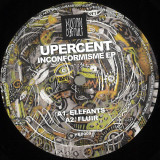
Bedouin’s Human By Default recruits Upercent for the four-track ‘Inconformisme EP’ this May.
Previously recording for Watergate, Kompakt and Adana Twins’ TAU, the Valencia-based DJ/producer arrives on Bedouin’s imprint for his debut appearance on the label, delivering some of his most accomplished productions to date on vinyl.
Across the record, Upercent displays combines his wide range of musical influences into a set of engaging downtempo dancefloor cuts with impeccable attention to detail. Opener ‘Elefants’ twists various acoustic instruments and vocal samples around soft shakers and warm low end, leading into theloose percussion of ‘Fluir’, grounded by a softly thudding kick amongst fluttering and glitched out FX.
On the flip, ‘Caduco’ combines the natural and the synthetic as hand percussion meets sharp synth stabs and glowing pads. ‘Hipocresia’ twists mangled horns over a low slung backbeat.
Recorded in 1973 in Rome - at Piero Umiliani’s "Sound WorkShop" – this one of the stand-out italian libraries to say the least. The whole record oozes a dreamy, mysterious, surrealist atmosphere enhanced by the vivid instrumentation that open a series of mesmerizing pieces which range from the gentle to the hypnotic. Eastern sounds, ritual horns and assorted metal banging and scrapping add to the whole mix for a landmark sound that will eventually evolve in delirious lysergic passages, hypnotic bass riffing, stoned funk beats, dubbed-out passages and Rino De Filippi trade-mark collage and sound manipulation.
Following on from Vince Watson’s sell-out 2020 release, that saw tracks lifted from his 9th studio album ‘Via’ taken to a whole new level with remixes by the mighty Joe Clausell, Steve Bug & Langenberg, Osunlade and Manoo, he unleashes two fresh, new, feel-good cuts on Everysoul Audio!
Defining them as House or Techno would be a mistake, as Vince effortlessly bridges the gap between both worlds in a way that he does so very well. ‘Make A Wish’ was born out of the same studio session as his ‘Teardrops’ track for Sacred Rhythm, taking the initial sketch into a different direction with powerful drums, big basslines and silky synth stabs, adding to the orchestral strings that build. ‘Forever’ was originally a studio jam that made it into his live shows pre-covid, but this gave him the chance to finish it the way he always wanted. It’s an upbeat, jazzy cut with funky 909 drums and acid bassline.
It’s a given that timing is everything in music – most obviously in terms of composition and production but often just as much in regard to conception and release – the latter two doubly poignantly so in the case of this massive DOOM vs The Sugarcubes mash-up LP from turntablist and producer Krash Slaughta.
Which is why the tale of this project’s gestation is perhaps what should be told about it before anything else.
Begun last August and finished on 25 October, the album started life as an idea born from a casual listen to final Sugarcubes album Stick Around For Joy that Krash had bought a copy of years before in a charity shop. Contemplating the cover art while listening to the LP and the track Hit in particular, it came to him that here might be the musical basis for a concept LP in the grand tradition of the hip-hop mash-up album. Thus the project was born, becoming something of an obsession as lockdown restrictions recommenced through a sanity-testing autumn. As it developed, the provisional title of Stick Around For DOOM morphed into Sugar Coated DOOM and Brighton artists Leigh Pearce and Rob Crespo were roped in to create the artwork. So pleased was Krash with the results that he decided to self-finance the pressing of the LP to vinyl which in turn would allow him to send a copy to DOOM in the most fitting format. On that basis, along with his dad’s advice that if you want something done properly; do it yourself’, he initiated the process for a limited press run as soon as the project wrapped and telephoned his dad (who’d been shielding and who he hadn’t seen for months) to say he’d done precisely that. In a tragic twist, this turned out to be their last ever conversation, for Krash’s dad died suddenly the next day. Two months later of course, while waiting for the Covid-slowed vinyl pressing process to complete, came a further tragic twist as the world received the delayed news that DOOM himself had also passed away back in October – in the event, only five days after Krash’s father. So it’s no understatement to say that Sugar Coated DOOM carries significant emotional resonance for its maker, forever linked as it will be to the deaths of two of his personal heroes.
Which brings us to the content. The album contains seven vocal tracks, with an alternate version of one and instrumental versions of five of the seven across two sides of an album with the music, track names, LP title and cover art mashing up musical, lyrical/ textual and visual elements of The Sugar Cubes’ Stick Around For Joy with DOOM acapellas, track names and references. Listeners won’t need long to appreciate that Krash Slaughta was right to be proud of his creation, almost certainly correct in thinking DOOM would dig it and no doubt The Sugarcubes too. Also, who would have thought The Sugarcubes had so much potential for beat-mining? But then seeing potential in the unexpected was always a vital skill from the golden era of sampling in hip-hop and those who follow in the tradition. The first track proper, for example, swipes Madlib’s lo-fi beat from underneath the vocals for Figaro and replaces it with the looped and beefed-up opening bars of the Cubes’ I’m Hungry. The result is a natural fit. But then the blending of elements in every track on this release provides evidence of the effort and love put into its creation, reinvigorating DOOM’s classic vocals while re-purposing The Sugarcubes in a manner that will delight. Indeed, if you’d didn’t know the work of Bjork’s former band, you’d be unlikely to pin an early 90s alt-rock LP as the sample source. I imagine listeners will have a hard time picking a favourite too. Perhaps Hit It (based on the track which triggered the project idea in the first) which splices the Bond-theme-ish Hit with My Favourite Ladies might prove the most popular, or the monkey’s favourite, Nurse Chong, which blends Happy Nurse with Raedawn (named for Tommy Chong’s daughter) from Viktor Vaughn LP Vaudeville Villain. Whichever one punters pick though, anyone who hears anything off this will know it’s one to rank alongside your other favourite hip-hop mash-up albums. And who knows – perhaps even Mr Daniel Dumile himself might have considered it a not unfitting epitaph.
Batov's Middle Eastern Grooves series has a new, funky, double-sided 7" addition titled ‘Big Baglama’ by Satellites: a fun release that gives vintage Turkish beats a new spin.
‘Big Baglama’ is a beautiful instrumental piece that captures the sound of an acoustic diwan saz - known as a baglama - integrating it in a series of riffs connected by a funky groove. The baglama gives off a fresh and lively feeling, despite the vintage flavour provided via the spacey synth and rippling drums. This track channels the energy and style of old school fuzzy vibe of Arif Sag’s saz recording of the ’70s but makes it new and entertaining to the ear, pulling the listener in for a fun ride.
The B-side ‘Deli Deli’ opens with a groovy bass riff and ululating synth, followed by a nifty melodic lead on the baglama and then Yuli’s enchanting vocals. The song is a new interpretation of an old piece by beloved 70’s Turkish folk singer Sakir Öner. This new version differs from the original in the more bright and poppy feel, conveyed by the 6/8 rhythm, and the addition of a whole new section by the band.
Satellites are another exciting act from the celebrated Tel Aviv music scene, and here at Batov Records we love them! Formed earlier this year, the group comprises talented vocalist Yuli Shafriri on the synth; Itamar Klüger on the baglama & bouzouki; Ariel Harrosh on the bass and Azriel ‘Raz’ Man on the drums. The band plays anything from Anatolian rock to vintage psych and spacey grooves. Satellites describe their sound as retro-fresh psych à la Turk, a musical "laboratory" lost somewhere between the mysterious alleys of 70’s Istanbul and the scorching sun and crystal blue sea of Jaffa-Tel Aviv, 2020.
Repress on purple vinyl!
Batov's Middle Eastern Grooves series has a new, funky, double-sided 7" addition titled ‘Big Baglama’ by Satellites: a fun release that gives vintage Turkish beats a new spin.
‘Big Baglama’ is a beautiful instrumental piece that captures the sound of an acoustic diwan saz - known as a baglama - integrating it in a series of riffs connected by a funky groove. The baglama gives off a fresh and lively feeling, despite the vintage flavour provided via the spacey synth and rippling drums. This track channels the energy and style of old school fuzzy vibe of Arif Sag’s saz recording of the ’70s but makes it new and entertaining to the ear, pulling the listener in for a fun ride.
The B-side ‘Deli Deli’ opens with a groovy bass riff and ululating synth, followed by a nifty melodic lead on the baglama and then Yuli’s enchanting vocals. The song is a new interpretation of an old piece by beloved 70’s Turkish folk singer Sakir Öner. This new version differs from the original in the more bright and poppy feel, conveyed by the 6/8 rhythm, and the addition of a whole new section by the band.
Satellites are another exciting act from the celebrated Tel Aviv music scene, and here at Batov Records we love them! Formed earlier this year, the group comprises talented vocalist Yuli Shafriri on the synth; Itamar Klüger on the baglama & bouzouki; Ariel Harrosh on the bass and Azriel ‘Raz’ Man on the drums. The band plays anything from Anatolian rock to vintage psych and spacey grooves. Satellites describe their sound as retro-fresh psych à la Turk, a musical "laboratory" lost somewhere between the mysterious alleys of 70’s Istanbul and the scorching sun and crystal blue sea of Jaffa-Tel Aviv, 2020.
Folk-minimalists announce vinyl issue for breakthrough album, Animalia.
"The semi-classical drums/sax/piano trio Mammal Hands mutate into a high-volume rave act" The Guardian
Captivating, ethereal and majestic, Mammal Hands (saxophonist Jordan Smart, pianist Nick Smart and drummer and percussionist Jesse Barrett) has carved out a refreshingly original sound from adisparatearray of influences: drawing on spiritual jazz, north Indian, folk and classical music to create something inimitably their own.
Hailing from Norwich, one of Britain's most isolated and most easterly cities, they have forged their own path away from the musical mainstream and their unique sound grew out of long improvised rehearsals. All three members contribute equally to the writing process: one that favours the creation of a powerful group dynamic over individual solos. Their recordsare entrancing and beautiful affairs,while their hypnotic live shows have seen them hailed as one of the most exciting bands in Europe as they push their unique line-up to the outer limits of its possibilities.
Over the course of three albums, Animalia, Floa and Shadow Work they have built a committed following and established themselves as one of the finest live bands in Europe. But while Floa and Shadow Work were both issued on vinyl this is the first time that Animalia has been committed to wax.
Produced by Matthew Halsall and recorded at 80 Hertz Studio, in Manchester, and engineered by George Atkins, Animalia features the band breakthrough hits Mansions of Million Years, a slow building tune that takes it's name from Egyptian mythology and draws the listener into the band's distinctive sound world. And the gorgeous hooky Kandaiki which makes stunning use of looped melodies in different time signatures, creating a wonderful interplay between the parts.
Other highlights include Snow Bough a short, melancholic, but moving, ambient composition, the Irish folk music inspired Spinning the Wheel, which also features drum beats inspired by chopped up electronic drum patterns and hip hop instrumentals. The jaunty Bustle and delightful Inuit Party and Street Sweeper. Finally the album closes with Tiny Crumb, which explores melodic ideas inspired by Alice Coltrane and Joe Henderson and builds in intensity from a quiet start to a powerful collective improvisation and heavily features Jesse's Tabla.
Billy Harper is one of the great tenor saxophonists in the post-Coltrane mold. Originally from Houston, TX and with a degree from the venerable University of North Texas College of Music, Harper emerged on the New York City jazz scene in the late 1960s performing with Art Blakey, Max Roach, Lee Morgan and others. Known for his soulful and propulsive tone, Harper was already a highly regarded and prolific session man before the release of his debut album as a leader on the cult favorite Strata-East label in 1973.
Recorded in 1975, Black Saint was the second album for Billy Harper as bandleader and is the most acclaimed and fully realized of his long career. The inaugural release of the Italian label Black Saint – to which the album lent its name – is comprised entirely of Harper compositions; the peaceful and subdued opener “Dance, Eternal Spirits, Dance!,” the swinging and fiery “Croquet Ballet” and the side-long epic “Call Of The Wild And Peaceful Heart.” Harper’s group features trumpeter Virgil Jones - a graduate of Roland Kirk’s mid-60s groups and session player for McCoy Tyner, Charles Tolliver and others - along with Joe Bonner on piano, David Friesen on bass and Malcom Pinson on drums.
Black Saint is too melodic and swinging to be free jazz but too forward-thinking to be described as modal post-bop; Harper’s advanced compositional sense and galvanic tenor work make this an album of pure fire music. This is a beautiful album back into print on its original format for the first time in over 40 years.
“Vax!” – Reminiscent of all the slippery vinyl that glitched under so many sweaty wet fingers in a steamy basement before time – a picture that seems highly illegal in our current antiseptic climate of hopefully germ free adolescents. Vax-inate! Give them the needle! It’s time.
Deti Vechnosti – Pered Rassvetom opens the gates to plug into the socket of our collective deranged consciousness, generating frisky and flamboyant specks to brightening darkness that confines our lives. Offering glimpses of the great unknown we also carry within. The Track introduces Chikiss & Mustelide’s new group “Deti Vechnosti”.
Alexander Arpeggio & OhLandy’s “Der Anruf”, wich originally appeared as a French language version on a previous Sameheads / Diapason tape release tells those tales of hot and hotter heat. Karmic payback for the sweaty and long nights enveloped in the halo of resonating frequencies of silly and high-spirited mischief.
Rouge Mécanique – Down the Line – follows suite in the odyssey that is a demented night out, sitting in front of a club, realising that the leatherjacket you picked up a few streets ago from the ground doesn’t smell like adventure but like spew.
The B-Side opens with Automatenfall – a hardware electronic 3 piece, previously appearing live at Sameheads during a “My Friend calls it K-Jazz” event. A yearning that eventually gets us on a spiritual path and headed toward enlightenment through the meandering melange of chimes, that little sounds that usually overcome us in the weirdest of times.
Das Kinn – the new project from Toben Piel, who’s part of Frankfurt’s MMODEM family, and one half of Les Trucs evokes memories of better days, black leatherpants – think Falco meets DAF – Überpop for the Untergrund.
Stopping for a final coup d’œil is Alessandro Adriani’s – Preserved Data Space. A persuasive case of brutally but lovingly worked machines serenading sawtooth waves of an infinite Weiter, a dissolving timeframe – the longest after hour I’ve been to, it lasts more than a year now already and counting.
Written by Michael Aniser.
Celebrating a determined and ambitious 15 year tenure as Yorkshire’s chief bastion of deep house music, Hudd Traxx enlist a who’s who from their gilded halls to contribute tunes for a special anniversary release. Split across two vinyl parts and an expansive digital release, it’s a pretty prestigious occasion featuring dance music legends Nightmares On Wax & Jovonn, long term label stalwarts Iron Curtis & JT Donaldson, a guest appearance from Mark Hawkins (FKA Marquis Hawkes) and a track from label head Eddie Leader. Adding to the already weighty credentials are Agnès (releasing his first material since 2013), Berlin-via-Italy producer Black Loops.
On Part Two longstanding Hudd Traxx veteran JT Donaldson drops “What I Got” - twisting and contorting throughout its duration, a serpentine roller rich with block party flavour and the very essence of deep house coursing through its veins.
Dixon Avenue Basement Jams’ Mark Hawkins does some moonlighting under his newly deed-polled alias with the epically beautifully “Chasing Paper”. No royalty credits heading north of the border here, just swathes of satisfied revellers and euphoric dancefloors guaranteed upon delivery.
Meanwhile, another Hudd Traxx regular, Iron Curtis, pays tribute to one of the scene’s greatest on “Kerri On (Chandelier Dub)”. A red-lit nocturnal jam that Mr. Chandler himself has rubber stamped, its ever-growing bassline, soaring strings and delicately placed keys taking us towards a seriously blissful conclusion.
Concluding part 2 is a track by Agnès - founder of Sthlmaudio Recordings. The stylish Swiss keeps true to his remit – deep, dubby, transcendent grooves that sway lushly with the midnight air. “Embryonic Connections” taking us right back to the roots of that tribal beat and a fitting end to this mammoth release and a perfect lead up to his forthcoming Hudd EP.
4 tracks which perfectly instil why Hudd started this label of love 15 years ago; to showcase fierce, uncompromising dancefloor workouts in as sincere and stylish manner as possible. The artists and tracks chosen show the adventurous routes and development the label keep as their main point of focus – to unearth the tantalizing new and exciting sounds of house music’s continuous evolution.
This release is dedicated to Richi Larkin & Yuriano x
Louisahhh releases her debut LP The Practice of Freedom, via HE.SHE.THEY. The Practice of Freedom heralds the evolution of Louisahhh as she delivers her most exposing work yet, conceived as an exploration of the unorthodox archetype of “feminist submissive,” based on the mantra “sin is not being true to yourself.” Like her uncompromising musical heroes Karen O, Siouxsie Sioux and Shirley Manson before her, Louisahhh’s bold, raw, anti-establishment message on The Practice of Freedom will mark her as punk’s essential new heroine at the forefront of the new dawn of musical feminism.
The Practice of Freedom was born from experiences of loss and love, told through a journey of brutally beautiful electronics, electro and techno colliding with industrial, rock and alternative sounds. On the polysexual polymath label HE.SHE.THEY.’s inaugural album release, Louisahhh captures a record of our times, covering themes ranging from eroticism and empowerment to addiction and apocalypse, and influences ranging from Nine Inch Nails to Patti Smith to Judith Butler. The album, produced by American musician, music video director and photographer Vice Cooler, hears ideas and lyrics by Louisahhh re-contextualised into revolutionary experimental sounds, formed through the pair’s shared love of American alternative rock. Louisahhh’s music fights for and provides a voice for others, rooted equally in the intensity of the dancefloor and the mosh pit.
HIDE are an electronic duo based in Chicago. The pair create dark and heavy sample - based compositions using a combination of self - sourced field recordings and various pop culture and media references. Their music is textured, minimal, and powerful, giving raw vulnerability an opportunity to unfurl. Their work is honest, confrontational, powerful and thought - provoking.
HIDE's third album, Interior Terror further abandons traditional concepts of song structure in favor of splintered rhythms and fevered, immediate release. Expanding on previous themes of autonomy and empowerment, Interior Terror addresses and questions the corporeal and immaterial body in a physical and metaphysical sense. Turning to the dread inside, reflecting on the world around us,
HIDE gives voice to the power of destruction as a c atalyst for hope, and to the collective experiences of those who've come before us as a wellspring of our own power. Raw vocal delivery of mantra - like prose issued forth yields a raging, plaintive wail that lulls, mocks, questions, proclaims and decries. A dearth of collected field recordings give way to more fluid arrangements while retaining a scathing urgency. The result is minimal, spacious, and jarring; a distant knocking grown into the pulse of a hypnotic dirge, drones emerge from shards of decomposed sound, bending, seething their way through your body.
"Do Not Bow down" is a self - directed spell for fire and regeneration. “Nightmare” explodes, unrelenting; conflating time and space to the beat of repeated blows to the head. A reflection on perpetual suffering, generational traumas and the transformative action of release. Title track “Interior Terror” belies a new brand of body horror informed by the systemic enforcement of a contemporary Western gender binary, touching on experiences of dysphoria and disassociation . “Fear” answers the question 'Where do cops come from