"No sign of Rotten Leaves" is Selma French's second album and draws inspiration from life's paradoxes.
Selma French is a songwriter and musician renowned and revered within the Norwegian folk scene. She grew up with traditional music and has played and created music all her life. Her musical inspirations include Linda Perhacs, Nick Drake, Judee Sill, Frøkedal, Sundfør and Sandy Denny.
Her debut album Changes Like the Weather in the Mountain was released in 2022 to critical acclaim and was ranked among the top Norwegian albums of 2022 by notable Norwegian newspapers such as Dagsavisen and Aftenposten. In the fall of 2024, she did a lot of touring in the UK together with Euros Childs (Gorky’s Zygotic Mynci / Teenage Fanclub).
Selma has also toured extensively throughout Scandinavia and is a member of the bands such as Masåva, Frøkedal & Familien - (with whom she toured in the UK as special guests of Teenage Fanclub), Sondre Lerche and Norwegian Grammy award winners Morgonrode. Her music is widely recognized in her native country and has recently featured as the theme song in the hit Viaplay T.V series Furia.
Her music reflects an admiration for Norwegian and English folk music and is infused with an airy, enigmatic energy. Her rich landscape of guitars, wurlitzer, fiddles and high pitched choir voices manages to convey a roar of frustration, obscure portraits of the present and a gathering force of hope.
Cerca:adm
- Idles
- Tom Morello & Serj Tankian
- Helmet
- 3: D X Gang Of Four Feat. Nova Twins
- Hotei / Gary Numan
- Gail Ann Dorsey
- Herbert Gr Nemeyer Feat. Alex Silva
- Lonelady
- Jj Sterry
- La Roux
- Everything Everything
- Dado Villa
- The Dandy Warhols
- Warpaint
- Flea & John Frusciante
- The Sounds
- Hardcore Raver In Tears
- Killing Joke X Gang Of Four
- Sekar Melati
The Problem of Leisure: A Celebration of Andy Gill and Gang of Four is a
double album of tracks written by Andy Gill and Gang of Four, all newly
reinterpreted and recorded by artists whose own unique contributions to
music were enriched by listening to Gang of Four.
The album features songs from across Gang of Four’s 40-plus year career, each
individually chosen by the artists who covered them. Andy Gill originally conceived of the album to mark the 40th anniversary of the release of Entertainment! in 2019. His widow, Catherine Mayer, explains that this plan had already
changed by the time of Andy’s death in 2020, after some artists chose tracks
from different albums and periods.
“Andy was massively excited about this project,” Mayer says. “It wasn’t of
course conceived as a tribute album, but it’s comforting to me that he lived to
see artists he hugely admired enthusiastically agreeing to participate, signalling that the admiration was mutual.” The album artwork has been created by
English artist Damien Hirst, a long-time friend of Andy’s.
Idles - Damaged Goods. Tom Morello & Serj Tankian - Natural’s Not In It. Helmet
- In the Ditch. 3D x Gang of Four feat. Nova Twins - Where The Nightingale Sings.
Hotei - To Hell With Poverty. Gary Numan - Love Like Anthrax. Gail Ann Dorsey -
We Live As We Dream Alone. Herbert Gr nemeyer feat. Alex Silva - I Love A Man
in a Uniform. LoneLady - Not Great Men. JJ Sterry - 5.45. La Roux - Damaged
Goods. Everything Everything - Natural’s Not In It. Dado Villa-Lobos - Return The
Gift. The Dandy Warhols - What We All Want. Warpaint - Paralysed. Flea & John
Frusciante - Not Great Men. The Sounds - I Love a Man in Uniform. Hardcore
Raver in Tears - Last Mile. Killing Joke x Gang of Four - Forever Starts Now (Killing
Joke Dub) . Sekar Melati - Not Great Men (live version)
Percussion mastermind Ploy arrives on Dekmantel with a double-pack of unbridled dancefloor heat that sees him reconnecting with his house roots.
Before he made a striking breakthrough as Ploy with wayward broken techno for Hessle Audio and Timedance, Samuel Smith's first releases as Samuel were leftfield house excursions. On this release for Dekmantel he wanted to reflect on a decade of releasing music and the many high-impact dancefloors he's shared with the label, from Selectors to De School, over the years.
The common denominator across these eight tracks is no-nonsense house, offering up grooves that will serve a DJ exactly what they want in the mix. At the same time, Ploy doesn't dilute the distinctive edge of his sound, from the abundance of perfectly balanced percussion to the nagging hooks of an off-key synth line dropped at just the right moment. Wry samples inject the mischievous humour he's always creeping into his craft. This is where dancefloor magic is nurtured, hitting the sweet spot between rock solid reliability and the wild card energy that brings a heads-down set to life.
From 'Admirer's big room peaks to 'It's Later Than You Think's cosmic incantations, this is the sound of Ploy showing exactly what it takes to make laser-focused club bombs without losing one iota of his inimitable style.
Signs & Gestures is a various artists limited vinyl pressing which will be available digitally later this year. The vinyl version was mastered by Todd Mariana at Chicago's newest cutting studio, Deep Grooves Mastering.
The compilation features four tracks. Longtime friends Awoke (aka John Griffin) and Jack Buser write the two cuts on the A-side. These guys have known each other for many years and the complimentary nature of their tracks echo their years long relationship. Both use analog gear in their productions. In fact, that is an understatement as both are engineers by day and admitted audio gear junkies by night. Awoke's Untitled #2843 is a quirky drama builder throwing the In My House vocal over squelches and acid lines. Buser's Midi Boson is a classic exercise in simplicity. Drums from an MPC and a lead from Elektron's Monomachine are all it takes for this groove to rattle the dance floor.
Side B is also the work of two close friends. Nathan Drew Larsen remixes Little Turtles by Souls Found. Mazi edits Nathan's remix (released earlier on Fresh Meat's When Bad People Cook Good Food Volume 3) to 6 minutes, removing the atmospheric outro and reducing some of the extended sections. What remains is an energetic workout that is uncommonly melodic and emotional. As Audio Soul Project, Mazi's remix 3 of Sentimental Love combines sections from the first two of his remixes of this song released on Vizual Records back in 2011. This new version will hopefully express the care and love that went into preserving the message of Joshua Iz and Chez Damier's original.
Four Seasons in Kyoto’ marks the final chapter of The Kyoto Connection’s Ambient Japanese trilogy, following Postcards (2018) and The Flower, The Bird and The Mountain(2022). Like its predecessors, this album pays homage to the pioneering ambient and environmental music movements of 1980s and 1990s Japan.
The album unfolds as the imagined soundtrack to life in a quiet rural village, where nature and tradition shape the rhythm of everyday existence. Across 14 evocative compositions, The Kyoto Connection captures the essence of Japan’s ever-changing seasons, weaving together delicate melodies and immersive soundscapes. With contributions from friends and fans in Japan, Four Seasons in Kyoto is both a tribute and a transportive listening experience from producer Facundo Arena, the composer and producer behind The Kyoto Connection.
With Four Seasons in Kyoto, Facundo Arena continues his deep exploration of Japanese ambient and environmental music, blending his long-standing admiration for Kyoto’s cultural heritage with a sound that feels both nostalgic and timeless. While Postcards was an instinctive homage and The Flower, The Bird and The Mountain drew from real Kyoto field recordings, this final chapter in the trilogy leans further into the imagined, an intimate portrait of an unseen yet deeply felt Japan.
Recorded using a mix of vintage synths, delicate acoustic instrumentation, and subtle electronic textures, Four Seasons in Kyoto refines The Kyoto Connection’s signature approach. Organic soundscapes and drifting melodies mirror the slow change of seasons, evoking the impermanence central to Japanese aesthetics. The result is a record that seamlessly bridges the natural and the synthetic, memory and imagination, a fitting conclusion to a journey that began with an algorithmic discovery and blossomed into a rich sonic world of its own.
Limited edition of 500 copies.
Hard Top assembles the previously unreleased 1975 recordings of legendary South African saxophonist Kippie Moketsi (also spelled Moeketsi). The 2LP vinyl edition is presented in a gatefold sleeve featuring artwork by Mafa Ngwenya and comes from As-Shams Archive on the heels of the Tete Mbambisa's previously unreleased African Day album in 2024.
By 1975, at the age of 50, saxophonist Kippie Moketsi had already earned his stripes as a South African jazz figurehead. His tenure with the Jazz Epistles and the cast of the "South African Jazz Opera" King Kong in the late-1950s had not only marked his own rise to fame but also seen him help catalyse the ambitions of a younger generation of iconic artists who would go on to become the defining figures of modern South African jazz. While he didn't enjoy the same international attention as his protégés Miriam Makeba, Hugh Masekela and Abdullah Ibrahim, his humble and challenging career on the local jazz scene until his death in 1983 saw him forge an enduring legacy.
Owing to the efforts of record producer Rashid Vally, Kippie Moketsi's journey through the 1970s is beautifully documented, most notably on the albums Dollar Brand + 3 (1973), Tshona! (1975) and Blue Stompin' (1977), in which he shares the spotlight with Abdullah Ibrahim, Pat Matshikiza and Hal Singer respectively. As a featured performer on Soul of the City's Diagonal Street (1975) and Dennis Maple's Our Boys are Doing It (1977), Moketsi is seen embracing the popular orientations of South African jazz in 1970s but, having come up in the 1940s and 1950s, he never forgot his roots as a dedicated admirer and scholar of traditional American jazz.
While Moketsi did write some memorable compositions, it was in the role of interpreter that he shone most brightly. With its title derived from a good-natured nickname that nodded to Moketsi's elder status by way of his receding hairline, Hard Top is a covers album that looks back in time to the era of rhythm and blues while also indulging 1970s pop and funk with a decidedly South African vibe. Officially joining Kippie Moketsi's catalogue 50 years after it was recorded, Hard Top provides an opportunity to celebrate the multiple dimensions of a South African jazz legend and reflect on the unwavering support of his fan, producer and friend Rashid Vally, who passed away in December 2024.
- 1: Dirt
- 2: The Only Marble I’ve Got Left
- 3: Sugar In The Tank
- 4: Bottom Of A Bottle
- 5: Downhill Both Ways
- 6: No Desert Flower
- 7: Tape Runs Out
- 8: Off The Wagon
- 9: Tuesday
- 10: Showdown
- 11: Sylvia
- 12: Goodbye Baby
Black Vinyl[26,68 €]
After dropping hints for months and following the release of their first single "Sugar in the Tank,” Julien Baker & TORRES are excited to announce the April 18 release of their debut album Send a Prayer My Way. The album has been in the works since the two played their first show together in 2016 and at the end one singer turned to the other and said, “You know, we should make a country album.” This is the origin story, the stuff of legend in the world of country music, and the beginning of a collaboration between two artists already admired for their spare, elegant lyrics as well as the courage to share their struggles with those who love their music. It’s also the beginning of creating a work that, like the most enduring country albums, sustains and inspires, reminding both singer and listener that not one of us is ever totally alone in this world, that music is a steady companion. Julien Baker & TORRES’ Send A Prayer My Way was written and sung in the best of the outlaw tradition - defiant, subversive, working class, and determined to wrestle not only with addiction, regret and bad decisions, but also with oppressive systems of power. Mercifully, this is only the beginning of the stories TORRES and Baker are determined to tell. Because these are also songs about radical empathy and second chances, and third chances, and while there’s plenty of struggle and regret in here, there’s also humor and defiance.
- 01: Summer In Shibuya
- 02: Opening Credits
- 03: Thank You Kirin Kiki
- 04: Thank You Hiroshi Yoshimura
- 05: Closing Credits
Rindert Lammers' debut album is a heartfelt exploration of gratitude, blending personal narratives with cinematic imagery in a serene and soulful ambient jazz style. Inspired by Japanese cinema and the raw authenticity of YouTube confessions, the album captures a mood of introspection and appreciation. Central to the album is the track "Thank You, Kirin Kiki," which draws from a powerful scene in the film Shopliers. Lammers explains "It's one of my favorites. The Japanese actress Kirin Kiki plays the grandmother of a ‘chosen family’, all of whom have fled or lost their own families in some way. In this scene, one of her last scenes before her (real) death, Kirin Kiki (the grandmother) looks at her family and says, 'Thank You!' twice towards the children and the sea. Kirin Kiki improvised these words on the spot, and it's such a poignant moment in the film, but also indicative of her impending death. I found the gratitude so moving it fit perfectly with the gratitude I found in the voice clip from "Thank You Hiroshi Yoshimura. "The fourth song, "Thank You Hiroshi Yoshimura," opens with a voice clip that acts almost as the protagonist of a film, reflecting on a turbulent time of sleeping in parks and on the streets. This voiceover was inspired by a comment on a Hiroshi Yoshimura video on YouTube that began, “This album reminds me of...” Lammers noticed the deeply personal responses le on these videos, so he recorded various similar YouTube comments from people around the world, initially intending to set them to music. Though much of this idea evolved, this particular voice clip remained a central influence, ultimately inspiring a cinematic journey within the album. "Summer in Shibuya" sets the scene as a trailer, "Opening Credits" introduces the narrative, and "Closing Credits" gently brings it to a close. While there’s a Japanese and Tokyo theme running through the tracks, Lammers doesn’t view the album as a tribute to Japan or Tokyo specifically—he’s never visited and admits to knowing only fragments of the culture. Yet he's drawn to Japanese environmental music and is an avid Murakami reader, seeing Japan as a powerful, visual inspiration in his mind’s eye. In a way, the album is also his “thank you” to the beautiful art that Japan has shared with the world.
- 1: Burn From Inside
- 2: A Cage Full Of Sins
- 3: Can't Be Done
- 4: Before You Leave
- 5: A Symmetry Of Faith
- 6: Son Of Myself
- 7: Carry On
How does one approach the morning after a party for the end of the world? This is a question which Mamuthones had to ask themselves, in the wake of their last album for Rocket, 2018's Fear On The Corner. Nonetheless, from the aftermath of this uncertain period has risen the still more flourishing realm of From Word To Flesh - a colourful and multi-faceted creation very much befitting the outsider spirit of Rocket's new Black Hole imprint. “I believe that with this album a circle has been closed” reflects Mamuthones mainman Alessio Gastaldello. “We returned to the atmosphere of the first Mamuthones albums with the skills acquired throughout the journey, with new sounds and with new creative processes. I would say that what remains constant – and at the core of our music – is the obsessive rhythms and the search for a sonic rituality: this is for certain our trademark”. This is clear right from the curtain raiser 'Burn From Inside', which beams the emotive approach of the band through the shamanic prism of Coil's Ape Of Naples. From there, hypnotic repetition marries to abstract abrasion and mournful laments with equal finesse, as redolent of the spiritual zest of Popol Vuh and Ash Ra Tempel as the gnostic folk of Six Organs Of Admittance. Elsewhere, 'A Symmetry Of Faith' summons a union of post-punk and psychically charged folk aligned with the recent work of Bristol's Beak. The Sardinian ritual of the Mamuthones – in which sinister masked figures weighed down with cattle bells conduct a ceremonial procession to ward off evil forces - has gone on for some two thousand years, and it may be that these ghoulish avatars are engaged in a celebration of the endless cycles of death and rebirth, fortifying spirits for a new epoch. Amidst the chaos and tumult of the 2020s, the band of this name has undergone just such a change themselves, and ‘From Word To Flesh’ is the fruit of their struggle. As Alessio says “With this album I think the Mamuthones have never been so unmediated, so naked: all masks gone”
Priori’s hit EP Pareidolia gets a well deserved remix treatment. The relation between Priori and Midgar started early 2023 with the release of his Pareidolia EP, where a remix for Keplrr followed quickly the year after. Now, early 2025, a group of close friends and admired artists were invited to rework the Pareidolia’s originals. Midgar affiliate Forest Drive West uses the opportunity to present not one but two remixes.
Presenting one half-time 85 bpm twist of Hazard and another slowpaced murky techno groover. Originally from Montreal, Maara forms the Canadian connection and she turns Memory Palace into a beautiful bouncy dub-techno floater. Sound experimentalist Notte Infinita takes his turn on Pareidolia’s title track and creates some magnificent eyesclosed drum & bass hypnotism. At last, Amsterdam’s upsammy brings back the light with her iconic playful approach. She flips the steady groove of Glass Shards into a jumpy interplay of rhythms and joy
- How Big Is Time
- It Happened Once
- The Quarry
- It Will Be Gone Adm
- The Most Special Place
Elori Saxl's soundtrack for the VR film Texada is an exploration of the smallness of human existence within the grand scope of geologic time, mirroring the film's exploration of Texada Island's limestone-rich landscape. Saxl, inspired by her own experiences of island life on Madeline Island, assembled a soundscape that captures both the vastness of Earth's ancient processes and the intimate moments of human existence. Using analog synthesizers, baritone saxophone (performed by Henry Solomon), and processed field recordings of water and rocks, she created ambient layers that evoke cycles, waves, and the transformative forces of nature. The score begins with an exploration of Earth's origins and the emptiness of a rocky planet before life emerged. This foundation grows into pieces like "The Quarry," where the central geological feature, limestone, takes on a dynamic presence. As loops and rumbling textures evoke the rise and movement of stone over millennia, as abstracted creatures spiral upwards, full of life. The album concludes with "The Most Special Place," which serves as a final bridge between the cosmic and the intimate, leaving a lasting impression of how deeply human lives are intertwined with the ancient geology beneath our feet. Saxl's compositional process itself mirrors the themes of transformation and cycles. Working with limited time and resources, she recorded Solomon's saxophone parts early in the project, later repurposing fragments through re-pitching, stretching, and digital effects. As she explains, "I experimented with bringing out the human character of the saxophone by highlighting breath and imperfections while also pushing it into an alien/unrecognizable/bigger world through digital processing and effects." The result is a soundtrack that feels both organic and otherworldly, capturing the grand scope of Earth's timeline while remaining grounded in human emotion and connection.
SCI+TEC celebrates a pivotal moment in its history with the release of I Feel Speed (2025 Remixes), a special project revisiting one of Dubfire’s earliest solo works and one of the label’s foundational releases. Originally released in 2007, Dubfire’s cover of Love and Rockets’ “I Feel Speed” marked a bold venture into uncharted territory, with the Grammy-winning artist taking on vocal duties himself to reimagine the iconic ballad.
In Dubfire’s own words, “Throughout my career, I’ve made no secret of my love—bordering on worship—for Love and Rockets (and, of course, Bauhaus). Tackling their soft ballad ‘I Feel Speed’ in 2007 was a daunting but transformative experience. Over the years, fans and colleagues have kept their love for that cover alive, which makes this new remix package even more meaningful.”
This release brings together a stellar list of artists, each offering a distinctive interpretation of the classic. Stephan Bodzin adds his signature emotive touch, while Yulia Niko dives deep into hypnotic textures. SNYL, whose admiration for the original track sparked the project, delivers a rework that strikes a balance between reverence and reinvention. Rafael Cerato and Laherte craft a dynamic reinterpretation, and indie dance pioneer Erol Alkan offers a genre-blurring remix full of energy and innovation.
I Feel Speed (2025 Remixes) is a testament to Dubfire’s enduring legacy, the timeless influence of Love and Rockets, and SCI+TEC’s continued role as a beacon of innovation in electronic music.
Spandau20, an imprint named after the Western Berlin district and focused on artists from the area, delivers techno in all diverse forms - from warehouse and electronic peak time beats to breaks and IDM, balancing the old and new school sounds flawlessly. With a focus on vinyl releases, for the collectors, Spandau20 has lately also focused on its label nights, with showcases at Fabric, Bassiani and many others. The label's 10th release features 10 tracks that epitomise the musical diversity of Spandau20 and the progressive musical mindset of its roster, calling on the label favourites and Spandau natives to deliver brand new and exciting music. This special release even features one track that all artists have worked on together: 'Come Closer', a swarming, slithering beginning featured as the VA's opener. Its barely coherent female vocal echoing amidst a cacophony of demon-like effects. The chilling ambience captured at the offset transcends into the first full length track by Elli Acula, 'Floating Eyes', a cur characterised by an authoritative, pounding bass featuring calculated percussive rolls and metallic overtones to make for a face-scrunching opener to this devilish collection of works. FJAAK follow for the first of twin cameo appearances, partnering up with fellow live supremo and hardware aficionado KiNK. On 'Overbridge' the trio deliver a cavernous, rolling number driven by a deep thrumming bass in addition to a razor-edged lead synth, and pulsating technopattern. Dajusch is known for incorporating his years of classical study in with his immersive musical style - and with his VA effort the Berlin native neatly showcases this. Easing the energy slightly, 'Move' escalates from its warm, melodic intro into rumbling goliath of a beat comprising a looping, slew of gassy harmonics. The momentum of the release shifts considerably with the introduction of acutely versatile producer, DJ and sound artist Claus. The artist from Spandau leans his track 'Bloomscroll' towards sparse, dubby sonics in which he intricately ties together to form churning, burgeoning soundscape. FJAAK jolt proceedings back into the techno groove with their signature blend of arresting sub-bass and reverberating rhythms, which come thick, fast and heavy on 'Jackfruit'. The abstract wonder of Anna Z's broken-beat like stylings is fully explored on 'Icy Liq'. It's outlandish and amorphous in its execution, causing a clattering percussive chaos that's choicely pieced together by the modular-extraordinaire. Nikk stealthy moves into breaks territory with his track 'Down In The Shadows', packing a trap-like snare with an acid-flecked melody and dawn-breaking, dream-like textures. The penultimate track on the VA is 'Tufted'. J.Manuel expertly employs a chorus of robot-like sonics that course through a short-circuiting low-end to produce a pacy, inescapable journey via a whirling, merciless beat. He is joined by the legendary producer Tobi Neumann for their menacingly ambient number titled 'Fennec.' In parts a nod to UK dubstep, the duo concocts a fierce admixture of styles bolstering tribal-like components with industrialised overtones and methodically crafted drum-fills.
Star Trek – „30th Anniversary Vol. 1“: Der Original Soundtrack auf Vinyl für alle Trekkies! Für alle Star Trek-Fans und Vinyl-Liebhaber gibt es jetzt ein ganz besonderes Highlight: Der „30th Anniversary Vol. 1“ Soundtrack entführt die Fans erneut in die unendlichen Weiten des Weltalls. Das besondere Vinyl-Release feiert die große musikalische Erbschaft, die Star Trek über Jahrzehnte hinweg mit seiner kraftvollen und atmosphärischen Musik begleitet hat. Auf „30th Anniversary Vol. 1“ finden sich einige der berühmtesten Tracks aus der ersten Serie, die das Gefühl von Abenteuer und Entdeckung im All perfekt transportieren. Das knisternde, warme Klangbild der Vinyl sorgt zudem für ein authentisches Retro-Erlebnis, das Fans der ersten Stunde genauso begeistern wird wie die neue Generation von Trekkies.
- A100:
- Carry No Thing
- Careful
- Please Slow Down
- The White Light Of The Morning
- Wake
- Heavy Hearts
- How It Was It Will Never Be Again
- Something Beautiful And Bright
- Heartbreakdown
- Nobody Lives Here
SYML is the solo venture of artist Brian Fennell. Welsh for “simple”—he makes music that taps into the instincts that drive us to places of sanctuary, whether that be a place or a person. Born and raised in Seattle, Fennell studied piano and became a self-taught producer, programmer, and guitarist. Says Fennell about his album Nobody Lives Here, "We change, the world changes, and there is so much unknown. About a year ago I started writing songs that represent the change that is happening in front of my face, a group that have emerged to become the third SYML album. Many of these songs are about getting older, and the intimate, and sometimes frightening, passing of time. Some are about how getting older revolves around looking forward to things happening, and when they don’t happen, or they feel different than anticipated, we can be left with surprise and sadness. I’m actually reminded of this watching my 2 year old! We learn to live with disappointment. I recorded some of these songs with kids and dogs making noise in the background, and others in silent studios with musicians I’ve listened to and admired for many years. These songs are meant to be pieces of clothing to wear as you need (or I need). Some are bright and bold and others are gentle, but they were all made with a sense of comfort in mind, even when things feel bleak. My wife jokes that when our friends hear some of these songs, they might think we are not “ok”. Thankfully, putting myself inside a sad song is still a good place to feel happy. There's this generally unspoken feeling that musicians don’t listen to their own music. That isn’t true for me. I love living with my songs because their meaning changes as I change. There is as much fear and beauty in the big questions as there is wonder and possibility in the simple, everyday shit we live through.”
- Bandorai
- Platinum
- Second Spring
- Sleep
- Anchor Us To Seabed Floor
- Red Dove
- Caro
- A Requiem
- Torc
- Thou Art Mortal
Black Vinyl[29,62 €]
On April 4th, Brighton-based Australian vocalist, producer, and multi-instrumentalist Penelope Trappes will release her fifth full-length album ‘A Requiem’. It comes alongside news of her signing to London imprint, One Little Independent Records. ‘A Requiem’ collects ten haunting, ambient soundscapes - incantations of dreams and nightmares, of death and grief, as well as power and autonomy. Carnal, transcendent cello drones are used to exorcise historical and generational traumas in an evocative and macabre piece of gothic experimentalism.
Seeking solitude for what she knew would be an intense and cathartic writing experience, Trappes travelled to Scotland and isolated completely. Amidst meditative and psychedelic states, she channeled demons and accessed parts of herself she’d long desired to cleanse. During candle-lit recording sessions she found herself drawn to cello, an instrument she has no formal training in, she explains, “I always felt an affinity toward the cello, I embraced it, held it, and became one with it as a way to accompany my voice. The nerve-like strings of the cello became external chords of my vocal folds… I scratched on them, leaned into them, and conjured all of the textures I could muster”.
‘A Requiem’ is a musical service in honour of the dead, a sanctuary Trappes built for herself to explore familial chaos and history. “I was looking for an equilibrium between a ‘heaven' and a ‘hell’” she explains, “screaming out to the wisdom of our foremothers - surfacing and leading me into true strength and beauty. I listened to the sorrow closely. Death is a part of our reality. Inevitable. Omnipresent. But nightmares can be beautiful”.
She continues, “This album is my personal requiem for my parents, my ties to the land where I was born, along with all of my epigenetically connected ancestors before them. The songs helped me summon up the strength to move through my own awareness of mortality, death, and impending loss. This album is a living funeral. It’s a ceremonial collection of music. It’s an externalising of the power and strength to fight the generations of abuse and darkness that my parents self-admittedly played out in their parenting and to keep it away from my own social patterns and my psyche. It’s not an uncommon thing in the world and this lamented warcry goes out to everyone to help exorcise patriarchal, political, and religious systems of abuses of power”.
- A1: Do U Fm
- A2: Novelist Sad Face
- A3: Green Box
- A4: Dusty
- A5: The Linda Song
- A6: Dm Bf
- B1: I Tried
- B2: Melodies Like Mark
- B3: Wildcat
- B4: How U Remind Me
- B5: Pocky
- B6: Bon Tempiii
- B7: Pt Basement
- B8: Alberqurque Ii
- B9: Mary's
Yellow Coloured Vinyl[29,37 €]
Kneading dough is tricky – you should know how it’s supposed to feel. If you try too hard you could make it worse. It’s a beautiful practice – creation with a gentle touch, to work at something so it can be left alone. “If it’s too drawn out it’s awful. It’s easy to give too much.” Dance in the mirror. Contemplate your veiny hands. Who do they remind you of?
You begin by mixing flour and water. “What happens when your people die? Why’d they move the rock to the other side of Ulster Park?” Eliza Niemi asks two seemingly unrelated questions in a rising melody with guitar accompaniment, like fingers playing spider up to the nape of your neck. Gentle pressure. Strands of gluten form to bind the mix. A new question lingers in the binding. When she admits “but I don’t know how to tell if I’m feeling it or not,” that question surfaces through the text. It is reiterated throughout the album. When I’m working with dough I think the same thing to myself.
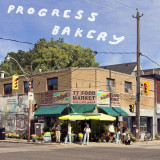
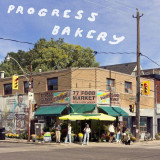
On Progress Bakery, her second album as a solo artist, Eliza knows to leave some questions alone – to let juxtaposition and tension be the proof. It doesn’t have to be hard. The feelings and revelations they provoke rise in the heat. The smell is sweet. Crispy on the outside and soft all the way through. She playfully slip-slides through words and sounds and images, delighting in surprise, skimming ideas like stones cast across clear water, touching down briefly with uncommon grace.
The question provoked between those opening lines resurfaces in the strands between songs – “Do U FM” is fully formed and beautifully layered, while “Novelist Sad Face” is a short, acapella rendering of gentle curiosity. What is holding these ideas together? Some songs demand more, seem to carry a whole load – eventually the skipping stone will halt to sink and resume its idle duty – while others drift in and out of focus, the way thoughts and dreams become interwoven before the mind is sunk into true sleep.
Music and words don’t always have to interact. Where she decides to keep them apart gives a new contour to where and how she puts them together. The kind of thing you’re supposed to take for granted with songs and their singers comes alive in Eliza’s hands – the little miracle of mixing, kneading, stretching, and stopping.
So often on Progress Bakery, Eliza teases out truth and meaning by asking questions. “Do I wanna be crying?” “Do you want me good or do you want me bad?” “Do I need an eye test?” “I’m writing songs in my head while you’re going over stuff with me — is that cruel??” In “Pocky” Eliza ends with a question that feels to me like the actual biography, succinct and revealing:
I don’t wanna be made to see
I just wanna ask “what’s that?”
Grace that ought to be rare, but in its care and precision is offered humbly, with great generosity, and without announcing itself. Eliza’s simple, miraculous music is given further form and shape by a group of collaborators – invaluable guest musicians Jeremy Ray, Evan Cartwright, Steven McPhail, Kenny Boothby, Ed Squires, Carolina Chauffe, Dorothea Paas, Louie Short, and Avalon Tassonyi. Together with Louie Short, who recorded, mixed, and produced the album along with Jeremy Ray and Lukas Cheung, Eliza has cultivated a richness in sound and texture that prods and provokes the ticklish ear. Barely audible guitar tinkering, a brief lo-fi field recording of trumpets, the harmonic clicking of a looped synthesizer, a flourish of reeds, a child’s conversation, each uncanny sound perfectly placed, rippling out under a soft breeze.
Lay in bed alone at night and ask aloud to the stillness,
“What were you doing at the Albuquerque Airport?
What were you doing there??”
And hear your question answered by a dream of swelling, undulating cellos. Try to grasp at the melody and structure. It’s not an answer (if there could be one), but it moves deeper, closer to the weird layer of fleeting moments and disconnected images, barely perceptible at its core. Wait for the dream reel to click into place.
Eliza took me for a ride in Nicole (her beloved Dodge Grand Caravan) and told me she’d been thinking of the album as an embodiment of transition – and I think every transition, known or unknown, carries the weight of new meaning, skittering off the surface tension of life as you know it, creating ripples, sometimes bouncing off and sometimes breaking through. There is a trick you can use to tell if a dough is glutinous enough. You’re supposed to stretch it out as thin as you can without breaking it and hold it up to the light. If you can see through, even if it renders the world murky and uncertain, you should leave it alone. I love this trick. It’s one that Eliza seems to know intuitively: work gently and ask questions and don’t always expect answers, and when you can, take a glimpse at something new, and then leave.
Kneading dough is tricky – you should know how it’s supposed to feel. If you try too hard you could make it worse. It’s a beautiful practice – creation with a gentle touch, to work at something so it can be left alone. “If it’s too drawn out it’s awful. It’s easy to give too much.” Dance in the mirror. Contemplate your veiny hands. Who do they remind you of?
You begin by mixing flour and water. “What happens when your people die? Why’d they move the rock to the other side of Ulster Park?” Eliza Niemi asks two seemingly unrelated questions in a rising melody with guitar accompaniment, like fingers playing spider up to the nape of your neck. Gentle pressure. Strands of gluten form to bind the mix. A new question lingers in the binding. When she admits “but I don’t know how to tell if I’m feeling it or not,” that question surfaces through the text. It is reiterated throughout the album. When I’m working with dough I think the same thing to myself.
On Progress Bakery, her second album as a solo artist, Eliza knows to leave some questions alone – to let juxtaposition and tension be the proof. It doesn’t have to be hard. The feelings and revelations they provoke rise in the heat. The smell is sweet. Crispy on the outside and soft all the way through. She playfully slip-slides through words and sounds and images, delighting in surprise, skimming ideas like stones cast across clear water, touching down briefly with uncommon grace.
The question provoked between those opening lines resurfaces in the strands between songs – “Do U FM” is fully formed and beautifully layered, while “Novelist Sad Face” is a short, acapella rendering of gentle curiosity. What is holding these ideas together? Some songs demand more, seem to carry a whole load – eventually the skipping stone will halt to sink and resume its idle duty – while others drift in and out of focus, the way thoughts and dreams become interwoven before the mind is sunk into true sleep.
Music and words don’t always have to interact. Where she decides to keep them apart gives a new contour to where and how she puts them together. The kind of thing you’re supposed to take for granted with songs and their singers comes alive in Eliza’s hands – the little miracle of mixing, kneading, stretching, and stopping.
So often on Progress Bakery, Eliza teases out truth and meaning by asking questions. “Do I wanna be crying?” “Do you want me good or do you want me bad?” “Do I need an eye test?” “I’m writing songs in my head while you’re going over stuff with me — is that cruel??” In “Pocky” Eliza ends with a question that feels to me like the actual biography, succinct and revealing:
I don’t wanna be made to see
I just wanna ask “what’s that?”
Grace that ought to be rare, but in its care and precision is offered humbly, with great generosity, and without announcing itself. Eliza’s simple, miraculous music is given further form and shape by a group of collaborators – invaluable guest musicians Jeremy Ray, Evan Cartwright, Steven McPhail, Kenny Boothby, Ed Squires, Carolina Chauffe, Dorothea Paas, Louie Short, and Avalon Tassonyi. Together with Louie Short, who recorded, mixed, and produced the album along with Jeremy Ray and Lukas Cheung, Eliza has cultivated a richness in sound and texture that prods and provokes the ticklish ear. Barely audible guitar tinkering, a brief lo-fi field recording of trumpets, the harmonic clicking of a looped synthesizer, a flourish of reeds, a child’s conversation, each uncanny sound perfectly placed, rippling out under a soft breeze.
Lay in bed alone at night and ask aloud to the stillness,
“What were you doing at the Albuquerque Airport?
What were you doing there??”
And hear your question answered by a dream of swelling, undulating cellos. Try to grasp at the melody and structure. It’s not an answer (if there could be one), but it moves deeper, closer to the weird layer of fleeting moments and disconnected images, barely perceptible at its core. Wait for the dream reel to click into place.
Eliza took me for a ride in Nicole (her beloved Dodge Grand Caravan) and told me she’d been thinking of the album as an embodiment of transition – and I think every transition, known or unknown, carries the weight of new meaning, skittering off the surface tension of life as you know it, creating ripples, sometimes bouncing off and sometimes breaking through. There is a trick you can use to tell if a dough is glutinous enough. You’re supposed to stretch it out as thin as you can without breaking it and hold it up to the light. If you can see through, even if it renders the world murky and uncertain, you should leave it alone. I love this trick. It’s one that Eliza seems to know intuitively: work gently and ask questions and don’t always expect answers, and when you can, take a glimpse at something new, and then leave.
- A1: Do U Fm
- A2: Novelist Sad Face
- A3: Green Box
- A4: Dusty
- A5: The Linda Song
- A6: Dm Bf
- B1: I Tried
- B2: Melodies Like Mark
- B3: Wildcat
- B4: How U Remind Me
- B5: Pocky
- B6: Bon Tempiii
- B7: Pt Basement
- B8: Alberqurque Ii
- B9: Mary's
Kneading dough is tricky – you should know how it’s supposed to feel. If you try too hard you could make it worse. It’s a beautiful practice – creation with a gentle touch, to work at something so it can be left alone. “If it’s too drawn out it’s awful. It’s easy to give too much.” Dance in the mirror. Contemplate your veiny hands. Who do they remind you of?
You begin by mixing flour and water. “What happens when your people die? Why’d they move the rock to the other side of Ulster Park?” Eliza Niemi asks two seemingly unrelated questions in a rising melody with guitar accompaniment, like fingers playing spider up to the nape of your neck. Gentle pressure. Strands of gluten form to bind the mix. A new question lingers in the binding. When she admits “but I don’t know how to tell if I’m feeling it or not,” that question surfaces through the text. It is reiterated throughout the album. When I’m working with dough I think the same thing to myself.
On Progress Bakery, her second album as a solo artist, Eliza knows to leave some questions alone – to let juxtaposition and tension be the proof. It doesn’t have to be hard. The feelings and revelations they provoke rise in the heat. The smell is sweet. Crispy on the outside and soft all the way through. She playfully slip-slides through words and sounds and images, delighting in surprise, skimming ideas like stones cast across clear water, touching down briefly with uncommon grace.
The question provoked between those opening lines resurfaces in the strands between songs – “Do U FM” is fully formed and beautifully layered, while “Novelist Sad Face” is a short, acapella rendering of gentle curiosity. What is holding these ideas together? Some songs demand more, seem to carry a whole load – eventually the skipping stone will halt to sink and resume its idle duty – while others drift in and out of focus, the way thoughts and dreams become interwoven before the mind is sunk into true sleep.
Music and words don’t always have to interact. Where she decides to keep them apart gives a new contour to where and how she puts them together. The kind of thing you’re supposed to take for granted with songs and their singers comes alive in Eliza’s hands – the little miracle of mixing, kneading, stretching, and stopping.
So often on Progress Bakery, Eliza teases out truth and meaning by asking questions. “Do I wanna be crying?” “Do you want me good or do you want me bad?” “Do I need an eye test?” “I’m writing songs in my head while you’re going over stuff with me — is that cruel??” In “Pocky” Eliza ends with a question that feels to me like the actual biography, succinct and revealing:
I don’t wanna be made to see
I just wanna ask “what’s that?”
Grace that ought to be rare, but in its care and precision is offered humbly, with great generosity, and without announcing itself. Eliza’s simple, miraculous music is given further form and shape by a group of collaborators – invaluable guest musicians Jeremy Ray, Evan Cartwright, Steven McPhail, Kenny Boothby, Ed Squires, Carolina Chauffe, Dorothea Paas, Louie Short, and Avalon Tassonyi. Together with Louie Short, who recorded, mixed, and produced the album along with Jeremy Ray and Lukas Cheung, Eliza has cultivated a richness in sound and texture that prods and provokes the ticklish ear. Barely audible guitar tinkering, a brief lo-fi field recording of trumpets, the harmonic clicking of a looped synthesizer, a flourish of reeds, a child’s conversation, each uncanny sound perfectly placed, rippling out under a soft breeze.
Lay in bed alone at night and ask aloud to the stillness,
“What were you doing at the Albuquerque Airport?
What were you doing there??”
And hear your question answered by a dream of swelling, undulating cellos. Try to grasp at the melody and structure. It’s not an answer (if there could be one), but it moves deeper, closer to the weird layer of fleeting moments and disconnected images, barely perceptible at its core. Wait for the dream reel to click into place.
Eliza took me for a ride in Nicole (her beloved Dodge Grand Caravan) and told me she’d been thinking of the album as an embodiment of transition – and I think every transition, known or unknown, carries the weight of new meaning, skittering off the surface tension of life as you know it, creating ripples, sometimes bouncing off and sometimes breaking through. There is a trick you can use to tell if a dough is glutinous enough. You’re supposed to stretch it out as thin as you can without breaking it and hold it up to the light. If you can see through, even if it renders the world murky and uncertain, you should leave it alone. I love this trick. It’s one that Eliza seems to know intuitively: work gently and ask questions and don’t always expect answers, and when you can, take a glimpse at something new, and then leave.