"This is the time that we, who have benefitted from the Last Poets shouldbe able to say, 'it's the Last Poets. It's them we should be honouring, because we did not honour them for so many years_"
KRS One wasn't just addressing the hip hop fraternity when he uttered
those words by way of introducing the video for Invocation - a poem
written thirty years ago, around the time of the Last Poets' last significant comeback. He was speaking to everyone who's been affected by the word, sound and power issuing from the most revolutionary poetry ever witnessed, and that the Last Poets had introduced to the world outside of Harlem at the dawn of the seventies.
In 2018 the two remaining Last Poets, Abiodun Oyewole and Umar Bin
Hassan, embarked on another memorable return with an album -
Understand What Black Is - that earned favourable comparison with theirseminal works of the past, whilst showcasing their undimmed passion andlyrical brilliance in an entirely new setting - that of reggae music. Trackslike Rain Of Terror ("America is a terrorist") and How Many Bullets demonstrated that they'd lost none of their fire or anger, and their essential raison d'etre remained the same.
"The Last Poets' mission was to pull the people out of the rubble o f their lives," wrote their biographer Kim Green. "They knew, deep down that poetry could save the people - that if black people could see and hear themselves and their struggles through the spoken word, they would be moved to change."
Several years later and the follow-up is now with us. The project started when Tony Allen, the Nigerian master drummer whose unique polyrhythms had driven much of Fela Kuti's best work, dropped by Prince Fatty's Brighton studio and laid down a selection of drum patterns to die for. That was back in 2019, but then the pandemic struck. Once it had passed, the label booked a studio in Brooklyn, where the two Poets voiced four tracks apiece and breathed fresh energy, fire and outrage into some of the most enduring landmarks of their career. Abiodun, who was one of the original Last Poets who'd gathered in East Harlem's Mount Morris Park to celebrate Malcolm X's birthday in May 1968, chose four poems that first appeared on the group's 1970 debut album, called simply The Last Poets. He'd written When The Revolution Comes aged twenty, whilst living in Jamaica, Queens. "We were getting ready for a revolution," he told Green. "There wasn't any question about whether there was going to be one or not. The truth was many of us still saw ourselves as "niggers" and slaves. This was a mindset that had to change if there was ever to be Black Power." He and writer Amiri Baraka were deep in conversation one day when Baraka became distracted by a pretty girl walking by. "You're a gash man," Abiodun told him. The poem inspired by that incident, Gash Man, is revisited on the new album, and exposes the heartless nature of sexual acts shorn of intimacy or affection. "Instead of the vagina being the entrance to heaven," he says, "it too often becomes a gash, an injury, a wound_" Two Little Boys meanwhile, was inspired after seeing two young boys aged around 11 or 12 "stuffing chicken and cornbread down their tasteless mouths, trying to revive shrinking lungs and a wasted mind." They'd walked into Sylvia's soul food restaurant in Harlem, ordered big meals, then bolted them down and run out the door. No one chased after them, knowing that they probably hadn't eaten in days. Fifty years later and children are still going hungry in major cities across America and elsewhere. Abiodun's poem hasn't lost any relevance at all, and neither has New York, New York, The Big Apple. "Although this was written in 1968, New York hasn't changed a bit," he admits, except "today, people just mistake her sickness for fashion." Umar is originally from Akron, Ohio, but had arrived in Harlem in early 1969 after seeing Abiodun and the other Last Poets at a Black Arts Festival in Cleveland. That's where he first witnessed what Amiri Baraka once called "the rhythmic animation of word, poem, image as word- music" - a creative force that redefined the concept of performance poetry and stripped it bare until it became a howl of rage, hurt and anger, saved from destruction by mockery and love for humanity. When Umar's father, who was a musician, was jailed for armed robbery he took to the streets from an early age where he shined shoes and raised whatever money he could to help feed his eight brothers and sisters. By the time he saw the Last Poets he'd joined the Black United Front and was ready to join the struggle. Once in Harlem, Abiodun asked him what he'd learnt in the few weeks since he'd got there. "Niggers are scared of revolution," Umar replied. "Write it down" urged Abiodun. That poem still gives off searing heat more than fifty years later. In Umar's own words, "it became a prayer, a call to arms, a spiritual pond to bathe and cleanse in because niggers are not just vile and disgusting and shiftless. Niggers are human beings lost in someone else's system of values and morals." And there you have it. It's not just race or religion that hold us back, but an economic system that keeps millions in poverty and living in fear - a system born from political choice and that's now become so entrenched, so bloated on its own success that it's put mankind in mortal danger. It was many black people's acceptance of the status quo that inspired Just Because, which like Niggers Are Scared Of Revolution, was included on that seminal first album. Along with their revolutionary rhetoric, it was the Last Poets' use of the "n word" that proved so shocking, but it would be wrong to suggest that they reclaimed it, since it never belonged to black people in the first place. There's never any hiding place when it comes to the Last Poets. They use words like weapons, and that force all who listen to decide who they are and where they stand. Umar's two remaining tracks find him revisiting poems first unleashed on the Poets' second album This Is Madness! Abiodun had left for North Carolina by then where he became more deeply enmeshed in revolutionary activities and spent almost four years in jail for armed robbery after attempting to seize funds related to the Klu Klux Klan. Meanwhile, the 21 year old Umar was squatting in Brooklyn and had developed close ties with the Dar-ul Islam Movement. A longing for purity and time-honoured spiritual values underpins Related to What, whilst This Is Madness is a call for freedom "by any means necessary," and that paints a feverish landscape peopled by prominent black leaders but that quickly descends into chaos. "All my dreams have been turned into psychedelic nightmares," he wails, over a groove now powered by Tony Allen's ferocious drumming. Those sessions lasted just two days, and we can only imagine the atmosphere in that room as the hip hop godfathers exchanged the conga drums of Harlem for the explosive sounds of authentic Afrobeat. Once they'd finished, the recordings and momentum returned to Prince Fatty's studio, since relocated from Brighton to SE London. This was stage three of the project, and who better to fill out the rhythm tracks than two key musicians from Seun Anikulapo Kuti's band Egypt 80? Enter guitarist Akinola Adio Oyebola and bassist Kunle Justice, who upon hearing Allen's trademark grooves exclaimed, "oh, the Father_ we are home!" Such joy and enthusiasm resulted in the perfect fusion of Nigerian Afrobeat and revolutionary poetry, but the vision for the album wasn't yet complete. He wanted to create a new kind of soundscape - one that reunited the Poets with the progressive jazz movement they'd once shared with musicians like Sun Ra and Pharoah Sanders. It was at that point they recruited exciting jazz talents based in the UK like Joe Armon Jones from Mercury Prize winners Ezra Collective, also widely acclaimed producer/remixer and keyboard player Kaidi Tatham, who's been likened to Herbie Hancock, and British jazz legend Courtney Pine, whose genius on the saxophone and influence on the UK's now vibrant jazz scene is beyond question. The instrumental tracks on Africanism are in many ways as revelatory and exciting as the Last Poets' own. It's important to remember that the kaleidoscope of styles and influences we're presented with here aren't the result of sampling but were played "live" by musicians responding to sounds made by other musicians. That's where the magic comes from, aided by Prince Fatty's peerless mixing which allows us to hear everything with such clarity. Music fans today have grown accustomed to listening to all kinds of different genres. Their tastes have never been so broad or all- encompassing, and so the music on this new Last Poets' album is as groundbreaking as their lyrics, and perfectly suited to the era that we're now living in. John Masouri
Cerca:adm
Released in October 1974, Fear is an incredibly important in the 50+ year career of John Cale - This re-issue faithfully replicates the original 1974 Island Records UK release and is pressed onto high quality 180g vinyl.Fear marked Cale's return to recording in London after the best part of a decade in America. Signing to Island, he made fast friends with two key admirers, Phil Manzanera and Brian Eno, who assisted him in returning his music to the rawer sound of his earlier work, as opposed to the lush textures of his previous studio album, Paris 1919. The tense, clipped "Fear Is A Man's Best Friend" harks back to the work of the Velvet Underground, as does the standout, "Gun", eight minutes of overdriven bleakness with Eno duelling with Cale's guitar solo on synthesisers. Much is rightly made of these tracks, but there is also the sweetness of the gospel of "Buffalo Ballet" and the Beach Boys homage "The Man Who Couldn't Afford To Orgy". The pretty, semi-autobiographical "Ship Of Fools" offers listeners an opportunity to hear Cale reference the South Wales city of Swansea, its seaside suburb, Mumbles and his home village of Garnant. In its often-skeletal simplicity, the often triumphant Fear is an album that brought an angular aggression with it.
Classic free jazz album reissued for the first time since the 70s. Old-style gatefold sleeve LP, with liner notes by Ed Hazell.
Noah Howard, an alto saxophonist and composer, was known for weaving intricate and innovative musical patterns, often likening his work to "sound paintings." His 1971 album Patterns, the first LP he self-produced on his Altsax label, stands as a testament to his experimental and spiritual approach to music. In interviews, Howard frequently used visual terms like "patterns" and "shapes" to describe his compositions, emphasizing the importance of melody and structure even in highly improvisational settings. For Howard, patterns and melodies were essential to guiding listeners through his explorations without alienating them, maintaining a balance between innovation and accessibility. Howard's quest for an original sound was deeply influenced by jazz greats like Charlie Parker, Ornette Coleman, and Jackie McLean. While he admired these legends, Howard avoided imitation, striving instead to develop his own distinct voice. His sound was unmistakably his own, and he felt a deep obligation to carry the jazz tradition forward through personal expression, not by mimicking others. His music was also rooted in spirituality, a legacy he traced to his upbringing in the Black Baptist Church. He believed jazz had always contained a spiritual essence, from Louis Armstrong to John Coltrane, and his work aimed to channel this cosmic, spiritual energy.
Patterns was recorded in the Netherlands during Howard's second stint in Europe, where he found a more open, less racially charged environment compared to the U.S. For the album, Howard collaborated with Dutch musicians such as Misha Mengelberg (piano), Han Bennink (drums), and Earl Freeman (bass). Despite the challenges faced by guitarist Jaap Schoonhoven, who felt out of place in the session, the album came together as a powerful mix of blues, jazz, and classical elements.
The music on Patterns is a high-energy fusion of American free jazz and Dutch improvisation. Howard's saxophone work alternates between leading with passionate, lyrical lines and blending into the collective improvisation. The album’s dynamic interplay, particularly between Mengelberg’s dissonant piano clusters and Bennink’s thunderous drumming, creates a vivid "sound painting" full of contrasting forms and colors. Patterns remains one of Howard’s most unique and celebrated recordings, showcasing his visionary approach to jazz.
Jabu return with ‘A Soft and Gatherable Star’, an LP that sees the Bristol-based trio evolve from a uniquely spectral take on trip hop to proffer a singular vision between cloudy, downered dream-pop, off-kilter ambient, and the warm, low-end throb of sound system culture. This development is aligned with contemporaries like HTRK, Dean Blunt, Tarquin Manek, YL Hooi and Rat Heart Ensemble, whilst also harkening back to the likes of AR Kane (with whom they are set to play shows and release a collaborative single), the languorous drift of 'Victorialand' era Cocteau Twins or The Cure circa ‘Disintegration’. Comprising Jasmine Butt (vocals, guitar), Alex Rendall (vocals, keys) and Amos Childs (production, bass guitar), the trio’s method may have shifted but the feel remains consistent - slow, spatial, sensuous and gently melancholic. With a career arc unlike almost any other current guitar outfit, Jabu sit within a strong lineage of off-centre Bristolian music, and a very British strain of home-spun DIY bands. Self-recorded between Jas and Amos’ home in South Bristol and Amos’ mum’s house in rural North Somerset, the album came together via a process of trial and error - learning to play on borrowed instruments, using the equipment “wrong”, staying up late recording and slipping into strange, semi-conscious sleep deprived/inebriated headspaces. Having captured over 50 tracks, they honed in on those they liked most, shaping them further, whilst carving out space to allow input from people they love and admire - Daniela Dyson’s voice and Will Memotone's clarinet on ‘Ashes Over Shute Shelve’, Birthmark's synth on ‘Gently Fade’ and ‘Sea Mills’, Rakhi Singh (Manchester Collective) and Sebastian Gainsborough (Vessel)’s strings and arrangements on ‘All Night’, Josh Horsley’s cello on ‘If I Asked You, You'd Tell Me’, and Lorenzo Prati’s sax, again on ‘Sea Mills’. The album was mastered by Amir Shoat (HTRK, ML Buch, Dean Blunt, Carla Dal Forno). Influence-wise, the guitar-based material recalls the bands Amos listened to when younger, and Jas’ more folk-leaning inspirations. Deep-lying dub, hip hop and soul influences are also evident in both the way the LP was mixed, and the space ingrained in their subconscious. Tinged with melancholy, the songs cohere as a set of soliloquies and ruminations on love and tenderness. The album’s title comes from a poem by Amos’ late father which hangs on his wall and seeped into the record. ‘Ashes Over Shute Shelve’ is formed of lines from another poem of his. Recited by longtime collaborator Daniela Dyson and with Will Yates (Memotone) playing his mother’s clarinet, the track was imagined as a conversation between his parents. Geography and location also play a big part in the record, with several significant places name-checked in songs. Shute Shelve itself is a hill near Amos’ mum’s house, who explains “There’s a tree at the top with a 360° view of the Mendips, where my dad’s ashes were scattered. We used to go up there when we could first buy booze from the petrol station down the road, get drunk, light a fire, listen to music from my little battery powered CD player and sleep out without tents.” Titled after a Bristol suburb near where Amos’ grandparents lived and where Jas would spend time as a teenager, ‘Sea Mills’ references her being abandoned by friends on the Downs while high on mushrooms, stranded and missing the bus back. ‘Kosiše Flower’ references the city in Slovakia where Amos and Jas holidayed shortly after getting together and a flower he gave her, which she pressed in a book after an argument. ‘Oceanside Spider House’ is a location in Nintendo 64 game The Legend of Zelda: Majora’s Mask, where someone seeks shelter from the falling moon. Genre: Electronic / Ambient / Dream-pop
Coming off a successful transatlantic exchange, Brian Kage and his Michigander label keep the momentum, and the collaborative spirit, moving with an EP that hits closer to home. For any Detroit artist, working with Delano Smith would be on the bucket list, as one of the city's original, more influential DJs — before the D developed any of its "waves" — who would come into his own as a producer later to, once again, help mold the Techno City's sound. Make no mistakes about it, this tastemaker had a ripple effect back before techno even had a name, when it was just "progressive" music and mixing. The thing is, the feeling of admiration and respect here is mutual, from the moment Smith first stumbled across one of Kage's records and had to know who was making these sounds. This meeting of the minds happened organically and timely, with Keep 'em Movin’ as the result.
Opening the release is the title track, a driving number with pulsating synth tones and deep, call and response piano stabs. The ever so slightly pitched down vocals are modern and effortlessly cool, a style that resonates with today's dancefloors, but done tastefully, and with lyrical content that sets the record straight about what it really means to represent Detroit.
"D Spirit" takes an ancestral turn. This is spaced-out Detroit techno meets afro deep at its finest. Forward moving keys are bathed in deep, celestial pads as shuffling hats accented by light hand percussion beckon the body to move. Lively marimbas cut through the hypnotic undertones and awaken the senses with soulful appeal. A fluid bassline rumbles beneath while baroque pianos add tension and heighten the atmosphere.
The final track rounds the release out with an exclamation mark. For lovers of Delano Smith's infamous remix of "A
Lisbon's Para?so is back with its 14th release 'Crossroads' by local legend-in-the-making Salbany and remixes from portuguese dance music pioneer Cisco Ferreira a.k.a. The Advent and Detroit's own AMX otherwise known as The AM. The record opens with 'My Life', a warm yet propulsive detroit-referencing techno cut with pad washes, shuffling hi hats, an introspective vocal sample, cascading organ solos and arpeggios to a blissful effect. A2 'Crossroads' brings us a raw, bouncy, jam-like rhythmic section with syncopated toms and snares offset by a piano stab motif and emotive strings. 'Next Morning' closes side A, a hypnotic, curveball roller featuring a warm, rolling bass, offbeat drum hits glued together by immersive pads and UR-esque strings. Side B opener 'Mito' delves into trippier territories with admirable skill - not losing an inch in dancefloor potential - fusing bleeps and bells, beautiful chord progressions and hyper groovy drum machine programming. Techno icon Cisco Ferreira steps in with his 'Lisbon Dub' remix, transforming 'Crossroads' into a sparser, delay-infused slow-burner held together by a dope bass line. AMX brings the lead synth of 'Mito' to a lower octave, mutating it into a swingy midwestern experimental cut that inspires urgency and life force. A restless mantra emerges via the digital bonus track, an alternate 'Elevated' remix of 'Crossroads' that superbly merges original detroitian leanings and industrial textures in a no-frills peaktime banger. This is one of those records that lovingly reminds us techno is about emotion, swing, energy. As in life, nothing here sits still: movement, physical and metaphysical, is the messenger of progress.
**Black vinyl. Gold foil-printed gatefold jacket** With its ethereal, buzzing acoustic riffs, helix of resonant drones and vocal delivery that often sounds like an ancient form of prayer, Julie Beth Napolin’s Only The Void Stands Between Us sure-footedly takes its place in the post-’70s experimental folk lineage. “This is cosmic folk of the highest caliber. Julie’s vocal melodies grow in your mind like they were planted on the shortest day of the year. An absolute treat for all of us temporal adventurers.” – Ben Chasny (Six Organs Of Admittance)
- A1: Runway
- A2: Track Of The Time
- A3: Reaching Through
- A4: Holy Low
- A5: Just To Feel Alive
- B1: Seasons Change
- B2: Some Are Lucky
- B3: Ruby
- B4: Call The Days
- B5: Holy Loud
8/10 FULL-PAGE LEAD REVIEW IN UNCUT: “TALENTED ARTISTS SUCH AS ALDOUS HARDING , DELANEY DAVIDSON, IVY ROSSITER AND MARLON WILLIAMS REPRESENT A FRESH COUNTRY-FOLK/AMERICANA MOVEMENT IN AND AROUND CHRISTCHURCH AND DUNEDIN. NADIA REID'S IMPECCABLE DEBUT WILL MAYBE SET A WIDER ORBIT IN MOTION.”
4/5 LEAD REVIEW IN MOJO: “INSPIRED DEBUT BY A YOUNG NEW ZEALAND SINGER-SONGWRITER YOU'LL FEEL YOU'VE KNOWN FOREVER. A WONDERFUL ALBUM"
SUNDAY TIMES DEBUT OF THE WEEK: "SHE RANKS ALONGSIDE LOW AND THE COWBOY JUNKIES FOR DELIVERING SLOW-BURN EMOTION"
"It has all that well-smoked wisdom, that mingling of strength and yearning that seems to charge the work of all my favourite female artists – Laura Marling, The Weather Station, Sharon Van Etten and Tift Merritt, to name but four. Reid is just 23, and since I am loathe to run that “old beyond her years” line, let us simply say that when I hear a young artist making an album as soulful and rich and self-possessed as Listen to Formation, Look for the Signs, I feel so thrilled not only for the existence of that record but for all the music they will make over all the years to come.” THE GUARDIAN PLAYLIST
6MUSIC ALBUM OF THE WEEK
A richness of voice; a depth of emotion; and wise beyond her years; with Listen To Formation, Look For the Signs, 23-year-old New Zealand native Nadia Reid has claimed her place as one of the country’s most evocative and profound young songwriters. Her music traces the sharp mountain peaks, azure coastline, and mirrored images of the land and sky that pinpoint her home country’s vast open landscapes.
Whether nerding about with friends, stunning audiences into silence with her spellbinding live shows or unwinding in the tranquillity of her favourite hometown spot overlooking Port Chalmers’ harbour through her large-rimmed spectacles, Nadia Reid has achieved a gloriously fresh and eloquent new folk sound. “I’ve been in New Zealand my whole life and guess at times I take for granted the serene beauty that I live so closely with,” she says of her music’s majestic affiliation with nature. Mapping out tales of change and loss, whilst drawing inspiration from reading, writing, the human condition, falling in and out of love, death, and birth - it all lends to a superbly balanced album that moves surreptitiously between sparse and fragile melancholia to beautifully brutal lyricism with a philosophical maturity that bellies her years.
Born in Auckland, Nadia’s acoustic roots stem from an upbringing in a musical household where attending folk clubs and festivals were regular occurrences on the family calendar. “I was lucky to witness a lot of live music and theatre performances because my mum was an actress. I was encouraged to learn piano and guitar, and attended a Steiner school where we spent a lot of time in nature, singing songs.” Before long Nadia was listening to The Be Good Tanyas with friend and fellow recording artist Aldous Harding, which spurred her chosen career path. “There was something spiritual about the Tanyas’ records - I vividly remember the goose-bump feelings up my arms, a true connection to the lyrics and vocals,” she recalls. “Aldous was the first person who told me I had a good voice and I thank her for that. I admire her as an artist and writer, and we like to keep up with what each other is up to.”
Creating her own enchanting wonderworld, each of Nadia’s songs explores the elements; truly organic, her vocals ebb, flow and soar but are always ignited with fire from the gut. Her lyrics clearly reference lush landscapes but equally reflect alienation provided by the surrounding Pacific Ocean and mortality of living in such close proximity to Mother Nature’s wrath, as experienced whilst living in Christchurch at the time of 2011’s devastating earthquake. “It shook the city to its core,” Nadia recalls. “I’m sure living through it has shaped my personality and writing. My first EP was recorded just months afterwards, it was a strange time. We were all quite fragile, but I was braver somehow.”
Boldly infusing folk with full flavour, Listen To Formation, Look For The Signs was produced by Ben Edwards, owner of Lyttelton Records in his Sitting Room studios with Nadia’s band consisting bassist Richie Pickard, guitarist Sam Taylor and percussionist Joe McCallum. Whilst 'Reaching Through’s rich but unhurried nature evokes She Hangs Brightly -era Mazzy Star and intricate nuances of Beth Orton are recalled on lead single ‘Call The Days’ which talks of moving to a new town and was the first song penned after Nadia moved from Christchurch to Wellington; spurred on by a “panic attack” and being “worried about making the right choices in life”. Elsewhere ‘Runway’ and ‘Some Are Lucky’ immediately channel Nadia’s love of TBGT’s Jolie Holland and appreciation for New Zealand’s Maori music by Maisey Rika and Anika Moa, plus the inspirational narratives of Kenyan-born Somali poet Warsan Shire.
- 1: Jack Daniel's And Pizza
- 2: Angry Neurotic Catholics
- 3: S.m.d
- 4: Ground Zero Brooklyn
- 5: Race War
- 6: Inner Conflict
- 7: Jesus Hitler
- 8: Technophobia
- 9: Manic Depression
- 10: Usa For Usa
- 11: Five Billion Dead
- 12: Sex And Violence
- 13: World Wars Iii And Iv - Bonus Track
- 14: Carnivore - Bonus Track
- 15: The Subhuman - Bonus Track
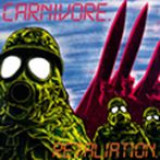
CARNIVORE is an American crossover / thrash metal band from Brooklyn, New York founded by singer and bassist Peter Steele, and was formed out of the breakup of the Brooklyn metal group FALLOUT in 1982. The first CARNIVORE album was heavily influenced by the contemporary New York metal scene. It also drew inspiration from BLACK SABBATH and early JUDAS PRIEST, whereas the second album had significant crossover influences. The "post-apocalyptic" theme that dominated the first album and was carried onto parts of the second album was apparently inspired by a dream Pete Steele had and which became the basis for the lyrics of "Predator", the first song from the original album. The lyrical theme was then expanded on to describe human society ( or the lack of one ) between imaginary World Wars III, IV and possibly V (as referenced in the song "World Wars III & IV"). Other lyrical themes included nihilism, anti-religious sentiment, cynicism, and explicit but tongue-in-cheek depictions of gore and despair. Song titles such as "Jesus Hitler", "Race War", "Thermonuclear Warrior" and "God is Dead" reflect these themes. In August 2017, it was announced that CARNIVORE would officially be reformed as CARNIVORE A.D., featuring original drummer Louie Beato and guitarist Marc Piovanetti along with secondary drummer Joe Branciforte sharing drum duties and also introducing new member Baron Misuraca as the bassist/vocalist. The band then made their live festival debut at the 2018 edition of Hellfest. CARNIVORE's "Retaliation" is a legendary and authentic metal/hc crossover album and an admittedly very heavy devastating wall of music with very much tongue in cheek lyrics. It became an absolute classic in the metal genre. It has remained unreleased for too many years and has now become very much in demand, now available again in Deluxe exclusive Limited edition 2LP vinyl and Digipack with no less than 3 bonus tracks ! ESSENTIAL CLASSIC !
- 1: Jack Daniel's And Pizza
- 2: Angry Neurotic Catholics
- 3: S.m.d
- 4: Ground Zero Brooklyn
- 5: Race War
- 6: Inner Conflict
- 7: Jesus Hitler
- 8: Technophobia
- 9: Manic Depression
- 10: Usa For Usa
- 11: Five Billion Dead
- 12: Sex And Violence
- 13: World Wars Iii And Iv - Bonus Track
- 14: Carnivore - Bonus Track
- 15: The Subhuman - Bonus Track
CARNIVORE is an American crossover / thrash metal band from Brooklyn, New York founded by singer and bassist Peter Steele, and was formed out of the breakup of the Brooklyn metal group FALLOUT in 1982. The first CARNIVORE album was heavily influenced by the contemporary New York metal scene. It also drew inspiration from BLACK SABBATH and early JUDAS PRIEST, whereas the second album had significant crossover influences. The "post-apocalyptic" theme that dominated the first album and was carried onto parts of the second album was apparently inspired by a dream Pete Steele had and which became the basis for the lyrics of "Predator", the first song from the original album. The lyrical theme was then expanded on to describe human society ( or the lack of one ) between imaginary World Wars III, IV and possibly V (as referenced in the song "World Wars III & IV"). Other lyrical themes included nihilism, anti-religious sentiment, cynicism, and explicit but tongue-in-cheek depictions of gore and despair. Song titles such as "Jesus Hitler", "Race War", "Thermonuclear Warrior" and "God is Dead" reflect these themes. In August 2017, it was announced that CARNIVORE would officially be reformed as CARNIVORE A.D., featuring original drummer Louie Beato and guitarist Marc Piovanetti along with secondary drummer Joe Branciforte sharing drum duties and also introducing new member Baron Misuraca as the bassist/vocalist. The band then made their live festival debut at the 2018 edition of Hellfest. CARNIVORE's "Retaliation" is a legendary and authentic metal/hc crossover album and an admittedly very heavy devastating wall of music with very much tongue in cheek lyrics. It became an absolute classic in the metal genre. It has remained unreleased for too many years and has now become very much in demand, now available again in Deluxe exclusive Limited edition 2LP vinyl and Digipack with no less than 3 bonus tracks ! ESSENTIAL CLASSIC !
Mustapha Skandrani, a luminary of Algerian music, possessed a unique musical sense, able to transcend the borders of musical cultures to create a distinctive fusion of Arabic-Andalusian and European styles.
"Istikhbars and Improvisations", recorded in 1965 in Paris, is a solo piano album presenting a trans-Mediterranean crossover based on traditional Algerian vocal pieces known as istikhbars. Playing these istikhbars (which have roots in the Islamic Arab-Andalusian culture which flourished in Spain) on the piano - that quintessentially European instrument - Skandrani was greeted with derision by some purists. His powerful musical vision, however, perceives the European element involved in Arabic-Andalusian musical culture, a world of exchange and co-existence.
Skandrani's modus operandi on this release is to present each istikhbar, modal in nature, then to play an improvisation based on it, and its attendant mode. This A/B alternation continues throughout. The pellucid clarity of Skandrani's playing on this album may remind the listener of a modal Goldberg Variations, Bach and Glenn Gould transplanted to Andalucia. Other ears will hear the Arabic/Maghreb elements more strongly. Skandrani's precise touch and clear, symmetrical rhythmic sense links both worlds, assuring us that the Mediterranean is not a barrier, but a unifier, and that the differences between the cultures are not so vast. This is an admirable achievement, resulting in beautiful music of a rare charm.
Mustapha Skandrani was born in Algiers in 1920, and died there in 2005. He mastered a number of instruments at an early age, and his musical prowess led him to work with the great singers and ensembles of his day, in live performances, recordings, and radio broadcasts. Later in his life, he devoted much energy to education.
Originally reissued by Em Records as a limited edition of 200 in 2012, now available once again, in offset printed sleeve, with insert of Japanese and English sleeve-notes and rare photosMustapha Skandrani, a luminary of Algerian music, possessed a unique musical sense, able to transcend the borders of musical cultures to create a distinctive fusion of Arabic-Andalusian and European styles.
"Istikhbars and Improvisations", recorded in 1965 in Paris, is a solo piano album presenting a trans-Mediterranean crossover based on traditional Algerian vocal pieces known as istikhbars. Playing these istikhbars (which have roots in the Islamic Arab-Andalusian culture which flourished in Spain) on the piano - that quintessentially European instrument - Skandrani was greeted with derision by some purists. His powerful musical vision, however, perceives the European element involved in Arabic-Andalusian musical culture, a world of exchange and co-existence.
Skandrani's modus operandi on this release is to present each istikhbar, modal in nature, then to play an improvisation based on it, and its attendant mode. This A/B alternation continues throughout. The pellucid clarity of Skandrani's playing on this album may remind the listener of a modal Goldberg Variations, Bach and Glenn Gould transplanted to Andalucia. Other ears will hear the Arabic/Maghreb elements more strongly. Skandrani's precise touch and clear, symmetrical rhythmic sense links both worlds, assuring us that the Mediterranean is not a barrier, but a unifier, and that the differences between the cultures are not so vast. This is an admirable achievement, resulting in beautiful music of a rare charm.
Mustapha Skandrani was born in Algiers in 1920, and died there in 2005. He mastered a number of instruments at an early age, and his musical prowess led him to work with the great singers and ensembles of his day, in live performances, recordings, and radio broadcasts. Later in his life, he devoted much energy to education.
Originally reissued by Em Records as a limited edition of 200 in 2012, now available once again, in offset printed sleeve, with insert of Japanese and English sleeve-notes and rare photos
Continuing our quest to get all of the classic early AMT albums released on vinyl, we turn to 2004’s 'Mantra Of Love’, and with the help of Makoto Kawabata’s studio wizardry, we’ve made it possible.
This latest instalment in the ‘Acid Mothers Temple Vinyl Archives - First Time On Vinyl’ series (as with the three previous SOLD OUT releases in the series) have all been meticulously put together with the help of Makoto Kawabata with the original CD artwork recreated for these vinyl editions from archive photos stored in the vaults at the Acid Mothers Temple in Osaka, Japan and the original audio remastered by James Plotkin.
Here’s what others had to say upon it’s original CD only release back in 2004 …
“Acid Mothers are strong folk. You'd think they'd tire quickly, all tucked away on their island, strewn about on tree roots while baking their lungs and throats to a knotty green tinge. But instead of waltzing through life like hippies, they manage to not only tour and put out records every year, but also to fill those albums with 30-minute jams and assorted freakouts. And while evil jam bands would fill that space with guitar work taken from the Classic Rock Manual of Clichés, Makoto Kawabata and company assault listeners with frighteningly dense walls of white noise, psychedelic swirl effects and, yes, even guitar solos-- albeit ones that are more Merzbow or Keiji Haino than Gary Rossington. Truly, AMT's endurance and threshold for cosmic lashings are both worthy of admiration.
But how much AMT can you take in one sitting? If there's anything this band has taught us-- via records such as 2002's Electric Heavyland and the ferocious Acid Mothers Temple & the Melting Paraiso U.F.O-- it's that they're not afraid to reach for the upper regions of consciousness. On Mantra of Love, they offer two titles over the course of one hour, never faltering along the way, and it's as if we listeners are just brief visitors passing through a never-ending, spontaneous group trip. For all I know, Kawabata has hundreds of hours of this stuff on his hard drive-- at any single moment, this record's sheer volume of sound is a clamor to behold. However, if you aren't dialed into that the particular space AMT inhabits (for me, it's the mystical fire-baptism standby), you might not hear their glorious noise for all the, well, glorious noise.
"La Le Lo" begins as a lengthy psychedelic ballad sung by Cotton Casino (who doubles on "beer & cigarettes"), who is accompanied by her own ghostly backing vocals. The band is playing a mantra as Casino waxes earth-mother stylings to the moon. The serenity is broken by a patented AMT rave led by Kawabata's electric sitar (!) solo. Ace rhythm section Tsuyama Atsushi ("monster bass") and Koizumi Hajime hold things together, as does the generally decent recording quality (not a given for these guys), but the real money is in effects-- lots and lots effects. Much like France's Richard Pinhas or AMT's countrymen in Les Rallizes Denudes and High Rise, the band understands the collaborative power of solo + overdriven Moog sirens and screams. And, also like those artists, Acid Mothers can go on all night if need be. About 25 minutes into this piece, any hell that hadn't already broken loose gets its due, and the band speeds to a fiery climax before winding down into glimmering astro-ambience.
The second track, "L'Ambition dans le Miroir", also begins as a minor ballad featuring Casino's haunting solo vocal. The Mothers set her up with a faux-blues drag and a thick buffer of synth-rays; when Casino actually enters, she fights for airtime with an array of falling stars and cosmic dust. However, this time there is no overwhelming solo to power the comedown. Casino intermittently coos in the background while droning horns keep the auxiliary pixie haze from evaporating. As they showed on In C and La Novia, AMT are more than adept at creating calmer storms-- listeners just have to catch them in the right light. Mantra of Love doesn't necessarily capture the most inspired moments in their canon but as usual with this band's records, it's rarely at a loss for moments of horror or grandeur.”
Acid Mothers Temple & The Melting Paraiso U.F.O. : Cotton Casino - Vocal, Beer & Cigarettes - Tsuyama Atsushi - Monster Bass, Vocal, Cosmic Joker - Higashi Hiroshi - Synthesizer, Dancin' King - Koizumi Hajime - Drums, Percussion, Sleeping Monk - Kawabata Makoto - Guitar, Bouzouki, Electric Sitar, Violin, Hammond Organ, Speed Guru
I want nothing more than to be a loner,” Emily Kempf sings early on Flower of Devotion, the new album by Chicago trio Dehd. It’s a startling admission coming from a songwriter who, just a year ago on Dehd’s critically acclaimed Water, wrote eloquently about the joys and pains — more than anything, the necessity — of love, compassion, and companionship. But then, “admission” isn’t really the right word here, given the stridency of Kempf’s tone. “Loner” is a declaration.
The record ups the ante on Dehd’s sound & filters in just enough polish to bring out the shining and melancholy undertones in Jason Balla and Emily Kempf’s songwriting, even as it captures them at their most strident. Balla’s guitar lines at times flirt with ticklish cosmic country, while at others they reflect the dark marble sounds of Broadcast. Kempf, meanwhile, establishes herself as a singer of incredible expressive range, pinching into a high lonesome wail, letting loose a chirping “ooh!,” pushing her voice below its breaking point and letting it swing down there. When she and Balla bounce descending counter-melodies off one another over McGrady’s one-two thumps, or skitter off over a programmed drum pad, they sound like The B-52s shaking off heartache.
Here we have the third LP by the excellent Guy Hamper Trio, featuring James Taylor on Hamond organ, and Guy Hamper on guitar (sometimes called Childish) and what a first-class LP this is! 'Instrument of Evil' in particular has a very eerie vibe. We asked the man himself what was the inspiration for it? G.H. The track is the sequel to '7% Solution', which featured on the last Guy Hamper Trio LP (with Thee Headcoats standing in as rhythm section). A 7% Solution being the amount of morphine Dr Watson administered to Sherlock Holmes. For 'Instrument of Evil' I took Sherlock Holmes' later designation of his syringe as "an Instrument of Evil". This is originally a quote from the bible- "Wicked men do at times reject God's purpose for the state, transforming the good of civil government into an instrument of evil." Point of interest: Morphine addiction happens to tie in with another aspect of the song. In the section that nods to Elmer Bernstein's main title theme to the film of the book The Man With the Golden Arm, in which the main character is also a morphine addict. Another ingredient - we added six-string bass to that section in tribute to Jet Harris - he formerly of top group The Shadows, who recorded a great version of Bernstein's classic. To top it all off the record sleeve references the fine graphics of the great Saul Bass. The track also features contributions from Tom Morley (trumpet) and Anna Jordanous (sax) . Both Were a pleasure to work with. My job at the wheel is to basically make a playground and let Jamie, Anna and Tom loose in it with very little direction, apart from pointing out the swings and location of the roundabout. I told Tom "you're a Spanish trumpeter stood on a hill in Spain." For Anna, I think we said "go low and nasty." Other titles are taken from early poetry chapbooks I made in my youth. 'The First Creature is Jealousy' and 'Dog Jaw Woman' being examples. The title 'Incense Rising From a Censer' comes from Dostoevsky's The Brothers Karamazov, a book I really recommend. Prayer rises to God on the smoke of the incense burning in the censer. I imagine this track being some kind of antidote to 'Instrument of Evil'. They are all excellent tracks. I imagine film companies will be queuing up to use many of them.
Since its release in 2013, Nick Lowe’s holiday album Quality Street: A Seasonal Selection for All the Family has been critically lauded for “the retro-reinvention of the Christmas album” (Uncut) and was heralded by TIME and Rolling Stone as one of the greatest holiday records of all time. Featuring original tunes by St. Nick himself, such as the witty “Christmas at the Airport” and tender “I Was Born in Bethlehem,” to reimagined covers like an ironically bombastic, swinging rendition of “Silent Night” and the rearranging of Wizzard’s “I Wish It Could Be Christmas Every Day” and Roger Miller’s “Old Toy Trains.”
Some of Lowe’s collaborators and admirers make songwriting appearances on the album as well, including the Ron Sexsmith-penned “Hooves on the Roof” and Lowe’s co-write with his former Little Village bandmate Ry Cooder on “A Dollar Short of Happy.” Rolling Stone said it best that an album like Quality Street is “worthy of your holiday bonus.”
This green vinyl pressing of the album is limited to 500 copies worldwide!
"As I'm getting older, chip up on my shoulder..." is the opening line from Mac DeMarco's second full-length LP `Salad Days,' the follow up to 2012's lauded `Mac DeMarco 2.' Amongst that familiar croon and lilting guitar, that initial line from the title track sets the tone for an LP of a maturing singer/songwriter/producer. Someone strangely self-aware of the positives and negatives of their current situation at the ripe old age of 23. Written and recorded around a relentless tour schedule (which picked up all over again as soon as the LP was done), `Salad Days' gives the listener a very personal insight into what it's all about to be Mac amidst the craziness of a rising career in a very public format. The lead single, "Passing Out Pieces," set to huge overdriven organ chords, contains lines like "...never been reluctant to share, passing out pieces of me..." Clearly, this isn't the same record that breezily gave us "Dreamin," and "Ode to Viceroy" but the result of what comes from their success. "Chamber of Reflection," a track featuring icy synth stabs and soulful crooning, wouldn't be out of place on a fantasy Shuggie Otis and Prince collaboration. Standout tracks like these show Mac's widening sound, whether insights into future directions or even just welcome one-off forays into new territory. Still, this is musically, lyrically and melodically good old Mac DeMarco, through and through. The same crisp John Lennon / Phil Spector era homegrown lush production that could have walked out of Geoff Emerick's mixing board in 1972, but with that peculiar Mac touch that's completely of right now. "Brother," a complete future classic, is Mac at his most soulful and easygoing but with that distinct weirdness and bite that can only come from Mr. DeMarco. "Treat Her Better" is rife with "Mac-isms," heavily chorused slinky lead guitar, swooning vocal melodies, effortless chords that come along only after years of effort, and the other elements seriously lacking in independent music: sentiment and heartfelt sincerity. We're only at Part 2 and 1/2 (one EP and two LP's in) into Mac's career. As you read this and as you hear the album on April Fool's Day of this year, he'll probably be on tour, or preparing for one... or maybe already writing new music. A relentless work ethic is something to be admired in today's indie music scene, but when it's of the quality Mac is giving us time and time again, it starts to turn from admiration to awe.
Camelot, the legendary seat of King Arthur's court in Early Middle Ages Britain, was probably not a real place. A corruption of the name of a real Romano-Briton city, the word "Camelot" accumulated symbolic, mythic resonances over centuries, until achieving its present usage as a near-synonym of "utopia." In the mid-20th century alone, Camelot inspired an explosion of representations and appropriations, among them the violent, affectless Arthurian court of Robert Bresson's 1974 film Lancelot du Lac and the absurdist iteration of Monty Python's 1975 Holy Grail, both of which feature armored knights erupting into fountains of blood; the mystical Welsh world of novelist John Cowper Powys's profoundly weird 1951 novel Porius, with its Roman cults, wizards and witches, and wanton giants; and the nationalist nostalgia of President John F. Kennedy's White House. Unsurprisingly there are fewer Camelots in more recent memory. Camelot, Canadian songwriter Jennifer Castle's extraordinary, moving 2024 chronicle of the artist in early middle age, charts a realer, more rooted, and more metaphorical place than the fabled Camelot of the Early Middle Ages (or its myriad depictions), but it too is a space more psychic than physical. In Castle's Camelot, the fantastic interpenetrates the mundane, and the Grail, if there is one, distills everyday experience into art and art into faith, subliming terrestrial concerns into sublime celestial prayers to Mother Nature, and to the unfolding process of perfecting imperfection in one's own nature. Co-produced by Jennifer and longtime collaborator Jeff McMurrich, her seventh record is at once her most monumental and unguarded to date, demonstrating a mastery of rendering her verse and melodies alike with crisply poignant economy. For all their pointedly plainspoken lyrical detail and exhilarating full-band musical flourishes, these songs sound inevitable, eternal as morning devotions. "Back in Camelot," she sings on the lilting, vulnerable title track, "I really learned a lot / circles in the crops and / sky-high geometry." The album opens with a candid admission of sleeping "in the unfinished basement," an embarrassing joke that comes true. But the dreamer is redeemed by dreaming, setting sail in her airborne bed above "sirens and desert deities." If she questions her own agency_whether she is "wishing stones were standing" or just "pissing in the wind"_it does not diminish the ineffable existential jolt of such signs and wonders. This abiding tension between belief and doubt, magic and pragmatism, self and other, sacred and profane, and even, arguably, paganism and monotheism, suffuses these ten songs, which limn an interior landscape shot through with sunstriped shadows of "multi-felt dimensions" both mystical and quotidian. The epic scale and transport of "Camelot," with its swooning strings, gives way dramatically to "Some Friends," an acoustic-guitar-and-vocals meditation in miniature on Janus-faced friends and the lunar and solar temperatures of their promises_"bright and beaming verses" versus hot curses_which recalls her minimalist last album, 2020's achingly intimate Monarch Season. (In a symmetrical sequencing gesture, the penultimate track, the incantatory "Earthsong," bookends the central six with a similarly spare solo performance and coiled chord progression, this time an ambiguous appeal to _ a wounded lover? a wounded saint? our wounded planet?) Those whom "Trust" accuses of treacherous oaths spit through "gilded and golden tooth"_cynics, critics, hypocrites, gurus, scientists, doctors, lovers, government, the so-called entertainment industry_sow uncertainty that can infect the artist, as in "Louis": "What's that dance / and can it be done? What's that song / and can it be sung?" Answering affirmatively are "Lucky #8," an irrepressible ode to dancing as a bulwark against the "tidal pools of pain" and the "theory of collapse," and "Full Moon in Leo," which finds the narrator dancing around the house with a broom, wearing nothing but her underwear and "big hair." But the central question remains: who can we trust, and at what cost faith, in art or angels or otherwise? Castle's confidence in her collaborators is the cornerstone of Camelot. Carl Didur (piano and keys), Evan Cartwright (drums and percussion), and steadfast sideman Mike Smith (bass) comprise a rhythm section of exquisite delicacy and depth. This fundamental trio anchors the airiness of regular backing vocalists Victoria Cheong and Isla Craig and frames the guitars of Castle, McMurrich, and Paul Mortimer (and on "Lucky #8," special guest Cass McCombs). Reprising his decennial role on Castle's beloved 2014 Pink City, Owen Pallett arranged the strings for Estonia's FAMES Skopje Studio Orchestra. On the ravishing country-soul ballad "Blowing Kisses"_Pallett's crowning achievement here, which can be heard in its entirety in the penultimate episode of the third season of FX's The Bear_Jennifer contemplates time and presence, love and prayer_and how songwriting and poetry both manifest and limit all four dimensions: "No words to fumble with / I'm not a beggar to language any longer." Such rare moments of speechlessness_"I'm so fucking honoured," she bluntly proclaims_suggest a state "only a god could come up with." (If Camelot affirms Castle as one of the great song-poets of her generation, she is not immune to the despairing linguistic beggary that plagues all writers.) Camelot evinces a thoroughgoing faith not only in the natural world_including human bodies, which can, miraculously, dance and swim and bleed and embrace and birth_but also in our interpretations of and interventions in it: the "charts and diagrams" of "Lucky #8," a daydreamt billboard on Fairfax Ave. in LA in "Full Moon in Leo," the bloody invocations of the organ-stained "Mary Miracle," and all manner of water worship, rivers in particular. (Notably, Jennifer has worked as a farmer and a doula.) The album ends with "Fractal Canyon"'s repeated, exalted insistence that she's "not alone here." But where is here? The word "utopia" itself constitutes a pun, indicating in its ambiguous first syllable both the Greek "eutopia," or "good-place"_the facet most remembered today_and "outopia," or "no-place," a negative, impossible geography of the mind. Utopia, like its metonym Camelot, is imaginary. Or as fellow Canadian songwriter Neil Young once sang, "Everyone knows this is nowhere." "Can you see how I'd be tempted," Castle asks out of nowhere, held in the mystery, "to pretend I'm not alone and let the memory bend?"
Money Jungle was the only trio collaboration of Duke Ellington with Charles Mingus and Max Roach, both youngsters greatly admiring Duke. Ellington himself briefly featured Roach (in 1950) and Mingus (in 1953) in his band, and expressed on multiple occasions his appreciation for Mingus' compositions. Most of the repertoire here was especially composed for the date, while the only old tunes they recorded were "Warm Valley," "Caravan," and "Solitude.
. For Fans Of: The Weather Station, Weyes Blood, Adrianne Lenker, Phoebe Bridgers, Joan Shelley, Lana Del Rey, Cass McCombs, Angel Olsen & Neil Young. Camelot, the legendary seat of King Arthur’s court in Early Middle Ages Britain, was probably not a real place. A corruption of the name of a real Romano-Briton city, the word “Camelot” accumulated symbolic, mythic resonances over centuries, until achieving its present usage as a near-synonym of “utopia.” In the mid-20th century alone, Camelot inspired an explosion of representations and appropriations, among them the violent, affectless Arthurian court of Robert Bresson’s 1974 film Lancelot du Lac and the absurdist iteration of Monty Python’s 1975 Holy Grail, both of which feature armoured knights erupting into fountains of blood; the mystical Welsh world of novelist John Cowper Powys’s profoundly weird 1951 novel Porius, with its Roman cults, wizards and witches, and wanton giants; and the nationalist nostalgia of President John F. Kennedy’s White House. Unsurprisingly there are fewer Camelots in more recent memory. Camelot, Canadian songwriter Jennifer Castle’s extraordinary, moving 2024 chronicle of the artist in early middle age, charts a realer, more rooted, and more metaphorical place than the fabled Camelot of the Early Middle Ages (or its myriad depictions), but it too is a space more psychic than physical. In Castle’s Camelot, the fantastic interpenetrates the mundane, and the Grail, if there is one, distills everyday experience into art and art into faith, subliming terrestrial concerns into sublime celestial prayers to Mother Nature, and to the unfolding process of perfecting imperfection in one’s own nature. Co-produced by Jennifer and longtime collaborator Jeff McMurrich, her seventh record is at once her most monumental and unguarded to date, demonstrating a mastery of rendering her verse and melodies alike with crisply poignant economy. For all their pointedly plainspoken lyrical detail and exhilarating full-band musical flourishes, these songs sound inevitable, eternal as morning devotions. “Back in Camelot,” she sings on the lilting, vulnerable title track, “I really learned a lot / circles in the crops and / sky-high geometry.” The album opens with a candid admission of sleeping “in the unfinished basement,” an embarrassing joke that comes true. But the dreamer is redeemed by dreaming, setting sail in her airborne bed above “sirens and desert deities.” If she questions her own agency whether she is “wishing stones were standing” or just “pissing in the wind” it does not diminish the ineffable existential jolt of such signs and wonders. This abiding tension between belief and doubt, magic and pragmatism, self and other, sacred and profane, and even, arguably, paganism and monotheism, suffuses these ten songs, which limn an interior landscape shot through with sunstriped shadows of “multi-felt dimensions” both mystical and quotidian. The epic scale and transport of “Camelot,” with its swooning strings, gives way dramatically to “Some Friends,” an acoustic-guitar-and-vocals meditation in miniature on Janus-faced friends and the lunar and solar temperatures of their promises—“bright and beaming verses” versus hot curses which recalls her minimalist last album, 2020’s achingly intimate Monarch Season. (In a symmetrical sequencing gesture, the penultimate track, the incantatory “Earthsong,” bookends the central six with a similarly spare solo performance and coiled chord progression, this time an ambiguous appeal to … a wounded lover? a wounded saint? our wounded planet?). Those whom “Trust” accuses of treacherous oaths spit through “gilded and golden tooth” cynics, critics, hypocrites, gurus, scientists, doctors, lovers, government, the so-called entertainment industry sow uncertainty that can infect the artist, as in “Louis”: “What’s that dance / and can it be done? What’s that song / and can it be sung?” Answering affirmatively are “Lucky #8,” an irrepressible ode to dancing as a bulwark against the “tidal pools of pain” and the “theory of collapse,” and “Full Moon in Leo,” which finds the narrator dancing around the house with a broom, wearing nothing but her underwear and “big hair.” But the central question remains: who can we trust, and at what cost faith, in art or angels or otherwise? Castle’s confidence in her collaborators is the cornerstone of Camelot. Carl Didur (piano and keys), Evan Cartwright (drums and percussion), and steadfast sideman Mike Smith (bass) comprise a rhythm section of exquisite delicacy and depth. This fundamental trio anchors the airiness of regular backing vocalists Victoria Cheong and Isla Craig and frames the guitars of Castle, McMurrich, and Paul Mortimer (and on “Lucky #8,” special guest Cass McCombs). Reprising his decennial role on Castle’s beloved 2014 Pink City, Owen Pallett arranged the strings for Estonia’s FAMES Skopje Studio Orchestra. On the ravishing country-soul ballad “Blowing Kisses” Pallett’s crowning achievement here, which can be heard in its entirety in the penultimate episode of the third season of FX’s The Bear Jennifer contemplates time and presence, love and prayer and how songwriting and poetry both manifest and limit all four dimensions: “No words to fumble with / I’m not a beggar to language any longer.” Such rare moments of speechlessness “I’m so fucking honoured,” she bluntly proclaims suggest a state “only a god could come up with.” (If Camelot affirms Castle as one of the great song-poets of her generation, she is not immune to the despairing linguistic beggary that plagues all writers.) Camelot evinces a thoroughgoing faith not only in the natural world including human bodies, which can, miraculously, dance and swim and bleed and embrace and birth but also in our interpretations of and interventions in it: the “charts and diagrams” of “Lucky #8,” a daydreamt billboard on Fairfax Ave. in LA in “Full Moon in Leo,” the bloody invocations of the organ-stained “Mary Miracle,” and all manner of water worship, rivers in particular. (Notably, Jennifer has worked as a farmer and a doula.) The album ends with “Fractal Canyon”s repeated, exalted insistence that she’s “not alone here.” But where is here? The word “utopia” itself constitutes a pun, indicating in its ambiguous first syllable both the Greek “eutopia,” or “good-place” the facet most remembered today and “outopia,” or “no-place,” a negative, impossible geography of the mind. Utopia, like its metonym Camelot, is imaginary
Emerging producer Très Mortimer dishes out eight huge heaters on the highly-anticipated ‘M1 City’ release, a dedication to the mighty Korg M1, coming to Seth Troxler’s Slacker 85 on 25th October.
Kicking off ‘M1 City’ is the simplistic, but refined and booth-rattling ‘Work That Body’. A crisp M1 stab is the main character in this, amplified by thunderous and high energy drums.
Then there’s ‘Secrets’, a house jam inspired by the likes of MK that utilises TR-909 drums, a subtle rolling bassline, intimately whispered and soulfully sung vocal shots, and, of course, classic Korg M1 synth stabs. Together with dramatic contemporary builds, a highly danceable house smasher is formed.
‘No More’ is pure gasoline for the dancefloor. Très pairs another barrage of clean M1 stabs with a rousing vocal sample that leads into, with the help of a rolling snare, another highly effective house drop. Following the extremely saucy ‘Big Daddy’ skit, we’re dropped straight into ‘One Of Those Nights’, a show-stopping track complete with cutting, sharp stabs, a bulging bassy synth and a West Coast-esque synth sound.
‘Bitch I’m From Chicago’ feat. Gleebz is, as the title suggests, a dedication to the city where house music found its name. Batting off all the poser cities like LA and Miami in the sassy lyrics, it embodies the spirit of Chicago with hefty kick drums and weighty chord stabs.
At the tail end of the release, ‘Let Me Go’ and ‘Love’ (featuring vocalist 7000 (7K)), bring things to a rousing emotive close. Both tracks see Très put clean vocals over piano riffs, giving off differing moods – the former is euphoric, the latter melancholic. Synths bubble beneath, and each track funnels their own respective house grooves, resulting in two tracks fit for both the dancefloor and headphones.
Très Mortiner explains: “The M1 sound is classic. It automatically transports you back to those timeless house songs that never get old. For me, house music is all about connection. People experiencing a little moment of euphoria together when they hear a riff that they all know on the dance floor. That’s what it’s all about. With this project I wanted to tap into that 90s rave sound and spirit. I wanted it to sound like the OG Chicago rave scene.”
“M1 City is my first project to be released on vinyl. I think vinyl is very much alive. It’s essentially for music connoisseurs now. I don’t expect people to have a vinyl collection when all music is always available to everyone on their phones. Nevertheless, I love the idea of some random DJ finding this record in a shop in 10 years. Who knows what I’ll be producing then?”
Très Mortimer is a key figure in Chicago's house scene, steadily building a strong following with his no-nonsense, dancefloor-driven sound. Drawing inspiration from his Polish roots, Trés has signed with major labels like Mad Decent, Insomniac’s IN/Rotation, and Ministry of Sound, while also launching his own imprint, Optics Records. He made his mark with a clever rework of Zombies' 1968 hit ‘Time Of The Season’ (1M+ streams). Standout releases include his downtempo collaboration with plumpy, "BAMBU," and his latest single, "At Night I Think Of You," which was recently given a remix makeover by Seth Troxler and Nick Morgan.
Slacker 85, launched in 2023, is the record label behind ‘M1 City’. Founded by Seth Troxler, it aims to give a platform to "oddball, esoteric and diverse sounds," positioning itself as a counter to the polished, refined dance artists dominating the scene. Troxler, upon the label’s launch, declared that he wanted to create something for "the anti-hero, the kids who could have done it but didn’t care to try”—essentially, "the slacker." So far, it’s delivered a range of releases from artists like Jackmaster, Danny Daze, Dan McKie, and Andre Salmon, offering tracks rooted in house music's past but evolving within its present boundaries.
‘M1 City’, this ode to a piece of gear that consistently finds itself at the heart of house music history, highlights Très Mortimer’s respect for and knowledge of the scene and its key gear. Trè combines this admiration and inspiration of house music’s greats with a modern sensibility, resulting in eight tracks worthy of today’s dancefloors and today’s ravers.