We take immense pride in upholding the integrity of our label's name, and we're excited to announce a remix by Gregor Tresher for Mike Skinners legendary "The Streets”, which does just that. Gregor's admiration for The Streets' seminal 2002 album, "Original Pirate Material,” has fuelled his unwavering support for Mike Skinner's extraordinary musical journey.
Last year, when The Streets’ poignant EP "Brexit at Tiffany's" made its debut, Gregor crafted a remix of one of its tracks for his DJ sets. This rework quickly became a closely-guarded secret weapon, setting dance floors ablaze wherever he played it. The idea of reaching out to The Streets arose, driven by curiosity about Mike's reaction to the remix. To our delight, not only did he appreciate it, but he also granted us permission to officially release it on the label.
So without delay, we are delighted to unveil Gregor Tresher's monumental reimagining of The Streets' "3 Minutes To Midnight." This once anonymous gem has now emerged from the shadows, and we are absolutely thrilled to bring it to your eager ears.
After five years from "Cash On The Line" Admiral returns with some hot served distillate of his sweet psychedelic bliss. Admiral takes us on an acid soaked journey through the many realms of consciousness offering a unique and alluring soundscape that defies traditional boundaries."Do You Want To Sit On The Green" sounds like library music coming from a parallel universe where the familiar and the surreal seamlessly blend to create a musical tapestry that is both nostalgic and avant-garde.
After five years from "Cash On The Line" Admiral returns with some hot served distillate of his sweet psychedelic bliss. Admiral takes us on an acid soaked journey through the many realms ofconsciousness offering a unique and alluring soundscape that defies traditional boundaries.
"Do You Want To Sit On The Green" sounds like library music coming from a parallel universe where the familiar and the surreal seamlessly blend to create a musical tapestry that is both nostalgic and avant-garde.
Ron Henderson released only one album with his Choice of Colour band, and that was Soul Junction in 1976. The North Carolina-based singer-songwriter has become an object of cult admiration over the years which is what might explain how an original of that album can often go for upwards of $800 at auctions. The 2020 P-Vine reissue soon sold out and included an extra single from 1983, 'Gemini Lady.' It is that which now gets pressed up to its own 7". It comes with the same label design as the original with a special jacket to make it even more of a collector's item.
Orchestral Manoeuvres In The Dark (OMD) return with their 14th studio album Bauhaus Staircase, over six years after the triumph of their Top 4-charting record The Punishment of Luxury. The album was born from the impetus to kickstart new explorations during lockdown when as Andy McCluskey admits: “I rediscovered the creative power of total boredom.”
The album’s first offering as a single is the title track which serves as a nod both to Andy McCluskey’s love of the Bauhaus era & the power of protest art. “I am a huge lover of visual arts especially mid 20th century movements” Andy comments. “The song is a metaphor for strength and artist passion in the face of criticism and adversity. When times are hard there is a tendency for Governments to look at cutting funding for creativity just at the moment when the arts are most needed to nourish our souls. It seems appropriate that the song and its eponymous album were created during Covid Lockdown.”
Ranging further from the beautiful film noir ballad of ‘Veruschka’ and the dance stylings of ‘Anthropocene’ - a term for the current epoch in Earth’s evolution to the sinister ‘Evolution Of Species’ and the hectic ‘Kleptocracy’ - OMD’s greatest straight-up protest song - the new album is a broad electronic sonic masterpiece that lyrically tackles the topics of the future. The record closes on ‘Healing’ - a moment of reflective calm.
By rights OMD should be in semi-retirement performing classics like Enola Gay and Maid Of Orleans on the nostalgia festival circuit like so many peers. Instead they’ve created a landmark album worthy of their finest work. Bauhaus Staircase remains unmistakably the work of a duo who are still perfectly in sync 45 years after their first gig at legendary Liverpool club Eric’s.
“I’m very happy with what we’ve done on this record" McCluskey summarises. “I’m comfortable if this is OMD’s last statement.”
Aphrose reveals her sophomore album, 'Roses,' a captivating amalgamation of Neo-Soul and R&B, delving into the wellspring of ancestral strength and love.
Hailing from Toronto, Canada, Aphrose, also known as Joanna Mohammed, unveils her sophomore album, establishing her as one of Toronto's best-kept musical treasures. Known for her commanding vocal prowess within her hometown, this gifted songwriter and vocalist is rapidly garnering global acclaim and accolades from both fans and music critics alike. Signed to independent Soul label LRK Records, 'Roses' remains firmly rooted in Aphrose's signature style characterized by resounding R&B vocals. However, it also embraces a softer, more introspective aura that brilliantly showcases her remarkable versatility in navigating diverse genres, moods, and musical approaches with remarkable finesse.
This album offers a little something for everyone, catering to enthusiasts of Neo-soul, traditional Soul, Hip Hop, and R&B. Produced by her longtime friends/collaborators at SafeSpaceship Music (Scott McCannell, Chino De Villa, Ben Macdonald), the album serves as a compelling testament to the collective creativity of Aphrose and this exceptional production trio, delivering a kaleidoscope of soundscapes, textures, rhythms, and grooves. 'Roses' weaves together both lighthearted and profound elements as Aphrose explores her life journey, delving into her familial past and present, grappling with the challenges of new motherhood, and contemplating her relationships with herself, her partner, and her friends. Across the 35-minute LP, Aphrose draws inspiration from Neo-soul icons like Jill Scott and Erykah Badu, pays homage to Soul legends such as Aretha Franklin and MJ, and infuses contemporary R&B influences from artists like Frank Ocean, SiR, and SZA. The result is a sound that distinctly bears the 'Aphrose sound,' reflecting her deep admiration for her inspirations while imparting a refreshing twist to familiar genres.
The album commences with its title track, 'Roses,' which was released as a single on August 25th. This song sets the stage, invoking the strength of Aphrose's ancestors, particularly her late Grandmother Rose. Following suit is 'YaYa,' also released as a single on July 7th. This buoyant dance track whisks listeners back to the disco era of the late 70s and early 80s. The album's third track, 'Heavenly Father,' offers a brief interlude featuring a recording of Aphrose's Grandmother Rose engaged in prayer, setting the tone for the subsequent track, 'In The Time Of Sorrow.' This contemplative, chill piece captures Aphrose's musings on navigating a world often shrouded in fakery, while craving authenticity. 'Honey (Don't) Come Back' seamlessly transitions between two distinct musical personalities, commencing with a deep, almost Trap-like bass/drum beat before transforming into a spirited Funk/Soul jam—an anthem of empowerment encouraging the listener to leave a situationship that is no longer working. 'What You Don't See' strips the production down to its core, as Aphrose and guitarist/co-writer Heather Crawford craft an intimate ode to a friendship's sad ending.
The B-side opens with the evocative 'Weapons,' featuring a five-person choir including LRK label-mate Claire Davis, Nevon Sinclair (Daniel Caesar and LOONY), Kyla Charter (Aysanabee and Alessia Cara), Lydia Persaud, and Marla Walters. The track is adorned with a stirring string arrangement courtesy of Jessica Deutsch. 'Chop The Cake' acts as a breather, interlude-style, easing the intensity. 'Soft Nuclear' channels the spirit of the early 2000s R&B movement, bearing traces of influence from Lucy Pearl. 'Good Love,' released as the first single off this body of work on May 19th, transports listeners to the 70s with its soulful resonance, drawing inspiration from the likes of Michael Jackson and Teddy Pendergrass. 'Higher' stands as Aphrose's tribute to Prince, capturing the essence of his music within its hook and production. The album's culmination arrives with 'ZAG,' an acronym derived from Aphrose's daughter's name, commencing with the sound of her daughter's heartbeat in-utero from a sonogram taken when Aphrose was pregnant. This heartfelt composition serves as a dedication to her daughter and all parents navigating the rollercoaster of parenthood, emphasizing the imperative of nurturing love to shape the future.
'Roses' stands as Aphrose's homage to her history—her Grandma Rose and the ancestral trailblazers who paved her path to the present life she enjoys; her current experiences—her self-discovery, her relationships with her partner and friends; and her aspirations for the future—her daughter and the generations to come. This album crystallizes these temporal dimensions, prompting introspection, celebration, laughter, and tears. 'Roses' is a musical odyssey that scrutinizes the multifaceted beauty of existence, inviting listeners to partake in this thing called life.
The radio world has taken notice of Aphrose's talent, with national Radio Capital's Italy Massimo Oldani spinning her latest single "YaYa" for the entire month of July on his show "Vibe." And both singles getting to number 10 in the UK soul chart.Additionally, Aphrose has received national radio play on renowned stations such as BBC in the UK, RTVE in Spain, and Radio France FIP.
Aphrose has also made CBC's Top 100 finalist list for their Searchlight competition.
Huey Morgan played "YaYa" the second track off the album on his BBC radio six show
This is the second time out for the Wormholes on AllChival following on from their You Never See the Stars When it Rains anthology release. This one is a previously unreleased album recorded in a concise burst of seven nights in Dublin’s Sun Studios in the spring of 1996. It was originally envisaged as being The Wormholes’ second album, the follow up to their 1994 debut Chicks Dig Scars. Unfortunately the end result of the sessions - Parijuana - would not only be ignored by their label of the time (Roadrunner Records) - but would also just as quickly be dismissed by the band themselves.
Eamonn Crudden, the manager of the band, had manged to extract some money from Roadrunner to record demos of new tracks as soon as the release cycle for their debut was over. The budget was so tight that it covered studio time but was not even enough to buy the master tapes. With things going south with the label – a classic 90’s tale of the A&R man who championed their cause heading off elsewhere the minute they signed - the intention was to go in and aim to record an album rather than demos - with the intention of releasing it on another independent label to keep the momentum around the band going.
However by this stage the Wormholes were totally wrapped up in listening to Can, Faust and generally exploring music based on casual recording, improvisations and extemporization. For them the album was too ‘rock’ and – having been dropped by Roadrunner - they no longer felt under any obligation to release it. To them it was time for a fresh start. Their next recordings would not be ‘for’ anyone but themselves. Today bassist Anto Carroll admits that “at times we were our own worst enemies” and with the benefit of hindsight both he and guitarist Graham Blackmore wish they had gone ahead and released this album at the time. However, back then, they thought they could do better and they did go on to make inventive and unique sounding versions of some of these songs with Stan Erraught producing just a short time later. These recordings were eventually released by Dead Elvis in 1999 - along with a couple of ‘adjusted’ tracks from the Sun Studios sessions - on Parijuana: 4 Years in Captivity.
It’s highly unlikely that listeners today will share the band’s view that the abum was too ‘clean’. This version of Parijuana is dirty, raw, messy with plenty of experimentation and extemporisation. The songwriting is as strong as that on their Chicks Dig Scars debut. The music is played with a new confidence and swagger, very much the sound of a band rooted in a wave of US ‘lo-fi’ finding their own sound. It’s the missing link between their conventional Pavement/Sebadoh influenced debut to the more drawn out, free roaming and extemporised second album proper Scorpio The Album.
"BASELINE CAVI" is a collaboration album between Inland Empire/Los Angeles rapper Trizz and producer MIKE SUMMERS (aka Seven) from Kansas City. The album has that classic Westcoast Hip-Hop sound and the intro track gives that feeling right away. Guest features on the album are from Bino Rideaux, XV, T.F, ICECOLDBISHOP, John Givez and Bale.
Though fans may not know it, this collaboration between Inland Empire California emcee Trizz and Kansas City production ace MIKE SUMMERS has been brewing for close to a decade. Back in 2013 SUMMERS (then known as Seven) was already a prolific producer signed to Tech N9ne's Strange Music label and Trizz was part of horrorcore legend Brotha Lynch Hung's Madesicc Muzic roster. The two connected while working on Lynch Hung's "Mannibalector" album and a spark for future work was laid.
Linking up in spring of last year, the two creatively fed off each-other with the resulting album evoking classic West Coast melodicism and car-rattling thump. As Trizz states "this sh*t is so f*ckin authentic. It got bounce, it's swangin' and bangin! When you hear this album, you can feel it and damn near smell the palm trees and bomb ass weed."
As SUMMERS relayed "It's probably different for a lot of my fans to hear a more classic West Coast style of production from me, but that style of production has always been embedded in my sound. I grew up on 90's West Coast Hip-Hops studying producers like DJ Quik and Dr. Dre. The only reason I started using lots of live musicians on my tracks was because I watched Quik do it. BASELINE CAVI really let me dig into that classic L.A. sound that I've always wanted to build with.
Lyrically Trizz's immediately distinctive flow and storytelling abilities are at a new plateau with the emcee admitting "The lyrics on this album are probably more refined and defined because I just turned 30 and I have no more time to waste."
Acclaimed Stirling-based group Constant Follower, led by Stephen McAll, and renowned folk guitarist Scott William Urquhart have today announced their forthcoming collaborative album, ‘Even Days Dissolve’, which will be released on 14 April 2023.
The album follows on from Constant Follower’s lauded debut long-player ‘Neither Is, Nor Ever Was’, which was released in 2021 and nominated for the 2022 Scottish Album of the Year (SAY) Award.
‘Even Days Dissolve’ is an enchanting, deeply absorbing, and meditative album, the product of a musical affinity between two thoughtful and uniquely talented Scottish songwriters and musicians.
The songs that make up ‘‘Even Days Dissolve’ were inspired by ‘the grand old man of Scottish poetry’, Norman MacCaig (1910-1996), whose work is characterised by its gentle humour, precise observation and love for the natural world, which forms another key theme for the album.
MacCaig’s poetry holds great significance to McAll, as it formed a major source of comfort and support to him during a long period of recovery following a violent and unprovoked attack that left him with catastrophic head injuries, partially paralysed and unable to write or play guitar.
‘Even Days Dissolve’ is McAll’s nod of respect to McCaig, and the great man’s unmistakable words and inimitable voice feature on two of the tracks - single ‘Wildlife Cameraman’, and ‘Comes A Silence (Basking Shark)’ – sensitively set over the backdrop of beautiful and exquisitely crafted songs.
Scott William Urquhart’s masterful acoustic guitar playing is a stunning centrepiece of the album, imbuing the songs with a moving sense of atmosphere, and sounding at once both elegant and robust. Urquhart’s unassuming yet compelling vocals also feature throughout ‘Even Days Dissolve’.
Speaking about ‘‘Even Days Dissolve’, Stephen McAll said: “The magic in music for me is all about collaboration. Finding people who inspire me to make better music, then working with them and creating something between us that’s better than what either of us could have made alone. It’s been an honour to work so closely with Scott William Urquhart on this album. He’s someone whom I’ve admired for some time - unquestionably up there with the best acoustic guitarists at the moment in Scotland, and such a beautiful writer of songs.
“Bringing two of these songs together with the voice of our beloved Norman MacCaig has been a real highlight of this project. His poetry was introduced to me by my high school teacher Mrs Tatarkowski, and it was the first prose I was able to read and understand when I was recovering from a traumatic head injury. So his work holds a deep space in my heart. I don’t think any poet or songwriter has matched his ability to capture the space and wonder of the natural beauty of Scotland.”
Back in 2011 when I was tentatively looking for a second release for my fledging record label Clay Pipe Music, I stumbled upon a mysterious MySpace page by a group called ‘Tyneham House’, the page was decorated with artwork by Rena Gardiner (who was unknown to me at that time) and the music was an otherworldly mix of field recordings, Mellotron and acoustic guitar. It turned out that Tyneham was promised to Glen Johnson’s Second Language label, so I offered to do the artwork, and in January 2012 the two labels co-released it on tape and CD in a cardboard box with a handmade booklet of my illustrations.
In 2016 Clay Pipe reissued it on 10” vinyl, in an edition of just 300, which has since become sort after. The new 2023 pressing is on blue and transparent marbled vinyl, with a reverse board cover and inner sleeve, and the booklet of illustrations has been given a complete redesign. Frances Castle 2023
The pastoral, wistful yet ineffably disquieting music of Tyneham House is made by artists who wish to remain anonymous here, save for their eponymous title. The musicians are happy, however, to let it be known that these recordings have been around for some years (many of them complied from old cassettes) and that they take inspiration from the 1960s/’70s/’80s work of the Children’s Film Foundation – a body who really ought to have made a film about this mysterious West Country curio. At least now we have its endlessly poignant soundtrack.
The small village of Tyneham, on the beautiful Isle of Purbeck, in Dorset, was once a thriving little community – that is until the British Government requisitioned it for training manoeuvres and other ‘strategic purposes’ in the run up to WWII. This was supposed to be a temporary measure, but the area remained in military possession long after hostilities had ceased, causing distress among former inhabitants, many of whom were farmed out to prefabs in nearby Wareham and Swanage.
Tyneham was characterised by its red telephone box, a tiny parade of shops – Post Office Row – and a grand country pile which stood about half a mile away from the village: Tyneham House. The army removed the building’s oak panelling and ornate decorative details and promptly set about using it for target practice. So great was the shame expressed locally about the damage inflicted upon one of Dorset’s grandest houses that the powers that be decided to grow a copse around the remains of the structure to give the impression that it was no longer there. Despite this, a substantial part of the structure remains intact, including its Saxon hall.
Land access around Tyneham was opened up in the 1970s, but admission to the house remains strictly verboten. Those who’ve been found around the premises, especially anyone wielding a camera, have felt the full weight of military trespass law. Tyneham today is regarded as a nature reserve by some – as a national embarrassment by others. It’s still a political hot potato, in Dorset at least.
First vinyl slice of the year and a brand new act onboard: El Joven Prisionero. We have been told that this project is made by two well known experts: Oscar Mulero and Another Machines.
About the music, three cuts on vinyl and four on digital, all named in Spanish to add more confusion for the non speakers.
El Joven Prisionero opens the EP in a gymnastic mode, solid kicks, an energized raw sequence setting things up and a mutant structure. A proper bullet for the post restricted dancefloors when ready.
Agitate incides directly on the most sensible parts of your mind and sound receivers, hysterical synth lines running over a shuffled beat and random resonant bleeps. Another physical exercise of abstract dancefloor weaponry.
Extrano Mundo follows, an elastic beat runs alone on the first bars, soon joined by martian and asymmetrical sequences growing from below. Additional percussive layers complete the equation, that as always is wisely administered on an intelligent arrangement.
Wilfred Trevor Woodley aka Woods (1934 - 2010) is certainly one of the best kept secrets in Caribbean jazz. A pianist composer from Point Fortin, Trinidad & Tobago, Woods was a fascinating man who lived an incredible life traveling to more than 70 countries. Even though he composed hundreds of songs he had never released an official album.
Woods was a man who lived a fearless life. Even when faced with life's adversities he dealt with them with such courage and calmness that all who knew him could only remember him with admiration and respect. In july 1990 he was involved in an accident where a truck crushed one os his legs. facing the doctors, he replied with aplomb: "As long as I can play the
pinao, everything is fine".
This EP is the first project of a series to pay a tribute to his legend and to keep his music alive.
New material from the enegmatic Mr Langestraat. TIP!
"One afternoon a couple of years ago, an excited Ronald Langestraat could barely contain himself. “I’ve started dancing!” he exclaimed. “I never did it before - I’d always admired it in the past, but just wasn’t able to move like that!” But then, at the ripe old age of 81, Ronald was gripped by the urge to respond to the rhythm and express himself in this physical way.
For a man who’s dedicated his life to music, in particular Jazz with a funky Latin inflection, it feels like an especially sage realization - like the treasure at the end of a long quest, or the princess after the end-game boss. The prize is freedom, and the shapes we make on the dance floor are mirrored in that piano solo over the stanzas - a caravan that trips from smokey basement clubs all the way to Shiva’s Tandava on the edge of the universe.
The music on this album is inspired by this revelation. Although these songs were written many moons ago, their interpretation is modern, full of renewed energy, with young, yet well-worn players. While it slots neatly into the daily music practice that Ronald adheres to, it’s a new chapter in a story that is still being written - and an invitation to get in touch with your dancing self and try out some new moves."
Seit gut 30 Jahren zählt Adriana Calcanhotto nun schon zu den größten und einflussreichsten Stimmen jener weiblichen Singer/Songwriter-Generation aus Brasilien, deren Vertreterinnen gleichermaßen als Komponistinnen, Instrumentalistinnen und Dichterinnen erfolgreich sind.
Vor drei Jahren hatten die pandemiebedingten Lockdown-Maßnahmen im Land sie dazu gezwungen, das 2020 veröffentlichte Album "Só" ("einsam/allein") unter ungewöhnlichen Bedingungen aufzunehmen: als virtuelle Zusammenarbeit mit anderen Musiker:innen, die (genau
wie sie selbst) in den eigenen vier Wänden festsaßen.
Kein Wunder, dass das Resultat vor allem jene Einsamkeit zum Ausdruck brachte, unter der in jenen Tagen die meisten Menschen leiden mussten.
Nun jedoch meldet sich die zweifache Latin-Grammy-Gewinnerin
(2006 & 2010) mit einem ganz anders klingenden und sehr viel extrovertierteren Longplayer zurück: "Errante" - was im Deutschen so viel wie "umherziehend" bedeutet.
Tatsächlich bewegt sich Adriana Calcanhotto auf ihrem 13. Studioalbum sehr frei und legt große Distanzen zwischen ganz unterschiedlichen Stilen und Genres zurück (alles von Bossa Nova, Samba-Canção, Xote, Maxixe und Samba-de-Roda bis hin zu Rock/Pop und Funk Carioca (Favela Funk)), wobei auch die Themenpalette ähnlich groß angelegt ist, wenn es etwa um die Liebe und deren Ende geht, ums Flirten, um Verluste, um Trauer und Selbstreflexion.
From samba and bossa nova through to baile funk, with carioca expressions of jazz, rock and hip hop in between, the sound of Rio de Janeiro, while continually evolving, has always held an unnameable quality which reflects the magic and mystique of the city itself. Multi-instrumentalist and arranger Antonio Neves is the city’s newest trailblazer: the enfant-terrible of Rio’s music scene, leading a vital and diverse constellation of both emerging and well-known artists advancing the city’s musical legacy.
“It all started one sleepless night, after watching a Quincy Jones documentary”. Inspired by the legendary music magnate, Neves began writing a list of artists residing in Rio de Janeiro “people that I admire, that I consider geniuses of their instruments, who share with me affinities, anxieties and projects.” The list included some of Brazil’s most revered living musicians who Neves has worked with in recent years: Hamilton de Holanda, Leo Gandelman and Dorival Caymmi. Neves also called on some of Brazil's most exciting emerging talents including Alice Cayymii and Ana Frango Eletrico.
A Pegada Agora É Essa (The Sway Now) is Neves’ second album: a vibrant portrait of the current Brazilian music scene. From the regional to universal, popular to erudite, samba to rap, Latin rhythms to jazz, MPB and pop to good old rock'n'roll, Neves walks with fluency and mastery amongst all the musical genres that Brazil has to offer.
“My offer to the musicians was complete freedom to express themselves through the songs I proposed – classics like “Summertime”, “Luz Negra” and “Noite de Temporal”, and compositions of my own – creating a space of authorship for the band and the guests. A space for inventions, purges, delusions, laughter. The idea was to bring the freedom of jazz crossed by Brazilian rhythms, such as the traditionals Partido Alto (A Pegada Agora É Essa) and Jongo (Jongo no Feudo and Luz Negra); rhythms of African-Brazilian religions like Candomblé (Noite de Temporal) and Umbanda (Forte Apache); and a tribute to newest Rio de Janeiro’s contribution to Brazilian music, the Funk Carioca (Simba)”.
Coming from a musical family, Antonio’s father, Eduardo Neves, was a renowned conductor and a professor at Juilliard School of Music and the California Jazz Conservatory. In the bohemian neighbourhood of Lapa, aged 14, Antonio began his career as a drummer, before experimenting with brass. He would soon become a skilled trombonist and arranger achieving the recognition of his teachers and peers. It wasn’t long before he would be playing with some of the biggest names in Brazilian music, such as Hamilton de Holanda, Leo Gandelman, Moreno Veloso, Kassin and Elza Soares.
His debut album as a trombonist was PA7 (2017, Rock It), released at the same time he was travelling the world playing with artists like Moreno Veloso, Kassin and Leo Gandelman, and recording the albums Jobim, Orquestra e Convidados (2017, Biscoito Fino), with Mário Adnet and Paulo Jobim; and Elza Soares Canta e Chora Lupi (2017, Coqueiro Verde Records). More recently, Neves was the arranger for the acclaimed Little Electric Chicken Heart album, by Ana Frango Elétrico, which has been nominated for a Latin Grammy and voted 2019’s ‘Brazilian Music Revelation’ by The Art Critics Association of São Paulo.
For this uniquely personal retrospective spread over twelve vinyl discs, Sven Väth takes us back to the early days of his DJ career. On What I Used To Play we meet great pioneers of electronic music, gifted percussionists, obscure wave bands, and innovative producers of a bygone 'new electronic' era. Rough beats and irresistible grooves from the identification stage of house, techno, and acid remind us not just how far electronic music has evolved over the past four decades, but how great it was to dance to EBM, techno, and house for the very first time.
If there is one protagonist of the electronic music scene who has remained curious, innovative and at the very cutting edge of music for over four decades, it's Sven Väth. His multi-layered artist albums and Sound of the Season mix compilations have been defining the genre for over two decades, and even today, he is constantly on the lookout for the next top tune to add to the highlights of his next set. At least, that's the case when he's not producing them himself as an artist or remixer. "Actually, it's always been part of my DNA to think ahead," and nothing had been further from his mind than looking back at his past, but when in spring of 2020 the international DJ circuit had to be scaled down to virtually zero, the 'restless traveler' suddenly had time. Time to stop and reflect on "how it actually was back then, at the very beginning of my career..."
"It was a great trip and with every track, beautiful memories came flooding back".
In the London apartment, he had just moved into, Sven has set up a "little music room", where he cocooned himself for several days, "to look way back for the first time and review my musical journey through the eighties, so to speak."
The interim result was six thematically oriented playlists with a grand total of 120 tracks from 'early 80s' to 'Balearic late 80s', together with excursions into afrobeat, European new wave, and EBM sounds and a few epochal techno/house tracks from the USA in between. From these 'Best of Sven Väth's favorites', the project What I Used To Play crystallized. Sven remembers how the Cocoon team reacted to his proposal: "They found the idea of making a compilation out of it MEGA from the beginning and everyone said 'Sven, go for it', but then, of course, the work really started, namely, to clear the rights and to get clean sounding masters of the up to 40-year-old tracks. There was also disappointment, of course. We couldn't clear certain titles because the rights holders in the USA had fallen out with each other or simply disappeared from the scene. In short, it wasn't easy, but now I can safely say we got the most important tracks."
Finally, after two years of research, curation, design, and administrative fine-tuning, the "little retrospective" from 1981 to 1990 is available. The exquisitely packaged, and three-kilo heavy box set is not only physically impressive, WIUTP is also the definitive record of Sven Väth's musical development. On each of the twenty-four sides of vinyl, you can trace track by track, what influenced him during which phase, and how he took off as a DJ from his parents' Queen's Pub straight into the spotlight at Dorian Gray. There and at Vogue (later OMEN), Sven became the style-defining player in the DJ booth that he still is today.
1981 - 1990: Future Sounds of Now
In the early eighties, the crowd in clubs like Vogue and Dorian Gray danced to what nowadays we call 'dance classics' - mainly disco, funk, soul, and chart pop. It was up to a new generation of DJs, including Sven Väth, the youngest protagonist in the Rhine-Main area at the time, to create their own club-ready music mix. Good new tracks and potential floor-fillers were rarities that had to be sought out and found, in order to prove oneself worthy.
Without MP3s, internet streaming, or other digital download possibilities, music didn't just gravitate to the DJ, instead, it had to be tracked down. In well-stocked record stores in Frankfurt and Wiesbaden or even in Amsterdam, London, or New York, Sven and friends sourced the material for countless magical nights. On WIUTP we can follow Sven's very personal journey through this wild, innovative era in which synth-pop, funk, hip-hop, and disco were successively replaced as 'club music' by house, techno, acid, and breakbeat. By the end of the decade, it was clear to see that these once exotic 'fringe' phenomena would soon become 'mass' phenomena.
Early 80s
Dirty Talk by the Italian-American duo Klein & M.B.O. represents the most innovative phase of the Italo-disco genre in the early eighties like no other track. Mario Boncaldo (I) and Tony Carrasco relied entirely on the original synthetic drum and percussion sounds of the Roland TR-808, coupled with the raunchy vocals of Rossana Casale and guitar accents of Davide Piatto. Of course, other tracks from this period were also influential in style, most notably Unit by Logic System, which worked as the perfect soundtrack to the laser lighting system at the legendary Dorian Gray club. With stomping beats and robotic rap interludes, Bostich by Yello also belongs on Sven's eternal playlist - after all, it caught the attention of Afrikaa Bambaataa, who invited the Swiss duo to perform at the Roxy in New York in 1983.
EBM Wave - Mid 80s
From today's point of view, the almost ten-minute-long, downtempo track Giant by Matt Johnson's band project The The, would probably not be considered an obvious club classic. However, a closer (re)listen reveals the rhythmic intricacies of the percussion overdubs by JG Thirlwell (aka Foetus) on Johnson's composition, and it becomes clear why this exceptional piece of music is one of Sven's absolute favorites. Other classics from this phase include Kaw-Liga by the mysterious The Residents, the hypnotic-synthetic Our Darkness by Anne Clark (and David Harrow), and last but not least, the somber, monotonous anthem Where Are You? by 16Bit, one of Sven Väth's projects together with Michael Münzing, Luca Anzilotti from 1986.
US House - Late 80s
You certainly can't talk about Chicago house without mentioning Frankie Knuckles. The resident DJ at the Warehouse not only gave the name to an entire genre, but also produced epochal floor fillers on the Trax label like the timeless Your Love, sung (and moaned) by Jamie Principle. Acid house protagonists Phuture also hail from Chicago, and on We Are Phuture (also released on Trax) we hear the chirping acid sounds of the legendary Roland TB-303 in full effect. Another featured classic is No UFO's by Detroit's Model 500 aka Juan Atkins, who is rightly considered the 'Godfather of Techno' even if the genre-defining track from 1985 still breathes with the spirit of hip-hop and electro from the first breakdance era.
Afrobeat
Le Serpent, by Algerian-born Abdelmadjid Guemguem, is a track that sounds completely different from everything else on WIUTP. Made in 1978, it's a monumental, rousing groove created without bass or synths, just with five congas! Even though Guem sadly passed away in 2021, his immortal, acoustic beats are understood all over the world and will continue to enrich many thousands of DJ sets for years to come. Another classic that not only Sven appreciates beyond measure is Hugh Masekela's Don't Go Lose it, Baby. In addition to being one of the most important jazz pioneers, the trumpeter and freedom fighter from Johannesburg was very experimental, integrating electronic sounds into his music in later years, in a similar vein to Miles Davis and Herbie Hancock. Dutch jazz pianist Jasper van't Hof's afrobeat project Pili Pili has also aged well. The trance-like, almost sixteen-minute-long track of the same name, manages to fill a whole side on the seventh of twelve vinyl discs in the WIUTP box.
UK-US-Euro - Late 80s
Time for a change of scene, in the truest sense of the word, and from a musical perspective, this section is like landing on another planet. First up is Andrew Weatherall's classic remix of Primal Scream's Loaded, featuring the iconic Peter Fonda sample (lifted from the 1966 biker film Wild Angels) that came to personify the mood triggered by the British Second Summer of Love in the late eighties: "We wanna be free to do what we wanna do, and we wanna get loaded...". This period also saw the emergence of M/A/R/R/S whose only single, 1987's Pump Up The Volume, became a club classic with support from DJ legend CJ Mackintosh. In this most eclectic of sections, we also encounter New York house and reggae producer Bobby Konders and his seminal Nervous Acid.
Balearic - Late 80s
Those who know him, know that Sven had already lost his heart to the 'magic island' of Ibiza as a teenager, so with that in mind, the WIUTP project couldn't end without a Balearic chapter. Inspired by Manuel Göttsching's E2-E4, the immortal, eponymously titled Sueño Latino belongs in there without question. Equally popular on the island was, and still is Break 4 Love by Raze, which thinking about it, would also fit perfectly into the house chapter. Last, but not least, there's an overdue reunion with Sven Väth himself, in his role as frontman of the successful Frankfurt trio OFF. Together with Michael Münzing and Luca Anzilotti (later of Snap!) this 'Organization For Fun' created the off-the-wall club hit Electric Salsa in 1986 which incidentally turned into an international chart smash, putting Sven in the enviable position of having to decide between pop stardom and a DJ career. Well, we all know how that decision turned out and the rest, as they say, is history. A not insignificant part of his story is What I Used To Play. Enjoy!
'Intensely textured, interlocking guitar riffs weave together on New Bright Object, the debut album from Berlin and Edinburgh-based duo I’m Not You.
Working under the name I’m Not You, artist Alex Gibbs (bass & vocals) and sound designer Niall McCallum (guitar & drums) have honed a sound that draws in equal measure from jazz funk of Weather Report and the math rock of Don Caballero. Their debut album, New Bright Object is their most developed statement to date, an intricate, robust and unique collection of songs born from serpentine jam sessions in rural idylls.
The duo make no secret of their admiration for bands like Battles and Tortoise. They reference Jim O’Rourke’s lounge numbers and the droll lyricism of Modern Lovers’ Jonathan Richman. There’s a touch of Vini Reilly in their sparse and serpentine guitar lines. A hint perhaps of Mogwai. All these names place New Bright Object within a constellation of albums made with bigger budgets for wider audiences.
New Bright Object opens In a flash of light, comet-like, with the sound of ‘Mr. Wind- Up Bird’. The threads they weave are full with intent, as moments of density rise like hills from the track’s quieter valleys. It’s easy to imagine the pair looking out over the rolling fields of the garden studio in East Lothian where they recorded the album, as they assiduously try and draw their own landscapes in sound.
Similarly, there is a crispness to ‘A Certain Arrangement Of Atoms’ - every clipped hat, rim-shot snare and tightly wound tom a fine-tipped mark on the score. It is intricate and precise, a result perhaps of Niall’s attention to detail. Then there is the piano, Alex’s grandmother’s, slightly out of tune, which adds a few expressionist strokes to this pointillist composition. The piece loosens, until all we’re left with is the bass.
Although the album orbits around the pendulum sway of ‘The Older I Get’, it is ‘What Cats Think About’ that stands out most. That it does is by design – a nod to the Sun City Girls and albums that like to throw their listeners a curveball every now and then. Pleasantly ramshackle, confusingly domestic, agreeably strange.
All this speaks to the spirit of the album and the creative relationship between two best friends whose differences seem to have been the only things they could agree on.'
Flexi Cuts is pleased to introduce Lazy Snail's new EP, Lucky Life. A truly valuable work, the result of time and research, where Alessandro (aka Lazy Snail) wanted to explore different sides of electronic music of an inner and mature nature at the same time.
Lucky Life is like going up to the attic and finding something precious to take care of; it sums up a long musical journey, from the past to the present, in five tracks full of meaning.
The first track, Remèrcier, is a tribute to 'dance' music, an intense talk over a hypnotic moog bass.
This is followed by Vagrants, dedicated to his hometown (Cudgnola), where we find an 808 rhythmic patterns as involving and beating as a walk in the rain.
The B-side opens with One Place, which features a vocal stunning collaboration with Flicker Fox, who brings the track into a techno universe with percussion and intimate echoes.
Climbin' High was inspired by Alessandro's passion and admiration for the mountains. He composed it imagining an extreme climb, and immediately afterwards an equally dangerous but necessary descent. Just like in reality.
The record ends with No Evil, an ambient-flavoured gem that opens on the climax in a riot of expert snares and synths.
Digwah putting samples in their right place. This time expertly interweaving a timelessly hypnotic vocal from the mind of a master, into an acid laced groover that’s bumping and ethereal in equal measure.
Opaz celebrates 30 years in urban music with a compilation featuring some of their most sought after tracks. Featuring Martine Girault, Mica Paris, Maysa Leak, Cartier Fraser, Imaani, Natasha Campbel, Patrick Jean-Paul-Denis, George Howard, Mary Jane and Ray Hayden.
The compilation will be supported with a month advertising on Solar radio, as well as a two hour show featuring Ray's Productions, remixes and songwriting for the likes of Will Smith, Marvin Gaye, Omar, Mary J Blige, Incognito, Tyrese, Sade, Swing Out Sister, Guru and artists from the label. We expect some support from online magazines and soul music sites. Opaz has a FB promo page with 294 DJ's and taste makers from around the world who support the label and have contributed to the 1.2 million streams on average a year.
Finnish Heavy Metal legends, Spiritus Mortis unveil a grand–scale epic of antique Doom on 16th of September via Svart Records.
Erecting a new monolith in the halls of Doom Metal history with their fifth album The Great Seal, Spiritus Mortis certify true classic status as one of the scene’s modern greats.
There are few modern-day bands that can be uttered under the same breath as the giants of Traditional Doom and Heavy Metal like Spiritus Mortis. Formed in 1987 as Rigor Mortis they can firmly attest to having been “the first Finnish Doom Metal band”, uncovering hallowed ground before the later imitators. Carrying the banner of powerful true Metal, the likes of which stands proudly next to the masters such as Dio era Sabbath, Solitude Aeturnus and Trouble, Spiritus Mortis have established a tradition of catchy song-writing and consummate knowledge of sacred riff-craft. The Great Seal is a collosal album which Spiritus Mortis describes as “a rite of collective suicide and an orgy of self-immolation” and plumbs the depths of epic sorrow with gargantuan slabs of igneous riffs and emotional vocals.
Synonymous with classic Finnish Doom bands like Reverend Bizarre, whose singer Albert Witchfinder intoned previous albums’ vocals, Spiritus Mortis continue to define and cement their formidable legacy. Albert’s replacement, Kimmo Perämäki is more than worthy of the consecrated robes he inherits, delivering a performance which is flawlessly dominating and instantly gratifying. Tracks like Martyrdom Operation and Visions Of Immortality see Perämäki boldly carving his own name in the stone tablets of future history, marrying the riffs of the Maijala brothers and guitarist Kari Lavila with the splendor of magnificent melancholy that Spiritus Mortis is so known and admired for.
Not only will true devotees of the Spiritus Mortis Doom church be raising their fists with full hearts, but those who seek knowledge of the faithful spirit of real Metal can surely look no further than within The Great Seal.
Roughly two years after their triumphant return to our label, our close friends, the mighty Extrawelt are back with the corresponding remixes to their seminal „Jetzt Neu: Alles Wie Früher“ EP with quite the lineup of remixing artists! First up we have KMYLE, wo graced our label with an outstanding EP recently and worked his magic on this remix for Extrawelt, an act he´s been admiring for a long time! Next up, we have our good old friend Lars Sandberg aka Funk D´Void. Lars and Gregor have been friends for a long time, so it´s long overdue to have him finally deliver one of his trademark productions! Next up, we have quite a surprising collaboration, as Gregor teamed up with an absolute legend in the world of electronic Music: DJ Hell! Expect the unexpected! To round off the Vinyl, we have a remix by Artrik, hailing from Vienna and spicing things up for the bigger floors! So, dear friends - enjoy the remixes of one of our biggest releases recently!
Reissue of Elizio De Buzios's "Tamanquiro". Remastered and pressed on 45 RPM!
Sitting a good 90-minute drive away from Rio de Janeiro’s crowded beaches and packed tourist hot-spots, Campo Grande is not a neighbourhood that attracts travellers from around the World. Traditionally it is home to the city’s lower middle-class, whose aspirations of moving up the social ladder were played out in a suburb that has always been solidly working-class.
Campo Grande is home to Elizio De Buzios, a Brazilian musician who started playing music in the late 1970s and early 1980s. De Buzios began as a drummer, before learning to play guitar and starting to compose and sing his own music. When he turned 18, De Buzios joined a local band formed by some of his friends and other like-minded local musicians: Sol da Terra. The band mostly played samba in neighbourhood bars and small venues around Camp Grande, but De Buzios was interested in more than just samba. While he naturally admired great samba composers such as Cartola and Beth Carvalho, his musical pass went far beyond Brazil’s national music. He also loved MPB and bossa-nova and at home he listed to Joäo Bosco, Milton Nascimento, Luis Melodia, Tom Jobim, and many bossa-nova singers.
In 1980 De Buzios was noticed by a local representative of international major label Polygram, who gave him the opportunity to record two songs. He was excited, so started searching for inspiration for the songs he would eventually lay down. He found that inspiration close to home while passing a neighbourhood shop which made and sold clogs. After noticing a display of then fashionable Portuguese clogs outside the store, De Buzios popped inside to talk to the owner. It turned out that he was a tamanqueiro – as clog-makers are traditionally called in his native Portugal – and was as passionate about music as he was about the footwear he made. Thus inspired, De Buzios returned home to work more on the lyrics and music.
The next day, he headed into the studio to record the song, with Vale Ribeiro, who later went on to produce tracks for Marcos Valle, behind the desk. With Ribeiro’s assistance, De Buzios managed to record two songs in one day: ‘Tamanqueiro’ and ‘Sou Um Louco’, a ballad with English lyrics blended into the mostly Portuguese text. From the start, it was clear that ‘Tamanqueiro’ would be the single’s A-side. Incredibly catchy and funky, with some subtle disco elements, the song remained distinctively Brazilian thanks to the use of the cuíca. Listening back all these years on, De Buzios’ lyrics seem almost spontaneous, carry the track forward, and make it almost impossible not to sing along. Its infectiousness and funkiness made it an instant hit with the first few people to hear it.
When it was released, responses to the song were enthusiastic, even if it never became the Brazil-wide smash it should have been. It resonated well in the local clubs and on the radio, but unfortunately the marketing was handled by an inexperienced Polygram employee who failed to adequately promote the track. As a result, the record sank without trace and De Buzios’ dreams of stardom evaporated. Having just started a family, he realized he could not live off the uncertainty of being a musician. Instead, he got a job at city hall as a civil servant, a role he continued until his retirement a few years ago. ‘Tamanqueiro’ and ‘Sou Um Louco’ remain the only two songs he ever recorded.
In the early 2000s, with the rise of diggers’ culture, ‘Tamanqueiro’ slowly surfaced again. It became a sought after, hard to find seven-inch single, finding its way onto the airwaves once more and into the ears of a new generation of listeners. Some started appreciating the song so much that it was referred to as the “best-Jorge-Ben-song-Jorge-Ben-never-recorded”. And they are right: ‘Tamanqueiro’ does have that Jorge Ben-straight-forwardness. It’s a completely honest song that’s almost impossible not to fall in love with. Thanks to this remastered reissue on Rush Hour, De Buzios may now get the props his sole record so richly deserves.
Now for the good news: De Buzios is still singing in local bars and clubs in and around Campo Grande. He is surprised, but also incredibly proud, that the record he had almost forgotten about is appreciated so much by a group of music lovers he didn’t even know existed. But above all, he is happy that more than 40 years after the recording session, the record lives on – not only on this re-release, but also in his weekend sets in the bars of Campo Grande.
New inductees to the Permanent Vacation congregation, say hi to Reznik & Mikesh. To be precise, Mikesh left his mark on the PV backcatalogue in conjunction with Filburt a couple years back already, but in pairing with Keinemusik's mainstay Reznik, it is a premiere for the label. They've previously been dropping joint EP-releases on Mike Simonetti's 2MR imprint and on Keinemusik respectively, now following up with this three chapter spanning "Number Done" EP. And frankly, it is quite a ride.
From the roughed up groove monster that is the opener "Number One" - straight forward in arrangement, yet keeping a tongue in cheek attitude. Rave launching leads, breakbeat climax, pads to fire up frenzy heaven - it is all in place. Followed by "DT64" - in title hinting towards the real-socialist upbringing of the lads, in sound leaning even into Detroit admiration and Techno realms, yet adding their very own take while flashing that subtle piano line and keeping things utmost catchy. To the closing "Almost Wanted", the House-anthem in this batch, building up floor wreaking, piano driven 808 patterns to follow up with glorious string-shaped euphoria in a break that is bound to cause numerous dancefloor meltdowns.
SUMMER OF SEVENTEEN are MONIKA KHOT (NORDRA, ZEN MOTHER), WILLIAM FOWLER COLLINS, DANIEL MENCHE, FAITH COLOCCIA (MAMIFFER), and AARON TURNER. (SUMAC, SPLIT CRANIUM).
Wildfires plagued Washington state during the summer of 2017, their smoke drifting westward toward the Seattle area and toxifying the air. Shortly before that trauma, MONIKA KHOT, WILLIAM FOWLER COLLINS, DANIEL MENCHE, FAITH COLOCCIA, and AARON TURNER had gathered at the latter two musicians' House Of Low Culture studio on idyllic Vashon Island with revered producer RANDALL DUNN. There they cut eight songs that capture the makeshift band's feelings of what COLOCCIA calls "a kind of doomsday lurking in the background." It's as if these highly attuned players had a premonition.
"Summer Of Seventeen" -which was edited and arranged by MONIKA KHOT, who records apocalyptic music solo as NORDRA and plays in the avant-rock band ZEN MOTHER—is a nuanced admixture of these musicians' sounds and a culmination of all of their previous collaborations. COLOCCIA and TURNER have created eldritch folk and chamber rock for over a decade in MAMIFFER while engaging in various solo and group projects that explore their profound spirituality in sound. MENCHE has been a fixture on the abstract composition scene for 31 years and COLLINS is a savvy explorer of drone and ambient forms. Their ephemeral summit meeting has yielded a masterwork for the ages.
A heaven/hell and beauty/beastliness dichotomy pervades the album—as if a titanic struggle was transpiring in that small studio. The fearsome trumpet fanfare that starts "Chorus Of The Innocents" heralds a baleful fate. With a subliminal industrial rhythm bristling beneath the eerie exhalations, the song submerges us in a slow-motion maelstrom, a horror-film facsimile of MILES DAVIS' "Bitches Brew". "Perceived Slight" threads death-metal screams through a stark, suspenseful atmosphere, with austere glints of guitar and beats like fists on a casket lid intensifying the dread.
Angelic chants and celestial drones perfume the air in several of the songs on "Summer Of Seventeen", countered with muted blast beats, serrated hums, jagged glitches, simulacra of grinding gears and lightning. It's as if no good deed goes unpunished. "Spirits Of Redeemer" could be an elegy for the human race while "Cultural Orphan" sounds like a symphony for a malfunctioning factory. The album ends with "Theatre Needs An Audience," a harrowing ballad somewhere between EINSTÜRZENDE NEUBAUTEN and MERZBOW; it's a savage rent in the space-time continuum.
"Thinking about this record now," COLOCCIA recalls, "it seems like we were all sort of anticipating something like this current pandemic happening, although we were thinking about it as fire in the hands of man (literal fire, and also gunfire) that would overturn the normal running of things and reveal the current false beliefs systems holding up most of America."
That grave aura infiltrates "Summer Of Seventeen", However, a hopefulness bubbles beneath the foreboding architecture of sound and noise summoned here. The bunker is the new penthouse.
The Liverpool-based DJ and producer ASOK returns to DVS1's Mistress Recordings with his most diversified EP yet: "Mistress 14" unfolds ASOK's raw, analog-heavy sound aesthetic full of broken kick drum patterns, stepping basslines, and lush synths.
With 25 years of record collecting, DJing, and promoting parties around the UK, there is little of the dance music spectrum that Stu Robinson has not been involved with. The Liverpool-based artist has amassed a fine understanding of a wide array of scenes, styles and sounds from drum & bass to electro-funk, disco to house and techno – underpinned by a love of breakbeat. The music under his alias ASOK is an amalgamation of this diversity that has found favor with labels like M>O>S, Lobster Theremin, Crème Organization, and Mistress Recordings.
"Mistress 14" opens with "Space Rockets" which is a nod to his breakier love affairs without using actual breakbeats. While second track "Is Anyone" displays his take on classic Chicago House with a little Roland JD-800 euphoria thrown in. On the flip, "Last Refuge" explores driving, rhythmical techno with ASOK's typical ravey pad-like break in the middle until "The Alchemist" closes the 12-inch by laying more focus on melody and texture with a growing, always changing bassline and an ethereal synth that carries the track's energy. The digital bonus track "Apano Sin" concludes the package with a scruffy somewhere in between everything vibe.
ASOK about Mistress 14:
"Mistress 14 is probably the most important EP I have ever made in terms of showing all the different things I am into. I’m difficult to pin down because I’m not really a techno DJ, or a house DJ, or anything like that. I like all forms of electronic dance music. As a DJ, I mix up old and new, familiar with unfamiliar, playing everything from Italo disco to really dark high-bpm breakbeat. As a producer, it’s not easy to put an EP together that covers a little of everything, yet still sounds cohesive. Especially considering that all my tracks were recorded in long live takes, then edited down with no ability to change parts. Sometimes that requires some pretty heavy editing, but that’s one of the good things you get when making music this way. I’m in control of the creative process, rather than feeling like some kind of colored block administrator drawing blocks out on arrangement view of my computer."
2 artists, 2 tracks, 2 remixers. I am very proud to present this DUAL release from artists A_GIM and Alex Mine who both deliver some hard hitting peak time stompers for the dance-floors around the globe. And I am equally proud to have the 2 remixers I admire Yan Cook and Moteka onboard for the more underground remixes of the tracks. I honestly love all versions. The involved artists really delievered some special treats for Noir Music and I am so happy with the end results for this release. People who have attended my gigs the past 5-6 months have heard these tracks out loud. Now its time to unleash the goodness to the world. Dual is here.
Chymera Needs Little To No Introduction, Producing And Releasing Music Since 2002 On A Multitude Of Respected Imprints Like Cocoon, Delsin And Kompakt, He Is Not Only An Artist We All Admire But Also A Very Dear Friend. In Fact It Was Chymera That Introduced Mano And The Drifter To Baikal Back In 2010, An Introduction Without Which Maeve May Not Have Happened At All. So It Gives Us Great Pleasure To Welcome Chymera To Maeve And Finally Release Some Of His Excellent
Work. Noise Tool Is A Pair Of Techno Cuts, Each Almost Breaching 10 Minutes And Custom Fit To The Dancefloor Dedicated Sound Maeve Has Become Known For. The Title Track, 'noise Tool', Leads You Into A Murky World Of Pulsating Sounds And Ominous Synth Lines, Building Anticipation At
Clever And Intriguing Pace. Sparse Percussion Slowly Reveals The Hypnotic Groove To The Listener Culminating In A Burst Of Energy That Elevates The Sound To Peak-time-banger Status.
On The Flip, '1990', Takes A Different Turn To That Of The A Side, Immediately Setting A No Nonsense Tone With A Feeling That Something Big Is Going To Happen. Chymera Has Always Been Known For His Distinct Focus On Melody And 1990 Really Shows This As Several Harmonious Melodies Intertwine To Put The Listener On The Front Foot. While Beautiful Pads Give The Dancefloor A Moment Of Relief It Isn't Long Before A Deep Rolling Bassline Returns To Bring The Track To New Heights.
Palto Flats & WRWTFWW Records are ecstatic to announce the highly-anticipated reissue of Japanese percussionist Midori Takada's sought after and timeless ambient / minimal album "Through The Looking Glass", originally released in 1983 by RCA Japan.
Considered a Holy Grail of Japanese music by many, "Through The Looking Glass" is Midori Takada's first solo endeavor, a captivating four-song suite capturing her deep quests into traditional African and Asian percussive language and exploring contemplative ambient sounds with an admirably precise use of marimba. The result is alternatively ethereal and vibrant, always precise and mesmerizing, and makes for an atmospheric masterpiece and an unparalleled sonic and spiritual experience.
The fully licensed reissue is available as a single 33rpm LP and a limited 45rpm DLP, both cut directly from the original studio reels (AAA), at Emil Berliner (formerly the in-house recording department of renowned classical record label Deutsche Grammophon) for the 45rpm DLP, and at the equally famous Frankfurter SST Studio for the LP. It is also available in CD format for the first time. All versions come with extensive liner notes.
The Rio-based project Pra Gira Girar presents a new interpretation of the song Atabaque Chora, originally made famous by the trio Os Tincoãs. Written by Dadinho and Mateus Aleluia, the piece opens the group’s iconic 1977 album Os Tincoãs —and has now been chosen to mark the beginning of Pra Gira Girar’s own recording journey.
Formed by Alvaro Lancellotti, Michele Leal, and Alan de Deus on vocals, Pedro Costa on guitar, Kassin on bass, Zé Manoel on piano and vocals, Zero Telles (in memoriam) and Anna Magalhães on percussion, and Diogo Gomes on trumpet, the project was born from Alvaro Lancellotti’s long-standing admiration for the work of Os Tincoãs and his wish to create a live show celebrating the legendary trio.
For a year, Alvaro, Michele, Alan, and Pedro made up the core of the group, meeting weekly for rehearsals that became a deep dive into Os Tincoãs’ intricate vocal arrangements. These sessions were essential to recreating the grandeur and complexity of the Bahian trio’s music. Pedro Costa transcribed the vocal lines and, together with Michele Leal — a singer-songwriter with a background in choral singing — adapted the arrangements for a formation that, unlike Os Tincoãs, features a female voice.
It's hard to explain an album when one listen is enough. All the more so with MaMaMa: there's no room to stay passive. Listening to his new album, EST, means immersing yourself in an atmosphere that's softly psychedelic, comforting and organic all at once. A dreamy, electronic pop that proves this Strasbourg-at-heart, Paris-by-adoption musician, arranger, singer, songwriter and producer never stops reinventing himself. After changing his name — formerly Petit Prince — and delivering two critically acclaimed albums ("MaMaMa-gnificent." / "Hooks you carry in your head for a long time" / "sumptuous arrangements"), Elliott Diener now offers an even more sincere record. Real songs in French, after two albums where production sometimes took up all the space: "when you make heavily produced music, once you strip away the layers of sound, there's no fruit left underneath. On EST, I don't need makeup for the songs to work," he admits.
That's what this new album is about: the song and the French language first, then the pleasure of sound. An album less concerned with talking about its own making, more inhabited, more embodied, within a contemporary folklore. With this new album, don't expect to be bored: EST is his best record yet.
No pretense
Entirely conceived in his studio in Pantin — a room of his own, at last — imagined as a space free of any daydream, open to every sonic landscape, MaMaMa offers a record that's both hazy and downy soft. Often composed very early in the morning, it has become nostalgic without being dark, melancholic without being sad, with a few lineages showing through: Flavien Berger, Moodoïd, Feu! Chatterton for the taste for words and unease, Mount Kimbie for the approach to sound and rhythm. Unsurprising, given that EST was finalized with the British duo's producer. Live, MaMaMa is preparing a show in the style of Nicolas Jaar or UTO. Hypnotic and immersive.
The most liberating thing is that EST is an album without pretense. With it, we move through perseverance (in Aussi loin qu'il tiendra debout), the small arrangements we make to avoid facing reality (Tout sauf la vérité), and the fragility of bonds we thought were solid (Si bien ensemble). We also touch on lasting conflicts with the people we love (Anywhere You Are, There You Are), misunderstanding (Elle me parle une langue), and the erosion of friendships (S'envoler). EST draws an intimate and redemptive map of human relationships, in a body of work that's both lucid and sensitive — like when he also addresses social masks such as filial love (in Beau garçon, dedicated to his son) or relationships that have become impossible.
"It's really the album that sounds most like me, in terms of sonic landscape," Elliott points out. A record that rises above the noise of an imperfect, shifting world — like us — joyful in its words, liberating in its production. A true gem.
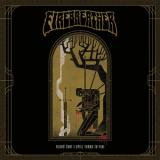
"Firebreather formed in Gothenburg in 2016, rooted in crushing, sludge-doused doom from the very beginning. Never wavering from that commitment across all three of their incendiary full-length releases, the trio has pursued weight with purpose, not as spectacle, nor as an exercise in excess, but as the only language broad enough to hold the emotional reach and sonic heft of their sound. The music arrives in a way that writes itself with no distance between the words and the sound; they rise from the same cursed ground, and that honesty has become the band's defining force. Firebreather is a band that never postures or asks to be admired for their heaviness- and to see them live is to experience exactly why. Their weight takes on another life entirely. The band's towering tone and consuming grit don't fill a room so much as alter it. Volume presses against the body before the first lyric lands and riffs arrive like shifting earth. The drums don't drive the songs forward; they anchor them while the line between sound and physical force begins to disappear. Years spent crossing Europe and North America have only sharpened that purpose, and a decade on with a fourth album on the way via the notorious Heavy Psych Sounds Records, Firebreather remains exactly where it belongs. Head down. Volume up."
Gold Nugget Vinyl, limited to 400 copies. "Firebreather formed in Gothenburg in 2016, rooted in crushing, sludge-doused doom from the very beginning. Never wavering from that commitment across all three of their incendiary full-length releases, the trio has pursued weight with purpose, not as spectacle, nor as an exercise in excess, but as the only language broad enough to hold the emotional reach and sonic heft of their sound. The music arrives in a way that writes itself with no distance between the words and the sound; they rise from the same cursed ground, and that honesty has become the band's defining force. Firebreather is a band that never postures or asks to be admired for their heaviness- and to see them live is to experience exactly why. Their weight takes on another life entirely. The band's towering tone and consuming grit don't fill a room so much as alter it. Volume presses against the body before the first lyric lands and riffs arrive like shifting earth. The drums don't drive the songs forward; they anchor them while the line between sound and physical force begins to disappear. Years spent crossing Europe and North America have only sharpened that purpose, and a decade on with a fourth album on the way via the notorious Heavy Psych Sounds Records, Firebreather remains exactly where it belongs. Head down. Volume up."
Six years after their last standalone release, TESTE return in full raw power!
Following their 2020 double 12" on L.I.E.S. - which marked a renewed phase after years of silence - David and Martin (TESTE) now open a new chapter.
ERASED FROM MEMORY is a 4-track EP developed between 2023 and 2026, continuing their exploration of sharp, unconventional sound design - suspended between chaos and decadence.
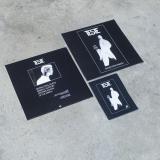
The visual direction features a key contribution from the late Juan Mendez // Silent Servant via his SILENT EDITIONS imprint, combining archival TESTE materials with his legendary punk vision.
He completed the cover and zine before his passing in January 2024.
This release is dedicated to TESTE and their three decades of legacy, and to Juan Mendez - one of our greatest heroes.
Love or its absence dominates the intimate songs on the new album from ARBORIST – the musical outlet of Mark McCambridge. Looking For Love, Arborist’s fourth album of exquisitely inventive Americana, places us firmly in his hometown of Belfast, allowing it to act as a microcosm of the wider-world, with all its foibles and charms. We find fictional protagonists scouring the dark corners of the city, wiling-away afternoons in strip clubs, wandering the streets in all weather and reflecting on the harsh reality of modern society, all in search of an elusive love – emphasising our need for it now more than ever.
Looking for Love is ARBORIST’s first album to be self-produced by McCambridge, largely from his home studio in Belfast – and at times it feels like we are in the room with him. It’s a different kind of record for him as previously he has always sought collaboration; whether it be with Kim Deal who chose to sing intertwined harmony on his debut single “Twisted Arrow”, or recording in The Curfew Tower owned by The KLF’s Bill Drummond who described Mark’s songwriting as being “riven with more loss than any record since Leonard Cohen quit this world”, and who Matthew E White and his Spacebomb band collaborated with to such astonishing effect on the previous Arborist LP, 2023’s An Endless Sequence of Dead Zeros, winner of the prestigious Northern Ireland Music Prize. This time, with no outside producer steering the way, McCambridge found that the quiet hours were where he felt most at ease, despite periods of trial and error, and, by his own admission, moments of feeling genuinely lost in it all.
Despite playing many of the parts himself, McCambridge still called upon old friends from the community around him; Spacebomb’s resident bassist Cameron Ralston (Bonnie Light Horseman, Hiss Golden Messenger) again features throughout the record, alongside Eamon Ferris (The Waterboys) on drums, with the great and the good from Belfast’s vibrant music scene. Grainne Meyer plays concert harp and Aga Olek plays violin for the quasi-title track “Looking 4 Love” – an off-kilter love-letter to Belfast. Meilana Gillard provides a sleazy saxophone on “Bye Bye Johnny Cash” – a seedy tale of a man obsessively visiting a dancer in a club, and The Larne Community Youth Choir provide backing vocals for “Go Kill The Fatted Calf” – a song Mark wrote about his son growing up, a take on the parable of the prodigal son, with Jonny Ashe’s blistering guitar solo adding an album highlight. The Errigal Ensemble String Quartet and Aisling Agnew’s breathtaking flute solo feature on “What Is It You’re Asking” – a song about love, or its absence, both personally and universally in these times.
McCambridge was recently honoured with a “Fellowship” by the Seamus Heaney Centre at Queen's University Belfast where he collaborated with such illustrious names from the literary world as Nick Laird, Caoilinn Hughes and Conor McPherson. Through the University he was given access to the music department's Steinways and pipe organs, and decided to try one out for the album’s centrepiece “I’ve Been A Flaneur”. As Mark explains, "The drone on the pipe organ — and the sound of it starting and stopping — was so visceral that I decided to try a half-written song against it right there and then, and this came out in one take… The song was a breakthrough artistically - I don't think I'll ever record in the same way again after this."
The album was engineered by longtime collaborator Ben McAuley (Van Morrison) and mixed by Jimmy Robertson (Anna Calvi, Beth Gibbons, Fat Dog). The results are staggering, devastating and uplifting in equal measure, calling to mind albums such as Songs Ohia’s Magnolia Electric Co., The Divine Comedy’s Regeneration, The Blue Nile’s Hats and Wilco’s Ode to Joy, as well as early-70s records from John Cale, John Lennon and Bill Fay.
Belfast native Mark McCambridge played his first show as Arborist supporting James Yorkston. A solo tour followed, and impressive performances led to notable support slots alongside Low, Cat Power, Echo & The Bunnymen and Guy Garvey. Arborist's debut single, the Americana-tinged "Twisted Arrow," caught the attention of the critics with an astonishing duet with Kim Deal of The Breeders. The debut album Home Burial (2016) and its follow-up, A Northern View, both received glowing praise, from The Guardian ("instant classic" ----) to MOJO ("devastatingly bleak… upliftingly beautiful" ----) to Uncut (8/10), with BBC 6 Music play from Cerys Matthews, Cillian Murphy, Lauren Laverne, Radcliffe and Maconie and Gideon Coe — and Steve Lamacq calling single "Taxi" "one of those records that makes you immediately stop what you're doing." He went on to even greater success with the 2023 Northern Irish Music Prize winning third LP, An Endless Sequence of Dead Zeroes, which was recorded at SpaceBomb Studios in Virginia with musician and producer Matthew E White. For his fourth LP, Looking For Love, he has signed with Fika Recordings and with a tour approaching in November, 2026 looks set to be a seminal year for the Irish artist.
The Discos Panorama series heads back to Colombia again for PAN016, pairing a heavyweight cumbia classic from Andrés Landero Y Conjunto with a wild Colombian take on one of the great Afro-funk records.
On the A-side, “La Pava Congona” is Landero in full flight. Known as El Rey de la Cumbia, Landero had that rare ability to make the accordion feel raw, hypnotic and completely dancefloor-ready. This one is all about the rolling rhythm, the call-and-response feel, and that unmistakable sabanero swing. Proper Colombian cumbia with weight behind it.
On the flip, Afrosound take on Manu Dibango’s “Soul Makossa” and send it straight from Colombia’s northern coast. Where the original is already a landmark Afro-funk groove, Afrosound bring their own Colombian flavour to it: fuzzed-out guitar, tropical percussion and loose psychedelic touches and that brilliant energy that made their records so special. A track that when we heard Hugo “Crucial Juice” spin, we knew we had to reissue.
Together, it’s exactly what the Discos Panorama series is about.
As always, PANORAMA Records is here to bring rare and essential music back into circulation with care, respect and admiration. Proper records, properly pressed, and ready for the dancers.
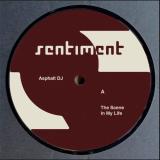
Asphalt DJ lands with his second outing on Sentiment.
Following a more Detroit house & techno oriented first release, this EP fi nds itself in four club-focused, yet deeper house tracks. - - - - - - - - - - - - - - - - - - - - - - - - - - - - Sentiment is a label born from admiration for those who came long before us, who were driven by curiosity and experimented with early-day machinery. We want to create a home for music that carries that same spirit. A home founded on the bricks of house and techno and built together with artists who inspire us. Feel free to join building.
out of Stock
Last delivered 3 days ago available to reorder, subject to availability
spirit blue have become one of London’s most elusive word-of-mouth successes. Formed in South East London, the duo quietly built a devoted following through years hosting NTS Radio’s flagship Early Bird show before stepping out from behind the booth with 2024’s breakout double single “perfect storm / desire machine”. Rare live appearances and instant sell-outs of their limited dubplate pressings have turned spirit blue into one of the capital’s most sought-after underground acts, with admirers ranging from Ethel Cain to EsDeeKid. The glistening guitars, soft-hued vocals and sparse production of “ps / dm” and its follow-up “language” conjure a collaged vision of 90s alt-rock melancholy refracted through lo-fi intimacy and electronic texture. The vocals remain understated yet emotionally direct, grounding each track in a vulnerability that feels unforced. Echoes of slowcore’s more spectral edges drift through the duo’s blurred songwriting, where moments of stillness carry as much weight as the hooks themselves. The first ultra-limited pressing sold out instantly; this new edition arrives including the vinyl-exclusive, weightless, “devil mix” versions on the B side and demand already running high.
The follow up to her UK number 1 album This Is How Tomorrow Moves, the stark and striking fourth album by beabadoobee is named for the electricity towers that dot every major artery in the world—the strong, spindly structures that reminded Beatrice Laus of her connection to friends and family at home while she was staring down extreme disconnection and isolation on tour over the past few years.
The title can also be read as an allusion to Laus’ spiky, forceful new sound—the waves of distortion that crash and shatter across this record’s 14 songs mirroring the intense crackle you hear when walking under power lines. The pylon is also a fitting symbol for an album that reckons with the repetitive anxieties of your mid-twenties: What if I’m always going to be this way? What if life is just pylon after pylon on the road?
The album’s first single is available to stream and buy from today: “Sun Has Set” introduces Pylon as, in essence, a set of songs that began as diary entries, words that Laus thought she’d never be able to say out loud. “A lot of the songs on this record are things I wish I could have said to someone,” she says. “This song has this petty tunnel vision—it’s like, I hate you. You’re gonna stay here and listen to how much I hate you. Because I never got to say that.” The single comes accompanied by a striking first person video directed by Bea’s partner and longtime visual collaborator Jake Erland.
Ever a devotee of pure rock music—both as something to be cherished and something to be played with—Laus casts these feelings in songs that touch on classic grunge, midwest emo and ‘90s radio rock, zeroing in on a sound that is both harsher and more direct than any of her previous records. She says the music she’s loved has “always been an influence” on her music, and so for B4 she went straight to the source. A fair few of Beabadoobee’s composite influences contributed to Pylon, a fact that speaks to the goodwill and respect Laus has amassed over the course of her relatively brief career.
Hayley Williams sings on “Nothing to Prove,” a deeply anthemic indie-rock song about getting your power back from fairweather friends who just want a bit of your success. The moody “Powerlines” features a verse from Turnstile singer Brendan Yates, a master of matching vocal force with emotional nuance. Elsewhere, you’ll find contributions from Pinegrove’s Evan Stephens Hall, Deftones’ Chino Moreno, and Title Fight’s Shane Moran, as well as, on “Write Me A Letter”, production work from Laus’ longtime friends and collaborators Matty Healy and George Daniel of The 1975.
Beabadoobee will debut songs from the record on the Powerlines Tour, her first ever arena shows and biggest tour to date, taking in shows across North America, the UK and Europe this autumn-winter. The Powerlines Tour kicks off 1 October and includes stops at Madison Square Garden, The Kia Forum, The O2 and more (full routing below). Support comes from Wisp in the US, Canada and UK and Violet Grohl in France, The Netherlands, Belgium and Germany.
Born in the Philippines and raised in London, Beatrice Laus emerged as a British alternative music icon across three acclaimed albums and five EPs. She has garnered multiple BRIT Award and BBC Sound Of nominations, and won NME’s Radar award, whilst amassing over 10 billion streams worldwide and more than 12 million followers across her social channels.
This Is How Tomorrow Moves became her first record to reach number 1 on the UK Official Album Chart in 2024, following her Top 10 albums Fake It Flowers (which reached number 8) in 2020 and 2022’s Beatopia (#4). Earlier this year, beabadoobee released the one-off single ‘‘All I Did Was Dream Of You,” teaming up with Grammy-nominated best New Artist The Marías, the result of a longtime mutual creative admiration between María Zardoya and Bea.
out of Stock
Last delivered 6 days ago available to reorder, subject to availability
OTHELLO is the debut album by pianist and composer Orson Claeys. Bringing together influences from jazz, hip-hop, urban culture, and everyday life, the record offers the clearest portrait yet of an artist shaped as much by the worlds around him as by music itself.
The title refers to Claeys' full name, Orson Dwight Othello Claeys, and reflects the album's central concern:identity. Throughout the record, personal experiences, cultural influences, and artistic inspirations converge into a body of work that seeks to understand how an artist is formed, both within and beyond music. Musically, OTHELLO builds on jazz, strongly intertwined with hip-hop, contemporary culture, and ideas beyond traditional musical frameworks. For Claeys, music is not a fixed genre, but an open and evolving form of expression.
This broad perspective is evident in the album's carefully chosen collaborations. A track like "WHAT A NIGHT" first took shape during a studio session with indie-soul singer Sevens, whose harmonic ideas laid the foundation for the track. As the composition evolved, Claeys felt it called for a stronger hip-hop voice. Through a recommendation from Mixmonster Menno of STUFF., he was introduced to L.A. rapper IAMOMNI, whose contribution brought exactly the energy and perspective the track needed. The result unfolds like a late-night journey through Los Angeles, with IAMOMNI's contribution adding a sense of movement, character, and place.
Elsewhere on the album, "SPIRAL", featuring Belgo-Brazilian vocalist Helena Casella, grew out of a long-standing mutual admiration. Conceived as a meeting point between R&B and jazz, the composition balances the groove and emotional depth of the former with the improvisational spirit and spontaneity of the latter. The collaboration developed naturally from the outset, with Casella instinctively understanding the atmosphere Claeys envisioned while enriching the music with her own warmth and nuance.
A long-held ambition materializes on "SHADOWBOXING", where Claeys is joined by drummer, producer, and one of the key figures in contemporary Belgian jazz, Lander Gyselinck. Gyselinck's work, particularly his collaboration with Zwangere Guy on Pourriture Noble, was instrumental in showing Claeys how the language of hip-hop could coexist naturally with jazz, an idea that runs through OTHELLO. Drawing inspiration from boxing, the track is a musical equivalent of a fighter's walk towards the ring: focused, intense, and driven by the sense of anticipation that precedes stepping into the fight.
After this heightened intensity, the album gradually moves toward its closing statement. OUTRO / HANIN", featuring oud player Akram Ben Romdhane, a longtime collaborator whose playing forms a natural bridge between Claeys' previous work and the broader musical landscape explored across the album. The title references the Tunisian Arabic word hanin, meaning "nostalgia", a fitting conclusion to a work deeply concerned with memory, identity, and personal history.
Beyond music itself, OTHELLO is informed by a wider cultural landscape. Urban culture, with its visual language, creative independence, and sense of community, forms an important backdrop to the record. Sport also plays a significant role, particularly boxing and basketball, whose emphasis on discipline, focus, and resilience mirrors Claeys' own creative process. Rather than being treated as separate influences, these worlds coexist without hierarchy, reflecting an artistic vision that resists rigid boundaries and allows different disciplines, communities, and experiences to inform one another.