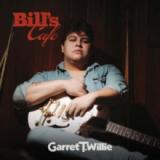
Named after his grandfather's pool hall cafe in Alert Bay, British Columbia, the record connects small-town grit with the bright lights of Nashville, where Willie recorded with Grammy- winning producer Tom Hambridge (Buddy Guy, Kingfish, Susan Tedeschi). From roadhouse stompers to backseat ballads, Garret T. Willie sings of love, loss, addiction, and resilience with a voice that cuts like hi- beam headlights on a dark backroad. Bill's Cafe is alive wire of energy and soul, carrying old-soul traditions into the future with fire and truth.
Suche:af
- Walpurgisnacht 1996
- Shadow Sun
- Cemetery Youth
- A Dismal Romance
- She Haunts The Night
- Thicker Than Darkness Itself
- In Despair We Trust
- Death, That Elusive Mistress
- Hollow
- Full Moon Therianthropy
- Reburial
Conceived as a return to the music that shaped his formative years, the project draws its energy from late-night introspection, creative renewal, and a distinctly crepuscular sensibility. Initially conceived as a solo project, LOCUS NOIR is set to evolve into a fully-fledged band . Musically, LOCUS NOIR blends Type O Negative gloom, The Fields of the Nephilim mysticism, and Paradise Lost melancholy, all infused with a post- punk edge.
The result is a sound that feels both contemporary and timeless -- a modern interpretation of what Gothic Metal can be. On debut album 'Shadow Sun' , band main songwriter and vocalist Ben steps fully into a melodic, haunting vocal register, merging the theatrical delivery of Peter Murphy with subtle echoes of the late Peter Steele. The lyrics move between the esoteric and the intimate: love and death, desire and decay, nocturnal excess and the bitter aftertaste of parties stretching well past dawn.
"deathcrash’s third album, Somersaults, glimmers with an everyday euphoria. The London-based slowcore/ post-rock quartet has always had an affinity for building worlds only to crush them. From their breakout EP, People thought my windows were stars (2021), through two critically acclaimed studio albums, Return (2022) and Less (2023), they have been both the architects and the destroyers, the creationists and the ones manning the flood barrier. But, recorded between Black Box Studio in the Loire Valley and Haggerston’s Holy Mountain, Somersaults is almost joyful.
Its ten tracks are more vocal heavy than any of the band’s catalogue – think Mark Linkous via The Kinks – but lyrically, Somersaults resists revelation. For all its abrasion, phrases appear half-swallowed, broken off at the edge of meaning, consumed by the smaller textures of living. “Thirty, no career, it fucking worries me / And doing the band doesn’t help,” Banks sings in ‘NYC’. But, “This life is the best life,” he finishes in ‘CMC’ on top of the ambient white noise of an office printer, thankful that the band is still there, “still making noise in the doorway.”
Their role as caretakers of Duster, Low and Codeine’s slowcore lineage is all across Somersaults – songs scud to a narcotic crawl, sound monolithic and inwards before spotlighting a crystalline nothing. Cathartic builds are muddied with tenderness, the bass a heavy grounding, the drums an exhausted heartbeat grasping for air. But more so than ever, even the silence feels collaborative – a gesture of communal trust – friends celebrating the room they’ve made for each other’s ghosts, and some of the biggest, brightest songs they’ve made to date."
- 1: Bad All By Myself
- 2: One Foot On The Brake, One On The Gas
- 3: The Flirt In The Car Wash Skirt
- 4: Homeless Blues
- 5 13: Th Street And Trouble
- 6: Make A Pocket For Your Grief
- 7: More Time
- 8: If I Should Lose Your Love
- 9: Wayward Women
- 10: Crazy Love Affair
- 11: Cold Side Of The Bed
- 12: What Kind Of World Is This?
- 13: You Can't Strike Gold From A Silver Mine
"Rough and ready blues played with unmitigated intensity…scorching and soulful, joyous and stomping.
—Living Blues
Electrifying and raucous…one of the few authentic links to pure Chicago blues.
—Chicago Tribune
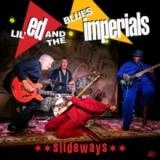
Lil’ Ed & The Blues Imperials are the reigning champions of raucous, slide-stoked Chicago blues. They’ve achieved legendary status with over 40 years of critically acclaimed recordings and raucous foot-stomping gigs on club, theatre and festival stages all over the world. Slideways is a tour-de-force of old-school Chicago blues played with contemporary urgency.
Shows in support begin on street date in Chicago, followed by Milwaukee, Minneapolis, Columbus, Cleveland, Dayton, New York and Syracuse amongst others. Touring will continue throughout Spring and Summer.
Press, radio and social media focus on album and tour dates, pitching stories and reviews to over 1000 print and internet media contacts around the world. Over 1400 radio programmers worldwide will be serviced and solicited for blues specialty show and selected Triple A and Americana rotation airplay. The album is certain to be welcomed with open arms by the blues media.
Slideways is bursting with Lil’ Ed’s rollicking slide-work and rough-hewn vocals on a joyous blend of smoking slide guitar boogies, raw-boned shuffles, and heart-stopping slow blues. As always, The Blues Imperials supply rock-solid, road-tested and gloriously riotous backing."
"Nearly two decades after their 2007 debut and a 2010–2022 hiatus, Austin, TX’s Voxtrot return with Dreamers in Exile, a new LP that turns an underdog story into a true second act.
The band who quietly became cult heroes in the streaming era deliver a record that carries the electric rush longtime fans remember while speaking directly to the new era of youth who discovered them through playlists and word of mouth.
Musically, Dreamers in Exile folds Voxtrot’s classic DNA—C86 sparkle, Sarah Records romanticism, the pulse of The Velvet Underground, the elegance of Felt—into a sharper, more confident sound.
Guitars chime and sprint, rhythms push forward, and Ramesh Srivastava’s literate, heart-forward lyrics trace the distance between youth and maturity, exile and home, regret and renewal. Mixed by Dean Reid (Lana Del Rey, James Blake), it reads as both reintroduction and redemption.
For a band born of the 2000s blog wave alongside Vampire Weekend, The National, and Grizzly Bear, Dreamers in Exile is less nostalgia than proof of life. It’s the sound of a beloved group returning on their own terms and finding their songs resonating more widely than ever."
- A1: Ohayo! Voice Cast:minami Takayama, Yoko Kawanami, Miki Narahashi
- A2: Renaissance Jounetsu Vocalist:wataru Kuniyasu
- A3: Idainaru Ajio<Bgm>
- A4: Okazu Yunta Vocalist:minami Takayama, Yoko Kawanami, Miki Narahashi
- A5: Konishi No Kokuhaku Voice Cast:hirotaka Suzuoki
- A6: Hisshyoku Ryourinin Vocalist:hirotaka Suzuoki Chorus Singers:minami Takayama, Yoko Kawanami, Miki Narahashi
- A7: Hinode Syokudo<Bgm>
- A8: Syokuseikatsu Vocalist:tomohiro Nishimura
- B1: Eye Catch Voice Cast:minami Takayama, Yoko Kawanami, Miki Narahashi
- B2: Onabe Wo Mitetene Vocalist:mari Yokote
- 3: Aji Syobu<Bgm>
- B4: Ajiou Ryourikai Kaika Vocalist:yuzuru Fujimoto & Ajio Ryouri Kanto Shibu
- 5: Shimonaka No Kokuhaku
- B6: Surume No Iji Vocalist:tomohiro Nishimura
- B7: Yokokuhen Voice Cast:kenyu Horiuchi Narrator:minami Takayama
- B8: Kokoro No Photograph Vocalist:wataru Kuniyasu
The analog LP reissue of the original soundtrack album from the anime Mr. Ajikko, which aired in 1987. The original LP catalog number is K28G-7379, and the original
CD catalog number is K32X-7125, released on June 21, 1988 (the tracklist differs from the CD released in 2004, which included eight newly added tracks).
The original manga, created by Daisuke Terasawa, was serialized in Weekly Shonen Magazine from autumn 1986 to the end of 1989, and was adapted into an anime
series that aired on TV Tokyo from October 1987 to September 1989.
This is the only soundtrack album for the anime series. It features the opening theme “Renaissance Jounetsu” and the ending theme “Kokoro no Photograph”, both
composed and sung by singer songwriter Wataru Kuniyasu, who is also known for composing Akina Nakamori’s “Gypsy Queen”. Lyrics were written by Ikki Matsumoto,
and arrangements were done by Tatsumi Yano.
The album includes image songs, eyecatch music, and preview tracks, with contributions from renowned comedy song artists Masayuki Yamamoto (Side A tracks 4 and 6)
and Tatsuo Kamon (Side B tracks 1 and 7). The album was structured, scripted, and directed by the anime’s director Yasuhiro Imagawa, making it a variety style album.
The main background music (BGM) was composed and arranged by Daito Fujita (Side A tracks 1, 3, 5, 7; Side B tracks 3, 5). The original manga author Daisuke
Terasawa also contributed lyrics for two songs (Side B tracks 3 and 5). Voice actor Tomohiro Nishimura participated both as a singer (Side A track 8; Side B track 7)
and as an arranger (Side B track 7).
Voice actors Minami Takayama, Yoko Kawanami, Miki Narahashi, Hirotaka Suzuoki, and Kenyu Horiuchi also participated in min dramas and chorus segments.
This album, which comically and dramatically portrays cooking battles, is a “Bravo!” anime soundtrack that closes out the Showa era in style. After 37 years, it is finally
being reissued as an analog LP a long-awaited release for anime connoisseurs!
repress!
Seasoned musical maestro Argy unleashes his long-player, New World. Argy’s varied back catalogue showcases his versatility and deep knowledge of electronic music. An experienced producer and DJ, he channels a lifetime of skill and natural talent into his LP New World. Across 14 tracks, we enter ‘Dreamstates’, utilising ‘Mental Powers’ to explore the ‘Wilderness’ and connect with a ‘Higher Power’. Rooted in an underground sound with an array of impassioned vocals, highly emotive arrangement and potent rhythms, the album demonstrates Argy’s artistic maturity. Join him as he leads us on a voyage into a New World…
Franky Wah returns to Crosstown Rebels and reunites with Kuuda on ‘Light Years’.
Dropping on 13th February 2026, the two-tracker sees the acclaimed UK producer continue his collaborative journey alongside the impressive Brighton-based collective for both his and their second appearance on Damian Lazarus’ revered imprint.
Having made a splash with his impactful label debut last summer, Franky Wah returns to Damian Lazarus’ Crosstown Rebels imprint with ‘Light Years’, a two-track EP that explores emotion and movement with measured confidence. The release sees the Yorkshire-born producer further embed himself within the Crosstown universe, delivering a project built on patience, progression, and feeling, where every moment earns its weight.
The EP opens with the title track, a wide-screen, hypnotic solo burner that balances uplifting melodic energy with weighty, driving grooves. Built for long moments on the floor, the track unfolds, allowing atmosphere and tension to do the heavy lifting while maintaining a clear sense of momentum throughout. On the flip, Franky reunites with longtime collaborators, producer-songwriter-vocalist trio Kuuda, for their second outing alongside him on Crosstown Rebels with ‘House In My Veins’. Continuing a partnership rooted in shared musical language and emotional depth, the Brighton-based trio is central to the track, bringing drive, earworm vocals, and a distinctive identity, woven seamlessly throughout Franky’s cinematic production - grounding expansive moments with human connection.
Following heavy support from Pete Tong on his Crosstown Rebels debut, and a recent invitation to host Tong’s flagship BBC R1 show at the start of 2026, Franky continues to assert himself as an artist equally at home in club culture’s most intimate spaces and its widest-reaching platforms. Meanwhile, Kuuda continue their impressive start to 2026, hot on the heels of their recent collaboration with Hot Since 82 on Bedrock. This latest partnership delivers a focused yet expressive statement, music designed to breathe, to move, and to resonate long after the lights come up.
Dictaphone are back with their 6th full length called "Unstable". In the 25th year of the project Brussels born composer and mastermind Oliver Doerell is surrounded again by a lot of musicians & friends. Roger Döring is there, his clarinet and saxophone play has always been a trademark sound of the band - also Alexander Stolze's ghostly violins. The dark atmosphere and experimental sound of the new album is a reference to the 80s belgian art music scene, which Doerell had the luck to experience in his formative years. Minimal jazz meets musique concrete meets a postpunk mind. On this new album “Unstable“ more voices and vocals than usual can be heard - especially Helga Raimondi (who already sang on the last album “Goats and Distortions 5") . As a collage artist she is also responsible for the visual side of Dictaphone - she designed the cover artwork and the visuals for the live shows.
The Brussels-Berlin-Teheran connection: Other guests on "Unstable" are the voices of Kaveh Ghaemi and Ashkan Afsharian, who Doerell met during a modern ballet production by Modjgan Hashemian (2008). The trumpet of Shahab Anousha can be heard in the track “La fin“ - Oliver Doerell and Shahab Anousha also share the spoken words Project “Noufān”. For nearly 20 years Oliver Doerell is linked to the Iranian Diaspora in Berlin and the Dictaphone track “Rattle” from the classic album “ Poems from a rooftop “ (2012) has been a hit in Teherans underground scene since the beginning. Furthermore the title track “Unstable“ is a homage to Ian Curtis of Joy Division. The words of this piece are based on the setlist of Joy Divisions last show.
Dictaphone played more than two hundred shows all over the world (including festivals Mutek, Transmediale, Unsound , Benicassim and many others). Their music can be heard in countless films, tv series and theatre pieces - (“the responder“ (BBC) , “the love he knows” (Ali Mohammad) , “Don´t move“ (Modjgan Hashemian) , Ring (Felix Ruckert) among others.
Written during a period of geographic and artistic transition, Country Music traces Severin Black’s movement from London to Berlin, unfolding through cycles of isolation and adaptation. Composed on the city’s periphery, the album’s material was continually dismantled and reassembled, reflecting a process of both artistic and personal reconstruction. The album marks a shift in production methodology, moving away from the immediacy of summed live takes toward a more deliberate, stratified multitrack approach. Sparse yet hypnotic, the record distills layers of sound formed by constant relocation, recurrent solitude, and a recalibration of instinct. In many ways, it echoes the experience of exile, not in a political sense but in the quieter, more insidious form of displacement that alters one’s perception of time and self. The music drifts between structure and dissolution, a reflection of existing at the threshold of different spaces—both physically and sonically.
The shedding of the previously used Nape moniker signaled a decisive sonic transformation, informed by extended time spent in the Pyrenees and a renewed engagement with folkloric material. Severin began playing the clarinet while making this record, and though its presence is minimal, it reveals itself as an interest in acoustic simulation, particularly the digital approximations of classical instruments that emerged within 1990s synthesizer technology. This interrogation of authenticity and mediation parallels the album’s thematic engagement with memory, where recollection functions not as a retrieval of fixed experience but as an iterative process of distortion and reconstruction. The relocation to Berlin reignited an affinity for grime music, evident in the syncopated brass of Pilgrim Wine and the fractured vocal layers of March, while memories of childhood in rural Wales permeate the record’s atmospheric spaces. The album includes contributions from longtime collaborator Vanessa Bedoret and Berlin-based artist Pavel Milyakov (Buttechno).
Country Music situates itself within an unresolved dialogue—between past and speculative futures, between folk lineage and digital fragmentation, between place and its embodied and sonic traces. What emerges is not a fixed statement but a process, an ongoing negotiation between what is left behind and what is brought forward. Words by Chantal Michelle
Mastered by Owen Pratt / Design by Severin Black / Center label image by Nicky Kidd / Back cover text by Alya Kanıbelli
The Hamburg duo Bêtes Sauvages started out as a DJ team and discovered their calling relatively late: the synthesizer. In 2019, the pair bought two synths, more for fun, after watching a documentary about these instruments. Eventually, they began to delve deeper into the how and what of them, and suddenly they received an offer from the label Kernkrach to contribute a track to a sampler. Things were getting serious. When the track "roboti" was played at parties as far afield as Guatemala, they decided: an album was needed. The work on it turned out to be more intensive than expected. Therefore, several more sampler contributions and even years passed before their self-titled debut was finally completed. The result is a wild mix of minimal, synthpop, synthwave, and quirky DIY sound.
West Mineral returns with lushly amorphous actions by Shiner, Pontiac Streator & Ben Bondy aka Shinetiac; together fused for an immersive flux of vapoured dub, chopped and droned Billie Eilish, and fidgety algorithmic jams.
There's not a single, specific sound you can peg to the West Mineral axis at this stage in the label’s evolution - it's rather a set of shared aesthetics that freely bend into various interconnected shapes. Shinetiac's contemptuous, critic-baiting gear is the ideal example; on their last album, 2023's 'Not All Who Wander Are Lost', skittery, ketamized IDM sparkled over Spice Girls samples and the Foo Fighters' 'Everlong' was transmuted into Sneaker Pimps-style trip-hop. 'Infiltrating Roku City' might be a little less blatant with its out-and-out poptimism, but it takes a similarly dim view of conservative "big ambient" snobbishness. Just a few minutes of 'Bluemosa' should be enough to let you know what's up; the overall character of the sound is hazed, with frozen pads and garbled, dubbed-out voices smudged into a mess of effects and samples. But it sups up different nuances as it wriggles, absorbing scampering breaks, dizzy acoustic guitar strums and half-heard wordless vocals, flipping in the third act to emerge from its shell as minimalist balearic folk-pop - something like Bon Iver doing 'Electric Counterpoint'.
Brooklyn's Shiner, Philly's Pontiac Streator and Berlin-based Ben Bondy navigate the labyrinthine streaming landscape, guided by their own private experiences of mindless doom-scrolling and cruising the darkest corners of YouTube. They formulated 'Infiltrating Roku City' while they were rehearsing last year and spent the winter stitching together various recordings and jams into a layered, dry-witted commentary on our algorithmic reality. Laden with inside jokes and refried memes, it's surprisingly elegant gear; handling the most unseemly elements like sonic recyclers, earnestly repurposing pop and nostalgia to create an atmospheric echo of contemporary reality.
Screwing Chief Keef's enduring 'Citgo', 'Clublyfe (hulu)' emphasises the original's AFX-pilled euphoria with Robert Miles-style piano hits, replacing Young Ravisu's brittle 128kbps trap rhythm with a glitchy rattle that picks up dembow spikes as it rolls. 'I Hate Being Sober' vaporises the Chicago drill pioneer's 'Hate Bein' Sober', blocking out his voice with glitchy, downsampled interference and elasticated Rhodes. The trio team up with Orange Milk's goo age on the sublime 'Crisis Angel', catching a ray of Malibu's sunshine in the process, and reduce Billie Eilish's voice to a Romance-does-Celine cinder on 'Billie', stretching it to fit next to gassed Future ad-libs and swooping 808 Mafia sub womps. And although the album takes a murky diversion on 'Roku Axes Ultra’, and a cloud-stepping centrepiece ‘Purelink’ in homage to the eponymous dubbed ambient dynamos, it's back on course with 'Jiafei (NETFLIX)', taking aim at TikTok bot videos and welding screams from Florida metal band Underoath to AI-strength vocal curlicues.
- A1: Move
- A2: Jeru
- A3: Moon Dreams
- A4: Venus De Milo
- A5: Budo
- A6: Deceotion
- B1: Goldchild
- B2: Boplicity
- B3: Rocker
- B4: Israel
- B5: Rouge
In 1949 Miles Davis, Gerry Mulligan and Gil Evans - they'd never met before - gravitated together with the natural
affinity of kindred souls. Combined, they gave each other a spiritual boost that resulted in many all-night sessions of
earnest discussion, writing and playing-productive work on new musical ideas, new voicings, new concepts of jazz.
Their first appearance startled a delighted jazz public, and marked the birth of the cool. Today, these famous Miles
Davis instrumentals are as exciting as ever, and here are in all their glory.
Especial is delighted to reprise the label’s relationship with Osaka’s acid master, Akio Nagase. Following his debut, Global Acid EP and follow up African Acid EP covered a range of influences, all with the heavy dose of Roland TR-303, here he completes a trilogy of EPs, culminating in a homage to his love of dub reggae.
Having made reggae influenced dance music under the Makedub alias for decades, here he takes it a step further, utilising a knack for catchy hooks and acid lines, while fusing reggae and live desk-dub mixing.
I Love Smoke, a chant, the stand-out, those classic vocals flowing in and out with a 3AM (Eternal) bump. Riotously expounding the virtues of smoking ’Mari Jane’, the hypnotic stoner vibes are wrapped around Nagase’s meditative and dancefloor heartbeat.
Night Time High Acid swings, the low-end rumble and kick build before the TR-303 and harmonica lead interweave, samples and sirens encase in an ethnic, tribal slo-mo dub flow.
Things shift with the 4/4 bump of Creation Dub. A call to rise wrapped in the warmth of Dub House beats. Melody and dub flow, no need for 303. Vox are space echo’d to the limit. Keys stab, horns call, slip side away.
To finish, Harmonica Dub is just that. Heavy mouth organ solo, the blues calling atop a dub-techno stepper beat. Rimshot, stabs, echo. All encompass that psychedelic flavour of Akio. Dub, Love and Respect. Thank you Mr Kikumoto for the acid, thank you Mr Nagase for beats
TrioRox is a project born from the encounter between three leading figures on the Italian music scene (and beyond):
pianist Giovanni Guidi, bassist Joe Rehmer, and electronic musician DJ Rocca (Luca Roccatagliati).
Three individuals boast eclectic and impressive resumes. Guidi, a child prodigy of jazz piano, has released several
albums for the prestigious ECM label and has collaborated with top jazz and electronic musicians, from Enrico Rava
to Matthew Herbert, Joe Lovano, and Ricardo Villalobos. Joe Rehmer, an American living in Italy, is one of the most
sought-after bassists, sharing stages and recording studios with such luminaries as Bob Mintzer, James Moody, and
Danny Gottlieb. DJ Rocca has been a DJ and musician since the 1990s, boasting numerous albums, singles, and
remixes with and for key figures in the alternative dance scene (Andrew Weatherall, Dimitri From Paris, and Howie
B), as well as a stint in the jazz scene, releasing several albums with Franco D’Andrea.
The trio's music is a blend of electronic, dance, jazz, and pop, with hints of groove in house and techno, as well as
blends of electro, classical, and minimalism. A melting pot of styles between Keith Jarrett and Carl Craig. The album
will be released on IRMA Records in September 2024, featuring guests Luigi Di Nunzio, Gianluca Petrella, Dan
Kinzelman, and Jacopo Fagioli.
This EP of remixes is by:
Zed Bias: Manchester-based electronic musician, producer, and DJ in the Garage/2-step, Broken, and Funky
Breakbeat genres.
Alexander Robotnick: Italian record producer, DJ, and composer considered a cult figure in the New Wave and Italo
Disco scene.
Daniele Bladelli: One of the first and most important Italian DJs, famous for pioneering Afro and Cosmic music.
Bjorn Torske: Norwegian house and breakbeat producer. He has collaborated extensively with Röyksopp.
Somewhere between heaven and hell…there is Fallen Angel. Dark Entries continues its mission of shining light on a generation of composers and musicians lost to AIDS with Brandy Dalton’s Fallen Angel, his soundtrack work for the award-winning Fallen Angel series. Brandy was known for many years in the LA underground for his performances with his boyfriend, Robert Woods, who was the resident DJ at Club Fuck. Eventually, they recruited John Munt to form the band Drance, becoming infamous for their high-energy performances and songs that tackled taboo topics like sadomasochism. While Drance explored the aggressive sounds of industrial and EBM, Dalton continued to produce a wide range of electronica, from abstract sonic textures to techno bangers. The Fallen Angel album collects 16 sweaty, sticky cuts composed for the pornographic series Fallen Angel, a trio of leather-focused films released by Titan Studios. The sounds here span from the fractured cyberpunk-rave of “Swelled” to the tabla-laced trance of “FA2,” taking listeners on a journey through hedonistic recesses chock full of crunchy digital drum machines and wailing FM synths.
This album was originally released on CD in 1999 by Titan Studios, capitalizing on the success of the film franchise. It will be reissued on LP as well as CD, featuring 6 bonus tracks. Artwork for the album, designed by Eloise Shir-Juen Leigh, features stills from the Fallen Angel film. Also included is an insert with liner notes and photographs. This album is dedicated to Brandy, who passed away from AIDS-related illness in 2006, after battling with the disease for 17 years. Brandy’s passing was preceded by his best friend and Drance co-founder Robert’s death in 1995. Documenting a sonic shift in the 90s bathhouse music, Fallen Angel provides a hardcore BDSM ride, building upon the analogue archival soundtracks that Dark Entries has previously released.
Tokyo's Encryptnude label returns, with another carefully crafted Ryota OPP selection !
Following on from the shamanic feel of his previous work, this 12inch also exudes non-dance music psychedelia.
'African Chorus' and 'Kalimba Guitar' on side A create a melodic, spiritual, hi-life feel reminiscent of Wally Badarou.
'Bop' on side B, beautifully blends dub and free jazz, creating a leftfield dance sound reminiscent of African Head Charge, Claussell's Sacred Rhythm or Frank Zappa's 'Nine Types Of Industrial Pollution' turned Deep House. .
- A1: Beaten Metal
- A2: Filibuster X
- B1: Sanctuary
- C1: Hilo
- C2: War Hero
- D1: I.c.e
- D2: Age
Antibalas established themselves in the late 1990s as a burning, tough, horn, bass and drum driven Afrobeat ensemble cut from the Fela Kuti mold, who were politically savvy and socially conscious. Their live shows have been incendiary events where rhythm and perspiration from completely crazy, booty-shaking audience members shared something deeper and wider than the music itself. Security is Antibalas' fourth album. It was co-produced by the band with John McEntire from Tortoise.
The group, whose name means "bulletproof" in Spanish, has indeed proved they possess the mettle to not only survive but also thrive by employing a musical arsenal that has become known worldwide. Initially using the revolutionary blueprint of afrobeat as a launching pad, the dozen-strong members of Antibalas weave a rich tapestry of latin, jazz, classical, funk and soul into their horn-driven mix. Words fail in trying to describe the result: simultaneously polyrhythmic and political, independent and contagious, and the reason why many have credited the band for introducing afrobeat's framework to a new generation.
Security is available as a numbered limited edition of 500 copies on white vinyl and is packaged in a gatefold sleeve.