The gold standard edit masters at Scruniversal have decided to refocus somewhere away from their usual Brazilian sound for this latest 7". It finds the crew heading to Africa and digging deep for new grooves, with Tony Lavrutz, Scruscru & Dwaal coming correct. 'Afrika Bambaataa' kicks the record off with a laid back Afro-tinged broken beats with a sunny disposition and plenty of bright melodies that wouldn't sound out of place in a Nightmares on Wax set. On the flip side joint, 'Zulu Jam" the drums cut more deep with organic percussion scattered up top next to expressive flutes. Perfect summer vibes.
Search:africa bamb
The always hard working Emotional Rescue now unveils the electronic disco project Exo Fender, helmed by esteemed New York producer Eric Calvi and featuring the legendary Steve D'Acquisto. The remastered songs 'Big Mood' and 'Music In My Mind' span two new EPs, with updated edited versions by NYC producer Justin Van Der Volgen. Calvi's journey from Paris to New York's music scene in the 1980s when he engineered hits for artists like Cameo and Africa Bambaataa, and laid the groundwork for Exo Fenders. Inspired by clubbing friendships, the project's infectious grooves and tongue-in-cheek nature gained club play and collector's acclaim, with Van Der Volgen's remix enhancing their timeless appeal for today's dancefloors.
‘Diré’, Idrissa Soumaoro new album, comes as a surprise to Malian and international audiences. Composer, singer, guitarist and master of the kamalen n’goni Idrissa Soumaoro presents here a beautiful collection of songs on his third album, Diré, named in honor of the town where he met his wife and where his first daughter, who is no longer with us, was born.
In 1971, after his studies at the INA in Bamako, Idrissa was transferred to Diré to teach music at the lPEG (Pedagogical Institute of General Education). He was 22 years old when he arrived in Diré. Idrissa has always been nostalgic for this beautiful place in the 333 Saints of Timbuktu region. As Idrissa sings in ‘Diré taga’ (Going to Diré), the track that opens the album, the city evokes deep emotions for the artist, as if it were a long-lost friend or lover. Celebrating the memory of the city of Diré leads the artist to retrace stories and lived situations that marked and animated him in years gone by: ‘I really miss the people, the colleagues, the friends and that period. Despite the time that has flown by, I would ardently wish to see Diré again’. Today, at the difficult time Mali is experiencing, remembering the city of Diré in the 1970s also means for the artist not giving up hope for peace: ‘The memory of Diré, a beautiful town in northern Mali, strengthens my hope for peace, union and real independence for the happiness of my people’; as he sings in ‘Sababou’, ‘Without hope, there is no life. Together we will succeed’.
The ten highly original compositions of the album are strongly based upon traditional music of Mali, but Idrissa’s life experiences, travels, education, collaborations and personal musical career have led him to compose and perform music with other influences. As Idrissa quotes: ‘My inspiration generally comes from the donso n'goni, a Bambara instrument played by and for hunters throughout Mali. This is a pentatonic instrument, similar to the blues exported to the USA by black African slaves. I've also spent so much time playing a variety of music that my music also reflects rumba, salsa (as well as Bamanan blues and a few derivatives: jazz, country, soul, rhythm and blues) etc. I have looked for and hope to have found my own form of expression from these influences’.
Throughout the album, his strong, clear voice sings in French, Bambara and English. It rides seamlessly upon a complex rhythmic sea of distinctly West African stringed instrumentation and percussion with accents of flute and balafon. There are keyboards in a few songs, but these, happily, do not dominate the music as we hear so often in today’s music. This album presents the music of a mature artist who has ‘been there, done that’ and returned to celebrate his country, his roots and his dreams in a flawlessly produced collection of songs of love, reassurance, fatherly advice and hope.
The album already has a long history: it was initiated in 2012 by Marc-Antoine ‘Marko’ Moreau, former producer and manager of Amadou and Mariam. Moreau had plans to produce the album and invited Idrissa Soumaoro to start recording in Manjul's studio in Bamako. When Moreau suddenly passed away, work on the album was still missing. The pandemic still added time for the production to continue. With the help of Climax Orchestra, arrangements and orchestrations were finalized in France. At the artist's behest, 'Diré' will finally be presented to the public by Mieruba, the independent label based in Ségou, the home of the blues in Mali. 'Let's stand together so that Mali can flourish': from conception to production and distribution, this is the message that 'Diré' carries.
A veteran of the great Malian orchestra, the Super Biton de Ségou, Mama Sissoko is an accomplished musician. His music traverses Mandingo, Bambara, Sarakolé, Songhai, Bobo, Peul, Malinke and Bozo traditions, all while flirting with jazz. On stage, Mama Sissoko is a purist who engages with the audience bringing his energy, urgent vocals and truly inspired guitar solos throughout the concert. ‘Live' brings together recordings from a concert given in Paris at La Villette in 1998 and takes us back to a high point in Mama Sissoko's career.
In ‘Live’, we find tracks from Mama Sissoko's second solo album 'Soleil de Minuit', which was released in 1999 by Buda Music. As on the album, the different guitars overlap without compromising the unity of the music, rendering an earthy atmosphere despite being very complex. The recording of this concert was superb. We can hear every note, every nuance, every instrument and voice in the many-layered compositions.
As on the album ‘Soleil de Minuit’, this live recording opens the session with ‘Diarabi’, followed by ‘Safiatou’. Both are up-tempo love songs in which Mama Sissoko's powerful voice sings with all of the passion that such love songs deserve over a clean rhythm driven by the percussion of several guitars. The heavy bassline of ‘Safiatou’ adds to the urgency of the song. After these two beautiful renditions, the energy continues with the guitar-driven ’Fisiriwale’ and then a surprisingly original version of Super Biton’s famous song, ‘Iri’. We are then treated to a lively version of his ‘Soleil de Minuit’, called out by the artist as a ‘salsa Africana’ with a shout out given to Cuban salsa mid-way through when he calls the song ‘El Sol de Medianoche’ in perfect Spanish.
Throughout this concert, Mama Sissoko’s deep and melodic voice seems to emanate effortlessly from his body and soul. Multiple guitars back up his signature solos adding depth to the music that harkens back to the traditional music of Mali. Perfect examples of this are given in the songs ‘Douga’, ‘Manssane’ and ‘Hommage a K’. The last song, before a rousing second version of ‘Soleil de Minuit’, is ‘Boma Ma’, a truly modern rendition of a traditional Malian hunters’ song with multiple guitars, shakers, lively djembe and an outstanding vocal duet with Toussaint Sainé, Mama Sissoko’s long time musical collaborator.
Accompanied by incredible musicians, including Toussaint Sainé, his partner in the Super Biton orchestra, "Live" plays in the timeless way of Malian music. What's more, it gives us the gift of its most direct and powerful dimension, that of live music, as if 20 years hadn't passed.
Crucial Toronto rapper / producer / DJ myst milano. returns with thrilling new album Beyond the Uncanny Valley, an exhilarating ride through hedonistic experimental hip-hop and house music that reinterprets the breadth of Black electronic music with addictive singular energy.
“I offer Beyond the Uncanny Valley as a working anthology of Black electronic music across generational, geographical and genre lines,” myst milano. writes. “I thought a lot about staples of Black art across the world that can be traced back to Africa, and that link the diaspora regardless of where our people end up and throughout all eras.”
A mighty example of this omnivorous and multifaceted awareness of Black creativity, Beyond the Uncanny Valley is a tidal wave, swallowing up Canadian House, Detroit Electro, Chicago Footwork, UK Jungle and Dubstep, Jersey / Baltimore / Philly Club, Southern Hip-Hop and West Coast Funk into the trail of euphoric destruction left by myst milano.’s trademark grimy, sweaty, lusty neo-R&B take on contemporary hip-hop.
Opening with “Thirteen”, the album hits with punch and immediacy. The track’s thumping kick and swirling, haunted synthesis represent myst milano.’s keen ability to nurture perfect symbiosis between production, arrangement and lyrical theme. It is equal parts dreamy, provocative, sexy and powerful, and, together, entirely unique to myst’s creative voice. As with Beyond the Uncanny Valley as a whole, it is evocatively storytelling, mixing vivid imagery with slick wordplay. We are introduced to myst’s groupie (formerly “a hater”), as their crew “causes damage you can’t afford”, while witty threats and erudite posturing flow out over a steadily expanding instrumentation that mimics myst’s breathless, sweatbox DJ sets.
“Ring Ring” is another key track. Glitching nuclear alarms give way to a bulldozing kick drum and in-the-red distortion on myst’s voice. The vocals hit at breakneck speed while the production retains a dirty, dirging stomp. It is formidable, intense, fun, and intimidating in all the right ways.
Underpinning the album is a mechanised female voice that has possessed the record like a replicant ghost. “When we go beyond the uncanny valley, we reach a state of perfect harmony where the robot has mimicked the human to the point of being indistinguishable,” myst says. “Who are we when we become perfect imitations of what the world wants instead of who we really are, which is imperfect and flawed and a little uncanny, anyway?” While the music of Beyond the Uncanny Valley is human, with real emotion and expression, it occasionally flirts with the beyond, reaching into a near future where reality and technology bleed into one.
Beyond the Uncanny Valley is myst milano.’s second full length, following 2021’s rapturously received debut Shapeshyfter, and a monstrously successful accompanying house remix on the UK’s legendary Defected Records.
- A1: Kofán – El Bejuco Umbilical
- A2: Ensamble Juyungo – Chimborazo
- A3: Llaquiclla – Agua Larga
- A4: Asunción Quiñonez – Bambuco La Katanga
- A5: Juan Luis Restrepo – A Saravino
- B1: Juan Cayambe – Negra Muele Caña
- B2: Rosa Huila – Andarele
- B3: Ensamble Juyungo – Amanece
- B4: Caynamanda Cunangaman – Candela Y Ron
- B5: Llaquiclla – Ceremonia Matrimonial
- C1: Ensamble Juyungo – Patagoré
- C2: Papá Roncón – Sanjuanito Chachi
- C3: Ensamble Juyungo – Llacta Pura
- C4: Llaquiclla – Ritual Emberá
- C5: Osvaldo Lindberg Valencia – Torbellino
- D1: Raúl García Zárate – Kasilla Shungulla
- D2: Ensamble Juyungo – Tren Con Ritmo De Caramba
- D3: Ensamble Juyungo – Caramba Con Ritmo De Tren
- D4: Llaquiclla – El Viaje Del Yagé
- D5: Ensamble Juyungo – Toquesito
- D6: Llaquiclla – Galapago
- D7: Llaquiclla – Carambalante
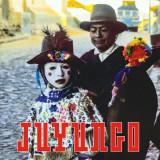
‘Since the 16th century, the Ecuadorian province of Esmeraldas has been home to a unique Afro-Indigenous culture originating in the integration of the Indigenous Chachi and Nigua peoples with African Maroon communities. Juyungo documents significant Esmeraldan artists and bands playing the Afro-Ecuadorian folklore of the province, as well as including some older field recordings. Based mostly on the marimba, whose origins lie partly in the African balafon, partly in Indigenous percussion instruments, the music is laced with call and response chants, ambient insect and bird noise, the filigree finger-styles of the Andean guitar tradition and the panpipes of the mountains. This is resonant insider roots music at its headiest — the mystic revelation of Esmeraldas, gully deep and lustral.’
- Francis Gooding, The Wire.
The fifth in our series of LPs compiling classic music from Ecuador. Customary Honest Jons runnings: a beautiful gatefold sleeve; superior pressing, with vivid, intimate sound; full-size, sixteen-page booklet, in colour throughout, with detailed, fascinating, bi-lingual notes, and stunning photographs.
The music is transfixing, magical; not like anything else. From start to finish, this album is continuously, profoundly immersive; a kind of journeying, trippy meditation about slavery and cultural resistance, identity and mix, places and spaces, futures and pasts. It’s inscrutable to net-surfing, algorithms, Shuffle. But for a taste try the insurgent marimba roller Agua Largo, jet-propelled by Rosa Huila’s rapturous blend of African spiritualist and Christian chant. ‘Healing music,’ Zakia called it on Gilles Peterson’s BBC show recently. And the ravishing pasillo Kasilla Shungulla — ‘calm your heart’ in the Quichua language — a duet between the Peruvian master-guitarist Raúl García Zárate and viola da gamba by Juan Luis Restrepo from Medellin, recorded in a baroque church in Buzbanza, Colombia.
- A1: Un-Muting Beyond Misspelt Borders ()
- A2: Un-Muting Beyond Misspelt Borders ()
- A3: Un-Muting Beyond Misspelt Borders (A3)
- A4: Un-Muting Beyond Misspelt Borders ()
- A5: Un-Muting Beyond Misspelt Borders ()
- B1: Un-Muting Beyond Misspelt Borders ()
- B2: Un-Muting Beyond Misspelt Borders ()
- B3: Un-Muting Beyond Misspelt Borders ()
- B4: Un-Muting Beyond Misspelt Borders ()
- B5: Un-Muting Beyond Misspelt Borders ()
"Visual artist, musician and composer Satch Hoyt will release a new 10” vinyl album, Un- Muting, on 3 October 2025 on newly minted record label traza, run by Andrea Zarza Canova and distributed by Honest Jon’s Records. This album is the first to document Hoyt’s ongoing, long-term project of un-muting historical African instruments held in Western museum collections and includes his composition: Un-Muting Beyond Misspelt Borders.
Originally commissioned by Nottingham Contemporary for the exhibition Your Ears Later Will Know to Listen, Hoyt’s composition invites listeners to engage with what he calls ‘sonic restitution’, a performative challenge to the silent confinement of instruments within Western conservation standards and ethnographic museums, awakening and celebrating the hybridity, resilience and creativity of the transnational African diaspora.
The composition began with a recording session in October 2023 at the British Museum in London, where Hoyt was granted access to a selection of African instruments held by the British Museum’s Department of Africa, Oceania and the Americas. In the presence of curators and conservation staff, he played the instruments without written scores, responding instead to their physical and sonic presence.
The recordings were then further developed in Hoyt’s studio, combined with additional performances on both African and Western instruments from his own collection."
For Hoyt, un-muting is both a creative and political act:
"To Un-Mute is to gain access into ethnographic museum collections where I play and simultaneously record the abandoned ancient African musical instruments. These restituted recorded motifs and rhythms accompany my live concerts and recordings. Un-Muting is also concerned with the chapters of patriarchal and racist supremacy which accompany the instruments’ abductions, vehemently opposing the current continuum of this supremacy, its ongoing colonial expansion and continued capital extractivism. It remains focused on the retention of spiritual belief and stalwart visions of liberation leading to eventual global emancipation and self-realisation."
- Satch Hoyt, June 2025
The 10” vinyl record includes a newly commissioned text by critic and scholar Tavia Nyong’o.
The album will be released on vinyl and digital formats on 3 October to coincide with the opening of Satch Hoyt’s solo exhibition Satch Hoyt: Afro-Sonic Mapping Chapter 4 at KARST Plymouth.
Ancient African instruments: Trumpets (Kuba), Sanzas (Chokwe, Lega, Kongo, Yao), Ilimba (Nyamwezi), Whistles (Chokwe, Luba, Pende, Bambara), Talking Drum (Yoruba), Slit Drum (Kuba, Yaka, Tetela, Songye), Bell (Tetela), Rattles (Yoruba, Luba, Bamileke, Pende) and Flutes (Kuba, Kongo, Mossi, Bambara)
Western instruments: Flute, Electric Flute, Roland Handsonic, Synthesizers, Glockenspiel, Wooden Xylophone and assorted hand percussion
Composed, arranged, produced and performed by Satch Hoyt
Engineered and co-produced by Dirk Leyers
Recordings of musical instruments held by the Department of Africa, Oceania and the Americas at the British Museum by Adam Laschinger
Studio recordings of African instruments from Satch Hoyt's collection by Dirk Leyers
Uncredited Female Chant on wax cylinder recording by Karl Edvard Laman (c. 1910), held by the Berlin Phonogramm-Archiv
Additional sound design and production by Call & Response Studios
Mixed by Hendrick Valera (Cali, Colombia)
Mastering and lacquer cut by Kassian Troyer at Dubplates & Mastering
Cover art: Satch Hoyt, Score #1, 2020
Design by Elisabeth Klement
Direction by Andrea Zarza Canova
- A1: Idrissa Soumaoro Et L'eclipse De L'ija — Nissodia (Joie De L'optimisme)
- A2: Rail Band — Mouodilo
- A3: Les Ambassadeurs Du Motel De Bamako — M'bouram-Mousso
- B1: Super Tentemba Jazz — Mangan
- B2: Sorry Bamba — Yayoroba
- B3: Super Djata Band — Worodara
- C1: Zani Diabaté Et Le Super Djata Band — Fadingna Kouma
- C2: Salif Keita — Mandjou
- C3: Alou Fané & Daouda Sangaré — Komagni Bèla
- D1: Super Djata Band De Bamako — Mali Ni Woula
- D2: Idrissa Soumaoro Et L'eclipse De L'ija — Fama Allah
Mr Bongo is proud to present 'The Original Sound of Mali', compiled by Vik Sohonie & David Buttle.
Malian music is arguably deeper, more sophisticated and lyrical than any other form of African music. Those of us deeply entranced by Malian culture, and, in particular, the immense hypnotic beauty of Malian music, have put together a
selection of songs from across the country.
Compiled by Vik Sohonie & Dave 'Mr Bongo' Buttle, the story of this release began in 2015 when Dave happened upon the Soul Bonanza blog. A treasure chest of rare finds from around the world! One mix in particular stood out and totally enthralled Dave - le monde à change: a tribute to mali 1970 - 1991. He
already knew of Malian legends such as the Rail Band, Salif Keita, & Les Ambassadeurs du Motel de Bamako, but this mix was something else! Deep & culled from the collections of some of the heaviest African music collectors in the world, legends like Vik Sohonie, Hidehito Morimoto, Philippe Noel, Gregoire
Villanova, and Rickard Masip. Dave immediately contacted Vik and a journey of discovery tracking down the rights-holders began. He also turned to the font of Malian music knowledge, Florent Mazzoleni. Florent has written the definitive book about Malian music - 'Musiques modernes et traditionnelles du Mali'. He
proposed some incredible tracks to include and provided the back bone of the sleeve notes and photos that are used in the album. No Malian album would be complete without a striking front cover photo, and ours is sourced from the late great Malian photographer Malick Sidibé.
On this album you will find well-known artists sitting next to rarer
discoveries. The Rail Band, who are one of the best known of all the big bands in Mali, gave us the stars Mory Kanté and Salif Keita. Les Amabassedeurs du Motel de Bamako were another big act that had Idrissa Soumaoro, Kanté Manfila, and for a while Salif Keita in their ranks. Sometimes Salif would play in both bands in one night, quite a feat considering the bands were fierce rivals. As an albino Salif has had to face considerable prejudice from society, focussing on his musical career to help overcome this.
A major discovery on the album has been Idrissa Soumaoro et L'Eclipse de L'Ija. L'Eclipse de l'Institut des Jeunes Aveugles was a Blind teenagers institute and their record was produced by the German association that took care of blind Malian teenagers in Bamako. It was never properly released commercially and was the first recordings by the legends of Malian music Idrissa Soumaoro, Amadou Bagayoko and Mariam Doumbia. Amadou & Mariam later got married and became household stars, including making an album with Manu Chao.
This album is a concerted global effort to showcase the most vital cornerstone of Malian culture in an attempt to preserve its reputation in the face of its current, grim reality. We hope our highlights of Mali's rich history of musical innovation will serve as a starting point for reclaiming an image tainted by unnecessary conflict. May peace and music return to Mali soon.
Dedicated to Malick Sidibé.
Ultimo Tango (Milan) & Glossy Mistakes (Madrid) are thrilled to announce the release of "Tribal Organic: Deep Dive into European Percussions 79-90", a compilation of otherworldly percussion-driven tracks, digging deep into this unknown realm of a past era.
Compiled by Luca Fiore and Glossy Mario, the album takes listeners on a rhythmic journey through the diverse sounds of Europe from 1979 to 1990. This collaboration between two like-minded labels highlights forgotten recordings from across Europe, including works by artists from France, Spain, Germany, Italy, Austria, the Netherlands...
Opening with the ethereal “Rainforest” by British female duo Ova, this collection weaves together nine tracks from artists who were deeply influenced by global percussion traditions. With hints of jazz, new age, gamelan, and West African rhythms, these tracks feature instruments like congas, tablas, and shekeres, and reflect a shared fascination with the organic beat of the drum.
From the industrial-meets-African grooves of Jean-Michel Bertrand’s “Engines”, to the hypnotic accordion and tribal chants of Cuco Pérez’s “Calabó Bambú”, the compilation offers a cross-cultural listening experience that is both meditative and invigorating. Despite creating these works in isolation during the last years of the Cold War, each artist was inspired by a borderless world of sound. The compilation pays homage to these nomadic musicians who respected the traditions they drew from, while contributing their own experimental takes on percussion-led music.
In Tribal Organic, Glossy Mario and Luca Fiore have unearthed a treasure trove of rhythm-driven tracks that blur the lines between nations, genres, and cultures. This compilation offers more than just music; it’s a listening experience that is both spiritual and grounded—bold, exploratory, and deeply rooted in the beat of the Earth
- A1: (Da Le) Yaleo
- A2: Love Of My Life (Feat Dave Matthews)
- A3: Put Your Lights On (Feat Everlast)
- A4: Africa Bamba
- B1: Smooth (Feat Rob Thomas)
- B2: Do You Like The Way (Feat Cee-Lo & Lauryn Hill)
- B3: Maria Maria
- B4: Migra
- C1: Corazon Espinado (Feat Mana)
- C2: Wishing It Was (Feat Eagle-Eye Cherry)
- C3: El Farol
- D1: Primavera
- D2: The Calling (Feat Eric Clapton)
Santanas mit neun Grammys und mehreren Platin-Auszeichnungen gekröntes Album "Supernatural" wurde zum 25-jährigen Jubiläum auf transparentem blauen Vinyl neu aufgelegt. "Supernatural" eroberte in 11 Ländern den ersten Platz und zieht mit Hits wie "Smooth (ft. Rob Thomas)" und "Maria Maria (ft. The Product G&B)" weiterhin neue Fans an.
Supernatural is the eighteenth studio album by Latin rock band Santana, released on June 15, 1999 on Arista Records. After the group found themselves without a label in the mid-1990s, founding member and guitarist Carlos Santana began talks with Arista president Clive Davis, who first signed the group in 1969, which led to a new record deal. The pair collaborated with A&R man Pete Ganbarg on the production of Supernatural as Santana wanted to focus his musical direction towards pop and radio friendly material and proceeded to do so by collaborating with various contemporary guest artists, including Eric Clapton, Rob Thomas, Eagle-Eye Cherry, Lauryn Hill, Dave Matthews, Maná, KC Porter and Cee-Lo Green. Supernatural became a significant commercial success worldwide. It reached # 1 in eleven countries, including the US for 12 non-consecutive weeks where it is certified 15× Platinum. The first of six singles from the album, "Smooth" featuring Matchbox Twenty singer Rob Thomas, was a number one success worldwide and topped the Billboard Hot 100 chart for 12 weeks.
- Mélissa Laveaux - Kouzen (Melanie Charles Remix)
- Msaki X Tubatsi - Zibonakalise (Vigro Deep Remix)
- Mamani Keita - Nenibali (Catu Diosis Remix)
- Gerald Toto, Richard Bona, Lokua Kanza - Youwilé (Hagan
- Que Vola ? - Iyesa (Keene Remix)
- Lucas Santtana - Ninguém Solta A Mao De Ninguém (Luana
- Koki Nakano - Mue (Sofie Birch Remix)
- Blick Bassy - Woni (Vanyfox Remix)
- Asynchrone - Plastic Bamboo (Shinichiro Yokota Remix)
For the past 20 years, NO FORMAT! has been cultivating the idea of an artisanal and homemade label, supporting artists who stand out with unexpected projects. Its motto, "You never know in advance what you"ll fall in love with", has guided its direction from the outset. Its high standards on the quality of the sound has become its trademark, while one of the mainstays of its work is the development of collaborations between artists from diverse backgrounds. For its 20th anniversary, a new guard of electronically-inspired artists takes over the NO FORMAT catalog for an original remix album, specially created for the occasion. 10 iconic tracks from the label are reimagined by 10 young, talented, emerging and/or established producers, carefully chosen on each track. While Pan-African trio Toto Bona Lokua"s music is reworked by British-Ghanaian afro-bass pioneer Hagan, South African vocal duo Msaki x Tubatsi is reimagined through a remix by amapiano heavy-weight Vigro Deep. Blick Bassy"s delicate Cameroon folk turns into an afro-club anthem produced by Moonshine collective leading figure Vanyfox ; Haitian-American neo-jazz artist Melanie Charles electrifies "Kouzen" by Haitian Canadian singer-songwriter Mélissa Laveaux ; renowned sound artist Sofie Birch transforms Koki Nakano"s delicate piano into an ambient soundscape. Japanese house pioneer Shinichiro Yokota gives a new spin on electro-jazz collective Asynchrone, which was inspired by Ryuichi Sakamoto"s work. "NO FORMAT! Remixed (2004-2024)" is both a celebration of 20 years of music and creation, bringing this beautiful and curated catalog into a vibrant and festive compilation, and a step towards the label"s next 20 years.
UK/NL reeds player, composer and producer Finn Peters presents his new 10", Red, Green and Blue; The three track EP of Nu Jazz/Broken Beats is being released on the artist's own Mantella Records imprint and sees a return to solo recording (after a decade hiatus) for the award winning Jazz maverick, beloved of Gilles Peterson and fans of cosmic jazz.
Influences include Compass Point Records, Africa Bambaata, Yusef Lateef and Walter Gibbons. It is heavy sounding with MPC3000 and SP 12 drum breaks, heavy African and Brazilian percussion, ethereal flute choirs and analogue synths a plenty.
20TH ANNIVERSARY DELUXE EDITION
“One Day,” the critically acclaimed Bambu Station album now celebrating its 20th Anniversary with this Deluxe Edition Double Vinyl and digital release. Bambu Station believes “Vibes is everything” and their impact on fans and their community activism have been just that. Founded in 1997 by lead singer, songwriter, producer Jalani Horton, of St. Thomas, Virgin Islands, Bambu Station is the culmination of a lifetime of love for music and the quest for sharing and uplifting through sound, poetry, words, and action, which has since grown to a musical force supported by roots fans around the world. The sound of Bambu Station is best described as heavy, natural and
relentlessly captivating. From its conscious roots music to its powerful, insightful and timeless lyrics, Bambu Station's sound is very percussive, profound and inviting.
As the explosion of roots reggae music from Jamaica in the sixties and seventies turned to dancehall, unexpectedly there came a resurgence of roots reggae from the Virgin Islands. Bambu Station was a main progenitor of that resurgence. It would be a band that would create music and write songs that reach into the difficult spaces in the lives of people. It would be a band that would have a positive impact on the lives of people. It would strive to keep a mighty torch lit -- lit by ancestors and musician-prophets alike. On the first release of their breathtaking third album “One Day”, many songs quickly became instant favorites. Fans, writers and industry experts all continue to praise the album as “classic”, “very powerful”, and “one for the ages”. From The Beat Magazine, Reggae Reviews, Urban Ambience Journal and countless others, critics dubbed Bambu Station’s “One Day” as one of the most significant albums of the modern reggae scene. Creation Steppin’ Radio selected “One Day” as its “Album of the Year” for 2003. The D.C. Annual Reggae Awards selected “One Day” as “Album of the Year 2003,” the song “One Day” as “Song of the Year 2003” and Bambu Station as “Producer of the Year 2003.” Terry Wilson ‘Midnight Ravers’ on WBAI FM, NY says, "Bambu Station is the best and most important band in Reggae music." “This is a fabulous album that demands a place of pride in every cultural fan's collection.”
Many of the instant favorites on “One Day” include the provocative opener “Humanity Bawlin’,” “Gunsmoke”, the first single from “One Day”, a very deep, roving and powerful reflection of the rampant gun violence that hit the Virgin Islands hard and haunts us in America and around the world today. "The anthemic “Fya!”, and the mesmerizing “Move On”. "Pass It" captures the passion and spirit of the roots rockers era, while the haunting title track "One Day" is reminiscent of The Specials at their best. The heart wrenching tribute to “Amadou Diallo” is in memory of the brutally slain innocent West African immigrant in New York. “Eyes of Men” is a call for female dignity and homage to Betty Shabazz, Malcolm X’s widow.
Senegalese singer Youssou N'Dour, once described by Rolling Stone as ""perhaps the most famous singer alive in Senegal and much of Africa"" and ranked 69th on the magazine's list of the greatest singers of all time. It is easy to say that Youssou N'Dour is an icon. ""The Guide (Wommat)"" is his most successful work commercially. The duet with Neneh Cherry, ""7 Seconds"", is still one of the most successful and important protest songs of the 20th century. The Guide (Wommat) is for the first time available as a 2LP-set. The album is available as a limited edition of 1500 individually numbered copies on yellow, red & orange marbled vinyl and includes an insert.
The Guide (wommat) by Youssou N Dour, released 19 April 2024, includes the following tracks: "Without A Smile (Same) ", "7 Seconds (Duet with Neneh Cherry)", "Generations (Diamono)" and more.
This version of The Guide (wommat) comes as a 2xLP. This release comes with (a) Insert(s).
The vinyl is pressed as a yellow disc. Another vinyl is pressed as a marble, red & orange disc.
Malian and French pair Siraba unveil their much-anticipated self-titled debut LP on Damian Lazarus’ Secret Teachings label, a 10-track odyssey fusing Mali’s rich musical traditions with cutting-edge electronic music.
Malian hunter Boubacar Samake and Damien Vandesande, one half of the French electronic band dOP, have won plenty of plaudits for the early singles taken from their debut album as duo Siraba. Those singles, spanning across the summer months, have found the pair bring the traditional sound of the Wassoulou - a river valley of West Africa - to the electronic world after 20 years of friendship. The music comes with an important underlying message of love and respect and results in spellbinding tracks that move heart, body and soul, finding a perfect home on Secret Teachings - a left-of-centre alternative label to Lazarus’ celebrated and often more club- focused Crosstown Rebels. With the arrival of the full album, the pair exhibit and showcase the emotional breadth and depth of their music, with detailed explorations of organic textures and native sounds merged with future-focused ideas and concepts.
The title track opens with an atmospheric mix of spoken words and spine-tingling chords that bring rich Afro flavours, while ‘Dounoiia’ is a languid groove made from hand drums and pixelated synth leads that cast a fine spell. The slow-blooming ‘Bani’ brings rich Malian blues and melancholic horns, while ‘Komafly’ is a rich mix of acoustic strings and broken beats that transports you to a hot and dusty landscape. A vital component of the sounds of the Wassoulou, the indigenous stringed instrument the Ngoni features again on the rousing ‘Nanse’ as spiritual vocals sung in Bambara rouse the soul.
‘Djandjo’ is another rich infusion of Malian culture with simmering electronics to make for something both ancient sounding yet futuristic, and the hypnotic ‘Ngana Fôlly’ with its rich bass is a song ‘dedicated to those who fight for the well-being of their families, for unity... a song for the people who also fight a great disease, between life and death’. The sublime ‘Toro’ is a wavy groove perfect for sundown - a deep and inviting sound rich in soulful vocals and dreamy melodies, while ‘Tolonawoulile’ is driven by the intense strumming of the Ngoni with busy hand claps and hurried drums and last of all ‘Fo Te Mokobana’ sinks into a heart-warming slow groove with sweeping strings and Malian percussion all overlaid with impassioned vocals.
A rich listening experience, Siraba’s debut album is an immersive journey and absorbing dive into the minds of two artists breaking new grounds while spotlighting native traditions and musical techniques spanning hundreds of years.
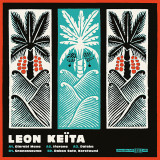
Hier hatten sich die Klänge aus dem nahen Mali und Guinea mit den lokalen Stilen vermischt und eine reiche Musikszene hervorgebracht: Bands wie Bembeya Jazz, Super Djata Band und andere Mandingue-Giganten gehörten zu den Bestsellern der Region. Leon Keïta, eine feste Größe in der malischen Musikszene, wurde 1947 in Conakry an der Atlantikküste von Guinea geboren. Leon half bei der Gründung der legendären Rail-Band, die zu einer gefeierten Stütze des Nachtlebens in Bamako wurde und die internationalen Karrieren von Salif Keita, Mory Kanté u.v.a. begründete. Leon selbst schloss sich Les Ambassadeurs Internationaux an, mit denen er durch Westafrika tourte, bevor er sich der Arbeit an seinen eigenen Kompositionen zuwandte. Als Leon bereit war, ins Aufnahmestudio zu gehen, lud er seine Freunde von Les Ambassadeurs Internationaux ein, ihm als Begleitband zu dienen; aus dieser Zusammenarbeit gingen zwei Platten hervor, die beide 1978 auf dem Label Papa Disco veröffentlicht wurden. Ein Jahr später veröffentlichte Leon "Rythmes et Mélodies du Mali", das er gemeinsam mit seinem Bruder Germain geschrieben hatte und das vom großartigen Orchestre Black Santiago begleitet wurde. Obwohl Leon nicht viele Soloaufnahmen gemacht hat, erwecken seine Lieder weiterhin die Verehrung aller, die das Glück haben, sie zu hören. In den letzten Jahren wurde der Song "Dalaka" von Carlos Estrada, dem Betreiber des Soundsystems in Barranquilla, wiederentdeckt und wurde zu einem unerwarteten Hit an der kolumbianischen Karibikküste. Zwölf Jahre nach der Veröffentlichung der von der Kritik hochgelobten Bambara Mystic Soul Compilation taucht diese neue Zusammenstellung erneut tief in die Mandingue-Kultur ein, die während Leon Keïtas legendären Sessions Ende der 70er Jahre aufgenommen wurden.
Highly anticipated new album (the 11th) of the African Reggae Voice. Militant and sharp in his texts, powerful and unstoppable in his groove.
Recorded between Abidjan, Bamako and Paris. Co-produced by jamaican veteran Tyrone Downie (Bob Marley), and French musicians Guillaume Stepper (Sly & Robbie) and Mael Donion (City Kay).
With featurings by Amadou & Mariam, Grand Corps Malade, Winston McAnuff and Dub Inc. Sung in french, english, dioula and bambara. One of this year World Music major piece.
- A1: Afrocult Foundation - The Quest (Version Piano Solo)
- A2: Orchestre Lipua-Lipua - Distingue (Edit)
- A3: B G. And Fibre - (G#) Thanks And Praises
- A4: Akwassa - I Don`t Want No-Body (To Tell Me)
- A5: Aura - I Got To Make It
- B1: Akofa Akoussah - Ramer Sans Rame
- B2: Francis Bebey - La Condition Masculine
- B3: Benis Cletin - Jungle Magic
- B4: Sorry Bamba - M&Bife Je T`aime
- B5: Gregoire Lawani - Elle M` Mordu La Langue
After "Afro Exotique - Adventures In The Leftfield, Africa 1972-88" was enthusiastically embraced by heads, collectors and core Africa Seven enthusiasts alike, we dived back down into the vaults, and hope we've come up with another volume of listenable esoterica from roughly the same period.
"The Quest", courtesy of fleeting 1978 leftfield supergroup Afro Cult Foundation (featuring Joni Haastrup, Remi Kabaka and friends) sets the tone-bar high and sideways, with 4.50 mins of atmospheric, effected solo piano drift to get things started.
Congolese ensemble band "Orchestre Lipua Lipua" introduces gently lilting Soukous with 1977's, "Distingue", before BG and Fibre's "Thanks and Praises" introduces some wobbly, Moog tinged Lagos reggae shuffle to proceedings.
Akwassa's 1974 funker "I Don't Want Nobody" peels off into a Hammond / wah wah / moog mini odyssey half way through, before Tongolese chanteuse Akofa Akoussah's stirring "Ramer San Rame" introduces emotional charge into proceedings.
Francis Bebey's "La Condition Masculine" (1976) is a centre piece of the album, with it's skippy drum machine rhythm and spoken world vocal, but we'll admit, we probably wouldn't have used it if we'd read a translation of that vocal first.
Benis Cletin's "Jungle Magic" (1979) acid funk intro then gives way to a blatant, and at times slightly unhinged homage to the all conquering (at the time) "I Feel Love", Sorry Bamba's "M'Bife Je T'Aime" keeps the leftfield funk groove rolling, before the mournful, immersive croon of Gregoire Lawani's "Elle M'a Mordu La Langue" brings proceedings to a reflective close.