Search:afro root

Styles
All
Tee Mac - Nepa Oh Nepa

Tee Mac

Nepa Oh Nepa

12inchHC41
HOT CASA
28.04.2016

With the agreement of the artist Hot casa decided to select the best of his repertoire. The long awaited Tee Mac's Best Of is a reality at last: juicy, hot, explosive and threatening to shatter all existing records !
Tee Mac is a Nigerian multi-talented maestro flutist with cross-cultural Itsekiri and Swiss roots. He combined his first degree in Economics from the University of St. Gallen in Switzerland, with a specialization in classical music concert performance and philharmonic compositions at University of Lausanne.

During a rich career spanning over 40 years, Tee Mac formed numerous bands including Tee Mac & Afro Collection in the 1970s with notable Nigerian artists. He recorded his first LP, United, for Polydor International in Germany, with his European band, Tee Mac United, in the late 70s. And he then hit the global music charts with two songs, "Fly Robin Fly" and "Get Up & Boogie", touring extensively with his third band, Silver Convention.

out of Stock

Order now and we will order the item for you at our supplier.

20,97

Last In: 3 years ago
Cottam - Ruff Draft 08

Cottam

Ruff Draft 08

12inchRUFFDRAFT08
Ruff Draft
21.01.2016

Ruff Daft returns, and after a various artist EP for number 7, number 8 on the label goes back to the founder, with three new tracks from Cottam'Washed Out' kicks things off, at the cross roads between Mood Hut & Basic Channel where dub techno sensibilities meet dreamy chords for a delectable deep house track. 'Horns' harks back to Cottam's earliest releases, with an afro-ish horn loop teased out over four minutes until the full loop and bass kick in to devastating effect.A Ruff Draft' sees Cottam look back towards his techno roots, with a killer kick drum and raw acid lending an abrasive edge to a well rounded EP of varied styles.

out of Stock

Order now and we will order the item for you at our supplier.

9,37

Last In: 5 years ago
Rotating Assembly Feat. Billy Love 'rusty Waters' - Illumination

BACK IN!! THEO PARRISH and an all-star cast featuring Warren harris, Marcellus Pittman, Bill Beaver, Jerrald james and Mellissa Botts take you on a deep excursion to the roots of afro-american music with this free-spirited live jam. after setting the mood with live percussion and a thick live bass, a bluesy guitar, cosmic keys with a Sun Ra vibe, wailing soul vocals, Theo's instantly recognizable beat and later a bitter-sweet violin solo all join in and create an unique atmosphere that is totally mesmerizing. the 'Reprise' on the flip continues in a more stripped down, piano led way. two shining example of sheer musical genius!

out of Stock

Order now and we will order the item for you at our supplier.

17,27

Last In: 10 years ago
Various - Amplificador - Novssima M¨sica Brasileira

Over the past few decades, there has been a seismic shift in Brazil's musical landscape. A plethora of varying musical undergrounds has developed across the nation. While Rio and São Paulo have been overwhelmed with networks of talented musicians for a long time, creative life is now bursting all over the country. Amplificador exists to document and propagate the wonderfully diverse music currently blossoming from Brazil's vivacious and geographically varied musical undergrounds. Presenting an up-to date insight into Brazilian music, this compilation draws together some of the components of 'Novíssima Música Brasileira' (brand new Brazilian music), ranging from afro-grooves to rock, to modern samba and MPB. The music reaches back across Brazil's incredibly rich musical and cultural traditions, while also taking in influence from other movements around the globe.


Having begun life in 2012 as a Brazilian music blog run by Marcelo Monteiro, Eduardo Rodrigues, Mateus Campos, and Ricardo Calazans, the aim of Amplificador is to document and propel to wider audiences, Brazilian music of the '00s and '10s generation. This is a task made more significant by obvious changes in the way music is consumed. 'People are no longer obliged to listen to what the radio and TV are presenting. There is a whole new generation that wants to listen to new bands and new sounds and we try to connect those bands with other bands, producers, fans and even the mainstream.' These changes in technology and the way music is discovered and shared have developed parallel to the proliferation of these emerging scenes. The ostensible decentralization of the music industry means the promoting and filtering work of journalists and blogs, like Amplificador, have become increasingly important, as people try to keep up with the tsunami of new music and media flooding the country on a daily basis.


Marcelo uses the example of the Mangue Beat movement to explain a trend in contemporary Brazilian music that looks both inwards, to Brazil's own musical traditions and outwards, to movements around the world to create a novel, localised identity: 'The 90's Pernambuco art-social movement was inspired by Coco, Maracatu and Forró all mixed with modern riffs and grooves. The mythical

revolutionary Chico Science, his Nação Zumbi, Mundo Livre, Siba, and many others do this blend perfectly. There are also the references to the older generations and masters - Gil, Caetano, Luiz Gonzaga, João Gilberto, Tim Maia, Jorge Benjor - as a constant inspiration for all bands.' This is very much the case for the Brazilian artists of today.


Music is unquestionably informed by place. Brazil has always been famed for its regional differences in this sense. Indeed there are still pronounced variations between the scenes of Rio, Sao Paulo, Natal, Goiânia, Belo Horizonte and Belém for example, there are also great divergences within cities and while technology has brought changes to the way musical influences are shared, there are cultural differences, rooted in folkloric traditions, that aren't going away. Expressing his appreciation for this fact, while highlighting the potential of Brazil's spread of musical flavours, Marcelo explains that 'what we have now is new ingredients to make an even better mixture.'

This compilation heavily features music from a scene in Brazil's current musical make-up, which draws inspiration from African music, particularly Afro-beat music. Abayomy Afrobeat Orchestra from Rio formed because of their shared love of the music of Fela Kuti, uniting initially in 2009 for a jam session in his honour. But what sets Abayomy apart from other groups of a similar nature, is the fact that their sound also brings with it the songs and rhythms of candomblé. In this sense, Abayomy was the first band of its kind. The thirteen members of the orchestra have a palpable current of Rio's musical heritage - its rhythms and culture - running through them. So while their sound is distinctly African, it is also inherently Brazilian. Similarly, Zebrabeat Afro-Amazônia Orquestra draw upon traditional guitarradas and carimbos from the state of Pará and fuse these with the poly-rhythms of Afrobeat to create another regional hybrid, which stays true to both its Amazonian and African roots, yet which results in a very fresh, Brazilian sound. From Belo Horizonte (capital of Minas Gerais), Iconilli are another key band on Brazil's Afro-groove scene. With influences as varied as funk, jazz and psychedelic rock, congado, mining harmonies, maracatu, coco, ijexá, carimbó, Iconilli somehow manage to balance all of these sounds in such a way that makes it impossible to pin them down. From the Northeastern city of Joao Pessao, Parayba, Burro Morto's pshychadelic afro sound leans more towards rock and funk influences, with hint of regional Brazilian rhythms such as frevo and forro. They add another flavour to the Brazilian afro-groove scene: just one of the many exciting facets of Novíssima Música Brasileira.


While African-inspired music features heavily on the compilation, it is just one of the many styles within. Ive Seixas has a fresh approach to MPB, based on traditional rhythms and instrumentation, punctuated by a pop sensibility, coupled with a powerful female vocal. As an artist she is a product of a 'Do It Yourself' outlook to creativity, taken from her love of rock growing up. In 2013 she embarked on a project of street performance: wandering, like a lonely troubadour with just her guitar. Ive and her project began to gain notoriety and shortly after, her first EP was recorded, featuring some important names of South Rio's underground scene. 'Cervejas Populares' taken from the EP, is a beautiful, sombre piece of modern Brazilian pop, with a traditional samba rhythm. Another artist of the new MPB scene is Fabricio, from the city of Vitoria, who's 'Feito Tamborim' melds rock and funk and is also clearly reminiscent of the old Brazilian masters. It's an appreciation for the national musical heritage, alongside a keen ear for melody and an acceptance of foreign influences that results in these promising new sounds of Brazilian MPB.

Sao Paulo's super group of the underground 'Passo Torto' have been at the helm of an emerging scene in the city: an innovative approach to samba which draws in and experiments with afro grooves, jazz melodies and rock structures. Their sound is naturally very Brazilian, but the nylon twang of Faira Lima Pra Ca, interspersed with ominous strings and light rolling percussion, seems reminiscent of Captain Beefheart or Tom Waits, as the band lament their frustrations with their native city through their music.


The Future of Novíssima Música Brasileira looks very bright. The main challenge (and purpose of this album) is to get the music beyond Brazil's underground and into view of international audiences. In the last 10 years this goal has become somewhat more attainable, as the Brazilian government has begun to see the internationalisation of the nation's culture as a strategic objective, with public projects gaining increased investment and backing. The continuing project of Amplificador is to reinforce this international bridge by writing, filtering and promoting the scene as a whole. There is a wealth of great music currently blooming in Brazil and using new media tools, Marcelo and the team, alongside many others, will passionately continue to get the voices of Brazil's underground heard.

out of Stock

Order now and we will order the item for you at our supplier.

20,80

Last In: 10 years ago
Amara Toure - Amara Toure 2x12"

The enigmatic Amara Touré from Guinée Conakry finally getting a well deserved compilation showcasing all of the 10 songs ever released between 1973 and 1980. Cuban influenced music of a different kind featuring amazing spaced-out guitar works!! Analog Africa compiles a complete collection of Amara Touré's Afro-Cuban compositions, originally released between 1973 and 1980."Lamento Cubana and Temedy are the two finest Afro-Cuban compositions ever recorded. As if they were played in a smokey, poorly lit ballroom where dark rum was sipped ever so slowly" - Vikram Sohonie - Ostinato Records
Analog Africa to release a compilation by Amara Toure, the enigmatic Afro-Cuban musician from Guinea-Conakry, showcasing all of the 10 songs he ever released between 1973 and 1980.
"Latin music, is it really foreign to us Africans I don't think so. Listen to the drums, to the rhythm. It all seems very close to us - it feels like it's our own culture," declared enigmatic singer Amara Toure. It is the late 50s, and Senegal is going crazy to the groove of Son Montuno and Patchanga. Brought to West Africa by Cuban sailors in the early 40s, these styles were immediately adopted by a flourishing music scene that did not hesitate to embrace the Caribbean sound, mixed it with their own Folklore, and, in the process, created something new. Through the unique cultural fusion of West African and Caribbean influences, Latin music took on a new and unique sound - the format was reinvented. Producer Ibra Kasseì and his Miami nightclub acted as the spearheads of this movement. They brought a breath of fresh air into Dakar's nightlife, further energising one of West Africa's most exciting cities. The demand for ballroom parties and live acts exploded, attracting numerous musicians from surrounding countries. One of the musicians who answered this call was percussionist and singer Amara Toureì, from Guinea-Conakry. Spotted by Kasseì while performing with Dexter Johnson, Toureì was asked if he would like to be part of a new project. Little did he know that this project would become a phenomenon.Immensely important for the development of Senegalese modern music, Le Star Band de Dakar, led by Mady Konate, became a sort of musical incubator and workshop, where many musicians learned and practiced their trade before moving on to become stars in their own right. Toureì's talent on percussion was undeniable, but it was his powerful and raw voice that captivated the producer. The fascinating way Toure interpreted Cuban music was unparalleled, and it was this feature that encouraged Kasse to recruit the unknown artist.
Although already brimming with incredible talent, Amara Toure's joining of Le Star Band de Dakar in 1958 began the band's meteoric rise to the top. The band quickly became Dakar's number one orchestra, and it cemented the reputation of the Miami nightclub as the hottest spot in the country. The place was packed nightly, and Dakar was boiling.
Amara Toure's Senegalese adventure lasted for ten years when he received an irrefutable offer and in 1968, joined by a few talented Senegalese musicians, headed to Cameroon and immediately formed the Black and White ensemble. Many live gigs later and it was time for the first songs to be recorded. A total of three singles were produced between 1973 and 1976. These singles, representing the first six songs on this compilation, fully epitomise and distill the essence of what Toureì had learned during his career. His Mandingue roots fused with the Senegalese sound that he had mastered - the perfect foundation for the Toureì's Cuban interpretations.
If Toure's intention was to create the most sensual music ever recorded in Africa, he might very well have reached this goal. The musicians on the recording sound like they are playing in a smokey, poorly lit juke joint, where dark rum was sipped ever so slowly, and the pulse of the music took up a life of its own. How many couples have danced, swayed, and melted together to the distinct sound of Amara Toure Nobody can say for sure ...
Amara Toureì's success poured across the borders of Cameroon, and in 1980 he went to Libreville, Gabon, to team up with the powerful Orchestre Massako. Toureì recorded an LP at that time which is hailed by many music aficionados as one of the very best African albums. The songs from that LP are the last four on this compilation. It took only ten songs for Amara Toureì to become a legend. These ten treasures, representing Toure ìs complete discography, have been carefully re-mastered from original session tapes and vinyl records, and will be released by Analog Africa on 22 June 2015. After the release of his LP in 1980, Toureì seems to have disappeared. Apparently he was last seen in Cameroon but it is unknown if he is still alive today. His music though is definitely alive.

out of Stock

Order now and we will order the item for you at our supplier.

27,31

Last In: 3 years ago
Baptise & Pierre Colleu - *1* Dolphin Kid Remixes Vol. 1

Baptise & Pierre Colleu
French brothers Baptiste & Pierre Colleu have been making music together since they were children. They spent a chunk of their childhood in Africa, which they say has inspired their work in the studio. That influence is submerged fairly deep on 'Dolphin Kid,' the title track for these two EPs. There's an undercurrent of eerie soulfulness and woody percussion accents running through this oddly alluring cosmic-house seducer, but its roots are more Balearic than Afrobeat.

The five remixes of 'Dolphin Kid' enhance the Colleu brothers' original in incrementally fascinating ways. On 'Coyote's Intense Mix,' the respected UK duo augment the laid-back rhythm with nuanced 303 twangs and boldface the hand percussion to magnify its latent funkiness. L.I.E.S. recording artist Willie Burns slows 'Dolphin Kid''s pace to a majestic, hollowed-out, dub-funk strut. It's unfathomably deep. Seattle tech-house maverick Jon McMillion serves up the most twisted, sinister version here, warping the main synth part into a disorienting swirl of borborygmi while intensifying the rhythmic urgency and expanding the sound palette. The second EP concludes with two masterly remixes by Black Merlin. His 'Romance in the Dark Mix' turns 'Dolphin Kid' into a chilling, Goblin-esque piece of dungeon ambience. But it's Merlin's nearly 13-minute 'Peyote Mix' that really reels in the cinematic magic, as he launches the cut even deeper into the black, adding thrusting, throbbing disco kicks and enough horror/thriller-film soundtrack signifiers to give John Carpenter a perma-grimace. Poor 'Dolphin Kid' has come to a gory, but very exciting end.

out of Stock

Order now and we will order the item for you at our supplier.

9,49

Last In: 4 years ago
Kez Ym - Root Bound Ep

Kez Ym

Root Bound Ep

12inchFACES1215
Faces
21.11.2013

After his stellar 'Stride EP' release (FACES 1210) and his latest offering 'Late Night Blue Sound EP' (on the UK's City Fly's Records/ featuring Andrés remix), Japanese deep house king- Kez YM is back on FACES Records!
Bringing delicious beatdown flavors to the cooking pot that blends Kazuki Yamaguchi into a serving of signature recipe Kez YM.

With ongoing support from influential peers such as Moodymann, Theo Parrish, Rick Wade & Cassy, this is one delicious treat that will leave the fans salivating for more.

His reputation extends beyond his delicious creations, as one of the standout Japanese House Djs currently holding it down in his hometown and Europe.
Mixing ingredients from Detroit, Chicago House, Funk, Disco & Afro and endlessly rocking dance floors and hearts from Panorama Bar in Berlin to Eleven in Tokyo.
The 'Root Bound' EP journeys beyond his past offerings, fresh ingredients and mouth watering grooves, with a sprinkle of that typical Kez YM signature sound!

out of Stock

Order now and we will order the item for you at our supplier.

7,22

Last In: 3 years ago
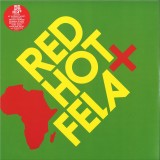
Fela Kuti - Red Hot + Fela 2x12"
 
13

Auf dem Album feiern Künstler wie Angelique Kidjo, uestlove (The Roots), M1 (Dead Prez), tUnE-yArDs, Kronos Quartet, Baloji, Spoek Mathambo, Nneka oder Tony Allen in dreizehn grandiosen Neubearbeitungen Fela Kutis musikalisches Vermächtnis. Außer der Compilation veröffentlicht Knitting Factory Records ebenfalls am 15. Oktober die letzten sechs Titel in der Reissue-Serie von Fela Kutis Gesamtwerk, die im März dieses Jahres mit der Compilation "The Best Of The Black President 2" und der ersten Staffel der CDs begonnen hatte.

out of Stock

Order now and we will order the item for you at our supplier.

25,17

Last In: 5 years ago
Wbttu4 - House Rebuildition

True house music on The A side with Self Enemy and huge house beat also on the A2 with DJ Aakmael. SEEKER'S BAND with remixes by JACK THE BOX & CORES FOR SPIN !
Self Enemy aka as Parisian Professor Inc & Detroiter Kris Wadsworth play it slow here. Picking on some classic sample, highly tweaked synth and dj friendly structure. Second opus of this raw collaboration.
Dj Aakmael picks another Billie's song, This time it's heavy orchestra chords on a hard kick singing the blues on the house core.
On the B Side, the SEEKER'S BAND aka Miguel Benavides composes with at Vocals: Mathieu Boko, Percussion: Eric Konnert (plays with St Germain, Martha Galarraga..), Bass: Francois Barbe, Tenor & Soprano Sax: Stephane Becarie, Keys: M Benavides and produced by Professor Inc & Miguel Benavides ; inspired by the first house school, jazz accents, afrocuban classic percussion, a tasty radio version right here !
It comes with a remix by the Berliners Tyree Cooper & Bobby Star aka JACK THE BOX. Dj friendly and deeply rooted with one of the pioneers perpetuating the style.
To conclude this ep, a special short dub version by CORES FOR SPIN

out of Stock

Order now and we will order the item for you at our supplier.

7,39

Last In: 5 years ago
Betty Davis - They Say I Am Different

One can hardly imagine the genre-busting, culture-crossing musical magic of Outkast, Prince, Erykah Badu, Rick James, The Roots, or even the early Red Hot Chili Peppers without the influence of R&B pioneer Betty Davis. Her style of raw and revelatory punk-funk defies any notions that women can’t be visionaries in the worlds of rock and pop. In recent years, rappers from Ice Cube to Talib Kweli to Ludacris have rhymed over her intensely strong but sensual music.


There is one testimonial about Betty Davis that is universal: she was a woman ahead of her time. In our contemporary moment, this may not be as self-evident as it was thirty years ago – we live in an age that’s been profoundly changed by flamboyant flaunting of female sexuality: from Parlet to Madonna, Lil Kim to Kelis. Yet, back in 1973 when Betty Davis first showed up in her silver go-go boots, dazzling smile and towering Afro, who could you possibly have compared her to? Marva Whitney had the voice but not the independence. Labelle wouldn’t get sexy with their “Lady Marmalade” for another year while Millie Jackson wasn’t Feelin’ Bitchy until 1977. Even Tina Turner, the most obvious predecessor to Betty’s fierce style wasn’t completely out of Ike’s shadow until later in the decade.


Ms. Davis’s unique story, still sadly mostly unknown, is unlike any other in popular music. Betty wrote the song “Uptown” for the Chambers Brothers before marrying Miles Davis in the late ’60s, influencing him with psychedelic rock, and introducing him to Jimi Hendrix — personally inspiring the classic album Bitches Brew.


But her songwriting ability was way ahead of its time as well. Betty not only wrote every song she ever recorded and produced every album after her first, but the young woman penned the tunes that got The Commodores signed to Motown. The Detroit label soon came calling, pitching a Motown songwriting deal, which Betty turned down. Motown wanted to own everything. Heading to the UK, Marc Bolan of T. Rex urged the creative dynamo to start writing for herself. A common thread throughout Betty’s career would be her unbending Do-It-Yourself ethic, which made her quickly turn down anyone who didn’t fit with the vision. She would eventually say no to Eric Clapton as her album producer, seeing him as too banal.


Her 1974 sophomore album They Say I’m Different features a worthy-of-framing futuristic cover challenging David Bowie’s science fiction funk with real rocking soul-fire, kicked off with the savagely sexual “Shoo-B-Doop and Cop Him” (later sampled by Ice Cube). Her follow up is full of classic cuts like “Don’t Call Her No Tramp” and the hilarious, hard, deep funk of “He Was A Big Freak.”

pre-order now12.09.2011

expected to be published on 12.09.2011

35,25
Items per Page:
N/ABPM
Vinyl