After a short break, CEP Records is back and opens a new chapter with the X-Series. An imprint dedicated to raw club energy and oldschool-inspired sounds that redefine the label's identity. Leading the way is riko, the head of the label, with a four track release.
'Whoa 55' on A1 pulls you in with its striking vocal and weighty bassline, delivering a perfect balance of groove and drive. 'Le Bom Bom' follows with a deeper feel, clean drums and little sound bits that play nicely around the low end. On the B side, 'Drum God' goes all out and hits the hardest, made for late nights and busy rooms. Closing it off, 'Phrygian' opens things up again with a mix of catchy melodies and deep frequencies that stick with you.
Buscar:after all
As Poorly Knit completes it's first arc of the Sun, it's children become four, as a new mini LP is born.
Tending to his crop with dreams of rotation, Bruce sows and scythes four new grains in the porky mill. Of this strange fruit, that further explores his increasingly familiar, hyper-real and sonically surreal work within this current “movement,” he finds his foothold once more in a wild world intensity: fear and fury grappled in equal measure.
What's more, in celebration of the plentiful harvest thus far, (let alone in the interest of seed diversity), Bruce invites four fellow reapers to the farm, offering their recipe from the spoils of the label's yield:
Vancouver based Brit-abroad, dj_2button pulls apart 'The Hand,' with his 'Accidental Mood Mix,' to be reborn as an Odyssian 13 minute stomper: "a fight of emotions, of light and dark; in quiet protest to the incessant fear mongering that slowly numbs us on a global scale." Balearic shores can be seen glimmering in the distance, whilst you are dragged by part man part (very horny) bull into the depths of dancefloor madness.
re:ni proves she is the captain of her own ship as sweet SSRI numbness billows in the sheets and fraying, dubwise halyards tether and tear through her devilishly elegant 'sertraline queen mix'. polyrhythms plotted and percussion plundered; the vocal from 'Golden Water Queen' sounds oh so sweet in the claws of its new Regina.
Hotly titted deep house reviver, fka boursin empties clips with their bubblegum 'boomkat mix,' of 'The Price,' swivelling the original's brash and bawdy bonce, to face a 120 reality we all need to wake up and start sniffing. Sprinkled with trauma on an icing of a bassline more than a little rood, boursin is packing enough cake for the whole function to take home in (dreadful) goody bags (and even allowed compression in the mastering - mental).
Last and indubitably not least, from lying somewhat dormant in the depths of UK dance music legend, none other than flippin' Untold (!?) rises to seal the release with typically megalithic prowess. Proving he was just resting his eyes for a bit, his 'A1 Mirabelle Mix,' weaves and whips an otherworldly beauty, technically tantalising 'Dham's Jam' in adornments both sour and sweet. It's nothing short of a cloaks and daggers banger, primed for the darkest of dancefloor cosmic moments, and serving as a little less-than-warm-reminder that Untold’s presence in the world of dance music is crucial as ever.
Frankly, if you couldn't tell from all the verbose waffle, they have all absolutely smashed and finessed it: they were all approached after expressing a real resonance from the previous releases and it's such an honour to have them and their fantastic visions on the label.
Available digitally or on high quality cassette, the final chapter of the Poorly Knit's first act has been woven whimsically into the fraying folds.
a A1. It Ain’t Over Till… 04:37
b A2. Wesley’s Sniped All Our Bleeding’ K (Re-Vamped) 05:40
[c] A3. Rockfall [05:06]
[d] A4. You Were Right [10:00
[e] B1. The Hand (dj_2button's accidental mood mix) [13:07]
[f] B2. Golden Water Queen (re:ni's sertraline queen mix) [05:36]
[g] B3. The Price (fka boursin's boomkat mix) [08:30]
[h] B4. Dham's Jam (Untold's A1 Mirabelle Mix) [09:42]
[a] A1. It Ain’t Over Till… [04:37]
[b] A2. Wesley’s Sniped All Our Bleeding’ K (Re-Vamped) [05:40]
[c] A3. Rockfall [05:06]
[d] A4. You Were Right [10:00
[e] B1. The Hand (dj_2button's accidental mood mix) [13:07]
[f] B2. Golden Water Queen (re:ni's sertraline queen mix) [05:36]
[g] B3. The Price (fka boursin's boomkat mix) [08:30]
[h] B4. Dham's Jam (Untold's A1 Mirabelle Mix) [09:42]
- A1: The Hardest Climb
- A2: The Good The Bad & The Ugly
- A3: Bonnie And Clyde
- A4: Last Call
- A5: Sos
- A6: Ghost Town
- A7: Wish You Were Here (Far Away)
- A8: Angel's Song
- B1: Ms. Whiskey
- B2: Lake Of The Sky
- B3: Losing My Religion
- B4: Get Out Of My Head
- B5: Raised By Wolves
- B6: Divine Intervention
- B7: The Man Behind The Mask
- B8: Bury Me In Vegas
White Vinyl
The fringes of the desert have a way of changing a man, but the high-altitude chill of the Sierras will strip him down to his soul.
Following the gritty, neon-soaked introduction of his debut, Red Leather returns with his sophomore studio album, TAHOE. If his first record was a desperate sprint through the dark alleys of the soul, TAHOE is the cold morning after—a cinematic, sweeping exploration of isolation, clarity, and the jagged edges of recovery.
Named after the alpine lake that serves as both a sanctuary and a graveyard for secrets, the album navigates the duality of the landscape.
The songwriting dives deep into the "blue" period of his life—tackling themes of sobriety, the weight of sudden fame, and the ghosts of past versions of himself. It is an album about the silence that follows the storm, and the realization that the higher you climb, the thinner the air becomes.
- A1: Can I Live Feat. Precious Okoyomon 02:36
- A2: M32 Riddim 04:06
- A3: One Exists Or Agrees To Exist 05:00
- A4: Don't Panic Feat. Ms. Carrie Stacks 02:58
- B1: Duppy Know Who Fi Frighten 06:31
- B2: Helicopter Hovers Over My Crown Heights Apartment 05:19
- C1: Exorcise The Language Of Domination Feat. Juliana Huxtable 06:12
- C2: B2B Feat. Suutoo 05:32
- D1: Effects Of Resistance Feat. Khanyisile Mbongwa 06:12
- D2: Black Trans Masculine Experience (Instrumental) 08:55
May 2026 marks the arrival of TYGAPAW (aka Dion McKenzie)’s first full-length album on Tresor Records, entitled Together You Gather All Power Applied Worldwide. An acronym of its creator’s name, TYGAPAW’s third studio album is a deeply personal collection of music building worlds where Black queer and trans siblings can thrive, while unifying dancefloors worldwide. A proposition that collective wisdom liberates us from the matrix of domination we live within. The album unfolds as the latest chapter in TYGAPAW’s ongoing techno opera opus, continuing to center the voices of Black women, which surface as layered incantations rather than lyrics - powerful, haunting, sensual, activating.
With the process of creating the album starting in 2023, as TYGAPAW (Dion McKenzie) was in the first year of their transition, the music reflects the intensity of that period, where they were experiencing deplatforming as a response to the shift in their physical appearance: Tracks like ‘M32 Riddim’ and ‘Helicopter hovers over my Crown Heights Apartment’ feature high-paced rhythms intersecting with intense siren-like synths to form demanding compositions echoing a heightened sense of alert. Yet throughout the album, relief comes in the form of TYGAPAW’s vocal features, co-conspirators, and chosen family, whose voices are treated with reverb and echo, a sonic fingerprint that leads back to the pioneers in the legendary studios of TYGAPAW’s native land, Jamaica, an important reminder that the past will always inform the future. It is an album for dancers first and foremost, where joy, defiance, and integration with the natural body coexist, and every drop feels less like a climax than a transformation. Expect a bass that permeates your soul and melodic synthesized sequenced phrases echoing the dancehall eras of TYGAPAW’s youth, reshaped into hypnotic melodies that glow over industrial kicks designed to command attention, reasserting Jamaica's pioneering yet often overlooked contribution to electronic music.
In the opening track, ‘Can I Live’, Precious Okoyomon’s words feel like the beginning of a ritual; setting the intentions for the rest of the proceedings. As McKenzie puts it, their “work is about regeneration, resetting, getting integrated into nature, and about rebirth. That’s the tone I wanted to set at the outset of the album.” Ms Carrie Stacks continues this thread of support in ‘Don’t Panic’ with heavily processed vocals on top of a beat that takes inspiration from another important ingredient in the antidote to the oppression of isolation: Ballroom culture. “ I feel like I found my queerness in Ballroom, that’s why this track is very important to me.”
Echoes of NYC Black queer nightlife scene also permeate in the energetic drums of ‘Exorcise the Language of Domination’, in which Julianna Huxtable’s spoken performance complements the various movements and tones of the music. “My producer brain thought this was the one that Juliana’s vocals would be best suited for. I hinted: ‘what do you think of this one?’ She just went into her notes and picked some passages to go with the first section of the track. From there, it was a year-long process of development. It required time and space for this thing to evolve, but I think it’s one of the most powerful tracks on the album.” London’s SUUTOO contributes the album’s only musical collaboration on ‘B2B’, a track that emerged from sessions in McKenzie’s New York studio where the real objective was to connect and have fun; a time out from the demands of life outside.
The album closes out with a double hit of emotion in the form of ‘Effects of Resistance and Black Trans Masculine Experience’. The former features South African scholar Khanyisile Mbongwa drawing connections that exist between Africa and the Black diaspora, whilst looking to the future and calling for a shared sense of community.
The latter piece, an instrumental version of the piece which featured on the IMMIGRANT E.P. of 2025 is a gentle and deeply affecting end to the record, a place of peace and acceptance. This end-of-cycle tone is mirrored in the sleeve photography, which also ties back to IMMIGRANT by finally revealing what was hidden: a portrait of the artist fully self-actualized; a step towards true inner liberation. TYGAPAW is sonically defiant across this album; bass frequencies feel tactile — less heard than inhabited — infectious lead synth melodies remain with you long after the track ends. An overall sound that leaves asserting an urgent need for connection. From Detroit to New York to Berlin to Jamaica, despite geographic distance, this album reminds us that we remain in solidarity, recognising that meaningful world-building requires collective input and action, both personal and communal, if we are to move toward liberation.
Weiter geht's mit den Ipecac ISIS-Neuauflagen: ,Wavering Radiant" ist das letzte Album der Band aus dem Jahr 2009, neu gemastert von James Plotkin. Die 2LP 140gr-Vinyl kommt in einer Tip-On-Gatefold-Hülle in zwei Versionen: Standard-Schwarzvinyl und eine Indie-Exklusivausgabe in Ultra Transparent. Das Album wurde von Joe Barresi produziert, und die Band hat sich knapp ein Jahr nach der Veröffentlichung getrennt. Das Album setzt die Tradition von Isis fort, lange Songs zu schreiben, weicht aber ein bisschen von der Soft-Loud-Dynamik und der Post-Metal-Ästhetik ab, die frühere Veröffentlichungen geprägt haben. Es wird allgemein als das zugänglichste Album der Band angesehen. Obwohl die Band seit über einem Jahrzehnt nicht mehr existiert, ist ihr Einfluss auf den Metal immer noch spürbar, und die Verkaufszahlen machen sie weiterhin zu einem der Top-Künstler von Ipecac. Continuing in our series of ISIS reissues, Wavering Radiant is the band's final 2009 release, remastered by James Plotkin. The 2LP 140gr Vinyl packaged in a tip-on gatefold jacket in two retail variants. Standard Black Vinyl and an Indie Exclusive Clear The album was produced by Joe Barresi, and the band split just over a year after its release. The album continues Isis' history of lengthy songwriting, yet presents a slight departure from the soft-loud dynamics and post-metal aesthetic which characterized previous releases. It is widely considered the band's most accessible release in their catalog. Although the band has been defunct for over a decade, their impact on metal is still reverberating, and sales continue to make it one of Ipecac's top artists.
Mannequin Records presents Electronic Corporation 1998–2006, a compilation bringing together rare and long unavailable recordings by the German electronic projects H.E.I.M. Elektronik and MAS 2008.
Active around the turn of the millennium, both projects share the involvement of producer Ive Müller while developing distinct collaborations and approaches to electronic music. H.E.I.M. Elektronik was founded in 1996 by Holger Erlenwein and Ive Müller (after the two artists split in 1999, Müller continued using the name), while MAS 2008 is the project of Ive Müller together with René Kirchner. Though separate entities, the two projects explored a similar sonic territory: stripped-down electro, minimal electronics and machine-driven body music shaped by analog hardware and a raw DIY production ethos.
The roots of Müller’s work go back to the final years of the DDR. As a teenager he worked as a licensed DJ — officially known as a “Schallplattenunterhalter” — operating a travelling disco across Saxony. With limited access to official Western releases, music circulated through cassette recordings taped from West German radio stations such as RIAS Berlin, NDR2 and Bayern3. Together with friends he travelled between youth clubs and discos around Leipzig with a “rolling discotheque”: a Russian Wolga pulling a trailer loaded with Electro-Voice sound systems sourced through the black market.
At the turn of the 2000s this background in underground electronic culture resurfaced in a series of recordings rooted in electro, EBM and minimal machine music. The tracks collected on Electronic Corporation 2000–2002 capture this moment: cold sequences, driving rhythms and stark synthetic textures produced with a direct and uncompromising approach.
Compiled and remastered by Rude 66 from the original sources, Electronic Corporation 2000–2002 documents a small but fascinating chapter of German underground electronics from the early digital era.
Since debuting in the mid-1990s, Kurt Spichiger aka Shaka has released rather a lot of high-quality deep house, in the process notching up appearances on the likes of Local Talk, Traxx Underground, Yore, Housewax and, most recently, Mate. Here he evokes the atmosphere of a 'smoky' basement club via a three-track Seasons Limited label debut. Title track 'Smoky Club' is undeniably classy and carefully crafted, with starry electronic motifs, dreamy pads and jammed-out Wurlitzer organ motifs rising above a languid, leisurely deep house groove. Spichiger's love of jazz comes to the fore on the even warmer and more seductive 'City Park' - all sampled disco drums, smooth jazz-funk bass and extended electric piano solos - while 'The World Goes Oriental' sounds like vintage Larry Heard mixed with the afterglow of late night lovin'.
Falter is the 5th full-length album from New Zealand-based composer/-multi-instrumentalist Micah Templeton-Wolfe, working under the moniker Stray Theories.
Templeton-Wolfe has consistently woven together the cinematic sweep of ambient music, the refined structures of neoclassical composition, and the emotional cresting arcs of post-rock. With Falter, those intersections are more deeply blurred, yet more boldly explored.
Transparent Red Vinyl.
The title Falter evokes wavering, hesitation, uncertainty of intent and yet the album stands in sharp contrast to that concept: Templeton-Wolfe’s performance here is marked by a quiet but unmistakable confidence.
From the first notes, the listener is immersed in an atmosphere in which the music feels like a cinematic means of passage, a journey toward redemption. Optimism is present, but ever cloaked in doubt; moments of
contemplative solace sit side-by-side with streaks of melancholia. One senses something looming within the sound-world of Falter. As though the heart itself can tell something is coming.
In this respect, Falter may well rank as the most affecting release in Templeton-Wolfe’s canon to date. While his earlier work had always balanced delicate textures and evocative atmosphere, here he pushes into a more expansive emotional terrain. Only the hopeful refrain “Lifelines” brings the album fully into brighter territory , hinting that redemption is possible, that the journey through doubt is not endless.
Part 1[14,24 €]
Swiss DJ and composer Dexter Troy has made a name for himself with notable productions on labels such as « King Street Sounds, » « Groove Culture, » and « Mood Funk Records, » alongside iconic artists like Kerri Chandler, Dennis Ferrer, Masters At Work, Satoshi Fumi, and Dimitri From Paris. For over 15 years, he has shared his passion for electronic music in bars, clubs, and festivals in Switzerland and abroad.
His rich and diverse musical universe draws from multiple influences: house, funk, disco, all enhanced with a touch of electro-techno. »
One year after the part 1, « The Double Take part 2 » is coming to put the finishing touches to the project. He’s joined by BAKA G, a talented artist who made a name for herself on the Brussels house scene and distinguished herself with releases on labels such as Happiness Therapy.
Isa Gordon and Tony Morris were first brought together through their individual releases on Optimo Music, which established mutual respect within the label’s community. While they had not previously performed live together, they were invited to take part in a fundraiser hosted by Queen’s Park Arena in support of Glasgow NW Foodbank and later for JD Twitch’s end-of-life care. Tony asked Isa to contribute guitar and backing vocals to his set, including a track then called Last Night I Had a Dream. That performance became the seed for their collaboration.
The first phase of fleshing it out, recalls Tony: “Somebody said Isa sang like Shania Twain. That got me thinking about country music and call and response, prompting me to come up with alternative lyrics.” Isa remembers: “I cycled over to Tony’s house with my guitar, and we spoke about what the tune meant. It was about him being wrapped up in dreamland, luxuriating in his subconscious, while my character — impatient and trapped in her own routines — barely had time to remember her own dreams.” Tony continues: “Brilliantly I realised that I could never collaborate with anyone in situ and so I sat in the garden for two hours watching my wife tend to plants. Every now and again I would creep up the stairs and put my ear to the door. I could hear Isa warbling away and so would resume my garden watch. After two hours I went back upstairs to see how she was getting on, only to find that she had written one of the greatest songs I’d ever heard. I still think that.” Tony adds: “My overwhelming sentiment about Wake Up Baby is pride. I can honestly say that I’m more proud of it than anything else I have done. It ticks a whole load of boxes. Isa’s singing in various Scottish modes is unique. The way her electric guitar adorns the dance beat makes it a rock song as well as a dance and a C&W song — truly multi-genre.”
The B-side of the 12” release, Syringe Moustache, is a surreal, darkly playful counterpart to Wake Up Baby. The track was inspired by a dream Tony had: “I was in a shopping mall, in a two-level shoe shop, and my attention was taken by a little girl with a syringe taped beneath her nose like a moustache. She went about her business trying on shoes, confident and wise beyond her years. In the dream, I imagined her as the daughter of cultured, intelligent parents determined to raise her independently. I was struck by my own feelings of inadequacy — I knew I could never have coped with such a contraption myself.” Isa’s take on the meaning of this song somewhat differs: “Tony sent me the tune over Instagram months before I met him, and I was spooked — as far as I knew, he didn’t know anything about me, but the story felt like it was written about me as a little girl, growing up around heroin addiction. The syringe beneath the girl’s nose became a symbol of the inescapable constraints of that environment, literally written on her face, yet something you just have to carry on through. On a buzz from the serendipity, I added a full instrumental backing to this most bizarre of works.”
The result is absurd, unsettling, and strangely empowering, staking out its own surreal, cinematic space. The 12” dance single is a format Tony had long wanted to explore — a tangible artefact to leave for family, a medium that celebrates the physicality of sound and the ritual of listening. It allowed the artists to maximise the format’s potential: a strong, multi-genre A-side, a surreal B-side, and remixes that expanded the record’s sonic world. Glasgow music staples Auntie Flo and 100% Positive Feedback were invited to reinterpret the tracks, bringing their distinctive touch — Auntie Flo transforming the A-side into a luscious, dancefloor-ready meditation, and 100% Positive Feedback twisting Syringe Moustache into absurd, playful shapes with false-start drops and over-the-top vocal editing.
The cover photograph, taken at the University Café by Harrison Reid, captures Isa and Tony embodying the characters they brought to life in the songs — a visual reflection of the record’s narrative and emotional stakes. The Café also holds personal significance: it’s where all of Isa’s meetings with Keith McIvor took place, where she first remembers visiting Glasgow as a child, and a place Tony fondly likes to go to drip egg yolk down his tie and watch the world go by. Together, the 12” format, the remixes, and the artwork create a cohesive, tactile experience, amplifying the duality, theatricality, and emotional breadth of the collaboration.
Neue Grafik has steadily built a strong reputation in recent years with releases on esteemed labels such as Rhythm Section, 22a, CoOp Presents, and Wolf Music. His sound is a distinctive fusion of jazz, house, and hip hop, infused with his African heritage, Parisian background, and a deep appreciation for London genres like broken beat and grime.
Neue Grafik first made a lasting impression on the community at Total Refreshment Centre (TRC)—the heart of London’s thriving jazz scene—during a spontaneous after-hours jam. Since then, there has been collaborations with notable artists including Nubya Garcia, Emma-Jean Thackray, Brother Portrait, Lord Apex and Allysha Joy.
The new album, ”Rachael”, is set for release on January 30th 2026. It stands as Neue Grafik's most ambitious project to date. Developed over the past year, the album explores themes inspired by the character of Rachael from the movie Blade Runner, representing the journey of love in all means, intimate, raw, tough, organic and honest offering a rich, emotional journey that balances lightness with depth—an introspective dive into the artist's evolving musical identity.
- 1: Just A Fool (That's Down)
- 2: Hold You Down
- 3: Heartbreaker
- 4: Shakedown
- 5: Put Up A Fight
- 6: Trust No One
- 7: It's Over
- 8: My Sights Are Low
- 9: Chances Are
- 10: (This Ain't No) Solid State
- 11: Your Mouth Is Open And Your Eyes Are Shut
- 12: The Year Of Regret
- 13: All City Warning
- 14: Running Far From Home
- 15: Don't Hurry (To Come Back To Me)
- 16: Despise
- 17: Out Of Control
- 18: No Way At All
- 19: Pictures Of Lenny
- 20: On The Prowl
- 21: Come On Everybody
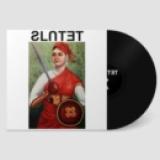
Sultans Ghost Ship LP was originally released on Sympathy For The Record Industry in 2000. While RFTC looked for a new drummer, Speedo (armed with an 8 track tape machine and 3 microphones) devised yet another alias as “Slasher” and concocted this primordial ooze of moped scuzz, punk rock and roll. Ghost Ship was met with enthusiasm by those seeking blistering relief from the weak, whiny, wretched and wimpy wannabes du jour.
The sound is full on, straight ahead with only starting gates and finish lines between songs. The band played some shows around California and would slightly evolve on their second LP Shipwrecked. Ghost Ship is Sultans at their most thuggish and hairiest. Taking inspiration from Australia’s Chosen Few, Ramones bootlegs, Misfits bootlegs and then challenging themselves to be as thrifty and impatient as possible, the songs are intentionally brief, similar and burly. After this was recorded these tapes lay dormant in a shed for over 20 years. When the tapes were recently unearthed it revealed unreleased songs recorded after Ghost Ship yet before the band’s follow up LP Shipwrecked. Some of these songs would later be absorbed by RFTC and re-recorded. These songs are included here as bonus tracks and offer no relief to the record’s unrelenting pace.
Xistence Records is destroying the boundaries between house and techno. The Rise E.P. simply goes to show you a good label does not lose it's competency after 4 years of releasing music. This 4 tracker sounds sublime! If you like deep emotional melodic music, you should have this 12”.
Difficult to pick a standout track as they all offer something different…
The original version of Resilience is a stunning track, reminds of the early Octave One sound with a great mixture of percussion, classy bassline, nice layering of textures and melodies.
While Gerald Mitchell (Underground Resistance/Los Hermanos) retouch is a soulful stripped back tune with elegant drum work, linked together by a uplifting synth pattern.
Sunset To Sunrise, a delightful piece of haunting electronica. It’s a real journey back to the birth of Los Hermanos. Class!
Meteoric Rise original version came out as digital earlier on the label, Journey Around The Sun Mix here has the UR sound. It’s more complex, Detroit lesson in syncopation and rhythmic programming with chord stabs and shuffling drum work drives this one forward..epic!
“Without Hope None Of Us Have Anything “
Convergence is an ambient album formed through a series of morning rituals during rehabilitation following a severe medical event and an extended hospital stay. After weeks immersed in the constant alarms, beeps, and environmental signals of medical equipment, the act of listening itself became recalibrated. The music was performed and assembled using glass marimba, flute, and analog synthesizers, with each instrument treated as a source of resonance and gradually dissected through spectral analysis—allowing melody to emerge from fragments through repetition, attention, and daily practice, where synthesis functions not as traditional composition but as an exchange of signals.
Working slowly and intuitively, Stardust Multiplier approaches sound as a communicative medium between humans, the natural environment, and non-ordinary states of perception. Motifs evolve through repetition and subtle variation, informed by ceremonial music, mythic structures, and speculative communication frameworks associated with non-human intelligence—not as narrative devices, but as metaphors for attuned listening and pattern recognition.
Rather than moving toward resolution, Convergence documents moments of alignment—instances where intention, system, and environment briefly synchronize. The result is a restrained, deeply focused record, less concerned with atmosphere than attention, where synthesis functions as both a grounding practice and a method of inquiry.
Two Lisbon mainstays from contiguous generations join forces as Scam Dust for the new Paraiso record: Tiago, Lux Fragil resident, world-renowned DJ's DJ and all-round music whizz plus Shcuro, Paraiso's co-founder, scene documenter and impeccable selector & producer. Funnily enough they also live in contiguous beach towns in the outskirts of the capital, Parede and Carcavelos. That's where they zig-zagged amid home-studios and, four hands in various machines, concocted this refreshingly to-the-bone record. Like a non-local entanglement between Lisbon, Sheffield, The Hague and somewhere in the American Midwest, 'Gastric Pulse' EP opens with a saturated, modulated acid line over a tight, industrial-tinged techno beat, peppered with sonic dirt of the highest order. It sounds like music projects like Downwards and Mathematics would put out. 'Enzyme Breaks' follows suit with a comparably raw spirit, adding some mysterious atmospheric scintillation and drum variations. A certain recluse techno (is that a thing?) comes to mind (and heart), Unit Moebius style. Toms abound in 'Pepsin Drive' - always a promising sign in our book - and the playfulness continues in the cheeky bassline and the intricate clap work. Soulful stabs give the tune extra magic via the mantra-like structuring power of repetition. The final track in the record comes from Pacific North-West transplant Doc Sleep and her collaborator Elias FS step in for remix responsibilities and flip the B1 into a hypnotic, dubby - and yes, jazzy - piece complete with a dive into glitchy, sonic sculpture territories towards the end of the arrangement. Quite the brilliant take. Music still counts (and always will), after all is said and done - and nothing like two hard-working music-makers to remind us of that.
This record is like the lost crown jewels of House Music with a story that spans decades. Originally programmed in 1998 on an Akai S3000XL, this was meant to be released on Bjørn Torske's Footnotes in 2001. Unfortunately the original matrix and the master DAT tapes got lost under crazy circumstances. Yet several years later the tapes were found by Sex Tags Mania in the studio of mastering engineer Helmut Erler and the record eventually got issued in 2009 when a totally different House sound was "en vogue." Then due to some unfortunate coincidences most of the records ended up in far flung Japan, and so this record stayed totally underground. Yet it became a cult hit when House Music and later Disco got a proper revival around 2010/11. So over the years prices for this rarity were rising and rising... Then fast forward to 2025: after a sunny day off Berlin's modular synthesizer show "Superbooth" ATJ boss Mr. Fonk and Doc L. Junior teamed up to finally reissue this gem with new masters by Andreas Kauffelt of "Schnittstelle" / Berlin. On this 12“ Norwegian Disco and Balearic sounds meet: funky but deep to the core, playful but hypnotic, stripped down but with baroque details. Truly one of House Music's greatest productions.
Repress!
The legendary partnership of NYC's Disco godfather Tom Moulton and Philadelphia International Records has long been documented. A truly explosive collaboration that yielded endless classic tracks for dancers and deep listeners alike, Moulton seemed to be totally in tune with the labels output and the direction it should go in. Luckily we've been enjoying the fruits of this labour for the last 30+ years with a lot of these PIR classics becoming ingrained in the psyche of the modern day music fan as the building blocks of House music.
The names alone fill one with awe, The O'Jays, Harold Melvin & The Bluenotes, Archie Bell & The Drells and Lou Rawls. All of these artists were, and still are, huge stars. Turning in classic after classic, and with Moulton's supreme ear assisting, this special PIR reissue 12" see's some all-time classics from the aforementioned artists in their full, unabridged, unedited Disco glory. The selections on this EP are absolutely top-shelf, flawless in fact. One could argue that these are the 'definitive' versions of these anthems. Pure Disco gold essentials. Anyone with even a passing interest in Disco will most certainly need this record in their possession, the 2012 pressing of this EP changes hands for £100+ second hand, so a repress was desperately needed.
These tracks are fully licensed and reissued in conjunction with Tom Moulton and PIR and all relevant rights holders. Remastered from original source materials to the highest spec and pressed onto top quality vinyl, courtesy of Above Board distribution for 2019.
Repress!
Rhythm On The Loose “Break Of Dawn” is quite simply one of House Music’s all time classics.
Producer Geoff Hibbert was inspired by seeing dawn break on an Italian coast line to
draw inspiration from Moby’s anthemic “Go” and disco gem “Let No Man Put Asunder” by First Choice to create his loving homage to the UK Rave scene.
Network set up a label “The One After D” to release a limited edition press of the instant classic to create demand.
One of the first copies was picked up by Kevin Saunderson and his relentless playing of the track helped fuel interest in the USA.
The first release on Network in 1991 established the track as iconic. That original mix is here and still sounds as fresh as ever. Perfect in fact.
The 12” also contains remastered versions of the 1995 remixes by Rhythm On The Loose, Strike and Stonebridge.
Taken from Network’s extensive back catalogue and a re-issue of a timely classic that is always in-demand.
It's pretty wild to think this is in fact Carli’s debut solo album, considering the Swedish producer’s long and illustrious career, defined by eclectic hits ranging from underground grime scorchers to straight-up Eurovision goodness, not to mention him being a cornerstone of acclaimed outfits like Off The Meds, Savage Skulls, and Marcus Price & Carli.
On Sea Of Love, the Stockholm-born former breakdancer takes listeners on a journey through a vast ocean of musical influences, effortlessly blending rave nostalgia, bass-heavy experimentation, and contemporary club sounds. Carli skilfully navigates from raw UK hardcore bonkerisms to the crisp rhythmic pulses of modern-day dancehall, always upholding a vibe that's at once futuristic and reverent of club music’s storied past.
Filled with intricate production techniques and an irresistible sense of joy, Sea Of Love showcases Carli’s unique ability to merge styles without losing coherence or authenticity. This is club music crafted by someone who’s not only seen it all from the booth, but also been on the dancefloor himself, resulting in tracks that feel deeply personal yet universally appealing.
With Sea Of Love, Carli firmly establishes himself as a visionary solo artist, proving that after decades of shaping the sound of Stockholm’s underground, his best is still ahead.
Originally formed in the early 1990s, Tadpoles earned a reputation as a neo-psychedelic rock band known for their impressionistic textures and adventurous sound.
After a 25-year hiatus, the band has reunited, now working across Sacramento, New York City, and Basel. They collaborate remotely to create new music that expands into unexpected genres, including jazz, ambient, country noir, and ambient shoegazer rock, all while maintaining their core psychedelic essence.
In this new chapter, the Tadpoles have teamed up with legendary producer and mixer Sonic Boom, known for his work with Spacemen 3, Panda Bear, MGMT and Beach House, to sculpt their evolving sound. His influence helps weave those new layers of psychedelia, ambient, and even jazz into the band’s signature adventurous spirit.”
This release reflects the band’s evolution and continues their legacy of blending noise, melody, introspection, and a bit of sly humor.
Rising star Arjuna Oakes and renowned composer John Psathas return for a new collaborative project ‘Sierra’ after their underground hit ‘Future Lullaby’. Fusing Greek folk instrumentation with modern Jazz and recorded live in Athens’ iconic Sierra Studios, this EP brings together electrifying musicians from New Zealand and Greece to experiment and express themselves through the lens of Oakes and Psathas’ compositions.
The ‘Sierra’ EP is a unique capture, a snapshot in time for all those involved in its creation. For Arjuna and Sam, the EP marked their departure from New Zealand to live in London to pursue their respective music careers. For everyone else involved the EP offered a chance to create something different from their usual work, and express themselves in a different musical landscape. The excitement and creative freedom is an essential ingredient in what makes this EP work, and you can hear it all bubbling to the surface throughout the record.
After a longtime interest in the beguiling music of Nathan Dawidowicz, Hell Yeah now hooks up with the leftfield downtempo producer for their second full-length album, FLUFF. The immersive record features three long, winding and mystical soundscapes that blend trance and experimental into spiritual and ritualistic escapes.
Dawidowicz was born in Milan to a Polish-Lithuanian mother and a Cameroonian father, but grew up in an ultra-Orthodox Jewish community in Jerusalem. Because of that, their sound is deeply rooted in childhood experiences playing the piano at religious ceremonies, as well as taking inspiration from their father’s DJing throughout the '80s and '90s. Now based in Berlin, Dawidowicz has explored expression through music on labels like Luspoderosa, where they released their debut solo album, Sanctuary of Ideas.
It was when Calm and David Holmes started playing the epic, 23-minute 'Capricorn Rising Over Jerusalemite Temple' from that album that Hell Yeah founder Marco was encouraged to get in touch with Dawidowicz. A few months later, talk turned to releasing this new album, which comes with artwork by Spain's Alicia Carrera.
'Skeptic Afro Jr.' kicks off and soon sinks you into slinky, ever-evolving rhythms. It's a slowly evolving work of sound where the focus shifts from snaking basslines to lumpy drums, cosmic leads to life-affirming chords. 'Scintilla (Feat. Hannah Schraven)' is a deep and downtempo trip into dub and techno, with undulating drums and exotic melodies that escort you into otherworldly realms of spiritualism. Last of all are 'Deep Fluff' and a hidden track (Feat. Leo Börger), two cinematic explorations of deep space where acoustic frequencies and molten synths rewire your brain and connect you to a higher power.
FLUFF is another deeply personal and inward journey packed with transcendental experiences.
DJ FEEDBACK:
"That's such an outstanding piece of work - played two at the beginning on Saturday. Probably my favourite release of the year so far!" Sean Johnston ALFOS
"this is great! 3rd repeat. It’s so nice" Vladimir Ivkovic
"Just listened to Nathan's record and it really sounds amazing... Probably the best thing you've put out to my ears ;-) I love the way he bridges the sounds of the past with contemporary storytelling, taking you on a very long trip which you never want to leave!" Alexis Le Tan
"yeah Fluff is a wonderful weird one!" Axel Boman
"I love him" David Holmes
Introduced by a discrete message online, at the beginning of 2024, SNR007’s opening track Gliadin snuck its way through the web and first tickled my eardrums. It immediately lightened the mood and caused a little living room dance after a boring and grey day.
K’s musical ingredients may be called sparse, or certainly peculiar. All elements have their purpose though, even if they won’t tell you exactly what that is. The resulting experience is rich, enveloping and darkly funny.
The Drowning In Your Love EP features longtime collaborator and magnetic vocalist Shaun J. Wright (Hercules & Love Affair / Classic / Midnight Magic), whose heartfelt delivery and lyrical poise ensure the title track sticks in your head long after the needle has left the record. The trio have created a timeless club track evoking the spirit of the tripped-out sounds of golden-era west coast house — dubby FX, a hint of breaks, soulful vocals, and that unmistakable Soul Clap swing — all put together with a flair that will move any dancefloor worth it’s salt.
The second chapter after “neverlost”, “closer” blends samplebased production with classic songwriting – like a sonic mosaic of warmth and groove. Lyrically “hippiesque,” Sepalot explores natural beauty, unity, equality, and self-determination. Guest features shine: Blu delivers sharp lyricism, and Illa J surprises
with soulful vocals on “My Own Way.” For fans of The Avalanches, Caribou, and Madlib – Closer is lush, human, and unforgettable.
Sepalot is one of those rare artists whose sonic palette refuses to be boxed in. His music exists in the fertile space between multi-layered sophistication and playful unpredictability – a quality rooted in his eclectic upbringing. From skate-punk beginnings to soul all-nighters, from obsessive vinyl digging to
deep immersion in hip-hop’s golden era, Sepalot has carried the art of sampling like a badge of honor. His beats are mosaics – meticulously pieced together fragments of sound forming an intricate whole. Beyond the studio, he’s explored these influences as DJ, producer, and live performer, leading the
Sepalot Quartet across Europe’s jazz festivals, and more recently with his experimental band Tikhet alongside Angela Aux
With “closer”, the upcoming second chapter following his 2023 album “neverlost”, Sepalot distills his broad musical world into a sample-based yet song-driven statement. The production feels warm and tactile – think needle-on-vinyl crackle meeting modern songwriting clarity. Lyrically, it’s “hippiesque” in the best
way: themes of natural beauty, unity, democratic awareness, equality, and spiritual introspection weave through the tracklist.
The guest list is just as inspired: legendary wordsmith Blu delivers razor-sharp verses, while Illa J – brother of the late J Dilla – steps away from his signature rap to surprise with soulful vocals on “My Own Way.” Together, they amplify the album’s humanist core, balancing groove-heavy production with
lyrical depth.
Fans of artists like The Avalanches, Caribou, DJ Shadow, or Madlib will find plenty to love here, but Closer carries its own unique fingerprint – a testament to Sepalot’s ability to merge hip-hop grit with songwriting grace. If “Neverlost” was a map, “Closer” is the destination: lush, thoughtful, and deeply human.
Highly recommended for anyone ready to hold hands, open their mind, and let the beat guide them.
Belgian techno tastemaker Charlotte de Witte is back with the brand new Sanctum EP containing vocals of Marion Di Napoli. The release arrives the week after this year's Amsterdam Dance Event from October 16th - 20th and just ahead of her return to LA on November 2nd, where she will play a much anticipated all night long set at City Market.
Thanks to her truly distinct sound, de Witte sits at the frontline of the global electronic music scene. She is a DJ, producer and label head who has reshaped the underground with her blend of hard, dark and driving beats and trance tinged synths. Because of this, she is in demand on all the world's biggest stages, has picked up millions of global streams, established her label and its events art as a leading source of cutting edge sounds, and hosted her own KNTXT Turbo Club during Amsterdam Dance Event this year having already played across Europe, the US, UK all summer long.
Her own productions continue to stand out with fresh ideas and spectacular sun designs defining each one. She proves that once more with this new EP which features the alluring vocals of French singer, DJ and producer Marion Di Napoli. "I fell in love with Marion's voice years ago”, Charlotte explains. “She adds a very mystical touch to all her productions that have the power to bring you in a certain trance on the dance floor. I'm beyond excited about this release, on which every track her angelic voice is present.”
Sanctum kicks off with hard and heavy drums that will rattle warehouse walls as the searching synths add a futuristic feel next to twisted acid lines and the spell bound vocals of the angelic Marion. Fourth Dimension is a moody and driving techno roller with the vocals worked into hypnotic, soulful loops that add human warmth to the hypnotic drums and icy hi-hats. It's a warm and mystical world of sound then Fugato is an evocative ambient piece with soothing and exotic vocal coos and great cinematic tension.
This is another innovative EP from the one and only Charlotte de Witte.
Haino sings. Hasunuma plays. It’s a minimal framework, but what emerges is a boundary-blurring sonic exploration. Across the album, Haino’s voice threads through Hasunuma’s layered soundscapes built from analog synths, electric guitar, piano, field recordings, and more. Haino entered the studio with only lyrics in hand, improvising melodies in response to Hasunuma’s evolving arrangements. The result is a work of deep trust, intuition, and sonic tension.
Keiji Haino and Shuta Hasunuma’’s creative connection began in 2017 with an impromptu performance in Shibuya—Hasunuma on a Buchla modular synthesizer, Haino responding with the Japanese national anthem, “Kimigayo.” That moment sparked their unlikely collaboration.
In 2018 Haino appeared at the Hasunuma-organized event “MUSIC TODAY IN KYOTO” at Rohm Theater, alongside Nobukazu Takemura, Manami Kakudo, Elena Tutatchikova, Kukangendai among others. In September 2021 during the pandemic, the two performed "U TA" for the first time at in Shibuya. They began planning the album soon afterwards.
For the recording of U TA, Haino entered the studio with only the lyrics in hand, with no knowledge of what sounds Hasunuma would produce. Responding to Hasunuma’s music in real time, Haino composed the melodies and layered in his voice on the spot. With additional sessions at Hasunuma’s private studio and Haino’s preferred studio, the album was completed.
All melody and vocals by Keiji Haino
All instrument, written, played, arranged, mixed and produced by Shuta Hasunuma
Recorded by zak at st-robo studio, Shuta Hasunuma at Studio i.M.O and windandwindows
Mastered by Rashad Becker at clunk
Production Management: Eishin Yoshida, Kento Ono (windandwindows)
For Temporal Drift: Yosuke Kitazawa, Patrick McCarthy
Art Direction: Aiko Koike
Special Thanks to Toshihiko Kasai, Ryoichi Kiyomiya, zAk, Yumiko Ohno
license
2026 repress !
Nous'klaer Audio presents Martinou - Chiral, the follow full-length up to his 2021 album Rift. This time nine tracks across two vinyls. An album flowing 'in a way' like Rift, but it's different: More outspoken, heavier sound design and it peaks on a blissful note. ''Open up the blinds and take me there. We'll break the surface tension. We'll dive in. I'm locked in your devotion. You give an inclination to our demise. It will be our exit. To bliss, we'll be its guardian. Once there was love. Clear as glassy water. No ripples, no waves. I followed while you led. Our arrival was warm. Hot, even. Stunning to a startling degree. Hands intwined, frolicking towards the blue. Hours passed, and white heat cede to an orange hue. We cooled down. Red. We rallied. Black. It began. Into the deep darkness we ran. White sand, it has a tendency to get everywhere. Salt water will only dehydrate you more. Shriveled and dry. Scratchy and coarse. More. And then we were lost. Fingers once locked grew distant. Morning, dear. Where have you gone? We looked. A glimpse from afar. Red. We rallied. Shall we share a bottle of wine? Black, lost again. Afternoon, friend. Where were you? Red. Alone. Black. We rallied. Shall we try somewhere new? Sand and salt. Evening, sir. Reservation for one? Reservations a plenty, I say. Evening, miss. Dining alone? Aren't we all? Dining, miss, not dying. Oh, yes, alone. Black. Sand and salt. I found you. No. No. Wait, do I know you? You feel like a dream. Don't touch me. Move along, sir. Who are you? Leave. Who are you? Where did you go? Keep moving. I am, I will. Time to move on. I'm moving! Leave. Don't touch me. Leave. Why are you? Exit. Purple. Orange. Yellow. White. Blue. Morning, dear. Shall we have breakfast? I think I'll sleep some more. But it's our last day. I know. See you downstairs when you're ready. OK. I open up the blinds. A bird breaks the surface tension. Locked in. To Devotion? No. Demise. An inclination. Reverie. Take me there. Where? Exit (To Bliss) '' Text by Gregory Markus
Abacus - The Relics E.P. - A Deep-House Masterpiece from 1994 Re-Released Somewhere around 1993 or '94, a quietly profound landmark in deep house emerged: The Relics E.P. by Austin Bascom, better known as Abacus, originally released on Chicago's Prescription Records (catalogue #006). With four tracks spanning roughly 26 minutes, this record has since gained cult status among DJs, collectors, and aficionados of the deeper, more soulful yet futuristic side of house music. Abacus crafted a quintessential deep-house journey: warm grooves, lush textures, scorched sub-bass, and a deeply introspective futuristic atmosphere. Bascom produced a record that never chased trends, but instead quietly built a lasting legacy. This record remained rare and highly sought after. In an era when house music was splintering into countless directions - even reaching the pop charts - The Relics E.P. planted its flag firmly in the underground, soulful terrain. Collectors and DJs continue to cite it as essential deep house, often describing it as ''one of the finest deep-house records of all time.'' Its scarcity and enduring emotional pull have only strengthened its legend. Decades on, The Relics E.P. continues to surface in DJ mixes and playlists, and as a touchstone for producers seeking that timeless balance of groove and emotion. Now, three Decades later, Clone Classic Cuts is proud to present a fully remastered edition of The Relics E.P., including previously unreleased material from the same recording sessions. Pressed on 140-gram virgin black vinyl, this edition restores and elevates a true cornerstone of deep-house history.
CAY unveils his personal side on Another Life, a debut album rich in melancholic euphoria
The expressive, multi-faceted 10 tracker comes on Mind Against's HABITAT label in January 2026
Cologne-born producer CAY explores beyond the dancefloor with Another Life, a debut album that trades peak-time pressure for an ambitious and artful exploration of self. Far from being rooted in one genre, the record weaves his own honest vocals with a wide range of powerful rhythms that pull from progressive, broken beat, techno and trance.
For CAY, making music has always offered refuge and a place to calm his mind, process life’s chaos and channel personal experiences into sound. His journey started in the clubs of Cologne, in illegal forest raves and with trips to Berlin to soak up big room techno. His search for more purpose, away from mental demons and the darker side of the party lifestyle, led him to production. DJing followed after a push from his brother turned Manager, and while those experiences around Europe shaped his understanding of dance floor dynamics, he was never in a rush to release his early experiments.
Instead, CAY took private time to evolve into an accomplished artist with his own musical voice. Label heads Mind Against were so impressed when they heard what he sent to their demo inbox, they both reached out to collaborate, and he has since released on their label HABITAT.
With Another Life, he is making music that is multilayered and rich in narrative, rather than defined purely by big moments. It is drawn from years of writing, with more than 60 tracks whittled down to one concise, impactful statement. "There wasn't one big concept,” says CAY “but there was direction. It's a big risk for me, but I wanted to introduce people who like club music to something deeper. I want the music to say something real.”
Because of that, Another Life introduces CAY the vocalist. For the first time, he sings on several tracks. The subjects are real, whether that's an important friend, a moment with his girlfriend or, on 'Runaway', the thought of giving up and escaping everything. The lyrics are honest but often slightly oblique, so they invite your own readings rather than spelling everything out.
Sonically, the album moves between optimistic grandeur and introspective reality. It's cinematic but personal and bridges the gap between dancefloor drive and vulnerable storytelling. There is a grand scale to many of the tracks, with arching synths reaching and heavyhearted drums anchoring a groove: you'll dance, you'll cry, maybe both at the same time.
Another Life is the sound of a producer granting himself permission to sing, turn inwards and risk audience expectations. It’s intimate without being insular, club-capable without being confined, and a compelling first chapter for an artist who has spent years building toward this moment of truth.
- A1: Hurts And Noises
- A2: Wake Up
- A3: I Don't Wanna Be A Rich
- A4: Terrorist Bad Heart
- A5: Provocate
- A6: Lucifer Sam (Pink Floyd)
- B1: Happy!?
- B2: So Lazy
- B3: I Feel Down
- B4: Stupido
- B5: Guilty
- B6: Caroline Says (Loo Reed)
UILTY RAZORS, BONA FIDE PUNKS.
Writings on the topic that go off in all directions, mind-numbing lectures given by academics, and testimonies, most of them heavily doctored, from those who “lived through that era”: so many people today fantasize about the early days of punk in our country… This blessed moment when no one had yet thought of flaunting a ridiculous green mohawk, taking Sid Vicious as a hero, or – even worse – making the so-called alternative scene both festive and boorish. There was no such thing in 1976 or 1977, when it wasn’t easy to get hold of the first 45s by the Pistols or the Clash. Few people were aware of what was happening on the fringes of the fringes at the time. Malcolm McLaren was virtually unknown, and having short hair made you seem strange. Who knew then that rock music, which had taken a very bad turn since the early 1970s, would once again become an essential element of liberation? That, thanks to short and fast songs, it would once again rediscover that primitive, social side that was so hated by older generations? Who knew that, besides a few loners who read the music press (it was even better if they read it in English) and frequented the right record stores? Many of these formed bands, because it was impossible to do otherwise. We quickly went from listening to the Velvet Underground to trying to play the Stooges’ intros. It’s a somewhat collective story, even though there weren’t many people to start it.
The Guilty Razors were among those who took part in this initial upheaval in Paris. They were far from being the worst. They had something special and even released a single that was well above the national average. They also had enough songs to fill an album, the one you’re holding. In everyone’s opinion, they were definitely not among the punk impostors that followed in their wake. They were, at least, genuine and credible.
Guilty Razors, Parisian punk band (1975-1978). To understand something about their somewhat linear but very energetic sound, we might need to talk about the context in which it was born and, more broadly, recall the boredom (a theme that would become capital in punk songs) coupled with the desire to blow everything off, which were the basis for the formation of bands playing a rejuvenated rock music ; about the passion for a few records by the Kinks or the early Who, by the Stooges, by the Velvet mostly, which set you apart from the crowd.
And of course, we should remember this new wave, which was promoted by a few articles in the specialized press and some cutting-edge record stores, coming from New York or London, whose small but powerful influence could be felt in Paris and in a handful of isolated places in the provinces, lulled to sleep by so many appalling things, from Tangerine Dream to President Giscard d’Estaing...
In 1975-76, French music was, as almost always, in a sorry state ; it was still dominated by Johnny Hallyday and Sylvie Vartan. Local rock music was also rather bleak, apart from Bijou and Little Bob who tried to revive this small scene with poorly sound-engineered gigs played to almost no one.
In the working class suburbs at the time, it was mainly hard rock music played to 11 that helped people forget about their gruelling shifts at the factory. Here and there, on the outskirts of major cities, you still could find a few rockers with sideburns wearing black armbands since the death of Gene Vincent, but it wasn’t a proper mass movement, just a source of real danger to anyone they came across who wasn't like them. In August 1976, a festival unlike any other took place in Mont-de-Marsan – the First European Punk Festival as the poster said – with almost as many people on stage as in the audience. Yet, on that day, a quasi historical event happened, when, under the blazing afternoon sun, a band of unknowns called The Damned made an unprecedented noise in the arena, reminiscent of the chaotic Stooges in their early adolescence. They were the first genuine punk band to perform in our country: from then on, anything was possible, almost anything seemed permissible.
It makes sense that the four+1 members of Guilty Razors, who initially amplified acoustic guitars with crappy tape recorder microphones, would adopt punk music (pronounced paink in French) naturally and instinctively, since it combines liberating noise with speed of execution and – crucially – a very healthy sense of rebellion (the protesters of May 1968 proclaimed, and it was even a slogan, that they weren’t against old people, but against what had made them grow old. In the mid-1970s, it seemed normal and obvious that old people should now ALSO be targeted!!!).
At the time, the desire to fight back, and break down authority and apathy, was either red or black, often taking the form of leafleting, tumultuous general assemblies in the schoolyard, and massive or shabby demonstrations, most of the time overflowing with an exciting vitality that sometimes turned into fights with the riot police. Indeed, soon after the end of the Vietnam War and following Pinochet’s coup in Chile, all over France, Trotskyist and anarcho-libertarian fervour was firmly entrenched among parts of the educated youth population, who were equally rebellious and troublemakers whenever they had the chance. It should also be noted that when the single "Anarchy in the UK" was first heard, even though not many of us had access to it, both the title and its explosive sound immediately resonated with some of those troublemakers crying out for ANARCHY!!! Meanwhile, the left-wing majority still equated punks with reckless young neo-Nazis. Of course, the widely circulated photos in the mainstream press of Siouxsie Sioux with her swastikas didn’t necessarily help to win over the theorists of the Great Revolution. It took Joe Strummer to introduce The Clash as an anti-racist, anti-fascist and anti-ignorance band for the rejection of old-school revolutionaries to fade a little.
The Lycée Jean-Baptiste Say at Porte d’Auteuil, despite being located in the very posh and very exclusive 16th arrondissement of Paris, didn’t escape these "committed" upheavals, which doubled as the perfect outlet for the less timid members of this generation.
“Back then, politics were fun,” says Tristam Nada, who studied there and went on to become Guilty Razors’ frontman. “Jean-Baptiste was the leftist high-school in the neighbourhood. When the far right guys from the GUD came down there, the Communist League guys from elsewhere helped us fight them off.”
Anything that could challenge authority was fair game and of course, strikes for just about any reason would lead to increasingly frequent truancy (with a definitive farewell to education that would soon follow). Tristam Nada spent his 10th and 11th unfinished grades with José Perez, who had come from Spain, where his father, a janitor, had been sentenced to death by Franco. “José steered my tastes towards solid acts such as The Who. Like most teenagers, I had previously absorbed just about everything that came my way, from Yes to Led Zeppelin to Genesis. I was exploring… And then one day, he told me that he and his brother Carlos wanted to start a rock band.” The Perez brothers already played guitar. “Of course, they were Spanish!”, jokes their singer. “Then, somewhat reluctantly, José took up the bass and we were soon joined by Jano – who called himself Jano Homicid – who took up the rhythm guitar.” Several drummers would later join this core of not easily intimidated young guys who didn’t let adversity get the better of them.
The first rehearsals of the newly named Guilty Razors took place in the bedroom of a Perez aunt. There, the three rookies tried to cover a few standards, songs that often were an integral part of their lives. During a first, short gig, in front of a bewildered audience of tough old-school rockers, they launched into a clunky version of the Velvet Underground's “Heroin”. Challenge or recklessness? A bit of both, probably… And then, step by step, their limited repertoire expanded as they decided to write their own songs, sung in a not always very accurate or academic English, but who cared about proper grammar or the right vocabulary, since what truly mattered was to make the words sound as good as possible while playing very, very fast music? And spitting out those words in a language that left no doubt as to what it conveyed mattered as well.
Trying their hand a the kind of rock music disliked by most of the neighbourhood, making noise, being fiercely provocative: they still belonged to a tiny clique who, at this very moment, had chosen to impose this difference. And there were very few places in France or elsewhere, where one could witness the first stirrings of something that wasn’t a trend yet, let alone a movement.
In the provinces, in late 1976 or early 1977, there couldn’t be more than thirty record stores that were a bit more discerning than average, where you could hear this new kind of short-haired rock music called “punk”. The old clientele, who previously had no problem coming in to buy the latest McCartney or Aerosmith LP, now felt a little less comfortable there…
In Paris, these enlightened places were quite rare and often located nex to what would become the Forum des Halles, a big shopping mall. Between three aging sex workers, a couple of second-hand clothes shops, sellers of hippie paraphernalia and small fashion designers, the good word was loudly spread in two pioneering places – propagators of what was still only a new underground movement. Historically, the first one was the Open Market, a kind of poorly, but tastefully stocked cave. Speakers blasted out the sound of sixties garage bands from the Nuggets compilation (a crucial reference for José Perez) or the badly dressed English kids of Eddie and the Hot Rods. This black-painted den was opened a few years earlier by Marc Zermati, a character who wasn’t always in a sunny disposition, but always quite radical in his (good) choices and his opinions. He founded the independent label Skydog and was one of the promoters of the Mont-de-Marsan punk festivals. Not far from there was Harry Cover, another store more in tune with the new New York scene, which was amply covered in the house fanzine, Rock News (even though it was in it that the photos of the Sex Pistols were first published in France).
It was a favorite hang-out of the Perez brothers and Tristam Nada, as the latter explained. “It’s at Harry Cover’s that we first heard the Pistols and Clash’s 45s, and after that, we decided to start writing our first songs. If they could do it, so could we!”
The sonic shocks that were “Anarchy in the UK”, “White Riot” or the Buzzcocks’s EP, “Spiral Scratch” – which Guilty Razors' sound is reminiscent of – were soon to be amplified by an unparalleled visual shock. In April 1977, right after the release of their first LP, The Clash performed at the Palais des Glaces in Paris, during a punk night organised by Marc Zermati. For many who were there, it was the gig of a lifetime…
Of course, Guilty Razors and Tristam were in the audience: “That concert was fabulous… We Parisian punks were almost all dressed in black and white, with white shirts, skinny leather ties, bikers jackets or light jackets, etc. The Clash, on the other hand, wore colourful clothes. Well, the next day, at the Gibus, you’d spot everyone who had been at this concert, but they weren’t wearing anything black, they were all wearing colours.”
It makes sense to mention the Gibus club, as Guilty Razors often played there (sometimes in front of a hostile audience). It was also the only place in Paris that regularly scheduled new Parisian or Anglo-Saxon acts, such as Generation X, Siouxsie and the Banshees, the Slits, and Johnny Thunders who would become a kind of messed-up mascot for the venue. A little later, in 1978, the Rose Bonbon – formerly the Nashville – also attracted nightly owls in search of electric thrills… In 1977, the iconic but not necessarily excellent Asphalt Jungle often played at the Gibus, sometimes sharing the bill with Metal Urbain, the only band whose aura would later transcend the French borders (“I saw them as the French Sex Pistols,” said Geoff Travis, head of their British label Rough Trade). Already established in this small scene, Metal Urbain helped the young and restless Guilty Razors who had just arrived. Guitarist for Metal Urbain Hermann Schwartz remembers it: “They were younger than us, we were a bit like their mentors even if it’s too strong a word… At least they were credible. We thought they were good, and they had good songs which reminded of the Buzzcocks that I liked a lot. But at some point, they started hanging out with the Hells Angels. That’s when we stopped following them.”
The break-up was mutual, since, Guilty Razors, for their part, were shocked when they saw a fringe element of the audience at Metal Urbain concerts who repeatedly shouted “Sieg Heil” and gave Nazi salutes. These provocations, even still minor (the bulk of the skinhead crowd would later make their presence felt during concerts), weren’t really to the liking of the Perez brothers, whose anti-fascist convictions were firmly rooted. Some things are non-negotiable.
A few months earlier (in July 1978), Guilty Razors had nevertheless opened very successfully for Metal Urbain at the Bus Palladium, a more traditonally old-school rock night-club. But, as was sometimes the case back then, the night turned into a mass brawl when suburban rockers came to “beat up punks”.
Back then, Parisian nights weren’t always sweet and serene.
So, after opening as best as they could for The Jam (their sound having been ruined by the PA system), our local heroes were – once again – met outside by a horde of greasers out to get them. “Thankfully,” says Tristam, “we were with our roadies, motorless bikers who acted as a protective barrier. We were chased in the neighbouring streets and the whole thing ended in front of a bar, with the owner coming out with a rifle…”
Although Tristam and the Perez brothers narrowly escaped various, potentially bloody, incidents, they weren’t completely innocent of wrongdoing either. They still find amusing their mugging of two strangers in the street for example (“We were broke and we simply wanted to buy tickets for the Heartbreakers concert that night,” says Tristam). It so happened that their victims were two key figures in the rock business at the time: radio presenter Alain Manneval and music publisher Philippe Constantin. They filed a complaint and sought monetary compensation, but somehow the band’s manager, the skilful but very controversial Alexis, managed to get the complaint withdrawn and Guilty Razors ended up signing with Constantin with a substantial advance.
They also signed with Polydor and the label released in 1978 their only three-track 45, featuring “I Don't Wanna be A Rich”, “Hurts and Noises” and “Provocate” (songs that exuded perpetual rebellion and an unquenchable desire for “class” confrontation). It was a very good record, but due to a lack of promotion (radio stations didn’t play French artists singing in English), it didn’t sell very well. Only 800 copies were allegedly sold and the rest of the stock was pulped… Initially, the three tracks were to be included on a LP that never came to be, since they were dropped by Polydor (“Let’s say we sometimes caused a ruckus in their offices!” laughs Tristam.) In order to perfect the long-awaited LP, the band recorded demos of other tracks. There was a cover of Pink Floyd's “Lucifer Sam” from the Syd Barrett era – proof of an enduring love for the sixties’ greats –, “Wake Up” a hangover tale and “Bad Heart” about the Baader-Meinhof gang, whose actions had a profound impact on the era and on a generation seeking extreme dissent... On the album you’re now discovering, you can also hear five previously unreleased tracks recorded a bit later during an extended and freezing stay in Madrid, in a makeshift studio with the invaluable help of a drummer also acting as sound engineer. He was both an enthusiastic old hippie and a proper whizz at sound engineering. Here too, certain influences from the fifties and sixties (Link Wray, the Troggs) are more than obvious in the band’s music.
Shortly after a final stormy and rather barbaric (on the audience’s side) “Punk night” at the Olympia in June 1978, Tristam left the band ; his bandmates continued without him for a short while.
But like most pioneering punk bands of the era, Guilty Razors eventually split up for good after three years (besides once in Spain, they’d only played in Paris). The reason for ceasing business activities were more or less the same for everyone: there were no venues outside one’s small circuit to play this kind of rock music, which was still frightening, unknown, or of little interest to most people. The chances of recording an LP were virtually null, since major labels were only signing unoriginal but reassuring sub-Téléphone clones, and the smaller ones were only interested in progressive rock or French chanson for youth clubs. And what about self-production? No one in our small safety-pinned world had thought about it yet. There wasn’t enough money to embark on that sort of venture anyway.
So yes, the early days of punk in France were truly No Future!
Ten years ago, in a sharehouse on Chapel Street, four 20-year-olds with zero expectations wrote and recorded an EP in a single afternoon. Those six blistering minutes of music became Giddy Up. An hour later, Amyl and The Sniffers had a name, a Bandcamp upload, and the beginnings of a legacy.
Following a year of backyard gigs, playing for friends and partying across Melbourne's sticky carpet music scene, the band released their iconic second EP Big Attraction in 2017.
Now, to celebrate a decade of raw power and reckless spirit, Giddy Up/Big Attraction returns in a definitive 10th anniversary 12-inch vinyl edition — fully remastered for maximum punch.
Featuring early classics like “I’m Not A Loser” and “Stole My Pushbike,” plus enduring live favourites “Balaclava Lover Boogie” and “Westgate,” this is the sound of Amyl and The Sniffers before the world caught up — feral, funny, and unstoppable.
The LP is housed in a gatefold sleeve showcasing Chris Sutherland’s iconic 2017 band photo, alongside an exclusive new essay from Amy Taylor and a heap of never-before-seen behind-the-scenes shots from the band’s earliest days by Jamie Wdziekonski. As Amy recalls: “We recorded and wrote over the afternoon… we’d never played together before that day… it’s spontaneous, and fun and achievable in that time because to us it sounded more than good and we weren’t perfectionists and it didn’t matter.”
From DIY house shows in Melbourne to international stages, it all started here.
Celebrating 30 years of the legendary label, we pick legendary bombs and unreleased gems from Black Vinyl Records rich catalogue. From its inception back in 1996 Black Vinyl Records has always been a label for the serious DJs. Tony Humphries, Paul Trouble Anderson, Ricky Morrison, Justin Berkman, David Morales, Bobby & Steve and most serious Underground DJ’s supported the original vinyl release of Kerri Chandler’s early masterpiece ‘My Old Friend Alan’, dedicated to label founder Alan Russell, and it gained many more supporters following its recent digital re-Master. The David Harness remix of Tedd Patterson’s ‘Roots’ appears on vinyl for the first time here and was featured in no less than 25 Traxsource DJ charts after it’s digital release in 2022, including luminaries such as DJ Pope, Quentin Harris, Kevin Yost, Charles Dockins, and many more. The vocal mix of ‘Fever Tension’ by Fresh & Low has always been a sought after gem, only ever appearing on a ‘Re:Cuts’ release in early noughties, and ‘Rising Into Joy’ by Arnold Jarvis was championed by Danny Rampling, Paul Trouble Anderson, Andy Ward, Deli G and all the 'heads' and is the definition of a Soulful House Classic.
Dedication is Stevie Bensusen and Lashley Todd, two friends born and raised in Seattle, WA, who started singing together in high school. Their dynamic blend was undeniable and it made all the sense in the world to form a band together. And if and when the planets were somehow aligned and they were gifted with adequate financing, go into the studio and record their voices. Convinced that their unmistakable vocal blend would be better served by recording their own material (songs both written and arranged by Stevie) that would showcase their voices, both solo and together. After attending Boston's Berklee College of Music to study theory and composition, Stevie returned to Seattle with a batch of new tunes and arrangements in his portfolio. He and Lash focused on rehearsing the material and looked for a chance to take their sound into the studio. As luck would have it, someone liked their prospects enough to bankroll their studio sessions. They hired and rehearsed the top-notch players that would make up their masterful rhythm section, then booked time at now legendary Kaye-Smith Studios in Seattle to cut and mix their tracks. What came from those sessions are four powerful and sophisticated R&B performances, being made available only on the Final Bell label by Super Disco Edits. Their adventures in the unpredictable world of recorded music are now beginning to unfold. Which brings us to this moment in time when audiences in the UK can finally discover, and appreciate . . . Dedication.
translucent red vinyl[27,69 €]
REPRESS ALERT!: Dub techno dons Lempuyang are back with the first double LP from the revered JS Zeiter, an assured artist whose early 12"s merged Chain Reaction's energy with deepchord's immersive depth and made him a modern-day great. Since then, he has spent years refining his craft into a consistently exceptional and sought-after sound across various aliases. Context Collapse marks a significant new chapter with eight expertly designed sounds that offer dub for all occasions, from those zoned out early mornings after a long night at it to more airy and uplifting dreamers like 'Interplay' via cosy, cuddly and introspective gems such as the smooth and seductive 'Open'. JS Zeiter is a true craftsman, as this double pack shows once more
- A1: They Are In Control (Illuminati After Mix)
- A2: Luna Cruenta
- A3: Interludio Whatsapp Love
- A4: Guardianes Del Tiempo (Feat Music By Chayell Zenn / Peter Bonne)
- B1: Grápame Los Párpados 1
- B2: ?Qué Es?
- B3: Beau Wanzer's Minicroquettes
- B4: Chayell Zenn / Peter Bonne - The Enochian Keepers Of Time (Chayell Zenn / Peter Bonne Original Mix)
EdB keeps pushing deeper into sonic chaos with “La Anarquía Sónica” — a raw, proto, and visceral journey built on hand-crafted beats, deliciously unhinged basslines and immersive field recordings. Music for the restless. For those obsessed with sound. For anyone tired of hearing the same thing over and over again. Dystopian music for a universal shift. This time, EdB joins forces with Belgian synth guru Peter Bonne / Chayell Zenn (Linear Movement, Twilight Ritual) to rework “The Enochian Keepers of Time” — also included in its original version on the EP — into an emo- electro industrial aberration titled “Guardianes del Tiempo.” Presented in ONE-OFF truly limited edition of 300 copies lacquered pressed on 180 gr. high quality solid BLACK vinyl. Includes printed innersleeve. All tracks have been specially remastered for vinyl by Daniel Hallhuber at Young and Cold Studios (Germany).
The catalog of Discomagic’s sublabel Sensation Records is a true treasure chest of surprises. Rare gems sought after by collectors, whose prices on the secondary market often exceed €100, €200, and sometimes even €500. Once again, Vintage Pleasure Boutique reaches into this vault of highly coveted obscurities. This time, the focus is on SNS 8017.
It is one of the cult productions by Raffaele Fiume, revered, cherished and long admired mainly thanks to the distinctive vocal presence of Giusy Ravizza. Upon its original release in 1984, the record did not achieve major commercial success. However, with the resurgence of Italo disco, the rise of the internet, discussion forums, collector communities, online marketplaces and web radio stations, places where fans and collectors gathered to rediscover forgotten tracks, “Light” gradually emerged as a highly desirable, much-loved and increasingly hard-to-find title.
Once again, Vintage Pleasure Boutique steps in to meet the expectations of all those who wish to own a vinyl copy of Giusy Ravizza – “Light.” This is not the original Italian pressing with the SIAE stamp on the label, but it sounds absolutely excellent.