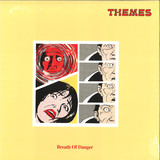
"WE ARE NOT BROTHERS" is coming back after the acclaimed and award winner “III” album! THE BEST SPANISH ELECTRONIC ALBUM OF THE YEAR! On their new EP they re-explore again that industrial punk attitude that served them to be compared to truly totems of the industrial spanish scene such as Esplendor Geométrico.
Again they have had the help and support of the Darkwave-Diva
"Ana Curra", remember Parálisis Permanenter. FUCK WORK is a truly gem for people interested in music not oppressed by any commercial corset. All tracks have been specially remastered for LONG CUT vinyl by Daniel Hallhuber at Young & Cold Studios.
Search:after work
2x12"
since long, chilean/swiss producer and dj luciano is a prominent figure in the global electron-ic club music circle. already from a young age on he was exposed to music profoundly, as his father worked as a jukebox repairman and possessed a large record collection.
when he was twelve, his mother gifted him a guitar, that turned luciano shortly into a mem-ber of a school punk rock band. soon after, his passion for electronic music rose. infected by detroit techno and engaged by close friends like producer dandy jack, he started to play rec-ords in local santiago de chile dance clubs and became involved in the minimal techno scene around friends like ricardo villalobos.
when luciano moved back from chile to switzerland in 2000, he established a residency at weetamix club in geneva, started releasing his own productions on labels like mental groove and joining the cocoon team in ibiza to play at the famous monday night at club amnesia.
since then he is a regular on the balearic island, holding residencies at clubs like dc10 or, with his “vagabundos” serial, at ushuaïa. besides playing around the globe with the likes of carl craig, richie hawtin or loco dice, he is releasing groundbreaking minimal techno and house on his label cadenza since 2003, featuring music by artists like nsi, ricardo villalobos, pikaya, reboot, maayan nidam and himself.
his very own music, so far issued on three albums and countless eps, was always ambiguous. there is his club leaning creativity that can dance slightly into pop spheres while never for-getting the power of precise sliced rhythms and subtle bass sensations.
and then there is a calmer luciano, that displays his love for “music to listen at home, done for a spiritual travel, an inner universe and a moment paralyzed in ether”, as he describes it.
on his first ever mule musiq album release “luci neu house”, luciano now delivers meditative journey music full of repetitive patterns that slowly playing tricks on the listeners subcon-sciousness. “i love music that has a dimension more than music designed for the radio or tv format. mu-sic, that is designed to bring you a higher level of energy and creativity.
so, there is no pretentious things in it ... more just sounds and dimension that will lead your head into the fall of jupiter” he reveals about the one-hour long composition “luci neu house”, whose esoteric deepness reminds on the intensely meditative class of his older pro-ductions like “behind my soul” from 2010.
an epic tune cut on vinyl into four 15-minute long pieces, who shift slowly, almost unper-ceived, whilst absorbing the mind of close observers into a micro-sliced world of moving gen-tleness.
maelstrom magnetism against the gravity of time, that also can be found on the additional mule musiq 257 12inch, which functions as a soothing footnote to luciano’s album.
the almost 13 minutes long trip “flags of himalaya” opens with restful percussions that unhur-riedly start to dance with soft string, piano and horn melodies. on the opposite, the nine-minute long “the evasion of the spiritual soldier” grooves laidback with jazzy rhythms and italo leaning melodies.
a perfect tune for slow dance sensations and endless sunset seaside drives. at a total length of almost 90 minutes, all new mule musiq music composed by luciano distributes a mesmer-izing healing spirit, that grounds organically, even if it is totally rooted in the digital, soft-ware driven world of composing music. “check your buddha” tunes, that somehow sound novel during each new listening circle.
After humble lo-fi beginnings in the Australian Art-Pop Underground, Donny Benet has expanded his cult-like following across the Globe with a resonant Array of danceable Repertoire dealing with Love- and Affection. New album "Mr Experience" marks a new chapter, informed by a wealth of musical- and personal development.
For Mr Experience, Donny envisioned a Soundtrack to a Dinner-Party- Set in the late 1980's. While his earlier Recordings drew Inspiration from DIY Pop Conspirators such as Ariel Pink & John Maus, Donny channelled the Stylings of Bryan Ferry & Hiroshi Yoshimura as the Impetus for new Material, evident on the Intimacy found on ‘Girl Of My Dreams’ and it's lush production- with a soothing whistle-along Chorus for good Measure!
Sincerity has been a key component of Donny Benet’s output since the beginning. His songs deal with genuine Emotion served on a kitsch Platter. An alter-ego manifested in the beginning of the 2010's, Donny has blurred the Lines of Artifice to create a back- Catalogue that can embrace- and challenge, often simultaneously, - the notion of Irony in Art.
"Mr Experience" moves further away from ironic Notions as Donny explores lyrical- and musical themes which embody Observations of Maturation in his audience, his tightknit musical Community- and himself. While ‘mature’ is a term that often rings hollow as an album descriptor, the term couldn’t be more apt for Mr Experience.
Previous album The Don was created with the luxury of time. The phenomenal Response to that Album across Europe- and the United States - fuelled by accompanying Music Videos clocking in Views in the Millions- meant that there were scant Windows of Opportunity to write- and record a follow-up.
With a legacy in Sydney’s music community, working with Sarah Blasko, and tightknik collaborators Jack Ladder & Kirin J Callinan, Donny Benet is accustomed to collaboration on the Stage- and in the Studio, mostnotably on the 2014 full-length release Weekend At Donny’s.
“There is such immense talent evident in every aspect of the Donny Bene experience - the vision of the character, the steadfast adherence his narrative and the musicality of Benet himself all combine to makesomething truly genius.” - Double J, Australin.
“Donny Benet makes feminine music for everybody” - Vice, Netherlands.
“The Don does not sound like amusical copying machine”. - 3voor12 National, Netherlands.
“The set was punctuated with virtuosic solos and exquisite harmonies, and added another layer of genius to the show.
We almost couldn’t handle it... Donny for president!" - Indie Berlin.
“Everyone loves Donny Benet” - Feature in Gonzai, France.
“Phenomenal Australian Showman... Offers Top-Class Dance Music with Virtuose-Bass Guitar- and Keyboard Parts & incredible Sound-Colour feel.” - Podujatie.sk, Slovakia.
Donny has toured Europe five times since the start of 2018 and has played in the UK, Austria, Germany, Slovakia, France, Netherlands, Spain, Portugal, Belgium, Denmark, Switzerland, Czech Republic, Greece and Sweden. The Don will revisit Europe twice in 2020, once for his own headline shows in May then back again in August for festivals!
To celebrate 40 years since the release of their first ever recording, Soft Cell are set to re-issue their seminal debut EP Mutant Moments.
Originally released as limited run of 2000 7” EPs in October 1980 on the band’s own Big Frock imprint, the release sold out immediately. Apartfrom various unofficial bootlegs, this much-revered and influential slice of electronica has been unavailable on vinyl for nearly four decades.
Soft Cell, aka Marc Almond and Dave Ball, went on to release their debut single proper, Memorabilia, cited as one of the most influential club records ever. This was followed by the multimillion-selling single Tainted Love, which topped the charts in 17 countries worldwide in 1981. The band have released four critically-acclaimed albums, including the genre-defining Non-Stop Erotic Cabaret. After a 17-year hiatus, Soft Cell returned in 2018 for a sold out show at London’s O2 Arena, and are currently working on new material.
This new edition of Mutant Moments is pressed on deluxe 10” clear vinyl to upgrade the sound quality from the original 7”. In addition, the four tracks have been remastered especially for vinyl using the most cutting-edge digital technology available.
Soft Cell’s Dave Ball has personally supervised the remastering process, and comments: ‘A vintage slice of lo-fi Polytechnic synthpop, lovingly remastered for you’.
- A1: Flag Day/The Mother Stone
- A2: I Want To Love You
- B1: The Great I Am
- B2: Lullabbey
- B3: No Where's Where Nothing's Died (A Marvelous Pain) (A Marvelous Pain)
- B4: Thanks For Staying
- C1: Little Planet Pig
- C2: You're So Wonderful
- C3: I Dig Your Dog
- C4: Katya
- B1: All I Am In You/The Big Worm
- B2: No Where's Where Nothing's Died
- B3: Licking The Days
- B4: For The Longest Time
- B5: The Hodge-Podge Porridge Poke
"I think most of it takes place in dreams," Caleb Landry Jones says of his debut solo album, The Mother Stone. "I'm talking more about dreams than I am about what's happened in the physical realm. Or I'm talking about both, and you're not sure what's what." Caleb Landry Jones was born in Garland, Texas in 1989 and comes from a long line of fiddle players. Three, maybe four generations back, on his mother's side. His grandfather wrote jingles for commercials, his mother was a singer-songwriter who taught piano lessons in the house, and his father was a contractor who did a lot of work for the Dallas music-equipment retailer Brook Mays and knew a guy if you needed a bass or a banjo. But Jones is not sure if you can hear any of this in his music and he does not play the fiddle. Jones has been writing and recording music since age 16, around the same time he started acting professionally. Played in a band called Robert Jones for a minute, lost his guitar player to higher education, moved into his own place, and broke up with somebody, at which point the songs really started coming hard and fast. "I started playing guitar and playing more keys," he says, "and then started writing record after record after record after record, because I didn't know what to do with myself. It was a good way of healing. And it felt like as soon as I started doing it, it felt like it needed to happen all the time." In the ensuing years he'd spend a lot of time carrying unrecorded songs around in his head like goldfish in a bag, waiting for a chance to record them in marathon sessions in his parents' barn. "You gotta play the songs every day, or every two or three days, to keep `em," he says. "Otherwise I forget them." Sometimes the ideas fuse together, one chapter to the next; this is how songs grow into seven-plus-minute epics like the ones on The Mother Stone. His back catalog is around seven hundred songs deep_ a whole discography of full albums, most of them unheard outside the barn, at least for now.
Legendary Detroit Techno collective, Scan 7's 'Burdens Down' release from 2017 was a true testament to their brilliant ability to merge the soulful house textures with the analogue mechanics. The addition of Maurice Jackson's outstanding vocal stylings topped off the original with a perfect human element. Following the global success of the original version, Elypsia Records has enlisted some of the scene's top tastemakers to deliver a remix package worthy of the original, featuring that same calculated combination of soul and steel.
Leaders of the Parisian underground, DJ Deep & Roman Poncet, provide the first remix which is all about building incredible tension. A tightly squeezed kick drum, short synth chops and cleverly placed vocal samples drive the groove. As the track grows, additional hats and synths arrive, leading up to a quick break before all the floor-rocking energy bursts free. Big!
Dutch Techno legend Orlando Voorn steps up next for his first of two remixes, this one leaning towards a very House-centric shuffle with warm, friendly key stabs and the full use of Maurice's vocals. A truly joyful work of dance music magic here, with a relentless rhythmic drive keeping the party happening at full force.
Underground Resistance's very own Mark Flash takes the remix responsibilities for the B1 with his gorgeous synth-saturated rework of the original. An energetic and stomping kick drum powers perfectly alongside future-facing melodies which shine brightly on top of the tune. This one is guaranteed to serve as an earworm for days after the party has ended.
Rounding out the EP is the 2nd remix from Orlando Voorn, this time peering into the underground with a stripped back jackin' track utilizing a looped key melody on top of carefully placed vocal samples and claps. Some unexpected synths appear at the second half of the tune, putting a bit of new-age funk into the party stomper.
Melodize builds on a fine first release with a new one from Beartrax that comes with big remixes from Clarian and Lauer. Having worked with labels such as Lost Diaries and Motek and seeing numerous releases appear in the Beatport charts, American artist Beartrax is a man in form right now.
Ethereal is a slick melodic house cut with far sighted chords and rolling drums. It's about getting lost in the majesty of the musical colour and allowing the emotions to wash over you. Clarian then remixes after many years making a name for his synth heavy sounds thanks to releases on the likes of Kompakt and Anjunadeep and here comes correct once more. His offering is deep and melodic, with a slick cosmic lead over shuffling, icy beats taking you away.
Lauer then closes out with a more edgy remix that has big synth chords riding up and down the scale and plenty of retro feels to the beats.
After a long hiatus, Tokyo-based french producer Dela comes back with Électrique, a new project paying tribute to hip-hop legends André 3000 and Big Boi, known together as OutKast. This new 7inch record includes three tracks of Électrique : Yosky Wosky Pisky Wisky, Dimanche Matin, and the bonus track Cergy.
Known for his laid-back, jazz influenced, dreamy rap instrumentals, Dela introduced his music to the world with his Atmosphere Airlines mixtapes and his albums Changes Of Atmosphere (2008) and Translation Lost (2011). A student of Q-Tip, Pete Rock and J-Dilla amongst others, Dela’s work foreshadowed today’s increasively popular lofi hip-hop / chillhop movement.
Side A features Yosky Wosky Pisky Wisky, a remix of Stankonia’s classic Humble Mumble, featuring Eykah Badu. Dela changes the mood of the original track, mixing samples and live instrumentation together to turn a salsa-breakbeat groove into a melody infused otherworldly super-funk.
On side B, Dela remixes Sole Sunday, a Goodie Mob featuring Outkast track, edited to feature only the two ATLiens and renamed Dimanche Matin. The beat is reminiscent of his early work, layering boom bap drums over a haunting saxophone melody. Also on side B, the bonus cut Cergy turns a Brazilian MPB sample into an ode to Dela’s hometown with the help of live drums, bass, electric keyboards and a few of his friends singing.
- A1: Calling The Shots
- A2: Zulu Walk (Feat Afrika Bambaataa & Charlie Funk & King Kamonzi)
- A3: The Sun Shines Tonight (Feat Su Kramer)
- A4: Struggle And Triumph
- A5: Transcendental Express
- A6: French Vanilla Skies
- B1: Physique (Feat Caroline Lacaze)
- B2: Battle (Feat Afrika Bambaataa, Charlie Funk & King Kamonzi)
- B3: Peace Street
- B4: A Brighter Darkness
- B5: Paranormals Theme
- B6: The Next Message
The classic album of Germany's funk champions reissued on surf blue colour vinyl.
Original press release note from 2011:
After almost twenty 45's under various pseudonyms, their thrilling and hugely successful debut album with London-based singer Gizelle Smith and a tour with concerts throughout Europe, Germany's most prolific deep funk formation is ready to step further into the spotlight with their second longplayer.
The aptly titled THE FUTURE IS HERE sees the group explore new territories with features by hiphop legends Afrika Bambaataa and Charlie Funk, French singer Caroline Lacaze and German rare groove queen Su Kramer, while manifesting their unique raw funk sound and refining their unmistakable instrumental style that has long gained international reputation.
Producer legend Kenny Dope (Masters at Work, Bucketheads) picked up the Mighty Mocambos's re-interpretation of the Furious Five classic "The Message" (released under a pseudonym on an obscure phantasy label without proper distribution), remixed it and re-released it on his own imprint Kay Dee Records. This album includes the original version of the "Next Message" – a message that apparently got heard and answered.
Afrika Bambaataa (the Godfather of Hip-Hop) and Charlie Funk (aka Afrika Islam, Grammy- and Oscar-decorated producer of Ice-T and original member of the Zulu Nation) loved the Mocambo vibe and joined the group on stage and in the studio to record "Zulu Walk" and "Battle", two stunning tracks of organic Funk that take Hip-Hop "back to the roots where we started out" (as featured MC King Kamonzi rightfully says) and along the way, leads funk into the future.
Keeping up with the universal spirit and ignoring boundaries of language in favour of the global groove, the Mocambos recorded "Physique", a rousing dancefloor smash sung in French by Caroline Lacaze. "The Sun Shines Tonight" is a cheerful party-in-the-studio session with original German funk and disco queen Su Kramer (who played with Donna Summer in the original cast of "Hair" during the late 1960s) that documents the pure joy of playing and spontaneity of a Mocambo live situation.
The 12 titles on this album showcase the group's collective determination, unified versatility and creative wit. From the drum-heavy, afro-tinged "Calling The Shots", the anthemic "Struggle & Triumph", the romantic melancholy of "French Vanilla Skies", the somber and frantic "Transcendental Express", to songs with an almost cinematic quality like the moody "A Brighter Darkness" and the horroresque "Paranormals Theme", the album offers a broad spectrum of colours, all held together by the unity of a band that has been playing together for years - recorded live in a few takes with simple analog equipment to capture the energy, chemistry and blind faith between dedicated musicians.
The result, mixed and mastered by chief engineer Def Stef with a decidedly modern punch, is a far cry from nowadays vintage soul band replicas. It is a universal and timeless statement: with the knowledge of the past and present, right now, we look into the future - THE FUTURE IS HERE.
In the late 90’s, east-side LA was in the throws of a post-indie explosion; a network of stoned bands ranging from neo-psychedelia to pseudo-country overran Spaceland (our generation’s Troubadour) and the local Silverlake Lounge. I was playing freakbeat records twice a week in dive bars, half of Spacemen 3 was crashing at my house (my drop-out roomate was Sonic Boom’s tour drummer) and it was during this blur that I met Raymond Richards, a clean-cut all-American pedal steel guitarist playing in Mojave 3 (the country-tinged side project of 4AD shoegaze royalty, Slowdive). I was instantly swept off my feet, head over heals in love with Raymond's weeping tone—the most chill-inducing, emotionally responsive dialog I’d had with music since discovering Satie as a child—it was then and it is now, truly haunting. After a year of personnel trials, my roomate and I stole Raymond for our own band, and not only did he smother our songs with his enchanting steel, he was virtuosic with a variety of atypical instruments such as baritone guitar and theremin, he utilized them all. The band was short-lived—I joined Ariel Pink, Raymond fled to Portland and me subsequently to New York City—but in founding the ESP Institute years later, there was always a recurring mental note; we must make Raymond’s pedal steel album. I had managed to wrangle his blessed performance on a remix for Project Club’s El Mar Y La Luna, but it took almost a decade until I once again wore the producer hat and we began working on The Lost Art Of Wandering, a title borrowed from Sam Shepard’s Stories. Spiritually candid, expansive yet enveloping, this is the strung-out, visceral country music that simply radiates from Raymond. Each song is his set of coordinates in a vast open terrain, holding a sentimental familiarity, a truthful longing for the simple comforts that diffuse life’s complications, a place to get lost. –Lovefingers
"Aix" is an outstanding piece of work by Italian electro-acoustic savant Giuseppe Ielasi, originally released in 2009 on Taylor Deupree's 12k label, the follow-up to 2007’s "August" (12k) and Ielasi's first collaboration with Nicola Ratti as "Bellows", also out in 2007 (Kning Disk). Originally only released on CD (12k), the album got a very limited vinyl issue on Czech label Minority Records in 2010. Keplar presents this extraordinary and timeless collection of 9 evocative minimalist soundscapes on vinyl again after 10 years.
From the original press release in 2009:
"With Aix we see Ielasi building his layered, atmospheric music around rhythmic grids. Most of the time these are quite irregular and the pulses are not neccessarily stable or clear. Where his previous work approached sound in a linear fashion Aix imposes a strong vertical development with the aforementioned grid and a production consisting of ons and offs, employing as much improvisation as Ielasi’s previous work, but in a different way.
Despite the self-imposed grid structure, Aix relies heavily on randomization. Not in the traditional sense of sound placement but instead of the spatialization of sounds, echoes, reverbs and the stereo image. As a result, Aix has an amazing sense and clarity of space as the small fragments of sound breathe and find their own place in the mix, thanks to Ielasi’s sublime skills as a mixer and engineer.
Ielasi relied heavily on numerous short samples and combining them in ways that fell into his groove; some found from others' recordings and many more recorded during the past year. We hear fragments of percussive (acoustic) objects, drums, piano, trumpet, guitar, and, of course, synthetic textures. Although there is a distinct rhythmic pulse to Aix, Ielasi manages to mold it into something wonderfully languid and warm... and strangely inviting."
Composed and recorded by Giuseppe Ielasi in Aix-en-Provence, Autumn 2008. Remaster by Giuseppe Ielasi. Cover photograph "Construction, Barcelona" by Taylor Deupree. Layout by Dan Dudarec/Marco Ciceri.
For more than 20 years Giuseppe Ielasi has been releasing his recordings on labels like Erstwhile Records, Häpna, Kning Disk, Dekorder, 12k, Entr'acte or Editions Mego, as well as on his own label Senufo Editions.
The label Keplar has been on a long hiatus and is now back with its KeplarRev series presenting vinyl re-issues of essential electronic albums from the 90's and 00's, as well as new recordings by momentous electronic and ambient artists.
Alex Jann returns to Dance Trax after last year’s intense electro workout alongside Assembler Code. Here he fly’s solo showcasing his broad style of electro futurism - inspired by authentic machine funk, Jann re-imagines classic sounds for modern times. Marco Bernadi on flight deck reporting for remix duties - Stay alert!
DJ Support
Nightwave “really digging this and will play in isolation streams lol cant choose a fav tracks, love them all and heavy Bernardi rmx” 5/5
Martyn Bootyspoon “Don't come around is a jam” 5/5
Solid Blake “top!” 5/5
tiga “downloading for tiga, thanks” 4/5
Fear-E “Excellent stuff!” 5/5
Paul Woolford/ Special Request “Y E S Cybernetic Memory bangs, gonna throw it in the mix on my Radio 1 show, can you send me a WAV please? T H A N K Y O U” 5/5
Horse Meat Disco “Love this” 4/5
Extrawelt “Dope!” 5/5
Martelo “this is super wavey.. into it!” 5/5
Len Faki “great vibe - love it!” 5/5
Âme “thanks” 3/5
Mr Beatnick “inward energy is perfect for my NTS show”
Ben UFO “thanks” 4/5
Mosca “Marco always hits that sweet spot of offness” 3/5
anja schneider “THX for the music” 4/5
Barely Legal “Hard” 5/5
Russia's Nocow refuses to mourn the failed experiment of human contact on his Turbo debut EP, delivering cathartic anthems alongside giant warehouse jams you are free to call "deep" and "cavernous" with full knowledge of the risks involved. ??
On lead track "Never Leave Me," the Saint Petersburg-based creator of "Cloud Techno" runs emotive vocals through a hazmat filter and into the emo-globin contained within your fluorescent-green blood cells. Meanwhile, after-hours love-weapons "Back On," "Avalon," and "Soder" each take different routes to activating the phantom arousal mechanisms of your soul. Finally, some people have been calling closer "Starfall" a "magical ticket to Vocal Sample Heaven" and "a timeless all-inclusive ravecation from the cares of this workaday world." While we would never choose to word it that way, we concede that both descriptions are generally pretty accurate.??
In these times of social isolation and uncertainty, we remind you that it's vital your Restless Heart Syndrome not turn into Reckless Heart Syndrome. Instead of frequenting illicit "Droplet Transmission Parties," why not peep the vast network of Landline Raves we've been hearing about via our vast network of peeper-drones? Also, please try to keep in mind that all of this is simply selection pressure forcing you to evolve new and viable ways of connecting with the hottest singles in your area. So stay inside for now and stay inside our hearts forever.
**LP FORMAT IS VERY LIMITED - PLEASE BE AWARE THAT UNFORTUNATELY THERE MAY BE CUTS TO ORDERS**
For Los Angeles' The Black Queen, the depths of isolation and loss have always functioned as a gateway to being born anew. Much has transpired since the band released their cold, cutting debut album Fever Daydream (a record that Revolver described as 'a haunting exploration of the darker side of pop music'). But throughout it all, the trio of Greg Puciato (former frontman of the now-defunct The Dillinger Escape Plan), Joshua Eustis (of Telefon Tel Aviv, Puscifer, and Nine Inch Nails), and Steven Alexander (a tech member for Nine Inch Nails, Ke$ha, and A Perfect Circle) have emerged as triumphant and intense as ever, documenting their journey via the synth-streaked industrial anthems of their sophomore release, Infinite Games.Formed in 2011 after a chance meeting between Puciato and Eustis backstage at a Dillinger show in which they both realized they were huge fansof each other's work, The Black Queen became a labor of love for its members to explore sounds and emotions that they couldn't quite fit into their full-time projects. Injecting a pained, twilit edge into slick new-wave tracks as fit for the dance floor as they are for some imagined dystopian skyline, the trio have managed to channel their scattered, eclectic influences into a surprisingly cohesive vision. 'We've got a pretty weird cross section,' Puciato says of the band's musical chemistry. 'We can go out for food and listen to Power Trip on the way there, then Baltimore club music on the way back, and then talk about how killer Maxwell's Embrya album was, and then get sidetracked and talk about the Celeste video game soundtrack, then all have to be quiet so that we can grab a voice recording of some weird sounding radio interference. It's all over the place and unusually far reaching,and there's a lot of passion for discovery.'After releasing their 2016 debut album Fever Daydream to critical acclaim however, the trio underwent several major upheavals that cast the project in a completely new light. Puciato's main project The Dillinger Escape Plan disbanded. Chris Cornell of Soundgarden killed himself while Puciato was on tour with him. Eustis put out music under his beloved Telefon Tel Aviv monikerfor the first time since his former bandmate Charles Cooper died in 2009. Thetrio's storage space was robbed. Puciato suffered a relapse into crippling anxiety and paranoia. Once again, in the face of tragedy, The Black Queen had to rebuild everything from the ground up.The first step was acquiring a new studio space, which immensely helped the band get back into the rhythm of freely collaborating with one another, and experimenting with sounds for as long (and as loud) as they wanted. The resulting album, Infinite Games, marks a massive leap forward for The Black Queen. Not only are the band's icy R&B instincts more sharply pronounced; they've also rendered their morbid electronics in more lush detail than ever before, filling out the corners of their songs with chilling ambient passages
that create a wide-screen backdrop for Puciato's eerie, tortured vocals. 'I think this album is actually hookier, but more insidious in that it reveals itself over time,' Puciato says about Infinite Games. His choice of words says something about the album's creeping, pitch-black approach to pop music.With this release, the group have also announced a new undertaking in the form of their new label, Federal Prisoner. Resisting the more marketing-centricapproach that feels standard at this point for the record label game, the goal of Federal Prisoner is to provide an outlet for projects that emerge naturally from The Black Queen's own creative endeavors and collaborations with otherartists. In a way, Federal Prisoner solidifies TBQ's commitment to creating music on their own terms, following the same organic sense of inspiration that led them to forming in the first place. As Puciato puts it, 'It's just an expression of passion and individualism in a way that opens more doors for us to create and to own what we create with minimal compromise. It's as much an act of refusal as it is a statement of intent.'Infinite Games, the second album from experimental Los Angeles synth-pop trio The Black Queen, comes out on September 28th
The collaboration between Gino Pavan and Guido Frezzato began in 1995, with the creation of the soundtrack of Giancarlo Marinelli's movie "Scano Boa - Dannazione".
Gino Pavan recorded and produced, in his own "Noi Studio", the music of Frezzato, then given to an ensemble of 15 musicians, among them a strings quintet, and the folk ensemble Marmaja, along with the ethnic suggestions of the percussions by African Brothers. In the following two years, their collaboration would lead to the production of two albums for African Brothers: "N'der Tangana" and "Voodoo".
Followed by the soundtrack of "Alla ricerca dell’uno” (Searching for the One) with the musicians of the Compagnia dei Popoli, and the music for the dance-theatre performance of Belgian dancer Thierry Parmentier. Also worth mentioning, the album by Luca Xodo & Frezzato "Didjeridu", later to be used as a soundtrack for the movie "Case" (Homes) by Rodolfo Bisatti (Ipotesi Cinema). After twenty years spent piling up autonomous musical experiences, Pavan offered Frezzato to try their hands at a musical project that sees them, for the first time, composing music together.
The result is the "NOT LINEAR" project, a musical dialogue between electronics (Pavan) and acoustic instruments (Frezzato), using an "online" form of composition.
Recorded in separate locations, between December 2017 and February 2018 and subsequently mixed at "New Frontiers” studio by Ugo Bolzoni, "NOT LINEAR" collects, within these first 6 tracks, the fruit of this artistic collaboration.
"NOT LINEAR" is enriched by the collaboration of Pavan and Frezzato with two internationally-acknowledged, exceptional artists such as Giulio Aldinucci and Eraldo Bernocchi, each one interpreting a track of their choice out of all those initially selected out of the studio sessions, in a furrow of continuity of the "non-linear" concept that inspires this work. NOT LINEAR design has been curated by renowned visual artist Petulia Mattioli.
ADULT. make a triumphant return after their 2018 album "This Behavior", dubbed "_one of the best records of their career_" by Ryan Lathan of Pop Matters. This chilling continuation takes the form of "Perception is/as/of Deception", an anxiety fueled cyclone of pandemonium that only ADULT. would know how to harness. While "This Behavior" was recorded in the isolated snowcovered woods of northern Michigan, "Perception is/as/of Deception" was given life in a temporary space the duo created by painting their windowless basement entirely black, with the sole intention to deprive their senses, question their perceptions, and witness the resulting ramifications. With over 23 years and a sprawling discography left in their wake, Adam Lee Miller and Nicola Kuperus have spent their entire career as ADULT. obscuring any defined genre or style. With a history as uncanny as ADULT., the pieces that making up "Perception is/as/of Deception" might be perceived as their most punk-infused and introspective work to date. The elements of frustration and apprehension that have consistently woven throughout their material are at full mast, although augmented by a strident and more "head-on" approach. Tracks like "Have I Started at the End" successfully maintain the duo's classic EBM signatures and synthesized aggression, cradled by a suspicious mantra that questions_.what's the point? "Why Always Why" offers a disorienting mutation of the heralded sounds of classic dance music, like a remix that escaped prison and is on the run. The dystopian anthem, "Total Total Damage", comes in full force with an frantic energy which jolts any bystanders to attention, with only the defiant chants of Kuperus' vocals outlining the ever-degenerating state of societal affairs. The dramatically glam synth parts scattered throughout the album, while at times ominous in nature, seem to also act as a merciful reminder that through the journey of "Perception is/as/of Deception", one can still enjoy the chaos. With the rampant sense of emptiness on the minds of many these days, there continues to be few attempts at scoring these common, unfortunate human qualities with pure sincerity. Thankfully, ADULT. has a long-standing reputation for creating the soundtrack for our insecurities, and "Perception is/as/of Deception" further solidifies their apprehensive position.
LTD. GREEN VINYL
ADULT. make a triumphant return after their 2018 album "This Behavior", dubbed "_one of the best records of their career_" by Ryan Lathan of Pop Matters. This chilling continuation takes the form of "Perception is/as/of Deception", an anxiety fueled cyclone of pandemonium that only ADULT. would know how to harness. While "This Behavior" was recorded in the isolated snowcovered woods of northern Michigan, "Perception is/as/of Deception" was given life in a temporary space the duo created by painting their windowless basement entirely black, with the sole intention to deprive their senses, question their perceptions, and witness the resulting ramifications. With over 23 years and a sprawling discography left in their wake, Adam Lee Miller and Nicola Kuperus have spent their entire career as ADULT. obscuring any defined genre or style. With a history as uncanny as ADULT., the pieces that making up "Perception is/as/of Deception" might be perceived as their most punk-infused and introspective work to date. The elements of frustration and apprehension that have consistently woven throughout their material are at full mast, although augmented by a strident and more "head-on" approach. Tracks like "Have I Started at the End" successfully maintain the duo's classic EBM signatures and synthesized aggression, cradled by a suspicious mantra that questions_.what's the point? "Why Always Why" offers a disorienting mutation of the heralded sounds of classic dance music, like a remix that escaped prison and is on the run. The dystopian anthem, "Total Total Damage", comes in full force with an frantic energy which jolts any bystanders to attention, with only the defiant chants of Kuperus' vocals outlining the ever-degenerating state of societal affairs. The dramatically glam synth parts scattered throughout the album, while at times ominous in nature, seem to also act as a merciful reminder that through the journey of "Perception is/as/of Deception", one can still enjoy the chaos. With the rampant sense of emptiness on the minds of many these days, there continues to be few attempts at scoring these common, unfortunate human qualities with pure sincerity. Thankfully, ADULT. has a long-standing reputation for creating the soundtrack for our insecurities, and "Perception is/as/of Deception" further solidifies their apprehensive position.
ALBUM: I came up with the album title after watching a YouTube video by the channel "Watch Mojo" entitled "The Top Ten Dead Music Genres". In this video, they claimed that Synthpop is dead. Since everybody said I was a Synthpop artist, I was astonished to discover that the genre I play is considered "dead". It's relatively tongue in cheek because I don't believe any musical genre is dead and everything can be revisited and everything evolves. That being said, this is an album in which, at least musically, I am working within the boundaries of this genre, while at the same time starting to experiment with other, more modern sounds and concepts. Thematically, I tackle various topics: dysfunctional childhoods (Shortcut), heroic love in a dystopian nightmare (Billions of Years), self-destructive behaviour (Drink and Drive), unrequited, criminal love (House Arrest) and many others.
BIOGRAPHY: Glitter, glam and good vibes from the heart of Berlin! Stephen Paul Taylor (SPT) is a Canadian artist who went viral in David Bowie's old stomping grounds and has played hundreds of concerts, festivals and weddings all over Europe. He makes Synthpop-Art-Punk with undertones of New Order and Talking Heads.
Taylor was in Post-Art Synth-Folk duo, Trike, for five years before branching off into his solo project in 2014. Trike won a $20K award from "The Gong Show" (in Vancouver) in 2011, toured 22 countries, recorded an album in Denmark and Belgium and played hundreds of shows. Taylor then went solo and began playing all over Europe, from Denmark rooftops to weddings in East Germany. He gained a name for himself after achieving viral status and has continued to play all over Europe ever since. Well known for being a street musician, he essentially quit playing in the street in 2018 and focused exclusively on playing on the stage
His music is a blend of both old and new. A strong beat pulses beneath the catchy melodies and captivating lyrics float atop the whole ensemble. His bittersweet words often contrast the happy melodies within the music. He tackles unique subjects that reflect the 'ennui' our our current cultural climate. His newest album "Synthpop is Dead" is an ironic interpretation of the notion of musical genres actually "dying". Did Synthpop actually die or did it evolve? His new album also touches on other themes, from our dependance on fossil fuels to our addiction to self-destructive activities, like drinking and driving. The album uses healthy doses of humour to hammer down its themes
A year after going solo, SPT went viral with his song "Shi*t's F*cked" (His channel has 7.5 million views on YouTube) and appeared on many TV shows and well-known media outlets, from RBB to Arte to Comedy Central. He was also featured on Germany's "Das Supertalent" in 2016. He has 1.5 million listens on Spotify. He's been on the radio in Italy, Latvia, Canada and Australia, to name a few. He was also signed with Budde publishing and his racord label, "SPT Records" is a subsidiary of "Shitkatapult Records"
Dieter Bolle said his "80's influenced" music was "sehr geile" (very beautiful). Electric Six frontman, Dick Valentine, said he's "a firecracker".
Repress
+ DJ Sotofett Ultra Vires Dub
SAFT is proud to present the official re-issue of the 1986 Joan Bibiloni Band classic 'The Boogie'. The vocals by Deborah Carter still sound as relevant and uplifting as ever. The sought after guitar licks of Bibiloni have appealed to a lot of generations ever since he started making name for himself in the early eighties. While in recent times some of the more experimental work has been re-issued and compiled through some respected labels, the dancefloor classic 'The Boogie' still remains the pinnacle of the guitarist more dancefloor oriented work.
In this re-release package you can find an original version (A1), that is exactly the same as on the 7" that first appeared through Bibiloni's own Blau imprint in 86'. Also on the A side, an extended DJ-friendly version that spans just over five minutes is present.
For the flipside, Norwegian dancefloor expert DJ Sotofett has crafted a surreal dub tainted experience from the original which spans over 13 minutes and touches a lot of ground. Whilst starting with a percussive intro, Sotofett uses a lot of FX and dub style delays to work slowely towards an intense dancefloor experience. Around eight minutes some grandiose synth work is being introduced while the dub elements keep on singing. DJ Sotofett's version is called Ultra Vires Dub for a reason.
It goes without saying that the global metal scene would not be the same without Sepultura. For 35 years now, the Brazilian icons are not only a band revered worldwide; they have been, are and forever will be at the very forefront of Thrash Metal, trailblazing ever since they released their long-since legendary debut album “Morbid Visions” in 1986.
While quickly establishing themselves as leaders of the second wave of Thrash already in the late eighties, to this day they never came even close to stagnation. “Quadra”, their mighty new undertaking, is proof of a will unbroken, a thirst unquenched and a quality so staggeringly high it’s a wonder this band doesn’t implode. Now three albums deep into what may very well be their strongest incarnation yet – uniting the talents of old-school members Andreas Kisser (guitars, vocals) and Paulo Xisto Pinto Jr. (bass), vocal force of nature Derrick Leon Green (vocals) and drummer Eloy Casagrande – Sepultura are an unleashed power to be reckoned with, uniting bucketloads of experience and youthful vigour in a totally revived way.
“On ‘Quadra’, we felt the urge to revisit that old thrash feeling of ‘Beneath the Remains’ or ‘Arise“,’ only seen through the eyes of today,” Andreas Kisser utters the magic words. “Add to that the tribal percussion, the orchestral elements, the choirs, the melodies and the clean vocals and you get a thorough run-through of our entire career, backed by a very contemporary approach.” Fuelled by an energy almost uncanny for a band that has been active for so long, Sepultura storm through a contemporary thrash monument, backed by sublime melodies, a very eerie atmosphere and a fiendishly high level of technicality. Kisser is appreciating these compliments, still maintaining his very down to earth approach. “We don’t heed the past and we don’t try to be preoccupied by the future too much,” he shrugs. “We’re in the now, trying every day to make Sepultura a little bit better. That’s what keeping us strong.”
And that’s what they have been doing for the last 30+ years. Album after album, tour after tour, no gap in between records longer than three years. “Music is all we do,” Kisser states matter-of-factly. “If it wouldn’t be for Sepultura,” he laughs, “I would be a sad and lonely guy. Sepultura is what we are.” And “Quadra” is living testimony to that. The old Sepultura echo through the very fibre of the songs in all its raw and morbid splendour, but yet it’s the present, the experienced and refined beast that is Sepultura in 2020 that’s blasting out thrash metal anthems for a fucked-up age.
With now 15 albums under their belts, Sepultura are the work horses of the metal world, always ready to attack. In many ways, “Quadra” broadens the vision the Brazilian thrash troopers had on “Machine Messiah” (2017), again relying on the impeccable talent of Swedish producing giant Jens Bogren and his Fascination Street Studios. “He is so full of passion, it’s unbelievable, man,” Kisser raves. “He’s really there, he really cares about the projects he’s doing. For Sepultura, he’s like the fifth member of the band. The chemistry was so amazing, 99 percent of what we were trying do to actually worked. That was insane!” Even after more than 30 years at the forefront of international thrash, guitarist Kisser sounds positively baffled by working with Bogren. “We felt like we were in our rehearsal room.”
Bringing together a monumental grandeur and a wild, untamed ferocity, Sepultura stepped up their game musically – and conceptually as well. “We were possessed by the number four, by the numerology of it”, Kisser starts to explain. “I divided the album into four parts as if we were doing a double vinyl. Side one is the pure and raw thrash side. Side two brings in the rhythms and percussion from our ‘Roots’ era. Three is getting a bit experimental and four brings forth the melodies and the acoustic guitars.” With John North’s book “Quadrivium” as a further source of inspiration, Sepultura dive deep into a mystical world full of hidden meanings. “You have four seasons and twelve month in a year just to pick one example. A lot of stuff in our culture is divided like that.”
Plus, Quadra also is the Portuguese word for ‘sport court’ that by definition is a limited area of land, with regulatory demarcations, where according to a set of rules the game takes place,” he adds. “We all come from different Quadras. The countries, all nations with their borders and traditions; culture, religions, laws, education and a set of rules where life takes place.” In the Quadra of thrash, however, we all are the same. And we bow our heads in unison to the mighty leader that is Sepultura.
In 2016 Patrick Doyle relocated from London to LA, midway through writing his new album – the follow up to his recent acclaimed release as Boys Forever. The self-titled Boys Forever album was Patrick’s debut as a solo artist after years of playing in well-loved indie bands including Veronica Falls, The Royal We and Sexy Kids.
On moving to LA he continued working on the songs for his next record – emailing them to Helen Skinner (who toured as a member of the Boys Forever three-piece live band, and now plays in Barry) who added a bass line to the songs and sent them back to Patrick. They continued to finish writing the record via email and in February 2017 Helen joined Patrick in LA to record Keeping Up Appearances. They recorded the album over four days in February 2017 at LA’s Golden Beat Studios – with Patrick once again teaming up with Andrew Schubert who produced Boys Forever.
In 1981, London-based E.G. Records released the debut album from a young Ghanaian group called Edikanfo. Edikanfo quickly rose to international notoriety following the release of “The Pace Setters” because of the infectious, forward-looking highlife meets afro-funk synthesis the band committed to tape. But the album also caught an additional wind of publicity due to its producer, the already legendary British musician and sound conceptualist Brian Eno. During that time, Eno was researching and openly propagating West African musics. He often mentioned his love of Fela Kuti and called his own rhythm-driven experiments the search for a “vision of a psychedelic Africa.” He had recently been collaborating with The Talking Heads on their Avant-funk masterpiece “Remain in Light” and with The Talking Heads frontman David Byrne on “My Life in the Bush of Ghosts,” an album which foretold the sort of cross-pollination and global music interconnectivity that today we take for granted. Eno and Edikanfo’s work together at Studio One in Accra (Ghana) was yet another inspired morphing of soundworlds and processes and a significant touchstone for both artists. As Brian Eno recently noted: “the actual recording sessions were joyful - the band played with such verve that you couldn't resist.”
But just when the sky seemed the limit for Edikanfo, the coup d’état in Ghana on the last day of 1981, tragically put the brakes on the band’s quickly developing fortunes. For years after that, the country endured enforced curfews at night, which of course ultimately gutted the live music scene in Accra and elsewhere. Because of this and other financial setbacks, the band ceased activity and its members spread out in exile, all over the world. It clearly seemed as though the story of Edikanfo, one of Ghana’s greatest bands of that era, had come to a premature end.
Now, almost four decades later, Edikanfo has returned. And with its surviving members gearing up to reissue and tour their classic 1981 album, “The Pace Setters,” the band is once again excitedly pointed towards the future.
Reconnected is compiled from Harold Lucious’ addictive 1990 release Connections, a visionary mix of soulful house, New Jack Swing and RnB, an American predecessor of street soul.
Deeply connected to music from an early age, Harold started his music career in the early 70s at the age of 16. He sang in his first group, The Final Seconds, who pressed a 7” single in New York City in 1973. The group would go on to record a full album called Neo Cosmic Blues, but never had the chance to press it. They would continue to perform and write together throughout the 70’s and searched in vain for a label to work with.
During that time, Harold landed a guest spot on the legendary Brother Ahh record Move Ever Onward, set up by his manager who was Brother Ahh’s sibling. Harold is listed as having played koto, but really he provided background vocals. Throughout the 80’s, Harold worked at WBI radio programming talk shows. On air, he would act out modified scripts to Richard Wright novels like “The Outsider”.
Connections was his effort to finally release a record after years of recording and playing music. Experimenting with dance music he came up with an album that was inspired by his love of house music and RnB. He sold the record out of his backpack, ending up with boxes of copies that were eventually destroyed when he had to move from his long-time apartment in Brooklyn. Few of the original LP remain, and it has become almost impossible to find.
Reconnected is a remastered redux with four songs taken from the original LP, and pressed onto a loud 45rpm 12” for maximum dance-floor potential. Mixed Signals is honoured to introduce Harold’s music to a contemporary audience around the world.
In 2015 US soul, boogie and disco legend Jay W. McGee teamed up with Hamburg producer, multi-talented musician and DJ Julian "Mzuzu" Romeike to record McGee's comeback album "Good Feeling". Even though both artists are from two totally different generations, they got on so well with each other after the official re-release of Jay W. McGee's classic 12inch "Turn Me On" on Légère Recordings two years before that they started to write and record together. After all, it was Julian "Mzuzu" Romeike himself who made Jay W. McGee return to the music business after nearly 15 years of silence.
The creative process did not stop with "Good Feeling": "We now have a brilliant combination of fresh songs. Many different accurate beats and of course Jay's incredible writing and singing skills," says Romeike. "I feel that it's a great combination of dedication, skills and talent which made this album possible. I work on some grooves and hooks for Jay, he picks the ones he likes and returns a proper song with vocals and arrangement. My production team, The Unbelievable Two, then work on the final mix."
"Smooth Crusing" hints towards McGee's classic late seventies sought after sounds like "When We Party" with the first "Uptwon, Downtown". The album also includes some reggae touches and smooth soul excursions. "It is such a big pleasure to work with these guys as everything works perfectly together," comments a happy Jay W. McGee. "It has all the ingredients for a classic album. It's funky and soulful, recorded in a unique modern style. We have a tribute to the good old funky music with 'Old School Love'. A lover's rock orientated tune with 'Chance I Have To Take' and some kind of up to date Afro-Disco-Soul with 'Bounce Back To Me'. And of course, 'Smooth Cruising' is full of funk!"
It was 50 years ago that a talented local musician named Lamont Butler started to create an album that would combine love, happiness and joy. Lamont’s only official album release It’s Time For A Change has been very popular for record collectors around the world but never saw the wider success it truly deserved.
Born 1949 in Louisville, Kentucky; Lamont Butler was drawn to music and dance from the very beginning. He was the son of a well-known gospel, blues and R&B singer and pianist Clifford Butler Sr, receiving an early education in what’s required to be a touring musician.
It quickly became apparent that Lamont had a wonderful voice and was pushed to the front despite no being fully confident yet of his singing ability. Lamont performed on the gospel circuit for a number of years cutting his teeth with groups such as The Enterprise, The Dynamics and The New Beginnings eventually going solo with Lamont Butler and The Spirit of Truth.
It was whilst he was singing and performing during this period that he started to write his own songs and think about putting together an album bringing together all of his influences from R&B, jazz, soul and of course gospel. The result is very raw, almost low-fi sound of It’s Time For A Change, released nearly 10 years after Lamont started to pen the first tracks and it gained relative success. He toured the album around churches in Louisville with tracks such as Love One Another, Time For A Change and Ungodly War quickly becoming firm favourites within the churches of Louisville.
Miles Away Records are pleased to working with Lamont and to be issuing a long overdue album reissue of It’s Time For A Change on LP and CD. Remastered with care by Nick Robbins at Sound Mastering and complete with in-depth sleeve notes.
Thembisa’s Hot Soul Singers were formed in 1975 by promoter and producer Sam “Jiza Jiza” Mthembu. In the early years the trio was called the Thembisa Happy Queens and consisted of sisters Ntombifuthi and Nombuso Mabaso and Lindiwe Ndlovu. The trio would start out playing Jive, Zulu Disco and other popular sounds of the 70s . In 1979 they became the Hot Soul Singers and would begin a career in the emerging Disco scene which their group name was now more fitting for.
Their first single under the new name was a tribute to their producer Sam, and their first album “Together” would come 2 years later in 1981. It contained their Lamont Dozier rip off from a year earlier, and biggest hit to date “ Give Me My Love Back” which was playing in jukeboxes across the country. At this time the Hot Soul Singers were also gaining popularity due to their demand as an opening act for American groups. Sam’s ongoing pursuit to be a successful promoter also helped to ensure they were always in the headlines and playing shows. It would be in 1983 that the group would temporarily step away from a major label and go onto record their first Maxi single with the independent Raintree Records new Lyncell Imprint.
Like most places in the world the early 80s was a fast changing time in music for South Africa. Although the Maxi had a disco standard for years in other parts of the world it had only recently been popularized in South Africa. Thanks to the Brenda and the Big Dudes smash, Weekend Special, the maxi took over as the preferred format for pop music, replacing the cheaper but time restricting 7” single. Singles were being pushed to the limits in the early 80’s with running times of 4+ minutes a sides by some labels. The Maxi allowed for groups to extend their grooves onto a full side and later album art containing smiling musicians infant of cheesy backdrops became the norm. Synthesizers had been used in pop music for years already but the DX7 wouldn’t land in the country for another year. Drum machines were being used but had yet to fully replace live drummers like would happen in the years to come. The recording of this new single would require a full band resulting in it being one of the gems of the crossover period before the complete midi takeover. Durban’s Graham Handley was recording some of the best upcoming Disco sounds for labels like Heads Music and groups like Kabasa and Masike Mohapi and was tasked as engineer. Other known musicians in the session would be Jimmy Mgwandi from the group Image, who’s signature bass playing can be heard on both songs. A young Daniel Phakoe aka “sox” was also present and took care of the male parts of the vocal line. Both musicians have writing credits along with lead singer Nombuso. Other possibilities of musicians would be Thami Mduli aka Professor Rhythm who had been with the group since their early days as well as a young Chicco who was best friends with Jimmy at the time.
The single, which was packaged in a customized but simple company disco sleeve, went on to do quite well. Less than a year later they would feature on a track with Sunset which would lead to them singing with Sounds of Soweto records label. The group would enjoy the growing fame when tragedy struck in 1984. On their way to a show in Mpumalanga they were involved in a car accident which took the life of Nombuso and left her husband Sam with a leg injury he limps with to this day. Upon recovering Sam would organize a tribute concert at Soweto’s Jabulani Amphitheatre. Even though the tragedy left the group broken and without a member the band went back to work to record their second full length album. They worked with Mac Mathunjwa who had written Nombuso’s favourite song “Going Crazy”. This album would be released with two different names and covers. One took the former singer’s favourite song as the album name and used a photo consisting of all three girls where the other released under the name “ A Tribute” and would only have the remaining members on the cover.
Although the tragedy never halted the group, moving forward the trio of singers would see a few members change. Lindiwe would leave to join Freeway and then become Linda “Babe” Majika so by the time they were ready to record in1986, now with Teal records, the only original member was Ntombifuthi. She would also shortly leave the group and provide backing vocals to other artists including her old band mate Linda. The Hot Soul Singers would be kept alive by Jiza Jiza and go on to record 5 more albums before calling it quits in 1990 after a successful 15 year career. Today the only core member left is Sam Mthembu who still lives in Thembisa and is occasionally promoting live events. Even though he did produce a handful of artists back in the 70s, his most significant additions to the music industry were the Hot Soul Singers and his event promotions, which is what he is best known for and will most likely be the legacy of his career.
Epic link-up between two of the top live techno and house performers working today. After playing a few rare sessions with Juju & Jordash at Dekmantel Festival 2018 and Pittsbugh, Shawn Rudiman and Jordan GCZ spent a few days in Amsterdam laying the foundations for this collection of music. The tracks were transported to the Synthdrome in Pittsburgh and completed with love and craftsmanship. Spanning the gamut of electro, house, dub techno, and future jazz there is something for everyone. Enjoy this rare convergence of the creative energy of two masters.
DJ Die Soon is a local legend and ongoing inspiration in the Berlin underground electronic music scene. Remaining largely unknown outside the city, with only a handful of releases and appearances to date, the man behind the mask delivers truly freakish beats built from chaos driven crushed drums and eerie horror style basslines.
KAPPA SLAP wrenches the Morphine catalog by the neck, takes it off it’s feet and slams it back unsteadily in front of the fans who loved the Container, Metasplice and Hieroglyphic Being output of the label. DJ Die Soon delivers extreme work here. The album is a mixture of instrumental pieces and vocal tracks featuring the talents of five contrasting MC's. Three Ugandan lyricists feature: there’s MC Yallah, with whom he worked during a residency for the Nyege Nyege Festival , Lord Spikeheart from the Duma hardcore pressure band, and the mighty ECKO BAZZ. Long time friend and collaborator Infinite Livez (Ninja Tunes) appears on the cosmic & eccentric Ranthworth, and finally there’s Japan’s MA, who recently dropped the incredible AMA album on the label. Incidentally, the pair (both Japanese) decided to collaborate after acclaimed performance at the Morphine Showcase Berlin’s Berghain in 2019.
KAPPA SLAP contains a lot of our favorite sounds all in one album. Stunningly, DJ Die Soon manages to paint the Morphine picture in one hard stroke.
Artwork courtesy of Lorenzo Mason Studio
"I'm Always Right“ by Imagination is an unreleased jazz rock LP recorded in 1977, 3 years before their sought after “Shake It” debut from 1980. Comprised of five tracks with a playtime of roughly 30 minutes, you will hear one of the finest German late-70s rock-tinged electric jazz albums of the era. The recording is a delightful stand-out with unique compositions, aspiring solo work, and a soulful spirit throughout. Additionally, the album veritably glows with exceptional sound quality, as it has been remastered from original tapes that were cut more than four decades ago at the WDR Funkhaus, Cologne.
Impromptu muscovite supergroup Lilipulu turn the needle neon with a quartet of unexpected killers for club cosmonauts, rainforest ravers, anxious insomniacs and giddy punks.
Unplanned, inspired and all the way live – the pin is glowing! Ever wondered why the Growing Bin releases sound so damn good? Well, it has more than a little to do with mastering magician Sergey Luginin, whose eagle-ears and technical know how have been a part of the process since GBR002. For the latest Glowing Pin powerplay, our man in Moscow joins some close friends on the other side of the console, letting the creative juices flow for ‘Four Amazing Tracks’. Luring Simple Symmetry brothers Sasha & Sergey and DJ & photographer Ivan Pustovalov into his studio with the promise of an afternoon stroll through the nearby Elk Forest, Sergey set the circuitry in motion and the quartet got lost in music. What begin with a plan for some simple edits and a woodland walk quickly became a full scale studio throw down, reimagining forgotten favourites amid a multi-instrumental stew of propulsive polyrhythms, low slung bass, cosmic synths and frazzled guitars. There’s techno-tribal hypnosis on the mind bending, brain blending A1, poetic post punk on the angular, janglier A2, outrageous Afro-cosmic on the freaky Floyd-in-Lagos B1 and languid ambience on the lysergic lullaby which closes the set. Recorded as they worked and presented in chronological order, this EP is a triumph of inspiration over perspiration - a snapshot of a moment which will last forever.
Patrick Ryder
- A1: Hot Sand Shuffle (3:50)
- A2: Sky Blue Sky (2:52)
- A3: Mystic Beach (2:44)
- A4: Crystal Forest (3:18)
- A5: Distant Shore (4:38)
- A6: River Run (2:24)
- B1: Catch A Wave (2:12)
- B2: Paradise Bird Bath (2:40)
- B3: Smooth Runnings (3:31)
- B4: Spirits Have Flown (3:21)
- B5: Rolling Deep (2:26)
- B6: Island Blues (3:29)
- B7: Sun Salute (3:14)
Jon Tye and Pete Fowler have been making music as Seahawks for a decade now. Given the sounds they’ve been exploring over those ten years it was a cosmic inevitability that they would be asked to contribute to the catalogue of the legendary library label KPM.
They replied with Island Visions, an exploration of sound for vision where they construct “audio micro-worlds to explore and inhabit”. A way to transport the listener away from the everyday without the bother of getting on an aeroplane. Mind travel is space travel after all, and much better for the environment.
Mostly recorded at The Centre Of Sound in Cornwall, with additional recording at Studio 34 in London, Jon and Pete’s travelling companions on this particular trip were boogie wunderkind Sven Atterton on fretless bass and keys, Nick Mackrory on percussion and the Seahawks live team of Dan Hillman and Alik Peters-Deacon.
From the grooves of Brian Bennett to the moog vibrations of Mike Vickers, the lush textures of Les Baxter to the experimental sounds of Delia Deryshire and David Vorhaus, this new music channels sounds and moods from across the KPM universe.
The spacious “Hot Sand Shuffle” opens the record with some of Seahawks’ familiar “deck-shoegaze”. The slinky digi-dub of “Sky Blue Sky” follows, gently encouraging us to lay back and relax. “Mystic Beach” is a refreshing ocean spray of a synthetic groove that clears the head, priming a pathway to receive “Crystal Forest”, a new age house groove of birds and flutes.
Dense, deep and dreamlike, “Distant Shore” is ambient rainforest house with a 90s vibe, its dense foliage clearing to let us bask in the shimmer and shine of “River Run”. Hang drum, electric gamelan, flute and loon close side A.
Side B bounces into being with “Catch A Wave”, an upbeat beach groover of synthetic guitar, effervescent synth and snappy drums. Equatorial bubbler “Paradise Bird Bath” soon glides in with marimba, crisp beats and fat synth bass. Fender rhodes, space echo and fretless bass make “Smooth Runnings” a laid-back poolside groove.
“Spirits Have Flown” conjures a hazy vibe with marimba, sax, synth funk bass and chilled beats before “Rolling Deep” serves up a light cocktail of sultry rhythms, refreshing textures, cooling sax and fretless bass. Almost-title track “Island Blues” brings the horizontal poolside feels with melodic chimes, oboe and more fretless bass for maximum vibrations. The marina drone of modular electronics, celestial trumpet and jungle ambience pay the album’s final respects to the cosmos on “Sun Salute”.
Like many KPM suites, this is a record of two distinct sides. The sunrise of side A brings a deep meditation, a journey within to renew the jaded self. Side B refreshes with cocktails by the pool and a chance to groove away the evening at some sunset beach party before dancing under the stars in the house of dreams.
Pete’s front cover for the LP is part map, part postcard: “the record has five different sections and I wanted to reference those in the worlds they created, musically and physically. From beach campfire, to poolside hanging and nighttime dancing. A kind of portal to those places and the pictures they inspired in my mind. All places we’d like to be in this turbulent year”. The track descriptions on the back help guide the way.
2020 marks 10 years since Ocean Trippin’, the first Seahawks release, and Island Visions is the perfect distillation of the sounds, sights, textures and moods that Jon and Pete have been exploring over the last decade. Sunrise to sunset condensed to two sides of an LP. The normal rules of space and time don’t apply here.
This is the first time Be With has worked with Seahawks, but individually Jon and Pete have been members of the extended Be With family since forever (Pete did those posters for our Ned Doheny tour and we worked with Jon on the vinyl version of Hatchback’s Colors Of The Sun). Of course we were going to put this out on vinyl.
Mastered by balearic engineer of choice (and Be With’s regular audio co-pilot) Simon Francis, cut by the legendary Pete Norman and pressed in the Netherlands by Record Industry, the sonic frequencies of these Island Visions have been precision tuned and encoded for optimum travelling conditions. Take the trip.
Coastlines is the self-titled long player from the new Japanese production unit of DJ and producer Masanori Ikeda and solo artist, session musician and Cro-Magnon keyboard player Takumi Kaneko.
Masanori and Takumi have been part of the Japanese dance music scene for years and Coastlines was born out of their working together on soundtracks for video projects. The pair wanted to make laid-back listening music for now, laying Takumi’s playful keys over Masanori’s widescreen balearic jazz-fusion to conjure beautiful and breathtaking “coastlines”.
A couple of two-track 7"s put out in late 2018 and early 2019 on Japanese house music label Flower Records soon sold out. Those four tracks were expanded to a full album of music, “a joyous, relaxing, summery soundtrack for everyone’s after hours wind down” that was released just in time for summer. It soundtracked many a Be With BBQ in 2019.
The album opens in the horizontal with the sophisticated, cocktails-by-the-pool groove of “Sunset Reflection”. A lush, beatless wonder. Their re-imagining of Ralph MacDonald’s “East Dry River” removes all the original’s bells and whistles (quite literally) and re-gears it with a subtle balearic chug. The result is a percussive gem.
“Coastline” is a beach-jazz noodle. “Drifting Ice” is as chilled and glacial as its title would suggest, yet Masanori’s head-nod slo-mo house beats throb not far below the surface. “My Fire” is another soft killer, all swelling, swirling organ over muted kicks and snares. An elegant boom-bap.
A pair of insistent tunes of the deeply balearic variety raise the tempo, but not by too much of course. On “Woods And My Guitar” a half-heard vocal refrain breathes life into the synthetic xylophone and guitar. Deft piano-work turns “Half Moon Shadow” into lounge-house for the sophisticated beach bum. A classy duo.
The self-assured re-work of Azymuth’s “Last Summer In Rio” is arguably the album’s centrepiece. Ten minutes of casually propulsive slapped bass, steel pans and slick 80s soul beats. Cue the steel drum interlude of “Maracas Bay” before album closer “Down Town” transitions us one with a shuffling, string-hinted hit of ethereal, euphoric piano bliss. Gentle disco for the new decade.
As former Test Pressing scribe Dr. Rob observed on his ever-reliable Ban Ban Ton Ton blog, the Coastlines fusion is very much in conversation with their 80s counterparts, both at home and along the coastlines of different continents. So among the nods to revered Japanese artists like Hiroshi Sato, Sakamoto and Casiopea, there are also hints of Marcos Valle and Mtume, of the aforementioned Azymuth. “The production though is very much now, not then. Not retro, just proper”. We couldn’t put it better ourselves.
Coastlines was originally a CD release only available in Japan, with HMV putting out a super-limited vinyl version a few months later for Japanese Record Store Day. But this music is just too good, so when Be With was asked via Ken Hidaka to take care of a vinyl version for the rest of the world it wasn’t a tough decision.
Mastered by Simon Francis and cut by Pete Norman, just 500 copies of this double LP have been pressed by the good people at Record Industry.
Pitto is not one to flood the scene with new music considering he’s only released two ep’s in the last three years. He takes the time to let ideas evolve and it’s clearly noticeable on last year’s EP on ‘Something Happening Somewhere’ sublabel ‘Ooshaa’, where his feel for an almost poppy hook is perfectly combined with his love for darker electronics. On the ‘Baila baila EP’ –his return to Heist after his last ep in 2018- he explores this path further. The EP is filled with live percussion, a dark and rolling acid line, chopped beats and catchy piano riffs. The three originals are accompanied by a remix courtesy of Pete Herbert that has ‘summer’ written all over it.
Opening track ‘Sammie’ has a beautiful sense of melancholy to it, where an emotional piano riff is combined with some 80’s tinged vocals and loads of live percussive elements for a smile inducing experience.
‘Discko’ takes a darker approach with a deep and ‘dubby’ low end and a guitar riff that wouldn’t be out of place on a Caribou track. The horn section and synth lead give it a real crossover appeal and it’s the kind of track you imagine working just as well on a summer festival as in a dark basement.
On the flip, there’s the title track ‘Baila’, a proto inspired acid stomper with a nice wink to early 90’s dance music vocals. An acid line gives the track its backbone, but it’s the combination of Pitto’s chords and instrumentation that give this track it’s unique edge.
The EP finishes off with Pete Herbert’s remix of ‘Sammie’. Pete’s version has that full-on summer appeal with his recognizable style of modern day island disco. He adds a bit of drama to the track with some big breakdowns, changeovers in the piano riff and turns the Balearic vibe up a notch with an added dreamy solo.
We’re happy to have Pitto back on Heist and this unique and diverse EP is one we hope will create a lot of smiles on the dance floor in the coming months.
Yours Sincerely,
Lars & Maarten
Seb Wildblood readies his first new release of 2020, the ‘Hazy House’ EP. After a year that saw Wildblood releasing his landmark LP, ‘sketches of transition' – which received a glowing 8/10 review in DJ Mag and made it into Mixmag’s of Albums of 2019 round-up – his new two-tracker is set for release via his London / Los Angeles based label, all my thoughts, on April 17th. Along with his recently released edit of Rosalia’s ‘A Palé’ for charity, the EP marks the DJ/producer’s return to a more dancefloor-focused sound, having ventured further into the worlds of downtempo electronics, R&B and Balearic-imbued house on his introspective and accomplished debut album.
‘Hazy House’ is an encapsulation of what a Seb Wildblood DJ set sounds like in 2020, fusing tough house rhythms with electro’s futuristic atmosphere and an ear for emotive melodic hooks. With dreamy flourishes and subtle complexities, the EP retains much of the depth that ‘sketches’ emphasized, despite being his most club-ready work since 2018’s ‘Grab The Wheel’ EP. The resulting release is one that showcases Wildblood’s considered, painterly technique, and his capacity to create thoughtful soundscapes even when focused on mobility and energy.
‘Hazy House Vol. 1’ on the A-side is buoyant and lush, with a warm synth bed hovering on top of its bouncy beat before a soft, chiming arpeggio motif floats into the mix, tying everything together in a silky deep house bow.
‘Vol. 2’ is similarly inviting, if a little more robust. With a sharp beat, angelic choral synths, and a subtle vocoder, the track is one for the depth of the night, when the last push of energy carries you through, right into the warmth of the afterglow.
Inspired by moments experienced throughout his second world tour in 2019, which saw him playing DJ sets everywhere from Australia and Japan to the UK and across North America, the title ‘Hazy House’ is a tongue-in-cheek nod to the assumptions some may have about Wildblood’s sound. But as the EP highlights, there’s a subtle intricacy at play in the producer’s work that further establishes him as a distinct voice for both club-driven sounds, and for those more suited to headphones.
"NOON" One of the most prominent and widely acclaimed polish producers, returns after a two-year break with the new album called "Nobody Nothing Nowhere".
The fifth solo work of NOON was released by his own label called "Nowe Nagrania". The idea of "Nobody Nothing Nowhere" is connected to the various places in Poland and Europe: from the first sketches recorded in Gdynia, through Warsaw and London, to the final recordings in Łódź. Alan Kamiński is responsible for the graphic design of the album, based on NOON's own photos.
The atmosphere of working on "Nobody Nothing Nowhere" is similar to the aura of "Gry Studyjne" LP - NOON's sophomore album. However, this time NOON puts emphasis on much greater advancement, devoting himself to work alone with one analog beat making machine called Elektron Rytm Mk2.
Mikołaj Bugajak on "Nobody Nothing Nowhere" is accompanied by excellent musicians and also his regular concert partners - drummer Marcin Awierianow, bassist Piotr Połoz (both from polish post-punk band Psychocukier) and violinist Tomasz Mreńca. It is worth mentioning that NOON's part's contained on "Nobody Nothing Nowhere" were programmed on the machine in the shape of live performances, which gave the LP additional element of dynamism and life.
"Album called "Nobody Nothing Nowhere" is an album about escape, which turns out to be impossible. All these struggles and attempts to change destiny resemble a spiral journey. The albums consists of three parts, and is summarized by the song called "Spektrum".
My fifth album is released less than two years after "Algorytm" premiere in terms of experiences that I wanted to share with the audience." (NOON)
Parisian cinema composer Jean-Gabriel Becker is best known for idiosyncratic soundscapes, has worked alongside Massive Attack on acclaimed film soundtracks and recorded with John Foxx. Susumu Mukai, originally from Osaka, Japan, is one of London’s most sought after musicians, whose list of collaborators includes Floating Points, Vanishing Twin, Alexis Taylor and Fimber Bravo.
Together they’ve created fresh new music that floats effortlessly above traditional genre delineation, with a dubbed-out and experimental melange of modern acid house, post punk, global grooves and clattering beats. Still not complying to genres,’TimeVery Near’ is their tentacular new album, which gathers sounds and inspiration from an ever-expanding palette of influences, assembled into something amorphously intangible that’s simultaneously refreshing and sharp, meandering and cosmic, futuristic but timelessly vintage.
Greece is maybe not the first country that comes to mind when you think of Afrojazz. (Interpret 'Afrodyssey Orchestra' unexpectedly hit the scene some time ago after the release of In the Land of Aou Tila, their debut album — while that first album was going to the hands of the few lucky ones who managed to discover the band back then, Afrodyssey Orchestra were already booking more studio time in order to start working on further recordings.
Three years later, we’re proud to present you 'Under the Sun', with seven new compositions, that reflect the logical evolution, the band has experienced during this time, including some fine-tuning in their line-up. A melange of African polyrhythms, jazz, a scent of the Balkans and a fling with Afrobeat that holds hands with their beginnings — all this devised through the prism of the vast Greek musical universe. It's the - one and only - Greek band out there, playing music influenced by the mother continent!
Substance, the second album by producer Moisture, sets out to deliver an immersive tech-noir fantasy of emotional and physical deconstruction. Inspired in part by William S. Burroughs 1959 novel Naked Lunch, the conceptual narrative of the album follows a humanoid subject through an urban landscape and the exploration of its depravations.
Sampling and filtering sounds from other music, movies and own field recordings, the tapestry of Substance is a three-dimensional world of hard industrial spaces and fluid organic matter. While it's conception is rooted equally in literature and film as well as music, one can draw comparisons in particular to Barry Adamsons 1989 album Moss Side Story, in that it also works as a chronological narrative; the tracks aligning to make a world of its own.
And while Adamson was aiming to create an imaginary soundscape of his native Manchester, the geography of Substance is based on the city of Malmö. Using field recordings from it's city streets, the album paints a rain soaked, neon-clad portrait of the city's hedonistic nightlife.
On the opening "The Marketplace" we are teleported to Bergsgatan at night (the track title a subtle nod towards Eden Ahbez 1960 song of the same name).
This introduction is similar in line with the experience Burroughs once had in 1957 upon entering Malmö for the first and only time, which he details briefly in Naked Lunch: "averted eyes and the cemetery in the middle of town (every town in Sweden seems to be built around a cemetery), and nothing to do in the afternoon (...)"
This image of Malmö portrayed with dread and loathing holds a longstanding narrative tradition over the cultural geography of the town. Yet it is often paired with an image of great promise and bohemian splendor, seemingly a paradox but often perversely intertwined. This duality has always been a vital mindset in the underground music scene of the town and its illegal after hours clubs. Substance is a work steeped in the grayscale prism of techno and its post-industrial fetischism. Yet in picking it apart, one can find elements of everything from post-punk, drum & bass, trip hop and new age.
The theme of depravation that soaks through Burroughs Naked Lunch seems oddly befitting to this side of Malmö (one wonders what the author would have made of it had he stayed longer) Through rhythmic excursions and the exploration of repetition, the tracks of Substance are arranged to convey this self-destructive longing for depravity. Michel Foucault's ideas on limit experiences serves as context for this peculiar form of endeavour, as he puts it: "the point of life which lies as close as possible to the impossibility of living, which lies at the limit or the extreme."
After the successful first volume of their split collection, Lucretio
and Marieu a.k.a. The Analogue Cops come back on Memento with a
breathtaking four tracks E.P..
Lucretio delivers two cuts written and produced with the extraordinary
Kyma workstation: “Ghetto Stab” is an heavy DanceMania influenced
party banger while “Any Idea” is a deep techno journey into the realms of spectral manipulation.
Marieu brings in all the hardware horsepower romanticism with “Tab and Rub” and “The Restored Text”; the first being acid excursion into the memories of the earl From days, the second interpolating massive kick drums and saturated harmonics with frantic vocal samples.
A record not to be missed!
Supported by: Rhadoo, Ame (Kristian), Dj Ralf, Marco Faraone, Arnaud Le Texier, Ilario Alicante, The Wasp, Shlomi Aber, Richie Hawtin, Joseph Capriati, Maceo Plex, Marco Carola, Francesco Farfa..
The Devonns dust off the golden age of 70's Chicago Soul with their self-titled debut album on Record Kicks. Straight from the streets of Chicago, Illinois, The Devonns (pronounced "De vaughns") are the brand new soul outfit and the latest addition of the Record Kicks' family, whose self-titled debut album that drops April 03, is an assortment of influences taking us back to the heyday of soul.
Drawing influences from bands such as The Dramatics, The Isley Brothers and Leroy Hutson, yet bringing in their own unique modern twist, influenced by artists such as Jamie Lidell and Raphael Saadiq; singer Mat Ajjarapu explains how unintentionally, the rich heritage of Chicago's history with soul music influenced him.
"The city was at the epicentre of a lot of good music back in the 50's all the way to the 80's, a lot of the labels specialising in soul were based in the Chicago and we even had our own sound known as "Chicago soul". Through several years of crate digging it surprised me how many songs I loved were recorded in this city, for example one of my favourites is this great little song by The Natural Four, produced by Leroy Hutson 'Can This Be Real', and released via Curtom Records."
The band started in 2016 after multi-instrumentalist and songwriter Mathew Ajjarapu dropped out of med school and found himself unemployed and drifting. Listening to music constantly at the time, he found inspired to put a band together and create his own music. Pairing up with some of the best musicians Chicago has to offer, he founded The Devonns: the rhythm duty is entrusted to Khalyle Hagood (bass), Ari Lindo (guitar) and Khori Wilson (drums).
Originally he wanted to focus on 50s style doo-wop, similar to The Flamingos; rich in reverb and vocal harmonies, but in the first initial practise they had it was evident the band clicked on their love of soul music from the 70s, so their music took a natural turn towards that sound, with tracks such as the Wilson Pickett-esque single 'Tell Me'.
The release took almost two years to complete as Mat explains "I am a perfectionist, I had a very specific vision in my head about how it should sound and I wasn't going to rest until I achieved it."
"This is a definitely a throwback soul record, as well as being drawn to lush and intricate arrangements of Motown, I was also inspired by the more lo-fi works of smaller labels such as Chess and Capsoul, and I wanted to capture the magic they had in those recordings in our record, as everything feels too precise nowadays" clarifies Mat.
It was thanks to his engineer Mike Hagler, who introduced him to Paul Von Mertons (Mavis Staples, Paul McCartney, Elton John) who arranges and conducts for Brian Wilson's live touring show and after a 45 minute phone conversation about what Mat wasn't keen on, on the album, he realised Paul totally understood where he was coming from.
After a few months wait for Paul to get back from touring they entered the studio with "Paul's players" and as soon as they hit record, Mat explains "I was getting chills up my neck, it was one of the happiest days of my life, and finally we had nailed it!"
Tracks such as 'Come Back; which Mat wrote in ten minutes on a $300 Daneelectro Singlecut guitar initially, came to life, with Paul's rich string arrangements and features guitarist and percussionist Ken Stringfellow (R.E.M.).
It still took a few months to get the recording process finished but finally after a torturous nineteen months they album was finally finished.
The result is an album filled with lavish arrangements and catchy melodies which take us on a nostalgic musical journey inspired by chic 70s soul, yet the band don't hesitate to add their own unique and elegant contemporary stamp to the record.
In about 2003 I did some work for Deepfunk and Northern Soul Legend Keb Darge and as was the way back then I received payment in vinyl. Included in the pile was this little Detroit number which I instantly fell in love with.
In 1980 David Mcmurray and Adell Shavers and David McMurray, who went on to be a member of 80's hit band 'Was Not Was', wrote and produced this Amazing Detroit Modern/Boogie 45 which for some reason suffered the same fate of many of "AOTN" releases and disappeared from history. But thanks to the generation of collectors before me this gem sat safely in Northern collection such as Keb's for years waiting for its day in the sun. It only got limited play but recently the record has had a resurgence in popularity and value which it deserves.
After a tip off about Jason Stirland, from Soulstax Records, I found David McMurray and it was wonderful to find he was keen to help me bring this wonderful 45 back into the limelight. So here we are...
LIMITED EDITION 300 ONLY WHITE VINYL
There was a terrible egregious shift in vibration the day the transmission arrived. It came to me in a dream, as was natural for these particular occurrences, and left no time for preparation. The sound was unmistakable, a low baritone that echoed wildly and reeked of ancient fumes. A deeply monumental and monolithic apparition stood before what appeared to be a crowd of hexagonal beings. The vibrations worked through them in an apparent communicatory way, though would be impossible to translate in any logical linguistic fashion. I don’t know how but I knew they were aware of me, though their disposition was imminent of their consciousness as being collective, rather than individual; and were largely unbothered by my presence.
Once the transmission had finished it was clear that there had been a tamper. The kind of which Id seen before, and had resulted in definite yet undefinable change in the fabric of reality.
I initially stumbled upon the odd and highly dangerous musical practices of Perhaps while on an assignment in Bermuda. There had been rumors of a local tribesman partaking in occult practices, of which I knew was native strictly to the Goat Bleeding Bad Men of the Congolese jungle. These rumors intrigued my journalistic nature, so I took the afternoon off in the hopes to possibly glean something that would be an easy pitch to a tabloid back home.
Upon arrival it was clear there was a strange foreign intervention within the community of the tribe, which was largely uninhabited upon first glance. Much of the surrounding foliage had been strung with the entrails of various animals and there were several disturbing fixtures composed of bones and various organs lining the commune. I managed to track down the tribesman, who appeared to be in some deep trance and was entirely unable to communicate, though seemed to be fixated on a single task: the drawing of a peculiar symbol. My researching the symbol resulted in only one hit, a piece of musical literature by a band Perhaps, who I later found to be recording in the area just weeks before.
It didn’t take long for me to become fully fixated on Perhaps, who were anything but coy about their whereabouts and metaphysical practices. Wherever they went a small commune followed, which was typically composed of deranged acid freaks, occultists, and Norweigian dairy farmers who had sold all their assets to follow the band after “hearing their music speak from the mountains”. After managing to crack into one of their camps that was stationed in an abandoned motel, I spoke with Jim Haney of Perhaps regarding their cultish practices, who gave little in way of detail but claimed to be working towards a deconstruction of reality through a linguistic utilization of vibration.
My stint with the cosmic beings through the telekinetic transmission had lead to one conclusion; that Perhaps have been in the works on something new. It seems as if they may have landed on the result which Haney had mentioned years ago. Through my continued interest I’ve procured the names of other members of this current project, which include: Sean Mcdermott, Tom Weeks, Ricky Petraglia, David Khoshtinat, Ben Talmi, Makoto Kawabata, Lucas Brode, Isiah Mitchell, Olivia Kieffer, Tyler Skoglund, Chang Chang. Though I can’t say exactly what is to come, it seems as if the ideas that were proposed during my initial meet may have been surpassed. Perhaps’ plans have begun to surface, and we are all at risk, for whatever that means. The great column and the vibrational prismic beings have shifted their attention to earthly matters, it would be foolhardy to not heed their warning. Though, self-preservation may be an impossibility.
Sam Hailstone Dec 24/ 2019
Los Afroins was the flagship salsa band of the obscure but beloved INS label from Colombia. Their 1975 LP "Goza La Salsa" is just as hard to find as their first record, and contains 10 bright and sassy salsa dura treasures that light up the dance floor with their incessant rhythms, syncopated trumpets and trombone and buoyant melodies. There are smoking covers of hits by Panama's Bush y sus Magníficos ('Salsa Al Pindin') and Bronx timbalero Orlando Marín and His Orchestra ('Está De Bala') as well as updated renditions of old Cuban chestnuts 'La Masacre' (written by Joseíto Fernández of 'Guantanamera' fame) and 'Matusa' (originally titled 'Macusa', composed by Francisco Repilado aka Compay Segundo).
The entire record makes for a very tasty and satisfying party platter filled with guaguancó, mozambique, pachanga, descarga and bolero that deserves to be more accessible and better known by today's fans of Colombian salsa who may have heard of The Latin Brothers or Sonora Carruseles, but have yet to discover the short-lived but highly sought after Los Afroins. "Goza La Salsa" is presented here in facsimile artwork and pressed on 180 gram vinyl.
“The aptly named Goza La Salsa (Enjoy Salsa) is the second album by Los Afroins, the flagship salsa band of the obscure but beloved INS label (Industria Nacional Del Sonido Ltda., Medellín, Colombia). The combo's repertoire focused mostly on cover versions hit tunes from New York, Cuba and Puerto Rico, both classic and contemporary, but for this record, their sophomore outing from 1975, their arrangements got tighter and there are more original compositions, which makes for a satisfying evolution in both style and content. Pianist Agustín "El Conde" Martínez, who would later work with Joe Arroyo and Juan Piña, led the group and did some arranging, with studio session production by INS artistic director Alfredo "Sabor" Linares. The vocals were handled by a pair of fresh-faced singers, Lucho Puerto Rico and Roy "Tayrona" Betancourt, who would later go on to fame in the 1980s, the former with his own Lucho Puerto Rico Y Su Conjunto Sonero and Conjunto Son Del Barrio (both in collaboration with Alfredo Linares), and the latter with Willie Salcedo, Reales Brass De Colombia, and Los Caribes. Additional arrangements were by Luis Felipe Basto of Los Black Stars and Luis E Mosquera, while the rest of the band was made up of INS related studio musicians. Goza La Salsa is just as hard to find as their first record and contains 10 bright and sassy salsa dura treasures that light up the dance floor with their incessant rhythms, syncopated trumpets and trombone and buoyant melodies. There are smoking covers of hits by Panama's Bush y sus Magníficos ('Salsa Al Pindin') and Bronx timbalero Orlando Marín and His Orchestra ('Está De Bala') as well as updated renditions of old Cuban chestnuts 'La Masacre' (written by Joseíto Fernández of 'Guantanamera' fame, and a hit for Cuarteto Caney) and 'Matusa' (originally titled 'Macusa', composed by Francisco Repilado aka Compay Segundo and made famous by Duo Los Compadres). This time around there are six excellent originals with the hottest pair being Lucho Puerto Rico's theme song 'Puerto Rico Power' and the percussion heavy final track, 'Alejada' sung and composed by Roy Betancourt. Just like the first album, the entire record makes for a very tasty and satisfying party platter filled with guaguancó, mozambique, pachanga, descarga and bolero that deserves to be more accessible and better known by today's fans of Colombian salsa who may have heard of The Latin Brothers or Sonora Carruseles, but have yet to discover the short-lived but highly sought after Los Afroins." Pablo E Yglesias DJ Bongohead of Peace & Rhythm
R&S welcome electronic composer Matthew Puffett AKA Future Beat Alliance with his killer single ’Never Forever’ a sublime slice of broken beat techno that originally had a limited release on his “Patience and Distance” album in 2009. It now comes backed with a first rate remix courtesy of R&S regular Afriqua.
A veteran of the UK electronic scene originally from Oxford but now located in Berlin, Puffett made his name in the late 90s with a string of sought after releases on Void Records under the aliases Mode-M and Soul Electrik before settling on the Future Beat Alliance handle. Notching up releases with the likes of Delsin, Rush Hour and Versatile as well as with the storied Tresor imprint, both as a DJ and an artist. In 2019 Matt started his new imprint Reward System to self release new creations.
Life long friend from Oxford, Mo’ Wax and Unkle maestro James Lavelle reached out in 2012, which led to a further creative chapter in Puffett`s story that culminated with him co-writing & programming on Unkle’s 5th studio album ’The Road Part 1’ as well as some singular work in film and television. “The moving image plays a key creative motive in my process,” Matthew explains. “Sound & picture married together is such a powerful combination that always inspires me every time to make my own version, 'Never Forever' is one of my many attempts to try and
capture that.”
Taking cues from modern cinema masters like Denis Villeneuve, Panos Cosmatos, Steven Soderberg and Jonathon Glazer and their respective composers, Puffett's widescreen sonic craftsmanship alongside his irresistible rhythmic sense are a key part of what makes Future Beat Alliance music so alluring; "I want my tracks to guide the listener on a exit route far from this world”
Bastard Jazz is proud to present the sophmore solo album by one of the gems of the New Zealand underground soul scene, Isaac Aesili. Woven through electronic soul, with threads of jazz, funk, R&B and house music, Isaac's 'Hidden Truths' is the stylistic unification of all his previous projects (Karl Marx, Funkommunity, Sorceress) into a dazzling and diverse body of work. Three years in the making, its depth is clear from the first listen, and is peppered with some of New Zealand's finest soul and jazz musical talent, including two stunning female feature vocalists from New Zealand; Ladi6 and Rachel Fraser.
The album opens with an ominous instrumental 'Mirror' setting a dark a tone for the album the start, shimmering with shades of Dilla swing snapping over metallic chords and a graceful trumpet solo that enters midway through. Wild feat. Ladi6' is a heavy downbeat future soul joint with stratospheric synths layered over driving beats that build alongside the elegant vocal weavings of New Zealand's first lady of soul, Ladi6, while 'Player' sees Isaac's unique vocals tell a tale of dangerous seduction within a synth funk-driven dancehall cum house music that feels like the Gap Band on a tropical vacation. 'Jungles' is a deep, native and ocean-like soundscape that begins with syncopated synths and beats that collide dramatically into a frantic, sweeping synth outro, followed up by'Realms' , an intricately crafted song that has sonic elements from techno-house that are other-worldly accompanied by live drums that flip after the breakdown into a swinging conclusion of the album's first half.
'Run Every Way' is an epic percussion-driven electronic blues that begins with a vocal chorus from Isaac that could just as easily be interpreted lyrically as a warning about climate change as it could an expression of the inner-self, while "Refugee" is also a heavily percussion orientated joint that fuses romantic classical strings with otherworldly synth stabs and Isaac's haunting vocals moving climactically into a tender coda conclusion. "Rain Gods" feat. Rachel Fraser is a heavenly pathway into Rachel's luxurious vocals with clever lyrics merging the soaring synths and looped bassline into a short yet memorable chorus'and 'Steps' is classic Isaac Aesili production including deep Rhodes chord changes, a knocking beat with layers of percussion, synths and horns providing a warm emotive accompaniment to Isaac's vocals. 'Last Minute' is a simple yet sophisticated jewel of space and time that concludes the vocal tracks of the album in a proper soulful style, and 'Maureen' rounds out the album as an expressive instrumental outrolude that features Isaac's trumpet.
Isaac Aesili is an Internationally acclaimed solo artist and the producer and creative force behind Funkommunity, Sorceress and Karlmarx. Isaac's original productions have been supported internationally by DJs such as Gilles Peterson (BBC Radio 6 Music), Benji B (BBC 1), and Lefto (Belgium, Worldwide FM). His trumpet playing features on many collaborations including 'Layer' by Julien Dyne (Wonderful Noise/BBE) and 'Midnight in Peckham' by Chaos in the CBD (Rhythm Section). A world-renowned musician on both trumpet and percussion, Isaac is a member of the Lord Echo band. His music fuses Soul, Funk, Jazz, Afro and Latin styles with R&B, Hip Hop and Electronic music. Isaac's much anticipated sophomore solo album "Hidden Truths" is out on Bastard Jazz (NYC) in 2020.
The landmark 1980 album, representing a period of consolidation for Patrice Rushen. Her studio reputation as a go-to pianist and arranger among other artists and musicians was well established and was growing exponentially. Although never originally planning a career as a solo artist, she had built this side of her work through three Prestige albums and two sophisticated soul and disco albums for Elektra, 'Patrice' and 'Pizzazz'. "I was lucky to have a group of musicians that I knew well by the time of these recording sessions," remembers Patrice. "I had my pick of really incredible players because of all of the studio work I was doing. I also played with Lee Ritenour, Harvey Mason and others almost on a weekly basis at The Baked Potato club in L.A." Tracks include the singles 'Don't Blame Me', 'Look Up!' and 'Never Gonna Give You Up'. "'Never Gonna Give You Up' came out of playing ideas at home. Bassist Freddie Washington was living with my family while he tried to get a foothold in L.A.'s music scene and that groove came out of those jams. With 'The Dream', I had been listening to Minnie Riperton's 'Come To My Garden', one of my favourite albums. With Charles Stepney's arrangements, I saw that he didn't have to use large instrumentation to be orchestral in his approach. So, 'The Dream' was a homage to that kind of writing." "After 'Posh', we had a much better idea from the performance side what was important in our music and that informed my next album, 'Straight From The Heart'. We took a little break after 'Posh' was released, although I was still writing and working regularly on scores for film and TV. That had always been my main focus in my music."
To coincide with the announcement, the pair have shared a video for the album’s title track directed by Sam Davis and Tom Andrew, who has previously received two UK Music Video Awards nominations for his work with Avery. Speaking about the video, Andrew explains, “We were keen to capture a visual representation of the tempo and atmospheric emotion of the track and make a video exploring the notion of collaboration. A super-motion approach allowed us to explore details of motion shared between two people, in tactile actions of aiding and supporting.” Cortini adds, “The video embodies the volatility and hidden nature of the music’s subject and meaning. A meaning that is ultimately personal and unique the listener/spectator.” Watch the clip .
Beginning as a collaborative experiment before the pair had even met, Avery and Cortini then worked remotely and free of concept or deadline over several years. The result, finally completed when both artists were touring with Nine Inch Nails in 2018, is a quietly powerful album rooted in trust, process and experimentation. The first fruits of their labour were unveiled last year when ‘Water’ and ‘Sun’ appeared online, subsequently released as a very limited 7” run that was sold at FYF Festival and Mount Analog in Los Angeles, and Phonica Records in London. Both tracks are included on the album.
“It was very much a shared process”, notes Avery. “I would like to credit Alessandro with his belief that music has a life of its own, as well as the importance he places on the first take... That even something that may be considered out-of-step by some should be respected. Some of the tracks were borne simply out of a tiny synth part, or a bit of tape hiss that we had recorded. And that approach taught me a lot. It’s a record that’s been worked on hard, but not laboured over.”
“I was a big fan of Daniel’s, and his work always spoke to me in a certain way,’’ explains Cortini. “Then, when we started working together, it just clicked. It’s very hard to explain, but I can always hear the love in his work, and that is true on this record. After our first collaboration, we just kept sending each other music and maintaining that dialogue. Next thing you know, we’re sitting in a hotel room in New York and had finished the record in three hours.”
The collaborative album follows Avery’s second record Song For Alpha, released in early 2018, and last year’s expanded edition B-sides & Remixes. Mixmag called the sophomore LP “A beautiful maturation of Avery’s work as a producer,” while The Guardian hailed its “Majestic, cavernous techno” and Loud & Quiet praised Avery as “A producer fast approaching the peak of his powers,” “This album cements Daniel Avery as one of the best,” wrote DIY. The London-based producer will perform at BBC Radio 3’s Unclassified Live on April 3rd, a new series of concerts in the Southbank Centre's Queen Elizabeth Hall presented by Unclassified host and presenter Elizabeth Alker and conducted by André de Ridder – tickets are available here. Avery has also just been announced in the first wave of acts for London festivals Re-Textured and the inaugural Wide Awake, taking place in April and June respectively.
Cortini released his most recent solo album Volume Massimo on Mute in July 2019, following Fine, the Italian artist’s final album under his SONOIO alias, which came out the previous year. The Quietus called the former “an album that showcases just how much Cortini‘s aesthetic has developed since his early days,” while Exclaim! hailed it “a melodic exploration of textures and layers … an instrumental masterpiece that adds to an already incredible body of work by the gifted and skilled composer.”
The outstanding 1971 debut by piano player and arranger Osmar Milito features his amazing cover of Herbie Hancock's Cantaloupe Island plus several classic Brazilian songs by Marcos Valle, Jorge Ben and Ivan Lins among others. Fierce samba jazz and bossa all the way through! The line-up of performing artists could hardly be more impressive: Quarteto Forma on vocals, Luis Ea, Marcos Valle, Pascoal Meirelles. This brilliant album is up there with the best work of Arthur Verocai and Marcos Valle. Presented in facsimile artwork and pressed on 180g vinyl
During the 90s, a walk around London’s Camden Market inevitably meant listening to the music with groove that the most popular DJs had made fashionable at the time: soul jazz instrumentals and Brazilian music targeting the club dancefloors. Among all those songs that ended up becoming classics of the scene was the amazing cover version of Herbie Hancock’s ‘Cantaloupe Island’ that Osmar Milito had recorded in 1971. This song was probably the main reason that made his LP for Som Livre one of the most sought after Brazilian records by collectors from all over the world. Now we finally have a new opportunity to enjoy this album, reissued on vinyl for the first time.
Along with the aforementioned version of Herbie Hancock’s song, this first album by piano player and arranger Osmar Milito is full of versions of Brazilian classics, from Marcos Valle to Jorge Ben or Ivan Lins. Fierce samba jazz and bossa all the way through! Note that Milito spent the first years of his career as a member of the backing band of big artists such as Elis Regina, Jorge Ben, Nara Leão... and after two years working with Sergio Mendes in the United States, he returned to Brazil and recorded his first LP.
The line-up of performing artists on this album could hardly be more impressive: Quarteto Forma on the vocals, Luis Eça, Marcos Valle, Pascoal Meirelles (what an amazing drummer he is!)... and both sides of the record hide a seamless sequence of solid tune after solid tune with similar doses of instrumental and vocal tracks. Just listen to the magnificent ‘Garra’, ‘Que bandeira’ or ‘Rita Jeep’, or the sweet samba that gives its name to the record, and you will see why this LP should be up there, next to the best works of Arthur Verocai and Marcos Valle.
Limited edition vinyl imprint Absence Seizure established in 2015, focusing on late-night grooves and bass. Matuss’ 13th release on the label Seizure No.13 EP comes at full-force with its melodic deep house ready for the dance floor or the afters.
The first track on the EP is ‘Continuum’, combining an ambient sensibility with deep house energy, an epic slow-burner which morphs into something quite spectacular as the groove moves on. Next, we have the hypnotic ‘Mer De Soleil’, carried along a melodic bass and a snipped vocal pattern which carry a weightless feel ready for dancing.
The addictive and emotive ‘Solicitors Are Welcome’ employs twinkly synths with a house beat, and features a dreamy vocal from Sophie Buskin. A real end-of-the-night track, its given a re-working from Silent Surrender, sending percussion rushes and an expert manipulation of the vocal work to form an intoxicating listen.
Matuss has shown once again her expert crafting of deep, dance floor rhythms with Seizure No.13.
The Hong Kong based Homesick team are back with their yearly release of quality reworks that has made the label sought after since their first release back in 2014.
For the 8th opus they're going back to their Disco roots and have worked with Cocktail D'Amore regular "Trent" for four edits that have been thoroughly tried on Asia's dance floors for the past two years.
‘Visions’ is a new collaborative album from BADBADNOTGOOD co-founders, Matthew Tavares and Leland Whitty. The Grammy Award winning, multi-platinum producers have been performing and writing music together for 10 years. They have achieved international acclaim with BADBADNOTGOOD and Tavares’ recent solo single ’Self-Portrait’ has been championed by tastemakers such as Gilles Peterson and Benji B. ‘Visions’ is the latest upshot of their incredibly fruitful partnership.
Recorded in Toronto, it was produced by Tavares and Whitty - with Tavares also mixing the album and arranging strings. After a three-week writing period it was played in its entirety in one continuous studio session; almost all the tracks on the album are the first take. Tavares is on piano and guitar, Whitty on saxophone and flute. The rhythm section of Julian Anderson-Bowes on bass and Matthew Chalmers on drums completes the players. They make an impressive collective and are performing at the peak of their powers.
Conceptually the album is a canvas for a combination of composition and group free-form improvisation. Tavares and Whitty are the sole composers, but with some tracks collectively improvised, there is also a group dynamic running through the album. The outcome is a sublime melting pot of modern jazz, impressionist classical music and Arthur Verocai-esque arrangements. It is a sound that is hard to date; it is certainly of the now but is also reminiscent of a lost classic. Similar to the process of its creation, the optimal listening experience for ‘Visions’ is in its entirety. As a coherent body of work it draws the listener in with waves of intensity and crescendos that release back into tranquility - there is both darkness and light in the album’s narrative arc. There is also rawness and honesty to the music, which makes it feel like an intensely personal and intimate offering.
"Available again for the first time since original release in 1974, Outernational Sounds proudly presents one of the deepest custom press jazz recordings of all – Jaman’s spiritualised and funky Sweet Heritage.
The history of jazz is often told as though it was principally a history of releases and recordings. On those terms, it’s easy to mistake a small recorded footprint for obscurity or silence. But that is to put the cart before the horse, for the true history of the jazz is the story of the music as it was played night after night in the clubs, bars, concert halls and backrooms of cities and towns across America and the world. Only a tiny fraction of this living tradition ever makes it onto a recording. The far greater part is embodied in the musicians and their music as they play it and live it. And even though 1974’s Sweet Heritage is James Edward Manuel’s only release, the pianist and educator better known as Jaman has undoubtedly lived it.
Brought up in Buffalo, New York, Jaman studied classical piano before beginning formal jazz studies under greats including Earl Bostic and Horace Parlan. Quickly becoming a respected regular on the club scene in Buffalo, Jaman held down innumerable residencies and worked with top local musicians – one of his early trios included the renowned bassist John Heard and drummer Clarence Becton, both of whom were poached one night by a visiting Jon Hendricks; sometime Sun Ra Arkestra bassist Juini Booth and regular Ahmad Jamal sideman Sabu Adeyola (also of Kamal & The Brothers) have graced his groups too. At famous night spots all over Buffalo’s East Side and on excursions to Manhattan’s storied jazz clubs, Jaman has shared the stage with some of the most illustrious names in jazz and blues: Big Joe Turner, Muddy Waters, Joe Henderson, Ruth Brown, Frank Morgan, Woody Shaw, Sonny Stitt, and too many others to mention. His eponymous group, Jaman, was formed in 1970; they toured the US and Canada steadily in the years that followed. He became, in short, one of Buffalo’s true jazz stalwarts, and so he remains.
But despite a life lived deep within the music, Jaman only recorded a single LP, 1974’s Sweet Heritage. Pressed in tiny quantities by the Mark Records custom service, and issued with a stock landscape cover, Sweet Heritage featured the regular Jaman group playing a mixture of covers and originals. The whole LP showcases an ensemble in compete control, and with the flying, spiritual sound of ‘Free Will’ and the upful, Latin-tinged ‘In The Fall of The Year’ – both Jaman originals – the album has since become a legendary collector’s classic. Unavailable since its original issue, Outernational Sounds is proud to present Jaman’s Sweet Heritage – the soulful and spiritualised sounds of a master at work."
- A1: Darıldım Darıldım - Akbaba İkilisi
- A2: Misket - Kına Gecesi Ensemble
- A3: Gönül Dağı - Mehtap Tuna
- A4: Topal - Sarı Zeki
- A5: Karanfilli Yar - Handan Yazgan
- A6: Yine Gönlüm Sende - Mehmet Karakoç
- A7: Mercanlar - Sultan Sümbül
- B1: Yaz Dostum - Gülcan Opel
- B2: Nar Tanesi - Mehtap Tuna
- B3: Dom Dom Kurşunu - Sarı Zeki
- B4: Mavilim Hangi Ellidir - Handan Yazgan
- B5: Sarı Yıldız - Kına Gecesi Ensemble
- B6: Asrın Bozuk Düzeni - Aşık Emrah
Uzelli Kaset was established in 1971 by Muammer and Yavuz Uzelli in Frankfurt, Germany. Their music resonated not only with the longing that Gastarbeiter (guest workers) felt for the homelands and families they had left behind and the melancholy brought by their difficult living and working conditions in Germany, but also with the joy that welled up at village weddings on their days off, and the long car or train journeys home. Reaching the remotest corners of Germany as well as Turkey, Uzelli Kaset was soon more than just a music company; it became a companion to Turkish workers living far from home. Not counting the handful of 8-track tapes and 14 LPs released in the early days, the catalog consisted entirely of cassettes.
When they opened their Istanbul office in 1977, Uzelli moved beyond production and became successful in the areas of reproduction, distribution and marketing. Taking the catalogs of other production companies under its umbrella, it continued its rapid growth.
The 90s became the CD decade, and because Uzelli Kaset had not released its catalog in CD format, hundreds of albums remained unavailable to an entire new generation. Because the albums had not been released in LP form either, musical explorers ran into the same problem. Remaining active and serving in various areas of the music industry, Uzelli carefully preserved its visual, audio and document archives, ensuring their survival to the present day.
After an immense amount of work, this catalog, which had long awaited discovery by new generations, was finally released in digital format. For record collectors seeking the spirit of those times, we also began offering this special selection of compilation albums in vinyl format. As we created this series, our goal was to guide listeners toward new discoveries, and open new pages for music lovers to explore. Leaving our rich, multifaceted catalog to genuine musicians, curators and artists, our desire became to approach the recordings of that period from a different perspective.
We are overjoyed to know that our continuing meticulous work will bear fruits whose taste and aroma have been long forgotten.
Uzelli
After his last release on Dirt Crew in 2017 we are more than delighted to bring back the talented Harry Wolfman.
With impressive records on labels like Phonica, Omena, Outplay and Toy Tonics in the last years he has drawn up a fine new selection of music that spans across many genres and moods. This is also the first release for us in the new year after a lil break and it continues to explore the more eclectic approach we are following for a while now since the outings of artists like Dampé, S3A and Dan Only.
Harry presents an exciting opener for his new EP, together with vocalist Christian Crow he has made the blissful and breaks laden “poppy” good feel tune “A Way You Come Home to Me” that shines a bright light in these darker months. Followed by the deeper club tune “Step by Step”, building around yet another vocal recording. This time it’s Harry sampling his own voice and looping it into a repetitive piece of good feel House music.
We are getting deeper on the B side with “Speaking Raman”, one of these signature Harry tunes, a playful dusty lo-fi piece of music build around a piano theme and embedded in deep bass and driving beats, his sound trademark on all of these more floor orientated tracks on the EP. To close out the record we added two of his cinematic, ambient electronica works that we personally love so much. The haunting “Always 3” is a deep sphere that sucks you in a meditational and soothing womb of sounds. Ending with the electroid cut “Green Trees”, it’s broken and fragile and gives this indie-tronica track a warm and gentle touch.
We hope you enjoy these tunes and that they may be your soundtrack to the upcoming warmer months.
Ionisation is the first LP by Italian poet Adriano Spatola. Born in Yugoslavia in 1941, by the age of 23 he became a major force in the Italian avant-garde. “Towards Total Poetry,” Spatola’s critical study on the state of modern poetry, spells out his position: “to become a total medium, to escape all limitations to include theater, photography, music, painting, typography, cinematographic techniques, and every other aspect of culture, in a utopian ambition to return to origins.” Graphic poetry (cut-up zeroglyphs), volatile and beautiful prose (particularly his books The Porthole and Majakovskiiiiiiij), and of course sound poetry, represented here for the first time. Spatola was the editor of many underground publications: Baobab (a legendary audio-cassette magazine), Tam Tam, and Edition Geiger. Each of his pursuits spread the margins of the format, all done with a relentless, piercing curatorial eye.
Spatola has dark, drunken wit in spades. In his sound poems, an even more saturated persona is conjured. A desperate humor sneers through this LP, a humor that has surrendered to the severe joke of life long ago - lashing out on syllables and ingrown word games. Particularly, his classic “Aviation/Aviateur” (akin to his “Seduction/Seducteur,” & “Violacion/Violateur” etc.). Read by lesser performers, these pieces would falter and float by in the trough, though Spatola’s bull-like confidence tears through. “Poker Foundation” features the poet hysterically singing “the play of the words” over a classical radio piece, mocking and squawking against the string swells. Steve Lacy plays scissors, knife, and saxophone on “Hommage à Eric Satie,” a piece originally recorded for the luxurious Cramps LP boxset Futura. Collaborators Gian Paolo Roffi and Paul Vangelisti are also featured across the collection.
The LP concludes with the titular work “Ionisation,” recorded just days before his premature death in 1988. Feeling his sinking health, his belly in the quicksand, he prefaces the piece, “a funeral march for my body.” He proceeds to scrape and pound the microphone on his chest, face, and clothing. This thick pumping of Adriano’s torso rapping across the speakers abruptly stops after two minutes. A piercing moment.
I was born the day after Adriano died, which has some poetic meaning to me, naturally. I am indebted to him, his sickly sweet manner. The opportunity to publish these largely unknown sound works is an honor which brings a warmth to my torso. Much appreciation goes to Giovanni Fontana (poet and dear friend of Adriano), who helped produce this edition with me. “Every single word has been a tempest of gestures.“
Sean McCann, January 2020
Deliberately breaking all the rules Mr. Hornby once famously outlined regarding the creation of homemade (tape) compilations, Saroos’ members indeed had the term “mixtape” on their minds while working on their latest full-length – albeit in the hip-hop sense: a sonic snack box, interconnected shots from the hip, something that just came together and immediately felt right.
Whereas hip-hop folks nowadays often use the vacuous term “project” in order to steer clear of the ontological debate caused by the almost synonymous use of album/mixtape, Florian Zimmer, Christoph Brandner, and Max Punktezahl, otherwise busy with The Notwist, Driftmachine & Lali Puna, stick to the classics: their new 16-track project “OLU” (Off Label Use) is, officially, still an album. But it’s wild and vibrant like a mixtape, interwoven like its cover: a seamless burst of ideas, impulsively combined to form a split-screen snapshot of recent moments and momentums.
Re-appropriating the term “Off Label Use” – which actually means: using prescription drugs in ways that aren’t mentioned on the instruction leaflet – in their own “off-label” way, Saroos never sounded more loose-limbed and elastic. Whereas the trio’s earlier releases were rather conceptual and homogenous, “OLU” indeed has a more loose, spur-of-the-moment feel, a spontaneous force at its core. Checking the weighty sci-fi inspirations at the door, they use that Bomb Shelter-type of freedom to reinvent themselves at every turn, chasing sounds that happened to emerge in the group’s triangular energy field.
Kicking it off “with a killer, to grab attention” (Hornby/Cusack, after all), the massive reverb-stumblin’ adjustment between beats and bass of opening track “Quarantaine” cross-fades smoothly into “Humdrum Rolloff,” an early hint at the group’s off-label practices: the underwater creepers floating around here were really voices (mostly). From majestically built oriental sound-pieces (“Looney Suite Serenade”), synth-based “End House Mario” and a triptych of speaker-boxxxing gas lamp experimentations entitled “Cord Burn 1-3,” Saroos have rarely sounded this playful and unrestricted: there’s a new energy at work that welds all the different sonic playing fields together to create one continuous 40 minute mix.
For the B-side descent, “Tatsu Jam,” at less than 4 minutes still the longest cut, billows over the kind of sizzling hi-hats you’d expect to hear on real trap tapes from Hotlanta. A prelude to a bunch of quicker-paced instrumentals (“Scratch Pets”, “24h Love Gumbo”) and ambient sun showers, until the next “Plateau” (Mo’Wax vibes!) brings the beats to the fore once again (“Tomorrow’s Kudos”), and the ultimate “Whirligig” sounds like a mix of Oktoberfest 2020 and Johnston’s “Casper The Friendly Ghost” coming apart at the seams.
Whatever you wanna call it – album, LP, mixtape, project, who cares? –, it’s definitely a double A-side tour-de-force.
For our second 12" vinyl release we invited electronic jazz duo Error Subcutáneo to tell their story on our imprint. Hailing from Santo Domingo, Dominican Republic they have blessed us with an outpouring of rhythm and creativity for their eponymous debut album.
An experiment on syncretising Afro-Dominican rhythms with field recordings, jazz tempos, and modular electronic aesthetics, their personality is deeply embedded across the LP through ear-crawling textures, synesthetic imagery, and floor-moving sound. Cacophonous as they are graceful, their rhythmic dexterities come into play with every groove they get their hands on, deconstructing polyrhythms on the fly while still managing to dive on the beat with ease. Space, time, the need to shatter previously conceived notions; these motifs seem to be burrowed along the way for the listener to recall within their own memory.
These two twenty year-olds will surely get you following their careers up-close after listening to this inspiring collection of works, we sure know we will.
Limited to 300 copies only.
LTD editon - Orange vinyl and high quality download codes
Homemade synthesizers, banjo, guitar, recycled toys and broken electronic beats .. there’s more to Solo Moderna than just an unconditional love for analog tweaking. From his native town of Tilburg, Netherlands, Multi-instrumental virtuoso Bas Voorn is peaking in on all corners of the world, infusing Mento, ska, cumbia, Balkan, dancehall, dembow or afrohouse, into his minimal, joyful, 8-bit, approach towards electronica, to create strangely syncopated, ridiculously infectious grooves. It’s as if Kraftwerk and Señor Coconut went on a trip to Africa, the Balkans, the Caribbean and South America, and "Republica Moderna" emerged from these adventures. From the Balkan-Dembow of “Escúchame Como Soy” and the cumbia of the Washington-based Empresarios in “La Bandolera”, to the sun- kissed, afrohouse vibe of “Sonido SID Africano” and the west African “Republica de chonta”, Solo Moderna gleefully shifts from the acoustic to the synthesized to create a surprisingly coherent work. For Solo Moderna, life is not something to be taken so seriously. Instruments are toys, and Earth and it’s cultural diversity a playground. It is this unique lightheartedness and flippancy, moving you to smile, dance and enjoy life as it is, that makes Solo Moderna one of the few artists you can recognize immediately after an 8- bar snippet of a song heard in any club around the corner. Republica Moderna, his 3rd album to date, is a vibrant, delightfully upbeat, timeless homage to the world’s musical diversity.
This is GCLP157
It's an Orange LP and brings download Codes
- A1: Ouverture
- A2: Les Règles
- A3: Sirine
- A4: Concerto Pour Batterie Et Cour De Récréation
- B1: Savana, Céline, Aya (Pt 1)
- B2: Savana, Céline, Aya (Pt 2)
- B3: Your Hands
- B4: Koh & Sam
- B5: Mikado Walking
- B6: Poltergeist
- B7: Esatabemakuru
- B8: Tetris Synths
- B9: Tetris Crystal
- C1: I Think The Game (Pt 1)
- C2: I Think The Game (Pt 2)
- C3: I Think The Game (Pt 3)
- C4: I Think The Game (Pt 4)
- C5: Dribbles & Beats
- C6: Camarades
- C7: Rollercoaster (Pt 1)
- C8: Rollercoaster (Pt 2)
- D1: On Top
- D2: I Love Vertigo
- D3: Game Rule
- D8: Générique (Benjamin)
- D4: Le Jeu De La Phrase
- D5: Wolf Music
- D6: Les Anneaux De Saturne
- D7: Wolf Music (Finale)
Christophe Chassol is reshuffling the deck. After making his name worldwide with three magnificent ultrascore compositions (Nola Che?rie in 2011, Indiamore in 2013 and Big Sun in 2015), working with Solange and Frank Ocean, and playing the most prestigious halls, he's taking his quest to arrange reality even further with Ludi, his new project that includes an album, film and show. It's play - an all-important word in music - that underscores this impressive, masterful construction freely inspired by Hermann Hesse's The Glass Bead Game. Everything is part of the melody: a playground or basketball players in the suburbs, an arcade in Tokyo, a roller coaster, singer Crystal Kay and rapper Kohh. Solo musicians were filmed in rehearsal, like flautist Jocelyn Mienniel and the composer's partner, drummer Mathieu Edward, who managed to reprise on stage
Chassol drew from the great German author's utopic book, where music, mathematics, aesthetics and spirituality intermingle, to create a passionate work produced by Bertrand Burgalat's label Tricatel that once again justifies his special place in the musical landscape.
With Ludi, Chassol directs his own round of Hermann Hesse's game, taking on the title of Magister Ludi, master of The Glass Bead Game. With this double album, Chassol realises his ambition: to compose unprecedented music that fills us with joy and prompts reflection.
The Devonns dust off the golden age of Chicago Soul.
Straight from the streets of Chicago, Illinois, The Devonns (pronounced "De vaughns") are the brand new soul outfit and the latest addition of the Record Kicks' family, whose self-titled debut album that drops April 06, is an assortment of influences taking us back to the heyday of soul. "Tell Me" is the 1st single from their anticipated full length and sees the lights on limited edition 45 on March 06 and digital. Drawing influences from bands such as The Dramatics, The Isley Brothers and Leroy Hutson, yet bringing in their own unique modern twist, influenced by artists such as Jamie Lidell and Raphael Saadiq; singer Mat Ajjarapu explains how unintentionally, the rich heritage of Chicago's history with soul music influenced him. "The city was at the epicentre of a lot of good music back in the 50's all the way to the 80's, a lot of the labels specialising in soul were based in the Chicago and we even had our own sound known as "Chicago soul". Through several years of crate digging it surprised me how many songs I loved were recorded in this city, for example one of my favourites is this great little song by The Natural Four, produced by Leroy Hutson 'Can This Be Real', and released via Curtom Records." The band started in 2016 after multi-instrumentalist and songwriter Mathew Ajjarapu dropped out of med school and found himself unemployed and drifting. Listening to music constantly at the time, he found inspired to put a band together and create his own music. Pairing up with some of the best musicians Chicago has to offer, he founded The Devonns: the rhythm duty is entrusted to Khalyle Hagood (bass), Ari Lindo (guitar) and Khori Wilson (drums).
Originally he wanted to focus on 50s style doo-wop, similar to The Flamingos; rich in reverb and vocal harmonies, but in the first initial practise they had it was evident the band clicked on their love of soul music from the 70s, so their music took a natural turn towards that sound, with tracks such as the Wilson Pickett-esque single 'Tell Me'.
The release took almost two years to complete as Mat explains "I am a perfectionist, I had a very specific vision in my head about how it should sound and I wasn't going to rest until I achieved it." "This is a definitely a throwback soul record, as well as being drawn to lush and intricate arrangements of Motown, I was also inspired by the more lo-fi works of smaller labels such as Chess and Capsoul, and I wanted to capture the magic they had in those recordings in our record, as everything feels too precise nowadays" clarifies Mat. It was thanks to his engineer Mike Hagler, who introduced him to Paul Von Mertons (Mavis Staples, Paul McCartney, Elton John) who arranges and conducts for Brian Wilson's live touring show and after a 45 minute phone conversation about what Mat wasn't keen on, on the album, he realised Paul totally understood where he was coming from. After a few months wait for Paul to get back from touring they entered the studio with "Paul's players" and as soon as they hit record, Mat explains "I was getting chills up my neck, it was one of the happiest days of my life, and finally we had nailed it!"
After an intensive 2019, which saw Michal Wolski release a number of EPs, he’s starting 2020 with a return to Boddika’s Nonplus Records with ‘Chant’ - a 12 filled with deep, driving, detailed Techno. This new release, explores more nuanced and hypnotic territories of electronic music, placing off-beat and ambient structures alongside 4x4 Techno rhythms.
‘Chant’ is a sonic experimentation with modular synthesizers and a plethora of modern, digital-era tools.
In addition to Wolski’s original work, is a remix from one of the most visionary modern Techno producers of our time, Anthony Linell, co-founder of the Northern Electronics record label.
Third time is a charm they say. But if the first 2 times were already so memorable, what more can you ask for?
Nebraska comes in with a bang for his third release on Heist after ‘Soften the Wireless’ EP in 2016 and ‘Metaphor to the floor’ in 2017. It’s hard to believe it has been 3 years since his last appearance on Heist, but with ‘Y’miss me baby?’, Nebraska takes back center stage with another releasefull of disco flavored electronics. Italian disco man-of-the-moment Giovanni Damico comes along for the ride and delivers a stunning 80’s flavoredremix.
It’s not to say that Nebraska (Alistair Gibbs) has been sitting still since 2017. He’s launched his own label ‘Friends & Relations’ where he explores his cut-and-paste style even more with some seriously cool disco dubs and other sonic adventures. Furthermore, he made a guest appearance on Aaron Dae and JKriv’s Razor ‘n tape Reserve. Apart from his regular musical explorations, he has also published a book (Surprise party every week) where we get a glimpse of how Gibbs sees the world.
His view is one of humor and positivity and one of creating new meaning through rearranging context. This is certainly true for his music and this new EP on Heist. The title track ‘Y’miss me baby?’ oozes funk with a clever combination of samples from different contexts put together to create something altogether new, yet familiar. The track has a real 80’s disco vibe to it and the vocoder adds even more to the ‘Zapp & Roger’ flavor of things. It’s a laidback track that feels like it was recorded on a gloomy Sunday evening with no pressure on anything and just room for fun.
The vibe takes a complete left-hand turn with ‘Dip and Flip’, a high energy house track that rattles, loops and bleeps into a full-on disco frenzy.
The b-side kicks off with Italian disco wizard Giovanni Damico remixing the title track. He’s had a great run recently with releases on Lumberjacks in Hell and more recently on Star Creature, where he’s found a home to explore his own view on modern day boogie. His ‘jam’ remix flips the track into a freeform arrangement where guitars, disco claps, delays and retro synth licks all work together for a great taste of Italian boogie.
The EP finishes off in true Nebraska style, with yet another curveball. ‘Xia long bao’ sounds like a lost Nick Holder track from the 90’s with its loopy island style Rhodes and lazy chanting. The choice of samples along with the catchy groove makes this a signature Nebraska track and a quality closer for this single.
We are super happy to have Nebraska back on Heist and with this amazing EP, you are certainly going to create smiles on your dancefloor of choice.
Yours Sincerely,
Lars & Maarten
- A1: Why Spend The Dark Night With You?
- A10: On & Off The Beat
- A11: Chant
- A12: From One To Nine
- A2: Moondog Nocturne Suite (Part 1)
- A3: Moondog Nocturne Suite (Part 2)
- A4: Moondog Nocturne Suite (Part 3)
- A5: Avenue Of The Americas (51St Street)
- A6: 2 West 46Th Street
- A7: Lullaby (2 West 6Th Street)
- A8: Fog On The Hudson
- A9: Utsu
- B1: Untitled Chant #1
- B2: Untitled Chant #2
- B3: Untitled Chant #3
- B4: Untitled Percussion Solo #1
- B5: Untitled Percussion Solo #2
- B6: Untitled Percussion Solo #3
- B7: Untitled Chant #4
- B8: Untitled Percussion Solo In Traffic #1
- B9: Untitled Percussion Solo In Traffic #2
Stap me! When you think you've heard it all, someone comes up with more earth shattering music, restoring your faith in humanity (well, almost). Back in the early 2000s, after locating those first Moondog 78s, and adding them to the mix at Honest Jons, assembling the compilation that became The Viking of Sixth Avenue, was a kind of musical cloud nine - a voyage of discovery, attempting to chart the worlds that Moondog had created. Now it's Spring again - as winter encroaches - and Mississippi expose us to some never before heard material. It's killer grade, recorded by yet another genius, Tony Schwartz, the pioneering Folkways field recordist, the first man to record Louis Hardin, aka Moondog, who in the 1950s also recorded a day in the life of a dog canine variety and a New York cab driver, among many others.
Behold! A survey of Moondog’s earliest recorded works - many of them unreleased until now - through a collaboration by Mississippi Records and Lucia Records. From 1954 - 1962 field recordist Tony Schwartz frequently checked in with Moondog, his favorite street musician. Tony Schwartz made recordings of Moondog’s earliest compositions as they were coming into focus. Sometimes these recordings were made right on the street as Moondog busked, sometimes they were made in Schwartz’s studio, and sometimes they were made on NYC rooftops. The resulting recordings, many of which had never been released, were deposited at the Library Of Congress as part of the Tony Schwartz Collection in 2006 when Schwartz passed away, and this record was culled straight from these original tapes.
Side one kicks off with an unreleased version of Moondog’s classic composition “Why Spend The Dark Night With You?” followed by the first ever complete recording of his “Nocturne Suite,” a beautiful piece of classical music performed with members of the Royal Philharmonic. The side ends with the complete “On The Streets Of New York” 7” EP, which was released on Mars records in 1955 and subsequently re-released by Honest Jon’s Records in 2004 on their excellent Moondog anthology. Side B features sketches of Moondog compositions never released, many with the man himself howling and chanting over his homemade percussion set.
Moondog’s music is as universal as it gets - part classical music, part Native American, part European folk, and part something completely unique. Moondog is one of the towering figures of 20th century music. This record comes with liner notes featuring never before released interviews with Moodog by Tony Schwartz and is housed in an old school “tip on” cover. All tracks fully licensed from the Library of Congress.
Standards & Practices returns after an extended hiatus with its first release for 2020 and the label's first-ever compilation. Showcasing six exclusive tracks from a variety of musically like-minded allies both new and established, "Out Of Practice Vol. 1" finds some of the most talented artists currently working in electronic music refining their sound and pushing their craft in exciting new directions.
Stave and Grebenstein's "Rack 4", their first collaboration since 2018's acclaimed "Live From Frankfurter Strasse", kicks off the proceedings with a view into a bleak, dystopian sonic landscape, while Italian producer VSK, known for his excellent EPs on Mord and 47 (among others) delivers "Pendulum", one of his best tracks to date - a visceral, unrelenting, broken-beat behemoth. Closing side A is Chicago native Todd Mattei 's contribution, "Lake Charles", a beautifully textured Frippian soundscape.
Kristian Jabs, better known to most as Pessimist, opens side B with "Rut", a sleek, stripped-down, techno track that positively drips with moody atmospherics and tension. Overlook and Karim Maas's contribution, the dense and claustrophobic "Chalk", is an ultra-heavy breaks track with hoovers and enough sub-bass to shatter blocks of granite. "7th Recording 29", an ambient piece which represents Jonathan Krohn's first recorded collaboration with long-time friend and associate Benjamin Mjolsness since their work together in the group Male - closes the compilation.
It's with great pleasure that we announce the return of New York's synth wizard Steve Moore to KOMPAKT - pretty much exactly 10 years after his much lauded first appearance 'Bayern Kurve' on our SPEICHER series.
Steve Moore is widely recognized as one half of Italo Disco-tinged horror-prog project ZOMBI, his numerous thriller movie soundtrack works (The Guest, VFW, Mayhem, Bliss, The Mind's Eye) as well has his clubbier output on Ron Morelli's L.I.E.S. imprint.
The title track of this 4 track EP, "Frame Dragging" sees Moore in full spine tingling mode. In case you've ever stepped into a hot bath on a cold day (in case you haven't you should try it) you should be well familiar with the phenomenon of being incredibly cold and hot at once. That's exactly what 'Frame Digging' does to the dance floor. Goosebump massacre.
"Gamma Quadrant" combines emotive balearic elements with a rolling minimal house track that reminds us of early Playhouse glory. Or is it early Kompakt?
'Gravity Well' and 'Protostar' are both taking a more chilled out route. They perfectly bookend both sides of the record and showcase Moore's stunning ability of creating suspenseful, spaced out beauty.
- A1: At Last (My Love Has Come Along) (My Love Has Come Along)
- A2: Every Little Bit Hurts
- A3: Guess Who I Saw Today
- A4: Crumbs Off The Table
- B1: If You Can't Beat Me Rockin' (You Can Have My Chair) (You Can Have My Chair)
- B2: Workin' & Lovin' Together
- B3: Rip Off
- B4: When A Man Loves A Woman
- B5: You've Got To Save Me
After five R&B hits on Chess Records, Laura Lee signed to Hot Wax records in 1971 to work with the ex Motown producers (Holland – Dozier- Holland) newly created label. ‘Two Sides Of’ is Lee’s 1972 classic featuring the stand out tracks ‘Rip Off’, which became her biggest R&B hit at #3 and ‘Crumbs On The Table’. Lee recorded this album while in a relationship with singer Al Green. The Chicago born singer gives a husky voiced performance on a record that was mainly produced by William Weatherspoon, formally of Motown.
This classic is reissued on 180g heavyweight black vinyl with original artwork and printed inner sleeve.
Limited gold vinyl version + insert. Three years after the release of his magnum opus 'Sciencing', Tim Vanhamel is back with new album 'APPLZ ≠ APPLZ'. Sly & the Family Stone, Marvin Gaye, Curtis Mayfield, Public Enemy, Jimi Hendrix... Consider this a tribute to those kinds of records, with a tongue in cheek nod and celebratory flavour.
A Colourful Storm presents the first ever compilation of work by Velocette, the nom de plume of Jason Williams and one of the most unique producers from the '90s' wider ambient-techno landscape of the United States. Gathered from recordings originally released on Jonah Sharp, aka Spacetime Continuum's Reflective label and Williams' own Parallel Recordings, the tracks are sublime, sought-after and primed for modern audiences. "Bound in a Nutshell" and "Microcosmik" are chill-out room dreams while "Memories For The Future" and "Stumm" are pure dancefloor and after-hours euphoria. Dreamy selection for dancers and and stargazers alike. "Listening to Velocette is like gazing into a brilliant night sky - a blanket of stars shimmering like a kaleidoscope just beyond reach." For fans of Klaus Schulz, Stasis, Likemind. Full-colour printed reverse card sleeve with liner
The Detroit Reels Project, est. 2019.
We are proud to welcome to the world of Unissued Soul something we have been working on since almost a year. When Brad Hales from Peoples Records out of Gratiot, Detroit, invited us over to discuss the project I had no idea of what was going on.
Turns out a posse was coming together to handle a very relevant archive of reel tapes, mainly containing demo takes from a handful of recording Studios based in the area. After the discovery and the subsequent physical restoration of the reels (baking and transferring to a workable format), we at would play the role of complete/arrange and release those original recordings rolled up on a spindle since 50 years.
We have set up a little sister label called Cannonball Detroit with the not-so-easy task to handle the “artistic” side of this delicate plan. All releases within this program bear an arranged/finished version on Side A and original reel demo on Side B.
States of Fugue SF02 is the adventurous & uncompromising new record from Zoë Mc Pherson. It follows the success of her critically acclaimed 2018 album String Figures SF01, an audiovisual project that earned her invitations to perform around the world.
States of Fugue SF02 also inaugurates her new hybrid label SFX, a collaborative project with fellow multimedia artist Alessandra Leone. The label presents an opportunity for the pair to fully embody their creative vision whilst building bridges between, and for practitioners working at the intersection of different creative fields.
Zoë Mc Pherson's recent recorded work includes collaborations with Rupert Clervaux and Christina Vantzou, and a remix for Contagious, which was released on Rabih Beaini's Morphine imprint. SoF features collaborations with Elvin Brandi and dutch free improv scene singer Greetje Bijma, a cast which reveals Zoë's punkish & deviant taste and who's vocal work provides moments of both ballistic & mystic power.
Brandi features on Learn Ur Language with a rabid diatribe, somehow flowing through Zoë's staccato barricades. On album closer Bug, Greetje's alien annunciations are neatly vaporised into the year 3000.
The album relentlessly toys with typical dance music meter, creating complex organic structures that activate forgotten muscles in those exposed at sufficient volume, puppeteering the obedient dancer into new patterns of movement. Tenace is the prime example, where wormhole rhythms pull you in with the gravity of an unknown planet.
The album within it's singular feeling for electro-naturalism is rich in humanity and personality, aided throughout by the diverse terrain of Zoë's voice - a tool she uses for full spectrum expression, from whispers to screams. With the launch of SFX and a clutch of multimedia collaborations alongside, we are witnessing her evolve in all directions.
SFX is a new hybrid label from Zoë Mc Pherson and Alessandra Leone. After collaborating for three years on their multimedia String Figures project, the label will build on this foundation, continuing to develop and release objects and experiences across various mediums.
The labels first release will be Zoë Mc Pherson's sophomore LP
States of Fugue, released February 20th 2020.
Dublin's Minos makes his debut on DBA with a rich spread of rollers covering the techno and electro diaspora backed by a Claude Young remix. His influences are techno, IDM and metal, from Downwards to Jeff Mills and Drexciya via Slayer. Originally from a live music background, he was converted to techno after hearing Mills play at the now sadly defunct Twisted Pepper in Dublin, and 'Sorry I'm Late' EP will leaves little doubt that it's Detroit's own brand of high energy, sci-fi sounding techno that inspires his work.
Minos has steadily been making moves in Dublin's fertile underground scene for the past few years as both a DJ and producer. He first released music as Urizen on BRW Records and is a part of Dublin collective wherethetimegoes with a number of other local artists. Never one for sticking to the same method, his production setup utilises both analogue gear and software to create music that continues to build on techno's history while looking to the future.
Claude Young Jr. is universally acknowledged as one of the most respected producers and DJ's to come from the legendary home of techno, Detroit. His best known studio mixes include ... AX-033
Claude Young 'Thoughts Of Phutura' (only official mix compilation for Jeff Mills' Axis Records) and his legendary Claude Young DJ-Kicks Mix for K7!
- A1: Spooky - Frankie Greer Quartette
- A2: Early In The Morning - Bill Beau Trio
- A3: String Around My Heart - Eunice Haze
- A4: My Man - Phylis Hendricks
- A5: Kitchen Cookin - Eddie Buster Band
- B1: Coming Home Baby - Ronny Pellers Satin Sound
- B2: Under The Covers - The Kats
- B3: The Mustang (Pt 1&2) - The New Philadelphians
- B4: Evil Ways - The Lido
- B5: El Mexicano - Brazada
- C1: Title Town - Herb Crawford Jazz Ensemble
- C2: Louisville Assembly Plant - The Runningboards
- C3: Little Sister (Pt 1&2) - The Headliners
- C4: Body Wave - Victoria
- D1: Radiation Funk - Maxwell
- D2: Oh Linda - Starfoxx
- D3: Come On - Johnny Spinosa
- D4: Monkey Time - Johnny Spinosa
+ Bonus 7" 400 ltd!
Christina Aguilera, Donny Hathaway, and Gregory Porter. If you are curious to learn how these three names are connected with Movements Vol.10 then all you got to do is to keep on reading.
Those of you who have been enjoying Tramp Records' Movements series from the very beginning know that this series is not just about funk. It actually covers a wide spectrum of genres: early Rhythm & Blues, Soul-Jazz, Latin-Soul, heavy James Brown-style Funk, and mid-70's pre-Disco. The track listing is, as on all previous volumes, selected in chronological order.
For this, our 10th jubilee album, we go back in time more than 60 years. The Frankie Greer Quartet opens the set with their beautiful composition "Spooky". Just as sweet is "Early in the Morning" by the Bill Beau Trio which was recorded in 1958. What Eunice Haze, Phylis Hendricks and the Eddie Buster Band have in common is the fact that each of them has recorded only one 45rpm single in their musical career.
Johnny Spinosa's "Come On" is a fierce Rhythm 'n Blues monster of the highest order. The same goes for The New Philadelphians. No one would question if "The Mustang" was announced as an unreleased Blue Note recording by Lou Donaldson from 1968. Cleveland Eaton, who became one of the most versatile and best jazz bassists in 1970s, started out with his band The Kats in the late 1960s. "Under the Covers" was arranged by none other than Donny Hathaway (of "The Ghetto" fame) with who he has worked closely together in his early days.
Probably one of the finest and most sought after versions of "Coming Home Baby" out there has been recorded by a german dude and bis band, Ronny Pellers Satin Sound. Another excellent cover version is delivered by The Lido which should leave any latin-jazz fan speechless. "El Mexicano" is an inconspicuous little groover while the next two tunes by Herb Crawford's Jazz Ensemble and The Runningboards are more in the soul-jazz vein. Listen to the dummer on "Louisville Assembly Plant" who goes nuts!
Adam ‘Adred’ Baker is an imperative part of the US drum & bass scene, providing a home for its fans amongst the cultural hub of New York City. Alongside his work as a promoter for ‘Natural Selection NYC’, he’s also dropped music on labels such as Metalheadz, Soul:R and 31 Recordings, proving that he’s as multi-faceted as they come.
This is something which shines through on his forthcoming LP ‘KIM’ set to be released on Goldie’s Metalheadz; named after his late father whose Fender Rhodes features prominently in much of Adred’s music and is a central part of his inspiration.
The album is an introspective look at the producer’s history and one which will identify the elements which have made him both such a successful artist and drum & bass event host.
Syrian wedding singer turned global dance icon Omar Souleyman releases his 4th studio album Shlon via Mad Decent / Because Music.
On Shlon (Arabic for “how,” or literally “which color”), Omar Souleyman presents 6 new techno-meets-dabke songs of romance and love — singing poetry of a woman’s lips as sweet as Hillah’s dates on “Layle”; an intriguing woman he watches from afar whose kiss would be worth 10 million other kisses on “Shlon”; a lover ready to offer his beloved anything she wishes under the sun on “Shi Tridin” (“What Do You Wish For?”); a man in admiration of a woman with green eyes and blonde hair on “Abou Zlilif” (“Her Face is Like The Moon”); a song about love that will last forever on “Mawwal”, a traditional — all superimposed on complex techno arrangements by Hasan Alo, and based on the hi-speed Kurdish and Arabic dabke and baladi styles with the exception of “Mawwal” being presented in its traditionally slower pace. Shlon features double keyboard work from Hasan Alo, a fellow native of the Hasaka region in Northeastern Syria who has recently been active in the vibrant nightlife scene of Dubai. Azad Salih, a young Syrian man currently living in Mardin, Turkey, accompanies on saz, with the lyrics and love poetry written on the spot during the album’s recording session by longtime Omar collaborator Moussa Al Mardood - also currently based in Turkey.
Omar Souleyman, who has collaborated with Björk and Four Tet, began his career as a prolific wedding singer, releasing nearly 500 live albums before civil war broke out in his native Syria in 2011. He then moved to Turkey and in 2013 released his Four Tet-produced debut studio album Wenu Wenu via Ribbon/Domino, which NPR called, "...a jam so visceral, thrilling and intense as to make the mysterious matter of earthly borders seem hardly worth the time to contemplate." His 2015 sophomore album Bahdeni Nami (various producers including Four Tet, Gilles Peterson and Modeselektor) garnered widespread critical praise including The Guardian, who proclaimed "It's so fast that the only appropriate way to engage with it is to wriggle your limbs. Melodies are both abrasive and ebullient, chattering endlessly like raucous birdsong," and 2017’s To Syria, With Love via Mad Decent placing Omar firmly in the canon of global electronic music.
Souleyman has bolstered his growing status as a world and electronic music icon establishing an extensive international following after touring widely and performing at major festivals including Glastonbury, Bonnaroo, Pitchfork Paris and Roskilde. Since its founding in 2013, Souleyman has been an advocate for the charity "Our Heart Aches for Syria," which operates in collaboration with Doctors Without Borders. In that same year, he performed at the Nobel Peace Prize Concert in Norway.
We are very proud to presents this official and first ever reissue of The First Coming, by Twylyte ’81, an extremely rare and underrated Soul-Jazz album produced and released in 1981. Twylyte ’81 was a 3 pieces band composed of Frank Jones Jr., Alfred Brown Jr. and John
Belzaguy, who, except for John, have never recorded anything else than this incredible album. The First Coming is primarily standing out by a superb composition, mixing touch of Soul, Jazz, and Disco together. It secondly shines thanks to the amazing deep and spiritual
voice of the band leader, Frank Jones Jr., whose vocals style can sometime remind of John Lucien. Even more impressive is the fact that these 3 fellas were all less or close to 18 years old when composing and recording this beauty. As did others brilliant hidden projects such as Ted Coleman Band, or Minority Band, it was also useful for Twylyte ’81 to receive the support of JSR Records, a kind of non-profit label dedicated to help young bands and artists in recording and producing their own records. Here are a few words from Al Brown Jr. about this release: “After 38 years, I still have the euphoric feeling while listening to this album. I would say that this was one of my greatest achievements. I want to say "Thank you" Pascal Rioux and associates for sharing the group's vision with the rest of the world. I pray the listeners will feel a portion of what we tried to convey through these songs. When I first began this project, I thought it was just killing time. Being 17 years old at the time, I didn't see the music we worked on being recorded. We (Frank and I) were in a basement practicing each song. Who knew that this music would be recorded let alone picked up 38 years later? I still remember every beat, drum roll, every stop/start; everything. Wow, the nostalgia of it all. I wish this album much successful and I hope in the future I can perform this album live.
Bram De Looze is a Belgian pianist and composer whose distinct musical vision has found its way through both solo projects and collaborations. His unique technical skill and musical maturity have earned him considerable critical acclaim back home as his work spotlights his far-ranging interests - from traditional classical piano music, to solo improvisations that have often been compared to Keith Jarrett and Jason Moran. On the 21st February 2020, Sdban Ultra will release his highly anticipated new solo album, 'Colour Talk'.
De Looze made his entrance onto the national jazz scene with LABtrio, formed in 2007 with Anneleen Boehme and Lander Gyselinck, and he immediately impressed, flirting with urban jazz, electronics and hip hop.
After a period of studying abroad at the New School for Jazz and Contemporary Music in New York, where he studied with Uri Caine and Marc Copland, in 2014, De Looze launched the international septet, Septych, that once again stressed his affinity for jazz, classical music and improvisation. With diverse and astounding improvisors like Daniel Levin, Lester St-Louis, Robin Verheyen, Gebhard Ullman, Bo Van Der Werf and Flin Van Hemmen, it was the start of an explorative musical journey.
Over the past few years, De Looze could frequently be heard with kindred spirits like Stephane Galland, Dre Hocevar and Antoine Pierre but it was a visit to the historical collection of pianofortes of Chris Maene that inspired De Looze to release his first solo album 'Piano e Forte' (2017), and it received critical acclaim for its creativity, spontaneity and passion. He would later garner further acclaim working alongside fellow Belgian Robin Verheyen and American rhythm painter Joey Baron with whom he recorded 'MixMonk' (2019), a tribute to the legendary jazz pianist Thelonius Monk.
Bram De Looze's solo career took off in an unexpected way with 'Piano e Forte', a project for which he approached historical instruments from a contemporary perspective. The switch to the Chris Maene Straight Strung Grand Piano for 'Switch The Stream' (2018) indicated a renewed search for movement, evolution and introspection. His latest solo project 'Colour Talk', continues this trajectory with another revolutionary piano model, designed by lauded architect Rafael Vinoly, and a continued attempt to renew from within.
On 'Colour Talk', what you hear is a musician who has freed himself from stylistic constraints and limitations. While still rooted in jazz, classical music and free improvisation have found a new balance, a coexistence that enables the pianist to express himself with a new vigour. Switching between shorter pieces that feel like curious, unresolved puzzles and more extended explorations, 'Colour Talk' is once again an ode to (re)invention in the grey zone were the classical idiom and improvisatory urges meet, with the 13-minute tour-de-force of 'Hypnosis' as one of several undisputed highlights.
If you asked De Looze about his current position as an artist, he would probably tell you that it's all about forward movement and the need to keep evolving, about a trajectory as work-in-progress. However, if you consider 'Colour Talk' as a freeze frame of where De Looze is at, it is hard not to consider it a highlight in a career that should have some more surprises in store.
Tim Digby-Bell, Peter Kriek and Ariaan Olieroock are Cubicolor. In 2016 they released their debut album ‘Brainsugar’ via acclaimed independent label Anjunadeep. Accumulating over 40 million streams, the album won praise from Mixmag, Resident Advisor, Consequence of Sound and DJ Mag, who described it as “a startlingly accomplished debut” in their 9/10 review.
Originally an electronic duo comprised of Dutch producers Ariaan and Peter, Cubicolor became a three-piece band with the arrival of British singer-songwriter Tim in 2015, after collaborating on breakthrough single ‘Falling’.
A published poet and playwright, Tim’s musical upbringing was rooted in playing guitar and listening to Nick Drake. Combined with Ariaan’s encyclopedic knowledge of electronic music and Peter’s love of late romantic classical, created what Clash described as “a beautiful, haunting fusion of ideas.” In 2018 the band delivered, and then shelved, their second album…
“It had twelve tracks, a different name, all the artwork was done and a date was set for it to be released. We got home and listened to it, then called each other and decided to drop the whole thing. The next week we went back into the studio and started again.
We loved the record we made but for some reason, it didn't feel right, so we didn't keep anything, we shut ourselves on the boat in Amsterdam where we work and didn't stop until we'd written a new album.” A year after going back to the drawing board, the trio now presents ‘Hardly A Day, Hardly A Night’.
Inspired by the cycles of time, and the cyclical movements of the planets, the new 12 track record weaves together themes of loss, hope, and acceptance. “There were a lot of moments when we weren't sure we'd ever find what it was we were looking for. On the way, we lost friends, lost loves, battled health issues, lost an album, lost each other and came back together again.
It feels like a lifetime has passed but the world keeps spinning and I guess we knew we would eventually find our strength and make the album we wanted to make.” Showcasing their remarkable production techniques and textured sound design throughout the album, Cubicolor continues their unconventional rise to the upper ranks of the electronic music world.
The band will celebrate the album release with a listening event in London in February 2020, before taking their live show to festivals around the world in the summer.
Their 2016 debut album ‘Brainsugar’ picked up wide spread support including backing from BBC Radio 1's Annie Mac, Pete Tong and Phil Taggart, BBC 6 Music's Nemone and Tom Ravenscroft, Joris Voorn, and Kölsch and accumulated over 40M streams. 'Brainsugar' - Press pickup included Mixmag, RA, Thump, Consequence of Sound and the album was given a 9/10 review in DJ Mag.
Cubicolor are Amsterdam based producers Ariaan Olieroock and Peter Kriek, and British singer-songwriter Tim Digby-Bell. They made the album on Peter’s studio boat in Amsterdam. Ariaan built the custom modular synths, mixing desks and speakers that the band use in their studio - every Cubicolor sound is created from scratch.
They also DJ and release music as 16BL on Anjunadeep. one of the labels most loved and legendary acts, responsible for some of the biggest releases in the label's back catalogue.
'Ten Percent' is a full multi-track remix of the classic Double Exposure song from 1976. Originally mixed for 12’ by legendary producer Walter Gibbons, this rework has been executed by the elusive Robbie Casa Blanco and he’s given it more of a contemporary disco club feel with a brand new keyboard solo by the superbly talented Johnny Tomlinson, he is currently keyboardist for world-renowned music-maker Bonobo.
Dr. Packer is world renowned for his disco/nudisco reworks, this time he tackles the 1985 classic, 'Feel So Real', Steve Arrington, working it up into a chugging, grooving dance floor favourite, and finally seeing the light of day after much demand from music aficionados. You Got Me Loving You, Melba Moore was originally an album cut only running 03:28 min. , finally this get's the 12" treatment with that classic Dr. Packer sound.
Featured heavily by Melvo Baptiste on the Glitterbox show and highly sort after by the top DJ's in the world, this nu-disco/disco remix sees the light of day on this high quality piece of Vinyl.
After a few other successful projects, Franck Biyong, French-Cameroonian Afrobeat composer, guitar player and singer is back on Hot Casa with a hot futuristic Afro-Brazilian club anthem. The similarities and filiations between traditional West-African drumming and Afro-Brazilian religious musical rites are many: under colonial rule African people and African slaves outwardly practiced
Christianity but secretly prayed to their own God, Gods, or Ancestor spirits. So we aimed at keeping the gritty urban menacing sound and poetry of Afrobeat with the percussive mass rumble of Batucada and poignant beauty of Carioca. We then got in touch with Cristina Violle, the first lady of “Samba de Roda” in Paris who graced us with a startling inspired and heartfelt melody. The first completed version of the song then briefly went on alternative radio, we also made plans to release a vinyl version, but for one way or another we shelved the project, without thinking we would get back to it again…until a few months ago. We went back to the studio last summer and started ironing the song again from scratch. That same initial spirit and energy caught hold of us again from the day we started and we worked relentlessly to create a balanced but experimental track, showcasing rootsy sound, pop instrumentation, tight world beat drumming, song structure, jazzy horns, spacey synthesizers, choral-like vocal harmonies with call and response figurative vocals.
We now proudly present this brand new record; Like our predecessors years ago, we subconsciously did our best to keep alive a longtime tradition of cultural tradition of African Artistic
Renaissance, pushing further musical themes of contemporary African sound. To be continued…
Multi-instrumentalist and composer David 'Dijf' Sanders combines a broad mix of styles with a boundless approach full of multicultural blends. The Ghent based artist has always been working on various projects, collaborations or productions at the same time - lately he worked with Warhaus, Sylvie Kreusch, Mattias De Craene's MDC III and Wim Vandekeybus (Die Bakchen - Lasst uns tanzen), to name a few - but that did not keep him from releasing successful solo records as well.
Dijf, who was a member of the (synth)pop bands Teddiedrum and The Violent Husbands, already raised excitement with the exotica-oriented 'Moonlit Planetarium' (2016), an album that created an experimental clash between percussive, ethnic sounds and rather Western beats, occasionally topped off with his mysterious vocals.
After the acclaimed eclectic gem Java (2017) for which he recorded in Indonesia, Dijf Sanders sets off on another musical adventure to another part of the world. This time it is a world infused by Nepalese, Tibetan, Chinese and Indian culture. Dijf traveled to Nepal, and used his field recording and impressions to create a new universe together with drummer Simon Segers, Saxophone player Mattias De Craene and sitar player Nicolas Mortelmans.
Expect a sound trance where monk chanting, eclectic beats but also mantra style techno will be fused. Namaste!
At home, in the islands of Cabo Verde, there was grog, or grogu, a strong sugarcane moonshine not dissimilar to Colombian aguardiente, copiously consumed at Funaná parties. In the diaspora, in Europe, there was leite quente (hot milk). "I can still remember the taste of the first leite quente I drank in Lisbon," says Antonino Furtado Gomes, Pilon's drummer and current band leader.
Synthesize the Soul, Ostinato Records' second compilation, revealed chapter one of the Cabo Verde cultural story in Europe, zooming in on visionaries like Paulino Vieira who made Lisbon the headquarters spearheading the musical revolution taking place within Cape Verdean emigre communities across Europe in the 1980's. Musicians from across the diaspora would eagerly travel to the Portuguese capital to record.
Grupo Pilon represents the second chapter of the Krioulu diaspora story. In smaller pockets, second generation musicians were independently contributing to one of the most lush periods of cultural innovation by immigrants in Europe. In Luxembourg, in 1986, a group of teenagers formed the largely unknown (outside of Cape Verdean circles) but consistently brilliant band named after the blunt instrument used in the islands to pound corn for Cabo Verde's national dish, cachupa.
With only five members, Pilon combined searing estilo Krioulu drumming and the hybrid ColaZouk style with blissful synth work and rugged guitar licks, creating a stripped-down, addictive sound that masterfully straddled two worlds, a seductive electro-Funaná carnival born from the first few sips of hot milk.
The band drew from the inspiring political changes of the day: the release of Nelson Mandela in South Africa and the fall of the Berlin Wall. The right to democracy became a constant theme in Pilon's songs.
With access to better opportunities than their parents' generation, Pilon's roster were part time musicians. Music was not part of their academic upbringing nor a full-time gig. Their rhythm and style were wonderfully imperfect, made out of rawer skills and inexperience. Pilon did not follow the templates established by revered Cabo Verde bands. Keyboard player Emilio Borges played off beat and the band preferred arranging their songs to start from the beat normally heard in the middle of a composition rather than the beginning.
These two elements made Pilon's music simple, unique, and inimitable. From 1997-2015, a lack of concerts and professional musicians proved near fatal. Today, Antonino and what remain of the original quintet are slowly piecing back together the puzzle of their once mighty outfit from an unlikely pocket of Europe. In it's heyday in the 90's, Pilon serenaded audiences in Paris, Lyon, Marseille, Lisbon, Rotterdam and Frankfurt, securing their reputation as a respected and unifying cultural force.
This LP, drawing from the six most powerful songs from Pilon's three-album catalog, is the serving of still fresh leite quente to spice the summer and maybe even fuel the next generation of musicians in the Krioulu corners of Europe.
"Mr Bongo" is proud to present three unique reworks of Kit Sebastian.
Each of the producers featured in this package created their own
interpretation of the 'lo-fi-hi-fi’ originals and have taken the duo’s
sound into bold new directions. When it came to choosing who should remix Kit Sebastian, Natureboy Flako (Flako/Dario Rojo Guerra) was a producer at the top of our list.
Keeping true to the original, whilst leaving his own stamp on the
track, his mix adds break-beat drums and middle-Eastern guitar riffs
that transform the track into a more cinematic piece. It sounds to us
like the music from an exotica dive-bar scene in a David Lynch film -
which of course, is a very good thing.
Producer and DJ Baris K, who was behind the awesome 'İstanbul 70'
series (re-edits of classic Turkish gems), takes ‘Durma’ in a very
different direction. Totally reconstructing the track, his remix has
flipped the original and totally run wild.
The results are an epic left-field electronic workout. By bringing the spoken-word vocals to the forefront and giving the track a darker industrial vibe, it wouldn't sound out of place bouncing around the walls of a Berlin basement club at 5am on a Sunday morning.
The paring of Kit Sebastian and Halal Cool J grew after DJing together
at the alternative Great Escape party at the Mr Bongo HQ in May 2019.
They share a love for dusty old psychedelic Turkish records. Halal Cool J (aka Aly Jamal/Don Leisure) has released records on First World and is a co-member of Darkhouse Family with Earl Jeffers.
For his interpretation he has delivered a mix-tape-collage with a hip-hop aesthetic, and rather than focusing on remixing a specific song, he has cut and paste his favourite elements of tracks taken off the band’s 'Mantra Moderne’ album. Available in 2 limited-edition, hand-numbered sleeve designs.
- A1: Concrete & Glass
- A2: Back To Your Heart (Feat Kate Nv)
- A3: We Forgot To Love (Feat Kadhja Bonet)
- A4: What Makes Me Think About You
- A5: Time On My Hands (Feat Kirin J Callinan)
- B1: The Foundation (Feat Cola Boyy)
- B2: Catch Yourself Falling (Feat Alexis Taylor)
- B3: The Border
- B4: Turn Right, Turn Left
- B5: Cite Radieuse
- C1: Concrete & Glass
- C2: Back To Your Heart (Feat Kate Nv)
- C3: We Forgot To Love (Feat Kadhja Bonet)
- C4: What Makes Me Think About You
- C5: Time On My Hands (Feat Kirin J Callinan)
- C6: The Foundation (Feat Cola Boyy)
- C7: Catch Yourself Falling (Feat Alexis Taylor)
- C8: The Border
- C9: Turn Right, Turn Left
- C10: Cite Radieuse
When Air’s Nicolas Godin released his debut solo album, Contrepoint (2015), he channelled the influence of Bach into a rich, resonant and hugely rewarding spread of musical explorations. One soundtrack (A Very Secret Service) later, Godin builds on equally fertile conceptual foundations for the follow-up. Released through Because Music on 24th January, Concrete and Glass is an exquisitely crafted set of variations on architectural reference points: mounted with minimalist precision and delivered with an abundance of pop warmth, it finds Godin in his element, working seductive wonders with poise and style to spare.
For Godin, the album circles back to his formative work as half of ground-breaking French electronic group Air. Revered modern architect Le Corbusier was an influence on the young architecture graduate’s music, notably on his 1997 debut “Modular Mix”. Twenty-plus years later, Le Corbusier featured on a list of modernist architects Godin was invited to compose tributes for, tributes intended to be heard as the soundtrack to site-specific installations around the world.
In its soft ambient pulse and melting minimalism, lead track “The Border” is a perfect entry-point to Godin’s hymns to buildings, arranged and co-produced with Pierre Rousseau. Its levitating synths, vocoder vocals and scudding bass hove into view with understated elegance, all the better to accommodate the discreet slow-build of delicate details within. As with Air, Godin makes gorgeously light work of every angle: this is music that seems entirely unperturbed by gravity, occupying an elevated atmosphere of its own.
Elsewhere, the title-track’s clean synth lines, crisply apportioned arrangements and tender timpani offer another inviting entry-point, sculpted with architectural clarity. While Godin’s vocoder vocals also hark back to Air’s early work, the album accommodates a diverse spread of guest vocalists elsewhere. Hot Chip’s Alexis Taylor guests on the falsetto-soul dream-pop of “Catch Yourself Falling”, one of Godin’s sweetest melodies yet. Oxnard singer/activist Cola Boyy brings soul to the righteously engaged “The Foundation”; the squelchy synths and buoyant grooves burn slow, allowing the stealthy arrangements and message room to resonate. Psychedelic soul singer Kadhja Bonet sings with measured serenity over tremulous synths on “We Forgot Love”, while Russian experi-pop artist Kate NV brings a gracefully aching romanticism to the blissful swoon-pop of “Back to Your Heart”.
Additionally, Australian conceptual provocateur Kirin J Callinan contributes a vocal of restrained drama to “Time on My Hands”, a midnight-drift soft-pop ballad with a silky allure. One of the quickest tracks to record for the album, it emerged in collaborations between Los Angeles (”During some lively sessions in Mac DeMarco’s studio,” notes Godin) and Paris. After he missed his flight home, Callinan stayed in France for a day as the guitar solos were recorded, complementing the song's air of sleek luxuriousness.
Between its title-track and the sultry, smoky jazz stylings of closer “Cité Radieuse”, Concrete and Glass is an album that truly travels, in tune with its global pitch. For Godin, it marks another milestone in a musical journey that began when Air’s 1998 debut album, Moon Safari, became the sublimely weightless soundtrack of its time. For Concrete and Glass, Godin builds on his storied past with tremendous finesse, charm and fluency, opening fresh windows of perspective at every lovingly executed turn.
Andras’Joyful is a cornucopic vision rooted in the decay of dance music from one of Australia’s most distinct yet understated voices. Cutting a path through an overgrowth of nostalgia around 70's acid folk and 90's acid house, Joyful is an invitation to till a n old garden in a glistening new light.
A thirteen year old Andrew Wilson sits in the back of his parents’ sedan, driving down the coast from Melbourne. Headphones covering his awkwardly aged ears and connected to a jam-packed mp3 player, he experiences an intense synchronicity when the car careens over a mountain crest in the Otway Ranges right as the track in his ears peaks. A momentary vision of a “first rave rush,” in which Australia’s lauded party history dances tellingly with this dreamer’s destiny.
Not so much later but perhaps more worldly and certainly more aware, Wilson returns home from touring, now a “veteran” of the dance world, to realize a different synchronicity in his record collection. Finding Ian Van Dahl nestled next to John Fahey, William Orbit spine-to-spine with Shira Small, the harmony between folk music of the early 70's and dance music from the 90s becomes perfectly audible in unimaginable ways.
Through an afterglow from both summers of love seeped in shared sonic soil, on Joyful, Wilson cultivates melodic drama and tenderness, memorable hooks and rapturous arpeggios; sentimental strings summon both joyful aspirations and the shadows of faded dreams. Using folk songs as fodder—lyrics, samples, note progressions—each entry of Wilson’s debut album under his Andras moniker is a return to a different springtime of the mind.
Many artists working in Australia can relate to the feeling of “not quite being there,” as Wilson describes it. Always a couple years behind trend. Turning up at the party as it’s winding down. Fearing that in many ways the culture is looking backwards, confirming the narrow outlook of a parochialism that many have worked tirelessly to disprove. Using this disconnect as an invitation to dream another dream, Joyful becomes the soundtrack of early teen Andrew’s fantasy of Utopic parties past, specifically the late discovery of a bygone warehouse rave scene, as well as a return to a guileless chapter of personal history as heard through plain, sane, and simple folk melodies. Joyful is a homecoming, a testament to the evolving euphoria of a flower garden rooted in earth’s tender rot, of birds and bees flying free but not without a changing landscape in sight.
Andras’Joyful is available on LP and digital formats on January 31, 2020 via Beats In Space. On behalf of Andras, a portion of proceeds from this release will benefit the Invasive Species Council on the recommendation of Tim Low, author of the book Feral Future and Where Song Began.
- A1: Four Below Zero - Esp
- A2: Florence Miller - The Groove I'm In
- A3: Personal Touch - It Ain't No Big Thing
- A4: Jesse Gould - Out Of Work
- B1: Wild Honey - I've Been Working
- B2: Smokie Brook - Long Time Ago
- B3: Sentimental Souls - It's Party Time With Getting In The Groove
- B4: Eddie Owen - Determination
- B5: Hooker - Hooker (Part 1)
- C1: Dennis Mobley - Superstition
- C2: Magnetic Touch - Ain't Gonna Be A Next Time
- C3: Ella Hamilton & Don Willis Spoon Band - I'm Gonna Fool You!
- C4: Eddie Owen - Shake Off That Dream
- D1: Sons Of Darkness - What It Look Like
- D2: Flame & The Sons Of Darkness - Solid Funk
- D3: King David - Hitch Hike One More Time
- D4: Henry Brooks - Mini Skirt
- D5: Otis & The King Pins - Funky Donkey
Peter Brown is one of the ultimate in Harlem underground music business entrepreneurs. From the 70's, all through the 80's he had a stream of releases on a plethora of labels, but ultimately under the
P&P banner. From soul, to disco to the birth of hip hop, he covered all the street sounds of New York and in a series of comps Demon are exploring his legacy. P&P soul and funk covers the 1970's with a number of rare, sought after masterpieces and some
equally essential obscurities.
From the former category we have the magnificent ESP by Four
Below Zero, Dennis Mobley's Rare Groove instrumental version of Superstition and Florence Miller's soul floor filler 'The Groove I'm In' Super rare funk is present from Wild Honey, Smokey Brooks and Flame & The Sons. The roots of disco is well represented with Magnetic Touch's original version of Ain't No Big Thing and Ella Hamilton's I'm Gonna Fool You.
AIRCHINA is a weightless instrumental machine music, sometimes ghostly anthropomorphized with a hushed voice or a synthetic choir. AIRCHINA is playful-melodious electronic music of and for today, which also takes its cue from global ambient and pop music from the end of the 1970's to the end of the 1980's. AIRCHINA is a solo project by Nikolai Szymanski. 'LP 2' is his second release, his debut album 'LP 1' was released in summer 2018 on ITALIC.
Nikolai Szymanski (*1986, Düsseldorf) is an artist living and working in Cologne and Düsseldorf, Germany. He uses a wide variety of media with a focus on film/video, performance and music - whereby all areas give each other impulses. In a narrower artistic framework (exhibition, gallery) he stages his works site-specifically and installatively. Performative interventions (for example at BER - Berlin Brandenburg Airport, Summer 2019) from the soft transition to his musical work.
Together with Lucas Croon and Martin Sonnensberger Nikolai Szymanski is a founding member as well as singer of the band Stabil Elite. After concerts in China, Szymanski created the video work AIRCHINA, the title he uses as a name for his current solo project; in his musical work Nikolai Szymanski is responsible for composition, lyrics, production, singing and performance, paying attention to a stringent appearance from cover design to stage appearance.
“The 45 Collection” by Lewis Parker is released on a five x 7-inch vinyl set, including unreleased songs and instrumentals from the multi-faceted producer. Record No. 1 is: Incognito (original) B/W Instrumental Original and unreleased version of “Incognito” taken from “It’s All Happening Now”, 2002. The man with the golden sound is back to showcase some rare material from his personal archives for the first time with this beautifully packaged and limited-edition 45 set. The set of 5 seven-inches features unheard original versions, instrumentals, and unreleased songs from a classic period of output between 2002-2006, including beats from the sessions of his critically acclaimed “It’s All Happening Now” LP and the “Put a Beat to a Rhyme” remix project. All this is available for the first time. After a long stay in Queens, NY, soaking up the energy and grittiness of the city and working with Joey Bada$$, the London-born musician is back in the UK. After several successful previous releases with KingUnderground Records, Lewis is now releasing a special treat for long-time fans. As Parker continues to maintain his musical integrity and commitment to the traditional Hip-Hop aesthetic while simultaneously pushing his sound forward,KingUnderground brings a rare snapshot of the veteran producer’s cuttingroom floor.
“The 45 Collection” by Lewis Parker is released on a five x 7-inch vinyl set, including unreleased songs and instrumentals from the multi-faceted producer. Record No. 2 is: Fakin’ Jax Remix (Inst) B/W Shaky Dog (Inst) 2 Unreleased instrumentals of “Fakin’ Jax” remix, taken from “Put A Beat To Rhime”, and “Shaky Dog“ Instrumental from Ghostface Killah’s “Fishscale” album. The man with the golden sound is back to showcase some rare material from his personal archives for the first time with this beautifully packaged and limited-edition 45 set.
The set of 5 seven-inches features unheard original versions, instrumentals, and unreleased songs from a classic period of output between 2002-2006, including beats from the sessions of his critically acclaimed “It’s All Happening Now” LP and the “Put a Beat to a Rhyme” remix project. All this is available for the first time. After a long stay in Queens, NY, soaking up the energy and grittiness of the city and working with Joey Bada$$, the London-born musician is back in the UK.
After several successful previous releases with KingUnderground Records, Lewis is now releasing a special treat for long-time fans. As Parker continues to maintain his musical integrity and commitment to the traditional Hip-Hop aesthetic while simultaneously pushing his sound forward, KingUnderground brings a rare snapshot of the veteran producer’s cutting-room floor.
“The 45 Collection” by Lewis Parker is released on a five x 7-inch vinyl set, including unreleased songs and instrumentals from the multi-faceted producer.Record No. 3 is: Nothing But Aces ft. Ace Lover B/W Instrumental, an unreleased song recording from 2002. The man with the golden sound is back to showcase some rare material from his personal archives for the first time with this beautifully packaged and limited-edition 45 set. The set of 5 seven-inches features unheard original versions, instrumentals, and unreleased songs from a classic period of output between 2002-2006, including beats from the sessions of his critically acclaimed “It’s All Happening Now” LP and the “Put a Beat to a Rhyme” remix project. All this is available for the first time. After a long stay in Queens, NY, soaking up the energy and grittiness of the city and working with Joey Bada$$, the London-born musician is back in the UK. After several successful previous releases with KingUnderground Records, Lewis is now releasing a special treat for long-time fans. As Parker continues to maintain his musical integrity and commitment to the traditional Hip-Hop aesthetic while simultaneously pushing his sound forward, KingUnderground brings a rare snapshot of the veteran producer’s cutting-room floor.
“The 45 Collection” by Lewis Parker is released on a five x 7-inch vinyl set, including unreleased songs and instrumentals from the multi-faceted producer. Record No. 4 is: Lean Back Remix (Inst) B/W Sunny Dedications (Inst). Unreleased instrumental version of “Lean Back” remix, taken from “Put A Beat To Rhime”, 2004. Unreleased Instrumental version of “Sunny Dedications”, taken from “It’s All Happening Now”, 2002. The man with the golden sound is back to showcase some rare material from his personal archives for the first time with this beautifully packaged and limited-edition 45 set. The set of 5 seven-inches features unheard original versions, instrumentals, and unreleased songs from a classic period of output between 2002-2006, including beats from the sessions of his critically acclaimed “It’s All Happening Now” LP and the “Put a Beat to a Rhyme” remix project. All this is available for the first time. After a long stay in Queens, NY, soaking up the energy and grittiness of the city and working with Joey Bada$$, the London-born musician is back in the UK. After several successful previous releases with KingUnderground Records, Lewis is now releasing a special treat for long-time fans. “Sunny Dedications” featured in instrumental form for the first time ever; is a classic beat taken from Parker’s seminal “It’s All Happening Now” album released in 2002 on Massive Attack’s Virgin imprint, Melankolic. The lush strings and hard drums still strike a chord over 15 years later. As Parker continues to maintain his musical integrity and commitment to the traditional Hip-Hop aesthetic while simultaneously pushing his sound forward, KingUnderground brings a rare snapshot of the veteran producer’s cutting-room floor.
“The 45 Collection” by Lewis Parker is released on a five x 7-inch vinyl set, including unreleased songs and instrumentals from the multi-faceted producer. Record No. 5 is: Hold it Down ft. Dynas B/W Instrumental, an unreleased song, recorded in 2004. The man with the golden sound is back to showcase some rare material from his personal archives for the first time with this beautifully packaged and limited-edition 45 set. The set of 5 seven-inches features unheard original versions, instrumentals, and unreleased songs from a classic period of output between 2002-2006, including beats from the sessions of his critically acclaimed “It’s All Happening Now” LP and the “Put a Beat to a Rhyme” remix project. All this is available for the first time. After a long stay in Queens, NY, soaking up the energy and grittiness of the city and working with Joey Bada$$, the London-born musician is back in the UK. After several successful previous releases with KingUnderground Records, Lewis is now releasing a special treat for long-time fans. As Parker continues to maintain his musical integrity and commitment to the traditional Hip-Hop aesthetic while simultaneously pushing his sound forward, KingUnderground brings a rare snapshot of the veteran producer’s cutting-room floor.
- A1: Graham Dee - Another Night Alone
- A2: Graham Dee - Sampaguita
- A3: Maxine - A Love I Believe In (Horn Version)
- A4: Mike Berry - Soul Ride (Ascete Mix)
- A5: Graham Dee - Carrie
- A6: Graham Dee - Cheatin' On Love
- B1: Graham Dee - As Long As I'm Close To You
- B2: Lenny White - Can't Stop Thinking About Girls
- B3: Mick’s Bunch - I Just Wanna Be Your Friend
- B4: Tony Rivers - Tomorrow's Children
- B5: Razor - It's A Hard Way But It's My Way
- B6: Graham Dee - Somethin' Else
This album is Acid Jazz’s tribute to an eccentric, a charmer, an unsung Sixties hero who still has soul. The character that is Graham Dee has lived one heck of a life, from surviving the blitzing of East London during WW2 to playing with Pink Floyd and Jimmy Page - Graham has done it all and this compilation hopes to look back at the story of his life through music.
Dee was the A&R at Atlantic Records, signing artists and producing their songs plus playing on sessions that included pre-Led Zeppelin Jimmy Page and John Paul Jones. One of his tracks, ‘A Love I Believe In’, narrowly missed being a Number 1 after Tony Blackburn proclaimed the single as his Record Of The Week, only for Blackburn to be playing the flip side, ‘The Bitter With The Sweet’.
Around this period Graham was working with the likes of Georgie Fame, Elkie Brooks and Mike Berry to name just a few and even filled in for the absent Syd Barrett on some Pink Floyd shows.
He eventually parted company with Atlantic after he damaged studio equipment whilst practising pistol fast draws and purchasing a hunting bow and accidentally firing it, flooding the office and terrifying the staff.
A lot of the tracks signal specific moments in Graham’s life that involve a lot of these stories. The stories provide the context for the tracks and this spreads a certain spirit throughout the compilation. Now in his seventies, Graham Dee is still writing, recording, performing and releasing solo records.
A record to be enjoyed to its very last second AM Jazz is set to place this songwriter where he just might, finally, receive the recognition he deserves; from unsung hero to a truly worthy candidate for being called up to join the City of Manchester’s ranks of great musical icons. Whether you prefer to know him as Mr. Roberts or simply call him Al, it’s time to become acquainted with the real Jim Noir.
Tossing his bowler onto the hat stand and sliding on his slippers, AM Jazz sees ‘Jim’ putting his feet up whilst Alan Roberts takes the lead. A creative masterpiece for the record player and the mantlepiece, it’s a multi-layered album that features close friends including those dearly departed, and is his truest record to date, by a songwriter painting his own hypnotic Portrait of the Artist as a Young Man.
“I haven’t 'felt' like Jim Noir for a long time. I’m not sure I ever did; it was a construct of other people’s imaginations,” reveals Al. “AM Jazz is definitely the kind of music I make generally. It harks back to when I started making music years ago and didn’t worry about capturing a particular style. It will be nice to show people more of that.
It's the best album I've written; real hypnotic minimalism, the good stuff!” 15 years since he recorded the first ever 'Jim Noir' EP, AM
Jazz is the record all Noirheads won’t be surprised Al had inside him.
Letting the Beatlesesque stylings of his most recent album Finnish Line be (5 years ago no less), AM Jazz suits the Noir repertoire of his catalogue so far and is another homegrown offering which sees the Daveyhulme composer tinkering in his suburban Manchester studio once more, with the magic of his computer work sorcery, analog and tape recordings.
“For this I went back to the slightly more haphazard way I wrote my first album, Tower Of Love, wherein I’d use things in front of me, or a bit wrong like headphones for a microphone, to make the most Hi-Fi Lo-fi album ever.”
Whilst a brief disappearance of Jim’s online persona may have provoked bleak theories as to his whereabouts, Al had little time for digital distraction. Whilst writing and creating with friends, he has worked on electronic pet project, FAX with former Alfie guitarist, Ian Smith, and the vintage analogue house meets electro sound of his own solo EP Granada Personnel Recovery, as well as producing local band, Shaking Chainsor, and helping long-time musical colleague, Aidan Smith with his long-awaited 'The Planets' project; “I’ve been writing in dribs and drabs when I feel like it,” Al says. “I used to write all day everyday but it’s a lot harder now I’m (feeling) over 100 years old.” Never not sonically exploring or being inspired by the sounds around him, there was even a red-carpet moment when he appeared as a film premier guest after a couple of his songs were selected for the OST of director Jason Wingard’s film Eaten By Lions.
Performing all AM Jazz’s instrumental parts himself but also, at the right moment, bringing in present and past pals along the way, sexy lounge song, ‘Hexagons’ features 'Phil Anderson' and Mark Williamson singing and playing “legendary OTT guitar solo” respectively. Meanwhile the orchestration of ‘Peppergone’ waltzes like a beautifully romantic ode to Beethoven’s Moonlight Sonata – a tribute to dearly departed best friend 'Batfinks' who originally wrote the chords in his song 'Peppercorn.' “I hope he doesn’t think it’s shit,” Al jests. Listen closely and you may even find a few unsuspecting celebrity guest appearances as, perhaps, it could be the very first album to feature soundbites of podcasts sneaking onto the recordings. “I will have a podcast on if I’m recording; Adam Buxton, Athletico Mince, Frank Skinner or Richard Herring… I’m sure some mics will have picked them up, like in the old Tower of Love days,” he says referring to his breakout debut.
Culled from around 50 tunes AM Jazz moves like the time of the day, from dawn to night, stirring from the pop of ‘Good Mood’ and ‘Upside Down’s Beta Band groove. “As the album was playing, I imagined this smoky backstreet with all those neon signs outside clubs at about 4am,” Al says. Mellow ‘TOL Circle’ is like Percy Faith’s Theme From A Summer Place synthesized, capturing the style of TV library music or movie soundtrack obscurity that has always stirred Al’s curiosity, and the album plunges into a vast chasm of instrumental exploration with ‘Mystermoods,’ visiting Japan’s funky synth whiz duo Testpattern and Hakabashi Sakamoto. Darkening and deepening in intensity, ‘Eggshell’ is like an undiscovered gem from Angelo Badalamenti’s cutting room floor, the Panda Bear shimmer of ‘Lander’ is where blissful positivity and sadness meet, about another of his friends who left the world too young. “By the album’s close, its nearly time to let go and enter the ether,” he says of the album’s story. “Like one would do when they take their final sigh on this earth.”
The drum and bass chart-topping artist, CURRENT VALUE, whose tunes are often a staple of Aphex Twin’s performances, returns to METHLAB RECORDINGS with his SENEX LP, which features twenty one of his most technical and innovative sonic works on the
ike-minded label.
A twin release with it's more upfront & riotous cousin PUER delivered via Souped Up Recordings, SENEX displays its half of the CURRENT VALUE sound with an expansive array of sonic sequences marked by their forward thinking sonic character and the singular timbres for which CURRENT VALUE is known.
Early in the album’s span come the glittering arpeggios of MEGACITY, which filter downwards above the bassline pursuit that plays out beneath their fluttering rays. Further in, DISMANTLE deconstructs a set of classic rhythms before reshaping them within the milieu of it's hazy pads under the pressure of it's mechanical low frequency generator.
An elysian piano melody wafts through the opening percussion of FRIENDLY TAKEOVER and therein masks the brutalist companion frequencies that await within the track’s second section.
ACCESS POINT surges within a stream of bitcrushed binary at the albums third quarter, and opens the way for the enigmatically warped sonics that course through the albums final sections and flow within the depths of it’s voidborne closing track, CRYSTAL BALL.
With SENEX, CURRENT VALUE delivers one half of his joint 11th and 12th albums as he explores his most experimental sonic leanings to both a further breadth and depth than ever before upon the METHLAB RECORDINGS label.
- A1: Get Funky 1933 (Feat The Color Grey, Pomrad)
- A2: Oh Baby 1939
- A3: Royale With G's 2013 With Gramatik
- A4: Roller Disco 1980 (Feat Hi Levelz)
- A5: Overview Effect 1972 With Møme (Feat M I.l.k.)
- A6: Kanagawa Waves 1831 With Fakear, Balkan Bump
- B1: Payeng's Ark 1979
- B2: Cloud Nine 2000 (Feat The Color Grey)
- B3: Time Machine 1985
- B4: Electric City 2015
- B5: Keep Moving Up 1978
- B6: Paris Jazz Club 1920 (Feat Anomalie)
For The Geek and VRV, everything is a matter of time. Since they first met six years ago, the two beatmakers have been broadcasting their music to the four corners of the world, and their collaboration is as strong as ever after the years. Vanguards of the French instrumental hip-hop scene, they’re coming out today with their first album, Time Machine, a synthesis of the sounds and the ideas they’ve been working on from the very beginning of their careers. A trip back through time, as its name suggests, demonstrating the range of sound possibilities that they created in previous projects and on their international tours.
The release of their hit “It’s Because” in 2013 launched them on the scene as French producers who managed to break into the United States, with sampling as their musical base. Closer to home, the Coachella, Osheaga, and Solidays music festivals were won over by the pair’s complementarity, which made the success of their BTOS beat tapes and their EPs, Electric City and Origami.
But since everything is a matter of time, it was sometimes necessary to just let things go, take a break and think things over before coming back even stronger. A year and a half ago, The Geek and VRV started to slow things down, in order to take a step back and concentrate on this new album. With one overriding idea: to explore different eras and time periods, and transpose them into our modernity. Each track is associated with a pivotal year in music. With “Paris Jazz Club 1920”, the first single on the album, we're plunged into the cozy atmosphere of the cabarets, featuring the virtuoso Montreal pianist Anomalie. A meeting made possible thanks to the famous beatmaker Gramatik, who was a fundamental inspiration for their music, and who is also present on the album, as well as the flagship producers Fakear and Møme.
On Time Machine, The Geek and VRV have turned on their time machine to bring us to the year of James Brown’s birth, and find the unstoppable groove of “Get Funky 1933”. Always with hip hop in sight. The explosion of disco inspired them to record “Roller Disco Party 1980”, and the film Back to the Future was behind “Time Machine 1985”. The mixing of different time periods means that the styles, genres and atmospheres are channeled to perfection. The Geek and VRV have been preparing for this trip for five years now. With Time Machine, the time has come for them to begin their exploration, and to take us along for the ride.
"21" is the well-crafted, sharp and original first album by the duo HILA, composed by American cellist Artyom Manukyan (who already worked with Kamasi Washington, Daedalus, Flying Lotus, Run DMC, Gretchen Parlato, Raphael Saadiq, Clive Lowe Mark...) and french producer Dawatile.
The combination of jazz, Los Angeles beat-scene and the vibrations of 80s and 90s Soviet Armenia make it a striking and unprecedented fusion. These kind of nostalgic and unconventional references forcefully shake the codes of mainstream culture to create a sincere, raw and intimate expression.
"HILA" was born from a spontaneous and intense creative impulse between Artyom Manukyan, a Los Angeles-based Armenian celloist and his partner in crime, David Kiledjian aka Dawatile, a French multi-instrumentist of Armenian descent. This project is proving to be a true master stroke given that it only took 21 days for the duo to make it a reality.
"HILA" was made in less a moon cycle but captivates and electrifies audiences upon its first outings. "H.I.L.A" colors the warmth of the Californian "High" with Armenian vibes. The artists chose this name for their creation since both have a close and valuable connection to these locales. This journey began in 2007, on the day Dawatile went to Yerevan, the capital of this small country in the Caucasus mountain to realize a first fusion project centered around local folkloric music genres.
There he was introduced to local musicians including the Armenian Navy Band, one of the country's foremost groups in which Artyom played the bass and cello. In this context, he also met many musicians such as Tigran Hamasyan and Norayr Kartashyan. This will be the beginning of connections between Lyon, Yerevan and Los Angeles. The following year, the two artists will be be seen performing next to Taylor Mc Ferrin at the Jazz à Vienne festival. More recently, they partnered up again when the cellist, who had freshly relocated in California, invited Dawatile to produce his album. As soon as the studio’s threshold was crossed, they decided to postpone this record and create a joint project: Hay (as the Armenians call themselves) / High In Los Angeles. HILA was born at the end of these 21 days of intense creation. The association of Artyom Manukyan and Dawatile is the combination of two visions, two versions of Armenia, two personalities, the reunion of the Eastern and Western blocs.
One grew up nurtured by the sounds of hip-hop and jazz in Europe and the other by art music and Russian-influenced 1980s Armenian folkloric music before moving to L. A., Ca. The cornerstone of it all, the glue that unites everything : Armenia and music. They generate a new identity synthesizing two perceptions, their complicity transcending these cultural discrepencies. To achieve this, they will scour through images of Artyom’s childhood, within the popular culture of Soviet Armenia. Together, they revisit this decidedly retro vibe, based on the work of Caucasian groups inspired by African American music. This background is rehashed and fused with ancestral Armenian sounds. The DNA of the album "21" is molded by these dear influences.
We can also hear the ancestral sounds of Armenia, a country at the edges of both Europe and Asia. The presence on two tracks of Armenian music Master Norayr Kartashyan, infuses the languor of past melodies and traditions. These purposeful anachronistic sounds offer a fantastic depth to this powerful opus. Listening to the album, one can appreciate the successful fusion of styles and influences. Those combinations, however, manage to preserve individual identities only to enhance the art through an adamant musical dialogue.
Being driven by the urge to transpose Armenian musical traditions into a unique universe, the daring artists, offer an innovative combination by blending, for the first time, these ancestral sounds with the world of Los Angeles beat-scene and jazz. An invention largely fueled by the magic strings of Artyom and maestro Miguel Atwood-Ferguson, a pillar of the genre in Los Angeles combined. These associations resonate with a triumphant equilibrium. HILA is musical uncharted territory in which Artyom's cello strings intertwine to ignite the harmonies of keyboards, the machines, the vocals and electronic layers Dawatile pieced together. HILA plays the soundtrack of an adventure set between Armenia around the end of the Soviet era and a mysterious near future.
Artyom Manukyan grew up in Armenia in the 90s. At the time, he studied Russian classical music while learning jazz with assistance by his father, a music journalist. Being an unconditional music lover, he went on to sharpen his skills at the prestigious Berkelee College of Music. Subsequently, he’s been lucky enough to travel the world touring with numerous acts and mainly with the Armenian Navy Band. The group has fostered alacritous success honored by a BBC Award as a crowning achievement. He moved on 10 years ago and made his way to L.A. with his cello on his back. In the City of Angels, he quickly became a popular figure of the jazz and hip-hop scenes thanks to his first album "Citizen". He’s accompanied prestigious musicians such as Kamasi Washington, Melody Gardot, Daedalus, Flying Lotus, Run DMC, Gretchen Parlato, Raphael Saadiq, Clive Lowe Mark, or Vulfpeck. He released his solo album on the cello, "Alone" in October 2019.
Dawatile is a bold producer and multi-instrumentist as well as a passionate and resolute musician molded by jazz. As a versatile artist, he handles and juggles the saxophone, the keys, the bass and composition. Simultaneously, Dawatile produces cross-over projects and soundtracks for the movie industry. He, as well, has had the opportunity to be a part of many tours, including with his electro hip-hop band, Fowatile and more recently with the "Future Kreyol" trio, Dowdelin. Being the ever workaholic, he has under his belt a string of prestigious collaborations with the likes of Talib Kweli, Foreign Beggars, Roy Ayers, Tigran Hamasyan, Mathieu Boogaerts, Voodoo Game and Piers Faccini. His taste for developing new musical recipes and his know-how in production make him a much sought-after album producer. In concert, the HILA duo offers a sober, precise and rhythmic performance. "21" is an aerial and lively album taking the audience on an at times joyous and sometimes melancholic dreamlike journey. The magic of "HILA" operates at the speed of light and positions it already as an avoidable group.
Arandel's new opus, 'InBach', released 24th January 2020 by French label InFiné, pays a poetic, infinitely respectful and innovative homage to Bach's sacred workings.
Arandel was granted limitless access to the galerie of (sometime rare and ancient) instruments, as a well as a countless recordings of the prestigious Musée de la Musique in Paris with a view to sounddesign his brand new creation. He performed a few months after at Philharmonie Paris a hybrid live performance/DJ set 'Switched on Bach', named in acknowledgement to the legendary 1968 by American composer Wendy Carlos (Tron, A Clockwork Orange, The Shining).
From candles to LEDs, from DJ sets to museums, from historical instruments to machines, from Bach's themes that have entered the collective unconscious and inspired contemporary flesh and blood musicians… 'InBach' was a foregone conclusion.
In the immensity of Bach's oeuvre, in the company of his fellow wanderers, within the constraints of his-torical instruments, emboldened by the delightful, sometimes technically dangerous friction between acoustics and electronics: Without a net, Arandel walks a tightrope without a faux pas.
Vital Sales Points:
- Strong French environment including institutional support from Philharmonie / Musée de la Musique in Paris with a big shows' scheduled.
- A hybrid album with a mix of rare instrument sounds, synthesizers and innovative creative bias.
Alex Bradley's new reissue division at Utopia Records recovers the early works of Gianni Gebbia, a saxophonist and composer from Palermo, Sicily whose highly sought-after debut LP from 1987 is remastered with added unreleased material and updated art work by Gebbia himself.
A minimal and contemporary jazz album of the highest order, its beautiful sound, sentimental electronics and use of synthesisers - that were a precursor to the house and dance music scene of the early 90's - has made the album endure the years that have passed.
It will be sure to be a valuable addition to your home listening collection with stand out tracks like Cud evoking visions of a Sicilian beach stroll and the intense and brooding 'Vedersi Passare le Cose Attorno' with its Juno chords transports you to a Detroit night club in 1992 counterbalanced by Gebbia's soft saxophonic embrace...
The self taught Gebbia's works touches on the avant-garde whilst maintaining a musicality and fluidity with his technique of circular breathing adding an extra element to his playing, the ability to create Reichian like minimalism with a single breath whilst maintaining melodic structure.
The multi solo album artist is noted recently for working on the music score of Heiner Goebbels' music performance piece 'Everything that happened and would happen' at the Manchester international festival and for his curating of the "Anassimandro Festival of Music and Philosophy" in his home city of Palermo of which Bradley hosted last years after party.
As electronic musician Lorenz Brunner sketched his vision for the first Recondite full-length on Ghostly in five years he took a step back to assess who and where he was as an artist. 2013’s Hinterland accelerated a progression — he’s since been touring around the world and releasing music with labels such as Hotflush and his own Plangent Records — yet, for him, the album cast a shadow of pressure that widened over time. As with most art forms, perhaps especially music, there is an expectation to change, to creatively pivot elsewhere with each project. After careful consideration, Brunner rejects this notion with his new work, opting alternately to use the icy Hinterland as an aesthetic and tonal template for a like-minded map of evocative compositions aptly titled after the German word “stillstand,” now presented as Dwell.
“I am coherent with what I do, even if I’m not reinventing myself,” Brunner says contentedly. In regards to the album title, he adds, “It’s like when you’re on a hike and you stop and look at the scenery; you may know which path you want to go next but right now you are dwelling.” The title also doubles as a reference to everyday domestic life, a restorative haven for Brunner between tours. Like Hinterland, he incorporates a subtle range of field recordings to intensify the textural atmosphere. While he worked at home on “Mirror Games,” Brunner noticed the buzz coming from across the room, where his wife was using an electric toothbrush, naturally harmonized with the track. He decided to push that frequency further and record the device directly, syncing vibrations for added urgency across the propulsive piece as well as parts of the ambient “Interlude 2.”
Windswept, moody, and melodic, moments on Dwell linger with emotional resonance. The title track sends an eerie synth loop through a field of techno kicks. The beats recede for a breather four minutes in as if to survey the surroundings. If Brunner pivots anywhere — possibly just a new perspective afforded by being confidently stationary in his craft — it’s by leaning more into hip-hop structures. He’s an avid rap fan and his love for those production techniques is notably present on “Nobilia,” a queasy shuffler (titled in reference to the Super Nintendo game Secret of Evermore), “Interlude 1,” which skitters in lockstep with contemplative synth chords, and “Surface,” an isolatory, ruminative sequence. The closer “Moon Pearl” soothes and shimmers like its namesake, a cherished gem in The Legend of Zelda series that allows carriers of the gem to retain their shape and essence in the Dark World.
In an era where constant reinvention and highly self-reflexive brand awareness reigns supreme in the music industry, Brunner as Recondite does something many artists try to avoid, he dwells in his own established identity, one that has garnered him a devoted fanbase. His murky electronic productions, built around mirage-like pads and clipped drum programming, have proven to be highly functional and spectrally enveloping; Dwell is not a return to form, it is a further study of the shapes, it is the modes, and the structures Brunner has trademarked.
As electronic musician Lorenz Brunner sketched his vision for the first Recondite full-length on Ghostly in five years he took a step back to assess who and where he was as an artist. 2013’s Hinterland accelerated a progression — he’s since been touring around the world and releasing music with labels such as Hotflush and his own Plangent Records — yet, for him, the album cast a shadow of pressure that widened over time. As with most art forms, perhaps especially music, there is an expectation to change, to creatively pivot elsewhere with each project. After careful consideration, Brunner rejects this notion with his new work, opting alternately to use the icy Hinterland as an aesthetic and tonal template for a like-minded map of evocative compositions aptly titled after the German word “stillstand,” now presented as Dwell.
“I am coherent with what I do, even if I’m not reinventing myself,” Brunner says contentedly. In regards to the album title, he adds, “It’s like when you’re on a hike and you stop and look at the scenery; you may know which path you want to go next but right now you are dwelling.” The title also doubles as a reference to everyday domestic life, a restorative haven for Brunner between tours. Like Hinterland, he incorporates a subtle range of field recordings to intensify the textural atmosphere. While he worked at home on “Mirror Games,” Brunner noticed the buzz coming from across the room, where his wife was using an electric toothbrush, naturally harmonized with the track. He decided to push that frequency further and record the device directly, syncing vibrations for added urgency across the propulsive piece as well as parts of the ambient “Interlude 2.”
Windswept, moody, and melodic, moments on Dwell linger with emotional resonance. The title track sends an eerie synth loop through a field of techno kicks. The beats recede for a breather four minutes in as if to survey the surroundings. If Brunner pivots anywhere — possibly just a new perspective afforded by being confidently stationary in his craft — it’s by leaning more into hip-hop structures. He’s an avid rap fan and his love for those production techniques is notably present on “Nobilia,” a queasy shuffler (titled in reference to the Super Nintendo game Secret of Evermore), “Interlude 1,” which skitters in lockstep with contemplative synth chords, and “Surface,” an isolatory, ruminative sequence. The closer “Moon Pearl” soothes and shimmers like its namesake, a cherished gem in The Legend of Zelda series that allows carriers of the gem to retain their shape and essence in the Dark World.
In an era where constant reinvention and highly self-reflexive brand awareness reigns supreme in the music industry, Brunner as Recondite does something many artists try to avoid, he dwells in his own established identity, one that has garnered him a devoted fanbase. His murky electronic productions, built around mirage-like pads and clipped drum programming, have proven to be highly functional and spectrally enveloping; Dwell is not a return to form, it is a further study of the shapes, it is the modes, and the structures Brunner has trademarked.
Vinyl Only
After some releases on prestigious labels like Moods & Grooves, Phonogramme or Pariter, the Lisiere Collectif trio returns on their own label with LSR No. 04 EP, a collection of three original tracks, genuine worked for different moments of a clubnight.
Repress
Mr. G embarked on his first US tour in 2019. The result has been a ton of new inspiration, after which he wrote ''The Alien With Extraordinary Abilities''. PG062 is a collection of six versatile tracks ranging from thumping G sound House / Techno to hazy works of ambient textures.
Releasing his first ever vinyl release 'El Sunset' on James Holden's, Border Community back in 2007, Chilean producer Ricardo Tobar has since been held in high regard by the seminal UK producer. Intricately constructing his way around the parameters of emotionally-lead, highly atmospheric electronic music, Ricardo has brought his sound forward to grace the rosters of Jennifer Cardini's, Correspondant, ESP Institute and MUSAR Recordings. Continuing to extend his already significant discography, he now returns to MUSAR Recordings for a third time with the 'After The Movie' EP.
Ricardo's 'After The Movie' EP forms a selection of cuts that have been held in his locker for quite some time. Uncovered by MUSAR Recordings label head, David on a podcast from way back, it seemed only natural that this unreleased music from Ricardo would find its home on the Amsterdam-Tel-Aviv label.
"This EP is quite special to me because it reflects a long timeline in my work. The 'After The Movie' track had been in the vault for ages until David from MUSAR found it in an old podcast; it really takes me back to those first steps in recording music." Ricardo Tobar
Across his EP, Ricardo plays with varying textures and arrangements that in turn provide a cross-section of his sound that has expanded and developed over time. 'After The Movie' presents the experimental ambience synonymous with his early works, whilst 'Parques' brings an idyllic, cinematic feel with strictly crafted synth arrangements riding high, post-rock influences also show through. 'Regain Your Power' represents a change of course, whilst also channeling a political message punctuated by social unrest taking place in Ricardo's home country, Chile. He abandons experimentalism in favour of tougher 4x4 elements, allowing his machines to run riot.
"The mixture of ideas and feelings on this EP have a politically charged spirit, as electronic music always does. A few weeks after I finished 'Regain Your Power' the whole Chilean social explosion took place with the same ideals I had in mind when recording the track." Ricardo Tobar
Stepping up on the remix is a pair whose names are etched into the history of UK electronic music, Andy Turner and Ed Handley a.k.a. Plaid. Reworking title track 'After The Movie', they produce an emotive, soundscape complete with droning basslines and ex-terrestrial flourishes.
Since relocating from Amsterdam to Bergen on the Netherlands’ north west coast, Tom Trago has gone back to basics. Every day he jams out tracks in his home studio using a small selection of electronic instruments, drum computers and effects units, a process that allows him to quickly capture ideas, emotions and the intense moments he experiences while making music.
It’s these diverse and sometimes surprising musical moments that will be showcased on Trago’s new DIY record label, Jong Nederland. The imprint is named after the building where he now lives and works, an historic and storied place that has been home to artists of all descriptions since the 1960s. Each vinyl release will feature tracks made by Trago using his improvised, straight-to-tape technique, packaged in handcrafted sleeves illustrated by internationally renowned Dutch artist – and fellow Bergen resident – Pieter Bijwaard.
The Jong Nederland story begins with two tracks of undulating, slowly shifting dancefloor voodoo rich in crunchy drum machine hits, lilting electronic melodies and instinctive dancefloor warmth. On the A-side you’ll find “Whisper”, a hypnotic but fluid affair where hushed melodies tumble down over off-kilter polyrhythmic machine drums, spaced out effects and bubbly, ever-changing analogue electronics.
B-side “Belltower” sees Trago up the tempo a little and bounce us towards the farthest reaches of the galaxy. Utilizing a rubbery rhythm track full of sturdy but supple kick-drums and hissing cymbals, Trago layers up fizzing synthesizer lines, poignant minor key chords, wiggling acid-style motifs and starburst electronics to fire the synapses and stir the senses. Like its’ A-side companion, “Belltower” gently twists and turns throughout, reflecting the real time, hands-on changes made by its creator during the spontaneous sessions that led to its creation.
"I'm always looking for ways to be surprised," says composer and multi instrumentalist Jeff Parker as he explains the process, and the thinking, behind his new album Suite for Max Brown, released via a new partnership between International Anthem and Nonesuch Records.
"If I sit down at the piano or with my guitar, with staff paper and a pencil, I'm eventually going to fall into writing patterns, into things I already know. So, when I make music, that's what I'm trying to get away from-the things that I know." Despite its musical departures, in presentation Suite for Max Brown is an informal companion piece to The New Breed, Parker's debut release on International Anthem, which was honored as one of the "Best Albums of 2016" by New York Times, Observer, and Los Angeles Times.
"I made The New Breed based off these old sample-based compositions and mixed them with improvising," Parker says. "That's in a nutshell how I make a lot of my music; it's a combination of sampling, editing, retriggering audio, and recording it, moving it around and trying to make it into something cohesive... With Max Brown, it's evolved." Though Parker collaborates with a coterie of musicians under the group name The New Breed, theirs is by no means a conventional "band" relationship.
Parker is very much a solo artist on Suite for Max Brown. His accompanists are often working alone with Parker, reacting to what Parker has provided them, and then Parker uses those individual parts to layer and assemble into his final tracks. The process may be relatively solitary and cerebral, but the results feel like in-the-moment jams-warm-hearted, human, alive. Suite for Max Brown brims with personality, boasting the rhythmic flow of hip hop and the soulful swing of jazz.
Pacific Express emerged from Cape Town, South Africa in the 1970s. The band were from the so called "Coloured" community and were ground breakers in both musical and political arenas. The founder members Paul Abrahams (Bass), Jack Momple (Drums) and Issy Ariefdien (Guitar) were joined by Chris Schilder (Piano), Vic Higgins (Pecussion), Barney Rachabane (Alto Sax), Stompie Manana (Trumpet) and Zayn Adams & Kitty Tshikana on vocals for their second album "On Time" in 1978.
On several occasions the group fell foul of Apartheid laws and discrimination by the state broadcaster, SABC. On one occasion they were asked to leave the stage of an international tour by Australian act John Paul Young, because the law forbade racially mixed performers on the same stage. The promoter, management and band members all resisted and once he incident made the Australian newspapers the authorities had little choice and turned a blind eye.
And so to the music. The most important thing. The LP opens up with the slick jazz-boogie funk of "We Got A Good Thing Going On", a perfect vehicle for the vocals of Zayn and the statement-of-intent, on-point musicianship of the band.
"I Hear Music" is the first of three smooth sweet string-laden ballads to feature on the LP. The majority of the songs on the LP were written by keyboard player Chris Schilder. As well as high-craft songwriting Chris also contributes layers of effortless musicality with his Rhodes and piano. "Good Old Days" (the only cover on the LP) is next and its smooth-rock grooves swing effortlessly to the fore. The A-Side of the vinyl closes with the instrumental jazz funk of "Saturday Night".
The flip side of the album opens with the bands biggest commercial success. A sweet soul ballad penned "Give a Little Love". Stepping outside their usual sound. This hit however was not without controversy as the video was removed from the TV airways after the South Africa Broadcasting Corp realised that the group were of mixed race, which was against rules for so called local artists in public performance at the time.
"Dream" follows on with the driving jazz rock and travelling keyboard solos. "Reaching Out For Love" is a power-pop boogie groover powered by guest vocalists Erica Lundy and Kitty.
"Say The Last Goodbye" is the last of the trio of ballads. A smooth style moment sounding all the bit like a 70's US TV drama closing theme. The LP features with a funky workout where the band show off their chops and slick level of musicianship.
Besides the success in southern Africa this album became a regional hit as a pirated music cassette in Nigeria. It was also released in France and Japan.
The band would go on to record one further LP in 1979 and a single in 1981. They carried on performing however well pass that. Throughout their years together the band acted as central hub for Jazz musicians within the Cape Town area. Players as Tony Cedras, Jonathan Butler and Alvin Dyers gaining experience alongside established names such as trumpeter Stompie Manana and alto saxman Barney Rachabane.
Here at World Seven we are ever so pleased to be re-releasing what we consider the bands finest album moment.
Still Loving You, by Twilight, was originally released in 1981. Housed in a low-fi generic album cover, this very polished, professionally produced record sounds like it was made by a super talented band. Strains of Earth Wind and Fire, George Duke and Roy Ayers, flow through a collection of tunes that effortlessly blend soul, disco, funk, Latin and Brazilian vibes.
But looks, as evident with the LP cover, can be deceptive. Twilight was not a band. In fact, with the exception of a guest horn section and one guest vocal, Twilight was, and still is, Lawrence Ross; one man with a clear vision of what his music should sound like, and how he would make it on his own. Working the nightshift at General Mills, Ross was a Head shift packer at a flour mill where, in the twilight hours, there was enough quiet time to create songs.
He estimates it took him about a year to write the album, but recording only took a week. Able to get by with only 3 hours sleep he recorded Still Loving You in a seven-day stretch between 10 am and 11 am every morning, just a few hours after finishing work. Ross showed-up to the studio with a master plan to make a record as he heard it in his head, by playing everything himself. “I laid out a tick track from begin to end on the first day,” he explains. “Then I went in and laid down the bass on the next day, and then drums, and then keyboards etc, with each process taking one hour of studio time each day.”
unning Back Incantations present Yogtze!
A joint venture of Daniel Helmer - musician, producer (Mantra Mantra, Gudrun von Laxenburg)and filmmaker from Vienna and Daniel Meuzard - (Feater, Skymax, Vallay) and a headstrong trip deep into the tune-in-turn-on-drop-out-mentality of European minds outside of their natural environment. Helmer and Meuzard met around 2005 in Peru where they both participated in an ayahuasca ceremony.
After this experience they decided to travel and discover South America together for some weeks. During that journey, the idea of a musical project (Yogtze) was born.
Two years and many miles later, Helmer and Meuzard saw Alejandro Jodorowsky’s „Montana Sacra“ at a small film festival in Paris. The movie inspired them to create a musical composition that reflects its spirit and atmosphere. In order to do so, they decided to travel Morocco and record music on a small 8-track tape machine at a friend’s home studio in Essaouira. "The artistic process felt very natural. All we had to do was to open up to the cosmos and let the music flow through our bodies“, said Meuzard. Neither Meuzard nor Helmers intented to release those recordings, since the sessions were more of a personal nature and meant to create a musical experience for themselves.
A decade later, their moroccan friend, who stumbled upon the tapes while cleaning his storage, urged them to release their recordings so everyone could experience the same musical journey as they had back in 2007. "It would be a grand act of selfishness not to share this work of art with others“ he told them. Luckily for thew world, Helmer and Meuzard decided to finally edit, mix and master the rest of the material in 2018/2019 and named their project „YOGTZE“. Expect a record full of wondrous soundscapes, haunting melodies and capturing themes that would fit in many categories or definitions and none at the same time. Music from and for memories, tangerine dreams and chessboards.
After a digital single on Optimo Music Digital Danceforce, Optimo Music welcomes Bergsonist to the main label with a full album. Ridiculously talented and prolific, Bergsonist is one of thee most interesting, thoughtful and important artists of our times.
Bergsonist aka Selwa Abd is a New York–based artist and musician originally from Morocco. She is the founder of Bizaarbazaar, a music platform and publication that publishes podcasts and interviews by DJs and producers from around the world.
Under the guise Bergsonist (derived from Deleuze’s Bergsonism),
she uses a variety of media to investigate social resonance through divergent conceptual aesthetics (minimalism, techno, and music concrete, to name a few). Through her work, she explores notions of identity, memory, and social politics.
In 2017, she started Pick Up The Flow, a resource to promote congregation and exchange between peers. Currently, co-run with Stephen Decker. In 2019, she co-founded 3afak with DJ Sanna, a collective that aims to empower Arab women’s creative vision in
New York.
Words about the album:
Middle Ouest is an ode to my history, present and future self. Like a sonic autobiography, It’s the first body of work that realistically depicts my identity. It’s a statement towards all the people who tried to put me into a box. I’m not a box but a genre-less ocean. I don’t make genres, I just make music I feel making in the moment.
It’s all about capturing the moment in a given time. If the aesthetic happens to be house or techno then it is. But I’m not a techno artist... I’m just a free sonic ‘voyageur’. I make music as i feel the world; it can be dark, jovial, weird… I mirror the feelings into sonic compositions. However, the only variables that never change in this equation are the message and intention.
Havazelet's story is both fascinating and mysterious. She was born in Aden, Yemen, in 1936 as Havazelet Damari, she immigrated to Israel when she was 8 years old and grew up in the disadvantaged Ezra neighborhood, in south Tel Aviv. Havazelet discovered her love for singing when she was a teen, when she would sing at feasts and family events. At one of these events she was discovered by an impresario who decided to take her under his wing.
He asked her to change her family name from Damari to Ron, as there was already a young singer called Shoshana Damari in Israel, who was becoming quite popular. In March 1960 Havazelet Ron's only Israeli album, "The Music of the Desert" was released, produced by the "Makolit" label, featuring Yemenite folk songs. Both songs on this 7" are from that album. The identity of the promoter, the album's recording date and location, and the identity of the musicians, could not be found.The album was ahead of it's time in that it introduced an innovative sound, comprised of drums, electric guitar and an organ, making it one of the first albums in Israel to record this type of composition.
... However, it confused the Israeli audience of the time: The vocals were in Yemeni-Arabic, preventing it from being played on the radio, which mainly played Hebrew music, moreover, it was too innovative and far from traditional music for the Yemenite scene. The album fell between the cracks and her big breakthrough to mainstream did not happen.
Following the album's failure, Havazelet left Israel in 1963 and went to Germany, where she performed in festivals, TV shows and recorded several more albums. All of this was made possible by her unique singing talent in five languages - Hebrew, Yemeni-Arabic, German, English and Yiddish, her impressive appearance and remarkable stage charisma. The European audience enjoyed the original music she produced and her Yemenite-style cover versions of Hebrew songs.
In 1968 Havazelet married and a year later retired from the music scene. In 1980 she returned to Israel but she left again four years later, this time to Los Angeles, where she worked as a kindergarten teacher. Havazelet Ron passed away in Los Angeles, in 2013, after a long battle with cancer. In Israel, her name is almost unknown among music lovers in general and among record collectors in particular.
New Zealand juggernaut Fat Freddy’s Drop return with a new studio album, ‘Special Edition Part 1’, due for digital release on 15th November, with 2LP Vinyl and CD following up on 10th January. The 45rpm vinyl edition is produced with
a different track order across four sides and promises to deliver super fat loud audio.
Part 1 of a double album, ‘Special Edition Part 1’, comprises of six tracks of which ‘Raleigh Twenty’, ‘Trickle Down’ and
‘Six-Eight Instrumental’ were written and recorded undercover at the band’s Wellington studio, BAYS, while the other
tracks; ‘Special Edition, ‘Kamo Kamo’, and ‘OneFourteen’, have all been developed and evolved from the band’s celebrated live jam sessions, whilst on the road in front of audiences worldwide.
Supremely crafted at Freddy’s own BAYS studio in hometown Wellington, the deep musical and rich vocal layers reflect
Freddy’s inspiration from the black music lexicon and is a response to the crowd energy at their world dominating live
shows.
‘Special Edition Part 1’ is the first release of a long envisaged double album project with separate chapters. The next
journey, Part 2 will be released in 2020 after stringent road-testing with audiences over 35 shows across New Zealand, UK and Europe celebrating the release of the Part 1. These upcoming live performances will allow the band to fully explore new song-writing technology and give rise to a slamming Part 2. The new album follows on from 2015’s ‘BAYS’ LP, which saw support from Financial Times, Resident Advisor, Dummy, the DJ Mag and Clash-acclaimed ‘Blackbird,’ second album ‘Dr Boondigga and the Big BW’ - which gained rave reviews by The Guardian and BBC Music - and the band’s record breaking debut album ‘Based on a True Story’, which went nine times platinum and remained in New Zealand’s top 40 charts for over two years after its release in
2005.
The album cover artwork is by Wellington artist Otis Chamberlain, a continuing evolution from his creation for the its first single ‘Trickle Down’, a work that's morphed from digital cover art to the band’s massive summer tour backdrop and the recently released late-night buttery steppers ‘Kamo Kamo’. Fat Freddy’s Drop have been performing and recording together for more than 15 years, establishing themselves as one of New Zealand's most internationally successful acts. Considered one of the best live experiences in the world, they will embark on their biggest European and UK tour since they sold out a double hitter at London’s 02 Academy Brixton in 2018. Including an already sold out show in Dublin, the band will headline Cardiff’s Motorpoint Arena on 29th April 2020, Liverpool’s Invisible Wind Factory on 30th April, returning back to London’s Alexandra Palace on 1st May – the palace was the scene of two triumphant sold out headline concerts in 2014 and 2017 - before heading north to Glasgow’s Barrowland on 3rd May.
Jay Clarke's masterful BLACKAXON imprint returns with a shapeshifting EP from Davide Piras.
What began as a sonic sketchbook for Clarke to express his expansive view of electronic music, is evolving. The label is opening up to artists who hold a shared passion for creating dynamic and interesting techno compositions, with a few surprises here and there. Following last October's superb contribution from rising talent Yant, experimental techno artist David Piras drops a quadruplet of cuts to join the BLACKAXON fold.
His BLACKAXON debut, "Beyond Our Reach", is a true all-rounder. It leads with the dusty slow bass monster "Radiation Belt", before the gritty electro noodlings of "Multipolar" enter the fore. The analogue-infused rave cut "System Cartesian" takes the EP into otherworldly realms, before atmosphere-heavy "Pangaea Heritage" closes out the work, evoking a hazy afterhours vibe.
"Davide's productions hold an air of Convextion about them, he's one of my favourite artists. I locked into that right away and knew I wanted to release his music. When I listen to Davide's tracks I feel as though I'm in the middle of a sci-fi movie, they're funky and futuristic tales from the deep. Amazing!" - Jay Clarke
“Please Wait“ (Ta-ku & matt mcwaters) releasing their EP „Black & White“ featuring soon to be mega star Masego and others via 823 & Jakarta Records. After releasing last year’s very successful tribute-record “25 Nights for Nujabes” (almost 13 mio. plays on Spotify to this day), Perth-based artist Ta-ku finally returns with brand new music!
... Please Wait is the culmination of numerous online exchanges and years of sharing voice memos, stems, musical ideas & TikTok links between Ta-ku and Canadian producer matt mcwaters. Their cathartic approach to this body of work has been more about self-expression than anything else and has culminated in an EP that covers a range of issues and experiences from different times in their lives.
While the 1st single features Jamaican-American multi-talent Masego and will also have a video, the 2nd single features up & coming singer/songwriter Alayna. Ta-ku’s 823 label represents the appreciation for the people/ideas/places that inspire and push us forward.
The artwork is shot by the artists themselves and each release has an accompanying photo zine that acts as a visual story to compliment the music being showcased.
Total Refreshment Centre is proud to present a brand new mini-LP from Neue Grafik Ensemble entitled 'Foulden Road'. French producer, instrumentalist and DJ, Neue Grafik, has been building a strong rep for himself over the past few years, releasing records previously on labels such as Rhythm Section, 22a, CoOp Presents and Wolf Music.
His sound is a hybrid of jazz, house and hip hop, all with his unique geographical flavours of African ethnicity, Parisian roots and a love for London sounds like broken beat & grime thrown into the mix. In his own words "this mini album has been conceived as a journey from Deptford to Dalston, right through Peckham. During a personal period of transition, I put this music forward at a crossroad of all my influences, taking the time to share and experiment with a band more than that, an ensemble. The idea is to incorporate musicians with their own sensibilities, collaborating together as a reflection of our society; unreal & rebellious, but with magic moments, and full of hope.
The best representation of that is Total Refreshment Centre. This building and its community were a perpetual source of inspiration for me over the past two years & gladly allowed the creation of this project". Having been first properly introduced to the community of the TRC during an after-hours jam, it came to TRC founder Lex Blondel's attention that New design had some exquisite compositions of his own. A few weeks later, it was decided that Neue Grafik would form a band and that they would do their first gig at TRC, a week after the first day of rehearsals. No pressure … Lex continued; "we paired him up with Emma-Jean Thackray, to arrange his compositions for a quartet, added Vels Trio's Dougal Taylor on drums, Matt Gedrych from MaddAddam on bass and Jordan Saintard on sax.
Then the band got to work…" Title track 'Foulden Road' commences the session in truly energetic fashion, named after the street in North London where TRC is based, and where these sessions were largely laid down. Keeping with the geographical vibe, next we have 'Dalston Junction', a two-part affair starting on a sci-fi boom-bap tip, before switching to the ethereal flute playing of Brussels musician Esinam, and the first outing on the collection for Brother Portrait.
'Voodoo Rain' is next, a sweet slice of afro-funk, featuring the incredible talents of London's own Nubya Garcia on sax, and the tempo picks up once again for 'Something Is Missing' - this live version comes from the afore-mentioned infamous first gig at TRC.
The goosebump-enducing vocals of Melbourne soulstress, Allysha Joy, set off the second half of the record with the beautiful downtempo track 'Hotel Laplace', recorded at a live session at Giant Steps, before kicking the energy levels back up with 'Hedgehog's Dilemma', once again featuring the vocals of Brother Portrait, as does the closing track, 'Dedicated to Marie Paule', a mid-tempo piece akin to 90's golden era jazz-hop, bringing the set to its conclusion.
This collection of tracks reflect the many moods and various genres indicative of Neue's creative approach illustrated above.
'All We Are' & 'Alex Kapranos' Both Have History With Speedy Wunderground. Label Boss 'Dan Carey' Produced Awa's Shimmering Self-titled Debut Album & Also Franz Ferdinand's Third Long-player Tonight: Franz Ferdinand. For The Latter Carey Also Created A Dub Remix Version Of The Entire Album Called Blood, Tapping Into His Love Of Dub And Earlier Work With Artists Like Lee Scratch Perry And Mad Professor.
In True Speedy Style This New Collaboration Came About Completely Off The Cuff. Kapranos Came To The Speedy Wunderground Stage At London's Label Mates Festival At Moth Club In Late Jan To See An Artist He Had Been Working With Play. All We Are Were Also On The Bill, And After Chatting With The Band And Dan They Invited Alex To Come To The Speedy Session They Had Planned With The Band Two Days Later At Dan's Studio In Streatham.
Once In A Room Together The Music Came Fast. The Remainder Of The Day Was Spent Forming Lyrical Ideas. All Present Including Carey Contributed, Jotting Down Ideas, Excerpts Of The Days Phrases And Conversations And Putting Them Together In True William Burroughs Cut-ups Style. 'It Was A Way To Detach From Conventional Song Subject-matter' Says Kapranos. All We Are Agreed, 'The Writing Process Was A Lot Of Fun And For Us A Completely Fresh Way Of Looking At It.'
... The Resulting Track 'Heart Attack' Is A Skittering Disco-post-punk Jam. Equal Parts Of All Their Day Jobs Form Something Fresh, With Echoes Of Talking Heads And Alex's Unmistakable Vocal Delivery Over The Top. 'The Speedy Tracks Are Always Such A Good Vibe And The Studio Is Such A Special Place' Say All We Are. Kapranos Adds, 'as I Think Is Typical For The Label, Nothing Existed In The Morning When We Got Together, And Then Suddenly Everything Was Completed And Recorded By The Time We Went For A Pizza In The Evening.'
- Get Out Of The K-hole. Get On To The Beach.
Working Men's Club announce a small run of remix 12”s, comprising of the brand new Anthony Naples remix and instrumental which will be released on November 15th' and placed in a limited Heavenly house bag. This comes after a previous reworking of the track by Factory Floor’s Gabe Gurnsey.
Heavenly’s Jeff Barrett says:
“We fancied one more remix, one with both feet on the dance floor - and it had to be Anthony Naples, the New York house/techno DJ and producer, whose recent album 'Fog FM' is considered sth. of a classic round our house.”
Anthony’s debut album Body Pill was released on Four Tet’s label in 2015 and his remix CV includes. 4 Tet & more recently Cinematic Orchestra. He's a cool dude, with a killer remix ...
As one journey nears its end, another one is just starting. After the final release of her Propaganda label Nastia is back with a new imprint - NECHTO. After putting out a modest, but powerful catalogue of vinyl collector's exclusives, Nastia decided to focus more on dancefloor techno music.
The first installment in NECHTO catalogue is a perfect example of the concept - four track juicy techno EP from an undisclosed artist. From dreamy pads of N_1 that start the trip, through hypnotized and trance-like states of N_2 and N_3 to tense groove of N_4 the author takes no prisoners and delivers crisp, rich sounding collection of tracks that will light up every party.
A solid piece of work from the artist who's name will purposely remain a mystery. This is about music. So go order a copy now and dance to the sounds of NECHTO!
- A1: Theme For A Hunter (2:12)
- A2: The Hunter (Link 1) (0:11)
- A3: The Hunter (Link 2) (0:09)
- A4: The Hunter (Link 3) (0:09)
- A5: Heavy Lead (1:43)
- A6: Uneasy Silence (2:05)
- A7: Hideout (1:56)
- A8: Hideout (Shock) (0:08)
- A9: Hideout (Let Down) (0:16)
- A10: Approach (2:00)
- A11: Approach (Shock) (0:08)
- A12: Approach (Sting) (0:08)
- A13: Approach (Exclamation) (0:07)
- A14: Flashing Knives (1:18)
- A15: Solid Pursuit (1:04)
- A16: Flying Squad (1:08)
- A17: Nightwatch (2:44)
- B1: Adventure Story (1:23)
- B2: Adventure Story (Link 1) (0:11)
- B3: Adventure Story (Link 2) (0:10)
- B4: The Investigator (2:48)
- B5: Passing Hours Suite (4:21)
- B6: The Set Up (2:01)
- B7: Stake Out (2:17)
- B10: Speed Trap (Link) (0:13)
- B11: Battle (1:00)
- B12: Battle (Link 1) (0:06)
- B13: Battle (Link 2) (0:17)
- B14: Attack (0:51)
- B15: Casing The Joint (1:33)
- B16: The Foil (1:31)
- B17: Scream (0:11)
- B18: Meanwhile (0:12)
- B8: Knife Edge (1:33)
- B9: Speed Trap (0:55)
They Say: “Composite themes and incidental cues for dramatic application”.
We say: Well, it’s definitely dramatic. No wonder this LP was mined by a multitude of 70s and 80s crime shows. Much like Beat Incidental, this true gem includes a raft of enjoyable sub-ten second incidental cues alongside satisfyingly stretched out, hard-knocking sleuth-funk.
The Hunter (Drama Suite) / Adventure Story is a real library-head’s library album. We’re treated to some of the best works of no less than five different heavyweights of the genre: drummer Brian Bennett, guitarist Clive Hicks (of The Gentle Rain), saxophonist Duncan Lamont, rock bassist Dave Richmond and keyboard session giant Steve Gary! Something of a dream line-up, they each contributed stellar efforts to create one of the most sought-after of the legendary KPM albums.
Both sides of this LP are dripping with insidious grooves and dramatic spy-score themes, bursting with heavy guitars, swirling flutes, creeping piano-funk and drum breaks galore. Originally released in 1975, it’s clear that these library heroes were heavily influenced by the tough funk and street soul sonics emerging from the cutting edge Blaxploitation soundtracks.
Dave Richmond’s taut swagger and wah-wah guitar licks of “Nightwatch”, Steve Gray’s sleazy horn and clav-funk on the A-side opener “Theme For A Hunter” and Brian Bennett’s rolling strut of “The Investigator” are just three of the highlights here. That last one being sampled by Jeff Jank under his Captain Funkaho guise on “My 2600” for Stones Throw back in 1999.
As with all of our KPM re-issues, the audio for The Hunter (Drama Suite) / Adventure Story comes from the original analogue tapes and has been remastered for vinyl by Be With regular Simon Francis. We’ve taken the same care with the sleeves, handing the reproduction duties over to Richard Robinson, the current custodian of KPM’s brand identity.
And don’t worry! Those KPM stickers aren’t stuck directly on the sleeves!
- A1: Cold Sweat (1 50)
- A2: Unease (2 41)
- A3: Aftermath (1 45)
- A4: Isolation (2 34)
- A5: The Unknown (2 42)
- A6: The Manipulator (3 12)
- A7: Space Probe (2 50)
- B1: Psychosis (2 54)
- B2: At Risk (2 53)
- B3: At Risk (Link) (0 26)
- B4: Manhunt (3 00)
- B5: Flying Squad (2 40)
- B6: Dead End (1 11)
- B7: Collision Course (1 47)
- B8: Voodoo (1 13)
They Say: “A selection of suspense underscores and drama blackcloths which vary in intensity and cover a wide range of suspense and drama situations”.
We say: A breaky, funky library great masquerading as a horror score. Oh, and the cover art is amazing.
Breath Of Danger was originally released in 1974, and rounded up a killer ensemble cast of library legends including Alan Hawkshaw, Brian Bennett, Alan Parker, David Lindup, Kenny Salmon, Barry Morgan and Ray Cooper.
Lindup’s opener “Cold Sweat” sounds like hip-hop-friendly mode Axelrod and, indeed, was brilliantly sampled by Kool Keith for his Dr. Dooom project. Alan Hawkshaw and Brian Bennett’s “The Manipulator” sounds like it arrived straight out of the same sessions as their legendary Synthesizer & Percussion LP from the same year.
Over on the B-side Alan Parker’s “Psychosis” is a moving and beautifully restrained funk-guitar/cello/harp workout. Stunning. Kenny Salmon’s “Flying Squad” is a sleazy, flute-enhanced gem and the album closes with “Voodoo”, a seventy second riot of sound and colour from the dynamic drumming-percussion duo of Barry Morgan and Ray Cooper.
Sonically, there’s a widescreen vitality in all these tracks thanks to the driving rhythms, vibrant horn sections and blazing guitar work. It renders Breath Of Danger - 45 years old - truly ageless. The Themes series is known for having particularly striking sleeves, which was unusual for library records at the time, and Breath Of Danger’s scraps of comic-book crazy make for one of the most eye-catching.
As with all of our other Themes re-issues, the audio for Breath Of Danger comes from the original analogue tapes and has been remastered for vinyl by Be With regular Simon Francis. We’ve taken the same care with the sleeves, handing the reproduction duties over to Richard Robinson, the current custodian of KPM’s brand identity.
2024 Backstock
After having released several solo works of both artists, Dauw announce the first collaborative full album by The Humble Bee & Benoît Pioulard; 'I suppose I'm your future'.
Both artists hold a very special place in the history of the label. The Humble Bee was already present from the very beginning and, in hindsight, definitely has put an important mark on the musical aesthetics we've been developing throughout the years. On the other hand, we crossed paths with Benoît Pioulard several years ago through our ongoing Living Room Concert Series in which he offered one of the most magical evenings to date. Given their mutual love for the tape medium and melancholic compositions, we only had to connect the dots as we were pretty sure that some magic was up in the air.
It goes without saying that we were uttermost happy when they both accepted our invitation to work on a collab album. Even though we didn't know where their efforts would end, it already felt like a victory that we, as a label, were able to link these artists. Above all, the art of curating can be considered as an essential feature of running a label but for us it is also the most wonderful part about it. Linking artists to each other, like we also did in our Dialog Tapes or Illuminine Reworks series, even goes a step further as it makes new connections, pushes boundaries and ultimately can result in an unexpected enrichment of the musical field.
"I always look forward to the Dauw collaboration releases. Most of the creativity for these lays within their curation: it brings together artists that, although arc in the same orbit but somehow never cross paths. The beauty of collaborating is that we learn from having to give space to another creative force, working alone we fall back on what we know and what we have already done. Although I wasn't paired with Tom for earlier projects, the guys at Dauw thought (and rightly so) that it was about time we crossed our musical paths for an lp." (The Humble Bee)
"The first series comprises six related movements, usually organised in pairs, electronic sounds with instrumental and more rarely, concrete sounds: Incidences/resonances brings into play controlled resonances akin to sounds of concrete origin in a process that helps to expand the variable electronic sound sources.
Here, 'incidents' are opposed to one-off 'accidents' in the second movement: Accidents/Harmoniques (Accidents/Harmonics). In the second movement, very short events of instrumental origin change the harmonic tone of the continuum they interrupt or overlap.
Moreover, the high notes are underplayed, which stimulates the attention given to other phenomena generally hidden by the melodic form applied to the instrumental play. Géologie sonore (Sound Geology) is similar to a flight over an area where different 'sound' layers come to the surface one after the other.
When seen from high above, instrumental and electronic sounds seem to fuse ... Dynamique de la resonance (Dynamics of Resonance) is a microphonic exploration of a single sound resonating through different forms of percussion. L'Etude élastique (Elastic Study) places together various sounds produced by 'touching' elastic or instrumental skins (baloons, doumbeks) or vibrating strings and a number of instrumental gestures close to this 'touch', using electronic processes to generate white noise.
Conjugaison du timbre (Conjugated Tone), the last movement in the series, uses the same substance to apply rhythmic forms onto a perpetually varying tone continuum. "The second series of movements draws its inspiration from concrete and electronic sources rather than instrumental ones. Incidences/battements (Incidences/Beatings) is a reminder of the first movement in the first series which then quickly moves into Natures éphémères (Ephemeral Natures): ephemeral play on instrumental and electronic sounds, singled out by their internal trajectory rather than by the material itself. Matières induites (Induced Matters): just as molecular effervescence triggers a changes of state, it seems that the different states of these sound materials can be generated by each other or through induction processes.
In Ondes croisées (Crossed Waves), the pizz vibrations interfere with somehow 'visible' water drops on the surface of a similar material. Pleins et déliés (Downstrokes and Upstrokes) can be listened to as the energies absorbed in the motion of bouncing bodies, while hollow 'bubbles' and points bring together some people's gravity and others' downwards movements. The work finishes with Points contre champs (Reverse Angle Points).
Here, the notion of perspective of the different sound threads weaving a kind of network, or field, traps the occasional iterative elements in the foreground and progressively absorbs them, giving more space for the angle - and the chanted sound - to grow." (B.P.).
Following a string of releases via his own bbbbbb recors, along with bodies of work on трип Recordings, February 2019 saw Bjarki debut on !K7 Records with the ‘Happy Earthday’ album.
With the album considered to be the Icelandic producers first full debut LP, ‘Happy Earthday’ offered a conceptual collection of music which Bjarki thought he would never release. Influenced by his home country of Iceland as well as the planet’s environmental issues, the album received support across the board from the likes of The Quietus, DJ Mag, Pitchfork, XLR8R, FACT and CLASH Music, along with being crowned Mixmag’s ‘Album of The Month’.
As part of the limited edition 200 copy box set version of ‘Happy Earthday’, a secret album of original music was available to hear unbeknown to listeners. Now receiving a full release this December on double vinyl and digital platforms, Bjarki will release his second full album of the year via !K7 Records. ‘Psychotic_Window’ is a further extension of the experimental artists creative vision whilst continuing to address environmental themes and nature.
Combining influences from techno, breakbeat, IDM, electronica and more across all of his studio output, ‘Psychotic_Window’ is Bjarki’s final signoff for 2019. The new 14-track album follows in line with one of his most significant years to date, highlighted by performances at major events including Dekmantel and DGTL Festival, along with pioneering eclectic new sounds via his bbbbbb recors label.
“After ‘Happy Earthday’, people have been asking me about the secret tracks and it made me feel that they deserve a proper release. Each track means a lot to me as I made them during a depressing phase in my life; I was pretty broke, working many shit jobs and also just being super lazy, uninterested in leaving my apartment.
Before I started touring, I had these periods where I could write so much music without thinking, pouring my heart out to comfort my thoughts and feelings without trying. I doubt that this kind of window will come back to me anytime soon, my way of music making has changed a lot after going on tour. At that time, I was listening to a lot of Coil, Chris Carter and Cosey Fanni Tutti. I think every struggling artist goes through these phases of being sleep deprived, staying up and making music all night. This was my psychotic window.” -
Bjarki
RAVE026 is a double hammer of blitzkrieg gabber and seething acid trance/schranz from Service
Animal (Vereker) and Crime Unit, featuring material previously issued on impossible-to-find
tapes by the cult, DIY label; Live Adult Entertainment
The punkish reputation of Live Adult Entertainment precedes them as one of the underground’s
keenest yet elusive operations to emerge in recent years. Based in Thessaloniki, a port city in
northern Greece, they’ve released some 28 tapes, CDR’s and lathe cut vinyl of musick ranging from
psy-trance to industrial noise and concrète since 2017, and always in editions ranging from zero
to 20 tops, leading to feverish and frustrated reactions from those listeners who’ve chanced upon
their YouTube videos before they get taken down. Finally, this 12” features the first readily available
and properly mastered LAE material on a physical format.
On the A-side, Endangered Species label boss Oliver Vereker adopts his gabber alias Service
Animal for his first outing proper since appearing as Renoir on his label’s 2017 CD, ‘Death Always
Follows’. Revolving material originally available on tape in edition of 20 copies, it boots off with
the 12-hp hoof and dive-bombing drones of ‘Core Of Reality’ next to the evil Arcardipane styles of
‘F.T.W’, which are both produced with the same, powerful conviction in charred black metal, noise
and hardcore techno that made his 2015 releases as Restraint and Grace so vital, only with added
acceleration and syncopation.
The B-side follows with a pair of seething workouts from the ‘Cyber Afterbirth Vol.1’ mix by
LAE co-owner, Crime Unit. Hearkening back to a sound that was ubiquitous between Hackney
Warehouses and small-town UK/European techno clubs in the late ’90s/early ‘00s, they are
ravenous examples of the LAE aesthetic, applying scuzzy DIY principles to gnashing German
schranz and adrenalising acid trance with ruthlessly direct results that pack one of the meanest
breakdowns you’ll hear this year. Trust they will mercilessly sort the dancers from the posers.
Following January’s acclaimed vinyl debut from Exterior and summer’s much-loved Kota Motomura EP, Edinburgh’s Hobbes Music label ends 2019 with its first album release, also a debut, from GAMING, a fresh new braindance electronica project straight outta Glasgow.
GAMING is a new solo outing that brings together a lifelong love of music and technology and creating left field, rhythmic electronica. It’s the sound of IDM, nineties techno and mensch maschine computer music that is as spontaneous as it is programmed. It's a bit of a grower and may take time to get under your skin....
“Scenes From A Deserted City is a collection of tracks that started as a set of riffs, loops, rhythms and grooves and unfurled around a sense of growing unease about the future of the urban environment around me.
It’s an album that started out as sound…and ended up as a way of telling stories about the age of anxiety we live in, how our world is changing, and how we find a way through that.
This is DIY electronica from Glasgow – it was made on a growing collection of digital and analogue synths and FX units, including a bunch of modular racks, each with its own idiosyncrasies and character that belies the assumption of the binary.
The studio where it was recorded – an abandoned, and often very cold, school building reclaimed by the community some twenty years ago – offered up stories of resilience, even when all seems lost. (I’m not sure what the mice contributed but they definitely climbed in and out of some synths).
This album is ultimately about my changing relationship with Glasgow, a city I’ve lived in for more than 25 years. It’s about how I feel now about the increasing sense of urban decay and how the city can be a very isolating place. It’s about how I reflect on my younger creative self trying to find a direction but mainly feeling a sense of dislocation and not fitting in. And it’s about the questions I have about how that relationship is changing, how it will be forced to move forward.
The result is a soundtrack for walking home on your own, in that headphone bubble when it’s just you focusing on that music that makes sense to you alone. It’s for early in the morning, after the night before, or going to work with the memories of that slipping and sliding inside your head. It’s about how it feels to be both elated and lonely, to be lost in the familiar, despairingly hopeful.”
When it comes to underground New York Disco, Donna McGhee's highly sought-after 1978 LP, "Make It Last Forever," ranks among the best in the genre, thanks to Donna’s singing and the production skills of legendary producers Greg Carmichael and Patrick Adams.
Featuring five songs penned by the producing pair, it's got their quintessential Disco sound of the late 70s topped by Donna McGhee's superb vocals. These have also blessed recordings by The Fatback Band, Phreek, Bumblebee Unlimited and The Universal Robot Band around the same time.
The album has been an elusive affair since it first came out in 1978 and this is one the first times in decades it is widely available in its original form with newly remastered audio. Donna McGhee has been one of the key female singers of the New York disco scene, gracing several cult albums with her superb singing. The Brooklyn native began her career singing Gospel in her grandmother's choir from an early age, honing her skills and making a name for herself locally as a talented singer.
Her first break in the industry came when she was spotted by bass player Johnny Flippin, who invited her to join his band.
The group was none other than The Fatback Band led by drummer Bill Curtis. This was 1975 and the album was "Raising Hell."
McGhee's vocals can be heard throughout the album including the dancefloor classic "(Are You Ready) Do The Bus Stop" and after this initial collaboration, she stayed with the group for a another few years recording “Night Fever” in 1976 and touring with them all around the country. Following an encounter with producer Greg Carmichael, Donna McGhee jumped ship and started working with the prolific producer and his partner Patrick Adams.
A string of collaborations followed with singles and albums that have become the stuff of legend over the years: Donna can indeed be heard singing with Bumblebee Unlimited, Universal robot Band and on Phreek's classic self-titled album from 1978, singing on the track "May My Love Be With You."
In 1978, After Greg Carmichael set up his own label, Red Greg Records, he and Adams decided to get McGhee in the recording studio and produce her first solo album. With the pair playing most of the instruments, they got five tracks out of the session. The result, "Make It Last Forever" is an all-time Adams/Carmichael classic: funky disco arrangements with a touch of synths over a pulsating groove magnified by McGhee's superb sexy singing.
All five tracks have become classics in their own right.
After stand out releases this year on Version and Wisdom Teeth Piezo returns to Ansia with a new 2 track EP Art Attack Gone Wrong / perccssszzzz. As has been evident with past records Piezo has always had a strong ear for using interesting sounds which have been expertly sculpted to create a unique sound universe.While releasing on other labels has allowed him to work closely with his peers the freedom of having his own label allows for him to explore his influences from the Italian rave scenes in a more direct manner. For ANSIA004 these influences are streamlined into a techno orientated sound palette with traditional four-on-the-floor beat patterns but with an approach more related to the sounds of Diagonal than Berghain.With 'Art Attack Gone Wrong' the milanese producer merges dancefloor efficiency with a playful approach to distortion, melody and sound design, while on the flip you will find 'perccssszzz', a no-frills heavy-swinged drum workout which, as the names suggests, refuses to include pretty much anything else than percussive elements. This time Ansia goes dark for the vinyl edition with white-ink stamped Tweetie on black label - and last but not least, 180gr vinyl cut deep and loud!
Yes, at last! Kinky keyboard porn! Whisper porn! Vinyl Porn! And all at the same time.! And what an ASMR treat we have for you here.
Recordings of 12 incredible bespoke mechanical keyboards made and recorded by the master of this modern art, Taeha Types. Yes, this is actual typing sounds on amazing future/retro/cutting edge keyboards. Every track different. Every keyboard different. Listen and weep - Or sleep - Or something ... An INCREDIBLE & UNIQUE listening experience. The first mechanical keyboard album EVER !!!
For the last few years a small scene has been growing. The mechanical keyboard scene. It’s now quite a big scene actually.
It makes total sense as most of us use keyboards everyday, so why not have an amazing keyboard to use instead of the total crap one you have. I mean just look down. It’s shit isn’t it. So, some people worked out that things could be improved - A lot. - So they started to make incredible, kinky keyboards, using both old and new tech: and the possibilities and options in construction are endless.
There are key cap options (GMK ABS, PBT etc etc), spring options (Cherry MX, Pandas, Alps etc etc) and even backplate options (steel, aluminum, copper etc etc), and of course case options too. And all these options make a big or little difference. And once made these keyboards are carefully lubricated spring by spring to give them that little extra smoothness and “ping”.
The results are beautiful, fetishistic, futuristic in an odd retro style, and they sound AMAZING when they are typed on. This is classic ASMR / whisper porn, the gentle click and rattle of carefully lubed springy keyboards make the hairs on the back of your neck rise. Either that or they gently woo you into a peaceful, sublime state. This is a classic and groundbreaking new Trunk album for our modern stressful times.
The recordings on this album are the first ever release of mechanical keyboard sounds. They are from a selection of (enhanced) keyboards from the 80s, 90s and now. They were recorded by the master maker of the modern mechanical keyboard, Nathan from Taeha Types.
He has a large following on Instagram, YouTube (videos of his hands typing on his keyboards hit 10K in just a couple of days after upload), and he now has over half a million views on his Twitch channel where he constructs keyboards live.
Sleevenotes on the album have been put together by Jonny Trunk and Stu London (AKA Futurecrime) from the London mechanical Keyboard scene. He knows what the fuck he is talking about. And you might not understand it, but you can catch up real quick - like I did.
- Album mastered by Jon Brooks, who also really understand these
sounds. And if you don’t, don’t worry - lots of others will.
With its latest release Matasuna Records continues to explore contemporary Afrobeat from different countries. After the last trip to the Swiss Mittelland, this time the journey goes across the English Channel to discover more new & authentic Afrobeat and serve it on a tasty vinyl single.
Heroes of Limbo is a new studio project from long-time collaborators, producer and multi-instrumentalist Glenn Fallows (The Impellers, Disposable Breaks, Andres y Xavi) and trombonist/arranger Gram 'Canyon' Treldavs.
Reimagining classic and contemporary pop as authentic 70's Afrobeat and Highlife from Nigeria and Ghana, this first release asks you to fire up your time machine in your mind and wonder what would the Happy Mondays sound like if they'd played at Fela Kuti's Afrika Shrine, rather than Manchester's legendary Hacienda Club? What if Disclosure were not a Mercury Prize-nominated electronica duo, but a Highlife Orchestra based in Accra, Ghana?
Madchester Woman takes Ebo Taylor's African Woman and uses it as a chassis for a cut 'n shut reworking of Happy Mondays' 1990 classic 'Loose Fit' - a hot and explosive mixture as you can easily hear!
White Noise, featuring vocals from Clair Fallows (The Impellers, Soul Grenades), re-works Disclosure & Aluna George's electro-house anthem into an uplifting slice of afro-disco dancefloor shuffle.
- A1: Ghosts
- A2: Late Night City
- A3: One By One
- A4: Tvc 15
- A5: All Ways
- A6: Summer In The City
- B1: Nightmare
- B2: Strangler
- B3: Overseas
- B4: The Munsters Theme
- B5: Raceway
- B6: Keep The Pace
- C1: Get Off My Case
- C2: The Late Mistake
- C3: Ice Machine
- C4: Comateens
- C5: Pictures On A String
- C6: Garbanzo
- D1: Uptown
- D2: Cinnamon
- D3: Cold Eyes
- D4: Desert Song
- D5: Donna
- D6: Crime Time
- E1: Resist Her
- E2: Confessions
- E3: Love Will Follow You
- E4: Satin Hop
- E5: Deal With It
- F1: Nightmare
- F2: Walking Watching
- F3: Don't Come Back
- F4: Jo-Ni
- F5: Ask Yourself
In the fall of 1978, after working with a series of bands, New York-based musician and composer NickWest became interested in experimenting with minimalism, collaborating with guitarist and songwriter Ramona Jan and Lyn Byrd. They decided to play pure pop but to substitute a primitive electronic beatbox for a human drummer. The result was Comateens, becoming one of the first groups to discard the traditional sounds and line-ups used by everyone else in New York City’s downtown music scene of
the late 1970s. In 1980 Nick’s brother Oliver joined them as guitarist, and after going on to release three major label albums (Comateens, Pictures On A String, and Deal With It), and with some
successful tours and dance-club hits behind them, the band split up following the terribly untimely death of Oliver in June 1987.
However in 1988 Virgin Records issued another LP entitled West & Byrd, recorded by Nick and Lyn as a duo, and in 1991 released a retrospective compilation called ‘One By One: Best Of Comateens’, now a rare and much sought-after record among collectors of new wave music. Acclaimed by Etienne Daho, the band has made a name for itself with the singles “Late Night City“, “Get Off My Case“ and “Don't Come Back“.
My Music is a stellar spiritual soul / jazz-funk gem, recorded by keyboardist-singer Samuel Jonathan Johnson in 1978. The epitome of a cult classic, it didn't do much upon its release but steadily found an audience over the decades that followed. It eventually worked its way into the culture, and latterly the wantlists, of wave after wave of soul aficionados.
This is music that shares the jazzy R&B DNA of contemporaries like Roy Ayers and is an intoxicating blend of mellow moments and more groove-heavy tracks. Spacey keys and lush production give it a luxurious, enveloping warmth.
My Music opens with the gorgeous title track: an indulgent slow jam opus. Introducing us to Johnson’s compelling musical vision, it features a rich mélange of production techniques. Dripping in strings, horns, backing singers, popping funk bass lines and swooshing synth waves, it’s an unusually structured cosmic two stepper that has an irrepressible groove. Accordingly, it’s been a favourite with the diggers and it was sampled by The Alchemist for Jadakiss’s “We Gonna Make It” (and it was also used on Ras Kass’s “Home Sweet Home”… but that’s a story for another time).
The up-tempo “Sweet Love” bubbles over with joy, its uplifting lyrics backed by infectious bass and jazzy Fender Rhodes lines. It follows a cover of “What the World Need’s Now Is Love”, taken at a funereal pace that transforms it into a heartfelt plea for love and understanding. Essential in these dark days.
After a full-minute-long opening of lush cinematic strings and horns, “Because I Love You” makes space for Samuel’s voice, accompanied by some keys and just a sprinkle of guitar. It builds back up and then mellows its way out to a jazz lounge finish (in all the right ways). The feel-good ebullience of the Stevie Wonder-esque “It Ain’t Easy” closes out the LP’s first side.
The second side bursts open with the heavy bounce and disco-funk basslines of “You”, a slightly off-beat string-laden dancer with insistent horns and a piano-assisted groove. Next up is “Just Us”, a legendary steppers track that could be heard oozing out of deep soul radios and funk sound systems back in the late 80s.
“Yesterdays and Tomorrow” is a moving original ballad that is followed by an exquisite high-stepping paean to mom in the form of “Thank You Mother Dear”. The thumping easy-glide of “Reason For The Reason” brings the album to a close.
Respectfully mastered by Simon Francis and cut by the master Pete Norman, this reissue of Samuel Jonathan Johnson’s sole LP sounds as sumptuous as that scarlet gown on the front cover. The sleeve artwork was lovingly restored by the Be With team. My Music is a luxurious and rare collection of songs that now has an opportunity to reach beyond its cult audience.
Franck Collin, a.k.a. Fleck E.S.C, brings some excellent winter-time electro to the London-based label untitled (recs) for their third u(r)blue record. The French-born, Tokyo-based producer has received praise from the likes of Jensen Interceptor, Dave Clarke, Laurent Garnier, and Helena Hauff. This record takes cues from several sci-fi soundtracks, and taps into Fleck's wider thoughts on cinema. After having studied film and worked in movie production for several years, he believes that movies need to be a kind of fairy tale usually a poisonous one. Likewise, u(r)blue003 delivers a capacious blend of texturesiat times delicate and expansive (e.g. 'Shelters', 'Skins & Scales'), at others assertive and grinding (e.g. 'KVFM, 'Roundup'). Together, this strikes a balance between deep club cuts and listening session tracks. Thanks to the mastering of Aphex Twin-collaborator Beau Thomas, these textures really stand out. Listen loud!
THE WRAITH's Gloom Ballet delivers twelve infectious tracks drenched in the band's '80s UK post-punk (Death Cult, Killing Joke, Sisters Of Mercy) and SoCal deathrock (T.S.O.L., Samhain) influences.
THE WRAITH was founded by imposing frontman Davey Bales, formerly of Virginia peace-punks Lost Tribe, and Kaz Alvis shortly after they separately washed up in Los Angeles. Their irresistibly distinctive sound - skeletal basslines and tribal beats propelling Alvis' textured swathes beneath Bales' poetic, anguished bark - immediately gained a following, with homemade demo Comatic Romance racking-up thousands of YouTube views.
Convulsive, chaotic West Coast shows honed the songs that became THE WRAITH's lauded 2017 EP, Shadow Flag. A couple of videos and line-up changes later - the band is now completed by Belgian drummer Jef Pauly and Brit bassist Paul Rogers - their evocative songwriting and pure-punk authenticity earned the ear of Mat Mitchell, who has worked with Love And Rockets, The Flaming Lips, Meat Puppets, King Crimson, and more. Mitchell recorded the band's debut LP, Gloom Ballet, and earlier this year, the band signed to Southern Lord Recordings for the worldwide release of the album.
Recorded by Pucifer guitarist/producer Mat Mitchell, Gloom Ballet was mastered at Audiosiege by Brad Boatright (From Ashes Rise, Tragedy, Alaric) and the artwork was handled by Rebecca Sauve.
Skyf Connection (pronounced skAyf) was a short lived project by long time friends Anthony Mthembu and Enoch Nondala. At the time they were working for Annic Music, an independent label run by married couple Anne and Nic Blignaut. Although the label was known mostly for Zulu, Sotho, Tsonga and other traditional styles, they had a few Disco releases on the label including groups like Keith Hutchinson’s Focus and Enoch’s discovery Lena, who went on to have huge success under the name Ebony a few years later.
In 1984, when an artist didn’t show up for a booked session they decided to make use of the studio time and began working on a demo. At the time Anthony and Enoch had been playing for a year at a new club called Gamsho, located on a farm on the outskirts of Kliptown Soweto. Along with Blackie Sibisi, Sepate Mokoena and Elijah “chippa” Khumalo they made up the resident house band. Due to cultural boycotts and American artists refusing to perform in the country, locals took it upon themselves to fill the market with the American sound the crowds demanded. The demo they recorded at Blue Tree Studios was going to be their product they could use to promote their brand of the American sound. They then took the demo to Universal Studios where their friend and trusted engineer Jan “fast fingers” Smit was working. It would be here that they would polish their demo into something they could take to their bosses and have pressed. Equipped with a DX 7, Linn Drum and some Juno synthesizers they were on their way. Jan lived up to his name and programmed the drums, it is rumoured he could program in almost real time, a skill that translated to the local arcade where he held high scores on many machines. Enoch would be singing and playing guitar while Anthony would do all the Bass and Keyboards. The result was 4 funky party anthems with synth work like no other recording at the time. Their take on what they believed the crowd would want to hear at the beloved club they called home.
From start to finish the 4 tracks portray what would have been a standard night at the Gamshu. Although the club would open earlier and the standard hours of most clubs was 6 to 6 , the band would start playing at 10pm. With their standard set time and Anthony and Enoch unique view on what a Disco should be, they chose the motto Ten to Ten as the album title because those were the hours when they were the stars and Disco ruled the dance floor. To get to the club was a bit difficult, you needed to drive along an empty road where thieves waited for any patrons trying their luck walking after dark. Since there was no transport during the night, the safest way to get home was to wait till the next morning to walk home. Even though in the summer months of Johannesburg light begins to peek in just after 4am, crowds refused to leave and stayed enjoying good music and company until 10am. The lead off track “Let’s Freak Together” has powerful lyrics encouraging people to let go of their worries, put aside any differences and let the music bring everyone to freak and dance together. The whole album is about the joy we can all feel when we share the same moments and how music can bring people together in a unique way, a philosophy shared with the original nightclubs of 70s New York. This approach to music is where the name Skyf Connection comes from, translating from slang to mean the connection we create through sharing, in this case Music and good times.
Skyf Connection would go on to play at Gamsho till the club’s closure in 1986. In those years their popularity lead to being booked for private events like weddings and birthday parties, as well as gigs in some other venues like Mofolo Hall. They would share the stage with many artists through the years learning artist’s songs and providing support as a backing band. After the club closed Anthony would go on to join the house band at The Pelican, another famous club located in Orlando East, as well as dabbling with songwriting for artists like Phumi Maduna and helping Enoch on many projects through the years. Enoch would ditch live music altogether and immerse himself in studio work, starting full time as a house producer and A&R for the recently formed Ream Music. He would go on to produce hit albums for pop artists like Percy Kay and Makwerhu but made his mark discovering countless artists that would become stars in the traditional market. They would remain friends until Anthony’s passing in 2016 and although Anthony is no longer with us his spirit lives in the grooves he left on this one of a kind record. His wife Vinolia will be accepting his portion of the profits on his behalf.
PINK VINYL WITH PINK SLEEVE.
Kungens Män hail from Stockholm, Sweden and have been around as a musical unit since 2012. Their inspiration comes from the drone, the rattle of the loose screw, the circuit failure of the effects, the phatness of the moog and from the very diverse wiring of a bunch of middle aged Swedish freaks. Kungens Män never plan the next musical move - it presents itself.
Nine months after their acclaimed album 'Chef' (also released on Riot Season) the band return with 'Hårt Som Ben’, a stunning follow up with a debut UK tour to coincide.
Echoes And Dust on ‘Chef’: “From pure psychedelic freak out, to exploratory ramblings, and all imbued with a sense of communal priority to create together a work of immense intelligence, Chef is an album which begs for continued listens and deep immersion. That it is so accessible too, makes that genius shine through even more so. Superb.”
At the end of May 2019 Kungens Män packed a couple of cars full of instruments and life supporting essentials and drove into the woods of Värmland to spend three days in the legendary Silence Studio. It has hosted recordings by bands and musicians like Bo Hansson, Motorpsycho, The Hellacopters, Bob Hund and Union Carbide Productions, the presence felt and seen all over the place. In between watching VHS tapes with Twin Peaks, Miles Davis and Roskilde Festival 92, cooking pasta, sleeping in bunk beds, Bruce Bannering shirts and chilling in the sun, Kungens Män managed to record about 13 hours of music. Some of it will never reach your ears, but here’s the first slab made public – Hårt som ben – Hard As Bone. Not very hard, that is.
SIS003 welcomes Boston's deadliest modern wave duo Dead Husband to the SISTERS family across the murky waters of the Northern Atlantic for a host of dance-floor focused workouts.
A mixture of syncopated drum work and reverb drenched arpeggiators define Dead Husbands debut on the label across a capricious collection of tracks/music.
Doug Lee gives Facial Recognition the usual An-i treatment drawing out a monologue of emotion through the sub bass and sweet undulating use of distortion which constantly helps the track and the low end move forward, whilst electro aficionado Privacy offers up his take on the track with a rolling 4x4 composition true to his unique modus operandi, slowed down powerful.
And a remix debut for Papers, 5 years after down tooling from their white label series, they round off the record bridging the Atlantic gap with their distinctly steezey techno sound.
‘Portuguese electronic alchemist Bruno Silva aka Ondness aka Serpente lands his first ever vinyl release as Ondness on the ever-evolving SOUK imprint. The last year couldn’t have been better for Bruno Silva. Two major releases under his moniker Serpente, “A Noiva” (Tormenta Eléctrica) and “Parada” (Ecstatic) and a Ondness tape, “Not Really Now Not Any More” (Holuzam). “O Meio Que Sumiu” is the first vinyl release by Ondness, following more than a dozen releases on tape, CDRs and digital. He’s also graduating to vinyl on the Discrepant family, after his 2018 tape “Celas Death Squad” combining Serpente and Ondness works as a split.
“Meio Que Sumiu” can be translated as the “community that disappeared” and it alludes to the disappearance of outdoors communities and how it affects the music we listen (and how we listen to it). Ondness wanted to release an album less about himself and his inspirations and more about his aspirations about how dance music could be in an era of constant interactivity and information.
But also, how it fails to be that aspiration. Once again, like in “Not Really Now Not Any More”, Bruno works in the territory of science fiction. Investigating the present and future with nostalgia about how things could be and could evolve.
It’s music in the realm of non- existing, instead of raving nostalgia about dance music from the 1990s, Bruno explores the idea of possible futures with different approaches to dance/electronic music in each song.
In “Meio Que Sumiu” it’s obvious his music has matured and found its listenes. Bruno is no longer a bedroom musician. (He never was, but he sure worked on that idea. And very well, we might say). The dancefloor is now his, with music that explores the deeper immersion of ourselves. Communities may be changing, but the principles of dance music are always the same. Even with motion sickness for future nostalgia, like the music in “Meio Que Sumiu”.
- A1: James Tatum Trio Plus - Introduction
- A2: Lloyd Miller - Gol-E-Gandom
- A3: Morris Wilson Beau Bailey Quintet - Paul's Ark
- A4: Mor Thiam - Ayo Ayo Nene
- B1: Ndikho Xaba & The Natives - Nomusa
- B2: Positive Force, The With Ade Olatunji - The Akrikan In Winter
- B3: Salah Ragab And The Cairo Jazz Band - Neveen
- C1: The Frank Derrick Total Experience - No Jive
- C2: Hastings Street Jazz Experience - Ja Mil
- C3: Ronnie Boykins - The Will Come, Is Now
- D1: Leon Gardner - Be There
- D2: Ohio Penitentiary 511 Jazz Ensemble - Psych City
Vol.8 PT2[26,01 €]
Vol.9[22,14 €]
Vol.13 PT2[23,40 €]
Vol.13 PT1[23,49 €]
Vol.15[26,47 €]
Vol.16[26,01 €]
'Esoteric, modal and deep jazz from the undergound, 1968-77'
Jazzman Records presents the sound of the unsung musicians who – in the midst of the Vietnam War and the fallout of the Civil Rights struggle – created some of the most beautiful Spiritual and meditative music of the era. Sometimes funky, sometimes mellow, but always trying to say something about the world in which we live.
Existing completely under the critical radar and largely ignored or unknown by music fans and critics alike, most of the musicians featured in this album won't be familiar to even the most seasoned aficionado. Their records, frequently turned down by distributors and record stores, saw little attention when first released - and have seen even less since. But in this era of musical apathy, where so many music junkies look to the past for their musical fix, we have re-discovered hidden, obscure and esoteric jazz musicians who looked to the four corners of the earth - and beyond - for inspiration. Here we evaluate Spiritual Jazz – music that is a snapshot of the era after Coltrane, a time which saw the evolution of an underground jazz that spoke about the reform of the soul, the reform of the spirit, and the reform of society: a music which was local and international at once, which was a personal journey and a political statement, and which was religious and secular in one non-contradictory breath.
The music on this album reflects the social and historical forces at work during the closedown of the '60s dream; music made by close-knit collectives and individual visionaries, by prisoners and eccentrics, by mystics and political radicals. It includes music by acknowledged masters, and moments of brilliance by unsung figures known to us from just one or two recordings. It is the jazz music of America in the age of civil rights, brutal repression, political assassination and war; a music that would guarantee the survival of the spiritual dimension in a society that was angry and traumatized, but nevertheless had seen hope of better days to come.
With their debut, MME dUO send us across an impulsive sound collage omniverse of enigmatic Dada - long live imperfection! Formerly working together as Sculptress of Sound, Cologne based Patricia Koellges and Tamara Lorenz make use of a variety of instruments and devices: DIY electroacoustics, small synths, loopers, tuning forks, electric bass, percussion and voice are thrown into the game and shape a sound that’s as diverse as it is striking. The four sides of the record are the four seasons of the year. The cover artwork depicts an oddly shaped honey locust situated just outside MME dUO’s rehearsal room; homebase for a year of recordings for awholerunboom. From spring to winter the album opens up a wayward palette of experimental music. Sweet Cold Night could be a soundtrack for a movie scene of ourselves trudging through a swamp. CutCut somehow sounds as if caught in a loop early in the morning after an extensive club night. RZCK, a deliberately stumbling forward percussion piece is the longest of the 21 tracks. Several video clips go along with awholerunboom, one of which features the artists going through some kind of a ritual exercise inside of a two person costume, trying to put things straight it seems. The track itself Isn’t It Isn’t functions by way of permutations of spoken phrases and it might actually make you wonder if Gertrude Stein had gone electric. Mixed and mastered by Volker Hennes. Cover artwork by MME dUO. Edition of 300.
After a three year absence, Kasper Bjørke returns to hfn music with a sublime new double EP entitled
“Nothing Gold Can Stay”. Having followed a deeply personal ambient music path that last year led to
the release of “Kasper Bjørke Quartet: The Fifty Eleven Project” on Kompakt Records, (named 5th
Best Contemporary Album 2018 in The Guardian), Kasper has found his way back to producing some
of his signature leftfield danceable beats, which “the past decade has seen Bjørke steadily rising amongst the ranks of artful, eclectic electronic producers…” (XLR8R).The Double EP “Nothing Gold Can Stay” explores both the analogue and organic side of his production work on Side A - while Side B reflects on sounds that he would play today, in one of his nightclub DJ sets. Side A contains four collaborations with four friends from LA, New York and Copenhagen. “Water” feat. Toby Ernest, the slow mo opener to the EP, revives the partnership with Toby that was last seen on 2014’s After Forever album (on the single “Rush”). Toby also provides the vocals on the cover version of Alessi Brothers’ 1975 classic “Seabird” - a track that came about through Kasper’s friendship and musical synergy with DJ and vinyl digger Christian d’Or, who is lead crooning while Toby delivers his signature falsetto. The “Seabird” cover adds a distinct contemporary feeling to the original version while staying true and respectful to the delivery and mood of the songs core. The 2nd half of the release, Side B, is directly aimed at the floor. Having stepped away from releasing club jams for a few years, Kasper is clearly enjoying getting back to the business of making people move. Side B of Nothing Gold Can Stay is both a testament to Kasper’s versatility as a producer and an all-out dancefloor assault, made with precision and sensitivity.
WRWTFWW Records is insanely happy to announce the first ever vinyl reissue for both volumes of Yoshio Ojima's superb environmental music project Une Collection des Chaînons I and II: Music For Spiral, originally released in 1988 on CD only. Each volume is sourced from original masters and comes as a double vinyl LP with liner notes in English and Japanese . This marks the inaugural release from the ESPLANADE SERIES by WRWTFWW Records which focuses on the works of Yoshio Ojima and friends.
Une Collection des Chaînons II (along with its complementary predecessor Une Collection des Chaînons I) gathers selected music pieces conceptualized and produced for sound-designing the Wacoal Art Center in Aoyama (Tokyo) also known as Spiral, a hub for a wide range of sophisticated cultural proposals spanning visual arts, theatre, music, design, fashion, and lifestyle.
Named after its superb curled-shaped structures laid in a vast atrium, Spiral is a monumental work of architecture by Fumihiko Maki, designed according to the principles of Metabolism, a movement advocating the fusion of the notions of megastructures and organic biological growth - in essence, evolving designs and constructions, adapting to human needs naturally.
Evolving, organic, adapting, these are notions that perfectly describe Yoshio Ojima's divinely designed brand of environmental music. Continuing, embellishing and bringing the Collection des Chaînons (which translates as collection of links) full circle, this second volume approaches sound design in relation to various contexts, sizes, and shapes. The nanoscopic neoclassical lullaby "Les Trois Grâces" brings attention to the importance of small details, "Pulse at Soothe" starts with the minimalism of a Satoshi Ashikawa piece and slowly drifts into mystical landscapes and cavernous echoes, "Entomology" and its melancholic artificial forest feels like a Twin Peaks mirage, and "Atrium" literally feels like a floating visit of a gigantic open space structure. With each timbre selected with extreme precision, each element placed in space with the utmost care, and textures worked to allow a wide canvas of emotion for the listeners, Yoshio Ojima's music is the constantly transforming connecting point between humanity and architecture.
Sitting alongside Midori Takada's Through The Looking Glass, Satoshi Ashikawa's Still Way, Hiroshi Yoshimura's Green, or Yutaka Hirose's NOVA, Une Collection des Chaînons is a pivotal work of Japanese environnmental/ambient/minimalist music.
A note from Yoshio Ojima: "Please listen to this album at around the same volume as daily life sounds such as air conditioners and refrigerators."
The modern, avant synth/dance-pop frolics of ‘Moi’ catch Steven Warwick (Heatsick) at his impish but droll best for PAN. Returning to PAN six years after his standout Re-Engineering album,
Warwick returns to similar zones of enquiry as 2016’s ‘Nadir’ - the first release under his birth name. With ‘Moi’ (which we definitely hear enunciated with a playful pucker), Warwick further emphasises the personal, playful nature of his work with 10 melodic, danceable and pop-tart arrangements accompanied by a range of vocal personas; from his naturally droll singing voice to more alien and leaned-out styles, plus a guest platitude by Turner Prize nominee, Jo Pryde.
Bubbling up with the pickled 2-step and Lolina-esque lilt of ‘Open Fire Hydrant’, Warwick clearly draws upon a UK dance music heritage - and its Afro-Caribbean and US inspirations - with the
freshest, exceptional style that percolates throughout the album, strongly informing its biggest dancefloor highlights such as the warped trancehall bumps of ‘Salvation’ and the crooked crankshaft of ‘Kaleidoscope’, along with the the brittle boned shimmy of ‘Rush’ and the hard but elegant drive of ’Silhouette.’
But they’re only half the story, which really comes together with contrasts in the fizzy downstroke of ‘Kind of Blue’, on the Black Zone Myth Chant-like psychedelic daze and blunted vocals in
‘Consolatio’, and the album’s standout ‘Danke’, which revolves around Jo Pryde’s gentle utterance of the title weft into ominous ambient clag, connoting a sort of humility that knowingly becomes
both less and more meaningful with each reiteration
ATT Series is proud to present Greenbeam & Leon's first album, The Haze Of Dust.
The inspiration of this album comes from the experience of many years of work in their natural city, Tbilisi.
Sadness, fear, hostility, happiness, gratitude, hope,are some feelings obtained that have fructified in an idea after a beloved long hard work in the studio.
If one thing can be said, this work gives off essence, pure essence Greenbeam & Leon that bring you to another dimension. An extended variety of genres and references featured on this album, bringing a lot of influences and different compositions together, sometimes dark, sometimes deep, sometimes raw, sometimes melancholic, but all with essence.
A complete soundtrack that will not leave anyone indifferent.
Club Internacional dig deep to launch their new global reissue series in style with two long lost cuts from Rio-based label Top Tape. First up is Jose da Silva aka Zeca Do Trombone.
A massively respected instrumentalist, he has worked his trade over the years with many of Brazil's leading artists such as Tim Maia, Milton Nascimento, Elizeth Cardoso, Beth Carvalo, Martino Da Vila, Gonzaguinha and Carlos Dafe amongst others.
He also produced a very much sought after LP in 1976 alongside Roberto Sax which was finally re-released this year on Mad About Records. Tema Do Brisa dates from a few years later in 1978 and is Zeca's only solo 45 single. Never released on digital and never reissued on vinyl before, it is with great pleasure that Club Internacional re-launch this psychedelic jazz and heavily funk influenced gem with its still stunningly fresh sounding drum patterns to a new generation of listeners. Fans of jazz, funk, rare groove and Brazilian music in general will appreciate the strong vibes of this original track and be delighted to finally have this record in their hands. The track represents a unique moment in the career of a great musician fully in control of his instrument and more than willing to test its musical boundaries. Zeca continues to play out as an artist regularly in Brasil right up to the present time.
On the flip side, Sambacanas, or Os Sambacanas as they were sometimes also known, were a group of Samba musicians recorded by the Sao Paulo based producer Julio Nagib.
Although they were mostly known for a samba covers LP entitled 'Sucessos Da Juventude Em Tempo De Samba' (re-released in the UK under the title 'Fly Me To Brazil'), this song, Panga, Danga, Panga, was the A side of their only 45 single release for Top Tape which came out in 1976. Again this track has never been re-released before in its 45 single version, and has not been made available digitally. A beautiful example of raw and simple Batucada-style Brazilian samba music infused with Latin funk vibes, it features excellent vocals and percussion including the berimbau and cuica. Club Internacional hopes you enjoy this journey back to rediscover these very different, but wonderful, long lost sounds of Brazil on this limited edition vinyl 45 pressing to add to your record collection. Each Club Internacional edition may take some time, but it will be worth the wait!
Reissue of this 1976 LP from Zambia. Deep minimal African music, lovely compositions over scarce drum machines and (fuzzy) guitars.. Beautiful music with a deeper message in the lyrics which is explained better in the long review below. Some words from the label. There is music that falls right into place, a perfectly articulated expression of a few distinct influences. Then, there is another kind of median music, something more mysterious, the result of time, place, technology, and alchemy. Zambian writer and musician Smokey Haangala’s Aunka Ma Kwacha (The Money is Gone) released in 1976 is an example of this more mystical metallurgy, falling somewhere between psychedelic Zamrock, US folk, Kalindula, and Sundown Beat (music played after dark) from Tongaland. The unique mix of languages on the album (Bemba, Tonga, Lozi, and English) also suggest this complex cultural crossroads. Underlying the whole album is the insistent beat of a simple drum machine, which was totally unheard of in Zambia at the time, and parallels pioneering experiments by Francis Bebey, Sly Stone, and Shuggie Otis, utilizing a technology which would later come to define dance music. Then there’s the album’s original artwork by Peter Kependa, done in style similar to the infamous Jamaican dancehall illustrator Wilfred Limonious, interpreting the album’s title and primary theme; the burden of financial inequality.
In this sense the album is political, but the theme is extrapolated and explored through its impact on personal life; love, marriage, social status, and diet. The album is full of cautionary tales, folklore and references to magic, aspects of Zambian culture simultaneously mystifying and alluring to outsiders, part of what attracted Western readers to Nigerian writer Amos Tutuola’s hallucinatory Yoruba folktales. After becoming a household name in Zambia for his music, writing, and television appearances, Smokey Haangala died at the age of 38, the very week his book The Black Eye was published, abruptly ending his brilliant and ascending career. We are lucky to have his inimitable work to remember him by, Aunka Ma Kwacha resting comfortably in the pantheon of re-visionary works by Rodriguez, Kissoon Ramasar, TJ Hustler, and William Onyeabor.
Following the Stardancer EP and his remix for All I Need To Get High by Damian Lazarus & The Ancient Moons, Ae:ther unveils his most accomplished and daring work yet on the highly anticipated debut album Me released on Crosstown Rebels. Blazing a trail with his natural aptitude for crafting emotive, captivating compositions that have landed him releases on Crosstown Rebels Afterlife and Fabric, Ae:ther presents his debut LP. The album is a painstakingly produced collection of haunting melodies and narcotic rhythms that display his love and inspiration for ambient electronica, deep underground music and introspective atmospheres, culminating in dreamlike soundscapes programmed with taut percussion. The album begins on Stardancer, setting the tone with gentle keys and space influenced licks that portray a cosmonaut ascending into the stratosphere. This moves into the glistening, atmospheric Finferli, where synths depict aliens conversing in a distant, just-discovered world. Sub-aquatic ambient fills We’ll be Together, boosts of energy and intricate melodies weave in and out of the vocal, locked to the dubby groove. Ice cold subtlety and the otherworldly electronics of Costes drip slowly like water down a pane of glass. A mood of relaxation and weightlessness continues on Tina, a tender beat combined with pattering echoed chimes. N.62, a special ethereal piece, features warm chords and reduced percussion, gradually developing like the morning sun rising. Mysterious, playful charm unfurls on Elf, progressive harmony teases towards a crescendo before dropping back into the hypnotic beat. Clark is light and airy, funky melody constructing an interplanetary anthem. Stimulating a brooding mood, fuzzy clicks and glitches dance on the deep bass of Spektre II, conveying dust spraying off the surface of a moon landing. The shimmering ripples of electronica on title track Me fuse with delicate human vocals creating a heart-warming, personal account of Ae:ther’s relationship with his instruments. Trademark bleeps and blips wash over natural broken beats in one last final call to his utopia in the album outro.
Analog Fluids of Sonic Black Holes is a new full-length by Philadelphiabased artist, poet, and musician, Camae Ayewa, who performs under the name Moor Mother.
A sonic black hole is a place where fluid moves so fast that it traps all sound.
To be entangled in its gravity is to feel the pressure of an unjust system -- corruption so powerful that it drowns out whatever you throw at it. Analog fluids are resistance -- individuals who work to create and preserve community in the face of immense darkness and cosmic pressure.
Begun in 2017 as a sonic counterpart to Ayewa’s art show at New York performance space, The Kitchen, Analog Fluids was refined through exhaustive touring. It tracks Ayewa’s emergence into an expanded artistic ecosystem, with contributions from a distinctive set of friends and collaborators like Justin Broadrick (Godflesh, Zonal), King Britt, Saul Williams, Giant Swan, and Bookworms
“Experimental trio Giraffe crystalize time on ‘Desert Haze’, their new LP on Marionette. Giraffe is the musical project of Sascha Demand (guitar), Jürgen Hall (keys), and Charly Schöppner (percussion). Sascha Demand is a composer that comes from a contemporary and improvised musical background, collaborating with the likes of Ensemble Integrales and Vinko Globokar. Jürgen Hall works in electroacoustic experimental projects, theatre and film scores, with releases on Staubgold and Edition Stora. Charly Schöppner is known for his popular music releases such as Boytronic on major production companies in the 1980´s and composes for theatre, dance, and film scores. With only a couple of releases to date on the wonderful Meakusma imprint as well as an EP on Marmo, little is known about Giraffe. After letting go of other artistic projects, the trio now focuses solely on Giraffe by continuously searching for and finding their own unique language.
Sascha, Jürgen and Charly have quite diverse musical backgrounds, though morphing into Giraffe they tower into one single composer. Their music is a critical statement, not in a political sense but rather an artistic one. Being mindful about what it means to create and how to position themselves as artists nowadays (without the constant hassle of being en vogue and short-lived trends) shaped their rather rare and stoic artistic stance. It is refreshingly honest to see their expression develop so naturally.
On Desert Haze, they’ve created a vibrant and minimalistic tribal sound that feels inspired by the Saharan traditional music of the Tuareg, Jazz, and German psychedelic krautrock. Giraffe themselves also list the radical music of the Viennese School (Schoenberg along with his pupils Berg and Webern) as well as the Köln School with its early electronic experiments as their main influence and inspiration. More precisely the composition process and the organization of musical material within space and time, where a conceptual and intellectual approach melds with an experimental yet expressive sound searching method.
Side A focuses on the trios studio work; it is built around tone color and pitch analysis of resonating prepared guitar sounds. Through a unique mixture of free improvisation and a serialism "rule set”, they develop instrumental layers and structures to form their tracks. Side B sees Giraffe playing more freely with a reduced setup - representative of what you may hear when listening to them live.
Desert Haze, along with its track-titles, showcases an almost mimetic approach to art. The haptic music grabs the listener not as a passive recipient but as an active resonant body to vibrate through. One can almost feel the Elements, pressure and heat forming a diamond, hypnotic overtones ringing through windy caves, shamanistic rhythms conjuring up mysterious and ancient landscapes - where the constant cycle of sedimentation and erosion reveals structures of fragile beauty - always gentle to the hand’s touch and the mind’s eye.”
Repress
Powerful EBM tinged Techno cuts by Betek who's becoming one of the labels mainstay's. Junior Flutuante is opening up the vaults of Bernardo's harder and rougher work. After his succesor in 2018 with 'Discipline' ep we gladly welcome Bernardo back.
Thousand Knives Of Ryuichi Sakamoto's Landmark First Solo Album From 1978 Issued On The Better Days Label And Featuring The Synth Classics "plastic Bamboo," "end Of Asia" & "thousand Knives" Is Reissued Outside Of Japan For The First Time In Decades.
Wewantsounds is proud to announce the release of Ryuichi Sakamoto's first solo album originally released in 1978 on the soughtafter Better Days label. Sakamoto was a member of Yellow Magic Orchestra at the time but the group hadn't released their first album yet. Featuring Sakamoto on a wide range of synthesizers and keyboards programmed by Hideki Matsutake, and accompanied by a few musicians including Haruomi Hosono and Pecker, "Thousand Knives" was a blueprint for the YMO sound and includes cult classics that were to become live favourites. Save for a small-scale release in 1982, this is the first time the album is being released on vinyl outside of Japan. Remastered from the original tapes by renowned producer and engineer Seigen Ono, the LP edition comes with original artwork including OBI and 4p insert with new introduction by Paul Bowler. 1978 was a key year for Japanese music. Haruomi Hosono, one of the country's most innovative musicians had just formed Yellow Magic Orchestra pursuing the sonic experimentation he had started with his solo album "Paraiso." The album, credited to "Harry Hosono and The Yellow Magic Band," had been recorded between December 77 and January 78 and featured both Ryuichi Sakamoto and Yukihiro Takahashi. Hosono quickly invited both musicians to form YMO but before the group could release their first album, Sakamoto entered the Nippon Columbia studios in April 1978 with a plan. Sakamoto had become an in-demand session musician after studying composition at the Tokyo University of Art and had played in many key albums of the time: Taeko Ohnuki's "Sunshower" and Tatsuro Yamashita "Spacy" to name just two famous albums. This led to an invitation by Hosono to feature on "Paraiso". A penchant for avant-garde and improvisation had gotten Sakamoto interested in Electronic Music early on and with “Thousand Knives”, he decided to get Hideki Matsutake on board as he had mastered the art of synth programming following a stint with Electronic Music pioneer Isao Tomita. “Thousand Knives” took several months to record as Sakamoto would be busy during the day with his session work and would only record at night. Named after Belgian-born poet Henri Michaux’s description of a mescaline experience, the album is a reflection on how synthesizer technology might come to change the face of music. The first side conceived as a long suite opens with the title track and a recitation of the Mao Zedong poem "Jinggang Mountain" filtered through a vocoder, before morphing into a mid-tempo synthpop instrumental. It is followed by "Island Of Woods", a ten minute track buzzing with insect-like synth sounds reminiscent of the tropical exotica of "Femme Fatale" on “Paraiso” (also featuring Sakamoto). Side one ends with "Grasshoppers," a beautiful acoustic piano melody underlined by a subtle synthesizer soundscape. Side two opens with "Das Neue Japanische Elektronische Volkslied," acknowledging the influence of the German sound spearheaded by Kraftwerk. The track features a mid-tempo metronomic beat skilfully intertwined with a Japanese folk sounding melody. The album ends with two catchy uptempo synthpop tunes in the form of "Plastic Bamboo" and "The End Of Asia," which both became staples of YMO’s and Sakamoto's live shows. Although "Thousand Knives" sold modestly upon release, it was hugely influential in setting the agenda for what was to follow. YMO's sound included various influences from its three members but there is no denying “Thousand Knives” paved the way for the group's Computer Music sound. Thousand Knives remains a fascinating insight into the making of a music revolution.
- A1: Music To My Ears
- A2: Little Journey
- A3: Birds Of A Feather
- A4: Golden Dream
- A5: Chubby Cheeks
- A6: Guiding Light
- B1: Saskamodie
- B2: Somehow Someway
- B3: Jiinti
- B4: Music To My Ears (Reprise)
- B5: Sleepy Time
- B6: For Pepecito
- A1: Birds Of A Feather (Single Edit) 7
- A2: Guiding Light (Gonzales Solo Piano Version) 7
- B1: Birds Of A Feather (Vulfpeck Version) 7
- B2: Birds Of A Feather (Remix Feat Gza) 7
12" + 7"
In 2009 Mocky made a radical decision: after having become one of the cult figures of the leftfield Berlin electronic music scene of the early 2000s, Mocky retired his sampler and travelled to Paris to embark on an all acoustic journey with the producer Renaud Letang in the vintage Studio Ferber, previously inhabited by the likes of Nina Simone and Serge Gainsbourg.
Named after a song he made up when he was 7, using imaginary words, "Saskamodie" was an instant new future/retro classic: a return to pure musical expression by a cutting edge artist who was no longer bound by the electronic music scene. "Saskamodie" was a brave step into unchartered waters, the sound of a musician exploring where his talent can take him with rare confidence and authority. At different points you could hear a vintage soundtrack suite, a debonair jazz record (minus the solos) or a golden era '60s soul ballad recording ... yet, as if all these charming stylistic sorties weren't loveable enough, cut "Saskamodie" through the middle and you'll find that sweet, inescapably infectious melody is the lifeblood trickling through its core.
Mocky is listed as playing drums, bass, rhodes, piano, guitar, percussion, bells, recorder, vocals, whistle, organ and toys as well as writing string arrangements. Taylor Savvy, Gonzales, Jamie Lidell and Feist contribute additional instrumental and backing vocal performances that make this record sound more like a live performance than a studio creation.
"Saskamodie" has definitely stood the test of time and Mocky still successfully follows the path he started with this recording - be it on his series of digital Moxtapes, his album "Key Change", his recent "recorded-in-one-day" jazz album "A Day At United", his score for the japanese Netflix anime "Carole & Tuesday" or his writing and production work for the likes of Feist or Kelela.
Originally only released as CD/Digital Download, this 10 years anniversary limited vinyl edition brings us "Saskamodie" in it's original form, re-mastered for deluxe 180g vinyl and accompanied by an exclusive bonus 7" with a new single edit of the album's hit "Birds Of A Feather", a solo piano version of "Guiding Light" by Chilly Gonzales, the recent coverversion of "Birds Of A Feather" by LA's underground funk sensation Vulfpeck and a remix featuring a collaboration with noone less than the Wu Tang's GZA.
"An exceptionally musical album – there’s no other word for it – that could fail to seduce only the hardest of hearing, or the hardest of hearts" (Pitchfork, 8.0 review)
"An amazing record…a big hit for me" (Gilles Peterson)
"If Saskamodie was a film, it would undoubtedly be The Science of Sleep by Michel Gondry. Please take that as a wholehearted endorsement" (BBC)
This split release unites two female underground acts, both of whom have recently become pivotal parts of the contemporary electronic musical landscape in Japan. Hot on the heels of the acclaimed PAREDO EP compilation (TAL12), which has been released in May 2019 (and also includes contributions from Lena Willikens and Miki Yui), the SUPER MILD split album is the second outing by KOPY and TENTENKO on TAL. Their newest works punctuate their highly individual approaches to contemporary experimental dance music.
TENTENKO is a Tokyo-based electronic music producer. Her career began in 2013 when she joined the mainstream idol group BIS. Immediately after her departure from BIS in 2014 she commenced work on her solo project under her artist name TENTENKO. Since then she has radically reinvented her music away from glossy J-POP towards weird and industrial rooted dancefloor. TENTENKO first made a name for herself on the alternative Japanese music scene with a steady flow of live performances as well as collaborations with members of the legendary Japanese noise band HIJOKAIDAN.
For a few years now KOPY has been an unpredictable and charismatic part of the vital electronic music scene of Osaka. She has quickly garnered a reputation for creating her live sets exclusively with borrowed electronic equipment. Her name KOPY very much originates from this "concept". Apart from a few performances at Düsseldorfs famous nightspot SALON DES AMATEURS, she has been invited by LENA WILLIKENS to her showcase at the MEAKUSMA FESTIVAL in 2018. Her sinister dancefloor mystique is heavily steeped in the free spirited noise and rhythm cultures of her hometown.
‘Green & Gold’ is the second collaborative release from Mr Key & Greenwood Sharps, the long awaited follow up to their
critically acclaimed 2015 album ‘Yesterday’s Futures’. The record was written and recorded between Greenwood Sharps’
cottage in the verdant English countryside and the off grid Finca in the foothills of the Andalusian Sierra Nevada, Spain where
Key is based.
The title has multiple meanings none of which are anything to do with weed or money. First and foremost, green and gold are
the colours which synesthete (a person who sees sound) Greenwood Sharps, composed the record in. It also alludes to the
dialogue between the green of the UK and the dusty gold of Andalucia which created the project. Finally green and gold speaks
of the dynamic between the sun and photosynthesising organisms, the driving force of life on earth.
‘Yesterday’s Futures’ took the listener on a meandering journey through a vast landscape of moods, sounds and ideas,
leading ultimately to redemption and the possibility of resolution. Thematically, ‘Green & Gold’ picks up where ‘Yesterday’s
Futures’ left off, but structurally it takes the opposite tack; an extended exploration of a single ubiquitous idea: universal love for
all things and all people and the challenge of maintaining these shiny ideals in day to day life, as our cynical side reasserts itself.
Key’s first output after an extended hiatus from releasing music makes it obvious that during this time he continued honing his
craft. The unique perspectives and disarming honesty which set him apart from his peers remain, but his technical prowess and
capacity to convey sentiment are notably enhanced. The same applies to Greenwood Sharps, who’s masterful production has
risen to new heights yet still maintains the rich and subtle sonic palette he has become known for.
Dropping alongside the EP is a short film featuring the works of long time collaborator Jamie Johnson, the man behind the
artwork for both ‘Green & Gold’ & ‘Yesterday’s Futures’. The short film is the visual counterpart to the EP and serves as the
perfect introduction to the world of ‘Green & Gold’ as it visually explores all the themes present in the music & provides a snap
shot of the incredible tracks on offer.
In a troubled and busy world, marred with anxieties and uncertainties, ‘Green & Gold’ comes as a breath of fresh air and offers some valuable food for thought for those searching for real heart felt substance rather than the sanitised, individualised &
commodified norm we have all become accustomed to.
Adapted Vinyl was a UK based techno label active in the late 90’s that picked up regular DJ support from taste makers of the time ranging from Jeff Mills to Mr C.
This, the label’s 7th record disappeared before a public release when the Integrale Muzique distribution company went out of business in 2008, but now gets its first official release date after years of very limited availability
Label founder Suade is the artist behind this release and these days he is best known as a highly-sought-after mastering engineer working for artists like Dense & Pika, Paranoid London, Jamie Jones and Vitalic.
Focusing his energies into family life and the fine tuning of other peoples music it’s rare to see Suade’s own music on a new release, but this hasn’t stopped him from collaborating on original tracks with the likes of Magda and Radioactive Man in recent years.
The EP has four contrasting tracks all with different moods and tempos all blended with Techno’s classic motoric drive.
With it’s absence from the usual music marketplaces creating something of a mystery this record ended up receiving a new, unofficial name on Discogs - The Citadel EP which is a title taken from the broken-beat second track on the B side of the record.
The Citadel is just one of the highlights on this eclectic EP, as it’s a Latronic Notron sequencer workout that patiently deploys layered synths in ever-shifting cross-rhythms for a languid 5 minutes before its deep, underpinning bass arrives evoking desert travel and arrival.
Baikal, named after the huge freshwater lake in Russia, is another stretched out meditation on tone and harmony acting as a foil to the delicate and vibrant Latin American percussion that filters in and out through a massive stereo Moog Modular system creating an energetic yet static, ritualistic atmosphere.
Trajan - the most driving track on the EP, gives a nod to the Probe era Richie Hawtin sound with a touch of Drexciyan melodics with shuffled percussion and bleeps over a snaking TB303 shaped bassline where the classic Acid box is given the role of control sequencer only commanding the thick, dirty oscillators of the big Moog.
A1 track Felix is a contrast yet again. A big room melodic Techno piece with another massive bassline and an almost orchestral level of layering, building to nine counter-melodies in total before letting rip with a classic TB303 acid line that builds from the heart of the track.
Mecanica Popular is back 9 years after their LP “Neguentropia” and 4 years after Dead Cert reissued their first LP “”Que Sucede Con El Tiempo”
Mecánica Popular is ’s an experimental and industrial band formed in the late 70s by Luis Delgado (Finis Africae, Ishinohana...) and Eugenio Muñoz (Randomize), who rapidly gained cult status between the genre fans. The band experienced a renovated international success after their record "Que Sucede Con El Tiempo" (1984) was repressed in 2015 in Andy Votel and Demdike Stare's Dead Cert imprint.
Arriving 9 years after “Neguentropia”, “Estridentismo” is the group’s fourth record and the product of new material that was developed over the last 3 years.
“Estridentismo” is based on the avant-garde movement of the same name that was born in Mexico during the early 1920s (known as Stridentism in English). Each track uses this lens to explore a different thematic concept, from “Jouer Avec Schaeffer,” based on musical pioneer Pierre Schaefer, to “Mikado,” which draws inspiration from the sounds of Mikado steam locomotives.
Following the sound of their previous releases while also introducing elements that reflect their continued evolution, “Estridentismo” is a record that owes as much to the Industrial movement as it does to the work of early electronic pioneers.
Mecánica’s inventive style, and their blending of older techniques like tape manipulation with newer digital technology, allows the record to incorporate Industrial and experimental aesthetics to create a sound that plays with categories and ultimately creates its own.
The record has received praise from the press and artist alike, and it has been played by the likes of JASSS, Demdike Stare, Cera Khin and Ossia.
“Estridentismo” comes in a luxury vinyl edition with a printed inner sleeve full of text and pictures.
"A work of searching, and in many moments, finding"
Maggie Thornton as Sky Civilian is set to release her second EP this November on Atomnation: At the Seams. It's a stepping stone, from the lyrical, gentle, genre-agnostic electronica of Open Door, to Maggie’s own rounded and angelic take on acid-house.
Maggie’s cinematic, synth-heavy style emerged after a decade of orchestral French horn playing and classical studies. She combines this brass-inspired, synth-forward approach with her weightless, almost-whispered vocals, and dance-floor ready beats. The melding of influences present in her work make Maggie a fresh and promising new artist in the electronic music scene, an artist we hope to hear more from for many years to come.
A-Future presents a fierce electro-charged production debut for EON Records.
After a solid summer of gigs at IICON Glastonbury, Inner City Electronic Leeds, Gottwood and Boiler Room, A-Future now shares a progression for his DJ project which has been impressing crowds across the UK with its range of left field beats and punchy up-tempo tracks.
Deploying tricks learned from his weighty record collection, the Birmingham based producer works in hardcore breakbeat flares, deep electro basslines and headsy IDM synths into original track No Era for what is a high-grade first showing.
Censor records head and long time friend Alex Jann and Berlin’s mysterious electronica producer Secret Universe provide a remix each. Jann comes in deep with a gritty bass line that drives his version with a solid flow primed for 140bpm dance floors. Secret Universe then sets etherial moments beside to belting syncopated jungle beat programming for a headsy and heavy take on No Era.
This is the second release on A-Future’s EON Records label which launched in March 2019 with Sepehr’s Cybernetic EP featuring Stratowerx and A-Future remixes.
Having returned from a 4-year break in August with its latest release from GW & Henry, A&R Edits follows up with a debut for Moplen.
With a recent remix of Frankie Knuckles ft. Jamie Principle and a Salsoul Reworks EP, Luca Moplen has been gaining new traction of late, so it felt fitting to release two of his evergreen edits on vinyl for the first time. Moplen’s edit of Tavares’ classic disco stomper ‘It Only Takes A Minute’ coupled with Greg Wilson’s edit of Moplen’s edit of Larry Levan’s mix of David Joseph’s ‘You Can’t Hide (Your Love From Me)’, if you can follow all that!
An all brother group hailing from Providence, Rhode Island, Tavares were a band that evolved with the disco sound, hitting their peak in 1976 when both ‘Heaven Must Be Missing An Angel’ and ‘Don’t Take Away The Music’ became huge club favourites. They scored their first R&B #1 in ‘1974 with a cover of Hall & Oates ‘She’s Gone’ and in 1975 they returned to the top of the R&B chart whilst going top 10 pop and scoring a #2 Disco hit with ‘It Only Takes A Minute’.
In 1992 a cover by boy band Take That would gift them their first top 10 entry, many people unaware that this track had first been recorded 17 years earlier. Rising to prominence in Brit-funk band Hi-Tension, David Joseph soon found his footing as a solo artist after they’d split, with his first release being ‘You Can’t Hide (Your Love From Me)’ in February 1983.
That same month, Greg Wilson appeared on The Tube, mixing between two copies of this very record – the first time mixing had been demonstrated on British TV. It would subsequently enter the UK chart, climbing into the top 20. The track would then be remixed by legendary Paradise Garage DJ Larry Levan, resulting in a #2 placing on the Billboard Dance chart.
Upon hearing Moplen’s extended dub edit, Greg worked further into it reintroducing the song – given his history with the track it was unthinkable that he’d play it without the vocal. The result is a unique version where Moplen’s dub sets the vibe during the first half of the edit before the song is finally introduced.
Ross Ferraro is a seasoned producer from Australia that has been making waves as 1/2th of The Posse, - after a Posse remix on the Pulp side of things, Ross Ferraro now presents his first outing as Rosario on the Saft mothership. "Keep On EP" contains three originals and a remix by Adam Feingold's under his Ex-T moniker.
The title track is a breezy affair that combines crazed synth swirls with oddball disco FX and a tight section of drums which serves as the perfect opening track for this overall outgoing record.
"Ex-T's Phunqy Mix" starts off in a more timid way, but as the name suggests - quickly gets more extrovert and freakish. Vocals and experimental sounding blips and blops take over and cleverly come together in an original fashion.
"Lo" revolves around an tribal sounding chant, chord hits and an array of fx, and quickly becomes - while remaining quite stripped down - the most euphoric track in this collection. The chords sit beautifully with the bouncy drums and evolving arpeggiator that floats on top.
"Follow Me" is a silky smooth work with a soothing vocal and piano sample that work as the main sounds. Rosario is constantly altering the bass sound throughout this cut and creating a modern boogie ambience. The trance inducing synths suggest a relaxing evening atmosphere and cause for "Follow Me" to be the perfect farewell cut.
After 1/2 GOTT comes GOTT. Once again, Sneaker from Dresden/Berlin and Scannoir from Zurich have locked themselves up in the studio to translate their love for EBM and dark synth pop into striking dance floor material. The successor to their debut EP on Uncanny Valley, which introduced open-minded dancers to the self-proclaimed New Swiss Wave last year opens up with TOTAL KOMMANDER, a hard rocking drum workout that makes you want to march ahead of a demonstration after you'll leave the club. EN BLICK UFS MATTERHORN is a tribute to playful Minimal Synth and a declaration of love to the fun that two like-minded people have when producing music. And then we have PASSION, a 15-minute monster of a track, that carries all the qualities of GOTT to the extreme: unique arrangements with a surprising build-up, whipping drum work and an atmosphere that can be both intimidating and soothing.
After publishing in labels like Semantica, Hara, Stale or Jealous God, Irazu exposes his vulnerable flank in Hooded Records in a record with great healing power for the nightlife-damaged minds. The precious melodies and soothing titles Lavender Mist, Just Breathe, and the homonym Last Rays, manage to tame the Shimmering Substance(s) and to overflow the broken ravers souls with pure, uncut love, while freeing them from the fears and anxieties usually attached to the comedown of an over-extended, masochistic, polydrug fueled sesh. We could say that the work is seeded in a Burialesque music for after the rave kind of feeling, but its root rather emerges from Berlin’s spacious techno soil and the purest, uncut human emotions. The vinyl comes in a classic 4 tracker EP format and the digital adds on Bandcamp two ambient pieces making the whole thing a sort of lifejacket Mini-album for the sinners.