On point, until it hurts. With a decade-spanning discography, several bands and half of SHXCXCHCXSH this restless creator presents himself. SSTROM embodies the calmly bold. Building a version of the modern disco that nobody asked for. SSTROM is the capsule that shocks and comforts, gathers and spark a new thought. The robust shell acts as a camouflage for the wild and wicked bleakness of the music he produces. If the contemporary club urge could be described as a helmet waiting to brake this experience is what you are after; surprising, uplifting and changing. With 'Avvik' SSTROM carves out 6 somatically clear scenes articulating diverse textures, densities and states of aggregation. The constructions evolves as fractious rhythms strives for another order. Trial and errors bungys droughty, moist, stiff and tensile. Sstrom forces us to flicker in twitches between layers and dimensions beyond the given three.
"Grey Hoodie is the 1st official album of the young producer and DJ Pentola, born in Apulia and based in Milan. Grey Hoodie is a mixture of electronic vibes inspired by the UK sound from 90s and 2000s. Broken-Beat, UK Garage, Jungle, Deep-House are the ingredients of these 8 tracks in which you can also recognize a post-Dilla flavor, all embellished by the presence of jazz musicians like Stefano De Santis, G-Foxxx and Stefano Nardon, and the singer Aljiaa. Anyone could write a good review of this album just by listening to the snippets that compose it and realize the conceptuality of the work that aims to achieve different goals, including that of being the album made with the greatest passion possible and with the greatest spirit of aggregation. Grey Hoodie is Pentola's sonic refuge, the place where the artist feels most at ease, where he manages to bring together the harmonies of jazz with the percussions and grooves of modern electronic music with that "touch" inspired by J Dilla, leader of Detroit's underground hip-hop scene in the mid-1990s."
The big pop orchestra is back! Ten tracks – both familiar and unfamiliar – that burst with excitement from this aggregation of brass and strings. Some of the best musicians in London brought together with arrangers Callum Au, Richard Niles, Gavin Sutherland and the late Johnny Harris for a session that was as much fun as it sounds! Echoing the swinging orchestral albums released by Pye in the 70s, there’s music by Johnny Scott, Tony Hatch, Johnny Pearson, Brian Fahey, and Sidney Bechet. Recorded to a standard impossible 40 years ago, this is especially of interest to hi-fi buffs for its outstanding reproduction.
One of techno's most joyous experimentators delivers two intriguing uptempo tracks. Instead of hitting hard and heavy 'In Aggregate' and 'Carob' float delicately, with explosive detail blooming freely and high above what feels rather like a bass-ladden undercurrent than a persistent kick drum foundation.
Both tracks expand on Stefan Goldmann's extensive polyrhythmic research and integrate tonal and metric functions within the same units of sound. Somewhat radically, the central sound of 'Carob' is all
in one: beat, bassline and single-note melody. By contrast, 'In Aggregate' unfolds lush layers of exuberant percussion, countered by rounded drops of bass and an occasional vocal snippet ricocheting off of claustrophobia-inducing walls of glass.
As future-forward as they are organic, these offerings come with appropriately idiosyncratic artwork by Jorinde Voigt.
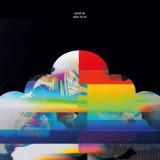
On its latest album »Music For Air«, the Berlin-based interdisciplinary duo Gamut Inc explores new possibilities of the computer-controlled pipe organ — from hypervirtuoso excess to nuanced automation and rhythms beyond the fixed grid. Composed and recorded during a two-week residency in Toulouse, the pieces move between harmony and noise, conjuring a euphorically intoxicating maelstrom of overlapping, accelerating sound.
Gamut Inc’s work with the computer-controlled organ actually began in 2009 with a commission from ON – Neue Musik Köln for the Kunst-Station Sankt Peter — at a time when few congregations were ready to open their instruments to this kind of work. When the duo of Marion Wörle and Maciej Śledziecki officially founded the ensemble in 2013 as an interdisciplinary project, they first developed their own music machines with instrument builder Gerhard Kern, returning to the organ in 2018 when more churches and venues had opened their doors … and Gamut Inc carried their practice across Europe and beyond, developing AGGREGATE (first a concert series and then an annual festival) into a platform dedicated to organ music of the 21st century.
Sharpening a critique of mechanisation, digitality, and the human in between, the project is conceived around the construction of pre-modern instruments and the control of these instruments by contemporary technologies, resulting in an aesthetic that bridges the very old and the very new. Recent works include the human-machine trilogy »Over The Edge Club« (2021), »Rossum’s Universal Robots« (2022), and »Zeroth Law« (2023, performed at Deutsche Oper Berlin with the RIAS Chamber Choir and the Logos Robot Orchestra), and »Black Square« (2025), a wind-dynamic modular organ built by Tony Decap, inaugurated at CTM Festival and broadcast on Deutschlandfunk Kultur and SWR Kultur. Their organ installation AGGREGAT#10, commissioned by Sónar Festival, was acquired for the permanent collection of Palau Güell Barcelona in 2022.
Gamut Inc’s latest album »Music For Air« was composed and recorded during a two-week residency in Toulouse on the wind-dynamic organ »L’Explorateur«, with individually computer-controlled wind pressure per pipe. The seven pieces move between harmony and noise, conjuring a euphorically intoxicating maelstrom of overlapping, accelerating sound and again exploring new possibilities of the computer-controlled pipe organ — from hypervirtuoso excess to nuanced automation and rhythms beyond the fixed grid. Sensual and ecstatic.
A stylish selection of city pop, funk and modern soul from Japanese label Nippon Columbia, selected by DJ Notoya and featuring cult classics and rarities by Hiroshi Sato, Hatsumi Shibata, Hitomi 'Penny' Tohyama & many more.
Annotated by Notoya with journalist Nick Luscombe and artwork by Optigram.
Newly remastered audio.
The selection on ‘Tokyo Glow’ starts with 'Kimugare' a relaxed mid-tempo track by Kumi Nakamura, actually a famous actress who only recorded one album in 1980 for Columbia.
The set continues and flows effortlessly with the sunshine grooves of Miyuki Maki, Hatsumi Shibata and cult keyboard player Hiroshi Sato before the pace starts going faster and funkier with New Generation Company, Kengo Kurozumi - with his superb boogie, 'Juggler'
- and one of the queens of the genre, Hitomi 'Penny' Tohyama with 'Tuxedo Connection'.
Another fine example on the set is the mid-tempo groove of "I Wander All Alone Part III" by New Generation Company, an aggregate group of some of the best Japanese session musicians led by arranger Katz Hoshi and including Hiroyuki Namba (key), Kazuo Shiina (gtr) and Yutaka Uehara (ds) who all played with Tatsuro Yamashita among many others.
There are many other excellent examples in 'Tokyo Glow', showcasing the diversity and specificity of Japanese City Pop during the late 70s and 80s.
Nippon Columbia opened their much-guarded vaults to curator DJ Natoya. Tracks were remastered in Tokyo and the result, ‘Tokyo Glow’, is a unique insight into a most creative period in Japanese music.
out of Stock
Last delivered 2 years ago available to reorder, subject to availability
For any other artist, an album like Asher White’s Love Aggregates might come out of a conscious push to treat no idea as off-limits, to make something bold and new. Jubilant art-funk about cocaine addiction—absolutely. Swooning orchestral pop about Jerry Garcia—why not? Rippling electronic noise, jazzy brushed drums, an elderly motorcyclist with dementia, a profoundly emotional bass solo—put them all in one song. There are threadbare folk tunes, glammed-up power-pop bangers, “Sir Duke” horn charts, Morton Feldman string arrangements, layers of guitar feedback like violins made of liquid chrome. Yes, for another artist, Love Aggregates might be the most adventurous album in their catalog. For Asher White, it’s what passes for settling down.
White is 25 years old and has been making records—writing, recording, producing, and playing almost everything herself—for over a decade. She’d released two dozen of them on Bandcamp before catching the indie-rock industry’s attention with 2024’s Home Constellation Study and last year’s 8 Tips for Full Catastrophe Living. The latter album’s dizzy eclecticism and formidable craft landed her on Rolling Stone’s Future 25 list with the likes of xaviersobased and Oklou, along with a slew of other accolades. That came as something of a surprise to White, who didn’t craft the chaotic 8 Tips with a breakthrough in mind. Love Aggregates feels like a chance, for one of the most thrilling musical talents of her generation, at a more deliberate introduction.
She wrote and recorded her new album while her previous one was gathering
momentum, tinkering in the DIY recording studio where she always works, acutely conscious now that people would be listening to whatever she came up with. At around the same time, her years-long romantic relationship ended in a flurry of betrayal and addiction, her first experience of devastating heartbreak. Even so, Love Aggregates is not a bitter album about wallowing or seething, but instead making use of those impulses as raw materials in work that transcends the specificity of its origins, fashioning them into something surprising and new.
METLASR is an album for microtonal idiophones and modular synthesizer by composer/producer Tyler Friedman for Radicant_Editions.
Drawing on the legacies of downtown minimalism, METLASR connects avant-garde composition, aspects of global traditional musics and advanced synthesizer technique into an ambitious and singular hybrid. Animated by generative modular sequencing and grounded by undulating bass, the album focuses on an endless cascade of pirouetting geometric melodics, which are spread across a spectrally fused ensemble of crystalline FM and sampled pitched percussion – specifically gamelan orchestra, marimba, mbira, vibraphone and tingklik. The assemblage of voices interlace in fractal mirrors, aggregating into pointillist harmonizations heightened by multiple layers of dub processing. The use of alternative tunings — primarily 24-note per octave just intonation — infuses the poly-modal progressions with lush radiance, staging tension between the strange and the beautiful through neon inflections of subtle dissonance.
Entirely improvised, a fact belied by the contrapuntal complexity of it all, METLASR’s seven tracks were each recorded in a single pass and subject to minimal edits. Although the sound palette and...
Nous'klaer Audio introduces Maask with four sculptural works of sound: layers upon layers, each carrying a sense of life moving through every frequency. Built from field recordings gathered in remote corners of the world and transformed into powerful tracks for the dancefloor. Across these tracks you can hear a storm moving the branches of an oak in Powys, reeds photosynthesising beneath a lake in Rajasthan, highland moss, thunder above Kumasi and wind moving through a neolithic burial chamber on an island off Cornwall. As delicate as these unprocessed sounds are, as powerful are the synergies in their final forms.
out of Stock
Last delivered 32 days ago available to reorder, subject to availability
Preceded, in November 2018, by the monster hit ‘Nothing Breaks Like A Heart’ featuring Miley Cyrus, Mark’s fifth studio album dropped in June 2019 to widespread acclaim as a carefully crafted, cohesive and intimate experience. Outfitted with one of the finest aggregations of so-called ‘sad bangers’ to be found anywhere in pop, including four further singles featuring stellar female vocal performances, Ronson described it as “definitely the best thing” he has produced (as well as the record that he worked hardest on) and it is difficult to disagree. As Clash Music concluded: “Ronson’s ability to tap into each artist’s strengths and dig out their particular prowess allows each voice to shine through and own each individual track. This is what elevates the record to a guaranteed award winner and a truly empowering listen.”
Best known for his film and TV scores ( Dirty Harry, Enter The Dragon , Mission Impossible , The Eagle Has Landed , to name just a few) Lalo Schifrin (1932-2025) began as a jazz pianist who worked with some of the most important musicians of his day. The Insensatez session was cut during Schifrin's involvement in Dizzy Gillespie's band, which explains the participation of musicians from that aggregation. First issued as Piano, Strings & Bossa Nova in 1962 (produced by Creed Taylor), this album was reissued with one less title, as Insensatez on Verve in 1969. Featuring 12 Brazilianized themes and four Lalo Schifrin originals - 'The Wave', 'Rio After Dark', and 'Silvia' from Schifrin's movie score El Jefe, and 'Lalo's Bossa Nova' written for Quincy Jones' 1962 album Big Band Bossa Nova. Insensatez offers a rare insight to Schifrin's superb musicianship, not only as a composer, but also as a pianist
c 3 You And Me [voce E Eu]
[d] 4 Lalo's Bossa Nova [samba Para Dos]
[j] 10 Samba Do Perroquet [parrot Samba]
[c] 3 You And Me [voce E Eu]
[d] 4 Lalo's Bossa Nova [samba Para Dos]
Das dritte Album der Supersuckers aus Tucson, AZ - "The Sacrilicious Sounds of the Supersuckers" von 1995 - ist ein Klassiker und endlich wieder erhältlich, und zwar auf limitiertem, undurchsichtigem, rotem Vinyl! "The Sacrilicious Sounds of The Supersuckers" wurde von Paul Leary von den Butthole Surfers produziert und ist wütender, höhnischer Punkrock, der die besondere Mischung aus Hardrock, Punk und anspruchsloser Country-Kultur der Band perfekt auf den Punkt bringt. The Damned trifft ZZ Top? Die Motörhead des Südwestens? So etwas in der Art, sicher, aber letztendlich sind The Supersuckers ihr eigenes Ding, und auf "The Sacrilicious Sounds..." - und vor allem auf der Single "Born With a Tail" - beginnen die kläglichen Country-Klagen von Sänger Eddie Spaghetti selbstbewusster durch das rohe Punk-Aggregat zu stoßen. Apropos Aggro: Dies ist das einzige Album der Band mit Rick Sims von den Punk-Legenden Didjits aus Illinois an der Gitarre, und Sims treibt die ohnehin schon gewaltige Wand aus übersteuerten Gitarren der Supersuckers pflichtbewusst in die Höhe. Als zusätzliches Schmankerl übernimmt Sims den Leadgesang bei dem rasanten "Run Like a Motherfucker".
out of Stock
Last delivered 14 months ago available to reorder, subject to availability
Relay For Death is the noise project of the twin sisters Roxann and Rachal Spikula. Their hermetic works consistently reflect a bleak nihilism, all the while carving an autonomous space for survival as the rest of the existence crumbles. Previous works have been published by Hanson, No Rent, Total Black, and RRRecords.
The twins offered the consideration that "Mutual Consuming comes from a concept in the philosophies that underpin traditional Chinese medicine theory, where the two opposing states (yin and yang) are 2 states on a continuum and their interactions produce an infinite possible number of states of aggregation. Within this interplay, there is a dynamic balance that is maintained by a constant adjustment of their relative levels. So an excess of yin consumes yang and vice versa." We asked if this has anything to do with the concept of the Ouroboros, to which they responded, "we hadn't thought about Ouroboros, but the eternal cycle of things makes sense too. The gorge fest of existence." Does this relate to previous works? The twins concisely respond to that question in a rare interview in Untitled, "No."
Mutual Consuming is a dire piece of isolationist thrum, spectral caterwaul, and heavy gloom through an oblique and abstracted coupling of electronics, noise, and ominous field recordings. As immersive as Thomas Köner’s haunting ambience but fully entrenched in the industrial meditations of MB. Originally published as part of the instantly out of print boxset, On Corrosion - a 10 cassette anthology from 2019 that was housed in a handcrafted wooden box and featuring full albums from Kleistwahr, Neutral, Pinkcourtesyphone, Alice Kemp, She Spread Sorrow, G*Park, Relay For Death, Francisco Meirino, Fossil Aerosol Mining Project, and Himukalt. The collection stood as the 50th release for The Helen Scarsdale Agency.
Unequal cycles in search of synchronous experiences: On his new album »Pounding«, Frank Bretschneider tells of distance, convergence and congruence in a continuous, ever-changing flow of events. What is often regarded as an unquestionable dogma in club music (for which Bretschneider has provided significant impetus since the 1990s) – the groove – appears precarious, unstable, and in motion. Pulse and accent are volatile encounters and have to be found again and again for short, delightful moments. Music becomes a constant process of negotiation.
In search of new sound spaces, Bretschneider has recently worked a lot with modular synthesizers, both solo (for example on »abtasten_halten«, 2020) and in collaborations, including the project Beispiel together with Jan Jelinek. »Pounding« was created using similar means – conceived in 2020 for the Pochen Biennale in Chemnitz, subsequently developed further and recorded in March and April 2023 on a sample-based modular system. And in fact, Bretschneider is once again exemplarily scanning his own sound material, such as dub effects that listen to themselves disintegrate; but also the human voice, or more precisely: the stuttering of fragments of speech, far in the distance but omnipresent, like a mysterious narration. Aesthetically, the eleven pieces form part of a series of works with a focus on percussion. Bretschneider has already perfected this approach with albums like »Rhythm« (2007) and has been shifting the perspective ever since, for ever new results.
Shifting is the basic principle of »Pounding«. Bretschneider combines elements that are in different aggregate states, changing their relationship to each other and thus ensuring the complex overall movement. He lets one to two-bar loops run against each other and through small manipulations, develops a network of rhythms that creates a hypnotic state in the counterplay of repetition and mutation, between clearly recognizable meter and disorientation. There are comparable approaches in aleatoric music. Bretschneider combines them with sounds and patterns that are reminiscent of step sequencer logic and at the same time go far beyond it. The result is relational techno. Never obvious, always restless and exciting.
out of Stock
Last delivered 16 months ago available to reorder, subject to availability
"Clinamen" is the random and unpredictable movement of atoms, which inexplicably change direction during their fall and thus encounter each other. From this chance encounter, the divine does not arise but actually dies, since the atom is nothing more than the aggregation of infinitesimal parts of matter, converging into unity. From this one, from this singular, from this self, I want to escape. Having abandoned the vain glory and hope of passions, I strive towards the sacred, for the gods themselves are also made of atoms. In this sacred secularism of mine, in this exodus from myself, I finally recognize the truth: there is no difference between us and them. Everything converges into a single point, which is the whole. And I find peace. You will find the rhythmic and unpredictable chaotic tale of the atomic fall towards oneself. As the infinitesimally small and the infinitesimally large come to coincide in the creative moment, even time bends and adapts in the service of this imperceptible revelation. Through post-tribe sounds of ancient remiescence to the most contemporary clubbing subculture, passing through an exasperated minimalism that leaves no detail behind. Complex, elegant, profound. Open to any change
out of Stock
Last delivered 15 days ago available to reorder, subject to availability
The Shadow Ring (1992-2002) presents a comprehensive overview of the work produced by British musicians Graham Lambkin, Darren Harris, and later Tim Goss over the course of a decade. Throughout their legendary ten-year run, this shambolic rock outfit, formed by a group of teenagers in the port town Folkestone, were an enigmatic force on the international musical sub-underground. The group have left behind a mighty run of eight LPs, a handful of 7-inches, and a spate of raucous live shows and cryptic zine appearances on both sides of the Atlantic. Collected here for the first time are The Shadow Ring's live cuts, rarities, and complete commercial releases, spread out across eleven CDs and a DVD, accompanied by an nearly five-hundred-page book that includes a monographic biographical survey, more than one hundred color photos, a comprehensive discography with transcribed lyrics, and a selection of zine appearances, fliers, postcards, and other miscellanea. In aggregate, this significant collection not only plums the depths of the band and its attendant lore, but reveals a vivid minor history of mail-order networks, bedroom recording sessions, cross-USA couch-surfing, and encounters with fellow travelers such The Dead C, Harry Pussy, Charalambides, Richard Youngs and the No-Neck Blues Band. Where is the connecting thread between Ralf Wehowsky and Squirrel Nut Zippers? Inquire within. The roughly 200 songs in this set trace the band from its earliest days recording in Lambkin's parents' house (SHP Studios), through its brooding mid-period, garnering word-of-mouth notoriety that peaked with the trio turning down an invitation to tour with Pavement, to a string of increasingly uncompromising experiments with electronics, voice, and tape. Although the band's sound morphs considerably during this time period, from spartan beginnings using pots and pans as a drum set to their ultra-deconstructed latter-day approach, certain core sensibilities are apparent throughout: brash youthful rawness, wry and morbid lyricism, stripped-down angularity, and a penchant for atmospherics. This boxset, featuring every record and single, and buttressed by twenty-nine rarely-heard recordings, including proto-Shadow Ring projects such as the Cat & Bells Club and Footprint cassettes, and their unearthed final CD-R Darren Harris Reads Graham Lambkin, presents the first opportunity to hear this arc in full. The ebbs and flows of the band_their schoolboy beginnings, initial successes, first shows and tours, life milestones, and Lambkin's gradual development as a solo artist_are painstakingly detailed in a sizable band history-cum-Künstlerroman by Blank Forms artistic director Lawrence Kumpf, illustrated with candid photos, sketches, letters, newspaper clippings, and other ephemera. The music and videos can speak for themselves, but taken as a mass, this collection makes sense of the group's utter uncanniness without comprising one iota of their mystique, bringing something new to the table for completionists and the uninitiated alike.
"Ein Großmeister der Pianoballaden" schrieb der Rolling Stone zu Martin Bechlers Solo Liedern, "betörend und souverän".
An zwei ausverkauften Abenden in der Kölner Kulturkirche wurde eben diese Magie in beeindruckender akustischer Kulisse eingefangen.
Der Kopf der Kölner Indie Abräumer Band Fortuna Ehrenfeld führt in einem der seltenen Solokonzerte beeindruckend intensiv sein Publikum durch die Aggregatszustände eines Schrammenlebens.
Blut, Schweiß, Tränen.
"Ein Großmeister der Pianoballaden" schrieb der Rolling Stone zu Martin Bechlers Solo Liedern, "betörend und souverän".
An zwei ausverkauften Abenden in der Kölner Kulturkirche wurde eben diese Magie in beeindruckender akustischer Kulisse eingefangen.
Der Kopf der Kölner Indie Abräumer Band Fortuna Ehrenfeld führt in einem der seltenen Solokonzerte beeindruckend intensiv sein Publikum durch die Aggregatszustände eines Schrammenlebens.
Blut, Schweiß, Tränen.
Prompt reissue of the only album released by The Aggregation, a Los Angeles psych rock combo, who licensed the album on LHI - Lee Hazlewood company - back in 1969. The story goes like that: the band used to perform cover songs at Disneyland attraction park but also produced a bunch of originals to get along with Disney rides and exhibits. Hence their concept album in which "funhouse" is a metaphor for exploring the brain frontiers. A must have!
Outsider rock is no longer an invite-only endeavor with DIY touring art pop band Summer Like The Season. Their sophomore record “Aggregator" is a DM to come hang out on discord servers and twitch streams. Opening with the track “Meet Me On The Internet” this anthem is a welcoming call to summon a court of weirdos and misfits. Genre bending across the spectrum of indie rock to hyper pop, the musical musings of Summer Krinsky are an exploration of this cyborg era. As a LGBTQIA female producer, percussionist and singer, Summer fronts the band from a unique perspective in more ways than just physically behind the drum kit. Summer is an audio engineer and co-owns Atonuv, a recording studio in Detroit with bandmate Scott Murphy. She composes all of the music, playing piano, bass, guitar, drums, erhu, synths, found sounds, singing bowl, banjo, auxiliary percussion, melodica, kazoo and more on this album. Locking themselves in the studio for many months in a marathon of micro-details, Summer and Scott mixed the record to their exacting standards. The presentation of the band’s first album “Hum” was a polished product from out of thin air, finding fans in person as they toured from town to town. For this new record Summer’s goal was to allow audiences to witness, engage, and participate in a far more intimate manner. Summer live-streamed slices of the composition process, refining tracks such as “Android Hymn” and “Crosstalk” realtime on twitch. “Aggregator” is an album about nowness, living in the time of technological revolution, at the intersection of optimism and anxiety. These songs are a balance, a flip of a coin, the outcome of which is yet to be determined.
We celebrated a decade of releasing music in 2020 with our Time Capsule boxset compilation. “Time Capsule Extensions” sees the longer versions of six tunes from that anniversary release aggregated for this special companion album.
out of Stock
Last delivered 2 years ago available to reorder, subject to availability
This is one of the last Chet Baker albums recorded in the States prior to the artists relocating to Europe in the early ‘60s. Likewise, the eight-tune collection was the final effort issued during his brief association with the Riverside Records imprint. The project was undoubtedly spurred on by the overwhelming success of the Shelly Manne-led combo that interpreted titles taken from the score to My Fair Lady (1956). In addition to becoming an instant classic, Manne’s LP was also among of the best-selling jazz platters of all time. While Baker and crew may have gained their inspiration from Manne, these readings are comparatively understated. That said, the timelessness of the melodies, coupled with the assembled backing aggregate, make ‘Chet Baker Plays the best of Lerner and Loewe’ a memorable concept album.
In a recent interview, the California artist Jim Haynes was asked to name his top five noise albums. In quick fashion, he listed off Kill The King, Send, Desnos, Persona, and Carcinosi. Since then, he's equivocated on which albums to choose, but the artists behind such works remain as the adjacent signposts and landmarks to his own constructions of industrial noise. How those records connect to the output from Haynes is found in their unique combination of smoldering dynamism and psychological inquest. For over twenty five years, Haynes has been an autodidactic clinician into the processes of corrosion, decay, and rust, turning his attention away from visual practices and more to the metaphoric crucible of noise and sound. By now, it seems like a cliche that the pandemic changed everything; but since that viral encroachment, there is a noticeable shift in Haynes' work post 2020. It's more aggressive and yet more controlled: a rarification and telescoping of the research into decay for more potent noise and more potent metaphor.
The tools for Haynes' work remain limited: motors, electronics, shortwave radio, found objects, all applied with considerable pressure. Compositionally, Inauspicious is a very rough moire pattern from overlapping elliptical structures that can negate and obfuscate just as easily as they can compound and aggregate. The album surges and collapses upon the two twenty minute chunks of controlled noise that follow an internal logic that snakes from brooding power drones, spectral radio transmission, and an aktionist demolition cast upon metal, glass, and unfortunate wooden objects. Rupture and release. Purge and pulse.
"Heavy music for nerdy people", so beschrieb mal jemand die Musik von Mint Mind. "For" oder "from"? Beides naturlich. Nach den ersten "VG+"-Songs hat man ein Gefuhl, wie die Welt von Mint Mind aussieht: Instrumente und Verstarker aus mehreren Dekaden und in unterschiedlichen Aggregatzustanden, teils gestapelt an den Wanden. Davor, daneben und dazwischen Synthesizer und Effektgerate, teilweise groß wie Gullideckel. Im windschiefen Plattenregal zwei Hande voll Comics, Alben von New Order, Devo, den B52s, fast der gesamte SST-Katalog, sowie Krautrock-Klassiker von Can und Faust. "VG+", das dritte Album von Mint Mind, ist ein großes, generationenubergreifendes Indie-Rock-Album geworden.
"Heavy music for nerdy people", so beschrieb mal jemand die Musik von Mint Mind. "For" oder "from"? Beides naturlich. Nach den ersten "VG+"-Songs hat man ein Gefuhl, wie die Welt von Mint Mind aussieht: Instrumente und Verstarker aus mehreren Dekaden und in unterschiedlichen Aggregatzustanden, teils gestapelt an den Wanden. Davor, daneben und dazwischen Synthesizer und Effektgerate, teilweise groß wie Gullideckel. Im windschiefen Plattenregal zwei Hande voll Comics, Alben von New Order, Devo, den B52s, fast der gesamte SST-Katalog, sowie Krautrock-Klassiker von Can und Faust. "VG+", das dritte Album von Mint Mind, ist ein großes, generationenubergreifendes Indie-Rock-Album geworden.
Once again featuring the dynamic vocals of charismatic soul diva Kennedy and the talents of keyboardist/composer/producer and musical director Ondre J, this Brooklyn- based aggregation of groovemeisters brings an irresistible blend of funk, rock, soul and fun on their uplifting sophomore outing.
Farewell To The Welfare is now available in a limited edition teal vinyl pressing. The Tribe Records co-founder’s lost album, rumored to exist no more. Mastered from the original tapes and lacquered by Bernie Grundman. “As I thought about reflecting on an aggregate of music for this album, I projected my attitude and spirit while living and working here, in Detroit, Michigan. We are earning and learning a new way of life, which explicitly tells us to become self-reliant in taking care of our families and each other. Government hand-outs are not an option for us.” Wendell Harrison. The first ever issue of this Spiritual Jazz album. The Tribe label, one of the brightest lights of America’s 1970s jazz underground, receives the Now-Again reissue treatment. This is your chance to indulge in the music and story of one of the most meaningful, local movements of the 20th Century Black American experience, one that expanded outwards towards the cosmos. In the words of the collective themselves, “Music is the healing force of the universe.” Included in an extensive, oversized booklet, Larry Gabriel and Jeff “Chairman” Mao take us through the history of the Tribe, in a compelling story that delves not just into the history of the label and its principals, but into the story of Black American empowerment in the latter half of the 20th Century. The booklet features never-before-seen archival photos and rare ephemera from Tribe’s mid-1970s heyday.
When he‘s not writing or recording, Baba Stiltz immerses in fearless fiction by the likes of Denis Johnson and Dodie Bellamy; prose where pedestrian details become transcendent in aggregate and the inner lives of marginal characters are examined as though they were kings.
A similar thesis runs through „Paid Testimony“, the essential second tape of minimalist guitar music from the FilipinoAmerican-Swedish artist.
In recent years, Stiltz has made like Lee Hazelwood‘s Cowboy In Sweden in reverse, making annual pilgrimages from Stockholm to California and reconnecting with his roots via a guitar and a Fostex 4- track. He‘s drawn to the less glamorous corners of the golden state, an observant habitué of unkempt streets and dive bars stretching from LA to Vacaville. It‘s a long stretch from the jetset techno clubs
where Baba originally plied his musical trade, but it‘s where he finds characters and ideas worth writing about.
The characters on „Paid Testimony“ are on the edge and on the run. Surrounded by flawed men with big schemes since childhood, he extrapolates characters who plot bank heists and order milk and vodka in AM hours, the type of confrontation- prone characters who „say some shit, make everyone uncomfortable and then just split.“ To focus on the rawness of this document would discount the humor and sympathy with which he treats his characters, not to mention the subtly- psychedelic songwriting recalling David Berman, early Smog, the original indie rock minimalist poets.
On the final song, Stiltz looks back on the city that raised him „Stockholm,“ referencing „young professionals carelessly living“ before adding „I can‘t say I‘m not jealous even though I live my life just like they do.“ There‘s an honesty in the small details revealed on „Paid Testimony“, and a defined sense of place, be it Stockholm, Sacramento or some dim barroom across from the Bank Of America.
Baba doesn‘t quite fit in anywhere. This outsider quality has often been used as a marketing tool, yet here, it lends a writerly aspect to the proceedings, an unreality to the everyday.
out of Stock
Last delivered 3 years ago available to reorder, subject to availability
We have opened the vault to bring to you for the first time on a 2CD set Roadrunner United ‘The Concert (Live at the Nokia Theatre, New York, NY, 12/15/2005)’, featuring members of Slipknot, Anthrax, Trivium, Machine Head, Fear Factory, Sepultura & more. Roadrunner United was a project organized by the heavy metal record label Roadrunner Records to celebrate its 25th anniversary. On December 15th, 2005, in New York City, the label produced the Metal Concert to end all Metal Concerts: 39 musicians, representing 25 different Roadrunner bands, performed 25 songs from 19 different bands’ repertoire. This unique and unprecedented aggregation of musicians was no jam session. Each song was studiously rehearsed and arranged, coming together with exuberant perfection, to produce a concert that can only be called “Legend.”
Conceived as a follow-up to the Roadrunner United All-Star recording sessions, the label recruited the core team of musicians (Dino Cazares, Adam Duce, Paul Gray, Joey Jordison, Andreas Kisser and Roy Mayorga) as the backbone of the performance. Sure enough, as they fine-tuned the songs and rehearsed them tirelessly, dozens of other musicians came on board.
This 3LP set represents the gathering of a community of musicians that spans the heavy metal history of the first 25 years of Roadrunner Records: from King Diamond to Slipknot and beyond. Those who were lucky enough to be there experienced a night they will never forget. For the first time as a live concert album, this 3LP set on red, white and black coloured vinyl is a chance to relive that special night again and again.
“On this, their second LP, P16.D4 solicited tapes from several artists from Europe, England, the U.S., Canada, and Japan, and mixed that with their own material. Though in the current digital age collaborations from artists thousands of miles apart is quite normal, this was a quite radical approach back in 1982, when work on this LP began – an interesting concept that actually works quite well, since these artists, which include Bladder Flask, DDAA, the Haters, Merzbow, Nocturnal Emissions, Nurse With Wound, and several others – work in a similar free-ranging experimentalism as P16.D4, and their particular elements, usually just vocals or one instrument or noise implement, blend well without diluting P16.D4’s own peculiar brand of avant-garde post-industrialism, but merely give it another facet. One of the best tracks, “Aufmarsch, Heimlich,” consists of a choir submitted anonymously from Eastern Europe phasing in and out of static while a skronky alto sax bleats away. Most of the pieces exist somewhere just beyond the borders of free jazz, industrial, and even classical avant-garde, full of jarring noises and strange transitions and with a heavy overlay of electronics. What started out as an experiment yielded one of P16.D4’s best albums.” - Rolf Semprebon / AMG
“Distruct is organized around sounds provided by the cream of experimental musicians of the early ’80s, from Nurse With Wound to Nocturnal Emissions, via De Fabriek, Die Todliche Doris, The Haters, Merzbow, and others. Obviously, there is no question of remixing here, and at no time do P16.D4 seek to hide its sources, clearly identifying the contribution of each artist in the liner notes. It would be futile to try to find the paw of each artist, the trio operating vis-à-vis its collaborators the same methods as in their own work. Reworked, distorted by various effects, cut, edited, aggregated with other sounds, produced by P16.D4 themselves, reprocessed. Exchange, communication, two other data that will constantly recur in the work of P16.D4, rich in external contributions and encounters of all kinds. Musically, and despite the diversity of sources treated, Distruct escapes the heterogeneous character, which often marks this type of collaboration, to offer a coherent whole: fragments of opera, Soviet speeches, out-of-tune guitar, saxophone, tattered violins, overdriven and metallic noisy attacks, jackhammers, field recordings, battered choirs, and many other less identifiable sounds. In addition to the desired dialogue between the artists, Distruct also offers a real reflection on listening, and on the expectations of the listener.” - Dissolve
P16.D4 was a German electronic noise music collective, active primarily from 1980 to 1988. P16.D4 embraced tape cut-ups, musique concrète, endless recycling and transformation of previously published material, and many long-distance collaborations with like-minded artists such as DDAA, Vortex Campaign, Nurse With Wound, and Merzbow. Their active participation in the international industrial tape scene yielded collaborative output such as their release Distruct, where bands such as Nurse with Wound, Nocturnal Emissions, Die Tödliche Doris, and The Haters provided the source material. The longest-term collaboration was with the installation and conceptual artist Achim Wollscheid, who used P16.D4 sounds as the basis for LPs he recorded under the name SBOTHI. Ralf Wehowsky, the only constant member of the group, later released solo material under the alias RLW.
Members of P16.D4 were also involved with Selektion, a collective of people involved with sound as well as the visual arts. Selektion published LPs, CDs, books, visual art and design.
The collective worked in a strongly improvised, spontaneous and anti-professional way, using acoustic and electronic instruments, using existing sound fragments, duplicating and alienating them, using repetition, distortion, changes in speed and playing direction. For this they used not only sounds of other artists but also their own material from earlier productions. Late works of the collective are associated with musique concrete.
Historically Fucked is a four way entanglement made to create short, eruptive songs and then set about obliterating them from the inside, like improvising a barrel to encase themselves in and then proceeding to lick their way out of it. It is about playing and laughing at playing, and it is about not doing either of those things sometimes. Sometimes it is to do with talking, howling or grunting, and sometimes it is to do with hitting and rubbing.
Historically Fucked contains four people, who each share the same duties, and whose names in sequence are Otto Willberg, David Birchall, Greta Buitkuté and Alecs Pierce. They are from Manchester and often other places. Guitar, bass, drums and voices keenly jostle amid the group’s frenzy of spontaneous rock throttles. Some of these rampant exercises in avant are collected on ‘The Mule Peasants’ Revolt of 12,067’, the band’s new album, released by Upset The Rhythm on February 3rd. This is the group’s first release since 2018’s mantlepiece staple ‘Aliven Wool’ (Heavy Petting). This is Rock and/or Roll as fertilizer, uncivilised and free, as if one were to imagine what the Plastic Ono Band would’ve hit upon if they had read ‘Riddley Walker’, the sound of an entire timeline of expression put back together back-to-front, misshapen and irradiated.
‘The Mule Peasants’ Revolt of 12,067’ is not mere Sedentary Rock but Blasted Basalt, Frog worshipping cave-funk, harmolodic hullabaloo-wop, a musical game of “badger in the bag”. It is the sound of sacks crammed full of aggregate, a chimerical mind-meld, a seductive din that is to a hound dog in blue suede shoes what a raking of the dorsal fin with a fat marrow pinecone is to a pelican in the midst of being fired from the academy.
‘The Mule Peasants’ Revolt of 12,067’ by Historically Fucked was recorded by Rory Salter, mixed by Otto Willberg and mastered by Mikey Young. The liminally worrisome artwork was painted by John Cobweaver.
“They say these days that History is Fucked. Nothing ever dies but continues to rule the earth as an undead tyrant that cannot accept its own decomposition, look earwardly upon the dance of the proudly dead and decrepit!”
The sum to infinity of a sequence is the sum of an infinite number of terms in the sequence. It is only possible to compute this sum if the terms of a sequence converge to zero. "sum to infinity" is also the second release from gamut inc, the retro-futuristic ensemble around composers and curators Marion Wörle and Maciej Sledziecki.
This second album by gamut inc combines custom-build autonomous music-machines with haunting classical synthesizer sounds to a dense musical kaleidoscope.
The core of the album is formed by Risset rhythms - cyclic accelerations and decelerations, in which rhythmic layers are repeatedly faded in and out, setting in motion a seemingly endless process of rhythmic movement. The motifs are taken from geometric and arithmetic series that create an urgency and restlessness. The rigor of the construction is obscured by an orchestrion whose timbres are reminiscent of a retro-futuristic indigenous ensemble. gamut inc translate strategies of electronic music like pulse-width modulation to music machines such as automated accordion, automated percussion or glockenspiels and create an intense atmosphere that is idiosyncratic, original and modern at the same time.
Gamut inc. build their own music machines, play electronic music festivals internationally, curate the AGGREGATE festival for automated pipe organs, and compose for film, radio drama, and theater. Their first opera, ROSSUMS UNIVERSAL ROBOTS, premiered in 2022. Since 2011, at the intersection of electronic club culture and experimental music, they have been producing live music, music theater, film and theater scores (including for the Junge Staatstheater Berlin) with their specially developed musical robots. They composed for ensembles like the RIAS chamber choir or the robot orchestra Logos Foundation and received invitations and commissions from international festivals and venues such as Sónar, CTM, Berghain, Sonic Acts, Technosphärenklänge or Numusic (NO).
Their first release EX MACHINA was produced exclusively with music robots, and released in 2014 in cooperation with Bôłt Records.
"Percussion tracks bring to mind the music of Einstürzende Neubauten in their industrial mechanics, until finally the music warms to an expression reminiscent of Johnny Cash's late work."
Süddeutsche Zeitung
"The making of this album first started as a recollection of music and sound design I've produced over the last couple of years for events and installations - interactive and immersive AV experiences. It was like creating a specific atmosphere for visitors where I'd take them into this sensorial but artificial experience within a very confined spatial domain. This is how the "Climats" concept emerged.
Longer ambient and generative pieces thus found their own space in my repertoire, allowing me to explore more in-depth, non-linear execution with soft, moody and padded textures. Eventually, all this freeform material became available so I could extract parts of it to build more club-centered and straightforward tracks, but nonetheless, the list grew and all this softer-edged, more introspective works were aggregating over time.
At the time of the lockdown, it felt very natural to get back to it and finalize it as a cohesive whole. It was a very healing and a smooth process to work on these. From isolation, I could open this window to thoughts where I made up my very own Science Fiction story while working on the music. I really wanted it to be a one-hour soundtrack experience that I'd listen at home or driving while my mind would travel across all those musical scapes. It was never a formalized script, but the music spoke for itself with themes of anticipation, collapse, utopia, the world as we know it, the near and far future...
Creating the album was quite a sporadic production process that stretched over several years but it all came together and made a lot of sense in the context of the title I chose : TERRAFORM. The narrative of the album simply unfolds from Dawn to Dusk, and the listener navigates through the different climates that each track embodies."
- TENEBRE
out of Stock
Last delivered 3 years ago available to reorder, subject to availability
Eric Dolphy's final studio album is hailed as one of the finest examples of mid-'60s post bop. Its reputation is purely one of backwards significance. Dolphy, having recorded the album in February 1964, was in Europe less than six weeks later and his all-too-brief life ended less than two months after that. Though likely he never held a copy in his hands or heard any critical opinion of it, it marked his last flurry of original compositions and is considered his apex. It is fascinating to consider whether he would had moved past or away from the album in 1965, had he lived.
Though Dolphy should not be considered an avant-garde musician by the term's most common definitions, most interpretations of Out To Lunch have been done by players working squarely in that area. So it is with this album, the most ambitious in its recreation of the five-tune disc (with one original added to the final "Straight Up and Down, extending the piece to almost thirty minutes). All five compositions from the original quintet LP are revisited in the same order, the record sleeve even duplicates the old album jacket, down to the typeface and black-and-blue color scheme, although a photo taken by Daidō Moriyama inside Tokyo's massive (and massively busy) Shinjuku railway station replaces the Dolphy's album's enigmatic "Will Be Back" sign, whose clock hands indicated no conventional time of expected return.
Otomo Yoshihide first came to international prominence in the 1990s as the leader of the experimental rock group Ground Zero, and has since worked in a variety of contexts, ranging from free improvisation to noise, jazz, avant-garde and contemporary classical. The always surprising and sometimes confounding turntablist, sound artist, onkyo improviser and now avant jazzer heading up a 15-piece aggregation of Japanese and European experimentalists. Who better to grapple with Dolphy's legacy -- so idiosyncratic in its day and yet so influential to creative improvisers who followed -- than a musician with his own singular take on how sounds can be organized in the jazz realm over 40 years later and half a world away? In other words don't expect the conventional from Otomo any more than you would from Dolphy himself. That's not to say that recognizable themes ("Hat and Beard," "Out to Lunch," "Straight Up and Down") don't appear, or that individual players -- including Alfred Harth on bass clarinet bursting into the mix and leaping across the instrument's tonal range in a way that recalls the master himself -- don't carry forward echoes from the past in the spirit of a sincere and heartfelt homage.
However, a good deal of the time all bets are off; in addition to the usual brass, reeds, bass, and drums (and of course a bit of vibraphone, here played by Takara Kumiko in far less prominent role than that of Bobby Hutcherson) are such sonic paraphernalia as sine waves, contact mike, no-input mixing board, and, of course, "computer." (Otomo himself plays skronky electric guitar.) From composition to composition and even during episodes within compositions, the band takes radically different approaches. There are blasts of free jazz energy not too far removed from the Peter Brötzmann Tentet, an impression reinforced by the presence of spluttering wildman Mats Gustafsson on baritone sax. Not surprisingly and often in contrast with the Dolphy original, the music is dense and filled to overflowing with sounds -- sometimes due to fundamental reworkings in structure rather than just the larger size of the ensemble. The middle section of "Something Sweet, Something Tender" somewhat belies the original's title with elongated howls and cries from the horns over slo-mo bass, drums, and electronic noise poised somewhere between dirge and drone, and the sudden explosion of punk-ish rock energy in the following "Gazzelloni" is a startling contrast.
At times, the feeling is that of listening to the original Out To Lunch while a séance is going on to contact Dolphy's ghost, with supernatural sounds swirling around the stereo. The effect is disconcerting, as is the post-apocalyptic cloud hanging over the arrangements, but it makes the effort more than an unnecessary tribute album. Instead, Dolphy is transported into the 21st Century and allowed to romp through modern developments in music. An inspiring concept and an album that will stretch the boundaries of anyone who comes into contact with it.
out of Stock
Last delivered 4 months ago available to reorder, subject to availability
Distilling Sounds From The Now 70 Years Old Archive Of The Darmstadt Summer Courses For New Music, The Berlin Based Electronic Artist Hanno Leichtmann Presents A Stunning New Album Which Is Remix, Collage And Homage At The Same Time. Mastered And Cut By Rashad Becker At D&m.
On His Latest Work "nouvelle Aventure", Berlin's Hanno Leichtmann (who Besides His Solo Works Also Plays With Jan Jelinek And Andrew Pekler In Groupshow And Recently Released His 2nd Album With Valerio Tricoli On Entr'acte) Presentshis Very Individual Approach To The Task Of Remixing And Reworking The Imd Archive. As In His Previous Installations (e.g. "skin, Wood, Traps" For Haus Der Kulturen Der Welt, Celebrating The 100th Birthday Of The Drumset), The Electronic Artist Distills His Sound Material Exclusively From A Thematically Fixed Archive, In This Case: Concert Recordings, Lectures And Discussions Fromthe Now 70 Years Old Archive Of The Famous Darmstadt Summer Courses For New Music (stockhausen, Nono, Ligeti, Xenakis Et.al.). Originally A 6-channel Installation As Part Of "historage" At Mathildenhöhe Darmstadt, The Composition Is Here Presented As A 46 Minutes Stereo Mix. Leichtmann Sent Thesubjectively-chosen Sounds Through His Unique Machinery Of Voltage-controlled (micro-) Loopers, Re-recorded Them And Then In A Last Step Pieced Them Together In His Studio, Primarily Applying The Traditional Parameters Of Early Electronic (tape) Music (amplitude, Pitch / Speed, Playback Direction, Series / Cuts, But Most Of All: Repetition. The Result Is A Stunning Albumwhich Is Remix, Collage And Homage At The Same Time - And A Highly Psychedelic Affair, As Mirrored By The Amazing Artwork By Caro Mikalef (cabina).
out of Stock
Last delivered 4 years ago available to reorder, subject to availability
The Tribe Records co-founder’s lost album, rumored to exist no more. Mastered from the original tapes and lacquered by Bernie Grundman. “As I thought about re ecting on an aggregate of music for this album, I projected my attitude and spirit while living and working here, in Detroit, Michigan. We are earning and learning a new way of life, which explicitly tells us to become self-reliant in taking care of our families and each other. Government hand-outs are not an option for us.” -Wendell Harrison The first ever issue of this Spiritual Jazz album. The Tribe label, one of the brightest lights of America’s 1970s jazz underground, receives the Now-Again reissue treatment. This is your chance to indulge in the music and story of one of the most meaningful, local movements of the 20th Century Black American experience, one that expanded outwards towards the cosmos. In the words of the collective themselves, “Music is the healing force of the universe.” Included in an extensive, oversized booklet, Larry Gabriel and Jeff “Chairman” Mao take us through the history of the Tribe, in a compelling story that delves not just into the history of the label and its principals, but into the story of Black American empowerment in the latter half of the 20th Century. The booklet features never-before-seen archival photos and rare ephemera from Tribe’s mid-1970s heyday.
EVEN THE CHIMERA is the debut album by Wild Terrier Orchestra, a new project by Dimitris Papadatos, aka Jay Glass Dubs, based on interchangeability and open improvisation. A newer, freer incarnation of Papadatos’ creative intent, the project acts more like an open container of disparate and idiosyncratic contributions from a mutable cast of musicians and artists. Often times not provided according to a pre-planned structure, these contributions are actually more likely to arrive in the form of free improvisations, unconnected musical segments and fragmented splinters of sound. This allows Papadatos to aggregate all the constituent parts according to an intuitive process that bridges between the detailed craft of electronic music production and surrealist techniques such as the Cadavre Exquis and the Cut-Up. It’s both a harmonization of contrasting tones and a research for commonality within difference, although none of the wild terriers are ever nearly tamed. Unsurprisingly, the main inspiration for this new chapter came from a a pinnacle of avantgarde literature: poet Andreas Embirikos’, considered Greece’s first surrealist and all-out paradoxical figure. Specifically, this release is guided and instigated by his poem OKTANA, in which Embirikos inscribes a manifesto for a hedonistic utopia years ahead of any accelerationist theories, bursting with contradicting presences and mutating identities. Written in the aftermath of the Greek civil war, the poem calls for a time of eternal poetry and spiritual intoxication that can only be reached through a painful process of violent deconstruction. Thus, EVEN THE CHIMERA was born: a culmination of Papadatos’ decades long research on traditional Greek and Byzantine music, free jazz and free improvisation. Firmly spread between two side-long tracks, the contributions of American singer and musician Cruel Diagonals on vocal duties as well as Greek artist and musician Fotini Korre on ney suggest the existence of a filament that connects the west and the east through the creation of ‘’possible musics’’. This happens in accordance to Papadatos’ practice of a counterfactual approach to the process of what music history dictates. It is also directly shaped by the musician’s frequent dwellings in the isle of Cyprus, a land in which the clash of worlds and culture has often taken both violent and beautiful shapes. The long drones, acoustic ghosts and unbalanced choirs that form the album seem to call from the Mediterranean itself, not only from its history but also from its possible futures and unreal narrations, invoking it as a nexus of diversity and possibility.
Stroboscopic Artefacts is proud to present the debut album of Malaysian born Bangkok based artist Wanton Witch.
Born in an isolated community of Borneo Island in 1993 Wanton Witch is a DJ and producer with a hyper-sensitive connection and approach to sound through performance. Coming of age in the relative isolation of island life, it wasn’t until relocating to Bangkok that she was able to access the different communities of musical genres that she would later travel between. With an early taste for trap and hip hop, she began working in the deconstructed club and techno scene where she found her musical voice, beginning her DJ career in 2018. Wanton is also a cofounder and original member of Queer underground creative collective ‘Non Non Non’ that has become a Bangkok nightlife staple.
Being an “outsider” musician and producer with no formal training, it was the fortuitous crossing of paths online that has sparked the creative collaboration between Wanton and label owner and creative director Lucy. Last year Stroboscopic Artefacts celebrated ten years established between experimental and dance floor spectres and this is the first record the label is releasing after one year break, marking the launch of a new chapter for the imprint. It is with releases like the eponymous debut album from Wanton Witch and the support given to emerging artists like her that the imprint continues to forge pathways within the industry.
Featuring 11 tracks, these recordings are the first body of work from the Bangkok producer, and include many different snapshots of electronic music genres from IDM and experimental to hardcore and rave, using caustic electronics to deconstruct traditional track conventions. This collection of cuts read more as a complete soundscape, like listening to a live set. The phrenetic jump from genre to genre, the mixing of diverse sound textures and landscapes reflect Wanton Witch’s own experience navigating a hostile world as a Queer trans woman in Malaysia. The intense energy with which each track is cut together reminds the listener of the nostalgia of mixtapes and a time in life when identity is being constructed.
Wanton Witch has created an album which feels like a reflection of the aggregation that already exists within musical internet sub-cultures and communities. A place where many diverse and contrasting sound palettes, textures, and structures can fit together to create a new different, Queer way of seeing the world.
Following up on Wanton’s LP, label head Lucy will also present an actual full length album named ‘Lucy Plays Wanton Witch’ featuring re-interpretations of the original material in a whole new body of work. This upcoming follow up release will not represent a mere remix edition, but a recreation from scratch and the rebirth of “one into another” so to say. Expect the quintessential Lucy treatment.
out of Stock
Last delivered 4 years ago available to reorder, subject to availability