- 1: My Ouija Board Spelt S-C-A-M
- 2: Dreams Of A Dead Dreamer
- 3: Malignantly Useless
- 4: We Sleep In The Self
- 5: Serpent House
- 6: Paramasturbatory Delusions
- 7: The Cosmic Vulva Vs The Post-Enlightened Tongue
- 8: Nothin' Wounded Goes Uphill
- 9: Blu-Ray Séances And Weather App Prophesies
- 10: My Little Pony Apocalypse Diorama Playset
Поиск:ak chamel
Все
- 1
- Sheela Na Gig Ceremony
- Apocalypse By Oud
- Quarter Fed Seance Machines
- Monsoon Tears
- Mauled Compressed Twisted And Ruptured
- You Exist Soley To Work My Will
- Tuburcugnosis
- I Call You Into Being From Nothing
- The Smoking Gunlocks And Girthrings Dragged From The Ashes
- Take A Scripture, It'll Last Longer
A surreal mosaic of eerie chant processionals, tape-rot trickery, and panicked oud madness. These are sonic forgeries of atavistic heritages, recorded by analog means using esoteric techniques."" They have been known by many names: The Givers of Illness; The Bandylegged Riders of the Ill-Promised Sun, etc_ Honed and expanded through their travels, Ak'chamel's singular sound comprising desert-scorched psychedelia, post-apocalyptic shamanism, and bizarre ritual folk is as unique as the physical theater of their otherworldly live performances.
Toxy Kated is a free-spirited, chameleon-like band that produces different styles of music without labeling them. Dani Casarano, Camilo Castaldi, Kitty, and Galo Akun—who have known each other for over two decades—decided to join forces to create something new, without rules. Everything happens collectively, in sessions where emotion intersects with sensitivity, and improvisation coexists with intention. Their upcoming EP is a testament to this unique sonic journey, a defiant refusal to conform and a bold declaration to expand the boundaries of music.
- A1: Coaster - Simon Park
- A2: Rippling Reeds - Wozo
- A3: Leaving - Sam Spence
- A4: Northern Lights 1 - John Cameron
- A5: Spaghetti Junction - Peter Reno
- A6: Space Walk - Rubba
- A7: Prospect - Paul Hart
- B1: Tomorrow's Fashions - Geoff Bastow
- B2: Blue Movies - Brian Wade
- B3: Videodisc - Trevor Bastow
- B4: Interface - Astral Sounds
- B5: Starways - Brian Chatton
- B6: Optics - Unit 9
- B7: Atomic Station - Wozo
- C1: Future Prospect - Adrian Baker
- C2: Planned Production - Warren Bennett
- C3: Future Perspectives - Anthony Hobson Aka Tektron
- C4: Waterfall - Chameleon
- C5: Telecom - James Asher
- C6: Eagle - Simon Park Aka Soul City Orchestra
- C7: Astral Plain - Alan Hawkshaw
- D1: Drifting In Time - Paul Williams
- D2: Earth Born - Brian Bennett
- D3: Soft Waves - Harry Forbes
- D6: Infinity - John Cameron
- D7: Morning Dew - Andy Grossart & Paul Williams
- D4: Topaz - Astral Sounds
- D5: Eternity - Alan Hawkshaw
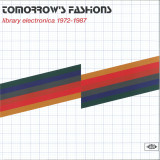
Nothing said new or modern or futuristic quite like a synthesiser in the 70s and 80s. If you were shooting an advert and you wanted your product or your company to appear forward-thinking and ahead of the game, then you would want something electronic, something out of the ordinary. When TV producers and advertising directors started searching for music that sounded like “Tubular Bells” – and then Tomita, and later Jean Michel Jarre – music libraries such De Wolfe, Bruton, Parry and Chappell had to have the tracks readily available.
Compiled by Bob Stanley, “Tomorrow’s Fashions” varies from advertising jingles and TV themes to space exploration and gorgeous, beatless ambience. Though it’s 40-to-50 years old there’s a real freshness to this music. Older jazz players Brian Bennett, John Cameron, Alan Hawkshaw and others seized the chance to operate a synth; younger pups including John Saunders and Monica Beale were simply intrigued by the new technology being wheeled into the studios. There’s a tangible sense of adventure.
“Tomorrow’s Fashions’” brand of electronica anticipated new age and ambient music. It also had both a direct and indirect influence on pop – the early Human League and the future sounds of Warp Records are all over this collection. Electronic library tracks have been sampled by everyone from MF Doom to Kendrick Lamar.
One person’s primitive and experimental is another person’s space-age lullaby. This was music made in the shadows – in Soho’s secretive music library studios – that has now become desirable and influential. The chances are chunks of it will be sampled and used on hit records that have yet to be written. If the musicians’ aim was to soundtrack tomorrow’s fashions, they couldn’t have got it more right.
A true chameleon when it comes to music production, Patrick Bruyndonx aka Lost Desert has been making waves in the global house and techno music scene for over 30 years under various aliases.
Inspired by 90’s deep house, “Pagode” is a classy sounding EP steering away from the more “organic” music Patrick has been getting known for in recent years. It combines delicate, yet uplifting synth lines with warm pads, straight house drums, funky vocals and disco infused bass grooves. All in all, it is a well rounded EP that should find its way to all house heads’ crates out there.
- 1: Go Out And Get 'Em, Boy!
- 1: 2You Should Always Keep In Touch With Your Friends
- 1: 3Everyone Thinks He Looks Daft
- 1: 4A Million Miles
- 1: 5My Favourite Dress
- 1: 6Anyone Can Make A Mistake
- 1: 7Nobody's Twisting Your Arm
- 1: 8Davni Chasy
- 1: 9Give My Love To Kevin
- 1: 0Kennedy
- 1: What Have I Said Now?
- 2: 1Bewitched
- 2: Take Me!
- 2: 3Brassneck
- 2: 4Crawl
- 2: 5Dalliance
- 2: 6Dare
- 2: 7Suck
- 2: 8Blonde
- 2: 9Corduroy
- 3: 1Heather
- 3: 2Blue Eyes
- 3: Come Play With Me
- 3: 4Flying Saucer
- 3: 5Click Click
- 3: 6Spangle
- 3: 7Convertible
- 3: 8Montreal
- 3: 9Kansas
- 3: 10Interstate 5
- 3: 11I'm From Further North Than You
- 4: 1Perfect Blue
- 4: 2Don't Take Me Home Until I'm Drunk
- 4: 3Boo Boo
- 4: Deer Caught In The Headlights
- 4: 5Two Bridges
- 4: 6Rachel
- 4: 7I Am Not Going To Fall In Love With You
- 4: 8Science Fiction
- 4: 9Hot Wheels
Vierfaches Vinyl (Frosted White Vinyl Colour) - oder CD-Box-Set, kuratiert von David Gedge, um vier kompromisslose Jahrzehnte The Wedding Present zu feiern. Nachdem sich die Alternative-Rock-Band The Lost Pandas aus Leeds Anfang der 1980er Jahre aufgelöst hatte, beschlossen Sänger/Gitarrist David Gedge und Bassist Keith Gregory, eine neue Gruppe zu gründen. 1985, inspiriert von Pop-Radio, Punk-Frechheit, The Velvet Underground und Davids ehemaligen Schulkameraden The Chameleons, gründeten sie The Wedding Present. Diese Band war - und ist bis heute - in jeder Hinsicht kompromisslos und unerschütterlich authentisch, und so wurde Gedge, ohne es zu beabsichtigen, zu einer legendären Figur der alternativen Musik. Er ist einer der wichtigsten Architekten und Begründer des alternativen Gitarrenrocks und der Mastermind hinter einem der reichhaltigsten, eingängigsten und beständigsten Kataloge der Popgeschichte. Vier Jahrzehnte später, mit 13 Studioalben, 20 Compilation-Alben und einer ganzen Reihe von Singles, EPs, Live-Alben und Radio-Sessions - und weiteren in Aussicht - ist "The Wedding Presen 40" eine feiernde Reflexion dieser komplexen und faszinierenden Band. Erhältlich als vier Vinyl- oder vier CD-Box-Sets, handelt es sich hierbei nicht um eine gewöhnliche Sammlung der ,beliebtesten" Songs, sondern um eine chronologische, akustische Reise durch Albumtracks, Singles und B-Seiten. Das atemberaubende Artwork wurde von Jonathan Hitchen zusammengestellt, der viele der Original-Plattencover der Band entworfen hat, und es gibt ausführliche Begleittexte von David Gedge selbst sowie dem renommierten Musikjournalisten Mark Beaumont NME, Guardian, Independent. Gedge's Kommentare bieten einen einzigartigen Einblick in die Arbeitsweise der Band und einen spannenden Track-für-Track-Leitfaden zur Jubiläums-Compilation. Inklusive 32-seitigem Hardcover-Buch mit ausführlichen Begleittexten von Mark Beaumont sowie Kommentaren zu jedem einzelnen Titel von David Gedge.
[b] 1.2YOU SHOULD ALWAYS KEEP IN TOUCH WITH YOUR FRIENDS [PEEL SESSION VERSION]
[e] 1.5MY FAVOURITE DRESS [LP VERSION]
[i] 1.9GIVE MY LOVE TO KEVIN [ACOUSTIC VERSION]
[n] 2.3BRASSNECK [SINGLE VERSION]
[t] 2.9CORDUROY [LP VERSION]
[z] 3.6SPANGLE [LP VERSION]
[xd] 3.10INTERSTATE 5 [LP VERSION]
[xj] 4.5TWO BRIDGES [LP VERSION]
[xl] 4.7I AM NOT GOING TO FALL IN LOVE WITH YOU [LP VERSION]
[xm] 4.8SCIENCE FICTION [LP VERSION]
- A1: Citizen Kane
- A2: Remembrance Day
- A3: Polar Opposites
- A4: Marilyn Dreams
- A5: Ice
- B1: La Lune Lunatique
- B2: All Fall Down
- B3: Nowhere Girl
- B4: Crowds
- B5: Beginning To Fade
In May 1981 B-Movie and Soft Cell went into Advision Studios in London with the same producer, Mike Thorne (Wire, Bronski Beat, China Crisis, The Communards) to record singles for the label they were both signed to. Phonogram had really wanted to sign B-Movie but had also committed to Soft Cell, having been coerced into it by Stev0, who managed both artists and wouldn’t let them have one without the other. B-Movie commenced recording the dark moody anti-fame anthem ‘Marilyn Dreams’, whilst Soft Cell got underway on a cover of an obscure Northern Soul classic. When both songs were released in July 1981, ‘Tainted Love’ became a worldwide hit and shot Soft Cell to international fame, making them the biggest stars of 1981. B-Movie had formed in 1979, in Mansfield, a typical northern town in the middle of the Nottinghamshire coalfield. Originally a three piece featuring, vocal / bass, guitar and drums, they expanded by adding a keyboard player to broaden their initial post punk sound. Local Lincoln independent record label, Dead Good Records, firstly put them on the compilation LP ‘East’, followed by 7" inch EP and then a mini-album releases, which led to an appearance on the legendary Some Bizarre label (alongside the likes of Blancmange, Depeche Mode, Soft Cell and The The)
Major label interest followed, from which came the deal with Phonogram, B-Movie initially re-recording the track ‘Remembrance Day’, which reached No61 in the UK chart in early 1981 and, more importantly, was played by BBC Radio 1 DJ John Peel, and appearing in his Festive 50 for that year. All of the recordings the band made during their Phonogram period have been consigned to the Universal Music vault for several decades, with the band finally managing to have these returned in 2024. The various tapes have been digitised and restored, resulting in the creation of what would have been their 1982 debut LP ‘that never was’. Ten tracks including the three singles plus seven previously unreleased recordings. The CD version contains a further seven recordings including the 12” versions, single B-sides and the track “Moles’” from the Some Bizarre compilation.So “Hidden Treasures” from B-Movie, is only four decades late but still able to sit seamlessly alongside contemporaries like The Chameleons and The Sound. The LP is a darker, more brooding and psychedelic affair, more akin to the gothic elements of the Bunnymen or Joy Division, than the ‘pop sensations’ Phonogram wanted them to become. By both opening and closing this chapter of B-Movie, it puts them firmly in the same bracket as their new wave and post-punk contemporaries, which is the least they deserve, as one of the great ‘lost’ bands of the early 1980’s. "It’s nice to hear B-Movie are finally getting a chance to release their forgotten gems’” Matt Johnson (The The) Vinyl
- Minus Zero
- Etic
- Delta X
- Seishoku Nyu
- Tremolo Man
- Chameleon Body
- Euclid's Pickel
- You-Bahn
- Little Bang!
- Rm-04
First released by Extreme in the massive, infamous 'Merzbox,' "Red Magnesia Pink" is extracted and recontextualized as a standalone release for the first time. Recorded in 1995, "Red Magnesia Pink" sees Merzbow in peak form. A psychedelic whirlwind of synthetic transmissions; harsh, wet, screeching sounds that could only be produced by Masami Akita. Featuring two previously unreleased bonus tracks from the same era.
With a broad spectrum of influences, ranging from African blues and roots music to noise, krautrock, avant-garde rock, and contemporary improv, they are a one of a kind experience.
Punk Kong may reference a famous ape you know from the films, but this Brussels based band is primarily akin to a chameleon. They regularly change their musical idiom to reinvent themselves - however a constant in their music is the adventurous and experimental nature of it all. With a broad spectrum of influences, ranging from African blues and roots music to noise, krautrock, avant-garde rock, and contemporary improv, they are a one of a kind experience.
Same But Different is their second full album, to be released on the Belgian jazz not jazz label W.E.R.F. records.
Sad Lovers and Giants second album, a brilliant atmospheric post punk record with several elements akin to Joy Division and The Chameleons. We can definitely apply the term’ ethereal’ to these composition, certainly the sound is very oceanic and otherwordly melancholic, typical trademarks of the new wave renaissance. Recorded in 1983 – and released on their own label Midnight Music - Feeding the Flame showcases the original line up at its very best.
- A1: Caramel Chameleon - To Create Is To Live Twice
- A2: Perseus Traxx - Something More Than This
- B1: Rag - Zavondje 303
- B2: Raving Kid - Edgware Acid
- B3: Mutex - Road To Atlantis
- C1: Kreggo - Hearthpulse
- C2: Steifl - Omega Point
- C3: Korre - Black Over Blue
- D1: Pitto - Acid Rolo
- D2: Endfest - Shari Vari
- D3: Dwaalgast De Beer Uit Allekmaar - A Wave Goodbye
030303 Records taught us a lot about the many faces of acid throughout the 18 years of its existence. The label has specialised in all substyles of the genre, whether that's tracks inspired by early 80s proto acid, Chicago house, braindance or the eerie melancholy of Polygon Window. Good thing is, they haven't stopped getting better at it. Most 030 releases are now out of print and severely sought after and, with so many instant classics featured on it, this fifth compilation will be no exception. Caramel Chameleon kicks off with an epic cut, one that will appeal to fans of Roy of the Ravers. Perseus Traxx, Raving Kid and RAG aka Steven Brunsmann follow suit with acid on a deeper tip, with the latter adding a heavenly soulful touch to it. And how great it is to see American producer Korr? return to the label with a wonderfully spaced out introspective cut. Also standing out is Endfest's heavy electro/acid take on one of the most obscure mysteries ever to come out of Detroit: Shari Vari. Dwaalgast and De Beer Uit Allekmaar aka Cosmic Force deliver the last track before the lights go on - the aptly named A Wave Goodbye has a distinctive, bouncy westcoast-sound-of-Holland feel to it. An excellent compilation and a huge tip!
- A1: Rock This Mother
- A2: Talk To Me Girl
- A3: You Can Find Me
- A4: Check This Out
- A5: Jesus Going To Clean House
- A6: Hope You Understood
- A7: Is It What You Want
- A8: Love Is Everlasting
- A9: This Is Hip-Hop Art
- A10: Opposite Of Love
- A11: Do You Know What I Mean
- B1: Saving All My Love For You
- B2: Look Out Here I Come
- B3: Girl You Always Talking
- B4: Have A Great Day
- B5: Take My Hand
- B6: I Need Your Love
- B7: Your Town
- B8: Talk Around Town
- B9: Booty Head/Take A Little Walk
- B10: I Love My Mama
- B11: I Never Found Anyone Like You
Vinyl LP[23,49 €]
As the sun sets on a quaint East Nashville house, a young man bares a piece of his soul. Facing the camera, sporting a silky suit jacket/shirt/slacks/fingerless gloves ensemble that announces "singer" before he's even opened his mouth, Lee Tracy Johnson settles onto his stage, the front yard. He sways to the dirge-like drum machine pulse of a synth-soaked slow jam, extends his arms as if gaining his balance, and croons in affecting, fragile earnest, "I need your love… oh baby…"
Dogs in the yard next door begin barking. A mysterious cardboard robot figure, beamed in from galaxies unknown and affixed to a tree, is less vocal. Lee doesn't acknowledge either's presence. He's busy feeling it, arms and hands gesticulating. His voice rises in falsetto over the now-quiet dogs, over the ambient noise from the street that seeps into the handheld camcorder's microphone, over the recording of his own voice played back from a boombox off-camera. After six minutes the single, continuous shot ends. In this intimate creative universe there are no re-takes. There are many more music videos to shoot, and as Lee later puts it, "The first time you do it is actually the best. Because you can never get that again. You expressing yourself from within."
"I Need Your Love" dates from a lost heyday. From some time in the '80s or early '90s, when Lee Tracy (as he was known in performance) and his music partner/producer/manager Isaac Manning committed hours upon hours of their sonic and visual ideas to tape. Embracing drum machines and synthesizers – electronics that made their personal futurism palpable – they recorded exclusively at home, live in a room into a simple cassette deck. Soul, funk, electro and new wave informed their songs, yet Lee and Isaac eschewed the confinement of conventional categories and genres, preferring to let experimentation guide them.
"Anytime somebody put out a new record they had the same instruments or the same sound," explains Isaac. "So I basically wanted to find something that's really gonna stand out away from all of the rest of 'em." Their ethos meant that every idea they came up with was at least worth trying: echoed out half-rapped exhortations over frantic techno-style beats, gospel synth soul, modal electro-funk, oddball pop reinterpretations, emo AOR balladry, nods to Prince and the Fat Boys, or arrangements that might collapse mid-song into a mess of arcade game-ish blips before rallying to reach the finish line. All of it conjoined by consistent tape hiss, and most vitally, Lee's chameleonic voice, which managed to wildly shape shift and still evoke something sincere – whether toggling between falsetto and tenor exalting Jesus's return, or punctuating a melismatic romantic adlib with a succinct, "We all know how it feels to be alone."
"People think we went to a studio," says Isaac derisively. "We never went to no studio. We didn't have the money to go to no studio! We did this stuff at home. I shot videos in my front yard with whatever we could to get things together." Sometimes Isaac would just put on an instrumental record, be it "Planet Rock" or "Don't Cry For Me Argentina" (from Evita), press "record," and let Lee improvise over it, yielding peculiar love songs, would-be patriotic anthems, or Elvis Presley or Marilyn Monroe tributes. Technical limitations and a lack of professional polish never dissuaded them. They believed they were onto something.
"That struggle," Isaac says, "made that sound sound good to me."
In the parlance of modern music criticism Lee and Isaac's dizzying DIY efforts would inevitably be described as "outsider." But "outsider" carries the burden of untold additional layers of meaning if you're Black and from the South, creating on a budget, and trying to get someone, anyone within the country music capital of the world to take your vision seriously. "What category should we put it in?" Isaac asks rhetorically. "I don't know. All I know is feeling. I ain't gonna name it nothing. It's music. If it grabs your soul and touch your heart that's what it basically is supposed to do."
=
Born in 1963, the baby boy of nine siblings, Lee Tracy spent his earliest years living amidst the shotgun houses on Nashville's south side. "We was poor, man!" he says, recalling the outhouse his family used for a bathroom and the blocks of ice they kept in the kitchen to chill perishables. "But I actually don't think I really realized I was in poverty until I got grown and started thinking about it." Lee's mom worked at the Holiday Inn; his dad did whatever he had to do, from selling fruit from a horse drawn cart to bootlegging. "We didn't have much," Lee continues, "but my mother and my father got us the things we needed, the clothes on our back." By the end of the decade with the city's urban renewal programs razing entire neighborhoods to accommodate construction of the Interstate, the family moved to Edgehill Projects. Lee remembers music and art as a constant source of inspiration for he and his brothers and sisters – especially after seeing the Jackson 5 perform on Ed Sullivan. "As a small child I just knew that was what I wanted to do."
His older brother Don began musically mentoring him, introducing Lee to a variety of instruments and sounds. "He would never play one particular type of music, like R&B," says Lee. "I was surrounded by jazz, hard rock and roll, easy listening, gospel, reggae, country music; I mean I was a sponge absorbing all of that." Lee taught himself to play drums by beating on cardboard boxes, gaining a rep around the way for his timekeeping, and his singing voice. Emulating his favorites, Earth Wind & Fire and Cameo, he formed groups with other kids with era-evocative band names like Concept and TNT Connection, and emerged as the leader of disciplined rehearsals. "I made them practice," says Lee. "We practiced and practiced and practiced. Because I wanted that perfection." By high school the most accomplished of these bands would take top prize in a prominent local talent show. It was a big moment for Lee, and he felt ready to take things to the next level. But his band-mates had other ideas.
"I don't know what happened," he says, still miffed at the memory. "It must have blew they mind after we won and people started showing notice, because it's like everybody quit! I was like, where the hell did everybody go?" Lee had always made a point of interrogating prospective musicians about their intentions before joining his groups: were they really serious or just looking for a way to pick up girls? Now he understood even more the importance of finding a collaborator just as committed to the music as he was.
=
Isaac Manning had spent much of his life immersed in music and the arts – singing in the church choir with his family on Nashville's north side, writing, painting, dancing, and working various gigs within the entertainment industry. After serving in the armed forces, in the early '70s he ran The Teenage Place, a music and performance venue that catered to the local youth. But he was forced out of town when word of one of his recreational routines created a stir beyond the safe haven of his bohemian circles.
"I was growing marijuana," Isaac explains. "It wasn't no business, I was smoking it myself… I would put marijuana in scrambled eggs, cornbread and stuff." His weed use originated as a form of self-medication to combat severe tooth pain. But when he began sharing it with some of the other young people he hung out with, some of who just so happened to be the kids of Nashville politicians, the cops came calling. "When I got busted," he remembers, "they were talking about how they were gonna get rid of me because they didn't want me saying nothing about they children because of the politics and stuff. So I got my family, took two raggedy cars, and left Nashville and went to Vegas."
Out in the desert, Isaac happened to meet Chubby Checker of "The Twist" fame while the singer was gigging at The Flamingo. Impressed by Isaac's zeal, Checker invited him to go on the road with him as his tour manager/roadie/valet. The experience gave Isaac a window into a part of the entertainment world he'd never encountered – a glimpse of what a true pop act's audience looked like. "Chubby Checker, none of his shows were played for Black folks," he remembers. "All his gigs were done at high-class white people areas." Returning home after a few years with Chubby, Isaac was properly motivated to make it in Music City. He began writing songs and scouting around Nashville for local talent anywhere he could find it with an expressed goal: "Find someone who can deliver your songs the way you want 'em delivered and make people feel what you want them to feel."
One day while walking through Edgehill Projects Isaac heard someone playing the drums in a way that made him stop and take notice. "The music was so tight, just the drums made me feel like, oh I'm-a find this person," he recalls. "So I circled through the projects until I found who it was.
"That's how I met him – Lee Tracy. When I found him and he started singing and stuff, I said, ohhh, this is somebody different."
=
Theirs was a true complementary partnership: young Lee possessed the raw talent, the older Isaac the belief. "He's really the only one besides my brother and my family that really seen the potential in me," says Lee. "He made me see that I could do it."
Isaac long being a night owl, his house also made for a fertile collaborative environment – a space where there always seemed to be a new piece of his visual art on display: paintings, illustrations, and dolls and figures (including an enigmatic cardboard robot). Lee and Issac would hang out together and talk, listen to music, conjure ideas, and smoke the herb Isaac had resumed growing in his yard. "It got to where I could trust him, he could trust me," Isaac says of their bond. They also worked together for hours on drawings, spreading larges rolls of paper on the walls and sketching faces with abstract patterns and imagery: alien-like beings, tri-horned horse heads, inverted Janus-like characters where one visage blurred into the other.
Soon it became apparent that they didn't need other collaborators; self-sufficiency was the natural way forward. At Isaac's behest Lee, already fed up with dealing with band musicians, began playing around with a poly-sonic Yamaha keyboard at the local music store. "It had everything on it – trumpet, bass, drums, organ," remembers Lee. "And that's when I started recording my own stuff."
The technology afforded Lee the flexibility and independence he craved, setting him on a path other bedroom musicians and producers around the world were simultaneously following through the '80s into the early '90s. Saving up money from day jobs, he eventually supplemented the Yamaha Isaac had gotten him with Roland and Casio drum machines and a Moog. Lee was living in an apartment in Hillside at that point caring for his dad, who'd been partially paralyzed since early in life. In the evenings up in his second floor room, the music put him in a zone where he could tune out everything and lose himself in his ideas.
"Oh I loved it," he recalls. "I would really experiment with the instruments and use a lot of different sound effects. I was looking for something nobody else had. I wanted something totally different. And once I found the sound I was looking for, I would just smoke me a good joint and just let it go, hit the record button." More potent a creative stimulant than even Isaac's weed was the holistic flow and spontaneity of recording. Between sessions at Isaac's place and Lee's apartment, their volume of output quickly ballooned.
"We was always recording," says Lee. "That's why we have so much music. Even when I went to Isaac's and we start creating, I get home, my mind is racing, I gotta start creating, creating, creating. I remember there were times when I took a 90-minute tape from front to back and just filled it up."
"We never practiced," says Isaac. "See, that was just so odd about the whole thing. I could relate to him, and tell him about the songs I had ideas for and everything and stuff. And then he would bring it back or whatever, and we'd get together and put it down." Once the taskmaster hell bent on rehearsing, Lee had flipped a full 180. Perfection was no longer an aspiration, but the enemy of inspiration.
"I seen where practicing and practicing got me," says Lee. "A lot of musicians you get to playing and they gotta stop, they have to analyze the music. But while you analyzing you losing a lot of the greatness of what you creating. Stop analyzing what you play, just play! And it'll all take shape."
=
"I hope you understood the beginning of the record because this was invented from a dream I had today… (You tell me, I'll tell you, we'll figure it out together)" – Lee Tracy and Isaac Manning, "Hope You Understand"
Lee lets loose a maniacal cackle when he acknowledges that the material that he and Isaac recorded was by anyone's estimation pretty out there. It's the same laugh that commences "Hope You Understand" – a chaotic transmission that encapsulates the duality at the heart of their music: a stated desire to reach people and a compulsion to go as leftfield as they saw fit.
"We just did it," says Lee. "We cut the music on and cut loose. I don't sit around and write. I do it by listening, get a feeling, play the music, and the lyrics and stuff just come out of me."
The approach proved adaptable to interpreting other artists' material. While recording a cover of Whitney Houston's pop ballad "Saving All My Love For You," Lee played Whitney's version in his headphones as he laid down his own vocals – partially following the lyrics, partially using them as a departure point. The end result is barely recognizable compared with the original, Lee and Isaac having switched up the time signature and reinvented the melody along the way towards morphing a slick mainstream radio standard into something that sounds solely their own.
"I really used that song to get me started," says Lee. "Then I said, well I need something else, something is missing. Something just came over me. That's when I came up with 'Is It What You Want.'"
The song would become the centerpiece of Lee and Isaac's repertoire. Pushed along by a percolating metronomic Rhythm King style beat somewhere between a military march and a samba, "Is It What You Want" finds Lee pleading the sincerity of his commitment to a potential love interest embellished by vocal tics and hiccups subtlely reminiscent of his childhood hero MJ. Absent chord changes, only synth riffs gliding in and out like apparitions, the song achieves a lingering lo-fi power that leaves you feeling like it's still playing, somewhere, even after the fade out.
"I don't know, it's like a real spiritual song," Lee reflects. "But it's not just spiritual. To me the more I listen to it it's like about everything that you do in your everyday life, period. Is it what you want? Do you want a car or you don't want a car? Do you want Jesus or do you want the Devil? It's basically asking you the question. Can't nobody answer the question but you yourself."
In 1989 Lee won a lawsuit stemming from injuries sustained from a fight he'd gotten into. He took part of the settlement money and with Isaac pressed up "Saving All My Love For You" b/w "Is It What You Want" as a 45 single. Isaac christened the label One Chance Records. "Because that's all we wanted," he says with a laugh, "one chance."
Isaac sent the record out to radio stations and major labels, hoping for it to make enough noise to get picked up nationally. But the response he and Lee were hoping for never materialized. According to Isaac the closest the single got to getting played on the radio is when a disk jock from a local station made a highly unusual announcement on air: "The dude said on the radio, 107.5 – 'We are not gonna play 'Is It What You Want.' We cracked up! Wow, that's deep.
"It was a whole racist thing that was going on," he reflects. "So we just looked over and kept on going. That was it. That was about the way it goes… If you were Black and you were living in Nashville and stuff, that's the way you got treated." Isaac already knew as much from all the times he'd brought he and Lee's tapes (even their cache of country music tunes) over to Music Row to try to drum up interest to no avail.
"Isaac, he really worked his ass off," says Lee. "He probably been to every record place down on Music Row." Nashville's famed recording and music business corridor wasn't but a few blocks from where Lee grew up. Close enough, he remembers, for him to ride his bike along its back alleys and stumble upon the occasional random treasure, like a discarded box of harmonicas. Getting in through the front door, however, still felt a world away.
"I just don't think at the time our music fell into a category for them," he concedes. "It was before its time."
=
Lee stopped making music some time in the latter part of the '90s, around the time his mom passed away and life became increasingly tough to manage. "When my mother died I had a nervous breakdown," he says, "So I shut down for a long time. I was in such a sadness frame of mind. That's why nobody seen me. I had just disappeared off the map." He fell out of touch with Isaac, and in an indication of just how bad things had gotten for him, lost track of all the recordings they'd made together. Music became a distant memory.
Fortunately, Isaac kept the faith. In a self-published collection of his poetry – paeans to some of his favorite entertainment and public figures entitled Friends and Dick Clark – he'd written that he believed "music has a life of its own." But his prescience and presence of mind were truly manifested in the fact that he kept an archive of he and Lee's work. As perfectly imperfect as "Is It What You Want" now sounds in a post-Personal Space world, Lee and Isaac's lone official release was in fact just a taste. The bulk of the Is It What You Want album is culled from the pair's essentially unheard home recordings – complete songs, half-realized experiments, Isaac's blue monologues and pronouncements et al – compiled, mixed and programmed in the loose and impulsive creative spirit of their regular get-togethers from decades ago. The rest of us, it seems, may have finally caught up to them.
On the prospect of at long last reaching a wider audience, Isaac says simply, "I been trying for a long time, it feels good." Ever the survivor, he adds, "The only way I know how to make it to the top is to keep climbing. If one leg break on the ladder, hey, you gotta fix it and keep on going… That's where I be at. I'll kill death to make it out there."
For Lee it all feels akin to a personal resurrection: "It's like I was in a tomb and the tomb was opened and I'm back… Man, it feels so great. I feel like I'm gonna jump out of my skin." Success at this stage of his life, he realizes, probably means something different than what it did back when he was singing and dancing in Isaac's front yard. "What I really mean by 'making it,'" he explains isn't just the music being heard but, "the story being told."
Occasionally Lee will pull up "Is It What You Want" on YouTube on his phone, put on his headphones, and listen. He remembers the first time he heard his recorded voice. How surreal it was, how he thought to himself, "Is that really me?" What would he say to that younger version of himself now?
"I would probably tell myself, hang in there, don't give up. Keep striving for the goal. And everything will work out."
Despite what's printed on the record label, sometimes you do get more than one chance.
- A1: Rock This Mother
- A2: Talk To Me Girl
- A3: You Can Find Me
- A4: Check This Out
- A5: Jesus Going To Clean House
- A6: Hope You Understood
- A7: Is It What You Want
- A8: Love Is Everlasting
- A9: This Is Hip-Hop Art
- A10: Opposite Of Love
- A11: Do You Know What I Mean
- B1: Saving All My Love For You
- B2: Look Out Here I Come
- B3: Girl You Always Talking
- B4: Have A Great Day
- B5: Take My Hand
- B6: I Need Your Love
- B7: Your Town
- B8: Talk Around Town
- B9: Booty Head/Take A Little Walk
- B10: I Love My Mama
- B11: I Never Found Anyone Like You
Cassette[11,72 €]
As the sun sets on a quaint East Nashville house, a young man bares a piece of his soul. Facing the camera, sporting a silky suit jacket/shirt/slacks/fingerless gloves ensemble that announces "singer" before he's even opened his mouth, Lee Tracy Johnson settles onto his stage, the front yard. He sways to the dirge-like drum machine pulse of a synth-soaked slow jam, extends his arms as if gaining his balance, and croons in affecting, fragile earnest, "I need your love… oh baby…"
Dogs in the yard next door begin barking. A mysterious cardboard robot figure, beamed in from galaxies unknown and affixed to a tree, is less vocal. Lee doesn't acknowledge either's presence. He's busy feeling it, arms and hands gesticulating. His voice rises in falsetto over the now-quiet dogs, over the ambient noise from the street that seeps into the handheld camcorder's microphone, over the recording of his own voice played back from a boombox off-camera. After six minutes the single, continuous shot ends. In this intimate creative universe there are no re-takes. There are many more music videos to shoot, and as Lee later puts it, "The first time you do it is actually the best. Because you can never get that again. You expressing yourself from within."
"I Need Your Love" dates from a lost heyday. From some time in the '80s or early '90s, when Lee Tracy (as he was known in performance) and his music partner/producer/manager Isaac Manning committed hours upon hours of their sonic and visual ideas to tape. Embracing drum machines and synthesizers – electronics that made their personal futurism palpable – they recorded exclusively at home, live in a room into a simple cassette deck. Soul, funk, electro and new wave informed their songs, yet Lee and Isaac eschewed the confinement of conventional categories and genres, preferring to let experimentation guide them.
"Anytime somebody put out a new record they had the same instruments or the same sound," explains Isaac. "So I basically wanted to find something that's really gonna stand out away from all of the rest of 'em." Their ethos meant that every idea they came up with was at least worth trying: echoed out half-rapped exhortations over frantic techno-style beats, gospel synth soul, modal electro-funk, oddball pop reinterpretations, emo AOR balladry, nods to Prince and the Fat Boys, or arrangements that might collapse mid-song into a mess of arcade game-ish blips before rallying to reach the finish line. All of it conjoined by consistent tape hiss, and most vitally, Lee's chameleonic voice, which managed to wildly shape shift and still evoke something sincere – whether toggling between falsetto and tenor exalting Jesus's return, or punctuating a melismatic romantic adlib with a succinct, "We all know how it feels to be alone."
"People think we went to a studio," says Isaac derisively. "We never went to no studio. We didn't have the money to go to no studio! We did this stuff at home. I shot videos in my front yard with whatever we could to get things together." Sometimes Isaac would just put on an instrumental record, be it "Planet Rock" or "Don't Cry For Me Argentina" (from Evita), press "record," and let Lee improvise over it, yielding peculiar love songs, would-be patriotic anthems, or Elvis Presley or Marilyn Monroe tributes. Technical limitations and a lack of professional polish never dissuaded them. They believed they were onto something.
"That struggle," Isaac says, "made that sound sound good to me."
In the parlance of modern music criticism Lee and Isaac's dizzying DIY efforts would inevitably be described as "outsider." But "outsider" carries the burden of untold additional layers of meaning if you're Black and from the South, creating on a budget, and trying to get someone, anyone within the country music capital of the world to take your vision seriously. "What category should we put it in?" Isaac asks rhetorically. "I don't know. All I know is feeling. I ain't gonna name it nothing. It's music. If it grabs your soul and touch your heart that's what it basically is supposed to do."
=
Born in 1963, the baby boy of nine siblings, Lee Tracy spent his earliest years living amidst the shotgun houses on Nashville's south side. "We was poor, man!" he says, recalling the outhouse his family used for a bathroom and the blocks of ice they kept in the kitchen to chill perishables. "But I actually don't think I really realized I was in poverty until I got grown and started thinking about it." Lee's mom worked at the Holiday Inn; his dad did whatever he had to do, from selling fruit from a horse drawn cart to bootlegging. "We didn't have much," Lee continues, "but my mother and my father got us the things we needed, the clothes on our back." By the end of the decade with the city's urban renewal programs razing entire neighborhoods to accommodate construction of the Interstate, the family moved to Edgehill Projects. Lee remembers music and art as a constant source of inspiration for he and his brothers and sisters – especially after seeing the Jackson 5 perform on Ed Sullivan. "As a small child I just knew that was what I wanted to do."
His older brother Don began musically mentoring him, introducing Lee to a variety of instruments and sounds. "He would never play one particular type of music, like R&B," says Lee. "I was surrounded by jazz, hard rock and roll, easy listening, gospel, reggae, country music; I mean I was a sponge absorbing all of that." Lee taught himself to play drums by beating on cardboard boxes, gaining a rep around the way for his timekeeping, and his singing voice. Emulating his favorites, Earth Wind & Fire and Cameo, he formed groups with other kids with era-evocative band names like Concept and TNT Connection, and emerged as the leader of disciplined rehearsals. "I made them practice," says Lee. "We practiced and practiced and practiced. Because I wanted that perfection." By high school the most accomplished of these bands would take top prize in a prominent local talent show. It was a big moment for Lee, and he felt ready to take things to the next level. But his band-mates had other ideas.
"I don't know what happened," he says, still miffed at the memory. "It must have blew they mind after we won and people started showing notice, because it's like everybody quit! I was like, where the hell did everybody go?" Lee had always made a point of interrogating prospective musicians about their intentions before joining his groups: were they really serious or just looking for a way to pick up girls? Now he understood even more the importance of finding a collaborator just as committed to the music as he was.
=
Isaac Manning had spent much of his life immersed in music and the arts – singing in the church choir with his family on Nashville's north side, writing, painting, dancing, and working various gigs within the entertainment industry. After serving in the armed forces, in the early '70s he ran The Teenage Place, a music and performance venue that catered to the local youth. But he was forced out of town when word of one of his recreational routines created a stir beyond the safe haven of his bohemian circles.
"I was growing marijuana," Isaac explains. "It wasn't no business, I was smoking it myself… I would put marijuana in scrambled eggs, cornbread and stuff." His weed use originated as a form of self-medication to combat severe tooth pain. But when he began sharing it with some of the other young people he hung out with, some of who just so happened to be the kids of Nashville politicians, the cops came calling. "When I got busted," he remembers, "they were talking about how they were gonna get rid of me because they didn't want me saying nothing about they children because of the politics and stuff. So I got my family, took two raggedy cars, and left Nashville and went to Vegas."
Out in the desert, Isaac happened to meet Chubby Checker of "The Twist" fame while the singer was gigging at The Flamingo. Impressed by Isaac's zeal, Checker invited him to go on the road with him as his tour manager/roadie/valet. The experience gave Isaac a window into a part of the entertainment world he'd never encountered – a glimpse of what a true pop act's audience looked like. "Chubby Checker, none of his shows were played for Black folks," he remembers. "All his gigs were done at high-class white people areas." Returning home after a few years with Chubby, Isaac was properly motivated to make it in Music City. He began writing songs and scouting around Nashville for local talent anywhere he could find it with an expressed goal: "Find someone who can deliver your songs the way you want 'em delivered and make people feel what you want them to feel."
One day while walking through Edgehill Projects Isaac heard someone playing the drums in a way that made him stop and take notice. "The music was so tight, just the drums made me feel like, oh I'm-a find this person," he recalls. "So I circled through the projects until I found who it was.
"That's how I met him – Lee Tracy. When I found him and he started singing and stuff, I said, ohhh, this is somebody different."
=
Theirs was a true complementary partnership: young Lee possessed the raw talent, the older Isaac the belief. "He's really the only one besides my brother and my family that really seen the potential in me," says Lee. "He made me see that I could do it."
Isaac long being a night owl, his house also made for a fertile collaborative environment – a space where there always seemed to be a new piece of his visual art on display: paintings, illustrations, and dolls and figures (including an enigmatic cardboard robot). Lee and Issac would hang out together and talk, listen to music, conjure ideas, and smoke the herb Isaac had resumed growing in his yard. "It got to where I could trust him, he could trust me," Isaac says of their bond. They also worked together for hours on drawings, spreading larges rolls of paper on the walls and sketching faces with abstract patterns and imagery: alien-like beings, tri-horned horse heads, inverted Janus-like characters where one visage blurred into the other.
Soon it became apparent that they didn't need other collaborators; self-sufficiency was the natural way forward. At Isaac's behest Lee, already fed up with dealing with band musicians, began playing around with a poly-sonic Yamaha keyboard at the local music store. "It had everything on it – trumpet, bass, drums, organ," remembers Lee. "And that's when I started recording my own stuff."
The technology afforded Lee the flexibility and independence he craved, setting him on a path other bedroom musicians and producers around the world were simultaneously following through the '80s into the early '90s. Saving up money from day jobs, he eventually supplemented the Yamaha Isaac had gotten him with Roland and Casio drum machines and a Moog. Lee was living in an apartment in Hillside at that point caring for his dad, who'd been partially paralyzed since early in life. In the evenings up in his second floor room, the music put him in a zone where he could tune out everything and lose himself in his ideas.
"Oh I loved it," he recalls. "I would really experiment with the instruments and use a lot of different sound effects. I was looking for something nobody else had. I wanted something totally different. And once I found the sound I was looking for, I would just smoke me a good joint and just let it go, hit the record button." More potent a creative stimulant than even Isaac's weed was the holistic flow and spontaneity of recording. Between sessions at Isaac's place and Lee's apartment, their volume of output quickly ballooned.
"We was always recording," says Lee. "That's why we have so much music. Even when I went to Isaac's and we start creating, I get home, my mind is racing, I gotta start creating, creating, creating. I remember there were times when I took a 90-minute tape from front to back and just filled it up."
"We never practiced," says Isaac. "See, that was just so odd about the whole thing. I could relate to him, and tell him about the songs I had ideas for and everything and stuff. And then he would bring it back or whatever, and we'd get together and put it down." Once the taskmaster hell bent on rehearsing, Lee had flipped a full 180. Perfection was no longer an aspiration, but the enemy of inspiration.
"I seen where practicing and practicing got me," says Lee. "A lot of musicians you get to playing and they gotta stop, they have to analyze the music. But while you analyzing you losing a lot of the greatness of what you creating. Stop analyzing what you play, just play! And it'll all take shape."
=
"I hope you understood the beginning of the record because this was invented from a dream I had today… (You tell me, I'll tell you, we'll figure it out together)" – Lee Tracy and Isaac Manning, "Hope You Understand"
Lee lets loose a maniacal cackle when he acknowledges that the material that he and Isaac recorded was by anyone's estimation pretty out there. It's the same laugh that commences "Hope You Understand" – a chaotic transmission that encapsulates the duality at the heart of their music: a stated desire to reach people and a compulsion to go as leftfield as they saw fit.
"We just did it," says Lee. "We cut the music on and cut loose. I don't sit around and write. I do it by listening, get a feeling, play the music, and the lyrics and stuff just come out of me."
The approach proved adaptable to interpreting other artists' material. While recording a cover of Whitney Houston's pop ballad "Saving All My Love For You," Lee played Whitney's version in his headphones as he laid down his own vocals – partially following the lyrics, partially using them as a departure point. The end result is barely recognizable compared with the original, Lee and Isaac having switched up the time signature and reinvented the melody along the way towards morphing a slick mainstream radio standard into something that sounds solely their own.
"I really used that song to get me started," says Lee. "Then I said, well I need something else, something is missing. Something just came over me. That's when I came up with 'Is It What You Want.'"
The song would become the centerpiece of Lee and Isaac's repertoire. Pushed along by a percolating metronomic Rhythm King style beat somewhere between a military march and a samba, "Is It What You Want" finds Lee pleading the sincerity of his commitment to a potential love interest embellished by vocal tics and hiccups subtlely reminiscent of his childhood hero MJ. Absent chord changes, only synth riffs gliding in and out like apparitions, the song achieves a lingering lo-fi power that leaves you feeling like it's still playing, somewhere, even after the fade out.
"I don't know, it's like a real spiritual song," Lee reflects. "But it's not just spiritual. To me the more I listen to it it's like about everything that you do in your everyday life, period. Is it what you want? Do you want a car or you don't want a car? Do you want Jesus or do you want the Devil? It's basically asking you the question. Can't nobody answer the question but you yourself."
In 1989 Lee won a lawsuit stemming from injuries sustained from a fight he'd gotten into. He took part of the settlement money and with Isaac pressed up "Saving All My Love For You" b/w "Is It What You Want" as a 45 single. Isaac christened the label One Chance Records. "Because that's all we wanted," he says with a laugh, "one chance."
Isaac sent the record out to radio stations and major labels, hoping for it to make enough noise to get picked up nationally. But the response he and Lee were hoping for never materialized. According to Isaac the closest the single got to getting played on the radio is when a disk jock from a local station made a highly unusual announcement on air: "The dude said on the radio, 107.5 – 'We are not gonna play 'Is It What You Want.' We cracked up! Wow, that's deep.
"It was a whole racist thing that was going on," he reflects. "So we just looked over and kept on going. That was it. That was about the way it goes… If you were Black and you were living in Nashville and stuff, that's the way you got treated." Isaac already knew as much from all the times he'd brought he and Lee's tapes (even their cache of country music tunes) over to Music Row to try to drum up interest to no avail.
"Isaac, he really worked his ass off," says Lee. "He probably been to every record place down on Music Row." Nashville's famed recording and music business corridor wasn't but a few blocks from where Lee grew up. Close enough, he remembers, for him to ride his bike along its back alleys and stumble upon the occasional random treasure, like a discarded box of harmonicas. Getting in through the front door, however, still felt a world away.
"I just don't think at the time our music fell into a category for them," he concedes. "It was before its time."
=
Lee stopped making music some time in the latter part of the '90s, around the time his mom passed away and life became increasingly tough to manage. "When my mother died I had a nervous breakdown," he says, "So I shut down for a long time. I was in such a sadness frame of mind. That's why nobody seen me. I had just disappeared off the map." He fell out of touch with Isaac, and in an indication of just how bad things had gotten for him, lost track of all the recordings they'd made together. Music became a distant memory.
Fortunately, Isaac kept the faith. In a self-published collection of his poetry – paeans to some of his favorite entertainment and public figures entitled Friends and Dick Clark – he'd written that he believed "music has a life of its own." But his prescience and presence of mind were truly manifested in the fact that he kept an archive of he and Lee's work. As perfectly imperfect as "Is It What You Want" now sounds in a post-Personal Space world, Lee and Isaac's lone official release was in fact just a taste. The bulk of the Is It What You Want album is culled from the pair's essentially unheard home recordings – complete songs, half-realized experiments, Isaac's blue monologues and pronouncements et al – compiled, mixed and programmed in the loose and impulsive creative spirit of their regular get-togethers from decades ago. The rest of us, it seems, may have finally caught up to them.
On the prospect of at long last reaching a wider audience, Isaac says simply, "I been trying for a long time, it feels good." Ever the survivor, he adds, "The only way I know how to make it to the top is to keep climbing. If one leg break on the ladder, hey, you gotta fix it and keep on going… That's where I be at. I'll kill death to make it out there."
For Lee it all feels akin to a personal resurrection: "It's like I was in a tomb and the tomb was opened and I'm back… Man, it feels so great. I feel like I'm gonna jump out of my skin." Success at this stage of his life, he realizes, probably means something different than what it did back when he was singing and dancing in Isaac's front yard. "What I really mean by 'making it,'" he explains isn't just the music being heard but, "the story being told."
Occasionally Lee will pull up "Is It What You Want" on YouTube on his phone, put on his headphones, and listen. He remembers the first time he heard his recorded voice. How surreal it was, how he thought to himself, "Is that really me?" What would he say to that younger version of himself now?
"I would probably tell myself, hang in there, don't give up. Keep striving for the goal. And everything will work out."
Despite what's printed on the record label, sometimes you do get more than one chance.
David Wrench and Evangeline Ling - aka audiobooks - threw
absolutely everything at their 2018 debut album, ‘Now! (in a
minute)’, a hectic, head-spinning blast of freewheeling freak-pop
genius. On its follow-up, ‘Astro Tough’, via Heavenly
Recordings, they’ve somehow found a way to ramp things up
even further, concentrating their chaotic energy and inherent
weirdness into a record that’s bigger, deeper and more powerful
han even its predecessor.
“The first album was a photograph of the beginnings of the
project, recorded without any overall plan,” Wrench explains.
“‘Astro Tough’ is more scripted, but a script that still allowed for
ots of improvised scenes. There was more intention behind the
songs, and a lot more refining. We weren’t precious about
everything being spontaneous and a first take, like on the first
record, even though some of it ended up being that. We made a
ot more material for this record, but chose the tracks that best
worked together as an album.”
Multi-instrumentalist and super-producer Wrench is as
comfortable unleashing monolithic psychedelic wig-outs and
heavy dub-driven monsters as he is crafting irresistible synthpop bangers. Writer, vocalist and visual artist Ling is as
chameleonic as she is charismatic, able to jump from
detachment to rawness to aggression to tenderness to hilarity to
oe-curling awkwardness, sometimes within the same song.
Though the record is a product of increased refinement, the pair
were physically together only in bursts, cramming sessions
around their respectively hectic calendars. “We had much less
time together than on the first record, but every time I did see
David that thirst and the ability to come up with something was
there. I think this record is better than the first record, and I
think we’re dying to make more. We’re going to try and better it
again,” says Ling.
Eco-mix colour vinyl. Black vinyl format (HVNLP183) will be
made available once coloured vinyl is sold out.
Juan Wauters’ fifth solo album, Real Life Situations, is a multifaceted ode to sur- rendering control and taking life as it comes. References to radio abound on its 21 tracks, and with good reason - the album spans genres, narrators, languages, and perspectives with the ease of spinning a rotary knob. Mining older songs, phone notes, new material, and snippets from TV and YouTube, Wauters has crafted an aural document of the year through his eyes.
Despite the circumstances of its creation, Real Life Situations is not a quarantine record. In many ways it’s the opposite of one, taking togetherness as both its subject and its primary medium. Pre-lockdown collaborations with Mac DeMar- co, Peter Sagar (AKA Homeshake), Nick Hakim, Cola Boyy, El David Aguilar, and more playfully offset Wauters’ more pensive solo tracks, and even in its sparest moments the album pulses with life. This is due in part to an impressive array of interludes and samples, most of which are field recordings that Wauters collects on his phone, ranging from the innocuous (“A Peter Pan Donuts Conversation”) to the intense (“Crack Dabbling”).
Under his care, these small moments become coordinates for the peaks and valleys of human experience, coloring the album with Wauters’ unique shade of realism. “Some people think I’m an optimist”, he explains, “but I’m not. I’m always seeing all sides of things.”
Of course, Wauters himself never disappears in the boisterous crowd - he lends his chameleonic songwriting to experiments in hip-hop (“Unity”), lo-fi R&B (“Mon- soon”), and deft indie folk (“Lion Dome”). Themes of loneliness, personal growth, patience, and companionship arise again and again; we can feel Wauters navi- gating a rapidly-changing world in real time. Jubilant choruses and spoken word poetry bleed into city noises and overheard conversations. Real freedom, the album suggests, comes not from gaining control, but from accepting its artifice. Like the programming on a radio station, there’s something here for everyone. All you have to do is listen.
- A1: Head In The Stars
- A2: Never More (Feat. Youthstar)
- A3: Bury Me (Feat. Kendra Morris)
- B1: Rema
- B2: Shamans (Feat. Asm)
- B3: Nile (Feat. Priestess & Asm)
- C1: The Unwilling Passenger (El Mundo, Pt 1) (Feat. Stogie T)
- C2: The Worst Part (El Mundo Pt. 2)
- C3: Show No Face (Feat. Foreign Beggars)
- D1: Not Going Down (Feat. Alo Wala)
- D2: Squamata
- D3: Cheers (Feat. Ceza, Onjuicy)
Matteo (aka Zé Mateo), Musician, Script-writer, Director And One Of The Founding Member Of The Band Chinese Man, Will Release His First Solo Album In 2018. This Album Is Called Scaglia (« Scale » In Italian).
For Several Years, While Matteo Was Making Music, Touring With The Band Chinese Man, Through Life Crisis, Places He Crossed And People He Met, He Has Been Producing Music. On Summer 2017, Gathering All These Tracks Created From Those Different Places And Emotions He Experienced, Matteo Has Been Able To Create Various But Coherent Pieces Of Music That Can Match These Multiple Environments.
The Symbol Of Chameleon Seemed Like The Obvious Choice, As Adaptation Is Its Strength. The Creative Process Is Hybrid And Progressive, Sometimes Very Personal, Sometimes Collaborative, Fully Arranged Or Inspired By A Sample. We Might Add An Instrumental Piece Later With Maybe A Mc Or A Singer.
Matteo Usually Works With Musicians Who Bring Their Own Style Or Capture Themes He Worked On And Offered Them. For The Whole Creative Process,
Matteo Also Gathered Artistic Advices From His Friends From Chinese Man And People Of Talent Who Are Part Or Collaborate With The Record Label Chinese Man Records.
Jimmy Edgar and Travis Stewart (aka Machinedrum) reunite as JETS for a new and limited 12"Jimmy Edgar and Travis Stewart (aka Machinedrum) reunite as JETS for a new and limited 12' on
Leisure System, featuring vocals from chameleonic soul singer Jamie Lidell.
'Midas Touch' debuted as the opening track on Machinedrum's Essential Mix in November 2013, but
the track has been popping up at Leisure System gigs in various forms for the past six months. This 12'
is only the second release from the JETS project following their self-titled debut on Leisure System,
but as solo acts both Jimmy Edgar and Machinedrum had breakthrough years in 2013, the former
launching his Ultramajic imprint and the latter releasing the Vapor City LP on Ninja Tune. The result of
serendipitous recording sessions, 'Midas Touch' will sound familiar to many but has been given a
unique spin by the restlessly creative duo, buoyed by a powerhouse earworm vocal by Lidell.
'Midas Touch' is a vinyl-only release featuring the original JETS version of 'Midas Touch' and a
shimmering Machinedrum remix that smoothes out the soulful track for the dancefloor.
“A Typical Night in the Pit” is a collection of new music by Los Angeles’ Nick Malkin. It is an album that finds the artist absorbed in the density and chaos of the urban complex. It is unquestionably an “LA album”, but not the LA of hi-fi listening bars and twinkling, Instagram-ready New Age. Rather, Malkin navigates something more akin to the LA found in the films of Robert Altman or Alan Rudolph — overheated, tense, hazy, frayed — with blue-lit, nocturnal compositions that at times recall Mark Isham’s noirish scores for those subversive (anti-)Hollywood pictures. Enlisting a revolving cast of LA experimentalists, Malkin has assembled a record that is as chameleonic as it is cohesive, offering up vignettes ranging from the skewed MIDI-jazz of “Sixth Street Conversation” to the skulking menace of “Estacionamiento Privado,” before giving way to the wide-eyed, cloudy closer “View From Two Perspectives.” C’mon, let’s go in here and get outta this heat.
Mastered by Kassian Troyer at D&M, Artwork by Alex McCullough and Niall Wynne Lewis.
- 1