Spanish artists Jay Nortown and Jacobo Saavedra aka JNJS delivering the next installment of MOVIN'. The collaboration of these two talents has produced top releases on many highly respected labels and gained support of industry leading acts. Now they continue with this beautiful 4 track vinyl EP for us."
Early Support from: Priku, Arapu, Traumer, Barac, Archie Hamilton, S.A.M, Janeret, Nu Zau, Direkt, Cosmjn, Tania Vulcano & more
Search:ak industry
- A1: E Mto Fod3 E Mnto Mete Feat Mc Barbi & Mc India
- A2: Piquezin Do Nelhe Feat Dj Nelhe
- A3: Ta Me Machucando Feat Mc Dibizinha & Me Xangai
- A4: Ele Vai Bota Feat Mc Dl 22
- A5: Xota Piska Feat Wr Original & Mc Pl Alves
- A6: Zn Da Porra Feat Mc Kitinho, Mc Vk Da Vs, & Mc Luis
- B1: Respira Feat Mc Lean
- B2: Sei Q Tu Gosta Feat Dj Leal Original & Mc Vuk Vuk
- B3: Cuidado Bandida Feat Meno Saaint & Mc Torugo
- B4: Qvts Feat Mc Zkw
- B5: Vem Tacando Feat Mc Vk Da Vs & Mc Mr Bim
- B6: No Grelinho (Brothers Na Brisa) Feat Dj Gomes & Mc Vuk Vuk
Born to Dominican and Brazilian parents, xavi grew up bouncing from place to place, picking up inspiration wherever he landed. His first love was baile funk, but he was raised on classic hip-hop, eventually notching up production and songwriting credits for Vince Staples, Demi Lovato and Ariana Grande. But the major label life wasn’t giving; sick of the industry, he headed back to São Paulo to soak up the atmosphere and connect with artists on the ground. Before long, he started uploading quickfire bangers to SoundCloud – at this point there are over 350 of them on his feed – an »evolutionary playlist« in his own words, bursting with ideas.
»balança e paixão« is his debut release, proper, a 12-cut snapshot of chaotic, trailblazing, turbulent genius – bending thrashed rhythms into relentless vocal chops from a laundry list of young brazillian MCs. Built on ear-zizzing »tuin« hits and razor’s edge cuts, he creates hypnotic ripples that wedge themselves between São Paulo’s weirdo fringe (artists like JLZ and Iguana) and the percussive, MC-heavy sound of funk ritmado, one of the contemporary scene’s most vital and recognisable strains. Crucially, you can hear a Photek-like approach to space in his productions too, filling the gaps with metallic clangs to lend his rhythms their own unique dimension. The flipside takes it slower, deeper. On »sei q tu gosta« (I know you like it), DJ Leal Original and MC Vuk Vuk’s voices are transformed into ghosted sibilances next to xavi’s sonar pings and woodblock hits with an almost avant-dancehall slant, like some choice Equiknoxx dub, while on »cuidado bandida« (be careful bandit), he deploys bone-rattling trills that bite down on atmospherics that wouldn’t be out of place on Akira Yamaoka’s »Silent Hill« OST.
- A1: Robert Pico - Le Chien Fidèle
- A2: Annie Girardot - La Femme Faux Cils
- A3: Spauv Georges - Je Suis L'état
- A4: Zoé - Zoé
- A5: Jacques Da Sylva - Fou
- A6: Valentin - Je Suis Un Vagabond
- A7: Jacques Malia - Histoire De Gitan
- A8: Bernard Jamet - Raison Legale
- B1: Jean-Pierre Lebort - Barbara Au Chapeau Rose
- B2: Les Concentrés - Fils De Dégénérés
- B3: Les Missiles - Publicité
- B4: Hegessipe - Le Credi D'hegessipe
- B5: Marechalement Votre - Ethero Disco
- B6: Mamlouk - Decollez Les
- B7: Mozaique - L'amour Nu
- B8: Jean-Marc Garrigues - Je Dis Non
- B9: Penuel - Astronef 328
The journey through French-speaking pop archives continues with this fifth volume, packed with fuzz, gimmicks, and dissent. Far from the charts, the selected tracks display a great creative freedom, often backed by corrosive humor. Welcome to the surprising, kaleidoscopic, and colorful world of the late sixties and early seventies, Wizzz!
Born in Montauban, Robert Pico stumbled into music by chance when he met René Vaneste, then artistic director at Pathé-Marconi. René brought him to Paris to record his first 45 RPM EP in 1964. A year later, Pierre Perret introduced him to Vogue, where he recorded his second album with Claude Nougaro’s orchestra. Sylvie Vartan then introduced him to RCA, where he recorded four singles, including the astonishing "Chien Fidèle," a track backed by a hair-rising fuzz guitar. Alongside his solo career, he also composed for other artists like Alain Delon (the song was recorded but remains unreleased), Magali Noël, Bourvil, and Georges Guétary. In the Paris of the sixties, he mingled with Mireille Darc, Elsa Martinelli, Marie Laforêt, France Gall, Françoise Hardy, Petula Clark, Régine, Dani, Serge Gainsbourg, Joe Dassin, Franck Fernandel, Charles Level, and Roland Vincent. Despite his efforts and winning a Grand Prix Sacem for his final record, Robert Pico didn’t achieve the expected success in show business and decided to leave Paris and return to the Southwest, where he devoted himself to writing. He is the author of 23 books (including Delon et Compagnie, Jean-Marc Savary Editions 2025, a memoir about his youth and his many encounters). Today, he is relieved to never have become a celebrity and devotes himself to his work with passion.
In 1969, the Franco-Italian movie Erotissimo was released, directed by Gérard Pirès (who later directed Taxi in 1998, written and produced by Luc Besson). This pop comedy features Annie Girardot, Jean Yanne, Francis Blanche, Serge Gainsbourg, Nicole Croisille, Jacques Martin, and Patrick Topaloff. The soundtrack was written by Michel Polnareff and William Sheller, with lyrics by Jean-Lou Dabadie. "La Femme Faux-cils," performed by Annie Girardot. It recounts the feelings of a rich CEO's wife who seeks to develop her sex appeal under the influence of advertisement and magazines. Groovy, sparkling and light, this track, with ITS lush arrangements humorously critiques consumer society and feminine beauty standards.
“Je suis l’Etat” (1967) is the flagship track of the first EP by singer-songwriter Spauv Georges, aka Georges Larriaga, better known as Jim Larriaga (1941-2022). Born into a family of bakers, the young man was initially planning to become a hairdresser when he discovered English-speaking music through Elvis Presley and the Beatles. After this revelation, he decided he would become a songwriter and gave himself five years to succeed. He recorded his first two EP’s independently for RCA under the pseudonym Spauv Georges; meaning “that poor George”, a nickname given to him by the mother of her friend Jean-Pierre Prévotat (future drummer of the Players, Triangle, or Johnny Hallyday). Portraying a depressed and eccentric young man, Spauv Georges created corrosive and amusing songs that didn’t reach a wide audience, despite a TV appearance with Jean-Christophe Averty.
Supported by his loyal friend and fellow songwriter Jean-Max Rivière, Georges Larriaga met the future singer Carlos in the early '70s, then Sylvie Vartan’s assistant. He wrote songs for Carlos, including the popular "La vie est belle," "Y’a des indiens partout," and "La cantine", which went onto become a huge hit in 1972. He also composed for Claude François (“Anne-Marie”, 1971), Charlotte Julian (“Fleur de province”, 1972), helped launch child singer Roméo (who sold 4 million records), and later wrote the hit "Pas besoin d’éducation sexuelle" (1975) for the young Julie Bataille. In 1971, Jim recorded an album for Disc'Az: “L’univers étrange et fou de Jim Larriaga”, which featured pop gems like “La maison de mon père”.
The story of the song "Zoé" began when Pierre Dorsay, artistic director at Vogue Records, asked Swiss singer and musician Pierre Alain to write a song for a new female singer. The inspiration came when he realized that Zoé (the artist's name) was also the name of France's first atomic battery, created in 1948, which consisted of uranium oxide immersed in heavy water! The lyrics reflect a bubbling energy that must be handled with caution, while the instrumentation echoes this atomic theme, notably with the use of a theremin.
Zoé’s career lasted only as long as a single 45 RPM, but it seems Christine Fontane was the vocalist behind this pseudonym, who is known for several EPs, a good "popcorn" album in 1964, and a handful of children’s singles in the '70s. Regardless, the photograph on the cover is of a different girl entirely.
Later, Pierre Alain continued his career, writing songs for himself, Marie Laforêt, Danièle Licari, Alice Dona, Arlette Zola (3rd place in Eurovision 1982), and achieving multiple gold and platinum records in Canada. Also an inventor with several patents, president of the Romande Academy, and head of the French Alliance in Geneva, he now composes atonal music, books, and poetry. Moreover, he is also the host of "Les Mardis de Pierre Alain" at "Le P'tit Music'Hohl" in Geneva.
Filled with oriental choruses and fuzz guitar, "Fou" is from Jacques Da Sylva's only EP released by Vogue in 1967. Despite the quality of this recording, all traces of this singer disappear after this first effort.
Valentin is a baroque pop singer born in Belgium. He is the songwriter and composer of most of the tracks on his three singles released in the late 60s in Canada. A legend says that he reincarnated himself as Jacky Valentin during the 1970s for a rock'n'roll revival career in Belgium, but his older brother sadly debunked this story. Valentin's first two singles were arranged by Claude Rogen, a Parisian session pianist who had come to Canada to promote the song “Mister A Gogo”, a cover of David Bowie’s “Laughing Gnome”, adapted by singer Delphine, his wife at the time. Far from his usual network, Claude Rogen arranged music for Polydor, including the arrangements for “Je suis un vagabond” in 1969, a jerk tune with string arrangements and a furious optimism.
Jacques Malia wrote, composed, and recorded his only 45 EP for Festival in 1966. “Histoire de gitan” is an incredible beat track with bohemian scat that tells the story of a gypsy musician who came to Paris to make it in the Music-Hall, to no avail. The hero of the song and its author probably shared a similar fate, as Jacques Malia faded into anonymity after this remarkable attempt.
Bernard Jamet recorded two EPs for Barclay in the late sixties and co-wrote several songs with Christine Pilzer, Pascal Danel, and prolific songwriters Michel Delancray and Mya Simile. The track “Raison Légale” (1968), his masterpiece, immerses the listener in a courtroom right when a murderer is being judged, with jerk rhythm and free arrangements. A unique, paranoid, judicial, and psychedelic oddity.
Jean-Pierre Lebrot-Millers started his career in show business in 1967 as a singer and songwriter for the Philips label. After three singles, he wrote several songs of a new kind with his friend Pierre Halioche, in the midst of the sexual liberation movement and the democratization of drugs. With provocative lyrics, “Les filles du hasard” and “Barbara au Chapeau Rose” were released on a Philips singles in 1968. The character of Barbara was inspired by a queen of Parisian nightlife during the psychedelic years: model Charlotte Martin, who dated Eric Clapton from 1965 to 1968, then Jimmy Page from 1970 to 1983. Jean-Claude Petit’s arrangements, with a table-filled intro, soul brass, and Hendrixian guitar, emphasize the flamboyance of a hedonistic and sexy character, whose dog is named Junkie because “Junkie est un nom exquis”! The track was recorded live in three takes with a full orchestra.
Upon its release, the record was censored by Europe 1 and RTL due to its references to drug use. Jean-Pierre Lebrot was then banned from the airwaves and later dismissed by his record label. He changed his artist name to Jean-Pierre Millers, while his companion Pierre Halioche became D. Dolby for a new dreamy composition, “Chilla”, which Jean-Pierre produced himself with arrangements by Jean Musy. Once again, the song was immediately censored everywhere. After this setback, he decided to stop singing and started taking on odd jobs to support his Swedish wife and their son until the day he met Jean-Pierre Martin, then production manager at Decca, who had worked with Manu Dibango. Martin offered Jean-Pierre Lebrot-Millers, then employed at Rank Xerox, the position of artistic director at Decca. He accepted and became, a year later, promotion director (radio, press, TV). He worked on Julio Iglesias’s first album for Decca, which became a massive hit and allowed him to meet Claude Carrère. The latter asked him to write new songs and find their performers, much like a “talent scout.” It’s through him that Jean-Pierre discovered Julie Pietri and Corinne Hermès. He composed “Ma Pompadour” for Ringo, Sheila’s husband, and took the microphone again for the syncope hit “Rendez-Vous” in 1982.
That same year, Jean-Pierre Lebrot-Millers tried to release a track for which he had heavily gone into debt: “Si la vie est un cadeau”. Having recorded it in London, he presented it to numerous professionals, all of whom refused to get involved. The same thing happened with Antenne 2 and the Sacem when he proposed the song as France’s entry for Eurovision. He then met Haïm Saban, who was producing cartoon soundtracks and had just launched the Goldorak theme song. Saban, having listened to the song, declared it had the potential to become a hit. He sent Jean-Pierre and Corinne Hermès to meet the CEO of the Luxembourg radio and television network. The latter received them, asked to hear a verse and chorus a cappella in his office, and immediately hired them to represent Luxembourg at Eurovision 1983. They reworked the arrangements and recorded a new version with Haïm Saban as co-producer. The song ended up winning Eurovision 1983, a great comeback for our hero. He continued producing and hung out with the band Nacash in Belgium when a couple came to introduce their daughter for an impromptu audition in a hotel room. The girl sang “Les démons de minuit” while dancing to a radio cassette. Impressed, he had her take singing lessons for a year and composed a song for her (for which he had the melody and title, but no lyrics). This required him to go on the hunt for a lyricist, who ended up being Guy Carlier. They recorded the song, which was initially a ballad, at Bernard Estardy’s CBE studio, and gave the singer a new name: Melody. They showed the song around their industry network without success. Later, Estardy called Jean-Pierre to suggest changing the rhythm and making it pop-rock. Orlando, Dalida’s brother, liked the result and decided to co-produce the track. “Y’a pas que les grands qui rêvent » became a classic hit. The song has since been covered by Juliette Armanet (as a ballad, like the original) and Valentina.
Born into an aristocratic Breton family, Hervé Mettais-Cartier worked as a DJ at Queen Kiss, a nightclub in Poitiers, where he formed the band Les Concentrés with Michel (an actor) and Christian (a radio technician). Together, they created a repertoire of whimsical songs (“Ma bique est morte”, “J’suis un salaud”, “Fils de dégénéré”...) that they performed on stage dressed in white (in homage to “concentrated milk”). They performed at Bliboquet and Olympia in 1968 for the 10th edition of the “Relais de la chanson Française” organized by L’Humanité-Dimanche and Nous les Garçons et les Filles, sponsored by Pepsi Cola. Winners in the author-composer category, alongside Danish singer Dorte, their visibility allowed them to record a 45, and appear on television in Jean-Christophe Averty’s show. The A-side of the disc features Bruno le ravageur, a casatchok dedicated to Bruno Caquatrix, the director of Olympia, nicknamed in the song “Coq Atroce” or “croque-actrices”. The B-side is dedicated to “Fils de dégénéré”, a quirky tribute to Hervé's aristocratic roots, mixing absurdity with sophisticated vocal harmonies.
After Les Concentrés, Hervé Mettais-Cartier formed the duo La Paire et sa Bêtise with his friend Olivier Robert. They performed in Parisian cabarets and toured with Pierre Vassiliu. In the late 1970s, Hervé began a solo career. He recorded two albums for the Motors label in 1978 and 1979, which did not achieve their anticipated success due to lack of promotion. In 1980, he met Bernadette, with whom he started a family and created a “Chansons à voir” (songs to see) show that he performed until his death at the end of 2024.
Publicité comes from the final EP by the Missiles (Ducretet Thomson, 1966), a disc that also includes “La (nouvelle) guerre de cent ans”, featured on Volume 4 of our Wizzz! series. Please refer to the booklet for the story of the band.
“He’s 1.82 meters tall, 28 years old, weighs 135 kg, is black and Belgian”: this is the description of singer Hegesippe on the back of his sole single (Decca, 1967). He appears on the album cover wearing a Greek toga, like a hippie gag – we are at the end of the year 1967. In “Le crédo d’Hegesippe”, this former bodyguard of Antoine and the Charlots plays the delightful card of the thick brute converted to Flower-Power and non-violence, with arrangements by Jean-Daniel Mercier, aka Paul Mille.
“Ethéro-disco” was released on a promotional record for clients of the Maréchal company (Liège, Belgium) for the New Year 1979. Over a funky rhythm, celebrity impersonations (Brigitte Bardot, Jacques Dutronc, Fernandel…) deliver an enigmatic text about pharmaceutical products like ether, bismuth, and aspartate. The track was composed by Dan Sarravah (responsible for Joanna's “Hold-up inusité” featured on Wizzz! Volume 3) and Tony Talado, who was also a singer (one 45 in 1967), songwriter (with over a dozen credits between 1964 and 1985 in various styles from surf music to disco), author (Devenez Végétarien, Dricot Editions, 1985), ad designer, and psychologist.
Décollez-les is on the A-side of Mamlouk's only single, a pseudonym for Marsel Hurten, who is known for his work on several EPs in the late sixties, as well as composing music for Hervé Vilard’s “Capri, c’est fini”, Claude Channes' “La Haine”, Annie Philippe’s “On m’a toujours dit”, and Nancy Holloway’s “Panne de Cœur”.
This strange song, with Afrobeat horns and absurd dialogues between a chef and his kitchen staff, is the result of a collaboration between Marsel Hurten and one of his neighbors, a photographer from Pavillon-sous-Bois (93), where the musician settled after returning from the Algerian War. A music video was shot to promote the record.
Marsel Hurten was born in Tourcoing (59) into a musical family. At a young age, he joined the brass band founded by his grandfather, playing the piston before studying trumpet at the conservatory, as well as teaching himself how to play the guitar. As an orchestra musician, he toured in France, Belgium, Germany, and England. He released a series of solo 45’s between 1965 and 1968 for the DMF and Az labels before stopping recording to focus on working for other artists (Gilles Olivier, Noëlle Cordier…).
“L’amour nu” (Vogue, 1971) is the work of the short-lived Belgian band Mozaïque. The track, written by singer Jacques Albin, closely resembles another of his compositions, “Carré Blanc”, which he recorded in 1969 for Disc’AZ.
Represented by the Lumi Son micro-label based in Marignane (Côte d'Azur), Jean-Marc Garrigues released two 45 RPMs in the late sixties, defending the French jerk sound. The song “Je dis Non” is a short, joyful ode to youth, pop music, and rebellion.
Songwriter and performer Jacques Penuel released three singles. The first one, “Astronef 328” (Fontana, 1969), features a dizzying series of chords punctuated by sound effects, a sci-fi story, and arrangements by Jean-Claude Vannier.
We would like to sincerely thank Pierre Alain, Moon Blaha, Marsel Hurten, Bastien Larriaga, Jean-Pierre Lebrot-Millers, Bernadette Mettais-Cartier, Robert Pico, Olivier Robert, Claude Rogen, Micky Segura.

Composer and arranger of Hiroshi Suzuki's "Romance" and Jiro Inagaki's "Breeze," Hiromasa Suzuki is a musician who had worked extensively in the Japanese entertainment industry, not only in jazz, but also in pops, cinema, television, and animation music production. This album is a pre-fusion/crossover masterpiece produced by Jiro Inagaki and recorded with talented players such as Shuichi Murakami, Akira Okazawa, and Masayoshi Takanaka.
- 1: Press Play
- 2: Pop’s Love Suicide
- 3: Tumble In The Rough
- 4: Big Bang Baby
- 5: Lady Picture Show
- 6: And So I Know
- 7: Trippin’ On A Hole In A Paper Heart
- 8: Art School Girl
- 9: Adhesive
- 10: Ride The Cliché
- 11: Daisy
- 12: Seven Caged Tigers
Experience the Double-Platinum 1996 Album in Audiophile Sound for the First Time
Mobile Fidelity’s Numbered-Edition 180g 45RPM 2LP Set Is Sourced from the Original Analogue Tapes
1/2” / 30 IPS analogue master to DSD 256 to analogue console to lathe
If great art, as many believe, is inherently polarizing, then the Stone Temple Pilots’ Tiny Music… Songs from the Vatican Gift Shop easily ranks as the California-based band’s finest album. Simultaneously celebrated and castigated upon release in spring 1996, the group’s third full-length finds vocalist Scott Weiland and company expanding their “grunge” palette with a smart blend of glam rock, psychedelia, jangle pop, and other related styles. Having benefited from long-view reassessments that shed the biases and meanness of initial criticisms, the double-platinum effort is now largely and rightly seen as a creative masterwork. All the more reason why it deserves reference-grade production.
Overseen by producer Brendan O’Brien, Stone Temple Pilots used bedrooms, hallways, bathrooms, and the lawn to capture a broad blend of textures, spaciousness, and ambience that helped underline the group’s obvious (and somewhat unexpected) leap from normal “alternative” status to an artist whose aspirations went beyond that of many of its contemporaries. You can hear the multitude of details and tonalities with previously unattained clarity, presence, and scope on this fantastic reissue, which also delivers the impact and punch every rock record deserves. Another tremendous asset: The depth, grain, and pitch of Weiland’s voice.
For all the contagious choruses and glossy melodies that help make Tiny Music… Songs from the Vatican Gift Shop sparkle, the vocal performances of the late singer arguably rank as the best that the much-missed Weiland committed to tape. None other than the Smashing Pumpkins’ Billy Corgan — who, like many peers and critics, felt a pressing need to reevaluate the record as both time marched on and the self-importance attached to the “alternative” scene faded — praised Weiland’s efforts by noting: “Like Bowie can and does, it was Scott's phrasing that pushed his music into a unique, and hard to pin down, aesthetic sonicsphere.”
Smooth and diverse, those traits are everywhere on Tiny Music… Songs from the Vatican Gift Shop. From the clever combination of emotional closeness and distance he brings to the catchy albeit ultimately melancholic “Lady Picture Show”; to the lounge-fly balladeering that causes “And So I Know” to lightly swing akin to a bleary-eyed house band’s final number at a 4 A.M. bar; to the effortless cool and laissez-faire casualness he articulates on the grinding “Pop’s Love Suicide”; to the dimensional raspiness, defiant energy, and let-loose wail that sail through the crunchy “Big Bang Baby.”
The latter tune, the record’s first single and per Weiland a conscious attempt by the band to deconstruct its prior approaches, clearly borrows from the Rolling Stones’ “Jumpin’ Jack Flash.” Because of it, the song drew all kinds of barbs from naysayers. Their disdain extended to most material on Tiny Music… Songs from the Vatican Gift Shop, which indirectly references other prized acts such as the Beatles, Cheap Trick, T. Rex, and Lush. Those cynics failed to grasp that Stone Temple Pilots were paying homage and having a blast, with even Weiland, then battling serious substance-abuse and legal issues, getting in on the action.
Stone Temple Pilots’ skeptics also turned a deaf ear to the records’ stellar pop craftsmanship, sticky hooks, and sly commentary on music-industry machinations and fame. Not to mention the band’s intent, made clear from the outset. In an interview conducted in 1994, guitarist Robert DeLeo stated: “The last thing I wanted to do with this band was make everybody believe we invented something.”
Seen through that lens and the hindsight afforded history, and appreciated independent of the self-righteous authenticity standards of the day, Tiny Music… Songs from the Vatican Gift Shop sounds borderline fearless while authoritatively checking all the right boxes for fun, flavor, and finesse. Part winking send-up, part tribute to the glitter rock age, and part middle finger towards the hip crowd that didn’t know what they were missing, this mid-90s classic repeatedly invites you to drop the needle and press play.
- A1: Pharoah Jones
- A2: Ghost Gospel
- A3: Ill Feeling
- A4: Capital Punishment
- A5: Do Not Adjust
- A6: Cool Green Trees
- A7: Chill Scratch
- A8: Poisonous Fumes
- A9: Welcome Aboard The Starship
- B1: Keep On Runnin
- B2: Sounds Impossible
- B3: Painted Faces
- B4: The Knew Style
- B5: Chicken Wing Blues Sauce
- B6: Kool Breeze
- B7: Sexx Bullets
- B8: Soul Child
- B9: Take Off Runnin
- B10: Centurian
- B11: Bozack
- B12: Church
- B13: Splash One
- B14: Hank
- B15: 73 Goatee
"Chasing the funky symphonies that filled my head and my dreams..."
December 25th, 2023 - an Instagram post. Stimulator Jones shared half a dozen FIRE tracks from his beat tape archive. We were immediately drawn to the rough hewn boom bap.
"I'd release that", Rob commented.
Hours of material was shared and the result is this: Cool Green Trees (1999-2005). A collection of beats and loops Stimulator Jones created between the ages of 14-20 at home in his basement, bedroom and computer room in Roanoke, Virginia.
You will not believe the profound soulful genius contained within these naive schoolboy melodies.
December 25th, 1998 - 25 years ago to the day and his much-coveted Yamaha SU10 sampler was finally bestowed upon young Stimmy AKA Sam Lunsford: "I immediately hooked up a CD Walkman to the input jack and looped the beginning two bars of Grover Washington Jr.'s "Mercy Mercy Me". I don't know what exactly was so thrilling about hearing two measures of music repeating over and over but it was so infectious and hypnotizing and enthralling to me. I'll never forget that ecstatic rush of making my first loop - an uncontrollable, gleeful smile plastered all over my face." When you hear the pocket breakbeat symphonies featured here on Cool Green Trees, you'll feel the same sense of frisson.
In the wake of his Stones Throw breakthrough - Exotic Worlds & Master Treasures - Stimulator Jones was pegged by many as a 90s throwback artist. However, he literally IS a 90s artist. He's been recording music most of his life and he's now 40. He created the bulk of Cool Green Trees as a teenager. Everything before 2004 was recorded when Sam was still in school. He was in 8th grade when he made the 1999 tracks - he didn't even have his learner's permit. This album is a snapshot of a young man in a simpler time. Things were still mysterious back then and he was flying blind, relying on his ears and having to figure things out for himself: "I had no road map for becoming a beatmaker. I have been collecting music since I was a kid, I am a lifelong digger and seeker of cool and interesting sounds. I was there in the golden age of Hip Hop, and while I may have been a suburban white kid in Roanoke, Virginia, I was tuned in and I bought so many classic albums when they came out. I was attracted to Hip Hop because of the musical and poetic quality. I was hypnotized by the rhythms, partially because I was a drummer. I didn't brag about collecting my breakbeat records or making beats - it was something I did in isolation. It wasn't something I generally wanted to bring attention to and it didn't really score me any cool points. I certainly wasn't flexing on social media about it."
Hell, he can do that now!
Opener "Pharoah Jones" was inspired by Yesterday's New Quintet and Madlib's ability to capture that classic 70s sound whilst playing all the instruments. Sam created this one stoned afternoon by laying down a 2 bar loop and a shaker loop on his Yamaha SU700 sampler. He hung a microphone from the ceiling and played his Yamaha Stage Custom drum kit over the top before adding ender Rhodes and playing his dad's Selmer tenor sax through an Electro Harmonix Memory Man echo pedal. Yes! Up next, "Ghost Gospel" utilises a dope loop from a gospel record and adds some soul-funk drums overtop, whilst working that filter knob. Says Sam: "The loop reminded me of something Ghostface would rap over. The sample was in 3/4 waltz time but I flipped it for a 4/4 groove, a technique I picked up from RZA. "Ill Feeling" uses sped-up pieces from a dusty old funk record and putting them over a classic NOLA drum loop; gain chopping up a slow, bluesy 3/4 time signature and bending it to a 4/4 groove. Classy shit. "Capital Punishment" features drums tapped in live, inspired by MF Doom's Special Herbs series. "Do Not Adjust" consists loops found on a compilation of 70s French music at Happy's Flea Market, a classic Roanoke digging spot.
The sublime, evocative title track, "Cool Green Trees" was created when Sam was still living at home. He dumped samples off his SU10 into the family desktop and arranged them in a demo version of Pro Tools: "This track was sort of my ode to the DJ Shadow style of sample based production. Super spacey, slow, and moody. The heavily filtered drums were inspired by Alec Empire's 'Low on Ice' album. I later added some scratches and sounds from a Spider Man storybook record." "Chill Scratch" snags the final bit of a bossanova record and pairs it with a drum loop before adding experimental scratching run through an Electro Harmonix Memory Man echo pedal. "Poisonous Fumes" was made using a sampler, mixer and a turntable; a kind of mixtape beat collage with added scratches and sounds from various records. Using dialogue from superhero records was a nod to Madlib. "Welcome Aboard The Starship" is dark, downtempo trip-hop with a spooky bent. Sam paired a slow, hard drum loop with a guitar sample grabbed off a psychedelic rock record. To finish, he added various backwards sounds and weird atmospheric effects and a little scratching. Swoon.
Side B opens with "Keep On Runnin", made on a borrowed Roland SP202 sampler. Having always loved the sound of the Lo-Fi filter on those machines, reminiscent of the Emu SP1200, Sam always imagined Del or another of the Hieroglyphics crew rapping over this beat. You can certainly hear why. "Sounds Impossible" sees Sam experimenting with layering multiple kick samples at different volumes to create patterns similar to those heard by Showbiz and Lord Finesse during their God-level 1995 period. "Painted Faces" was made by chopping up a REDACTED record which he had gotten from Happy's Flea Market and paired it with a REDACTED drum loop. By the time Sam recorded "The Knew Style", he had acquired a shitty old 1960s portable turntable off eBay. It didn't function properly when he bought it but his brother opened it up, cleaned it out and got it working: "I remember he told me that there was a bunch of sand inside of it when he opened it up, as if its previous owner had taken it to the beach. I would take that turntable on my Happy's Flea Market digs so I could preview records...that's how I found this loop."
"Chicken Wing Blues Sauce" loops up a classic blues joint and pairs it with some REDACTED drums. A bit of filtering and arranging et voilà! "Kool Breeze", from 1999, is one of Sam's oldest surviving beats, as is "Sexx Bullets". The Roots sampled the same record, leaving Sam frustrated yet vindicated. "Soul Child" was an early SU10 creation, looping a dusty old Soul Children 45 and pairing it with 70s rock drum loops to great effect. "Take Off Runnin" was another loop found digging with a portable turntable. Paired with some boom bap drums it makes for a hypnotic head-nod groove. "Centurian" was intended to be a little beat interlude a la Pete Rock. The sample is from a sun-dappled soft-psych record and it's paired with a Robin Trower drum loop that just happens to fit perfectly. Sometimes you slap things together kind of haphazardly and magic happens. "Bozack" was the first beat Sam made using Pro Tools, his first foray into using chopped sounds instead of loops, an exciting new world. "Church" is beat interlude using a Phil Upchurch loop with the "Long Red" drums - a favourite break of Dilla et al. Sam was really on a tear in late 2004, probably because he was unemployed and phoneless and able to just make beats all day. He made "Splash One" on a borrowed Yamaha SU700 and again was experimenting with tapping the drums in live with his fingers, instead of using a loop or sequenced pattern. Channeling 9th Wonder, Sam used a water splash sound effect from a Batman record as a percussive element, hence the title (also a 13th Floor Elevators reference). The main loop is a backwards portion of one of his favourite Roy Ayers songs.
"Hank" is another fun little beat interlude thing, created on a borrowed Roland SP202 sampler with the fantastic Lo-Fi effect that resembled the Emu SP1200 at a fraction of the price. "73 goatee", from 99, is another of his oldest surviving beats, created in his bedroom with his Yamaha SU10 and his brother's Vestax MR-300 4-track recorder: "This one will always feel special. I can remember having a feeling all the way back then on the night that I created it that this was a solid beat with a catchy loop. There was something in the Fender Rhodes melody that resonated with me emotionally, and I had never heard a producer sample that portion before. I felt like I had found my own unique sound, my own unique loop. It came from an Ahmad Jamal '73. I actually even recorded myself rapping and scratching over this beat way back then, I still have that version in all its imperfect sloppy glory."
Sam explains just how much these tracks mean to him: "They all have immense historical and sentimental value and I'm proud of them. These beats come from an innocent, simple time when I was just figuring out how to craft these sounds. They're something very personal to me. They are the initial part of a journey that I really was taking *alone*. There was no YouTube. I couldn't Google shit. I didn't even know any other beatmakers, producers or DJs in my town that could teach me anything. It was always just me, alone, in a room with some equipment - chasing the funky symphonies that filled my head and my dreams. What I was doing wasn't cool. Most of my peers thought I was a weirdo and couldn't care less. Creating these sounds was an anti-social endeavour. In a sense, I felt like it was me against the world, and all I had to instruct and assist me were the recordings produced by my heroes - RZA, DJ Premier, Erick Sermon, Beatminerz, Showbiz, Diamond D, Beatnuts, Prince Paul, The Bomb Squad, Pete Rock, Q-Tip, E-Swift, Mista Lawnge, DJ Shadow, Cut Chemist, Peanut Butter Wolf, El-P and so many more...I dedicate this collection to them, and to my older brother Joe who has always been a musical and technical guiding light for me.
This was a time before every kid was a self-described producer and beatmaker, before everyone had a DAW, before Kanye and "chipmunk soul", before Red Bull beat battles, before there was any social media beyond chat rooms and AOL Instant Messenger, before Soundcloud, before SP-404 mania, before lo-fi beats to study to, before Splice, before targeted ads for MIDI chord packs, etc. In 99 when I told people that I had a sampler and made beats I was mostly met with bewildered confusion and indifference. Kids and adults alike would wonder why I got this weird machine for Christmas instead of something worthwhile like a Playstation or a mountain bike or even a guitar for that matter because at least that could be used to make "real music". Back then, sampling was still not widely respected as an art form - it was seen as lazy, talentless and unoriginal at best and outright criminal theft at worst. I had gotten respect for playing drums and guitar and things of that nature but this was a step in the wrong direction in the eyes of many."
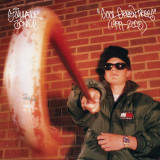
The cover photo is a picture of Sam standing on his back porch in the latter part of 1998, just before he got his first sampler. He was 13 years old, in 8th grade. His dad took the picture with his 35mm film camera: "I actually wanted to be pointing my dad's .22 pistol at the camera lens but he wouldn't let me. He gave me an old walking cane to use instead. The Tommy Hilfiger puffer jacket came from the lost and found at William Fleming High School where my mom worked as a secretary. I was thrilled when she brought it home because we never spent money on expensive name brand clothing like that - we were for the most part strictly a sale rack, bargain bin, thrift store, yard sale, flea market kind of family when it came to clothes. My watch is some cheap off-brand fake gold department store watch." Mastering for this vinyl edition was overseen by Be With regular Simon Francis and it was cut by the esteemed Cicely Balston at Abbey Road Studios to be pressed in the Netherlands by Record Industry.
- A1: Basis Rahouma - بسيس رحومة,- Yana Alla Nafsa Masouda يانا اللي نفسي مسدوده (Blocked From What I Want)
- A2: Sheikh Amin Abde -L Qader الشيخ أمين عبد القادر, Mould Fi Madina Tanta مولد في مدينة طنطا (Born In The City Of Tanta)
- A3: Samah سماح, - Shawish Aldawriat شاويش الدورية, (Patrol Sargeant)
- A4: Mahmoud Al-Sandidi محمود الصنديدي, - Ana Mish Hafwatak (Part 2) انا مش حفوتك, (I Don’t Miss Your Love)
- B1: Abu Bakr Abdel Aziz (Aka Abu Abab) أبو بكر عبد العزيز,- Al Bint Al Libya أل بينت أل ليبيا (The Girl From Libya)
- B2: Sheikh Amin Abdel Qader الشيخ أمين عبد القادر, - Mawal Al Layl Kolo Makasib موال الليل كله مكاسب (Mawaal: The Spoils Of An All-Nighter)
- B3: Abu Saber أبو صابر, - Ya Allah Ank Zinat يا الله انك زينة (Oh, God, You Are Beautiful)
- B4: Reem Kamal ريم كمال, - Baed Al Yas Yjini بعد اليأس يجيني (After Hopelessness, He Comes To Me)
“Egypt’s “official” popular music throughout much of the 20th Century was a complex form of art song steeped in tradition, well-loved by the middle and upper classes, and even accommodating to certain non-Arabic influences. It was highly structured by professional musicians working an established industry centered in the capitol, Cairo. However, far from the bustling cosmopolitan center of Cairo, north and northwest, in towns like Tanta and Alexandria and extending across the Saharan Desert to the Libyan border, dozens of fully marginalized artists were developing a raw, hybrid shaabi/al-musiqa al-shabiya style of music, supported by smaller upstart, independent labels, including the short-lived but deeply resonant Bourini Records. Launched in the late 1960s in Benghazi, Libya, Astuanat al-Bourini اسطوانات البوريني (Bourini Records) published some 40 to 50 titles from 1968 to 1975. Bourini released 7-inch 45 RPM singles by 15 artists, all but one of them Egyptian, igniting brief careers for Alexandrian singer Sheikh Amin Abdel Qader and the blind Bedouin legend Abu Bakr Abdel Aziz (aka Abu Abab). The tracks compiled here comprise a full range of styles covered by the label, while highlighting some of its most gobsmacking moments, from Basis Rahouma’s beastly transformation into a growling and barking man-lion by the end of “Yana Alla Nafsa Masouda,” to Reem Kamal’s hopeful-if-bitter handclapping party pivot “Baed Al Yas Yjini,” which descends into an almost Velvet Underground outro-groove of nihilistic dissonance. All the tracks on this compilation were laid down in stark divergence from the mainstream Egyptian popular music topography of heightened emotions buoyed by lush arrangements. The contrast is most evident in Mahmoud al-Sandidi’s “Ana Mish Hafwatak,” wherein his voice weaves heavily but deftly through a constant accordion drone, and Abu Abab’s “Al Bint al Libya,” a sparse, slow-burning lament with minimal percussion, violin, and Abab’s nephew Hamed Abdel Muna'im Mursi on lyre. Whereas the Egyptian mainstream was aspirational, attempting to reflect Egyptian culture at its most refined, the performances captured by Bourini were manifestations of everyday life lived by the mostly otherwise ignored masses. More than half century old, this music has lost none of its urgency, presence, or relevance. We hear these artists as if they’d just joined us in our living room, and not on a stage decades ago surrounded by tens of thousands of long-forgotten acolytes.
- A1: Bryan Fury - Destined To Rule Sera - 190Bpm - 4M02
- A2: Bryan Fury X Akira - Dc Crew Riegn Supreme - 198 Bpm - 3M40
- A3: Bryan Fury X Secret Squirrel - The Firm - 175 Bpm - 4M38
- B1: Bryan Fury X Ak Industry - Nightmare Prodigy - 200 Bpm - 4M28
- B2: Bryan Fury X Khaoz Engine - We Swarm - 200 Bpm - 4M38
- C1: Bryan Fury - Just A Dream, Boundless (Mankind Remix, Original By Rage Hc) 180 Bpm - 3M19
- C2: Bryan Fury - Costa Blanca's Cannibal Club - 200 Bpm - 3M19
- C3: Bryan Fury - Demon Spree - 200 Bpm - 3M43
- D1: Bryan Fury X Hellfish - Dead Wrong - 205 Bpm - 5M09
- D2: Bryan Fury X Deathmachine - Stay Down - 210 Bpm - 4M26
Hardcore time whatever... Bryan Fury loves Break and Hardcore, Dancefloor and Skillz... Exploring views to distort ways... Surprise you with a dark or cheezy dimension.
He did and will never let you down with his pityless drops...
A rare album from one of the soundmaster killing around !
And many collabs with people who can say : "waou.... too !"
Enjoy and play LOUD !
Efficient Space honours the memory of producer and MC Ali Omar with Hashish Hits, a posthumous selection from the dub rebel’s self-released discography.
One of ten children in working-class Liverpool, Omar drew deep influence from his father's Arabic heritage—a thread central to his identity and sample origins. After art school and a spell clubbing during Manchester's halcyon days, he relocated to Sydney, where he cofounded the blunted downbeat duo Atone with fellow British expatriate Andy Fitzgerald. As an MC, he infiltrated the city’s house, dub, jungle, and bass circuits, becoming a regular fixture at the Bentley Bar, where he commanded the mic with his versatile, rumbling baritone and charisma.
Freakishly talented in the studio, Omar was a pioneer of the Akai sampler and Atari, deftly recording live sessions straight to DAT. Drawing on industry insights from his sister, Merseybeat firebrand Beryl Marsden—who supported The Beatles on their final UK tour and was signed to Decca and Columbia—the non-conformist sought to build a self-sufficient business model. Between 1998 and 2004, he independently issued four albums on CD through his Hashish Studios imprint, hustling copies directly to local record stores and live shows for instant returns, even hand-sewing screen-printed hessian sleeves for his final release.
Uncompromising in his principles and refusing to suffer fools or charlatans, Omar relished the opportunity to collaborate with those who embodied the same spirit. Hashish Hits offers a snapshot of his inner sanctum—Fitzgerald on the opening track's billowing smoke stacks, the serpentine vocals of Gina Mitchell and the magic hands of mixer Louis Mitchell on 'On Release,' and Wicked Beat Sound System’s Kye on 'Poor Man Beggar Man Thief'. Meanwhile, 'Suicide Bomber' smoulders with the tension of a lost Muslimgauze relic, as the instructional 'Roll Up' and 'The Last Straw' spiral deeper into Omar’s signature production vortex— where space stretches in slow motion and walls reverberate with ricocheting delay.
A true icon of Sydney’s underground scene, the larger-than-life Omar passed away on 23 June 2009 after a valiant battle with cancer. He is remembered for his assertive spirit, larrikin humour, wild anarchic personality, and enduring mantra: “Love and live your life”.1
- Main Title
- Eiko-Maru Sinking
- Bingo-Maru Sinking
- Uneasiness On Odo Island
- Ritual Music Of Odo Island
- Storm On Odo Island
- Frigate March
- Odo Theme Island
- Godzilla Appears On Odo Island
- Horror In The Water Tank
- Shinagawa Pandemonium
- Attack Godzilla
- Godzilla Comes Ashore
- Fury Of Godzilla
- Deadly Broadcast
- Godzilla To Tokyo Bay
- Repel Godzilla
- Devastated Tokyo
- Oxygen Destroyer
- Prayer For Peace
- Frigate March Ii
- Godzilla Under The Sea
- Ending
Waxwork Records is thrilled to present GODZILLA 70th Anniversary Original Motion Picture Soundtrack by composer Akira Ifukube. Released in 1954 by director Ishirô Honda, Godzilla holds the record for being the longest- running franchise in film history. Waxwork Records worked closely with Toho to create this deluxe 70th Anniversary release, featuring a re-mastered score and all-new art.
When ships begin to go missing near Odo Island off the coast of Japan, the locals look to the government for help. Paleontologist Kyohei Yamane (Takashi Shimura) is sent to investigate the situation. There, he discovers the horrors of Godzilla, who soon begins attacking the Japanese mainland. As the military’s efforts to destroy the monster continuously fail, scientist Daisuke Serizawa (Akihiko Hirata) is called upon to use his “Oxygen Destroyer” to kill the beast. Finding Godzilla in Tokyo Bay, Serzawa’s machine is used and finally, the beast is felled.
Since its release, Godzilla has continued to terrorize audiences around the world. The film has influenced countless filmmakers, with both Akira Kurosawa and Steven Speilberg citing it as one of their favorite films. The genius use of practical special effects and miniatures changed how the Japanese film industry made movies for decades. Godzilla has spawned over thirty sequel films and countless video games, comic books, toys, TV shows, and more becoming a pop culture phenomenon in the process.
The film’s score by Akira Ifukube has become an instantly recognizable piece of film music. Given only the script and a week in which to compose, Ifukube crafted a score that feels as enormous as the kaiju himself. Godzilla’s theme has become a staple of nearly all subsequent Godzilla films and was considered by Ifukube to be the greatest piece of music he had written. Using low-pitched brass and string instruments, Ifukube gives the score a massiveness and weight that complement the terror and destruction brought about by the rampaging monster. Ifukube also used a deeply resonant stringed instrument to create Godzilla’s iconic roar, a trick used to create the roar throughout the franchise.
Waxwork Records is beyond excited to present this vinyl release of Godzilla for its 70th Anniversary. Re-mastered, pressed to colored vinyl, housed in a deluxe gatefold jacket with matte satin coating, an art print, and featuring all-new artwork throughout by Robert Sammelin.
Sourcing rare records to reissue can involve meticulous research and years of digging, but then occasionally, Lady Luck smiles upon you. We probably would have never heard of the Medium Wave Band if Gary from Mr Bongo hadn't known Wolverhampton-based record dealer, Steve Ward. Whilst offering Gary some records for sale, he remembered he had a spare copy of an old 7" single that he thought Gary might like. Steve didn't know much about the release, and it had never sold on Discogs. Looking at the record itself, it was minimalist in appearance and information, there wasn't much to go on other than that it was from the Birmingham area. The mystery drew us in…
The A-side, 'So Tender’, is a late-night, jazzy slow-jam, with beautifully sultry, soulful female vocals which sounded vaguely familiar. On listening to the B side, 'Games (Instrumental)’, you are rewarded with a superb example of Britfunk / independent UK jazz-funk. The pulsating, bass-led dancefloor groove and sensibility is a sound reminiscent of productions usually found on labels such as Elite, but the 7” was not released on a label, it was a private press by the band themselves. So who are the enigmatic The Medium Wave Band?
After some fruitful internet digging and correspondence, we got the answers. The band lineup featured Elliot Browne on guitar (lead & rhythm), Ron Lyseight on guitar (rhythm), Andrew Proverbs on keyboards, Tony Peart on drums, Paul Snook on bass, Linton Levy on saxophone, and surprisingly, the beautiful vocals we had been enjoying were those of Jackie Graham, aka the hugely successful UK vocalist, Jaki Graham. Maybe best known for her pop hit with David Grant, 'Could It Be I'm Falling In Love', but also featuring on the cult classic track 'Fire In My Heart' by Escape From New York.
Influenced by artists and bands including George Benson, Ronnie Laws, Weather Report, George Duke, Azimuth and Chick Corea to name a few, the guys booked into a studio near the Botanical Gardens in Birmingham and recorded the two tracks that make up this 7”. Only 200 copies of the original 7" were ever pressed and were sold mostly in Birmingham at Summit Records by the band’s friend DJ Frenchi, as well as at live shows. Despite its limited distribution channels, the record received solid support from fans and those in the music industry, including Morgan Khan of the influential record label, Street Sounds. DJ and journalist, Lindsay Wesker, reviewed the release and this led to the band travelling to London for several radio interviews. They played live shows across the country, including at the prestigious Ronnie Scott's in London, and supported both Shakatak and Weapon of Peace in Birmingham.
Thanks to all those involved bringing this release into fruition and for solving the mystery behind a wonderful Britfunk and UK soul record that could have otherwise been lost in the mists of time.
I Will Find You” takes listeners on a journey through Mathame’s greatest inspiration, Franchino, who’s love for electronic music inspired not only the brothers, but the entire nation. As this track reveals itself, the duo’s devotion to creating meaningful music that is deeply rooted in their own influences reverberates throughout as they translate its gripping sonic identity through their own, distinct lens.
Throughout their career, Mathame (brothers Matteo and Amedeo Giovanelli), have been elevating fans to new heights through their sophisticated compositions that infuse cinematic soundscapes with ethereal energies and raw, real emotions that command movement. While Franchino’s version of this track was originally introduced in 1993 and influenced some legends of the italian progressive techno pioneer scene such as Ricky Le Roi and Mauro Picotto, the Mathame record is actually a rework of Clannad’s theme song from the soundtrack of the 1992 film “The Last of Mohicans”, which the duo first incorporated into performances during their 2019 Cercle set in Mexico City.
“I Will Find You” has since become an anthemic and defining element of Mathame's performances, inclusive of the duo’s 2023/2024 world tour, and has already garnered critical acclaim. The release of “I Will Find You” carries a special endorsement from its original composers, Clannad. The Grammy and BAFTA award-winning band has expressed their delight in seeing their music embraced and reinterpreted by not only new generations, but new genres, as the duo breathe new life into the track's legacy.
From the solitude of volcanic Mount Etna to stages around the world, Italian DJ and producer duo Mathame connect audiences around the globe through transportive music that transcends genres, generations and dimensions. More than another DJ duo, Mathame are sonic alchemists whose productions unfold as poignant odysseys that blur the lines between reverie and reality. Defying convention through their sound, the brothers masterfully immerse listeners into the futuristic realms they conjure, pulsating with sensorial magic and ethereal energies that linger in the air akin to candles in a great cathedral. Their first LP, “MEMO” was a technically driven masterpiece, paving the way for colossal collaborations with global talents like Tiësto and John Summit and amassing over 6 Million streams on Spotify and support from the likes of industry authorities such as Forbes’ 15 Best Albums List of 2023.
The arrival of their solo record “I Will Find You” signals a return to their shared artistic vision and will be released in tandem with the announcement of the duo’s Ibiza Residency concept - NEO - at the beloved electronic temple, Amnesia. Born from an inspirational journey in Tokyo, Japan this past year, Mathame will introduce their most groundbreaking concept to date that masterfully blends the worlds of technology, artificial intelligence and their profound performances with a sense of mysticism that dances between what is seen and what is heard. The cinematic experience - complete with a setup, development and climax - will take place at Amnesia under the HORIZON framework from June 7 to July 5, and from September 13 to 27, with each chapter boasting an eclectic lineup of performances from the likes of The Blaze (DJ Set), Mind Against, NTO and more.
Mads Lindgren aka Monolog, a traveler in sound across the European continent. Danish, but resident in Berlin, and working intensely in the studio and on stage alongside taking care of jobs in the audio industry for Native Instruments and Ableton. Previously Monolog had releases on Ant-Zen, Ad Noiseam, Hymen, and Ohm Resistance, as well as the Subtrakt label, which he is managing.
Music is written & produced by Monolog
Field recordings in track Forgotten Circle 10 by Andrii Nidzelskyi
Mastering and lacquer cut by Noel Summerville
Artwork & release production by Dmytro Fedorenko
Design by Zavoloka
- A1: ?1 – §2
- B1: ?3 – §4
- C1: ?5 – §6
- D1: ?7 – A Story Never Told
Opeth are one of the biggest acts in the Prog Metal genre with numerous top 10 albums worldwide, ”The Last Will and Testament” is their new album set for release November 22. Guest vocals by Joey Tempest (Europe), and guest flute by Ian Anderson (Jethro Tull). “A restless musical journey in a way mirroring my own relationship with music as a consumer of it," narrates band leader Mikael Åkerfeldt. "I pick up something here, dismiss something there. I worship and I hate music at the same time. This ambivalence leads me down some type of creative path of my own and then, all of a sudden, a collection of songs has been written. Best case scenario, these songs are good enough to impress the band. Good enough for the ”powers that be” in terms of the industry. Good enough for ”you”?! I love this record. I have to say it (write it). Maybe I’m proud even? There are some familiar ingredients in there I suppose. Most of our music has sprung from the same source, so I guess it’s not much of a shocker if it’s going to sound like ”us”. I’m a bit in awe of what we did with ”The Last Will and Testament”. It feels like a dream. There is some ”coherence" and ” songwriting skills” I hope, but what do I know? I tend to favour the ”strange” over the ”obvious”, but I feel like I’m in the minority, and that’s fine. So…fair warning! Don’t expect an instant rush (as per usual), but if you do ”get it” (have you got it yet?) right away, that’s ok too!"
Thirty years after it was released on CD and cassette, Fuemana’s cult classic New Urban Polynesian album is finally available on vinyl. Born from the blood, sweat and tears of the late great Polynesian renaissance man Phil Fuemana and his family and friends, Fuemana’s music transports the listener back to the autumn and winter days of 1994 in the antipodes, where they turned love, loss, grief and acceptance into the finest R&B/street soul album ever recorded in Aotearoa New Zealand.
Fuemana spent several late nights tracking one-take sessions at The Lab Recording Studio with engineers Simon Taylor, Chris Sinclair and Mark Tierney. From there, New Urban Polynesian came together quickly. Across the album, Phil showed off his prodigious skills as a multi-instrumentalist and producer, playing most of the smooth, sophisticated, and heartfelt music himself. In the studio, he shared the lead with Christina and Matty J, supported by a cast of backing vocalists, musicians and guest vocalists, including a young Carly Binding.
From the lush openings of their soulful Roberta Flack, Donny Hathaway, and Stevie Wonder covers ‘Closer’ and ‘Rocket Love’ to the misty new jack swing serenade of his original ‘Seasons,’ Phil’s goal was to craft material that would let the music industry know the Fuemanas had arrived while also inspiring the next generation.
In 1995, the Fuemana family’s youngest sibling, Pauly, borrowed the initials from Ōtara Millionaires Club and began performing as OMC. Not long after, he changed everything for New Zealand music by recording the feelgood guitar-laced Polynesian pop global mega-hit ‘How Bizarre’ with producer Alan Jansson.
Consumed by a desire to do more musically, Phil established Urban Pacifika Records, where he launched the careers of a new wave of Pacific hip-hop and R&B talent, including Lost Tribe, Moizna, AKA Brown, and Sani Sagala, aka Dei Hamo.
In 2005, Phil tragically passed away from a heart attack aged 41. Five years later, Pauly, equally tragically, joined him after an extended battle with a rare neurological disorder, leaving Tony and Chirstina to grieve and make sense of their family’s extraordinary story.
When New Urban Polynesian first hit record store shelves in 1994, the Fuemanas dedicated the album to their father, Takiula Fuemana. Three decades later, it has expanded in meaning to become a remembrance of their youngest brother Pauly and a celebration of the life and times of their big-hearted big brother, Mr. Fuemana, Mr. Phil Fuemana.
Words by Martyn Pepperell in conversation with Tony & Christina Fuemana.
Gazebo Records feel honoured for the opportunity to share this important album for our inaugural release, now available for the first time on vinyl with remastering by Mikey Young.
All proceeds from this record flowing to the Fuemana family.
« A Fantastic mixture of Brakka, Reggae & Afrobeat Recorded between 1980 and 1984 from the underground Afropean boxer Mushapata »
“Saba-Saba Fighting” or fighting for peace, is the message that Mushapata, a legend of the African reggae underground scene in Paris with an extraordinary destiny, has fought for all his life.
Born in Bukavu, a city nowadays located in the Democratic Republic of Congo at the border with Burundi, Mushapata arrived in France at the end of the 1970s to pursue his career as a boxer. A few years later, revolted by the professional sports industry, he became a personal protection agent on the advice of his manager. He escorted many celebrities among whom Bob Marley during his legendary French tour of 1980. This encounter awakened the musician hidden behind the boxing champion. Mushapata had stepped out of the ring but he kept fighting with music, lyrics and his band Saba-Saba Fighting.
Ignored by the record labels of the time, his first self-produced recordings reveal a rough mix of lo-fi reggae, afrobeat rhythms accompanied by a brass section close to Free jazz. The nonchalant sounding voices of Mushapata and Tshayi complete this explosive cocktail and carry, in Swahili language, the Pan-African ideas of Lumumba and other great figures of African-American struggles.
This maxi single, conceived as a mini-compilation tribute, includes 4 titles from the first two albums recorded between 1980 and 1984. Limited edition!
In this electrifying 2024, we're buzzing with excitement as we celebrate 40 years of Flexi, the record emporium that's weathered countless storms amidst the ever-shifting tides of the music industry, catering to vinyl aficionados across the ages. Alongside the raves and swag, no doubt, there's a killer compilation dropping on the indie label "Flexi Cuts," dubbed evocatively as "Musica Solida" spread across 3 or perhaps 4 12-inch samplers, boasting a carefully curated selection of singles from cherished Flexi-affiliated artists and producers. The vision? To cultivate a virtuous movement of sublime tunes, echoing the fervor and zeal to persist within the realm of quality that Flexi embodies within the Italian scene, alongside kindred spirits... despite the daunting challenges of the market in recent years.
Musica Solida # 1 showcases
DJ Rocca: One of the most solid producers on the panorama, a respected maestro of the clubbing scene in Italy and worldwide.
Club Soda: Live electronic ensemble, still dreamin' from their latest EP 'Basso e Batteria', which packs an unreleased track recorded directly from their house-flavoured jam sessions.
Lex (Athens) & Locke : A Greek producer who is well established in today's dance house scene, with quality-vibey releases and a very nice and classy and groovy sound. We will definitely hear from him in the future!
Hiroyuki Kato: Emerging Osaka-based multi-instrumentalist makes his debut with a very punchy and catchy track!
The Mechanical Man (feat. Bob Vito) : Neapolitan super producer. Raw-sounding, gritty, powerful and never dull, a pleasure to have him with us.
The record will be released in about 200 vinyl copies no more.
Packaged in the classic discobag 2- holes, with a distinctive letterpress print in a beautiful silver cover.
Compiled by Simone Guerra aka Relative
Mastered by Francesco Brini (except track B1, Mastered by Marco Spaventi)
Distributed by Rubadub, Glasgow
Pressed by Desslab
Design by GLZ
- A1: The Original Way (Feat. Freddie Foxxx)
- A2: Duck Down
- A3: Drug Dealer • A4. Like A Throttle
- B1: Build And Destroy
- B2: Ruff Ruff (Feat. Freddie Foxxx)
- B3: 13 And Good
- B4: Poisonous Products
- C1: Questions And Answers
- C2: Say Gal
- C3: We In There
- C4: Sex And Violence
- D1: How Not To Get Jerked
- D2: Who Are The Pimps?
- D3: The Real Holy Place
- D4: 13 And Good (Remix)
In the early 1990s gangsta rap was becoming more popular. KRS-One took to the mic and continued to write socially conscious raps resulting in the hard-hitting 1992 album Sex And Violence which would be the fifth and final studio album under the Boogie Down Productions name. Produced by KRS-One, Pal Joey, Kenny Parker, D-Square, and Prince Paul, the album explores the darkest sides of the American urban landscape and psyche, with KRS as narrator, detailing all sides of the matrix. While singles like the alarming drum-driven "Duck Down" and the funky-as-hell "We In There" got most of the attention in ‘92, the deeper sequence reveals plenty of additional gems: the history lesson of the dark and dusty "Drug Dealer"; "Ruff Ruff", with scowling MC favorite Freddie Foxxx (aka Bumpy Knuckles); the grooving "Questions and Answers," and the frantic record industry track "How Not To Get Jerked." The album kicks off with an intro skit featuring KRS-One as a DJ in panic needing vinyl which at the time was a dying format while cassettes and CDs became the dominant format. Thirty-two years later vinyl DJs and Hip-Hop vinyl collectors no longer need to panic. Get On Down in partnership with Sony Music's CERTIFIED is proud to bring back to vinyl this underrated gem in the BDP catalog. Featuring one of the dopest album covers by American artist Robert Williams, Sex and Violence is pressed on colored vinyl and packaged in a gatefold jacket with full lyrics.
- A1: Jun Sato - Lorang
- A2: Fumihiro Murakami - Miko
- A3: Tadahiko Yokogawa - Stop Me
- A4: Love Peace Trance - Yeelen
- B1: Ichiko Hashimoto - Lete
- B2: Yosui Inoue - Pi Po Pa
- B3: Eiki Nonaka - Phlanged Vortex Clip
- C1: X Cara - Night In Aracaju
- C2: Poison Girl Friend - Nobody
- C3: Dream Dolphin - Take No Michi
- D1: Keisuke Sakurai - Harai Cd Version
- D2: Hiroki Ishiguro - Unity
- D3: Dido Shizuru Ohtaka Michiaki Kato - Mermaid
- D4: Keisuke Kikuchi - Retro Electric
2024 repress
Music From Memory is excited to announce a special compilation that they’ve been working on for some time now; MFM053 – VA – Heisei No Oto – Japanese Left-field Pop From The CD Age (1989-1996). Compiled by long-time friends of the label, Eiji Taniguchi and Norio Sato, Heisei No Oto delves into a world of music released almost exclusively on CD and brings together a fascinating selection of discoveries from a little known and overlooked part of Japan’s musical history.
The last ten or so years have seen a global wave of interest in Japanese music encompassing ambient, jazz, new wave and pop records from the 1980s, some of which is increasingly considered the most innovative and visionary music of that time. Although some music from this period, in the form of ‘City Pop’ or ‘rare groove’ records, had been coveted by collectors and DJs for a number of years, most Japanese music from the time was little known outside and often even within Japan.
Sometime around the mid 2000s, two Osaka record store owners, Eiji Taniguchi of Revelation Time and Norio Sato of Rare Groove, along with a handful of deep Japanese diggers such as Chee Shimizu of Organic Music records in Tokyo, began to explore beyond the typical ‘grooves’ or ‘breaks’. Much like their counterparts in Europe and the US, they began delving into home-grown ambient, jazz, new wave and pop records, discovering visionary music, often driven by synthesizers or drum computers, that broke beyond the typical confines of their genres.
Spending tireless hours in local record stores and embarking on digging trips across the country, Eiji Taniguchi and Norio Sato, much like Chee Shimizu, have been at the forefront of unearthing and introducing many of the very Japanese records now loved and sought after around the world. Yet as YouTube algorithms and vinyl reissues would transport such music into the global consciousness and demand and therefore scarcity intensified for such records, so Eiji and Norio have recently begun to turn their attention to CDs.
The title of the compilation Heisei No Oto refers to the sound of the Heisei era, which began in 1989 and corresponds to the reign of Emperor Akihito until his abdication in 2019. Marking the culmination of one of the most rapid economic growths in Japanese history, 1989 also coincided with the music industry’s final shift away from vinyl in favour of CDs. And, although compact discs were first introduced seven years earlier it wasn’t until late into the ‘80s that, beyond dance music labels, CDs became the exclusive format for major and independent labels in Japan and throughout the world.
This however didn’t signal the end of the innovation in Japan. Many of those same musicians who have become known for their work in the ‘80s would continue to produce outstanding music well into the mid ‘90s, as greater innovation and advances in musical equipment allowed Japanese musicians and producers to refine and explore new sounds. While musicians such as the seminal Haruomi Hosono, whose productions feature on a number of tracks, would continue to push the boundaries of these new technologies, these technological advances also meant less established musicians were able to make use of increasingly affordable but state-of-the-art equipment.
Including music by Haruomi Hosono as well as Yasuaki Shimizu, Toshifumi Hinata and Ichiko Hashimoto who have become known and loved around the world in recent years, Hesei No Oto also features Japanese pop star Yosui Inoue, producers Jun Sato and Keisuke Kikuchi in aaddition to less established artists from the contemporary, jazz, new wave, pop and dance music scenes. Bringing together a selection of tracks that seem to define these specific genres and in fact move fluidly between a number of them, the music on the compilation is again underscored by experimentations with synthesizers and drum computers though with something of a gentle Pop sensibility. Reimagined here then under the encompassing term ‘Left-field Pop’, this is an exciting chapter in Japanese musical history that has only just begun to be fully explored.
VA - Heisei No Oto - Japanese Left-field Pop From The CD Age (1989-1996) is a 2xLP/2xCD that includes liner notes by Chee Shimizu and artwork by Hagihara Takuya and is released on February 28th.
After the roaring X5NRG Ep released a year ago, with a driving remix from Losoul, AGP heads back to his own imprint for a new EP set to drop on Ausblick in June 2024.
A1: "Everything From Uptown" sets the tone with its sundowner House vibes, boasting a powerful punch, a deep jazz bassline, and emotionally charged chords that promise to win your heart from start to finish.
B1: Prepare to embark on a journey of reinterpretation with Altitude (aka Matt Thibideau) at the helm. This track offers a fresh perspective on A1, a bold re- appropriation that delves even deeper into the heart of the original piece, offering a mesmerizing sonic experience.
B2: Rounding off the release is a summer anthem like no other : Cocktail De L'eau. Smooth and effortlessly cool, this track has already garnered early support from
industry heavyweights Ohm and Steve O'Sullivan, making it a must-have addition to any playlist
Supported by : Ohm, Steve O'Sullivan, Thor, Fletcher, Costin Rp, Philipp Priebe, Anton Kubikov, TM Shuffle, Gabriel Belabbas, Laurent Garnier.