Be The Mountain (2026) is the latest release from Detroit-based musician STS. The record explores a serene and introspective world shaped by organically morphed textures and slowly evolving soundscapes.
While largely drumless, the album maintains a subtle rhythmic backbone - not through traditional percussion, but through modulated pads, shifting synths, and carefully sculpted ambience. The music moves and breathes without overt propulsion, finding tension and momentum through tone, density, and motion rather than beats.
Much of the record was written during a period of sustained physical and mental strain. A time when daily effort fought against perceived limits. Instead of responding with heavier or more aggressive material, the music became a quiet counterweight to the intensity. These tracks function as an escape from chaos. They are built from patience, repetition, and a gradual transformation.
The title reflects a central idea behind the record: confronting something that initially feels insurmountable, only to realize that the enduring force is the one within us all.
Be The Mountain is about endurance, not as struggle, but as presence.
Released independently and on her 30th birthday, "Water Baby" is Giorgia-May's stunning debut album. Spanning over 8 tracks & recorded live at The Famous Goldwatch Studios in Berlin, Giorgia collaborates with some of Berlin's finest musicians to enhance her craft at putting emotions into songs. Each track highlights something different in her ability to channel pain, desire, lust and heartbreak, all whilst (most of the time) making you want to dance & smile.
Stemming originally from Brighton (UK), Giorgia-May has been pursuing a musical career through the means of travel. Now based in Berlin, she combines sensual lyrics, mesmerising tones and exciting arrangements which draw upon her personal experiences of love, loss and coming into womanhood. Blending soulful melodies with jazzy chords and hints of RnB, she takes influence from writers such as Olivia Dean & Amy Winehouse.
Extensive independent European tour in August & September 2026 through the following cities: Berlin, Paris, Bilbao, Porto, Lisbon, Valencia, Barcelona, Marseille, Cannes, Milan, Lake Como, Zurich, Luxembourg, Brussles, Cologne, Amsterdam and more ...
Scaler are the electrifying Bristol-based band hailed as the city’s “next national breakthrough” thanks to their pulverising live show and meticulous, mind-warping sound. Hot off their critically acclaimed sophomore record ‘Endlessly’ which was nominated for an AIM award for ‘Best Independent Album’ comes Reflex. An EP full of kinetic energy satisfying a craving for immediacy within the project. The layers of intricate collaboration of Endlessly are peeled back and the raw energy of SCALER is cast forth. “These songs were made with the four of us in the room together with our machines, reacting to what the others were doing. Trying to capture the feeling of when your body outruns your head, no second guessing or holding back. Together they work as both fight and flight. A chase and a reaction. Instinct not thought. A reflex.
Magdalena Bay, the Los Angeles-based duo of Mica Tenenbaum and Matthew Lewin, create magical pop music that floats in the ether of our collective social cosmos. While they call California home, their essence lies in the clouds, emitting unique yet familiar frequencies of synthesized nostalgia, kitschy catchiness, and warped neo-hooks. Suited for the times, Magdalena Bay blends the known and felt with innovative sonic landscapes.
Tenenbaum and Lewin met as teenagers in a Miami high school music program. Tenenbaum, who moved from Buenos Aires to Florida at age one, and Lewin, a guitar shredder influenced by his dad’s prog and concept rock records, quickly recognized their kindred spirits. They formed a prog band called Tabula Rasa and began a romance. Both were skilled musicians; Tenenbaum a pianist and singer, and Lewin self-taught in production and music theory. Despite attending different colleges, they maintained their band, traveling hours to rehearse before realizing two things: their relationship was undeniable, and prog rock wasn’t resonating with young audiences.
Shifting their focus to pop, they explored its craft, leading to the creation of Magdalena Bay. They learned the complexities of pop writing and production, striving to create something interesting within the genre. Describing their music broadly as "pop," they released several EPs and singles before debuting their album, "Mercurial World," in 2021. Praised for its melodic hooks and meticulous production, it was often labeled as "synth-pop."
Their success is reflected in streaming numbers, social media followers, and festival appearances. Magdalena Bay's stylized online aesthetic complements their music, creating a cohesive artistic vision. Tenenbaum says, “We love extending the world of our music past sound into videos or graphics.” Lewin adds, “We’re trying to create an atmosphere or an emotional quality with it.” This integrated approach, termed "world-building," is central to their artis
Limited edition LP Marbled coloured vinyl in mirror board sleeve 180g marble coloured vinyl. Packaged in a heavy weight 350gsm CMYK-printed mirror board silver reflective outer sleeve with a 170gsm inner sleeve. High gloss finish on both the outer and inner sleeves. the freshly minted label NANOQ is proud to announce a new album by david sylvian titled 'the distance between the killer and the killing' it's the first album sylvian has released in 15 years. composed of sessions recorded between 2012 - 2025, the album is based on recomposed improvisational sessions with a variety of artists ranging from otomo yoshihide, ryuichi sakamoto, bilianna voutchkova and miako klein, to jamie drouin, lance austin olson and more. the 46min instrumental is unlike anything tackled by sylvian before and is seen by sylvian himself as the official follow up to his 2009 album 'manafon'. in pauline nadrigny's essay on the album, she describes something of the listening experience. '... voices surge that belong to no one in particular. One that hoots and hums across a violin, worked until it loses its voice, becomes mere matter among other matter. A voice inside the breath of a clarinet or a recorder. Grunts, gurgles, distant cries, somewhere between man and bird, woman and nuthatch. Fragments of choirs, far off, snatches of a song long since lost. Too far to be recovered.' 'What a remarkable piece of work. At times it feels like listening to a symphony; at others, as though (sylvian's) voice is speaking through the music. At first, I was trying to find my own sound, but somewhere along the way I completely forgot about that and became utterly absorbed in the music. Hearing Ryuichi's presence emerge here and there throughout the piece also brings a very special feeling for me. Thank you for creating something so extraordinary.' otomo yoshihide 2026
the freshly minted label NANOQ is proud to announce a new album by david sylvian titled 'the distance between the killer and the killing' it's the first album sylvian has released in 15 years. composed of sessions recorded between 2012 - 2025, the album is based on recomposed improvisational sessions with a variety of artists ranging from otomo yoshihide, ryuichi sakamoto, bilianna voutchkova and miako klein, to jamie drouin, lance austin olson and more. the 46min instrumental is unlike anything tackled by sylvian before and is seen by sylvian himself as the official follow up to his 2009 album 'manafon'. in pauline nadrigny's essay on the album, she describes something of the listening experience. '... voices surge that belong to no one in particular. One that hoots and hums across a violin, worked until it loses its voice, becomes mere matter among other matter. A voice inside the breath of a clarinet or a recorder. Grunts, gurgles, distant cries, somewhere between man and bird, woman and nuthatch. Fragments of choirs, far off, snatches of a song long since lost. Too far to be recovered.' 'What a remarkable piece of work. At times it feels like listening to a symphony; at others, as though (sylvian's) voice is speaking through the music. At first, I was trying to find my own sound, but somewhere along the way I completely forgot about that and became utterly absorbed in the music. Hearing Ryuichi's presence emerge here and there throughout the piece also brings a very special feeling for me. Thank you for creating something so extraordinary.' otomo yoshihide 2026
DJ Support: Layne Fox (40 thieves), Dr Rob/Banbantonton, Don Letts, Sean Johnston, Tim Sweeney, Richard Norris/The Grid., Andy Sims/Soft Rocks, Stephen KIW, Alex From Tokyo, Pete Herbert, Pete Gooding, Ewan Pearson, Richard Sen, Balearic Mike(Down To The Sea And Back)
Craig Bratley’s sophomore album, Return To Bass, has been a long-time gestating, with a whisky-like distill time in the musical barrels from whence this came. His debut was in 2014 and 12 years later here he is again, in the blink of a, er, Jurassic age. In that time, he’s gathered a good deal of experience, released several musically varied 12-inches, as well as having Andrew Weatherall remix a few of his efforts (not completely surprising, since The Guv’nor also played Craig’s music).
Bratley has spent the last few years honing his musical and technical skills which are evident on this album, as are his influences, which can be heard on his impressively consistent back catalogue, include Italo-disco, British electropop, acid house and a slowed down version of Chicago house that lends it a heroin crawl. Added to that, though, is the dub reggae sound championed by King Tubby, Lee ‘Scratch’ Perry and our own Dennis Bovell, which is much in evidence on this set.
It seems apposite, in the wake of the death of Sly Dunbar (and, less recently, his partner, Robbie Shakespeare) that Craig’s album is now appearing, since Bratley’s sound is imbued with a dub sensibility and the engine of the whole set is built around the thud that Sly & Robbie brought to their greatest productions; the song titles are clues: ‘Plasticine Dub’, ‘Return To Bass’ and ‘No In Between Dub’.
The LP Features standout vocals from Amy Douglas, Thomas Gandey, and Ola, plus funeral-march trumpet work by Tim Hutton.
** FIRST TIME ON 45 **
Born in Jamaica, Tory Wynter spent his early years in London. From there, he moved to New York City where he studied voice and acting and quickly assumed his music and entertainment career. Tory began performing with some of the greatest names in entertainment, and for some of the most prestigious audiences. He burst onto the recording scene, writing several albums and singles for major record labels. The experience and expertise he picked up along the way allowed him to open a highly successful publishing company and record label, Laykash Records.
Both tracks are taken from his LP "On The Love Side / Happy Side" and have now been released for the first time as a strictly limited 45 RPM single. In addition, "Oh Let The Rain Fall Down" will soon be released on the upcoming Tramp Records compilation titled "CAN YOU FEEL IT Vol.5 - Modern Soul, Disco & Boogie 1977-88".
Balearic London's very own Ben Gomori presents his first extended play since his 2024 debut album 'Collapsing Time', collecting an array of sensual sounds across four tracks. 'It's Always Sunny Above The Clouds' is a punchy collaboration with German powerhouse Lauer, powered by bright piano and synths paired with '80s acid house drums and a thick melodic bassline. 'Mucho Gusto!' goes full Italo, bouncy energy matched to an anthemic horn sample. 'Fun As Fk' makes great use of rising star Caio Cenci's infectious guitar licks over a phat-bottomed groove and camp '80/90s sample synths, and 'Inner Luv' slows the tempo for a chuggy flamenco-flecked bliss-out.
Little Beat More welcomes a new 7” from Conjunto Media Luna, a release that moves along the deep axis connecting Colombia and Mexico where cumbia mutates, and projects itself into new dimensions.
On the A-side, “Kumbia Tequendama” sees the group joined by rebajada pioneer Amantes del Futuro, a key figure in shaping the futuristic vision of cumbia across generations and geographies. Born between Mérida, Medellín, and the legendary Mambo Negro studios in Bogotá, the track reflects years of friendship and shared sonic research. Hypnotic accordion lines intertwine with dense low-end pressure, channeling an energy rooted in tradition but fully tuned to the present, built for dancefloors, sound systems, and the growing decentralized community of modern cumbia.
On the flip side, French producer La Dame reshapes “No es Moda”, originally featuring La Terrorista del Sabor, into a forward-leaning DnB and Future Bass reinterpretation. Faster, sharper, and more weightless, the remix opens a new perspective on the original while preserving its nocturnal spirit and emotional depth.
The artwork is signed by Bogotá’s own Mateo Rivano, whose unmistakable visual language has defined the aesthetic of some of the most visionary projects in contemporary cumbia.
Part of the wider sonic universe of Sociedad Internacional de la Kumbia, Conjunto Media Luna’s upcoming album, this 7” captures the group’s ongoing exploration of cumbia as a shared space, where distance disappears, traditions remain in motion, and new frequencies emerge from collective memory.
Made with Love by Little Beat More 2026
“We Dance We Think”
Ahead of their inclusion on the 2026 Claypool Gold tour, The Fearless Flying Frog Brigade will release a new live LP recorded during 2023's Hunt For Green October Tour (which includes a band comprised of Sean Lennon and Harry Waters among others). The four song album-length collection is pressed on green vinyl.
For his sixth solo album, Ezéchiel Pailhès returns with a new collection of songs infused by a sunny wandering spirit.
Within each of the twelve songs on SOL is a thread of melancholic happiness that has permeated much of Pailhès’ music and songwriting. He addresses love, the passing of time, hope, lost illusions, fleeting moments of grace, the temptation of forgetting, a need to escape, and desire. All this is
insulated by understated orchestrations that blend acoustic and electronic instrumentation with deft confidence.
The Portuguese and Brazilian concept of saudade—a form of melancholic longing and nostalgia— pervades, thanks in part to Pailhès decision to record the album in Rio de Janiero and to reinterpret some of the finest works of Música Popular Brasileira (MPB). In particular, he revisits a handful of
lesser known classics from the mid-century samba and bossa nova era—originally written or performed by talents including Vinícius de Moraes, João Gilberto, Tom Zé, Dorival Caymmi, João Donato, Os Tincoãs, and Ataulfo Alves.
The shift from Brazilian Portuguese to French and the decision to adapt rather than perform a straightforward cover versions, allows Pailhès to invent a form of prosody and euphony (the musicality and harmonious combination of words) that feels vibrant and unlike anything else in today’s French
chanson landscape.
“Some lyrics are simple translations from Portuguese, in what I’d call an expanded version. For others, I started from a single word or a single phrase and embroidered an entirely new text that carried me elsewhere,” explains Pailhès. “I allowed myself great interpretive freedom, while preserving the humanist dimension of the original songs. I’ve always been deeply moved by the way Brazilians transfigure reality through heightened emotion. I love this visceral and spontaneous country, which always seems to live through emotion. And above all, I love its music both popular and unifying,
bringing together all social classes. In that sense, it’s very political music, but even more so utopian, made by the people and for the people.”
On this new album, however, the French artist was keen to avoid cliché. Each song is therefore built around a carefully balanced interplay between Pailhès’ piano and synthesizers, alongside restrained arrangements of percussion, brass, bass, and cavaquinho (a small four-string plucked guitar). These parts were recorded in Rio de Janeiro with two musicians who regularly perform alongside the legendary Caetano Veloso—Kainã Do Jêje and Alberto Continentino—joined by Thomas Harres, Antônio Neves, Eduardo Neves, and Gabriel Loddo.
Since the 1960s, France and Brazil have shared a long-standing cultural and musical relationship. Some Brazilian artists, most famously Gilberto Gil, took refuge in France during the dictatorship years (1964–1985). But above all, French chanson quickly fell in love with the richness and ingenuity of
bossa nova and samba, translating and reinventing them in the language of Molière. Throughout the 1960s and 1970s, albums and hits by Henri Salvador, Georges Moustaki, Pierre Barouh, Pierre Vassiliu, and Claude Nougaro all drew from the MPB repertoire.
Fifty years later, with SOL, Ezéchiel Pailhès reinvents this rich Franco-Brazilian musical legacy, bringing to it a personality and modernity that stand confidently alongside those of his forbears.
Auntie Flo delivers two extended versions of Costa Rica based singer-songwriter Doe Paoro. If you liked Auntie Flo's 'Green City', check these...
Doe Paoro approached Brian d’Souza aka Auntie Flo to do a remix for her album 'Living Through Collapse' last year. He loved the parts she sent so much he asked her if he could do two remixes, press onto vinyl and release via A State Of Flo.
We're doing a limited run of 300 copies only, orange vinyl - so buy today if you don't want to miss out.
The tracks... Teach Us Of Endings - a classic balearic groove, gloriously uplifting disco-style strings and complete with Green City-style drum rolls and a killer Ziggy Funk bass line ... just waiting for those strings to come in...bliss
Maya - exotic, deep, hypnotic. Centred around a Ziggy Funk groove with analogue washes and Middle Eastern sounding instrumentation.
A State of Flo supports Earth Percent. 10% of the revenue generated from this release will be paid to environmental charities.
Support from Colleen ‘Cosmo’ Murphy, Luke Una, Dar Disku, Paula Tape, Sean Johnston, Gabriels, Batida etc
VA – Paradisi Artificiali brings together four distinct sound compositions, each resisting the urge to resemble the others but united by the way they manipulate perception.
Polygonia crafts shifting rhythmic paths where the groove warps and regenerates in real time, maintaining an organic tension that keeps the body in motion without ever truly settling into place.
Feral operates through subtraction, slowing time and excavating sound’s spatial depth. Its tracks don’t progress so much as they envelop, drawing the listener inward into a layered, introspective space.
Agonis introduces a more unstable, sensory thread, weaving transitions and accumulations that build in stages. Frequencies become tangible matter, and the progression unfolds without ever erupting entirely.
Crossing Avenue weaves these directions together without hardening them, infusing the record with a more rooted, almost ancestral rhythmic element that surfaces in the structure of the patterns and the choice of timbre.
The result isn’t a neat synthesis, but a coexistence. The tracks unfold along a shared line without ever converging, articulating a dynamic balance between tension and release. It’s an album that works through gradual alterations, through subtle slippages in perception, as in “Les Paradis Artificiels”. The point isn’t escape, but intensification. The sound burrows deep, reshaping how things are experienced, until a denser, more ambiguous, more alive reality emerges.
Hot on the heels of their debut LP Scimitar return with a lightning fast follow up simply entitled Scimitarium II.
Formed in 2024 by veterans of Copenhagen’s underground music scene including members of Slaegt, Gam, and Shaam Laerin, Scimitar released their debut LP in February 2025 to wide acclaim. Arriving as a fully formed force of nature with an album far beyond the reach and scope of bands significantly deeper in their discographies. It should come as no surprise that their follow up drinks even deeper from the same well of riches as their first effort. Somehow, this time around, there is more light in the dark, although the glimmers and rays only serve to amplify the heaviness of the utter pitch blackness.
Opening itself up in a wrenching moment of becoming, Scimitatium II begins like an infernal piece of machinery, a vast, complex engine of sound slowly but steadily finding its inexorable pace until vocalist Shaam A’s voice breaks upon its nascent rhythms like glass. Once velocity is reached there is seemingly no stopping this breathless journey as its angular guitar lines narrowly wend themselves through cavernous tunnels leaving echoing tendrils in their wake, all while the frantic rhythm section threatens to shake the whole damn thing to pieces.
The flaming Scimitar is born of smoke and ash, and mystic flame burning itself brightly for ritual rebirth; a self immolating operation capable of incredible creation and terrible destruction.
Ghetto Records was Latin music legend Joe Bataan’s way to get over on The Man and out of the ’hood, a bold move by an artist looking for independence and creative control in an industry that had exploited his talents and treated him like chattel.
As Bataan puts it today, “Ghetto Records was part of my journey, a stepping stone to everything else that I’ve done. I learned enough that it enabled me to get out of the box with my thinking, it showed me how to deal with adversity.” Like many dreams and schemes born of the street, this one was audacious, perhaps even reckless to a fault.
Hatched from desperation yet full of hope Ghetto Records came crashing down shortly after its inception. The seven albums in its discography languished out of print - until now.
"Funk Face is a 9-track journey drawing from the raw energy of 80s funk. The concept? A duel between my two personas: the pure madness of P-Funk versus a smoother, late-night vibe.
It’s a balance between two worlds, designed to follow you anywhere. Whether you’re cruising under the sun or settling into a late-night groove, the album adapts to your mood without ever losing the thread. Blending the influence of Rick James with nods to 90s sitcoms, it’s a cocktail of high-octane BPMs and sensual breathers.
There’s no room for melancholy here. Just press play, smile, and feel the vibration. Funk Face is, by definition, the ultimate happy face.”
If – in some parallel universe (or perhaps a not-so-distant-future version of the one we’re already sentenced to living in) – the evil overloads of artificial intelligence were actually successful in their attempts to create convincingly enjoyable “original music,” more specifically tasked with wholly encapsulating my own personal tastes by data-chugging some cocktail of – oh, I don’t know – the posters on my wall, the records in my “most listened to” pile, the mixtapes I made for others, intensive physical scans of my auditory cortex, amygdala, hippocampus, heart strings, whatever else they have splayed out on their autopsy table with the intention of generating one all-encompassing “perfect band” based on the fruitful sum of their findings – that band, for me, would be (or would at least sound exactly like) the Tara Clerkin Trio. It is, quite simply, without exception, the music I wish to hear.
Formed in Bristol UK (where none of them are from yet all of whom are deeply engrained) in 2020, the Tara Clerkin Trio – as it somewhat democratically exists today, despite the singular authority implied by its name – consists of the titular Tara Clerkin, her partner Sunny Joe Paradisos, and Sunny’s brother, Patrick Benjamin. I’ll confess, I don’t know what their respective roles are within the operation and there’s only a very small part of me that cares to learn, as one of my favorite qualities in an objective listening experience is the mystery of who is playing what, which sounds are “authentic” versus synthesized, which chunks are performed “live” in a room together versus meticulously Frankenstein’ed from measure to measure, or how exactly the overall sound is so (seemingly) effortlessly achieved. Though, I suspect, if and when I do witness a live performance by this band at any point, my enjoyment of the music will not be lost in my better understanding of it.
With two extraordinary mini-albums – In Spring (2021) and On The Turning Ground (2023) – making a splash on London’s formidable World of Echo label in wake of their self-titled 2020 debut, this upcoming Somewhere Good LP is, in many ways, the band’s most realised work. In running their usual gauntlet of idiosyncratic (*an overused adjective for which here there is regrettably no sufficient alternative) approaches, Clerkin & co. colour in and outside of compositional lines over the course of 40+ celebratory minutes - never wallowing, despite inherently somber subject matters of self-defeat, disease, displacement, restlessness, gentrification - allowing their arrangements and improvisations ample space and time to situate, stretch out, breathe, cross-pollinate, and ultimately take deeper hold on the listener’s imagination – all while somehow sounding more like themselves than ever before.
Of course, there are traceable influences herein, if one felt that such comparisons were necessary to properly examine and enjoy this music (they aren’t)… Being the big dumb American from the small boring town that I am, cornfed on ‘90s alternative radio with the enchantingly exotic sounds of Maxinquaye and Mezzanine emanating from my chunky tube television, I can’t help but to make a blatantly obvious reference to a “Bristol sound”, ie the whole trip-hop trip, the pastoral crooning over the suggestive urban grime of cracked electro/piano treatments, the digitally-yet-primitively reconstructed James Bond soundtrack string-beats, etc.. But the Tara Clerkin Trio is so infinitely much more than that. There are elements of avant-pop, modern classical, kraut-folk, audio verité, dare I say indie rock (and not of the beer guzzling, masturbatory fuzz-flex variety but perhaps more like a Trish Keenan-fronted Faust, Adrian Sherwood at the mixing desk of If You’re Feeling Sinister, or – in expanding on our alternate reality – a world in which High Llamas cut a full-length for Warp Records with Andrew Weatherall on coffee duty).
The hazy, unmappable skyline-mirage of droning harmonium, upright bass, peculiarly accentuated wind instruments, acoustic guitar, hushed yet literally mighty keys combine to hypnotizing effect. The band may make underlying nods to jazz, sure, but it’s not appropriation, it’s that they have the actual chops to build it out. Beneath the janky samples and oddball percussive embellishment lies actually great drumming. Beyond the manipulated vocal witchery and woefully reflective plain-spoke moments are Tara’s subtly inspired melodies, sung with what might honestly be the glue to the whole crazy equation. A calming consistency throughout the otherwise unpredictably dynamic, boldly intuitive, uniquely British exploration of this (their own) universe in song. – Ryan Davis (Chicago, February 2026)
Das fünfte Studioalbum von Avenged Sevenfold, "Nightmare", stieg 2010 auf Platz 1 der Billboard 200 Charts und auf Platz 5 der UK OCC Charts ein. Nach dem unerwarteten Tod des Schlagzeugers Jimmy "The Rev" Sullivan ist das Album seinem Andenken gewidmet und spiegelt in seinem Themen Tod und Verzweiflung wider. Mike Portnoy von Dream Theater sprang am Schlagzeug ein, um die Aufnahmen fertigzustellen. Metal Hammer bewertete das Album mit acht von zehn Punkten. Billboard bewertete es mit vier von fünf Punkten und Kerrang! gab dem Album vier von fünf Ks. Das Album gewann die Golden God Awards für den besten Schlagzeuger, den besten Gitarristen und das Album des Jahres. Es wurde für die Kerrang! Awards als bestes Album und beste Single (Nightmare) nominiert und vom Revolver Magazine für Buried Alive zum Song des Jahres 2011 gekürt. "Like their previous outings, the group incorporates a New Wave of British Heavy Metal influence throughout Nightmare while paying tribute to `80s hair metal with guitar god appeal; but playing retroactive music doesn't seem to concern them, as long as they play it more skillfully than their forefathers. The group's influences may be worn on their sleeves, (check out the chugging Metallica "One" breakdown in "Buried Alive," or the Queensrÿche-style power-ballad "Victim"), but there is no denying that they have some of the best chops in the metal world. M. Shadows continually amazes with his vocal acrobatics, the opening riff of "Natural Born Killer" ramps up to an inhuman speed. "Save Me" ends the album as one of their most epic songs to date, in a proper 21 gun salute, as thunderous blasts and guitar divebombs interweave into a heartfeltoutro. It's a fitting tribute for their fallen 28-year-old comrade, and excellent proof of the band's ability." - Für Fans von Metallica, Slipknot, Bullet For My Valentine, NWOBHM, Heavy Hair Metal, Metal
Acclaimed producer, DJ, and dancefloor healer Octo Octa (Maya Bouldry-Morrison) announces her fourth full-length album, Sigils For Survival. Following 2013's Between Two Selves, 2017's Where Are We Going?, and 2019's Resonant Body, the new record marks a decade since Maya publicly came out as transgender in November 2015. ''As an autobiographical artist, I set out to write an album that would be a milestone for this past decade of joy and sorrow,'' Maya explains. ''Sigils For Survival is my attempt to encapsulate the intentions and techniques that I used to move through life into a spell.'' For each of the record's eight tracks, Maya drew a sigil. Each is a personal symbol intended to ''bind magic to the song and seal its intention.'' These drawings appear throughout the physical edition's design. Maya's sister, New York artist Hope Morrison, incorporated each sigil into her original paintings, which comprise the album's vivid artwork. Hope Morrison, whose imagery translates the sigils' energy into vivid form; the layout was designed by Jo?o Ervedosa. Created entirely on hardware instruments and later mixed in Logic, Sigils For Survival captures the tactile immediacy of live performance. Maya preserved the feel of MIDI-clock drift and off-grid recording, letting her machines interact in the rhythmic pocket, rather than confirming them to a click. Alongside her signature deep, ecstatic electronics, the album features hand-played dulcimer, hand-pan, and recorder. Her voice also returns, carrying spells of love, protection, and transformation. Across Sigils For Survival, Octo Octa channels the ecstatic house lineage into an intimate ritual space. The music speaks of immediacy, play, and communion -- of magic as method, love as survival, and sound as spellcraft. Sigils For Survival is both a document of ten years lived fully and an invocation for the next chapter -- a glowing testament to music's power to protect, transform, and set the spirit free.
Matter at Hand Records launches its first release MAH01: Abeja Descarada is a four track EP showcasing Oliver Albach's vision on contemporary techno, without explorative boundaries. "move on" - sets the tone with a deep, driving pulse, noisy hi-hats and shadowy textures. "you trippin’" - locks into a bleep-driven monotony that unfolds into a subtle cosmic drift. The titel track "abeja descarada" reveals a different vibe — an afterhour piece with soft, gloomy ambience. "unhinged" closes on a raw note: a relentless 808 groove with off-kilter synth work.
‘Sings Again’ is the fifth album from British electronic musician Will Samson. After starting the decade with a pair of largely instrumental albums, Samson… sings again.
The familiar collection of old tape machines that have characterised much of Samson’s sound remain (with a 1971 Seinnheiser microphone for the vocals), firmly rooting ‘Sings Again’ in an organic sonic landscape of electronic and acoustic influences.
Taking inspiration from the early works of Bjork, Four Tet and Efterklang, much of the album was built upon recording and then sampling organic sounds such as twigs, rocks and paintbrushes to create percussion. An empty glass bottle was transformed into the otherworldly organ on raw opener ‘0333AM, and his own voice became the moody synth sound on the sparse electronica of ‘Darabuka.’ Elsewhere, the hypnotic, emotionally resonant ‘Time Used To Feel Like’ and grandiose album finale ‘Julian’s Rocks’ offer a raw and direct insight into the most vulnerable parts of himself – a long-established artist beginning again.
Five years after their radiant debut Ufo Bar, Italian cinematic funksters Banda Maje are back with Costa Sud to take us deeper into their land of ‘Salifornia’—a Southern province of sun-drenched coastlines and decaying buildings where dreams of exotic escapism sprout and bloom.
Once again, behind the eight tracks in the album—and behind the wheel of the fiery red Alfasud on the cover—is composer and keyboardist Peppe Maiellano. He has meticulously tailored each piece to his virtuoso partners in crime: a 'family' of exuberant musicians spread between Salerno and Naples, all bound by deep-rooted ties to the region and a shared belief in the grit of independent artistry.
The Costa Sud (South Coast) imagined by Banda Maje is a shimmering ribbon of sun-baked asphalt stretched between the sea and the ancient pine forests of the Gulf of Salerno. It is a land of enchanting but wounded places, where the grace of Ancient Greek civilization sits in a restless silence alongside the scars of rampant building and neglect. “But if truth is beauty and beauty is truth,” Maiellano explains, inverting Keats’s famous line, “with the right eyes, you can find beauty and poetry even under a layer of moral and material filth."
Conceived and recorded entirely in the South, the album nevertheless looks beyond the horizon. While Neapolitan funk and golden-age Italian soundtracks remain the double helix of the band's DNA, this album welcomes new influences from across the ocean, weaving Italy, Brazil, Africa, and contemporary sounds into its unique vision of the 'global South.'
Side A is an immersion into Salifornian territory and its myths: from the carefree instrumental disco-funk of the title track, which sublimates local contradictions into enveloping cinematic atmospheres, to the mellow groove of “Baia”—a fusion of Neapolitan funk, afrobeat, and disco that pays homage to Salerno’s famous beach, squeezed between millennia-old sea rocks and mountains of shipping containers. The band’s heartfelt sense of belonging shines in their fresh soul-disco version of “Mo…” (a 1981 cult classic by Neapolitan legend Peppino di Capri) featuring Maiellano’s own vocals, while the reimagining of Tonico 70's “Jet Lag” celebrates a fraternal partnership with the Salerno-based rapper/producer, charting a musical itinerary that unites Brazil, the States, and Salifornia through evocative grooves, sharp synths, and Gianfranco Campagnoli’s exquisite trumpet.
On Side B, the sound becomes even more eclectic with the samba-funk warmth of “Samba Maje”, where Mediterranean melodies and lush vocal harmonies marry jazz-funk arrangements and disco-inflected Brazilian rhythms. The next track, “Africana”, is dedicated to a legendary dolce vita nightclub on the Amalfi Coast (and its founder Luca Milano); here, a rhythmic mantra incorporating tribal African elements blends with synths that evoke RAI television themes of the late 70s. The journey concludes under the sign of the silver screen: the disco-funk elegance of “Black Glamour Girl” (from the early-80s road-trip comedy In viaggio con papà), a tribute to the compositional genius of Piero Piccioni, and “Lovebossa”—an easy-listening homage to the "Cine Bossa" atmospheres that characterized so many Italian soundtracks of the 60s and 70s, finally carrying the listener ‘ncopp’ ‘e nuvole (above the clouds—which is basically Salifornian for "somewhere over the rainbow").
Born in Wroc?aw. Known and liked as a member of the Wroclaw-based duo Skalpel. Much less known and liked as the author of several solo albums that illustrate and explore different states of consciousness: Breslau (solo debut released on Ninja Tune) - the frenzy of war, Dream Logic - the meanders of dreams, Delirium - psychedelic hallucinations, Fyodor - religious exaltation and ethical illusions. On the album "Refleks", he explores the state of consciousness of an old digger and beatmaker. He lives in Wroclaw.
About Refleks:
Refleks is tender and free. Of the two meanings of this word in Polish, I choose the one that is a reflection of light on a river. Hypnotic and never monotonous, brilliant and charming, with depth slumbering beneath. The whirlpools we encounter on the album are only slightly cunning; they are rather playful. Although one can look into the abyss, it is not greedy-it allows you to stay on the shore and does not consume you unconditionally.
In some tracks, it even throws you out: you think you're still riding that slide-a tunnel you think is endless-but it ends safely and suddenly in the grass. In the plush. As if a momentary wind carried you away, only to stop at the least expected moment, finding yourself in a completely new yet seemingly familiar space-time-at home, which is not yours, yet not foreign either. While the titles clearly suggest Wroc?aw-based situations, in my opinion, we are moving on a higher level of intimacy and abstraction. On the waves of the ether, the forgotten element of everything that cannot be measured, weighed, or counted. What we know for sure, but might only seem so to us. In the hospitable cosmos of a well-settled head.
Limited Edi(on - Signed and numbered - includes poster
A true living legend in dance music, Benny Benassi has built a career on innova(on and era-defining
releases, collabora(ng with global icons like David Gue1a, Skrillex, Chris Brown, Jeremih, and Sofi Tukker.
Since reshaping global club culture in 2002 with his groundbreaking anthem Sa(sfac(on—a track that
redefined dancefloors worldwide with its mechanical groove and distorted bassline—Benassi has remained
at the forefront of electronic music’s evolu(on.
Once again, Benny Benassi proves he’s not just a pioneer — he’s s(ll leading the charge.
Now, with his fi9h studio album, Feel the Bass, he delivers a lean, driving, club-focused return to his
signature low-end power—updated for a new era and pressed as a limited run vinyl.
“ko mixtape” is okgiorgio’s personal vision of club culture: a 15-track journey where electronics,
acous c instruments, and samples coexist. Capturing two years of live performances across Italy
and Europe, it embodies the privilege of connec ng with so many people and bringing them
together on the dancefloor. The album is designed to be heard in one breath, much like a DJ set,
and is performed en rely in Italian—driven by the belief that even when traveling the world, it’s
vital to showcase where you come from.
okgiorgio is a musician and producer born in 1996. Based in Bergamo, he is a member of the band
ISIDE and has produced for major Italian ar sts such as Pinguini Ta0ci Nucleari, Loredana Bertè,
Carl Brave, Tancredi, and many others. His solo project—a blend of refined, powerful electronic
textures held together by an uncanny use of vocal manipula on—launched in 2022 with the track
"okokok" and a packed debut live show at the APE event in Milan.
His music has gained significant recogni on abroad. In December 2022, he was named one of
Rockit’s "CBCR" (Ar sts to Watch) for the following year.
8-Tracks features eight essential classics selected from the Pink Floyd’s 1971 – 1979 era. The track list includes the instantly recognisable hits ‘Money’, ‘Wish You Were Here’, ‘Another Brick in the Wall, Part 2’, ‘Time’ and ‘Comfortably Numb’, alongside earlier cuts in ‘One Of These Days’ and ‘Wot’s… Uh The Deal’, as well as an exclusive full version of ‘Pigs On The Wing’, previously available only on the 1977 Animals 8-Track cartridge release. The track sequence has been edited by Steven Wilson for a continuous listening experience. 8-Tracks documents the full measure of Pink Floyd’s transition into their breakthrough era, propelled into superstardom throughout the 1970s. The eight-year period this special release celebrates encompasses music from some of the band’s most successful and celebrated records ever. 1971’s Meddle, 1972’s Obscured by Clouds, 1973’s The Dark Side of the Moon, 1975’s Wish You Were Here, 1977’s Animals and 1979’s The Wall. 8-Tracks offers a brilliant insight into this incredible period of creativity. A starting point for new listeners to discover the depth and breadth of Pink Floyd’s peerless album catalogue, as well as a carefully curated collection for longtime fans to appreciate.
Cloudy Pink / Cloudy Green 2XLP. Before being called “the coolest man in music” (The Line of Best Fit), Paul Castelluzzo was a teenager surfing the beaches of San Diego and playing bars with local jazz greats like Curtis Taylor, until Rodney Jerkins brought him to Los Angeles to perform on tracks for Britney Spears and Justin Bieber. In between driving for Lyft and serving as the music director for a Russian Pentecostal church to make ends meet, he was enlisted for Romeo Santos’ album, Golden, but soon returned home to begin his next chapter as Hether.
Since then, his self-taught guitar style, songwriting talents and profound production palette have led to him working with everyone from Clairo, Dominic Fike, Remi Wolf and The Marías to Paul McCartney, Anderson .Paak, Benny Blanco, Kali Uchis, Kenny Beats, Mac Miller, Rick Ross, Vince Staples and more who continue to discover Hether. Having already amassed millions of streams and hundreds of thousands of fans, landing music in HBO shows and scoring films, Holy Water marks both the culmination of everything Castelluzzo has experienced and accomplished, and an expansive new evolution of a project that has shaped the present and predicted the future, but remains entirely his own.
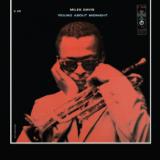
In 1955 Miles Davis played an all-star jam session at the Newport Jazz Festival with Thelonious Monk on piano, Gerry Mulligan on baritone sax and Zoot Sims on tenor sax. This performance immediately drew the attention of Columbia Records' George Avakian, who was so impressed that he immediately offered Davis a contract if he could form a regular band. The group he then assembled would go down in history as Davis' so-called "First Great Quintet", consisting of John Coltrane on tenor sax, Red Garland on piano, Philly Joe Jones on drums, Paul Chambers on bass and of course Miles himself on trumpet. 'Round Midnight is Miles Davis' first record for Columbia and also the first studio recording of the First Great Quintet. The recording sessions began on October 26 1955 but the album wasn't released until 1957 as Davis was still under contract at Prestige at the time. These respective sessions yielded Steamin', Workin', Cookin' and Relaxin'; albums that would go down in history as quintessential blueprints of late 1950s hard bop.
The record is made up of a collection of standards and one traditional song ("Dear Old Stockholm", from the 19th century). Notably, it features what may be considered the most well-known versions of Thelonious Monk's "'Round Midnight" and "Bye Bye Blackbird". That Avakian made a golden signing was sufficiently clear from the start, but no one could foresee that it would be this quintet on Columbia that would go on to change the course of modern jazz forever with Kind of Blue. 'Round Midnight is available as a limited edition of 1500 individually numbered copies on crystal clear vinyl.
A sonic journey that feels both intimate and expansive, Inigo Lunani drifts between late-night introspection and dancefloor euphoria. The album blends minimal grooves and warm tones into a cohesive narrative that feels alive—constantly evolving, yet grounded in emotion.
Each track unfolds like a fragment of memory: hazy, rhythmic, and slightly surreal. There’s a tension between control and spontaneity, where tight percussive patterns meet playful, almost careless melodies. The result is music that invites movement but rewards deep listening—equally at home in a dark club or through headphones at sunrise.
Inigo Lunani isn’t just about sound; it’s about identity in motion. It captures the feeling of searching, of becoming, of existing somewhere between who you were and who you’re about to be.
Dr. Lonnie Smith’s 1969 album Turning Point featured the organ virtuoso with a dynamic band featuring Lee Morgan on trumpet, Julian Priester on trombone, Bennie Maupin on tenor saxophone, Melvin Sparks on guitar, and the funky drummer Leo Morris (aka Idris Muhammad). Highlights include covers of “See Saw” and “Eleanor Rigby” plus soulful originals.
This Blue Note Classic Vinyl Edition is stereo, all-analog, mastered by Kevin Gray from the original master tapes, and pressed on 180g vinyl at Optimal
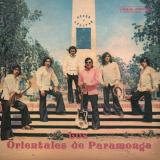
From the coastal city of Paramonga, three hours north of Lima, comes one of Peru's most electrifying and unjustly overlooked stories. Victor Ramirez and his band forged a sound that fused cumbia with guaracha, salsa and guaguanco - psychedelic guitars, wah-wah pedals and Fender amplifiers driving rhythms that conquered first northern Peru, then the capital itself. Spread across four sides, this lovingly assembled compilation draws from their two landmark albums and their 45 singles catalogue, so it is a full colour capture of Los Orientales at their peak. A complete portrait of a band that helped define modern cumbia is long overdue.
The open skies of Ochre's new album, Oversail, replace the dense canopies of his last, Understory back in 2020. This time, UK-born, Netherlands-based talent Christopher Leary trades rhythmic intricacy for something more exposed and reflective on a record that unfolds in measured steps, with each passage revealing fragile melodies set against sparse, shifting frameworks. There's a tactile quality to the sound design, hardware elements clicking and sighing like ageing machinery still in motion. Tracks feel suspended and the focus is on slow revelation across the quietly affecting 'Casadastra', airy beauty of 'Meristem' and hopeful synth sequencing of 'Canthropa.'
1984 veröffentlichte P. Lion sein Erfolgsalbum “Springtime“. Jetzt endlich wieder als limitierte farbige Doppel-Vinyl. Sein Song “Happy Children“ ist bis heute einer der größten Hits der Italo Disco Szene. Die Deluxe Edition beinhaltet zusätzlich zum kompletten Album die Radio Versionen der beiden großen Hits “Happy Children“ und “Dream“.
Dazu gibt es zwei Mixe von “Happy Children“ und die Instrumental Version von “Dream“.
After years of shaping dancefloors worldwide and carefully curating the sonic and visual identity of Up The Stuss, Dutch favourite Chris Stussy presents his most expansive and personal statement to date with his debut album, ‘Lost, Found & Forgotten...’. Landing on 3rd April, the album unfolds across three interconnected chapters - ‘Lost’, ‘Found’, and ‘Forgotten’ - each revealing a different side of his creative world across 19 tracks while remaining tethered to a singular wider vision.
At its core, ‘Lost, Found & Forgotten...’ is an exploration of creative freedom. Visually and conceptually guided by the image of a kite, the album reflects movement, perspective, and balance. Floating freely yet always anchored, the kite mirrors Chris’s approach to music: unrestricted in emotion and imagination, but grounded in groove, craftsmanship, and intention. It’s a symbol that naturally extends the Up The Stuss identity; pointing skyward, embracing openness, and encouraging curiosity.
“This album has been a long time in the making, and I’m excited to finally share it with you. The process behind it - exchanging ideas with other artists and creating music outside of my comfort zone - has been an incredible experience. It gave me a true sense of freedom, allowing me to not think about boundaries or expectations. I’ve never been more proud of a project than this one. It’s deeply personal, and it represents my sound as a whole. I hope you listen with an open mind and find something in it that resonates with you.” - Chris Stussy.
The ‘Lost’ chapter opens the album by giving new life to music once left behind. These are tracks written across different moments in Chris’s journey, ideas that never quite found a home until now. Rather than relics of the past, they emerge re-discovered, refined, and fully realised. ‘
Found’ represents inspiration in motion. Sparked by collaboration, digging, and shared creative exchange, this chapter captures the moment when ideas connect, and colour floods the sky.
The album closes with ‘Forgotten’ - a nod to the deeper cuts, the B-sides, and the moments that reward patience. This chapter is for the heads and diggers; tracks that may not demand immediate attention but reveal their value over time.
The complete LP + 2 bonus tracks - limited edition pressing on 180g vinyl
Miles Davis' quintet formed in 1955 is widely regarded as one of the greatest combos in jazz history. Miles was recording for the independent jazz label Prestige at the time, but after the quintet's success at the 1955 Newport Jazz Festival, Miles received a substantial offer from the recording giant Columbia. 'Round About Midnight was his first album for Columbia.
"First, let me say that you should buy this LP immediately. Perhaps even two copies, since you may wear out one playing it and you will want another. This is the kind of album to which one returns time and time again because it is, in its way, a perfect thing, a slice of modern jazz conceived and executed in the very best style." - ***** Ralph J. Gleason, DownBeat
Post Panic debuts as a label with the release of Dancing Ledge, a specially titled EP featuring five remastered tracks from Delph’s 1998 self titled album. Originally appearing on CD via the Blue Pool label, this new collection breathes fresh life into a hidden gem of the late 90s British electronic scene.
The project of K J Pocock and Steven Smith, Delph captures a unique sonic transition from the rural landscapes of Dorset to the industrial energy of Manchester. While the original album was self titled, this edition takes its name from Dancing Ledge on the Jurassic Coast, paying homage to the duo's roots and the organic, atmospheric nature of their sound.
This debut reissue serves as a definitive statement for Post Panic, unearthing timeless soundscapes that blend ambient, downtempo, and early IDM. An essential discovery for collectors and lovers of evocative electronic music.
This EP is a selection of five re-mastered tracks from the 1998 self-titled Delph album, originally released as a CD on the Blue Pool label. Delph were K J Pocock and Steven Smith. Originally from Dorset in England they moved to Manchester where the album was made.
Open the doors of perception with 'Alchemy of Being,' a deep ambient exploration inspired by Jungian analysis, olfactory meditations and psycho-nautic navigations.
Dublab resident, LA-based DJ and producer Dor Wand invites us to practice ‘deactivation through music:’ a softening art he describes as guiding energy down gently, so the body can rest, the heart can open, and the mind can return to stillness. The album creates a space where movement turns inward, where rhythm becomes breath, and where sound holds us as we land.
A mix of mellow synths, live harp and tuned percussion, the album oscillates softly between tension and relaxation, a harmonizing journey that gradually brings together mind and body, inhale and exhale, a unifying yogic tool for heightened self-understanding.
House favourites Kai Alce, JKriv, Sean McCabe and Medlar debut on Universo Positivo with their masterful reworks from Universo Positivo’s catalog. After two years of agenda-setting sounds, the label is set to drop this classy remix EP, and in that time, founder Joseph Salvador has established the label with a mix of his own music and fresh grooves from carefully A&R’d pioneers and new school names. He has been doing much the same since the 90s with various projects from his cult TINK Records and the Tomorrow Is Now Kid! nights in Amsterdam, in collaborative production outfits like Black Tulip & Wendell Morrison, and releasing records by DJ Steaw, Malin Genie, Fabio Monesi and more. This latest release brings together some of the most respected names in the scene for four standout reworks.
First up, Atlanta-based NDATL label head Kai Alce, who has long been one of deep house's most influential architects. He flips 'Sonido Latino' into a smooth groove with jazzy, Roy Ayers-style melodies that bring a soft-focus glow and late-night intimacy. Then comes Bristol-based don Sean McCabe, a master of vintage synths with a 20-year back catalogue on seminal labels like Local Talk, Strictly Rhythm and Z Records. His take on 'Ipanema Jazz' maintains the original's samba shuffle but reframes it in a deep house groove with extra expressive jazz keys, dainty chords and playful trumpet motifs.
Brooklyn-based groove architect and Razor-N-Tape co-founder JKriv brings his many years of experience as a guitarist, producer and songwriter to his take on 'Caparica Sunset'. It's a deep, driving sound that's playful and romantic with flirtatious horns and soft acid, dusty breakbeats and luscious grooves for loved-up good time sessions. Last but never least, is Medlar, the South London underground maverick with a wide-ranging sound and album credits on the likes of the hallowed Delusions Of Grandeur. He remixes 'U R The Revolution' into a warm, euphoric rush of throwback house that's warm, melodic and sure to get the floor going right off.