SCHWARM (Martinou Remix)
Martinou reshapes SCHWARM into fluid sound currents and a glowing, hypnotic arpeggio. Intimate yet euphoric, it's a slow-burning dream. He and Harald Björk first connected through Myspace in 2008. Martinou has since released on Nous'klaer and Mule Musiq, among others.
SCHWARM (Sniper Mode Remix)
Gregor Tresher revives Sniper Mode with sharp 808 electro - minimal, deep, precise. After meeting Björk via Cocoon, the link continued through Break New Soil.
ALUCO (Revisited)
Björk reworks his Cocoon Recordings release into a deeper, more spacious trance journey. A staple in his live sets and championed by Ida Engberg and John Digweed, it returns stripped, atmospheric and hypnotic.
ALUCO (AD Remix)
AD is the deeper alias of Alexi Delano, a key figure since the SVEK era. His version drifts through nocturnal Stockholm - dubby, cold, immersive.
Search:alex del amo
2026 Repress
Bosconi Records, the Florence-based imprint run by Fabio Della Torre, is back with something truly special. Over the years, the label has built a reputation for pushing house, funk and electro in all their shades, always keeping a strong link between the local scene and international legends. And when it comes to legends, there are few names that shine brighter than Alexander Robotnick.
The Italian electro pioneer – aka Maurizio Dami – has already collaborated with Bosconi on The Hidden Game and Italcimenti Under Construction. Now he returns with My La(te)st EP, a vinyl-only release that pulls five standout cuts from his 2007 CD My La(te)st Album and finally makes them available on wax. All tracks have been remastered for the vinyl format, enhancing their depth and dynamics to deliver the best possible experience on wax.
The EP opens with “Jette Le Masque (Extended Version)”, driven by a pumping bassline and jagged sawtooth synths, with whispered French vocals by Robotnick himself. Stretched out and more DJ-friendly than the original, this version is tailor-made for the dancefloor.
On “We Love The Music” things get fun and funky: vocoder vocals, an electro-funk bounce and that unmistakable Robotnick irony. A killer cut to start a set on the right foot.
Flip the record and you dive into the acidic depths of “I’m Getting Lost In My Brain”. Old-school Chicago vibes, a hypnotic groove and basslines that just don’t quit – a peak-time weapon that feels raw and timeless.
Then comes “A Coffee Shop in Rotterdam”, one of those secret gems: melodic, laid-back and warm, built on a slapping bass and dreamy arpeggios. It has that Riviera house touch from the ’90s, but with Robotnick’s unmistakable twist.
Closing the EP is “Addio” – a track that wears its heart on its sleeve. Romantic, emotional, and driven by a bassline that nods back to Robotnick’s all-time classic Problèmes d’Amour. A perfect goodbye track, the kind that leaves a smile on your face as the lights come on.
This is a must-have for vinyl lovers and Robotnick fans alike – five cuts carefully remastered for the vinyl format, pressed exclusively on wax and ready to work the floor from start to finish. Don’t sleep on it: limited copies, vinyl only.
The new album by the collective that for
over 25 years has been among the most
representative names of the Italian dance
and electronic scene worldwide.
“BLOOOM”, this is the title of the new release,
will be available in all traditional stores and
on digital platforms starting January 16.
Set against the soundscapes that have become
the Planet Funk trademark, the lyrics by Dan
Black attempt to give voice to a fragile and
contradictory condition of our time: an
intensified sensitivity that, instead of
turning into openness and connection, often
becomes emotional overload. A generation
constantly overwhelmed by excessive stimuli,
relentless information, anxieties, and fears,
called upon to find its way in a world thaoffers neither pauses nor silence. In this paradox, sensitivity is no longer just a natural gift, but
a daily effort: staying open and receptive without being overwhelmed, trying to preserve a human and
vulnerable gaze in order, despite everything, to fully appreciate life and the present moment.
The single’s artwork—like that of the album—curated by Nationhood, visually conveys this tension: the
distant sirens of a city that amplifies feelings of disorientation and loneliness even when we are
surrounded by thousands of people.
“BLOOOM”, preceded by the single “FEEL EVERYTHING”, arrives at the end of an intense, creative year
full of music, which saw Alex Neri (DJ, keyboards, synthesizers), Marco Baroni (keyboards, piano,
programming), Dan Black (vocals and guitar), and Alex Uhlmann (vocals and guitar) engaged between
studio work, collaborations, and live performances in Italy and abroad. A journey that today
transforms into new energy, into an even more open vision oriented toward the future.
Exactly one year ago, PLANET FUNK released “Nights in White Satin”, a single that reached the top
positions of the radio charts and launched a season rich in concerts and DJ sets in Italy and around
the world. The subsequent “I Get a Rush”, the collaboration with Alfa and Manu Chao on the remix of
their hit “A me mi piace”, and the track “È Naturale” together with Francesca Michielin, confirmed
Planet Funk’s ability to renew themselves and engage with different musical worlds while always
remaining true to their own identity.
Throughout this journey, music has inevitably intertwined with life. The memory of Sergio Della Monica
and Domenico “Gigi” Canu, pillars and founding souls of the PLANET FUNK project, is a living part of
this new chapter. Their vision, creative spirit, and way of understanding music continue to be a
constant guide, a deep root from which new ideas and new directions can grow.
“BLOOOM” is also this: a personal and artistic blossoming that, starting from the legacy left by
Sergio and Gigi, transforms into a living process of growth, metamorphosis, and discovery. An album
that does not look back with nostalgia, but forward with awareness, momentum, and a desire for
renewal.
Founded in 1999, for over 25 years PLANET FUNK have represented one of the most important, solid, and
influential realities in the international electronic music scene. Born from the meeting of Souled
Out! (Domenico “GG” Canu and Sergio Della Monica) and Kamasutra (Marco Baroni and Alex Neri), and
following their debut with “Non Zero Sumness” in 2002 (a gold record and a turning point for the
band), PLANET FUNK have managed to reinvent themselves over time while maintaining a unique sonic
identity. This has led them to collaborate with internationally renowned artists, deliver iconic
performances around the world, create soundtracks and international advertising campaigns, and
continue to demonstrate constant creative vitality
Laseech, a Croatian producer and Cosada label owner with releases on BBE, Lumberjacks In Hell, Red Ember Records, and Forbidden Dance, is continuing a string of excellent releases with Rising Soul. Known for his dedication to house music, Laseech has built an international reputation through collaborations and remixes with some of the genre's most respected architects, including Ron Trent, Patrice Scott, Javonntte, and Dego. "Rising Soul is actually one of the first tracks I did back in 2017 while I was heavily into sampling. I was jamming with my MPC1000, and Rising Soul came up. I never thought that it would become such an effective song that works on the dancefloor every time." Laseech explains. Kez YM, a highly respected Japanese producer and DJ, has been a key figure in the global house music scene for almost two decades. Originally from Chiba and now based in Berlin, his unique approach to house music has led to releases on esteemed labels such as City Fly, Faces Records, Yore, and 4Lux. When describing his version of the track, Kez simply stated: "VIBES." Well, no one will argue with that. The last version comes from Cycle Records' founder Jan Kincl, a prominent Croatian music producer and DJ with releases on labels like BBE, Far Out, Sonar Kollektiv, and Get Physical. "I've been playing Andrej's original for years. He undoubtedly made some good stuff recently, but this one remains among my firm favourites from him. Kez delivered a beautiful version that took it further towards jazz territory, so I decided to make a version that would bridge those two." Jan explains. "I knew we could build a very good record around Rising Soul, with versions that would give DJs different options for different moments during the party. I guess we did a good job because some of the early supporters include DJs from all over the place - Laurent Garnier, Alex Barck from Jazzanova, Marcel Dettmann, Alex Nut (Eglo), Sasse, Chicago's K' Alexi Shelby, Lakuti, Ian Friday and Truncate, among others.
Vibe Ride is the sixth release of Adam Rudolph's Hu Vibrational project and marks his 60th release as a leader or co-leader. Comes with insert and download code.
“With every record, the goal is to explore new creative territory,” explains Rudolph. Vibe Ride continues a deeper exploration of a trance-like groove and a conceptual framework known as Sonic Mandala. This album marks the most complete realization of that idea, partly due to the group's experience touring beforehand. That time on the road helped to refine ideas and strengthen musical chemistry. The recording process unfolded organically—likely due to the long-standing collaboration within ensembles like Go: Organic Orchestra and Moving Pictures, where the musicians have developed a deep familiarity with the shared musical language.
Sonic Mandala refers to a musical approach distinct from traditional linear structures of theme and development. Found in cultures across the globe, it may represent one of the oldest forms of musical expression—predating written history by tens of thousands of years. Today, it is most vividly preserved in the music of the Ituri Forest peoples (Aka, Baka, Ba Benzele, Mbuti), whose sound traditions revolve in cyclical, orbit-like patterns. Vibe Ride seeks to bring that ancient sense of circularity into a contemporary—and perhaps even futuristic—context.
The ensemble of Vibe Ride—Alexis Marcelo, Jerome Harris, Harris Eisenstadt, Neel Murgai, Tim Kieper, and Tripp Dudley—brings exceptional creativity and skill to the project. While grounded in the sonic languages of today, their performance channels an ancient vibrational lineage, connecting with ancestral sound makers who were attuned to the rhythms of the sun, moon, stars, and seasons. Human beings have always been deeply responsive to natural cycles.
Like a mandala, where the circle reveals itself as a spiral—always returning, but never to the exact same point—the Sonic Mandala musical experience spirals through motion. Refined signal patterns emerge through overtone-rich instrumentation. The groove becomes a threshold, shifting the listener from passive observation into active, even transcendent, participation. With open ears and an open mind, the sound spirals inward—toward a primal center—and outward into the cosmos. When this elevated state is shared among participants, it creates what mystics describe as resonance.
Vibe Ride thrives on the distinctive sonic voices of its players, interwoven with care and nuance into the compositions. Hu Vibrational merges elements of world music, electronica, and improvised jazz into something both funky and spiritual, intense and soothing.
Using signature techniques of organic orchestration, layered arrangement, and electronic processing, the compositions are sculpted from percussion, electronics, and ethereal textures. Rhythmic foundations drawn from diverse traditions serve not as endpoints, but as building blocks. As the saying goes, “Orchestration is the key.” In shaping the sound, the aim was to discover fresh ways of balancing structure and sonic color. As Don Cherry once said: “The swing is in the sound.”
The audiophile LP was carefully recorded, mixed, and mastered by James Dellatacoma—longtime engineer for both Bill Laswell and Rudolph—at Laswell’s Orange Studio.
“This crew artfully blends together to create a seamless tapestry of rhythm… the end results are mesmerizing. Hu Vibrational is all about communing with the groove spirits and creating worlds where earthy rhythms and other-worldly sounds are one.”
— Dan Bilawsky, All Music Guide
“You can be sure that when Adam Rudolph and an ensemble of breathtaking drummers get together mystical and wonderful things will happen.”
— Raul da Gama,
“A stunning effort, enjoyable and grows with repeated listening.”
— Stefan Wood, Freejazzcollective
Alex Puddu returns to the origins of his first sound that launched him with the original soundtrack of The Golden Age Of Danish Pornography presenting us with a new work inspired by the music and soundtracks of hard and erotic films of the late seventies and early80s with the new album
“I Desideri di Sadie (Piaceri Tropicali)"
is the new concept album written, arranged, produced, performed and conceived by Alex Puddu, It is the first album of the erotic/hard series Sadie.
A heroic female character fantasized by Alex Puddu of a rich and charming young woman, sexy, strong, brave and free with a great spirit of adventure, always traveling around the world in search of new experiences in the erotic and dark world that surrounds her.
The music is inspired by the soundtracks of adult movies of the late Seventies and early Eighties.The story takes you into a journey set in the countries of South-East Asia and the Pacific islands, in exotic landscapes, among jungle, lush vegetation and enchanting tropical beaches. A magical trip among temptations, on the islands, to discover the beauty of the "Erotic World" of Alex Puddu
One of contemporary ambient’s preeminent figures lands on its leading label, enacting a transition into a new phase of rhythmic noise and tonal shadowplay laced with peculiar sensitivities, wrangling Dilloway-influenced tape noise thru ASMR ambience, fritzed dub techno, layered vocal drone and ritualistic mantras.
Perila steps up solo with a heavily satisfying debut for West Mineral, investigating negative space and states of subconsciousness. The shift in tone feeds forward into arcane realms of resonant dark ambient and dream-pop, harnessed in amorphous structures using dub-as-method. It’s wholly immersive stuff in a way that’s long been Perlia’s calling card, but here more careful in its command of personalised, atmospheric physics from the Coil-esque ‘cheerleader’, thru the deeply smudged and sexy trip hop of ‘lava’, and the oozing, sloshing OOBE-like spectres of ‘give it all’.
The title of the album is a reference to Carl Jung’s phrase "all haste is of the devil” which informs Perila’s writing process here; she slows down in an attempt to feel more and tap into her shadow self. Album opener 'cheerbleeder' is a doomed, tremolo-heavy mass of ghost notes, while the rattling chains and strangulated voices on ‘metal snax' sounds like they belong on a Wolf Eyes tape. 'grain levy tep dusk' strikes closer to recently unearthed industrial plates from Tolerance and Mentocome, with rusted clangs threaded into deflated, half-speed pulses. The album keeps growing from there, shifting and expanding as Perila exhales and absorbs her cognitive blind spots. She credits "trance states" for helping her let go, and we broadly get to experience that on the mantra-like 'thunder me' and the blurry all-vocal highlight 'hold my leg', which sounds like it could have been snatched from Grouper's 'Way Their Crept' sessions.
As with all of Alexandra Zakharenko’s work under various aliases - Aseptic Stir, Baby Bong, Wedontneedwords, Perila - her allure is self-evident to lovers of textured, diffuse electronics, and never more so than on this lip-bitingly potent suite of delicacies and primordial urges, perfectly balancing ancient and techngnostic aspects with an x-amount of seductive strangeness left in the margins.
- A1: Reise Der Schatten (Titles)
- A2: Sans Visages #1
- A3: The Wind Comes From The East #1
- A4: U?Berwacht #1
- A5: Pyrapulse
- A6: The Silver Tree #1
- A7: Tod Und Der Affe #1
- A8: The Wind Comes From The East #2
- A9: U?Berwacht #2
- A10: Candle With Wings #1
- A11: Tage Ohne Stunden #1
- A12: City Symphony
- B1: Candle With Wings #2
- B2: A Friend From The Deep #1
- B3: The Silver Tree #2
- B4: Paper Moon
- B5: Mechanocrab #1
- B6: Tage Ohne Stunden #2
- B7: Mechanocrab #2
- B8: Island Interlude
- B9: Mechanocrab #3
- B10: U?Berwacht #3
- B11: A Friend From The Deep #2
- B12: Mechanocrab #4
- B17: Tod Und Der Affe #2
- B13: Sans Visages #2
- B14: U?Berwacht #4
- B15: Assimilation
- B16: Sans Visages #3 (Credits)
»Reise der Schatten« (»Journey of Shadows«) is the soundtrack to the eponymous debut feature-length animation film by Swiss artist Yves Netzhammer. Composed by Anthony Pateras and released as a stand- alone album through Hallow Ground, the 29 pieces are based on »weird folk melodies ornamented with electro-acoustics to give the film a more fantastical, fairy-tale feeling,« as the composer puts it. His extensive international recording sessions with a slew of guest musicians results in a record imbued with a sense of mystical surrealism, otherworldly and haunting.
»Reise der Schatten« tells the abstracted story of a genderless being coming to terms with its identity and place in a world full of conflicts and systems of control. »The film was made with old animation software that only works on Mac OS 9. So already, we are in a very hermetic, unique space,« says Pateras. Having tried (and failed) to compose something »typically experimental,« he went for long walks in the Australian bushlands and came home with something else: the idea to create a soundtrack that would create »a kind of distance, or perceptual shift, but also a narrative drive and emotional context which is not always clear.«
While recording the album, the tētēma co-founder did not use digitally generated sound, instead workingwith live instrumentation whose sound palette was enriched by the use of feedback, tape delay, analogue synthesizers, and samples from vinyl records. Wanting to work primarily with acoustic instruments suchas the clarinet made Pateras embark on a complicated journey of his own. The initial recording sessions took place in Basel on metallophones that were designed by Domenico Melchiorre’s Lunason company and laid the foundation for everything that came after.
Pateras recorded with musicians such as guitarist Alexander Garsden, viola player Erkki Veltheim, clarinetist Aviva Endean, multi-instrumentalist Justin Marshall and Lizzy Welsh on the viola d’amore among other instruments. He recorded percussion and recorders with Rohan Rebeiro and Natasha Anderson in his hometown of Castlemaine, double bass with Benjamin Ward in Sydney, bass and flutes with Jon Heilbron and Rebecca Lane in Berlin, and electronics in Zürich with Netzhammer. »Reise der Schatten« was thus a literal journey, made with a »big, international electro-acoustic ensemble.«
As a stand-alone album, »Reise der Schatten« opens up a space of its own. Its stylistic diversity makes it atmospherically and emotionally multi-faceted. As its composer notes, »music for screen can be very virtuosic, sophisticated, and variegated!« His own work is a testament to that claim.
ele
2026 Repress
Brooklyn duo Fundido team up with Philadelphia's Universal Cave to press their first physical release titled ‘Paradise Tempo’, a love letter to dance floor music that sits in the cross section of the tougher sounds of the city and the softer sounds of the balearic and the backwoods.The A side kicks off with a flawless downtempo mix from California based Dirty Dave and Alex Pasternak, who find a rare cover of the Cathy Denis classic and refurbish it to perfection. Next up is ‘Emotional Jungle’, a jazzy midtempo weapon led by a massive saxophone hook and edited to optimum club efficiency by NY based Nick Stropko. LA via Serbia’s Masha Mar unearths extremely rare gem ‘Take Me to Mecca’ and reworks it into a dreamy midtempo journey that carries both a children’s choir vocal and a middle eastern synth melody effortlessly across a foggy dance floor. And closing out the A-side is the wonderful ‘Charlie’s Vision’ from Universal Cave, a spooky AOR tinged cosmic trip that is only available on this vinyl pressing.The B Side leads with balearic beach party stomper ‘Amor’ from Fundido themselves; complete with Spanish vocals, lofty piano jamming and a contagious growling bassline. Next up is ‘Sex-O’ from Seoul man Tucan Discos, who reworks a tribal classic into a hypnotic and seductive club mix; followed by ‘Freak Estilo’ from Spain’s Ritmal Astral boss Orion Agassi who offers a bumping freestyle breaks mix with an addictive r&b vocal hook. Last but not least, the ‘Be Careful Operator’ edit from Miles Felix aka Sisserou closes down the function with a block party jam swimming with jazz, swing and soul.When asked what visual imagery they had in mind for Paradise Tempo, the prompt given to artwork maestro Ray Fernandez was ‘salt of the earth utopia’ and ‘working man’s paradise’ … and Ray delivered exactly that. Enjoy Paradise Tempo !
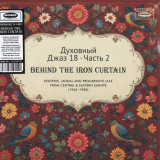
- A1: Leningrad Jazz Ensemble - Aria
- A2: Sh Jazz Quintet - Delilah
- A3: Josef Blaha Trio - Inter Mezzo Forte
- A4: Csaba Deseo Ensemble - Beyond The Csitári Mountains
- A5: Manfred Ludwig-Sextett - Skandinavia
- B1: Anatoly Vapirov - Mystery
- B2: Zbigniew Namyslowski - Piatawka
- B3: Andrzej Trzaskowski Quintet - Synopsis (Expression I)
- C1: Tomsits Quartet - Dhrupad
- C2: Nicolai Gromin Quartet - Corrida
- C3: Valery Kolesnikov, Vyacheslav Novikov, Vladimir Molotkov & Alexander Christidis - Rainbow
- D1: Tone Jansa - Goa
- D2: S+Hq - My Girl (And Other Things)
- D3: Pege Jazz Workshop - Hungarian Folk Song
One of the most politically charged terms of the 20th century, the Iron Curtain was a metaphor for political and cultural division. In a post-war telegram Winston Churchill referred to the fault line that ran through Europe between East and West as "an Iron Curtain is drawn down upon their front. We do not know what is going on behind".
In this two-part album, as far as jazz is concerned, we will showcase, describe and celebrate exactly what was 'going on behind'. We see that music is the power supreme, with the ability to transcend all barriers, be they physical, political or metaphorical.
Our liner notes illustrate the complex and contradictory history of Soviet jazz, and the tracks we've chosen cover the key period of the early 1960s to the 1980s. It was during these dark years of the Cold War that the Soviet Union and its satellite states produced a number of outstanding artists playing in a variety of styles. The impact of modernism, from hard bop and Latin to modal and cool jazz, had found its way through cracks in the curtain. The deeply-felt ancestral strains of traditional European folk music were combined with the exciting new and progressive sounds of the West, and a radical, intoxicating brew was created that no amount of guns, tanks or polonium tea could overcome.
We chronicle the triumph of jazz at a time of extreme geopolitical conflict. What went on behind the Iron Curtain in these countries was once mysterious and unknown to the West, but the perseverance of their artists provided sound and light amid the secretive, dark days of the communist-capitalist standoff. There was no end of life-affirming spiritual jazz behind the Iron Curtain.
"Whether it's by improvisation in the African-American jazz tradition, or by a village kobza player standing on top of a damn hill - he feels connected to the stars."
Brussels-based artist Adja Fassa releases her debut album, two years after her well-received EP IRONEYE - and it is promising to be quite a ride.
This contemporary body of work showcases 11 stories, each telling their story of the impact our capitalistic society has on our most intimate moments: from dystopian neo-soul tales of Deliveroo-drivers being stalked by telemarketers (both of them selling/delivering literal 'hope and dreams'), to re-imagined jazz standards and classical songs about conditional friendships, based on time and money. We even get her take on the 'stick-it-to-the-man-sing-along-rock-song', which she called 'Sucking on my Emphatitties'. And then we have the title song 'Golden Retrieve Her' which is as much an accumulation of feelings as of musical curiosities
" 'Golden Retrieve Her' is a wordplay on wanting to retrieve my kindness in a violent social system. Simultaneously, it is criticizing the fact that we, the masses, are often asked to either be naive or pretend we are. All of this accumulated in a visual image of what our social system considers 'the perfect, obedient nuclear family': a kind couple with 2.4 children, a house in the suburbs and... a Golden Retriever." ~ Adja
Serious and concrete topics, wrapped up in a symbolic package, as Adja values both straightforwardness, critical thinking and, paradoxically, a bit of mysticism. For her visual artwork, she created four, self-made tarot cards, that represent the four themes on the album:
'The Wheel Of Fortune', embodies the desire to get the upper hand in a system that doesn't align with your values. 'The Mirror', represents projection and likeness within lost connections (whether with strangers or with friends), 'The Dark Wheel' embodies the turning point of the wheel of fortune, where one is completely surrendered to their own moral demise and 'The Cave' stands for the - sometimes painful, sometimes blissful - return to one's own mind and heart.
Musically, this album contains as much variety as song titles, as Adja continues to explore her own depths as an artist and musician, together with her partner-in-crime, guitarist, composer and jazz-arranger Alexis Nootens. She collaborated with music producer Adam Scrimshire, who was featured in the Guardian as UK's one of three most significant soul music producers alongside Swindle and Inflo, and renowned Belgianproducer, mixer and musician Koen Gisen, who both mentored her into deepening her own productional skills. Last but not least, she gathered 13 musicians to deliver the sound she brings to her album, among them her 5 steady band members and 8 studio musicians from all over Europe. As we said: it promises to be quite a ride.
LIVE:
09/05 : Ancienne Belgique, Brussels
11/05 : Jazz à Liège
More tba.
We are excited to announce the release of "Nocturnal", the latest album from Basic Need, the collaborative project of electronic music veterans Alexi Delano and Pablo Sánchez. The 10-track album was recorded between Alexi’s studio in Stockholm and Pablo’s studio in Barcelona, with their signature blend of deep techno, immersive soundscapes and jazz improv approach.
With over three decades in the electronic music scene, Alexi Delano, a driving force in Sweden's electronic music scene, is known for his balance of minimalism, deep house and dark techno. Pablo Sánchez, one of Venezuela's top electronic music exports, has captivated global audiences with his versatile approach to music, combining dancefloor energy with left of field elements.
Together, they continue their artistic partnership under Basic Need, after several EP releases on Culprit, Hafendisko and Seven Villas Records among other labels.
- A1: World Is Dog
- A2: Cctv (Feat Creature)
- A3: Yottabyte
- A4: Bad Pollen (Feat Billy Woods)
- A5: Slum Of A Disregard
- A6: Rfid
- A7: Instant Transfer (Feat Billy Woods)
- A8: Ikebana
- B1: In The Shadow Of If
- B2: Skp
- B3: Hushpuppies
- B4: 14 4 (Feat. Skech185)
- B5: Voice 2 Skull
- B6: Xolo
- B7: Zigzagzig
Black Vinyl[35,08 €]
We’re teaming up with ELUCID and Fat Possum for a limited edition of 300 copies of a Rush Hour black ice coloured edition.
E L U C I D, one half of the illustrious duo Armand Hammer, is here with the full-length follow-up to 'I Told Bessie'. Further experiments in the sonic, expanding on the 'live' side of music paired with the embracing of chaos. Something you haven't heard, or not so for a very long time. E L U C I D is here to reveal the bleakness of reality.
---------------------------------------------------------------------------------
''There is never time in the future in which we will work out our salvation. The challenge is in the moment; the time is always now.''
James Baldwin
A raw, crackling urgency runs through rapper-producer ELUCID’s new album REVELATOR like an underground power line. There is no space here for sepia-toned reminiscences or indulgent self-mythologizing. Intellectual rabbit holes have been filled in with concrete and rebar ; there is nowhere to hide and no off ramp from the audio Autobahn that ELUCID has fashioned—a renegade Robert Moses with gold fronts, bulldozing the homes of the powerful and the complicit. REVELATOR brims with the energy of now, with a refusal to look away. Carpe diem in a murder one mask.
Born in Jamaica, Queens, ELUCID has been on the cutting edge of New York’s underground scene since the mid-2000s. From the beginning, he has defied both convention and expectation. He ran with Okayplayer darlings Tanya Morgan, but his own music eschewed their throwback charm for glitchy noise experiments and bass-swamped culture jamming. His 2016 debut studio project Save Yourself (re-released in a deluxe edition last year) announced him in earnest. But in recent years, his Armand Hammer releases with partner-in-crime billy woods have received significant attention and acclaim. Serving as a followup to his last solo album—2022’s comparatively balmy I Told Bessie—ELUCID hoped to “re-distinguish” himself with REVELATOR, setting himself apart amidst the increasing attention around the music he and his friends are making together.
For ELUCID, this meant setting bold new challenges for himself. One of these was diving further into live instrumentation than ever before—”getting my Quincy Jones on,” as he puts it. The testing ground for this approach was Armand Hammer’s most recent project, 2023’s We Buy Diabetic Test Strips’ Möbius strip soundscapes, warmed with instrumental flourishes and skin-shedding beat progressions. With REVELATOR, though, ELUCID strove to create an atmosphere of chaos, embracing experimental electronics and atonal sample bursts. He worked on much of the album with co-producer Jon Nellen, who comes from a background in avant-garde and Indian classical music. “I wanted to get as freaky as I could at this moment. I wanted people to hear things, maybe for the first time, or in a way they haven’t for a long while,” the rapper explains.
ELUCID arrived at the studio with a collection of noise sources: non-referential samples, glitches and noises. Together he, Nellen, and others created forms out of them and, as ELUCID recalls, “just started playing drums with it.” Their fried, distorted sound was directly inspired by Miles Davis at his most uncompromising—specifically, the tone-clustering funk track “Rated X” from his 1974 double LP Get Up With It. At times, the pairing of rap with avant-fusion sounds also brings Emergency! from The Tony Williams Lifetime to mind, perhaps in an alternate timeline where the late drummer was listening to Ice Cube’s AmeriKKKa’s Most Wanted.
“The World is Dog,” REVELATOR’s lead single, functions as the album’s aesthetic thesis statement. Like the Davis track, the textures are punishing, the tonality is in free-fall, and the driving breakbeat of a groove cuts in and out unceremoniously. Avant-jazz bassist Luke Stewart, who appears throughout the record, holds the whole thing together just long enough for ELUCID to tightwalk over the beat. This tension is exactly where REVELATOR sets itself apart; in a time of drumless loops, and safe soul samples, this is a high-wire act with no safety net. Similarly, the song announces the themes of the album within just a few phrases, evoking the way societies accept and adjust to new levels of debasement and brutality while suffocating under the weight of history: “Can’t clock the kill, all a mystery/Forced past will eating everyone eventually/The world is dog.”
Many of the songs on REVELATOR grapple obliquely with dissolution and disenfranchisement in America and across the world—the grim realities of our domestic sociopolitical climate and our involvement in foreign conflicts. “Much of my artistic and political sensibility comes from the Black arts movement here in New York,” ELUCID explains. “Recognizing the interconnected global struggles against oppression, artists and thinkers created works and actions in solidarity with freedom movements in South Africa and Palestine.” ELUCID cites intellectuals like Amiri Baraka, Kwame Nkrumah, Audre Lorde, Sonia Sanchez, and Nikki Giovanni among his heroes. (One track on the album is specifically inspired by Lorde’s work, “SKP,” citing the scholar’s paper “Uses of the Erotic: The Erotic As Power.”) Songs like REVELATOR’s insistent closer “ZIGZAGZIG,” find ELUCID applying up-to-the-minute messaging, making explicit reference to the conflict in Gaza: “Feed a war machine…from river to sea, in lieu of peace.”
Despite ELUCID’s preference for cacophonous system overload here, the rapper also provides moments of respite. Recorded at The Alchemist’s Los Angeles studio, the laid-back, wheezing “INSTANT TRANSFER” is a collaboration with billy woods, which crystallizes their shared sense of creative determination. “With much momentum behind us and even more on the horizon, I knew a purpose, and that every step was ordered to that purpose,” ELUCID said of the experience. Meanwhile, the jittery “HUSHPUPPIES” is a playful anomaly on the track list, providing a snapshot of ELUCID watching his grandparents in the kitchen while preparing for Friday night fish fry dinners.
“Love still rules over on this side,” ELUCID says. ”I’m raising a family. We are making meaning and finding joy in the midst of all the fucked up-ness of everything around us because the alternative is cowardice and slow death. We remain rooted. We celebrate our people and our wins. Struggle is necessary.”
“IKEBANA” is one of ELUCID’s strongest statements of purpose on the record, blending the record’s heaviest themes with its most hopeful sentiments. supported by a shoutalong refrain and an urgent prog-funk groove. Breaking away from images of dissolution and crumbling societal systems that populate REVELATOR, ELUCID notes that the only way to navigate life’s bleakest landscapes is to cling to love and believe in those around you—to look forward toward something better that may or may not be possible. For the rapper, one of the album’s most trenchant lines comes during a centerpiece of a beat drop: “Being alive/I must look up.”
“The lyric ‘being alive I must look up’ is important especially in the context of this album. Much of the album imagery is harsh and reflects the actual doom some of us experience. But still I/we exist,” ELUCID explains.
Every artist is, in one way or another, the product of their time, bound by life’s leaden gravity to operate within the space of that which is already known. But there are some who are able to shake free of these ties, to shape the culture as it unfolds, to make the present their own.
Revelation, as a concept, points to the scales falling from people’s eyes—something that has been hiding in plain sight becoming clear. “The revelator relates to things that have been talked about, things that have been forecasted,” ELUCID adds. “And now they’re really here, and everyone sees it. And there’s no escaping.” REVELATOR plays out with the unmitigated power of those storms, laying waste to any genre conventions in pursuit of a certain physicality. Here, ELUCID develops a wholly distinctive musical language to explore our fractured modernity.
REVELATOR's packaging was designed by longtime Armand Hammer / Backwoodz art director, Alexander Richter.
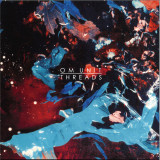
‘Threads’ was my 1st album as Om Unit and this 10-year re-mastered anniversary edition comes around at what feels like a similar time for me of experimentation and finding new ways to connect sounds. Something of a full circle of sorts but then again I am marking time with this re-issue at a time where I can look back and feel very proud of the work still sounding so convincing. Now even better thanks to Subvert Central’s Robert Macchiochi!
Reflecting on the past 10 years since this record came out, I can say it’s been an incredibly fruitful journey, with the most striking element of it all being the opportunity to travel and meet so many people from so many different backgrounds with different world views and stories. I found that ‘Threads’ for many was their first insight into my music, and for some people was something of a milestone in their journey of exploring music itself with tracks like ‘The silence’ and ‘Governor’s Bay’ having been mentioned over the years as amongst favourites alongside some of the work released on Cosmic Bridge and Civil
I want to take a moment to give my Love and gratitude to all the featured vocalists. Thanks to Simon Jinadu for his angelic voice on ‘The Silence’, to Charlie Dark MBE for his reflective words on ‘The Road’ and to Alex ‘Bogues’ Rendall aka MC Jabu (of Jabu) for his intense delivery on ‘Patients’ as well as Jneiro Jarel for his self-reflective narration on “just sayin’” All 4 are still outliers in their own field and upstanding creative forces to boot. I feel blessed to have been able to capture them on this project.
Threads was made in a bedroom of 2a Station Rise in Tulse Hill, a flat I shared with journalist and writer Laurent Fintoni, in a space that had such a great sound to it that I’ll always miss that room. I hope that you feel the warmth that I felt then whilst making it. It’s been an adventure since and whilst I’ve moved on from a lot of the tropes intrinsic to the album, it will always remain a body of work that is dear to my heart.
Enjoy!
<3
- A1: The Mechanical Man - The Magic Number 5 32
- A2: Minimono - Grit Wave 5 14
- A3: Lucretio - Gradius 4 14
- B1: Queen Of Coins - Genesis 5 43
- B2: Miguel Herrnandez - Bad Renaissance 5 29
- B3: Twovi - Galassia Cosmica 4 57
- C1: Data Memory Access - Controller 6 14
- C2: Passarani - Bungy Bungy Bungy 4 52
- C3: Dj Rou - Milky Way 4 43
- D1: Lapucci - One 1St 5 18
- D2: Alexander Robotnick - It's So Easy 5 00
- D3: Feel Fly - Peach 5 36
The Stallions compilations have become a benchmark of Bosconi's position as one of the leading house and techno labels operating out of Italy. This third instalment marks a shift in sound which also comes full circle to the music that first inspired founder Fabio Della Torre as a DJ and producer around the turn of the millennium, when punchy electro production was driving European house and techno into new zones.
All the artists featured on Vol. III are Italian, holding true to Bosconi's commitment to supporting local talent from Florence and across the country. Amongst the familiar faces is Della Torre's own Minimono collaboration with Ennio Colaci, which indulges a proudly manic palette of tweaked bleeps and dirty low-end. Elsewhere, recent additions to the Bosconi fold include veritable legends Alexander Robotnick and Marco Passarani, who infuse their unpredictable approaches to electro-techno and italo disco with ear-snagging synth-pop and driving analogue box jams respectively to create vibrant, impassioned dancefloor monsters.
The Mechanical Man is an alias from Nicola Altieri, who leans in on a classic Italo arpeggio to create a seductive club sound which builds on his recent Bosconi EXV EP, while Cixxx J switches from the mood of his own Bosconi appearance for a new alias Queen Of Coins and a pivot towards heads-down electro-techno-trance with a whiff of International Deejay Gigolos. Lapucci builds on the promise of his 2021 Bosconi 12" with a sentimental fusion track which lands somewhere between old school Italo house, the snappy pulse of EBM and crisp 00s-era electro house. Meanwhile modern day Italian techno legend Lucretio of The Analogue Cops makes his first appearance on Bosconi with the playful video game stylings of 'Gradius'.
A great deal of space on Vol. III is given over to emergent talent, ranging from Miguel Herr's twitchy detroitian synth-pop braindance and Twovi's vocoder-charged electro funk to DJ Rou's jacking ghetto house flavour. Giammarco Orsini and Jacopo Latini appear as Data Memory Access and deliver an emotive, punchy strain of machine soul. Feel Fly rounds the compilation off in bombastic style with an epic, cinematic workout which draws on Moroder-inspired drama without losing the forthright peak-time focus which binds the whole collection together.
Even the artwork on Vol. III serves as an opportunity to celebrate Italian creativity, as pioneering crypto artist Niro Perrone builds on his accomplished work in the field of NFTs and a background in music production to respond intuitively to the vibrant, synthetic sound of the compilation. For all the futurism in the music though, there remains a strong sense of human feeling which has marked Bosconi out since the beginning. The label remains as inspired and inspiring as ever, celebrating the fertile crossover when people manipulate technology to express themselves in an honest, playful way. Independent of wider trends or fashions, Bosconi remains true to its own idiosyncratic passions, and so Bosconi Stallions Vol. III stands proud as a compilation like no other.
- A1: Here Lies Love Feat. Florence Welch (Florence & The Machine)
- A2: Every Drop Of Rain Feat. Candie Payne & St. Vincent
- A3: You'll Be Taken Care Of Feat. Tori Amos
- A4: The Rose Of Tacloban Eat. Martha Wainwright
- A5: A Perfect Hand Feat. Steve Earle
- B1: Eleven Days Feat Cyndi Lauper
- B2: When She Passed By Feat. Allison Moorer
- B3: Walk Like A Woman Feat. Charmaine Clamor
- B4: Don't You Agree? Feat. Róisín Murphy
- B5: Pretty Face Feat. Camille
- B6: Ladies In Blue Feat. Theresa Andersson
- C1: Dancing Together Feat Sharon Jones
- C2: How Are You? Feat. Nellie Mckay
- C3: Men Will Do Anything Feat. Alice Russell
- C4: The Whole Man Feat. Kate Pierson
- C5: Never So Big Feat. Sia
- C6: Please Don't Feat. Santi White
- D1: American Troglodyte
- D2: Solano Avenue Feat. Nicole Atkins
- D3: Order 1081 Feat. Natalie Merchant
- D4: Seven Years Feat. Shara Worden (My Brightest Diamond)
- D5: Why Don't You Love Me? Feat. Tori Amos & Cyndi Lauper
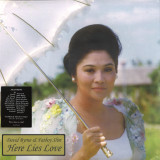
David Byrne & Fatboy Slim’s acclaimed 2010 album Here Lies Love receives its first-ever vinyl release to coincide with a new production opening on Broadway this summer. Here Lies Love is a double-disc song cycle – improbably poignant, decidedly surreal, surprisingly thought provoking – about the rise and fall of the Philippines' notorious Imelda Marcos. It was conceived by David Byrne; composed by Byrne and DJ/recording artist Fatboy Slim, AKA Norman Cook; and performed by a dream cast drawn from the worlds of indie rock, alt country, R&B and pop. Byrne's taste in collaborators is as imaginative as it is impeccable, including Cyndi Lauper (who recounts, to lighthearted disco beats, Imelda's courtship with Ferdinand Marcos), Steve Earle (as the power-hungry Ferdinand), Dap-Kings vocalist Sharon Jones (recalling Imelda's introduction into New York society) and Natalie Merchant (as spurned Imelda confidante Estrella, anticipating the onset of martial law). Along with vocals turns from such stars as Tori Amos and the B-52's Kate Pierson, Byrne works with rising indie rockers St. Vincent and My Brightest Diamond; New York chanteuses Nellie McKay and Martha Wainwright; and dance-music divas Róisín Murphy and Santigold. Byrne himself appears as the voice of imperialistic America on ‘American Troglodyte’, a send-up that wouldn't have seemed out of places in Talking Heads' True Stories.
Byrne originally envisioned this as a musical theatre piece, to be mounted in disco and nightclub settings, reflecting the globe-trotting Marcos' taste for such velvet-roped spots as Studio 54 and Regine's. In 2006, he performed work-in-progress versions to enthusiastic audiences at New York City's Carnegie Hall and the Adelaide Festival in Australia. While plans for a US theatrical production continued to evolve, he delivered this unique recording. The award-winning theatrical production eventually premiered at The Public Theater in New York in 2013, travelled to London’s National Theater for a sold-out run (2014–15), and was remounted at the Seattle Repertory Theater (2017).
Here Lies Love has an effervescent disco feel, redolent of Fatboy Slim's own dance-floor anthems, with warm undercurrents of the Latin rhythms that have percolated through Byrne's recent solo work. The sunny arrangements act in counterpoint to the reality of the Marcos' increasingly repressive regime, reflecting the imagined inner life of the glamour-obsessed Imelda. Explains Byrne, "For me, the darker side of the excesses are, for the most part, a matter of record. A lot of the audience is going to come with that knowledge already. What's more of a challenge is to get inside the head of the person who was behind all of that, and understand what made them tick." Byrne offers no judgment and avoids the obvious – there is no mention of Imelda's infamous shoe collection.
Many of Byrne's lyrics are, astonishingly enough, constructed from actual Imelda quotes, including the project's title, the words that Imelda, now returned to the Philippines from US-assisted exile in Hawaii, would like to have inscribed on her gravestone. In addition to his new liner note, Byrne illustrates the story with archival photos. In a detailed preface, he reveals what drew him to this subject and the bumpy route he took to launch the project and, ultimately, record this album. The booklet is indeed a page-turner, just as Here Lies Love is a wonderfully old-school album that rewards start-to-finish listening. Once again, Byrne – beloved as musician, thinker and bicyclist-about-town – reveals the breadth and singularity of his vision.
The new production of Here Lies Love will premiere at the Broadway Theatre in New York City. Performances begin June 17, ahead of an official opening night on July 20. Tony Award winner Alex Timbers (direction) and Olivier Award nominee Annie-B Parson (choreography) reunite with Byrne (concept, music, and lyrics) and Fatboy Slim (music) to bring Here Lies Love to Broadway, continuing a ten-plus year collaboration on the project. Tom Gandey and J Pardo contribute additional music. Here Lies Love is produced on Broadway by Hal Luftig, Patrick Catullo, Diana DiMenna for Plate Spinner Productions, Clint Ramos, and Jose Antonio Vargas. The staging at the Broadway Theatre will transform the venue’s traditional proscenium floor space into a dance club environment, where audiences will stand and move with the actors. A wide variety of standing and seating options will be available throughout the theatre’s reconstructed space. The producers of Here Lies Love said, “As a team of binational American producers – Filipinos among us – we are thrilled to bring Here Lies Love to Broadway! We welcome everyone to experience this singularly exuberant piece of theatre. The history of the Philippines is inseparable from the history of the United States, and as both evolve, we cannot think of a more appropriate time to stage this show. See you on the dance floor!”
David Byrne’s recent works include the launch of Reasons to be Cheerful, an online magazine focused on solutions-oriented stories about problems being solved all over the world (2019); Joan of Arc: Into the Fire, a theatrical exploration of the historical heroine that premiered at the Public Theater in New York (2017); The Institute Presents: NEUROSOCIETY, a series of interactive environments created in conjunction with PACE Arts + Technology that question human perception and bias (2016); Contemporary Color, an event inspired by the American folk tradition of color guard and performed at Brooklyn’s Barclays Center and Toronto’s Air Canada Centre (2015); Here Lies Love; Love This Giant, a studio album and worldwide tour created with St. Vincent (2012); and How Music Works, a book about the history, experience, and social aspects of music (2012).
Byrne curated Southbank Centre’s annual Meltdown festival in London in 2015. A co-founder of the group Talking Heads (1976–88), he has released eight studio albums as a solo artist and worked on multiple other projects, including collaborations with Brian Eno, Twyla Tharp, Robert Wilson, and Jonathan Demme, among others. He also founded the highly respected record label Luaka Bop. Recognition of Byrne’s various works include Obies, Drama Desk, Lortel, and Evening Standard awards for Here Lies Love; an Oscar, Grammy, and Golden Globe for the soundtrack to Bernardo Bertolucci’s The Last Emperor; and induction into the Rock and Roll Hall of Fame with Talking Heads. Byrne’s work as a visual artist has been published and exhibited since his college days, including photography, filmmaking, and writing. He lives in New York City. In addition to 2019’s cast album for American Utopia on Broadway, Nonesuch has released eight other David Byrne records since 2003, including 2018’s American Utopia studio album and two versions of his musical Here Lies Love.
q C6. Please Don't feat. Santi White Santigold
Next up on Toolroom’s 4-track vinyl sampler series is a tasty collab from label founder, Mark Knight and dance music royalty, Armand van Helden, a fresh new edit of a revered club weapon from Julio Navas, Gustavo Bravetti and David Amo, Kiss FM regular, majestic and Sydney-native Alex Preston.
Up first label boss, Mark Knight enlists Grammy nominated Armand van Helden for their debut collaboration, 'The Music Began To Play'. Kicking off with a hard-hitting house groove and electrified bassline that drives the record, before dropping into the track's golden moment and sampling the 1979 classic disco cut 'I Don't Need No Music' by T.J.M; a gem of a record that encapsulates both Mark and Armand’s love for classic cuts.
Next up, a record that became a cult hit of the underground and one that defines the true sound of Toolroom's heritage, Julio Navas, Gustavo Bravetti and David Amo’s 'Raw'. Refreshed for 2022, we see one of France's hottest exports, Tony Romera, deliver a high energy, club focused remix of 'Raw', bringing the classic club record back to dancefloors and sound systems across the globe!
Up next is another heater from Majestic, who debuts on Toolroom with ‘Annie’. Recapping one of the hottest summers on record, Majestic embodies the Balearic, Ibizan heat, sampling Kid Creole & the Coconuts 1982 hit, 'Annie I’m Not Your Daddy', turning a slice of calypso / disco, into a club ready record for the dancefloor. From the brass melody to the hooky guitar riff, majestic lays down his signature style with a Groove Armada-esque vibe throughout.
Rounding things off is label favourite, Alex Preston with his unique blend of 4 to the floor dance music and live funk guitar riffs that have swept through clubs, moving feet, and bringing those feel-good vibes. Ticking all the right boxes on this one, 'Hunching' kicks off with its infectious groove and bassline, throwing in some lush strings, guitar flits and an 80's inspired saxophone break that adds some serious flavour to the record.
- 1: Pass Between Houses
- 2: Theatre For Change
- 3: Real Home
- 4: Treat Me A Stranger
- 5: Utopia Of Bog
- 6: Void Attentive
- 7: My Love, Let's Take The Stage Tonight
- 8: The Kiss
- 9: He Had Always Led
Cathartic avant-rock, literate DIY folk & experimental composition exploring displacement, love, climate change, belonging & the places we call home - RIYL Jim O’Rourke, Richard Youngs, This Heat, Richard Dawson, Flying Nun. ‘Real Home’ is the new album by the Manchester-born, London-based artist Kiran Leonard. His sixth album proper (not including innumerable tour-only CD-Rs and short-run cassettes), since his precocious debut in 2013, ‘Real Home’ finds Leonard invigorated by inspiration and experience, making passionate, literate, and mercurial music that explores displacement, love, memory, climate change, connections to home and more. Encompassing songs recorded after moving to South London, ‘Real Home’ reflects on ideas of belonging and domesticity through folkloric, stream-of-consciousness songwriting. Across nine tracks, Leonard traces lived impressions of the household and the city, expressing sentiments of dislocation, alienation and stasis, but contentment too. Infusing the avant-rock effervescence, terraced dynamics and visionary lyricism of his music with what he defines as a greater sense of openness, Leonard is as versatile, fervent and imaginative as ever on ‘Real Home’, yet his music is somehow more intimate, affecting, and acutely expressive. Shaped by dual considerations of simplicity and formalism, ‘Real Home’ is by turns beautiful, allusive, and ruminative, an album on which Leonard considers what his songs have resembled in the past and what they mean now. In recent years, Leonard has crafted eloquent chamber music inspired by the likes of James Joyce and Clarice Lispector (‘Derevaun Seraun’), responded to contemporary politics and communication breakdown in the digital age (‘Western Culture’), and compiled solo works and ensemble recordings for a longform ode to Jonas Mekas and to one of Leonard’s enduring themes; home (‘Trespass On Foot’). On ‘Real Home’, Leonard reiterates this abiding thematic focus yet ascends to new, different heights, in music of cathartic delicacy and dissonance where all the myriad dimensions of his work to date seem to crystallize. There are sinuous songs about struggle and defying the pace of city life through drift and diversion (‘Pass Between Houses’), stirring songs of intense feeling and crescendo, described as a form of speculative detective fiction (‘Theatre for Change’). There are touching solo piano ballads (the title track), symbolic contentions with carbon capture and climate change (‘Utopia of Bog’), modes of experimental minimalism (‘Void Attentive’), and other profuse feats of compositional range, embroidered with wild tendrils of narrative and lyrical depth. A record to pore over, and get lost in. Exemplifying the vast aesthetic scope of Leonard’s music, lead single ‘My Love, Let’s Take The Stage Tonight’ is inspired by country lodestar Hank Williams, Russian poetry and a late period love poem by William Carlos Williams. Yet for Leonard, the song signals a sense of accessible materiality, and is the product of a more linear approach to writing songs: “My imitation of the great Hank Williams, in spirit if not in substance…This is one of the best efforts on Real Home at a song-as-object. Looking at it now I realise I was trying to write a song that made itself known as a song to the listener, and I wonder whether that’s crucial if you want a song to transcend its context. And that this is either accomplished through a total openness – by being inviting, by laying the tricks of the song out plain to see, as Williams and his many ghostwriters did so well – or by adopting a knowing aloofness, positioning oneself against the listener but letting it be known that that’s what it’s doing. In this song I try both, but mostly the former: as in, I wanted to write a song where every line follows on from the next.” Imbuing the endlessly elaborate and inventive qualities of his music with a newfound streak of candid, clear-cut melodicism, Leonard has reached a special place in his artistry, on a record that feels familial, and expresses closeness. Assembled with affiliates including Lauren Auder, Otto Willberg, Jasper Llewellyn (caroline), Tom Hardwick-Allan (Shovel Dance Collective), Magda McLean (caroline, The Umlauts), Alex Mckenzie (caroline, Shovel Dance Collective), Isabelle Thorn (Dear Laika) & more, the recording process had a significant influence on the subject matter of ‘Real Home’, in sessions defined by close-knit camaraderie and artistic eccentricity: “The theme of the home obviously recurs throughout the record; the album was mostly recorded in domestic spaces with friends, and the name of the album is Real Home. I like the qualifier ‘real’, like you’re getting past the cloak of the word and towards the thing-itself…also nearly all the percussion in this record was recorded on items from my dad’s shed (jam jars, sandpaper, blocks of wood, etc). Real home record!” ‘Real Home’, like anything by Kiran Leonard, is a record of dazzling multiplicity. Yet it’s a companionable prospect with a central premise; a collection of songs where listeners old and new can find a home. An album led by a scene; of Leonard standing at the threshold, ready to welcome you inside. “Exceptional songs that linger” - The Guardian // “An autodidact of amazing talent & energy” – Pitchfork // “A ridiculous amount of talent…confrontational, celebratory, provocative or perverse – he manages all of these emotions & more” - The Quietus /
- 1: Lemonade Tycoon
- 2: Anti-Bird-Spike-Bird-Nest
- 3: Interlude (Stride)
- 4: Allcapsallbold
- 5: Pet Boss
Taupe’s latest album release, waxing | waning delivers jazz experimentalism, ‘skronk’, avant-rock, and electronics, by the Glasgow-based trio, due out via Minority Records. Across its seven tracks, waxing | waning captures Taupe’s approach – bold and boundary pushing – shaped by a fresh shift in the band’s dynamic and compositional approach.
Taupe’s waxing | waning, co-composed and realised by its players in a studio that was once an undertaker’s premises in Glasgow, is an absolutely affirmative album, an act of cultural defiance in desperate times.
Comprising Mike Parr-Burman (guitar, bass guitar, electronics), Jamie Stockbridge (alto and baritone saxophones) and Alex Palmer (drum kit, percussion), Taupe work up a storm of skronk, free jazz and harmolodic frenzy whose closest relations include Zu, Melt Banana and John Zorn. However, waxing | waning is from its opening, stuttering blasts, an exercise in seeking out and claiming new territory, finding unique and novel permutations in which jazz, rock, electronics interbreed at breakneck pace. Here is a group determined to say and do things they don’t get to say and do elsewhere in their musical lives.
‘Lemonade Tycoon’ hits the ground skronking. It’s cubistic jazz, cumulative in its impact, avoiding the white lines of the conventional freeway, bridling, bustling, coming at you from all angles – a three way conversation of astonishing rapidity, fast track, telepathic communication – everyone from James Chance to Albert Ayler coming at you at once, before morphing in to a spidery scrawl of electronics and furious percussion. ‘Anti-Bird-Spike BirdNest’s‘ title somehow sums up the sort of mental images evoked by the music – its sheer creative disobedience, as if being chased in vain, like a delivery rider evading capture by ICE agents -– shapeshifting, assuming different shades, sprouting metal quills and, in its midsection, seeming almost to swallow itself alive, before regurgitating itself in a sublime mess.
‘Interlude (Stride)’ is not exactly ambient, more a horizontal enmeshment of percussion, drones, reverberant noise, electronics, a sonic mulch. ‘allcapsallbold' reminds of early Aksak Maboul, in its playfulness, a haywire series of short phrases, subject to mechanical interference, a complex weave of irregular rhythms, increasingly eloquent sax phraseology and caustic guitars, which land heavier and heavier. ‘Pet Boss' is the new jazz equivalent of a highly evolved, mature conversation among brilliant equals, sharp, empathetic, complementary, rising to a collective, joyful noise. On the title track, electronics descend like a shower of bright particles, intensifying in their luminosity, whitening the skies, as sax and drums kick up a tempestuous, spontaneously sculpted noise that summons the ghosts of the great free jazz players, before a dark calm descends slowly. Finally, ‘Turn Push Kick’, a burgeoning chatterstorm of electronics, before the group kicks in, at angles to one another, led by abrasive guitars, reminiscent of Sunn O))) in their ritualistic concussion, riffing, digging deep amid squealing sax and piledriving percussion.
- Mean Street
- Dirty Movies
- Sinners Swing!
- Hear About It Later
- Unchained
- Push Comes To Shove
- So This Is Love?
- Sunday Afternoon In The Park
- One Foot Out The Door
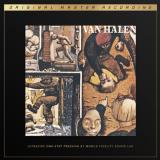
The song titles on Van Halen's aptly titled Fair Warning don't lie. The likes of "Unchained," "Mean Street," "Push Comes to Shove," "One Foot Out the Door," and more indicate the mood the band channels on its double-platinum 1981 record — the nastiest, darkest, and fiercest album of the group's storied career. For the fourth time in four years, Van Halen throws down the gauntlet to all challengers and emerges victorious.
Sourced from the original analog tapes, pressed on MoFi SuperVinyl at Fidelity Record Pressing, and strictly limited to 5,000 numbered copies, Mobile Fidelity's UltraDisc One-Step 180g 45RPM 2LP set plays with unfettered clarity, dynamics, and immediacy. Benefitting from superb groove definition, an ultra-low noise floor, and dead-quiet surfaces, this vinyl edition captures what went down in the studio with tremendous realism and involving presence.
Taking a more controlled approach in the studio and still completing everything in less than two weeks, Van Halen and producer Ted Templeman relied on studio amplifiers to direct the sound. Further diverging from the live-on-the-floor approach of its earlier albums, the ensemble also employed overdubs to great effect. The result: Dense, stacked architecture that underlines the hard-hitting tenor of the songs — and which comes alive like never before on this reference edition that looks as good as it sounds.
The premium packaging and gorgeous presentation befit the reissue's select status. Housed in a deluxe slipcase, it features special foil-stamped jackets and faithful-to-the-original graphics that illuminate the splendor of the recording. Aurally and visually, it is made for listeners who want to immerse themselves in everything involved with the album, including the iconic cover art adopted from William Kurelek's haunting painting, "The Maze."
Isolated frames from Kurelek's childhood-inspired work — including a man bashing his head into a brick wall, a guy pinning down an adversary as he delivers bare-fist blows to his face and others watch with apparent glee, a boy tied down on a conveyer belt and being sent through the equivalent of a meat saw — adorn the front and back covers. The sunnier visual disposition of Van Halen's prior efforts gives way to something sinister and tortured, traits reflective of the music within. The band members, too, are visually depicted not in glamorous shots but in a serious black-and-white portrait in which the quartet is clad in black leather jackets.
Tough, aggressive, stark: Fair Warning comes on like a series of bare-knuckled punches to the solar plexus and boasts lyrical narratives to match. Though not a concept record, the concise album revolves around themes of roughing it on the streets and struggling to survive amid dim prospects. Singer David Lee Roth reportedly penned many of the initial lyrics after traveling to Haiti and observing extreme poverty. The characters and situations populating Fair Warning reflect hardscrabble existence, last-chance desperation, and underlying danger.
Witness the crazies, poor folks, and hunters of “Mean Street”; the former prom queen turned pornographic actress on “Dirty Movies”; the menace and vice of “Sinners Swing!”; the streetwise hustle of “Unchained”; the isolation and alienation of “Push Comes to Shove”; the desire for escape on “One Foot Out the Door”: A carefree California beach party Fair Warning is not.
Having said he felt angry and frustrated during the sessions, guitarist Eddie Van Halen uses the forceful arrangements as a playground for his seemingly unlimited arsenal. Supported by a crack rhythm section and a hyped-up Roth, he performs with an almost impossible combination of punk-like intensity, technical finesse, lyrical fluidity, and unbridled emotion. The virtuoso was increasingly butting heads with Templeton and seeking a freedom in the studio he believed denied him.
No wonder he plays like a bat out of hell. Listen to the rapid-fire manner in which he slaps the high and low E strings on the 12th fret of his instrument on “Mean Street,” instilling the tune with funk flair and metal-spiked sharpness. For the pouty strut of “Dirty Movies,” Eddie Van Halen contributes slide guitar magic made possible after he sawed off the lower portion of a Gibson SG so he could reach further down the fretboard.
Related intensity, urgency, and daredevil momentum punctuate the surging “Sinner’s Swing!” A heavily flanged, delicately melodic introduction frames the attitudinal “Hear About It Later,” among the most creative arrangements of Van Halen’s career. And do riffs come any bigger or magnetic than those on the high-wire kick of “Unchained”? As for the out-of-left-field “Sunday in the Park,” an instrumental composed on an Electro-Harmonix micro-synthesizer: Who but Eddie Van Halen to supply creep factor in such an ingenious way?
Despite selling fewer quantities than Van Halen’s prior efforts, Fair Warning remains for many diehards the record that epitomizes all of the band’s immense strengths —Roth’s manic energy and tongue-wagging humor, Alex Van Halen’s rhythmic heartbeat-in-your-chest bombast, and Michael Anthony’s lucid bass lines included. Arriving when the New Wave of British Heavy Metal and new-wave movements were taking flight, it signaled a shot across the bow from a band determined to stay a step ahead and provide proof nobody could touch what it delivered.
More than four decades later, Fair Warning still sounds that alarm.
Originally recorded in the Dutch towns of Ureterp and Groningen between 2003 and 2005, 'Through Friendly Waters' marks a pivotal moment in Reimer Eising’s —better known as Kettel— journey through melodic braindance and ambient electronica. With his classical training on piano and a refined sensibility for gentle electronic textures, Kettel weaves together shimmering piano motifs, warm ambient textures, playful breakbeats, and pastoral atmospheres that shimmer with emotional resonance.
First released in 2005 via his own label Sending Orbs, the album soon achieved cult status among IDM fans, celebrated for balancing playful compositional elegance with heartfelt sonic depth. TFW still remains as a timeless soundtrack that perfectly encapsulates why Kettel remains a key figure of electronic music enthusiasts two decades on.
To honour its twentieth anniversary, Lapsus Records presents 'Through Friendly Waters (20th Anniversary Edition)', marking the album’s debut on vinyl within the Perennial Series. This edition has been remastered by Alex Ferrer and redesigned by Basora, resulting in a deluxe version that also includes the tracks "Unistar" and "Toen", which were originally released only on CD by the Timothy Really label back in 2007.
Developed over three years across residencies, tours, and periods of deep listening, “Your Whistle Tells of Landscape” finds Australian sound artist Alexandra Spence continuing her investigations into the perceptual entanglements of sound, place, memory, and imagination. Like much of the artist’s work, it unfolds at the liminal edge between the real and the imagined — between what is heard and what is remembered.
Composed from a constellation of materials gathered across sites and seasons — snowscapes recorded in Vancouver, insect choruses from a Sydney backyard, ceramic fragments unearthed while mudlarking with tinysound — it renders an intimate cartography of experience: one shaped equally by ecological resonance and internal drift. Each piece traces a kind of imaginary geography, where sonic ephemera become proxies for topography, weather, or myth.
The album is informed by time spent at EMS (Stockholm) and MESS (Melbourne), where Spence deepened her engagement with microtonality and tuned feedback systems, and by dialogues with sympathetic artists such as Tashi Wada and Patrick Farmer. Sound materials were sourced from Serge Modular systems, a custom lyre built by Tim Wall, amplified objects, handmade electronics, and Spence’s own field recordings captured within rockpools, beneath sand, and among a flock of sheep in the French Pyrenees. On “Magenta,” a collaboration with Delphine Dora, the domestic and mythic intertwine, as layers of voice, environmental recordings, and Halldorophone feedback drift in and out of one another like overlapping weather systems.
Despite its diverse material palette, the album resists spectacle or accumulation. Instead, it moves with a quiet sense of continuity and a rich interiority — less a sequence of compositions than a set of situated attunements. Across its duration, sounds seem to murmur, glint, or hover right at the edge of presence, invoking a listening practice that is as much about orientation as it is about reception. These are pieces not simply about place, but of place — etched with the grains of time, vibration, and breath.
- A1: Djilon
- A2: Sira
- A3: Mousso Mina Mousso
- A4: Ambideu
- A5: Bara
- B1: Labanko
- B2: Tungan
- B3: Djonmaya
- B4: Deen Wolo Mousso
Victor Démé loved life, music, friends, his hometown of Bobo Dioulasso, and above all, his family — by blood and by heart. Jovial and generous, he would have been delighted to see his world gathered once again in celebration: with concerts, unreleased tracks, live recordings, and a podcast retracing his finest musical years. Ten years after his sudden passing, this album carries the simple ambition of honoring his music and memory.
Victor passed away on September 21, 2015, in Bobo Dioulasso, during the coup d’État in Burkina Faso. The hospital he rushed to for malaria treatment was closed… His third album was due to be released just days later, but he never had the chance to sing it on stage.
A prolific and unique songwriter, Victor often revived songs he had composed in his youth during sessions at the OuagaJungle studio. With his guitar, he would breathe new life into them, refining them with his musicians — making the final choices sometimes difficult. Among the previously unreleased tracks on this record are Djilon, a reggae piece from Abidjan; Sira, a radiant yet solitary blues; Ambideu, a crooner-style ballad reimagined as an elegant cello-and-voice duet; Mousso mina mousso, a love song meant for a djandjoba celebration; and Bara, a heartfelt choral tribute to the workers of Burkina Faso.
These songs remained in the studio after Victor’s passing and have now been brought to life by the talented musicians Clément Petit, Alex Finkin, and Max “Blundetto” Guiguet. On Side B, the album captures the energy and sincerity of Victor and his band live on stage, with recordings from the May 19, 2009 concert at Théâtre de la Ville in Rouen. The performance opens with Labanko — a song never recorded in studio — followed by several classics, including the iconic Djon Maya, delivered here in its most blues-infused version, carried by Issouf Diabaté’s magical guitar.
Unforgettable memories for his musicians and for all who had the chance to applaud him live. We can only hope that, wherever he is, Victor is smiling and dancing as we celebrate him once more through music.
Leila Gamal’s ‘Abaleeh Abalingi’
At the height of Pan-Arabism, when the United Arab Republic fused Egypt and Syria in a fleeting but bold experiment, a new wave of popular music was emerging—vibrant, infectious, and universally danceable. Among its lesser-known stars was actress Leila Gamal, whose voice—delicate yet rich with longing—embodied the golden era of Egyptian cinema. Born in Alexandria to Syrian roots, Gamal’s vocals were a magnetic blend of sweetness and passion, with a timeless allure that echoed the silver-screen sweethearts of her time.
Abaleeh Abalingi pulses with the hypnotic drive of funky organ riffs, reminiscent of the blind visionary Ammar El Sheriyi, creating a sound both cinematic and undeniably catchy. The delicate lyrics by Khairi Fouad place the track firmly in the lineage of the Middle East’s most iconic pop divas, from Angham to Nawal El-Zoughbi who he subsequently wrote for. This reissue, lovingly remastered, brings this long-lost gem back to life, where it belongs—spinning on turntables, teasing dance floors, and transporting listeners to Egypt in the late sixties.
Adel Osman’s “Oriental Eyes”
Oriental Eyes captures the essence of the 60s Egyptian Franco-Arab movement, blending Western (often jazz) influences with Arabic melodies to mesh mystique with sensuality. Osman’s commanding yet delicate vocals deliver the bilingual lyrics with captivating sincerity, his voice effortlessly gliding over the swells of the arrangement. The trumpet, possibly connecting him to Zaki Osman of Salah Ragab’s legendary Cairo Jazz Band, adds a layer of flair, enriching the track’s Tarantino-esque eclecticism. Now remastered, ‘Oriental Eyes’ is not only a nostalgic gem but a timeless reminder of the boundary-defying spirit that defined the 1960s musical landscape.
Given the ongoing war efforts against Israel, this record wasn’t pressed by Sono Cairo till much later in 1975 once Egypt had recaptured the Sinai and restored national pride. Sono Cairo (Sawt el-Qahira) was the first Arab-owned and by far the largest record label in the Middle East, amassing an unmatched catalogue of music. With exclusive rights over much of Umm Kulthum’s works, Sono Cairo played a crucial role in disseminating the sounds of Arab Nationalism and projecting Egypt’s soft power across the region.
Muhammad Al-Najjar
London, April 2025
credits
Audio restoration and vinyl mastering: Colin Young
Lacquer cut: Timmion cutting lab
Sleeve and label artwork: Grotezk Studio
Under License of Sono Cairo
"The nineteenth entry in the Altered Circuits catalog comes courtesy of Alex Neri with a selection of 4 tracks that distill an equal amount of decades in the studio. They are undeniably straightforward yet difficult to pigeonhole. It is clear Neri is aware of current trends and, at times, might even throw them a little nod - but overall, his music escapes easy temporal classification. On the "Club Voyage EP", he aims at the brash and brazen yet keeps the pace lighthearted. When the results come buttressed with the type of technical prowess at hand, it is hard not to get sucked into the adventure. "Teller Mood", charged with a fierce bassline, boisterous drums and jittery arps, is a slab of electroshock production. The track comes complete with extra motivational vocals to drive the point home, and when it arrives at its most stripped parts, instead of toning down, an alarm-like lead emerges. "Schelter's Sounds" features an FM bass and gently modulated, slow-attack synth embellishments. It is a set-up that allows for catching a breath until a grandiosely introduced portamento-heavy patch cranks things up a notch again. On the other side, the delayed and flanged percussion of "Tenax Roots" forms the ideal conditions for ominous synth work and robotized vocals; a theme that could have been lifted from a giallo flick completes its suspenseful, hypnotic ambience. "Move Tokyo Inputs" starts with another salvo of invigorating percussion. Amidst subtly evolving formant basslines and several risers, the tune directs a tweaked deadpan vocal sample to take center stage, showcasing how, in the right hands, the sparsest source material can be turned into a showstopper."
- A1: Pop's Lolly (From "Tre Notti D'amore")
- A2: Dior Dance (From "Mondo Di Notte N 2")
- A3: Mani In Alto - M16 (From "Mani In Alto")
- A4: L'assassino (Titoli) (From "L'assassino")
- A5: Autoradio (From "Una Vita Violenta")
- A6: Tre Per Una Rapina (Titoli) (From "Tre Per Una Rapina")
- A7: I Dolci Inganni - M11 (From " I Dolci Inganni")
- B1: Dea Di Un Sogno (From "Un Tentativo Sentimentale")
- B2: La Notte Brava (Atmosfera Romantica) (From "La Notte Brava")
- B3: Danza Selvaggia (From "Il Figlio Di Spartacus")
- B4: Tema Di Doni (From "Niente Rose Per Oss 117")
- B5: Tema Di Titina (From "Toh È Morta La Nonna!")
- B6: Chorus In Fa (From "L'italia Vista Dal Cielo Emilia Romagna E Marche")
- B7: Tema Favola (From "Fratello Mare")
- B8: Le Altre - M10 (From "Le Altre")
- C1: Significa Amore (From "Travolti Da Un Insolito Destino Nell'azzurro Mare D'agosto")
- C2: Per Questa Notte - M20 (From "Per Questa Notte")
- C3: Addio Alexandra - M6 (From "Addio Alexandra")
- C4: Città E Campagna (Finale) (From "Città E Campagna")
- C5: Magic Of New York (From "Lucky Luciano")
- C6: Stampe Erotiche (From "Il Comune Senso Del Pudore")
- D1: Riavanti .. Marsch! - M25 (From "Riavanti... Marsch!")
- D2: Papà Funky (From "In Viaggio Con Papà")
- D3: What Is There To See? (From "Io E Caterina")
- D4: Io So Che Tu Sai Che Io So (Titoli) (From "Io So Che Tu Sai Che Io So")
- D5: Rag Arturo De Fanti, Bancario Precario (Tema Valzer - Piano Elettrico) (From "Rag. Arturo De Fanti, Bancario Precario")
Piero Piccioni undoubtedly was the most “dandy” of Italian film music composers. The most stylish one, in art as in life. On the centenary of the composer’s birth, CAM Sugar celebrates his art with a compilation that draws from both his well-know and lesser-known works, alongside a precious handful of tracks that, surprisingly, have remained fully unreleased until today. The result is a journey of rediscovery of the unique, dazzling and unmistakable sound of the Turin-born composer. The silky, sensual and emotional “Piccioni's touch” can be detected in every single composition he happened to work on during his long career which spanned jazz, bossa nova, funk, disco, and orchestral music. It is a touch that gives harmony and coherence to a corpus of soundtracks that stands out as one of the most prestigious and important discographies in the world: eternal music destined to last forever, without ever sounding out of place, just like the timeless elegance of Italy and Piccioni.
- A1: Echoes Of A Billion Sun's
- A2: Messages From The Andromeda Galaxy
- A3: Stardust Memories (Among The Stars Dreams And Memories)
- A4: Trailblazer Of The Cosmos (Comet Rider A Leap Of Faith Into The Unknown)
- B1: Seeds Of Light (Hope For Growth And New Beginnings)
- B2: Fragile Eden (Threads Of Emerald Green)
- B3: The Cold Embrace Of Infinity
- B4: The Star Charts We Shared (A Maurizio Requiem)
After a 30-year interstellar silence, the enigmatic producer Alien Signal—pioneering alias of Italian electronic composer Alex Silvi—reemerges with Whispers from Distant Suns, a transcendent odyssey that bridges retro-futurism and modern electronica. Hailed as a magnum opus, this album transcends genre boundaries, captivating ambient purists, downtempo aficionados, and even experimental listeners with its hypnotic fusion of analog warmth and digital precision.
Cosmic Tapestry of Sound
Drawing comparisons to Vangelis’ Antarctica and Alpha—but reimagined through a 21stcentury lens—Whispers from Distant Suns marries nostalgic synth textures with cuttingedge production. Silvi’s mastery of melody shines through in tracks like “Stardust
Memories” and “Fragile Eden” where shimmering arpeggios and celestial pads drift over robotic, glitch-infused drum patterns and sparse, meditative percussion. The result is a paradox: a retro-futuristic soundscape that feels simultaneously ancient and alien, familiar yet unexplored.
Listener Testimonials
Fans and critics have flooded forums with praise:
“An auditory revelation! It’s like Vangelis met Jon Hopkins in a nebula—vintage soul with a futuristic heartbeat.”
“The textures are gorgeously cinematic. Closing your eyes, you’re adrift in a Tarkovsky film scored for the Andromeda galaxy.”
The Vinyl Experience
Pressed on heavyweight vinyl, the album’s physical release amplifies its immersive qualities. The gatefold sleeve, adorned with surrealist astrophotography and metallic
foiling, mirrors the music’s cosmic ethos. Side A leans into Balearic serenity, with sundappled grooves and aquatic synth ripples, while Side B delves into darker, more
experimental terrain—think Aphex Twin’s Selected Ambient Works colliding with the organic rhythms of Jon Hopkins.
Maturity in Motion
This album is a testament to Silvi’s evolution. Tracks like “Seeds Of Light” and “Message from Andromeda Galaxy” showcase his refined ear for dynamics, balancing silence and sound with surgical precision. Vintage drum machines spar with glitches, while field recordings of crashing waves and interstellar static blur the line between Earth and cosmos. The closing track, “The Star Charts We Shared” crescendos into a 6-minute ambient requiem, leaving listeners suspended in a state of weightless awe.
Final Transmission
Whispers from Distant Suns is more than an album—it’s a transcendent odyssey. Spanning time, space, and the artist’s own creative evolution, this immersive work invites listeners to lose themselves in its ebb and flow. Designed for moments both intimate and expansive, its balearic-tinged atmospheres resonate equally through dawnlit Mediterranean terraces or the solitary glow of headphones in darkness. These are compositions that pulse, morph, and haunt the air long after the final note fades. A living soundscape meant to accompany life’s quiet revelations and clandestine joys—a soundtrack to your most personal moments, crafted as what the artist calls ‘private dance music.’
Tailored for the Discerning Listener
Whispers from Distant Suns is designed with the true connoisseur in mind. This album is a must-have for:
Vinyl Collectors & Audiophiles: Those who value the warmth and tactile experience of heavyweight, limited edition pressings
Electronic Ambient and Downtempo Fans: Listeners who appreciate immersive soundscapes that merge retro analog charm with modern digital innovation.
Retro-Futurism Enthusiasts: Fans of pioneering artists like Vangelis, Boards of Canada, and early Warp Records who seek music that bridges nostalgic synth textures with futuristic experimentation.
Experimental Music Explorers: Individuals drawn to sonic narratives that invite deep, contemplative listening—perfect for both introspective moments and immersive listening sessions.
This release is not just an album; it’s a curated experience for those who desire music as a multidimensional art form, merging the vintage allure of analog sound with a contemporary, cosmic vision.
For fans of: Vangelis, Biosphere, Jon Hopkins, early Warp Records.
- A1: Progetto Tribale - The Sweep
- A2: Onirico - Echo Giomini
- A3: Open Spaces - Artist In Wonderland
- B1: Alex Neri – The Wizard (Hot Funky Version)
- B2: M C.j. Feat. Sima - To Yourself Be Free - Instrumental Mix Energy Prod
- B3: Mato Grosso - Titanic Expande
- C1: Dreamatic - I Can Feel It (Part 1)
- C2: Carol Bailey - Understand Me Free Your Mind (Dream Piano Remix)
- C3: The True Underground Sound Of Rome - Secret Doctrine
- D1: Don Carlos - Boy
- D2: Lazy Bird – Jazzy Doll (Odyssey Dub)
Vol 2[28,99 €]
Volume 1 of this expertly curated project of 90s Italian House - put together by Don Carlos.
If Paradise was half as nice… by Fabio De Luca.
Googling “paradise house”, the first results to pop up are an endless list of European b&b’s with whitewashed lime façades, all of them promising “…an unmatched travel experience a few steps from the sea”. Next, a little further down, are the institutional websites of a few select semi-luxury retirement homes (no photos shown, but lots of stock images of smiling nurses with reassuring looks). To find the “paradise house” we’re after, we have to scroll even further down. Much further down.
It feels like yesterday, and at the same time it seems like a million years ago. The Eighties had just ended, and it was still unclear what to expect from the Nineties. Mobile phones that were not the size of a briefcase and did not cost as much as a car? A frightening economic crisis? The guitar-rock revival?! Certainly, the best place to observe that moment of transition was the dancefloor. Truly epochal transformations were happening there. From America, within a short distance one from the other, two revolutionary new musical styles had arrived: the first one sounded a bit like an “on a budget” version of the best Seventies disco-music – Philly sound made with a set of piano-bar keyboards! – the other was even more sparse, futuristic and extraterrestrial. It was a music with a quite distinct “physical” component, which at the same time, to be fully grasped, seemed to call for the knotty theories of certain French post-modern philosophers: Gilles Deleuze, Félix Guattari, Paul Virilio... Both those genres – we would learn shortly after – were born in the black communities of Chicago and Detroit, although listening to those vinyl 12” (often wrapped in generic white covers, and with little indication in the label) you could not easily guess whether behind them there was a black boy from somewhere in the Usa, or a girl from Berlin, or a pale kid from a Cornish coastal town.
Quickly, similar sounds began to show up from all corners of Europe. A thousand variations of the same intuition: leaner, less lean, happier, slightly less intoxicated, more broken, slower, faster, much faster... Boom! From the dancefloors – the London ones at least, whose chronicles we eagerly read every month in the pages of The Face and i-D – came tales of a new generation of clubbers who had completely stopped “dressing up” to go dancing; of hot tempered hooligans bursting into tears and hugging everyone under the strobe lights as the notes of Strings of Life rose up through the fumes of dry ice (certain “smiling” pills were also involved, sure). At this point, however, we must move on to Switzerland.
In Switzerland, in the quiet and diligent town of Lugano, between the 1980s and 1990s there was a club called “Morandi”. Its hot night was on Wednesdays, when the audience also came from Milan, Como, Varese and Zurich. Legend goes that, one night, none less than Prince and Sheila E were spotted hiding among the sofas, on a day-off of the Italian dates of the Nude Tour… The Wednesday resident and superstar was an Italian dj with an exotic name: Don Carlos. The soundtrack he devised was a mixture of Chicago, Detroit, the most progressive R&B and certain forgotten classics of old disco music: practically, what the Paradise Garage in New York might have sounded like had it not closed in 1987. In between, Don Carlos also managed to squeeze in some tracks he had worked on in his studio on Lago Maggiore. One in particular: a track that was rather slow compared to the BPM in fashion at the time, but which was a perfect bridge between house and R&B. The title was Alone: Don Carlos would explain years later that it had to be intended both in the English meaning of “by itself” and like the Italian word meaning “halo”. That wasn’t the only double entendre about the song, anyway. Its own very deep nature was, indeed, double. On the one hand, Alone was built around an angelic keyboard pattern and a romantic piano riff that took you straight to heaven; on the other, it showcased enough electronic squelches (plus a sax part that sounded like it had been dissolved by acid rain) to pigeonhole the tune into the “junk modernity” section, aka the hallmark of all the most innovative sounds of the time: music that sounded like it was hand-crafted from the scraps of glittering overground pop.
No one knows who was the first to call it “paradise house”, nor when it happened. Alternative definitions on the same topic one happened to hear included “ambient house”, “dream house”, “Mediterranean progressive”… but of course none were as good (and alluring) as “paradise house”. What is certain is that such inclination for sounds that were in equal measure angelic and neurotic, romantic and unaffective, quickly became the trademark of the second generation of Italian house. Music that seemed shyly equidistant from all the rhythmic and electronic revolutions that had happened up to that moment (“Music perfectly adept at going nowhere slowly” as noted by English journalist Craig McLean in a legendary field report for Blah Blah Blah magazine). Music that to a inattentive ear might have sounded as anonymous as a snapshot of a random group of passers-by at 10AM in the centre of any major city, but perfectly described the (slow) awakening in the real world after the universal love binge of the so-called Second Summer of Love.
For a brief but unforgettable season, in Italy “paradise house” was the official soundtrack of interminable weekends spent inside the car, darting from one club to another, cutting the peninsula from North to centre, from East to West coast in pursuit of the latest after-hours disco, trading kilometres per hour with beats per minute: practically, a new New Year’s Eve every Friday and Saturday night. This too was no small transformation, as well as a shock for an adult Italy that was encountering for the first time – thanks to its sons and daughters – the wild side of industrial modernity. The clubbers of the so-called “fuoriorario” scene were the balls gone mad in the pinball machine most feared by newspapers, magazines and TV pundits. What they did each and every weekend, apart from going crazy to the sound of the current white labels, was linking distant geographical points and non-places (thank you Marc Augé!) – old dance halls, farmhouses and business centres – transformed for one night into house music heaven. As Marco D’Eramo wrote in his 1995 essay on Chicago, Il maiale e il grattacielo: “Four-wheeled capitalism distorts our age-old image of the city, it allows the suburbs to be connected to each other, whereas before they were connected only by the centre (…) It makes possible a metropolitan area without a metropolis, without a city centre, without downtown. The periphery is no longer a periphery of any centre, but is self-centred”.
“Paradise house” perfectly understood all of this and turned it into a sort of cyber-blues that didn’t even need words, and unexpectedly brought back a drop of melancholic (post?)-humanity within a world that by then – as we would wholly realise in the decades to come – was fully inhuman and heartless. A world where we were all alone, and surrounded by a sinister yellowish halo, like a neon at the end of its life cycle. But, for one night at least, happy.
»Nuts of Ay«, the thirteenth album by the Berlin-based electronic pop duo Tarwater (Ronald Lippok and Bernd Jestram), is their first in a decade, since 2014’s »Adrift«. Beautifully poised and smartly dressed, it's an album that draws Tarwater’s various pasts into a high-definition present, while bringing the duo, yet again, into productive dialogue with all kinds of fellow travellers.
Tarwater’s music has always been marked by a hypnotic pop-ness, but that’s particularly evident on »Nuts of Ay«, where a song like »Hideous Kiss« weaves together jangling guitar, pastoral flute, and flittering electronics into a gem-like construction. While the lyrics of »Hideous Kiss« are written by the duo, »Nuts of Ay« also continues a longstanding Tarwater tradition of recasting the words of others in their own mould. This time, their remit is broad: poetry from Derek Jarman (»All Nuns«) and Millner Place (»Trapdoor Spider«); lyrics from Jean Kenbrovin (»I’m Forever Blowing Bubbles«), the late Shane MacGowan (»USA«) and, again, John Lennon (»Everybody Had a Hard Year«).
This cast of found and borrowed lyricists also finds collaborative echo in the guest musicians dotted throughout »Nuts of Ay«. Schneider TM turns up on the lovely, Felt-like »Spirit of Flux«, where guitars channel the tangled reveries of Vini Reilly and Maurice Deebank into lush pop. Carsten Nicolai joins, as Alva Noto, dappling »On Waves and Years« with intimate glitching textures; he also provides the album cover art. Elsewhere, Masha Qrella appears on »Down Comes the Goose«, and actor Lars Rudolph pitches in for »USA«.
It may have been ten years since the album's predecessor, but Lippok and Jestram have kept active with other projects. They’ve collaborated with Masha Qrella, Immersion, and Iggy Pop; worked on radio plays with Kai Grehn, some based on the writing of Nick Cave (»The Sick Bag Song«, featuring Tilda Swinton, Paula Beer and Alexander Fehling) and William S. Burroughs (»The Cat Inside«); and made music for several radio-tatorts (radio plays based on »Tatort«, a long-running German police TV series) by playwright Tom Peuckert.
Both voracious and committed in their creative energies, Jestram and Lippok report back from these experiments with »Nuts of Ay«, one of their most compelling, deeply lustrous, dreamlike albums yet. They say there was no concept for the album, which is surprising, perhaps, given its holistic mood, explaining it »grew together like a coral reef in the studio over a period of several years«. There’s something to be said for letting an album gather and mutate naturally, without an overarching framework in place, and »Nuts of Ay« certainly feels like an unforced collection of material that nonetheless inhabits a similar space, one where guitars twist like driftwood next to amorphous, aqueous electronics, Lippok’s droll yet completely convincing vocal delivery riding songs that pulse and plume with curious, unpredictable rhythms.
But you can also hear elements – submerged but still present – of other music that’s inspired the duo: they’ve drawn some connections for us with psychedelic folk, Bowie in Berlin, Burial, and the film music of Popol Vuh and Krzysztof Komeda. This music shares a strong sense of place – whether in the world, or the mind – and the twelve songs on »Nuts of Ay« have such similar presence; a shared mood, a shared world, a shared sense of the possibilities of what electronic pop music could, and should, be. A bold and brave pop experiment.
Artwork by Carsten Nicolai
Mastering by Bo Kondren, Calyx Berlin
»Trapdoor Spider«, »On Waves and Years« & »Breaking Day«: lyrics by Milner Place
»All Nuns«: lyrics by Derek Jarman
»USA«: lyrics by Shane MacGowan
»Down Comes the Goose«: lyrics from a traditional song
»Forever Blowing Bubbles«: lyrics by Jaan Kenbrovin
»Everybody Had a Hard Year«: lyrics by John Lennon
Puddu (Al Dente/Schema Records) with a solo release discography of 16 albums, among which stand out the three original volumes of the red-light soundtracks of Danish films ” The Golden Age Of Danish pornography", and also known for his collaborations with Edda Dell'Orso (Maestro Ennio Morricone's legendary vocalist,) Joe Bataan, Lonnie Jordan of L.A funk band War, and Gene Robinson Jr of Breakwater.
Alex Puddu will follow the previews singles Texas Blonde and Pullover Grigio releasing after the summer, for the first time a brand new album in Italian language, called ”Deliria” proposing a new sound that drags us into the Italian funk music of the late seventies and early 80s, and the new music from the italian indie pop and new disco scene, within names like, Nu Genea, Pellegrino. Viscardi & Il Duo Magnetico, Frah Quintale, Marco Castello and up to the electronic sounds, between adult oriented soul and disco that are part of the unmistakable style of Alex Puddu's writing and production.
The Circus is a place of lights and colors, but also of shadows, even darkness. Admittedly, it delights children and makes adults laugh. But you only need one rainy autumn evening near a circus tent and the smell of fodder to think of the sadness of the clowns, the endless training of the animals and the freaks who are hidden in some caravan... cinema, the essence of the circus – movement, light, danger and burlesque – will have been admirably rendered in Notes on the circus by Jonas Mekas (1966), one of the inventors of the filmed diary. With Cirque, Michèle Bokanowski does similar work, entirely dedicated to spinning, in the musical field.
She distinguished herself in particular in the composition of musique concrète, among others Tabou and Trois chambres d'inquiétudes, after having studied with Pierre Schaeffer and Éliane Radigue. The latter, great lady of drone and minimalism, fell under the spell of Cirque and wrote the booklet for the piece as a poem.
The piece, divided into five movements, is based on the handling and editing of recordings captured within one or more circuses (this is not specified and is of no importance) between 1988 and 1993. The initial allegro reveals the gallop of a horse joined gradually by other images. The idea of the circular space of the circus tent is immediatly and magnificently rendered and will be constantly recalled by an insistent use of the loop technique. Children's laughter, applause and drum rolls are thus sheared, repeated before being brutally interrupted. Accordion interludes and the distortion of sounds create a dreamlike atmosphere. This beautiful nightmare reminds us, to quote Éliane Radigue, the "Magic of childhood still living in the heart of man even beyond its abrupt end."
Words by Alexandre Galand, from the book “Field Recording – L’usage sonore du monde en 100 albums” (ed. Le mot et le reste, 2012)
Major member of the french musique concrète scene, Michèle Bokanowski was born on August 9, 1943 in Cannes, FR, to a musician mother and a writer father. She now lives and works in Paris.
Music lover since adolescence, it was relatively late, at the age of 22, that Michèle Bokanowski decided to study composition. Reading In Search of a Concrete Music by Pierre Schaeffer was decisive. After classical training on harmony, she met Michel Puig, a student of René Leibowitz, who taught her writing and analysis based on the Treatise of Schönberg. In September 1970 she began a two-year internship in the ORTF Research Department under the direction of Pierre Schaeffer. She takes part in the same time in a research group on sound synthesis, studies musical computing at the Faculty of Vincennes and electronic music with Éliane Radigue.
Her main works are intended for concert: Pour un pianiste, Trois chambres d’inquiétude, Tabou, Phone Variations, Cirque, L’étoile Absinthe, Chant d’Ombre, Enfance, Rhapsodia, Cadence, Elsewhere. She has also composed for theater (with Catherine Dasté), dance (with choreographers Hideyuki Yano, Marceline Lartigue, Bernardo Montet) and cinema: music for the short films of Patrick Bokanowski and his two feature films L'Ange ( 1982) and A Solar Dream (2016).
- A1: Mau P - On Again (Extended Mix)
- A2: Martin Garrix, Sentinel Feat Bonn - Hurricane
- A3: Jengi - Take U
- A4: Armin Van Buuren, Hi-Lo - Now Love Will Begin
- A5: Sunnery James & Ryan Marciano Feat Mc Leléto - Vai Sentar
- B1: Dimitri Vegas & Like Mike & Tiësto & Dido & W&W - Thank You (Not So Bad)
- B2: Alok, The Chainsmokers & Mae Stephens – Jungle (Extended Mix)
- B3: Alesso & John Newman - Call Your Name (Extended Mix)
- B4: Fisher X Kita Alexander - Atmosphere
- B5: Disclosure Feat Eliza Doolittle - You & Me (Rivo Extended Mix)
- C1: Zerb, Sofiya Nzau – Mwaki (Extended Mix)
- C2: Lost Frequencies & Bastille - Head Down (Lost Frequencies & Suark Deluxe Extended Mix)
- C3: Steve Angello – Me (Extended Mix)
- C4: James Hype & Major Lazer - Number 1
- C5: Kelis - Milkshake 20 (Alex Wann Remix)
- D1: David Guetta & Mason Vs Princess Superstar - Perfect (Exceeder) (Extended Mix)
- D2: Hardwell - Oldskool Sound
- D3: Amber Broos - Amok
- D4: Vintage Culture, Maverick Sabre, Tom Breu – Weak (Extended Mix)
- D5: Genesi - Everything You Have Done (Meduza Edit)
Tomorrowland Music kündigt ’TOMORROWLAND 2024 - LIFE - OFFICIAL COMPILATION’ an. Erlebe die Euphorie des diesjährigen Tomorrowland-Mottos „LIFE“ bequem von zu Hause aus, mit exklusiven Tracks und erweiterten Versionen, die für DJs und Musikliebhaber gleichermaßen geeignet sind. Mit einer handverlesenen Auswahl aktueller Singles von einigen der größten Namen der elektronischen Musik, darunter Lost Frequencies, David Guetta, Alok, Dimitri Vegas & Like Mike, Martin Garrix, Alesso und einige der größten Club-Hits des Augenblicks, wie Zerb (Mwaki), Alex Wann (Milkshake 20). Von erhebenden Melodien bis hin zu herzzerreißenden Beats ist jeder Track ein Zeugnis für die Einheit, Freude und Vielfalt, die auf dem Tomorrowland gefeiert wird. Jedes Vinyl ist ein Sammlerstück, reich an ästhetischen Details und angereichert mit luxuriösen Verpackungselementen, die durch ein atemberaubendes Artwork aufgewertet werden.
The music from LES TONTONS FLINGUEURS (aka Crooks in Clover aka Monsieur Gangster) is as instantaneously recognizable as the James Bond theme thanks to a short and recurring melodic motif that can still stick in the heads of 21th century kids. Monothematism is a word used by musicologists to refer to the use of stylistic variations based on a single musical theme as can be heard in the Tontons : on the banjo, during the nose punch sequences, played jazz, blues, gloria or Hully Gally style. Though the Tontons music may on first listen sound nothing different than a straightforward yet catchy soundtrack, it turns out to be a real exercise in style. When reading Michel Magne's autobiography " L'amour de vivre " it clearly appears that mixing folk music and sound experiments was a mindful artistic choice. In the movie, Antoine Delafoy (Claude Rich) who is engaged to Patricia (the Mexican's daughter) is merely a Michel Magne caricature. He embodies a contemporary music composer in search of the " absolute anti-chord " by using a water tap. " We don't really know what it is but it's amusing ". In reality and despite his classical musical education, Michel Magne has indeed had a venture into avant-garde music, going as far as organizing an infrasounds concert at the Salle Gaveau venue (Paris) on July 15th, 1954. Infrasonic frequencies which quickly made the audience run for the toilets. On December 3rd,² 1956 his low-frequency sounds contributed to an " empirique " show at the Théâtre des Trois Baudets (Paris) with Alexandro Jodorowsky, Jean Michel Rankovitch and Tinguely. At the same time he wrote music on words by Françoise Sagan for Mouloudji. Again with this desire to cross the boundaries of musical genres. He recorded in 1959 an album of " musiques tachistes " from which a show with dances was staged by Michel Descombey. His taste for provocation and avant-garde did not prevent Michel Magne from composing and arranging popular music. He hence wrote the music for six Georges Lautner movies including the famous Tontons Flingueurs in 1963.Being part of the avant-garde long-haired world what could Michel Magne think of Michel Audiard ? A most kind character who had nevertheless been burned by supporters of the " nouvelle vague " including journalist Henry Chapier who described Les Tontons Flingueurs as being " chansonnier " cinema (in Combat 1963), meant for disenchanted quinquagenarians. Audiard had responded to Truffaut, another of his dispisers : " Dad's movies filled theaters, son's movies empty them. We should have been warned : with its seaside sounding name the Nouvelle Vague (new wave) drove millions of viewers out on the countryside ". In between melodic effectiveness and daring arrangements and tonality, Michel Magne's work is worth being listened to with fresh ears, cleared of clichés !
Nina recorded "tarde" in her bedroom 3 years ago and wanted the song to keep the same intimate feeling as when she recorded it.
The result is a dark love song about love so strong, it could almost break you.
David Lohlein and Alex Wilcox delivered perky remixes that are now being released on limited pink vinyl with hand stamped labels.
don't sleep on this one!
- A1: Grana
- A2: Vorsichtig - Mutiger - Verloren
- A3: The Idea Of A Horizon
- A4: View From My Parents House
- B1: Folie
- B2: X-Pulse
- B3: Ungeheuer Ist Vieles
- B4: Seance
- B5: Nexus Ii On The Beach
- B6: Langsame Bewegung
- B7: Zwischen Luft
- C1: Chez Charles
- C2: P-Analyse
- C3: La Caduta Degli Dei
- C4: Aavikon (No Water)
- C5: Что Такое Человек
- D1: Dark Matter Art Cabinet
- D2: Hatch On A Hunch
- D3: Theban Constitutional
- D4: Kismet
- D5: No Noosphere
ESP Institute artist Bartellow, one third of the project Tambien and otherwise known in the Contemporary Classical sphere as Beni Brachtel, returns to the label with his second full-length release, Noosphere. While currently heading the SVS label and residency series out of Munich, Beni’s resume expands well beyond electronic music to include immersive sound installations such as The Adven- ture Of The Empty House (solo live performance across seven floors of Walter Henn’s Deckelbau building), a slew of compositions for the Bavarian State Opera (for which he doubled as conductor), and a prolific career of over twenty-five theater scores for institutions such as the Münchner Kammerspiele, Schauspiel Basel, Maxim Gorki Theater Berlin, Berliner Ensemble, Schauspiel Köln, Schaus- piel Graz and with directors Ersan Mondtag, Alexander Eisenach, Jessica Glause and Tobias Staab among others.
Noosphere is a compendium excerpting from theatrical scores WUT (Elfriede Jelinek, at Schauspielhaus Köln, directed by Ersan Mondtag, 2020), Ödipus and Antigone (Maxim Gorki Theatre Berlin, directed by Ersan Mondtag, 2017), Der Zauberberg (Thomas Mann, Schauspiel Graz, directed by Alexander Eisenach, 2017), Hass Tryptichon (Sybille Berg, Wiener Festwochen / Maxim Gorki Theatre, directed by Ersan Mondtag, 2019), Wonderland Ave. (Sibylle Berg, Schauspielhaus Köln, directed by Ersan Mondtag, 2018), Die Verdammten (after Visconti ́s film, Schauspielhaus Köln, directed by Ersan Mondtag, 2019) and Roi Ubu (Alfred Jarry, Theater Neumarkt, Zurich, directed by Alexander Eisenach, 2018).
The work traverses homages, infusing everything from Baroque to Impressionism, and while these types of references are certainly built into the canon of Theatre as a discipline, here we gather histor- ic layers in an even wider net. Under the self-referential thumb of Contemporary Classical music, this sort of "hindsight" approach has been largely avoided, however, in today’s all-access arena, the constant stream of historic causal-chained events has opened a delta where anything is possible. This defines Bartellow’s stance among his colleagues as well as his cultural position as a composer.
Beni considers beauty a fleeting objective in the arts, that expression is often expected to follow notions of Destructivism or the unfulfilled. Art will pore over wounds, collective angst, mourn- ing a loss of natural habitat or a fear of technological invasion, yet there is a bitter irreverence for the friction or salvation in beauty itself. Acknowledging this subjectivity — what one audience considers superficial pleasure may be deeply profound to another — he leans into musical instinct as if composing via divine conduit.
Noosphere conjures a array of suspense, ecstasy, melancholy, and dread, but in isolating the work from its theatrical component, Brachtel directs our focus toward formal qualities, clearing unim- peded space to conceive fresh narratives and examine dynamism and interconnectivity. In sympathy with often difficult theatre pieces, the passages can be dark and transgressive, but more importantly they remain relative to Brachtel’s circumstances at their time of creation. The title Noosphere speaks to the evolution of human thought and knowledge, opening a door to subjective points-of-view. For example, Nexus II On The Beach refers to both Roberto Musci’s Water Messages On Desert Sand as well as the film Bladerunner, invoking the image of an android enjoying the sunset, but whether or not this abstraction may be considered beautiful depends the listener’s cumulative life experience and perspective.
This is hybrid chamber music, augmented by electro-acoustic layers, juxtaposing various periods and successively processing their residual themes into a trans-generational rendering of “now.”
Van Halen did more than announce to the world the earthshaking arrival of a revolutionary guitarist. Performed by an enterprising California quartet that took its name from two of its principal members, the 1978 debut ripped headlines away from punk, injected fresh energy into a then-moribund rock 'n' roll scene, reimagined how heavy music and throwback pop could coexist, and invited everyone to experience the top-down pleasures of a beach-front Saturday night every day of the week no matter where they lived. Painstakingly restored by Mobile Fidelity Sound Lab, and the first of a multi-album series in an exciting partnership between the famous reissue label and Van Halen, Van Halen delivers feel-good thrills and hormonally charged desires like never before.
Limited to 12,000 numbered copies, pressed on dead-quiet MoFi SuperVinyl at RTI, and mastered from the original analogue master tapes, Mobile Fidelity's ultra-hi-fi UltraDisc One-Step 180g 45RPM 2LP collector's edition pays tribute to the record's merit and allows fans to experience Van Halen's original blend of raw power, Hollywood flair, and vaudeville fun for generations to come. Playing with reference-setting sonics that elevate a 10-times-platinum landmark whose importance cannot be quantitatively measured, this definitive version provides a clear, clean, transparent, balanced, and turn-the-volume-up-to-11 view of an album that birthed entirely new styles. Since MoFi's unique SuperVinyl compound allows you to crank the decibels to your wildest desires without risking noise-floor interference, prepare to not only hear but feel Van Halen in your chest, no fifth-row concert seat necessary.
The premium packaging and gorgeous presentation of the UD1S Van Halen pressing befit its extremely select status. Housed in a deluxe box, it features special foil-stamped jackets and faithful-to-the-original graphics that illuminate the splendor of the recording. No expense has been spared. Aurally and visually, this UD1S reissue exists as a curatorial artefact meant to be preserved, touched, and examined. It is made for discerning listeners that prize sound quality and production, and who desire to fully immerse themselves in the art – and everything involved with the album, from the iconic cover art to the meticulous finishes and, yes, of course, Eddie Van Halen's pioneering fretwork and his brother Alex's double-bass percussion.
Indeed, could a piece of music that transformed how countless guitarists approached their instrument be more fittingly named than "Eruption"? Likely not, and in just 102 seconds, Eddie Van Halen rewrote, reimagined, and reconfigured a vocabulary last significantly updated a decade earlier by fellow six-string wizard Jimi Hendrix. Akin to the Washington State legend, Eddie Van Halen developed his own techniques and tones all the while making his seismic accomplishments seem effortless. Devoid of the pretence, ego, and showiness that infected many of his imitators, the Dutch native sticks to a straightforward approach that underlines the authority, prowess, and visionary scope of his playing and then-unheard-of finger-tapping skills. Throughout Van Halen, he establishes himself as an instant idol – a savant whose otherworldly combination of breadth, poise, feel, speed, force, and melody seems beamed in from another galaxy.
As does nearly every song on the record, whose cohesiveness and dynamic put into perspective the advanced chemistry and one-for-all spirit the youthful band had out of the gates. Having paid its dues for years in bars and clubs – going as far as recording a 24-track demo for Kiss bassist Gene Simmons at Village Recorders only to be spurned by management companies that felt its music wouldn't go anywhere – Van Halen finally got a deserved break when Warner Bros. executives signed the group in 1977. The subsequent recording sessions further testify on behalf of the band's synergy and alignment. Completed in just a few weeks with producer Ted Templeman, Van Halen was primarily cut live in the studio with minimal overdubs and edits. The explosiveness, energy, and electricity remain definitive, and as heard on this UD1S set, put the group on a private stage – humming amplifiers, Frankenstrat guitar, bright spotlights, sweaty headbands, and then some.
Van Halen yielded just one hit in the form of a Top 40 single (a breathless cover of the Kinks' "You Really Got Me") but practically every song on the revered LP has become a staple. Named the 202nd Greatest Album of All Time by Rolling Stone and considered by countless experts as one of the best debuts in history, the record displays what can happen with four distinct talents gel and strive for the same purposes. In Van Halen's case, the latter almost always involved partying, freedom, sex, and, in the immortal words of singer David Lee Roth, living "life like there's no tomorrow." The celebration manifests from the opening notes of the strutting "Runnin' with the Devil" – announced with the blare of droning car horns, Michael Anthony's robust bass line, and Alex Van Halen's thumping drumming – and continues through the conclusion of the white-hot "On Fire," goosed by Eddie Van Halen's race-track-ready lines, Roth's flamboyant deliveries, and the rhythm section's cat-like pounce.
Picking out individual highlights on Van Halen is akin to trying to count all the stars in a clear nighttime desert sky: There are far too many to identify, once you see one you notice another dozen you didn't spot before, and the cluster is best enjoyed as a whole. What's evident over repeat listens is the sheer diversity, a fact that's often overlooked: The high harmonies and background funk of "Jamie's Cryin'"; the insistent cane-and-a-tophat shuffle and doo-wop shoo-bop vocal break on "I'm the One"; the throwback acoustic blues that spreads into fast-paced, single-entendre wildfire on the Roth-led standout interpretation of John Brim's "Ice Cream Man." Like the man says, on Van Halen, all the flavours are guaranteed to satisfy.
More About Mobile Fidelity UltraDisc One-Step and Why It Is Superior
Instead of utilizing the industry-standard three-step lacquer process, Mobile Fidelity Sound Lab's new UltraDisc One-Step (UD1S) uses only one step, bypassing two processes of generational loss. While three-step processing is designed for optimum yield and efficiency, UD1S is created for the ultimate in sound quality. Just as Mobile Fidelity pioneered the UHQR (Ultra High-Quality Record) with JVC in the 1980s, UD1S again represents another state-of-the-art advance in the record-manufacturing process. MFSL engineers begin with the original master recordings, painstakingly transfer them to DSD 256, and meticulously cut a set of lacquers. These lacquers are used to create a very fragile, pristine UD1S stamper called a "convert." Delicate "converts" are then formed into the actual record stampers, producing a final product that literally and figuratively brings you closer to the music. By skipping the additional steps of pulling another positive and an additional negative, as done in the three-step process used in standard pressings, UD1S produces a final LP with the lowest noise floor possible today. The removal of the additional two steps of generational loss in the plating process reveals tremendous amounts of extra musical detail and dynamics, which are otherwise lost due to the standard copying process. Every conceivable aspect of vinyl production is optimized to produce the most perfect record album available today.
MoFi SuperVinyl
Developed by NEOTECH and RTI, MoFi SuperVinyl is the most exacting-to-specification vinyl compound ever devised. Analogue lovers have never seen (or heard) anything like it. Extraordinarily expensive and extremely painstaking to produce, the special proprietary compound addresses two specific areas of improvement: noise floor reduction and enhanced groove definition. The vinyl composition features a new carbonless dye (hold the disc up to the light and see) and produces the world's quietest surfaces. This high-definition formula also allows for the creation of cleaner grooves that are indistinguishable from the original lacquer. MoFi SuperVinyl provides the closest approximation of what the label's engineers hear in the mastering lab.
- A1: James & Bobby Purify – My Adorable One
- A2: Arthur Alexander – I Need You Baby
- A3: Walter Jackson – It´s Hard To Believe
- A4: Maxine Brown – Don´t Leave Me Baby
- A5: Shirley Brown – When You Really Love Somebody
- A6: Dream Machine – All My Love
- A7: Soul Children – Midnight Sunshine
- B1: The Isley Brothers – Here We Go Again
- B2: Johnnie Taylor – You´re The Best In The World
- B3: Gladys Knight & The Pips – More, More, More
- B4: Gil Scott-Heron – Your Daddy Loves You (For Gia Louise)
- B5: Aretha Franklin – The Wind
Whatever condition your condition is in, Soul4Real have huddled together a team of the finest soul physicians to make you feel good.
We scoured all the shelves in the soul pharmacy and discovered some potions that were only just through the trial stage. Just one listen to the brilliant Aretha, Gladys, Walter Jackson and the Purify’s tracks convinced us not to wait for FDA approval, so we took the plunge and shared them with the world on vinyl for the very first time.
Recorded in 1968, Arthur Alexander‘s magnificent “I Need You Baby” reached legendary status during the tape-swapping epidemic of the late 70s/early 80s. The first traces of Alexanderitus were linked back to a tape dispensed by a north London mod by the name of Randy Cozens, which went viral. Even today, the mere mention of the title to any of those C60-swap-survivors can cause severe heart palpitations.
Down in Memphis, they tend to practice the holistic approach to heartaches. Southern folk understand it’s about the voice and its natural healing powers, especially when it’s being administered by the likes of the Soul Children and Shirley Brown, who instinctively inject the perfect amount of ache, warmth and emotion to hit just the right spot. May we prescribe at least two listens a day, taken with or without food.
Helping with recovery we have included tracks by our care team Maxine, Gil Scott-Heron and the Isleys, whose gentle grooves will help nurse you back onto the dance floor in record time.
And finally, my personal favourite, Dr Johnnie Taylor. Frankly, it beats me how someone who delivers the lines "she don’t break no records when it comes to good looks” and “she burns up the food when she cooks" to his girlfriend manages to avoid a trip to A&E. We decided such foolish bravery should be rewarded by having his picture on the album cover.
12 tracks, all great examples of real soul music, a mix of well known classics, overlooked gems, and 4 original unreleased songs.
Saxophonist Alex Hitchcock continues his mission to seek out new sounds and textures at the forefront of contemporary jazz, and to act as a catalyst to bring together some of the finest musical talents drawn to the fervid internationalism of the contemporary London scene His response to the current challenging climate for artistic endeavour is to go big and go bold: Dream Band: Live in London is a truly groundbreaking project presenting three different 'dream bands' of his favourite musicians, captured live over three nights at London's legendary Vortex club performing music specially composed for each ensemble. The extraordinary line- ups he assembled are testament to the respect he has earned among his peers as a composer, player and bandleader with a uniquely inspiring vision. The band for the first night features the frontline of Mark Kavuma's trumpet and Liselotte Ostblom's vocals blending together over the trio of Rob Luft, Rio Kai, and Jamie Murray: the second features James Copus on trumpet with longtime musical partners Kit Downes on piano and Lewis Wright on vibes, and Conor Chaplin and Marc Michel supplying bass and drums, and the third sets Downes' piano alongside the guitar of Ant Law and Alexandra Ridout's trumpet, with the international all-star rhythm section team of Orlando le Fleming and James Maddren. Part of the album's delight lies in the unexpected combinations of these acclaimed players, and the new levels of creativity that they bring forth; the constant presence of Hitchcock's unmistakeable voice on tenor sax and the strength and consistency of his writing gives the project a compelling unity. Each of the three bands brings their own unique blend of voices to Hitchcock's compositions, taking them in directions unforeseen even by their composer.
There’s a connection between the musical history of the Mediterranean that can’t be explained through academia alone. It’s an expression of simultaneous grief and celebration that trespasses cultures and generations; and demands to be felt, or even better, danced, to be understood. The same spirit weaves Rebetiko from the ashes of the Ottoman empire to the heavy Hafla soundtracks on the Koliphone label in ‘70s Jaffa, or rebellious Turkish psychedelic music to the first generation of surf guitarist migrants in America. It's an infectious feeling that travelled and evolved wherever it was called, and that passion is embodied in “Back to the Taverna”, the new album by Berlin based bouzouki quintet, Cherry Bandora.
On the milestone of their third release, original members Liad Vanounou (Bouzouki) and Lorena Atrakci (Vocals) have bolstered their sound with longtime friends and collaborators Moshe ‘Moosh’ Lahav on Keyboards and flute, Tamir ‘Hassan’ Chen on Bass and Nimrod Lieberman on Drums to create an album celebrating the ecstasy of being able to drink and perform together again, freed from the anathema of the last years. The band has evolved considerably since their beginnings ten years ago as an Agean-influenced part of the local Balkan Swing scene; the most significant addition being the deployment of “The Hardest Working Man in Tropical Music” Alex Figueira as musical director for this album. His scorched fingerprints are unmissable throughout the extended psychedelic breakdowns and percussive overdubs that make “Back to the Taverna” such a dynamic offering.
Cherry Bandora have always been a very personal band; collecting songs from nearby cultures and history and blending them into their own experience by developing new arrangements or lyrics, just as musicians from those times would have. Lorena delights in expressing herself away from her mother tongue or providing modern lyrics for an updated feeling, as she does to the beloved Turkish standard, “Rampi Rampi”. In this interpretation she uses her native Hebrew in a saucy lockdown-delivery-guy romance... This track also features Baris Öner from local Turkish rock band Kara Delik on his signature flanging Saz.
Singing in Greek, English, Turkish and Hebrew was also a natural choice on the album, representing the “multikulti” area of Berlin that the band lives and records in. These languages would all be heard on the street as they walked to record in the analog Studio Wong in Kreuzberg.
“As descendants of Mizrahi Jews (Jewish migrants from non-European countries), growing up listening both to Beatles and Umm Kulthum, playing in jazz music departments in high school, and now living in Kruezkölln, we basically pay tribute and revive this shared heritage in the context of the global music scene of today” says Lorena.
The opening track, The Sound Of Baglama, is an interpretation of the anthemic Tsitsanis homage to the tavernas and sweethearts of Thessaloniki. It lays the ground for what to expect from Cherry Bandora’s exceptional live performances, featuring effortless switch-ups between surf rock choruses and laid-back verses dipping into Persian disco funk. This song will be accompanied by a tour-collage “found footage” style film clip in production at this
time.
Cherry Bandoras show their dedication to the bit with a rousing English version of the canonical rembetiko tune Dimitroula Mou. This amour song, popular with generations of female singers, is accompanied by real studio plate smashing, a ritual which sealed their final session for the album. 2 bonus tracks are included on the digital release, both a little more raw from the band’s home studio: the reeling dervish Rubi Rubi (which will be released as a second single with a video clip) and the emotionally dense and hypnotic slow burner Esý.
The album will be released digitally and on vinyl as a collaboration between Rebel Up Records (Belgium) and Rumi Sounds (Berlin) on Friday 3 november 2023 and is a prime example of what a raunchy, open minded and tireless bouzouki band can do as they hit their prime.
An extensive highlighted review will appear in Songlines magazine #135 December issue and the track ‘Benimde Canim Var’ will be featured on their free compilation. Also radioplay on Radio Campus France playlist (allover) during November and December.
- A1: Dragon Song (Brian Auger's Oblivion Express)
- A2: Total Eclipse (Brian Auger's Oblivion Express)
- A3: The Light (Brian Auger's Oblivion Express)
- B1: On The Road (Brian Auger's Oblivion Express)
- B2: The Sword (Brian Auger's Oblivion Express)
- B3: Oblivion Express (Brian Auger's Oblivion Express)
- A1: Dawn Of Another Day (A Better Land)
- A2: Marai's Wedding (A Better Land)
- A3: Trouble (A Better Land)
- A4: Women Of The Seasons (A Better Land)
- B1: Fill Your Head With Laughter (A Better Land)
- B2: On Thinking It Over (A Better Land)
- B3: Tomorrow City (A Better Land)
- B4: All The Time There Is (A Better Land)
- B5: A Better Land (A Better Land)
- A1: Truth (Second Wind)
- A2: Don't Look Away (Second Wind)
- A3: Somebody Help Us (Second Wind)
- B1: Freedom Jazz Dance (Second Wind)
- B2: Just Me Just You (Second Wind)
- B3: Second Wind (Second Wind)
- A1: Whenever You're Ready (Closer To It!)
- A2: Happiness Is Just Around The Bend (Closer To It!)
- A3: Light On The Path (Closer To It!)
- A2: Bumpin' On Sunset (Straight Ahead)
- B1: Straight Ahead (Straight Ahead)
- B2: Change (Straight Ahead)
- B3: You'll Stay In My Heart (Straight Ahead)
- A1: Brain Damage (Reinforcements)
- A2: Thoughts From Afar (Reinforcements)
- A3: Foolish Girl (Reinforcements)
- B1: The Big Yin (Reinforcements)
- B2: Plum (Reinforcements)
- B3: Something Out Of Nothing (Reinforcements)
- B4: Future Pilot (Reinforcements)
- B1: Compared To What (Closer To It!)
- B2: Inner City Blues (Closer To It!)
- B3: Voices Of Other Times (Closer To It!)
- A1: Beginning Again (Straight Ahead)
Brian Auger’s Oblivion Express was the phoenix that rose from the ashes of sixties combo The Trinity. Fusing R&B, jazz, soul and funk, keyboard maestro Brian Auger created a new breed of music that took the US and the UK by storm. Auger’s unique experimentation culminated in rhythm-infused jazz funk that united Black and white ’70s audiences. The 6 studio albums that make up Complete Oblivion illustrate the group’s diverse musical influences and progression, from the 1970 self titled debut’s heavy jazz-rock to the jazz fusion, latin and disco tinged Reinforcements from 1975 - this process no doubt powered by the groups’ evolving line up, which included guitarists Jim Mullen and Jack Mills, drummers Robbie McIntosh & Steve Ferrone, bassists Barry Dean and Clive Chaman and vocalist Alex Ligertwood. The musical highlights within Complete Oblivion are many, but particular highlights to mention have to be Total Eclipse (Oblivion Express), Fill Your Head With Laugher (A Better Land), the blistering cover of Eddie Harris’ Freedom Jazz Dance (Second Wind), the Barry Dean composition Whenever You're Ready, the version of Marvin Gaye’s Inner City Blues (Closer To It), Beginning Again (Straight Ahead) and the mind bending keyboard tour de force Brain Damage (Reinforcements). Given the groups legendary status among fellow musicians such as Zucchero and Herbie Hancock, DJ’s like Kenny Dope and Gilles Peterson and Auger’s legion of fans worldwide - that mission was fully accomplished - or to put it another way, in the words of super fans The Beastie Boys: “Those who remain oblivious to the obvious delights of Brian Auger’s Oblivion Express do so at their own risk!”


![Kettel - Through Friendly Waters [20th Anniversary Edition] (2x12")](https://www.deejay.de/images/l/1/6/1171516.jpg)