"“The New Backwards” was conceived by Peter “Sleazy” Christopherson in 2007, revisiting stray tracks which hadn’t seemed to gel with the material he had chosen for the more somber “Ape of Naples” from 2005, COIL’s initial posthumous release, a sort of requiem and a kiss-goodbye to his then recently deceased partner John Balance.
Significantly different to its sister release, this album collects the brilliantly chaotic and outrageously rhythmic material from the original sessions for the album that was begun as early as 1993 and had originally been conceptualised as the follow-up to “Love’s Secret Domain”. These songs are as diverse and wild as the places they originated from, partly infamously spawned in Sharon Tate’s former home in the Hollywood Hills, the Nine Inch Nails home base in New Orleans and London’s Swanyard, remixed and restructured with the help of long-term friend Danny Hyde in Thailand, this collection has its own unique flow and an atmosphere not found on any other COIL release.
Both “AYOR” and “Backwards” had by the time the album was first released already become favourites in COIL’s manic live performances. Some of the other tracks had only leaked in demo versions and are here presented updated and polished as Christopherson and Hyde intended them to be heard. It is interesting to consider Balance’s vocal contributions, too. Whilst on the albums COIL did release at the time this material was first put aside (“Black Light District” and “ElpH”) his voice is all but absent, his vocal performances and his lyric writing here are arguably more closely indebted to the previous “Love’s Secret Domain” era, especially the epic “Copacaballa” is noteworthy in that respect.
The New Backwards” effectively became the final official COIL studio release of all new material whilst Peter was still alive and is here presented for the first time fully supervised by Danny Hyde, its co-creator.
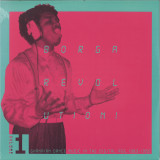
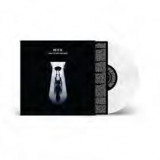
The stunning cover uses a detail from artist Ian Johnstone’s “Cubic Raven” painting, licensed from the estate of IJ..
It is high time to rediscover this timeless album now!
Recorded at Swanyard, London and at Nothing Studios, New Orleans, 1996.
Thanks to everyone there, especially Trent Reznor who made it all possible.
Written & Produced by Coil & Danny Hyde.
Remixed by Peter Christopherson & Danny Hyde, Bangkok 2007.
For that session Coil were: Peter Christopherson, Jhonn Balance & Drew McDowall.
Mastered by Jessica Thompson.
Front artwork by Ian Johnstone.
Artwork licensed from The Estate of Ian Johnstone.
Layout Cold Graves and Oleg Galay."
Cerca:ali b
"“The New Backwards” was conceived by Peter “Sleazy” Christopherson in 2007, revisiting stray tracks which hadn’t seemed to gel with the material he had chosen for the more somber “Ape of Naples” from 2005, COIL’s initial posthumous release, a sort of requiem and a kiss-goodbye to his then recently deceased partner John Balance.
Significantly different to its sister release, this album collects the brilliantly chaotic and outrageously rhythmic material from the original sessions for the album that was begun as early as 1993 and had originally been conceptualised as the follow-up to “Love’s Secret Domain”. These songs are as diverse and wild as the places they originated from, partly infamously spawned in Sharon Tate’s former home in the Hollywood Hills, the Nine Inch Nails home base in New Orleans and London’s Swanyard, remixed and restructured with the help of long-term friend Danny Hyde in Thailand, this collection has its own unique flow and an atmosphere not found on any other COIL release.
Both “AYOR” and “Backwards” had by the time the album was first released already become favourites in COIL’s manic live performances. Some of the other tracks had only leaked in demo versions and are here presented updated and polished as Christopherson and Hyde intended them to be heard. It is interesting to consider Balance’s vocal contributions, too. Whilst on the albums COIL did release at the time this material was first put aside (“Black Light District” and “ElpH”) his voice is all but absent, his vocal performances and his lyric writing here are arguably more closely indebted to the previous “Love’s Secret Domain” era, especially the epic “Copacaballa” is noteworthy in that respect.
The New Backwards” effectively became the final official COIL studio release of all new material whilst Peter was still alive and is here presented for the first time fully supervised by Danny Hyde, its co-creator.
The stunning cover uses a detail from artist Ian Johnstone’s “Cubic Raven” painting, licensed from the estate of IJ..
It is high time to rediscover this timeless album now!
Recorded at Swanyard, London and at Nothing Studios, New Orleans, 1996.
Thanks to everyone there, especially Trent Reznor who made it all possible.
Written & Produced by Coil & Danny Hyde.
Remixed by Peter Christopherson & Danny Hyde, Bangkok 2007.
For that session Coil were: Peter Christopherson, Jhonn Balance & Drew McDowall.
Mastered by Jessica Thompson.
Front artwork by Ian Johnstone.
Artwork licensed from The Estate of Ian Johnstone.
Layout Cold Graves and Oleg Galay."
With a tour schedule to make even the most hard working of musicians blush, Madalitso Band have taken their exuberant, Malawian folk music from the streets of Lilongwe to thrilling audiences across Europe and are now are gearing up to release their third album Musakayike via the acclaimed Swiss imprint Bongo Joe Madalisto Band return this summer with a packed tour schedule and a brand new album Musakayike. Recorded in Malawi in November of last year, the duo, along with their "accidental manager" Neil Nayar, headed into the studio with a cleareridea of how to to capture that Madalisto Band sound without losing any of their groove and infectious energy. After all, this is music to make you clap, dance and smile.
- A1: Uncle Joe's Afri-Beat - Eshe Wo Kon Ho
- A2: Thomas Frempong - Mada Meho So
- A3: Native Spirit - Odo San Bra Fie
- B1: George Darko - Medo Menuanom
- B2: Wilson Boateng - Mabre Agu
- B3: Paa Jude - Odo Refre Wo
- C1: Aban - Efie Nny
- C2: Wilson Boateng - Asew Watchman
- C3: Uncle Joe's Afri-Beat - Mr Dj
- D1: George Darko - Obi Abayewa
- D2: Dr K Gyasi's Noble Kings - Damfo Agoo/David Akofo/ Obegyaa Nowa/Okwantuni Moboro (Medley)
Kalita are proud to unveil the first ever compilationvfocussing on the phenomenon of 'Burger Highlife', avcrossover of West African melodies with synthesizers, discovand boogie that took over Ghanaian airwaves during the 1980's and beyond. Highlighting key recordings fromvgenre-defining artists including Thomas Frempong andvGeorge Darko, as well as more obscure sought-after tracksvby elusive bands such as Aban and Uncle Joe's Afri-Beat,vKalita come to the rescue of audiophiles, DJs andvmusic-lovers alike with 'Borga Revolution!' Spread over avdouble-LP housed in a gatefold sleeve. Accompanied by av16-page booklet featuring extensive interview-based liner notes on each artist and never-before-seen archival photos.
Limited back in stock !
Nachpressung 2022 auf weißem Vinyl (1000 Stück weltweit)! Re-Issue des ersten Studioalbums von PERE UBU. Heute ist das Album noch immer so direkt und kraftvoll wie damals beim ersten Entdecken, doch wenn man das PERE UBU Debüt "The Modern Dance" , hört, muss man sich immer wieder fragen, was zur Hölle man da eigentlich wahrnimmt. Der Begriff ,Art-Punk" mag da ein wenig helfen. Verrückte Sounds, manische Rock'n'Roll Riffs, comicmäßiger Gesang und ein typischen Garage Sound machen das Album zu einem Meilenstein experimenteller Rockmusik. Mit einem Sound, der sich irgendwo zwischen VELVET UNDERGROUND, den SEX PISTOLS und THE RESIDENTS einpendelt, sorgt diese durchgedrehte ,Art-Punk" Band für ein wahrhaft außerirdisches Hörvergnügen. Mensch ist geneigt, Allmusic bei deren Beschreibung zuzustimmen: ,man wird sich bald bewusst, dass das Punkrock ist, wie man ihn nie zuvor gehört hat." Für diese Edition hat Paul Hamann von Suma die ursprünglichen analogen Bänder vom Zweispurgerät auf höchste digitale Auslösung hochgezogen, die mindestens vier Mal besser als die des Originals ist. Die Tracks wurden sorgfältig vom Soundarchitekten Brian Pyle neu gemastert, um die einzigartigen versteckten Qualitäten weiter herauszuarbeiten.
Lazarus Recordings makes its long awaited return with the head honchos new EP, DJ Deluxe – Alive By Default. This EP is full of his fast paced breakbeat goodness that has become synonymous with DJ Deluxe’s production style. He takes that ‘93/’94 breakbeat hardcore sound, adds some 1998/1999 breakbeat style and then amps it up with modern production techniques. You will find all that made the early breakbeat hardcore sound so good but all the dials have been turned up to 12! The only thing that can top Deluxe’s insanity is that of DJ Beeno, and here he really lets lose and unleashes his love of fast paced techno for his remix of Get On Your Knees. This EP isn’t just one thing, it's not old skool, it's not new skool, but it is both and so much more.
Club / DJ Support
Jay Cunning, Billy Bunter, the Fat Controller, Liquid, Hyper On Experience, Glowkid, Slipmatt, Dj Jedi, Dj Luna-C, Dj Brisk, Paul Bradley, Jimni Cricket, Bustin, Jimmy J, Doughboy, Lowercase, Dave Skywalker, Ponder and many others
New album by the Berlin-based musician, composer and producer MIDORI HIRANO aka MIMICOF, entirely recorded using the EMS SYNTHI100 at Electronic Studio Radio Belgrade during an artist residency: contemporary electronic music / ambient for the advanced listener.
Midori Hirano is a Japanese musician, composer and producer based in Berlin. She started learning the piano as a child and later studied classical piano at university. Therefore the music she releases under her own name is based on the use of piano, but yet experimental and an eclectic mixture of modern digital sounds with subtle electronic processing and field recordings. So far, Hirano released 7 solo albums under her civilian name on labels such as Sonic Pieces and DAUW.
Under the moniker MimiCof she explores the realm of more experimental music and detailed rhythmic patterns, combined with an idea of drawing melodic shapes and harmonies. As MimiCof she performed at prestigious festivals and events such as CTM, Heroines of Sound Festival, Boiler Room Berlin and L.E.V. Festival, and was selected by Frank Bretschneider for the first volume of the "Sichten" compilation series on his raster label.
Besides producing her own works, Hirano has composed music for dance performances, video installations and films which have been screened at Berlin International Film Festival, Krakow Film Festival, SXSW Film Festival and HongKong International Film Festival (among others) and remixed tracks by artists including Rival Consoles, Foam And Sand aka Robot Koch, Liars and Pascal Schumacher.
While the last MimiCof album "Moon Synch" (2017, Alien Transistor) was recorded on the Buchla analogue modular Synthesizer at EMS Elektronmusikstudion in Stockholm, her latest effort "Distant Symphony" (the 4th as MimiCof) was created on a different synthesizer: the EMS SYNTHI 100 Synthesizer at Radio Belgrade. All sounds from this instrument were recorded as single sound samples at first, then mixed and modified into three long pieces of music, so that the audience can experience the machine's uniqueness and versatility of sound. Hirano understands this work as a gesture of respect for the SYNTHI 100's character: though a vintage instrument, it has never lost the beauty of its modern sound.
Dieser Teil der Magnetic Eye's Redux Series ist einem der Meilensteine der Grunge-Ära gewidmet: Eine Reihe von Künstlern aus dem Doom- und Stoner-Underground interpretieren Alice in Chains' Dirt neu, einen vertonten Alptraum über Drogenabhängigkeit und innere Finsternis.
Ähnlichkeiten zwischen Grunge und der Entwicklung des Stoner Sludge Metal lassen sich besonders deutlich auf diesen Meilenstein zurückführen, der den kulturellen Wandel vom geistlosen Hair Metal zu roherem, dreckigerem und authentischerem Stoff in den frühen 1990ern endgültig machte, woraus dann der vorherrschende Stil populärer harter Musik wurde.
Dirt Redux bietet den gesamten Albumklassiker von Anfang bis Ende in Form von Coverversionen und Überarbeitungen durch Szene-Schwergewichte und Aufsteiger wie Khemmis, Thou, -(16)-, Howling Giant, Forming The Void, The Otolith (ex-SubRosa) und weiteren.
**180g heavyweight vinyl** Les Racines is the latest solo album from the eminent guitarist and songwriter Vieux Farka Touré, and his first for World Circuit Records. Known as the ‘Hendrix of the Sahara’, Vieux has released 4 critically acclaimed solo albums to date, extending the boundaries of traditional West African music into new and uncharted territory. He has also released audacious collaborations with the likes of Dave Matthews and jazz guitarist John Scofield, and albums with American singer-songwriter Julia Easterlin and Israeli singer-songwriter Idan Raichel. With Les Racines, which translates as ‘the roots’, Vieux documents a deep reconnection with the traditional Songhai music of northern Mali which is one of the traditions that has come to be known in the West as ‘Desert Blues’. Vieux’s roots run deeper than deep – he is the son of Ali Farka Touré, widely acclaimed as the finest guitarist Africa has ever produced. Recorded in Bamako in Vieux’s home studio, the timeless grooves of the album are steeped in the traditional music of West Africa. But the fire of Vieux’s guitar playing and the urgency of the messages in his songs add an entirely contemporary relevance. “We are nothing if we abandon respect for the past,” Vieux says. The resulting album, the most profound statement of his career to date, marks out Vieux as the great Ali Farka Touré’s rightful heir and a major artist in his own right. “Early in my career people asked why I wasn’t just following my father. But it was important for me to establish my own identity,” Vieux says. “Now people know what I can do, I can return to those roots with pride and I hope a certain authority.”
- A1: A Planet
- A2: Going In
- A3: Engineers
- A4: Life
- A5: Weyland
- A6: Discovery
- B1: Not Human
- B2: Too Close
- B3: Try Harder
- B4: David
- B5: Hammerpede
- B6: We Were Right
- C1: Earth
- C2: Infected
- C3: Hyper Sleep
- C4: Small Beginnings
- C5: Hello Mommy
- C6: Friend From The Past (Contains “Theme From Alien”)
- C7: Dazed
- D1: Space Jockey
- D2: Collision 3
- D3: Debris
- D4: Planting The Seed
- D5: Invitation
- D6: Birth
Prometheus is the 2012 science fiction horror film directed by Ridley Scott, written by Jon Spaihts and Damon Lindelof and starring Noomi Rapace, Michael Fassbender, Guy Pearce, Idris Elba, Logan Marshall-Green and Charlize Theron. It is set in the late 21st century and centers on the crew of the spaceship Prometheus as it follows a star map discovered among the artifacts of several ancient Earth cultures. Seeking the origins of humanity, the crew arrives on a distant world and discovers a threat that could cause the extinction of the human species.
Marc Streitenfeld is a German composer. He has frequently collaborated with director Ridley Scott. Streitenfeld has composed the music for many high-profile Hollywood features as well as critically acclaimed independent films, including American Gangster, Body of Lies, The Grey, Poltergeist and All I See Is You.
Prometheus became the fifth collaboration between the composer and the director. The score was recorded over one week with a 90-piece orchestra at Abbey Road Studios. Streitenfeld began coming up with ideas for the score after reading the script prior to the commencement of filming. To create an “unsettling” sound, he provided the orchestra with reversed music sheets to have them play segments of the score backwards, before then digitally reversing it. The track “Friend from the Past” reprises Jerry Goldsmith’s original main title from the Alien soundtrack.
Es war im Frühjahr 2010, als SONIC YOUTH in ihrem Echo Canyon West Studio in Hoboken, New Jersey, zusammen kamen, um die Videoclips zu ,Simon Werner a disparu", dem neuen Film des französischen Regisseurs Fabrice Gobert anzuschauen. Sie verbrachten die nächsten Wochen damit, Musik aufzunehmen, die dann modifiziert wurde, um zu den jeweiligen Szenen zu passen. Die Band entschied sich dafür - statt die kleinen Häppchen Musik zu präsentieren, wie sie im Film auftauchen - sich noch einmal an die ursprünglichen Aufnahmen zu machen und die einzelnen Teile zu diesem Soundtrack zusammenzustellen. Manchmal werden mehrere Tracks zu einem Stück und manchmal inspirierten Audioschnipsel eine ganz neue Soundlandschaft. Der Film feierte seine Premiere im Mai 2010 in Cannes und ging direkt im Anschluss in die französischen Kinos.
- I Want To See God
- Idgaf
- In Threes
- I Lie To Me
- Ily, How Are You?
- I Hate Me Too
- Idc, I Can’t Take It
- I’m Gone
- I’d Rather Die
- I Die 1000X
- I Can’t Feel A Thing
- I Miss 2003
- I’m Sick And Tired
- I Went To Hell And Back
HIGHLIGHTER YELLOW VINYL[7,52 €]
Die internationale Pop-Rock-Band As It Is - Patty Walters, Ronald Ish und Alistair Testo - hat ihr brandneues Album „I WENT TO HELL AND BACK” angekündigt.
„I WENT TO HELL AND BACK“ ist in einem Zeitraum von zwei Jahren entstanden, in denen die Band ihre Lebensentscheidungen hinterfragten und mit einer Welt rangen, die sich in einem ständigen Drang chaotischer Ungewissheit befand- aber das vierte Album der Band könnte nicht aufgeregter klingen. Die vierzehn Tracks sind kraftvoll und jagen furchtlos dem Unerwarteten hinterher. Es ist der Sound einer Band, die immer noch sehr großen Spaß hat.
Walters hofft, dass sich „I WENT TO HELL AND BACK“ anfühlt wie „ein Wiedersehen mit einem alten Freund“.
Wir können über all die guten und schrecklichen Dinge sprechen, die passiert sind, und wie wir daran gewachsen sind.
Das Album ist ab dem 4. Februar als 1CD erhältlich und erscheint am 10. Juni als 1LP
In 1997 and 1998, the late great Japanese composer, producer, and DJ Susumu Yokota released two of the most eclectic albums of his decades-long career, Fruits of The Room and Greenpeace. Recorded under his Stevia alias for Tokyo Techno pioneer DJ Miku’s Newstage Records/NS-COM, they were Yokota-san’s homage to the foundational days of club music in Japan.
This year, Glossy Mistakes are proud to present the first official vinyl editions of Fruits of The Room and Greenpeace, originally released on CD during the golden days of the format. Packaged in reimagined cover artwork created by the celebrated Japanese visual artist Masaho Anotani, these two albums perfectly capture the diversity at the heart of Yokota-san’s oeuvre. Across Greenpeace sees Yokota-san conjuring up a heady concoction of dusty loops, sampledelic breaks, kraut-rock and psychedelic downbeat. A remarkable listening experience based on the inspired era of a genius.
When Yokota-san wrote and produced the music on Fruits of The Room and Greenpeace in 1997, he was reflecting on the broader culture that surrounded dance music in Japan in the early to mid-nineties. It was an era when the psychedelic culture of late sixties America, the afterglow of UK acid house/rave, the new age movement and cyberpunk dovetailed together. Within DJ Miku and Yokota-san’s social circles, the thinking of Timothy Leary, Ram Dass, Allen Ginsberg, Jack Kerouac and William S. Burroughs electrified the air.
By 1996, the moment, brilliant and blinding as it was, was over. “We all felt that the rave scene fizzled out,” DJ Miku says. As he puts it, there was a collective feeling around him that it had all become too much. From the calm that followed, DJ Miku, Yokota-san and their open-eared peers made the decision to switch tracks and start from scratch. DJ Miku believes that with his Stevia releases, Fruits of The Room and Greenpeace, Yokota-san wanted to express the sweet and sour nature of the passing of those wild early days and his wish for true peace. “At the time, we saw eye-to-eye, with an implicit understanding of each other,” he explains. “Even now, twenty-five years later, I am confident it was like that.”
Connecting Wasulu hunter music, griot praises, pastoral Senufo dances, Fula and Mandingo repertoire with western psychedelia, blues, and Nigerian afro-beat, Zani Diabaté's Super Djata Band was among Mali's top orchestras. Tracked live inside Radio Mali's cozy environs in January 1982, En Super Forme was briefly available via Côte d'Ivoire's Musique Mondiale imprint. The album centers around Diabaté and his electric guitar's pyrotechnics, a relentless shredder that stands shoulder to shoulder with Mali's fingerstyle gods Ali Farka Touré and Djelimady Tounkara.
By now counting more than four decades of constant activity, Pierre Bastien erected such a towering and influential body of work that any blurb attempt regarding his music could easily fall into redundancy. Not that his revolving soundworld, deeply personal and unique, has ever stalled into gimmick or self mimicry, being Bastien the tireless explorer whose vision can never be complete, only continuously redefined in a process of discovery equally playful and challenging. So, completely in touch with Discrepant's ethos.
Returning to the label after 2017 The Mecanocentric Worlds of Pierre Bastien, the french musician, composer and instrument builder, brings an array of instruments from different cartographies and legacies with the appropriately titled Sonic Folkways. Resorting to different types of horns, prepared trumpet, an army of percussion, from gongs and tambourine to castanets and maracas, violin and too many others to mention here, Bastien weaves together a highly textured and hypnotic mosaic that projects an exotica beamed from scraps of the future. 'Aha!' in the same interstellar wavelength as Sun Ra's cosmic tones, 'Moor's Room’ almost orchestral tapestry of small percussion and insects or the non-western strings and tunings salvaged from ancient alien ceremonies on 'Pan's Nap'.
In an era where so much ink has been shed about world building in experimental music, Bastien can actually claim that to himself. The otherworld is right here, indeed.
Fuchs is a band that never was. It vanished as quickly as it appeared in the picture, much like the animal that can be seen on this album and after whom it was named. In 2005, Kante singer and guitarist Peter Thiessen travelled to Weilheim to visit Markus and Micha Acher in their studio, where they were joined, among others, by Notwist-affiliated musicians like Cico Beck, Robert Klinger, Carl Oesterhelt and Stefan Schreiber. Spirits were high, but schedules were full: after a week of improvised sessions, everyone went their own way. The recordings gathered dust until Markus Acher found them again in 2021 while cleaning out his studio. After carefully re-evaluating the rough mixes, the musicians decided to finally release them. The resulting album comprises six tracks that musically draw on jazz, aesthetically lean on dub techniques and ideologically pick up on krautrock: there’s no solos to be heard on this record, just a few equally skilled and open-minded musicians listening to each other carefully, providing each other with space in which to unfold. »Fuchs« is a document of egos dissolving in a collective spirit.
Thiessen and the Acher brothers met in the 1990s and bonded not only over their shared background in hardcore music and the DIY ethos in which it was rooted, but also over their love for jazz. »If you look at those two things combined, you will eventually become convinced that you don’t have to be formally trained to make music that at least resembles jazz«, says Thiessen today. He invited Micha Acher to join his band Kante on flügelhorn in 2004 for a tour that saw the expanded group play unusual encores after the official concert was over. »Micha had taught us some dixie pieces, so night after night we would play a freestyle dixieland ska set in front of the remaining audience!« Naturally, the Acher brothers didn’t have to ask twice when they invited him for a visit in Weilheim to further explore their mutual interests in a studio setting. »I got on my way immediately and took two or three loose ideas, a tape echo and a guitar on whose headplate you could create fantastic sounds with me«, says Thiessen.
Between immersing themselves in books by the photographer Leonore Mau, cooking together and drinking the occasional fruit schnapps, the trio went into the studio. Says Thiessen, »Micha brought his flügelhorn and some wonderful ideas with him, Markus an Indian harmonium and a plan, Carl Oesterhelt came with a glockenspiel and a Chinese zither and a bunch of amazing jazz musicians joined in, too.« He considers the resulting recording sessions to be a kind of attempt at musically translating their conversations during those days. They discussed different approaches to jazz, whether sampling and musical miscitations can unlock ecstatic potentials and the possible parallels between syncretistic religions and pop music. »There’s traces of glossolalia, it's like a blurry séance«, adds Thiessen in regard to the sessions.
It is especially this spirit that managed to live on even though the recordings themselves were abandoned. »What we all liked most when listening back to the recordings is probably their marginal and fragmentary character, the empty spaces—the moments in which the virtuoso solo never comes, in which the centre remains empty.« The six pieces on »Fuchs« are chock-full of exactly these moments. When at one instant, the players seem to disperse and improvise freely, they always meet again on common ground a short time later, continuing on their way together. There are no conventions or even previous agreements that guide them, just a shared will to explore a vast range of curious sounds and unusual rhythms together as a truly unified constellation of very different musicians. Fuchs is a band that never was. Its ideas still reverberate vividly even 17 years later.
Tresor Records is proud to announce 333 Mirrors from Torus, the artist alias of Joeri Woudstra. Coupled with its catalogue number
333, it indicates the large-scale conceptual thoughts behind the record, typical of Woudstra's practice. As an artist, he sets out to
frame re-interpretable references that trigger some subconscious recognition in listeners, with no set way to interpret them but leading to singular feelings and thought processes. The eect, a combination of static electronic sounds and looser field recordings, speaks to each listener differently.
333 Mirrors is, in part, the continuation of a project called These Cars Do Not Exist, made with videographer Mark Prendergast during the Covid-19 limbo. The live performed short film sold out selected popup cinemas in 2020 in a short sprint of shows. Two of the tracks on that project, Sound of the Drums and Chroniko, are re-imagined on 333 Mirrors, emanating as versions created in live performances. Set to be released as a single, Chroniko VIP will be accompanied by an enduring theme from that project, the three-winged bird, this time deceased. On 333 Mirrors, in exploring the ambient, stretched sonic universe of this project more, Woudstra moves from these three winged birds to the phoenix, finding a rebirth on the b-side with tracks that inhabit a similar sound as Deep Mid, Torus's inclusion on the recent Tresor 30 compilation. The sound of Torus places importance on the multi-faceted approach to sampling, pushing the idea behind the practice beyond usual boundaries. How to break the unwritten rules? Woudstra looks within by resampling previous Torus releases and reverse-engineering the sounds of the most revered pop and electronic musicians alive today, references that trigger recognition, melancholy and nostalgia in the listener.
3000 Mirrors features a staccato arpeggiating rigid pattern, the sonic eect of standing in front of a strobe until it becomes the anchor. Silence and interruption are used as a device to explore the physically uncomfortable, more the central compositional tool than the disrupted harmonic structures. Woudstra has never stepped foot in Tresor, so when writing this record, an enduring question spoke to him, what is Tresor when you have never been? How do you sample the essence of an unknown location? The closing track, Omnia, is the sound of anticipation, where the rave beckons. This imagined industrial space is calling for you.