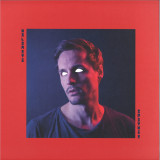
The Guardian wrote “the Canadian songwriter has one of the all-time great singing voices in popular music, an intensely romantic Chet Baker-ish instrument that seems to float with piercing direction, like a paper aeroplane thrown hard through mist.” With Uncut describing his songcraft “as delicate and lovely as a rare orchid” and Record Collector praising the album’s “sublime alien balladry” such are the accolades that have accrued throughout Chenaux’s unique and consummately uncompromising solo music for well over a decade now. Delights Of My Life opens a new chapter for the singer/guitarist and formally introduces the Eric Chenaux Trio, with Toronto-based musicians Ryan Driver on Wurlitzer organ and Phillipe Melanson on electronic percussion. Driver is a longtime collaborator, appearing on several of Chenaux’s solo albums (even embedded into the very title of the 2010 masterpiece Warm Weather With Ryan Driver). Melanson has a long list of involvements that include Bernice, Joseph Shabason, and U.S Girls, and a recent release with his Impossible Burger project on Chenaux’s own experimental label Rat-drifting, but this marks the first fulsome involvement between the two as players on a recording. In many ways Delights Of My Life also picks up right where Chenaux’s previous album left off, in its subversions of a classic, timeless jazz-inflected balladry, while the interplay of the trio formation indeed unfurls many new delights. Recording together at Chenaux’s spartan home studio in rural France, Driver’s harmonically warped organ and Melanson’s electroacoustic sampling and percussion hold time in newfound ways. Where previously Chenaux relied on a freeze/sustain pedal and minimalist rhythmic triggers to generate both pulse and chordal foundations, Melanson now paints timekeeping with expressive and intricate colourations, through live deployments of fluid sampled percussion (including orchestral timbres like timpani, kettle drums, and woodblock) that blur the boundaries between acoustic and electronic. Driver also ramps up his role in the song arrangements (prefigured in his support playing on Say Laura), teasing out chords and melodic filigree on Wurlitzer that percolate more prominently with Chenaux’s signature fried guitar solos and succulent singing. Both trio members add dulcet backing vocals, most notably on the 10-minute tour-de-force of fuzzed and ring-modulated swing “This Ain’t Life” that opens the record. All seven songs on the album groove and sway, simmer and sparkle, like nothing in the inestimable Chenaux discography to date. Chenaux’s tunes have the uncanny ability to sound like jazz standards; songs you feel you’ve heard before, though certainly never quite like this. Yet these are of course all originals, compositionally and interpretively, bent through an inimitable avant/out-music lens. Delights Of My Life conveys warm familiarity, shot through with the exuberantly experimental subversion and playful, even mischievous, iconoclasm that continues to mark Chenaux as defiantly, virtuosically, and genially one-of-kind
Following the release of Eric Chenaux's last album Say Laura (2022), The Guardian wrote "the Canadian songwriter has one of the all-time great singing voices in popular music, an intensely romantic Chet Baker-ish instrument that seems to float with piercing direction, like a paper aeroplane thrown hard through mist." With Uncut describing his songcraft "as delicate and lovely as a rare orchid" and Record Collector praising the album's "sublime alien balladry" such are the accolades that have accrued throughout Chenaux's unique and consummately uncompromising solo music for well over a decade now. Delights Of My Life opens a new chapter for the singer/guitarist and formally introduces the Eric Chenaux Trio, with Toronto-based musicians Ryan Driver on Wurlitzer organ and Phillipe Melanson on electronic percussion. Driver is a longtime collaborator, appearing on several of Chenaux's solo albums (even embedded into the very title of the 2010 masterpiece Warm Weather With Ryan Driver). Melanson has a long list of involvements that include Bernice, Joseph Shabason, and U.S Girls, and a recent release with his Impossible Burger project on Chenaux's own experimental label Rat-drifting, but this marks the first fulsome involvement between the two as players on a recording. In many ways Delights Of My Life also picks up right where Chenaux's previous album left off, in its subversions of a classic, timeless jazz-inflected balladry, while the interplay of the trio formation indeed unfurls many new delights. Recording together at Chenaux's spartan home studio in rural France, Driver's harmonically warped organ and Melanson's electroacoustic sampling and percussion hold time in newfound ways. Where previously Chenaux relied on a freeze/sustain pedal and minimalist rhythmic triggers to generate both pulse and chordal foundations, Melanson now paints timekeeping with expressive and intricate colourations, through live deployments of fluid sampled percussion (including orchestral timbres like timpani, kettle drums, and woodblock) that blur the boundaries between acoustic and electronic. Driver also ramps up his role in the song arrangements (prefigured in his support playing on Say Laura), teasing out chords and melodic filigree on Wurlitzer that percolate more prominently with Chenaux's signature fried guitar solos and succulent singing. Both trio members add dulcet backing vocals, most notably on the 10-minute tour-de-force of fuzzed and ring-modulated swing "This Ain't Life" that opens the record. All seven songs on the album groove and sway, simmer and sparkle, like nothing in the inestimable Chenaux discography to date. Chenaux's tunes have the uncanny ability to sound like jazz standards; songs you feel you've heard before, though certainly never quite like this. Yet these are of course all originals, compositionally and interpretively, bent through an inimitable avant/out-music lens. Delights Of My Life conveys warm familiarity, shot through with the exuberantly experimental subversion and playful, even mischievous, iconoclasm that continues to mark Chenaux as defiantly, virtuosically, and genially one-of-kind.
The phenomenal three-piece band includes members of Oranssi Pazuzu, K-X-P, Grave Pleasures and Aavikko
Svart Records is proud to release the debut album, I, from Haunted Plasma, a powerhouse of futuristic synth in symbiosis with the super violent atmospherics of kosmische Black Metal. Haunted Plasma is “man meets machine” in a cybernetic wasteland, set to a conceptual backdrop of William Gibson and Phillip K. Dick style mind-melt. The highly evolved creatives at the heart of Haunted Plasma’s sound, cite Terry Riley, Massive Attack, a contemporary take on Krautrock hypnosis, psychedelic Black Metal and 90s Techno, resulting in an orgy of mutant sound.
The phantoms at the beating nucleus of this unearthly machine are Juho Vanhanen (Oranssi Pazuzu, Grave Pleasures), Timo Kaukolampi (K-X-P, Op:l Bastards) and Tomi Leppänen (Circle, Aavikko, K-X-P), transmitting a music form evolved from a life of redefining sonic boundaries in their respective projects. Also featuring guest vocals from Mat McNerney (Hexvessel, Carpenter Brut, Grave Pleasures/Beastmilk), Pauliina Lindell (Vuono, Dust Mountain) and Ringa Manner (Ruusut, The Hearing). Haunted Plasma promises an extraterrestrial experience from some of the foremost contemporary musicians at the heart of the Finnish heavy and avant-garde musical underworld.
Haunted Plasma reveals:
“We are liberated futurists, embracing free-form and natural composition, mirroring the merciless forces of cosmic creation. We have a motto to stay true to our feelings, to spawn a sound that’s never been heard before. Servants of music. Energizing, radical and pure”
The first single from Haunted Plasma’s cascading debut, Reverse Engineer, is a creepy, slowly erupting, synthetic nightmare, of a downloaded being waking up in the wrong future. Ghostly vocals demand the listener to “give us what we want” in an Orwellian glimpse into the current dystopia we live in, where information is controlled, and thoughts are bought and sold. As McNerney intones the words “technology of power” he describes the threat of a malevolent and omnipresent artificial intelligence, as much as describing the oppressive and electromagnetic sonar pulse of Haunted Plasma’s sound itself. Psychedelic guitar hypnosis from Vanhanen snakes around Kaukolampi’s molten and morphing synths, while Leppänen’s uncanny man/machine rhythms pull our strings and animate their other-worldly mechanisms. Have a look at the official visualiser of "Reverse Engineer" on the Svart YouTube channel here
Culminating in the full-blown fast Krautrock of the final self-titled track, oozing with blistering noise elements and enigmatic vocals from Ringa Manner, the album's journey reaches its zenith, taking you to unknown territories on a Kubrikian space trip. I is a rare record of talented musicians coming together to create a completely new sound, which is entirely their own, boldly glowing, where no light has shone before. From the dreamy psychedelia of Echoes to the discombobulated Spectral Embrace, Haunted Plasma is a willful force of deliberate sound contortion.
Whether you want to give in to Haunted Plasma’s sound or not, you are being watched, you are being recorded and your every move is monitored. Haunted Plasma will enter your system on the 31st of May 2024. Turn on your phantom circuits and be prepared for an interdimensional excursion into Haunted Plasma’s alien dreams.
The debut album from Haunted Plasma will be packaged in a beautiful tip-on sleeve, swirling fog artwork, complete with 12” booklet and pressed on 3 exclusive vinyl colours: 300 copies on Standard Black Wax, 500 copies in Amber + Black Smoke and 200 copies of Svart exclusive Turquoise/Black Marble. The album will also be available on CD and digital platforms.
Matching his signature melodic futurism with enduring club music structures, Pev brings the Pulse series to a natural conclusion with the Pulse Phase EP. On this third release he underlines the broader approach to tempos and styles he’s taken across this latest period of his output, soon to be coalesced into a new live set.
If there’s been a nostalgic streak detectable amongst the crisp modernism of the Pulse series, it comes through clearer than ever in the looped-up house jack and starry-eyed techno synth hooks of ‘Pulse IX’. ‘Pulse TEN’ pares back for a lean soundsystem workout driven by a strafing arp and fractured drums while ‘Pulse XI’ revisits 90s bleep techno with a deep, dubby intention. ‘Pulse XII’ completes the picture capturing the skeletal pressure of 2-step at its most slender and deadly.
There’s never a sense of over-familiarity — the exacting angles of the drums and alien hue of the synths maintain Pev’s distinctive sound first and foremost. But this series has also been an opportunity to hear some of his musical DNA more explicitly than before, cast in universal rave motifs propelled by the unrelenting pursuit of new forms for the dance.
Livity Sound is a label set up by Peverelist in 2011 as a vehicle for a raw and exploratory strain of UK techno, rooted in the heritage of UK dance music and sound system culture. It has since become one of the UK's foremost protagonists for cutting edge underground electronic music.
out of Stock
Last delivered 18 months ago available to reorder, subject to availability
Convinced Friend is the musical project of singer-songwriter Austin Wilson. Originally from an oilfield town south of New Orleans, he relocated to New England in 2018 which led to a renewed commitment to songwriting. The result is a collection of largehearted indie rock songs. From the motorik pulse of album opener “White Collar’’ dissecting the alienation of modern work and wellness, to the dusky waltz of “Safeway’’ addressing lingering questions of long-term commitment, to the pensive and layered arrangements in “Open Bloom” and “When I Go”, the album incorporates a wide swath of dynamics centered on lush guitar work and a clear lyrical voice and resolve. RIYL: Pedro The Lion, Jose Gonzales, Jason Molina, Red House Painters.
Convinced Friend is the musical project of singer-songwriter Austin Wilson. Originally from an oilfield town south of New Orleans, he relocated to New England in 2018 which led to a renewed commitment to songwriting. The result is a collection of largehearted indie rock songs. From the motorik pulse of album opener “White Collar’’ dissecting the alienation of modern work and wellness, to the dusky waltz of “Safeway’’ addressing lingering questions of long-term commitment, to the pensive and layered arrangements in “Open Bloom” and “When I Go”, the album incorporates a wide swath of dynamics centered on lush guitar work and a clear lyrical voice and resolve. RIYL: Pedro The Lion, Jose Gonzales, Jason Molina, Red House Painters.
"Fast Rate" blends echoes of nostalgia with futuristic innovation, crafting a sonic landscape. In the relentless rush of life's high-speed journey, it invites introspection, courageously urging listeners to delve into the intricate web of contemporary life.
This EP is inspired by deep reflections on the meaning of life in a fast-paced world filled with thoughts and emotions. It symbolizes a futuristic journey, mirroring the human struggle to gain an external perspective in our busy lives. Random Alias prompts users to contemplate their existence, offering a musical experience that transcends mere dance rhythms.
The 5 tracker showcases a wide array of sounds, from aggressive tones to captivating and atmospheric elements unveiling a new face of the label that keeps exploring the interconnection between human and technology.
The A side roars with high bpm and furious rhythms."Keep me high" express the need of escaping ordinary life, seeking something that keeps us "high" and allows to escape and reset.
Following up "Fast Rate" spans a variety of influences, blending the allure of old-school Detroit electro with futuristic sounds achieved through bold experimentation and advanced wave modeling. This fusion results in a diverse and innovative sonic aesthetic, ranging from nostalgic '80s/'90s vibes to experimental dimensions where tones morph and evolve.
"Solo in Space" and "Restless" on the filp side deliver direct, pulsating sounds and rhythms, embracing an impactful electro-techno vision. These tracks merge both worlds, combining the energy and drive of electro with the power and tension typical of techno, resulting in a sonic journey that blurs genre boundaries.
Completing the collection is a digital bonus track, "Galactic Power," which serves as a soulful embodiment of the EP's essence. With its otherworldly alien-style pitched vocals,The track intricately crafts a cosmic palette of bright pulses and ethereal FM synthesis.
This release represents a bold and progressive vision of electro, confirming and solidifying the eclectic direction and the concept of inter genre flexibility. Music can be an ever-evolving form of art, blending elements that transport listeners to distant cosmic realms.
Time shapes people, people shape technology, technology shapes music, music shapes time.
out of Stock
Last delivered 15 months ago available to reorder, subject to availability
I Talk To Water, the fifth album for Kompakt by Danish producer Kölsch, is the artist’s most personal statement yet. While all the trademarks that make his music so popular and powerful are still present – lush, melodic techno; swooping, trance-like figures; sensuous, shivery texturology – I Talk To Water is also a deep and intimate rapprochement with family and history, a beautiful, finely detailed document of loss and memory, and a tracing of the long, unbroken thread of grief that runs through our lives once we’ve lost those we loved.
The emotional core of I Talk To Water, then, is a cache of recordings by Kölsch’s father, Patrick Reilly, who passed away in 2003 from brain cancer. With time rendered elastic by the pandemic and its associated lockdowns, its sudden, alienating shifts in everyday living, Kölsch found himself reflecting on his father’s passing and ongoing spiritual presence, thinking about how best to memorialise such a significant figure in his own life. Those recordings opened a gateway, of sorts, for Kölsch to move through – a way to bring past and present together and entwine them in a sensitive, poetic manner.
Kölsch’s father was a musician – “touring in the sixties and seventies, in the Middle East especially, he was doing the whole hippy trail, playing guitar, and wrote some songs over the years,” he recalls. “But all in all, he decided to focus on family rather than pursue a musical career.” Reilly kept playing and writing music over the years, though Kölsch hadn’t listened to the material for some time: “I’d never had the guts to listen to it, because I just felt too fragile listening to his voice. It’s such a tough thing to go through.”
During the pandemic, though, Kölsch listened through the fragmented body of work that his father had produced over the years. “I decided I’m gonna finally release my dad’s music twenty years after his passing,” he reflects. “This whole album is about the process of loss, and for me it’s been one of my main driving forces in my musical life, the whole emotional aspect of whatever I’ve done has been based in that feeling that he’s not there anymore.”
Recordings of Reilly appear on three songs across I Talk To Water. His guitars drift pensively across “Grape”, offering a lush thread of melody that Kölsch wraps with clicking, driftwood rhythms and droning, melancholy bass. “Tell Me” is a lovely three-minute art song, a sadly beautiful reflection, minimally adorned with gentle keys and a muted pulse. And on the closing “It Ends Where It Began”, Kölsch lets his father’s acoustic guitar take centre stage for a lament that’s unexpectedly folksy, a guitar soli dream, which Reilly originally recorded in 1996. “He actually recorded it for my first album that never came out,” Kölsch reveals, “and I had it sitting around forever. That is purely him.”
These three imagined collaborations between father and son are poised and delicate. But their relationship also marks the gorgeous music Kölsch has made across the rest of I Talk To Water, from the itchy yet lush “Pet Sound” (titled in tribute to one of Reilly’s favourite albums), the flickering synths and yearning vocal samples that slide through “Khenpo”, the ecstatic shuddering that marks “Only Get Better”, or “Implant”’s slow-motion pans and subtle reveals.
There’s also the title song, where Kölsch is joined by guest Perry Farrell (Jane’s Addiction, Porno For Pyros), singing a mantra for internal reflection: “I talk to water / Searching for myself / Looking for answers / Oceans of you.” Farrell’s appearance brings another timbre, another spirit to the album, aligning neatly with his recent interest in electronic music. “He was completely taken by this idea of talking to water,” Kölsch says, thinking about the ways we collectively lean towards the natural world as a comfort and a listener, a guide through mourning, a way to map out the terrain of the heart. This mapping is something that Kölsch has proven remarkably adept at through the years; dance music for both body and mind, but also both for the here-and-now, and for the hereafter.
“I Talk To Water”, das fünfte Album des dänischen Produzenten Kölsch für Kompakt, ist zweifellos das persönlichste Statement des Künstlers bislang. Während alle Markenzeichen, die seine Musik so beliebt und kraftvoll machen, immer noch präsent sind – üppige, melodische Techno-Tracks; schwebende, tranceartige Elemente; sinnliche, fiebrige Texturen – ist “I Talk To Water” auch eine tiefe und intime Annäherung an Familie und Geschichte. Es ist ein wunderschönes, fein ausgearbeitetes Dokument des Verlusts und der Erinnerung, und es verfolgt den langen, ungebrochenen Faden der Trauer, der durch unser Leben läuft, sobald wir diejenigen verloren haben, die wir liebten.
Der emotionale Kern von “I Talk To Water” besteht aus Aufnahmen von Kölschs Vater, Patrick Reilly, der 2003 an Hirnkrebs verstarb. Durch die Pandemie und ihre damit verbundenen Lockdowns, die plötzlichen, entfremdenden Veränderungen im Alltag, fand Kölsch sich in Gedanken an den Tod seines Vaters und seine fortwährende spirituelle Präsenz wieder. Er überlegte, wie er eine so bedeutende Figur in seinem eigenen Leben am besten verewigen könnte. Diese Aufnahmen öffneten ihm sozusagen ein Portal, um Vergangenheit und Gegenwart miteinander zu verbinden und sie auf sensible und poetische Weise zu verweben.
Kölschs Vater war Musiker – “er tourte in den sechziger und siebziger Jahren, vor allem im Nahen Osten, auf dem Hippie Trail, spielte Gitarre und schrieb im Laufe der Jahre einige Songs”, erinnert sich Kölsch. “Aber alles in allem entschied er sich, sich auf die Familie zu konzentrieren, anstatt eine musikalische Karriere zu verfolgen.” Reilly spielte und schrieb jedoch im Laufe der Jahre weiterhin Musik, obwohl Kölsch das Material lange Zeit nicht angehört hatte: “Ich hatte nie den Mut, es anzuhören, weil ich mich einfach zu zerbrechlich fühlte, seine Stimme anzuhören. Es ist so schwer, das durchzustehen.”
Während der Pandemie hörte sich Kölsch jedoch durch das fragmentierte Werk, das sein Vater im Laufe der Jahre produziert hatte. “Ich beschloss, die Musik meines Vaters zwanzig Jahre nach seinem Tod endlich zu veröffentlichen”, reflektiert er. “Dieses ganze Album handelt von dem Verlustprozess, welcher für mich generell eine der Hauptantriebskräfte in meinem musikalischen Leben ist. Der ganze emotionale Aspekt von dem, was ich getan habe, basierte auf dem Gefühl, dass er nicht mehr da ist.”
Auf “I Talk To Water” sind Aufnahmen von Reilly in drei Songs zu hören. Seine Gitarren ziehen nachdenklich durch “Grape”, bieten einen üppigen Melodiefaden, den Kölsch mit klickenden, treibenden Rhythmen und dröhnendem, melancholischem Bass umwickelt. “Tell Me” ist ein schönes dreiminütiges Kunstlied, eine traurig-schöne Reflexion, minimal geschmückt mit sanften Tasten und einem gedämpften Puls. Und auf dem Abschlusstrack “It Ends Where It Began” lässt Kölsch die akustische Gitarre seines Vaters im Mittelpunkt stehen, ein überraschend folkiger Klagegesang, den Reilly ursprünglich 1996 aufgenommen hatte. “Er hat es tatsächlich für mein erstes Album aufgenommen, das nie veröffentlicht wurde”, enthüllt Kölsch, “und ich hatte es ewig liegen.”
Diese drei erdachten Kollaborationen zwischen Vater und Sohn sind ausgewogen und zart. Aber ihre Beziehung prägt auch die wunderschöne Musik, die Kölsch im Rest von “I Talk To Water” geschaffen hat, angefangen bei dem nervösen, aber üppigen “Pet Sound” (benannt als Hommage an eines von Reillys Lieblingsalben), den flimmernden Synthesizern und sehnsüchtigen Vocal-Samples in “Khenpo”, den ekstatischen Erschütterungen in “Only Get Better” oder den langsamen Schwenks und subtilen Enthüllungen in “Implant”.
Es gibt auch den Titelsong, in dem Kölsch von Gast Perry Farrell (Jane’s Addiction, Porno For Pyros) begleitet wird, der ein Mantra für die innere Reflexion singt: “I talk to water / Searching for myself / Looking for answers / Oceans of you.” Farrells Auftritt bringt eine weitere Klangfarbe, einen weiteren Geist in das Album, der gut zu seinem jüngsten Interesse an elektronischer Musik passt. “Er war völlig fasziniert von der Idee, mit Wasser zu sprechen”, sagt Kölsch und denkt darüber nach, wie wir kollektiv zur Natur als Trost, Zuhörer, Führer durch die Trauer neigen, um die Gelände des Herzens zu kartieren. Diese Kartierung ist etwas, in dem Kölsch im Laufe der Jahre erstaunlich geschickt war; Tanzmusik für Körper und Geist, sowohl für das Hier und Jetzt, als auch für das Leben danach.
out of Stock
Last delivered 9 months ago available to reorder, subject to availability
Chicago-based producer/multi-instrumentalist Ben Billington makes music under the name Quicksails.
A pillar of the Chicago experimental scene and its branches across the midwest and national DIY circuits, Billington has enriched his communities through overlapping roles as a musician and curator /
promoter of freak sounds for more than two decades. In addition to his work as a solo artist, he has performed with bands such as ONO, ADT, Circuit Des Yeux, Tiger Hatchery, and Ryley Walker’s
band. Billington’s solo recordings as Quicksails encompass everything from free jazz-inspired electro-acoustic production to rhythmic synth-pulse tapestries to music focused on what could be
considered one primary instrument among the many he works with: the drum kit and auxiliary percussion. Surface, his fifth release to appear on Hausu Mountain, combines all of these idioms into
one diverse program while also expanding his palette to rope in his more recent experiments with touch-sensitive custom synthesizers and modular systems. Surface shimmers with a sense of tonal
sophistication and emotional resonance that sets a high-water mark for the Quicksails project.
The album’s mind-bending juxtapositions of electronic and acoustic sound sources of contrasting fidelities charge each composition with energies at once alien and familiar — rooted in free improvisation and
jazz traditions while streaking off into realms of lush synth arrangement, and textural abstraction.
Within Quicksails’s dense fields of sound, one voice stands out with particularly bold contrast: the saxophone of modern experimental stalwart Patrick Shiroishi (Fuubutsushi, The Armed, a multitude of
improvised collaborations on labels like Astral Spirits and Touch Records), who guests on three of the album’s ten tracks. Shiroishi’s sax performances alternately burst out in squalling atonal spirals and
glow with neo-noir melodicism as if glimpsed in the smoke under a streetlamp on a darkened city corner.
Clearlight returns, two years on from his DNO debut alongside regular collaborator Owl, with five otherworldly solo excursions.
What’s most striking about the Belgian’s work is the way he brings digital textures to life. Like an alien biosphere that doesn't abide by our own natural laws, his soundscapes are irregular and uncanny, but in a way that makes them feel all the more real.
Tracks like ‘Super Strong’ and ‘Heavy Feet’ sway and wobble to cumbersome beats, lumbering through swamps of croaking, chirping, fizzing things. The former eventually collapses into total abstraction, while the latter endures blasts of technoid bass, like the retrorockets of some hulking spacecraft coming in to land.
‘Spinning Head’ is powered by a buzzing oscillator that rolls back and forth across the stereo field. Paired with assorted clattering, clanking percussive debris, it’s an unnerving yet oddly pleasant experience, as if someone were rummaging around between your ears to help find a part that’s come loose.
Lead track ‘Water Willy’ is stranger still. Shifting from something akin to an exotica record played at the wrong speed to a melancholy whalesong lullaby, its twangs, chimes and plodding bass pulse create an eerie but beautiful ambience reminiscent of the deep ocean.
Only bonus track ‘Salt Cube’ is willing to break the spell, upping the pace to deliver the EP’s most traditionally dancefloor-friendly cut in the form of glitchy minimal d&b, with a heavyweight halftime switch post-breakdown.
Taking sounds from the club, but clearly not feeling forced to cater for it, Clearlight grows alternate realities that feel familiar, but offer wondrous, illuminating new experiences. Step inside and join him.
Rhythms of postmodern realism at the very bottom of the DNO.
out of Stock
Last delivered 2 years ago available to reorder, subject to availability
RIYL: Sigur Ros, Explosions in the Sky, Bark Psychosis, Caspian, Mogwai, This Will Destroy You. Exclusive vinyl colour (Opaque Mix Hellfire), limited to 1000 copies, and features a gatefold jacket, printed two-sided Euro sleeves, four art prints, and download code. Breaking from the strange monotony and abnormal norms that took hold during two years of pandemic life, Hammock returns with Love in the Void, an album that looks to the future, seizes the present, and unabashedly relishes the experiences and bonds that bring meaning to our days. Known for crafting orchestral works of stirring cinematic ambience, on Love in the Void the Nashville-based duo of Marc Byrd and Andrew Thompson bring guitar-forward, heart-pounding urgency to songs that shout through and shatter the static of complacency. Since forming as Hammock in 2003, Byrd and Thompson have released 14 critically-acclaimed albums and are renowned for their unique talent for bringing inexpressible emotion to life. The Covid-19 pandemic followed closely after one of Hammock’s career-defining works, the Mysterium, Universalis, and Silencia trilogy that chronicled the incomprehensible loss of Byrd’s 20-year old nephew. At their homes and apart, Byrd and Thompson then recorded Elsewhere, an album of shimmering ambience that channelled alienated longing and displacement into avenues that gave way to worlds and possibilities yet realized. Shaken awake and needing to break free of frustrations and longings, Love in the Void pulses with an unbridled spirit for action and experience and a burning desire for connection. Across songs that hammer home the keenly felt emotions of life’s highs and lows, Byrd and Thompson crest soaring crescendos awash in reverb and delve to keenly felt moments of quiet introspection, with unflinching lyrics on tracks like “Undoing” and “Denial of Endings’’ that weigh choices made and circumstances that can’t be changed. Lush and dramatic string orchestration from Matt Kidd (Slow Meadow) and emphatic drumming from Jake Finch heighten the stakes in play, and Christine Byrd’s (Lumenette) ethereal vocals leave mysteries lingering in the haze. Love in the Void is Hammock’s loudest album to date, embracing daring and vulnerability with palpable vitality at its core, and moving into an unknown future without fear.
INDUSTROLLUTION: The lethal audio toxin of rhythmic machinery.
Drivetrain (Detroit, USA)
“Spin The Record”
Functional, purposeful and guaranteed to ignite any dance floor; put the needle on the record and wait for the climatic twist.
Jay Strata (Glasgow, Scotland)
“Heart Strings”
Drenched in rich, creamy chords, the seduction of a deep, melodic rapture, effortlessly takes control.
Teknobrat (Ottawa, Canada)
“Acid Barnako”
With elements known and beyond integrating in acid oscillation, the magnetic chorus refrain pushes the frequecy spectrum.
DJ Mourad (Tunis, Tunisia)
“Illegal Alien”
A mysteriously abstract high-tech warning signal clouds the atmosphere while the unforgiving thunder-pulse clears the air.
out of Stock
Last delivered 2 years ago available to reorder, subject to availability
Five years since his last solo outing, Pev makes a very welcome return on his own label for Livity Sound's 60th release.
Having focused on expanding the innovative scope of Livity through a prolific release schedule, frequent label nights and the 10th anniversary Molten Mirrors compilation, on the 'Pulse E.P.', Pev delivers on his reputation for inventive, sharply-focused club music with four lean, focused club tracks across the tempo range.
From the crooked formation and pointillist bleeps of ‘Pulse I’ through the light-footed percussion and airy melodies of ‘Pulse II’ to ‘Pulse III’s strafing techno synths and ‘Pulse IV’s surefooted, bass-loaded house jack, it’s an EP of variation and consistency in equal measure. From the infectious, alien melodic lines to the elegant angles of the drums, not to mention the weighty subs, it’s all strikingly fresh and unmistakably Pev.
Livity Sound is a label set up by Peverelist in 2011 as a vehicle for a raw and exploratory strain of UK techno, rooted in the heritage of UK dance music and sound system culture. It has since become one of the UK's foremost protagonists for cutting edge underground electronic music.
out of Stock
Last delivered 18 months ago available to reorder, subject to availability
Four years on from the release of Astral Projection, ASC's last LP for Horo, a re-listen reveals a body of work that still sounds prescient and current, mapping out a simmering landscape that stood proudly on it's own in the crowded world of electronica.
Hiding in Plain Sight takes the musical baton left by Astral Projection and expands the environment. The two opening tracks (No Mask, A Whisper In Your Ghost) are sumptuous palette cleansers that paint the walls with bliss. As we continue on, mesmerising waves of melancholy wash over Grey Area themed constructions, sometimes jagged (No Mask, Dying Star, Centrifuge, Galaxies), other times propulsive (Dreadnought, Surface Encounters). Pensive, frozen constructions that come off as soundtracks to movies only James has seen pepper the LP (Overscan, Dying Star, Mirrored Sequence) while the centrepiece of the LP soars unbound over stuttered, sculpted breaks (Orbiting Neptune).
ASC's great gift is his ability to create worlds of music that are densely layered and complex and yet project a sense of perfect effortlessness while they assimilate into your psyche.
Hiding In Plain Sight is not so much a journey, as a destination. A rich, full bodied alien planet intricately designed to envelop your senses.
out of Stock
Last delivered 3 years ago available to reorder, subject to availability
Inspired by three movies of avantgarde cinematographer Maya Deren (At Land, Ritual in Transfigured Time and A study in Choreography for Camera), Francesca Bono (vocalist, performer, founder of Ofeliadorme and member of the Donnacirco collective) and Vittoria Burattini (percussionist, multi-faceted drummer and member of influential Italian avant-rock band Massimo Volume) created a dense hypnotic transfixing collection of songs based upon the sole use of the Juno 60 synthesizer and the organic linear pulsating sound of a drum kit.
These apparent limitations set the scene for an incredibly rich and rewarding voyage that immediately establishes a strong identity that oscillates between circular dream soundscapes and psychedelic rhythmic architectures. Bono / Burattini excels in threading magical images where objects transform without warning (Your House Is A Ghost) and collapse into kosmische grooves (La Trama Del Desiderio) or when humming electronics mold into temporal dimensions (Sogno Nel Vigneto). Burattini’s astonishing use of the drum kit and her mallet driven timbre produce space and tension (Dinner Illusion) perfectly complementing Bono’s synthesized realm made of nuance and reflection (Dancing Demons). One of the album’s key elements is the sparse use of Bono’s singing, an intricate mix of measured phrasing, breathing, spiral structures and extrasensorial-like choirs that seem to reference the rich Italian tradition of cosmic jazz, library music and the unmatched work of the RAI engineers in the 70s working with Gruppo Di Improvvisazione Nuova Consonanza, Morricone, Daniela Casa. The driving Can-like pulse of Le Ossa shows force and flow while Stella’s haunting piano recreates a futuristic horror-movie OST.
Suono In Un Tempo Trasfigurato is beautifully recorded and mixed by Italian composer Stefano Pilia, a perfect match for Bono / Burattini’s sonic explorations and for a record that intersects experimental wave, alien grooves, contemporary electronics and futuristic sci-fi. Their blend of analog electronics and organic pulses place them in a time out of joint where dancing remains the one constant ritual.
“This music is staggeringly original and innovative, and while it’s possible to locate it in a chain of circumstance that links it to ‘Industrial’ music, P16.D4 indulged in none of the empty cliches associated with the genre, worked incredibly hard, and seem to have been aiming at a form of sound art that was much more profound, varied, subversive, and potentially dangerous. Kuhe In 1/2 Trauer’s accompanying credits indicate their radical approach to making music: lots of improvisation, lots of live electronics, extensive use of tape-loops, some conventional instrumentation, and much that isn’t – like the milk churn on ‘Paris, Morgue’ or the use of baking tray and washing machine elsewhere. Even when guitars, drums or keyboards are used, they’re played very weirdly. It’s not even made clear who was doing what; the main credit is ‘Concept,’ which I assume means that one of the three devised the framework in which the noise would operate itself, and while RLW gets the lion’s share of these credits, a lot of the cuts are evenly divided among the team and I have no doubt that the group operated in a very democratic or libertarian manner. None of this prepares you for the insane and troubling sounds that reach your ears, composed with scant regard for conventional logic and following an exciting, absurdist path, especially in the matter of tape edits and juxtapositions of recordings.” - Ed Pinsent, The Sound Projector.
“Though this German group started out as a the new wave band P.D., by the time of Kuhe in 1/2 Trauer, their first LP under the P16.D4 name from 1984, they had developed far beyond into extremely experimental music similar to other post-industrial artists working with abstract avant-garde soundscapes. There’s a bleak industrial feel to the gritty, lo-fi electronics and tape loops, while the group throws in enough curve balls to keep it interesting. On some pieces, strange, looped choirs bubble out of throbbing pulses and drones of feedback, while others have clanging and clattering, and elements of musique concrète and improvisation blur the boundaries even further. The opening track, “Default Value,” is one of those disorienting pieces with noises flying everywhere, while “Paris Morgue” takes excerpts from one of their old P.D. tracks and messes it up with additional instruments, while the ungainly titled fourth track throws in a heavy texture of percussive noises to create an edgy ambience about to teeter off the edge, and the even darker and more ambient title track takes the tension even further. Arrhythmic and amorphous and capable at moments of becoming quite noisy and abrasive, while at others far more somber and quiet, Kuhe in 1/2 Trauer is quite a fascinating release.” - Rolf Semprebon / AMG
P16.D4 was a German electronic noise music collective, active primarily from 1980 to 1988. P16.D4 embraced tape cut-ups, musique concrète, endless recycling and transformation of previously published material, and many long-distance collaborations with like-minded artists such as DDAA, Vortex Campaign, Nurse With Wound, and Merzbow. Their active participation in the international industrial tape scene yielded collaborative output such as their release Distruct, where bands such as Nurse with Wound, Nocturnal Emissions, Die Tödliche Doris, and The Haters provided the source material. The longest-term collaboration was with the installation and conceptual artist Achim Wollscheid, who used P16.D4 sounds as the basis for LPs he recorded under the name SBOTHI. Ralf Wehowsky, the only constant member of the group, later released solo material under the alias RLW.
Members of P16.D4 were also involved with Selektion, a collective of people involved with sound as well as the visual arts. Selektion published LPs, CDs, books, visual art and design.
The collective worked in a strongly improvised, spontaneous and anti-professional way, using acoustic and electronic instruments, using existing sound fragments, duplicating and alienating them, using repetition, distortion, changes in speed and playing direction. For this they used not only sounds of other artists but also their own material from earlier productions. Late works of the collective are associated with musique concrete.
Breaking from the strange monotony and abnormal norms that took hold during two years of pandemic life, Hammock returns with Love in the Void , an album that looks to the future, seizes the present, and unabashedly relishes the experiences and bonds that bring meaning to our days. Known for crafting orchestral works of stirring cinematic ambience, on Love in the Void the Nashville-based duo of Marc Byrd and Andrew Thompson bring guitar-forward, heart-pounding urgency to songs that shout through and shatter the static of complacency. Since forming as Hammock in 2003, Byrd and Thompson have released 14 critically-acclaimed albums, and are renowned for their unique talent for bringing inexpressible emotion to life. The Covid-19 pandemic followed closely after one of Hammock's career-defining works, the Mysterium, Universalis, and Silencia trilogy that chronicled the incomprehensible loss of Byrd's 20-year- old nephew. At their homes and apart, Byrd and Thompson then recorded Elsewhere, an album of shimmering ambience that channeled alienated longing and displacement into avenues that gave way to worlds and possibilities yet realized. Shaken awake and needing to break free of frustrations and longings, Love in the Void pulses with an unbridled spirit for action and experience and a burning desire for connection Across songs that hammer home the keenly felt emotions of life's highs and lows, Byrd and Thompson crest soaring crescendos awash in reverb and delve to keenly felt moments of quiet introspection, with unflinching lyrics on tracks like "Undoing" and "Denial of Endings'' that weigh choices made and circumstances that can't be changed. Lush and dramatic string orchestration from Matt Kidd (Slow Meadow) and emphatic drumming from Jake Finch heighten the stakes in play, and Christine Byrd's (Lumenette) ethereal vocals leave mysteries lingering in the haze. Love in the Void is Hammock's loudest album to date, embracing daring and vulnerability with palpable vitality at its core, and moving into an unknown future without fear.
out of Stock
Last delivered 3 years ago available to reorder, subject to availability
Belgian artist Melawati steps up to Ellum Audio with an arresting debut album, Artimia. Produced with an array of modified machines and modular synths, it is a testament to finding beauty in chaos.
Martijn Ravesloot aka Melawati makes music out of mistakes. He comes from an indie background but has always admired Aphex Twin while playing in bands such as The Subs and working in theatre. He has a love of experimenting with soundwaves that gives rise to his complex, experimental and improvised sounds. He first met Maceo Plex while jamming and that session turned into the track 'Daliah' which dropped on Ellum Audio and was remixed by Tale of Us.
After that, Melawati wrote this most absorbing and beautiful album during the pandemic in a dark studio attic in the heart of Brussels. He set about recording live experiments on analog synths and then deconstructed and reconstructed them into the tracks presented here. The angelic tones of guest vocalist Lisa Jane feature on two tracks though the pair have never met, and Melawati is now set to take his impressive live show to Tomorrowland. His life has changed since writing the album, he now has two children and lives on a farm, but the power of this music where organic and alien worlds intersect remains utterly compelling.
Opener 'I Just Want To Go Walking' pairs a heavenly vocal with celestial chords and a bustling broken beat that strikes a powerful emotional note right from the off. The excellent 'Riddles' showcases more majestic synth work and molten melodies that suspend you in mid-air while 'Slow Pulse' is an intense layering of drones and heavy drum tumbles that again offsets light and dark, tension and release. 'Red Herring' rests with beautifully pensive synth patterns that twinkle, warp and melt before your very ears and 'You And I' takes off on a rubbery groove overlaid with heart-aching keys and shimmering, wordless vocals. 'Somebody' is brain-soothing synth bliss with lush patterns and icy drums that gently unfold to get you in a trance and the gorgeous 'Radiate' then offers a widescreen and cosmic ambient interlude. The heartbroken synths of 'Let Your Love Wash Over Me' speak of the end of a cosmic love affair and 'Violent Thoughts' rebuilds on smooth arps and smeared pads over downtempo drums. The final trio of tracks offers rousing breakbeats on 'New White Noise', uplifting synth catharsis on 'Pain And Pressure' and a melancholic lullaby on 'Stellar'.
Artimia is a beautiful mix of harmony and dissonance, of real emotional power and improvised musical elegance.
out of Stock
Last delivered 3 years ago available to reorder, subject to availability
SoiSong is the stunning but short-lived partnership of Coil co-founder Peter "Sleazy" Christopherson and veteran Russian electronic experimentalist Ivan Pavlov. Though friends since 1997, the project birthed roughly a decade later in Bangkok, where Christopherson relocated following the death of his Coil collaborator John Balance in 2004. Named after the Thai word for `two' along with a notorious red-light district street nearby, the duo dialed into a cryptic language of lurching synthetics, Eastern minimalism, and interdimensional glitch, oscillating between elegance and mayhem. qXn948s collects some of their earliest recordings, and remains as transgressive and transcendent a listen now as it was upon its release a decade and a half ago. Pavlov characterizes SoiSong as less a musical group than a "utopian, semi-alien platform for collaboration, devoid of pronounced personality or centralized authority_ more like a message from elsewhere that anyone is welcome to participate in and spread." Every facet of the project was disruptive and oblique: self-released CDs packaged in elaborate origami that had to be destroyed to be accessed; a website with password protected sections, where different passwords were provided for different events, objects or releases; performance merchandise of headphones and a Walkman melted shut so the music can only be heard as long as the set of batteries last. Theirs was a muse as unprecedented as it was uncompromising, equal parts pranks and profundity. qXn948s began with samples and software composed intuitively in tandem before a large monitor, then progressively processed and scrambled into bewildering arrangements of digital frequencies, alternately spartan and claustrophobic, uneasy and uncanny. Vignettes of small melody emerge and are obliterated; gamelan-esque tones spiral above cybernetic pulse programming and funereal didgeridoo; skeletal piano meanders in the distance while flickering circuitry pummels patterns of white noise. Pavlov describes his and Christopherson's chemistry as "unspoken and sincere, and very efficient." That music this aggressively disorienting and complex congealed in a smoothly organic fashion is testament to the rare vision of its creators.
out of Stock
Last delivered 3 years ago available to reorder, subject to availability
SoiSong is the stunning but short-lived partnership of Coil co-founder Peter "Sleazy" Christopherson and veteran Russian electronic experimentalist Ivan Pavlov. Though friends since 1997, the project birthed roughly a decade later in Bangkok, where Christopherson relocated following the death of his Coil collaborator John Balance in 2004. Named after the Thai word for `two' along with a notorious red-light district street nearby, the duo dialed into a cryptic language of lurching synthetics, Eastern minimalism, and interdimensional glitch, oscillating between elegance and mayhem. qXn948s collects some of their earliest recordings, and remains as transgressive and transcendent a listen now as it was upon its release a decade and a half ago. Pavlov characterizes SoiSong as less a musical group than a "utopian, semi-alien platform for collaboration, devoid of pronounced personality or centralized authority_ more like a message from elsewhere that anyone is welcome to participate in and spread." Every facet of the project was disruptive and oblique: self-released CDs packaged in elaborate origami that had to be destroyed to be accessed; a website with password protected sections, where different passwords were provided for different events, objects or releases; performance merchandise of headphones and a Walkman melted shut so the music can only be heard as long as the set of batteries last. Theirs was a muse as unprecedented as it was uncompromising, equal parts pranks and profundity. qXn948s began with samples and software composed intuitively in tandem before a large monitor, then progressively processed and scrambled into bewildering arrangements of digital frequencies, alternately spartan and claustrophobic, uneasy and uncanny. Vignettes of small melody emerge and are obliterated; gamelan-esque tones spiral above cybernetic pulse programming and funereal didgeridoo; skeletal piano meanders in the distance while flickering circuitry pummels patterns of white noise. Pavlov describes his and Christopherson's chemistry as "unspoken and sincere, and very efficient." That music this aggressively disorienting and complex congealed in a smoothly organic fashion is testament to the rare vision of its creators.
out of Stock
Last delivered 3 years ago available to reorder, subject to availability
* The 7” A side, ‘My Homeland’, is a Sax/Hornz instrumental track and features top Jamaican Hornzman, Alvin Davis. The B side has a heavyweight Dub from Alien Dread.
Alvin is also well known ref Jazz and other musical areas, as well as Reggae and has worked with many Jazz, Soul and mainstream artists including: Andy Hamilton, Rose Royce, Prince, Edwin Starr, The Foundations, Neville Staples (Specials & Fun Boy Three), Jackie Graham, Nigel Kennedy and Reggae-wise, Alton Ellis, Macka B, Maxi Priest and David Hinds (Steel Pulse) and many others.
An alternate version of A side track will be featured on the forthcoming Alvin Davis & Alien Dread album: Dreadland (Iron Sound).
out of Stock
Last delivered 2 years ago available to reorder, subject to availability
The last flight – we have arrived! Fasten your seatbelt and buckle up – Denn die erfolgreichste Dance- & Trance-Compilation unseres Planeten setzt einmalig zu ihrem letzten Landeanflug an.
Anlässlich des 100. Jubiläums erscheint die beliebte Produktreihe als galaktische Sonderausgabe und Fans dürfen sich neben der 3CD und dem eAlbum auf eine streng limitierte Fan-Box mit 3CD, galaktischem Comic-Poster, Fan-Socken und Schlüsselanhänger freuen. Damit aber noch nicht genug: Diese letzte Ausgabe unserer FUTURE TRANCE erscheint am 25.11.2022 zudem exklusiv als 4LP inkl. Comic-Poster!
Echte Fans werden zudem bei der besonderen Optik ein Flashback erleben – das erste Mal seit der Landung der FUTURE TRANCE Vol. 60 erlebt die Reihe wieder ein Alien-Revival und erscheint in außerirdischem Design.
Die FUTURE TRANCE 100 besticht durch ein randvolles Aufgebot mit den größten Stars der Szene und ihren aktuellen Bangern. Ein letztes Mal zünden wir die Trance-Booster - mit dabei sind z.B. Scooter,
Pulsedriver, Armin van Buuren, Rocco und und und. Abgerundet wird dieser Senkrechtstarter mit einem exklusiven FUTURE TRANCE UNITED Mix „The last flight – we have arrived!“ Hier ist Gänsehaut vorprogrammiert!
out of Stock
Last delivered 4 months ago available to reorder, subject to availability
Low Company presents Yuta Matsumura’s Red Ribbon, a sequence of introspective, lavishly melodic dream-songs and amphibian atmospheres recorded in scattered periods over 2018-21. Having played in bands like Low Life, M.O.B. and Orion, and the duo Jay & Yuta (with Jay Cruikshank), Red Ribbon is Matsumura’s first solo outing, and represents a conscious effort to move away from guitar-based songwriting. He composed its nine tracks mostly on piano - layering vocals, bass, keyboards, flute (courtesy of Maeve Parker), violin/cello (Laurence Quinn) and clacking drumbox rhythms into dynamic, dubwise avant-pop structures which are supple and spacious but fizzing with detail and vivid inner life. The laconic 4/4 pulse, heat-warped synth-tones and haunting vaporous melodica of opener ‘Box Garden’ set the tone: its surreal psychedelic patternings barely concealing a deep sting of longing and regret. The cryptic lyrics suggest chance encounters, hidden logic, missed opportunities, fatalism, serendipity. A city submerged: everyone else paused mid-movement, while you’re allowed to swim free and fish-like through the streets, over the rooftops...‘Tangled Orchid’ is a tense night-drive through dry desert heat and into the unknown, running away from your old life, chased down by dust-devils of half-baked schemes and abandoned plans, while ‘Myth Machine’ drops the tempo and something mind-altering, guiding us on a tripped-out dub-disco scuba among alien flora and fauna, a world of impossible shapes and sensations. At which point, the mood of the album decisively shifts, firstly with ‘Sake No Otoh’, sung in Japanese by Haruka Sato: an instant-classic, breathtakingly intimate lover's lament that sounds like it got lost on its way to heaven and is now doomed to orbit the earth forever. The songs that follow continue in this more confessional, imploring mode. As if the travelling's done, the baggage has been cast off, and we’ve arrived at our destination, where the real process of rebirth and repair can begin. The music’s textures become less overtly dubby and electronic, with more of an organic, earthy, chamber-pop/avant-folk feel, at once sad and hopeful-sounding. Three songs in particular bear the influence of Eno’s 70s work (and its mutant bedsit offspring Lifetones, Flaming Tunes, etc): ‘‘E. Potential’, where baroquely chorused vocals - half-agonised, half-beatific - teeter on top of simple oscillating piano loops, and the stately, dawntreading ballads ‘Tabula Rasa’ and ‘No Sleep For Birds’. The bulk of the album was made prior to lockdowns and all of that; its themes of reset, self-examination, the need to f**k it all off and take spiritual stock, are timeless. Though they perhaps have a more bittersweet resonance now the world has returned pretty much to how it was, only worse. Track list: 1. Box Garden 2. Tangled Orchid 3. Myth Machine 4. Red Ribbon 5. Soko No Ato 6. Tabula Rasa 7. E. Potential 8. No Sleep For Birds 9. Zookeeper's Trial
out of Stock
Last delivered 3 years ago available to reorder, subject to availability
Like meeting an old friend again, Dalmata Daniel welcomes DJ Overdose back to their catalog. Six years ago the infamous Dutchman's '05 Poly 800 Loop' EP was released, which served as a powerful launch to Dalmata Daniel, opening the first chapter in their story. Later in 2019, a split release with Sematic4 was also a highlight in the life of the label; and now, 3 years later, DJ Overdose checks in with the 'Powers of Ten EP' with a J. Mono remix, available both in digital and vinyl format, the latter having 2 bonus tracks.
The distinct, crunchy sound of DJ Overdose, bearing aspects of old school hip-hop-infused sampling and contemporary analog vibes creates the perfect blend of both worlds. 'Garden of Lust' opens up the adventure with a combo of warm basslines and solid drum-programming. This initial track feeds us these cardinal elements as the bread and butter they are: subtle variations and fine spices do appear here and there as the track goes along, but the key, beating pulse in 'Garden of Lust' brings massive hits stable as a sledgehammer in the hands of a blacksmith.
'Feed The Beats' elevates the game to cinematic territories: its majestic string-like central melody makes me alert and ablaze, making me feel like I'm in a late 80s L.A. setting facing malevolent zombie-aliens in my Wayfarer shades. Blasting beats and Carpenterian coolness all over the place, while the spooky bassline just keeps sneaking up on me endlessly.
If you are wondering when's the best time of the year to bring out your boombox at last, then this is your lucky day: with 'BOB', the first bonus track on the vinyl, we can experience some roarin' bassdrums, snappy snares, MCs with the speed of light and all that jazz. The low-bit sampling and vinyl scratching come and kick you right in the face so hard that it becomes pretty obvious you'll can't help but start some serious beatbox battles in your bathtub with your rubber duck.
A feverish groove in the prime time of a funky bash, in the haze of a sensual rave-up: that's all one really wants when going for a Saturday night out. We definitely get this and much more from 'Room 714', another vinyl-only bonus track. A berserk voice and ethereal chords guide us through this mysterious track, but while we are busy trying to impress our crushes on the dance floor, things around us are slowly getting very, very freaky, maybe a bit way too freaky.
As wobbly and jolly as it gets, our Dutch friend ends his session with 'Ðr ¡v€ M€ ¢r@z¥', a vocoder-heavy disco banger, full of merry vocal FX and smart rhythmic glitches as he completes his flight. To close the EP, our local hero, J. Mono delivers an insane remix of 'Ðr ¡v€ M€ ¢r@z¥': one can clearly imagine how he grabs and turns the BPM knob all the way up, fires up some arpeggios on his mighty synths and casts a complete reimagination of the original track.
out of Stock
Last delivered 8 months ago available to reorder, subject to availability
The latest offering from French shape-shifter Maxime Primault (High Wolf, Black Zone Myth Chant, etc.) is both a distillation and deepening of psychedelic soundsystem strategies honed across a decade plus of production and performance, in crisscrossing trenches of vibrational exploration. The four cuts comprising IN D EV IL were born of bass and syrup, designed as anthems for baser desires: “I just wanted to make bangers really.” Alien squelches and insectoid chatter pulse above thick swells of low end, intercut with sirens, screwed voices, and seasick wobble, alternately pummeling and prismatic. Masterfully disorienting, flickering with FX, drops, and narcotic murmuring, at the threshold of dissociative and dubstep.
Recent years spent performing in clubs influenced Primault’s listening habits, both in taste and production methods, skewing towards a starker contrast of highs and lows. IN D EV IL encapsulates this evolution, hallucinatory but urgent, like DJ tools for an underworld afterhours: tight, tripped, and lightless. The EP’s tracks vary in energy and density but share Primault’s premise of “tunes that sound fat and heavy.” Club music as dimensional gateway, booming and liminal, rippling with tremors, texture, and undertow. Whether deployed in public or private, these designs manifest vividly altered states, testament to their creator’s omnivorous vision of rhythm and sound.
out of Stock
Last delivered 4 years ago available to reorder, subject to availability
Lucrecia Dalt’s debut film score to ‘The Seed’, a sci-fi horror
film directed by Sam Walker on Shudder.
Pressed on black vinyl and housed in a deluxe spined sleeve
with printed insert with digital download card included.
“The score is heavily based on pulses that I made from tape
loops from my Copicat tape delay, using various pieces of
metal to create the sound of the horror parts by bowing them
alongside digital synths and the Korg Monologue.” - Lucrecia
Dalt
“I wanted to play with the feeling of multiple paces in it, a
voice pulse that keeps us grounded in the subjectivities of
the women who are losing their sanity, a synth line that
places us in the sci-fi side of the film,” she explains.
‘The Seed’’s release follows the Colombian artist’s
collaboration with Aaron Dilloway, Lucy & Aaron, her
acclaimed 2020 album ‘No era sólida’ (RVNG Intl), a site
specific performance for the Mies van der Rohe Pavilion in
Barcelona, plus sound installations for CTM Festival and
Medellín’s Museum of Modern Art. Often seeking inspiration
in the worlds of fiction, poetry, geology and desire,
excavating nuanced references to untangle and respond to
in her music, Dalt’s debut score is incredible stand-alone
piece of work.
In ‘The Seed’, lifelong friends Deidre (Lucy Martin / Vikings),
Heather (Sophie Vavasseur / Resident Evil: Apocalypse) and
Charlotte (Chelsea Edge / I Hate Suzie) travel to the Mojave
Desert for some time away, with the upcoming meteor
shower as the perfect social media backdrop. But what starts
out as a girls’ getaway descends into a battle for survival with
the arrival of an invasive alien force whose air of mystery
soon proves to be alluring and irresistible to them.
The dance floor as devotional is a trope as old as the club itself. But, with her new album, Jesus Was An Alien, Perel subverts the stakes of our collective communion: Who are our arms raised to? Who are we seeking salvation from?
“Jesus Was An Alien is a discourse about whether Jesus was an actual alien,” she explains, “but also a social debate about what is and implies religion today.” She offers up her provocative second record – her first on Kompakt – as a soundtrack for the listener’s own journey through the intricacies and ironies of modern belief.
Picking up on the themes she brought to her debut, the 2018’s LP Hermetica on DFA, Perel has created ten tracks rich with spirit and allusion. Her influences are myriad, from the indie dance hitmakers of the early 2000s – Hot Chip, Simian Mobile Disco, Justice – to rave compilations that predate her ascent to the DJ booth, to more abstract inputs. Living with synesthesia, she says, “I feel emotions and colors piling up inside me, then there’s a triggering sound or event that opens a valve. My tracks are color streams that tell a story.”
Jesus Was An Alien is not just multicolored – it’s multi-lingual too, slipping in and out of tongues in a single track, sometimes dispensing with words altogether (the ecstatic breakdown of “The Principle of Vibration”). The album features Perel’s voice almost entirely but for her special collaboration with Canadian songwriter Marie Davidson on the title track.
“Jesus Was An Alien” stirs like a late-night revelation, a heady discovery awakened in the dark. Perel lays out a fiercely disciplined electro pulse, with Davidson’s proclamations growing more fervent over the song’s sensual stride. “I already said everything with my synthesizers and the melodies I created,” Perel explains of the collaboration, but “somehow she gave the song a voice I couldn’t.”
Perel drives further not only spiritually but sonically across the ten tracks, taking thrilling production risks: standouts include her breathy vocals atop a melodic piano strut on “Matrix;” the delirious blur of ghostly chimes and disembodied voices of “Religion;” and the retro radiance of “The Principle of Vibration,” in which Perel exhorts us to “come on and vibe” over an athletic riff and shuffling percussion.
“Kill The System,” meanwhile, hits the listener with tense acid pulses, building to only an imagined release and calls out the end of patriarchy. Album closer “Am Kanal” starts as a pensive cloud of a track, finally breaking into a rich textural rain of synths and stabs.
The variety throughout Jesus Was An Alien underlines Perel’s purpose in this latest project; she’s experimenting her way to answers – or maybe just more questions. After all, she says, “questions are the beginning of something new.”
out of Stock
Last delivered 4 years ago available to reorder, subject to availability
Just over a decade ago, Japanese indie-pop duo Tenniscoats recorded »Papa's Ear« (2012) and »Tan-Tan Therapy« (2007), two albums made with musical and production help from Swedish post-rock/folk trio Tape. Originally released on Häpna, they are beautiful documents of the exploratory music made by a close-knit collective of musicians, fully at ease with each other, playing songs written by Tenniscoats and arranging them in gentle and generous ways. Released during a particularly productive time for Tenniscoats – during the late ‘00s and early ‘10s, they would also collaborate with Jad Fair, The Pastels, Secai and Pastacas – they have, however, never been available on vinyl. In collaboration with Alien Transistor, Morr Music is now reissuing these albums both digitally and on double vinyl, with extra tracks.
This reissue mini-series starts with »Papa’s Ear«. The second album from this expanded line-up of Tenniscoats, you can hear the musicians are immediately comfortable in each other’s presence, and they’ve almost intuitively understood what they can offer to one another. Saya and Ueno of Tenniscoats bring their magical, gentle folk-pop sensibility, and their winning way with straightforward, yet lush melodies. Johan Berthling, along with fellow Tape member Tomas Hallonsten, plus guests Fredrik Ljungkvist, Lars Skoglund, Andreas Söderstrom and Andreas Werlin, all generous and creative presences in the Swedish jazz underground, shades in the songs with endlessly inventive arrangements, highlighting the warmth and curiosity at the core of the Tenniscoats’ aesthetic – sometimes taking the songs in unexpected directions, other times pillowing the melodies with the softest of brushstrokes and the kindest of tones.
»Papa’s Ear« includes some of Tenniscoats’ most memorable songs. »Papaya« is a lustrous dreamland of a song, with the Swedish musicians singing ‘pa-pa-ya’ as an enchanted tattoo, while Saya’s piano and melodica clank and huff out, further expanding the song’s horizon. It’s followed by the spindly and mysterious »Sappolondon«, where drums and double-bass shuffle and pulse under weeping accordion and bittersweet clarinet. Saya’s voice sighs into the frame while the musicians breathe lungfuls of sweet drones and flick glittering countermelodies across the song’s surface. It reminds a little of the wild kindness of Movietone, or the regal charm of Carla Bley’s compositions.
Elsewhere, you can hear Tape and their friends embracing the freedom offered by the songs of Tenniscoats: see, for example, the glistening electronics in »På floden«, like a keyboard conducting a music box on a distant planet; or the descending phrase for winds on »Sabaku«, dovetailing beautifully into a creek of moon-lit texturology. The double-LP ends with two extra tracks, drawn from the 2008 Tenniscoats/Tape split single, also released by Häpna., »Lutie Lutie« is a sweet delight, driven by a clacking drum machine, the Tenniscoats duo joined by Hallonsten on glockenspiel and synthesizer, and special guest, Japanese indie-pop legend Kazumi Nikaido, as choir. »Come Maddalena« rounds off the set, a brooding cover of an Ennio Morricone tune, the music by Tape, the vocals by Tenniscoats and Nikaido. Open-hearted and full of puckish spirit, »Papa’s Ear« is an album of great tenderness and warm friendship.
LA based composer/sound designer duoHeliochrysumannounce the release of their visceral, deep and exploratory debut albumWe Become Mist.The album has beenmixed by Ben Frost and mastered by Valgeir Sigurdsson.
Heliochrysumis the world building meeting of Michael Deragon and Daniel Lea
( L A N D, Important Records), in which a collaboration becomes a sculpted journey into new aural and imaginative cosmology.We Become Mistuses analogue and digital processes to mine the depths of industrial and science fictional, psychedelic soundscapes, often cinematic in tone and texture.
Taking their cue from a shared palette of sounds, textures and rhythms,Heliochrysumcreate a unifying score that is at once improvisatory and sonically certain.We Become Mist is nothing short of the progression from a souterrain awakening to the terraformed sound of a new world coming into existence.
These tracks overlay analog sound sources, digital hard wrought processing and visual sound design, constantly morphing and turning on their own searching torque. Mixed by Ben Frost and mastered by Valgeir Sigurdsson, the accumulation of sheer vision and depth is transportative, if not outright mind wrenching. In between this melding of the analogue and digital was mixed another element: the album istinged with psilocybin technology. As a listener you can hear as you move through a psychedelic passage, like out of a state of lockdown into one of alien otherworldliness.
The piano, industrial crescendo of ˜We Remain Beneath is evidence of this, sounds modified into careful, lush arrangements. A Future Unfolds sounds like a burnished unfurling, a resplendent distortion bringing to mind some epic revelation while tracks such as ˜Infinite Dark or ˜Pre Dawn bristle with chrome pulses that burn with alarm and dulcet drama.
Just as they did with their palette of sounds,Heliochrysumtaps into a wide range of emotions from hope to devastation, growth and contagion.
The name Heliochrysum evokes the Latin for sunflower but also a healing tincture: in the overlaid orchestration and distorted lightness, the roiling, life-giving pour of the sun can be heard. Simplicity washed with emotional intensity, the remembered dreams of far-off, science-fictive discoveries.
The scottish musician, born in 1953 in Port Glasgow, is one of the most eclectic artist of the so-called minimal wave scene. Alongside german singer Claudia Brücken (vocalist of the hit-makers Propaganda) he formed Act a short-lived synthpop group signed to ZTT Records in the late eighties. Licensed by Cherry Red in 1982, the double album ‘Contradictions’ is the third effort in Leer high and rising career. After the seminal debut on Industrial Records with Robert Rental – The Bridge (1979) – Leer ventured on a solo career with the brave synth wave of ‘Letter From America’ and his personal masterpiece ‘Contradictions’. The latter is such an enigmatic piece of work, with alien melodies as in the case of the ‘Soul Gypsy’ infectious white funk. The whole album was recorded in his living room at home onto 4-track using borrowed equipment ( Korg synth, Ult-sound drum computer & guitars ) from his friend Morgan Fisher. Featuring Leer’s haunting, uncertain vocal – recorded quietly, so as not to wake his girlfriend in their bedsit! – crooning over a minimal bass pulse and discreet whines and washes of primitive Wasp synthesiser, it retains its peculiar lo-fi magic four decades on.
Over the past decade, Egyptian-born, Barcelona-based DJ and techno producer Raxon, known to friends and family as Ahmed Raxon, has popped out a steady stream of twelve-inch singles, precision-tooled, for labels like Cocoon, Drumcode, Diynamic, Truesoul, and Ellum Audio. An alumni of Kompakt’s Speicher series – check the insistent, vibrating pulses of “The Ancient” and “Dark Light” on 2019’s Speicher 107 – with Sound Of Mind, Raxon has produced a long-awaited debut album that’s ready and aching both for the dancefloor and the boudoir, traversing the heat of the club and the warmth of the home.
“The idea of an album has always floated around in my head for the past few years,” Raxon confirms, “but it was never the right moment in my mind.” Instead, he’s been insistently pursuing his vision of deep, elegant techno, taking him from early DJ gigs in Dubai, including the legendary audio tonic night, then relocating to Europe on the recommendation of Herman Cattaneo, all the while allowing his experiences to inform and transmute his producer’s thumbprint. He’s an architect by training (though he gave architecture up for electronic music), which might explain why Raxon productions are so sturdy and well-designed; but remember also that architecture is a field filled with brave experimentation, something Raxon definitely draws on throughout Sound Of Mind.
Like many albums from the past twelve months, Raxon’s debut developed partly thanks to the unique social situation the planet has found itself caught within. “In the beginning of 2020 I started working on a few tracks with the album in mind,” he recalls, “with no idea of what’s to come in the next few months. As catastrophic as the situation was/is, I found myself in the studio; in a way the lockdown gave me that creative freedom in the studio, to try to tell my story through sound.” And indeed, there is something in the way of ‘life writing’ about Sound Of Mind, particularly in the way Raxon’s productions pay subtle homage, perhaps, to his formative listening experiences in the late nineties.
It’s no retro trip, but there’s plenty of variety here, and a few moments that’ll tickle the collective memory – see the prowling pulsations of the opening “Majestic”, the alien breakbeat action of “Vice” and “Journey Mode”, where the interstellar tones feel like Foul Play or Steve Gurley, the leaking gas and woozy keys that make “Droid Solo” so subtly destabilising, or the strobelight drones that sputter and flare throughout “El Multiverse”, where dappled organ tones fight it out with interdimensional transmissions, all sucked into the vortex of a late-night techno mantra. Beautifully sculpted, Sound Of Mind feels consummate, an elegant set that pulls Raxon’s vision into its sharpest focus. Alive with possibilities, it’s a fever dream of creativity.
In den letzten zehn Jahren hat der in Ägypten geborene und in Barcelona lebende DJ und Techno-Produzent Raxon, der Freunden und Familie auch als Ahmed Raxon bekannt ist, eine ganze Reihe von 12inch-Singles auf Labels wie Cocoon, Drumcode, Diynamic, Truesoul und Ellum Audio veröffentlicht. Wir kennen Raxon außerdem durch seinen Beitrag zur Kompakt Extra/Speicher-Reihe – man höre sich nur mal "The Ancient" und "Dark Light" auf dem 2019 erschienenen Speicher 107 an. Nun hat Raxon mit “Sound Of Mind“ sein lang erwartetes Debütalbum produziert, das sowohl für den Dancefloor als auch für die eigenen vier Wände geeignet ist und dabei sowohl die Hitze des Clubs als auch die Wärme des eigenen Zuhauses durchmisst.
"Die Idee eines Albums schwebte in den letzten Jahren immer in meinem Kopf herum", bestätigt Raxon, "aber es gab nie den richtige Moment." Stattdessen verfolgte er leidenschaftlich seine Vision von tiefem, elegantem Techno, die ihn von frühen DJ-Gigs in Dubai, einschließlich der legendären Audio-Tonic-Nacht, dann auf Empfehlung von Hernan Cattaneo nach Europa führte. Im Laufe dieser Zeit sammelte er unzählige Erfahrungen, die es ihm erlaubten, seinen Stil als Produzent mehr und mehr zu transformieren. Raxon ist gelernter Architekt (obwohl er die Architektur für die elektronische Musik aufgegeben hat), was vielleicht erklärt, warum seine Produktionen so robust und gut durchdacht sind; aber man sollte auch nicht vergessen, dass Architektur bestenfalls immer ein Feld mutiger Experimente ist, etwas, worauf Raxon in “Sound Of Mind“ definitiv zurückgreift.
Wie viele andere Alben der letzten zwölf Monate auch wurde Raxon’s Debüt von der einzigartigen gesellschaftlichen Situation, in der sich der Planet momentan befindet, beeinflusst. "Anfang 2020 habe ich angefangen, an ein paar Tracks für das Album zu arbeiten", erinnert er sich, "ohne zu wissen, was in den nächsten Monaten auf uns zukommen würde. So katastrophal die Situation auch war/ist, ich fand mich im Studio wieder; in gewisser Weise gab mir der Lockdown auch eine kreative Freiheit im Studio, um zu versuchen, eine Geschichte durch meinen Sound zu erzählen." Und in der Tat gibt es auf “Sound Of Mind“ so etwas wie eine "Lebensgeschichte", besonders in der Art und Weise, wie Raxon’s Produktionen eine subtile Hommage an seine prägenden musikalischen Erfahrungen in den späten Neunzigern darstellen.
Es ist fürwahr kein Retro-Trip, aber es gibt hier viel Abwechslung und ein paar Momente, die das kollektive Gedächtnis kitzeln werden - zum Beispiel der sich langsam heran pirschende Pulsschlag im Eröffnungstrack "Majestic", oder die außerirdischen Breakbeats von "Vice" und "Journey Mode", in denen sich die interstellaren Sounds ein wenig wie Foul Play oder Steve Gurley anfühlen. Dann das ausströmende Gas und die wummernden Tasten, die "Droid Solo" subtil destabilisieren, oder die Strobo-Drones, die in "El Multiverse" herum sprudeln und flackern, wo einzelne Töne einer Orgel mit interdimensionalen Transmittern um die Wette strahlen und schließlich in den Strudel eines nächtlichen Techno-Mantras gesogen werden. “Sound Of Mind“ fühlt sich formvollendet an, wie ein elegantes Set, das Raxon’s Vision verstärkt in den Fokus rückt. Ein Fiebertraum voller Kreativität und Möglichkeiten.
out of Stock
Last delivered 3 months ago available to reorder, subject to availability
As one half of Phantom Horse, his long-serving electronic duo with Ulf Schütte, Niklas Dommaschk co-produces beautifully muted, Kraut-inspired jams that seem to soundtrack fictitious TV ads for wondrous imaginary household appliances, e.g. a calmly efficient, if slightly unsettling kitchen robot with an integrated lava lamp feature.
In contrast, Shapes cuts tracks down to size – nothing here is longer than five-and-a-half minutes. Also, Dommaschk has turned up the treble, the prominence of the higher frequency spectrum adding bite and menace to these deceptively simple synth polyrhythms.
Whereas opening track “Benzin” (German for “Petrol”) manages to conjure the paradoxical image of something or someone meandering with urgency, “Einzeller” (German for “single-celled organism”) channels a John-Carpenter-style pulse, complete with horror sound effects. “Interference” is a truly effective representation of the term, with piercing, but quiet tinnitus frequencies set above a beat as sparse as it is crunchy. “Two Stones”, by contrast, offers a kind of robotic wistfulness whereas closing piece “Energies of the mind” fizzes out like a jumble of toy keyboards attempting to score a science programme - and failing, but instead revealing some much grander emotional truth.
This is the sound of breaking some kind of inner lockdown, of turning inwards and then projecting parts of murky inner shadows outward, as well-defined and sometimes lurid shapes, individually clear, but still in the process of becoming organized into a complete whole. The unfinished is what excites us the most. May the shapes never find their slot in the jigsaw puzzle.
All songs by Niklas Dommaschk
Recorded between 2017 and 2020 in Berlin and Nijmegen
Mastering by Edgar Medina
Artwork by Daniel Castrejón
out of Stock
Last delivered 6 years ago available to reorder, subject to availability
Recumbent Speech, Ezra Feinberg’s second album, opens with a lament. Named for the Robert Frost poem, “Acquainted with the Night” was written during one of the many devastating spectacles of injustice under our current regime. Repeating flutes and synths beam out of a low-end darkness, reflecting a collective sense of loss and alienation. Rising slowly, thickening with guitars and strings, “Acquainted with the Night” lifts off, and so too does the album from there. The second track, “Letter to my Mind,'' features the dynamic interplay of Feinberg's guitar with the loose and playful drumming of Tortoise's John McEntire, both pushing and pulling atop a looping bass figure. "Palms Up" begins with a lockstep pulse recalling early Terry Riley before jumping into an Ashra-like jam with Afrobeat accents. Side B opens with "Ovation," a tryptic with McEntire on drums which sets a wide lens onto a sweeping landscape, with soaring flutes, wordless vocals, and a hypnotic bassline played on a humming fretless that recalls classic ECM jazz-fusion. The piece plunges into an ambient, interior space before reemerging with a guitar solo fried through an old Space Echo effects processor, conjuring lidded Pompeii-era Pink Floyd. The album's title-track finale, "Recumbent Speech," features the magical pedal steel of Chuck Johnson. Unwinding atop a Balearic analog synth pattern, Feinberg stretches textures of Fender Rhodes and acoustic guitar around Johnson’s lyrical steel, with nods to Japanese ambient legend Hiroshi Yoshimura, as well as Cluster & Eno. Recumbent Speech refers to the possibilities, pleasures, fears, and fantasies that occur the moment the noise dies down, when we are recumbent, in repose but still awake, still speaking, and still aware of ourselves as part of the maddening world. Ezra Feinberg is a guitarist, composer, and psychoanalyst living in Jackson Heights, NY. Feinberg was the founding member of the San Francisco psychedelic rock collective Citay, releasing albums on Important Records and Dead Oceans throughout the 2000s. After relocating to NYC, he issued his first solo record, Pentimento and Others, on his imprint Related States and on cassette on Stimulus Progression in 2018. The release, his first since Citay folded in 2012, earned praise from numerous music outlets including Paste Magazine, The Wire, Stereogum, Vice, and Aquarium Drunkard. In recent years, Feinberg has performed and toured near and far with Jefre Cantu-Ledesma, Steve Gunn, Alexander Turnquist, Cruel Diagonals, Daniel Carter, Jonas Reinhardt, Christopher Tignor, Kath Bloom, Robbie Lee, High Aura’d, Glasser, Ava Mendoza, Buck Curran, Real Estate, and many others, and has ongoing studio collaborations with Jefre Cantu-Ledesma and Arp, contributing both guitar and songwriting to the last Arp album Zebra.
out of Stock
Last delivered 6 years ago available to reorder, subject to availability
Tyyni is the third album by Finnish-born sound artist and musician Cucina Povera aka Maria Rossi. The second album recorded using a more studio-based scenario – as opposed to last year’s Zoom, a collection of in-situ, spontaneous recordings – Tyyni feels like a slowly unfurling mediation on the clash between nature and mechanical living, a rumination on the complexities of modern life that begin to unveil more about the inner landscape of the artist as it progresses. A Finnish word referring to still, serene weather, the title belies a new note of turmoil in Cucina Povera’s soundworld. Tyyni represents a more detailed focus on the sculpting of sounds that curl around Rossi’s hymnal vocal performances. It’s a more adventurous work than Rossi’s previous output that goes further into noise elements and vocal abstraction while maintaining the balance and ecclesiastical ecstasy of her debut Hilja.
While tension at the core of Cucina Povera is always prevalent, previously it was organic sounds that were used to counterpoint Rossi’s singing but on Tyyni these are often replaced with aggressive synths and distortion, profane clashes with the seemingly sacred hymns. Whether close mic’d and intoning in a loop or in full flight, Maria Rossi’s voice remains in the foreground, set here against a more synthetic backdrop. This development builds new worlds for Cucina Povera, a digital environment which brings in a sense of the alien for Rossi’s vocal to duel. The effect is often dazzling. On Salvia Salvatrix, an ode to the medicinal plant used to ward off evil spirits, Rossi’s invocation is encircled by a distorted synth sound tearing at the fabric of the composition. It’s an inspired juxtaposition, leaving the listener to appreciate both sounds as separate and as a duet. Anarkian kuvajainen embraces a sense of chaos, an accidental transmitting mobile phone’s pulse is swept up gently with looped synth swells as Rossi’s prayer-like vocal rhythmically teases the composition into loops that embrace and then drift apart. Teerenpeli flirts with a minimal beat rendered by sampler and processed, layered field recordings of capercaillies, while Side A ends with one of Rossi’s most beautiful, simple tracks yet recorded. Varjokuvatanssi is an a cappela recording built on top of a wordless glossolalia, a shadowy interplay which foregrounds the solo vocal.
Pölytön nurkka is the most melodic song yet recorded by Cucina Povera. While it still maintains an off-the-cuff performance style, the synthesized chimes and 4/4 beat are smothered by a distorted synthesizer which almost replicates the bravado of an electric guitar feedbacking into the night. Rossi’s subject matter talks of trying to start anew, getting rid of extraneous material, perhaps still feeling powerless to affect positive change. On Haaksirikkoutunut, the protagonist vocal is lost, a vessel rudderless on the ocean, buffeted by waves metaphorical or real, digital, atonal chords gurgling and splashing against the bow, a storm forever brewing on the horizon. Saniaiset recalls Coil in its eldritch, nocturnal tone and digital-bell like synth, Rossi’s half-spoken/half-sung voice attaining a creepy tone before flipping into flight. Album closer Jolkottelureitti uses an escalating, sequenced synth that splinters into both abrasive tones and harmonising chords creating a kosmische effect, reminding the listener of Kluster or synth-era Popol Vuh, all the while elevated by Rossi’s searching vocalising.
For an artist with such a singularly unique musical language, Cucina Povera is continually teasing new strands and emotive tones from an evolving palette. Most importantly, Tyyni appears to be pulling back the veil to uncover an artist finding a synergy between her own emotional inner world and practice. As such, on her third album, Maria Rossi has found a third way between abstraction and extraneous emotion, personal experience turned inside out to reveal more about the listener.
out of Stock
Last delivered 6 years ago available to reorder, subject to availability
Chicago-based contemporary electronic musician Steve Hauschildt has composed panoramas of synthesized sound for over a decade. First within his former band, Emeralds, an American touchstone of 2000s home-recorded psychedelic noise music, and later across a steady and critically-acclaimed stream of solo releases spanning ambient techno, arpeggiated electronica and post-kosmische styles utilizing synthesizers, computers, and digital processing. In 2018, he extended a collection of rich, visceral tracks titled Dissolvi, his first release on Ghostly International and his most collaborative work to date. Just a year later, Hauschildt returns with Nonlin, an album that's freer, leaner, and looser, both structurally and conceptually; less linear compared to its predecessor, but still captivating. Developed and recorded in several studios during and around the edges of tour - Chicago, Los Angeles, New York, Tbilisi, and Brussels - this material emulates an alienating encounter with a smattering of places, a replicant of culture shock, a solitary and stark experience with uncanny environments, melody and dissonance as oblique locales. Nonlin finds Hauschildt evolving his palette of tools, integrating modular and granular synthesis. The improvisatory and generative nature of modular systems, when paired with his signature grid-oriented and hand-played techniques, guides these compositions slightly out of line to hypnotic effect. Opener "Cloudloss" permeates the mix with an unsettling smog, which reappears and all but engulfs "A Planet Left Behind." On cuts like "Attractor B" and "Subtractive Skies," pockets of air rest between sequenced pulses, whose crumpling and flattening folds build into a restrained rapture of crisp frequencies and milky reverb-swallowed coruscations. The album's title track and centerpiece logs on to a foreign network, a fractured percussion signal that modulates and stutters into static amidst curious melodic sparkling in the hazy bandwidth. "Reverse Culture Music" casts an elegant and brooding stream of strings, pizzicato and churning bow from Chicago cellist Lia Kohl, against chiming minimalist synth frameworks. A surprising pattern emerges in the taciturn systems at work. Hauschildt continues to expand his already horizon-wide repertoire, here exploring the effects of corrupting coordinates; a flight subject to the collapsable abilities of time in remote spaces, a smearing of the axis to elegiac ends.
out of Stock
Last delivered 6 years ago available to reorder, subject to availability
This is "Altair", a collection of kaleidoscopic post-breakcore on Love Love Records from veteran french surrealist Ruby My Dear. Presented with artwork by TAPT on white vinyl.
The lights are out and a strange alien force surrounds the periphery of your hearing.. The sound of a haunting music box flickering in the darkness draws you closer but as you begin to approach everything explodes into dank crossbreed DnB rhythms that punch you in the gut and send you flying. As the bombardment of breaks momentarily subside you realise you've been beamed aboard the mothership and are now surrounded by unknown and indescribable visions.
You are given a brief moment to contemplate before your legs are swept from underneath you by a flurry of amens that would fry the minds of the hungriest of junglist's epicures. Journeying deeper into the heart of the beast you become aware of distant and immense rumbles but are stopped in your tracks by grinding brutal machinery rising up on all sides. As quickly as it appeared it starts to collapse and you are plunged into near darkness once again.
Pulses of light slowly begin to stab rhythmically from behind clouds and you feel yourself begin to move faster and faster through a void that is now streaked by a spectrum of colour. Floating debris starts re-arranging around you at light speed and every fiber of your being is simultaneously stimulated with needle-like accuracy. As the last string plucks play out the darkness falls away and the cover artwork comes back into focus. You immediately leave wherever you are and encourage someone else to experience this music.
out of Stock
Last delivered 5 years ago available to reorder, subject to availability
BX127 signs back in with Figure for an EP that is maybe his most intricate as to date.
Four groovy alien transmissions, sent in directly from his headquarters somewhere in the outer rims of Saturn. Seemingly effortless these creatures build their momentum, treating the theme of miniscule power to the maximum effect. The tracks have an elegant air to them, each moving gently at its own pace. Whether through ticks and bleeps, finely plucked 303s or swaying dub chords; all the sounds on display know how to work their magic for some stellar listening experience.
out of Stock
Last delivered 4 years ago available to reorder, subject to availability
Craig Leon revisits the extraterrestrial origins of civilization on Anthology of Interplanetary Folk Music Vol. 2: The Canon, a continuing chronicle of his early 80s albums Nommos and Visiting. Exploring the cosmic lore of Leon’s earlier work, The Canon expands upon the conceptual cycle based on the alien and mathematical relationships that backbone the creation of art, architecture, science, and music.
In 1981, producer and composer Craig Leon, known in the downtown New York zeitgeist for his production on The Ramones and Suicide’s debut albums, released Nommos, a minimal, primitive electronic exploration based on a speculative, wildly imaginative anthropology.
After viewing an exhibition of Dogon art at the Brooklyn Museum in 1973, Leon remained fascinated by the Mali tribe’s creation myth that the Earth was visited in ancient times by the Nommos, a semi-amphibious alien race who travelled from the white dwarf Sirius B to impart their wisdom to mankind.
Nommos, curiously released on John Fahey’s Takoma Records, manifested Leon’s obsession and investigation: an abstract, ascendent collection of music that could have soundtracked the interstellar visitors’ journey to Earth. Shimmering, mechanical, and anchored by an entrancing pulse of the Dogon’s ceremonial music, Nommos and its sequel, the privately pressed 1982 album Visiting, careened into obscurity.
In the intervening years, while Leon pursued his career as a successful producer, cult interest in the albums grew, culminating in the Anthology of Interplanetary Folk Music Vol. 1., the 2014 archival collection which presented Nommos and Visiting as they were intended to be heard, two sides of the same coin.
The Canon picks up where Nommos and Visiting left off, tracing the path of ancient wisdom imparted by the Dogon’s alien visitors spreading from Mali into Egypt and across the water to Greece as imagined in William Stirling’s ""The Canon,"" an anonymous exposition of cosmic law published in a nearly invisible print edition in 1897.
Though the music – propulsive and spacious – is clearly of a part with Nommos and Visiting, the alien sounds of the Nommos become more familiar to western ears and musical vocabulary as the album narrative thrusts forward. The Canon implies – through ecstatic, contemporary sound and synthesis – that the origins of Western thought, and civilization itself, lie in the great beyond.
Nearly four decades since their first collaboration on Nommos and Visiting, Leon is once again joined by his partner Cassell Webb on vocals and album production. Leon composed, and both he and Cassell performed, and produced all of the music of The Canon, consciously engaging many of the same synthesizers and programs of Anthology of Interplanetary Folk Music Vol. 1 for Vol. 2.
out of Stock
Last delivered 7 years ago available to reorder, subject to availability
Over the last decade, we’ve come accustomed to Jason Letkiewicz releasing material under a dizzying array of aliases, each utilized to explore a different side of his multi-faceted musical persona. Now, some 14 years after he made his recording debut alongside Ari Goldman as Manhunter, Letkiewicz has joined forces with Into The Light Records to release his first album under his real name.
The Reflecting Pool sees Letkiewicz exploring the uncomplicated and uncluttered in the pursuit of pure aural beauty. While his recent album as Opposing Currents was dense, dark, urban and industrial, The Reflecting Pool is stripped back, quiet and melodious. The contrast between the two projects is marked, with The Reflecting Pool drawing more on Letkiewicz’s love of crystalline ambient, slow burn synthesizer soundscapes, early ’80s library music and the kind of obscure electronic new age music that has been a hallmark of Into The Light’s releases to date.
The set’s 12 tracks gently ebb and flow, with Letkiewicz making great use of dusty old drum machines, effects units and a range of vintage analogue and digital synthesizers. It’s a set-up that results in a range of complimentary mood pieces and interludes, from the delay-laden military drums and lilting lead lines of “Out of Body Experiences”, to the drowsy, sunrise bliss of “Sunspot”, the bubbling Tangerine Dream style shuffle of “Mind Awake Body Asleep” and the outer-space atmosphere of “The Kill Fee”.
Throughout, Letkiewicz showcases his seemingly intrinsic grasp of mood, atmosphere and melody. It can be heard within the glacial guitar motifs, occasional beats and elongated chords of “The Reflecting Pool”, the rhythmic bustle of “Numb Drums”, the glassy-eyed melancholia of “Arhythmia” and the cinematic paranoia of “Burning Off The Morning Fog”. It’s also evident amongst the classically beat-less ambient of closing cut “Weightless”, whose alien electronics, effects-laden pulses and opaque chords recall established masters of the genre.
With The Reflecting Pool, Letkiewicz has provided us with a much-needed dose of stress-free musical escapism, at the same time offering hope that in these troubling times, love may still save the day.
out of Stock
Last delivered 7 years ago available to reorder, subject to availability
BBC Radio Quotes:
Zoe Ball "Frippin LOVE LOVE it!" - It Just Goes
Craig Charles: "It's a tune!" - It Just Goes
Tracks taken from the album have so far received 7 Plays on BBC Radio 2 and 6 Music from Zoe Ball and Craig Charles.
Regional spot plays on BBC Radio Cornwall, BBC Radio Bristol, BBC Radio Jersey, BBC Radio Devon, BBC Radio Guernsey and BBC Radio Somerset. Specialist plays on Jazz FM and Mi-Soul (Deadly's Mi-afternoon delight, Dave VJ,)
It Just Goes was Playlisted Delite Radio and Radio Krimi
Other spot plays on radio from RTE Pulse, KaneFm, Solar Radio, Eastside Radio, 1BTN, Dubmission Radio, Republic 100.3 Thessaloniki, Ketch A Vibe, WBAI 99.5FM, Milk and Chocolate Radio, Radio Pepper 96.6 Greece, AllFm Manchester.
DJ support comes in from Satin Jackets, Marc Hype, Mat the Alien, Basement Freaks, All Good funk Alliance and Noble & Heath