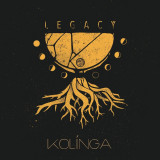
"I wanted to talk about what I know best, which life from my perspective" Rébecca M’Boungou is not unaware of the universal part of her mixed race life so many upheavals, splendors, melancholies, pleasures or pains present in this century.Kolinga tells much more than the musical adventure of a dark-skinned country girl from southwestern France who expresses herself in French, English and Lingala on a music which drawsfrom pop, Congolese rumba, jazz, soul, song, hip hop...
Cerca:all inn
-Heavy Metal Sampler mit Underground-Hits und Kultsongs
-umfasst die „goldenen Achtziger“ mit Stücken von 1981 bis 1988
-Vinyl only (keine digitale Version)!
-EYECATCHER: attraktives Cover mit Hommage an die Serie
„Stranger Things“
-bedruckte Innenhülle mit Essay über den 80s Metal und viele Fotos
-mit einem neuen Vinyl-Remaster des Manilla Road Klassikers
„Necropolis“
Trotz dem Vinylboom, der in szenestarken Musikrichtungen
noch deutlicher ist als in der Popmusik, gab es in den letzten
Jahren bisher wenige Compilations auf LP. Dabei waren
Zusammenstellungen ein ebenso wichtiger Teil der Siebziger und
Achtziger, eben in der Zeit, als die Schallplatte das gängige Medium
war und ein Mixtape eben nur ein Tape war.
„Heavy Metal Things“ spielt natürlich auf die erfolgreiche TVSerie „Stranger Things“ an, die in den Achtzigern spielt und bei
den Jugendlichen einen ganz eigenen Lifestylewunsch erzeugt hat.
Trotz der spannenden Handlung erlebt man eine Zeit, die in einigen
Punkten doch einfacher und entspannter war – trotz dem Kalten
Krieg und unsicheren Atomkraftwerken. Die Schallplatte (und
erstaunlicherweise sogar die Kassette) gehört in diese Zeit, die sich
mit der Hochphase des Heavy Metal überschneidet. In Szenekreisen
taucht daher oft die Floskel „goldene Achtziger“ auf, denn so
ziemlich jedes Metal-Subgenre wurde hier erfunden oder klang
wenigstens bereits an. Ein ruppiger, teils noch von der Gesellschaft
geächteter Stil wurde zu einem kommerziellen Erfolg. Auch die
Neunziger, gespickt mit Grunge und Crossover, konnten die Rückkeh
des traditionellen Heavy Metal in den 2000ern nicht verhindert. Und
durch die Serie „Stranger Things“ werden Jugendliche auf Songs un
Bands aufmerksam, die in Folge nach über 30 Jahren wieder in die
Charts schiessen.
Trotzdem ist die LP „Heavy Metal Things“ keine Compilation mit
den großen Hits der Mega-Acts in diesem Segment. Im Gegenteil!
Hier wird gezeigt, welche spannenden Acts aus den USA und
Europa zunächst nicht mit dem Massenerfolg gesegnet waren,
allerdings von neugierigen und interessieren Genrefans mittlerweile
entdeckt wurden. So konnte man auch in den letzten Jahren Bands
wie Manilla Road bei Festivals wie dem Hellfest, Sweden Rock
oder Maryland Death Fest sehen. Kultgruppen wie Griffin (USA),
Witchfynde, Malleus oder Dark Wizard kehrten auch zu den
Bühnen zurück. Der Underground ist im Heavy Metal in der Tat
eine größere Sache, als man bei dem Begriff zunächst annehmen
müsste.
- 1: About As Helpful As You Can Be Without Being Any Help At All 3:06
- 2: How Darwinian 3:33
- 3: Post-War Blues :42
- 4: If I Am Dead :06
- 5: Daffodil 2:40
- 6: Starts With Them, Ends With Us 4:24
- 7: Oh Fortune 3:22
- 8: Leaves, Trees, Forest 4:12
- 9: Rows Of Houses 4:27
- 10: Regarding Death And Dying 2:25
- 11: Jeopardy 5:05
LTD Edition!
Um das 10-jährige Jubiläum dieses Fan-Lieblings zu feiern, wird Dan Mangan's "Oh Fortune" als glorreich aktualisiertes 2LP-Paket neu aufgelegt. Mit reichlich zusätzlichem Bonusmaterial ist diese umfangreich erweiterte Version ein Muss für alle Sammler der Originalversion und neue Fans gleichermaßen. Sie brauchen noch Überzeugungsarbeit? Dieses Biest von einer Wiederveröffentlichung kommt in einem Klappcover mit alternativem Artwork und bedruckten Innenhüllen. Sie enthält das komplette Originalalbum + 10 Bonustracks.
Format: 2LP 10th anniversary deluxe vinyl reissue, limitiert auf 300 Stück in Europa (100 EH für RTD) inkl. komplettes Originalalbum + 10 bonus Tracks! Kommt im Gatefold mit alternativem Coverdesign und bedruckten Innentaschen.
(Cargo Collective Title) RIYL: Silver Mt Zion, Rachel’s, Grails & Do Make Say Think. 180g LP, custom window-cut letterpress jacket with artworked 300gsm inner + DL. Esmerine presents Everything Was Forever Until It Was No More, its first album in five years, following a celebrated run of Juno Award winning and nominated records throughout the preceding decade. Founded by ex-Godspeed You! Black Emperor percussionist Bruce Cawdron and cellist Rebecca Foon (Saltland, Silver Mt Zion, Set Fire To Flames), the acclaimed instrumental music ensemble and has long embroidered emotive chamber works using threads of post-classical, post-rock, Minimalism, neo-Baroque, jazz, pop and a wide array of folk traditions. Esmerine conjures a distinctive and immediately identifiable sound that consistently defies the trappings of “fusion”, forging emotive cinematic soundtracks under the overriding sonic sensibilities of postpunk grit, Wall-of-Sound, drone and dark ambient. Recorded by longtime co-producer Jace Lasek (The Besnard Lakes), the new album manifestly carries on in this fine tradition. Everything Was Forever Until It Was No More completes Esmerine’s “Anthropocene” triptych: a series of album-length meditations that began in 2015. The album title itself has minor meme status in eco-artistic circles, appropriated from its original context Alex Yurchak’s 2005 book about the collapse of Soviet Russia by several exhibitions and works interrogating artistic production in the age of environmental crisis. (Foon is also well-known for her climate activism as co-founder of Pathway To Paris.) The album grapples with existential tensions between atmosphere and airlessness, seclusion and claustrophobia, forbearance and satiation, scarcity and abundance; it is one of Esmerine’s most restrained and wistful works. Instrumental densities ebb and flow, melding into each other with gauzy timbral warmth, sometimes tracing fleeting tendrils outwards, but always rotating around the saturnine gravitational force of a darkly glowing sonic center. Everything Was Forever Until It Was No More is like a somber forest lit by a closely-orbiting opalescent planet; it could be the alternate score to Von Trier’s Melancholia or Cormac McCarthy’s The Road.Esmerine planted these compositional seeds before pandemic rooted everyone in place, under the auspices of a grant from the Canada Council for the Arts and a 2019 residency at Le Château de Monthelon in France. Lasek then began documenting the band between lockdowns in various stripped-down configurations with spartan remote equipment at the rural Québec homesteads of Cawdron and Foon, culminating in final sessions at Foon’s converted barn in summer/fall 2021, notably with extensive use of the barn’s resonant acoustic piano. Brian Sanderson appears on his fourth Esmerine album since joining in 2012, continuing to expand the ensemble’s ethnomusicological sensibility and melodic sound palette with guitars, ngoni, ekonting, hulusi, and brass horns of all sorts. Everything Was Forever… also signals the full integration of bassist Philippe Charbonneau, who joined Esmerine as a touring member pre-pandemic and plays throughout the new album, along with sound design contributions via synth, tape echo and other processing. Everything Was Forever Until It Was No More features the pandemic collage artwork of Maciek Sczcerbowksi, in a second Esmerine album art collaboration following their Juno award for Album Package of the Year for Lost Voices in 2015.
The legendary BORIS celebrate a 30 year career as one of experimental music's most forward-thinking, heavy, and innovative bands with the new album Heavy Rocks (2022). Continuing their series of Heavy Rocks records, BORIS once again channels the classic proto-metal sounds of the 70s into something all new. The album, 10 pulse-pounding tracks, highlight the very trajectory of BORIS and their storied career - from the driving, fuzzed out Rock N' Roll opener "She is Burning", to the punk, raucous "My Name is Blank", BORIS are heavier than ever before. "Question 1" is just kickass - D-beats give way to a doomed, spaced out and heavier-than-anything guitar wailing and feedback, before diving back into their Metal, sending the listener into a complete frenzy. This is unmistakably BORIS, and this is the band at the height of their powers. Elsewhere on the record, a more daring, "out there" side of the band begins to shine on tracks such as the aptly titled "Blah Blah Blah", the industrial "Ghostly Imagination" and the truly wild "Nosferatou". Noisy passages (not unlike prior collaborations with legendary artists like Merzbow,) collide with visceral vocal howls while a relentless, almost Zornian-saxophone shreds harder than any guitar solo ever could. In 2022, BORIS cement what Heavy Rock means to them, and release one of their most captivating records to date.
"Art is awe, art is mystery expressed," writes Kaitlyn Aurelia Smith. "Art is somatic, even if it is experienced cerebrally. It is felt." The central mysteries of Smith's ninth studio album, Let's Turn it Into Sound, have to do with perception, expression, and communication: How can we communicate when spoken language is inadequate? How do we understand what it is we're feeling? How do we translate our experience of the world into something that someone else can understand? For Smith, a self-described "feeler," the answers are inspired by compound words in non-English languages, translation, sculptural fashion, dance, butoh, wushu shaolin, and other forms of sensory and somatic experience. Just like fashion uses lines, shapes, colors, textures, and silhouettes to communicate on a sensual level separate from the conscious mind, Let's Turn it Into Sound strives to use sound to communicate what words alone cannot. "The album is a puzzle," Smith says. "It is a symbol of receiving a compound of a ton of feelings from going out into a situation, and the song titles are instructions to breaking apart the feelings and understanding them." The energized "Is it Me or is it You" comes from traversing the gaps between how you see yourself and how another might see you, through a filter of their own projections. The hushed sense of revelation that brackets "There is Something" refers to the feeling of walking into a room and being subconsciously aware of the dynamic present. All the while, Smith interprets these feelings through sound. This auditory interpretation process, driven by earnest curiosity, led Smith to record some thoughts and questions that popped up along the journey in Somatic Hearing_a booklet which accompanies the album. Over three frenzied months, recording alone in her home studio, Smith allowed herself to pursue new experiments to accompany her usual toolkit of modular, analogue, and rare synthesizers (including her signature Buchla), orchestral sounds, and the voice. She created a new vocal processing technique, and gave herself permission to pursue a pacing that felt intuitive, rather one that followed typical song structures. She walked around in the windiest season with a subwoofer backpack and an umbrella, listening to the low end of the album amidst 60mph gusts. She listened to herself, and, in doing so, to an inner community which suddenly opened to her. Underlying the album is a dynamic relationship between what Smith describes as six distinct voices, each a multifaceted storyteller. By acknowledging these characters, she was acknowledging her whole being: the woven plurality of self, the complex process of noticing and resolving inner conflicts, and the joy of finding harmony in flux. "I started to feel so embodied by all of these characters. This is all the felt, unsaid stuff my inner community wants to communicate but it doesn't have the English language as its form of communication, and so this album was a form of giving space to let it talk and not judge it and just let it play." By not adhering to expected song structures, each song feels even more like a conversation, with each character getting to express themselves in full.
- 1: Roar The Lions (Feat. Dj Grazzhoppa)
- 2: Pageants (Feat. Ras Kass)
- 3: Leave It Alone
- 4: Aladdin (Feat. H3Ro)
- 5: Rubber Match
- 6: Eagle Talents (Feat. Phase One & Bobbyj From Rockaway)
- 7: Chromed Out (Feat. Ras Kass & Planet Asia)
- 8: Nothing To Lose (Feat. Killah Priest & Lana Shea)
- 9: Avirex (Feat. Innocent? & King Magnetic)
- 10: Beautiful Distaster (Feat. Georgette)
Following several tragedies in his personal life, New York rapper El Gant had a decision to make—face those losses head on or bury them deep within. Luckily for us, he chose the former. The result is O.S.L.O., the emcee’s most gripping and personal project yet. It’s also his most relatable, because it shows what we’re all capable of when we’re equipped with the right tools to cope and, in El Gant’s case, transform that tragedy into something powerful.
The album arrives nearly a decade after his previous solo effort, 2014’s great Beast Academy, and after several years spent touring and recording with his group, Jamo Gang, with Ras Kass and J57. Despite the highs associated with that time, El Gant also experienced major personal losses. In particular, he lost three close friends—The Last Original, Bones, and Jim Misa—all of whom had a major impact on his life and career. In fact, the album’s title, O.S.L.O., references the Last Original, because it’s an acronym for “Our Sun the Last Original.”
But it wouldn’t be an El Gant project without some straight-up dope hip-hop, too. Tracks like “Avirex (feat. Innocent? & King Magnetic)” and “Chromed Out (feat. Ras Kass & Planet Asia)” are absolute bangers filled with shape-shifting flows and crazy wordplay.
There’s a reason for these tonal shifts, too; El Gant didn’t want to simply create a linear album. “I want to take the listener on a few ups and downs, just like life does for most of us,” the emcee says. It’s those qualities that make O.S.L.O. so immediately satisfying, and why it’s his most accomplished work to date.
Bobby Oroza puts his desire for the profound on wax with his sophomore album Get On The Otherside. Musically, he has updated the formula we were introduced to on the first record. But lyrically, songs are bravely rooted in the more complicated, ubiquitous inner tangles of life like self-examination and coming to terms with the vastness of the human experience. With Coronavirus bringing the world to a halt, Bobby-a father and husband-had to do something. No tours to play or studio time to fill, Bobby found himself back in the construction yard, doing blue-collar work to provide for his family. "I was super grateful for the work-a lot of my colleagues didn't have an option like that," Bobby admits. More than a few personal hardships forced him to acknowledge and work through some brutal truths. And what came of it? Well, for one, this new record Get On The Otherside which pretty well describes what Bobby's been through: He had to demolish his ego, his old ways of thinking, and his tried approaches to anchor into a refreshed perspective with new understandings. As Bobby tells it, "I had to do some real self-searching, come to terms with what was wrong, and how much of it I was responsible for." So how does this translate to the new album? Moments of clarity as to where the real value in life lies on "I Got Love," encouraging numbers like the title track "The Otherside", and declarations of self actualization on "My Place, My Time." Even the more straightforward love songs are outside the box lyrically like "Sweet Agony" and "Loving Body." If you have never had the pleasure of catching one of Bobby's live shows you may have no idea that he is a maverick on the guitar. He lets us in on a little of that on "Passing Things" with a solo that possesses the same restrained and space that his lyrics do. As we'd expect, the songwriting still has that raw, direct edge to it. But an evolution has taken place. There are new points of view on familiar territory which in Bobby's words "For me to love, I needed to take a bigger view of love. One with less ego and more empathy" really hold true. The result is a record with Bobby's new found humility on full display and a message of encouragement to anyone who is struggling and can't see a way out. It still may be hard to nail down and define Bobby and his sound. He's no one thing more than the other. But what he's showing us now, on Get On The Otherside, is that we can also label him a soulful, philosophical optimist. Someone who can say a lot with a little, and who wants us all to know that it's us that has to do the hard lifting to truly live a life in love-both with the world and with yourself.
Smokey Marbled Vinyl[29,62 €]
With their sophomore full-length "Gotta Light?", dark rock innovators CRONE are cruising in a high octane fuelled hotrod. Channelling their personal musical inspirations that range from ALICE IN CHAINS, via KILLING JOKE, NEW MODEL ARMY, and JOY DIVISION to PINK FLOYD among many others, the Germans leave their very own and personal mark on the genre that has been brought back to the forefront of interest by acts such as GHOST in recent years. While composer, guitarist, and singer Phil Jonas had felt tired, burned out, and empty, working on new songs for CRONE provided the spark that kindled the firestorm of fresh ideas and led to the creation of "Gotta Light?". The album title was inspired by the haunting eighth episode of David Lynch's masterpiece TV series "Twin Peaks". A corresponding element of the mysterious and surreal permeates all of the new songs that revolve around topics such as the hope of receiving signals from the afterlife ('Waiting for Ghosts'), shattered dreams ('Abyss Road'), and a guiding last will ('Gemini'). CRONE was conceived out of a musical collaboration between Phil "sG" Jonas and EMBEDDED drummer and guitarist Markus Renzenbrink. Both musicians wanted to explore musical horizons beyond the metal limits of their regular bands at the time. As a result the "Gehenna" EP was released in 2014 and sparked a first wave of interest. Critics labelled the first effort post-rock, post-punk, and even as shoegaze. The well-received debut full-length 'Godspeed' hit the streets in 2018 and its more focussed and consistent songs got often filed under "post-rock". With CRONE having been elevated to the main band of each protagonist, the band's renewed focus and urgency is clearly audible on "Gotta Light?". With Christian Schmidt a permanent keyboard player has been added to the line-up that now also features lead guitarist Kevin Olasz for added sparkle and sonic depth. From the ashes of SECRETS OF THE MOON a dark reborn phoenix is rising with CRONE and this bird of prey is ready to rock humanity's unstoppable descent into madness: "Gotta Light?"
Black Vinyl[28,36 €]
With their sophomore full-length "Gotta Light?", dark rock innovators CRONE are cruising in a high octane fuelled hotrod. Channelling their personal musical inspirations that range from ALICE IN CHAINS, via KILLING JOKE, NEW MODEL ARMY, and JOY DIVISION to PINK FLOYD among many others, the Germans leave their very own and personal mark on the genre that has been brought back to the forefront of interest by acts such as GHOST in recent years. While composer, guitarist, and singer Phil Jonas had felt tired, burned out, and empty, working on new songs for CRONE provided the spark that kindled the firestorm of fresh ideas and led to the creation of "Gotta Light?". The album title was inspired by the haunting eighth episode of David Lynch's masterpiece TV series "Twin Peaks". A corresponding element of the mysterious and surreal permeates all of the new songs that revolve around topics such as the hope of receiving signals from the afterlife ('Waiting for Ghosts'), shattered dreams ('Abyss Road'), and a guiding last will ('Gemini'). CRONE was conceived out of a musical collaboration between Phil "sG" Jonas and EMBEDDED drummer and guitarist Markus Renzenbrink. Both musicians wanted to explore musical horizons beyond the metal limits of their regular bands at the time. As a result the "Gehenna" EP was released in 2014 and sparked a first wave of interest. Critics labelled the first effort post-rock, post-punk, and even as shoegaze. The well-received debut full-length 'Godspeed' hit the streets in 2018 and its more focussed and consistent songs got often filed under "post-rock". With CRONE having been elevated to the main band of each protagonist, the band's renewed focus and urgency is clearly audible on "Gotta Light?". With Christian Schmidt a permanent keyboard player has been added to the line-up that now also features lead guitarist Kevin Olasz for added sparkle and sonic depth. From the ashes of SECRETS OF THE MOON a dark reborn phoenix is rising with CRONE and this bird of prey is ready to rock humanity's unstoppable descent into madness: "Gotta Light?"
Nach "Beware of the Dogs" von 2019 ist "Flood" Donnellys Album der Wiederentdeckung: es ist das Produkt monatelanger Experimente, schwieriger Momente der Introspektion und einer Menge Übergangsphasen. Wie die vielen Banded Stilt (zu Deutsch Stelzenläufer), die sich über das Cover verteilen, watet Donnelly in unbekanntem Terrain, lernt, wer sie als Künstlerin ist und wie umfassend ein Individuum sein kann. Während ihrer Zeit in den australischen Regenwäldern von Bellingen, entdeckte Donnelly ihre Liebe zur Vogelbeobachtung. Indem sie der Natur um sie herum mehr Aufmerksamkeit schenkte, konnte sie "das Gefühl verlieren, dass irgendjemand auf mich reagiert. Ich vergaß, wer ich als Musikerin war und es war eine überwältigende Erfahrung, einfach nur zu sein, mein kleines Ich zu sein." Sie schrieb 43 Songs, als sie Bellingen verließ und durch das Land zog. "Ich hatte so viele Gelegenheiten, an seltsamen Orten zu schreiben", bemerkt Donnelly. "Ich hatte oft keine Wahl, wo ich mich aufhielt. Es lässt sich nicht leugnen, dass die Schließung der Grenzen, wenn man keinen Zugang zu seiner Familie hat, den Blick auf die Teile des Lebens verengt, die einem wichtig sind." Wenn sie auf die Banded Stilt zurückblickt, schätzt Donnelly vor allem, dass "sie in einer Gruppe gesehen eine optische Täuschung erzeugen, aber für sich genommen sind sie ein einzigartiges Kunstwerk." Während jeder Song auf "Flood" ein einzigartiges Kunstwerk für sich ist, teilen sie im Kollektiv alles von Stella Donnelly im Überfluss: ihr inneres Kind, ihr liebevolles Selbst, ihr alptraumhaftes Selbst; alles von ihr selbst ist in die Entstehung dieser Platte eingeflossen, und obwohl man einen Ozean bräuchte, um alles zu ergründen, was sie fühlt, lohnt es sich, einzutauchen.
Black Vinyl[25,92 €]
Mit nur zwei Demos seit Gründung im Jahr 2018 scheint es, dass MALIGNANT ALTAR nach modernen Maßstäben etwas zu ruhig gestartet waren. Doch dieses Monster hat nicht geschlafen oder sich auf seinen Lorbeeren ausgeruht, sondern das ranzigste, obszönste Album geschaffen, das man sich vorstellen kann. Aus dem tiefsten Schlund 80er-Horror-Einflüssen ergießt sich eine Flut von Innereien in Form von eitrig faulen Riffs und zermürbenden Drums in einem dicken teerigen Matsch instrumentalen Verfalls über den Hörer. Gesanglich wird purer Ekel ausgekotzt, der sich glorreich klebrig über die letzte Ritze bösartig hypnotisierender Rifflandschaft einfügt und wie verfaulte Leichenreste aus euren Lautsprechern tropfen. Wenn das alles nach einer Demo-Band mit begrenzten technischen Spielfähigkeiten klingt - Nichts wäre weiter von der Wahrheit entfernt, da MALIGNANT ALTAR mit gnadenlosem Drumming und technisch ausgefeilten Riffs aufwarten können.
Über fünf typische Tracks und einem spektralen Zwischeninstrumental ist die Platte zwar gnadenlos brutal, verzichtet aber dennoch nicht auf Dynamik. Diese Texaner haben Würze in ihrem Death Metal und wissen genau, wann unausweichliche Attacke oder zermürbender Groove bis hin zum Pulverisieren der Nackenwirbel gefragt ist!
Für Lacrimas Profundere, eine der innovativsten und erfolgreichsten deutschen Dark Metal-Bands der Gegenwart, ging es im Falle des neuen Studioalbums ‚How To Shroud Yourself With Night’ (VÖ. 26. August 2022, Steamhammer/SPV) vor allem um die vermeintliche Bürde ihrer 2019er Erfolgsscheibe ‚Bleeding The Stars‘. Denn deren Bilanz hatte indirekt riesige Erwartungen geweckt: „Album des Monats“ im ‚Metal Hammer‘, ‚Orkus‘ und ‚Dead Rhetoric‘, Top-10-Platzierungen in den anderen wichtigen Magazinen, dazu Charts-Einstieg sowie die bis dato erfolgreichste Headlinertour der Gruppe. Wer würde da nicht automatisch mit einer Fortsetzungsgeschichte liebäugeln? „Für mich ging es darum, sich vom Druck des Erfolges zu befreien und zu versuchen, die Messlatte höher zu hängen, dem Spiel voraus zu sein, sich selbst zu fordern und originell zu bleiben, anstatt auf Nummer-Sicher zu gehen und eine Art ‚Bleeding Part II‘ zu schreiben“, erklärt Gitarrist, Bandgründer und Hauptkomponist
Oliver Nikolas Schmid, der mit seinem Bruder und Texter Christopher Schmid erneut eine unverzichtbare Unterstützung fand. „Die neuen Songs klingen frisch, böse, überraschend und leidenschaftlicher als jemals zuvor. Zudem ist es das zweite Kapitel mit unserem Sänger Julian, der uns inspiriert und sich wundervoll eingebracht hat“, so Schmid weiter. „Wir haben verstanden, was ihm gefällt, und haben uns von alten Denk- und Vorgehensweisen gelöst. Noch nie waren wir eine solch eingeschworene Einheit und bereit, unseren eigenen Sound zu erweitern. Gerade deshalb ist ‚How To Shroud Yourself With Night’ unser mit Abstand mutigstes Werk geworden.“
Das zweite Album von Master, aufgenommen von Scott Burns in den Morrissound Studios! Klassischer Death Metal der 1990er Jahre!
Eines der Probleme beim Rückblick auf ein Musikgenre aus einer Perspektive, die Jahre oder Jahrzehnte vom Kern der Bewegung entfernt ist, dass spätere Entwicklungen dazu neigen, sowohl die Ursprünge eines Genres als auch die Fäden innerhalb einer Tradition zu verwischen, die ohne Nachkommen ausgestorben ist. Das Ergebnis ist, dass interessante und verdienstvolle Alben oft untergehen, wenn Kritiker über die Alben nachdenken, die den größten Einfluss auf spätere Errungenschaften hatten.
Die Death-Metal-Pioniere Master gehören zu denjenigen, die aufgrund dieses Phänomens zu kurz gekommen sind, und ihr 1990er Meisterwerk "On The Seventh Day, God Created... Master" bleibt eine faszinierende Erkundung sowohl der Wurzeln des Genres als auch der Räume, die es hätte einnehmen können, wenn andere Wege eingeschlagen worden wären.
Es gibt ein paar Dinge, die selbst dem Gelegenheitshörer sofort ins Auge springen. Das erste ist der scheinbare Primitivismus der Musik, mit Songs die aus relativ kurzen, knüppelnden Stücken bestehen, die von unerbittlichen Rhythmen, zyklischen Riffs und einfachen melodischen Hooks angetrieben werden. Das zweite ist die Erkenntnis, dass jemand einige wirklich verrückte, brillant konstruierte Leads spielt. In diesem Fall ist das Paul Masvidal, der damit alles übertrifft, was er jemals mit Cynic erreicht hat.
Hinter der oberflächlichen Einfachheit verbirgt sich ein kreativer Geist, der gleichzeitig an die ursprüngliche Geburt des Death Metal erinnert (bei der Master sowohl anwesend war als auch eine treibende Kraft war) und der den Weg zu dem weist, was aus dem Genre hätte werden können.
Ganz offensichtlich sind die Hardcore-Wurzeln des Genres,
Master meidet hier die von Slayer abgeleitete technische Architektur, die den meisten "modernen" Death Metal dominierte, zugunsten von
Strukturen, die auch auf einem Discharge's Meilenstein "Hear Nothing See Nothing Say Nothing" nicht fehl am Platz gewesen wären (es gibt sogar ein paar Auftritte des berüchtigten D-Beats). In dem unerbittlichen Sturm brutaler Wiederholungen ist die Kernaussage der Musik verschlüsselt, eine schiere Urwut, die aus den donnernden Zyklen der Powerchords tropft und dem offenkehligen Gebrüll (wieder der Hardcore-Einfluss) von Sänger und Hauptsongwriter Paul Speckman. Dazu kommen Momente des Nachdenkens, in denen die Songs in einer Art High-Dezibel-Gedudel kollabieren, und ein angeborenes Gespür dafür, wie man Melodien aus den infernalischen Tiefen der Dissonanz herauskitzelt, und die bereits erwähnten Masvidal-Soli (und es kann nicht genug betont werden, wie sehr diese Leads zerreißen). Was dabei herauskommt, ist etwas, das über
seine eigene scheinbare Rohheit hinwegtäuscht und nicht so sehr eine Aussage über blinde Wut, oder gestörte Entfremdung, sondern eine meisterhafte Erklärung von Gewaltbereitschaft.
City life isn’t always easy or pleasant, but whether you call it home or you're just out for a visit, there’s an undeniable energy that envelopes you. Danger becomes excitement, speed becomes the regular pace, and exhaustion morphs into an urge to rally, to not miss a beat of what these myriad concrete jungles have to offer. And after a while, you learn to settle into it. You relax, you walk with a little more ease, and, eventually, you become yourself at your most slick. Hiatt dB’s
City Slick celebrates that carnality of the city, while simultaneously asking the one question burning in every city dweller’s mind - why am I even here?? Rat races, dumpster res, endless injustice, outrageous prices, conquered green spaces... an innite array of inhumanity hurled in your face on a daily basis; Is it really worth it? But we all know why
we're here, and it’s not something you can verbalize. It’s the feeling you get when the hellscape precipitates that which life is all about: real, serendipitous, life-arming experience.
Still, even on its best days, the City can be unkind. So if you need some tunes to help you push on, Hiatt’s cooked up the perfect soundtrack for your pavement-pounding steps
Spanish artist Helena Piti continues to establish her artful Argia alias with a mini-album on Atomnation. Across six superb tracks, the formally trained artist brings serenity, musicality and gorgeous melody to her stylishly designed sounds.
Piti has been immersed in music all her life. From a young age, she studied piano and double bass at the conservatory before evolving into the electronic world and quickly making her mark. She has released with the likes of Stil Vor Talent, Sincopat and DUAT while holding down her esteemed residency at Madrid's well-known Mondo Disko and touring places like Watergate and about:blank. This self-taught producer uses music as a way of expressing a wide range of inner feelings and she has plenty lined up for 2022 including this adventurous new release.
Picture London, thirty years ago, as Neneh Cherry gears up to release her debut album Raw Like Sushi - a thrumming, restless, vibrant city that in 1989, much like today, pulsed defiantly against a backdrop of increasing political doom, rocking to the joyful noise of culture leaping across boundaries, radically reordering itself. Rents are low.
Soho hums to the chatter of poets, vagabonds and petty sex tourists drinking in the same elixir of possibility. The divisions between the queens of Old Compton and mods and punks of Carnaby Streets look huge but feel slight. A spirit of multiracial unity permeates the air.
New York hip hop and Chicago house continue their euphoric colonisation of nightclub culture. Amid this maelstrom, Neneh Cherry emerges, capturing the entire, giddy rumble of this rolling community street culture in one record, Raw Like Sushi. With no interest in genre, Raw Like Sushi upsets and inverts everything you thought you knew about how pop can work, at it's brightest and most effective.
One of the greatest debut albums of all time, born halfway between Never Mind The Bollocks and Boy In Da Corner, Raw Like Sushi was ready to escort you right to the centre of it's dancefloor, dripping hot sweat under a mirrorball at 3am - and its particular magic remains just as potent today.
To celebrate the 30th anniversary of an album that culturally, musically and stylistically defined a generation and everything that followed, Raw Like Sushi has been remastered at Abbey Road and will be released in super deluxe format across 3CD and 3LP heavyweight vinyl box sets, and 1CD and 1LP formats.
The box sets include a stunning 48-page 12x12 book packed full of iconic photos, new interviews, liner notes and memorabilia. The album features five of Neneh’s biggest singles - including the worldwide smash hit single ‘Buffalo Stance’ as well as hit singles ‘Manchild’ produced by Massive Attack’s Robert Del Naja, ‘Kisses On The Wind’, ‘Heart’ and ‘Inna City Mamma’. It also features rare mixes of key tracks by Massive Attack, Arthur Baker, Smith N Mighty, and more.
Since the release of Raw Like Sushi 30 years ago, Neneh Cherry has continued to define and redefine culture, style and music releasing five studio albums, including 2018’s Broken Politics, produced by Four Tet, which was met with critical acclaim by the likes of The Guardian, Rolling Stone, The Times, Q and Pitchfork.
Neneh went on to tour the album throughout 2019 including her largest ever headline show at London’s Roundhouse, and festival performances at Glastonbury, Latitude, Primavera, Pitchfork and more proving her music and message more relevant than ever.


