Dream Into It, Billy Idols neuntes Studioalbum und erste Langspielplatte seit über zehn Jahren, erzählt
eine reichhaltige und sehr persönliche Geschichte von Billys Reise vom jungen Punkrock-Träumer zu seiner
Rückkehr als MTV-Ikone mit Lederhandschuhen; dann weiter zu all seinen vielbeachteten Hits, Höhen,
Tiefen, Überdosen und Unfällen; gipfelnd in einer niederschmetternd ehrlichen Einschätzung des Preises
des Ruhms und der Weisheit, die man erlangt, wenn man sich zusammenreißt und sich um die Familie
kümmert. Und obwohl Dream Into It eine Geschichte erzählt, ist es von Stück zu Stück auch eine rundum
zufriedenstellende Old-School/New-School-Punk/Pop-Odysee, wie sie nur Billy Idol und sein langjähriger
Gitarrist/Kollaborateur Steve Stevens mit der kompetenten Unterstützung des Produzenten Tommy English
und Features mit den Rock-Experten Joan Jett und Alison Mosshart schaffen können.
Spacemen 3 began assembling their third album, 1988's Playing With Fire, at perhaps the freest, most confident point in their career. Recording began with the band road-tested and rugged, even amidst the functional volatility that famously motivated their course. The sessions' first offering came in the form of "Revolution," a single of heroic Stooges-devotion and the most commercially successful release the group had to date. High expectations for the album were soon exceeded, as Playing With Fire would become Spacemen 3's crowning studio achievement and cement their rightful place on the vanguard of otherworldly rock 'n' roll.
An exquisite mix of stuttering tremolo guitars and wistful melodies, Playing With Fire sheds any trappings of revisionism and furnishes a nuanced grade of psychedelia. Epic entries like "Suicide" (named after the notorious NYC band) and the mesmeric "How Does It Feel?" catch Spacemen 3 at their celestial apex, the very point where their collective writing, performance and production would crest and wondrously splinter.
Includes download card and new insert with liner notes by Marc Masters.
Madteo is one of the great eccentric visionaries of Electronic Music and his new album Misto Atmosferico E Ad Azione Diretta on Unsure once more happens to be a mind-bending piece of art. Misto Atmosferico E Ad Azione Diretta shifts between focused gritty grooves and the long freeform associative adventures that you haven't heard before, never static, sometimes overwhelming, always on edge.
The opener Cans People is an archaic rave monster, To Know Those Who is non-linear dub techno, Nocturnal Palates expands the Filter House universe and Rave Nite Itz All Right hits you hard and strange (yet subtle, in a way). The last two tracks then let loose; Madteo manipulates time, space and sounds to create the psychedelic secrets of Luglio Ottantotto. And Emo G (Sticky Wicket) explores the outskirts not only of House or Techno or whatever but music in general, a 15-min-trip through the low frequencies, the rumble, the dark hearts and the enchantment. Breathtaking. Bring The Voodoo Down.
out of Stock
Last delivered 17 months ago available to reorder, subject to availability
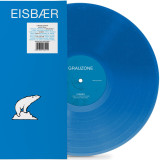
WRWTFWW Records is very honored to announce the official reissue of Grauzone's essential 1981 maxi single with timeless classic "Eisbär", proto-techno beast "FILM 2", and romantic synth ballad "Ich Lieb Sie", just in time for the 40th anniversary of the Swiss band's formation. The three-track vinyl is sourced from the original reels, cut at 45rpm, and comes with its iconic artwork on a 350gsm sleeve.
Ich möchte ein Eisbär sein...Written by Martin Eicher after a nightmare in which he saw talking polar bears on the walls, and with music by the Grauzone crew consisting of Martin and his brother Stephan Eicher, Marco Repetto, Christian "GT" Trüssel, and Claudine Chirac (on saxophone), "Eisbär" is the most recognizable title from the band, a sublime mix of ingredients reflecting the transitional era it comes from - the raw energy of punk music still palpable, combined with the audacity of early electronics, the warm groove of a disco gem, beautifully fragile lyrics, and one of the best basslines ever. It became a mega hit, totally unplanned, but how could you resist such a track
"FILM 2" is the ultimate b-side monster, a menacing all-instrumental pre-techno masterpiece, slowly building to a magnetizing frenzy. An instant underground favorite, it was famously heard played at both speeds depending on the scenes and DJs you were frequenting, 45rpm as it was first intended, and 33rpm for the cosmic experience (search Daniele Baldelli's Cosmic C75 1982 mixtape online for a great example of this).
The maxi single ends with "Ich Lieb Sie", a synth-pop meets doo-wop ballad, a true love song oozing with innocence. Simple, stylish, and just right.
At the crossroads of post-punk, new wave, pop, and electronic experimentation, the Eisbär maxi offers three songs that are technically different but hold the same spirit, the perfect embodiment of Grauzone's music - wild, unpredictable, and youthful, yet sophisticated, catchy, and ingenious. The magic recipe for the good stuff.
Stephan Eicher went on to be, arguably, the most successful Swiss musician ever, with an international career extending from pop chanson to experimental escapades and collaborations with Moondog, artists Sophie Calle and John Armleder, and author Martin Suter among many other luminaries. Marco Repetto flourished as a techno and ambient producer, releasing multiple projects including releases on Aphex Twin's Rephlex label.
Grauzone and WRWTFWW will continue to collaborate on the band's 40th anniversary reissue campaign, with numerous projects planned for the year, including a vast selection of music, visuals, and literature never available before.
out of Stock
Last delivered 8 months ago available to reorder, subject to availability
By the mid-1970s, trumpeter Dennis Mpale was a consummate musician with an auspicious resume that located him at all the key turning points in the evolution of modern South African jazz. In his mid-20s, he led the trumpet section of Chris McGregor’s Castle Lager Big Band and participated in the ensemble’s landmark 1963 album Jazz/The African Sound. 1968 saw him recording I Remember Nick with The Soul Giants, which joined a wave of notable late-1960s releases, including The Mankunku Quartet’s Yakhal' Inkomo and The Chris Schilder Quintet’s Spring, that ignited the ambitions of South African jazz artists and producers in the 1970s. In 1975, Mpale co-founded the “rock jazz” ensemble Roots, inaugurating the era of jazz fusion in South Africa and opening the door for Pacific Express and Spirits Rejoice.
By 1977, Mpale had earned the right to an album of his own and, having participated in the 1975 recording of Abdullah Ibrahim’s African Herbs, turned to producer Rashid Vally of the As-Shams/The Sun label for his solo debut. Vally financed the project and seized an opportunity to license it to the local subsidiary of a major international label. As such, Our Boys Are Doing It was issued in South Africa on the Mercury label in 1977. Featuring saxophone heavyweight Kippie Moketsi, the album was a response to the global direction taken by trumpeter Hugh Masekela on The Boy's Doin' It in 1975. In contrast, seeped in the bump jive style of popular urban township music, Our Boys Are Doing It was a manifesto for an authentic, exuberant, homegrown variety of South African jazz.
Tuneful, feedback- slathered surges like "Half Way Fine" and "Spright" feel as
comfortable as a beaten-up pair of Chuck Taylors, introducing dramatic dynamic
shifts and savvy melodic change- ups to keep you on your toes. You may not
always be able to make out Hartlett's lyrics amid the cyclonic fuzz, but the
despondence and disillusionment in his voice always cut through loud and clear.
And when he can't quite find the right words, he and fellow guitarist Morgan Luzzi
unleash that simmering angst through nonverbal means, like the roiling guitar
tsunami that brings the hazy-headed "Baby Alligator" to a cataclysmic close.
Stuart Berman, Pitchfork
Carrying on their longstanding dedication to the seminal output of Merzbow, Urashima returns with what is unquestionably their most ambitious release to date: “Collection 001-010”, a deluxe, 10 LP vinyl box set limited to 299 copies, gathering together the entirety of the project’s first ten releases, originally released in 1981. Encountering the band in its early incarnation of the duo of Masami Akita and Kiyoshi Mizutani, raw, exposed and bristling with energy, foreshadowing numerous trajectories they would follow over the coming years, these astounding full lengths - the majority of which have never been released on vinyl - come housed in a beautifully produced, deluxe wooden box, with each LP in its own individual sleeve reproducing the original artwork, and a LP-sized 32-page book containing reproductions of artworls and collages by Masami Akita, an interview conducted by Jim O'Rourke, and liner notes penned by Lasse Marhaug, Thurston Moore, and Akita himself, amounting to what is unquestionably one of the most historically significant releases we’re likely to encounter in 2025.
Deluxe Edition of 299 copies, remastered from the original analog tapes by Masami Akita, each LP comes in its individual sleeve reproducing the original artwork, also includes a LP-sized 32-page book. ** Since its founding during the late 2000s, the Italian imprint, Urashima, has become a definitive voice in the landscape of noise. Bringing forth beautiful limited edition releases, they’ve sculpted a singular vision of one of the most vibrant and revolutionary bodies of experimental sound to have graced the globe. Among the many projects that they have supported over the decades, there has been an undeniable dedication to the output of the seminal Japanese noise outfit, Merzbow, making a significant amount of the project’s out of print back catalog available across a range of formats. Now they return with what is arguably their most stunning and ambitious release dedicated to the project to date: “Collection 001-010”, gathering the entirety of Merzbow’s first ten releases, largely privately released by the band on cassette across 1981, in a deluxe, 10 LP vinyl box set. Representing what is effectively ground zero in Japanese noise and collectively amounting to some of the most sought after releases ever produced within that movement, Urashima’s truly beautiful collection comes fully remastered by Masami Akita himself from the original tapes, presenting all but a small number in their first ever vinyl pressings, with each LP housed in its own individual sleeve reproducing the original artwork, alongside a LP-sized 32-page book containing reproductions of artworks and collages by Masami Akita, an interview conducted by Jim O'Rourke, and liner notes penned by Lasse Marhaug, Thurston Moore and Akita himself. Towering with energy and groundbreaking creative vision, within the realms of noise and experimental music, releases don’t get more monumental or historically important than this!
Merzbow came roaring onto the Tokyo scene in 1979, and remains, to this day, one of the most prolific and aggressively forward-thinking projects in experimental music. Eventually becoming the solo vehicle for the efforts of Masami Akita, in its earliest incarnation the project was the duo of Akita and Kiyoshi Mizutani, taking their name from German artist Kurt Schwitters' pre-war architectural assemblage, The Cathedral of Erotic Misery or Merzbau, and quickly set out to challenge entrenched notions of what music could be. Embracing technology and the machine, even in its earliest iterations, Merzbow pushed toward new territories of the extreme, arriving at a space of pure, unadulterated sonic onslaught that has continued, for over 40 years, to set the pace for the entire genre of noise, and has remained one of the movement’s most important, definitive voices, continuously laying the groundwork for countless artists who have followed in its wake.
When dealing with historical gestures, there’s an invertible aura surrounding original line-ups and early statements, and rightfully so. It is often within a band’s debut that we catch the purest glimpse of the raw energy and creative ferment that made them what they are. This is certainly the case when regarding the coveted early releases of Merzbow, capturing the emergence of the project in its form as the duo of Masami Akita and Kiyoshi Mizutani as they helped set the blue print from the then emerging movement of Japanese noise. Over the course of its nearly five decades of activity, Merzbow has always been noted for how prolific and ambitious the project is. This was no less the case in the very beginning. While they were active for roughly two years prior, in 1981 alone they issued ten self-released cassettes numerically titled “Collection 001-010”, albums which have both individually and collectively become holy grails in the realms of noise, with only two - “Collection 007” and “Collection 009” - ever receiving vinyl reissues prior to now.
As Lasse Marhaug deftly articulates in the newly commissioned liner notes for “Collection 001-010”, despite having been recorded in different location across a span of time, the sum total of Merzbow’s first ten releases might be best regarded as a single release to be listened to in the same, durational sitting, with the material standing well apart from what most came to expect from Merzbow, while foreshadowing numerous trajectories the project would take over the coming years. Not only do these recordings feature a vast array of instrumentation - tapes, acoustic and electric guitar, violin, drums, voice, recorder, organ, found sounds, clarinet, homemade and prepared instruments, a vast arsenal of effects and electronics, and piano, to only begin to scratch the surface - the majority of which would disappear from the project’s active sources of sound generation over the subsequent years, but there is a slow pacing and raw sense of openness and exposure that reveals strong connections to the avant-garde improvisations of groups like AMM, Musica Elettronica Viva, and Gruppo di Improvvisazione Nuova Consonanza, the psychedelia of groups like Taj Mahal Travellers and Flower Traveling band (both of whom Akita mentions having seen in youth within his interview with Jim O’Rourke), and rock in general - albeit in fully abstracted forms - unspooling as brittle, pointillistic, textural, raw and abrasive forms, that occasionally flirts with unexpected tonal sensibilities. As Marhaug describes it in his excellent liner notes: «Sonically, “Collection” sounds more sparse and stripped. It’s dry sounding, up-front, no reverb, and there’s less heavy low-end grime and thin on the signature frequency sweeps. Viewed in a 1981 context, musically, it’s more akin to what the LAFMS (Los Angeles Free Music Society) pool of artists were doing at that time than what was happening in industrial music... There’s a strong playfulness throughout, like the sound objects are being explored for the first time, without neither restraint nor hurry. Events are allowed to be fully examined before the music moves on, or simply cuts off. To a large degree, the music on “Collection” feels acoustic in nature, although a Electro-Harmonix ring-modulator features prominently throughout.»
Easily described as a rarely encountered revelation into the original and earlier documented studio sound of Merzbow, “Collection 001-010” collectively amounts to an engrossing sonic journey in its own right, while also allowing for important, often overlooked connections drawn from numerous other creative wellsprings, notably free jazz, underground rock, the output of European and Japanese avant-garde music, as well as Dada, Fluxus, and Mail Art, much of which, beyond the illumination made possible by the sounds, Jim O’Rourke’s fantastic interview with Akita, published in the booklet, further explores, offering great insights into the origins of Merzbow and the thinking behind the project, as well as aspects of the earliest days of Japanese noise.
Das 2012er Studioalbum "New York Connection" von Sweet wird neu veröffentlicht. Das Album wird zum ersten Mal auf farbigem Vinyl gepresst und als Sonderedition auf CD mit Bonustracks, die nicht auf der Originalveröffentlichung enthalten sind. "New York Connection" ist eine Auswahl von Stücken, die ursprünglich von anderen Künstlern geschrieben wurden, denen die Band aber unverkennbar ihren eigenen Sound verpasst hat.
How does one approach the morning after a party for the end of the world? This is a question which Mamuthones had to ask themselves, in the wake of their last album for Rocket, 2018's Fear On The Corner. Nonetheless, from the aftermath of this uncertain period has risen the still more flourishing realm of From Word To Flesh - a colourful and multi-faceted creation very much befitting the outsider spirit of Rocket's new Black Hole imprint. “I believe that with this album a circle has been closed” reflects Mamuthones mainman Alessio Gastaldello. “We returned to the atmosphere of the first Mamuthones albums with the skills acquired throughout the journey, with new sounds and with new creative processes. I would say that what remains constant – and at the core of our music – is the obsessive rhythms and the search for a sonic rituality: this is for certain our trademark”. This is clear right from the curtain raiser 'Burn From Inside', which beams the emotive approach of the band through the shamanic prism of Coil's Ape Of Naples. From there, hypnotic repetition marries to abstract abrasion and mournful laments with equal finesse, as redolent of the spiritual zest of Popol Vuh and Ash Ra Tempel as the gnostic folk of Six Organs Of Admittance. Elsewhere, 'A Symmetry Of Faith' summons a union of post-punk and psychically charged folk aligned with the recent work of Bristol's Beak. The Sardinian ritual of the Mamuthones – in which sinister masked figures weighed down with cattle bells conduct a ceremonial procession to ward off evil forces - has gone on for some two thousand years, and it may be that these ghoulish avatars are engaged in a celebration of the endless cycles of death and rebirth, fortifying spirits for a new epoch. Amidst the chaos and tumult of the 2020s, the band of this name has undergone just such a change themselves, and ‘From Word To Flesh’ is the fruit of their struggle. As Alessio says “With this album I think the Mamuthones have never been so unmediated, so naked: all masks gone”
LP 1 is Original Reissue, LP 2 is the Instrumentals. This album, originally released in 2019, was highly lauded with esteemed praise, topping many Album Of The Year lists inlcuding NPR, Pitchfork, Rolling Stone, Time Magazine. This vinyl has been out of print and in high demand, repress is restricted to limited quantities and will be out of print again in under a year. Now includes a 2nd LP featuring the never before available Hiding Places instrumentals from Kenny Segal. Fully produced by Kenny Segal, (Project Blowed, Kenstrumentals beat tape Series, Happy Little Trees). LP has unique gatefold artwork by Myra Musgrove and features custom “oakwood” coloured vinyls. Hiding Places is a collaborative album from Brooklyn-based rapper billy woods and Los Angeles beat scene veteran Kenny Segal. As a label, we at Backwoodz take a lot of pride in our physical products; in creating original artwork that will stand the test of time, and in issuing limited-pressings that stay limited. We had always resisted repressing a piece of vinyl and even when the demand for Hiding Places built to a fever pitch during 2019, we stuck to our guns. Still, by the end of the year, as the AOTY nominations kept rolling in, we knew that we needed to do something. But we also were determined not to sacrifice the uniqueness of that first pressing. So we decided to commission all-new artwork, and press up the instrumentals as well and put it all together as a GATEFOLD 2XLP. So, on top of the best album of 2019, you get Kenny’s incredible instrumentals, available on wax for the first time! On its face, it seemed an unlikely pairing; woods who moonlights as ½ of dissonant rap duo Armand Hammer is a chaotic force, the warped relic of an NY indie-rap wave that never happened. Meanwhile, Segal has been in L.A. for twenty years; from paying dues with Project Blowed to pushing the culture forward with Busdriver and Milo. All the while, his soulful, dreamlike production precariously tethered to earth by the right drums or rumbling bass. But look closer and it makes more sense. After all, Segal lent his production to a couple of songs on Paraffin, Armand Hammer’s critically-acclaimed opus, and the two artists have more than a few shared collaborators: Open Mike Eagle, ELUCID, and Hemlock Ernst amongst them. Hiding Places finds both artists deep in the labyrinth. Segal’s lush soundscapes have a new edge, woods’ writing is, paradoxically, at its most direct. Hiding Places is a child’s game: funny and cruel, as brutal as a fairy tale. The album features familiar names from both artists’ well of collaborators with ELUCID, Self-Jupiter, Blockhead and MOTHERMARY making contributions.
out of Stock
Last delivered 18 months ago available to reorder, subject to availability
Footshooter is the moniker of Barney Whittaker, a south London-based producer and DJ. His production style takes in influences from broken beat, jazz, house and more, working with rappers, poets and vocalists to create a soulful sound referencing the past while being firmly future-facing in its approach. His records as Footshooter and SAUL have earned airplay and support on BBC Radio 1 & 1xtra, BBC 6 Music, NTS Radio, Jazz FM and Rinse FM, from the likes of Gilles Peterson, Bradley Zero, Errol (Touching Bass), Alex Nut (Eglo Records) Shy One, Virgil Abloh, Zakia, Jyoti, Nabihah Iqbal, Bonobo, Jamz Supernova, Maryanne Hobbs, Mr Scruff and more.
His musically diverse live band sets and DJ sets over the past seven years have taken him to Boiler Room London, Tate Modern, Alexandra Palace, The Jazz Cafe and the Barbican Centre, as well as performances at Brainchild, We Out Here and Love Supreme Festivals. A Balamii Radio resident for the past 5 years with his monthly show 'Sonic Fruits', Footshooter's DJ sets are as versatile and wide ranging as his production credits, spanning the finest soulful house, broken beat, UK Rap, soul, jazz and beyond.
"This is the sound of London right now, and it is fantastic" - Juno Records
out of Stock
Last delivered 16 months ago available to reorder, subject to availability
The Vendetta Suite is back to light up the early part of 2025 with a brilliant brace of singles on Hell Yeah. Kicking things off is a glorious acid house/disco thriller backed by a soothing out of body escape.
We’ve often referred to The Vendetta Suite as Belfast’s best kept secret, but with the quality music he keeps releasing he is rightly picking up ever more of a profile. The Hell Yeah regular has long been a key part of his native Northern Irish scene thanks to the way he mixes genres; ambient, post-rave Balearic, dub and acid house all in the mix with his own unique psychedelic magic.
First up is ‘The Jam Answer’, which taps into plenty of classic sounds but reinvents them for modern dancefloors. Bendy acid lines weave in between the dusty analogue drums, familiar acid house vocal samples and fizzing chord stabs bring the heat before a cosmic synth lead sings out with sunny soul. ‘Island Hill Microdot’ channels dreamy Chicago house, the futuristic styles of IDM with the blissed out warmth of Balearic. Carried along with gentle percussion, it’s an immersive soundscape that makes for the perfect tropical distraction.
Two very different but equally effective cuts from The Vendetta Suite.
out of Stock
Last delivered 17 months ago available to reorder, subject to availability
Edinburgh-based three-piece funk band High Fade are set to release their debut album 'Life’s Too Fast'.
Capturing the raw, on-stage energy that has been the driving force behind High Fade’s meteoric rise was never going to be easy, but that’s exactly what Harry, Oli and Calvin set out to do with a clear creative vision to record their album live at the iconic RAK Studios in London.
'We recorded in RAK Studios, with the desk built for the Rolling Stones in ‘76, with the same cigarette burns still on the faders. It instantly had a vibe of raw energy and liveliness to it that matched the way we wanted to record - live.' – Calvin
The result? 'Life’s Too Fast' – a blistering 10-track debut from one of the UK’s most exciting bands that manages to deliver the same tight, groove-laden funk rock that has put the group on the radars of Jack Black, Cypress Hill and Rage Against the Machine’s Brad Wilk, has seen them tour with The Cat Empire, and tick off iconic venues including Glastonbury, Jazz Cafe, and Boomtown Festival.
'We decided to record the album live rather than through the normal single track overdubbed method – we felt this would help to fully convey the band’s power, sound and energy across to the listener! More like we’re playing a gig and having it recorded – it was a tough process, but we went about it in the best way for both us and the audience, to ensure they’re getting the most authentic High Fade sound and experience possible.' – Oli
Having spent much of the last three years on the road seeing to a punishing tour schedule, 'Life’s Too Fast' is a chance for the band to stop and take stock, to reflect on their whirlwind success, and create an artistic milestone that demonstrates who High Fade are today. 'It’s the most accurate representation of what High Fade is, what we sound like, and who we are' explains Harry. Telling a clear story that matches their own experiences over the last few years, the album is a snapshot taken by a band who are accelerating towards real success and recognition.
'I’m glad we finally have a body of work that we’re proud of and feels like a collection of songs that nicely represents where we are right now. It’s organised chaos and shows that we like to play, but can also write a catchy tune.' – Calvin
Launching into proceedings with the effortlessly uplifting 'Take Me To The Floor', every track is a demonstration of the band’s technical prowess and broad sonic palette. A forward-facing selection of completely original material, the album also gave the band the opportunity to re-imagine fan-favourite 'Sharpen Up' as a stripped-back cut that reflects the band’s current lineup.
'Honestly, I kinda feel like I could explode with excitement about getting it out for everyone in the world to hear because it has been a long time in the making! A culmination of what all the singles have been working towards! I guess the album represents us and the direction we’re taking the music, it represents us as a trio and the gel that is High Fade.' – Oli
out of Stock
Last delivered 13 months ago available to reorder, subject to availability
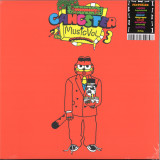
**Gangster Music Vol.3: The Most Gangster Music Trilogy of All Time Comes to a Triumphant Close**
Imagine curating a dream lineup of MCs and producers from every corner of the rap world—sounds impossible, right? Not for artist and illustrator Gangster Doodles, who has been bringing this vision to life for the past decade. Now, with “Gangster Music Vol.3”, the trilogy reaches its grand finale, and it’s bigger, bolder, and more unpredictable than ever before.
Gangster Doodles himself puts it best:
"It’s hard to believe that I’ve been actively working on this Gangster Music series for the past 10 years. The most gangster music trilogy of ALL TIME is almost complete!! And in my humble opinion Vol.3 is the most exciting out of the 3, both from a music standpoint (special shout-out to all my music heroes on Vol.3) and artistically speaking this is the most fun I’ve had in years”
Since launching Volume 1 in 2019 and following up with the second volume in 2022, Gangster Doodles has been shaping the Gangster Music series into a one-of-a-kind sonic universe—an unfiltered mix of underground titans, unsung legends, and rising stars. Volume 3 is the biggest installment yet, boasting a staggering 30 tracks that traverse the entire spectrum of rap and beat culture.
This time around, the lineup is as eclectic as ever. From legendary pioneers like Lee Perry and Tommy Wright III, to veteran producers such as Mr. Scruff and Peanut Butter Wolf, the album pays homage to hip-hop’s roots while pushing forward into fresh territory. The roster also includes established up-and-comers like Devin Morrison, Low Leaf, DJ Harrison, Quelle Chris, Homeboy Sandman, and Suzi Analogue, ensuring a mix of classic flavors and new-school innovation. The bubbling underground is well represented too, with artists like Raz Fresco, Atlanta’s 645AR, and Pro Era’s Chuck Strangers bringing their own distinct heat.
From pioneering SoundCloud rappers like Pouya to genre-bending composer John Carroll Kirby, from Birmingham’s Romderful to Chile’s RVYO, the album encapsulates a truly global soundscape, proving once again that Gangster Doodles’ ear for cutting-edge talent is second to none.
As always, the cover art is a vital piece of the puzzle. This time, Bootleg Garfield & Friends take center stage, bringing the same playful irreverence that has defined Gangster Doodles’ artwork for years. Fans are encouraged to engage, remix, and make the cover their own, staying true to the spirit of interactive creativity that has always fueled the series.
After years of meticulous curation, countless DMs, emails, and behind-the-scenes wrangling, Gangster Music Vol.3 is here to complete the trilogy in legendary fashion. Expect boundary-pushing beats, next-level lyricism, and a lineup that celebrates hip-hop in all its many forms.
“Thanks to everyone who’s actively supported and continues to tap-in. Believe & trust when I say I've got more dope stuff cookin’. STAY TUNED!! GANGSTER DOODLES 4EVER. 1LUV."
Gangster Music Vol.3 is out April 7th on All City. Stay tuned, stay tapped in, and get ready for the most gangster music experience yet.
out of Stock
Last delivered 15 months ago available to reorder, subject to availability
2018 original compilation now expanded! All the Dwarves songs from 2000-2024 featuring rock legend Nick Oliveri on lead vocals (and bass of course)! Featuring tracks from 9 different releases showcasing the raw exuberance and mayhem of the Dwarves featuring Oliveri as Rex Everything. Fans of Kyuss, QOTSA, Mondo Generator take heed! Standout tracks include We Only Came To Get High, Head Right (Remix), Love Is Fiction, Sixteen. This expanded reissue contains seven bonus tracks not appearing on the 2018 limited original 12 track album on Spanish Bang! Records. The updated reissue sleeve art is orange coloured.
Far Out Recordings proudly presents a landmark discovery in Brazilian jazz: the long lost album by drumming pioneer Edison Machado. Recorded in New York City in early 1978 but never released, Edison Machado & Boa Nova captures a pivotal figure in Brazilian music history at the height of his artistic powers.
Combining North and South American jazz traditions with Machado's revolutionary samba innovations, Edison Machado & Boa Nova represents a triumph against the odds. After facing persecution under Brazil's military dictatorship and being forced to sell his drum kit in 1976, Machado found renewed creative purpose in New York with the Boa Nova ensemble. The resulting album captures the essence of his genius - sophisticated yet wild, controlled yet daring, leading an ensemble of some of the best jazz, samba and bossa nova players of the day.
At just fifteen years old, Machado revolutionized Brazilian music through an accident that would change everything - when his snare drum broke during a performance, he began playing samba rhythms on the cymbal. This innovation, known as "samba no prato" (samba on the cymbals), brought new layers of dynamism to samba and proved instrumental in the development of bossa nova alongside contemporaries like Antonio Carlos Jobim and João Gilberto.
A complex and passionate figure, Machado was notorious for his militant perfectionism and "attacking" style of drumming. Having spent some years of his youth in the Brazilian army, musicians often remarked that he played as if he were at war. But his innovative style, while exhibiting complete control and sophistication, somehow so often danced right on the edge of chaos and wild abandon.
After making his name in Rio's legendary Beco das Garrafas (Bottles Alley) in the 1950s and early '60s, Machado went on to form Bossa Três - the world's first instrumental bossa nova group. His influence spread internationally through collaborations with Stan Getz, Sergio Mendes, Antônio Carlos Jobim, Milton Nascimento, and Chet Baker, while his 1964 album Edison Machado É Samba Novo stands as a masterpiece of Brazilian jazz.
At 80 minutes in length, Edison Machado & Boa Nova, the lost 1978 New York sessions, is a singular achievement in Brazilian jazz. The format itself is a rarity in the canon. It’s packed full of exceptional technical precision and creative vitality, with sophisticated arrangements and masterful improvisation from its exceptional sextet of Brazilian and US musicians: Paulinho Trompete (flugelhorn/trumpet), Ion Muniz (tenor saxophone), Steve Sacks (baritone saxophone), Mozar Terra (piano), and Ricardo dos Santos (double bass).
The album features unheard compositions by Brazilian masters Dom Salvador (Salvador Trio, Harry Belafonte, Edu Lobo), Guilherme Vergueiro (Raul De Souza, Leon Ware, Joyce), Aloisio Aguiar (Arthur Verocai, Airto) amidst the plethora of captivating original material by the members of the Boa Nova ensemble.
out of Stock
Last delivered 18 months ago available to reorder, subject to availability
Originally released on CD only – those were the days – “Triola im Fünftonraum“ counts as one of the most iconic albums of the early Kompakt era. Experience this timeless masterpiece of lush electronica lovingly restored and remastered for the first time on vinyl – 21 years after its inception.
We found this review from back in the days that perfectly sums up what “Triola im Fünftonraum” is all about:
The press material for “Triola im Fünftonraum” made allusions to home listening, when the album is mostly about movement… in a car …preferably a fast one … on a muggy spring day.
This might catch followers of producer Jörg Burger off guard. Up until this point, the producer’s Triola tracks – limited to three consecutive appearances on Kompakt’s yearly Pop Ambient series and a spot on “Leichtes Hören Teil 1” – were free-floating ambient washouts (albeit wondrous free-floating ambient washouts) with no pulse. The album, on the other hand, is beat-driven. Though still resolutely ambient – more an update of Burger’s lushest Bionaut tracks, only fully engaging instead of mildly diverting.
The soft, synthetic hand drums and tranquil vapors of “Leuchtturm” from Pop Ambient 2003, remain untouched and begin the album. Two other tracks that might sound familiar receive dynamic overhauls, now supported with quick dance rhythms and additional layers of synth gauze; the whispy flute trills and lightly flickering keys of “AG Penthouse”, for instance, are melted into a churning rhythm and some singing keyboard vamps that resemble a relaxed take on Tangerine Dream’s suspenseful soundtrack work for “Thief” (minus the crazy guitars).
What really makes the whole thing glow is the manner in which the tracks are attached, flowing in and out of another, rising and cresting and receding, with supreme poise – even if its title provides no indication, the album is as much a travelogue as Carl Craig’s “Landcruising”, Morgan Geist’s “Driving Memoirs” and Model 500’s “Deep Space”.
These are some of Burger’s most inventive productions, a remarkable feat since he’s been doing this so long. Catch yourself in the right frame of mind and you’ll wonder if everything he has released has been one extended ramp-up to this. In this age, it’s also refreshing to have a purely ambient techno album with absolutely no connection to “Boards of Canada”.
In other words, it’s a landmark for both its label and its genre.
Andy Kellman
Copyright 2025 TiVo Corporation
Ursprünglich nur auf CD veröffentlicht – das waren noch Zeiten – zählt „Triola im Fünftonraum“ zu den ikonischsten Alben der frühen Kompakt-Ära. Dieses zeitlose Meisterwerk schwelgerischer Electronica erscheint nun 21 Jahre nach seiner Entstehung erstmals liebevoll restauriert und remastered auf Vinyl.
Wir haben diese zeitgenössische Rezension gefunden, die perfekt zusammenfasst, worum es bei „Triola im Fünftonraum“ geht:
Das Pressematerial für „Triola im Fünftonraum“ spielt auf das Zuhören zu Hause an, obwohl es in dem Album hauptsächlich um Bewegung geht … in einem Auto … vorzugsweise einem schnellen … an einem schwülen Frühlingstag.
Das könnte die Fans des Produzenten Jörg Burger überraschen. Bis zu diesem Zeitpunkt waren die Triola-Tracks des Produzenten – beschränkt auf drei aufeinanderfolgende Auftritte in der jährlichen Pop-Ambient-Reihe von Kompakt und einen Platz auf „Leichtes Hören Teil 1“ – frei schwebende Ambient-Auswaschungen (wenn auch wundersame frei schwebende Ambient-Auswaschungen) ohne Puls. Das Album hingegen ist beatgetrieben, obwohl es immer noch entschieden Ambient ist – eher eine Aktualisierung von Burgers üppigsten Bionaut-Tracks, nur dass es voll und ganz fesselt, statt nur leicht abzulenken.
Die sanften, synthetischen Handtrommeln und die ruhigen Dämpfe von „Leuchtturm“ aus Pop Ambient 2003 bleiben unangetastet und bilden den Auftakt des Albums. Zwei weitere Stücke, die einem bekannt vorkommen könnten, erhalten eine dynamische Überarbeitung, die nun von schnellen Tanzrhythmen und zusätzlichen Schichten von Synthesizer-Gaze unterstützt wird; die flüsternden Flötentöne und leicht flackernden Tasten von „AG Penthouse“ zum Beispiel verschmelzen zu einem aufgewühlten Rhythmus und einigen singenden Keyboard-Vamps, die an eine entspannte Version des spannenden Soundtracks von Tangerine Dream erinnern, der für „Thief“ (ohne die verrückten Gitarren) verwendet wird.
Was das Ganze wirklich zum Leuchten bringt, ist die Art und Weise, wie die Tracks miteinander verbunden sind, wie sie ineinander fließen, ansteigen und ihren Höhepunkt erreichen und wieder abklingen, und das mit höchster Gelassenheit – auch wenn der Titel nichts darauf hindeutet, ist das Album ebenso ein Reisebericht wie Carl Craigs „Landcruising“, Morgan Geists „Driving Memoirs“ und Model 500s „Deep Space“.
Dies sind einige von Burgers einfallsreichsten Produktionen, eine bemerkenswerte Leistung, wenn man bedenkt, wie lange er schon dabei ist. Wenn man sich in die richtige Stimmung versetzt, fragt man sich, ob alles, was er bisher veröffentlicht hat, eine einzige Vorbereitung auf dieses Album war. In der heutigen Zeit ist es auch erfrischend, ein reines Ambient-Techno-Album zu hören, das absolut nichts mit „Boards of Canada“ zu tun hat.
Mit anderen Worten: Es ist ein Meilenstein für das Label und das Genre.
Andy Kellman
Copyright 2025 TiVo Corporation
out of Stock
Last delivered 18 months ago available to reorder, subject to availability
This record marks not only the first-ever release of the This War of Mine original game soundtrack but also a milestone 10th anniversary of the game. With its bestselling status, cult following among players, educational usefulness and recognition as a poignant symbol of war's threat to human lives-underscored by honours such as the recent Special Award from Amnesty International-it has been a decade of remarkable success. Yet, we cannot truly celebrate while wars continue to claim lives, stripping away humanity with relentless and senseless cruelty. To mourn in silence, however, would be equally futile. Instead, we're once again using This War of Mine as a platform for change through the Forget Celebrations charity DLC, now available for the PC (Steam) version of the game. Composer Piotr Musia? is looking back at the creation process for the music of This War of Mine and points out the significance the soundtrack still has for him: "This War of Mine was one of those projects, where picking up an electric guitar and playing on it felt like a good idea, although I'd never done it before. It gave the music this unpolished character - it's rough around the edges to match the grim atmosphere of the game. Just like its characters, I felt lost at first and it took me a while to figure it all out. For this and many reasons, it was an emotional ride and the music still feels special to me."
The latest drop on Art-E-Fax welcomes back deep cover braindance tinkerer Briain with a tape of warm and gritty electronica done the right way.
We last coaxed Barry O’Brien away from his day job as sound tech at beloved Berlin haunts Ohm and Tresor for a 12” back in 2019, and now he’s graced us with 11 slices of tweaked and freaked machine funk that should appeal to anyone who savours the maverick electro crossover between Rephlex and Drexciya.
The synth lines crunch and squirm and the beats stutter and rasp as Briain rolls out one wonkily perfect jam after another. In the intricate detail and movement that drives each track forwards you can sense the insular focus that comes with the best shut-in electronica. ‘Fist Fight Or Hug’ toys with sliced up breaks while ‘The Precipitous Descent Of Dignity’ deals in dystopian electro of the highest calibre. ‘Beal Bocht’; puts the drums to one side for a gloriously dislocated trip through FM synthesis and broken delay feedback and ‘Cognitive Dissonance’ revels in twitchy micro perc and delicate keys.
It’s a full-bodied album to sink your teeth into, and while it proudly carries the torch from certain legendary electronica forebears, it’s also delivered with all the charm and personality required to make for a future classic in the braindance canon.
Audio alchemist Damian Lazarus continues to redefine the boundaries of electronic music with his fifth studio album, ‘Magickal’.
Renowned for his unparalleled ability to craft transformative sonic journeys, Damian Lazarus is a master of rhythm, melody, and vibration—a true pioneer among his generation’s visionary artists. Damian’s broad depth of experience encompasses a variety of disciplines: tastemaker, selector, label owner, A&R and a Grammy-nominated artist in his own right - each informed by his unique ear for sound. He is chief wizard of the hugely influential and culture-defining Crosstown Rebels label, a globally renowned DJ with a penchant for exotic outdoor locations and a highly regarded recording artist with four albums and a plethora of solo cuts, collaborations and remixes in his sprawling discography.
With his fifth album, ‘Magickal’, Damian steps into his next evolutionary phase, combining his newly found sobriety with a more mature outlook while still pushing boundaries and creating unforgettable moments. At the root of it all is the magical power of togetherness and human connection that only music can facilitate. Driven by this core ethos, Damian continues on his mission to share his heartfelt music, taking the dance floor into unexplored realms of experience, facilitating moments of transcendence, bliss and pure, unadulterated magic.
Damian Lazarus, the avant-garde architect of spiritually nourishing sounds, is joined by a stellar lineup of collaborators on his latest excursion. It’s imaginative and mystical, rhythmically captivating and daring in its own way, as is typical of Damian’s approach. Taking consideration of his past, the album references his previous work to create a tapestry of compositions that tap into the energy of key moments from his discography. Drawing on his existing catalogue creates cohesive through lines and thematically serves as a continuation of previous stories. November’s single, ‘Sunrise Generation’, for instance, works as a companion to ‘Vermillion’, which was recorded by Damian with his band The Ancient Moons and vocalist Moses Sumney back in 2015. ‘Sunrise Generation’, featuring the beautiful vocals of Fink, was Damian’s first major release since his Grammy-nominated 2021 collaboration ‘Don’t Be Afraid’ with Diplo and Jungle, and continues to take inspiration from global gatherings at solstice and those moments of collective awe at sunrise.
Indeed, the album’s themes of mental elevation and psychedelic sonic journeys are evident throughout. Damian channels this energy through tracks like the soulful ‘So Low’, featuring the incredible Zoe Kypri, and the luminous ‘Searchin’, with Jem Cooke, whose collaboration with Damian dates back to ‘Flourish’ (2020) and lead single ‘Into The Sun’. Uplifting is the operative word here, as Damian aims straight for our hearts and inner selves, stripping away the layers to take us on a trip inwards, and out into the ether all at once. There’s a clear nod to Damian’s appreciation of amapiano when he teams up with Ghanaian interdisciplinary healer Jojo Abot on ‘Warrior Dance’. Old friend and inspirer Mathew Jonson brings his virtuoso touch to ‘Are You Dreaming?’, while TEED and A-Trak form an awesome alliance for ‘Falling Down’ with its heartrending vocals. ‘Alive’ features the Bloom Twins, and also additional production from acclaimed producer Mark Ralph, who incidentally worked on Damian’s debut album ‘Smoke The Monster Out’ in 2009 and forms another throughline to the past. ‘Alive’ blends pop sensibilities and song structure with Damian’s inimitable sound - and could become one of Damian’s biggest moments to date. ‘La Hija De Juan Simon’ delves into the Latin energy synonymous with vibrancy and self-expression as Damian teams up with acclaimed Spanish flamenco-influenced duo Mëstiza. On a solo tip, he rolls out with the eight-minute-plus soulful funk flex ‘Why Don’t U’.
In a suitably aligned instance of serendipity, the arrival of ‘Magickal’ comes at a pivotal period in Damian’s life, just as it has been with previous album concepts. Albums made and released during big shifts in his life speak to the correlation between growth, personal evolution, creativity, catharsis and sharing that process musically. The last album ‘Flourish’, for instance, was recorded and released in the space of a few months during the first summer of the global pandemic. As a result, there’s a kind of vulnerability in the music, a subtle story that’s being told with emotional touchpoints that will be relevant to anyone listening. The universal human experience and spectrum of emotions are things almost everyone can relate to. With the enhanced clarity of his sobriety, Damian’s compositions embody the uplifting nature of simply being alive, connected and unified in our love for music and one another.
Day Zero, Damian’s iconic annual festival, is intrinsically linked to ‘Magickal’. It’s the setting for his imagination when producing the music, it’s the launchpad for each year’s kaleidoscopic adventures around the world, and this year’s edition will be the backdrop to the release of ‘Magickal’. As the pinnacle of Damian’s annual experiences, Day Zero marks a vital milestone for his artistry, an extension of his inner realm, carefully curated and created for his global family of lovers and dancers to revel in the awe-inspiring beauty of Mother Nature. Central to the ethos of Day Zero is its sustainability practices and deep consideration for the locality within which it is held. Connections with local elders embolden its depth, cultivating a strongly aligned purpose with the ritual, customs and energy of the land and its people.
‘Magickal’ will be released in the same week as Day Zero, tying the two projects together in a neat dovetail. 12 years since it started, Day Zero continues to play a significant role in the music Damian makes, curates and plays. For him, it’s the epitome of his vision: a stunning natural setting, the very best party people from around the world, an unparalleled lineup of friends and family, high production values, eco-centric policies and music from another dimension. With these interdimensional transmissions, Damian channels his inner alchemist, which, in turn, permeates into the vibrational framework of ‘Magickal’.
Never one to adhere to convention, Damian has opted for a disruptive album release. ‘Magickal’ is to be kept under wraps and then announced and released on Crosstown Rebels on 8th January 2025, bypassing the modern trend of prolonged single drops and ‘tombstone’ album releases. ‘Magickal’ is the embodiment of Damian and his intentional, against-the-grain approach and reinforces the album as a complete artistic statement, offering listeners the full cohesive experience from the very beginning. This is a return to the album as the pinnacle moment and not the afterthought. Singles, edits and remixes will follow the ‘Magickal album’ release, and, of course, there will be a world tour to promote the album (including Glastonbury and Coachella) and a chance to present the album in exciting, innovative and unique ways.
Forever dreaming, a sincere student of magic, new and old, social sorcerer, lover of nature and master of musical wizardry, Damian Lazarus is a potent force. With ‘Magickal’, he reaffirms his place as one of electronic music’s most influential figures, taking listeners on a profound journey into sound, spirit, and connection.
out of Stock
Last delivered 6 months ago available to reorder, subject to availability
Mecca and the Soul Brother is the critically acclaimed 1992 debut album from the Mount Vernon duo, Pete Rock & CL Smooth. The album contains their best known song, "They Reminisce Over You". Mecca and the Soul Brother has been widely acclaimed as one of the greatest hip hop albums of all time.
out of Stock
Last delivered 16 months ago available to reorder, subject to availability
Aguaturbia's second LP "Volumen 2" (1970) is an essential album to understand the construction of what we know today as Chilean rock. Aguaturbia's debut album was originally released in 1970 and showcases one of South America's most significant psychedelic bands from the late 60s and early 70s. Their influence in their native Chile -and beyond- was groundbreaking. In July that same year the band recorded "Volumen 2" that, just as raw and dynamic as the debut,delivers even heavier intensity than their debut LP. As expected, this album is raw and dynamic, featuring heavy rhythms, distortion, and exceptional phased female vocals reminiscent of Jefferson Airplane. Comparisons with the Grateful Dead, Country Joe and the Fish and Led Zeppelin can be drawn. Splendid heavy psych and proto-stoner tracks make this album a pioneer recording in the history of South American rock. The LP showcases breathtaking moments, like the psych-blues 'Heartbreaker' or 'I Wonder Who' where guitarist Carlos Corales shines. When he played solos at the gigs, the effect on the audience was silence and euphoria at the same time. In fact, Carlos Corales (guitar) and Willy Cavada (drums) were both professional musicians who had made a previous career in rock and roll bands. Other outstanding songs are 'Blues On The Westside', 'Waterfall' and the magnificent 'Well All Right'. Controversy accompanies the release of the album once again. In this case the cover artwork, a tribute to Salvador Dalí, scandalizes the most conservative sector of Chilean society. This outstanding album is now available again on vinylafter many years out of stock.
Legendary producer Ant, best known for his work with Atmosphere, proves once again how irreplaceable he is with Collection of Sounds: Vol. 4. This latest release showcases the lifetime of dedication behind his craft, blending his unparalleled skills with a fresh, expanded vision. With previous volumes in the Collection of Sounds series, Ant has traced his musical evolution, spanning hip-hop, funk, reggae and more, all influenced and inspired by extensive travel dating back to his youth. Vol. 4 deepens this exploration, introducing rock-inspired elements—guitars that wail, gnaw, and groove—while maintaining his signature sound.
Despite these genre experiments, Vol. 4 is firmly grounded in hip-hop. The opening track, “Hearing In Dark Colors,” sets the tone, evoking long drives up desolate highways in the dead of night. Tracks like “Created With a Heavy Brush” and “Just Another Three A.M.” reveal a mastery of diverse soundscapes, while the triumphant “Day After 2010" takes listeners on an unexpected journey. As the album circles back to hip-hop on tracks like “A Pinch Brighter” and “Prelude Revisited,” it leaves listeners transformed, further solidifying Ant’s status as a visionary artist.
It’s always fun to let our audience peer through the party peephole with some hot behind-the-scenes info. For months, Black Light Smoke’s Control EP has supplied several of label head Tiga’s secret DJ weapons. In fact, he’s been sneaking out constantly after 9pm to play it out anywhere they’ll have him. And it’s little wonder to those who wonder why, as the Chicago-born producer’s top-flight mix of EBM, electro and Benadryl-soaked vocals has all the right people dancing.
Leadoff track "New York Is Dead” eulogizes the famous Big Apple Dance Party Scene in a way that will confuse the many who have embraced the city’s thriving “Groove With the Avengers” day rave series in Times Square. But the nihilism-liking doesn’t stop there, with the Friday-Til-I-Die attitude of “Black Hole at the Disco,” the pleather-dreaded post-cyberpunk of “Last Song Before Sunrise”, and the oxygen-deprived acid of “Break Your Back” culminating in the 11:45am-peak-time industrial trance of closer “Mind Control.”
Because we want this to be available to as many inhabitants of the blasted apocalyptic landscape we have pencilled in for 2034 or so, we have decided to make this release available both digitally and on vinyl. So whether you’ve managed to jack in illegally to a Spotify Wind Farm or you’re relegated to the hand-cranked misery of a Victrola while living in a barn or something, we’ve got you covered!
out of Stock
Last delivered 10 months ago available to reorder, subject to availability
"BODIES marks a bold evolution in our ever-developing sound. HEROINE was defined by its meticulously crafted and tightly woven concept, but the weight of this careful construction sometimes overshadowed the energy of the music itself, leaving some listeners feeling disconnected. With BODIES, we have embraced a more immediate, unfiltered approach that feels like a lightning bolt, looking to capture the energy of “Thornhill right now.” The album thrives on spontaneity and freedom, foregoing rigid concepts in favor of pure, in-your-face authenticity. It’s less about delivering a carefully constructed narrative and more about creating a visceral, open-ended experience. BODIES serves as a sonic moodboard—a collection of feelings and vibes—intentionally left open to interpretation. It has an upbeat and almost celebratory, party energy at times, but also retains all the emotion and intensity Thornhill are known for, making it our heaviest and most explosive work to date. With BODIES, we invite listeners to connect on their own terms. It’s raw, personal, and unapologetically immediate—a record that thrives in the moment, capturing our band at our most authentic and free."
*180g virgin leaded vinyl in a deluxe textured heavy gatefold cover, with paste-on artwork and special anti-static innersleeve.* Note: The pressing is absolute on point!!!!
Vincent Gallo and Harper Simon with a beautifully recorded suite of songs and instrumentals.
" More than two decades since he blew minds with a suite of brilliant releases on Warp, Vincent Gallo returns to the world of music at long last in Butterfly, his duo with Harper Simon, with the project’s full-length debut, “The Music of Butterfly”. A gesture of gentle, DIY / bedroom left-field pop, falling within the rough territory for which Gallo became renowned during the late '90s and early 2000s, while interweaving fascinating flirtations with minimalism and experimentalism, it’s a truly captivating piece of work that’s hard to get off the turntable after the first needle drop.
In the arts, the lines between genius and madness, as well as fact and fiction, often blur. Such, it seems, has always been the life of the artist, filmmaker, actor, musician, and composer Vincent Gallo. A cult figure and a member of various creative undergrounds for the better part of half a century, Gallo has courted controversy, ruffled feathers, and made some of the most singular statements to flirt at the outer edges of popular culture that can be called to mind. Arguably most well known for his work in film, during the late '90s and early 2000s - notably with his soundtrack for “Buffalo 66” and a suite of releases on Warp - Gallo became something of a sensation in the world of independent music for a visionary, incredibly unique and sensitive approach to sonority. For a time, the world was abuzz, waiting on bated breath for more, and yet time passed. Bar a few fragments, appearing here and there, almost nothing has been heard from Gallo, within the world of music, for more than 20 years. That is, until now, with the release of “The Music of Butterfly”, the debut full-length of Butterfly, his duo with Harper Simon: beautifully produced and issued by Family Friend Records - Gallo’s own label, founded in 1981 - in a deluxe edition that simply left us speechless: 180g vinyl in textured heavy gatefold cover with paste-on artwork and thick anti-static innersleeve. More or less picking up from where we last encountered him, spinning captivating melodies and gentle song-craft within the quieter temperaments of DIY, left-field pop, once again, and at long last, Vincent Gallo, encountered in an incredibly successful collaboration with Harper Simon as Butterfly, reminds us that he’s as much a force within the realm of music as he is within film. Not to be missed. This one isn’t going to sit around for long.
Vincent Gallo’s biography reads like the stuff of blaring beauty: a figure of moderate fame in his own right, who has remained at the centre of cultural ferment as the decades have rolled by. Born in 1961, in Buffalo, New York, as the story goes he ran away to New York City at the age of 16 and fell into the brewing counterculture of the Downtown scene, William Burroughs and John Giorno, in addition to the cream of his own peers, and began making paintings, music, and experimenting with film. In addition to being a member of the now legendary band Gray, with the artist, Jean-Michel Basquiat, and the filmmaker, Michael Holman, Gallo appeared in the cult 1981 film “Downtown 81”, before slowly beginning a career as an actor and catching the eye of Claire Denis, who brought his talents into the broader cultural gaze. Catapulted into the public by his own subsequent career as a filmmaker with “Buffalo '66” (1998) and “The Brown Bunny” (2003), both of which were marked by controversy and praise, Gallo further captivated the public with a partially brilliant, if not relatively brief, flurry of activity in the realms of music.
While Gallo had already been making music for roughly two decades at the time of his release of the “Brown Bunny” soundtrack, and the four release issued by Warp in rapid succession between 2001 and 2002 - “When”, “Honey Bunny”, “So Sad”, and “Recordings of Music for Film” - the almost fanatical fandom reached a fever pitch at the moment, allowing him, for some, to be regarded as much, if not more, as a musical artist than an actor and filmmaker. Anyway you cut it, in a few short years, he proved himself to be a polymath of rare talent. Somewhere along the way, while both were working as members of Yoko Ono's Plastic One Band, Gallo met the New York based, highly regarded singer-songwriter, guitarist, and producer, Harper Simon, who also happens to be the son of Paul Simon. The pair fell into an incredibly fruitful duo collaboration, which came to be called Butterfly, and “The Music of Butterfly” being their debut full-length release.
Written, performed, and recorded by Vincent Gallo and Harper Simon in New York City between the winter of 2018 and the spring of 2019, the ten tracks comprising “The Music of Butterfly” are cumulatively a gesture of gentle, DIY / bedroom left-field pop, falling within the rough territory for which Gallo became renowned during the late '90s and early 2000s, making one feel like barely a moment had passed since we’d encountered his graceful hand at song-craft. Stripped back and raw, while retaining a sense of warmth and intimacy, across the length of “The Music of Butterfly” the duo of Gallo and Simon weave something completely captivating at the juncture of minimalism, experimentalism, and pop: meandering moments of texture and tone, slowly forming toward flirtations of melody that flower into song and back again. Somehow playful and light, while also remarkably emotive and personal, it’s almost as though each of these tracks crystallised out the air, unlabored and exactly as they should be without a note or beat more.
An engrossing immersion into both Gallo and Simon’s remarkably accomplished minds, having followed the path toward one another after radically different experiences and careers, “The Music of Butterfly” is one of those records that’ll be hard to get off the turntable after that first needle drop, and rarely leave the listening pile for some time to come. Issued by Family Friend Records in a beautiful deluxe edition that is unmatched even among the most stunning recent productions we can call to mind - 180g vinyl in textured heavy gatefold cover with paste-on artwork and thick anti-static innersleeve - it’s lovely to have Gallo back in the musical mix after so many years. "
Each of the ten tracks on "mixtape suite" is likely to evoke such absurd associations in music lovers. The album authentically and unpredictably creates a feeling of total boundlessness with a global approach. Effortlessly uniting an entire record shop within itself. One time you think of Madlib or the Bee Gees, then of Joan Baez or Amon Düül, other times of Beck or Gorillaz. Between boom bap and Krautrock, disco styles, folk references and trip-hop vibes spread out organically. Analogue percussion blurs with 90s sampling sound aesthetics.
TIKHET sounds unplanned and anarchic, with a raw core and some well rounded patina on the outside.
1883 Magazin: "Keep an eye on this emerging act"
Mesmerized: "the project has all the elements needed for a powerful musical output..., an impressive debut for the visionary pair"
Indieshake: "Fucking love this"
out of Stock
Last delivered 18 months ago available to reorder, subject to availability
Left Ear are delivering two previous unreleased Australian ‘experimental’ electronic tracks from the 80’s and honoring them with a split 12” release.
Side A: Features an unreleased full-length version of Tim Gruchy’s Jungles, a solo electro-percussive piece recorded in Tim’s Lab D’Avoid studio in Brisbane. The track is emblematic of his style during an era when he worked extensively in music, both as a percussionist and primarily with electronics, including early analog synths.
A shorter version was originally released on the Meanjin (Brisbane) art collective ZIP’s Eye Ear EP book package in 1986 and, more recently, on Left Ear’s Antipodean Anomalies 2 compilation.
This original version of Jungles was initially part of the soundtrack for the ZIP Performing Group’s infamous Ironing Board Dances. Footage of the performance was treated through a Fairlight synthesizer, mixed with hand-painted slides, and transferred to VHS for various film festivals.
Side B: Michael Krillich’s Arnhem Land began its journey in 1982 in a shared house in North Bondi. Inspired by Brian Eno and David Byrne’s My Life in the Bush of Ghosts, he experimented with tape loops, cut-ups, and samples, incorporating synthesizers, effects pedals, a drum machine, and an unknown sample from an Australian Aboriginal record. This creation became part of his cassette release, Thematic Variations. In 2010, Krillich uploaded an unreleased extended version of Arnhem Land from Thematic Variations to YouTube, which was shared by record dealer Matt Bowden with Left Ear Records, who pursued to release it on vinyl. Their search to uncover the sample’s origins led them to Arnhem Land Vol. 1 (1957), recorded by Peter Elkin in the Daly River region. After years of research and through the guidance of Professor Allan Marrett and local custodians, the sample was verified as a “Wangga” ceremonial song sung by George Morkai, an Emmiyangarl man. Rights to the song had passed through generations to Tobias Worumbu, who granted us permission for its use, bringing Arnhem Land full circle.
If every significant artist has an underrated gem in its catalog, then Mirage is that album for Fleetwood Mac. An obvious return to relative simplicity after the dramatic tension of Rumours and experimental ambitions of Tusk, the 1982 album finds the band re-grouping after a brief hiatus and again climbing to the top of the charts. Extremely well-crafted, well-produced, and well-performed, the double-platinum effort distills the group’s hallmark strengths into a filler-free set that never runs short of addictive pop hooks or daft accents.
Sourced from the original analog master tapes, pressed at Fidelity Record Pressing in California, and housed in a Stoughton jacket, Mobile Fidelity’s numbered-edition 180g 45RPM 2LP set presents Mirage in reference sound for the first time. The efforts co-producers/engineers Ken Caillat and Richard Dashut went to capture the splintered albeit formidable band can be heard with stunning accuracy, range, depth, and detail.
Though Rumours understandably gets a permanent spot in the audiophile hall of fame, the smooth, clear, and dynamic sonics on Mirage confirm that the record that stood as Fleetwood Mac’s last effort for five years deserves a place in the same vaunted arena. The presence and imaging of Mick Fleetwood’s percussion alone on this reissue might have you wondering how this slice of soft-rock bliss has gone under-noticed for decades. Other prized aural aspects — separation, definition, impact, tonal balance — are also here in spades.
Like much surrounding Fleetwood Mac in the 1980s, arriving at Mirage was not easy. Caillat searched for studios located outside of Los Angeles on a mission to change up the vibe of the band’s prior recording sessions. Everyone settled on Le Chateau in France, where relations between some members remained icy — and cooperation with the producers strained. Battles with exhaustion, bitterness, and addiction further informed the proceedings at the 18th century complex in the French countryside, where even communal meals were allegedly eaten in silence.
Inevitably, the feelings that co-producer Lindsey Buckingham, Stevie Nicks, Christine McVie, and company harbored — as well as the situations in which they found themselves — drifted into the songwriting. In its rapid ascent to rock-star royalty status, Fleetwood Mac drifted apart, embarked on solo pursuits, and found it was lonely at the top. Emptiness, the illusion of dreams, the longing for love, the want to escape to bygone times of innocence and happiness: Such themes inform a majority of the narratives. Even if the lyrics regularly take a back seat to easygoing arrangements that allow Mirage to come on like a refreshing breeze on a sunny summer afternoon.
Home to three Top 25 singles in the U.S. and having occupied the pole position of the Top 200 album charts for five weeks, Mirage rightfully resonated with the mainstream and attracted listeners on both sides of the pond. And how, via a smart blend of sugary melodies, warm harmonies, interlaced notes, nimble rhythms, taut structures, and passionate vocals. Not to mention the presence of what arguably remains Nicks’ signature song, the biographical “Gypsy,” a meditation on the loss of her close friend Robin Anderson that teems with majesty, mystery, and mysticism — and which gets an assist from Buckingham’s shaded tack piano and richly strummed guitar chords.
Its ranking as an all-time classic aside, that No. 12 hit has plenty of company when it comes to brilliant pop turns on Mirage. On the subject of Nicks, the raspy singer gets a little bit country on “That’s Alright.” Its clip-clopping pace and two-stepping progression complement subtle vocal swells that emerge during the final verse of a tune that is ostensibly about leaving but still conveys forgiveness and grace. And what would a Fleetwood Mac record be without Nicks drawing on the tools of the supernatural — cards, dreams, wolves, and the like — on the twirling “Straight Back.”
Despite the potency of Nicks’ primary contributions, Mirage seemingly unfolds as a tight competition between Buckingham and McVie — and one that ultimately ends in a draw. Buckingham’s salvos include the contagious “Can’t Go Back,” a yearning to time-travel back to the past that’s complete with hall-of-mirrors backing vocals; “Oh Diane,” out-of- left-field ear candy sweetened with hiccupped vocals and salt-and-pepper-shaken grooves; the chiming “Eyes of the World”; and “Empire State,” a delightfully fluttering track whose high-range vocals, lap harp notes, and ringing xylophones hint at the galaxies of sound that would erupt on Tango in the Night.
Then there’s McVie. As elegant, understated, and coolheaded as she’s ever been on record, she pours her heart out on cuts that revolve around her inevitable split with Beach Boy Dennis Wilson. In the process, she punctuates Mirage with a characteristic not always associated with catchy pop music: emotional weight, and the sense of dreaded acceptance in the face of dreams deferred.
“I wish you were here/Holding me tight,” McVie sings over a delicate melody on the album-closing piano ballad “Wish You Were Here.” Though they hoped otherwise, for the members Fleetwood Mac, distance and separation were always close at hand. Believing otherwise, inviting nostalgia, and pretending everything was fine only amounts to a mirage.
'It begins with a shoebox of mysterious provenance, full of recordings from the Vendée department on France’s western seaboard: songs of love and war, life and death, played out on land and sea. Songs passed down and sung by ordinary men and women, gracefully delivered with the poetic economy which unites the folk song of all peoples.
Next it takes a group of contemporary musicians to make selections from this treasure trove and sing these old songs anew; to sing them for their beauty, of course, and to reclaim the people’s tradition from those who would seek to exploit it for nefarious political ends. Who better for this task than Tartine de Clous, a singing trio from Vendée’s neighbouring department of Charente-Maritime, who burst into national and international consciousness with their debut album "Sans Folklore" in 2015? The result of their shoebox rummagings, the new album "Compter les dents", recorded in 2019 and finally seeing the light of day, is bound to delight old fans and win them many new ones.
Time makes many’s the alteration, and "Compter les dents" finds 'les garçons' - Geoffroy Dudouit, Thomas Georget and Guillaume Maupin - in a different state of being from their debut release. The trio, friends since youth, have certainly matured between albums, as one would expect; consequently the newer performances are more considered and poised, unfolding with a patient confidence. A relaxed domesticity prevails, something to do with the fact that the album was entirely recorded chez les amis, in contrast to the first album, which was mostly recorded at live performances in bars and night-spots across France.
Lending gravitas to the grain of their voices we mark a deepened richness, doubtless born of the various vicissitudes of daily existence which these gentlemen - and we too as citizens of this turmoiled globe - have weathered in the intervening years. Not too dissimilar, in fact,
from some of the vicissitudes detailed in those old Vendée songs. Plus 'ça change', right?
There’s a greater complexity and subtlety to their unique three-part harmonising, too. Their voices mesh in even stronger - almost telepathic - 'fraternité' than ever before: now commanding and mighty as a full-rigged counter-vessel, now gentle and lulling as a mother’s
cradle-croon, or as the whisper in a lover’s ear.
Three legendary figures of French traditional music, now sadly departed, preside as tutelary spirits over Compter les dents. They are: the late Claude Flagel, musician and ethnomusicologist; and the late Jean-Loup Baly of the well-known 1970s band Mélusine. Most of the album was recorded by Claude in the Brussels home he shared with his late wife Lou Flagel. The album is dedicated to the memory of Jean-Loup, Claude and Lou.
For the first time there are several guest instrumentalists working their magic to expand the Tartine de Clous sound. Jean-Loup plays a characterful accordéon on the song ‘La Veuve'. The other guests are: Maurice Artus (voice), Robert Thébaut (violin), Quentin Manfroy (piccolo, contrabassoon), Marceau Portron (cigar box guitar). Their contributions add even more conviviality to that which the trio of singers already share, a sensation which will doubtless be shared by those who happen to find a place in their lives for "Compter les dents".'
After the success of Trenchtown Rock, Small Axe, and All in One, here comes the final chapter of this quadriptych dedicated to Bob Marley’s musical legacy. Side A opens with “Treat You Right,” a vibrant declaration carried by mesmerizing rhythms, while “Don’t Rock My Boat” radiates a serene, sunny vibe. On Side B, “Chances Are” shines with its melodic tenderness, leading into the energetic “Bend Down Low,” a pure call to dance. An essential album, blending incandescent grooves with universal messages, crafted by an eternal legend.
As a founding member of Dublin experimental folk group Lankum, Ian Lynch explores submerged leylines of music and song. Forging a musical path that is all at once dark, mysterious and foreboding, but ultimately transcendental. His new solo project One Leg One Eye sees him taking a fresh approach to musical arrangement culminating in a sound that is more rooted in the raw aesthetics of second wave black metal than contemporary folk. The project was born across 2021, a period in which Lynch was able to enjoy the freedom of experimenting and exploring different paths of sound design without expectation or pressure. Seeking out interesting settings to record music and gather field recordings, there are several environments, external and interior, whose respective essence have seeped into the spirit of the music and come to represent Lynch’s artistic approach and development with this singular debut album, …And Take The Black Worm With Me. Rediscovered spaces in Dublin and the familiar enclave of his bedroom are intrinsic to the distinct and sometimes harrowing atmosphere conjured throughout the album’s five enveloping compositions. One particular location, an abandoned factory where his father worked when Ian was a child, provided a space of great inspiration and intrigue during this time. Lynch frequently visited the large abandoned warehouse and sang with his shruti box, contented in his solitude. ‘I’d Rather Be Tending My Sheep’, grew into existence from those initial sessions, eventually finding a home as an emotive centrepiece to the album. Reflecting on the overall recording of …And Take The Black Worm With Me, Lynch says, “Everything I was doing with these songs was all kind of new to me; experimenting with different sounds, textures and palettes and seeing what I could come up with by piecing it all together. I spent about a year making the album. I loved the whole process because it was basically just me in my bedroom recording everything. The experience of recording like this and having my own time to do it was amazing. I could focus on recording a specific element and happily spend all day working on that one part, doing it as many times as I wanted. At the end of the day if it didn’t feel right, I could just try it again the next day. When you’re on your own you can spend as much time as you want on particular parts until you feel that it’s absolutely perfect. I found that to be a really liberating experience. It was probably my favourite experience recording music.” The collection of songs (and their chronology) featured on …And Take The Black Worm With Me tell a story unique to Lynch’s experiences with anxiety and recognising his shadow self. Whilst the album became an outlet of personal expression for Lynch, the overarching themes and subsequent journey to confront one’s internal dichotomy of light and dark before accepting this inherent duality is universally shared. The eerie and often unsettling world contained within the album’s texturally dense opener ‘Glistening, She Emerges’, driven by the captivating drone of distorted uilleann pipes, immediately immerses the listener in this transportive work. It descends with a great heaviness, yet woven throughout the arrangement is a fascinating and indescribable entity that draws you further into this otherworldly dimension. This mood continues as the tracklist progresses and transitions into Lynch’s haunting realisation of ‘Bold and Undaunted Youth’ which further demonstrates a cinematic influence to Lynch’s compositional style. Sonically, Lynch effectively builds an impressively vast terrain with brilliantly murky lo-fi recording techniques and an unshakable curiosity to move beyond conventional structures and play with the timbre of the instruments available to him. From recording hurdy-gurdy or concertina to tape and experimenting with loops and effects pedals to stitching field recordings together, there’s an intimacy established between Lynch and his audience established through the simultaneously eerie and beautiful tones courting through …And Take The Black Worm With Me. This culminates in ‘Only the Diceys’, the extraordinary closing track in which we reach a place of resolution mapped into the album’s narrative structure. Mixed by longtime collaborator John ‘Spud’ Murphy in his Dublin-based Guerrilla Sounds Studio and mastered by Harvey Birrell …And Take The Black Worm With Me features contributions from Ruth Clinton (Landless) on church organ and vocals by Laurie Shanaman (Ails, Ludicra). Of Shanaman’s participation, in particular, which further illustrates the lo-fi and DIY ethos to the recording, Lynch says, “Laurie is my favourite black metal vocalist of all time and so I reached out to her hoping to have her involved in some way. She did, and she features on the opening track by providing some incredible screams. She recorded them into her phone and sent them over to me; what appears on the album is literally a phone recording of her screaming in her kitchen!” …And Take The Black Worm With Me continues Ian Lynch’s groundbreaking work with Lankum; recontextualising traditional forms and generating new spheres of music in his wake, confirming his status as one of the most interesting and innovative artists working in Ireland today.
Mr. K with two slices of Philadelphia disco, from smooth and slinky on our A-side to all-out floor pounding disco madness on the B.
Janice McClain, rightly adored for her Garage classic “Smack Dab In The Middle” (feat. on MXMRK-2068) but her second single is a real under-the-radar treat. The comfortably laid back groove somewhere between a stepper and simmering midtempo disco, classy and danceable as the finest Philly soul. Originally on a small LA-based label in 1983 (and sounding like it could have come out a good five years earlier), written and produced by McClain’s uncle Milt Tennant and his writing partner Thom Page, the same team responsible for “Smack Dab” — all Philadelphia rooted, so the sound should come as no surprise. Add McClain’s heartfelt and uplifting vocal and we easily have a lost classic. Mr. K’s edit trims the rare 12-inch version down for maximum sonic fidelity for its first appearance in a 7-inch format.
The flip side vibe goes in a completely different direction, although once again has its roots in Philly. The disco remake of the standard “Brazil” was a massive hit for the Ritchie Family in 1975, topping Billboard’s dance charts and getting deep into the Top 20 on the Hot 100. The group itself was a studio concoction led by veteran producer Richie Rome, with legendary trio Sweethearts of Sigma handling vocals — you’ll recognize their trademark harmonies from other huge classics like “Ain’t No Stoppin’ Us Now” and “Love Is The Message", studious listeners will detect a lot of similarities in the vamp section of “Brazil” and “Love Is…” as the MFSB house band launches into their trademark groove. This vamp section is unfortunately truncated on the original 7-inch single, but the always-attentive ear of Mr. K picks this point to begin his edit, starting where the original single faded out and giving us a full four-plus minutes of galloping disco delight.
Two flavors, both as tasty as it gets, all on one compact piece of wax! Another essential addition to your collection.
out of Stock
Last delivered 14 months ago available to reorder, subject to availability
Apollo / R&S are delighted to welcome back The Primitive Painter, aka the duo of Roman Flügel and Jörn Elling Wuttke for a timely reissue of their 1994 lost classic self-titled album of sonorous IDM.
Growing up in Frankfurt, in the 80s and 90s the duo met at an indie rock club in their home town of Darmstadt, bonding over their shared obsession with the first wave of acid, Chicago house and early Detroit techno as well as their patronage of now iconic Frankfurt club nights like The Omen or Dorian Gray or the infamous Delirium Record shop run by scene stalwarts Ata (Robert Johnson) and Heiko MSO (Playhouse).
Taking inspiration from the likes of The Black Dog and Transmat as well as seminal compilations such as Planet E’s Intergalactic Beats and Warp’s Artificial intelligence compilation the duo honed their inventive take on the Detroit techno blueprint under the monicker Acid Jesus, debuting on their freshly minted Klang Elektronik label. The label was started in conjunction with Ata and Heiko after Fluegel & Wuttke (regular patrons of the Delirium store) pressed a demo on them, muttering the immortal line; “Please listen to the tape, we are big Mr. Fingers fans.”
Through the mid ’90s the project flourished giving rise to a classic album and a brace of singles that number amongst the best of the era’s techno, winning them a influential fans most notably Sven Väth, David Holmes and Andrew Weatherall who invited them to play live at one of the legendary Sabresonic parties in London.
Alongside the success of the Acid Jesus project, the duo found great inspiration in outside of the club, including an ambient happening when the KLF came to play Frankfurt; “There were live sheep eating grass on stage while they played at Mark Spoon’s club XS”, as well as cinematic influence from the likes of Jim Jarmush and Wim Wenders. It was however the euphonic IDM grandeur of Apollo Recordings self titled compilation of 1993 that really got their creative juices flowing: “It was a ten track compilation with artists like David Morley, Model 500, Aphex Twin which still sounds so good today,” Jörn enthuses. “ It was really the trigger to go away from the Detroit sound and more towards the big melodies of B12 etc.”
Deciding to make their tribute to this style of music the duo turned out 10 tracks of gauzy, melodious electronica in a white hot fever, one after another over the ensuing months. Settling on a name for the new project they picked ‘The Primitive Painters’ taking inspiration from the band Felt. “We are both children of the C86 movement,” explains Jörn. “this attitude of noisy art school influenced rock like Primal Scream, MBV, The Jesus & Mary Chain really inspired us to take a DIY approach to our music.”
They sent the resulting demo cassette to Renaat at R&S / Apollo. “We really had no expectations,” Jörn explains. “So we were shocked and delighted when we received a fax saying that he wanted to release it”.
The resulting release was bungled by an R&S mix up that attributed the album to the duo’s own Klang Elektronik label which confused both fans and distributors alike, denying the release the critical boost and attention that it so richly deserved. Accordingly the release slipped out without much fanfare, with a chastened Fluegel & Wuttke returning to their Acid Jesus activities which would eventually lead to their blockbusting success as Alter Ego.
Over the ensuing years the reputation of The Primitive Painter album has only grown, with second hand copies (only 500 vinyl were pressed) changing hands for exorbitant amounts on Discogs, leading us to this opportune moment of a richly deserved ‘first’ release on the label for which the project was started, Apollo / R&S.
“This really brings us full circle,” says Jörn. “Apollo / R&S meant and means so much to us as artists and so it was bittersweet to not have the official release - to put that right all these years later feels really good.”
This new vinyl release comes in re-created original gatefold artwork and includes all original 10 tracks (Stoned Soul Picnic was previously on the CD only).
out of Stock
Last delivered 14 months ago available to reorder, subject to availability
15 Years Of Dame-Music Vol.1 is an ode to the unmistakable sound of the TB-303, a core element of Bloody Mary’s widely respected sound and label. Above all, it celebrates fifteen years of quality dance music, set to continue across its three excellently curated volumes in 2025.
The first volume, releasing 28th March 2025, features a track from Bloody Mary and welcomes back Thomas P. Heckmann, E-Bony, and Hardfloor to the imprint.
15 Years Of Dame-Music Vol. 1 with label regular Thomas P. Heckmann’s ‘Days Of Buzz’ electrifying the dancefloor with waves of mind-melting acid over a resolute beat.
Label head Bloody Mary then drops ‘Fractal Waves’, playful, 303-licked, and comfortably switching between straight 4/4 and raw, crunched-up breaks; this is a raveready cut showing Mary at her best.
On the flip, artist E-Bony returns to Dame-Music after closing the label’s 2024 schedule with the ‘Machine Code’ EP. His ‘303 Elements’ builds from a low-slung groove to an intense climax as acid drips, oozes and rains over crisp drums while hoover sounds create an otherworldly atmosphere at its peak. Closing out the first volume is 90s Acid Techno duo Hardfloor with ‘I’ll Never Own A Helicopter’, providing a hands-in-the-air club track to work the dancefloor into a frenzy.
Mastered by Thomas P. Heckmann
Artwork by Philip Mercieca
(c) Dame-Music 2025, all right reserved
out of Stock
Last delivered 10 months ago available to reorder, subject to availability
Although still very much a secret, Oakland, California's Justin Pinkerton has perfected and expanded his Futuropaco project to a stunning degree over the past seven years. The one-man band is deeply rooted in Pinkerton's masterful drumming, which builds on the legacy of 1960's and 1970's legends such as Tony Allen and Jaki Liebezeit. But he's an accomplished multi-instrumentalist as well, and the Futuropaco sound is a colourful fusion that sees him throw fuzz guitars, flutes, vintage synthesizers and Anatolian string instruments into the mix - seemingly without much effort. The second and final volume of the "Fortezza Di Vetro" series feels like a conclusion, the sound of an artist reaching his creative zenith. It's an experimental album, yet immediately seductive in its energy - channeling the vibey art-rock of Tortoise, Black Sabbath riffage and vintage Italian film music in equal measures. It's such a refined and esoteric blend, yet hits so directly. It's simply impossible not to crank the volume knob once this slab of vinyl is on the turntable, followed by immediate head nodding. Buy the ticket, take the ride. Justin Pinkerton is a vastly talented rhythmsmith, best known as a member of Californian stoners Golden Void. On this project he plays all the other instruments too so he can do what he blooming well feels. And it's not as if the drum solos go on for twenty minutes like those of John Bonham and his pale imitators. Nope. Into tracks that are both jam-packed and concise, Pinkerton has squeezed his love of vintage Italian library music, classic krautrock and heavy psych rock. At one point it suggests Grails have been performing super-speed cover versions of fusion-era Miles Davis with Adrian Younge on production. -The Quietus Futuropaco returns in a big way with Fortezza di Vetro, a buzzing, groove-heavy album that expands on what came before while staying true to the project's origins. Dizzying, fuzzed-out psych with just the right amount of melancholy for good measure. Justin Pinkerton and Futuropaco have done it again. Fantastico! -Complex Distractions
Merv keeps it super deep here with a trio of supremely tasteful techno cuts doused in dub culture. 'Sliver' is first and awakens the sense with some gentle rattling chords that sound like distant thunder rolling in with a storm. 'Embrace' is airy, with big kicks and frosty pads shimmering across the airwaves and crisp hi-hats cut right through. 'Strain' is last up on the flip and is an elongated journey through some sugary melodic pixelations, a frosty dubscape and hints of melancholia. All are perfect for those late-night and intimate back room sessions.
out of Stock
Last delivered 11 months ago available to reorder, subject to availability
DJ Support: Erol Alkan, Kenneth Bager, Leo Mas, FFan, Sean Johnston (ALFOS), Max Essa, Coyote, Ban Ban Ton Ton, Chris Coco
Hell Yeah series File Under Balearic Gabba continues its mission to bring some vital, previously digital-only Balearic Gabba weaponry to vinyl for the first time. This second volume has artwork by Planet Luke and features Wallace next to new school stars SIRS and Pedro Bertho.
Tartan Records label head and British talent Wallace opens up with a remix of Sewell And The Gong's 'Better Words' that has been a real summer hit for label head Marco Gallerani.
The original came on Jason Boardman's fine Before I Die label and is one of those jams that transcends genre and wins over techno heads, Adriatic beach groovers and festival main stages alike. It is 'proper Balearic Gabba' says Marco with its tropical percussion, humid pads and watery droplets all adding lush atmosphere to the dubby drums. The chords and reedy leads are beautifully delicate but get floors in a blissed-out, loved-up trance.
SIRS is an artist on fire right now and already impressed on this label with his remix of Aura Safari which is one of the year's standout Balearic house jams. He has a new single on the way for Hell Yeah but first flips label mate My Friend Dario's 'Tellaro' into a wobbly, psyched-out dub disco and breakbeat chugger. The zippy synths and shimmering keys are underpinned with a taught bassline and playful vocals that bring great fun and irresistible party vibes to any set.
Hell Yeah mainstay Verdo then has his 'Boulevardier' remixed by Pedro Bertho, a rising talent from Brazil with a steamy South American style. This one is a modern beach classic that unites both young and old heads with its frayed analogue drums and snappy percussion joining the dots between 80s Chicago house, new age and Balearic with its big piano chords and phased bass all getting hands the air.
out of Stock
Last delivered 12 months ago available to reorder, subject to availability
"If you remember Woody Allen's Sweet and Lowdown masterpiece you will sure be aware of Sean Penn's character stage freight when confronted with the reputation of a certain ""Belgian gypsy guitarist"". Well, that guitarist is Django Reinhardt, probably the first jazz legend to emerge from the European scene, one of the most accomplished guitarists ever, and the undisputed king of manouche guitar.
Born Jean Reinhardt in 1910 and better known by his romani name, Django's legend started as early as 1928 with his first recordings at the age of 17. Right after that a brutal fire burnt his caravan - his wife and him escaped alive but he suffered extensive burns over half of his body, losing two of his right hand fingers. Far from stopping him from playing guitar he developed his own style in order to be capable to keep his passion. And his style became the fundation of manouche guitar sounds to come.
In the carly thirties Reihardt teamed up with French violinist Stéphane Grappelli (1908-1997) and they formed the Quintette du Hot Club de France, in Paris which became the most accomplished and innovative European jazz group of the era, and which you
can enjoy now through the legendary recordings collected in the present Shellac LP."
Repressed for the first time in 2 years, Note price change. Sermonizing Black Nationalism, Pan-Africanism and the benefits of a healthy and just lifestyle during the height of the Bad Boy/Roc-AFella era of nihilistic excess in the late 90's, Dead Prez also signed to a major label (Loud/Columbia) despite leaning much more towards the burgeoning indie aesthetics of the day. But this was a good thing – using major label muscle to wake up righteous hip-hop fans who might have fallen asleep at the wheel. The group itself – consisting of MCs stic.man and M-1, who produced or co-produced most of the duo’s music – was formed in Tallahassee, Florida in the early 1990's.
By later that decade, the duo had started making significant waves, having their music heard on the soundtracks to “Soul In The Hole” and “Slam,” as well as appearing on albums by Big Pun and The Beatnuts. By 1998, they released their first official single, the serious, stark “Police State,” on Loud, appropriately brought to the label by Lord Jamar of Brand Nubian. After building a solid rep over the next two years with fiery live performances, in 2000 they unleashed their debut album, Let’s Get Free.
The album was a welcome return to provocative and often radically political rhetoric that hearkened back to hip-hop forebears including The Coup, Public Enemy and KRS-One (as well as poetic descendants like the Last Poets and Watts Prophets). Let’s Get Free was critically acclaimed and benefited from multiple singles, including the infectious, thick analog drive of “Hip-Hop” “It’s Bigger Than Hip-Hop,” with a remix co-produced by a young Kanye West; “Mind Sex” (with Abiodun Oyewole of the Last Poets); and the poignant “I’m An African.”
But the singles weren’t the only worthy songs, as just about every cut here has deeper meaning than most full albums by their early 2000's peers. Highlights: the thought-provoking, anti-drug album opener “Wolves”; “We Want Freedom” “They Schools” and “Propaganda” . All in all, this is one of the more underrated and possibly Top 5 fully-realized political hip-hop albums of all time.
out of Stock
Last delivered 9 months ago available to reorder, subject to availability