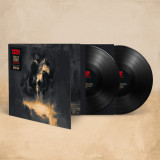
"The world is rich, the world is colorful. So why not show it in all its complex diversity and contrasts? Why, when you go in one direction, do you have to follow it further and can't just go in all directions at once? These are all questions that Berlin-based Turkish singer Basak Yavuz may have asked herself when she began recording her new album "Raum 610."
Basak Yavuz doesn't take much time to get down to business. Right away in the opener "Promised Lands," different stylistic elements like jazz, rock, funk and hip-hop chase each other as if it were a matter of life and death. The message is unmistakable: this is about energy. The energy of the big city. Crowds on the sidewalk, congested streets, noise from construction sites, cyclists and drivers yelling at each other, barking dogs, screaming children, shattering glass, a new surprise around every corner. Basak Yavuz does not hide, but picks up the tempo of the Moloch and makes it her own pulse with all its fractures and border crossings. She is not afraid to overload her songs, but confidently juggles the explosiveness of creative oversaturation." (Wolf Kampmann)
out of Stock
Last delivered 2 years ago available to reorder, subject to availability
British singer-songwriter Katherine Priddy releases her much-anticipated sophomore album "The Pendulum Swing" via Cooking Vinyl. This follows her highly acclaimed 2021 debut The Eternal Rocks Beneath, which announced Priddy as a singular new talent on the contemporary roots music scene. Once again recorded in Birmingham by producer Simon J Weaver, guest musicians comprise John Smith (lead guitar), Harry Fausing Smith (strings), Marcus Hamblett (brass/double bass), George Boomsma (guitar, backing vocals, co-writer on track "Ready To Go"), Polly Virr (cello) and even a brief appearance from Priddy"s family members right at the end of the album, in keeping with its themes. With The Pendulum Swing, Priddy has managed to keep moving forward whilst acknowledging and honouring all that has gone before. For fans of Nick Drake and John Martyn.
In the beginning was a half-truth, the truth was of war and the half-truth was post-war. Fancying the pretensions of its cultural superiority, a continent chose to hide the truth behind ridiculous jargon and the soothing distance of offshored ?????????. Europe wished itself beyond war because it thought the privilege of peace a birthright, just as it refused to understand that post-war was a euphemism for interbellum. Then the truth has set us free.
The delusion was discarded and war was revealed as an inconceivable horror. Almost immediately it turned familiar and virtually comfortable. Novelty songs of drones gutting tanks became a laughing matter and the burning tanks, their crew inside, entertainment. Consequently, a plurality of people started to collectively dream of new stages of the righteous kind of carnage. This happened within weeks.
Our imagination has swollen to the point of loss of consciousness, compounded by the narrative form long in the sways of atrophy. All of this raises the question of to what degree were the years of peace culturally squandered. The art of the previous age prided itself on self-awareness, today we fail to even notice that we no longer recognize ourselves. But we have arrived where we started and our issues were not too complex for expression.
Since no art form generates action, the most appropriate art for a culture on the edge of extinction is one that simulates pain. In these times we shouldn't produce any other music, none but this, intended to prevent our silence from being misinterpreted.
Orange vinyl w/ heavy black spatter (Indie Retail exclusive) 'Enemy Of The World' is the fourth album from US pop-punk / melodic hardcore heavyweights 'Four Year Strong'. This album has now been pressed onto vinyl since its original release in 2010, as the band's first major-label released studio album. All units come with a fold out poster / lyric insert, and each comes in a hand-numbered sleeve. This new re-issue comes via Hassle Hindsight, a recently-launched sub label of Hassle Records, created to facilitate the occasional one off re-issues of releases and records from the past that the people at the label have loved and still love.
Mutagenicos (in English, "Mutagens...agents of change) were formed at the end of 2008, their base of operations being the wine region of Spain, Logroño in La Rioja. Influenced by traditional garage, surf and rockn´roll, but with their feet firmly planted in the present. Their brilliant, long-delayed, new album is finally out! They started as a quintet playing mainly instrumental songs, but little by little, both the formation and the compositions, have been undergoing mutations, making way for other musical genres with a greater number of sung songs, although always there remains room for instrumentals. For more than 3 years the band had stabilized as a trio: Santi Pequeno (bass) Pablo Magariños (drums and vocals) Alfredo Roto (guitar and vocals). But as they are irresistible to change, Miguel Aguas has joined, contributing percussion, synths, choruses, and much-needed height! But what has never, and will never, change is the is the fundamental driver of the band: fun above all. Which is what rock´n´roll is supposed to be, right?
United Kingdom-based Dirty Water Records has signed the California-based rock and roll / Power Pop outfit The Tearaways to a 5-year deal. The label has released the Ed Stasium-produced (Ramones, Talking Heads, Smithereens) digital version of their new record called “And For Our Next Trick.” The band features the dual lead singers of bassist John “Fin” Finseth and rhythm guitarist Greg Brallier, lead guitar David Hekhouse and Rock & Roll Hall of Fame drummer Clem Burke (Blondie). Also, from Tom Petty & The Heartbreakers, Benmont Tench played keyboards and Steven McCarthy (Jayhawks, The Long Ryders) added pedal steel guitar. The new record was recorded at legendary Village Recorders in Los Angeles and mastered at Sterling Sound by Greg Calbi. The first single being released to radio was “Charlie, Keith and Ringo,” along with the the award-winning video (Raindance Festival directed by Stephen David Brooks (“Flytrap”). The spring single is called “Saturday Everyday” and is being serviced to radio stations and other outlets right now. Label chief Paul Manchester: “We are thrilled to have assembled an all-star team of distributor Cargo Records UK, Wipe Out Music Publishing, Seán Crossey from the UK promotion firm High Violet PR & Plugging, and US publicity specialist Lou Mansdorf to help launch this project.“
Diferit Records will focus mainly on young talented producers who will get the chance to perfect their skills, reaching step by step to a higher quality profile set by the CWR standard. Also, they will learn first hand how to sail smoothly through the ruff terrain of the musical industry, aided at all times by dedicated people. Having the necessary tools and the right amount of passion, Diferit Records prepares artists to embrace their careers in a professional manner and take them to the next level. Join the team and tomorrow you just might have the whole world cheering for you !, we support House, Tech-House, Deep-House, Minimal-Tech-House, Techno.
out of Stock
Last delivered 2 years ago available to reorder, subject to availability
`La Camita’ is an incredible Latin funk nugget –recorded in Peru by Traffic Sound and later on by funk pioneers Black Sugar, comprising all the right ingredients to shake dance floors worldwide. Both takes on the song were released on records that today are extremely difficult to find in any condition. Latin party music in all its glory! Peru enjoyed a thriving and exciting music scene since the mid-1960s. Bands such as Los Saicos, Los Shain’s and Los York’s, to name just a few, released a number of brilliant records that drove young fans crazy and set an example for many to follow. The end of the decade brought about an evolution in sound and new music genres, as Peruvian bands kept an eye on the groundbreaking British and US artists. One of them was Traffic Sound, founded in Lima in 1967. Over a very short period of time the band managed to successfully develop their career. In 1971 Traffic Sound recorded ‘La Camita’ where their Latin influences overpowered the psychedelic prog vibe of their previous records. The song became a local hit and several versions were recorded by different Peruvian artists. On the other side of this single we find Black Sugar, a Peruvian band considered to be a pioneer group in Latin America in mixing funk influences with rock and Latin rhythms. In 1976, following their gig at Coliseo Amauta in Lima, opening the night for the legendary Spanish band Barrabás, they started to show a growing interest in disco music, resulting in some line up changes with members leaving the project due to their lack of interest in the new sound and new ones joining in. Their own take on ‘La Camita’ was released in 1978 and adds a modern twist to the original song, becoming decades later a winner spin at the most discerning dance floors worldwide. Latin party music in all its glory!
out of Stock
Last delivered 2 years ago available to reorder, subject to availability
DNO welcomes two new signees, Slovenian producer Marka San and UK rapper Axel Holy, for one of the label’s darkest releases yet. The ‘Hidden Knowledge’ EP presents five tracks of dread bass and bad-trip sonics, as the Bristolian MC delivers cut-throat bars with the kind of calm, looming menace of a tomcat toying with its prey.
It was DEDW8, Axel’s horror-touched collab with Split Prophets’ Blanka, that first made him known in Slovenia, prompting Marka San to get in touch about working together. The same sinister vibe that drives that project has spread its tendrils right through the ‘Hidden Knowledge’ EP, from the twisted brass and squirming bass of ‘Where Did You Go’, which drags its feet like some zombified blues track as Axel repeats the titular phrase in his husky drawl, to the equally chilling ‘Classics’— all eerie samples and abyssal lows, with a pitched-down hook and braggadocious bars.
On ‘Patterns’, Axel goes to war, attacking the creeping beat with vicious battle bars and stories of the hustle, while ‘Hidden Knowledge’ sees him flex his vocabulary to take swipes at the powerful, and ‘Robert Downey’ makes his unswerving determination clear over grungy guitar.
Deliciously macabre, with intricate layers and lyrics that’ll have you spotting something new on every listen, yet still heavyweight enough for the dance, this is a match made in the nine circles and we can’t get enough of it.
Rhythms of postmodern realism at the very bottom of the DNO.
out of Stock
Last delivered 2 years ago available to reorder, subject to availability
Released in 1973, Lord of Lords was Alice Coltrane's final album for the Impulse! label, as well as the last instalment of a trilogy that began with Universal Consciousness and World Galaxy. Like its two predecessors, Lord of Lords features a 16-piece string orchestra that the leader arranged and conducted, fronted by a trio in which she plays piano, Wurlitzer organ, harp, and timpani accompanied by bassist Charlie Haden and drummer Ben Riley.
The original producer, Ed Michel, later stated that Coltrane worked with the top-rank classically-trained studio musicians of the string section and "opened them up so they could do absolutely astonishing things. Afterwards, the string players couldn't believe that they had done what they had done." According to AllMusic reviewer Thom Jurek, "The interplay between the three principals is lively and engaging, based on droning blues chords, and her soloing - even amid flurries of notes - comes right back to the root. Haden's bass is a beautiful anchor here, and the strings offer a lovely response to her organ and harp. Riley's cymbals are shimmering shards of light throughout, ending Lord of Lords on a very high note. She succeeds here, in ending her Impulse! period with elegance, grace, and soul."
Optimo (Espacio) started life as a weekly club night. It was born at The Sub Club in Glasgow on a wet, windy, wintry November Sunday night in 1997. Run by JD Twitch and partner in crime Jonnie Wilkes. Optimo was a reaction against what felt like an increasingly conservative musical soundtrack in clubs here at that time. Clubland felt as if it had become very bland and a bit too serious; it was the era of the dawn of the Superstar DJ. Clubs often felt like bastions of male energy. It seemed dance music and culture was going somewhere far, far away from where it was meant to be. The notion of fun had got lost.
It was no longer the world they had devoted ten years of their lives to already, and lots of their friends felt the same. When the opportunity came up to do a Sunday night at The Sub Club it felt like the perfect opportunity to rip it all up and start again. So they did. There was nothing in the city (or possibly anywhere) like it. As the club believed wholeheartedly in what they were doing, there was no pressure from The Sub Club to fill the club. So, they embraced the freedom. Groups of people who had never been in the same room at the same time before came together. A community of kindred spirits started to emerge.
Word spread, slowly. Lots of people checked it out. Many loved it, some hated it. The core of the Optimo idea was to embrace music they loved that might work on the dancefloor from whatever era or genre they thought felt right. It might not seem very radical now but at that time it was revolutionary.
After about a year and a half, the club went from having 100 people attending most nights to suddenly one week having 500 people turn up. It was very weird. It was as if a collective light bulb went off in people’s heads in Glasgow. From that week on, until the very last weekly Sunday night at the Sub Club, in 2010, over a decade later, it was packed.
There were 550 Sunday Optimo nights. A LOT of music was played. So, what was the music? People often find it hard to pin down exactly what Optimo is. This has been a positive but also a negative as we live in a world where people want easily defined “brand identities”. The simplest definition of the music played is “music for dancing”, which of course is a very broad definition. Even better than trying to define it in words, we have these 2 volumes of music that give a hint of what that might be.
This is not a “Best of Optimo” or a “Greatest Hits of Optimo” compilation. For people who come to, or used to come to the nights there are of course “Greatest Hits”. But, over such a long timespan they are “hits” belonging to a certain moment in time and space. Someone who came to Optimo in 1997 would have a completely different notion of the big tracks at the club to someone coming in 2003, or 2010, or today. This compilation is just a snap shot missing several genres that might make up the DNA of Optimo. There is though a broad sweep through lots of music Optimo loves, that they believe is amazing. Music that they know will rock a dancefloor, that they have played between 1997 and 2023. Of course Optimo nights were not all about rocking the dancefloor. The first hour was always a time for them to play music they loved that often was far removed from the dance. Side 1, Volume 1 of this compilation is the kind of music one might hear at the very start of an Optimo night.
Optimo have always loved a good slogan. The most long lived, and fitting Optimo slogan is "We Love Your Ears", which is in essence what it is all about to them.
out of Stock
Last delivered 2 years ago available to reorder, subject to availability
Optimo (Espacio) started life as a weekly club night. It was born at The Sub Club in Glasgow on a wet, windy, wintry November Sunday night in 1997. Run by JD Twitch and partner in crime Jonnie Wilkes. Optimo was a reaction against what felt like an increasingly conservative musical soundtrack in clubs here at that time. Clubland felt as if it had become very bland and a bit too serious; it was the era of the dawn of the Superstar DJ. Clubs often felt like bastions of male energy. It seemed dance music and culture was going somewhere far, far away from where it was meant to be. The notion of fun had got lost.
It was no longer the world they had devoted ten years of their lives to already, and lots of their friends felt the same. When the opportunity came up to do a Sunday night at The Sub Club it felt like the perfect opportunity to rip it all up and start again. So they did. There was nothing in the city (or possibly anywhere) like it. As the club believed wholeheartedly in what they were doing, there was no pressure from The Sub Club to fill the club. So, they embraced the freedom. Groups of people who had never been in the same room at the same time before came together. A community of kindred spirits started to emerge.
Word spread, slowly. Lots of people checked it out. Many loved it, some hated it. The core of the Optimo idea was to embrace music they loved that might work on the dancefloor from whatever era or genre they thought felt right. It might not seem very radical now but at that time it was revolutionary.
After about a year and a half, the club went from having 100 people attending most nights to suddenly one week having 500 people turn up. It was very weird. It was as if a collective light bulb went off in people’s heads in Glasgow. From that week on, until the very last weekly Sunday night at the Sub Club, in 2010, over a decade later, it was packed.
There were 550 Sunday Optimo nights. A LOT of music was played. So, what was the music? People often find it hard to pin down exactly what Optimo is. This has been a positive but also a negative as we live in a world where people want easily defined “brand identities”. The simplest definition of the music played is “music for dancing”, which of course is a very broad definition. Even better than trying to define it in words, we have these 2 volumes of music that give a hint of what that might be.
This is not a “Best of Optimo” or a “Greatest Hits of Optimo” compilation. For people who come to, or used to come to the nights there are of course “Greatest Hits”. But, over such a long timespan they are “hits” belonging to a certain moment in time and space. Someone who came to Optimo in 1997 would have a completely different notion of the big tracks at the club to someone coming in 2003, or 2010, or today. This compilation is just a snap shot missing several genres that might make up the DNA of Optimo. There is though a broad sweep through lots of music Optimo loves, that they believe is amazing. Music that they know will rock a dancefloor, that they have played between 1997 and 2023. Of course Optimo nights were not all about rocking the dancefloor. The first hour was always a time for them to play music they loved that often was far removed from the dance. Side 1, Volume 1 of this compilation is the kind of music one might hear at the very start of an Optimo night.
Optimo have always loved a good slogan. The most long lived, and fitting Optimo slogan is "We Love Your Ears", which is in essence what it is all about to them.
out of Stock
Last delivered 11 months ago available to reorder, subject to availability
NERDS! Unless you were head cheerleader or captain of the football team, watching this film was a rite of passage (and indeed, sweet revenge) for any ‘80s high schooler or college matriculator; in fact, Revenge of the Nerds was such a classic that it spawned three sequels. But none of them compare to the 1984 original, which substituted the socially challenged “I.T. guy” for the slobs of Animal House in its classic underdog story complete with nerd gets girl happy ending. Along the way it offers something to offend just about everyone, especially in today’s “woke” climate, but one thing about the movie has stood the test of time: its killer new wave soundtrack! “One Foot in Front of the Other” by Bone Symphony—produced by Giorgio Moroder protégé Richie Zito—might be the highlight, but “Are You Ready for the Sex Girls” by Gleaming Spires and “Right Time for Love” by Pat Robinson & Jill Michaels have their share of devotees. And any soundtrack with two tracks by The Rubinoos is just fine in our book! For this 40th anniversary reissue, we at Real Gone Music have pressed up 500 copies in limited edition “lemonade swirl” vinyl (sans alcohol, of course)... gentlemen, start your turntables (and your slide rules)!
What Do We Do Now is the fifth solo studio LP recorded by J Mascis since 1996. This is obviously not a very aggressive release schedule, but when you figure in the live albums, guest spots, and records done with his various other bands (Dinosaur Jr., The Fog, Heavy Blanket, Witch, Sweet Apple, and so on), well, to paraphrase Lou Reed, "J's week beats your year." What Do We Do Now began to come together during the waning days of the Pandemic. Utilizing his own Bisquiteen Studio, J started working on writing a series of tunes on acoustic with a different dynamic than the stuff he creates for Dino. "When I'm writing for the band," he says, "I'm always trying to think of doing things Lou and Murph would fit into. For myself, I'm thinking more about what I can do with just an acoustic guitar, even for the leads. Of course, this time, I added full drums and electric leads, although the rhythm parts are still all acoustic. Usually, I try to do the solo stuff more simply so I can play it by myself, but I really wanted to add the drums. Once that started, everything else just fell into place. So it ended up sounding a lot more like a band record. I dunno why I did that exactly, but it's just what happened." Two guest musicians are playing this time out; Western Mass local Ken Mauri (of the B52s) plays piano on several tracks. Since J himself has some experience with keys, when asked why he needed a hired gun, he says, "Ken is great, and he plays all the keys. I tried playing some keyboards on the first Fog album, but I'm really only comfortable playing the white notes, so it's kind of limiting. laughs Nowadays, I could just turn the pitch on a mini Mellotron to play different sounds, but black keys just seem hard. For whatever reason, I just like banging on the white ones. Seems like it's harder to figure out how to stretch your fingers around the other ones." Mauri has no such qualms and plays all the keys very damn well. He sounds especially great on "I Can't Find You," where he is Jack Nitzsche to J's Neil Young, creating one of the album's loveliest tunes. The other guest musician, Matthew "Doc" Dunn, is also prominent on this track. Dunn's steel guitar manages to both widen and soften the musical edges of the music, giving it a full classicist profile. Dunn is an Ontario-based polymath who J met through Matt Valentine. After J played on Doc's great 2022 Sub Pop single, "Your Feel," he figured it was time for payback. Both Dunn and Mauri add beautifully to the songs here, helping to transform them from acoustic sketches into full-blown post-core power ballads. What Do We Do Now is the finest set of solo tunes J has yet penned, and the way they're presented is just about perfect. Asked if he would be touring to support the album, J says he'll be doing some weekend dates, but he probably won't be putting a band together. And I'm sure these songs will sound great solo and acoustic, but the arrangements on this album are truly great and put a cool, different spin on Mascis' instantly Recognizable approach to making music. So, what do we do now? Not sure. But apparently, what J does is to make one of his most killer records ever. Hats off to him. - Byron Coley
What Do We Do Now is the fifth solo studio LP recorded by J Mascis since 1996. This is obviously not a very aggressive release schedule, but when you figure in the live albums, guest spots, and records done with his various other bands (Dinosaur Jr., The Fog, Heavy Blanket, Witch, Sweet Apple, and so on), well, to paraphrase Lou Reed, "J's week beats your year." What Do We Do Now began to come together during the waning days of the Pandemic. Utilizing his own Bisquiteen Studio, J started working on writing a series of tunes on acoustic with a different dynamic than the stuff he creates for Dino. "When I'm writing for the band," he says, "I'm always trying to think of doing things Lou and Murph would fit into. For myself, I'm thinking more about what I can do with just an acoustic guitar, even for the leads. Of course, this time, I added full drums and electric leads, although the rhythm parts are still all acoustic. Usually, I try to do the solo stuff more simply so I can play it by myself, but I really wanted to add the drums. Once that started, everything else just fell into place. So it ended up sounding a lot more like a band record. I dunno why I did that exactly, but it's just what happened." Two guest musicians are playing this time out; Western Mass local Ken Mauri (of the B52s) plays piano on several tracks. Since J himself has some experience with keys, when asked why he needed a hired gun, he says, "Ken is great, and he plays all the keys. I tried playing some keyboards on the first Fog album, but I'm really only comfortable playing the white notes, so it's kind of limiting. laughs Nowadays, I could just turn the pitch on a mini Mellotron to play different sounds, but black keys just seem hard. For whatever reason, I just like banging on the white ones. Seems like it's harder to figure out how to stretch your fingers around the other ones." Mauri has no such qualms and plays all the keys very damn well. He sounds especially great on "I Can't Find You," where he is Jack Nitzsche to J's Neil Young, creating one of the album's loveliest tunes. The other guest musician, Matthew "Doc" Dunn, is also prominent on this track. Dunn's steel guitar manages to both widen and soften the musical edges of the music, giving it a full classicist profile. Dunn is an Ontario-based polymath who J met through Matt Valentine. After J played on Doc's great 2022 Sub Pop single, "Your Feel," he figured it was time for payback. Both Dunn and Mauri add beautifully to the songs here, helping to transform them from acoustic sketches into full-blown post-core power ballads. What Do We Do Now is the finest set of solo tunes J has yet penned, and the way they're presented is just about perfect. Asked if he would be touring to support the album, J says he'll be doing some weekend dates, but he probably won't be putting a band together. And I'm sure these songs will sound great solo and acoustic, but the arrangements on this album are truly great and put a cool, different spin on Mascis' instantly Recognizable approach to making music. So, what do we do now? Not sure. But apparently, what J does is to make one of his most killer records ever. Hats off to him. - Byron Coley
GALACTICA MUSIC Launches for all Ravers, invaders and techno music Lovers.
After a big success, GALACTICA FESTIVAL decides to create a Record Label where can express his vision of music.
This discographic adventure starts with a V.A. Series called ''ICARIUS'' where great artists with techno cuts on many shades are brought together.
The label presents a 12-track VA (double vinyl) where you can find all the best of the techno scene, ranging from electronic to industrial, acid break and hard techno.
Not a Monothematic V.A., but a right compilation that encloses the essence of techno with all its shadows and variations.
out of Stock
Last delivered 2 years ago available to reorder, subject to availability
2023 saw the band releasing their new album ‘I Want It All Right Now’, produced by Grammy-winning producer John Congleton, on Glassnote Records and embarking on a North American stadium/arena tour with pop superstar P!nk. Limited edition 7" single.
Industrial/metal/glam outfit Orgy was the first act signed by Korn’s Jonathan Davis to his Elementree imprint, and the move paid off right away with their 1998 debut, which went Top 30 and scored a huge hit with its cover of New Order’s “Blue Monday.” Somehow, though, this enduring late-‘90s favorite has eluded a vinyl release...till now! With the full cooperation of the band, we’ve had it remastered for vinyl (by Mike Milchner of Sonic Vision) and placed this platter inside a beautiful gatefold jacket. Clear with red and yellow swirl pressing!
"Candyass" by Orgy includes the following tracks: "Dissention", "Fetish", "Blue Monday", "All the Same" and more.
This version of the album comes as in a Gatefold Sleeve packaging.
The LP is pressed on transparent, red & yellow vinyl!
Widely and rightly regarded as one of the best ever soul and funk bands, the now legendary Average White Band tore-up
the rule book and conquered the US, UK & International charts with a series of soul and disco hits between 1974 and 1980.
AWB’s repertoire has been a source of inspiration and influence for many R&B acts and they are one of the most sampled
bands in history, remaining relevant today, continuing to reach new generations of younger audiences.
•Snoop Dogg, Fatboy Slim, Ice Cube, Puff Daddy, TLC, Rick Ross, will.i.am and Mark Ronson amongst countless others, have
all borrowed sections of their grooves.
AWB’ (aka ‘The White Album’) is the 2nd album by AWB and their first for Atlantic Records produced by the legendary Arif
Mardin, originally released in 1974. The album reached #6 in the UK Albums Chart and #1 in the USA.
‘AWB’ includes the ground-breaking classic ‘Pick Up The Pieces’, also reaching #6 in the UK, as well as the coveted #1 spot
in the USA.
AWB are touring the UK in April and May 2024, “taking the album on the road”
This 50th Anniversary celebratory half-speed master version has been newly mastered by Phil Kinrade, and expertly cut
using transfers of the original audio tapes using precision half-speed mastering by Barry Grint at AIR Mastering, London
and is pressed on heavyweight 180g vinyl, with a 4-page insert.
The acclaimed Cleveland-born saxophonist Joe Lovano came to Blue Note Records in 1990 and over the next 25 years became one of the most recorded artists in the label’s history, building a formidable and far-ranging catalog that explored the full breadth of his artistry. Recorded in September 1997, Trio Fascination: Edition One stands out as one of the more remarkable sessions in Lovano’s discography with the saxophonist joining forces with two all-time legends—bassist Dave Holland and drummer Elvin Jones—in a spare trio setting that finds these three masters conversing freely. Throughout Lovano can be heard on tenor, soprano, alto, and straight alto saxophones, as well as alto clarinet, and the set consists of nine creative Lovano originals including the pulsing opener “New York Fascination,” the spacious “Sanctuary Park,” the Sam Rivers tribute “Studio Rivbea,” and a stunning rendition of the lone standard “Ghost of a Chance.” This Tone Poet Vinyl Edition marks the album’s first-ever release on vinyl.
The Tone Poet Audiophile Vinyl Reissue Series was born out of Blue Note President Don Was’ admiration for the exceptional audiophile Blue Note LP reissues presented by Music Matters. Was brought Joe Harley, a.k.a. the “Tone Poet,” on board to curate and supervise a series of reissues from the Blue Note family of labels.
Extreme attention to detail has been paid to getting these right in every conceivable way, from the jacket graphics and printing quality to superior LP mastering (direct from the master tapes) by Kevin Gray to superb 180g audiophile LP pressings by Record Technology Inc. Every aspect of these Tone Poet releases is done to the highest possible standard. It means that you will never find a superior version. This is IT.
This stereo Tone Poet Vinyl Edition was produced by Joe Harley, mastered by Kevin Gray (Cohearent Audio) from the original analog master tapes, pressed on 180g vinyl at Record Technology Inc. (RTI), and packaged in a deluxe gatefold tip-on jacket.
Boundary caught our ears when he was just a 19-year-old, a true genius, he's been making music since he was 13 with a maturity and depth well beyond his years. We're absolutely gassed to get him onto the label with a transcendent LP that hits you right in the feels. Hailing from the Dominican Republic, Boundary leans heavily on all the good stuff from early Detroit techno, UK & Japanese ambient, and leftfield techno, stitching things together with immaculate drum programming, wandering basslines, and ethereal pads.
Sometimes brilliantly raw and gritty, at other times delicate and refined, this is an LP that ranges from deep, glassy ambient through to 140 bpm (and beyond!) pumpers. It's classy techno from start to finish, think Aphex Twin meets PLO Man with an early Detroit twist. Limited cassette run and digi, don't miss out!
Anna Calvis fesselnde und atmosphärische Kompositionen für der 5. und 6. Staffel von Peaky Blinders, der rekordverdächtigen BBC-Fernsehserie, werden über Domino Soundtracks veröffentlicht. Der Original Score umfasst 37 Tracks, die verschiedene Mitglieder der Shelby Company Limited sowie neuere Charaktere wie Oswald Mosley einbeziehen. Das Album enthält auch die zuvor veröffentlichten Originalsongs "You're Not God" und das schwungvolle "Ain't No Grave" sowie Calvis Cover von "Red Right Hand", dem Peaky Blinders-Titelsong von Nick Cave & The Bad Seeds.
Early Life Forms is a new quartet fronted by Belgian guitarist and sound wizard Vitja Pauwels, and on the 26th January, they are set to release their self-titled debut album via W.E.R.F. Records; a stunning, one-off live show recorded with American guitarist Marc Ribot (Robert Plant, Tom Waits, Wilson Pickett, Marianne Faithfull, The Black Keys, John Zorn).
Having already earned his spurs as a sideman with artists including Naïma Joris, Bombataz and Lara Rosseel, rising Belgian star Pauwels released his debut album 'Day at Half Speed' in 2019, which explored the possibilities of acoustic guitar and live electronics. This experiment became a new artistic path for Pauwels and showcased his musical versatility, with second album 'Drift By, Sink In', released to critical acclaim in 2022.
The same year, Pauwels was invited as special guest by the BRAND! Festival, Mechelen, to showcase new material and he came up with the idea of putting together his 'dream' live band which included his hero Marc Ribot, one of world's most accomplished and acclaimed guitar players. Reaching out to him via videos and early demos for this new recording project, Ribot liked what he heard and agreed to perform with Pauwels and his new project Early Life Forms in what would be the band's first ever live show.
Joined by Frederik Leroux (baritone guitar), Laurens Dierickx (Hammond organ) and Casper Van De Velde (drums), during the lead up to the festival, Pauwels wrote a number of songs he felt would work for the live show, with the only agreement being that there would be no rehearsals ahead of the performance, only a brief soundcheck beforehand with Ribot. The music was stripped down to its essentials - compelling melodies, themes, and clear forms but with the possibility to change direction at any given moment. "The music was played and heard for the first time, and it felt like a birth of something that needed to be alive. We felt connected in the right state of mind - relaxed and focused - and it all happened in a rush of shared energy. No ego's or fear, only connection and the music", states Pauwels.
Drawing on latin, jazz, cuban, and rock with a touch of exoticism and cinematic explorations, 'Early Life Forms' cites Ry Cooder, Henry Mancini, Los Lobos, Ennio Morricone and of course Ribot, as heavy influences. There is something existential, primary, something epic and at the same time youthfully uncomplicated, which is strongly associated with the music. From the mischievous and imaginative 'My Little Renaissance' to the adventurous and hypnotic 'Latin Dancer', 'Early Life Forms' is overflowing with sharp twists and turns, with Ribot's heavily rhythmic, distorted guitar amplifying the cinematic feel to the sound. The on-stage relationship between each member of the band and Ribot is childishly uncomplicated, something primary but always epic. The music is left to the moment and the magic of their first encounter with their hero Ribot. "Marc's commitment in the music was better than I could have hoped for. What he played was with 200% intention, putting the rest of us in a state of hyperfocus. Given the fact that it was a one-time thing and a recording, we took risks without 'overplaying' or overthinking it. Right before the gig, we felt an urge to play, Marc said, "Let's rock!!" and we hit the stage", says Pauwels.
What I can say about TORRES is I think the music comes from a convicted place. Not convicted meaning a person is narrowly and foolishly committed to an ideal, or unshakably convinced of themselves, or a zealot, or stubborn. I mean dedicated, I mean: If TORRES' music gets weird, gets brainy, gets funny, gets defiant, provokes, deliberately scandalizes, employs the crass to undermine the austere, courts lofty philosophical truth-it's all done with the conviction of an artist with the (essential) belief in the worth of their task. I think you can hear it in the songs, someone reaching, leaning over the boundary between known and not, probing the almighty. After a decade and six studio albums and however many one-offs and tours and articles read and conversations had, the parts of this pursuit I've been able to observe are all marked by a dedication to creation that treats the act-ongoing-with as much preciousness as the evidence of the act that is left in a record. The modes of being are different: heartbroken, broke, furious (right- and unrighteously), awestruck by love, compelled by desire. sometimes resigned to death, sometimes fascinated by and reverent of the future. Sometimes viscerally present, other times suspended in heady awareness, poised on a fulcrum of observation and participation in the phenomenon that aliveness is. The tools are the same: instruments that growl and shriek and moan, a lyrical voice shouting, swooning, chuckling, snarling as the moment commands. TORRES' music-making is conducted in a melodic vocabulary unique to itself-methods, equipment, circumstances shifting around the impulse to affirm the self within the world, to make art that bears all these little artifacts of the divine and of the real and show it to people and know it is valuable. I think that's what Mackenzie's music does. And I think it's just incredibly good music to listen to. -Julien Baker TORRES is the pseudonym of Mackenzie Scott. She was born January 23, 1991, and lives in Brooklyn, New York, with her wife Jenna, stepson Silas, and puppy Sylvia. She has been releasing albums and performing as TORRES since 2013. What an enormous room is TORRES' sixth studio album (her third with Merge). It was recorded in September and October 2022 at Stadium Heights Sound in Durham, North Carolina. It was engineered by Ryan Pickett, produced by Mackenzie Scott and Sarah Jaffe, mixed by TJ Allen in Bristol, UK, and mastered by Heba Kadry in NYC. The album contains 10 songs. Mackenzie wrote all of them. Sarah played bass guitar, synths, drums, organ, and piano. Mackenzie sang vocals, played guitar, bass, synths, organ, piano, and programmed drums. Additional synth bass, tambourine, and shakers were played by TJ Allen.
What I can say about TORRES is I think the music comes from a convicted place. Not convicted meaning a person is narrowly and foolishly committed to an ideal, or unshakably convinced of themselves, or a zealot, or stubborn. I mean dedicated, I mean: If TORRES' music gets weird, gets brainy, gets funny, gets defiant, provokes, deliberately scandalizes, employs the crass to undermine the austere, courts lofty philosophical truth-it's all done with the conviction of an artist with the (essential) belief in the worth of their task. I think you can hear it in the songs, someone reaching, leaning over the boundary between known and not, probing the almighty. After a decade and six studio albums and however many one-offs and tours and articles read and conversations had, the parts of this pursuit I've been able to observe are all marked by a dedication to creation that treats the act-ongoing-with as much preciousness as the evidence of the act that is left in a record. The modes of being are different: heartbroken, broke, furious (right- and unrighteously), awestruck by love, compelled by desire. sometimes resigned to death, sometimes fascinated by and reverent of the future. Sometimes viscerally present, other times suspended in heady awareness, poised on a fulcrum of observation and participation in the phenomenon that aliveness is. The tools are the same: instruments that growl and shriek and moan, a lyrical voice shouting, swooning, chuckling, snarling as the moment commands. TORRES' music-making is conducted in a melodic vocabulary unique to itself-methods, equipment, circumstances shifting around the impulse to affirm the self within the world, to make art that bears all these little artifacts of the divine and of the real and show it to people and know it is valuable. I think that's what Mackenzie's music does. And I think it's just incredibly good music to listen to. -Julien Baker TORRES is the pseudonym of Mackenzie Scott. She was born January 23, 1991, and lives in Brooklyn, New York, with her wife Jenna, stepson Silas, and puppy Sylvia. She has been releasing albums and performing as TORRES since 2013. What an enormous room is TORRES' sixth studio album (her third with Merge). It was recorded in September and October 2022 at Stadium Heights Sound in Durham, North Carolina. It was engineered by Ryan Pickett, produced by Mackenzie Scott and Sarah Jaffe, mixed by TJ Allen in Bristol, UK, and mastered by Heba Kadry in NYC. The album contains 10 songs. Mackenzie wrote all of them. Sarah played bass guitar, synths, drums, organ, and piano. Mackenzie sang vocals, played guitar, bass, synths, organ, piano, and programmed drums. Additional synth bass, tambourine, and shakers were played by TJ Allen.
Where everything Numero begins. Three guys in a purple Saturn station wagon drove down to Columbus, Ohio, and came back to Chicago with a lost label - the rest is history. In the early '70s, Bill Moss' Capsoul imprint could barely break wind in the larger music marketplace, and yet today the label's output can stand shoulder-to-shoulder with any classic soul of its era. Isolated in central Ohio and lacking the funds to back them, groups like the Four Mints and Johnson, Hawkins, Tatum & Durr might've easily withstood ten rounds against the Temptations, Smokey, or Otis. The scrappy Capsoul writing team of Dean Francis, Jeff Smith, and Norman Whiteside would've thrown blow-for-hook-filled-blow with any Gamble & Huff or Holland/Dozier/Holland thrown at them. From Bill Moss' civil rights meditation "Sock It To 'Em Soul Brother" to Marion Black's future hit about the future "Who Knows" to Kool Blues bounding "I'm Gonna Keep on Loving You," Eccentric Soul: The Capsoul Label remains dollar-for-dollar the best soul compilation of its century and the perfect primer for anyone piqued by the Eccentric Soul series - otherwise known around here as the "budding Numero enthusiast."
"Nicoles Songwriting und ihr Gesang entwickeln sich von Album zu Album stärker. Sie weiß, wie man rockt, sie kann eine gefühlvolle Ballade vortragen, die Herzen bricht, und sie kann eine Jazz-Line singen, die sie in die Nähe von Nina Simone rückt." -Living BluesDie Grammy-nominierte, 7-fache Blues Music Award-Gewinnerin Danielle Nicole zählt zu den besten Sängerinnen und Bassistinnen der heutigen Roots-Musik. Zu Beginn der Aufnahmen zu "The Love You Bleed" wusste Danielle Nicole, dass dieses neue Album anders sein würde als die bisherigen. Das von Tony Braunagel (Taj Mahal, Eric Burdon, Robert Cray) produzierte und von John Porter (B.B. King, Buddy Guy, Bryan Ferry) abgemischte Album ist voll von Liebe, Verlust, Wille, Entschlossenheit und all den anderen Dingen, die mit der Liebe zusammenhängen. Die Leadsingle "Make Love" handelt davon, den Schmerz bewusst zu überwinden und sich in den schwierigen Momenten des Lebens für Liebe, Familie und Gemeinschaft zu entscheiden. "How Did We Get to Goodbye" mit seinem rohen und ehrlichen Text dokumentiert eine gescheiterte Liebe, in der es weder einen Helden noch den Bösen gibt, und stellt die Frage, wie man in solch eine Situation gelangt, ohne es zu bemerken. Der Track "Love On My Brain" ist eine starke Mischung aus altem R&B und treibendem Blues und mit "Right By Your Side" gibt es eine klassische Soul/R&B-Ballade, in der es darum geht, nie wieder den Fehler zu machen, "the one and only" gehen zu sehen.
Hiyo is a coming out party in a lot of ways for a band that has been a staple of the American Folk Music scene for over two decades. Co-Produced and engineered by Nashville's Rachael Moore and including performances by Jamie Dick (Drums), John Mailander (fiddle) and Maya de Vitry (vocals), the album Hiyo pushes the sound of CCL past anywhere it has been before. For a band that spent 15 years performing around a single microphone, CCL has found new inspiration in all of the sounds the world has to offer. "Synthesizers, drum machines, banjo...the world is really open right now to what constitutes folk music and we are grabbing on to that inspiration with both hands and not letting go," says leader Dave Wilson. Produced by Rachael Moore & Dave Wilson. Recorded & Mixed by Rachael Moore (George & Tammy) at Echo Mountain in Asheville, NC. Mastered by Nathan Dantzler at The Hit Lab in Nashville, TN.
Few bands have burst quite so brilliantly onto the scene as Clap Your Hands Say Yeah. Fewer still can say their debut album defined a scene, a time, and marked a paradigm shift in the music industry. But the then five-piece, fronted by the enigmatic Alec Ounsworth, managed all this and more; no wonder their self-titled record is still considered one the finest, and most influential, indie releases of the 2000s.A heady blend of left-field pop and melodic, exuberant indie rock, the record repurposed a number of classic new wave references for a new generation of music fans. Fun-loving and quirky, the band achieved that rare alchemy - synthesising a dizzying array of styles and influences into something wholly their own. And that something was utterly glorious, full of buzzing synths, trebly guitars, bustling drums, and lilting, wailing vocals. The record's raw, ramshackle sound was an integral part of its appeal; time has merely magnified that charm. In `The Skin Of My Yellow Country Teeth' and `Upon This Tidal Wave Of Young Blood' Ounsworth wrote two of the most uplifting, celebratory tracks of this millennium, obvious highlights on an album of consistent excellence, and one rightly lauded for re-writing the rules of what indie bands could be.
"Cross My Heart" is a tribute to the harmonica player and singer James Cotton, one of Boney Fields" heroes and companions on the road, is certainly the most representative track of this thrilling groove mood that authentic blues musicians know how to infuse. Boney Fields possesses that almost funk tone matured enough to tickle our ears and make us tap our feet. By revitalizing, for example, "The Thrill Is Gone" in the spirit of its original author (Roy Hawkins), Boney Fields perpetuates the tradition of spirited orchestras of yesteryears without compromising the modernity of its irresistible tempo. Much more personal than all his previous albums, "Just Give Me Some Mo" is also the expression of introspection, that of a man who remembers without drowning in dark nostalgia. He thinks of the courage of his mother bravely facing obstacles in an unequal America. "Back in the Day" is not a sad song. It makes one stronger and nurtures faith in the future. This melody is certainly the most touching of the six compositions written by Boney Fields. From "Control of you" to "Something" holding me" or "I know yes I Know" he invites us into his intimate biography, the story of a large family shaken by inevitable upheavals that must be faced, the destiny of a combative musician who resists adversity. Boney Fields chose to let his soul speak. This effort of truth had to be supported by the artistic direction of a master. By enlisting Sebastian Danchin for the production of this album, Boney Fields turns to a historian of African-American culture whose keen ear has already won over Little Milton, Mighty Mo Rodgers, Toni Green, and Jean-Jacques Milteau, among others... Their exchanges uncovered a perfect understanding of "Chicago Blues" the brassy vigor of which they experienced firsthand 40 years ago. Surrounding oneself with the right people is quite a challenge. Fortunately, Boney Fields knows how to spot true talents. He was convinced that the Senegalese guitarist Hervé Samb would also be a good musical director. Hadn"t he been the first to highlight the expressive power of this luminous composer and arranger? The enduring vitality of the blues, when narrated with precision and insight, always manages to find its legitimacy. The months of reflection, of questioning, will not have been in vain. They have given substance and depth to this thrilling record which, we wager, will be a milestone. Boney Fields has waited long enough. Does he want more? We will give him more! "Just Give Me Some Mo" will now be a shared leitmotif, that of an insatiable conductor and that of enlightened admirers.
Comes with a biographical interview insert telling the fascinating story behind Fantasy Train and the creation of their unique 1984 album for the first time.
File together with: Donnie & Joe Emerson - Dreamin' Wild and Jr. & His Soulettes - Psychodelic Sounds albums.
"From a southern small town this after school project is hard to describe other than there's nothing else like it. Teens exploring soul, funk and rock and this album is their interpretation of all three. Catchy tunes, plenty of effects and earnest vocals. Fantasy Train is one of the freshest sounds I've heard in many years of digging." Rich Haupt (Rockadelic).
"Cool teen rock meets DIY modern soul laden with psyched guitars, weird sci-fi effects, and alternate male/female vocals. There's also cheesy synth-wave realms and dreamy late night gospel overtones." Taro Miyasugi (Vinyl Anaconda).
"Fantasy Train is a unique, genre-bending album cooked up in the sweltering Southern heat that impresses me with a special kind of style and panache. It is an amazing venture - their sound is clearly rooted in the soul of the '60s and the funk of the '70s but flourishes even further with the added electro-swagger of the '80s, and there is a certain genius to its fluidity. I don't really believe in genres anyway. The band's wild imagination and their excellent musical use of a laser pistol made clear to me that this album was one of a kind." Sam Swig (Mystery Brew).
"Stop the World" is another captivating song released in 1984 by Eyes Records, written by three names who certainly need no introduction. Ivana Spagna, Larry Pignagnoli and Ottavio Bacciocchi. However, their artistic depth and their fundamental contribution to Italo-Disco (and not only) in their respective roles should be remembered: Ivana, an excellent lyricist and singer (also for third parties) who became the great pop star still today considered the most graceful in circulation; Larry, who deserves a handful of Grammy Awards for his countless arrangements (but it is enough to mention "Easy Lady" and "Call Me") and finally the modest and precious Ottavio with his excellent Studio Master 33 from Cremona, among the first to find the right sound of Italo-Disco already in the early 80s.. Their contribution then married perfectly with the artistic direction curated by Salvy Lauria and Giacomo Danesi. It's worth highlighting the approximately 6 minute instrumental track of "Stop The World", it's a dance floor killer. Giuliano Saglia and Silvio Trisolino are right in wanting to re-propose only and exclusively the two original songs which after 40 years have been perfectly remastered by Dom Scuteri. Best Record is right to carry out all the work of this wonderful jewel, after having already reissued Blue Gas, Future State and Lily Ann, the other praiseworthy productions of the reborn Milanese label. Aficionados do well not to miss this other reissue of an Italo Disco classic from the 80s !!!
out of Stock
Last delivered 22 months ago available to reorder, subject to availability
Hard salsa with rocking tropical electric guitar! Príncipe's 1967 debut album, featuring powerful Afro-Latin rhythms like guaguancó and pachanga played with youthful exuberance and originality. Truly unique sound from the dawn of salsa in Venezuela. Príncipe y Su Sexteto, from Caracas, Venezuela, were early pioneers of "salsa con guitarra eléctrica" (salsa with electric guitar), a subset of the salsa genre where the electric guitar is the main melodic rhythm instrument, often taking the spotlight in place of the piano and brass section. They were the perfect combination arriving at the right moment, when salsa spontaneously emerged as a new musical movement coming from working-class youth of the barrios in Caracas. All the compositions are original to the band, and hold up really well more than 50 years later. Though the arrangements and playing are deceptively simple, the effect is both mesmerizing and energizing, like early rock 'n' roll fed through a Caribbean filter. This first time reissue has been remastered directly from the original tapes and licensed from Discomoda. With in-depth liner notes it has also been augmented by three smoking bonus tracks that were never released during Príncipe y Su Sexteto's existence as a band. 180g vinyl.
out of Stock
Last delivered 2 years ago available to reorder, subject to availability
The heavyweight trio of Keiji Haino, Jim O’Rourke and Oren Ambarchi return with their 12th and most epic release to date, the triple LP With pats on the head, just one too few is evil one too many is good that's all it is. Documenting the entirety of their final performance at the dearly departed Roppongi home of Tokyo underground institution SuperDeluxe in November 2018, the music spread across these six sides splits the difference between the guitar-bass-drums power trio moves and experiments with novel instrumentation that have defined the trio’s decade of working together. Containing some of the most delicate music the three have committed to wax since the gorgeous 12-string acoustic guitar and dulcimer tones of Only wanting to melt beautifully away is it a lack of contentment that stirs affection for those things said to be as of yet unseen (BT011), this wide-ranging release also offers up some of their most blistering free rock performances yet.
The side-long opening piece finds Haino on a single snare drum in duet with O’Rourke on unamplified electric guitar, playing in the lovely post-Bailey vein heard on his classic 90s recordings with Henry Kaiser and Mats Gustafsson. Spiky dissonance and ringing harmonics interweave with flowing melodic fragments as Haino single-mindedly explores the resonance of the snare like an untutored Han Bennink. On ‘Right brain, left brain; right, left; right wing, left wing. Just how many combinations can be made from these?’, O’Rourke moves to synth and electronics, joined by Ambarchi on drums, who at first focuses on sizzle cymbals before hypnotic cycles of gentle tom rhythms combine with electronic burbles and flutters to suggest a dream collaboration between Masahiko Togashi and Jean Schwarz. Ambarchi’s percussion is then joined by Haino on wandering, overblown flute, before the man in black switches back to the snare for a bizarre, stuttering drum duet.
For the first trio performance, Haino makes another new addition to his seemingly infinite catalogue of instruments, this time a homemade contraption he refers to as ‘Strings of Dubious Reputation’. Joined by O’Rourke on increasingly spaced-out electric guitar and Ambarchi on skittering percussion, Haino’s wonky, slack strings adds a definite ‘musique brut’ edge to this side-long performance, certainly one of the most enchantingly odd in the trio’s discography. When the group reconvene for the second set, spread out across the final three sides, they seem ready to breathe fire from the first instant. O’Rourke slashes distorted chords on the six-string bass, Ambarchi breaks into his signature irregular caveman thump, and Haino squeals and squawks on heavily delayed oboe before unleashing an overpowering electrical storm when he first picks up the guitar. For over half an hour, the trio pound out one of their most relentless performances, a constantly rearranging kaleidoscope of tortured fuzz guitar, insanely busy bass riffing and propulsive, tumbling drums. A hushed atmosphere initially reigns on the final long piece, given the mournful title ‘There are always things I wish to say but I can only convey them in this language August 6 August 9’. Haino’s clean guitar strumming calls up the shimmering tones of his PSF classic Affection, gradually building to a surging wall of sound, bass and drums lumbering through a roar of jet-engine guitar. Arriving in a deluxe trifold package with photos by Lasse Marhaug alongside inner sleeves with extensive live images, this epic release is perhaps the most remarkable document yet of this unique trio’s stamina and continuing inventiveness.
Sasu Ripatti's complete "Dancefloor Classics" series. Music for imaginary dancefloors, released on Ripatti's own label Rajaton.
”Look up, into the light” she said, while the camera shutter clicked. ”Like this? Does it look holy?” His neck felt stiff. Her reply: ”Yes, just like that. What do you mean holy? Like religious? ”No, more like trying to look very far, somewhere beyond what we can see.” ”Okay, stand still, I’m going to come close to you now. The light hits your face great.” click, click, click.
He noticed her fingernails. They were not polished. Natural. Even somewhat rugged, as if something wore out the fingers slightly. What had these hands held besides the camera? What made the edges of her fingernails drift off?
He thought it’s weird to look straight into the camera. The photographer had closed her left eye, the one not looking into the lens. Then it opened, she looked up, perusing the surroundings, then she closed her eye again, then looked up, closed, looking up, very quickly. It all seemed very professional. Maybe she calculated the light, making sure it’s close to perfect. ”What will these photos look like?” – the thought popped into his head briefly. It was liberating to think it wouldn’t matter.
”What’s that song playing?” he asked. ”Wait a sec, Ol’ Dirty Bastard?” she replied. ”Oh yeah, right. But the sample?” ”Hey, could you look up again, like that. No, lower.”
New directions: ”Look out from the window, turn left.” ”My left or yours?” ”Yours, I always try to think from the direction of my model.” How professional! This is a good shoot, so natural. Should I worry about how the photos look like? No, I don’t want to. His thoughts bounced around. What would the story be like? It’s a big newspaper, everyone will read it. Maybe someone drinks coffee and eats a stroopwafel while they do it. Will they place the waffle on top of the mug for a brief while, so that it gets hot and the syrup melts a little? Then it feels wet, and you can bend the cookie.
She broke his train of thought off midway through: ”Now turn right, but look left, and slightly up, but don’t turn your face right.” ”Umm, like this? Sounds like a set of pilates instructions.” she laughed ”You do pilates?” ”Yeah, it’s hard sometimes. Have you tried?” ”No”, she said. ”I’m not good for sports that are done in groups.” ”Yeah, but in pilates you can just be inside your mind, drowning in your private thoughts.”
”What are you thinking in pilates?” she asked, taking more photos. ”Well, mostly just which way is right. And which left.” click, click.
Q&A with Sasu Ripatti:
1) Tell us something about the EP series ”Dancefloor Classics”, what’s the idea and what can we expect?
I’ve been slowly writing these sort of dance music pieces and finally curated them together for a conceptual release. I like to create music for a dancefloor that exists only in my imagination and doesn’t try to suck up to the standardized reality.
2) Your vinyl format is 10” which is quite special (as opposed to LP / 12”). Why did you choose it?
It’s my favourite format, absolutely. The size is perfect, and you can make it sound really good @ 45 rpm. And you still can make great artwork.
3) You seem interested in sampling/repurposing, what does it mean to you as an artist to approach something already existing from a new angle? How does the source material inform you about the approach to take?
I guess i could flip it around and just say I’ve outgrown synths or electronic sounds to a great extend, and having gotten rid off all my synths already good while ago I’ve used samples as my main source material a lot. It’s obvious on this series that i’ve sampled existing music, but I also sample instruments and things in the studio and resample my own library that I have built over the years, it’s quite large. To me the end result matters, not so much how I get there. Once I have something on my keyboard and play around, it’s all an instrument, though with sampling other music it becomes a really interesting and complex one as you’re possibly playing rhythm, but also harmonic content and maybe hooks or whatever, all at once.
I never sample premeditadedly, like listening to records and looking for that mindblowing 3 sec part. I just throw the cards in the air and see what lands where, just full intuition and hopefully zero mind involved, playing tons of stuff, trying things, just recording hours of stuff. Then comes the interesting part to listen to hours of mostly crazy stuff and finding that mindblowing 3 sec part.
4) What is your relationship with the dancefloor (conceptually and/or in experiences / as a performer)?
Very complicated. I have never really felt comfortable on a dancefloor but have always wanted to. There’s something in club music, in theory, that really speaks to me. It has never really materialized for me – speaking mainly from a performer’s point of view who goes to check on a dancefloor for a moment after a concert. I never have DJ’d or felt much interest towards it. But again, I love the idea and concept of DJing. As well as producing music for imaginary DJs. Lately, as in the past 10+ years, I haven’t even performed in any sort of club spaces. So my relationship to the dancefloor is quite removed and reduced, but there’s quite a bit of passion and interest left.
All tracks composed and produced by Sasu Ripatti.
Artwork & photography by Marc Hohmann.
Mastering by Stephan Mathieu for Schwebung Mastering.
Vinyl cut by SST Brueggemann.
Publishing by WARP Music Ltd.
out of Stock
Last delivered 2 years ago available to reorder, subject to availability
American Punk-Rock group The Toros formed in 1976 in Chula Vista, California. The band was originally formed with Javier Escovedo (vocals/guitar), Robert Lopez (guitar), Héctor Penalosa (bass) and Baba Chenelle (drums). Often referred to as "the Mexican Ramones," they were just one of many contributors to the city of Los Angeles' Punk explosion in the late '70s, although they never received the acclaim like their contemporaries Black Flag, Circle Jerks or Germs and Wipers. They have more followers and fans outside of the United States, especially Australia, Europe and Spain in particular. The label "the Mexican Ramones" did not take into account their other revealing influences: pre-Punk and Garage-Rock bands. The Zeros make it evident on this album, releasing covers of New York Dolls among others. But the originals, for example "They Say (That Everything's Alright)" and "Handgrenade Heart", also exploit the spirit of loud, strident rock. There are also slow and melodic, sloppy and dirty Pop songs to satisfy all tastes. The quartet broke up in 1981, reformed sporadically for live shows, and recorded the 1999 album "Right Now!". An excellent album. Ideal to have a good time and enjoy good Rock. Also, for those who don't know The Zeros, an excellent introductory album, so you can then review their catalogue. Versions of songs by The Zeros were released by the Los Angeles bands Wednesday Week ("They Say That Everything's Alright"), The Muffs ("Beat Your Heart Out"), the Basques La Secta ("Wild Weekend"), the Australians Hoodoo Gurus or the Swedes The Nomads ("Wimp").
This is the last album from Rico Puestel. After somehow three decades, Rico misses the cultural impact of Techno music as it has been and declares its spirits gone – at least personally. There's nothing more to tell. The self-consuming scene has reached its grotesque climax and left an empty shell of something once filled with so much passion, warmth, strength, heart and hope. The times just haven't changed – they lost their self-fulfilling purpose and authenticity.
Heavily influenced by prehistoric, tribal rhythms and trance-inducing dances within redundant structures, Techno music once had a natively true and unadulterated essence. A free spirit on the run. Rico found the right spot in time to gather all of his origins in Techno music for a last act of connecting to it. Being on an all-time high as a producer, he crafted the whole album on a course of twelve hours and relived all those deeply rooted moments and memories with Techno in fast motion. While the track titles are counting down from ten to zero in Esperanto, Rico clears up in peace and balance...
What once was, is now without form and void.
I left.
Everybody left.
Techno has left the building.
Farewell!
out of Stock
Last delivered 18 months ago available to reorder, subject to availability
The Vampisoul chicas are back. And for the third time. And, although collectors and connoisseurs have never stopped playing the songs by these Spanish female singers, here they are again, sounding as vibrant as they did half a century ago. Because these children of their times, the musical decades of the 60s and 70s covered by this compilation, boldly ventured into the limited spaces of freedom open to female artists back then. And they did so with attitude, in search of the right repertoire, proudly presenting new, daring personal projects often breaking away from the demure tone adopted by mainstream local female singers. And they were canny about it too. Realizing that the censors working back would just listen to the song that the record company flagged up as the listening target on the A side and not bother to flip the single over, they recorded many of their racier songs on the B side. That exciting dark side of singles, which have long tempted collectors. Lacking the freedom and visibility enjoyed today, these daring records by these female singers went as far as they could and a few managed to go beyond. The songs on this compilation tell everyday stories, narrating small socio-musical conquests revolving round the enduring theme of young love. Sass, sex, boy-girl rivalry, the defense of liberating women's fashion and, saying what women think loud and clear, all characterize these grooves. Performed in a variety of musical styles ranging from ye-yé, twist, disco, beat, popcorn, flamenco pop to Northern Soul, and, even more surprisingly, sung in an everyday, natural and self-assured tone that must have ruffled some feathers. As in previous volumes of "¡Chicas!", this third compilation includes female singers from outside Spain but whose career, their decision to sing in Spanish or their long tours and local stays, and occasionally permanent residence, meant their albums were created, recorded or produced here in Spain. It's a winning proposition for everyone. Take the band Los Bravos, four of the singers that passed through the ranks of this quintessentially Spanish group were foreigners. It's part of our open-door policy. Spain is different. In every sense. But let's get down to the serious stuff and the ritual: vinyl on the turntable and needle poised ready to play. Third volume of Vampis' ¡Chicas! series, an irresistible collection of ye-yé, twist, disco, beat, popcorn, flamenco pop and even Northern Soul! From the early 60s and in the middle of a difficult political and social context, Spanish female singers - and those who moved to Spain - disregarded conventions and overcame all barriers to be part of a music movement that shook the Spanish society of the period. Many of the 24 tracks are reissued for the first time, including very hard-to-find records. It includes extensive notes by Vicente Fabuel featuring all the original record sleeves and artist photos.
- Newly Expanded Deluxe Double LP Edition! - Includes the original 1972 album, plus all of Larry Mark's acoustic demos and tracks from his unreleased 1970 LHI LP for the first time on vinyl - Previously unreleased session outtake of "Cold Hard Times" plus demos of obscure Hazlewood compositions "Drums," "The - Start," "Susie," "Miracle on 19th Street," and "Peppermint Morning" - 30 total tracks - Remastered by GRAMMYr-nominated mastering engineer John Baldwin - Liner notes by GRAMMYr-nominated reissue producer Hunter Lea including interviews with Larry Marks, Joe Cannon, Torbjörn Axelman & Suzi Jane Hokom - Lee Hazlewood comic strip, the story of 13 told through original artwork by Jess Rotter - Double LP housed in a gatefold jacket // DESCRIPTION "Pimps_ whores_ pushers_ dopers_ gangsters_ and bottom of the human chain shit-heels. Now you're probably thinking I'm writing about major record companies and their unscrupulous executives_ and lawyers. You could be right_ but this time_ YOU'RE WRONG! I'm describing the characters in my album `13' _Some I knew_ some I invented _ some are true_ some are false_ some I liked_ some I didn't. But they all had a story to tell and I told it_none of `em seem to care_ and I don't either_ have fun_" - Lee Hazlewood "He (Lee) took my voice off the album and put his voice on the album. Now don't forget these were in my keys, it was my charts, it was my everything. Lee Hazlewood was not even remotely going to be considered as an artist for this album and that's the way he wanted it." - Larry Marks The album 13 was never supposed to be a Lee Hazlewood album. It is perhaps the strangest record in one of the most varied discographies in music. The Bombastic brass heavy funk, deep blues and soul paired with Hazlewood's subterranean baritone would be best enjoyed with a tall Chivas in an off-strip seedy Vegas lounge. By 1972 Lee Hazlewood had settled in his new homeland of Sweden. His days were spent carousing, making movies with Torbjörn Axelman and releasing albums. To keep up his prolific recorded output, Lee began to mine the recently defunct LHI Records archives for material. One such gem, was an unreleased album by Larry Marks (LHI producer, artist and the voice of the first Scooby-Doo theme). Larry's concept was to take Hazlewood's strongest compositions and arrange them in a soul vibe. An album was completed, but with no distribution in America and no funding, Lee had no vehicle to release Larry's record. The tapes were taken to Sweden, Larry's voice was wiped and Hazlewood's was dubbed_ 13 was born.