In 2011, Toronto’s Fucked Up delivered an album
that chafed the edges of punk rock’s conceptual
boundaries - a set of songs that splayed freely into
unexpected instrumentation, psychedelic drift, and
situationist philosophy. Its ambition was limitless
and its run time opulent. Which is to say, they
made a concept album.
Matador Records celebrate the 10th Anniversary of
Fucked Up’s titanic 78-minute early ‘10s
masterpiece, ‘David Comes to Life’, with a special
edition double LP reissue on lightbulb-yellow vinyl.
‘David Comes to Life’ is a story of lost love, global
meltdown, depression, bombs, guilt and madness.
Or is it? A modern-day morality tale set amid the
dour backdrop of a British industrial town in the
late ’70s, it’s a four-part play that follows the dark
moods and inner psyche of the titular hero. At the
same time, the reliability of the narrator gets called
into question. The tables are turned, responsibility
shifts, and the story goes meta. Of course, you
could always ignore the backstory and just listen to
a fiercely imaginative double album of blistering,
melodic rock ‘n’ roll shot through with all manner of
psychic weirdness.
50th Anniversary Re-Edition - Includes Original Releasesheet Inlay - Original Release: 1972 - 2021 Re-Cut carefully overseen by Manuel Göttsching
We proudly announce the authorised 50th Anniversary Edition 2021 of the 1972 Original release , one of the most important German Krautrock albums in a 2021 Re-Cut carefully overseen by Manuel Göttsching himself. As for the info we refer to Julian Cope´s review in his “Krautrocksampler” Book, Publisher : Head Heritage (1 Oct. 1995) : “Beware of Schwingungen!” That should be the large sticker on the front of all copies of this record. For it is dangerous to be casually introduced to something that is life-changing, as I found out to my cost when first listening to this record. It all starts fairly simply and without any cause for alarm - “Look at Your Sun” begins with a Doorsy lone groover guitar begins a pedestrian blues, beautiful. Then the most crushed voice, a cross between Johnny Rotten and Tiny Tim, preaches its way into the proceeds. God, it is beautiful - John L. repeats over and over, “We are all one, we are all one”, until a howling fuzztone solo guitar blows the whole onechord “Signed D.C.” ringing-cymbals torture to an end. And then the most far out track of all begins. This is called “Flower Must Die” and it is a free-rock giant that transcends everything else in its field (there are no contenders.) As I’ve written before, PIL sounds like this. John L. was John Lydon in a previous incarnation. After a slow weird build, a frantic streamlined one-chord mantra kicks in and it’s like the Stooges’ Funhouse period but in a Righteous Vision Zone that fucks them right off.
out of Stock
Last delivered 4 years ago available to reorder, subject to availability
For a duo whose youthful energy rejuvenated the world of house music at the start of the 2010s, it seems incredible that Disclosure are now into their second decade of musical life. The incredible vigour of those early records, the spark of invention and ever-onward musical thrust, remains with the Disclosure brothers, Howard and Guy Lawrence, to this day. The emphasis throughout DJ-Kicks is on motion. After a brief ambient introduction from Pépe's Life Signs, Disclosure keep the energy high, in a mix that showcases the wonderful malleability of a house beat in the right hands. From sub bass to disco samples, African funk to 303 tweak, all is welcome in Disclosure's house, with the mix allowing individual songs space to breath even as the pace remains harefooted.
out of Stock
Last delivered 80 days ago available to reorder, subject to availability
EPMD’s initial success in 1987 seemed to take a lot of people by surprise. Without build-up or fanfare, they launched this stunning debut 12” and, so ill-prepared were people for it, that the label was still misspelling their name.
Those early 12” copies of ‘It’s My Thing’ – and the hard to find UK 7” that followed shortly after – have them billed as EPEE MD. Before they were signed, they were going by EEPMD, but they decided to drop an E due to the success of the west coast’s Eazy E. The one person not surprised by their success, however, was hip-hop pioneer and producer Kurtis Mantronik, who actually signed them to Fresh Records.
It’s fitting that he’s the man that saw their promise, as he himself was one to go against the grain. His electro-influenced productions for Mantronix and Just Ice were ahead of their time, and perhaps in EPMD he saw kindred spirits. Because, at the time this dropped, hip-hop was going up tempo, taking its cue from James Brown samples and picking up the pace.
On both ‘It’s My Thing’ – underpinned by the languorous ‘Seven Minutes of Funk’ by The Whole Darn Family – and ‘You’re a Customer’, with its combination of ZZ Top and Steve Miller Band – Erick Sermon and Parrish Smith slow things right down. It gives their vocals time to breathe and allows us to enjoy the interplay of their metaphor and simile-heavy lyrics. As calling cards go, they don’t come any better than this.
• Stunning debut that has become a Hip Hop classic.
• Only previous 7” release very hard to find.
out of Stock
Last delivered 8 months ago available to reorder, subject to availability
The Mighty Soulmates is a towering early 90s project from the legitimate super group of André Cymone (bass player with Prince), St. Paul Peterson (guitarist with The Family and Prince), Mic Murphy (of Sass and The System fame) and Gardner Cole (writer, producer and musician probably best known for his work with Madonna). The sound is a majestic blend of sophisticated funk, emotional R&B, New Jack Swing flava and slick deep soul.
These should-be legendary sessions have been almost a secret since they were recorded back in 1993. The first Be With knew about the project was whilst working with Mic on some Sass re-issues and he told us he had something else we might be interested in hearing.
Mic explained, “In the summer of 1993, Gardner Cole asked if I’d be interested in coming out to work with him, André, and St. Paul. So we all headed out to what can best be described as a fantasy music summer camp at Gardner’s house in Woodland Hills, California. We had all worked together in the past in some form or another so everyone was energized and enthused and excited to see what we could create together. St Paul and Andre had already begun some songwriting at Gardner’s well equipped home garage studio. The songs and ideas progressed quickly and some additional recording was completed at André Cymone’s studio in downtown LA. We ended up working on the project for about 6 months, off and on, until Gardner's house fell victim to the Northridge Earthquake in January 1994.”
There were some vague ideas at the time about turning the sessions into a finished record, but everyone went back to their day jobs and as St. Paul puts it: “for nearly 30 years it just sat there, marinating like a fine funk masterpiece. Everything has its right time and now just be the time”.
From all the tracks Mic sent over, we’ve cherry picked the absolute cream for a tight four track EP. In an alternate history all four for these would’ve been radio smashes. No doubt. But these songs never even reached a plugger. A mixture of beat ballads and uptempo non-hits, coming on like Al B Sure! or Babyface take on Shalamar or, dare we say it, The Purple One - maybe not so surprising given who’s playing!
The feel-good dancefloor dynamite of “I Wanna Be The One” is the explosive opening track. A piano-driven, groove-laden blast of yearning deep-pop, with perfectly delivered soulful vocals and an unmistakable “early 90s” sound. Indeed, fans of Eddie Chacon’s old group will dig this for days. “Back In The Day” has a timeless swing and swagger, the lyrics reminiscing about the halcyon streetlife of the Soulmates’ youth, about Curtis, Superfly and innocent days gone by, about hustling with friends. Yet more spine-tingling vocals over yet another perfectly produced musical backdrop. Stunning.
Opening side B, “Blue Tuesday” is the thrilling pinnacle of the EP, at least for us. It’s absolute soulful-pop perfection, and the one we’ve been asked about most after teasing this collection on our NTS show. A soaring beat ballad full of chiming guitars, gorgeous harmonising, falsetto “doo-doo-doo-doo do-do-do-do” backing vocals and a real steppers’ groove. Glide to this with your loved one at the next roller rink party.
Dramatic, purple-hued closer “Private Time” seems to predict the Timbaland-dominated sound of the mid-to-late 90s, all synthetic strings and squelchy, acidic-drum-machine soul. There’s even room for funky piano breaks, vocoder bridges and more cowbell than you can shake a cowbell at. You could just as easily hear Aaliyah vibing over this as much as Mic.
This EP represents the sound of four incredibly soulful, talented, and influential (soul)mates jamming together over one long hot summer and weaving pure sonic magic. André Cymone loved the “kinda pop, experimental exploration of sound and music. I think these songs make a statement. Not just because of the collection of talented musicians involved but the idea of musically branching out and experimenting; which is what I loved about the project and for people to hear and hopefully appreciate the artistic adventure this music takes, I think it’s a much needed breath of fresh air.” As Mic recalls, “it had the feeling of recovery in a circle with my dudes making music sitting around catching up on life - it felt like living a second childhood. We just wrote what we felt. I don’t remember ‘aiming’ at anything but a great song, melding all our different influences from throughout our lives. We had no restraints. For me personally, it was a time to make music and regroup. I call it the ‘Soulmate Experience’ because in many ways we are kindred souls as a band. We did have an amazing time making the record and so much fun together. Probably my best summer ever”.
The Mighty Soulmates EP has been mastered for vinyl by Simon Francis, cut by Pete Norman at Finyl Tweek and pressed at Record Industry. That early 90s gloss sounds spectacular, if we do say so ourselves.
And such a special record needed some truly almighty artwork, so thanks go to DJ Ruby Savage for directing us to London-based illustrator and designer River Cousin. This music needed something elegant and indulgent yet soulful and striking and something as simultaneously tongue-in-check and deadly-serious as the group’s name. The end result is as modern yet timeless as the music itself.
And these are just our four picks. There’s plenty more where this came from and Mic tells us he’s even picked the album title: “Earthquake Summer”.
out of Stock
Last delivered 4 years ago available to reorder, subject to availability
“I can remember literally bolting across a busy warehouse party in the early 90's (I think it was actually DIY in Gloucester?) afterhearing a record come on which immediately stood out to me, hadn't heard it before.... A clear 303 single note bassline/hook with sublime strings and undeniable flavours of Detroit and Chicago in the drums and vibe. I needed to know what it was!!That record was "Northern Lights" by Caucasian Boy (AKA Crispin J Glover and David Jenkins, AKA DJ Shakra), and I have honestly been playing it ever since. Fast forward 28 years, and here we are releasing their new acid house monster, the Remote Control EP”Justin Harris Remote Control immediately puts youback in the warehouse or one of those dark, sweaty basement parties which have shaped manymusical educationsover the decades, you know, when things are just starting to get really involved! Beginning with a relentless 90's feel and withmore thana nod to early 90's Belgian Techno, Remote Control steers you through a perfect six and a half minutes of heads down warehouse acid groove, all culminating in a kick-ass gorgeous breakdown. And then there's Dystopia.A deep, dark 909 driven cut of excellence. You can hear in every bar that the purveyors of this track have a deep experience of and are driven to write for the dance floor. Once again, making perfect use of 303, 909 and 808 (amongst others) Dystopia pullsno punches and shamelessly leads you right into the middle of that sweaty dancefloor, and it's perfectly executed deliverykeeps you right there.
out of Stock
Last delivered 38 days ago available to reorder, subject to availability
No Bragging Rights are releasing a brand new self titled album. As a band we still felt we had more to say. Life took us all in different directions which made writing difficult. Anthony (Tron) joining the band was the spark and the resource we needed to start writing. Daniel would drive 2hrs to Tron’s studio in Tacoma to write and send the demo’d ideas. I was in my last year of undergrad so I would write lyrics/melodies over my Thanksgiving and Christmas breaks. We hit the studio in January which was the first time Martin had seen Daniel or Tron since our last show in 2016. We feel that we were able to bring new elements to our sound without sacrificing our identity as a band.
For many years now, the comparative of epic has simply been EPICA. Since their formation in 2002 and their quick ascension to stalwarts of symphonic metal noblesse with trailblazing masterpieces “The Divine Conspiracy” (2007) or “Requiem for the Indifferent” (2012), Dutch metal titans only knew one way: Up. Especially with their last three releases “The Quantum Enigma”, “The Holographic Principle” and this years’ “Ωmega”, forming a metaphysical trilogy that’s both alpha and omega of all things symphonic metal, EPICA became rightful monarchs of a genre they themselves helped made become a global phenomenon.
Yet, as every other band, EPICA couldn’t take their latest installment of breathtaking cinematic grandeur to the seven corners of the world as they would have normally done. You know why. Thus, plans have been made and visions fulfilled to produce a once-in-a-lifetime event that couldn’t be further away from yet another streaming show. What EPICA unleashed upon the world on Saturday, June 12th, 2021, was a monument to their music, their career, and their enduring legacy as forebears of a whole genre. Now finally being released on Blu-ray and DVD and various audio formats, “Ωmega Alive” is the EPICA show of your wildest dreams, brought to life by blood, sweat, tears and a healthy dose of megalomania. Think Marvel meeting Cirque de Soleil in a Tim Burton universe.
Celebrating the release of their gargantuan new opus magnum, „Ωmega“, the streaming event saw fans from over a 100 countries flock to the screens to witness a show that has proven to be the defining moment in EPICA‘s concert history. A show that’s nothing short of the band’s most explosive performance to date, brought to life with an enormous production on an ever-evolving stage setting that’s full of visual surprises. For the first time ever, EPICA performed songs like ‘The Skeleton Key’ or the insanely monumental “Kingdom of Heaven Part 3” from “Ωmega”, alongside the band’s most popular songs, rare songs, fan favorites and huge surprises. “What started as a basic idea to do an online release show for “Ωmega” quickly spiraled out of control and became our most ambitious project to date,” creative director and keyboard wizard Coen Janssen says. “As usual, we wanted to push the boundaries, explore the limits, and think outside the box. We found ourselves back in our happy place. This concert film, our ray of light for you in the dark times that we have all been living in.”
For half a year, the band worked tirelessly on a show that’s been setting a new standard for concert films and streaming events. “What we wanted to do was the ultimate EPICA show where we could fulfill every dream we ever had, where there was room for all the ideas, effects and props that are just too big to be taken on tour.” Far from your usual streaming concert, the band developed a trademark feature called a “living backdrop.” Coen explains: “We built another stage right behind our stage where lots of things were going on the whole time. And we meant that very literally,” he laughs. “Every song got something extra, something unique that was fitting its world.”
He can say that again: Elaborate visuals, tailor-made videos and graphic effects, fire, and flames on a Nibelungen level, dancers and actors, artistic performances or fire performers all add to the aura of symbolism and cinematic splendor, setting the stage for a band that can’t be happier to finally bring their new album to life, harmonizing wonderfully and giving their A game for a show to remember. “It was so great finally playing with the band again, actually standing on stage with them. Boy, did we miss this,” Coen emphasizes and adds: “We also built a pretty cool new stage with some fire-breathing snakes and lots of rotating elements. Good thing is, we might also take it on the road when we can finally tour again.”
Until then, “Ωmega Alive” will be a more than efficient remedy against no-concerteritis – for bands, fans, and crew alike who all look back on an extra-long dry spell. Divided into five acts as there are letters in EPICA and “Ωmega”, each part gets a different theme, look, and feel, complemented with references to the history of EPICA, the symbolism of the band and the videos they did. It’s, in short, the best show they ever did, a two-hour spectacle spanning their storied career up to their latest endeavors and graced by Simone Simons’ breathtaking a-cappella rendition of ‘Rivers’ from “Ωmega” complete with choir, easily the most emotional and achingly beautiful moment in their entire career. Frankly, you don’t see this on a normal tour.
What EPICA brought to life here with the help of 75 artists and crew members is a testimony to their burning will to take their band ever higher – even now, in the darkest of times we ever had to endure. Let “Ωmega Alive” be your ray of light as it was theirs, a journey into the heart, body and soul of one of the most passionate and visionary metal bands alive today.
Some people say it’s the hope that kills you, but statistically dreams are responsible for a lot more casualties. The second album from the Icelandic supergroup, not only acknowledges this but celebrates it. To dream is to slowly digest oneself from the inside.
In January 2021 the team was reunited and have since then been writing, recording and releasing a new song every last friday of each month, much like they did in 2018. Dream is Murder is the result a collection of all 12 songs on one album.
Sin Fang, Sóley and Örvar are all established performers, composers and producers in there own right, but their Team Dreams project is so much more than a sum of it’s parts. Even though each of their individual fingerprints can be found all over the album, the result has a distinctive sound of it’s own.
The first three songs on the album display the diverse nature of the project, Imaginary Love is a catchy pop tune, Calling for Your Touch a sprawling cinematic ballad with hints of both Top Gun and Twin Peaks, then there is Shame a gut wrenching tragedy of being born into decay. Where the Maps Run was specially recorded for Amnesty Inter-national in Iceland and given as a part of Amnesty’s 60 year anniversary.
Artwork for each of the songs was conjured up by the one and only Ingibjörg Birgisdóttir and is as much a part of the whole as the music. Each song was accompanied by a res-in sculpture with leftovers from dreams and daily life cast and preserved in with in it. The music takes up three sides of the 2xLP and the fourth and final side holds an exquisite etching by Ingibjörg, depicting the artifacts within.
Westbound 1976 Funk classic - Featuring an all-star Parliament/Funkadelic line-up - Limited 180g TANGERINE COLOR Vinyl Edition (400 copies) - Comes in Deluxe Gatefold Jacket with Obi Strip - Comes with liner notes // A co-founder of the P-Funk movement, Clarence Eugene "Fuzzy" Haskins was born in West Virginia in 1941 and started as a singer in the doo-wop vocal group The Parliaments, led by George Clinton in the late 1950s. He was a founding member of the groundbreaking and influential 1970s funk bands PARLIAMENT-FUNKADELIC. Fuzzy Haskins toured and appeared on P-Funk albums as a singer, and occasionally as a guitarist, throughout the 1970s. He is a member of the Rock and Roll Hall of Fame, inducted in 1997. Despite the success of Mothership Connection, Fuzzy Haskins was growing frustrated that his songs were no longer being featured on albums by Funkadelic and Parliament. He also watched as Bootsy Collins, a relative newcomer to the family, embarked upon a solo career. This added to Haskins' frustration and at the height of P-Funk's popularity, Fuzzy left the ensemble to pursue a solo career. Fuzzy Haskins released his first solo album, A WHOLE NOTHER THANG, in 1976. The album features funk `all-stars' from the likes of Bernie Worrell, Donald Austin and Bootsy Collins. Haskins wrote eight of the nine songs and served as producer, singer, songwriter, guitarist and even drummer. The result was an album that oozed quality. With his brand of earthy and heavyweight funk, Fuzzy Haskins' solo work fits right in with many of the other great P-Funk side projects. Also featured on the album is the track "Cookie Jar", which was later recorded by Prince. Despite the quality of music, the album didn't sell in vast quantities and didn't find the audience it deserved. `A Whole Nother Thang' is a true gem to funk fans, mint vinyl copies are hard to find and pricey these days. If you are a Funkateer_this one's for you. Originally released on Westbound Records in 1976, now back available as a limited deluxe 180g TANGERINE COLORED vinyl edition packaged in a gatefold jacket featuring the original artwork and liner notes.
Originally released by Bethlehem Records in 1959, NINA SIMONE AND HER FRIENDS was a compilation album comprised of the few remaining, unreleased tracks from the Little Girl Blue recording session plus songs recorded by two other former Bethlehem artists, the powerhouse jazz vocalist Carmen McRae and the elegant song stylist Chris Connor.
As Daphne Brooks explains in the release’s brand new essay, “Bethlehem clustered their work—tracks that had previously appeared on the label’s Girlfriends compilation—together with the younger, upstart Simone’s and essentially offered up a collection of songs that span a range of genres—folk, jazz, pop song staples, and torch song laments, plus a couple of provocative original compositions by McRae and Simone. Each track is a reminder
of the clear-eyed independence, verve, and confidence of three artists whose music, taken together, brims with the majesty and the assured talents of the late 1950s women artists who led with conviction and invention as musicians and song interpreters.”
Featuring a brand new stereo mix by four-time Grammy winner Michael Graves. Includes new essay by author of Liner Notes For The Revolution, Daphne A. Brooks.
While Mötley Crüe legend and Sixx:A.M. mastermind Nikki Sixx takes a view in the rear mirror in his new book 'The First 21' (published in October 2021) 'HITS' sums up the career to date of Sixx:A.M. in a remarkable manner. It contains all the band's hits plus three new and unreleased tracks including the forthcoming single, also entitled 'The First 21'.
‘Zola’ (Original Motion Picture Soundtrack), featuring
incredible original score by Mica Levi (‘Monos’, ‘Under
The Skin’, ‘Jackie’) intertwined with dialogue from the
Janicza Bravo film.
Pressed on white vinyl, the soundtrack comes housed
in a deluxe spined sleeve featuring original cover
artwork by Kezia Harrell, with the records themselves
housed in a double sided printed inner sleeve.
Includes digital download card.
Mica Levi is a musician and composer born in
Guildford and living in South East London. They are
currently a member of the groups CURL, Good Sad
Happy Bad and Tirzah.
From acclaimed writer / director Janicza Bravo, Zola’s
stranger-than-fiction saga, which she first told in a
now-iconic series of viral, uproarious tweets, comes to
dazzling cinematic life. Zola (newcomer Taylour
Paige), a Detroit waitress, strikes up a new friendship
with a customer, Stefani (Riley Keough), who seduces
her to join a weekend partying in Florida. What at first
seems like a glamorous trip full of ‘hoeism’ rapidly
transforms into a 48-hour journey involving a nameless
pimp, an idiot boyfriend, some shady guys in Tampa,
and other unexpected adventures in this wild, see-it-tobelieve-it tale.
Bumps Per Minute is a full-throttle reinvention of the traditional fairground dodgems, from Mercury Award-shortlisted composer, producer and musician Anna Meredith. The music is part of the DODGE installation, which can be experienced until 22nd August at Somerset House.
For Bumps Per Minute, Meredith has collaborated with BAFTA-winning sound artist Nick Ryan to design a bespoke tracking technology so that every thump, bump and swerve of the 18 dodgems around the track can trigger a separate composition. This results in a kind of ultimate shuffle where high octane music and ideas compete for airtime and each performance is unique. The installation will occur approximately every hour at DODGE through the day/evening.
The idea for Bumps Per Minute came about when the composer was thinking about what might be a more pandemic friendly replacement for the ice rink at Somerset House where she has her studio. The idea grew from there and now this summer DODGE is taking over the main courtyard at Somerset House, featuring a full smorgasbord of Yinka Ilori designs, DJs, food, drink and of course, dodgem rides.
Today, Meredith announces that she will be releasing a special extended cut of her material via Moshi Moshi out on the 15th July 2021. Bumps Per Minute: 18 Studies for Dodgems will feature full-length individual musical identities of all 18 dodgems – each one a bold and distinct musical track in its own right as well an intro and outro track (voiced by comedian Rob Broderick).
The key to both the dodgems themselves and the release is a user ‘driven’ triggering and shuffling of the material. Meredith encourages the listener to ‘take the driving seat’ and jump from one track to another, mirroring the real dodgem ride, shuffling and curating their own listening experience via the virtual interactive dodgems page or their preferred listening platform.
Bumps Per Minute: 18 Studies for Dodgems explodes out of the starting gate with Meredith’s uncategorisable sound and signature energy, combining fairground wildness with a healthy dose of the nostalgic electronics of old school gaming.
Tartelet has a knack for uncovering virtuosic, off-kilter electronic music. Max Graef—born, bred and still holding it down in Berlin's Prenzlauer Berg—is their latest artist in this mold. Though adventurous dance music is thick on the ground in the German capital, Graef's 2013 run of singles, cropping up on Graef's own Box aus Holz, plus Melbourne Deepcast, The Gym, Heist and Tartelet, continually surprised, infusing worn-in house with manic energy and acrobatic elasticity. Where many of his peers make languid, self-consciously laid-back tunes, Graef makes brilliantly restless ones. Dropping the needle on one of his EPs, you nearly expect it to pop right off again.
Rivers of the Red Planet, Graef's first full-length and Tartelet's latest album project, takes all that wildness and refines, expands, updates and scrambles it. It's as ambitious and deviously entertaining a record as you'll hear in 2014, the fulfillment of Graef's desire to make anything but another contemporary house music album. At any given moment, Rivers of the Red Planet feels like it could have been recorded through the smoke at a jazz club in the booth at a techno club 30 years from now or inside an MPC stocked with crusty dollar-bin samples. (We'd guess the staff at Graef's beloved OYE Records in Berlin will have a difficult time settling on which section to file it in.) If it sounds sampled, it's a testament to Graef's natural musicianship and production prowess —the record is heavy on sounds he played himself, from drums and Rhodes to fat synth melodies wrung out of an old Crumar Performer water-damaged to perfection. For vocals, Graef enlisted Nigerian singer Wayne Snow, whose rugged soulfulness makes him a natural pairing. On cuts like "Drums Of Death" and "Speed Metal Jesus," the club- readiness of his EPs lives on. But Rivers of the Red Planet may be most at home in your living room, with a good bottle of red and a roaring fire's crackles mixing with the pops and hiss of the vinyl—a playful listen that sinks in, burrowing deep and getting you all warm and gooey on the inside.
out of Stock
Last delivered 4 years ago available to reorder, subject to availability
In the September of 1957, between the
filming of Jailhouse Rock and King Creole,
Elvis entered the studio to record a
Christmas inspired LP that would become a
template for all future recordings with
heartfelt versions of Silent Night and O Little
Town Of Bethlehem to bluesy readings of
Santa Bring My Baby Back To Me and Blue
Christmas. Complete with the Rock'n'Roll
inspired Santa Claus Is Back In Town.
The peeps behind the People Of Earth label claim that Rick Wade is on top form on their latest release. While that's undoubtedly true, the Detroiter has incredibly high standards and rarely puts out anything mediocre. The four tracks here are all deliciously deep and fluid, with the Fender Rhodes solos, meandering organ lines, warm bass and chunky beats of "Never Give Up" delivering just the right blend of instrumental goodness and dancefloor-ready weightiness. "Seen At Night" is an even deeper and hazier treat, while "Forever Alone" sees Wade wrap bongo-laden beats and eyes-closed electric piano chords around a ludicrously warm and heavy bassline. Solo-laden closing cut "Rooftop" is also superb - a proper sundown selection of the highest calibre
out of Stock
Last delivered 2 years ago available to reorder, subject to availability
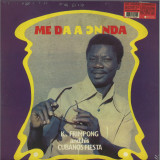
Me Da A Onnda by K. Frimpong and his Cubanos Fiesta isclassic and essential Hi-Life & Afro
Funk album from one of the greatest Ghanaian singer and composer, finally reissued for the first time!
This legendary K Fimpong's fantastic rare album was recorded in 1980.
K . Frimpong was born on July 22nd, 1939 at Ofoase in the Ashanti - Akim district and entered right
into music after elementary school by joining "Star de Republic" and later "Oko's band" after which he left
to K. Gyasy's band where he worked for more than 6 years. As a prolific songwriter and singer, here's
the reissue of his amazing album, a modern fusion of Hi- life and Soul.The excellent background is given
by the famous Cubanos Fiesta with members of Vis-A-Vis band.
Originally produced on the major Polydor, this four songs recording is a blend of danceable and
spiritual Soul and straight Hi-Life. A must-have vinyl of percussive Afro Funk for all the music
connoisseurs, K. Frimpong backed by Cubanos Fiesta LP is a true masterpiece, so hard to find and
reaching crazy skills for a decent copy affordable.
Remastered by Frank Merritt at The Carvery. Pressed on Replika format. Fully licensed by the Alhadji
Kwame Frimpong Family
out of Stock
Last delivered 2 years ago available to reorder, subject to availability
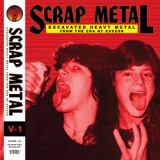
By now you’re probably familiar with our wildly popular Brown Acid series of rare, lost and unreleased proto-metal and stoner rock singles from the 60s-70s. In the endless pursuit of those glorious gems, we often uncover equally brilliant rarities from the late-70s to late-80s Golden Age of Heavy Metal that also just must be heard, but they don’t fit the series’ aesthetic. Scrap Metal, Volume 1 collects some of the greatest unknown and lost Heavy Metal tracks, long buried beneath the avalanche of the era’s classic output.
We all know the old adage that history is told by the winners. But sometimes the losers tell the best stories. And while none of these bands found fame and fortune, this artifact and the volumes to come are testament to the enduring power of heavy music. You can hear the blood, sweat and beers that went into each of these singles. The recordings may be low budget, but the inspiration and talent is immutable. Not only are the amps turned up to 11, the boyish sexual innuendo is cranked to 69. You can hear the convergence of influences — NWOBHM, thrash, glam metal, doom, etc — colliding at once as the era birthed a wellspring of subgenres.
Many of these singles are self-released and were thus limited to a small run of copies. Those that remain are hoarded by collectors and sold for exorbitant amounts. We’ve collected the best of the best for you here. As with Brown Acid, all of these tracks are licensed legitimately and the artists all get paid. Because it’s the right thing to do.
LINER NOTES:
Rapid Tears launch this series with the perfect christening. The Toronto, ON quintet’s 1981 single “Headbang” is such the pinnacle of heavy metal madness that it almost sounds like a spoof. There’s also enough of the rapid-fire sputum that inspired Metallica to bang the head that doesn’t, as such, engage in said practice, to be found on the band’s sole full length Honestly. But “Headbang” is a straightforward glammy anthem for the ages.
Air Raid’s “69 In A 55” may be lyrically so sophomoric that it’s actually pretty clever, but this 1983 Bay Area power metal single is loaded with sleek Judas Priest riffs and interwoven melodies that are downright sublime. The band’s sole release, the 2-song Rock Force 7” features a curious band photo in which 3 band members — dolled up in Crüe makeup and leather — are sexually menacing the lead singer/guitarist tied to a bed. Another low budget highlight is when singer/guitarist Tommy “Thrasher” Merry imitates a delay effect on his vocals as he sings, “tonight!...tonight...night.”
Hades’ “Girls Will Be Girls” has a real demo cassette feel to its vastly uneven mix, but the energy to the performance makes this an undeniable keeper. The long running Paramus, NJ quintet’s 1982 2- song debut 7” titled Deliver Us From Evil features this blistering thrasher dominated by shimmering leads and confident vocals that show why the band went on to near-fame on Metal Blade Records.
Resless don’t need no T to prove that they’ve got “The Power” with this 1984 driving mid-tempo rocker in the vein of Mötley Crüe and Ratt. The River Vale, NJ quartet’s tight crunch wails all over Bon Jovi posers but it’s the band’s unique and subtle deployment of background vocals that gives this rager its staying power.
Pittsburgh, the Steel City, is home to Don Cappa, a band that pays tribute to the burgh, the metal, and the awesomeness of both with “Steel City Metal.” Their lone single, issued in 1987 with only 300 copies released, sounds like the work of some serious steel driving men, with a drummer who might’ve forgotten to wear a hard hat one too many times on the construction site.
The Beast has more of a punk feel to their aggressive “Enemy Ace” track from the 4-song Power Metal EP from 1983 — something like Dr. Know meets D.O.A. But their look, artwork and lyrics all prove that Heavy Metal is where their hearts lie. And this hook filled monster delivers repeated lines like, “I command them all in my lofty realm,” with commendable conviction.
Dead Silence from Denver, Colorado, debuting in 1984 is not to be confused with Dead Silence from Denver, Colorado, who also debuted in 1984. The former a workman’s hard rock bar band, the latter a political peace punk band and neither knowing of the other’s existence throughout their tenure. The pre-internet days were a marvel, indeed.This Dead Silence spits out a slick, Nugent tinged rocker called “Can’t Stop” about life on the road.
The Danger Zone is, by all accounts, not the place to be. And, Hazardous Waste of Boston, MA saw fit to add their two cents on the matter with this 1986 single that combines Van Halen’s flashy musicianship with NWOBHM aggression that sounds so awesome it teeters on itself entering the “Danger Zone.”
Czar’s heavy, doomy “Iron Curtain” single from 1982 hearkens to the sleazy sounds of Saint Vitus and Pentagram with its cranked up DOD Distortion pedal in a Peavey combo amp guitar tone and meaty, barking vocals. The upstate NY quintet only issued this 2-song single, but its driving rhythm, nosedive whammy-bar guitar solos and comparatively mature Cold War subject matter show they had real potential.
Not much is known about Real Steel’s majestic “Viking Queen” from 1987, other than it rocks hard and the 7” 45 sells for upwards of a grand on the collectors market. The Flint, Michigan band recorded at the home studio of local radio personality Bill Lamb, who primarily released Christian Gospel recordings. So, perhaps the band was struck down by a bolt of lightning shortly after this rare single’s release. Whatever the case may be, it’s a must have for fans of classic metal mayhem.
Spoken word recordings from Gregory Corso, Tina May Hall, Sam Lipsyte, Christine Schutt, Gary Lutz, Allen Ginsberg, Dawn Raffel, Jason Schwartz, Kathryn Scanlan, Scott McClanahan, & Terry Southern. About 40 years ago, in a record shop on Long Island during a weekend visit there to see my parents, i found a double-LP that looked like something i should definitely buy. It was called "BIG EGO", by the The DIAL-a-POEM POETS. On the cover was a picture of John Giorno (a great poet Ed Sanders had turned me on to) on a NYC rooftop with Philip Glass, Meredith Monk, and two kids. It cost $2. I bought it and rushed back to my parents house, where i still had my old turntable in the basement, not far from my Jimi Hendrix and Zappa Crappa posters, and my framed portrait of John Cage. My copy of Eno's "Discreet Music" was still on the turntable, having been left there years before, when i'd fled Long Island for good. I lifted it from the platter, gently slid it back into its sleeve, like a priceless religious artifact, and put Side A of the Dial-a-Poem LP on. I almost lost my mind while listening to it. The next day i went back to the same record shop looking for more DIAL-A-POEM LP's. i found two. One had a long list of names on the back, some famous, and some i'd never heard of before. I bought both LP's, and an hour later, for the first time in my life, i was exposed to the art of Laurie Anderson, whom i'd never heard of before. This was 1978. Her contribution was a piece called "Time To Go". It changed my life. Or at least, that’s how I remember it. I was just a kid, so there were a lot of moments like that, around then. Nowadays, these moments can be had in seconds, with a click of the cursor. That evening, as i sat alone by my imaginary campfire (ie; that record player in my parents basement), i promised myself that someday, somehow, i would embark upon a WORDS & MUSIC project that might move people the same way i was moved when i first heard Laurie, and Robert Wilson & Christopher Knowles, and Burroughs, and Ginsberg, and Corso, and Anne Waldman, and John Ashbery, and the great Charles Olson, and so many others. Words, for the very first time, had wielded the same power as music. And it was visceral. Just like music. It ran deep. It was a FEELING. John Giorno died in 2019, but he kept poetry alive like nobody's business. I was lucky enough to have spent some time with him in the early 1980's, when i was briefly a member of The Fugs, and often found myself surrounded by those Ginsberg called, "...the greatest minds of my generation". Ed Sanders (who'd ushered me into that scene) once told me that when he came to NYC, it was easy to go to a cafe, or to St Marks Church, and hear Burroughs, Corso, Ginsberg, and all the greats, reading their poetry. He said that even if you were just a bum on the street, you could just walk right up to them, and start a conversation. They were totally accessible, if they were in the right mood at that particular moment. So i was shocked when Sanders told me he didn't approach any of them, not even once, til he'd been going to their readings for nearly ten years. "For almost a decade, I went to every reading, every lecture, every panel discussion. But I never went near them. Never approached them. Not even once", Sanders told me. "For ten years, all I did, was listen." It took me four decades, but ... better late than never. I finally made WORDS & MUSIC, Book One.
The long awaited follow up to Osaka's Hibushibire 'Freak Out Orgasm!' debut album from 2017 is almost upon us ...
Who are Hibushibire ?
821 (Hani) on bass
Ryu Matsumoto on drums
Changchang on guitar and vocals
It would be fair to say Hibushibire’s 2017 debut album ‘Freak Out Orgasm!’ went down well with fans of psych-rock (call it what you will). So far it’s had three vinyl pressings, two cassette pressings and a CD run back in Japan. It garnered quite a few influential underground (if not mainstream) reviews and seemed to sell through on word of mouth alone - which in these times seems to be the way things are going: thriving social media groups sharing their love of recent purchases and fellow vinyl lovers going out and scooping them up without the need to buy a magazine or read an online review to make their mind up. My favourite review of ‘Freak Out Orgasm!’ came from UK based music blog Dayz Of Purple And Orange as I think he nailed it perfectly...
“Fuck me! I think I've died and gone to psychedelic heaven! If anyone had asked me what I would really want from a freak out, heavy-as-fuck psych band I would have to say I would want the sheer guitar pyrotechnics of Acid Mothers Temple, the hard-as-nails scuzziness of The Heads, the lead heaviness of a fucked-up Blue Cheer and the instrumental dexterity of Hendrix on speed. Guess what, that band exists and they are called HIBUSHIBIRE!"
That, to me, said it all. Nail hit hard.
But let's get onto 'Turn On, Tune In, Freak Out!'
Once again the album is produced by Makoto Kawabata (Acid Mothers Temple, Mainliner) and for me it's the next logical step in the bands sonic development. As with its predecessor, side one consists of three tracks, "Ecstasy Highwaystar / Blow! Blow! Blow! / Overdose, Pussycat! More! More!", (they do like an exclamation mark). Some of these titles will be familiar if you've followed the band's live shows in recent times, and it's pretty much a guitar to the front, full gonzo-style hard-rocking psychedelic freak out from the first blast of Changchang's guitar panning from left to right before the main riff kicks it all off.
Again, as with their debut, side two comprises of just one epic length track. 'Rollercoaster Of The Universe' clocks in at seventeen minutes and is, in my humble opinion, the sound of the band moving onto the next level during its journey. It's a shudderingly beautiful piece, with many hypnotic twists and turns. I can't wait to hear how they play this live.
The band did initially attempt to produce this album by themselves, but got 'brain fever' in the studio and called their old friend Makoto to come down and help them finish it off. As he had no preparation in advance, he knew nothing about how the recording was going in the studio, and moreover there was little time left for adjustments to be made. But his technique of mixing was, as always, both mighty and almost destructive.
To write these few lines, we spoke to saxophonist François Jeanneau, an old friend of Jacques Thollot who also played on several of his albums, including the “Watch Devil Go” which interests us here. He told us a story which, according to him, sums up the personality of Thollot. A noted studio had reserved three days for a Thollot recording session. The first morning was devoted to sound checks and putting some order in the score sheets which Jacques would hand out in a somewhat anarchic manner. Then everyone went for lunch. When the musicians returned to the studio, Thollot had disappeared. He wasn’t seen again for the three days. When he reappeared, he had already forgotten why he had left, The music of Jacques Thollot is in the image of its’ author: it takes you somewhere, suddenly escapes and disappears, returning in an unexpected place as if nothing had happened.
Four years after a first album on the Futura label in 1971, Jacques Thollot returned, this time on the Palm label of Jef Gilson, still with just as much surrealist poetry in his jazz. In thirty-five minutes and a few seconds, the French composer and drummer, who had been on the scene since he was thirteen, established himself as a link between Arnold Schoenberg and Don Cherry. Resistant to any imposed framework and always excessive, Thollot allows himself to do anything and everything: suspended time of an extraordinary delicacy, a stealthy explosion of the brass section, hallucinatory improvisation of the synthesisers, tight writing, teetering on the classical, and in the middle of all that, a hit; the title-track - that Madlib would one day end up hearing and sampling.
“Watch Devil Go” was in the right place in the Palm catalogue, which welcomed the cream of the French avant-garde in the 70s. But it is also the story of a long friendship between two men. Jacques Thollot and Jef Gilson had known and respected one another for a long time. Though barely sixteen years old, Thollot was already on drums on the first albums by Gilson starting in 1963 and would play in his big band (alongside François Jeanneau once again), ‘Europamerica’, until the end of the 70s.
In a career lasting half a century and centred on freedom Jacques Thollot played with the most important experimental musicians (Don Cherry, Sonny Sharrock, Michel Roques, Barney Wilen, Steve Lacy, François Tusques, Michel Portal, Jac Berrocal, Noël Akchoté...) and they all heard in him a pulsation coming from another world. (Jérôme "Kalcha" Simonneau)
Released in 2009, Tear Gas is the fourth and arguably most notable studio album from The Jacka. Peaking at #93 on the Billboard Top 200, the 19-track album is packed with features from both Bay Area and national legends, such as Andre Nickatina, Matt Blaque, E-40, Mistah F.A.B., Cellski, Zion I, AP.9, Dubb 20, J. Stalin, Devin The Dude, Paul Wall, Masspike Miles, Planet Asia, Cormega, Ampichino, and Freeway. The album features the hit singles, "All Over Me feat. Matt Blaque," and "Glamorous Lifestyles feat. Andre Nickatina"
Following up on 2017's phenomenally received 'All Right' / 'Innerspace' single on BMTM, Tim Reaper returns to the label with two gorgeous slices of cruising atmospherics that hark back to the seminally lush sounds of Lucky Spin, Dee Jay Recordings and early Good Looking Records.
'Stand Up' layers Demon's Theme-esque strings over hypnotically alternating chords, while submarine beeps deliver head-nodding rhythms over the shuffling breaks and bumping bass lines. If the words 'Speed' and 'Mars Bar' mean anything to you, you should listen to this immediately.
'The Tranquility Track' takes us into more melancholy territory, with filtered Steve Reich-style marimba loops and haunting pads dancing over the vintage break edits for which Tim Reaper has become famous.
Strictly for those who understand the power of a mesmerising groove.
out of Stock
Last delivered 3 years ago available to reorder, subject to availability
Gatefold double LP. Black Vinyl. No DL Code is out in January, 1000 copies available. Since 2006 Maybeshewill have released four full-length albums of towering, cinematic instrumental music. After a decade long career that saw them tour across four continents they bowed out in 2016 with a sold out show at London’s Koko. Having reformed briefly in 2018 at the request of The Cure’s Robert Smith for a show at Meltdown Festival, 2021 sees the band return with their first new material since 2014’s Fair Youth. Having worked on ideas separately in the intervening years, it was the sketches of music that would become ‘No Feeling is Final’ that pulled the band back together. Building on the songs that they felt needed to be heard, together. ‘No Feeling is Final’ was born from a place of weary exasperation. From the knowledge that we’re living in a world hurtling towards self-destruction. We watch as forests burn and seas rise. As the worst tendencies of humanity are championed by those in power; rage, fear, greed and apathy. We see every injustice, every conflict, every catastrophe flash up on our screens. We stay complacent and consume to forget our complicity in the structures and systems that sustain that behaviour. As the world teeters on the edge of disaster, we sigh and keep scrolling, the uneasy feeling in our stomachs eating away at us a little more each day. However easy it would be to switch off and pretend all is lost, there’s no choice but to remain engaged. To set that feeling of hopelessness aside and use the fear and frustration as fuel to make something positive. ‘No Feeling is Final’ is a message of hope and solidarity. It’s a story of growing grassroots movements across the world that are rejecting the doomed futures being sold to us, and imagining new realities based on equality and sustainability. It’s a reckoning with the demons in our histories and a promise to right the wrongs of the past. It’s a plea to take action in shaping the world we leave for future generations. It’s a simple gesture of reassurance to anyone else struggling in these troubled times: “Just keep going. No feeling is final.” Continuing and building on the self-sufficient, do-it-yourself ethos that has been core to their existence, ‘No Feeling is Final’ was once again recorded and produced by bassist Jamie Ward, and released on the bands own Robot Needs Home Collective Label, in collaboration with close friends Wax Bodega (North America), New Noise (Asia) and Birds Robe (Australasia).
LP is limited to 1000 copies, black vinyl. Swansea Sound started in the middle of lockdown. They realised that fast, loud, joyous, angry indie-pop punk was the answer to being stuck indoors. Who needs introspection? Hue Williams is reunited with Pooh Sticks partner Amelia Fletcher (ex- Talulah Gosh, Heavenly). Rob Pursey (also ex-Heavenly) and Ian Button (Wreckless Eric’s live collaborator) provide the noise. Swansea Sound are the fast, acerbic and joyous past, present and future of indie. Four of the tracks were released as singles, all of them now impossible to obtain. ‘Corporate Indie Band’ was a limited edition cassette, ‘I Sold My Soul on eBay’ was a one-off lathe cut that got auctioned on eBay (with a £400 winning bid), ‘Indies of the World’ was a 7” inch single that briefly hit the UK physical charts, but immediately sold out and plummeted back out again. And then there was ‘Swansea Sound’: a requiem for a lost radio station; an anti-corporate lament - another limited edition cassette single. First track Rock N Roll Void gives a three minute revision session, just in case you’ve forgotten about The Ramones, The Kinks, The Buzzcocks and the brief explosion of indie noise pollution of 1986. Some of the songs are reflexive – ‘Swansea Sound’ and ‘The Pooh Sticks’. (Who else was going to write a tribute to The Pooh Sticks?) Others are searching for hope in the digital desert – ‘Let It Happen’, ‘I’m OK When You’re Around’, ‘Pasadena’, ‘Angry Girl’. ‘Je Ne Sais Quoi’ is pure pop throwaway fun. The others songs are dead catchy too, they just happen to express a sickness and a contempt for the state of things. ‘Corporate Indie Band’ is about a group who have mortgaged their creativity to a major label and sold their identities to an online marketing team of public schoolboys. Freedom of Speech takes a look at three contemporary ‘alternative’ music stars and considers how they’ve responded to BLM, the pandemic and the rise of right-wing populism. ‘Like self-serving arseholes’, is the unfortunate answer. (You won’t struggle to work out who the three ‘alternative’ stars are.) Swansea Sound took their name from a well-loved local radio station when it was given a corporate makeover in 2020. They even used the radio station’s abandoned logo. Like the indiepunk pop songs, something modern acidic and angry has taken up residence in a familiar, borrowed frame. You can throw yourself around to Swansea Sound like it’s 1986, but if you catch the lyrics you’ll remember you’re in 2021. (Sorry about that.) The Rum Puncheon, a notorious pub in Swansea, closed down decades ago.
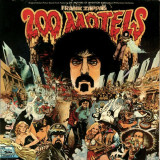
Frank Zappa’s “200 Motels” was a miraculous feat, a cinematic collision of the venerated musician and composer’s kaleidoscopic musical and visual worlds that brought together Zappa and his band, The Mothers, Ringo Starr as Zappa – as “a large dwarf” – Keith Moon as a perverted nun, Pamela Des Barres in her acting debut, noted thespian Theodore Bikel, the Royal Philharmonic Orchestra, and an incredible assortment of characters (both on screen and off) for a “surrealistic documentary” about the bizarre life of a touring musician. In celebration of “200 Motels” golden anniversary, Zappa Records, UMC and MGM have assembled a definitive Super Deluxe six-disc box set of the beloved, yet hard to find, soundtrack for release on November 19. Fully authorized by the Zappa Trust and produced by Ahmet Zappa and Zappa Vaultmeister Joe Travers, the monstrous 200 Motels 50th Anniversary Edition brings together the original soundtrack, newly remastered by Bernie Grundman at Bernie Grundman Mastering, along with a staggering amount of unreleased and rare material unearthed from FZ’s Vault, including original demos, studio outtakes, work mixes, interviews and movie ads, along with newly discovered dialog reels, revealing an early audio edit of the film. Also included is a wealth of never-before-heard audio documentary material surrounding the project. The six-disc set will be housed in a 64-page hardcover book in a handsome 12” x 12” slipcase. The packaging replicates the original booklet updated with revealing new liner notes from Pamela Des Barres, Ruth Underwood and Joe Travers, as well as Patrick Pending’s essay from the 1997 reissue, and is chock full of motion picture artwork, stills and images, from the film and its making, many which have never been seen before. This must-have collector’s release will also include a custom “200 Motels” keychain and Do-No-Disturb motel door hanger and a full-size replica of the original movie poster. Years in the making, all the audio was meticulously identified and transferred over several years as Travers dug through the Vault to create a new high resolution 96K/24B digital patchwork stereo master from the original analog tapes. The Vault material was mastered by John Polito in 2021. The remastered 200 Motels soundtrack will also be reissued on vinyl as a 2LP pressed on 180-gram black vinyl and on a 2CD format - both will include a smaller version of the movie poster.
Right from the start, it was not meant to be a one-off side project but the beginning of something truly unique and exciting. Their first live album “Gizmodrome Live”, to be released on November 19th, 2021, builds on the foundation laid by the band’s debut album and allows for even more unpredictable outbursts of creative energy. It perfectly captures their commitment to this band and the pioneering collaboration. The fervent genius of Stewart Copeland on drums, guitars and vocals, the incredible bass and vocals of Mark King as well as the incisive guitar work and vocal parts by Adrian Belew, brilliantly rounded off by Vittorio Cosma on keys – it all comes together in a one-of-a-kind high voltage combination on “Gizmodrome Live”. In many ways the live show even manages to surpass the recorded versions of their songs, with Stewart Copeland sharing lead vocal duties with the unmistakable voices of Adrian Belew and Mark King. Powering through a setlist comprised of their debut album as well as a fantastic selection of songs from The Police and King Crimson, Copeland, King, Cosma & Belew truly delivered a live show to be remembered.
In November 1976, Jef Gilson’s phone rang. What a surprise! It was Serge Rahoerson, one of the musicians he had met in Madagascar at the end of the 60s and who had played on his first album “Malagasy”. Rahoerson announced that he was in Paris for a few days.
Immediately, Jef wanted to organise a recording session, starting the next day. He thought of a trio including Serge, Eddy Louiss on organ and cellist Jean-Charles Capon, who had also been on one of the trips to Tananarive and so had also known Rahoerson there. Unfortunately, Eddy Louiss –who had already played with Gilson and Capon on the album “Bill Coleman Sings And Plays 12 Negro Spirituals” in 1968- had to drop out at the last minute: he was delayed by a session with Claude Nougaro. Jean-Charles Capon had also become a sought-after studio musician since his trip to Madagascar in 1969. He appeared on several key albums on the Saravah label including the now famous “Comme À La Radio” by Brigitte Fontaine, “Un Beau Matin” by Areski and “Chorus” by Michel Roques, without mentioning the album by his own Baroque Jazz Trio. He was also to be found with Jef Gilson for his album on Vogue with the ex-drummer from Miles Davis’ first great quintet, Philly Joe Jones, or also in the orchestra led by Jean-Claude Vannier for the album “Nino Ferrer & Leggs”. He also played regularly on albums by Georges Moustaki.
Jean-Charles Capon and Serge Rahoerson found themselves thus in the studio, with Jef at the controls. He had decided to record the rhythmic structure right away. He would find the soloists later, that didn’t worry him. Serge Rahoerson was on drums. Though a saxophonist by training, Jef remembered that Serge was also capable of great things behind a drum kit: he was the improvised drummer on their cover of “The Creator Has A Master Plan” on the album “Malagasy”... The great memories came flooding back (the nod on the title “Orly - Ivato”), and the old magic worked again.
Brought in momentarily from Europamerica, Gilson’s new big band, in which JC Capon also played, the saxophonists Philippe Maté, from France (another Saravah stablemate) and the American Butch Morris (soon to be a key member of David Murray’s band) were invited to record their parts later and Gilson mixed it all as if it had been one single session (as he had already done on other albums, with the tracks by Christian Vander recorded before the creation and success of Magma).
The album would not appear until 1977, on Palm, Jef’s own label, and was dedicated to the memory of Georges Rahoerson, Serge’s father, who had also played on the album “Malagasy” and who had died prematurely at the age of 51 in 1974.
“I only received my own copy of the album in 1981 when I came to live in France definitively”, a still-moved Serge Rahoerson told us in 2013. “I was playing in a club one night and Jef turned up by surprise with a copy of the album for me, I was so pleased to see him again. When I arrived in France, I told everyone that I had played with Jef Gilson a few years previously, and I was surprised to learn that so few people knew of him. For us, he was of one of the great jazz visionaries.” (Jérôme "Kalcha" Simonneau)
For a duo whose youthful energy rejuvenated the world of house music at the start of the 2010s, it seems incredible that Disclosure are now into their second decade of musical life. The incredible vigour of those early records, the spark of invention and ever-onward musical thrust, remains with the Disclosure brothers, Howard and Guy Lawrence, to this day. The emphasis throughout DJ-Kicks is on motion. After a brief ambient introduction from Pépe's Life Signs, Disclosure keep the energy high, in a mix that showcases the wonderful malleability of a house beat in the right hands. From sub bass to disco samples, African funk to 303 tweak, all is welcome in Disclosure's house, with the mix allowing individual songs space to breath even as the pace remains harefooted.
out of Stock
Last delivered 3 years ago available to reorder, subject to availability
Seattle-born preacher’s son Luther James Rabb played sax with Jimi Hendrix in the Velvetones and after forming popular horns-based rock act Ballin’ Jack, moved to Los
Angeles, where soul harmony trio West Coast Revival was born. Early singles for United Artists were produced by Howard Scott and Lonnie Jordan of War, and their sole LP, released in 1977, is an exceedingly rare soul-funk gem, with solid vocal harmony, hard funk breaks, and a touch of sophisticated strings. ‘My Mind Is At Ease’ is a breakbeat special and ‘Feelin’ Allright’ rides a meaty bass groove, both underlining the War connection; our edition comes with bonus love song ‘Beautiful Girl,’ an early single B-side. Overall, this is prime soul-funk with uncommon elements, ripe for rediscovery by all discerning funk fans.
out of Stock
Last delivered 4 years ago available to reorder, subject to availability
In pairing words with art, the ESP Institute often does everything journalists hate. We drown the reader in hyperbole, abstractions as opposed to didactic or literal depictions, and paint the press release with superlatives that construct an existential struggle around the art and its conditions. To articulate our reasoning behind collaborating with the artist, or the synergy between their work and our catalogue, is sometimes so challenging that crossing that finish line is achingly delayed. Patrick Conway’s 2xLP 'Cellular Housekeeping', his fourth release with the label, is one of these works so monumentally exciting for us that we’ve strained over how to deliver with honor his art unto the masses. After the initial hurdle of visual representation (in this case handled with gusto by artist Hassan Rahim), how do we directly and intentionally talk about the art we deeply love, when in reality we’re largely guided by instinct? We explore many angles, often failing along the way, until finding a final click in the combination that unlocks the floodgates. With Patrick’s album, that elusive impetus revealed itself in a literary gem that both symbolized his aggressive, melancholic, romantic, and bleak overtones, as well as synchronized his work and our task with a metaphor so grand it justified putting these words to paper. In the deeply British poem of despair and hope, 'Comus: A Mask Presented at Ludlow Castle', John Milton immortalized the classic idiom of the “silver lining”, and we find comfort in this transaction between struggle and what the poet considered divine intervention. Our bout of procrastination that brewed a cloud over the art may too tout a silver lining, the time that’s elapsed clearing a path for the album to exist in its rightful place, as opposed to fighting for a voice at an overcrowded table. In hindsight, this final hurdle might have only existed because without it, there is no glory, no resolution, but as all the pieces click and we collectively cross the finish line, Patrick Conway’s once captive 'Cellular Housekeeping' is now truly released.
out of Stock
Last delivered 4 years ago available to reorder, subject to availability
There are records with empathy, records which are your friends and then there's the others... There might be little difference between them, a certain "je ne sais quoi", an "almost nothing but still something" which makes the difference between almost pointless and vital records. Despite, or rather thanks to his cynical despair, Matt Elliott's music never holds up a moralizing mirror to us - on the contrary, it creates a compassionate dialogue with listeners like the rhythm of two steps that synchronize to become as one. In 2016, Matt Elliot brought out his seventh solo album The Calm Before whose obscure title is neither exactly threatening nor comforting... the calm before what? Before the storm for sure but maybe also before the great record, the immediate classic we felt might be coming for a long time in the dual discography of the Bristol-born artist working under his own name and his electronic alias Third Eye Foundation. The elegant details and perspectives of Little Lost Soul (2000) already hinted at the upcoming masterpiece from the English singer-songwriter. The Mess We Made (2003) was Matt Elliott's first solo album and portrayed a universe in a kind of flight towards Balkan horizons made up of visceral despair. With the Songs trilogy, he put aside the electronic side of his work to continue working with a minimalist, stark and lucid style of writing. The Broken Man (2012) was full of tears and long laments sometimes carried by Katia Labèque's piano on a record which painted new shades of grey. On this record Matt began working with the producer, arranger and multi-instrumentalist David Chalmin (La Terre Invisible) who has kept on collaborating with the Bristol-born singer since then. Their partnership continued on Only Myocardial Infection Can Break Your Heart (2013) and The Calm Before (2016). Stéphane Grégoire is the head of the Ici D'Ailleurs label which has accompanied Matt Elliott since 2005 and perhaps he describes this album the best: "This new record by Matt is without a doubt his best album to date, a record that takes him into another dimension where he fully asserts himself as a songwriter and singer of the calibre of artists like Bill Callahan, Leonard Cohen or Johnny Cash." Matt Elliott's other records all seemed like empathic links between each other. Farewell To All We Know is an instant classic based on the sensitive piano and superb arrangements of David Chalmin, the sensitive cello of Gaspar Claus, the subtle bass of Jeff Hallam (who has also played with Dominique A and John Parish). There is a clear form of alchemy in all of this and still we find Matt Elliott's usual atmospheres and scenery, the same Eastern European folk music, long songs that take time to settle over time. Everything is the same but also is transfigured. By making his music stark and purifying and redefining the subject matter, Matt Elliott's work became so much more delicate. However this work is never frail nor really turned in on himself and thus becomes like a vital tune that vibrates and unfolds. The opening song Farewell To All We Know seems torn between the fear of what tomorrow may bring, inevitability and hope for the future in a permanent and progressive dramatic tension expressed by his Spanish guitar, the impressionist style piano and Matt's voice teetering on the edge of whispers. A funereal tribute to endless twilights and the dawns we all dream of seeing. There are touches of Leonard Cohen from Songs from a Room or Thanks For The Dance in The Day After That with Gaspar Claus's counterpoint cello. There is no spirit of resignation in Matt Elliott's work - life's path has to be followed against all odds. We have to follow the river's flow to reach the immense ocean and its infinite freedom. The haunted instrumental Guidance Is Internal harks back to the atmospheres of Howling Songs (2008) with its guitar parts full of scansions and muted threats. The music is transcendental but never seems afraid of the risk of falling. This is also what Bye Now tells us with its quasi-obsolete simplicity and sunburst melancholy reminiscent of the work of Luiz Bonfá, Bill Evans on Peace Piece or laidback crooners of the 50s. In Farewell To All We Know, Matt Elliott incessantly alternates between the dual desires to face up to the world or to protect himself from it. Hating The Player, Hating The Game is a lucid statement about the dullness of our daily lives sometimes, our right to get out of the game and no longer want to be part of it. Matt Elliott is tender but spares no one, particularly himself. Aboulia speaks of the tiredness of living and of looming death while Crisis Apparition says that there is always a time for reconstruction after chaos. This is like initially wearying wandering in the ruins of Aleppo with the slow dilution of the melody into a hallucinated drone. However the smell of great fires always fades and the earth always regenerates. Matt Elliott seems to suggest that the survival instinct is stronger than any cold winds could ever be. Matt Elliott never sings of certainties and prefers possibilities. Possibly the worst is over? Maybe... Maybe the storm has passed and devastated everything, now we just have to rebuild and live again. Farewell To All We Know shows us the distance that still needs to be walked and he walks next to you - right next to you, he is the friend who doesn't spare you the truth like all true friends really do.
When we think of the phrase Bonded By Blood, we think of two things: a brotherhood that is meant to outlast the trials of war, pain, and time... and the almighty EXODUS. With a bond forged in youth and decades-old friendship, the undisputed masters of thrash metal return with their eleventh studio album: PERSONA NON GRATA. Literally translating to “an unwelcome” or “unacceptable” person, PERSONA NON GRATA touches on themes of modern societal disgust and degradation. “The people that disgust you - cut ‘em out like cancer,” explains guitarist Gary Holt. “Who is that person? It could be anybody. That’s up to the listener. Who is ‘Persona Non Grata’ to them?”
For decades, EXODUS has impressed us with the ability to attract opposing factions to their music because of its intensity and versatility. A track like “The Beatings Will Continue Until Morale Improves” was inspired by the riots both in theme, and sound. “Without seeming insensitive to the riots, the song is tongue in cheek about what the people beating on the rioters were expecting to happen. Did you think you would beat a smile onto their face? At 3 minutes in length, it’s probably the shortest EXODUS song we’ve ever done. It gets in, gets out, and is just crushing,” describes Holt. While most of the songs do run on the shorter side, this album also comes equipped with crushing, epic tracks.
Whether it’s the music industry gossip sites, or the big players like CNN and FOX, we’re all aware of how news outlets love to set little rat traps; “Clickbait” discusses their methods of picking things out of context to grab your attention, add to their page views, and increase their revenue all while riling up your emotions. “It’s all journalistic dishonesty,” explains Holt, “it’s a modern-day version of Al Capone’s vault, everyone tunes in, and then there’s NOTHING.“ Evenly balanced with extraordinary speed and tremendous, catchy choruses, “Clickbait” is a song that explodes with vigorous energy. “As heavy as this album is, and it’s heavy as fuck, if times were different and there was still metal radio, this song, and probably over half the album, has single capabilities.”
Sitting as the second to last song on the album, “The Fires of Division” keeps PERSONA NON GRATA strong all the way through. “This album doesn’t operate on the normal parameters,” describes Holt, “we didn’t frontload this one, it’s strong right through to the end. It’s supposed to be a musical journey as the songs segway together.”
For the third time in the band’s history, EXODUS returned to Swedish artist Par Olofsson to create the album artwork PERSONA NON GRATA. “After this album, I feel like we probably won’t work with anyone else again, Par just gets it,” states Holt. A three-faced, winged creature sits atop a bloody pile of diseased and rotting humans as they scream in pain and reach their hands up desperately towards the beast. Undead riot cops beat mercilessly, and senselessly upon this pile of the dying and the world is red with fresh, sopping blood. “Is it an angel, a demon? Is the world being created or destroyed,” asks Holt, “you don’t really know.”
EXODUS don’t fall into the usual recording slump that most bands get stuck in. Gathering at Tom Hunting’s house up in the mountains, they avoided the need to book studio time or adhere to a certain schedule. “At first it was just Tom, myself, a half stack, and a drum kit; we call it jam camp. We lived there. We built the studio, we immersed ourselves in it. Number one, because we still enjoy each other’s company enough to do it. When we’re not actively rehearsing or recording, we’re still sitting there talking about the songs, working on them, plucking on acoustics until things really work,” explains Holt, “we’re not settling.” Working from three home-built studios, the band recorded PERSONA NON GRATA themselves with the help of Andy Sneap on mixing and mastering and with Steve Lagudi at the helm of engineering.
“As a band, I’m super grateful. I’ve seen a lot of things around the world and we’re still a band that loves each other, have each other’s back, and we genuinely like to hang out with each other,” explains Holt. “Take it how you will, but I’m this band’s biggest fan. We write songs that are designed to make us feel fired up - that’s why it’s still heavy.”
When we think of the phrase Bonded By Blood, we think of two things: a brotherhood that is meant to outlast the trials of war, pain, and time... and the almighty EXODUS. With a bond forged in youth and decades-old friendship, the undisputed masters of thrash metal return with their eleventh studio album: PERSONA NON GRATA. Literally translating to “an unwelcome” or “unacceptable” person, PERSONA NON GRATA touches on themes of modern societal disgust and degradation. “The people that disgust you - cut ‘em out like cancer,” explains guitarist Gary Holt. “Who is that person? It could be anybody. That’s up to the listener. Who is ‘Persona Non Grata’ to them?”
For decades, EXODUS has impressed us with the ability to attract opposing factions to their music because of its intensity and versatility. A track like “The Beatings Will Continue Until Morale Improves” was inspired by the riots both in theme, and sound. “Without seeming insensitive to the riots, the song is tongue in cheek about what the people beating on the rioters were expecting to happen. Did you think you would beat a smile onto their face? At 3 minutes in length, it’s probably the shortest EXODUS song we’ve ever done. It gets in, gets out, and is just crushing,” describes Holt. While most of the songs do run on the shorter side, this album also comes equipped with crushing, epic tracks.
Whether it’s the music industry gossip sites, or the big players like CNN and FOX, we’re all aware of how news outlets love to set little rat traps; “Clickbait” discusses their methods of picking things out of context to grab your attention, add to their page views, and increase their revenue all while riling up your emotions. “It’s all journalistic dishonesty,” explains Holt, “it’s a modern-day version of Al Capone’s vault, everyone tunes in, and then there’s NOTHING.“ Evenly balanced with extraordinary speed and tremendous, catchy choruses, “Clickbait” is a song that explodes with vigorous energy. “As heavy as this album is, and it’s heavy as fuck, if times were different and there was still metal radio, this song, and probably over half the album, has single capabilities.”
Sitting as the second to last song on the album, “The Fires of Division” keeps PERSONA NON GRATA strong all the way through. “This album doesn’t operate on the normal parameters,” describes Holt, “we didn’t frontload this one, it’s strong right through to the end. It’s supposed to be a musical journey as the songs segway together.”
For the third time in the band’s history, EXODUS returned to Swedish artist Par Olofsson to create the album artwork PERSONA NON GRATA. “After this album, I feel like we probably won’t work with anyone else again, Par just gets it,” states Holt. A three-faced, winged creature sits atop a bloody pile of diseased and rotting humans as they scream in pain and reach their hands up desperately towards the beast. Undead riot cops beat mercilessly, and senselessly upon this pile of the dying and the world is red with fresh, sopping blood. “Is it an angel, a demon? Is the world being created or destroyed,” asks Holt, “you don’t really know.”
EXODUS don’t fall into the usual recording slump that most bands get stuck in. Gathering at Tom Hunting’s house up in the mountains, they avoided the need to book studio time or adhere to a certain schedule. “At first it was just Tom, myself, a half stack, and a drum kit; we call it jam camp. We lived there. We built the studio, we immersed ourselves in it. Number one, because we still enjoy each other’s company enough to do it. When we’re not actively rehearsing or recording, we’re still sitting there talking about the songs, working on them, plucking on acoustics until things really work,” explains Holt, “we’re not settling.” Working from three home-built studios, the band recorded PERSONA NON GRATA themselves with the help of Andy Sneap on mixing and mastering and with Steve Lagudi at the helm of engineering.
“As a band, I’m super grateful. I’ve seen a lot of things around the world and we’re still a band that loves each other, have each other’s back, and we genuinely like to hang out with each other,” explains Holt. “Take it how you will, but I’m this band’s biggest fan. We write songs that are designed to make us feel fired up - that’s why it’s still heavy.”
We used to enjoy presenting Chapelier Fou's work using the idea of music in the form of a treasure hunt. However, while the phrase in itself it still just as relevant today, we would never have imagined that it would become such an integral part of one of his albums. Or two of his albums to be perfectly exact - Méridiens and Parallèles. Two records with twelve songs each which answer each other back in the form of anagrams. They are like the two sides of the same planet - similar but simultaneously so different. They need to be discovered one after the other taking the time necessary to travel through the sound territories produced by his imagination. The starting point is a sombre night in Uqbar… Chapelier Fou's opening reference to Borgès was obviously not made by chance. He subsequently confided in us the objective of his diptych, namely to combine reality with fiction to question certainties and our relationships with the imaginary sphere. He has continued with his traditional classical-contemporary electronic approach which, although now known to a wide audience, has the advantage of opening up a whole range of possibilities right up to the infinite scale. Moving away from an "État Nain" (Dwarf State) to take refuge on an asteroid...Throughout Méridiens, each composition can be seen as a universe in itself or a specific landscape with its own temporality. Proof of this is the introduction to the chamber music format composed for and performed by only strings which can only be given the date we want to give it. This is "État Nain" in which violins are played like guitars. In some parts we find the spirit of the Penguin Cafe Orchestra and the idea of cheering up classical instruments and not taking everything too seriously. In other parts, we find something close to a mischievous and childish unplugged grunge anthem that could be from the French series Les Shadoks. This mischievous view of things is shown to full effect in Am Scharchtensee. The introduction shows Chapelier Fou's whole classical universe and mastery of orchestration in which "modular" electronics provide a subtle and discreet backdrop. Then, the record suddenly switches to a surrealist dialogue between these classical sounds and modular synthesizers with the flavour of the German pioneers Kluster/Harmonia to name but one example. Timelessness and imaginary places. La vie de cocagne confirms this choice of total freedom. It's traditional music with old sounds, a kind of forgotten bourrée (old French dance) in which electronic sounds disturb the established order and thus reach another musical dimension. Le méridien du Péricarde followed by Désert de Sonora push this idea of a trompe l'oreille and a hall of mirrors even further. The latter track ends almost like a catchy 80s melody and we can no longer find any logical meaning. We let ourselves be carried away by this profusion of madness and are a little amazed by this mastery of sound, composition and space. It sometimes all seems like a succession of conjuring tricks. Chapelier Fou takes not being serious very seriously indeed. The end song Everest trail is the perfect conclusion, a deadpan track in which the primary aspect of a totally classical melody in all its straightness is underpinned by a permanent exchange of electronic tweets which mocks the main musical posture. This impertinence harks back to Pierre Schaeffer who directed the ORTF's very serious experimental department in another era and allowed the development of Jacques Rouxel's series Les Shadoks thus introducing the general public to the notion of concrete music. This is also perhaps why Louis Warynski's stage name is French – because he has opted to use his French musical heritage. Thus the first singles selected from this album, Constantinople with its groovy and jazzy allure and Le Triangle des Bermudes evoke composers like Michel Magne or Michel Colombier both of whom have totally open minds and consider all music to have the same importance, namely that of sound. In absolutely all the tracks that make up Méridiens, you will find at least one detail - a pattern, melody, sometimes a simple sound - that will draw you back to explore it a little more. And the words are carefully weighed for sure. It's quite simple. This is undoubtedly his most hypnotizing and catchy album. Chapelier Fou has become a complete master of his own universe. He draws the start and finish lines himself and no one can follow him in a field that now belongs to him alone. Composed imaginary spheres, illustrated territories...Music is just as meaningful as the more visual arts. Therefore the artwork of Méridiens had to project each of the twelve tracks considered individually and not just the whole album as such. Chapelier Fou therefore asked his old friend the contemporary artist Corentin Grossman to create twelve windows to represent glimpses of the twelve worlds composed for the record. Windows or mirrors when it comes to that? You can never be sure of anything...Space OK. But what about time? The years go by and sometimes we forget that fact. But a simple glance back is often enough to gently touch the time that has passed. It is over 10 years since his first official record and he has been composing, recording and sharing his music for almost 20 years. 20 years is a long time. It makes some people look old while others fall into reassuring but sterile nostalgia. Chapelier Fou, on the other hand, has released his most ambitious project and tried to take a higher view of his discography that was itself nevertheless irreproachable. Although the journey is over we can see Parallèles universes on the horizon. Chapelier Fou has announced 12 additional tracks which are like echoes of the compositions on Méridiens' and will be released on the album Parallèles next spring. They are neither twins nor opposites – they are instead totally original new compositions which go further in exploring a universe which is already richly abundant.
When we think of the phrase Bonded By Blood, we think of two things: a brotherhood that is meant to outlast the trials of war, pain, and time... and the almighty EXODUS. With a bond forged in youth and decades-old friendship, the undisputed masters of thrash metal return with their eleventh studio album: PERSONA NON GRATA. Literally translating to “an unwelcome” or “unacceptable” person, PERSONA NON GRATA touches on themes of modern societal disgust and degradation. “The people that disgust you - cut ‘em out like cancer,” explains guitarist Gary Holt. “Who is that person? It could be anybody. That’s up to the listener. Who is ‘Persona Non Grata’ to them?”
For decades, EXODUS has impressed us with the ability to attract opposing factions to their music because of its intensity and versatility. A track like “The Beatings Will Continue Until Morale Improves” was inspired by the riots both in theme, and sound. “Without seeming insensitive to the riots, the song is tongue in cheek about what the people beating on the rioters were expecting to happen. Did you think you would beat a smile onto their face? At 3 minutes in length, it’s probably the shortest EXODUS song we’ve ever done. It gets in, gets out, and is just crushing,” describes Holt. While most of the songs do run on the shorter side, this album also comes equipped with crushing, epic tracks.
Whether it’s the music industry gossip sites, or the big players like CNN and FOX, we’re all aware of how news outlets love to set little rat traps; “Clickbait” discusses their methods of picking things out of context to grab your attention, add to their page views, and increase their revenue all while riling up your emotions. “It’s all journalistic dishonesty,” explains Holt, “it’s a modern-day version of Al Capone’s vault, everyone tunes in, and then there’s NOTHING.“ Evenly balanced with extraordinary speed and tremendous, catchy choruses, “Clickbait” is a song that explodes with vigorous energy. “As heavy as this album is, and it’s heavy as fuck, if times were different and there was still metal radio, this song, and probably over half the album, has single capabilities.”
Sitting as the second to last song on the album, “The Fires of Division” keeps PERSONA NON GRATA strong all the way through. “This album doesn’t operate on the normal parameters,” describes Holt, “we didn’t frontload this one, it’s strong right through to the end. It’s supposed to be a musical journey as the songs segway together.”
For the third time in the band’s history, EXODUS returned to Swedish artist Par Olofsson to create the album artwork PERSONA NON GRATA. “After this album, I feel like we probably won’t work with anyone else again, Par just gets it,” states Holt. A three-faced, winged creature sits atop a bloody pile of diseased and rotting humans as they scream in pain and reach their hands up desperately towards the beast. Undead riot cops beat mercilessly, and senselessly upon this pile of the dying and the world is red with fresh, sopping blood. “Is it an angel, a demon? Is the world being created or destroyed,” asks Holt, “you don’t really know.”
EXODUS don’t fall into the usual recording slump that most bands get stuck in. Gathering at Tom Hunting’s house up in the mountains, they avoided the need to book studio time or adhere to a certain schedule. “At first it was just Tom, myself, a half stack, and a drum kit; we call it jam camp. We lived there. We built the studio, we immersed ourselves in it. Number one, because we still enjoy each other’s company enough to do it. When we’re not actively rehearsing or recording, we’re still sitting there talking about the songs, working on them, plucking on acoustics until things really work,” explains Holt, “we’re not settling.” Working from three home-built studios, the band recorded PERSONA NON GRATA themselves with the help of Andy Sneap on mixing and mastering and with Steve Lagudi at the helm of engineering.
“As a band, I’m super grateful. I’ve seen a lot of things around the world and we’re still a band that loves each other, have each other’s back, and we genuinely like to hang out with each other,” explains Holt. “Take it how you will, but I’m this band’s biggest fan. We write songs that are designed to make us feel fired up - that’s why it’s still heavy.”
1. Some records hit you with an instant impression of timeless brilliance, and Low Life’s Dogging is one of those records, what the wise call “an instant classic”. 2. From Squats to Lots: The Agony and the XTC of Low Life is more like their second album Downer Edn (read Edition), a little more withdrawn, a little more textured. Complex. Rich. Which is to say: you’re going to need some time with it. 3. Some show, some grow. Low Life have done both. This one is a grower. Spend some time with this one. It’s got that nuanced flavour. Don’t guzzle. Sip. Savour. 4. Sip it, and sense the recurring brilliance of Mitch Tolman’s lyrics, exploring the usual territory of gutter life, lad life, punk life, low life. The dirge. Disgust and shame in white Australia. Council housing, bills piled to the neck, substance abuse and rehabilitation, the fallen lads and lasses who stood too close to the flame, loss and loneliness, from squats to lots. Un-Australian gutter symphony. 5. There is a celebration of resilience and that’s a central theme of this record and a time like ours needs a record like Agony & XTC. Low times are coming through, but if you’re low they won’t get to you. 6. Iggy Pop’s Bowie produced studio rock masterpieces ‘The Idiot’ and ‘Lust For Life’ are important reference points to the 3rd album sounds of Low Life. Here comes success! 7. ‘The Agony and Ecstasy’ is a 1985 novel by Irving Stone about the life of Italian Renaissance painter Michelangelo. Stone wrote another novel about the single eared painter Vincent Van Gogh called ‘Lust For Life’. This synchronicity hit me. 8. Iggy and the Stooges are a pretty safe reference for Low Life (and all good rock music). Iggy and the Stooges are a low life’s Michelangelo, but solo Iggy like Lust for Life is a better reference for this particular incarnation of Low Life, which is to say they are studio rock albums. 9. Bowie later referred to this period of his life as profoundly nihilistic. But Iggy looked at it as the period of his life that saved him from an early grave. This confrontation is Low life lore. 10. Let’s stick to this, because there’s something about this era of Bowie that makes sense with Low Life’s new album, particularly Low. One should never miss the Low in our new album from Low Life. Producer and studio boss Mickey Grossman has the ear for the Low, and he has carved out a little statue of David right here. 11. Mickey’s ears are recording, mixing and producing the best of Sydney, most notably the Oily Boys Cro Memory Grin. A great companion record to this one. Use Agony & XTC AFTER Oily Boys. Not on an empty stomach, and don’t try to operate heavy machinery (bobcat, bulldozer etc). 12. The relationship between Low Life and Sydney hardcore should not be understated, but it also shouldn’t guide how to listen to Agony & XTC. This is not austere, disciplined music. 13. Think, like, if Poison Idea were given the kind of studio time and budget as Happy Mondays. You wouldn’t play it to a teenager. It’s not for children. This is a mature flavour, one for the adults who have had to contend with failure and hardship, medical bills and disappointed family members, betrayed lovers and worrisome growths, police brutality and tooth decay, humiliating bowels and collapsed septums, detoxing and drying out, for those who have seen themselves as corrupted and putrid and unloveable, for those who endure all of this and aren’t willing to lie down and cop it sweet: Low Life are still here and they ain’t going nowhere. NOTES ON HOW NOT TO LISTEN TO AGONY AND XTC OF LOW LIFE: 1. Don’t think of shoe-gaze. It suggests a safe passage to 90’s reminiscences, a vogue style of our time, but nothing to do with Low Life style. Low Life style is always of its time. The content changes. Agony & XTC shares weight of records like My Bloody Valentine’s Loveless and Slowdive’s Kebab, records that were laboured on after the songs were recorded, songs that were written as they were recorded. 2. We can call these “studio albums” as opposed to albums built in the heat of live performance. Studio albums from the 90’s are called shoe-gaze by some journalist nerds, but we know better than to use words like this. 3. Studio albums are excessive and, at the same time, so empty. Agony & XTC, Loveless, Kebab, Rumours: excessive! And empty. This is not to suggest this is Low Lite, some throwback, soft. A band like Low Life can make an overproduced studio rock album without having to use the word shoe-gaze. So, don’t think studio albums mean anything especially 90’s. Don’t look back. 4. Let’s lose these distasteful labels, like “shoe-gaze”, “rehab rock”, “stab”, “guitar OD overdrive”, “western Sydney wonder”. They can fade out. A low life was once referred to as a vagabond. Who uses this term today? Nobody. Language can murder. Words can die. Kill ‘em all! - Daniel 'DX' Stewart, Melbourne, 2021.
Their roots are firmly planted in heavy rock, melodic aggression and
despair. They have conquered the stoner rock kids and breathed fiery life
into the classic rock snobs.
Now Thulsa Doom’s branches are growing with twigs of Kiss and
Crimson; strong wooden arms hold Skynyrd, Ween and Bob Dylan, and
progressive leaves of soulful, poignant, intricate gems cover the ground.
And there are nuts, lots of nuts. ...and with the release of their new album
“Ambition Freedom” the tree itself will
stretch right in through your bedroom
window and grab you. Just like the one in
Poltergeist.
The band’s sophomore “…And Then Take
You To A Place Where Jars Are Kept”
(2003) earned them two Norwegian
Grammy nominations, and is widely recognized
as one of the best rock-releases
from Norway ever.
«A Keen Eye for the Obvious» was released
in 2018 and was instantly recognized
as the greatest comeback since
Batman.
The band that once was a cherished but
well-kept secret has now become a national
treasure because of the timeless qualities
of their albums and unforgettable live
shows. Relentlessly rehearsing and playing
shows all over Norway and for dubious but
welcoming crowds in central Europe
has once again inspired Thulsa Doom to
make new music. “Ambition Freedom”
will not harm you in any way, but it might
rearrange your heart and refurbish your
belief in Rock.
“Ambition Freedom” will confuse many,
but for others it will lead the way. You will
wish it never stops, and it doesn’t have to.
It’s a record. Spin it again
On his new album, ‘APART’, Washington-based
singer/songwriter Allen Stone reimagines some of
his most beloved songs to date, stripping each
lavishly arranged track back to the very essence of
its creation.
Featuring 11 songs culled from across Stone’s
catalogue (and one exquisite Bob Marley cover),
‘APART’ kicks off with the dreamy rumination of his
first break-out hit ‘Unaware’.
One of the most breath-taking moments on
‘APART’ is ‘Bed I Made’, as R&B star Alesia Cara
joins him for a duet.