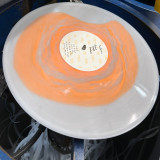
First part of the Drexciya re-issue series! Drexciya might need an introduction for some, for others it is the most influential techno project ever. Part of the heritage of Detroit's Underground Resistance, Drexciya explored techno music like no-one else before. Raw and uncompromising music that reflects the harsh environment of the city where Drexciya was conceived. The aesthetics and the mythical approach combined with the unique music made this one of the biggest cult projects in techno music. Drexciya arguably stands for the darker side of techno and electro, music not only made for the club scene, but a further development of the music as an expression and extension of the mind. 20 years after the release of ''Deep Sea Dweller'' (their first release), and 10 years after ''Grava 4'' (their last), we present ''Journey Of The Deep Sea Dweller''. This series is an almost complete collection of their early works, and is remastered from the original master tapes. Since the original releases have such a strong character, appeal and stand on their own, this re-issue can never re-create the magic of those originals. So instead we stirred up the catalogue taking the tracks out of their original context, giving the 'in the know' listener a fresh experience and the new listener a document that is the best possible introduction to the aquatic world of Drexciya.
Cerca:almost
Due to the overwhelming response and high enthusiasm of this record-pressed on BLACK VINYL, Selling out in literally an hour, we are now letting go a LIMITED amount copies pressed onto Green Color Vinyl of Deodato's "Whistle Bump" remixed by Joaquin Joe Claussell.
Deodato's "Whistle Bump" remixed by Joaquin Joe Claussell should not be mistaken for one of his highly sought after Edits & Overdubs Series. Whistle Bump is a full on remix produced directly from the actual multitracks resulting in a. stunning extended version that breathes new life into the piece while staying true to the original composition. This carefully crafted remix extends to almost 14 Minutes. The record is housed in a special Japanese thick Cardboard Jacket along with the Promo one sheet mimicking the special Warner Disco 12 inch Promotional Copies from back in the heyday of Disco Promos. Tested for several years on dance floors across the globe, the record is finally here.
- A1: It Takes A Woman’s Love (To Make A Man)
- A2: Two Cents Worth
- A3: Icarus - Borne On Wings Of Steel
- A4: All The World
- B1: Child Of Innocence
- B2: It`s You
- B3: Mysteries And Mayhem
- B4: The Pinnacle
1975 marked the year the American progressive rock band Kansas released two absolute classic albums, Song for America and Masque. Their third album Masque is a forty minutes piece consisting of 8 songs. It’s a concept album based on a mythological theme and well performed by the different band members. Highlights are the fan favourite “Icarus” and the almost 10 minute counting stunning prog epic “The Pinnacle”. The album is an excellent addition to any prog music collection.
Kansas became popular during the 1970s with hits like “Carry On Wayward Son” and “Dust in the Wind”. Besides their well-known ballads they also recorded some impressive progressive pieces.
The diversity of their music and immense energy of the band is one of the reasons why they’re still performing and recording.
Masque is available as a 50th anniversary edition of 1000 individually numbered copies on yellow coloured vinyl and includes an insert
- All I Really Want
- You Oughta Know
- Perfect
- Hand In My Pocket
- Right Through You
- Forgiven
- You Learn
- Head Over Feet
- Mary Jane
- Ironic
- Not The Doctor
- Wake Up
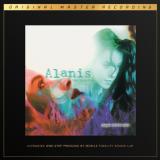
When Alanis Morissette took direct aim at an ex who wronged her on the eviscerating “You Oughta Know” in 1995, everything about the Top 10 song communicated it wasn’t the usual narrative about love gone south. Or the typical wounded singer wallowing in self pity. Morissette, and both the lead single from and her entire American major-label debut — the profoundly personal Jagged Little Pill — represented a sea change. They kickstarted a movement, one whose impact continues to echo throughout the mainstream nearly three decades later.
Ranked the 69th Greatest Album of All Time by Rolling Stone, included on the Rock and Roll Hall of Fame’s list of 200 Definitive Albums, and featured in several books about essential albums, Jagged Little Pill remains more than a blockbuster that has sold more than 17 million copies in the U.S. and 33 million units worldwide. It’s a statement, an attitude, a soundtrack for anyone seeking inspiration, an outlet, or permission to be themselves.
Sourced from the original master tapes, pressed at Fidelity Record Pressing on MoFi SuperVinyl, and strictly limited to 4,000 numbered copies, Mobile Fidelity’s UltraDisc One-Step 180g 45RPM 2LP box set of Jagged Little Pill presents the landmark effort in audiophile-grade sound for the first time. A key part of the record’s appeal and accessibility — Glen Ballard’s smooth production, touches that help Morissette’s exposed-nerve fare seem more accessible and melodic — comes through on this special 30th anniversary edition with an openness, presence, and dynamic explosiveness that make the vocalist’s songs that much more real and visceral.
The singer’s distinctive mezzo-soprano deliveries — the octave-rippling highs, dark-hued lows, dramatic crescendos, belted choruses, wispy reflections, occasional yodels — resonate with full-range ardor and depth. As crucial as anything on the record, Morissette’s confessional words take center stage like never before. Ditto the instrumentation and atmospherics that form the magnetic backgrounds of the songs. Key in on the contributions from Red Hot Chili Peppers Dave Navarro and Flea on “You Oughta Know” to Tom Petty & the Heartbreakers' co-founder Benmont Tench’s organ playing on six tracks.
The deluxe packaging of Mobile Fidelity’s Jagged Little Pill UD1S set underscores the work’s distinguished status. Housed in a slipcase, the LPs come in special foil-stamped jackets with faithful-to-the-original graphics that illuminate the splendor of the recording. Benefitting from an ultra-low noise floor, superior groove definition, and dead-quiet surfaces, this UD1S reissue is for listeners who prize sound quality and desire to engage themselves in everything involved with the album, including the now-iconic cover art that juxtaposes two portraits of the then-21-year-old singer-songwriter and features typewriter font.
That script — which suggests a raw, blood-on-the-floor document created without modern aids like spell check or language correction — hints at the heightened level of unvarnished intimacy, honesty, and catharsis Morissette offers throughout Jagged Little Pill. Named after a phrase uttered on the astute “You Learn,” the album explores the frank emotions, inherent contradictions, and wishful desires people feel everyday but are often too afraid to express. Morissette displays no such fear or shyness.
Akin to a woman reading from a diary, Morissette leaves nothing to the imagination as she skewers hypocrisy during the poignant “Forgiven,” seeks recompense on the vengeful “You Oughta Know,” and spills her guts on the soul-purging “All I Really Want.” For all the anger and bile ascribed to the singer and record, Jagged Little Pill is incredibly healthy and upbeat. Morissette uses the catchy pop-rock frameworks and moody ambience to suss out situations, to learn, to give hope. There’s the clever yearning of “Hand in My Pocket”; wry contrarianism of “Ironic”; kind-heartedness of “Hand over Feet”; the live-and-let-live spirit of “You Learn” – all positive and amiable.
Throughout Jagged Little Pill, the ever-approachable Morissette connects with listeners who recognize themselves in her — and has an intelligent conversation with anyone who wants to participate. It seemed almost everyone did. In addition to the mammoth sales that make the effort the 17th-best-selling album in American history, Jagged Little Pill collected four Grammy Awards, two American Music Awards, three Billboard Music Awards, and eight Juno Awards. In 2018, the record became the basis for a musical that netted 15 Tony nominations on Broadway.
Ironic? Anything but. Jagged Little Pill transcends generations, gender, and trends. As Morissette sings on the opening “All I Really Want,”, the album represents “deliverance” — “a place to find common ground.”
Following the great success of BBE’s 2023 reissue of Remi Kabaka’s 1976 lost masterpiece 'Son of Africa' comes yet another neglected and hitherto-hidden slice of pure Kabaka goodness: 1980’s 'Roots Funkadelia'. While the 1976 album was recorded at Island Studios London, roots was recorded and mixed in L.A. in the midst of a golden period for the Motown studios, and the sheer quality of the mix shows in spades. An unexpected but welcome bonus is the appearance throughout of the ‘mean machine’- Motown artists the commodores’ brass section alter-ego. Released in 1980 on Polygram Nigeria with no international distribution deal, and lurking almost unnoticed in a handful of dedicated afro vinyl collections, this is the first-ever reissue outside Africa of an album that regularly fetches £500 plus on the ‘those who know’ market’.
Originally published by Tomlab in 2001, “Seleya” is the second full- length issued by Kristian Peters’ Novisad project. Twenty-four years after its initial release, the album’s thirteen loop-based arrangements continue to resonate with striking clarity. Keplar presents Seleya with a previously unreleased bonus track from 2004 and a fresh vinyl cut by LUPO.
These evocative miniatures feel haunted with the passage of time, bearing traces of the exploratory studio workflows, tactile imperfections, and emerging technologies that would have given birth to them: plain DAW manipulations, aliasing digitalia, the tones and timbres of the “misused” equipment ambient musicians utilized before Ableton, Eurorack, and the rise of the boutique electronics that have streamlined electronic music production.
In our present epoch, these compositions feel almost eerily nostalgic, documenting the sort of trembling, wide-eyed spirit and enviable naivety that characterizes cultural production as it ventures into new waters, unfettered by the sediments of established methodology and trend. This tendency to avoid aesthetic orthodoxy results in music that refuses to settle into predictability. Subtle frequencies drift and collide, counterpoint loops run in quiet opposition, and elegant dissonance gives rise to unexpected harmony. The album’s emotional power lies in these tensions, in the way it balances melancholy with beauty and familiarity with complexity.
Aiko Takahashi is a Nova Gorica-based musician, a spirit that has released albums on various labels. Just like the line that separates the two cities where Aiko lives, Gorizia and Nova Gorica, divided between two countries yet united as one, Aiko’s music exists on a boundary. A line that separates silence from peculiar, almost imperceptible sounds. Too quiet to be Ambient, too Ambient to be Sound Art.
Two years ago, after a first complete release on IIKKI with "It Could Have Been A Beautiful", Aiko Takahashi comes back with a second complete album, this time, on LAAPS.
"This album is a delicate, meditative collection recorded between March and November 2024 in Aiko's former studio, a secluded spot near the River Isonzo, between Gorizia and Nova Gorica in Slovenia. The Grass Harp was made specifically for LAAPS, who asked Aiko to create a new complete piece of sounds. As always, it was largely recorded using dense layers of manipulated loops that weave in and out of the recordings, shaping them in a singular way through effects pedals, tape decks, and tape loops. The Grass Harp is a meditation on decay and silence, blending warm soundscapes with soft, playful melodies. That’s Aiko’s signature sound."
“We go through life. We shed our skins. We become ourselves.”
This line from Patti Smith was going round and round Felix Manuel’s head as he gradually constructed Under Tangled Silence, his first album in six years and a record of a literal creative rebirth. Felix originally began it in earnest in 2020 Covid lockdown, but a catastrophic hard-drive meltdown destroyed almost all his work and sent him close to psychic collapse himself. However, ultimately this pushed him to rebuild from scratch and in so doing to confront and reassess every part of his musical and psychological processes.
The result is utterly extraordinary. Felix was a child prodigy as an instrumentalist and his advanced musicality has always been prominent in his music, but here he has put himself front and centre as pianist, harpist and more. And this sense of exposure as a performer interweaves with an unflinching emotional openness too. Where sometimes electronic production as advanced as this can use intellect and techniques as shields from soul-baring, this is the sound of someone who can boldly say “I feel things, I cry all the time, and I'm not afraid to say it or show it in the music.”
But this doesn’t mean there’s a move away from the soundsystems and dancefloors where Felix made his name as a uniquely innovative vinyl DJ. Even just in the opening track “A Tune for Us”, minimalist piano ripples and jazz drumming flow into the breaks of vintage jungle – and as the structure of the LP unfolds, a deep ambient meditation like “Hold” can sit very naturally in between the futurist dancehall of “L’Ancienne” and the high-definition acid house mind movie of “Galaxy in Silence”. In fact, as with the hands-on musicianship, that gutsy big-speaker electronic impact is delivered with more certainty, more expertise, more personal flourishes than ever. And all of those elements are more integrated than ever too: the sound of a total musical personality emerging afresh is truly something to behold. An already remarkable talent has been refreshed, reborn and is making the music of his life.
REPRESS
New Delhi-based Peter Cat Recording Co. will release their debut album, ‘Bismillah’ on June 14, 2019 via French independent label Panache Records. Debut UK live shows are soon also to be announced by the band.
Peter Cat Recording Co. could almost have a question mark on the end of its name. Not least as founder & frontman Suryakant Sawhney refuses to explain where that name really comes from or what it means (perhaps a reference to the Tokyo jazz club owned by Haruki Murakami), but also since the very existence of the band itself raises a raft of questions. When was the last time we fell for an indie rock band for the right reasons? Not because the band in question nostalgically imitate a perceived ‘golden age’ but because they innately embody the fundamentals of such music: fantasy, sincerity and the freedom to make music without rules or career aspi- rations. And when was the last time this kind of band sounded like Sinatra, Barry White, the sweetest doo-wop, humid fanfares and a psychedelic wedding band, all at once? And all of this coming from India?
In truth, the story of Peter Cat Recording Co. was written within the triangle of San Francisco, Delhi and Paris.
In the first of these cities, Sawhney (a native of Delhi) pitched up to study film-making. More distracted by the city’s peaking live scene of the early noughties, this is where he started to make music and to sketch out an idea for the band.“
The people I lived with supported my idea of writing music, they introduced me to great mu-
sic. There used to be a great garage scene in San Francisco, like The Oh Sees also Ty Seagall, Mikal Conin, all those bands. This is a world I had never seen in my entire life. A big inspiration from San Francisco was that you could record yourself. You don’t need to be in a studio and spend a lot of money to make an album. You can do it”.
At the end of the 2000s, Suryakant returned home to New Delhi, and started his band for real, more or less the same band that plays today. “I wasn’t so concerned about will we be performing, will we be the greatest band, will we be trendy. I just wanted to make something that was consequential and important for us, I think. Something which would last, something people could listen to and be like « this is life changing ». It was for the sake of beauty”.
For the first few years and in India alone, this is exactly what Peter Cat Recording Co. did, in total indifference to the rest of the world. This was until young Parisian label Panache stumbled across the band online via Vice’s THUMP subsidiary, stupefied by the band’s cosmic video for seven-minutes-and-counting track, ‘Love De- mons’. And so in spring of 2018, ‘Portrait Of A Time: 2010-2016’ was released on Panache - making the first international release from Peter Cat Recording Co., bizarrely enough, an anthology of re-mastered, hidden gems from the band’s ramshackle back catalogue, previously recorded in Suryakant’s own living room. With Peter Cat’s off-kilter charm hitherto unheard of beyond the fringes of India, the release provided a gateway op-
Whilst the title track found its way onto Tracks Of The Year lists at the Guardian & NME, it was tricky for new PCRC enthusiasts to get a firm grip on the startling push/pull between the immediate, uncanny music this release gathered, and the cultural backdrop of New Delhi at which it was so startlingly at odds.
Opportunity for a wider fanbase to fall in love with their cloud-like, drunken songs for the first time.
If discovering your favourite new band via a ‘Best Of’ feels a curious premise, then ‘Bismillah’ does more than hint towards the promise of Peter Cat Recording Co’s future. Blending gypsy jazz, psychedelic cabaret, space disco, bossa supernova, Bollywood and uneasy listening with kaleidoscopic ease, in many senses, the band’s knack hasn’t altered. Always different, paradoxical, unpredictable yet somehow familiar. The new album opens to the strains of bird chatter, the whisper of a city’s soundscape and the first few notes from an instrument which seem to be calling us to the departure lounge, a fore-shadow of the flight ‘Bismillah’ launches its listener
on. Suryakant sings with the detached, rueful elegance of Sinatra marooned on a desert island, whilst his band create small space-time capsules which navigate their way through genres and eras – including the future – and between nostalgia and eccentricity.
Peter Cat recently trailed ‘Bismillah’ with the release of ‘Floated By’, an appositely titled musing on failure & missed opportunities, punctuated by the fulsome brass section which weaves through so much of the album.
The languid, blue quality to the track is offset by the attendant music video, created with footage shot, implau- sibly enough, at Suryakant’s own marriage ceremony (needless to say, the wedding band hired for the day was of course, Peter Cat Recording Co.) Sawhney dryly notes; “Hopefully it’s not a many-a-times-in-a-lifetime event. You can’t fake that set, those people actually having a good time, being really emotional and intense.” ‘Bismillah’’s colour-drenched album cover also captures Suryakant’s father-in-law making his wedding toast on that same day - a nod back towards the cover of ‘Portrait Of A Time’, itself a black & white image taken at the wedding ceremony of Suryakant’s own father.
A stumbling but gracious collection of songs rooted in a kind of drunken soul music, the melancholy nature of some of the songs on ‘Bismillah’ renders them almost liquid, before they develop into more dance-like shapes. Suryakant’s rangy voice swoops from the falsetto glide of ‘I’m This’ to the beat-up baritone blown along by the warm breeze of ‘Soulless Friends’. The elliptical structure of album opener ‘Where The Money Flows’ also al-
lows for the use of brief bursts of autotune effect on his vocal without feeling incongruous, whilst the desultory lyrics of ‘Heera’ (a Hindi word for diamond) - sharing something with the Morricone school of grand storytelling - have an emotional weight that would impress even coming from a native English speaker. Perhaps the most gleefully unpredictable moment on ‘Bismillah’ comes with the illusory, vocal loops on the intro to ‘Memory Box’, errupting into 8 exhilarating minutes worth of unbridled, string-backed disco joy. A cat might have nine lives, but on ‘Bismillah’ and beyond, Peter Cat Recording Co. are hinting towards an un- knowable multitude of dimensions. Throw them all together, and it equates less to a listening experience and more to an out-of-body experience.
Peter Cat Recording Co. are: Suryakant Sawhney (vocals/guitar/organ), Dhruv Bhola (bass), Kartik S Pillai (organ/guitar/electronics), Rohit Gupta (horns), Karan Singh (drums)
2023 Repress
It's the quiet ones we should watch, they always say. Which is particularly astute advice right now, when loud, constant self-declaration and saturated 'brand' visibility have become the norm. But above the babble and brightness, some voices will always speak quiet volumes - with calm eloquence and the kind of certitude that comes from valuing the playing out, not just the prize.
Sweden's José González is just such a voice. He first charmed his way into the UK's earshot via the murmurous and elegant, classically finger-picked folk pop of his 2005 album, Veneer, which has since sold over a staggering 430, 000 copies in UK alone. Two years later came In Our Nature, a further exploration of José's influences (Argentinian Folklore, the '60s US folk tradition and the British pastoral folk-pop style of the same era), on which he resisted the temptation to beef up his alluringly introvert aesthetic. The albums made the UK Top 10 and Top 20 respectively.
Conceived as the natural third part in an acoustic trilogy, Vestiges & Claws is a(nother) hushed and delicate solo set that forefronts the artist and guitarist's compellingly intimate vocal style and intricate playing technique, but it's often strikingly rhythmic in nature and cohere's perfectly, with hand claps and taps on the body of his instrument underlining the songs' mantric rise-and-fall pattern, while elsewhere, over-dubbed guitar parts and multi-tracked vocal harmonies entwine to sweetly immersive effect.
The title refers to both cultural practices and biological features that survive despite having lost their original function, and to currently useful tools, ie the 'claws' of modern life.
Vestiges & Claws was recorded almost entirely by José and self-produced, mostly in his Gothenburg home, using computer plug-ins to achieve a warm, analogue sound. He prefers working alone, mainly for artistic reasons. 'There were a couple of things that enabled me to complete this record: one was curiosity, to be able to play percussion and do a lot of harmonies and also to produce and mix the album; the other was aesthetics. I love to listen to Arthur Russell and Shuggie Otis, to music that has been done mostly by one person in their solitary state.'
As José sees it, the record is his personal, 'zoomed-out eye on humanity on a small, pale blue dot in a cold, sparse and unfriendly space. The amazing fact that we are all here, an attempt at encouraging us to understand ourselves and to make the best of the one life we know we have - after birth and before death.
- Training
- September Second
- Home
- Little Peace In C For U
- Love Letter
- Cantabile
- Colors
- So What
If there is one quality that best sums up the personality and music of Michel Petrucciani, it is generosity.
It was on stage, in the moment, in close proximity to the audience, in the warm intimacy of a club setting, that he most truthfully expressed his passion for sharing.
Many musicians, he confessed, play too selfishly. They play only for themselves and a few happy few. I play to please and to communicate. I’d like to think I’m a very happy person.
That’s why it’s essential for me to transmit and give others the generosity that is vital in art, music, and life.”
This is proven by these magnificent moments captured live in 1997 in Tokyo.
Accompanied by Anthony Jackson and Steve Gadd - two close friends with whom he shared an almost telepathic musical relationship - Michel Petrucciani delivers an intense hour of pianoforte, performing both standards and original compositions to unleash his boundless generosity and sensual lyrical expression live on stage.
Once again, one is struck by the solar clarity of his phrasing, the vigour and percussive precision of his touch (this master of tempo played ‘deep in the note’), and the breadth of his long lines where each note remains distinct and articulate. Michel infused everything he played with great emphasis and nuance - but above all, with sincerity. His heart sang immediately through the piano. This record is the most brilliant demonstration of that.
· Until now, this album had never been released on vinyl. Now available as a 180g double vinyl edition, mastered specifically for vinyl, housed in a 350g leather-textured sleeve with Struktura finish, offering an elegant texture and refined feel.
Novoa/Kamaguchi/Cleaver Trio Delivers Electrifying Second Volume
A Bold, Experimental Fusion of Density and Dialogue
"The wait is over. If you’ve been holding your breath since hearing Novoa/Kamaguchi/Cleaver Trio, Vol. 1, it is time to let it out. Vol. 2 is almost here! The group has returned to 577 Records once more, serving a heaping second helping of addictive musical brilliance that comes out in May.
Even The Wire magazine celebrated the trio's first album, calling it “a deep and thoughtful release” – and Vol. 2 is no different. Eva Novoa is the Barcelona-born pianist/composer taking the world by storm with her creativity and talent. And she is back to wow us again on the piano, Fender Rhodes, Chinese gongs, and a little whistling.
To complete the trio, she chose her longtime comrade and collaborator of some fifteen years, bassist Masa Kamaguchi, and Detroit drum wizard Gerald Cleaver. The group has performed live in NYC since 2017. They made their first record (Vol. 1) with 577 Records in 2024. Their highly anticipated Vol. 2 marks Eva's fourth album with the label.
In their upcoming release, Novoa steers the trio through elegant experimentation of its full potential, confidently grasping golden threads from great masters of music to shape her own melodic universe. The multi-instrumentalist says it’s where melodic density meets contrapuntal dialogue, a free interplay of rich textures and riveting, masterly improvisation. This smooth complexity is what gives rise to the group’s uniqueness.
Like Vol. 1, the album cover art features the work of Novoa’s friend and collaborator, popular street photographer Richard Sandler."
Eva Novoa - Piano, Fender Rhodes, Chinese Gongs & Whistling.
Masa Kamaguchi - Bass.
Gerald Cleaver - Drums.
Recorded on January 19, 2020 at Oktaven Audio, Mount Vernon, NY by Jeremy Loucas.
Mixed and mastered by Jeremy Loucas at Sear Sound, New York City.
Photography by Richard Sandler.
Graphic design by Sergio Vezzali.
Graphic support by Mark Smith.
This Project is really a two in one offering. Combining the three tracks from Ringer’s 2021 release, the “Meta Music EP” and his darker more aggressive moniker, Black Sued’s offering the “Rogue EP”. The EP is sort of a yin and yang. Monotone is a deep chordal track with uplifting vocals and a pulsing almost distorted bassline. This track is complimented with minimal drums and a simple yet beautiful synth riffs that bring it all together. New Plan is a fast paced cut that insights the listener to move. The drums and chords wrestle in a rhythmic dance while Ringer’s voice projects the essence of this side of the 12”. Positivity and persistence, the energy is alive in this track. YIA, an acronym that stands for Yes I Am, is meditative and filled with affirmations for the listener. Deep solemn chords, and the sounds of a thunder storm take the listener into a inner place of self reflection. The affirmations are for the listener to embody, a solid thought provoking end to this side of the 12”.
Rogue, the title track of this side of the record, is an intelligent, dark and jazz filled groove, that takes the listener on a journey. The groove is easy to catch, and wraps the listener into an almost mysterious landscape of rhythm and melody. Keeping the tone of this side of the 12” is Maze. The chords and rhythm walk in tandem to a beat that almost favors a marching band. A higher energy feel arrives as the 16th high hats meet a long defining chord that take this track to the next level. Deep Dirt reminds me of a drum machine tweaking or malfunctioning. The ominous chords paired with the distorted synth and bass lines that carry the listener through the filth that is this track.
Following his 2019 debut on the label with Amphibious / Lucid Dreams, Bristol-based producer Drone returns to System Music for another exploration into the darker corners of sonic frequencies and low end pressure.
Entitled Flooded EP, this is Drone’s biggest project to date and features 4 original, epic tracks accompanied by an incredible remix from SP:MC. The EP kicks off with 20k, an introduction laden with off-kilter, haunting eeriness and pulsating bass and percussion. Next up is Entropy, a truly ethereal track. Spatially beautiful yet isolating and cold. The title track, Flooded, is a monster of a track which intimidates and excites with eyes down and gun fingers raised. Rounding off the body of work is Fear which hits hard with crisp drum patterns and a throbbing bassline, almost evoking a sense of nostalgia, tying it in seamlessly with a typically electrifying remix from SP:MC
- We Win Together, I’m Losing Alone
- As Stupid As You Can
- Catfarm
- Rules
- Thoreau
- The Greenwashers
- Less Is More
- Mr Fameless
- Workers
- Almost Cut My Hair
- Journey Men
Bisher haben Laurent (Gitarren, Gesang) und Mathieu (Schlagzeug) 9 Alben auf ihrem eigenen Label (F.TheBassPlayer Rercords) veröffentlicht und mehr als 1200 Konzerte in 67 Ländern weltweit gespielt, darunter Festivals wie Fuji Rock (Japan), Pentaport (Südkorea, gleich 3 mal!), Lollapalooza (Brasilien & Chile), Download (UK), Paléo (Schweiz), Oppikopi (Südafrika), Blues Fest (Australien), Shaky Knees (USA) und viele mehr.
VERY LIMITED 2025 REPRESS ON BEAM OF LIGHT VINYL .
Everything changed for The Beths when they released their debut album, Future Me Hates Me, in 2018. The indie rock band had long been nurtured within Auckland, New Zealand’s tight-knit music scene, working full-time during the day and playing music with friends after hours. Full of uptempo pop rock songs with bright, indelible hooks, the LP garnered them critical acclaim from outlets like Pitchfork and Rolling Stone, and they set out for their first string of shows overseas. They quit their jobs, said goodbye to their home town, and devoted themselves entirely to performing across North America and Europe. They found themselves playing to crowds of devoted fans and opening for acts like Pixies and Death Cab for Cutie. Almost instantly, The Beths turned from a passion project into a full-time career in music.
Songwriter and lead vocalist Elizabeth Stokes worked on what would become The Beths’ second LP, Jump Rope Gazers, in between these intense periods of touring. Like the group’s earlier music, the album tackles themes of anxiety and self-doubt with effervescent power pop choruses and rousing backup vocals, zeroing in on the communality and catharsis that can come from sharing stressful situations with some of your best friends. Stokes’s writing on Jump Rope Gazers grapples with the uneasy proposition of leaving everything and everyone you know behind on another continent, chasing your dreams while struggling to stay close with loved ones back home.
"If you're at a certain age, all your friends scatter to the four winds,” Stokes says. “We did the same thing. When you're home, you miss everybody, and when you're away, you miss everybody. We were just missing people all the time.”
With songs like the rambunctious “Dying To Believe” and the tender, shoegazey “Out of Sight,” The Beths reckon with the distance that life necessarily drives between people over time. People who love each other inevitably fail each other. “I’m sorry for the way that I can’t hold conversations/They’re such a fragile thing to try to support the weight of,” Stokes sings on “Dying to Believe.” The best way to repair that failure, in The Beths’ view, is with abundant and unconditional love, no matter how far it has to travel. On “Out of Sight,” she pledges devotion to a dearly missed friend: “If your world collapses/I’ll be down in the rubble/I’d build you another,” she sings.
“It was a rough year in general, and I found myself saying the words, 'wish you were here, wish I was there,’ over and over again,” she says of the time period in which the album was written. Touring far from home, The Beths committed themselves to taking care of each other as they were trying at the same time to take care of friends living thousands of miles away. They encouraged each other to communicate whenever things got hard, and to pay forward acts of kindness whenever they could. That care and attention shines through on Jump Rope Gazers, where the quartet sounds more locked in than ever. Their most emotive and heartfelt work to date, Jump Rope Gazers stares down all the hard parts of living in communion with other people, even at a distance, while celebrating the ferocious joy that makes it all worth it -- a sentiment we need now more than ever.
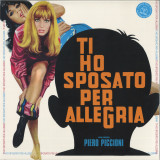
“Ti Ho Sposato Per Allegria” (1967) is a comedy directed by Luciano Salce, taken from the theatrical play of the same name (1965) by Natalia Ginzburg. The main characters are Pietro and Giuliana, respectively interpreted by Giorgio Albertazzi and Monica Vitti. A lawyer from a good family, serious, accustomed to a calm and regular life who got married to a indolent and dazed girl with a difficult past a month after meeting her at a party. Despite Giuliana's inability to transform herself into a good housewife, his relationship with Pietro continues to flourish, because he seems to find enjoyment in each of his wife's many mistakes. The reason for their union lies not in love but, perhaps, in a genuine sympathy, as strong as it is mutual. The story has become a minor classic with each new representation. On both stage and screen the themes of everyday life, and the more complex and existential ones, are addressed. The subtle irony of the work relies on recounting problematic events in a carefree tone: realities such as abortion, death, separation and the couple's incommunicability are underplayed with naturalness. The funny events of the film are commented on by Piero Piccioni's music, published for the first time on vinyl by Musica Per Immagini, with an harmonious tracklist. For this first orchestra rehearsal with the director, which will be followed by other important soundtracks, the composer makes an effective and elegant synthesis: on the one hand he reworks moods and aesthetic intuitions of some previous and happy experiences, while on the other he identifies and anticipates the first bars of that unmistakable sound between bossa nova, funk and lounge nuances that will characterize almost all the production of the Seventies. In fact, the Turin-native artist simplifies in a positive sense the articulated harmonic structures that have always distinguished his authorial figure – where the so called jazz features are to be considered more than central in the musical texture, as prominent elements of the harmonic syntax – and he tries a melodic reduction that will make the compositions more catchy or memorized, but not easier for this. Lightness of spirit and rarefied elegance are the keys of this new Dionysian world.
Over 25 years ago DJ Maaco and P Dog aka Detroit In Effect released the mean green "Only Time Can Stop A Dream" EP on their M.A.P. label. Tracks like "313 Frequency" and "Sike Yo Mind", just to name a couple, banged dance floors from Detroit to Europe! Now with new generations of music lovers almost three decades later catching on to sounds some would now consider vintage, we feel it's only right to pull out some throwbacks and make them available again! So here's to old and new, the reissue of Detroit In Effect - Only Time Can Stop A Dream.
Civilistjävel! x Mayssa Jallad’s ‘Marjaa: The Battle of the Hotels (Versions)’ is a radical response to Mayssa Jallad’s 2023 original LP, a lyrical account of epochal events in Beirut at the dawn of Lebanon's civil war. ‘…(Versions)’ sees Civilistjävel! (aka Swedish producer Tomas Bodén) apply a stripped, dub methodology to Mayssa's rich stems, refracting the Arabic source through the hazy prism of Northern European electronica. Retaining ‘Marjaa…’s deep spatial framing and vaporous, shifting nature, traces are lifted and set down in a new landscape: a ghost of a ghost. Informed by Tomas' singular strand of ambient, minimalist, dub techno, ‘… (Versions)’ recalls the reductive, shimmering pulse of pioneering Berlin-based practitioners Basic Channel/Chain Reaction, but with the parameters stretched into the ether. Where versions typically focus on a rhythm, here the anchor is the tone and texture of Mayssa’s voice, around which a new world has been constructed. Disembodied and liminal, it conjures an eerie panorama that feels like a postscript to the original, further emphasizing the geopolitical events that have had such devastating effect in Mayssa’s homeland of Lebanon since that record’s release. ‘Marjaa…’ (tr. ‘reference’) combined Mayssa Jallad’s two main vocations: music and urban research/architectural history. The album was co-written with Fadi Tabbal and based on Mayssa's Historic Preservation master's thesis (‘Beirut’s Civil War Hotel District: Preserving the World’s First High-Rise Urban Battlefield’). The thesis examined a 5-month conflict that took place within Beirut's skyscraper-laden luxury hotel district of Minet El Husn near the start of the Lebanese Civil War. Addressing a post-war generation who have never been taught this difficult history, ‘Marjaa…’ was an attempt to process trauma, and “a call to protest for the renewal, rather than the recycling of the political class that once destroyed the country and holds us, to this day, hostage of its violence.” Often perceived as a mysterious, shadowy presence, Civilistjävel! has come increasingly to the fore in recent years through a consistently dazzling stream of records, released both anonymously and via Fergus Jones’ FELT imprint, often appearing with scant information and tracks for the most part untitled. Having featured tracks from ‘Marjaa…’ on mixes, and included the album in his picks of 2023, in early 2024 Tomas asked Mayssa to provide vocals for a track on his album ‘Brödföda’. Mayssa remembers, “Tomas asked me to choose one of the tracks he was working on. I was in Boston at the time, so I took a walk and chose a track. I wrote the lyrics at the public park, wondering if I was the only one around that was losing sleep over the genocide in Palestine and the war in South Lebanon. I went back to the apartment and recorded the vocals on my phone, while listening to the track on headphones. Tomas reworked it with the voice and sent it back. I liked it immediately.” Despite the geographical distance from Beirut to Uppsala, Sweden, where Tomas resides, Mayssa’s contribution sounds very much at home in Civilistjävel!’s atmospheric, contemplative sound-world. Tomas’ request was reciprocated by Mayssa soon after, resulting in the spectral, glassy ambience of ‘Etel, Kharita (Version)’. This was followed by an invitation to work on more tracks, which Tomas immediately embraced, intensively jamming out versions live to two-track tape in downtime between travelling. If not entirely dissimilar to his regular working practice, the immediacy of it was unusual. Much was improvised live with just a keyboard (not tethered to a grid), and a restricted set-up that largely forbade later edits - only the rhythm tracks are programmed. A sharp conceptual thinker and composer, Tomas takes creative liberties with Mayssa’s songs in a way that is deeply felt and sympathetically aligned, whilst unashamedly outside of the original context of the record. The voice is leaned into as an instrument, without the clear, specific details of language, and this axis provides an uncertain, amorphous footing - structure is often suggested or hinted at, before disappearing or collapsing into fog, and folding back into the message within the song. A somewhat unprecedented source for an album of versions, even those familiar with ‘Marjaa: The Battle of the Hotels’ may at points struggle to hear the songs these versions are rebuilt from, despite the vocal narratives remaining virtually intact. The light has shifted; eroded buildings are foregrounded; fragments of memories appear in chiaroscuro. Signs and signifiers have been replaced. Shorn of the original's warm guitar, ‘Baynana (Version)’ feels like an ominous visitation, the sun no longer visible. ‘Holiday Inn (March 21 to 29) (Version)’ is a molten, clattering invocation. The beat-less tracks nod towards the cold, otherworldly sound-scaping of late '90s isolationism. More propulsive and embodied, ‘Holiday Inn (January to March) (Version)’ and ‘Kharita (Dub)’ are strobing, iridescent techno - lithe, shifting and mutating with almost implausible finesse. A stunning addition to Civilistjävel!’s growing catalogue, ‘…(Versions)’ is a luminous counterpoint to ‘Marjaa…’, and a welcome reminder of how incredible that record remains.
In celebration of Pride Month, Kinga struts to Dark Entries with “Sexy Boy,” a steamy Canadian pop gem. Inspired by gender-bending pop stars of the 1980s like Boy George and Janet Jackson, a young Tomas Fussey aka Kinga ditched his “schoolboy appearance” to adopt an edgier, androgynous style. Immersed in Calgary nightlife, he became acquainted with sexy synthpop and disco songs like Madonna’s “Everybody,” Divine’s “Native Love,” and the Flirts’ “Passion” - songs which still linger in his mind. He began writing music: “It was 80s. Everyone was making a record. So I made one too.” In 1988 he teamed up with keyboardist Dan Madison and veteran producer Bob Gallo to make “Elevator Operator” and “Sexy Boy.” Kinga was surprised when the B-side “Sexy Boy” garnered substantial radio play from CFNY in Toronto. But he notes: “They saw the obvious... My physical appearance supported the lyrics.” In 1989, Amok Records backed a new “Late Night Dance Mix” version of “Sexy Boy.” Almost every part was re-recorded or remade, including Kinga’s vocals. The new version surprised Kinga with its slick production and moody atmosphere. Sales were disappointing, and Kinga stated “It was not the sound of the moment.” But these deeper house-inflected grooves feel like the sound of our current moment. This release of Sexy Boy includes five different mixes, including the original 7” mix, three versions from the 12”, and the previously unreleased “TV Mix”. Sexy Boy comes sleeved in a reproduction of the original artwork and includes an insert with liner notes and lyrics, as well as an 8x10 glossy press photo of the sexy boy himself.