For the last decade and change, Lazarusman has steadily worked his way towards becoming a seminal voice in electronic music. In that time, he has left no genre untouched, bringing his brand of metaphysical, pun-heavy, imagery-driven, uplifting poetry to audiences across the globe.
These exploits have earned him a 2021 Grammy nomination and countless chart-topping records with some of the most remarkable producers in the industry.
His debut album, Skin, is an exploration of identity. Lazarusman questions his place in the world, reflecting on growing up in a now-free South Africa. The album touches on colourism, racism, faith, love and the existential crisis of existing in a divided world.
The album is also a celebration of the many genres that inspire his poetry from deep, tech and Afro house to breakbeats and jazz. But it is equally a celebration of the word, and the power it carries.
“A man is only as good as his word.”This quote epitomises Lazarusman’s honest approach to an album that reflects the last 15 years of his career. With productions from FKA Mash, Stimming, Dwson, Boogie Vice, Zitow Mowa, Axone and Johannes Brecht, Lazarusman presents a kaleidoscope of sounds.
DJ support by Keinemusik, Stimming, Acid Pauli, Xinobi, Stavroz, Xique Xique, Paco Osuna, and many more.
Wewantsounds it delighted to announce a deluxe reissue of Frank Foster's 'The Loud Minority' LP. Released on Bob Shad's Mainstream Records in 1972, it's a landmark album and one of the key political works of the 70s. Featuring an all-star cast of superb musicians including Elvin Jones, Stanley Clarke, Airto, Cecil Bridgewater and Marvin 'Hannibal' Peterson, it is also Dee Dee Bridgewater's earliest full recordings. This special edition includes a 20-page booklet featuring amazing unseen session photos recently unearthed, an introduction by Judd and Mia Apatow (Shad's grandchildren), an essay by British journalist Kevin Le Gendre and an exclusive interview of Cecil and Dee Dee Bridgewater by Paul Bowler. The album's original artwork as been recreated with original photos and the audio newly remastered from the original tapes.
When he recorded "The Loud Minority" in 1972 for Bob Shad's Mainstream Records, Frank Foster had been a solid sax player for nearly twenty years, playing with the likes of Donald Byrd, Thelonious Monk and The Count Basie Orchestra. For this special session, he gathered a stellar line up of old fellow musicians like Elvin Jones and Harold Mabern and young turks including Stanley Clarke, 'Hannibal' Marvin Peterson, Cecil and Dee Dee Bridgewater. Cecil Bridgewater remembers: "Frank, his thing was, any group that he had he wanted to give young musicians a chance." As usual for Mainstream sessions, the studio was booked for two days and the record was cut live, supervised by Bob Shad's trusted men, arranger Ernie Wilkins and engineer Carmine Rubino.
What came out of these two days is now the stuff of legend, four long funky jams fuelled by two distinct line ups playing simultaneously augmented with a powerful 6-piece brass section led by Foster. The album kicks off with the anthemic "The Loud Minority" (sampled by United Future Organization and DJ Shadow) with its long brass introduction followed by Dee Dee Bridgewater fiery poem, a politically charged statement expressing the fight for civil rights, before the whole group comes together for a funky explosion clocking at 14 minutes. "That was a period where we were really into our African consciousness" reminisces Dee Dee in the interview.
The album continues with the funky uptempo "Requiem for Dusty" while "J.P.'s Thing" adopts a slightly more spiritual feel, with a beautiful Fender Rhodes solo and Foster's soprano sax improvisation. The album ends with "E.W. Beautiful People", a long dreamy improvisation climaxing with Dee Dee Bridgewater's poignant vocals.
The Loud Minority is a key militant jazz manifesto and one of the landmark jazz funk albums of the 20th Century. The album was recorded in two days but its legacy lives on and still resonates loudly in the BLM days. Wewantsounds is delighted to reissue this major works with newly remastered audio and a deluxe 20-page booklet full of breathtaking unseen session photos and insightful texts telling the whole story of this superb album.
Tropical Fu*k Storm revisit the live album concept on ‘Inflatable Graveyard Vol. 2’, their second live album and the follow-up to the critically acclaimed ‘Fairyland Codex’. Recorded over three nights during a sold-out residency at New York venue TV Eye, the album finds the band at the height of their incendiary powers, turning already combustible songs into something even more ferocious and unpredictable.
Fine-tuned and road-tested through heavy touring, songs from ‘Fairyland Codex’ are stretched into new forms. Ballad “Stepping on a Rake” takes on heavier undertones, “Irukandji Syndrome” becomes a launchpad for a guitar solo worthy of the Velvets’ “I Heard Her Call My Name” and “Moscovium” sounds more urgent than ever.
The band also revisit back catalogue favourites including “Who’s My Eugene” and “You Let My Tyres Down”, alongside a cover of Australian punk heroes The Saints’ “This Perfect Day”.
Tropical Fu*k Storm have built a catalogue worth obsessing over, but their live show is where the band’s brilliance really breaks open, and ‘Inflatable Graveyard Vol. 2’ catches that chaos in the act.
Key Quotes:
“Tropical Fuck Storm are masters of tension and release.” The Guardian.
“If anyone's qualified to make music about all-encompassing terror, it ought to be Tropical Fuck Storm.” Pitchfork.
“Thrilling noise-rock pranksters” Uncut.
“End times chaos… A gloriously imperfect storm” MOJO.
“A galvanising opus of incredible political bite” The Line Of Best Fit.
“One of the most rewarding listens in rock music” Consequence Of Sound.
Tomorrow’s World is the new album from synth-punk/darkwave artist N8NOFACE. Fully produced by Dave Sitek of TV on the Radio, the record also features contributions from Hudson Mohawke, Snow Wife, and Angélica Garcia.
On Tomorrow’s World, N8NOFACE pushes beyond the DIY spaces that formed him, delivering his most ambitious album yet: a collection of hard-as-nails songs that manage to be furiously catchy. In line with N8's cyberpunk aesthetic, Tomorrow's World's title comes from the 1960s British TV show of the same name about tech and science. N8 came across the show when he found a clip of Kraftwerk performing and breaking down their music on it, with Tomorrow's World being credited in breaking the band to a wider audience. In N8's words, the album sees him “imagining what the punks and the street kids might be listening to in 2077.”
Tropical Fu*k Storm revisit the live album concept on ‘Inflatable Graveyard Vol. 2’, their second live album and the follow-up to the critically acclaimed ‘Fairyland Codex’. Recorded over three nights during a sold-out residency at New York venue TV Eye, the album finds the band at the height of their incendiary powers, turning already combustible songs into something even more ferocious and unpredictable.
Fine-tuned and road-tested through heavy touring, songs from ‘Fairyland Codex’ are stretched into new forms. Ballad “Stepping on a Rake” takes on heavier undertones, “Irukandji Syndrome” becomes a launchpad for a guitar solo worthy of the Velvets’ “I Heard Her Call My Name” and “Moscovium” sounds more urgent than ever.
The band also revisit back catalogue favourites including “Who’s My Eugene” and “You Let My Tyres Down”, alongside a cover of Australian punk heroes The Saints’ “This Perfect Day”.
Tropical Fu*k Storm have built a catalogue worth obsessing over, but their live show is where the band’s brilliance really breaks open, and ‘Inflatable Graveyard Vol. 2’ catches that chaos in the act.
Key Quotes:
“Tropical Fuck Storm are masters of tension and release.” The Guardian.
“If anyone's qualified to make music about all-encompassing terror, it ought to be Tropical Fuck Storm.” Pitchfork.
“Thrilling noise-rock pranksters” Uncut.
“End times chaos… A gloriously imperfect storm” MOJO.
“A galvanising opus of incredible political bite” The Line Of Best Fit.
“One of the most rewarding listens in rock music” Consequence Of Sound.
"Fragments of Light" documents seven years of creative dialogue between Purl (Ludvig Cimbrelius) and Ecovillage (Emil Holmström & Peter Wikström). Their journey began with a spontaneous meeting in Los Angeles during October 2019, evolving into a transcontinental process where Ludvig refined ideas during Sri Lankan train journeys while Emil and Peter furthered their ambient dreaming in northern Sweden. Sonically, the album inhabits a space between pop ambient and new age—combining atmospheric textural depth with accessible melodies, while also carrying forward the contemplative nature central to the artists' work and personal lives. Ecovillage, who has collaborated with many revered artists (such as Laraaji, Carlos Niño, and Fennesz), here pour their own deep sensibilities into the ever widening river of Purl—this initial, ambient-rooted alias of Ludvig Cimbrelius. Featuring original, hand-painted artwork by Steven Jackson and delicate mastering work by Ludvig for a special limited physical edition released via his own LILA लीला imprint, “Fragments of Light” carries the hallmarks of an ambient classic-to-be. The album fits naturally alongside works by artists like Brian Eno, Harold Budd, and Hiroshi Yoshimura, as well as contemporary artists who bridge the ethereal with melodic sensibility.
90's techno legend Bryan Zentz, also known as Barada, is back on Sonic Groove with a killer mini LP release. Spanning a wide spectrum of classic techno sounds-from deep, dark, brooding acid, jacking techno, into beautiful, self-reflective Detroit techno-this record is a testament to his timeless artistry. If you're a purveyor of American techno and acid rooted in tradition but modernized to today's high-quality production standards, then this is a must-have release for your collection.
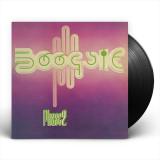
Mr Bongo reissues, in full for the first time, a pioneering Trinidadian steelband album from 1979. Masterminded by the key and highly influential calypso / soca steelpan player, Len "Boogsie" Sharpe, Phase2 showcases Boogsie’s innovative fusion of jazz, funk and Caribbean rhythms in stunning style.
Dubbed ‘the Mozart of Pan’ by Wynton Marsalis, Boogsie began playing pan at the age of five and composed his own music by the age of nine years old. Across a long and illustrious career, he has won seven National Panorama Championships in Trinidad and Tobago with his compositions and band, a world Steelband Music Festival with his original compositions “In the Rainforest”, and two Notting Hill Panorama Championships with Mangrove Steel Orchestra. Over the years he has also played with Andre Tanker, Lord Shorty, Lord Kitchener, Leston Paul, Clive Zanda, and other amazing Caribbean greats. Len became an arranger for the National Steelband of Trinidad and Tobago and is a cultural ambassador for the country promoting the instrument.
High Focus Records are proud to present the latest collaboration from Verb T & Illinformed. ‘Stranded in Foggy Times’ both continues and completes the trilogy that began back in 2015, with ‘The Man with the Foggy Eyes’, before broadening the horizons with last year’s release ‘The Land of the Foggy Skies’. This final chapter returns to the same conceptual landscape as its predecessors, but also sees Verb T & Illinformed returning to a more classic approach to album making. In spite of its concept, the Foggy Trilogy is something of a personal outpouring for Verb T, with the original aim being to vicariously discuss the trials and tribulations that play a part in his life, including his struggles with chronic illness and the feeling of alienation from leaving his hometown, while also reflecting on the state of the world as a whole. Their approach to making the album meant taking it back to the most natural form, where the idea for the track would be outlined, Illinformed would make the beat, Verb T would write to it and then they would tweak and adjust accordingly. The result is 19 of the most finely crafted tracks to emerge from the UK shores this year. As with the previous albums, ‘Stranded in Foggy Times’ finds Illinformed moving away from the more rugged sound that has shrouded the British scene over the last few months, thanks to his collaborations with the likes of Datkid and Wish Master, instead providing Verb T with an arguably more mellow backdrop. From the string and piano driven introduction on ‘Legacy’, to the blissful head-nod vibes of the closing track, ‘Blind Faith’, the union between beats and rhymes sits at the perfect level. The album also boasts one of the most impressive guestlists of the year, one that is very much a product of both players’ worlds. Thanks to Illinformed’s Bristol connection, there are features from the likes of Res One, Datkid, Leaf Dog, Smellington Piff and Chillman, as well as some locally sourced cuts from DJ Rogue. While on Verb T’s side of the fence, we have features from Rye Shabby and Moreone, along with a collaboration that reignites the same creative spark he found in his early days, as King Kashmere steps into the booth on Feeling Strange. All in all, ‘Stranded in Foggy Times’ does exactly what it sets out to do, by drawing the trilogy to a close while also providing insights into Verb T’s personal world and the world at large. The fact that it also happens to be one of the strongest rap albums of the year is the icing on the cake
Often credited as the father of multi-media theatre, Alwin Nikolais (1910-1993) took complete creative control over his productions - including cutting-edge approaches to lighting and costume that transformed human bodies into shifting sculptural shapes, while also composing wildly innovative electro-acoustic and synth-based audio as accompaniment.
After initially experimenting with musique concrète and tape manipulation (as demonstrated on the 1959 LP Choreosonic Music of the New Dance Theatre of Alwin Nikolais) Nikolais became the first owner of Robert Moog's synthesizer at the Audio Engineering Society convention in New York in late 1964. Relying heavily on the Moog and later the Synclavier synth/sampler, these 21 tracks document Nikolais' highly-prescient compositions across the mid 1960s through to the late 1980s - existing not only as extensions of his other-worldly choreographic productions, but standalone pieces of foundational mid-century American electronic and experimental music.
"Born in Southington, Connecticut in 1910, Nikolais’s early years and early career were in acting, music and puppetry. It was not until the late 1930s that he began his work as dancer/choreographer in Hartford, Connecticut, where he was commissioned by the Avery Memorial Theatre, a part of the Wadsworth Atheneum, to create an evening-length work to the music of Ernst Krenek. Previously his work and study as a pianist-organist found him accompanying silent films. This sort of accompaniment required from the musician not only a playing skill but also a versatility in improvisation, matching movement to sound, and evoking mood to situation.
Nik was drawn initially to dance by his involvement with the percussion scores used by the illustrious early twentieth century German dancer Mary Wigman. In trying to learn more about percussion, he was lured into dance class and thus his career began. His development of music and dance occurred simultaneously. His introduction to the twelve-tone technique opened his mind to the expanding areas of atonal music, and his dealing with music as sound per se. In 1948, after being appointed director of the Henry Street Playhouse in New York, Nikolais formed the Playhouse Dance Company, later known as the Nikolais Dance Theater, and began his aesthetic orientation toward dance as a study of motion. By the 1950s, he had ceased creating literal dances and began his explorations and eventual milieu as an abstractionist.
Sound became an important part of his abstract theatre. For his first dances, which involved his new thinking of dance as both a visual and kinetic art, he used live percussion scores in which he directed his dancers to play instruments of all nature. There was a combination of children’s toy instruments as well as harsh and resonant automobile brake drums, and other pitched auto parts which he also used to accompany classes. Once he installed his own tape recording machines, he quickly used the limited range these instruments provided in a new way, slowing and increasing speed and reversing sound. He also made the sounds adhere to the choreographic structure (not the other way around), thereby giving the dance its independence from the musical phrasing. But the real need remained: the search for new sound. Nik made a sound library, recording noises and percussion and vocal sounds, which the French aptly called musique concrète. Needless to say, he became a master at splicing bits and pieces.
From 1956 to 1962 Nikolais composed eleven major scores for his theatre pieces using such techniques. In 1963, James Seawright, who at the time was assisting Nik in his productions and also working at the Columbia-Princeton Center for Electronic Music, recorded a sound bank for the production Imago (1963). With this material, Nikolais created his first synthesizer score. Imago won the Paris Grand Prix in 1968 and launched the Nikolais Dance Theatre towards its national and primarily international acclaim.
During the same period, Seawright came to Nik and told him of a young man who had invented and constructed a simplified synthesizer and insisted that Nik visit the electronic fair currently being held in New York. Nik did so and met Robert Moog. He was completely taken by the new machine and after making some suggestions to Moog, (which Moog made), Nik bought the inventor’s first machine with the aid of a Guggenheim Fellowship. Moog himself was astonished by what his machine could produce for Nik. This machine was later acquired by the Museum of Musical Instruments at the University of Michigan at Ann Arbor as the first Moog synthesizer. The Synclavier was Nik’s next source of sound and since the mid-1970s remained the major instrument in the Nikolais soundroom.
Alwin Nikolais has been honored and awarded throughout the world. He has received the French Legion of Honor, the Kennedy Center Honors, National Medal of the Arts, two Guggenheim Fellowships, as well as Mellon, Ford, and Rockefeller grants. He has been a recipient of NEA grants since 1966, been awarded five honorary doctorates, all for his remarkable achievements in Dance Theater. His genius has influenced several generations of artists."
—Murray Louis
The Nu’rons were a family group consisting of two sets of brothers and cousins, the four young men in question being brothers Daryl Howard and Raymond Gibson (Daryl’s mother registered him under his father’s surname of Howard and Raymond under her maiden name of Gibson) together with Otho Bateman and Charles Bateman. They were all born and raised in Salem, New Jersey and from the age of ten and eleven began singing with a fifth member and Gibson brother Rudolph as a group called The Gospel 5. They eventually decided to crossover to secular music and as a group known for their energetic dance routines they came up with the new performing name of ‘The Nu’rons’ (taken from the word ‘Neuron’ which is a cell that transmits nerve impulses). However Rudolph was soon to leave the group due to physical illness. Also Daryl Howard and Charles Bateman had also been part of a working group known as The Devotions prior to becoming The Nu-Ron’s.Following hours of practice The Nu’rons eventually felt confident enough to put their own shows together and began to perform at local dances and parties around New Jersey and Philadelphia, often being used as a non-paid warm up act for bigger named artists. They moved between several different managers including Jimmy Bishop (Duo Dynamic Productions) until they came under the tutelage of WDAS radio DJ Georgie Woods (his wife Gilda, being the owner of the Philadelphia Gil, Dion and Top & Bottom record Labels). It was Georgie who introduced them to Manny Campbell who in turn invited them to an audition at his and partner Charles Bowen’s Emandolynn Music studio in Chester P.A. The song The Nu’rons chose to audition with was the self penned “I’m A Loner”, the audition went well, as during late January/early February of 1970 Manny and Charles took The Nu’rons into the Sigma Sound Studio’s with Tom Bell and the TSOP musicians to record “I’m A Loner” and “All My Life” which was released on the Nu-Ron label in April of the same year. The two studio takes presente don this release came short after the band moved on from the collaboration with producer Emanuel Campbell to take music matters in their own hands. Beside recording "Disco Hustle" to be part of the disco boom in Philly of the times, they recorded also “You Came Thru”, a rough yet beautiful heavy bassline driven soul funk recording, and the just amazing “Hurry Up Tomorrow”, here presented in one of the original Studio takes.
Hip Horns Brass Collective presents Brassvillain, a tribute to the cult album Madvillany by MF DOOM and Madlib with the collaboration of Las Ninyas del Corro, Ana Tijoux, Escandaloso Xpósito and Rodrigo Laviña. The catalan brass band covers iconic songs like Figaro, Meat Grinder or All Caps, with the metallic explosion that characterizes them and the voices of some of the best artists on the current rap scene. Daniel Dumile, aka, MF DOOM is not only a musical reference, but also the illustrations that accompanied his project have a great role in the history of hip hop. For this reason, Brassvillain is also a great graphic epic where the versatile artist Hermes LeBleu displays all his versatility. In the featurings appears HO$$$ Benítez, one of the most renowned drummers on the hip hop scene, who has already accompanied them on their previous releases, “The Dream” and “Thunder”. The production is by Hip Horns together with one of the best bassists and musicians in our country, Tito Bonacera, making this tribute a multidisciplinary meeting point between artists who grew up with the masked hero. On the B side we have two new singles from the band, BRAM! and Mulligan, in which they unleash their full potential both in composition and in execution to prove once again that they are one of the leading brass bands of the moment.
Apex militant late '70s style here, if you think you are into steppers you should have this one firmly in your sights. One of Mr. Smart's hardest records, this originally appeared only as an album track, but also had some fame as a dubplate played at the time by Jah Shaka and others. We've long had that cut in our sights, and while some nice new re-mixes of this tune appeared in the last few years, here is the real thing from '79 steel. The A-side features the raw dubplate cut vocal, no horns or other adornment, HARD to the point stepping drum and bass style. The B-side features the original Gussie Clarke dub mix aptly titled "Hot Steppers", also previously released only on album. This cut as well was run on dubplate back at the time, a killer mix with full horns but no vocal. Leroy Smart is one of our all time favorite artists and we take pride in having re-released a handful of his all time best records, this one now added to that list.
Om Unit says of this release 'For me it's another milestone as a DNB fan.. Being allowed to come back to 31 again with another shadow boxing version, being one of only a tiny handful of people being allowed to remix this classic truly is an honour, let alone twice! Also working with Thing on "something ancient" was a real blessing not only because he's original and convincing with his own work but also I think he's like me, he does his own thing without adhering to too many of the insular rules that have made dnb such a closed room over the years, and so creating this cinematic piece just happened naturally and I really love the results.
Muyei Power or Orchestre Muyei (muyei means 'our country') was one of the top dance bands of the1970s in Sierra Leone. Soundway Records' first collection of music from this West African country ('Muyei Power: Sierra Leone in 1970s USA') is an album of rock-infused, 'afro' music from a group that traveled the world throughout the mid 1970s. Fusing elements of electric Congolese and Nigerian music with fast, syncopated, uptempo modernised arrangements of traditional music, Muyei Power produced a series of unique single-only releases that have been unavailable for 35 years. The rare recordings featured here are a glimpse of a dynamic and powerful band at the very height of its powers.
Even though lyrically Orchestre Muyei focused on traditional themes and songs, the arrangements and formulation of the instrumental side of things still very much reflected the mixed nature of urban Sierra Leone music, exemplified by a small collection of bands that also included Afro National, Sabanoh 75 and Super Combo.
For the early part of 1970s the band toured extensively throughout Sierra Leone, Liberia and Côte d'Ivoire before making a handful of 45s in local TV and radio studios. The recordings featured here however come from a period of touring the college circuit in California during late 1975 and early 1976. Later that year, as they played the colleges of the east coast, they gave the tracks to the owner of the African Record Centre in Brooklyn, New York. He initially released two of them on his in-house Makossa Records label as 7-inch 45rpm singles in 1976. The tracks from 1975/6 were then not heard of again until 1979/80 when the African Record Centre released many of them on a series of Makossa Records 12's that sounded far superior than the records that had been released a few years earlier.
Orchestre Muyei Power finally split up in 1979 leaving no proper album releases and only a handful of recordings for us to enjoy all these years later.
History Of Modern is the band's first record since 1996's Universal. Andy McCluskey has described it as their "best album since Architecture and Morality - high praise indeed.
All artwork for the release has been designed by OMD's longtime cohort Peter Saville.
This autumn also sees OMD embark on the 'History of Modern' tour, with the classic line up of Andy McCluskey, Paul Humphreys, Martin Cooper and Malcolm Holmes. The dates will see a mix of new songs with classic hits.
'Double Seven, released by Trojan in late 1973, was the last album Lee 'Scratch' Perry would release on the label for some considerable time, and it was essentially the final album project he put together before establishing his own Black Ark studio. Opening track 'Kentucky Skank' sets the tone with a slow creeper whose frying sounds underscore its role as a praise song to the Colonel's KFC recipes; the cosmic Moog blips come courtesy of Ken Elliott at Camden's Chalk Farm studio, also prominently featured on U-Roy's double-tracked, stereo-panned gambling ode 'Double Six.' David Isaacs' 'Just Enough' was cut a few years prior, which makes it slightly out of phase with the rest of the set, though the enigmatic 'In The Iaah' sounds mightily fresh, with its uncredited chorus said to come courtesy of the Wailers. Perry's own 'Jungle Lion' has hilarious roars from the maestro at the start, strangely grafted atop a reggae re-make of Al Green's 'Love and Happiness.'
'Overall, Double Seven melds the soul, funk, reggae and dub elements that were constant in Perry's work during this phase. His enhanced audio spectrum and endless reference points would keep his music continually apart from that made by his peers.'
—David Katz (excerpt from the liner notes)
180g Heavy double vinyl LP with liner notes by Tyran Grillo. Limited Japanese Obi for the first pressing. Original artwork by Russell Mills and photography by Jean-Baptiste Mondino.
The third Time Capsule is a body of dub reinterpretations by celebrated producer Bill Laswell of Ethiopian singer Gigi. Curated by Tokyo record collector, music researcher and seasoned reissue supervisor Ken Hidaka, it is the first time Illuminated Audio is pressed to vinyl after its CD release in 2003.
Ejigayehu Shibabaw was born in 1974 in Chagni, northwestern Ethiopia and by pursuing a career as a singer, went against her father’s strict, traditional gender roles. As Gigi, she embraced the same musical freedom she had strived for in her personal life, incorporating the Ethiopian church, funk, hip-hop, West and South African music into her work. She first settled in Nairobi, then Addis Ababa, where she quickly established herself as one of the city’s leading singers. A move to San Francisco in 1998 led to a long and fruitful creative partnership with bassist and producer Bill Laswell.
Around the same time, Chris Blackwell had stepped away from Island Records to start the art house film company and label Palm Pictures. He took an interest in Gigi and together with Laswell, pulled together an all-star cast of musicians for her self-titled US debut album, including Herbie Hancock, Pharoah Sanders and Wayne Shorter. It won international critical acclaim, not just for its musicianship but for making Gigi a “defining voice for the Ethiopian expatriate community”, as journalist Tyran Grillo praises in his Time Capsule liner notes. From the nation-defining 1896 victory over Italian invaders to the quiet revolutionaries who wear simple shemma garments, Grillo believes the themes in Gigi make it “a shower of sunlight on her homeland for those ignorant of its struggles.”
After its success, Blackwell encouraged them to go back into the studio to rethink the album and Illuminated Audio was born. “Anyone can make a voice sound worldly”, Grillo remarks, “but rare are those who can make one sound inner-worldly.” Gigi was clear with Laswell to give her vocals a minor role “because it’s already been done.” Instead her Amharic verse is fleeting, exhaling through the textures like ghostly fragments; soaring yet muted. Yet the album is still titled under her name, an assertion by Laswell of her central role in the album’s creation. Not only was it a fully endorsed project by Gigi, but she would be present throughout its development, giving feedback on half-finished ideas as Laswell played them back in the studio. “It works perfectly”, she reflected after the album’s release. “We wanted to capture the whole spirit of each track, and Bill’s remixes create a different music language that really puts you in a pleasant place”.
This new vocabulary takes its lead from a technical approach that Laswell had been perfecting during a furtive creative period at the turn of the millennium. Much like his ambient interpretations of Miles Davis (Panthalassa, 1998), Bob Marley (Dreams of Freedom, 1997), and Carlos Santana (Divine Light, 2001), Laswell approached Illuminated Audio by returning to the original multitrack masters. Gigi wasn’t just reworked, but recomposed into an expansive lattice of instruments, submerged in a watery ambience of dub and trance undercurrents.
Sonically, this new language that Gigi refers to, is manifested by the original album’s more understated parts being pushed to the fore. Explaining his contrasting methods, Laswell saw Gigi as being “put together in a way that fits”. Contrastingly, in Illuminated Audio, “a lot of things that I featured in the remix weren’t as audible in the original.” Instrumentation laying near-dormant, deep in the mix, are brought to the fore: the acid rock guitar and Wayne Shorter’s saxophone on ‘Tew Ante Sew’, Graham Haynes’ flugelhorn on ‘Nafekeñ’, Laswell’s bass on ‘Kahn’, the melodica in Mengedegna or the floating synths and talking drums in ‘Gud Fella’.
Brought to his attention by mentor DJ Nori, Hidaka describes Illuminated Audio as a “masterful sonic exploration into ethereal ambience and dub” and made sure this reissue also contained a full remaster to give its “deep musicality” much better dynamics and density in the overall sound. Hidaka admits that Laswell's music “is sometimes so out-there, it is often misunderstood” and, indeed, to dub album non-believers this might seem like a prolific producer imposing himself on another artist’s work; eternally developing rearrangements that never quite get to its destination. But that’s missing its true power and triumph. This is more than the reissue of a remix, but “a wholly unique musical entity”, as Hidaka describes. Illuminated Audio refers to the illuminated manuscripts that comprise the major part of Ethiopian art and its new compositions stand in proud solitude as a rare body of reworks that both informs and enhances their originals.
Split System, the Aussie group featuring Jackson Reid Briggs (Jackson Reid Briggs & The Heaters) on vocals and Arron Mawson (Stiff Richards) on guitar, took the punk world by storm with its debut EP this past spring. That was hardly surprising given the talent involved. But whatever my expectations were for Split System, the Melbourne-based outfit far exceeded them. Not just another "super group" (also on board are guitarist Ryan Webb Speed Week, bassist Deon Slaviero, and drummer Mitch McGregor [No Zu]), Split System is straight-up one of the most powerful and exciting punk rock and roll bands of recent memory. The band's EP was a smasher, and now debut album Vol. 1 emphatically follows suit. My god, this record is a monster! Essentially Split System's sound is classic Aussie punk. That may sound like nothing new, but this band executes the style with a force and fury rarely heard these days. It doesn't hurt that Jackson Reid Briggs is one of the best rock and roll screamers going. He's got a fire inside of him. Meanwhile, Mawson and Webb form one hell of a guitar tandem. And that rhythm section is insane. These are all brilliant players who come together to make an extraordinary band. Vol. 1 comes storming out of the gates with "The End" and never lets up. Of course we knew some of the previously-released tracks ("Hit Me," "Demolition," "Climbing") were going to rip. But the newer material is just as good and will just about melt your face off. Songs like "Ringing In My Head" and "Grip" are pure energy and ferocity, while closing track "Feelings" has a mellowed-out Saints feel. This band knows how to rock and roll, and there are literally no songs on this album that don't entirely kick ass. Sometimes we think of these all-star groups as "side projects," but such categorization would sell Split System woefully short. If we're talking about the top three or four punk bands in Australia right now, this has to be one of them! Josh Rutledge/ Faster and Louder
Dire Straits' arresting self-titled debut arrived in the midst of punk's reign but couldn't have been further removed from the era's slash-and-burn style. Recorded in West London in February 1978, the band's tasteful, jazz-inflected set embraces folk, blues, and pub rock while also tracing a direct line back to the beat-oriented sound of early rock n' roll. Country and roots accents further distinguish the British quartet's stripped-down music from any 1970s peers, as does the transparent production, which has remained revered among audiophiles the world over – and which has never been better than on this meticulous pressing.
Mastered from the original master tapes and pressed at RTI, Mobile Fidelity's 180g 45RPM 2LP version of Dire Straits features natural tonalities, superb balances, you-are-there imaging, deep-black backgrounds, and pristine clarity. Even if you've heard this album hundreds of times before, you've never experienced it with such lifelike sonics and premium richness. This numbered-edition collector's set immerses you within the smoky, laidback atmospherics of every song. This is how all vinyl should sound.
Crucial to every arrangement, Mark Knopfler's winding guitar lines emerge with supreme transparency and multi-hued textural detail. His intricate playing comes across as if it's being transmitted via his 60s-era Fender Vibrolux amplifier placed right before you. The cleanliness, dimensions, and live feel are that good. His bandmates, too, benefit from the extra groove space afforded by this 45RPM edition. Rhythms skate and swirl; percussive effects resonate with crispness and attack; the leading edges of notes naturally decay.
Dire Straits' strong, well-edited batch of original material further enhances the overall enjoyment and makes the record one whose pleasures go far beyond the organic sonics. Just as Knopfler's narratives pour forth with poetic and surrealist texts, the musical settings – an intoxicating combination of easygoing shuffles, back-hall boogies, and pop-honed ballads – mirror the old-fashioned soulfulness inherent in the classic recordings of the late 50s and early 60s. The lyrics are equally captivating.
Drawing from his time as a youth in Newcastle, Leeds, and London, Knopfler invests tunes with an autobiographical slant and emotional connectivity that become obvious the moment he opens his mouth to sing. "Down to the Waterline," "Wild West End," and "Lions" all feature colloquial touches that add to their reach. By extension, "In the Gallery" functions as a tribute to Leeds sculptor Harry Phillips (father of future Knoplfer collaborator, Steve Phillips) while the record's breakout smash, "Sultans of Swing," pays homage to struggling bar bands.
Through it all, Dire Straits performs with a subtle cool and clever poise that no band ever matched. Just how good is the chemistry? Bob Dylan heard the quartet and invited Knopfler and drummer Pick Withers to play on Slow Train Coming. But even Dylan himself didn't hear Dire Straits sound this magnetic back in its original heyday. Now, everyone can.