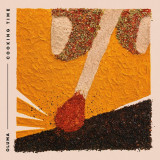
OLUMA wurde 2021 von dem Bassisten Gregor Nicolai, dem Schlagzeuger André van der Heide und dem Saxophonisten Roman Polatzky gegründet. Die instrumentalen Kompositionen der neunköpfigen Band lassen sich dem Global Groove zuordnen. Sie schaffen dichte Grooves, die von energetischen Brass-Lines bespielt werden und in virtuose Improvisationen münden. Die vier Bläser können das Publikum aber auch schwebend und leicht in eine träumerische Welt begleiten. Die multikulturelle Szene Berlins mit ihren unterschiedlichsten musikalischen Einflüssen haben André und Gregor geprägt und zusammengebracht. Dazu kommt die Liebe zu handgemachter Groove-Musik, die Leidenschaft zu tanzbaren Beats. Roman trafen sie im Dunstkreis der Musikhochschule Leipzig, wo sich die internationale Band gefunden hat. Der Albumtitel Cooking Time entstand nicht zufällig: Die Musik entsteht in gemeinsamen Songwriting-Sessions, bei denen Beats gebastelt und Ideen eingesungen werden. Die Band gewann den Delay-Nerd und Afrobeat-Liebhaber Umberto Echo für ihre Aufnahmen, der mit Verwendung alter analoger Technik einen nostalgisch anmutenden Sound schafft, welcher auf moderne Produktion trifft. Mit ihrem Debut-Album möchte OLUMA die Idee teilen, dass Musik einen Beitrag zur globalen Verständigung leisten kann und Menschen verbindet. Carolina Vallejo vom Label One World Records hat dafür genau die richtige Umgebung bereit gestellt. OLUMA präsentiert ein klangvolles Zeugnis für die universelle Sprache der Musik. Ihre mitreißenden Auftritte und ihre künstlerische Vielfalt machen sie zu einer der aufregendsten Bands der gegenwärtigen Musikszene.
Suche:alter echo
Mesmerizing and exuberant Argentinian La Yegros, probably the most magnetic artist on the South American continent, is back with a new album!
The undisputed Queen of "Nu Cumbia" has not rested on her laurels. Surrounded by the same accomplices who have supported her for the last ten years, but eager to renew herself, she has set about recording her fourth album, which stands out from her discography. Although her personal folklore is still rooted in South American folklore, La Yegros is now absorbing contemporary, global music, while tackling intimate, often melancholy and even painful subjects, which she overcomes with the same resilience that drives her in concert. Nothing stands in the way of this Argentinian whirlwind, all the more fascinating for the fact that personal considerations are now surfacing beneath the veneer of the party atmosphere she sets alight.
La Yegros returned to the stage in 2022 to celebrate the 10th anniversary of Viene de Mí, her single hit from the self-titled album, released in 2012 in Argentina and then worldwide in 2013, which catapulted her to international fame. We then discovered a singer who had grown up in the traditions of her country. Her parents come from Misiones, a province bordering Brazil and Paraguay, where balls are filled with the sounds of chamamé (a mix of polka and Guaraní music), Carnavalito (Andean folklore) and Colombian Cumbia. But she herself is a native of Buenos Aires, whose nights are enlivened by the bass of Dancehall and electronic music.
These influences have merged in two further successful albums, Magnetismo (2016) and Suelta (2019), followed by high voltage tours during which La Yegros has been able to display her generous nature, inexhaustible energy, exuberant personality and infectious enthusiasm.
To record her new album entitled 'HAZ', La Yegros has put her faith in the same team that has worked with her since Viene de Mí. On one hand, producer Gaby Kerpel (also known as King Coya), a pioneer of synthetic experimentation applied to traditional music, who has remained her faithful accomplice for over twenty years. On the other hand, composer Daniel Martín, who knows how to come up with melodies to dream about and hymns to sing along to. Inseparable and complementary, the trio continues to concoct this mesmerizing mixture where acoustic instruments meet samples and the rolling of machines. But the new productions don't rely on a tried and tested formula. Generally co-produced between France and Argentina, they break away from over-defined genres. La Yegros knits together new rhythms and incorporates sounds that are unheard of in her country, derived from the latest urban trends, as well as echoes of reggae and funk. As for the lyrics, signed alternately by the trio, they are embodied by La Yegros whose charismatic voice questions a period of her life tossed by waves of love and lovelessness, joy and sorrow, euphoria and anguish, indulgence and resentment.
The album is open to a wealth of musical styles. You'll hear funk guitar and Andean flutes, melancholy accordion and rolling drums, Tuareg blues enhanced by brass, house and electro Cumbia loops, and the bassoons of a chamber orchestra. The folklore 2.0 of La Yegros, nourished by its colorful inspiration, at times tender or exalted, has been imagined as a hymn to love and the contradictory feelings that come with it. As always, it has also been conceived with the stage in mind. Hatching in a storm of overturned emotions, the album is all the more explosive for the strength of the live show that accompanies it. In addition to the usual line-up of guitar, accordion and percussion, a musician handles synthesizers and machines to boost the electronic turboshaft. In any case, you can count on the singer to assert her increasingly clear-cut character with each new project. And, above all, she won't give up. L.a Yegros is back and her batteries are fully charged.
"L'idée nous est venu lors d'une conversation un peu arrosée dans un pub du sud de Londres avec Philippe du label Tapeworm" dixit François Kirmann Gamaury alias Franz Kirmann alias Dj Salinger – producteur français établi à Londres depuis plus d'une vingtaine d'années.
"Voyage voyage voyage" est une mixtape. Mais pas dans le sens traditionnelle du terme. Kirmann l'appelle une mixtape subjective, où les morceaux ne sont pas joués tels quels mais présentés tels qu'ils sont ressentis par l'artiste.
Un peu comme le DJ Vladimir Ivkovic qui ralentit certain morceaux sur ses platines pour en révéler un autre aspect, Kirmann zoom dans l'étoffe même des enregistrements, étire les notes et les sons à l'infini, pour en mettre à jour un sens caché, altérer notre perception de ces chansons qui peuvent parfois sembler un peu désuètes. Ici elles sont transformées en nappes fantomatiques et envoutantes qui évoquent un souvenir d'une période de sa vie, une trace sonore d'une époque un peu naive, qui revient aujourd'hui sous forme d'echo, une musique nostalgique trempée dans la reverb et la distortion.
Kirmann a grandit au Sénégal pendant les années 80 et il se souvient des étés de son enfance passé chez ses grand parents, les chansons à la radio, dans le bus du centre aéré, dans un Prisunic en Dordogne, où une fête de camping en Alsace: Catherine Lara, Elsa, Veronique Jeannot et bien sûr Desireless et son fameux tube "Voyage voyage".
Les chansons sélectionnées pour la cassette ont toutes en commun une incitation au départ, une recherche de l'ailleurs, un amour perdu, un souvenir, les thèmes de predilection d'une certaine pop française que l'on nommait variété.
Ces idées d'évasion sont accentuées ici par le traitement sonore qui leur est appliqué. Les chansons sont paralysés dans le temps, figées dans le son, comme si l'on avait souligné certain passages dans un roman pour les détacher du texte intégral.
Distortion, écho, réverbération et autres effets sont appliqués et donnent à la musique et au son une qualité rêveuse et distante. Certains passages reconnaissables se dévoilent et sortent de la brume sonore, ils se révèlent plus net, d'autres sont noyés dans un brouillard imprécis, une musique proche de l'ambient qui enveloppe l'auditeur.
Kirmann: "Chaque track est basé sur une chanson de variété française des années 80, je voulais re-créer une impression de distance, quelque chose de lointain. Les morceaux deviennent des sortes de tapisseries sonores mais dont l'essence de la chanson originelle est toujours présente. Il y'a un roman de Patrick Modiano où les personnages lancent des avis de recherche pour la France à partir d'une station de radio d'un pays lointain. Le son est brouillé, les voix étouffées. J'avais un peu cette idée en tête de faire quelque chose de similaire, comme si les chansons étaient entendus sur un vieux poste de radio mais émises d'une station lointaine et d'un autre temps."
Le résultat est un voyage nostalgique, une musique ambient et nébuleuse façonnée à partir de tubes synthétiques 80's. Imaginez Fennesz ou My Bloody Valentine jouant des reprises de Laurent Voulzy et vous y êtes presque…
Loveless non, Desireless oui!
DJ Salinger. Voyage Voyage Voyage – Disponible en cassette uniquement. 100 exemplaires sur le label Tapeworm.
—
Franz Kirmann is a French music producer living in London. He has made albums for various labels including Denovali, Bytes, Mercury KX. He also writes music for film and TV and is a lecturer in music production at Point Blank Music school.
It’s a family affair. One formed almost thirty years ago, back in the mid-nineties, when the pair joined seminal French jazz combo Olympic Grammofon. For twenty-four years they have worked together as Bumcello, each complementing the other, echoing polar opposites. The Boom in Bumcello is none other than Cyril Atef, incisive drummer, relentlessly pushing beats towards new horizons. The Cello is Vincent Ségal, cellist without blinkers and extraordinary musical alchemist. Since 1999, these two die-hard music fans, coming together for mercurial results, have released one record after the other whilst conquering the hearts of their live audiences, old regulars as well as new recruits. We have all been seduced by the way their music leapfrogs categories - these two experts are much more interested in kindred spirits than pigeonholing, and this very spirit is celebrated on more than one track of this ninth record, whose concept is original to say the least.
Everything began with an idea by Cyril Atef - a soundtrack based upon drawings penned by Marin, Vincent’s son, architect and visual artist. The musicians involved then coached their reaction to these images on a score, and the pair were charged with collating and adjusting the results. These thirteen ink drawings, in a heroic fantasy vein, constituted a matrix which was then to serve as a guide, like a roadmap through a singular and multi-faceted labyrinth. The key to this sonic fresco is in Bumcello’s image – an eclectic aesthetic twinned with a great sense of contrast. Herein lies the trademark of this entity animated by the gift of musical ubiquity, gorged on scales and rhythms, capable of a slap as much as a gentle caress. From classical music to electronics, from improvised music to sophisti-pop, everything is allowed with no preconceived ideas. They can even reclaim the traditions of others, all the better to propel them towards new horizons - this is how the very history of music has always panned out.
If you listen between the lines and look at the details, more than one piece bears witness to the moments and individuals that have impacted the criss-crossing lives of Vincent and Cyril. The track Crash is the perfect excuse to create a Jamaican-style jam with New York inflections, and we can see, in capital letters, the name Hilaire Penda, playing alongside Bumcello at the Apollo Theater in the associated drawing. This bass player from Cameroon, who died on 5th November 2018, was more than just a friend for the two Frenchmen. He was one of the family. Similarly, they give a nod to another Cameroonian, and another departed friend - singer of rock band les Têtes brûlées, Zanzibar, through the vocals of fellow countryman Zanzi. The ghost of Rémi Kolpa Kopul, emblematic voice of Radio Nova, haunts the margins of Spark Av, in a vocal sample with a smattering of effects. As for I Remember Tim, it directly honours the memory of Timothy Jerome Parker, aka The Gift Of Gab, another friend who left us in 2021. Tim is depicted in a drawing with the docks of Oakland in the background, and it’s his alter ego within Blackalicious, Chief Xcel, who remotely added his signature to the track, notably by adding the words of Lateef The Truthspeaker to brass and woodwind sounds.
These are the only additions to Bumcello’s original nucleus, all the better to create a genuine musical concoction where Vincent Taurelle is in charge of production and mixing sessions recorded live and direct. He is also invited for a twinkle on the keys (piano, synths, Wurlitzer, organ), on a handful of tracks. Already at the commands of previous opus Monster Talk, always taking care over the slightest detail, the one that makes all the difference, this pianist is now also part of the family. “Everything he brings is perfect, whether added though slight touches or through very important choices”, say the two members of a combo which today, appears to us under the guise of a trio, adding an extra dimension to a far-reaching mix, in the image of the veiled or more explicit tributes making up the cornerstones of this release.
Booker, a drawing where we see the musicians enter a club, honours James Booker, great pianist from New Orleans who has always fascinated Vincent, in a genre that is off-beat and gender defying. Her Story was created by Cyril in support of the Iranian women’s movement. Aysyen Kampe evokes, even in the original drawing, a tradition that remains impactful for Bumcello – Haitian mysticism, and Ouï Khouïette Ouï conjures up the beats of the Allaoui, a war dance from Western Algeria, one they have taken part in in the past with the help of Cheikha Rabia. They deliver a metal version, original and surprising, especially as Marin Ségal’s drawing features the Nicholas Brothers, those iconic dancers of the 30s jazz scene!
Resolutely hard to pin down, Bumcello’s beats can initially take on the structure of disjointed house, though Sangre begins like a film soundtrack, “in a Mexican style” adds Vincent, who was at the origin of this track. A delicate alap on the cello can open up onto afrobeat rhythms, a well-pitched voice can enchant, like on the amazing The City Has Eyes which has everything of a hummable pop hit. Emblematic of this manner of encompassing all music without being exclusive, Le Grand Sommeil, a direct reference to the Howard Hawks movie inspired by Raymond Chandler, a precursor of David Lynch, begins nice and smooth but ends on a wild tempo, on a drum’n’bass tip, as in the good old days of Cithéa, when this Party story began in the other century.
- A1: Passage Through The Spheres
- A2: All Life Long (For Organ)
- A3: No Sun To Burn (For Brass)
- B1: Prisoned On Watery Shore
- B2: Retrograde Canon
- B3: Slow Of Faith
- C1: Fastened Maze
- C2: No Sun To Burn (For Organ)
- D1: All Life Long (For Voice)
- D2: Moving Forward
- D3: Formation Flight
- D4: The Unification Of Inner & Outer Life
Kali Malone's anticipated new album "All Life Long" is a collection of music for pipe organ, choir, and brass quintet composed by Kali Malone, 2020 - 2023. Choral music performed by Macadam Ensemble and conducted by Etienne Ferschaud at Chapelle Notre-Dame-de-L'Immaculée-Conception in Nantes. Brass quintet music performed by Anima Brass at The Bunker Studio in New York City. Organ music performed by Kali Malone and Stephen O'Malley on the historical meantone tempered pipe organs at Église Saint-François in Lausanne, Orgelpark in Amsterdam, and Malmö Konstmuseum in Sweden. Kali Malone composes with a rare clarity of vision. Her music is patient and focused, built on a foundation of evolving harmonic cycles that draw out latent emotional resonances. Time is a crucial factor: letting go of expectations of duration and breadth offers a chance to find a space of reflection and contemplation. In her hands, experimental reinterpretations of centuries-old polyphonic compositional methods become portals to new ways of perceiving sound, structure, and introspection. Though awe-inspiring in scope, the most remarkable thing about Malone's music is the intimacy stirred by the close listening it encourages. Malone's new album All Life Long, created between 2020 - 2023, presents her first compositions for organ since 2019's breakthrough album The Sacrificial Code alongside interrelated pieces for voice and brass performed by Macadam Ensemble and Anima Brass. Over the course of twelve pieces, harmonic themes and patterns recur, presented in altered forms and for varied instrumentation. They emerge and reemerge like echoes of their former selves, making the familiar uncanny. Propelled by lungs and breath rather than bellows and oscillators, Malone's compositions for choir and brass take on expressive qualities that complicate the austerity that has defined her work, introducing lyricism and the beauty of human fallibility into music that has been driven by mechanical processes. At the same time, the works for organ, performed by Malone with additional accompaniment by Stephen O'Malley on four different organs dating from the 15th to 17th centuries, underscore the mighty, spectral power that those rigorous operations can achieve. All Life Long simmers in an ever-shifting tension between repetition and variation. The pieces for brass, organ, and voice are alternated asymmetrically, providing nearly continuous timbral fluctuation across its 78-minute runtime even as thematic material reiterates. Each composition's internal framework of fractal pattern permutations has the paradoxical effect of creating anticipated keystone moments of dramatic reverie and lulling the listener into believing in an illusory endlessness. On an even more granular level, the historical meantone tuning systems of each organ used, and the variable intonation of brass and voice, provide further points of emotional excavation within the harmony. The titular composition "All Life Long" appears twice on the album, first as an extended canon for organ and again in the final quarter, compactly arranged for voice In the latter, Malone pairs the music with "The Crying Water" by Arthur Symons, a poem steeped in language of mourning and eternity. For organ, "All Life Long" moves with a patient stateliness, the drama concentrated in moments when shifting tonalities generate and release dissonance and ecstasy. For voice, each word is saturated with feeling, the singers swooping gracefully downward to capture the melancholy of the narrator's relationship to the timeless tears of the sea. "Passage Through The Spheres," the album's opening piece, contains lyrics in Italian pulled from Giorgio Agamban's essay In Praise of Profanation. In it, Agamban defines profanation as, in part, the act of bringing back to communal, secular use that which has been segregated to the realm of the sacred, a process Malone enacts each time she performs on church organs. This is not music of praise, or of spiritual revelation, but it is an artistic enactment of translating the indescribable. It carries the gravity of liturgical chant, and its fixation on the infinite, but draws its weight from the earthly realm of human experience. A music that draws the listener into the present moment where they can discover themselves within the interwoven musical patterns that can come to resemble the passage of days, weeks, years, a lifetime.
“I like to work with a variety of instruments and set ups,” says Mark Van Hoen, sometimes known as Locust or Autocreation but here working under his own name on the excellent Plan For A Miracle, his first physical release of solo music since 2018’s Invisible Threads. ”Sometimes it’s literally in my studio, with all the hardware electronics available. Sometimes the laptop, using software instruments. Some of the tracks on this record were recorded in the desert (Joshua Tree) using a 4-track tape machine and small modular synthesiser set up. Each track was recorded in different location using different instruments, which accounts for the distinction between each piece. It’s also about my own reaction to my environment, and what’s going on in my life at the time.”
The Croydon-born Van Hoen started musical life in the early 1990s, signing for R&S records in 1993 but developing his own, myriad and distinctive style across a range of releases on Touch, Editions Mego and other labels, using a battery of instruments, including analogue synthesizers and taking a number of different approaches to recording, rather than ploughing a single sonic furrow. He has worked on a number of collaborations, including with Nick Holton and Neil Halstead of Slowdive, under the moniker of Black Hearted Brother - their Stars Are Our Home was released in 2013. “I have known Neil Halstead since 1992,” says Van Hoen. “He shared a house with me for a couple of years, and the music I was making and listening to along with clubs I was attending had an influence particularly on Pygmalion, the final Slowdive album on Creation.”
Each track on Plan For A Miracle does indeed sound like a world unto itself, a mini-environment, a weather condition, an ecosystem created for the moment. It’s a collection of tracks recorded over the past few years, released on Bandcamp - despite his apparent absence, Van Hoen works constantly. Opener “Climates”, in its exquisite limpidity, feels like a homage to Brian Eno, one of his most formative influences in his teen years, commencing with Music For Films, which he bought in 1979. “This Is For Them”, feels like a ghostlike throwback to early drum & bass or electronica, reminiscent of his own, earliest outings. “There have been a number of requests from labels to make some more music like my very early releases on R&S,” says Van Hoen. “This is part of ‘letting go’ and realising that there’s nothing less creative about going back to those styles again.”
“Pencil Of Spheres” is something else again, a magnificent, imaginary glass structure, shimmering, refracting, without visible means of suspension, a thing of impossible beauty. “Electric Lights” evokes an abandoned fairground, its lights still pulsating, its music lingering. “The Underpass”, meanwhile, insofar as it reminds of anything at all, is faintly reminiscent of Cluster or Neu’s! West German ambience, the urban mundane rendered magical, the sodium lights, the whitewashed walls. The reverberant, faintly oriental chimes of “Insight” transport us yet again, burgeoning and intensifying.
The landscapes, the skyscapes rendered on Plan For A Miracle feel unpopulated as a rule - but when he does introduce vocal elements, Van Hoen has a history of doing so to spectacular effect - think of “Real Love” from 1998’s Playing With Time, the seductive intonation of its title recurring throughout like a series of massive holograms, echoing, stuttering, breaking up, surging. Here, there are just the faintest of vocals, barely distinct, disquieting. “There’s been a bit of a game changer in recent times,” explains Van Hoen. “AI software that enables you to extract vocals and instrument parts from virtually any recording. That means sampling individual parts from existing sources is no longer limited to the original mix exposing certain parts soloed. The vocal parts I use are from multiple sources and often pitch shifted altered rhythmically and melodically.“ There’s further vocal chatter on “I Really Do”, proceeding at a faster pace as if giving chase, or being pursued - distant, enigmatic. “The Music”, meanwhile, its beat tolling, lost in its own fog of static, features a curious intonation, like the ghost of a lost Walker Brother.
Sadly, the album’s title is in reference to a personal tragedy on Van Hoen’s part - the loss of his wife. Titles such as “I Won’t Give Up”, which faintly reminds of another Eno masterpiece, Another Green World, in its nautical hurly-bury, or the pastoral strains of “Mrs Who”, heavily clouded with sadness, seem to allude to this. “In fact the record was recorded entirely before she passed away,” says Van Hoen, “most of it before she even became very ill. The title was given to the album when it started to look like she wasn’t going to make it beyond a few months. It was something Osho said - “plan for a miracle” - so it was a statement of hope. Unfortunately it was not to be.” Although the album is non-thematic, non-specific in its atmospheres, sound paintings, elegant structures it most certainly stands as a magnificent monument to Osho’s memory.
-David Stubbs.
One of Europe's most popular alternative / dark wave bands. Lebanon Hanover have over one million monthly listeners on Spotify. Following their first US tour in over a decade, Lebanon Hanover returns with a soul-stirring double A-side single release, marking their first new material since the captivating 2020 album, 'Sci-Fi Sky.' Now, the enigmatic duo of William Maybelline and Larissa Iceglass beckons listeners into unventured sonic domains, intricately weaving folk-driven acoustic dream pop with the vulnerable essence of post-punk in a contemplative exploration of life's ephemeral yet profound nature. Embarking on a Cure-like sonic voyage reminiscent of the 'Head on the Door' and the 'Kiss Me' era, title track 'Better Than Going Under' manifests as a romantic, sombre daydream. William Maybelline's brooding baritone intertwines with sighing back vocals, narrating an ode to life's fleeting yet boundless vistas. The acoustic strums initiate a folk-driven narrative which, when coupled with a celestial choir, crafts a contemplative soundscape of cautious optimism, reminiscent of Echo and the Bunnymen or The Church.. KYIV: Bearing the name of Ukraine's capital, 'KYIV,' voiced by Larissa Iceglass, delves into a narrative reflective of the sorrow and despair entwined within war-torn regions like Ukraine and beyond. The acoustic guitar and drum machine create a Cocteau Twins' 'Treasure'-esque soundscape, evoking a melancholic yet beautiful auditory journey. Iceglass's voice, transitioning from her husky baritone to a more resigned lament, embodies a poignant reflection on the harsh realities faced by those embroiled in conflict-ridden landscap
Roberto Agosta, or just Agosta as he likes to be called, is a Sicilian DJ and producer from Catania active all along the eastern coast of Sicily, a place that proved to be a soulful place and a training ground for a long career, making him an excellent music selector and a reference point in the spread of alternative music.
A soundtrack music enthusiast since he was a child, now a vinyl "serial gathere", Agosta has always put his vast knowledge at the service of a very personal sound that sums many different music styles and contaminations, simple and profound but straightforward and direct at the same time.
Agosta’s eponymous album, released on LP, CD and digital formats, was conceived during the Covid-19 lockdown, thanks to the precious collaboration of friend DJ and producer Massimo Napoli aka Galathea, with whom Roberto has already started another project called AN-AN that will produce a new record for Space Echo at the end of 2022.
This record highlights a typical chill-out aesthetic, thanks to its trip-hop and ambient rhythms and atmospheres, while a deeper exploration reveals the psychedelic essence of the entire work, a daring and exciting journey in the most primitive Sicily, and the energy that sustains all of its ten tracks.
Much of their author and his lifestyle - mainly based on meditation, the search for spiritual elevation, the relationship with nature and the regaining of contact with those particular places and with the people who live there - is revealed by those tracks that constitute a soundtrack for this spiritual but also extremely physical journey.
The song titles are, in fact, intrinsically linked to Roberto’s real life: the Gorna and Ilice mountains at the foot of Etna, the Carricante vineyard and its excellent wine, Unna, Three Chestnuts, Varanni, Don Alfio, Lady G. Each of them represents a pleasant and dreamlike narration and the escape from the complex dynamics of a city like Catania, among echoes of the most dreamy Pink Floyd, the softer side of ’70s krautrock, but also the Massive Attack and Tricky’s Bristol scene.
There’s also an excellent choice of synthesizers and overdubbed guitars, thanks to the talent of the multifaceted musician and producer Salvo Bruno Dub, and of Manuela Amalfitano, Loredana Poidomani and Deran Obika’s voices.
Agosta is an introspective, deep work with a cinematic vocation, perfectly rooted in the territory where it took shape, among sunny landscapes, lush with vegetation but also deserted and arid lands. From Sicily to the cosmos... enjoy!
- A1: Three Chestnuts – (Galathea's Psychedelic Pepper)
- A2: Millstone – (Agosta's Rework In The New Mill)
- A3: Apples 65 – (Agosta "Rework 23")
- A4: Hearing The Call – (Lady G In A Rainy Day, With The Invisible Session)
- A5: Varanni – (Anan Remix)
- B1: Unna – (Salvo Borrelli "Myhome809" Remix)
- B2: Lady G – ("Butterfly Version" Agosta's Rework)
- B3: Cellars – (Go Soul.map Remix)
- B4: Carricante – ("Grape Must" Agosta's Rework)
- B5: Don Alfio – (Reverend James "Black Calamaro" Remix)
One year after his surprising debut, Agosta, the Catania musician-non-musician and Space Echo Records return to the point with “Reworks and Remixes”. Which from the very title disengages itself from the industrial 'album+remix album' chain and on listening reveals itself to be a record capable of moving, in total autonomy from its antecedent, on three different levels of reading. For, at its base, we would say, there is a much more stimulating idea than the simple compulsion from alternative versions, b-sides and so on.
Point 1, transfiguration. Because, contrary to the genre stereotype, the remix mode allows songs to express themselves in creative and experimental ways.
Point 2, the Rorschach Test. Because, on those songs, there is the personality, that is, the result of the cross-vision with experience, of the individual producers being measured against itself.
Point 3, the stage backdrop. That is, its ability to show a cross-section of the current electronic scene in Etna.
Agosta wanted some of the pillars of Catania's black-minded electronic scene with him and, together with them, reinterpreted songs from his first album. The result is a work that is as multifaceted, in terms of the specific weight of the artistic individualities involved, as it is homogeneous, in their idea of a sound that is as physical as it is mental and, above all, in terms of a totally Mediterranean underlying taste with which every single track is imbued.
Whether it is the pensive house of “Apple 65” or “Lady G” (Butterfly Agosta's Rework) as much as AN-AN's dub on “Varanni”, between Grace Jones and Adrian Sherwood, or Galathea's more psychedelic and twilight Trip-Hop on “Three Chestnuts”. The Shaft-esque swagger of Salvo Borrelli and Reverend James, the donwnbeat pop of “Cellars” by Go.Soul.Map. and the caress of “Hearing The Call” (Lady G In A Rainy Day Version) by The Invisible Session, in which spoken and what they once called nu jazz flirt.
Don’t Miss It!!!!
1STEP Process 180g 45rpm Double LP Pressed on VR900-Supreme Vinyl!
Mastered From The Original Analogue Master Tapes by Bernie Grundman!
Super-Luxe "Monster Pak" Jacket with a Rich 36-Page Booklet & Striking Outer Slipcase!
New lacquers cut for every 500 pressings!
Strictly Limited To 7,500 Numbered Pressings!
There have been more than 40 U.S. releases (and hundreds more worldwide) of Stan Getz's cultural touchstone album and for good reason: few recordings better capture the breezy warmth and easy-going sophistication of Brazilian bossa nova for an American jazz audience. Fewer recordings can replicate the you-are-there presence and flawlessly tight studio acoustics. Only Getz/Gilberto has Billboard Top-10-charting singles like "The Girl from Ipanema." When Impex Records jumps into this densely-populated fray with our own production, we need to bring maximum value and prestige to it. Challenge accepted. We worked directly with Stan's wife Monica Getz and their son Nicolaus to create the most authentic, best-presented Getz/Gilberto ever.
Exclusive to Impex's 1STEP Getz/Gilberto includes an insightful new interview/essay by Charles Granata featuring Monica reminiscences of the making of this record, the subsequent cultural phenomenon, and Stan's battles with some pretty heavy demons. Also unique to this release are two bonus tracks: an alternate mono 7" mix of "The Girl from Ipanema" (without the added echo, thank you very much) and a live recording of "Corcovado" from Carnegie Hall. Finally, the large-format, 36-page booklet features dozens of rare photos, the original album notes, and a fascinating personal remembrance from Monica Getz herself, celebrating her late husband's work and an inside look at Stan's family life while making the record!
Using the original analog master tapes and no computers at all, Bernie Grundman at Bernie Grundman Mastering sought to keep the sense of space and tone on the master tape intact without unnecessary embellishment. Impex 1STEPs get you closer to the source, not the ideal.
We know you have many choices when it comes to enjoying this singular album. The Impex 1STEP of Getz/Gilberto cuts above all other releases with added-value content that takes you deeper into Stan Getz's life and process in a way never previously possible.
The 1STEP Process:
The Impex 1STEP process relies on short, tightly-controlled runs that require a new lacquer after each 500 pressings. This unforgiving format has the lacquer skipping the regular father-mother process, going right to a single convert and then pressing. Though this dramatically increases mastering and production costs, it also assures each run is more consistent from disc to disc, with less noise, clearer details and deeper bass.
Reducing production complexity to just a single "convert" disc between the lacquer and the press greatly improves groove integrity, diminishes non-fill anomalies and increases signal integrity from the master tape to your system.
Features:
The only release of this fundamental jazz classic crafted with the full participation of the Getz family, including never-before-seen photos and notes from Monica and Nick Getz
Exclusive new interview essay about Getz's life and the recording of the album by noted producer and historian Charles L. Granata
Exclusive ultra-luxe Impex 1STEP packaging featuring a deluxe 36-page booklet within a heavy-stock two-sleeve Monster Pack jacket and striking colour-matched slip case
Two all-analogue bonus tracks: an alternate mono 7" mix of "The Girl from Ipanema" and a live recording of "Corcovado" from Carnegie Hall
Limited to 7,500 copies
Started around a decade ago, "Overcloseness" has been a long time coming. It is Colorist's debut album on paper, but already has a magnum opus feel to it. The beginnings of Colorist lay in the Cologne music community. Being small, it was always influenced by the art and the film scene. (In fact, the label Magazine originates from the same crossing point.) The large cast of guest appearances underlines how much Antonio de Luca and Caroline Kox are in the center of that Cologne community. On "Overcloseness" intimate pieces for one or two instruments alternate with dense choir anthems ("Embody") and tracks built from ultra intense fabrics that conjure up the mediative hardness of Tool ("Blood Markers"). Driven by the otherworldly voice of Koxi and a larger than life bass line by Antonio, the album culminates in the unforgettable "Touch Me". Oscillating between a bad migraine and cathartic hypnosis, Colorist have created a genre defying universe of an album.
„This will not revive your soul, B.“
Gloam is the highly anticipated sophomore album from alternative folk band MAYBEL. Similar characteristics from their debut, Gathering, are carried forward: elegant harmonies, soft instrumentals and a shared optimism coupled with a wide open vulnerability. The songs still echo the intimacy, warmth and closeness of their relationships, yet the band has matured. MAYBEL's evolution shines through with ambitious compositions, thoughtful songwriting, and a deeper understanding of themselves as the album’s themes pierce with growing pains, anxieties and hopes for change. It’s a record about movement and stopping; the ongoing act of coming apart and coming together. Gloam is for listening in your bedroom or in transit, missing friends, on your way to see them. It holds an optimism that rings clear yet nestles and dwells in a brooding, muddy darkness - placing it firmly in the illustrious Canadian folk canon. This is the first album for which all four members (Fez Gielen, Ali Hendra, Loris Kecaj and Lauren Spear) wrote songs. For the most part, they were written during the pandemic separately and then shared in the upstairs living room where Lauren, Ali and Loris used to live together. The result is a shared diary on love, grief and moving on. The band's ability to effortlessly blend traditional folk elements with modern production techniques is reminiscent of the collaborations between Emmylou Harris and Daniel Lanois. Just as Harris and Lanois brought a fresh perspective to country music, MAYBEL embraces experimentation in their sound without compromising the warmth and intimacy inherent to folk music. As with their debut Gathering, MAYBEL recorded Gloam with producer/engineer Jonas Bonnetta at Port William Sound in Mountain Grove, Ontario. Resonating with a sound borne of the studio’s deeply intimate rural environs it is no wonder the band chose to return. Here they were joined by Eliza Niemi on bass/cello, Caylie Runciman on bass/drums with Jonas adding synths and percussion. Gloam is an old Scottish word for twilight. It appears like a fantasy between the day and night, a time seemingly frozen, drifting, or ignored all together. Gloam is the mood and time within which the album takes place. MAYBEL describes it as being: “In transition, between sleeping and waking—a quiet underworld where one is alone with their thoughts, in true presence with the in-between.” The final track on the album, “For Nothing”, captures something of the album’s twilight hope. It begins with lilting solos and gracefully builds in energy and color. MAYBEL sings to its listeners, “All that work for nothing” with a buoyancy and radiance that chimes against the lyrics. They repeat: “All that work for nothing”. For all of the band, the last few years have resulted in significant change and stress. Yet they continue to try, through their music, to will themselves towards optimism. They ask for you to marvel with them at the charming and terrifying possibility of life. They harmonize again, not despairingly, but almost ecstatically “All that work for nothing!”
After more than 15 years producing singles and dubplates, DAYS OF DUB is Simon Nyabinghi's first full lenght album.
It offers 12 original dub tracks produced and mixed at All Nations studio, and includes Featurings with innovative artists:Youthie, Kulture D, Iman Onedub.
The album particularly explores the sounds of synthesizers and drum machines typical of the 80s while remaining in the pure tradition of dub, mixed with lots of echo and reverbs.
Built on the same format as the greatest dub albums, it takes us progressively an alternative rhythmic and atmospheric journey such as experienced in a sound system session.
From the initial percussion-based phases through the powerful meditative stages until the biggest "stepper" hits.
Faithful to the codes of the genre and reinforced by true originality of composition, it is destined both to purists and to younger fans.
- 1: Inside Out
- 2: Monkey In The Moon
- 3: Guardian Angel
- 4: Wishful Thinking
- 1: Flame
- 2: Point Of Know Return
- 3: Control
- 4: Dangerous Places
- 1: Spirit Of The Age
- 2: Soul Messiah
- 3: New Horizons
- 4: Pandora's Lullaby
- 1: Wishful Thinking (Radiomix Turbobeat)
- 2: Life Is King
- 3: Wishful Thinking (Physical 12" Mix)
- 4: Flame (Radiomix Turbobeat)
Salvation - ursprünglich 1997 veröffentlicht - ist das 5. Alphaville-Album und markiert eine turbulente Zeit für die Band: Ricky Echolette hatte Alphaville während der Produktion verlassen und Marian Gold und Bernhard Lloyd mussten das Album alleine fertigstellen.
Drei Titel des Albums wurden als Singles veröffentlicht: "Wishful Thinking", "Flame", und "Soul Messiah". Das Album wurde trotz der problematischen Produktion ein Erfolg. Es wurde der Rückkehr der Band zu ihren Synthpop-Wurzeln zugeschrieben. Die Rückbesinnung auf ihre eingängigeren, einfacheren und poppigeren Wurzeln zeigt
stilistische Ähnlichkeiten zu Forever Young. Das Album wird zum ersten Mal auf Vinyl veröffentlicht. Die 3-CD-Extended-Version enthält mehrere Mixe und alternative Versionen.
- 2LP - remastered, Trifold-Hülle plus 24-seitiges Booklet
- 3CD - enthält die Original-CD plus zwei zusätzliche Discs mit Tracks, die nur auf Vinyl erhältlich waren die nur auf 12"-Vinyl erhältlich waren, und eine 5"-Maxi-CD mit Mixen, alternativen Versionen usw.
I want to introduce this work ‘Halos of Perception’ to you in the way Lisa introduced me to it, through the sharing of experiences.
Lisa and I met for a walk near South Yarra station to talk about this work, when inclement weather made it too wet to visit the tunnels. Moving almost seamlessly from a world of leisurewear, infinite milk alternatives and blaring neons to stretches of green by the water that brimmed with sounds and life, we saw a few people climbing the Burnley bouldering wall, butterflies suspended in the hot wind and lots of plants I wish I knew the names of. Overhead the cars rumbled like a ceaseless animal as we talked about hidden ecosystems, imagined spaces and networks of care.
Stemming from a serendipitous encounter with an original Cave Clan member that led to many underground adventures, this work explores the worlds that exist outside of our perceptions. By the river, I leafed through a selection of tunnel photos Lisa had printed off at Officeworks, revealing alien textures, tunnels that stretch on into abysses of their own, underground flowing streams. Light is sparse and delicate, something reflected by the flickering and wavering in Lisa’s piano compositions.
As we walked, we noticed the ways in which infrastructure is often designed to keep people out—cut doors into fencing and clipped wires show an active and ongoing defiance of this. We spoke about how her Cave Clan friend used to go down to this painted room and read in solitude, using candles for light. The way sound exists underground, encased in these hollow cement tunnels, a painted room with its own deep hum. How people used to hold underground shows, how there were rules for safety (no exploring after rain, never alone) that was shared with each other. This warmth and absorption of other’s experiences is present in Lisa’s work—it’s immersive, like wading in water.
We paused on the walk to eat berries and talk about how The Caretaker creates transitory worlds with recorded sound, how this technology captures memory, and the exploratory pursuits of Pauline Oliveros’ Deep Listening Band. These citations of memory and deep listening inform Lisa’s use of analogue and classical instruments, playback artefacts and acoustic feedback in her own world-building. When speaking about ‘Halos of Perception’, she describes it as a fascination with timbre and acoustic artefacts.
Ideas of networks and enmeshment are felt deeply in Lisa’s compositions, motifs overlaid over each other evoking the image of many hands interlinking playfully, tenderly, softly. The way her compositions delve into refraction and echo makes me think about the tunnels and the way they splinter off into many possibilities. Manipulated textures reminiscent of the chalky, earthy, moss air that perfumes the tunnels’ subterranean air. Tactile details that gesture towards close attention, verging on obsession.
This work is also about imagining ecosystems of potential. Lisa shared with me that during this project, she has been reimagining subterranean networks in dreams, thinking about oral traditions, and the way water moves—from the sky to the earth, through the ground, connecting all these spheres. Realised in collaboration with hyperreal video artist Tristan Jalleh, Lisa’s dream landscape melds waterfalls, leaks, flower graffiti, and hidden messages lit up by imagined light sources with existing subterranean networks. There’s a real sense of wonder in this world she has built, how the city can reveal itself to you with some patience and care, how the city and its secrets can find its way into your dreams.
— Panda Wong
Folk Magic Band represents one of the most interesting and original, yet lesser-known experiences of the italian jazz scene of the 1970s. In the legendary alternative environment of the Folk Studio in Rome, an open 18-members lineup is inspired by the free jazz of its time, a music that encompasses the whole world and its polychromy of sound. The echo seems to resonate the pan-ethnic motifs of Don Cherry and his Organic Music Society, but also the spiritual jazz of Pharoas Sanders and the orchestrations of the Sun Ra Arkestra. The textures chase a chinese melody, ignite with african scents and south american jungles, flow into fusion violin drifts a la Archie Shepp's Attic Blues or Mingus-like orchestral sections. The fascination of this collective affair still strikes for its playful and ironic nature, still impressing for its strength and willingness to open and influence new directions.
Slave To Society pays homage to the legendary cultural theorist and philosopher, Mark Fisher. Diving into some of the conceptual ideas of Fisher’s literature and philosophy, you'll feel like you're wandering through a post-apocalyptic landscape in the future with this hard hitting, haunting and atmospheric piece.
‘The Future That Never Arrived’ experience the paranoia and anxiety of the digital age with this gritty and dissonant track. Fisher's ideas about technology's impact on society come to life in a sonic onslaught.
‘Cyberspace’ exploration of desire and its endless repetition. The frenetic energy of this track mirrors the insatiable hunger of consumer culture.
’Is There No Alternative’ the title track offers a sense of reflection and departure. It echoes Fisher's thoughts on escaping the boundaries of the present moment.
‘Ghosts Of My Life’ this track encapsulates Fisher's critique of our modern capitalist society. The heavy beats mirror the relentless grind of capitalism, while the haunting melodies reflect the loss of authentic experiences.
- Theme From "The Warriors" - Barry Devorzon
- Nowhere To Run - Arnold Mcculler
- In Havana - Kenny Vance With Ismael Miranda
- Echos In My Mind - Mandrill
- The Fight - Barry Devorzon
- In The City - Joe Walsh
- Love Is A Fire - Genya Ravan
- Baseball Furies Chase - Barry Devorzon
- Re Movin' Too Slow - Johnny Vastano
- Last Of An Ancient Breed - Desmond Child
- Wonder Wheel (Main Title)
- Graveyard
- Night Run
- The Orphans/Turnbull A.c.'s Pt. 1/Riff Boss
- Turnbull A.c.'s Pt. 2/Molotov Cocktail
- March To Station
- Luther Shoots Cyrus/Train Walking
- Baseball Furies Chase/The Fight
- Into The Tunnel
- Skater/Men's Room/The Fight (Alternate)
- 11: Riff's Learn Truth/Platform/Warriors & Rogues
- 12: Platform (Alternate)/Warriors & Rogue (Alternate)
The long-awaited repressing of THE WARRIORS. This deluxe double LP features the re-mastered 1979 original soundtrack, in addition to, the vinyl debut of the complete film score by Barry DeVorzon.
Directed by Walter Hill and based off the 1965 novel by Sol Yurick of the same name, THE WARRIORS is the absolute definition of an influential cult-classic film. THE WARRIORS has permeated the landscape of pop culture, music, film, fashion, comics, and video games.
Waxwork worked directly from the original master tapes of both the original 1979 soundtrack and film score to bring audiences a brand-new transfer of every musical cue heard in the movie, for the very first time on vinyl.
Features artwork by Marvel Comics artist Dave Rapoza, Double LP 180 gram “Warriors” red and rust vinyl, printed insert, and deluxe packaging.
Darkwave artist Harsh Symmetry returns with sophomore album "Imitation" via Fabrika Records. Los Angeles-based musician Julian Sharwarko has swiftly carved out a commanding presence with his darkwave project. Sharwarko's adeptness at bridging the gap between the past and present is palpable, as he seamlessly blends influences from genre titans such as Depeche Mode, The Cure, New Order, Echo and the Bunnymen, The Teardrop Explodes, and Human League, while also incorporating elements from contemporary acts like Twin Tribes and Boy Harsher. Harsh Symmetry's second album, "Imitation," spans the chasm of darkwave and synthpop, a world-weary modern album, warmed by the solid embrace of nostalgia. Astonishingly, the entire album was entirely recorded and performed by Shawarko, in a remarkably quick turnaround from his last year's critically acclaimed debut album, 2022's "Display Model." Releasing a new album every year during the 1980s was par for the course with bands like The Cure and Siouxsie and the Banshees, as well as other highly prolific bands such as his labelmates Lebanon Hanover, but this level of artistic output is rarely matched today. "A lot of the material was informed by isolation and struggling with the paradox of wanting to be original yet feeling like your entire identity is built on mimicry," he admits. "The album was recorded as I was preparing to move out of the city I grew up in, I guess that kind of nudged me to think about what I'm doing more, and the place my work might have in the world." That mindset led to a pleasant surprise during his recent tour, which he describes as a 'really interesting and exciting experience.' This year, Harsh Symmetry graced the stages of Wave Gotik Treffen and the Grey Scale Festival in Munich, to much audience acclaim, cementing the project's status as an essential artist in the international darkwave scene. Genre: Alternative / Post-punk / Darkwave
When South Korean balearic prodigy Mogwaa came to MM Discos with an idea for his rst full-length album, we were a bit surprised.
He said, ‘I want to do an album of bossa tracks with synths, a drum machine and my guitar’. We obviously had to take him up
on that deal.
Fresh from the recent Bandcamp feature on his own brand of danceoor-ready modern boogie, Seungyoung Lee (aka Mogwaa)
arrives back on MM Discos with his - and our - rst full length exercise. With six tracks per side of 80s inuenced synth and bossa
badness, ‘Hazy Dreams’ is an exercise in simplicity, and more proof of the ever-expanding musical horizons of one of the scene’s
most virtuosic instrumentalists.
Pairing a sensitivity to the construction of ambient, funk, bossa and cassette-tape 80s experiments with his own cinematic subtlety,
‘Hazy Dreams’ takes a gentle, minimalistic approach, crafting its own escapist world that oers a welcome diversion from the
steady ow of busy balearica and downtempo.
Opening track ‘Full Bloom’ paints a picture of midsummer at dawn, some clear-skied island where lush vegetation climbs through
hibiscus gardens. ‘Nacimiento’ is an AOR/bossa crossover evoking West Coast yachting in full afternoon, and A3, ‘Soothing’, adds
a touch of wistfulness with reverb-doused guitars over meandering bass motifs.
The easy kick-and-snare combo of ‘Levitation’ sets the scene for a drum machine love aair, unrequited love on the rocks, and
‘Flashback’ plays with short delay trails and o-kilter melodic sequences, where you feel the soft presence of the nebula approaching
at the break of day. Closing out the A-side, ‘Dispatching’ reaches out even further into the imagined cosmos of Mogwaa’s
picture-perfect world, portraying an ambience at dusk, observing, calmy, as pued-up pink clouds melt into the evening canvas.
On the other side, Mogwaa explores quiet corners with ‘Illusions’, a slow meditation on the nature of simple presence, and ‘Echoes
of You’, a stream of subdued brush strokes that crescendo into higher frequencies on gently undulating pads. B3, ‘Moondance’,
ups the tempo and recalls classic Mogwaa with its sideways shue and starry melodic refrain, pivoting through folk-dance
moods and surprising chord changes.
Nearing the end of the album, ‘Footprints’ wades through tall grass in search of altered states, innite and hypnotic, changing
course only to crouch down and study the landscape, and B5, ‘It always comes and goes’, pictures the to-and-fro of jetstreams and
comets in the blinding midday sky. Finally we have the closing credits of ‘Swingin’ that looks o into the horizon, jaunty and exalted,
a guitar-led tribute to an easy-going world, and ultimately mindful of the power of dreams.
We’re humbled to have such a special record for our rst full-length release on the label.
These sonic stories emerged from a gathering of artists concerned with alternative uses of everyday objects, subversive anti-aesthetics, sensual-absent poetry, moving optical discs, and echoes of activities occurring in the Earth's orbit. It was a performative celebration of entangled audio-visual events that enabled us to learn once again how to tune in to a place: with our eyes, with our ears, with our minds. While listening to the record, I remember what it sounded like in the space. I remember monologues of chairs that were given voice, phones eavesdropping and speaking back to us, cassettes falling on the floor (intentionally): some visions unfolding in front of our very eyes and others in our minds. Try to imagine all that these short pieces might still contain. As Peter Fengler exclaims in his chorus: it will all work out. Just choose a bicycle, low on emissions and also better for the tummy and the legs! (Lucija Gregov)
- A1: Inhalation / Вдох
- A2: 1981
- A3: Ambinature / Амбинатура
- A4: Binaural / Бинауральный
- A5: Choral / Хорал
- A6: Quiescence (Grain Version) : Покой (Гранулярная Версия)
- A7: Stone / Камень
- B1: Aurora (Feat. Alek Fin) / Аврора (Совместно С Алек Фин)
- B2: Grainy Dialogue / Зернистый Диалог
- B3: Soviet Power / Советская Власть
- B4: Echo / Эхо
- B5: Childhood (Alternative Version) (Feat. Alek Fin) / Детство (Альтернативная Версия) (Совместно С Алек Фин)
- B6: Mirror (Synth Version) / Зеркало (Синтезаторная Версия)
Now in its eleventh year and following hype for recent releases from Osaka's Kiji Suedo (Hosek EP & Riot album) and Edinburgh's George T (Roll On, King's Cross single), Edinburgh's Hobbes Music label burrows deeper into experimental ambient terrain with brand new signing Galun. With a discography over 15 years deep, Galun brings no shortage of his own props.
Galun is the solo project of Moscow musician, artist, and producer Sergei Galunenko (currently based in Tallinn), who has performed at numerous prestigious Russian events and collaborated on projects internationally in a career spanning more than 15 years, with a discography to match, turning his attention to myriad styles: IDM, funk, techno, juke, post rock, beatboxing, free improvisation, drone.
“In my project, Galun, I do not use musical instruments,” he explains. “All the sounds are produced with only the use of my voice through beatbox and special vocal skills. Some effects are used to produce electronic sounds.”
Hot on the heels of the new Golos album (out now via Berlin's One Instrument) plus a remix for US collaborator Alek Finn via Nevada's Mystery Circles label, Galunenko’s eighth studio album, Glagol (or Glagolь / Глаголь in Russian) is an ambient collection, recorded between 2013 and 2022. The title is an old Russian word which translates as ‘Speak’.
"This album consists of tracks written in different periods, so it turned out to be diverse," he says. "There are classic ambient tracks, as well as experimental ones in search of new possibilities for voice processing."
Why "glagol"? “Since the music on this album is 90 percent processed voice, it's a form of conversation for me," he reveals, “where I talk about my thoughts and mood, so speak music, while using my voice, is an amazing way of expressing.”
Five singles will be released on streaming platforms only, at intervals, over summer, with the full album released on digital 25.8.23 and a limited edition cassette plus lathe cuts out from 8.9.23.
"How gorgeous is that?! I have heard the rest of the LP and it is all equally gorgeous" DEB GRANT played ‘Mirror’ (New Music Fix show, BBC 6 Music, 17.8.23)
"'Glagol' translates as 'speak', an apt title when you consider 90 percent of the noises contained on it originated as recordings of his own voice, and that lends the ambient experiments here a very human, tactile feel. Closing tune 'Mirror' is a serene masterpiece, '1981' is an evocative phase-fest, the stuttery 'Stone' is endearing and enrapturing and Galunenko generally displays a knack for communicating clear emotions through abstract sounds. Recommended." ELECTRONIC SOUND
‘Really beautiful’ AVALON EMERSON (US)
‘Really loving the Galun tracks!’ INTERGALACTIC GARY (NL)
‘Super!’ JD TWITCH (Optimo, UK)
'Wow, this sounds amazing. Loving the atmosphere here, ambient with some groove somehow, really feeling this one.' DAN CURTIN (US/DE)
"Sounds great. Looking forward to getting into this properly" LORD OF THE ISLES
‘Wicked. It’s great stuff’ DRIBBLER (Pikes, Ibiza // Paradise Lost, Red Light Radio, Pure; SP)
‘Very nice, will play on Cashmere Radio here in Berlin. Keep up the good musical works x ALEX VOICES (DE)
‘Sounds really nice. The sort of thing I’d absolutely listen to on streaming etc’ AUSTIN ATO (UK)
‘Excellent stuff as always’ PAT BENSBERG (The Eccentric Selection, Phonic FM, UK)
‘Digging this one! Right up my street and just the ticket for my Radio Buena Vida show’ TOM CHURCHILL (UK)
The Blackwhitecolorful sind eine Kölner Alternativ Rockband mit ihrem 2. Longplayer. Ihr Anspruch dabei ist es, ein lebendiges Oxymoron zu sein: Inhaltliche Tiefe schaffen, sich mit komplexen Themen auseinandersetzen, dabei aber zugänglich und einfach bleiben.
Sie sind die Leichten unter den Brachialen, die Leisen der Lauten, die sanftmütigen Stürmer - eine widersprüchliche Rezeptur, die dennoch -oder gerade deswegen - aufgeht. Das Konzept Album Brace For Impact ist das dritte Kapitel der Navigators-Saga. Die Geschichten handeln je von einer Gruppe von Menschen, die aus unterschiedlichen Nöten heraus ihre Heimat verlassen und sich in die Ferne aufmachen. Notgedrungen werden sie jedoch zu Pionieren, denen es gelingt, imaginäre Grenzen zu durchbrechen und Unerschlossenes zu erschließen. Während das erste Album sich noch damit befasst, unbekannte Ozeane zu ergründen, geht es nun darum, den Weltraum zu erobern. Musikalisch manövrieren The Blackwhitecolorful gekonnt zwischen Alternative Rock/Metal, Post-Rock und Post-Hardcore. Neben tiefen, voluminösen Gitarren und glasklaren, eingängigen Vocals finden auch lange Synthesizer-Passagen und Instrumental-Parts ihren Platz. Ein weites Spektrum von sanften Klängen bis hin zu harten Rhythmen. Die erste Single Echoes vereinbart exakt diese Reibungsfläche breiter Gitarren und moderner Synths, sanfte Vocals, ohne auch nur für einen Moment den treibenden Puls zu verlieren. Zahlreiche Kooperationen runden das Ganze ab: Sänger: innen Tobias Brandt (Cera Maven), Emelyn Blanco (Privacy Please) und Eric Stöcker (Illusions Fade), sowie 1LIVE-Moderator Kotaro Dürr für ein Gastspiel am Bass. 2021 spielte die Band auch beim ARD Film Taufalarm-Familie ist ein Fest mit & steuerte 4 Songs zum Soundtrack bei.
A long-in-the-works project of ours, here comes A Tribe Called Kotori's first foray into full-length territories, as the immensely talented Rampue takes us on a melancholy-riddled ride across his phantasmatic mindscapes. A true sound explorer, deftly steering his ship down the junction of electronica, abstract and balearic-infused prog house, the Berlin-based vibist has us transfixed and elevated throughout the twelve cuts that form the backbone to this lushly textured promenade in sound - at times understatedly euphoric, at others rivetingly exotic.
Of the creative process that lead to 'Bubblebath Trance', Rampue explains "It all started and ended in the same moment: my cherished feline companion, my laptop awash with an unintended bath, and alas, a dearth of backups. The resultant calamity, an echo of chaotic tranquility." Under the generous layer of irony lies some unaltered truth about Rampue's debut long-player for A Tribe Called Kotori: this sense of serenity that goes with stepping into this warm and bubbling primitive chaos of sorts infuses the listening experience far and wide. Distantly emulating the "euphonious strains" of iconic PS1 video games soundtracks from his youth days, the album has us surfing a constant paradox of emotions, wistful but not abandoning itself to sorrow, dynamic yet suspended in some sort of mind-expanding stasis. As if you were looking at the world beneath you in exploded view, conscious of all thing, slowly moving up the many layers of our atmosphere towards uncharted skies.
A paragon of Rampue's most poignant take on classic electronica tropes, 'Harmonie' blazes with a poetic fire that engulfs about everything in its wake. Just figure yourself riding a chocobo across the sand-covered expanse of North Corel (toasting to the FFVII nerds here) as this blasts out in the distance. From this trancey bubblebath emerge lots of musical shades and nuances, from the nicely dubbed-out, brass-heavy coastal jazz of 'Schattenschranz' to the choppy, trip-hop-adjacent future electronics of 'Inside', via the exuberantly joyous mess of faux-organic number 'Tripomatic' and cinematic charisma of 'Ich hasse Sonne' high-flying orchestrations.
Connecting the dots between that trance-indebted ebullience and further downtempo-friendly attraction, 'Verfahren' perhaps encompasses best what 'Bubblebath Trance' is about: gracefully walking the tightrope in-limbo nostalgia-soaked inner movements and a powerful outward thrust, burning to let the feelings ooze out from the shell that holds them.Clad in purely 90s-compatible breaksy motion, 'Salz' is another attempt to reconcile emotional and physical dissonance, like kneading all states - solid, liquid and vaporous - into an impossible mega-vibe of its own; malleable, strong and enveloping in equal measure. Borrowing from two-step and UK garage, 'Take Away' is a definite high in Rampue's master unfolding of musical twists and turns, summoning a Boarder Community-esque atmosphere and clashing it alongside floor-ready footwork motifs to fascinating effect.
An ode to his studio companion, 'Buchla Trip' finds Rampue's exploring his machinic friend's quirky yet soulful array of electronic potentialities - making it sound like a conversation you'd have with R2-D2 in the heart of a Sandcrawler, whereas 'Kajal' beams us up to a fragmented headspace, halfway altered PC-Pop and arps-loaded electronica on amphetamines. Effusive and transporting, the title-track 'Bubblebath Trance' could well figure as the album's no.1 medley in essence: a bountiful lucid dream of dancing forms, colours and sentiments to wrap your head around, confidently drifting from a liminal state of consciousness down the rapids of one's troubled inner workings.
Rounding off the package, the languid ambient finale of 'Die Leiden des hungrigen Fruehstuecks' rubber-stamps the feeling that 'Bubblebath Trance' belongs to that rare category of albums. The ones that mint their own alphabet aside from typical norms and expectations, teaching you the ropes of their new language as it unreels between your ears - real and unreal, elusive to any other meaning than the one your guts and brains will be inclined to give it to, in real time. A crystal-pure object if you will, that shall not reveal its secrets, even after a thousand listens and just as many wowing moments.
- 1: Hello
- 2: A Love From Outer Space
- 3: Crack Up
- 4: Timewind
- 5: What's All This Then?
- 6: Snow Joke
- 7: Off Into Space
- 8: And I Say
- 9: Yeti
- 10: Conundrum
- 11: Honeysuckleswallow
- 12: Long Body
- 13: In A Circle
- 14: Fast Ka
- 15: Miles Apart
- 16: Pop
- 17: Mars
- 18: Spook
- 19: Sugarwings
- 20: Back Home
- 21: Down
- 22: Supervixens
- 23: Insect Love
- 24: Sorry
- 25: Catch My Drift
- 26: Challenge
A.R. Kive collates the three most astonishing works from that most miraculous of duos - A.R. Kane - comprising the ‘Up Home’ EP from 1988 that signified the band’s dawning realisation of their own powers and possibilities, their legendary debut LP ‘sixty nine’ (1988) and its kaleidoscopic, prophetic double-LP follow up ‘i’ (1989).
In founder-member Rudy Tambala’s new remastering, the music on these pivotal transmissions from the birth of dream pop, have been reinvigorated and re-infused with a new power, a new depth and intimacy, a new height and immensity. Vivid, timeless and yet always timely whenever they’re recalled, these records still force any listener to realise that despite the habits of retrospective myth-making and the
safe neutering effects of ‘genre’, thirty years have in no way dimmed how resistant and dissident to critical habits of categorisation A.R. Kane always were. Never quite ‘avant-pop’ or ‘shoegaze’ or ‘post-rock’ or any of those sobriquets designed to file and categorise, A.R. Kive is a reminder that those genres had to be coined, had to be invented precisely to contain the astonishing sound of A.R. Kane, because
previous formulations couldn’t come close to their sui generis sound and suggestiveness. This is music that pointed towards futures which a whole generation of artists and sonic explorers would map out. Now beautifully repackaged, remastered and fleshed out with extensive sleeve notes and accompanying materials, ‘A.R. Kive’ reveals that 35 years on it’s still a struggle to defuse the revolutionary and inspirational possibility of A.R. Kane’s music.
A.R. Kane were formed in 1986 by Rudy Tambala and Alex Ayuli, two second-generation immigrants who grew up together in Stratford, East London. From the off the pair were outsiders in the culturally mixed (cockney/Irish/West Indian/Asian) milieu of the East End, with Alex and Rudy’s folks first generation immigrants from Nigeria and Malawi, respectively. The two of them quickly developed and fostered an innate and near-telepathic mutual understanding forged in musical, literary and artistic exploration. Like a lot of second-generation immigrants, they were ferocious autodidacts in all kinds of areas, especially around music and literature. Diving deep into the music of afro-futurist luminaries such as Sun Ra, Miles Davis, Lee Perry and
Hendrix, as well as devouring the explorations of lysergic noise and feedback from contemporaries like Sonic Youth and Butthole Surfers, they also thoroughly immersed themselves in the alternate literary realities of sci-fi and ancient history (the fascination with the arcane that gave the band their name), all to feed their voracious cultural thirsts and intellectual curiosity.
It was seeing the Cocteau Twins performing on Channel 4 show the Tube that spurred A.R. Kane into being - “They had no drummer. They used tapes and technology and Liz Fraser looked completely otherworldly with those big eyes. And the noise coming out of Robin’s guitar! That was the ‘Fuck! We could do that! We could express ourselves like that!’ moment”, recalls Tambala - and through a mix of
confidence, chutzpah, ad hoc almost-mythical live shows and sheer innocent will the duo debuted with the astonishing ‘When You’re Sad’ single for One Little Indian in 1986. Immediately dubbed a ‘black Jesus & Mary Chain’ by a press unsure of WHERE to put a black band clearly immersed in feedback and noise, what was immediately apparent for listeners was just how much more was going on here - a
tapping of dub’s stealth and guile, a resonant umbilicus back to fusion and jazz, the music less a conjuration of past highs than a re-summoning of lost spirits.
The run of singles and EPs that followed picked up increasingly rapt reviews in the press, but it was the ‘Up Home EP’ released in 1988 on their new home, Rough Trade that really suggested something immense was about to break. Simon Reynolds noted the EP was: Their most concentrated slab of iridescent awesomeness and a true pinnacle of an era that abounded with astounding landmarks of guitar-reinvention, A.R. Kane at their most elixir-like.
If anything, the remastered ‘Up Home’ that forms the first part of ‘A.R. Kive’ is even more dazzling, even more startling than it was when it first emerged, and listening now you again wonder not just about how many bands christened ‘shoegaze’ tried to emulate it, but how all of them fell so far short of its lambent, pellucid wonder. This remains intrinsically experimental music but with none of the frowning orthodoxy those words imply. A.R. Kane, thanks to that second generation auto-didacticism were always supremely aware about the interstices of music and magic, but at the same time gloriously free in the way they explored that connection within their own sound, fascinated always with the creation of ‘perfect mistakes’ and the possibilities inherent in informed play.
‘sixty nine’ the group’s debut LP that emerged in 1988 had
critics and listeners struggling to fit language around A.R. Kane’s sound. As a title it was telling - the year of ‘Bitches Brew’, the year of ‘In A Silent Way’, the erotic möbius between two lovers - and as originally coined by the band themselves, ‘dream pop’ (before it became a free-floating signifier of vague import) was entirely apposite for the music A.R. Kane were making. Crafted in a dark small basement studio in which Tambala recalls the duo had “complete freedom - We wanted to go as far out as we could, and in doing so we discovered the point where it stops being music”. There was an irresistibly dreamy, somnambulant, sensual and almost surreal flow to ‘sixty nine’s sound, but also real darkness/dankness, the ruptures of the primordial and the reverberations of the subconscious, within the grooves of remarkable songs like ‘Dizzy’ and ‘Crazy Blue’. Alex’s plangent vocals floated and surged amidst exquisite peals of refracted feedback but crucially there was BASS here, lugubrious and funky and full of dread, sonic pleasure and sonic disturbance crushed together to make music with a center so deep it felt subcutaneous, music constructed from both the accidental and the deliberate, generous enough to dance with both serendipity and chaos. ‘sixty nine’ remains - especially in this remastered iteration - ravishing, revolutionary.
The final part of this ‘A.R. Kive’ contains 1989’s astonishing double-LP ‘i’ which followed up on ‘sixty nine’s promise and saw the duo fully unleash their experimental pop sensibilities over 26 tracks, plunging the A.R. Kane sound into a dazzlingly kaleidoscopic vision of pop experiment and play. Suffused with new digital technologies and combining searingly sweet and danceable pop with perhaps the duo’s strangest and boundary-pushing compositions, the album did exactly what a great double-set should do - indulge the artists sprawling pursuit of their own imaginations but always with a concision and an ear for those moments where pop both transcends and toys with the listeners expectations. Jason Ankeny has noted that “In retrospect, ‘i’ now seems like a crystal ball prophesying virtually every major musical development of the 1990s; from the shimmering techno of ‘A Love from Outer Space’ to the liquid dub of ‘What’s All This Then?’, from the alien drone-pop of ‘Conundrum’ to the sinister shoegazer miasma of ‘Supervixens’ — it’s all here, an underground road map for countless bands to follow.” Perhaps the most overwhelmingly all-encompassing transmission from A.R. Kane, ‘i’ bookended a three year period in which the duo had made some of the most prophetic and revelatory music of the entire decade.
After ‘i’ the duo’s output became more sporadic with Tambala and Ayuli moving in different directions both geographically and musically, with only 1994’s ‘New Clear Child’ a crystalline re-fraction of future and past echoes of jazz, folk and soul, before the duo went their separate ways. Since then, A.R. Kane’s music has endured, not thanks to the usual sepia’d false memories that seem to maintain interest in so much of the musical past, but because those who hear A.R. Kane music and are changed irrevocably, have to share that universe which A.R. Kane opened up, with anyone else who will listen. Far more than other lauded documents of the late 80s it still sounds astonishingly fresh, astonishingly livid and vivid and necessary and NOW.
- A1: Anna Gréta - Home (From The Album: Nightjar In The Northern Sky)
- A2: Cécile Verny Quartet - As Soon As They Have All Aligned (From The Album: Fear & Faith)
- A3: Dominique Fils-Aimé - Birds (From The Album: Fear & Faith)
- A4: Jamie Woon - Sharpness (From The Album: Making Time)
- B1: Friends'n Fellow - Time (From The Album: Lady)
- B2: Imaginary Future - Hey Jude (From The Album: Yesterday)
- B3: Josefine Cronholm - Blackbird (From The Album: Ember)
- C1: Martin Lechner - The Masquerade Is Over (From The Album: Somethin' Old & Somethin' New - Somethin' Else)
- C2: Thorsten Goods - Work Song (From The Album: Thank You Baby!)
- C3: Wolfgang Bernreuther - Can't Get Rid Of (From The Album: Still A Fool)
- D1: Vanessa Fernandez - Here But I'm Gone (From The Album: Use Me)
- D2: Julia Werup - The Thrill Is Gone (From The Album: The Thrill Of Loving You)
- D3: Mike Andersen - Over You (From The Album: Echoes)
There are different ways to celebrate an anniversary. We can look back and reflect on where we've been and how far we've come. Or we can look forward towards future possibilities. Alternatively, we can simply pause for a moment and be present - right here, right now. Rather like we are aware and mindful of what is happening at this very moment when we're enjoying superb music, excellently recorded and played.
That's how Clearaudio is celebrating its 45th anniversary. To mark the occasion, Clearaudio are delighted to present an album of music that embodies their passion for perfection, for nuanced and detailed sound, and for an intimate marriage of creativity and technical finesse. In other words, an album that reflects the key principles by Clearaudio.
"Take the best, make it better - only then it is just good enough." This well-known quote is as valid today as it was 45 years ago, and has inspired a host of colleagues and collaborators along the way. Ever since the release of Delta and Sigma speakers in 1978 and the development of the first moving coil cartridges, not a day has passed when Clearaudio didn't strive to set new standards for higher fidelity. This mindset continues to underpin their work to this day.
No matter where you've come from or where you are going, if your heart beats to the drum of truly authentic sound, then you'll find Clearaudio spirit, will and drive in every single one of their products - from the most towering turntable to the smallest cable.
While some creators may be content with merely looking closely, Clearaudio has always looked and listened closely. Very closely - and at both ends of the spectrum, from top-quality record engineering to excellent playback. So the early stages of every Clearaudio musical recording begin with questions like: "Does it sound exactly like in a concert hall?" and "Does the music feel as was intended when it was written and composed?"
In addition to their own recordings, a number of their favourite legendary productions from Deutsche Grammophon have also found their way onto this album. So why not take a pause, "take five," and enjoy these moments of exceptional music, lovingly produced? And join Clearaudio in celebrating 45 years of loving music!
Tom James Scott holds a unique position in experimental music. With a soft brush approach Scott, who currently lives on the North-West coast of England, has explored delicacy in music with a variety of sublime releases on a variety of labels. Predominantly known for gentle investigations of guitar and piano, Scott has shifted to incorporating different technology and tactics over time. All of this, either in performance or recording, is embedded with a spirit that is quintessentially his own. Nightshade is the latest in his expanding catalogue, one which ignites an alarmingly new take on his approach to music. Echo on Water initiates proceedings with the unmistakable sound of tape.
Any instrumentation is buried amongst the woozy sway of the medium itself, with its rough dynamics soon morphing into an overwhelmingly swirling mass of emotionally decayed sound. The movement of matter takes on a haunted shape with sounds looping and falling apart as the physicality of the medium holds it all together. The second track Blue Mist furthers this approach with its smeared haze of gorgeous emotion. This is deep exploration of ideas meeting matter. Wasting Stars takes up the entire flip side with the sound of tape recoiling a bit to allow the delicate glow of instruments to come more to the fore, with gentle effects that weave the musical matter. As a skewered take on Scott’s earlier piano explorations the atmosphere here is a subdued soundscape evoking the spiritual sadness found in the piano works of Gurdjieff/De Hartmann, with a modern lo fi angle.
Nightshade is a deeply effective journey and one of the most exquisite examples of Scott’s delicate approach so far. Two sides of form which inhabit contrasting yet complimentary clouds of sound communicating in an stunning emotional flow. As music with only trace elements of melody, Nightshade is a beautiful take on tools being used to explore paths both highly idiosyncratic, deeply moving and discreetly personal.
Long time Leng recording artists 40 Thieves are back with one of their most notable singles to date – a surprise collaboration with two NYC disco originals, storied vocalist Cinnamon Jones and multiinstrumentalist/producer Gary Davis.
San Francisco outfit 40 Thieves has been serving up cosmic, dubbed-out and otherworldly contemporary disco treats since the mid 2000s, and have been part of the Leng family since 2011. The crew, headed up by Layne Fox, Jay Williams and Corey Black, have released countless killer cuts on the label, as well as an expansive
debut album, 2014’s The Sky Is Yours.
They’ve worked with other artists before, but nobody at the same legendary level as Cinnamon Jones and Gary
Davis. The latter cut his teeth as a musician working with iconic disco producers Patrick Adams and Peter Brown at their P&P Records stable, before becoming a producer and artist in his own right writing and arranging the disco classic ‘Got To Get Your Love’ performed by Clyde Alexander & Sanction.
Jones, meanwhile, has enjoyed a hugely successful career both in her native New York (as Joyce Jones, an original member of First Choice) and on the West Coast, where she not only became an in-demand performer, but also snagged a role in the Supremes biopic Dream Girls.
‘The Gift’ is one of Jones’ most cherished solo songs – a joyful celebration of a new day dawning that has long been popular in her live sets. With input and instrumentation from Davis and a fantastic delivery of her own lyrics by Jones, 40 Thieves has successfully re-framed the track as a sunrise-ready future Bay Area free party
favourite; a dubbed-out, suitably cosmic creation that’s presented in three potent versions.
Leading the charge, and stretched across side A of the vinyl version is the band’s ’Disco Mix’ which boasts a fully realised instrumental arrangement and extensive use of passages from Jones’ vocals. Not all the lyrics are present as the Bay Area band has chosen to focus on selected lines that most neatly fit their musical vision and
celebrate the joys of dancing at sunrise. There are more spaced-out keyboard solos, sharper guitars (smothered in effects in true 40 Thieves fashion) and sound design that’s as immersive as it is heady and intoxicated.
On the flip is the ‘Disco Dub’. A bona-fide dub disco chugger rich in relentless synth-bass, addictive guitar licks, echo-laden vocal snippets, sparkling nu-disco electronics, tactile, deep house style electric piano stabs and cosmic effects aplenty, it’s a track tailor-made for slowly shuffling while the sun peeps over the horizon.
To complete an inspired package, 40 Thieves have also included a killer DJ tool: a ‘Beats’ take that wraps energy packed percussion hits, trippy electronic noises, trailing dub delays and sparse melodies around a metronomic drum machine beat. It’s a wavy, groovy and pleasingly mind-altering way to conclude one of 40 Thieves’ most magical EPs to date.
Omena proudly presents 'Ceramics' by Saine, the much awaited follow-up to 'For The Dreamers' released on Omena in 2017.
Manoeuvring between styles and atmospheres comes second nature to Saine, but what's truly highlighted here is emotion - steering away from short-lived trends, the LP offers a non-forced listening experience by an artist exploring the different facets of what his music can be.
Swaying analogue synthesiser arpeggios, playful beat-work and what feels like echoes from an alternate dimension sum up a full-length which pushes and pulls at the fabric of what you've come to expect from Saine.
Gacha Bakradze releases his third album on Lapsus entitled "Pancakes", and while the name may appear conventional at first glance, it actually contains esoteric philosophical concepts.
The Georgian producer perceives the making of pancakes -a transformative and healing parental activity that he loves to partake in with his son- as a metaphor for alteration, metamorphosis and change. A reflection that also accentuates the importance of balance during each process of preparing a simple recipe, which in turn highlights key human attributes such as patience, attention to detail and willingness to adapt to shifting circumstances.
On a sonic level, Gacha’s new album embodies precisely that: the contextual reworking of his music, while maintaining the essence of his previous work. "Pancakes" provides the typically melancholic yet vibrant genetics already recognisable in his music, but also embraces new genres, including his unique and personal take on hyper-pop and trance. It is an album of contrasting elements, where bucolic interludes make way for heavier tracks that are more suited to a club environment, an aural universe that hybridises IDM, electro, bass music and cutting edge techno, and once again demonstrates that trying to pigeonhole Gacha Bakradze's sound is a somewhat fruitless task.
Erik K Skodvin's alter persona “Svarte Greiner” re-appears with another chapter in his “zen music for disturbed souls” series, channeling both spiritual distress and meditation in a live recording from the bunkers of a bombed out brewery.
The first piece, entitled “Devolving Trust” is recorded live in the bunkers of Schneider Brewery in Berlin, 2018. Erik explains : “I was invited to use the vast old cellars located underneath the site for a performance / installation. Wet and hollow with a dark past and long reverb, it was a perfect location to channel a cello and electro-acoustic improvisation in the spirit of my two long-form, meditative albums Black Tie & Moss Garden. As a 30 minute piece, it was left looping in the room for hours after it ended as an echo of the performance, allowing people to walk around and soak up the sounds and empty hallways alone.
I am usually not into the idea of releasing a live recording, as there are so many factors that are lost in the translation from being present and listening to it in another space. The eyes, ears and body can often see beyond small mistakes once a live performance unfolds in front of you. The details are usually lost in translating it to a pure recording. I made an exception for this as I feel it translates the live feeling in a way I like. Very personal and full of small mistakes it creates its own life. Also, as an improvisation, I am very happy with it, and have been listening to it on and off since a few years. With this in mind I decided I want it to be another document in my ongoing series of longform, atmospheric pieces following the aforementioned two albums.
The second track simply called “Devolve” is mostly constructed out of fragments from the performance as a sort of minimal, reversed echo, further tunnelling into the unknown. These pieces has given me calmness, reflection and escape from the madness escalating outside of our doors. I hope it can do the same for you”.
Svart Records unveils “Sutra”, the new album from grand master avant-garde overlords Yakuza. An genre crushing album of forward thinking metal for the modern age, “Sutra” is a powerhouse of unlimited expression and molten riffs. Formed in 1999, Chicago based heavy hybridizers Yakuza, are in a genre all of their own, which Pitchfork describe as a “a specialized and strange alloy”. So eclectic and hard to pigeon-hole, their music has been described over the years as everything from avant-garde metal, progressive metal, alternative metal to experimental rock, jazz metal, art metal and post-metal. Incorporating psychedelic rock jams that sprawl into heavy, sludging Doom with jazz influences, while also incorporating breakneck grind riffs and grooves, makes Yakuza’s new album “Sutra” a long awaited and insanely enjoyable feast of frequencies. From their break-out debut album “Amount to Nothing” in 2000, which was met with critical acclaim, Yakuza have been a phenomenon in the world of heavy music, hot on the tongues of those who know. Their second album “Way of the Dead” in 2002 landed Yakuza a deal with Century Media and worldwide notoriety, securing them live slots with like-minded progressive heavyweights like Candira, Opeth, The Dillinger Escape Plan, Lacuna Coil and Mastodon.
- A1: Ten Hours (2023 Remaster)
- A2: Windy Wish Trees (2023 Remaster)
- A3: Passage To Nagoya (2023 Remaster)
- A4: Cry Osaka Cry (2023 Remaster)
- A5: Pink Lilies (2023 Remaster)
- B1: Lilies (2023 Remaster)
- B2: Tokyo Ghost Stories (2023 Remaster)
- B3: Instant Gods Out Of The Box (2023 Remaster)
- B4: Good Bye Forever (2023 Remaster)
Arovane's acclaimed 2004 album »Lilies« has been out of print on vinyl for nearly 2 decades now. It finally gets a well-deserved reissue through the Berlin based Keplar label. The new version has been remastered by Kassian Troyer at Dubplates & Mastering and comes with a brand new cover artwork.
»Lilies« was a follow-up to »Tides« in every sense, exploring a trip to Japan and drawing on shimmering textures and the sort of melodies that you might need some time to recover from. There's a hugely evocative sense to these tracks, emotionally driven, free of complexity or conceit, piano melodies providing the central focus for a twilight cascade of light that seems perfect for the Tokyo skyline - just as the sun sets. It's an album that radiates warmth and vulnerability, fusing the technological might at the heart of each track (and at the heart of the city) with an age-old understanding that certain echoes of sound, small melodic changes and cushioned lullabies can imprint sounds on your mind like childhood memories - remembered forever. Like a dreamlike score, or maybe even an alternate soundtrack to »Lost in Translation« - the sort of music that intertwines with images and stays in your mind indefinately.
After coming back from Tokyo and completing the production of »Lilies«, Uwe Zahn disassembled his studio in the big flat in an old building in Berlin's Prenzlauerberg district and stored it away in boxes. He needed a break from making music. »Lilies« was the last album prior to a nine-year hiatus for Arovane, ending in 2013 with the release of »Ve Palor«.
Essential UK experimental composer Richard Skelton returns to Phantom Limb for new album selenodesy, interweaving his newfound love of electronics and synthesis with mastery of gritty organic texture.
Skelton’s music has always been rooted in landscape, in the loam and grit of the earth: from his 2009 Pennine Moors-inspired modern classic Landings to his more recent Moraine Sequence of geological excavations, his work has been bound inexorably with the stark and untended wilderness of northern landscapes. With this new album, however, Skelton shifts his gaze skyward — in part the result of a move in 2017 to the countryside near the Kielder Observatory, and to a so-called ‘dark sky’ region of the UK. In this remote landscape, light pollution is minimal, allowing the austere majesty of the night sky to be seen with greater clarity.
The resulting album, selenodesy, reveals a new, reverberant spaciousness to Skelton’s use of electronics. It marries the twin worlds of his previous Phantom Limb release - 2020’s These Charms May Be Sung Over A Wound, and its abandoned-factory threnody - with the landscape-revering arcana of his earlier work, which saw him bury instruments in the soil to return months later to recover and record with them, newly imbued with the land they occupied. selenodesy was prefigured by a period of insomnia and the relief found
in stargazing, during which Skelton tried to transcribe his hypnagogic visions: “much of this music came to me in the early hours, in that nowhere state between dreaming and waking. I’d look out the window and the night sky would be swirling with stars. Mars or Venus would be hovering in the corner of the room. I’d lie there and watch the Aurora Borealis dance across the ceiling.”
In selenodesy, we find the lingering, distorted sine waves of album opener “Albedo” that thrum and fizz with an icy, foreboding moonlight, rays of subtle movement that illuminate and darken alternately. Next follows lead single “The Plot of Lunar Phases”, whose passive shrieks echo about a cold, yawning space, reaching an ecstatic crescendo of hissing sonics and swirling celestial drone. Its dynamic range acts like the light of a lunar passage, from utmost darkness to radiant luminosity. Elsewhere, the pulsing, precessional bass of “Faint Ray Systems” gradually opens to reveal mournful, elegiac synthesis that reaches high into the night sky with an unearthly beauty. It is as if, during those long months of lockdown in the Scottish countryside, Skelton tapped into a series of sidereal electromagnetic transmissions, and transposed them into musical form.
Official reissue of Civilistjävel!'s first, self-titled archival LP in sky-blue embossed sleeve, 500 copies.
A minor masterpiece of high-lonesome, ultra-spacey existential electronics, recorded in the ‘90s and early 2000s, the music on this album had never been heard outside the Swedish artist’s private tape/CD-R trading networks until 2018 - when London’s Low Company presented it in a hand-assembled vinyl edition of 250 with scant context or biographical info. Some people understandably thought the project might be a ruse - was it really plausible that material this accomplished and affecting had fallen under the radar for 20-odd years? Implausible, perhaps, but true nonetheless. Five years on we know that Civilistjävel is indeed the real deal: the alter ego of a discreet but by no means reclusive solo artist based in Uppsala who has for decades been quietly honing his craft without worrying about who's listening. Since 2019 he has become more visible: performing live several times in and around Europe, and last year releasing a brand new studio album, Järnnätter, on Felt Records. Meanwhile Low Company has put out four subsequent, vinyl-only volumes of archival material. These have increasingly tended towards the more rhythmic/techno-oriented impulse in Civilistjävel, so it’s interesting to return now to Volume 1: comprised of the most introspective and isolationist of his works, tapping into deep wells of northern European melancholy. It’s a music made with no audience in mind, but simply to suit itself: cold-world kosmische, intimate minimal synth etudes, bowled percussion clusters and impossibly yearning, 30-days-of-night ambient dronescapes. Created mostly using a Juno60 and Korg MS20, and home-recorded to DAT (crackles and surface-noise preserved intact), you can hear in these seven expansive instrumentals unconscious echoes of Serge Bulot and Anna SjalveTreje’s crepuscular dream-sequences, Scandinavian black metal's mist-cloaked forest-fantasies, the austere dub-techno of Thomas Köner and Basic Channel, and the gristly, consumptive concrète of Nurse With Wound and Asmus Tietchens.
- A1: Buio Omega (Main Title) (Main Title)
- A2: Quiet Drops
- A3: Strive After Dark
- A4: Pillage
- A5: Rush
- A6: Keen
- A7: Ghost Vest
- B1: Bikini Island
- B2: Buio Omega (Suite 1)
- B3: Quiet Drops (Film Version)
- B4: Strive After Dark (Suite)
- B5: Buio Omega (Alternative Version)
- B6: Strive After Dark (Alternative Version)
- B7: Buio Omega (Synth Effects - Alternative Take Suite)
- B8: Buio Omega Theme (Reprise)
"Buio Omega",soundtrack to a famous horror/splatter film soundtracked by Goblin
Directed in 1979 by Joe D'Amato, it still impresses with the rawness and morbidity of its scenes, the trademark of a director who, much more than others, befits the term 'extreme'. The soundtrack , whose main instruments are keyboards and synthesizer, echoes the Alan Parsons Project, funk / fusion and a melancholic atmosphere. It was never officially released with the film, and was
finally released on CD by Cinevox Record in 1997 (CD MDF 304) and again in 2008 (CD MDF 631) with two completely different tracklists. Goblin here appear in an unusual combination, with Massimo Morante (guitar) with Claudio Simonetti (keyboards) replaced by Carlo Pennisi and Maurizio Guarini respectively, completing the line- up was Fabio Pignatelli (bass) and Augustin Marangolo (drums).
"Buio Omega" is released on vinyl today for the first time ever, a release waited for years by Goblin fans; the LP is housed in a beautiful gatefold cover showing inside recording sessions photos and promotional flyers/postcards.
The tracklist is the same as the first 1997 CD edition.
180gr. clear purple Ltd. Ed. vinyl edition.
- A1: Bright & Shiny Things
- A2: Ulidhani Minajali Manze
- A3: Blink Twice For Yes
- A4: Mama Cuishe
- B1: Cherry Red Paint Job
- B2: Go On
- B3: Every Pool Of Stagnant Water
- B4: Stand Back Little Timmy
- C1: All Sprawled Out In The City
- C2: Flickers On The Fourth Floor
- C3: The Infamous Gatwick Meltdown Of 2016
- C4: I Belong Elsewhere
- D1: Sundown Sundown
- D2: Fetch The Poison
- D3: Blood Red Cheese Wire
Alt-rap dissident Jam Baxter announces his newest solo venture, Fetch the Poison. Conceived during a state-wide alcohol ban in Mexico, the album is Baxter’s first to be composed in complete sobriety — though his hallucinatory style of storytelling and cast of monstrous characters make a welcome return. Lyrics on Fetch the Poison meld Baxter’s Latin American experience with visions of a grisly alternate dimension: sun, sea and glittering vistas are sullied by hollow-eyed addicts, shady bar tenders and duplicitous lovers. Amongst deft bars, the rapper includes a number of spoken word pieces that echo the prose in his now sold out book Off-Piste. The album also features Blah Records' Nah Eeto & Black Josh, as well as DJ Sammy B-Side and Jehst, alongside Brazil’s NOG, Black Alien and Xamã. Baxter reunites with frequent collaborator Chemo on production — now under the moniker Forest DLG — for much of the album, with appearances from Jack Danz, Dr Zygote, Wundrop (CMPMD) and Midlands' electronic stalwart Lenkemz. Despite its diverse credits, tracks are connected by icy, spaced-out electronics with beats twisted through tape distortion and anchored by chest- rattling bass. Baxter began writing the album in Mexico just before the pandemic began while holed up in the city of San Cristobal De Las Casas, Chiapas, as the world shut down. “All the streets were eerily empty and it was amazing. I had the city to myself,” he says. “Then suddenly there was a state- wide alcohol ban and I could no longer casually sip tequila as I went about my business. I didn’t really have a choice but to write” With no alcohol to fuel him, and San Cristobal largely silent, the rapper says he was surprised to find himself in a deeply creative — and prolific – state. “I took to it amazingly well, and I wrote this whole album in three months of clear-headed bliss in the same apartment. I would sit and write all day, and occasionally walk up a mountain when I got stuck ... or go and feed the stray dogs at the church on top of the hill. It was weirdly the most fun I’d had in years.” Fetch the Poison is Baxter’s seventh solo album.
Die Orakel welcomes Frankfurt based n9oc to its lookup-tables, hotwiring its community based operating system anew with 'Memory Allocator'. Her sonic information design echoes both fast-paced and beatless, early and spaced out melodic british IDM, complementing any 90s informed chord-code library. Compiling six sense altering code snippets onto vinyl, n9oc’s 'Memory Allocator' is future proof with any higher AI or real life form to come.
Expanded Edition[176,43 €]
Double LP[41,13 €]
Black Vinyl[9,12 €]
Blue Vinyl[10,29 €]
Translucent Blue vinyl[35,92 €]
15 years after the album’s release, ‘City Of Echoes’ is now
available in a deluxe 2LP edition, newly remastered by
Josh Bonati and featuring a full LP’s-worth of bonus
material, including original album demos, alternate takes,
and pieces originally only available on the rare ‘Pink
Mammoth’ EP.
‘City Of Echoes’, originally released in 2007 by Hydra
Head Records, marked a paradigm shift for Pelican.
Coming off the heels of the glacial ‘Australasia’ and their
even more expansive and acclaimed follow-up, ‘The Fire
In Our Throats Will Beckon The Thaw’, their third album is
a study in precision.
Inspired by their non-stop tour schedule following ‘The Fire
In Our Throats Will Beckon The Thaw’’s release, the
quartet composed ‘City Of Echoes’ to be a lean
powerhouse of non-stop melodic hooks and lurching
rhythms that reflected the energy of live performance.
Guitarists Trevor Shelley de Brauw and Laurent
Schroeder-Lebec trade crisp riffs that twirl in opposition
before thundering together in monoliths. The sheer
amount of potent interplay between the two, often
borrowing from disparate edges of rock and metal at a
whim before completely transforming, is mind-boggling.
Bassist Bryan Herweg and rhythm section compatriot /
drummer / brother Larry Herweg lock into a wider array of
grooves than ever before. Their considered bedrock
guides the band’s dynamics into some of the ensemble’s
most tender moments as well as their most ferocious.
Recorded by Andrew Schneider at Electrical Audio Cover.
Art designed by ISIS and SUMAC founder Aaron Turner,
with photography by Robin Laananen.
Also available to independent retailers on Translucent Blue
vinyl.