Die dänische Band Efterklang meldet sich mit ihrem siebten Studioalbum „Things We Have In Common“ zurück, das am 27. September über City Slang veröffentlicht werden soll.
Ein Album über Freundschaft, Zugehörigkeit, Glauben und Verständnis, Themen, die in der Musik spürbar sind, die sanft und erhebend, heilend und mitreißend ist. Efterklang ist zu einer offenen Gemeinschaft mit drei festen Mitgliedern geworden: Mads Brauer, Casper Clausen und Rasmus Stolberg. Für dieses Album hat sich das Kerntrio wieder mit ihrem alten Freund und Efterklang-Gründungsmitglied Rune Mølgaard zusammengetan, der die Band 2007 verließ, um sich der mormonischen Kirche anzuschließen, und schließlich 2022 aus der Kirche austrat. Seine tiefgreifende spirituelle Reise beeinflusst maßgeblich den Inhalt und den Ton des Albums, auf dem er sieben der neun Songs mitgeschrieben hat. Things We Have In Common“ fällt mit dem 20-jährigen Jubiläum des Debütalbums der Band zusammen und präsentiert zwei Jahrzehnte der Zusammenarbeit, Erforschung, Entwicklung und Wiedervereinigung. Das Album enthält Beiträge von einer Vielzahl internationaler Musiker. Zach Condon von Beirut, der finnische Schlagzeuger Tatu Rönkkö, der venezolanische Gitarrist Hector Tosta und die guatemaltekische Cellistin und Sängerin Mabe Fratti wurden zu wichtigen Mitwirkenden. Der preisgekrönte italienische Mixer Francesco Donadello und der Süddänische Mädchenchor haben dem Album ihren Stempel aufgedrückt, wie schon beim 2012er Album „Piramida“ der Band.
Cerca:amb
Nichts wirkte in den 70er und 80er Jahren so neu, modern oder futuristisch wie ein Synthesizer. Wenn ein Werbespot das Produkt oder sein Unternehmen zukunftsorientiert und der Zeit voraus erscheinen lassen sollte, wollte man etwas Elektronisches, etwas Außergewöhnliches. Als Fernsehproduzenten und Werbedirektoren nach Musik suchten, die wie 'Tubular Bells' und später nach Jean-Michel Jarre klang, mussten Musikbibliotheken wie De Wolfe, Bruton, Parry und Chappell die Titel sofort verfügbar haben. - 'Tomorrow's Fashions', zusammengestellt von Bob Stanley, reicht von Werbe-Jingles und TV-Themen bis hin zu herrlicher, beatloser Atmosphäre. Die Electronica-Marke 'Tomorrow's Fashions' nahm New Age- und Ambient-Musik vorweg. Sie hatte auch einen direkten und indirekten Einfluss auf Pop - die frühen Human League und die dann folgenden Sounds von Warp Records sind überall in dieser Compilation zu finden. Electronic Library-Tracks wurden von vielen Artists gesampelt, von MF Doom bis Kendrick Lamar. Was für den einen primitiv und experimentell ist, ist für den anderen ein Schlaflied aus dem Weltraumzeitalter. Dies war Musik, die im Verborgenen gemacht wurde, in Sohos geheimen Musikbibliothek-Studios, und die jetzt begehrt bei Sammlern und nicht zuletzt einflussreich geworden ist.
Having built a cult following with his live hardware performances and releases on Orson and Varial, Ninechecker disembarks for a solo EP displaying his versatility. The blistering A Very English Wind opens procedures, followed up by the evocative gliding dub of Antennas. On the Bside, shifting gears again with the Rephlex-informed menace of Curtain Twitcher and closing with the lush, woozy cassette ambiance of Proposal.
White labels, handwritten, numbered and limited to 80. Includes an A4 insert.
Third album from Finnish group Mahti, a collaboration between three members of stalwart avant-rock legends Circle and Hannu Saha. Saha plays the Kantele, a traditional Finnish acoustic instrument which can have five, ten, fifteen, or thirty-six strings, and which is plucked like a zither or harp, producing a delicate string sound. Following their two very limited studio albums on UK label Riot Season, Konsertti I is an excellent recording of the group in live performance, capturing their understated and beautiful mix of ambient, electronic, and string music. Saha’s Kantele centers the music, sometimes plucking out melodic arpeggios, at others blending in with the burbling-but-subtle electronic and electric guitar backdrop. Doesn’t really sound like anything else, but recommended to fans of AR & Machines, Ash Ra Temple, Richter Band, Durutti Column, etc. “These ancient musicians played their ‘mahti’…and the sound they produced was called ‘musiikki’.”
"Fear Life For A Lifetime’ is the eagerly anticipated debut album from Stone that demands attention. The songs unfold as a coming-of-age narrative, delving into the turbulent experiences of young adulthood. Produced by Rich Costey the album explores the alternative genre spectrum, blending post-punk fervour, indie anthems & hip-hop influence with a sharp edge. The album tackles a range of topics love, ambition, self-doubt, confidence, or a sense of belonging, this album resonates deeply, offering a sense of community embodying the spirit of Liverpool at its core.
The album features x 11 tracks, including the single ‘My Thoughts Go’."
Veiga lands straight on the dancefloor, no ambiguity about it. Spurred by the guys from RS Produções, he's been honing his DJ skills since he was 17 (currently 23), initially with partner Nunocoox, who gave him even more motivation. Production came naturally sometime in 2020. We venture: maybe one of the good things coming out of the lockdown? Summer of '22, his debut at Musicbox (at the Príncipe monthly residency) is recorded as a festive, lively set, punctuated by the kind of crowd shouts only heard when things go really happy and sweaty. Since then, Veiga's name has been spotted regularly in the afro club scene, growing in reputation
This side of kuduro, "Leandro" is as expressive as it gets, with percussive forces pulling in deceitfully different directions, much in the same style as the slower form of tarraxo. But we can call this house, yeah? No niceties, however: little over 3 minutes and the track abruptly cuts into silence, exuding the raw power of something made for the mix, not in the least "for the people". In a similar pragmatic mode, the stabs in "Sem Nome" get the party started unannounced. Full mode, for the duration. Minimal groove, broken beats and emotive highlights. "Boiler Room" may be wishful thinking, an interpretation of what is required to rock the place or, ultimately, just a title to wrap up the project. In any case, here's a feisty vocal-and-whistle driven stormer, building up to perfection over three and a half minutes. All elements exactly where they belong. Relentless pace in "X de Destroi", a dark side operation, unreal ambiance, breakneck beats, a purgation?
The title "Tudo É No Guetto" contains all the necessary theory. Everything happens in the ghetto. This uplifting house slab celebrates life as it is, freezing hardships for a moment, the ghetto seen as welcoming, a natural place to be. Vocals stashed away in his cell phone come from the animação crew Os Twinni (he joined them for a while). Clipped, repeated and manipulated to convey the very simple feeling of good times. Veiga himself talks about growing up with minimum resources but still happy. That is the memory he retains from being a kid in the ghettos of Amadora, just outside of Lisbon, born to a Cape Verdean father and Portuguese mother. Though the music sounds carefree and the message is chilled, let us not be tempted to rebrand Reality.
Year is 2020, in the middle of the pandemic outbreak, “En el fin del mundo, hasta el fin del mundo” (In the end of the world, until the end of the world) is the first production of the Chilean label EMA Records, including local and international artists, active in different musical fields (improv, post rock, electronica, ambient, etc).
The structure and artist selection of “En el fin del mundo, hasta el fin del mundo” has the intention of capturing/expressing the Chilean geography from a soundscape perspective, related to the country's remote geophysical location, submerged in a new gloomy reality, the pandemics. This little exercise was somehow the starting point for each artist to develop their tracks, without any particular disclaimer or artistic restriction. All tracks on the compilation have been previously unreleased by each project, then first came out digitally and now - finally - on vinyl.
The complete compilation (21 tracks) will be released on 3 separate vinyl albums. The first LP is featuring tracks by Pita, Abul Mogard, Pan American and others.
- A1: Deià Dream
- A2: Ọ̀sanyìn (Feat Maikel Alberto Salazar)
- A3: La Mujer Serpiente (Feat Lido Pimienta &Amp; Oliwa)
- A4: Quiero Que Mami (Feat Verito Asprilla)
- A5: Limones (Feat Oliwa, Numu &Amp; Semblanzas Del Rio Guapi)
- B1: Deià Dream Ii
- B2: Selam (Dub)
- B3: Salta La Cuerda (Feat Huaira)
- B4: Song Of The Wind
- B5: Selam (Feat Etsegenet Mekonnen)
- B6: Waves
"We Can Live Together is the first full LP by Earthtones on Wonderwheel. The title is a message, a prayer, and a vision for humanity. It is a reminder that we are in this life together, that love binds us all, and it is only the ideologies and social systems built to prohibit our ability to recognize how close we are that hold us back. We can live, together. The record is based in Folkloric Futurism, a movement that explores the convergence of global folk traditions with technology. Channeling the influence of proto House & Techno pioneers like Mr. Fingers, Kevin Saunderson and Inner City, Earthtones combines analog synthesizers & vintage drum machines with folkloric vocals and instrumentation in a way uniquely his own. It's a celebration of the intersection of past and future, here and there, ancestry and technology. It celebrates themes of spirituality, feminism, love, and most of all, peace. Highlights include "Ọ̀sanyìn", a prayer to the Orisha Ossain, with Maikel Alberto Salazar of rumba super-group Obbatuké on vocals. Recorded in Santiago De Cuba, the track is evocative of Mala's classic "Mala In Cuba" album that broke down barriers between electronic music & traditional music. "La Mujer Serpiente", having seen a sellout 7" last year features Polaris prize winning artist Lido Pimienta-behind the live cumbia rhythms, bass synths, analog keys, 808 drums & guitars, the vision of this track is one of uplifting womxn and femmes everywhere. Ancestral and contemporary Colombian voices are present on the mid-tempo dancefloor track that is the single "Limones" with Semblanzas Del Rio Guapi, Oliwa & the chugging analog rap soundscapes of "Quiero Que Mami" with Verito Asprilla . The album also touches into ambient moments ("Song of the Wind" , Waves") – inspired by friends Carlos Nino, Matthew David, Colloboh and the vibrant West Coast environmental sound movement. credits
g 07: Selam (Dub) [feat. Etsegenet Mekonnen]
Subexotic Records warmly welcomes Miles Otto, with his debut full length LP Desynclined, objectively his most ambitious and conceptual project to date. Following a series of inaugural EPs inhabiting the
margins of dance music and metronomic rhythm, Desynclined takes an unexpected turn. Patterns become twisted, formulae disassembled, and a form of restless energy abounds, feeding off the inherent entropy of live improvisation.
Fellwarden was a concept forged by The Watcher (Fen, De Arma) back in 2014 to give voice to an epic, exultant form of black metal that nonetheless carries with it echoes of deep lamentation and remembrance. The Watcher’s goal was simple – to tell tales of sacrifice, of long-forgotten heroism and the rearing timelessness of the storm-forged landscape against a backdrop of windswept extreme metal. Fellwarden’s sound is steeped passionate vocals, subtle waves of keyboards, acoustic guitars, booming choirs and powerful riffs, underpinned by a cavernous percussive battery courtesy of Havenless (also of Fen).
After two years of careful crafting, the debut album of Fellwarden ‘Oathbearer’ is now ready to be proudly unleashed by Eisenwald – six stirring hymns of strident ambience and powerfully emotive songwriting. A heavily layered, textured release, ‘Oathbearer’ at once convokes the essence of contemporary acts such as Drudkh and Negura Bunget whilst simultaneously channelling the spirit of the old masters – Summoning, Bathory, Abigor, (early) Emperor and (early) Ulver.
- A1: Jun Sato - Lorang
- A2: Fumihiro Murakami - Miko
- A3: Tadahiko Yokogawa - Stop Me
- A4: Love Peace Trance - Yeelen
- B1: Ichiko Hashimoto - Lete
- B2: Yosui Inoue - Pi Po Pa
- B3: Eiki Nonaka - Phlanged Vortex Clip
- C1: X Cara - Night In Aracaju
- C2: Poison Girl Friend - Nobody
- C3: Dream Dolphin - Take No Michi
- D1: Keisuke Sakurai - Harai Cd Version
- D2: Hiroki Ishiguro - Unity
- D3: Dido Shizuru Ohtaka Michiaki Kato - Mermaid
- D4: Keisuke Kikuchi - Retro Electric
2024 repress
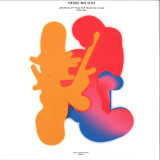
Music From Memory is excited to announce a special compilation that they’ve been working on for some time now; MFM053 – VA – Heisei No Oto – Japanese Left-field Pop From The CD Age (1989-1996). Compiled by long-time friends of the label, Eiji Taniguchi and Norio Sato, Heisei No Oto delves into a world of music released almost exclusively on CD and brings together a fascinating selection of discoveries from a little known and overlooked part of Japan’s musical history.
The last ten or so years have seen a global wave of interest in Japanese music encompassing ambient, jazz, new wave and pop records from the 1980s, some of which is increasingly considered the most innovative and visionary music of that time. Although some music from this period, in the form of ‘City Pop’ or ‘rare groove’ records, had been coveted by collectors and DJs for a number of years, most Japanese music from the time was little known outside and often even within Japan.
Sometime around the mid 2000s, two Osaka record store owners, Eiji Taniguchi of Revelation Time and Norio Sato of Rare Groove, along with a handful of deep Japanese diggers such as Chee Shimizu of Organic Music records in Tokyo, began to explore beyond the typical ‘grooves’ or ‘breaks’. Much like their counterparts in Europe and the US, they began delving into home-grown ambient, jazz, new wave and pop records, discovering visionary music, often driven by synthesizers or drum computers, that broke beyond the typical confines of their genres.
Spending tireless hours in local record stores and embarking on digging trips across the country, Eiji Taniguchi and Norio Sato, much like Chee Shimizu, have been at the forefront of unearthing and introducing many of the very Japanese records now loved and sought after around the world. Yet as YouTube algorithms and vinyl reissues would transport such music into the global consciousness and demand and therefore scarcity intensified for such records, so Eiji and Norio have recently begun to turn their attention to CDs.
The title of the compilation Heisei No Oto refers to the sound of the Heisei era, which began in 1989 and corresponds to the reign of Emperor Akihito until his abdication in 2019. Marking the culmination of one of the most rapid economic growths in Japanese history, 1989 also coincided with the music industry’s final shift away from vinyl in favour of CDs. And, although compact discs were first introduced seven years earlier it wasn’t until late into the ‘80s that, beyond dance music labels, CDs became the exclusive format for major and independent labels in Japan and throughout the world.
This however didn’t signal the end of the innovation in Japan. Many of those same musicians who have become known for their work in the ‘80s would continue to produce outstanding music well into the mid ‘90s, as greater innovation and advances in musical equipment allowed Japanese musicians and producers to refine and explore new sounds. While musicians such as the seminal Haruomi Hosono, whose productions feature on a number of tracks, would continue to push the boundaries of these new technologies, these technological advances also meant less established musicians were able to make use of increasingly affordable but state-of-the-art equipment.
Including music by Haruomi Hosono as well as Yasuaki Shimizu, Toshifumi Hinata and Ichiko Hashimoto who have become known and loved around the world in recent years, Hesei No Oto also features Japanese pop star Yosui Inoue, producers Jun Sato and Keisuke Kikuchi in aaddition to less established artists from the contemporary, jazz, new wave, pop and dance music scenes. Bringing together a selection of tracks that seem to define these specific genres and in fact move fluidly between a number of them, the music on the compilation is again underscored by experimentations with synthesizers and drum computers though with something of a gentle Pop sensibility. Reimagined here then under the encompassing term ‘Left-field Pop’, this is an exciting chapter in Japanese musical history that has only just begun to be fully explored.
VA - Heisei No Oto - Japanese Left-field Pop From The CD Age (1989-1996) is a 2xLP/2xCD that includes liner notes by Chee Shimizu and artwork by Hagihara Takuya and is released on February 28th.
A seminal set from Jorge Ben one that mixes samba soul with more baroque arrangements from the legendary Arthur Verocai! The record's got a different feel than some of Jorge's other work almost a wider vision of music that ties his usual funky style to some of the more ambitious modes being explored by Marcos Valle and Edu Lobo at the time expressed here in some larger instrumental passages that shade the tunes lightly, while still letting Jorge step out strongly on vocals and the usual mix of tight percussion and raspy guitar. Titles include "Que Maravilha", "Rita Jeep", "Comanche", "Porque E Proibido Pisa Na Grama", "Cassius Marcelo Clay", "Palomaris", "Maria Domingas", and "Negro E Lindo".
Over the past decade, Kasra V has blossomed as a prominent figure in the music industry, particularly through his renowned residency on NTS Radio which has expanded his profound knowledge and expertise in music. Since landing his radio residency in January 2014 he has successfully broadcast over 200 radio shows, making use of the format to explore a wide array of sonic attitudes, styles and systems. To celebrate his achievement Kasra V launches his own imprint V-Sion which he will not only use for his own release output but also to propel his vision of contemporary dance music. To kick things off he presents a stunning 9-track compilation '10:10 Kasra V presents 10 years on NTS Radio' featuring unreleased tracks from some of his most revered guests who have graced his show throughout the years. Each contribution is wholly in line with Kasra V's genre-spanning approach. Over the years some periods have seen him playing straightforward club music, others featuring an extended notion of listening music. One hears a whole breadth of influences in his releases on acclaimed labels such as Radiant Records and Shaytoon Records: collected strands of rave, acid house, San Francisco breakbeat, new beat, ambient, oddball pop from 90s and 80s, UK bleep and so on. The regularity of a broadcasting residency pushed him to carry out a constant study of the history of dance music, and he envisions V-Sion as an output to curate musical output, contributing to the ongoing dialogue between past, future and the ever-changing fulcrum of the sonic present. The tracks presented on 10:10 are also emblematic of this historically-informed approach to dance music. They are all tuned for the floor, but present a range of possible floors to conjure: Fantastic Man's progressive opener, "Neural Filter", is airy and laced with delicate breakbeats, while "Archangel Waltz" by Sepehr presents a shadowy drama of string samples and throbbing bass swells."Qadak" by 500SEC lays an anthemic Arabic melody over bubbling electro; 2 tracks prior, Angel D'Lite circulates a whisper and moan through the mix of a euphoric, rave-stabbed anthem. The latter encouraged Kasra to put out this very compilation, which is just a testament to the value of the company we keep.
Repress!
RYUICHI SAKAMOTO'S 1985 ELECTRONIC AND AMBIENT CLASSIC RELEASED OUTSIDE OF JAPAN FOR THE FIRST TIME SINCE ITS ORIGINAL RELEASE WITH NEW LINER NOTES BY ANDY BETA AND AUDIO REMASTERED BY SEIGEN ONO
Wewantsounds continues their Ryuichi Sakamoto reissue series with the release of the 1985 album "Esperanto", composed for a performance by New York avant garde choreographer Molissa Fenley. Produced and performed by Sakamoto with contribution by Arto Lindsay and Japanese percussionist Yas-Kaz, "Esperanto" is a fascinating instrumental work mixing electronica, ambient and synth pop. Released in Japan in 1985 on Midi Inc.s' School label, the album has never been released outside of Japan until now. This special reissue comes with original artwork including a 2 pages insert with a new introduction by Journalist Andy Beta. The audio has been remastered in Tokyo by Seigen Ono.
"Esperanto" originally came out in 1985 and was Ryuichi Sakamoto's sixth solo album. Coming after his stint with the influential Yellow Magic Orchestra, and also the worldwide success of Sakamoto's 1984 soundtrack for the film "Merry Christmas Mr. Lawrence" (in which he starred alongside David Bowie), "Esperanto" was a return to Sakamoto's leftfield roots.
?Composed as the soundtrack to a performance by New York choreographer Molissa Fenley (a show commissioned by Japanese producer Shozo Tsurumoto), the album was masterminded by Sakamoto with the help of the cutting-edge electronic technology of the time (the only external contributions are by Arto Lindsay on guitar and Japanese composer Yas-Kaz on percussion).
?Indeed, the album is a fascinating soundscape experimenting with the new sampler technology - which, according to Ryuichi Sakamoto from a conversation with journalist Andy Beta mentioned in the liner notes, needed a computer that was huge at the time.
?Esperanto is composed of eight tracks displaying a varied mix of influences. "A Wongga Dance Song" is pulsating with rhythms while "A Rain Song" adopts a minimalist mode with its distinctive
repetitive pattern. "Dolphins" and "A Carved Stone" are captivating ambient pieces showcasing Sakamoto's talent for setting beautiful abstract melodic ornaments over atmospheric tones.
?One of the highlights of the album is "Adelic Penguins", a fascinating proto techno piece with a funky twist stretching over six minutes which echoes the electro funk of 1981's album "Hidari Ude No Yume." "Ulu Watu", a collage-like piece featuring bird motives and a tropical soundscape closes the album with an experimental note. It's interesting to note that, a year later, the tracks from "Esperanto" would be turned into an experimental video project by New York visual artists Kit Fitzgerald and Nam June Paik collaborator Paul Garrin.
?A unique album in Ryuichi Sakamoto's rich discography, "Esperanto" is a groundbreaking work worth rediscovering in its full glory.
Circling guitar lines; the rise of fall of delicate bass; deep, breathy horns: sonic elements that exist in a state of slow, perpetual motion, like ideas sprouting from some kind of cognitive compost. With wonder and charm, G. S. Schray's new solo album, Whispered Something Good, evokes a realm of new growth while offering a fitting soundtrack for its exploration, as if tailor made for both the daydreamer and silly adventurer.
We start in the darkness of "Unlit Center" with elliptical phrases of jazz guitar. A conversation between double bass, synthesiser, and piano plays out on "In Tears Twice A Page" before we're ushered into the reflective zone of "Another Haunted Mirror." There is synth mist which trumpet cuts through decisively like a shaft of light from the sun: warm and clear. As the album proceeds, firmer rhythms coalesce. On "Prelude for Probably," clattering drums lock into a triumphant groove with horns. And then, to close, the instrumental art-pop of "Gone in Amber," probing not necessarily towards a final destination but another stop-off, one of distant birdsong and the faintest flicker of synth. Intimate and inviting, the act of listening to Whispered Something Good is akin to digging through an imagination. It's a place of subliminal melodies blooming into rhizomatic musical shapes, stray musings coalescing as bolts of inspiration — change fostering yet more change.
‘’The duo’s music has traces of 1980s dream pop and 1990s slowcore, particularly Low, another married-couple band. There’s more to the comparison than ink on a certificate. Marriage’s suffering and devotion breed a particular kind of intimacy. Windy & Carl often resemble an ambient version of Yo La Tengo, another group that centers on a long-wed duo and conveys a secret, profound sense of life beyond the music.’’ PITCHFORK 7.2
For the first time in almost twenty years, Windy & Carl’s second album for kranky, Consciousness, will be available on the vinyl format once again. The fourth album from Michigan’s premier space duo, again delivers their shimmering trademark wall of sound, beautiful vocalization, and delicate songcraft. Six sweet and easy new tracks recorded in their home studio in Dearborn, that drift and dream with layered guitars, keyboards, bass and a love-arsenal of delicious effects and distortion.
“There is an airy shaft of light that extends straight through these six extended pieces, offsetting the density of sound with a breezy loveliness that’s almost impossible to articulate, towering on a floating sea of mesmerising, sub-level sounds.” —Boomkat
“Genre descriptions such as ‘ambient guitar soundscape’, ‘wall of sound’ and ‘drone’ fail miserably to capture the astonishing, magical emotional beauty of their pieces.” —Cyclic Defrost
- A1: Hello 00 27
- A2: A Love From Outer Space 05 08
- A3: Crack Up 04 12
- A4: Timewind 00 15
- A5: What's All This Then? 04 03
- A6: Snow Joke 04 46
- A7: Off Into Space 00 04
- B1: And I Say 02 42
- B2: Yeti 00 11
- B3: Conundrum 02 32
- B4: Honeysuckleswallow 03 20
- B5: Long Body 01 21
- B6: In A Circle 04 37
- C1: Fast Ka 00 27
- C2: Miles Apart 03 01
- C3: Pop 03 40
- C4: Mars 00 20
- C5: Spook 03 10
- C6: Sugarwings 03 37
- D1: Back Home 00 07
- D2: Down 05 14
- D3: Supervixens 05 40
- D4: Insect Love 02 52
- D5: Sorry 00 05
- D6: Catch My Drift 05 40
- D7: Challenge 00 06
*REMASTERED ROUGH TRADE DEBUT LP LIMITED TO JUST 500 COPIES WITH EMBOSSED OUTER SLEEVE AND ORIGINAL INNER SLEEVE ON BLACK VINYL*
Dream POP, they called it. Given AR Kane’s Alex Ayuli once worked for advertising agency Saatchi & Saatchi, it’s no surprise that he and collaborator Rudy Tambala invented their own genre before critics could stick their oar in. It was a canny move, but more importantly, it was accurate: the music of AR Kane was made for dreamers, by dreamers, and its languor and longing made it particularly bewitching listening; their music is often smeared and blurry, happily lost in its own indefinable pleasures. “We wanted dream pop,” Tambala says, “that feeling of a dream where the rules are different. Dream logic.”
-UNCUT REISSUE OF THE MONTH
"A.R. Kane carved out a unique musical path, welding elements of pop, psych, dub, electronica, funk, noise, jazz, ambient and more in a way that had never been done before. Or since. Their debut in particular is a work of unbridled brilliance."
*Electronic Sound*
‘Sixty Nine’ the group’s debut LP that emerged in 1988 had critics and listeners struggling to fit language around A.R. Kane’s sound. As a title it was telling - the year of ‘Bitches Brew’, the year of ‘In A Silent Way’, the erotic möbius between two lovers - and as originally coined by the band themselves,
‘dream pop’ (before it became a free-floating signifier of vague import) was entirely apposite for the music A.R. Kane were making. Crafted in a dark small basement studio in which Tambala recalls the duo had “complete freedom - We wanted to go as far out as we could, and in doing so we discovered the point where it stops being music”. There was an irresistibly dreamy, somnambulant, sensual and almost surreal flow to ‘sixty nine’s sound, but also real darkness/dankness, the ruptures of the primordial and the reverberations of the subconscious, within the grooves of remarkable songs like ‘Dizzy’ and ‘Crazy Blue’. Alex’s plangent vocals floated and surged amidst exquisite peals of refracted feedback but crucially there was BASS here, lugubrious and funky and full of dread, sonic pleasure and sonic disturbance crushed together to make music with a center so deep it felt subcutaneous, music constructed from both the accidental and the deliberate, generous enough to dance with both serendipity and chaos. ‘sixty nine’ remains - especially in this remastered iteration - ravishing, revolutionary – Neil Kulkarni
"A.R. Kane made some of the most exciting, forward-thinking, and science fictional music of their era".
*Reissue Of The Week In The Quietus*
- A1: So Close
- A2: Life Of A Dj (Feat Demolition Man)
- A3: Outta Orda
- B1: Save Me From Myself
- B2: Endless Dreaming (Feat Bulgarian Goddess)
- C1: Automatic
- C2: Consciousness
- D1: Moonshine
- D2: Odyssey (Feat Evil B)
- D3: Keep On Dancing
- E1: Make Me Feel
- E2: Natty Love (Feat Sweetie Irie)
- F1: Pyramidz
- F2: Journey To Outer Space
Warehouse Find!
Undoubtedly one of the most exciting acts to have emerged in drum & bass over the past decade, Voltage has joined forces with Hospital Records for the release of his long-awaited studio album 'Balance Over Symmetry' which marks the tenth year of his journey as a solo artist.
No stranger to the Hospital family with an album, 2 EPs and a handful of singles under his belt as part of drum & bass powerhouse group Kings Of The Rollers, it's now time to explore the solo sounds of Voltage which have slowly but surely carved him to be one of the most respected DJ & producers in the scene.
In his true rambunctious style, Voltage sets the swing with a wild card. 'So Close' is a sub-120BPM synthwave weapon which matches his retro-inspired fashion to his musical vibrations. The combination of catchy vocals, an 80s-esque bassline and an unforgettable topline melody sees the creation of something extremely different yet irresistible from Voltage.
Not straying too far from the roots of his influences, 'Natty Love' features the groove inducing vocals of sound system legend Sweetie Irie. Saturated sub wobbles juxtaposed with potent string plucks are intertwined with ease, peppered with that signature Voltage flair.
Teaming up with reggae and dancehall superstar Demolition Man known for his skill as a vocalist, producer, MC and sound engineer, 'Life Of A DJ' combines the sounds of Demo's with Voltage's unmissable sonic technique. 'Save Me From Myself' exposes
the lighter side to Voltage as he illustrates his versatility as an artist through a soul-heavy amen roller with a classic liquid bassline.
Reminiscent of the days of euphoric hardcore, 'Keep On Dancing' sets the vibe with uplifting piano chops and adrenalised vocals as crunchy snaps and rhythmic cymbals keep things moving beneath. An iconic duo to everyone who knows their drum & bass, Voltage and Evil B come together for 'Odyssey' which sees ambient soundscapes
and earnest lyrics on a truly heartfelt piece of music.
With releases on foundational imprints such as Metalheadz, 31 Recordings, RAM, Souped Up and Spearhead to name a few, Voltage's discography speaks for itself in laying down his years’ worth of experience within drum & bass. With support for his productions coming from a wide range of influential selectors including the likes of Andy C, Hype, Friction, Goldie, Bailey, Hazard and Bryan Gee, it's safe to say that 10 years of Voltage has been a remarkable decade to say the least. Here's to 10 more…
Ausgehend von esoterischen und mythischen Traditionen, in denen das Land der Träume in der Dunkelheit der Unterwelt angesiedelt ist, entsteht das "House of the Black Geminus". Durch labyrinthische Hallen, schattige Korridore, Keller des Grauens und Dachböden der Epiphanie, wo sich Tortur und Ekstase an den Scheitelpunkten treffen, wo jeder seinen eigenen Dämon erblickt.
AKHLYS sind jetzt eine monumentale Live-Band und die Kraft der Bühne zeigt sich in der bisher umfassendsten, zerstörerischsten und diabolischsten Platte der Band.
"House of The Black Geminus" ist eine Darbietung von beängstigender Dominanz. Indem sie intensiven Black Metal mit Elementen von Dark Ambient und Death Industrial kombinieren, vereinen AKHLYS psychologischen Horror, unbarmherzige Brutalität und unheimliche Vorahnungen auf einer erschütternden Reise in pandemonische Anbetung. #
FFO: EMPEROR, BLUT AUS NORD, NIGHTBRINGER, DARKSPACE