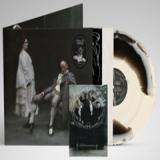
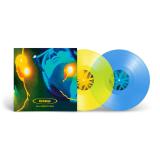
They Came Like Swallows is the first album-length collaboration between Thurston Moore and Kramer (now officially Bonner Kramer), two giants of alternative/ experimental music. The accomplishments and influence of these two artists in the world of independent music cannot be overstated and the result of their artistic union is a startlingly cohesive statement that burns through landscapes of primitive outsider rock, avant-garde composition, progressive ambient and further locales boldly and beautifully unnamable. “Kramer and I reconnected in Miami, Florida, a few years back, many many years after each of us had departed NYC on separate life adventures. It was only a matter of time before Kramer and I started making plans to record together and with his irrepressible due diligence he quickly set up a mobile recording contraption in the pad I was decamped in, the Florida sunshine flowing through the palm leaves, lithe lizards skittering across the windowsills, and we just went for it.
Kramer had the idea to cover a Joy Division tune, a left turn from the improvisations we had been tracking, though wholly in keeping with both our sensibilities of light and dark unifying in transcendent songwriting, both of us devotees of 'the song' as well as 'the freedom.’ What transpired is They Came Like Swallows, a session we immediately felt should exist as a prayer to the war-torn souls of the families of Palestine continually decimated by the brutality of genocide. We agreed beyond words to offer our music as a sonic activism and as a beneficent energy. This album is our duo exchange for human dignity, it is our soul music for any semblance of a peaceful planet.” ~ Thurston Moore “For the first time in our nearly 45 years of friendship, we had identical time windows open to make a record together,” recounts Kramer. After all this time not a moment is wasted as the duo immediately taps into the heightened core of improvisational tension across these seven offerings. Volcanic opener “Urn Burial” notches a similar historic union (John Cale and Terry Riley) to meet the circumstances of the moment, with swirling mists of organ and pounding toms over guitar that thickens the atmosphere with jagged, grimy dissonance.
Solemn strings open the second track, “The Redness In The West,” with Kramer’s cello and viola in dueling bow beneath the high tension drive and sustain of Thurston’s electric guitar, tapping out a Morse code of tension that mounts endlessly into a fog of inevitable war by the end. Moore and Kramer’s sense of experimentalism is in free and full grandeur throughout They Came Like Swallows, though the duo keep a strong and constant sideways eye on melody, composition and architecture, to the ends that any strict lines between song and improvisation are blurred beyond qualification.
As if to punctuate this point, Swallows closes with a nightwork cover of Joy Division’s “Insight,” a doleful coda that breathes out with a solemn inner grace under Thurston’s instantly stylistically recognizable guitar melodies as they weave into he and Kramer’s unison voices. As the lone vocal piece and only traditional ‘song’ form on the album, “Insight” is unique to this set and as a closing statement draws connective lines back to the kind of dynamic, electrified melodicism that wove deep, melancholy patterns into the untamed fire of Sonic Youth’s Sister and Daydream Nation. In the album’s final moments, the two voices repeat the lyric “I’m not afraid anymore” as mantra, underscoring the heavy, unsettled themes and methods that preceded it. Kramer describes the creative process of They Came Like Swallows: “I had composed and recorded a few pieces at my home studio over the course of a couple weeks. Thurston was spending the winter in South Florida, so I flew down and spent a few days recording his guitar parts in his home there. Watching him spontaneously compose his parts was pretty astonishing, to say the least. Once we'd finished working on those pieces, we began improvising and following wherever the music pointed us, and another few pieces were born. We got straight to it, without anything driving us other than the joy of finally working together.
My personal goal was to remain present and catch as many surprises as I could from Thurston's guitar work, and there were plenty during those few days. We had a fucking blast.” Thurston’s contributions here will be readily familiar to any acolytes of his other works, the through-line between his inspired playing, cradled in Kramer’s meticulous, solid arrangements. “If I had to make this record again, I'd do it all exactly the same way,” Kramer says. “It’s like jazz, you don't think about it. You just do it. It was miraculous, and you don't fuck with a miracle.”
quête:amb
- 1: Man Overboard
- 2: No Feeling
- 3: Blood On My Blood
- 4: Bad Moons
- 5: The One With The Piano
- 6: Patron Saint Of Pale
- 7: Wake Her Up
- 8: Desdemona
- 9: Lullabye
- 10: No Soul To Save
Die US-Kultband veröffentlicht ihr viertes Album.
Als die Idee für ein viertes Album (zum zweiten Mal) aufkam, war American Football klar, dass es düsterer werden würde. Nach einer einjährigen Welttour mit ausverkauften Konzerten zum 25-jährigen Bandjubiläum und der Veröffentlichung eines Coveralbums (mit Songs von Iron & Wine, Ethel Cain, Blondshell, u.a.) tat sich das Quartett mit Produzent/Toningenieur Sonny Diperri (My Bloody Valentine, M83, Kurt Vile) zusammen, um sein bis dato essentiellstes Album aufzunehmen. LP4 verbindet atmosphärische Soundlandschaften mit emotionaler Katharsis im Post-Rock-Stil. Anders als alles, was American Football bisher aufgenommen hat, fügt sie sich dennoch nahtlos in ihren stetig wachsenden und beeindruckenden Katalog ein. LP4 ist ein ambitioniertes künstlerisches Statement einer Band, die die Grenzen von Genre und Kultur immer wieder neu definiert. Es ist ein wunderschönes und vielschichtiges Album, das sich Zeit nimmt, seine Schönheit zu entfalten, während es gleichzeitig die dunkleren Seiten anklingen lässt, die sich so gut wie möglich verbergen. Das Album enthält Gastvocals von Brendan Yates (Turnstile), Wisp und Caithlin De Marrais (Rainer Maria).
Fresh as morning dew, “Sundays” marks Module One’s debut EP on Luck of Access. Throughout this beautiful release, the Berlin-based artist continues exploring the deeper shades of electronic music, our favorite, as he has done for the past decade. The EP is complemented by an ambient rework from Leafar Legov’s new alias “rfl”, making it the perfect closing piece, and the ideal soundtrack for a reflective Sunday at home.
Double 12" release
The Story — From the Streets of Rome to the Male Productions Label
In the early 1990s, Rome lived in a kind of suspended moment. The city was still tied to its historic clubs, yet in the outskirts—inside abandoned warehouses, quarries along the coastline, and the wooded parks north of the capital—something new was beginning to stir. A nocturnal, constantly shifting movement fuelled by a hunger for freedom and a sonic curiosity that reached far beyond the mainstream.
Moving through this ferment was Francesco “Chicco” Furlotti. First an organizer of unconventional parties and underground nights, he soon became one of the driving forces behind Rome’s itinerant rave scene. Furlotti sensed that a wave of change was about to sweep across the city. It wasn’t just about parties: it was the rise of a culture, a new way of thinking about music, community, and belonging.
It was within those nights—later held with official permits, properly built sound systems, and an ever-growing crowd—that Furlotti recognized the existence of a distinctly Roman sound, and the need to capture it, preserve it, and give it tangible form.
So, in 1991, he decided to take a bolder step: to found an independent record label—small, determined, and far removed from the commercial logic that dominated at the time.
That was the birth of Male Productions.
Male was not a label like any other: it was a workshop, a gathering point, a creative hub where DJs, producers, friends, and wanderers converged. Within that environment, an artistic core took shape—Stefano Di Carlo, Leo Young, and Mauro Tannino, along with other collaborators orbiting around Furlotti. From their synergy emerged a project whose very name declared its mission:
The True Underground Sound of Rome.
The collective did not simply aim to release music; it sought to tell a story of Rome through sounds that defied categorization: house, techno, ambient, electronic mysticism, psychedelic visions… a unique blend, instantly recognizable, emotional, and experimental. The sessions unfolded using essential yet razor-sharp gear: Roland drum machines, analogue synthesizers, Akai samplers, stripped-down mixers. Few tools, endless imagination.
The first result of this work was the 12” Secret Doctrine, released in 1991 in an extremely limited run—around 500 promotional copies, according to accounts. The record captured something that until then had floated only in the air of Roman raves: enveloping atmospheres, deep rhythms, melodies built to make the mind travel far beyond the dancefloor. A sound that did not imitate what was happening in Detroit, London, or Berlin, but absorbed those influences and re-sculpted them with a distinctly Roman sensibility.
Yet, precisely because it was independent and detached from commercial circuits, Male’s output remained sparse: few EPs, few copies, irregular distribution. Over time, those records became rare artifacts—almost mythical objects within the Italian electronic scene. The legacy of Male Productions seemed destined to survive only in the memories of those early years, in the stories told after raves, and in the private archives of a handful of collectors.
Many years later, thanks to the almost accidental rediscovery of a few original copies of the first two releases issued by Male Productions, it became possible to undertake a meticulous process of recovery and restoration of the audio etched into those grooves, with the aim of preserving as fully as possible the quality and character of that unrepeatable sound.
We are therefore able today to present — at last in a complete and faithful form — the first two mixes created for Male Productions, now released on a double vinyl that brings back into the present the exact moment when it all began: the nomadic nights of the raves, Furlotti’s vision, the creativity of Di Carlo, Young and Tannino, and the sonic identity of a Rome in the midst of transformation.
This is not merely a reissue.
It is a historical document.
A fragment of a culture that changed the city.
The authentic sound of the Roman underground, finally returned to the world.
- Sea Ceremony (With Karen Vogt)
- Coral And Bones (With Laryssa Kim)
- Heartsea (With Vargkvint)
- Naiade (With Mt Fog)
- Moon And Mirrors (With Elska)
- Daughter Of The Abyss (With Singer Mali)
- Serpentine (With Nightbird)
- Their Voices Rise Above The Waves (With Yellow Belly)
- For All The Sea-Girls (With Nadine Khouri)
- Ondine (With Astrid Williamson)
- Coda (With Camilla Battaglia)
Oceanine, Jolanda Moletta’s third album and her first for Beacon Sound, is a powerful and ethereal statement of artistic community. Expanding on her previous work, each track represents a collaboration with a different female vocalist, with the foundational elements being generated entirely by her own voice. By turns haunting, enchanting, and inspiring, you won’t want to come up for air once you’ve been pulled under. Representing a
musical practice that is distinctly feminist, this is an album with a longer view in mind, to an age when the altars were to goddesses and women were centered as powerful beings representing the earth’s cycles of regeneration and renewal. Oceanine then, in all its beauty, can be viewed as an album of survival. It is deeply transportive, accessing something that lies within all of us. As the late, great Lithuanian folklorist and archaeologist Marija Gimbutas noted, “We must refocus our collective memory. The necessity for this has never been greater as we discover that the path of 'progress' is extinguishing the very conditions for life on earth.”
Jolanda Moletta is a multimedia artist and one-woman electronic choir. She creates wordless compositions through extended vocal techniques, integrating wearable-controlled live processing, alongside symbolic visuals. Moletta considers her performances to be a collective ritual and creates her Sonic & Visual Spells following the cycles of nature and the moon. Jolanda's 2022 critically acclaimed album Nine Spells was released on the Ambientologist label, followed by Night Caves on Whitelabrecs in 2025. Moletta’s artistic practice is a radical and spiritual journey through sound art, ritual, and the symbolic archaeology of the feminine.
Oceanine is inspired by sirens, water nymphs, and the timeless call of the sea. At its core lies Jolanda’s deep, lifelong connection to the Mediterranean Sea and to the ancient and modern myths and folklore that have emerged from its waters. Growing up by the Mar Ligure, Jolanda was surrounded by stories carried by salt, wind, and waves: legends of sirens, echoes of ancient voices, and the sea as both origin and oracle. This intimate relationship with the Mediterranean is not merely a backdrop, but a living source that shapes Oceanine’s emotional, symbolic, and sonic world.
Each track features a different female vocalist, creating a rich tapestry of voices, styles, and perspectives. This artistic choice not only broadens the album’s sonic palette, but also deepens its narrative core: celebrating the power, beauty, and mystique of feminine energy through myth, history, and sound.
The entire album is built exclusively from the human voice, processed and layered, yet always remaining voice, and nothing else. For each piece, Jolanda invited every vocalist involved to contribute a raw stem: a short, unedited melodic fragment of just a few seconds, inspired by the album’s themes. These intimate vocal seeds became the foundation of each track: the guest artists’ voices appear as brief, melodic stems, while the entire surrounding “orchestral” fabric is created solely from Jolanda’s own layered and processed voice. In this way, Jolanda’s voice becomes the Ocean itself, embracing, absorbing, and carrying the sirens’ calls within a vast, immersive soundscape. Every song is a unique expression of the feminine experience, revealing its depth, complexity, and emotional range, echoing the call of the sea and the many faces of the siren archetype.
The figure of the siren has transformed across centuries. In myths of Ancient Greece and Rome, sirens were hybrid beings, part woman, part bird, whose irresistible songs lured sailors to their doom. During the Middle Ages, the image shifted toward the half-woman, half-fish figure, often associated with temptation and danger. Historically, the voice of women has often been feared. Sirens were considered harbingers of misfortune not simply because they seduced or destroyed, but because they were powerful liminal beings.
In Ancient Greek, sirens functioned as psychopomps: figures who existed between worlds and guided souls, especially between life and death. Their songs were believed to carry forbidden knowledge, including prophetic insight and the ability to reveal truths about fate and the future. The danger of the sirens lay in what they revealed: knowledge that humans were not meant, or ready, to hear.
Oceanine confronts this legacy head-on. The voices heard throughout the album are not merely beautiful: they are dark and luminous, wild and enchanting, magical, soothing, dreamy, and at times fractured or distorted. They whisper, lament, beckon, and enchant. Like sirens, they skim the surface of the water and sink into its depths, hovering on the edge between tenderness and danger, vulnerability and power. They rise toward the sky, dissolve into mist, and return as echoes charged with raw, elemental emotion: voices that seduce, warn, mourn, and remember. They refuse to be reduced to decoration.
Alongside the album’s release in May, Oceanine will also unfold as a visual and performative work through a short art film. The film includes a live session recorded inside a sea cave facing the Mar Ligure, the very coastline where Jolanda spent her childhood, dreaming of sirens and listening to the sea as if it were speaking directly to her. This site-specific performance reconnects the music to its place of origin, allowing the voice to resonate within stone, water, and air, and transforming the cave into both a sanctuary and a threshold between myth and reality.
What if the sirens’ songs were considered dangerous because they carried another truth, an ancient truth long forgotten?
Oceanine embraces the idea that we are still deeply woven into myth. Though we may see ourselves as rational and modern beings, our world is saturated with ancient symbols and archetypes, often distorted, simplified, or stripped of their original meaning. And if those symbols are allowed to shift, if the mirror once held by the siren becomes an invitation to look beyond appearances and into what has been obscured, then we may finally uncover a deeper truth and reclaim the voice that was always ours.
Oceanine is not just an album. It is a reclamation, a spell, and a call from the depths.
Deaf Center travel through quiet pathways and grand boulevards in their fourth studio album “Through Time”.
Since their last full-length LP, “Low Distance” (2019), the duo has gradually shifted towards a more long-form electroacoustic sound which perhaps makes for their most immersive listening experience so far. Otto A Totland’s piano travels in less frequent rhythms than before, yet is felt even more as a relief in the quieter moments that contrast with Erik K Skodvin’s deep atmospheric worlds. There’s a searching quality within the record which feels like slow movements on the way towards something meaningful, capturing a sense of both peace and awe.
The latter part of the album takes a different turn: fluctuating electronic rhythms over deep strings create an ecstatic yet haunting duality. It is the first time a guest musician appears on a Deaf Center record: British composer and musician Simon Goff joins with violin and viola in the finale, “Further”, a hypnotising piece submerged in layers of strings and drones.
The subject of time is an ambitious one, yet Deaf Center manage to balance the humble with the grand in great warmth as seconds become minutes, hours become days and time seemingly freezes as a still-life moment.
Deaf Center travel through quiet pathways and grand boulevards in their fourth studio album “Through Time”.
Since their last full-length LP, “Low Distance” (2019), the duo has gradually shifted towards a more long-form electroacoustic sound which perhaps makes for their most immersive listening experience so far. Otto A Totland’s piano travels in less frequent rhythms than before, yet is felt even more as a relief in the quieter moments that contrast with Erik K Skodvin’s deep atmospheric worlds. There’s a searching quality within the record which feels like slow movements on the way towards something meaningful, capturing a sense of both peace and awe.
The latter part of the album takes a different turn: fluctuating electronic rhythms over deep strings create an ecstatic yet haunting duality. It is the first time a guest musician appears on a Deaf Center record: British composer and musician Simon Goff joins with violin and viola in the finale, “Further”, a hypnotising piece submerged in layers of strings and drones.
The subject of time is an ambitious one, yet Deaf Center manage to balance the humble with the grand in great warmth as seconds become minutes, hours become days and time seemingly freezes as a still-life moment.
Tajemnica is a transgression—too gentle for dancing, too euphoric for standing still. Sparse, scarce, and subtle, the new album by Polish performance artist, musician, and poet Wojciech Kosma, aka spalarnia, eagerly explores modern dance genres, experimental production, and nostalgic electronics to surrender to what is truest—essential song forms, melodies, harmonic and rhythmic basics, the most resonant feelings.
Sung in spalarnia’s trademark soft, low, almost tactile voice, the eight hypnotic songs tell stories of closeness and love, and their favored companions—pain and heartbreak. In “Bliżej” he sings “I love not loving you / I want to be a part of you.” And in “Jedyna”—the album's single—he states: “You are the only one / there is no other me / only the one for whom you are the only one.”
Contrary to the meaning of its Polish title (Tajemnica translates to “secret”), the album that moves between ghostly ambient pop, languid R’n’B, and Eastern European folk doesn’t reveal anything outright—the music only points to where the secrets might lie. One can choose whether to hear them or not.
Schatterau’s third album, »Wir gingen durch leere Stunden« (We went through empty hours), sees the German duo blossoms with beauty and sophistication through a broad creative language.
This opus, presented in the form of vivid auditory tableaux vivants, explores the topography of memory as a landscape in constant motion – full of loops, feedbacks, and mirage-like distortions. Sounds climbing like vines over old walls, concealing details only to reveal new ones. Some pieces feel like fragments of a dream whose origin has vanished, others like displaced echoes of a day long gone.
Memories create paths that only become visible in retrospect – detours that somehow always lead back to oneself. Each track draws the listener into a different recollection, as if opening an old door. Inside, time behaves strangely: it jumps, stretches, and repeats.
»Wir gingen durch leere Stunden« ultimately presents Schatterau at their most experimental, complex and measured extremes, channelling ambiguous human emotional resonance ranging from melancholy to pure ecstasy.
With their upcoming album Waves, Moonchild enters a bold new chapter. A deeply personal and emotionally raw project, Waves explores themes of grief, healing, resilience, and self-worth, eschewing the love songs that once dominated their catalog. "This album is about processing loss and stepping into your power," says Amber. "It's a lyrical departure, but it reflects what I've been going through these past few years."
The project also marks a return to in-person collaboration and a new embrace of sampling and sonic experimentation. The result is an album that feels more vulnerable and grounded than ever, while still pushing the boundaries of their signature sound.
f 06: Fear (Hey Friend) feat. PJ Morton
f 06: Fear (Hey Friend) [feat. PJ Morton]
With their upcoming album Waves, Moonchild enters a bold new chapter. A deeply personal and emotionally raw project, Waves explores themes of grief, healing, resilience, and self-worth, eschewing the love songs that once dominated their catalog. "This album is about processing loss and stepping into your power," says Amber. "It's a lyrical departure, but it reflects what I've been going through these past few years."
The project also marks a return to in-person collaboration and a new embrace of sampling and sonic experimentation. The result is an album that feels more vulnerable and grounded than ever, while still pushing the boundaries of their signature sound.
f 06: Fear (Hey Friend) feat. PJ Morton
[f] 06: Fear (Hey Friend) [feat. PJ Morton]
2026 Repress
Ivy Lab return for 2015 with their most ambitious and most accomplished EP yet, spanning across the most pearlescent of D&B through to rough, rugged glitch and raw half time grooves. Adding extra freshness is man of the moment Sam Binga and Brighton based El Train, each bringing their own take on the Lab sound. A stunning collection of work presented on multiple formats including limited edition vinyl with hand-crafted packaging from the Ivy Lab boys themselves.
2x12" Brown Marbled Vinyl 2026 Repress
A foray into deep, organic, cinematic dance music. Subterranean bass, intercepted alien transmissions, and stripped down dance-beats meld with sheets of sounds that roll over the listener like waves lapping up on the shore. Shimmering, watery, brain hemisphere synchronization tones caress and melt stress away. Dance floor friendly tracks that work equally well in one s private listening space. Immersive music with a distinctive aquatic quality. Inspired by Detroit & Berlin s dance genres, but tempered by more ambience / atmosphere than one would expect from those genres. Music without harshness or rough edges. Fuzzy, out-of-focus, soft-sounds that slip in and out of the listener's consciousness. Uniquely melds current dance rhythms with lushness and spirituality. Synesthetic sounds that trigger sensory experiences in cognitive pathways other than hearing smells of perfumes, thoughts of colours, and altered perception of time and space. Psychoacoustic, cerebral, electronic listening music for those wanting a different experience than the current harsher, darker dance trends are offering. Responsibly made gentle music designed from the ground-up to have a positive effect on the nervous system and leave the listener invigorated and recharged. Chi-building sonic balm. Timeless, exotic dance tracks for a new school of electronic music enthusiasts who are searching for beautiful sounds, crafted with a higher purpose in mind.
SY3 (pronounced ‘sigh’) is a new project from LA-based Chinese-American artists Kelly Guan, Alex Ho, and Phil Cho. The trio started working on music together in 2023 after connecting over a shared love of Hong Kong New Wave cinema, Cantonese pop songs, r&b, and melody-driven dance music. Singer Kelly Guan aka Jia Pet has been independently releasing ‘bubbly’ pop music since 2022, and recently toured with the genre-bending indie artist Sasami. Multi-instrumentalists Ho (keyboards, saxophone) and Cho (guitar, bass) have collaborated frequently over the past decade, most notably on Ho’s 2021 debut album 'Move Through It' for Music From Memory.
Lead single ‘Tell Me,’ the track that initially caught the ears of MFM's Jamie Tiller and Tako, nods to the hazy downtempo explored by Chinese pop stars like Faye Wong and Zhou Xun in the ‘00s, while also recalling Japanese producer Yoshinori Sunahara’s iconic album 'Lovebeat'. Beyond musical influences, SY3’s neon-drenched pop songs draw from a cinematic language, particularly y2k-era films like Made in Hong Kong and Suzhou River, which speak to a generation of disillusioned youth in an increasingly fast-paced world. Guan’s lyrics depict characters caught in bittersweet love affairs (‘dial tone, when I’m alone, you promised we’ll be in touch') forever looking towards an escape from their current realities (‘I know the walls are high, these graceless hands are slipping’). Title track ‘梦游 Sleepwalker’ features a Cantonese spoken-word story about a sleepwalking young girl who sits alone on a balcony wondering where she might have gone the night before. The drifting ambient production loosely references a traditional Chinese folk melody, and closes out the EP with a delicate, layered saxophone solo from Ho.
Balancing intimacy with a wider emotional and visual language, SY3’s debut unfolds as a series of nocturnal pop vignettes shaped by memory, cinema, and place. Released digitally and on vinyl through Music From Memory on March 25th. Sleeve art and design by Michael Willis.
"Lost in the spinning sound" is the 12th studio album by The Dining Rooms (Stefano Ghittoni and Cesare Malfatti) who, over the years, have delved into an original style that balances cinematic atmospheres with funk, dub and ambient music. Here they have invited just one vocal guest, Chiara Castello from I'm Not a Blonde, for a collaboration that delivers a slow, nocturnal, orchestral, very minimalist album, oscillating between folk and blues, with deeply meaningful lyrics that explore the intricate nature of interpersonal relationships. The album cover, an illustration by Sara Vivan, conveys the idea of metamorphosis and invites us to dive into the sounds that surround and protect us. This is also the main message of the album: losing ourselves in order to protect ourselves a little. Drifting along and finding new, safer and more peaceful shores.
Odyssey was originally a CD-only release by Japanese duo Master Mind (Hiroshi Ogawa & Hisaki Kurosawa) and was their 3rd full-length album. 30+ years later it is now available as a double LP on the California-based Forest Jams label. Its one of many albums of this particular genre that came out in the decade but one that is wholly unique with the depth in its sculpted sounds and the transportation it provides to an audio realm of equally fantastical and soothing proportions. For fans of ambient, lush gardens, auditory massages, RPG OST/BGM, and Kankyō Ongaku. Licensed by NHK Publishing and limited to 300 copies.
Named after the tendency to impose familiar likenesses, such as faces, on random - usually inanimate - objects, Pareidolia is Jake Muir's way of interpreting the consonances between so-called “ambient” music and extreme heavy metal. Extracting the headiest, most atmospheric sections from hundreds of death metal and black metal tracks, Muir plays the role of both DJ and electroacoustic composer, concocting a lysergic elixir of fractal distortions and prolonged, decelerated riffs that slowly evaporates into iridescent vapor. If there's any trace of the original sources left, Muir makes sure that residue is subtly bewildering, like clouds in the sky that form imposing, larger than life images, or trampled bracken that falls into the shape of “trve kvlt” insignia.
The idea for the album materialized when Muir was working on 2022's Talisman, his collaborative album with multi-instrumentalist Evan Caminiti. Processing guitar for the first time, Muir began to unpack his long relationship with rock music and its Escher-like maze of sub-genres, from the tech metal he obsessed over as a teenager to Loop and Main's drone-y, textured variants. Scraping the internet for unconventional contemporary metal albums, he stumbled across music that seemed to hover between different realms, merging its frenetic, noisy sections with psychedelic interludes that harmonize with classic industrial and avant-garde music, material like :zoviet*france:, Nocturnal Emissions and Z'EV.
Few producers age into deep house with this level of ease. From Switzerland, Shaka's latest EP feels authentic and lived-in rather than retro while drawing on 90s jazz-inflected house without leaning on pastiche. The opener main vocal mix drifts in on flutes, soft keys and Eve's voice, setting a loose, late-night mood that favours feel over flash. The instrumental flute version pares things back, letting swing and detail breathe. Flip it and 'As If Eternity Belonged To Us', featuring Cate Acupar, locks into a warmer, early-2000s pulse, while 'Life Is Brighter With You' cools the room with sax, piano and patient restraint. Dancefloor-ready but also nice and reflective.
WRWTFWW Records is very happy to announce the release of Renga, the new collaborative album from Gak Sato and Tadahiko Yokogawa - available on limited edition LP (300 copies worldwide !) housed in a heavyweight sleeve with inside out print of a beautiful artwork by Aoi Huber Kono.
Renga (??, linked poem) is a genre of Japanese collaborative poetry in which alternating stanzas, or ku (?), of 5-7-5 and 7-7 morae (sound units or syllables per line) are linked in succession by multiple poets.
Inspired by the traditional Japanese poetic form of linked verses, Renga unfolds as a fluid 10-track journey spanning ambient, jazz, breakbeats, electronica, environmental music, techno, cinematic, library music, and musique concrète. Much like its literary namesake, the album is built on intuition and shared momentum, each piece emerging from what came before while opening new paths forward. Beats appear, disappear, then reassemble, while textures shift between organic warmth and electronic abstraction. The result is music that resists fixed categorization, existing somewhere between known subgenres and free-form exploration.
The album's visual counterpart, created by Aoi Huber Kono, mirrors the sensibility of the music. It's elegant, modern, and quietly expressive, extending the idea of linked forms from sound into image.
Points of interest
- For fans of ambient, experimental electronic music, jazz-inflected compositions, breakbeats, techno, cinematic soundtracks, library music, musique concrète, genre-blurring sonic exploration, linked verses, and dark blue.
- A unique collaboration between Gak Sato and Tadahiko Yokogawa, inspired by the Japanese poetic form of linked verses.
- Presented on limited edition LP housed in a heavyweight sleeve, edition of 300 copies.
- Artwork by acclaimed visual artist Aoi Huber Kono, extending the album's concept of interconnection across disciplines.
This second album by Bitsy Knox and Roger 3000 is an intimate and unsettling journey through mental, geographical, and emotional landscapes. Blending spoken word, ambient layers, and minimalist electronic textures, each track unfolds like a fragment of poetic autofiction—a tentative mapping of the invisible. The introspective texts probe solitude, desire, language, and time, in a chiaroscuro of tension and digression.
This record contains six tracks by Freephilipp and Robin — two Bremen-based musicians who meet where the void of digital subculture and experimental electronic music opens up. Freephilipp contributes four glitch-driven pieces that move between IDM-tinged ambient, electro, atmospheric broken beats and junglish fragments. Random Chords Memory is one of the reasons this release needed to be carried out into the nexus: it stands on its own, just like the rest of the EP, yet it may be the signature track of Freephilipp’s nocturnal enthusiasm — mixing between night shifts and sharing production skills with the people around him. Robin (zckr rec / ph17) completes the EP on the flipside. Tau-37 and Omega5, named after two star systems, invite you onto a dub-soaked, drifting flight. The Basic Channel- esque impact of Tau-37 rounds out the journey in combination with Omega5, whose drone-laden soundscape slowly opens and dissolves. This music was never meant to be produced for an audience. It is a document of what it sounds like when you say goodbye to the outer world and begin building landscapes in another.
Regular contributor Vick Lavender returns to Cataleya Music for two lengthy stargazing jams. Each clock in at over 10 minutes, taking the listener on an extended musical journey. They combine Spiritual, Soulful and Jazzy House Esthetics with great results. Africanus is a moving composition with mystical melodies, thoughtful instrumentation and percussive layers. No Rhyme, No Reason offers powerful synths, mellow brass and in-step beats. Both Africanus and No Rhyme, No Reason are incredibly engaging pieces of music. The Esthetic EP is Vick Lavender’s most ambitious record on Cataleya Music so far. Listen and be rewarded!
Budapest-based concept label, Blue Sun is launching their new line of vinyl focused releases, aimed primarily on DJs and collectors: the Blue Series. A counterpart to the Orange Series launched last year that showcases a more upbeat side of the label, the new collection presents a darker, more experimental, and introspective musical vision.
The first release in the Blue Series is a six-track EP by Budapest based multimedia artist, Virág Réti. Choosing her legal name as her artist persona (“Flower of the Meadow" in Hungarian) also with the track titles capturing the folk names of local fauna, Peremidő evokes the artist's innate connection to nature as a place of refuge from the noise of Eastern European urban life.
The EP’s motifs point back to early memories of sitting by a river, simply observing time flowing by. The arc of the songs follow the passage of a day, beginning with the hesitant sounds of early morning, gradually moving on toward more defined, rhythm-driven forms. As the airy textures slowly give way to structure and percussion comes to the forefront, the sense of direction becomes clearer, letting moments of gentle disorder and unexpected sounds to surface.
Virág previously appeared on the label’s Blue Sun VA II compilation with her track Bíbic. Since launching her ambient music project in the fall of 2024, she has become one of the promising newcomers in the Hungarian experimental electronic music scene. Her debut EP, Minden Ami Megmaradt (All That Remains), was released last November as the final offering of temporary nites label (2023–2025). She is also the founder and organizer of the Budapest-based experimental electronic event series Still Places.
- A1: Passage I (Small, Soft Feet Running Across Wooden Floors In The Morning)
- A2: Passage Ii (Listening To Lullabies While Holding Hands)
- A3: Passage Iii (Slow Days Of Togetherness)
- A4: Passage Iv (Watching You Quietly Eat An Apple In The Shade)
- B1: Passage V (Sounds From Your Rituals Playing In The Garden Near The Old Tree Which Has Witnessed Your Childhood)
- B2: Passage Vi (While You Slept, The Thought Of Not Yet Knowing How To Braid Your Hair Brought Quiet Tears)
- B3: Passage Vii (When You Learned To Stand In Your Own Light)
- B4: Passage Viii (Fifteen Years Passed And A Full Circle Moment Surrounded Us, Where The Ocean Meets The Mountains)
Passages in Time, the third album from Kasper Bjørke Quartet, traces the contours of a blend of spiritual jazz reverence and the calming grandeur of '80s ambient. Inspired by Christopher Nolan's observation that "time is the most fundamental part of our human experience," the compositions are approached as fragments of time and memory. Meditations on the elusive nature of time form the heart of the work, merging freeform jazz improvisations with cyclical synthesizer patterns that mirror its quiet undulations.
Dreamy synths intertwine with guitar, harp, trumpet, flugelhorn, saxophone, and flute, creating a spacious environment for contemplation. The music invites reflection on the choices that shape our lives and the lives of those closest to us, and on the quiet weight of our priorities within the brief span we call life on this planet. Each passage unfolds as a fleeting moment suspended in time. The subtitles hint at fragments from someone's diary, tender observations of love, parenthood, and connection. Together, the passages form a musical memoir of sorts, where memory and emotion are gently woven into the compositions.
Passages in Time does not impose structure or meaning, it reflects them, offering an open space as the instruments drift in and out of focus, tracing time's subtle rhythms and inviting the listener to infuse their own memories and meaning into these passages.
The album also marks a transformation for the Quartet project itself. Langstrakt (Claus Noreen), part of the original ensemble, continues to operate the synthesizers alongside Bjørke, while the wider constellation of contributing musicians has evolved. Strings and piano give way to flute and saxophone by Oilly Wallace, guitars by Danish ambient composer Anna Roemer, trumpet and flugelhorn by Malthe Kaptain, and cascading orchestral harp by Katie Buckley, principal harpist with the Icelandic Symphony Orchestra.
The cover painting is by American artist Marcus Leslie Singleton, courtesy of V1 Gallery, and reflects the meditative and timeless atmosphere of the music.
Passages in Time is released on Bjørke's own imprint, Sensitive Records, following the two previous Quartet albums released on Kompakt Records: The Fifty Eleven Project (2018), a debut that introduced Bjørke's ambient and neoclassical explorations, and Mother (2022), which expanded the ensemble's sound with emotive choir compositions and guest appearance by Sofie Birch (Unsound / Stroom). Together, these three albums trace a journey of artistic growth, from introspective experimentation to a fully realized, contemplative expression of time, memory, and human connection.
VA – Memories. Untold is a delicate and emotionally rich compilation from TAMIZDAT, capturing the subtle beauty of deep and tech house with a gentle, melancholic twist. Thoughtfully curated for sunset sessions and introspective moments, this four-track vinyl release drifts between ambient textures, melodic phrasing, and dubby undertones—crafted for open-air environments and graceful transitions.
A1. Joshua Pendergrass – The Leopard (Frederick Ansgar Remix) opens the record with an ambient-infused deep house piece—warm, slow-moving, and deeply involving. It invites the listener into a calm, curious, and emotionally attentive state.
A2. Dubsud – Memories (BarBQ Remix) follows with a more upbeat, melodic character. Playful yet refined, it offers a bright continuation of the journey, carrying momentum without losing its emotional depth.
On the flip, B1. Heward, Kirill Matveev – Your Gentle Breath emerges like a breeze—floaty, nuanced, and ideal for that golden-hour moment. It’s an elegant piece full of space, subtlety, and feeling.
B2. Nj Helder – Gazi closes the release with dubby warmth and light breakbeat elements, a soothing yet rhythmically engaging finale—like the last light fading over a distant horizon.
Featuring label mastermind Kirill Matveev, MixCult regulars Heward, Joshua Pendergrass, BarBQ, and Dubsud, the record is further elevated by South African talent Nj Helder, whose presence brings a soulful character to its closing chapter.
Memories. Untold is evocative, chilled, and designed for those who seek emotional connection through sound—a graceful companion for deep listening and open skies.
TAMIZDAT is a division of MixCult Records
- 1: Amidst Things Uncontrolled (2026 Remaster) 05:00
- 2: Pigeon Hurt (06 Remaster) 03:3
- 3: Roots Growing (2026 Remaster) 04:42
- 4: From Verse To Verse (2026 Remaster) 03:9
- 5: Refrain From (2026 Remaster) 01:13
- 6: Tentative Growth (202 Remaster) 04:28
- 7: Across From Golden (Remix) (2026 Remaster) 05:08
- 8: Standing On A Hummingbird (2026 Remaster) 04:54
- 9: Pattern For A Pillow (2026 Remaster) 07:14
- 10: Difficult To Light (2026 Remaster) 05:00
Originally released on Ezekiel Honig's Anticipate label in 2007, Standing on a Hummingbird is the debut album by Canadian sound artist Mark Templeton, now appearing for the first time on vinyl, newly remastered by Giuseppe Ielasi and cut by LUPO. Working at the intersection of post-glitch, electroacoustic ambient, and textural minimalism, Templeton composes through restraint and erosion, building patient and richly tactile pieces primarily from acoustic sources - fingerpicked guitar, plaintive banjo, muted accordion tones - subjected to careful processes of granulation, filtering, and environmental masking. These gestures never overwhelm the source material; instead, they wonderfully destabilize it. Melodies appear briefly, only to dissolve into dense atmospheres of field recordings: distant streets, birds, water, air. Sounds hover, vibrate, and vanish, much like the wing beating latent in the album’s title.
Tracks such as “Pattern For a Pillow” and “Amidst Things Uncontrolled” articulate this approach with particular clarity, setting languid acoustic figures against churning granular backdrops that feel at once sheltering and unstable. Elsewhere, moments of fragile clarity - fluttering guitar lines, reedy accordion tones - briefly break the surface before being absorbed back into the field.
Heard today, the record offers a clarion, almost spartan strain of textural ambient music: intricate yet unforced, shaped by human touch rather than automated excess. Its refusal of spectacle feels especially vital in a landscape saturated with maximalist digitalia - a reminder that electronic music’s most enduring gestures often occur where sound is allowed to tremble and hold itself just long enough to be felt before disappearing once again. (Alex Cobb, 2026)
Repress
The Collaboration - Having toured together over the years, Lattimore and Barwick now join forces to co-write and record this full-length album. Their creative synergy brings together harp, voice, and analog synths in a deeply emotional, immersive sound journey. The album was recorded at the Philharmonie de Paris with co-producer Trevor Spencer (Fleet Foxes, Beach House). This album continues a unique series of collaborations between the label and the Musée de la Musique, featuring historical instruments in contemporary composition. Since 2017, InFiné and the Philharmonie de Paris have co-developed a series of albums designed to highlight the extraordinary instrument collection of the Musée de la Musique. Following the albums InBach by Arandel (2020) and Saturn 63 by Seb Martel (2022), this third release is a meeting of two iconic contemporary ambient voices: Mary Lattimore and Julianna Barwick. The project offers the artists full access to the museum’s playable instruments for recording, sound conservation, and creative reinterpretation.
--
Tragic Magic brings together Julianna Barwick and Mary Lattimore, two of contemporary ambient, experimental and electronic music’s most celebrated composers, for a unique collaboration at the Philharmonie de Paris, with extraordinary access to the Musée de la Musique’s instrument collection, in partnership with the French label InFiné. The album features seven immersive, evocative compositions guided by the human spirit – intimate, grounded in friendship, both earthly and cosmic – and part of a greater continuum, reflecting the solace and transformative power of artistry across generations.
Co-produced by Trevor Spencer (Fleet Foxes, Beach House), Tragic Magic was created in just nine days, a testament to the “musical telepathy” that has developed between Barwick and Lattimore over years of touring and friendship. Arriving in Paris from Los Angeles shortly after the 2025 wildfires, their sessions combined improvisation with the emotions and experiences they carried, in a setting both inspiring and deeply supportive. Lattimore selected harps tracing the instrument’s evolution from 1728 to 1873, while Barwick chose several iconic analog synthesizers, including the Roland JUPITER and Sequential Circuits PROPHET-5. In freeform dialogue between voice and instrument, they create a meditation on tragedy, wonder, and the restorative power of shared experience.
The duo, often joined by Spencer, also explored the city, sharing meals and visiting museums and landmarks, each encounter leaving an impression on their next session. The experience allowed them to work intimately with rare instruments, blending their personal sensibilities with centuries of history, resulting in music that honors the past while remaining a deeply authentic expression of the present.
Throughout Tragic Magic, Barwick and Lattimore find something beyond themselves: a sense that while everything may not be okay, beauty persists. Their approach – transforming life into music, observing, feeling, and creating – continues a lineage of creative expression and visionary invention, embodied in the very instruments they employed for this project.
- A1: Not Gon Cry
- A2: Happy Now
- A3: Lucky Again
- A4: Famous Last Words
- B1: Future Fear
- B2: So Happy I Could Die
- B3: Sick Of Love
- B4: Knife In The Heart
- B5: Euphoria
Clear Vinyl[27,94 €]
Swedish alt-pop icon Lykke Li, whose career spans the haunting intimacy of Youth Novels to the widescreen ambition of So Sad So Sexy, returns with her most uncompromising statement yet. Signed to Crush Management and already confirmed for Coachella 2026 and a run of South American festivals, her forthcoming album The Afterparty strips things back to raw truth and artist dogma. Built on a shoestring budget but led by high-fashion meets candid, meme-ready visuals, the world of The Afterparty channels early Tumblr and i-D magazine energy—real, raw, and distinctly Lykke Li.
- A1: Unfelt Loss
- A2: So Easy To Love
- A3: Teardrops (Classic Hell On Earth)
- A4: Whiplash
- A5: Morning Doctor
- B1: Cherry Blossoms In Leschi
- B2: Southward Equinox
- B3: Velvet Rope
- B4: Backward Path
- B5: Don’t Remind Me
- C1: Season Of The Wish C2. The Last Resort
- C3: Two Rivers
- C4: A Little Game
- C5: Lilies Of The Field
- D1: Lifelong Sellout
- D2: Out Of My Mind
- D3: Golden Era
- D4: Sweet Routine
For two decades, Gun Outfit has been a band defined less by genre than by continuity, patience, and a commitment to making music that reflects their lived experience.
Formed in Olympia, Washington in 2006 but long since rooted in Los Angeles, the group has evolved from a raw duo into a quietly formidable five-piece, their sound growing from scrappy post-punk beginnings into something spacious yet intimate, and always underpinned by an experimental edge.
On Process & Reality, Gun Outfit return with their most ambitious and immersive work to-date, a sprawling 80-minute double album shaped by time, environment, and philosophy. Recorded over the course of a single month in the late summer of 2020, on an 80-acre ranch in Pine Flat, California, while a massive forest fire burned less than ten miles away, the seeds of these songs were stark and strange.
Its title, Process & Reality, draws from the central work of philosopher Alfred North Whitehead, whose philosophy places intuition, experience, creativity, and relationality at the center of existence.
The band’s current lineup reflects both longevity and openness. Sharp and Keith remain the band’s primary architects, joined by longtime drummer Daniel Swire, multi-instrumentalist Henry Barnes, and bassist Kayla Cohen. Additional collaborators include Chris Cohen, Warren Lee, and Danny Sasaki all of whom add further depth, leaving subtle fingerprints across the album.
Musically, the album expands the band’s palette without abandoning its core sensibility. Dulcimer, autoharp, sitar, melodica, keyboards, homemade electronics, and a wide range of acoustic and electric textures appear throughout. The sound is mellow yet expansive, songs move between fragility and hefty atmospheric passages.
Influences surface obliquely rather than overtly. Elements of reggae and dub inform the production’s spatial sensibility. Echoes of long-form European jam bands coexist with sharp post-punk. British folk traditions, American country, and classic West Coast songwriting drift in and out of focus; the band is never afraid to lead or follow.
Space Ghost returns with Dance Planet – Be Free Edition, a remastered, recut and expanded edition of his beloved 2022 album. Featuring refreshed artwork, newly remastered audio, and a brand-new digital remix package from not even noticed, RAMZi, Crystalline Reality, and Space Ghost himself, this is the definitive version of a modern house classic.
Rooted in uplifting, soulful 4/4 traditions inspired by forebears like Larry Heard and Blaze, Dance Planet flows effortlessly between ambient reflection and warm, driving club cuts. The remaster brings added depth and clarity — from the lush swells of “Afterglow” and the tripped-out breaks of “Dream Weaver” to the R&B-tinged groove of “UFO. ” Dancefloor staples like “Back To The Source” and “Soul Shower” retain their warmth and punch, while “Emotional Healer” and “Be Yourself (Motivational Mix)” continue to deliver Space Ghost’s signature affirmation: don’t be afraid to be yourself, don’t be afraid to let go.
Pressed on 140g black vinyl with new artwork and including a download code for the full extended album + remixes. A timeless, feel-good house LP — restored and expanded for collectors and selectors alike
- 1: Wrists Of Kings
- 2: Not In Rivers, But In Drops
- 3: Dulcinea
- 4: Over Root And Thorn
- 1100: 0 Shards
- 2: All Out Of Time, All Into Space
- 3: Holy Tears
- 4: Firdous E Bareen
- 5: Garden Of Light
ECOMIX RED VINYL[34,87 €]
Weiter geht's mit den Ipecac ISIS-Neuauflagen: "In The Absence Of Truth" ist das Album der Band aus dem Jahr 2006, neu gemastert von James Plotkin. Die 2LP 140gr Vinyl kommt in einer Tip-On-Gatefold-Hülle in zwei Varianten: Standard-Schwarzvinyl und eine Indie-Exklusivausgabe in Eco-Mix-Rot. Das Album baut auf dem vorherigen Album der Band, ,Panopticon", auf und erkundet weiter den klaren Gesang von Leadsänger Aaron Turner (obwohl seine früheren Techniken, die mehr auf Schreien und Growlen setzten, auch noch vorhanden sind). Musikalisch ist das Album dynamisch und reicht von ausgedehnten musikalischen Ambient-Klängen bis hin zu fast tribalistischen Trommelrhythmen. Isis haben ihre langen Songs beibehalten; "In the Absence of Truth" ist mit fast 65 Minuten das längste Album von Isis. Obwohl die Band seit über einem Jahrzehnt nicht mehr existiert, ist ihr Einfluss auf den Metal immer noch spürbar, und die Verkaufszahlen machen es weiterhin zu einem der Top-Alben von Ipecac.
- 1: Deathhead
- 2: Devil's Candy
- 3: Nazarene
- 4: Signed D.c
- 5: Times Ago
- 6: Come Into My House
- 7: Mean Town Blues
Punch, gegründet 1969 in Long Island, war eine ambitionierte Hardrock-Band, die mit voller Wucht spielte. Die Band, bestehend aus Dave Stein (Gesang), Ray Kusnier (Gitarre), Tony Giustra (Bass) und Pete Tudda (Schlagzeug), hatte einen Sound, der von Kritikern als ,härter als Hardrock" und ,lauter als laut" beschrieben wurde. Die Musik von Punch hat eine unerbittliche Energie, die durch klagende Gitarrenriffs und einen Gesang, der sich erst schlängelt und dann knurrt, vorangetrieben wird. Während ihrer kurzen dreijährigen Karriere stand Punch mit Illinois Speed Press aus Chicago und Elephant's Memory aus New York auf der Bühne. Sie machten sich schnell einen Namen in der Clubszene von New York, am meisten begeistert war das Publikum aber in Montreal, wo ihre kraftvollen Auftritte echt gut ankamen. Die Band nutzte riesige Lautsprecherhörner, um die Wände zum Wackeln zu bringen, und füllte den Raum mit nur drei Instrumenten, eine Technik, die auch Led Zeppelin und Mountain nutzten. Obwohl Punch nur bis 1972 existierte, wird die Musik der Band mit der Zeit immer lauter und findet eine neue Generation von Fans. Ihr kompromissloser Ansatz hat auch heute noch die gleiche Kraft und erinnert uns daran, wie roher Hardrock klang, bevor Mitte der 1970er Jahre ein ausgefeilterer Sound die Oberhand gewann.
2026 Repress
- Linen Paper, Foil Printed Box Set
- Includes 6 Double LPs + 1 Single LP, 13 Discs In Total
- All LPs Pressed on Coloured Vinyl
-Each Disc is Housed in a Printed Inner with PMS Print, Finished with Spot Gloss Printing. Each Sleeve Features an Abstract of the Original Album’s Artwork
- Also included are a 4 page Insert + Poster
Skintone Edition commemorates the singular talent of this music pioneer with the re-release of all of his albums released via his own Skintone label.
Over a 20 year period Yokota released 30 albums and countless 12s under a variety of aliases, across more than a dozen pre-eminent labels. Yokota received domestic and international acclaim as a house and techno DJ and producer throughout the nineties. Part of the vanguard of the Tokyo scene, his influential release Acid Mt. Fuji inspires techno artists to this day.
In 1998 though, at the height of his success, he established his Skintone imprint, which came to eclipse all of his previous achievements. Skintone shone a light on the diverse new directions in which his creativity had blown, from delicate, cyclical tape-loop meditations to neo-classical compositions. It also gave him the autonomy to combine his visual and music-making practices and, importantly, to create at his own pace. The label was a great success and his experiments proved foundational in the global 00s ambient canon.
Skintone Edition will be available as 2 box sets - the first volume coincides with the 10th anniversary of Yokota’s untimely death and the 30th year of Lo Recordings. All music has been fully re-mastered. This edition is presented with the generous assistance of the Yokota family.
Albums Included:
Magic Thread 1998
Image 1983-1998 [1998]
Sakura [1999]
Grinning Cat [2001]
Will [2001]
The Boy and the Tree [2002]
Laputa [2003]
- A1: Intuition, Nimbus (5:34)
- A2: Alignment, Orbits (7:46)
- B1: Impatience, Magma (11:15)
- B2: Persistence, Buds (8:27)
Caterina Barbieri & Bendik Giske's At Source resounds music as wellspring, that which is essential and unknowable, and yet utterly primary. It finds two acclaimed composer-musicians building a world together in self-contained collaboration between analogue synthesis and an extended approach to the saxophone that conjures its own universe of sound. It is at once intimate and cosmic, drawing on the challenges and possibilities of their artistic exchange, tearing down technique to access all the expansive possibilities of their sonic meeting point.
At Source is a document of the world of sound to be conjured when two artists strive for something together, discovering the expansions and limitations of performance by bodies and machines. It is not an exercise in assimilation, but in productive exchange and creative confrontation. It does not draw on outside energies or influences, but grapples with what there is to find in their respective playing. "It also reflects how natural the collaboration was," says Barbieri, "a meeting at the source which was spontaneous, graceful and natural".
Barbieri and Giske first met and were enthralled by one another's performances at Kunsthaus Glarus in 2019, a meeting that spurred conversations on the power of transitions as a compositional force. Giske later contributed a rework of Fantas for Fantas Variations (Editions Mego, 2021), an ambitious undertaking to rescore Barbieri’s work for his saxophone and voice, a challenge Giske had started undertaking two years prior as an ongoing practice of transcription. “The request came as a proof of aligned ideas”, says Giske.
Their new collaborative project then started during an artistic residency in Milan’s ICA in 2021, by invitation of swiss artist and curator Jan Vorisek, as the world was emerging from lockdown. This meeting, and the preceding closure of sites for cultural exchange, made their work together 'feel like springtime' says Barbieri. Giske, who was on the brink of releasing his sophomore album, Cracks, then joined Barbieri's light-years tour, which functioned as an inaugural incarnation of her newborn label and platform through a series of multi-artist curated shows with appearances of Lyra Pramuk, Nkisi, MFO, among other artists.
Through the tour, they continued to develop material live, and this release, laid down in the studio, is true to that ever-evolving process of creation, where live feedback stays essential to the vitality of this collaborative effort. The tracks are each named with two evocative words that contain the two poles of their sound. Theirs is both abstract and cosmic, in the synth as machine undermined by Barbieri's naturalistic playing, and in Giske's continuous exploration of the symbiosis between his instrument, voice, and body. These binaries, of body and machine, posed various challenges, notably in how the stepped patterns Barbieri uses were near-impossible to translate for Giske's body to perform, and other times where mathematical resolutions were needed to sync their playing. Explains Giske: "It forced me to go to the core of what I am and what I have to offer”. Barbieri says that it "explores the liminality between the machine and the human, and the vulnerability in this process".
At Source is testament to two divergent practices finding a whole cosmos in which to convene; music is crystalised and made utterly enveloping through the focused and critical work of two musicians working at their peak. The versions here are, temptingly, "just one of many versions" of this abundant source material Giske explains. Like the best collaborations, At Source is more than the sum of its parts – bringing more to the feast than the simple combination of two musicians, promising versions upon versions of the exquisite material captured here.
With Black Koyo, Mattias De Craene enters a sound world at once intimate and vast. Born from journeys in Morocco and Brussels, the project traces the rhythms, chants, and spirits of the Gnawa tradition, revealing a quiet resonance that echoes De Craene's own search for depth and presence. Guibri, qraqueb, call-and-response chants, saxophone, loops, and electronics come together in a trance-induced dialogue - ritualistic, elemental, and dreamlike - creating a space where listening becomes immersion, tradition meets imagination, and music unfolds as a shared act of reflection and wonder.
About Mattias De Craene
Mattias De Craene's artistic path is marked by rare coherence. As a central voice in Nordmann and MDC III, he developed a physical, rock-inflected jazz language driven by propulsion, volume, and trance-like collective energy. Over time, a period of personal rupture - burnout, tinnitus, depression - shifted his focus inward. The saxophone became a breathing, textural presence, and in his solo work, he weaves saxophone, electronics, loops, and minimal forms into a cinematic, hushed world where repetition, resonance, and silence slow perception. Rooted in ambient and introspection, his music prizes attention over impact, precision over excess - a quiet intensity recognized with a nomination as Musician for the Music Industry Awards (MIA's).
About Black Koyo
Black Koyo is a Brussels-based ensemble and one of the most compelling voices of the Gnawa tradition outside Morocco. Led by maalem Hicham Bilali, the group brings guibri, qrraqueb, and call-and-response chants to life with trance-like intensity and ritual precision. Their music is both rooted and contemporary, weaving earthbound rhythms and vocal invocations into ecstatic, immersive soundscapes, creating a space where ancestral resonance meets present-day imagination.
About Jan Bang
Jan Bang is a pioneering Norwegian producer and musician, celebrated for his mastery of live sampling and his ability to merge electronics with improvisation, rhythm, and texture in real time. He mixed the album and occasionally joins live performances, bringing his signature approach to sound as co-founder of the influential Punkt Festivaland collaborator with artists such as Jon Hassell, David Sylvian, Arve Henriksen, and ECM Records' roster. As a performer and sound architect, Bang creates immersive, trance-like sonic textures where silence and sound carry equal weight. Within Mattias De Craene ftBlack Koyo, his live sampling becomes an organic instrument, weaving saxophone, electronics, and Gnawa rhythms into hypnotic, physically charged soundscapes.
Line-up & credits
Mattias De Craene - sax, electronics | Hicham Bilali - guibri, vocals, qraqueb |Ismael Akhraz - vocals, qraqueb | Marwan Abantor - vocals, qraqueb
All tracks are original gnawa traditionals played by Black Koyo and arranged by Mattias De Craene.
Album produced & recorded by Mattias De Craene in Essaouira, Morocco and hometown Ghent, Belgium 2025.
Text by Hicham Bilali.
Mixed by Jan Bang at Punkt Studio
Mastered by Lieven Van Pee
Artwork by Marina Sviridova
Design by Benoit Van Geel
Manufactured and distributed by N.E.W.S.
Executive production by W.E.R.F. records
Supported by Flemish Government, Jazzlab, nona, HA Concerts, Aubergine artist Management,
KAAP, La Bestia (Wout Van Putten) & mdcmu.sic vzw.
2026 (c) W.E.R.F. records
Red Vinyl[27,31 €]
1/2 of seminal electronic act The Knife, Olof Dreijer will be releasing his debut album 'Loud Bloom' via dh2 this May following years of drip feeding solo music under various aliases and lending his production talents across the scene. The 14 track (double vinyl) album consists of equal parts dancefloor ready bangers (some of which have been previously released) and more still, ambient moments that highlight Olof's versatility as a producer as well as the sounds from around the globe that he takes inspiration from.
In a burst of colour and rhythm that cuts a distinctive path through modern club music, Olof Dreijer crystallises his solo work around a gleaming debut solo album, Loud Bloom, out 8 May via dh2.
Across the album, Dreijer toys with the tension between pure pleasure music and his tireless thirst for the new. You might hear the structure of a Chicago house beat or a classic drum machine hit, but at every turn these tropes are remoulded into dazzling new forms. Taking inspiration from Nigerian author Akwaeke Emezi and their ability to deliver bold, progressive themes and visionary sci-fi through the accessible lens of romantic fiction, Dreijer makes vividly unconventional dance music utterly instinctive and easy to love.