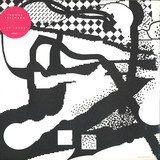
D-Leria returns to the scene more than a year after debuting on Berlin-based label Delirio, releasing a collection of work produced between 2014 and 2018; ten tracks which mark a new beginning for this young Italian producer, sweeping between heavy ambient excursions to hypnotic/ tribal techno, modernized and polished off in his own way.'Driving to Nowhere' is the summation of an extended journey; a year-long hiatus due to unforeseen health concerns allowed time to meditate and consider his past experiences in Italy's various underground electronic music scenes, and the potential directions inspired by thriving Berlin.
From 2014 to 2017 he released several EP's, each developing upon this new style, until joining the young label Delirio as both a musician and a manager. With Delirio he has hosted artists such as Stanislav Tolkackev, Roberto Bosco, Plaster, Retina.it and more, with a unique agenda to record precisely produced music live, instead of laboring in the studio to achieve over-polished audio. His first album inaugurates the beginning of the new DLP catalog, which will be dedicated to LPs, albums and other projects released on 12-inch vinyl. Through these 10 tracks D-Leria experiments with various production methods, as in 'Makumba' where he precisely combines the kick drum with a tight bass line in a 12-step sequence, making the track fluid and never predictable. 'Reborn' is an even more ambitious undertaking, initially recorded on tape before being sent back to the mixer via Hi Fi stereo, D-Leria modulated the cassette coil with a bic pen to create a unique 'detune' effect. 'From the Ground' and 'Driving to Nowhere', both made through the same setup, combine tribal voices and moans, combining an ethereal ambience with drums and analog percussion, connecting the rhythm directly to the soul. The opening track 'Libero' is dedicated to himself, while 'Her Smile' and 'Uragano' are both dedicated to the person that was closest to him in his last period of stop and realization of the album, where he expresses his most deep moments in the first, and more difficult in the second.
Just like in most of the EP already released on Delirio, Giuseppe Tillieci aka Neel took care of the mastering of the tracks, while the artist has taken care of the smallest details from the production, to the mixing, to the graphics and also to the titles of the tracks, which refer to personal thoughts and events that happened during this long journey to nowhere.
Suche:ambit 3
Returning for his second full-length LP of 2018, DJ Bone steps up once more to his own Subject Detroit imprint to present 'Beyond', a full-length and physical rumination on his own emotive and psychedelic contribution to contemporary techno. Loaded with the dynamics, charisma and widescreen appeal of his finest work, 'Beyond' sees Bone enter a musical state that reflects it's ambitious title, celebrating underground ideals in a style that could only be his own.
The second in a trilogy of albums to be completed in early 2019, 'Beyond' is culled from a sequence of no less than fifty tracks completed by the esteemed Detroit DJ and producer upon returning to his home city in 2017. With it being "unfathomable" to release an LP of that length, Bone has nonetheless captured this wave of creativity and a reconnection with his home city, along with the cathartic sense of soul and energy at the heart of his attitude to dance music.
Across 'Beyond' listeners can sink into an unrelenting sequence of tracks that speak from his experimental, musical and always unexpected mind. LP opener 'Dreamers 7' reaffirms his taste for offbeat electronics shot through with rigid dance floor dynamism; a theme reaffirmed quite literally on the forceful centrepiece, 'With A Vengeance'. Elsewhere, Bone delights in blurring the lines between exotic, futurist ambience on tracks such as 'Techno Aint Techno' and 'Ahhh Life', while further cementing his reputation as master of sheer, unrelenting rhythm on 'True Definition' and 'Rosedale Park'.
Time for some completely fresh business from a relative newcomer to the scene, though we're sure the name Cosmonection will be on your radars soon enough. The Parisian producer knocked us off our feet with a beautiful debut back in March this year on the fledgling Pont Neuf imprint. His '10 Feet Before The Horizon EP' was loaded with the just the kind of spaced- out, synth-heavy deep late night house that gets us all aquiver over here, so when a demo popped into the inbox we were all over it like a donkey on a waffle.
Here we present you with the Menorca EP; three blissed-out synth jams which explore the space between Balearic euphoria and Detroit futurism. On the title track a mournful Moog lead takes centre stage floating over a rising chord progression whilst punchy 909 drums bring the groove to the dance floor.
Next up, You picks up the pace for a deep and dubby house workout where soft focus pads converge with clattering percussion. Fragments of chiming melody bouncing around the stripped back groove.
Flipping over we have Light which shows Cosmonection at his most musical, layering up arpeggiating synths lines through a slowly building intro until a heavy groove with hefty kick joins the scene. The arrangement ebbs and flows as the rhythm drops out, rising synths creating anticipation and tension. This track feels like an ambitious fusion of musical styles and textures with 90's ambient colliding with Underground Resistance and coming up with a fresh sound for 2018 in the process.
Rounding off the record we have Delusions regulars, DJ supremos and all- round good guys Session Victim taking the reins on a remix of You. Keeping the warm, feel-good pads, the German duo inject a new found shuffle to the groove, bringing a wide-screen sensibility which adds a sublime yet dance-floor pleasing dimension to the release.
Unknown Truths is the debut album from Tony Beardsley (aka Dark Strands). What can be said about this album.. for one, it is a body of work that has been crafted as a labour of love with sources of inspiration taken from the late 80's underground warehouse parties and clubs where no one speed or style of music was played.. curve balls as they say, was a good thing. Ambitious maybe.. but the only aim of the album was to actually not to have one. No one genre or concept can be applied, but this is not by design, purely accidental as the music weaves between various electronic strands and rhythm forms. Its fair to say that his music has not been compromised to follow latest trends or fashion. It is for everyone, but no one. It's only true purpose is to liberate senses and provide a lasting sonic soundtrack to the modern age.
Freedom To Spend's first catalog wide deep dive into an artist's career focuses on four albums from Rimarimba, beginning with 1983's Below The Horizon, followed by 1984's On Dry Land, 1985's In The Woods, and finally, the once-imagined, now-realized assembly of 1988's Light Metabolism Number Prague.
Somewhere out there around the turn of the 1980s, to the left of the post-punk crew, to the right of the minimalists, and surfacing with a friendlier face than the dour industrialists of the time - there existed, seemingly unbidden, an entire, networked, tape-trading community; a community that crossed continents and oceans, that relied on the postal service to do its bidding; a community full of humble visionaries and lost, misunderstood, or just plain ignored home steeped genius.
Exploring that thicket of weirdness in the UK wild, you'd likely stumble across labels like Cordelia, Hamster, and Unlikely; compilations like the should-be-legendary Obscure Independent Classics series, or the Real Time cassettes; and inexplicable one-offs like The Deep Freeze Mice, Jody & The Creams, R. Stevie Moore, Leven Signs, Jung Analysts, and Rimarimba.
Rimarimba was the project of Robert Cox, based in Felixstowe, on the seaside in Suffolk, UK. Rimarimba was not Cox's first entry into the world of recorded music, but was the first time he explored, most perceptively, the parameters of a particular musical mode: one where minimalism is removed from its 'high-art' mantle, Cox inveigling its practices in amongst the doit-yourself creativity of a burgeoning and beguiling underground, letting the music breathe - and most importantly, letting it play, gifting it with imagination.
The first in the Rimarimba series, 1983's Below The Horizon, feature Cox in exploratory mode, figuring out exactly how to make his music. There's a pleasure in hearing how he feels out the parameters of his aesthetic, here - there's a boxy minimalism, slightly clunky and charming with it, that reflects the home-spun, improvisatory tenor of the compositions. It's ambitious music, though, wanting to do the most and the best it can with its limited resources. Cox himself admits to not being 'pre-wired' to making this music, but that only makes it more compelling: 'Were I to be properly musical, it wouldn't actually work as well in some ways; it'd be just another album of contemporary clattery music.'
On October 5, Freedom To Spend will offer Below the Horizon in a one-time edition of 750 copies, followed On Dry Land and In The Woods on January 8, 2019 and February 22, respectively. Each album features artwork reinterpreted from its original edition by Will Work For Good, and accompanying abstracts by Jon Dale.
Beautiful contemporary African music. Deep percussion with great guitar playing and vocal chants on top. Driving basslines all over the album. Spiritual feel! Tip
.
Son of the legendary Dr Philip Nchipi Tabane and heir to the malombo sound that he originated and pioneered in the early 1960s, Thabang Tabane has been touring the world playing with his father's band and other South African luminaries (such as Thandiswa Mazwai, Madala Kunene and Mabi Thobejane) since he was 8 years old.
Emerging into his own with his debut solo album, Matjale, this energetic percussionist carves a driving, joyous and worldly version of the malombo genre that takes in his continental travels. The album brims with ambition and an appetite for life. Employing brisk tempos, nimble basslines and intersecting polyrhythms, Thabang crafts songs cognisant of the hardships of life, but chooses to deliver them with an irrepressible optimism.
Expanding parameters of what is essentially an artform patented by his father, Thabang and his cohorts seem unburdened by pedigree, infusing the sound with a modern sensibility. His reverence for the vibrational resonance and drive of the bass guitar, not to mention his explosive bursts of hand drumming, gives the album an undeniable, cathartic exuberance.
Limited Edition. Triple Transparent Vinyl 180g Incl. Poster & Download Code. Box Will Be Opened For Shipping To Avoid Seam-split. Hinweis: Box Ist Verschweißt, Wird Aber Für Den Versand Geöffnet
On October 19th Kompakt presents a new LP and audiovisual venture by Danish producer Kasper Bjørke and close cohorts. Epic and in length but always captivating, 'The Fifty Eleven Project' is an entirely ambient concept album, that interprets and evokes the emotional rollercoaster Kasper experienced, from his cancer diagnosis and throughout the five years of regular check-ups. The week of album release marks his second anniversary of getting the all-clear.
The base of the album was composed on vintage analogue synthesizers, reverbs, echo and sequencers - using the computer solely as a recording device - by Kasper and synth wizard Claus Norreen, in the latter's Copenhagen studio.
The violins, violas and cellos are composed and played by the Italian composer Davide Rossi, who has also worked with Ennio Morricone, Jon Hopkins, Ro¨yksopp, The Verve and Goldfrapp.
The piano parts are composed and played by Danish musician Jakob Littauer (of Kompakt labelmates Jatoma) on an old upright piano in a studio, and on a Steinway Grand Piano in the concert hall at the Royal Danish Music Conservatorium. From Max Richter's 'SLEEP', Hannah Peel's 'Mary Casio: Journey To Cassiopeia', to much of Brian Eno's 'Music For Installations', 'The Fifty Eleven Project' continues in a rich vein of work by contemporary composers which explores a situation/condition, and is made with functionality and healing in mind.
The visual side of 'The Fifty Eleven Project' is made in collaboration with the culture laboratory Prxjects and acclaimed LA based artist/filmmaker/photographer Justin Tyler Close, who has created art films for each of the album's 11 tracks - plus one music video, including clips from all 11 films. The 11 films will be assimilated into a video exhibition at Klub in Copenhagen from 12th - 21st October. The ambition is that the installation will tour Europe and the US in 2019. Furnished in an exquisite fabric box, this 180 gram 3LP clear vinyl box is presented by cover art created by world-renowned artist Landon Metz, further cementing the release's multidisciplinary links to the art world.
Am 19. Oktober präsentiert Kompakt das neue Album und audiovisuelle Abenteuer von Kasper Bjørke und Freunden. - The Fifty Eleven Project' ist ein komplett ambientes Konzeptalbum, das die emotionale Achterbahn, die Kasper nach seiner Krebsdiagnose und während fünf Jahre regelmäßiger Untersuchungen erlebt hat, interpretiert und offenlegt. Die Woche der Veröffentlichung des Albums markiert den zweiten Jahrestag seit der Entwarnung.
Die Basis des Albums wurde von Kasper und synth wizard Claus Norreen in seinem Kopenhagener Studio auf analogen Vintage-Synthesizern, Reverbs, Echos und Sequencern komponiert - der Computer wurde ausschließlich als Aufnahmegerät gebraucht.
Die Geigen, Bratschen und Celli wurden vom italienischen Komponisten Davide Rossi komponiert und eingespielt, der auch mit Ennio Morricone, Jon Hopkins, Röyksopp, The Verve und Goldfrapp zusammengearbeitet hat.
Die Klavierparts wurden von dem dänischen Musiker Jakob Littauer (bekannt vom Kompakt-Projekt Jatoma) auf einem alten Klavier im Studio und auf einem Steinway-Flügel im Konzertsaal des Royal Danish Music Conservatorium komponiert und eingespielt.
Von Max Richters - SLEEP', Hannah Peels - Mary Casio: Journey To Cassiopeia' bis hin zu Brian Enos - Music For Installations' - - The Fifty Eleven Project' setzt die Arbeit zeitgenössischer Komponisten fort, die sich mit einer Situation/einem Zustand auseinandersetzten und die auf Funktionalität und Heilung ausgerichtet ist.
Die visuelle Seite von - The Fifty Eleven Project' entstand in Zusammenarbeit mit dem Kulturlabor Prxjects und dem renommierten Künstler/Filmemacher/Fotografen Justin Tyler Close aus LA, der für jeden der elf Tracks des Albums Kunstfilme erstellt hat - plus ein Musikvideo mit Clips von allen elf Filmen. Die elf Filme werden vom 12. bis 21. Oktober in einer Video-Ausstellung im Klub in Kopenhagen gezeigt. Ziel ist es, dass die Installation 2019 durch Europa und die USA tourt.
Verpackt in einer exquisiten Stoffbox, die vom weltberühmten Künstler Landon Metz entworfen ist, zementiert diese 180-Gramm schwere 3xLP-Klarsicht-Vinylbox seine multidisziplinäre Verbindung zur Kunstwelt.
"At the crux of American-born, Shanghai-based producer Eli Osheyack's debut album, Sadomodernism, is a question of agency. Borrowed from film theory, the album title was originally coined by writer Moira Weigel to describe a waning European art house tradition that vehemently rejects 'naïve pleasure'—the tranquilizing comfort of conventional cinematic narrative, like mainstream Hollywood—and opts for violence and pain, with the aim of shaking audiences out of cinematic manipulation and into their own position vis-à-vis the malaise of contemporary life. Echoing the work of sadomodernist auteurs, Osheyacks's Sadomodernism is a deeply political project with critical ambitions. The smashing and blending of genres, from techno, industrial, noise and gabber to ballroom and metal, even opera, and spontaneous percussion arrangements, sometimes mixed with distorted spoken word, do not mean to please, but provoke through disorder and chaos. Laden with Brechtian alienation affects, Sadomodernism interrogates the notion of autonomy in contemporary music, club culture, and social-political life."
'Garage bands suddenly obtain cult status and become the antithesis of their initial appeal'
Garage Class were a group of reluctant outliers who produced one of the finest contributions to the wave of UK DIY music that emerged during the late 70s and early to mid-80s.
Hailing from Alsager in North West England and comprised of Tim Shutt (vocals) Phil Murphy (lead guitar) Clive Williams (guitar) Lynne Sanders (bass) and Phil Bourne (drums / bass on studio recordings) Garage Class originally went by the name of The Pits before their then manager Steve Hurt imposed an alias which, though unpopular within their ranks, would nevertheless reflect the shambolic art they would eventually capture on their first and only single.
As The Pits the group offered a loutish inflection on glam-punk flamboyance, evoking Johnny Thunder hitting the north and remaining disowned yet undeterred in a dreary old boozer. But as Garage Class the group distilled a roughcast and homespun primitivism that felt quintessentially their own. In this they proved too unruly to be assimilated into any wider scene. Early gigs descended into acrimony and recognition proved elusive. Yet what they managed to make back then now sounds like an extraordinary article of underdog ambition.
Released in 1984, four years after it was originally recorded, the Terminal Tokyo single is an unlikely triumph of exceptional messthetic punk. Though raw and unpolished the songs here are precariously pop-minded and indisputably anthemic. The titular A-side reveals the dry and detached drawl of Shutt aka The Subliminal Kid, a sharp, jaded and poetic voice that has some of the most iconic lines never heard in punk. Accompanied by second-hand guitars, on-the-fly handclaps and a chorus like a terrace chant this is the cult hit that never was, a heroically artless masterpiece that has all the ragged character and misfit euphoria of Swell Maps and The Buzzcocks if they were more impulsive and boisterous, and left to their own devices in the remote margins of a Cheshire town. The original B-side is here substituted for I Got Standards, a track that, until now, has somehow remained unreleased. An ideal twin to Terminal Tokyo there's the same brusque and dog-eared quality to the band's delivery, as well as the same upfront emphasis on strong hooks and insistent momentum. Yet again, Shutt is on impeccable form, perfecting an inflated, adolescent antagonism that has all the sardonic, malcontented charm of similarly 'shirty' buggers like Dan Treacy (Television Personalities), Patrik Fitzgerald and Mark Perry (Alternative TV).
Although never accepted in their own time both tracks represent a brief but inspired moment of fervent imperfection, one that epitomized the best of a diffuse and autonomous underground movement spearheaded by The Desperate Bicycles and built upon by the likes of Amos & Sara, The Homosexuals, The Cleaners From Venus and Family Fodder. Like them Garage Class were situated at a point where punk, art, humour and a sense of stubborn independence all intersected.
In the years since Terminal Tokyo has accumulated a retrospective appeal among certain trusted circles, with Jon Dale celebrating the single in his exhaustive and essential Story of UK DIY for Fact Magazine, and original copies regularly changing hands for a foolish forty quid or so. With this inaugural release on the Outer Reaches label Terminal Tokyo is not only restored for the very first time but given a worthy expansion courtesy of JD Twitch (Optimo).
Continuing his own fascination with the fringe history of UK DIY - documented on his own outstanding compilation Cease & Desist: DIY! (Cult Classics From The Post Punk Era 1978-1982) and in his re-edits of Crass Records classics for an early release on RVNG INTL - Twitch reinterprets I Got Standards as an incisive, dubwise outing that pictures Jaki Liebezeit and Muslimgauze on a bender in England's provinces, tasked with remixing the raw product of local punks. A new slant on Garage Class' crude magnificence, built to play loud on contemporary soundsystems.
Although the latter part of 1980 spelled the end for Garage Class with members moving on to other projects (Bourne fell in with The Colours Out of Time, Murphy went on to front The Regular Guys and Shutt eventually left to form Happy Refugees) this reissue attempts to give their fleeting time together and the unique single statement they made the treatment it deserves. If this means Garage Class have obtained cult status, their initial appeal remains. Just listen for yourself.
Thomas Fehlmann steps away as co-member of The Orb following two acclaimed full lengths on Kompakt (COW - 2016, Moonbuilding 2703 AD - 2015) and embarks back on his solo career with a career defining album 'Los Lagos' - from Detroit to Schaffel techno he conducts a broad spectrum of electronic music into a seamless flow.
Thomas Fehlmann has been active since the late 1970's from Palais Schaumburg, the Tresor defnining trio 3MB (with Moritz von Oswald and Juan Atkins), Ocean Club (together with Gudrun Gut) and of course The Orb.
Artwork direction and design by DESIGNERS REPUBLIC.
'Los Lagos' is Thomas Fehlmann's seventh solo full-length, his 4th for Kompakt following his Berlin inspired 2010 full length 'Gute Luft'. in the musician's own words it's about "checking the juice".
Establishing a picture of his current artistic condition, as suggested by the title - los lagos / die lage / the situation (literally translating to 'the lakes' but taking the meaning of 'wassup' in the context of a relaxed discussion between friends), the album refers to Fehlmann's "musical motivation, dreams and wishes" through the language of music exclusively: a way to "allow myself to techno" he says, "to techno as a means to deconstruct and rebuild again. Set up an area of tension, loose it in the flow of the grooves. Magnifying some detail out of proportion, regroup around that and slowly knit a texture. Expand."
"It was time to take a bend and head where the sun rises or sets, wherever my heart drives me." This is pretty much the kind of decision Thomas Fehlmann has made. 61 and shining, longstanding member of The Orb, multi-talented composer and boundless experimentalist, had to make in the twilight of his collaboration with Alex Paterson, eager to taste the flavours of the unknown on his own again. "It was the moment when felxibility would have become compromise'. Far from being the demise of their joint dream, this was bound to split it in two distinct, parallel fantasies - rich of their own singularity.
As goes with that essential love of his for the free-flowing nature of electronic music, a fascination born out of its "lack of borders", capable of "inventing, changing the emphasis, experimenting with an unpredictable outcome", 'Los Lagos' "freely connects disparate extremes. Art, disco, minimalism, schmalz, jazz and funk". As he likes to say, Fehlmann's head functions as a sampler, capturing elements and re-assembling them under his own embracing perspective ; not afraid to leap from a deep, dubbed-out hypnotism ('Window', 'Morrislouis', 'Freiluft') to the playfulness of '90s-style bleepy schaffel ('Tempelhof' featuring Max Loderbauer), through out-there, muscle-flexing dancefloor cuts ('Triggerism') onto the calmness of ambient ('Geworden').
In need to keep his inner balance in check, Fehlmann committed himself to "switch off the control" and follow his intuition, which isn't so much of an easy process as he also wanted to incorporate the side disturbances experienced: "it's a complex process of search and destroy to bring out a new beauty trying to expand my vocabulary". With 'Los Lagos', Fehlmann looked at finding "the structure that's surprising, disturbing and rewarding". The artwork for the record, courtesy of contemporary artist and friend Albert Oehlen whom he shares lots of artistic ambitions with, echoes the producer's "funky use of shape and space, sludge and clarity" like a second skin. A search for light and harmony that Fehlmann sums up eloquently: "Does your inner musical voice respond", that is the question. Then "doors open up in unexpected corners, rays of light appear; you follow through and you're in - in your oasis."
Glasgow's Wheelman provides the tenth iteration of DBA's Dubs series, following a series of high profile releases on Huntleys & Palmers, Studio Barnhus, and his own Stereotone label. Signal is Wheelman's most ambitious effort to date, its searing amen stabs and deep sub bass guaranteed to wreck any club, while floating pads and crystalline strings add a bittersweet moment of rave nostalgia to the breakdown.
On the flip, in line with the DBA Dubs concept of pairing a house track from an up and coming UK producer with a remix by an established techno name from across the pond, Detroit In Effect provide a cold, bleep-drenched take which raises the tempo of Wheelman's original to an almost breakneck speed. D.I.E, also known as Cybonix, were prolific throughout the late 90s and early 00s on their own M.A.P. label and more recently on Rotterdam's Clone.
To coincide with the release of the tenth edition in the DBA Dubs series the label are also making all ten original tracks available as a digital package, while all ten of the remixes from the series get their own bundle, with Wheelman and Basic Soul Unit providing a megamix of each edition respectively.
Fresh off the release of his 'Cosmo EP' earlier this year, longstanding label stalwart Fetisch reignites the fire with 'Singularity EP' - the second EP from the forthcoming Terranova album. A six-tracker featuring four original cuts plus a pair of remixes from Seattle's Pezzner and Istanbul's Rising Star Alican along with collaborations with Sifa (Congo) & Ivory (Milan). The outerspace'y stomp of Terranova's prime versions of 'Cosmochord' feat Flashmob and 'Cosmocode' feat Voltague, both lifted from his latest outing Cosmo EP, resonates deep into the grooves of the present platter, whilst the ethereally hypnotic vibe of 'Let It Fail' (feat. Sifa & Ivory), with its brittle percussions and slow-scudding pad tapestries, as well as the left-of-centre, hovering electro of 'Powergrid' draw in a further zero-G atmospheric vein and 'Sophia (Ode to a Robot)' are tailored for dawn-time party communion and intense stargazing momentums. All of these tracks are inspired by Fetisch's obsession with the current developments in creating artificial intelligence and robotic technology and his ambition to add androids to the impressive list of humanoid guests of the Terranova Soundsystem.
Already quite the jacking pumper, 'Cosmochord' gets a further menacing treat with Pezzner at the controls - ramming the doors of the club by means of loud kicks and lusty piano chords - each of them pounding with the impact of an apposite Glasgow kiss. Meanwhile Alican takes 'Cosmocode' further into Saturnian confines, densifying the minimal backbone of the track with an extended battery of arpeggios, bleeps and middle-eastern percussions thrown in for good measure. With the rolling techno shuffle of 'Escape Ism' and stuttering rhythmic engineering of 'Tempelhof' (the 'Terranova Maschinenraum' studio is located inside Berlins old airport). Fetisch loops the loop on a pulsating note, expanding the mind to horizons both poetic and physical - further establishing his unmatched sound signature.
Heady, astute, deep techno and ambient from Blue Veil, a new musical project from Danny Clancy. Blue Veil's debut EP reveals gorgeously textured techno on tracks like 'wherethetimegoes' and 'Citizen Score', as well as crafting some tender ambient passages on cuts like 'Night Czar' and 'A Kind Of Adventure'.
The EP will be released on Dichotomy Records, a new imprint, dedicated to refined electronic music. The label's ambition is to allow artists to explore dichotomies through their work, as they span sonic landscapes from pure ambient to techno, and other abstract dance sounds in-between. There will be a strong attention to the visual presentation of the label, with all artwork and photography also created by label boss Danny Clancy.
With the next release lined up from Ahu, and more to follow from there, the agenda for Dichotomy Records looks hugely promising indeed.
Sfetsas formed GFO in 1976, in order to accomplish an ambition dating back to his 1960's Avant-garde period in Paris: to create a piece of work that would expand the boundaries of Greek traditional music. The result is a Progressive-Jazz Fusion masterpiece comprising complex and intriguing compositions, and performed by Athens' best musicians of the day.
.
Sfetsas grew up on the island of Lefkada where he studied classical music from an early age at the local conservatory. At the same
time he was genuinely connected to traditional music and especially to the sound of the clarinet, the lead instrument in the region's
folk music. From a young age Sfetsas would perform with Gypsy orchestras in local feasts. It was this experience that inspired him
to create the GFO after his return from Paris in 1975. Sfetsas founded the orchestra while working at the National Radio, an orchestra comprised mostly of members of the Variety Music Orchestra, who had a solid background in both classical and traditional music. In that way, he was able to realise his ambition. Something he could not do in Paris, since it was impossible to find musicians trained
in both musical cultures.
The recordings on this album, forming only a small part of his overall body of work with GFO, are previously unreleased. The music
was recorded Stereo on Reel Tape and with high standards for the time, with the current mastering process highlighting even more
the quality of the recordings. The result is a truly impressive and pure audiophile album.
Left of centre experiments from the Dutch underground of yesteryear. Muziekkamer was the name of the home recording studio that gave birth to the twelve tracks on 'Popmuziek', an intriguing document of sketch arrangements and primitive, fairytale sampling wave cuts. This is music which excels due to its inherent naivety; the limitless ambition of 'Black Box' almost sounding like a precursor to the 90s ambient techno of Likemind or Stasis. On 'Being Home Tonight' we can hear an early form of what the likes of Tolouse Low Trax have been bringing to the forefront of contemporary club culture whilst the erratic art-rock of 'Walkman' mirrors what Leven Signs & co were doing over the pond. In trying to create something which represented 'intrusiveness' as a contrast to an earlier ambient tape the trio incidentally blurred the lines between various musical fashions to come. An amazing snapshot of time and place!
Shunter, the new album by the Berlin-based duo Driftmachine, is their most ambitious work to date. Although instantly recognizable, featuring their trademark Kosmische and Avant-garde sounds, it also presents a new journey into abstract and hallucinatory worlds. Filled with eerie textures, their electronic visions are darker and more vaporous than ever.
Driftmachine's fourth album (also the fourth one for Umor Rex) offers a new perspective on their ample sound spectrum and systemic narratives. Shunter overlaps and mutates their post-industrial-dub motives. It was conceived and produced in search of a very different kind of imagery, with sections of noise and field recordings intersecting with analogue sounds, a mixture of contrasted fragments, where the usual creative process of modular-synthesis leads Gerth and Zimmer to the discovery of a dark, hazy and diffused experience. There is a protean quality to the rhythmic elements, with tempos constantly contracting and expanding, a departure from the mono-beat-rhythms of "Nocturnes" and "Colliding Contours". The first half of Shunter is made of four pieces named "Shift", although individually separated, they are conceptually linked and can be understood as a sort of score. Imagine a late stage of the industrial revolution, with the interaction between heavy machinery and human beings. The second half of the album is not completely separated, but it has three other substantial melodic moments. Somewhere between the hauntological and the realms of archive-music, a huge range of subterranean beats and distinct patterns dotting the landscape of early electronic and post dub music.
All songs written & produced by Driftmachine (Andreas Gerth & Florian Zimmer), Berlin.
Mastered by Rafael Anton Irisarri. Design by Daniel Castrejón.
'It is now clear that humans are no longer the most important things in the universe, that their knowledge, creativity and intelligence are ultimately limited.'
The Posthuman realises that the ultimate questions about existence and being do not require answers and accepts that humans have a finite capacity to understand and control nature. Even just to know the ultimate nature of the universe would require knowing everything about the universe, everything that has happened and everything that will happen. If one thing were not known it would imply that all knowledge of the universe is partial, potentially incomplete and, therefore, not ultimate.
Humans privilege to order over disorder on the assumption that the essential laws of nature are gradually being discovered. This is a fundamental error; nature is neither essentially ordered or disordered. What we perceive as regular, patterned information we classify as order; what we perceive as irregular, unpatterned information we classify as disorder. The appearance of order and disorder implies more about the way in which we process information than the intrinsic presence of order or disorder in nature.
The humanist era was characterized by certainty about the operation of the universe and the place of humans within it. The Posthuman era is characterized by uncertainty about the operation of the universe and about what it is to be human.
What is a human Is there such a thing
No finite division can be drawn between the environment, the body and the brain. The human is identifiable, but not definable.
Consciousness, (the interaction body-brain) and the environment (reality) cannot be separated; they are continuous that defines the being.
All technological progress of human society is geared towards the transformation of the human species as we currently know it; the posthumans regard their own being as embodied in an extended technological world. In such 'synthetik' reality power no longer needs to impose physical regulations, as it is able to manipulate and shape up the minds directly, becoming part of it.
There won't be any resistance from the individual, as he will have embodied the needs of the system in his own being, and their ambition will serve the economy.
Currently the output of machines is predictable; the Posthuman era fully starts when the output of machines becomes unpredictable, so that complex machines, apparatus whose workings we do not fully understand or control, become an emerging form of life.
In the Posthuman era, the future never arrives.
..from ´The Posthuman Manifesto´, Robert Pepperel, 1995
Audio-visual artists Soundwalk Collective were granted exclusive access to the personal archive of the groundbreaking filmmaker and present their ambitious New Album and Remix EP: What We Leave Behind released on 18th & 25th May 2018.
The NYC and Berlin based group were invited to aurally explore the archive of the seminal French director Jean-Luc Godard and release their interpretations in an innovative new album What We Leave Behind. Drawing on Godard's personal collection of shot film, reel- to-reels and historical ephemera, the recordings reveal the moments before and after the camera rolls, from stage directions and on-set asides to rehearsals, false stars and outtakes.
'There are boxes filled with sounds, words, chaos, and also silence. For Godard sound is a musical composition and when I began listening to the tapes and heard his voice between takes, it was like little bits of life...each sound has its own value. It has always been part of our working practice to venture into untapped sonic territories, discover the poetics behind them, and explore how we (as humans) relate to it, it is part of a larger discourse.' - Stephan Crasneancki, Soundwalk Collective
Revealing much insight to the director's process and personality, the 6-track album will be followed by a remix EP, featuring unique reworks from Ricardo Villalobos, Jan Jelinek and Petre Inspirescu.
What We Leave Behind, and the subsequent remix EP, arrive 50 years to the day that the the Cannes Film Festival, 1968, was closed after Jean-Luc Godard, Francois Truffaut and Claude Lelouche, publicly announced their closing of the festival in solidarity with workers and students protesting across the country.
The LP features a conversation between Stephan Crasneanscki, of Soundwalk Collective, and Franc¸ois Musy, Jean-Luc Godard's sound engineer, printed on a translucent paper insert. The LP and Remix EP both contain imagery taken by Stephan Crasneanscki of the archives, which he has also filmed to create a series of mesmeric short music videos of original and remix tracks.
An international genre-bending group of artist-musicians with studios in New York City and Berlin, the three members of Soundwalk Collective (Stephan Crasneanscki, Simone Merli, and Kamran Sadeghi) formed in Manhattan to produce concept albums, sound installations, and live performances, and have worked with a diverse range of collaborators, from Nan Goldin and Patti Smith to Berghain and Zaha Hadid.
As the title suggests, Rejuvenate marks a rebirth for South London musician Paul White. Abandoning sampling altogether, White wrote, played and produced all of Rejuvenate's music himself, and the result is an album of playful, psychedelic pop.
It would have been far easier for White - previously described as a 21st century DJ Shadow, often compared to Madlib and best known as Danny Brown's go-to producer - to construct an album of loop-based, hip-hop-orientated beats. Instead, taking an ambitious left turn, he worked on honing his songwriting and instrument playing abilities and embarked on creating a totally original record worthy of sitting alongside those he'd usually sample.
Rejuvenate's broad sonic palette includes cosmic rock, ambient, electronic, jazz, folk and more. Retaining a groove-heavy, psychedelic aesthetic throughout, White successfully melds these various influences in to his most cohesive, fully-realised offering yet.
Paul White is joined on this sonic trip by a trio of likeminded souls; British-Jamaican singer Denai Moore adds heartwarming, crystalline vocals to the aptly named Set The Tone and See Through, Zimbabwean musician and poet Shungudzo (aka Shun) shares nuggets of wisdom on Spare Gold and dreamy, melting vocals for Ice Cream Man. White reunites with his sister, Sarah Williams White, and the pair draw on childhood memories for Laugh With Me and All Around.
Paul White's previous output includes a treasure trove of mostly instrumental solo records, plus collaborations with Charli XCX, Jehst, Homeboy Sandman, Guilty Simpson, Jamie Woon, Obongjayar, Eric Biddines (as Golden Rules) and Open Mike Eagle. More recently, White reconnected with frequent collaborator Danny Brown, producing most of the Detroit rap maverick's mind-blowing Atrocity Exhibition album.
Do you like Love songs After spending a lifetime spent avoiding this subject in song, Joel Sarakula finally admits that he does. On his new album "Love Club" Sarakula relives the golden age of Soulful and Romantic Pop music and connects it with a modern aesthetic. While a deeper message of love and peace flows through the record, Joel Sarakula is no old fashioned hippie: ",Love Club' is about connecting to reality and re-framing the idea of romantic love and loss in the present, loveless age ". Featuring eleven songs touching all genres from disco to blues, from soul to soft-rock, Joel Sarakula's "Love Club" is a profound pop statement.
Joel Sarakula has travelled the world in search of his muse, experiencing everything from being a victim of Caribbean carjackings to performing in the remote fishing villages of Norway, via the dive bars of Europe and the US. It was the hodge-podge musical tapestry of England's capital that finally drew him to a settling point, in the wake of seemingly never ending run of shows. With personal tastes that span from the more avant-garde to soul and pop greats like Sly Stone, Todd Rundgren and Hall & Oates, there are clear nods to contemporaries like Unkown Mortal Orchestra, Erlend Oye and Toro Y Moi in terms of ambition and style.
With his last two albums "The Golden Age" and "The Imposter" collecting strong radio plays at BBC Radio 2, BBC 6, BBC London, XFM Joel Sarakula has been play-listed nationally in Europe including Flux FM, WDR 5, Radioeins, Bayern 2, Deutschlandfunk and Deutschland Kultur Radio in Germany as well as in Benelux and Italy and Spain. He is a regular fixture on the live festival and club circuit in the UK, Europe and internationally including appearances at SXSW, Primavera Sound, Glastonbury, The Great Escape, Liverpool Sound City, Scala London, Tallinn Music Week, V-ROX (Vladivostok) and Reeperbahnfestival Hamburg.
"Love Club" is Sarakula's bold and unashamedly emotional next step. In essence the album is a homage to the soulful singer & songwriter artistry of the Seventies filtered through a darker contemporary lens - fitting for these uncertain times. "I always shied away from generic love songs," the Sydney, Australia born songwriter admits, "but on this record I embraced the subject wholeheartedly... and intellectually, looking at themes of love, lust, loneliness and everything in-between." Take the first single "In Trouble", co-written with Michele Stodart of The Magic Numbers, as the best example for Joel Sarakula's unique, and honest approach to making music. "We Used To Connect" questions the changing nature of relationships in our social-media addicted world: 'We used to connect in the real world too, now the touch of your hand is a digital cue'.
"Coldharbour Man", on the other hand, examines the identity of the song's narrator and the artist vs. fan dynamic all wrapped up in a disco love song: "There's a lot going on in this particular track. I feel my writing has grown emotionally...", explains Joel Sarakula. "Just best to listen yourself and make up your own interpretation!: 'We met in a song come to life like some fantasy cliché, though I'm known for my moves in the dark you flooded sunshine on my day'. Then there's "Baltic Jam", capturing romantic love and loss in authentic 70s confessional singer & songwriter style and of course "Dead Heat", a song about how there is struggle in the most perfect relationship pairings as the match is so even: "I recall an ex-girlfriend of mine... when we first met, we thought we hated each other but we eventually flipped that emotion and realised we had a deep passion and love for each other, there just was a lot of underlying sexual tension!" : 'It's a battle we could only win, if we lose. We'd be stronger if these lonely ones became two'.
More than a year in the making, Joel Sarakula recorded "Love Club" in various studios around London and Berlin capturing soulful performances from his many musical comrades on vintage analogue equipment. "This record has truly been a labour of love. Recording and privately sharing these performances amongst my collaborators started to feel like a bit like a club - I guess that lead to the album title! I was surprised how much I actually enjoyed the 'love-making process' and I look so much forward to playing these new songs on stage with my band." We can't wait, Joel Sarakula.