50 frequency and amplitude modulated sine waves describing a landscape / Trigram for Earth. Trigram for Earth, by Flora Yin Wong, is inspired by traditional eight-sided Pakua mirrors and the trigrams inscribed on each of their edges. The function of the mirrors is to show the nature of reality as being composed of mutually opposing forces and modulate them. Here, energies seem to be manipulated to guide and direct our listening, lost in a maze of sound, diffracted to the point of merging with the artist's own listening, through her memories, her obsessions, the fragments she carries within her. Flora Yin Wong invites us to embark on a multi-faceted investigation of sound, a journey through the meanders of liberated sonic forces, an auscultation of her own listening and a portal, at last, ajar to a fragmented and forever mysterious inner world.In his work '50 frequency and amplitude modulated sine waves describing a landscape,' Sébastien Roux applies his approach to algorithmic composition to the observation of the natural world, bringing the sound of the sea and the song of birds into the electronic domain, transmuting them into each other through a slow process of gradual modulation. Exploring the abstract space of pure sounds between two naturalistic tableaux, Sébastien Roux offers us a fascinating meditation on the world of synthesis, revealing, with an economy of means and great formal elegance, the magic of sonic simulacrum (deepl propose simulacra, mais là je suis pas assez calé_) and the strange beauty of the artificial, in a gesture that is ultimately as poetic as it is musical.
Buscar:amplitude
- 1
- A1: Tension (Y Rioland/M. Goldfeder)
- A2: Like The Wind You Are (J P. Decerf/M.c. Cartier)
- A3: Queens Club (Y Rioland/J.m. Hauser)
- A4: Benson's Way (J P. Savelli/F. Rimbert)
- A5: Cap York (B Cohen/M. Houari)
- A6: Sensitive (J P. Savelli/F. Rimbert)
- B1: Young Flesh For You (G Granier/M.c. Cartier)
- B2: Malika's Moon (G Granier/R. Cerri)
- B3: Disco Ma Non Troppo (L Melki)
- B4: Digital (Y Rioland/M. Goldfeder)
- B5: Kenny's Castaways (Y Rioland/J.m. Hauser)
- B6: Love Within You (G Granier/M.c. Cartier)
2024 Repress
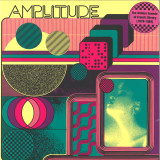
Farfalla Records presents its new compilation Amplitude - The Hidden Sounds of French Library. 12 tracks exclusively recorded for professional use between 1978 and 1984 in France.
Dive into the universe of the early 1980s with colorful sounds and catchy rhythms from talented musicians from the French scene, composing and arranging both for library music and variety, and accompanying big names in French music.
If you ever thought Debris was Oklahoma's only entry into the bloodstream of feral, batshit rock, guess again. Mag Amplitude's, Wizards Of Today appeared in a miniscule, self released edition of 100 in 1983 & was the brainchild of a blind, guitarist-vocalist by the name of Matt Muncil. On Wizards Of Today, Muncil-considered by the psychedelic mafia to be the 'Higney of Heavy Rock'—& drummer Scott Roher proceed to lay down over 7 tracks an incredible wall of wildly fuzzed & primitive bash that is a singular testament to loner, outsider brilliance. Heavy on double tracked guitar riffs & growling, incomprehensible vocals concerning outer space, rocket ships & rock, Mag Amplitude's Wizards Of Today is a half hour slab of muzzed disorder of the highest possible recommendation. This Zaius Tapes reissue is in a one time pressing of 292 copies. Our first foray into (re) introducing fans & collectors into the cimmerian forest of American real people/outsider psych rock."—Johan Klepp, for Zaius Tapes
As the label floats into it's first release with a set of euphoric tinged VA, featuring 6 tracks from artists with different influences and backgrounds, RYS is proud to present Killer Tracks Chapter 1.
Each rider of the grooves had stamped in their unique sound for rumble & clatter.
This release reveals the diversity and amplitude which label will stand for future releases.
The experiment aboard orbital station Sequoia-4 began as a routine test of the acoustic array. The team attempted to synchronize an analogue resonator with a quantum audio synthesizer. The two incompatible frequencies were expected to cancel each other out. Instead, the instruments registered a stable wave. It didn’t fade, on the contrary, it did respond to every sound, every movement around it.
At first, they assumed a coding error, but the wave began adapting to the researchers’ voices, shifting its amplitude and rhythm. Within hours, its spectrum started to resemble a heartbeat. The recording was forwarded to the Analysis Division, where it was named Hybrid Dub — a hybrid resonance formed between the machine and the human senses. The phenomenon proved unpredictable: each listener described different effects, from gentle euphoria to vivid recollections of memories that had never occurred.
Even after the system was powered down, a faint signal persisted in the ether — as if the mechanism had learned to breathe on its own. Some claimed that, when replayed, traces of the ocean, rustling leaves, and distant voices could be heard — as though the signal had passed through layers of living matter and remembered them.
The project was shut down, and the archive sealed. Only one line remained in the final report: “The signal wasn’t created — it discovered us.”
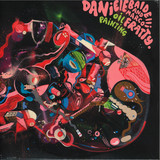
Leng Records’ first album of the year release comes courtesy of two contrasting legends of Italian dance music, Afro-Cosmic pioneer Danielle Baldelli and sometime FPI Project member Marco Fratty (real name Marco Frattini).
Both producers have a wealth of experience. Baldelli first to rose to fame as resident DJ at the near mythical Cosmic Club in the early 1980's, before moving into music production two decades ago. Since then, he’s collaborated with heaps of producers – most notably DJ Rocca, Marco Dionigi and Dario Piana – but “Oil Painting” marks his first collaboration with Frattini, an experienced producer whose bustling discography stretches right back to the Italian house explosion of the late 1980's and early ’90s.
The pair’s debut collaborative release is bold, bubbly, vibrant and funky, with the storied Italian veterans making extensive use of live instrumentation, vintage synthesizers and chugging, floor-friendly grooves. As you’d expect from a Baldelli-related project, the influences are obvious – think funk, dub-disco, cosmic rock, Italo-disco and nu-disco – but the resulting colourful cuts refuse to settle on one specific style.
Firmly focused on the dancefloor, “Oil Painting” is a gleeful, celebratory and excitable as anything either producer has released to date. For proof, check the surging arpeggio style synth-bass, kaleidoscopic synthesizer lines and eyes-closed rock guitar solos of “Automatic Amplitude”, the flute-laden dub disco shuffle of “Jasmine Flavour”, the organ-laden cosmic funk chug of “Oil Painting” and the lolloping disco-funk exuberance of “Steam Engine”, where crunchy guitar licks and Meters style organ stabs wrap themselves around a vintage disco bassline and head-nodding, toe-tapping drums.
The highlights don’t step there, either. Check the percussion and delay-laden Afro-Cosmic funk fusion of “Slinky Funk”, a veritably tropical excursion that repurposes the bassline and incessant cowbells from Cymande classic “Bra”, and the Clavinet-heavy stomp of “Positive Flow”, whose snaking, constantly-changing saxophone solo and flash-fried guitar riffs help create a thrillingly excitable mood.
From start to finish, “Oil Painting” is an album full to bursting with musical joy and umpteen giddy calls towards the dancefloor. From producers of Baledlli and Frattini’s experience, we’d expect nothing less.
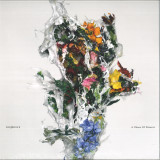
A Chaos Of Flowers is an album that builds on their ferocious 2023 album nature morte. BIG|BRAVE"s music has been described as massive minimalism. Their fusillades of textural distortion and feedback emphasize their music"s frayed edges as much as its all-encompassing weight. The potency of the trio"s work is their singular artistry combining elements of traditional folk techniques and a modern deconstruction of guitar music. Gain, feedback, and amplitude are essential. For A Chaos Of Flowers guitarist/vocalist Robin Wattie drew heavily on the poems of artists whom Wattie found kinship in, their words resonant with experiences of those often sidelined by cultural norms. "I discovered that most poems from folk traditions or in the public domain seem to be by men - to which I could not quite relate. In my search, I rediscovered some of my favorite works and poets," says Wattie. Guitarist Mathieu Ball and drummer Tasy Hudson help Wattie shape poetry into pieces as dense and impenetrable as they are vulnerable. BIG|BRAVE achieve their colossal sound through minimalist approaches, a deft understanding of dynamics and an inventive employment of percussion and distortion. The trio reconceptualize what it is to be heavy or minimal, challenging perceptions with their illumination of painfully overlooked perspectives. Guest guitarist Marisa Anderson lends earthen, blues-inflected atmospheres to the album, where guitarist Tashi Dorji and saxophonist Patrick Shiroishi amplify the squall. Working closely with frequent collaborator and producer/engineer Seth Manchester, the internal tumult of Wattie"s voice rings out in warbles, haunting echoes, and unearthly harmonies across bold immense walls of distortion. BIG|BRAVE have collaborated with metal monsters The Body on a previous Thrill Jockey release, Leaving None But Small Birds, and have toured internationally with bands like SUMAC, Godspeed You! Black Emperor, SUNN O))), and Lingua Ignota. As they continue to ascend in their journey as pioneers in the contemporary metal scene, it"s safe to say that BIG|BRAVE are here to stay.
Recorded in 1966 in Paris, this double album captures the revolutionary energy of the free jazz pianist. These recordings, featuring Jimmy Lyons (saxophone), Alan Silva (bass), and Andrew Cyrille (drums), explore complex improvisations, where melodic lines burst into avant-garde structures. Taylor, with his percussive and abstract playing, pushes the boundaries of traditional jazz, creating an intense and dynam- ic sonic experience. This album is a testament to his contribution to free jazz.
First Step Beyond by proto-metal quintet Medusa might have forever shifted the perception of Chicago rock history had it managed to make the leap from tape to its never-realized vinyl pressing. Instead, the conflagation of Sabbath, Hawkwind, and Amon Duul II remained petrified in the Corycian Caverns... otherwise known as the drummer's basement. Self-produced on four track in 1975, this lone transmission from Medusa's repertoire appeared on the extremely mysterious Pepperhead label, whose proprietor allegedly disappeared after a bad trip and was never been seen again. Forged in ceremonial mock-velvet, custom embossed in Gorgon-gold and blood-red, and art directed in accordance with the band's elaborate original stage props and artwork, Numero Group positioned this unreleased opus to finally reach its destination: the stereos of pot-smoking and leather-clad teenagers, young and old.
A Chaos Of Flowers is an album that builds on their ferocious 2023 album nature morte. BIG|BRAVE"s music has been described as massive minimalism. Their fusillades of textural distortion and feedback emphasize their music"s frayed edges as much as its all-encompassing weight. The potency of the trio"s work is their singular artistry combining elements of traditional folk techniques and a modern deconstruction of guitar music. Gain, feedback, and amplitude are essential. For A Chaos Of Flowers guitarist/vocalist Robin Wattie drew heavily on the poems of artists whom Wattie found kinship in, their words resonant with experiences of those often sidelined by cultural norms. "I discovered that most poems from folk traditions or in the public domain seem to be by men - to which I could not quite relate. In my search, I rediscovered some of my favorite works and poets," says Wattie. Guitarist Mathieu Ball and drummer Tasy Hudson help Wattie shape poetry into pieces as dense and impenetrable as they are vulnerable. BIG|BRAVE achieve their colossal sound through minimalist approaches, a deft understanding of dynamics and an inventive employment of percussion and distortion. The trio reconceptualize what it is to be heavy or minimal, challenging perceptions with their illumination of painfully overlooked perspectives. Guest guitarist Marisa Anderson lends earthen, blues-inflected atmospheres to the album, where guitarist Tashi Dorji and saxophonist Patrick Shiroishi amplify the squall. Working closely with frequent collaborator and producer/engineer Seth Manchester, the internal tumult of Wattie"s voice rings out in warbles, haunting echoes, and unearthly harmonies across bold immense walls of distortion. BIG|BRAVE have collaborated with metal monsters The Body on a previous Thrill Jockey release, Leaving None But Small Birds, and have toured internationally with bands like SUMAC, Godspeed You! Black Emperor, SUNN O))), and Lingua Ignota. As they continue to ascend in their journey as pioneers in the contemporary metal scene, it"s safe to say that BIG|BRAVE are here to stay.
tapetopia 006 In 1983, some more subdued sounds began to waft from the GDR punk underground into the second half of the ’80s. At five to the end of time, it was perpetually striking midnight and the occasional punk band would mix a little laudanum into their potential for aggression. Portents in this vein preceded a dark wave whose foamy crest would break on fog walls of dry ice. Especially in Leipzig and East Berlin, a chain-rattling zeitgeist produced bands that drew from a dark well. Many of these bands arose from the still hot or already cold ashes of punk. The two founding fathers of Neuntage Alt, René Glofke and Taymur Streng (nicknamed “Strangler”), knew each other from the East Berlin punk scene. The third man aboard, Mike Sauer, played drums in the early 1980s for Sendeschluß, a punk band that, lost in thought somewhere in the no-man’s land between punk and post-punk, faded away in 1984. Punk was no longer the order of the day, but it was a form of expression among many and easy to combine. Glofke and Streng found common ground in experimental set-ups with such otherworldly names as Medusa Brahma or Die zeitweilige Erscheinung.
From this far-flung point of departure, a short tunnel led straight into the black light of Neuntage Alt, the coldest star in the low-hanging sky above East Berlin. Neuntage Alt appeared at the end of 1986, during the last blackout phase of the GDR, on the threshold between the underground and the so-called “other bands” – a scene that used the non-socio-critical approach of German Wutwave (“anger wave”) in order to be allowed to perform publicly. In the context of this scene, Neuntage Alt did not belong to the inner circle. Moreover, the band’s subcultural base was initially in Mahlsdorf, on the south-eastern edge of East Berlin. This was where the DIY sound studio of amplitude apostle and great modulator Taymur Streng was situated. Strangler held the position of house electrician and keyboard god in various projects. One of them had the bland alias Mahlsdorfer Wohnstuben Orchester, behind which the avant-garde court chapel of the bungalow studio was concealed. There Taymur also conspired with the East Berlin underground band Ornament & Verbrechen (tapetopia #001). Ronald Lippok of Ornament & Verbrechen remembers how once, at the opening of a joint session, he and his brother Robert attended Taymur’s engaging slide show of his collection of test patterns. Afterwards, they created a piece with the psychedelic title “Das sentimentale UfO”, which sheds an iridescent light on the bizarre atmosphere in the studio. Taymur’s obsession with technology was legendary. The home studio was also his living space; a circuit, a machine park of screwed and soldered equipment, a single keyboard orgy. His own creations were also based on circuit diagrams found in the radio amateur magazine “Funkamateur”. Its somewhat clueless subtitle “Praktische Elektronik Für Alle” (Practical Electronics for All)
The debut recording by Setting, a trio comprising Nathan Bowles (solo/trio, Pelt, Black Twig Pickers); Jaime Fennelly (Mind Over Mirrors, Peeesseye); and Joe Westerlund (solo, Califone, Sylvan Esso, Jake Xerxes Fussell). Deluxe LP edition features 140g black virgin vinyl and a reverse board jacket with art by Timothy Breen. Deluxe CD edition features a gatefold jacket with art by Timothy Breen. RIYL: Popol Vuh, Brian Eno’s Ambient 4, Harmonia, The Necks. Setting, befitting its name which can be read as noun or verb, and simultaneously suggests the sun, or any star in the firmament from our earthbound perspective; a story and its surroundings, its scenic context or mise en scène; or a psychedelic experience, as in the prescription to mind one’s “set and setting” arose outdoors, uncontained and unconstrained by architecture. The group’s debut recording Shone a Rainbow Light On traverses textural, phosphorescent topography with a certified organic folk-engine. Kosmische correspondences are inevitable and valid, but also somewhat deceptive, given this meditative music’s terrestrial rootedness in the familiar natural world, more in native humus and humidity than in outer space. Fuelled by a vibratory hybrid of acoustic and electronic instrumentation, these four stately longform pieces sound like a UFO slowly sinking into a peat bog (or, as we call it in North Carolina, a pocosin). An instrumental trio comprising Nathan Bowles (solo/trio, Pelt, Black Twig Pickers) on strings, keys, and percussion; Jaime Fennelly (Mind Over Mirrors, Peeesseye) on harmoniums, synthesizers, and piano zither; and Joe Westerlund (solo, Califone, Sylvan Esso, Jake Xerxes Fussell) on drums, percussion, and metallophones, Setting established its own setting and found its footing in regularly scheduled improvisational sessions outside Westerlund’s home in Durham, North Carolina, beginning in 2021. The three players began as two, in the context of occasional Bowles and Westerlund percussion duo performances dating back to 2018. Fennelly provided the initial impetus to gather and play together with intentionality and discipline, as well as an harmonic adhesive and thickening agent in the grain and gravity of his harmonium and synthesizer. As always, Bowles’s background as a pianist and drummer informs his approach to banjo, imparting a woodiness, a piney verticality and resinous tang. Westerlund’s training with Milford Graves is apparent in his polyrhythmic flow and its correspondences to human circulatory and corporeal rhythms. They recorded their collective discoveries with engineer Nick Broste in the spring of 2022.The record begins, like the group’s name, and like the language of its unique instrumental interplay, with ambiguous grammar: “We Center,” the first and longest track at thirteen and a half minutes, builds patiently to a percolating climax of tidal heaving, with ceremonial connotations. “Zoetropics,” the shortest piece, follows, offering a more diaphanous counterpoint to the density of its predecessor. The zithery, shivering “A Sun Harp,” its title redolent of Sun Ra, showcases Westerlund’s unfettered drumming, which skitters restlessly until anchored, at its conclusion, by a minor bass progression. Finally, “Fog Glossaries” exhales through the maritime and meteorological evocations of its title, distant buoys clanging. Although certainly elements and strategies of so-called ambient and drone musical traditions are invoked and deployed, those diffuse terms feel inadequate to describe everything else happening here: the devotional valences, the minimalist rigor, and even submarine jazz inclinations perceptible beneath the surface. Throughout this four-movement program, which invites deep listening, it is often difficult to differentiate individual instruments from the massed choir of the group’s unified sonic presence. At times what sound like field recordings cicadas, birds, wind, water splash out of this slow but powerful current, only to be revealed as overtones produced by harmonium, banjo, or cymbals. Setting’s sound is fundamentally synthetic in the sense of synthesis, not artifice—in a manner remarkable for its almost entirely acoustic arsenal of instrumentation, often registering as the product of a single alien technology, perhaps the rainbow lights of that bog-marooned UFO. (“Setting,” of course, can also refer to a machine’s variable operational amplitude its temperature, volume, speed, elevation, etc.) Sometimes the most seemingly extraterrestrial lifeforms are in fact our unfamiliar earthbound neighbors. Despite the destruction of many such habitats, the coastal plains of eastern, tidewater North Carolina is home to more pocosins freshwater, evergreen wetlands with deep, acidic, sandy, peat soils than anywhere else in the world. These threatened peat-bog ecosystems are the only native environment to sustain the carnivorous Venus flytrap, among other oddities. The sonic ecosystem of Setting similarly deep, acidic, and boggy contains equivalent wonders, savage and delicate, for listeners willing to take the time to sink.
Revealed a few seasons ago thanks to the abrasive potential of their riffs, the French duo Bandit Bandit consisting of Maëva & Hugo imposes its musical genre, as well as an insolent ease to handle the French language, which one can hear in their amazing first album, 11:11.
In 2019 came the first show, the first music video, the first studio session. The name "Bandit Bandit" was born during a photo shoot with a friend, in a desert landscape, wearing scarves, boots and pistols. As for the repetition of Bandit, it is to better underline the duality of the project which, very quickly, found its own public, thanks to tracks as striking as "Maux", the first french-written one, and an imagination which incites the press to nickname them the Bonnie & Clyde of rock.
After two electrifying EPs, "Bandit Bandi"t and "Tachycardie", the duet needed to "explore further than the rock-genre itself" on a 11:11 produced by Azzedine Djelil (Rita Mitsouko, Catherine Ringer, Minuit, Lulu Van Trapp...). This first album mixes music genres, investigates pop music with all its amplitude, as a guiding thread between raw rock and the more sophisticated alternative style. Until now self-centered and cathartic, the texts of Bandit Bandit remain intimate on 11:11 while proving to be political, freed from prudishness, playing with words. Their unrestrained music resonates loudly throughout this album with a devouring desire as insatiable as contagious.
"11:11", frist album. Includes "Toxique Exit", "Si j' avais su " & " La marée ". Available on Cd & Vinyl.
Akumandra’s newest release, DIGITAL WATER by German producer, Coss, offers a neat, rhythmically fluid sound that, like water, is both dreamy and soothing as well as energetic. In the first of the EP’s four tracks, ENTRY POINT OBSCURING, a syncopated beat exudes rhythmic energy as watersounding synths plunge us into the track’s intricacies, opening the possibility for rapturous introspection.
Track number 2, ESCAPE FROM PELOG SELISIR, contrasts a deep bass with modulated synth-progressions, to deliver a sound that calls for motion as well as reflection. LOVE LETTER FOR YOU emphasizes bright, upbeat progressions to maximize the ecstatic energy built up
throughout the track.
The currents of emotions stirred by the EP culminate with TWOWORLDS, the smoothest track in the EP. A hi hat groove sustains the rhythm as a bassy synth gives amplitude to the track, creating a subaquatic feeling of depth and wonder.
"The Concert" is the first discographic collaboration between percussionist Alexandre Babel and visual artist Latifa Echakhch. The record is intimately linked to the eponymous exhibition presented at the Swiss Pavilion during the 59th Venice Art Bienniale.
For her exhibition in the Swiss Pavilion, Latifa Echakhch created an orchestrated and enveloping experience, a rhythmic and spatial proposal that allowed the visitor a complete perception of time and of his own body. What is the origin of rhythm? How does the body perceive time? How does the mind rearrange it? Can we substitute one perception for another, the visual for the sound? Can fragments of memory go back in time and recreate a different story?
Her proposal entered a dialogue with the building around it, designed by Bruno Giacometti. The artist revisited its architectural programme as well as the prototypical progression of these exhibition spaces, originally defined for the display of classical art. She appropriated the entirety of the spaces, simultaneously exploring continuity, movement and sequence. Their relationship to light, and the different sounds that emerge from them. Yet the exhibition was entirely silent and the musical composition "The Concert" functions as its sound rendering, by following a similar path.
This one-sided vinyl is a complementary and inseparable partner piece to the exhibition and its eponymous catalogue, the latter having been published in April 2022 by Sternberg Press. The music features field recordings made at the Swiss Pavilion itself as well as pre-recorded percussion sounds and significant contributions by the Berlin-based musicians Jon Heilbronn, Rebecca Lenton, Theo Nabicht, Nikolaus Schlierf.
The record, available only after the closing of Latifa Echakhch’s exhibition offers a concluding phase to the project. The resonance of its sensory score. It reactivates the experience of the physical journey of the installation, without imposing itself as a transcription or an illustration. Through texture, temporality and its totality, the record stands as a resonance of the rhythms that have structured the pavilion, the harmonies that have composed it and the sounds that have inhabited it.
Latifa Echakhch Lives and works in Vevey, Switzerland. She graduated from the École nationale supérieure d’arts in Cergy-Pontoise and the École nationale des beaux-arts in Lyon. Galleries representing her include kamel mennour (Paris and London), kaufmann repetto (Milan and New York), Dvir Gallery (Tel Aviv/Brussels) and Pace (New York). She took part in the main exhibition of the Venice Biennale Arte in 2011 and was awarded the prix Marcel-Duchamp in 2013 and the Zurich Art Prize in 2015. Through her interdisciplinary installations, Latifa Echakhch is recognized for the fine balance between forcefulness and fragility of her visual language, inserting surrealist and conceptual elements, and her use of symbols that–in her own words–are both "political and poetic".
Alexandre Babel Lives and works in Berlin. He is a drummer, composer, and curator. His projects redefine the boundaries of musical convention, confounding listener expectations in the conquest of new contexts. Babel has been the artistic director of the contemporary percussion group Eklekto 2013–2022. In 2020, the monographic Festival Les Amplitudes in La Chaux-de-Fonds focused on Babel’s compositional and curatorial work. He is a laureate of the Swiss Music Prize from the Federal Office of Culture 2021.
Green Marbled Vinyl
Following up to his maiden transmission for the label, "Cosmic Silence", issued a year ago, Italian producer Alessandro Cozzolino AKA Cioz resurfaces on Stil vor Talent with his longed-for debut album "Supermassive Whole" - a ten-track cosmic odyssey in sound percolating staple elements of Cioz's palette of choice, from otherworldly techno to Latin-inflected house, via the obvious injection of kosmische and electronica soundscaping.
The lead single "Wachaka" - recorded in collaboration with Cape Town producer Ryan Murgatroyd, exemplifies Cozzolino's electrifying approach to a T. An inch-perfectly balanced mix of Afro-infused polyrhythmic bravura and seesawing synth moves, the track swells with a blazing fire at heart that keeps on sprawling infectiously with each and every bar. Trading the linear buildup for most sensuous levels of syncopation, "Me Monkey" serves up a warmer kind of funk, perfect for getting snug and cozy before an avalanche of seesawing chords up the ante towards space-opera-esque amplitude. All in elusive sinuosity and processed machine talk, "Harakat" dwells the confines of wonky house templates and polyamorous EBM, while "I Always Wanted To..." goes the slo-burning, counterclockwise route, primed for languid moments in the alcove.
"B1" is perhaps the most spitting avatar of the Italian whiz's hybrid rolling-and-pounding rhythmic style, nicely embodying both its quirky, hip-swaying and fanfare-like percussive aspects. The ecstatically bouncy "Do It The Way You Feel" showcases Cioz's more rousing, floor-friendly facet with a killer combo of hi-octane electro dynamics, pop-rock motif'd hooks and slashing breaks taking the controls. The mood also happens to be melancholic at times, such as on the beautifully understated "Is This Real", which bridges the gap betwixt piano-house déjà-vu - here tweaked to distinctively soul-wrenching effect, and a prog buildup glossed under a thick sauce of FX, similar to that of "Sudpol Birgit"'s inflating saturation in the post-prod treatment. Somewhat brushed with balearic shades in mind, "Pace e Amore" follows a more classic curve, slowly veering off onto ambient-laced territories, while "Lost in Space" evokes a certain idea of gravity-defying plenitude through that ever intuitive and subtly arranged collage of tender wistfulness and endless attraction towards the groove, which defines Cozzolino's phraseology so fittingly.
"Singe" is the new record by Angelo Harmsworth, a musician who hails from the American Southwest and is operating now out of Berlin. Harmsworth’s work deals resolutely in extremes, but this music is not concerned with presenting binary or dichotomous relationships so much as it is with reconciling disparate sensibilities and sounds. Layers of meticulously edited and sculpted tones swirl around one another, creating kaleidoscopic patterns and hallucinated choral motifs that seem to thrive on amplitude or the position of the listener’s head. There is a visceral physicality to this music that aligns it with some of the core tenets of harsh noise, even while its tonal and timbral choices recall those of ambient music. This record follows excellent releases on enmossed/Psychic Liberation, Angoisse, Opal Tapes, Vaknar, and Harmsworth’s own Lime Lodge imprint and may be the high water mark of his published output thus far. There is drama and implied narrative in these seven compositions that seethes and hums as if reveling in a sort of violent gracefulness.
Unmistakably Cio D’Or, Polar Q’s eight tracks explore ambient and cinematic techno, before dissolving into broken-beat, aquatic compositions from the outer reaches.
- A1: Versuch Einer Übersicht
- A2: Kristallische Bindung
- A3: Selbstbespiegelung
- A4: Aggregate (In Zwei Sätzen)
- A5: Merkwürdige Klänge (Zwölftonspiel)
- A6: Geschmack Und Funktion
- A7: Substanzsuche
- A8: Einheit Von Maß Und Zahl
- B1: Anmerkungen Zur Situation
- B2: Klangfigur (Für Klavier, Stimmen Und Regler)
- B3: Schwingungsknoten
- B4: Oberlippentanz
- B5: Satzlehre (Rückwärts)
- B6: Schwebung Und Strenge
- B7: Töne, In Die Höhe Gezerrt
- B8: Abschied (Für Stimmen, Becken Und Streicher)
Distilling Sounds From The Now 70 Years Old Archive Of The Darmstadt Summer Courses For New Music, The Berlin Based Electronic Artist Hanno Leichtmann Presents A Stunning New Album Which Is Remix, Collage And Homage At The Same Time. Mastered And Cut By Rashad Becker At D&m.
On His Latest Work "nouvelle Aventure", Berlin's Hanno Leichtmann (who Besides His Solo Works Also Plays With Jan Jelinek And Andrew Pekler In Groupshow And Recently Released His 2nd Album With Valerio Tricoli On Entr'acte) Presentshis Very Individual Approach To The Task Of Remixing And Reworking The Imd Archive. As In His Previous Installations (e.g. "skin, Wood, Traps" For Haus Der Kulturen Der Welt, Celebrating The 100th Birthday Of The Drumset), The Electronic Artist Distills His Sound Material Exclusively From A Thematically Fixed Archive, In This Case: Concert Recordings, Lectures And Discussions Fromthe Now 70 Years Old Archive Of The Famous Darmstadt Summer Courses For New Music (stockhausen, Nono, Ligeti, Xenakis Et.al.). Originally A 6-channel Installation As Part Of "historage" At Mathildenhöhe Darmstadt, The Composition Is Here Presented As A 46 Minutes Stereo Mix. Leichtmann Sent Thesubjectively-chosen Sounds Through His Unique Machinery Of Voltage-controlled (micro-) Loopers, Re-recorded Them And Then In A Last Step Pieced Them Together In His Studio, Primarily Applying The Traditional Parameters Of Early Electronic (tape) Music (amplitude, Pitch / Speed, Playback Direction, Series / Cuts, But Most Of All: Repetition. The Result Is A Stunning Albumwhich Is Remix, Collage And Homage At The Same Time - And A Highly Psychedelic Affair, As Mirrored By The Amazing Artwork By Caro Mikalef (cabina).
“Montreal’s genre-defying post-rock combo BIG|BRAVE could very well be the most noteworthy recent heavy curiosity to come out of the city in recent years.” - NOISEY
“…combines elements of Björk, Neurosis and Sunn O))) into a cohesive whole; but this whole is an ever evolving and challenging sonic mass.
- THE QUIETUS
Minimalism and instinct, structure/freedom and meticulous timing form the cornerstones of their precise, rhythmical sound.
Lyrically, the album explores the weight of race and gender, endurance and navigating other people’s behaviours, observation and protest. The band further comment “this album involves what it means navigating the outside world in a racialized body and what it does to the psyche as a whole while finding individual worth within this reality.”
This time featuring the core trio Robin Wattie, Mathieu Ball and Tasy Hudson, for their most collaborative record they’ve made so far. The band elaborate “having cut our teeth in very different musical backgrounds respectively, our intuitions vary, which has an interesting effect on our individual approaches and ears.”
For this record, BIG | BRAVE once again made the trek down to Rhode Island to record with Seth Manchester at Machines with Magnets. They remark “we fully trust his instinct as an engineer and his creative output, getting to experiment with textures, concepts, layers, and with pretty much every single recorded sound, the process of making records with Seth is an absolute journey and pleasure.”
With the initial seeds planted in 2012, with no other goal than simply experimenting with the instruments in their possession, Robin Wattie and Mathieu Ball started writing subtle ambient/minimalistic folk songs together. When long time friend Louis Alexandre Beauregard joined on drums, the goal still remained to play as tranquil as possible. After an incident where Wattie’s acoustic guitar broke, and having borrowed a friend’s electric as a replacement, larger amps that Ball had in storage from previous bands started to get incorporated to the outfit. Now with amplitude as a compositional tool, BB never lost interest in the power of minimalism and fragility. It became clear that loud volume would become just as effective as the lowest possible ones and the juxtaposition of both would become something BB still uses as their main MO to this day.
After self-releasing Feral Verdure in 2014, the band had the opportunity to open for Thee Silver Mt Zion in Montreal QC. After which, Efrim Manuel Menuck found something meaningful in the members and the band and invited them to open on future shows with Mt Zion and with Godspeed! You Black Emperor.
In 2015, the band entered the studio with Menuck and recorded “Au De La”. With no home for the record, they decided to take a chance in writing to Southern Lord. As luck would have it, Greg Anderson happened upon their email among hundreds and responded. Since then, the band has had a home with Southern Lord Records. (Along with Au De La, Southern Lord has released Ardor in 2017, A Gaze Among Them in 2019 and VITAL in 2021).
After Beauregard’s departure in 2018, the band traveled down to Rhode Island with Loel Campbell on drums to make a first record with Seth Manchester at Machines with Magnets. After the album’s release, with Campbell unable to tour, Tasy Hudson joined the ranks and the band spent most of the year touring their 2019 album “A Gaze Among Them”.
In 2020, the core trio of Ball, Wattie and Hudson once again made the trek down to Machines with Magnets to record their 5th LP “VITAL”.
Since their inception, the band has had many honours and privileges of touring a number of times in North America and Europe with bands such as Sunn O))), MY DISCO, The Body, Thou, Primitive Man and Thee Silver Mt Zion.
After a short hiatus, the dynamic duo of VSK & Conrad Von Orton return with their collaborative project, Symmetrical Behaviour.
After a steady stream of releases via Soma over the last couple of years. The pair took time out to focus on solo projects but return with a vengeance with the "Superconducting Harmonic Oscillator" EP which furthers their experiments in sound design and high-powered Techno.
Title track "Superconducting Harmonic Oscillator" kicks off the EP at a furious pace as highly charged atmospheres create and emphatically large sound for the pairing's suitably tough beats to hammer through. "Quantum Interference Device" goes down a more direct path as expertly crafted rhythms overlap against a backdrop of highly evolved drones and synths.
"Amplitude Spectral Density" keeps the tempo moving but leans on a more industrial tip with crashing beats submerged against articulately mangled synths that drive home the true force of the track. "Resonant Antennae" closes out the new EP from Symmetrical Behaviour and really has them show off their production prowess.
Jarring and off kilter rhythmic structure combine to deliver a truly head pounding track complete with the pairs stylistic atmosphere manipulation.
All Tracks Mastered by Conor Dalton @ Glowcast Mastering.
Infinite Tape Loops Vol.1" immediately brings to mind the emotional and gorgeous series of Albums "The Disintegration Loops" by William Basinski.
The records revolve around a very short melodic loop of approximately N/A seconds, that plays through the whole pieces from the beginning to the end. Around them, strings and pad harmonization fill the gaps with a gentle tapestry of long diluted sounds becoming the primary element of the compositions.
Timbric variations are the push that gets these compositions to flow, amplitude automations and gradual filtering develop a certain movement and introduce changes in the background-figure relationship of the two main sound actors. This floating, a heavy sound is lightly elevating, into light sounds that become grounded in appearance and disappearances, underlining a static, eternal landscape that will never change its behavior.
Black Truffle is honoured to announce the first ever vinyl reissue of David Rosenboom’s legendary Brainwave Music, originally released on A.R.C. Records in 1975 and here expanded to a double LP with the addition of over 40 minutes of contemporaneous material. Pioneer of live electronics, innovator in music education, collaborator with artists as diverse as Jon Hassell, Jacqueline Humbert, Terry Riley and Anthony Braxton, Rosenboom is renowned for his ground-breaking experiments with the use of brain biofeedback to control live electronic systems.
Each of the three pieces that make up the original Brainwave Music LP integrates biofeedback with musical technology in different ways. In the side-long opening piece “Portable Gold and Philosophers’ Stones”, four performers have electrodes and monitoring devices attached to their bodies to receive information about brainwaves, temperature, and galvanic skin response. This information is analysed and fed into a complex set of frequency dividers and filters, manned by Rosenboom, but essentially played by each of the performers through their psychophysiological responses to the situation. The result is a slowly unfolding web of filtered electronic tones over a tanpura-esque fundamental, possessing the unhurried, stately grandeur of an electronic raga. In “Chilean Drought”, three different variations of a text about a drought in Chile, each read by a different voice in a different style, are associated with the Beta, Alpha, and Theta brainwave bands. Alongside an insistent piano accompaniment, we hear a constantly shifting combination of the three vocal recordings controlled by the relative preponderance of each of the brainwave bands in the soloist whose brainwaves are being monitored. “Piano Etude I (Alpha)”, the earliest piece included here, is based on research into the link between Alpha brain wave production and the execution of repetitive motor tasks. As Rosenboom plays a very rapid, incessantly repeated pattern in both hands – deliberately designed to be difficult to execute without being in an alert, non-thinking state similar to that associated with strong Alpha brainwave production – two filters controlled by monitoring his brainwaves process the piano sound, moving gradually higher in frequency as the average Alpha amplitude increases, resulting in a hypnotic, constantly shifting blur of repeated notes reflected through the shimmering, watery lights of the filters. For this reissue, the original LP is supplemented with an additional LP containing an unreleased 1977 live recording of Rosenboom’s “On Being Invisible”, in which the composer himself performs on an array of electronics that are fed information from his brainwaves. Stretching out over 40 minutes, the piece begins in similar territory to “Portable Gold and Philosophers’ Stones” but eventually becomes far wilder, building up to pointillistic bleeps and dense layers of electronic fizz that unexpectedly cut to near-silence. As Rosenboom explains, the piece creates a situation in which the ‘performer’s active imaginative listening became one of the ways to play their instrument, as well as an active agent in how self-organizing musical forms might emerge.’ Enriched with archival images and new notes from the composer, this expanded reissue of Brainwave Music is essential listening for anyone interested in the history of live electronic music and alive to the possibilities it might still contain.
- 1