Magna Pia, a.k.a seasoned producer, DJ, and composer Hüseyin Evirgen, announces his second full-length album, ‘QUT’, arriving on Inland’s Counterchange label in March on double vinyl.
After 2 steamrolling EPs of club tracks on the label - now entering its tenth year of action - Magna Pia presents his most complete and advanced body of work to date, weaving a dense narrative of drone, figurative synthesis, bass-heavy electronica, and abstract techno.
Over eight tracks each referencing his rich cultural and musical background, we are treated to a unique overview of a producer at the crest of his art. The word ‘Qut’ is an ancient positive affirmation, in one short word encompassing all that is scared, pure and good. The Old Turkic term meaning not only ‘good fortune’ and ‘joy’, but in shamanic circles, the ‘wonder of the heavens’, permeates the roots of Evirgen’s multi-heritage history.
That Evirgen expresses his interpretation of this central theme through the marriage of bewitching melodies with atonal, experimental and rumbling electronics is a conscious comment on the distortions and mutations of our Modern Era. We now exist in the digital age of the Technosphere for better or worse, and must seek beauty where-ever possible.
The opening ‘Prologue’ invites the listener into a futuristic yet organic sound world, where lush stereo processing goes hand in hand with rumbling bass and subtly detuned drone languages. From the echoes of traditional Uyghur folk music, translated via synthesizers into a glistening slow-diving opus (‘Qizil’), to churning dub-techno adorned with a symphony of evolving sine-waves (‘Venus M’), Evirgen then deploys ‘X’ - a haunting experimental piece composed predominantly with his voice and electronic processing.
The interweaving synth lines of ‘Gudanna’ pierce the fog with a radiant and transcendent club-techno bounce before the ode to the ancient Bronze Age goddess ‘Astarte’ unfolds its snare-driven broken-beat formations. The title track ‘Qut’ embodies by far the heaviest club track of the album, in a deadly, stripped-back moment of future-techno hypnotism. Dancing flames of purple-tongued synthesis are held (just) in line by a wonderfully tough throb of drums.
With his ‘Epilogue’, Magna Pia allows the spectral ideas and concepts laid out across the LP to connect and travel full circle, confirming our suspicions that this could be one of the most coherent and exciting works to emerge in the brave new field of introspective, and sensitive techno-electronic language.
Search:ancient future now
- 1: J.b. Banfi - Gang (For The Rock Industry)
- 1: 2 Michael Garrison - To The Other Side Of The Sky
- 1: 3 Iasos - Lueena Coast
- 1: 4 Carl Matthews - As Above, So Below
- 1: 5 Tim Blake - Midnight
- 2: 1 Stratis - By Water
- 2: Laurie Spiegel - Improvisation On A 'Concerto Generator
- 2: 3 Mother Mallard's Portable Masterpiece Company - Ceres M
- 2: 4 Michael Stearns - In The Beginning
- 2: 5 Beverly Glenn-Copeland - Ever New
- 3: 1 Richard Pinhas - Variations Vii Sur Le Thème Des Bene G
- 3: 2 Tod Dockstader - Piece #
- 3: Kevin Braheny - Ancient Stars
- 3: 4 Steven Halpern - Starborn Suite (Part 1)
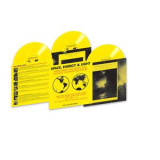
New edition of this Soul Jazz Records out-of-print classic album available now as a new limited-edition one-off pressing triple yellow vinyl album (plus download code), and limited-edition one-off pressing special yellow CD edition. Soul Jazz Records" Space, Energy and Light is a collection of music by early electronic and synthesizer pioneers (from the 1960s through the 1970s), mid-1970s proto-new age gurus and 1980s guerrilla D-I-Y cassette-era electronic artists, spanning in total over a near 30-year time frame. All of these artists used electronic advancements in music technology as a means of exploring not only space and the idea of the future, but also of looking inwards to the soul and of creating music in harmony with the natural world.
- A1: Jb Banfi - Gang (For Rock Industry) (For Rock Industry)
- A2: Michael Garrison - To The Other Side Of The Sky
- B1: Iasos - Lueena Coast
- B2: Carl Matthews - As Above, So Below
- B3: Tim Blake - Midnight
- C1: Stratis - By Water
- C2: Steven Halpern - Starborn Suite (Part 1)
- C3: Laurie Spiegel - Improvisation On A 'Concerto Generator
- D1: Mother Mallard's Portable Masterpiece Company - Ceres Motion
- E1: Michael Stearns - In The Beginning
- E2: Beverly Glenn-Copeland - Ever New
- F1: Richard Pinhas - Variations Vii Sur Le Theme Des Bene Gesserit
- F2: Tod Dockstader - Piece #1
- F3: Kevin Braheny - Ancient Stars
New edition of this Soul Jazz Records out-of-print classic album available now as a new limited-edition one-off pressing triple yellow vinyl album (plus download code), and limited-edition one-off pressing special yellow CD edition.
Soul Jazz Records’ Space, Energy and Light is a collection of music by early electronic and synthesizer pioneers (from the 1960s through the 1970s), mid-1970s proto-new age gurus and 1980s guerrilla D-I-Y cassette-era electronic artists, spanning in total over a near 30-year time frame. All of these artists used electronic advancements in music technology as a means of exploring not only space and the idea of the future, but also of looking inwards to the soul and of creating music in harmony with the natural world.
From computer software and hardware experimentalists and sound pioneers such as Laurie Spiegel and Kevin Braheny, as well as Mother Mallard’s Portable Masterpiece Company – the first synthesizer ensemble created in collaboration with Robert Moog – through to musique concrète experimentation, the album shows how technological advancements and creative artistic expression often went hand in hand.
In the mid-1970s artists Steven Halpern and Iaxos were instrumental in creating proto-new age music, experimenting in both the healing properties of sound and its relationship with the natural world. These artists also pioneered a new self-contained and underground D-I-Y approach to music, creating their own record labels, forming new distribution networks (with albums sold in meditation centres, health food stores and ashrams) far away from the commercialism of the mainstream music industry. In the early 1980s after the revolution of punk, these D-I-Y attitudes and ideas appeared once more in the growth of the distinctly anti-commercial and underground cassette-only careers of artists such as Germany’s Stratis and Carl Matthews in Britain.
Artwork includes some of the earliest photography of the Plieades star cluster dating from the 1880s.
"Listening to Space, Energy & Light in one sitting is a bit like experiencing constellations exploding within constellations inside your brain." Record Collector
"Incredible collection of spacey electronics and meditative soundscapes dating from the early 60s to the late 80s here, lovingly assembled by the Soul Jazz team. This compilation has it all if you like your music deep. Big names such as Iasos and Laurie Spiegel feature, but even if you think yourself a bit of a nerd in this field, there are some lesser known pearls to be found." Bleep
"Quite simply an amazing mix of some quite bizarre and interesting pieces of music, no way to describe it other than to buy it, put on some headphones and drift off to inner space.” Amazon
"New compilation charting almost three decades of experimental
electronic and synthesizer music from the most influential and often
unsung composers of their generation. Beginning and 1961 and
following the story until 1988, Space, Energy and Light connects
proto-new age gurus and DIY tape vigilantes who were equally
inspired by the advancements of new technology and its potential to
unlock utopian futures in both the music and the soul." Vinyl Factory
Feral Five’s dazzling debut album ‘Truth Is The New Gold’, is an evocative voyage through a Feraltropolis style future city, and an offering of sonic elixir for heart, feet and mind. Leading us through secret spaces, changing skies, personal truths and revelations, the Ferals glide seamlessly between bold alt pop, experimental electronica, and cinematic landscapes.
With acclaimed singles, EPs, and radio play from BBC 6 Music and Radio X X-Posure under their belt, the Ferals have now signed with independent label Reckless Yes to take us on a deeper emotional journey in ‘Truth Is The New Gold’.
Across this glittering album Feral Five’s multi-layered songs and hook-laden grooves use a unique palette of tools and instruments, both hyper-modern and ancient. From the AI vocals to live coded sounds, strings, and played quartz crystals, to the skillfully interwoven electronics, synths and guitars. Always reinventing their sound, the Ferals have created their own new sonic world, but one that we can all relate to, examining the challenges of living in a 21st Century that you couldn’t make up.
Limitierte Loser Edition, gepresst auf "Misty Kiwi Fruit Green" farbiges Vinyl. "When The Wind Forgets Your Name" ist das erste neue Built to Spill -Album seit der Veröffentlichung von "Untethered Moon" aus dem Jahr 2015 und das achte Studioalbum dr langlebigen Band um Mastermind Doug Martsch. Es wurde von Martsch produziert, von Martsch, Lê Almeida, Joao Casaes und Josh Lewis gemischt und von Mell Dettmer gemastert. Das Cover Artwork wurde von dem Comiczeichner Alex Graham (Dog Biscuits; Fantagraphics Books) gestaltet, der auch den fünfzigteiligen Comicstrip für das Klappcover des Albums illustriert hat (erhältlich mit den CD-, LP- und MC-Ausgaben des Albums). Seit 1992 wollte Doug Martsch, Gründer von Built to Spill, dass seine geliebte Band ein gemeinschaftliches Projekt ist, eine sich ständig weiterentwickelnde Gruppe von unglaublichen Musikern, die gemeinsam Musik machen und live spielen. Nach mehreren Alben und EPs auf Independent-Labels stand Martsch von 1995 bis 2016 bei Warner Brothers unter Vertrag. In dieser Zeit nahmen er und seine wechselnden Mitstreiter sechs unbestreitbar großartige Alben auf - "Perfect From Now On", "Keep It Like A Secret", "Ancient Melodies Of The Future", "You In Reverse", "There Is No Enemy", "Untethered Moon". "When The Wind Forgets Your Name" setzt nun die Erweiterung des Built to Spill -Universums auf neue und aufregende Weise fort. Im Jahr 2018 brachten Martschs Glück und seine Intuition ihn mit dem brasilianischen Lo-Fi-Punk-Künstler und Produzenten Le Almeida und seinem langjährigen Mitstreiter Joao Casaes zusammen, beide von der psychedelischen Jazz-Rock-Band ORUA. Als Martsch ihre Musik entdeckte, verliebte er sich sofort in sie und bat sie bei Built to Spill mitzumachen, als er eine neue Begleitband für Auftritte in Brasilien brauchte. Die Auftritte in Brasilien liefen so gut, dass Martsch, Almeida und Casaes beschlossen, 2019 weiter zusammen zu spielen und durch die USA und Europa zu touren. Bei Soundchecks erlernten sie neue Songs, die Martsch geschrieben hatte, und als die Tournee zu Ende war, nahmen sie die Bass- und Schlagzeugspuren in seinem Proberaum in Boise auf. Nachdem sie nach Hause geflogen waren, begann Martsch selbst mit dem Overdubbing von Gitarren und Gesang. Das gemeinschaftliche Abmischen fand während der Pandemie übers Internet statt, in dem die Tracks hin und her geschickt wurden. Herausgekommen ist "When The Wind Forgets Your Name", eine komplexe und schlüssige Mischung aus den unterschiedlichen musikalischen Ideen der Künstler. Neben den poetischen Texten und Themen von Built to Spill sorgen die Experimente und die Liebe zum Detail für ein Album voller einzigartiger, lebendiger und zeitloser Klänge.
By now counting more than four decades of constant activity, Pierre Bastien erected such a towering and influential body of work that any blurb attempt regarding his music could easily fall into redundancy. Not that his revolving soundworld, deeply personal and unique, has ever stalled into gimmick or self mimicry, being Bastien the tireless explorer whose vision can never be complete, only continuously redefined in a process of discovery equally playful and challenging. So, completely in touch with Discrepant's ethos.
Returning to the label after 2017 The Mecanocentric Worlds of Pierre Bastien, the french musician, composer and instrument builder, brings an array of instruments from different cartographies and legacies with the appropriately titled Sonic Folkways. Resorting to different types of horns, prepared trumpet, an army of percussion, from gongs and tambourine to castanets and maracas, violin and too many others to mention here, Bastien weaves together a highly textured and hypnotic mosaic that projects an exotica beamed from scraps of the future. 'Aha!' in the same interstellar wavelength as Sun Ra's cosmic tones, 'Moor's Room’ almost orchestral tapestry of small percussion and insects or the non-western strings and tunings salvaged from ancient alien ceremonies on 'Pan's Nap'.
In an era where so much ink has been shed about world building in experimental music, Bastien can actually claim that to himself. The otherworld is right here, indeed.
- A1: Seventh Mirror
- A2: Ionization
- A3: Cloud Chamber
- A4: Harmonic Oscillator
- A5: Transfiguration
- A6: Urzeit
- A7: Cybernetic Dreams
- B1: Interference
- B2: Computer Garden
- B3: Pyramid
- B4: Halide Crystals
- B5: Integratron
- B6: Imaginary Forces
- B7: Phantom Lfo
- B8: Opticks
- C1: Mannequin
- C2: Mind In Light
- C3: Palantir
- C4: Vertigo Of Flaws
- C5: Exit Syndrome
- C6: Stasi
- D1: Atomic Voyage
- D2: Ultraviolet
- D3: Violence Cascades
- D4: Traumsprache
- D5: Zeitgeber
- D6: Prism
- D7: Threnody
- D8: Mind Oscillation
Trees Speak are back!
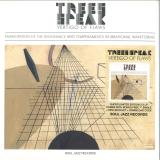
Speak’s new album, “Vertigo of Flaws: Emancipation of the Dissonance and Temperaments in
Irrational Waveforms” comes as a double-vinyl edition, single CD and digital release. The limitededition first pressing only of the vinyl includes a bonus 45 enclosed in an 8-page 7”x7” booklet
insert housed within the gatefold sleeve with cover artwork created by Soviet Union propaganda
artist Lazar Markovich Lissitzky in 1911.
Trees Speak are back!
This new release is a vast leap into an ocean of space and sound, a quantum leap into cybernetics, biology, anti-gravity,
time travel, dream speech and transfiguration. A seriously next step release!
Showing no signs of slowing down their rapid creative pace – incredibly this is their fourth album in the space of just over
one year – ‘Vertigo of Flaws’ is a mighty 29 tracks, one and a half hours of music across one double album that is surely
going to be a defining point in their musical career, a giant leap into the sonic unknown, an epic exploration of intensity
and sound.
Alongside their now trademark German krautrock motoric-beat rhythms, angular New York post-punk attitude, tripped-out
60s spy soundtrack, psyche-rock, and 70s synthesizers and vocoders, here you will also hear a new cosmic spacial
awareness (both personal inner space and galactic outer space) and a truly wilful pushing of sonic boundaries - as police
sirens, static noise, alarms, radio signals, avant-garde voices, and orchestral string quartets, all collide to add beautiful
dissonance to uber-powerful, intense, addictive and propulsive rhythms - in the process creating a truly unique
soundscape that Trees Speak have made wholly their own.
If you ever wanted to hear Can, Hawkwind, Destroy All Monsters, Pere Ubu, electric eels, John Cage, Liquid Liquid,
Tangerine Dream, Suicide, Neu!, Laurie Spiegel, Art Ensemble of Chicago, John Barry, Mother Mallard’s Portable
Masterpiece Company, Sun Ra, Stockhausen, John Carpenter, Electro-Acoustic and Musique Concrete and Mars in one
band - then this is it!
Trees Speak are Daniel Martin Diaz and Damian Diaz from Tucson, Arizona and their music often draws on the cosmic nighttime magic of Arizona’s natural desert landscapes. ‘Trees Speak’ relates to the idea of future technologies storing
information and data in trees and plants - using them as hard drives - and the idea that Trees communicate collectively.
Special guests from the hyper-creative hub of the Tucson music scene on this release are Gabriel Sullivan, Ben Nisbet, Saul
Millan, Stephani Guilmette, and Davis Jones.
The album Vertigo of Flaws was recorded in Brooklyn, New York, and Tucson, Arizona during the plague of 2021.
Extract from Vertigo of Flaws sleevenotes:
‘As we travel through space and time, avoiding the discarded remains of the industrial period, the
deconstruction of social norms through the expression of art, music, and philosophy guide the human
experience towards the unknown.
All that remains are musical echoes scattered throughout the universe, like ancient vibrations that now
populate the cosmos. These waves now show signs of decay. Melody, beauty, tonality have all but fallen
away as dissonance blossoms. As John Cage wrote in 1937,
“Whereas, in the past, the point of disagreement has been between dissonance and consonance, it will be,
in the immediate future, between noise and so-called musical sounds. New methods will be discovered,
bearing a definite relation to Schoenberg’s twelve-tone system and present methods of writing percussion
music and any other methods which are
free from the concept of a fundamental tone”.
Similarly, George Van Tassel claimed the Integratron as capable of
rejuvenation, anti-gravity, and time travel. So, what remains of the
“people”? We have adopted from them our own Zeitgeber: their pulses
now guide our sun, our planets, our earths, and are the new circadian,
diurnal, and ultradian rhythms of the galaxy. Traumsprache, dream
speech, is now the internal language of trees.
Decaying metal and machines liberated the note unto nature’s table,
and we sip the delicious nectar of music once more irrational, elaborate,
violent, vast. The past is the future, musical disintegration its own rebirth.
We are nature, once more the computer of the Universe.’
As a confluence of ideas and methods, WILD ROCKET endeavour to interpret the subtle signals of the universe - the interplanetary vibrations - and present them as brash manifestations of sound. Scientists and Shaman alike have endeavoured to interpret the universal whispers, to elucidate meaning from the measurable and the sensible. It is known that to measure and interpret is to alter and colour those signals and this is what drives the development of WILD ROCKET's sound and interpretation.
FORMLESS ABYSS showcases the band's unflinching pummelling style, drifting from repetitive blows to unhinged swirls of din yet always remaining innately infectious and perhaps surprisingly danceable. The record is presented as a continuous piece in three parts.
The title track A FORMLESS ABYSS appears here for the first time in recorded form – a behemoth of a tune which builds around a drone, joined by dual drums and minimal bass locked into a repetitive groove. A groove that is slowly expanded via multiple guitars and synthesis. Vocals eventually join at just the right moment imploring the listener to “leave your criticisms down” and realise “we're all equal now” in the formless abyss or the place between worlds where our earthly preoccupation with human differences are meaningless. We're all in it together, whether we realise it or not.
The second track INTERPLANETARY VIBRATIONS may seem familiar to some in a simpler form. The expanded line up and extended development of the core theme brings a new interpretation and experience that is more than worthwhile. The track's vocals juxtapose the hybrid Germanic language of English with the ancient native Irish language of Gaeilge. Both used to promote meaning and interpretation of the interplanetary vibrations felt by all. The track features large dynamic shifts and changes of pace as the message that “it's time to leave” propagated by the Earth itself becomes more frantic and more desperate. The track culminates in a wash of smashed gongs and distorted guitars, leaving the listener to interpret the message for themselves. Should we leave, to protect ourselves or the Earth itself?
The final track FUTURE ECHOES is a doom/kraut juggernaut coming in at just under twenty minutes. Only one question is asked and none answered, are we doomed to repeat the mistakes of previous civilisations over and over, or can we find the cracks of light that echo through and show us a new way forward? We're left in a swirling formless abyss to consider who we are and where we're headed. Will we ever reach the cosmic truth? Or will we be continuously mocked by the cosmic trout?
WILD ROCKET have proven themselves on the live circuit, playing with such visionaries as Ufomammut, Slomatics, Earth, Boris, The Cosmic Dead and old school rock legends Girlschool. One of the heaviest bands to emerge from the melting pot of talent in the Irish music scene, WILD ROCKET's reputation precedes them wherever they travel and audiences and venues alike are left to piece themselves together in the discombobulation.
- A1: Tyrell (2021 Remaster) 03 42
- A2: Take The Bus (2021 Remaster) 05 14
- A3: Rollen Rink (2021 Remaster) 06 09
- A4: Close, But Not Quien (2021 Remaster) 06 01
- A5: The Official Gm Ski-Wm Theme (2021 Remaster) 01 07
- B1: Temko (2021 Remaster) 05 20
- B2: Boom (2021 Remaster) 06 33
- B3: Madshoes (2021 Remaster) 05 38
- B4: Obvious (2021 Remaster) 03 36
- C1: No Ketting (2021 Remaster) 05 30
- C2: Blob Return (2021 Remaster) 02 12
- C3: Bonden (2021 Remaster) 04 54
- C4: Mimi (2021 Remaster) 01 41
- C5: 11 25 (2021 Remaster) 04:40
- D1: Die Mondlandung (2021 Remaster) 11 00
First time vinyl issue of this 1997 Mego classic. General Magic, the duo of Ramon Bauer and Andi Pieper, who, alongside Pita, first pioneered the classic Mego sound on the Fridge Trax 12” in 1995. The following year proved to be formulative when Mego released Frantz alongside a slew of game changing releases from Farmers Manuel, Pita and Fennesz.
Originally released as MEGO 010 Frantz presented a thrilling digression from what was in vogue in music at the time. This was the advent of portable computing and the Vienna based label was at the forefront of harnessing the potential of audio within this new technology.
At once smart and playful these releases reconfigured once disparate genres such as industrial, techno, glitch and the avant garde, folding them into a bright, audacious and euphoric new system of sound. The music on Frantz (named after the Austrian skier, Franz Klammer) still pushes the boundaries of acceptable audio constructions with it’s startling fried electricity and twisted sensibility. The sense of joy in the audio discovery is palatable as techno laced explorations unfold a variety of unexpected and unprecedented sonic manoeuvres.
Tyrell launches proceedings as schizophrenic stuttering handclaps simultaneously slice into pieces as it propels forward. The bending of the brain is on display with the likes of ‘Obvious’ and ‘Close, But Not Quien’. Temko skewers digital debris in which a ghost melody comes to the fore. Brazen rhythms mobilize the tracks ‘No Ketting’ and ‘Bonden’ whilst the Official GM Ski-WM Theme is a short stab of priceless pop wizardry skittering about a strange exhilarating melody in homage to the finest of winter activities.
This reissue also includes ‘Die Mondlandung’ which was released as a 12” in 1995 (MEGO 002), and has never been released anywhere, physical or digital, since. This track is based on the live German TV coverage of the moon landing. An apt theme for the abundance of exploration contained within this classic release.
--
About Frantz ... and Peter (by Ramon Bauer & Andi Pieper, November 2021):
Listening to the test pressings of the remastered Frantz album for the first time on vinyl, 25 years after the original release on the then still young Mego label in 1997, felt like uncovering an ancient artefact. In those exciting days during the mid-1990s, together with the late Peter Rehberg, we founded a label called Mego to further explore the wonders of electronic music. And that is what we did for the next 10 years until everything became too much with the label in somewhat rough waters. So we dropped out of music business and pursued different things. It was Peter who continued producing and releasing music with the restarted label, now called Editions Mego. Until his unexpected death in July 2021, he developed Editions Mego into the grown-up and much acclaimed outfit for which it is known today. We will forever miss Peter’s inspiring personality and his uncompromising creativity. His legacy will live on in his music and in the vast and rich Mego and eMego catalogues. We are humbled and proud to have played a role in those formative years of the label.
Peter approached us in October 2020 with the idea to do a vinyl reissue of Frantz, just in time for the 25 year anniversary of its release. That came as a complete surprise for us, General Magic had not released any music or performed live for over 15 years. Anyway, we were delighted with the prospect of having that General Magic "classic" remastered (by the exceptional Russell Haswell) and released for the first time on vinyl on Editions Mego.
Frantz is a collection of tracks that we produced in 1995 and 1996 right after recording “Fridge Trax” (with Peter) and “Die Mondlandung” (which comes as a bonus track on this reissue). At that time, we started to migrate our analogue gear to 64 MB RAM computers and used almost every other digital thing that yielded a sound by any means. We even deliberately crashed our then so-called "Powerbooks" and scratched self-produced CD-Rs until they produced previously unheard sounds. Real time audio processing with computers was barely a thing back then (before SuperCollider was released), but cheerful massaging of sound files yielded interesting results and the future looked bright. Listening to Frantz today, with decades of distance, there are some parts that might appear dated by modern standards, but the energy and the general magic of that period is well captured.
All Frantz tracks were produced in Andi's studio in Berlin and at Mego Vienna. The Mego studio/office was a vivid place located in an old factory on the outskirts of Vienna. We shared the place with Tina Frank, who created most of the early Mego covers and videos. Other artists, musicians and friends were hanging out there almost every day. Many ideas on Frantz are a product of that particular environment. “Mimi”, for example, is based on a field recording in the backyard of the factory, where we also shot the video for “Tyrell”. “11.25” contains sounds from the Prague train station we regularly passed through on the night train travelling between Vienna and Berlin. Other sounds were sourced from the early internet and mangled on the computer, carefully preserving those early audio codec artefacts. While working on the Frantz tracks at the Mego Vienna studio, Peter was usually around, as he was literally working and living there. And so, of course, he also made an impact on that album: It might not be widely known but Peter even appeared on Frantz contributing his voice to the choir on “The Official Ski WM Theme”.
Let there be Frantz!
Third album from Pablo Infernal. Altin Asllani, Fabio Schoeni, Flavio Scano and Jan Jossi – four friends from Zurich with Swiss, Albanian, Brazilian and Italian roots, who have been sharing an ardent passion for music for more than a decade. With their third album 'Mount Angeles' they are now setting out to conquer all Rock enthusiasts beyond their country’s borders.
Their mutual love and enthusiasm for the rock music of the 70’s speaks to style-defining bands such as Deep Purple, Frank Zappa and all the progressive rock pioneers. For years, the band’s first choice for retreating and letting the artistic urge flow freely has been a 19th century house in the middle of the Swiss Alps, called Gasthaus Gruenenwald. The former train station and inn situated in Engelberg (which means nothing else than “angel mountain” in German, hence the album name), has become an essential part of the group’s songwriting process.
Mixed by none other than five-time Grammy Award winner Chris Lord-Alge from Los Angeles (Aerosmith, Muse, Foo Fighters, Green Day and many more) and finalized by Bill Skibbe at Jack White’s Third Man Mastering Studio in Detroit, 'Mount Angeles' presents the preliminary zenith of Pablo Infernal’s work.
Cuernavaca / Stateville / Frankincense And Myrrh / Apsara / Ancestral / Spin / Zincali
Approaching his eighty-fifth birthday, sharp and lean, Phil Cohran lives a couple of blocks from the lake on the north side of Chicago. His modest apartment is filled with a palpable richness. His cornet and trumpets, zithers, French horn, harp and frankiphones (an electric kalimba of his own invention); his beloved telescope; African art; a mural of the Chinese monastery where Muslim monks bestowed on him the name Kelan ('holy scripture'); hand-printed posters from the culture wars of 1960s Chicago; all reflect a life dedicated not just to music, but also to science and astronomy, to history and activism. In its range of subject matter the track-list of Kelan Philip Cohran & The Hypnotic Brass Ensemble embodies this invigorating and all-embracing curiosity: a Mexican hill-town filled with perfume and flowers... an Illinois state prison where Cohran taught inmates in the 1960s... heavenly dancers in the temples of Cambodia... a tribute to a sixteenth-century Venetian musicologist. Welcome to the musical world of Kelan Philip Cohran.
Cohran was born in Mississippi and grew up in St Louis. In the immediate post-war years St Louis was a jazz heartland, home of stalwarts like Clark Terry and Oliver Nelson (both of whom he played with), not to mention a genius called Miles Davis. In 1950 Cohran moved to another heartland, Kansas City, where he played trumpet in one of the hardest swinging swing-groups, led by Jay McShann (who famously had given Charlie Parker his first job). With McShann he spent 'the best year of my life', touring as far as Mexico and playing proto-rock'n'roll in Texas with the likes of Big Mama Thornton on vocals. Back in St Louis Cohran led his own group, the Rajas Of Swing, whose show involved wearing red jackets, grey slacks, blue suede shoes and turbans.
Then in the mid-50s he moved to Chicago. He had a small group with a friend, the legendary tenor saxophonist John Gilmore, whose regular gig was to play at Sarah Vaughan's weekly 'birthday' parties, an excuse for the Sassy One to splash the cash and have some fun. ('What, Sarah Vaughan would sing with you and John Gilmore' 'No way, Sarah didn't sing, she was too busy partying.') And in 1959, through Gilmore, he was invited to join Sun Ra's Arkestra, at a crucial period in the evolution of that extraordinary group. Effortlessly wrapping traditions as divergent as boogie-woogie and electronica in an Afro-centric, intergalactic mythology of his own making, Sun Ra casts a huge shadow across conventional narratives of jazz history. 'With Sunny', Cohran simply says, 'I found my own voice'.
You can hear the emergence of this voice on the LP Angels And Demons At Play, recorded in 1960 - Sun Ra's masterpiece from the period. On the track Music From The World Tomorrow, against the urgent whipped and chopped percussion of the Arkestra, it is Cohran's zither, initially bowed and then plucked and strummed, which is the track's magic ingredient. More profoundly it was Sun Ra's example - his defiant self-confidence and sense of purpose - that set Cohran on his own (to quote another Ra composition) 'pathway to unknown worlds'. Indeed this spirit of self-belief led Cohran to turn down the invitation to accompany the Arkestra when Sun Ra moved east in 1961.
Staying in Chicago, Cohran founded the Affro-Arts Theater and performed with the Artistic Heritage Ensemble, recording the group for his own Zulu Records imprint. (Co-members went on to become Earth Wind & Fire; Cohran taught the group's leader Maurice White the mysteries of the frankiphone). The AACM, a musicians' collective of immense influence and importance, had its first meeting in Cohran's front room. With Oscar Brown Jr and Gene Page he wrote and performed in a show celebrating the nineteenth-century Afro-American poet Paul Lawrence Dunbar. He taught music tirelessly in schools and prisons. His studies into music theory and history led him to the discovery of a key book in his life, Gioseffo Zarlino's treatise on harmony, published in Venice in1558. Astronomy is another passion and another area of expertise. One of the gems of the Cohran discography is African Skies, with its lovely harp playing, commissioned by the Chicago Planetarium in 1993.
In Chicago he also raised a large family. Many of his children have gone on to become professional musicians; eight of them are the Hypnotic Brass Ensemble. For each of them, their first teacher was their father, who famously insisted on giving them music lessons not just for several hours after school, but for several hours before school as well. Their father's music was all around them as children; they all vividly remember lying in bed at night not being able to sleep because their father was rehearsing with the Jazz Workshop downstairs.
For the Hypnotic Brass Ensemble, the voyage to where they are now - whether tearing up festivals from Glastonbury to Melbourne, or touring with Gorillaz, or recording their first album on Honest Jon's - has involved a necessary stepping away from their father's shadow. Phil Cohran is the first to recognise this, happily allowing their sound - heavy on the funk, with the urgency of hip hop never far away - to blossom.
But likewise this album is for all of them a natural step. Recorded in Chicago in June 2011, the idea was beautifully simple - 'my music and their band' as Phil puts it, 'we don't have to rattle on more than that'. Only to point out perhaps that here - in the majestic surge of Zincali, for instance, or in the sheer verve and bounce of Cuernevaca - is music not just filled with the warmth of home. This is music that plumbs the depths and rings with joy.
'Cuernevaca is a town in the mountains south of Mexico City. I was there in 1950 when I was on the road with Jay McShann's band. It's a place close to paradise, a city filled with the fragrance of flowers. I always wanted to go back... In 1974 I taught workshops at the prison in Stateville, the Big House where Al Capone spent time. There's a huge wall around the prison, and once I took Hypnotic there - ha - to see what the future holds for them... Makeda, the Queen of Sheba, sent a caravan of gifts to King Solomon - a caravan that took more than a day to pass one point - and the main gifts were Frankincense And Myrrh... I wrote Apsara in 1967, when Jackie Kennedy was in the news with her visit to the temple of Angkor Wat in Cambodia. Apsara were celestial beings, dancers who brought forth the civilization of ancient Cambodia, by dancing in the holy nectar called Amrita... Ancestral is a meditation drone written for my Friday-night residence at the Ethiopian Diamond Restaurant in Chicago's Rogers Park... Spin is the latest of these compositions. Everything in the cosmos spins, from the smallest objects we can see in a microscope to the largest galaxies. Spin is the motion of all things whether it looks like it or not... Zincali is a name Spanish gypsies call themselves. 'Zin', East Africa; 'cali', the people. One of the offshoots in my research into Moorish Spain has led me to Gioseffo Zarlino, the sixteenth-century master of music at St Mark's in Venice. It's said that Bach lost his sight reading Zarlino's treatise on counterpoint. His greatest composition is his setting of the Song of Songs - 'Nigra Sum', 'I am black'. This is my tribute to Zarlino and to the zincali.'
With a hybrid jazz based on African grooves, Ethio-oriental melodies and psychedelic dub this Belgian five-piece creates an atmosphere where ancient and modern sounds fuse into a powerful, hypnotic and groovy sensation.
Receiving critical acclaim for their second album 'Artifacts' (2017), the Belgian quintet are pleased to announce the release of their much-anticipated third album entitled 'Future Flora', released 12th April via Sdban Ultra on vinyl / cd / digital.
Piloted by saxophonist/flutist/composer Nathan Daems (Ragini Trio, Dijf Sanders, Echoes of Zoo), the input of notorious musicians, drummer Simon Segers (MDC III, De Beren Gieren, Stadt), cornet player Jon Birdsong (dEUS, Beck, Calexico), keyboardist Wouter Haest (Voodoo Boogie) and bassist Filip Vandebril (Lady Linn, The Valerie Solanas) leads to the specific universe that only Black Flower is able to create.
Where debut album 'Abyssinia Afterlife' (2014) and 'Artifacts' (2017) bathed in an atmosphere of psychedelics, mythical figures, ancient sounds and modern cultures, new album 'Future Flora' refers to the power of plants and their importance for the future.
"'Future Flora' is a metaphor for the importance of feeding and watering powerful and revolutionary ideas and initiatives that can save our world. You can compare it with plants that fight between the paving stones of the city for their future. These "urban warriors" need water to survive and grow. Their future and ours depends entirely on how we look at the plant world", says Daems.
Black Flower's musical cross-pollination of sounds and rhythms remain on 'Future Flora', but there is still room for a more Western touch with Romanian and Maloya (Réunion) influences. Daems developed his own arrangements where Western, Oriental and Ethiopian scales and chords are fused together to create a real mix of traditional instrumentation and modern electrical vibrations.
The strong underlying groove is omnipresent, but the room for psychedelics, folklore and experimentation grows. Songs like new single 'Hora de Aksum' combine modern western rhythms with doses of Balkan eccentricities while 'Future Flora' takes you on a psyche-delicious 21th century Ethio-dub-jazz trip with echoes of Mulatu Astatke and Fela Kuti.
"The general feeling that dominates is that of strength and perseverance. The feeling that we have to fight for our future and that we have to do it now! The whole album is interspersed with this atmosphere and sounds swirling, haunting and ecstatic. For those who once saw Black Flower live at work, this energy will be extremely recognizable", he adds.
Dadub is a project synonymous with the deepest rhythms from the interior of the human psyche. Low-end mysticism. Tribalist periodic audio patterns. The Berlin-based Italian producers behind the project, now constructed of sonic warlock Daniele Antezza and performance artist Marco Donnarumma, supply an unmistakably unique vision of post-apocalyptic dub landscapes. Past, present, and future blend into one, backed by the supremely sublime BASS of creators who are light years ahead in their field. A Sun Called Moon is a superior first representation on Ohm Resistance, detailing their ongoing mission of creating bass-present music, regardless of dancefloor conformity. The Time You Killed opens as a psycho-acoustic audio film, depicting the unknown world from which the EP emanates. I Would Gladly Die… introduces the first heavy rhythmic patterns, completely alien to identified structures, while unmistakably pushing a groove that entrances hypnotically. Past Times Present Ruins lowers the tempo and continues extrapolating into new rhythmic territory – or is it ancient? It Was Too Soon follows with beat driven hednod, as influences from Scorn to Autechre are subsumed into the universal language that comprises Dadub. Feeling both familiar and foreign, both modern and eternal, Dadub’s first appearance on Ohm Resistance is a fascinating drama played out in 4 acts. Spliff recommended – subwoofer required. All tracks Written and Produced by Daniele Antezza and Marco Donnarumma Mixed by Daniele Antezza and Marco Donnarumma at Dadub Studio, Berlin Mastered by Xergio Cordoba @ Eternal Midnight Studio, Madrid Photography by Flora Schwartz Layout by MachineTM
First released on digital formats back in 2016, and here now given a richly deserved full vinyl release, 'Holy Science', the debut outing from Amirtha Kidambi and her New York based quartet The Elder Ones, is a work of dazzling singularity. Delicately yet unashamedly divulging its complex network of influences at every turn, 'Holy Science' simultaneously disperses of boundary and limitation, emerging as an album steeped in tradition yet located firmly in the futuristic present.
Amirtha Kidambi, the Elder Ones' leader, composer and vocalist, was a child of South Indian heritage, and she grew up immersed in the tradition of devotional singing, joining in with free-form, improvised Bhajans on regular Sundays. She began simultaneously accompanying her voice with the harmonium from the age of three.
These formative experiences continued to instruct and merge with her ongoing musical explorations as she went on to study Classical music, all the while ingesting the Punk, R&B and Rap that surrounded her. A particularly significant discovery was that of free and avant jazz, and in particular the music of Alice and John Coltrane, in whom Kidambi found clear echoes and parallels with those Bhajans and Ragas of her earliest musical awakenings.
All these influences collide on 'Holy Science', at times as explosive blasts of sky-opening thunder, at others as moments of soothing, meditative bliss. These holy bursts are enacted by Kidambi's assembled musicians and are given permission to explore the science of spiritual alchemy, plundering their individual and collective soul for the sake of musical expression, and all of the unpredictable and profound revelations such an approach might yield.
'Holy Science' is a work underpinned by traditions, be they the Bhajan spirituals, or the Jazz and Classical avant gardes, that are in their own manner, archetypal. But perhaps most importantly, all of these forms contain an inbuilt capacity for discovery and progression.
Amirtha Kidambi's musical pathway has been defined by a studied determination to occupy this specific space, the unbounded realm of improvisation and exploration, summoning the acquired instruments of experience, knowledge, culture and tradition to unlock secrets of the past, present and future. The most cherished music is often remarked upon as having a timeless quality – ancient, modern and futuristic, all at once. And so it is with 'Holy Science'.
With EXHIBITION's second performance, RICO PUESTEL proudly presents the new series-within-the-series "SOLLING", conceptually fulfilling the "triad of A" throughout the canvas of this record: Acid, analogicity and anachronisms.
After recently telling a vast and mesmerizing story on Adana Twins' TAU label, RICO PUESTEL now immerses into his defining habitat roots and creates the long-planned first soundtrack chapter of SOLLING: A central German uplands area in Lower Saxony, spreading into the North of Hesse, shaped by mixed forests, its rural imprinting, a widespread range of regionally varyiing cultural idiosyncrasies and a century-extending history, including the shattering throughout the welters of the Thirty Years' War.
Being the first of several planned chapters, pre-production mostly takes place there while the music is traversed by sound recorded in that area, leading to an existence irreversibly connected to its birthplace.
The impetuous opener "Tilly", characterizing the essence of Johann T'Serclaes von Tilly who commanded the Catholic League's forces in the Thirty Years' War, overrunning the SOLLING throughout 1624 and 1625, culminates in one retro-futuristic affair, building into a overwhelming storm of percussion tapestry and intertwining layers of acid.
The A2 follow-up "Clava" takes the initial impetus to a superior level, overriding itself with an unpredictable enigma-melody after laying the foundation of a high-density groove architecture - all of this representing the almost intangible chasms of a unicum street and its geographical expanse, filled with Rico's far-reaching primordial retrospections, seemingly connecting several contingent coordinates of mysterious happenings over two decades while anticipating the future.
Ultimately, the AA-flipside delivers the groundbreaking SOLLING composition "Pro Foreste Sulgo", presenting an ancient-like struggle of dark and light as told by the principles of nature with two melodic themes, circling around themselves, bound to collide and meld like atoms - all placed within the treetops, shaken by the wind, overlooking a future that might already has been...
- A1: Heavenly Tide
- A2: Tides
- A3: Petit Portrair
- A4: Dedicated To You
- A5: Unidentified Lovers
- A6: The Love We've Shared
- A7: Night Tide
- A8: Ground
- B1: Future Tides
- B1: Ancient Tide
- B2: Crown Of Thorns
- B3: I Love You
- B4: Handmade Paradise
- B5: Gloomy Points
- B6: Tomorrow
- B7: Standing Still
- C1: Suspension
- C2: Leap 4 Years Later
- C3: Vital Sign
- C4: Purple Tides
Music From Memory’s latest release is a reissue of the lost Art record ‘Marea/Tide’ from Italian Wave duo Alessandro Pizzin and Piergiuseppe Ciranna also know as ‘Ruins’.
Made to accompany and as a response to the works of painter ‘Luigi Viola’ the record was released limited to a run of 600 with original artworks by the painter included in the first 200 copies.
A number of special showcases were performed at various galleries by the duo alongside Viola’s work, with records being available solely at those events. Due to poor management and disagreements with the label who produced the record, 300 copies were held for many years in storage and then in fact later even destroyed, the record disappearing almost without a trace.
Finally now available again and with a bonus 7” including four beautiful unreleased tracks, the release is printed in colors true to the original work of Luigi Viola with insert.
Hamburg-based Mireia Records is ecstatic toannounce their thirteenth release: Julian Stetter’s “Sensual EP”.
You’ve probably crossed paths with Julian in thelast couple of years. Not only because he’s the tallest guy in Cologne, but the producer and DJ has been actively shaping modern dance music
with his flourishing, melancholic sound. He’s been releasing music with Permanent Vacation, Kompakt, Correspondent and hometown labels Ancient Future Now and PNN.
It’s also not his first time on Mireia Records. Remember the beautiful “Porto” on “We’ll Sea
Pt.1?” Here, Julian presents two original tracks which are reinterpreted by SONNS and Matt
Karmil.
The title track “ Sensual ” manages to erase the mundane, the world’s vanishing around you.
It’s pitched shaker and airy bells evoke introspective tones. The bassline on the other hand
keep you steady - the dancefloor is still visible through the clouds!
“ Rumors ” picks up the pace. Kick drum and syncopated hi-hats set the stage for a serious
bassline, interwoven with fleeting melodies.
Bright and euphoric brushstrokes from Julian’s synth elevate the pace and catapult the track
towards a crescendo. Booming snares signal the peak.
New Release Information
Strobe lights, sweat and ecstasy.
SONNS opens up the B side with the first remix by whispering “ Rumors ” in your ear. A
brooding bass line takes you on a trip to the dark corners of the city. Hypnotically chugging
toms highlight the sights. Let’s get lost tonight!
With his releases on Kompakt and strong DJ Sets SONNS’ been a long time favored entrant
into Mireia Record’s catalogue.
Matt Karmil’s version of 'Sensual', although on B2 of the vinyl, doesn’t hide its assets.
Kicking off with frantic high hats and a distorted glitch, he pushes the track forwards
intriguingly. Arpeggiated melodies layered supremely over the percussion drive the track
forwards, the simplicity of the track and sharp cuts and drops create an interesting dynamic
to the single creating a perfect juxtapose to the other tracks on the release.
Matt’s also been on Mireia’s radar for a long time. His atmospheric adventures for Studio
Barnhus, Smalltown Supersound or Beats in Space always convey a spirit of living, breathing
leeway.
Consisting Neither Of One Lone Woman, Nor Hailing From Either The Eurasian Country Or The North American State, This Georgia Is In Fact Comprised Of Two Human Males Working Out Of China Town, N.y.c., Namely Brian Close And Justin Tripp. Together They Form A Creative Partnership Responsible For Not Just A Slew Of Output Upon Such Highly Regarded Imprints As Meakusma, Palto Flats And Emotional Response, But Also For A Kaleidoscopic Variety Of Multimedia Work With A Whole Host Of Clients, From The Corporate To The Counter Cultural. With An All Embracing, Freeform And In Some Ways Contradictory Approach To Production, Their Sound Is At Turns Stimulating, Terrifying, Comforting And Confounding. Separated From Any Visual Representation, The Audio On Its Own Becomes A Soundtrack For The Listeners' Own Intense Internal Projection Screen.
With 'time', Georgia's Vision Is Especially Well Realised As Here, In Collaboration With Fellow Intuitionists Firecracker Recordings, They Release Into This World An Album Which, With Any Luck, Shall Help You Unlock Your Inner Portals - Should They Need Assistance In That Regard Anyway. Unquantisable Polyrhythms Knock Against One Another In An Uncannily Externalised, Conflicting Collage Of Half Remembered Dance Ritual Memories. Fragmented Melodies, Disembodied Vocal Snippets, A Hint Of Ethnomusicality In Places All Give Deep Nods Simultaneously To Ancient Experience And To Post Human Intelligence, Condensing Past Present And Future Into One Eternal Instant.
'time' The Album Asks Us: What Happens When One Removes Ones Expectations Of Where In Time A Piece Of Music Or Art Must Sit And What Of Time Itself As A Construct, Now That We Have Myriad Ways Of Measuring It, Even At The Atomic Level; But Still Its Passing Is Completely Relative According To The Observer, And Indeed May All Be In Our Minds Anyway Equally, You Can Always Just Put It On - Again, And Again - Empty Your Mind Of Such Thoughts Completely, And Allow All Of Your Particles To Move Around Freely To This Joyful Noise... After All, That's The Point, Isn't It We're Gonna Have To Stop Asking Questions Eventually.
It is said that every generation casts its mind back to a previous era in times of crisis; the resources that will allow us to decode the questions of our moment may lie in the myths of another era.
Le Renard Bleu, the new musical and cinematic collaboration between Lafawndah and composer Midori Takada, and filmmakers Partel Oliva, takes a cross- generational echo as ground zero for recovering a crucial myth for uncertain times: the blue fox.
As transmitted by Takada, the fox appears in both ancient Senegalese and Japanese folktales as the trickster archetype; belonging both to the heavens and to the earth, the fox is the agent of chaotic good, shaking the world up when its energy has become stagnant. Above all else, the fox is famous for its cunning nature.
Renard Bleu marks the first new music released by Takada in nearly twenty years; it would be difficult to overstate the importance of her return to the public eye. Her first solo record, 1983's Through the Looking Glass, has been rediscovered and heralded as a lost classic; the influence of her percussion trio, the Mkwaju Ensemble, continues to permeate and inspire a new generation entranced by its lucid beauty, playfulness, and sensual patience. Takada has performed in numerous film score orchestras, including the ensemble for Akira Kurasawa's Dreams, coincidentally a key influence on Renard Bleu.
In the ensuing years, Takada has worked closely with theater group the Suzuki Company of Toga on productions of Electra and King Lear, an experience, she says, that allowed her to pursue 'a unity of music, body and space.' Recent live solo performances have evinced the depths of her exploration of all three.
Equally, it is Lafawndah's freedom of tone, decentralized maps of ancient and modern music cultures, and alloying of devotional intensity with modern songcraft casts her as a distinct relative of Midori Takada's.
Over the course of two EPs, self- directed music videos, and countless live performances, Lafawndah has drawn out an uncompromising exploration of how theater, situational intervention, and choreography can amplify the affective palate of forward pop music. One can trace the influence of artists such as Meredith Monk, Carlos Sara, and Andy Kaufman as much as musical antecedents AR Rahmann, Missy Elliott, or Geinoh Yamashirogumi.
It is in a mutual commitment to this unity that Lafawndah, Takada and Partel Oliva find fertile aesthetic common ground.
The music of Renard Bleu originated in Takada's preoccupation with the legend of the fox; after constructing a vivid instrumental composition dramatizing the spirit animal's journeys through waterphone, bells, marimba and various forms of drums, Lafawndah responded - in her inimitable mix of fairytale and undertow-- with melodies and lyrics capturing a dialogue between her and the fox himself. Eventually, the duo met in Tokyo for a week of communing with the material at Avaco Creative Studios, where new elements were composed on site.
Created in partnership with KENZO and premiered today via their channels, it was Partel Oliva who imagined a contemporary cinematic frame for the myth of the fox to re- appear, creating a hybrid of choreography and narrative around Takada and Lafawndah's performance of their joint composition (also titled Le Renard Bleu.) Returning to film in Japan for the third time, Partel Oliva's moving image work (Club Ark Eternal, The Pike and the Shield) has set the standard for and revolutionized the fashion art film. Their deployment of original music, dance, and a highly stylized mis en scene coalesces here in the casting of Los Angeles krump artist Qwenga as the eponymous fox, stalking the halls of the ancient Noh theater in which Takada and Lafawnda's performance takes place.
Why call up the myth of the fox now In Le Renard Bleu, Lafawndah and Takada's collapsing of distance between generations, styles, and milieus intimates that the relationship to time must be shaken. The future lies in fragments in the past; to remember is to recover it; the fox rises to thicken the plot.
Paul Dickow Aka Strategy Is A Musical Polymath With A Signature Sound Derived From His Immersion In Hardware-based Electronic Music. He Has Spent Close To Two Decades Traveling Freely Through House, Techno, Rave, Noise, Ambient, And Sounds More Difficult To Categorize. Strategy's Sound Is Inimitable Because It Is Literally Built By Hand - His Hands. Through All Of This Sonic Journeying, Including Multiple Full Length Releases, A Constant Has Been His Love Of Reggae And Dub, Yet Somehow A Proper Dub Album Has Never Emerged - Until Now.
After Two Much-loved 7' Singles On Zamzam - To Say Nothing Of Dubwise Excursions On Idle Hands, Shockout, Peak Oil, 100% Silk And More - dub Mind Paradigm' Is The Fulfillment Of A Clear, Simple Goal. "i Set Out To Make A Full Set Of Dub Tracks Good Enough To Make An Album -- Something That Had Always Eluded Me-- And It Worked, Finally. A Simple Exercise In Seeing If We Could Launch The Capsule To Orbit Planet Reggae And Make It Home Again.'
Reaching Planet Reggae, The Album Explores Analog Caverns Of Dubwise At All Tempos, From The 80s To 140, Full Of The Ghosts Of Ancient And Future Technologies, Glimmering Shards Of Hope Among Heaps Of Folly, Ruin And Rubble. Music Fans With Crates Deeper Than The Contemporary Will Find Shades Of Wackies, Firehouse, Unity Sound, Burial Mix And More, But Only Winks And Nods... No One Sounds Like Strategy, And Strategy Sounds Like No One.
Mastered By Sam Precise.
Art & Design By Polygon Press.
Distributed By Unearthed Sounds Ltd.
Limited To 700 Vinyl Lps - No Repress, No Digital.
A multi-platform production that explores the overlap between the digital and the organic through field recordings of Inuit throat singing may sound, on surface level, to be something that is a rather niche. However, Zoe Mc Pherson's exploration of this world on String Figures is a deeply rhythmic, immersive and forward-thinking piece of electronic- leaning music that remains just as danceable as it does experimental.
The album is fundamentally one of duality, exploring the traditional and the contemporary, organic and electronic, audio and visual, history and the future. Rooted in this duality is also a core theme around string being one of the most ancient and playful art forms and the seemingly infinite possibilities it offers in terms of shapes, structures and figures lines up with this as a trans-global art project. One that over time will involve video art, choreography, 3D motion design, macro film, instrumental and electronic sound. Although for now is being presented through an AV performance, films and a record with Mc Pherson collaborating with director Alessandra Leone.!
Over the seven tracks (which are laid out as chapters) the record explores glitchy electronics, dub-tinged grooves, polyrhythms, and a huge array of instruments that takes in quiet blasts of atonal sax alongside wonky synths. This of course cross-pollinates with the throat singing and experimental field recordings to create an utterly inimitable sonic sphere. For Mc Pherson it's about mixing worlds, histories and timeframes and she uses a 1991 quote from Laurie Spiegel to hit home how she has elaborated upon this original thought of history and future overlapping. 'Folk music is considered anonymous common property in a culture and that's what a lot of computer music and other kinds of music data may end up becoming.' However, there's also a purer reason for the exploration of these worlds and colliding them together. 'Basically I thought that electronic music that is only digital is a bit boring and as I'm connected to jazz music for many reasons, I wanted it to sound organic: real instrumentation, field recordings.'
The chorus: that moment where everyone connects and participates in unity. A moment anyone who's shared a dancefloor can recognise whether it's a festival arena, subterranean dark room or an illegal rave in a field, warehouse or any abandoned canvas between... Like the ones Cologne's Julian Stetter has come from. Inspired by subversive communities, all pulling together for a greater cause, his background in underground parties can be felt in everything he's done so far: his work with the Ancient Future Now label, his vast imaginative techno constructions and now his work with Jennifer Cardini's long-standing community Correspondant with the widescreen odyssey that is 'Chorus' Six slices of evocative narrative-rich electronic soul inspired by his on-going international experiences on the road; loaded with poignant introspection, thunderous rumbles and playful theatrics, the EP is bookended by two versions of 'Chorus', a vision of scorching hope and lift that can seize a full floor's attention in seconds and full live up to the track's title, message and meaning. By far Julian's most significant solo EP to date, this is a moment for us all to connect and participate. Join in if you know the chorus...
After dropping their first various, Figures, Slowciety is about to release Guru, Sunrom's next EP. The artist has already worked with prestigious labels like Kompakt, Ancient Future Now and The Bricks. The EP lays down four organic tracks for a blend of deep house, world music and techno. The title track sounds like a ride on acid and is followed by Quirigua, a rich track conjuring transcendent Mayan rituals. The B side opens with Elephant's deep muffled kicks and takes off with Utopia's elegant arpeggiator for a final flight. This strange and personal EP will cast a spell on the dance floor.
Welcome to Nightlife. Johannes Klingebiel's debut on RSS Disco's Mireia Records. An atmospheric journey. Melancholic, yet euphoria-inducing. Johannes' five tracks cast their shadows into the darkness, mirroring patches of light that can be found if you wander out far enough. It's simultaneously the soundtrack of sweaty dancers losing their sense of time and place and the hopeful feeling of a new day during a drive into the first light in the hazy morning hours. Johannes is a studied drummer. He released music on labels like Mule Musiq, Ancient Future Now and Feines Tier. He's also one half of Alma & Mater and travels constantly with the bands C.A.R. and Vimes. Oh and he's a great DJ as well. He probably never sleeps. That's how he manages to capture the magic of Nightlife. The vinyl comes in a screen printed sleeve with hand stamped labels and is limited to 300 pieces. Vital Sales Points: - Nightlife EP is a very good record - You might know Johannes from earlier great releases on Mule Musiq, Ancient Future Now, Feines Tier - Johannes is a good boy - songs from this EP have been featured on the last four Laut & Luise podcasts (~25 000 plays each) with lots of interest for the tracks - people on ecstasy really like it - Johannes recently put out an edit of 'Born Slippy' which is being played a lot by Dixon, John Talabot, Ame, Axel Boman etc.
he second time around: fred p aka fp-oner is back on mule musiq with another record that demonstrates the many cosmic qualities of his deeper shade of soul.
it is the second part of a trilogy that features his detailed sonic landscapes that are full of mystery and power. while his last fp-oner album 5' was leaning more to the jazzier, relaxed and atmospherically side of his artistically deep house expressions, the runner-up grinds even deeper into spherical worlds that enhance deep meditative highs.
they are not made for club use only. in fact all eleven compositions work also massively without big speakers. again the new york city native that is working on his very own music for almost 20 years produced a journey inwards that is compelling, mesmerising and enchanting.
you find cosmic dust in it as well as dark entropies, percussive power, sweet seducing melodies and rolling bass power that shakes your inner and outer profoundly. the tracks are listening to names like awakening co creator', alternate reality' or adjusted perception' and the album title 6' stands for a meaning,
that fp-oner describes like this: 6 represents the number of man and his or her limitations, weakness and imperfections.
this body of work examines and looks towards one awakening. adapting to a new way of being creating an alternative and reaping a higher state of mind and being. enhanced by love and serenity, satisfaction and joy.'
all tunes are produced around the world, as he is a guy who never stops feeling in sound. that is why he caries his studio around to get up in the middle of the night or right in the morning after a sweaty party to transfer his emotions directly into sound. the result is massively powerful music with slow, intimate passages for treacly melodies, stirring synth-lines and little rhythmical quaintness.
an almost lyrical house journey that works like a musical sculpture in which organic machine grooves float along keys on air. the evolution of the each track is impeccable and their power grows with any new listening session. fp-oner himself characterizes his art like that: 'my music is designed to enhance deep meditative, or altered states, to allow the listener to personally connect to the creator of all that exists in the universe.
my music style is to first create a foundation using cyclic, polyrhythmic music, then build several layers of improvised leads and rhythms that allows you to transcend time and space... we have memories of past lives that reverberate in our hearts like echoes from ancient caves'.
there is nothing more to add, except that those who do not know fp-oner so far should know that he danced in his younger years in legendary new york city clubs like the red zone, sound factory or tunnel to dj sets of larger-than-life selectors like david morales, frankie knuckles or danny tenaglia.
during those nights he learned that sometimes less is more. and that he should rather listen to your heart and soul, then to the susurrus of the music market. most of the eps and albums that he produced under his other monikers like fred p or black jazz consortium have been released via his very own label soul people music, which exists since more then ten years.
as fred p he also dropped 12inches on jus-ed's underground quality imprint as well as on toshiya kawasaki's mule musiq label. for the latter he now is working on a trilogy under the fp-oner alias. this little paper introduces the second part of it. the final one will hit your heart and soul in an unwritten future. whatever circumstances of life will be around by then: you can be sure that fp-oner will transfigure them into a dynamic emotional and spiritual terrain.