
Auf Lager
Bei uns am Lager und sofort versandfertig
Last In: vor 53 Tagen
17,02 €
Bei uns am Lager und sofort versandfertig

Industrial experimental noise dub movie atmospheric soundtrack - words that define this album by J.K. He found his true calling here in the perfect medium of the Chrome Type 2 tape for an analog sound. Accompanied by the gesture and noises of removing the tape, inserting it into the deck and pressing play, the experience is complete while watching the tape spin. Just 20 copies so very limited stock!
Bestelle jetzt und wir bestellen den Artikel für dich beim Lieferanten.

Der Artikel ist noch nicht erschienen. Du kannst den Artikel jetzt vorbestellen, dieser ist nach Wareneingang für dich versandbereit.

erscheint voraussichtlich am 02.05.2025

The Acid Anonymous Archives arrives with their third release and features the well known track from the AA01 record by DX and Dave. This record continues in the archives series and brings a brand new, previous unreleased track to the vinyl. The old DAT-tapes are remastered and brought available to everyone!
erscheint voraussichtlich am 30.04.2025

erscheint voraussichtlich am 28.06.2024

Acid Anonymous, renowned and pioneering in the Dutch freeparty scene, established their reputation with records on their own label. Rediscovering the original DAT tapes after over 20 years, Acid Anonymous is making their comeback! This release includes the legendary track from Diex and introduces an unreleased collaboration with Andre. Remastered and re-released, this production from Acid Anonymous is one of our proudest achievements this year. Stay tuned for more exciting releases to come!
erscheint voraussichtlich am 26.06.2024

The new album from the 'DeaThrash' trailblazers CARRION VAEL. Melodic Death Metal collides with furious Trash in an essential offering for fans of Alterbeast, The Black Dahlia Murder, At The Gates and Benighted!
erscheint voraussichtlich am 19.04.2024

erscheint voraussichtlich am 16.02.2024

The last twelve months have been a whirlwind for Henry Counsell and Louis Curran, the men who make up Joy (Anonymous). Having established themselves during the Covid-19 era by playing impromptu meet-ups on London’s South Bank, they have graduated to bigger venues, travelled to far-flung locales and recorded their second album, Cult Classics, while maintaining the spontaneous energy and irrepressible joy that made their name. Their music revels in the euphoria of being alive and all the feelings, good or bad, that come with it. It invites us into a community, draws us close and promises the night of our lives.
Recorded over the course of a year, the blueprint for Cult Classics was laid down over a two-week span at Imogen Heap’s Round House in east London. Joy (Anonymous) invited friends old and new to visit - they’d record live instruments in jam sessions upstairs and then retreat to a second room to flip and loop and generally mess with the sounds, moulding them into sizzling dance tracks. “Loads of people were coming up to me like ‘I thought this was going to be a dance record?’” Louis says, remembering the quietly beautiful music they’d be recording. “I’d be like, don’t worry about that, just keep playing.” He’d send it back to people later and they’d be floored - “That was my bit and you’ve made it... jungle!”
It was an organic and creatively fulfilling approach, one that didn’t allow any of the music to get stale or stagnate. As they built the tracks from the sounds they’d collected, Joy (Anonymous) would weave the new songs into their famously improvised live sets, testing them, refining them, taking note of the audiences’ reactions. In a year punctuated by a lot of travel, they’d also incorporate the voices of people they met along the way - “Beazley’s Poem”, which opens the record, features the words of a man who was working security at a Fred Again show at New York’s Terminal Five. “He was basically doing the opposite of his job and being a hype man, climbing on the fence and ramping up the crowd - we ended up hanging out with him - like, who’s this legend?” Louis explains. “He just speaks really amazingly about his life, all these amazing thoughts and opinions - he started jumping on the mic when we were playing, preaching these amazing messages to the crowd, like that we all need to be nicer to each other. The first time we played the record in its entirety, he introduced us and that’s the recording we’ve used.”
Joy (Anonymous) remain dedicated to the spirit of spontaneity. They shut a street down with a surprise waterside party in New York. On a trip to Copenhagen they played an impromptu set in a cafe, which turned into a house party and a night-long good time. In Lithuania, they ended up playing in a decommissioned prison. It’s harder, perhaps, to keep that spirit alive now that they are operating more within the confines of the music industry but they will keep lugging their kit to wherever the party calls for as long as they can. “I think if we lose that, we’ve kind of lost what makes us us,” Henry says.
Bursting with multi-genre reference points and disparate influences, Cult Classics is very much a dance album. The samples we made ourselves or we took from music that is quite different to dance music, but we definitely wanted to shout out a lot of the dance influences that we love,” Henry says. They listened to a lot of Daft Punk and Basement Jaxx as well as The Prodigy (“more rage stuff”), taking songwriting tips from their dance forebears, but also recording bits that felt more like jazz and motown (see: A Place I Belong and the lovely album closer, You’re In Or You’re Out). Emir Taha’s gentle classical guitar runs like a thread throughout Cult Classics, washing into the undertones of the record, tying it all together.
The album follows the beat of a night out, from frenetic, sweaty movement to the gentler winding down as the dawn breaks. At times it is euphoric, celebratory and pure, whirling fun, at others it seeks the joy in the darker emotions that life throws our way. 404 is designed to encapsulate everything about the Joy (Anonymous) journey so far. Skittering beats and ghostly vocals give way to vibrating house chords: sirens blare as we approach a dubstep drop. It’s dramatic and wild, ratcheting up, seeming to settle then hitting you with an intense and frantic breakdown before the ghostly vocal returns to lull us back into the world. It has the feel of a hungry cat playing with a mouse, toying with it before letting it get away.
What sounds like someone playing the spoons on playful, housey How We End Up Here is actually Louis’ restless habit of clicking his rings on everything, one of a myriad of calling cards and easter eggs that day one fans will recognise. They rework Miley Cyrus and Swae Lee’s Party Up The Street into a French-electro-inspired future classic, adding a note of melancholy to a tune that you can imagine hearing blaring from every car on a summer drive. The lyrics on Cult Classic are generally reassuring, inspirational, originally drawn from Henry in stream-of-consciousness freestyles. You’re fine the way you are, they seem to say - the repeated “No need to try” of A Place I Belong, the assurance that “It’s in me all the time” on In Me All The Time. Even the summery but regretful Did You Wrong hints at the growth that is possible from less than ideal behaviour. For Joy (Anonymous), joy isn’t about just being “happy” all the time - it’s about relishing every element of your being.
The name ‘Joy (Anonymous)’ is taken from the work Henry did with Alcoholics Anonymous groups: it is a way to build a community around sharing joy. Their impromptu live sets are known as ‘meetings’; they encourage fans to share moments of joy to their website. They care deeply about the scene they’ve come up in and are determined not to leave it behind. Every show is another chance to reach out and connect with people who love to come together and revel in music as loud as it can go.
Support slots for Fred Again and The Streets, wild B2Bs with Fred and Skrillex, and a set at Four Tet’s Finsbury Park all-dayer this summer have given the duo the opportunity to live out childhood dreams and introduced their infectious live shows to new audiences at huge venues.
With an album as assured and joyful as Cult Classics on the horizon (and a killer collab with The Blessed Madonna coming up), they’re only going to reach higher heights. But the essence of Joy (Anonymous) remains on the South Bank. Between shows at Ally Pally in September, they dragged their camping chairs and gear back down to the banks of the Thames: and it just felt right.
erscheint voraussichtlich am 03.11.2023

A cautiously redemptive portrait, any happy ending reflects the possibilities of fulfillment and stability, not the things themselves. In May 2021, months before the film's release, Courtney Barnett and collaborator Stella Mozgawa rendezvoused with Cohen in Melbourne to shape a score that fit that premise-- nothing too obvious or instructive, to tell the audience how they should feel. Barnett found she liked listening to what the duo had made, existing within its reflective gaze. She began sorting through those little instrumentals like amoebic puzzle pieces, figuring out how they fit into a full picture.
The result is a seamless series of 17 instrumental improvisations called End of the Day: Music from the Film 'Anonymous Club', soundtrack reimagined as impressionistic sound- art collage. Like Barnett's rock songs, they wordlessly ask hard questions of our
softest parts, wondering what it is we really find there.
erscheint voraussichtlich am 22.09.2023

erscheint voraussichtlich am 07.07.2023

Ben Glas (b. 1992) is an experiential composer based in Berlin. Through ephemeral compositions Glas' work questions preconceived notions between the acts of passive hearing and active listening. In seeking to discover open ended forms of music and pragmatic listening perspectives, Glas' compositions focus on the realms of subjective perception and cognition, via the use of acoustics, psychoacoustics and space as tools for sonic composition. His work has been exhibited and performed internationally, including the Portland Institute for Contemporary Art (PICA), Glasgow's Radiophrenia Festival, the Soundwave Biennial (SF) and the Czong Institute for Contemporary Art (CICA). He is currently receiving his M.A. in Sonic Studies at the UdK.
Ben Glas writes… "Anonymous Sextet for Perverted Piano is a conceptual performance piece that combines a traditional grand piano, six long-distance remote controlled vaginal/anal vibrators and the prolonged use of the piano's sustainer pedal.
The six vibrators were strategically (and preparedly) placed atop of the strings of a various grand pianos (and one harpsichord), while random strangers around the globe connected to and operated the sex toys remotely. After the random and unwitting performers had befriended and synced-up with a catfishing account linked to the six individual vibrators and controlled by three different smartphones, they then sent vibrational patterns and pulses to stimulate their assumed target. The then-kinetic vibrators bounced, slid and bopped aleatorically through the tonal possibilities that the piano and piano's soundboard itself permits. The piano's sustain pedal was held down throughout the performance, elongating the triggered notes and the good vibrations.
All tracks on side A are performed by those unwitting performers, while side B's single track was performed with (more than) a little help from my friends (Anonymous (1), Genesis Victoria, Harry Hudson-Taylor and Hayden Dean)." – Ben Glas, Berlin, 16 February 2023.
Bestelle jetzt und wir bestellen den Artikel für dich beim Lieferanten.

The essential series from the ’80s has been rebuilt, remastered, and carefully portioned onto a five disc set of 7-inch singles, including all the classic vocal bits that became iconic samples, and more than a few new additions to bring things up to date.
Where would dance music be without Acapellas Anonymous? Although many records claim to have changed the game, the arrival of the Acapellas Anonymous series in the mid/late ’80s actually did just that. A hugely popular, multi-volume set of vocal tracks sourced from a wide variety of dance classics, AA was used extensively at the dawn of sampled music to provide hooks for numerous hits. “I’ve Got the Power,” “Ride On Time,” multiple Clivillés and Cole tracks, Pal Joey’s “Party Time,” ’90s Italo house and rave cuts, and untold others all found their choruses among the many acapellas collected on the series. As Ultimate Breaks & Beats was for funk and hip-hop sampling, so was AA for dance music, both for producers and as a must-have for the creative DJ. Sure, before these records came along, DJs had their own choice vocal bits that they used in sets or layered into edits. But suddenly, much like Ultimate Breaks, these carefully guarded secret sources were available easily, and in convenient form, for the first time. And the response, from DJs and a new generation of producers, was immediate.
That part of the story is widely known, and indeed, was widely experienced by anyone paying attention to music of the time. But the questions linger: who was it that found these acapellas, many of them only existing on promo singles, or as tiny fragments buried on obscure B-sides? Who edited and put them together? By now, you may have guessed that once again we owe an enormous debt to the maestro of edits and our hometown hero, Danny Krivit. And it’s to him we must tip our collective caps for this latest release, a carefully revised, fully remastered, and immaculately executed update to the series — this time on 7-inch.
All of the classics are here, rinsed but still powerful: “Let No Man Put Asunder,” “Weekend,” “Don’t Make Me Wait,” “You Don’t Know,” and dozens more. New additions make a few clever appearances as well, with Roland Clark’s “I Get Deep” (used for Fatboy Slim’s “Star 69”), and Rickie Lee Jones’s stoned rambling known as “Little Fluffy Clouds” showing up for the first time. This is no nostalgia trip — Acapellas Anonymous was recently tapped for a Cardi B megahit, and naturally you’ll find that source, Frank-Ski’s “Whores In This House,” included. All in all, an astounding 80 high-quality acapellas and vocal hooks are spread across the five 7-inch, 33RPM singles, which have each been sequenced thematically with attention paid to timings and tempos to provide maximum utility for the working DJ. And if the past is any indicator, we will likely see a new crop of tracks spring up as these find their way into the production toolkits of the world’s track-makers.
Bestelle jetzt und wir bestellen den Artikel für dich beim Lieferanten.

Bestelle jetzt und wir bestellen den Artikel für dich beim Lieferanten.

Birthportal's fourth installment comes courtesy of an enigmatic artist donning a novel alias. Noted as a versed producer and musician in their own right, and forming part of a certain well-established Austin-based electronic duo for the last 15 plus years-in this experimental EP they veer into more outright agressive dance floor territory using their production expertise to craft sonic projectiles that are as textured and nuanced as they are accurate and efficient for their context. This is a vinyl-only release, limited to 100 copies.
Bestelle jetzt und wir bestellen den Artikel für dich beim Lieferanten.

Bestelle jetzt und wir bestellen den Artikel für dich beim Lieferanten.

Phonograph Music is back with a 4 tracker by Anthropous Anonymous. Four cuts that embody a poetic approach to dance music, trough deep house, balearic and tribal. A few months ago, in the time and space of a few impromptu sessions, an EP was conceived and produced. Not much was planned, but the voice and the keyboard notes our dear Brazilian friend Roberto Coelho hit, gave the whole thing its not so but quite ambiguous form and meaning. Soon after that, the music just flowed...
Bestelle jetzt und wir bestellen den Artikel für dich beim Lieferanten.

Under the banner elusive of PBR Streetgangs 'Lost Property' These 'found items' are rumoured to be the work of Bonar Bradberry from his secret vault of special edits, rare works and oddities.
A little bird also told us that 'Broken Walls' features Bass & Guitar by Fernando and Piano and Keys by Ron Basejam
Limited run, individually hand stamped for your collecting pleasure.
Bestelle jetzt und wir bestellen den Artikel für dich beim Lieferanten.

Bestelle jetzt und wir bestellen den Artikel für dich beim Lieferanten.

Bestelle jetzt und wir bestellen den Artikel für dich beim Lieferanten.

Bestelle jetzt und wir bestellen den Artikel für dich beim Lieferanten.

Manhooker und die dritte Katalognummer auf Unterton ist ein Ausflug in die blendende Welt von Post-Disco und Proto-House. Von nd_baumecker für Ostgut Ton entdeckt, zelebriert das gemeinsame Projekt von Guiddo (Musik) und Mavin (Stimme) Spiegelkugelfantasien, Sonnenstrahlenoden und die ergreifenden Momente kollektiver Hysterie. - Wheels In Motion' und - Club Anonymous' werden beide einer Remixbehandlung von Rotciv (The Rimshooters, Mister Mistery) unterzogen, der clever sowie respektvoll seine Tanzflurpolitur aufträgt, ohne das Pop-Charisma der Originale zu beschädigen. Für Hasenfüße und Digital-DJs ist zudem ein Instrumentalbonus erhältlich. Now work!
Bestelle jetzt und wir bestellen den Artikel für dich beim Lieferanten.

erscheint voraussichtlich am 30.09.2026

Moulded By Industry is William D Drake's six album, his first for ten years and a return to the richly layered sonic texture and epic production of his majestic Briny Hooves. He is joined by long time collaborators James Larcombe, Dean Gaisburgh-Watkyn and Steve Jackson, with the addition of a new crew member, singer Treana Morris. Moving on from his nine years of pianistic and compositional duties in Cardiacs, Drake's solo work has been known for its synthesis of Mellotron-driven grandeur with a surreal playfulness.
But the deep heart of Drake's work is in its powerful evocation of the landscape of the countryside and its connection with love, longing and loss. To this end, his own enigmatic lyrics have rubbed shoulders with poetry drawn from across the centuries. From obscure sources such as Samuel Spree to the poetry of Thomas Hardy and Rupert Brooke, his settings make old words shimmer with human emotion. The texture of his music also reflects an inspirational lack of concern for distances of time. The earthy breath of his harmonium is interwoven with tones teased from archaic instruments by James Larcombe – hurdy-gurdy, dulcitone and melodeon.
But Drake's sound-world is no museum. Here, ancient words and the timbres of ancient instruments become one with the rush of a moment's emotion. Moulded By Industry brings this approach a new sonic depth, intoxicatingly shaded by Treana's lush vocal harmonies and underpinned by Steve's rhythm. Dean's evocative guitar textures give an oceanic sense, tinged with Americana, recalling his work with Drake in their alt country band Nervous. These many layers of sound are drawn together into vivid soundscapes by the painterly mixing of producer Ott. Renowned for his work in electronica and dub, Ott's two decades of experience working with artists such as Sinéad O'Connor, the Orb and Brian Eno bring an organic touch here, more akin to the elemental forces of land and sky than grid electricity. More than any of Drake's previous albums, Moulded By Industry reignites the emotional urgency of old texts. The gorgeous single The Flickering Shade, haunted by glimmers of lost possibilities, is set from words by Thomas Ashe. Turtledove's heady evocation of the blissful madness of love sets the words of an anonymous 17th century ballad. above all, the album is a testament to Drake's love of John Clare, 'The Northamptonshire Peasant Poet'. Clare wrote as the centuries old process of enclosure, in which wild and common land was appropriated commercially, was accelerating.
His works, rather than representing simple sentimentality, are passionate love poems to the landscape and cries from a soul reeling from the creeping unfamiliarity devouring it. This sense of the tension between passion and ill-ease has its most potent expression in Green Shadows. The brooding, slow-tempo energy of Steve's drums drive a horizon-wide lament, alternately lulled by Treana's vocal textures and made restless by James' plaintive hurdy-gurdy and the emotive pull of Dean's slide guitar. The present moment is also a time of enclosure, both metaphorically, as our lives, memories and emotions are drawn into the commercial space of social media, and literally as land and water are swallowed by vast data centre developments. Moulded By Industry celebrates a regained sense of being in the moment in the landscape, in life and in love. The album closes with the utterly delightful single Love In The Universe. The kind of song that could make a cynic use the word 'joyous' without irony, this Harry Nilsson-esque romp reassures us, with a wink, that 'in an infinite universe everything has its place ... even the human race'.
erscheint voraussichtlich am 09.10.2026

Sorry We Play Vinyl makes no bones about their love of wax, and when they serve up music as worthy as this, then who can fault them? It's another anonymous offering with three cuts that traverse a wide world of sound. 'EDIT16' starts with an elephantine swagger and cow bells adoring a deep minimal sound next to woozy, aloof vocal musings. 'EDIT17' has a more ethnic groove that's clean and fresh, and this time the foreign-tongued vocal brings an exotic and eventually hypnotic charge that is sure to make this one a summer anthem with the heads. 'EDIT18' closes down with a psychotic melange of trippy vocals that are layered up in ghostly, spectral waves over a paddy rhythm. Brilliantly unusual.
erscheint voraussichtlich am 16.10.2026
Hopsydian are an Italian pop-metalcore outfit from Milan, formed in 2024, combining alluring and sacral atmospheres with modern metalcore power, alt-metal edge, and post-hardcore urgency.
Built on cinematic tension and explosive dynamics, their sound fuses dark, ritualistic undertones with sleek contemporary production and massive, chant-ready choruses
where beauty and brutality collide in equal measure.
The band was formed by vocalist Myles Idolo alongside guitarists Loris Ronchi and Nikolay Deliyski, later completed by bassist Roberto Vezi. The drummer remains anonymous. Their name--Hopsydian--comes from Hope and Obsidian, a ""magic rock"" symbolizing resilience, shadow, and rebirth, perfectly reflecting the duality at the heart of their music.
Hopsydian revolve around worship, love, obsession, sin, and the temptation of becoming God--balancing the holiness of gold with the black of transgression. Hopsydian balance modern heaviness with cinematic elegance--where intimate melodies and shimmering textures collide with crushing riffs and commanding rhythm sections. Their songs move like a ceremony: building atmosphere, sharpening emotion, and detonating into choruses designed to be shouted back from the crowd. Hopsydian explore the most dangerous forms of faith:
worship, love, obsession, sin, and the seduction of becoming God. Their narratives live in extremes:
desire framed as devotion, temptation disguised as salvation, and beauty that burns at the edges. It's an aesthetic of contrast: the holiness of gold set against the darkness that it can't fully conquer.
Benjamin Wilson from band Caskets helped the band develop their album artistic direction
Despite having released only six songs, Hopsydian have already proven their live impact. In 2025, they debuted on the Slam Dunk Italy main stage, sharing the bill with names such as LANDMVRKS, A Day To Remember, and Caskets, before going on to support Caskets in Milan shortly after. Momentum is building fast--and with a fanbase already demanding the next step, Hopsydian are poised to turn their growing catalogue into what it's meant to become: a fully-fledged era, and the tour that brings it to life.
erscheint voraussichtlich am 16.10.2026

erscheint voraussichtlich am 16.10.2026

Bei uns am Lager und sofort versandfertig

Bei uns am Lager und sofort versandfertig

With one foot in the Mexican underground rock scene and the other one in the global tape trading circuit, Las Ánimas del Cuarto Obscuro found themselves in the middle of a crossroad after their first LP. México wasn´t the same country as when the band first started. Even though access to non-commercial music still was a difficult task in the late eighties, the fringes of culture had way more resources thanks to the stubbornness of certain anonymous heroes: dwellers of El Tianguis Cultural del Chopo, niche record stores, illegal underground parties and hosts of late night Mexican public radio shows.
Ubiquitous social unrest expressed itself in every way possible. The aftermaths of the 1985 earthquake weren’t the only matters on the table. Protests erupted after a rigged presidential election and a student strike hit Mexico’s biggest public university. This was just the tip of the iceberg of issues PRI’s perfect dictatorship was or wasn’t addressing. The clash of the authoritarian regime against new and fresh ideas.
If the first record was about the loneliness of self-destructive youth and it’s urban phantasmagories, LACO’s second LP dealt with change as the axis of human existence. Las Ánimas is just the beginning of the sonic metamorphosis Toño Sánchez went through until this very moment.
The departure of former bandmembers set a different approach towards more experimental and atmospheric sounds. As the project’s only member, Toño Sanchez took an alchemical trip aiming for more mysterious horizons.
Despite the fact that we can still find conventional dark pop and catchy songwriting, the record rests on sound landscapes closer to Jorge Reyes or Tuxedomoon and This Heat than the orthodox ways of so called post-punk, seasoned of course with the lack of music gear and the economic reality prevalent in Mexico of those convulsed times.
Las Ánimas is a goodbye letter to underground but not because the next move is the mainstream. Far away from it, it’s a farewell to traditional rock and a the first steps down into the depths. From now on, Toño Sánchez will dedicate his musical efforts to weirder sounds and scarcer audiences in the search of the arcane, possessed by a mania of constant change that infects the soul after crossing the black door’s threshold.
erscheint voraussichtlich am 30.10.2026
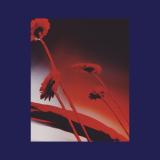
Consummate selector DJ Sundae returns to Efficient Space with Nothing Ever Was, an immaculate compendium of phantom independent melancholia spanning '60s/'70s village green folk, outsider shoegaze and new millennium domestic pop. Each recording an emotional exorcism, Sundae breathes oxygen into music that was barely there in its own time, made in quiet places and crawl spaces, shared only with a precious few via private presses, hobby labels and now-decaying CD-Rs.
Free of any prescribed epoch, continent, scene or rarity, Noughties homemade indie pop opens both sides with the 4-track wonders of The Motifs and Betelmire, unlinked contemporaries finding their place alongside Andrew Jay's Crazy Horse rust, the regional-garage adolescence of Pauline Scribner and the anaesthetised Mancunian guitar-poetry of the late Quigley.
The remaining coordinates zigzag between the UK and US. Folk wayfarers John Strang & Valentine Lewis Lloyd, Virgin Insanity, Kusudo & Worth and Penny Wager's spartan Garden of Eden acoustica find their mirror in Empress and Slumber's close-quarters indie pangs. Chicago power pop fixture Phil Angotti is caught at his most tender, while Teri Rini takes the final bow with her universe-stopping hotel lounge torch song.
A deeper, more personal exploration of Sky Girl's sentimental songwriting, Sundae found himself amassing a cache of tracks too undeniable to remain confined to his anonymous mixtapes for TTT, P.A.M. and Good Morning Tapes, or bi-monthly hour on NTS Radio. Again his emotional sorcery draws together an unlikely cast, their unwritten narrative assembled from fragmented memories of past lives left behind by future horse trainers, ketamine therapists and Fab Four cover band careerists.
With not a second squandered across 1LP, it took a village to bring this new companion into being, with David Bergot's forensic audio restoration, dreamlike imagery from Matthieu Crozier, Ivan Liechti's elegant design and a perceptive foreword by kindred spirit Jessica Pratt.
erscheint voraussichtlich am 27.11.2026
Der Artikel ist noch nicht erschienen. Du kannst den Artikel jetzt vorbestellen, dieser ist nach Wareneingang für dich versandbereit.

It's time to dip into the secret vault once more, and after the first two visits this year, we can't wait. The latest from this mysterious and so far anonymous new label and production crew is another scorching disco two-tracker. The opener on the A-side is full of excitable horns and funky guitar lines with irresistible hand claps and tracky grooves that roll for days. On the flip-side, 'Track 2' brings a vocal line that is brings a sing-along and uplifting vibe as it rides on busy, funky bass motifs with lovely slide in the hi-hats and more lush strings. It's a big-hearted and fulsome disco-house sound for when the whole floor needs locking in to a loved-up vibe.
Der Artikel ist noch nicht erschienen. Du kannst den Artikel jetzt vorbestellen, dieser ist nach Wareneingang für dich versandbereit.

Kaveon launches on wax with an anonymous three-track transmission, drifting somewhere between the darker corners of minimal and the restless pulse of the UK underground. The A side moves patiently, carried by a deep, shadowy bassline, hazy pads, and groovy vocal fragments that give the track an almost cinematic tension. Turn the record over and the mood shifts gears - sharper, faster, and full of garage swing, with bouncing basslines, loose rhythms, and eccentric vocals bringing a playful edge to the floor.
Der Artikel ist noch nicht erschienen. Du kannst den Artikel jetzt vorbestellen, dieser ist nach Wareneingang für dich versandbereit.

Pirka Vinyl Cuts returns with a new chapter in its unknown edits series, featuring four anonymous cuts built strictly for the dancefloor.
From the rolling grooves of “KINR” and the raw energy of “Ruffneck”, to the sun-soaked swing of “Sun Goes Back” and the late night vibes of “Get Me Down”, the record delivers four funky house tools packed with classic samples, tight drums and peak-time flavor.
A no-nonsense DJ weapon designed for long blends, sweaty rooms and proper moments behind the decks. Limited vinyl release on Pirka Vinyl Cuts.

The anonymous Only Music Matters crew serve up another EP of smoking sounds for discerning crowds. It's the smart sampling of a classic motif from jazz-house great Saint Germain that makes the opener 'AAA001A' so enchanting as a bluesy vocal drifts in and out of a dry, dubby, minimal tech beat. 'BBB001B' is more driving and gritty, a clipped tech cut to keep things moving in the dead of night, then 'BBB002B' brings another supple groove, this time with rays of synth rising out of the mix like the morning sun. Quirky sound designs and a skipping rhythm make it irresistible.
Bei uns am Lager und sofort versandfertig

The Gravitate label is back with a new drop from an artist who has chosen to remain anonymous. The EP is anything but, however: it's the sort of characterful garage, minimal and tech melange that is going to announce itself in any setting. 'Track 1' builds with layers of percussion and a rolling bassline that becomes more sleazy on 'Track 2' with retro stabs and soulful pads harking back to early US garage days. 'Track 3' is another gritty bumper with plenty of details that make it pop before the closer flips the vibe with a more wavy slice of comically inclined space tech for smooth late-night cruising.
erscheint voraussichtlich am 11.01.2027

UnOwn deepen the intrigue of their debut record with a second clutch of shadowy edits, again courtesy of the elusive Fava Luva and Dr. Professor. First up is the airy, mystical 'Sent Ra' which drifts on a Balearic current with an aquatic pulse and low-slung groove. It's for late-night moments on intimate floors and is hella steamy. Flip it and 'Love Giver' is more extroverted but just as sensual with teasing spoken words opening up before a swaggering, gentle groove and deft keyboard flourishes awaken and coalesce into a boogie-tinged delight. Anonymous in name, perhaps, but unmistakable in taste.
Bei uns am Lager und sofort versandfertig

Daybreakers keep it rolling in 2026 after two essential Vick Lavender samplers, this time back east with some DATs from the Jersey boys “Raw Tunes” Little to nothing is known about those two. We will keep it that way and let the music do the talking.
Medlar sends us a less anonymous remix straight from the Cayman Islands too... Hard hitting deep house perfect for the peak time, What more do you expect from us at DAYBREAKERS?
Buy or cry.
Bei uns am Lager und sofort versandfertig
