Bongo Joe presents brand new sounds from the cutting-edge of the 21st century Istanbul underground by powerhouse Turkish trio Lalalar. Riding a wave of fierce energy and acclaim generated by their show-stopping festival performances at Le Guess Who and Trans Musicales, they now unleash their hotly-anticipated debut album, "Bi Cinnete Bakar". The brainchild of three of Turkey's most active and innovative alternative artists - Ali Güçlü Simsek, Barlas Tan Özemek and Kaan Düzarat - the album is a thrilling mix of punk energy, dark electronics and Turkish instrumentation and samples.
Before Madvillain, before Yesterday’s New Quintet and before Quasimoto or any other of his several alter egos, Madlib perfected his craft as an MC/producer in the Lootpack. Along with DJ Romes, and fellow rhymer Wildchild, they released the dusty full-length, Soundpieces: Da Antidote back in 1999, that laid down the foundation for the unique and dusty sound now associated with Madlib. The loose, freeform recordings on this collection are circa 1996 when the group was managed by Madlib’s father, and they show the now-renowned maverick producer in comparatively restrained form. Madlib’s scope and imagination was clearly fixated on East coast jazzy hip-hop production from the early ’90s, laying down soundscapes for his hungry crew including the likes of Kazi, Declaime and Medaphoar, who have all become well known underground rap vets. Madlib’s own strong mic presence is noticeable given his now only-on-rare-occasion rhyming, but it’s his production that is the most fascinating element here. While a resolutely hip-hop project, the burgeoning jazzy flourishes and Madlib’s heavily accomplished ear for sound makes the record an important starting point for adherents of his more recent exploratory work.
Eurovision Song Contest: The Story of Fire Saga is a 2020 American musical comedy film directed by David Dobkin and written by Will Ferrell and Andrew Steele. The film follows Icelandic singers Lars Erickssong and Sigrit Ericksdóttir (Ferrell and Rachel McAdams) as they are given the chance to represent their country at the Eurovision Song Contest. Pierce Brosnan, Dan Stevens, and Demi Lovato also star.
“Volcano Man” was the first song released from the album and features vocals from Will Ferrell and Swedish singer Molly Sandén (credited as My Marianne). Towards the middle of the film, as the characters of Lars and Sigrit get fully immersed in the Eurovision magic, the audience is treated to a “Song-A-Long”, producers mash-up iconic pop classics into a celebratory party anthem. Cher transitions into Madonna, which transitions into homages to the aforementioned ABBA and Celine Dion, capped off with a little from The Black Eyed Peas. The cherries on top are vocal cameos from Eurovision champions: Conchita, Netta, Jamala, Loreen, and Alexander Rybak. The album also features the cult hit “Jaja Ding Dong”.
The soundtrack has been nominated for Best Compilation Soundtrack For Visual Media at the upcoming 63rd Annual Grammy Awards.
Eurovision Song Contest: The Story Of Fire Saga is available as a limited edition of 1000 individually numbered copies on “Lion Of Love” pink coloured vinyl. The package includes a 4-page booklet and printed innersleeve with movie stills.
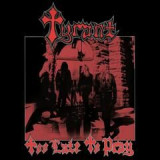
Shadow Kingdom Records is proud to present Tyrant 'Too Late To Pray on
Bloody Grave colored vinyl
In the 80's they were on the classic Metal Blade Records!
Released two years after "Legions of the Dead", this album is Tyrant's second full
length. Bursting of brilliant, heavy/ power metal riffs, mixed with some slower
cuts; it has a totally unique sound that will draw you back again and again.
Highlights of the record are the fist- pumping heavy metal anthems such as
""Valley of Death"" and the crushing ""Eve of Destruction"". With Glen May's cryptic
screams and Rocky Rockwell's heavy Sabbath influences, you too will be drawn in
this epic heavy metal gem!"
Famed free jazz concert registration of an early New Direction for the Art performance. Recorded in 1971. Old-style Gatefold LP, with rare photographs & extensive liner notes by Alan Cummings.
The performance by Takayanagi Masayuki New Direction for the Art at the Gen’yasai festival on August 14, 1971 was an intense, bruising collision between the radical, anti-establishment politics of the period in Japan and the febrile avant-garde music that had begun to emerge a few years before. The ferocious performance that you can hear here was received with outright hostility by the audience, who responded first with catcalls and later with showers of debris that were hurled at the performers. Takayanagi though described the group’s performance to jazz magazine Swing Journal as a success, “an authentic and realistic depiction of the situation”.
In 1962, Takayanagi, bassist Kanai Hideto and painter Kageyama Isamu went on to form an AACM-style musicians’ collective called the New Century Music Research Institute. Every Friday, members gathered at Gin-Paris, a chanson bar in the fashionable Ginza district of Tokyo, to push the outer limits of jazz creativity.
But the pivotal moment for his music was the creation a new trio version of his New Directions group in August 1969, with the free bassist Yoshizawa Motoharu and a young drummer Toyozumi (Sabu) Yoshisaburō. Experiments eventually led to the creation of two basic frameworks for improvisation that Takayagi referred to as Mass Projection and Gradually Projection.
“La Grima” (tears), the piece that was played at the Gen’yasai festival, is a mass projection and listening to it, you can get a clear sense of what Takayanagi was aiming at. Mass projection involves a dense, speedy and chaotic colouring in of space that destroys the listener’s perception of time, and thus of musical development.
The ferocity of the performance of “La Grima” at the Gen’yasai Festival in Sanrizuka on August 14, 1971 was consciously grounded by Takayanagi in a particular historical moment, ripe with conflict and violence. A month after the festival, on September 16, three policemen would die during struggles at the site. This was the context that the three-day Gen’yasai Festival existed within. The line-up reflected the radical politics of the movement, with leading free jazz musicians like Takayanagi, Abe Kaoru, and Takagi Mototeru appearing alongside radical ur-punkers Zuno Keisatsu, heavy electric blues bands like Blues Creation, and Haino Keiji’s scream-jazz unit Lost Aaraaff.
New Direction for the Arts trio topped the bill on the opening day, playing an aggressive, uncompromising “mass projection” set of polyphonic improvisation. Alongside drummer Hiroshi Yamazaki and saxophonist Kenji Mori, Takayanagi soloed hard and continuously for forty minutes. This was performance as precisely calibrated metaphor: three musicians responding to the demands of the moment with instinctive force and fury, untethered by rules, leaderless yet not rudderless (the direction part of the group’s name was no accident). The piece was entitled La Grima – tears - and the fusion between the palpable anger of the performance and hopeless sadness of its title were also perfectly apt for the situation. This was a fight that the state was always going to win. Yet, by all accounts, the band’s set went down like a fart at a funeral. The band were showered with catcalls and debris throughout, and by chants of “go home” when the music finally came to an end.
However, looking back at the event in the year-end issue of Japan’s leading jazz magazine, Swing Journal, Takayanagi was surprisingly upbeat: New Directions brought a solid political consciousness to our performance and succeeded in an authentic and realistic depiction of the situation. But journalism revealed its superficiality in its inability to penetrate the core of the music. I don’t know much about anyone else, but we at least left behind a competent record.
It’s a fascinating statement in many ways. Perhaps on one-hand it can be read as stubborn, solipsistic and self-justifying, yet in conjunction with his statement in 1971 there are points that guide us towards an understanding of just what Takayanagi intended with his performance at the festival. As Kitazato Yoshiyuki has argued, it becomes an almost religious act, directed at the earth deities of the land. A union of anger, sorrow and malevolence that can be placed nowhere effective, all it can do is find expression and channeling. The forcible land seizures at Narita, the eviction of farmers from land that had been in families for generations, the destruction of communities: none of this can be prevented, not least by an artistic action. All that can be done is an attempt to mark the land itself, to soak it with the combined force of emotions and the volume of the performances, to bury something there that cannot be drowned out, even by the coming roar of jet engines.
This sprawling collection by Belgian loner blues savant Bram Devens aka Ignatz encapsulates the mystery, murk, and melancholy of his uncanny craft at its most windswept and wayward. Originally issued via Goaty Tapes in September of 2015, this long-anticipated vinyl edition expands the saga with an additional 17 minutes of archival material. Deven’s palette remains constant throughout: feathery fingerpicking, modal loops, and intuitive six-string navigations interspersed with candlelit passages of mournful voice, alternately whispered, mumbled, moaned. His is an aesthetic of embers and resin, cracked masks and distant lights, of what’s left behind and what lingers on.
I Live In A Utopia was recorded following a relocation from his longtime base of Brussels to Landen, with a second child due soon: “I remember the weather being nice and having just bought a hammock.” The change of scenery seeded a promise of slower days and lighter times – no utopia perhaps, but a sense of faint hope glowing on the horizon. The songs slide between loose acoustic spirituals and smoky basement ragas, late afternoon haze and midnight moons, a seesawing restlessness reflected in the titles (“I Have Found True Love,” “Time Does Not Bring Relief,” “We Used To Smoke Inside”). The fidelity is grainy but vivid, refracted by tape warp and Flemish dust.
As always, Deven’s playing is deceptively elegant, raw but precise, attuned to resonance, radiance, and negative space. Echoes of Fahey and Jandek reverberate in certain moments but ultimately the world Ignatz maps is one incomparably his own. A landscape both doomed and dawning, weary but undefeated, tracing outlines of lengthening shadows. “I walk in the sunshine,” he sings, uneasily. This is music of a rare inner wilderness, poised at cryptic crossroads, devoted to its ghosts. I Live In A Utopia stands as an apex work by one of the underground’s most veiled and visionary talents.
Double album in gatefold sleeve with artwork by Zully Adler. In co-production with House Rules & released in an edition of 500.
New York-based duo Bottler, Pat Butler and Phil Shore, are the vanguard of their own distinctly eclectic sound. Raw, emotive, bold and highly creative, the duo has successfully carved out their own path with a series of EPs that represent the broad scope of their production prowess. Over the last five years Bottler have been working on their debut album, ‘Journey Work’, a milestone achievement that marks a pivotal moment in their music career. The LP is a distillation of the duo’s multifaceted upbringing, blending a variety of styles together bound together by an overarching attitude and approach that embraces creative freedom and self-acceptance.
Pat and Phil are childhood friends whose bond is akin to that of blood relatives. Their parents are best friends and they grew up side by side, developing their deep love for music together; sharing discoveries and inspirations, learning to play and perform, and nurturing their creativity together. Now formally ordained as Bottler, they channel their eclectic tastes into a sound that encapsulates the love and trust that forms the foundation of the friendship. The duo blends a myriad of styles to create songs that emanate warmth, joy, sorrow, pain and the full spectrum of human emotion.
The album title, like their music, is open to interpretation. The duo reveals themes related to chronicling life’s many ups and downs, the deep preparation that must be taken ahead of a spiritual ceremony or psychedelic experience, and, simply, the journey taken during the conception and creation of an album. A quote from Walt Whitman also partly inspired the title; “every leaf of grass is no less than the journey work of the stars”. However, the intention behind the title is to allow for ambiguity, giving the listener an opportunity to write their own narrative.
Across 11 cuts Bottler illustrate their distinct take on electronic music, weaving in elements of indie, pop, rock, house and techno with confidence and panache. ‘Journey Work’ starts at ‘Home’, a song that is fizzing with positive energy, Pat’s vocals welcoming the listener to the start of this meandering audio adventure.
‘Chrysalis’ opens with delicate piano keys that guide us into a bombastic bassline and energising drum beats. As it progresses, scintillating layers of synth and strings are added, creating a highly affecting, uplifting atmosphere.
‘Melatonin’ follows up next, merging heartfelt vocal delivery with a sombre instrumental, and a stirring guitar riff. A glorious demonstration of Bottler’s songwriting capabilities, which are also evident on ‘Vinyl’, an uptempo dance number with an unbelievably catchy chorus. Here we see the duo channel their experience of playing in multi-member bands, as the breaks and arrangement feel perfectly suited to a festival-sized crowd.
On ‘Tacoma’, Pat and Phil channel their appreciation of house and techno into a haunting cut that utilises reverse strings and extended vocal refrains to chilling effect. A heady club track for the twilight hours. ‘Meds’ incorporates muted singing, mystical pad work and a mesmerising riff to produce a captivating slice of uncomplicated dance music.
This is followed by ‘Hot Water’, which feels like a trip to a Californian beach, circa 1965. The vocals drift over a bouncing bassline with a complementary guitar riff. ‘Mako’ features Samurai Velvet singing about fireflies and afterlife in a wonderfully heartrending manner, Bottler’s instrumental keeping things simple, yet highly effective.
We head back underground with ‘Weed’, a dense, gloomy cut with inspired use of chopped up vocal clips, stuttered throughout, alongside a mean bassline. ‘You’re Old’ is the soundtrack to an explosion of festival euphoria, dancing shoulder to shoulder with your best friends, forgetting all your troubles and living in the moment. An anthemic song that transposes Bottler’s idiosyncratic style onto the pop blueprint. Finally, ‘Cicada Rhythm’ closes the LP with a pensive, yet joyful feeling. A chunky bassline is juxtaposed with Pat’s angelic vocals cascading over the top. A hint of tribalism comes through, as we approach the end of the Journey Work…
Five years in the making, fuelled by the desire to express their deep love for music of all varieties, Journey Work is symbolic of the long road it takes to accept oneself and be comfortable expressing one’s truth. Diverse, dynamic and daring with a rawness and honesty that is rare to find, the album marks a triumphant debut for Bottler and one that crystalises their unique identity.
out of Stock
Last delivered 4 years ago available to reorder, subject to availability
Purveyor of lovecore, fabba and cakebeat, bestie and all-round DJ-inspo Angel D’lite blesses Ritual Poison with her ‘Re4mat’ EP.
‘Werk My Body’ is a swirl of feminine energy, empowered vocals blending with hardcore breaks and hyper bass, a four four switch warping temporally before the track drops again. Local Group return the remix favour from their own recent EP, slowing ’Werk My Body’ to a 140 emo-banger, trance melodies sandwiching a proggy mid-section, the bass bumping throughout.
‘R u Ready’ keeps the NRG and BPMs high, breakbeats rolling over booming sub and dubbed out rave stabs, the sexual charge of the female ragga vocal frank and unashamed. ‘Re4mat’ signs off, the hallowed B2. Drawing on rave anthems of the past, it looks boldly to the future. “This particular historical juncture holds possibilities for change that we’ve never before experienced,” declares Angela Davis, as the euphoria subsides for a moment. ‘Re4mat’ and start again.
out of Stock
Last delivered 2 years ago available to reorder, subject to availability
High Roller Records, 6th pressing, orange/ blue mixed w/ yellow splatter vinyl, ltd 600, 425gsm heavy cardboard cover, insert, printed inner sleeve, 2 posters, mastered for vinyl by Patrick W. Engel at Temple of Disharmony, original 1985 sound
Toro y Moi siebtes Studioalbum MAHAL ist die bisher wohl kühnste und faszinierendste Reise des musikalischen Masterminds Chaz Bear. Mit einer weiten Spannbreite zwischen Genres und Sounds - vom zotteligen Psychedelic Rock der 1960er & 1970er hin zum luftigen Sound des Mod-Post-Punks der 90er-Jahre - nimmt das Album die Hörer*innen mit auf eine musikalische Expedition, in der sie im Rücksitz von Bears philippinischen Jeepney, der auch das Albumcover ziert, Platz nehmen können. So ist MAHAL ein unverwechselbares Toro y Moi-Erlebnis, welches in Verbindung zu seinen vorigen Werken steht und dennoch einen ganz neuen Weg einschlägt, wie es nur Bear tun kann. Seit der Veröffentlichung des bahnbrechenden Electronic Pop-Albums Causers Of This 2009, hat Toro y Mois Alben stets die Idee, was sein Sound sein könnte, weiterentwickelt. Dennoch findet sich in Bears Backkatalog nur wenig, das einen auf die Deep Groove-Exkursion auf seinem bisher vielfältigsten Album MAHAL vorbereiten könnte. Mit den ersten Tönen des Albums werden wir direkt in den Beifahrersitz gesetzt, umgeben von den Motorengeräuschen des Jeeps und bereit für die Fahrt, die Chaz und seine Gefährten für uns geplant haben. Einige der 13 Tracks auf MAHAL - das Wort für Liebe in der auf den Philippinen gesprochenen Sprache Tagalog - finden ihre Anfänge in der Zeit um das deutlich rockigere What For? aus dem Jahr 2015. So liefert das neue Album eine ganz klare Antwort und spannt den Bogen: What For? - For Love. MAHAL wurde größtenteils letztes Jahr in Bears Studio in Oakland in Kollaboration mit Künstler*innen wie Sofie Royer, Unknown Mortal Orchestras Ruban Neilson, Alan Palomeo von Neon Indian sowie The Mattson 2 fertiggestellt. "I wanted to make a record that featured more musicians on it than any other record of mine," erklärt Bear. "To have them live on that record feels grounded, bringing a communal perspective to the table." Im Resultat ist MAHAL üppig und voller Überraschungen - sei es durch das locker lässige "The Loop", das an Sly and The Family Stones erinnern lässt oder dem elastischen Psych-Rock bei "Foreplay" sowie der schwindelerregenden Mulatu Astatke-Anlehnung bei "Last Year".
Toro y Moi siebtes Studioalbum MAHAL ist die bisher wohl kühnste und faszinierendste Reise des musikalischen Masterminds Chaz Bear. Mit einer weiten Spannbreite zwischen Genres und Sounds - vom zotteligen Psychedelic Rock der 1960er & 1970er hin zum luftigen Sound des Mod-Post-Punks der 90er-Jahre - nimmt das Album die Hörer*innen mit auf eine musikalische Expedition, in der sie im Rücksitz von Bears philippinischen Jeepney, der auch das Albumcover ziert, Platz nehmen können. So ist MAHAL ein unverwechselbares Toro y Moi-Erlebnis, welches in Verbindung zu seinen vorigen Werken steht und dennoch einen ganz neuen Weg einschlägt, wie es nur Bear tun kann. Seit der Veröffentlichung des bahnbrechenden Electronic Pop-Albums Causers Of This 2009, hat Toro y Mois Alben stets die Idee, was sein Sound sein könnte, weiterentwickelt. Dennoch findet sich in Bears Backkatalog nur wenig, das einen auf die Deep Groove-Exkursion auf seinem bisher vielfältigsten Album MAHAL vorbereiten könnte. Mit den ersten Tönen des Albums werden wir direkt in den Beifahrersitz gesetzt, umgeben von den Motorengeräuschen des Jeeps und bereit für die Fahrt, die Chaz und seine Gefährten für uns geplant haben. Einige der 13 Tracks auf MAHAL - das Wort für Liebe in der auf den Philippinen gesprochenen Sprache Tagalog - finden ihre Anfänge in der Zeit um das deutlich rockigere What For? aus dem Jahr 2015. So liefert das neue Album eine ganz klare Antwort und spannt den Bogen: What For? - For Love. MAHAL wurde größtenteils letztes Jahr in Bears Studio in Oakland in Kollaboration mit Künstler*innen wie Sofie Royer, Unknown Mortal Orchestras Ruban Neilson, Alan Palomeo von Neon Indian sowie The Mattson 2 fertiggestellt. "I wanted to make a record that featured more musicians on it than any other record of mine," erklärt Bear. "To have them live on that record feels grounded, bringing a communal perspective to the table." Im Resultat ist MAHAL üppig und voller Überraschungen - sei es durch das locker lässige "The Loop", das an Sly and The Family Stones erinnern lässt oder dem elastischen Psych-Rock bei "Foreplay" sowie der schwindelerregenden Mulatu Astatke-Anlehnung bei "Last Year".
Vinyl in Gatefold Jacket, green/black double coloured LP with lyric insert and download card.
Keep This Be the Way is Helms Alee's sixth full-length and first new album in over 3 years. Across the span of their first five studio albums, Seattle trio Helms Alee have consistently refined their signature sound-a blend of lilting siren songs, crushing thunder and sludge, and heady guitar pop filled with lush guitars and elaborate three-part vocal harmonies that reach widely across various subgenres of the heavy music world. On this latest album they expand their palette by delving into the production possibilities afforded by recording the album themselves, creating their most dynamic and technicoloured work to date.. Keep This Be the Way still very much sounds like a Helms Alee record, but it's their first album that diverts from the faithful recreation of their live sound and delves into a vibrant tapestry of surreal sounds and invented spaces. This new approach is immediately evident on first single "See Sights Smell Smells," where reverse cymbal crashes, fragmented piano, layered drums, woozy drones, saxophone freak-outs, and trippy vocal treatments transport the listener to an altered state of exhilarated anticipation. The pendulum swings towards more adventurous and exploratory sounds on songs like "Tripping Up the Stairs", it's nightmarish synth glides pitted against distorted barrages steeped in classic Helms Alee timbre. And therein lies the power of the Keep Us Be the Way: it reflects a period of change, ambiguity and perseverance through its fearless curiosity, cathartic rumble, and sublime beauty. Helms Alee supporting Russian Circles on the upcoming EU Headline tour in April/May 2022.
HIGHLIGHTS: Let yourself go with the overwhelming musical output of Argentina's very own Melopea Discos, in a selection of songs that explore fusion with an air of mystery and a side of exquisite sensitivity across 11 carefully curated leftfield synth pop, experimental folk and ambient tracks. "Viento Sur" has been compiled by Argentine DJs and collectors Bárbara Salazar and Alejandro Cohen (dublab) based in Buenos Aires and Los Angeles respectively. Most of the songs are reissued here for the first time and many of them were previously unavailable on vinyl. Includes a 4-page insert with liner notes and photos. Remastered sound. Further Info: Viento Sur. Experimental Music & Fusion Music from Argentina. A Retrospective from Melopea Discos. Following the success of our 2020 release "América Invertida" (VAMPI 205), a fascinating survey of Uruguay's lesser-covered '80s endeavours in new wave pop, jazz-fusion, ambient folk and electronics, it's now time to cross to the other side of Rio de la Plata and let yourself go with the overwhelming musical output of Argentina's very own Melopea Discos. Born partly out of necessity and partly by a twist of fate, Melopea is a record label from Argentina created at the end of the 80s as a vehicle for the creative curiosity of its founder, Litto Nebbia, to document music not supported by the music industry. The songs that form "Viento Sur" do not provide a comprehensive vision of the different styles of the label but rather an approach to its more experimental side. This compilation puts together a selection of songs that explore fusion with an air of mystery and a side of exquisite sensitivity across 11 carefully curated tracks. From the southernmost latitudes of the American continent, "Viento Sur" brings soft and warm atmospheres that intermingle with more earthly pulses; sounds that reflect the beauty and richness of Argentina, from the jungle to the pampas, the subtlety of the forest, and the effervescence of the Río de la Plata and its neighboring candombe. "Viento Sur" has been compiled by Argentine DJs and collectors Bárbara Salazar and Alejandro Cohen (dublab) based in Buenos Aires and Los Angeles respectively. This release is presented with obi strip and a 4-page insert including liner notes and photos. Most of the tracks are reissued here for the first time and many of them were previously unavailable on vinyl. Remastered sound.
Bristol techno, noise and hardcore supremos SCALPING are
releasing their highly anticipated debut album ‘Void’.
‘Void’ comes on the heels of an extremely exciting 2021 for the
band, which saw them play to sold-out crowds at the Roundhouse
twice in two weeks - both on tour with Squarepusher and at
Pitchfork Festival London - as well as releasing two widely
acclaimed EPs titled ‘FLOOD’ and ‘FLOOD Remixed’, the latter of
which featured treatments from producers Hodge, Azu Tiwaline,
object blue, AQXDM and Laurel Halo and Scottish instrumental
rock legends Mogwai.
SCALPING are heavy metal in 4D; the sound is moody, distorted
and rhythmic, but the use of electronic techniques gives the finer
details room to breathe, making more space for experimentation.
Tracks such as ‘Tether’, featuring Oakland rapper DÆMON, puts
a modern, metal twist on Bristolian trip-hop, whereas album closer
‘Remain in Statis’ features fast-rising artist Grove, a Bristol-based
rapper and self-professed metalhead whose commanding
presence sets the track alight.
In the heat and darkness, it’s a swarm of low-end frequencies and
ripping guitars, somewhere between Black Sabbath-esque
psychedelica and The Bug’s sub-bass headfuckery. Live, the
effect is immense. SCALPING play continuously for the duration of
their sets, generating a storm of metal-and-techno through a rising
beats-per-minute count.
‘Void’ will be put to the test, as the band kicks off an eight-date UK
headline tour, culminating in a live performance at fabric on May
5th. As live shows return in 2022, SCALPING will continue to
prove themselves as one of the UK’s most impressive, ambitious,
and original new live bands.
out of Stock
Last delivered 3 years ago available to reorder, subject to availability
44 Million+ Streams Worldwide / 5 Album Releases / 3 EPs * As Seen on tour with Norma Jean, Born of Osiris, Fit For A King, Silent Planet, Red Jumpsuit Apparatus, Demon Hunter, Oh, Sleeper & Red * 2nd Track leading to their 6th full length release “Eulogies”- coming March 11th, 2022 * PR campaigns in US, Europe, UK & Australia kicking off in January.
"The exquisite corpse shall drink the new wine", wrote the French Surrealists almost 100 years ago, and from this missive stems the parlor game in which we partake here. Through obscuring the tower itself, they cobble together meandering staircases in which to ascend with absent-minded haste; spontaneous line-weaving amasses figures and phrases into new planes of thought, therefore holding captive the illusion of creative reciprocity. Although housed in unrecognizable quarters, dull rain now tallies itself upon your window panes just as it once kept count on theirs. Apparitions unknown sound instruments of winding origin in celebration of the ink dry in the well. A graffito of tea leaves stains the porcelain cup.
This cloven tall-tale traces an epistolary journey between id and consciousness upon a page that has been adorned and wiped clean again and again and again. The wet meadow expands and contracts within a breath, moving through the windpipe to expel upon the glistening dew. From this dew rises anthills of diminishing complexity, and busying themselves within insanity, the occupants labor to hold fast against the unseen wave of oblivion.
An exercise in aleatoric sentence-finishing between two aligned performers, The Exquisite Corpse Shall Drink the New Wine mimics the economics of unconscious beauty-making to such a degree that light will neither pass through it nor divert its path. Draw upon it what you will, and ready yourself for the unrelenting ataraxy.
After the 2020 album "Lieder Für Geometrische Stunden", Sankt Otten finally make us happy again with a new release at the beginning of 2022. "Symmetrie Und Wahnsinn" (Symmetry and madness) fits here skillfully, both creatively and musically, in an album series with geometric context.
The album starts unusually buoyant with "Hymne Der Melancholischen Programmierer" (Hymn for sentimental programmers). A Kraut-Pop pearl, which could go on forever with its Motorik swing and with its catchy melody the track doesn't come across as melancholic as the song title predicts. You have to listen twice to not succumb to the illusion that it was composed in Düsseldorf at the end of the seventies. Here (and on the track "Sei Symmetrisch Zu Mir"), Sankt Otten were supported in the studio by drummer friend DIRK PELLMANN.
The drum machine in rumbling funky mode. "Die Glücklichen Unglücklichen", the secret hit of the album? They bend the beat into geometric shapes, let the bass play in circles and cover the song with ghostly choirs. The echo of a spinett-like sound overlays the sound, spitting out a deceptively cuddly dream world.
The 10 minute long "Die Ordnung Des Lärms" could be called an Ambient-Kraut symphony without hesitation. An enormous swelling to ecstasy, a guitar sings distantly in the background. Silence. Synthetic strings pave the way and are supported by choirs. A crackle that suggests a rhythm until it is taken over by a drum computer in the main part of the track. Bombastic mountains of synthesizers pile up and yet a catchy melody finds its way through this mishmash of hypnotic electronics. Fourth movement - Kosmische-choirs in suspension over a bass synth and an Ebow guitar. Is this already Prog-Rock? The question doesn't arise, in the end everything merges into reverb. "Luftspiegelung Der Sentimentalitäten" begins cautiously with a gentle sequence and a discreet kick drum. The mini-Moog sounds like a guitar. Anyway. A surface floats by and returns, layers and shapes build up. At last, everything melts into perfect harmony with a plaintive-sounding synth. This track was composed as a stripped back reprise of the first track from the last album "Sentimentale Sequenzen". A hypnotic Motorik-beat of an 808 that encourages head nodding and could almost be danceable. True to style with warm analog 80s electronic sounds and a loose echo guitar. This is "Angekommen In Der letzten Reihe". Man and machine hand in hand as a homogeneous musical unit and the connection of tradition and vision.
Sankt Otten like images of infinity. In the religious sense of meditative mantras, or also in the mathematical sense of an elongated curve that eventually returns to its starting point. "Bis Das Helle Licht Uns Holt" goes exactly in this direction with its classical use of sequencers and a sound carpet of choirs. Sound worlds that, through a clever repetitiveness, barely noticeably guard the constant changes in the compositional mesh like a secret and only reveal what is to be discovered by listening closely and letting it be seen. Such a thing is probably called Berlin School?
The Osnabrück duo Sankt Otten, founded in 1999, has been releasing on Denovali since 2009. With their now 12th album they give us again a gem of timeless instrumental music. The holy trinity of Krautrock, Ambient and contemporary Electronics, but always stylistically confident and unmistakable Sankt Otten. For the mastering New York based RAFAEL ANTON IRISARRI could be won. Also with the cover layout again good taste is proven. As part two of a cover series, this extraordinary die-cut cover artwork was again created by designer DANIEL CASTREJÓN.
Prolific and singular Japanese producer Hoshina Anniversary presents Hyakunin Isshu, a two tracker of extended jaunts deeper into the mystery than he’s yet dared to venture. With a growing reputation for sizzling productions combining propulsive house rhythms with gyrating arpeggios and textured sound design punctured by jazz-inflected keys, Hyakunin Isshu further expands the limits.
On Hyakunin Isshu, Hoshina Anniversary paces it out over the course of two complimentary side-long runs. The A side Karakurenaini rides on a steady 4/4 as cycling percussion loops, squelchy acid basslines and angular piano chords float in and out of the mix. Deployed and rinsed to peak effect, it's relentless repetition evolves just enough to get completely lost in.
On side B Kirigirisu slows the pace down to a crawl, a lurching rhythm and haunting riff ascending almost to the point of vertigo toppling and giving way to a sci-fi drum break, a stirring prolonged break and triumphant culmination, it’s slow-mo future strut equally indebted to melodies of the past.
Hyakunin Isshu is named for Ogura Hyakunin Isshu, an anthology of delicate, reflective Japanese poetry comprised of works from the 12th and 13th centuries. Both tracks share their titles with different entries in the series.
Hoshina Anniversary is the alias of Yoshinobu Hoshina, a reverent reinterpreter of jazz, dance music and traditional Japanese instrumentation. The last couple of years have seen the producer from the Tokyo suburbs release a torrent of inimitable missives on esteemed maisons disques like ESP Institute, Osare Editions, Alien Jams and Youth. Also forthcoming in the summer of 2022 is an LP on Impatience.
out of Stock
Last delivered 4 years ago available to reorder, subject to availability
Note vinyl rel date is later. 10 Year Anniversary Reissue. 2LP / 2CD featuring the album proper & demos of each song + rarities. Colored clear vinyl, includes digital download. Recommended If You Like: The original ‘151a’ release, of Montreal, Regina Spektor, Andrew Bird. They say that you spend your entire life writing your first album, piecing every formative moment, scribbled turn of phrase, and thematic epiphany into a fantastical collage. Multi-instrumentalist K. Ishibashi (aka Kishi Bashi) disproves that old adage. The title of Kishi Bashi’s 2011 debut album,‑151a, is a riff on the Japanese phrase‑“ichi-go ichi-e,” roughly translating to “one time, one place.” That’s exactly what this debut is: A singular time, an inimitable place, a launchpad for bigger and better things to come. “It’s a play on words that translates as a performance aesthetic of having a unique performance in time, with imperfections, and enjoying it while you can,” Ishibashi‑told NPR at the time of the album’s release. “The saying reminds me to embrace my mistakes and move forward.” From the deconstructed Beach Boys-esque doo-wop of “Wonder Woman” to the menacing marriage of Eastern Hues and Western operatics of “Beat the Bright out of Me,”‑151a‑is a mediation between opposing drives, offering possible reconciliation but never promising it. The album’s emotional wellspring, “I Am The Antichrist To You” was reimagined in 2021 when it was featured on the animated sci-fi sitcom‑Rick and Morty, introducing Kishi Bashi to a new generation of awestruck fans. Kishi Bashi uses‑151a‑as a vehicle to explore his cultural background. Using Japanese refrains as a compositional and textural device (the polyrhythmic grandeur of “Bright Whites”; the gleeful surrealism of “It All Began With a Burst”), Kishi Bashi celebrates his heritage with earnestness. Japanese phrases and couplets are sung as the response to Kishi Bashi’s resplendent calls, offering listeners a conversation that dovetails with the album’s themes of love, sentimentality, and self-discovery. Today, the “one time” and “one place” that151a‑inhabited seems further than ever, almost broaching celestial realms of time and space. But, rest assured, with each listen, the world that Kishi Bashi built springs back to life. The world of‑151a‑never left—it was just waiting to be rediscovered.
Sophie Lloyd returns to Classic Music Company for another stunning soulful delivery, this time teaming up with Faithless vocalist Pauline Taylor on ‘Angels By My Side’. Much like Sophie’s previous works on Luke Solomon’s imprint, this record brims with the same joyous energy sure to uplift, as live recorded strings, horns and keys give an added richness to the release. With Sophie’s Classic debut ‘Calling Out’ a modern day dancefloor anthem with 10 million streams and counting, and her latest offering garnering early support from the likes of NYC legend Danny Krivit, there is no doubt ‘Angels By My Side’ will follow suit as an essential record for discerning selectors.
out of Stock
Last delivered 3 years ago available to reorder, subject to availability
On vinyl for the first time in the UK as a RSD exclusive on pink vinyl. Uncle Dysfunktional is a fifth and most recent studio album from Happy Mondays. Released in 2007, it was their first album since Yes Please! in 1992. Despite Factory Records having closed 15 years before, Tony Wilson personally assigned Uncle Dysfunktional a FAC number, FAC-500. The artwork has been re-worked by Central Station Design. Limited to 2000 copies world-wide.
out of Stock
Last delivered 4 years ago available to reorder, subject to availability
Perhaps one of the most enigmatic of artists on the Rare Soul scene must be Flame N' King aka Oscar Wayne Richardson Jr, who ran his various labels independently since the mid ‘60s. It was a surprise when the group surfaced again with a fantastic uptempo New York dance track in 1976 on the tiny N.Y.C.S. records. "Ho Happy Day" found immediate favour with the Modern Soul crowd, but it took the next 30 years for it to eventually become a Modern Soul anthem and cross over to a wider audience.
These days "Ho Happy Day" can be heard at numerous venues across the world and is a bigger floor-filler now than it was back in the 1970s. We're delighted to finally re-issue this classic on the original N.Y.C.S. imprint and watch it find even more audiences in 2022. An original copy will cost circa £250 these days, so there's already a heavy demand for this long-awaited re-issue
out of Stock
Last delivered 4 years ago available to reorder, subject to availability
VINTAGE CROP serve to serve again. Over the last four years the Geelong group have become a burgeoning force in the Australian punk scene. Their burly, brusque yet supple songs have evolved from the garage rock of 2017’s ‘TV Organs’ album into the post-punk panic attack of last year’s ‘Company Man’ EP. Now they’ve sculpted their sound further, the barrage now offset with robust songwriting, their full-pelt bounce tempered with flailing guitar lines and sardonic commentary. Bringing to mind Wire tackling tracks from early 7”s by The Yummy Fur, it’s an inspired approach, both striking and effortlessly mirthful. Vintage Crop still dish-up plenty of commanding stomp, their lyrics remain as keen-eyed as ever, but now they’re unafraid to mess with the tempo and drive their point home.
‘Serve To Serve Again’ is Vintage Crop’s third full-length album. It was recorded by Mikey Young after a year of playing solid shows, including tours in Europe and the UK alongside Louder Than Death and URSA and some of the band’s biggest shows to date in Australia with Amyl & The Sniffers, R.M.F.C. and The Stroppies. This allowed Vintage Crop to nail the songs live before committing them to tape, pulling and pushing ideas, stretching them into new-found territories. ‘First In Line’ races off the blocks with its sawtooth riff and splintered beat, all jagged edges and ragged vocals. Quickly follow a pair of totemic bruisers in the guise of ‘The Ladder’ and ‘The North’, both brimming with a nigh anthemic quality, confident in their faculty to rouse the rabble. ‘Jack’s Casino’ is a lurching romp about gambling, ‘Streetview’ is similarly propellent, only choosing to meander and divert itself with cryptic trips around the neighbourhood: “He only moved to that side of town because the postcode is worth it’s weight in gold”.
There’s no better poised nod to frustration than ‘Gridlock’ - “the hustle and bustle of inner-city traffic is driving me nuts because the radios on static”. Guitar lines entwine and wriggle wildly free from the song’s pouncing rhythm and potent vocal, making for the most vigorous of rackets. ‘Just My Luck’ prowls with a shared thrumming verve, whilst ‘Everyday Heroes’ closes out the album with measured flair. Skewed and fervent, rangy at times yet always assured in its intent ‘Serve To Serve Again’ is long-legged leap for Vintage Crop into the delirious now. These songs strive to make sense of futility, they criticise the chain of command, question privilege and most importantly make us want more from life. Now all we have to do is turn up the volume!
out of Stock
Last delivered 4 years ago available to reorder, subject to availability
Bézier returns to Dark Entries with Valencia, a six track rumination on memory, geography, and transmutation. Multi-instrumentalist Robert Yang’s Bézier project has appeared on Dark Entries many times over the last decade, most recently with the 2018 LP Parler Musique. Says Yang, “What started as a project to investigate the love of the sound and scenery while living in San Francisco quickly developed into a passionate search for interlocking melodies and driving rhythms.”
On Valencia, Bézier invokes twinned places. The Valencia Street of San Francisco is channeled, which was the center of the city’s vibrant new wave scene in the 1980s.
But also echoed is Valencia, Spain, and La Ruta del Bakalao aka La Ruta Destroy, the Spanish clubbing scene throughout the 80s and 90s famed for its aggressive and synthetic sounds. Valencia is a darker record for Yang, exploring themes of submission and catharsis with nods to SF’s gay leather bars of the 70s and 80s. The high BPM salvos of “Valencia” and “Scrupulous” capture the frantic energy of Bakalao and Valencian wave acts like Última Emoción. Elsewhere Yang mines the dreamy space disco and Hi-NRG sounds they’re known for, like on the brooding “Past the Marshes” or the anthemic “Reservoir”, which features their partner Len.Leo on vocals. Bézier deftly navigates past and present, light and dark, pain and pleasure, the stasis of memory and the flux of time.
Valencia was mastered by Alex Michalski, with EQ for vinyl done by George Horn. Gwenaël Rattke designed the sleeve, which features an 80’s punk zine-esque geometric grid pattern mirroring San Francisco street maps. Also included is a 5x7 postcard with notes.
out of Stock
Last delivered 4 years ago available to reorder, subject to availability
Written and conceived by Stephan Crasneanscki, ‘LOVOTIC’ is a concept album by Soundwalk Collective, composed in collaboration with lauded actress and singer/songwriter Charlotte Gainsbourg. Featuring veteran techno stalwart AtomTM, rising singer/composer/performance artist Lyra Pramuk, celebrated actor Willem Dafoe, and writer/philosopher Paul B. Preciado, the album is released by the new Berlin-based Analogue Foundation.
Inspired by a relatively new field of research that seeks to explore and develop the possibilities of sexual and emotional relationships – and even love – between humans and robots, ‘LOVOTIC’ interrogates the impulses, ideas, and needs underlying this phenomenon. The project ventures into a future where sex, intimacy and desire are reformulated through the connection of humans, robotics, and artificial intelligence.
In an age of such hybrid entanglement with the machine, human identity requires the construction of new forms of intimacy, gender, and sexuality. At present, however, such technologies are primarily used to produce programs of limited sexual iterations that do not question the preformatted categories of gender and sexual orientation. In contrast, on ‘LOVOTIC’, Soundwalk Collective ask whether the future of sex and sexuality could instead be an exponentially expanding kaleidoscope. Where does the impulse of preference come from? What sets of words from our vocabulary can be communicated to the AI mind to generate a new identity for desire? Could the machine be another technology that brings us closer together?
Sonically ‘LOVOTIC’ is unidentifiable, artificial, and genuinely futuristic, occupying an amorphous androgynous netherworld at the borderlands between biotic and android. Traditional musical signposts are virtually non-existent, instead offering a mercurial, formless sound which mirrors the flourishing of gender fluidity it suggests could be on the horizon.
The production tangibly evokes the odd, rubbery textures of faux flesh, the slick virtual glide or glitchy mishaps of software, and the sleek shine of hardware. Gleaming sound design creates shard-like surfaces redolent of Alva Noto and Ryuichi Sakamoto’s ‘Glass’, the slippery stretched sonics Gabor Lazar, and the unsettling dark ambience of TOWERS and Hallmark ‘87.
At turns intimate and inviting, with whispering-in-your-ears ASMR vocals evoking blissful, heightened sexual states, within ‘LOVOTIC’ there’s optimism, but also unease; As well as the positive, it implies the negative ramifications of technology. At points a synthetic siren’s call appears to lure the listener to a darker place, with audio malfunctions suggesting dystopian science. Voices morph from gentle to distorted – a glitch in the system causing the mask to slip, like virtual lizards – ‘They Live’ or ‘V’ (?), for the metaverse age.
Here, Charlotte Gainsbourg invokes a being of unknown identity – an artificial eve, the oracle and the portal – speaking from an unspecified time in the future. The voices of AtomTM, Lyra Pramuk and Willem Dafoe weave in and out of Charlotte’s, often overlapping, merging into one another, expressing the entity of a being that’s ephemeral and in constant flux, oscillating between the natural and artificial. The record’s other bonafide singer, Lyra Pramuk’s delivery alternates between spoken word, operatics and partially- unintelligible language.
A multi-media project, ‘LOVOTIC’ also features the work of writer, philosopher and curator Paul B. Preciado – a leading thinker in the study of gender and body politics. Paul contributes a post-apocalyptic, quasi scientific and fictional text, which adds further fantasy, artistic and intellectual depth, augmenting the listener’s experience. Like all the best Sci Fi, his words seem prescient, describing what could become a likely reality in the future. Paul performs his written texts on the opening and closing tracks of the album; ‘The Age Of Mutation’ (in Spanish) and ‘Primate Love’ (in English).
Soundwalk Collective is an experimental sound collective helmed by Stephan Crasneanscki in collaboration with Simone Merli, which operates in a continuously rotating constellation of sound artists and musicians. The Collective’s approach to composition combines anthropology, ethnography, non-linear narrative, psycho- geography, the observation of nature, and explorations in recording and synthesis.
out of Stock
Last delivered 4 years ago available to reorder, subject to availability
Picture/ Shape vinyl, Sammlerstück in limitierter Auflage dieses Thrash Metal Klassikers von DESTRUCTION!
High Roller Records, lyric sheet, ltd 460, Picture Shape Schallplatten sind besondere Accessoires, welche einzigartig aussehen, aber sicherlich nicht die Klangqualität einer herkömmlichen Pressung darbieten werden. Vor allem sind sie als Sammlerstücke mit optischem Faktor zu betrachten.Leichte Verkrümmungen durch den Herstellungsprozess, die jedoch die Bespielbarkeit nicht beeinträchtigen, können auftreten.
With its saturated sounds, clipped beats and spacey pads, Walk Again opens a portal to a place full of mystery and promise.
Across 11 tracks, John Lord Fonda confirms that he is not only capable of writing techno bombs like We Can’t Breathe and Race For Nothing, but also breakbeat-tinged gems like Little Jazz.
The soaring melodies of Antarctica and Creme bring a dreamlike intensity to the project, while new-wave wannabee Together Again (featuring vocals by Gabriel Afathi of The George Kaplan Conspiracy) enlarges the musical horizon, planting its flag as an evolved piece of techno not afraid to mix genres.
Calmer moments such as Walk Again and A Descent Melody continue our journey into the richest of techno landscapes, where intriguing, fascinating tracks like They Will Fight For You.
Dazzling and cold, brutal and soft, the album marries a fluid, coherent mix of cerebral techno and poetic melodies, both calm and calming.
Walk Again, dance again, live again.
out of Stock
Last delivered 4 years ago available to reorder, subject to availability
Two all-time undisputed anthems from Robin S, much sampled, oft covered but nothing beats the originals. Champion now reissue both Stonebridge Club Mixes of ‘Show Me Love’ and ‘Luv 4 Luv’ loud and proud on either side of a limited 12 inch housed in a Champion picture sleeve. Impossible not to have a whole crowd belting out the words or smiles straight on their faces from the get go, these are two tracks that every collection needs – regardless of taste. It’s all love baby!
out of Stock
Last delivered 3 days ago available to reorder, subject to availability
Extraordinary musical talent returns with a deeply textured third outing on Blu Mar Ten Music.
Having made serious waves with the release of his debut album "Coeur Calme" in 2014 and the incredible 2016 follow up album "Zawadi", Kimyan Law steers his sound in a darker, more introspective direction with the twelve heavily themed set-pieces of his new album, "Yonda".
The album title, "Yonda", homophonically flits between a location in Kimyan Law's native Congo and definitions of something situated at a distance but still visible, foreshadowing the artist's move away from his typical uplifting palette into less playful territory.
While previous work seemed to be a personal exploration of joy-tinged melancholy, "Yonda", feels much more sober and pensive, infected with external events. In conversation with Kimyan Law the artist described one piece ("Krieg") as his "portrait of war", with the music moving through phases of violence, silence, panic, redemption and peace. Ever the allegorist, Kimyan Law relates themes of conflict and war not just to obvious geopolitics but also to his own physical struggles, and even an obsessive battle with the music itself, ("Yonda" has been more than three years in the making). In 2017 the artist wrote, "I've reached a point where I couldn't sleep because it bothered me so much... I have found myself unable to make any music except for Krieg".
An accomplished drummer in his own right, Kimyan Law's intricate rhythmic sensibility is the lifeblood that runs throughout the album, incorporating ever more outlandish sources of percussion recorded from his natural surroundings and filtered through technology.
"Yonda's opener, "Jaardin", is deceptively gentle, with off-kilter rhythms and pianos providing fertile ground for Elyn's delicate singing before the whole piece careens off into what can only be described as orchestral proto-jungle territory. It soon becomes apparent that this placid introduction is misleading, with subsequent tracks fluctuating between pounding tribal beats ("Arboreal Epitone" / "Kin"), chilling orchestration ("Byo" / "Krieg") and rehabilitated jungle forms ("Seven Ant Foley"). A constant mix of light and dark, futuristic yet primitive atmosphere hangs over the album, with waves of luscious synths and deeply musical string arrangements lovingly cloaked over the razor-sharp drum work.
Unusual conceptual themes litter "Yonda"; "Dor Rhythm" is about a Dung Beetle's journey, "Lampion" is about paper lanterns, "Nova" is about plant growth while "Kilele" is a song about peace, featuring Kimyan Law's own vocals in a new language he created himself, conjuring memories of Cocteau Twin's Liz Fraser.
While "Yonda" contains moments of incontestable beauty it can often be a difficult listen, an illustration of an anxious mind yearning for peace. An obsessive and intricate musician, Kimyan Law's use of African percussion, finely honed polyrhythmic patterns and celestial sprinklings of keys melded with slabs of sub-bass power and sheer energy makes for an intoxicating listen. As ever, Kimyan Law has delivered a profoundly serious piece of work that expands the vocabulary of his genre. Despite the darkness saturating the work, a soft light still breaks through the window. It is the east, and Kimyan Law is the sun.
out of Stock
Last delivered 3 years ago available to reorder, subject to availability
"We're a bunch of outsiders who refused to be kept out," says High Pulp drummer Bobby Granfelt. "We've never had an academic approach to jazz-most of us grew up playing in DIY bands-so it was the rawness and the energy and the absolute freedom of the music that called to us in the first place." Indeed, there's something defiant, something utterly liberating about High Pulp's remarkable ANTI- Records debut, Pursuit of Ends. Drawing on punk rock, shoegaze, hip-hop, and electronic music, the band's brand of experimental jazz is both vintage and futuristic all at once, hinting at times to everything from Miles Davis and Duke Ellington to Aphex Twin and My Bloody Valentine. The songs here balance meticulous composition with visceral spontaneity, and the performances are nothing short of virtuosic, fueled by raw, ecstatic horn runs ducking and weaving their way around thick bass lines and dizzying percussion. While the Seattle-based collective is centered around a crew of six core members, they also make judicious use of a broad network of collaborators on the album, wrangling special guests like sax star Jaleel Shaw (Roy Haynes, Mingus Big Band), harpist Brandee Younger (Ravi Coltrane, The Roots), GRAMMY-nominated trumpet?er Theo Coker, and keyboardist Jacob Mann (Rufus Wainwright, Louis Cole) to help stretch the boundaries of their already-expansive sonic universe. The result is a lush, cinematic collection that's as unpredictable as it is engrossing, an urgent, exhilarating instrumental album that manages to speak to the moment without uttering a single word.
The eagerly anticipated second remix package of André Hommen’s More Than This album is set for release in April on his These Eyes imprint. Following the Remixes Pt.1, featuring Robag Wruhme and Jonathan Kaspar, André recruits heavy-weight’s Donato Dozzy, Michael Mayer and Manuel Tur to deliver the remixes of Pantone. Donato Dozzy kicks things off with a tribal-esque remix. A bass-heavy, rolling drum at the heart of the track is met with intricate percussion and bird sounds, which take you on a tropical journey. Michael Mayer’s remix gets to work with a punchy, up-tempo bassline, perfectly partnered with airy synths and soothing pads. Rounding off the release, Manuel Tur’s remix offers darker drums that progressively build, enhanced with finely chopped vocals that echo in and out combined with minimalistic melodies. Italian native Donato Dozzy is widely acclaimed in techno circles across the globe. Displaying a large variation in terms of sound and method, his releases can be found on Tresor, Spectrum Spools and his own Spazio Disponibile. As a co-founder of Kompakt, Michael Mayer works closely with artists on their releases for the label. With three studio albums under his belt and numerous remixes for the likes of Miss Kittin, Pet Shop Boys and Depeche Mode, it’s easy to see why Mayer has such an acclaimed status in the dance world. Manuel Tur was born and raised in Essen, Germany. He released his debut EP at the age of sixteen and has gone on to release on labels such as Freerange and Running Back.
out of Stock
Last delivered 79 days ago available to reorder, subject to availability
The classic second Big Thief LP originally released in 2017, limited repress at a decent price! Gatefold LP & download code, don’t miss out.
The trails that Brooklyn's Big Thief -- Adrianne Lenker (guitar, vocals), Buck Meek (guitar), Max Oleartchik (bass), and James Krivchenia (drums) -- take us down on Capacity, the band's highly anticipated second record out 6/9 on Saddle Creek, are overgrown with the wilderness of pumping souls. After last year's stunning Masterpiece, Capacity was recorded in a snowy winter nest in upstate New York at Outlier Studio with producer Andrew Sarlo. The album jumps right into lives marked up and nipped in surprisingly swift fashion. They are peopled and unpeopled, spooked and soothed, regenerating back into a state where they can once again be vulnerable. Lenker's songs introduce us to a gallery of multifacted women and deal with the complicated matters of identity — at once dangerous and curious, though never unbelievable. Lenker shows us the gentle side of being ripped open. Tricked into love, done in and then witnessing the second act of pulling oneself back together to prepare for it to all happen again, but this time to a sturdier soul, one who is going to take the punches better than ever before and deal some jabs and roundhouses of their own. The album is thick with raw, un-doctored beauty: most of the songs on Capacity were played for the first time in the studio and were recorded the same day. There is a darker darkness and a lighter light on this album,' Lenker explains. The songs search for a deeper level of self-acceptance, to embrace the world within and without. I think Masterpiece began that process, as a reaction from inside the pain, whereas I feel Capacity examines the pain from the outside.'
The LP is a collaboration between oOoOO & Islamiq Grrrls. The album's title - "Faminine Mystique" - is an allusion to the Betty Friedan book 'Feminine Mystique' that inspired the 2nd wave feminist movement in the US. Freidan said that while society was providing (middle class) women with historically unparalleled material abundance, it failed to allow space for personal growth. A rigid apparatus was keeping women in a narrowly defined social role that all but excluded self-exploration. Pronounced 'Famine in Mystique,' the LP's name reflects our feeling that, in a similar way, an increasingly powerful set of contemporary social forces are aligning to, on the one hand, provide people with more music & art than we've ever had access to before, yet rigidly limiting the types of music offered to people to sounds that favor a rigid economics first model of clicks & easy consumption over exploration & experimentation.
Faminine Mystique's 13 songs are framed by fragments of lost, forgotten, or discredited 20th century artists & genres: the well crafted guitar solos of 80s metal; jazz guitarist Barney Kessel; the Ashley's Roachclip drum break; Milli Vanilli; a Kool DJ Red Alert radio show barely audible on some bedside clock radio in some blue collar town on the outskirts of Manhattan; A freeform saxophone solo over a 2 minute, feminist juke-punk anthem. The elusively simple but dreamy vocals of a France Gall or Astrud Gilberto. All blended into the compressed sounds of modern pop & RnB.
out of Stock
Last delivered 4 years ago available to reorder, subject to availability
What It Means To Fall Apart sees Mayday Parade wading in a wide range of complex emotions. The band shared the first taste of the album with the anthemic single “Kids of Summer,” which infuses nostalgic memories of their care-free formative summers at Warped Tour into song, followed by the self-confrontational and vulnerable “Bad At Love.” On the newest single “One For The Rocks And One For The Scary,” the band sings about making the most of the time we have with the people we love.
Their seventh studio album together, What It Means To Fall Apart was created with longtime collaborators Zack Odom and Kenneth Mount, and saw the band diverge from their typical path in the studio. With no final destination in mind and setting their sights on just writing the best songs they could, they started chipping away at something, letting go of any attachment to whether they left the studio with a single, an EP, or a full record. They arrived at a fully realized album, 12 contemplative tracks written through the eyes of a band moving forward with the knowledge they could only gain from looking back. Full track listing can be found below.
The band is looking forward to sharing these songs in venues around the world, noting that it’s not just about creating music for them, but how that music connects them with their fans and each other. “We all live in different states and have separate lives with different things going on,” bassist Jeremy Lenzo shares, “But just being able to get back together and play music is always a highlight.” Lead singer Derek Sanders mirrors that sentiment as well, sharing that the spark that started Mayday Parade still shines bright, “Even after all this time and plenty of other ways it could have gone or plenty of other things that we could be doing with our lives, we're lucky to be able to do this.”
This is the third issue of the new We Jazz Magazine, 128 pages 174 x 250 mm in size and printed on 140g Edixion paper with laminated 300g Invercote covers. All articles presented IN ENGLISH. Stories include Joe Henderson by Daniel Spicer, International Anthem by Tina Edwards, Tokyo Jazz Joints by Philip Arneill, Ben Lamar Gay by Stewart Smith, Smooth Jazz by Francis Gooding, ESP-Disk by Matti Nives, Scottish Folk & Jazz by Gareth Allen, The Lisbon Scene by Rui Miguel Abreu, plus many more.
Analog Africa delves deep into the scene of the Mexican's sonideros (sound-system operators) to present the "Rebajada" movement they've created using locally made pitch controls, speakers and sound effects.
"In 2010, I had asked Eamon Ore-Giron - aka DJ Lengua - if he would be interested in compiling a Latin project for Analog Africa, and if so, if he had a theme in mind. He replied, “Have you ever heard of rebajada?“ The question mark above my head, together with the wall of China, must have been the only other object visible from out of space because Eamon, probably noticing I got paralysed, continued, “Rebajada in Spanish means “to reduce, to lower”. It’s basically Mexican sonideros (soundsystem operators) slowing down the beat of a Cumbia to create a much more tangible music to dance to. I’ll send you a mix I made last year and let me know what you think.“ And so he did.
That mix was called Rebajada Mota Mix and I began listening to it on a loop. Although I was not immediately hooked it was intriguing from the get-go, and so I kept listening until magic began unfolding. Slowed down music allows you enough time to hear right through it, revealing itself in ways I had rarely experienced before. Everything became more transparent and I was noticing sounds normally only perceptible by bats. A near psychedelic experience. That mysterious mix included a few Ecuadorian songs by Junior y su Equipo - aka Polibio Mayorga (a cult figure in the sonidero scene), a couple of Mexican tunes, one Colombian, and various Peruvian songs, undoubtedly the driving force behind this project.
The sonidero who brought Peruvian and Ecuadorian music to Mexico was the legendary Pablo Perea from Sonido Arco-Iris, and although his fingerprints are all over the compilation Saturno 2000, this selection of songs in rebajada is exclusive to DJ Lengua. With the exception of a few classics from Polibio Mayorga and La Sampuesana – the queen of all rebajadas – most of these songs were probably never performed as such before, let alone released.
So how did rebajada come to be? In a nutshell; Rebajada started with two families of brothers – the Pereas and the Ortegas – who travelled all over Latin America and returned to Mexico with heavy loads of records which they would sell to the various sonideros always on the lookout for new tunes. Colombian beats especially seemed to fit almost perfectly with the Mexican dance steps – but they were just a bit too fast. As a result some sonideros began experimenting with equipment, and Marco Antonio Cedillo of Sonido Imperial created a revolutionary pitching system that could slow records down to an extent other players could only dream about. And so rebajada was born . . . or so we thought.
At the same time in north of the country, in Monterrey, sonidero Gabriel Dueñez almost got electrocuted by a short circuit that nearly set his record player on fire. As a result the platter started spinning in slow motion for the rest of the party, turning Cumbia into a different affair altogether. The youngsters went crazy for it and started harassing the sonidero with requests to record cassettes for them. Reluctant at first, Dueñez finally began recording a series of pirated cassettes called “Rebajada” which included mainly Colombian cumbia and porro in slow-mo exclusively. Those tapes took the city by storm and turned rebajada into a celebrated and defiant movement of the youth.
Of course it would not be a Mexican urban legend if it didn’t include dramaturgical elements, and so for nearly 30 years, until this day and probably for ever, both cities have been arguing and claiming ownership the creation of rebajada for themselves. But sonidera Joyce Musicolor, who never has time for such trivial arguments, got straight to the point: “Rebajada, and the equipment to perform it, is from here Mexico City but it was Monterrey that popularised it.“
out of Stock
Last delivered 22 months ago available to reorder, subject to availability
"Long hailed as the audiophile's label, Mercury Living Presence represents an important milestone in the history of classical recording. Since they were first released, Mercury Living Presence LP records have been collected and coveted and 70 years after the label’s first release — Mussorgsky’s Pictures at an Exhibition, with Rafael Kubelík conducting the Chicago Symphony Orchestra — Mercury continues to be admired for the quality of its artistry and recordings: all celebrated for their sheer vividness of sound. This audiophile series sources the original first-generation master tapes. New HD transfers were made at Abbey Road Studios. Master files, including new 3-to-2 mixes for stereo titles, were produced by Thomas Fine, son of the original producer and recording engineer for the majority of Mercury Living Presence titles.
Mid-century Modern music, rich in dynamics and orchestral textures. The Wayne Peterson piece was commissioned and received its performance and recording debut by Dorati's Minneapolis band. Bloch recorded April 17, 1960; Peterson recorded April 21, 1959. Both recordings were made in Northrop Auditorium, Minneapolis MN, using three Schoeps M201 microphones."
A co-production of Amazon Studios and the New York Times, based on the weekly same-titled weekly column in The Times. This anthology series explores love in all of its complicated and beautiful forms, as well as its effects on the human connection. Each episode brings a different story to life that has been inspired by the newspaper’s popular Modern Love column. The second season premiered in August, 2021 and stars Kit Harington, Jack Reynor and Minnie Driver.
The score of Modern Love Season 2 features both score music and original songs heard throughout the season’s eight half-hour episodes. The music was written by Jay Wadley in cooperation with Gary Clark and feature vocal tracks featuring Rosie Carney, Nerina Pallot, John Byrne and Adermo. In addition, the score feature never-before-released songs written and performed by Andy Shauf, Chong The Nomad, Morcheeba’s Skye Edwards and Gregor Philp.
Nothing is explained in the mysteries around us, but some art touches their soul: last year, Justin Tripp, one half of the US-American impro electronic duo Georgia and London-based electronic artist Zaheer Gulamhusein man behind projects like Waswaas and XVARR -joined forces as STRING. Together they went on a virtual vacation and never came back. As the virtual is fully real due to its virtuality, they created a truly authentic aural hardware journey, hauntingly adventurous, calm, and surprising.
Without defining the scope, STRING tumbled through a dark musical zone that stretched to the horizon, letting the sound shape itself while falling discreet into an appealing abstract space. Hovering clockwise shortly above the ground, they formed impossible geometric musical figures - weightless, fluid clouds, made up of relations between asymmetrical elements. Like in nature, their collaborative work avoids identical characteristics. In an expression of respectful admiration, they softly celebrate the irregularities between their specific genetic musical fingerprints, creating eight light binding clouds of dawn. A meditative musical voyage that transports cosmic particles of idealistic Berlin school ambient right into the heart of their electronic machines. All tunes swing calm but constitutive, dancing around synthesized surfaces that form obsessed flaming orbs of fear and hope, of matter and antimatter.
A shared love for hardware and the ethos of improvisation guided STRING into an experimentation, in which each party aligns closely to the core ideas of co-operative, in-the-moment electronic music, tied across the eight tracks in a sequence.
Finding a home with the highly esteemed Hamburg based label V I S, STRING’s debut “Last Index Of...“ will enter the earth in double vinyl and cassette format, plus tripping on at the digital platforms.
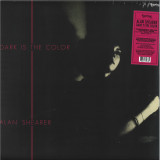
Favorite Recordings presents Dark Is The Color, the first LP by Alan Shearer reissued on vinyl for the first time. Despite being initially composed and produced for the French library label PSI, this rare
and obscure in-demand gem from 1985 sounds retrospectively like a proper album with great coherence and sophistication all along. Indeed, these 11 tracks will delight synthesizers addicts. Expect deeply emotive instrumental compositions, with ingenious analogue sequencing on stimulating chord progressions. The result is a highly retrofuturistic album, sometimes almost anticipating 90's videogames
scores. Just imagine Wally Badarou in a bunker with Talking Heads watching New York 1997 from John Carpenter.
Composed mostly step by step on a Sequential Pro-One synthesizer, Dark Is The Color is the product of the exciting state of mind from the 80's era with new sounds, new tools and new trends on the music spectrum. Influenced by bands like Talking Head or Japan, the sirens of the new wave scene strongly resonate here with Alan Shearer's familiarity and craftmanship with synthesizers.
Back in the days, Alan Shearer aka Frédéric Viger was working for his father’s music label, “Musique Pour L'image”, and their sublabel “PSI”. He started with Marathon Life under his real name before taking the Alan Shearer monitor. These records were produced for radio, TV and cinema industries but as well for companies’ internal communication. They represented a real investment from the label and these catalogues are usually full of amazing music from great artists such as Martial Solal, Vladimir Cosma, Joël Fajerman, Harlem Pop Trotters and even Manu Dibango.
About his musical illustration process, Alan Shearer tells: "Soundtracks are indeed my biggest influences and I'm a real fan of American composers as Jerry Goldsmith or Elmer Bernstein. I've always considered soundtracks as the new classical music or classical music of our century. There is a real state of mind producing music for illustration: you have to stick to the video. You should not tell what the image is saying but accompany what it is saying. You have to find a unique link, people always told me music should not be noticed for itself in a movie, that's what makes it good.”
out of Stock
Last delivered 3 years ago available to reorder, subject to availability