A much welcomed reissue of the 1978 Idris Muhammad gem 'Boogie To The Top'. Released a year after, arguably, Idris' most well-known anthem, 'Could Heaven Ever Be Like This' the similarities in style and composition are clear. Expertly produced, rich instrumentation, expansive drum fills, gospel tinged full-bodied vocals, all the while epic and life affirming in it's nature - what more could you want
Young Pulse steps up on the b-side, to add his own subtle touches and tweaks to the original. Looping the guitar and echoing out the vocals whilst working in more of the synth lines. The addition of a crisp clap and extra percussion add an element more vibrancy into this mix, keeping the original feel intact whilst revitalising it for 2018.
Another much welcomed reissue of the late 70's funk laden, disco two tracker from Splendor. The A side 'Take Me To Your Disco' is emblematic of disco records from that golden era where big bands and big budgets were rife. Yet there's an interplanetary twist to this one, with the mysterious, eerie, spacecraft sounding intro paving the way for a tale of extraterrestrials wanting to get down at one of planet earths discos. You can tell this came from an era were disco really was taking over Flip it over and you've got the mighty Special Lady. With Philip Bailey, of Earth, Wind and Fire fame, on production his style comes through strong in the vocal arrangement with the level of feeling and power he squeezes out of each voice. A chance to add these two anthems to the collection!
After releasing their Yantar LP digitally last year, Hell Yeah now serve up a much anticipated vinyl version of Richard Somerville and Craig Wilson's perfectly horizontal sounds. It features two of the superb originals with remixes from The Beat Broker and Los Gatos Escobar.
Somerville & Wilson have appeared on ISM Records, DWDK (Danny Was A Drag King), Paper Records and Music for Dreams and count the likes of Tensnake and Gerd Janson as fans of their laidback and charming grooves, and this EP is a real slab of heat that will surely sizzle souls across the world this summer.
First up, The Beat Broker proves he is on fire right now with a remix of the classic 'Melt'. His heart swelling remix has impossibly mellow chords ringing out into a yellow-orange sky as melodies rise and fall like a yacht bobbing on gentle waters. It's a blissed out musical sunset of the highest order.
Then comes Somerville & Wilson's 'Cero Gravity', eight minutes of cosmic synth workouts, yawning chords and long legged drums offset by soft acid. Drenched in reverb and rippling out in all directions, it's a warm musical rush that keeps washing over you until your soul melts away.
From New York, Los Gatos Escobar duo offer a more driving but just as tropical remix of 'Yantar' with big rubbery drums, zoned out chords and smeared pads. It's beautifully innocent and honest, heartfelt and meditative music that encourages you to escape to a seaside paradise.
Last of all, a melted Space Edit of Yantar is drowned in saturated chords, scorched pads and heat damaged keys that leave you adrift in a sea of sumptuousness.
Music doesn't come much more majestic, melodic and mellow than this.
The tenth release on Miles Sagnia's AER, marking the tenth year since the labels inception. This time round, a more hypnotic dancefloor sound encapsulates the artists mindset. With previous releases on Applied Rhythmic Technology (ART), Aesthetic Audio, Ornate Music, Common Dreams, amongst others. Together we glide into the pacier textures, where moments of intensity meet serenity......
We are happy to introduce a new release and a new project from Ben Vedren and Chez Damier; a new collaboration that has been in the making for some time now. Side AA1 presents a unique sound in its vibe, kind of a minimal track. The French discussion/vocal in the background adds another dimension. You don't need to speak the language to understand what's going on, but you must wonder at some point: Do I understand French or is it the music that made me understand them An "organ" sound intervenes towards the end bringing power and light to the hall. It's eleven minutes of pure music! While "AA" is composed of two different remixes of a different track, 'Berlin Nights in Paris' It can probably be called the House anthem. It starts strong with some acid sound and is filled with a lot of wonderful elements. Like a gourmet meal, you wonder if the track shouldn't have been at least three times longer to satisfy the gluttony of the listen. The Techno remixes of the track. It's a perfect example of Detroit meets House. Techno track can, with no doubt, feed and drive the dance floor. No need for more than five words to describe it - it's a serious Techno track.
J Colleran's majestic lead single 'bERA' began as a simple experiment using pianos and arpeggiators that slowly developed into a shimmering elemental piece. The coinciding video, directed by Gray was inspired by the photography series by Anton Polyakov who documented the people of Transnistria, an independent state affected by the constant intimidation of military conflict.The film shows the slow shifting balance of power from physical force to the over bearing emptiness of a room. Gray describes the featured bodybuilder flexing to a visible lack of audience as 'a shimmering golden symbol of power and also a fragile vessel shaped around a trauma. The presence of a long gaze and the rapid deterioration of strength reveals a true identity.Recent quick-fire single 'O+SOH' served as a transitional primer for the Irish producer and classical pianist, forming the perfect base from which to launch 'Gardenia' — a sweeping experimental soundscape inspired by childhood memories and the natural beauty of his native Ireland.
Winter thaw marks the return to Furanum of Uncto, the Silesian dyad Domink Muller and Rafal Furst, with their first full release of collaborative material since 2013's seminal FU009. Like its predecessor, Unctuous offers four cuts of viscerally engineered and rhythmically exacting dystopias, each ably situated within a striking 'synth-etic' narrative. It is this latter aspect of each arrangement that perhaps most noticeably demonstrates the pair's singular and evolving approach to composition, born out in the calculated emphasis on hardware-based expressionism.
The opening title track stands as a testament to the above: while deceptively sparse at the outset, its ponderous advance, both heavyset and indomitable as it gathers pace, is framed in the midst of an unfolding panorama of stark analog wails. Further interspersed with resonant timbres more akin to the vocalizations of some hell-beast luring its prey, the eponymous behemoth ingratiates its listener, beckoning submission to its will with the promise of exhilaratory assimilation. Such a hive-mind state attained, exhilaration does follow, yet so does a concomitant loss of agency, leaving one thoroughly subjugated and enslaved to its cadence. Perhaps as a manifestation of dramatic resistance to such a fate, 'Trust No One' daringly defies the impositions of its predecessor. Instead, it animates and emboldens the beholder through its rhythm, ineluctably driven by a sense of accelerating linear intensity. Thus arriving at a climactic percussive build whose isochronal blows shatter any remnants of doubt, angst transforms into raw conviction as one is propelled into a delirious realm of solipsistic certitude.
Situated amidst the foreboding sound of blade clashing with blade, 'Cold Knife', on the other hand, is driven by an entirely disparate off-beat progression. As its anticipatory rhythmic thrusts cut through an advancing fog of shivering drones with frigid precision, one seemingly undergoes a cyclical plunge into a state not unlike one marked by the visceral dopaminergic rush of contact with extreme cold. Finally, 'Metzgers Tochter' ('Butcher's Daughter') closes the EP with a ruthless exploration of the contrast between the gruesome and the feminine. In a similar way to the opener, the track's meter is staggered and undulating, yet also steadily punctuated with breathing room between its crushing blasts. Such scenery thus serves as a canvas for the expression of the titular character's 'beauty and the beast': a paradoxical synthesis of attraction and aural brutality, held in tension by the unceasing throbbing of the composition's beats.
Mastered & cut by CGB at Berlin's Dubplates & Mastering,
Second Circle is proud to announce it's tenth release to date with a new EP from L.A. producer Benedek. 'Earlyman Dance' was recorded at Benedek's studio in Koreatown, Los Angeles and fuses mechanistic rhythms and synth work as well as live percussion and trumpet played by friends Chris Parise and Anthony Calonico.
.
With five vibed out compositions of coyote jazz, dance floor fusion and canyon bangers, 'Earlyman Dance' is an ode to the urban and natural landscapes of LA, late night noir and early morning sunrises, accented with Benedek's signature chord progressions, bouncing bass lines, meticulous drum programming and dubbed out trumpet.
New Orleans Anthem With Great Lazy Vocals And An Insanely Brilliant Instro On The Flip From The Goldband / Hollywood Stable Which Is The First Cut, Not From The Later Issue.
Released in solidarity with Tiga's anti-tech house crusade, a silent campaign fought everyday on the streets of your hometown, 'Blaze' finds Russian crypto-whiz Dimitri Veimar still dancing with the rawer-than-the-rawest-dog electro that's brought him to the dizzying heights of the mid-tier crags of Mt. Turbo Mountain. Throwing his weight behind what some in the media are probably already calling 'Tiga's War' was absolutely necessary following the events of a recent gig in Moscow. Veimar opened the night by playing no fewer than three Tiga tracks, which anyone who's read Tiga's Taboos can tell you is definitely a Tiga Taboo. Deeply immersed in the practice of pouring his own mineral water, Tiga ignored the hootin' and hollerin' of the VIPs crowding the DJ booth (including Dennis Miller and Diego Maradona), and proceeded to play a set entirely comprised of recordings of every embarrassing thing Veimar had ever said in his life. Four hours later, an emotionally-shot Veimar collapsed into Tiga's arms, with the magnanimous label boss whispering, 'I forgive you, Dimitri' into his ear. The release also features a 'broken techno' remix from mysterious European producer Florian Kupfer, who made us sign a Non-Disclosure-Agreement dictating that we can only describe him as 'mysterious,' 'enigmatic,' and/or 'European,' so we'll have to let the music do the talking.
Sharif Laffrey can charm the snake out of any basket. This is his first offering for the ESP Institute. Side A's Tangier is a long drawn-out exercise, an endurance test of the highest order. Over the span of some thirteen minutes, elements bob and weave intermittently and layers overlap haphazardly—the type of exciting dynamic that's born out of restriction—as if putting down a live jam without enough hands to work the console, yet Sharif perseveres. As touch and go as this arrangement may be, there is something that undoubtedly glues it all in place; the combination of his massive rolling 16th-note bassline and his tough-as-nails drumkit is so good that, upon first listen, we spat out our tea and insisted on its release. On side B, Everything Is Nice carries on with loose arrangement, dirty production and layers of inexplicable spoken- word samples (a Sharif calling card by now) but this time we're lead to a melancholy place, the blue comedown to Side A's antagonistic trial. With his ESP Institute debut, Sharif leaves you mentally unhinged, as if you've smoked something interesting and arrived bewildered in some Saharan labyrinth. These two songs will guide you through the medina to score the black meat.
Micah Shemaiah Teamed Up With Fruits Records' Studio Band The 18th Parallel Earlier This Year To Produce The Unanimously Acclaimed roots I Vision' Album On Evidence Music Label. The Album Hit Every Charts In The Reggae World And Is Seen As One Of The Best Effort Of 2018! In Collaboration With Evidence Music, Fruits Records Is Proud To Release On 12' Maxi Vinyl Two Of The Toughest Tunes Of The Album In Their Eight Minutes Extended Versions : A Side Features Heavyweight Stepper zion Trod' And B Side Gives The Rub A Dub Anthem soul Rider'. This One Is A Sound System Must Have! Killer Tunes + Ultra Heavy Pressing In A Early 80's Jamaican Simmons Style!
The sun does not move. The sun has never seen a shadow. - Leonardo da Vinci
Paul and Alessio of Possible Futures believe that some essential fractions in the history of music need to be transmitted in new ways to budding generations. As we seek to bring together a new educational system around contemporary music, we urge anyone with homologous intentions to get in touch.
Over the last 15 years, Possible Futures have been witnesses to the wildest fauna and flora the great nocturnal jungle has to o er.
Possible Futures source their inspiration from the many shades of color that co-exist between black and white on the great designer's palette.
It is through their open and eclectic selections that Possible Futures turn the dancefloor into spaces of self-discovery and musical trance-en-dance.
Possible Futures believe that the eternal act of dancing is one of the most active form of contemplation. Facing our own selves in the mirror of movement, we realize that we indeed are reflections of one another at all times. Compassion forms and in turns gives way to kindness and love.
For this third record, Argentinean expert producer Leonel returns with two long pieces of poetry. Releasing on June 15th, this third edition in the Possible Futures catalog bridge spring into summer in a most gracious manner.
We Cherish Harmony, PF
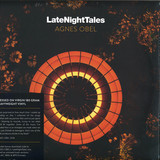
to Me, Sounds Have Always Been More Interesting Than Words,' Says Agnes Obel. i Love It When The Voice Becomes An Instrument And You Almost Forget It's A Human Voice.' Never Is This More Apt Than On This Beautifully Programmed And Bewitching Selection Of Music.
Agnes' 2010 Debut Album Philharmonics Went Platinum In France And Belgium And, Unsurprisingly, Quintuple Platinum In Her Native Denmark, Where She Also Won Five Danish Music Awards (equivalent To The Brits) In 2011. The Follow-up Aventine, Released In Late 2013, Was Imbued With The Same Measured Calmness As Her Debut. It Went Platinum In Belgium And Gold In Denmark And France.
For The Mix You Have In Your Hands It Feels Almost As If Agnes Has Scoured The World Looking For Kindred Spirits - Or Kindred Songs. There's A Quietude About It All, The Antithesis Of A Rush Hour, Like A Frozen Lake On A Sunday Morning. This Is Aided By A Veritable Cornucopia Of New Obel Material, Including A Haunting Reading Of Danish Song 'glemmer Du', Inger Christensen's 'poem About Death' Set To Original Music, And An Agnes Original, 'bee Dance'.
Among Them, There's The Enigmatic Jamaican Singer Nora Dean Who Weighs In With The Hypnotic And Slinky Duke Reid Production, 'ay Ay Ay Ay (angie-lala)' And The Sparse, Sardonic 'party Girl' By Michelle Gurevich, So Good It Inspired The Eponymous French Movie. There Are The Plangent Voices, The Bulgarian Folklore Choir, Nina Simone, Ray Davies And Agnes Herself, Ringing True. Somehow, Ms Obel Makes Even Makes The Electronic Tracks Bow To Her Needs As With Yello Whose 'great Mission' Is More Martin Denny Than Underworld And Cult Greek Composer Lena Platonos' 'bloody Shadows From A Distance' Pulses Gently Rather Than Throbs And Can's Recently Rediscovered 'obscura Primavera', Unusually Hushed.
"i Was Surprised At How Much Time I Ended Up Spending On This. I Collected All The Songs Together With My Partner Alex And We Just Spent Time Listening To Records, Trying To See What Would Fit Together. Some Of The Music I've Included Here Is On Mixtapes We Made When We Were Just Friends As Teenagers. Each One Of The Tracks Produces Stories In My Head." - Agnes Obel, February 2018
out of Stock
Last delivered 2 years ago available to reorder, subject to availability
It's been over 10 years since the release of Gui Boratto's breakthrough full length debut 'Chromophobia'. As to what its title suggests, he shook up the techno game with a contrast of lushly coloured minimal grooves and melody, whilst many will recall that the album included the highlight single Beautiful Life' which became a dance floor anthem for that era. Four albums in and countless EPs and remixes under his belt, the Brazilian producer's unique savoir-faire in carving out a functional album out of diversely routed singles and features is back at it on his fifth studio LP, 'Pentagram'. Here Gui Boratto lays down a nuanced 12-track narrative that reinvigorates his signature sound into a refreshingly different perspective that feels all too familiar - including the return of Beautiful Life' vocalist (and Gui Boratto's wife) Luciana Villanova on the single "Overload".
Through his signature kaleidoscopic approach, Boratto delivers an album built as a far-reaching hub-and-spoke system, broadly inclusive as can be. From the opening cut, 'The Walker' - hot on the trail of Tears For Fears 'Elemental' (one of Boratto's "favourite 80's bands") - to the hi-NRG euphoria of 'Forgotten' and its pounding tech alter ego 'Forgive Me'. "I was going into 2 different directions", Boratto says, "the typical indie- electronic-rock' Boratto kind of production like It's Majik' or Like You' and a much more techno approach." He goes on, "I decided to split them into two twin sister songs. When I play live I always put these two songs together."
The Brazilian Producer further embraces the pop-friendly essence of his past work on tracks like 'The Phoenix', featuring vocalist Nathan Berger, and 'Overload', both melding acidulous synthlines with laser-precise breaks, vox hooks and drops calibrated for extended radio and club use, although sieved through his distinctive rainbow-hued musical prism. For the symbolists out there, the album's pared-down closer '618' duration accidentally happens to equate the proportions of the said pentagram. "Coincidence" Boratto questions, and capsulises, "not so ufanista and supporter of Brazilian neo-concretism, but I guess the brazilian sculptor Lygia Clark also inspired me a lot. Not the meaning of her sculptures, but the shape of the hinge of most of her work. I've wanted to transmit the scientific pentagram's point of view. It's not a religious kind of thing."
Whereas 'Spur' (a field-tested 808 and 909-heavy "purist track", "very, very old school" Boratto insists) and 'Alcazar' are sheer smooth-edged four-to- the-floor epics, the album also shares its lot of startling moments, such as with the John Barry'esque 'Scene 2' (with a hint of Amon Tobin, 'Easy Muffin' style, throw in) and its refined string-laden buildup, 100% fitted for a 007 opening credit sequence, or with 'Hallucination' (feat B.T.) and the further James Holden-ish title-track 'Pentagram' (think 'The Idiots Are Winning'), "one of those exercises I did when I got my Buchla modular synth" Boratto analyses, "I think I've used more then 30 different snares, with different delays and reverbs. The whole song is alive". And so is 'Pentagram' in its entirety: alive and definitely just as manifold and hopeful as its architectonics are the stuff of science and dreams all at once.
Es ist zehn Jahre her seit der Veröffentlichung von Gui Borattos bahnbrechendem Debütalbum - Chromophobia . So wie der Titel vermuten ließ, war das Album mit seinen kontrastreichen Minimalgrooves und den üppig gefärbten Melodien ein Schocker im besten Sinne. Ihr erinnert euch sicher noch an die Hit-Single - Beautiful Life , eine Dancefloor-Hymne aus dieser Zeit. Nach vier Alben und unzähligen EPs und Remixen ist das einmalige Savoir-faire des brasilianischen Produzenten, aus vielfältigen Singles und Features stimmige Alben zu schaffen, auch auf seinem fünften Studioalbum - Pentagram zu hören. Hier legt Gui Boratto ein Zwölf-Track-Narrativ vor, das seine Handschrift auf erquickende Weise wiederbelebt. Wiederbelebt wird auch die Stimme von - Beautiful Life (die der Frau Gui Borattos gehört) auf dem Stück - Overload .
Durch seinen charakteristisch kaleidoskopischen Ansatz liefert Boratto ein Album, das gebaut ist wie die Speichen deines Fahrrads, von dem Opener - The Walker - direkt auf der Spur von Tears For Fears - Elemental (einer von Borattos - favourite 80's bands ) - zur Hi-NRG-Euphorie von - Forgotten und seinem stampfenden Counterpart - Forgive Me . - Ich bin in zwei unterschiedlichen Richtungen gegangen , sagt Boratto: - den typischen ,Indie-Electronic-Rock'-Weg wie in - It's Majik oder - Like You und den Techno-Weg. Er fügt hinzu: - Ich hab mich entschieden jedem Track seinen Zwillings-Track an die Seite zu stellen. Immer wenn ich live spiele lege ich die zwei Stücke zusammen.
Der brasilianische Produzent erschließt weiter die Pop-Essenz seiner vergangenen Arbeit auf Tracks wie - The Phoenix (feat. Nathan Berger) und - Overload . Beide kombinieren zwitschernde Synthi-Melodien mit lasergenauen Breaks, Hooklines, Drops und sind wie gemacht für die Rotation und den Club. Und für die Symbolisten da draußen: die Länge des reduzierten Closers - 618 beträgt zufälliger Weise genau die Proportionen des besagten Pentagramms. - Fügung , fragt Boratto und fasst zusammen: - Ich bin kein Anhänger des brasilianische Neo-Konkretismus , aber ich glaube die brasilianische Künstlerin Lygia Clark hat mich sehr inspiriert. Nicht die Bedeutung ihre Skulpturen aber die Form der meisten ihrer Arbeiten. Ich wollte den wissenschaftlichen Blickwinkel auf das Pentagramm übersetzen. Nicht im religiösen Sinne oder so."
Während - Spur (ein erprobter - purist track auf der Basis von 808 und 909, - sehr, sehr old school , wie Boratto betont) und - Alcazar glatte Vierviertel-Epen sind, hält das Album auch Überraschungsmomente bereit. Z.B. das John Barryschen - Scene 2 (auch eine Spur von Amon Tobins - Easy Muffin ist darin zu hören) und seinem Streicher-Aufbau, der hundertprozentig geeignet wär für eine Eröffnungssequenz in einem Bond-Film. Auch - Hallucination (feat. B.T.) oder der James-Holden-hafte Titeltrack - Pentagram (wir denken da an - The Idiots Are Winning ) wäre da zu nennen. - Einer dieser Übungen, die ich gemacht habe, als ich meinen Buchla-Modular-Synthesizer bekommen habe, war , erinnert sich Boratto, - mehr als 30 verschiedene Snares, Delays und Reverbs zu verwenden. Der ganze Song sollte am Leben sein. Und so ist - Pentagram im Ganzen: lebendig und sicher genau so vielfältig wie sein Bauplan, der auch der Wissenschaft und den Träumen zugrundeliegt.
out of Stock
Last delivered 3 years ago available to reorder, subject to availability
They don't get much more anthemic than Idris Muhammad's 'Could Heaven Ever Be Like This' and who better to rework it than edit royalty, Late Nite Tuff Guy. Subtle in his touches yet incorporating a more DJ friendly, dancefloor orientated beat and tension building intro which teases elements of this classic, before that instantly recognisable bass riff and staccato guitar chords come into play.That subtlety is key when it comes to handling a record as epic as this, elements are accentuated and looped, delicate effects are woven in, but the soul and feeling of Idris' music is lovingly maintained by LNTG.
And for the purists out there, the flip houses the original mix so you've got two paths to heaven to choose from.
out of Stock
Last delivered 2 days ago available to reorder, subject to availability
Bluestaeb's Evolution From A Beatmaker To A Producer Is His Sophmore Album everything Is Always A Process'.
He Is One Of The Key Figures Of A New Generation Of Up And Coming Hiphop Beatmakers, Who Have Emancipated From Genre Thinking And Instead Merge Old School Aesthetics With A New School Attitude And Organic Instrumentation.
Everything Is Always A Process Re-iterates Bluestaeb's Overall Approach To Life (and Thinking), But Also Has Direct Reference To The Making Of The Album Itself, Which Began With Moving From Berlin To Paris In 2015 In The Search Of New Influences And A New Creative Environment.
Created Between 2015 And Early 2018, Eiaap Embodies The Process Of This Transition - As Well As Collaboration With Instrumentalists And Vocalists From All Over The World And Recording In Different Studios In Paris, London & Berlin.
"meeting All Those Musicians And Trying Out New Ways Of Producing By Using Real Analogue Synths, Rhodes, Drums And Percussion Etc. Made It Possible To Overcome The Creative Boundaries Of A Home Studio With Just A Midi Keyboard" / Bluestaeb
Influenced By Madlib's "shades Of Blue" And Trained In African Drum Techniques Such As Djembé And Daruka, Bluestaeb Had Been Crafting His Own Beats Since His Teenage Years And Gradually Found His Sound Identity Through Experimenting With Hiphop And Jazz - First To Be Heard By A Broader Music Community In 2013, When He Released His Debut Album "1991 Extraterrestrial" (radio Juicy). Since Then The Prolific Young Artist Has Released Numerous Solo And Collaboration Projects ("b.l.u.e. Friday" In 2015 And - sidekicks With S. Fidelity In 2016). In 2016, He Produced Collaborative Album "lit - Lost In Translation With Rapper Juju Rogers, A Keen Manifesto Against Racism, Xenophobia And The Rise Of Anti-heroes Such As Donald Trump.
Today, Bluestaeb Lives And Works In Paris And Berlin And Is Set To
Release His Third Solo Album everything Is Always A Process', A
Smooth Neo Soul-induced Epic Featuring Artists Such As Noah Slee, Harleighblu And Melodiesinfonie, Via Jakarta Records In 2018.
Shunter, the new album by the Berlin-based duo Driftmachine, is their most ambitious work to date. Although instantly recognizable, featuring their trademark Kosmische and Avant-garde sounds, it also presents a new journey into abstract and hallucinatory worlds. Filled with eerie textures, their electronic visions are darker and more vaporous than ever.
Driftmachine's fourth album (also the fourth one for Umor Rex) offers a new perspective on their ample sound spectrum and systemic narratives. Shunter overlaps and mutates their post-industrial-dub motives. It was conceived and produced in search of a very different kind of imagery, with sections of noise and field recordings intersecting with analogue sounds, a mixture of contrasted fragments, where the usual creative process of modular-synthesis leads Gerth and Zimmer to the discovery of a dark, hazy and diffused experience. There is a protean quality to the rhythmic elements, with tempos constantly contracting and expanding, a departure from the mono-beat-rhythms of "Nocturnes" and "Colliding Contours". The first half of Shunter is made of four pieces named "Shift", although individually separated, they are conceptually linked and can be understood as a sort of score. Imagine a late stage of the industrial revolution, with the interaction between heavy machinery and human beings. The second half of the album is not completely separated, but it has three other substantial melodic moments. Somewhere between the hauntological and the realms of archive-music, a huge range of subterranean beats and distinct patterns dotting the landscape of early electronic and post dub music.
All songs written & produced by Driftmachine (Andreas Gerth & Florian Zimmer), Berlin.
Mastered by Rafael Anton Irisarri. Design by Daniel Castrejón.
t's time for magaritas. Dresden's master of the sampler Alexander Scharf chops up cheesy germanness for greater good and varying experiences: Schlager-upcycling it is. »Nur mit Dir« is a lovely summer day's theme, the anthem of freshly found or long lasting love, the hymn for the night with your loved one. »Ode an die Fröbbe« is the morning after. The morning after the morning of too much togetherness: Honestly weird and weirdly lovable. In the end »Grünalge Christian« keeps it all together. Thank you, Christian. Thank you, Schleander.
The remarkable thing about BELP's new album is its two-dimensional function. It works both on a loud and a quiet volume. Some tracks would go down well as a club track, like opener 'Travelling Thru Galaxies'. This track brings back memories of the best work released on the Hyperdub label, with it's fine combination of synths and irresistible, dubby beats. Elsewhere, 'Off Ending' might start off as 'dancehall-but-not-quite dancehall' track but when half way the synths kick in they change the feeling of the track to a more cerebral level.
BELP is the artist name of Sebastian Schnitzenbaumer. Born in Munich, he partially grew up on the Seychelles islands off the coast of East Africa. Educated in classical piano, those two gravitational poles, European and African influences, form the basis for his musical development. Currently he has close ties to the (dub) Sausage Studio in Hackney, London. In his hometown Munich, the Bavarian capital, BELP took a central role in a series of discussions and events aiming to improve the image and possibilities of Munich, which to his regret is a predominantly posh and hedonistic city where optimistic and uplifting music take central role.
In different guises Schnitzenbaumer works as a much needed antidote. Since 2013 he runs the Schamoni label, focusing on supporting local artists like Leroy and Protein. Its sublabel Jahmoni is responsible for recent works by international artists like Aaron Spectre and DJ Marcelle/Another Nice Mess.
BELP's music is dark, serious and layered. His love for dub and dancehall shines through in his broken beats. At the same time the synth layered tracks give the album an atmospheric feeling.
This also is what makes this album essential: it's refusal to be pigeonholed. The last track on side A, 'By Beauteous Softness', is an a cappella rendition of a 17th century Henry Purcell piece, beautifully sung by Alexander Schneider. This track is preceded by 'Transmission', which is a brilliant abstract work, sounding like wind closing on you from all sides. And you can sip a cocktail whilst listening to the jazzy 'Time And Again' (BELP once worked as a jazz pianist).
It's clear to hear BELP took a long time recording this album. Every note, synth, drum beat, is carefully placed. But what the album might lack on spontaneity it more than compensates this with its sheer musical beauty. This also reflects on the abstract sleeve, like 'Elephants' designed by BELP himself.
Enjoy this album on big speakers, as background music or simply on headphones. There will always be new sounds and layers to be discovered!
Music and Poetry of the Kesh is the documentation of an invented Pacific Coast peoples from a far distant time, and the soundtrack of famed science fiction author, Ursula K. Le Guin's Always Coming Home In the novel, the story of Stone Telling, a young woman of the Kesh, is woven within a larger anthropological folklore and fantasy. The ways of the Kesh were originally presented in 1985 as a five hundred plus page book accompanied with illustrations of instruments and tools, maps, a glossary of terms, recipes, poems, an alphabet (Le Guin's conlang, so she could write non-English lyrics), and with early editions, a cassette of field recordings' and indigenous song. Le Guin wanted to hear the people she'd imagined, she embarked on an elaborate process with her friend Todd Barton to invoke their spirit and tradition.
For Music and Poetry of the Kesh, the words and lyrics are attributed to Le Guin as composed by Barton, an Oregon-based musician, composer and Buchla synthesist (the two worked together previously on public radio projects). But the cassette notes credit the sounds and voices to the world of the Kesh, making origins ambiguous. For instance, The River Song' description reads, The prominent rhythm instrument is the doubure binga, a set of nine brass bowls struck with cloth-covered wooden mallets, here played by Ready.' According to writer and long-time friend of LeGuin, Moe Bowstern (who pens the liners for the Freedom To Spend edition of Kesh), Barton built and then taught himself to play several instruments of Le Guin's design, among them the seven-foot horn known to the Kesh as the Houmbúta and the Wéosai Medoud Teyahi bone flute.' Barton's crafting of original instruments lends an other-worldly texture to the recordings of the Kesh, not unlike fellow builders Bobby Brown and Lonnie Holley. Bowstern notes, Other musician / makers have crafted their own Kesh instruments after encountering the earlier cassette recordings that accompanied some editions of the book.' Both Barton and Le Guin are sensitive to the sovereignty of indigenous Californians and were careful not to trample the traditions of the Tolowa people who lived in the valley long before the Kesh. You research deeply, and then you bring your own voice to the table,' said Barton. Within the Kesh culture, the numbers four and five shape the lives, society and rituals. Barton composed loosely around these numbers, patiently listening to the land of Napa Valley for signs and audio signals from the natural elements. Todd incorporated ambient sounds of the creek by Le Guin's house and a campfire they built together. The songs of Kesh are joyful, soothing and meditative, while the instrumental works drift far past the imaginary lands. Heron Dance' is an uplifting first track, featuring a Wéosai Medoud Teyahi (made from a deer or lamb thigh bone with a cattail reed) and the great Houmbúta (used for theatre and ceremony). A Music of the Eighth House' sends gossamer waves of the faintest sounds to float on the wind.' Like the languages invented in the vocal work of Anna Homler, Meredith Monk, and Elizabeth Fraser, the Kesh songs and poems play with the shape of voice.
The Music and Poetry of the Kesh cassette was meant to accompany and enhance the experience of reading Always Coming Home. Presented in this edition as a long-playing album, where only traces of the book linger (the jacket offers some of Le Guin's illustration, and a letterpressed bookmark featuring the the narrative modes of western civilization and the Kesh valley is included), the music alone breaking the silence of what might be. It can transport—offering a landscape for imagining a future homecoming. One in which we are balanced, peaceful, and tend to the earth and its creatures. A line from the Sun Dance poem reminds us, We are nothing much without one another.' Freedom To Spend gives new life to the recordings of the Kesh people in the first ever vinyl edition of Music and Poetry of the Kesh, out on LP, and digital formats on March 23, 2018. The LP will include a deluxe spot printed jacket with illustrations from Always Coming Home, a facsimile of the original lyric sheet, liner notes by Moe Bowstern, multi-format digital download code and a limited edition bookmark letter pressed by Stumptown Printers in Portland, OR.
This past Monday, January 22, Ursula passed from this realm to another leaving a life spent building and exploring other worlds while challenging social concepts of the real word she inhabited.
Freedom To Spend had been working under Ursula's enthusiastic endorsement and with Todd Barton, her musical collaborator on Kesh, to give the music that accompanied her 1985 epoch a new life. With the Le Guin family's encouragement to move forward with our planned release, we are humbled to play this small role in sharing Ursula's work.
As Pete Swanson, one third of Freedom To Spend, stated, Ursula's legacy is her work which transformed the world, and this is another piece of the universe that her imagination birthed becoming real.' Listen to A Teaching Poem / Heron Dance' below.
Giovanni Damico keeps amazing things coming and takes it with this release on the mighty label Kalakuta Soul Records to the next level. Joining forces with the mighty Gabriele Spagnuolo and Francesco Di Domenico on guitars and Saxophone, the italian boogie doctor brings to life three filthy stompers inspired by amazing artists from the african continent who have shaped what we now call (dance) music. To Fela's People is one of three stompers delivered for this joint teaming up with Mr. Villy Odili - Lead singer of the amazing nigerian band Villy and the extreme Volumes - who's precise lyrics and drifty voice joins forces with a charging afrobeat rhythm hailing from Giovanni Damico's bad ass laboratory. Afro Stomp and Baba on the other side come with the most furious drums and bassline one could ever imagine accompanied by a celestial instrumentation that hits the mind, the soul and the hips. Vital Sales Points: - Limited to 500 copies - Great feedback from Nomad, Lakuti and Antal
Oblique is proud to present it's second Various Artists EP by friends we have met years ago online.
Before we had our first releases, we would upload our music to Soundcloud and these guys were always on my radar to check instantly. Besides inspiring me, their comments and feedback were invaluable to my growth as a producer.
Fast-forward a few years and everyone has grown in their own way, with multiple releases, labels and parties to emerge. The platforms have changed, but the connection did not, hence the idea to reunite them on wax :)
The EP shows four different takes on hypnotic techno, starting with the driving and slowly morphing
"Radiate" from Kaelan, followed by the intense mindbender "The Nomad" from Antonio Vázquez.
On the flipside we go more atmospheric with Refracted showcasing his expert sound manipulation on "Uku Che". Ending the EP is the subtlely layered and ultra deep "Ditoan" from Alan Backdrop.
out of Stock
Last delivered 2 years ago available to reorder, subject to availability
For its seventh offering, Sol Power Sound taps into the pulse of the French Antilles for Tambours de Martinique, a blistering EP of original and remixed versions of rare, drum-centric dance floor workouts. Licensed directly from the legendary Martiniquan label Hibiscus Records, the EP features cuts by Eugène Mona and Max Ransay, two of Martinique's most storied musicians. With reworks by Spanish DJ and producer Kiko Navarro and the Sol Power All-Stars, this one will be in the record bags of discerning DJs all summer long.
The A side features 'Lizo' by Eugène Mona, an essential figure in the folkloric music of Martinique based on the bamboo flute, bèlè drums, and the island's specific variant of Antillean creole. Lizo was originally released in 1990 on Mona's Blanc Mangé Blan Manjé LP and is anchored by frenetic percussion, a driving bassline, and house-evocative key stabs. Kiko Navarro's remix takes an already dynamic cut to deep Afro-space with thumping drums and a bubbling synth-bass groove that will put dancers through their paces.
With its powerful combo of urgent brass and ensemble vocals, Max Ransay's 1988 recording of the traditional Martiniquan folk song 'Ti Kanno' fills the B-side. 'Ti Kanno' was previously recorded by Ti Émile, Ransay and Mona's legendary forebear. Full of surprises, Ransay's version is a sonic melting pot of hand percussion, horns, unexpected synth lines, and bass. The Sol Power All-Stars edit fills out the low-end thump and teases out the groove for maximum impact.
The War On Drugs announce their fourth full-length album, A Deeper Understanding, out August 25th on Atlantic Records. A Deeper Understanding is the band's first album since 2014's universally acclaimed Lost In The Dream, and their debut album with Atlantic. Following the Record Store Day release of the 11-minute Thinking of a Place,' The War On Drugs present the album's lead single, Holding On.'
For much of the three and a half year period since the release of Lost In The Dream, The War On Drugs' frontman, Adam Granduciel, led the charge for his Philadelphia-based sextet as he holed up in studios in New York and Los Angeles to write, record, edit, and tinker—but, above all, to busy himself in work. Teaming up with engineer Shawn Everett (Alabama Shakes, Weezer), Granduciel challenged the notion of what it means to create a fully realized piece of music in today's modern landscape. Calling on his bandmates - bassist Dave Hartley, keyboarding Robbie Bennett, drummer Charlie Hall and multi-instrumentalists Anthony LaMarca and Jon Natchez -- continuously throughout the process, the result is a band record' in the noblest sense, featuring collaboration, coordination, and confidence at every turn. Through those years of relocation, the revisiting and reexamining of endless hours of recordings, unbridled exploration and exuberance, Granduciel's gritty love of his craft succeeded in pushing the band to great heights.
Dubbed by Igloo Magazine as the 'Romanian Detroit electro/techno pioneer' and by the late Aaron Carl as 'the Romanian Underground Resistance himself', Andrew Red Hand from Romania's spiritual capital of lasi stands up as an unwavering militant of the underground, a true Detroit spirit possessed as Romanian humanoid!
From his early gigs throwing parties as one of the first generation DJs in lasi since 1997, ARH continues to break boundaries as part of the Romanian resistance scene and numerous time portals as they open around Europe. His blistering, mind-bending sets such as at Berlin's Tresor and Griessmuehle see the DJ with the red hand fuse pure Detroit electro and techno with the sounds of techno-bass, raw Chicago acid house, classics and futuristic beats. His mixes for Radio UR (Underground Resistance) and The Grid (Detroit Techno Militia) remain some of the best frequency transmissions to surface to air.
Armed with a Soviet Union reel to reel Majak 203, his scorching raw analogue and searing acid productions have been picked up by foundational Detroit labels such as Twilight 76, Matrix, Detroit Underground, Databass, Detroit Techno Militia, Cratesavers Intl, Visillusion as well as around the world from Holland's iconic M>O>S Recordings to 1Ø Pills Mate (Lobster Theremin), Bass Agenda and Land Of Dance. On his remix list includes work for Scan 7, Santonio Echois, Thomas Barnett, Sean Deason, Niko Marks, Six Foe, T.Linder and more while support from Anthony Shake Shakir, DJ Bone, Dave Clarke, DJ Godfather has been garnered for our sonic warrior... Beware of the Red Hand!
Electronic duo Spring Heel Jack return with a collaboration with the legendary American trumpeter and Pulitzer Prize nominee Wadada Leo Smith.Wadada was born in the Mississippi Delta and became immersed in the music of the great blues masters as a young musician. He then moved to Chicago and became an early member of the AACM alongside the likes of Muhal Richard Abrams, Anthony Braxton, Malachi Favors and Roscoe Mitchell. Recorded last year in London, this LP sees Smith's authoritative trumpet joined by Steve Noble's drums and Pat Thomas' piano, to make a stunning piece of aural theatre in six acts.
Presenting 'Envelope'. Album written, produced & mixed by Milan W. and pressed on 180g vinyl, by Ekster. Coming out on the 6th of June 2018, with foil-stamped cover-drawing by Gerard Herman. Mastered & cut by Helmut Erler at Dubplates & Mastering.
.
Milan W (AKA Milan Warmoeskerken) is an Antwerp-based musician. In 2015 he released the Slo Mo cassette, on local label JJ Funhouse. The Intact LP a year later. Compositions constructed from gentle, yet persistent, rhythms. Intricately textured downtempo echoes. Brain-dancing, rather than four-to-the-floor raving. 2017`s split with Ekolalis, for The Hague`s BAKK, made clear the direction Milan`s headed in. His contribution being a seventeen minute float. The kick largely removed. The textures cut-up, expanded and magnified. Envelope, for Ekster, builds on this work.
The harlequin turns the handle. The contraption sucks in air, and breathes. Blows out tone poems. Wordless ballads that soundtrack enchanted scenarios. Issues forth magic. A sorcerer`s apprentice casting its spell. Animating the inanimate. To everything a life. Sets the frozen fluttering. Pirouetting in red shoes. Illuminates what was dark. Astma sings a Gamelan lullaby. Summons comforting angels to a post-Industrial landscape. Glaasjes has Jazz ghosts inhabit an empty bar room. Spirits stealing excuse-me`s under its deserted spot. In Limbo amplifies their whispers. Lead soldiers court jewellery-box ballerinas behind shuttered shop fronts. On Heraldic Snippets, a tin infantry marches. Ten thousand men up to the top, and back down again. Keys make-believing that they are massed brass and fife.
The bellows pump, and the pipes all the while wheezing. An automaton philharmonic at the bidding of a steam-punk master. Analogue and digital. Clockwork and glitch. Malady finds sounds isolated, extrapolated, mutated. Orchestral`s organ-grinder moves with urgency, and alchemy. Spinning straw into gold. Snare rolls become bubbling mercury. Metallic, yet fluid. Racing at the speed of flight and escape. Slope is the music of water chasing through crystal caves. Slow Runner, a funeral crawl. Shoved into motion by a drama of strings remembered.
Like the charismatic Rat-Catcher of Hamelin, the harlequin turns the handle, and we bang the cup.
"After a deceptively quite 2017, Especial picks up the pace pace by welcoming back the peroxide, youth filled Fairplay (re)version and a 2nd EP of old-skool-meets-the-new-school flavoured House and Breaks to lock, jock and spin.
After the criminally overlooked 'How Do You Like Me Now' EP - how is Classic Version not a...classic...version - Junior gets back on the (lino) floor. The EP starts with a look north to the 'other city of 7 hills' that birthed a Warp'd British retake on House in his bleep-dub ode, End Of Love. The autobiographical title belies a forward approach with his trademark echobox kick'n'hats underpinning uplifting keys and nodding bleep finger solo.
Who to join the party then, than another man of mystery, Roy Of The Ravers. After his debut EP on sister label Emotional Response became a most played from Aphex et al, it is only right bring him to E'Special. His brooding, hoover rush Remix 1 heightens the vibes with a heads down bleeping half-steppa. Righteous!
The flip is given over to Junior's roots, bringing the hip-hopper back with the anthemic The Shazsquatch Goes Back Into The Woods. No shoc(k) horror here, just more upwardly mobile breakbeat meets UK techno licks. You can hear Fairplay at one with man and machine, pushing a sound that looks back but most definitely goes forward with 'Sunrise' on the mind.
To close is the swagger of EP title cut, Faxes From The Future. Hair of the (black) dog fuses a swinging break with proto-dub-meets-Giallo stylings to rework the senses and say, now is (still) the time!
A return to making the noise while keeping tongue planted firmly in cheek. What are u like Top. Buzz."
Tom Dicicco returns under his newly launched Veyg moniker with four mesmerising house cuts entitled 'My Sweet Soul' arriving on his eponymous vinyl only label Veyg Times.
Run Out Run founder Tom Dicicco's output includes ppearances on labels like Juju & Jordash's Off Minor, John Osborn's Dred Records, Anthony Parasole's The Corner and renowned Dutch techno staple Delsin. The British producer started producing under his Veyg alias earlier this year as a means of exploring more adventurous productions spanning house, techno, disco, and beyond. His second outing once again demonstrates how
versatile he is as a producer.
A great compilation can open the gate to another world. Who knew that some of the most exciting Afro-funk records of all time were actually made in the small West African country of Benin Once Analog Africa released the first African Scream Contest in 2008, the proof was there for all to hear, gut-busting yelps, lethally well- drilled horn sections and irresistibly insistent rhythms added up to a record that took you into its own space with the same electrifying sureness as any favourite blues or soul or funk or punk sampler you might care to mention.
Ten years on, intrepid crate-digger Samy Ben Redjeb unveils a new treasure- trove of Vodoun-inspired Afrobeat heavy funk crossover greatness. Right from the laceratingly raw guitar fanfare which kicks o Les Sympathics' pile-driving opener, it's clear that African Scream Contest II is going to be every bit as joyous a voyage of discovery as its predecessor. And just as you're trying to get o the canvas after this one-punch knock out, an irresistible Afro-ska romp with a more than subliminal echo of the Batman theme puts you right back there. Ignace De Souza and the Melody Aces' Asaw Fofor" would've been a killer instrumental but once you've factored in the improbably-rich-to-the-point-of-being-Nat-King-Cole-influenced lead vocal, it's a total revelation.
The screaming does not stop there, in fact it's only just beginning. But the
strange thing about African Scream Contest II's celebration of unfettered Beninese creativity is that it would not have been possible without the assistance of a musician who had been trained by the Russian secret services to "search and destroy" enemies of the country's (then) Marxist-Leninist president Mathieu Kerekou.
Already familiar to fans of the first African Scream Contest as a mainstay of ruthlessly disciplined military band Les Volcans de la Capitale, Lokonon André vanished in a cloud of dust at Ben Redjeb's behest with a list of names and some petrol money, only to return a few days later having miraculously tracked down every single name he'd been given. The source of this Afrobeat bounty-hunter's impressive people-finding skills - his training with the KGB - highlights the tension between encroaching authoritarian politics and fearless expressions of personal creative freedom which is the back-story of so much great African music of the 60s and 70s. Happily, in this instance, Lokonon was tracking the artists down to oer them licensing deals, rather than to arrest them.
Where some purveyors of vintage African sounds seem to be strip-mining the
continent's musical heritage with no less rapacious intent than the mining companies and colonial authorities who previously extracted its mineral wealth, Samy Ben Redjeb's determination to track this amazing music to its human sources pays huge karmic dividends.
Like every other Analog Africa release, African Scream Contest II is illuminated by meticulously researched text and eortlessly fashion-forward photography supplied by the artists themselves. Looming large - alongside Lokonon André - in the cast of biopic-worthy characters to emerge from this seductive tropical miasma is visionary space-nerd Bernard Dohounso, who laid the foundations for Benin's vinyl predominance by importing and assembling the turntables that would play the products of his Bond villain-acronymed pressing plant SATEL, a factory that would revolutionise the music industry in the whole region.
The scene documented here couldn't have been born anywhere else but in the Benin Republic , and the prime reason for that is Vodoun. It's one of the world's most complex religions, involving the worship of some 250 divinities, where each divinity has its own specific set of rhythms, and the bands introduced on the African Scream Contest series and other compilations from that country were no less diverse than that army of dierent Gods. At once restless pioneers and masters of the art of modernising their own folklore, the mystic sound of Vodoun was their prime source of inspiration.
One especially irascible Vodoun-adept was Antoine Dougbe, who styled himself The devil's prime minister' while turning ancestral rhythms into satanically alluring modern beats. As Orchestre Poly-Rythmo songwriter Pynasco has observed sagely, Evil is not elsewhere, evil extends into the house'. And African Scream Contest II is a gloriously cinematic road-trip through an undiscovered realm of music lore whose familiarity is every bit as thrilling as its otherness.
For the last decade, Argentina has become the epicenter of a musical explosion that characteristically blends folk music from the surrounding Andes and electronic beats. The artist arguably responsible for its emergence on a global platform is one named Chancha Via Circuito- a Buenos Aires native named Pedro Canale whose first album Rodante (2008) opened the floodgates by pushing the borders of Cumbia listeners weren't even aware existed. He's gone on to release other highly acclaimed albums such as Rio Arriba (2010), which Resident Advisor described as 'aural magical realism', and Amansara (2014), which catapulted him onto acclaimed international stages and received praises from Pitchfork to the New York Times.
Four years later, in the midst of some very notable global turbulence, Chancha Via Circuito brings us his highly anticipated new album Bienaventuranza- a word that essentially means bliss. Replete with his signature touches of Andean instruments (think lots of flute and charango), the folkloric elements on this album blend fluidly with danceable and digestible electronic beats. He's been cooking this record slowly, with unprecedented amounts of care and in a much more collaborative manner than his past albums.
Appearing on the album are heavy hitters in the digital cumbia scene, including Mateo Kingman, Kaleema, and Lido Pimienta, all of whom contribute their highly distinguishable sounds to the natural flow of the album. Most of these collaborations came about almost effortlessly. La Victoria is a track that blends cumbia, dancehall, and a bit of mysticism- carried by Lido Pimienta's luminous voice, Colombian Dancehall wizard Manu Ranks happened to be in town and slipped into the song naturally. Kawa Kawa came from an improv jam during rehearsal one day with Kaleema (Heidi Lewandowski) and Federico Estevez (percussionist in Chancha Via Circuito). Niño Hermoso, which is lyrically a fable, sounds the way it does because Pedro saw a video of Gianluz (Gianluca Zonzini), who he knows from dance classes, singing a Pocahontas song on Youtube.
As dancefloor-friendly as it is mystical, Bienaventuranza is as Chancha as it gets- with elements from Cumbia to Dancehall to Andean Folk to Global house, crystal clear production, and collaborations that are evidently natural and genuine, the record holds true to the sound that Canale has played such a huge part in creating. Since the release of his last album, the digital folk scene has also grown exponentially. From a new generation of producers to more listeners in unassuming parts of the globe, Pedro has been humbled to see the sound develop- and proves with this album that he's grown swiftly alongside it.
out of Stock
Last delivered 14 months ago available to reorder, subject to availability
Following two previous excursions into degraded tape loops, fuzzed-out ambience and bittersweet moments of tenderness, O$VMV$M return to Idle Hands to complete a trilogy of LPs with 12 vignettes from the underbelly of the Bristol scene.
Bound to Young Echo's ever-swelling cult of wayward sonics, individually Amos 'Jabu' Childs and Sam 'Neek' Barrett have plenty of irons in the fire. Childs deals in forlorn, vocal-led introspection alongside Alex Rendall and Jasmine Butt as Jabu, while Barrett can be found laying down punishing modern grime variations alongside Kahn, or delving into more traditional soundsystem sonics in Gorgon Sound. Meanwhile the pair were clearly heard laying down some of the tones that seep out of the uncredited Young Echo collective LP from earlier this year. Their production work behind Rider Shafique's killerLion7" on Lavalava was unmissable, and their blunted beats behind Manonmars' debut LP are awaited with anticipation.
As O$VMV$M, the pair enter a particular sound world that mixes cosy nostalgia with creeping dread. Even at its most mellow, a sense of unease hovers beneath the surface, and that's what makes their approach so compelling. The sound palette is broad, from pitch-shifted RnB vocal licks to foggy trumpets crawling at half speed, but over it all a dense blanket of dust gives the sensation of peering back through time.
Putting paid to the idea that immersive music needs to be long and drawn out, the dose response on these condensed mood capsules is quick and strong. In a little over 20 minutes O$VMV$M take you far and wide. The trip over the past three LPs has been an adventure for both label and artists - Sam and Amos have shaped out a style that now feels like a fully formed entity independent of their other ventures. We look forward to seeing where O$VMV$M heads from here.
Antrakt's third shot by mystery Lumieux with his true hypno-minimalistic stuff. Two very different tracks inside. No words, just listen! Must have! Limited, no repress!
For his third album for Far Out Recordings, London based multi-instrumentalist and one of Europe's finest saxophonists Sean Khan ventures to Rio de Janeiro to collaborate with iconic Brazilian polymath Hermeto Pascoal. Taking its title from the escaped slave settlement 'Palmares' in the Northeast of Brazil during the 1600s, Palmares Fantasy is Khan's utopian jazz message for the world, and features Azymuth drummer Ivan 'Mamao' Conti, bassist Paulo Russo, guitarist Jim Mullen, and guest vocals from Brazilian chanteuse Sabrina Malheiros, and Cinematic Orchestra frontwoman Heidi Vogel.
Like Hermeto Pascoal, Sean Khan is a self-taught musician. Never able to afford his original dream of studying at Berklee, and having been turned away from Guildhall School of Music for being 'too raw', he became disillusioned with what he saw as the exclusivity, elitism and dangerous institutionalisation of the jazz world. Yet Sean's love for music and the drive to create never faltered.
Hermeto Pascoal, the man Miles Davis once dubbed the most impressive musician in the world', is a similarly independent artist. A true maverick whose ingenuity and freedom from conventional restraints is so great that he has essentially conceived his own musical language, made him the dream collaboration for Sean.
Aspiring to inclusivity and equality also informs the message in Khan's music. Inspired by the 17th Century settlement of Palmares in Brazil's Alagoas region, which was free from the Portuguese crown's murderous exploitation of South America for a century, Khan notes his fascination with the fact that while majoritively made up of escaped African slaves, many deserter conquistadors also joined the settlement.
Hearing the deep-grooving title track with this history in mind, the listener is transported to a futuristic musical eden, with Mamao's insatiable 10/8 rhythm back-boning Hermeto's wild improvised vocals, rhodes and whistles, while Sean's harmonically brilliant sax and flute add more layers of moody, characterful expression. 'Moment of Collapse' is Sean's poetic study on the uncertainties of modern day western civilisation, delicately presented by the gorgeous vocals of Heidi Vogel and drenched in lugubrious strings and Alice Coltrane-esque harp. The two covers on the album are of Hermeto's own 'Montreux' (on which Hermeto plays solos on a teapot and a pint of water), and an uplifting soulful jazz-funk take on Milton Nascimento & Lo Borges MPB classic 'Tudo Que Voce Podia Ser' featuring the vocals of pioneering nu-bossa voice Sabrina Malheiros.
The recording sessions for the album were part of an intensive and hugely productive eight-week excursion to South America for Far Out boss Joe Davis in the summer of 2016, which also saw the sessions for Azymuth's Fênix and a forthcoming album from Uruguayan fusion legend Hugo Fattoruso.
Fantastic' Gilles Peterson
Loving this!' Opolopo
Thank you!' Sassy J
Proper! Great track.' Colin Dale
this is great!' Yannick Elverfeld (RBMA / Needs Records)
I've enjoyed Sean Khan's earlier releases, but this really seems like he's grown into his fairly considerable talent.' Mark Sampson (Songlines)
His last album was his best so far, but I think this one may be even better.' Laurence Pragnell (Soul Brother Records)
dope!!!' Kyri (R2 Records)
this is great - really cool vibe!' Sam Redmore
wonderful track - can't wait to hear the lp.' Simon Harrison (Basic Soul Radio)
This is very tasty indeed.' Gavin Boyd (Soul Has No Tempo)
The legendary 1972 album from Celia, arranged by Arthur Verocai.
Célia Regina Cruz recorded four self-titled albums for Continental between 1971 and 1977, 'Amor' in 1982 plus several more before she sadly passed away late in 2017. Célia was a Brazilian vocalist who worked frequently with master arranger-composer Arthur Verocai in her early years and many other heavyweights
over the course of her extensive career.
This, her second self-titled LP from 1972, features an all-star line up, including Arthur Verocai, Erasmo Carlos, Roberto Carlos, Marcos Valle, Antonio Carlos Jobim, Nonato Buzar and Vinicius de Moraes, among others.
Célia's version of 'Na Boca do Sol' - taken from this album - is arguably her most well-known and well-loved song. An incredible take on Verocai's original, featuring waling fuzz guitars, strings, piano, horns and drums.
Needless to say clean, original versions of this record now change hands for
silly money.
Official reissue in replica of original gatefold artwork.
The Debut Release On Mule Musiq By Italian Dj&producer Toto Chiavetta. I Have Keep On Checking His Releases Since His Release 'become One' On Osunlade's Yoruba Records, It's Still My Fav Track To Play. Toto Has Been Releasing Eclectic House Music From Mighty Innervisions And Yoruba Records In The Last Few Years. Magnus Ep Start From Floor Killer Tropical Tech House Track 'higher Than A Bird',it Will Be Instant Summer Anthem. On B Side,'magnus'&'first Day Without Her' Is More Dark Techno For Big Room But We Still Can Hear Some Musical Elements.
Komponist und Filmemacher Anthony Tombling Jr aka CUTS arbeitete bereits mit Fuck Buttons, James Holden, Haxan Cloak und Wire zusammen und veröffentlicht nun den Soundtrack seines Experimentalfilms "EXIST" auf Village Green (CD, zwei Vinyl-EPs). Inspiriert von einem H.P. Lovecraft-Gedicht, erkundet der 40-minütige Film die Phänomene Albträume und Schlafparalyse. CUTS' Musik basiert auf düsterer Electronica mit Einflüssen von Mogwai und My Bloody Valentine. Der Track "Bunsen Burner" wurde bereits in Ivor Novellos prämiertem Soundtrack zu Alex Garlands Sci-Fi-Meisterwerk "Ex Machina" eingesetzt.
After his debut single "Tell Me That You Love Me" on Timmion's Stylart imprint, Jonny Benavidez is back with a tighten uppish slab of Texas tinged soul. In "Let's Get Together" Jonny pulls out his best dance craze chops and delivers a positive message over the rolling northern soul rhythm track by Cold Diamond & Mink.
It doesn't matter if you get down to soul music in leather soled slicks or sneakers, this 45 should be your ticket to dance floor heaven. With these two tracks under his belt Jonny is set to continue melting hearts and moving feet anywhere you hear him on record or a live performance.
Bar by bar it starts to come clear that Jonny's gentle voice has some of the same emotive depth as legendary cats like Richard Caiton, so it's nice to know that he has fresh material in the pipeline. If you enjoy the crossover soul sounds of classic indie labels such as Ovide or San Antonio's Dynamic, you will undoubtedly get along nicely with this blast of sunshine.
The long awaited debut release from Melbourne based producer / personality Mousse is here! Until now, Mousse aka Simon Barry has kept his craft close to his chest and we finally hear the result of years of hard studio labour in the bungalow. Barry has been a crucial part of Melbourne's dance community for the past five or so years, co-hosting the legendary disco party 'Misty Nights' with Danny Hotep as well being a fixture at The House De Frost and Animals Dancing parties.
On the A side we have the anthemic 'Sex and Acid' and 'Big Fat Party Popper' two raw house tracks with links to early Chicago classics. Quirky sound effects and catchy vocals simmer on top of hot acid bassline to give you a couple of the summers most memorable bangers! But don't be fooled, Mousse is no one-trick-pony. On the flip we step out of the bungalow and into 'Afternoon Bloom' where jazzy pianos dance around a playful machine rhythm. Rounding out the four tracker 'Bare With Me' delivers an evolving house jam with a conversive synth line and dubbed out chords.
A killer debut release from one of Melbournes rising stars.