Bei ihrer Ankunft in den USA anlässlich der ersten landesweiten Tournee von The Tubs sagte Frontmann Owen Williams gegenüber dem ,New Yorker": ,Wir sind hier, um das Land zu vereinen. Wir werden so etwa dreimal kommen. Bis dann, denke ich, wird dieser Ort anfangen zu heilen." Und genau das taten sie dann auch voller Freude: Sie quetschten sich in einen Transporter und durchquerten die Vereinigten Staaten kreuz und quer, um den Massen ihren literarischen, verschlafenen, lebensmüden, ,Nacht-deines-Lebens`- Hochseilakt zu präsentieren, als dieser am dringendsten gebraucht wurde. Den Tubs hat es nie an Ehrgeiz gefehlt - auf ,Hard Life" geht es ihnen darum, das ,Tub-ullar"-Erlebnis zu verkomplizieren. Nachdem sie ihre Chemie über zwei vorherige Alben, Hunderte von Auftritten und ein ständig wachsendes Universum von Bands aus dem Londoner Gob Nation Collective (The TSG, Sniffany & The Nits, Spike und Garden Centre) perfektioniert haben, dringt die in London ansässige keltische Jangle-Boyband - Williams (Gesang, Gitarre, Keyboards, Bass), Dan Lucas (Gitarre), Taylor Stewart (Schlagzeug) und Max Warren (Bass) - dringen noch tiefer in das schillernde Herz des virtuosen Indie-Rocks vor. Zu ihnen gesellen sich die regelmäßigen Mitstreiter Lan McArdle (Gesang), George Nicholls (Gitarre) und Rachel Kenedy (Keyboards), die alle schon seit den Tagen von Joanna Gruesome an verschiedenen Projekten im Umfeld von ,The Tubs" mitgewirkt haben; doch das Geheimnis der Üppigkeit von ,Hard Life" ist die Mitwirkung des Geigers Chris Haigh, eines Musiklehrers und Session-Musikers, der mit dem Steps-Hit ,5, 6, 7, 8" unauslöschliche Spuren im britischen Pop hinterlassen hat. In Anlehnung an Williams' Einsatz von Trillern in den Gesangsmelodien untermalt Haighs Geige den wehmütigen Gesang des Sängers wie ein blauer Fleck. Bei ,Stoop to Me", dem folkigsten und klimperndsten Popsong des Albums, ergänzen Haighs Licks Williams in seinen selbstironischsten Momenten - das schiefe Lächeln eines Mannes, der versucht, nicht zu zeigen, wie sehr ihn die unerwiderte Liebe verletzt. Beim Album-Opener und Titelsong ,Hard Life" ist es die Süße der aufsteigenden Geigenlinien im Mix, die die Härte von Williams' Texten mit den mitreißenden Hymnen von The Tubs verbindet. Die harte Linie, die Williams hier und an anderen Stellen auf ,Hard Life" einschlägt, stellt die Vorstellung vom typischen Tubs-Song weiter auf den Kopf. Die Figur, die den Hörern von ,Cotton Crown" und ,Dead Meat" vertraut ist - um Williams: ,die Nabelschau über romantische Erniedrigung, Londoner Elend und die Demütigungen von Trauer und Zwangsstörungen" - ist nach wie vor präsent, doch ebenso gibt es eine zweite Stimme, die härter und erfahrener ist. ,Die zweite Figur hat nicht viel Zeit für die erste", erklärt Williams, ,und hält ihm oft seine Selbstgefälligkeit und Unreife vor; manchmal zu Recht, manchmal zu Unrecht." Es ist dieser Nörgler, der auf der Lead-Single ,Who's Gonna Love You Now?" im Mittelpunkt steht. Seine Fragen - von der im Titel genannten bis hin zu konkreteren Sorgen wie ,Wer bezahlt die Miete?" - stehen in spöttischem Gegensatz zu Ideen wie dem Umzug in die Stadt und dem Beginn eines wirklich erfüllten Lebens. Obwohl Williams den Griesgram spielt, ist der Song ein echter Raver, bei dem Gitarren über einem von Orgelklängen erhellten Horizont erklingen. ,Es ist dein Leben", singt Williams, während das Leben unter ihm vor sich hin tuckert und dabei außerordentlich lebhaft klingt. Er hätte wohl wenig Mitgefühl für den liebeskranken Williams aus ,If You Don't Love Me" - verdammt, seine gesamte Existenz wirkt wie eine Warnung, dass die Art von romantischen Verstrickungen, unter denen man in jungen Jahren leidet, in Einsamkeit, Scheitern und einem Posteingang enden wird, der mit ungelesenen Substacks überfüllt ist. Auf ,Hard Life" streiten diese Stimmen, bedrängen sich gegenseitig, verschmelzen miteinander und lösen sich wieder voneinander, manchmal sogar im Laufe eines einzigen Songs. Sie sind zwei Seiten derselben Medaille, Menschen, die Trauer, Enttäuschung, Reue und Scham erlebt haben und als veränderte Menschen aus den Trümmern hervorgehen. ,Mich interessiert, wie Mitgefühl und Geduld für jemanden, der leidet, immer irgendwann zu Ende gehen", sagt Williams. ,Wie das sowohl etwas Gutes und Befreiendes als auch etwas Trauriges und Brutales sein kann. Aber im Grunde sind es einfach nur Popsongs." Exquisite, unwiderstehliche Popsongs. Man höre sie sich so lange an, bis die Heilung beginnt, und dann noch einmal.
Bei ihrer Ankunft in den USA anlässlich der ersten landesweiten Tournee von The Tubs sagte Frontmann Owen Williams gegenüber dem ,New Yorker": ,Wir sind hier, um das Land zu vereinen. Wir werden so etwa dreimal kommen. Bis dann, denke ich, wird dieser Ort anfangen zu heilen." Und genau das taten sie dann auch voller Freude: Sie quetschten sich in einen Transporter und durchquerten die Vereinigten Staaten kreuz und quer, um den Massen ihren literarischen, verschlafenen, lebensmüden, ,Nacht-deines-Lebens`- Hochseilakt zu präsentieren, als dieser am dringendsten gebraucht wurde. Den Tubs hat es nie an Ehrgeiz gefehlt - auf ,Hard Life" geht es ihnen darum, das ,Tub-ullar"-Erlebnis zu verkomplizieren. Nachdem sie ihre Chemie über zwei vorherige Alben, Hunderte von Auftritten und ein ständig wachsendes Universum von Bands aus dem Londoner Gob Nation Collective (The TSG, Sniffany & The Nits, Spike und Garden Centre) perfektioniert haben, dringt die in London ansässige keltische Jangle-Boyband - Williams (Gesang, Gitarre, Keyboards, Bass), Dan Lucas (Gitarre), Taylor Stewart (Schlagzeug) und Max Warren (Bass) - dringen noch tiefer in das schillernde Herz des virtuosen Indie-Rocks vor. Zu ihnen gesellen sich die regelmäßigen Mitstreiter Lan McArdle (Gesang), George Nicholls (Gitarre) und Rachel Kenedy (Keyboards), die alle schon seit den Tagen von Joanna Gruesome an verschiedenen Projekten im Umfeld von ,The Tubs" mitgewirkt haben; doch das Geheimnis der Üppigkeit von ,Hard Life" ist die Mitwirkung des Geigers Chris Haigh, eines Musiklehrers und Session-Musikers, der mit dem Steps-Hit ,5, 6, 7, 8" unauslöschliche Spuren im britischen Pop hinterlassen hat. In Anlehnung an Williams' Einsatz von Trillern in den Gesangsmelodien untermalt Haighs Geige den wehmütigen Gesang des Sängers wie ein blauer Fleck. Bei ,Stoop to Me", dem folkigsten und klimperndsten Popsong des Albums, ergänzen Haighs Licks Williams in seinen selbstironischsten Momenten - das schiefe Lächeln eines Mannes, der versucht, nicht zu zeigen, wie sehr ihn die unerwiderte Liebe verletzt. Beim Album-Opener und Titelsong ,Hard Life" ist es die Süße der aufsteigenden Geigenlinien im Mix, die die Härte von Williams' Texten mit den mitreißenden Hymnen von The Tubs verbindet. Die harte Linie, die Williams hier und an anderen Stellen auf ,Hard Life" einschlägt, stellt die Vorstellung vom typischen Tubs-Song weiter auf den Kopf. Die Figur, die den Hörern von ,Cotton Crown" und ,Dead Meat" vertraut ist - um Williams: ,die Nabelschau über romantische Erniedrigung, Londoner Elend und die Demütigungen von Trauer und Zwangsstörungen" - ist nach wie vor präsent, doch ebenso gibt es eine zweite Stimme, die härter und erfahrener ist. ,Die zweite Figur hat nicht viel Zeit für die erste", erklärt Williams, ,und hält ihm oft seine Selbstgefälligkeit und Unreife vor; manchmal zu Recht, manchmal zu Unrecht." Es ist dieser Nörgler, der auf der Lead-Single ,Who's Gonna Love You Now?" im Mittelpunkt steht. Seine Fragen - von der im Titel genannten bis hin zu konkreteren Sorgen wie ,Wer bezahlt die Miete?" - stehen in spöttischem Gegensatz zu Ideen wie dem Umzug in die Stadt und dem Beginn eines wirklich erfüllten Lebens. Obwohl Williams den Griesgram spielt, ist der Song ein echter Raver, bei dem Gitarren über einem von Orgelklängen erhellten Horizont erklingen. ,Es ist dein Leben", singt Williams, während das Leben unter ihm vor sich hin tuckert und dabei außerordentlich lebhaft klingt. Er hätte wohl wenig Mitgefühl für den liebeskranken Williams aus ,If You Don't Love Me" - verdammt, seine gesamte Existenz wirkt wie eine Warnung, dass die Art von romantischen Verstrickungen, unter denen man in jungen Jahren leidet, in Einsamkeit, Scheitern und einem Posteingang enden wird, der mit ungelesenen Substacks überfüllt ist. Auf ,Hard Life" streiten diese Stimmen, bedrängen sich gegenseitig, verschmelzen miteinander und lösen sich wieder voneinander, manchmal sogar im Laufe eines einzigen Songs. Sie sind zwei Seiten derselben Medaille, Menschen, die Trauer, Enttäuschung, Reue und Scham erlebt haben und als veränderte Menschen aus den Trümmern hervorgehen. ,Mich interessiert, wie Mitgefühl und Geduld für jemanden, der leidet, immer irgendwann zu Ende gehen", sagt Williams. ,Wie das sowohl etwas Gutes und Befreiendes als auch etwas Trauriges und Brutales sein kann. Aber im Grunde sind es einfach nur Popsongs." Exquisite, unwiderstehliche Popsongs. Man höre sie sich so lange an, bis die Heilung beginnt, und dann noch einmal.
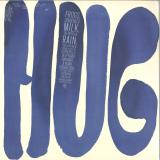
HUG is the new collaborative project from Gyan Riley, Devendra Banhart & Noah Georgeson, three independent artists who also happen to be childhood friends. Their new album is intimate, contemplative, and full of childlike wonder. At times ambient, at times enigmatic, each song moves across folk tradition and genre, as Devendra, Gyan, and Noah take turns leading.
out of Stock
Last delivered 37 days ago available to reorder, subject to availability
Natalie Imbruglia ist Millionen von Menschen mit ihrem weltweiten Hit "Torn" bekannt, einer der bis heute prägendsten Songs der Neunziger. Damit begann eine außergewöhnliche Erfolgsserie, die u.a. 2 BRIT Awards, 3 Grammy-Nominierungen, 8 ARIA Awards und 7 Mio. verkaufte Exemplare ihres Debütalbums "Left Of The Middle" umfasst. In jüngerer Zeit stand sie durch Auftritte an der Seite von Olivia Rodrigo erneut im Rampenlicht. Jetzt ist der perfekte Moment für ein neues Kapitel: ihr neues Album Algorithm mit der Lead-Single "Upside Down".
Algorithm zeigt Natalie Imbruglia in einer neuen Ära – geprägt von Selbstermächtigung, Freiheit und kreativer Erfüllung. Das erste Album der australisch-britischen Pop-Ikone seit fünf Jahren ist eine echte Tour de Force: ein zutiefst persönliches Werk, das eindrucksvoll daran erinnert, warum wir uns ursprünglich in ihre Musik verliebt haben. Es erscheint in einer Zeit, in der sich der kulturelle Zeitgeist wandelt und Popmusik wieder stärker zur Tanzfläche tendiert – mit einer Ausrichtung, die sich an den eleganten Pop-, Disco- und House-Elementen von Robyn orientiert.
Nach dem UK-Top-10-Comeback mit Firebird (2021) meldet sich Natalie Imbruglia auf Algorithm voller Energie und Tatendrang zurück. Sie ist Co-Produzentin und -Autorin jedes Songs, neben namhaften Kollaborateur:innen wie MyRiot (London Grammar), David Sneddon (Lana Del Rey), Fraser T Smith (Adele, Stormzy, Sam Smith), Gary Lightbody von Snow Patrol, Anu Pillai (Lewis Capaldi), Tobie Tripp (George Ezra), Mark Crew (Bastille, James Arthur) und Dan Priddy (Rag’n’Bone Man, Bastille). Im Anschluss an die Veröffentlichung des Albums wird Natalie Imbruglia ausgewählte Festivaltermine spielen und auf Tour gehen.
Natalie Imbruglia ist Millionen von Menschen mit ihrem weltweiten Hit "Torn" bekannt, einer der bis heute prägendsten Songs der Neunziger. Damit begann eine außergewöhnliche Erfolgsserie, die u.a. 2 BRIT Awards, 3 Grammy-Nominierungen, 8 ARIA Awards und 7 Mio. verkaufte Exemplare ihres Debütalbums "Left Of The Middle" umfasst. In jüngerer Zeit stand sie durch Auftritte an der Seite von Olivia Rodrigo erneut im Rampenlicht. Jetzt ist der perfekte Moment für ein neues Kapitel: ihr neues Album Algorithm mit der Lead-Single "Upside Down".
Algorithm zeigt Natalie Imbruglia in einer neuen Ära – geprägt von Selbstermächtigung, Freiheit und kreativer Erfüllung. Das erste Album der australisch-britischen Pop-Ikone seit fünf Jahren ist eine echte Tour de Force: ein zutiefst persönliches Werk, das eindrucksvoll daran erinnert, warum wir uns ursprünglich in ihre Musik verliebt haben. Es erscheint in einer Zeit, in der sich der kulturelle Zeitgeist wandelt und Popmusik wieder stärker zur Tanzfläche tendiert – mit einer Ausrichtung, die sich an den eleganten Pop-, Disco- und House-Elementen von Robyn orientiert.
Nach dem UK-Top-10-Comeback mit Firebird (2021) meldet sich Natalie Imbruglia auf Algorithm voller Energie und Tatendrang zurück. Sie ist Co-Produzentin und -Autorin jedes Songs, neben namhaften Kollaborateur:innen wie MyRiot (London Grammar), David Sneddon (Lana Del Rey), Fraser T Smith (Adele, Stormzy, Sam Smith), Gary Lightbody von Snow Patrol, Anu Pillai (Lewis Capaldi), Tobie Tripp (George Ezra), Mark Crew (Bastille, James Arthur) und Dan Priddy (Rag’n’Bone Man, Bastille). Im Anschluss an die Veröffentlichung des Albums wird Natalie Imbruglia ausgewählte Festivaltermine spielen und auf Tour gehen.
Precious Little Diamond is a song by Dutch funk band Fox the Fox, originally released in 1984. The single peaked at # 5 in Germany and the US and became a hit in France, UK, Italy, Belgium and the Netherlands too.
George Michael was a huge fan of the song and introduced the band to CBS Records in 1984. Dieter Bohlen from Modern Talking has been cited with this song as the inspiration for using falsetto choruses in his songs.
In 2013, the song was sampled in The Weeknd's song "Wanderlust". The Weeknd sampled the melody, the original chorus and a part of the original lyrics.
This 12-inch includes the Shep Pettibone remix and Ben Liebrand remix. The audio is remastered at Artone Studios and the limited edition of 500 copies on transparent vinyl are cut on 45RPM.
out of Stock
Last delivered 41 days ago available to reorder, subject to availability
Elevating, uplifting and beautifully arranged. Jasmine Myra's sophomore album Rising builds on the success of her
breakthrough album Horizons to deliver a major statement from one of UK Jazz's rising stars. Produced by Matthew Halsall and mixed by Greg Freeman (Hania Rani, Matthew Halsall, Portico Quartet), Rising delivers a confident and vibrant follow up that joins the musical dots between Myra’s influences Kenny Wheeler, Bonobo and Shabaka Hutchings while delivering something unique, beautiful and profound.
Rising is also the sound of a composer and performer growing in stature and adding extra layers of confidence and poise to both her playing and composing. Aided and abetted by Matthew Halsall who once again lends his production skills, Rising is fuller, richer and deeper as Myra develops her uniquely uplifting sound.
Much like my first album, Rising is a reflection of a period of my life. It is a continuation from Horizons, which was all about my experience during lockdown, and entailed overcoming my struggles with mental health. Following on from that experience, I set out to continue building my self-confidence. This album has an uplifting and spiritual sound, drawing influence from artists such as Makaya McCraven, Bonobo and Shabaka Hutchings.
Rising features the same core of musicians as Myra’s debut album Horizons (Gondwana records GOND052): guitarist Ben Haskins, drummer George Hall pianist Jasper Green, harpist Alice Roberts (who both also perform with Matthew Halsall) and bassist Sam Quintana who collectively bring a deft understating of the subtle textures of Myra’s music and perform with a collective empathy and drive that really pushes the music on a radiant journey. And a string quartet add gently elevating textures to Still Waters, Knowingness, From Embers and How Tall The Mountains.
out of Stock
Last delivered 54 days ago available to reorder, subject to availability
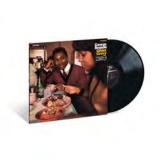
Mit dem Album “Giblet Gravy” feierte George Benson 1968 seinen glanzvollen Einstand bei Verve Records.
Der damals 24-jährige Gitarrist war zu dem Label geholt worden, um die Lücke zu füllen, die Wes Montgomery durch seinen Wechsel zu A&M Records hinterlassen hatte. Und Benson bewies gleich, dass er weit
mehr als nur ein “Lückenfüller” sein würde. Mal präsentierte er sich in einem agilen Quintett-Format (mit u.
a. Herbie Hancock, Ron Carter und Billy Cobham), dann mit einer Bigband und Background-Sängerinnen.
Im Mittelpunkt der Musik stehen jedoch stets Bensons flüssige Artikulation, seine bluesgeprägte Phrasierung
und seine rhythmische Gewandtheit. Das Repertoire vereint zeitgenössische Popstücke, Standards sowie
eigene Kompositionen und verdeutlicht die stilistische Bandbreite, die Bensons späteren Crossover-Erfolg
kennzeichnen sollte.
Auf der sechsten LP von Radiator Hospital, ,Distorting Time", spielt Sam Cook-Parrott nicht mit Nostalgie - er geht ihr aktiv aus dem Weg. Im Laufe von fünfzehn Jahren hat er RH von einem Solo-Projekt, das er in seinem Schlafzimmer aufnahm, zu einem vollwertigen Rock-'n'-Roll-Quartett ausgebaut, wobei er am Rande des Mainstream-Erfolgs blieb und sich gleichzeitig einen Ruf als echter Außenseiter der DIY-Szene erarbeitete. Die Veröffentlichung von ,Can't Make Any Promises" im Jahr 2023 brachte Sam an eine Art Scheideweg - doch er war entschlossen, keine Zeit mit Rückblicken zu verschwenden, sondern stattdessen nur auf das zu blicken, was vor ihm lag. Aus heiterem Himmel wurde Radiator Hospital Ende 2025 eine Tour angeboten, was Sam dazu veranlasste, seinen Ansatz zu überdenken und das Gewebe seiner bisherigen Arbeit in eine völlig neue Form zu verwandeln. ,Ich beschloss, etwas Neues live zu probieren, was ich noch nie zuvor gemacht hatte: Ich nahm meine Begleitmusik auf einem 4-Spur-Kassettenrekorder auf und sang dann einfach dazu", erklärt Cook-Parrott. ,Distorting Time" - seine erste Veröffentlichung bei Lame-O Records - besteht aus 13 Songs, die bei Sam zu Hause auf einem 4-Spur-Kassettenrekorder aufgenommen wurden, mit zusätzlichen Elementen, die im Uniform Recording Studio von Jeff Zeigler in Philadelphia eingefangen wurden. Die Songs wirken gleichzeitig sanft vertraut und doch auffallend eigenständig; sie nutzen die Grenzen des 4-Spur-Setups aus und lassen sich gleichzeitig von Bands wie Young Marble Giants und Tall Dwarfs inspirieren. Thematisch beschäftigen sich die Songs mit dem seltsamen Gefühl des Vergehens der Zeit, insbesondere aus der Perspektive eines Künstlers und seines Schaffens.
Futurismo are proud to present the iconic 1982 debut album, Only Theatre of Pain, by gothic legends CHRISTIAN DEATH. Available on deluxe 2xLP, CD digipak.
Hailed as a masterpiece of it’s genre, and considered by many as ground zero for Deathrock, Only Theatre of Pain is a seminal work of unholy power and pitch black emotion. Whilst this record may have it’s roots in punk - the origins of this true original version of Christian Death took place in Southern California during the early 80’s hardcore explosion - it cannot be overstated how important this record was in shaping the subsequent landscape. Emerging like an adrenaline shot into the heart of darkness, this unrestrained and mysterious recording still remains unclassifiable.
Featuring the late visionary Rozz Williams (then only in his teens) alongside punk luminary Rikk Agnew (guiding light in the Adolescents), James McGearty and George Belanger, Only Theatre of Pain’s musical exploration is adorned with psychosexual lyricism and an innate struggle with faith. Rozz’s vocals creep and possess, demonic and haunting, against the captivating, unmistakable guitar work of trailblazer Agnew. It’s a performance, but also a truth, perhaps Only Theatre of Pain is an art show, as much as it is an era defining record.
Aside from their spellbinding sound, it may have also been the lore of Christian Death that set them apart from other LA goth bands of the time. A near-nude Rozz Williams nailed to a cross at the Whiskey a Go Go may have played a part, but what it is apparent when you listen to the unhallowed musical stages on Only Theatre Of Pain is a depth of vision and orchestration that goes beyond the simple stance of brooding many of their contemporaries emulated, delving into the realms of pure unadulterated catharsis. The result is an eradefining statement that remains as unsettling, innovative, and resonant today as it was over four decades ago.
Only Theatre Of Pain is presented here in a new remastered deluxe pressing with a second disk containing early demo’s and rare material, further demonstrating why Christian Death stood alone in their sound and approach. This journey of religious depravity, recorded by the legendary producer Thom Wilson in a matter of days, harnesses the huge concepts of band projecting older than their years. Ahead of the curve in sonic artistry and visual aesthetics, this slab of sacrilegious American punk is nothing short of essential listening for the gothic inclined. A must for fans of The Misfits, Bauhaus and The Cramps.
This classic LP comes in deluxe super limited edition ‘California Hell’ coloured vinyl and contains a second disk of bonus material. It is packaged in a gloss laminated sleeve with metallic ink, containing printed inner sleeves, a large fold out poster, redux artwork featuring the photography of Edward Colver, and liner notes by Lisa Fancher of Frontier. Also available as CD digipak
Boy George's single "Generations of Love" has become a dance anthem. The single has been digitally released 12 times, with over 70 remixes. Mixes were created by Paul Oakenfold, Ramp, Phunk Investigation, Scream, De-Phazz, and The Scumfrog. So, like it or not, it's sure to be a hit whenever it's played on dance floors around the world.
Described as exuding joie de vivre (joy of life) and full of joy.
Suitable for clubs and house music: Praised for its laid-back, house-inspired grooves, perfect for clubs and living rooms.
One editor called it "full, smooth, and richly satisfying."
Considered a potential club hit, with critics urging people to buy it.
Smash Hits called it a "glossy, understated dance track."
Ultimately, reviews describe it as a feel-good dance track that successfully blends Boy George's iconic vocals with JL & Afterman's disco-house production, creating a joyful and very catchy remix.
This vinyl also includes The Scumfrog's fabulous version.
out of Stock
Last delivered 83 days ago available to reorder, subject to availability
The music of La lucha es un poema colectivo was conceived and composed during a long artistic residency at IRCAM in Paris in November 2023 and will be released by Superpang. ‘In November 2023, we were in residence in Paris when we found ourselves in the midst of protests and strikes by workers at the Centre Georges Pompidou. They were demanding the respect of their rights. Entering that place as outsiders, making art while hundreds of people outside risked losing their jobs, was disorienting.
This is the starting point for the title of this album, evocative yet at the same time tangible. A phrase, as often happens, borrowed from those who had, in turn, borrowed it before us, words that are not and
cannot be only ours. Words too heavy to be slaves to context or syntax, yet words that resonate within us, move us, and open rifts in our history as a group. A strange plunge, strange despite the fact that the premises were clear from the start, with well-defined lines of a unified design. And if we ask ourselves, looking around, not so much what but rather with whom we would like to share it, we imagine the music of this album within that groove, in that intangible bond that unites a collective of people who, upon reading this sentence written on a wall, in a street, pause for a moment, slow down, rest their gaze, and know they are still alive.”
Marlon George is a British DJ and producer based in London renowned for his "slightly spacey, casually jazzy, and fully groovy house music," with support from names as illustrious as Kyle Hall and Jimpster. But really, if he's getting signed by the legendary Trelik, then that's all you need to know about his skills. He lays them bare across three tasteful cuts here, starting with the liquid dub of 'My Secrets Are Safe With Me' with its wispy shards of light piercing the water's surface and glistening against the dusty hi-hats. 'Najagen' has more drive but no less depth and warmth to it and 'Do The Rha!' is another smoky, minimal, heady dub house roller that sneaks right under your skin.
out of Stock
Last delivered 20 days ago available to reorder, subject to availability
Ever since the late 1950s bossa-nova revolution, Brazil’s influence on French music has been undeniable. Pierre Barouh, Georges Moustaki and a vast array of lesser known artists, all made the Musica Popular Brasileira (MPB) an axis of promotion at the service of a cool and metaphysical, modern and mixed Brazilian lifestyle. Some were seduced by the poetic languors of the bossa, some were looking for fun, and others just loved the American hybridization of jazz-bossa, jazz-samba.
What is bossa nova? One of its creators, Joao Gilberto said: "Its style, cadence, everything is samba. At the very start, we didn't call it bossa nova, we sang a little samba made up of a single note - Samba de uma nota so .... The discussion around the origins of bossa nova is therefore useless”. It is nevertheless useful to remember that these magnificent Brazilian songs, which the guitarist describes as samba, were shifted and balanced around improbable chords. "I like things that lean, the in-betweens that limp with grace," said Pierre Barrouh, quoting Jean Cocteau.
With emotion, arrangements for violin and supple guitar licks, bossa nova rapidly changed. A transformation that can be heard in the Tchic, tchic, French Bossa Nova 1963-1974 compilation, the result of a cultural reappropriation, which traveled through the United States and supplemented itself in France.
A musical revolution that has remained significant, bossa nova was born in Rio. From 1956 to 1961, Brazil lived through its golden years. In five years, the country had invented its modernist style. Elected president in 1956, Juscelino Kubitschek de Oliveira, an elegant man with a broad forehead, brandished a promising slogan: "Fifty years of progress in five years". He quickly got to work. Not worried about increasing debt, he launched the project for a new federal capital, Brasilia, designed by the communist architect Oscar Niemeyer. Volkswagen opened state-of-the-art factories and created the “fusquinha”, the Beetle. In Rio, the Vespa made its first appearance. The Arpoador Surf Club crew run into the “girl” from Ipanema, Helô Pinheiro - the tanned garota ("chick"), between a flower and mermaid, who at 17 walked by the Veloso bar, where the fiery author and composer, Tom Jobim and Vinicius de Moraes, were getting drunk on whiskey. From then on, bossa symbolized cool.
In 1958, Joao Gilberto recorded Chega de Saudade, which the directors of Philips denied, calling it "music for fagots". The marketing director, who believed in it, secretly pressed 3000 78-inch vinyls and distributed them at schools around Rio, creating a tidal wave.
American jazzmen then took over. In particular, trumpeter Dizzy Gillespie and guitarist Charlie Byrd. In November 1962, the Brazilian Ministry of Foreign Affairs funded a "Bossa-Nova" concert at Carnegie Hall in New York, inviting the genre’s pioneers. Unprepared, the show soon turned to disaster. But the troupe was invited to the White House by Jackie Kennedy. The first lady loved "the new beat" and in particular Maria Ninguem, a song by Carlos Lyra, later covered by Brigitte Bardot.
In Brazil, the 1964 military coup quickly ended this euphoria. The destructive atmosphere that ensued pushed many Brazilian musicians to leave, if not to exile. Thus, Tom Jobim, Sergio Mendes and Joao Gilberto arrived to the United States. In New York, Joao Gilberto met saxophonist Stan Getz. At the time, he was married to the Bahianese Astrud Weinert Gilberto, who had a German father. She had never sung before, but she knew how to speak English. Getz therefore asked her to replace her husband on The Girl From Ipanema. The Getz/Gilberto record with Tom Jobim on piano, was released in March 1964. Phil Ramone, the "pope of pop" was in charge of sound.
Bossa nova arrived in Paris through the classic “guitar-voice” channel (Pierre Barouh, Baden Powell, Moustaki…) But France loved jazz and Paris had already welcomed its American contributors. All these good people were to pass through Saint-Germain-des-Prés. The cabaret l'Escale became the Mecca of Latin American sound where one could find Pierre Barrouh and his friends, such as the Camara Trio, samba-jazz aces, whose only record was published by the Saravah label. With a band strangely called Les Masques (a band that included Nicole Croisille and Pierre Vassiliu, among others), the Camara Trio recorded an interesting Brazilian Sound, including the track Il faut tenir which is present on this tasty compilation of rarities.
Other enlightened musicians can also be found on the compilation, such as Jean-Pierre Sabar (songwriter for Hardy, Auffray, Leforestier ...) and the French pop rock organist Balthazar. In 1975, Sabar recorded Aurinkoinen Musiikkimatka on a Finnish label, which featured the crazy Vai, Vai, included on this record. We are now following the footsteps of Brazilian electronic musicians such as Sergio Mendes, Eumir Deodato or Marcos Valle who created funk and disco sounds on their keyboards and synthesizers. A style that influenced Véronique Sanson when she wrote Jusqu’à la Tombée de la nuit in 1969 for Isabelle de Funès, the niece of Louis and a great friend of Michel Berger - Sanson did end up singing this track on her 1992 Sans Regret record.
The pinnacle of exoticism and travel, Sylvia Fels’ Corto Maltese includes bongos, sea mist and ocean sounds. The title was taken from Jacky Chalard’s concept album written in 1974, Je suis vivant, mais j’ai peur (I am alive, but I am scared), based on Gilbert Deflez’s science fiction novel.
However, bossa nova extended the scope of popularity. "In the 1970s, I was a fan of Sergio Mendes, Getz / Gilberto. I fell in love with this music that I knew because I had been an orchestral singer, " explained Isabelle Aubret, who in 1971 delivered a composite record of covers by the very funky Jorge Ben, Orfeu Negro, Tom Jobim, Vinicius de Morais and Jean Ferrat. "I recorded this album for Meys Records in Paris, far from Brazil, with wonderful musicians, François Raubert, Roland Vincent, Alain Goraguer...". The latter wrote the arrangements for Casa Forte, a very percussive title borrowed from Edu Lobo, one of the initiators of the bossa who spent time in California. "Jazz and bossa came together and produced very rhythmic music. I love singing, it allows me to dream, to have fun, to feel a high on stage, and these songs brought me joy, made me swing, my singing felt like a dance.”
The world tours of French singers and their desire for the tropics, often brought them to Rio with its hills, forests, caipirinhas and tanned bodies. There are surprises though, like this Iemenja (Iemenja is the goddess of the sea in the Afro-Brazilian candomblé religion). Not unlike the composer and musician Jean-Pierre Lang, based in Sao Paulo, Claire Chevalier taught Brazil to Brazil. In 1970, the singer and painter published a 45-inch vinyl, Mon mari et mes amants (My husband and my lovers), under the improbable pseudonym of Clarinha (little Claire). She was then living in Rio, with her husband, Joël Leibovitz, who founded a band called Azimuth, and who owned a record label specialized in "sambas enredos" songs for samba school parades.
For its B side, she asked Pierre Perret to come up with lyrics for a song composed by Carlos Imperial: "Oh goddess of the sea, o goddess Iemenja, I bring a white rose to adorn your long hair ..." . "Perret came to see us, and we had fun, remembers Joël Leibovitz. We wrote Lemenja for fun, we recorded it at the Havaí studio, behind the Central do Brasil the central station. Erlon Chaves, the arranger who worked with Elis Regina, joined us" adding his share of Afro-Brazilian percussions and funky brass to the mix.
There is a common misunderstanding in Franco-Brazilian history: that bossa, admittedly hedonistic, is perceived as funny, even though the poets who wrote the texts are often philosophizing on the human condition. Its French interpreters pull it towards a carnival inspired universe, far removed from its fundamental essence. Thus, Jean Constantin covered the famous Samba da minha terra, an ode to the art of samba written by the classic Bahian composer Dorival Caymmi, renaming it with the enticing title of Pas tant de tchi tchi pompon: "On your pier there is no tchi tchi / when you arch your back, you know everything is alright ”(lyrics by Gérard Calvi). This expedited bossa aims for the absurd, but retains a certain elegance.
Indeed, Jean Constantin was not an idiot, the rather large man had a huge mustache and liked fantasy, (Les pantoufles à papa, Le pacha, inspired by cha-cha-cha-cha, salsa and jazz) but he was also the lyricist of Mon manège à moi interpreted by Edith Piaf, the composer of Mon Truc en plume by Zizi Jeanmaire and the soundtrack of François Truffaut’s 400 Blows. Le Poulpe, published in 1970, from which this bossa is extract, was arranged by Jean-Claude Vannier, an accomplice of Serge Gainsbourg’s Melody Nelson. In short: "There is enough of samba / By looking at the parasol / Because my poor cabeza / Is going to die in the sun".
Even the American actress Marpessa Down, who was at the heart of the bossa nova revolution with her role as Euridyce in Marcel Camus’ film Orfeu Negro, winner of the 1959 Cannes Palme d'or, fed the clichée with Je voudrais parler au petit cuica - "Tell me how you manage to always make people want to dance / It's true, I must admit that I cannot resist your magic" - in consequence, once can hear the cuica, a little drum inherited from the Bantu.
But bossa nova had many angles. Societal, of course, pushing actresses who were symbols of women's liberation like Brigitte Bardot, Jeanne Moreau, or Sophia Loren to engage in the exercise of accelerated bossa. In February of 1963, Sophia Loren made a record in French in Rome, Je ne t'aime plus, featuring the song De jour en jour, a bossa written by two Italians, Armando Trovajoli and Tino Fornai, which was released a little later by Barclay. Bossa accompanied the 1960s, a decade of moral liberation. Ann Sorel, who interpreted La Poupée des favellas, caused a sensation with L’amour à plusieurs, a provocative song written by Frédéric Bottom and Jean-Claude Vannier. As for the actress Andrea Parisy, she displayed her bourgeois cheekiness in Marcel Carné's Les Tricheurs before interpreting Les mains qui font du bien. And Magalie Noël, the friend of Boris Vian, who sung Johnny fais-moi mal, was hired to sing Une énorme Samba, composed by Alain Goraguer (arranger to Gainsbourg, Bobby Lapointe and Jean Ferrat) with lyrics by Frédéric Botton.
But in the end, of what wood is bossa nova made of? The answer is given by Christianne Legrand, daughter of Raymond the conductor, and sister to Michel the composer: "With me, with jà" - jà means "immediately" in Portuguese. In 1972, the singer, an expert in vocal jazz and a member of the Double Six, published Le Brésil de Christianne Legrand. Two songs included on the Tchic Tchic compilation that demonstrate how bossa, jazz, funk, rock, etc. work like a swiss army knife: the music is used to denounce broken systems, or miracles, HLM et ciné roman, Cent mille poissons dans ton filet, two songs from the O Cafona soundtrack, a successful telenovela broadcast, at the time in black and white, on TV Globo. The first was adapted in French by the fighter and friend of the Legrand tribe, Agnès Varda. The second is content with a play on words, jostling them into a summer fun.
Véronique Mortaigne
out of Stock
Last delivered 3 months ago available to reorder, subject to availability
Repress of the 10 year anniverssary vinyl reissue of “The Empyrean” By John Frusciante cut for the original analog tapes at Bernie Grundman’s mastering. includes hi res audio download card. THE EMPYREAN is the eighth solo album by JOHN FRUSCIANTE. It was originally released in January of 2009, reaching number 151 on the US Billboard 200, 105 on UK Albums Chart and number 7 on the Top Heatseekers. It contains contributions from RHCP bandmate FLEA and former guitarist of The Smiths Johnny Marr. John Frusciante is an American guitarist, singer, composer, and producer. He is best known as the guitarist of the rock band Red Hot Chili Peppers. He recorded five studio albums with them and was recently inducted into the ROCK & ROLL HALL OF FAME. Frusciante has an active solo career, having released twelve solo albums and five EPs; his recordings include elements ranging from experimental rock and ambient music to new wave and electronica. He has also recorded with numerous other artists, including the Mars Volta, for whom he was a studio guitarist (and occasional live performer) from 2002 until 2008; Josh Klinghoffer and Joe Lally, with whom he released two albums as Ataxia; and various collaborations with both Klinghoffer and Omar Rodríguez-López. He has also produced and/or recorded with Duran Duran, Wu-Tang Clan, Swahili Blonde, Black Knights, The Bicycle Thief, Glenn Hughes, Ziggy Marley, Johnny Cash, George Clinton, Johnny Marr, Dewa Budjana and others.
out of Stock
Last delivered 69 days ago available to reorder, subject to availability
'I live in a gentrified part of Brooklyn, I eat out several times a week, I travel the world sampling the best that cities across the globe have to offer. Do I live in a penthouse loft Am I dinning in five stars restaurants Can you only find me in the most exclusive areas Do I own a jet The answer to all the above is most certainly no. I'm just a regular man from Prince George's county, Maryland that figured shit out. I discovered that I can make a career in an arena dominated by artists that sell false dreams. I realized that although the masses may not know of my body of work, it doesn't take the whole world to have the world I want. Tangible Dream is a mix-tape dedicated to the deconstruction of our traditional ideas of success & shedding light on the possibility of a sustainable rap life. These rhymes were written in economy class seats, these beats were produced on long bus trips & these songs were recorded in airbnb apartments. All I want to do is make music for a living so that I can live to make music. The only dreams I'm interested in are the ones I can grasp. It just so happens that anything you want bad enough can be obtained. Perhaps the world may never know of my accomplishments but accomplishments they are nonetheless.
Mit diesem außergewöhnlichen Doppel-Vinyl lässt sich die Musik aus den ikonischsten Filmen von Clint Eastwood neu entdecken. Als Schauspieler, Regisseur und Produzent zählt Eastwood zu den prägenden Figuren der internationalen Filmgeschichte - und hat über Jahrzehnte hinweg ein ebenso markantes musikalisches Universum geschaffen. Diese sorgfältig kuratierte Sammlung vereint Originalaufnahmen aus seinen Filmen und spiegelt die enorme stilistische Bandbreite wider: von Jazz-Legenden wie Charlie Parker und Duke Ellington über Soul- und Pop-Klassiker bis hin zu Orchesterwerken und traditionellen Stücken. Die Auswahl zeigt eindrucksvoll, wie entscheidend Musik für die Atmosphäre von Eastwoods Filmen ist - mal subtil, mal prägend, immer charakteristisch. Gepresst als hochwertige Doppel-LP auf farbigem Vinyl, ist diese Edition zugleich Sammlerstück und klangstarke Hommage an eine einzigartige Film- und Musiktradition.
out of Stock
Last delivered 3 months ago available to reorder, subject to availability
Maria is the debut album from renowned Brazilian electric bassist and composer Moyses Dos Santos. A homecoming for the London-based artist, Moyses’ debut reconnects him with his North-Eastern roots while assembling an international cast of collaborators including legendary Brazilian arranger Arthur Verocai, US trumpet sensation Theo Croker and London-based vocal star Lynda Dawn.
After relocating from Brazil to London in the early 2000s, Moyses dos Santos quickly became one of the capitals’ most in-demand players, sharing stages, studios, and writing credits with best-selling artists including Nile Rodgers, Janelle Monáe, Emile Sandé, Gregory Porter and Omar.
In 2022, Moyses toured with Brazilian jazz-funk legends Azymuth, completing the rhythm section alongside Brazilian drumming master Ivan "Mamão" Conti. "It felt like he was my wise Brazilian grandfather figure." Moyses recalls. "When you spend so many years working internationally, you unconsciously start to leave certain parts of yourself behind. Mamão encouraged me to reconnect with Brazilian music, and that's where this record really began."
Brazil’s North-east, where African, indigenous and European traditions collided and fused most intensely, produced a musical heritage unlike anything else on earth, Moyses dos Santos is a product of this syncretism. On Maria, named after his mother, Moyses brings the musical vocabularies of his youth to the fore. From the soul of the church band where he began to learn his trade as a musician, to the rolling batucadas – maractus, baiaos, sambas and frevos – which he played throughout his teenage years.
Drawing on the lineage of North American electric bass giants like George Duke, Jaco Pastorius, and Stanley Clarke, Moyses runs Brazilian musical traditions through jazz, funk, soul and disco: his sound charged with the cosmopolitan energy of London's contemporary jazz scene.
Lead single and album opener “Boa Viagem’ is joyous, carnivalesque dancefloor jazz: a timeless groove for the nightclub and street party alike. Calling directly to a higher power “Brazilian Spirit” is an astral-jazz phenomenon, featuring the transcendent trumpet playing of Grammy nominated Theo Croker. On “Saudade” Moyses calls upon iconic Brazilian maestro Arthur Verocai, whose signature string arrangements cascade around the divine vocals of ascendant London artist Lynda Dawn.
With impeccable style, charisma, warmth and virtuosity, Moyses steps forward with his stunning debut Maria: out on vinyl, LP, CD and digitally on the 12th June 2026.
out of Stock
Last delivered 40 days ago available to reorder, subject to availability
Antal, founder of the Amsterdam-based Rush Hour Records & Store and renowned for his global DJ touring and eclectic sets spanning house, techno, rare funk, soul, and jazz, curates a personal selection from the historic label Timeless Records.
For Timeless Presents From The Archives, he handpicked highlights from 1974–1994 by jazz luminaries such as Art Blakey and the Jazz Messengers, Pharoah Sanders, Carter Jefferson, Gary Bartz, Woody Shaw, and more. “I want to thank the Wigt family for allowing me to dig deeper into their catalog to compile a selection of personal jazz favorites. Their passion for jazz and independent labels has inspired me as a DJ and record store owner. A great song is a great song, no matter when or where it was made,” Antal reflects. For this double album, Antal shares his love for modal and spiritual jazz, celebrating a pivotal era in jazz and creating a must-have for collectors, selectors, and new explorers.
Timeless Presents From The Archives 1974-1994 is packed in a gatefold sleeve, featuring notes by Antal and artwork by Dirk-Jan Deckwitz. Affixed on the protective sleeve is the 50th Anniversary Timeless Jazz sticker.
REPRESSED !
Patrick Keel is a multi-instrumentalist, composer, producer, and performer. The Pool was his solo project, the sum of fifteen years of experience in live bands, studios, and home recording. Patrick was heavily influenced by the radio of the early and mid 1960's in Dallas. The British bands and Black soul of the era gave him a distinct style, and shaped his musical attitude. The New Wave/Punk/D.I.Y. attitudes of the late 1970s inspired him to express himself in a new way. 1980 saw the release of "Pool One," a sixty minute home-produced cassette. "Pool Two" followed in 1981, which received much praise and little distribution. In 1982 he released a 5-song self-titled vinyl EP of tight, skeletal, synthetic dance music.
In 1983, 'Dance It Down/Jamaica Running' 12' EP was released on Moment Productions. Based on response from D.J.'s in New York and the Bronx, Patrick went back in the studio and remixed two songs from the self-titled EP for rapping, scratching and break dancing. "Jamaica Resting" was sped-up, extended, and reconfigured as "Jamaica Running". The whirlpool synth-strut of 'Dance It Down' came out of the studio as 'Dance In Dub', with a heavier kick and extended dub outro. These spacious versions were optimal for DJ play, slotting regularly in sets at hip clubs like Danceteria. For this reissue we've added two bonus European remixes from the 1984 12' of 'Dance It Down/Jamaica Running', released on Nunk records from Belgium. Both songs employ the use of a Boss DR-55, Korg MS-20, Korg PolySix, and a Prophet 5, and were mixed on a 16- track Ampex recorder. The Pool's spartan, self-assured songs are experiments you can dance to.
All songs have been remastered for vinyl by George Horn at Fantasy Studios in Berkeley. The record comes housed in a newly designed jacket by Eloise Leigh, updating the magenta and blue grid and Pool logo of the Moment Productions release. Each copy includes a 12-page booklet with a never seen before photos, press clippings and notes.
out of Stock
Last delivered 3 months ago available to reorder, subject to availability
"Chance animates the smallest parts of the universe: the scintillation of the stars is its power, a wildflower its incantation."
—Georges Bataille, Le Petit
"Even on my way to the gambling hall, as soon as I hear, two rooms away, the clink of the scattered money I almost go into convulsions." —Fyodor Dostoevsky, The Gambler
Video gambling addicts, academic researchers, and industry professionals alike describe the trancelike state into which problem gamblers suspend themselves with remarkable consistency: they unanimously call it the machine “zone,” a kind of inner experience during which the rhythmic flow of human-machine collusion borders on mysticism. Time is abolished in the act of contemporary video gambling —simulated slot reels roll, virtual poker decks deal, and all worldly concerns are lost—leaving only the aura of total zone immersion in its wake. Sometimes characterized as the crack cocaine of gambling, the intensity of the machine zone is a symptom of casino ergonomics: emotionally manipulative fragrance-saturation, mesmerizing lights, subtly controlling walkways and, as captured here, meticulously engineered sonic environments all play a role in evoking the timeless void of the zone.
Although I was not yet aware of the extent to which casinos tailor their environments for maximum comfort (and, correspondingly, profit), I did know as I crossed the threshold of my first casino floor last year that I would be back for more. Hit by a cornucopia of slot machine tones, triggering aleatorically and coalescing into shimmering masses, I was struck by the need to return and record the sounds that so entranced me. It wouldn't prove to be easy—casino security is intense—and due to the clandestine nature of the operation, my recording techniques were by no means sophisticated. Equipped with nothing but an Olympus LS-11 recorder's internal microphone stashed in a sweaty coat pocket, I allowed the lure of the zone to guide me through a series of ambling recording sessions, the best of which are included here.
I learned a lot about casino sonics in the process: game designers, for example, once tuned all their machines to the key of C major in order to optimize harmonic cohesion (strict adherence to the key is no more but C still dominates the game floor); one team of designers, the story goes, even spent a month perfecting a single 'ding' sound on one machine. In the interest of preserving the true ambient sounds of the casino these recordings are untreated, but lost in the sea of chance I did exert some affirmative control by means of meandering intent and my actual playing of the machines. And by participating in the games myself I got a taste of the financially debilitating consequences that accompany the enchantment of video gambling. The cassette in your hands represents my endeavor to bring you the zone experience without the harsh comedown of its unfortunate reality.
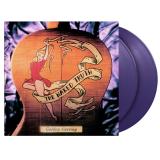
Golden Earring were together between 1961 and 2021, and their last and best known line-up included two founding members George Kooymans (vocals and guitar) and Rinus Gerritsen (bass, keyboard) along with Barry Hay (vocals, guitar, flute and saxophone) a member since 1968 and Cesar Zuiderwijk (drums) a member since 1970.
They had over 40 hits and released 30 albums, many achieving either gold or platinum status in their home country, The Netherlands. They are best known for their 1973 hit single "Radar Love" and their 1982 single "Twilight Zone".
Around 1992, the unplugged sessions on MTV were a trend; almost every rock band or artist was doing them. Bass player Rinus Gerritsen suggested to record an acoustic album themselves. The record company wasn't very enthusiastic at first so with a small budget the band recorded the album live in an intimate cafe in Amsterdam. The Naked Truth turned out to be the Golden Earring's best selling album.
The Naked Truth is available as a limited edition of 2000 individually numbered copies on purple vinyl. The 2LP is packaged in a deluxe sleeve with linen laminate finish and includes an insert.
‘Richness of tone; precision of articulation; ingenuity of timbre that, when Akinmusire pursues microtonal avenues, creates the sense that particular sounds are almost hermetically sealed before being slowly squeezed and pinched into the air. In other words there is a high degree of technical mastery, but, tellingly, it underpins a profound and often engrossing sense of narrative.’ - Jazzwise
‘Halvorson has formulated a guitar style with few precedents. One inspiration might be the painter George Seurat, whose Impressionist paintings of a hundred isolated dots cohere into a picture if one steps back from the canvas. Halvorson’s pointillist approach to the guitar works much the same way.’ - JazzTimes
Slo-Mo Neon Luminate Hoverings, the new album by trumpeter/composer Ambrose Akinmusire and guitarist/composer Mary Halvorson, features four new compositions by each musician as well as one collaboration. The duo, long admirers of each other’s musicianship, met at Halvorson’s Brooklyn apartment and began playing together periodically, going back as far as 2009. They rehearsed the music on Slo-Mo Neon Luminate Hoverings in January 2025, just before performing it at the New York City club The Stone; they recorded this album the next day at Sear Sound.
Akinmusire and Halvorson made two previous attempts at recording an album but felt that they got it right with this third session. Halvorson says of their rapport, which developed over those years of friendship and collaboration, “I think it’s partly a shared aesthetic and an ease of communication. I feel comfortable to try whatever.” Akinmusire concurs, “I think it’s rare to find an improviser that all goes and nothing has to go at all. It’s rare to feel like you don’t have to do anything and you can do anything. And that’s what I love about playing with Mary.”
Though Halvorson regularly uses effects pedals on her guitar, Akinmusire’s use of one on Slo-Mo Neon Luminate Hoverings is new. Having recently gotten an updated model of the Line 6, Halvorson was passing her old ones along to friends. “Ambrose was interested in trying a Line Six. I gave him one five minutes before the rehearsal and was amazed how quickly he was able to do incredible shit on it ... in literally five minutes,” she says.
“But I’ve been watching you, I’ve been watching Bill Frisell and other people use it for a long time,” Akinmusire says. “I approached it as if it were its own musician. I played and it would process the sound and then I would choose to react to that or not. The people like Mary that I love to listen to who use delay, I like being able to hear the process of the texture that’s being built. With some people, when they use it, you don’t really hear it. But with Mary, she’ll play a line and then she’ll react to that line and then react to that,” he continues. “It’s really cool to hear how something is being built. So I kind of stole that.”
Halvorson says, “I’ve never seen someone pick up a pedal and then immediately do something with it that felt like, ‘Oh, this is a sound,’ as opposed to just tinkering, you know? It felt like he was making music on it right away, and then also doing things that surprised me, like the vocalizing really surprised me. I wasn’t expecting that, and it was awesome.”
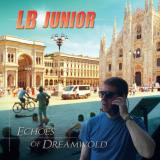
LB Junior is the musical artist name of Lincoln Bloomfield Jr., longtime bass player for Kelakos and, prior to 1975, for Emergency Exit and The Criminals.
His songwriting, vocals, bass playing, and guitar and keyboard work appear on each of the two Kelakos albums, Gone Are the Days (1978) – re-mixed and
released in 2015 as Kelakos Uncorked: Rare Tracks from a Vintage Seventies Band – and Hurtling Towards Extinction (2023). Beginning in 2004 he has performed approximately 15 times in Washington DC, New York, and Cleveland
with the Coalition of the Willing, formed by then-Hungarian Ambassador to the US Andràs Simonyi along with several senior US officials and missile defense advisor Jeff “Skunk” Baxter of Steely Dan and Doobie Brothers renown. The Coalition’s concerts have supported wounded soldiers, New Orleans musicians displaced by Hurricane Katrina, UN Refugee Programs, and preservation of the Maine coastline among other causes. They have been shown on Russian television and Armed Forces Network, and the band was featured in a documentary film, “Rockin’ the Beltway”. Notables including President George
H.W. Bush and President Bill Clinton, Ambassadors from several countries, US Cabinet members and Supreme Court Justices, and actors including Kate
Blanchett and Ben Stiller, have seen them perform. While he has previously released a number of single tunes, Echoes of Dreamworld is his first solo album
Alex Webster / Founding Member & Bassist: "With 'Vile', the big story was that it was our first album with George Fisher," he says. "That was the big thing, really — how was the album going to do? And, how are people going to like George and the band, and everything else? That was the story of that album — making the transition from Chris Barnes to George. It ended up charting on the Billboard Top 200. That was our first appearance on that chart. So, we were very happy about that as you might imagine. It was a big deal for a death metal band. we were excited and eager to see how people would react to George, and it was overwhelmingly positive."
Legendary DJ, producer, radio host, and founder of the Acid Jazz and Talkin' Loud labels, Gilles Peterson, has curated another exceptional collection of tracks and rare versions from the renowned Dutch Timeless Jazz label, which celebrates its 50th anniversary in 2025. The Timeless Jazz Classics Vol. 2 double album features tracks and standout performances by Louis Hayes, Machito And His Salsa Big Band, Mike Nock Quartet, George Adams - Don Pullen Quartet amongst others. Notably, it includes two special tracks, the previously unreleased version of "Morning Song" (Live In Bremen 1978) by Eric Kloss & Barry Miles and bonus track "La Placita" (Live In Willisau 1978) by Marion Brown Quartet.
Timeless Jazz Classics Vol. 2 is available on black vinyl, includes an insert with liner notes, track-by-track information by Gilles Peterson and affixed on the protective sleeve is the 50th Anniversary Timeless Jazz sticker.
Full colour sleeve with rare use of the Italian only movie artwork.
A few years ago I issued the soundtrack to Virgin Witch, the score to an underground 1971
kinky British London / posh stately home horror that seemed more like an excuse to show as
many racy cars and devilish nude scenes as possible. This fleapit film was written by Hazel
Adair - the writer of legendary long-running TV series Crossroads, and her business partner at
the time Ken Walton (yes, the wrestling commentator). Virgin Witch was cheap and successful
enough to allow the whole team another go at the sexploitation game through their newly
formed production company Pyramid Films. Sex Clinic was the quick follow up; I say Sex Clinic,
the initial cinematic title was Clinic Xclusive, which was also called With These Hands, which
was also called La Masseuse Perverse. This film also came out in 1971 and they used the
musical services of Ted Dicks once again. Dicks had originally met Adair in 1960 through a cast
member performing in his first musical, Look Who’s Here.
If you are not aware of the great Ted Dicks, his quick bio reads as follows: born London 1928,
was educated through both grammar and art school and after National Service flirted with both
art and music. He worked with a series of very talented song writers - including Barry Cryer -
finally sparking properly with writer Myles Rudge. Together “Dicks and Rudge” had a hit with
their musical And Another Thing which starred Lionel Blair and Bernard Cribbins. Their talents
were spotted by producer George Martin and they followed this show success up with a series
of truly classic novelty pop chart hits, again with Cribbins - “Hole In The Ground” and “Right Said
Fred”. If you are not aware of the classic A Combination Of Cribbins LP they wrote, go and find
it. It includes “Gossip Calypso”, a triumph of novelty song writing that somehow manages to
squeeze in the lyric “Oxy-aceteline welder”, and is possibly the only song ever to do so. They
wrote further hits (winning an Ivor Novello for “A Windmill In Old Amsterdam”) and were in
constant demand throughout the 1960s and 1970s, working with artists such as Petula Clark,
Matt Munro, Bruce Forsyth, Topol and Kenneth Williams.
By the late 1960s Ted had also penned a handful of instrumental library cues including the
classic “Busy Boy” for the Standard Library company that got picked up as the theme for the
brilliant TV kids fantasy show Catweazle in 1970. It’s a light, kooky, hummable tune that lodged
its way deep in the mind of any child under 12 over the following decade.
When I first got the reels for Sex Clinic I’m not sure what I was sonically expecting - much of
Dicks’ music blends musical hall with jazz and some brilliant novelty - and maybe I was also
imagining a different kind of film to the one that was actually made. Turns out Sex Clinic is more
like a sleazy drama than an erotic adventure - I’ve read reviews that call it “nothing more than a
naked Crossroads”. Even knowing this I had no idea what the music was going to sound like. So
I was thrilled when it was almost the musical opposite of what I imagined. We have here a great,
easy jazz score. Not a proggy, wild or free jazz score, this is lightish, vibes-led, bluesy and really
charming, which gets slightly more lively when the naked pool party sequence kicks off, and
drifts effortlessly into more seductive midnight moods as and when required. And having now
seen the film, musically it’s unusually at odds with the on screen nudity, blackmail and revenge.
But like most of Ted’s work, the music sticks in your mind. Unlike the film. Which I suggest you
try and avoid unless you like watching plump randy middle aged men with terrible hair pursue
women half their age.
TRACKLISTING: There were no notes or titles to any of the cues on the reels. So I have just simply labeled the sides as per the reels that came in:
Porgy and Bess is a stunning orchestral collaboration where Miles Davis brings depth, blues feeling, and lyricism to George Gershwin's opera. Arranged and conducted by Gil Evans , the album features a large ensemble that frames Miles' trumpet with rich, cinematic textures. Highlights like 'Summertime', 'Buzzard Song', and 'It Ain't Necessarily So' highlight its dramatic scope and emotional power
Mit The House Session setzt die renommierte Electronic Music Anthology von Wagram ihre stilprägende Reise durch die elektronische Clubkultur fort. Nach erfolgreichen Ausgaben zu Deep House und Techno widmet sich diese Edition dem Herzstück elektronischer Musik: House Music. Kuratiert vom französischen Electronic-Aushängeschild FG Radio versammelt die Compilation zeitlose Klassiker, moderne Favoriten und inspirierende Genre-Perlen. Mit dabei sind zentrale Namen wie George Morel, Cassius, Motor City Drum Ensemble, Mézigue, Moloko, Soha, Bob Sinclar, DJ Gregory, Joe Smooth und St Germain - Artists, die House in unterschiedlichen Epochen maßgeblich geprägt und weltweit auf die Dancefloors gebracht haben. Zwischen funkigen Grooves, soulful Vocals, pumpenden Basslines und eleganten French-Touch-Momenten entfaltet The House Session ein breites Spektrum an Sounds, das sowohl Sammler als auch DJs anspricht. Eine hochwertige Anthologie, die den Spirit von House Music - warm, energiegeladen und zutiefst euphorisierend - perfekt einfängt.
g 7Cheek - Venus (Sunshine People) DJ Gregory Remix
g b3 Cheek - Venus (Sunshine People) [DJ Gregory Remix]
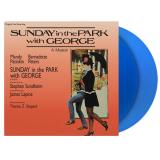
Sunday in the Park with George presents the music from the original 1984 Broadway production of Stephen Sondheim and James Lapine’s acclaimed musical. Recorded shortly after the show’s premiere, the album features the original cast performing Sondheim’s layered score, inspired by Georges Seurat’s painting "A Sunday Afternoon on the Island of La Grande Jatte".
The cast of the musical is led by Mandy Patinkin and Bernadette Peters, whose performances tell a story about art, love, and artistic legacy across two time periods. The recording includes notable songs such as “Sunday,” “Finishing the Hat,” and “Move On.” Winner of the Pulitzer Prize for Drama, Sunday in the Park with George is widely regarded as one of Sondheim’s most distinctive works. Produced by Thomas Z. Shepard, the recording won the 1984 Grammy Award for Best Cast Show Album.
The soundtrack of Sunday in the Park with George is available as a limited edition on blue vinyl and includes a 4-page booklet. The 2LP is packaged in a deluxe sleeve with linen laminate finish.
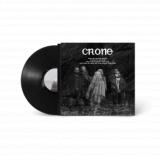
Irish drone-doom-folk act One Leg One Eye, the project of founding Lankum member Ian Lynch and veteran noise monger George Brennan, announce their new album, CRONE, out on 1 May on AD 93.
Today the group share the first track on the album, ‘Many are my Names Besides’, on which they are joined by the elemental force that is legendary actor, performer, writer and director Olwen Fouéré (Operating Theatre) contributing vocals.
Olwen Fouéré comments:
“When Ian and George first approached me to work with them, they were already creating the Crone album as a sonic invocation of the ‘sovereignty goddess’, who personifies the land and the legitimacy to rule it, in her darkest and most terrifying form. As we spoke, the triple goddess figure of the Morrigan entered my mind, reinforced by a marked presence of crows every time we met. The Morrigan is essentially a war goddess, frequently appearing as a crow in a battlefield, a death prophet, a guardian of sovereignty, and a very powerful figure in Irish Mythology.
So I invoked her energy as a starting point, using text extracts that Ian sent me from the Ulster Cycle and other sources. The voice recording was done in one day, improvising the source material while the already composed music occupied my psyche through headphones.
Listening back, at this time in our world, I can only wonder at how much blood and war the Crone/ Crow of sovereignty is preparing to unleash now. Watch out.”
CRONE is the second album from Lynch and Brennan, following on from 2022’s slowburn slab of ambient grit, …And Take The Black Worm With Me. Bewildering, psychedelic and ultimately transcendental, the four tracks of One Leg One Eye’s CRONE shapeshift and morph endlessly in a coarse miasma. Traditional song structures and vocal melody are eschewed, instead the trio directly channel energies from the rich seams of mythological significance submerged below the Irish psyche. The anger, rage and beauty of the sovereignty goddess burn a consistent and deliberate line through the album in the form of obscure incantations and dire pronouncements, the gnarled sinews that bind it all together.
Just as the subject matter of the tracks delve deeper into Irish myth and the remote past, the temporal reality of the album reaches back into the bands prehistory, with the majority of it the material being recorded by Lynch and Brennan in 2021 before One Leg One Eye was conceived of as an entity with Brennan working on the CRONE project while Lynch worked on …And Take The Black Worm With Me.
When they were there they saw a lone woman coming to the door of the Hostel, after sunset, and seeking to be let in. As long as a weaver’s beam was each of her two shins, and they were as dark as the back of a stag-beetle. A greyish, wooly mantle she wore. Her lower hair used to reach as far as her knee. Her lips were on one side of her head.
She came and put one of her shoulders against the door-post of the house, casting the evil eye on the king and the youths who surrounded him in the Hostel. He himself addressed her from within.
"Well, O woman," says Conaire, "if thou art a wizard, what seest thou for us?"
"Truly I see for thee," she answers, "that neither fell nor flesh of thine shall escape from the place into which thou hast come, save what birds will bear away in their claws."
"It was not an evil omen we foreboded, O woman," saith he: "it is not thou that always augurs for us. What is thy name, O woman?"
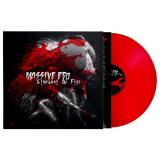
In 2025, we celebrate 30 years Out Of Line - Three decades of chaos, passion and 0 Years in - Still defiant, still evolving…2026 marks the 30th Anniversary of Massive Ego, and the release of a brand new album: “Symphony Of Flies” is revealed on May 8th, 2026 and marks the band’s first ever vinyl release. Available as Digipak CD and Limited Red Vinyl. Symphony Of Flies is a powerful, defining statement in Massive Ego’s long and uncompromising career, marking not only the band’s 30th anniversary, but also a moment of reckoning, survival and renewal. Across ten tracks, Massive Ego transform personal collapse, recovery and resistance into one of their darkest, most personal and emotional works to date. Musically, the album moves effortlessly between darkwave, electronic rock, EBM, glam-infused bombast and confrontational pop, pairing club-ready intensity with deeply introspective lyricism. Singles such as “In Your Own Darkness”, “Hit The Kerb Running”, “(My) Death Song”, “Man Become Monster”, and “Broken Tomorrow” showcase the band at their most fearless, culminating in a standout collaboration with Boy George, whose presence underscores the album’s themes of endurance, reinvention and personal growth. Lyrically, Symphony Of Flies reads like a confession and a journal. Frontman Marc Massive confronts mental health, betrayal, isolation, and the long climb back from the brink, reframing darkness not as something to romanticise, but something to fight through. The album’s central metaphor, the “Symphony Of Flies,” evokes surveillance, toxicity, decay and transformation: the unseen forces that drain, observe, and attempt to undermine, until they are finally confronted and dispersed. “The worst things that happen to you are the best things that happen to you”
Ein PUNK-ROCK-MEISTERWERK neu aufgelegt - mit, aus aktuellem Anlass, aktualisiertem 2026 Cover-Artwork! Das erste Studioalbum von NOFX auf Fat! Die Band behandelte ernste Themen (Punk-Kultur und Politik) mit ihrem typischen Witz und Sarkasmus und zielte auf George W. Bush. Nun ist ein neuer Clown am Start! Damals (2003) schaffte es das Album sowohl in Großbritannien als auch in den USA in die Top 50 und war auch auf dem europäischen Festland erfolgreich, wo es in der Schweiz und in Deutschland die Top 30 erreichte, in Österreich die Top 50 und in Frankreich die Top 100. "Musically, NOFX fuses its political cynicism with criticism of punk rock itself and suggests that the best thing for all the kids and the bands might be to close ranks and start their own little hardcore community. 'Irrationality of Rationality' and 'Franco Un-American'_two of the album's most melodic, catchy songs_are also two of War on Errorism's most biting commentaries. The first personalizes the trickle-down effect of corporate decision-making over a lockstep hardcore rhythm; the second gets all-new wavy as Fat Mike reasons out his own world view, and somehow rhymes "apathy" with "Noam Chomsky.'" - NOFX hat sich zwar aufgelöst, aber das Vermächtnis lebt weiter. Die Band ist derzeit Gegenstand ihrer ersten umfassenden Ausstellung im Punk Rock Museum in Las Vegas. Die Dokumentation "40 Years of Fuckin Upmakes" feiert beim SXSW 2026 Premiere und ist ab April umfassend zu sehen (Score & Original Soundtrack mit neuer Musik von NOFX folgen in Kürze). Der zweite Teil der A-Z-Raritäten-Trilogie "I to Q" soll Ende 2026 erscheinen. Und behaltet Fat Mike im Auge, denn Gerüchten zufolge hat er eine eigene Meinung zur aktuellen Weltlage. Warning: owning this record might piss off (more than ever) your army recruiter, grizzled grampa, or those wacky flag-wavin' nationalist buddies of yours.
Ein PUNK-ROCK-MEISTERWERK neu aufgelegt - mit, aus aktuellem Anlass, aktualisiertem 2026 Cover-Artwork! Das erste Studioalbum von NOFX auf Fat! Die Band behandelte ernste Themen (Punk-Kultur und Politik) mit ihrem typischen Witz und Sarkasmus und zielte auf George W. Bush. Nun ist ein neuer Clown am Start! Damals (2003) schaffte es das Album sowohl in Großbritannien als auch in den USA in die Top 50 und war auch auf dem europäischen Festland erfolgreich, wo es in der Schweiz und in Deutschland die Top 30 erreichte, in Österreich die Top 50 und in Frankreich die Top 100. "Musically, NOFX fuses its political cynicism with criticism of punk rock itself and suggests that the best thing for all the kids and the bands might be to close ranks and start their own little hardcore community. 'Irrationality of Rationality' and 'Franco Un-American'_two of the album's most melodic, catchy songs_are also two of War on Errorism's most biting commentaries. The first personalizes the trickle-down effect of corporate decision-making over a lockstep hardcore rhythm; the second gets all-new wavy as Fat Mike reasons out his own world view, and somehow rhymes "apathy" with "Noam Chomsky.'" - NOFX hat sich zwar aufgelöst, aber das Vermächtnis lebt weiter. Die Band ist derzeit Gegenstand ihrer ersten umfassenden Ausstellung im Punk Rock Museum in Las Vegas. Die Dokumentation "40 Years of Fuckin Upmakes" feiert beim SXSW 2026 Premiere und ist ab April umfassend zu sehen (Score & Original Soundtrack mit neuer Musik von NOFX folgen in Kürze). Der zweite Teil der A-Z-Raritäten-Trilogie "I to Q" soll Ende 2026 erscheinen. Und behaltet Fat Mike im Auge, denn Gerüchten zufolge hat er eine eigene Meinung zur aktuellen Weltlage. Warning: owning this record might piss off (more than ever) your army recruiter, grizzled grampa, or those wacky flag-wavin' nationalist buddies of yours.
“Estonian cultural theoretic Tõnis Kahu once said that Black Metal is men seeking for masculinity while their bodies lack the capacity to catch up and are lagging behind. In the age of microplastics and low-testosterone, Tapetud Rott is asking for ancestral guidance from George Michael. Each day with the growing pains of maturity they can only dream about living somewhere so happy-go-lucky and tranquill as the city that once provided the suitable breeding ground for giving birth to such an agressive and theatrical expression that could mark its cadaverous polar opposite. The mask they now so falsely wear is one seeking for Vitamin D inside the heart of a deceased Rat.”
Limited Black 7-inch Vinyl
Music by Robert Nikolajev & Mikk Madisson
Recorded in Tallinn
"In 1910, the illustrator George Herriman created the Krazy Kat comic strip. Ignatz, a vicious mouse, was Krazy Kat’s arch enemy, and his favourite pastime was to throw bricks at Krazy Kat’s head (who misinterpreted the mouse’s actions as declarations of love)
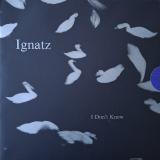
"Ignatz is the alter-ego of Belgian musician Bram Devens. Since 2005, he has released around 20 albums accompanied by guitar, in LP, CD or cassette formats, on labels such as (K-RAA-K)³, Ultra Eczema, Fonal, Mortaux vaches, Okraïna, among others. Ignatz has toured all over the world: Belgium, Germany, the Netherlands, France, Great Britain, Italy, Finland, Greece, Switzerland, Portugal, Lithuania, the United States, Japan, etc.
"Since the beginning of his journey as a singer-songwriter, Ignatz has played wonderfully and mysteriously with the combination of the similar and the unfamiliar, between the repetition and permanent reinvention with slight shift in accents... Now For two decades, when discovering his new songs, whether on record or in concert, his expressive and sonic universe can be recognized in seconds, and at the same time, he surprises every time. This is clearly also the case with ‘I Don't Know’, an album for which (after the cassette ‘Coffee, No Cigarettes’, Taping Policies 2017) he trades his guitar for the piano.
"In the mid-2010s, Ignatz inherited the family piano. As a self-taught musician, he explored the instrument and gave a piano concert in the small Flemish town of Geel, which was filmed by Jef Mertens (who also released the aforementioned cassette) and attended by Beata Szparagowska and Philippe Delvosalle from the label By the Bluest of Seas. After some years, it was in his home in Landen that Bram Devens recorded this haunted piano album, which is unlike any other piano record."
NOW That’s What I Call 70s Soul brings together 50 era-defining tracks from one of the most powerful decades in soul music, featuring classics from Motown legends, Philly Soul pioneers, smooth balladeers and funk innovators – all pressed across 3LPs on beautiful blue vinyl… Out April 24th!
LP1 opens with one of the decade’s most recognisable love songs: Al Green’s ‘Let’s Stay Together’, a US #1 and UK Top 10 hit that became his signature recording. It’s followed by Marvin Gaye’s ‘What’s Going On’, the socially conscious masterpiece and title track from his landmark 1971 album, and Diana Ross’ Ain’t No Mountain High Enough’, which topped the US chart and became her first solo #1. Stevie Wonder’s ‘Signed, Sealed, Delivered (I’m Yours)’ remains one of Motown’s most joyful recordings and comes before Commodores’ ‘Easy’ introducing Lionel Richie’s smooth ballad vocals. The side also includes Bill Withers’ timeless ‘Ain’t No Sunshine’, a Grammy-winning classic, and The Stylistics’ lush ballad ‘You Make Me Feel Brand New’, a UK Top 3 smash, before closing with Rose Royce’s beautiful ‘Wishing On A Star’, one of the most loved soul ballads of the era.
Flip the LP over and The Jackson 5’s ‘I Want You Back’ – the group’s explosive debut single opens the side. Smokey Robinson & The Miracles’ ‘The Tears Of A Clown’ became a UK #1 and is followed by The Supremes’ Nathan Jones’ showcasing the group’s evolving psychedelic-soul sound. Northern Soul classics from Frankie Valli & The Four Seasons with ‘The Night’, Chairmen Of The Board’s Top 3 smash ‘Give Me Just A Little More Time’ and The Trammps’ ‘Hold Back The Night’. The O’Jays’ joyous ‘Love Train’ leads to The Blackbyrds’ Walking In Rhythm’, before the side closes with the romantic classic ‘Always And Forever’ from Heatwave.
LP2 opens with The Temptations’ epic ‘Papa Was A Rollin’ Stone’, a Grammy-winning US #1 remains one of the most stunning recordings from the Motown catalogue, is followed by Isaac Hayes’ ‘Theme From “Shaft”’, an Academy Award-winner and a US #1 smash. More funk follows from Ike & Tina Turner, James Brown with one of his key tracks ‘Get Up (I Feel Like Being A) Sex Machine’, Edwin Starr’s powerful anti-Vietnam protest song ‘War’, and Sly & The Family Stone’s hugely influential ‘Family Affair’. The Delfonics’ sublime ‘Didn’t I (Blow Your Mind This Time)’ comes ahead of Billy Paul’s timeless ‘Me And Mrs. Jones’ which closes the side…the other side begins with the 1977 #1 from The Floaters with ‘Float On’, before the breathtaking vocals of Minnie Riperton on ‘Lovin’ You’. The Isley Brothers’ Summer Breeze’ and William DeVaughn’s ‘Be Thankful For What You Got’ have become enduring classics and are followed by a run of ‘80s pop-chart crossover hits completing LP2 from Detroit Emeralds, The Moments Raydio and The Tymes’ #1 ‘Ms. Grace’.
LP3 opens with the unmistakable voice of Barry White and his US #1 hit ‘Can’t Get Enough Of Your Love, Babe’, before Aretha Franklin’s ‘Until You Come Back To Me (That’s What I’m Gonna Do)’, delivers one of her smoothest performances. Al Green’s ‘Tired Of Being Alone’ and Gladys Knight & The Pips’ ‘Midnight Train To Georgia’ are followed by minimalist soul classic ‘Why Can’t We Live Together’ from Timmy Thomas, and the side closes with a trio of defining ballads:- George Benson’s ‘The Greatest Love Of All’ Diana Ross’ ‘Theme From Mahogany (Do You Know Where You’re Going To)’ and The Jackson 5’s ‘I’ll Be There’, their biggest hit…while over on the final side…Freda Payne’s #1 ‘Band Of Gold’, opens alongside Ann Peebles’ influential and much covered ‘I Can’t Stand The Rain’.Marvin Gaye’s sensual ‘Let’s Get It On’ became another US #1, while Harold Melvin & The Blue Notes featuring Teddy Pendergrass deliver the contemporary standard ‘If You Don’t Know Me By Now’. Three massive UK #1s are next…The Stylistics with ‘Can’t Give You Anything (But My Love)’, The Three Degrees’ peerless ‘When Will I See You Again’ and Deniece Williams’ ‘Free’. This amazing collection closes with two timeless ballads: Earth, Wind & Fire’s ‘After The Love Has Gone’, a Grammy-winning classic, along with ‘Three Times A Lady’, a huge worldwide #1 for the Commodores.
NOW That’s What I Call 70s Soul, 50 defining tracks from one of music’s greatest decades. Out April 24th.
out of Stock
Last delivered 5 months ago available to reorder, subject to availability
On "Enduring Sonance," saxophonist and flutist Steve Wilson reflects on a lifetime of lyrical, deeply felt songs drawn from jazz, pop, and film—brought to life by an all-star ensemble featuring Renee Rosnes, Joe Locke, Jay Anderson, and Kendrick Scott. *** Certain songs have a way of lingering in the imagination—resonating long after we’ve last heard them, sometimes for a lifetime. On his breathtaking new album "Enduring Sonance," veteran saxophonist and flutist Steve Wilson celebrates the music that has left the deepest imprint on his musical life. “Some of the tunes on this record have stayed with me for, in some cases, over 50 years from the time that I first heard them,” Wilson says. “I wanted to put some music out there that people can connect with, no matter what kind of music they like.” Originally conceived as a ballads project, Enduring Sonance evolved into something broader and more personal. Rather than focusing on tempo or style, Wilson gravitated toward a sense of lyricism—music whose emotional clarity and melodic resonance endure across genres, decades, and listening habits.
To realize this vision, Wilson assembled a deeply intuitive ensemble featuring pianist and arranger Renee Rosnes, vibraphonist Joe Locke, bassist Jay Anderson, and drummer Kendrick Scott, with special guest Kevin Newton (French horn, Imani Winds) appearing on two tracks. Each musician brings a rare sensitivity to melody, texture, and space, allowing the material to unfold with warmth, restraint, and quiet authority. The repertoire draws from a wide musical landscape, including works by close collaborators and modern jazz masters Billy Childs and George Cables, alongside enduring songs by Michel Legrand, Quincy Jones, Milton Nascimento, Gino Vannelli, Bill Lee, and Eliane Elias. These are not standards in the traditional sense, but deeply personal selections—songs that have accompanied Wilson through different chapters of his life. The album opens with Childs’ “Quiet Girl,” its subtle rhythmic motion enhanced by Newton’s luminous French horn, and travels through cinematic ballads, soulful grooves, and reflective lyricism. The title Enduring Sonance speaks both to the lasting resonance of these songs and to Wilson’s enduring musical relationships—most notably with Rosnes, whom he has known for nearly four decades and whose sensitive arrangements help unify the album’s diverse repertoire. “These songs are the soundtrack of my life,” Wilson says. “I’d love it if listeners came away from this album with the same kind of enduring sound and feeling.”
'The 1975 return new album, ‘Being Funny In A Foreign Language’, which will be released on 14th October via Dirty Hit.
The band’s fifth studio album was written by Matthew Healy & George Daniel and recorded at Real World Studios in Wiltshire, United Kingdom and Electric Lady Studios in New York.
Formed in Manchester in 2002, The 1975 have established themselves as one of the defining bands of their generation with their distinctive aesthetic, ardent fanbase and unique sonic approach.
The band’s previous album, 2020’s ‘Notes On A Conditional Form’, became their fourth consecutive No. 1 album in the UK. The band were named NME’s ‘Band of the Decade’ in 2020 after being crowned ‘Best Group’ at the BRIT Awards in both 2017 & 2019. Their third studio album, ‘A Brief Inquiry Into Online Relationships’, also won ‘Mastercard British Album of the Year’ at the 2019 ceremony.
Mit Buddha-Bar XXVIII öffnet sich erneut das Tor zu einer Welt voller Eleganz, Sinnlichkeit und globaler Klangfarben. Die legendäre Compilation-Reihe, die längst zu einem internationalen Lifestyle-Phänomen geworden ist, präsentiert mit diesem Kapitel erneut einen Mix, der die Balance zwischen elektronischer Finesse, weltumspannenden Melodien und tiefen Chill- und House-Vibes meisterhaft hält. DJ Ravin, seit Jahren prägende Sound-Signatur des Buddha-Bar-Universums, führt Hörer:innen mit sicherer Hand durch eine Reise voller Atmosphäre und subtiler Spannung. Jeder Track reiht sich wie ein Mosaikstein in ein großes Ganzes ein - perfekt geeignet für entspannte Abende, stilvolle Lounges oder Momente der Entschleunigung. "Buddha-Bar XXVIII" steht exemplarisch für die besondere Kunst dieser Serie: Musik als Erlebnis, als Raum, als Stimmung. Eine Einladung, abzuschalten, einzutauchen und die Welt für einen Augenblick in warmen Farben zu hören.