"Get nostalgic with the Teenage Mutant Ninja Turtles II: Back from the Sewers Vinyl Soundtrack, the fifth release in a series of shellacious Turtles tunes.
Stop Shredder From Zapping the World Famous Sewer Stars Into Pet Store Pebble Pushers! Shredder's got his criminal mind back in the gutter and has joined forces with fellow hero-hater Krang to pulverize the pizza freaks once and for all. They've shanghaied newswoman of the nineties April O'Neil as a decoy, so the boys from below must rescue her, without losing their shells.
Tapper Zukie's 'Black Man' album originally came out in 1978 as a Jamaican only release on Tapper's' Stars imprint. Long deleted it has become a classic in Mr Zukie's vast cannon of musical biscuits and is well overdue this worldwide release for the first time.
Tapper Zukie (b1956. David Sinclair, Kingston, Jamaica) was raised in the rough and tough West Kingston area of Jamaica, between the districts of Trench Town and Greenwich Farm. Living pretty much on the streets from an early age, the youths including the young Tapper had no choice but to fall into the hands of the Political Parties that controlled various ghetto areas of the town. Music seemed like the only way out of a life of crime and gang culture. A path that Tapper Zukie found by the mid 1970's was establishing himself as a named star on the DJ Roots circuit. Back home in Jamaica he was also getting a name for his production work for other local singers such as Prince Allah and the group Knowledge. To release these productions and his own material in Jamaica, Tapper started up his own label called Stars. It's this label that saw the initial release of this album 'Black Man'. A great collection of Tapper tunes such as his biblical cut 'My God Is Real', 'Revolution' and the tile track of this collection 'Black Man' and some work overs of some of his felloe Jamaican Artists like 'Poor Man Problem' a work over of Johnny Clarke's ' Blood Dunza' and also Mr Clarke's Leggo Violence'. 'Yaga Yaga' re working Horace Andy's and Tapper's big hit 'Natty Dread ah She Want'. 'Gather Them' a reworking of Knowledge's tune of the same name with the help from bands like Jah Wisdom and Delroy Fielding. A great collection of tunes and reworkings that we hope will find a wider audience with this release.
For the CD issue of this release we had added Tapper's 'Liberation Struggle', 'Get Ready', 'Prophesy' and 'Fire Bun' tracks from Tapper Zukie's back catalogue that seem to sit well and follow the theme and meanings of the 'Black Man' album.
out of Stock
Last delivered 4 years ago available to reorder, subject to availability
Neuauflage 2024, Purple Vinyl! Die Destroy Boys aus Sacramento kombinieren Garage-Punk, Pop, Hardcore und Indie-Rock zu einem rohen, zukunftsweisenden kalifornischen Punk-Sound auf ihrem 2021er Album! Die Band wurde 2015 als Akustik-Duo von Alexia Roditis (Gitarre/Gesang) und Violet Mayugba (Gitarre/Gesang) gegründet, die eine breite Palette von Einflüssen anführen, darunter Misfits, Siouxsie and the Banshees, Dog Party, The Who, Lady Gaga und Bikini Kill. Nach der Veröffentlichung ihrer Debüt-EP Mom Jeans wurden die beiden von Schlagzeuger Ethan Knight kontaktiert, der sich der Band anschloss, bevor 2016 die Grimester-EP und das Album Sorry, Mom veröffentlicht wurden. Die Band erhielt mehrere Nominierungen bei den Sacramento Area Music Awards 2017. Sie nutzten diesen Schwung für eien ganze Reihe an energiegeladenen Singles und Auftritten mit wechselnden Bandmitgliedern, immer voran Roditis und Mayugba. Schon bald teilten sich Destroy Boys die Bühnen mit Bands wie Mannequin Pussy, Face to Face und Lagwagon und tourten durch UK. 2018 wurde Hopeless Records auf ihren zweiten Longplayer Make Room aufmerksam und nahm die vielbeachtete Band in ihr Roster auf. Mit Open Mouth, Open Heart, das ursprünglich 2021 veröffentlicht wurde, lieferte die Gruppe eine Reihe aggressiver und selbstbewusster Songs, die sich den Themen emotionalem und physischem Missbrauchs, Mobbing und Sucht annehmen. Die Band besteht aktuell als Quartett mit Roditis und Mayugba sowie dem Schlagzeuger Narsai Malik und dem Bassisten David Orozco.
Chaz Bear (formerly Bundick) has been immersed in music from a young age, shaped by a household rich with sounds ranging from Michael Jackson and Elvis Costello to The Specials. Growing up biracial in South Carolina, these diverse influences contributed to the unique blend of styles Chaz weaves into his work. Nominated for Best Dance Recording at the 2020 Grammy Awards for his collaboration with Flume on “The Difference”, Chaz’s genre-defying sound has won critical acclaim. His journey began in earnest with early home recordings that showcased his prolific nature, leading to over 10 Toro y Moi albums released independently before signing with Carpark Records in 2009.
Chaz’s debut album under Carpark, Causers of This, was a seminal release that sparked a movement of sample-heavy bedroom recordings. Its success led to early assumptions that he was limited to this sound, but Chaz quickly proved his versatility with 2011’s Underneath the Pine, recorded between tours and featuring entirely live instrumentation. This pivot set a pattern for Chaz’s career: each subsequent release explored new terrain, from the psych rock of What For? to the R&B-influenced Boo Boo, all tied together by his signature production and melodic sensibilities.
Following Boo Boo, 2019’s Outer Peace marked Chaz’s return to the Bay Area after a year in Portland, embodying a celebratory homecoming filled with collaborations and vibrant playfulness. Featuring friends and eclectic references to contemporary hip hop, funk, Eurodance, and ambient textures, Outer Peace was a sharp contrast to the contemplative, isolation-driven Boo Boo and solidified Chaz’s place on the cutting edge of music.
Five days post-release, Chaz teased Soul Trash on Instagram, sharing a cassette titled SOUL TRASH V1 with a Dropbox link, which was later removed. The mixtape was officially released digitally on October 29, 2019, and has since garnered over 39 million streams. This album was also his first collaboration with Elijah Kessler, who later released an album on Chaz’s Company Records. Now available on vinyl for the first time, Soul Trash epitomizes Chaz's experimental spirit, featuring ambient sounds, lo-fi loops, and contributions from Old Grape God, and Caleon Fox. Released alongside more recent projects like Mahal and Hole Erth, Soul Trash bridges his past with his ever-evolving artistry, proving Chaz’s creative well is far from dry.
Received an 8.4 Best New Music rating from Pitchfork. Low-fi slowcore and ambient from the San Francisco Bay Area. For fans of Grouper, Midwife, The Flenser. The music of San Jose-based artist Kathryn Mohr exists
Received an 8.4 Best New Music rating from Pitchfork. Low-fi slowcore and ambient from the San Francisco Bay Area. For fans of Grouper, Midwife, The Flenser. The music of San Jose-based artist Kathryn Mohr exists
Received an 8.4 Best New Music rating from Pitchfork. Low-fi slowcore and ambient from the San Francisco Bay Area. For fans of Grouper, Midwife, The Flenser. The music of San Jose-based artist Kathryn Mohr exists
SPLIT#4 is the final release for the 10th anniversary year of the Pi project featuring Elements of Joy (a.k.a. UVB) and Stave both returning to the label after their earlier appearances with PI08 and PI07 respectively.
The vinyl release showcases six original tracks--three from each artist--with bonus tracks included in the digital release.
On the A-side Elements of Joy delivers 3 original tracks of New-Beat leaning techno including one song that features vocals by Zanias. The opening track "Prutaneousa (A1)" connects the dots between his previous entry on the label and this one with the use of retro 80s inspired vocal samples but this time on a rather driving beat sequence than an industrial/noise one. "A Master of Distress (A2)" dives deeper into a hypnotic mood while "Vampiric Habits (A3)" takes it even further to an ethereal atmosphere through the input of Australian vocalist Zanias.
On the B-side Chicago producer Stave presents his signature hypnotic broken-beat techno. The side opens with "Weingart (B1)" a characteristically Stave textured track. "900MPH (B2)" combines IDM elements with dynamic broken rhythms while "Capital, Selves (B3)" blends experimental with Grey Area influences.
The digital release includes two more bonus tracks: an energetic EBM techno piece by Elements of Joy and an atmospheric techno by Stave completing this diverse split release.
SPLIT#4 is a fitting close to the project's milestone year celebrating a decade of our Pi vision.
out of Stock
Last delivered 19 months ago available to reorder, subject to availability
Black vinyl / 505mcn paper / 30 x 60 cm Insert with Liner Notes by Tony Higgins printed on 250 mcn Lenza Top Recycling Paper / Condensed interview to Spata Sisters and exclusive pictures.
Personnel:
Enzo Randisi - Musser Percussion Keyboards
Riccardo Randisi - Acoustic Piano, Rhodes, ARP & Korg Keyboards
Marcello Pellitteri - Drums
Giuseppe Costa - Acoustic Bass & Electric Bass Guitar
Mimmo Cafiero - Congas & Percussions
Sandro Palacino - Tenor and Soprano Saxes
Loredana Spada - Vocalist
Cinzia Spata - Vocalist
Mary Lo Giudice - Vocalist
Mariella Gueli - Vocalist
Notes:
Did someone say Summer? Sicily is what Cuba is to the Caribbean, sun, sea, easy and friendly people with lots of troubles! You won't find anything better around that identifies the summer more than this album by Enzo Randisi who at the beginning of the 80s put together a Swing Ensemble as a tribute to that "cheerful" movement of Jazz music. But Enzo and his fellas just couldn't stay on track and put in the best that the alternative Palermo area could offer in that historical period, like the sisters Cinzia and Loredana Spata, who brought the production to a next level in the vocal version of All Blues or in Chic Corea's Spain. But what really struck us was Charles Cables' version of "Quite Fire" (here missspelled as "Quite Fair"), released a few months earlier only in Japan and which would only become famous in the 90s with the Acid Jazz movement, and this tells us a lot about how hungry Enzo and Riccardo were of musical knowle, to be able to find some pearls in a city with basically no record shops and isolated...well...it's on an island! For this re-press we enlisted Tony Higgins, who recently finished a very long commitment and greenlight to delight us with his polished English...Welcome back Tony!
Das selbstbetitelte Debütalbum von Creedence Clearwater Revival aus dem Jahr 1968 machte die Welt mit
den gitarrenspielenden Brüdern John und Tom Fogerty, dem Schlagzeuger Doug Clifford und dem Bassisten Stu Cook bekannt, vier jungen Männern aus El Cerrito in der San Francisco Bay Area. Obwohl sie
an einem Ort und in einer Zeit auftauchten, in der trippige psychedelische Visionen an der Tagesordnung
waren, widersetzten sich CCR den Trends und stießen stattdessen auf eine reiche, traditionelle Nahtstelle
der amerikanischen Musik, die mit Blues, Country, Rockabilly, Gospel, Folk und R&B verbunden war.
Während ihrer kurzen Zeit als Band erlebten Creedence eine beispiellose Kreativitätsphase, zwei ihrer sieben
Studioalben landeten auf Platz 1, sie spielten über 150 Tourneen in der ganzen Welt, einschließlich eines
Auftritts als Headliner in Woodstock, und erzielten 14 Top Ten-Singles. Jetzt erscheinen alle grandiosen,
sieben Studioalben auf farbenfroher Colour Vinyl.
Das selbstbetitelte Debütalbum von Creedence Clearwater Revival aus dem Jahr 1968 machte die Welt mit
den gitarrenspielenden Brüdern John und Tom Fogerty, dem Schlagzeuger Doug Clifford und dem Bassisten Stu Cook bekannt, vier jungen Männern aus El Cerrito in der San Francisco Bay Area. Obwohl sie
an einem Ort und in einer Zeit auftauchten, in der trippige psychedelische Visionen an der Tagesordnung
waren, widersetzten sich CCR den Trends und stießen stattdessen auf eine reiche, traditionelle Nahtstelle
der amerikanischen Musik, die mit Blues, Country, Rockabilly, Gospel, Folk und R&B verbunden war.
Während ihrer kurzen Zeit als Band erlebten Creedence eine beispiellose Kreativitätsphase, zwei ihrer sieben
Studioalben landeten auf Platz 1, sie spielten über 150 Tourneen in der ganzen Welt, einschließlich eines
Auftritts als Headliner in Woodstock, und erzielten 14 Top Ten-Singles. Jetzt erscheinen alle grandiosen,
sieben Studioalben auf farbenfroher Colour Vinyl.
Das selbstbetitelte Debütalbum von Creedence Clearwater Revival aus dem Jahr 1968 machte die Welt mit
den gitarrenspielenden Brüdern John und Tom Fogerty, dem Schlagzeuger Doug Clifford und dem Bassisten Stu Cook bekannt, vier jungen Männern aus El Cerrito in der San Francisco Bay Area. Obwohl sie
an einem Ort und in einer Zeit auftauchten, in der trippige psychedelische Visionen an der Tagesordnung
waren, widersetzten sich CCR den Trends und stießen stattdessen auf eine reiche, traditionelle Nahtstelle
der amerikanischen Musik, die mit Blues, Country, Rockabilly, Gospel, Folk und R&B verbunden war.
Während ihrer kurzen Zeit als Band erlebten Creedence eine beispiellose Kreativitätsphase, zwei ihrer sieben
Studioalben landeten auf Platz 1, sie spielten über 150 Tourneen in der ganzen Welt, einschließlich eines
Auftritts als Headliner in Woodstock, und erzielten 14 Top Ten-Singles. Jetzt erscheinen alle grandiosen,
sieben Studioalben auf farbenfroher Colour Vinyl.
Das selbstbetitelte Debütalbum von Creedence Clearwater Revival aus dem Jahr 1968 machte die Welt mit
den gitarrenspielenden Brüdern John und Tom Fogerty, dem Schlagzeuger Doug Clifford und dem Bassisten Stu Cook bekannt, vier jungen Männern aus El Cerrito in der San Francisco Bay Area. Obwohl sie
an einem Ort und in einer Zeit auftauchten, in der trippige psychedelische Visionen an der Tagesordnung
waren, widersetzten sich CCR den Trends und stießen stattdessen auf eine reiche, traditionelle Nahtstelle
der amerikanischen Musik, die mit Blues, Country, Rockabilly, Gospel, Folk und R&B verbunden war.
Während ihrer kurzen Zeit als Band erlebten Creedence eine beispiellose Kreativitätsphase, zwei ihrer sieben
Studioalben landeten auf Platz 1, sie spielten über 150 Tourneen in der ganzen Welt, einschließlich eines
Auftritts als Headliner in Woodstock, und erzielten 14 Top Ten-Singles. Jetzt erscheinen alle grandiosen,
sieben Studioalben auf farbenfroher Colour Vinyl.
Das selbstbetitelte Debütalbum von Creedence Clearwater Revival aus dem Jahr 1968 machte die Welt mit
den gitarrenspielenden Brüdern John und Tom Fogerty, dem Schlagzeuger Doug Clifford und dem Bassisten Stu Cook bekannt, vier jungen Männern aus El Cerrito in der San Francisco Bay Area. Obwohl sie
an einem Ort und in einer Zeit auftauchten, in der trippige psychedelische Visionen an der Tagesordnung
waren, widersetzten sich CCR den Trends und stießen stattdessen auf eine reiche, traditionelle Nahtstelle
der amerikanischen Musik, die mit Blues, Country, Rockabilly, Gospel, Folk und R&B verbunden war.
Während ihrer kurzen Zeit als Band erlebten Creedence eine beispiellose Kreativitätsphase, zwei ihrer sieben
Studioalben landeten auf Platz 1, sie spielten über 150 Tourneen in der ganzen Welt, einschließlich eines
Auftritts als Headliner in Woodstock, und erzielten 14 Top Ten-Singles. Jetzt erscheinen alle grandiosen,
sieben Studioalben auf farbenfroher Colour Vinyl.
Das selbstbetitelte Debütalbum von Creedence Clearwater Revival aus dem Jahr 1968 machte die Welt mit
den gitarrenspielenden Brüdern John und Tom Fogerty, dem Schlagzeuger Doug Clifford und dem Bassisten Stu Cook bekannt, vier jungen Männern aus El Cerrito in der San Francisco Bay Area. Obwohl sie
an einem Ort und in einer Zeit auftauchten, in der trippige psychedelische Visionen an der Tagesordnung
waren, widersetzten sich CCR den Trends und stießen stattdessen auf eine reiche, traditionelle Nahtstelle
der amerikanischen Musik, die mit Blues, Country, Rockabilly, Gospel, Folk und R&B verbunden war.
Während ihrer kurzen Zeit als Band erlebten Creedence eine beispiellose Kreativitätsphase, zwei ihrer sieben
Studioalben landeten auf Platz 1, sie spielten über 150 Tourneen in der ganzen Welt, einschließlich eines
Auftritts als Headliner in Woodstock, und erzielten 14 Top Ten-Singles. Jetzt erscheinen alle grandiosen,
sieben Studioalben auf farbenfroher Colour Vinyl.
Das selbstbetitelte Debütalbum von Creedence Clearwater Revival aus dem Jahr 1968 machte die Welt mit
den gitarrenspielenden Brüdern John und Tom Fogerty, dem Schlagzeuger Doug Clifford und dem Bassisten Stu Cook bekannt, vier jungen Männern aus El Cerrito in der San Francisco Bay Area. Obwohl sie
an einem Ort und in einer Zeit auftauchten, in der trippige psychedelische Visionen an der Tagesordnung
waren, widersetzten sich CCR den Trends und stießen stattdessen auf eine reiche, traditionelle Nahtstelle
der amerikanischen Musik, die mit Blues, Country, Rockabilly, Gospel, Folk und R&B verbunden war.
Während ihrer kurzen Zeit als Band erlebten Creedence eine beispiellose Kreativitätsphase, zwei ihrer sieben
Studioalben landeten auf Platz 1, sie spielten über 150 Tourneen in der ganzen Welt, einschließlich eines
Auftritts als Headliner in Woodstock, und erzielten 14 Top Ten-Singles. Jetzt erscheinen alle grandiosen,
sieben Studioalben auf farbenfroher Colour Vinyl.
Volume 1 of this expertly curated project of 90s Italian House - put together by Don Carlos.
If Paradise was half as nice… by Fabio De Luca.
Googling “paradise house”, the first results to pop up are an endless list of European b&b’s with whitewashed lime façades, all of them promising “…an unmatched travel experience a few steps from the sea”. Next, a little further down, are the institutional websites of a few select semi-luxury retirement homes (no photos shown, but lots of stock images of smiling nurses with reassuring looks). To find the “paradise house” we’re after, we have to scroll even further down. Much further down.
It feels like yesterday, and at the same time it seems like a million years ago. The Eighties had just ended, and it was still unclear what to expect from the Nineties. Mobile phones that were not the size of a briefcase and did not cost as much as a car? A frightening economic crisis? The guitar-rock revival?! Certainly, the best place to observe that moment of transition was the dancefloor. Truly epochal transformations were happening there. From America, within a short distance one from the other, two revolutionary new musical styles had arrived: the first one sounded a bit like an “on a budget” version of the best Seventies disco-music – Philly sound made with a set of piano-bar keyboards! – the other was even more sparse, futuristic and extraterrestrial. It was a music with a quite distinct “physical” component, which at the same time, to be fully grasped, seemed to call for the knotty theories of certain French post-modern philosophers: Gilles Deleuze, Félix Guattari, Paul Virilio... Both those genres – we would learn shortly after – were born in the black communities of Chicago and Detroit, although listening to those vinyl 12” (often wrapped in generic white covers, and with little indication in the label) you could not easily guess whether behind them there was a black boy from somewhere in the Usa, or a girl from Berlin, or a pale kid from a Cornish coastal town.
Quickly, similar sounds began to show up from all corners of Europe. A thousand variations of the same intuition: leaner, less lean, happier, slightly less intoxicated, more broken, slower, faster, much faster... Boom! From the dancefloors – the London ones at least, whose chronicles we eagerly read every month in the pages of The Face and i-D – came tales of a new generation of clubbers who had completely stopped “dressing up” to go dancing; of hot tempered hooligans bursting into tears and hugging everyone under the strobe lights as the notes of Strings of Life rose up through the fumes of dry ice (certain “smiling” pills were also involved, sure). At this point, however, we must move on to Switzerland.
In Switzerland, in the quiet and diligent town of Lugano, between the 1980s and 1990s there was a club called “Morandi”. Its hot night was on Wednesdays, when the audience also came from Milan, Como, Varese and Zurich. Legend goes that, one night, none less than Prince and Sheila E were spotted hiding among the sofas, on a day-off of the Italian dates of the Nude Tour… The Wednesday resident and superstar was an Italian dj with an exotic name: Don Carlos. The soundtrack he devised was a mixture of Chicago, Detroit, the most progressive R&B and certain forgotten classics of old disco music: practically, what the Paradise Garage in New York might have sounded like had it not closed in 1987. In between, Don Carlos also managed to squeeze in some tracks he had worked on in his studio on Lago Maggiore. One in particular: a track that was rather slow compared to the BPM in fashion at the time, but which was a perfect bridge between house and R&B. The title was Alone: Don Carlos would explain years later that it had to be intended both in the English meaning of “by itself” and like the Italian word meaning “halo”. That wasn’t the only double entendre about the song, anyway. Its own very deep nature was, indeed, double. On the one hand, Alone was built around an angelic keyboard pattern and a romantic piano riff that took you straight to heaven; on the other, it showcased enough electronic squelches (plus a sax part that sounded like it had been dissolved by acid rain) to pigeonhole the tune into the “junk modernity” section, aka the hallmark of all the most innovative sounds of the time: music that sounded like it was hand-crafted from the scraps of glittering overground pop.
No one knows who was the first to call it “paradise house”, nor when it happened. Alternative definitions on the same topic one happened to hear included “ambient house”, “dream house”, “Mediterranean progressive”… but of course none were as good (and alluring) as “paradise house”. What is certain is that such inclination for sounds that were in equal measure angelic and neurotic, romantic and unaffective, quickly became the trademark of the second generation of Italian house. Music that seemed shyly equidistant from all the rhythmic and electronic revolutions that had happened up to that moment (“Music perfectly adept at going nowhere slowly” as noted by English journalist Craig McLean in a legendary field report for Blah Blah Blah magazine). Music that to a inattentive ear might have sounded as anonymous as a snapshot of a random group of passers-by at 10AM in the centre of any major city, but perfectly described the (slow) awakening in the real world after the universal love binge of the so-called Second Summer of Love.
For a brief but unforgettable season, in Italy “paradise house” was the official soundtrack of interminable weekends spent inside the car, darting from one club to another, cutting the peninsula from North to centre, from East to West coast in pursuit of the latest after-hours disco, trading kilometres per hour with beats per minute: practically, a new New Year’s Eve every Friday and Saturday night. This too was no small transformation, as well as a shock for an adult Italy that was encountering for the first time – thanks to its sons and daughters – the wild side of industrial modernity. The clubbers of the so-called “fuoriorario” scene were the balls gone mad in the pinball machine most feared by newspapers, magazines and TV pundits. What they did each and every weekend, apart from going crazy to the sound of the current white labels, was linking distant geographical points and non-places (thank you Marc Augé!) – old dance halls, farmhouses and business centres – transformed for one night into house music heaven. As Marco D’Eramo wrote in his 1995 essay on Chicago, Il maiale e il grattacielo: “Four-wheeled capitalism distorts our age-old image of the city, it allows the suburbs to be connected to each other, whereas before they were connected only by the centre (…) It makes possible a metropolitan area without a metropolis, without a city centre, without downtown. The periphery is no longer a periphery of any centre, but is self-centred”.
“Paradise house” perfectly understood all of this and turned it into a sort of cyber-blues that didn’t even need words, and unexpectedly brought back a drop of melancholic (post?)-humanity within a world that by then – as we would wholly realise in the decades to come – was fully inhuman and heartless. A world where we were all alone, and surrounded by a sinister yellowish halo, like a neon at the end of its life cycle. But, for one night at least, happy.
out of Stock
Last delivered 83 days ago available to reorder, subject to availability
Space Ghost is excited to announce the release of Dream Tool, a four track 12” EP produced by Space Ghost himself. Dream Tool offers up four spacious house tunes exploring Space Ghost’s signature style of dance music. Each track is equipped with groovin’ drums, atmospheric pads, catchy piano melodies, and bouncy basslines. Dream Tool is the debut release of Space Ghost’s new label, Peace World Records.
With the launch of Peace World Records, Space Ghost aims to harness his passion for music to create a unique platform for like-minded artists in the Bay Area and beyond. Since moving to Oakland in 2009, Space Ghost has been a consistent fixture in the Bay Area music scene, DJing regularly and refining his production skills. For Space Ghost, honing his craft and creating enduring, high-quality art is essential, making the establishment of his new label a natural progression in his artistic journey.
Space Ghost has garnered an international following over the years by steadily dropping a diverse array of LPs and EPs. He has collaborated with Danish label Tartelet Records for multiple projects and has also put out music with acclaimed labels such as Apron Records, Pacific Rhythm, and PPU. Across his releases, Space Ghost’s production style weaves between ambient and dance music, drawing inspiration from the underground scenes of the '80s and '90s while adding a contemporary touch.
The launch of Peace World Records and its debut release, Dream Tool, marks Space Ghost’s inaugural step towards his goal at a full-time music career. Embodying his journey, this debut release truly is his Dream Tool.
out of Stock
Last delivered 19 months ago available to reorder, subject to availability
Filled with aural magic and enchanting musical spells, Sorcerer is true to its name. The third of five albums by Miles Davis’ legendary Second Great Quintet — and the second record in a still-unprecedented string of eight consecutive releases within a four-year period that forever changed the face of jazz — the 1967 effort mesmerizes with instrumental colors, subdued musings, and subtle details. These crucial characteristics blossom with vibrant realism on Mobile Fidelity’s 180g 33RPM SuperVinyl LP.
Sourced from the original master tapes and pressed at Fidelity Record Pressing, this numbered-edition audiophile edition of Sorcerer joins the ranks of other essential Davis records given supreme sonic and packaging treatment by Mobile Fidelity. Longtime listeners will immediately recognize a wealth of information and depth of tonality unavailable on prior versions. The myriad shadings, interwoven textures, and relaxed nuances that tie the post-bop set’s warm compositions together are rendered with utmost realism. Credit goes to MoFi’s engineers as well as the label’s groundbreaking SuperVinyl profile that features the lowest-possible noise floor as well as sublime transparency, dead-quiet surfaces, and superb groove definition.
By any measure, this is a reference reissue. You’ll hear poetic lyricism pouring out of Wayne Shorter’s horn, the breadth and definition of the notes spreading across an enormous soundstage. Never before have drummer Tony Williams’ rim shots ricocheted with such purpose or his light percussive work mirrored that of a feather touching skin. Similarly, Herbie Hancock’s piano runs occupy their own space, where their relationship to the central rhythms and front line becomes clearer.
Prizing inflection and nuance more so than heady solos or uptempo flights, Sorcerer mesmerizes with cerebral properties and cascades of emotional interplay. Such beauty emerges in the mellow ballad “Pee Wee,” an indelible statement of restrained authority and sophisticated expression. The swirling title track unfolds as jazz shadowplay, Hancock, Shorter, and Williams mirroring one another’s moves with guile and purpose. The opening “Prince of Darkness” showcases the ensemble’s reach and communication, every musician going in seemingly different directions yet ending up on the same page.
A lasting example of Davis’ visionary insight, Sorcerer is comprised entirely of pieces written by his band mates. Indeed, save for the closing “Nothing Like You” — a brief tribute to Davis’ eventual wife, who also graces the cover, recorded in 1962 and adorned with vocals from Bob Dorough — the album represents a further maturation and refinement of a quintet that stands as one of the finest in jazz history.
MoFi SuperVinyl
Developed by NEOTECH and RTI, MoFi SuperVinyl is the most exacting-to-specification vinyl compound ever devised. Analog lovers have never seen (or heard) anything like it. Extraordinarily expensive and extremely painstaking to produce, the special proprietary compound addresses two specific areas of improvement: noise floor reduction and enhanced groove definition. The vinyl composition features a new carbonless dye (hold the disc up to the light and see) and produces the world’s quietest surfaces. This high-definition formula also allows for the creation of cleaner grooves that are virtually indistinguishable from the original lacquer. MoFi SuperVinyl provides the closest approximation of what the label’s engineers hear in the mastering lab.
Strut proudly reintroduces a classic from the Topomic catalogue, Ice’s ‘Each Man Makes His Destiny’, officially available on vinyl for the first time.
After relocating from the United States to Paris, Ice began performing regularly in the city’s Barbès district, a vibrant area with a large North African immigrant community. The band’s heavy Afro-funk sound caught the attention of producer Pierre Jaubert, leading them to become the resident session musicians at his independent Parisound studio.
Immersed in the local influences, Ice began integrating African-inspired chants, textures, and rhythms into their distinct funk style. In 1973, the group recorded their debut album, ‘Each Man Makes His Destiny’, a psychedelic funk exploration that hinted at the evolving sound that would later define them as the Lafayette Afro-Rock Band and, eventually, Ice once more.
Produced by Jaubert, the album brings some powerful social commentary on claustrophobic tracks like ‘Too Little Room’ and ‘Suicide’, under-pinned by a determination to succeed despite the adversity.
Remastered by The Carvery.
out of Stock
Last delivered 20 months ago available to reorder, subject to availability
Brooklyn Sounds legendary second album from 1972, full of heavy Nuyorican underground salsa dura propelled by raw trombones, off-kilter piano and in-your-face percussion. A perfect blend of barrio attitude and Caribbean swing, the album proves Brooklyn has sabor y salsa! Pressed on 180 g vinyl, our reissue includes liner notes featuring never-before seen photos. “Libre – Free” is the now legendary second album by the short-lived Brooklyn Sounds and is arguably even better than their self-titled debut, displaying a more mature and practiced sound, no doubt honed by their experiences playing more gigs in support of their first record. Brooklyn Sounds were one of a handful of garage salsa bands from the independent scene that was gathering steam in the early 1970s in the New York boroughs, despite little support or exposure in the mainstream Latin music industry from more dominant labels like Fania, Mericana, Cotique and Alegre. As with many others, Brooklyn Sounds briefly fluoresced in a burst of creativity and defiance, yet flamed out shortly thereafter, dying like a flower among the ruins of burned-out apartment blocks in the barrios of its home city. Though the band only cut two LPs and a couple singles in their brief half-decade of existence, and never really broke out of the cuchifrito circuit in the tri-state area of New York, New Jersey and Connecticut, their music gradually spread far and wide, eventually becoming a sought-after global commodity by the late 1990s. In contrast to the first album “Libre – Free” is uptempo and ebullient, with fewer slow songs and more confident, creative arrangements, full of heavy Nuyorican underground salsa dura propelled by raw trombones, off-kilter piano and in-your-face percussion. Standout tracks include the uplifting, anthemic ‘Libre soy’, and ‘Ha llegado el momento’, with its minor key ‘Moliendo café’ quote at the
beginning—both of which have become dance floor anthems over the years. Another mid-tempo killer is ‘Guaguancó tropical’, a favorite in Colombia since the 1970s. A perfect blend of barrio attitude and Caribbean swing, the album proves Brooklyn has sabor y salsa!
In 2019, Resistencia Sonora was launched as a collaborative project where urban resistances and ethnic-peasant rural resistances converge in the greater area of Montes de Maria, situated in Colombia's western Caribbean region. This initiative originates in one of the musical epicenters of ancestral sounds that have fostered a now global recognition for styles such as gaita, cumbia, bullerengue, son palenque and son de negro, as well as Sabanero accordion music like porros and pajaritos.
The aim of this extensive project has been to serve as a rare living archive of festive gatherings, conversations, knowledge exchange, and co-creative processes that have spawned specifically from the municipality of Ovejas, which sits in the Sucre Department of Montes de Maria. Resistencia Sonora's documentation in Ovejas is more than just a musical recording, rather an all-encompassing snapshot of a very real folkloric life within neighborhoods such as El Bolsillo, El Corea and La Ciudadela. The initial inspiration of the project can be credited to a specific call to arms from composer Andrés Narváez, who expressed the dream to record his own original compositions set amongst this region's local history. Andrés, like many leaders from the old sabanas beyond Montes de Maria, is a social leader and land-rights activist. He proposed not only to record his songs but also to invite other musicians and composers to take part in this documentation, an extended hand to uphold the legacies, knowledge, and traditions of the region's elders.
All songs recorded between 2022-23 on location in Ovejas and Bogotá, Colombia. Mixed in Brooklyn by Names You Can Trust and mastered by Frank Meritt at The Carvery, London. Limited Edition 250 vinyl press with included 12-page booklet and liner notes in English and Spanish.
Over 19 tracks, Wayfaring Strangers: Cosmic American Music mines gold from dollar bin country-rock detritus to reconstruct events as seen from the genre's wild west - Americana's vast private press substructure. As progenitor and contemptuous poster boy for the music that came to be Cosmic American, Gram Parsons found himself mired in a recording career spent mostly in scouting the perimeters of chart success. "He hated country-rock," Parsons collaborator Emmylou Harris would later reflect. "He thought that bands like the Eagles were pretty much missing the point." Parsons had been orbiting the idea of Cosmic American Music for some time. In 1968 he'd parted ways with the Byrds and was looking to take air with a new project. "It's basically a Southern soul group playing country and gospel-oriented music with a steel guitar" he told Melody Maker, on the subject of The Flying Burrito Brothers. So it was that when A&M's Burrito Brothers debut The Gilded Palace of Sin made it to shelves in February of 1969, early adherents to the Cosmic American gospel were already echoing its message from areas flanking Gram Parsons' Southern California hills and canyons. There was F.J. McMahon in coastal Santa Barbara, Mistress Mary further inland in Hacienda Heights, and Plain Jane of Albuquerque, New Mexico, each responding by committing their own private readings to tape before day one of the 1970s. Parsons himself might've disdained them, had he even been aware of such minor ripples, shimmering at the edges of his desert oasis. But these were true believers all the same, given over fully to his roots music concept, each filling vinyl grooves with non-rock instrumentation like fiddle, banjo, and pedal steel guitar, the last undoubtedly Cosmic American Music's most distinguishing stringed signifier. Only too predictably, big labels did the grunt work of confining and defining the movement, as ABC, United Artists, RCA, and more played catch-up with Asylum's raptor rock juggernaut, via backwoods crossover also-rans with names like Gladstone, American Flyer, and Silverado. Twang reigned, the shitkickers kicked shit, and the vaguely western-sounding guitar records piled up. Country-rock became "the dominant American rock style of the 1970s," as Peter Doggett's comprehensive Are You Ready for the Country put it much later. Wayfaring Strangers: Cosmic American Music picks up and dusts off golden ingots from the dollar-bin detritus of that domination, to reconstruct events as seen from the genre's real Wild West-America's one-off private press label substructure.
out of Stock
Last delivered 21 months ago available to reorder, subject to availability
For Fans Of... Monophonics, David Axelrod, The Rugged Nuggets, Adrian Quesada. Debut LP from The Ironsides. Founded and produced by Monophonics member Max Ramey. Featuring members of Monophonics, including Kelly Finnigan. Reminiscent of a cinematic soundtrack from a 60s European film. The Ironsides have arrived. Changing Light is the first full-length effort from this masterful group of Bay Area musicians. It melds classic psych-soul sounds with sweeping orchestral arrangements – reminiscent of a cinematic soundtrack from a 60s European film. The Changing Light evokes strong imagery of an open road, a breathtaking view, and scenes of a vast landscape begging to be explored. Cruise up the coast, where sweeping orchestral arrangements rise and fall with the tide. As you head North, the countryside opens to an undeniable groove. Tremolo-soaked guitar tones grow on the vines, and timeless, soulful bass lines flow like wine. In higher altitudes, French horns and trumpets soar like eagles. A river below carries bellowing cello tones through a mountain pass into an expansive canyon. Down in the desert, fuzzed-out electric guitar cuts through the dry heat and leaves the listener thirsty for more. Plot a course, or just turn on the car and drive. Max recommends the latter. "The songs are inspired by landscapes - Each one could mean something to someone and create a completely different meaning for someone else." At the end of a long road, The Ironsides have found the perfect place to begin. Also Available From The Ironsides: Changing Light 7", The Raven / Song For Adrian 7"
Sourcing rare records to reissue can involve meticulous research and years of digging, but then occasionally, Lady Luck smiles upon you. We probably would have never heard of the Medium Wave Band if Gary from Mr Bongo hadn't known Wolverhampton-based record dealer, Steve Ward. Whilst offering Gary some records for sale, he remembered he had a spare copy of an old 7" single that he thought Gary might like. Steve didn't know much about the release, and it had never sold on Discogs. Looking at the record itself, it was minimalist in appearance and information, there wasn't much to go on other than that it was from the Birmingham area. The mystery drew us in…
The A-side, 'So Tender’, is a late-night, jazzy slow-jam, with beautifully sultry, soulful female vocals which sounded vaguely familiar. On listening to the B side, 'Games (Instrumental)’, you are rewarded with a superb example of Britfunk / independent UK jazz-funk. The pulsating, bass-led dancefloor groove and sensibility is a sound reminiscent of productions usually found on labels such as Elite, but the 7” was not released on a label, it was a private press by the band themselves. So who are the enigmatic The Medium Wave Band?
After some fruitful internet digging and correspondence, we got the answers. The band lineup featured Elliot Browne on guitar (lead & rhythm), Ron Lyseight on guitar (rhythm), Andrew Proverbs on keyboards, Tony Peart on drums, Paul Snook on bass, Linton Levy on saxophone, and surprisingly, the beautiful vocals we had been enjoying were those of Jackie Graham, aka the hugely successful UK vocalist, Jaki Graham. Maybe best known for her pop hit with David Grant, 'Could It Be I'm Falling In Love', but also featuring on the cult classic track 'Fire In My Heart' by Escape From New York.
Influenced by artists and bands including George Benson, Ronnie Laws, Weather Report, George Duke, Azimuth and Chick Corea to name a few, the guys booked into a studio near the Botanical Gardens in Birmingham and recorded the two tracks that make up this 7”. Only 200 copies of the original 7" were ever pressed and were sold mostly in Birmingham at Summit Records by the band’s friend DJ Frenchi, as well as at live shows. Despite its limited distribution channels, the record received solid support from fans and those in the music industry, including Morgan Khan of the influential record label, Street Sounds. DJ and journalist, Lindsay Wesker, reviewed the release and this led to the band travelling to London for several radio interviews. They played live shows across the country, including at the prestigious Ronnie Scott's in London, and supported both Shakatak and Weapon of Peace in Birmingham.
Thanks to all those involved bringing this release into fruition and for solving the mystery behind a wonderful Britfunk and UK soul record that could have otherwise been lost in the mists of time.
out of Stock
Last delivered 4 months ago available to reorder, subject to availability
Dance and drama began for Paulo Alvarado in 1992 when Sabrina Castillo, Bettina Barckhausen, Joam Solo, Xavier Pacheco, and Alfredo Porras invited him to create the music for their choreographic and theatrical productions as an ethereal actor who is not seen but heard; a sound that is not merely an occasion to "musicalize" the stage production; music that does not merely adorn or incidentally accompany the movement and text, but that acts.
This is how he soon had the opportunity to work on the stage production of Sophocles’ OEDIPUS REX (Edipo Rey), the first of several plays for which Alvarado composed music at the request of Luis Tuchán one of the revered theatrical directors from Guatemala. With him, they also worked on Shakespeare’s Macbeth, which carried the subtitle "Asesino del Sueño" (Sleep Murderer). Later, as an example of another area of action, and at the request of Dennis Leder one of Guatemala's leading artists from the past three decades and Ana Asturias who had worked with the Guatemalan Dance Company, he created the music for a dance-installation called, fittingly, "Lederana" mixing both words from their name. Around that time, he also began composing and presenting music for productions by Guatemalan authors, such as the drama by Rubén Nájera, "Sacra Conversación", directed by Joam Solo.
These pieces, contained on Side A of the album, represent only a very brief sample of an era immersed in theatre and other performative projects where more than forty theatrical and choreographic pieces where created in a span of three decades, and consist of his valuable contribution to the soundtrack of dramatic theater and contemporary dance in Guatemala.
Separately, the title piece of this album, ANTIGUA, found on Side B, was designed for the exhibition of
engravings, lithographs, and digital prints by Roberto Godoy, Antigua Estampa de la Vida Mía. It gathers musical extemporizations for the dance we invented at the moment of inaugurating the photographic exhibition by Rocío Villanueva, Los Mutantes de los Apegos; the fifth movement of my String Quartet No. 5 (version for six cellos); Exiliados en Tierra Propia(introduction to my song Púrpura de Vida y Sentimiento); and Las 56 (from the film Después del Fuego), dedicated to the young women wounded and killed on March 8, 2018, in a so-called "safe home" in Guatemala City. This LP unites many of Paulo's most experimental works and serve as a small tribute to his life, trajectory and to all those who, without reservation, dedicated and invested resources in his music catalogued by himself as one of the main ways to celebrate human life: art.
Sweden’s kings of goth metal and two-time Swedish Grammy award winners, TRIBULATION have returned with a new album, “Sub Rosa In Æternum”!. The new album comes with a new sound, a new look & clean vocals: a taste of the new musical areas charted taken us to places never ventured into before”
All the music in the world is at your fingertips, and it's up to you to set the vibe_ So, what should we listen to? If you're having trouble deciding, turn on the radio. It's the perfect place to discover something new, or jam along to a tried-and-true station that'll never let you down.Tune In is due out 11/1/2024 via Chiefdom Records. The second of three installments in the Terrestrial Radio series, it's a carefully curated collection of instrumental fusion, designed to serve as the perfect radio mix for fans of jazz, hip hop, funk, soul, reggae and beyond. It's the latest release from Cincinnati based executive producer Doctor Bionic (Jason Grimez). As a DJ, producer, and former member of 90s rap group MOOD, Grimez' musical career revolves around hip hop. He's always preferred to sample songs from the late 60s and early 70s because of the authentic tone. "Growing up collecting and sampling records was an education, whether we realized it or not," he explained. Grimez records and produces music using analog gear to emulate the instrumentals that he's always loved as he works with some of the best musicians in the Cincinnati area to bring his ideas to life. Among others, Jonathan Luck Spaulding and Josh "Mojo" Cole made several appearances on guitar throughout the record. Every Doctor Bionic release is accompanied by a unique, thought-provoking album cover. For Tune In, Grimez worked with Refael Idan Suissa, a painter and digital artist based in Israel.Next time you're looking for some new instrumental tunes to set the tone, you can count on the growing catalog from Doctor Bionic. Tune In is available everywhere on 11/1/24.
Iconic UK punk band X-Ray Spex co-founder Lora Logic was unexpectedly ousted before the recording of their debut album 'Germ Free Adolescents' in 1977. Undeterred, Lora went on to form and front the post-punk band Essential Logic. With trademark angular sax lines and her unmistakable vocal stylings, she went on to create some of the most liberating and exciting music of the early post-punk era, not only as Essential Logic, but also as a solo artist. 'Beat Rhythm News (Waddle Ya Play?)' is the band's debut studio album. Originally released in December 1979 on the Rough Trade Records label, whose founder Geoff Travis provided enthusiastic encouragement. The album reached number 11 in the UK Indie chart. Lora's solo album 'Pedigree Charm' followed in 1982. Lora and Poly Styrene would later reform X-Ray Spex for the band's sophomore and final studio album 'Conscious Consumer' in 1995. Essential Logic returned from an extended hiatus in 2022 with the 5 x LP boxset 'Logically Yours', including the new studio album 'Land of Kali', co-produced by Lora and Youth (Killing Joke), followed by 2024's remix album thereof - 'Rekalibrated', which enlisted the talents of an ambitious and diverse set, including Grammy Award winner - Dave Audé, Rave-pop legend - Adamski and Scottish Kandy-poppers - bis, amongst others on remixer duties. This 45th Anniversary 'Deluxe' edition compiles the original studio album together with a bonus album containing the complete Essential Logic studio recordings from 1978 - 1983, including the iconic Cells Records debut single 'Aerosol Burns' (1978), the 'Wake Up' EP (1979), included here for the first time on any physical release since its original pressing, together with the non-album b-side 'Flora Force' and 3 post album Rough Trade Records single releases: 'Eugene' (1980), 1981's 'Music Is A Better Noise' and 'Fanfare In The Garden', and their respective b-sides. Repackaged in a high gloss accented, spot varnished sleeve, on 2 x black and white splatter vinyl, foiler stickered, with inner-sleeves including full lyrics and new sleeve notes by Lora. This release also marks the long overdue and highly championed CD debut of the original album and bonus tracks. Following their recent UK tour with fellow punk legends Penetration, featuring Pauline Murray, in November 2024, Essential Logic show no signs of stopping or slowing down as they plan extensive live celebrations of the album throughout 2025 as well as the recording and release of their next studio album. Press Quotes : "Lora's voice is always doing the right, thrilling things...she frets and somersaults in such an intoxicating way" - NME // "A stunning record that remains a benchmark of the punk era" - AllMusic // "Beat Rhythm News suggests an impromptu brainstorming session between Kate Bush, Talking Heads and Captain Beefheart" - Louder Sound // "An intelligent and fluid benchmark for any band willing to dabble in both punk and dance music at the same time" - PopMatters
Exchangeable reinforced finger lift for Concorde MkII series
• Tapered shape, robustness where needed
• Metal ring is “unbroken”
• Colour options: Red, Black, Yellow and Orange
• Wider grip area
• Grip texture
• Graphics area
The new finger lift is one of the major improvements: it’s now stand alone replaceable part.
Available in Black, Red, Orange and Yellow colors which is perfect to personalize the cartridge the way you want it.
From Rotterdam's fertile grounds springs another thorny rose. Composer, DJ, and producer Muzmin kicks off the maiden release of 'Fusion of Thought' with 'Yucca EP', featuring four tracks of old-school harbour city slamming techno with a heady, contemporary twist. An elegant balancing act between thought-provoking sound-design and undulating, peak-time efficacy that the San Francisco Bay Area-based artist is such an expert at. A promising start for this young label.
out of Stock
Last delivered 14 months ago available to reorder, subject to availability
First detected in the 1950s, Quasars remained a mystery for years with the massive amount of energy seeming to come from a very small area of space. Over time, astrophysicists theorised and proved that these celestial objects are black holes forming the centres of galaxies. For the latest Micron Audio release, 6SISS creates a sonic exploration of the many aspects of these gigantic cosmological bodies resulting in a collection of tracks that reflect their density, power, and luminosity. Each of the four tracks, QUASAR I-IV, represents a different phase of interaction with a quasar's energy, from initial observation to a final, euphoric absorption into the quasar's core: fizzing and enigmatic synths suggest the radio waves that travelled for thousands of years before being detected, while other bassier sounds bring to mind the vast gravitational pull of galactic centres, slowly attracting stars and planets alike towards them. As with all Micron Audio releases, QUASAR reveals a deep appreciation of scientific discovery and knowledge. Whilst avoiding retro-futuristic clich?, the imaginative abstract storytelling genre of electro is perfectly represented in this collection, in which 6SISS yet again emits his own densely packed work to emanate across the universe with a bold radiant energy.
out of Stock
Last delivered 20 months ago available to reorder, subject to availability
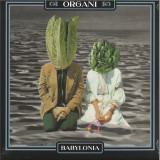
Well-versed in vintage vernaculars, Oakland-based producer/musician Mike Walti is about to return with his sophomore offering under the Organi moniker – as new album “Babylonia” follows 2020’s “Parlez-vous Français?,” a landmark in vibe acquisition ever since.
Wyldwood Studios is a portal. It’s a secret gateway to analog spheres. Cross the threshold and you’ll feel the difference: you can pick any ol’ time, any place, any tongue or vibe, in fact. Hit the dancefloor in 1967, feel that plushy loveseat in the early 70s. It’s a welcoming place where better, saner vibes are still within reach. Fueled, at least in part, by those long-classic 12”s on the walls – just imagine the sepia-tinted countenance of Melody Nelson alongside actual Birkin sans wig, right next to Shadow’s immortal crate diggers, forever blurred –, and channeled through ancient time travel devices such as the MCI 416B only to arrive on classic 2-inch tape (MM1000 aka Ol’ Bessy), it’s a haven for all things organic, for all things imbued with that warm élan. Built and run by Oakland’s own Mike Walti, countless artists from many different genres have felt that flair, creating sonic spheres and moving back and forth along the malleable axis that is space-time. Capturing magic.
Emerging from this unique portal back in 2020, Walti’s aka Organi’s first studio album was a stunning answer to its titular question – “Parlez-vous Français?” It was a soothing, somewhat psychedelic trip so magnétique and alluring that it immediately brought back those bits of Franglais you never knew you remembered. Whereas the debut LP indeed felt like a spontané voyage to the French Riviera ca. 1968, its follow-up “Babylonia” is so much more than linguistic confusion and ancient Akkadian Rhythms. Using that hidden portal near Alameda’s finest port to access all kinds of remote regions and sonic spheres, it’s super tight and feels, well, decent, even though, just like the ol’ Babylon, it’s full of surprising tongues and dreams, schemes and melodies.
“Where do we go from here?,” someone asks in opening “Organii-“ – all majestically cinematic boom bap, buoyant bass, sick strings. A fittingly massive opener that feels like cracking open a cold one after long weeks at work (that ecstatic “ahhhh”), it perfectly sets the tone for another half hour of pure time traveling, globe-spanning bliss. Whereas that certain prédilection pour all things French makes “La Rockette” so tempting and tantalizing (think MalMalNonBien), the sophomore album’s Berlin-based guest singer Nana Lacrima soon takes us elsewhere: title track “Babylonia” spins ever so softly, like a magic lantern, with images of dreamier Stones Throw funksters or Savath y Savalas looming over the steady flow of an arrangement that washes you clean like an ancient, unpolluted River Euphrates or Brazil’s actual Amazon. A sexy Portuguese-flavored anthem, occasional guest singer Alix Koliha also enters the scene to add yet another layer of French chic to this Brazilian landscape. Next, we’re back at the Riviera, but the “Italiano” version of it, splendido sunsets and bell towers in the distance, the ragazze laughing and shaking it up, perhaps even some Portofino Gin so you can really feel that “me ne batto il belin,” as your fingers align form some half-serious “ma che vuoi?”
Tim Maia-penned “Padre Cicero” (1970) deals with the stunning transformation of the titular hero – “De reverendo a lutador,” and what a soaring, sensual hook –, and Organi’s take on Elephant Memory’s “Old Man Willow” (now an “Old Man Waltz”) perfectly underlines what Walti’s Wyldwood endeavor is all about: Easy-Going Experimental Dream Pop, fueled by Gainsbourg, Broadcast, Stereolab, etc.
Later on, even though something seems to be tres complique in “Remembering Anna,” it all sounds carefree like a spontaneous Friday afternoon with a bottle of fine wine. Right before the outro, key album guest Yea-Ming Chen (of Yea-Ming & The Rumors) returns to the mic, adding her dark and dusky trademark timbre to melancholy anthem “Pictures Of Your Face”. Reminiscent of Nico and Trish (rip & rip), it’s a track that’s both dark and strangely propelling, hypnotic and hip-shaking.
A third generation Bay Area native, Mike Walti aka Organi has been running Wyldwood Studios in Oakland CA for some 15+ years (recording artists like Tommy Guerrero, Spelling, Why?, Latyrx, Del, Dan The Automator, and Big Freedia, to name but a few). A multi-instrumentalist who’s obviously in love with the 60s/70s, he loves to work with analog equipment (“We just love us some analog!” “Just listen to those relays purr…”). Recorded and mixed by Mike Walti at Wyldwood, “Babylonia” will be released on vinyl/digital by Alien Transistor.
out of Stock
Last delivered 22 months ago available to reorder, subject to availability
The Chris Greene Quartet - led by the Evanston saxophone colossus - played its first gig in 2005 and has since become one of the most highly visible, award-winning and critically lauded bands in the Chicago area. While honoring jazz's tradition, the band incorporates elements of funk, hip-hop, rock, Afro-Cuban, the blues and reggae, reflecting their diverse backgrounds.
S.E. Rogie went from running a tailor shop in Sierra Leone to being one of West Africa's most popular artists. He toured around the country, singing his palm wine music in multiple local languages, created his own record label, and was known as the most handsome man in Sierra Leone. He formed the highlife band The Morningstars in 1965. In 1973, he came to the Bay Area to live and expand his base, performing everywhere from local high schools and convalescent homes to festivals and large stages. In his later life he hit the road again and toured the world, eventually passing away while on stage in Russia in 1994. He shared the following songwriting wisdom with his son, Rogee Rogers: "When you write a song, you can be complicated if you want, but your chorus should be that anybody can sing it." These tracks were originally released on his own Rogie label in the 1960s and include solo, ensemble, and Morningstars songs, most of which have never been reissued until now."
Lara Sarkissian’s long-awaited debut full-length, ‘Remnants’ is an ornate patchwork of ancient and modern sonic shapes that uses the vernacular of electronic music to reformulate Armenian traditions and memories. Taking digitally modeled instruments (such as the kanun, a large zither, and the duduk, an ancient double reed woodwind instrument), vocals, davul and dhol drums, tenor saxophone (from acclaimed Paris-based player Adrien Soleiman) and myriad electronic elements and techniques, Sarkissian tangles the old and the new, creating an immersive, narrative-driven experience that’s powered by history, mythology and her own familial connection to the West Asian landscape. It’s an album that’s best absorbed like a film; only multiple encounters can reveal its layered themes and references to industrial music, noise, various club styles, ambient and traditional folk.
Born and raised in San Francisco and currently based in Los Angeles, Sarkissian has developed her unique approach to composition over years of relentless experimentation across various disciplines. Her interest in music production initially stemmed from her filmmaking and video editing work, when she began to sculpt her own sound collages and scores to accompany the visuals. Since then, she’s constantly blurred the boundary between dance and experimental music, DJing around the world, producing AV installations and scoring film and video projects that have been exhibited in Berlin’s Gropius Bau, Montréal’s Musée d’art contemporain, the Music Center Los Angeles and other prestigious institutions, and releasing music with labels such as Tresor, Knekelhuis, All Centre, Silva Electronics and CLUB CHAI, the label and event series she co-founded. In recent years, she’s also been able to advance the theory behind her art, publishing a conversation with ethnomusicologist Sylvia Alajaji in the Journal of the Society of Armenian Studies in 2021, and unveiling her methodology in Norient’s ‘This Track Contains Politics – The Culture of Sampling in Experimental Electronica’ a year later.
‘Remnants’ is a new stage in Sarkissian’s evolution as an artist; not only is it her first proper album, but it’s the inaugural release on her new platform btwn Earth+Sky. She sees the label as a place to encourage collaborations between musicians and producers and prioritize sound in visual arts realms, and ‘Remnants’ is the ideal proof of concept. It opens with ‘Heaven, or Paradise; and Hell’, a track that’s inspired by the layout of the Armenian sharakan (or hymn) ‘Aravot Luso’. Sarkissian imagines the original piece’s harmonies and melodies as parts of a dreamy electronic opera, using digital kanun sounds to punctuate her woozy, evocative synths. Soleimen joins on tenor sax in the third act, while Sarkissian repeats the chant and Jace Akira adds ghostly traces of electric guitar and bass. And on the rousing ‘Our Dead Can’t Rest (Old Jugha Flute Dance)’, Sarkissian chops urgent davul and dhol drum rhythms with spine-chilling shvi woodwind sounds lifted from a documentary about Old Jugha. The title is a reference to the moving of graves by Armenian families; the area initially housed over 10,000 elaborately carved khachkars (cross stones), one of which is pictured on the album’s cover, provided by historian Argam Aivazian’s archive.
On ‘Miracle’, Sarkissian samples atmospheres from the post-Soviet Armenian comedy film ‘Կիսանդրի’ (Kisandri). She takes this opportunity to lighten the mood a little, powdering her smudged samples with tightly edited breaks and bass thumps. It’s not until the album’s middle section that the duduk, perhaps Armenia’s best-known instrument, makes its appearance. Its familiar reedy tones, popularized by Djivan Gasparyan on his many Hollywood soundtrack appearances, emerge on ‘Unraveling (Interlude)’, weaving through the acidic ‘Zephyr’ and ‘Far from the eye far from the Heart’, a post-punk inspired stomper. Sarkissian mutates the instrument almost beyond recognition, pitching and layering it into a voice-like wail that creeps between her woody, dancefloor-primed percussion on the former, and turning it into a gentle, ghostly moan on the latter. And she brings ‘Remnants’ to a close with two of her most cryptic tracks, marrying digital kanun strings with Soleiman’s resonant tenor hums on ‘What Solace Can I Give’, and looping the same saxophone sounds until they dissolve into the air on the beatless closer ‘…nothing matters more than touching you although i haven’t touched you yet’.
It’s an album that ties up Sarkissian’s various interests and experiences, finding a romantic, poetic glimmer of light in history’s darkness. But most of all, ‘Remnants’ is about the optimism of starting anew, and rebuilding a life from the pieces of everything that’s been left behind.
out of Stock
Last delivered 80 days ago available to reorder, subject to availability
Johnny Clarke stands tall as one of the great vocalists that ruled the Jamaican reggae scene from the mid 1970's to the early 1980's Dancehall period. This re-issue of his 'Don't Stay Out Late' set shows his versatility to sing any song that was put in front of him and make it his own. Under producer Bunny 'Striker' Lee's guidance, Mr Clarke produced a run of singles and albums few could match.
Johnny Clarke (b 1955, Jamaica, West Indies) cut his first record 'God Made the See and Sun', after winning a local singing contest in the Bull Bay area of Jamaica. Although the single was not a hit, it led to two follow up tracks for producer Rupie Edwards, '
Everyday Wandering' and 'Julie' that fared much better, both on the island and overseas in England and Canada. These tracks also brought the singer to the attention of producer Bunny Lee and a working relationship that would go on to produce a prolific catalogue of music.
Johnny Clarke's Dread Conscious/ Love Song style were to grace many hits around this time in 1974. Such tunes as 'None Shall Escape The Judgement' , 'Move Out Of Babylon' , 'Rock With Me Baby' , 'Enter The Gates With Praise' to name but a few. All new songs added to a host of cover tunes, recommended by Bunny Lee, many taken from singer John Holt's catalogue, that suited Clarke's vocal style.
The rhythms were cut at various studios around the Island. Randy's Studio 17, Channel I, Treasure Isle, Dynamic Sounds and Harry J's by a group of musicians loosely called The Aggravators and voiced King Tubby's studio.
All great tracks backed by great rhythms, cut by Mr Johnny Clarke with a voice that few could equal.
out of Stock
Last delivered 22 months ago available to reorder, subject to availability
The last couple of years have seen a renaissance for West Coast singer-songwriters. LA-based youngsters such as Drugdealer and Sylvie have attracted considerable attention releasing warm and mellow records tonally reminiscent of the early 70s. Most fans of this new/old sound are unaware of Bart Davenport's early explorations in the same sonic territory. His now 20-year-old "Game Preserve"album should gain an appreciative new audience with its first ever vinyl release.
In the year 2000, Bay Area troubadour Bart Davenport and several other musicians were recruited by a major tech corporation in Seattle to work on an algorithm-based music matching/search engine. It was what looked like the beginning of a promising career. After a year, however, the project was shelved. Bart and his colleagues were laid off with a healthy severance package... on the 12th of September, 2001. Not only had the musician's life changed, so had the world. Rather than blow the money on a holiday or new car, Bart knew he had to make a record. A proper album that meant something.
Back in Oakland, he entered Wally Sound Studios with former Kinetics bandmate Jon Erickson at the controls, and a swathe of talented local musicians. "With Game Preserve," Bart explains, "Jon and I really wanted to knock it out of the park. I wanted to utilize people from my old bands like Loved Ones drummer John Kent. I also invited my newer indie-pop friends from Call & Response, and a young Nedelle Torrisi. Harmony singing by The Moore Brothers was an essential ingredient on Game Preserve as well."
Both Erickson and Davenport fondly recall growing up in households where the music of The Carpenters, Joni Mitchell and The Eagles soundtracked their young lives. By the early 00s they were ready to reconnect with what is often referred to as the "Laurel Canyon" sound. "I'd buy used tapes at garage sales and play them in the car. "Ladies Of The Canyon" by Joni and Jackson Browne's first album were both in heavy rotation. Jon Erickson was getting deeper into the Steely-Mac-Doobie yacht-rock sound in earnest. A certain amount of childhood nostalgia led a lot of us back to that part of the 70s. I'd flirted with classic soft-rock on my first album, but that record was pretty scattered esthetically. I wanted my next one to be more focused. Jon and I made some ground rules: no electric guitars (except on 'Bar-Code Trees'). No synths. Most importantly, all the songs have an air-tight, super dead, close mic'd drum sound. Putting these sorts of limitations on the sessions will give your record a specific quality. In the case of "Game Preserve"it's mostly about tight drums, acoustic instruments and analog production. We used a 24-track, two-inch tape machine for tracking, then ran the mixes through an analog board straight to a 1/4 inch master tape."
While the album's sonic palette may be firmly planted in 1970, Davenport's songwriting covers a sizable landscape of moods and reflections. From the quasi-flamenco intro of 'Sweetest Game' to the somber Wurlitzer of 'Nowhere Left To Go', to the 12-string shimmer of 'Intertwine', "Game Preserve" tells a story of young love, lost innocence and redemption, crossing borders and oceans along the way.
Released in 2003 on family-run Oakland label Antenna Farm, the ultra-analog sounding "Game Preserve" was only made available on digital formats, including CD. Copies were later pressed by labels in Germany and Spain; the latter being one country the album actually did well in, establishing Bart Davenport with a small but loyal fanbase he still enjoys today. Two European tours as support for Kings of Convenience also helped gain a foothold on the continent. Back in the US, however, Davenport and his sophomore album remained quite obscure.
Limited promotion meant it did little, but for the music lovers that heard it, the album undoubtedly remains a classic of the era, deserving far more. Twenty years on, it now finally receives its vinyl debut. "I personally think it holds up well," says Bart of the album two decades later. "The idea was to make something that could be an homage to late 60s/early 70s West Coast pop but hopefully timeless as well. Years on, I hear it as just that. It was a colorful and brief period of my life that felt at times like it could last forever. I discovered the joy of working in a proper studio with a perfect cast of characters. I'm still very close with all these people and still play music with many of them."
out of Stock
Last delivered 22 months ago available to reorder, subject to availability