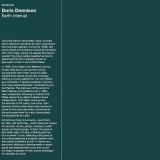
The discovery of Doris Dennison's score represents a genuine musicological breakthrough—what once would have been "a tree falling in the woods" thirty years ago now holds the potential to render "a thunderous clap in our minds." While researching Anna Halprin's lesser-known collaborators, scholar Tom Welsh uncovered the archives of AA Leath, one of Halprin's principal dancers. Buried within these materials was Dennison's handwritten score for Earth Interval, dated May 1956. Born in Saskatchewan, Canada, in 1908, and raised near Seattle, Dennison (1908-2009) encountered John Cage while teaching Dalcroze eurythmics at the Cornish College of the Arts. She joined Cage's earliest percussion quartet—alongside Margaret Jansen, the composer and his wife Xenia—in the group widely regarded as having performed the first complete concert of percussion music in the United States. This historic December 1938 concert was followed by tours and the landmark May 1941 performance at the California Club, comprising Cage and Lou Harrison's Double Music, the premiere of Cage's Third Construction, and Harrison's 13th Simfony.
As Bradford Bailey observes in his extensive liner notes, Earth Interval demonstrates "an extraordinary balance of elements that imbues the piece with a sense of clarity, directness, and constraint that is both distinct and ahead of its time." The work's most remarkable innovation lies in its approach to extended techniques, particularly Dennison's notation for the central movement: "In 2nd movement, 1st player lowers + raises a gong into a tub of water while beating." This technique, absorbed from Cage's experimental vocabulary, generates what Bailey describes as "fields of acoustic abstraction that bend and warp time through sustained resonances, beat, and space." The temporal sophistication of these manipulations anticipated Karlheinz Stockhausen's Mikrophonie I (1964) and Annea Lockwood's water-based sound investigations by over a decade. After joining Mills College as dance accompanist, Dennison maintained crucial connections to the Bay Area's experimental scene, collaborating with figures like Merce Cunningham and programming Cage's music throughout the 1950s.
Comprising three movements—Land Form, Air Tide, and Earth Play—Earth Interval is scored for recorder, drums, gongs, maracas, muted gongs, and bowl gongs. In total, the piece is just under eight minutes: "a fleeting glimmer of moment in time, a life spent at the cutting edge, and a singular creative vision that packs a powerful punch." When viewed in historical context, placed in contrast to roughly contemporaneous avant-garde percussion works by Cage, Harrison, Louis Thomas Hardin (Moondog), and Harry Partch, or important precursors like Edgard Varèse's Ionisation (1931) and Henry Cowell's Ostinato Pianissimo (1934), it's clear that Dennison was following her own path. Earth Interval is not derivative. It is a precursor to what was yet to come, alluding to developments of avant-garde and experimental music that wouldn't begin to appear on the cultural landscape until the 1970s and '80s, with the emergence of Post-Minimalism and more idiosyncratic artists and ensembles like Midori Takada, Ros Bandt, Peter Giger, Frank Perry, Christopher Tree, Michael Ranta, Gamelan Son of Lion, and Niagara.
This recording by Chicago's Third Coast Percussion, captured in March 2022, represents the first complete documentation of this pioneering work. The ensemble's interpretation reveals the piece's remarkable contemporaneity while maintaining its historical specificity. Where Cage, Harrison, and Partch employed "self-consciously off-kilter polyrhythms," Dennison's rhythmic sensibility anticipates minimalist developments by nearly a decade, yet integrates "forceful rests, as well as sharp shifts in sonic character, tempo, and meter, that break the momentum and breathe a sense of life into the piece's structure." This positions her work closer to Post-Minimalism decades before its emergence. The architectural approach demonstrates Dennison's understanding that "the composer almost entirely disappears" in favor of phenomenological listening experience, creating what might be called an egoless music that places its realities and meaning entirely in the ear of the beholder. The present recording, realized by Chicago's distinguished Third Coast Percussion ensemble, represents a significant achievement in experimental music scholarship and performance practice. As specialists in the Cage tradition and contemporary percussion repertoire, Third Coast Percussion approached Earth Interval with the historical sensitivity and technical precision required to illuminate Dennison's subtle compositional innovations. The March 2022 recording sessions, engineered by Colin Campbell, capture both the work's intimate chamber music qualities and its bold exploration of extended techniques. The ensemble's interpretation reveals the piece's remarkable contemporaneity—its ability to speak directly to current musical concerns while maintaining its historical specificity.
This recording serves multiple scholarly functions: it provides the first complete documentation of Dennison's compositional voice, offers insight into the broader network of experimental music practitioners surrounding Cage and Harrison, and demonstrates the sophisticated level of compositional thinking that was occurring within the Bay Area's dance-music collaborations of the 1950s. The work's emphasis on phenomenological listening—what might be called an "egoless" approach to musical experience—places it within a lineage of American experimental music that prioritizes perceptual process over compositional personality. The work's original obscurity—limited to AA Leath's performances at venues like the 1957 Pacific Coast Arts Festival at Reed College—paradoxically allowed it to remain "entirely on its own terms," free from the constraints of historical categorization. Drawing on Jacques Derrida's Archive Fever, the argument emerges that "the archive can acknowledge, celebrate, and resurrect" overlooked voices, transforming our understanding of experimental music history. The present Blume edition, featuring Third Coast Percussion's authoritative interpretation, includes a lavishly illustrated 16-page booklet designed by Bruno Stucchi / dinamomilano, containing complete scholarly apparatus, historical photographs, and detailed production notes. This recording enables "cross-temporal intersectionality," allowing Dennison to "belong to a newly formed and more dynamic understanding of the present and past," demonstrating how forgotten voices can reshape entire historical narratives when given proper scholarly attention and performance advocacy.
Buscar:area music
Chaz Bear (formerly Bundick) was a musician from birth. Growing up, it was normal to hear music across genres, from Michael Jackson to Elvis Costello to The Specials, in the Bundick household. These influences were quite unique for a biracial kid growing up in South Carolina, contributing to the complexity of Chaz’s self-understanding and expression through his own music.
Chaz began playing and recording original compositions in his preteen years, forming multiple indie bands starting in middle school and continuing until his personal project, Toro y Moi, was signed by Carpark Records in 2009. Before getting signed, he was already an incredibly prolific artist, having released over 10 Toro y Moi albums on his own (and undoubtedly retaining a vast compendium of unreleased songs). His personal work drew upon a vaster array of influences than did his full band. Early Toro work called upon Chaz’s childhood exposure to 80’s R&B, pop and electronic music, while also evolving with his discoveries of acts like My Bloody Valentine and J Dilla and his burgeoning interest in French house. Just before his graduation from the University of South Carolina, where he earned a degree in graphic design, Chaz caught the attention of music bloggers and record labels with his dreamy, bedroom recordings.
Outer Peace, was written and recorded in the Bay Area after Chaz’s return from a one year stint in Portland. It is somewhat of a homecoming celebration, filled with features by friends and saturated with a playfulness that had not previously been embraced in past Toro albums. Outer Peace stands in contrast to the more sparse and contemplative Boo Boo, an album recorded while in Portland in relative isolation. With Outer Peace, Chaz showcases his ability to remain on the cutting edge of music’s evolution while not taking himself too seriously. There are contemporary hip hop references mixed in with funk, Eurodance and ambient elements, all interwoven expertly and retaining that quintessential Toro y Moi aesthetic.
- Shrine
- Baby It's Alright
- Ride 38
- Tiffany's Days Go By
- Christopher Siren
- Sugar Daddy
- Blue
- Soft Purple Sky
- Julia's Eyes
Tough Love brings to vinyl for the first time April Magazine's Sunday Music For An Overpass, a nine track collection originally issued on cassette in vanishingly small number by Paisley Shirt in 2021. The kind of mythical recording you might have once needed to know the band to own. Alas, no longer... Can the universe have two centres? Because if it's not Gothenburg it's San Francisco... It's impossible for me to think about what's going on in that particular part of the west coast right now without immediately being drawn to April Magazine, a comparatively loosely assembled three (sometimes four) piece centred around artist/musician Peter Hurley, who seem to simultaneously operate at both the heart and the margins of the current Bay Area underground. On the one hand they share members with many other bands, their guitarist/singer runs a gallery that functions as some kind of focal point/social space, and Cindy even have a song named after them. On the other hand, their music is resolutely lo-fi and invariably couched in a mysterious haze, the live footage available online seems to suggest that they sound slightly different each time they play, and there are reports they have dozens of songs (possibly albums?) that have not and may never be released, hidden inside their own private universe. On its initial release, Sunday Music For An Overpass was an early attempt to drag the group a little closer into the light, yet inevitably made them feel as endearingly enigmatic as ever. Typically, this vinyl reissue some four years later only goes part way in clearing that alluring fog. April Magazine channel the greats - Spacemen 3, The Pastels, early B&S, Mary Chain, Rainy Day/Opal/Mazzy et al - but submerge their obvious melodic capabilities within seemingly infinite spray can hiss, as if the songs are being pulled backwards through some vortex to the past. Half of these tracks are instrumentals, and it's in those moments that the band are perhaps at their most expressive, suggesting a very inviting melancholy that can't quite be figured out. Though the LP remasters the original recordings and is a little cleaner sounding as a result, no secret is being given away. The appeal is that the more you hear from them, the less you really know, and all the better for it. Maybe, then, it's that April Magazine are here to show there is no centre to the universe, that instead it's always just off to the side...
- You Are
- Pieces Of Never
- Fade Out
- The B-Side
- Over And Over
- Ever After
Resolution Alley is the musical vision of Jason Wilson, a musician and composer hailing from Maryland. The music combines 80's pop and rock melodies with progressive rock concepts, creating a unique but strangely nostalgic sound. Jason performs extensively throughout the Baltimore / Washington, DC area. From the smallest clubs to the Kennedy Center, Jason has shared the stage with some of the biggest names of stage, screen and music. Resolution Alley combines the influence of a career in rock and theater into a distinctive creation. Resolution Alley is getting ready to release their brand-new album Pieces of Never which contains the catchy first single "The B-Side" and follow up "You Are". Jason Wilson has crafted a wonderful release with just the right amount of balance between Rock and Prog which is sure to capture the ears of folks who like something familiar yet new. So if you like your music with big hooks and interesting arrangements and instrumentation then Resolution Alley has cooked up just what you ordered with Pieces of Never.
- A1: Intro
- A2: Quit Rappin
- A3: Tell You The Truth
- A4: Gta Vi
- A5: Backflip Or Sumn
- B1: Keep It 100
- B2: R.i.p. Barneys
- B3: Bad Timing
- B4: Social Media Can't Help You
- B5: Maestro's Tension
- C1: Fuck The Party Up (Feat. Rio Da Yung Og)
- C2: Chalkzone (Feat. Lil 9)
- C3: Pressure
- C4: I Want It All
- C5: It's A Secret (Feat. Allblack)
- D1: Spousal Abuse
- D2: Ice Chili
- D3: To Be Honest
- D4: Fictional
Thank You For Using GTL is a 2020 album from vaunted Los Angeles rapper, Drakeo the Ruler. The album contains verses recorded entirely through phone service from GTL while Drakeo the Ruler was incarcerated at Men’s Central Jail in Los Angeles, California. The album focuses on topics such as the targeting of rap and rappers by the US criminal justice system, the prison-industrial complex, incarceration, capitalism, and the gray area between what’s real versus fiction in hip-hop. Lauded by Pitchfork as “Likely the greatest rap album ever recorded from jail,” and included at number 32 on their 50 Best Albums of 2020, the album serves as an interesting moment in hip-hop, further cementing Drakeo the Ruler as one of LA’s most beloved rap luminaries. For the very first time, for any album, on any format, Drakeo’s music will be available on vinyl for fans. Pressed on Green & Blue A Side B Side vinyl and limited to 1700 copies.
Following their debut album, Bay Area industrial duo Gridlock quickly pushed their creative boundaries. They restructured their live setup, incorporating new technology that expanded their sonic possibilities.
Their first experiment with upgraded digital tools resulted in the track Enzyme for Pendragon Records’ Quadraphobia compilation. Soon after, they embarked on a short West Coast tour before returning to the studio to craft their next album, Further.
Embracing real-time audio editing, Further developed rapidly, defined by its signature distorted percussion. Initially met with little feedback from their label, the album gained final approval after a live performance at the CMJ festival.
Released in early 1999, Further exceeded expectations, earning critical acclaim and charting in the the RPM charts. It became a landmark in the evolution of industrial music, blending emotional depth and cerebral complexity with brute force.
Gridlock continued evolving through two more albums before disbanding, leaving their work rare and highly sought after. Now, in tribute to Mike Wells, who passed away in 2022, Viasonde is reintroducing Gridlock’s music with the blessing of Wells’ family.
Following the 2024 reissue of The Synthetic Form, Further will be released on July 11th on clear vinyl with greyscale splatter. Half of the proceeds will go to the American Foundation for Suicide Prevention in Wells’ honor.
Balmat 17 marks both a return and a new frontier. It is the second album on the label from Patricia Wolf, whose 2022 album See-Through is one of the most beloved in Balmat’s catalog; it also marks the first time that Wolf has turned her hand to a film soundtrack. The results are every bit as magical as fans of the Portland, Oregon, composer’s music might expect.
Hrafnamynd—Icelandic for “raven film”—is a new feature-length documentary by experimental filmmaker Edward Pack Davee. Shot on a mix of film and digital formats, and incorporating his father’s Ektachrome slides from the 1970s, the autobiographical film works on multiple levels at once: a reminiscence of his childhood in Iceland, an exploration of landscape and folklore, and a documentary study of the island nation’s ravens—including a talking raven named Krummi.
Wolf is the perfect artist to score such an unusual film. Mixing ambient music and field recording—including extensive experience documenting bird song—Wolf brings an unusually empathic perspective to her music. In the context of Hrafnamynd, her airy melodies, pensive atmospheres, and vivid textures intuitively complement the film’s grainy film stock and blown-out colors. Friends for years, the two artists further bonded when Wolf asked Pack to film music videos for her songs “Woodland Encounter” (from See-Through) and “The Culmination Of” (from I'll Look For You In Others). Pack used Wolf’s previously recorded music as placeholders as he began assembling a rough cut of the film, which made her a natural choice to help him complete his idiosyncratic vision with an all-new, bespoke score.
But Wolf’s soundtrack also indisputably stands alone as a full-length album. Largely created using the UDO Super 6 synthesizer, it features a carefully distilled palette of warm, string-like pads and darkly glistening mallets, rounded out with the very occasional introduction of nylon string guitar. Musically and stylistically, the album’s 11 tracks represent both a continuation of the ruminative sound of See-Through and also an extension into new expressive modes. Few musicians, ambient or otherwise, are as skilled at balancing melody with atmosphere, or at finding ways to eke fresh at finding ways to eke fresh, surprising sounds out of an intentionally reduced toolkit. Meditative, immersive, and emotionally generous Wolf’s Hrafnamynd soundtrack evokes a range of ambient classics from decades past while confidently marking out its own verdant patch of ground.
Artist’s Statement:
Edward and I have been friends for years, but we really started to get to know one another better after I hired him to make music videos for my songs “Woodland Encounter” and “The Culmination Of.” For those projects we got to spend a lot of time hiking in various locations around the Pacific Northwest with his camera, very nice lenses, and tripod. Keeping quiet, hidden, and vigilant we searched for wildlife, good light on the trees, meadows, lakes, rivers, and skies. Edward was already an appreciator of my music and I was already in awe of his filmmaking talents so it felt like a great fit. Although we work in different areas of art our styles compliment one another. We both tend toward slow and careful pacing, with a focus on emotion and introspective reflections on life and the landscapes around us. For this reason, Iknew that I could trust Edward to create videos for my music. We saw so many beautiful and unexpected things on our filming days, but I was moved to tears once I saw how magnificent and poetic it all was. His video work from the cinematography, to the editing, and color correction helped bring my inner vision to life.
A few months after that, Edward surprised me with an invitation to work on the soundtrack for his new film, Hrafnamynd. I enthusiastically said yes. I had always wanted to work on a film, and I knew that his filmmaking style would be inspiring to write music for. I had recently acquired an UDO Super 6 synthesizer but hadn't used it much. I decided that this would be the synth that I'd use for the film. It has the ability to sound very modern, but can also sound so warm and fuzzy, like a synth from the 1970s. It turned out to be the perfect instrument for this project as the film itself straddles time from the ’70s to today.
When Edward sent me the rough cut of the film, he used placeholder music to help give me an idea of the emotion and energy that he was hoping to achieve for each scene. For many of the scenes, Edward used music from my albums as temporary tracks. This told me that he trusted my work and style and therefore I should just trust my intuition with how to proceed. I wanted to make sure that everything that I made was a direct reflection of what was happening on screen, a mirror of its emotion and energy so people could really lock into the film psychologically. This process took my composing to unexpected places—like being led by a strange cat or a raven that seemed to have something to show me. I found that the approach made the music so much more dynamic than my usual style. I really enjoyed being influenced by the action and dialog on the screen. Thankfully, Edward was very happy with the work. I made sure to handle this project with the utmost care because this is about his life and his family, and an exploration of the experiences that made him an artist and filmmaker. While watching the film many times over, I found myself thinking about my own family and my early memories with them and how the place where I grew up has influenced who I have become. I found that his film invites the viewer to reflect on their own lives in a similar way. I hope that this music and film can guide others to contemplate on the history of their beingness and the people and places that shaped them.
Another aspect to this project is the splendor and wonder of Iceland itself. I had the opportunity to visit Iceland for the first time in 2023. I got to play a show there for the Extreme Chill Festival and met many friendly and brilliant Icelanders. I also got to collect field recordings that I used in the film. It's a fascinating place and culture that easily captures the hearts and imaginations of anyone who visits. Whether you spend your time in the city immersed in its impressive arts scene, or venture out into the wilderness to behold its wondrous landscape, it will leave a lasting impression. The soundtrack is also a love letter to Iceland itself.
PARADE is an 8-piece group, predominantly from Brighton and now based in London. Its members - who are all involved in their own capacities in music, art, fashion, design and more - have been making music since they met at college in Brighton, flipping records and making beats in founding member Jago’s attic room. Since then the sound has evolved to incorporate live instrumentation alongside electronic elements. Though always collaborating in each other’s orbits, PARADE was fully formed when all members gravitated towards South-East London, scattering around in musically less mythologised areas across Nunhead, Forest Hill, Camberwell and Norwood.
Lightning Hit The Trees is the band's debut mixtape, and was entirely written, produced, engineered, and mixed in just two weeks. It was recorded in a shipping container in Forest Hill on basic, often broken, equipment with ideas often formed in the moment. As demonstrated by these two first singles, the mixtape pulls together a body of music that incorporates a wide range of ideas from a group of inventive, inspired new artists and comes together in a remarkably clear and unified vision. The mixtape is guided by uncanny valleys, cinematic tones, “hyper-real” mixing techniques, and by a light with no shadow. Influences include: Wim Wenders, Juergen Teller, Velvet Underground, Radio Dept., Scott Walker, Magliano, Soft Machine, This Heat, Pixies, John Cassavetes, Domenico Gnoli, Dadaists, Judy Garland, Cindy Lee, Arca, Bette Davis, Sun Ra.
- Strohmann
- Napoleon
- Böse Lügen (Body Mix)
- Know
- Earth Song
- Spirit Of Love
- Come Inside
- Monumental
Riki is the Los Angeles based dark synth-pop outfit commandeered by the mysterious Niff Nawor, a visual artist and musician active in the deathrock / anarcho-punk scenes of the California bay area (formerly a member of Crimson Scarlet), before founding her solo endeavor as Riki in 2017. Niff's desire to explore her own sound manifested in the recording of the Hot City cassette tape in 2017, which featured Chelsey Crowley of Crimson Scarlet, Skot Brown of Phantom Limbs and Pedaof Doomed to Extinction. Released on Commodity Tapes and later reissued on vinyl by the well-regarded Symphony of Destruction label, Riki followed the release of the single with several small tours and festival dates, performing with such acts as Light Asylum, Black Marble, and Trisomie 21.For her self-titled debut album for Dais, Riki explores courage, physicality, and romance across eight timeless synth pop anthems. Produced and engineered by hardware-based synthesist Matia Simovich of INHALT, influences and ideas are worn proudly without deviating from fresh and daring electro-pop territory. Nostalgic cues can be heard ranging from Neue Deutsch Welle, early Adrian Sherwood productions, classic ZYX Italo Disco, Japanese Visual Kei and even classic new wave/pop like Pat Benatar, Kate Bush, and early Madonna.The lead single, Napoleon, contains Riki's indelible sound design, reminiscent of 80's New York dance floor electro-pop that recalls the fusion of uptown and downtown styles and culture, told through Riki's present day West Coast narrative. For contrast, the second single entitled Böse Lügen (Body Mix) was previously released in demo form and re-mixed to emphasize its commanding presence and addictive nature. Translated simply to "Wicked Lies" and sung completely in German, Böse Lügen moves away from the upbeat romanticism found throughout the album and commands serious self-reflection guised within an infectious dance floor anthem.
- A1: Mu-Tron
- A2: Discotraxx
- A3: Another Breakfast With You
- A4: Cska Sofia
- A5: The Way That I Found You
- A6: Paco!
- A7: Commodore Rock
- A8: Zmeyka
- B1: Playgirl
- B2: I'm With The Pilots
- B3: This Is Our Sound
- B4: He Took Her To A Movie
- B5: Laughing Cavalier
- B6: Ladybird
- B7: Jet Age
- B8: Skools Out
Milky Clear Vinyl. Helen Marnie, Mira Aroyo, Daniel Hunt and Reuben Wu - formed in 1999 and sparked an entire movement in music pop culture powered by vintage synths and electro-rock engines. Originally released in 2001 by Emperor Norton Records in the US and Invicta Hi-Fi in the UK, ''604'' is the debut album from the Liverpool formed electronic outfit Ladytron. Named after the area code for British Columbia, the album features break-out tracks 'He Took Her to a Movie' (inspired by Kraftwerk's very own 'The Model'), 'Playgirl' and 'Discotraxx'.
Trouser Tricks was the unreleased debut album by West London punk band Ack Ack, formed in the Twickenham/Isleworth area in l977. The album was recorded in l98O at TW Music Studio, a small studio tucked away on Fulham Palace Road, capturing the raw, unfiltered energy that defined the band’s sound. Despite initial interest from several record labels, including some major ones, the album was never officially released due to the economic recession and the growing belief that punk had run its course. These tracks provide a rare glimpse into a pivotal time in the local punk scene. Experience the lost sounds of Trouser Tricks today!
- La Reina Nocturna
- La Danza Del Camaleón
Random Coloured Vinyl
Nu-Tone presents Combo Tezeta's debut 7" vinyl record! The A-side, "La Danza Del Camaleón" is an instrumental cumbia-salsera that takes you on a tropical trip with a touch of psychedelia. On the flip side, a dark mid-tempo bolero called, "La Reina Nocturna". Remastered from the original verion, released by Discos Más in 2020. Based out of the Bay Area, Combo Tezeta plays a highly danceable blend of instrumental Cumbias, Chichas, and Musica Tropical inspired by the late 60's and early 70's era of psychedelic Peru. Layering the reverb-fueled sounds of surf rock onto the foundations of Cumbia, the band's focus is to highlight the rich melodies and hypnotic rhythms birthed from the Afro-Latin diaspora. Along with its appreciation of world music and its diverse cultures, Combo Tezeta's mission is to deliver the sounds and musical echoes of the past to the present through a combination of traditional and original music. Combo Tezeta was featured in Noise Pop 2023 and has played Pacific Northwest tours with Satan’s Pilgrim and Thomas Lauderdale of Pink Martini 2023. The band has played famed Bay Area Venues the Chapel, Eli’s Mile High Club and the Ivy Room. In Summer of 2024 they toured the Pacific Northwest and Southern California, including an appearance at The Hardly Strictly Bluegrass Festival in San Francisco's Golden Gate Park. The band was chosen by NPR’s Tiny Desk Concerts to be one of 20 finalists (out of 7000), and featured them in the Northern California showcase of finalists at Lagunitas Brewery in 2024. “Oakland seven-piece Combo Tezeta kicked off the baile with a garage-band take on ’60s and ’70s classics and originals, with distorted guitars and jangly synths layering psychedelic ooze onto timbales and güiras. The musician’s solos revealed hard-won skills, but the band members looked remarkably chill as they played together fluidly.” – KQED
- A1: Dawn/Go Within
- A2: Carnaval
- A3: Let The Children Play
- A4: Jugando
- A5: I’ll Be Waiting
- A6: Zulu
- B1: Bahia
- B2: Black Magic Woman/Gypsy Queen
- B3: Dance Sister Dance (Baila Mi Hermana)
- B4: Europa (Earth’s Cry Heaven’s Smile)
- C1: She’s Not There
- C2: Flor D’luna (Moonflower)
- C3: Soul Sacrifice/Head, Hands & Feet
- D1: El Morocco
- D2: Transcendence
- D3: Savor/Toussaint L’overture
Santana Bridges the Divide Between Live and Studio Material on Moonflower: 1977 Double Album Features Extraordinary Performances, Soulful Vibes, and Dynamic Mix of Latin, Rock, Funk, and Blues
Sourced from the Original Master Tapes and Strictly Limited to 3,000 Numbered Copies: Mobile Fidelity’s 180g 33RPM 2LP Set Plays with Audiophile-Quality Detail, Balance, and Imaging
1/4” / 15 IPS original analogue non-Dolby master to DSD 256 to analogue console to lathe
Though it may seem strange now, Moonflower stood for nearly 15 years as Santana’s first and only live record released in the United States. This despite the fact that roughly half of the double album consists of new studio songs, including a zesty cover of the Zombies classic “She’s Not There” that reached the Top 30 of the singles charts.
However unconventional, the “split” strategy went over like gangbusters. Moonflower reached the Top 10 of the Billboard Top 200 and achieved double-platinum status — feats the group would not again replicate for 22 years. These, and the beautiful quality of the program itself, are among the reasons why the 1977 effort remains viewed by critics and fans alike as must-have Santana.
Sourced from the original master tapes, pressed at Fidelity Record Pressing in California, housed in a Stoughton jacket, and strictly limited to 3,000 numbered copies, Mobile Fidelity’s 180g 33RPM 2LP set of Moonflower presents the record in audiophile sound for the first time on a domestic reissue. Part of the MoFi’s Santana catalog restoration series, this collectible version features quiet surfaces and black backgrounds that expose the critical details, liquid tones, and dynamic interplay central to Santana’s music.
The enhanced sonics extend not only to Carlos Santana’s six-string wizardry, but to the rhythmic, melodic, and vocal elements that course throughout both the studio and live cuts on Moonflower. The grip and depth of the bass lines; the wash of the organ; the scope and carry of the vocals; the extension and weight of the low-end frequencies; the rich textures of the guitars, percussive devices, and keyboards: all appear amid wide, balanced soundstages and image with right-sized dimensionality.
Significantly rooted in the styles and approaches that inform the group’s first three records, Moonflower captures the final appearances of iconic percussionist Jose “Chepito” Areas and go-to keyboardist Tom Coster on a Santana album. As he did during the preceding five-year stretch, Coster inhabits a large role here, sharing songwriting credits on a majority of the new cuts and helping steer the arrangements toward spiritually minded albeit concise directions that encompass vibrant Latin, rock, and blues themes that began to escape the ensemble shortly after his departure.
Close your eyes and feel the warmth of the sun on the R&B-kissed “I’ll Be Waiting,” anchored by Carlos Santana’s gliding fretwork and Greg Walker’s creamy vocals. Enter the cosmic universe of “Zulu,” on which Coster’s nimble phrasing opens the gate to polyrhythmic beats, knotty grooves, and interlocking funk. Grab the album cover and drift off to paradise amid the equally evocative “Flor d’Luna (Moonflower),” a romantic slow dance that Carlos Santana ensures tiptoes en route to its blissful destination. Channeling a different spirit animal, the guitarist later lets loose on the hard-hitting “El Morocco,” on which he seemingly engages in a shootout with himself and wades into the rippling psychedelia that elevated the band’s early material.
Speaking of the past, Moonflower triumphs on that level as well. In more ways than one, the live selections — and the caliber of the performances — chosen for inclusion represent an abbreviated greatest-hits survey of the band up to that point. And, at the very least, a convincing argument about why Santana had progressed into one of the most formidable bands you could hope to see on a stage in the mid ‘70s.
Simultaneously representative and illustrative of the group’s breadth, tracks stem from the collective’s eponymous debut, Abraxas, and Santana III as well as the then-more recent Amigos and Festival. Whether you fall for the sidewinding spell of a spicy rendition of “Black Magic Woman/Gypsy Queen,” lose your head to the positively epic momentum of “Soul Sacrifice/Head, Hands & Feet,” or keep dropping the needle on the savory grace of the brilliant reading of “Europa (Earth’s Cry Heaven’s Smile),” this pressing of Moonflower puts you — and Santana’s first-chapter legacy — in good hands.
- A1: My Isle Of Golden Dreams
- A2: Die Trash Area
- A3: Marguerita
- A4: Friend In Need (Pt. 1)
- A5: An Intimate Garden
- A6: One Track Man
- A7: My New Purple Shoes
- A8: Friend In Need (Pt. 2)
- B1: Love Turned Into Wine
- B2: Elza Poppin
- B3: Movies
- B4: End Credits
- B5: Escalator (Feat Lord$)
- B6: Hidden In The Gallery (Feat Lord$)
Rémi Klein debut studio album, Friend In Need will be released on June 20, 2025 by Tricatel.
Behind his keyboards, between the walls of his bedroom or in studio, Rémi Klein fashions music that is both intimate and generous, instinctive and precise. He is a craftsman who composes, arranges and produces with obsessive meticulousness. Playing with LORD$, Please and now Clara Luciani, he built up a collective experience before recording his own album.
Signed to Tricatel, his first album, Friend In Need, due 20 June, is a plunge into his cinematic universe, where the lush orchestrations of Hollywood's golden age rub shoulders with the best of songwriting. His music and songs, rooted in the present and the future, are visceral and innovative. It's the music of today and tomorrow at its most promising and audacious. There are a million new tracks a week on streaming platforms, no two albums like Friend in Need and no two artists like Rémi Klein.
- A1: In Stars We Drown
- A2: Kaleidoscopic Waves
- A3: Labyrinth Of Stone
- A4: The Crystalline Veil
- B1: Step Through The Portal And Breathe
- B2: A Parasitic Dream
- B3: The Obsidian Architect
- B4: Xenotaph
Personified, reinvigorated, and re-imagined!
Tech-metal outfit FALLUJAH expand horizons and solidify their position as one of America’s most exciting artists on their new album, Xenotaph, through Nuclear Blast. The Bay Area-based quintet’s confidence in the lineup that made their previous album, Empyrean (2022), such a resounding success—earning high marks from Metal Injection, New Noise, and Guitar World—has been reconfigured slightly, with guitarist Sam Mooradian (INHALE EXISTENCE, SAM MOORADIAN) and drummer Kevin Alexander (DISEMBODIED TYRANT. BROUGHT BY PAIN) bringing their jaw-dropping musical proficiency to the fold, as vocalist Kyle Schaefer, guitarist Scott Carstairs, and bassist Evan Brewer enter a new chapter with FALLUJAH. Moored by singles ‘Kaleidoscopic Waves,’ ‘Labyrinth of Stone,’ and ‘Step Through the Portal and Breathe,’ Xenotaph is FALLUJAH personified, reinvigorated, and re-imagined.
As a details-oriented record Xenotaph benefits from moments of low tension, atmospheric delight, and Schaefer’s winged clean vocals. This
dynamic isn’t particularly new to Fallujah, but the group spent considerable time honing what each song needed—from blast-laden speed runs and jazz-fusion solos to vocal restraint and brutality—which resulted in a brighter, more exhilarating experience. Musically, it truly feels like the listener is embroiled in the album’s sci-fi concept and Peter Mohrbacher’s stunning cosmogonic cover art, which is aesthetically in line with his previous covers (Dreamless and Empyrean) for FALLUJAH. Close encounters with ‘Step Through the Portal and Breathe’, ‘Labyrinth of Stone,’ and ‘Kaleidoscopic Waves’ spark wonder and stimulate the soul.
Bonnie Banane and Joseph Schiano di Lombo present L'Orguasme, an album of bawdy and devotional songs accompanied by the organ of the Cité de la Musique / Philharmonie de Paris. Literally composed and written for pleasure, this work (of the flesh, naturally) pays tribute to the most spectacular expression of ecstasy - a paradise so near and yet so misunderstood. From the most restrained sighs to the most dazzling vocal outbursts, from the foreplay to the eruption, not to mention the bliss that follows the incandescence, Bonnie and Joseph sing about the art of reaching seventh heaven, of genuflection and "la petite mort" ("little death" a French expression for "climax") without shying away from the darker areas: those of guilty, forbidden, feigned, or selfish pleasures, for instance.
By turns light, explosive, mystical, burlesque, and poetic, this music diverts the organ from its centuries-old habits, achieving a union of the profane and the sacred, the crass and the beautiful, the body and the spirit, early music and pop - reminding us of the essential truth: it's better to come than to cry.
While the minimalism of the arrangements initially strikes the ear - no instruments other than the organ accompany these musical escapades - the album is infused with numerous unexpected influences: R&B (La petite mort), swing (Le cri), gospel (Simulation blues), jazz (Le calme après l'œuvrette), medieval ballads (Ronde génitale, Au plaisir), and even a famous 16th-century folk dance called the branle (Branle Censored).
A sexy, lush, stripped-down, and unabashed opus, glorifying what remains glorious: love, music, and the boundless joy of creation.
g B2. Branle Censuré
[g] B2. Branle [Censuré]
- Circle
- Eye Contact
- Seventeen Nights
- My Waterfall
- Wasting Time
- Final Lap
- Eraser Ii
- Shipwrecked
- Open Shadow
- Like A Stone
Neo Gibson, born in Virginia and based in New York City, records, performs, and produces as 7038634357. This numerical alias, under which Gibson has been releasing work since 2016, offers a window into the careful ambivalences of the musical project. It conjures the impersonal_the opacity and randomness of data, a number that is hard to remember or even say out loud_while also suggesting a direct line of communication with the artist, down to an area code indexing their biography. 7038634357 uses a restricted palette to achieve music that is formally precise and emotionally direct. Their digital-native approach to production, in which frank melodies cross paths with heavy distortion, contains traces of both trance's maximalist arcs and a songwriterly intimacy. Expressive details may appear submerged or abraded, subjected to a canny sense of dynamics and textural specificity. Waterfall Horizon, Gibson's second vinyl record with Blank Forms Editions under the moniker 7038634357, was written for live performance and workshopped over successive shows during their 2022 European tour. Here, hallmarks of their earlier, studio-crafted recordings_digital distortion that obfuscates their lyrics and a slow-burning ambience_are noticeably pared back. Instead, Waterfall Horizon takes on a pop inflection, adopting more traditional lyric scaffolds so that the interstices from verse to chorus or track to track can flourish within their limited tonal range.Across recordings and performances, Gibson activates wide-ranging mechanisms of audience connection: from the relative anonymity of internet platforms to live experiments with the spatial effects of amplification. They have a particular interest in site-specific performances in non-musical spaces, and have performed in a variety of contexts, including the mezzanine of the West 4th Street subway station in New York City and INA GRM/Radio France's Présences électronique festival. Under their own name, Gibson has maintained a longstanding collaboration with the artist Charles Stobbs, working primarily with FM transmission and techniques derived from the early-seventeenth-century English tradition of change-ringing bells. The first 7038634357 vinyl record, Neo Seven, was released on Blank Forms Editions in 2023; previous releases include self-released cassettes and CD-Rs, as well as a pair of EPs on Genome 6.66 Mbp (2018, 2019).
With their EP triptych "Thee Church Ov Acid House Volume 1–3," Oliver Bradford and Jörn Elling Wuttke created a holy trinity of diverse dancefloor variations, a self-contained circle of rave history.
In itself already a heavyweight statement, which they now crowned with “Bells & Whistles - Thee Remixes”. So to speak the quadrature of the circle And as with their original material, this release also reveals a profound knowledge of dance history in the selection of remixers - combined with the best of the here and now.
A1:
The trip begins with Jamie Hodges' ( Born Under A Rhyming Planet ) version of “Acid House Planet”. Hodge was responsible for a number of legendary EPs on Richie Hawtin's Plus 8 label in the early 90s, which explored the deep poetry of techno music. In this sense his remix is also a delicate affair of rarely heard beauty.
A2:
There's Thee Church Ov Acid House themselves, who stretch the swinging groove of Tyson's “G Phunk”, far too short in the original, to almost six minutes. A groove that won't stop.
B1:
And that brings us to the next two legends, this time from the local area. D-Man and Move-D have had a significant influence on dancefloor culture between Heidelberg and Mannheim since its inception. Their lysergic “Theme” remix, with Terrence McKenna vocals and acid twist in the middle, is an epic open air classic to come.
B2:
Lennard Poschmann's aka O-Wells' version of “Rave Mantra”, on the other hand, is deep, digging bass techno for the darkest moments of the night.
Vinyl EP2 featuring remixes of Man Power, As One ( Kirk Degiorgio ), HRDVSION ( Nathan Jonson ), Cosmic Cars ( Pudel Produkte, Smallville, Bureau B )
- A1: Heliotrope
- A2: Guildford
- B1: Tiergarten
- B2: Wood Green
- B3: Ruislip
Reissue von Sarah Davachis Debüt-LP "Barons Court" aus dem Jahr 2015 auf Students Of Decay. Eine Reihe ausgedehnter elektroakustischer Solo- und Kammermusikwerke, aufgeführt von ihr und einer Gruppe von Musikern aus der San Francisco Bay Area, aufgenommen in Kanada, Kalifornien und Europa. Das Ganze spielt in einer Landschaft, der Landschaft, dem Ort des Geistes. Limitierte Auflage auf weißem Vinyl in gefütterter Innenhülle.
The Understated Debut That Launched a Peerless Career: Bob Dylan Is the Clearest Connection to the Singer-Songwriter's Folk Roots
Pressed on MoFi SuperVinyl for Reference Playback: Mobile Fidelity 33RPM SuperVinyl Mono LP Features the Direct Sound Dylan Intended
1/4" / 15 IPS analogue mono master to DSD 256 to analogue console to lathe
Bob Dylan's self-titled 1962 debut is as understated of an entrance as any significant musician as ever made. Well-versed in American roots music, Dylan simultaneously pays homage to tradition and extends it by putting his own stamp on classic material that metaphorically functions as the soil of contemporary songs and styles. Free of ego, and performed with masterful conviction, Bob Dylan ranks with the initial efforts of giants like Elvis Presley and the Rolling Stones.
Nodding to Woody Guthrie and re-imagining Blind Lemon Jefferson's "See That My Grave Is Kept Clean," Dylan straddles the past and future. He authoritatively displays the ability to handle weighty topics such as death, sorrow, and lamentation with the vaudeville flair, bluesy mannerisms, and poignant command of an artist three times his then-20-year-old age.
Sourced from the original master tapes, housed in a Stoughton jacket, and pressed on MoFi SuperVinyl at Fidelity Record Pressing, Mobile Fidelity's numbered-edition 180g 33RPM mono SuperVinyl LP brings the contents of this seminal release as close as they've ever come to live-in-the-studio quality. Transparent to the source, Dylan's voice, acoustic guitar, and harmonica come across with exceptional realism — the "husk and bark" to which Robert Shelton referred in his legendary New York Times review of a Dylan appearance at Gerde's Folk City — courtesy of the format’s nearly non-existent noise floor, groove definition, and quiet surfaces.
Heard in the original mono configuration, Dylan’s vocals are in the heart of the musical action and as one with the accompaniment. This reissue paints an incredibly accurate portrait of the concrete mass of sound that features no artificial panning and offers a straight-ahead immersion into the music producer John Hammond recorded in just two days in November 1961.
Though much has been made of the commercial indifference that greeted the album upon its low-key release, focusing on sales figures and the reaction of a public not yet hip to Dylan's name miss the forest for the trees. Distinguished from the era's other folk efforts by way of the singer-songwriter’s determination, brazenness, and lived-through-this worldliness, Bob Dylan lays the groundwork for the path he'd soon trailblaze and everyone else would follow.
As Dylan scholar and pop-culture critic Greil Marcus observed in 2010: "Everybody knew Joan Baez and the Kingston Trio; if you knew Bob Dylan, you knew something other people didn't, something that soon enough everybody had to know. Within a year, an album could put an adjective in front of the singer's name as if it were already common coin."
Mono is how almost everyone first heard Dylan’s opening salvo. A career like none other starts here.
MoFi SuperVinyl:
Developed by NEOTECH and RTI, MoFi SuperVinyl is the most exacting-to-specification vinyl compound ever devised. Analog lovers have never seen (or heard) anything like it. Extraordinarily expensive and extremely painstaking to produce, the special proprietary compound addresses two specific areas of improvement: noise floor reduction and enhanced groove definition. The vinyl composition features a new carbonless dye (hold the disc up to the light and see) and produces the world's quietest surfaces. This high-definition formula also allows for the creation of cleaner grooves that are virtually indistinguishable from the original lacquer. MoFi SuperVinyl provides the closest approximation of what the label's engineers hear in the mastering lab.
A fully licensed, analogue reissue -- sure, on cassette and not on vinyl, that's a
long story -- of the first Index LP, originally released in 1967
The "Black Album" is one of the all-time holy grails of psychedelia, with originals going
for more than $4,000. It is an album "with a really druggie sound, full of feedback and
fuzzy guitars. The vocals, when present, are not easily heard. The cover of 'Eight Miles
High' is very good, probably one of the best cover versions I have ever heard. The
original songs all follow a similar pattern as the covers, with hazy guitar riffs and loud
rhythms. The last track is particularly noisy and unstructured. Hidden in amongst the
echoing canyons of sound there's some really snotty punk attitude wrapped up in
trippy velvet fuzz."
This record is magnificent-- bizarre, atmospheric, amateurish (in the best of all
possible ways). It has a wonderful bleak sound, both droning and murky... the atonal
sound of 1960's rock that would leave the most lasting impression on what would
become future punk, post-punk and indie rock artists.
"Much has been written about this incredible band. Much of it isn't true. Index was
formed in the early spring of 1967 in Grosse Pointe, Michigan. I was 18 years old
when I met a chain-smoking 16-year-old named Gary Francis. Our conversation soon
got around to rock and roll. He told me that he and his friend, John Ford, were forming
a band. I told him that I played drums and we arranged a jam session at John's home
on Lakeshore Drive. Our first meeting was incredible. Our sound was full and
powerful. John's lead guitar techniques were fresh and innovative. After our first
sessions we knew we had something special. Index was born. Soon we hit the local
'sock hop' circuit, playing at high schools and teen clubs in the area. We poured our
unique sound out at The Hideout, Undercroft and G.P. War Memorial every weekend.
One afternoon John pulled out a new album he had been listening to. It was a new
band with a mind-shattering sound called 'The Jimi Hendrix Experience.' John played
some songs he had written inspired by this 'psychedelic' sound. Over the next few
days, 'Fire Eyes,' 'Shock Wave' and 'Feedback' were written. This album was recorded
in December of 1967 at the Ford estate. It is recorded in mono with literally one
microphone and with all instruments and vocals recorded at the same time. The cover
photo is of founders of a singing group John joined at Yale. The stiff, board- like
figures seem to characterize the exact opposite of this musical collection. This
reissue is taken from the original recordings. Nothing has been added and all songs
are in their original length. Over the years various bootleg copies of this album have
surfaced but this is the original work." --Jim Valice
“Underground” is a relative term. One could argue that all the ‘60s San Francisco psychedelic bands were underground, because the music they made was so far removed from the pop and rock sounds that came before them. But of all the bands in the scene, Lamb was perhaps the most underground of them all. It wasn’t just that their blend of rock, folk, classical, country, blues, and gospel was as hard to classify as any of the era. It was also their vibe. Along with classically trained guitarist and songwriting partner Bob Swanson, Barbara Mauritz’s versatile vocals paced material often imbued with a haunting, mystical aura. Yet they could also be earthy and rootsy, occasionally drifting into spacey psychedelia with hints of raga-rock. Released in the early ‘70s, Lamb’s first two albums, A Sign of Change and Cross Between, did indeed offer some of the most intriguing and eclectic music of any San Francisco rock band on the psychedelic scene. But Lamb’s history predated the release of those records by a good couple of years or so. So prolific were Mauritz and Swanson that quite a few of their original compositions didn’t make it onto their albums, though these were often on par with the songs that did find official release. Unlike many bands of the time who had a bounty of surplus quality tunes, Lamb often taped these in studios and studio-like rehearsal conditions, as well as making some professional tapes of their live performances. Fortunately, many of those tapes survive, including a good number of songs that didn’t find a place on their LPs, as well as substantially different versions of some that did. The best of these from the late 1960s find release for the first time on An Extension of Now: Unreleased Recordings 1968-1969. This collection not only rounds out our picture of one of San Francisco rock’s finest underappreciated acts, but also serves as a first-class document of Lamb as they made their transition from a more standard rock outfit to a group not easily comparable to any other in the region, or indeed any other anywhere. Our black vinyl and CD (with extra tracks, limited to 500) releases feature liner notes by Richie Unterberger drawn from an interview with Bob Swanson, who has also contributed photos and memorabilia from his private archive. Produced by noted Bay Area archivist Alec Palao…if you’re a fan of late-‘60s S.F. psych, you have to hear this!
Emerging from the Minneapolis underground and heading straight towards the sky, IE arrive on Quindi with a full-length album of sparkling, sophisticated wonder. Touching on kosmische grandeur, Riley-esque cyclical patterns, lounge pop and dubbed out psychedelia, the five-piece allow their songs to unfurl with a natural, hypnotic elegance which can take many different forms.
There's a loose, live quality to the recordings IE's members commit to record, which reflects their steady presence gigging in Minneapolis and the surrounding area. Since putting out their first release in 2016, they've glided from drone and synth-led jam band ambience (2018's Pome) to strung out, stoner-tinted slowcore (on 2023's outstanding Junk Body). For Reverse Earth they strike a smoky note that wraps itself around your skull across extended run times that evolve with a meditative poise.
From the deceptively driving 4/4 thrum of the opening title track through 'Divination Bag's snaking tryptamine mantras on to 'Simplify's slow and smouldering indie-soul, IE's sound is bathed in a sumptuous warm glow that rounds out the lows and the mids, creating a nocturnal shroud in which their nebulous song structures can feel deliciously endless.
Meredith Gill's drums provide rolling and tumbling undercurrents for the slowly shifting phases of the instrumental players, as Michael Gallope and Travis Workman trade keyboard parts and Workman and Sam Molstad chop and pick at their six-strings. Atop the thrum of her bass, Mariel Oliviera's vocal adapts to the scenery, from a distant, dreamlike siren song on 'Reverse Earth' to a spoken word meditation on 'Babel'.
There's space in each track for every instrument to cut through and have its moment, from a spiralling key vamp to a chicken-scratch guitar flex. The gently twisting, head-feeding groove exercises of the first four tracks give way to a slow and powerful march on 'Dark Rome', closing the record on a noirish anti-ballad fit to peal out in the closing slot at Twin Peaks' Roadhouse (circa season three).
As much as the tracks teem with composition, musicianship, and production to savor, a sound like IE's has a soporific quality that soaks in unconsciously. It's an evocative portal where the band feel as if they could just play on each piece ad infinitum - where the time itself seems to dislodge from its moorings.
Legendary New Zealand-born experimental composer and sound art pioneer Annea Lockwood returns to Black Truffle with On Fractured Ground / Skin Resonance, her third release for the label. Having recently celebrated her 85th birthday, Lockwood shows no sign of slowing down in her exploration of new sound sources and collaborations with an ever-growing intergenerational pool of performers – here with Vanessa Tomlinson. Her creative vibrancy is alive as ever on the two recent works presented here, which demonstrate both her engagement with the social dimensions of sound and the deeply reflective, meditative aspect of her art.
On Fractured Ground derives from material recorded with Pedro Rebelo and Georgios Varoutsos for the soundtrack of Maria Fusco and Margaret Salmon’s opera-film, History of the Present (2023). Working together in Belfast, Lockwood, Rebelo and Varoutsos made extensive recordings of the city’s ‘peace lines’, the dozens of walls erected since the beginning of the Troubles in the late 1960s to separate Catholic and Protestant areas of the city. Struck by the immensity of these barriers, ‘the brutal way they sever neighbourhoods’, Lockwood and her collaborators focused not on the sound environment of the city, but on the walls themselves, playing them as gigantic resonant instruments, using their hands and objects such as stones and leaves. Continuing to work in her studio with the material collected for the soundtrack after its completion, Lockwood composed the work presented here, occupying a space somewhere between her own extended-technique percussion music and the Cagean tradition of hyper-amplified small sounds. From deep, gong-like metallic tolling to dry scrapes and uneasy groans, the piece’s sustained attention to single sounds derived from unorthodox sources draws a line all the way back to Lockwood’s classic Glass World (1967-1970). Its spaciousness and delicacy are at odds with the dark historical background of the Troubles, creating a moving listening experience somehow haunted by the shadow of violence and conflict.
Skin Resonance is a collaboration with Australian composer and percussionist Vanessa Tomlinson. Developed through conversations in which the two discussed the idea of ‘sonic attraction’, the piece focuses on Tomlinson’s relationship to the bass drum, reflecting on the complex web of connections embodied in this seemingly simply instrument, which is at once ‘animal, wood, and metal’. Approaching the instrument in a suitably elemental fashion, Tomlinson’s performance strips away conventional technique to explore the resonance and timbral properties of skin, drum, and metal hardware, producing overlapping waves of texture that at times seem closer to wind swishing through leaves or the ocean than anything usually associated with a drum. Emphasising the symbiotic relationship between performer and instrument, Tomlinson’s voice is heard at times, exploring the field of associations and connections the bass drum suggests to her: ‘Maybe the bass drum skin is an ear as well?’
Accompanied by insightful liner notes on both pieces and photographs documenting the recording of On Fractured Ground and a performance of Skin Resonance, this LP is a moving testament to the engagement, generosity, and openness that sustain Annea Lockwood’s work, still finding new directions after more than fifty years of activity.
- Don't Wait For Me
- World Church
- On The Edge
- Ship Of Fools
- Can You Hear It?
- Down To The Temple
- Hellraiser
- Electric Twilight
- Thrill Of The Hunt
- Axe And Smash
"Vicious Rumors are an American power metal band, originally formed in 1979 in the San Francisco Bay Area. The band was conceived by founder and guitarist/vocalist Geoff Thorpe, and has been actively recording and touring worldwide since their full-length recording debut in 1985. Their first Atlantic release was the self-titled Vicious Rumors in 1990. One of the finest moments in their lengthy career. At times sounding like hybrid of Bruce Dickinson and Geoff Tate on vocals with Judas Priest as a backing band. The band subsequently began their first full US tour—which lasted for over three months and shot their first official video, ""Don't Wait for Me"", directed by Gore Verbinski. This tour was quickly placed in rotation on MTV's Headbangers Ball. Die-hard fans will celebrate this reissue, and those who missed the boat the first time will be well-served in taking this for a spin.
Vicious Rumors is available as limited numbered edition of 1500 copies on translucent blue coloured vinyl and comes with an insert."
- A1: Ile De Gorée
- A2: Il Veut Marcher Avec Toi
- A3: Y Vou Balé Va
- B1: Séhé Voulé
- B2: Fortifie-Toi
- B3: Il Veut Marcher Avec Toi (Remix)
- B4: Loué
Vinyl[22,27 €]
Jess Sah Bi is well-known as half of the legendary duo Jess Sah Bi & Peter One who brought homegrown Country-Americana to the West African masses with their smash debut Our Garden Needs Its Flowers in the mid-1980s. Touring stadiums and reaching listeners worldwide, their music has racked up millions of spins on YouTube and remains imprinted in the hearts of Ivorians of a certain age. ATFA reissued their album in 2018, garnering critical acclaim from publications including Pitchfork and Rolling Stone and reaching a new generation of listeners outside Ivory Coast (Cote d'Ivoire). Sometime in the early 90s, Die Sahbi - or Jesse, as he known to friends-became gravely ill with an unknown ailment and almost died. He visited various doctors and all kinds of religious healers and nothing helped. One day he went down to an Evangelical Christian revival in his neighborhood. They prayed over him and he was delivered. He says, "Their prayers helped chase out whatever demons and unhealthy spirits were inside me. After that my illness went away. When I went to the United States a few months later on an exchange program I wanted to make music to thank God because I was saved." He recorded an album of music praising God in order to honor a promise he made to himself at the depths of his desperation in the hospital. The album Jesus-Christ Ne Deçoit Pas Jesus Christ Does Not Let Us Down came out in 1991 and sold around 3000 cassettes in Ivory Coast. The master tape was lost along the way so the recording has never been on digital platforms until now. Jesse didn't have much time to record while visiting South Carolina, hence the relatively short album, 6 songs including two reprises for filler. A local pastor connected him with a studio and some American musicians (Robert Fortner and Gary Davis) to help. They added acoustic guitar, percussion and keyboard accompaniment to Jesse's soaring French and Gouro vocals, harmonica and finger-picked acoustic. The resulting recording is deeply soothing and contemplative music that perfectly compliments the songs already embraced by millions. But he had to find the rest of the studio expenses-$600 total-which he secured drawing cartoons for UNICEF. Jesse is Ivory Coast's first political cartoonist, a vocation for which he was widely celebrated at the time. It also made him a few enemies which lead to him leaving the country permanently a few years later. Jesus-Christ Ne Deçoit Pas is Jess Sah Bi's first and only gospel album. Fortunately, fans responded with enthusiasm: widespread radio airplay and concerts followed, along with a growing solo profile in the country. The first big gospel artists in Ivory Coast were the duo Mathieu et Constance, who emerged in 1989. There was a bigger gospel music movement in English-speaking counties like Ghana and Nigeria (Christians make up roughly 40% of the population in Ivory Coast, slightly less than Muslims). Jesse didn't have any intention of working in Christian music but he realized, "You don't make music to make money-you want to send a message." In the years since Jesus-Christ's release, gospel music in Ivory Coast has grown to become a key part of music culture in the country. Spiritual music appears in community actives across the public and private spectrum from religious gatherings and parties to television broadcasts and music festivals. And, as it has evolved and indigenized locally, gospel music has picked up elements of traditional Ivorian music, reggae and soul. The album ultimately precipitated the demise of the duo, who were soon separated geographically as Peter One relocated to Nashville. He went on to become a nurse and release a successful solo album on Verve following the ATFA collaboration. Nowadays Jesse lives in the Bay Area and continues to record and perform music wherever and whenever he has the chance. He is publishing a new book of humorous cartoons in 2025 and his most recent album Never Give Up came out in 2020
Narciso has been running parallel to most of his contemporaries, staying close to the main lane but researching in his own distinctive way. He takes pride in "being free from limitations and conventions. To me, music doesn't follow fixed rules; it is a field for experimentation, where any sound can be transformed into something pleasing to the ear". Depending on what one considers "pleasing", this is a pretty challenging set of tracks. The artist never loses the balance, though, mindful of a certain "dance" context in which this music thrives, but it is also that same context that is being constantly twisted and reshaped into other forms. Some of those provide fresh ground for others to follow; some are of such individuality that no one else dares disturbance; some quickly return to a safer way of communication.
"Diferenciado" does communicate, but like words can be changed to sound different and still mean the same, such are music and sound with Narciso. It's not about alienation of the listener nor alienation of the self from the surrounding areas. "I believe music is present in everything around us." And if anyone can say her/his/their music "reflects vision, experience and perception", you know the end result is not often surprising or even that different from previous examples. Well, we stand by "Diferenciado" in its obvious distinctiveness, and if all the blurb so far may read like a nervous justification it's just because of the excitement in helping put this out into the world.
As a founding element of RS Produções, where Nuno Beats, DJ Lima, DJ Nulo and Farucox are also found, Narciso has been contributing to a spiritual and creative atmosphere that permeates the environs of Lisbon where that golden, inspired air has to fight for space with many kinds of instability. The beauty and drama of opening tracks "Ziu Ziu" and "Cabelinho" (this one with mate Farucox) should be able to touch any sensitive soul that appreciates the quirkiness often attached to pure expression. As in "Pipipi" too, for example, where melody and rhythm gently and moodily lead you into a brief but sudden interruption feeling like a change into another state of being. Do not shy away. Narciso steps up as himself, not as representative of whatever or whoever.
Just imagine heat wave of the night falling gently on the coastline and being chased away by the breeze of the Pacific. Through abandoned warehouse area you are following the distant sound and speeding up your pace excited and positive. The sound is getting thicker and louder. Yes, you are sure it is Highkin' and his friends are throwing another unforgettable party tonight...
The third STUDIO CLUB release presents Highkin' (Marble, Irenic) a dynamic force in Southern California's party scene and a rising Moscow club star Belogorodski.
The record is imbued with love for classic deep house music, exclusive private parties vibe and that special authentic magic they entail.
- Red
- Haunted Water
- Hard To Please
- Golden Numbers
- Melted Wings
- Under The Sun
- Real Fun
- Hard To Please (Reprise)
- Afterlife
- Dirty Desert Dreams
- Secret Thread
- Falling Asleep
Mazy Fly, the second full-length by the Bay Area artist SPELLLING, explores the tension between the thrill of exploring the unknown and the terror of imminent destruction. Chrystia Cabral spent the summer of 2018 in her Berkeley studio reflecting on the thresholds of human progress and longing for a new and better tomorrow. She was struck by the way the same technologies that have given humans the ability to achieve utopian dreams of discovery have also brought the world to the precipice of dystopic global devastation. Despite the darkness of this reality, Mazy Fly is defiantly optimistic. It is a celestial voyage into the unknown, piloted by Cabral. Mazy Fly musically traverses the spaces between languid, honey-soaked vocals and distant angelic whispers, from thumping 808 club beats to crunching tape loops, and from silky, smooth R&B to whirling organ sonatas. Cabral became enamored by the idea of flight as a harbinger of both progress and apocalypse, and that was expressed in the textures and compositional techniques she utilized. Swarms, flocks, flies, angels, spaceships, flying saucers - all are represented sonically by Cabral and her Juno-106 synthesizer.
Spandau20, an imprint named after the Western Berlin district and focused on artists from the area, delivers techno in all diverse forms - from warehouse and electronic peak time beats to breaks and IDM, balancing the old and new school sounds flawlessly. With a focus on vinyl releases, for the collectors, Spandau20 has lately also focused on its label nights, with showcases at Fabric, Bassiani and many others. The label's 10th release features 10 tracks that epitomise the musical diversity of Spandau20 and the progressive musical mindset of its roster, calling on the label favourites and Spandau natives to deliver brand new and exciting music. This special release even features one track that all artists have worked on together: 'Come Closer', a swarming, slithering beginning featured as the VA's opener. Its barely coherent female vocal echoing amidst a cacophony of demon-like effects. The chilling ambience captured at the offset transcends into the first full length track by Elli Acula, 'Floating Eyes', a cur characterised by an authoritative, pounding bass featuring calculated percussive rolls and metallic overtones to make for a face-scrunching opener to this devilish collection of works. FJAAK follow for the first of twin cameo appearances, partnering up with fellow live supremo and hardware aficionado KiNK. On 'Overbridge' the trio deliver a cavernous, rolling number driven by a deep thrumming bass in addition to a razor-edged lead synth, and pulsating technopattern. Dajusch is known for incorporating his years of classical study in with his immersive musical style - and with his VA effort the Berlin native neatly showcases this. Easing the energy slightly, 'Move' escalates from its warm, melodic intro into rumbling goliath of a beat comprising a looping, slew of gassy harmonics. The momentum of the release shifts considerably with the introduction of acutely versatile producer, DJ and sound artist Claus. The artist from Spandau leans his track 'Bloomscroll' towards sparse, dubby sonics in which he intricately ties together to form churning, burgeoning soundscape. FJAAK jolt proceedings back into the techno groove with their signature blend of arresting sub-bass and reverberating rhythms, which come thick, fast and heavy on 'Jackfruit'. The abstract wonder of Anna Z's broken-beat like stylings is fully explored on 'Icy Liq'. It's outlandish and amorphous in its execution, causing a clattering percussive chaos that's choicely pieced together by the modular-extraordinaire. Nikk stealthy moves into breaks territory with his track 'Down In The Shadows', packing a trap-like snare with an acid-flecked melody and dawn-breaking, dream-like textures. The penultimate track on the VA is 'Tufted'. J.Manuel expertly employs a chorus of robot-like sonics that course through a short-circuiting low-end to produce a pacy, inescapable journey via a whirling, merciless beat. He is joined by the legendary producer Tobi Neumann for their menacingly ambient number titled 'Fennec.' In parts a nod to UK dubstep, the duo concocts a fierce admixture of styles bolstering tribal-like components with industrialised overtones and methodically crafted drum-fills.
Donato Basile AKA DJ Plant Texture always wants his music to tell a story, and with his debut EP on Tresor Records, entitled Life, he’s now trying to tell the biggest story there is. According to the artist, “Life is about the fear of growing up”; both the anxiety itself and acknowledging and moving past it.
This narrative seems to have struck a chord with those who have heard the track, “People want to reflect themselves in the music; something personal. Lots of people have been in touch after hearing it; I guess they feel something melancholic in it. Personally, I imagine the track is like the life of a person; going from being born through childhood and youth and onwards, so perhaps they hear this?”
Having used an MPC since the early 2000s, Basile feels an intuitive connection to the hardware he uses, and so the creative process is very spontaneous: “I know where everything is so the music is made immediately. I make everything in the first ten minutes; after that if it’s not right then I just abandon it and start something else.” This immediacy, and familiarity with his equipment is apparent on the A-side, where Basile’s previous life as a drummer comes to the fore and tracks like Cycles and Ripetivo display his native understanding of groove but also how to stir things up - the three A-side tracks find classic techno rhythms seemingly falling apart only to snap back into place even stronger. The B-side finds Donato exploring more of his melodic side with WTT and the aforementioned title track showing Plant Texture’s love of breakbeat and classic techno.
The three digital bonus tracks continue this exploration of melody and syncopated beats - The EXP Days echos the wistful feeling of Life, as Basile meditates on the times spent at EXP, his record shop in Bari, which functioned as a meeting place for electronic producers in the area.
Flying Vipers record murky dubwise reggae on a Tascam 8-track in their basement bunker. Their love of Jamaican and UK 70's roots and dub is their north star, but eclectic crates of records and a couple decades worth of punk shows bleed through on tape. Twin brothers Marc & John Beaudette on drums and bass telekinetically lock-in with Zack Brines' layers of vintage organs and electric pianos in concise melodic meditations. "With ‘Off World’, their first full-length album featuring vocalist Kellee Webb, the Boston area band uses this foundation to explore the fight or flight of contemporary survival." While largely original compositions, three covers encapsulate the lyrical and musical themes found throughout the LP; an alienation anthem from Northwest punk pioneers Wipers; the theme from the cult classic animated film La Planete Sauvage, featuring the acclaimed jazz harpist Brandee Younger; and quite possibly the first dubwise Sun Ra tribute. Their own singles like "Believers & Deceivers" and "Jackals" confront the grim reality of modern culture, wondering if life in America, and/or Earth, is worth fighting for or leaving behind. Through it all the drum and bass is there, to help you hold your ground and to guide your escape into sonic space.
The term Miao is a very ancient Chinese misleading pseudo-ethnic categorisation, what we call the Hmong in western languages, a term recognised by colonial French Indochina. Miao became a generic term which does not reveal the diversity of 38 subgroups or 9 million people, mostly in Southern China Guizhou Province.
China having moved towards the market economy, a large number of minority regions have marketed a commodity available only to them: their ethnicity itself. Ethnic tourism has developed in a big way in China since the 1990s for Chinese and foreign tourists, and is often promoted as the way to create income in those areas for development. I usually stay away from ethnotouristic shows and try to get music which is not a commodity! I was based in Dali, Yunnan, China between 2006 and 2013.
Back in what now feels like a golden period in music and creativity, in the 1970s, many bands were formed by students. It almost seems like so many people could either sing, play, dance or write songs! This was also the case of several Woodland High School students in New York, who created Newban with fellow classmates.
The group started gigging around the tri-state area of New York, Connecticut and New Jersey, and were soon brought to the attention of legendary Bell Recording Studios audio engineer Malcolm Addey, who recorded with the band over a two-month period in 1974. Three years later the tracks made up two superb and sought-after albums released by tax scam label Guinness.
In 1977, Newban headed out to play the Los Angeles nightclub scene, closed a deal with A&M, and changed the band name to Atlantic Starr at the request of Herb Alpert.
For the first time on a 7” format, Soul4Real brings you two of the best songs from Newban. Enjoy the music...
Folding the ambient techno tradition into neatly arranged packets of rhythm and space, Delsin proudly presents a striking new collaboration from Tobias. and Doltz. A project developed from a chance encounter, Versus combines classic synth and drum machine configurations with needlepoint sound design to create a quintessential electronica listening experience. Tobias. is the lead alias from Tobias Freund, the celebrated German techno pioneer who has been actively exploring new territories in electronic music production since the early 1980s. As Doltz, Shun Watanabe has quickly developed his own impressive artistic stamp in the field of leftfield techno and ambient since debuting in 2020. After seeing Doltz perform a live set at Eden Festival 2024 in Japan, Freund instantly invited him to collaborate. After the success of the first collaboration, they went on to develop five of the tracks on Versus together, while Jiawen Wang performed additional vocals on 'We Are Not Alone'. Versus is an album that balances variety and consistency across its finely sequenced run time, maintaining a focus on pointillist, exploratory rhythm from crisp drum machines and twitchy digitalia alike, all backed up by richly rendered atmospherics from gaseous pads to icy drones. It's a warm and inviting sound world, but also fearlessly futuristic, speaking to both Freund's decades of refinement and the startling clarity of Doltz's vision.
On Chrystia Cabral's fourth album as SPELLLING, the Bay Area artist transforms her acclaimed avant-pop project into a mirror. Cabral's lyrics for Portrait of My Heart tackle love, intimacy, anxiety, and alienation, trading the allegorical approach of much of her previous work for something pointed into her human heart. The album's thematic forthrightness is echoed in its arrangements, making it the sharpest, most direct SPELLLING album to date. From the dark minimalism of her earliest music to the lavishly orchestrated prog-pop of 2021's The Turning Wheel to this newly energetic expression of her creative spirit, Cabral has proved again and again that SPELLLING can be whatever she needs it to be. The title track, with its propulsive drum groove and anthemic chorus of "I don't belong here," is the most potent embodiment of the album's turn toward emotional directness. Once the main melody emerged, Cabral used the song as a tool to process her anxiety as a performer and opted for a tighter, more rock-oriented composition. This transformation mirrors the album's broader shift toward energy and immediacy, driven by the core band of Wyatt Overson (guitar), Patrick Shelley (drums), and Giulio Xavier Cetto (bass), whose collaboration uncovers new contours of the SPELLLING sound. Cabral still writes and demos in isolation, but presenting the songs for Portrait of My Heart to her bandmates helped her discover their eventual lively, organic forms. So did working with a trio of producers_The Turning Wheel mixing engineer Drew Vandenberg, SZA collaborator Rob Bisel, and Yves Tumor producer Psymun. Key guest contributions further shape the album. Chaz Bear (Toro y Moi) delivers SPELLLING's first duet on "Mount Analogue," Turnstile guitarist Pat McCrory turns Cabral's original piano demo for "Alibi" into the crunchy, riff-y version that appears on the record, while Zulu's Braxton Marcellous gives "Drain" its sludgy heft. These parts aren't just incorporated seamlessly into the album; they feel like an integral part of its universe. Ultimately, though, Portrait of My Heart is nobody's record but Cabral's. She fearlessly draws the curtain back on parts of herself that she's never included in SPELLLING before_her feelings of being an outsider, her overly guarded nature, the way she can throw herself recklessly into intimate relationships and then cool on them just as quickly. "It's very much an open diary of all those sensations," she says.
- 1: I Can Lie
- 2: Rolling Backwards
- 3: Charred Grass
- 4: Right Thing By Me
- 5: God Fax
- 6: Cutting A Cake
- 7: Led Through Life
- 8: Dorset Area Of Natural Beauty
- 9: Pearl Through A Funnel
- 10: Designed In Hell
- 11: Crush Me
- 12: Twisted Up Fence
Cross Record's new album, Crush Me, is steeped in the pressures and wonders of existence—a profound statement, especially coming from artist and death doula Emily Cross. A two-and-a-half-year gestation period offered challenges, disappointments, and joys reflected in the cramped space of the album, which explores how we handle the weights we carry. Emily Cross had held hundreds of Living Funerals and was as many episodes deep into her podcast, What I’m Looking At. She was five years into serving clients as a death doula and fresh off a tour with Loma, her band with Jonathan Meiburg (Shearwater) and Dan Duszynski, when she began work on her fourth album. After moving from Austin, TX to Dorset, UK, she established the Steady Waves Center for Contemplation (named after a track from her second record, Wabi-Sabi ), where she hosted Living Funerals, met clients, scheduled mindful tea sessions, and showcased experimental music nights. All the while, she was scribbling down song ideas. Cross’s Tascam four-track demos finally reached readiness, and she sent them to an interested major independent label. She was encouraged to push her imagination to the limits of what a record could be. So, unlike her usual process of recording as inexpensively as possible, she prepared a two-week recording session in Germany with a group of skilled musicians from around the world. True to her previous work, Cross left plenty of room in her demos for experimentation, collaboration, chance, improvisation, and complete obliteration, then resurrection when necessary. Comfort and traditional structure were eschewed in favor of unaccountable magic, prayers whispered into The Void. Cross is comfortable with the chaotic and unpredictable, a perspective demanded by her work and writing style. The Berlin Airbnb was packed with people, instruments and luggage. During a ride down in a tiny elevator to the studio, Cross realized how central the sense of being crushed was to the album. “I thought of it later and it dawned on me that ‘Crush Me’ perfectly embodied the record,” says Cross. Yes, the weight of a body laying limply atop yours, or the tight squeeze of a hug, can be pleasant. Go too far, and you’re in the hands of a cruel, adolescent god. Upon leaving Germany, the record was unfinished, and without a roadmap. As passages were recorded as isolated parts, Cross and musician Marcin Sulewski collaborated, facing a haphazard brick pile, waiting to be assembled. Work dipped in and out of view like a buoy bobbing in a violent sea over many months. During that time, the aforementioned interested label went radio silent, suddenly not seeming so sure of a thing. Collaborators disappeared, continuing the themes of abandonment, surrender, and disarray that followed the project. Cross physically felt her entire body go numb: In a twist of fate, the record was rescued by long-time friend and supporter Ben Goldberg at Ba Da Bing Records who was eager to help realize the project. Cross worked for months on the album, all the while nursing a pregnancy and continuing her full-time funeral work. The last minute participation of Seth Manchester of Machines with Magnets, who mixed and mastered, was an essential liferaft. He gave true final form to the abstracted songs. Crush Me has the effect of a spell being cast, with songs balancing heaviness and levity. Vocals, guitars, and keyboards float above, as drums and upright bass (often bowed) lurch beneath. On “Rolling Backwards” percussion wanders about while feedback squeals and persists in the distance. “Dorset Area Of Natural Beauty” starts with a thick, unhinged church organ progression punctuated by the disquieting sounds of laughter reaching the point of hysteria. “God Fax” is a slow-moving panic attack, with shallow breaths in and out framing a guttural cacophony like a wooden freighter encountering increasingly turbulent waters and vocals struck emotionless by autotune. The album ends with “Twisted Up Fence,” a reflection on life from outside the wall--wistful, warm, and comforting. Cross, likely with a smile on her face, sings: “You say it’s an endless abyss” “And I say the abyss is the best”
TC.KYLIE x The Hourglass brings dynamic jazz fusion music from her debut album, integrating Hong Kong, Japanese and British cultures. Kylie leads her band dynamically on stage playing keyboard and synth keytar, iconic in Japanese jazz rock & highly memorable to watch.TC.KYLIE, a jazz fusion pianist, performs regularly in both Hong Kong and London. Inspired by the likes of Shaun Martin and Robert Glasper, she also continues to write songs in the areas of Japanese acid jazz, following Fox Capture Plan, Jabberloop, Toconoma, Jizue and Bohemianvoodoo. Prior to becoming a performing artist, Kylie previously worked as a news documentary journalist for radio and TV networks in Hong Kong, She spent much of her time connecting human stories and investigating the connections between people and society which was inspiring and enlightening but also often heavy and difficult within increasingly tricky political landscapes unfolding around her.
Under the changing social environment in her hometown and with the hit of the pandemic, she decided to take an indefinite well-earned break in 2020 to take care of her own well-being & passions. During a stay at a jazz cafe and hostel in Lake Towada in Aomori, Japan, encouraged by the hostel owner as a jazz enthusiast; Kylie sat in front of the piano, contemplated and played scattered notes to express what she had been enduring during her time as a political/social reporter.
Finding herself joyfully picking up music in her life again after years of leaving it behind, she wrote the song "The Last Grief" a tribute to one of her deepest sorrows and in remembrance of her best friend in childhood who battled heavily with depression. This song went on to be an official selection for the International Toronto Music Video Festival as well as the Toronto Asian Independent Film Festival in 2023.
- A1: Heptahedron
- A2: By Dusk
- A3: Cellophane
- A4: Unraveling
- B1: Weight Of Days
- B2: Eight Winters
- B3: At The Edge
- B4: Exo
Divergence and Declaration is the second album by San Francisco Bay Area Darkwave duo Vague Lanes. The album features their signature two-bass configuration, with Mike Cadoo (Gridlock) handling the melodic six-string duties. At the same time, Badger McInnes (Here We Burn) propels the music forward with his low-end four-string.
The album opener, "Heptahedron", also features drums by Martin Atkins (P.I.L., Ministry, Killing Joke). The album's title eludes to the refinement and solidification of Vague Lane's manifesto, and by utilizing a more expanded pallet than their debut album Foundation and Divergence, the duo displays confidence in their creative trajectory and the overall substance of their musical voice.
The late, great Calvin Keys’1971 debut album for the Black Jazz Records label announced the arrival of a new star in the jazz guitar firmament. Keys had spent the ‘60s backing up the crème de la crème of jazz organists—Jimmy Smith, Jimmy McGriff, Jack McDuff, Richard “Groove” Holmes—but for his first record as a leader, he was eager to play with a piano player instead. So he recruited one of the best—Larry Nash, who, besides being a member of the L.A. Express, played with everybody from Eddie Harris to Bill Withers to Etta James. Bassist Lawrence Evans, drummer Bob Braye, and flautist-songwriter Owen Marshall rounded out the group on Shawn-Neeq, which might remind some of Pat Metheny’s early work (Metheny acknowledges Keys as an influence), or Grant Green.
But what gives Shawn-Neeq extra depth is that it comes from the heart; as Keys says in Pat Thomas’ liner notes, which feature an interview with the artist: “My thing was, I write about some of the experiences that I’ve had in my life.” Keys became a fixture in the Bay Area jazz scene before he passed in April 2024; this is the album that started his journey. Another gem from the celebrated Black Jazz catalog, pressed in blue with black swirl vinyl limited to 750 copies!
- Neon Demon
- Mine—Sweet Tempest
- Demon Dance—Julian Winding
- What Are You
- Don T Forget Me When You Re Famous
- Gold Paint Shot
- Take Off Your Shoes
- Ruby At The Morgue
- Jesse Sneaks Into Her Room
- Real Lolita Rides Again
- Messenger Walks Among Us
- Runway
- Take Her To Measurements
- Who Wants Sour Milk
- I Would Never Say You Re Fat
- Thank God You Re Awake Remix
- Kinky
- Ruby S Close Up
- Lipstick Drawing
- Something S In My Room
- Are We Having A Party
- Get Her Out Of Me
- Waving Goodbye
The late, great Calvin Keys’1971 debut album for the Black Jazz Records label announced the arrival of a new star in the jazz guitar firmament. Keys had spent the ‘60s backing up the crème de la crème of jazz organists—Jimmy Smith, Jimmy McGriff, Jack McDuff, Richard “Groove” Holmes—but for his first record as a leader, he was eager to play with a piano player instead. So he recruited one of the best—Larry Nash, who, besides being a member of the L.A. Express, played with everybody from Eddie Harris to Bill Withers to Etta James. Bassist Lawrence Evans, drummer Bob Braye, and flautist-songwriter Owen Marshall rounded out the group on Shawn-Neeq, which might remind some of Pat Metheny’s early work (Metheny acknowledges Keys as an influence), or Grant Green.
But what gives Shawn-Neeq extra depth is that it comes from the heart; as Keys says in Pat Thomas’ liner notes, which feature an interview with the artist: “My thing was, I write about some of the experiences that I’ve had in my life.” Keys became a fixture in the Bay Area jazz scene before he passed in April 2024; this is the album that started his journey. Another gem from the celebrated Black Jazz catalog, pressed in blue with black swirl vinyl limited to 750 copies!
- Blue Suede Shoes
- I'm Counting On You
- I Got A Woman
- One-Sided Love Affair
- I Love You Because
- Just Because
- Don't Be Cruel
- Heartbreak Hotel
- Tutti Frutti
- Trying To Get To You
- I'm Gonna Sit Right Down And Cry (Over You)
- I'll Never Let You Go (Little Darlin')
- Blue Moon
- Money Honey
- Shake, Rattle & Roll
- I Want You, I Need You, I Love You
21 tracks - pressed on limited edition 180g vinyl.This special LP edition showcases all of Elvis Presley's 1957 rock & roll studio sides
The core group backing him on all sides are Scotty Moore on guitar, Bill Black on bass, and D. J. Fontana on drums, plus The Jordanaireson backing vocals.
All tracks recorded at Radio Recorders, Hollywood between January and September 1957. Additional musicians to core group: Gordon Stoker (piano) Tiny Timbrell guitar), Dudley Brooks (piano).
When I first heard Elvis' voice, I just knew that I wasn't going to work for anybody; and nobody was going to be my boss. Hearing him for the first time was like busting out of ail." - Bob Dylan
Elvis was a unique artist... an original in an area of imitators." - Mick Jagger
- Spangled
- Gateleg
- Doghole
- Mountain Language
- Sister
- Bleached
- Goat House Blues
- What's His Name
- Jody
- Big Ugly
- Heart Song
Fust--the lyrical powerhouse Southern rock band from Durham, North Carolina--announce their new album Big Ugly, out March 7th on Dear Life Records, the record label that launched the careers of MJ Lenderman and Florry and that has become a haven for contemporary songwriters. Big Ugly arrives after the release of 2024's Songs of the Rail--"one of the best alt-country compilations_in a long, long time" (Paste) -- and 2023's standout Genevieve, which unassumingly introduced new listeners to Fust's unmistakable blend of "small-town poetry" (Mojo) with a familiar yet probing "country-tinged folk-rock" (KEXP) that made it "one of the most fun rock records of the year" (Pitchfork). Genevieve was their studio debut, recorded with producer Alex Farrar (Manning Fireworks, Rat Saw God, Tomorrow's Fire) in Asheville, North Carolina. The reception was far better than the band expected, stirring them to immediately start working on Big Ugly, their second collaboration with Farrar. Recorded over ten days in June of 2024, Big Ugly is the explosive sound of Fust uncovering a freedom within their sincere form of loose and fried guitar rock, realizing more than ever before an intimacy within bigness. The members -- Aaron Dowdy, Avery Sullivan, Frank Meadows, John Wallace, Justin Morris, Libby Rodenbough, Oliver Child-Lanning--weave their voices alongside guests like Merce Lemon, Dave Hartley (The War on Drugs), and John James Tourville (The Deslondes) to form a music that sounds like a conversation between old friends. And that's exactly what it is. At its heart, Big Ugly is a story cycle, following tough-skinned characters who seem to inhabit a shared and fictional small town--Big Ugly--that in reality gets its name from a lowly populated and unincorporated area in southern West Virginia around where Dowdy's family has deep roots. The album cover_a mural from the Big Ugly Community Center just off the Big Ugly Creek--was painted by locals for a 2004 play performed by the children that interpreted their elders' stories. In a way, Fust's Big Ugly does something similar as it takes the same area as its backdrop and reimagines a life depicted in the mural between the bars, gas stations, general stores, and double-wides. Throughout the album, we join the characters in finding history and meaning in the banal theater of their own private jerkwater.The songs on Big Ugly are hearteningly varied, moving from beer-fisted radio country to elegiac drones to deconstructed ballads. Songs like "Spangled" take up the theme of past traumas and present desensitizations colliding, of the small and cosmic coinciding in the life of a heedless protagonist. "Bleached" finds the soul-searching narrator recalling the feeling of inner vacancy in their childhood: thoughtless, speechless, herded around like cattle in backseats. And "Mountain Language" laments the poverties of Southern life at the same time that it promotes a higher poverty, a country utopia that's just out of grasp, where we could live if we could only "make it up the mountain again." The mystical hermeticism and the dime-store everyday are two sides of every insignificant thing in the town of Big Ugly.
- 1: 3-28-8B
- 2: 9-19-17_B_Blackhole_Hifi_V3
- 3: B_Elijah_Therapy_V2 (Feat. Elijah Kessler)
- 4: 7-21-17_Substitute_Hifi_V3
- 5: Tron_New_Rose_Hifi_V2 (Feat. Old Grape God)
- 6: 5-11-15_Outdated_Hifi_V3
- 7: 1-2-1_Intro_Function_Wifi_V3
- 8: Zeiss_Hifi_V2 (Feat. Caleon Fox)
- 9: 4-26-18_Tonys_Drewbanga_Hifi
- 10: Castaway_Tron_Hifi_V2 (Feat. Old Grape God)
- 11: Atherton Hifi
- 12: Drip Bounce _ 7_24_18
Chaz Bear (formerly Bundick) has been immersed in music from a young age, shaped by a household rich with sounds ranging from Michael Jackson and Elvis Costello to The Specials. Growing up biracial in South Carolina, these diverse influences contributed to the unique blend of styles Chaz weaves into his work. Nominated for Best Dance Recording at the 2020 Grammy Awards for his collaboration with Flume on “The Difference”, Chaz’s genre-defying sound has won critical acclaim. His journey began in earnest with early home recordings that showcased his prolific nature, leading to over 10 Toro y Moi albums released independently before signing with Carpark Records in 2009.
Chaz’s debut album under Carpark, Causers of This, was a seminal release that sparked a movement of sample-heavy bedroom recordings. Its success led to early assumptions that he was limited to this sound, but Chaz quickly proved his versatility with 2011’s Underneath the Pine, recorded between tours and featuring entirely live instrumentation. This pivot set a pattern for Chaz’s career: each subsequent release explored new terrain, from the psych rock of What For? to the R&B-influenced Boo Boo, all tied together by his signature production and melodic sensibilities.
Following Boo Boo, 2019’s Outer Peace marked Chaz’s return to the Bay Area after a year in Portland, embodying a celebratory homecoming filled with collaborations and vibrant playfulness. Featuring friends and eclectic references to contemporary hip hop, funk, Eurodance, and ambient textures, Outer Peace was a sharp contrast to the contemplative, isolation-driven Boo Boo and solidified Chaz’s place on the cutting edge of music.
Five days post-release, Chaz teased Soul Trash on Instagram, sharing a cassette titled SOUL TRASH V1 with a Dropbox link, which was later removed. The mixtape was officially released digitally on October 29, 2019, and has since garnered over 39 million streams. This album was also his first collaboration with Elijah Kessler, who later released an album on Chaz’s Company Records. Now available on vinyl for the first time, Soul Trash epitomizes Chaz's experimental spirit, featuring ambient sounds, lo-fi loops, and contributions from Old Grape God, and Caleon Fox. Released alongside more recent projects like Mahal and Hole Erth, Soul Trash bridges his past with his ever-evolving artistry, proving Chaz’s creative well is far from dry.
Received an 8.4 Best New Music rating from Pitchfork. Low-fi slowcore and ambient from the San Francisco Bay Area. For fans of Grouper, Midwife, The Flenser. The music of San Jose-based artist Kathryn Mohr exists
2022 Repress
Tapper Zukie's 'Black Man' album originally came out in 1978 as a Jamaican only release on Tapper's' Stars imprint. Long deleted it has become a classic in Mr Zukie's vast cannon of musical biscuits and is well overdue this worldwide release for the first time.
Tapper Zukie (b1956. David Sinclair, Kingston, Jamaica) was raised in the rough and tough West Kingston area of Jamaica, between the districts of Trench Town and Greenwich Farm. Living pretty much on the streets from an early age, the youths including the young Tapper had no choice but to fall into the hands of the Political Parties that controlled various ghetto areas of the town. Music seemed like the only way out of a life of crime and gang culture. A path that Tapper Zukie found by the mid 1970's was establishing himself as a named star on the DJ Roots circuit. Back home in Jamaica he was also getting a name for his production work for other local singers such as Prince Allah and the group Knowledge. To release these productions and his own material in Jamaica, Tapper started up his own label called Stars. It's this label that saw the initial release of this album 'Black Man'. A great collection of Tapper tunes such as his biblical cut 'My God Is Real', 'Revolution' and the tile track of this collection 'Black Man' and some work overs of some of his felloe Jamaican Artists like 'Poor Man Problem' a work over of Johnny Clarke's ' Blood Dunza' and also Mr Clarke's Leggo Violence'. 'Yaga Yaga' re working Horace Andy's and Tapper's big hit 'Natty Dread ah She Want'. 'Gather Them' a reworking of Knowledge's tune of the same name with the help from bands like Jah Wisdom and Delroy Fielding. A great collection of tunes and reworkings that we hope will find a wider audience with this release.
For the CD issue of this release we had added Tapper's 'Liberation Struggle', 'Get Ready', 'Prophesy' and 'Fire Bun' tracks from Tapper Zukie's back catalogue that seem to sit well and follow the theme and meanings of the 'Black Man' album.
- Locker Room Bully
- Muzzle
- Sweet Tooth
- Lo Peor
- Cherry Garcia
- Te Llevo Conmigo
- Bob
- Drink
- Ruins
- Escape
- All This Love
- For What
- Secrets
Neuauflage 2024, Purple Vinyl! Die Destroy Boys aus Sacramento kombinieren Garage-Punk, Pop, Hardcore und Indie-Rock zu einem rohen, zukunftsweisenden kalifornischen Punk-Sound auf ihrem 2021er Album! Die Band wurde 2015 als Akustik-Duo von Alexia Roditis (Gitarre/Gesang) und Violet Mayugba (Gitarre/Gesang) gegründet, die eine breite Palette von Einflüssen anführen, darunter Misfits, Siouxsie and the Banshees, Dog Party, The Who, Lady Gaga und Bikini Kill. Nach der Veröffentlichung ihrer Debüt-EP Mom Jeans wurden die beiden von Schlagzeuger Ethan Knight kontaktiert, der sich der Band anschloss, bevor 2016 die Grimester-EP und das Album Sorry, Mom veröffentlicht wurden. Die Band erhielt mehrere Nominierungen bei den Sacramento Area Music Awards 2017. Sie nutzten diesen Schwung für eien ganze Reihe an energiegeladenen Singles und Auftritten mit wechselnden Bandmitgliedern, immer voran Roditis und Mayugba. Schon bald teilten sich Destroy Boys die Bühnen mit Bands wie Mannequin Pussy, Face to Face und Lagwagon und tourten durch UK. 2018 wurde Hopeless Records auf ihren zweiten Longplayer Make Room aufmerksam und nahm die vielbeachtete Band in ihr Roster auf. Mit Open Mouth, Open Heart, das ursprünglich 2021 veröffentlicht wurde, lieferte die Gruppe eine Reihe aggressiver und selbstbewusster Songs, die sich den Themen emotionalem und physischem Missbrauchs, Mobbing und Sucht annehmen. Die Band besteht aktuell als Quartett mit Roditis und Mayugba sowie dem Schlagzeuger Narsai Malik und dem Bassisten David Orozco.
Black vinyl / 505mcn paper / 30 x 60 cm Insert with Liner Notes by Tony Higgins printed on 250 mcn Lenza Top Recycling Paper / Condensed interview to Spata Sisters and exclusive pictures.
Personnel:
Enzo Randisi - Musser Percussion Keyboards
Riccardo Randisi - Acoustic Piano, Rhodes, ARP & Korg Keyboards
Marcello Pellitteri - Drums
Giuseppe Costa - Acoustic Bass & Electric Bass Guitar
Mimmo Cafiero - Congas & Percussions
Sandro Palacino - Tenor and Soprano Saxes
Loredana Spada - Vocalist
Cinzia Spata - Vocalist
Mary Lo Giudice - Vocalist
Mariella Gueli - Vocalist
Notes:
Did someone say Summer? Sicily is what Cuba is to the Caribbean, sun, sea, easy and friendly people with lots of troubles! You won't find anything better around that identifies the summer more than this album by Enzo Randisi who at the beginning of the 80s put together a Swing Ensemble as a tribute to that "cheerful" movement of Jazz music. But Enzo and his fellas just couldn't stay on track and put in the best that the alternative Palermo area could offer in that historical period, like the sisters Cinzia and Loredana Spata, who brought the production to a next level in the vocal version of All Blues or in Chic Corea's Spain. But what really struck us was Charles Cables' version of "Quite Fire" (here missspelled as "Quite Fair"), released a few months earlier only in Japan and which would only become famous in the 90s with the Acid Jazz movement, and this tells us a lot about how hungry Enzo and Riccardo were of musical knowle, to be able to find some pearls in a city with basically no record shops and isolated...well...it's on an island! For this re-press we enlisted Tony Higgins, who recently finished a very long commitment and greenlight to delight us with his polished English...Welcome back Tony!
- A1: Progetto Tribale - The Sweep
- A2: Onirico - Echo Giomini
- A3: Open Spaces - Artist In Wonderland
- B1: Alex Neri – The Wizard (Hot Funky Version)
- B2: M C.j. Feat. Sima - To Yourself Be Free - Instrumental Mix Energy Prod
- B3: Mato Grosso - Titanic Expande
- C1: Dreamatic - I Can Feel It (Part 1)
- C2: Carol Bailey - Understand Me Free Your Mind (Dream Piano Remix)
- C3: The True Underground Sound Of Rome - Secret Doctrine
- D1: Don Carlos - Boy
- D2: Lazy Bird – Jazzy Doll (Odyssey Dub)
Vol 2[28,99 €]
Volume 1 of this expertly curated project of 90s Italian House - put together by Don Carlos.
If Paradise was half as nice… by Fabio De Luca.
Googling “paradise house”, the first results to pop up are an endless list of European b&b’s with whitewashed lime façades, all of them promising “…an unmatched travel experience a few steps from the sea”. Next, a little further down, are the institutional websites of a few select semi-luxury retirement homes (no photos shown, but lots of stock images of smiling nurses with reassuring looks). To find the “paradise house” we’re after, we have to scroll even further down. Much further down.
It feels like yesterday, and at the same time it seems like a million years ago. The Eighties had just ended, and it was still unclear what to expect from the Nineties. Mobile phones that were not the size of a briefcase and did not cost as much as a car? A frightening economic crisis? The guitar-rock revival?! Certainly, the best place to observe that moment of transition was the dancefloor. Truly epochal transformations were happening there. From America, within a short distance one from the other, two revolutionary new musical styles had arrived: the first one sounded a bit like an “on a budget” version of the best Seventies disco-music – Philly sound made with a set of piano-bar keyboards! – the other was even more sparse, futuristic and extraterrestrial. It was a music with a quite distinct “physical” component, which at the same time, to be fully grasped, seemed to call for the knotty theories of certain French post-modern philosophers: Gilles Deleuze, Félix Guattari, Paul Virilio... Both those genres – we would learn shortly after – were born in the black communities of Chicago and Detroit, although listening to those vinyl 12” (often wrapped in generic white covers, and with little indication in the label) you could not easily guess whether behind them there was a black boy from somewhere in the Usa, or a girl from Berlin, or a pale kid from a Cornish coastal town.
Quickly, similar sounds began to show up from all corners of Europe. A thousand variations of the same intuition: leaner, less lean, happier, slightly less intoxicated, more broken, slower, faster, much faster... Boom! From the dancefloors – the London ones at least, whose chronicles we eagerly read every month in the pages of The Face and i-D – came tales of a new generation of clubbers who had completely stopped “dressing up” to go dancing; of hot tempered hooligans bursting into tears and hugging everyone under the strobe lights as the notes of Strings of Life rose up through the fumes of dry ice (certain “smiling” pills were also involved, sure). At this point, however, we must move on to Switzerland.
In Switzerland, in the quiet and diligent town of Lugano, between the 1980s and 1990s there was a club called “Morandi”. Its hot night was on Wednesdays, when the audience also came from Milan, Como, Varese and Zurich. Legend goes that, one night, none less than Prince and Sheila E were spotted hiding among the sofas, on a day-off of the Italian dates of the Nude Tour… The Wednesday resident and superstar was an Italian dj with an exotic name: Don Carlos. The soundtrack he devised was a mixture of Chicago, Detroit, the most progressive R&B and certain forgotten classics of old disco music: practically, what the Paradise Garage in New York might have sounded like had it not closed in 1987. In between, Don Carlos also managed to squeeze in some tracks he had worked on in his studio on Lago Maggiore. One in particular: a track that was rather slow compared to the BPM in fashion at the time, but which was a perfect bridge between house and R&B. The title was Alone: Don Carlos would explain years later that it had to be intended both in the English meaning of “by itself” and like the Italian word meaning “halo”. That wasn’t the only double entendre about the song, anyway. Its own very deep nature was, indeed, double. On the one hand, Alone was built around an angelic keyboard pattern and a romantic piano riff that took you straight to heaven; on the other, it showcased enough electronic squelches (plus a sax part that sounded like it had been dissolved by acid rain) to pigeonhole the tune into the “junk modernity” section, aka the hallmark of all the most innovative sounds of the time: music that sounded like it was hand-crafted from the scraps of glittering overground pop.
No one knows who was the first to call it “paradise house”, nor when it happened. Alternative definitions on the same topic one happened to hear included “ambient house”, “dream house”, “Mediterranean progressive”… but of course none were as good (and alluring) as “paradise house”. What is certain is that such inclination for sounds that were in equal measure angelic and neurotic, romantic and unaffective, quickly became the trademark of the second generation of Italian house. Music that seemed shyly equidistant from all the rhythmic and electronic revolutions that had happened up to that moment (“Music perfectly adept at going nowhere slowly” as noted by English journalist Craig McLean in a legendary field report for Blah Blah Blah magazine). Music that to a inattentive ear might have sounded as anonymous as a snapshot of a random group of passers-by at 10AM in the centre of any major city, but perfectly described the (slow) awakening in the real world after the universal love binge of the so-called Second Summer of Love.
For a brief but unforgettable season, in Italy “paradise house” was the official soundtrack of interminable weekends spent inside the car, darting from one club to another, cutting the peninsula from North to centre, from East to West coast in pursuit of the latest after-hours disco, trading kilometres per hour with beats per minute: practically, a new New Year’s Eve every Friday and Saturday night. This too was no small transformation, as well as a shock for an adult Italy that was encountering for the first time – thanks to its sons and daughters – the wild side of industrial modernity. The clubbers of the so-called “fuoriorario” scene were the balls gone mad in the pinball machine most feared by newspapers, magazines and TV pundits. What they did each and every weekend, apart from going crazy to the sound of the current white labels, was linking distant geographical points and non-places (thank you Marc Augé!) – old dance halls, farmhouses and business centres – transformed for one night into house music heaven. As Marco D’Eramo wrote in his 1995 essay on Chicago, Il maiale e il grattacielo: “Four-wheeled capitalism distorts our age-old image of the city, it allows the suburbs to be connected to each other, whereas before they were connected only by the centre (…) It makes possible a metropolitan area without a metropolis, without a city centre, without downtown. The periphery is no longer a periphery of any centre, but is self-centred”.
“Paradise house” perfectly understood all of this and turned it into a sort of cyber-blues that didn’t even need words, and unexpectedly brought back a drop of melancholic (post?)-humanity within a world that by then – as we would wholly realise in the decades to come – was fully inhuman and heartless. A world where we were all alone, and surrounded by a sinister yellowish halo, like a neon at the end of its life cycle. But, for one night at least, happy.
2024 Repress alert
Space Ghost is excited to announce the release of Dream Tool, a four track 12” EP produced by Space Ghost himself. Dream Tool offers up four spacious house tunes exploring Space Ghost’s signature style of dance music. Each track is equipped with groovin’ drums, atmospheric pads, catchy piano melodies, and bouncy basslines. Dream Tool is the debut release of Space Ghost’s new label, Peace World Records.
With the launch of Peace World Records, Space Ghost aims to harness his passion for music to create a unique platform for like-minded artists in the Bay Area and beyond. Since moving to Oakland in 2009, Space Ghost has been a consistent fixture in the Bay Area music scene, DJing regularly and refining his production skills. For Space Ghost, honing his craft and creating enduring, high-quality art is essential, making the establishment of his new label a natural progression in his artistic journey.
Space Ghost has garnered an international following over the years by steadily dropping a diverse array of LPs and EPs. He has collaborated with Danish label Tartelet Records for multiple projects and has also put out music with acclaimed labels such as Apron Records, Pacific Rhythm, and PPU. Across his releases, Space Ghost’s production style weaves between ambient and dance music, drawing inspiration from the underground scenes of the '80s and '90s while adding a contemporary touch.
The launch of Peace World Records and its debut release, Dream Tool, marks Space Ghost’s inaugural step towards his goal at a full-time music career. Embodying his journey, this debut release truly is his Dream Tool.
- Prince Of Darkness
- Pee Wee
- Masqualero
- The Sorcerer
- Limbo
- Vonetta
- Nothing Like You
Filled with aural magic and enchanting musical spells, Sorcerer is true to its name. The third of five albums by Miles Davis’ legendary Second Great Quintet — and the second record in a still-unprecedented string of eight consecutive releases within a four-year period that forever changed the face of jazz — the 1967 effort mesmerizes with instrumental colors, subdued musings, and subtle details. These crucial characteristics blossom with vibrant realism on Mobile Fidelity’s 180g 33RPM SuperVinyl LP.
Sourced from the original master tapes and pressed at Fidelity Record Pressing, this numbered-edition audiophile edition of Sorcerer joins the ranks of other essential Davis records given supreme sonic and packaging treatment by Mobile Fidelity. Longtime listeners will immediately recognize a wealth of information and depth of tonality unavailable on prior versions. The myriad shadings, interwoven textures, and relaxed nuances that tie the post-bop set’s warm compositions together are rendered with utmost realism. Credit goes to MoFi’s engineers as well as the label’s groundbreaking SuperVinyl profile that features the lowest-possible noise floor as well as sublime transparency, dead-quiet surfaces, and superb groove definition.
By any measure, this is a reference reissue. You’ll hear poetic lyricism pouring out of Wayne Shorter’s horn, the breadth and definition of the notes spreading across an enormous soundstage. Never before have drummer Tony Williams’ rim shots ricocheted with such purpose or his light percussive work mirrored that of a feather touching skin. Similarly, Herbie Hancock’s piano runs occupy their own space, where their relationship to the central rhythms and front line becomes clearer.
Prizing inflection and nuance more so than heady solos or uptempo flights, Sorcerer mesmerizes with cerebral properties and cascades of emotional interplay. Such beauty emerges in the mellow ballad “Pee Wee,” an indelible statement of restrained authority and sophisticated expression. The swirling title track unfolds as jazz shadowplay, Hancock, Shorter, and Williams mirroring one another’s moves with guile and purpose. The opening “Prince of Darkness” showcases the ensemble’s reach and communication, every musician going in seemingly different directions yet ending up on the same page.
A lasting example of Davis’ visionary insight, Sorcerer is comprised entirely of pieces written by his band mates. Indeed, save for the closing “Nothing Like You” — a brief tribute to Davis’ eventual wife, who also graces the cover, recorded in 1962 and adorned with vocals from Bob Dorough — the album represents a further maturation and refinement of a quintet that stands as one of the finest in jazz history.
MoFi SuperVinyl
Developed by NEOTECH and RTI, MoFi SuperVinyl is the most exacting-to-specification vinyl compound ever devised. Analog lovers have never seen (or heard) anything like it. Extraordinarily expensive and extremely painstaking to produce, the special proprietary compound addresses two specific areas of improvement: noise floor reduction and enhanced groove definition. The vinyl composition features a new carbonless dye (hold the disc up to the light and see) and produces the world’s quietest surfaces. This high-definition formula also allows for the creation of cleaner grooves that are virtually indistinguishable from the original lacquer. MoFi SuperVinyl provides the closest approximation of what the label’s engineers hear in the mastering lab.
Strut proudly reintroduces a classic from the Topomic catalogue, Ice’s ‘Each Man Makes His Destiny’, officially available on vinyl for the first time.
After relocating from the United States to Paris, Ice began performing regularly in the city’s Barbès district, a vibrant area with a large North African immigrant community. The band’s heavy Afro-funk sound caught the attention of producer Pierre Jaubert, leading them to become the resident session musicians at his independent Parisound studio.
Immersed in the local influences, Ice began integrating African-inspired chants, textures, and rhythms into their distinct funk style. In 1973, the group recorded their debut album, ‘Each Man Makes His Destiny’, a psychedelic funk exploration that hinted at the evolving sound that would later define them as the Lafayette Afro-Rock Band and, eventually, Ice once more.
Produced by Jaubert, the album brings some powerful social commentary on claustrophobic tracks like ‘Too Little Room’ and ‘Suicide’, under-pinned by a determination to succeed despite the adversity.
Remastered by The Carvery.
Brooklyn Sounds legendary second album from 1972, full of heavy Nuyorican underground salsa dura propelled by raw trombones, off-kilter piano and in-your-face percussion. A perfect blend of barrio attitude and Caribbean swing, the album proves Brooklyn has sabor y salsa! Pressed on 180 g vinyl, our reissue includes liner notes featuring never-before seen photos. “Libre – Free” is the now legendary second album by the short-lived Brooklyn Sounds and is arguably even better than their self-titled debut, displaying a more mature and practiced sound, no doubt honed by their experiences playing more gigs in support of their first record. Brooklyn Sounds were one of a handful of garage salsa bands from the independent scene that was gathering steam in the early 1970s in the New York boroughs, despite little support or exposure in the mainstream Latin music industry from more dominant labels like Fania, Mericana, Cotique and Alegre. As with many others, Brooklyn Sounds briefly fluoresced in a burst of creativity and defiance, yet flamed out shortly thereafter, dying like a flower among the ruins of burned-out apartment blocks in the barrios of its home city. Though the band only cut two LPs and a couple singles in their brief half-decade of existence, and never really broke out of the cuchifrito circuit in the tri-state area of New York, New Jersey and Connecticut, their music gradually spread far and wide, eventually becoming a sought-after global commodity by the late 1990s. In contrast to the first album “Libre – Free” is uptempo and ebullient, with fewer slow songs and more confident, creative arrangements, full of heavy Nuyorican underground salsa dura propelled by raw trombones, off-kilter piano and in-your-face percussion. Standout tracks include the uplifting, anthemic ‘Libre soy’, and ‘Ha llegado el momento’, with its minor key ‘Moliendo café’ quote at the
beginning—both of which have become dance floor anthems over the years. Another mid-tempo killer is ‘Guaguancó tropical’, a favorite in Colombia since the 1970s. A perfect blend of barrio attitude and Caribbean swing, the album proves Brooklyn has sabor y salsa!
- 01: Alejandro Mendoza - Cumbia Indígena
- 02: Alejandro Mendoza - María
- 03: Alejandro Mendoza - Solo Botas
- 04: Andrés Narváez - No Tengo Na&Apos;
- 05: Andrés Narváez - Me Voy Pa&Apos; La Europa
- 06: Ismael Ortíz - Los Aguacatales
- 07: Ismael Ortíz - Suénale El Tambó
- 08: Ismael Ortíz - Acabación De Ismael
- 09: Marqueza Mercado - Cumbia En El Magdalena
- 10: Marqueza Mercado - Mujer Costeña
- 11: Marqueza Mercado - Que No Muera El Folclor
In 2019, Resistencia Sonora was launched as a collaborative project where urban resistances and ethnic-peasant rural resistances converge in the greater area of Montes de Maria, situated in Colombia's western Caribbean region. This initiative originates in one of the musical epicenters of ancestral sounds that have fostered a now global recognition for styles such as gaita, cumbia, bullerengue, son palenque and son de negro, as well as Sabanero accordion music like porros and pajaritos.
The aim of this extensive project has been to serve as a rare living archive of festive gatherings, conversations, knowledge exchange, and co-creative processes that have spawned specifically from the municipality of Ovejas, which sits in the Sucre Department of Montes de Maria. Resistencia Sonora's documentation in Ovejas is more than just a musical recording, rather an all-encompassing snapshot of a very real folkloric life within neighborhoods such as El Bolsillo, El Corea and La Ciudadela. The initial inspiration of the project can be credited to a specific call to arms from composer Andrés Narváez, who expressed the dream to record his own original compositions set amongst this region's local history. Andrés, like many leaders from the old sabanas beyond Montes de Maria, is a social leader and land-rights activist. He proposed not only to record his songs but also to invite other musicians and composers to take part in this documentation, an extended hand to uphold the legacies, knowledge, and traditions of the region's elders.
All songs recorded between 2022-23 on location in Ovejas and Bogotá, Colombia. Mixed in Brooklyn by Names You Can Trust and mastered by Frank Meritt at The Carvery, London. Limited Edition 250 vinyl press with included 12-page booklet and liner notes in English and Spanish.
- A1: Jimmy Carter & Dallas County Green - Travellin
- A2: Mistress Mary - And I Didn't Want You
- A3: Plain Jane - You Can't Make It Alone
- A4: Dan Pavlides - Lily Of The Valley
- A5: Angel Oak - I Saw Her Cry
- B1: Kathy Heidiman - Sleep A Million Years
- B2: Deerfield - Me Lovin' You
- B3: Arrogance - To See Her Smile
- B4: Jeff Cowell - Not Down This Low
- B5: Kenny Knight - Baby's Back
- C1: The Black Canyon Gang - Lonesome City
- C2: Allan Wachs - Mountain Roads
- C3: Mike & Pam Martin - Lonely Entertainer
- C4: Bill Madison - Buffalo Skinners
- D1: White Cloud - All Cried Out
- D2: Ethel Ann Powell - Gentle One
- D3: Sandy Harless - I Knew Her Well
- D4: Fj Mcmahon - The Spirit Of The Golden Juice
- D5: Doug Firebaugh - Alabama Railroad Town
Over 19 tracks, Wayfaring Strangers: Cosmic American Music mines gold from dollar bin country-rock detritus to reconstruct events as seen from the genre's wild west - Americana's vast private press substructure. As progenitor and contemptuous poster boy for the music that came to be Cosmic American, Gram Parsons found himself mired in a recording career spent mostly in scouting the perimeters of chart success. "He hated country-rock," Parsons collaborator Emmylou Harris would later reflect. "He thought that bands like the Eagles were pretty much missing the point." Parsons had been orbiting the idea of Cosmic American Music for some time. In 1968 he'd parted ways with the Byrds and was looking to take air with a new project. "It's basically a Southern soul group playing country and gospel-oriented music with a steel guitar" he told Melody Maker, on the subject of The Flying Burrito Brothers. So it was that when A&M's Burrito Brothers debut The Gilded Palace of Sin made it to shelves in February of 1969, early adherents to the Cosmic American gospel were already echoing its message from areas flanking Gram Parsons' Southern California hills and canyons. There was F.J. McMahon in coastal Santa Barbara, Mistress Mary further inland in Hacienda Heights, and Plain Jane of Albuquerque, New Mexico, each responding by committing their own private readings to tape before day one of the 1970s. Parsons himself might've disdained them, had he even been aware of such minor ripples, shimmering at the edges of his desert oasis. But these were true believers all the same, given over fully to his roots music concept, each filling vinyl grooves with non-rock instrumentation like fiddle, banjo, and pedal steel guitar, the last undoubtedly Cosmic American Music's most distinguishing stringed signifier. Only too predictably, big labels did the grunt work of confining and defining the movement, as ABC, United Artists, RCA, and more played catch-up with Asylum's raptor rock juggernaut, via backwoods crossover also-rans with names like Gladstone, American Flyer, and Silverado. Twang reigned, the shitkickers kicked shit, and the vaguely western-sounding guitar records piled up. Country-rock became "the dominant American rock style of the 1970s," as Peter Doggett's comprehensive Are You Ready for the Country put it much later. Wayfaring Strangers: Cosmic American Music picks up and dusts off golden ingots from the dollar-bin detritus of that domination, to reconstruct events as seen from the genre's real Wild West-America's one-off private press label substructure.
Dance and drama began for Paulo Alvarado in 1992 when Sabrina Castillo, Bettina Barckhausen, Joam Solo, Xavier Pacheco, and Alfredo Porras invited him to create the music for their choreographic and theatrical productions as an ethereal actor who is not seen but heard; a sound that is not merely an occasion to "musicalize" the stage production; music that does not merely adorn or incidentally accompany the movement and text, but that acts.
This is how he soon had the opportunity to work on the stage production of Sophocles’ OEDIPUS REX (Edipo Rey), the first of several plays for which Alvarado composed music at the request of Luis Tuchán one of the revered theatrical directors from Guatemala. With him, they also worked on Shakespeare’s Macbeth, which carried the subtitle "Asesino del Sueño" (Sleep Murderer). Later, as an example of another area of action, and at the request of Dennis Leder one of Guatemala's leading artists from the past three decades and Ana Asturias who had worked with the Guatemalan Dance Company, he created the music for a dance-installation called, fittingly, "Lederana" mixing both words from their name. Around that time, he also began composing and presenting music for productions by Guatemalan authors, such as the drama by Rubén Nájera, "Sacra Conversación", directed by Joam Solo.
These pieces, contained on Side A of the album, represent only a very brief sample of an era immersed in theatre and other performative projects where more than forty theatrical and choreographic pieces where created in a span of three decades, and consist of his valuable contribution to the soundtrack of dramatic theater and contemporary dance in Guatemala.
Separately, the title piece of this album, ANTIGUA, found on Side B, was designed for the exhibition of
engravings, lithographs, and digital prints by Roberto Godoy, Antigua Estampa de la Vida Mía. It gathers musical extemporizations for the dance we invented at the moment of inaugurating the photographic exhibition by Rocío Villanueva, Los Mutantes de los Apegos; the fifth movement of my String Quartet No. 5 (version for six cellos); Exiliados en Tierra Propia(introduction to my song Púrpura de Vida y Sentimiento); and Las 56 (from the film Después del Fuego), dedicated to the young women wounded and killed on March 8, 2018, in a so-called "safe home" in Guatemala City. This LP unites many of Paulo's most experimental works and serve as a small tribute to his life, trajectory and to all those who, without reservation, dedicated and invested resources in his music catalogued by himself as one of the main ways to celebrate human life: art.
- 1: Changing Light
- 2: The Web
- 3: Ligurian Dream
- 4: A Return From Ashes
- 5: Shades Of Silver
- 6: Violet Vanished
- 7: Hold It One More Time
- 8: West Wind
For Fans Of... Monophonics, David Axelrod, The Rugged Nuggets, Adrian Quesada. Debut LP from The Ironsides. Founded and produced by Monophonics member Max Ramey. Featuring members of Monophonics, including Kelly Finnigan. Reminiscent of a cinematic soundtrack from a 60s European film. The Ironsides have arrived. Changing Light is the first full-length effort from this masterful group of Bay Area musicians. It melds classic psych-soul sounds with sweeping orchestral arrangements – reminiscent of a cinematic soundtrack from a 60s European film. The Changing Light evokes strong imagery of an open road, a breathtaking view, and scenes of a vast landscape begging to be explored. Cruise up the coast, where sweeping orchestral arrangements rise and fall with the tide. As you head North, the countryside opens to an undeniable groove. Tremolo-soaked guitar tones grow on the vines, and timeless, soulful bass lines flow like wine. In higher altitudes, French horns and trumpets soar like eagles. A river below carries bellowing cello tones through a mountain pass into an expansive canyon. Down in the desert, fuzzed-out electric guitar cuts through the dry heat and leaves the listener thirsty for more. Plot a course, or just turn on the car and drive. Max recommends the latter. "The songs are inspired by landscapes - Each one could mean something to someone and create a completely different meaning for someone else." At the end of a long road, The Ironsides have found the perfect place to begin. Also Available From The Ironsides: Changing Light 7", The Raven / Song For Adrian 7"
Sourcing rare records to reissue can involve meticulous research and years of digging, but then occasionally, Lady Luck smiles upon you. We probably would have never heard of the Medium Wave Band if Gary from Mr Bongo hadn't known Wolverhampton-based record dealer, Steve Ward. Whilst offering Gary some records for sale, he remembered he had a spare copy of an old 7" single that he thought Gary might like. Steve didn't know much about the release, and it had never sold on Discogs. Looking at the record itself, it was minimalist in appearance and information, there wasn't much to go on other than that it was from the Birmingham area. The mystery drew us in…
The A-side, 'So Tender’, is a late-night, jazzy slow-jam, with beautifully sultry, soulful female vocals which sounded vaguely familiar. On listening to the B side, 'Games (Instrumental)’, you are rewarded with a superb example of Britfunk / independent UK jazz-funk. The pulsating, bass-led dancefloor groove and sensibility is a sound reminiscent of productions usually found on labels such as Elite, but the 7” was not released on a label, it was a private press by the band themselves. So who are the enigmatic The Medium Wave Band?
After some fruitful internet digging and correspondence, we got the answers. The band lineup featured Elliot Browne on guitar (lead & rhythm), Ron Lyseight on guitar (rhythm), Andrew Proverbs on keyboards, Tony Peart on drums, Paul Snook on bass, Linton Levy on saxophone, and surprisingly, the beautiful vocals we had been enjoying were those of Jackie Graham, aka the hugely successful UK vocalist, Jaki Graham. Maybe best known for her pop hit with David Grant, 'Could It Be I'm Falling In Love', but also featuring on the cult classic track 'Fire In My Heart' by Escape From New York.
Influenced by artists and bands including George Benson, Ronnie Laws, Weather Report, George Duke, Azimuth and Chick Corea to name a few, the guys booked into a studio near the Botanical Gardens in Birmingham and recorded the two tracks that make up this 7”. Only 200 copies of the original 7" were ever pressed and were sold mostly in Birmingham at Summit Records by the band’s friend DJ Frenchi, as well as at live shows. Despite its limited distribution channels, the record received solid support from fans and those in the music industry, including Morgan Khan of the influential record label, Street Sounds. DJ and journalist, Lindsay Wesker, reviewed the release and this led to the band travelling to London for several radio interviews. They played live shows across the country, including at the prestigious Ronnie Scott's in London, and supported both Shakatak and Weapon of Peace in Birmingham.
Thanks to all those involved bringing this release into fruition and for solving the mystery behind a wonderful Britfunk and UK soul record that could have otherwise been lost in the mists of time.
- 1: The Unrelenting Choir
- 2: Murder In Red
- 3: Time & The Vivid Ore
- 4: Tainted Skies
- 5: Saturn Coming Down
- 6: Reaping Song
- 7: Poison Pages
- 8: Hungry Waters
- 9: Drink The Love Of God
Black[20,29 €]
Sweden’s kings of goth metal and two-time Swedish Grammy award winners, TRIBULATION have returned with a new album, “Sub Rosa In Æternum”!. The new album comes with a new sound, a new look & clean vocals: a taste of the new musical areas charted taken us to places never ventured into before”
- Quality Crayon Wax Ok
- The Order Form
- Shabby Abbott
- World Friction
- Wake Up
- Albert
- Alkaline Loaf In The Area
- Collecting Dust
- Popcorn Boy (Waddle Ya Do?)
- Aerosol Burns
- World Friction (Single Version)
- Wake Up (Ep Version)
- Eagle Bird
- Quality Crayon Wax Ok (Ep Version)
- Bod's Message
- Flora Force
- Eugene
- Tame The Neighbours
- Music Is A Better Noise
- Moon Town
- Fanfare In The Garden
- The Captain
Iconic UK punk band X-Ray Spex co-founder Lora Logic was unexpectedly ousted before the recording of their debut album 'Germ Free Adolescents' in 1977. Undeterred, Lora went on to form and front the post-punk band Essential Logic. With trademark angular sax lines and her unmistakable vocal stylings, she went on to create some of the most liberating and exciting music of the early post-punk era, not only as Essential Logic, but also as a solo artist. 'Beat Rhythm News (Waddle Ya Play?)' is the band's debut studio album. Originally released in December 1979 on the Rough Trade Records label, whose founder Geoff Travis provided enthusiastic encouragement. The album reached number 11 in the UK Indie chart. Lora's solo album 'Pedigree Charm' followed in 1982. Lora and Poly Styrene would later reform X-Ray Spex for the band's sophomore and final studio album 'Conscious Consumer' in 1995. Essential Logic returned from an extended hiatus in 2022 with the 5 x LP boxset 'Logically Yours', including the new studio album 'Land of Kali', co-produced by Lora and Youth (Killing Joke), followed by 2024's remix album thereof - 'Rekalibrated', which enlisted the talents of an ambitious and diverse set, including Grammy Award winner - Dave Audé, Rave-pop legend - Adamski and Scottish Kandy-poppers - bis, amongst others on remixer duties. This 45th Anniversary 'Deluxe' edition compiles the original studio album together with a bonus album containing the complete Essential Logic studio recordings from 1978 - 1983, including the iconic Cells Records debut single 'Aerosol Burns' (1978), the 'Wake Up' EP (1979), included here for the first time on any physical release since its original pressing, together with the non-album b-side 'Flora Force' and 3 post album Rough Trade Records single releases: 'Eugene' (1980), 1981's 'Music Is A Better Noise' and 'Fanfare In The Garden', and their respective b-sides. Repackaged in a high gloss accented, spot varnished sleeve, on 2 x black and white splatter vinyl, foiler stickered, with inner-sleeves including full lyrics and new sleeve notes by Lora. This release also marks the long overdue and highly championed CD debut of the original album and bonus tracks. Following their recent UK tour with fellow punk legends Penetration, featuring Pauline Murray, in November 2024, Essential Logic show no signs of stopping or slowing down as they plan extensive live celebrations of the album throughout 2025 as well as the recording and release of their next studio album. Press Quotes : "Lora's voice is always doing the right, thrilling things...she frets and somersaults in such an intoxicating way" - NME // "A stunning record that remains a benchmark of the punk era" - AllMusic // "Beat Rhythm News suggests an impromptu brainstorming session between Kate Bush, Talking Heads and Captain Beefheart" - Louder Sound // "An intelligent and fluid benchmark for any band willing to dabble in both punk and dance music at the same time" - PopMatters
- 1: The One & Only (Intro)
- 1: 2Unclouded Visions
- 1: 3Illusions
- 1: 4Eternal Cosmos
- 1: 5Hold Your Breath
- 1: 6Alpha Beth
- 1: 7Sons Of Light 2024
- 1: 8Mosaic Sky (Interlude)
- 1: 9Higher Learning (Interlude)
- 1: 0Brain Washed State
- 1: Good Memories
- 1: 2Sent By The Ancestors
- 1: 3Colonized Island
- 1: 4Radio Telepathy
- 1: 5Light Your Path
- 1: 6Aperture
All the music in the world is at your fingertips, and it's up to you to set the vibe_ So, what should we listen to? If you're having trouble deciding, turn on the radio. It's the perfect place to discover something new, or jam along to a tried-and-true station that'll never let you down.Tune In is due out 11/1/2024 via Chiefdom Records. The second of three installments in the Terrestrial Radio series, it's a carefully curated collection of instrumental fusion, designed to serve as the perfect radio mix for fans of jazz, hip hop, funk, soul, reggae and beyond. It's the latest release from Cincinnati based executive producer Doctor Bionic (Jason Grimez). As a DJ, producer, and former member of 90s rap group MOOD, Grimez' musical career revolves around hip hop. He's always preferred to sample songs from the late 60s and early 70s because of the authentic tone. "Growing up collecting and sampling records was an education, whether we realized it or not," he explained. Grimez records and produces music using analog gear to emulate the instrumentals that he's always loved as he works with some of the best musicians in the Cincinnati area to bring his ideas to life. Among others, Jonathan Luck Spaulding and Josh "Mojo" Cole made several appearances on guitar throughout the record. Every Doctor Bionic release is accompanied by a unique, thought-provoking album cover. For Tune In, Grimez worked with Refael Idan Suissa, a painter and digital artist based in Israel.Next time you're looking for some new instrumental tunes to set the tone, you can count on the growing catalog from Doctor Bionic. Tune In is available everywhere on 11/1/24.
Well-versed in vintage vernaculars, Oakland-based producer/musician Mike Walti is about to return with his sophomore offering under the Organi moniker – as new album “Babylonia” follows 2020’s “Parlez-vous Français?,” a landmark in vibe acquisition ever since.
Wyldwood Studios is a portal. It’s a secret gateway to analog spheres. Cross the threshold and you’ll feel the difference: you can pick any ol’ time, any place, any tongue or vibe, in fact. Hit the dancefloor in 1967, feel that plushy loveseat in the early 70s. It’s a welcoming place where better, saner vibes are still within reach. Fueled, at least in part, by those long-classic 12”s on the walls – just imagine the sepia-tinted countenance of Melody Nelson alongside actual Birkin sans wig, right next to Shadow’s immortal crate diggers, forever blurred –, and channeled through ancient time travel devices such as the MCI 416B only to arrive on classic 2-inch tape (MM1000 aka Ol’ Bessy), it’s a haven for all things organic, for all things imbued with that warm élan. Built and run by Oakland’s own Mike Walti, countless artists from many different genres have felt that flair, creating sonic spheres and moving back and forth along the malleable axis that is space-time. Capturing magic.
Emerging from this unique portal back in 2020, Walti’s aka Organi’s first studio album was a stunning answer to its titular question – “Parlez-vous Français?” It was a soothing, somewhat psychedelic trip so magnétique and alluring that it immediately brought back those bits of Franglais you never knew you remembered. Whereas the debut LP indeed felt like a spontané voyage to the French Riviera ca. 1968, its follow-up “Babylonia” is so much more than linguistic confusion and ancient Akkadian Rhythms. Using that hidden portal near Alameda’s finest port to access all kinds of remote regions and sonic spheres, it’s super tight and feels, well, decent, even though, just like the ol’ Babylon, it’s full of surprising tongues and dreams, schemes and melodies.
“Where do we go from here?,” someone asks in opening “Organii-“ – all majestically cinematic boom bap, buoyant bass, sick strings. A fittingly massive opener that feels like cracking open a cold one after long weeks at work (that ecstatic “ahhhh”), it perfectly sets the tone for another half hour of pure time traveling, globe-spanning bliss. Whereas that certain prédilection pour all things French makes “La Rockette” so tempting and tantalizing (think MalMalNonBien), the sophomore album’s Berlin-based guest singer Nana Lacrima soon takes us elsewhere: title track “Babylonia” spins ever so softly, like a magic lantern, with images of dreamier Stones Throw funksters or Savath y Savalas looming over the steady flow of an arrangement that washes you clean like an ancient, unpolluted River Euphrates or Brazil’s actual Amazon. A sexy Portuguese-flavored anthem, occasional guest singer Alix Koliha also enters the scene to add yet another layer of French chic to this Brazilian landscape. Next, we’re back at the Riviera, but the “Italiano” version of it, splendido sunsets and bell towers in the distance, the ragazze laughing and shaking it up, perhaps even some Portofino Gin so you can really feel that “me ne batto il belin,” as your fingers align form some half-serious “ma che vuoi?”
Tim Maia-penned “Padre Cicero” (1970) deals with the stunning transformation of the titular hero – “De reverendo a lutador,” and what a soaring, sensual hook –, and Organi’s take on Elephant Memory’s “Old Man Willow” (now an “Old Man Waltz”) perfectly underlines what Walti’s Wyldwood endeavor is all about: Easy-Going Experimental Dream Pop, fueled by Gainsbourg, Broadcast, Stereolab, etc.
Later on, even though something seems to be tres complique in “Remembering Anna,” it all sounds carefree like a spontaneous Friday afternoon with a bottle of fine wine. Right before the outro, key album guest Yea-Ming Chen (of Yea-Ming & The Rumors) returns to the mic, adding her dark and dusky trademark timbre to melancholy anthem “Pictures Of Your Face”. Reminiscent of Nico and Trish (rip & rip), it’s a track that’s both dark and strangely propelling, hypnotic and hip-shaking.
A third generation Bay Area native, Mike Walti aka Organi has been running Wyldwood Studios in Oakland CA for some 15+ years (recording artists like Tommy Guerrero, Spelling, Why?, Latyrx, Del, Dan The Automator, and Big Freedia, to name but a few). A multi-instrumentalist who’s obviously in love with the 60s/70s, he loves to work with analog equipment (“We just love us some analog!” “Just listen to those relays purr…”). Recorded and mixed by Mike Walti at Wyldwood, “Babylonia” will be released on vinyl/digital by Alien Transistor.
- 1: Toomus Meremereh Nor Good
- 2: Nor Look Me Lek Dat
- 3: Kpindigbi
- 4: Koneh Yama
- 5: Waitin' Make You Do Me So
- 6: Are Sorry For You
- 7: Not When I'm In Town
- 8: Koneh Pelawo Ngijoko
- 9: My Baby Girl Loves Me So
- 10: Long Live Our Woman Mayor
S.E. Rogie went from running a tailor shop in Sierra Leone to being one of West Africa's most popular artists. He toured around the country, singing his palm wine music in multiple local languages, created his own record label, and was known as the most handsome man in Sierra Leone. He formed the highlife band The Morningstars in 1965. In 1973, he came to the Bay Area to live and expand his base, performing everywhere from local high schools and convalescent homes to festivals and large stages. In his later life he hit the road again and toured the world, eventually passing away while on stage in Russia in 1994. He shared the following songwriting wisdom with his son, Rogee Rogers: "When you write a song, you can be complicated if you want, but your chorus should be that anybody can sing it." These tracks were originally released on his own Rogie label in the 1960s and include solo, ensemble, and Morningstars songs, most of which have never been reissued until now."
- A1: Heaven, Or Paradise; And Hell (Ft Adrien Soleiman)
- A2: Our Dead Can’t Rest (Old Jugha Flute Dance)
- A3: Miracle
- A4: The Crane Has Lost Its Way Across The Heaven
- A5: Unraveling (Interlude)
- B1: Zephyr
- B2: Far From The Eye, Far From The Heart
- B3: What Solace Can I Give (Ft Adrien Soleiman)
- B4: …Nothing Matters More Than Touching You Although I Haven’t Touched You Yet
Lara Sarkissian’s long-awaited debut full-length, ‘Remnants’ is an ornate patchwork of ancient and modern sonic shapes that uses the vernacular of electronic music to reformulate Armenian traditions and memories. Taking digitally modeled instruments (such as the kanun, a large zither, and the duduk, an ancient double reed woodwind instrument), vocals, davul and dhol drums, tenor saxophone (from acclaimed Paris-based player Adrien Soleiman) and myriad electronic elements and techniques, Sarkissian tangles the old and the new, creating an immersive, narrative-driven experience that’s powered by history, mythology and her own familial connection to the West Asian landscape. It’s an album that’s best absorbed like a film; only multiple encounters can reveal its layered themes and references to industrial music, noise, various club styles, ambient and traditional folk.
Born and raised in San Francisco and currently based in Los Angeles, Sarkissian has developed her unique approach to composition over years of relentless experimentation across various disciplines. Her interest in music production initially stemmed from her filmmaking and video editing work, when she began to sculpt her own sound collages and scores to accompany the visuals. Since then, she’s constantly blurred the boundary between dance and experimental music, DJing around the world, producing AV installations and scoring film and video projects that have been exhibited in Berlin’s Gropius Bau, Montréal’s Musée d’art contemporain, the Music Center Los Angeles and other prestigious institutions, and releasing music with labels such as Tresor, Knekelhuis, All Centre, Silva Electronics and CLUB CHAI, the label and event series she co-founded. In recent years, she’s also been able to advance the theory behind her art, publishing a conversation with ethnomusicologist Sylvia Alajaji in the Journal of the Society of Armenian Studies in 2021, and unveiling her methodology in Norient’s ‘This Track Contains Politics – The Culture of Sampling in Experimental Electronica’ a year later.
‘Remnants’ is a new stage in Sarkissian’s evolution as an artist; not only is it her first proper album, but it’s the inaugural release on her new platform btwn Earth+Sky. She sees the label as a place to encourage collaborations between musicians and producers and prioritize sound in visual arts realms, and ‘Remnants’ is the ideal proof of concept. It opens with ‘Heaven, or Paradise; and Hell’, a track that’s inspired by the layout of the Armenian sharakan (or hymn) ‘Aravot Luso’. Sarkissian imagines the original piece’s harmonies and melodies as parts of a dreamy electronic opera, using digital kanun sounds to punctuate her woozy, evocative synths. Soleimen joins on tenor sax in the third act, while Sarkissian repeats the chant and Jace Akira adds ghostly traces of electric guitar and bass. And on the rousing ‘Our Dead Can’t Rest (Old Jugha Flute Dance)’, Sarkissian chops urgent davul and dhol drum rhythms with spine-chilling shvi woodwind sounds lifted from a documentary about Old Jugha. The title is a reference to the moving of graves by Armenian families; the area initially housed over 10,000 elaborately carved khachkars (cross stones), one of which is pictured on the album’s cover, provided by historian Argam Aivazian’s archive.
On ‘Miracle’, Sarkissian samples atmospheres from the post-Soviet Armenian comedy film ‘Կիսանդրի’ (Kisandri). She takes this opportunity to lighten the mood a little, powdering her smudged samples with tightly edited breaks and bass thumps. It’s not until the album’s middle section that the duduk, perhaps Armenia’s best-known instrument, makes its appearance. Its familiar reedy tones, popularized by Djivan Gasparyan on his many Hollywood soundtrack appearances, emerge on ‘Unraveling (Interlude)’, weaving through the acidic ‘Zephyr’ and ‘Far from the eye far from the Heart’, a post-punk inspired stomper. Sarkissian mutates the instrument almost beyond recognition, pitching and layering it into a voice-like wail that creeps between her woody, dancefloor-primed percussion on the former, and turning it into a gentle, ghostly moan on the latter. And she brings ‘Remnants’ to a close with two of her most cryptic tracks, marrying digital kanun strings with Soleiman’s resonant tenor hums on ‘What Solace Can I Give’, and looping the same saxophone sounds until they dissolve into the air on the beatless closer ‘…nothing matters more than touching you although i haven’t touched you yet’.
It’s an album that ties up Sarkissian’s various interests and experiences, finding a romantic, poetic glimmer of light in history’s darkness. But most of all, ‘Remnants’ is about the optimism of starting anew, and rebuilding a life from the pieces of everything that’s been left behind.
The last couple of years have seen a renaissance for West Coast singer-songwriters. LA-based youngsters such as Drugdealer and Sylvie have attracted considerable attention releasing warm and mellow records tonally reminiscent of the early 70s. Most fans of this new/old sound are unaware of Bart Davenport's early explorations in the same sonic territory. His now 20-year-old "Game Preserve"album should gain an appreciative new audience with its first ever vinyl release.
In the year 2000, Bay Area troubadour Bart Davenport and several other musicians were recruited by a major tech corporation in Seattle to work on an algorithm-based music matching/search engine. It was what looked like the beginning of a promising career. After a year, however, the project was shelved. Bart and his colleagues were laid off with a healthy severance package... on the 12th of September, 2001. Not only had the musician's life changed, so had the world. Rather than blow the money on a holiday or new car, Bart knew he had to make a record. A proper album that meant something.
Back in Oakland, he entered Wally Sound Studios with former Kinetics bandmate Jon Erickson at the controls, and a swathe of talented local musicians. "With Game Preserve," Bart explains, "Jon and I really wanted to knock it out of the park. I wanted to utilize people from my old bands like Loved Ones drummer John Kent. I also invited my newer indie-pop friends from Call & Response, and a young Nedelle Torrisi. Harmony singing by The Moore Brothers was an essential ingredient on Game Preserve as well."
Both Erickson and Davenport fondly recall growing up in households where the music of The Carpenters, Joni Mitchell and The Eagles soundtracked their young lives. By the early 00s they were ready to reconnect with what is often referred to as the "Laurel Canyon" sound. "I'd buy used tapes at garage sales and play them in the car. "Ladies Of The Canyon" by Joni and Jackson Browne's first album were both in heavy rotation. Jon Erickson was getting deeper into the Steely-Mac-Doobie yacht-rock sound in earnest. A certain amount of childhood nostalgia led a lot of us back to that part of the 70s. I'd flirted with classic soft-rock on my first album, but that record was pretty scattered esthetically. I wanted my next one to be more focused. Jon and I made some ground rules: no electric guitars (except on 'Bar-Code Trees'). No synths. Most importantly, all the songs have an air-tight, super dead, close mic'd drum sound. Putting these sorts of limitations on the sessions will give your record a specific quality. In the case of "Game Preserve"it's mostly about tight drums, acoustic instruments and analog production. We used a 24-track, two-inch tape machine for tracking, then ran the mixes through an analog board straight to a 1/4 inch master tape."
While the album's sonic palette may be firmly planted in 1970, Davenport's songwriting covers a sizable landscape of moods and reflections. From the quasi-flamenco intro of 'Sweetest Game' to the somber Wurlitzer of 'Nowhere Left To Go', to the 12-string shimmer of 'Intertwine', "Game Preserve" tells a story of young love, lost innocence and redemption, crossing borders and oceans along the way.
Released in 2003 on family-run Oakland label Antenna Farm, the ultra-analog sounding "Game Preserve" was only made available on digital formats, including CD. Copies were later pressed by labels in Germany and Spain; the latter being one country the album actually did well in, establishing Bart Davenport with a small but loyal fanbase he still enjoys today. Two European tours as support for Kings of Convenience also helped gain a foothold on the continent. Back in the US, however, Davenport and his sophomore album remained quite obscure.
Limited promotion meant it did little, but for the music lovers that heard it, the album undoubtedly remains a classic of the era, deserving far more. Twenty years on, it now finally receives its vinyl debut. "I personally think it holds up well," says Bart of the album two decades later. "The idea was to make something that could be an homage to late 60s/early 70s West Coast pop but hopefully timeless as well. Years on, I hear it as just that. It was a colorful and brief period of my life that felt at times like it could last forever. I discovered the joy of working in a proper studio with a perfect cast of characters. I'm still very close with all these people and still play music with many of them."
2024 Repress
Johnny Clarke stands tall as one of the great vocalists that ruled the Jamaican reggae scene from the mid 1970's to the early 1980's Dancehall period. This re-issue of his 'Don't Stay Out Late' set shows his versatility to sing any song that was put in front of him and make it his own. Under producer Bunny 'Striker' Lee's guidance, Mr Clarke produced a run of singles and albums few could match.
Johnny Clarke (b 1955, Jamaica, West Indies) cut his first record 'God Made the See and Sun', after winning a local singing contest in the Bull Bay area of Jamaica. Although the single was not a hit, it led to two follow up tracks for producer Rupie Edwards, '
Everyday Wandering' and 'Julie' that fared much better, both on the island and overseas in England and Canada. These tracks also brought the singer to the attention of producer Bunny Lee and a working relationship that would go on to produce a prolific catalogue of music.
Johnny Clarke's Dread Conscious/ Love Song style were to grace many hits around this time in 1974. Such tunes as 'None Shall Escape The Judgement' , 'Move Out Of Babylon' , 'Rock With Me Baby' , 'Enter The Gates With Praise' to name but a few. All new songs added to a host of cover tunes, recommended by Bunny Lee, many taken from singer John Holt's catalogue, that suited Clarke's vocal style.
The rhythms were cut at various studios around the Island. Randy's Studio 17, Channel I, Treasure Isle, Dynamic Sounds and Harry J's by a group of musicians loosely called The Aggravators and voiced King Tubby's studio.
All great tracks backed by great rhythms, cut by Mr Johnny Clarke with a voice that few could equal.
- A1: This Could Be The Start Of Something
- A2: Once In A Lifetime
- A3: Misty
- A4: More
- A5: There Is No Greater Love
- A6: Muddy Water
- B1: If I Had A Hammer
- B2: Impossible
- B3: Today I Love Ev'rybody
- B4: Without The One You Love
- B5: Trouble In Mind
- B6: Love For Sale
Re-mastering by: Ray Staff at Air Mastering, Lyndhurst Hall, London
This 'live' nightclub date with a jazz trio, revealed to be a faked on the Columbia compilations that have since come out, is nonetheless a great LP, maybe the best single Columbia LP from Aretha. John Hammond discovered her and just wanted great music, but the label couldn't decide if she was a show tune singer, jazz or r&b and never figured out she was all of the above and deserved her own category. This is the most jazzy Aretha ever and if she'd wanted to concentrate on this one area of her talent, she would still be ruling it. Worth the buy just for the track 'Without The One You Love'. J. Ellis
M
All the music in the world is at your fingertips, and it's up to you to set the vibe_ So, what should we listen to? If you're having trouble deciding, turn on the radio. It's the perfect place to discover something new, or jam along to a tried-and-true station that'll never let you down.Tune In is due out 11/1/2024 via Chiefdom Records. The second of three installments in the Terrestrial Radio series, it's a carefully curated collection of instrumental fusion, designed to serve as the perfect radio mix for fans of jazz, hip hop, funk, soul, reggae and beyond. It's the latest release from Cincinnati based executive producer Doctor Bionic (Jason Grimez). As a DJ, producer, and former member of 90s rap group MOOD, Grimez' musical career revolves around hip hop. He's always preferred to sample songs from the late 60s and early 70s because of the authentic tone. "Growing up collecting and sampling records was an education, whether we realized it or not," he explained. Grimez records and produces music using analog gear to emulate the instrumentals that he's always loved as he works with some of the best musicians in the Cincinnati area to bring his ideas to life. Among others, Jonathan Luck Spaulding and Josh "Mojo" Cole made several appearances on guitar throughout the record. Every Doctor Bionic release is accompanied by a unique, thought-provoking album cover. For Tune In, Grimez worked with Refael Idan Suissa, a painter and digital artist based in Israel.Next time you're looking for some new instrumental tunes to set the tone, you can count on the growing catalog from Doctor Bionic. Tune In is available everywhere on 11/1/24.
- 1: Shrug (Knowing)
- 2: Go To Your Room
- 3: Roll Your Eyes
- 4: Rewind Beethoven
- 5: Replenishment
- 6: Spontaneous Deep Dive
- 7: Polyphonic Creatures
- 8: Metallic Machine
- 9: A Thousand Ways Of Falling
- 10: The Wild Woman Archetype
- 11: Resonance
- 12: Vivid Peace Restored
Composer and performer Stina Stjern have for over 25 years been a steady presence in the Norwegian music scene – starting out as a vocalist in the rock band Supervixen while studying jazz in Trondheim, Stjern’s road has been anything but predictable, and has over the years shown a will to experiment and explore new areas in her music making. Her new album ”Vivid Peace Restored” is perhaps her most radical musical statement yet, as the entire album is made using cassette tape. The sound sources vary from found sounds, various instruments and Stjern’s own voice, but there is no hierarchy, the different elements are given equal importance, and through considerate looping, layering, cut-ups, re-arranging the bits and pieces it forms a rich tapestry of sound. This blurring is intentional, Stjern wants us to get lost in her sound world, a place where nothing is forced or overstated. Tape hiss, subtle melody lines, distant location recordings, gentle waves of noise, and voices melt together creating lush soundscapes
Ben Klock & Fadi Mohem announce debut collaborative album featuring Coby Sey and Flowdan on new label LAYER
Ben Klock and Fadi Mohem present their first collaborative album on their new label LAYER. The ten-track full length project titled Layer One follows the hypnotic EP Klockworks 34 that set the stage in 2022. In a bold departure from the techno roots that have defined and nurtured their careers, Klock and Mohem are now pushing genre boundaries, exploring IDM, ambient and experimental electronic music while still retaining the brilliance that characterised their earlier work.
The conceptual direction of Layer One delves into a post-human world, where humans are close to extinction on Earth, leaving only imprints, traces, and relics behind—digital fossils and machine-generated images capturing fleeting moments of non-human photography, as Artificial Intelligence remains in a world that quietly thrives without us. We do not perceive this as a bleak apocalyptic dystopia, but more a sober and serene reflection of a world that continues to exist and flourish, indifferent to the absence of humanity. Despite this unremitting setting, through this journey we find survivors who signal a remembrance of the human sensibilities.
Elevating this project are two very human and dynamic collaborations featuring the charismatic Coby Sey and the legendary grime MC Flowdan. Sey, a prominent figure in the British music scene known for his work with artists like Tirzah and Mica Levi, injects his music with a mesmerizing emotional depth. Opening the album with the powerful track ‘Ultimately,’ Sey offers spoken-word musings on creativity and life over experimental landscapes meticulously crafted by Klock and Mohem. Nostalgia permeates this opening track, and track 7 ‘Clean Slate’ reinforces this sentiment with Sey’s stream-of-consciousness wordplay.
Flowdan, the gritty MC whose verses have become anthems of the UK grime movement, made headlines in 2023 with two songs that reached the top 20 of the UK singles chart. In 2024, he was awarded his first Grammy for the Skrillex and Fred Again collaboration Rumble, becoming the first grime artist to win in any category. On track ‘Our Sector,’ Flowdan unleashes his raw energy and dynamic flow, adding a thrilling vocal dimension to the album’s narrative. The fluid delivery of his lyrics and rhythmic timing are enhanced by the staccato beats and abstract synths. These collaborations are not mere features; they are pivotal moments that crystallize the album’s vision—an experimental re-imagining of electronic music’s possibilities.
Immediately offering an impressive entry to Klock and Mohem’s changing sonic universe ‘Escape Velocity’ shows the collaboration at its strongest. Deftly juggling between ambient chords and more densely intricate rhythmic moments. These tightly layered textures and intense clashing moments are continued through most of the album. On other tracks the duo are just as innovative ‘Rest Assured’ rips open the sound palette Klock and Mohem are known for, synths dart around flickering through into unexpected areas. Penultimate track ‘The Machine’ feels like the internal innards of a PC or synthesizer brought to life. Electricity flows through the track like an auditory exploration of the digital world's hidden mechanical and electrical processes. In contrast, final track ‘Melatonin’ does exactly what the name suggests; its soothing melodic ambience cradles the listener as the album draws to a close.
Alongside the album’s release, the duo will release two singles. This album represents the work of two artists at the peak of their creative powers, inviting listeners to step outside the familiar and explore a different musical perspective.
"‘One of the most exciting composers alive.’ – Daily Telegraph
Nonesuch will release the original score for Ken Burns’s new two-part documentary, LEONARDO da VINCI, with new compositions by Caroline Shaw; the documentary airs on November 18 and 19 on PBS. The album features performances by the composer’s longtime collaborators Attacca Quartet, Sō Percussion, and Roomful of Teeth as well as John Patitucci. Shaw wrote and recorded new music for LEONARDO da VINCI, marking the first time a Ken Burns film has featured an entirely original score.
In celebration of LEONARDO da VINCI, New York City’s historic venue The Town Hall presents an evening of performances from Shaw’s score by Attacca Quartet, Sō Percussion, and Roomful of Teeth on October 29. The filmmakers will also preview excerpts from the four-hour film..
LEONARDO da VINCI is directed by Ken Burns, Sarah Burns, and David McMahon. The film, which explores the life and work of the fifteenth century polymath Leonardo da Vinci, is Burns’s first non-American subject. It also marks a significant change in the team’s filmmaking style, which includes using split screens with images, video, and sound from different periods to further contextualize Leonardo’s art and scientific explorations. LEONARDO da VINCI looks at how the artist influenced and inspired future generations, and it finds in his soaring imagination and profound intellect the foundation for a conversation we are still having today: what is our relationship with nature and what does it mean to be human?
“No single person can speak to our collective effort to understand the world and ourselves,” said Ken Burns. “But Leonardo had a unique genius for inquiry, aided by his extraordinary skills as an artist and scientist, that helps us better understand the natural world that we are part of and to appreciate more fully what it means to be alive and human.”
“To help give depth and dimension to Leonardo’s inner life, and to carry our viewers on his personal journey, we enlisted the composer Caroline Shaw,” McMahon says in the album’s liner note. “Caroline’s existing body of music—joyful, daring, at times transcendent, and wholly unique—seemed to speak directly to Leonardo, a seeking soul who, 500 years after his death, can come across as strikingly modern. A fully original score, we believed, would add crucial connective tissue to areas where the record of Leonardo’s life is thin and it’s possible to briefly lose his trail. The music Caroline created is dynamic, enthralling and filled with wonder.
“This soundtrack is a testament to the inspired efforts of Jennifer Dunnington, who marshaled it into being, the brilliant musicians and vocalists who, with the help of Alex Venguer, Neal Shaw, Colton Dodd and Tim Marchiafava, made it soar, and most of all Caroline Shaw, who might be Leonardo’s soulmate from across time,” he continues. “With her help, the Leonardo who emerges is no wizard shrouded in mystery, but a prideful, obsessive, at times lonely or flustered, occasionally ecstatic, and, in the end, content man who is in ways both modern and thoroughly of his time.”
“As we set out to explore Leonardo’s life, we realized that while he was very much a man of his time, he was also interested in something more universal,” said Sarah Burns. “Leonardo was uniquely focused on finding connections throughout nature, something that strikes us as very modern today, but which of course has a long history.”
Caroline Shaw is a musician who moves among roles, genres, and mediums, trying to imagine a world of sound that has never been heard before but has always existed. She is the recipient of the 2013 Pulitzer Prize in Music, several Grammy awards, an honorary doctorate from Yale, and a Thomas J. Watson Fellowship. She has worked with a range of artists including Rosalía, Renée Fleming, and Yo-Yo Ma, and she has contributed music to films and TV series including Fleishman Is in Trouble, Bombshell, Yellowjackets, Maid, Dark, and Beyoncé’s Homecoming. In addition to three albums with Sō Percussion, Narrow Sea, Let the Soil Play Its Simple Part, and Rectangles and Circumstance, Nonesuch has released her two Grammy-winning albums Orange and Evergreen, both of which feature Attacca Quartet. “Two-Step” and “Ghost,” Shaw’s songs with Ringdown, her duo with Danni Lee Parpan, are available now on Nonesuch. Caroline Shaw is Wigmore Hall’s 2024-25 Composer in Residence."
J. Written has been preparing for this moment almost his entire life. From early on he has been writing. You might even say he was obsessed with writing. It did not matter what he was writing, he just felt compelled to write. Hence the name Written.
Born on January 18, 1994 (yes, he will gladly accept birthday greetings!) in the Payne Land neighborhood of Kingston, Jamaica, J. Written entered this world as Jason Rasheed Wright. Due to certain financial instability in his family they had moved around a bit to various locations within the Kingston area. His parents, wanting him to be safe, encouraged him to be at home with his two sisters and to occupy his time at home he began to write. And write and write. And write some more.
He would write daily journals and even create newspaper articles written on the walls of their home. This creative outlet gave way to writing poems, speeches and essays while a student in high school. At 16 he started a dance trope known as the ACEZ dancers who were quite popular around Kingston.
He was then drawn to music around age 18 and began to create beats at a studio in Trench Town. He became part of the Trench Town community and is still very connected with the people there. His drive to write songs became his new medium for expressing himself. And this has led to him being recorded for various producers and included in the song “Fear To Understand” with Albarosie. Other songs and music videos followed and J. Written was brought to the attention of reggae producer Doctor Dread.
“When I first saw a video with J. Written and began to listen to more of his songs I knew this was a unique artist with a special vibe and a knack for writing interesting songs” says Doctor Dread. So he came to Jamaica and produced a first album “Kaleidoscope” for J. Written which is due for release in late 2024.
“My mission is to be active and positive. Not to confirm with the norm. To sometimes make people feel uncomfortable with issues impacting our community and society at large. To give thought to what is happening in the world and presently around us”. J. Written has made his intentions clear and it is revealed through his music.
And of special note is that J. Written has a role in the Bob Marley movie “One Love” as Junior Braithwaite, a member of the early Wailers in the scene when the young Wailers first come to audition for Coxsone Dodd of Studio One.
The future is bright for J. Written. He is creating music and lyrics as a constant in his life. And now the world will be able to share in his vision of creative expression.
On her new album, ‘Almost in Your Arms’, Claire returns to a previous successful formula: her highly experienced Swedish trio of pianist, Martin Sjöstedt, double bass player, Niklas Fernqvist and drummer, Daniel Fredriksson accompanied by several superlative guest musicians. The songs Claire has chosen for the trio indicate her wide-ranging interest and knowledge in the many sub-genre areas of popular music and jazz. Claire’s innate enthusiasm for fresh stimulus and intriguing contrasts was invested in assembling a selection of material which she, with the assistance of James McMillan, found strong personal resonance with. Claire Martin is one of the most accomplished and inspired jazz singers in the world today. Full stop. This is a statement that would find virtually universal agreement with jazz writers, reviewers, broadcasters, listeners and live-performance audiences.
Area Silenzio is eat-girls" debut record and it is both haunted and haunting. For the past four years, the French trio have been crafting their songs into little self-contained worlds with the patience of entomologists, taking them out all over the country and Europe to confront them with the wilderness of a live audience. The ten resulting tracks are a collection of electronic madrigals, groove-driven songs played on a mischievous multi-speed Victrola, ranging from languid dub drips to full-on drum machine cavalcades. Their live performances have that same ghostly, ephemeral quality. There is something other-worldy about the three of them, a suggestion of telepathy, their three voices blending together or going their separate ways like a flock of starlings. They secured opening slots with artists as different as Thalia Zedek, Exek and The Young Gods, just to name a few. It is the elusive essence of their music that allows them to feel at ease pretty much anywhere they find themselves: part no-wave disco rhythms, part post-punk throbbing basses, folk tunes and synthesizers in equal measures, with a perpetual attention to hooks and melodies. The album was self-recorded, a necessary measure to protect the delicate nature of the inner landscapes painted by the band. In this case "delicate" does not mean "soft" by any means: the industrial disco inferno of "A Kin", the ritualistic kraut stampede of "Para Los Pies Cansados" and the bubbly post-funk rhythms of "Trauschaft" will leave you gasping for air once you come out on the other side. "On a Crooked Swing", the opener, is all arpeggiated bass and stumbling kicks. "Unison" will dip you into a hallucinatory river where nothing is what it seems to be and rescue you at the very last second. "Canine", the first single off the record, will gently but firmly reach for your jugular with its vulpine Farfisa and deceptively nonchalant drum beat. The vocal polyphonies on "3 Omens" sound like a field recording of traditional music from a tiny country that has yet to be discovered. eat-girls exist on a slightly different plane from ours, where everything is teeming with secrets and hidden life. Area Silenzio is a precious polaroid shot from that world, or, as Tom Verlaine would have it, "a souvenir from a dream".
Alkalino's follow up to the 2021 release of the second installment of the Make Up series comes with all original production from the man himself.
The first comes as the thumping tribal vibe sounds of "get ready' with the second on the A-side is a banger with 'Heavy as stone' with it's lush vocals that would work in any set. On the flip, 'Jack area' is classic sounding body jacking music that'll make you do just that. jack your body. and rounding out the ep is the gritty bass of 'reproduction'. This latest installment from Alkalino is a true testiment that he is a true master of making you dance.
Where would a painter paint if it were not on a white canvas? Where would a composer compose if it were not on the stave and the spaces in between the lines? How would a musician play his instrument if there were no melodies composed, written down, painted for him to follow?
The magic of art needs a frame, a somewhat solid container to hold the freedom that can only be found once we integrate some form of structure. And that also holds in every other area of life. We all need a frame, a structure, a rhythm, or else, we fall apart. This human form needs the body, and yet it transcends the limitations of the body - through art.
Consistency being one of them seems oftentimes less tangible, for it resides more in the act of doing, and showing up for the practice, for devoting energy and presence. Strangely, if we consistently show up for our practice, regardless of its form, the solid frame of the hour we devote to playing the instrument, learning a language, doing the sport, sitting silently for that meditation: It feels different every single time. It feels new every single time.
The repetitive consistency in being present again and again allows for nothing short of magic to happen. Magic feeds consistency. Consistency feeds magic. Consistency sets a foundation that strengthens over time. It allows us to slowly but surely develop any kind of skill, to find and hence to embody expertise. On the fertile grounds of such a solid foundation, creativity fosters, and innovation blossoms.
Establishing consistent rituals and routines can bring a sense of comfort and safety into every-day-life. For routine beholds repetition and its frame enables our experience within to change. In the familiar, we dare to explore, maybe even experiment, merely because a part of us remembers we depart from, and always return to, a safe space. We do not get lost. We do not fall apart. As we practice, again and again, we build resilience in overcoming obstacles or literally persevering through challenging situations and stretches of time.
While consistency gifts steadiness and stability, its overdose risks to result in what may appear as uniformity. It feels like constantly - consistently - dancing on the fine line of freedom within a structure. Life is filled with unexpected twists and turns, adjustments need to be made to accommodate change and avoid rigidity. By striking a balance between consistency and flexibility, we can create harmony in our lives, just like a beautiful melody that flows smoothly from one note to the next.
Within the magical waves of music, skills are needed, too. Consistency is key to show up and do the work. It frames the freedom of magic that resides beyond and only beyond effort. Learning to play an instrument, learning to sing, does never happen within the blink of the eye. It takes time. Time to show up for the practice, to do precisely that: practice. Again and again, every single time, again and again. Precision feeds perfection that falls apart inside the structure of a song, a line, a rhythm, dissolving into magic.
Consistency in practicing, in composing and sharing music with the world regardless of the form allows any musician to refine his style, to carve out his uniqueness. For any artistic expression is, after all: Unique. And this uniqueness is born inside the vessel of any structure, over and over again. Sharing music in the form of new releases and public performances nourishes the bond between artist and audience. And for that to unfold, both parties need to show up - while the underlying beat of this never-ending practice is presence fuelled by consistency.
After winning three leading Belgian music awards with Humo's Rock Rally, De Nieuwe Lichting and Sound Track, girl band BLUAI is expanding its horizons. On their debut album Save It For Later, the trio leaves for a road trip through the sonorous areas populated by the likes of Big Thief, Pinegrove, Haim, and Alabama Shakes.
Save It For Later is a record not unlike a Polaroid picture. Belgian songwriter Catherine Smet captures the memories of her youth in lyrics with a perfume of Americana, country pop, and indie folk. The stories areset in her native Flanders, but close your eyes, and galloping horses on a ranch in Mississippi form the backdrop of BLUAI's debut album.
Catherine Smet (vocals, guitar), Mo Govaerts (drums), and Caitlin Talbut (bass) joined forces with producer Willem Ardui (blackwave.) for this record. BLUAI's instrumentation was expanded with banjo, twelve-string guitar, and lap steel. Engineer Tobie Speleman received 'Nashville tuning' as a briefing. BLUAI thus shifts the focus from indie rock to Americana and breaks open the band's frame of reference, with influences ranging from Maggie Rogers to Alabama Shakes to The Japanese House.
Save It For Later is the creation of a group that came together two years after the formation of BLUAI, found a common drive, and is now cruising at full speed. BLUAI is here to stay.
Kool Customer is a collaborative project from B. Bravo and Bay area singer Rojai that brings together the sounds of future funk, 80s boogie, and a little bit of strip club sleaze.
B.Bravo is a 2010 graduate of Red Bull Music Academy with releases on Brownswood, Frite Nite and Ernest Endeavors.
Support from the likes of Benji B (BBC Radio 1), Gilles Peterson, DaM Funk, Sweater Funk Collective .
B. Bravo's shared the stage with artists like Chromeo, Dam-Funk, Flying Lotus and serenaded crowds across the world with his bass heavy outer space boogie and dirty grinding synth grooves at festivals like SXSW, Detroit Electronic Music Festival, and Sonar in Barcelona.
Rojai (pronounced "ROW-JUH") is a San Francisco born singer emerging as a leading voice in the modern funk scene with a vocal range from a raspy, percussive island vibe, to silky r&b.
As a frontman for Kool Customer and Latin-funk outfit Bayonics, Rojai has proven himself adept at crooning on any groove in his soulful timbre.
Being legally blind hasn't slowed down Rojai's ability to write, record and perform. He has channeled his life experience into songwriting and singing, creating music with a spirit and soul that inspires.
Extensive sync history include Awkwafina Is Nora From Queens, Netflix's Fatherhood, as well as 3 unique songs featured on Tyler Perry's Sistas and more
Freestyle Records drop another UK boogie 12" rarity from Eddie Capone's Treatment, this time the previously white label-only "Only You Know What I Like" from 1985. Limited to 300 copies worldwide.
----------
A mainstay of the UK's reggae, soul, funk & rock circuits since the early 1970s, Eddie Capone has played with a diverse and revered collection of acts; Chairmen of the Board, The Foundations, Black Velvet, The Elgins, Arthur Brown's Kingdom Come, Arthur Lee's Love, Billy Preston and Edwin Starr to name but a few. Eddie was also part of short-lived group Casablanca, with David Costa & Barry Clarke of early 70's folk-rockers Trees, signed to Elton John's Rocket Record Company.
Eddie founded the Treatment band in the early 1980s bringing in a revolving cast of singers and players, and created the Treatment Records imprint out of his own Black Rock studio in South East London in 1982. Releasing a string of singles - with efforts from Eddie Capone's Treatment, a side-project with singer Beryl Marsden as Salt & Pepper, and a single from Norwegian group Wave - Treatment Records then followed this up in 1985 with the 12" release of "I Won't Give You Up" with Diane Jones brought in on vocal duties. This received solid support amongst DJs and radio at the time, and was quickly followed with this solid slice of white label-only UK boogie-funk that has since become a favoured deep cut on the selectors circuit.
Treatment Records continued through the 1980s through to early 1990s releasing Eddie's music, both as a solo artist and as part of collaborative side-projects, and Eddie has continued to write, perform and produce music from his home studio right through to the present day. As a committed community figure & activist in South East London, Eddie has since 2014 re-started Treatment Records under the name of 3G Treatment - bringing together three generations of people from the local area to ensure young artists & musicians have access to the expertise and experience of their elders for support and encourage successful careers in the industry.
Oakland's Naked Roommate have been slinking around the Bay Area lighting up stages, shaking asses & confounding listeners since 2018, when the group - originally just the duo of real-life partners Andy Jordan & Amber Sermeno (both formerly of The World) - self-released a cassette of demos (2018's "Naked Roommate"). Members Michael "Mig" Zamora & Alejandra Alcala (Blues Lawyer) joined soon after to augment the sound & live band with their proper full-length album "Do The Duvet", co-released in September of 2020 via UK label Upset! The Rhythm & Trouble In Mind. 2024 finds the lineup expanded even further to incorporate the horn section of Geoff Saba & Jeanne Oss on tenor & alto saxophones as well as percussion & marimba as the band readies their sophomore effort, the dizzyingly ecstatic "Pass The Loofah" Recorded by members Andy Jordan & Mig Zamora from 2021-2023 as time & restrictions allowed, "Pass The Loofah" retains the wild energy of their debut, but leans into the rhythmic throbs perpetuated by forbears like Kid Creole & The Coconuts, Lizzy Mercier Descloux & ESG; the signature sound of UK's On-U Sound & NYC's 99 Records, but with a decidedly West Coast irreverence & a knack for absurdist exposition. Make no mistake, this is music designed to make your body MOVE & Naked Roommate won't stop until they 've made sure every ass is shook. The band freely incorporates elements of the dancier side of post-punk (think A Certain Ratio or Liquid Liquid) as well as disco, funk, & house music. However, the group's uplifting melodicism belies a deeper subtext, understanding the importance of the sense of community of dance music & the culture surrounding it and leaning into a Neo-socialist lyrical context. Shit is fucked, & we get thru it by helping one another & acknowledging & addressing the failures of disaster Capitalism & tech-bro hegemony (a state the band is all-too familiar with, living in The Bay Area) Take the first single "Bus"; a four-on-the-floor banger & salutary paeon to the ups & downs of the people's transport that throbs & pulses with a late-night sashay (and a bridge that launches the tune into the stratosphere). Elsewhere, "Fight Flight "s funky horn stabs and Sermeno's slinky vocals swoon over Numan-esque synth squiggles that are fortified & funkified toward the dance floor. "Broken Whisper " edges into new territor y for the group, adding a Caribbean flavor a'la Kid Creole or The Specials that punctuates the persistent & synthetic beats underneath. Meanwhile instrumental interludes like "Ducky & Viv", "G-Y pt. 1" & "G-Y pt. 2" oscillate into zones of sci-fi meets soap opera soundtracks, sounding not unlike the electronic experiments of UK industrial pioneers Chris & Cosey. Album closer "I Can't Be Found" might be the album's secret weapon; It 's swooning synth melody & processed vocals recall early Daft Punk or MGMT by way of Derrick Carter & The Au Pairs. It 's a beautiful song; perfect for the late night (or early morning) car ride home from the club. "Pass The Loofah" is released worldwide on October 25th, 2024 via Trouble In Mind Records digitally via most DSPs & on black vinyl & limited "disco ball " silver vinyl.
Limited metallic silver/white "disco ball" splatter vinyl available while supplies last.
Oakland's Naked Roommate have been slinking around the Bay Area lighting up stages, shaking asses & confounding listeners since 2018, when the group - originally just the duo of real-life partners Andy Jordan & Amber Sermeno (both formerly of The World) - self-released a cassette of demos (2018's "Naked Roommate"). Members Michael "Mig" Zamora & Alejandra Alcala (Blues Lawyer) joined soon after to augment the sound & live band with their proper full-length album "Do The Duvet", co-released in September of 2020 via UK label Upset! The Rhythm & Trouble In Mind. 2024 finds the lineup expanded even further to incorporate the horn section of Geoff Saba & Jeanne Oss on tenor & alto saxophones as well as percussion & marimba as the band readies their sophomore effort, the dizzyingly ecstatic "Pass The Loofah" Recorded by members Andy Jordan & Mig Zamora from 2021-2023 as time & restrictions allowed, "Pass The Loofah" retains the wild energy of their debut, but leans into the rhythmic throbs perpetuated by forbears like Kid Creole & The Coconuts, Lizzy Mercier Descloux & ESG; the signature sound of UK's On-U Sound & NYC's 99 Records, but with a decidedly West Coast irreverence & a knack for absurdist exposition. Make no mistake, this is music designed to make your body MOVE & Naked Roommate won't stop until they 've made sure every ass is shook. The band freely incorporates elements of the dancier side of post-punk (think A Certain Ratio or Liquid Liquid) as well as disco, funk, & house music. However, the group's uplifting melodicism belies a deeper subtext, understanding the importance of the sense of community of dance music & the culture surrounding it and leaning into a Neo-socialist lyrical context. Shit is fucked, & we get thru it by helping one another & acknowledging & addressing the failures of disaster Capitalism & tech-bro hegemony (a state the band is all-too familiar with, living in The Bay Area) Take the first single "Bus"; a four-on-the-floor banger & salutary paeon to the ups & downs of the people's transport that throbs & pulses with a late-night sashay (and a bridge that launches the tune into the stratosphere). Elsewhere, "Fight Flight "s funky horn stabs and Sermeno's slinky vocals swoon over Numan-esque synth squiggles that are fortified & funkified toward the dance floor. "Broken Whisper " edges into new territor y for the group, adding a Caribbean flavor a'la Kid Creole or The Specials that punctuates the persistent & synthetic beats underneath. Meanwhile instrumental interludes like "Ducky & Viv", "G-Y pt. 1" & "G-Y pt. 2" oscillate into zones of sci-fi meets soap opera soundtracks, sounding not unlike the electronic experiments of UK industrial pioneers Chris & Cosey. Album closer "I Can't Be Found" might be the album's secret weapon; It 's swooning synth melody & processed vocals recall early Daft Punk or MGMT by way of Derrick Carter & The Au Pairs. It 's a beautiful song; perfect for the late night (or early morning) car ride home from the club. "Pass The Loofah" is released worldwide on October 25th, 2024 via Trouble In Mind Records digitally via most DSPs & on black vinyl & limited "disco ball " silver vinyl.
- A1: Dudu Moraes – Eloiá
- A2: Yvette - Upa Neguinho
- A3: As Sublimes - Mangueira É Canção
- A4: Os Panteras – O Espaço
- A5: Chico Evangelista – Frutas & Línguas
- A6: Roman Andrén - Captain's Sword
- B1: Romeu Fernandes - Nagô Naê*
- B2: Conjunto De Percussão Dora Pinto - Noite De Temporal*
- B3: Gitte & Inger – Ud Af Buret (Can't Hide Love)
- B4: Truth & Devotion - Bless My Soul
- B5: Judson Moore – Everybody Push And Pull
- B6: Willy Chirino – Africa
- C1: Chain Reaction – Search For Tomorrow
- C2: Claude Jay - Find Your Light
- C3: The Shades Of Love - Come Inside
- C4: The Duncans - Too Damn Hot
- D1: Thandi Zulu & The Young Five – Love Games
- D2: Tony Wilson – Hangin' Out In Space (Dub Mix)
- D3: Jc Lodge – In Between The Sheets
- D4: Soyuz Feat Asha Puthli & Sven Wunder - Spring Has Sprun
Black Vinyl[27,31 €]
It's a pleasure, a labour of love and a yearly highlight to present a new volume of the Mr Bongo Record Club series. In this collection, we have curated new finds alongside old, treasured tracks that hold a special place in our hearts, selecting music inspiring us from the Brazilian, Latin, soul, disco, gospel, cosmic, dancehall and downtempo genres. We have chosen a diverse array of artists, including Os Panteras from Brazil, stomping underground disco by Claude Jay, the Danish soul sounds of Gitte & Inger and the gospel excellence of Truth & Devotion, to name a few.
Most of the selections in this volume are older vintage productions, however, there is one very special contemporary production, recorded exclusively for Mr Bongo Record Club 7. For ‘Spring Has Sprung’, we linked three of our cherished musical family together; the legendary cult artist Asha Puthli, the wonderous band SOYUZ and Swedish maestro Sven Wunder. The result, as you’d expect, is completely breathtaking.
Reflecting on Volume 7, it now feels like a record comprised of two themes. Firstly, we have gone quite heavy on the Brazilian selections. This saw us searching further afield and digging into other areas of the endlessly rich Brazilian musical tapestry. The reflection of a more folk / Afro-Brazilian sound than presented in previous volumes in the series, can be heard in the songs of As Sublimes, Romeu Fernandes and Conjunto de Percussão Dora Pinto. The second theme is a representation of the tracks that we have been playing in our club DJ sets and are aimed more at the dancefloor. Disco tracks such as 'Come Inside' by The Shades of Love and The Duncans' 'Too Damn Hot' have been firmly tested favourites in recent years.
We hope these songs, by the sensational artists on display, inspire you as much as they do us. Music is the gift that keeps giving and there is so much more to learn, find, and share.
mindSET is the ninth album from enigmatic producer SW., directly following this summer’s excursion into his trademark techno, IDM and bleep soundscapes, on the myDEFINITIONS Vol II album. But with his mindSET album SW. takes a left turn, as pioneers often do, and we find ourselves on the lesser traveled side roads of electronic music history. Or in SW.’s own words: “the more abstract leftfield elements.”
It’s in these less-defined areas that SW. finds his sweet spot, building dancefloor soundtracks that defied definition. And with mindSET the sounds and the machines might have changed, the methodology remains the same.
“It draws from what was more generally seen in leftfield as a term for the slightly off-kilter house and broken beats that didn’t fit neatly into classic genres, whether that was Chicago house, French garage, drum and bass, or broken beat. It’s more about those in-between sounds that never really took off, only appearing briefly in the early to mid-90s and then quickly disappearing. There was a certain magic in that moment, which I wanted to capture. Also, the entire album was produced using classic analog equipment, with old machines that were used during that era. That’s the approach I’ve taken.”
The eight tracks on mindSET are shaped out of de-tuned techno pop synths and heavy, syncopated drums, grooving along chopped-up polymeters to create an eerie mood, as if orbiting an undiscovered planet for the first time. The harmonic movements are often bent out of shape, sometimes veering towards Gherkin Jerks or Cristian Vogel territory. But in the end, the sounds are less important than the atmosphere, and the tracks represent an attitude or an approach - to creating the music as well as experiencing it. mindSET is a nod to those dancers sharing an oddball moment, and for those of us on the same wavelength, it's a vibe we can all get inside.
A 2024 edition of Terry Riley's »Descending Moonshine Dervishes,« originally recorded live in Berlin in 1975 and released by Kuckuck in 1982. This will be the first time the remastered album has been available since 2016.
Using just intonation and a modified organ, Riley conjures forth a rich and layered sound that challenges the Western ear, reflecting his associations with Indian classical singer Pandit Pran Nath and La Monte Young, whose Well Tuned Piano was well underway. »Descending Moonshine Dervishes« is a virtuosic and kaleidoscopic performance, standing as one of the finest works of a revolutionary composer and musician at the height of his powers.
»Descending Moonshine Dervishes« dates from 1975 and it belongs to a larger Dervish series of compositions whose origins predate Riley’s two signature works of minimalism, »In C« (1968) and »A Rainbow In Curved Air« (1969)… the piece is structured around just intonation, which stretches the listening experience into new areas. Played on a Yamaha organ with a bit of tape delay that allows Riley to duet with himself, the music of »Descending Moonshine Dervishes« is an ear expansion that goes through skittering arpeggios and long, droning notes that indicate something of the many levels that it operates on. – Louise Gray, The Wire Magazine (March 2017)
California composer Terry Riley launched what is now known as the Minimalist movement with his revolutionary classic 'In C' in 1964. This seminal work provided a new concept in musical form based on interlocking repetitive patterns. It's impact was to change the course of 20th century music and it's influence has been heard in the works of prominent composers such as Steve Reich, Philip Glass and John Adams and in the music of rock groups such as The Who, The Soft Machine, Tangerine Dream, and many others. His hypnotic, multi-layered, polymetric, brightly orchestrated eastern flavored improvisations and compositions set the stage for the prevailing interest in a new tonality. Riley has worked with Kronos Quartet, La Monte Young, members of Fluxus, Chet Baker, Pandit Pran Nath, his son Gyan Riley, choreographer Anna Halperin, and many others over the years.
2024 Reissue
Sam KDC's latest offering for Auxiliary takes the listener on a deep and spiritual journey. "Of Myth & Mercury" consists of four intricate pieces that tell a ritualistic tale drenched in a mystical atmosphere. All four tracks flow are Grey Area in design, and set about proving what can be done with the template. Atmospheric pressure from one of electronic musics unsung heroes.
- A1: Dudu Moraes – Eloiá
- A2: Yvette - Upa Neguinho
- A3: As Sublimes - Mangueira É Canção
- A4: Os Panteras – O Espaço
- A5: Chico Evangelista – Frutas & Línguas
- A6: Roman Andrén - Captain's Sword
- B1: Romeu Fernandes - Nagô Naê*
- B2: Conjunto De Percussão Dora Pinto - Noite De Temporal*
- B3: Gitte & Inger – Ud Af Buret (Can't Hide Love)
- B4: Truth & Devotion - Bless My Soul
- B5: Judson Moore – Everybody Push And Pull
- B6: Willy Chirino – Africa
- C1: Chain Reaction – Search For Tomorrow
- C2: Claude Jay - Find Your Light
- C3: The Shades Of Love - Come Inside
- C4: The Duncans - Too Damn Hot
- D1: Thandi Zulu & The Young Five – Love Games
- D2: Tony Wilson – Hangin' Out In Space (Dub Mix)
- D3: Jc Lodge – In Between The Sheets
- D4: Soyuz Feat Asha Puthli & Sven Wunder - Spring Has Sprun
Purple Vinyl[29,20 €]
It's a pleasure, a labour of love and a yearly highlight to present a new volume of the Mr Bongo Record Club series. In this collection, we have curated new finds alongside old, treasured tracks that hold a special place in our hearts, selecting music inspiring us from the Brazilian, Latin, soul, disco, gospel, cosmic, dancehall and downtempo genres. We have chosen a diverse array of artists, including Os Panteras from Brazil, stomping underground disco by Claude Jay, the Danish soul sounds of Gitte & Inger and the gospel excellence of Truth & Devotion, to name a few.
Most of the selections in this volume are older vintage productions, however, there is one very special contemporary production, recorded exclusively for Mr Bongo Record Club 7. For ‘Spring Has Sprung’, we linked three of our cherished musical family together; the legendary cult artist Asha Puthli, the wonderous band SOYUZ and Swedish maestro Sven Wunder. The result, as you’d expect, is completely breathtaking.
Reflecting on Volume 7, it now feels like a record comprised of two themes. Firstly, we have gone quite heavy on the Brazilian selections. This saw us searching further afield and digging into other areas of the endlessly rich Brazilian musical tapestry. The reflection of a more folk / Afro-Brazilian sound than presented in previous volumes in the series, can be heard in the songs of As Sublimes, Romeu Fernandes and Conjunto de Percussão Dora Pinto. The second theme is a representation of the tracks that we have been playing in our club DJ sets and are aimed more at the dancefloor. Disco tracks such as 'Come Inside' by The Shades of Love and The Duncans' 'Too Damn Hot' have been firmly tested favourites in recent years.
We hope these songs, by the sensational artists on display, inspire you as much as they do us. Music is the gift that keeps giving and there is so much more to learn, find, and share.
- Movin' Much Too Fast
- A Groovy Thing Going
- Hey Mr. Skyjacker
- What I Feel
- Take A Ride
- Work Your Show
- Neath The Heat Of The Summer Sun
- Barbara With The Kooky Eyes
- Mojo Shingaling
- Rhythm And Soul
- Lucy's Spanish Harlem
- Love It Up
- Jumpin' Around
- Takin' Over
- Hey, Mama
- We Belong Together
- Come Live With Me
- Got This Happy Feeling
- Do It
- Pamoja Watu (Together People)
- It's Your Thing
- Undress My Mind
- Isco Kid
- Gimme, Take It
Those in the know are well aware of Bobby Marin's work, and the fact that he was behind the scenes for some of the best boogaloo and salsa of the '60s and '70s. Yet, until now, no one has explicitly put Bobby's name in the headline and given him his due on the cover of a properly credited Latin soul compilation. This compilation comprises twenty four essential boogaloo, Latin funk, rock and afro disco gems, each one bearing the mark of quality: "A Bobby Marin Production", including songs by Ricardo Marrero, the Ghetto Brothers, Ocho, Louie Ramírez_ A freshly curated overview of his fascinatingly complex back catalog in these genres. Since the late 1980s there have been numerous Latin soul and boogaloo compilations, and certainly much has been written about the history of the music too and an an excellent documentary (We Like It Like That, by Mathew Ramírez Warren) have brought the music to a broader audience. Generally, when discussing the "first wave" of Latin soul and boogaloo, it's the bands and their leaders, the singers and the songs that get all the recognition. But what of the producers, composers, and arrangers behind the music? Over the years, one of the best old-school New York Latin music producers, Bobby Marin, has occasionally been given some well-deserved credit and popped up sporadically in articles or liner notes (Wax Poetics, Fania, Gladys Palmera). However, to the casual public, he is not a household name, even among some fans of boogaloo. There are even some contemporary Latin soul compilations that contain mostly material licensed, produced and / or written by Bobby (or his brother, Richard), and a tip of the hat must go to Bobby's friend Dean Rudland for all his work in this area, as well as to Rocafort Records for digging up the long-lost Nitty Gritty Sextet album. Yet, until now, no one has explicitly put Bobby's name in the headline and given him his due on the cover of a properly credited Latin soul compilation. This collection aims to change that and give the man his Latin soul "props" for the first time on a freshly curated overview of his fascinatingly complex back catalog in this genre.
- 01: Burgundy Dotted Black Cow
- 02: Kreisler`s Prealudium
- 03: Introvert
- 04: Victorsson
- 05: J. K. Lasocki
- 06: Nail File
- 07: Self Grown
- 08: Little Wing
- 09: Artus
- 10: My Space
- 11: Jazz Madness
- 12: The Envelope
- 13: More Gigs!
- 14: Crossing
- 15: Christiansgade
- 16: The First Bike
- 17: Roux
- 18: Tiu Droppar
- 19: Trash Nylon
- 20: Koshaolin
- 21: Crates
- 22: Collective
- 23: Onesemble
- 24: Mellomaniac
- 25: Beat The Road
- 26: Freedum
- 27: Artsty Fartsy
- 28: Full Cycle (Enough)
Burgundy[33,57 €]
The 180g vinyl is available in two colors: Classic Black and a Limited Burgundy Edition, with the outer cover hand-colored and numbered (100 copies) by Moo Latte himself.
Mellomaniac, the seventh full-length album by Moo Latte, is different. These 28 compositions, written and recorded in 2021/22, were initially created for Moo's personal use, serving as a life soundtrack during many weeks and months spent away from home while touring with the band. Most of the tracks were recorded in hotel rooms and even backstage areas, fully embracing the lo-fi mindset and philsophy. Comparing to his previous works, this one holds a special significance and it's the most personal of them all.
What's Mellomaniac? The wordplay combines "melomania"—defined as an excessive and abnormal attraction to music—with the "mello" vibe that reflects both Moo Latte's personality and the nature of the music itself. The album leans toward a mellow sound, designed more for an intimate, individual listening experience where each spin of the record leads to new discoveries.
Why is this album different? Each of these pieces was created without any predetermined goal, which is why the tracklist is so eclectic—much like Moo Latte's palette of inspirations. These influences stretch back to when he was just four years old, singing in front of others for the first time or listening to his sister practice the violin. These early memories and instincts are blended with more deliberate musical choices, refined over two decades of music education. Each song is dedicated to a person, place, or situation that shaped him both as a musician and as an individual, reflecting the journey he has been on so far.
After six previous albums rooted in beat-making culture, this is the first one that is 95% drumless and free from sampling of any kind. Although the stories in these songs are told without words, Moo Latte incorporates his voice alongside a wide array of instruments, using it more expressively than ever before. The album's sonic quality is both raw and lush. The grit comes from the way it was recorded, using gear and microphones that, while not top-tier, were simply what was available. Everything was mixed in Moo Latte's bedroom and mastered on analog tape, resulting in a personal, intimate, and dynamic listening experience.
- 01: Burgundy Dotted Black Cow
- 02: Kreisler`s Prealudium
- 03: Introvert
- 04: Victorsson
- 05: J. K. Lasocki
- 06: Nail File
- 07: Self Grown
- 08: Little Wing
- 09: Artus
- 10: My Space
- 11: Jazz Madness
- 12: The Envelope
- 13: More Gigs!
- 14: Crossing
- 15: Christiansgade
- 16: The First Bike
- 17: Roux
- 18: Tiu Droppar
- 19: Trash Nylon
- 20: Koshaolin
- 21: Crates
- 22: Collective
- 23: Onesemble
- 24: Mellomaniac
- 27: Artsty Fartsy
- 28: Full Cycle (Enough)
- 25: Beat The Road
- 26: Freedum
Black[27,31 €]
The 180g vinyl is available in two colors: Classic Black and a Limited Burgundy Edition, with the outer cover hand-colored and numbered (100 copies) by Moo Latte himself.
Mellomaniac, the seventh full-length album by Moo Latte, is different. These 28 compositions, written and recorded in 2021/22, were initially created for Moo's personal use, serving as a life soundtrack during many weeks and months spent away from home while touring with the band. Most of the tracks were recorded in hotel rooms and even backstage areas, fully embracing the lo-fi mindset and philsophy. Comparing to his previous works, this one holds a special significance and it's the most personal of them all.
What's Mellomaniac? The wordplay combines "melomania"—defined as an excessive and abnormal attraction to music—with the "mello" vibe that reflects both Moo Latte's personality and the nature of the music itself. The album leans toward a mellow sound, designed more for an intimate, individual listening experience where each spin of the record leads to new discoveries.
Why is this album different? Each of these pieces was created without any predetermined goal, which is why the tracklist is so eclectic—much like Moo Latte's palette of inspirations. These influences stretch back to when he was just four years old, singing in front of others for the first time or listening to his sister practice the violin. These early memories and instincts are blended with more deliberate musical choices, refined over two decades of music education. Each song is dedicated to a person, place, or situation that shaped him both as a musician and as an individual, reflecting the journey he has been on so far.
After six previous albums rooted in beat-making culture, this is the first one that is 95% drumless and free from sampling of any kind. Although the stories in these songs are told without words, Moo Latte incorporates his voice alongside a wide array of instruments, using it more expressively than ever before. The album's sonic quality is both raw and lush. The grit comes from the way it was recorded, using gear and microphones that, while not top-tier, were simply what was available. Everything was mixed in Moo Latte's bedroom and mastered on analog tape, resulting in a personal, intimate, and dynamic listening experience.
Hailing from the southern edge of Finland, BATTLE BEAST were founded in 2008 and soon established themselves with their trademark of pure crunching riffs, high screams, blistering solos and strong choruses. “I thirst to go further as a human being and the music on this album represents a part of the ongoing spiritual journey - that's what I tend to I call it - which is my road onward. Music-wise the songs have been expanded to a wider area as an effort to call out emotions close to those I myself had during the times of birth of these songs,” commented guitarist & vocalist Anton Kabanen about »Unholy Savior«. “Like always, I wrote songs about the series "Berserk", as well, and the reason behind writing songs about that particular series is that I can strongly relate to that, especially to certain characters and to their way of thinking and feeling,” Anton adds.
John Davis is a sound artist and filmmaker based in the Bay Area. Active since the mid-aughts, he has published recordings on labels such as Root Strata and Digitalis, as well as on his own Bimodal Press imprint. “Landlines” sees a return to the SOD catalog for Davis, following a full-length release in 2013, and may be seen as somewhat of a spiritual successor to that album. In all of Davis’ work, there is a specific pastoral sensibility that feels firmly rooted in the forests and coasts of Northern California, moving with the delicate and erratic cadence of dust motes rendered visible in bright sunlight. Opening track “Verichrome” articulates the soundscape wonderfully, stitching together Music Mouse-esque formant synthesis and meditative vocal sampling with an exquisite minimalist suite for prepared piano. Of these recordings, Davis himself writes, “In a general sense the conceit here is nostalgia, a desire to reflect on the importance of connection – to ourselves and to the world around us. The title is, of course, a euphemism for the telephone, but I am also considering landscape, horizons, and infrastructure, as well as the invisible lines that connect us, the threads that bind us, and the communities that form us.”
Dame Area's highly anticipated fourth studio album, "Toda la verdad sobre Dame Area" ("The Whole Truth about Dame Area"), a collaboration with the renowned labels Mannequin Records and Humo Records.
Formed in 2017 within the vibrant underground scene of Barcelona's Màgia Roja club, Dame Area comprises the Italian-Catalan duo Silvia Konstance and Viktor Lux Crux. They fuse industrial-tribal polyrhythms with minimalist synth basslines, drawing profound inspiration from avant-garde masters such as Esplendor Geometrico, Throbbing Gristle, Suicide, Einstürzende Neubauten, Can, Coil, Swans, Big Black, and Wolf Eyes.
This record represents a new phase in Dame Area's discography. It's a big step up in terms of sound, composition and ideas. This record it's the perfect representation of what they have been playing live the last three years and what most people know them for. Also it serves as a companion piece to 2022’s Toda la mentira sobre Dame Area ("All The Lies About Dame Area"), which had a stronger focus on melody, while this latest record is more aggressive and industrial-influenced, with a greater emphasis on percussion.
Tracks like the Suicide-influenced "Si no es hoy cuando es" and "Sempre Cambiare" are an onslaught of industrialism and experimentalism—formidable, volatile, and unpredictable avant-garde subversion. Silvia explains, "One of our biggest influences is doing what our influences wouldn't do. We're more into dynamics and structures atypical of electronic music, with changes in time signatures, starts and stops, and dynamics more typical of rock music. We use any musical idea from any genre. Some songs on the album are based on flamenco rhythms, others influenced by '60s experimental pop, heavy metal, or contemporary electronic music."
The confrontational "Vengo dall'aldilà" accelerates with heavy percussion, while "Tu me hiciste creer" builds into a rhythmic, transcendent noise of yelled vocals and hypnotic beats. Viktor adds, "This song took us more time to complete than any other we have recorded. It was a very organic process, evolving slowly from some instrumental percussive stuff we were doing live. Then we started using feedback as a rhythmic element (through a metallic sheet), and this was the first song where we incorporated this element, typical of noise-rock and experimental rock."
Elsewhere, "Esto Es Nuestro Ruido" represents a manic, eclectic form of contemporary industrial music, post-punk, and EBM. Silvia notes, "It's the first album we recorded outside a studio. Although we've been playing live with metallic percussion and floor tom from the very start, in the studio, with some exceptions, it was mostly sample-based until now. On Toda la verdad sobre Dame Area, all drums and almost all metallic percussion have been recorded live."
With a growing reputation as one of the best live bands around since their inception, Dame Area has toured extensively across Europe, performing at renowned festivals like Atonal, CTM, Nuits Sonores, Dour, and Fusion, as well as legendary clubs such as Berghain, Tresor, Apolo, and Spook Factory.
Recorded at Sol de Sants Studios and Estudio Hermetic between August and November 2023
Silvia Konstance: vocals, synths, percussions, electronics, production
Viktor L. Crux: synths, drums, percussions, electronics, production
Mixing and additional production by Guillermo Sánchez Rojo
Mastering by Paul Mac at Hardgroove Mastering
Designed by Leo Sousa
Photography by Fabio Calabretta
Photo concept by Dame Area
Sciahri and his label Sublunar are thrilled to present "VEIL OF ECHOES," a new project that brings together both emerging and established talents from the label.
This release showcases
a fresh dimension of techno and electronic music, celebratingf originality by combining timeless cuts from the past with cutting edge sounds of the present and future. The journey begins with "IIum" by Temudo, an entrancing track with hypnotic synths that seamlessly transitions into Troys Awakening, featuring an irresistible and cerebral groove. Neel takes over with Follow Me, pushing the boundaries with intricate sound design crafted to move your body, followed by Marcal's Ancient Swing, renowned for its unique sound and processed vocals. Kameliia's Insolitam then transports you to another dimension with its deeply immersive and mental vibes.
Kaiser kicks off the next phase with Fearless Attitude, a powerful yet refined track, while Roll Dann continues the momentum with "Area 24," offering a softer yet penetrating synth line.
On side D, Cirkle's "Mooree" showcases his talent for
creating minimalistic yet razor-sharp tracks, leading into Juri Heidemann's "Reger," a mysterious piece with a groove designed to carry you to another realm. The project culminates with Kerrie's Jump The Gun, featuring intricate synths and a mind-bending bassline.
With "VEIL OF ECHOES," Sublunar aims to share a visionary collection that encapsulates the essence of techno and electronic music, bridging past influences with future innovations.
"Co-produced by Jerry Finn (Rancid, Green Day, Jawbreaker) and Butch Vig (Nirvana, Smashing Pumpkins), Sing the Sorrow retains the Bay Area outfit’s signature aggression and pathos – forging ever forward into uncharted territory like the virtuoso guitar intro of “The Leaving Song Pt. 2” or the industrial-leaning break and Dead Can Dance-worthy outro of “Death Of Seasons.”
Meanwhile, from its sublime intro through beautifully subdued verses and infectious choruses, first single “Girl’s Not Grey” is a standout that both recalls AFI coming into its own on 2000’s The Art Of Drowning and hints at a myriad of future directions. For the purists, “Dancing Through Sunday” and “Bleed Black” come strapped with generous chant-along opportunities and heavy-as-hell, bolt-tight riffs and rhythms. And as with virtually every track on Sing The Sorrow, these are all imbued with alternately brooding and celebratory lyrical imagery of rebirth, resurrection, apocalypse, all somehow deeply personal – in other words, classic AFI.
“When you’re playing a style of music that doesn’t really fit anywhere, you run a risk. You’re challenging people to leave their niche, to leave their predetermined ideas of what they’re supposed to like. Luckily, we have a lot of people who just focus on the music and appreciate us for what we are. So we get fans from all different genres of music, the jocks, the spooky kids, skaters, college kids, punk rockers, hardcore kids, metal kids, all that.” — Davey Havok"
- A1: Quiero Emborracharme 03 59
- A2: Caminando De La Mano 03 44
- A3: Hoy Te Toca Sufrir 03 39
- A4: Mi Barrio 02 52
- A5: Reina De Mi Corazón 03 22
- A6: Lindas Mujeres 03 19
- B1: Recuerdos 03 19
- B2: Solo Me Has Dejado 02 55
- B3: Un Recuerdo Para Ti 02 54
- B4: Amor No Me Dejes 03 19
- B5: Chanchullo 03 16
- B6: Romeo Y Julieta 02 55
In the story of Los Sanders, many sources can be found to understand the emergence of “chicha”, a style associated with the life of migrants in the city that saw its heyday in the 1980s, but also to understand the connections between youth music, “new ola”, and rock with tropical rhythms.
Los Sanders serve as a bridge between periods and styles, and their ability to adapt to musical genres and reinvent them has given them a unique style. Los Sanders de Ñaña reflect a Lima that was transforming, giving way to a new face and a new urban soundtrack.
In the universe of Peruvian tropical music, one can distinguish a wide variety of styles. One of the most unique is known as the “carretero” style, also referred to as the “Carretera Central” sound, which alludes to the sound developed by a series of musical groups that became known during the 1970s in the areas surrounding this major highway. At that time, this area received a large influx of migrants from the provinces who came to the capital in search of a better future. The initiators of this carretero style were Los Sanders de Ñaña, and following them, other groups emerged, not only creating a unique style but also establishing a circuit.
Dan Ghenacia's influence on the European underground over the last 25-plus years cannot be overstated. He has run vital labels, hosted essential parties, laid down definitive DJ sets, and produced seminal sounds both solo and as part of the tastemaking Apollonia trio with friends Shonky and Dyed Soundorom. His understanding of house music across the ages and continents is second to none, and he brings all that experience to this fantastic new solo EP.
The bumpy and infectious 'Rouge Ou Noir' opens with looped and funky guitar riffs and neon synths winding their way through dusty, dynamic drums. Cooing vocal stabs ramp up the steaminess of this most tasteful party starter. The superb 'Chilly' has a bustling blend of louche rhythms and rugged synth arps that dart about the mix. They hurry along beneath swirling vocal sounds up top with hints of Metro Area magic and tripped-out colours, all making it a characterful groove. Last but not least, 'Chilly' gets dubbed out and becomes a more low-slung sound with a fleshy bassline popping up the choppy, playful and synth-infused rhythm.
We are delighted to offer a very limited hand-stamped repress of Black Loops’ debut EP, 7 Hills on Freerange
The Italian producer who splits his time between Berlin and his native country has had a solid few years rising through the house music ranks through releases on respected labels such as Shall Not Fade, Pets, Toytonics, Aterral, Gruuv & Neovinyl.
His broad-ranging influences taking in funk, soul, disco and 90’s NY house inform a depth, warmth and musicality to his productions which has seen him in demand DJing around the world and makes him an obvious fit for us here on Freerange.
This EP, produced almost exclusively during an extended tour in Australia opens with title track 7Hills, the area where he stayed and worked on this release. The trademark Black Loops swinging groove, smooth Rhodes stabs/ keys licks courtesy of Nikos Haropoulos and a deep, rolling bassline all come together to form the perfect warm up track - uplifting, understate and with a subtle sense of anticipation.
Next up we have Parisian producer Mad Rey getting stuck into 7Hills for a raw, bumping interpretation which jacks things up a notch taking it into heavier peak-time territory. Mad Rey has been responsible for some brilliant releases on French label D.Ko, Rekids and most recently Mamie’s Records and alongside label mates Flabaire and Paul Cut he has helped reestablish Paris as a hotbed of fresh, musical talent.
Flipping over we have two more Black Loops originals. King Paul takes an old soul vocal sample and works it to great effect over crisp 909 beats and sun-soaked keys whilst a vinyl-only bonus track Linda38 treads a similar path but with a punchier groove and warm pads rounding off this EP in fine style.
- 1: Greetings (Intro)
- 2: Here, Alive (Spirits High)
- 3: Alive And Free (Interlude)
- 4: Magic (Let Yourself Go)
- 5: Clear The Bench (Interlude)
- 6: Butter (Green Light)
- 7: Breathe (Interlude)
- 8: We Are The People (All Around The World)
- 9: Liberation And Love (Interlude)
- 10: Unguarded (Still)
- 11: Still (Love)
- 12: Breathe (Again) (Interlude)
- 13: Always Love (Always)
- 14: Dreaming Out Loud (Outro)
Mystic, member of the legendary rap collective Digital Underground, is releasing her 3rd album Dreaming In Cursive: The Girl Who Loved Sparklers on Vinyl. She is most known for her classic Cuts For Luck and Scars for Freedom which was released on vinyl last year. This new album find a return to her roots working with long time collaborator Walt Liquor to create the sonic landscape she's most known for. There was a crowd-sourcing campaign to create the visuals for this project that was successful and from it came three visuals that will be the foundation for a short film released this summer called A Black Love Trilogy. This project is the healing balm the world needs in these trying times.
GRAMMY-nominated rapper, singer, and Bay Area legend Mystic (affectionately known as the “DU Goddess of Digital Underground”) has returned to bless the world with a new album like only she can. "Dreaming In Cursive: The Girl Who Loved Sparklers" is Mystic’s first new release from her label, Beautifull Soundworks, and is produced by herself and Walt Liquor. With song and voice that resonates with the beauty of unadulterated womanhood, Mystic’s new album is what she coined, “Healed Black woman music.” As a seasoned veteran in the music business, Mystic reminds us of her ability to seamlessly weave together harmonies and vivid lyrics that invoke thoughts of love, community, and healing. Always on time with her offerings, this new project warms the soul as only Mystic can—a perfect reminder to long-time fans of their love for her and a welcoming invitation to music lovers around the world looking for high-quality, meaningful, and banging music at once.
Quote: “I am known for moving in between the intersections of trauma and healing--the beauty and the pain. My healing journey and life journey have brought me to a place where the art reflects my level of healing and the knowledge, wisdom, and joy I passionately pursue. My fans have healed and grown with me, and I look forward to the joy and conversations this album will encourage.”
Born in Aldershot on 11 September 1947, Catley's family moved to the Tile Cross area of Birmingham when he was young. He went on to attend the nearby Central Grammar School for Boys (Birmingham) and left to start an apprenticeship at the GPO before deciding on a musical career shortly after meeting similarly minded individuals at college. Whilst at college he joined several bands, such as The Smokestacks (Jeff Clark-guitar, Ron Savage-guitar, Derek Danks-bass & Brian Worrell-drums, Life and Clearwater). His first professional band was when he joined local outfit The Capitol Systems. The initial line-up was Bob Catley (vocals) Paul Sargent (guitar) Paul Whitehouse (bass), Dave Bailey (keyboards) and Bob Moore (drums). Shortly afterward they changed their name to Paradox, inspired by a science-fiction novel. A one-off deal was arranged with Mercury after Paradox had come to the attention of Francis Rossi and Rick Parfitt. The tracks were "Ever Since I Can Remember", backed with "Goodbye Mary". In addition, they recorded "Mary Colinto" and "Somebody Save Me". All of these songs were written by Dave Morgan. Paradox played festivals in the Netherlands and Italy before splitting up upon their return to the UK in 1970. Formed in 1972, Magnum throughout the next 16 years consisted mainly of Bob Catley on vocals and Tony Clarkin on guitar. Magnum began as the house band at Birmingham's famous Rum Runner night club (later the home of Duran Duran). They began to develop their own style by playing Clarkin's songs at a residency at The Railway Inn, in Birmingham's Curzon Street, in 1976. Joining Clarkin and Catley were drummer Kex Gorin and bassist Dave Morgan (later a member of ELO). Their most notable success during these early years was the Jeff Glixman produced Chase The Dragon (1982) which reached No. 17 in the UK, and included several songs that would be mainstays of the band's live set, notably ‘Soldier of the Line’, ‘Sacred Hour’ and ‘The Spirit’. Their breakthrough album came in 1985 with On a Storyteller's Night which featured the single ‘Just Like an Arrow’. This success continued in the following years with the Roger Taylor (Queen) produced Vigilante in 1986, the top 5 album Wings of Heaven in 1988, and the Keith Olsen produced Goodnight L.A. reaching No. 9 in the UK album charts in 1990. Subsequently, Clarkin decided to maintain a tighter control, and after their initial mainstream success, the band lost their major label backing and returned to a more personal level of production. This finally found the band splitting and the formation of Hard Rain in 1995, which saw Clarkin pursue a more Pop orientated direction with a band that included Sue McCloskey on lead vocals. This new direction didn’t sit well with Catley, and after a headline performance at The Gods in the late 90s, a conversation with Bruce Mee of Now & Then Records saw Catley agree with a decision which eventually led to his debut solo album, ‘The Tower’. This release was completely written by Gary Hughes of Ten, with the writing completely decided to be in the vein of classic Magnum. The album itself was recorded by various members of Ten, including the amazing Vinny Burns (Dare) on guitar. On release, the many positive reviews concluded that the release of ‘The Tower’ had succeeded beyond its wildest imagination…..and Bob Catley’s solo career had been launched with amazing success!! With a lyrical intricacy and majestic pomp, songs like ‘Far Away, ‘Fear of the Dark, ‘Madrigal’ and ‘Deep Winter’ take you back to that glorious period of Magnum between ‘Chase The Dragon’ and ‘Wings Of Heaven’ whilst hard melodic rockers such as ‘Scream’, ‘Dreams’ and title track ‘The Tower’ show just what Magnum would have sounded like if they’d gone a little bit harder. Another absolutely brilliant album that totally deserves to be filed alongside those mid-period Magnum classics.
ERIN Collective is an ensemble of musicians from the Bologna scene born in March 2022 from an idea/project by Gionata Lazzari
shared over time by Valentino Pirino, Filippo Cassani, Andrea Lazzari, Marcello Pala, Federico Magazzeni, Giuseppe Sardina and
Francesco Antico. Their repertoire, inspired by the Afrobeat of the 70s, is composed of original songs written by Pirino/Lazzari and
arranged together with the other members of the group. The style looks to Afrobeat and some of its artists such as Fela Kuti, and
Ebo Taylor, but also focuses on contemporaneity and other artists such as Antibalas, Budos Band, Tony Allen and other sounds from
other areas of Africa. “Alternative Positive”, anticipated by the singles “Kalam Layl” and “Alafia” is their first LP, which follows the
release of the Ep “Same Blood” in 2023 and which marks the meeting between the band and the label Irma Records. The album,
strongly influenced by Afrobeat sounds with funk nuances, contains 8 original songs written by Pirino / Lazzari and arranged together with the other members of the group, three of which are instrumental, 4 sung by the Nigerian artist Devon Miles and one by the
Moroccan artist Reda Zine. The songs on “Alternative Positive” all have a social value: for ERIN Collective, music takes a stand
against inequalities and tries to break down borders and barriers, calling on everyone to commit themselves to rights for peace for
resistance to racism and inequalities of all kinds. All this requires commitment and a choice. Music makes you dance, makes you
smile, raises your spirits, creates bonds. ÈRÍN means smile, laughter in Yoruba language and it is through this attitude that one can
meet the other and that one can defeat fears, borders, cultural differences, hatred and wars. The titles and the meaning of the lyrics
of this debut album recall this horizon.
"Electric Taal Band was a project that came out of the Covid pandemic, a necessity to work alone and some happenstance. I had stumbled on a box of Punjabi records for sale at Bollywood Music Center on Gerrard St. East in Little India -- a store where I had been buying hindi film records for years. I wasn't too familiar with Punjabi music beyond UK Bhangra, took a chance and loved the records; over some time I bought every Punjabi record in the store. I studied the records and bought a tumbi from Kala Kendar, a shop next to the music store that sold instruments. I learned the tumbi from Youtube videos and copying the sounds on the records.
Over time I acquired both a vintage Radel Talometer and electronic Tanpura locally via classifieds and experimented with integrating their sounds into the recordings as well. The basic idea was to take these machines designed for practice, which had their own incredible sound due to technological limitations and apply them to Indian music. Everything I had heard of these machines in recordings and videos only used them in an abstract electronic context. The main intent was and still is to use these sounds in collaboration with South Asian musicians and vocalists in the Toronto area, but this album came from both casual exploration and experimentation with the tools, as well as an inability to collaborate in-person due to pandemic restrictions at the time."
Through X Scroll Era, Gabo Barranco, aka AAAA, conducts a rigorous overhaul of the aesthetics and statements of low-profile IDM, trance, and progressive-acid music typical of the early 2000’s. In addition to this inherent and undeniable veneration for the era, the pieces on this album — which originated from recordings and experimental exercises with gear and accidentally became an album — serve also as a kind of retrospective inspection of Mexico City's suburbs (Lomas de Sotelo), with landscapes full of indiscriminate concrete, highways of two and three levels, factories, and parking lots that have supplanted nature with their own detached beauty. It is a sound memory, a specific melancholy that praises skate squads of the area, friends from the past, parties, and substances. It reviews the decline of rave culture but also its resilience and capacity for transformation. What AAAA offers us with X Scroll Era is an almost multigenerational soundtrack, a memory that feels collective and recollects euphoria, ecstasy, and nostalgia.
After several LPs and EPs (Acid Test, Omnidisc, Janushoved) and several years active in the dance and contemplative electronic music circuit (MUTEK, BERGHAIN, iii Points, RBMA), X Scroll Era is the first album by Gabo Barranco, aka AAAA, published on the Mexican label Umor Rex.
Hittin your decks in 4 weeks time on a Cannonball Records' 7"/45rpm, “U need me” by the LA Propinquity surfaces as part of a body of productions initially meant to be put out all together on an album. As often seen, for many reasons this didn’t happen and we are offered the privilege to release it on our flagship label first time ever. A modern soul dancerof the highest order out of a couple of premium recording studios in Los Angeles (included Hit City West with award winning engineer Avi Kipperat the controls) by the hands of Maestro Sanifu Hall and his Aljoni Music Co. featuring what could easily be defined the L.A. Dream Team of musicians, to include the infectious groove of drummer supreme James Gadson (previously featured also on our long sold outs with Mike James Kirkland) and many other stellar players from the area. I know I’m a weirdo so, to my taste, the most remarkable stuff sits on the flipside. Sanifu’s slick instrumental arrangement enriched by the flute of Todd Del Giudice, seamlessly in and out from the verses, makes it a sublime slice of original Soul Jazz from the late 70’s. Actually we really struggled to put this version on the back up side of this release as, with that hint of west coast fusion, it’d be worth a main side on its own. Just listen to both versions, judge by your excellent selves and make your move accordingly. Full links and presale details on our website for your consideration. ***The full cover above is an artwork done exclusively for digital & social media promotion.
The impact, influence, and importance of Run-D.M.C.'s self-titled debut – the album that invented hardcore hip-hop and bridged rap, rock, and funk in then-unparalleled ways – cannot be measured. The first full-length record released by Profile Records, the 1984 set permanently changed the sound of music, broadcast streetwise wisdom to every corner of the country, and made the notion of a one-man band a distinct reality. Bolstered by an incendiary blend of staccato deliveries, stark beats, aggressive exchanges, evocative hooks, and socially conscious messages, Run-D.M.C. still hits listeners in the jaw with the same intensity it did nearly 40 years ago when it could be heard booming from ghetto blasters carried around city blocks nationwide.
Sourced from the original master tapes, pressed on MoFi SuperVinyl, and strictly limited to 3,000 numbered copies, Mobile Fidelity's 180g SuperVinyl 33RPM LP is the definitive-sounding version of the groundbreaking work cited by Rolling Stone as the 378th Greatest Album of All Time. This reissue also represents the first time this gold-certified effort has been presented in audiophile quality. Benefitting from the ultra-low noise floor, superb groove definition, and dead-quiet surfaces of SuperVinyl, Run-D.M.C. now plays with a clarity, immediacy, punchiness, and directness worthy of the artistry, urgency, and intellect of the trio's material.
The brilliance of Russell Simmons and Larry Smith's production comes into view as if the music is being broadcast on a giant system in a small club — only more focused, lively, and unlimited. Free of dynamic constraints and fatiguing harshness, this LP invites you to turn up the volume and experience the raw, rough, invigorating songs that changed the look, sound, and feel of hip-hop overnight. Think the trio’s sparse framework of drum machines, tag-team rhymes, keyboard accents, and turntable scratches is stuck in the mid-80s? Spin MoFi’s SuperVinyl LP and gain new appreciation for the music, messages, and production on display on Run-D.M.C.
Recorded in the wake of two successful and pioneering singles, both included on the album, Run-D.M.C. effectively took a sheet of coarse-grit sandpaper to the polish, sheen, and linear presentation of all the hip-hop that preceded it. Stripped to bare-bones foundations, the songs grab your attention and shake you by the collar with a combination of industrial-leaning rhythms, staggered deliveries, dance drama, and hard, minimalist percussion. Then there are the lyrics.
The LP broadcasts a smart mix of boots-on-the-ground reports, uplifting advice, and then-nascent b-boy culture. In one fell swoop, its narratives and music rendered the scene’s proclivity toward glamor and softness passé. Run-D.M.C.’s tough, cool-minded fashion sense showed the trio walked its talk and gave fans — particularly those living in long-ignored urban areas — heroes which with they could identify. Kangol hats, black jeans, leather jackets, Adidas sneaks, and gold chains were the new currency.
In every regard, Run-D.M.C. signifies the birth of modern hip-hop. Never more obviously than on the groundbreaking “Rock Box,” where rap and rock were first fused. As the first hip-hop video to receive regular rotation on MTV, the track eviscerated racial and social boundaries, awakened musicians and listeners to new possibilities, and redefined both popular music and, ultimately, popular culture. As the Roots’ Questlove has stated, it “ knocked down many obstacles, enabling hip-hop to become the new gospel."
Such teaching includes the real-world scripture of “Hard Times,” utopian hopefulness of “Wake Up,” and observational truths of “It’s Like That.” Released as the group’s debut single well before its eponymous album, the latter tune established themes and outlooks Run-D.M.C. would embrace during its career. Namely, the keen awareness of various prejudices, economic ills, and disruptive violence as well as the knowledge that education, self-motivation, and hard work were the ways to escape disadvantages and disillusionment.
Inspired and inspirational, the song reflects the spirit and shrewdness that courses throughout Run-D.M.C. That includes a detailed account of the trio’s not-so secret weapon (“Jam-Master Jay”), purpose statement (“Hollis Crew (Krush-Groove 2)”), and a revolutionary hybrid autobiographical narrative-dis track (“Sucker M.C.’s (Krush-Groove 1)”) widely regarded as one of the best hip-hop songs ever created. The same can be said for every moment on Run-D.M.C.
MoFi SuperVinyl
Developed by NEOTECH and RTI, MoFi SuperVinyl is the most exacting-to-specification vinyl compound ever devised. Analog lovers have never seen (or heard) anything like it. Extraordinarily expensive and extremely painstaking to produce, the special proprietary compound addresses two specific areas of improvement: noise floor reduction and enhanced groove definition. The vinyl composition features a new carbonless dye (hold the disc up to the light and see) and produces the world's quietest surfaces. This high-definition formula also allows for the creation of cleaner grooves that are virtually indistinguishable from the original lacquer. MoFi SuperVinyl provides the closest approximation of what the label's engineers hear in the mastering lab.
Lab's Cloud is elegance, emotion, subtlety, and with this new EP "Build Of Silence", he has surpassed himself. A jewel like this had to be released on vinyl with a format according to the musical beauty it offers us.
Raúl Jordán (Lab's Cloud) invites us to a journey through enveloping textures, to continue delving into the emotions aroused by the beautiful and elegant melodies. An absolute evasion of the "mundane noise".
repress !
“Tubby did three original dub albums, ‘Dub From The Roots’. ‘The Roots of Dub’ and the third is ‘Brass Rockers’ with Tommy McCook ‘pon the flying cymbals. Where he mixed it with the horn going in and out in a dub way and one named ‘Shalom Dub’ you can call Tubby’s too because he mixed the versions as they were off forty fives’’
Bunny ‘Striker‘ Lee
King Tubby and Producer Bunny ‘Striker’ Lee are intertwined in the birth of Dub Music. After discovering a mistake that made a ‘serious joke’ ( more of which later...) they went on to release the first pressings of this new musical genre namely ‘Dub Music’. Tubby’s vast knowledge of electronics and Bunny’s vast catalogue of rhythms would lay the foundations of what today is taken as a standard... the Remix / Version cuts to an existing vocal tune.
Osbourne ‘King Tubby’ Ruddock was born in Kingston, Jamaica on 28th January 1941 and grew up in the High Holborn Street area of downtown Kingston. He studied electronics at Kingston’s National Technical College and also on two correspondence courses from the U.S.A... When he had qualified Tubby began repairing radios and other electrical appliances in a shack in the back yard of his mother’s home. His work in the early days included winding transformers and building amplifiers for Kingston’s Sound Systems. Tubby built his first Sound System in 1957 playing jazz and Rhythm & Blues at local weddings and birthday parties. His reputation as a man who knew and understood both electronics and music grew steadily and as the sixties drew to a close. Tubby purchased his own basic two track equipment. He installed this alongside his dub cutting machine, a home made mixing console and his impressive collection of Jazz albums in the back bedroom of his home at 18 Dromilly Avenue which he christened his music room.
Tubby and Striker were at Treasure Isle Studio’s one day while Ruddy from Spanish Town was working with the engineer Byron Smith....
“Tubby and myself was talking when Ruddy was cutting some dub but Smithy (engineer) made a mistake through we were talking and forgot to put in the voice. It was two track recording in those days. Ruddy said ‘No Man! Make it stay! and so they cut the rhythm. When I went over to Ruddy’s that Saturday night a dance was in progress and when they played the vocal to the tune... then he said we’re going to play ‘Part Two’. They never called it ‘Version’..and then he played the rhythm track. The song was a catchy song and everybody started to sing along and the deejay started to toast so everything went down well. On Monday morning I went up and I said ‘Tubbs the mistake we made was a serious joke.It mash up Spanish Town! The people went wild. So you have to start to do that now ‘cause when the man put on the ‘Part Two’ everyone start singing this song. It played about twenty times. I said you try Tubbs!’...Well the next Saturday night now when Tubby strung up down the farm U Roy said he’s going to play ‘Part Two’ but Tubby did it different now. He started with the voice then dropped it out and let the rhythm run and then he brought in the voice in the middle and from there Tubby started to get really popular.’’
Bunny ‘Striker’ Lee
Dynamic Sounds upgraded to sixteen track recording in 1972 and Tubby purchased, again with the help of a deal brokered by Bunny Lee. The old four track equipment and the MCI console from their Studio B. The four tracks now gave him far wider scope to work with and he began to create a new musical form where the bass and drum parts were brought up while the faders allowed Tubby to ease the vocal and rhythm in and out of the mix. It was only a matter of time before Tubby’s dub plate experiments began to make it on to vinyl and the first ever long playing King Tubby releases would feature a collection of his mixes to a selection of Strikers rhythms. So please sit back and enjoy this historic set of sounds. Lovingly restored and with a few extra gems added to the CD Editions. These releases were the first to carry the name of King Tubby and the first to credit the great musicians that contributed so much to the rhythms that made these albums possible.
Bomp Records of Burbank, California was likely the most significant American independent record label of the 1970s. In 1979 Voxx was founded as a subsidiary of Bomp as a specialty label for '60s-styled garage and psychedelic inspired music and was home to the debut album of the Pandoras. The Pandoras really got started back in 1982 when triple threat Paula Pierce (guitar, vocals AND songwriter) met singer and guitarist Debbie Mendoza at Chaffey College Rancho Cucamonga, one of those dozens of small communities that make up the greater Los Angeles area. According to stories told around the campfire, Paula had posted an advertisement on the bulletin board inside the college's cafeteria. The ad was both simple and direct: Wanted: female musician to jam with. As legend has it, the ad also stressed a keen interest in 60's garage punk music. Debbie answered Paula's ad, and soon the two girls were bringing guitars to school and holding impromptu jam sessions between classes. A little later that year, Paula brought in Gwynne Kahn on keyboards and second guitar, and Debbie convinced drummer Casey Gomez to join. People who were around at the time pinpoint December 1982 as the official beginning of the Pandoras as a band. The Pandoras didn't waste any time getting down to business. They started gigging regularly, and their repertoire of tasty garage nuggets expanded substantially, fueled both by Paula's talented songwriting and also no doubt by her relationship with Unclaimed frontman Shelley Ganz and his extensive knowledge of obscure 60's gems. The Pandoras unleashed their first recordings on the world in 1983 with the "I'm Here, I'm Gone" EP on Moxie records. It was a meaty slab of girls in the garage punk rock, and while maybe not as polished as subsequent efforts, it clearly showed off the talent of the band. Greg Shaw had been alerted to the band a few months earlier, and always one to know a good thing when he heard it, he quickly signed them. "It's About Time" saw the light of the day in 1984 on Voxx Records and became one of the first and best efforts of authentic 1960's-styled garage punk to emerge from the revival scene. It was pure garage gold! Today, 40 years after its original release date, we are thrilled to reissue this essential '80s garage punk gem as part of a series of releases celebrating Bomp! 50th anniversary. Our issue includes 3 bonus tracks and liner notes by Gravedigger V's John Hanrattie. "Paula Pierce refused to play it cute. On The Pandoras' debut album she out-snarled, out-screamed, out-fuzzed and out araged the male-dominated competition-like a well-aimed go-go boot to the jugular." - Mike Stax, Ugly Things Magazine "As good a '60s punk record as any contemporary combo is likely to make." - Trouser Press
‘The Oakland band’s wide-ranging debut is a whirlwind of biting critique, nervy post-punk guitars, and absurdist humor. Rarely does a first record speak with such a trenchant voice.’ 7.5 PITCHFORK
‘Post-punk lovers have a new act to follow" - PASTE
Fake Fruit’s visceral indie rock operates so firmly in the present that it’s transportive and unmooring. The Oakland trio’s songs careen with volatile energy and lead singer Ham D’Amato’s lyrics are enveloped with acerbic humor and resonant perceptiveness. Though their new LP Mucho Mistrust is a sly reference to a beloved Blondie lyric, the title encapsulates both the anxieties of daily life, a bloodless music industry, and global capitalism as well as the clear-eyed skepticism needed to rebel against it. Across 12 propulsively unpredictable tracks, the album is both their most collaborative and most immediate yet.
Following the 2021 release of Fake Fruit’s self-titled debut LP, the band’s personal lives hit a turbulent and transformational period. “There were big life changes and I was so close to boiling over,” says D’Amato. “I left a bad relationship, entered a more stable and loving one, got diagnosed with alopecia, and I'm turning 30 soon too.” This personal upheaval was channeled into the explosive lead single “Mucho Mistrust.” The track is simultaneously disorienting and direct, with clanging guitars from Alex Post, off-kilter drums from Miles MacDiarmid, and D’Amato snarling, “How you gonna blame me / when you could’ve done something about it / it’s not right / How you gonna marinate me / in shitty things overnight.” She explains, “This song was a snapshot of how I got through a difficult year.”
Recorded live at the Bay Area’s Atomic Garden studio with producer Jack Shirley (Deafheaven, Home Is Where), the band’s palpable ferocity shines throughout the record. Single “Más o Menos” is searing punk, with buzzsaw guitars and surging bass. It’s a clenched-fist song, one where D’Amato sings, “I decided to assert myself / After I lost all my sense of self.” Later in the track, D’Amato, who is Chicana, sings in Spanish, “¡No me hables! / ¡No escuchare!” While some of these songs deal in heartbreak, they are charged with way bigger themes. “There's also wanting to break up with capitalism and feeling upset about things politically,” says D’Amato.
For the band, these themes are personal. “I'm managing us while I'm in between changing diapers in my day job as a nanny,” says D’Amato. “Everyone in the band still believes in it and is motivated to keep wading through the bullshit.” On this album, they had no choice but to bet on themselves and each other. No track broadcasts their evolution better than the single “Cause of Death,” which morphs from a gorgeous sax-laden banger to something cathartic and anthemic.
As adventurous and righteous as Mucho Mistrust gets, there’s still an inviting core that never takes itself too seriously. From the ripping “Cause of Death,” which self-deprecatingly takes aim at anxiety and indecision, to the searing title track, Fake Fruit imbue their songs with humor and heart. “Our band is fun,” says D’Amato. “My number one coping mechanism for all of life is to joke about it. Even when the album talks about serious things, I am proud of how funny it can be.”
Guided by San Francisco musician Andy Pastalaniec, Chime School pays homage to the formative jangle of The Byrds by way of early Primal Scream and The Springfields; the production and pop sensibility of Biff Bang Pow! and The Razorcuts; and the spirit of great singles labels like Creation, Postcard and Sarah. Although it would have fit with any of those labels, Chime School found a natural home with Bay Area indie stalwart Slumberland Records, releasing a self-titled debut in 2021, and a follow-up 7” single in 2023, to broad acclaim.
The anticipated follow-up LP "The Boy Who Ran The Paisley Hotel" is as stellar as we could have hoped for — deeper, richer and evolved in every way. While still joyfully packed with janglepop gems, "Paisley Hotel" takes a turn toward the winsome melancholy of groups like East Village, The Go-Betweens, and The Loft, and represents a leap forward in production, composition and arrangement. "The first record was a bit manic. I was trying to stuff so many years of influences into thirty brisk minutes. With 'Paisley Hotel' I chose a more condensed palette, and I feel I'm getting closer to the sonic vision I had from the beginning."
Salétile return to the Keroxen tenfold with their second long play of 60’s inspired psychedelia and neo shoegaze tunes.
With its members hailing from a particular area of northern Tenerife with its ever present “panza de burro” —a layer of insistent low clouds overcasting the region—, the tone and feel of Salétile’s music had to be naturally clouded and sombre. A periphery sound from the periphery then, a local approach of a popular sound with a calm and serene atti-tude.
While their first album, Humanoides del abismo (Humanoids of the Abyss), evoked an underwater journey, for their second outing Salétile emerge swiftly into the surface to continue their peculiar sound explorations of their precious surroundings, adding different layers of pressurisation.
A more pronounced melodic intention is present but without abandoning the care for textures and atmospheres that defined their debut, as well as the use of contemporary techniques such as looping and real-time processing, encom-passing influences as diverse and timeless as classical music, 1950s R&B, 1960s pop, hip-hop, dub, 1990s English shoegaze, concrete music, slowcore or math rock.
A loopy pot of sources from a hermetic band that is not afraid of pushing their many influences to the foreground. Emerge!
Salétile are Daniel García, Elsa Mateu and Ruymán García
Mastered by Daniel García
Artwork by Gustavo García
Vinyl pressed in Spain
Emerald vinyl LP is for Indies only. Cassette is also for indies only. San Francisco Bay Area-based metal desconstructionists’ latest is both inspired by the loss of a bandmate and the legacy of Oakland A’s legend Vida Blue. Time is a slippery fish. Loss has inspired Mamaleek’s latest full-length album, titled Vida Blue. This marks the San Francisco Bay Area metal deconstructionists’ eighth album and their third as a full lineup. Tragedy struck in March of 2023 when the band lost a longtime friend and member, keyboardist Eric Livingston, leaving the group, which began as a duo of two brothers and later expanded to a five-piece, now with only four members. Despite this profound loss, Mamaleek persevered, performing as a quartet at various festivals, including the 2023 edition of Tilburg. The band returned to the studio to create new material that appropriately reflects their journey through loss and honors their fallen comrade. The resulting album draws inspiration from the legacy of Oakland A’s baseball legend Vida Blue, whose former team coincidentally announced its relocation to Las Vegas that same year. The band members themselves describe this poignant chapter in their own words: “Time is a slippery fish. Maybe only someone like Vida could grasp it. Although he’s left time behind, his image and that lefty heat remain in the memories of many. Eventually they’ll be forgotten, and hopefully replaced with even more exultant ones. This musical recording is a reflection on loss and its acceptance. We explore several examples for each song, including the loss of pride, of money, of glory, of country, of sanity, of a favorite sports team, of significant others, and, every day, one’s self. It also explores various associated moods fear, panic, reverence, stoicism, and steadfastness—to arrive at a resolution: Loss is only a test, the glue that holds and erodes each memory, the connection that binds and loosens us all, pitch by pitch, inning by inning. This is your celebration.” Vida Blue is a person, moment, and memory, together the crystallization of apocalypse: “unveiling,” “disclosure.”
- A1: Princess Aya Sarah – O Wina Tienge
- A2: Meta & Feza – Mivé Temoin
- B1: The African House Party Project Feat. Splash, Patricia Majalisa & Dalom Kids – P-Coq
- B2: V-Mash – Naughty Boy
- B3: Di Groovy Girls – Ririmi Rotsombela
- B4: Tshala Muana – Djepué
- C1: Lady Isa – Djambo
- C2: Pembey Sheiro – Sala Ni Toto
- C3: Princesse Mansia M’bila – Ngoma Mansia
- D1: Samba Mapangala And Orchestra Virunga – Mashariki
- D2: International Zaistars & Nene Tshaku – Je T’aime Au Pluriel
- D3: M.d. Shirinda & Gaza Sisters – Mabazi
- D4: “Bwaluka” Founders Band – Kimbera
Strut introduces a pioneering new compilation 'A Dancefloor In Ndola,' curated by revered East African DJ, Kampire. This release marks an evolution in Strut's approach to compilations, showcasing emerging DJ talent from across the world and embracing an innovative approach to musical discovery from the next wave of selectors. Forging her reputation through memorable sets for the Nyege Nyege Festival in Uganda over the last decade, Kampire now tours worldwide and is celebrated for her brilliantly curated sets spanning the full range of African music styles from the ‘70s and ‘80s to the present day.
Although born in Kenya to Ugandan parents, Kampire spent her formative years in Ndola, Zambia. ‘A Dancefloor In Ndola’ is inspired by artists and songs that formed part of her soundtrack during that time. “It is important for me to continually reference Africa’s own musical history,” she explains. “At 17, I didn’t pick up on my Dad’s music but now I love and collect those records. I’m constantly referencing them in my music sets today. I love that feeling of shared nostalgia where people recognise a song they haven’t heard in a long time. It is a touchstone for me when I’m playing.”
The compilation flows through different East African and South African genres from Congolese rumba and soukous to 1980s township bubblegum and the rich guitar-led sounds of Zambian kalindula. “There are styles of music on the compilation which are often considered unsophisticated from rural areas. I and other contemporary African artists and DJs draw inspiration from them; it is part of what makes us ourselves.” Kampire also shines the spotlight on many incredible women in African music from the ‘80s, including Congolese legends like Pembey Sheiro, Feza Shamamba and Princesse Mansia M’bila to V-Mash and Di Groovy Girls from South Africa.
‘A Dancefloor In Ndola’ is released on 2LP and CD and features exclusive new edits by Kampire alongside personal liner notes tracing her links to the music. Cover artwork montage is by Canon Rumanzi and vinyl restoration / mastering by The Carvery
Debut compilation by one of East Africa’s leading new generation DJs, Kampire.
Mix of African classics and rarities spanning 1970s – 1990s from Congolese soukous, South African bubblegum and Zambian kalindula.
Shining the spotlight on women in African music Pembey Sheiro, Feza Shamamba and Princesse Mandisa M’bila.
Exclusive cover artwork collage by Canon Rumanzi.
Worldwide DJ dates supporting release during Summer and Autumn 2024.
Boxed set of five 7-inch vinyl records, 300 copies limited edition. Artwork poster included.
All tracks remastered from the original master tapes.
Alessandro Alessandroni is no longer remembered simply as 'the whistler' in Morricone's spaghetti western soundtracks – and rightly so, since he was the key figure behind much of Italian 'secret music' from the 60s and 70s, always there in the studio during recording sessions, whether as a multi-instrumentalist or as the leader of session vocal group I Cantori Moderni di Alessandroni. Today his pervasive presence and important role has been finally recognized by music professionals and enthusiasts alike, so much so that he is now considered the true father of Italian library music – a genre whose sound he shaped since 1968.
As a film composer, Alessandroni often worked for small productions that had very limited (and often regional-only) distribution, and whose budgets were worlds apart from those in the 'top league' where friends and colleagues like Morricone, Bacalov, Trovajoli or Piccioni thrived. Rarely released as a soundtrack, this music ended up, at best, forgotten inside dusty ¼-inch reels or, at worst, disappearing into thin air.
After a string of releases that have brought back to life forgotten or lost works by Alessandroni (Sangue di Sbirro, Afro Discoteca, Lost and Found, etc.), it was pretty natural for us at Four Flies to start delving into a little investigated area of his filmography: his scores for erotic films, the last genre to gain popularity in the flourishing Italian film industry of the 60s and 70s, and perhaps the most extreme too, the one that, by pushing things too far, eventually put an end to that industry and its genres.
So, we're now very proud to present Alessandroni Proibito, an exclusive boxed set of five 7-inch records. It contains a total of 14 previously unreleased tracks from the soundtracks of 4 soft-core erotic films that included hard-core sequences and, therefore, fell somewhere in-between normal commercial distribution and the underground scene of adult movie theatres.
Taking an artisanal approach to his musical craft, Alessandroni was not afraid of having to deal with spicy subject matter, wobbly productions, implausible plots, improvised actors, or cinematographers who were clearly no disciples of Storaro. And he was so good at making a virtue out of necessity, at turning budget constraints into creative advantages, that he created soundtracks that far surpass the films' quality, with music that at once captures and elevates the spirit of the erotic genre as if into a condensed symbol.
More specifically, the maestro recorded many of the pieces in a DIY fashion at home, using a 4-track Teac tape machine to arrange his compositions. The Teac allowed him to play different instruments on each track, which meant he could basically put an entire soundtrack together all by himself, or almost all by himself.
These recordings often feature drum machines – which provide that retro, early electronic music vibe – as well as funk guitars and exotic-sounding percussion in the rhythm tracks. In addition, there is an extensive, almost bewildering use of synthesizers to replace solo instruments that would have required a paid session player. On top this minimalist arrangement, Alessandroni layered what he could: some piano chords, a little flute and, most importantly, his signature 12-string guitar phrasing.
The result is just stunning: a unique mixture of electronic music and acoustic instruments, in a style that stops short of kitsch and ranges from cinematic ambient pieces like "Tensione erotica" to disco-funk tracks like "Snake Disco" and "One Sunday Morning", both of which feature vocals by Alessandroni himself.
Alessandroni Proibito comes with artwork by Eric Adrien Lee and a matching 30x70cm folded poster inspired to the insert-size posters which used to be hung outside movie theatres to attract cinema-goers.
The boxed set is being released in a limited edition of just 300 copies and will never be reissued. First come, first served.
A song is a song until it isn't, until it's pushed to its limits and beyond to become harder, faster and more dissonant. The music on Oneida's 17th full-length album, Expensive Air, all started as tightly structured, melodic rock songs _ very much in line with the non-stop bangers of Success from 2022 _ but along the way, they changed. Bobby Matador sketched the structures of these songs from his home base in Boston, then sent the demos to Oneida's New York contingent: Kid Millions, Hanoi Jane, Shahin Motia and Barry London. "We were working out the songs in New York without Bobby. We would start out riding the riffs, and then Shahin and Jane would add wild, out-of-tune licks," said Kid Millions. "It seemed so perfect." Oneida has long straddled gray-area boundaries between the NYC punk/psych/rock world and the art/experimental world, playing at gritty rock clubs and elevated cultural institutions, including the Guggenheim, MoMA PS1, ICA London, MassMOCA and the Knoxville Museum of Art. The band has been known for extended live improvisational performances, collaborating onstage with Mike Watt, members of Flaming Lips, Portishead, Boredoms, Yo La Tengo, Dead C, Godspeed You! Black Emperor, and many others. Oneida's members juggle a wide variety of other music projects. Drummer Kid Millions has played with Spiritualized, Royal Trux and Boredoms and releases solo compositions under his own name and as Man Forever. Shahin Motia founded noise - punk's Ex-Models and currently plays in Knyfe Hits. Kid and Fat Bobby perform and release music as People of the North, and Bobby's outside projects New Pope and Nurse & Soldier each released new albums in 2023. Oneida's previous album, Success, came after a four-year hiatus, unleashing the band's pent up creative energy in a set of catchy, accessible, nearly poppy songs. Song structure remained important in the run up towards Expensive Air, but so was the instinctual, improvisatory interplay that has always been a part of Oneida's process. The band had been playing live together for two years, sharpening its attack and pushing its songs to go harder, faster and wilder. Oneida recorded Expensive Air in three sessions scattered across 2023, convening at Colin Marston's Menegroth The Thousand Caves studio in Woodhaven, Queens, whenever they had a few songs ready. Marston and the band mixed the album in February 2024 at Menegroth. The new album expands on what Oneida achieved with Success, but also pushes past it, laying down irresistible song structures then blowing them to psychedelic bits. "I found myself thinking about this record as a darker, looser, louder, counterpart to Success," Bobby explains. "Both records charge forward from the jump and mix the elliptical with the blunt, and longing with self-mockery. But Success is like laughing in a car gunning carelessly through an ice storm, and Expensive Air is how you laugh at yourself as the car spins into the ditch, or a tree. Same trip, but a little closer to the bone."
Uncanny Valley is back with a tape that dives deeply into the musical underground of Lusatia, an area not far away from the label's home base Dresden. Expect analogue extravaganza with a punk attitude by two mysterious artists from the region of the Slavic sorbs. During the slow building odyssey that is LIVE IN NOCHTEN, it creaks and groans like the wind that shakes the giant F60 overburden conveyor bridge in the Lusatian coalfields. For this jam, the elusive figure that goes by the name of Luzyca Bambaataa and usually hides in the back room of a hair salon, has wired together countless worn-out synthesizers and recorded a soundtrack to the surroundings. But others claim, that Luzyca Bambaataa is the street name of a complex character who fully immersed into some gear that a youth center in Hoyerswerda acquired with left-over EU fundings. After the cassette has been turned, things get even more serious with Graef's first outing of his electronic alter ego. The four killer tracks range from the dance floor anthem GAIVAL via the almost cosmic ghost song HAUNTING VOYAGE and the brutal drum heavy monster R0GU3 D3L4M41N to the fascinating IDM study SOLIFUGE. Born Benjamin Butter to his parents in Hoywoy, he nowadays is a full-blown artist who adds a colorful DIY edge to all the different art forms he puts his hands on. The artwork was created by graffiti artist Techr.
Black[27,31 €]
The album was created in two versions - a limited "color in color", of which 100 numbered pieces were produced, and a classic version with black wax, of which 200 pieces were produced.
After 10 years, Kixnare returns to U Know Me Records with his fourth original album. "Asteria" is a step towards even more experimental and abstract corners of electronic music. Each of the seven songs on the album reveals a fascination with completely different musical areas - from dark ambient ("Plaga"), through oriental ("Mystic Journeyman") / dubbing downtempo ("Impass") to stronger acid ("Mutacja") and techno ( "Omnis"). What connects everything is a constant atmosphere of anxiety - a reflection of the times we live in. Despite a completely different musical climate, "Asteria" refers in its character to Kixnare's last album "Rotations" from 2014, continuing the concept of inter-genre collage. All this comes together in the weekly radio show "Rotations", in which Kixnare presents his recommendations from the world of underground and experimental electronics on Radio Kraków.
"Asteria" is an album consisting of seven songs - almost 38 minutes of an amazing journey, the sound of which was worked on by the legendary Stefan Betke from Berlin (mastering author). The cover is the work of the flawless Animisiewasz.
Repress on rosewood coloured vinyl. HOST is the name of a devil worshipping ministry, that in order to spread their unholy gospels and, furthermore, trick mankind into believing that the end is ultimately a good thing, have decided to use the ever so popular rock music medium as a way to achieve their ends. Standing motionless and anonymous beneath the painted faces, hoods and robes which their sect demand, the six nameless ghouls of Ghost deliver litanies of sexually pulsating heavy rock music and romantic lyrics, that glorify and glamorise the disgusting and sacrilegious, with the simple intention to communicate a message of pure evil via the most effective device they can find - entertainment. In May 2010 Ghost were contracted to a UK based gramophone company called Rise Above Ltd, who swore an oath stating that they will assist the group in the task of spreading their musical blasphemies through formats such as Compact Discs, Long Playing Vinyl Records and Digital Downloading. The first full length Ghost album Opus Eponymous will be released in October 2010 and it is understood and agreed that Rise Above Ltd will invest money in areas such as magazine advertising and retail marketing and will employ the services of music publicity specialists in order to expose the music of Ghost to the wider public. Specific attention will be paid to targeting people (research suggests these are most likely to be adolescents) who have a void in their life, perhaps caused by some form of emotional trauma or upset, that can be filled by the music and philosophies of Ghost.
Braulio Lam's Close-Up is a captivating soundscape that blurs the lines between music and photography.
Hailing from the border region between San Diego and Tijuana, Lam's inspiration stems from the vibrant cultural exchange and diverse musical traditions of the area. His creativity as a music producer and photographer converges seamlessly into this album, where he manipulates images and sounds, using light as a catalyst for his sonic experiments.
The album's eight tracks showcase Lam's eclectic sonic palette, ranging from electronica and dub techno to ambient and trip hop. The opening track, "Prologue," sets the stage with a haunting guitar echo and a spacious, downtempo beat. Angelic vocals float ethereal over the sonic backdrop, creating a sense of scenic grandeur. "Cinestill" immerses listeners in a sub-aquatic realm with its slow-pulsing beat and cavernous ambiance. "Buena Vista Social Dub" captivates with its sensual vocals, echoing drums, and hypnotic melody.
"Monika" evokes a sense of beachy tranquility with its electric guitar and ambient soundscapes, while "Mirror" transports listeners into an atmospheric swirl of broken beats and ambient textures. "Eastman" delves into the depths of dub techno, its hypnotic chords and airy soundscapes creating an otherworldly atmosphere. "Winter Light," showcases Lam's mastery of minimalism. Field recordings of natural sounds, sparse guitar plucks, and evocative imagery paint a stark but beautiful soundscape that lingers long after the music has faded. "Tiffen" closes the album on a serene note, its gentle island rhythms and floaty textures inviting listeners to relax and unwind.
Overall, Close-Up is a testament to Braulio Lam's boundless creativity and artistry. Its unique fusion of musical styles, experimental sonic textures, and evocative imagery makes it an immersive and captivating listening experience that transports listeners to a realm where the senses intertwine.
2024 Repress
Straight out of the depths of East London, Hoxton Square to be precise. A location before gentrification, the area around Old Street in 1995 was full of young artists, musicians and record labels. Law & Auder were one of those bands, with a studio in the next road to the legendary Blue Note club. This is where these two tracks were created, two cuts that encapsulate the raw sound of the London jungle scene at this time.
This particular 12” is a bit of a cult release, with prices on Discogs for an original copy at a VG+ rating going for a £150 a copy, that’s if you can ever find one.
This is the second release from the group that we have repressed ON Vinyl Fanatiks, with Martin from the group also being a part of Utomica, another group that we repressed a few years ago.
Straight from the East London vaults.
"1996-97? Yeah, that’s when New York was still NEW YORK!
That was around the time we really started to get hold of exotic herbs. Copper Haze, hydroponic! The vibes in the studio were always lovely. I had hair at the time! Dread-Locs down to my shoulders... I was still rockin’ the Wallabees, or British Walkers as we called them - representing for Brooklyn and my West Indian roots!
There was no social media, no supervision, nobody all up in our business… It was classic "mind your own business" NYC Vibes! I was DJing at a lot of the hot clubs and THE hottest afterhours in the city. There were nights when I saw Micheal Douglas roll into the afters with Grace Jones - they were there to party and unwind and I was there dropping the dope tracks for the people.
When it was studio time, with my homie Matt Echols...I was probably setting things off with some quality herbage, a big ass bag of Funyuns and my trusty SP-1200, lol. I had picked up some tips and tricks from Todd Terry and by '96-'97 I was a Shaolin with it myself! This was around the time tracks like "Flowers" and "Only Love Can Break Your Heart (Dub)" were tearing up the clubs. I wanted to be able to get my ideas out with no problem, and by then I had a lot of confidence...
Being able to Dj in some of the hottest NY hot spots at the time, I was able to really see what worked and what didn't on the dancefloor. The best House Dancers from around the world and around the Tri-State area would be at my jams. I'm talking Ejoe, Voodoo Ray, maybe kids from the Mop-Top Crew... I was definitely taking note of the kind of rhythms and sounds that would make them go crazy on the dancefloor!
And that's how we went about it - I laid down the rhythms that made it happen in my sets and translated the vibes I was picking up from NYC itself. Matt threw down musically and we were just being as creative and inventive as possible! But we always kept in mind that our job was to make the people on the dancefloor jump!
A lot of the jams from those days got signed to various record labels, we dropped a lot of them on our own label...and some of them ended up in the archives - until now!"
- DJ Romain
Situated at the heart of the Mediterranean Sea, Corsica and its inhabitants are surrounded by the abundance and cultural diversity of the region. In celebrating this richness, we have curated a collection that embraces the eclectic musical styles and creative spirit that characterize this historic geographic area. With 6 producers hailing from Aiacciu, Bastia, and Sicilia, prepare yourself for a journey full of surprises.
Discover the spacey and epic electro beats from Jimmy Batt's secret mind, then delve into the medieval chiptune-infused vibes of Human_Aventura, before being carried away by the romantic dark disco of Pasqua.
Explore the B-side of the EP and be enchanted by the schizophrenic and haunting house of Blinkduus Dischetto, Monica Venturella's acidic electro with special triple-blade effect, before finally getting lost in the powerful and sensory anarchy of Ørsø. The choice is yours: unleash the Mediterranean power on the dancefloor or immerse yourself in our underground culture with ease at home. Oh yeah, as Aiaccini, we put our name big in the title. That's why we're Bastardi.
A journey, in 16 tracks, through the career of this pioneer band of the Latin American Punk 'n' Roll scene, active since 1987 and founded in the city of Quilmes (Argentina). Punk 77, Street Punk and Punk 'n' Roll on glorious vinyl and for the first time in Europe. DESCRIPTION Doble Fuerza is a pioneering band of the Latin American punk 'n' roll scene that has been active since 1987 (hence the title of the LP). Founded in the city of Quilmes (Argentina), south of the Buenos Aires metropolitan area, they have built their own recognizable sound, influenced by punk 77, street punk and punk 'n' roll. For the first time in Europe, on a long-playing record, on glorious vinyl, 16 tracks that represent a detailed tour through Doble Fuerza's 35-year career, remastered for the occasion. The result is most entertaining and activating. Primitive sonorities of angry young men doing street-punk without concessions in "Disturbios" Riots and "La Vida Se Va" Life Goes, give way to heartfelt street love in a hard-power-pop vein ("¿Por Qué No Me Llamas?" [Why Don't You Call Me?], "Encontrarte" [Find You], "Sola" [Alone]) and Ramonesian essences in "Desocupado" [Unemployed]. And all of this leads to their personal punk 'n' roll sound with a Buenos Aires accent, i.e. punk-rock clearly influenced by punk 77 and the rock 'n' roll of the 50s and 60s. In "Leave Me Alone", "Anestesiado" [Anaesthetised], "Grito de Revolución" [Revolution Yell], "Almas Gemelas" [Twin Souls] and "Canción de Libertad" [Song of Revolution] you can sense some of the many bands of the three decades that are part of their wide musical background and that have served as teachers to forge their style. Nor do they forget the cheerful tavern hymns to sing loudly and to overcome the struggle and heartbreaks with good humor, "Otra Vuelta de Cerveza" [Another Round of Beer] and "El Rey del Fernet" [The King of Fernet]. The three covers of this collection deserve special mention. Three adaptations sung in Spanish that the quintet led by Hugo Irisarri makes totally their own: "Pibes de Barrio" (Cockney Rejects), "Laburando" (Cock Sparrer) and "Spanish Bombs" (The Clash). The accent may be different, but the situations, the sound references, the messages... become immediately familiar and recognizable. "1987" is a careful presentation letter on this side of the pond of the Argentinean band's wide repertoire that unites commitment, fun and enthusiasm in equal parts
“With their debut record, the merry order of musically miscreants from Los Angeles bring you their eccentric, eclectic, electric Polywave experience” The core members are: Neight Trion (The Black Angels, The Shine Brothers), Rocky (Death Valley Girls), Jay Eraser (Grooms, Roya), Oh-Ra (?) and Malware (Dead Meadow). Recorded and mixed by Jason Simon at Tekeli-li Sound. Mastered by Howie Weinberg "World Destroyers’ Pleasure Club is a musickal order formed during the great plague of the 20’s in Los Angeles in thanks to a constellation of fortuitous alignments. In the midst of the isolation that connected all people across the globe, in that unsettling quiet, a vision was obtained of community, ecstasy and revelry. The vision took on a life of its own as the band found each other and continues to propel the unit forward in their journey toward its realization. When asked to describe their strange, mutant music some fans and even members have found it difficult to do so. For this reason they have chosen the term Polywave as their designated genre which they envision as including other forms of expression besides music, a tendency to be hyper-eclectic and bearing the distinguishing mark of a commitment to continual, intentional self-transformation. WDPC has performed at venues such as Permanent Records Roadhouse, Zebulon, Lodge Room and more, both headlining and supporting artists such as The Intelligence, The Black Lips and The Nude Party. Nicknamed The Mysterious Party Band, they’ve been told they sound like a “Gospel Devo” by DJ Al Lover (Fuzz Club Records), and drawn comparisons to Talking Heads, The Fall, Butthole Surfers and Peter Gabriel. As influences they cite artists as varied as Hailu Mergia, Psychic TV, Scott Walker, Fela Kuti and Red Crayola but these influences don’t necessarily reveal themselves sonically as much as resembling the spirit in which they were conceived. Artist Neight Trion, the principal songwriter, spends as much time on the lyrics as composing the music, aiming for both to be strong enough to stand on their own. Membership includes a revolving and evolving collection of instrumentalists and collaborative mimetic entities but the core members are Neight Trion, singer/keyboards (The Black Angels, The Shine Brothers), Rocky, bass guitar (Death Valley Girls), Jay Eraser, guitar (Grooms, Roya), Oh-Ra, drums (?) and Malware, synth (Dead Meadow). Hailing from all across the US and Europe their operations are based in the Los Angeles area. Armed with their eponymous debut released by Blow Your Mind Records based in Santiago, Chile, they’ll be coming to a town near you and preparing the way for the coming Polywave. This is only the beginning, the first stages of metamorphosis. They invite you to join them in their pursuit of the communal ecstatic experience
Recorded in 1956 for producer Tom Wilson’s Boston-based label Transition Records, Byrd Blows On Beacon Hill presented trumpeter Donald Byrd in a relaxed and intimate quartet setting with Doug Watkins on bass along with Boston area musicians Ray Santisi on piano and Jim Zitano on drums. This mono Tone Poet Vinyl Edition was produced by Joe Harley, mastered by Kevin Gray from the original analog master tapes, pressed on 180g vinyl at RTI, and packaged in a deluxe tip-on jacket with a booklet.
Coloured[33,57 €]
The album was created in two versions - a limited "color in color", of which 100 numbered pieces were produced, and a classic version with black wax, of which 200 pieces were produced.
After 10 years, Kixnare returns to U Know Me Records with his fourth original album. "Asteria" is a step towards even more experimental and abstract corners of electronic music. Each of the seven songs on the album reveals a fascination with completely different musical areas - from dark ambient ("Plaga"), through oriental ("Mystic Journeyman") / dubbing downtempo ("Impass") to stronger acid ("Mutacja") and techno ( "Omnis"). What connects everything is a constant atmosphere of anxiety - a reflection of the times we live in. Despite a completely different musical climate, "Asteria" refers in its character to Kixnare's last album "Rotations" from 2014, continuing the concept of inter-genre collage. All this comes together in the weekly radio show "Rotations", in which Kixnare presents his recommendations from the world of underground and experimental electronics on Radio Kraków.
"Asteria" is an album consisting of seven songs - almost 38 minutes of an amazing journey, the sound of which was worked on by the legendary Stefan Betke from Berlin (mastering author). The cover is the work of the flawless Animisiewasz.
For fans of Montrose, Van Halen, and Hard Rock! Red Voodoo is breaking out on the scene with their electric stage presence, polished harmonies, and classic but fresh new take on Rock ‘n’ Roll. Based out of Sacramento, CA the group has been playing clubs since 2019 and released two singles “Rise Up” and “Bring It Back” in 2020. This led to opening spots for heavy hitters in rock such as rock n roll hall of famer Sammy Hagar, Bay Area legends Y&T, Everclear, Slaughter, and many more. Red Voodoo is the youngest band to date to play the Monster Of Rock Cruise alongside Alice Cooper and Buckcherry. Now Red Voodoo has just wrapped up recording at the famous Hyde Street Studios in San Francisco working on their5 track EP with Grammy nominated producer Jaimeson Durr (Don Henley, Sammy Hagar, Nancy Wilson, etc....). Red Voodoo consist of lead singer and frontman Dino McCord, Lead Guitarist Davin Loiler, Bassist Andrew Edwards, and Drummer Andy Nathan, and is summed up best by former Van Halen vocalist, “RED VOODOO is a breath of fresh air in today’s pop culture of music. You can hear the influence of all the classic hard rock bands from the 70s and 80s with a young fresh twist.”
For the fourth time now Jaqee introduces herself to the World with her impressive voice and her unique attitude. Born in Kampala, the Capital of Uganda, she began her vagabond like life the moment she was born. During her childhood, she travelled the rural areas of her home country with her parents. This is where she collected her first impressions of the life as a nomad. From birth on, wandering the earth became a part of her destiny. In the early nineties she undertook a huge step and immigrated to Sweden. The City of Gothenburg would become her adopted home from where she was able to access all the different destinies and directions, which were on offer to her. Through all the borders Jaqee crossed, music has always been her steady companion whereas it never was a stereotype thing that let her get down with any special genre, than more like a special feeling. “To do what I want in a particular moment is my motivation. I like to express myself in all kind of sounds.” So above all, she became a true nomad in the world of music. After several successful co-operations with numerous artists, in 2005 Jaqee made an impact with her debut album “Blaqalixious”, which was mainly a Soul and R&B album. “That was my direct contact to the music that a rural community in the Diaspora plays” she explains. But it did not end up there because a nomad like Jaqee does not settle anywhere. After further creative and fruitful collaborations, Jaqee released her second long player “Nouvelle d´ amour” in 2007. This time, the sound was more of a rocking, bluesy vibe. It seemed to be the total opposite to her debut album but for Jaqee it was only the next step on her path in the circle of life. “Everything is possible as long as it is real. I never wonder about things like genre as long as the vibe fits.” One step further on, she encountered the songs of Billie Holiday, which lead to the album “A letter to Billie” recorded together with Bohuslänbigband, a lovely homage to the great American Jazz Singer. Both of her first two albums each received a Swedish Grammy nomination and several appearances in the Swedish national television increased her standing as a passionate and soulful Singer. So Teka, producer and creator of many successful riddims for his co-found German label, Rootdown Records considered her to be part of his new project “Koala Desperados“, which link Caribbean vibes like Cumbia to Reggae, and while working on it a totally new idea was born. Jaqee and Teka decided to combine both their talents into one album. The results of which you can now hear on “Kokoo Girl” a refreshing mix of Old School Reggae sounds from the seventies combined with up-to-date Beats, electronic twists and turns and of course the amazing voice of Jaqee. For her, this means that she has achieved some of her ambitions. “I grew up with African Gospel, in sad and turbulent environment, so for me, this means I grasp and totally understand the reggae and its non ending struggle for the common man.” No sooner said than done and “Kokoo Girl” will become Jaqee’s fourth and newest release. All the paths she followed, countries she crossed and influences she absorbed are a part of this album. She sings with the freedom of spirit of the travelling people. The word “Kokoo” is the only memory that remains everlasting. It is just a word but its impact is so huge that Jaqee does not really like to explain it. “It implies irony and seriousness as well as sarcasm and fun.” It is more than a gimmick. “Kokoo” is a very special feeling and a clear view of the world from an artist who has seen more of it than all the people that have settled down.
Seablite is a four-piece pop band from San Francisco inspired by 80s/90s indie and shoegaze. Seablite was formed in 2016 when Lauren Matsui (vocals / guitar) and Galine Tumasyan (vocals / bass) bonded over a mutual appreciation of early 90's Britpop and UK underground music. The pair began writing songs and soon after Jen Mundy (ex-Wax Idols) joined on second guitar and Andy Pastalaniec (Chime School) would eventually join on drums. They have released an LP (2019’s “Grass Stains and Novocaine”) and 7" single (“Breadcrumbs” c/w “Ink Bleeds”) via Emotional Response Records and a 10" EP (“High-Rise Mannequins” - recorded and produced by Alicia Vanden Heuvel of the Aislers Set) in conjunction with Spain’s Meritorio Records. The band is among San Francisco’s current indie pop renaissance and have opened for the likes of Brian Jonestown Massacre, The Charlatans and Ladytron upon their recent Bay Area visits. Seablite has finished their sophomore album, “Lemon Lights” (due out this summer on Mt. St. Mtn). Recorded over the summer of 2022, “Lemon Lights” contains 12 dreamy pop tracks showcasing the group’s continued growth and maturity and marks a strong progression from their debut album. After recording basic bed tracks with Robby Joseph, the band finished overdubs in their practice space and Lauren's apartment. The freedom of home recording allowed them to experiment, resulting in an organic and intuitive manifestation of the band's emotions and creativity - a sonic inkblot of unfiltered pop appreciation. One may hear Manchester undertones on "Hit the Wall" and “Melancholy Molly”, or the feminine noise-pop of Lush on "Pot of Boiling Water" but Seablite are not to be mistaken for anglophile copycats. Seablite incorporates the jangle of their San Francisco “Fog Pop” contemporaries on tracks like “Hold My Kite” and a relentless and driving guitar on “Blink Each Day”, while the wonderfully dark elements on “Monochrome Rainbow” and the wistful closer, “Orbiting My Sleep” give them a wide range of sounds and vibes. Mastered by Mark Gardener of Ride.
*REMASTERED ROUGH TRADE 4 TRACK E.P LIMITED TO JUST 500 COPIES*
Everything on “Up Home!” is bigger, richer; the guitars are huge, as though they’re being played through the clouds, massive gusts of blue-green noise that move across the stereo spectrum like weather systems. “Baby Milk Snatcher” is built around face-flattening dub bass, with glinting piano and shards of guitar ricocheting through the song. “W.O.G.S.” is delirious to the point of expiration; “One Way Mirror” is their attempt at weird, lopsided ‘anti-funk’, the song’s melody crushed by avalanches of six-string interference. And the closing “Up” is AR Kane’s masterpiece, a disembodied thud pulsing at its heart as a six-note guitar melody spirals ever onward, Ayuli’s voice lost in its own reverie, hymning escapism via references to Jamaican political activist Marcus Garvey’s ‘black star line’.
• Jon Dale, lead review in Uncut Magazine
who grew up together in Stratford, East London. From the off the pair were outsiders in the culturally mixed (cockney/Irish/West Indian/Asian) milieu of the East End, with Alex and Rudy’s folks first generation immigrants from Nigeria and Malawi, respectively. The two of them quickly developed and fostered an innate and near-telepathic mutual understanding forged in musical, literary and
artistic exploration. Like a lot of second-generation immigrants, they were ferocious autodidacts in all kinds of areas, especially around music and literature. Diving deep into the music of afro-futurist luminaries such as Sun Ra, Miles Davis, Lee Perry and Hendrix, as well as devouring the explorations of lysergic noise and feedback from contemporaries like Sonic Youth and Butthole Surfers, they also thoroughly immersed themselves in the alternate literary realities of sci-fi and ancient history (the fascination with the arcane that gave the band their name), all to feed their voracious cultural thirsts and intellectual curiosity.
It was seeing the Cocteau Twins performing on Channel 4 show the Tube that spurred A.R. Kane into being - “They had no drummer. They used tapes and technology and Liz Fraser looked completely otherworldly with those big eyes. And the noise coming out of Robin’s guitar! That was the ‘Fuck! We could do that!
The duo debuted with the astonishing ‘When You’re Sad’ single for One Little Indian in
1986. Immediately dubbed a ‘black Jesus & Mary Chain’ by a press unsure of WHERE to put a black band clearly immersed in feedback and noise, what was immediately apparent for listeners was just how much more was going on here – a tapping of dub’s stealth and guile, a resonant umbilicus back to fusion and jazz, the music less a conjuration of past highs than a re-summoning of lost spirits.
The run of singles and EPs that followed picked up increasingly rapt reviews in the press, but it was the ‘Up Home EP’ released in 1988 on their new home, Rough Trade that really suggested something immense was about to break. SimonReynolds noted the EP was: Their most concentrated slab of iridescent awesomeness and a true pinnacle of an era that abounded with astounding
landmarks of guitar-reinvention, A.R. Kane at their most elixir-like.
If anything, the remastered ‘Up Home’ is even more dazzling, even more startling than it was when it first emerged, and listening now you again wonder not just about how many bands christened ‘shoegaze’ tried to emulate it, but how all of them fell so far short of its lambent, pellucid wonder. This
remains intrinsically experimental music but with none of the frowning orthodoxy those words imply. A.R. Kane, thanks to that second generation auto-didacticism were always supremely aware about the interstices of music and magic, but at the same time gloriously free in the way they explored that connection within their own sound, fascinated always with the creation of ‘perfect mistakes’ and the possibilities inherent in informed play.
Black[27,69 €]
House of Harm are proud to announce the forthcoming release of their new album Playground, out December 1st, 2023. The new record builds and expands upon the three-piece’s enthralling shadow-pop sound, a mix of midnight atmospherics, 90s era jangle pop, and contagious synth drenched hooks that further elevate the transcendent vocals of lead singer Michael Rocheford. Rounded out by Cooper Leardi (guitar / synths) and Tyler Kershaw (guitar / synth), House of Harm have amassed an impressive following as something of a best kept secret among their growing fanbase, leading to sold out shows on both coasts by the power of word of mouth alone. The band members have been drawn to music for as long as any of them can remember, and the drive to be around like-minded artists and make their own noise drew them all to Boston after high school. There they all quickly enmeshed themselves, playing in other bands before meeting each other. Ever since, House of Harm have been quietly making a name for themselves among music fans with darker pop persuasions via a steady stream of releases in single, ep and album form. That attention to detail and workmanlike approach at the expense of chasing instant gratification seems to be paying dividends after years of steady effort. The journey of their new album Playground saw House of Harm stay true to that ethos. The band painstakingly narrowed the record down to an efficient 10 tracks that they felt made the most sense, both standing on their own as well as fitting into an LP that built a cohesive world for the listener to get lost in. The album’s name also reflects the experimentation and happy accidents that came about during the writing and recording process. On “The Face of Grace” they set out to explore different dynamics by writing a song entirely without drums, but couldn't help themselves from putting emphasis on the song’s 6/8 waltz time signature. “Two Kinds” is another first for House Of Harm in that it’s predominantly driven by acoustic guitar. That aforementioned vulnerability shows up in other areas of the songwriting process as well with “Two Kinds”, one of their most revealing songs to date from a lyrical standpoint, written from a place of reflection and weakness and tackling feelings uneasy to be put on display for public consumption. Taken as a whole, the end result is an album representing a collection of the band’s most raw and expressive songs yet.
Four years after releasing their debut record, Indus are back in 2024 with Negra, their second album. This record explores the essence of the night through dance, seduction and mystery, while paying homage to Colombian amphibious cultures and the land as that place that has seen us moving and that we always return to. With these ten songs Barranquilla producer Oscar Alford, along with Andres Mercado and a select group of collaborators, builds a bridge between the sounds and histories of the Pacific and the Caribbean, bringing together territories like a river running through them and connecting them. Oscar says that on this record "there's this confluence of various cultural universes, on the one hand there's the traditional music of the coast and river areas, there are various maestros who collaborated on the record and they brought that, also there's electronica which is a universal language, and even hip hop and more urban genres like dembow." The record kicks off with "Deja," a ritual of initiation, a galactic, synthetic entrance into a place of plenty, a journey to the ethereal and the night. It's followed, like light and guide, by the song "Alfa Indi," with Gamero singer Nelda Piña, a release of electronic sounds evoking creation in all its senses. The night is an excuse for and a generator of desire, seduction and flirting in "Candela tu Trá," in collaboration with Tomás Llerena, grandson of the legendary Petrona Martínez. The earth is evident in tracks like "Canción del muerto," homage to the marimba maestro Gualajo, with his brother Pacho Torres and Bogotá rapper N. Hardem, a song that could be a farewell ritual and tribute to the land as the place to which we always return, one that holds the history of those who walked that land and left their mark on it. We hear this in "Corre Cimarrón" with Ka Oddun, portraying the journeys of fleeing enslaved ancestors as they tried to survive until they reached the palenque, a place of freedom. Negra explores the mysticism of the night and the cosmos within the Colombian musical tradition. A dialog between root rhythms, voices and synths with bases oscillating between techno-champeta, afro-tech and future-dembow. With this record Indus comes across as one of the most versatile acts on the Latin American scene, especially in the way they reinterpret ancestral music and resignify its sound.
The EP by Bézier "Negative Velocity" sees the Californian artist (now for a few years a Berlin resident) initiate the launch of their new German-based record label "Körperspannung".
For 'Negative Velocity', Bézier collaborated with Bay Area drummer and avant-garde musician Dave Easlick taking live recordings of him on a drum kit warping and wrapping his pieces into curves and ellipses to project mappings outward into the atmosphere. From Easlick's source material Bézier generates a technological, multi-dimensional landscape through mental manipulation of sound waves bending the fabric of time and space. For both the title track and on the b-side 'Diabolical Embroidery' the lattice work here involved sampling and resampling every puncture from Easlick to atomize, pressurise, polish and disintegrate into fine particulate matter while reassembling parts back together fortifying the sonic tapestry further.
'Deep Sea State' is an exercise showcasing the raw form of Easlick's drumming but laced with an adamantium frame. Melodies from Bézier's musical training past haunt the entire interlude.
Repress.
Back in print and just in time for summer relaxation. It's hard to believe this album came out over 10 years ago. Back then we thought it was too rough for consumption, were we wrong! Today, “Songs” can be heard on hundreds of playlists around the world and still attracts listeners with its unique sonic grit. It became a template for LOFI producers and has even been featured in multiple Thrasher skate videos. Its appeal continues to cross genres and remains entirely random, but unmistakably Dwight. If you missed out on this album the first time, it's your chance to get that first PPU restoration of Dwight's solo songs from the 80s. This is the restoration that took over 2 years and included; phones held up to speakers, cassette to 1/4 reel transfers, Tascam manipulations, scotch tape, and a pair of scissors.
Dwight Sykes aka Sporty Cat, was born February 27, 1956 in Nettleton, Mississippi. At the age of two Dwight and family moved to Kalamazoo, Michigan where he would remain for most of his younger years. At the age of nine Dwight started his musical career singing background vocals with a spiritual group, Airs of Harmony, Jr., now known as the Michigan Nightingales. After three years of signing, Dwight started playing guitar. He joined his first r&B band, The Kenyatahs, at age thirteen and then played for five years with the group. Following the break up of the group and the death of his mother, Dwight enlisted in the U.S. Army. During that time he played guitar and drums for the band 100% Pure Poison. They played throughout Germany for 18 months. After being honorably discharged, and back in the states, Dwight started playing in numerous local Michigan bands including Domain, and Chaos. Eager to write his own material, Dwight created the group Jahari. They toured for a couple of years in the Michigan area until another break-up. Still under the Jahari alias, Dwight wrote "Situations" which received respectable air-play on Michigan local radio stations, WKMI, WQXC, WRDR, WKZO and WKDS. Dwight now resides near Atlanta, Georgia. He continues to write and produce songs on his Tascam 464 four track console. Although he uses other avenues to provide for the upkeep of himself and son, his love of music keep the hope alive that he will one day get that big break in the music business. Dwight Sykes - Songs Volume One is a collection of material written, produced and recorded by Dwight Sykes on 4-Track Cassette, in his home studio L.U.S.T. Productions.
Doc Sleep returns to Dark Entries with Cloud Sight Fade, an album of ethereal house and techno. Doc Sleep is the alias of DJ and producer Melissa Maristuen. Following 2023’s Birds, her ambient and IDM-leaning debut album, Cloud Sight Fade shows Doc drawing on her years of queer clubbing to bring us seven diverse tracks sitting between muscular New York house, Berlin twilight techno, and funky West-coast breakbeats. Production began in the Bay Area and was completed in Berlin; Maristuen says that this work became a love letter to the West Coast’s magnificent natural landscape, the light of the Pacific sunrise. While draped in dreamlike textures and melodies, this is also a record about embodiment and the memories that live within our corporeal forms. The powerful grooves on the breakbeat-inflected “Lemon Zest” and the propulsive “Cloud Sight Fade” remind us that dance music is for bodies dancing. Meanwhile, tracks like the sparkling album-closer “Enchanted Static” or the brooding groover “Water Sign” plunge us deeper into hypnotic depths. On Cloud Sight Fade, Doc Sleep guides us through slumber and wakefulness, in and out of our bodies, with the mastery of a seasoned DJ and clubgoer.
Noelle & The Deserters bring South-Western honky tonk and songs of heartbreak from the high deserts of New Mexico to the golden hills of California. Fronted by singer-songwriter Noelle Fiore, their music draws inspiration from the likes of Emmylou Harris, Loretta Lynn, Marty Robbins, J.J Cale, Gene Clark, Townes Van Zandt, and the great outlaw country players. The Deserters include seasoned players Graham Norwood (Bryan Scary, Graham Norwood) on guitar, Alicia Vanden Heuvel (The Aislers Set) on bass, David Cuetter (Tarnation) on pedal steel, and Jerry Fiore (Sonic Love Affair)on drums, all based in the Bay Area and Sacramento. Fiore was raised in Taos, New Mexico. As a guitar player and vocalist, she was a founding member of Sweet Chariot, singing and playing guitar / banjo. Later, she and Tim Cohen (The Fresh & Onlys) founded the band Magic Trick, recording four full length albums for labels Hardly Art and Captured Tracks. Fiore is also a current member of the Shannon Shaw Band, on guitar and vocals. High Desert Daydream is Noelle & The Deserters debut album, out on Speakeasy Studios SF. The songs on the album, written by Fiore, touch on life in the west, growing up in Taos, living in California, songs of love, memory, marriage, work, good times, and bad times. Like all classic country music, the songs are infused with a sense of real-life struggles and living life in the everyday. Fiore’s incredible voice carries the album, and her songs are at once moving, powerful, tender, humorous, and intimately relatable. Produced by Noelle Fiore and Alicia Vanden Heuvel, High Desert Daydream feels country, yet of the west, of California and New Mexico, of experimental fronts in country music, and is truly a work of beauty.
Tracks
Over the course of a couple of years in the mid-1970s, several musicians from the St. Louis, Missouri area gave notice to club and festival crowds that they were there to rock the house down. Their cover and original songs were accentuated by a bedrock rhythm section, heavy guitar riffs and tasty solos, topped off with powerful vocals. Rockers that witnessed them agree—Back Jack created solid songs and high-energy performances. Beginning in 1971 as Trellis, the band members changed their name to Back Jack when they saw the bumper sticker that Kim McKinney’s dad, Jack McKinney, distributed during his election bid for the Mayor of Pacific, Missouri, home of the core three-piece band: Kim McKinney, Mike Collier, and Hans Myers (RIP). The 1974 version of Back Jack was active from very early 1974 to late-fall of 1974. The core three-piece band, Collier, McKinney, and Myers, recorded several tracks during their tenure and four of those tracks are included on this release. Temporary band members not on the recordings were Gary Reed (piano, RIP), Greg Witt (guitar, keyboards), Paul Cockrum (guitar), and Bill Niehoff (drums). The four-piece, 1975 version of Back Jack was a merging of members of Back Jack 1974 (Mike Collier and Kim McKinney) and another local band, Osage Lute (Jeff Ballew and Mike Lusher). They were active from late-fall of 1974 to late-summer of 1975. Four of the tracks on the Back Jack LP were recorded by these four musicians.
- A1: James Clay - New Delhi
- A2: Werner-Rosengren Swedish Jazz Quartet - Bombastica
- A3: Sal Nistico Quintet - Ariscene
- B1: Frank Strozier - The Crystal Ball
- B2: Cannonball Adderley Sextet - Primitivo
- B3: Blue Mitchell - Turquoise
- C1: Sonny Red - The Mode
- C2: Clifford Jordan - Sunrise In Mexico
- C3: Lee Konitz Quintet - Thumb Under
- D1: Mccoy Tyner - Valley Of Life
- D2: Joe Henderson - Earth (Feat Alice Coltrane)
Vol.8 PT2[26,01 €]
Vol.9[22,14 €]
Vol.1[23,49 €]
Vol.13 PT2[23,40 €]
Vol.13 PT1[23,49 €]
Vol.15[26,47 €]
Since 2008 our Spiritual Jazz series has presented unlimited horizons. Each album celebrates the rich tradition of African-American songs based on the belief in a higher force than oneself and has also focused on geographical areas, such as Europe or Japan, thus recognizing that these territories have immense cultural riches. Religions, like Islam, whose musical traditions have vivid Arabic and North African resonances, have also been highlighted. The stylistic range of all the above is wide.
Yet historic record labels, from Blue Note and Impulse! to Prestige and Steeplechase, have also featured because their catalogues are musical treasure troves that could not be more relevant to Spiritual Jazz, even though they issued vast amounts of music between the late '30s and present day, that have not been confined to any one school.
Spiritual Jazz 16 is a focus on Riverside and its associated sister labels. Riverside itself was founded in 1953 by Orrin Keepnews and Bill Grauer, and became an important purveyor in that decade and beyond of what would be marketed as of modern jazz. That coinage was itself an amorphous, umbrella term that essentially created a demarcation from the vocabulary of pre-war classic jazz and inter-war big band swing, thus recognizing that improvising artists were breaking new creative ground that would subsequently give rise to a flurry of sub-genres, for example bebop, hard bop, cool, modal and Latin jazz. And it's from this multiplicity of sub-genres that we choose the deepest, most vibrant selections that the vast, pan-generational catalogue of Keepnews & Grauer has to offer
very dope.
With this EP an attempt is made at documenting the vibrant action happening during the late 1970s and early 1980s in the Pioneer Valley area of Western Massachusetts, US. The story is richer than the snapshot we present here, and a more detailed account is to be found in the accompanying book that can be purchased separately.
The Five Colleges in Hampshire County congregated a vast student population that inevitably interacted with the towns in the area. Bars, music and record stores, live music and a lot of experimentation and free thinking. Hampshire College, especially, promoted new approaches to teaching, subjects that might be considered radical by some even today, although a more favourable context would now surely exist for openly debating such topics as American Indians, Kayak Design, Black Oral Tradition, Food Management, etc. And the music? The immediate "punk effect" motivated the creation of numerous bands, many short lived, others evolving into New Wave / Power Pop territory, eventually crossing into Post-Punk experimentation. What is captured in "Noho EP" is a more electronic disposition, favoured by the existence of EMS gear and other equipment at Hampshire College and University of Massachusetts. We chose to focus on a group of musicians who, for a time, played together in different combinations under the loose umbrella of the Tekno Tunes label and the structure around it.
These musicians come from very different backgrounds and the nucleus portrayed here consisted of Christopher Vine, Elliott Sharp, James Whittemore and Nicholas Brown.
Of the several line-up changes The Scientific Americans went through, it was actually only the duo of Chris Vine and Jim Whittemore who recorded "Among Bodge Watt". Never before released, it is a companion piece to their track "El Salvador" available on the 1981 ROIR tape-album "Load & Go!". The Sci Ams were founders of the Tekno Tunes label and also created the Tekno Tours "concert promotion agency", under which name they exposed local audiences to bands such as The Stranglers, The Slits, Pylon, Pere Ubu, The Psychedelic Furs, The Bush Tetras, Steel Pulse, etc. Their own sound kept progressing but at its best there's a solid dub undercurrent, pretty obvious in "Among Bodge Watt".
Human Error was born out of a collective jam by Chris Vine, Elliott Sharp, Jim Whittemore and Nick Brown. Elliott Sharp had moved to Northampton in August of 1978 and naturally became involved in the local music scene, hooking up first with Whittemore at a hi-fi audio store where he worked at the time. Basement jams followed stimulating conversations, and other musicians joined the sessions. "Clandestinator" sounds gorgeously loose, an effortless groove coming from a quasi-dub set-up. Nothing here seems calculated, the music just flows, contagious and irregular as the handclaps in the mix.
The Higher Primates later evolved into a "proper" band but started as Nick Brown's solo project. The Primates only ever released a (now sought-after) 7" single in 1980 (on the Tekno Tunes label, precisely). Both tracks on "Noho EP" were recorded the following year and never released until now. "Auto Music in the Disco Dub Style" is self-explanatory, with a steady, mid-tempo TR808 beat running through, supporting synth squelches, echoes and reverbs, a fat bassline, dissonant melodic lines and odd vocal snippets. Kind of a DJ tool when the concept was barely in place. The more uptempo "Teresa Variations" adds a Fender Jazz bass and Selmer sax to the electronics. It actually sounds more "Disco", even with the robotic, unintelligible vocals. On top of this, the vibe is sealed by the overall Radiophonic Workshop analogue strangeness applied to a dance beat.
- Lynyrd Skynyrd - The Seasons
- Barefoot Jerry - Smokies
- Joe South - Hush
- Bobbie Gentry - Papa, Won't You Let Me Go To Town With
- Area Code
- Cher - I Walk On Guilded Splinters
- Cowboy - Please Be With Me
- The Allman Brothers - Ain't Wastin' Time No More
- Link Wray - Be What You Want To
- Boz Scaggs - I'll Be Long Gone
- Lynyrd Skynyrd - Comin' Home
- Bobbie Gentry - Seasons Come, Seasons Go
- Leon Russell - Out In The Woods
- Tony Joe White - Polk Salad Annie
- Barefoot Jerry - Come To Me Tonight
- Dan Penn - If Love Was Money
- Linda Ronstadt - I Won't Be Hangin' 'Round
- Waylon Jennings - Big D
- Big Star - Thirteen
- Bobbie Gentry - Mississippi Delta
- Travis Wammack - I Forgot To Remember To Forget
- Johnny Cash & June Carter - If I Were A Carpenter
- Billy Vera - I'm Leavin' Here Tomorrow, Mama
Gold Vinyl[31,89 €]
This new edition of Soul Jazz Records" classic Delta Swamp Rock features a killer all-star line-up of seminal artists who all first blended rock, soul and country together to create a stunning new sound of southern American music in the 1970s. Featuring the Allman Brothers, Dan Penn, Leon Russell, Tony Joe White, Johnny Cash, Bobbie Gentry, Big Star, Link Wray, Area Code 615 and loads more!
witching seaside ambience for a sound shaped by inner-city living, Atelier’s second full-length studio album, Lights Towards The Exit, channels the mood of a sleepless cityscape.
Lights Towards The Exit is Atelier’s second full-length studio album. After the release of Varsam Court at the end of 2019 on Lossless, run by mentors and friends Mathias Schober and Thomas Herb, the duo experimented with different ideas in the studio, and at the start of 2020 a common thread began to appear between a few of the tracks which laid the foundation for the sound of their second album.
Both Alexander and Jas moved to Berlin in the period before the release of Varsam Court from their hometown of Cape Town, South Africa, where their first album was written and recorded. Moving provided some challenges, particularly with what was the most essential equipment to bring from their previous studio set-up, but those limitations proved to be useful in incorporating new instruments and techniques to the recording process.
Lights Towards The Exit was written and recorded in different spaces in Berlin – from bedrooms in apartment blocks to three different studios across the city. The different locations all had a specific ambience – such as 4th- and 5th-floor bedrooms with busy street views; a studio with no windows in a typical old Berlin backyard complex forever under threat of being sold and gentrified; and a bigger studio with windows on the opposite side of the corridor overlooking the backyard of a mechanic workshop. The final details and edits were completed in Atelier’s current studio, in a contrasting area surrounded by office blocks, plazas, 9-5ers and, most importantly, their friends and colleagues.
Swapping the mountains, sea and seclusion for tall buildings, backyards and a new community, Lights Towards The Exit channels the sensation of being surrounded by people, but still feeling like you're on your own. The album was written through three years of cold winters, sweaty summers and a period where the world stood still during the pandemic. Frustrated with the cease of momentum, but still optimistic, Atelier disappeared from public view, abandoning social media to focus on recording, songwriting and experimentation.
It was a difficult time: the duo longed to perform and continue producing music, and the imposed limitations sometimes felt like an impossible obstacle. Ultimately, though, this would provide inexpected inspiration and influence the sound and direction of the new album.
The sound of Lights Towards The Exit is not a departure from their first album, but a progression: influenced by the new surroundings in the duo’s adoptive city, Atelier’s second album is an ode to first-time experiences, new languages, challenges, club culture and the shift from youth to maturity, as well as a balm to those stuck somewhere in between.
The overall sound is a lift not in tempo, but in energy, matching the openness needed to make a new start in a new place.
THIRD EAR BAND stammen aus Canterbury und begannen als psychedelische Band namens THE GIANT SUN TROLLEY, die in Südlondoner Clubs lange und improvisierte Sets spielte. Nach einem Auftritt wurde der Band fast die gesamte Ausrüstung gestohlen. So wurden sie aus purem Zufall und offensichtlicher Notwendigkeit eine Akustikband und nahmen den Namen THIRD EAR BAND an. Von 1969 bis 1972 veröffentlichte die Band drei Alben auf dem progressivem Harvest-Label, "Music From Macbeth" (1972) war davon das bekannteste und kommerziell erfolgreichste. Am 24. April 1970 traten die Third Ear Band beim 2. Essener Pop & Blues Festival. Aus welchen Gründen auch immer tauchten sie aber weder auf dem offiziellen Plakat zur Veranstaltung noch in den Programmheften zum Festival auf. Das Billing des Tages war mit Acts wie The Flock, Ekseption, Rhinocerous, The Groundhogs, It"s A Beautiful Day und den noch unbekannten Black Sabbath, die gerade ihr erstes Album veröffentlicht hatten, prall gefüllt. Das Essener Konzert in der Quartettbesetzung mit Sweeney am Schlagzeug, Minns an der Oboe, Coff an der Violine und Smith am Cello fand nur wenige Wochen vor der Veröffentlichung des zweiten Albums statt, das die Fans als "Elements" kennen, obwohl es schlicht "Third Ear Band" heißt und im Juni 1970 erschien. Von den vier Elementen spielte die Band an dem Abend "Earth" und "Water", aber in einer kürzeren Fassung im Vergleich zu den Albumversionen. Erst vor kurzem sind die professionellen Tonaufnahmen vom Festivalauftritt der Third Ear Band wieder aufgetaucht und jetzt restauriert, klanglich aufgearbeitet und gemastert worden.
A band who have justifiably been championed across the world, Tokyo’s Melt-Banana have been responsible for some of the most complex punk rock ever made … that far outshines ninety-nine percent of most other bands out there. The band once described their live show as “Shooting machine gun and laser beam, chaos in order.” And I think that pretty much sums them up. — Olli Siebelt, BBC No wave without the self-conscious pretension, avant garde composition compressed into one-minute-or-less bursts, urgency, intricate destruction, pure glorious abandon. Melt-Banana play the same way that Repulsion, Naked City, The Ruins, or The Boredoms all make you want to scream and dance and kill your neighbors. This is not music that we are conditioned to accept. This is you delirious with joy scraping your five senses off the floor. —Matthew Moyer, Ink19 Melt-Banana are in a league of their own. There are other extreme hardcore bands out there who are experimental and unique but Melt-Banana are more than that. They area giants amongst infants. Masters amongst pupils. Kings amongst serfs. Nobody can do what they do and nobody can adequately use words to describe them. —Jeb, Crass Menagerie
- A1: The Cortinas - Fascist Dictator
- A2: The Media - Wanna Be A Number
- A3: The Pigs – Psychopath
- A4: Private Dicks - She Said Go
- A5: Misdemeanor - Radio Radio
- A6: The X-Certs - Queen And Country
- B1: Apartment - The Car
- B2: 48 Hours - Train To Brighton
- B3: Noiz Boiz - Noiz Boiz
- B4: Social Security - Stella's Got A Fella
- B5: The X-Certs – Together
- B6: Talisman - Wicked Dem
We are delighted to bring you the follow up to the successful 'The Bristol Punk Explosion (1977-1979) album released in November 2023 - a twelve-track compilation entitled 'The Bristol Punk Explosion Vol 2 (1977-1981).'The sleeve notes are written by Tim Williams author of the 1977 Loaded Fanzine. Tim talks about the transition from Soul to Punk, the demise of Prog Rock and the fashion culture that sat seamlessly alongside the music. There are three previously unreleased tracks never before available on vinyl. The Cortinas were the first. They played the Roxy Club, released two singles on Mark Perry and Miles Copeland's Step Forward label, graced the front cover of Sniffin' Glue and recorded a Peel Session. Taking their cue, bands like Social Security (the first band on Heartbeat Records), The Pigs (whose 'Youthanasia' single was released by Miles Copeland's New Bristol Records), The Media, 48 Hours and Private Dicks gave Bristol one of the strongest provincial early punk scenes. The area of Barton Hill gave us The X-Certs, who by 1978 could already pull audiences of five hundred into Trinity Hall. Though we did not realise it at the time, they effectively bridged the gap between the late 70s Bristol scene and what our American cousins like to term the UK82 bands. In time bands from the suburbs of Bristol started to appear on the scene, Misdemeanor (who were managed by the late Dennis Sheehan U2's tour manager for thirty plus years), Apartment from Downend (whose photo adorns the front cover) and Noiz Boiz from Weston Super Mare, the seaside town just down the road. This compilation is designed to give all fans of Punk a snapshot of what Bristol Punk was all about during that period. We close side Two of the album with The X-Certs Clash infused /reggae single 'Together' and follow it with one of Bristol finest Roots reggae bands Talisman and their single 'Wicked Dem'. The punky/reggae party had truly started as we move into the 80's Bristol Stylee! Bristol Boys Make More Noise!
The Madlib Invazion Music Library Series Entry #11: Madlib sampled composer, producer and multi-instrumentalist Kevin Henkel on his Bandana album with Freddie Gibbs, leading to this collection of decelerated rare grooves. The Madlib Invazion Music Library Series was created by Madlib and Egon to give their creative friends a chance to stretch out and indulge in whatever type of music they wanted. This music was created for easy, one-stop clearance in film and television synchronization usage and for sampling. You can also enjoy these albums in the way that many do with the best of the best vintage library catalogs – listen, ponder, repeat.
- A1: Goldne Abendsonne, Wie Bist Du So Schön
- A2: Aprilnacht
- A3: Urin Deiner Blüten 1
- A4: Mutter Maria Zwischen Den Himmeln
- A5: Requiem Für Eine Ringelnatter
- A6: Urin Deiner Blüten 2
- B1: Apfelbaum, Kuh Und Backofen
- B2: Nie Kann Ohne Wonne, Deinen Glanz Ich Sehn
- B3: Requiem Für Ein Schwalbennest
- B4: Morgensonne
- B5: Afra Altar Maidbronx
Originally released on tape by SicSic in 2014, Aprilnacht commemorates a decade of music from Brannten Schnüre and marked the spring in a tetralogy of albums about the four seasons when it came out. Back then the Würzburg-based project consisted solely of Christian Schoppik, who later welcomed Katie Rich to take over the vocals. He used to perform as Agnes Beil, but dropped the name when, while making this album realized his music was becoming "much gentler and more fragile". Aprilnacht already captured the particular musical ideas that Schoppik would thoroughly keep exploring, delving deeper and deeper into the use and manipulation of samplers from sources so diverging as to wander between the five continents to post-war German family television and cult cinema. Heir of the ritualistic intensity of Coil, of the intricate sampler assemblies of Ghédalia Tazartès', and of the dusty, dismal old ballads from around the world, Brannten Schnüre manages to make these paths cross in a territory that is as inherent as it is uncanny; sieged by the past and intimate as a hearth. An organic approach to folk, ambient, and sound collage, where ethereal yet thoroughly textured pieces coalesce in enthralling, delicate, and innermost musical rituals.
The album cover paintings reveal the temper: dreary old towns where shadows come to dim the slow passage of crepuscular colors, a soft area of reanimation where wind and light come close and foresee the night of spring. Aprilnacht was inspired by the stories of German philosopher and writer Friedrich Alfred Schmid Noerr, whose work exhaustively examines the conflict between paganism and Christianity, safeguarding myth in a way that Schoppik describes as boldly modern, humorous and unpredictable in its variations of the Germanic folklore motifs. "I wanted to do the same with the music," he states, and the music here could as well be suitable for a night when household deities welcome wandering will-o'-the-wisps, water nymphs, and gyrovagues to discuss Perchta's leadership of The Wild Hunt, but this album is not a folk tale, it's not an elegy to worlds already gone, hidden in years; it's an intersection of routes that open mysteriously before our ears like a congregation of vapors. Aprilnacht is a gathering of voices; "There are too many children, and none of them keeps quiet," reads the last verse of «Requiem für eine Ringelnatter.»
Sensuality drips over the music to celebrate both the voluptuousness and tragic quality of nature; "It's raining on me, urine from your flowers," Schoppik sings in «Urin deiner Blüten» and later on, faced with a snake's erotic features, as if he wanted to be embraced by it: "Your quick, sharp tongue and your warm venom; that's what the pond is missing." Orality is where this profusion of contents thrives. When the voices get closer and condense, the words reveal the saliva employed to pronounce them; we feel the mouth and the tongue, but when breath envelops them in sorrow and softens their edges, they sound distant, diffused in the atmosphere, letting go of the body that held them. These two vocal facets oscillate permanently and interact naturally with the fertile assembly of samplers and instruments that develop throughout the album, which condense and disperse impersonating each other, interweaving to search for a specific syntax. Tangled whisperings of enigmatic phrases, timid voices that stick out to check the scene but hide away quickly, shivering trance chants and monastic ambiances, distant screams and clamors in between chaos and warfare swirl until bursting into subtle songs where even Mother Mary comes forth softly. Soothed by foggy atmospheres and crackling punctuations, these voices shape a vulnerable crowd, an occasion of fragility. Along this swarm of songs thrown into thin air, accordions sound like heavy-breathing lungs; clarinets sigh like curtains shaking; violin solos wander around like bees; Gjallarhorns cries distend like fleeing cattle; glockenspiels evoke remote music boxes and inherited toys; backward emanations emerge like slender waves retreating. On the banks of stretching loops and ember textures is where the songs slowly nest, collecting the words to find their tone.
A poem by Jorge Teillier says, "To talk with the dead you have to choose words that they recognize as easily as their hands recognized the fur of their dogs in the dark. To talk with the dead you have to know how to wait: they are fearful like the first steps of a child. But if we are patient one day they will answer us with a flame that suddenly revives in the fireplace." This may be Brannten Schnüre's main purpose: To find the voice to speak to those of whom we were a vision. Not in mourning, but acknowledging the obscure and volatile nature of spring's regenerative force, searching for the treasure of balance, as evidenced in the lyrics of «Requiem für ein Schwalbennest,» "Its nest was destroyed so many times before it was finished, and despite that, the shallow builds as if it is infatuated." The same idea is here in the words of Schmid Noerr, who made poetry an act of resistance to the horror of Nazism; "Since having seen the ability of a brilliant spirit to die, with a calm mouth that everyone saw, health is true again and we affirm it, even if rivers of blood flow." And as we call for the dusk's kindness, waiting to return home and eat with our kin by the stove, our ears become used to the games of the night. We feel like we're rowing on wetlands, while the "moon musick" keeps us vigilant against the slightest movement of water or sweet moan because eeriness here is imperative for survival. Do not succumb to the insipid howl of death, for nothing may last but mutability. You see, the rock has moved a little during the night; the rest is just wind fleeing from the void.
Music From Memory is delighted to present ‘Elevations’, a new album from Manchester based artist Tom Burford, aka Contours.
Drawing heavily on his background as a drummer and percussionist, ‘Elevations’ began as an exploration of the Balafon, a Malian tuned percussion instrument, before organically growing into its final form; a delicate suite of compositions centered around rhythmical interactions of percussion, synthesizer and strings.
Recorded during the pandemic and the period following, the album reflects a desire to lose oneself in the expanse of nature - the title ‘Elevations’ being a direct nod to the mountainous area of Cumbria where Tom grew up. The album also represents the joy of creating with friends; it features performances from several of his musical contemporaries, many of which were recorded at his home in Manchester. Slowly taking shape, the final result is a record that seamlessly blends electronic and acoustic, operating at the intersection of Minimalism, Jazz, Fourth World and Contemporary Classical music.
DEATH LENS relentlessly seeks a place in your consciousness, a persistent presence whispering in your ear. Concealing ferocity beneath a stylish veneer, their live shows unleash energy and chaos, leaving spectators disarmed and forever transformed. After successful tours with Militarie Gun and Together Pangea and hometown support, DEATH LENS is poised to release their latest album, Cold World, on May 3rd, through Epitaph Records. In recordings, DEATH LENS forges unyielding rock, blending West Coast surf punk with Britrock"s tight, bouncy rhythms. Despite their deceptive chill and vibe-focused portrayal, live performances brim with hardcore intensity. Rooted in slick guitar sonics and sugary backing vocal harmonies, reminiscent of indie punk and shoegaze, DEATH LENS channels the energy of bands like Turnstile and Militarie Gun on stage, creating soundtracks for indelible memories of high-energy, sweat-soaked singalongs. Hailing from La Puente, the self-described "five Brown boys" transition from showcasing explosive energy in recordings to embodying a refined representation of hard work and early influences gaining traction in their scene. Growing up as minorities east of Los Angeles amidst police harassment and gang violence, DEATH LENS faced risk factors that could have led them astray. Evolving from a party garage punk band, they now serve as a platform addressing life in heavily policed and immigrant-dominant areas, advocating for immigration reforms, and utilizing resources to support their community. Their experiences form a powerful narrative within their music.
‘Landmass’ Turtle’s first artist album since 2017’s ‘Human’. To be released on 24 March 2023, it is his third official album having also released the acclaimed ‘Who Knows’ EP in 2013.
‘Landmass’ is a beautiful body of work that flows naturally as one piece of music and is inspired by the sparse surroundings of Jon’s studio in Argyll, Scotland, an area he moved to to try and escape the noise of the city and a move that has directly impacted on his creative process.
Jon Cooper… “Since I started producing music I have never gone into a track with any preconceived ideas, I let the music develop in its own way so my direct surroundings have always played a huge part in how it sounds and the hustle of the city was something I felt I needed to get away from. This was a cathartic experience in making it - it's a real outpouring of love for the Scottish countryside and the beauty I’m lucky enough to live in and see every day!”
Jon’s musical journey is one of experimentation and passion. A regular of the electronic scene in Glasgow in the late 90's/early 2000’s, he started to experiment with DJing and music production more for his mates entertainment than with any aspiration of a career as one of the most understated electronic artists Scotland has produced.
Happy 20th birthday to Family Album, the third recording of Faun Fables and the first one released on Drag City. These songs belong to sons and daughters, entwined and orphaned, domesticated and feral; to all the family vines unraveling from a ball of yarn. In this family album, runaways graze the wild together, a mother finds her courage playing the piano, dogs become thieves and wolves, and a son is taken too soon. Fourteen-year-old nymphs sit dangerously at the crossroads, a younger brother tries to find his place, packs of girls defeat fear with a march, and the nightly adventures of the household mouse are spied upon. Dawn McCarthy"s creative background was forged in oral tradition amidst a large musical family in Spokane, Washington; studying piano, music theater, rock bands, guitar, folklore and ethnomusicology. Dawn cut her teeth as a singer and performer with various bands and cabarets in Madison, Wisconsin and New York City, most notably as yodeler with the Bindlestiff Family Cirkus, whom inspired her to want a gypsy life with a kindred spirit someday. Her focus took a pivotal turn in that direction in 1997 with a solo quest through the UK and Ireland and their bardic traditions; singing songs in clubs and homes, all the while undergoing a pastoral, psychological experience with the land. Upon her return to the States, a fateful meeting with Oakland, CA born-and-raised Nils Frykdahl (Sleepytime Gorilla Museum) moved McCarthy back to the West to begin a new creative collaboration in the thriving hills and art community of the San Francisco Bay Area. Since 1999, Faun Fables have released six albums and performed their animist, otherworldly folk music across North America and Europe, with shows in Australia, New Zealand and Israel, as well. Dawn"s writing and voice (described by The New Yorker as "one of the more compelling instruments in contemporary music") opens hearts and minds with a whisper to a rallying battle cry, further animated by Frykdahl"s adventurous musicality and vocals. Dawn has written musical theater performed by the Idyllwild Arts Academy, among others, and has lent her vocals to Bonnie "Prince" Billy on The Letting Go and What the Brothers Sang. In 2022, Faun Fables debuted their family band, joined onstage by their daughters with vocals, percussion, keyboard and dance.
Mother Twilight is the second Faun Fables album. It has since been noted by Scottish author R.J. Stewart as a work containing true artifacts of the oral underworld tradition. Dawn and Nils made a hand-assembled first pressing and peddled it to nearly every bar and rural hall across North America from 2001-2003. Drag City reissued the CD in 2004. Things are glowing outside, enough to bring any sun worshiper in for the night. But you must remain outside and begin walking. It"ll prepare you for the night, which otherwise comes as a chilling surprise. If you pay attention this time, maybe you"ll understand why you"re becoming invisible. When your memory began, it wasn"t startling, wasn"t a mistake. It came out of an old, dark and familiar thing, like a storyteller, like Twilight... so save us from fear, mother, and tell your story. Dawn McCarthy"s creative background was forged in oral tradition amidst a large musical family in Spokane, Washington; studying piano, music theater, rock bands, guitar, folklore and ethnomusicology. Dawn cut her teeth as a singer and performer with various bands and cabarets in Madison, Wisconsin and New York City, most notably as yodeler with the Bindlestiff Family Cirkus, who inspired her to want a gypsy life with a kindred spirit someday. Her focus took a pivotal turn in that direction in 1997 with a solo quest through the UK and Ireland and their bardic traditions; singing songs in clubs and homes, all the while undergoing a pastoral, psychological experience with the land. Upon her return to the States, a fateful meeting with Oakland, CA born-and-raised Nils Frykdahl (Sleepytime Gorilla Museum) moved McCarthy back to the West to begin a new creative collaboration in the thriving hills and art community of the San Francisco Bay Area. Since 1999, Faun Fables have released six albums and performed their animist, otherworldly folk music across North America and Europe, with shows in Australia, New Zealand and Israel, as well. Dawn"s writing and voice (described by The New Yorker as "one of the more compelling instruments in contemporary music") opens hearts and minds with a whisper to a rallying battle cry, further animated by Frykdahl"s adventurous musicality and vocals. Dawn has written musical theater performed by the Idyllwild Arts Academy, among others, and has lent her vocals to Bonnie "Prince" Billy on The Letting Go and What the Brothers Sang. In 2022, Faun Fables debuted their family band, joined onstage by their daughters with vocals, percussion, keyboard and dance.
Zoo Min Sha is the solo project of Ryo Konishi, who also performs with the jazz-pop band CRCK/LCKS. 2 songs released in 2023, featuring AAAMYYYY, Ema, and Sara Yoshida (Mononkvl), and themed on parting with people, are now available in analog!
In addition to presiding over CRCK/LCKS, Ryo Konishi has participated in works by Chara and millennium parade, produced music for Amazon Prime Video's "More Than Words", produced music for the opening ceremony of the 2020 Paralympics, and has a growing presence in a wide range of other areas. This is his third analog work. Side A is "Glittering," which features AAAMYYYY as a guest performer and has a magnificent and beautiful sound centered on her clear voice and string quartet. Side B is "I Hear That Song", which features the beautiful ensemble of winds and strings and the gentle, enveloping harmonies of Mononkvl member Sara Yoshida and musical actor/jazz singer Ema. This is a piece as beautiful as a clear sky and a gem of pieces by the splendid members.
Black Truffle is pleased to announce The Mountains Pass, a major new work from Olivia Block. A key player in Chicago’s vibrant experimental music scene since the late 1990s, Block has developed an extensive body of work grounded in a personalised, at times emotive approach to the studio-based practices of the musique concrète tradition, while also encompassing improvisation, orchestral pieces, sound installations, and a sustained engagement with the piano. On The Mountains Pass, recorded by Greg Norman at Steve Albini’s Electrical Audio and meticulously edited and constructed over the course of three years, Block pushes into new terrain, introducing her singing voice and drums played by Jon Mueller into flowing assemblages that move seamlessly from ruminative organ tones and fragmented piano airs to explosions of sizzling synths and thundering percussion. Like many of Block’s past works, which include, for example, a sculptural installation using the sound of oyster beds, The Mountains Pass draws inspiration from nature and the animal world. Time spent in a particular mountain range in Northern New Mexico informs this suite of pieces, whose lyrics and titles refer particularly to animal life in the area. Beginning with bursts of white noise and delicate synthetic pops and squeaks, opener ‘Northward’ very soon reveals the special direction the album will take, as lyrical piano lines are joined by Block’s fragile voice, singing words written from the perspective of f2754, an endangered Mexican gray wolf who wandered more than five hundred miles from Arizona to New Mexico in 2022. The fragment of song quickly breaks off, leaving us with a ghostly electronic hum. ‘The Hermit’s Peak’ follows, one of two epic pieces at the album’s core. Beginning with chiming, almost harpsichord-like tones, it moves through episodes of spacious, ruminative piano, Jon Mueller’s sparkling cymbals, stuttering cut-up piano sounds, and a climax of keening organ and trumpet tones (performed by Thomas Madeja). Continuing the exploration of vintage keyboard and synth tones heard on Block’s Innocent Passage in the Territorial Sea (Room 40, 2021), the music sometimes suggests the great outer-limits works of 70s Italian prog figures like Franco Battiato or Arturo Stalteri in the languorous drift of synthesizer, organ, and piano tones and the meticulous yet organic flow of its construction. ‘Violet-Green’ opens the second side with another epic journey, its lyrical content concerning ‘a mysterious bird die-off and a forest fire’. Block’s crystalline voice and rich piano chords at times call up the restrained chamber songs of Janet Sherbourne, but fragmented and threaded through passages of woozy pitch-bent keyboards, hypnotic distant thuds, tinkling bells, and searing distorted synth tones. On ‘f2754’, the freedom of the roaming wolf surges through dense layers of rapid keyboard attacks and long organ tones over a propulsive drum performance straight out of Animal Magnetism-era Arnold Dreyblatt. This distinctive sound world is then reencountered in a darkened mirror image in the uneasy, metallic shimmer of the closing ‘Ungulates’, named in reference to a heard of elk roaming through the mountains. Like Battiato’s Clic or Gastr del Sol’s Upgrade & Afterlife, The Mountains Pass inhabits the underexplored terrain where the beauty of song coexists with a radical formal openness, illuminating the deep musicality and warmth that have been present in Block’s work all along.
Entering a decade of existence since the first release back in 2015, Imogen Recordings has a constant flow of hi-quality releases. Based on an inhouse sound and artists that perfectly fits to that sound, Imogen label gained small but finger picked releases catalog and artists repertoire. Among those few Label released music from Darshan Jesrani ( Metro Area, Startree ), Charles Webster - Presence, Don Carlos, Ian Pooley, Ilija Rudman, Kai Alce to name a few and most recently Antonio Zuza.
New Catalog Number 19, brings Antonio Zuza and a duo Project between Ilija and Antonio - Imogen Soundsystem on the table. It's a "never leave my bag" material.
Antonio's "Palmizana" or Imogen Soundsystem's " Paloma" are both strong munition for any dancefloor request by simply delivering that vibe that we all love.
Powered by pristine production as Imogen's standard signature Darshan Jesrani and Ilija Rudman brought 2 sublime remixes to wrap this beautiful 12" Vinyl.
If we are talking about modern house approach with all the respect to it roots, we are talking about this record. It is here to satisfy old diggers and new people on the scene.
Nia Archives is the star at the forefront of the latest era of jungle. Since her emergence in 2020, her collagist soundscapes have helped bring the sound to a new generation of clubgoers (though fair warning: don’t call her a “revivalist” – she’s the first to point out that the scene never went away). So when it comes to talk of the 24-year-old producer, DJ, singer and songwriter’s much-anticipated debut album, the odds are you’re thinking of a full-length record of weightless jungle tracks with basslines so intense they’ll leave your ears ringing.
But the reality of the Bradford-born, Leeds-raised artist’s first ever album – while very much replete with that exquisite jungle sound she does so well – is also doing something a little different. On the thrilling and freeing Silence Is Loud, Nia Archives is looking to make music for beyond the rave. As she explains: “I think music can be experienced in different ways, and there’s different kinds of music for different scenarios. Say you’re at a festival listening to music with thousands of other people, that can feel really uniting. But then you might listen to an album on your own in the bus, or in a taxi; and this project is definitely more a record to sit and listen to than a collection of club tracks.” Nia is intent that Silence Is Loud is taken in as a full body of work of something “more song-focussed, putting interesting sounds on jungle.” It means that this is a record which finds gloomy Britpop, warm Motown, soaring indie, a love for Kings of Leon’s Aha Shake Heartbreak, skittering IDM, Madchester, classic rock, old skool hardcore and more, woven and fused into her ragga and junglist tapestry, all layered with feeling, imbued with her songwriterly lyricism about loneliness, relationships, family, navigating her 20s, and the intense potential power of silence.
The vast sonic palette on Silence Is Loud comes down to Nia’s broad array of influences through her life. With her Jamaican heritage, Nia remembers hearing jungle as a child via her nana, as well as at Bradford Carnival, where she was drawn to the soundsystem culture, dancing carefree on the floats in the parade. The first album she ever bought was Rihanna’s debut, Music of the Sun, and she also went to Pentecostal church back then, and was obsessed with gospel. Aged 16, she moved to Manchester, where she didn’t really know anybody: and so, her solution to meeting people was going out. “Partying was a huge part of my life,” she says, “They used to do little freestyle cyphers at the house parties and I would join in – that’s kind of how I got into singing.” She had found music boring at school, but in meeting all these new people she became interested in making her own music as a hobby. “I was making boom-bap kind of stuff which I didn’t really like in the end,” she laughs, “My lyrics are quite deep, so on a hip-hop beat it all sounds really depressing. I wanted people to dance to my music.” And so she began experimenting with faster tempos alongside that melancholy songwriting, teaching herself how to make beats on Logic: “It’s all been a lot of trial and error, really.”
Nia went to study music in London, and was also interested in visual art, making collages and VHS: “Before the music, I was trying to make a visual archive of my life and the people around me,” she explains, “And then my music was like my diary, and a sonic archive, as well.” Hence, she paired the word “archives” with her middle name, Nia. To this day, in her spare time she’s working on pulling together a documentary on the global nature of the jungle scene.
Back on those first two EPs, Headz Gone West (2021) and Forbidden Feelingz (2022), she honed that junglist sound, painting it with new flecks of colour and vibrance. It was only after she started releasing work that she realised pursuing music could be a viable life path for her. The decision has been paying off ever since. Nia Archives placed third in the prestigious BBC Sound Poll for 2023, alongside garnering a nomination for the Brit Awards’ Rising Star prize, plus wins at the DJ Mag, NME, the MOBOs and Artist and Manager Awards. She has also toured the world – be it North America, Europe or Asia – and even opened a show in London as part of a little something called Beyoncé’s Renaissance World Tour. She’s renowned as a party-starter in her own right, too, with takeovers at Glastonbury, Warehouse Project and her own Bad Gyalz day event. She’s done official remixes for the likes of Jorja Smith, had a huge summer hit with her Yeah Yeah Yeahs rework ‘Off Wiv Ya Headz’, and worked with brands like Corteiz, Nike, Flannels, Burberry, FIFA and Apple. In just three years, it’s fair to say that Nia Archives has become a need-to-know name in dance music.
But Nia is not interested in being one fixed thing. Building on the terrain from her third EP, Sunrise Bang Ur Head Against Tha Wall, the universe of Silence Is Loud is not totally unfamiliar territory; but it’s still emblematic of a bolder scope than we’ve heard from the artist before. Working with Ethan P. Flynn (the songwriter and producer known for his work with FKA twigs and David Byrne), the resulting record is an impressive feat of deftly-sculpted textures; sometimes big and euphoric, like the wobbly, lusty bass of ‘Forbidden Feelingz’, or elsewhere notably gentle and quiet – see: the gorgeous, surprisingly drumless ‘Silence Is Loud (Reprise)’, a heartfelt number that sits somewhere in the school of Adele. “I really sharpened my songwriting skill on this project,” Nia says, “I was really intentional about what I was writing about, and I really loved co-producing with Ethan. His process is so different to anyone I’ve worked with before, and he’s got a kind of DIY set-up like me.” Flynn’s flat overlooks the Barbican, adding that unquantifiable futurist urban quality that the area holds to the music. The pair enjoyed the collaborative process so much that the album was done within three and a half months.
Perhaps this is why Silence Is Loud maintains an exuberant immediacy while still being sleek and spacious, interspersed with flourishes of metallic beats, lush melody and topped with her sugary but powerful vocal, floating over it all. There is an intimacy to the record, perhaps in part due to Nia writing most of her lyrics while sitting in bed in her flat in Bow (once a bedroom producer, always a bedroom producer). You can hear it on the refrain for lead single ‘Crowded Roomz’, which finds rippling guitar lines cutting taut through the beats as Nia refrains: “I feel so lonely crowded rooms.” The song is an examination of life on tour, constantly surrounded by people, but not necessarily those she can be herself around; more than that, the track is exemplary in the category of sad bangers.
Silence Is Loud often finds itself in that push and pull between melancholy and euphoria. There’s a celebration of her unconditional love for her younger brother (the title track), a rumination of an evening with an Irish boy she met by Temple Bar (‘Cards On The Table), or a letter to herself on the light and airy ‘Unfinished Business’, even coming to terms with a lover having a past they haven’t quite processed yet (“nobody comes with a clean slate”). The latter was recorded the week after a music festival, and accordingly captures Nia’s vocal in its not quite healed, husky state.
Nia’s work is always a snapshot of where she’s at when she’s making it. This might not be the debut album you were expecting, but that’s what makes Silence Is Loud so special. Nia Archives has learned the rules of her sound, and is unafraid to break them, pushing jungle and herself into new, unchartered territories that, in turn, go some way to map the history of the greats of British dance music. More than that, it plants her firmly in that lineage.
Rich in ancestral flows, between Ghana and Europe, powered by deep, conga led rhythms and seductive warm horn riffs come Jembaa Groove, whose new album and newly rendered sound, reminds us that jazz, in its contemporary, soulful form is not just a London ‘ting’. Highlife is Ghana’s colourful national tradition and is at the heart of Berlin based Jembaa Groove’s groove. And this newly crafted follow up to their debut album. Susuma from 2022, goes even further in provoking new perceptions of jazz and soul music helped by young and senior blood from Ghana and its diaspora. Vocal masterclasses come via Sheffield (UK) based K.O.G and original veteran of the 70s and 80s highlife scene Gyedu Blay Ambolley with Ghanian multi-instrumentalist and producer Kwame Yeboah (Kwashibu Area Band) also providing inspiration.
Yet this is not a breakout moment. For the last 2 years Jembaa Groove have been entertaining discerning dancefloors worldwide. They continue to ratchet up a solid and loyal fanbase buoyed by breakout performances at SXSW (USA), ESNS and Supersonic Jazz Festival (Netherlands). And now looking through the keyhole of 2024, with live headline and album launching dates in April confirmed in London, Paris, Madrid and Berlin and an exciting touring schedule ahead, the future of contemporary, highlife inspired Afro-Jazz is in motion and spreading like gospel.
Early Moods’ sophomore album A Sinner’s Past is the ultimate dosage of classic early 70s proto-metal, 90s grunge riffing and timeless songwriting delivered with an explosive youthful energy. The Los Angeles area quartet burst onto the scene fully formed with a sound that somehow simultaneously merged gritty underground Street Doom with slick “big box” Heavy Metal melodies on their self-titled RidingEasy debut album in 2022. And it’s the band’s highly skilled musicianship paired with exquisite aesthetic taste — in addition to their killer live show — that has made them an immediate popular favorite. A Sinner’s Past takes those elements several steps higher with a nod to Soundgarden’s huge sonic depth, the low-mid fuzz drenched tones of Sabotage and classic 70s melodies and structures of Ulli Roth-era Scorpions. The latter in particular inspiring the album’s intricate tonal shifts and shimmering twin leads. “I’m very proud of these songs,” says guitarist Eddie Andrade. “We did a lot of different things, took a lot of chances and show a lot of growth, and I think people will pick up on it. I was trying to use more open chords, not the typical styles. We came off touring with Candlemass and Pentagram, sharing those shows with our heroes really pumped us up. We went into the studio just hungry to record.” The album was recorded near the band’s home base in Pico Rivera, CA by Allen Falcon of Birdcage Studios, who also mixed their debut album. “He’s a good friend of the band and we wanted to be more comfortable, in a relaxed environment for this,” Andrade says. “He had a lot of input and his ideas made a lot of impact on this recording.” The band started recording in May 2023, then worked on the album on and off for 3 months between tours, which also lends to its very refined sound. Early Moods was founded in 2015 by Andrade and vocalist/keyboardist Alberto Alcaraz after a few years of playing in thrash and death metal projects before the two realized that the classic doom that they’d grown up with was what they really wanted to explore. Going through a few lineup changes while delving deeper into the diverging influences that were calling, Early Moods arrived at the sound and lineup that grew their fanbase locally. The band released their debut EP Spellbound in 2020 on German label Dying Victim Productions, followed by their self-titled debut full length on RidingEasy Records in 2023. Early Moods is Oscar Hernandez on lead guitar, Chris Flores on drums, Elix Felciano on bass, Alcaraz on vocals/synth and Andrade on guitar.
- A1: Glimlip, Mad Keys, Solomon ‘Stay’ (2:26)
- A2: Flozigg ‘Guarded Woman’ (3:08)
- A3: Kiefer, Sara Kawai, Miamore ‘Plum Blossoms’ (4:12)
- A4: Flozigg, Adia ‘One Night’ (3:35)
- A5: Mad Keys, Kaelin Ellis, Miamore ‘Kiatus Haiote’ (1:47)
- A6: Tom Doolie, Dao, Deovi ‘One Of Those Days’ (Ft. Kiefer) (1:56)
- A7: Sebastian Kamae, Joe Bae, Paul Grant ‘30 Minutes’ (1:44)
- A8: Glimlip, Søren Søstrom, Sara Kawai ‘Ta Ta Tee’ (Ft. Loyae & Miamore) (3:05)
- B1: Deovi, Nokiaa, Miamore ‘Deovi’ (2:09)
- B2: Joe Bae, Paul Grant, Loyae ‘Volo’ (2:18)
- B3: Joe Bae, Loyae, Miri ‘Ease The Sky’ (Ft. Tom Doolie) (1:52)
- B4: Kaelin Ellis, Saltyyyy V, Molly Mcphaul ‘For The Year’ (1:42)
- B5: Tom Doolie, Burrito Eats, Miamore ‘Poolday’ (2:10)
- B6: Elaquent, Joe Bae ‘Stay A While’ (1:31)
- B7: Flozigg, Miamore, Dhanya ‘Surrender’ (3:34)
- B8: Kaelin Ellis, Paul Grant, Louk ‘Lemon Soda’ (2:05)
Twentysix artists, lots of wine and pizza, no agenda. This compilation is a collection of vibes and memories from our PLYGRND Beat Retreat in Tuscany, Italy, wrapped in songs. Featuring tracks by Kiefer, Sara Kawai, Flozigg, Adia, Kaelin Ellis, Molly McPhaul, Burrito Eats, DAO, Desh, Dhanya, Elaquent, Elijah Fox, Glimlip, Joe Bae, K Le Maestro, Louk, Mad Keys, miamore, Miri, Nokiaa, Paul Grant, DEOVI, Relyae, Saltyyyy V, Sebastian Kamae, and Tom Doolie. Driving up a hill lined with pine trees and grapevines, arriving at a beautiful arrangement of terracotta colored houses embedded in an unreal scenery made of grapevines and verdurous greens. Roaming this area, worrying about nothing but the day that lies ahead. Bumping into fellow creatives who share the same passion for music and art. Collaborative energy coming out of this; exploring new sounds with new souls. You capture yourself getting lucky, and think to yourself: Don’t take it too seriously, it’s not that deep. But also, make some beautiful stuff, if you can. This year's compilation is a testament to the rich diversity of talent on display. The PLYGRND Beat Retreat Compilation 2023 is not just a collection of tracks; it's a celebration of the artists who brought their A-game to our event. Get your hands on this exclusive gatefold-vinyl, and immerse yourself in the sounds that defined the PLYGRND Beat Retreat 2023. Limited edition, high-quality, and a must-have for any music enthusiast.