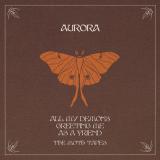
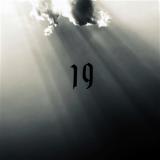
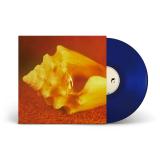
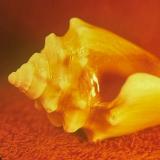
Ten years after All My Demons Greeting Me As A Friend introduced AURORA’s extraordinary musical universe to a global audience, The Moth Tapes takes listeners back to where it all began.
Built from intimate early recordings, demos and previously unreleased material from the original era, ‘All My Demons Greeting Me As A Friend (The Moth Tapes)’ opens AURORA’s archive to offer a new perspective on the creative foundations of her landmark debut and on the beginnings of an artistic journey that has since taken her around the world.
Unrefined and deeply personal, The Moth Tapes is both a celebration of where AURORA began and a bridge to the artist she has become.
Dutch collective.multibeat return with OOO their third album and debut for Sonar Kollektiv. Rooted in Utrecht’s vibrant musical community, the trio of Boudewijn Pleij (keys), Thijs van Zutphen (bass) and Aron Smit (drums) blend hip-hop, jazz and beat culture into a groove-driven sound inspired by artists such as Robert Glasper, J Dilla and the contemporary UK jazz scene.
The three musicians first met while studying at the conservatoire in Utrecht, initially performing as a live backing band under the name Muddy Grease before evolving into a production-focused collective. Over the years they have built a reputation for connecting the worlds of jazz, hip-hop and contemporary beat music through an ever-expanding network of collaborators, while helping to foster a vibrant and experimental local scene around them.
Warm, collaborative and deeply groove-centred, OOO captures .multibeat at their most confident and expansive.
It is an album that honours the collective’s roots in jazz and hip-hop while continuing to push their sound into new and inspiring spaces, a fitting introduction to one of the most exciting young groups to emerge from the Dutch scene in recent years.
Two of the most prolific remixers in the world of Disco,Dave 'Love' Lee and John Moraleshave teamed up for one of their biggest projects to date - 'Mixed To The Maxxx'. After gaining access from the legendary original artists, the pair take the multi-track tapes of many classic Disco, Funk & Soul tracks and re-work them...to the Maxxx!
Where Remixed With Love stands as Dave Lee's own gold-standard body of work, Mixed To The Maxxx sets that legacy alongside Morales' own decades-deep M+M body of work: Lee brings his musically dense, groove-first touch to the likes of Harold Melvin, Syreeta, Lenny Williams and The Brand New Heavies, while Morales applies his extended, dancefloor-built M+M treatment and crushes the likes of Barry White, The Temptations and Loleatta Holloway, plus Dennis Coffey's breakbeat classic "Scorpio" for the DJs and collectors alike. Both work from original tapes, surfacing parts barely audible or entirely unheard in the source mixes, and both know when to let a classic breathe rather than bury it under modern production. It's a pairing a long time in the making. Lee and Morales first talked about working together around a decade ago, and getting Mixed To The Maxxx off the ground took five years of patient work: tracking down usable stems, securing approvals, and navigating a licensing landscape where much of the best material is now tied up with major labels increasingly cautious about clearing remixes. What's landed here is the product of that graft as much as the pair's shared ear for a great record, the sound of two people who know exactly what they're looking for and are willing to put in the time to find it.
A double 12" sampler in summer 2025 previewed the record's range. A bass-driven overhaul ofThe Brothers Johnson's "The Real Thing" and an extended mix of Philly legends Bell & James' "Livin' It Up (Friday Night)" showcased Lee's side, while an anthemic take on Inner Life's "Ain't No Mountain High Enough" and a tempo-lifted Light Of The World"London Town" flew the flag for Morales. Both drew strong early support ahead of the full LP.
out of Stock
Last delivered 2 days ago available to reorder, subject to availability
Shaped in the shadows and sounds of the legendary Topanga Canyon, California. The debut album from Biita Houdei is buoyed by a magic that feels wildly and beautifully untamed; wild-hearted sentiments that are shaped by the world around it, fascinated by the enchantment of it all, and delivered via a collective (harmony layered) voice that understands the complex nature of what it means to be alive in the here and now.
Produced by Haley Heynderickx, 'This Bed Was Made For Me' is a striking collection of stirring, signature folk songs animated by subtle instrumentation and orchestral flourishes. It feels lived in: vocals weave together in a beautiful harmonic dance, seasons shift, sunshine appears and bold psychedelic colours warm the horizon.
In the early stages of making her debut album, Biita Houdei knew two things: that she wanted the recordings to feel distinctly and palpably warm, and that she would sew a unique patch for every song on the album. The first of those things is subjective, though brightness pours in from all corners of This Bed Was Made For Me. The second became a laborious task she undertook throughout the process, the completion of which is testament to the slow process of it all, to the physical commitment and patience required to make a full work of art.
The patches she crafted during the making of This Bed Was Made For Me became a full quilt, one that now adorns the album’s front cover. Beneath it sits a striking collection of Houdei’s stirring, signature folk songs, brought into fruition with the help of fellow songwriter Haley Heynderickx, in her first lead production role, and the album’s producer/engineer Sahil Ansari. It’s also the first release Biita (pronounced “bee-tah”) is releasing under her newly-taken name, one that was gifted to her by her auntie and means "unique" in the Farsi language. “I proudly take this name,” Biita says of the change. “It makes me feel that much closer to my Persian heritage.”
Recorded across ten back-to-back and full days, the album touches on themes of love and heritage, of taking chances, the preciousness of time and the impact we all have on the world around us. A number of the songs were written in Topanga, California, while Biita settled into a new home as wild fires raged, and as she adjusted to a life which no longer held distinct seasonal changes, far from the Ozark Mountain home she felt so attached to. Such themes reveal themselves in a variety of ways across the album’s fourteen songs, that key sense of warmth retained in the bones of the album whether they are stepping into darkness or seeking out light.
The album feels lived in and alive; dust swirls, seasons shift, sunshine appears and is held. Biita calls it ‘psychedelic’ and there is indeed a sense of that in the world building, in the way the bold colours are always shifting. Formed of fourteen songs, and filling nearly forty-five minutes, This Bed Was Made For Me not only builds a whole world for listeners to inhabit but also implores you to stay a while. This was deliberate, indeed it’s Biita’s wish that listeners give the album dedicated time; to learn its shape, to explore it fully, away from the instant grab of playlists and skewed algorithms.
“Many of my favourite albums didn’t reveal themselves instantly to me,” Biita, now based in the Catskill Mountains of New York, explains. “Some did, of course, but I had to work to understand the full scope of the piece as a whole. I encourage people to dive deeper into everything that they choose to consume. It is not my intention to sound pretentious, but instead, I am trying harder to explain the gratitude I have for being able to craft every part of this album— using my hands, my brain, my voice, my visions. To me, it is an all encompassing work of art,” she continues. “Making the quilt was laborious. Taking the cover photo was laborious. No shortcuts, but rather a manual and tangible approach. I am thankful for the time it took.”
Whirr and Luster have been orbiting each other for years, bound by a shared language of glide guitar, buried vocals, and volume as emotion. A through line that’s only deepened by Nick Bassett’s hand in producing and mixing the majority of Luster’s previously recorded output. The Whirr & Luster Split pairs one of American shoegaze's most storied bands with one of its most vital new voices across four new songs. Out on 12" EP, CD EP, and digital via Freewhirl Records. Splits are sacred territory for Whirr. More than a decade after the band helped define the modern heavy-shoegaze landscape, the Bay Area five-piece returns with its first new material in years. “Spiral Again” opens the record in classic Whirr fashion: an avalanche of guitar wrapped around a lyric about losing yourself in someone else’s gravity — spiraling, intertwining, coming down together. “Wish I Could Give You The World” follows, one of the most openly romantic songs the band has ever recorded, all wildfire imagery and dizzy devotion, desire rendered at full volume. Produced by Whirr and Zac Montez, both tracks find the band in signature form: enormous yet tender. On the flip side, Los Angeles' Luster continue their run as the standouts of the new shoegaze generation. Formed with the intent of pushing the genre forward rather than reenacting it, Luster fold electronic pulse and '90s texture into walls of glider guitar, and the two contributions here find the band in peak form. "Against the World" is a love song as a locked door — it's you and me, us against the world — claustrophobic and comforting in the same breath. "Forever" closes the record in a haze of doomed-romance repetition, a mantra of do you feel it now dissolving into the knowledge that nothing lasts. Also produced with Zac Montez, the songs make the case plainly: Luster aren't students of the form. They're peers. Taken together, the four songs read like a conversation. About distance, obsession, and the ache of never being able to give someone enough — carried across two coasts and two generations of a genre that refuses to fade. Loud, longing, and gone too soon: the Whirr & Luster Split, out September 18th. Whirr and Luster celebrate the release and cement the collaboration with two shows — the only U.S. Whirr performances of 2026, with no shows planned beyond them. Each night features a unique set built from rarities and live debuts, alongside exclusive vinyl variants and merchandise available only in that room, on that night: 9/18 — Los Angeles, CA @ The Wiltern 9/20 — New York, NY @ Brooklyn Paramount Two nights, two coasts, and no telling if there’s a next time — for the songs, the pairing, or the band itself.
I’dgained some notoriety as a music producer and DJ but I hit a horrible case of writers block around 2018.
The problem I was finding was that I was trying to shoe horn every smart arsed clever dick musical reference I had into the music I was making, but the function of dance music is to make people dance, not to show people who broad your musical references are, so I was making pretty shitty music that landed in the middle and didn’t achieve either aim.
To tackle this I ended up committing to just trying to make the most expressive and wanky experimental stuff I could. I was immersed in club culture at the time so the whole enterprise started as a joke, hence the name “Bed Wetter”. However when I fully submitted to just naked exploration the really unexpected thing that happened was that I found myself unavoidably having to deal with a lot of my own bullshit. That bullshit turned into the “Billy Mill is Dead” album, which was essentially the sound of me excavating my own life and looking at how I felt about where I was from, where I was headed, my family, my history, my region and all of the things i have conflicting feelings about.
It was partially catharsis and also a bit of deprogramming around being able to call myself an artist after being raised to believe that wasn’t an option for me.
I self released Billy Mill is Dead in the months before the pandemic and it found it’s fair share of love in the places I hoped would connect with it, and just the right amount of being ignored by people who I’m pleased didn’t feel it. This all lead to me being emboldened enough to apply for an artist in residence position at a big regional opera house months later in the middle of lockdown.
My feeling was that if my DJ career was potentially over for the remainder of my lifetime then there was no harm in exploring this alternative method of expression to see where it could take me.
I submitted a ridiculously ambitious plan for what I would like to do as a project, and to my absolute shock I was selected for the position.
I was 40 years old and from a scarcity background so I had a potentially unique response to that kind of validation for the first time and what followed next was a process of me just coming back with bigger and more ridiculous ideas just to find out at whatstage they’d tell me to stop.
The thing is, nobody did. I got as far as suggesting writing a full symphony to be performed by an orchestra before my own nerve gave out and I decided that was probably as far as I should push things.
The problem with people giving you permission to do things is that you then need to go out and figure out how to do those things.
The biggest issue for me, beyond raising the money to pay for everything, was how does a person actually write a symphony?
I was introduced to Fiona Brice, a multi instrumentalist and orchestral arranger. She’s also a recording artist who releases on Bella Union. On top of that she’s a violinist who used to be part of the band Placebo and who used to appear regularly playing for other bands on things like Top of the Pops.
Not only was Fiona uniquely placed to not look down on the strange provenance of someone from an Acid House background wanting to write a symphony, but more to the point we really hit it off from day one.
Fiona coached me in the essentials of writing for an Orchestra, and then I went off and wrote the 8 movements.
I’d love to say I laboured for years over this bit, but it took about 2 weeks in total. I’d also love to say what I wrote was a complete symphony, but the version of this which is solely me feels like looking at something without your glasses on. The shape,feel and borders were all there, but the definition was absent. Fiona taught me the broad language of a symphony, but without her it would have lacked all intonation, nuance and detail. Where I had shaped ideas with a hammer, she brought out my meaning with precision using a scalpel.
I think the prodigiously quick turnaround for the music is as much proof of how conceptually and musically aligned Fiona and I are. I know we’re both incredibly proud of what we’ve created.
It took nearly 2 more years to stage the debut performance in what was potentially the most traumatic period of my life which saw me embroiled in an international crisis with my own family and the death of my father, all with the backdrop of COVID.
The work itself is inspired by the working class experience, but it’s also a comment on how we get to decide what we are and how we’re defined, and we get to choose what we do to prove these things.
The original recording was contractually impossible to ever share again, so we re-recorded it in a working men’s club with jobbing (albeit world class) players. In many ways it’s a record that feels like it shouldn’t exist, which is why we’re all so happy that it does.
Moving between lo-fi experimental songwriting, sparse post-punk textures and intimate recordings; Ukrainian artist Regina Collage’s new album ‘Horizont’ is a personal and honest document of rebuilding a life and creative voice in Bristol. The record holds space for themes of burnout, quiet shame, tenderness and the courage of staying emotionally open when the world feels unstable. Sung entirely in Ukrainian, ‘Horizont’ does not ask the listener to understand every word. Feeling carries the songs forward. Across bedroom recordings and borrowed studios, Regina moves between cloudy dissonance and stark minimal arrangements built around bass, fragments of guitar, and an exposed voice. The recordings hold onto their rough edges. Mistakes remain and imperfection becomes part of the story. “Music for me is about not being scared to be vulnerable,” Regina says. “Almost every song I have is about what it means to be open and emotional. I really do not think it is a weakness. I hope people can listen and feel welcome to take a break and just let their emotions exist.” The album takes its name from the Ukrainian word for “horizon,” that unreachable line where sky meets earth. For Regina, the horizon became a quiet metaphor for living with distance and uncertainty. Inspired by one of her collage artworks showing a figure lying in grass and staring toward that far line, the title track reflects a feeling of moving toward something that never quite comes closer. Even without understanding the lyrics, the song carries a slow sense of longing and suspended arrival. m‘Vpiznavaty’, by contrast, initially feels almost light. Beneath that surface is a candid portrait of burnout and depressive exhaustion. The song looks at those moments when even greeting friends feels overwhelming. It captures the quiet embarrassment of withdrawing from people you care about, and the slow recognition that sometimes stepping away is simply how you survive. Other songs reveal different sides of the same emotional landscape. ‘Weak’ strips everything back to bass, a hint of guitar, and a bare vocal. Written and recorded in a single instinctive session, the track circles around the idea that softness might be its own kind of strength. Repetitive and intentionally unpolished, it quietly sets the tone for the whole record. Running through ‘Horizont’ is the reality of Regina’s life between Ukraine and the UK. Her hometown Kharkiv continues to face attacks, and many of her friends remain on the front line.
Raise The Ark - The new album from Alpha Steppa, marking ten years of Steppas Records. This vocal-dub album defies convention and introduces the listener to a new world of soundsystem music. Raise The Ark evolves and expands the distinct avant-guard dub style of Alpha Steppa, exploring the realms of Hip Hop, Trap, Trad, Folk and Bass Music. True to the Steppas Records ethos, the music carries a deep and crucial message, covering current and timeless topics; from the climate crisis, sociopolitical issues, to roots, culture and spirituality. Working closely with known artists from the Steppas imprint and as we have come to expect, introducing us to new and emerging talent from across the globe. Raise The Ark features include; Pupa Jim of Stand High Patrol (France), Sista Awa (Italy/Senegal), Cian Finn (Ireland), Ras Tinny (Suriname), Nai-Jah (Nigeria), Tenor Youthman (Russia), Eva Keyes (Ireland) and Block Mameli (Italy/Ghana). The collection features 12 evocative and provocative vocal tracks and 10 thundering instrumental / dub mixes. Raise The Ark is a truly eclectic, profound and exciting album not to be missed.
In partnership with onetreeplanted.org we will plant a tree in Ethiopia for every record sold.
“One of the most prolific and inventive dub producers around” Wire
“A serious player in the soundsystem world” Mixmag
“Obliteratingly heavy bass” Q Mag
“Album of The Month” MIXMAG (March 2013 & October 2014)
out of Stock
Last delivered 6 years ago available to reorder, subject to availability
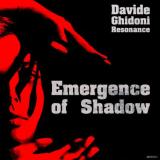
"Emergence of Shadow" (Mint Condition Records / Self Distribuzione)—the new album by Davide
Ghidoni, produced by Gianluca Pighi—is arriving: its digital release is set for Friday, September 11,
while the vinyl will be available starting Friday, September 18.
A trumpeter with a career marked by international collaborations, Ghidoni here signs his most
personal project to date. It is a predominantly instrumental record in which the trumpet becomes a
voice, a narrative, and an emotion. The only vocal track is "Come On Closer," performed by Heidi
Vogel (The Cinematic Orchestra), creating a moment of suspension and intensity within the project.
Davide Ghidoni’s passion for music and the trumpet was born in his childhood around the age of ten,
fueled also by Western films and Ennio Morricone’s soundtracks: those melodies, where the trumpet
played a central role in the duels of The Good, the Bad and the Ugly, deeply shaped the artist's
imagination and sound.
Ghidoni has always maintained an open and curious approach, letting himself be inspired by different
genres, artists, and musical cultures. His projects naturally coexist with influences ranging from rock
to soul, jazz to blues, and other languages that have left a mark on his path. Rather than identifying
with a single genre, he prefers to view music as a guiding thread capable of uniting different styles
through emotion, sensitivity, and respect for artistic identity.
"Emergence of Shadow" represents a new chapter in his journey. After numerous collaborations with
various artists, the musician felt the urge to undertake a completely his own project, giving shape to
ideas he had nurtured for a long time.
The record is inspired by the 1970s soul, rock, and blues sounds, but the goal is not to faithfully
reproduce or imitate those genres: the atmospheres, themes, and arrangements recall that sonic
world, yet are reinterpreted through a personal and original sensibility. The trumpet remains the
primary narrative element, supported by meticulous arrangements and a solid rhythm section that
enhance its character and expressive intensity.
Alongside the sounds that distinguish his path, the album also explores deeper emotional
dimensions. Some tracks are fluid and atmospheric, born from the desire to recount vibrations
without rigid schemes, letting melodies and dynamics guide the listener on an inner journey. The aim
is to offer an engaging listening experience in which music communicates directly, beyond words.
The album encapsulates everything Davide Ghidoni wanted to express and fully represents his
artistic identity: a timeless instrument to communicate emotions and engage in dialogue with different
musical traditions, always keeping the pursuit of musical quality and sharing with the public at its
core.
The record is largely sung in Scots language, one of Scotland’s three official languages along with Gaelic and English. “Scots gives me a way of expressing myself which is connected directly with the landscapes I love. It brings the songs alive and it is a fascinating language. The name of the record is in Scots - Forefowk means the people who came before, or ancestors. When we say ‘mind me,’ we can mean a few things- remind, remember, watch over or care for me. The record explores how tradition needs to be constantly reconnected with, built upon, looked after, and shared.”
Quinie sings with a style inspired by Scottish Traveller singers. “I began singing unaccompanied Scots Song in 2015 after hearing Scots Traveller singer Sheila Stewart on the radio. Initially I felt like I shouldn't sing these songs because I'm not a Traveller, and I saw people around me doing that in a way that made me uncomfortable. But on the other hand this music made sense to me and I felt driven to learn. Over the years I have met Traveller friends who taught me that settled people sharing these songs could contribute to raising awareness. Scottish Travellers are marginalised and discriminated against in modern Scotland, despite being custodians of so many of our important traditions. So I started to perform them and tell this story. From there I built on my repertoire and started writing my own songs”.
To develop this record, Quinie travelled across Argyll with her horse. They went on a pilgrimage of sorts through the ancient landscapes of the West of Scotland to explore the interconnected relationships between people, ancestors, animals, and place. The album’s vinyl release is accompanied by a book and film, documenting this unusual research process.
Forefowk, Mind Me was recorded in August 2024 at The Big Shed in Highland Perthshire with support from Creative Scotland. Quinie is accompanied by an ensemble of musicians: Ailbhe Nic Oireachtaigh (viola), Oliver Pitt (duduk, bouzouki, percussion), Harry Górski-Brown (small pipes, violin), and Stevie Jones (double bass, recording, and mixing). Each of these artists brings their own distinctive voice, bridging contemporary experimental practice with worlds of traditional and early music.
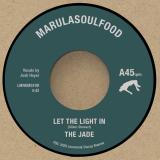
Lovemonk and Barcelona’s Marula Café bring back their Marula Soulfood 7" series with two standout tracks taken from The Jade’s debut album, "Love Harder". Behind The Jade is Oli Stewart, aka Casbah 73, leading a transatlantic ensemble of top-tier musicians equipped with heart and heat, bridging worlds while remaining firmly centered around home base Madrid.
‘Let The light In’ is a radiant burst of sunshine and a riotous cross-pollination of sounds. Nebraska’s Josh Hoyer delivers a powerhouse vocal performance, soaring over exuberant rhythms and fluid grooves that feel right at home in sweat-filled basement clubs or an open-air set as the sun dips low over the horizon. On the flip, ‘At The Queensboro’ is a beautiful jazz-funk instrumental that stretches out with elegance, giving its wonderful groove plenty of room to breathe. It was highlighted as one of BBC 6 Craig Charles’ favourite tracks of 2025.
"Based in Thiers (63), Ernest Bergez, also known as Sourdure, has been walking a tightrope for the past ten years, combining a spirit of experimentation with a personal, handcrafted approach to traditional music. Affirming and transfiguring the ""Sourdure-esque"" aesthetic, Outredore unfolds a surprising array of discoveries in Occitan and French: hallucinatory laments, oblique rhapsodies, and carnivalesque odes.
A generous and respectful invitation to build unexpected bridges between disparate sonic worlds, the album extrapolates the modal vocabulary specific to traditional Occitan music, blending it with stylistic elements from around the Mediterranean. Carried by a voice more raw than ever and caught in the ebb and flow of a troubled era, Outredore's songs explore the relationship between the personal and the political.
Vulnerable, faltering and visceral, Outredore evokes a nova cançon occitana that has traded folk guitars for electronic machinery."
Continuing in its series of Yoko Ono reissues, Secretly Canadian has announced that Ono’s seminal 1982 album It’s Alright (I See Rainbows) will be released August 28, 2026, in expanded CD and digital versions, and on vinyl for the first time in more than forty years, with expanded and enhanced artwork. Influenced equally by 1960s girl group vocals and 1980s synthesizer experimentation, It's Alright (I See Rainbows) is an album of “adventurous… lush… committed and convincing avant-gardism” (Rolling Stone). As Ono said in her 1992 Onobox liner notes, “It was ’82 and it seemed as though I was finally in sync with the world.” Vacillating from a widow’s never-truly-over grief, to the necessary uplift for an artist and mother to continue her life’s missions, tracks like “Loneliness” and “Spec of Dust” make way for poptimism via “Let the Tears Dry,” and title track “It’s Alright.” As Ono said of the album in 1983, “It’s like my diary that I went through… and I’m just saying, hey, I’ve got the same kind of emotions that you’ve probably got too, and here I am saying hello… Around December 8th or whatever, I was feeling really heavy and feeling sort of down, you know… and then, side two, it’s all right… It was Sean Lennon who says, ‘Wake up, wake up, mommy.’ Like an angel that came and said, ‘Wake up!’… Wake up and dream love, and let the tears dry and I see rainbows. And sort of I’m saying all that. In result of Sean waking me up, see?” Lennon, speaking of his mother in a more recent interview with NPR in 2025, “She would say that energy is just energy, so you can turn it into anything you like. And she always said that she would take that negative energy and turn it into something productive and creative… It never stopped her from creating and putting herself out there, and I really think that it paid off… You never know how long it'll take for people to appreciate you if you just kind of hang on and don't give up.”
"Originally released in 1979 on Sly & Robbie's Taxi label, this album was Black Uhuru's second LP. Recorded at Channel One it set forth a new sound in recorded music technology. The songs blend into dub versions and the mixing is simply stunning. The track Shine Eye Gal also features guitarist Keith Richards"
(but hey, nobody's perfect).
"Hear the meticulous song writing of Michael Rose, joined by Puma Jones & Duckie Simpson, to complete the vocal line-up.
Sly & Robbie and the Taxi Gang created a sublime sonic masterpiece at Channel One studio in Jamaica. They were at their absolute peak of their powers, before being launched as global superstars with Grace Jones.
Black Uhuru went on to be an extremely popular live outfit, touring endlessly around the world, breaking down barriers and making new inroads to territories previously unknown to Jamaican artists.
This Classic reissue is a must for all reggae collectors."
out of Stock
Last delivered 7 months ago available to reorder, subject to availability
Kaiso Power is a collection of rare jazz, calypso and percussive gems from Trinidad and Tobago from the revolutionary generation of the 1970s, bringing radical new political vision and reclaiming ancient spiritual consciousness through music. At the dawn of the 70s a shift was taking place all around the world. The streets of Port of Spain thronged with Black Power marches, trade union demonstrations and Carnival protest bands - one epicentre in a growing global exchange of ideologies and strategies among Pan Africanist circles in Jamaica, Guyana, London, New York, Montreal, Lagos, Accra and beyond. And when the meetings were over, the revolution moved to the cramped secret dance halls, the Carnival fetes, the steelband yards. The music always had a sharp edge. Searing commentary has always been part of the various types of music in Trinidad, and in the absence of lyrics, the defiant use of the drum maintains the resistance, as well as the re-framing of the playing of European instruments to the needs of the message. Lancelot Layne, Delano Abdul Malik De Coteau, Andre Tanker, Clive Zanda, Mansa Musa were more than artists, they were teachers, community workers and advocates for justice. These recordings are as raw as an all-night Carnival jam, the horns loud, the percussion ringing out, the bass dripping with joy and rebellion. Under the modern influences is a solid rhythm, an unbroken connection to Africa, the songs and keys and cadences brought across the middle passage. These songs are a peep into the untapped treasures of a revolutionary generation, looking at the world with fresh eyes and believing that music was a central part of the mission to build consciousness and regain confidence.
out of Stock
Last delivered 28 days ago available to reorder, subject to availability
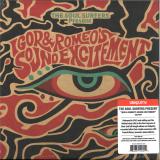
After meeting and working with Janko Nilovic - the extraordinary French library maestro - on a new album, while traveling and performing together around the world for almost 10 years, Igor Zhukovsky & Romeo Miussky - the multi-instrumentalist production duo, and rhythm core of The Soul Surfers - were inspired to make a record of free, spiritual, esoteric sounds which blended together on tape and made Sound Excitement happen.Drawing on their experience as soundtrack composers and using heavyweight Soviet analog equipment, including a few vintage personal instruments belonging to some legends of the Soviet leftfield music scene, Igor & Romeo started experimenting with genre-blending music. The outcome of their recordings are a mixed bag of different moods and genres."It's something similar to a library record or more like a compilation of many different library records on one LP for a good decade if you know what I mean? It's the work which we're really excited about and excited to share with you! ...oh that's hell of a wordplay!"
out of Stock
Last delivered 28 days ago available to reorder, subject to availability
The Weather Channel is the new instrumental album from Bad Brains bassist Darryl Jenifer. It follows his 2010 solo debut, In Search of Black Judas. The record features a venerable lineup of heavy-hitters from the jazz world, including the likes of John Medeski, Ben Perowsky, Jack DeJohnette, and Lenny White, among others. The tracklist includes nine new compositions, as well as new interpretations of two Bad Brains classics.
out of Stock
Last delivered 16 days ago available to reorder, subject to availability
Originally released on the legendary Rat Records in 2000, Old Skool quickly established itself as one of the defining records of the emerging Bassline Breaks movement. Now, over 25 years later, it returns fully remastered on Cyberfunk Records, bringing this underground classic back to a new generation of DJs and listeners.
Produced by DJ Quest and Kalibre, Old Skool perfectly captures the raw energy of the era, combining infectious vocal hooks, rolling breakbeats and heavyweight basslines that still sound as fresh today as they did on its original release.
A landmark release that bridged the worlds of UK Garage and Breakbeat, Old Skool helped shape the Cyberfunk sound that would follow. This remastered edition preserves all the character and atmosphere of the original while delivering the power and clarity expected on modern sound systems.
Tracklisting
A. Old Skool (2001 Original Mix)
The original version that helped establish DJ Quest as one of the pioneers of the emerging Bassline Breaks sound. Fusing infectious old-school vocal samples, rolling breakbeats and heavyweight basslines, this timeless underground anthem perfectly captured the crossover between UK Garage and Breakbeat. More than two decades on, its unmistakable groove and dancefloor energy continue to make it a favourite with DJs and fans around the world.
AA. Old Skool (Paket Remix)
Spanish breakbeat heavyweight Paket delivers a fresh interpretation for today's dancefloors, retaining the iconic vocal hooks and recognisable feel of the original while introducing tighter drums, modern production and his trademark bass-driven energy. Respectful of the source material yet built for contemporary sound systems, Paket's remix gives this classic a powerful new lease of life.
——
One of the biggest electronic tracks of 2001, "Diabla" was championed by some of the world's most influential DJs, including Pete Tong, Dave Clarke, Sven Väth, and many more. Widely regarded as a true classic and a genre-defining record, Diabla successfully bridged the gap between house and techno, earning its place as a timeless dancefloor anthem.
This fully licensed reissue arrives courtesy of Armada and the original label, Soma Quality Recordings. The package features a brand-new interpretation from Joris Voorn alongside the much-loved Heavenly Mix and Revisited versions, rounded off with the legendary remix from Kevin Saunderson.
Lars Sandberg, better known as Funk D'Void, has been at the forefront of the global electronic music scene since the mid-1990s. Beginning his DJ career at just 15 years old, Lars discovered his passion for music early in life. Raised by his mother, a professional concert pianist, he always knew music would define his future. Over the decades, Funk D'Void has built a reputation as one of electronic music's most respected DJs and producers, consistently delivering innovative productions and unforgettable sets around the world.
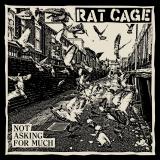
It feels like a lifetime ago that the first Rat Cage demo tape was spat into the Hardcore Punk underground. Maybe that’s because for the past 10 years Bry Suddaby has been relentlessly chucking out a slew of pummelling records, arming many Punks worldwide with a soundtrack to survival in the modern age of death and destruction.
Fourteen bloody releases later, the third RAT CAGE LP comes crashing in as the state of global horror reaches a grave pinnacle. In true RAT CAGE fashion, the drums relentlessly hammer away under rollercoaster riffs, while Bry’s viciously cynical bark spills the trials and tribulations of trying to get by in 2026.
For the uninitiated, RAT CAGE pulls influence from 80’s Northern European Punk like MISSBRUKARNA or APPENDIX, contemporary Swedish sweet spot Hardcore like HERÄTYS or FYFAN, ripping USHC ala POISON IDEA or OUT COLD, while naturally adding a classic British injection of GBH or THE VARUKERS.
As always, there’s the constant apprehension that you never quite know what’s around the next bend, and with ‘Not Asking for Much’ Bry has cast the net even further. There’s moments that get as heavy as BASTARD, as melodic as the UK SUBS, and even a title track that gets as rocking as the PINK FAIRIES. All amounting to a distinctive and characterful sound that’s unmistakably RAT CAGE.
With little to be hopeful about as we all suffocate within the authoritarian nightmare, this LP could once again be your beacon of fire. So, light the match and burn alone at maximum volume.
Piano Works 2016-2026 collects fourteen impromptu pieces by composer and producer John Carroll Kirby, written whenever he had the opportunity to sit at a piano while on the road. These mostly solo works for piano were recorded in Los Angeles, Rome, Tokyo, Wollongong (Australia), rural New Zealand and London. Piano Works marks a departure from the full-band sound of recent albums Blowout and Septet, which Kirby has spent the past years performing live around the world. The album is a study in piano repertoire: Baroque, Romantic, Impressionist, jazz, minimalist, atonal, and more. Most of the pieces have an impromptu feel - improvised, or meant to sound improvised, or at least written in one sitting. The collected pieces on Piano Works are a document of Kirby's life as a piano player and touring musician, and "serve as the melodic / harmonic lexicon for what would inform all my other compositions of the past ten years." John Carroll Kirby has scored two feature films, and his solo piano song "Walking Through a House Where a Family Has Lived" formed the score for Oscar-nominated short film Retirement Plan.Fans of John Carroll Kirby's cult favourite solo album Conflict will find plenty to love in Piano Works 2016-2026.
out of Stock
Last delivered 16 days ago available to reorder, subject to availability
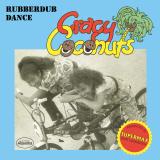
Of course everyone knows Kurt Hauenstein aka Supermax. He was one of the few Austrians to shape the sound of late 1970s disco, performing and selling records around the world. Not many know his daughters Judy and Nicola, however, and the fact that they in 1987 wrote a song that they recorded together with their father. Well, here it is: Cracy Coconuts, “Rubberdub Dance” a true Hauenstein family affair. We are proud to re release this super rare 7” that proves, once and for all, that Austrians can excel at digi dub. Timelessly tropical and beautifully bouncy, its vibe is quite different from the iconic Supermax productions. Here, Judy and Nicola’s sweet yet confident vocals replace the moustache driven sotto voce singing that we love Supermax for. The result is oh so catchy and bound to be a hit.
Just featured on BBC6 Music in the CRAIG CHARLES FUNK & SOUL as part of the ODDBALL CREATIVES “Trunk of Funk Mix “ on Saturday 1st August - and already gaining great DJ feedback from the likes of Greg Caz, Laurent Garnier, Chris Bangs, Rocky, Chico Malo, Starla Recordings and many more ….
Another new collaboration on the Echo Labs label - the subsidiary of Echo Chamber Recordings set up to release tracks and remixes from other artists.
This one is a very special hook-up with Daniel Walls & Joseph Malik in Edinburgh with their new project under their “Oddball Creatives” production monicker. It was truly an honour that they reached out to Echo Chamber Recordings to bring this out on a vinyl 45 , fitting in perfectly with the foundation sounds of the label - combining classic timeless funk, jazz , Latin and soul with 21st Century production techniques
They have recruited the vocal talents of Philadelphia’s Kameela Waheed and the instrumental skills of Scottish jazz legend Colin Steele , to bring us the sound of the summer with a huge soul-jazz-funk cut. It combines elements of a classic early 70s groove with a subtle, up-to-date style, built around Joseph’s vocals and Kameela’s spoken rap.
On the flip you get the purely instrumental take - meaning you could extend the hypnotic groove even longer with two copies !
As ever, on Echo Labs there will be just 300 vinyl copies pressed for worldwide distribution
out of Stock
Last delivered 38 days ago available to reorder, subject to availability
It is virtually impossible to describe with mere words how emotionally powerful this work of art is. Just listen. Listen, listen, listen...
A blissed-out 80-minute epic, Hatchback's Phaser For The Ocean, Chorus For The Moon is his magnum opus, a sprawling masterwork that encompasses ambient, new age and environmental music to wondrous effect. Moving, hypnotic and deeply meditative, it's FFO Mike Brooks, Deuter, Klaus Weiss, Innovative Communication, Harmonia, Cluster, Ashra's New Age of Earth, Stomu Yamashta, Haruka Nakamura, Yoshimura, Hosono, the works.
A record truly deserving of the deluxe Be With treatment, the vinyl was specially cut at Abbey Road Studios whilst the original stunning artwork has been pleasingly expanded. Now, an eye-catching holographic-foil layer moon is set against the original tones, wrapped up in a sumptuous double-gatefold jacket.
Soaked in Californian consciousness and limited to a run of just 500 copies for the world, this release is a treasured balm like no other for these troubled times.
Hatchback is the atmospheric, melodious ambient alias of California-based artist Samuel Milton Grawe. Sam creates music that sings of the Cosmos, full of deep resonant tones, glistening arpeggios, lush pads and harmonic motifs.
"When I first was getting into the creative side of music making in my teens, I was heavily influenced by concept albums like Quadrophenia and The Lamb Lies Down on Broadway, as well as epic pieces that took up an entire side of a record: Pink Floyd’s Echoes, Yes’ Close To The Edge, Klaus Schulze’s Nowhere Now Here, Miles Davis' Shhh/Peaceful and He Loved Him Madly. In the extreme, these ideas coalesced in double albums where each side of each record is occupied by a single title - Yes’ Tales From Topographic Oceans and Tangerine Dream’s Zeit being primary examples. When I returned to making music after moving back to Northern California in 2020, the first piece I recorded landed around the 20-minute mark, and the idea of creating three other long pieces to realize a full album felt like a natural - if indulgent - goal. From there, each new piece followed sequentially. Four songs. My fourth album." - Sam Grawe
Phaser For The Ocean Chorus For The Moon is a pure expression, informed by a lifetime of deep listening unbound by algorithms or AI. These are songs for the sunrise and the sunset - and every colour in between.
out of Stock
Last delivered 13 days ago available to reorder, subject to availability
When Drop Nineteens disbanded in the mid-'90s, singer Greg Ackell decided he would never make music again. He wouldn't noodle around on a guitar in his basement. He wouldn't get a group of friends together just to jam. He was done with music entirely. Following the release of the shoegaze masterpiece Delaware in 1992, and the intricate experimentations on National Coma in 1993, the group disbanded. They shared stages with Radiohead, Hole, Blur, PJ Harvey and Smashing Pumpkins. They went from being teenagers in Boston to mid-twenty-somethings with a few MTV videos, a couple BBC sessions and numerous festival appearances under their belt. So when Drop Nineteens ceased to be, Ackell felt content. He had the rest of his life in front of him to figure out what he wanted to do. Music was a closed chapter.That was until 2021, when a friend from the band's early days got Greg on the phone to suggest making some music together, just to see how it felt. Instead of shutting it down like he had been doing over the years, he decided to entertain the prospect. For the first time in nearly 30 years, he picked up a guitar with intent. He immediately called up Steve Zimmerman, the band's bassist and fellow guitarist, and the two got writing. It felt effortless for Ackell, like he never stopped writing music. "We were off to the races," he says, "But also the question came up: what does a Drop Nineteens song sound like today?" Enter Hard Light, the band's stunning third record. It's the band's proverbial follow up to Delaware, a modern Drop Nineteens record that is completely singular in its sound and vision. The first task making Hard Light was, of course, getting the rest of the band back together. Drop Nineteens is an inherently collaborative project. Ackell writes the lyrics, and he works with band members Steve Zimmerman, Paula Kelley, Motohiro Yasue, and Peter Koeplin to create the sonic world. The record came together over the course of a year, recording at a patchwork of studios all around the country: Boston, Brooklyn, San Francisco, Los Angeles. When Kelley and Ackell first heard their vocals recorded together on the opus album closer "T", the chemistry was undeniable. Making music together felt natural, fluid, exciting.Hard Light is a romantic record in the literary sense. Beauty from longing; longing from beauty. You put the album on and want to be clad in a velvet dress sprawled across a fainting couch. You want to be holding someone's hand while you sit back in the tall grass. The guitars are expansive and expressive as ever. Ackell and Kelley's vocals are cool, crystalline, and luminous. "Gal" comes on like a dream. The vocals pour in when you least expect them, once in the middle, where Ackell delivers one of the strangest (and best) lyrics on the record, "And there were snakes/with cats at the wheel." Hard Light's first single, "Scapa Flow" is triumphant and an excellent example of what a modern day Drop Nineteens song sounds like. The guitars glide cloud-like, floor toms shuffle and rumble in the background, searching. Ackell and Kelley's vocals are as toned as they are bound. Hard Light is every bit the ride that Delaware was, diverse in its sounds, with surprises at every turn. Drop Nineteens have brought clarity and cool in 2023 to the genre they helped create. A portrait of a band 30 years later, as talented and dedicated to their craft as ever. To put it more bluntly, they're at the top of their game.
Acid Pauli returns to the curious world of Gwar Is Not The Answer (originally released 2006 on Smaul) with a carefully remastered re-release that includes two new remixes from Jonathan Kaspar and Acid Pauli. The title track unfolds at an unhurried pace, weaving loose acid traces through warm percussion and off-centre melodic fragments that seem to appear and dissolve before settling into place. It drifts forward with a quiet sense of momentum, balancing eccentric textures with a groove that remains firmly grounded throughout. With his new remix Jonathan Kaspar takes the original into leaner territory, sharpening its contours and drawing out its tension while preserving the peculiar character at its core. His remix stretches the track into a more focused club framework where rolling low-end pressure meets finely tuned rhythmic movement, allowing small details to carry unexpected weight. On the flip Acid Pauli revisits the track from a different angle. The remix opens up the source material into a spacious and fluid arrangement where shimmering tones circle around a deep pulse and subtle harmonic shifts gradually reveal themselves over time. Together the three versions explore different dimensions of the same musical language, moving between psychedelic house, understated dancefloor functionality and the kind of idiosyncratic storytelling that has long defined Acid Pauli's work.
Kerri Chandler begins a brand-new chapter with the launch of his self-titled label, Kerri Chandler, and its debut release; the Downtown EP Pt. 1.
The release includes four tracks reconnecting with the spirit of Kerri’s iconic Downtown Records era while offering something fresh for the next generation of listeners. 3 of the tracks come straight from that timeless catalogue and firm favourites among Kerri’s community, now beautifully presented on vinyl once again.
Part 1 also features one brand-new, exclusive track, giving fans something truly special: a glimpse of Kerri’s sound, and an invitation to join him on a journey through his remarkable catalogue. This release marks the start of an ongoing celebration of Kerri’s music, his evolution, and the sound that continues to inspire house music lovers around the world. Every detail, from the sleek new sleeve design to the thoughtful presentation, reflects Kerri’s care and respect for his music and the people who’ve supported it. It marks the beginning of something bigger; it’s a series of reworks, reissues, and rediscoveries that will guide listeners through the depth of Kerri’s catalogue and his lifelong love for house music. For long-time followers and new listeners alike, Downtown EP Pt. 1 captures everything Kerri Chandler represents, soulful, honest, and made with nothing but heart.
Originally unleashed in October 2004, Ape to Angel took the momentum of Pitch Black’s preceding albums to new levels, with the sound becoming fuller and the bass more driving. The duo tweaked the sounds of club culture around the dub heart of the album, blending sinuous bass lines, simmering rhythms and echoing acidic synths to electrifying effect. They also wrote their first fully vocal song, Elements Turn, with singer Sandy Mill, and sampled Estonian satellite transmissions for Lost in Translation.
Critically acclaimed, with DJ Mag awarding it five stars, the release of Ape to Angel led to a 42 date tour round the world which included their North American debut. Tracks from the album were also picked up for use in CSI: Miami and HBO¹s True Blood, the latter featuring Freefall in a vampire orgy scene - perfect.
out of Stock
Last delivered 2 years ago available to reorder, subject to availability
When Leon Michels and El Michels Affair released their rst record, Sounding Out The City, in 2005, it was hard to guess what was next for Michels and his then-introduced, now-patented "cinematic soul" sound. Now, four EMA studio albums and scores of tribute and remix projects later - all while producing for some of the biggest names in the industry - Michels has trademarked his sound, with each project taking audiences somewhere new and pushing the boundaries of what he is known for. The man is a river, not a lake and this time he takes his golden touch into the realm of hip-hop laying down a musical bed for one of the greatest to ever rhyme into a microphone: Black Thought of The Roots crew. Releasing on Big Crown Records, the LP is called Glorious Game and it is a remarkable debut partnership in more ways than one. Michels provides his bottom-heavy, soul-tinged production for Black Thought who gives us some of the more personal and transparent verses we've ever heard from him. Michels and Black Thought have been in each other's orbit for a while now. The two first met in the 2000s when Thought was first getting familiar with the contemporary soul scene. "Out of that whole world, Menahan Street Band was probably my favorite," recalling the funk and soul group Michels was a founding member of back in 2007. Fast forward a few years and musicians from that collective - Dave Guy on trumpet and Ian Hendrickson-Smith on sax - are now full time players with The Roots. This connection eventually led Leon and Thought to doing a few fundraising events around NYC and Philly together. "Before long, Black Thought was coming around the studio and would jam with us from time to time," Michels explains. "Then, fast forward to 2020 and COVID lockdowns, he just hit me up out of the blue, wanting me to send him stuff to write to. We both were looking to stay busy" Being that Black Thought is the co-founder and emcee for, hands down, the best live-band group in hip-hop. Michels took a decidedly different approach to this project and instead of sending recorded tracks of live compositions, he pulled out the sampler and sampled himself and some records from his collection. "I'm a big fan of soul music," as if Michels has to remind us. "And part of hip-hop's appeal to me has always been the sample-based production" For Glorious Game, Michels would make wholly composed and recorded soul songs in his studio, sample himself, then chop and/or loop up his sounds and create instrumentals for Black Thought. On some tracks he took a more traditional hip-hop approach, starting from samples of other people's music but then adding live instrumentation on top. But for the most part, it's him reinterpreting his own compositions into something new. The result is an organic feel of loop-based tracks that breathe and uctuate enough for Black Thought to ex on. "What I write about is determined by the equation of the producer's energy and my energy," Black Thought says. "It's about where we meet." So armed with Michels sampled and re-sampled soul cinematics, Black Thought rhymes through personal memories.
out of Stock
Last delivered 43 days ago available to reorder, subject to availability
“Ruins are the style of our future cities, future cities are themselves ruins.” - Izosaki Arata
A note from Lawrence English: Nostalgia is not an ideology, though in this moment, we could be mistaken for thinking it might be just that. Over the past years, the idea of nostalgia has been filtered through various political and technological lenses and has become a tool used for forgetting, rather than remembering. Instead of embracing histories’ complexities and inconsistencies, this version of nostalgia seeks only singular recollection. This contemporary phenomenon of nostalgia has become a methodology at best, and a weapon at worst, used to erode the past and project forward a collapsed and unimaginably sanitised version of things, places, and ways of being from former times. It’s this projection that sees it playing a mounting role in a social pathology associated with reducing the imagined possibilities of future.
The Rest Is My Ghost is a record that interrogates the manifestations of this reductive futuring and celebrates those that have tried (and failed), and those who continue to push back against decayed and revisionist positions. It’s a record that considers the weaponisation of nostalgia for the purposes of cloaking possible futures.
In recent times, I’ve proposed a term for this weaponised use of nostalgia, something I have called Acid Nostalgia. I offer it as a shorthand to describe the de-contouring of the future through a corrosive fixation on a flatten rendering of the preceding times. It is, in part, a certain type of lazy cultural scripting where tropes of the past are presented in the absolute, as empty pictorials; photocopies without any original from which to draw actual meaning, or useful detail.
Acid Nostalgia describes an increasingly common political projection of nostalgia that exists without any subjective connection to the memory surrounding and contained within it. Like acid poured onto a surface, this use of nostalgia seeks to erodes and smooth out the complexity and texture of lived connection and longing, which has until recently guided contemplations of nostalgia. Acid Nostalgia instead erases the texture of histories and de-contours the past, and in doing so dematerialises the horizon of possibility, which by its very nature marks the beginning point for any (and all) imaginable futures. Acid Nostalgia is a dreamless screen, where uncertainty, restlessness and aspiration are subjected to corrosion, breaking down and neutralising the wellspring of futures which are birthed from within the ambiguously charged, complex and at times chaotic atmospheres of the present.
The Rest Is My Ghost is not however some universal reading of these things and happenings. Rather it draws its breath from a very personal pathway carved through my own fraught experiences of nostalgia and framed through a disparate collage of chance encounters, situations, places and provocations. It takes oblique notes from civic and architectural references such as Japan’s Metabolist movement, Hong Kong’s ‘one line sky’ and Los Angeles’s vanished Sodium Vapour lights. It interpolates texts – factual and fictional – by authors such as Franco Berardi, Kate Crawford, JG Ballard, Katsuhiro Otomo, Mark Fisher and Alexei Yurchak who have each so wonderfully sought to rupture the familiarity of now, and push us towards other ways of imaging ourselves, our surroundings and our very ways of being in this world.
I also owe a debt of thanks to Adam Curtis in helping launch what has become this edition. It was his provocation, in a conversation we shared about an overwhelming and profound sense of uncertainty around being able to predict the immediate future and how to respond to that, which sparked the earliest inklings of this edition.
The Rest Is My Ghost is ultimately a record about the promise of constructions and connections to come, material, social and political. It's a record that accepts the fragility of failure as a source of ultimate potential, and a position from which the deepest freedom of imagination might be sought and summoned forth to conjure even the most unimaginable, (but) possible futures.
out of Stock
Last delivered 43 days ago available to reorder, subject to availability
When everything around is racing blindly toward ruin, change direction and spin as fast as you can until you defy gravity and rise above the ground into blissful madness. "K-drone", the debut album by three renegades—Jakub Šimanský, Michal Vaľko, and Ján Podracký—is like a hallucinatory Calvary with five stations. Each station is a time-loop capsule, a tiny utopia sneering at the phantom progress of the world outside.
The opening track, "Speedrone", is pure vertigo; for seven long minutes, there's nothing to hold onto. Šimanský’s banjo cuts through the air, Vaľko’s hurdy-gurdy sounds like someone scraping a rusted sheet of metal with a handful of nails, and Podracký’s bass recorder hums like a slowly intensifying migraine. "Sine" is like a train journey through a barren wasteland, where the images outside the window constantly repeat like a bad trip. "Pro DJ" starts like a gig in a bar at the end of the line—a gig that never actually goes anywhere. It’s as if all three are locked in a spasm, their repeated motifs turning into haunting earworms. "Alien Radigue" shifts into a strange idyll in a clearing in the middle of the forest, where an unknown bird species trills in the background. The end and definitive dissolution come in "Slush", where everything suddenly slows down. Šimanský plucks a simple guitar melody, Podracký’s harmonica drifts from side to side like a boat gently rocking by the shore, and Vaľko’s hurdy-gurdy drones like a drunken mosquito buzzing around.
"K-drone" sounds like an acid anti-western movie recorded in a tucked-away burrow, like smoke-soaked folk and experimental campfire songs echoing through a deep forest. It evokes Third Ear Band's "Alchemy", it screeches and repeats like some of Henry Flynt's experiments, and you could easily imagine hearing it drifting from one of the windows on the cover of Hala Strana's eponymous album.
Jakub Šimanský is the bard of Czechoslovak guitar primitivism, an earthy folk sommelier whose fingerpicking you may also know from the duo Šimanský Niesner. Michal Vaľko, aka Line Gate, needs no introduction to fans. He has released three albums on mappa, and his hurdy-gurdy meditations hold an important place in the drone and minimalist music scene. "Den", "Apex", and "Trap" have become essential listening. Ján Podracký is a self-taught composer and musician whom you might know from various participatory music projects, such as an orchestra where all the players play diatonic harmonicas. Besides harmonicas, he has long explored a wide range of flutes. In short, a pied piper who will guide you through other worlds.
Mariá Portugal has been active in the music scenes of Brazil and Europe as a drummer, composer, singer, and music producer. After graduating in composition, she has focused her research on free improvisation and its possible intersections with popular song. This exploration resulted in her acclaimed album EROSÃO (2021) and in the formation of two groups: the EROSÃO Septet and the EROSÃO Percussion Trio, both based in Germany.
She is also a member of the group Quartabê and has toured and recorded around the world with various artists, moving between pop, free jazz, free improvisation, and Brazilian popular music. She has performed and recorded with artists such as Elza Soares, Anthony Braxton, Joe McPhee, Fred Frith, and Tomeka Reid. She is a member of Fire! Orchestra, Fire! Trio, Endless Breakfast and MONSTER.
In 2020, Portugal was the 13th Improviser in Residence at the Moers Festival. As a curator, she has participated in the Soundtrips-NRW in Duisburg and currently coordinates the concert series “TOMA CHOCOLATE!” in Berlin, besides being the guest curator for this year's unlimited Wels festival. She also composes music for dance, theater, and film, including the award-winning soundtrack for the film “1976”, which earned her the Chilean Film Academy Award in 2025. She was nominated for the 2025 and 2026 German Jazz Prize in the drums and percussion category.
Emilio Gordoa is a Mexican sound artist, percussionist, and composer whose work focuses on sound and performance as primary means of expresion. Based in Berlin since 2012, he has been an active contributor to the city’s Echtzeitmusik scene and is involved in the international avant-garde music community.
His projects include solo and ensemble performances, sound installations, and compositions for film, theater and dance. He has collaborated with a wide range of artists, including Jérôme Noetinger, Ingrid Schomliner, Yuko Kaseki, Burkhard Beins, Don Malfon, John Butcher and Sabiene Vogel. Gordoa’s approach combines experimental percussive techniques with electronic elements, leading to invitations to perform at events such as the Moers Festival, Meakusma Festival in Belgium, A’larme!, and Maerzmusik in Berlin.
He founded WildSonico, a platform for experimental music, and has been part of artist residencies at institutions like the Akademie der Künste and Kunststiftung NRW. He also worked as the Improviser in Residence for the Moers Festival. His discography includes albums such as Substantial Myths (2022), Balderi Variations (2019), and GRIFF (2021), which reflect his ongoing engagement with music. His work has been supported by organizations such as the Goethe-Institut, Musikfonds e.V., and INM - initiative neue musik berlin, and he has received recognition, including an Honorary Mention at the Prix Ars Electronica.
Burkhard Beins was born in 1964 in Lower Saxony and has been living in Berlin since 1995. He is considered a stylistically influential percussionist as a composer/performer, due to his individually developed playing techniques. Additionally, he works with analog synthesizers and live electronics, plays electric bass, and has created various sound installations.
He collaborates as a soloist, as well as with artists such as Chris Abrahams, Keith Rowe, Sven-Åke Johansson, Axel Dörner, Andrea Neumann, and many others. He is also a member of several ensembles including Sawt Out, Activity Center, Polwechsel, The Sealed Knot, Zone Null, Perlonex, Trio Sowari, Vertigo Transport, the NoWave/Krautrock band Slurge, and the Berlin Splitter Orchestra.
Since the late 1980s, he has performed concerts and participated in international festivals for experimental and contemporary music across Europe, America, Asia, and Australia. He has released more than 70 CDs and LPs in collaboration with various artists.
Burkhard Beins has been an Artist-In-Residence at the Künstlerhäuser Worpswede (2009), EMS Stockholm (2014), Muong Studios, Hoa Binh/Vietnam (2015), the Robert Rauschenberg Foundation, Captiva/Florida (2017), as well as at DAR, Drsukininkai/Lithuania (2018), and the Agosto Foundation, Prague (2019).
Broshuda returns on the newly born label Ballads Infinite with another array of absurdist vignettes, lowercase hi-tech ambience and textural degradations of radio transmissions from the bicameral mind. Weaving multiple sonic timelines into silky yet slippery articulations, he sculpts each sound with deliberate care making it breathe, slither and shimmer. Spells conjures a subterranean force through its vanishing presence, with the restraint in the sonic palette feeling utterly refreshing, as watering, drop by drop, a ghostly flower in the dromoscopic netscape of overreaching stimuli.
Deliriously patching fragments of unnoticed memories, gliding freely— slightly inebriated—through the ocean of sound: what does it take to capture the transitory entities inhabiting the latent space of this hyperconnected manifold? An assemblage of mechanical debris reduced to their bare-bone essentials; the Tao of discharge brings life to corrupted data, unpacked through textural ruminations.
Broshuda doesn’t just cast the spell, he patiently coils it around you, dissolving each and every thought in the hiss, manipulating subtle energies by making them move beyond and outward. What’s the sound of matter silently falling apart? The serpent sheds its subtle yet solid armor, revealing the space between each spire blooming with gentle eruptions of broken melodies. Where do we land now? What are we turning into? An ontological enigma still awaits to be solved.
On Sirenas, Los Angeles quartet Allah-Las explore psychic vistas of atmospheric instrumental storytelling.
The band’s sixth album coalesces around a more spontaneous soundscape shaped by freeform experimentation, intuitive vibrations, and open-ended moments of inner and outer worlding.
Channeling a fluid sweep of influences, from The Durutti Column, I.A.O., and Popol Vuh’s scores for Werner Herzog to Jacques Cousteau’s expansion of The Silent World beneath the ocean’s surface, Sirenas mediates on subconscious grooves loosely imagined and deeply felt, and opens up previously unimagined pathways in the process.
Auf „Sirenas“ erkundet das Quartett Allah-Las aus Los Angeles die psychischen Weiten atmosphärischer instrumentaler Erzählkunst.
Das sechste Album der Band vereint eine spontanere Klanglandschaft, die von freiformigen Experimenten, intuitiven Schwingungen und offenen Momenten der inneren und äußeren Weltgestaltung geprägt ist.
„Sirenas“ kanalisiert einen fließenden Strom von Einflüssen – von The Durutti Column, I.A.O. und Popol Vuhs Filmmusik für Werner Herzog bis hin zu Jacques Cousteaus Erweiterung von „Die stille Welt“ unter der Meeresoberfläche – und meditiert über lose vorstellbare und tief empfundene unbewusste Grooves, wobei es bisher ungeahnte Wege erschließt.
On Sirenas, Los Angeles quartet Allah-Las explore psychic vistas of atmospheric instrumental storytelling.
The band’s sixth album coalesces around a more spontaneous soundscape shaped by freeform experimentation, intuitive vibrations, and open-ended moments of inner and outer worlding.
Channeling a fluid sweep of influences, from The Durutti Column, I.A.O., and Popol Vuh’s scores for Werner Herzog to Jacques Cousteau’s expansion of The Silent World beneath the ocean’s surface, Sirenas mediates on subconscious grooves loosely imagined and deeply felt, and opens up previously unimagined pathways in the process.
Auf „Sirenas“ erkundet das Quartett Allah-Las aus Los Angeles die psychischen Weiten atmosphärischer instrumentaler Erzählkunst.
Das sechste Album der Band vereint eine spontanere Klanglandschaft, die von freiformigen Experimenten, intuitiven Schwingungen und offenen Momenten der inneren und äußeren Weltgestaltung geprägt ist.
„Sirenas“ kanalisiert einen fließenden Strom von Einflüssen – von The Durutti Column, I.A.O. und Popol Vuhs Filmmusik für Werner Herzog bis hin zu Jacques Cousteaus Erweiterung von „Die stille Welt“ unter der Meeresoberfläche – und meditiert über lose vorstellbare und tief empfundene unbewusste Grooves, wobei es bisher ungeahnte Wege erschließt.
MOTORSLICE is the original soundtrack to the viral hit indie video game of the same name, composed and produced by Pizza Hotline. Built around high-speed movement, razor-sharp parkour, and a blue haired girl slicing machines in half with a bad ass chain saw, the album pushes Pizza Hotline’s video game-inspired sound into a harder, faster, and more cinematic space.
Blending jungle, drum and bass, sci-fi ambient pads, and Y2K game soundtrack nostalgia, MOTORSLICE captures the feeling of launching yourself across gaps, slicing through enemies, and chasing perfect momentum over huge post apocalyptic vistas. The soundtrack draws inspiration from games like Mirror’s Edge, Prince of Persia, and Shadow of the Colossus while maintaining a glossy electronic character that defined that era.
To celebrate the release, MOTORSLICE is being pressed as a full length vinyl LP featuring the complete soundtrack on striking orange vinyl, chosen to match the main character’s iconic outfit. It turns the soundtrack into a proper physical artefact from the game's palpable world, tying the music directly to the visual identity of the game.
Where albums like Level Select and Dream Select explored imaginary game worlds, MOTORSLICE is the sound of a real one: a breakout indie game that has already made a huge impact online through viral gameplay clips and a growing community of players. The result is a soundtrack that feels both nostalgic and immediate, built for speed, precision, and impact while still carrying the melodic, emotional, and playful qualities that define Pizza Hotline’s music.
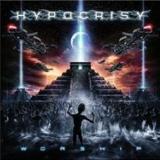
With governments finally admitting that UFOs do in fact exist, and humanity attempting to heal from a state of recent crisis, the timing couldn’t be more appropriate for the newest addition to the HYPOCRISY catalog: WORSHIP, due to be released Fall 2021 via Nuclear Blast Records. Aptly titled, the album cover shows a mass of humans reaching up mindlessly to the sky as glowing spaceships shaped like the HYPOCRISY crosses sigil beam down to descend upon earthen civilizations and Mayan temples. Designed by artist Blake Armstrong (Kataklysm, In Flames, Carnifex, etc.), WORSHIP’s artwork speaks to the history of the relationship between humanity and extraterrestrials. “They’re coming back to collect,” explains founder and HYPOCRISY mastermind Peter Tägtgren.
A track entitled CHEMICAL WHORE breaches the subject of pharmaceutical addiction, and those who engineer it. “We are all chemical whores. We regularly consume prescriptions and drugs because we think we need it; we use one pill to heal the damage done by another medicine... it’s a vicious cycle.” Musically, it’s the only song that was written by all 3 core members of the band and translates into a recognizable, mid-tempo HYPOCRISY sound much like ERASER or FRACTURED MILLENIUM. Traveling from Sweden to Russia, the band also shot an official music video for CHEMICAL WHORE.
The DEAD WORLD music was written by Peter Tägtgren’s son, Sebastian. “We actually started to write an album together, something like 11 or 12 songs, but we never put any vocals in there and we just sort of set it aside. Then when I started writing HYPOCRISY I realized I really liked the song… it feels fresh. I think my kid got some new blood in there.” While the song comes equipped with a modern feel, the writing is still old fashioned at its core. Going into detail about the illuminati and black ops government, the lyrics examine how miserable these figureheads and theories can make us. “Call it fantasy, call it sci-fi, there are plenty of conspiracies in the world but I find these ones interesting,” explains Tägtgren.
GREEDY BASTARDS is another track outlined by simplicity and catchiness. Chugging riffs encapsulate a sound that almost verges on the realms of thrash while still keeping its feet firmly planted in the world of death metal. The lyrics touch on the greed and methods of control that we see various governments around the world today; how they manipulate people against one another and abuse the masses.
For Tägtgren, the inspiration to write new HYPOCRISY comes in waves. “I believe we were out on tour for another project and I began to get hungry again. I started spitting out some new riffs and when I had 7-8 songs done, I invited the rest of the guys to join me and contribute, and from there we started putting everything together. We had a break for a few months, continued recording, went back on tour… it never stops. There was a lot of jumping back and forth, and then COVID came and things got really weird.”
Tägtgren was one of the many musically inclined who was forced into sudden isolation upon the onset of COVID 19, only for Tägtgren, this is common practice when creating new songs. “A lot of things in the world stopped, and it was time to finish everything I hadn’t finished.” As usual, all recording and mixing took place at Tägtgren’s home studio in Sweden.
It has been 8 long years since the last record, and HYPOCRISY fans can feel the itch. WORSHIP is 11 tracks of precise, ferocious musicianship. Commonly inspired by the fusion of the modern and the ancient, HYPOCRISY has once more found a way to combine innovative ideas with classic sound in order to deliver something metalheads can enjoyably consume with awe and brutal vigor. HYPOCRISY is Peter Tägtgren (Lead Guitar & Vocals), Mikael Hedlund (Bass Guitar), and Reidar “Horgh” Horghagen (Drums).
Hatchback is the alias of Samuel Milton Grawe. Sam creates music that sings of the Cosmos, full of deep resonant tones, glistening arpeggios, lush pads and harmonic motifs. ‘Phaser For The Ocean, Chorus For The Moon’ is his magnum opus, a sprawling masterwork that encompasses ambient, new age and environmental music to wondrous effect. Soaked in Californian consciousness, the album is a balm like no other for these troubled times.
When I first was getting into the creative side of music making in my teens, I was heavily influenced by concept albums like ‘Quadrophenia’ and ‘The Lamb Lies Down on Broadway’, as well as epic pieces that took up an entire side of a record: Pink Floyd’s ‘Echoes’, Yes’ ‘Close To The Edge’, Klaus Schulze’s ‘Nowhere Now Here’, Miles Davis' ‘Shhh/Peaceful’ and ‘He Loved Him Madly’. In the extreme, these ideas coalesced in double albums where each side of each record is occupied by a single title - Yes’ ‘Tales From Topographic Oceans’, and Tangerine Dream’s ‘Zeit’ being primary examples. When I returned to making music after moving back to Northern California in 2020, the first piece I recorded landed around the 20-minute mark, and the idea of creating three other long pieces to realize a full album felt like a natural - if indulgent - goal. From there, each new piece followed sequentially. Four songs. My fourth album. - Sam Grawe
‘Phaser For The Ocean Chorus For The Moon’ is a pure expression, informed by a lifetime of deep listening unbound by algorithms or AI.
These are songs for the sunrise and the sunset - and every colour in between.
a 01. And The Walls Became The World All Around [18:53]
[b] 02. Phaser For The Ocean, Chorus For The Moon [21:48]
[c] 03. Other Desert Cities [20:19]
[d] 04. Friendship Fountain [18.33]
Severed Heads reattach themselves to Dark Entries for an expanded reissue of their 1991 opus Cuisine (With Piscatorial). As originary Aussie industrial legends – although founder Tom Ellard would balk at being branded as such – Severed Heads shaped the continental subcultural sound with their kitchen electronics, chaotic tape loops, and infectious nursery-rhyme-esque melodies. Cuisine (With Piscatorial) was the long-running project’s ninth album, and is a commentary on the state of music. Ellard explains: “The whole food joke is really about what music's about and how disposable it is; people have records like they have cups of coffee.” The album also presents a turn away from the dancefloor formalism of the era, which Ellard dismissed as already sufficiently explored. Cuisine brings us punchy pop kernels of the prime Heads variety, all clocking in around three minutes. Cuts like “Pilot in Hell” and “Ugly Twenties” rank among the band’s best through their deadly skewering of synth pop tropes. But the album also offers us a Piscatorial section, where Ellard felt free to “go fishing for ideas.” Here we get a taste of the project’s demented cut-up sensibilities, like on the “Quest for Oom Pa Pa” suite, where vintage jazz records are collaged into an angular nightmare. This double-LP reissue is the first time that Cuisine (With Piscatorial) will appear on vinyl, with a previously unreleased early version of “Seven of Oceans.” Also included is a 6-page booklet with liner notes, lyrics, and press clippings.
There is an ecstatic melancholy in Dent May’s music. The bedroom pop auteur’s songs are both bittersweet and exuberant, breaking your heart while you can’t help but sing along.
Over six albums, May has built a wildly diverse discography spanning 17 years. He has typically worked alone, assembling perfect pop gems on his laptop, playing nearly every instrument himself. But when he began preparations for his new album, May’s tried and true process suddenly felt stale.
The Big One brings together both the scrappy DIY ethos of Elephant 6 Collective and early The Magnetic Fields with May’s lifelong affinity for the great ’70s singer-songwriters like Harry Nilsson and Ram-era Paul McCartney. The songs balance a clear-eyed view of the world with a cautious optimism, looking at the everyday experiences of disappointment and heartbreak with a sense of possibility for the good that may still come. Things might seem bleak, May tells us, but that doesn’t mean we can’t be thankful for our brief time here on Planet Earth.
The title track is the beating heart of the record. Over a steady drumbeat, piano, and accordion, a melancholy May sings, “The big one’s coming, the big one’s on its way,” promising disaster. But May won’t wallow in the misery: “Thank the Lord for all my friends/We can make it ’til the end/No we can’t stop now/Who knows? Tomorrow it all could turn around.” For May, hope comes in the form of others.
It’s with this joyful melancholy Dent May draws in the world. Everything might be ending, the planet could be careening off into chaos, but tonight there’s a party down the block and you’re invited. Be sure and bring your friends.