Dear friends, music is more than just the sum of its individual parts. It also has a metaphysical character, which is particularly determined by its sociality. Kerrier Collective, a group of friends from Cornwall in England, lives this social aspect by making music together and ¦nding relaxation from their stressful everyday lives. With their worldbuilding
"dreams of the sea" Ep, the collective presents us with dance music not often heard like this. It is inspired by classic folk, pop, jazz, UK garage, latin, disco, house and techno. Imagine The whitest boy alive together with Giorgio Moroder interpreting Dylan songs with musical means of the hardcore continuum in a South American bar - Ok, take that with a wink, but you know what is meant. The title track is a sound journey into the depths of the ocean, where we encounter an
underwater party. A fat Reese bass forms the foundation of this piece, which is complemented by a rich arrangement of shimmering bells, guitar plucking, strings and female vocals.
This breathtaking mood leads into a driving beat accompanied by acid arpeggios. It's all so deep that you think you can hear the call of a whale from somewhere. "Paddington Express" is a slow march accompanied by heavy bass. All around you, a piano ghosts up and down and mysterious vocal snippets create a perfect symbiosis with an acid line. Should you be accompanied "On your last day" by this eponymous track, it will be a good day - a day that may begin with a gloomy, heavy foreboding, but will dissolve into a joyful, peaceful lightness. The guitar lick of this track issimply irresistible. On your last day, you will de¦nitely dance!
The record closes with "Friday afternoon". The name says it all. We all know how it feels. Let this euphoric disco tune carry you into the weekend! P.S.: Physical release comes with handcrafted, screen printed artwork by fabulous graphic artist Zatina Kessl.
Buscar:arp 1
Jackson Bailey aka Tapes joins MIDA with a 7” packed to the brim with jazzy vignettes. This little plate holds six servings. Finely tuned frequency signals as cymbals & drums, nutty gliding arps, playful keys shot all over the place backed by a firm low end. Sweet kooky business. Moving around with ease, it’s surely got dub sprayed all over it, but in its fidgety core lies a deep nod to library music.
More than four years after his previous EP and after having released some remixes and collaborations with Agar Agar, Black Devil Disco Club or the Italian design studio Burro Studio, LeonxLeon comes back with a new EP, passing to the electronic shaker the styles of music listened since the last release.
4 tracks all as different as each other with first Itanewa, where the Parisian producer tries for the first time to give voice, without vocoder, well aware that on a track inspired by South African productions of the 80s, an instrumental version only would not be enough to do justice. It is thus in a kind of invented Esperanto that the lyrics, a call to lightness and simplicity according to the artist, are distilled between synthetic bass, keyboards and other percussions.
On Piano Mondo, we leave rather in the direction of South America with pianos of Bossa inspiration on a bass italo-disco, rises and descents as if we were in Val d'Isere and breaks just long enough to catch its breath.
The idea of Solid Dose is completely different since it was a question of taking the post new-beat dance sound of the beginning of the 90s, with a big blow, hence the title, of the synthetic bass sound "Solid Bass" which will be used in a lot of ways at this period and which is coming back in force nowadays, and to mix it with the Nordic touch of dance music for a soaring, evolving track, with arpegios which cross each other and an acid line which finally makes its appearance here.
The last track is a wink to the well-known movie that gave its name to the whole project: it is indeed Luc Besson's Léon that we are talking about, re-cut on the dialogues of Nathalie Portman and Jean Reno, supported by a simple rhythmic, analogical bass and electronic kick at the service of a dark atmosphere, closing the record at the antipodes of the first track, without ever having left the universe of melodies and percussions that already characterized the previous releases of LeonxLeon.
- A1: Kavinsky - Wayfarer
- A2: Christine - Rainstorm (Feat Neus)
- A3: Anmeom - Gone
- A4: Saffari - Transmission
- A5: Oberts & Buchner - Moving A Mountain (Original Mix)
- B1: Joda - We Find Ourselves
- B2: Sung - Neon Artery
- B3: Michael Cassette - Crockett's Theme
- B4: Jupiter - Vox Populi
- C1: Chromatics - Shadow (Maceo Plex Remix)
- C2: Nhyx - Arcades
- C3: Downtown Binary - Oort
- C4: Reznyck - Juno 69
- C5: Tainsus - Arpyness
- D1: Black Strobe - Italian Fireflies
- D2: Aevion - Metropolis
- D3: Pfeffermouse - Timeshift
- D4: Thomas Barrandon - The Quiet Earth
Hatıralar was Anadol's second album, originally composed between Berlin and Istanbul around 2012 and released years later only in digital form on the Istanbul based label Inverted Spectrum. The title Hatıralar ("Memories") turns out to be a self-fulfilling prophecy. Anadol recalled and revisited the music in 2023, gently editing and mixing the compositions for the newly mastered LP format in which they now see the light of day. Hatıralar represents an early version of the melodic, instrumental synth-pop that Anadol refined on her album Uzun Havalar (2019) before exploring the more free, krautrock-inspired musique concrète of her last album Felicita (2021). Here is the text that accompanied the original 2017 release:
Anadol, named after an old-fashioned Turkish automobile brand, is an instrumental synth-pop project by Gözen Atila, an artist, dj and keyboard player. She records with mini organs manufactured during the 70s and 80s, the built-in rhythms and arpeggios of these machines provide the backbone of her sound, and her melodies are influenced by pop music and soundtracks from France, Italy and Turkey from the same period. The music is awash with allusions to the moods of old Turkish and European cinema, from the erotic to the melodramatic, and with a reminiscence of the sound and spirit of so-called "tavern music" popular in Turkey's urban nightlife in the 1980s, a flexible pop style usually performed by a solo keyboardist-singer. Anadol is a continuation of the tradition of lone synth experimentalists like Bruce Haack and The Space Lady with their childlike curiosity for electronic sounds, and of the keyboardists pushing the boundaries of minimal equipment to entertain middle aged drunk couples in pubs and wedding parties of Istanbul.
Tenderly propelling and full of haunting melodies: Studio Mule re-issues Sakura Tsuruta’s so far digital only, self-released debut album “c / o” from november 2022.
An evocative first long player by Tokyo based artist, who was trained in classical piano during childhood, played with brass instruments, studied music production, and is today active as a composer, live performer, and versatile dj.
With “c / o” she expressed her personal history in a fluid, around 43-minute long light flooded, yet dark-ish musical vision. eight profoundly composed tracks, melding complex rhythms with emotional airs, tripping arpeggios, and ghostly sounds, slightly influenced by some of her fa-vorite artist like björk, holly herndon, or kaitlyn aurelia smith.
“c / o is a love letter for the experiences, people, and memories i had in the last two years that i spent producing this album. i also like that the letter “c” looks like an incomplete circle, whereas the letter “o” is a full circle.
Repress!
It can take a while for an artist to find their musical voice. For Alex Andrikopoulos, it’s been a journey that’s taken the best part of two decades. Now he’s set to mark a major milestone in his transition from record store owner, label co-founder and DJ to producer with the release of his long-promised first solo album for Leng, Waving. The Greek artist first joined the Leng Records roster in the autumn of 2020 and has since gone in to release the acclaimed ‘Punta Allen’ EP for the imprint. Before that, he spent the first decade of the century running the popular Radical Sounds record shop in Athens, before refocusing on running Quantized Music with fellow DJ/producer Tolis Q and developing his DJ career, where his unique blends of disco, house and techno tracks earned him bookings at some of Europe’s most storied clubs.
Waving, which appears on the back of a handful of fine EPs for a variety of labels, is his boldest and strongest statement yet as a musician and producer. Created with a little help from guest musicians and collaborators including keyboardist Artis Boriss, bassist Brotha Gilla, percussionists Ilario Arnel and Harold Perez, pianist Luciano Ledesma and guitarist Alex Searle, the album brilliantly blurs the boundary between 21st century disco, afternoon-ready downtempo grooves, and the kind of dancefloor-minded Balearic fare that’s devilishly difficult to pigeonhole.
Fittingly, the set begins with previous single ‘Punta Allen’, an eight-minute chunk of organic dancefloor goodness which slowly unfurls before rising towards and gorgeous and joyous conclusion, and ends with the squelchy, slo-mo cosmic funk of ‘Patrol Di Caribe’, where trippy synthesizer lines, layered percussion and more tuneful style pan style lead ins catch the ear.
In between, highlights are plentiful, from the driving, piano solo-laden dub disco brilliance of ‘Down My Soul’ and the languid, sun-kissed, beach-ready downtempo grooves of ‘The Jamail Pass’, to the rubbery, pitched-down electrofunk of ‘Window Spells’ (featuring a fine lead vocal from Max Giovara, the flash-friend, dubwise Balearic funk of ‘Waving’, and the throbbing brilliance of ‘La Di Da Di’, whose crunchy Clavinet lines, fluid electric piano solos, snappy drums and pulsating, arpeggio-style bass encapsulate all that is good about the album.
The digital edition of the album also comes bundled with eight more tracks not featured on the double-vinyl LP. Featuring the same blend of expansive musicality, organic drums and dancefloor nous, this octet effectively extends the album via a string of similarly playable, club-ready and sofa-friendly tracks. Standouts include the non-stop, nu-disco-meets-house excellence of ‘Large Stacks’, Hammond-laced head-nodder ‘Take The High Road’, horizontal Balearic funk shuffler ‘Prezend’ and hazy, vocal-sporting dub disco roller ‘Angels of Rhythm’, which previously appeared on the flipside of Lex’s ‘Punta Allen’ 12”.
Following on from Melodic Motion, Martin Matiske returns to Bordello A Parigi with a track that first appeared over a decade ago. Released on his first album on Stilleben, “Dimension Phantasy” has been dusted down and given a new lease of life.
This extended version bubbles with the same energy as the original. Steady kicks give way to scaling chords as a racing piece of future gazing brilliance takes hold.
Melodies are addictive, yet cold, with a common ground between disco and electro being forged. Sharing the 12” real estate are two good friends, each offering their own remix. Captain Mustache is a musician who can turn his hand to any style.
Here the French producer remains true to the Matiske’s version, adding layers of warmth while maintaining the Springtime coolness of beats and harmonies. The flip is given over to Play Paul, a trailblazing figure in electronics. BPMs are reduced as sweetened lines take flight in the “Oh Lord! Remix”. Arpeggiators rumble before bold keys and heartfelt vocals enter in this emotive reinterpretation. The finale strips back lyrics to focus on those succulent synthesizer sounds. A celebration of past, present and future on one very special release.
Siamese Twins Records presents Temple Rat, known offstage as Mei Yuxin, and her highly anticipated debut EP, "The Composition of Air." This album signifies her first solo release with Siamese Twins, following her contribution to the Kāthā V.A. (ST-๐๐ห้า), which Higher Intelligence Agency later reworked on ST-๐๐๘. Each track gracefully transitions, creating a harmonious blend of ethereal haze yet grounded echogenic brushstrokes. Despite the otherworldly ambiance, the EP remains deeply rooted in an ancient mystique, which Mei has skillfully crafted.
Hailing from Chengdu, Mei is a master of the traditional Chinese Erhu, a two-stringed folk instrument made of wood and snakeskin. The soulful resonance of this time-honored instrument intertwines with Mei's productions and live performances.
The opening track, "Dreaming of Electric Sheep," immerses listeners in a dystopian sci-fi atmosphere, masterfully merging rustic ambiance with hissing field recordings and IDM-inspired elements. Hypnotic rhythms envelop and wash over meditative alchemy.
"Rooted in the Soil of Your Heritage" features a captivating collaboration with Portuguese vocalist Meta_, taking on a contemporary darkwave approach. This track spirals into the horizon, offering solace through interlacing oscillations, and perfectly illustrates Mei's ability to facilitate interethnic dialogue with her distinct and enthralling Erhu sound.
The true story unfolds in the title track, "The Composition of Air," as Mei expertly employs organic synths to create absorbing arpeggios and sequences.
The final piece, "东风," feels familiar and otherworldly, as drums pirouette beneath melodies that balance delicately, culminating in an intriguing and welcoming soundscape—the ideal conclusion to a captivating EP.
Legendary New York band M'lumbo distil experiences from their pre-pandemic shamanic travels into their stunning new album The Summer Of Endless Levitation. The eight-track vinyl LP is an avant-garde take on folk music informed by painter and sculptor Jean Hans Arp's 'Biomorphic' works and it serves as a sonic renewal of self.
The cult M'lumbo collective has been a legendary and groundbreaking act since first forming in the mid-80s. They cross genre boundaries as they draw on jazz, world, electronic, rock and experimental music that escapes the commercial world and take you into another realm entirely. There is no limit to their sound; each member brings their own cultural background to the mix, making the band all the more unique.
As the coronavirus pandemic struck, three members of the band Rob Ray Flatow, Paul-Alexandre Meurens and Brian O'Neill under-took a regimen of shamanic traveling in New York City. The experiences led them to spontaneously compose and perform a suite of pieces, informed and inspired by Jean Hans Arp's works but also by the feelings of isolation and indefinite exile yet to come in their urban environment.
Compared to the works they have done as part of the larger M'lumbo band, this album is a more modest and naive affair that is "a vehicle for the renewal of feeling using only a few instruments - acoustic and electric guitar, keyboard, flute, small percussion, kalimba and clarinet - and locating a sense of both the deep sadness and uplifting powers of reverie."
'There Are No Words' kicks off with heavenly chords and organic percussion that recalls the jungle jazz of Don Cherry, then 'Shoreline' is a five-minute dub with percolating rhythms and new age melodies before the soul-soothing acoustic guitar of 'The Afternoon Levitation' blisses you out on a sunny day. The perfectly entitled 'Swoon' is another gloriously uplifting piece of musical spirituality that fuses the electronic and synthetic with the ancient and ritualistic. There is more jungle jazz, big-band horn work and cosmic synth modulations of 'Open The Heavens' while 'Quanta' is a shuffling, jumbled mix of radiant chords, wigged-out electronic lines and celestial charm. 'Planetfall' goes from free-form jazz to double-time techno and back to cathartic ambient. The final trio of tracks conjures up everything from the transcendental jazz of Alice Coltrane to the cinematic downtempo of Calm.
‘Where is Agartha? What is the specific region in which it lies? Along what road, through what civilizations, must one walk in order to reach it?.’ Saint-Yves d’Alveydre in 1886
Agartha, the debut full-length album by Japanese producer Wata Igarashi, is a mysterious, divine thing. Named for the mythical secret kingdom, understood as a complex maze of underground tunnels, perhaps designed by Martians who colonised the Earth tens of thousands of years ago, it’s a similarly mystical, perhaps even cosmic trip – but this time, exploring an inner, deeply personal cosmos. Beautifully detailed and bustling with rich incident, it takes Igarashi’s music to new places, which still retaining his unique sonic imprimatur; in this respect, it’s perfectly at home with Kompakt, a label that’s always encouraged artists to make the visionary music they need to create, to take risks and make sideways steps into uncharted territory.
An eloquent producer and DJ, Igarashi has been releasing techno for eleven years now, appearing on such imprints as The Bunker NY, Delsin, Midgar, and Time To Express; he has also self-released his productions via his WIP net label. Throughout, Igarashi has consistently explored his unique approach to techno and electronic music, one that’s eloquent and poised, even when it shifts into more psychedelic terrain; he’s a master at balancing the sensual and the functional, and he has an unerring ear for the right texture, the right tone, at the right time. He brings all of this into Agartha, his most thorough-going expression of self to date.
For Agartha, Igarashi had a strong concept he wanted to explore. Visualising specific scenes from an imaginary film based on the titular secret kingdom, he created soundtracks for those scenes, spending time during the pandemic in his studio, working away carefully at the ten tracks here. Given his background in creating music for television and advertisements, Igarashi is well-placed to explore the marriage of the sonic and the visual in such intimate ways, but freed from commercial concerns, he let his imagination run riot. He also drew on a rich palette of musical influences – techno is in there, of course, but you can also hear the smoky, improvised jazz of the likes of Miles Davis (to whom the album’s title is an indirect nod), and the minimalism and systems music of Steve Reich.
The latter is particularly pronounced on the gorgeous, beatless drift of “Floating Against Time”, where an arpeggiated sequence lingers, lovingly, around your ears for nine blissful minutes, coasting across swooning drones and waves of ambient noise. “Ceremony Of The Dead”, originally composed as part of a Sony 360 Reality Audio spatial sound concert, is a deep pass into systems composition, with various patterns overlaid and interlocking, before a wordless vocal rises from the depths, a gorgeous counterpoint to the swarming textures that gather across the track. On the other hand, tracks like “Burning” and “Subterranean Life” nudge toward Fourth World territory, painting deluxe dreamscapes of uncertain provenance; the title cut is an abstract drift-world, Igarashi painting an alien tableau dotted by shape-shifting creatures.
Agartha’s conceptual framework means that everything on the album sits perfectly together; listening to it in one sitting is a dizzying, lush experience. Its imaginings of inner landscapes recall, in some respects, the nautical, aqueous mythologies of the Drexciyan universe, though from different perspectives. But the result is Igarashi’s own creation, a deluxe, enchanting trip through the visionary Agartha of this unique producer’s cinematic mind’s-eye.
Wo liegt Agartha? In welcher spezifischen Region liegt es? Auf welchem Weg, durch welche Zivilisationen muss man gehen, um dorthin zu gelangen?'
Saint-Yves d'Alveydre im Jahr 1886
Agartha, das Debütalbum des japanischen Produzenten Wata Igarashi, ist ein geheimnisvolles, göttliches Ding. Benannt nach dem mythischen, geheimen Königreich, das als ein komplexes Labyrinth unterirdischer Tunnel verstanden wird, die vielleicht von Marsmenschen angelegt wurden, die vor Zehntausenden von Jahren die Erde kolonisierten, ist es eine ähnlich mystische, vielleicht sogar kosmische Reise - aber dieses Mal erforscht es einen inneren, zutiefst persönlichen Kosmos. Wunderschön detailliert und voller reichhaltiger Begebenheiten, führt es Igarashis Musik an neue Orte, die dennoch seine einzigartige klangliche Handschrift bewahren. In dieser Hinsicht hat es bei Kompakt ein perfektes Zuhause gefunden - einem Label, das Künstler immer ermutigt hat, jene visionäre Musik zu machen, Risiken einzugehen und seitwärts Schritte in unbekanntes Terrain zu tun.
Der eloquente Produzent und DJ Igarashi veröffentlicht seit elf Jahren Techno auf Labels wie The Bunker NY, Delsin, Figure und Time To Express; außerdem hat er einige Produktionen über sein Label WIP net selbst veröffentlicht. Dabei hat Igarashi stets seinen einzigartigen Ansatz für Techno und elektronische Musik verfolgt, der kontrolliert und ausgeglichen ist, selbst wenn er sich in psychedelisches Terrain begibt; er ist ein Meister der Balance zwischen dem Sinnlichen und dem Funktionalen und hat ein untrügliches Gespür für die richtige Textur, den richtigen Ton zur richtigen Zeit. All das bringt er in Agartha ein, dem bisher umfangreichsten Ausdruck seiner selbst.
Für Agartha hatte Igarashi ein starkes Konzept, das er erforschen wollte. Er stellte sich bestimmte Szenen eines imaginären Films vor, der auf dem titelgebenden geheimen Königreich basiert, und schuf Soundtracks für diese Szenen. Während der Pandemie verbrachte er Zeit in seinem Studio und arbeitete sorgfältig an den zehn Tracks. Mit seinem Hintergrund als Komponist von Fernseh- und Werbemusik ist Igarashi prädestiniert dafür, die Verbindung von Klang und Bild auf solch intime Weise zu erforschen, aber frei von kommerziellem Dünkel ließ er seiner Fantasie freien Lauf. Er schöpfte auch aus einer reichen Palette musikalischer Einflüsse - Techno ist natürlich dabei, aber man hört auch den rauchigen, improvisierten Jazz von Miles Davis (an den der Titel des Albums eine indirekte Anspielung ist) und den Minimalismus und die Systemmusik von Steve Reich.
Letzteres ist besonders ausgeprägt in dem wunderschönen, beatlosen "Floating Against Time", wo eine arpeggierte Sequenz neun Minuten lang liebevoll um die Ohren fliegt und über schwelende Drones und Wellen von Umgebungsgeräuschen gleitet. "Ceremony Of The Dead", ursprünglich als Teil eines Sony 360 Reality Audio-Raumklangkonzerts komponiert, ist ein tiefes Eintauchen in eine Systemkomposition, bei der sich verschiedene Muster überlagern und ineinander greifen, bevor sich ein wortloser Gesang aus der Tiefe erhebt, ein wunderschöner Kontrapunkt zu den wimmelnden Texturen, die sich über den Track legen. Andererseits bewegen sich Tracks wie "Burning" und "Subterranean Life" in Richtung der Vierten Welt und malen luxuriöse Traumlandschaften ungewisser Herkunft; der Titeltrack ist eine abstrakte Scheinwelt, in der Igarashi ein außerirdisches Tableau malt, das von formwandelnden Kreaturen übersät ist.
Der konzeptionelle Rahmen von Agartha ermöglicht, dass alles auf dem Album perfekt zusammenpasst; es in einem Zug durchzuhören ist eine schwindelerregende, opulente Erfahrung. Wata's Vorstellungen von inneren Landschaften erinnern in gewisser Hinsicht an die nautischen, wässrigen Mythologien des drexciyanischen Universums, wenn auch aus einer anderen Perspektiven betrachtet. Aber das Ergebnis ist Igarashis ureigene Schöpfung, ein luxuriöser, bezaubernder Trip durch das visionäre Agartha dieses einzigartigen Produzenten mit seinem cineastischen Blick.
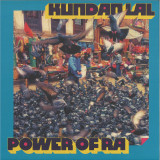
Kundan Lal is a highly understated artist. Little is known about his background, though some refer to him as Kunsaf Halil, his personal life remains largely a mystery.
Gathering a cult following amongst people like Den Sorte Skole or DJ Marcelle with his previous releases, he is now set to sail new shores. There is a sense of wanderlust as he opens his box of field recordings, collected on his many travels. From the buzzing streets of Alexandria, early sunday markets in Tafraoute or a crackling bonfire down by the banks of the river Ganges. Each track takes you places.
Kundan's second album is a captivating blend of dubby beats, collages, and exotic instrumentation. Drawing from classic tools like the Roland 808, SC7 and the famous Space Echo, Kundan has created a unique and minimalistic sound that is sure to captivate listeners. At once nostalgic and experimental, "Power of Ra" is a must-listen for both electronic music purists and fans of adventurous soundscapes.
Compelled to work from home on his computer during lockdown, Kundan dusted his pawnshop e-piano, downloaded some orchestral soundkits and started to digitize almost forgotten field recordings. The "Power of Ra“ came to him.
“Illgrimage” is a good example of his approach. Combining atmospheric soundscapes with swirling strings, trombones and pianos. Echoes of birds and children playing in the streets. A small town filled with life and a theremin leading the way while you hear the faint yet powerful words of Greta Thunberg saying: "Imagine...“
“Raqaqa,” a powerful orchestral journey with a hip-hop edge. Tinkling chimes add a groovy vibe, while lush layers of wind instruments weave a masterful soundscape. It’s the slow-burning intensity of this track that pulls you in.
"Nasi Chip" is a signature song that exemplifies Kundan Lal’s musical prowess. An engaging beat coupled with chopped up vocals, 8-bit synth melodies and an arpeggiated piano provide an energetic atmosphere that is both cunning and unique.
”Cen" lures you into the egyptian realm. A Harmonium slithers serpent like around a pounding beat.Horns gently swaying to the rhythm of the desert.
It is hard to put your finger on his style or genre. You can feel Kundan Lal‘s DIY spirit in his production, carving his own ethnic genre. For enthusiasts of Roberto Musci or Muslimgauze, this avant-garde album is one for your collection. Keep your senses open and let the Power of Ra pass you to another world.
n this Second Edition of eli.sound we bring you High-End Music with the Best exponent of Our Catalog in this moment, This time Our Happy House Side our Leader Son of Elita releases a Party Deep House with many changes of analog Synthesizers and pads chords and so on close Side A with a Incredible Argentinian Collaboration Trentz & Cajal induce to wear out all your Sneakers with a very emotional Fast Groove.
A Roman Side dresses up by hosting one of the best Romanian Exponents the great Direkt already known by all in the Underground environment releases a track with Experimental Minimalistic Trends and Organic Groove, to close our Project SOEm launches Breakbeat cut with Arpeggios and Organic Synthesizers. We assure you that this LP cannot missing from your Selection.
mule musiq dives into the archives of humanoid ambient music history, bringing the vinyl premiere of a masterwork by german dj, producer, and musician david moufang, globally known as move d. released in 1995 on pete namlook’s fabled fax +49-69/450464 label, the album marks his only output as solitaire, featuring heroic, supple ambient music, that some folks call one of the best works by move d.
just three years before he dropped it, moufang launched with jonas grossmann the celebrated label source records, active from 1992 to 2005. it was the platform for his first move d album “kun-ststoff”, likewise released in 1995, highlighting diverse genres like techno, house, idm, ambient, electro, and downtempo.
“solitaire” works with pulsating rhythms, too. gentle ones, that cater sensations beyond the propel-ling dance sectors. a spiritual album. recorded at the resource studios/heidelberg in july/august 1994. it reaches out to higher ground, never leaving the sediment.
still state of the art. not a single melody, note, tone has aged. all sparkle, all innocence is still there, somewhere deep in the arpeggiated space, absorbing time. an exploratory early electronic work by an artist, who still had his most prolific years to come.
and yet, “solitaire” sounds like being shaped by a fully mature creative mind, that defined his sonic language already profoundly. six epic tunes between five and 16 minutes, listening to emblematic titles like “damaskus/dakar, “sergio leone’s wet dream”, or “indian mantra”, while opening ambient into investigative textural layer landscapes, that subtly incorporate acid, downbeat, idm, or early techno districts.
for those who have been around in the electronic music sphere for a while, “solitaire” is a classic. for those who are young at heart, it opens new horizons. each new passive or active listing loop fresh ones. hidden in the harmonies. hidden in the melodies. somewhere inside the sound. leading outside into a visual texture, where you can almost see the music!
Bristol multi-instrumentalist, producer and nature freak Will Yates offers a new record from his Memotone alias, an expansive, hypothetical revue titled How Was Your Life?
Launching from terrains recognizable to fans of Will’s extensive, restless discography, How Was Your Life? packs up his penchant for baroque druid folk, homespun electronics and weightless woodwinds and explodes them into glistening, fractal star dust.
Instigated by the purchase of an antiquated Y2K era guitar synthesizer, the record was produced over the first half of 2022, in a large part a result of in-studio improvisation and carved by equipment that offered both possibilities and parameters that Will relished and explored to the nth degree. The Roland GR33 not only provided sublime guitar sounds but also empowered the guitar to convincingly mimic fretless bass, tabla and a vast percussive array, also summoning an artillery of uniquely outre atmospheres over the course of the record. The resulting concoction sounds familiar yet subtly, unshakeably otherworldly, shaping up as perhaps the most honed, energized and beatific Memotone album to date.
Paradise Drips gently lifts off with wobbly guitar, randomized sequences and unidentifiable percussive elements situating us somewhere in an unearthly realm, before Open World zaps the serotonin receptors and gushes with ecstatic warmth, it’s quietly insistent soft disco shuffle and levitational fretless driving towards a totally blissed and very soft “drop”. Forest Zone sees Memotone deep in the green, with a loose, propulsive groove and dancing flutes stumbling into a medieval ritual in the clearing halfway through, and Glow In The Dark deftly bounces between spacey ambience and an undulating no wave vamp. Carved By The Moon is a delightfully melted classical cut, while Canteen Sandwich offers the record’s most explicitly nod to modernity in the form of a nimble drum workout with samurai synths and melodic percussion that heaves towards a genuine peak. Lonehead immediately backs right off, viscerally melancholic clarinet and bubbling fx making for the records most hefty introspective moment, before Walking Backwards simmers all the way down on an wistful arpeggio, rooting back in earthly reality with charmed rhythms and jazzy tunings. Catharsis complete, Memotone is onto the next incarnation.
Will Yates has been making music as Memotone since 2010, releasing music on labels like Black Acre, Disktopia and Accidental Meetings, also releasing music as O.G. Jigg and Half Nelson. He’s worked as a producer, session musician and live performer on a broad spectrum of projects, and recently provided source sounds that made up Batu’s “Opal” on Timedance.
How Was Your Life? was written, produced and mixed by Will Yates. It was mastered by Chris Wang. Art and design by Hugo Bernier.
Altered Circuits dives deeper in the world of playful and versatile club music with roots in the early 90's! There's an obvious parallel between Ildec's DJ performances and his own music.
Part of a scene with a focus on extended, broad-minded sets, the Ibiza-based artist lets his yearning to unearth and play obscure gems flood into his production process. The "Ahora Si EP" is testament to this adventurous spirit as it tackles a wide array of tempos, styles and moods.
Opener "El Principio" and closer "Grt Plschr" display Ildec's fondness of hazy, recondite atmospherics. With its sustained ambient chord, delay-washed newsreader samples and manipulated themes, the former sounds like a fever dream radio bulletin.
On the latter, a broody motif meanders alongside loosely played drums, while a buried bass guitar occasionally reveals itself. "El Break Del Dia" furtherly explores some of these elements, but this time with the dance floor front of mind.
Languidly morphing bass sequences and staccato synth salvos build up anticipation. When a slowly emerging, ceaselessly arpeggiating organ lead finally materialises, the track explodes. Natural flow is partly traded for sturdier form on the remainder of the EP. "El Break De La Noche" lets an ever-modulating lead groove alongside rigid, dry drum beats.
Descending tom fills, truncated squeaks and a top layer LFO gone haywire complete this sparse yet exciting cut. "La Nueva Version" has a similarly efficient bassline as its bedrock. An interplay of zaps, risers, transposed percussion, and other dusty cartridge samples pulls it left and right while subtle disorienting hints of speech thicken the mix.
On "Modificacion", Ildec moulds his take on progressive and tech house into its toughest shape. A druggy, bleepy lead twirls in and out of the track, carried by the road-tested combo of a taut drum pattern and a piercing backbeat bass. Ominous chords and equally menacing vocals mark its aim: to create tension in the club. It is a standout on a diverse, daring EP we are delighted to present as the fifth release on our label.
Jamie Jones and Lee Foss welcome Brazilian newcomer Cassi to Hot Creations as he unveils his two-track EP, ‘Request’.
A new name quickly catching a lot of attention within the tech house world, Brazilian DJ/producer Cassiano Salbego, aka Cassi, only released his debut record via Amine Edge & DANCE’s CUFF Records in August of last year. However, the months since have seen the exciting South American drop a sprinkling of follow-ups and downloads to begin to showcase his sound and style, with a growing list of supporters added by the day. Next up, he gets set for his biggest release to date, making his debut appearance on James Jones and Lee Foss’ internationally renowned label Hot Creations with two new originals across ‘Request’.
Opening with rolling drums, slinking bass groove and hooky warped vocals, arpeggiated lead synths soon take hold of ‘Request’ as the track builds into a cascading surge of energy, while ‘Nervousinha’ is a stripped back yet impactful cut that sees further vox snippers paired with trippy and resonant melodies.
Bristol's new wave dance floor instrumentalists announce their new album 'Ruins Everything' releasing on Worm Discs. Snazzback’s
electrifying chemistry has wowed audiences at Ronnie Scott’s, festivals such as Glastonbury, Boomtown & Shambala and gained support from BBC Radio heavyweights including Gilles Peterson, Jamz Supernova and Jamie Cullum. Snazzback's music is a collage, collectively constructed, torn up and glued back together in unexpected ways, bringing a renewed, daring energy to UK dance music.
The 7-piece embrace their experimental beginnings to create a sound
fusing abstract beats with spiralling improvisation. Their music is soaked in influences including interlocking West African rhythms, rootsy Brazilian flavours, sprawling soundscapes, deep dubstep
basslines and flickering arpeggiators. A collaborative instinct runs through the group, and an eclectic choice of vocalists keeps their
compositions shimmering with new possibilities.
After a creative break of more than 10 years the Contemporary Noise Ensemble returns with the brand new album called »An Excellent Spiritual Serviceman«. With the band’s line-up reduced and the sound of the brass section replaced with programmable synthesizers comes an entirely new sound of the band’s music. Leaning towards composition instead of improvisation the music is now less jazzy sounding - with electric bass being used instead of double bass and drums actually being the only strictly acoustical instrument. But then again you can hear a lot of other prerecorded instruments like marimba, vibraphone, Rhodes and upright pianos surrounded by arpeggiated synths and other programmable electronic instruments.
The album takes you to a journey through jazz, space rock, funk and electronic music with a destination in a form of a rock song which is as well the title song of the album. The Contemporary Noise Ensemble still impresses with maturity and class.
It’s always a joy to release music from friends, and ZamZam 91 is our first collab with a dear one, Jim Coles AKA Om Unit. It’s impossible to frame the breadth and depth of such a storied career in bass music in just a couple lines- so suffice to say that releases over decades on a who’s-who of seminal labels including Exit, Fabric, Planet Mu and of course his own Cosmic Bridge have cemented his rep as an absolute force in production and DJing across any number of genres and sub genres.
Coles’ roots in Bristol and deep love of dub and reggae - made beautifully explicit on his recent Acid Dub Studies LPs - come through strong on both sides. “The Canopy (Armageddon Style)” opens with ravey, arpeggiated synths worthy of Vangelis, punctuated by a brooding piano chord, building steadily into a dark and utterly apocalyptic steppers guaranteed to storm & batter down Babylon walls inside and out.
“Mystic 808” is a deep meditation, a slow stepper that ices down the furious energy of the A side and drops the tempo to suit. Recalling the heady days of original late 90s/early 2000s UK Dub - as well as early dub techno - stabs and melody caress, restrained percussion swims and multiplies in reverb and echo, orbits locked to the gravitational force of the massive and truly timeless bassline. Proper sound system material that will satisfy the heart and soul long after the dance is done.