Heavily influenced by Motown and Stax soul sounds, Version is the second studio album by British DJ
and producer Mark Ronson, a triple platinum success in the UK that is by far his most successful and
helped to win him the BRIT Award for Best British Male Solo Artist.
Released in April 2007, it is entirely comprised of carefully selected cover versions produced with an
impressive cast of collaborators (from Ol’ Dirty Bastard to Robbie Williams) that produced three top
ten hit singles: ‘Stop Me’ with Daniel Merriweather, ‘Oh My God’ with Lily Allen and the timeless
Valerie featuring Amy Winehouse.
The New Eves are a Brighton quartet who have been labeled as one of the country's most spellbinding new bands. Nestled somewhere between primal rock'n'roll live performance and transcendent ritual, there's an unmistakable alchemy that happens when Violet Farrer (guitar, violin, vocals), Nina Winder-Lind (cello, guitar, vocals), Kate Mater (bass, vocals) and Ella Oona Russell (drums, flute, vocals) step onto a stage together. Now, they've distilled this visceral energy into their extraordinary debut album The New Eve Is Rising: a lighting rod of inspiration channelled by a quartet with the ability to create something greater than the sum of their parts. The New Eve Is Rising was written in Brighton and at an artistic residency at The Cornish Bank, co-produced by The New Eves and Jack Osbourne (Bingo Fury) and recorded at Rockfield Studios and Bristol's Cotham Parish Church.
Whispers of Granite is the exciting new collaboration between Norwegian vocalist and vocal composer Trude Eidtang and German keyboardist and composer Andreas Hack. Their debut album, Liquid Stone, offers a unique fusion of melancholic folk, indie and progressive rock, enriched by Trude's expressive vocals and Andreas' atmospheric instrumentation. Trude Eidtang is renowned for her evocative, haunting voice and deep emotional resonance within the progressive rock genre. She first gained recognition as the lead vocalist of White Willow, later founding her own project When Mary, where she crafts vocal-driven organic-electronic music that blends art-pop, indie, and conceptual storytelling. Andreas Hack is a celebrated German composer and keyboardist known for his innovative work in progressive rock. As a founding member of Frequency Drift, Andreas helped shape the band's distinctive, atmospheric sound. He has also expanded his creative range through projects like Feeling of Presence, which delves into ambient and post rock, and most recently, Haven of Echoes, known for its progressive and evocative sound. The collaboration between Trude and Andreas in Whispers of Granite brings together their individual strengths to create a compelling and immersive musical experience, drawing influences from folk, indie, and cinematic music, combining melancholic progressive rock with lush, atmospheric textures. Trude's vocals are at the heart of the music, intertwining seamlessly with Andreas' atmospheric keyboard work and intricate guitar arrangements. Together, they craft a sound that balances melancholy and hope, fragility and strength. The album's title, Liquid Stone, reflects the thematic duality that runs throughout the project. It symbolizes the tension between fluidity and permanence, capturing the transformational shifts Trude explores in her lyrics. The fusion of organic and industrial elements in the music mirrors the interplay between raw human emotion and the rigid structures of the world. Liquid Stone marks a bold step into new musical terrain.
Tough Love brings to vinyl for the first time April Magazine's Sunday Music For An Overpass, a nine track collection originally issued on cassette in vanishingly small number by Paisley Shirt in 2021. The kind of mythical recording you might have once needed to know the band to own. Alas, no longer... Can the universe have two centres? Because if it's not Gothenburg it's San Francisco... It's impossible for me to think about what's going on in that particular part of the west coast right now without immediately being drawn to April Magazine, a comparatively loosely assembled three (sometimes four) piece centred around artist/musician Peter Hurley, who seem to simultaneously operate at both the heart and the margins of the current Bay Area underground. On the one hand they share members with many other bands, their guitarist/singer runs a gallery that functions as some kind of focal point/social space, and Cindy even have a song named after them. On the other hand, their music is resolutely lo-fi and invariably couched in a mysterious haze, the live footage available online seems to suggest that they sound slightly different each time they play, and there are reports they have dozens of songs (possibly albums?) that have not and may never be released, hidden inside their own private universe. On its initial release, Sunday Music For An Overpass was an early attempt to drag the group a little closer into the light, yet inevitably made them feel as endearingly enigmatic as ever. Typically, this vinyl reissue some four years later only goes part way in clearing that alluring fog. April Magazine channel the greats - Spacemen 3, The Pastels, early B&S, Mary Chain, Rainy Day/Opal/Mazzy et al - but submerge their obvious melodic capabilities within seemingly infinite spray can hiss, as if the songs are being pulled backwards through some vortex to the past. Half of these tracks are instrumentals, and it's in those moments that the band are perhaps at their most expressive, suggesting a very inviting melancholy that can't quite be figured out. Though the LP remasters the original recordings and is a little cleaner sounding as a result, no secret is being given away. The appeal is that the more you hear from them, the less you really know, and all the better for it. Maybe, then, it's that April Magazine are here to show there is no centre to the universe, that instead it's always just off to the side...
For most members of the band it's the best album. But, tragically, the release of Operation Heavenly in 1996 was overshadowed by the sudden death of drummer Mathew Fletcher. The promotional tour was cancelled, the surviving members of the band went into emotional hibernation and no-one could bring themselves to celebrate these vibrant, upbeat songs. So, this release by Skep Wax Records, nearly thirty years on, is more like an album launch than a re-issue. Time has healed most wounds, and the songs on Operation Heavenly feel like they can finally emerge onto the stage, with Mathew's spirit very much alive: his effervescent witty drumming sounding as fresh now as it did then. These tracks are gleeful, melodic, sophisticated and knowing. The tough riot grrrl edge that Heavenly had developed a year before with seminal singles P.U.N.K. Girl and Atta Girl, has been blended with a deliberate quantity of Britpop styling. Heavenly were clearly listening to what was going on, liked the energy, but didn't necessarily feel the need to join in. Some of the tracks (eg Ben Sherman) are as jaunty as early Blur, but the lyrics, mocking a narcissistic boyfriend for his obsession with hair, clothes and his own erections, show that Heavenly didn't need or want to be part of the la - or even ladette - herd. Operation Heavenly was the band's first release on a label other than Sarah Records. Matt Haynes and Clare Wadd had brought that exceptional label to a deliberate and dramatic end. The liaison with US punk label K Records continued - as did the duets with Calvin Johnson: Pet Monkey is a moving duet between a growling Calvin Johnson and a sweet-voiced Cathy Rogers, as they dramatize another complex, maybe doomed relationship, with another self-centred boy finding himself frustrated by a girl who won't take any shit. But in the UK, Heavenly needed to find a new home - and Wiija Records were welcoming hosts, ushering the band into a brasher, less cloistered world: the production on this album is brighter than before, the artwork is colourful and upbeat. With tracks as catchy and as complete as Fat Lenny, Trophy Girlfriend and Space Manatee there was an expectation that Heavenly might finally emerge from the indiepop shadows and trouble the charts. And who knows if this might have happened. Mathew was lost before the album was released, and the band had no choice but to bring things to an end. This reissue also contains two tracks that appeared on the B side of the 7" single of Space Manatee. They are both cover versions, and along with Serge Gainsbourg's Nous Ne Sommes Pas Des Anges on the main album, these vivacious assaults on Art School by The Jam and You Tore Me Down by The Flamin' Groovies show that the band, briefly in its prime, could happily embrace any variant of pop music and make it something Heavenly.
For anyone unfamiliar with Skeleton Recordings, it was started in 1992 by DJ Monita based in West London and had a quality string of releases between 92-94 like Triple 6, Luv To Luv Ya, A Classic Skank, The Razor's Edge, Nightmares, I could go on and on...
In 2014, the label started back up again & I'd been sending some of my music to Monita around this time which led to me releasing an EP called Storylines on the label in 2016, where I was able to put out some of my music that was made in a darker & more modern style than my usual oldskool inspired work. I also had a tune featured on the 25th anniversary release series called Time's Up alongside other favourite artists of mine like Threshold, Gremlinz, Antidote (R.I.P), Future, Theory, Ricky Force & many more.
In 2021, Monita announced that he would be retiring Skeleton Recordings and putting out the final releases, which were single sided represses of Luv To Luv Ya & Nightmares, nearly 30 years after they originally were made. However, I had some great unofficial remixes that Phineus II had done of The Razor's Edge & Full Cry by Steve C & Monita, which never saw the light of day officially and I took a chance by contacting Monita to see if he'd be up for one more Skeleton Recordings release, in conjunction with Future Retro London.
Thankfully, he was up for the release and on top of that, he was able to provide 2 tracks that he made in 1995 that were meant for Skeleton Recordings but never saw the light of day until they were released digitally on Hardcore Junglism for a brief period of time, but never released on vinyl.
Big thanks to DJ Monita of course for allowing me to make this happen (as well as for his work in creating such a great label) & Phineus II for his remixes.
The discovery of Doris Dennison's score represents a genuine musicological breakthrough—what once would have been "a tree falling in the woods" thirty years ago now holds the potential to render "a thunderous clap in our minds." While researching Anna Halprin's lesser-known collaborators, scholar Tom Welsh uncovered the archives of AA Leath, one of Halprin's principal dancers. Buried within these materials was Dennison's handwritten score for Earth Interval, dated May 1956. Born in Saskatchewan, Canada, in 1908, and raised near Seattle, Dennison (1908-2009) encountered John Cage while teaching Dalcroze eurythmics at the Cornish College of the Arts. She joined Cage's earliest percussion quartet—alongside Margaret Jansen, the composer and his wife Xenia—in the group widely regarded as having performed the first complete concert of percussion music in the United States. This historic December 1938 concert was followed by tours and the landmark May 1941 performance at the California Club, comprising Cage and Lou Harrison's Double Music, the premiere of Cage's Third Construction, and Harrison's 13th Simfony.
As Bradford Bailey observes in his extensive liner notes, Earth Interval demonstrates "an extraordinary balance of elements that imbues the piece with a sense of clarity, directness, and constraint that is both distinct and ahead of its time." The work's most remarkable innovation lies in its approach to extended techniques, particularly Dennison's notation for the central movement: "In 2nd movement, 1st player lowers + raises a gong into a tub of water while beating." This technique, absorbed from Cage's experimental vocabulary, generates what Bailey describes as "fields of acoustic abstraction that bend and warp time through sustained resonances, beat, and space." The temporal sophistication of these manipulations anticipated Karlheinz Stockhausen's Mikrophonie I (1964) and Annea Lockwood's water-based sound investigations by over a decade. After joining Mills College as dance accompanist, Dennison maintained crucial connections to the Bay Area's experimental scene, collaborating with figures like Merce Cunningham and programming Cage's music throughout the 1950s.
Comprising three movements—Land Form, Air Tide, and Earth Play—Earth Interval is scored for recorder, drums, gongs, maracas, muted gongs, and bowl gongs. In total, the piece is just under eight minutes: "a fleeting glimmer of moment in time, a life spent at the cutting edge, and a singular creative vision that packs a powerful punch." When viewed in historical context, placed in contrast to roughly contemporaneous avant-garde percussion works by Cage, Harrison, Louis Thomas Hardin (Moondog), and Harry Partch, or important precursors like Edgard Varèse's Ionisation (1931) and Henry Cowell's Ostinato Pianissimo (1934), it's clear that Dennison was following her own path. Earth Interval is not derivative. It is a precursor to what was yet to come, alluding to developments of avant-garde and experimental music that wouldn't begin to appear on the cultural landscape until the 1970s and '80s, with the emergence of Post-Minimalism and more idiosyncratic artists and ensembles like Midori Takada, Ros Bandt, Peter Giger, Frank Perry, Christopher Tree, Michael Ranta, Gamelan Son of Lion, and Niagara.
This recording by Chicago's Third Coast Percussion, captured in March 2022, represents the first complete documentation of this pioneering work. The ensemble's interpretation reveals the piece's remarkable contemporaneity while maintaining its historical specificity. Where Cage, Harrison, and Partch employed "self-consciously off-kilter polyrhythms," Dennison's rhythmic sensibility anticipates minimalist developments by nearly a decade, yet integrates "forceful rests, as well as sharp shifts in sonic character, tempo, and meter, that break the momentum and breathe a sense of life into the piece's structure." This positions her work closer to Post-Minimalism decades before its emergence. The architectural approach demonstrates Dennison's understanding that "the composer almost entirely disappears" in favor of phenomenological listening experience, creating what might be called an egoless music that places its realities and meaning entirely in the ear of the beholder. The present recording, realized by Chicago's distinguished Third Coast Percussion ensemble, represents a significant achievement in experimental music scholarship and performance practice. As specialists in the Cage tradition and contemporary percussion repertoire, Third Coast Percussion approached Earth Interval with the historical sensitivity and technical precision required to illuminate Dennison's subtle compositional innovations. The March 2022 recording sessions, engineered by Colin Campbell, capture both the work's intimate chamber music qualities and its bold exploration of extended techniques. The ensemble's interpretation reveals the piece's remarkable contemporaneity—its ability to speak directly to current musical concerns while maintaining its historical specificity.
This recording serves multiple scholarly functions: it provides the first complete documentation of Dennison's compositional voice, offers insight into the broader network of experimental music practitioners surrounding Cage and Harrison, and demonstrates the sophisticated level of compositional thinking that was occurring within the Bay Area's dance-music collaborations of the 1950s. The work's emphasis on phenomenological listening—what might be called an "egoless" approach to musical experience—places it within a lineage of American experimental music that prioritizes perceptual process over compositional personality. The work's original obscurity—limited to AA Leath's performances at venues like the 1957 Pacific Coast Arts Festival at Reed College—paradoxically allowed it to remain "entirely on its own terms," free from the constraints of historical categorization. Drawing on Jacques Derrida's Archive Fever, the argument emerges that "the archive can acknowledge, celebrate, and resurrect" overlooked voices, transforming our understanding of experimental music history. The present Blume edition, featuring Third Coast Percussion's authoritative interpretation, includes a lavishly illustrated 16-page booklet designed by Bruno Stucchi / dinamomilano, containing complete scholarly apparatus, historical photographs, and detailed production notes. This recording enables "cross-temporal intersectionality," allowing Dennison to "belong to a newly formed and more dynamic understanding of the present and past," demonstrating how forgotten voices can reshape entire historical narratives when given proper scholarly attention and performance advocacy.
Mobile Fidelity's UltraDisc One-Step 180g 45RPM 2LP Set Plays with Authoritative Tonality, Airiness, and Clarity:
Pressed on MoFi SuperVinyl and Strictly Limited to
3,000 Numbered Copies
1/4” / 15 IPS Dolby A analogue master to DSD 256 to analogue console to lathe
Joni Mitchell is the only artist who could’ve made Hejira. The legendary singer-songwriter said as much when discussing the album decades after its release. Yet that fact seemed obvious from the moment the gold-certified effort streeted in fall 1976. An adventurous travelogue, probing narrative, and offbeat homage to freedom, Hejira remains an inimitable entry in the catalog of recorded music — a spare, gorgeous, meditative series of sonic vignettes comprised of floating harmonic pop, cool jazz, soft rock, and sensitive vocal elements that beckon feelings of motion, discovery, and self-examination.
Sourced from the original analog master tapes, pressed at Fidelity Record Pressing on MoFi SuperVinyl, and strictly limited to 3,000 numbered copies, Mobile Fidelity's UltraDisc One-Step 180g 45RPM 2LP set presents the record ranked the 133rd Greatest of All Time by Rolling Stone with definitive detail, richness, accuracy, and directness. Marking the first time the revered LP has received audiophile treatment, it's one of six iconic 1970s Mitchell records Mobile Fidelity is reissuing on vinyl and SACD.
Playing with a virtually nonexistent noise floor, dead-quiet surfaces, and superior groove definition, this collectible reissue reproduces in enveloping fashion the tones, textures, and craftsmanship that help Hejira function as the equivalent of a liberating trip down an open road with nothing but blue sky, natural landscape, and fresh air in the immediate vicinity. Passages bloom, carry, decay as they do amid an acoustically optimized environment. Soundstages extend far, wide, and deep, with black backgrounds and pinpoint images adding to the realism.
The reference-grade immediacy, airiness, and presence put in transparent perspective Mitchell’s dense strings of words, stream-of-conscious-like phrasing, and unhurried albeit forward momentum. Likewise, the instrumental contributions of her A-list support musicians — a cast that includes L.A. Express members John Guerin, Max Bennett and Tom Scott, plus Neil Young, Victor Feldman, and Abe Most — emerges with breathtaking clarity and dimensionality.
While Mitchell, whose intimate vocals and abstract guitar parts center everything, Mobile Fidelity's restoration of Hejira further reveals the visionary breadth of guitarist Larry Carlton and bassist Jaco Pastorius. Though heard on only four tracks, Pastorius' fretless bass epitomizes the fluid, subtle, flexible, roomy, and shape-shifting characteristics of songs that often appear to transpire out of nowhere akin to the formation of a puffy cumulus cloud overhead. In sync with Mitchell’s voice, Pastorius’ fusion hovers and floats, suspended in a fog you want to deeply inhale. The "grace notes" Mitchell desired on Hejira can now be heard in full. Ditto the luxurious tapestries of alinear lines, fills, and supplements unreeled on Carlton’s six-string.
Visually, the packaging of this UD1S set complements its identity as the copy to own. Housed in a deluxe slipcase, the LPs come in foil-stamped jackets with faithful-to-the-original graphics. This version is for listeners who desire to become immersed in everything about Hejira, including the unforgettable album cover — a pastiche of 14 different photos Mitchell used a Camera Lucida to assemble into one image that’s anchored by a portrait of her in a stoic pose — and the interior shots of Mitchell skating on a frozen Wisconsin lake wearing a pair of black skates, black shirt, and fur cape.
The notion of skating, feeling an awakening wind whipping against your face, and losing yourself to the surroundings are extremely apt for Hejira, which Mitchell wrote after a sequence of trips and relationships prompted her to reflect on the complicated conflicts between independence and marriage, success and satisfaction, duty and desire — and, more specifically, “the cost of being a woman.” The Canadian native delved into such themes before. But never as she does on Hejira, whose liberating, running-away aura doubles as another of Mitchell’s rejections of tradition as well as a suggestion of a better alternative.
At once observational and personal, expansive and insular, cheerful and poignant, Hejira spans a sea of human conditions, emotions, and circumstances. It addresses drifting, isolation, pleasure, place, time, and surroundings with strikingly poetic discourse matched with music that, save for the crooned ballad “Blue Motel Room,” forgoes conventional structures and choruses.
The jazz-based arrangements, marked by scaled-down percussion and all manner of bent, rounded, and unsettled notes, hint that Mitchell has no exact destination in mind. Excursions such as the moody “Furry Sings the Blues,” funky “Coyote” and edgy “Black Crow” throw open previously locked doors to possibility and journey. They signal it’s time for a welcome departure from norms and the past, one that leads to a heightened sense of clarity and perspective. Or, as Mitchell said upon choosing the album title, it’s time for “leaving the dream, no blame.”
Alanis Morissette Delivers the Equivalent of a Spiritual Awakening on Supposed Former Infatuation Junkie:
Introspective Themes and Compassionate Emotions on Eastern-Tinged Album Have Grown More Relevant
1998 Smash Plays with Enhanced Detail, Rich Textures, and Sharp Focus on Mobile Fidelity’s 180g 33RPM 2LP Set:
First-Ever Audiophile Edition Strictly Limited to 3,000 Numbered Copies
1/2" / 30 IPS analogue master to DSD 256 to analogue console to lathe
Alanis Morissette refuses to adhere to convention on Supposed Former Infatuation Junkie. While most artists follow-up their breakthrough with an album that closely parallels the approaches that helped make them famous, the maverick singer-songwriter stayed true to herself and drew inspiration from travel to India before she began the recording sessions. As much as the preceding Jagged Little Pill put her on the global radar, Supposed Former Infatuation Junkie confirmed her role as a vital generational voice — and proved her blockbuster success was no fluke. Having set a mark for most sales of an LP in its debut week by a female artist, the 1998 smash remains a pop-rock staple.
Sourced from the original master tapes, strictly limited to 3,000 numbered copies, housed in a Stoughton jacket, and pressed at Fidelity Record Pressing, Mobile Fidelity’s 180g 33RPM 2LP set of Supposed Former Infatuation Junkie presents the triple-platinum LP in audiophile sound for the first time. Benefitting from defined grooves that befit the album’s nearly 72-minute length, this pressing plays with enhanced detail, refined clarity, sharper focus, and broader dynamics than prior versions.
Those traits are key given Morissette’s use of more textured and atmospheric soundscapes, not to mention her evolution into a more nuanced and controlled singer. Similarly, the scale and reach of David Campbell’s string arrangements come across as orchestrations should. Ditto the synth-based architecture shaped by producer and principal Morissette collaborator Glen Ballard. All in all, Mobile Fidelity’s collectible edition simply delivers more information via transparent means.
Notable for its balance, sophistication, and richness, Supposed Former Infatuation Junkie at heart finds Morissette pausing, taking a breath, and learning how to navigate life in a healthy manner after enduring one of the most exhausting and rocket-to-fame stretches any musician ever experienced. It’s the sonic equivalent of a spiritual awakening, a call to betterment, a brave assessment of the self and humanity as a whole. As such, the tunes on her second international (and fourth Canadian) release teem with gratitude, compassion, love, empathy — emotions that lend themselves to the largely mellow, contoured scope and Eastern-tinged melodies of the songs themselves.
“How ‘bout how good it feels to finally forgive you,” Morissette sings on the lead single “Thank U.” “How ‘bout grieving it all one at a time.” Those sentiments, and the vocalist’s embrace of concepts such as divinity and acceptance, not only provide a foundation on which Supposed Former Infatuation Junkie rests. They also reflect the personal maturation she gained from her embrace of Buddhist culture in India and a mindset bent toward notions of reconciliation, peace, and sensuality that were nearly absent in popular music in the late ‘90s.
Those themes continue on “That I Would Be Good,” a confident reflection that takes stock of one’s mental, physical, and emotional state in the face of both changing and unpleasant circumstances — and concludes with Morissette performing a flute solo, further exposing the raw intimacy of the introspective tune. She channels relatable simplicity and joy on “So Pure,” with her invocations of “dance” and “freestyle” speaking to the freedom of expression that courses throughout Supposed Former Infatuation Junkie. And perhaps no song finds Morissette showcasing her refreshed attitude toward life and opening up more than the relationship-themed “Unsent,” whose unconventional structures and lack of a chorus only add to its directness.
Akin to many albums that were ahead of their time, and despite the critical and commercial accolades afforded it upon release, Supposed Former Infatuation Junkie attracted new appreciation and perspective as it got older. Issued during an era where its ideas of serenity, absolution, tranquility, and contentment seemed largely alien, the record — akin to the ways its predecessor foreshadowed a movement — now functions as a visionary beacon that foretells of way to maintain sanity, dignity, and goodness amid a contemporary landscape filled with constant distractions, polarizing views, and incessant calls to purchase, promote, and produce without questioning the what-for purpose.
Supposed Former Infatuation Junkie dares to ask the questions and, at its best, supplies meaningful answers and alternatives that lead to longed-for enlightenment, healing, and laughter. For these reasons alone, it’s a record that never goes out of style.
Following the release of Ghibli Jazz and Ghibli Reggae comes a brand new compilation of Ghibli covers from underground hip-hop producer Grey October Sounds.
Lofi Ghibli is the definitive Ghibli cover album - a 10-track record containing covers of Carrying You (Castle in the Sky), a Town with an Ocean View (Kiki’s Delivery Service),
Yasashisa Ni Tsutsumareta Nara (Kiki’s Delivery Service), and other iconic Ghibli songs. Grey October Sounds’ deft production takes classic Ghibli melodies and melds them
with hip-hop instrumentation, adding an all new dimension of chill to Joe Hisaishi’s compositions. With homages to both Ghibli and the aesthetics of lo-fi hip-hop, the artwork
by illustrious illustrator Rika Nagatani is the cutest thing to ever grace P-VINE’s catalog! With one of our iconic obi-strips attached, this is sure to be one for the collectors!
So put this on your turntable, take a deep breath, and chill out.
In ‘Of No Fixed Abode,’ Saint Abdullah and Eomac extend their experimentation with genre dissolution to press upon the tensions that exist between culture, place, and migration. This fourth collaborative LP addresses the inherent fluidity of cultural memory, accepting our inability to remain fixed in the past, and explores how best to carry its spirit forward into an ambiguous future.
Through extensive research into 50 years of Persian pop, they meticulously reinterpret the legacies of artists like Andy, Hayedeh, and Fereydoun Farrokhzad, refracting samples by way of gritty beat work-outs akin to more contemporary musicians like Rezzett and Madlib. Through extensive archival research and sampling, they recontextualise these iconic melodies, placing reverie and frenetic drum programming in conversation with one another in a fashion that seeks to express a sense of two disparate tendencies cohabiting together, all while refusing homogenization. This reimagining extends beyond mere homage, serving as a conduit for exploring the narratives of migrant experiences, both in the UK and globally.
Sonically ‘Of No Fixed Abode’ plays with new sampling techniques, utilising the quick-fire intensity of the Roland SP404 with the cool precision of digital DAWs, and features collaborations with drummer Jason Nazary, sound artist Aria Rostami (both New York based), New Zealand-based mHz, and a vocal collaboration with London-based artist and musician Raheel Khan."
out of Stock
Last delivered 12 months ago available to reorder, subject to availability
Berlin-based Colombian DJ, producer, and curator Edna Martinez presents a sonic journey into the electrifying world of Picó—the vibrant and dynamic sound system culture that has defined the streets of Cartagena and Barranquilla for decades. More than just a musical movement, Picó is a way of life, a bold expression of identity, community, and resistance. From its roots in the working-class neighbourhoods of Colombia’s Caribbean coast to its deep connections with Africa and the Caribbean, this compilation captures the pulse of a culture where music is played at full volume, rhythms travel across oceans, and dance is both a form of celebration and storytelling. For those unfamiliar, Picós are hand-painted sound systems, often adorned with dazzling colours and striking imagery, each with its own name and sonic identity. These mobile discos became the heart of neighbourhood bailes, where the sounds of champeta, highlife, soukous, mbaqanga, zouk, soca, and cumbia would turn every street corner, market, and terrace into a dancefloor. Initially built by local craftsmen using modified speaker components, Picós became legendary for their powerful bass and exclusivity, with DJs sourcing rare vinyl from African and Caribbean ports and rebranding them with unique piconemas—new names adapted to local slang, making the tracks instantly recognisable within the community.
This compilation brings together a carefully curated selection of these rare and sought-after tracks, tracing the deep-rooted musical exchanges between Colombia, West and Central Africa, and the Caribbean. Featuring artists like Los Corraleros De Majagual, Peacocks International Highlife Band, Pedro Lima, Zaïko Langa Langa, and more, the album also includes edits by Edna Martinez, reimagining these timeless rhythms for contemporary audiences while staying true to their original spirit.
Strut presents ‘Picó! Sound System Culture From The Colombian Carribbean’ across 2LP Vinyl, 1CD & Digital focusing on a celebration of the raw, undiluted energy of Picó culture. Through Edna Martinez’s curation, and extensive liner notes, this compilation offers a powerful and authentic glimpse into one of the most vibrant musical traditions of the Colombian Caribbean
out of Stock
Last delivered 13 months ago available to reorder, subject to availability
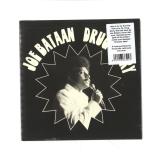
Joe Bataan's extensive discography was expanded in 2022 with the release of some old recordings from the King of Latin Soul that had never been previously published. After the success of his album "Riot!" (1968), Bataan had easy access to a studio whenever inspiration struck to record a new song sketch or even a complete track. Sometimes, he would finish the recording entirely and offer it in its final version to Fania for release. This usually worked, although on some occasions, the song was rejected. In the case of 'Drug Story,' the track was recorded without a clear final purpose, even though Bataan hoped it would become part of an album. When the Fania executives heard the result, they immediately rejected it, thinking it promoted drug use. The tapes were filed away and lost in oblivion until they ended up in a thrift store in New York. From there, they were rescued by a Latin music specialist and later sold, eventually making their way to the Vampisoul archives. The song was finally released in its entirety in 2022 on the LP "Drug Story" by Now Again. It features a long, slow vocal intro that evolves into a more uptempo track with two very distinct parts, to the point that it almost feels like two different songs. It transports us to the best moment of Joe Bataan's career, with all of his classic ingredients, delivering a track as good as his most famous songs. Bataan himself takes on the lead vocals and piano, Bobby Rodríguez handles the flute, sax, and bass, Pete 'Choki' Quintero plays the drums, and William Howes Jr. plays the electric guitar with wah-wah effects. Vampisoul strongly believes that the song deserved to be released as a single as well, and that its structure was perfect for each side to have a separate identity. So here it is, for the first time on a 45, 'Drug Story,', parts one & two, the long lost track by Joe Bataan. Pure Latin soul, recorded at the peak of the artist's career!
out of Stock
Last delivered 14 months ago available to reorder, subject to availability
Madlib’s WLIB AM: King of the Wigflip Returns on Double Vinyl via BBE Music BBE Music is thrilled to announce the long-awaited rerelease of WLIB AM: King of the Wigflip, the final installment in the legendary Beat Generation series from none other than Madlib. Originally released in 2008, this masterful collage of dusty loops, raw beats, and left-field soundscapes remains a high-water mark in the Stones Throw producer’s sprawling discography.
Now, for the first time in years, fans can experience the album in all its analog glory with this deluxe double vinyl edition, carefully remastered to preserve Madlib’s signature warmth and grit. A tribute to pirate radio culture and late-night airwaves, WLIB AM weaves together a rich tapestry of hip-hop, jazz, and soul, featuring an all-star cas t of collaborators, including Talib Kweli, Guilty Simpson, MED, and Oh No. Each track showcases Madlib’s uncanny ability to blur the lines between genres, effortlessly flipping obscure samples into hypnotic, off-kilter rhythms. From the hypnotic bounce of “Blow the Horns on ‘Em” to the smoked-out groove of “The Plan Pt. 1,” this is Madlib at his most playful, unpredictable, and inspired.
This special double vinyl edition, released exclusively via BBE Music, brings one of the Beat Generation series’ most celebrated albums back into circulation for crate-diggers and collectors alike. With original artwork and a high-quality pressing, this rerelease is a must-have for Madlib aficionados and vinyl lovers who appreciate raw, unfiltered beat craftsmanship. Don’t miss your chance to own a piece of hip-hop history—WLIB AM: King of the Wigflip is back and sounding better than ever.
Oliver Dollar presents Contemporary Part Three on Rekids The third instalment features collaborations with Ben Silver, Boogs, and Hazmat, and features Apropos and Boog Brown.
Berlin’s Oliver Dollar unveils part three of his ‘Contemporary’ series, releasing on Radio Slave’s Rekids 4th April 2025 and following up last year’s parts one and two, which featured the likes of Harvard Bass, Brillstein, ADMN, and Austin Ato, and won support from the likes of Nightmares On Wax, Anja Schneider, Laurent Garnier, Carista, Jennifer Cardini, Dam Swindle, and more.
Part three of Contemporary sees Oliver Dollar invite another cast of hotly tipped collaborators, kicking offthe EP with Melbourne DJ and producers Ben Silver and Boogs - both resident DJs at Revolver Upstairs - for ‘Cosmic Weapon’. Their track features lush, poignant chords underpinned by a rolling groove, with vocal samples warped, chopped, and sliced above for a mind-melting trip. Up next, ‘What Cha’ Gonna Do?’ sees Dollar team up with Apropos, whose inimitable voice previously featured on ‘Contemporary Part One’, and talented Detroit vocalist and Dilla’s Delights’ Boog Brown for a soulful duet. Last up is another Motor City link-up featuring Hazmat Live on production alongside Oliver Dollar for the infectious House energy of ‘Ought To Be Love’, joined by the earworm vocals of Members of the House front vocalist William Beaver, aka Billy Love, known for his work bringing Motown-style gospel vocals to Techno and House with notable Detroit artists like JeffMills, Theo Parrish, Moodymann, Kevin Saunderson, and many more.
drum work. Closing out the ‘I Feel’ EP, Tal Fussman works with fellow producer 8-AN to drop the dream-like strings of ‘Life Itself’, another deep track that is as club-ready as it is introspective.
out of Stock
Last delivered 47 days ago available to reorder, subject to availability
One of the most outstanding Bossa Disco Jazz productions from West Germany at the beginning of the 80s! This masterpiece captivate with their stylistic perfection and journey from brazilian Bossa Nova to Jazz with a boogieesque Disco influence. Its still on of the most DJ spinned Bossa Jazz dancefloor tunes from W.-Germany in the last 30 years!
The two highly talented, creative and sensitive artists Judy (Jude Enxuto) and Ximo (Ximo Gregorio) had lived in Germany since 1980 and performing in several clubs, small art stages and festivals.
In 1982 they recorded their Debut album "Via Brasil" in Frankfurt am Main. It was released in the same year by the small private record label called Rillenschlange. In the meantime coveted by music lovers, collected by vinyl connoisseurs and and happy to play in DJ sets, the great composition of the Brazilian Izio Gross will be an absolute Evergreen and catchy tune remain. This music production is one of the most essential productions of this genres from West Germany and has more than earned its place on the Sound Essence label. An absolute groovy Bossa Jazz Trip and Tip!
out of Stock
Last delivered 14 months ago available to reorder, subject to availability
Strut now present a new single vinyl reissue of Vambe"s privately pressed original album from 1982, Drumgita Solo. A self-taught drummer, inventor, and sonic experimentalist, Vambe is a unique figure in British music. The creator of his own instrument, the drumgita (pronounced "drum-guitar") or string-drum, Vambe intended to create a kind of music that had never been made in order to pursue access to the fourth dimension. The album plays with time, mixing hypnotic, trance-like drumgita pieces with the same segments played backwards. You can hear echoes of African drumming traditions, minimalist repetition, and tape-manipulated musique concrète - but ultimately, the album defies genre. It is a solitary voyage, spiritual and futuristic.
Compiled by Philip King
“And then came the rise of synth pop : blokes with dodgy haircuts hunched over keyboard-operated
machines stuffed with wires and do-it-yourself tone oscillators making sounds like a brood of geese
passing gas in a wind tunnel. Whoopee! This is the way the ‘70s ended : not with a blood-curdling bang
bang but with a cheap, synthesized, emasculating whimper.”
NICK KENT, NME.
All The Young Droids: Junkshop Synth Pop 1978-1985 is a new compilation that charts the
underbelly of the epoch-defining sound of the synthesiser in 80s popular music. Compiled by Philip
King (previously seen compiling All The Young Droogs, Glitterbest and Boobs - The Junkshop
Glam Discotheque), the music here connects the dots between DIY synth enthusiasts grappling with
new, cheap synthesisers at the tail-end of punk and wannabe, jobbing songwriters enthral to the new
music pioneered by Gary Numan, Depeche Mode and Daniel Miller’s Mute Records. Featuring rare
tracks of auto-didactic progressive pop music, proto-techno punk, shoot-for-the-stars-land-in-the-gutter
chart flops and heralded, underground synth classics, School Daze paints a picture of beautiful failure.
Complete with extensive sleeve notes written by King and never before seen imagery, all 24 tracks
were remastered by RPM in-house engineer Simon Murphy, many from vinyl copies due to lost master
tapes. The story told on All The Young Droids is one of the dawning opportunity presented by both the
emergence to the market of cheaper analog synthesisers and the distribution networks plus indie labels
that exploded with the advent of punk music in 1976. While the music that sprouted out all over the
globe in the wake of these factors was decried as fake, plastic, a refutation of punk’s guitar-led
revolution, it’s telling that much of the music on All The Young Droids.. was created in bedrooms,
ramshackle studios and home-made set ups with often borrowed equipment. In the era of record labels
jumping to capitalise on the success of The Sex Pistols, The Clash (both on major labels, of course)
these artists struggled to stand out from a new gold-rush with next to no budget or PR team. With radio
and labels desperate for the new Yazoo, what resulted was a testament to necessity being the mother
of invention.
At the time, the synthesiser was the music of the future, a shiny new machine that could paint like an
orchestra with a single finger and a 4-track. In the hands of Manchester avant-pranksters Gerry & The
Holograms it’s a pulsing, sardonic weapon.. the only instrument on the Messthetics classic lampooning
of New Wave fashion. In Hamburg, a 16 year old Andreas Dorau used it to write and record (with his
female classmates on vocals) a global smash in Fred Vom Jupiter (later licensed to Mute Records).
The hard-to-find English version (Fred From Jupiter, natch) is included here. Many artists with alreadystoried careers caught the bug and recorded synthesiser-fuelled peons to space, computers, the future
and, of course, love-interests. Harry Kakoulli, late of Squeeze, recorded a solo album in 1979 that
included the incredible power-synth-pop smash-that-never-smashed I’m On A Rocket. Similarly, Ian
North of Neo and American Power Pop stalwarts Milk ’n’ Cookies bought a Korg MS20 and used a
tape machine to record We’re Not Lonely, an absolute lost-classic of minimal synth pop. We’re Not
Lonely also features on the Junkshop Synth Pop sampler 7” twinned with John Howard unreleased
track You Will See, released April 12th 2025.
There are plenty of compilation debuts in evidence. Sole Sister were a mysterious trio who were
featured on the Scaling Triangles compilation of female-fronted, queer-adjacent post-punk /
underground music that also featured The Petticoats. Selwin Image were from San Francisco and
featured members of the recently defunct power pop/punk group The Pushups. Their stupidly catchy
The Unknown fizzes with New Wave energy - think XTC to Sparks but remains unreleased until now.
Dream Unit’s A Drop In The Ocean is an early synth wave cut, positively teaming with Joy Division
instrumentation, previously only released on a long-forgotten and super rare, self-released EP.
Incandescent Luminaire’s Famous Names belies an archetypal struggle of a small-town trying to
make it in a cruel industry but is a thrilling New Romantic-Synth Wave cross over with a OMD
gloominess that’s a joy to hear. Feminist Minimal Wave track I Am A Time Bomb by performance artist
Peta Lilly and Michael Chance is a revelation destined for new found cult status. It was released on 7”
and lost until now.
The flipside to the subterranean, never-made-it synth pop mentioned above are the ambitious, even
fruity attempts at success that have a perennial elegance to their confidence. New Jersey-ite Billy
London (real name Ed Barth) tried to cash in on the synth boom with Woman, released by a major
label, a lurching new wave track built on the Louie Louie rhythm and a wonderfully camp Lou Reedstyle sleazy vocal before exploding in the synthesised chorus. The song bombed but with a chorus like
this, you have to wonder why? Ex-Glitter Band member John Springate’s My Life is truly epic, with
doomed chord progressions and massive sounding drums turning into at least 3 different songs in the
course of the track. Before you wonder what’s going on the song resolves with a glorious return to the
main refrain.
The dry-ice-dressed dance floor is well catered for too. Design’s Premonition and Vision’s Lucifer’s
Friend are stone-cold minimal synth bangers, well loved but given a new lease of life here. The
Warlord’s The Ultimate Warlord was released in 1978, a homespun proto Hi NRG banger that was
later re-recorded by The Immortals in Canada who had a club hit with it. One-man- band Disco
Volante’s No Motion was re-issued by Synth wave label Medical in 2012 but makes its first vinyl
compilation appearance here. Close your eyes and you can imagine what Lawrence of Felt would have
sounded like with some cheap Korgs a little earlier in his career. Gibraltar-based trio The Microbes
imagined a computer programming people to dance - how prescient - and ended up with a propulsive,
robo-funk track with splendid rubbery bass playing over a tectonic drum machine. Previously picked up
by Belgian label Stroom TV, Dee Jay Bert & Eagle’s heavily Euro-accented I Am Your Master
demands the listener to “come to paradise!” In a frankly terrifying manner.
All The Young Droids is the first compilation to peel away from the narrative that dour, Minimal Synth
and Cold Wave were the only musical children of the first rush of synth pop. Philip King and School
Daze Records describe a much more complicated world: along with the austere, Brutalist children of
Daniel Miller (who produced Alan Burnham’s Bowie-Low-influenced Science Fiction here) was a
plethora of desperate cash-ins, accidental mainstream hits, ambitious pop dramas and major label
punts that went nowhere. Crucially, the compilation blurs the line between junk and treasure. What if the
two things are interchangeable. What if it’s all science fiction?
out of Stock
Last delivered 14 months ago available to reorder, subject to availability
As part of Ace 50 BGP has hooked up with our old friends at Concord Music to reissue one of the most important albums in our story. In 1987 as the dance jazz scene morphed into acid jazz Billy Hawks ‘Oh Baby (I Believe I’m Losing You)’ was filling the dance floors where either Gilles Peterson or Baz Fe Jazz were playing.
The Prestige Records album, “Heavy Soul!”, that featured the track, was impossible to find, and frustrated DJs were desperately trying to find a copy. BGP - the Ace label that the two DJs helmed - reissued the album and put the in-demand track onto a 12 inch single. With supply sufficient it became a club smash, crossing over to become a mod classic and one of the most important cuts from our scene.
In the ensuing years the track's status has remained undimmed and the album has never turned up in significant numbers, and yet it has never been reissued since. With an attention to detail that has always been the Ace way, we have carefully mastered the record to be as close as possible to the sound of the original Van Gelder mastering of 1967, and created and accurate representation of the album and label cover art.
Hawks never lived to be rediscovered, but through our musical detective work we tracked down his brother and found out as much of his story as feasible and we also unearthed a couple of pictures. The Virginian born organist with the amazing voice was a fixture on the North-Eastern lounge bar circuit, which was the entertainment backbone off Black American music at the time, and his full story is told on the illustrated inner sleeve that comes with this release
The Unknown Artist returns on Flipsight with deep soul/disco cuts. Sun after rain is what we all deserve, no one will ever stop that feeling. No digitals - Vinyl only
out of Stock
Last delivered 6 months ago available to reorder, subject to availability
Biga Ranx is a major artist of the international Dub Scene, he has been acclaimed by the biggest Jamaican MC's over the years for his unique flow and style. From the age of 14, Biga has been working on his lyrics and his compositions. After 5 albums and 1000 gigs over the world, Biga Ranx his still evolving his style by mixing Dub with Electronic, Lo-Fi and Hip Hop sounds.
1988 is his 4th album and the most successful one, it sold 80 000 units around the world and tens millions of streams.
GIRASOLES is the ninth studio album from multi-platinum singer-songwriter Jay Wheeler. In what many will find is some of his most personal work to date, it’s clear that music is his refuge, with the album representing the birth of a renewed version of himself. The moving 15-track album musically represents three stages: difficulties faced in life (represented by planting a seed), a period of transformation (growth), and maturity (a full bloom). GIRASOLES represents the feeling of being stuck, life’s challenges and the moments where personal growth seems impossible. However, as you mature through time, overcoming challenges and obstacles, you bloom into something beautiful. The message is clear: “Never settle and keep working on yourself, show love to others, and continue to evolve despite difficulties, just as sunflowers continue to grow toward the light,” Wheeler expressed. “People talk about outcomes, but no one talks about the process of getting there. This is ‘Girasoles,’ an album full of emotions, showing my evolution as an artist and a man. I want fans to identify with each track and make it their own,” shared Jay Wheeler about “Girasoles”, an album dedicated to the three most important women in his life: Zhamira (his wife), Aiunii (his daughter), and his mother. 2xLP, pressed on Canary Yellow Vinyl and housed in a Gatefold Jacke
Pünktlich zum 20. Jahrestag ihres Debüts veröffentlichen We Are Scientists ihr neues Album "Qualifying Miles", mit der sich die New Yorker Band auf ihre Wurzeln besinnt und auf die rohe Unmittelbarkeit des gitarrengetriebenen Indie-Rocks samt reduzierter "Band in einem Raum"-Ästhetik setzt, mit dem sie in den 1990ern aufgewachsen sind. Obwohl Sänger und Songschreiber Keith Murray nicht mit einem thematischen Rahmen loszog, entdeckte er schnell einen roten Faden, der sich durch die neuen Songs zog: "Erst als wir sie ausgewählt hatten und ich begann, die Texte etwas zu überarbeiten, wurde mir klar, dass diese Songs viele ähnliche Themen behandeln: Wehmut gegenüber der Vergangenheit, eine Art melancholische Nostalgie und solche Dinge." Der Veröffentlichung voraus geht eine ausgedehnte Tournee, die bereits Ende April in Mitteleuropa beginnt, die Band nach UK und zu einigen Sommerfestivals führt, und im Folgejahr diesseits und jenseits des Atlantiks fortgesetzt wird.
Pünktlich zum 20. Jahrestag ihres Debüts veröffentlichen We Are Scientists ihr neues Album "Qualifying Miles", mit der sich die New Yorker Band auf ihre Wurzeln besinnt und auf die rohe Unmittelbarkeit des gitarrengetriebenen Indie-Rocks samt reduzierter "Band in einem Raum"-Ästhetik setzt, mit dem sie in den 1990ern aufgewachsen sind. Obwohl Sänger und Songschreiber Keith Murray nicht mit einem thematischen Rahmen loszog, entdeckte er schnell einen roten Faden, der sich durch die neuen Songs zog: "Erst als wir sie ausgewählt hatten und ich begann, die Texte etwas zu überarbeiten, wurde mir klar, dass diese Songs viele ähnliche Themen behandeln: Wehmut gegenüber der Vergangenheit, eine Art melancholische Nostalgie und solche Dinge." Der Veröffentlichung voraus geht eine ausgedehnte Tournee, die bereits Ende April in Mitteleuropa beginnt, die Band nach UK und zu einigen Sommerfestivals führt, und im Folgejahr diesseits und jenseits des Atlantiks fortgesetzt wird.
The Mighty Rootsmen features the unparalleled talents of Reggae superstars
Toots Hibbert, Luciano, Gregory Isaacs, Michael Rose, and the rhythmic prowess of Sly & Robbie, Mikey Chung, Robbie Lyn, and Sticky Thompson, alongside Zap Pow Horns members David Madden, Calvin ‘Bubbles’ Cameron, and Glen DaCosta. A groundbreaking collaboration – it is a celebration of reggae’s iconic artists, seamlessly blending the genre’s rich rhythms with rock and soul classics.
Brought together by producer Ralph Spall (Paul McCartney, Billy Joel, Cat Stevens) and recorded at the famous Anchor Studios in Jamaica. The album’s unique sound comes from the decision to let the musicians’ instincts drive the creative process, striking a balance between homage and innovation. Featuring classic tracks from the likes of Tom Petty, The Steve Miller band, The Eagles and Fleetwood Mac. It is produced with a reverence for authenticity and musical mastery. This once-in-a-lifetime project brings together a dream team of Jamaican legends, paying tribute to their artistry and the art of collaboration.
This is Timeless classics with a reggae supergroup. Tracks like “Fly Like an Eagle” showcase Steve Miller’s unexpected, soulful guitar work layered over a reggae groove. Meanwhile, Mike Campbell’s guitar on “I Won’t Back Down” deepen the album’s connections to rock royalty. Yet, the project remains firmly rooted in reggae. "My intention was to try to do something that hadn’t been done in reggae before by putting these giants of the genre together to make a record that leaves you with good feelings, they’re very recognisable as the songs they are but have a distinct reggae feel and stamp.” reflects Ralph.
The Mighty Rootsmen stands as a tribute to the enduring power of reggae music—an album that brings joy, good vibes, and a profound connection to musical history.
Folk-Musik hat die schlechte Angewohnheit, als eine todernste Angelegenheit dargestellt zu werden. Sie ist etwas, zu dem man weint, sie ist übermäßig heilig, sie ist feierlich von Kritikern und Historikern betrachtet. Aber das Folk Bitch Trio, die ehemaligen Highschool-Freundinnen Heide Peverelle (,they/them"), Jeanie Pilkington (,she/her") und Gracie Sinclair (,she/her"), haben einen gemeinsamen Sinn für Humor , der tief in ihre Musik eingebettet ist und sie zum Leuchten bringt, sicher vor den selbsternsten Fallen des Genres. Now Would Be A Good Time, ihr Debütalbum, erzählt lebendige, viszerale Geschichten und ist witzig und dunkel-ironisch in der Art von Schriftstellerinnen wie Mary Gaitskill oder Otessa Moshfegh. Ihre Musik klingt vertraut, aber die Songs sind modern, jugendlich, singen akut durch dissoziative Tagträume und ärgerliche Trennungen, sexuelle Fantasien und Medienüberflutung, all die belanglosen Ressentiments und kleinen Demütigungen, die Anfang zwanzig in den 2020ern sind. ,Cathode Ray" beginnt mit Vorsicht, seine ersten Harmonien kommen in großen, schleifenden Seufzern an. Es ist verletzlich, aber auch ein wenig bedrohlich, mit , einem weit offenen Refrain und einem geräumigen, luftigen Beat, der alles verankert. ,Moth Song", ein Song über unerwiderte Liebe und ,von so durchgedreht zu sein, dass man sich wie im Wahn fühlt und verrückte Dinge halluziniert", bildet das sparsame Herzstück des Albums, wobei Anita Clarks wogende Geigenstimme wie in einem Traum in den Fokus hinein- und wieder herausdriftet. Andere Songs sind nicht so schräg, sondern schildern brutal vertraute Momente am Ende von Beziehungen: Der spannungsgeladene, emotional flüchtige Torch-Song ,The Actor" handelt laut Peverelle davon, ,zur One-Woman-Show deines Partners zu gehen und dann Schluss zu machen". In ,Hotel TV", einer hypnotischen, nächtlichen Träumerei, geht es darum, ,einen Sextraum über zu haben, während man neben seinem Partner sitzt, und der Partner ist ein Lügner", erklärt Pilkington. Die stärkste Verbindung zwischen dem Trio, abgesehen von der Freundschaft, ist Musik. ,Wir haben alle darüber gesprochen, dass wir Musik liebten, als wir aufwuchsen, , und dass wir wussten, dass Musik ein großer Teil unseres Lebens sein sollte", sagt Pilkington. Dieses Gefühl, dass Musik eine angeborene Berufung ist, im Gegensatz zu Hobby oder Torheit, war berechtigt: Das Folk Bitch Trio tourte bereits auf durch Australien, Europa und die USA und unterstützte dabei so unterschiedliche Bands wie King Gizzard, Alex G und Julia Jacklin. Sie haben bei Jagjaguwar unterschrieben, einer Heimat für einzigartige Ikonen und Ikonoklasten (Bon Iver, Angel Olsen, Sharon Van Etten, UMO und andere), und sie haben ihre ersten eingefleischten Fans mit schillernden Harmonien und bissiger Lyrik gefunden, die über Genreerwartungen und Publikumsgrenzen hinausgehen. Das sind die Herausforderungen: Es geht darum zu lernen, wie man ein Leben ohne Liebeskummer und Verlierer-Ex lebt, wann man im zeitgenössischen Nihilismus versinkt und wann man mit seinen Freunden lacht, und warum sich das Leben so flüchtig und unwirklich anfühlen kann. In diesem Sinne fühlt sich Now Would Be A Good Time wie ein Handbuch für das moderne Leben an: eine Botschaft dreier stolzer Folk Bitches, die gemeinsam Schönheit und Weisheit finden, wo sie können.
After impressions of Unguja and Borneo islands, Discrepant's chieftain Gonçalo F. Cardoso continues his sonic travelogue on insularity with 'Impressões de Várias Ilhas’.
Literally translated as "impressions from various islands", this third tome dwells on recordings and inspirations from three archipelagos of Macaronésia. Soaking in the sounds and recollections from Azores, Cape Verde and Canary Islands these diaristic endeavours spread throughout a number of real environments, from water caves and black stone beaches and lagoons to small harbours and everyday life scenarios, to project them into this not quite imaginary but not quite real memory haze that goes from a deeply personal impression to a resonating one.
Melding raw field recordings with processed ones and synthesized landscapes, Cardoso never falters into sonic tourism, conjuring small-ish takes both vivid and dreamy, infused with a sense of wonder that feels both bewildering, comforting and escapist. The breaking waves of 'Bufadeiros de São Vicente' soothing in their irregular pattern, mingling with the lone echoing tones not completely removed from Black Dice's 'Beaches & Canyon's most pensive passages, flow into the underwater ambience and suspended pads of 'La Cueva Scuba Livre', as reflections of the same sea crashing in on different lands, nature’s psychogeography. Further on, the queasy warm chord and scraping murmurs of 'Noite em Rabo de Peixe' mirror their nighttime framing while 'Rãs em Xoxo' veers closer to pure musique concréte, crossed by a subdued feeling of unease that lingers in the nostalgia of 'Cozido da Caldeira Velha', brimming within the haze of a Boards of Canada vignette. Summoning the past lives and future hauntings of its scenery, 'Salinas de Pedra Lume' is like the quiet epic of the album, meandering into the unknown among crackling field recordings, decaying synths and flute-like howls - or is it howl-like flutes? - recurring as glimpses from foregone existences, not necessarily Gonçalo’s own. Maybe ours?
Music & Photography by Gonçalo F. Cardoso
Artwork layout by Jeroen Wille
Master by Rashad Becker
Wojtek Mazolewski Quintet (WMQ) - one of the most charismatic groups on the European jazz scene - returns with Live Spirit I, a new album recorded at the iconic Witold Lutoslawski Polish Radio Concert Studio in Warsaw. The release features four brand-new compositions alongside electrifying new takes on WMQ classics, including a stunning 20-minute version of "Polka", the title track from their best-selling record.
One of the biggest underground rap songs of the 2010s, “Look at Wrist” (ft. iLoveMakonnen & KEY!) is the viral internet sensation that made Awful Records and Father some of the most exciting names in hip-hop. The song took the media by storm, earning praise from publications like The Fader, Pitchfork, and Billboard, and capturing the attention of stars like Tyler, the Creator and Drake.
Ten years later, Father is celebrating the single that launched his career with a special edition picture disc featuring “Nokia” (ft. iLoveMakonnen & Richposlim) on the B-side—a track that has never been released on vinyl before. The record includes Father’s signature artwork on the front and an homage to the Nokia cellphone on the back. This picture disc is a must-have collector’s item for rap fans. Limited to 500 units.
Sometimes when artists from different musical worlds come together, they create something that feels revolutionary. SAMANTHA E ADRIAN, the collaborative album by Brazilian actress and singer Samantha Schmütz and American composer ADRIAN YOUNGE, captures that magic by blending musical influences from Brazil and the United States with a deep, soulful take on the '70s. Produced and recorded at Younge's Linear Labs, one of the last analogue studios in Los Angeles, the album represents a new chapter in the musical dialogue between Brazil and the United States-an exchange that is celebrated by record DIE-C collectors around the world.
Waxwork Records is thrilled to release BUBBA HO-TEP Original Motion Picture Music by Brian Tyler for the first time on vinyl! Bubba Ho-Tep is a 2002 American Comedy Horror film written, co-produced, and directed by Don Coscarelli (Phantasm). It stars Bruce Campbell (Evil Dead 1 & 2, Army of Darkness) as Sebastian Haff, a man residing in a nursing home who claims to be the real Elvis Presley.
The film also stars Ossie Davis as Jack, a black man who claims to be John F. Kennedy. While the novella of the same name by Joe R. Lansdale and the film revolve around an ancient Egyptian mummy terrorizing a retirement home, Bubba Ho-Tep also deals with the deeper theme of aging, identity, mortality, and existentialism. The film also features a cameo by Reggie Bannister from Coscarelli's Phantasm series. Waxwork Records is proud to release the debut vinyl album of the outstanding soundtrack by Brian Tyler (Scream VI, Six String Samurai, Ready or Not) as a deluxe album featuring Egyptian Sand & Silver swirl colored vinyl, heavyweight gatefold packaging, new artwork by JJ Harrison, and an 11"x11" art print insert. BUBBA HO-TEP Original Motion Picture Soundtrack Features:
Vinyl reissue of the legendary soundtrack to Forbidden Planet by Bebe and Louis Barron, an absolute milestone for Electronic Music. Recorded in 1956 by Bebe and Louis Barron, the soundtrack to the cult film Forbidden Planet is without a doubt one of the most suggestive and astounding examples of early Electronica, bringing the extraterrestrial experience of the movie to new levels with the help of the stunning sounds created by the couple through of a myriad of vintage artifacts, including loop FX and amazing modular synths. An absolute masterpiece of the genre, bringing proto electronica, sci-fi and abstract music together for an unforgettable aural experience. Includes a foldout insert with a Bebe Barron interview.
D.S.A. and Night School Records are once more teaming up to release a limited edition 7”: Certe Notti by Molly Nilsson. The
record contains the two new songs Un Po’ Più Vicino al Cielo and Il Peggior Bar di Caracas.
The songs were written and recorded in August 2024 in San Giorgio del Sannio, Benevento, during a month long artist
residency, made possible thanks to the kind invitation and hospitality of AUNA a.p.s.
A whole moon spent between local festivities, sagras and late nights in the best of worst bars, making new friends
forever and life-long memories (including an unforgettable Inti-Illimani concert), all infused with sweet drinks and ancient
lore of local witches.
The cover art depicts the view from the window on one of those nights, the rising moon, Liquore Strega yellow, and the
inlay hints at Nilsson's favourite crosswords magazine. With all these distractions it’s really a wonder any music was
made at all. But thanks in large part to endless espressi and ginseng, two new songs came to be. The first is Nilsson’s
first opus in the Italian language! The second, a hommage to her favourite joint and hang out, The Worst
Bar in Caracas.
out of Stock
Last delivered 14 months ago available to reorder, subject to availability
Reality Shock is proud to announce the release of "Mission", a brand new 7" single by Afrikan Simba, with accompanying dub mix by Kris Kemist.
Mission is the title track of the recently released third studio album from the internationally acclaimed roots reggae chanter Afrikan Simba. Originally hailing from Nigeria & residing in East London, Afrikan Simba is well established in the roots reggae world, known for his conscious, spiritual, and uplifting lyrics. With a career spanning several decades, Afrikan Simba has worked with legendary sound systems like Jah Shaka, Aba Shanti, and Channel One as well as artists like Luciano, Nereus Joseph, Little John, Earl Sixteen & many more, performing at countless shows & festivals across the globe.
Mission 7" is produced by Mercury nominated producer Patrick Williamson in collaboration with Kris Kemist of Reality Shock Records, who has been working closely with Simba for over 20 years. The song features Backing vocals by Indra & brass by Tribuman. On the flip side of the 7" is a heavyweight dub version mixed by Kris Kemist at Reality Shock Studio.
With ,We Do It Out of Love," acclaimed harmonica player Alex Rossi delivers a heartfelt and masterfully crafted tribute to jazz legend Toots Thielemans - one of the most influential voices ever to grace the chromatic harmonica. This album features a carefully curated selection of pieces that reflect the full emotional and musical range of Thielemans' legacy - lyrical, virtuosic, and deeply moving. Highlights include the evocative ,Waltz for Sonny," the tender ,I Do It for Your Love," and Pat Metheny's rhythmically vibrant ,Better Days Ahead" - all reimagined with fresh arrangements that honor the original spirit. Alex Rossi captures the essence of Toots' sound while adding his own voice, bridging past and present with stylistic sensitivity and precision. He is joined by a stellar lineup of internationally acclaimed harmonica players: Antonio Serrano, Gabriel Grossi, Grégoire Maret, Franco Luciani and Olivier Ker Ourio - each bringing their unique sound and deep respect for Toots' musical heritage. ,We Do It Out of Love" is more than just a tribute - it's a global celebration of the instrument Toots Thielemans elevated to poetic heights. A soulful, resonant homage filled with admiration, artistry, and, above all, love.
Red/Black marbled vinyl. With ,We Do It Out of Love," acclaimed harmonica player Alex Rossi delivers a heartfelt and masterfully crafted tribute to jazz legend Toots Thielemans - one of the most influential voices ever to grace the chromatic harmonica. This album features a carefully curated selection of pieces that reflect the full emotional and musical range of Thielemans' legacy - lyrical, virtuosic, and deeply moving. Highlights include the evocative ,Waltz for Sonny," the tender ,I Do It for Your Love," and Pat Metheny's rhythmically vibrant ,Better Days Ahead" - all reimagined with fresh arrangements that honor the original spirit. Alex Rossi captures the essence of Toots' sound while adding his own voice, bridging past and present with stylistic sensitivity and precision. He is joined by a stellar lineup of internationally acclaimed harmonica players: Antonio Serrano, Gabriel Grossi, Grégoire Maret, Franco Luciani and Olivier Ker Ourio - each bringing their unique sound and deep respect for Toots' musical heritage. ,We Do It Out of Love" is more than just a tribute - it's a global celebration of the instrument Toots Thielemans elevated to poetic heights. A soulful, resonant homage filled with admiration, artistry, and, above all, love.
2025 repress. Expo 70, held in Osaka, was a pivotal event for the Japanese people and their relationship with the rest of the world, demonstrating both the nation's ongoing economic recovery from World War Two and the creative spirit of Japanese society and its artists. The event gained international acclaim for its adventurous architectural design, visual art and electronic music. Some of Japan's most renowned composers were involved, but also present were the now-legendary rockers, the Flower Travellin' Band. A series of performances, billed as "Night Events" were held at the Expo; the most radical of these was "Beam Penetration and Mad Computer, plus the Minimal Sound of Motorcycles", but its anti-establishment feel and general madness took the Expo organizers by surprise and it was cancelled after only one night, despite being scheduled for a longer run. An air of myth developed around the event, but a recording of the event has been discovered and this release is the result. And what an event it was: a night-time sound-bomb with a fabled band, electronic sound and 50 motorcycles with horns blaring,spotlights, electronic billboards and a robot ― all flashing, roaring andhowling at the night sky. This release comprises a CD, a 10-inch record with fold-out sleeve and large obi, plus fascinating notes in Japanese and English by Kenichi Yasuda, an expert on Japanese rock music, and Koji Kawasaki, a renowned researcher of Japanese electronic music, as well as rare photos.
Between The Seed And The Timber is a cycle of six songs exploring ritual and mystical aspects of the modern era. At times both noir and psychedelic, they evoke a strong sense of nostalgia for a disappearing age. In contrast to industrial music’s dystopian semiotics, Jas Shaw challenges us to hear sounds inspired by machinery, electricity and mechanisation in a new light.
“I made the synth parts for a Swans gig,” says Shaw. “As SMD we’d supported Swans. James was away doing some production but I didn’t want to pass it up, so I offered to open solo. It turned out the gig was sooner than expected so I made all these synth things to do live.”
Shaw put the tracks to one side and forgot about them, only returning to them years later. “You know when you’ve changed as a person and you listen back to something from a different angle? I suddenly could hear what I had been after. It reminded me of experiences I’d had at Swans gigs. I wanted to achieve that energy and charge.”
Dubbing techniques are crucial to the sound of the record. “I set up a few synths on a table and had my mixer running loads of auxes back into the desk so it was all on the edge of feeding back. Then I realised that if I put a mic into the desk I’d have an extra feedback route. I found a setting where I could get it to build when I pointed the mic at the monitors but then turning it away you could put the brakes on the regen.”
Between The Seed And The Timber is Jas Shaw’s inaugural release for the London based, Kindred-affiliated TEETH label. TEETH is rooted in a reverence for texture, space, and sonic decay - amplifying experimental sounds that blend dreamlike melodies with weathered landscapes. Each release informs the next, with every track as vital as the last to complete the whole set.
Orchestrated by Jojo Mathiszig-Lee, founder of London’s Kindred, the label celebrates like-minded talent from the community, providing a platform for transgressing music.
Swimming Paul's first album is available again as a new edition.
In the vibrant city of London, a talented French producer named Swimming Paul made his mark. While he had already spent several years producing music for others, Swimming Paul felt a strong calling to embark on his own creative project—one that would redefine the concept of dance music and infuse it with meaning.
Paul drew inspiration from the early days of house music, recognizing it as more than just a genre. It represented a cultural movement that united people from diverse backgrounds. Motivated by this spirit, Swimming Paul sought to create music that not only made people dance but also brought them together and conveyed powerful messages.
With each composition, Paul approached his work as an artist would approach a blank canvas. He poured his heart and soul into every beat, melody, and rhythm, meticulously crafting a sound that blended elements from various genres while bearing his own unique touch. His music pulsated with the infectious energy of a crowded dance floor, yet it also possessed the ability to evoke deep emotions and provoke introspection.
Swimming Paul’s vision extended far beyond mere entertainment. He aspired to establish a space where people could connect, express themselves, and find solace in the universal language of music. Every track he produced served as an invitation to embrace the present moment, to let go of inhibitions, and to discover the transformative power of music.
out of Stock
Last delivered 4 months ago available to reorder, subject to availability
Cosey Fanni Tutti has announced details of a new album, 2t2, set for release on the artist’s own imprint, Conspiracy International, on 13 June 2025 on vinyl & CD. Composed, performed and produced by Cosey Fanni Tutti, the 9-track album moves between propulsive beat constructions and expansive electronic explorations, continuing themes from 2019’s acclaimed album TUTTI. It is a personal reflection; a sonic realisation of her life, drawing on her powerful inner resolve and expressing it through music. The album finds Cosey making sense of some very tough years, dealing with personal bereavements alongside swingeing world events that have impacted us all. Centring on her own strength and self will, the album’s two distinct sides – one rhythmic, one more meditative – are connected by an overwhelmingly positive mood. She explains, “My overtone chanting on the track ‘Stound’ was part of that, tapping into the inner self, to the core of your being, emotionally, physically, allowing the sounds to permeate and soothe as well as create a sense of power, resistance and resilience to what we face.” Even in the more melancholic moments, there’s a lightness that she explains is an “acknowledgement that it’s alright to be sad, that’s part of life, but there is so much joy too in our memories of people we lose and in the moments we share with each other. Joy is our resistance.” There are also threads from her most recent projects running through 2t2. Her latest book RE-SISTERS and the score she wrote for Caroline Catz’s film Delia Derbyshire: The Myths and Legendary Tapes are acknowledged, most directly on ‘Threnody’ which is dedicated to Delia Derbyshire and Andy Christian, an artist friend of Delia’s. He sent Cosey an abstract drawing of the same name, created one night from an improvised evening where he drew while Derbyshire intoned and sang softly as she looked at the drawings, as if reading a score expressing how they made her feel. Cosey’s process and the different strands that make up her work form a totality of vision. She goes on to say, “Once you get creating and listening, weaving, collaging sound it’s a wonderfully fulfilling feeling that takes you both out of yourself at the same time as essentially deep within.”
The artwork reflects this idea that the album is a “sound cameo”, reflecting the light within the music, and the buzz of life that exists within all of Cosey’s work. Musician, artist and author Cosey Fanni Tutti has continually challenged boundaries and conventions through her work. As a founding member of the hugely influential avant-garde band Throbbing Gristle, one half of electronic pioneers Chris and Cosey, and as an artist channelling her experience in pornographic modelling and striptease, her work on the margins has reshaped the mainstream. Her first solo album, Time To Tell (1983) was followed by 2019’s Tutti and 2022’s Delia Derbyshire: The Myths and the Legendary Tapes. Her debut book, the Penderyn Music Book Prize shortlisted Art Sex Music, was published in 2017, followed by RE-SISTERS in 2022 (both Faber), which will soon get a Spanish edition.
out of Stock
Last delivered 14 months ago available to reorder, subject to availability